


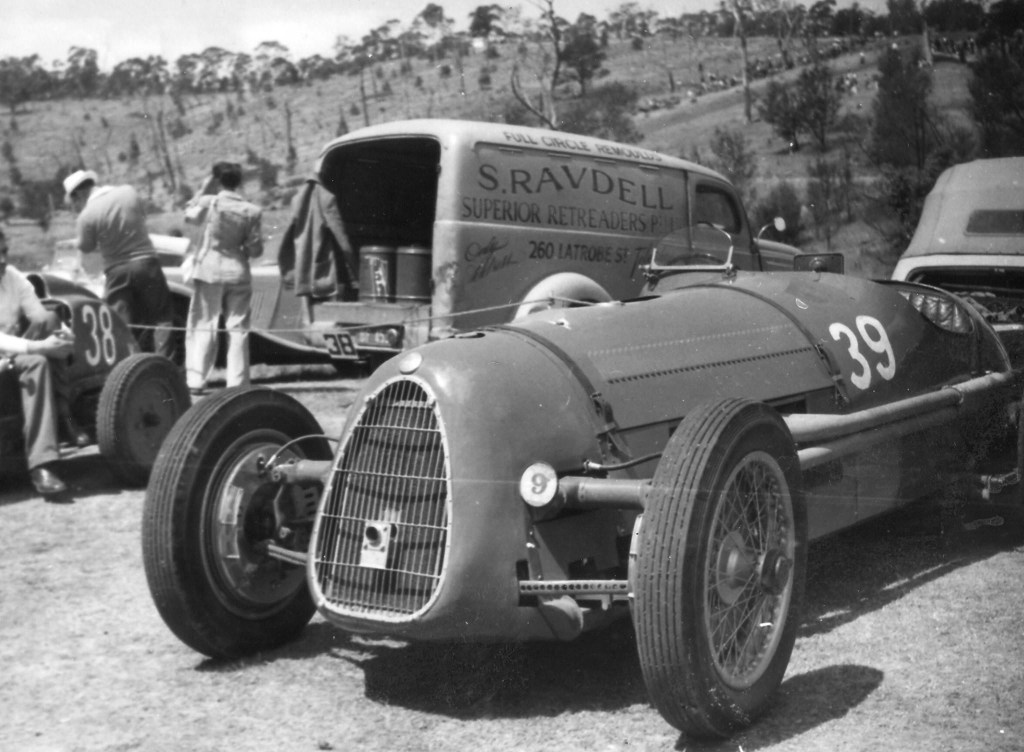
Even the contrarians amongst knowledgable Australian racing historians generally answer “the Maybach” when questioned about which racer was our greatest Australian Special.
It isn’t the Maybach though, but rather Maybachs – four of them – with no shortage of variants across the three chassis built. Whenever a photograph of a Maybach is uploaded onto social media there is always plenty of uninformed yibba-yabba about the specifications of the car in shot.
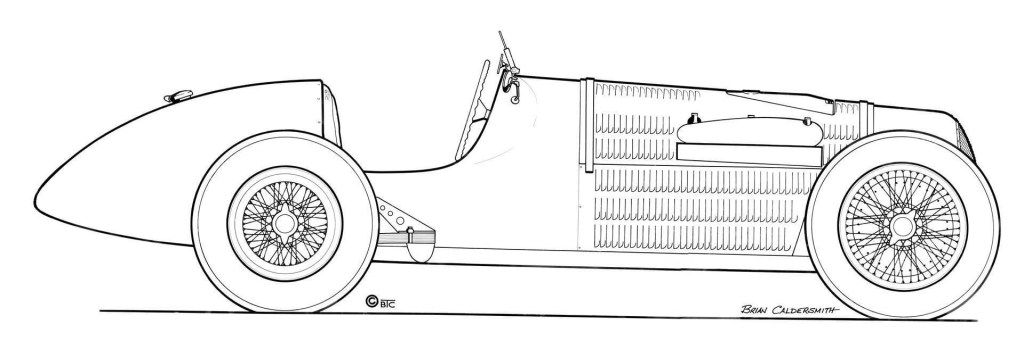
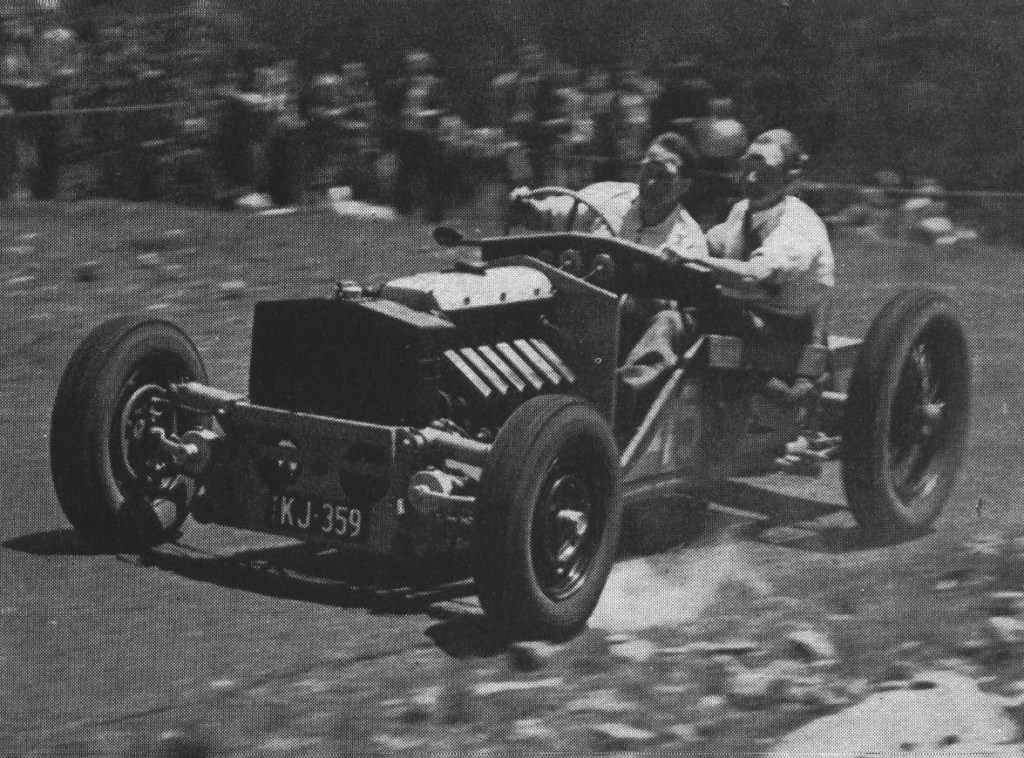
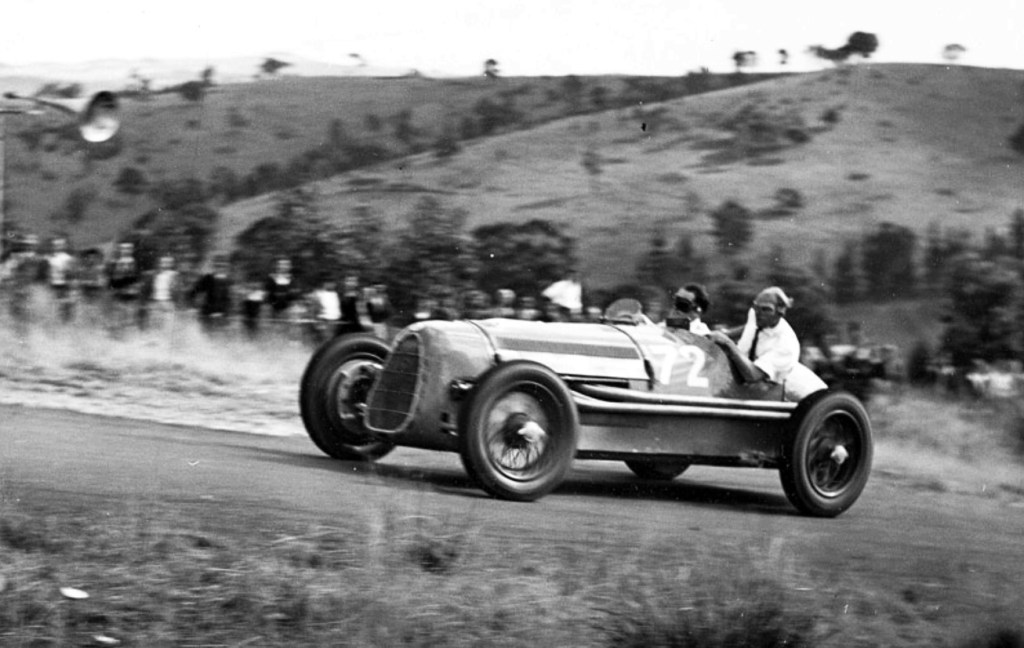
One of our friends, John Ballantyne, prompted this article which I assembled to address the lack of accessible, accurate information about the specifications of Maybachs 1-4.
What follows is a copy of the technical specifications and evolution of the Charlie Dean and Repco Research built Maybach 1 published in an article of the Australian Motor Sports Annual 1958-59. The author’s name isn’t cited, but I’ve credited the editor of the book, Mr John Goode. The other two chassis – three cars – Maybachs 2, 3 and 4 will follow in my next post.
The article is focussed on technical information, not race results: this one that does that best, ponderous as it is: https://primotipo.com/2014/12/26/stan-jones-australian-and-new-zealand-grand-prix-and-gold-star-winner/ I hadn’t planned many photographs, but, as usual, my enthusiasm got the better of me…the period Repco ads are a visual device to assist in splitting one evolution of Maybach 1 from the next.
The photo choices are mine, so too are the ‘Notes’ sections, albeit almost all of that information is sourced from the same AMS article. I’m taking as-read a general knowledge of Maybach, if you need a refresher, click on the links at the end of this piece.


One final contextual word from Australia’s greatest motor racing historian, John Medley, about the Maybachs and their place in the Australian pantheon before we set off, quoted from the ’50 Year History of The Australian Grand Prix’, specifically John’s 1948 AGP chapter.
“HC (Horace Charles) Dean’s car, powered by a captured German scout-car engine, was little more than a year old, and had only been given a proper body in 1947: even so, in its brief career of trials, hillclimbs and sprints it had already attracted a lot of attention for its very willing performance and for its relatively advanced specification. It was, for example, one of just four runners in the 1948 AGP with independent front suspension, and of those four the Maybach was the only Australian special – the other three were factory-built cars of pre-war design: John Crouch’s Delahaye, Frank Pratt’s BMW, and Cec Warren’s Morgan.”
“The Maybach and Delahaye (135CS) actually had a lot in common, not least that both had been laid down not as pure racers, but as big-engined road cars with competition potential although another point which should not be overlooked is that both were essentially very conservative designs.”
“The significance of the Maybach was that it was Australian built, by a man at the centre of a small but talented team, and that the car had development potential – just how much was not realised at the time. Between 1948 and 1960, Maybachs in various forms were to contest eight AGPs and to lead – if sometimes only briefly – five of those races.”

MAYBACH 1 (1946-1949)…
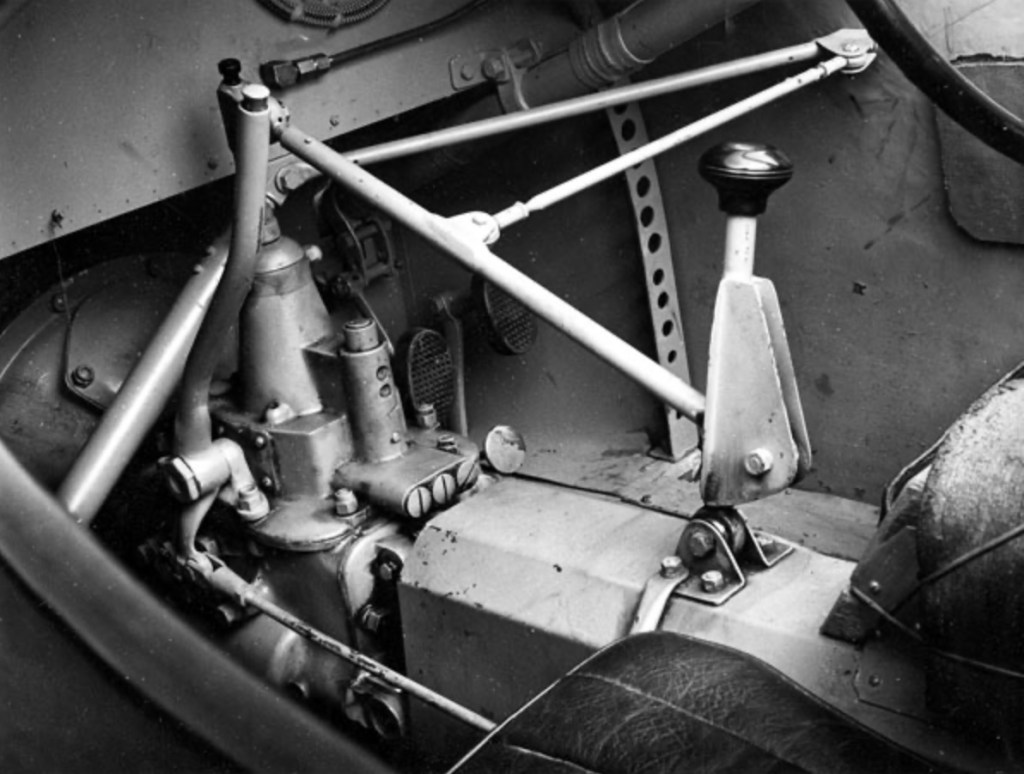
ENGINE: 6 cyl. inline single oh. camshaft. Bore and stroke: 90 × 100 mm. Capacity: 3,800 c.c., Compression ratio: 6.43 to 1. Output (initially on pool petrol: 69 octane) 100 B.H.P. at 3,000 г.p.m.
Single casting cast iron cylinder block and crankcase, with sump joint well below the crankshaft centre line. Crankshaft machined all over and fully counter balanced, running in eight white metal lined bearings, one between each crank throw and an extra one behind the camshaft drive pinion situated at rear end of crankshaft. Wet liners fitted to cylinder bores with lightweight balanced connecting rods and other reciprocating parts.
Single camshaft running in seven white metal bearings, opening valves by means of rocker arms fitted with eccentric bushes which could be rotated and locked to adjust valve clearances. Rockers had roller cam followers. Valves inclined at 65 degrees in hemispherical head and located on opposite sides. Helical timing gears with idler (originally compounded fabric, but replaced by steel).
Wet sump lubrication through filter with pressure fed oil supplied to centre main bearings, then to other caps, and through the crankshaft to big end bearings. Also fed to valve rocker shafts and camshaft bearings. Carburettors: Two marine Amal.


TRANSMISSION: Clutch: Fichtel and Sachs. Gearbox: Four speed crash type from a Fiat Model 525. Rear Axle: Lancia Lambda Series VIl in standard form.
CHASSIS: Frame: Tubular steel consisting of two parallel 4″ dia. steel tubes with independent suspension at the front (Dean’s own design) and conventional twin half elliptic springs at rear.
Suspension: Front Independent with transverse semi-elliptic spring and wishbones. Mainly 1937 Studebaker Commander parts. Steering: Cam and roller box (Marles) with two piece track rod.
Wheels and Brakes: Front: Studebaker bolt on pressed steel wheels with standard Studebaker brakes. Rear: Lancia centre lock 19″ dia. wIre wheels and brakes.


BODY: Two seat from welded sections of aircraft belly tanks.
LATER MODIFICATIONS: Included 6 carburettors, reduction of weight achieved by new front end. Minerva brake drums fitted with specially fabricated shoes, and new cast steel liners, mounted on light steel backing plates. Centrelock wire wheels with adapted hubs to replace Studebaker wheels. Body frame lightened.
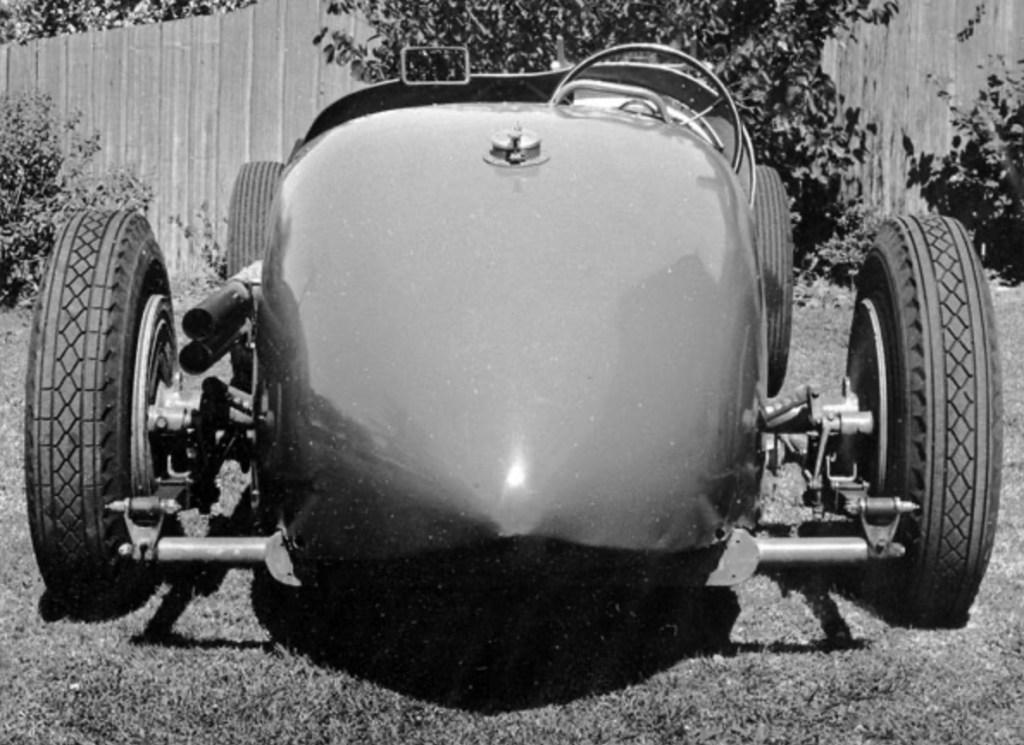


NOTES: The car’s engine came from a German half-track vehicle that had been captured during the Middle East campaign and shipped to Australia for technical study by the military. Dean acquired it from a wrecker. Built as a sportscar, Dean was cajoled into turning it into a racing car by George Wade, a Repco mechanic/engineer, after recording 100mph in a Vintage Sports Car Club trial. The body was constructed in time for the 1947 AGP at Point Cook using aircraft belly tanks cut and shut by Frank Hallam, another Repco employee – so the story goes.

MAYBACH 1 Series 2 (1949 -1950/1)…
Basically the same two seater sports/racing body and chassis with the following changes made from the original car.
ENGINE: 4.2-litre Maybach adapted to take developed parts from 3.8-litre original. Reground camshaft and special new main bearings. Original lead bronze bearings retained for big ends.
Supercharger: Ex G.M. diesel Roots type with three lobe rotors, mounted beside the motor driven by triple V-belts from the crankshaft nose; output 7 lb/sq. inch. Carburettor: Originally Claudel Hobson aircraft type replaced by Bendix-Stromberg aircraft type. Cooling System: Later sealed at blow off pressure of 4 p.s.i. Magneto: Adapted V-12 type but burnt out, subsequently Lucas.
TRANSMISSION: Differential: American Power Lock (1922 vintage truck) limited slip type fitted in modified Lancia housing.
CHASSIS: Rear Brakes: Special drums of original design using two leading shoes hydraulic system but replaced with leading trailing shoe hydraulics.


MAYBACH I Series 3 (1951 – Early 1954)…
Fundamentally similar in appearance to the two previous models, still a two seater but with suspension changes, three feet of rear chassis rails removed.
Modifications listed in order of introduction:
June 1950 – April 1951
Front suspension rebuilt: Studebaker parts replaced by Oldsmobile upper wishbones with integral shock absorbers. Transverse leaf spring redesigned to three leaf to reduce weight. Rear Suspension: Axle mounted on trailing quarter-elliptics with radius rods. It was this which necessitated cutting the rear end of the chassis.


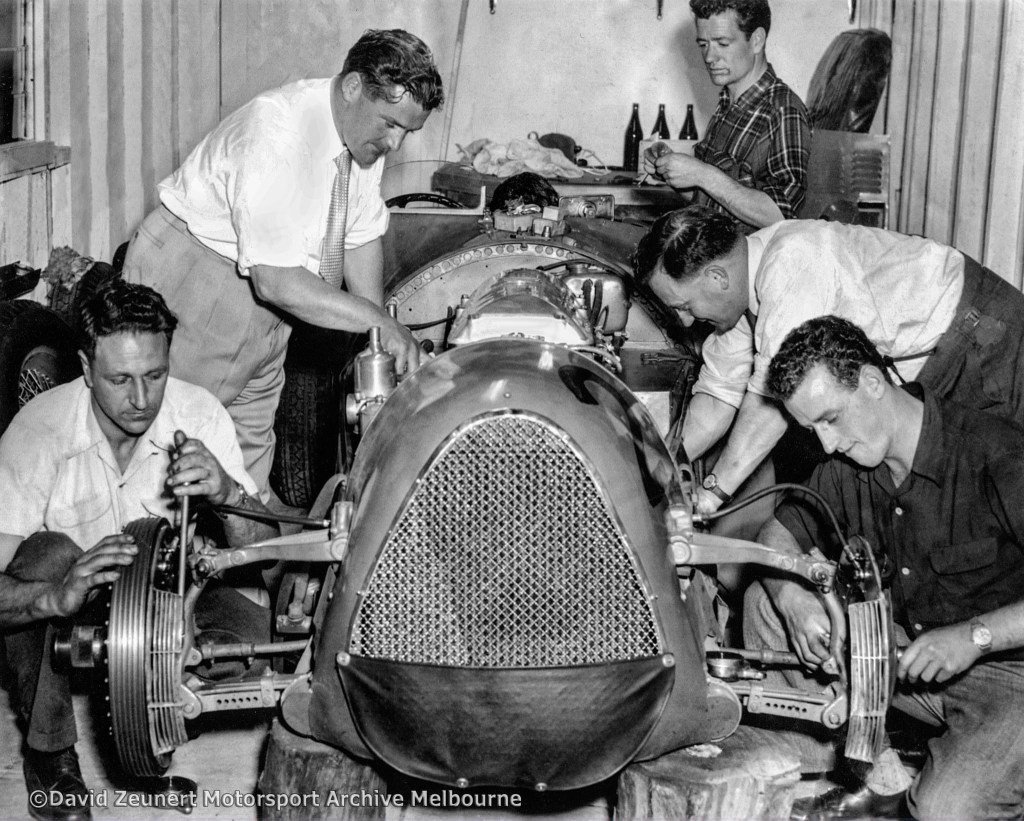
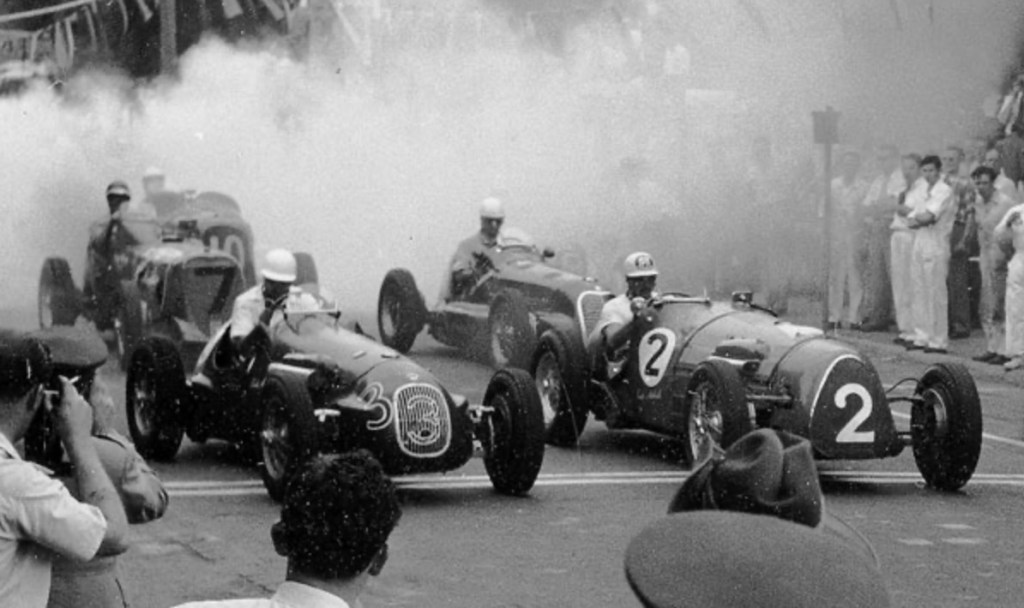
Carburettors: Three marine Amals. Supercharger removed. Other Mods: Mild steel sheet head gasket fitted to engine raising compression ratio to 9 to 1.
Bodywork: Few obvious changes but considerable minor modifications. Framing modifled and lightened. Lighter radiator grille fitted, front cowl modified to give lower bonnet line.
June 1951 – September 1952
Carburettors: Three 1 3/4″ S.U. replacing Amals. Three special 2 3/16″ S.U. carburettors (originally designed for Lago Talbots) later fitted.
Tyres – Rear: 16 x 6.50 touring type (six ply). Subsequently four ply specially manufactured.
NOTES: Stan Jones bought the car off Charlie Dean in June 1951. Reports that the 1952 AGP would be held to F1 regs – 1.5-litres blown and 4.5 unblown, 1952-53 2-litre GP formula duly noted – meant the Maybach in 4.2-litre supercharged specs would have been ineligible so Repco Research developed a 3.8-litre unblown engine as noted above; three marine Amals fed the engine initially. Ultimately the ’52 AGP was held, as usual, to Formule Libre.
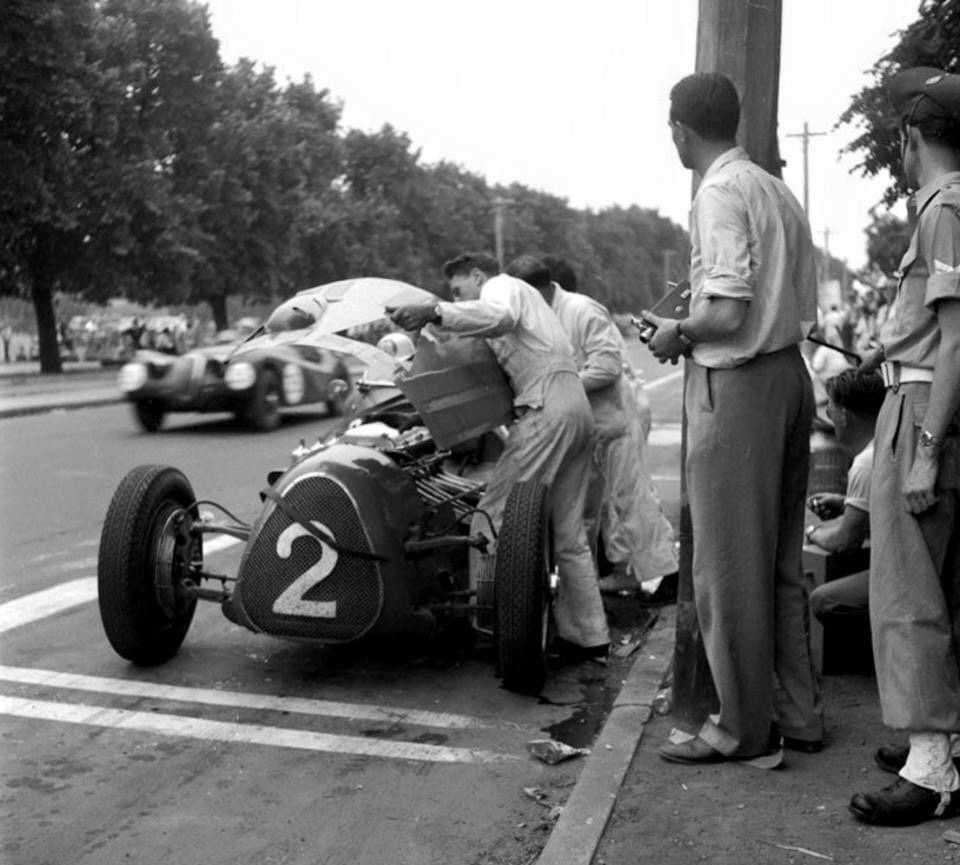

The 1955 New Zealand Grand Prix programme recognised the achievements of Stan, the Repco Research team and Maybach 1 S3 in winning the 1954 event at Ardmore against international opposition the year before.
Etcetera…
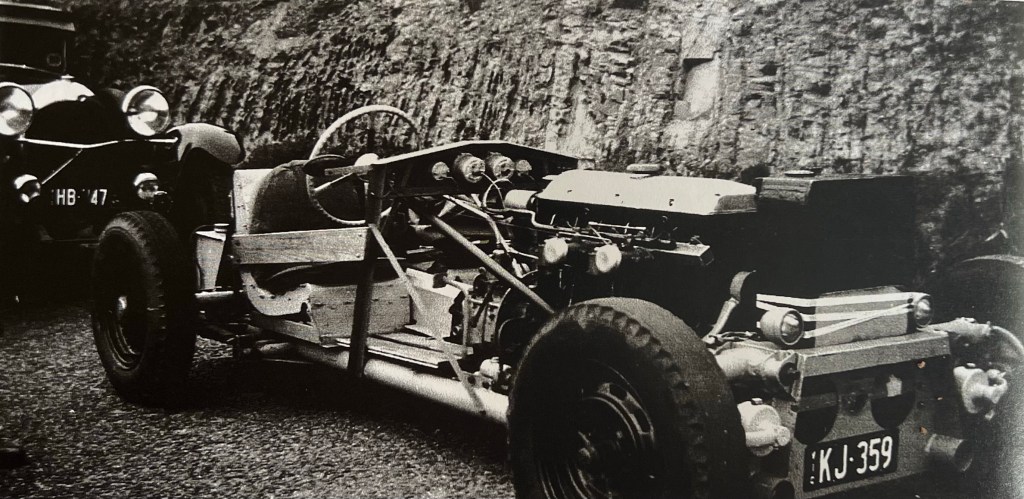
Maybach 1 on Kew Boulevard at Studley Park, Melbourne before the start of the September 1947 VSCC One Day Trial. Alex Bryce’s Bentley 3-litre is behind. Note the twin-Amals, lump of wood to keep Charlie in-situ and slicks fitted up front!
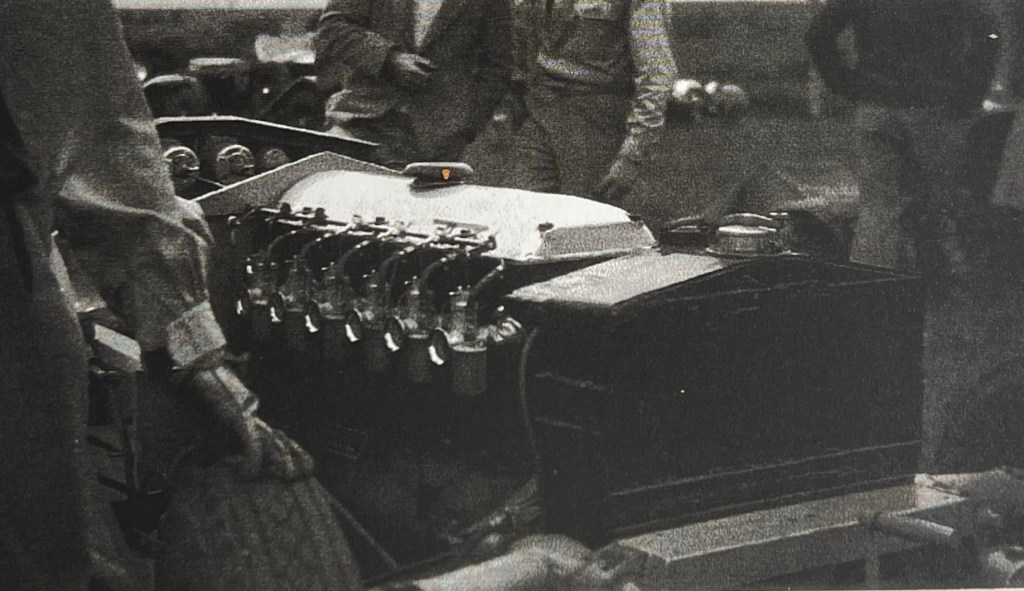
By the time the VSCC Killara Park sprints were held at the Davison Lilydale farm in November 1947, Maybach 1 had grown four more Amals. The message to be taken is that Maybach(s), like all great racing cars, were in a perpetual state of development.
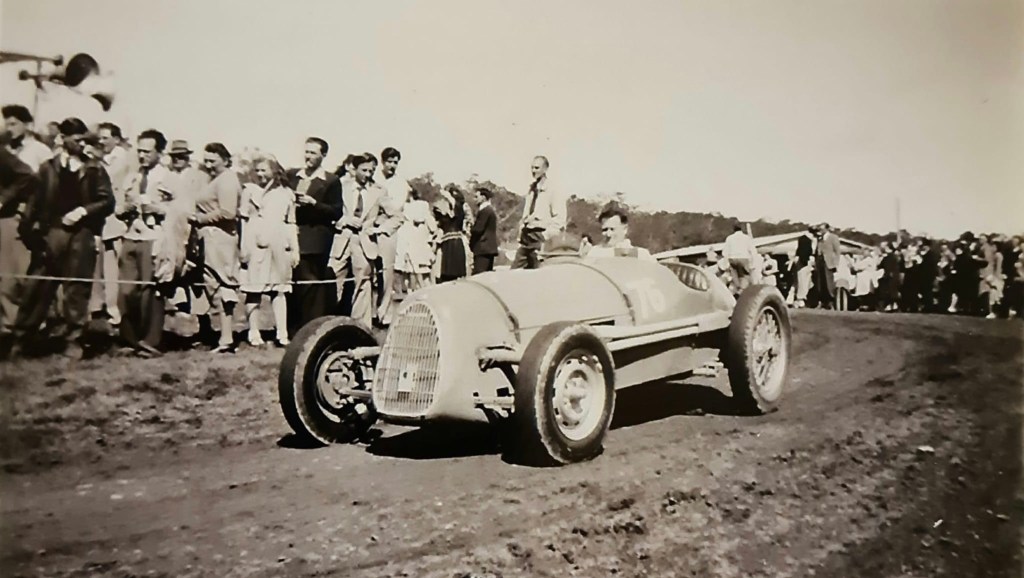
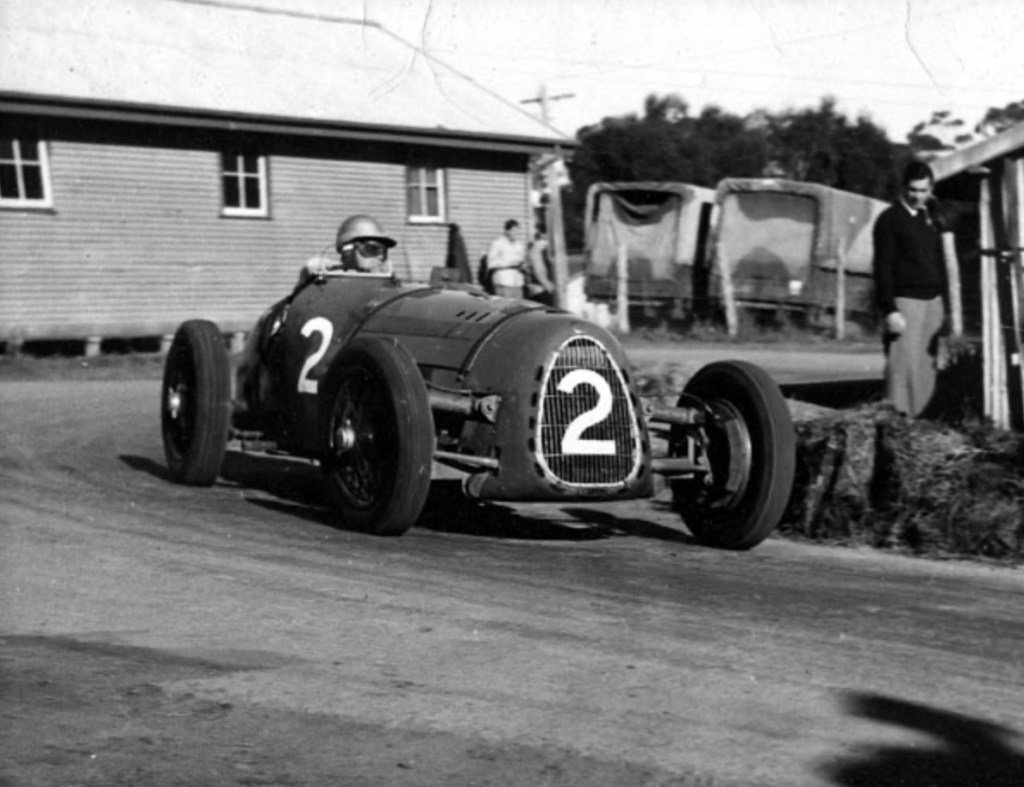
Charlie Dean at Rob Roy in January 1948, Maybach 1 obviously now bodied. Note the Studebaker pressed steel wheels and front drums compared with the shot of Maybach 1 in almost the same spot a year later below, with wire wheels and bespoke Minerva/PBR drums. Patons Brake Replacements – PBR – was another Repco Ltd subsidiary.

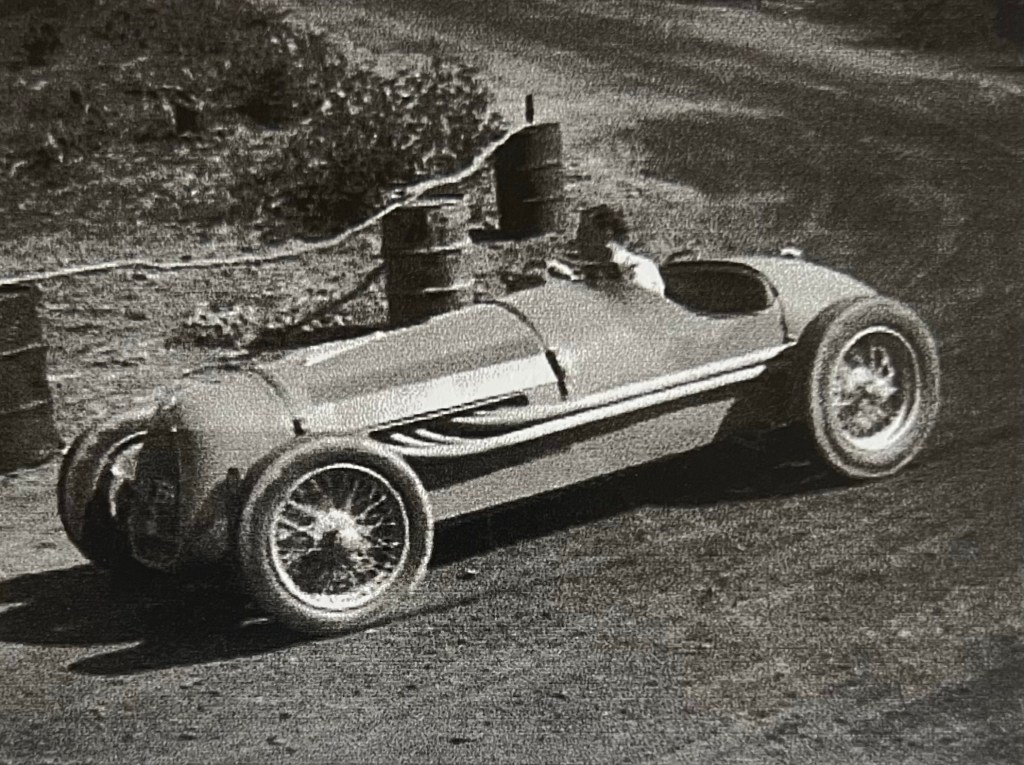
Charlie Dean cornering hard on Hurstbridge Hillclimb in April 1949, Maybach 1. He was second in the over 3-litre racing car class, Hurstbridge, to Melbourne’s east was used several times post-war.
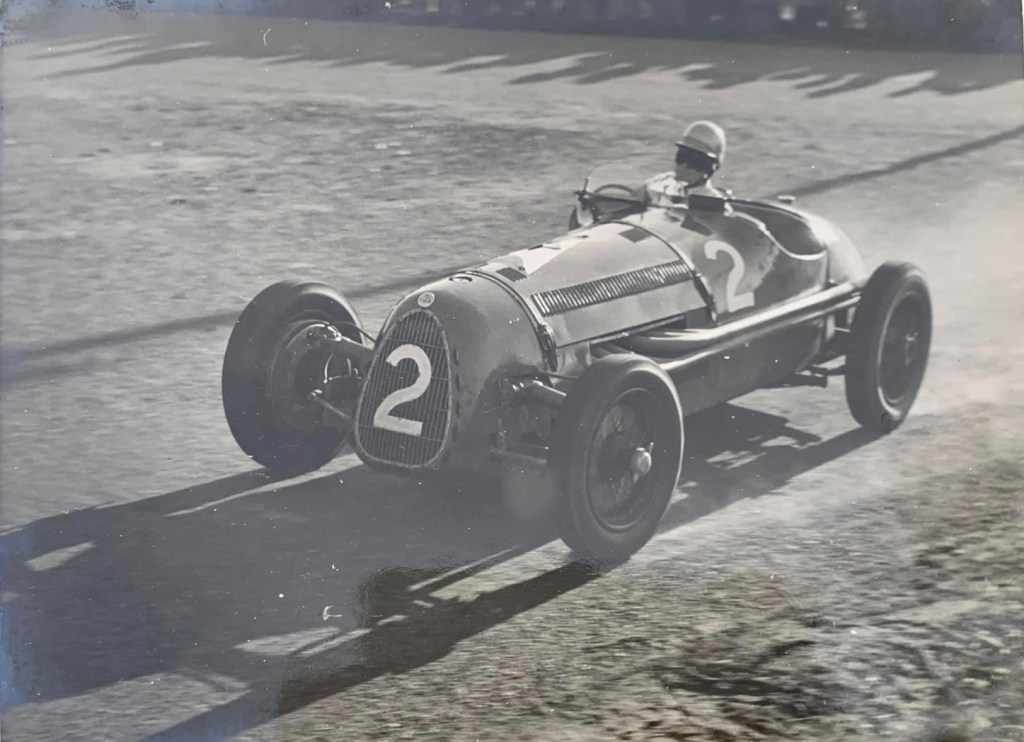
Dean, Maybach 1 S2 competing in the Mornington Motor Races at the Balcombe military camp in June 1950.

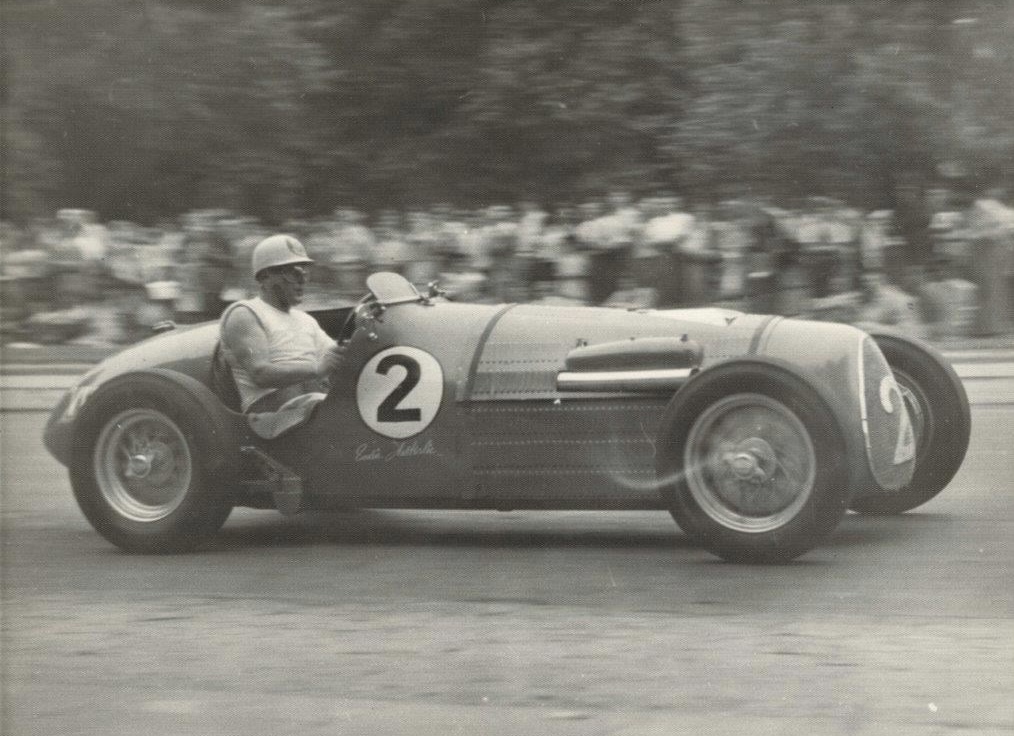
Stan Jones in Maybach 1 S3 chasing Jack Murray’s Allard J2 at Parramatta Park, Sydney – the first meeting at the venue – on the Australia Day weekend in January 1952.

Maybach 1 S3 this is The Age shot shown earlier, with the article as published. If somebody has a photograph of the Victoria Trophy we would all know if the annual for many years event was the Victorian, or Victoria Trophy. Both names are bandied around…
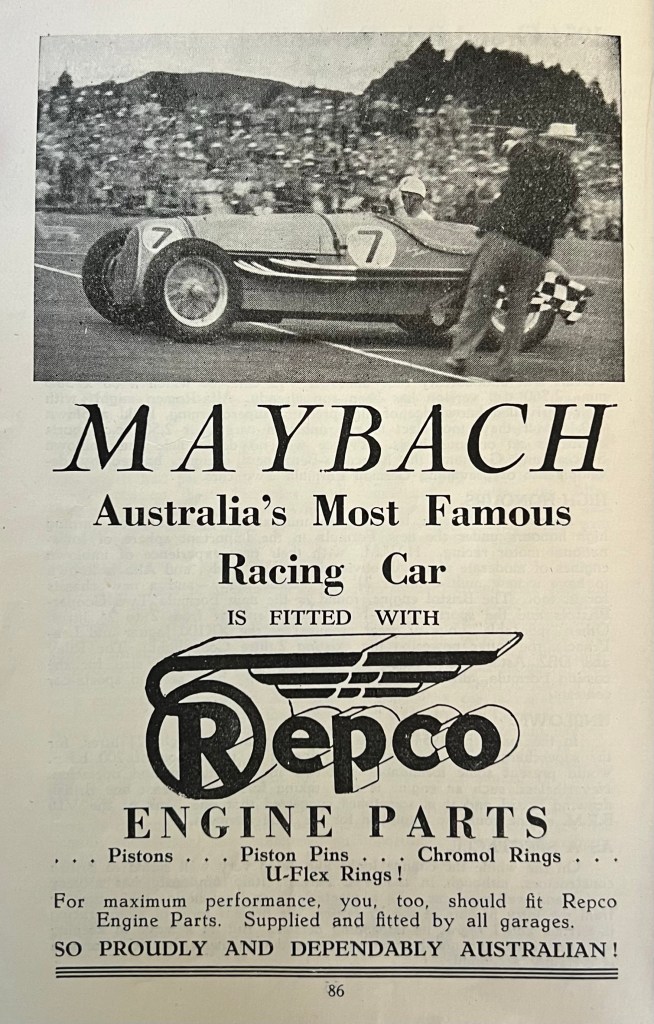
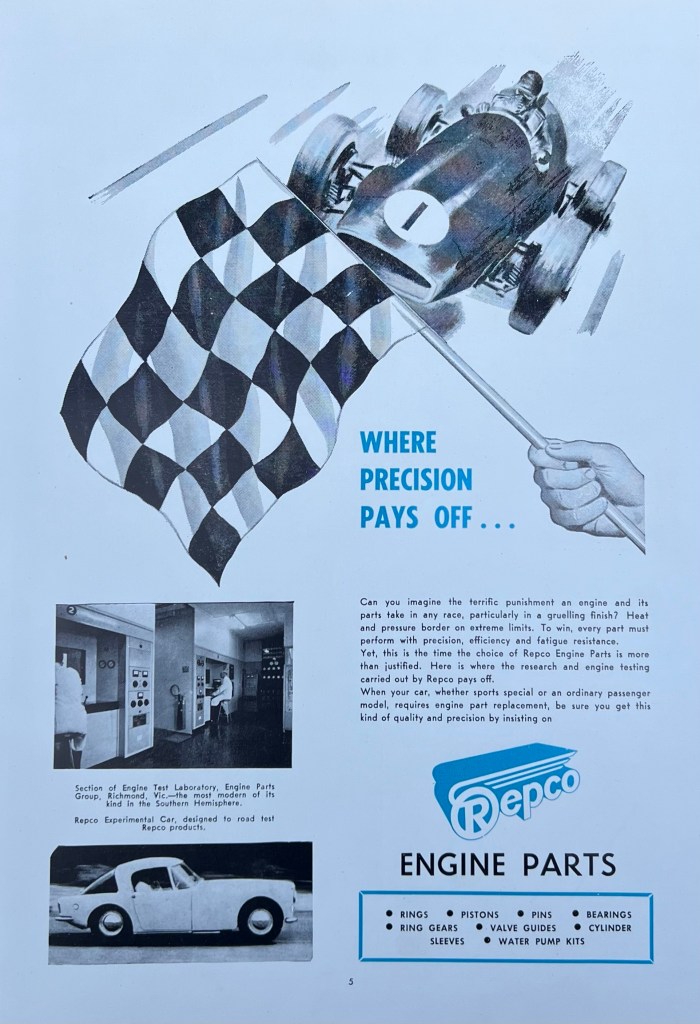
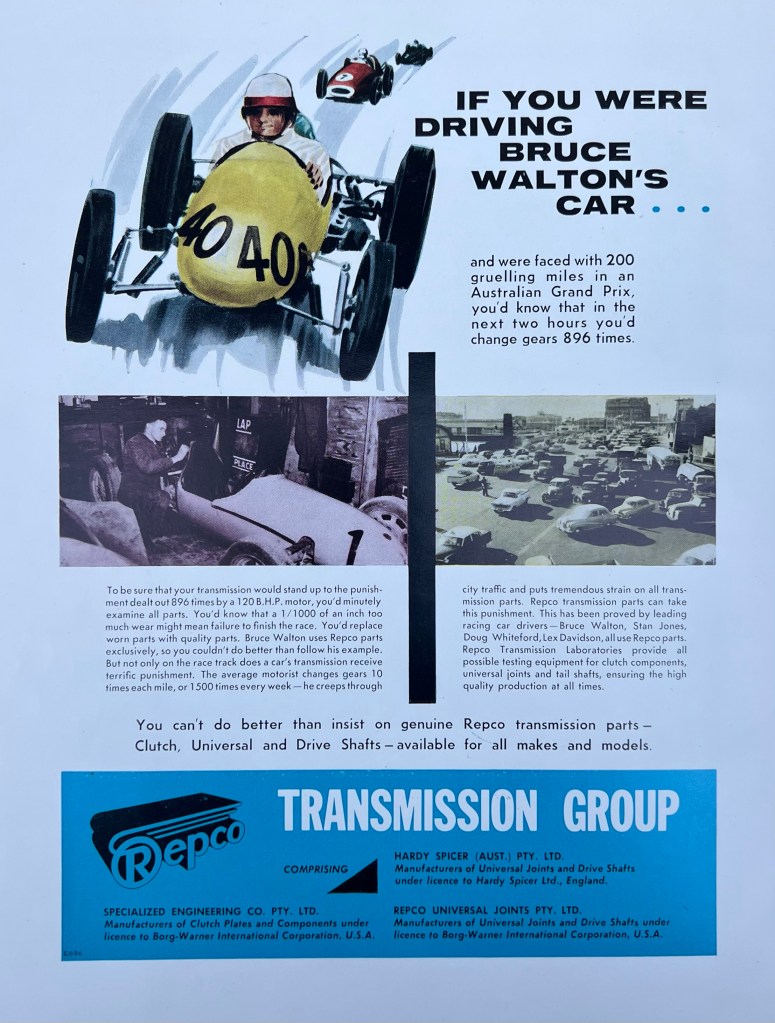
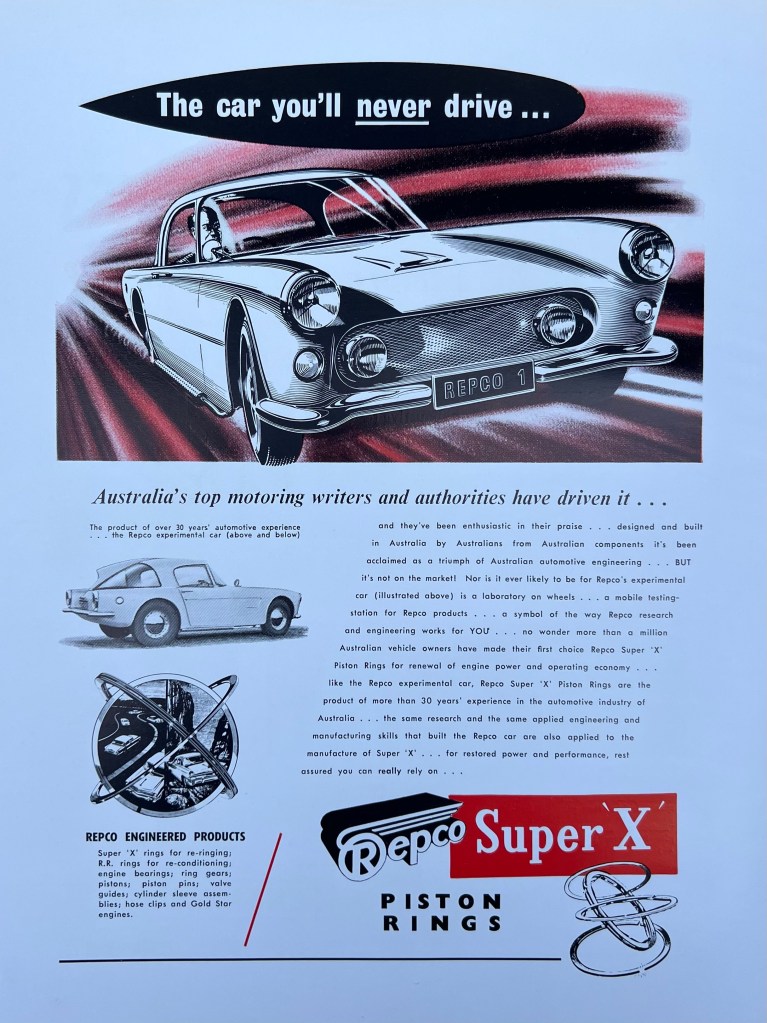
Just how strongly Repco used the Maybach programme to promote their engineering excellence to the broader populace is unclear to me.
This ad in the horsepower-press below promotes some of the Repco subsidiary produced components used in Maybach, but pointedly fails to note that the car and driver shown are winning the 1954 New Zealand Grand Prix at Ardmore. Time to sack the ad agency and/or the internal copy-boy/girl!

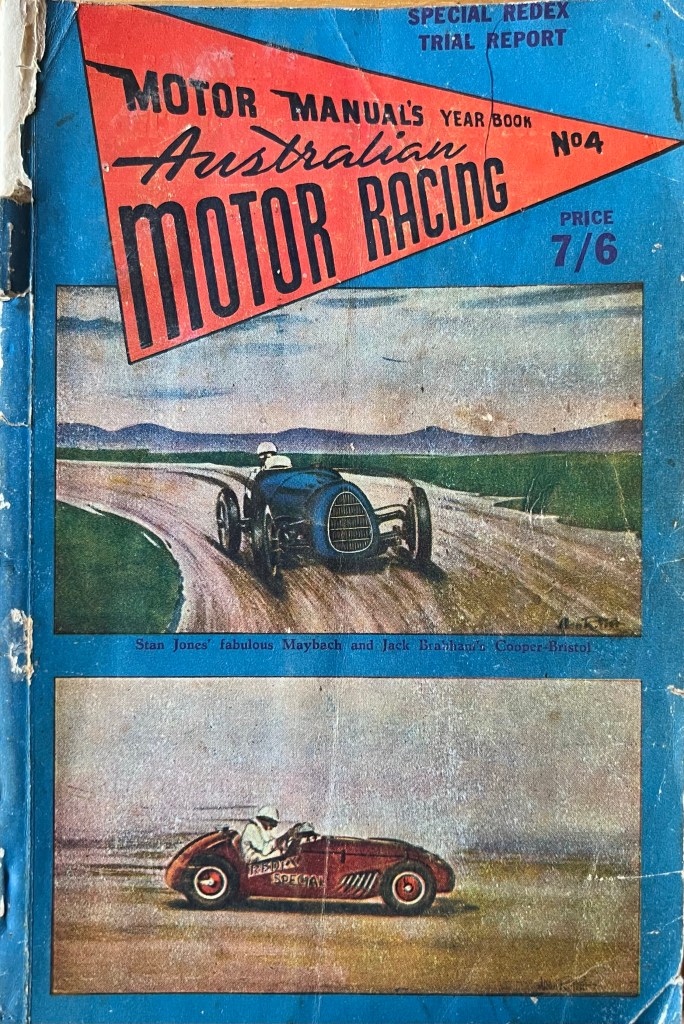
Clearly – to the extent you can see the cars – Motor Manual’s cars and drivers of the year were Stan Jones and Maybach 1 S3, and Jack Brabham and his RedeX Special, aka Cooper T23 Bristol.
Reference and photo credits…
Australian Motor Sports Review 1958-59, Brian Caldersmith, ‘The 50 Year History of The Australian Grand Prix’, John Fleming Collection via Tony Johns, George McKaige and Chester McKaige via their superb two ‘Beyond The Lens’ books, Stan Griffiths, David Zeunert Archive, sensational and rare Dacre Stubbs photographs via Martin Stubbs, VSCC Vic Collection, John Montasell, Clem Smith, Motor Manual, Ivan Pozega Collection, Peter Moore
Tailpieces…

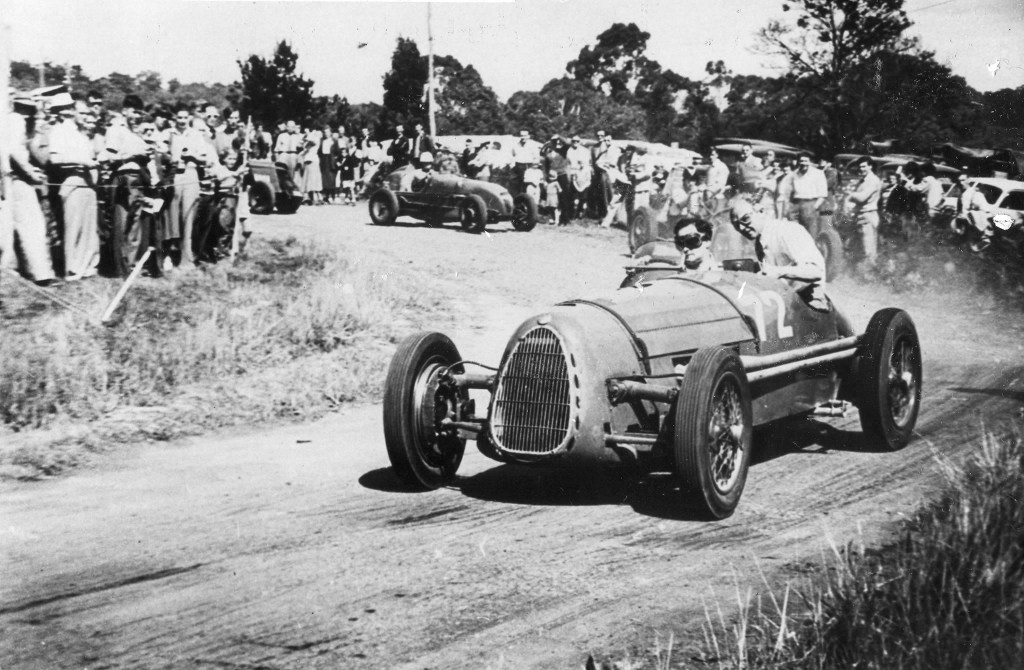
The Maybach reality: Australia against the Europeans – ignoring the country of origin of the engine! – with Stan as often as not leading as chasing. Here Jones is aboard Maybach 1 on the Adelaide Hills, Woodside road circuit in October 1951, chasing arch-Melbourne-rival come fellow rough-nut, Doug Whiteford’s Lago Talbot T26C. Whiteford won this encounter in what were Stan’s early days in Formule Libre.
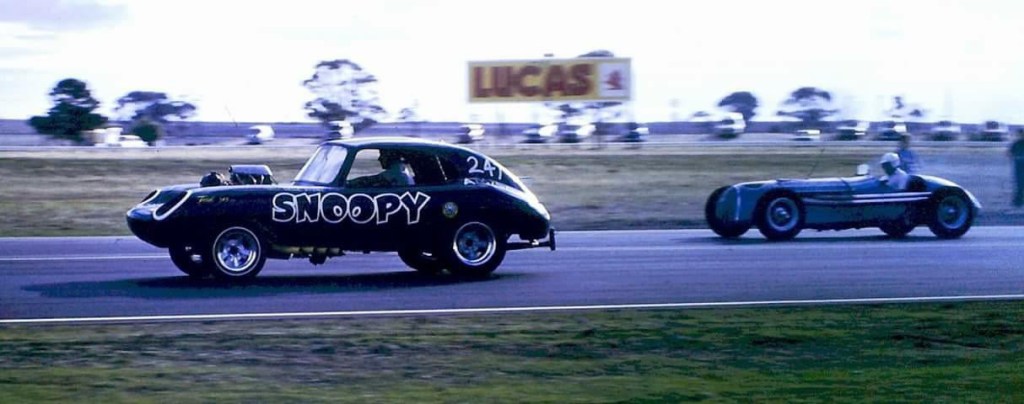
Maybach 1’s mortal remains were tracked down or found by Jack McDonald in a South Melbourne wrecking/junk-yard in the early 1960s. He rebuilt the car – all of the required donor bits were easier to obtain back then – and soon the old-gal was back on track, in this case a Calder Drags meeting in 1968. Jack is being blown off by Des Byrne’s E-Type Ford V8.
For the last 32 years Maybach 1 has been in the very safe, caring hands of Melbourne racer/historian Bob Harborow, shown below competing at Goodwood in 2006.

Finito…
 primotipo...
Great article on Maybach 1. However there is no information on the specifications of the car with regards to wheelbase, front and rear tracks, overall length, wheel size etc. All of this is vital info for people like me who are interested in building a scale model of the car. PLEASE include that sort of info into the specifications – not just engine size and details.
Alan Wheeley
Alan,
Read the article again, I reproduced ALL of the information I have.
I am not your free research assistant.
Mark
The early engine is an NL38. The 4.2 is a HL 42. interestingly, it has squarer dimensions – ie. more modern – than the Jag XK, a similar engine. Looking forward to the Maybach II story, hope there are some chassis shots , including of that infamous front cross member.
Well Said Mark : D.Z.
[…] A while back I published an article about Maybach 1, the first in a series of three chassis – four cars – built by Charlie Dean/Repco Research and Ernie Seeliger between 1947 and 1958. Click on this link to that piece: https://primotipo.com/2024/01/15/maybach-1-technical-specifications/ […]
The Woodside photo was actually a newspaper photo which Clem had purchased from the paper. I scanned it on one of my trips to Adelaide, the real importance of the picture being that it was the dice for the lead of the first Formula One race in Australia. The Maybach had its supercharger removed for this purpose and it was never refitted.
With reference to the limited slip diff, I do recall reading somewhere that this played a hand in a Woodside race against Whiteford, though maybe not this one. Coming off the main straight there was a bit of a climb and wheelspin was commonplace among these cars. The Maybach’s limited slip was said to have been from a mid-twenties Studebaker truck, whether or not the ‘Power Lock’ name should apply I don’t know. Dana-Spicer manufactured ‘Powr-Lok’ units from 1956 onwards.’
Ray,
It’s a stunning shot, one of my favourite Oz shots of the period.
That F1 race is significant as you say, in the end the 1952 AGP (memory?) was held to F Libre rather than F1 as had been mooted.
The supercharger never reappeared as you say, why that is the case is a really good question. As Maybach(s) suspension evolved they could have used more grunt and got it to the ground. The final 3.8-litre Maybach 3 engine and overall weight of the car put it behind the Ferrari/Maserati eight-ball…a blower would have been handy then. Maybe the energy should have been there rather than with the Irving led fuel-injection, albeit the learnings for Repco Research and the broader group thru that exercise would have been considerable.
Where is Charlie Dean or his book when you need him/it…there will be reasons of course.
m
[…] about the Maybachs here: https://primotipo.com/2024/01/15/maybach-1-technical-specifications/ and here: […]
[…] One of the great shames is that a Maybach never won an Australian GP, karma suggests that this shouldn’t be the case but shit-happened on those particular big days. Stan Jones’ 1954 NZ GP win – truly a great team effort – is duly acknowledged…More about Maybach 1 here: https://primotipo.com/2024/01/15/maybach-1-technical-specifications/ […]
[…] Engineer/driver Seeliger and Stan Jones after Jones victory in the 1953 Victoria Trophy at Fisherman’s Bend aboard Maybach 1, with Stan aboard that car below at Parramatta Park in 1952 ahead of David McKay‘s MG TC Spl. More on Maybach 1 here:https://primotipo.com/2024/01/15/maybach-1-technical-specifications/ […]