


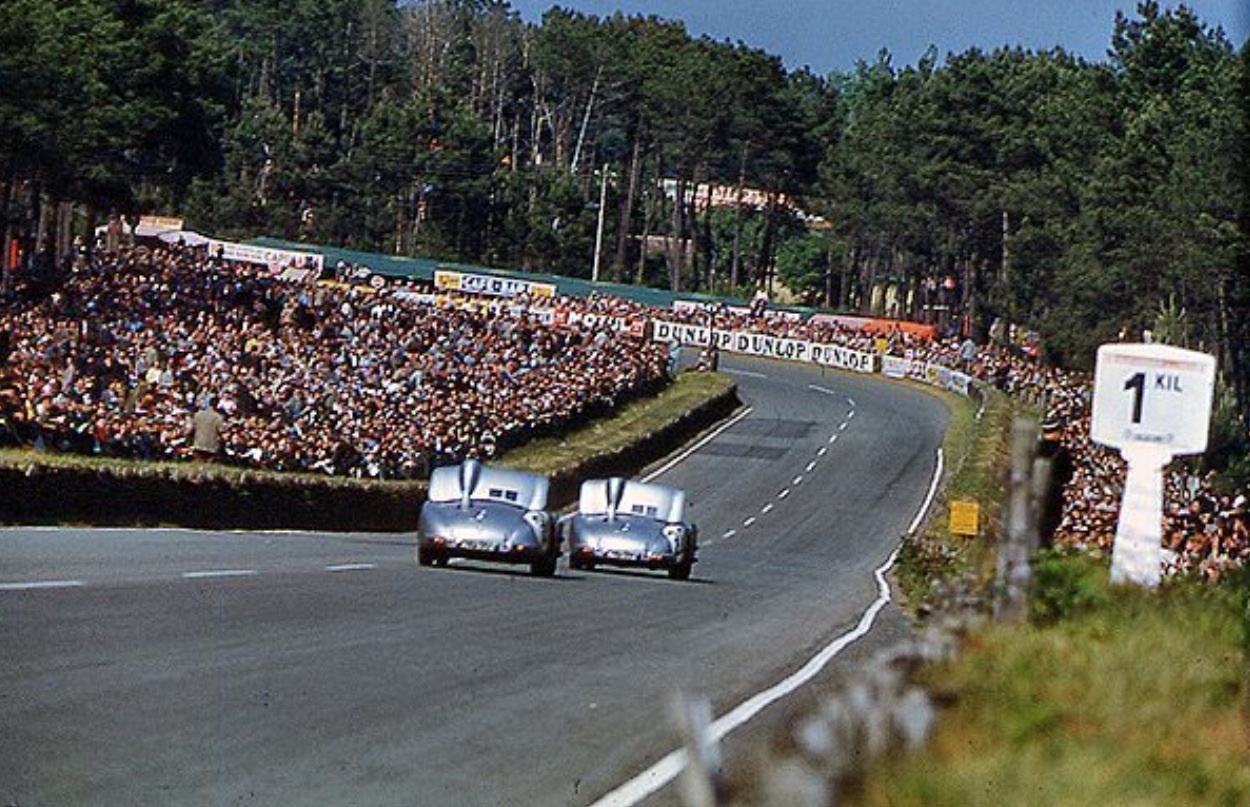
The somewhat other-worldly sight of two Mercedes Benz W196S/300SLR’s with air-brakes deployed as they approach the Esses at Le Mans in 1955…
When you consider the engineering of this clever response to the braking power of the Jaguar D-Type’s Dunlop brakes one can’t but wonder about the development of a German equivalent?!
The Benz was the champion sportscar of 1955 winning most of the blue-riband events: Targa Florio, the Mille Miglia and the Tourist Trophy, the exception being Le Mans of course.
Mercedes withdrew whilst in the lead due to the accident in which Pierre Levegh was an innocent party, which took his life and that of about 84 spectators, not to forget the 180 folks who were injured.
Design and construction…
In essence the W196S, as the factory model number suggests, “is basically a Type W196R Formula One racing car with a two-seater sports car body,” Mercedes Benz (mercedes-benz-publicarchive.com) wrote. The W196R won back to back drivers titles for Juan Manuel Fangio and Mercedes in 1954-55.
“The main technical difference is to found in the engine: the racing sports car, not being bound by the Formula One regulations, limiting the engines displacement (to 2.5-litres), is powered by a 3-litre version of the eight-cylinder in-line engine and features cylinder blocks made, not from steel, but from light alloy. Apart from this, the 300SLR was not powered by special methanol-based racing fuel but by premium petrol.”
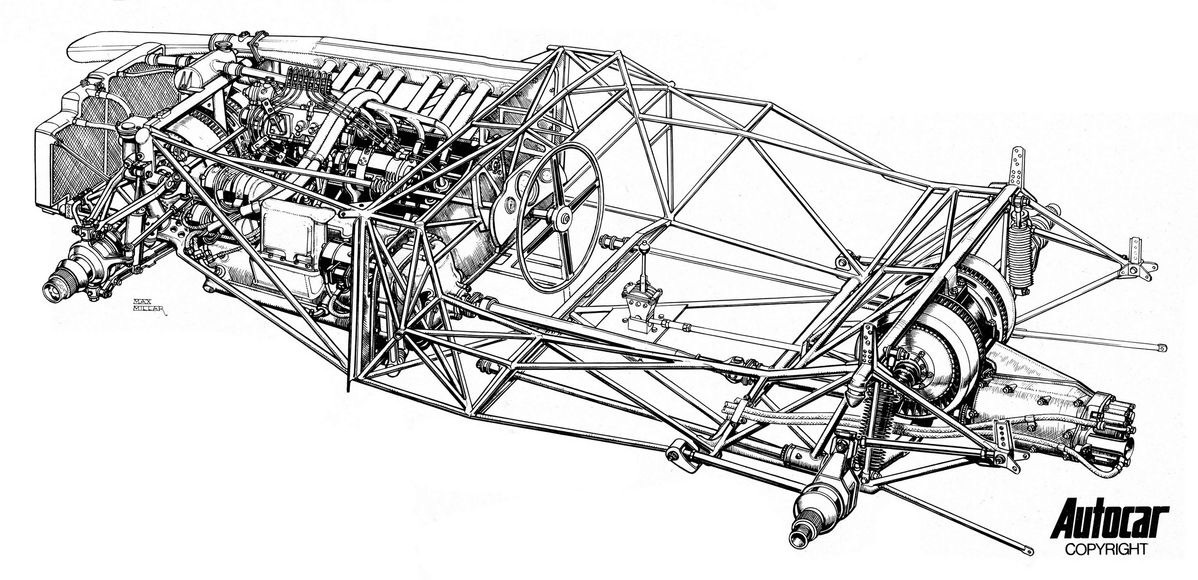
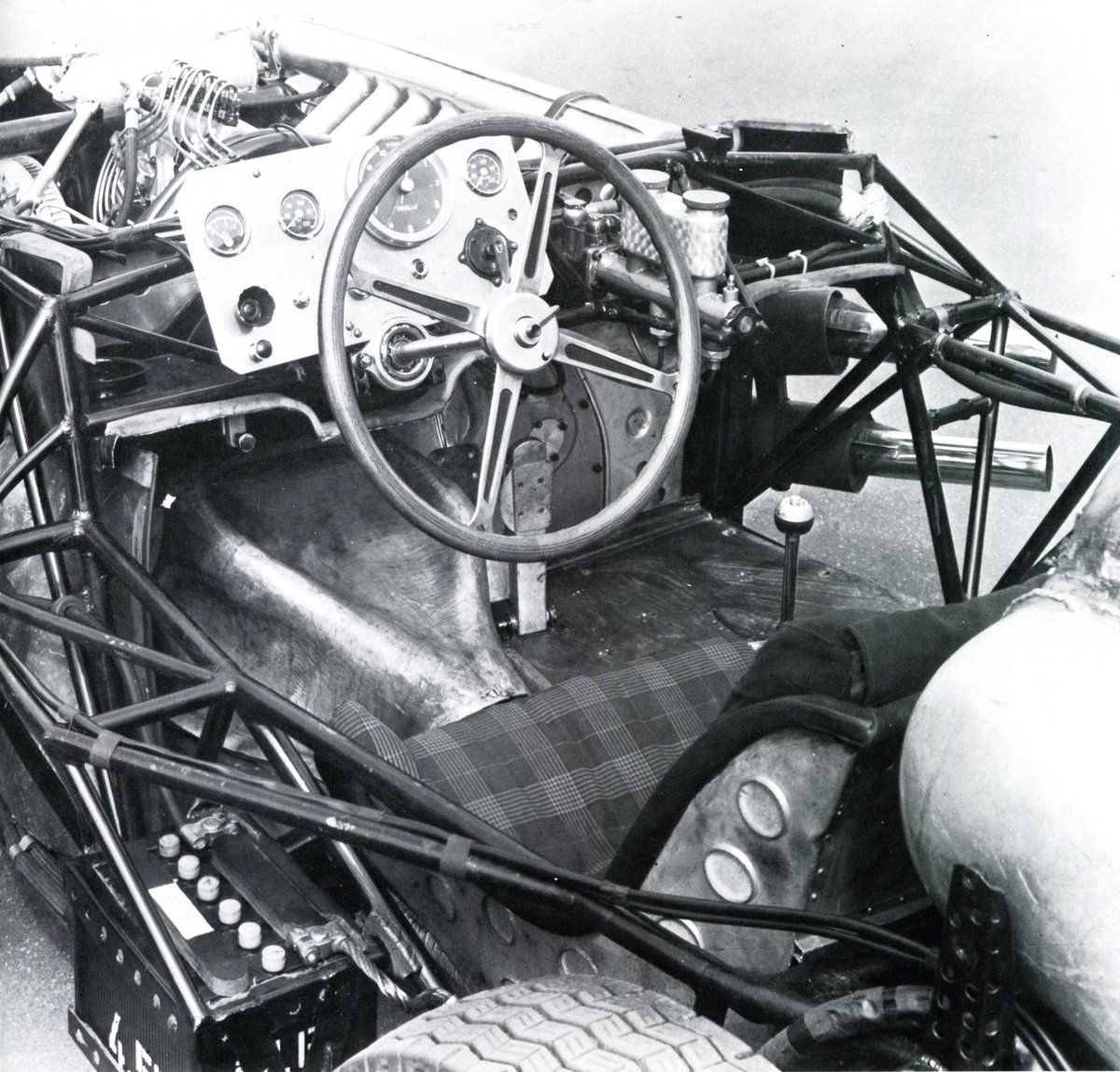
Key design elements of the car start with a multi-tubular steel spaceframe chassis. Suspension is by upper and lower wishbones at the front, torsion bars and dampers. At the rear are swing-axles, torsion bars with again telescopic dampers or shocks. Massive inboard drum brakes are used at both ends to stop the 701kg car in ready to race trim.
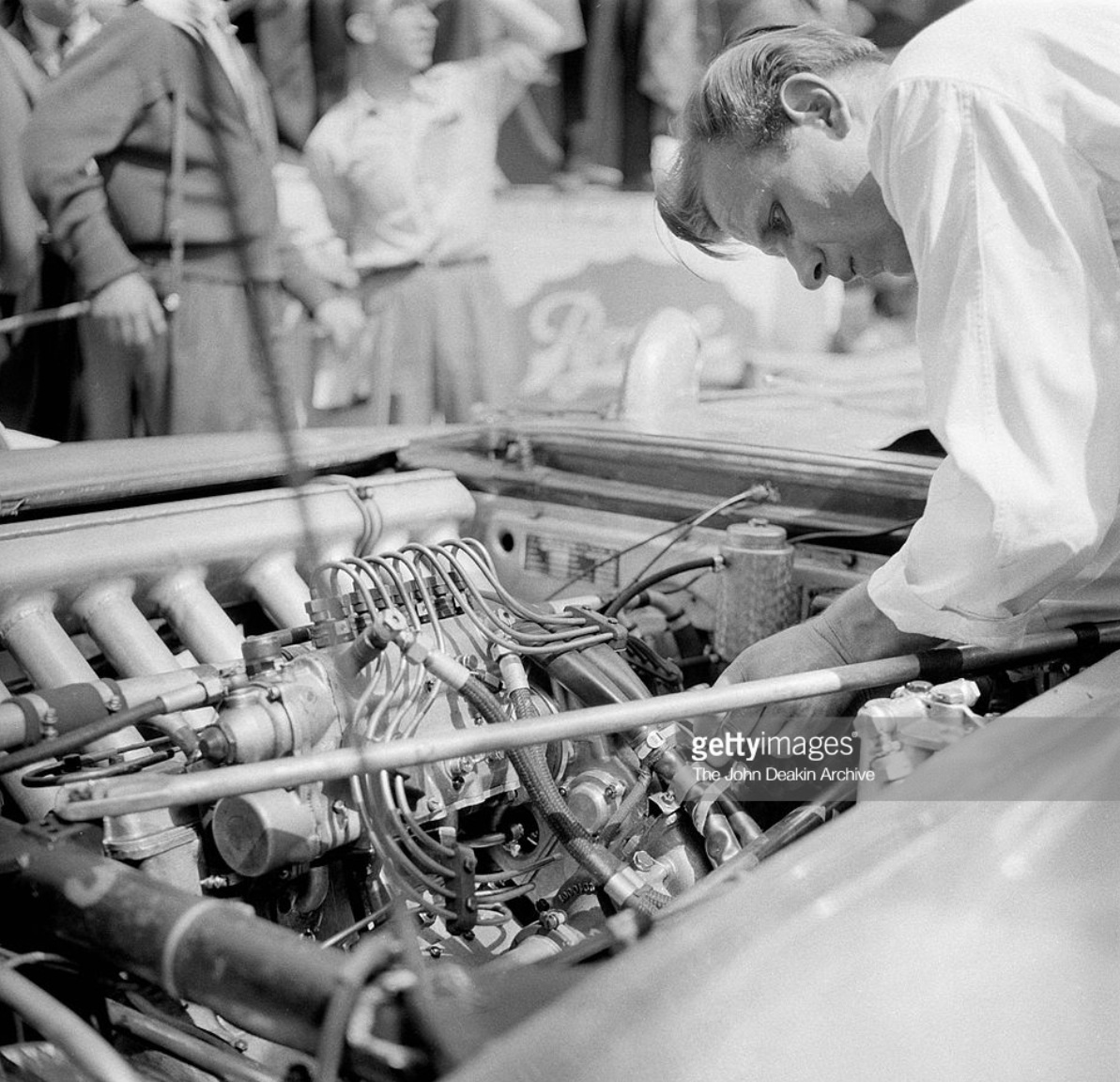
At the heart of the matter is the superbly built Mercedes straight-eight cylinder engine. Cast in two blocks of four-cylinders it runs on a pre-war style roller bearing crankshaft. Bosch provided the fuel injection, the two valves per cylinder of desmodromic actuation. The 3-litre engine produced circa 310 bhp @ 7400 rpm on ‘pump’ fuel as against the more exotic brew which fed its GP brother.
The full technical specifications of this car are at the end of the article.
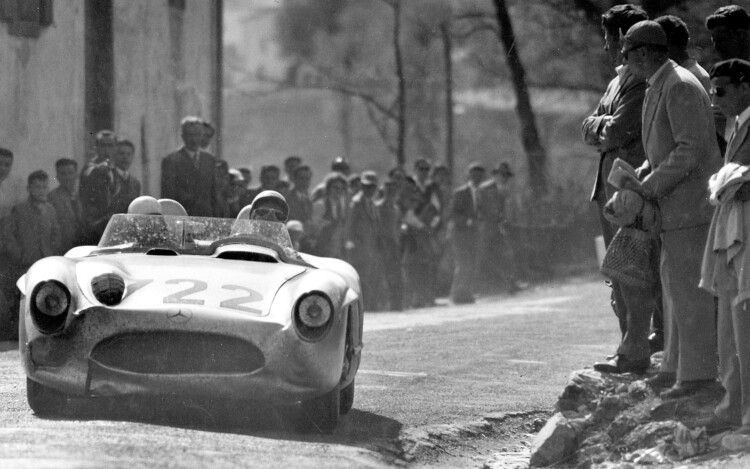
Race programme…
Mercedes didn’t attend the 23 January Buenos Aires 1000 Km first round of the Manufacturers Championship which was won by the Ferrari 375 Plus raced by Valiente/Ibanez. The Sebring 12 Hour was won by the Briggs Cunningham entered Jaguar XKD crewed by Mike Hawthorn and Phil Waters, again Mercedes missed the event held on 13 March.
The 300SLRs arrived with a bang in Italy with the Stirling Moss/Denis Jenkinson combination winning the Mille Miglia in front of Fangio driving solo in a sister car.
This win and all-time-record speed of 157.65km/h has been eulogised down the decades and needs no further comment from me. Seek out Denis Jenkinson’s account of the race in MotorSport, it is one of the great pieces of automotive race journalism.
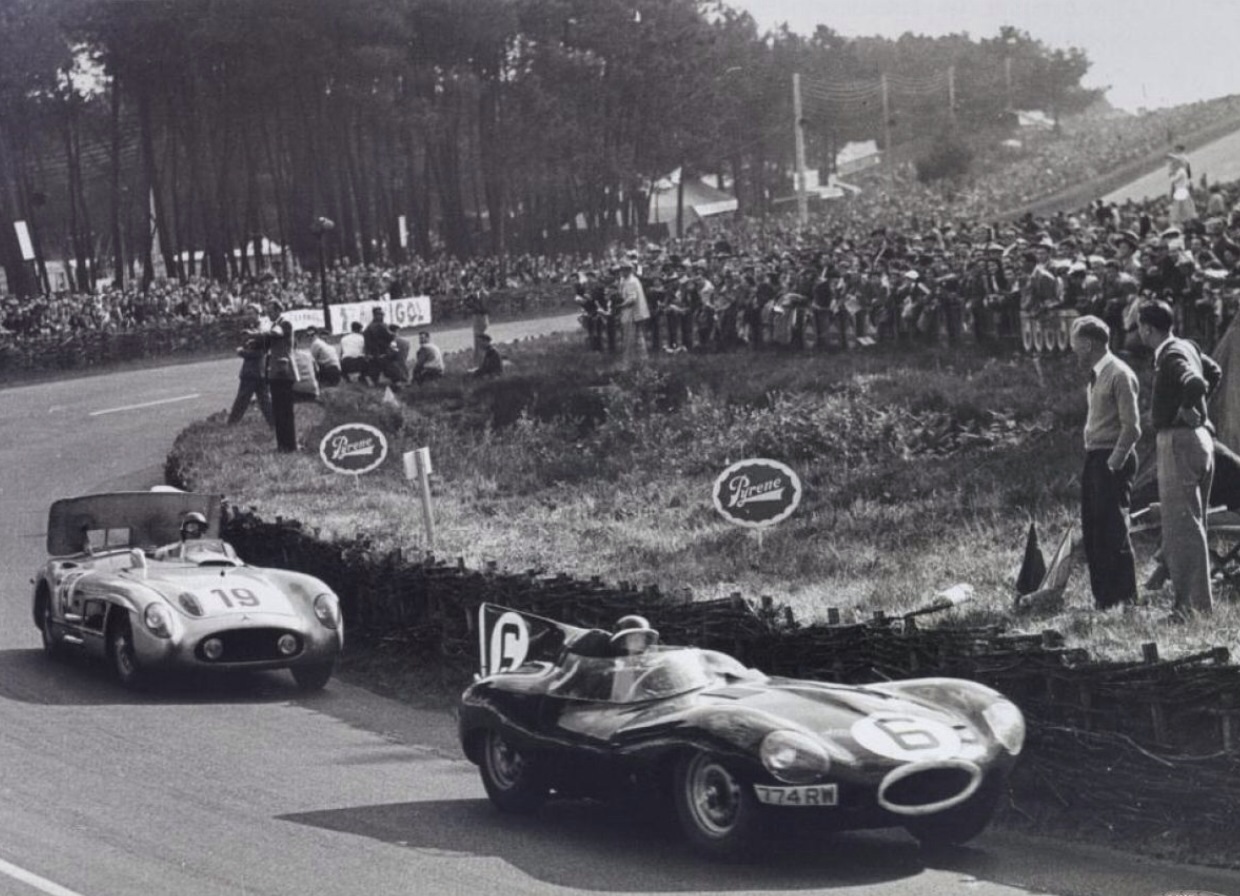
Le Mans followed in June with the works Jag-Ds of Mike Hawthorn and Ivor Bueb completing the largest number of laps to cross the line in first position, after Mercedes Benz respectful withdrawal from the event whilst in the lead.
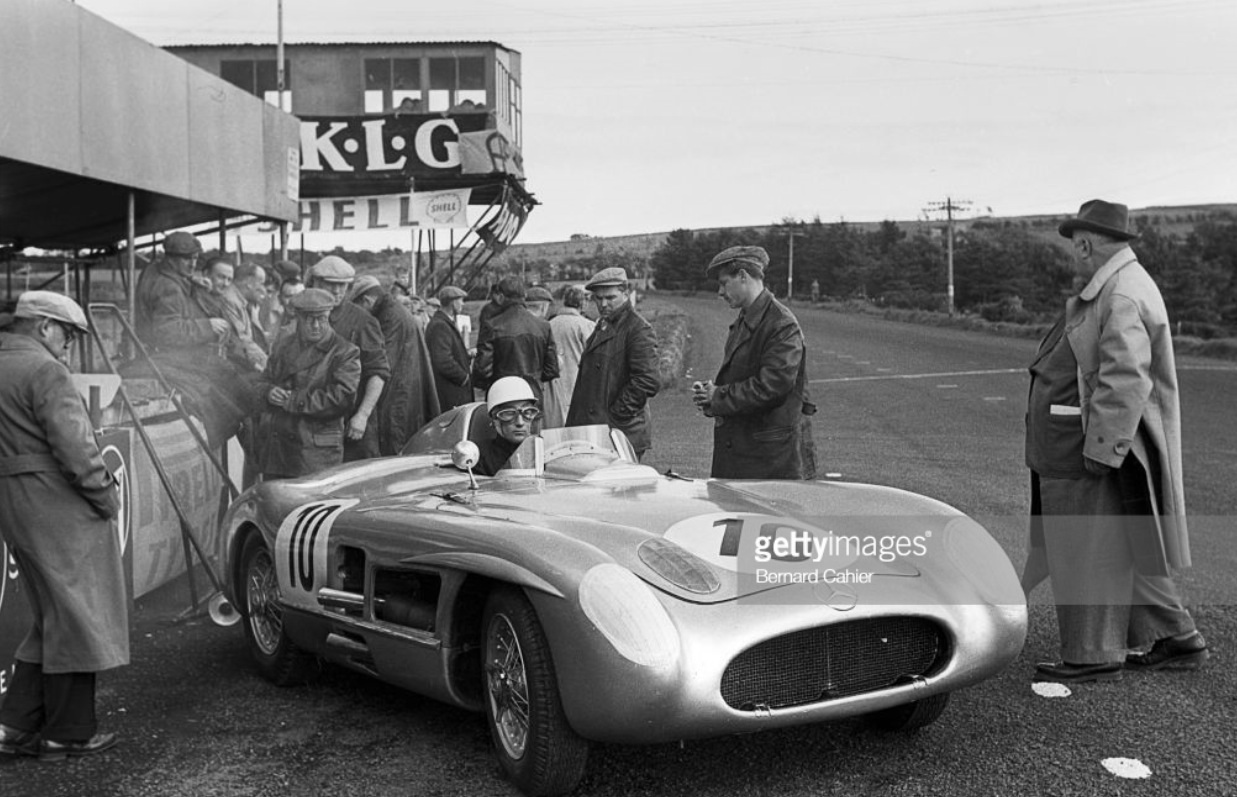
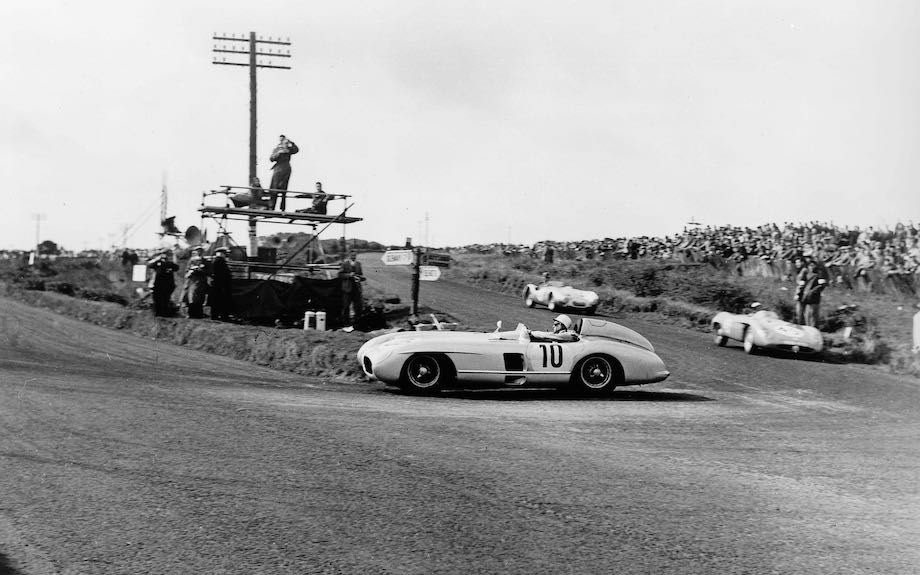
Dundrod’s wild road circuit hosted the Tourist Trophy in mid September. The race started in warm weather which deteriorated to rain later in an event became an 300SLR rout: the Moss/John Fitch car won from the Fangio/Kling machine with the Von Trips/Simon/Kling machine third. The best placed Jag was the Hawthorn/Desmond Titterington car in fourth, albeit it wasn’t running at the finish.
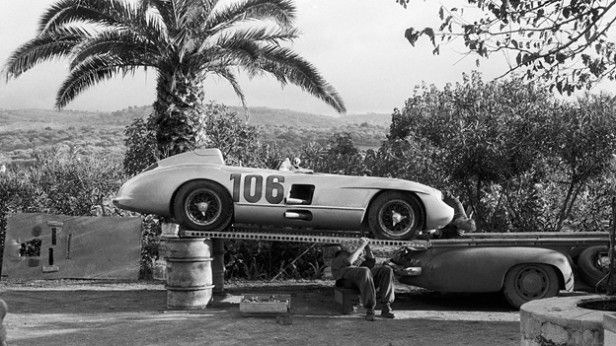

The Germans again beat the Italians on home turf, taking the Targa Florio with a one-two from Ferrari on 16 October. The Moss/Peter Collins car finished ahead of Fangio/Kling with the best placed Ferrari the 860 Monza raced by Eugenio Castellotti and Robert Manzon.
Despite missing several events, Mercedes won the constructors championship by one point from Ferrari: 24 points to 23 with Jaguar in third on 16. The W196S won every single race it entered and finished…
At this point, Mercedes withdrew from the elite levels of the sport until returning with Peter Sauber’s sports-prototype cars in the mid-1980s. Click here for my W196R article; https://primotipo.com/2015/10/09/mercedes-benz-w196-french-gp-1954/
Technical Specifications…
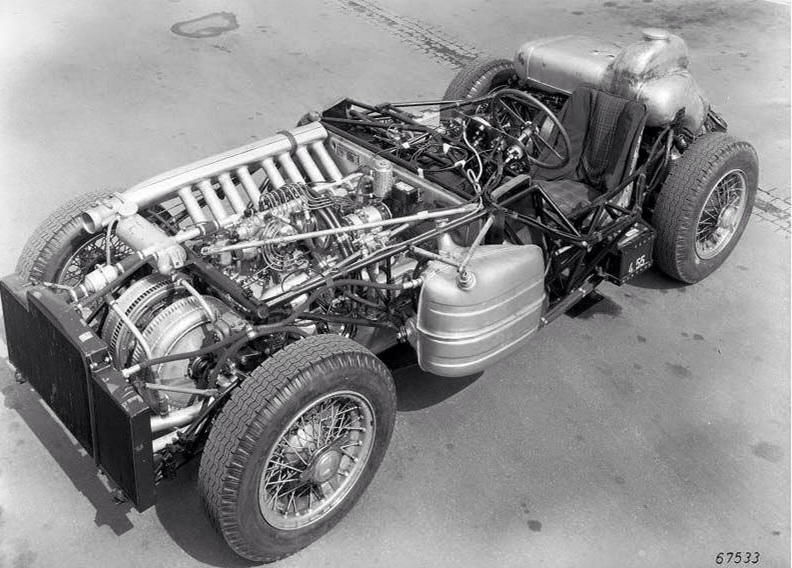
The chassis is a light-weight multi-tubular spaceframe, front suspension comprised upper and lower wishbones, torsion bar springs and telescopic shocks. Those huge, light alloy finned drum brakes are mounted inboard and 300mm in diameter. Steering is worm-and-sector, the front tyres 6.00 x 16, the radiator is huge! The alloy oil tank is behind the right-front wheel, while the fuel tank sits high at the back, its capacity not specified by Mercedes.
The 234kg engine – type M196S – is eight-cylinders in line and inclined 53 degrees to the right in the chassis. The silumin head is cast in one piece: DOHC, two plugs per cylinder, two inclined valves per cylinder with desmodromic valve gear, compression ratio 9:1. Bosch 8-plunger injection pump,
Block – two Silumin blocks of four-cylinders each with chrome plated aluminium liners. Bore/stroke 78 x 78 mm, capacity 2982 cc. Crankshaft 10-bearing (roller bearings) Hirth-type crank with central power take off. Dry sump lubrication via a gear pump. Electricals are by Bosch: starter, generator and twin-magneto ignition.
Power, 310bhp @ 7400rpm, 276bhp @ 7000 rpm, and torque 31.7mkg @ 5950 rpm
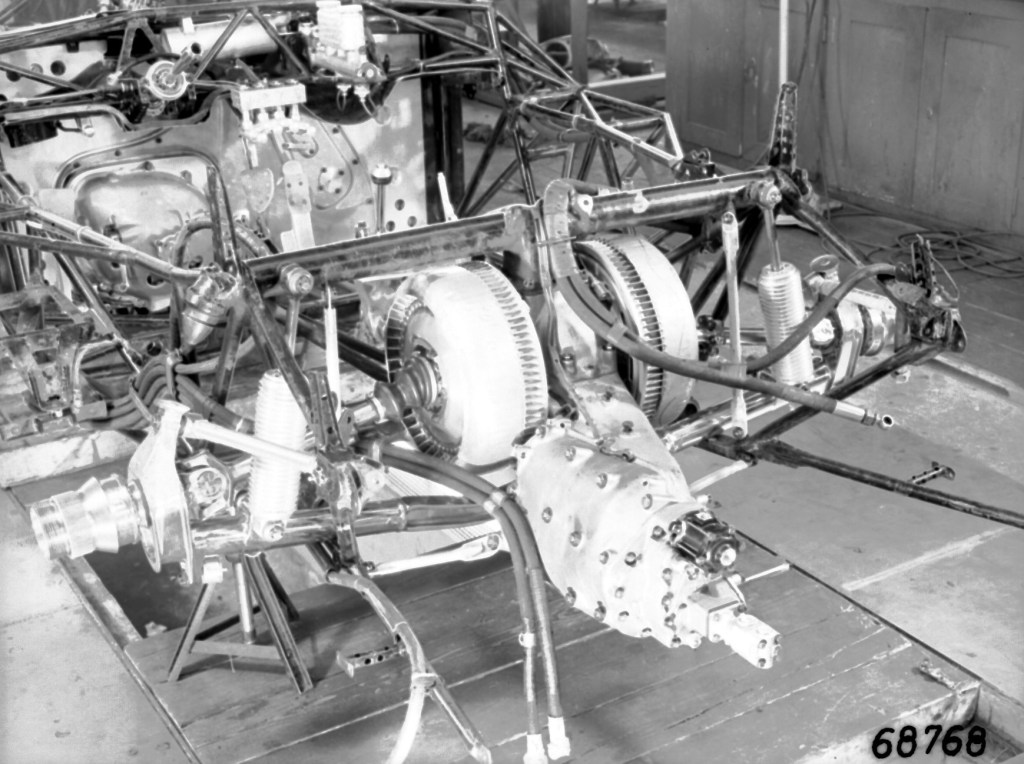
The rear suspension comprises alloy uprights, a single-joint lower swing axle and top links, longitudinal torsion bar springs and telescopic shocks. The 275mm diameter brakes are inboard duplex light-alloy drums and air-cooled.
The transaxle is five-speed, a gate shift was used with a locking system
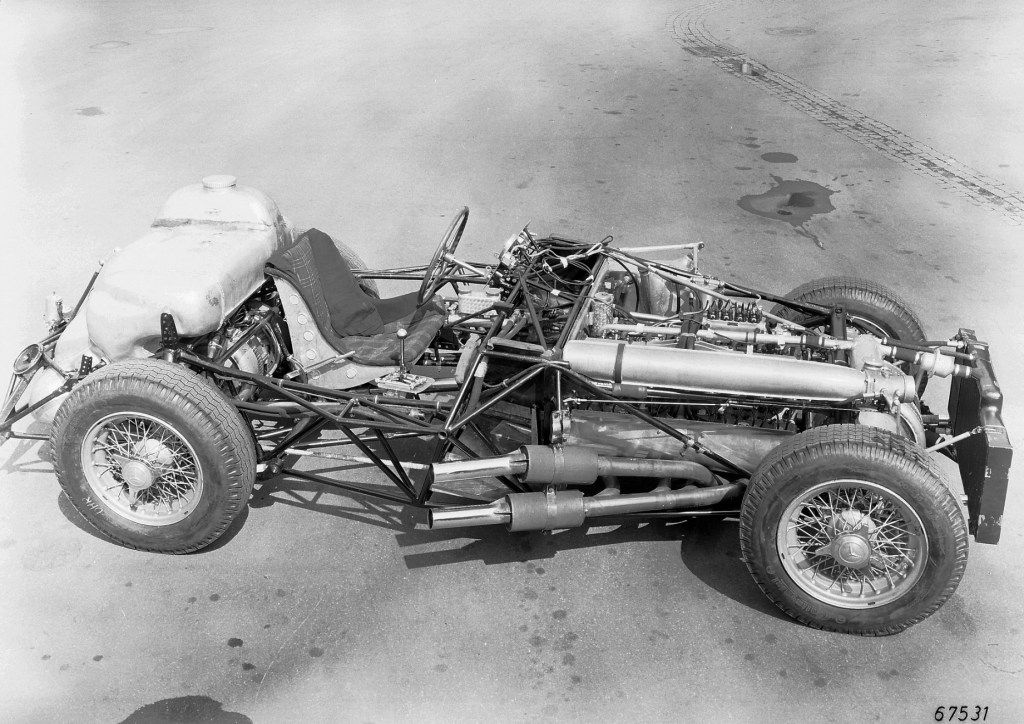
The wheelbase is 2370mm, front track 1330mm, rear track 1380mm, the cars length 4300mm, its width 1740mm and height 1100mm and the “weight of the car in ready for operation status” is/was 901kg.
While the five gear ratios were fixed, the final drive was to choice with top sipped quoted as “over 300km/h.”over 300 km/h. Wheelbase, 2370 m, Front track,1330 mm, Rear track, 1380 mm, Length, 4300 mm, Width, 1740 mm, Height, 1100 mm, Weight, 901 kg ready to race, Fuel tank 265 litres, Engine weight, 234 kg
Etcetera…
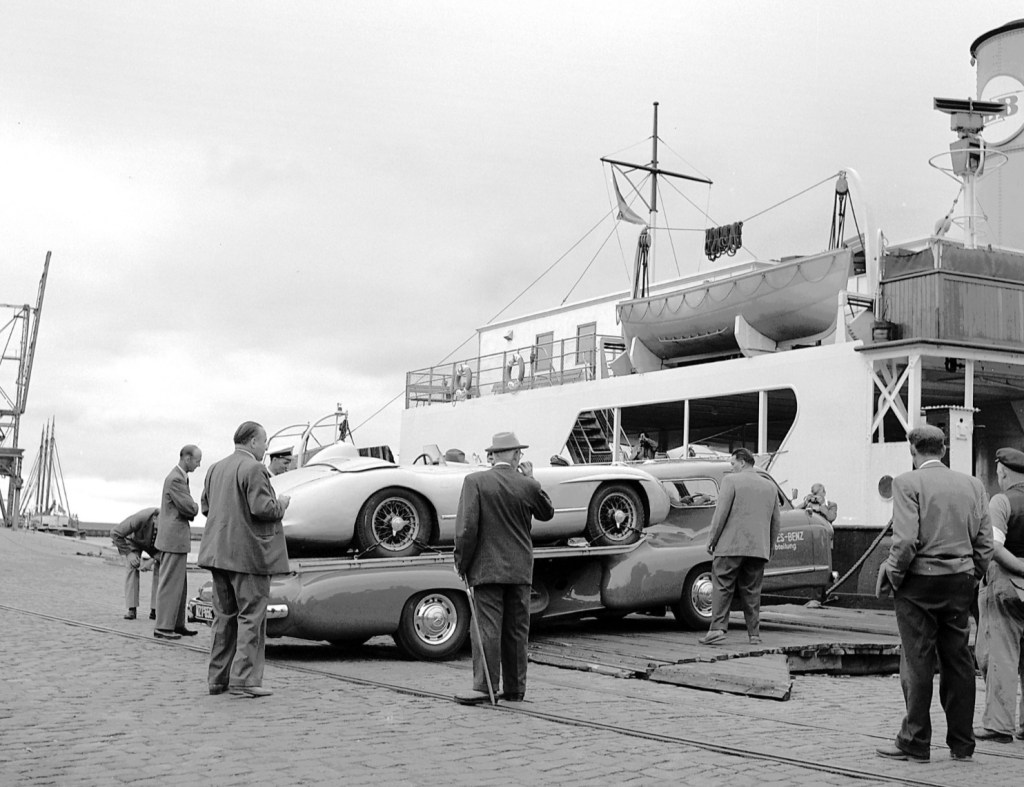
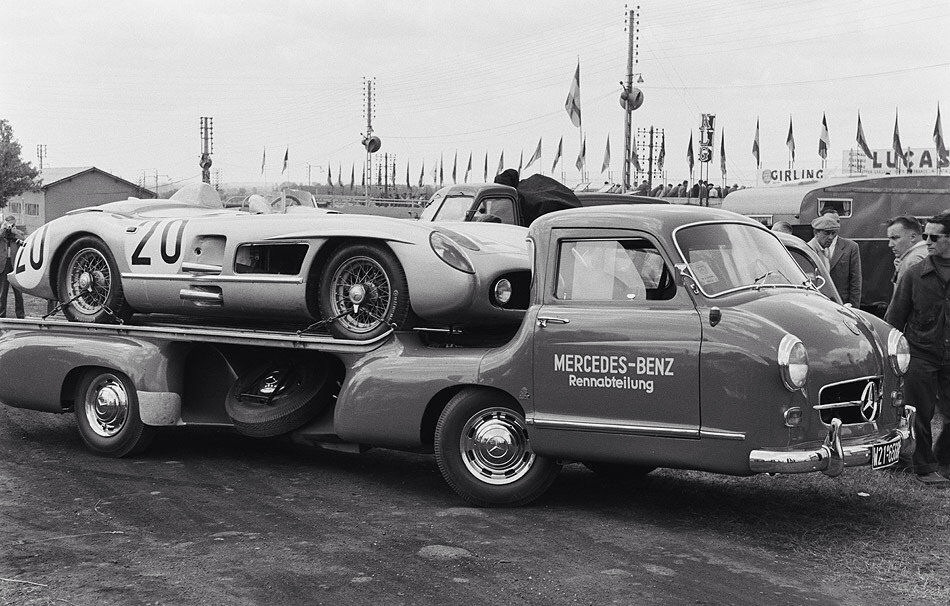
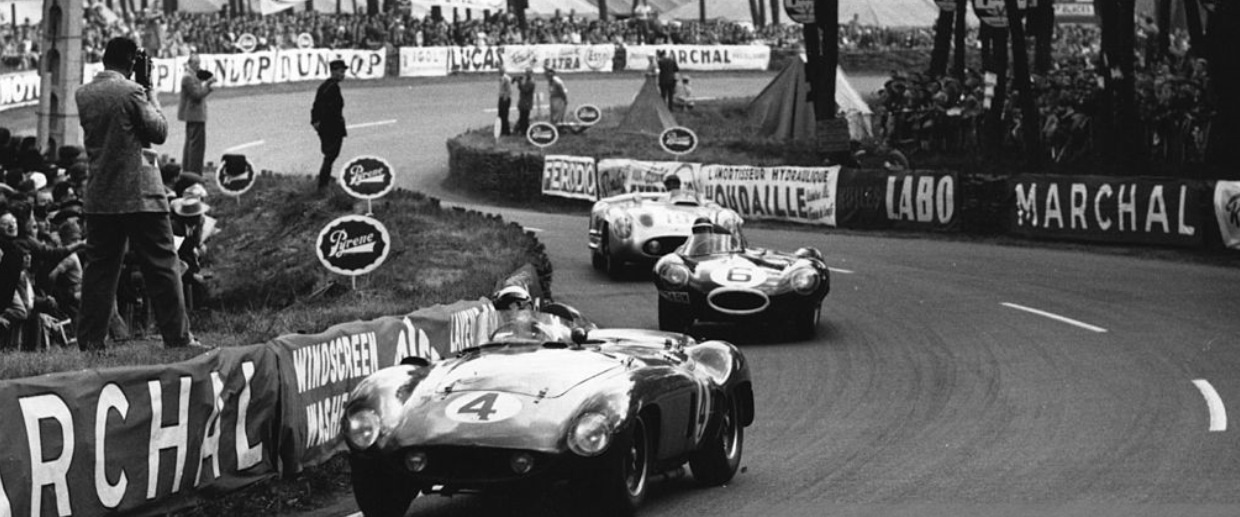
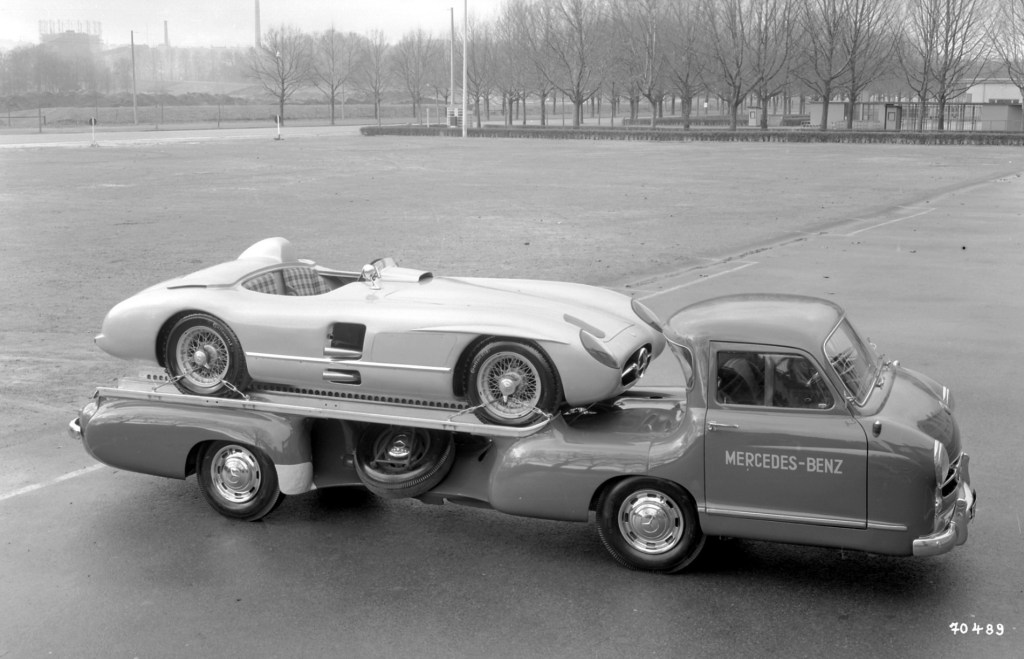
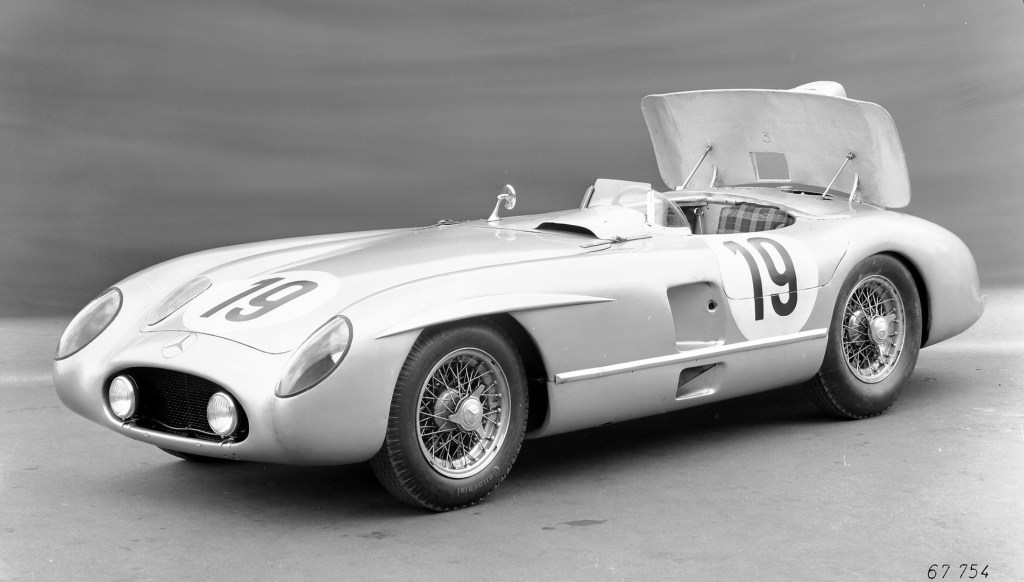
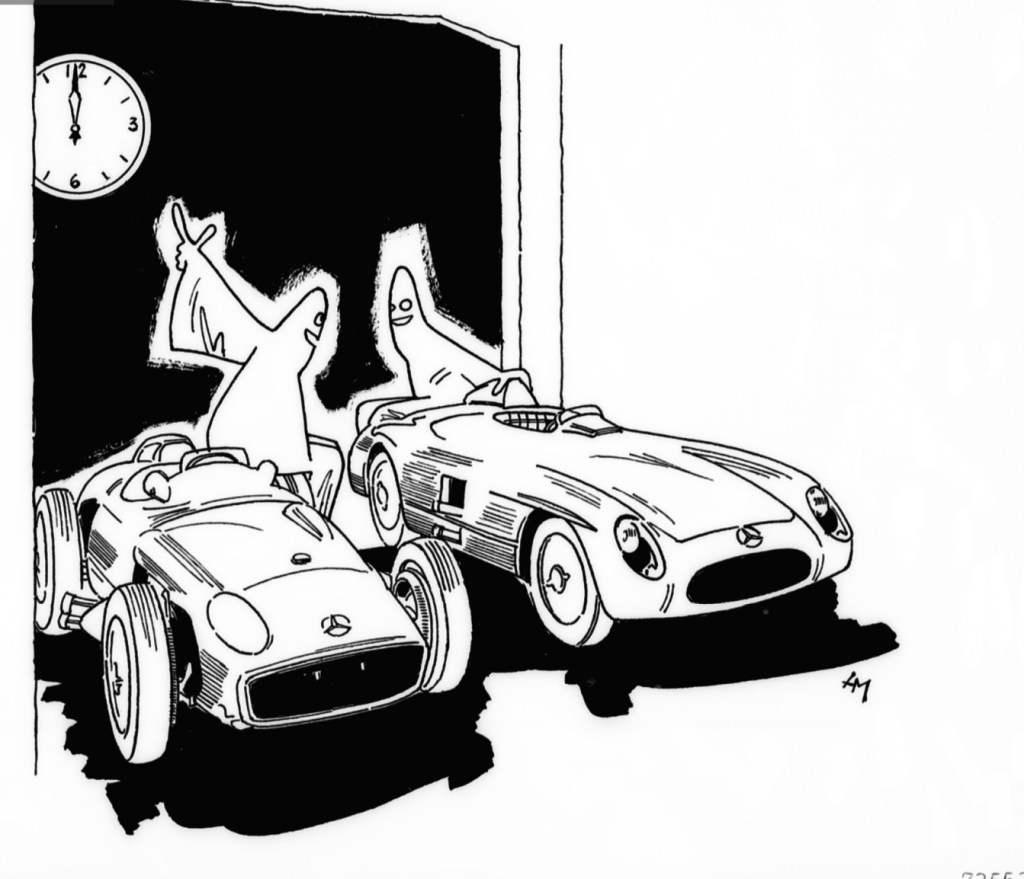
You should take a trip to mercedes-benz-publicarchive.com some time, the quality of the racing content is unbelievable. I’ve added in some shots but these are just the tip of the iceberg, have a look for yourself.
Credits…
M@RS-mercedes-benz-publicarchive.com, Getty Images, Autocar
Tailpiece…
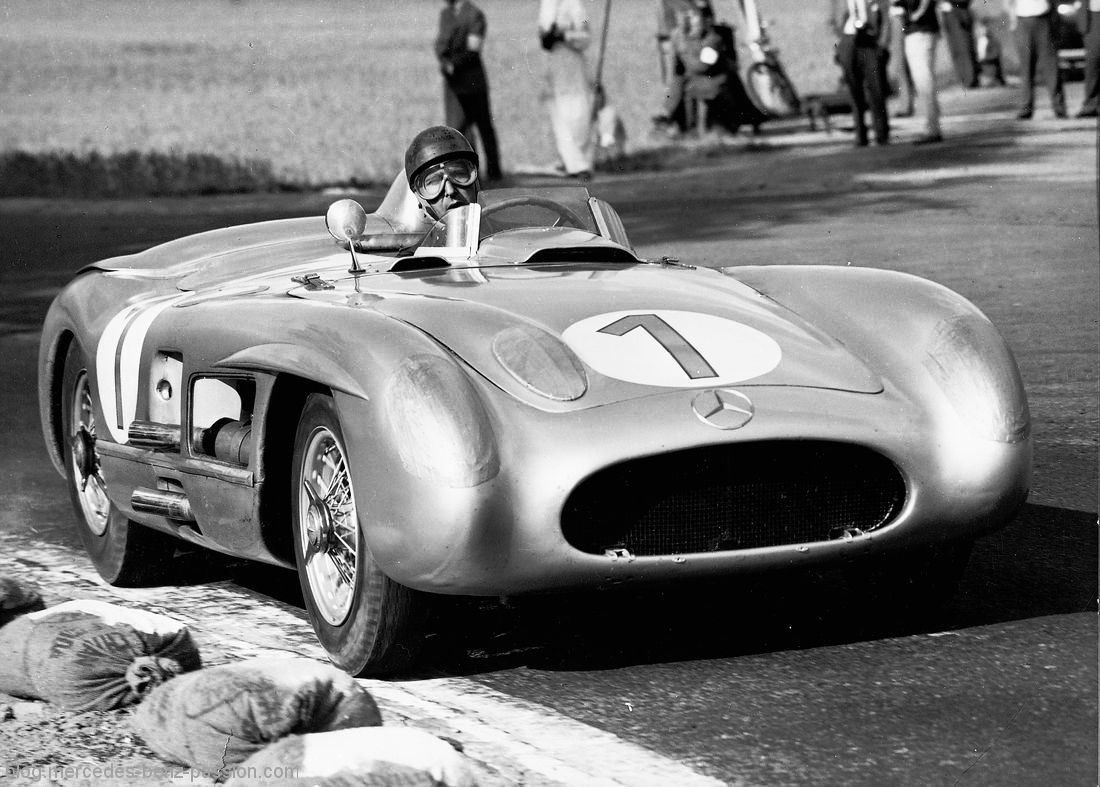
Top shot! Isn’t that machine such a cohesive, great looking, purposeful racing car…
JM Fangio on the way to winning the 209km Swedish GP held at Kristianstad on August 7, 1955. He won from Stirling Moss’ 300SLR and Eugenio Castellotti’s works-Ferrari 121 LM in 1 hr 18m 13.7sec.
Finito…
 primotipo...
Mark,
It is stated above that “The W196R won back to back drivers and manufacturers titles for Juan Manuel Fangio and Mercedes in 1954-55.”, however there was no manufacturers title in Formula One until 1958.
Regards,
Rob B.
Thanks Rob,
My over-active memory again…
M