

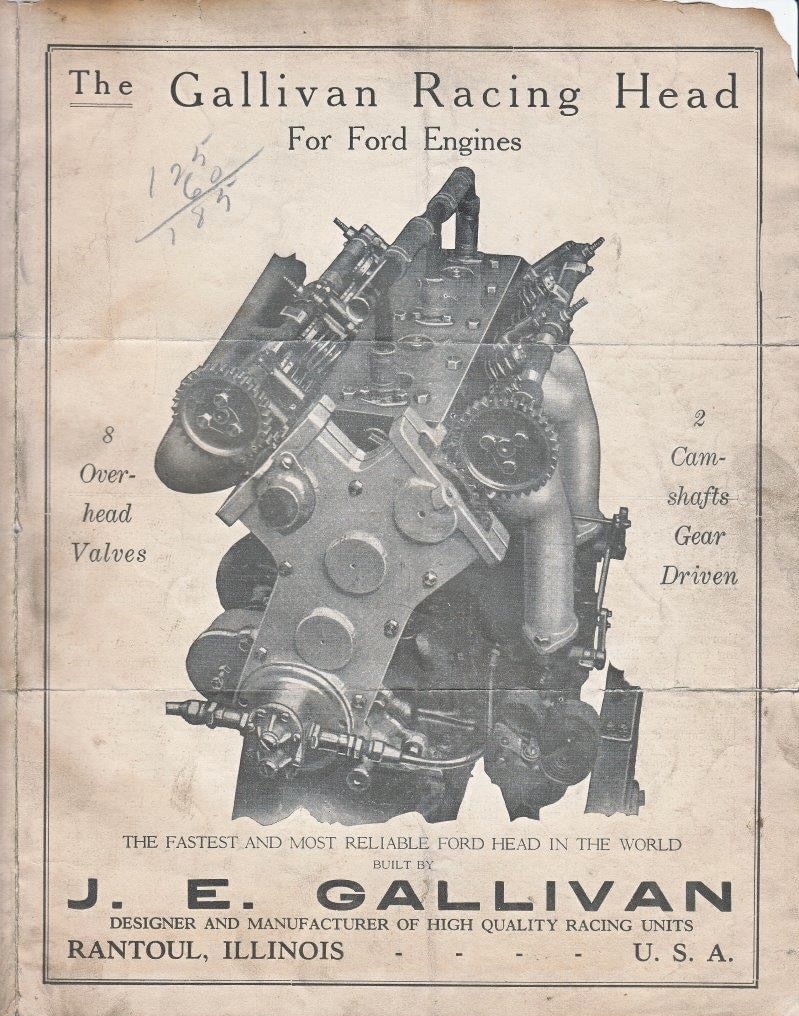
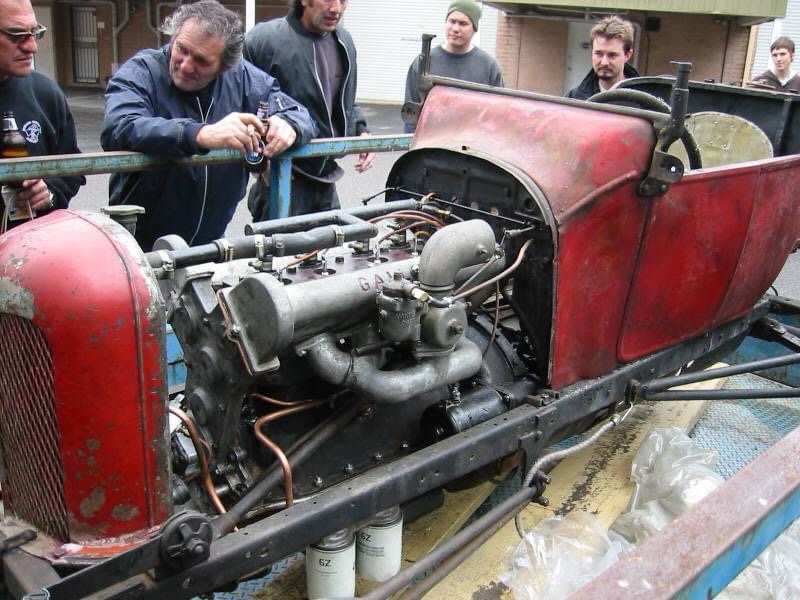
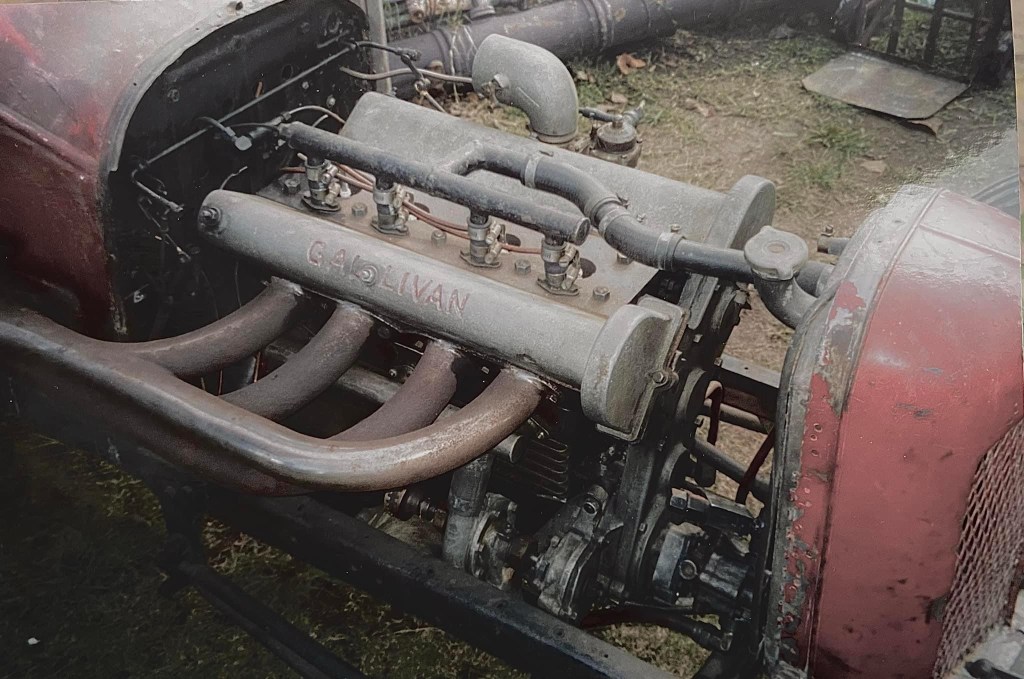
Australian enthusiast/historian Gerard Murnane wrote in a wonderful exchange on Facebook with fellow enthusiasts – the medium at its best – ‘Jack Gallivan made at least six twin-cam Gallivan 8-valve heads for Model-T Fords, crossflow with huge 2-inch valves from a Hispano Suiza and hemispherical chambers with huge porting. If you looked through the inlet of the head you could see the light on the exhaust side. One of these rare heads is on a racer here in Australia.’
‘Jack was in the US Navy in the early-mid 1920s, the rumour is that he used Navy parts to build the engines and did-time for it.’
‘The patterns were originally made by Joe Jagersberger of Rajo Ford speed equipment fame. Joe didn’t build the first Rajo twin-cam until after he sold the patterns to Jack, and he built his heads and engines.’
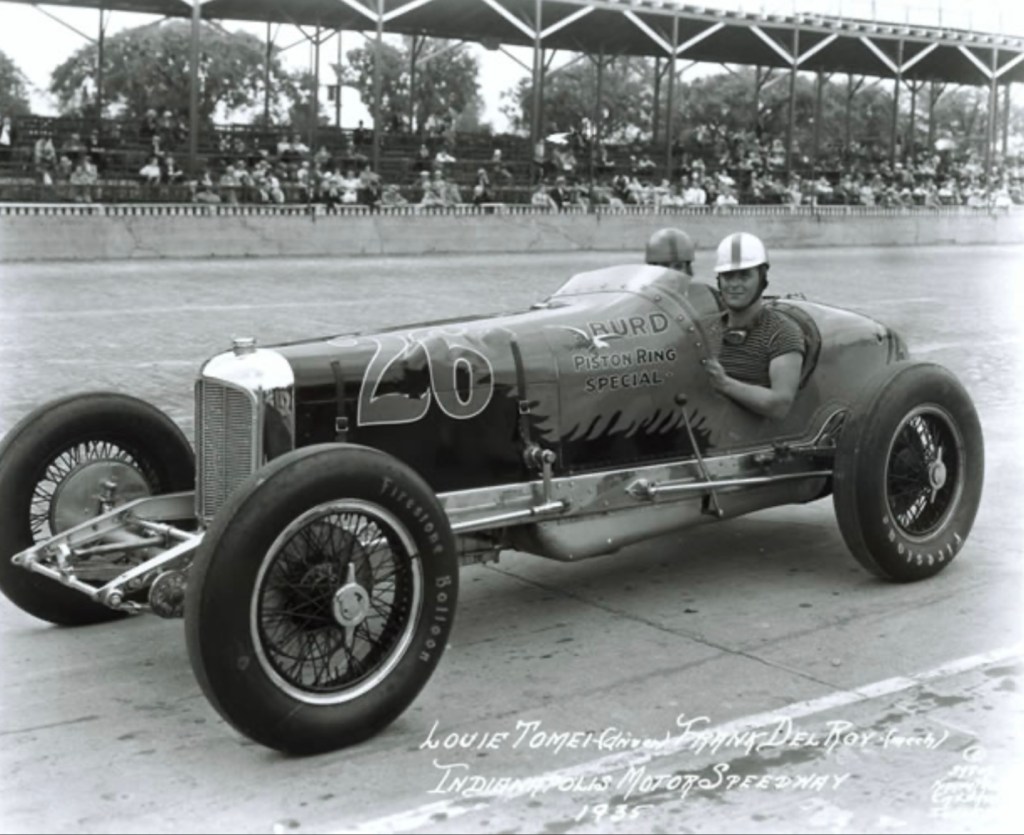
‘Drive towers for both Gallivan and Rajo are different designs. Later the patterns were again sold, to Joe Lencki, who built a much stronger head and special Ford-T based cylinder block which was raced at Indianapolis in 1935 (Louis Tomei aboard a Miller Lencki). A Lencki block also survives in Australia, one of possibly three in existence.’
On the Model-T cranks, ‘Billet cranks were available back then in at least two different stroke sizes for normal and 1500cc capacity. The Lencki block had five main-bearings with two-inch journals and still fitted a standard T-head and sump pattern etc.’
Neil Worthing asked the question, ‘Was a single T-Model part used?’ Gerard Murnane, ‘In the Gallivan, initially a Model-T sump, block, transmission cover, modified rear axle and tailshaft, axles and springs and modified chassis. In the Lencki, not a lot used.’
‘Model-T chassis and running gear were cheap in the 1920’s-30s and most speed equipment was made to bolt onto standard-T stuff.’ Lencki still used the basic sump, head, block, timing bolt on dimensions in their equipment, but a different transmission connection.’
‘The wheel hub pattern for a Model-T was still used in speedway cars up to the knock-on wheels era. The dimension of the ball end of a Model-T tailshaft tube was also possibly used into the 1970s and later.’
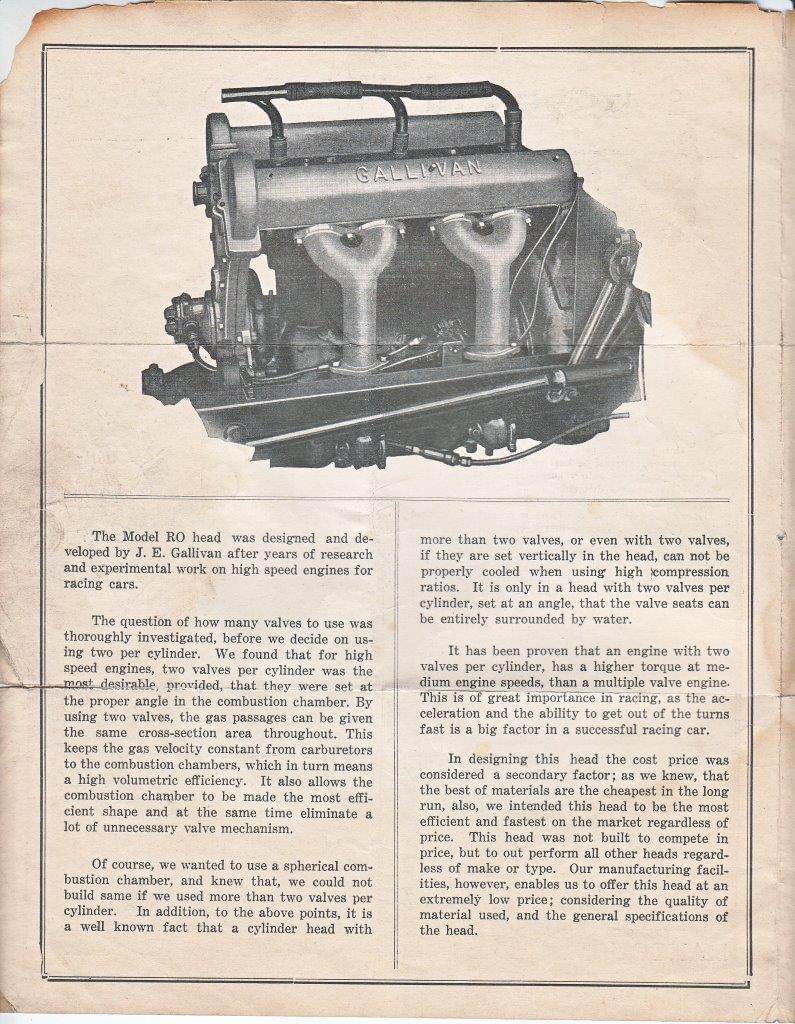
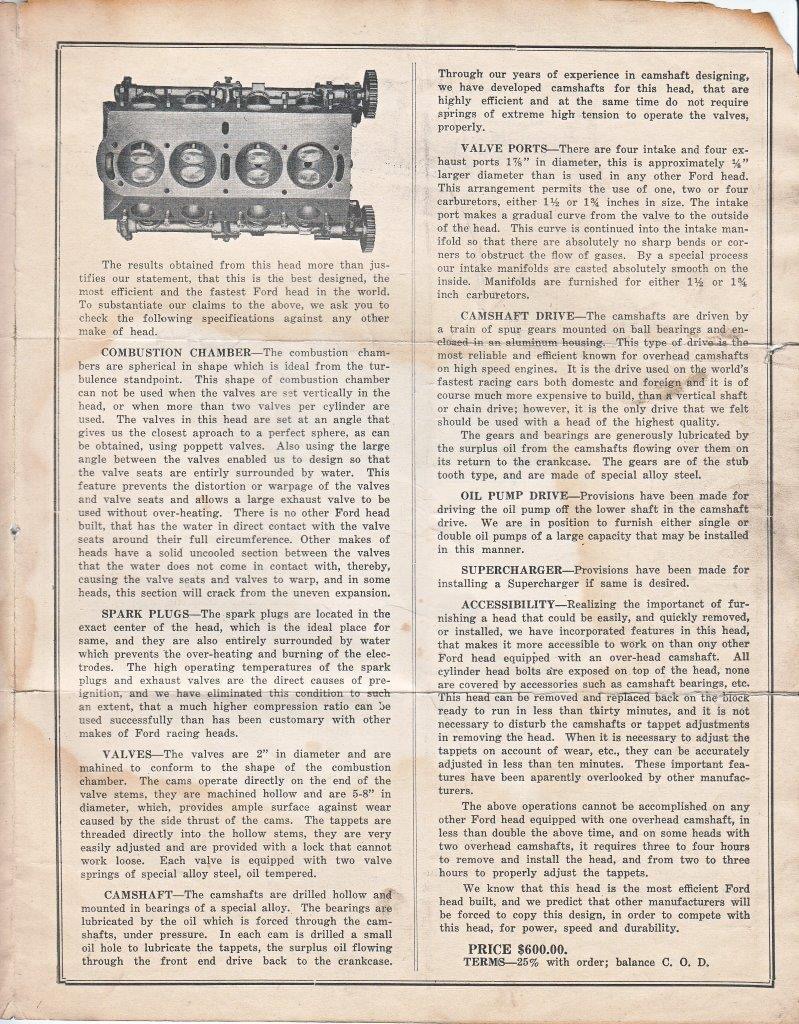
More on the Gallivan head here: https://www.museumofamericanspeed.org/gallivandohc.html and on the Australian car here: https://www.streetmachine.com.au/features/colin-wade-1940s-gallivan-special-dry-lake-racer
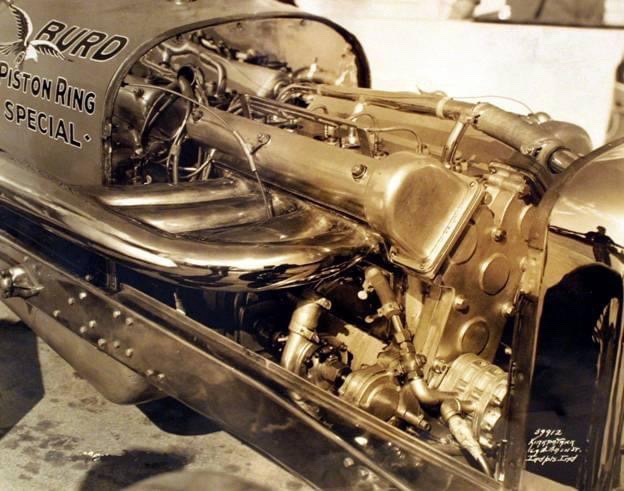
Tailpiece…
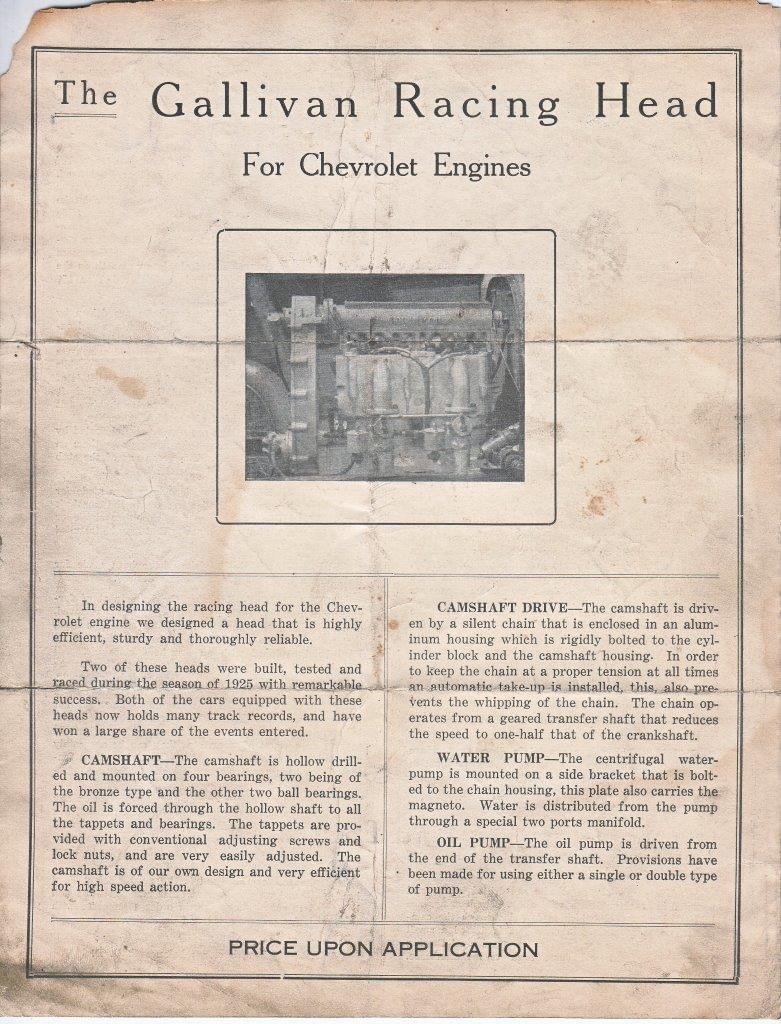
Credits…
Gerard Murnane on Old Motor Racing Photographs – Australia, Mal Bradley, indycar.com
Finito…
 primotipo...
Interesting. It is likely Gallivan had access to WW1 Hispano-Suiza aero engines as a source of valves – by the end of the war, they were the most common aero engine. The valve design was clever, but also heavy and not suitable to sustained high revs. (I know, I dropped a valve in my Hispano H6B at 1800 revs with disastrous consequences).
Thanks Bob,
That answers one of my questions, how he tripped over Hisso components, but it’s the military connection.
m