The spectacular backdrop of the Andes lost on Regazoni, Rees, Pescarolo, and Courage…San Juan Circuit Argentina (Andrew Marriott)
Argentinian Temporada F2 Series : San Juan 1968…
Sensational panorama of the San Juan circuit with the Andes as a backdrop.
This race was won by the De Adamich Ferrari Dino 166. The cars in shot, all Ford Cosworth powered are Clay Regazzoni Tecno 68, Allan Rees Brabham BT23C, Henry Pescarolo Matra MS7 and Piers Courage Brabham BT23C.
The Ferrari Dino 166 F2 struggled in Europe against the Ford FVA powered hordes but the 1.6 litre V6 engined cars driven by DeAdamich and fellow Italian Tino Brambilla were competitive in Argentina, Andrea winning in front of ‘F2 King’ Jochen Rindt’s Brabham (Andrew Marriott)
F2 was a 1.6 litre formula at the time using production blocks, the Ford FVA 4 cylinder engine, the dominant engine, producing around 225 BHP at 9000 rpm. It was based on the Ford Cortina ‘116E’ block, Cosworth’s Keith Duckworth famously applying the design concepts intended for the Ford Cosworth DFV engine, Grand Prix racing’s most succssful engine. The FVA and DFV were part of the same Ford contract the FVA being built first…
The Ferrari engine was based on a block Fiat used in its Fiat Dino Coupe, and of course later in the Ferrari Dino 246, one of my favourite road cars. The engines evolved from 3 to 4 valve heads between 1967 and ’68 finally finding form in the ’68 European season ending round at Vallelunga, Brambilla winning the day from DeAdamich. A 2.4 litre 285BHP variant of the engine was developed for the Tasman series in Australasia, that car designated the 246T. Amon won the title in 1969 and Graeme Lawrence in 1970…but that is another story to tell in detail.
The Temporada series was held late in the year attracting the best of Europes cars and talent, the Championship in ’68 won by De Adamich, victorious in 2 rounds, from Jochen Rindt and Piers Courage.
DeAdamich # 14 and Tino Brambilla on the Buenos Aires grid 1968. The Ferrari’s are powered by a 1596cc, 4 valve per cylinder, fuel injected, V6 producing 210BHP @ 10500 rpm…they clearly enjoyed the altitudes of the Andes better than the Cosworths and took their end of European Season form to South America winning 3 of the 4 rounds (Pinterest)
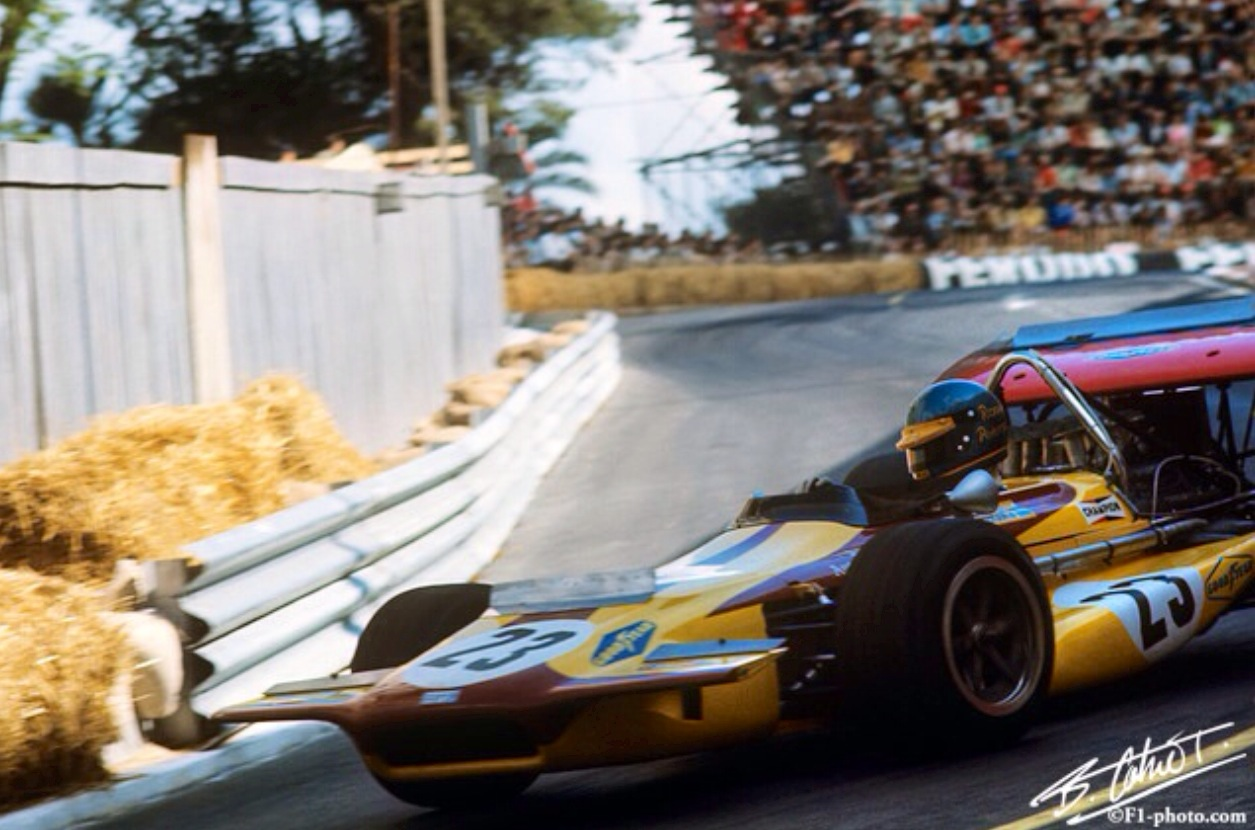
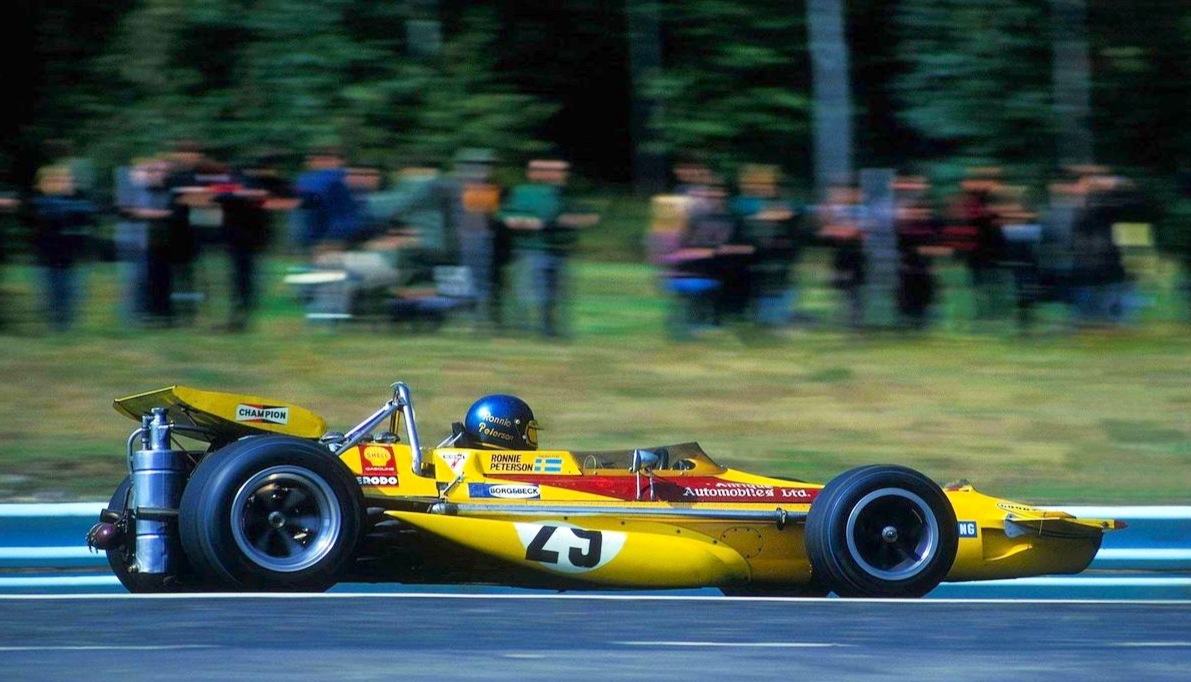
This superb shot is of Ronnie Peterson at La Source hairpin, Spa 1970 aboard privateer Colin Crabbe’s Antique Automobiles March 701 Ford.
In the good ‘ole days one could, if one had the readies, buy a car, pay the entry fees and race in Grands Prix.
Perhaps the greatest in modern times was Rob Walker’s Team (he of the whisky company) which scored the first championship victories for Cooper and Lotus (in Stirling Moss’ hands) and the last victory for a privateer team when Jo Siffert triumphed in Walker’s Lotus 49 in the 1968 British GP.
Since the early 1980s the FIA have mandated that F1 entrants own the intellectual rights to the chassis they enter, in essence this means that the entrant builds the car and races it, ending the long tradition of private entrants buying and racing cars built by others in the sport’s highest echelons.
Crabbe’s Antique Automobiles business entered Vic Elford in a Mclaren M7 in 1969. March’s Max Moseley offered Crabbe/Peterson a 701, all Colin needed to provide were the engine and ‘box both of which he happened to have from the previous years campaign with Elford. And the readies of course which he was confident of securing through trade support.
Peterson jumped from the F3 ruck in 1969 winning the European F3 Championship, including the Monaco F3 GP race in a Tecno. At the end of the the year he raced the very first March, the 693 F3 car which James Hunt also raced that winter.
The Birth of March…
Due to unusual circumstances March’s first year in the sport resulted in them supplying customer F1 701 cars to the reigning world champion Team Tyrrell who were unable to run Matras with a Ford Cosworth engine as they had in the previous two years. The French concern wanted their own V12 to be used exclusively in their cars.
Jackie Stewart tested the MS120 but was convinced the DFV remained the superior engine. Lotus and Brabham were not prepared to sell Tyrrell cars, so off to Bicester Ken went; no pressure on designer Robin Herd in designing a car for the reigning world champ!
Matra never won a GP with their own V12 engined car, despite going very close with their single car Chris Amon entries in 1971-72, that Matra honour going later to Ligier with Jacques Laffite’s first GP win in Sweden in 1977.
That Tyrrell couldn’t buy a competitive car was the reason he became a manufacturer rather than a privateer, he set designer Derek Gardner to work on the first Tyrrell which appeared in late 1970.
But I digress. March also sold a privateer 701 which was driven occasionally by Mario Andretti in addition to the March works cars for Chris Amon and Jo Siffert, a remarkable roll call of drivers in a constructors first year, not the full list either!
Aussie rival, friend and 1972 Ferrari 312P sports car teammate, Tim Schenken nicknamed Peterson Mad Ronald, observing up close one of the sport’s automotive acrobats sublime car control, tail out balls-to-the-wall style in the mould of Nuvolari, Rindt and Gilles Villeneuve.
The 701 wasn’t the ‘cream of the 1970 crop but it was good enough to win the Spanish GP in Stewart’s hands plus non-championship events in Stewart and Amons hands.
Ronnie did well in his car #701-08 justifying March’s faith in him and the rest, as they say, is history. Petersen won nine Grands Prix for Lotus as well as March’s only factory team win, their prodigal son returned in mid 1976 frustrated by the uncompetitiveness of his Lotus 76 and took the Italian GP in a March 761 Ford.
Peterson, racing a Lotus 78 was an innocent victim of an accident at the start of the 1978 Italian Grand Prix and died of his injuries the following day.
March 701-08 cutaway drawing.
Aluminium monocoque chassis, Ford DFV 3-litre V8, Hewland DG300 gearbox, classic and very effective ‘British F1 Kit Car’ of the period. Ronnie’s car first raced at Monaco in May 1970.
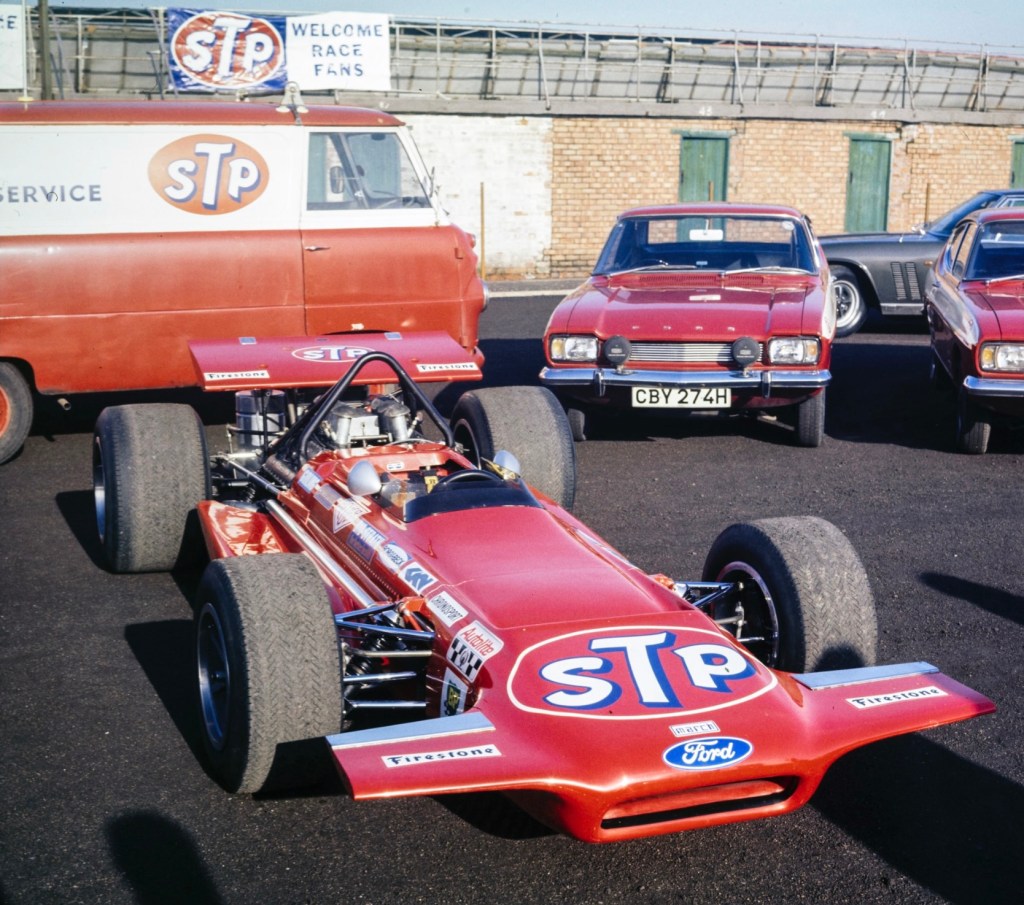
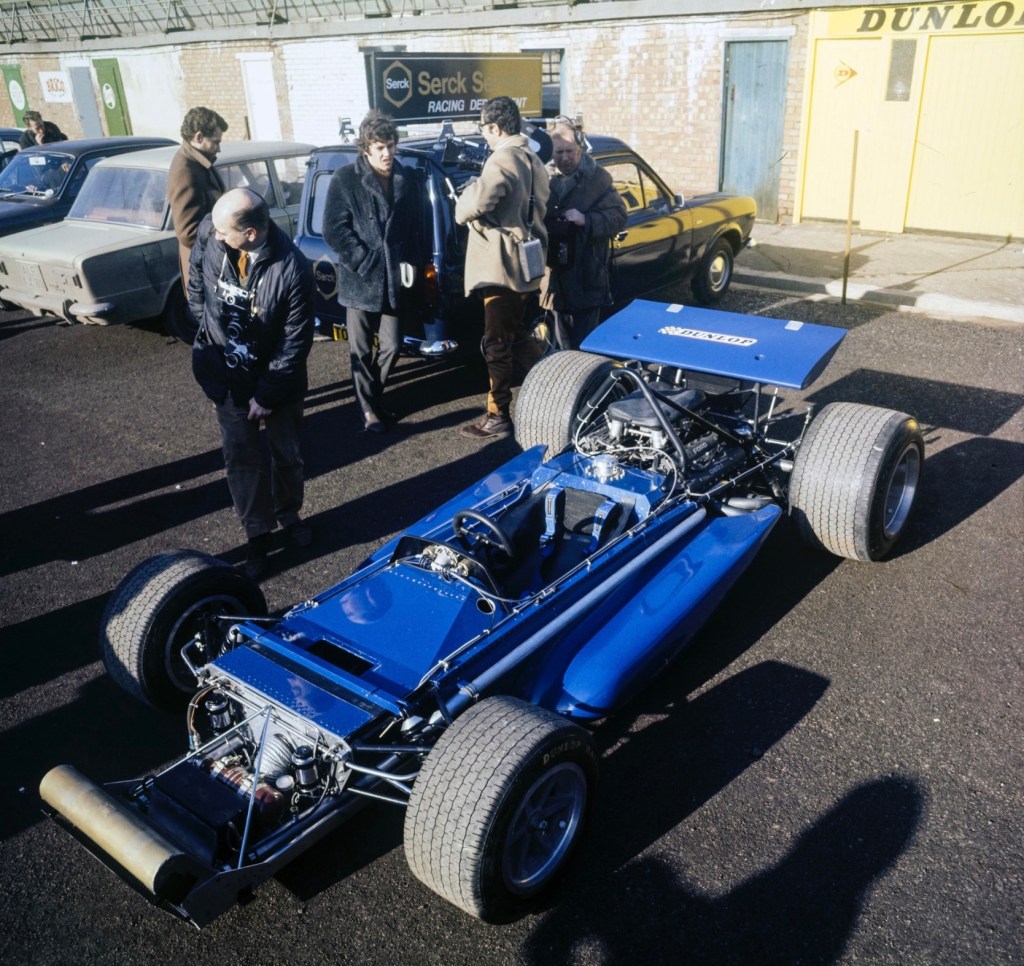
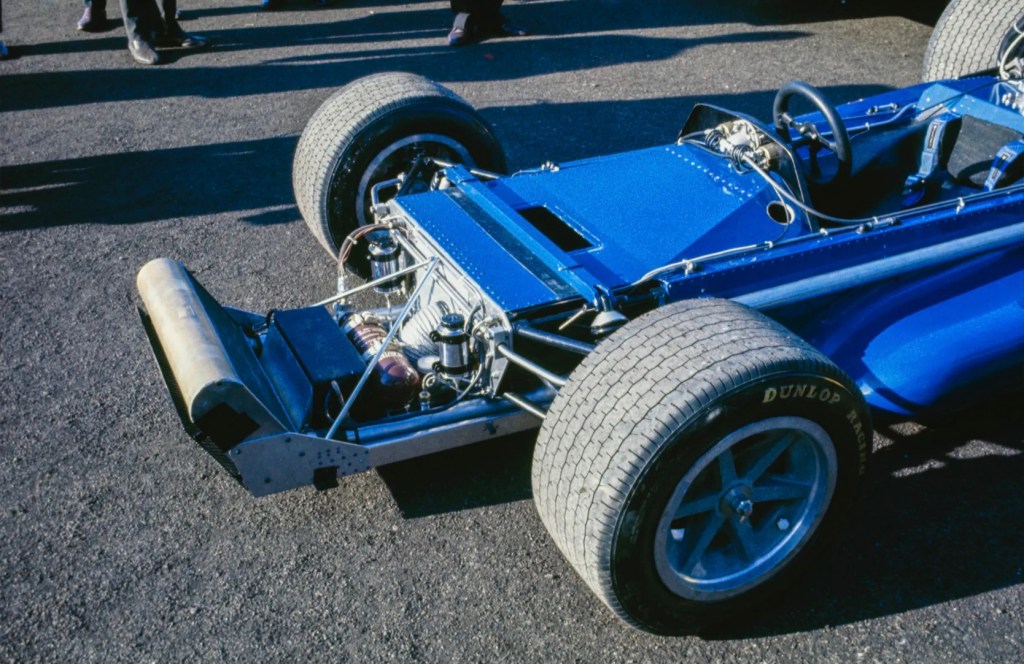
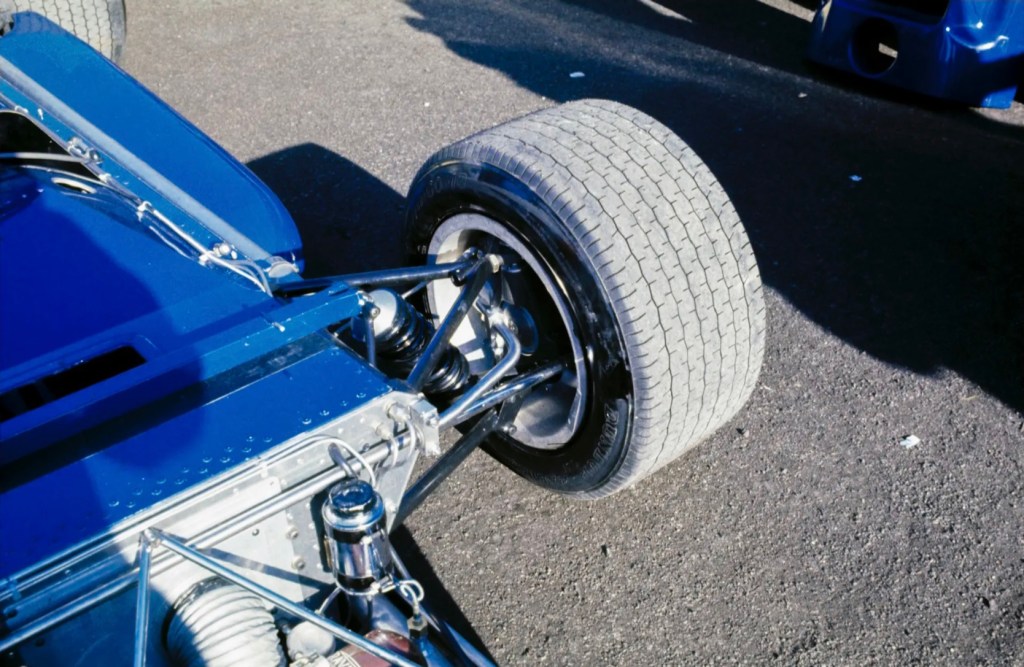
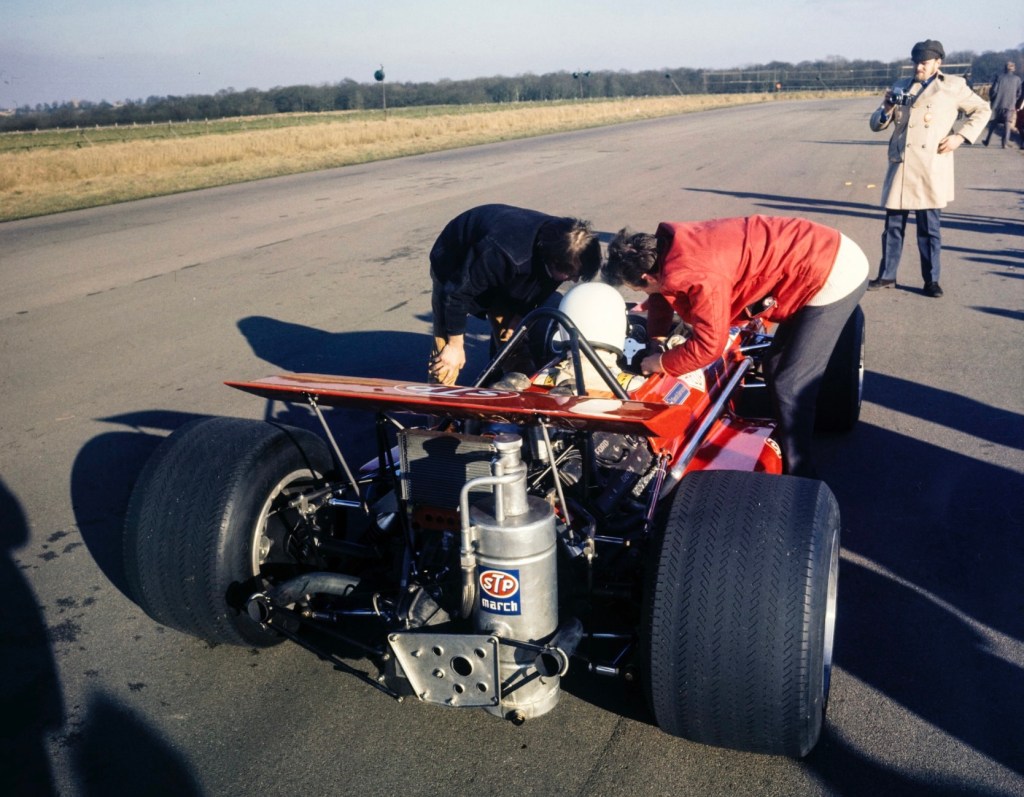
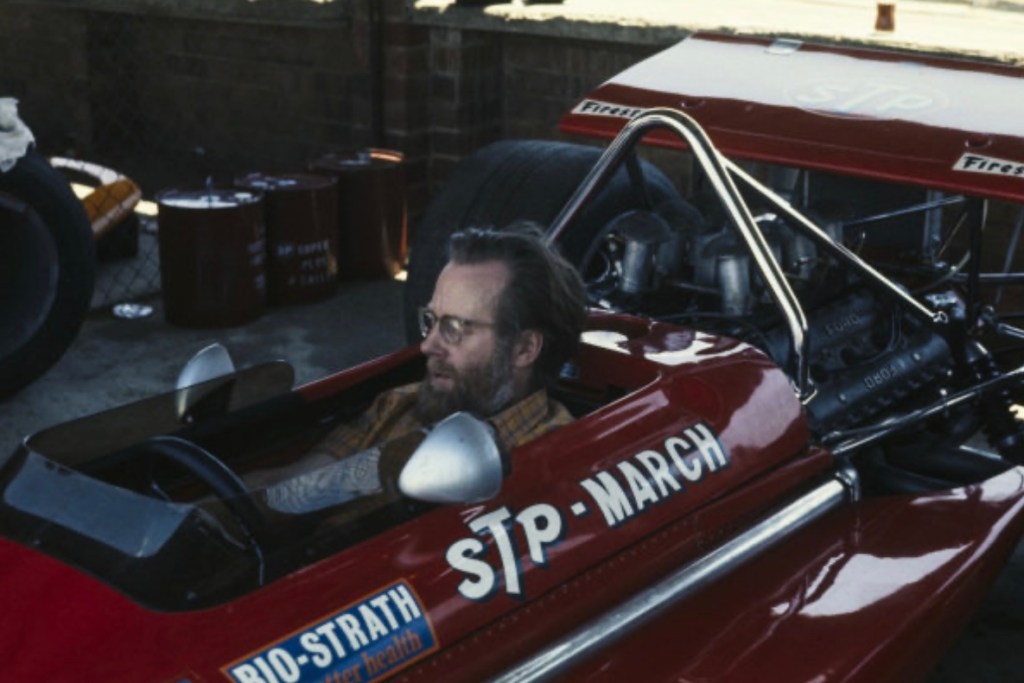
This group of photographs were taken at Silverstone on February 6, 1970 at what appears to be the press launch of the 701, you will note the presence of both works and Ken Tyrrell cars.
(LAT)
John Bolster, notebook in hand, takes in Robin Herd’s new design. Chris Amon’s chassis 701-01.
(LAT)
This shot of Chris Amon’s second placed car at Spa on June 7, 1970 is out of sequence with the rest. It shows the elegant simplicity of the design, which simply, given the number of orders in hand, had to work right outta the box. Its biggest shortcoming was perhaps its weight.
(LAT)
Jackie Stewart’s Ken Tyrrell March 701-02.
(LAT)(LAT)(LAT)
A journalist about to go for a whirl in Amon’s car, I wonder who?
(LAT)
Photo Credits…
Rainer Schlegelmilch, The Cahier Archive, oldracingcars.com, LAT Images
Tailpiece…
(LAT)
“Vrooom, vrooooom. I’m only a little bloke, maybe they won’t see me and I can do a touring lap!?”
Denis Jenkinson tries Chris Amon’s car for size at Kyalami during the 1970 South African GP weekend.






 primotipo...