Posts Tagged ‘1929 Australian Grand Prix’

(M Bisset)

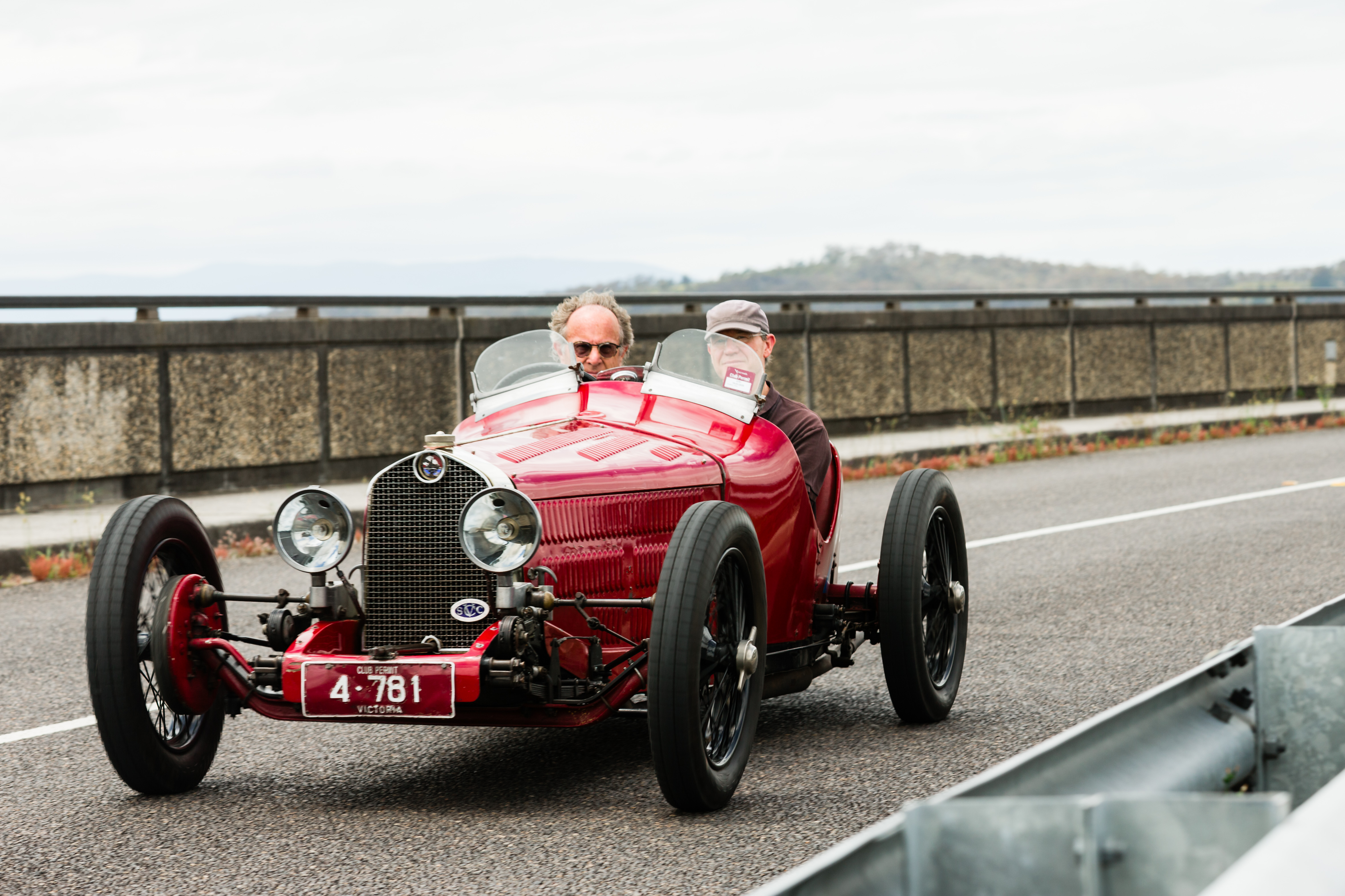
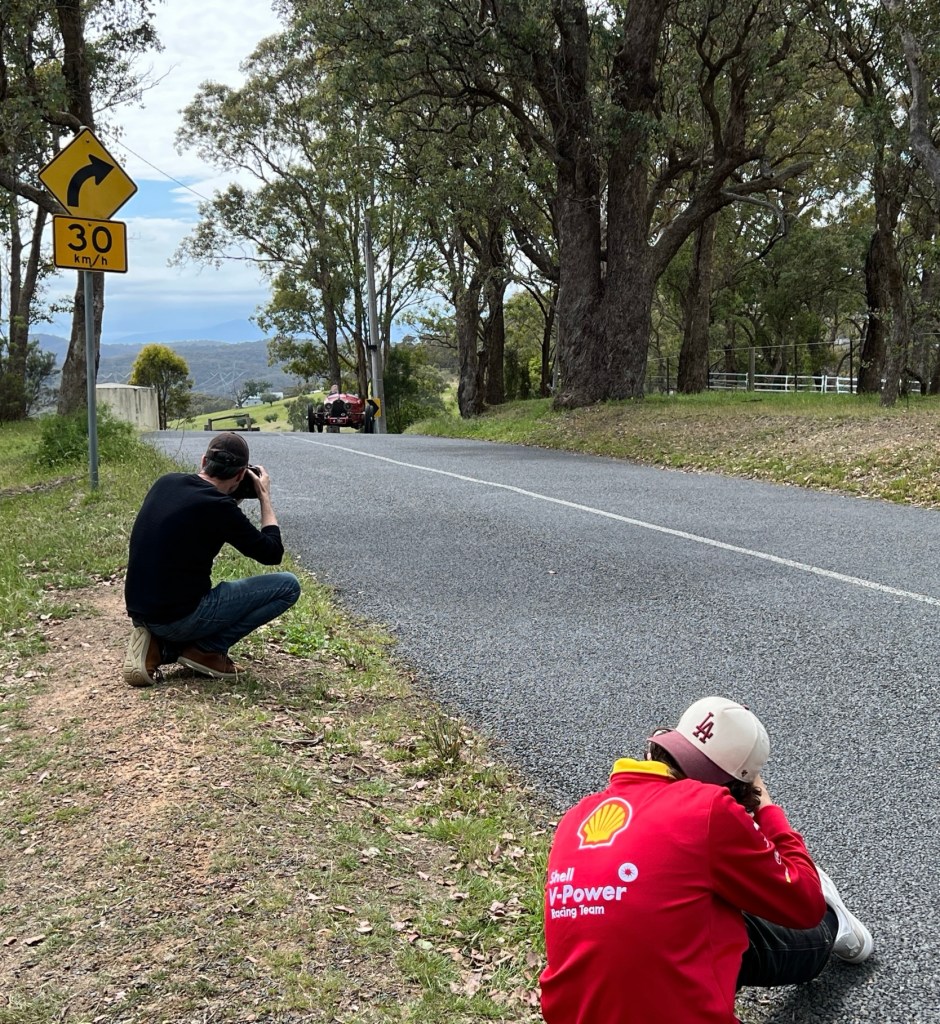
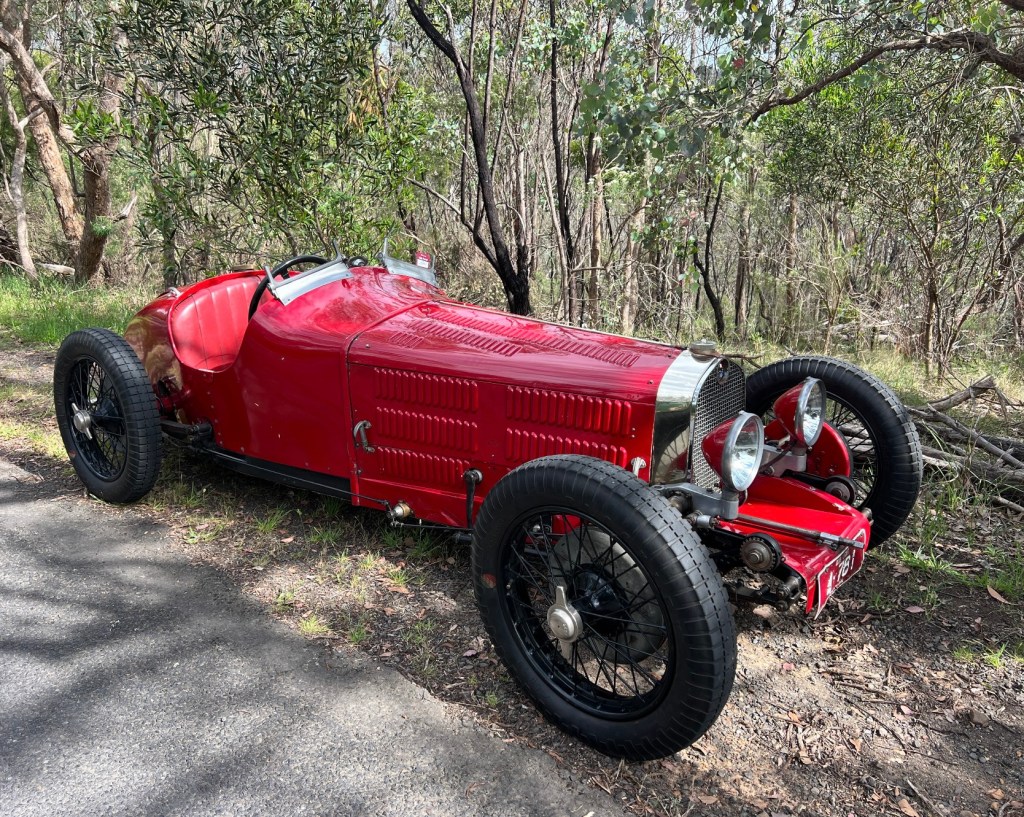
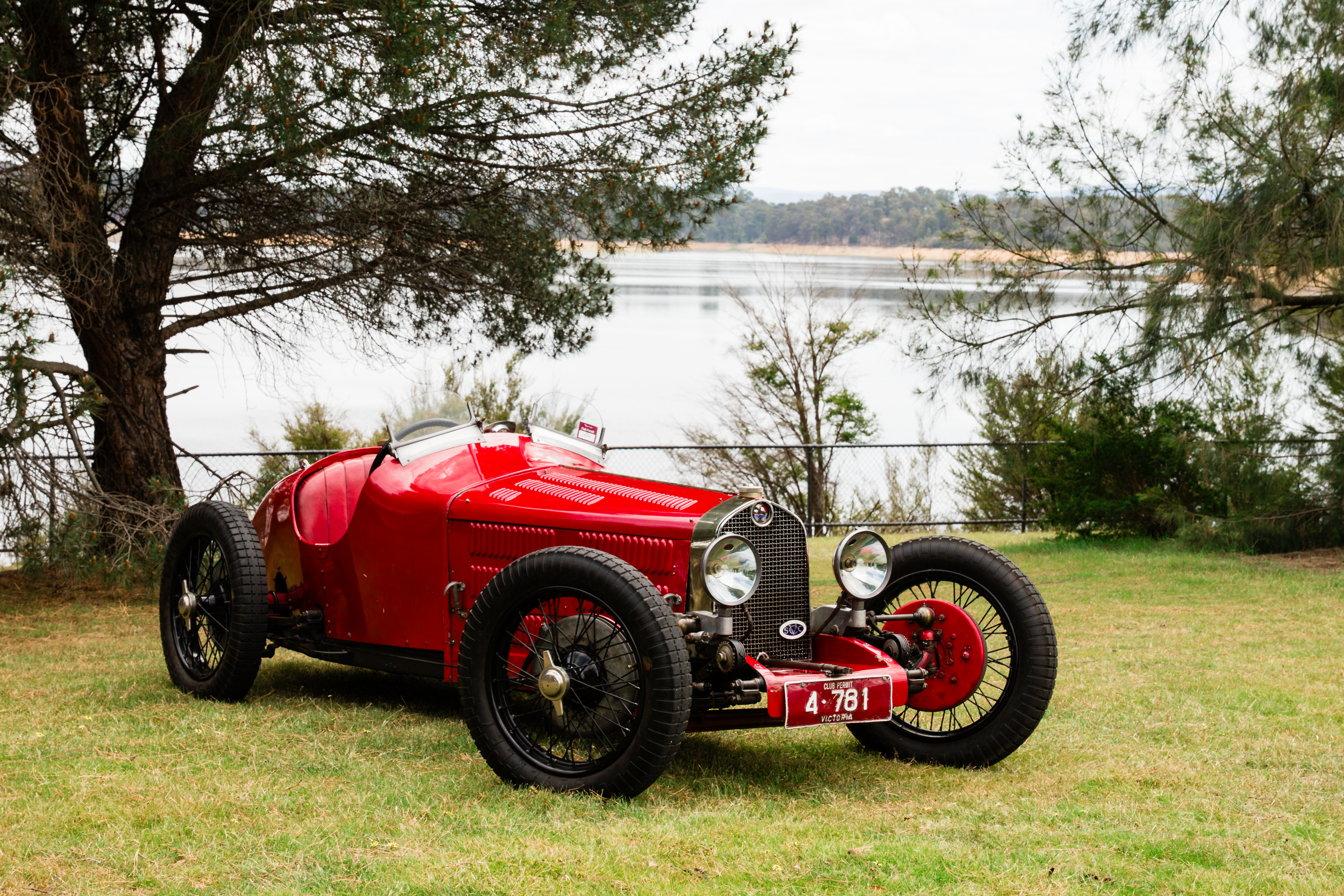
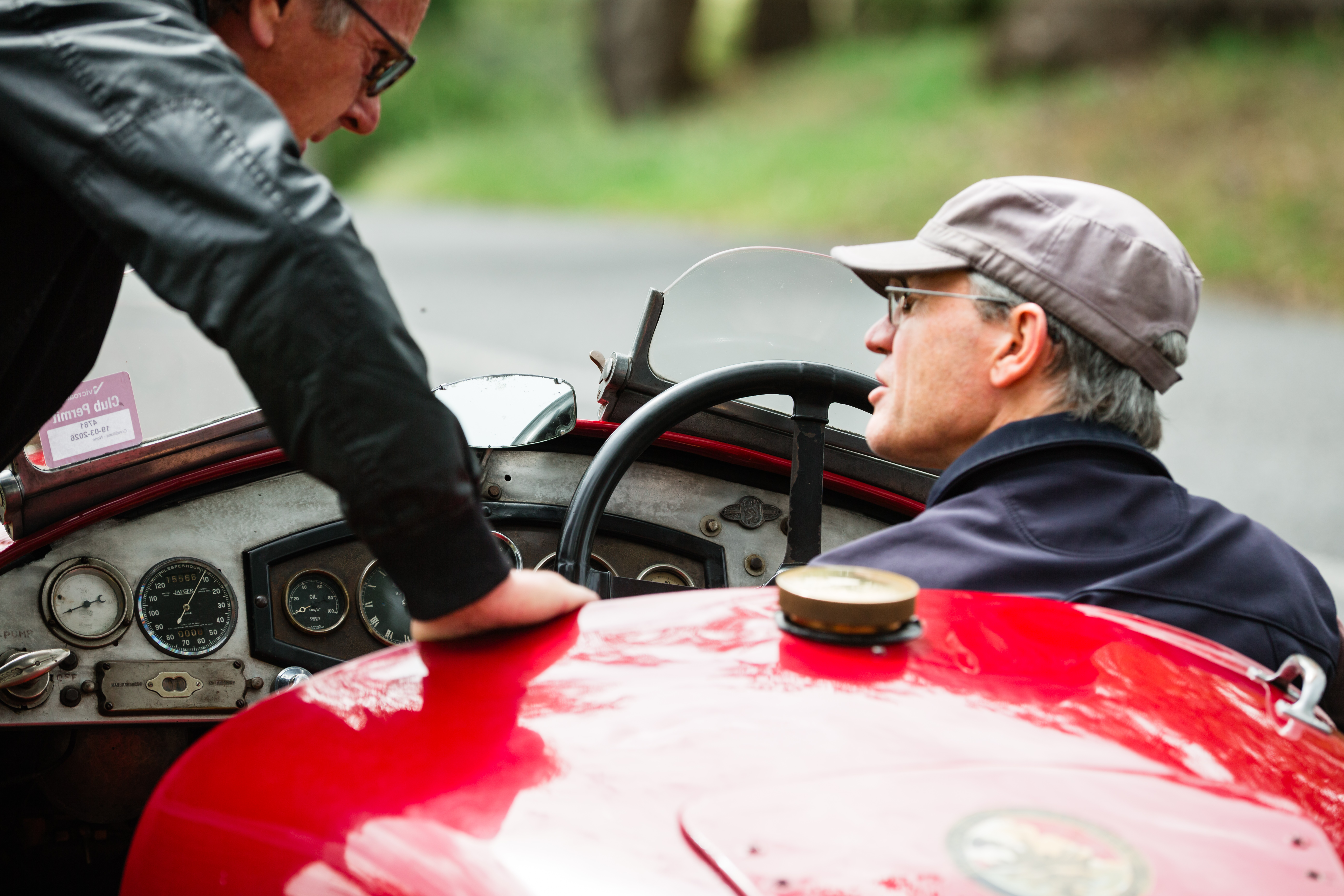
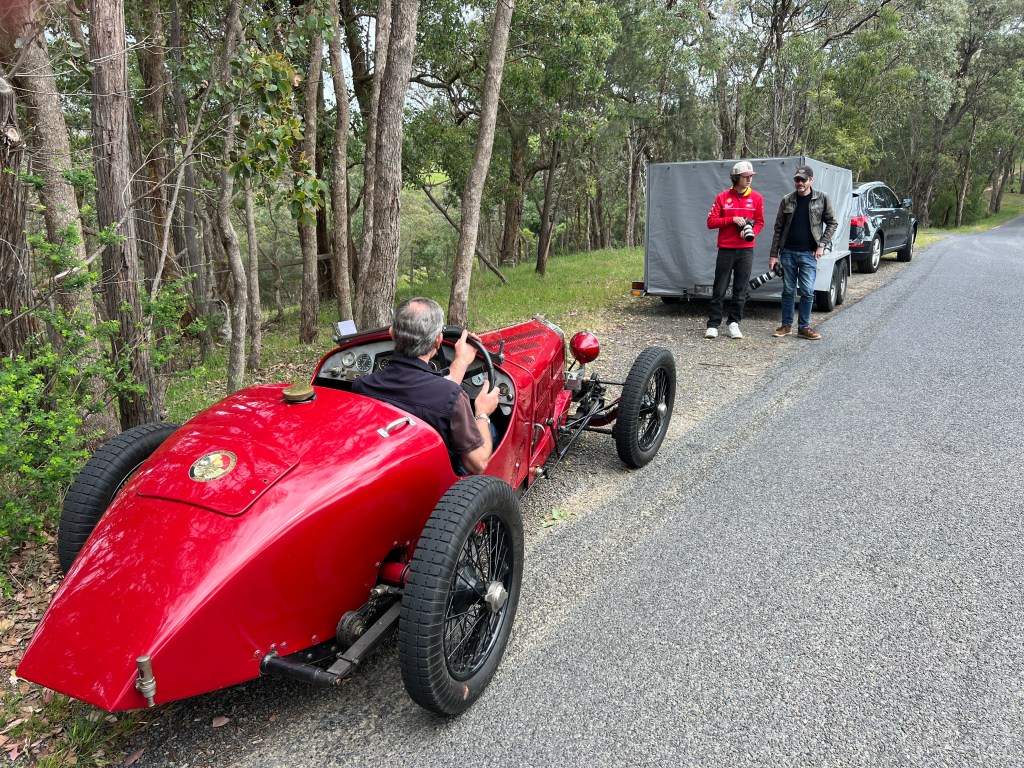
David and Andrew Hewison catch Neill Murdoch at the wheel of the family Lombard AL3 1.1-litre DOHC, supercharged Voiturette in North Warrandyte in Melbourne’s outer east on November 22, 2025

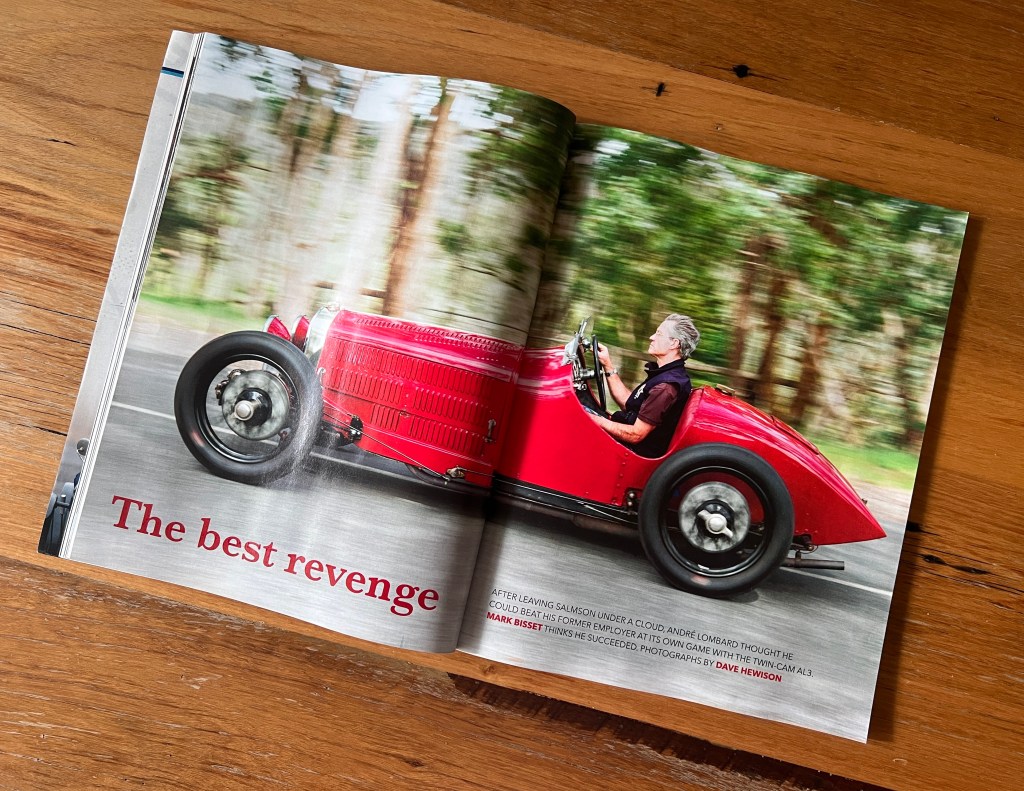
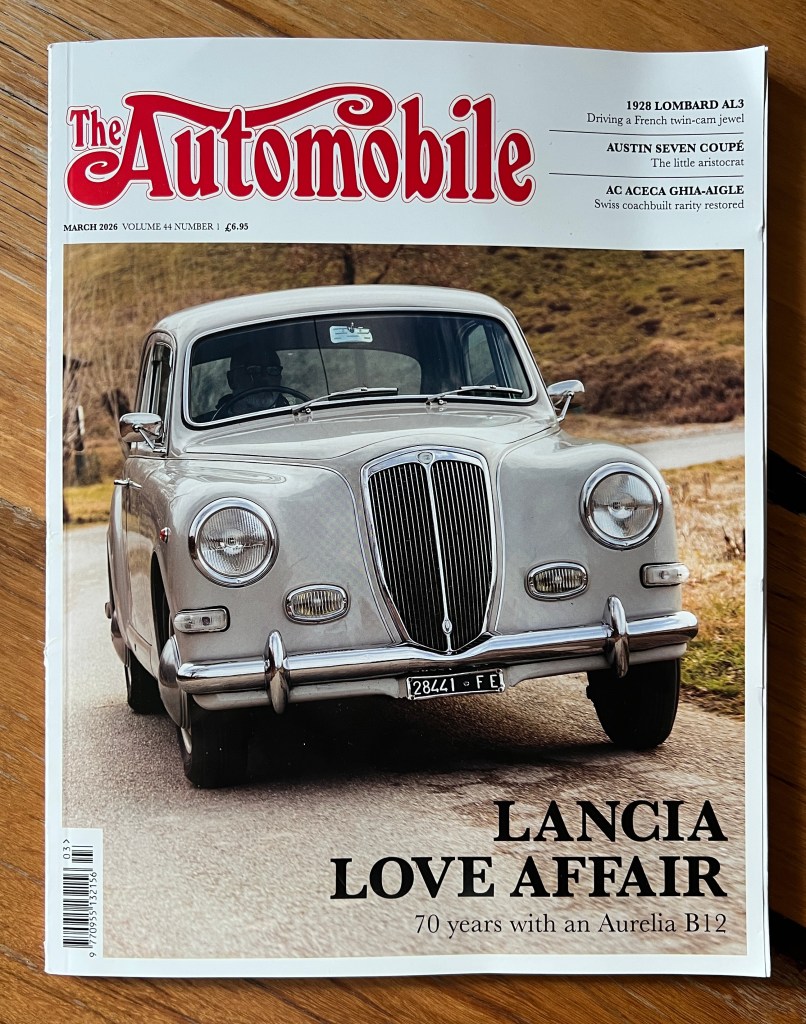
The occasion was a photoshoot of the uber-rare French car for an article I wrote, published in the March issue of The Automobile, which is in-store in the UK right now. Please buy it! https://www.theautomobile.co.uk
(M Bisset)
(The Automobile)
(B King Collection)

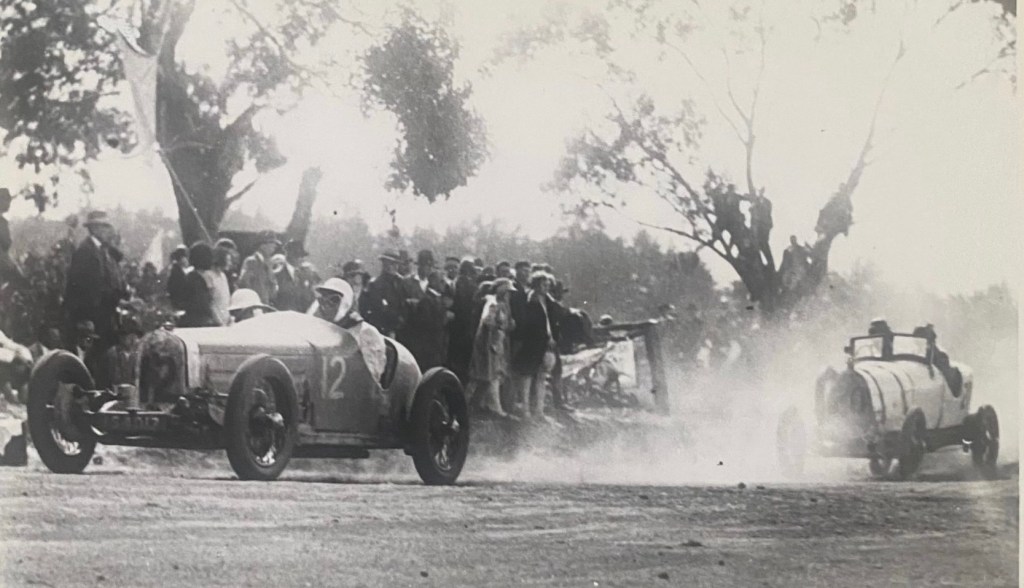
Bill Lowe and John Cleaver on the way to third place in Lombard AL3 #334 in the 1929 Australian Grand Prix at Phillip Island on March 18. That’s John Bernadou’s Bugatti T23 following; that pair were fifth in the race won by Arthur Terdich’s Bugatti T37A.

Lowe, a Melbourne engineer and industralist of note, raced a Metallurgique in the 100 Miles Road Race, later named an Australian Grand Prix, the year before and was after a more competitive mount for ’29; he raced the new Lombard AL3 and secured an agency for the eponymous marque founded by Andre Lombard, which was already, in its infancy, in financial strife.
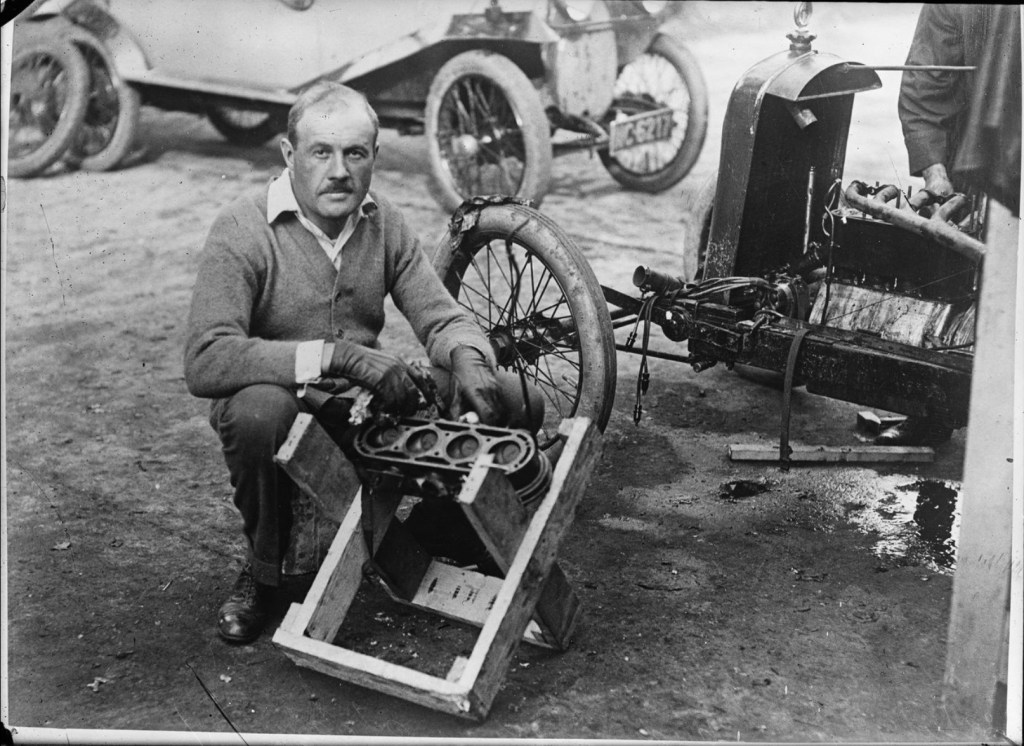
The main man, Andre Lombard, in the Brooklands paddock, tending to his Salmson during the October 22, 1921 meeting in which he won the Light Car Derby. He made his name competing in the engineering of the Billancourt-based marque.

Chassis #334’s whole life has been in Australia, in Melbourne, actually! The Murdoch family – not Rupert’s mob – bought the car at auction in 2002 and have since very sensitively maintained the car as it was. This centenarian has never been the subject of a ‘restoration’ or ‘full rebuild’ but, rather, is an Oily Rag car that has been continually repaired over its very long life.

The small roster of owners includes Lowe into the 1950’s, Bill Leech for a similarly long stretch – many of us saw Bill race the car in historic events – and ‘Wild Bill’ Evans of Datsun touring car fame.
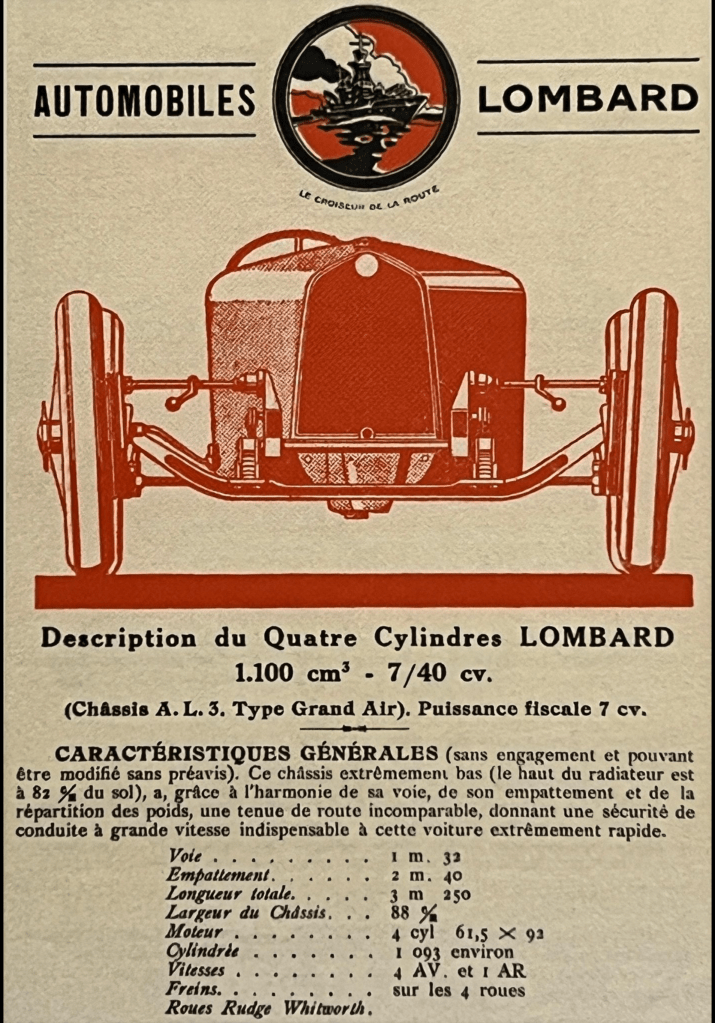
The article is my favourite type to do. A mix of marque and key people’s history, the CV of the individual chassis concerned since birth, and driving impressions. Believe me, the latter is easily the best bit!

I’ve done a few of them now: David and Pat Mottram’s Lotus Elite Super 95, Bob King’s AC Ace Bristol, Richard Stanley’s Sunbeam 20/60, Rob Alsop’s Bugatti T23, Hyundai Australia’s i20N, and i30N on both Hobart’s road and track (Baskerville), Adam Berryman’s Bugatti T37A, and the Murdoch’s Alta 21S 1100 s/c, Alta 55S 2-litre s/c and now Lombard. Oh, to be doing it every week, wouldn’t that be grand!
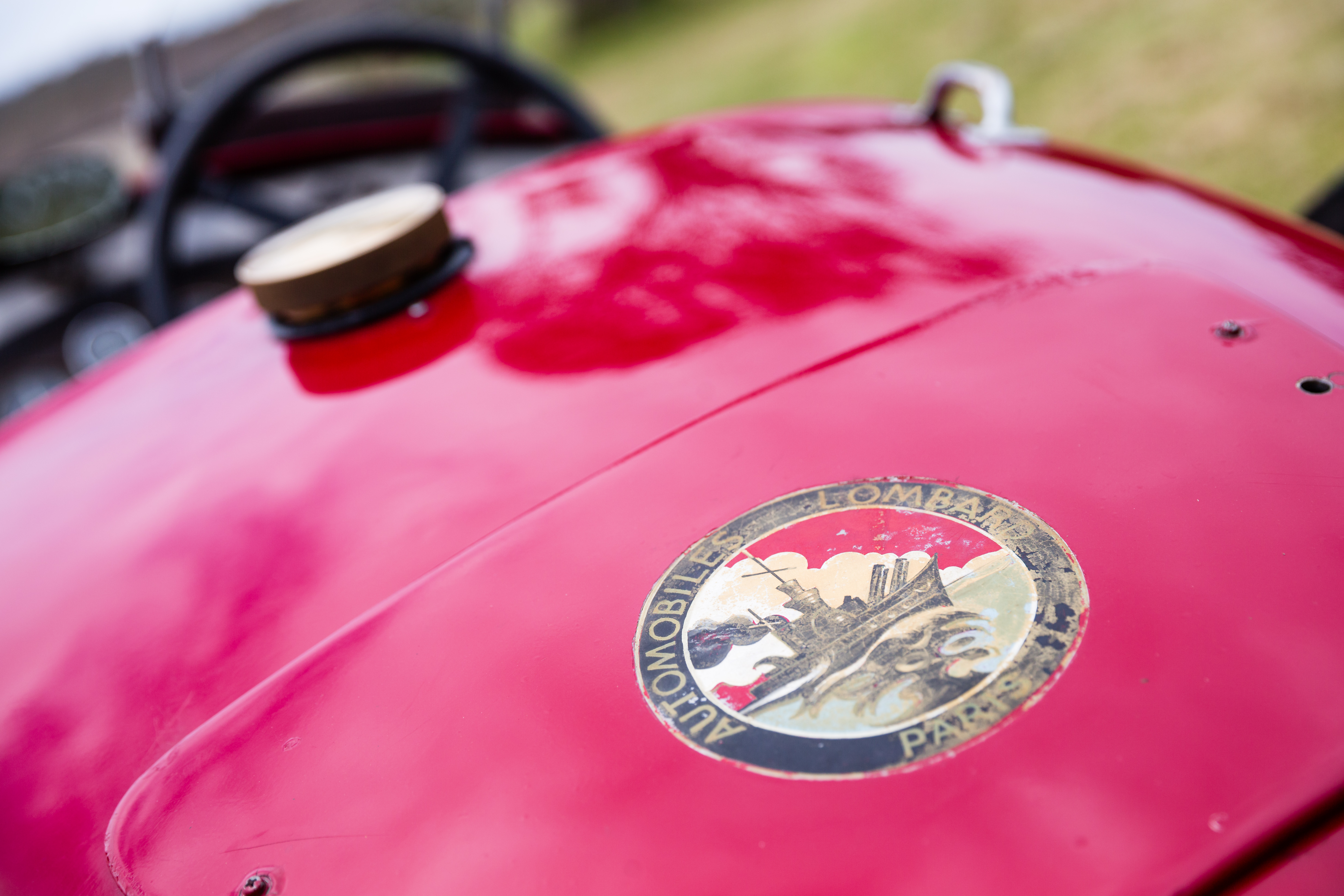
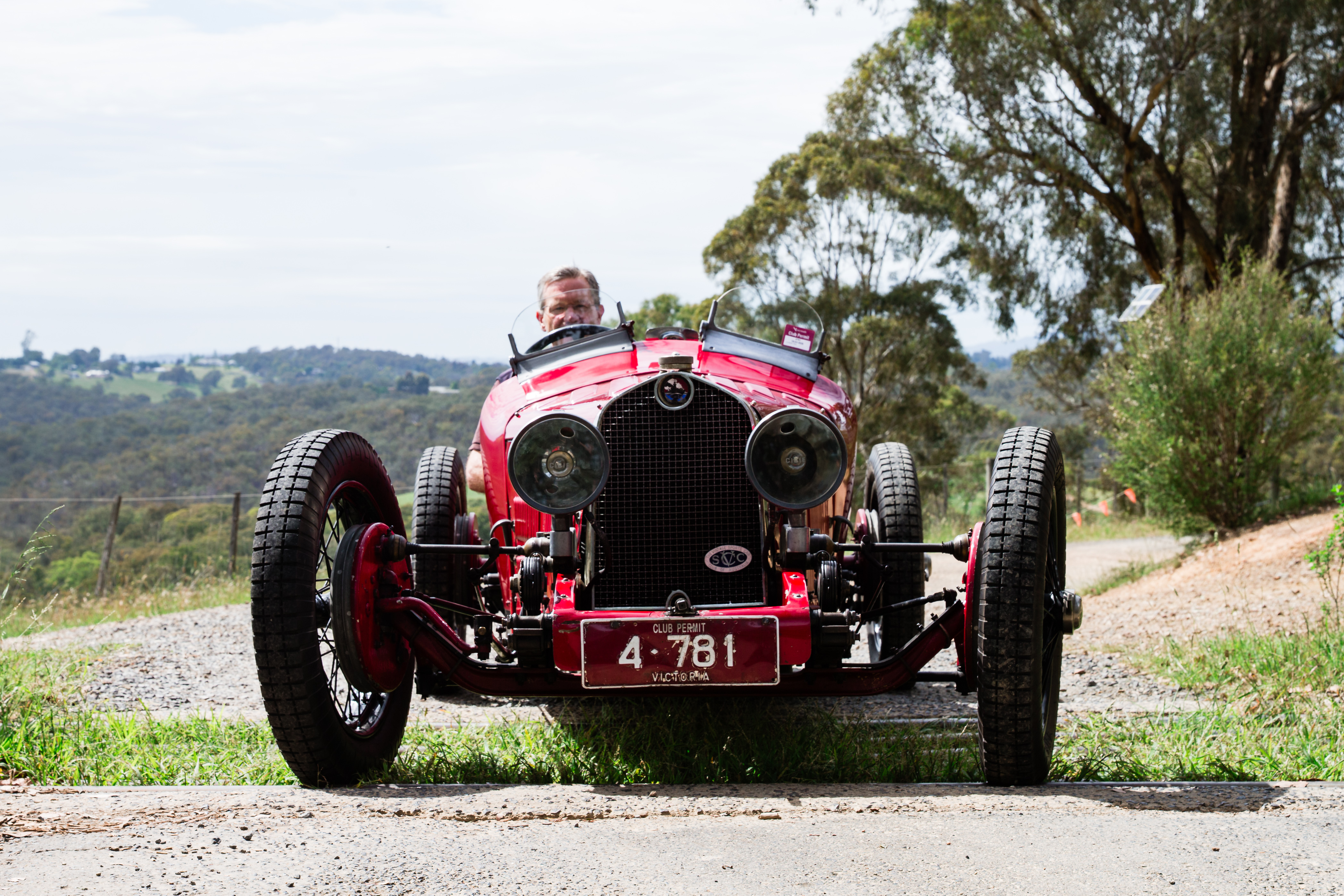
(Hewison/The Automobile)
Neill Murdoch, AL3 North Warrandyte (Hewison/The Automobile)

I was talking to an enthusiast last week about how long the whole process takes; it’s about six months from pitching the idea to the article appearing on the printed page. Longer if the little minx concerned has a meltdown of some sort.

The research on this topic was a real challenge as the Murdochs didn’t have the mountain of material on Lombard that they have on Altas. My library is skinny on the topic, too, so my circle of mates dug deep. Phil Schudmak’s library of French stuff is strong, so Google Translate was set to work. Bob King, Stephen Dalton and Tony Johns all pitched in. Chris Beach came up with some fabulous period shots that eluded me on the internet, and he tidied up the fantastic AL3 drawing below, first published in the January 16, 1953 issue of Autosport. It didn’t make the cut, but here ’tis…
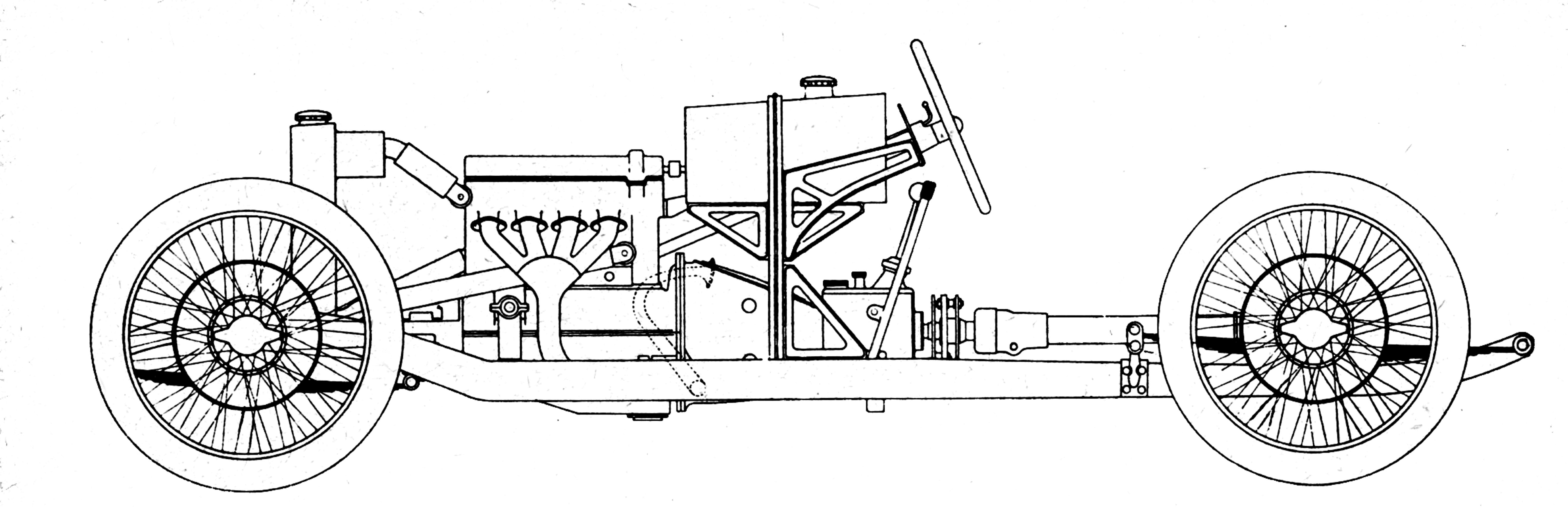
Lombard AL3 (Chris Beach/Autosport)
Ain’t she sweet, Sugarloaf Reservoir, Christmas Hills (Hewison/The Automobile)

The perfect world with a car like this would be to trailer it to Deans Marsh, then unload it, saddle up and do Benwerrin, then Lorne to Apollo Bay on the Great Ocean Road, inclusive of shots. Then Skenes Creek, Forrest and back to Deans Marsh. But that ain’t ever going to happen!

In essence, the location of the car dictates the test/photo route. The AL3 lives at Neill’s place at present, in Melbourne’s inner east, very close to me. So I recce’d roads very familiar to me in Melbourne’s outer east: Warrandyte, Kangaroo Ground, Christmas Hills, with Sugarloaf Reservoir – very close to Rob Roy Hillclimb, where the little AL3 competed in the hands of all of its owners – the end point.

While I know the roads, I’m carefully choosing photo locations on the recce, static and on the move, so everybody’s use of time on the day is efficient. David Hewison, the photographer, makes the final calls on the day on the fly. I met Neill at his place at 8.30, Geoff, his brother, had the chase-car, and we went back there, having bought the client a relaxed el-cheapo meal in Eltham at about 4-ish. So, it’s a full day. In this case, Geoff trailered the car home, not that it needed it.

It’s fun. I never do any of the writing before the drive, even the corporate stuff, somehow I like the flavour of the car in my mind when I do the scribbling. There is no logic to that, just personal preference.
(Hewison/The Automobile)

No more than ten-five Neill. Scribbler and co-owner Neill Murdoch.

The cockpit is tight but comfy enough for a weekend rally. ‘Box is a four-speed crash with the shifter centrally mounted. The pedals are conventionally located, too, so the driving isn’t too challenging for an old curmudgeon, whose daily motoring is behind the wheel of manuals.
Credits…

M Bisset, Bob King Collection, David and Andrew Hewison photographers

Tailpieces…
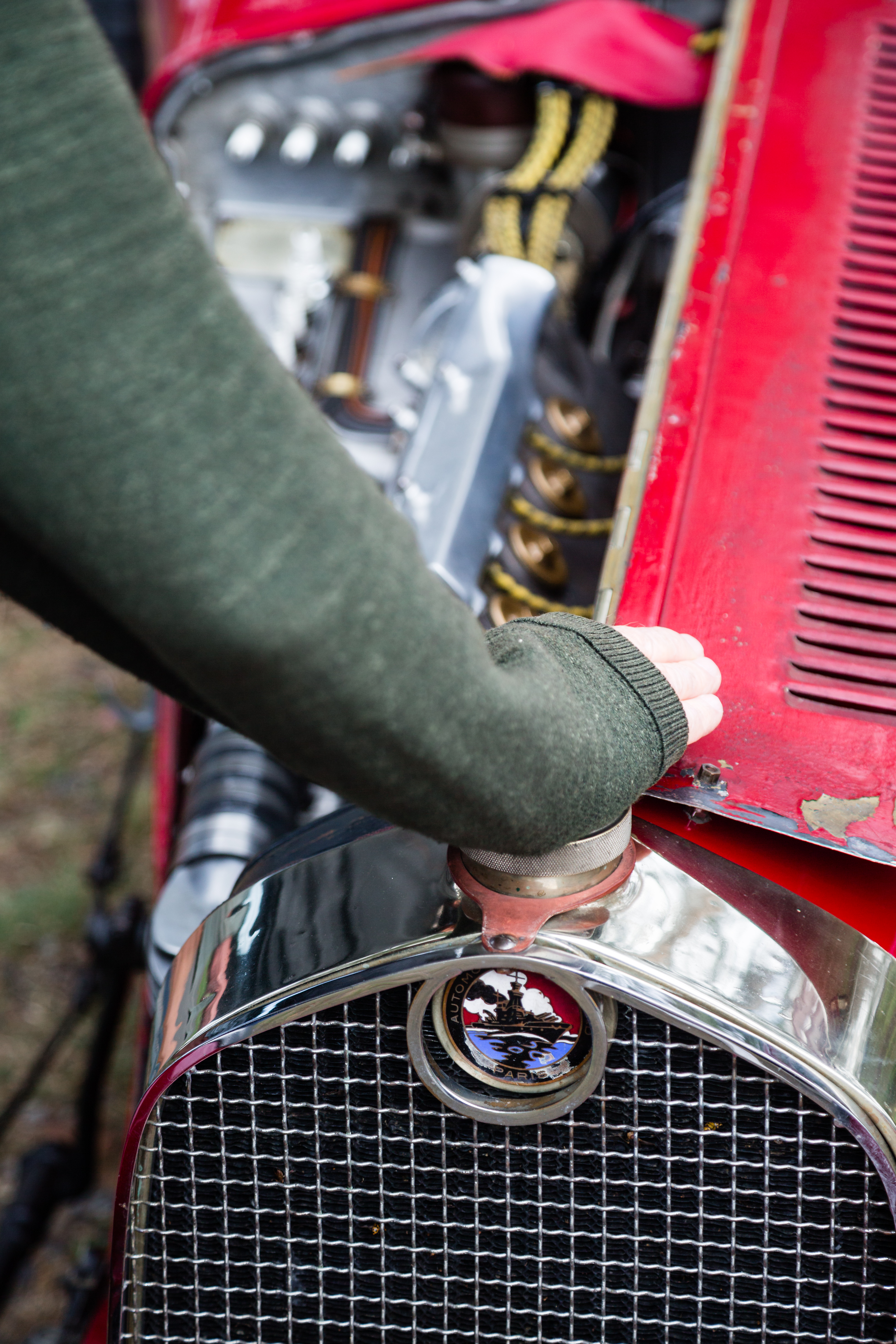
(Hewison/The Automobile)

It was a day of smiles. Terrific photos by David Hewison and his 16-year-old son Andrew, whom I managed to leave off the credits in the magazine. Sorry, pal, my fuck up!

Thanks again, Neill and Geoff Murdoch, it’s such fun to work with you guys!
Neill Murdoch, Andrew and David Hewison, and of course the star of the show (M Bisset)

Finito…

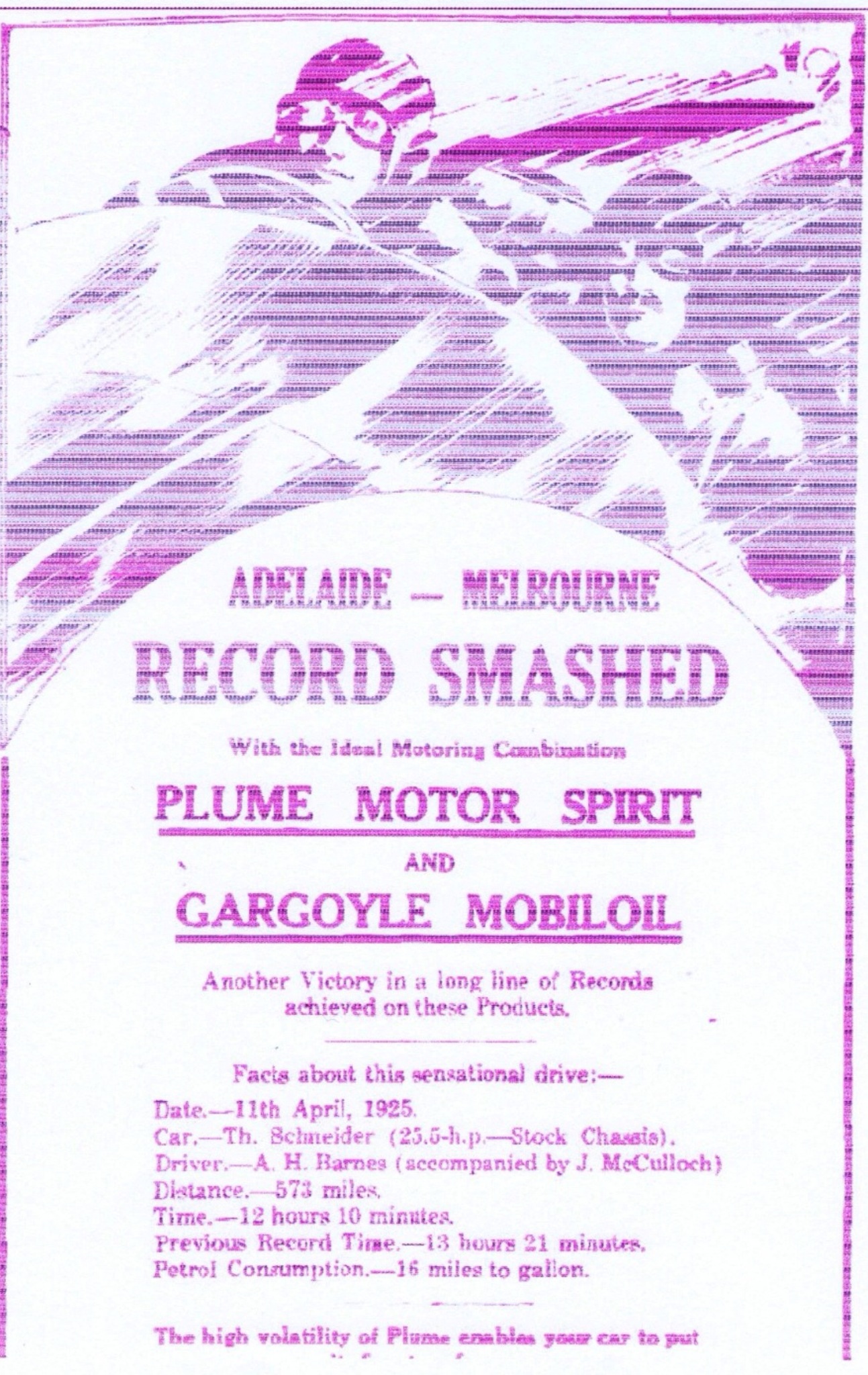
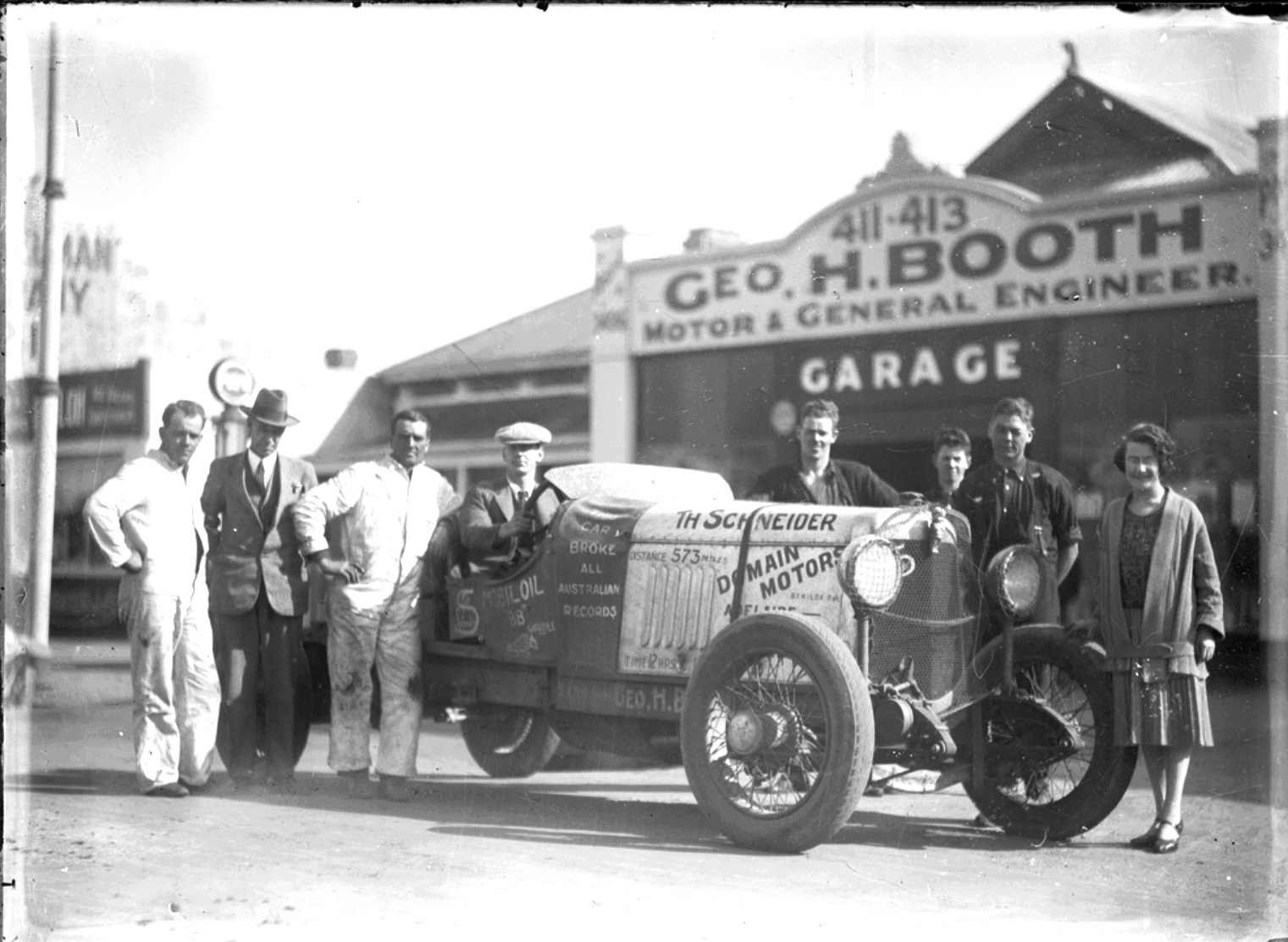
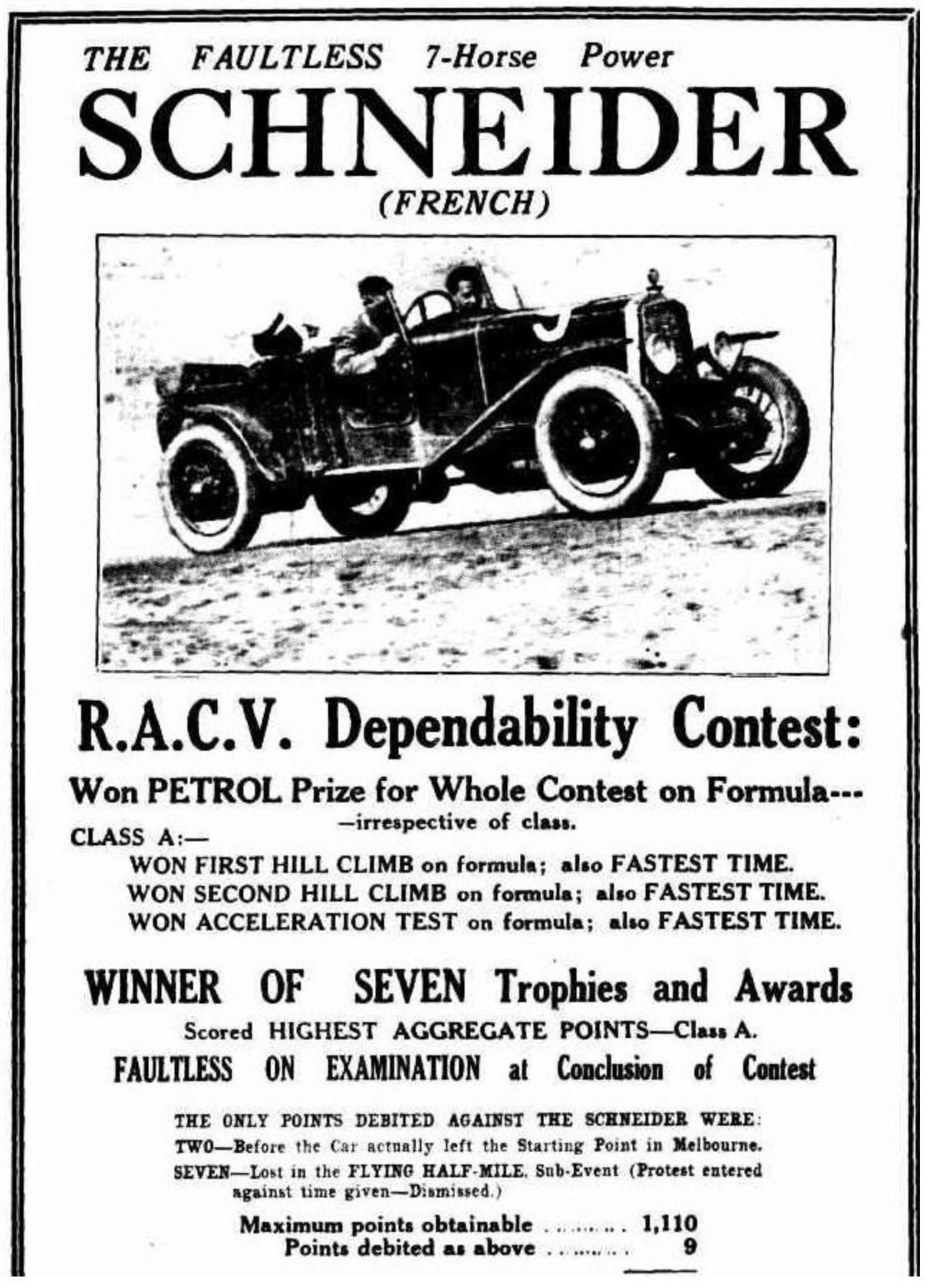
The Arthur Barnes driven TH. Schneider broke the Adelaide-Melbourne record with a time of 12 hours 10 minutes for the wild ride over a very rough roads on 11 April 1925…

Sydney motorist AH Barnes was accompanied by J W (William) McCulloch, in the 25.5 hp French six-cylinder 4.5 litre machine. It was national news, this advertisement was placed in the Sydney Morning Herald on 20 May 1925.

The same car, engine number #29, set a Broken Hill-Adelaide record of 8 hours 3 minutes for that 336 mile journey, an average of 42 mph, on 19 August 1925, ‘speeds of more than 100 mph were attained along the route’- that record was previously held by an Amilcar.

Three veteran and six vintage TH. Schneider chassis are known to have been imported to Australia through agents in South Australia and Victoria- George H Booth and Thomas Mitchell and Co-pre-War, and Domain Motors/Kellow-Falkiner Pty Ltd-both post-war, respectively in each state.

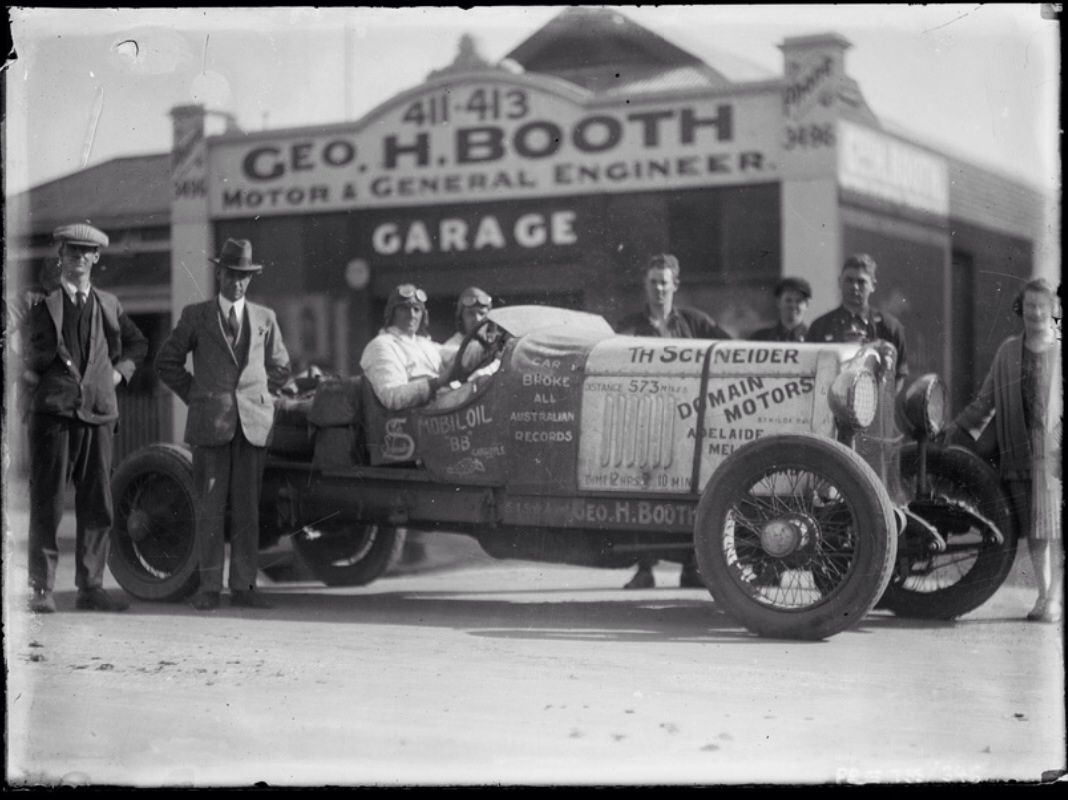
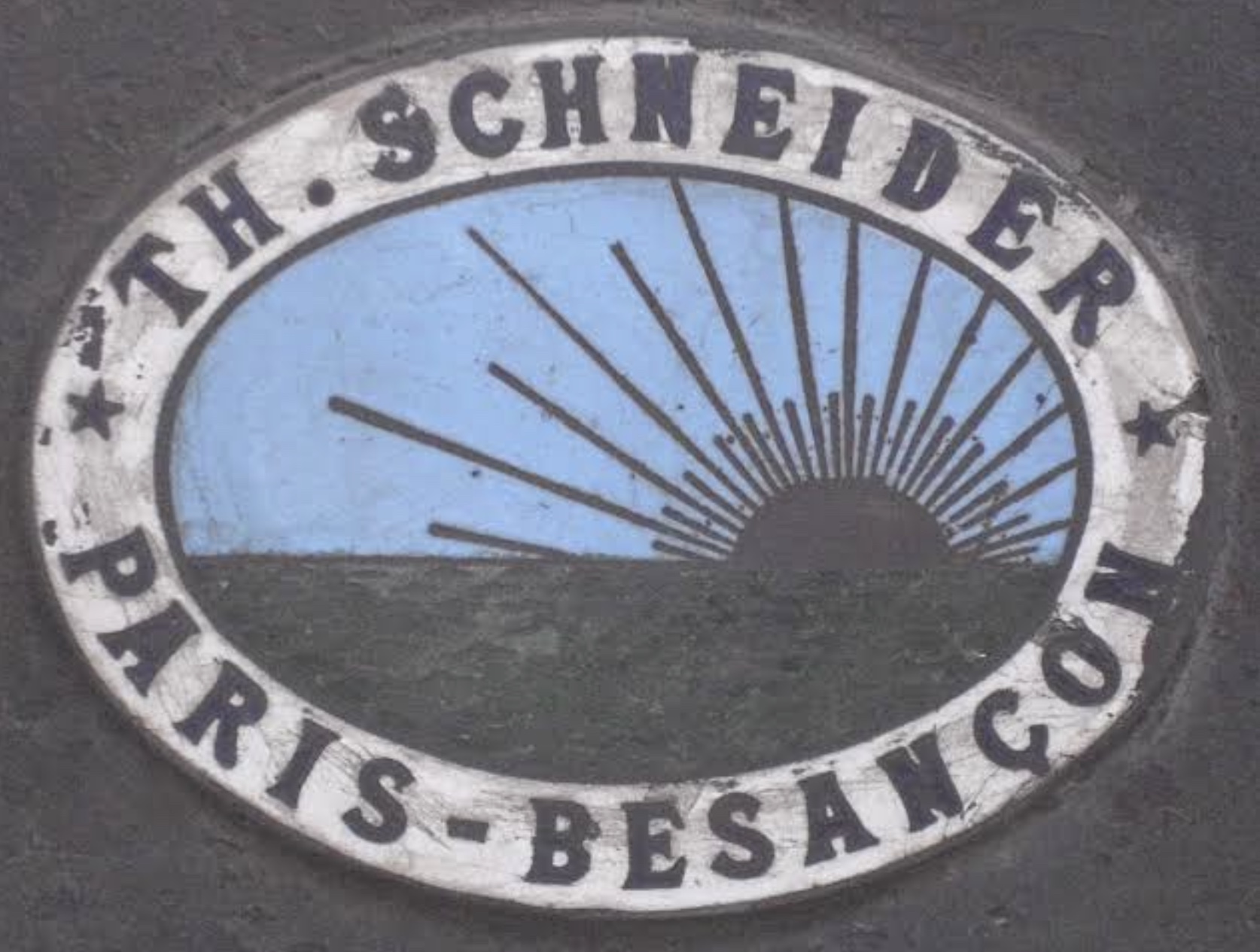
The two photographs below show the 25.5 hp TH. Schneider (variously TH. Schneider, Th. Schneider and both of these without the full-stop- I have used the variant on the badge below) out front of Geo Booth’s premises in Adelaide after the Broken Hill to Adelaide run on 19 August 1925. The crew was again Barnes as driver and McCulloch the mechanic.

George Booth of 411 King William Street Adelaide and Domain Motors of 348 St Kilda Road in Melbourne were the agents for the cars at the time and of course sponsors of the successful record attempts.

(SLSA)


(SLSA)

Theophile Schneider first entered the motor industry in partnership with Edouard Rochet to build the Rochet-Schneider at Lyon in 1894, he then moved to a factory in Besancon, east France near the Swiss border to build cars on his own- his first was an 1850cc four cylinder machine with a radiator behind the bonnet, a style later popularised by Renault.

These first ‘Schneiders, fitted with engines from 10 to 35hp were raced circa 1912-1914, the best result second place in the June 1912 Grand Prix de l’Automobile Club de France held on a course based at Dieppe, the car was driven by Rene Croquet with riding mechanic Rene Champoiseau.

After converting to manufacture of components for the war effort the company resumed car production post-war and changed its structure to that of a limited stock company, the record-run car is a type 21.20.1, 25.5hp six cylinder, 4480cc six cylinder, for speed manual with a solid front axle, live rear axle fitted with semi-elliptic springs and two rear wheel brakes, the wheelbase was 3505mm

Three of this model were imported into Australia by Domain Motor Body Builders/Domain Motors. At 1950 pounds they were nearly twice as expensive as the 4.5 litre Bentley of the day, Domain Motors ceased business around July 1926 at a time Th. Schneider themselves were in deep financial trouble at home, having been declared bankrupt in November 1921.

The reputation of the marque allowed the company to trade profitably through the mid-twenties, re-entering racing inclusive of participation at Le Mans in 1926- Pierre Tabourin and Auguste Lefranc were sixth in a 1954cc 25SP and in 1927 when Robert Poitier and Pierre Tabourin DNF accident in a 25SP.

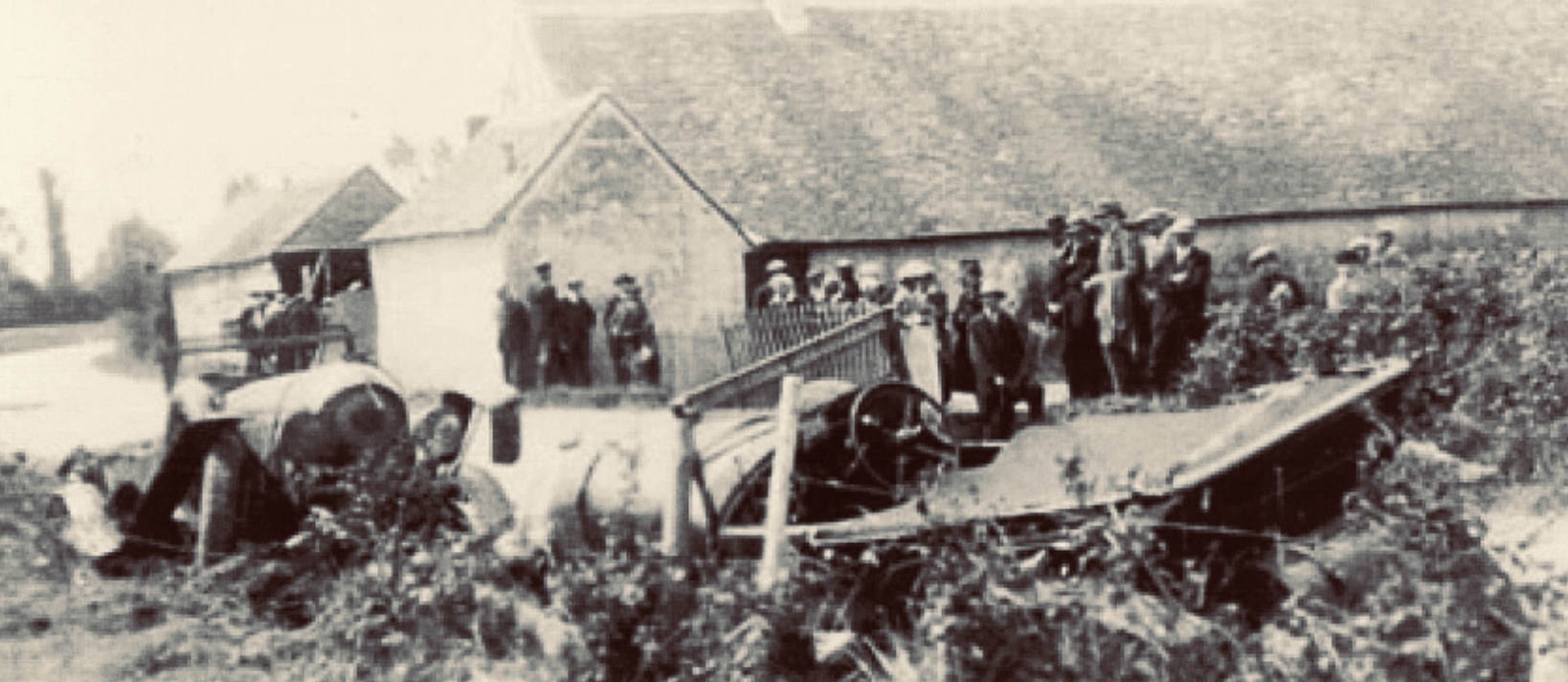
‘White House Crash’ aftermath- the #2 d’Erlanger/Duller Bentley Sport 3 litre at left and #1 Clement/Callingham Bentley 4.5 litre at right- ditto photograph below (unattributed)


(unattributed)

The Tabourin driven TH. Schneider is infamous amongst Bentley enthusiasts as the cause of the ‘White House Crash’ which involved three Bentleys. At dusk Tabourin approached the corner too fast, lost control and hit a building close to the road coming to rest and partially blocking the track, Leslie Callingham, following closely, swerved to avoid him and ended up in a ditch on the opposite side of the road, George Duller then hit Callingham, and then Benjafield too hit Callingham in avoidance of Tabourin- Benjafield was able to continue but the race was well over for the other three machines.

No-one was seriously injured but Pierre Tabourin was taken to hospital with broken ribs, the #12 ‘Schneider driven by Chanterelle/Schlitz withdrew from the race out of respect for the injured Tabourin. In a happy ending for Bentley Benjafield and Sammy Davis won the race in the Sport 3 litre ‘old number 7’.

Problems in 1928 led to a second bankruptcy in March 1929 and closure of the Besancon factory doors in early 1930- right in The Great Depression of course.

TH. Schneider’s assets were acquired by French company Societe SADIM, the name continued but was applied to caterpillar tractors- World War 2 saw the end of a once proud marque.

Meanwhile, back in Australia, the insolvency sale of Domain’s assets resulted in four Ansaldos, three Ansaldo chassis and ‘four brand new latest model Schneiders’, of which one was the record breaking car- number ’29’ the other a new DS six cylinder 25hp model changing hands.

The record breaker, which John Bisley has (as of 2015) was never bodied, it was acquired by Watts McNamara and went from Myrtleford to Griffith in 1927- where it remained for most of its life. If any of you can fill in the ownership details of the car since it arrived in Australia please get in touch.

The record breaker at the Cockburn Hotel, in South Australia, not far from Broken Hill near the South Australia-New South Wales border (Richard C)


(unattributed)

Even though the cars were small in number in Australia, motorsport was used in attempts to build the brand inclusive of an entry in Australian Grand Prix where a 2 litre TH. Schneider driven by Ernest King contested the 1929 event held on the daunting, dusty, undulating and fast Phillip Island road circuit- King failed to finish having lost a wheel on lap 17 of the race won by Arthur Terdich’s Bugatti T37A.

The photograph above shows King contesting a hillclimb at Wheelers Hill in Melbourne’s outer east in June 1928, six months prior to the 1929 AGP- Th. Schneider 2 litre 25SP.

‘Schneider’s motorsport participation in Australia extended to the reliability trials which were popular at the time and of which I have written in the past. In March 1927, a 7hp car was first in class and fifth outright in a field of about forty cars- the driver was AGP winner Arthur Terdich as below.

(unattributed)

Etcetera…

(unattributed)

Rene Croquet and Rene Champoiseau aboard their TH. Schneider during the second day of the 1912 French Grand Prix on 26 June- the road race comprised 20 laps of a 77km course based in Dieppe, a total of 1540km.

Contestants raced over 10 laps on each day with the results aggregated to produce a winner.

Georges Boillot won in a Peugeot from Louis Wagner’s Fiat S74 and Victor Regal in a Sunbeam with Rene seventh, Rene Champoiseau raced another TH. Schneider but retired.


Credits…

SLSA- State Library of South Australia, thschneider.wordpress.com, prewarcar.com, Richard C, F2Index

Tailpiece…

The site of Domain Motors business premises at 348 St Kilda Road- a nice spot right opposite The Shrine of Remembrance, next door to the French Consulate which is apt! and not too far from Albert Park Lake, for international readers, is now, in the best Australian tradition, a block of luxury apartments…

Finito…