


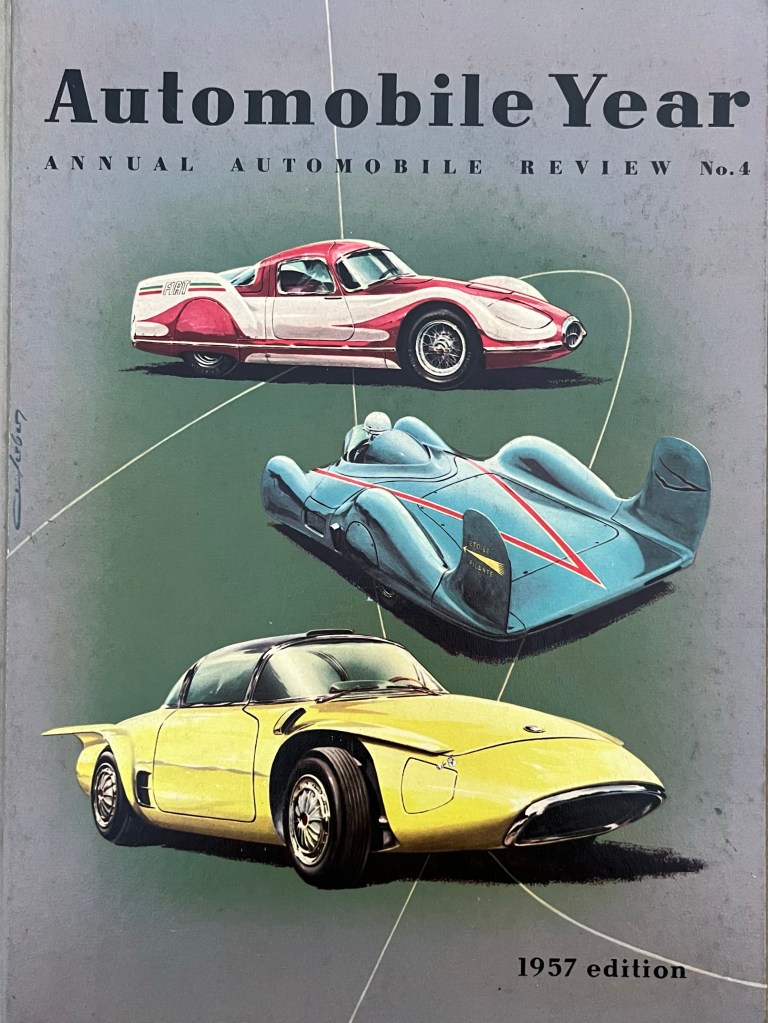
My friend Tony Johns lent me a couple of early AutoCourses that I turned into a couple of interesting posts. I’ll continue with that but thought I’d add an occasional piece based on my own collection of Automobile Years.
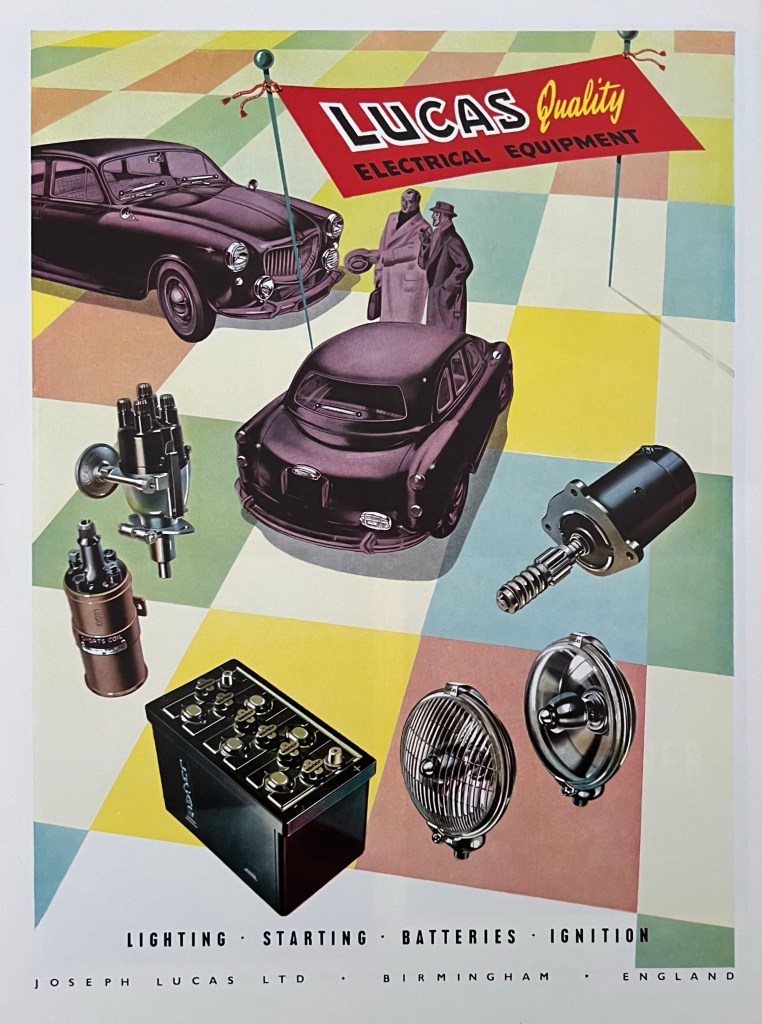
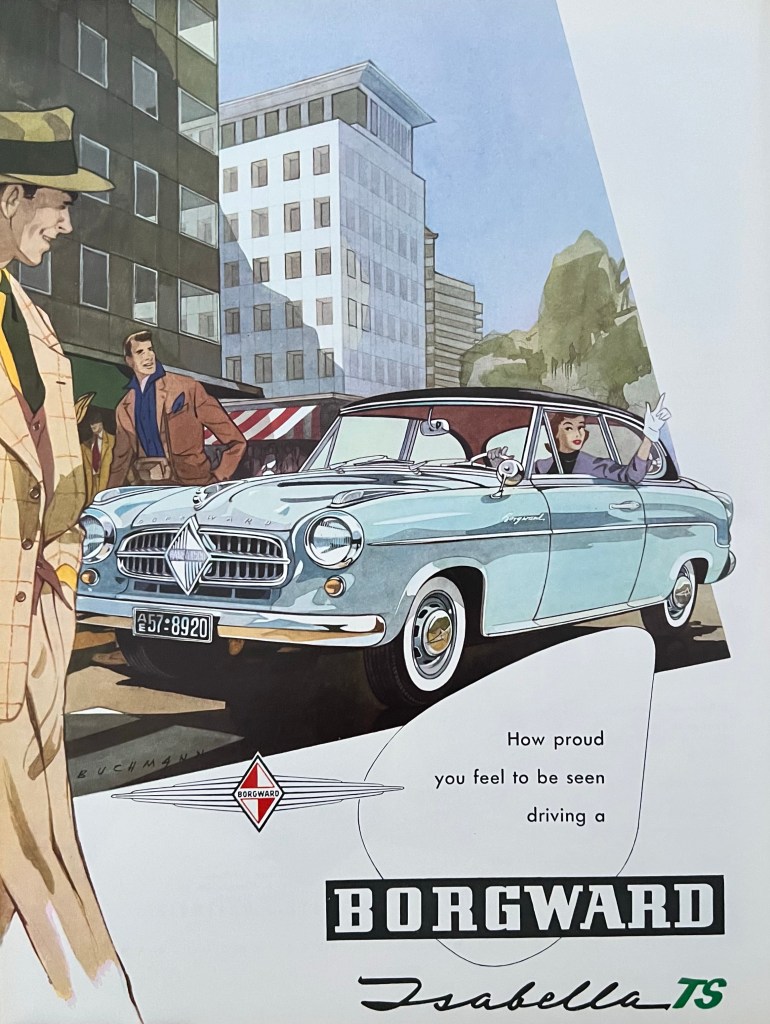
It’s the beauty of the some of the ads that really caught my eye. The reproduction of small monochrome racing shots isn’t that flash so I’m sharing the best of the relatively small number of colour shots and a few monochrome photographs within the mix of ads.
The artwork on the cover has a name but I can’t read it, nor is it disclosed elsewhere. The cars shown are a Fiat 8001 Turbina, Renault Shooting Star, General Motors XP-500 gas turbines.
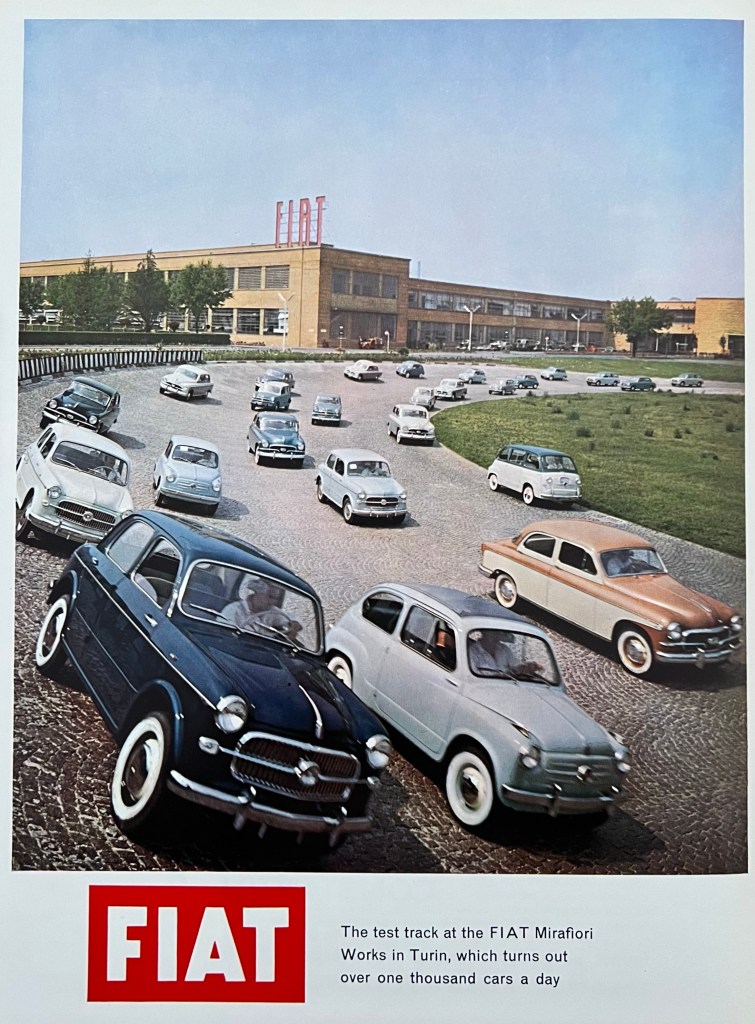
Superb Yves Debraine shot of the start of the 1956 Monaco Grand Prix.
The two Lancia-Ferrari D50s of JM Fangio and #22 Eugenio Castellotti sandwiching Stirling Moss in a works-Maserati 250F. #16 is Harry Schell, Vanwall VW1, #30 Jean Behra, 250F, #24 Luigi Musso, Lancia-Ferrari D50, #32 Cesare Perdisa in another works Maserati 250F.
‘Stirling Moss had been in the lead from first to last and gave a faultless display of brilliant driving and faultless race strategy (being under great pressure from Fangio’s Ferrari late in the race). The discovery of the day was Peter Collins (Ferrari second) . Behra drove a steady race into 3rd place, with no incidents (250F).’ See here for more: https://primotipo.com/2014/08/21/stirling-moss-monaco-gp-1956-maserati-250f/

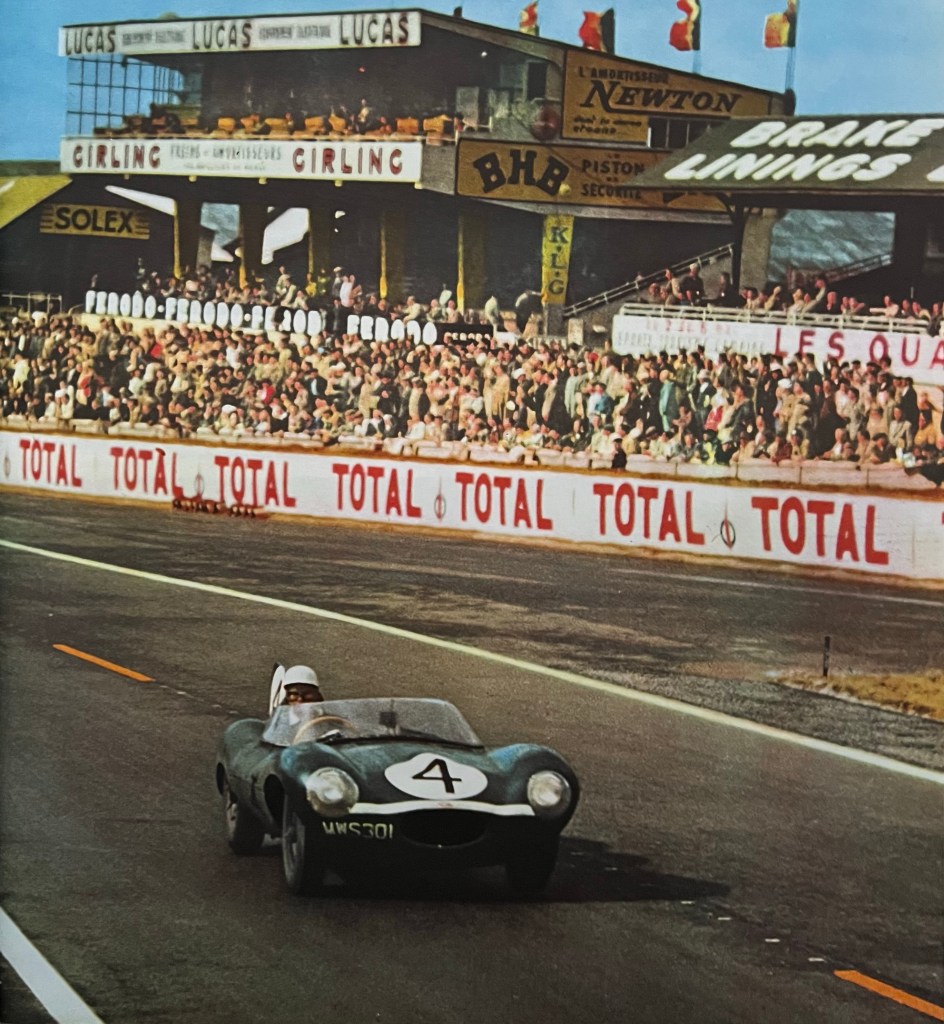
Le Mans 24-Hours.
‘The privately entered Ecurie Ecosse Jaguar D-Type driven by Ron Flockhart and Ninian Sanderson gave Jaguar an unexpected victory – the fourth since the war – after bad luck had struck the works team.’
Stirling Moss and Peter Collins were second in an Aston Martin DB3S ‘after strongly challenging the leaders throughout the race.’ Olivier Gendebien and Maurice Trintignant were third in a Ferrari 625LM Touring. A bit more about Ron Flockhart at Le Mans, albeit 1957: https://primotipo.com/2015/01/17/le-mans-1957-d-type-jaguar-rout-ron-flockhart-racer-and-aviator/

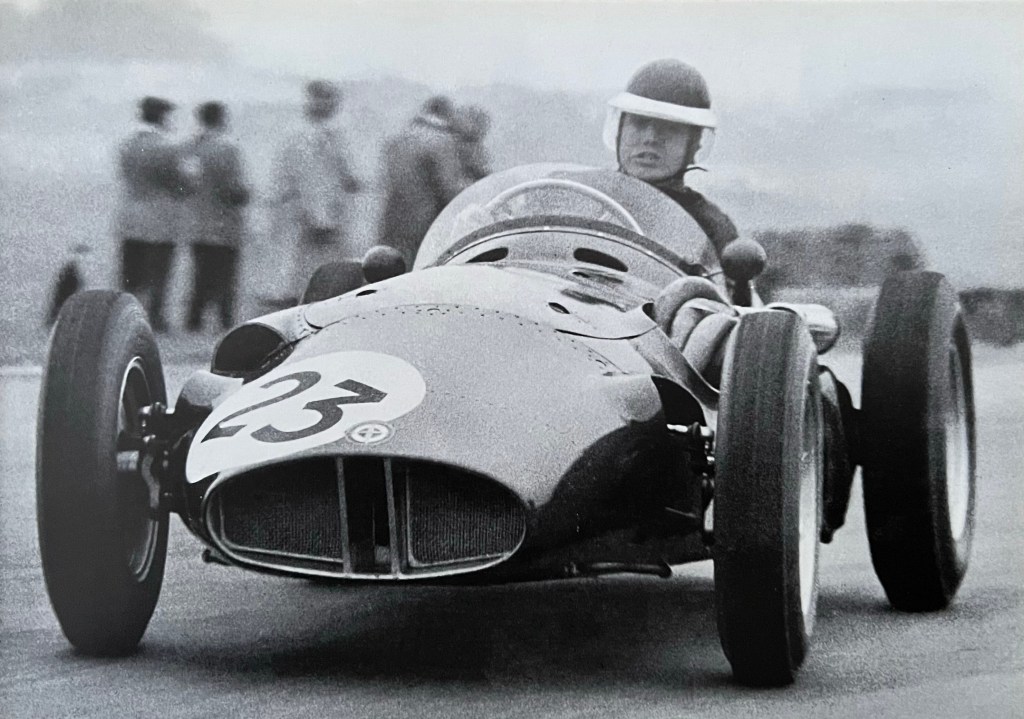
‘Mike Hawthorn was in magnificent form and held the lead (of the British Grand Prix at Silverstone) for 15 laps.’
‘The BRM (Type 25) showed again that it is probably the fastest of all current Grand Prix cars, but Hawthorn was eventually passed by Moss (Maserati 250F) and others before being forced to retire at 23 laps by loss of lubricant to a rear universal joint, which produced incipient seizure.’
Moss the led until the 68th lap when misfiring intervened with Roy Salvadori driving the race of his life in the Gilby Engineering 250F, holding second place for 30 laps in front of all of the works cars! Fangio, Lancia-Ferrari D50 led to the finish after Moss retired, with Peter Collins/Alfonso de Portago second and Jean Behra, Maserati 250F third.
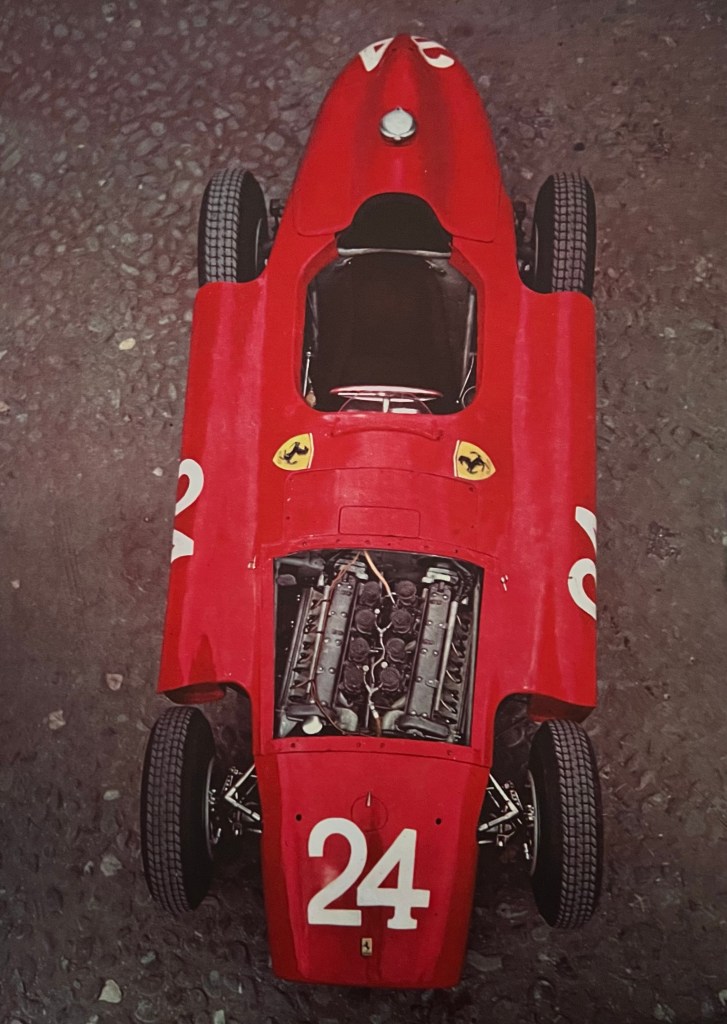
JM Fangio’s F1 Drivers Championship winning Lancia-Ferrari D50.
‘Front engine, V8 mounted at an angle. Bore and stroke 76 x 68.5mm, 2495cc. Maximum power 285bhp @ 8500rpm, 4-overhead camshafts, chain driven. 4 downdraught Solex twin-choke carburettors. Dual ignition: 2 magnetos, 16 plugs. Clutch at rear in unit with 5-speed gearbox and differential. Front suspension by double wishbones with transverse leaf spring. Rear suspension De Dion, with transverse leaf spring. Drum brakes. The tanks in the wheel fairings are no longer used, all the fuel being carried in the tail.’

The Big Red Cars to the fore at the start of the French GP, Reims, July 1: Peter Collins, Eugenio Castellotti and JM Fangio in Lancia-Ferrari D50s ahead of the Moss Maserati 250F, Harry Schell’s Vanwall VW1 #22, and Jean Behra’s 250F, then one of the Gordinis, and the rest…
Fangio led until he pitted on lap 40, but he joined the fray after a change of plugs. Harry Schell raced brilliantly, retired his own Vanwall, then took over Hawthorn’s while it was in seventh place, and then chipped away at the leading Ferraris passing all but Fangio until injection pump trouble intervened.
Collins won from teammate Castellotti by three-tenths after 2 hr 34 min of close racing, then Behra 30 seconds back.
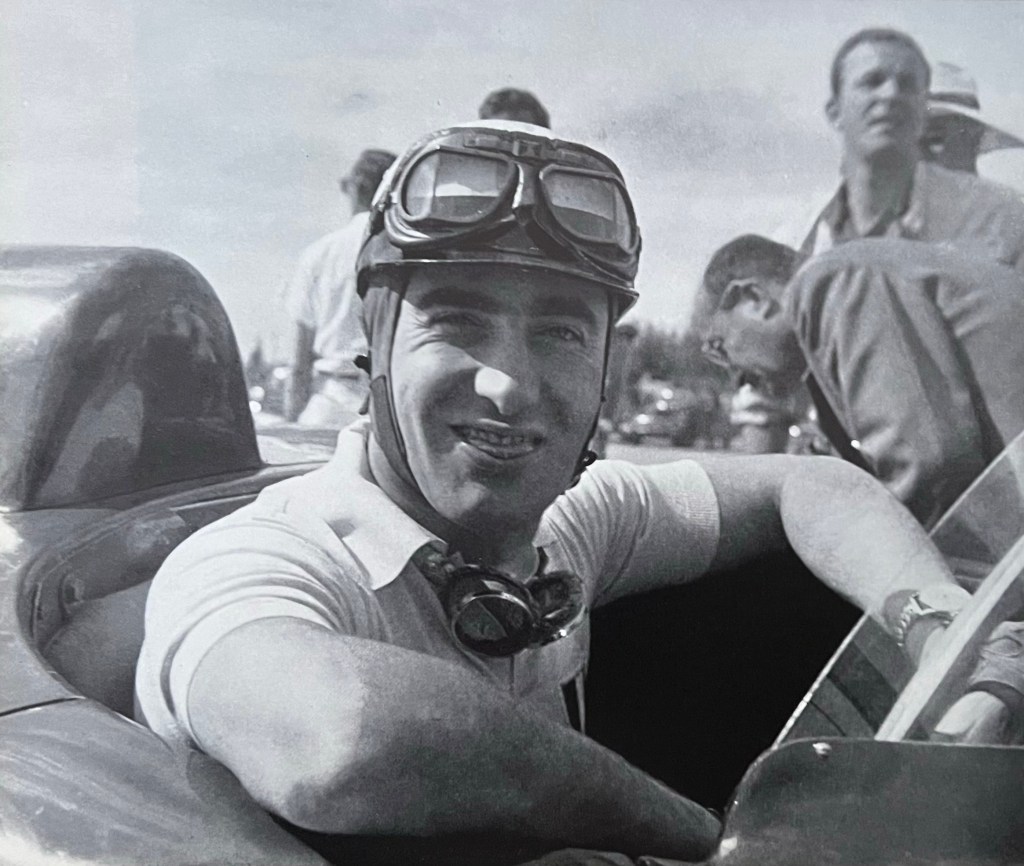
Sebring 12-Hour
‘The victory of the Fangio-Castellotti team (in the Sebring 12-Hour) was largely the work of the young Italian. Fangio, feeling unwell, had handed the car to him for the last hours of the race. The 3422cc four-cylinder Ferrari (860 Monza) covered a distance of 1008.72 miles in twelve-hours and put up a new record by doing twelve more laps than the winning Jaguar (D-Type) in 1955.’
Luigi Musso and Harry Schell were second in another Scuderia Ferrari 860 Monza with the Bob Sweikert/Jack Ensley Jaguar D-Type third.
Mille Miglia 1956…
I was going to give the shot below the same treatment as the rest and then I read the prophetic piece that went with it…not too long before the 1957 Mille disaster. It’s worth sharing in full I thought, an insiders view of the time clearly expressed.
‘For a long time after the catastrophe at the Le Mans Twenty-four Hours in 1955, motor-racing circles feared that the XXIInd Mille Miglia had been the last of the series. That race, in which 365 cars competed over 1,000 miles of roads lined by hundreds of thousands of spectators, is the most dangerous of all motor races for the drivers and even more so for the spectators.’
‘Therefore those who love the sport were all the more pleased when, after long and bitter disputes, the XXIII edition of the race was permitted-for it was a triumph over the enemies of motor racing-but they felt some uneasiness nonetheless. So few changes had been made in the regulations that the old risks were still there. The competitors were still to start off in the pitch dark and charge at headlong speed along roads lined – and in some places obstructed – by enthusiastie spectators many of whom had taken up their stand at the most dangerous points.’
‘The rain that fell incessantly throughout the race made the surface slippery in the extreme. Several cars left the road and the day closed with 7 fatal casualties – two of them among the spectators – and 16 injured. Indeed it was really only by sheer good luck that there were not a great many more. For these reasons we are against the Mille Miglia in its present form.’
‘Sooner or later it is bound to lead to a catastrophe fraught with the direst consequences because it could be so easily avoided. There must be fewer starters with a severe selection of the entries, and the most dangerous points-especially where the cars come out of a bend-must be closed to spectators. If these conditions, which without eliminating all danger would reduce the risk to reasonable proportions, cannot be satisfied the Mille Miglia will have to be considered anachronistic. We have nothing against the organizers. We simply believe that in common sense it must be admitted that the pleasure and interest of a limited number of people together with the technical advances brought about by the event are no justification for the terrible risks involved in a race where for 20 hours on end thousands of spectators without the slightest protection are within arm’s length of meteors unleashed at terrific speed.’

‘The XXIIIrd Mille Miglia was run in appalling weather which prevented the repetition of performances on a par with those recorded in 1955. The times chalked up by all the classes were slower than last year with the sole exception of Michy on RENAULT 750 c.c, who broke the record set up by Galtier in 1955. All in all one may say that the small, and therefore less speedy, cars were less severely handicapped by the rain than the powerful machines capable of doing over 125 m.p.h.’
‘Victory smiled on Eugenio Castellotti on a 3 ½-litre 12-cylinder FERRARI (290 MM Scaglietti). He took 1 hour 29 minutes 22 seconds more than Moss last year to cover the 1,597 kilometres of the course but his average speed was most impressive in view of the atmospheric conditions he was up against. Second place was taken by another FERRARI – a 3 1/2 litre 4-cylinder model – driven by Peter Collins whose passenger was our contributor Klemantaski, a bearded British journalist like Jenkinson.’
‘FERRARI won all the laurels taking 3rd, 4th and 5th places with Musso, Fangio and Gendebien, the latter being the winner of the “Grand Tourisme” class. In the next three places we find three MERCEDES 300 SL privately entered but prepared by the works. The MASERATIs were a disappointment although Scarlatti took first place in the class for sports cars under 2,000 c.c., while Perdisa was first in the under 3,000 c.c. class but only 28th in the general classification. Stirling Moss, No. I member of the team, whose car was not quite up to scratch, ran off the road before Rome and withdrew from the race.’
‘The ALFA ROMEO GIULIETTA which had disappointed in 1955 put up a magnificent show this year. As usual PORSCHE took first place in the “Grand Tourisme” class under 1,500 c.c. but was defeated in the sports class by Cabianca’s OSCA 1500 and Jean Behra’s MASERATI. All four RENAULT DAUPHINES entered by the works finished the race although Paul Frère capsized when leading the team. The winner was Gilberte Thirion at an average of 65.85 m.p.h. Our contributor Bernard Cahier, at the wheel of his own DAUPHINE – a production model in every respect – covered the course at 58.28 m.p.h. Michy on a modified 4 H.P. RENAULT produced a fine performance, as already mentioned, by lowering the record for his class established in 1955 on a dry surface by Gaultier with a car of the same type.’
‘Of the 427 entries, 365 started but only 182 reached the finish – a wastage of 50 per cent.’
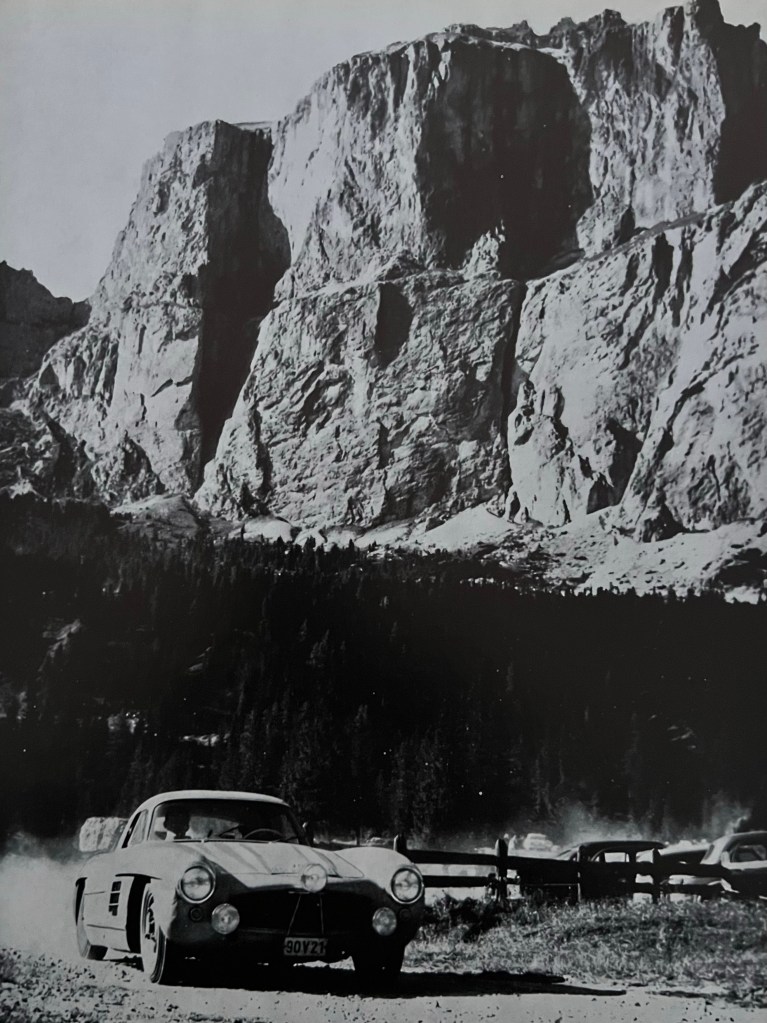
The Liège-Rome-Liège winning Mercedes Benz 300SL crewed by Willy Mairesse and Willy Génin on the Pordoi Pass in Italy. See here for more on the Gullwing: https://primotipo.com/2014/05/15/i-like-the-smell-of-leather/
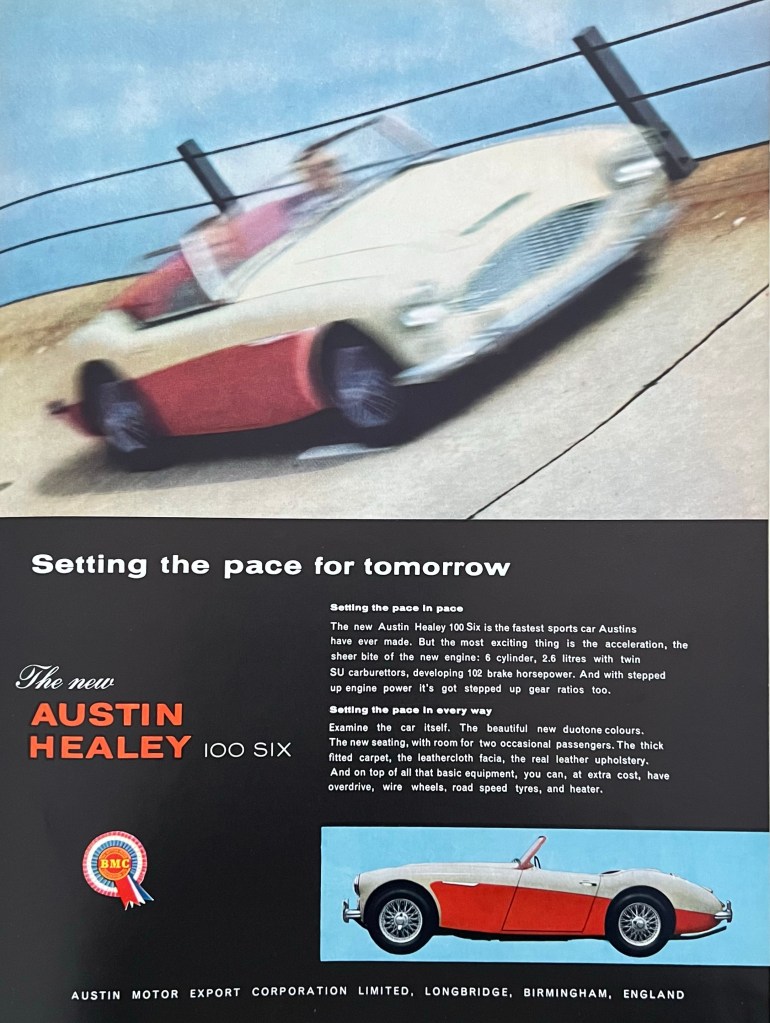
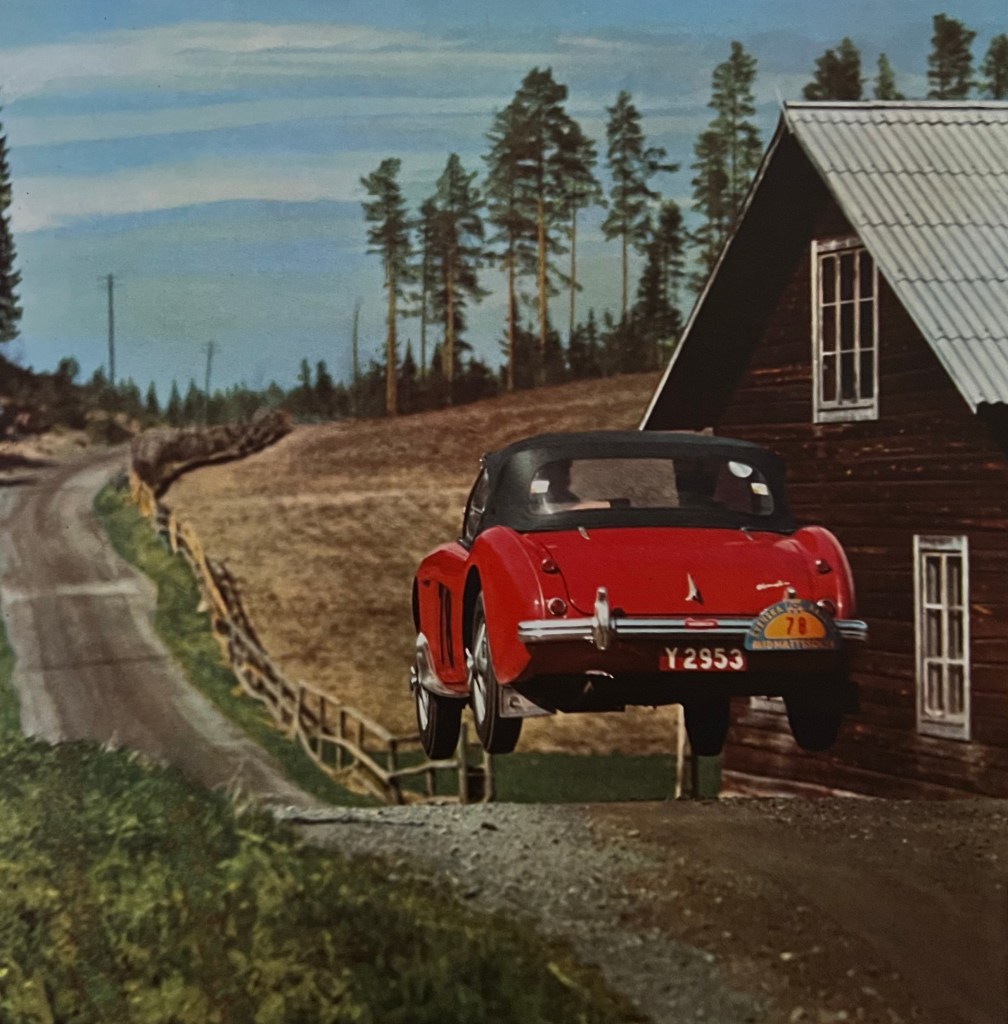
‘The Frölander and Lindbergh, shortly after take-off, on their flight to the Midnight Sun in a single-engined (?) Austin Healey.’ This crew didn’t finish in the top-10, the May 29-June 3, 1956 event was won by a VW 1200 driven by H Bengtsson and navigator A Righard.
Credits…
Automobile Year, Yves Debraine, Louis Klemantaski, Junior, Bernard Cahier, B Gronlund
Tailpiece…
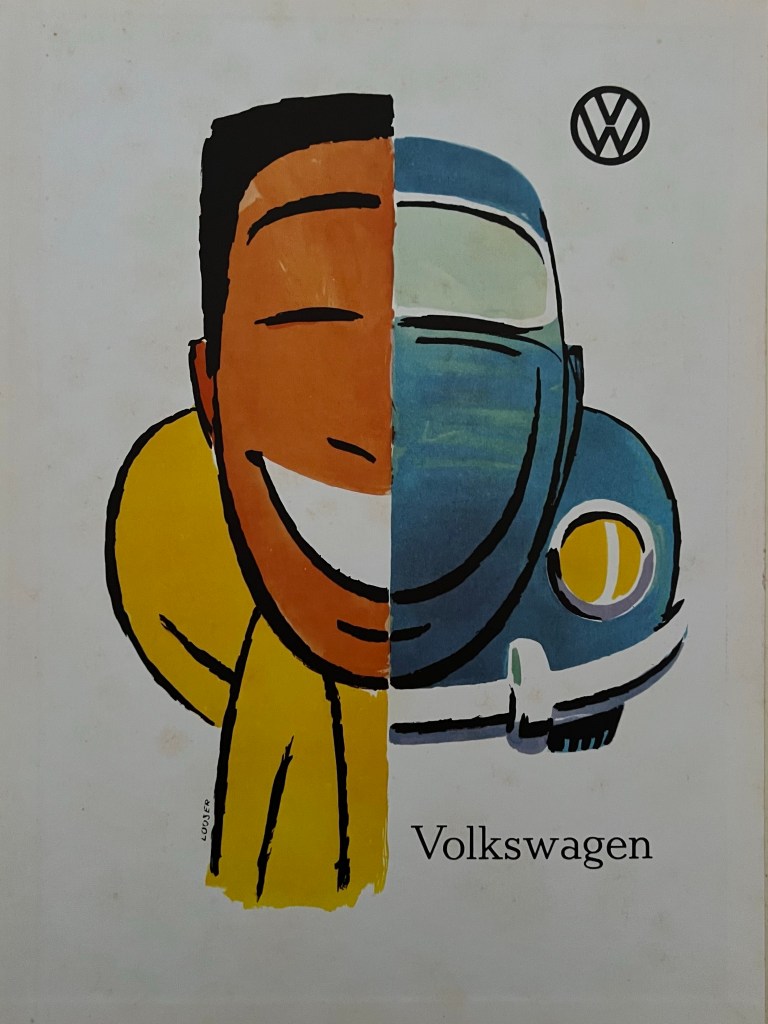
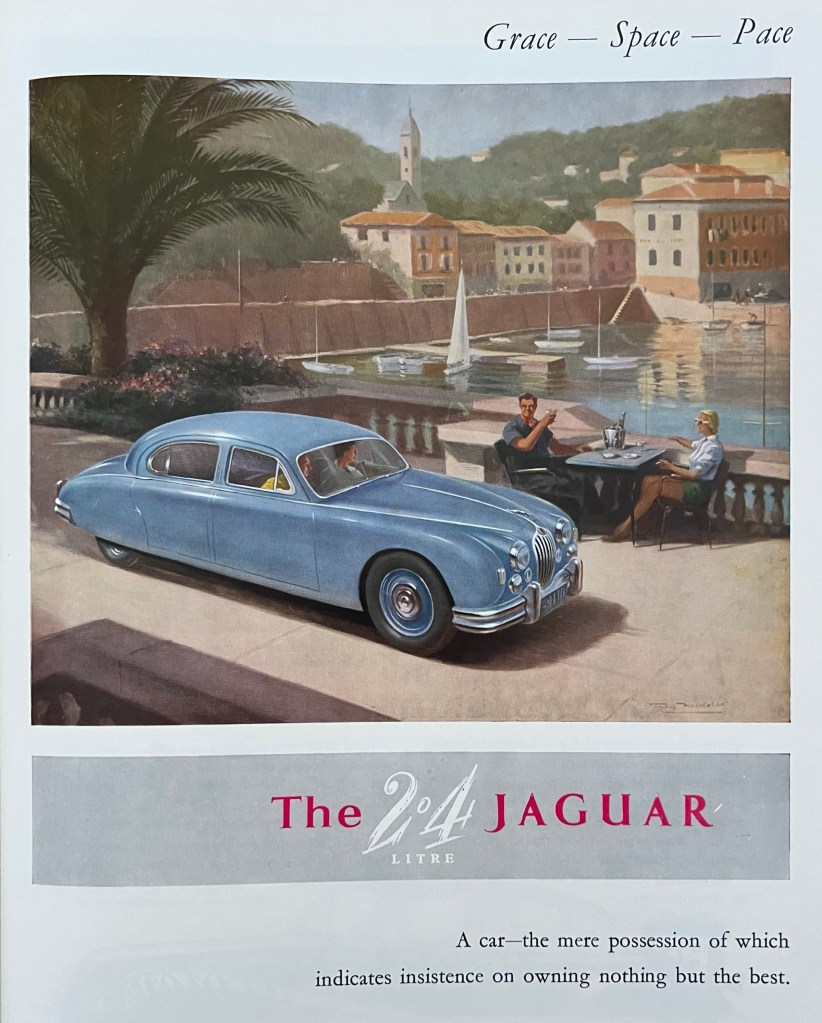
I’ve long thought the power of an ad is inversely proportional to the word count…particularly if the visual imagery is up to snuff!
Finito…

 primotipo...