Posts Tagged ‘1965 Tasman Cup’

(D Shaw)

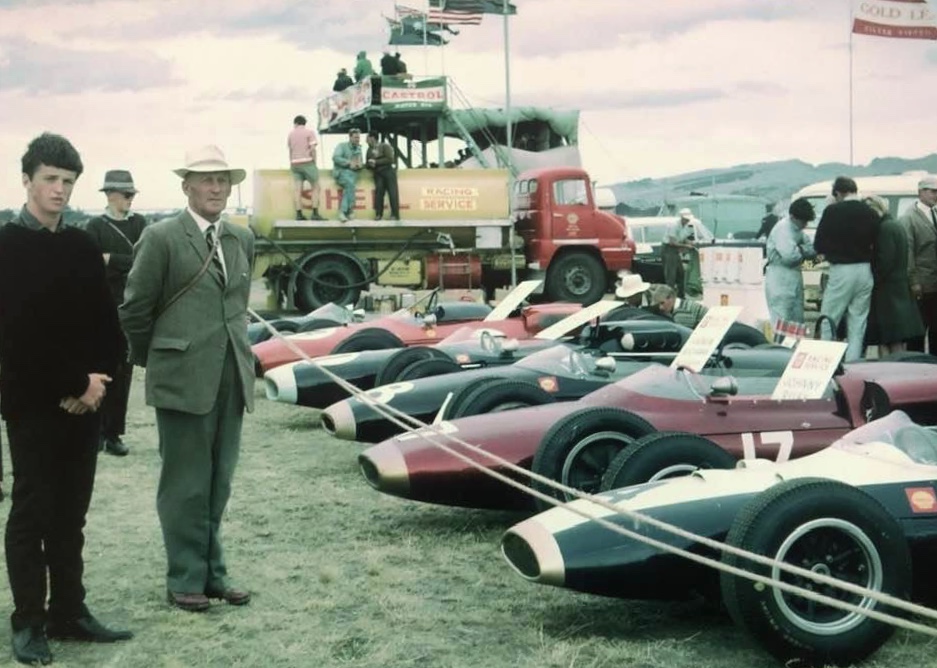
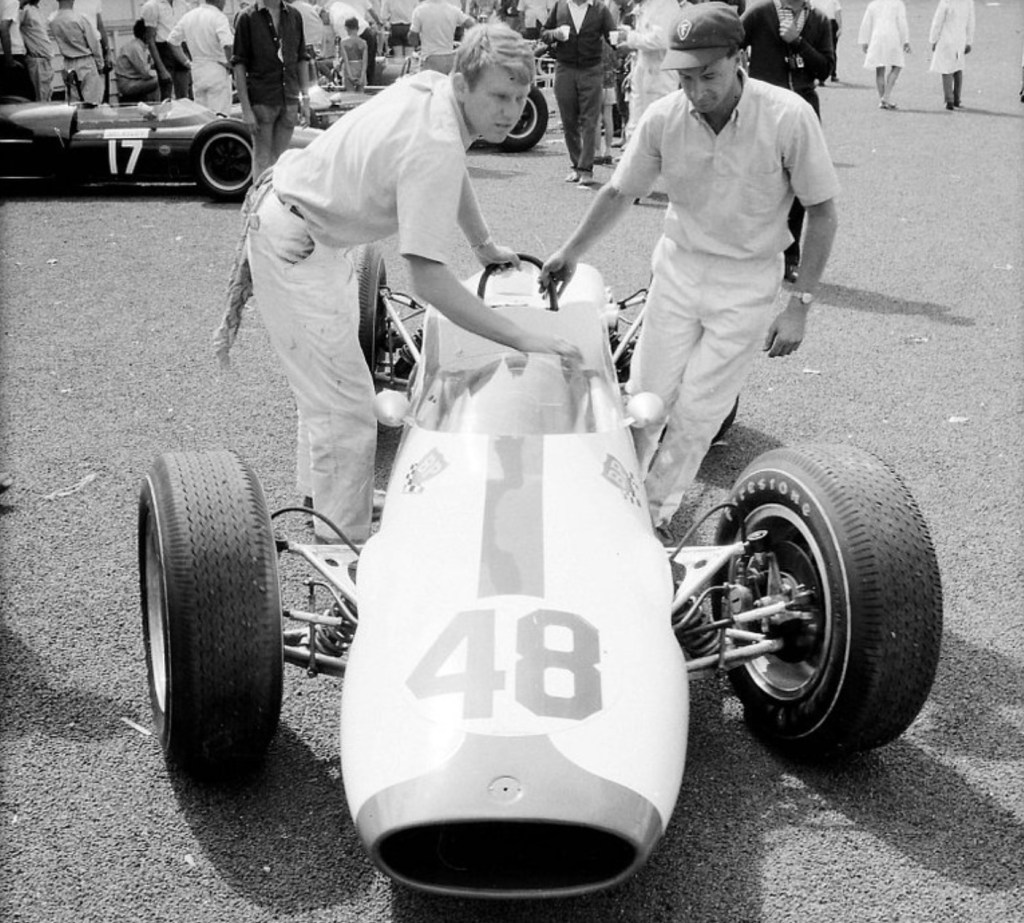
Tyler Alexander at left with Phil Hill’s Bruce McLaren Motor Racing Cooper T70 Climax FPF 2.5 at Pukekohe, Auckland during the January 9, 1965 New Zealand Grand Prix meeting. Car #17 is John Riley’s Lotus 18/21 Climax.

This car was an updated version of a chassis Bruce and the late Tim Mayer raced the year before – T70 FL-1-64 – while The Chief raced a new design designated the T79: T79 FL-1-65. It’s pretty familar turf to us, see here: https://primotipo.com/2016/11/18/tim-mayer-what-might-have-been/
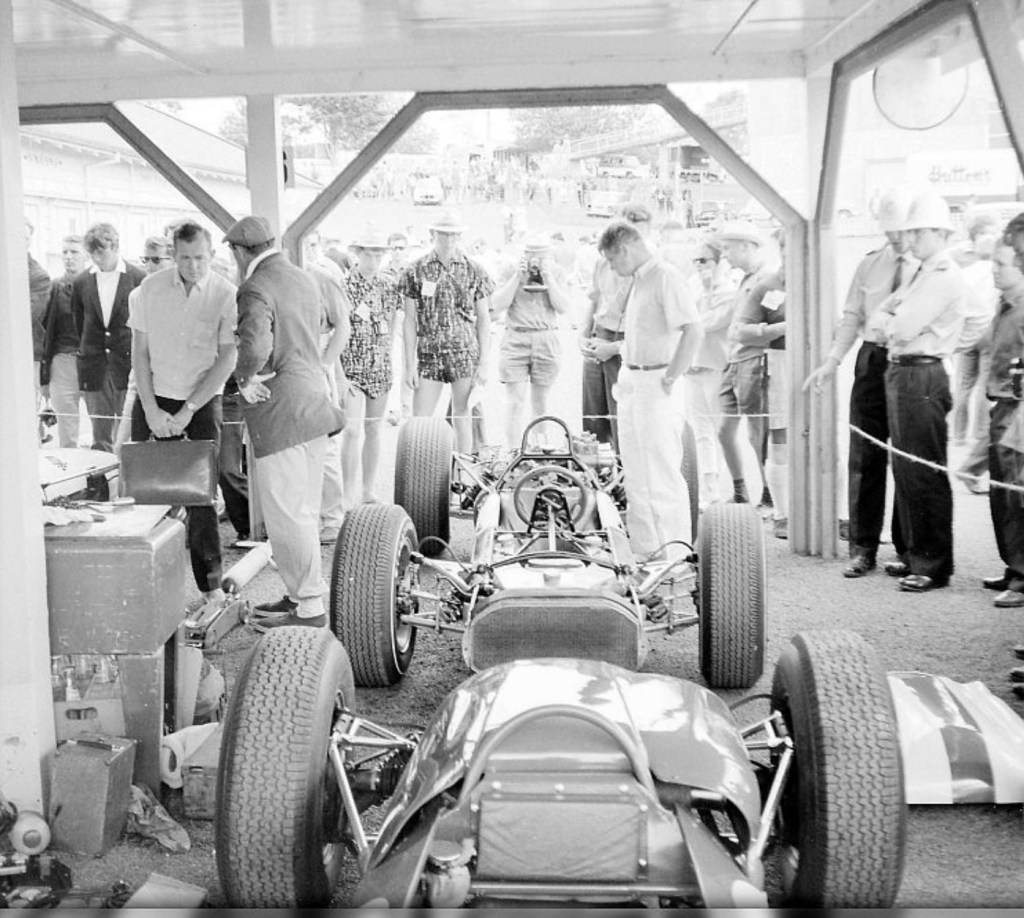
(D Shaw)

That’s the chassis of the T70 above at Pukekohe – with a Brabham BT4 in the foreground – while Bruce is settling himself into the T79 at Levin, the second Tasman round below.

Bruce and Jim Clark collided in one of the Pukehohe heats. While Jim started the GP in his works Lotus 32B Climax, Bruce’s Cooper’s T79 was hors d’combat for the weekend, so he commandeered Phil’s T70 but succumbed to gearbox failure after 13 of the race’s 50 laps. Clark lasted only 2 laps before suspension problems, leaving Graham Hill to win the race aboard his Scuderia Veloce Brabham BT11A Climax.
(unattributed)

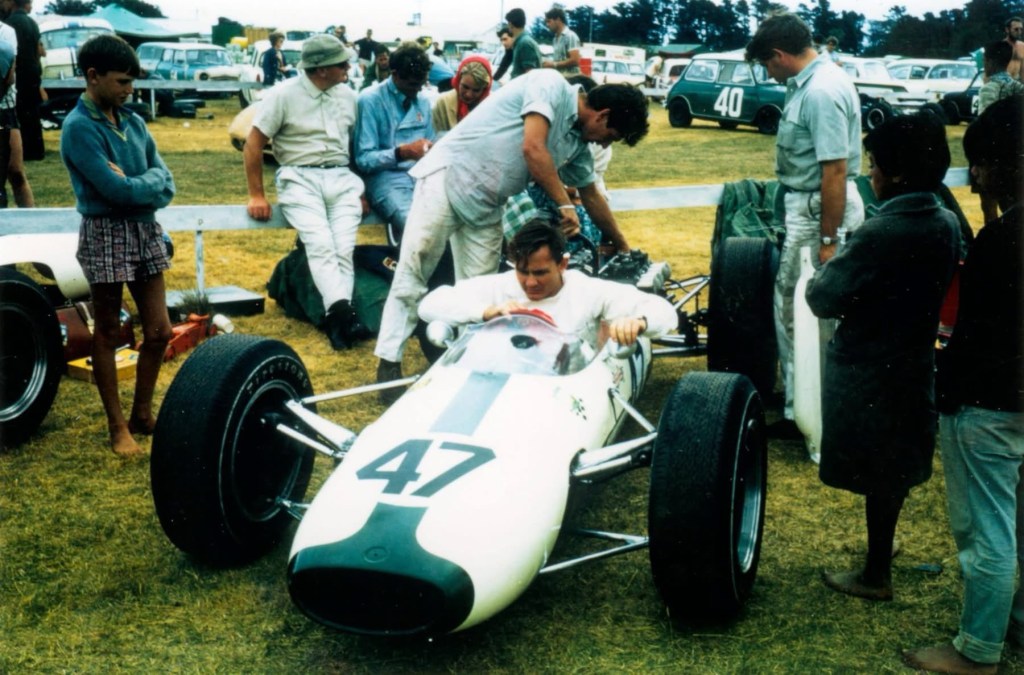
McLaren was fifth at Levin, with Jim Clark’s Lotus 32B Climax the race winner. Jim was the Tasman Cup victor too, with four wins from the seven championship rounds or five wins from eight races, including the Lakeside 99 non-championship round. Not to forget, however many heats Clark won.

Bruce’s Tasman plans were thrown somewhat up in the air. The two Coopers were designed around 13-inch Dunlops but Bruce had signed a contract with Firestone for supply of tyres. Defining though the deal was commercially, in the short term the hard, American 15-inch covers were shite for road racing.

The bigger wheels resulted in handling problems which would normally have been sorted before the long trip south. As it was, the necessary makeshift modifications were made between races.
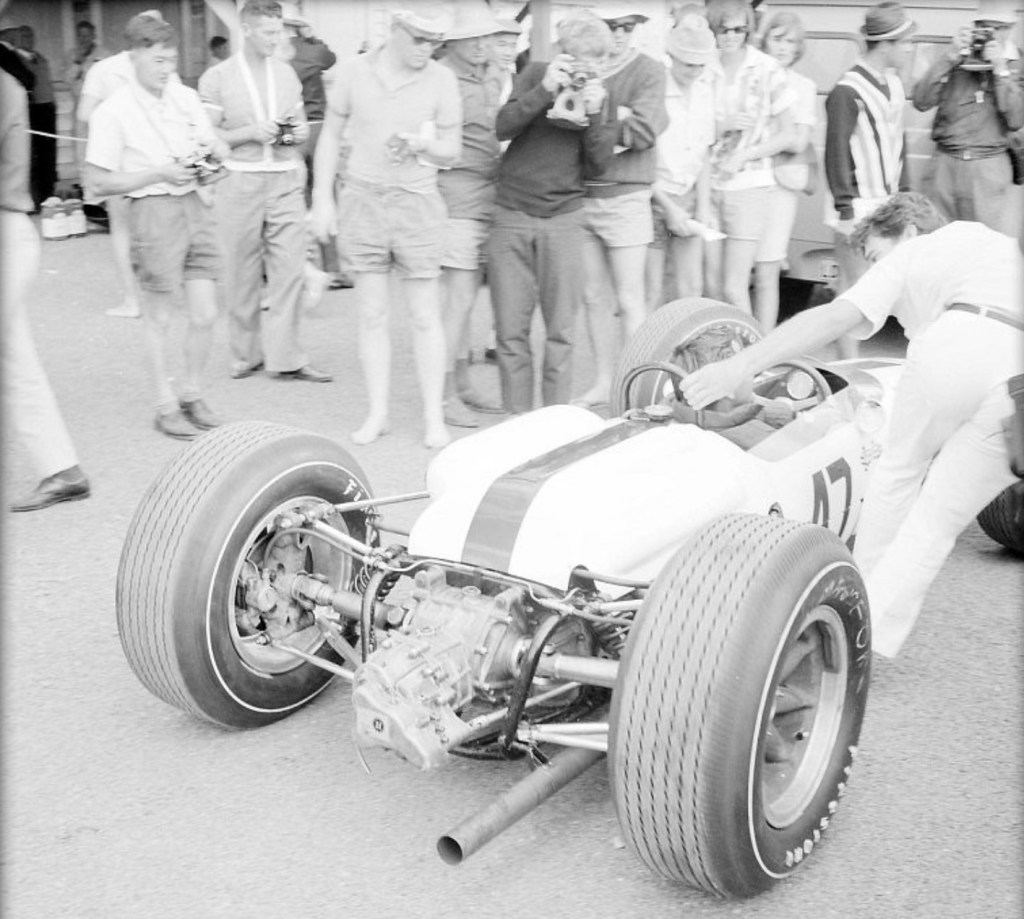
NZ GP at Pukekohe, Bruce didn’t start the T79 having collided with Jim Clark in a heat. Note the Hewland HD 5-speed transaxle and tall Firestones (D Shaw)
(unattributed)

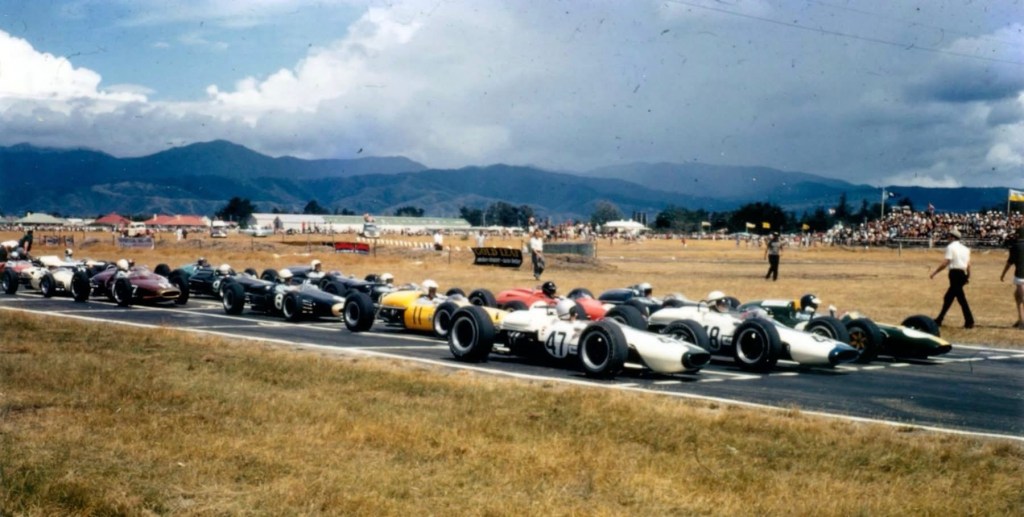
The Levin International start on January 16, with Phil and Bruce alongside Clark despite problems adapting Bruce’s new Firestone tyres to a chassis designed with Dunlops in mind.

Despite these difficulties McLaren did Wigram and Teretonga races in faster times than those which gave him his 1964 victories.

In Australia, once 13-inch wheels were available, McLaren was fourth at Sandown and won the Australian Grand Prix final round at Longford from pole to finish the Tasman series runner-up to Clark, while Phil Hill was a well-merited third. There is no doubt that if pre-trip testing time had been on their side, the Cooper-Climax drivers would have made a much better showing in New Zealand.
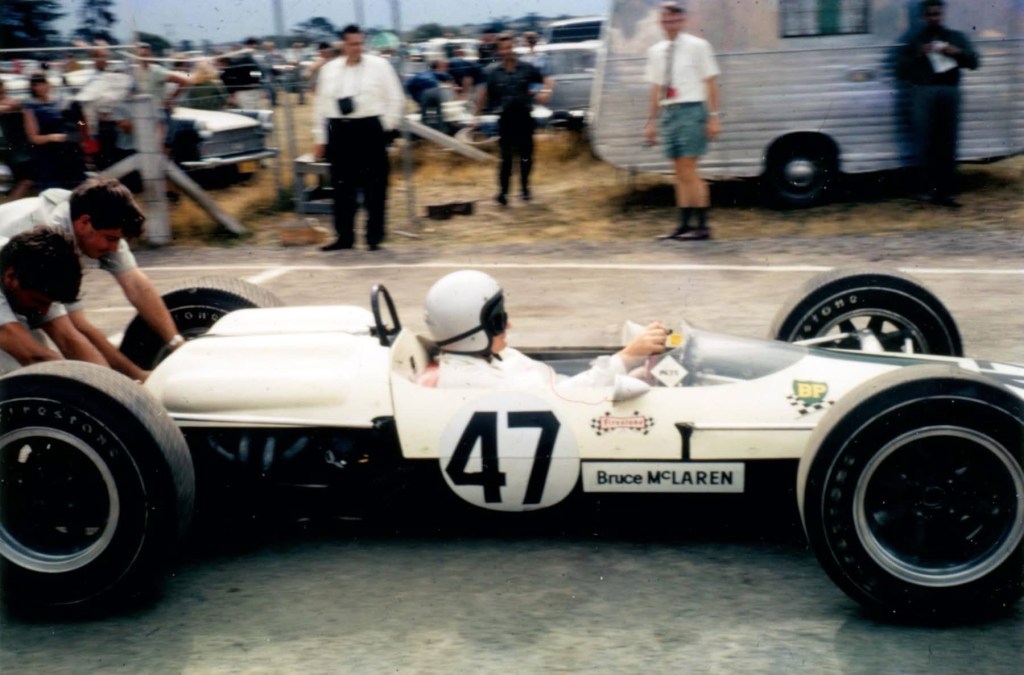
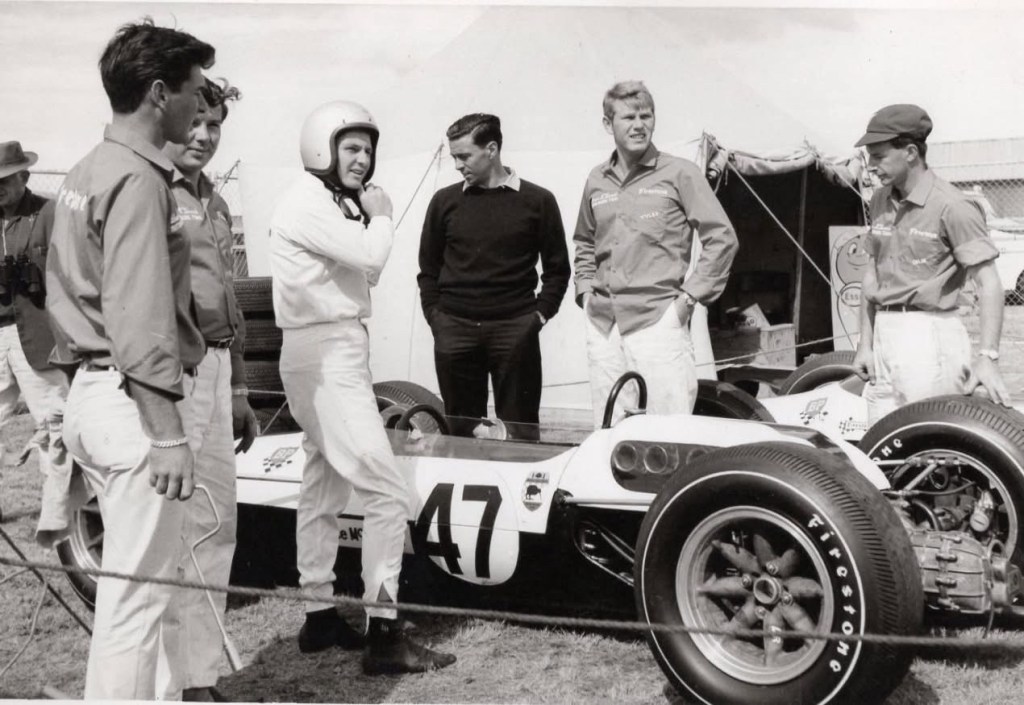
McLaren, T79 Cooper, Levin 1965 (unattributed)
(E Sarginson)

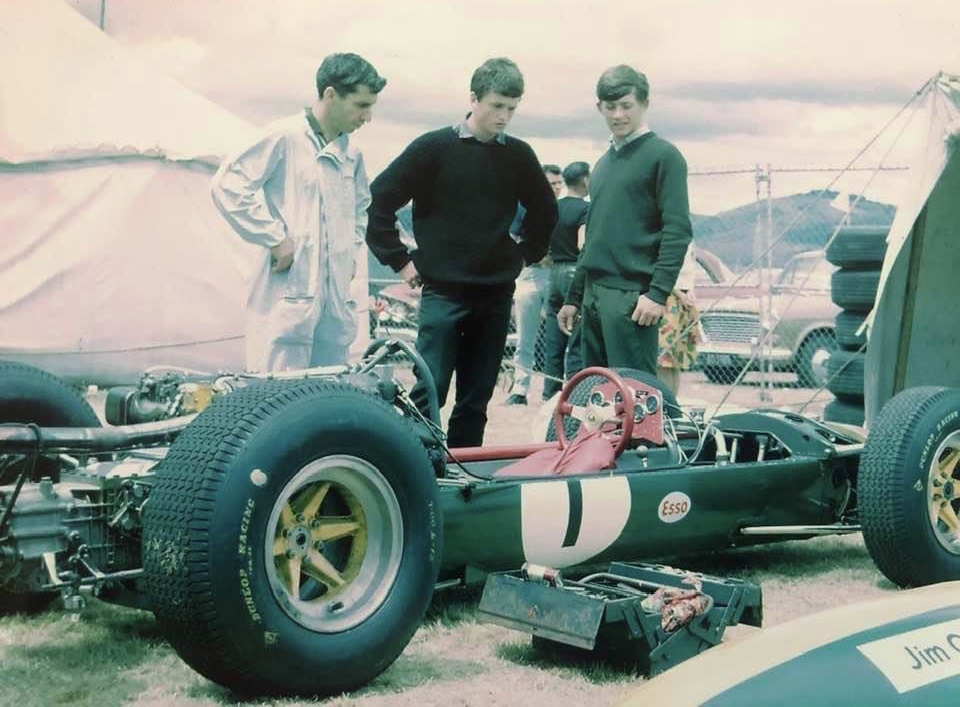
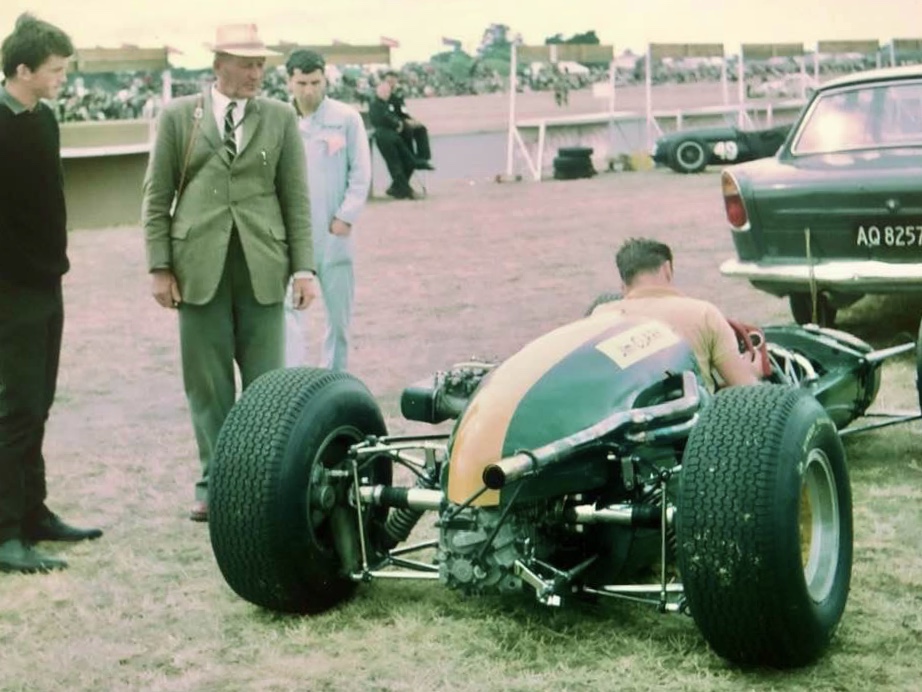
Pop McLaren, Wally Willmott, Bruce Harre, Bruce McLaren, Jim Clark, Tyler Alexander and Colin Beanland David Oxton informs us, in the Wigram paddock, over the January 23, 1965 weekend.

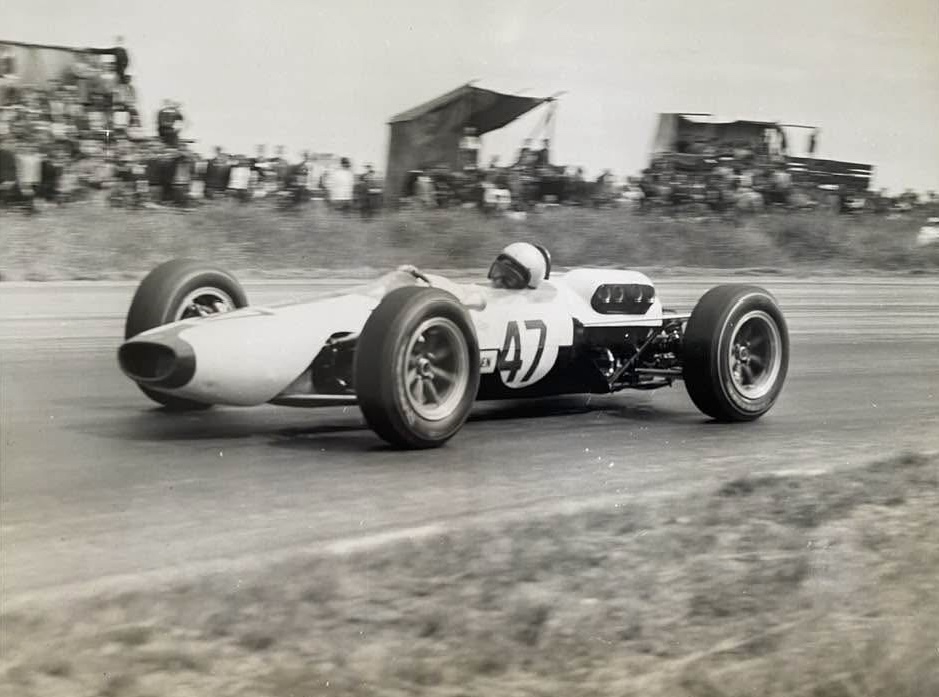
Showing real progress, McLaren, below, was second to Clark’s Lotus with the well-driven Brabham BT7A Climax of Jim Palmer in third.
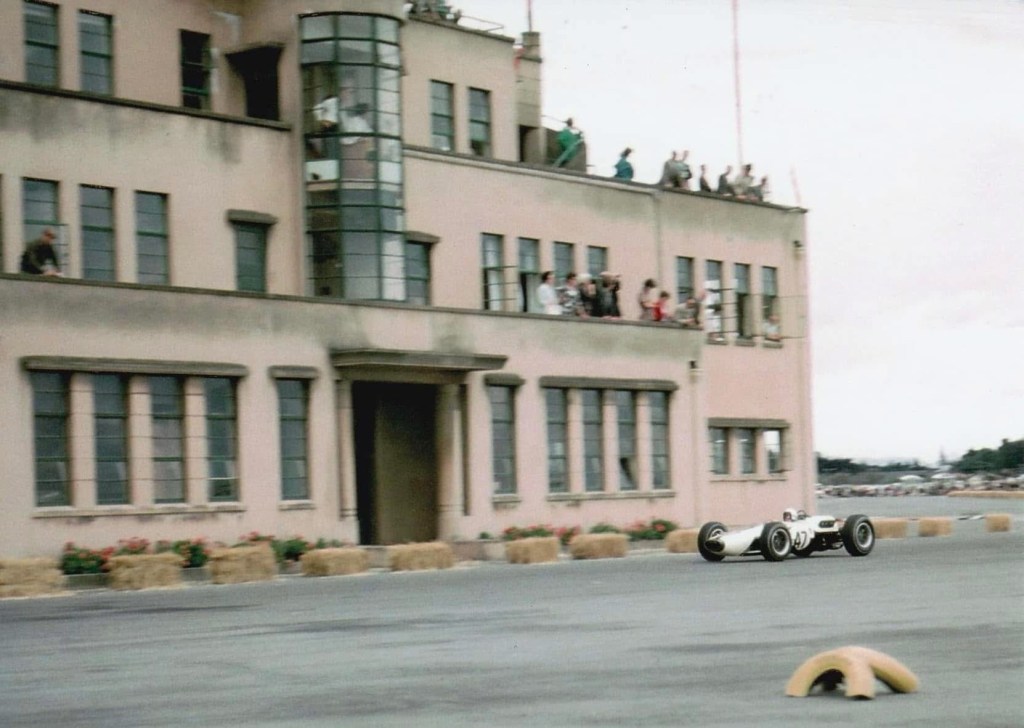
(CAN)
(A Horrox)

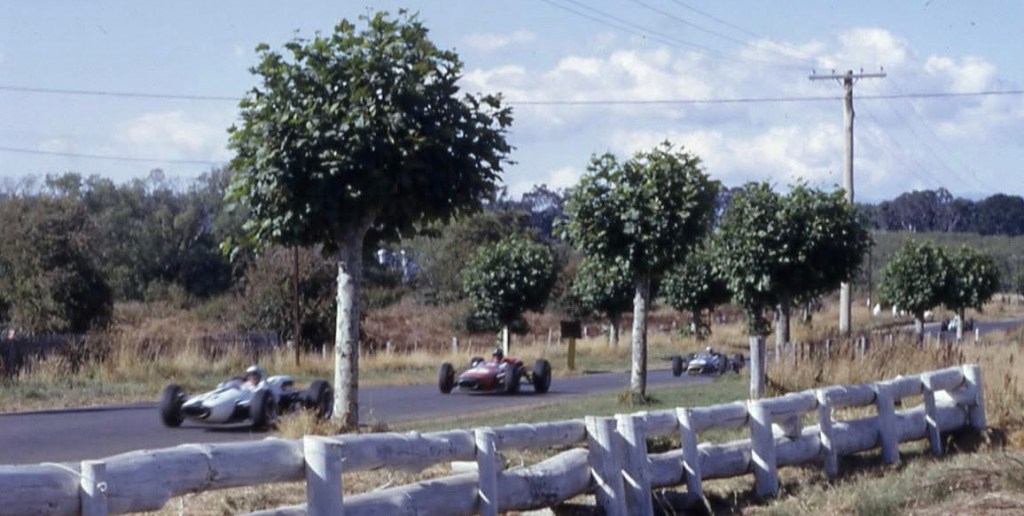
Teretonga, above, was better still with a team two-three – McLaren from Hill – but Jim Clark was still the man in the front of the field with three wins on the trot, only Graham Hills Scuderia Veloce Brabham BT11A Climax win in the New Zealand Grand Prix at Pukekohe at the start of the month ‘rained on Jimmy’s Lotus parade.’
(K Wright)

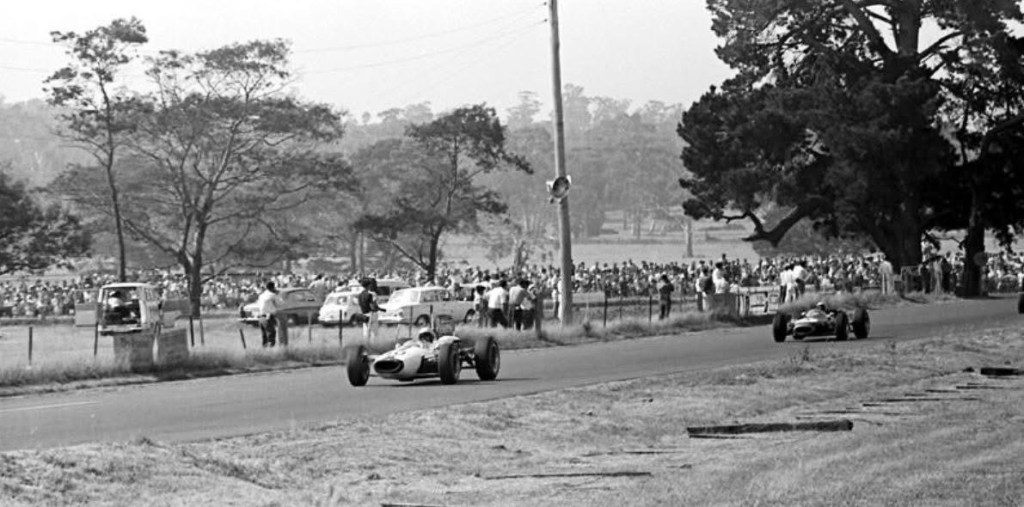
Bruce McLaren leads Graham Hill and Jack Brabham early in his victorious run in the AGP into Longford village: Cooper T70, and Brabham BT11A’s by two, all Coventry Climax FPF 2.2-litre powered. McLaren and Brabham below.
(GP Library)
(MotorSport)

Every Dog Has its Day – perhaps every car too!

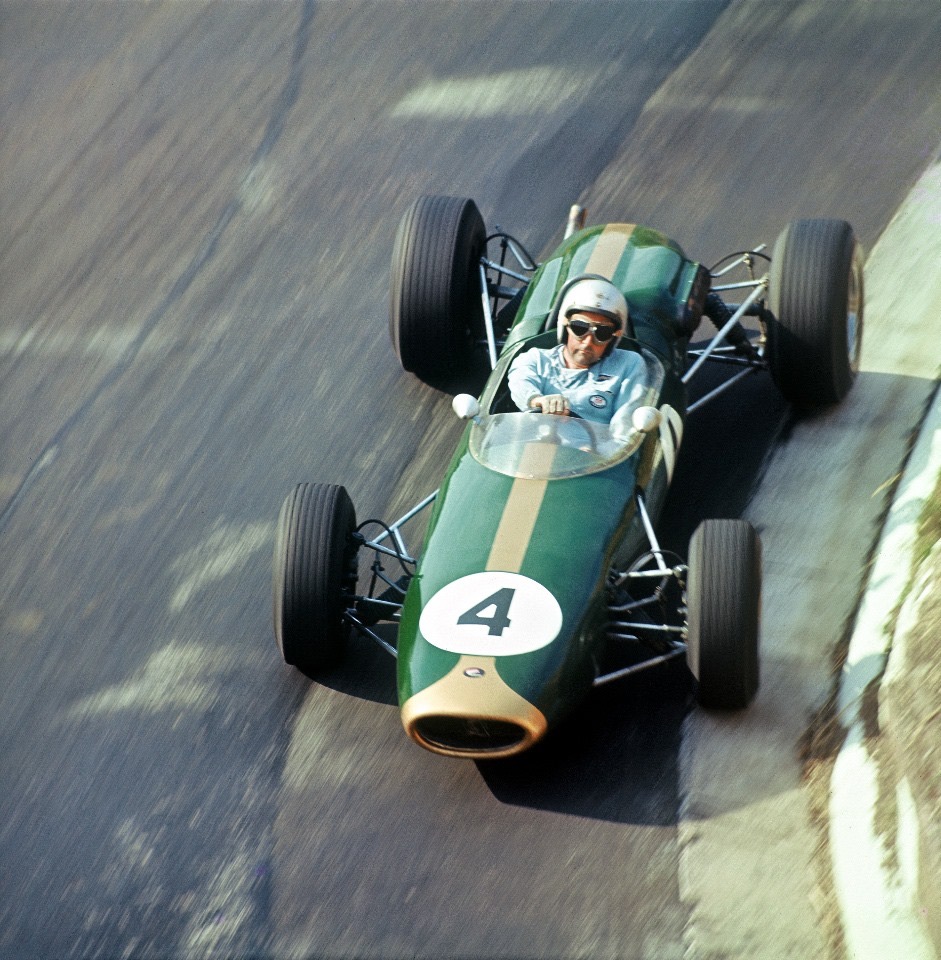
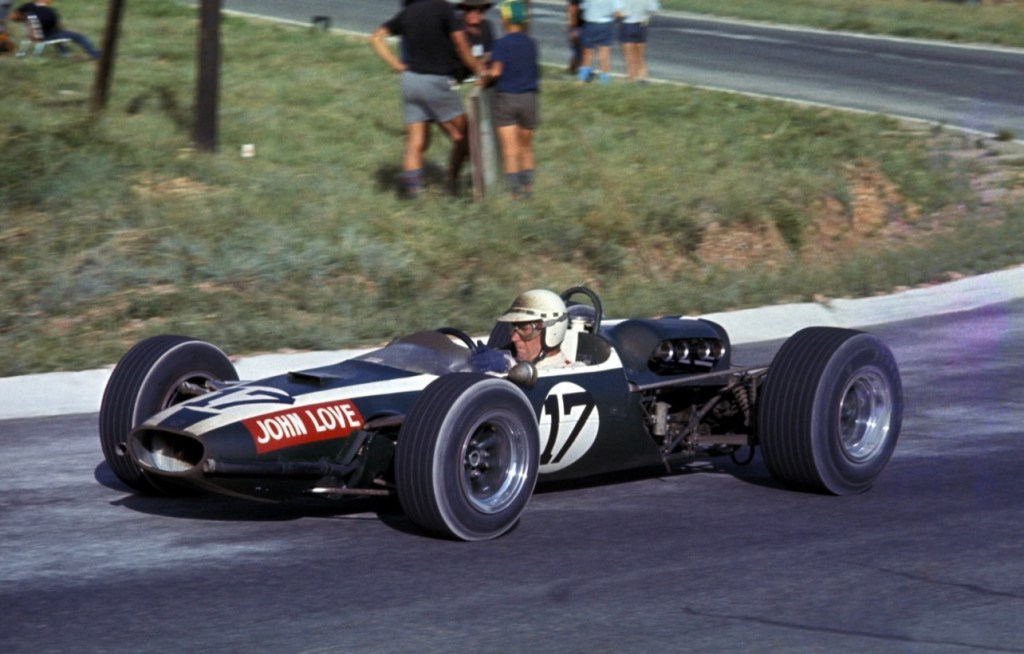
At the end of the Tasman, Bruce McLaren sold the T79 to South African ace, John Love. The shot above shows him on the way to a brilliant second place in the 1967 South African Grand Prix.

The machine was a star-car in Africa, winning the 1965, 1966 and 1967 South African National F1 Championships, co-credits to Love’s Cooper T55 Climax and Brabham BT20 Repco in 1965 and 1967 duly noted.

See here on Allen Brown’s oldracingcars.com for the T70s: https://www.oldracingcars.com/cooper/t70/and here for the T79: https://www.oldracingcars.com/cooper/t79/
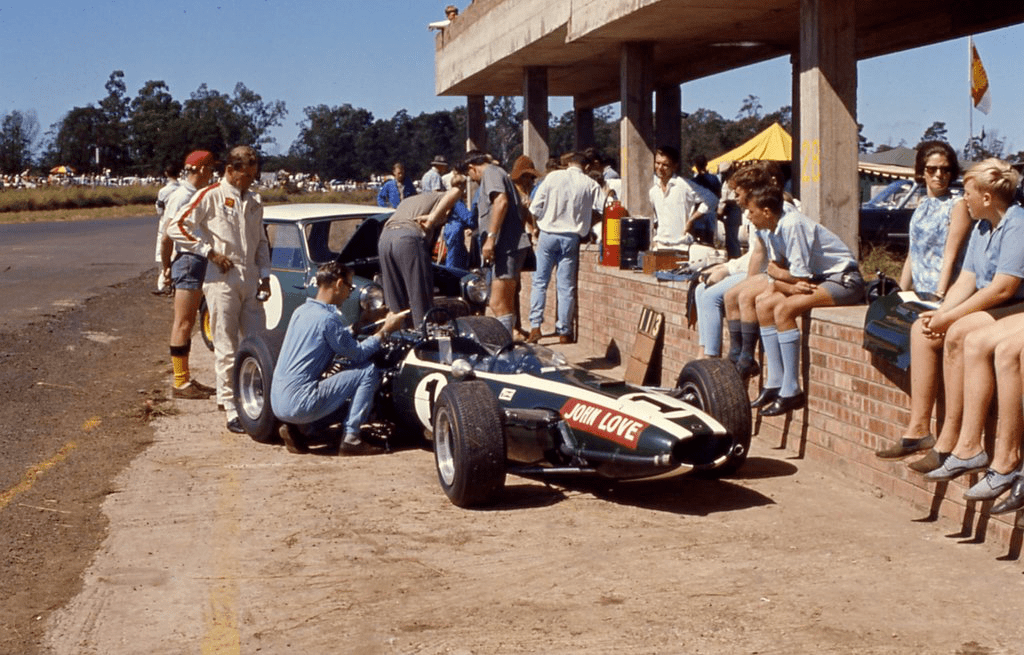
Love, T79, Kyalami pits circa 1967 (unattributed)

Etcetera…

(unattributed)

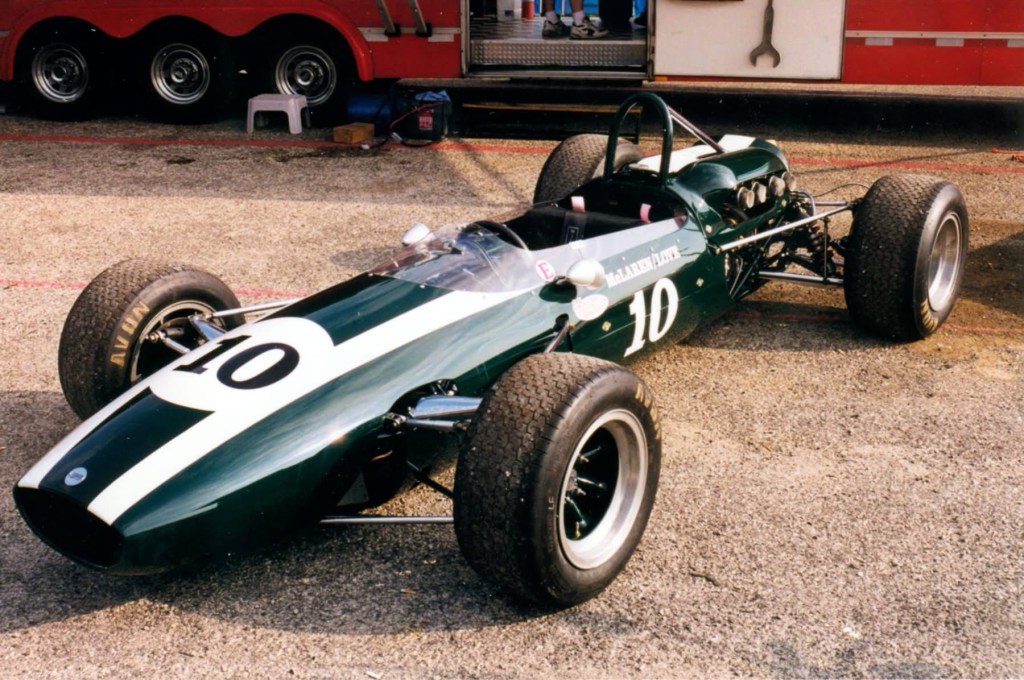
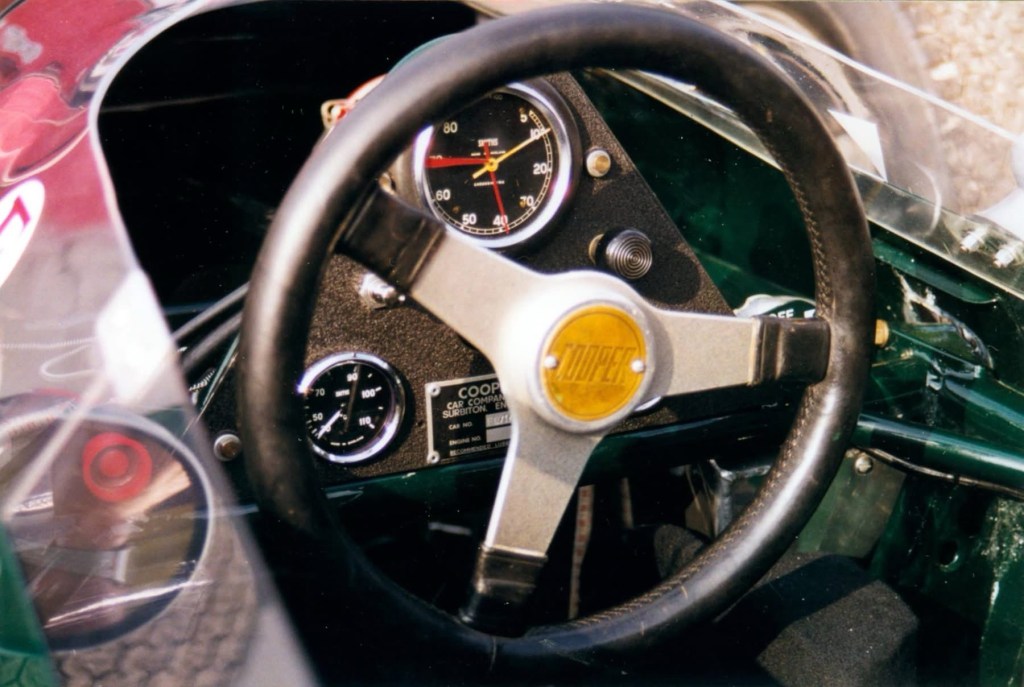
The Cooper T79 returned to the UK in 1968 and has pinged around the historic racing world since as per the oldracingcars.com reference.
(unattributed)

Credits…

Doug Shaw, Andrew Horrox, Euan Sarginson via Greg Bramwell, CAN- Classic Auto News, Kay Wright, GP Library, MotorSport

Finito…
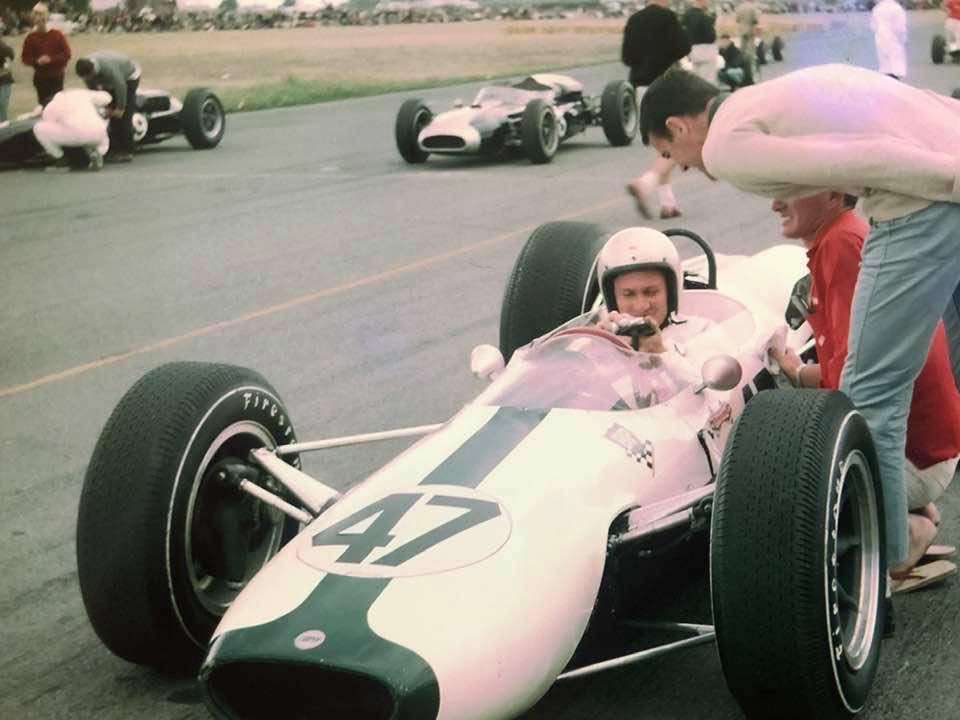
Bruce McLaren setting up a selfie before the Lady Wigram Trophy, Tasman Series, 23 January 1965…

Sorting his goggles in any event, Cooper T79 Climax. The cars in the background are the #9 Bill Thomasen Brabham BT4 Climax and Red Dawson’s Cooper T53 Climax Lowline.

What stood out on an initial scan of this bunch of photos are those big tall white-wall Firestone tyres on large 15-inch wheels. It’s the start of the tyre-war; Firestone and Goodyear had just entered the domain which had been a cosy little monopoly for Dunlop for the previous few years.

Bruce won the first Tasman Cup in 1964 with what are regarded as the first McLarens. The two Cooper T70s Bruce and Wally Willmott constructed at the Cooper factory in Surbiton the year before were Dunlop shod machines. Click here for a piece on these cars; https://primotipo.com/2016/11/18/tim-mayer-what-might-have-been/

Admirers of the Clark Lotus 32B monocoque chassis, Wigram (A McKee)

It was going to be tough to knock Jim Clark’s Dunlop shod Lotus 32B Climax off in 1965- Bruce and Phil Hill’s campaigns were said to be sluggish at the series outset until Bruce and his boys adapted the suspension geometry and settings to the American tyres. Mind you, a close look at the results suggests Bruce was not far off the pace from the get-go.

The commercial relationship with Firestone was an important one for the entrepreneurial Kiwi as he assembled the technical partners and funding to take his nascent team forward- Bruce McLaren Racing’s first F1 season was in 1966.

Jack Brabham signed with Goodyear from 1965, that year of learning with the Akron giant was a critical foundation piece for Brabham Racing Organisation’s successful tilts at the 1966 and 1967 F1 championships for drivers and constructors.

Jim Clark had one of the greatest of seasons any driver ever had in 1965- he won an F1 drivers title, the Indy 500, the Tasman Cup plus a sprinkling of F2, touring car and other wins- the breadth of his achievements in that twelve month period has never been matched, or is ever likely to be I expect.

The start of that lot was in New Zealand- whilst Graham Hill won the first Tasman round, the NZ GP at Pukekohe in David McKay’s Scuderia Veloce Brabham BT11A Climax, Clark won the next two on the trot at Levin, where he won from the scrapping Frank Gardner and Jim Palmer aboard BT11A and BT7A’s respectively, and here, on the Wigram Airfield on 23 January from McLaren and Palmer- Jim acquired Clark’s series winning Lotus at its end. Bruce was obviously getting the hang of the Firestones mind you- he matched the lap record Clark set in the preliminary race in the championship event.

Off to Teretonga – famously the most southerly race track on the planet – Clark won again from McLaren and Phil Hill in the other Bruce McLaren Racing Cooper- an updated T70 raced by Bruce and the late Tim Mayer the year before.

Jim at the wheel, 32B ‘beetle-back’ all enveloping bodywork, ZF gearbox. #49 in the background is the Peter Gillum Cooper T67 Ford FJ (A McKee)
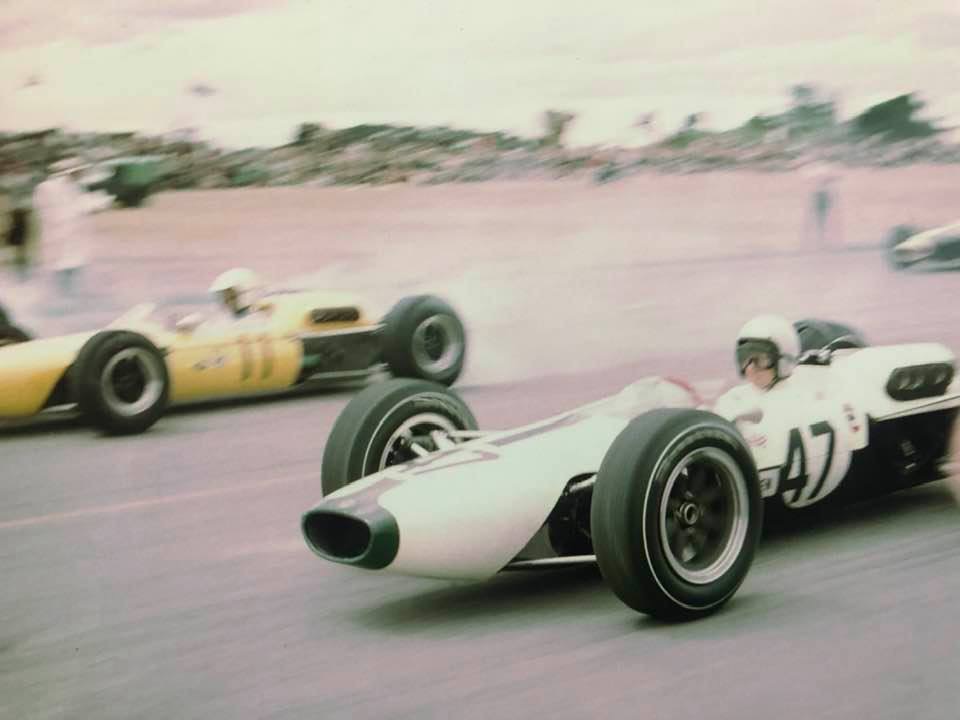
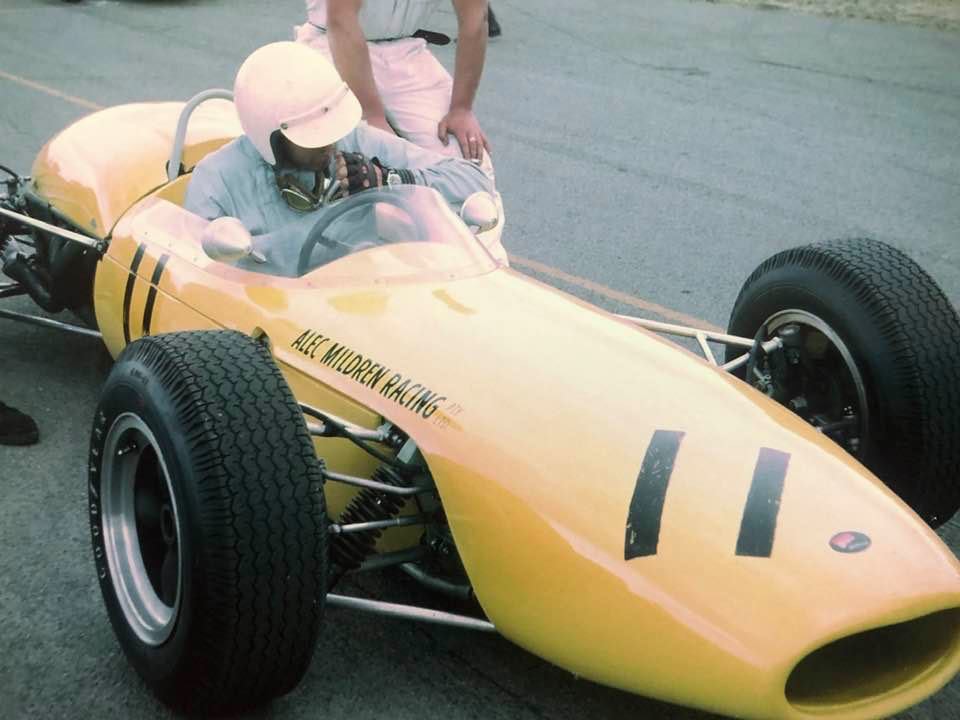
The off. Bruce with Frank Gardner’s distinctive Alec Mildren Racing yellow Brabham BT11A Climax alongside (A McKee)

That Bruce was getting the chassis/tyres sorted was further indicated by his pace- he pulled alongside Clark on lap 20, but Jim had enough in hand to pull away- taking the duo clear of Hill, Grant (ex-Jack 1962 AGP Brabham BT4 Climax, a car later to put John McCormack on the map) and Palmer.

The summary of the balance of the series is this; Clark won from grid three at Warwick Farm on 14 February whilst Bruce was Q5 and DNF engine. Brabham joined the Series in Sydney aboard a new BT11A- he was second from Q4. Matich was third from pole.

At Melbourne’s Sandown a week later, Jack won from pole with Jim second from Q2, Phil Hill third from Q6 and Bruce fourth from Q4- Goodyear, Dunlop, Firestone, Firestone if you like…

The seven round series ended at Longford with the Australian Grand Prix on 1 March 1965. Bruce won from pole from Brabham, Hill P and Hill G, Bruce Sergent observed that ‘Longford saw the McLaren cars come resoundingly into their own with good short-stroke engines and the small frontal area and shallow tread of the Firestones on this ultra fast circuit.’

Clark’s second half of the series was not as dominant as his first half. This was in large measure due to Jack’s presence and the pace of the McLaren Coopers- he won three races in New Zealand and once in Australia, but took the 1965 Tasman Cup with 35 points from McLaren’s solo victory and 24 points, then Jack with a win and a points haul of 21 from only three races. Brabham certainly would have given Jim a run for his money had he contested the championship in full. Gardner, Phil Hill and Jim Palmer were equal fourth…Or Dunlop, Firestone, Goodyear, Goodyear, Firestone and Dunlop.

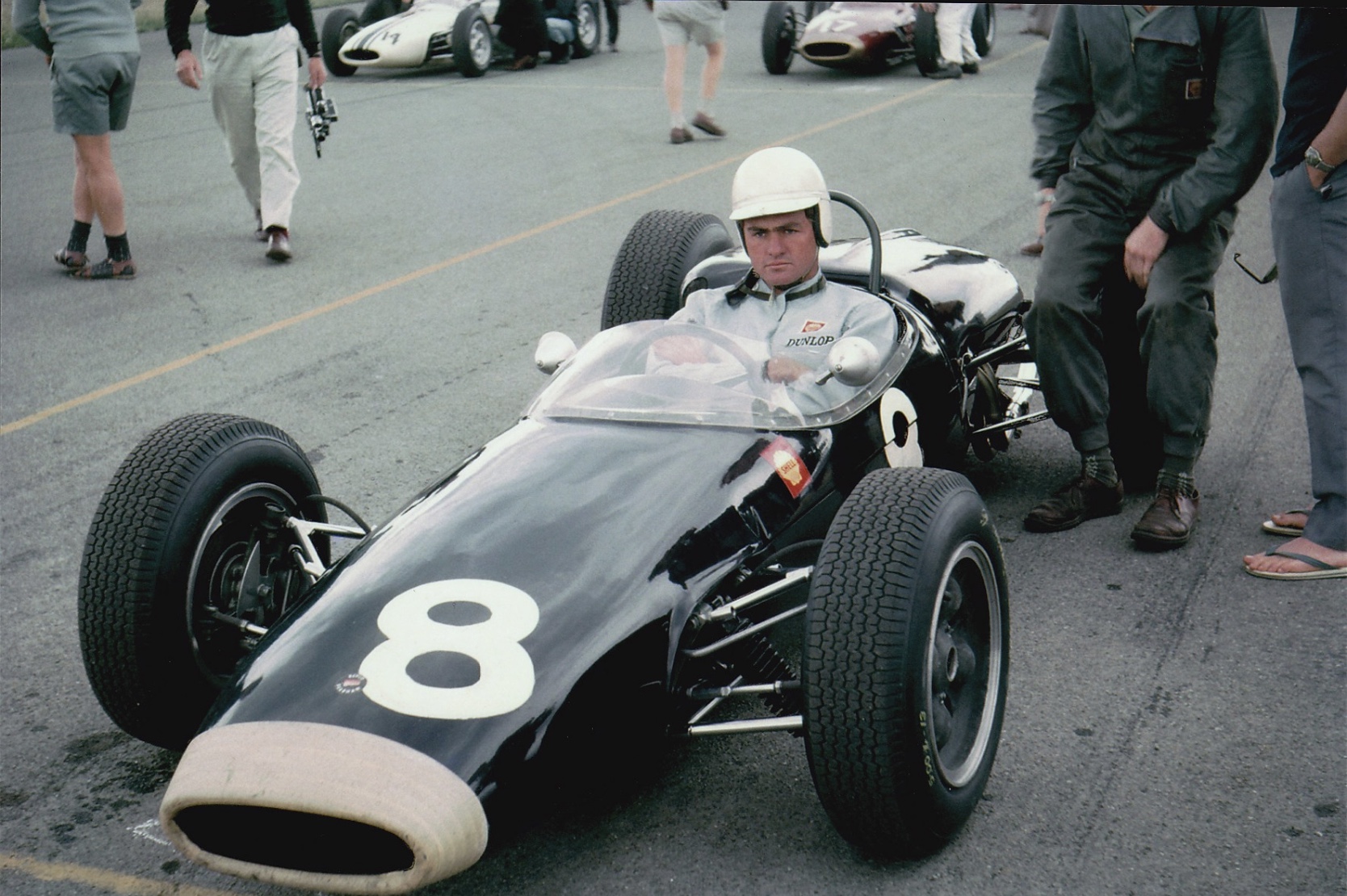
Wigram Shell Team compound, from this end; Bruce Abernathy Cooper T66 Climax, John Riley Lotus 18/21 Climax, Andy Buchanan #8 Brabham BT6 Ford 1.5 twin-cam, perhaps the Scuderia Veloce Graham Hill Brabham BT11A Climax and uncertain closest to the truck (A McKee)

Those early years of the F1 tyre war rolled as follows; Dunlop shod Clark’s 1965 winning Lotus 33 Climax and Stewart’s 1969 winning Matra MS80 Ford. Goodyear bagged back to back titles in 1966 and 1967 on Jack’s Brabham BT19 Repco and Denny’s Brabham BT24 Repco, while Firestones were on the Lotus 49 Ford Cosworth DFV used by Graham Hill in 1968, and Jochen Rindt’s Lotus 72 Ford in 1970.

Dunlop bailed from F1 at the end of 1970, leaving the two American giants. Then Michelin came in etcetera…and now of course we have same, same, same coz same, same, same is what is mandated by the commercial, sorry, sporting powers that be.

It was a bit different in the Tasman where Dunlop shod Clark’s winning Lotus 32B Climax and Stewart’s 1966 BRM P261, but then it was all Firestone on both Clark’s 1967 Lotus 33 Climax, 1968 Lotus 49 Ford DFW and the Ferrari Dino 246T raced by Chris Amon to victory in 1969, and Graeme Lawrence in 1970.

The Goodyear shod Mildren/Gardner Brabham BT11A Climax (A McKee)

Etcetera…

(A McKee)

Andy Buchanan awaits the off in his immaculate Brabham BT6 Ford 1.5 twin-cam, top left in white is Graeme Lawrence’s similar machine. These cars were immensely successful 1.5-litre racing cars in Australasia, and at right the red ex-Tony Shelly Lotus 18/21 of John Riley.

Credits…

Bruce Sergent on sergent.com, oldracingcars.com, Ian Smith Collection

(I Smith Collection)

Tailpiece…

Brabham went like a rocket at Longford, the 1965 Tasman’s final round, he made a cautionary stop after giving Roly Levis a love-tap when the Kiwi locked a brake going into Mountford.

In a race of new lap records, McLaren, Brabham and Phil Hill all set new marks, Jack eventually fell short of McLaren by a little over three seconds, Bruce was impeded in changing gears without a clutch in the latter stages of the race. Click here for a piece on this race; https://primotipo.com/2019/09/27/longford-1965/ and here on the 1965 Tasman Cup and Clark’s Lotus 32B; https://primotipo.com/2017/11/02/levin-international-new-zealand-1965/

Finito…