


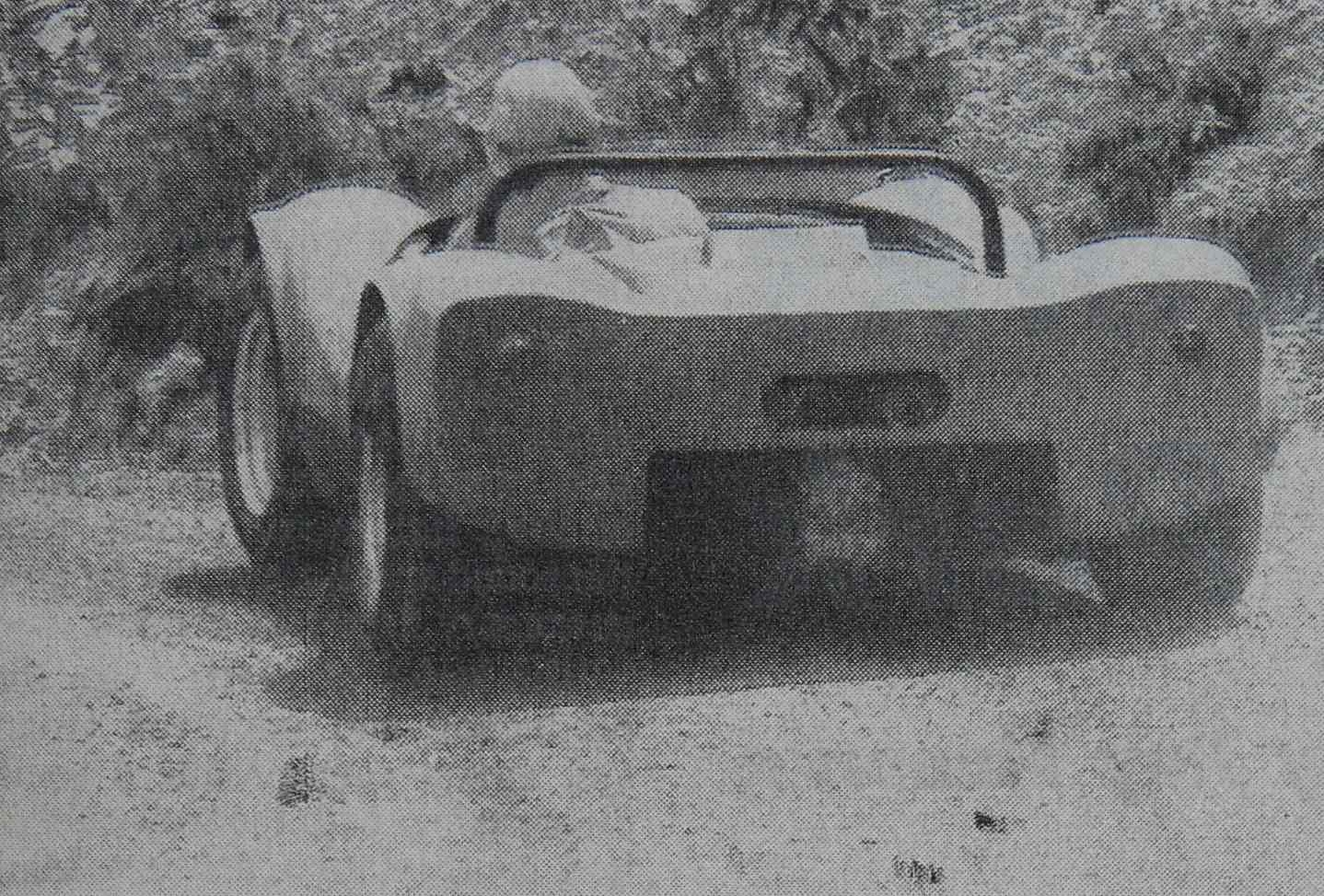
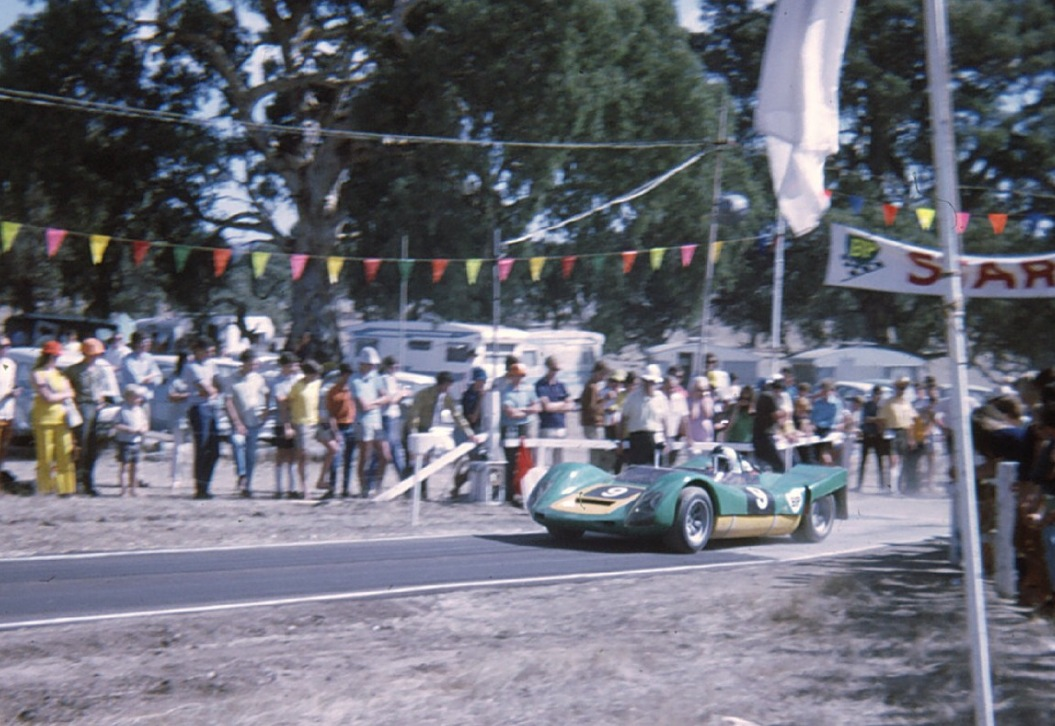
Alan Hamilton aboard the first of many serious Porsches he raced in Australia down the decades, the ex-works 904/8 ‘Kanguruh’ chassis # 906-007 at Calder in January 1966…
Norman Hamilton famously negotiated a franchise for Porsche in Australia, having been ’rounded up’ by one of the earliest 356s on a drive through the Swiss Alps. The business quickly prospered from its Melbourne base. This article is about the 906s raced by Norman’s son Alan from the mid-sixties to early-seventies and his career during that period.
He raced three such cars; 904/8 chassis # ‘906-007’ and two 906 Spyders; one during 1967 and another in 1971-72, the latter cars used chassis supplied by Porsche, but neither had a chassis number, giving more than one historian a headache or two…
Alan Hamilton was born on 29 July 1942. After attending Camberwell High School in Melbourne’s leafy eastern suburbs, he joined the family firm, which was to expand hugely over the ensuing decades under his leadership. A competition licence quickly succeeded his road licence at 18, initial competition exploits were in a VW contesting trials and gymkhanas. A 1958 Porsche 356 Super followed; he competed in this standard car at country meetings and hillclimbs. A 1959 Convertible followed, which was also successful.
In early 1965 Hamilton headed for Europe including a stint working in the Porsche factory, the 904/8 Bergspyder was purchased during that trip and shipped to Australia for the 1966 season, clearly a step up in performance for the young driver…

Porsche 906…
The 906 was produced for the 1966 World Championship of Makes. It was designed for the FIA’s Group 4 regulations, whilst modified variants of the car, using larger engines and/or cut-down Spyder bodywork, were entered in Group 6, the Sports Prototype category.
The 906 became the last street-legal pure racer built by Porsche. It replaced the successful ladder frame chassis 904 and was the first substantial product of Technical Director Ferdinand Piech’s new team at Zuffenhausen. The Porsche 904 had additional structural rigidity from its bonded-on fibreglass bodywork, while the new 906 featured a modern multi-tubular spaceframe chassis, with an unstressed fibreglass body.
The initial batch of 50 Porsche 906/Carrera 6 Coupes offered light weight, circa 1,300 lb (580 kg), a saving of around 250 lb (113 kg) compared to the similarly-engined 904/6.
The Porsche 901/20 6-cylinder lightweight racing engine was standard equipment, offering circa 220bhp on Weber carburettors. A handful of factory-entered works cars were powered either by fuel-injected versions of the 6-cylinder engine, or the flat-8 derived from Porsche’s F1 program, both engines air-cooled of course.

The 906 shape was developed in the wind tunnel, with a top speed of 170mph at Le Mans, amazing for a 2-litre car.
The cars made their international race debut in the 1966 Daytona 24 Hours, sixth overall and beating the Ferrari Dino 206 in the 2-litre class was the car driven by Hans Herrmann/Herbert Linge. At Sebring, Herrmann won the class again in a Carrera 6, this time co-driving with Gerhard Mitter and Joe Buzzetta, and finished fourth overall.
The Monza 1,000kms was dominated by 906s in the 2-litre class, this time with Herrmann/Mitter in a works entry leading home the customer car of Charles Vogele/Jo Siffert, these two cars placing fourth and fifth overall behind the victorious Ferrari 330P3 and a pair of Ford GT40s.
At the Targa Florio the 906 won outright, there Willy Mairesse and Herbert Muller co-drove the Swiss Ecurie Filipinetti car.
The 1966 Le Mans works, prototype Porsche 906LE Coupes finished in fourth-seventh places behind the leading trio of 7-litre factory Ford GT Mark IIs, outlasting all of the V12-engined sports-prototype Ferrari P3/4s, while the 2-litre Sports class was again dominated by a standard 906.
The Austrian 500kms event at Zeltweg saw Gerhard Mitter/Hans Herrmann and Jo Siffert (driving solo) finishing one-two.
In 1967 the 906 continued to be campaigned by prominent private entrants and drivers, while the factory team moved on to race larger-engined 907s on the relentless climb to development of the outright contender which finally won Le Mans for Porsche in 1970, the immortal 917.
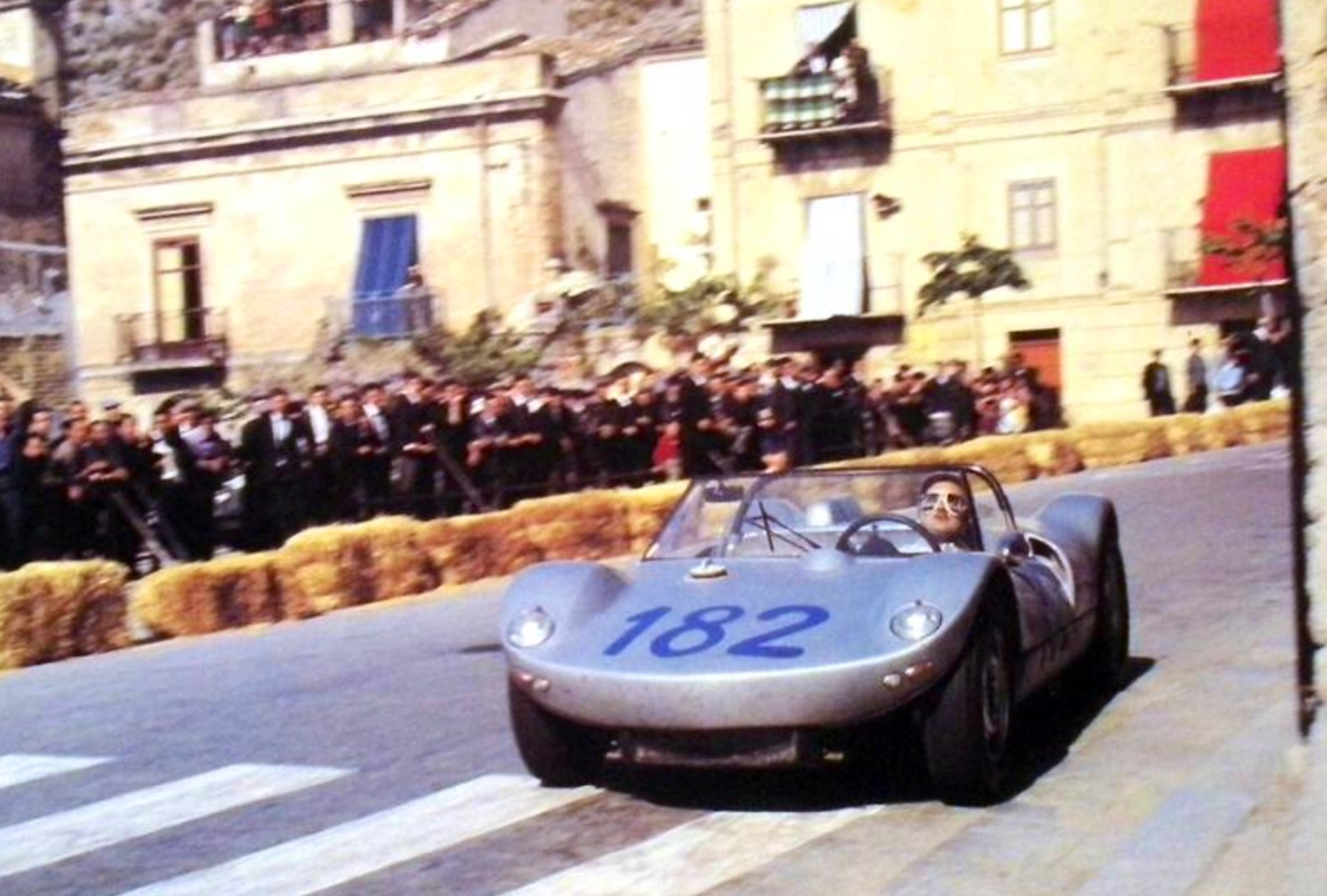
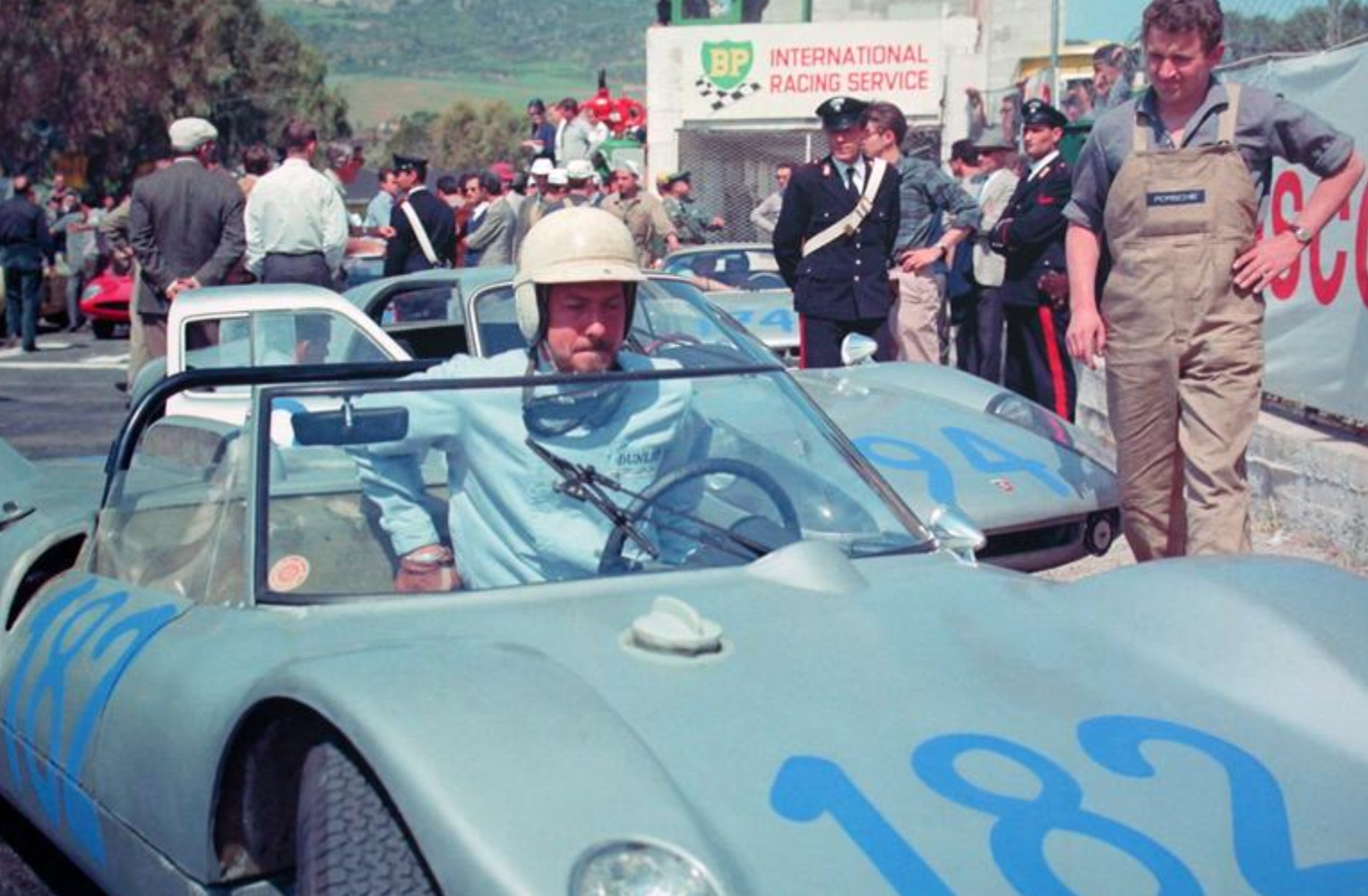
The Porsche 904/8…
The 904-based Bergspyders played an important test role in the evolution of the 904 to 906. The first appearance of these cars was at the Targa Florio on May 9, 1965.
All 904s came from the factory with 2-litre engines; four, six and eight cylinders. Generally the fours had 904 chassis numbers and the six-cylinder cars 906 chassis numbers. There was no rule though: the first prototype chassis 904-001 had a six-cylinder engine, the eight-cylinder coupes had 904 chassis numbers, whilst the eight-cylinder Spyders had 906 chassis numbers. Easy really!
Porsche built five 904/8 cars for factory use: chassis 906-003, 004, 007, 008, and 009. To be clear, whilst the chassis had the 906 descriptor, the cars used 904 ladder-frames, not the 906 spaceframe chassis.
All 904/8s had 2-litre flat-8 engines; the Type 771 1962cc engine, which was derived from the 1962 804 F1 car and produced circa 225bhp fed by Weber carbs.
The cars were made in two body variants. Chassis 003, 004, and 009 had the normal Spyder look of a Porsche of the period; the other two cars, 007 and ‘008, were more visually challenging, that is, ugly! The overhangs were shortened a lot for hillclimbing purposes.
Bergspyder, as a name, was a misnomer as the cars were raced as well as ‘climbed, they were nicknamed ‘Kanguruh’ (kangaroo) because of the nature of the cars roadholding, the lightweight cars with their firm suspension jumped about on poor roads.
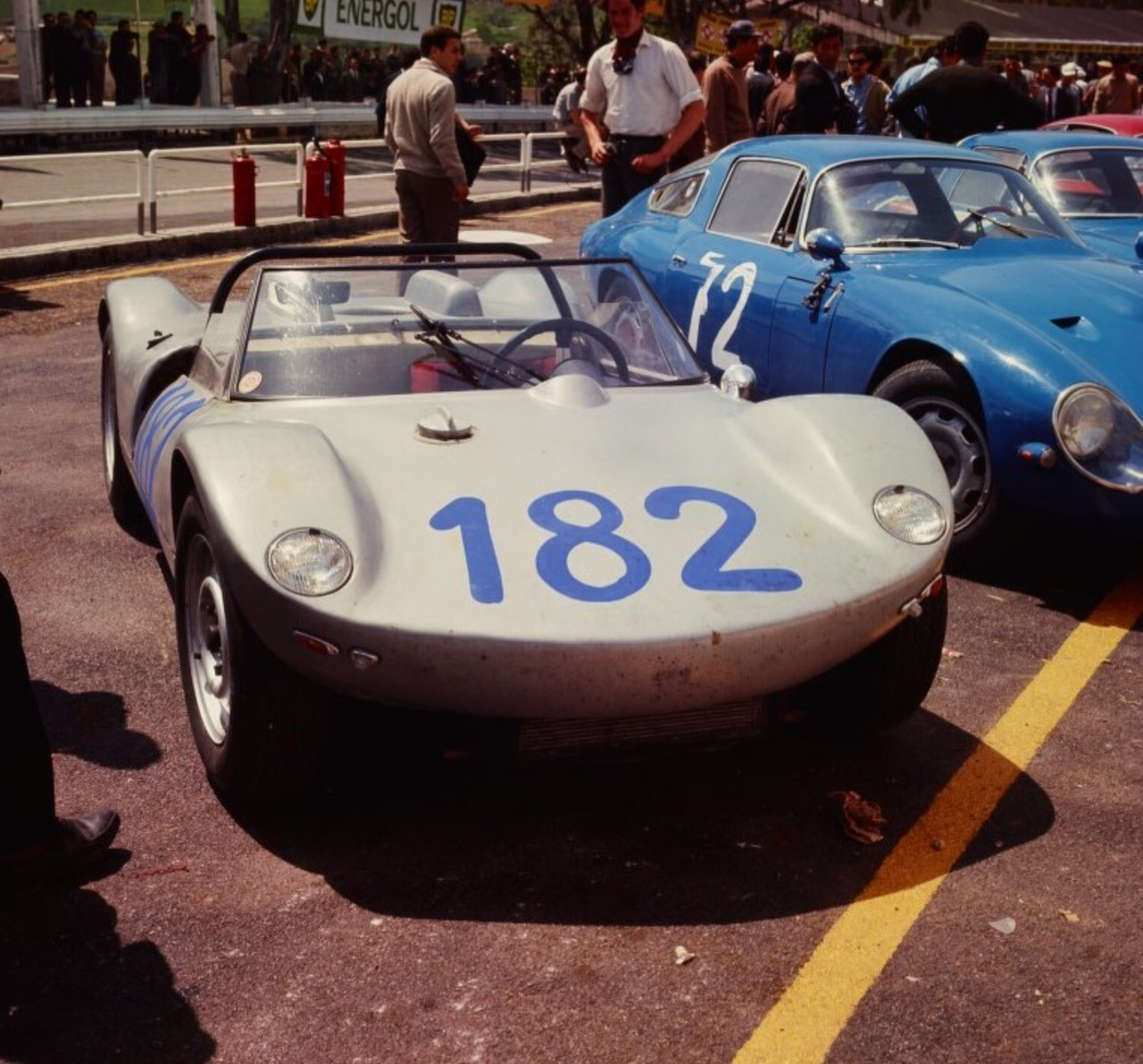
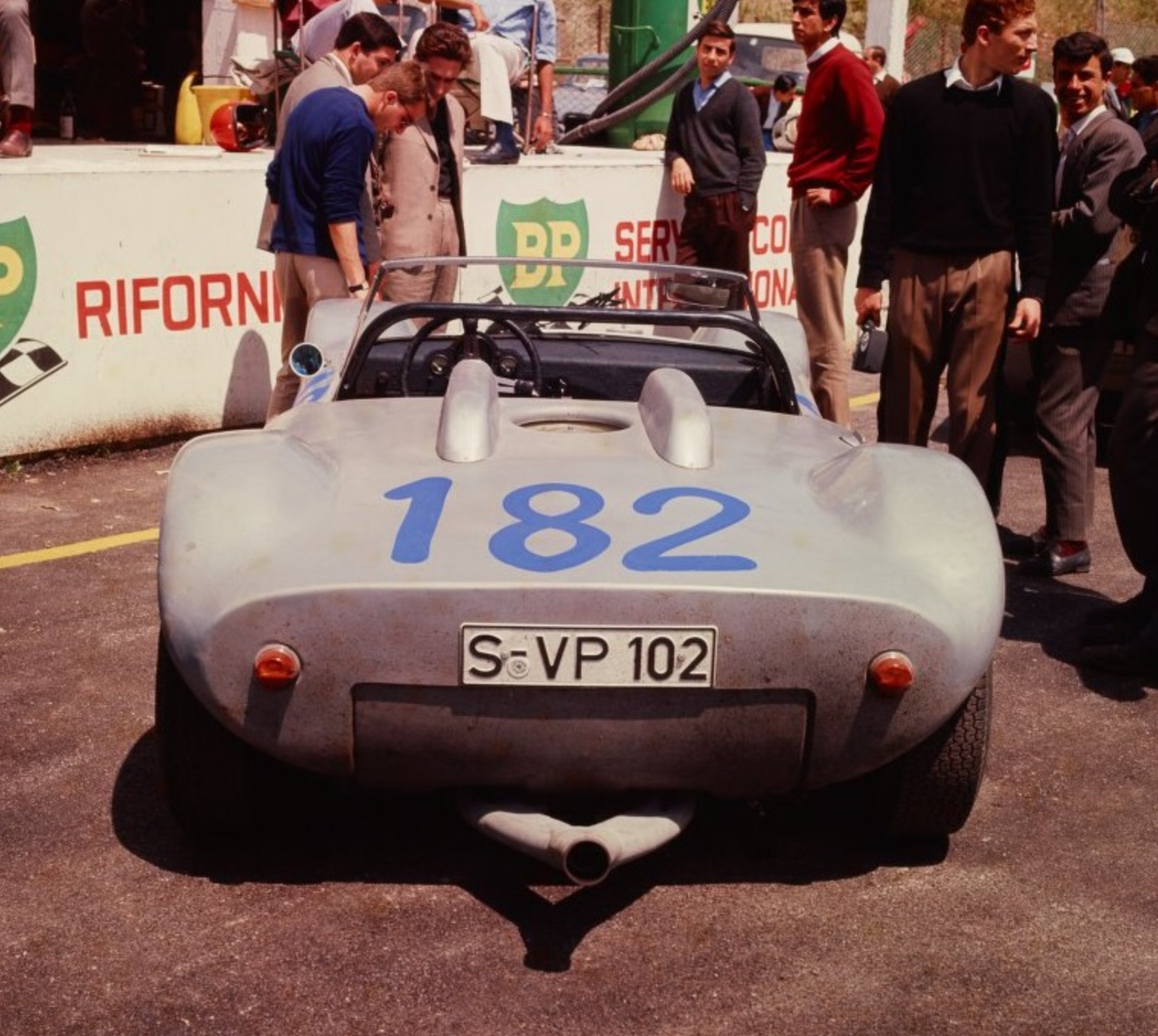

Hamiltons 904/8 car chassis 906-007 was first raced at Targa 1965,
It finished second in the hands of Cliff Davis/Gerhard Mitter behind the winning Ferrari P2 of local lad Nino Vaccarella and Lorenzo Bandini. Gerhard Mitter then used the car to win the 1965 Rossfeld Hillclimb, a 6 km course near Berchtesgaden on 13 June. Next placed Herbie Muller was five seconds adrift in a standard Porsche 904GTS.

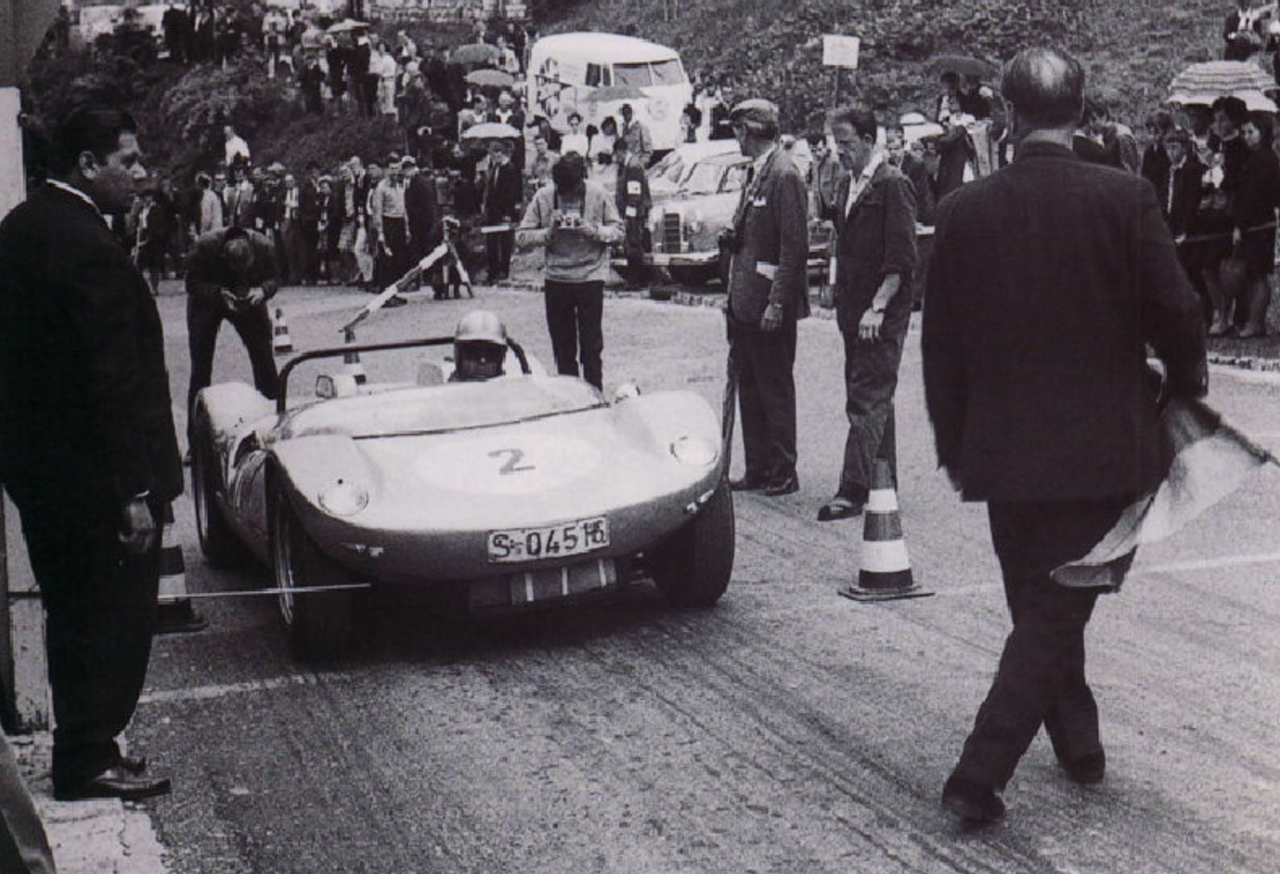
Further success followed at the Norisring, near Nurnberg, where Mitter raced 906-007 to victory on July 4, 1965, leading home two Elva BMWs. The car was then unraced, the last appearance of a 904/8 was in August, in factory hands, Porsche thereafter focusing on production of the new 906.
Alan Hamilton spotted the car in a corner of the racing department…

Porsche 904/8 906-007 in Australia…
Interviewed by Journalist Barry Lake, Hamilton said the 904/8 ‘originally had a 2-litre 8-cylinder engine, but I bought it with a new 906 (6-cylinder) engine I had asked them to install. I imported that at the end of 1965 and raced it through 1966.’
The car was first raced in Australia at Calder, Victoria on 16 January 1966, which is probably when the Autosportsman cover shot used at the start of this article was taken. The car then raced at the Sandown round of the Tasman Series, contesting the sports car events.
Taken across Bass Strait on the Princess of Tasmania with the rest of the Tasman Circus to contest the Australian Tourist Trophy at Longford, Hamilton was second in the race won by the much more powerful Elfin 400 Traco Olds V8 of Frank Matich.

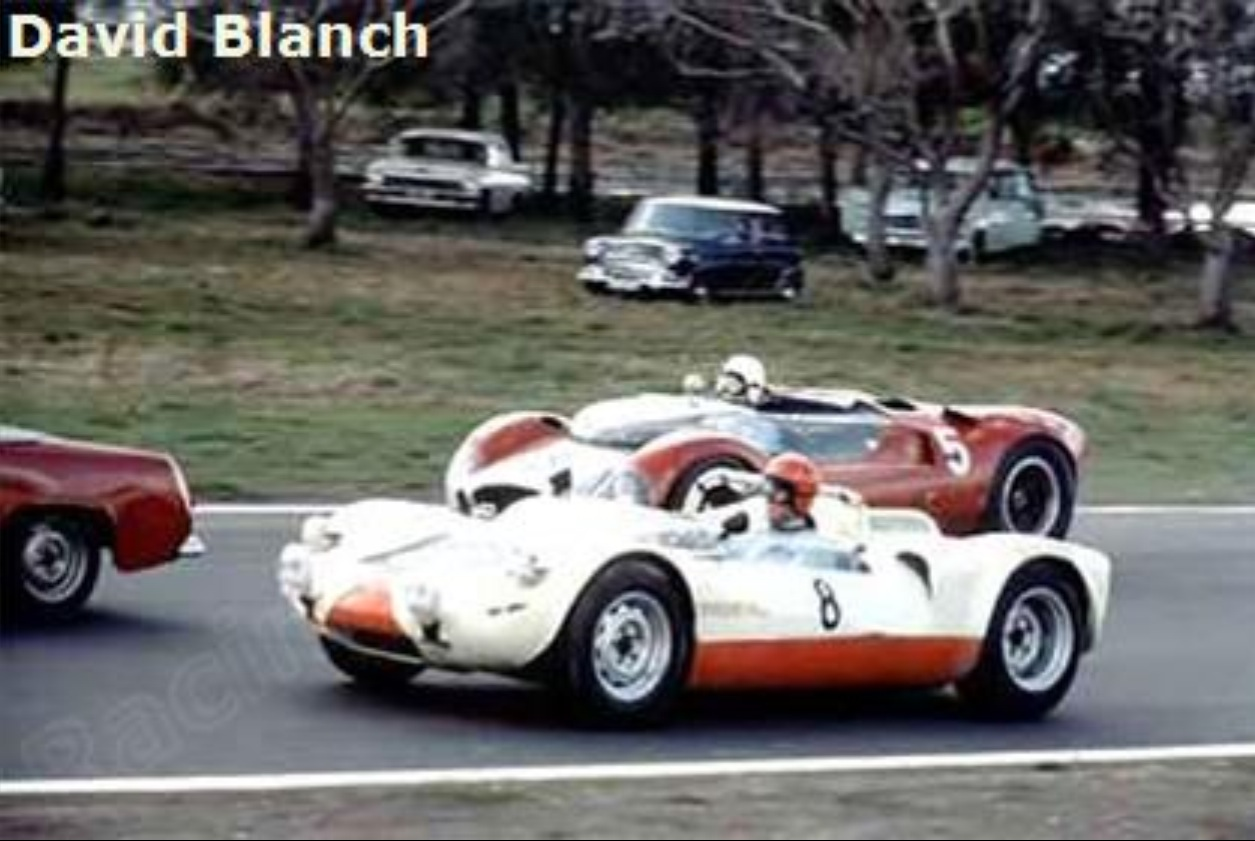
The 904 quickly became one of the fastest sportscars in the country, fourth in the 1966 Surfers Paradise 12 Hour with a 2-litre car was a top result. Alan shared the 904 with Melbourne driver Brian ‘Brique’ Reed. Jackie Stewart and Andy Buchanan won in the Scuderia Veloce Ferrari 250LM- I wrote an article about this Ferrari a while back, click here to read it; https://primotipo.com/2014/07/03/pete-geoghegan-ferrari-250lm-6321-bathurst-easter-68/
The Hamilton 904 combination were also first in the 1966 Australian Hillclimb Championship at Collingrove, South Australia, the Victorian Sports Car Championship at Sandown and the South Australian Sports Car Championship at the Mallala ex-airfield circuit.
Towards the end of 1966 the Porsche workshop in St Kilda, Melbourne started to transfer the mechanicals of the Kanguruh 904/8 906-007 to a new 906 chassis.
Alan Hamilton, ‘Later (that is after the 904/8 was in Australia) I imported a new 906 chassis and body and put the mechanicals of the Targa car in that’.
‘Then Jim Abbot bought the Targa car (chassis 904/8 906-007) and fitted a ZF gearbox and 289 Ford V8 engine. His estate or perhaps Jim himself shortly before he died, sold the car to Murray Bingham in this form and it became the Bingham Cobra.’


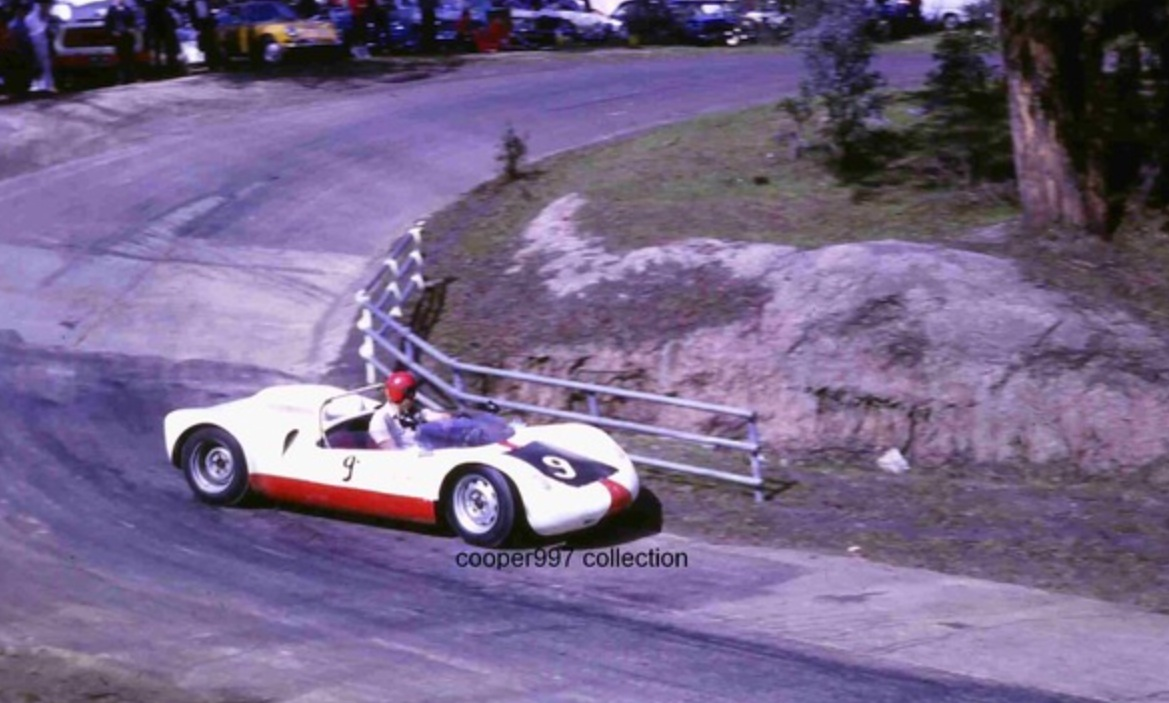
Hamilton; ‘Years later, Pat Burke bought the car and sent it to Germany where it was restored to its original 904/8 Targa Florio specification. After Pat Burke fell on hard times it was auctioned at Monte Carlo. I think a man in Sydney bought it, but I have no idea who has it now.’
Lets go back a step to the acquisition of the chassis and related parts by Jim Abbott.
Abbott was a driver, owner of Lakeland Hillclimb in outer Melbourne, publisher of motor racing monthly Autosportsman magazine and promoter of an annual Motor Racing Show in Melbourne.
In 1966, 1980 World Champion Alan Jones, was trying to establish a foothold on the motor racing ladder in the UK, wheeling and dealing in cars and campers to provide the money to do so. He acquired an ex-works Sunbeam Tiger and, knowing Abbott had an interest in such cars, sold it to him. The car was raced and ‘climbed’ by Jim and engineer Paul England before Abbott decided it would make a nicer road car than a racer. He swapped the Shelby-modded 289cid V8 for a standard engine and looked around for a chassis into which to plonk his nice, powerful Ford Windsor small-block V8.
Various Coopers were considered before a deal was done with Hamilton to acquire the Kanguruh 904/8 906-007.
A suitable ex-Cooper Maserati F1 ZF 5DS 25 transaxle was also acquired. The engine and box (the latter requiring some modification in terms of clutch componentry by Eddie Thomas) was ‘dropped’ into the Porsche chassis at Hamilton’s St Kilda workshop.
A little cutting and shutting of the chassis crossmember was needed to fit the V8. A sub-frame was added around the engine to maintain chassis stiffness, but in essence, the swap was relatively simple. Stiffer springs and shocks were fitted as the Ford cast iron lump was around 200lbs heavier than the svelte, alloy Porsche Flat 6. Driveshafts were suitably strengthened by Paul England Engineering.
The original rear bodywork was used but at the front, much bashed and repaired a local specialist fashioned a nose much more attractive than the original, the screen, a concoction of a speedboat parts, met at each end with aluminium panels was not quite so pretty.


Abbott’s objective was not to build an outright car but rather a very fast sports car which could be ‘raced, sprinted and climbed’. The completed machine made is debut at the Light Car Club of Australia’s annual members meeting at Sandown on Melbourne Cup Day in November 1967. ‘Red Handed’ won the ‘Cup at Flemington that day! More importantly, Abbott set a sub-13-second standing quarter mile at Sandown, also primarily a horse racing venue.
The car was quickly under the times set by the class record holder, a Cooper Jaguar at Templestowe Hillclimb and was running fourth in the Winton Trophy at the picturesque Benalla country Victorian circuit when the car lost its water. Initial troubles centred around the cooling system, which were solved by fully rebuilding it.
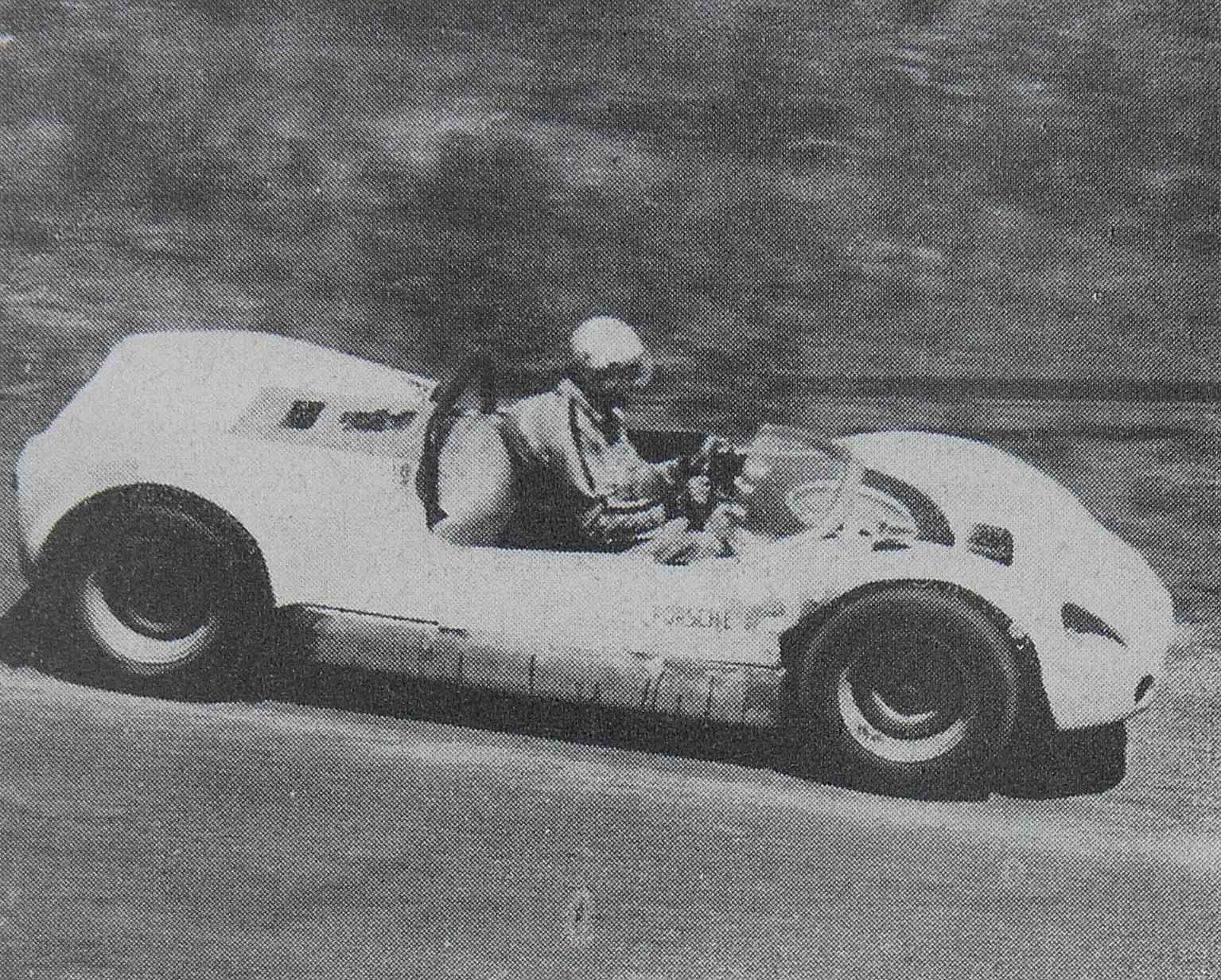

Abbott did not campaign the car for long before his untimely death, it was then sold to New South Wales veteran driver, Tom Sulman who raced it in 1969.
Murray Bingham then bought 904/8 906-007 and used it very successfully for over 10 years. The old chassis won the Australian Hillclimb Championship again in 1972, a three-round Series that year. (Hamilton won the 1966 title in it at Collingrove).

A ‘Manx’ body replaced the original, and the Ford Cobra engine was updated with an ex-Gary Campbell, Alan Smith-built Chev F5000 engine out of a Lola T300. Bingham won the 1973 NSW Hillclimb Championship in Chev-engined form, the 1971-72 NSW titles Ford Cobra-engined.
The much raced car finally passed into the hands of Pat Burke who restored it before it was sold upon the demise of his business empire in the 1980s as described by Alan Hamilton earlier in the article.
I am uncertain of the cars current owner.


Hamilton’s first Porsche 906 Spyder…
Hamilton’s new 906 chassis came with bodywork, suspension and brakes.
904/8 906-007 donated its engine and gearbox and some other components, as the narrative and photos show, the 904/8 906-007 car was still as built by Porsche, less the engine and box. Alan is a big, tall bloke so he elected to build the 906 up as a Spyder rather than a standard 906 Coupe in order to ease access and egress and more easily see out of the car.
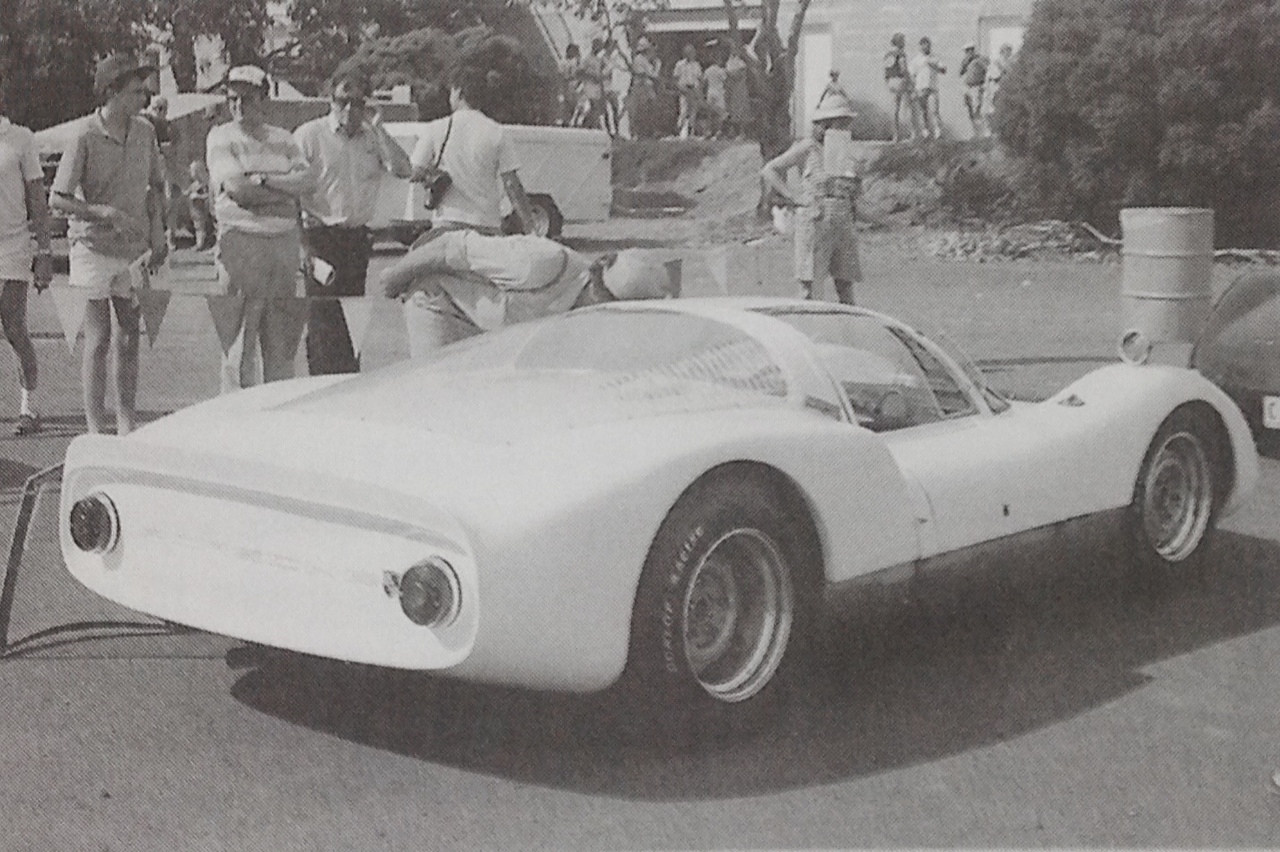
At this point we have two cars: the 904/8 chassis car 906-007, now called ‘Porsche Cobra’ and fitted with a Ford engine and ZF gearbox and a 906 which was not issued a chassis number by Porsche, but which over the years assumed the 906-007 tag, which was built up as a Spyder, but which when restored in Germany in 2003-09, was rebuilt as a Coupe. This car now has a chassis 906-007 plate, at what point the plate was affixed is conjecture.
Both cars have elements of the original 904/8 906-007…
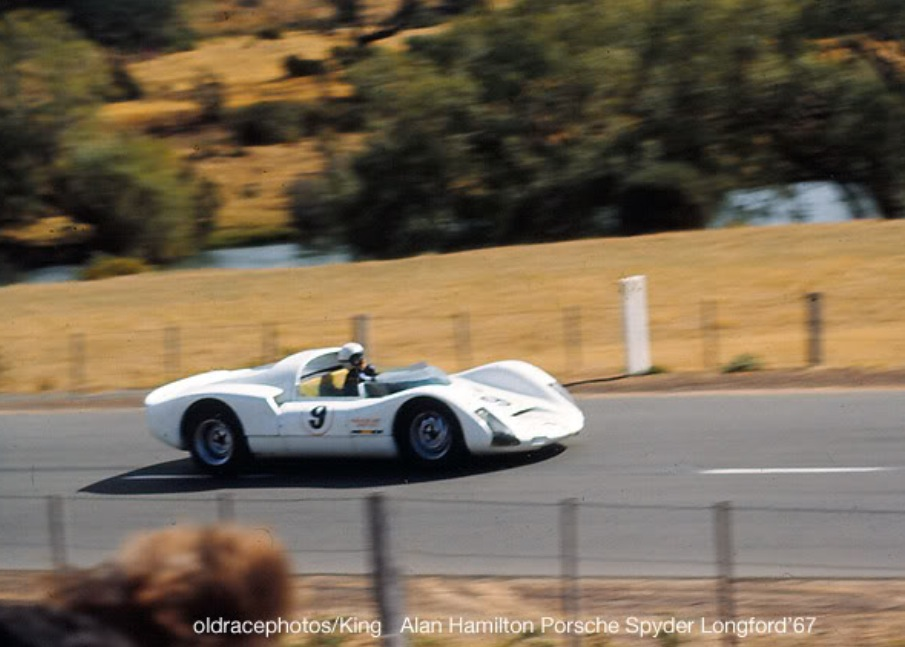
Back in 1966, none of these problems for future historians mattered to Hamilton; he had a new state-of-the-art 906 to contest Australian events.
As the recent article I wrote on the Frank Matich Elfin 400/Traco Olds makes clear, the light six-cylinder-engined Porsche was up against it with several very potent, light, well-driven V8-powered cars in the hands of Frank Matich, Niel Allen and Bob Jane in 1967. (Matich SR3 Repco, Elfin 400 Chev and Elfin 400 Repco, respectively).
The Porsche Team completed the build of the 906, and the original 904 chassis 906-007 was put out the back of their St Kilda workshop until acquired by Jim Abbott later in 1967.
The 906 Spyder made its debut in the sports car events at Sandown’s Tasman round in late February 1967. Hamilton took three class wins and a class lap record.
To Longford, the following weekend, the car was third outright. The following week, still in Tasmania, Hamilton raced the car at Symmons Plains, where he won his first race and was leading the Tasmanian Sports Car Championship when a conrod let go. Hamilton noted in his Autosportsman column that the engine had ‘done 14 months racing, 92 hours, so we are more than happy with its overall performance’, Porsche’s reliability is legendary.
In April, Hamilton contested the Victorian Sportscar Championship, winning his heat and finishing second outright and first in class; he also bagged the class lap record.


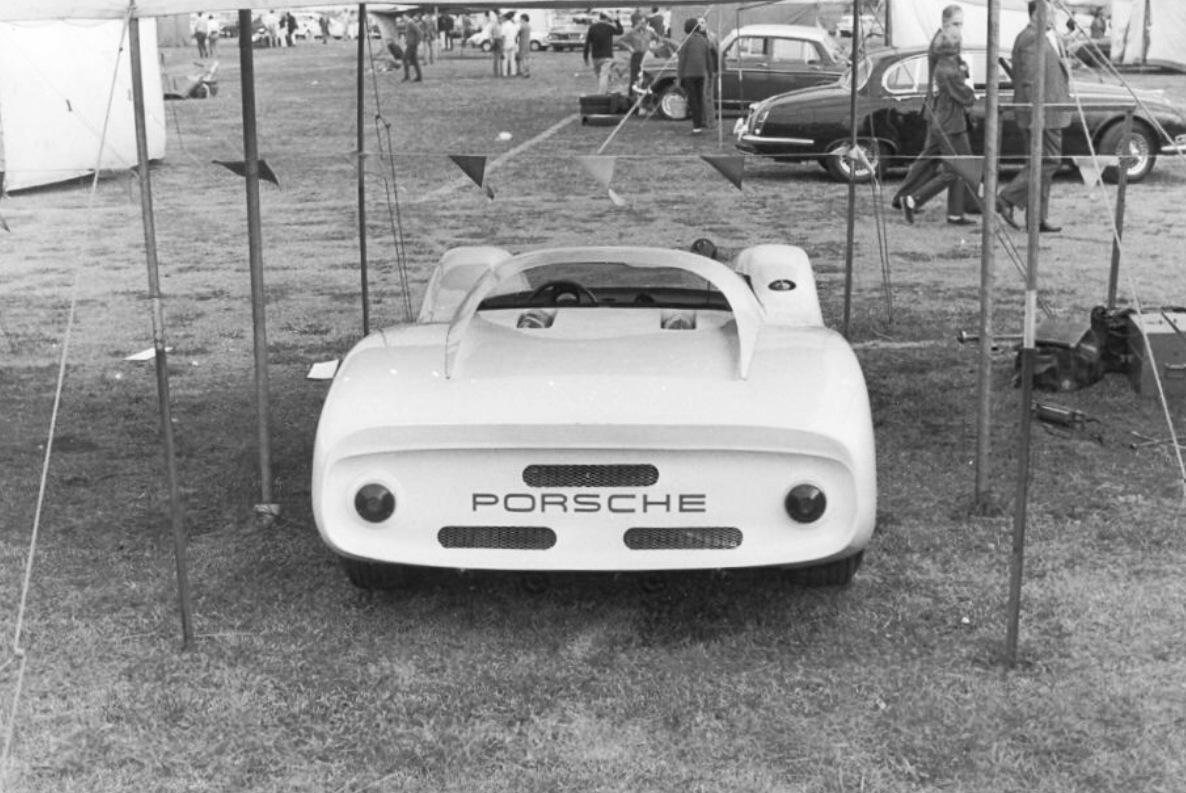
On 14 May, Hamilton contested the RAC Trophy at Warwick Farm where he finished third behind two powerful V8s. The dominant Matich SR3 of Frank Matich was getting in some valuable mileage before leaving to contest the Can-Am Series in this car, and Bob Jane’s Elfin 400, which, like the SR3, was powered by Repco’s new 620 Series SOHC, two-valve, 4.4-litre V8.
A week after the RAC Trophy, Hamilton contested the Australian Tourist Trophy at Surfers Paradise. This was a relatively easy tow from Sydney to Queensland’s Gold Coast and gave Hamilton valuable testing time at Surfers to fettle the car to suit the circuit for the international 12 Hour event in September.
Matich won again in his SR3 Repco, but Alan was second in the 906 and his 12 Hour co-driver Glyn Scott third in his Lotus 23B Ford. The other two outright sportscar contenders of that year, Niel Allen and Bob Jane’s Elfin 400s did not make the trip North.
Success followed in Victorian events at Calder and at Hume Weir on the Queens Birthday weekend, before taking the long haul back to Surfers Paradise for the 12 Hour event on the 3 September weekend .
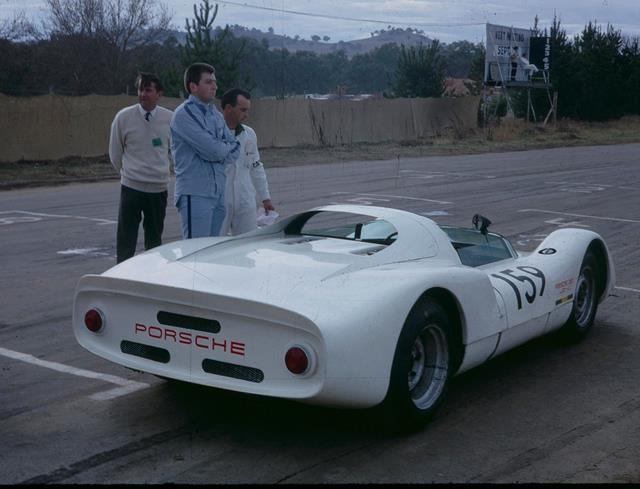
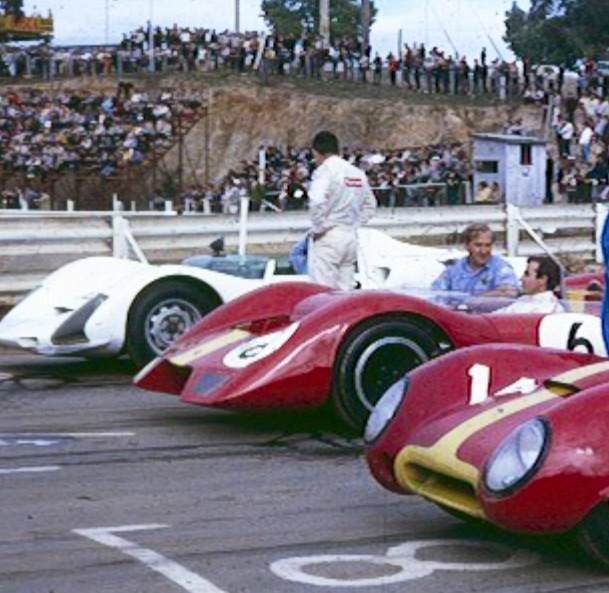
Hamilton’s co-driver at Surfers was Queenslands’ Glyn Scott, the duo finished third outright and first in class. The race was won again by the SV Ferrari 250LM, that year driven by the Australian duo, Bill Brown and Greg Cusack, Paul Hawkins and Jackie Epstein were second in Epstein’s Lola T70 Mk3 Chev.


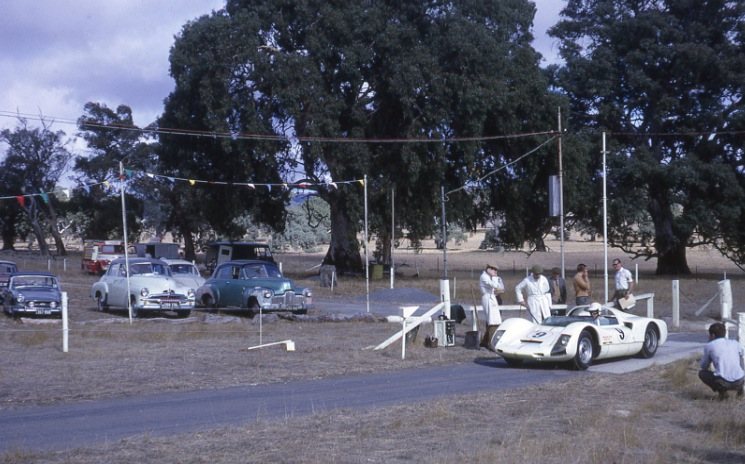
Another long tow to Mallala, South Australia, was rewarded with victory in the South Australian TT.
John Blanden noted the versatility of the car and driver, the 906 contested hillclimbs, still pretty important and sometimes televised, the car taking FTD at Templestowe in Melbourne’s outer east and second in the Australian Hillclimb Championship at Bathurst in November behind Greg Cusack’s Tasman 2.5-litre Repco powered Brabham BT23.
A successful year was capped with a win at Lakeland Hillclimb in the Dandenong Ranges, outer Melbourne in December.

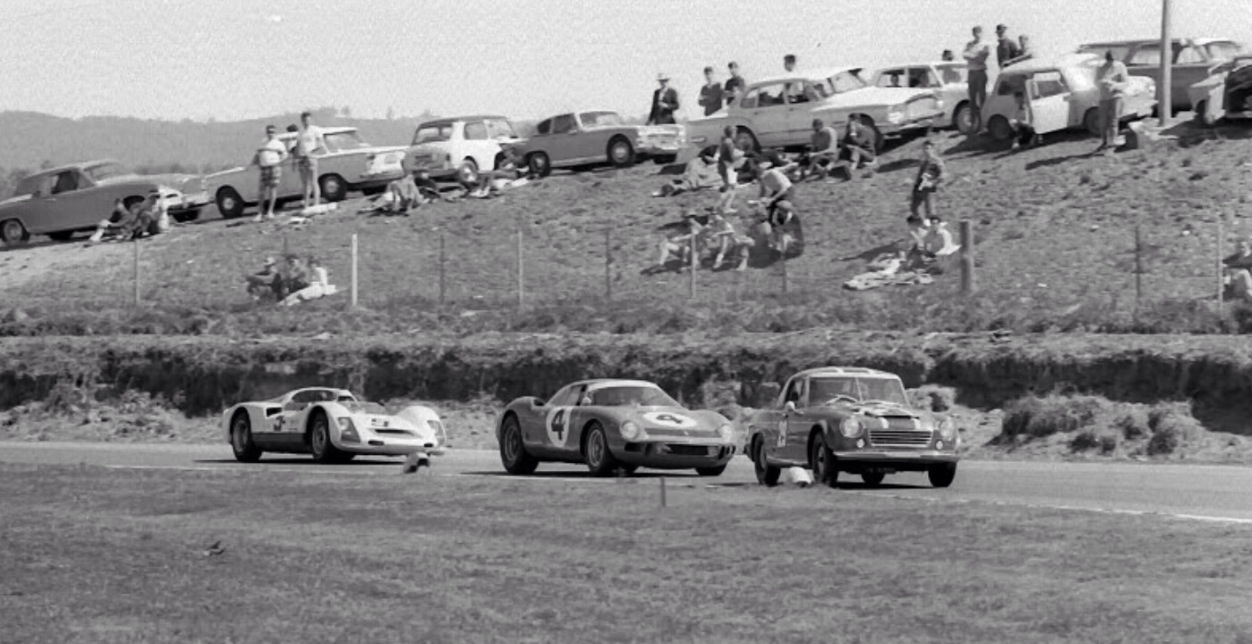
The 906 was advertised for sale in the November 1967 issue of Racing Car News, the car, according to John Blanden, having reached its Customs Duty limits. This taxation concession allowed Tasman Series competitors, for example, to avoid import duty by ‘exporting’ the cars each year to New Zealand. If exceeded, that is, the car stayed in Australia for longer than twelve months, the ‘fiscal fiend’, the taxman, had to be paid.
The car was sold to Richard Wong in Singapore and passed through many hands, including Macau businessman/racer/team owner Teddy Yip. As mentioned earlier in this article, Hamilton’s first 906 was ultimately restored as a Coupe, having been only raced by Hamilton as a Spyder…

European Trip in 1968…
Hamilton spent most of 1968 overseas, much of it working at Porsche; he did manage to fit in the Nurburgring 1000Km, racing a 911S to 28th place with co-driver/car owner Hans-Dieter Blatzheim. The race was won by a factory Porsche 908 driven by Jo Siffert and Vic Elford.
Planning an all out assault on the 1969 Australian Touring Car Championship, Hamilton ordered a trick 911T/R, the car arrived early enough to compete in the 1968 ATCC, the last run to a one race format. Pete Geoghegan won the title again in his Mustang, Hamilton in the giant killing 2-litre 911 lost second place on the last lap due to a puncture, Darrell King’s Morris Cooper S just beat him to the Warwick Farm chequered flag.
Porsche still had some spare 906 chassis lying around the factory, one was offered to Alan, who was happy to oblige, he still had plenty of bits from the earlier cars so he could easily build up another car for competition back in Oz. This 906, just like the previous chassis he raced in ’67 did not have a chassis number.

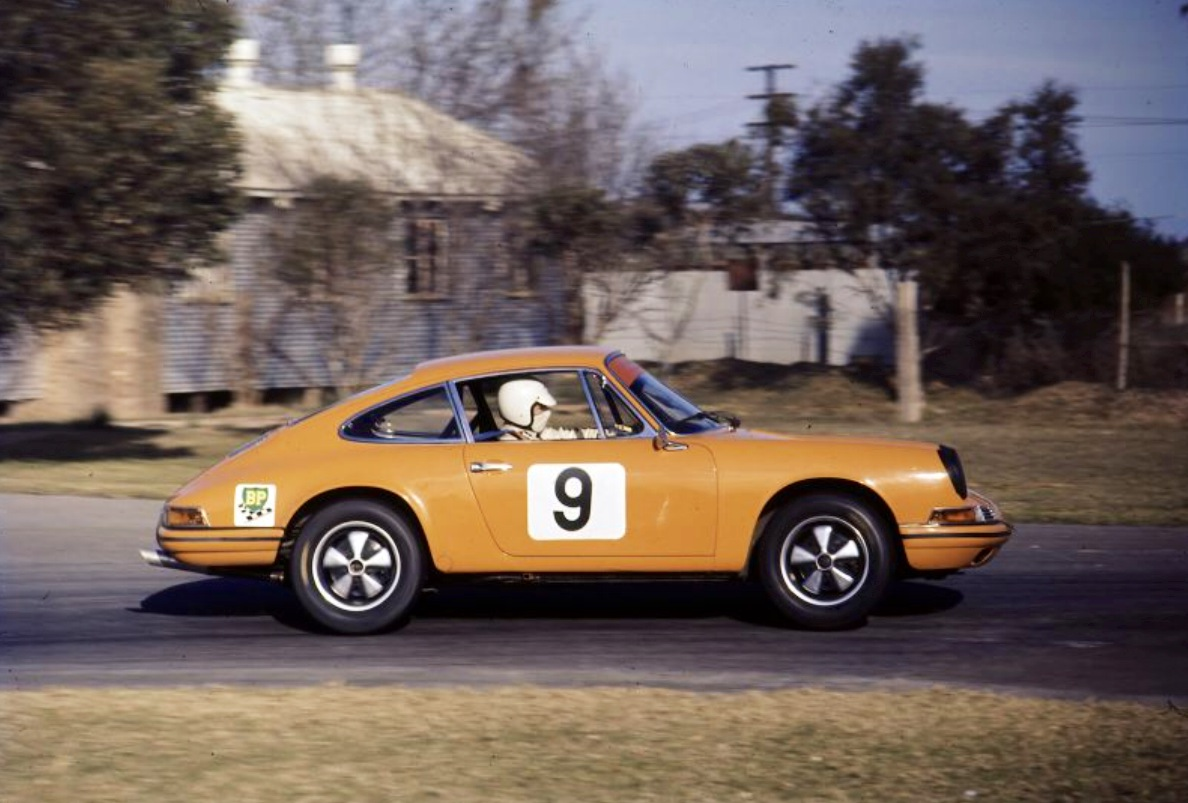
In the 1969 ATCC he came very close to taking the title with consistent second places, ultimately the championship was won by Pete Geoghegan by one point, in his Mustang, the fifth win in the event for the beefy, supremely talented Sydneysider. The battle went down to the wire in the final round at Symmons Plains.
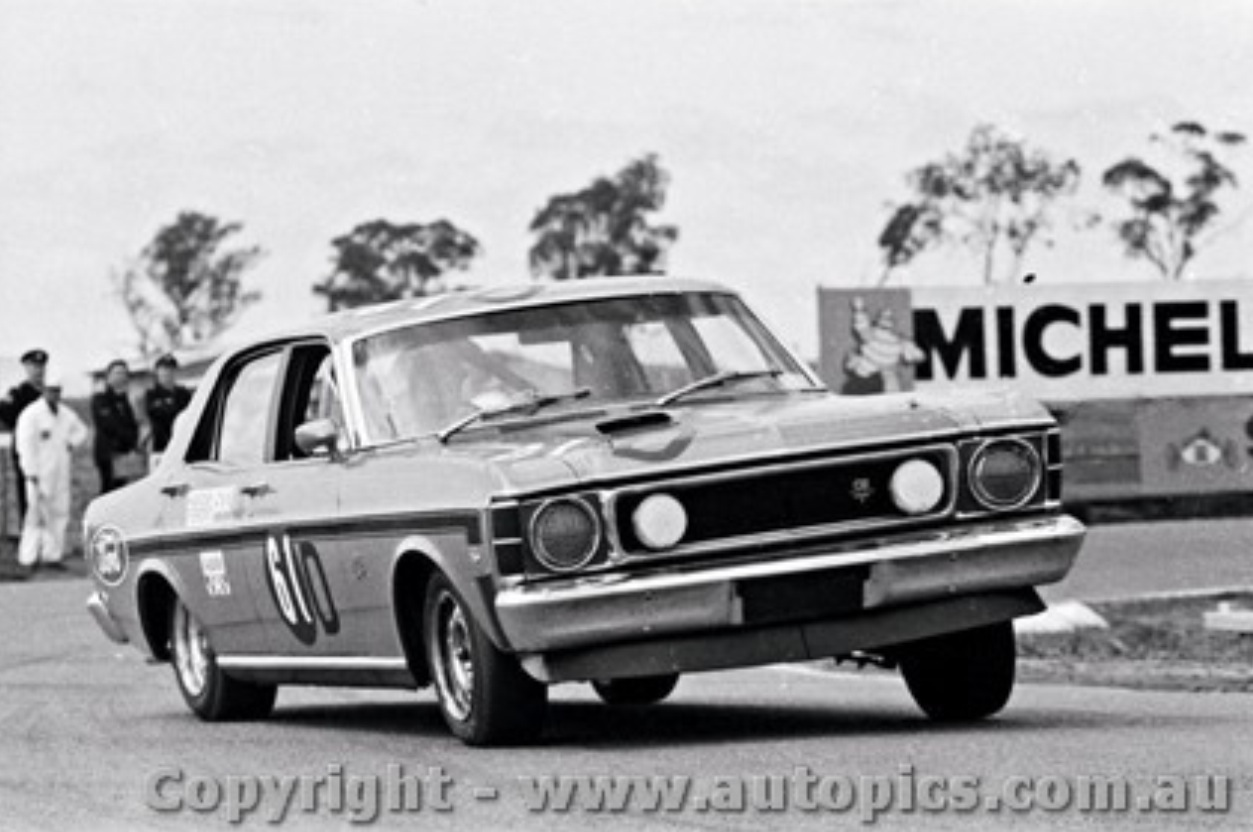
In the middle of his ATCC campaign, Hamilton was recruited by ‘Big Al’ Turner to drive a factory Ford Falcon XW GTHO Phase 1 in the Bathurst 500 together with 500 debutant Allan Moffat that October.
Moffat was in good form having won the preceding Sandown 500 in his big Falcon. Still a young driver, Turner was keen to exploit Hamilton’s speed, smoothness and mechanical sympathy. It was the start of a relationship between the drivers which would be mutually beneficial over the next decade.
1969 was the famous Bathurst when tyres imported by Turner failed spectacularly. Moffat was called into the pits for a precautionary check after the tyres on the Brothers Geoghegan and Gibson/Seton cars failed. The Moffat/Hamilton duo were easier on the Goodyears than their teammates; the pitstop was unnecessary and probably the cause of the pre-race favourite Falcons losing the victory. The Holden Dealer Team Holden Monaro HG GTS 350 of Colin Bond and Tony Roberts won the race.
In 1970, Alan didn’t contest the ATCC, but the second Hamilton 906 was assembled. The car had a standard 906 front clip, but, like the earlier 904/8 906-007 and 906 was a Spyder, the rear deck was modified locally with pronounced spoilers to provide some downforce. No wing though.
Minilite wheels replaced the factory steel wheels of the earlier cars. The machine was ready for the 1971 Australian Sportscar Championship, powered by a 2.4-litre twin-plug engine assembled locally from Alan’s cache of trick, Porsche bits.

Hamilton’s second 906 Spyder…
1971 was to be a big year of racing for Hamilton. In amongst the rapid growth of Porsche Cars Australia, a strong economy and global growth in the Porsche brand reflected in strong sales in Australia, Hamilton took the big step up to Australia’s premier single-seater class, F5000.
He purchased Niel Allen’s spare McLaren M10B Chev (#400-19) upon Allen’s retirement from the sport. (Ignoring Allen’s short flirtation with a Lola T300 12 months later). Kevin Bartlett bought Niel’s other M10B (#400-02), all these years later Hamilton owns both McLarens, they are being historic raced by Alf Costanzo. In the seventies and eighties Alfie was Hamilton’s driver in a swag of F5000 and F Pacific cars in which the little Italian born Aussie was prodigiously fast. A tangent too far for this long article!
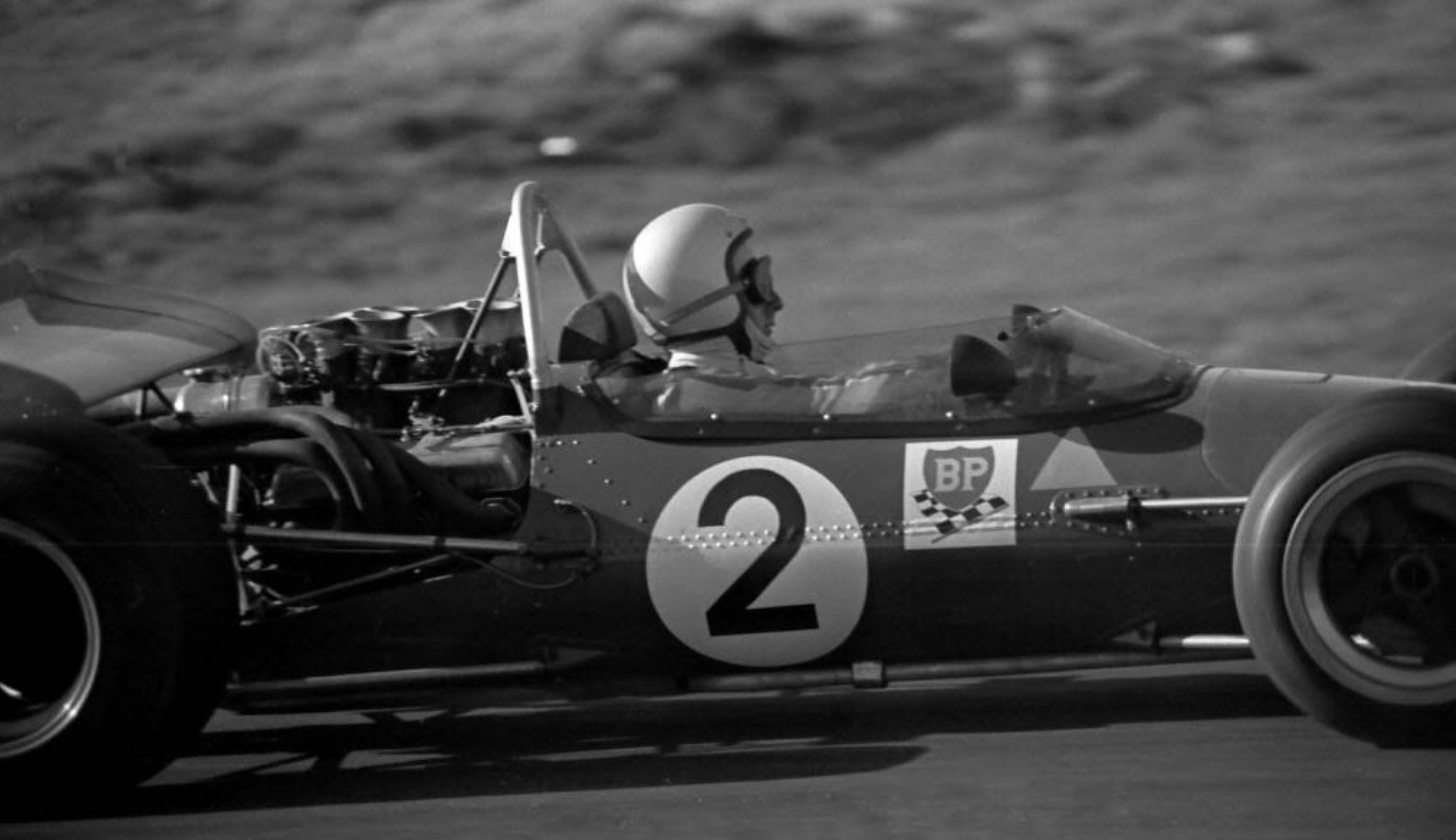
Hamilton missed the 1971 Tasman Rounds, but both he and Bartlett had their cars ready for a full Gold Star campaign. Despite being a novice in these big, brutal, challenging cars Hamilton was immediately competitive, taking third places at Oran Park, Surfers Paradise and Mallala.
He was fourth at Lakeside, finishing the Series equal second with Bartlett in his M10B. Winner of the series was the speedy and consistent Max Stewart in his Mildren Waggott 2-litre in a final Championship victory for this superb Australian four-cylinder DOHC four-valve engine. Stewart progressed to an Elfin MR5 Repco at the end of the Series and was consistently competitive in the big cars for the rest of his career.
The Porsche Cars Australia transporter did plenty of miles from its St Kilda base in 1971 in pursuit of two national championships and the vast distances across the big Australian continent that entails.

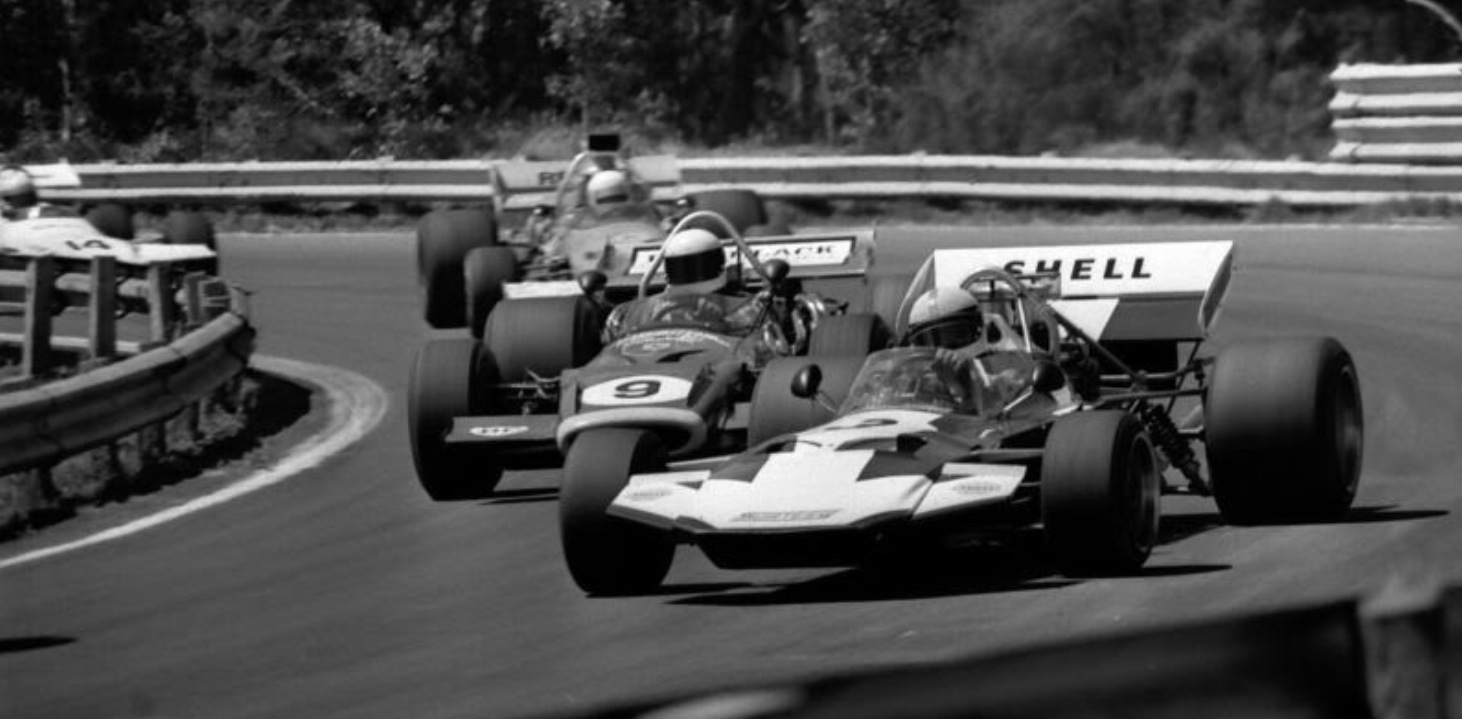
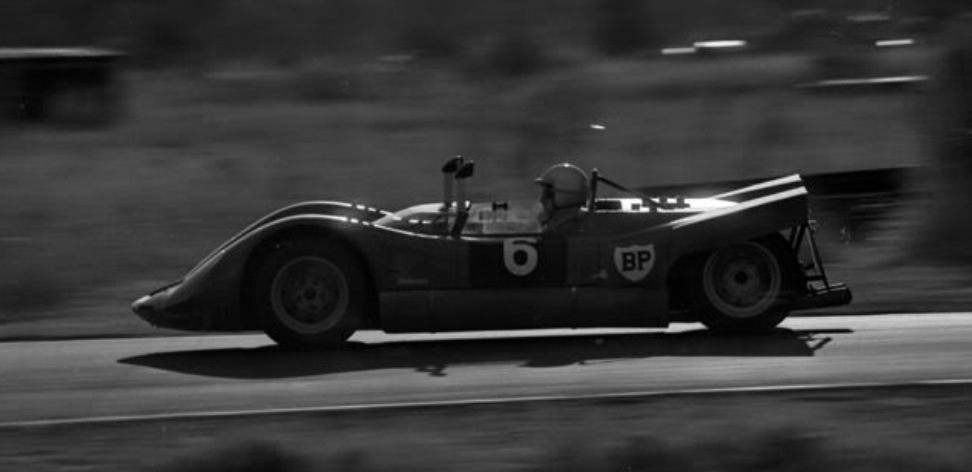

In 1971 Hamiltons 2.4-litre twin-plug Porsche 906 was as out-powered as the earlier cars were in 1966-67.
The fastest combination in the field was John Harvey in Bob Jane’s McLaren M6B Repco, a 5-litre SOHC 740 Series V8 producing around 460bhp@7500rpm. Best results for the 906 were thirds at Phillip Island in January and Warwick Farm in May.
Whilst outgunned on the track, the nimble 906 was just the thing at Hillclimbs. Hamilton had a passion for these events and at Easter took fastest time of the day on 10 April, a track record and the Australian Title, his second win, the first in the 904/8 also at Collingrove in 1966. The Angaston Hills were alive to the sound of flat 6 music…
At the end of the year, Hamilton sold the McLaren to Pat Burke (later the restorer of the 904/8 906-007) for his driver Warwick Brown, with the M10B an important stepping stone for the talented driver on his climb towards the top of the class in both Australasia and the US.
This M10B chassis was then used as the donor car for Bryan Thomson’s ‘Volksrolet’ VW Fastback Sports Sedan project, before being restored, around the original tub, which had never been destroyed, many years later, by Alan Hamilton as mentioned above.

Hamilton returned to F5000 in 1978, that campaign ended in near tragedy at Sandown when he crashed his ex-Team VDS Warwick Brown Lola T430 Chev at the high speed Dunlop Bridge, the car was destroyed, carved in half, Alan was lucky to survive, and became a diabetic as a consequence and has been unable to hold a full licence since.
Not that it stopped him winning two Australian Hillclimb Championships in 1981 at Ararat and 1989 at Gippsland Park, both in Victoria, in Porsche Spl and Lola T8750 Buick respectively. He was lucky to survive the Sandown accident and was a significant patron to other drivers, notably Costanzo post-prang.
In 1972 Hamilton continued to campaign the 906, John Harvey won the title again in the Bob Jane McLaren M6B Repco with Hamilton second in the title, 20 points adrift of Harvey with seconds at Phillip Island, Adelaide International, Warwick Farm and Surfers Paradise.
The championship had a bit of a renaissance that year with some new cars appearing, notably the Elfin 360s of Phil Moore and Henry Michell, also the Rennmax of Doug Macarthur, all of which were powered by ex-Tasman Series 2.5 litre V8 Repco engines now surplus to requirements with F5000 as the new ANF1.

Alan also raced a Porsche 911S sports sedan during this period, but the 906 racing days were over. The car was rebuilt as a Coupe in the 1980s by the Porsche workshop in Melbourne. It appeared occasionally, notably at a couple of Adelaide Grand Prix historic demonstrations. The car was finally sold by Hamilton in 1990 via auction to a Japanese owner.
Hamilton raced on in a variety of cars and became a very generous team owner after his own front line racing days ceased post accident, he is still active in the historic scene and lives on a property at Red Hill on Melbourne, Victoria’s Mornington Peninsula.
Etcetera…

904/8 906-007


Bibliography…
‘Historic racing Cars in Australia’ John Blanden, The Nostalgia Forum, Australian Autosportsman Magazine March 1966 and April 1967. Stephen Dalton for his research and access to his archive/collection
Photo Credits…
oldracephotos.com, ‘onelung’, Bernard Cahier, lyntonh, G Howard ‘History of The AGP’, autopics.com, Dick Simpson, Bruce Wells, The Roaring Season, freduece, Ray Bell, David Blanch, Ellis French, John Lemm, Peter Baldwin, Jean Charles Martha, Yoshihiro Inomoto, Gavin Fry, Tony Arts, Historic Racing Car Club of Tasmania
Finito...
 primotipo...