

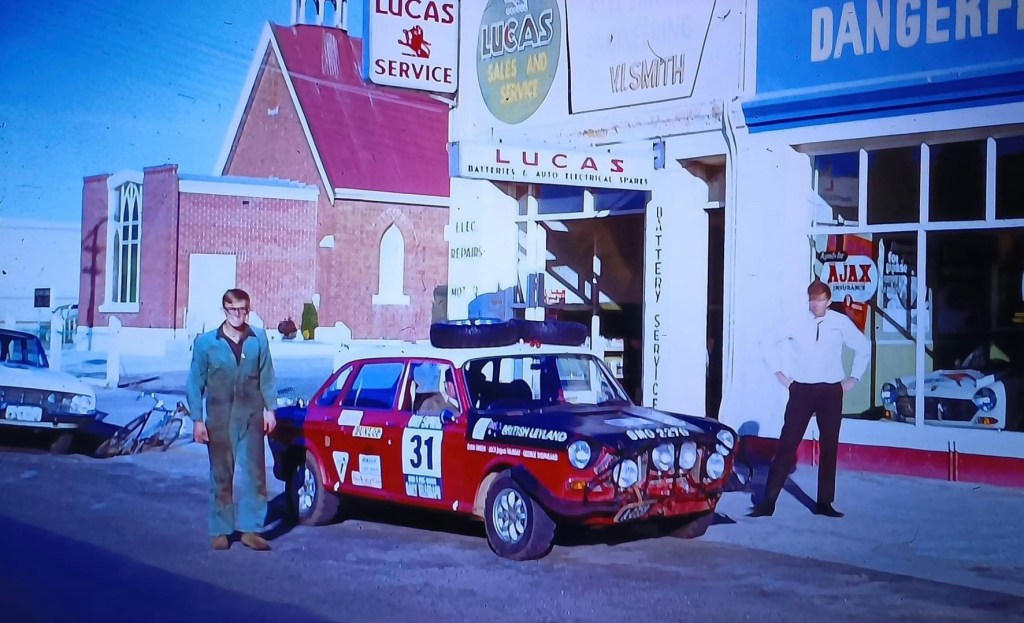
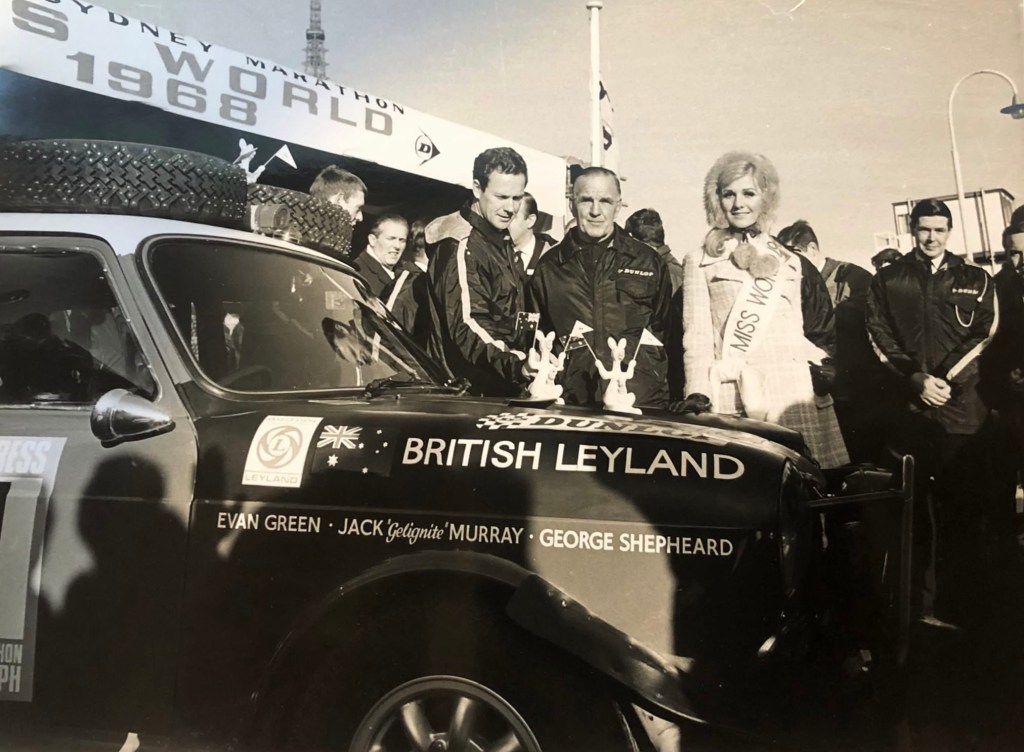
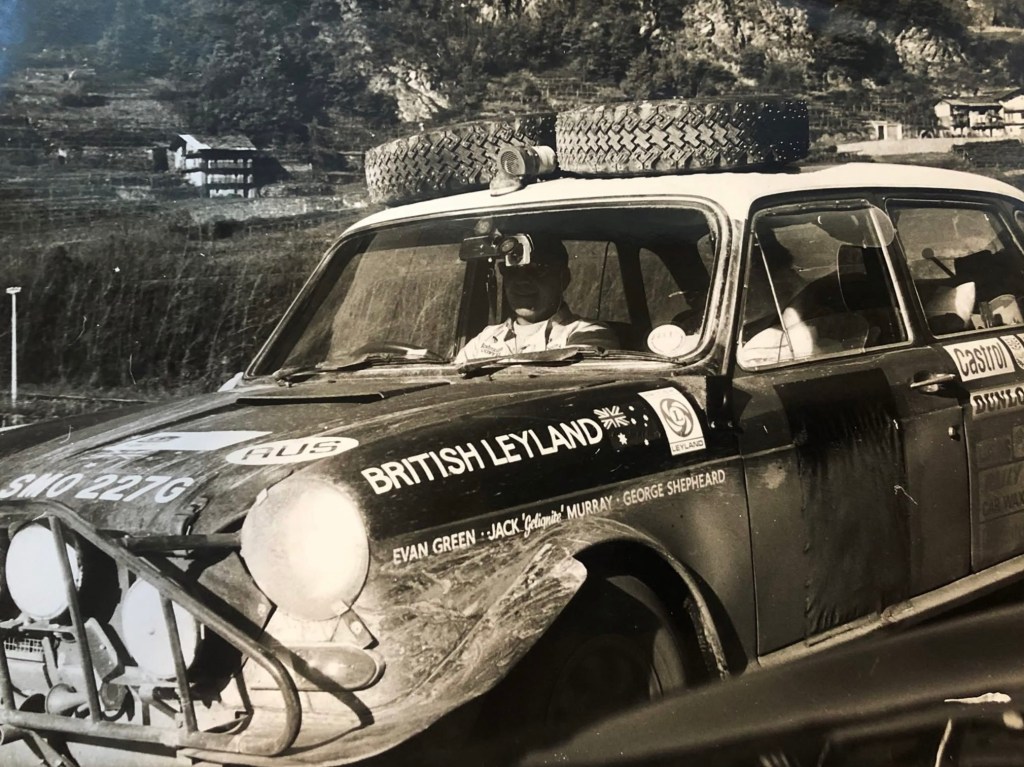
The BMC Australia entered Austin 1800S Mk2 – SMO 227G – that competed in the November 24-December 17 1968 London-Sydney Marathon in the hands of Evan Green, ‘Gelignite Jack’ Murray and George Shepheard in Ulverstone, Tasmania shortly after the event.
They finished 21st with 332 lost points, the winners, Andrew Cowan, Colin Malkin and Brian Coyle lost 50 in their Rootes Motor Group Hillman Hunter, while the best of the Austin 1800s, second placed Paddy Hopkirk, Tony Nash and Alec Poole lost 56 penalty points.
Grant Brooks posted these photographs on the Old Motor Racing Photographs – Australia Facebook page and wrote, ‘My father, had to pick it up in Hobart and drive it to Ulverstone, (300km from Tasmania’s capital in the south, north to the coast) I was the lucky passenger. Here it’s shown outside Dangerfields BMC garage in Ulverstone. Dad did his apprenticeship with them and continued as a mechanic until they closed the workshop.’
‘The man in the suit is John Dangerfield, the dealer’s son, the mechanic is a dude from the servo over the road.’
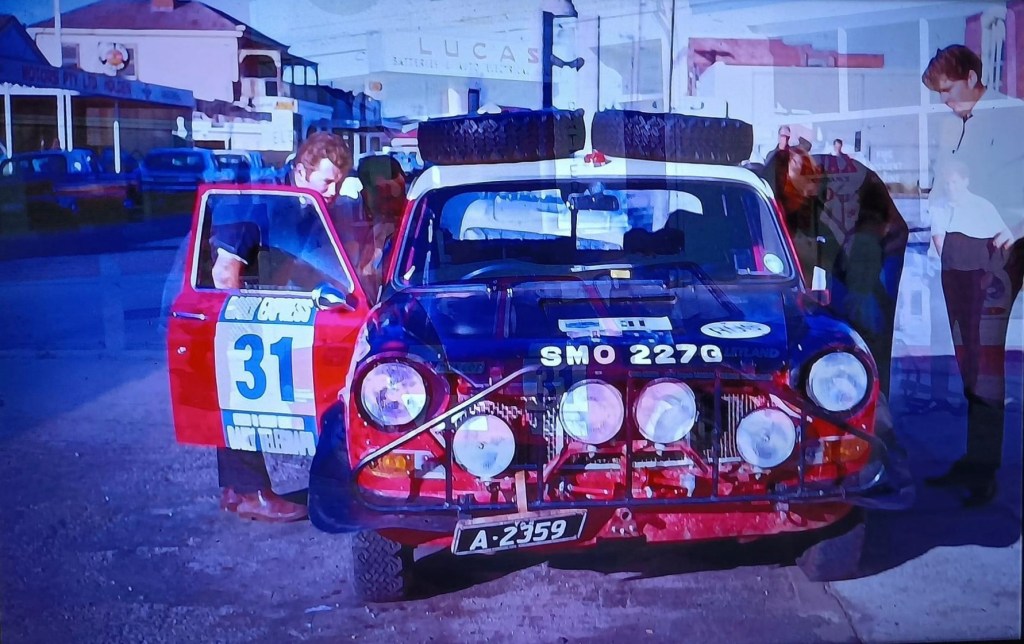
‘It went well, I can still see the look on the face of a V8 Valiant driver as we passed him selecting top-gear!’
‘There was a hand-pump on the back parcel-shelf to adjust the hydrolastic suspension, a seat sideways mounted in the rear, with the whole interior painted black except for the gauges.’
The full story of the preparation of the Austins and their fortunes in the event is told in this excellent article by Mark Oastler: https://club.shannons.com.au/club/news/racing-garage/austin-1800-the-car-that-should-have-won-the-1968-london-sydney-marathon/
Can anyone assist with life-journey of this machine after BMC had finished with it?
See the links at the end of this article for a couple of other pieces on the London-Sydney. There have been quite a few shots of cars from this event posted on social media over the years, I must scoop them up and pop them in one place to make them easily searchable.
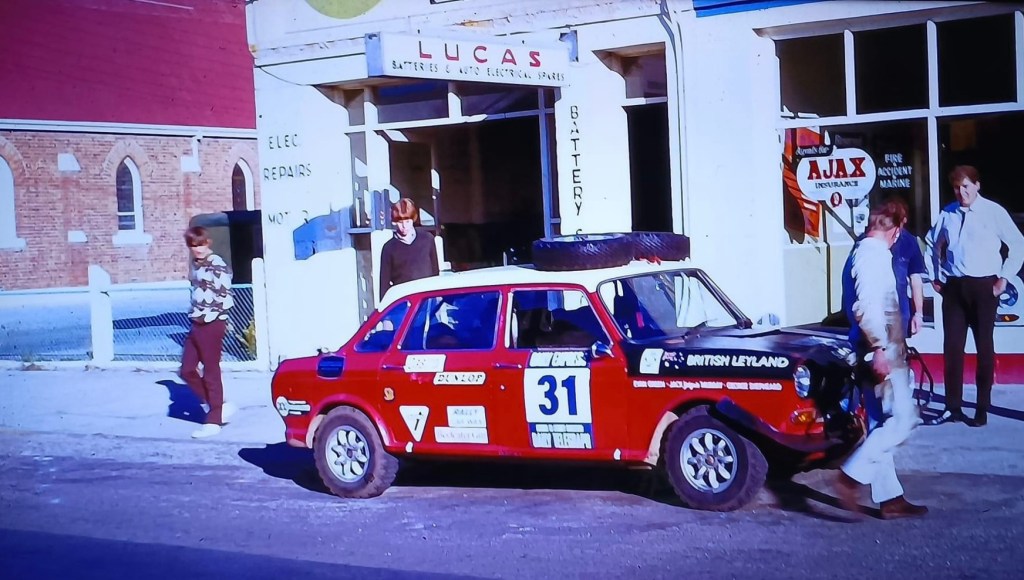
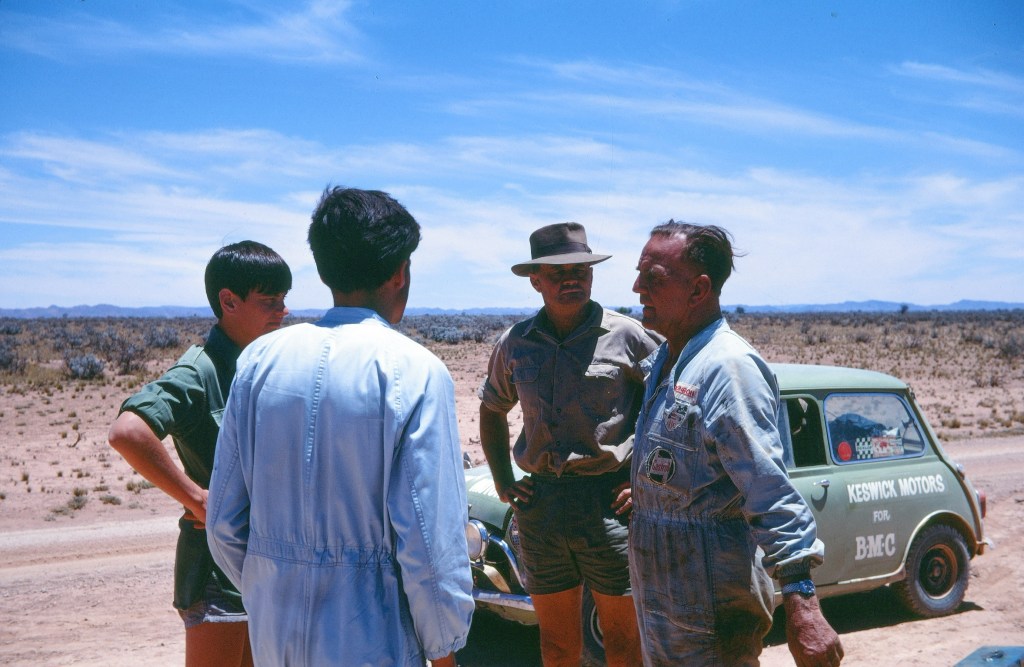
The power of the internet never ceases to amaze me. Several hours after uploading this post, enthusiast/historian Laurie Mason got in touch to share these rare colour photographs of car #31 at Wirrealpa Station, a 400,000 acre sheep and cattle farm 570km north of Adelaide in South Australia’s northern Flinders Ranges on December 16, 1968; the events second last day.
The (still) owner of Wirrealpa, Warren Fargher was the photographer, the first of which is the car arriving at Wirrealpa. Interesting piece about Wirrealpa here: https://www.agriwebb.com/blog/blog-pastoral-innovation-wirrealpa-station/
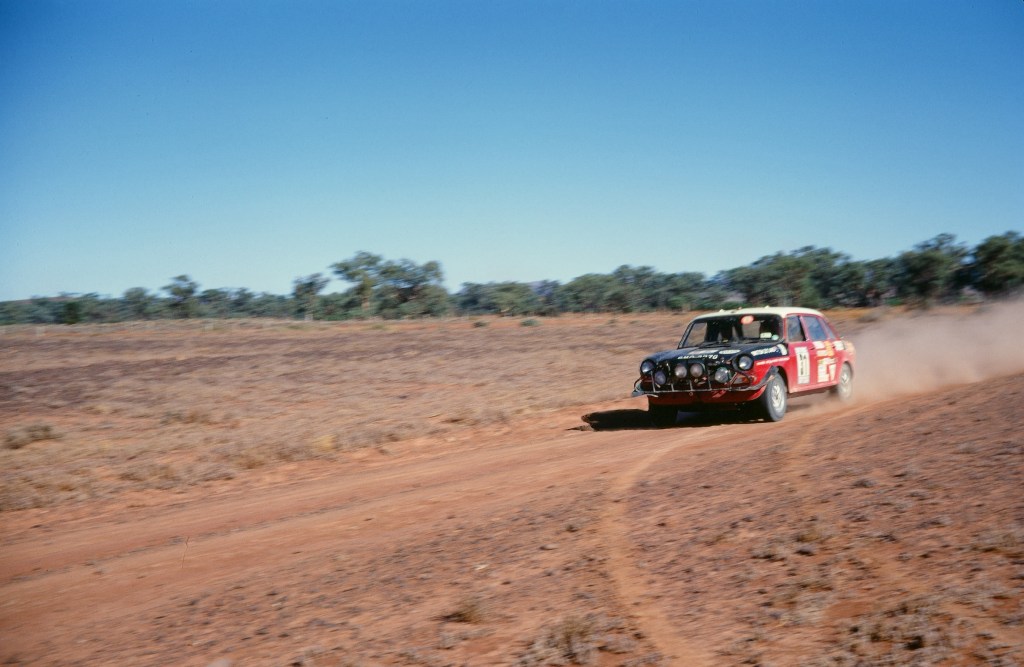

Laurie Mason, ‘the second shows the car being repaired after a rear wheel bearing seized ending their run for a top finish. This photo was taken halfway across Wirrealpa. Warren and Barbara took us to the exact spot in 2021 when we were doing the recycle for the 2022 Perth-Sydney Marathon. The last is Gelignite Jack and Evan Green in discussion with BMC mechanics at the repair site.’
Etcetera…
Long after this article was posted, enthusiast Luke Manton uploaded these photographs below of the Marathon Austin 1800s being built, and before the London start, on social media – Bob Williamson’s Australian Motor Racing Photographs Facebook page – from memory.
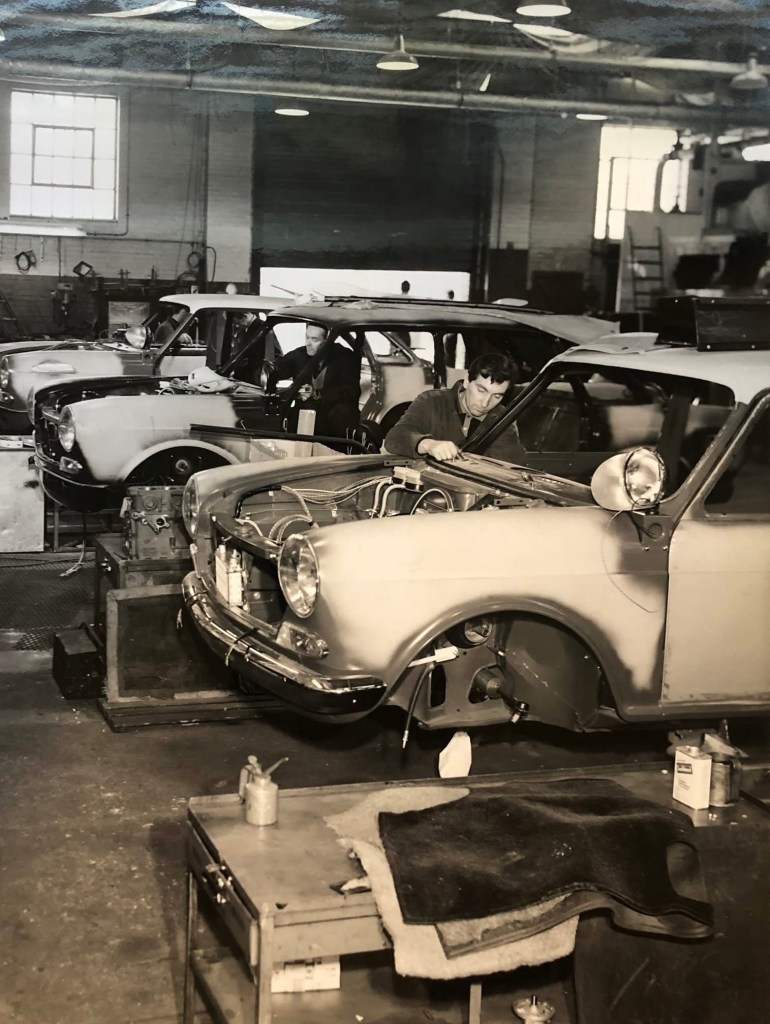
Given that, I’ve ratted Mark Oastler’s excellent Shannon’s piece referenced above on the preparation of the cars; ratted means pinched and paraphrased. Here goes…
The ‘68 London-Sydney Marathon was thin on technical rules, you could run almost any vehicle you wanted, as long as it had four wheels and only two were driven. Vital parts like the bodyshell and engine block were tagged, so if you had to change them, you were out. There was a maximum height limit so the cars fitted in the hold of the P&O SS Chusan when the field was shipped from Bombay to Fremantle.
BMC’s Competition Department in Abingdon committed to building seven Austin 1800s for the Marathon. These cars would incorporate all that BMC had learned from its arduous East African Safari and Acropolis campaigns plus hundreds of hours of destructive testing in the UK.
The four official factory cars and their service car all featured UK rego plates starting with the letters SMO and were to be driven by the some of the sport’s biggest names from Britain, Scandanavia and Australia: SMO 223G Service car, SMO 225G Rauno Aaltonen/Henry Liddon/Paul Easter, SMO 226G Paddy Hopkirk/Tony Nash/Alec Poole , SMO 227G Evan Green/’Gelignite’ Jack Murray/ George Shepheard , SMO 974G Tony Fall/Mike Wood/Brian Culcheth
The other two factory prepared cars were comprised defence personnel teams representing the Royal Air Force and Royal Navy. They were semi-works cars not built to the same peak specs as the ‘SMO’ cars.
The Australian connection came about through Evan Green’s activities with BMC Australia, which had included overseeing the multi-car Mini Cooper S works team winning 1966 Bathurst 500 and his own rally competition in BMC products. His crew consisted of race and rally veteran Jack ‘Gelignite ‘Murray and ace navigator/mechanic George Shepheard.
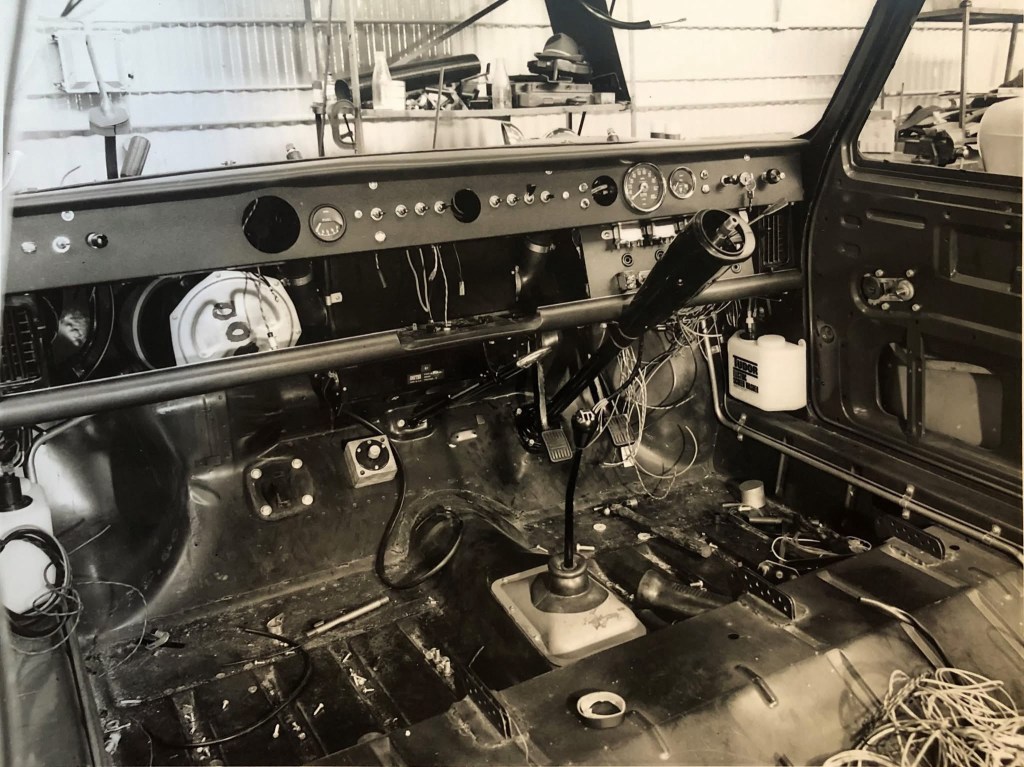
The Marathon cars were based on the new sportier Mk2 1800S. Starting with bare ‘shells, weight was reduced by some of the window glass being replaced with Perspex and the doors, bonnet and boot panels were skinned in aluminium. The sump guard was also made from lighter materials.
The bodyshells were beefed up in critical areas including two skins of floor metal and the boots were filled with twin fuel tanks holding 26 gallons (118 litres), each with their own aluminium filler in each rear guard. These extra tanks took up so much space that two spare wheels could be carried on the roof.
The Hydrolastic suspension had larger front actuators also fitted to the rear to cope with heavier loads on rough roads. Front and rear anti-roll bars improved higher speed handling and stability along with Koni adjustable shocks.
The 4.4:1 ratio rack and pinion steering was sharpened up with a drop to 3.25:1. This increased the turning effort, which is why bus-sized steering wheels (16-inch diameter) were specified to improve leverage.
A stout ‘roo bar’ and powerful driving lights were mounted up front. Thick rubber mud flaps were fitted at each corner to shroud 13-inch Minilite magnesium wheels shod with an assortment of Dunlop rally tyres.
The engines were not highly tuned, as reliability was paramount for such a long-distance event. The capacity was increased to 1894cc (some say 1846cc), and a standard MGB camshaft grind was used. The heads were reworked to improve gas flow, entering through 1800S inlet manifolds equipped with dual 1.75-inch SU carbs and exiting through special exhaust systems that tucked well away. This mild tuning produced a reliable 100 bhp, not much given the car’s hefty weight plus all the extra equipment and three-man crew.
Lightened flywheels and rugged competition clutches were fitted, with the standard gearbox ratios matched to a typically short 4.1:1 final drive ratio for improved acceleration.
The interiors incorporated a special rear seat convertible to a makeshift bed. The cabins featured roll cages, rally seats with four-point harnesses, extra switch panels, Halda Twinmaster navigation units and 100 mph (160km/h) speedometers. Given that the finished cars – with full tanks and three crewmen on board – were claimed to weigh close to 2,000 kgs, it gives you some idea why the 100 mph speedos could be considered optimistic.
Evan Green recalled that the highest top speed he saw during the Marathon was only 90 mph (145 km/h) which occurred when descending the steep Lataban Pass in Afghanistan.
Evan Green impressed many with his Austin 1800’s leech-like grip in the loose stuff and its tank-tough construction. These works cars were superbly designed and built for the harshest treatment that long distance rallying could dish out.
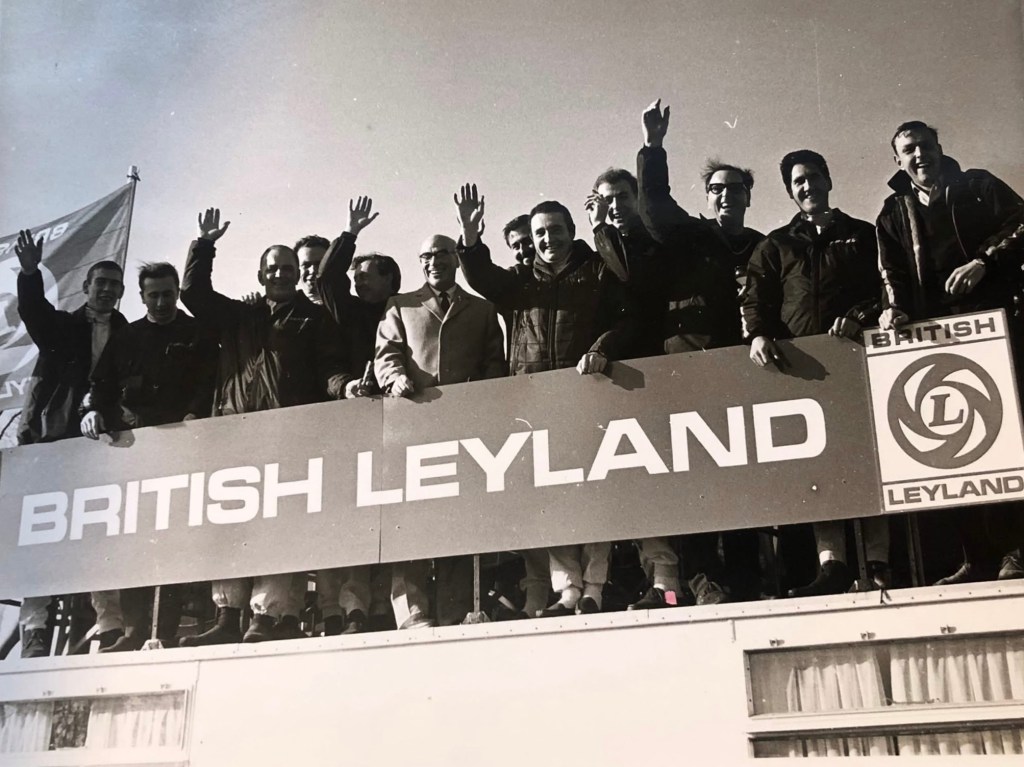
The BMC crews before the London start above, and Evan Green, Jack Murray and Miss World below.
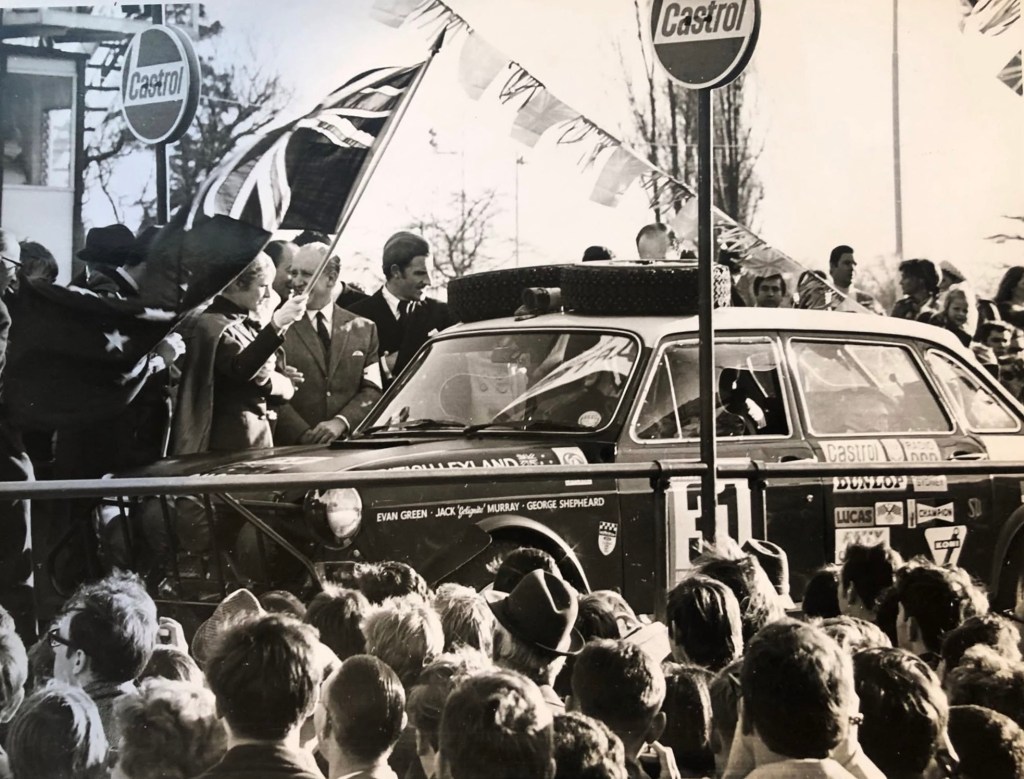
Graham Hill is amongst the onlookers at the start, under the Australian flag. And who knows where below!
Credits…
Howard Brooks photographs via his son Grant Brooks, Wikipedia, Shannons, Mini & British Lifestyle, Warren Fargher and Laurie Mason, Luke Manton Collection
Tailpiece…
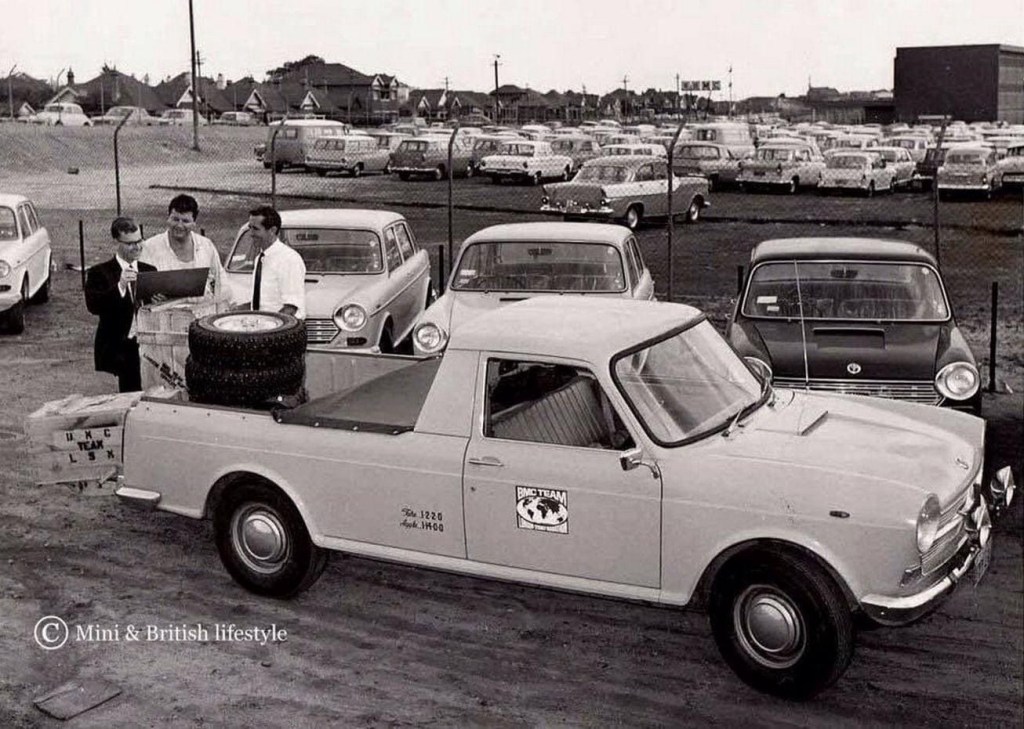
Works BMC Australia Austin 1800 Ute out front of the Sydney factory in Zetland, circa 1970. See here for more in this vein: https://primotipo.com/2024/05/11/morris-mini-cooper/
Finito…
 primotipo...


