


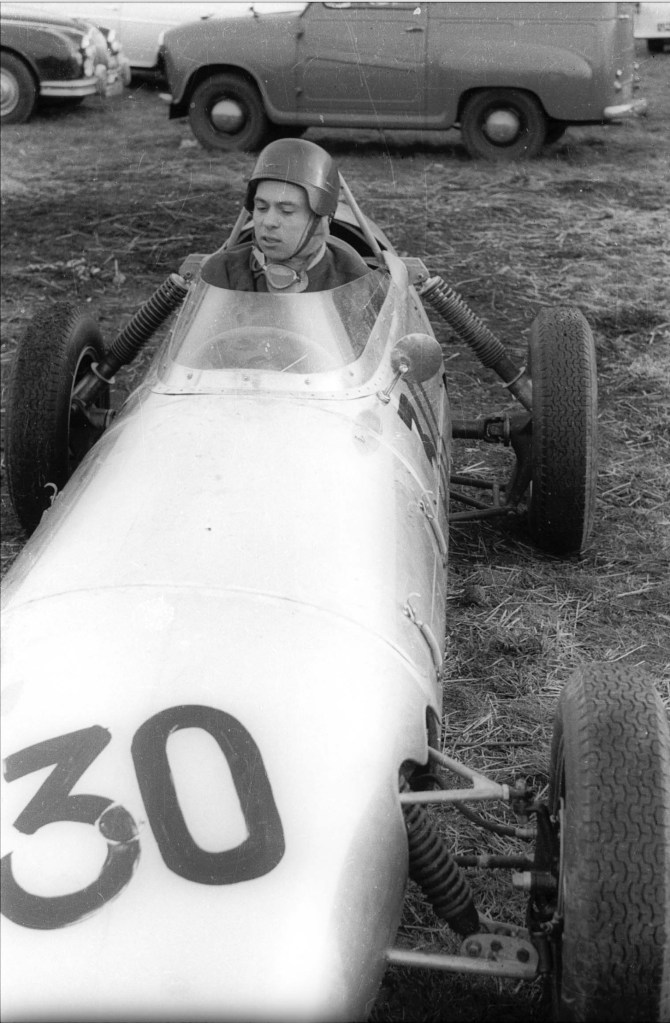
Jim Clark’s single-seater debut – aboard Gemini Mk2 BMC #30 – took place in a Formula Junior event at Brands Hatch’s Boxing Day meeting in 1959. Who is driving the Cooper T52 number 3-something in front of the Gemini?: Mike McKee, Bill Lacy, Edward Hine or Ian Burgess.
Clark was invited to contest the John Davy Trophy by his regular Lotus Elite opponent, ex-RAF pilot Graham Warner. Warner wanted the Scots youngster who had impressed him so much to drive one of his new Gemini Mk2s (#chassis number please folks, one I can rely on) for The Chequered Flag, a renowned London sportscar dealership. Clark’s Elite was owned by his mentor Iain Scott-Watson.
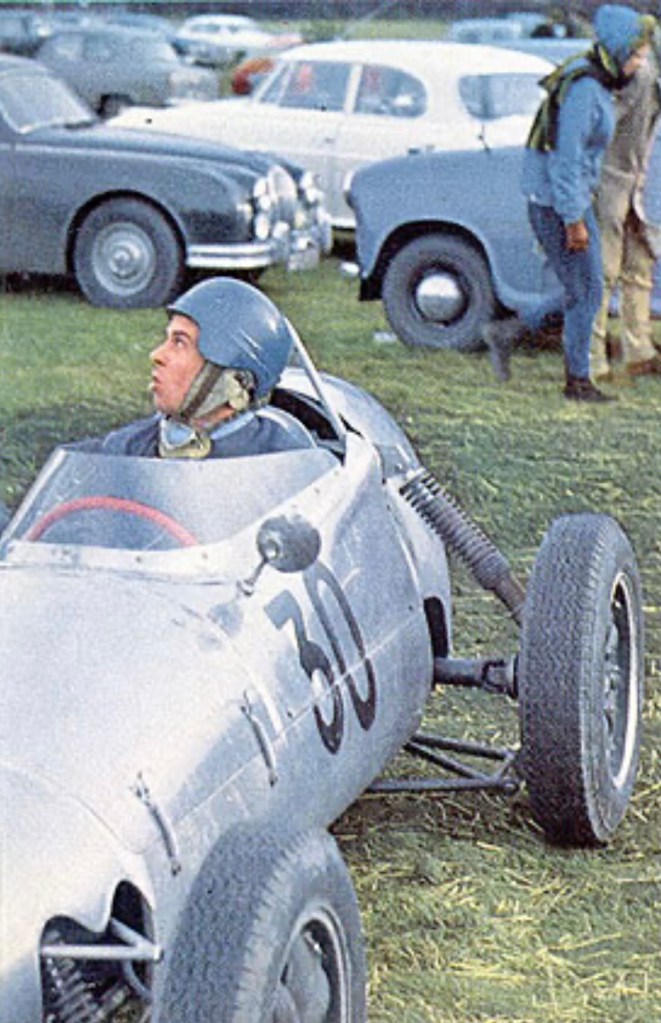
Jim qualified the unfamiliar car mid-pack after reliability issues during practice. On raceday his battery was flat on the grid so he was push-started after the pack had departed, finishing eighth. 12 cars contested that race which was won by Peter Arundell, one of Clark’s Team Lotus teammates in 1960.
The pair and Trevor Taylor, all raced Team Lotus Lotus 18 Cosworth-Fords, were the stars of Formula Junior in 1960. Clark won the John Davy race at the same Brands Boxing Day meeting twelve months hence and the John Davy British Formula Junior Championship, while Taylor won the BRDC/MotorRacing British Formula Junior Championship.
By then Formula Junior was a bit ho-hum for Jim as he made his Grand Prix debut at Zandvoort aboard a Lotus 18 Climax 2.5 FPF on June 6, 1960.
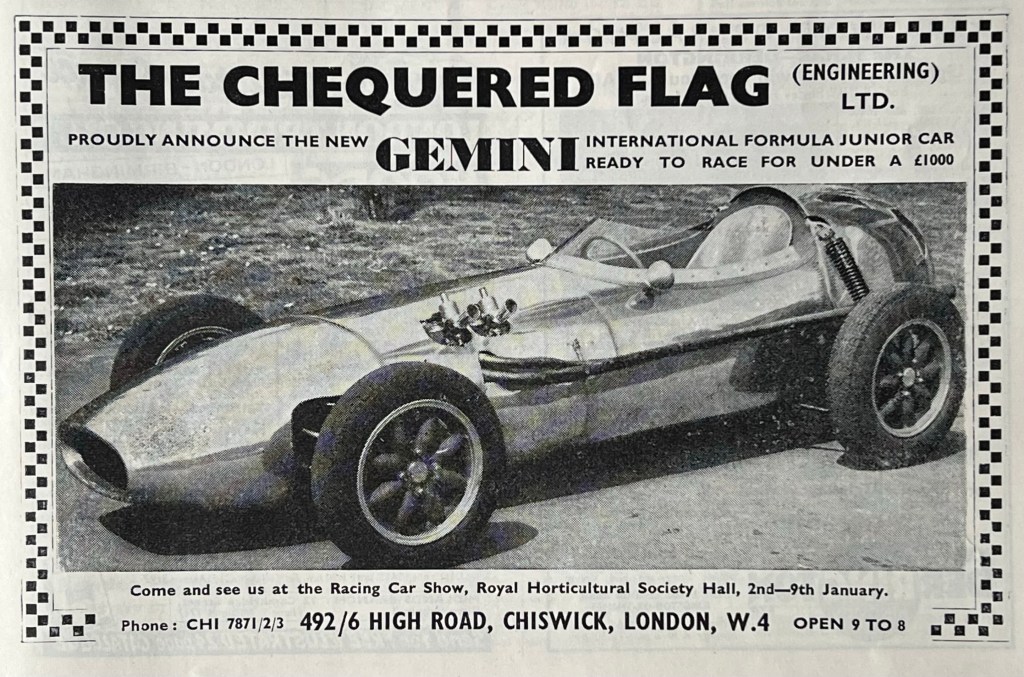
Gemini Mk2…
The entrepreneurial Warner had planned to race the Moorland, a front-engined Speedwell-BMC powered Formula Junior designed by the great Len Terry – everybody writes this but Terry does not make any reference to this car in his ‘Racing Car Design and Development’ Terry and Alan Baker – and built by Les Redmond in the August 3, 1959 Brands Hatch meeting.
Running late returning home after racing his Lotus Elite in a support event for the German Grand Prix on the Nurburgring, Warner phoned Ian Raby and offered him the drive. Despite starting at the back of the grid, he passed two Elvas and won the mixed FJ-F3 race.
Without the means to mass-produce the cars, Warner took over the project from Redmond, building and selling the slimmed down and stiffened car which Warner called the Gemini Mk2; Gemini being his star-sign. Warner’s The Chequered Flag Engineering Ltd subsidiary planned to build six cars but ended up constructing about 30.
Ian Raby raced the first Gemini Mk2 BMC in the World Sports Trophy FJ race at Brands Hatch on October 4, 1959 but failed to finish. Up front were three Elva 100 BMCs, the winner was Mike McKee. Warner was entered in a Ford powered Gemini as well but did not race.
Check out this fantastic website for all you need to know on the Moorland/Geminis: https://www.hrscc.co.nz/formula-junior/gemini/gemini-fj-register-and-heritage-site/
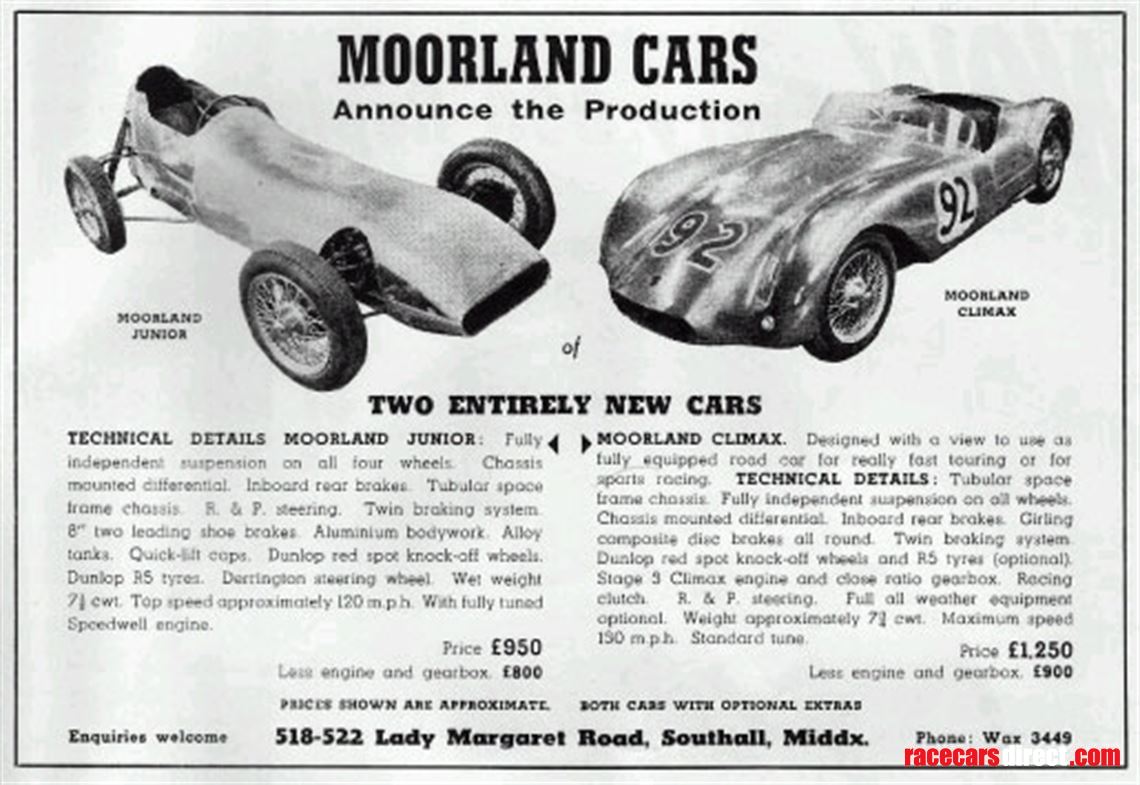
Which is where the Cosworth angle comes in …
Warner’s Ford powered Gemini that is.
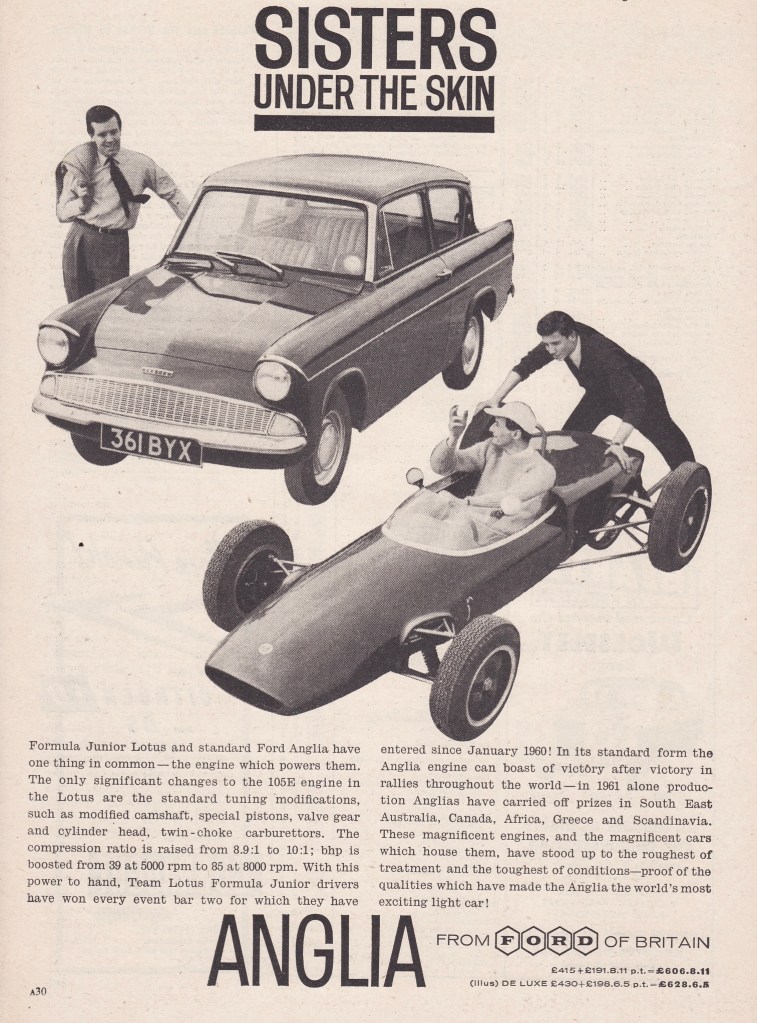
Ford’s fourth-series, frugal, family man Anglia also had a new two-OHV, all-cast iron, four-cylinder engine pumping out a massive 39bhp. Warner could see the latent potential of the design and was intrigued to know what Keith Duckworth, who looked after his Elite, could extract from the engine.
After initial reluctance from FoMoCo, Warner bought and shipped six 105E motors to Cosworth Engineering to be breathed upon.
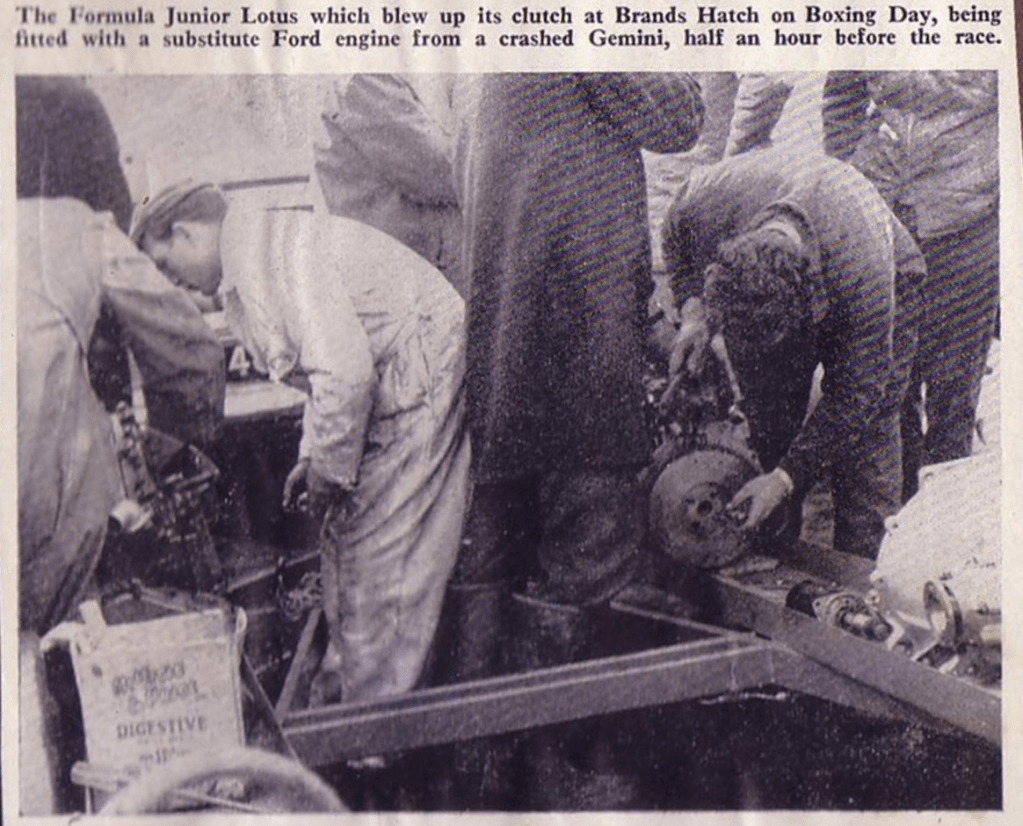
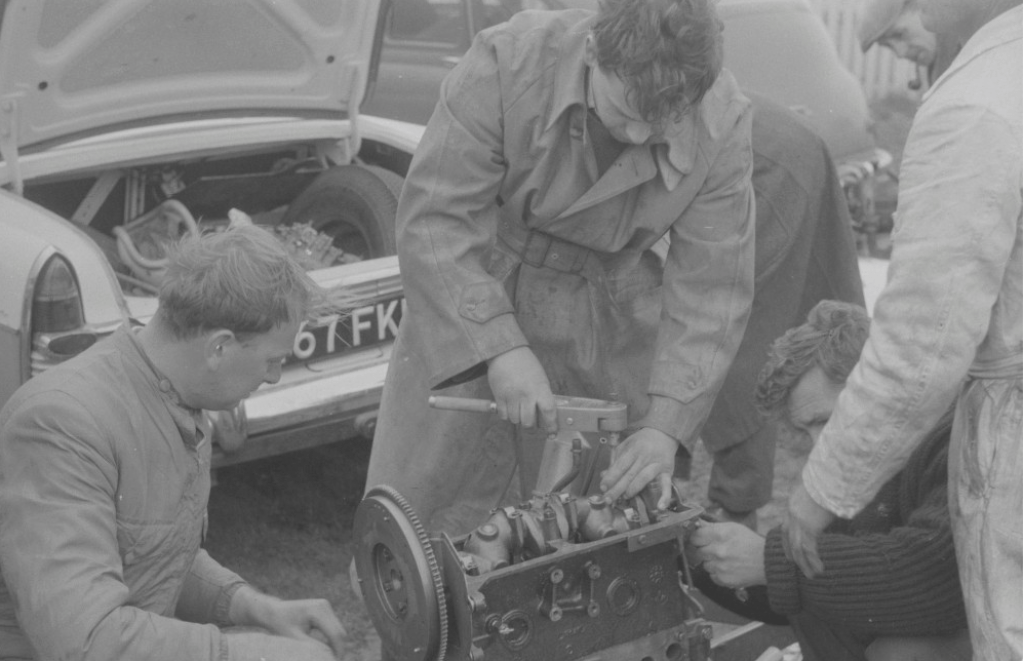
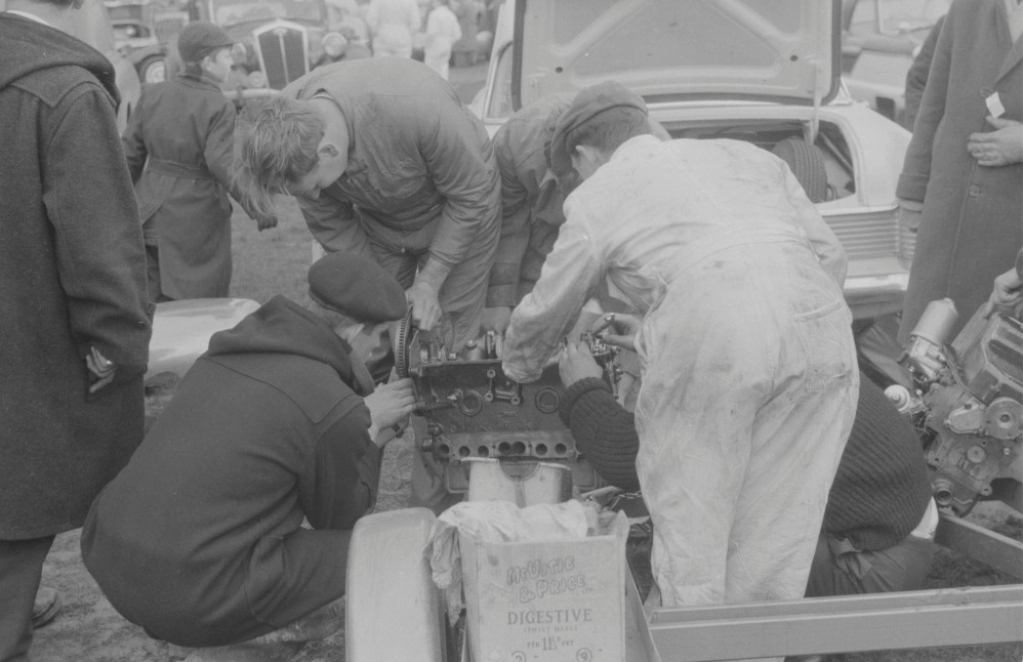
And so it was that Graham Warner entered the Brands Boxing Day ’59 meeting with a pair of Geminis. Warner’s was fitted with the Cosworth engine while Clark’s car had a BMC motor. In practice Warner’s engine threw a flywheel which caused Graham to crash, ruling the car out of the race.
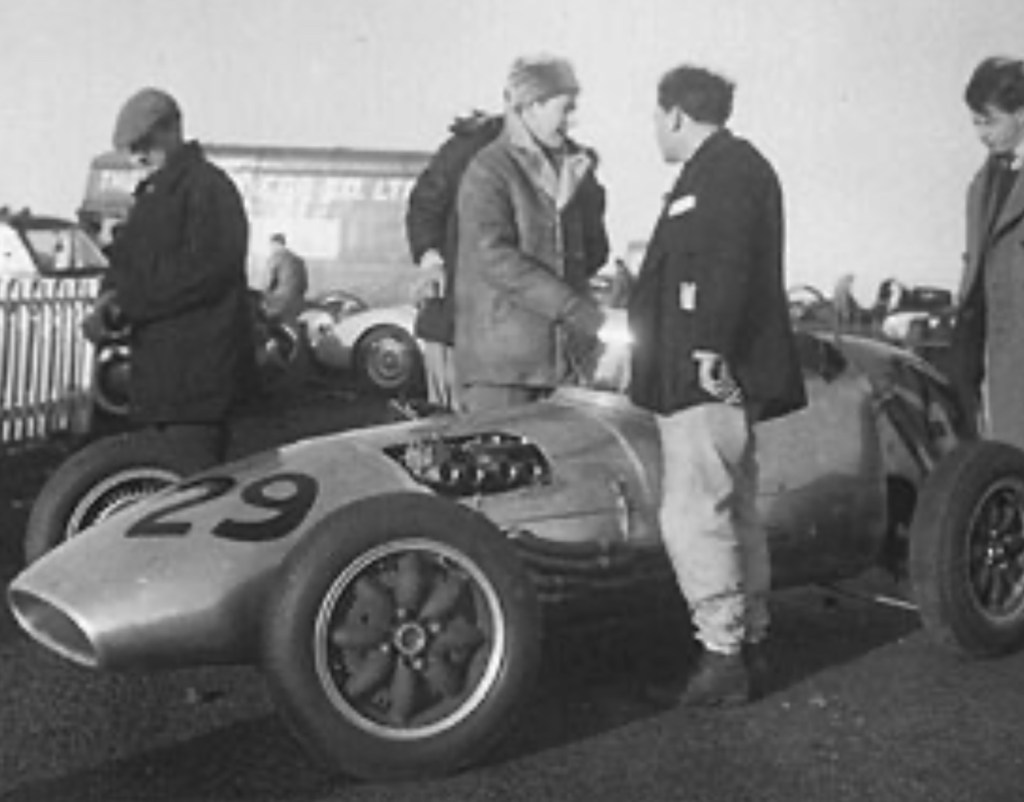
The Cosworth engine from Warner’s car, rectified, was then fitted to the Lotus 18 unpainted prototype which was having its first race in Alan Stacey’s hands with a mildly tuned Ford Anglia engine. Colin Chapman had placed an order for an engine from his former employee too.
Despite working throughout Christmas Day, Duckworth couldn’t finish both engines. Warner got the race unit while Chapman’s for Stacey was fitted with twin-carbs and extractors but was otherwise standard’ish.
The switch ended up being not so simple as the Gemini Cosworth engine had a lower sump than the Anglia unit fitted to the Lotus 18 which caused bottoming problems in the race. Clark was pushed away last with a flat battery and finished eighth as stated above, while Stacey with his bitsa-engine and with suspension settings awry and far from resolved, spun, finishing 10th.
Despite the lowly placing, Chapman was sold. He could foresee selling lots of Lotus 18 FJs and ordered 25 Cosworth 105Es to power them. Duckworth was out of penury…and the rest is history. See here: https://primotipo.com/2024/07/11/cosworth-engineering-ltd/
Afterburn…
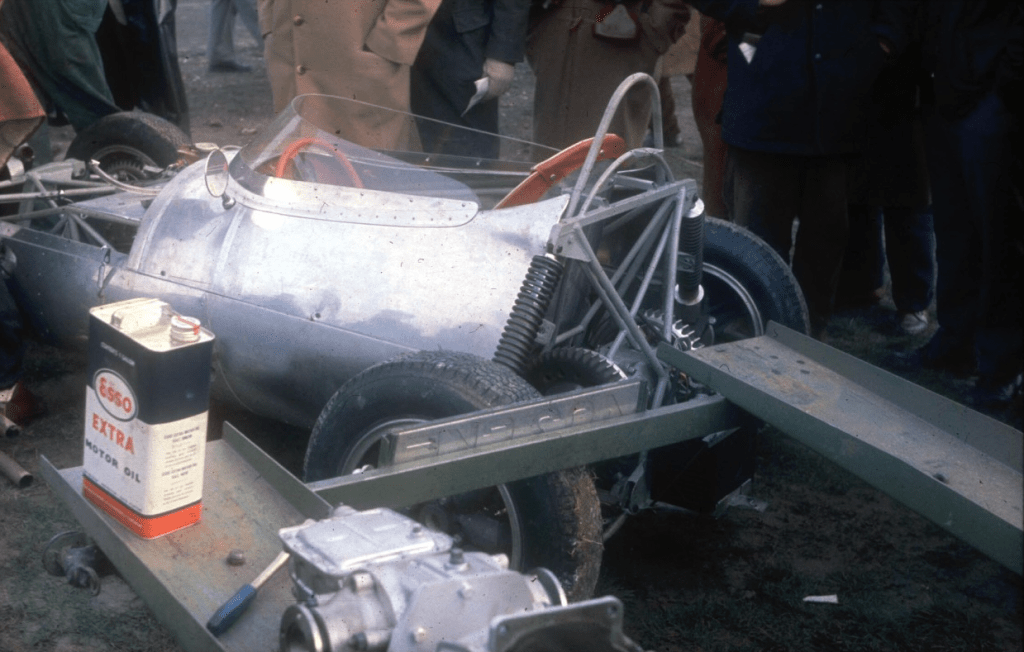
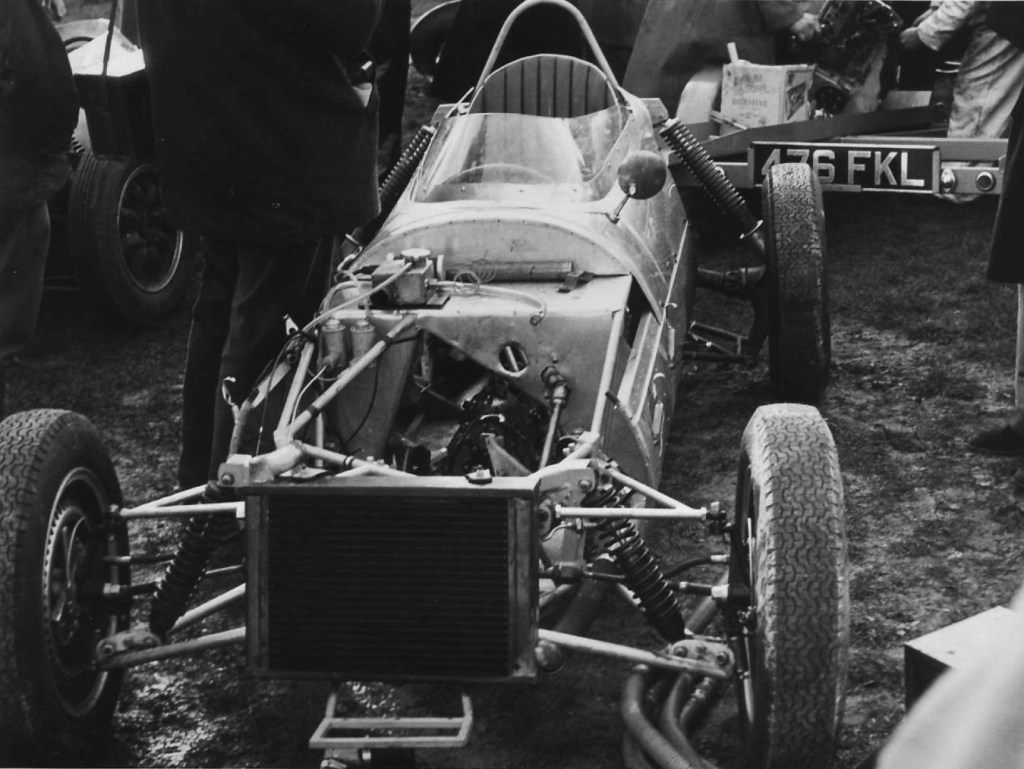
The same day I put this piece up Roger Herrick sent me a note and the fantastic photographs below.
‘Here are some more photos of the swap of the Cosworth Ford engine from the Gemini to the Lotus 18 – done in the paddock on the back of a trailer – just in time to get the Lotus out to the grid.’
‘ I don’t know if the early Geminis had chassis numbers unless they needed overseas carnets. The first Gemini Mk2 (the Mk1 was a ‘badge engineered’ Moorland) had a chassis plate with the name “Anne” after Brad ward’s girlfriend. This car is in NZ and still has the Anne plate.’
State of the Formula Junior Art in December 1959…
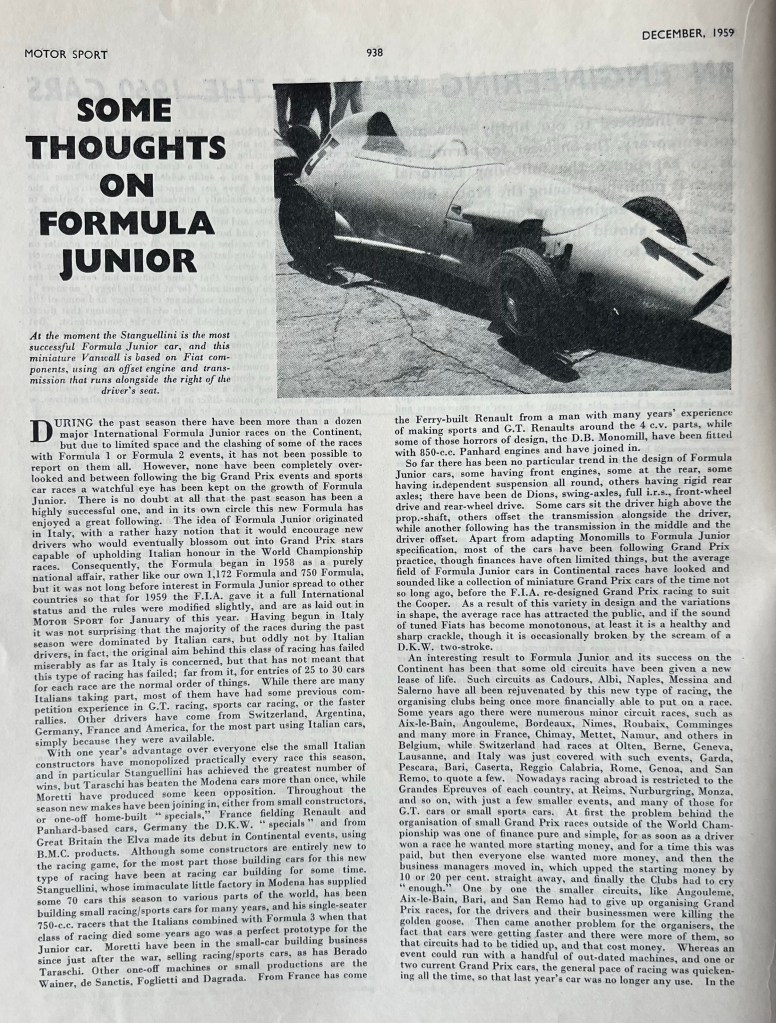
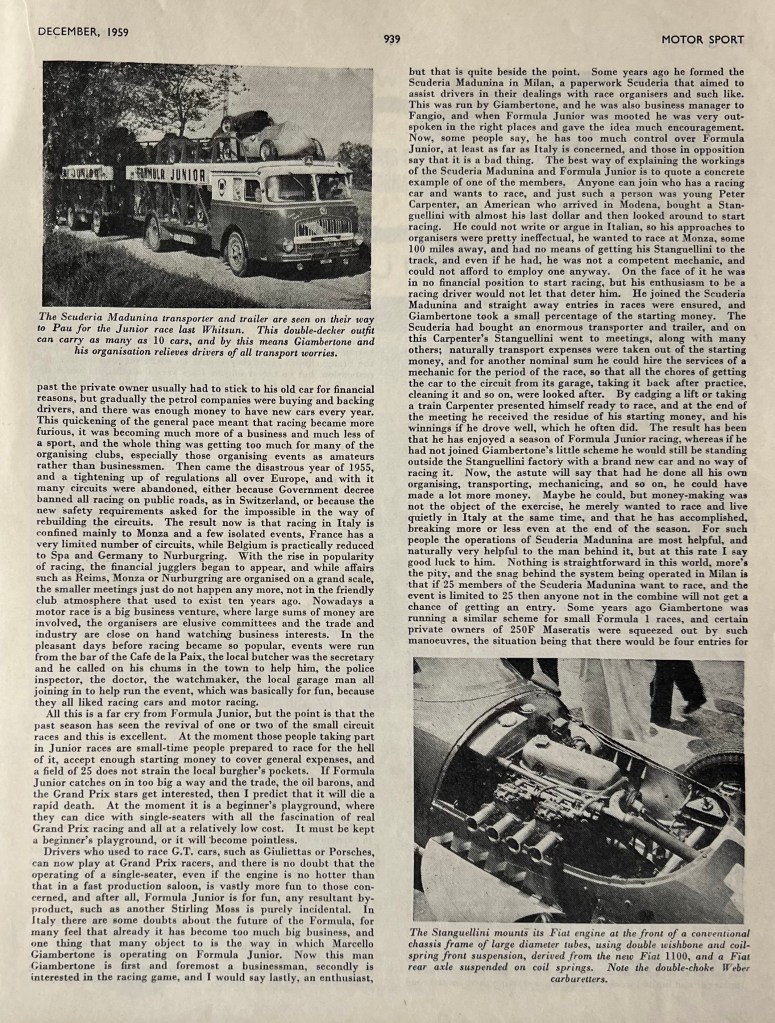
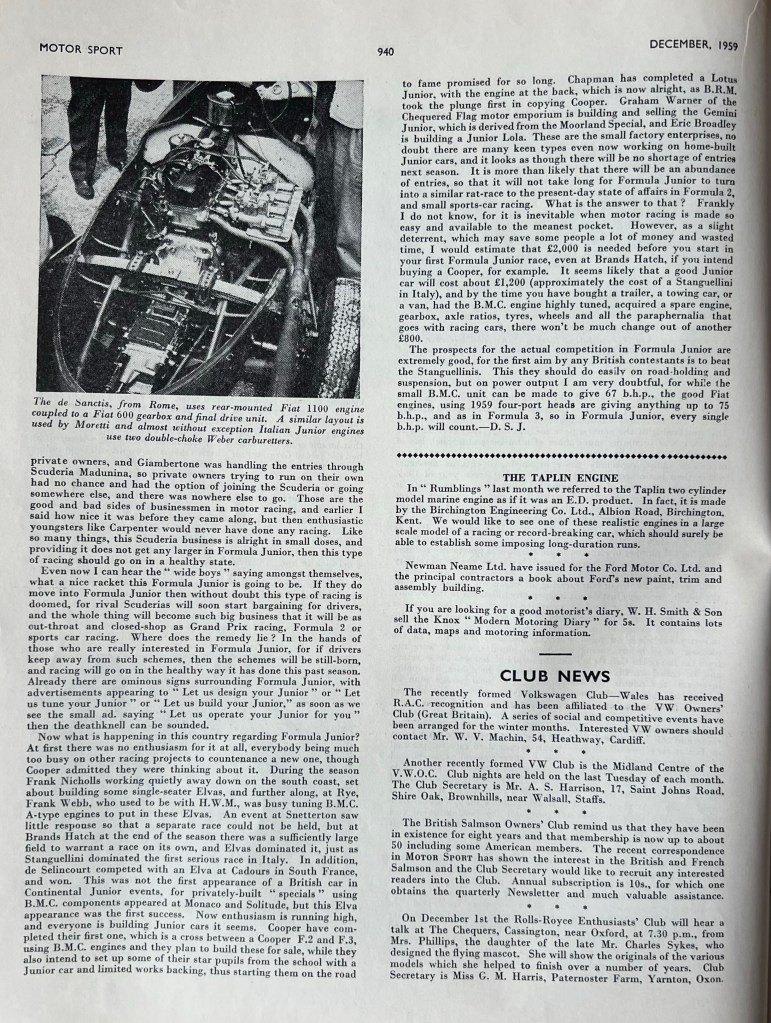
Given the point in time we are talking about, the end of 1959, who better to give us a perspective on the FJ state-of-play right then, than the learned DSJ.
Credits…
MotorSport Images, MotorSport December 1959, racecarsdirect.com, F2Index-Fastlane, the judge13.com, Brad Ward, Roger Herrick Archive
Finito…


 primotipo...