Posts Tagged ‘Collingrove Hillclimb’

(M Bisset)

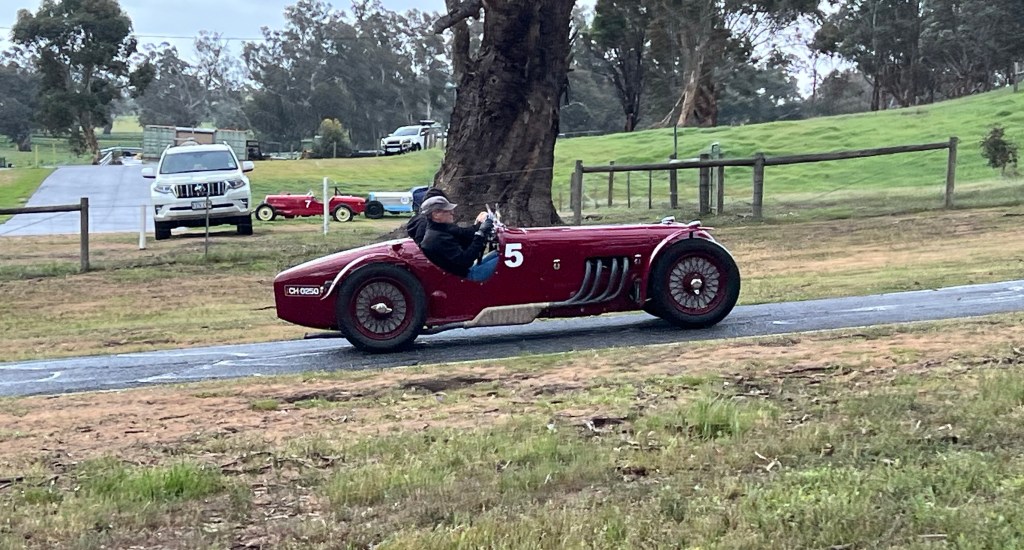
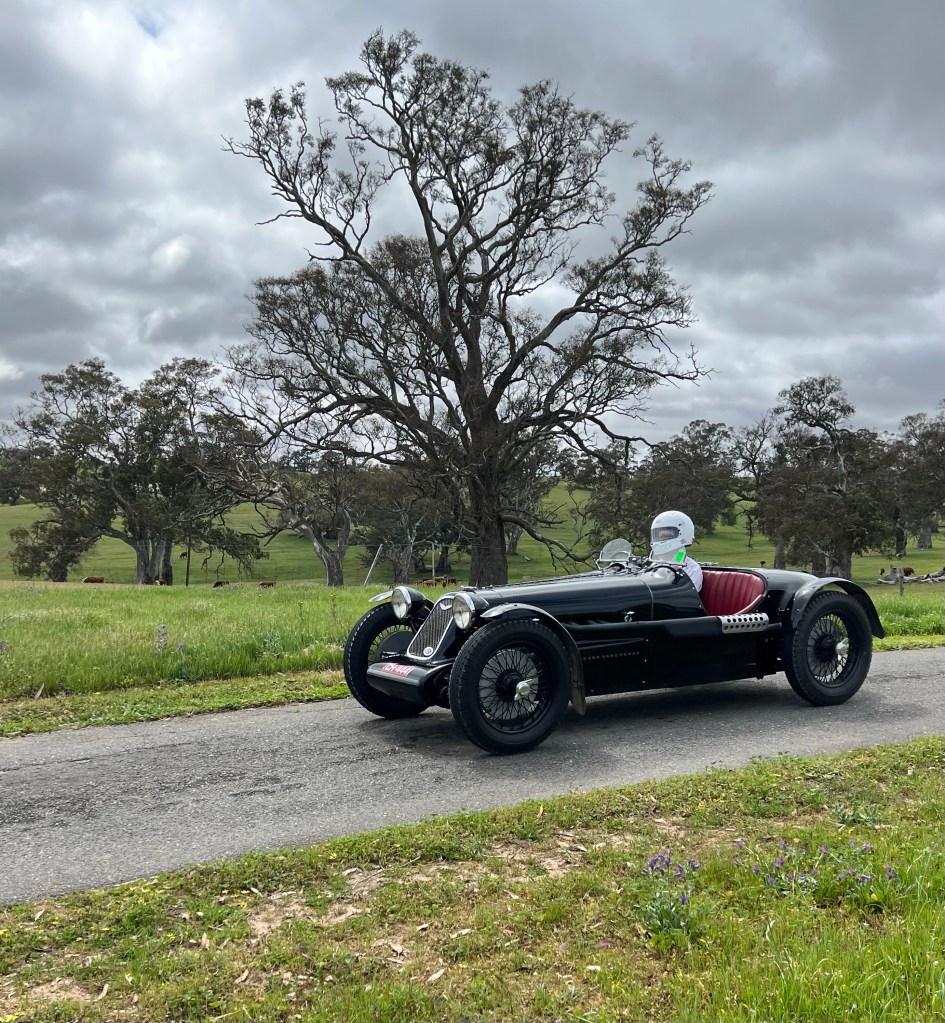
Darren Visser’s extraordinary Double Eight, a recreation of Eldred Norman’s 1947 and subsequent iterations racing car, pointing towards the first turn at Collingrove Hillclimb in South Australia’s Barossa Valley on Saturday October 5, 2024.

(M Bisset)

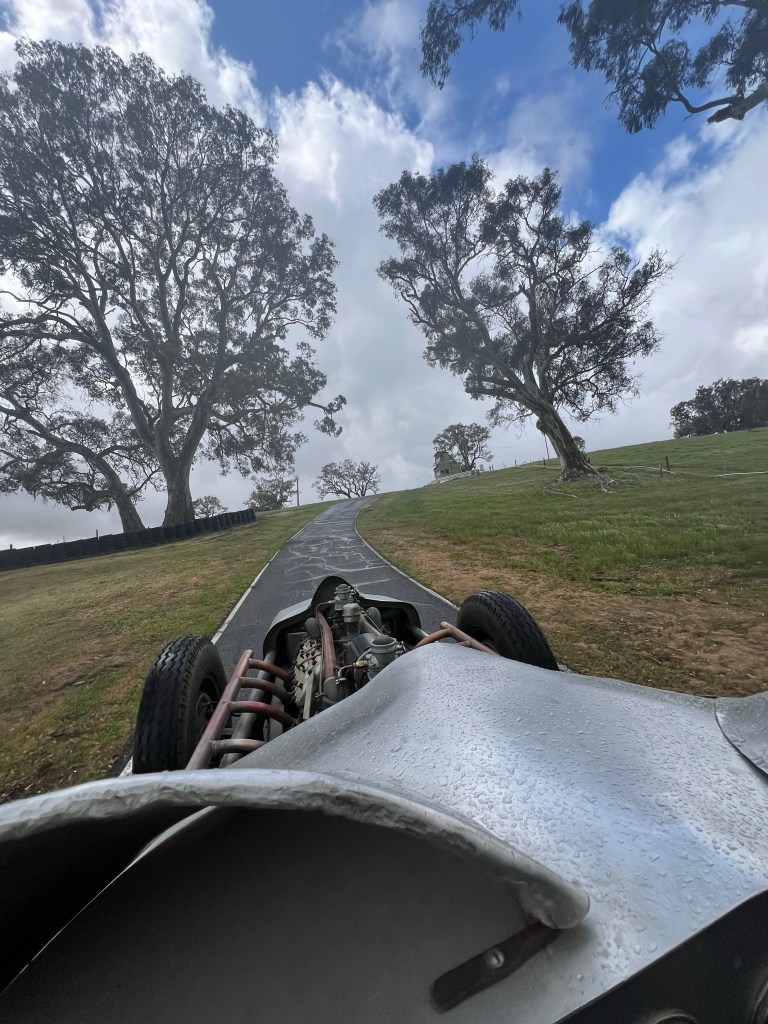
The key elements of this car comprise a WW2 Dodge Scout car chassis, two Ford Mercury 3.8-litre 110bhp V8s mounted one aft of the other, and a Ford truck four-speed gearbox feeding a Dodge rear axle and diff. Yep, they are truck wheel, tyres and brakes, and yes again, it’s quite a thrill to ride in it!
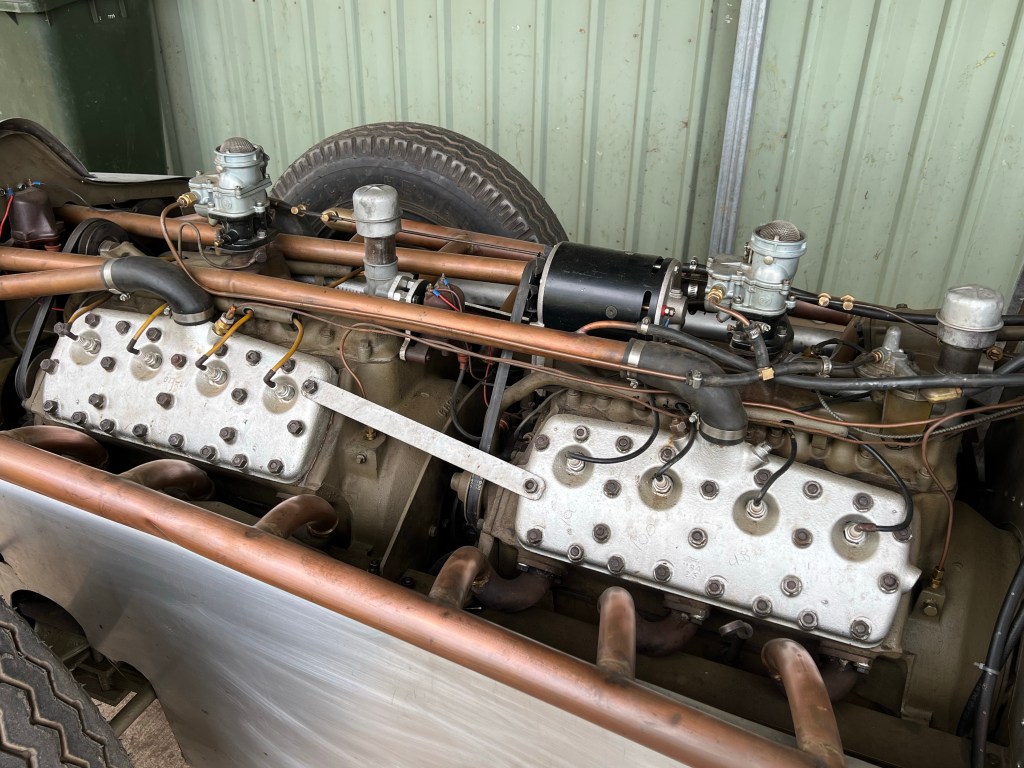
Ford Mercury V8s are fed each by a Stromberg 97 carb, but are otherwise rebuilt standard units; Darren reckons they are good for about 110bhp a pop (M Bisset)
Chassis is Dodge Scout car, ‘box, a Ford truck four-speed unit. It all looks rough, very kosher actually, just as Eldred built and finished the original (M Bisset)

Eldred Norman lived in the Adelaide Hills where the car was connected. It was built at Norman’s 18 Halifax Street, Adelaide premises so the car was very much a local, feature article thereon coming very soon.
(M Bisset)

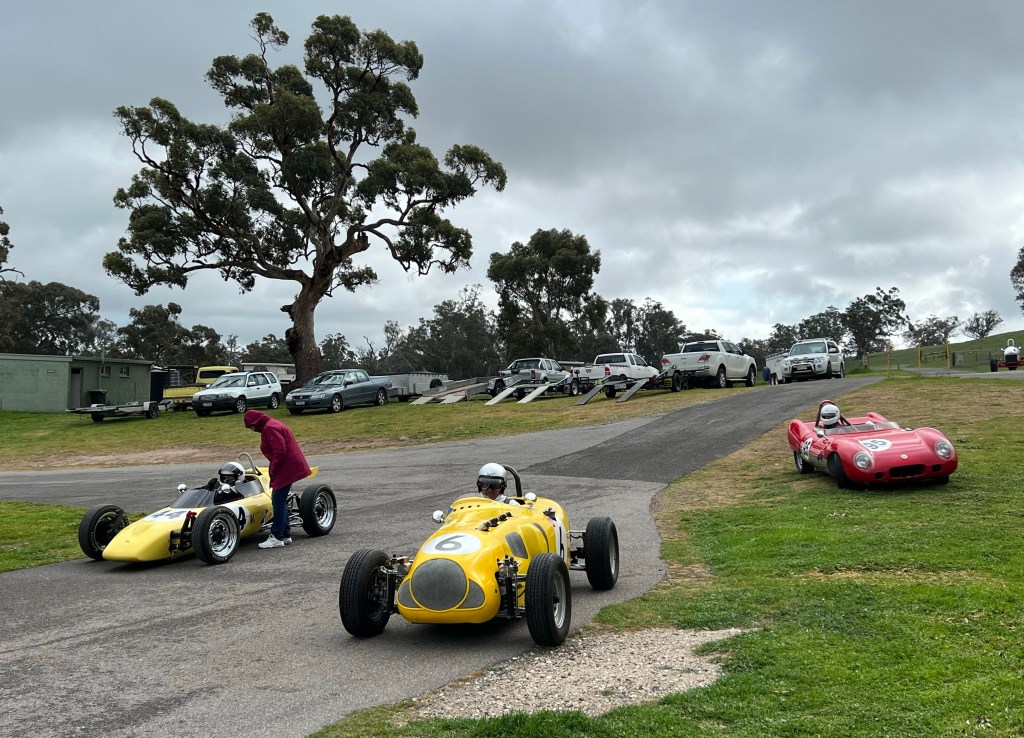
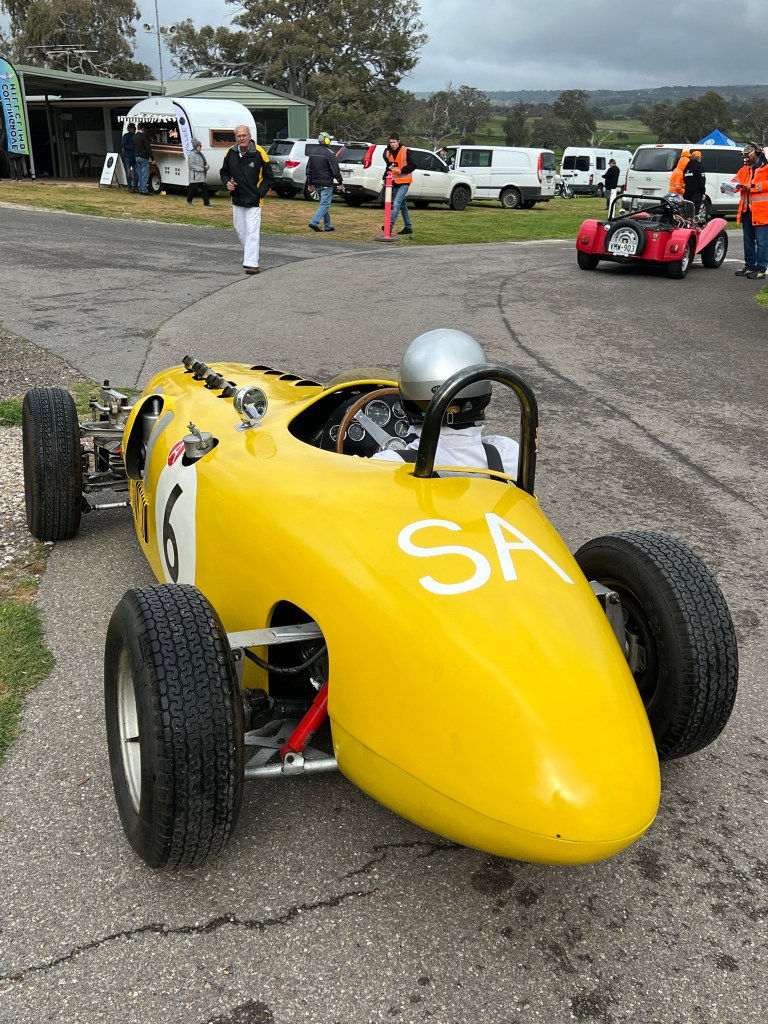
Sticking with the Eldred Norman theme, front and centre is Greg Snape, longtime custodian of Eldred’s Zephyr Special, in many ways just as revolutionary, if not as visually challenging as its older sibling.

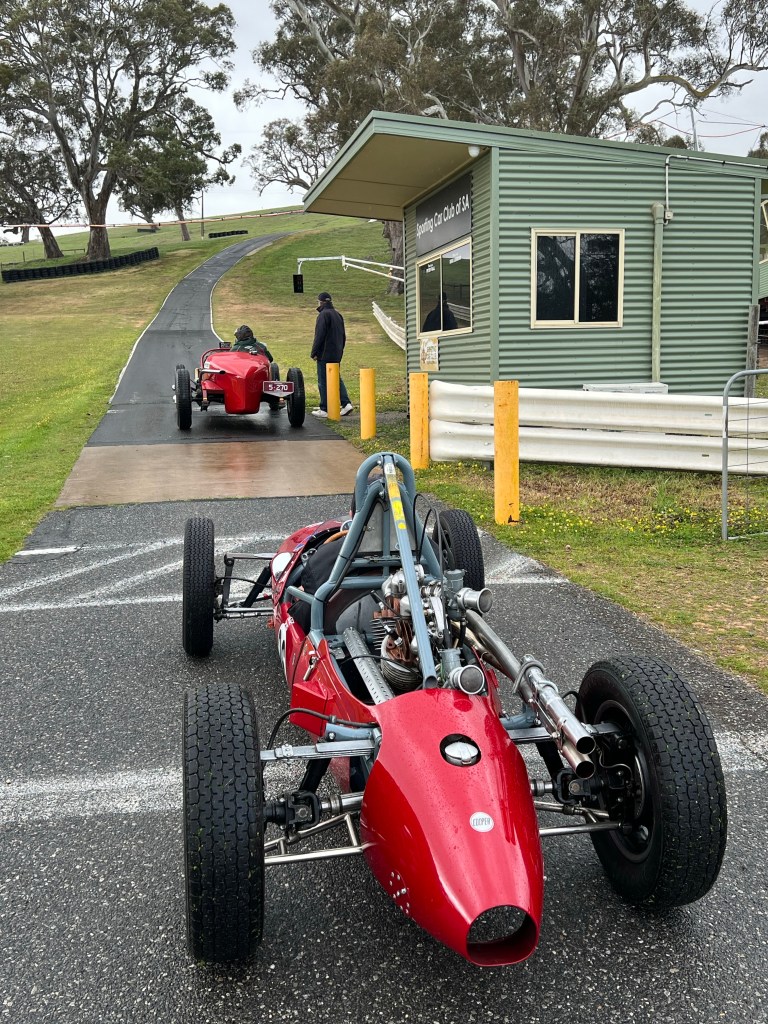
That’s Frank Chessel’s lovely Stag Formula Vee at left and Daniel Jeffries’ Elfin Streamliner at right, both Adelaide built cars.

(M Bisset)

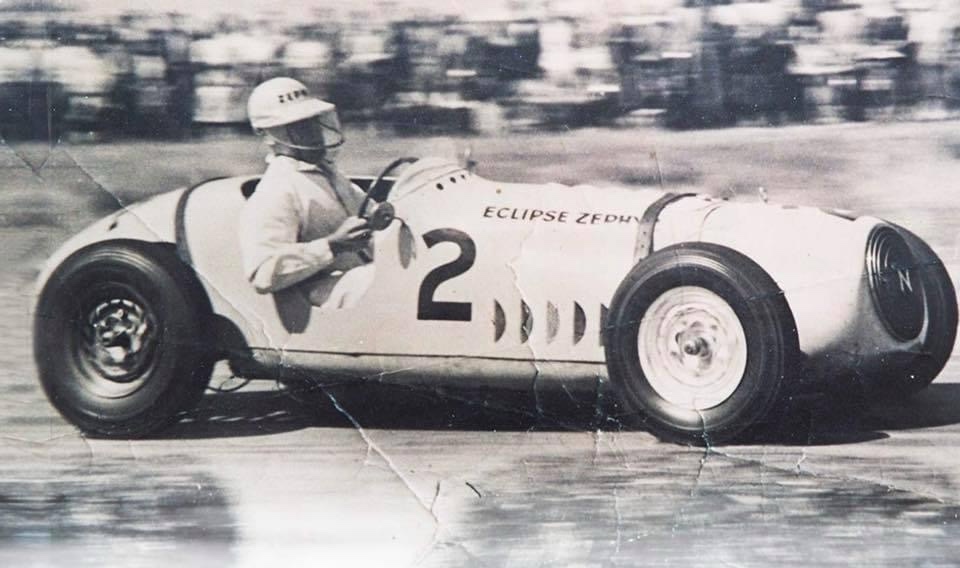
Eldred Norman during the 1955 Australian Grand Prix in the Eclipse Zephyr Special – Eclipse motors being a Ford dealer – at Port Wakefield, where he was eighth on debut.

Below is the semi-naked machine showing some of its secrets at Collingrove circa 1960.

The SU-fed, supercharged Ford Zephyr 2.3-litre overhead, two-valve straight-six – canted at 45 degrees from vertical – was a structural chassis element in that a piece of steel was milled to the shape of the engine’s timing cover and then a steel plate was welded to it that accepted the Holden FJ sourced independent front suspension crossmember assembly.

Norman borrowed from Vittorio Jano’s 1954-55 Lancia D50 playbook a decade before Mauro Forghieri did in 1964-65 (Ferrari 1512) and Colin Chapman in 1966-67 (Lotus 43 BRM and Lotus 49 Ford Cosworth DFV).

(S Jones)
(S Jones)

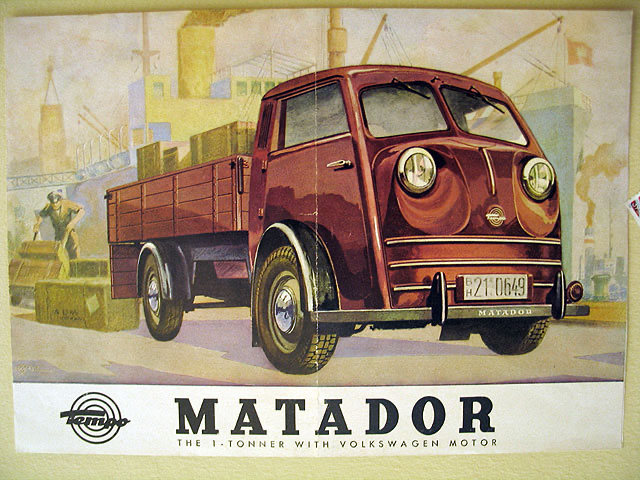
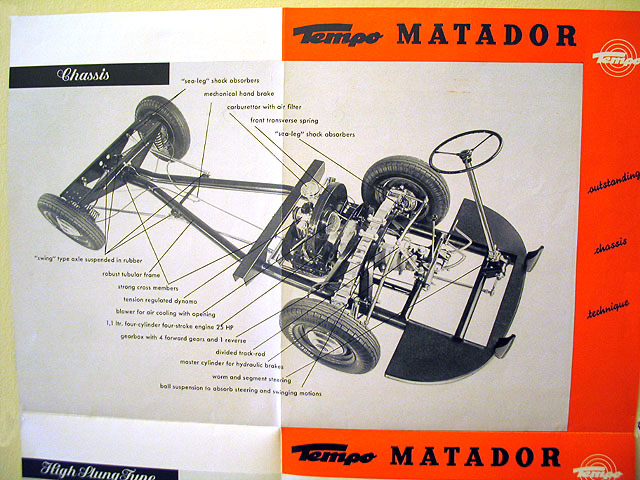
An eight or nine-inch diameter torque-tube connects the motor to a rear mounted clutch and Tempo Matador (VW powered truck) three speed transaxle, while the fabricated independent rear suspension was attached the transaxle with other major components such as the fuel tank, seat and body were bolted to the torque tube.

Yes, that is the petrol tank alongside the very fast Keith Rilstone in the shot above. The drum brakes are Holden with Vanguard internals to give twin leading-shoe operation.
(M Bisset)
(M Bisset)

Fiona and Neill Murdoch’s Altas – two of the many visiting Victorians – created plenty of interest, that’s Fiona in the ex-Alan Sinclair/Ted Gray 1100cc s/c 21S above heading towards The Wall, and Neill in the 2-litre s/c 55S below.
(M Bisset)

Passengers were invitees during the Saturday track familiarisation session, so ‘everybody’ had a ride if they wanted.
(M Bisset)

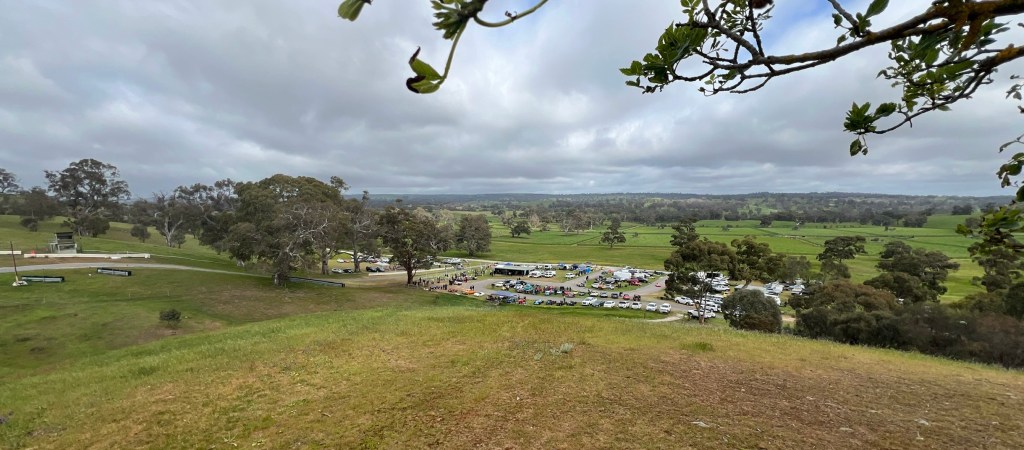
The October 5/6 Barossa Vintage Collingrove meeting was one of the Sporting Car Club of South Australia’s 90th birthday celebration events.

The SCCSA is THE blue-riband Oz car club having run and promoted fun and national championship events since 1934. I guess the 1936 South Australian Centenary Grand Prix – aka the 1936 Australian Grand Prix – was their first big national gig. They are an ‘efficiency with a friendly feel’ kinda mob which makes visits to their meetings at Collingrove, Mallala and their HQ in quite special.
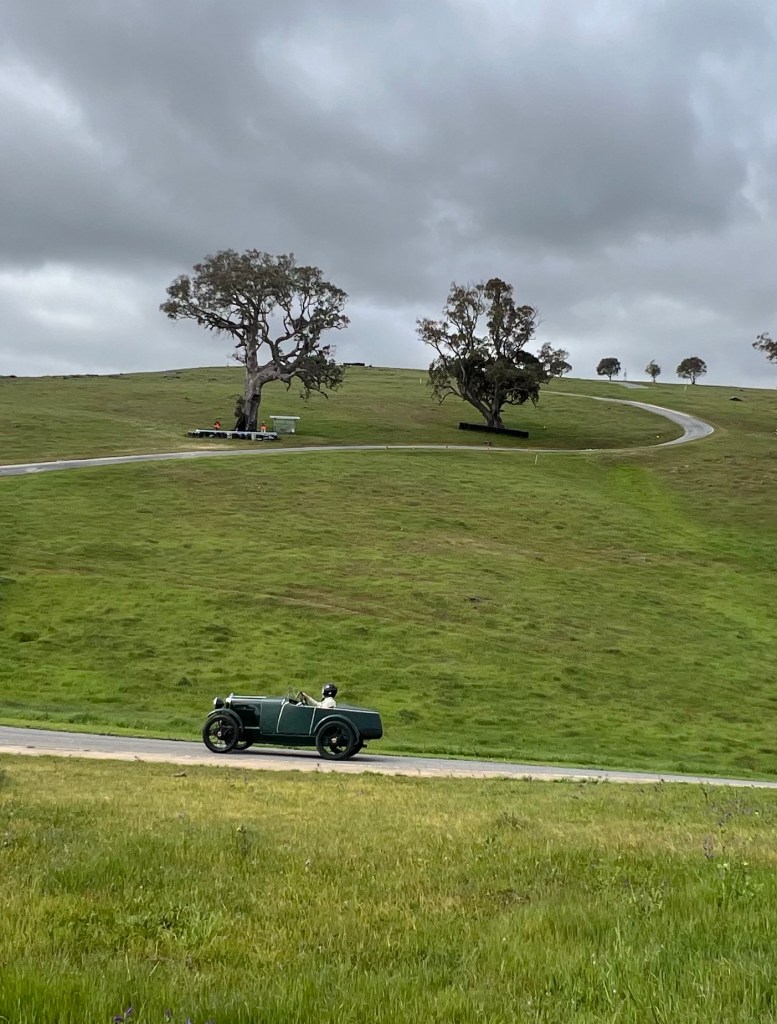
Mark Alsop’s MG M-Type was deceptively quick for an 850cc sporty but appeared to be perfectly geared for the venue (M Bisset)

Collingrove is in the beautiful, leafy green, rolling hills of the Barossa Valley – Mount McKenzie to be precise – a notable wine growing region 80km north-east of Adelaide. First used in 1952, it’s 750 metres long, the climb is tight, up and down and has held the Australian hillclimb Championship 14 times in addition to rounds thereof when the title has been contested over more than one event.
(M Bisset)

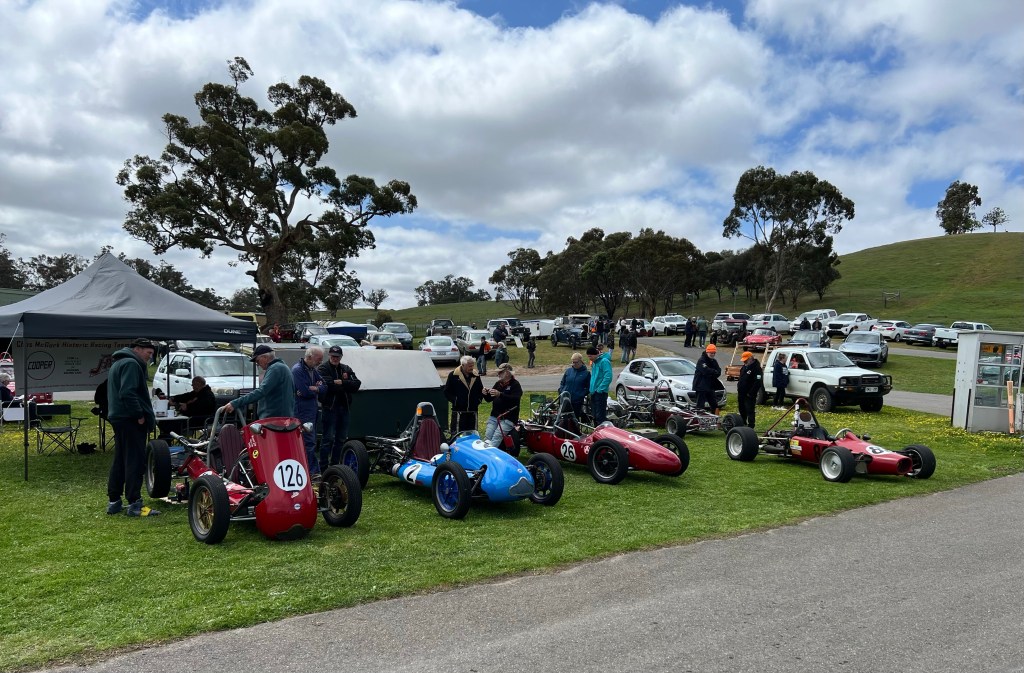
A line up of air-cooled’s: Peter Fagan’s Cooper Mk6 JAP 1100, Stephen Denner’s Cooper MkV JAP 1100, Brian Simpson’s Cooper Mk9 JAP 1100 – yes please to that car – and Mark Atkinson’s Falkenberg Jinx.

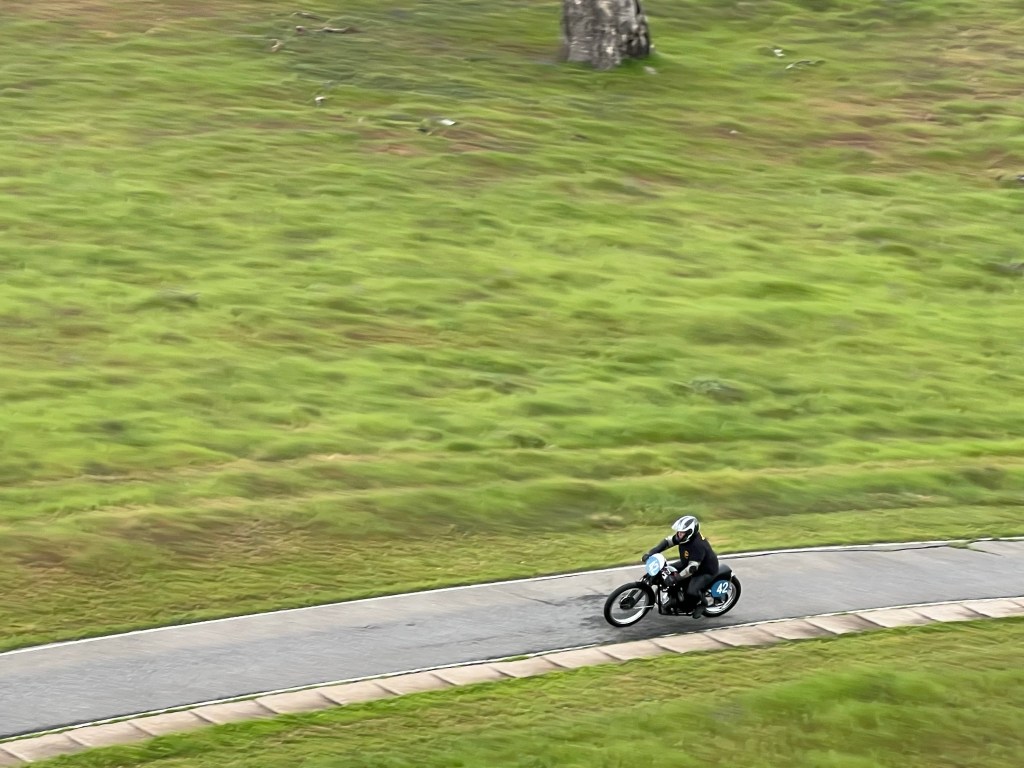
Speaking of air-cooled machines, ‘bikes were invited along too, about 15 of the 70 entries, and were spectacular to watch. It’s the first time I’ve seen motorcycles at a hillclimb, they were great.

Given the relatively small entry there was plenty of runs for all who wanted them.
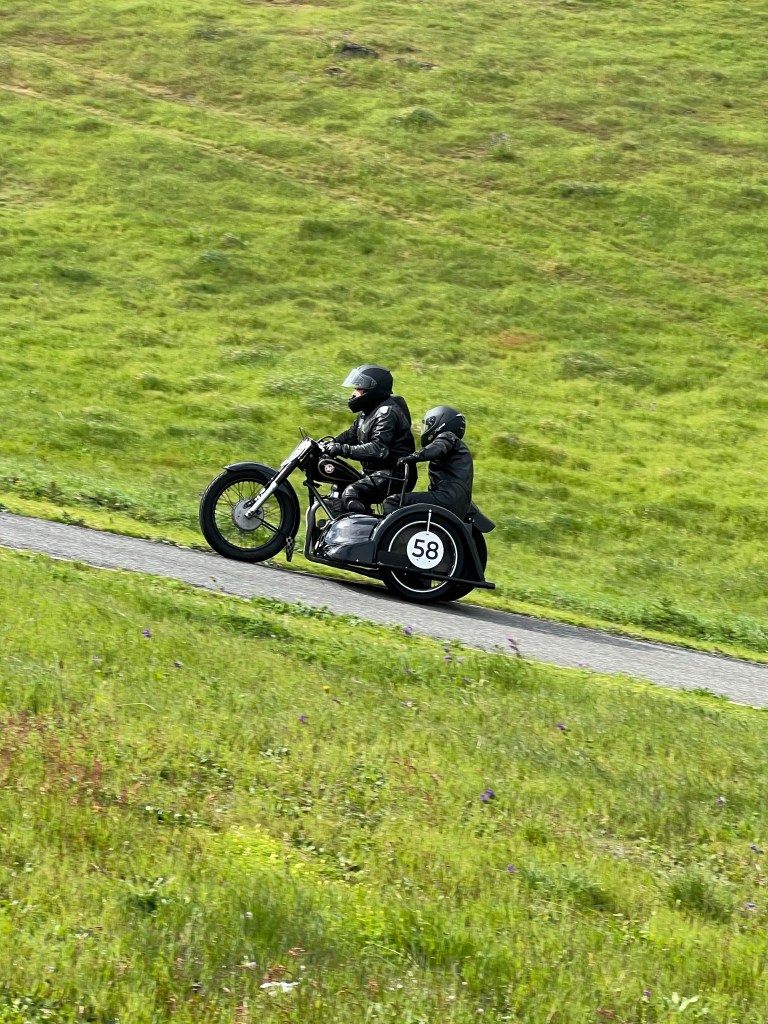
The Bruce Davis/Emil Batar 1958 Matchless 600 outfit (M Bisset)
Peter Walker and 1935 Velocette Mac (M Bisset)

I missed the best of the action, Bob King and I were given a guided tour of the Lobethal and Woodside road circuits, which are not too far from Collingrove, by Kent Patrick. A group of us did a Nuriootpa loop on Saturday morning as well, not to forget a (shambolic) lap or two of the Victor Harbor-Port Elliott track on Monday morning.

(M Bisset)

The masked avenger is Trevor Montgomery in the ex-Lex Davison ‘Little Alfa’ a 6C 1500 based, supercharged, Monoposto special raced by Davo in the 1940s. See here for a piece on this car: https://primotipo.com/2015/01/22/race-around-the-barracks-balcombe-army-camp-davison-little-alfa/

Fiona Murdoch in #21S coming down the access road back to the paddock.
(M Bisset)
The Anderson family Bugatti Type 44 – in Michael’s care – and Alsop M-Type lead this paddock line up (M Bisset)
(M Bisset)

Brian Simpson’s Cooper awaits its familiarisation run while Montgomery leaves the line in the Little Alfa. Brian’s cars have always been beautifully prepared and presented, the Cooper is no exception.

(M Bisset)

David Beaumont’s Alfa Romeo Giulietta Spyder 1600 was a picture. Angus Mitchell was quick in both the family Amilcar Grand Sport s/c, below, and in his ASP Toyota Clubman; busy too as one of the key organisers. That big-arse under cover behind belongs to the Double Eight; pert and perky it is not!

(M Bisset)
(M Bisset)

Graeme Jarrett’s Elfin Streamliner looked the goods with head-piece and very racing-correct varying hues of red. A favourite car.

(M Bisset)

Alta 55S pointed in the right-racing-direction at Nuriootpa, with Fiona and Neill Murdoch and then 21S behind.

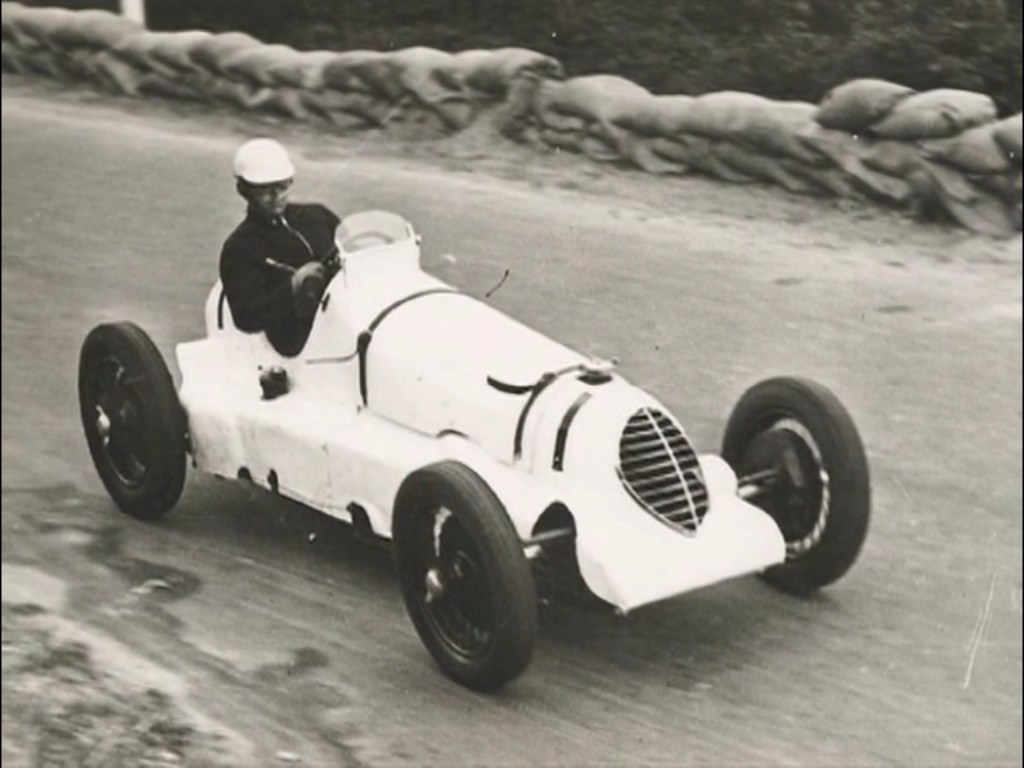
While 55S is an Australian-johnny-come-lately – in the 1980s – MI5 Spy, part-time motor dealer and occasional racing driver, Alan Sinclair, brought 21S here just prior to the South Australian Grand Prix at Lobethal in January 1938. The car has been here ever since.

Here is the little 1100cc minx in monoposto form with our spook at the wheel in that January 1938 Lobethal race below.

I don’t think the car competed again in South Australia despite a competition life in the hands of Bill Reynolds, Ron Edgerton, Ted Gray and others that stretched into the early 1950s, but I’d love to be proved wrong.
(N Howard)

A good deal of that was when the car was powered by Ford V8s of varying specifications and still competitive in the handicap racing of the day. See here for a lengthy epic: https://primotipo.com/2018/11/08/the-spook-the-baron-and-the-1938-south-australian-gp-lobethal/ there’s more…https://primotipo.com/2023/07/15/alta-1100-special/
Etcetera…

Legend has it that Eldred Norman first called the Zephyr Special the Norholfordor given it was derived form Ford, Holden and Tempo Matador parts, but he figured that was a bit of a mouthful…
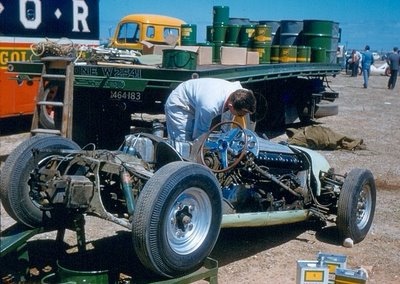
(bry3500)

Nice tail shot of the VW transaxle above, top transverse leaf spring and tubular shocker.

With about 280bhp on hand, depending on gear ratios, the wild, somewhat twitchy little SWB rocket was good for about 90mph in first, 130 in second and somewhere north of 160mph in top. Plenty quick.

(bry3500)

The undated Mallala paddock shot above shows the sheet steel engine/suspension mounting plate, single SU carb, and rough as guts standard of finish epitomised by the second hand fuel tank! All go, no show.

Norman was an acknowledged supercharger expert, his tricks learned getting more performance from tye recalcitrant Maserati 6CM that succeeded the Double Eight.

(M Bisset)

Greg Snape looking very snug at Collingrove.
Credits…

Norman Howard, Steve Jones, bry3500

Tailpiece…

(M Bisset)

What’s that Queen song? Fat Bottomed Girls. She’s loud and proud and sassy rather than nuanced, and all the better for it. Wait until Darren gets the thing fully sorted and fits it with a pair of a Hotrod Harry spec engines…

(M Bisset)

Finito…

hawkes
Tom Hawkes, Allard J2, Collingrove Hillclimb, Angaston, SA, March 1952. First in the over 1500cc Sports Car class (State Library of South Australia)

Tom Hawkes caresses his powerful Allard around the twisty, challenging gravel confines of South Australia’s Collingrove Hillclimb at its inaugural, public, 15 March 1952 meeting…

Chassis #99/J/1731, fitted with Ford Pilot engine # 5338/26 was the first of six Allards imported to Australia, the car arrived in September 1950 to Rube Gardner’s order. Gardner was appointed the local concessionaire having travelled to the UK to do the deal with Allard himself early in 1950. Gardner’s premises were on the Princes Highway, Carlton, a southern Sydney suburb.

Gardner drove the car to the October 1950 Bathurst meeting, he didn’t race, but took it to Mount Panorama for display purposes. The red side-valve Ford Pilot engined car immediately impressed Stan Jones, the 1958 Gold Star and 1959 Australian Grand Prix winner and father of 1980 World Champion Alan Jones.

Stan was well aware of the car’s competition record in the UK and US and bought it on his inexorable rise to the top of Australian motor racing. I wrote an article about Stan’s career, click on this link to read it; https://primotipo.com/2014/12/26/stan-jones-australian-and-new-zealand-grand-prix-and-gold-star-winner/

jones
The J2 in the Bathurst paddock during Stan Jones’ ownership at Easter 1951. Colour red, ‘standard’ Ford Pilot side-valve spec V8. Five of the six J2s imported to Australia entered this meeting, three started! (Ray Eldershaw Collection)

Jones’ first J2 competition event was the 1950 Australian Hillclimb Championship at Rob Roy in November, he finished second in his class. In 1951 he raced the car successfully at Rob Roy, at Bathurst where he was timed at 104.8mph on ConRod Straight, and at other meetings.

Jones sold the car to Geelong, Victoria, driver Tom Hawkes in a deal which involved Jones taking over a Cooper MkV 500 Bill Patterson and Hawkes had raced in England in 1951.

Hawkes raced the car in standard form for a while and then engaged Melbourne’s Ern Seeliger to modify it by fitment of an Ardun OHV engine kit and Jaguar four-speed gearbox with C-Type ratios to replace the three speed Ford Pilot ‘box. The tail of the Allard was replaced with a narrower one, the front and rear guards removed and wire wheels adapted to Lancia hubs. The light car now developed circa 300bhp and was a formidable, noisy and spectacular weapon at the time.

sellicks
Hawkes ahead of Eldred Norman’s Maserati 6CM at Adelaide’s Sellicks Beach. This meeting in 1953 was the first all car beach program post-War. Sellicks Beach is 55km from Adelaide. Tom is kicking the tail out, no shortage of power on the soft sand! Eldred Norman and his many cars are fascinating stories for another time (forum.fefcholden.club)

Over the next couple of years the J2 competed widely, mainly driven by Hawkes but occasionally by Reg Robbins who maintained it. It was also driven by John Sawyer and Adrian Gundlach. The car raced at Fishermans Bend, in Albert Park’s inaugural 1953 meeting and Rob Roy, all in Victoria. Hawkes competed at Collingrove Hillclimb, Sellicks Beach and Port Wakefield in South Australia.

He travelled to New Zealand for the 1954 NZ Grand Prix meeting at Ardmore in January. There the car blew the OHV engine in practice, a stone pierced the radiator. The side-valve engine was fitted for the race, famously won by Stan Jones in the Maybach after an amazing overnight engine rebuild. The J2’s Ford engine was brittle and ‘popped’ comprehensively at least three times, twice with rod failure, the errant component carved the cast iron block in half on both occasions. The J2 was very quick though, it recorded 137mph on Longfords Flying Mile during the 1955 Tasmanian Trophy meeting.

Hawkes advertised # 1731 for sale in October 1955 but continued to race it before being it was finally bought by Reg Robbins who had been preparing the car for Hawkes as noted above. He raced it at Phillip Island and Rob Roy in late 1956 and early 1957 respectively before sale to Geoff McHugh in Tasmania.

Melbourne’s Ian McDonald repatriated it from a Tasmanian chook shed in 1964 and restored it, a process which took two years. He first raced the car in an historic event at an open meeting at Sandown in 1966, the car later passed from Ian to Richard Ralph and then to Graham Smith who fitted a correct specifications Ardun Ford engine; he still owns it in 2020.

paddock
The Hawkes’ Allard in the Collingrove paddock March 1952. The modifications referred to in the text are not yet evident, this is early in Hawkes’ ownership of the car. Compare with the other later Collingrove shot below and the Sellicks Beach shot above where the car is running sans guards and with the wire wheels referred to in the text (State Library of SA)

Allard Short History…

In the the 1930s Sydney Allard was successful as a British Trials and Hillclimb competitor with his Allard Specials. Operating from Adlards Motors, a Ford dealership that he had acquired in 1929, Allard competed successfully in international motor racing. He was third at Le Mans in 1950 and victorious in the Monte Carlo Rally in an Allard P1 in 1952.

After racing first on motorbikes he moved to four wheels, in 1936 the first Allard Special was built.

Allard’s first cars were based on Ford products. The first ‘CLK 5’ combined a Ford Model 40 chassis and engine with a Bugatti Type 51 body. Its light weight and ground clearance made it an ideal Trials racer. By moving the cockpit as far backwards as possible, Allard concentrated weight over the rear wheels, a design principle of all future Allards. With Ford’s flat-head V8 providing plenty of power it was competitive immediately.

coll 2
This later Collingrove shot in 1954 shows the Hawkes J2 in its later modified form: with Ardun head, skinny tail, sans guards front and rear and with its wire wheel (State Library of SA)

Pre-War a small number of Allard Specials were built powered by either the Ford V8 or Lincoln V12 and were race winners. During the War Adlards Motors repaired damaged military vehicles…and Sydney designed a new sportscar, which was built in 1946 and is now referred to as the J1.

Ford components formed the basis of J1. A braced and boxed frame housed a Ford 3.6-litre V8 and three-speed gearbox. Suspension was by a split axle at the front and live axle at the rear, transverse leaf springs were used front and rear. A full width body was fitted, but the guards could be removed and replaced by cycle-guards to turn the J1 Sports into a Trials car. Twelve J1s were built and competed in Britain and in Europe, its shortcoming was the flat-head V8, which was underpowered and overheated. readily. 

Allard then built, in larger numbers, the K1 sports two seater, L-Type Tourer and M-Type coupe.

allard drawing
J2 factory drawings (The Allard Register)

In 1950 Allard launched the J2. Based on the J1 design, the new car was designed with the J1’s shortcomings in mind.

The front suspension was similar, the transverse leaf springs were replaced with coils at both front and rear, and a de-Dion axle was fitted with inboard drum brakes at the rear. The combination of rear weight bias and better rear suspension gave the car much better traction. Modified Ford side-valve V8s were Allard’s engines of choice, but the chassis was built to accommodate other engines. With Cadillac’s pushrod V8, the J2 was ‘in a league of its own’ and very successful in the US.

butt
Butt shot showing the Hawkes J2’s modified tail, fuzzy shot but modifications clear. #1731 sans guards, wire wheels. On ‘The Wall’ (Collingrove Hillclimb)

‘Allard’s biggest road racing success was in 1950, when Sydney Allard and Tom Cole drove a Cadillac powered J2 to third place overall and a first in class at Le Mans. In 1951 a slightly modified version, dubbed J2X was introduced. It was similar to the J2, but the engine was mounted further forward to allow a larger cockpit. Chrysler Hemi and Cadillac powered J2s and J2Xs dominated racing in America. The final evolutions of the J2 were the J2X Le Mans and JR, both of which featured a fully enveloping body’, wrote Wouter Melissen in ultimatecarpage.com.

syd vicious
Sydney Allard practicing his J2 at Le Mans in 1950. He and Tom Cole finished third outright in the race won by the Rosier father and son Talbot-Lago T26GS and second placed Talbot-Lago Monoplace. These two cars were essentially ‘GP cars in drag’, so the Allards third was a great result five laps adrift of the winning car. Allard wore a helmet in the race! This shot was on Allard’s corporate 1950 Christmas card to contacts of the company (allardownersclub.org)

After 1908 Allards were built, production ended in 1959. Increased competition from Jaguar, Lotus, Austin Healey and others producing quality production sports and racing cars made the going tough as the sixties dawned, but the company and its clever products had punched above their weight very successfully for many years.

chassis
J2 chassis and general layout drawings (The Allard Register)

Technical Specifications…

90 J2s were built from 1949 to 1951. Cars delivered to the US were usually sans engine allowing the customer to choose. Those with ultimate performance in mind specified the Cadillac or Chrysler ‘Hemi’ OHV engines with a wide variety of modifications available off the shelf.

Specifications of the Ford Pilot ‘Ardun’ engine as fitted to #1731 and modified by Tom Hawkes; 3923cc, bore and stroke 80.96mm x 95.25mm. Compression ratio 8:1. Magneto ignition. two Solex carburettors giving a claimed, and I suspect very optimistic, 300bhp.

The cars chassis was a ladder or box section frame having a wheelbase of 100 inches and track of 56/52 inches front/rear.

Front suspension was Allard divided or split axle with coil springs and hydraulic shocks. A de-Dion setup was deployed at the rear again with coil springs and hydraulic shocks. Drum brakes were fitted mounted outboard at the front and inboard at the rear.

Steering was Ford Pilot ‘Marles’ worm and roller. The fuel tank held 20 gallons, the car weighed circa 1700-2000lbs. (estimates of weight differ widely across the reference sources and would do so dependent upon the engine fitted)

allard roadie
Factory J2 shot (Allard Motor Co)

The Six ‘Australian’ Allard J2s…

For those with an interest in these cars this excellent MotorMarques article by Philip Stanton details the history of all J2s imported to Australia. http://www.motormarques.com/community/marques/item/39-allard-j2

The Allard Register…

If you are interested in Allards more generally checkout this interesting website; http://allardregister.squarespace.com/

Collingrove Hillclimb…

This website about the Barossa Valley venue is terrific; http://www.collingrovehillclimb.com.au/home/

collingrove
Collingrove is a sensational climb, highly technical and difficult. It’s at Angaston in SA’s Barossa Valley, the place is a stunningly pretty spot. Angaston is 85 Km from Adelaide. In use since 1952.(Collingrove Hillclimb)
paper
The Mail article about Collingrove’s first meeting in March 1952. Hawkes won the over 1500cc modified sports car class (Collingrove Hillclimb)
sideways
Distant shot of Hawkes coming off The Wall, well sideways on the slippery gravel surface. Shot included to show the topography of this fabulous climb. (Collingrove Hillclimb)

Etcetera…

Barry Oliver wrote ‘The sound in the distance became louder and in a few seconds reached a crescendo as the big V8 Allard of Tom Hawkes flashed past me on the narrow strip of bitumen just a few feet away’ Longford, 5 March. 1955.

Bibliography and Photo Credits…

John Blanden ‘Historic Racing Cars in Australia’, Wouter Melissen’s Allard article in ultimatecarpage.com, MotorMarques article by Philip Stanton, State Library of South Australia, Ray Eldershaw Collection, The Allard Register, forum.fcfeholden.club, Collingrove Hillclimb website, allardownersclub.org, Paul Geard Collection, John Hall Collection, Barry Oliver in ‘Tasmanian Motor Sport’

Tailpiece…

(P Geard)

Tom on the entry to Mountford Corner, Longford 1955. The car did 137mph on ‘The Flying Mile’ that weekend…

Finito…