


Peter Revson’s Shelby Ford Mustang Boss 302 is chased by George Follmer’s similar Bud Morre prepared car in the October 5, 1969 Mission Bell 250 Trans-Am round at Riverside.
Revvie was fourth and and George lost a wheel, Mark Donohue’s Penske Chev Camaro Z28 won.

You cannot be my age without getting all hot and sweaty about the better American and Australian pony-cars of the day, the Boss 302 has always been the high water mark of the genre for me. They are an incredibly handsome road car, while the Kar-Kraft built racers are simply as good as a racing tourer ever gets.
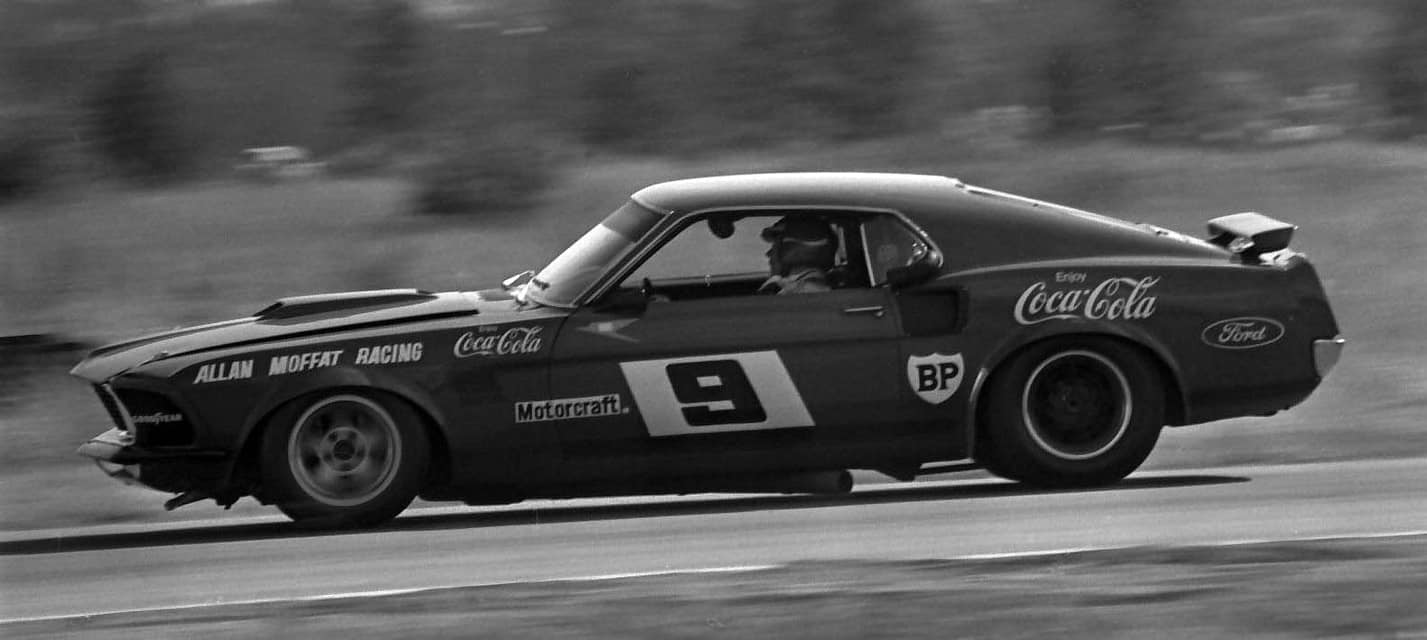
Alan Moffat’s Coke-Red Trans-Am is seared into the souls of a couple of generations of Australian race-fans. While it won a gazillion races Moff never quite took the Australian Touring Car Championship in it. It’s still here thankfully, and gets around a bit, it’s still as big a magnet in the paddock for me as it ever was. See this epic here: https://primotipo.com/2020/03/06/moffats-shelby-brabham-elfin-and-trans-am/
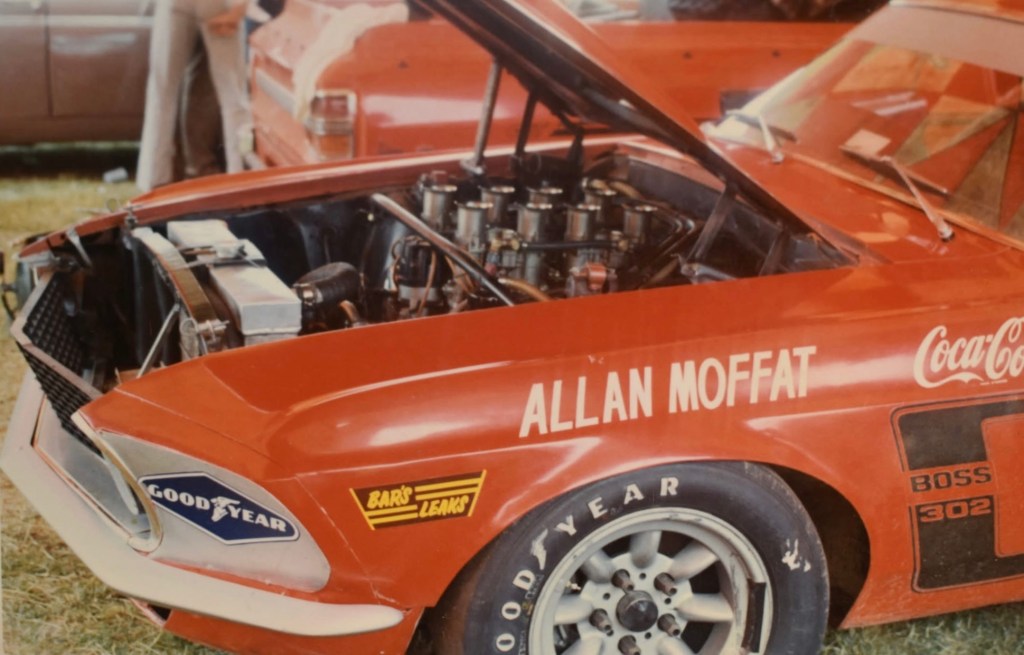
This article is the byproduct of a search for information on F5000 variants of the 5-litre Boss V8.
Such detail is as rare as the engines themselves were in the day. Ford Boss F5000 engines mainly found their way into the small number of Lotus 70s built by Lotus Components in 1969-70.
George Follmer won a few races in Lotus 70s fitted with Ryan Falconer prepared engines in 1970-71. The shot below shows the business end of one of them at Ontario Speedway in 1971.

Before I start rabbiting on about the Boss 302 F5000 aspect you might find it interesting to see how the Ford Mustang Boss 302 car came into being. It was very much a function of the failure of Ford’s Tunnel-Port (T-P) 302 V8 engines in the Mustangs run by Shelby American in 1968.
This Guide de l’auto piece is great on the overall timeline, key management calls, and commercial aspects of the Boss 302’s gestation and specifications over its two-year model life: https://mobile.guideautoweb.com/articles/74184/ford-mustang-boss-302-et-429-1969-70-gagner-le-dimanche/
This On All Cylinders article covers the evolution from Tunnel-Port failure to Boss 302 success with input from the engineer who married the T-P 302 block to slightly modified 351 Cleveland heads, thereby creating the Boss 302 V8: https://www.onallcylinders.com/2023/03/30/fords-incredible-boss-302-how-it-happened/
As I said above, the on-circuit Trans-Am failure of the Tunnel-Port 302 in the ‘68 Shelby Mustangs led to the Boss 302. This Hot Rod piece explains the T-P’s downfall: https://www.hotrod.com/news/hrdp-1305-the-story-behind-fords-iii-fated-1968-tunnel-port-302/


Race engineering legend Carroll Smith assessed the F5000 engine alternatives in a December 22, 1971 document he prepared for Roy Woods Racing in advance of the 1972 season.
‘The Ford Boss 302 will put out more power than the Chev right now,’ he wrote. ‘The increase is in the neighbourhood of 5% which, while significant, is not enormous. The engine is 25-30 pounds heavier than the Chevy and all of the increase is in the cylinder heads, which is unfortunate from the handling point of view.’
‘In my opinion this engine has not been developed to the same level as the Chevy unit and some surprises, particularly in the valve-train, should be expected. Parts can be obtained and while the overall program would be $10,000/$15,000 more expensive, I believe that a Ford program is more attractive than a Chevy program simply because of the power advantage.’
‘Development is necessary in the following areas: valve train geometry and materials, dry-sump configuration, piston configuration, exhaust configuration, ram-air box configuration. Bartz is the only conceivable builder. Falconer should not be considered.’
Ultimately, Woods chose an Al Bartz prepared Boss 302 for the Matich A50 chassis Smith successfully recommended, rather than the Repco-Holden V8 he preferred. George Follmer raced the car several times in early 1972 before it was damaged and set aside.

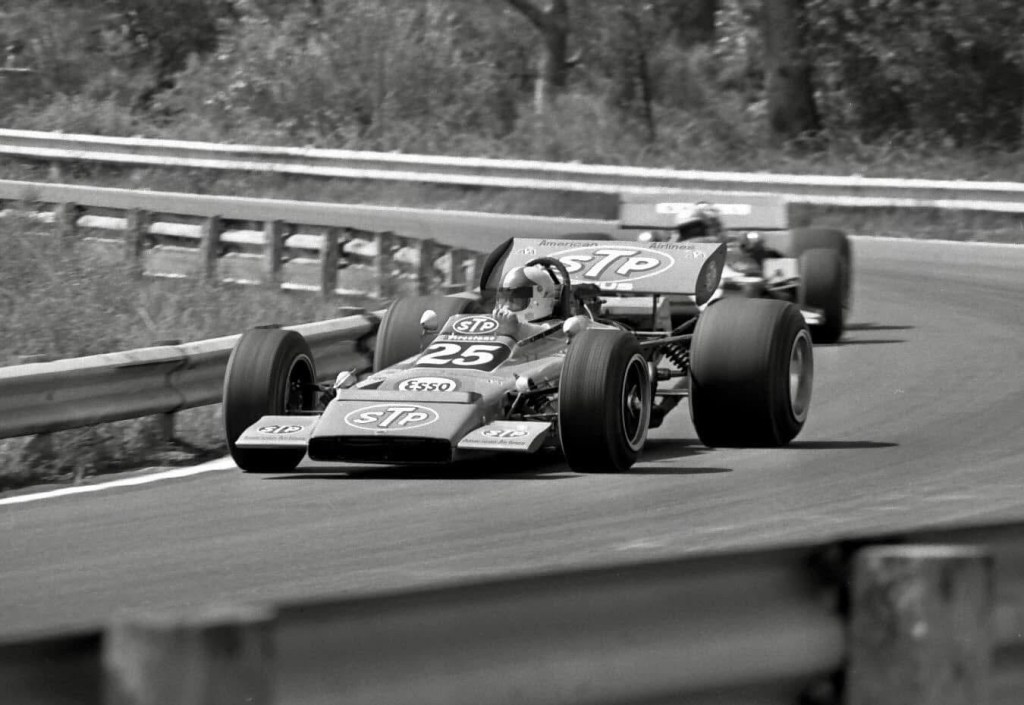
Ford’s Total Performance ethos didn’t extend to Formula 5000, why bother with that investment when you are belting the hell out of everybody globally on the circuits, in the forests and on the strips?!
The Penske Camaro Z28s were the over 2-litre Trans-Am champs in 1969: Mark Donohue won at Briar, Mont Tremblant, Watkins Glen, Laguna Seca, Sears Point and Riverside, while Ronnie Bucknum won at Mid Ohio and Seattle. Bud Moore’s outfit were the dominant Ford team, it was a skinny year for Carroll Shelby. Parnelli Jones won at Michigan and Donnybrooke, Sam Posey (Shelby) at Lime Rock and George Follmer at Bridghampton.
In 1970 Penske jumped ship from Chevrolet to American Motor Corporation. They ran the AMC Javelin programme and only just missed the drivers title. Parnelli Jones’ Moore Mustang beat Donohue by a point, 142-141, but Ford comfortably won the manufacturers title, 72 to 59 points.
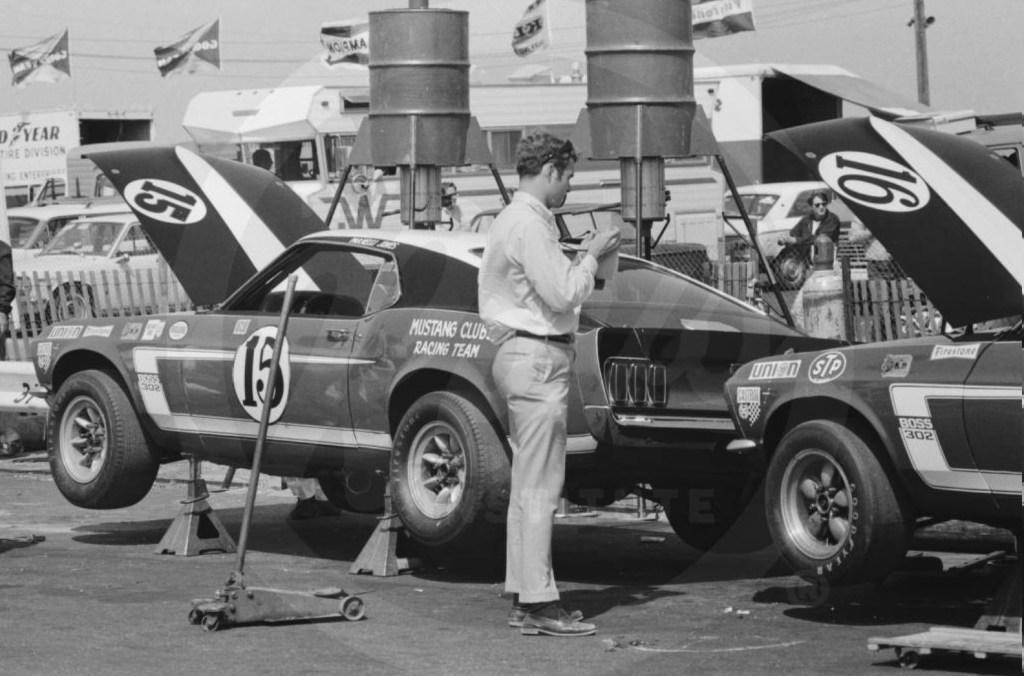
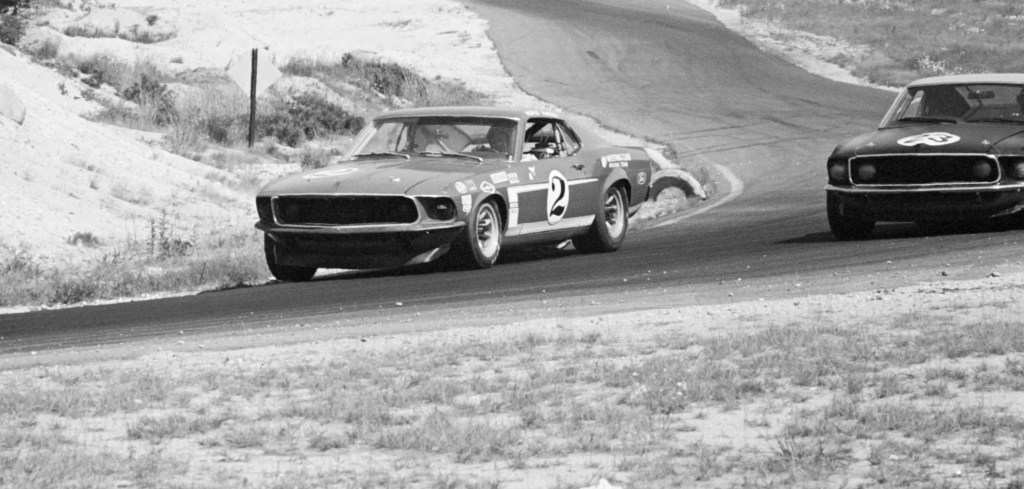
Bud Moore ran the Fords with Jones winning at Laguna, Lime Rock, Mid-Ohio, Seattle and Riverside, and Follmer at Bryar. Donohue prevailed at Bridghampton, Road America and Mont Tremblant.
With a Trans-Am in the bag FoMoCo withdrew from the fray – so too did Chev and Chrysler – leaving Bud Moore to run the cars again in ’71 against AMC, Penske/Donohue won.
It was the end of the Boss 302 programme, before too long Total Performance became Total Boredom as the automotive world dealt with the perennial Middle East Clusterfuck, global stagflation and the push for lower car emissions. FoMoCo had bigger fish to fry than racing for a while.
There was decent money invested in F5000 but all the big-guys ran Chevs: VDS, Chaparral-Haas and Vels-Parnelli when they came in. Derek Bennett found it easy to put Alan Smith Chevs in his Chevrons, Rugby wasn’t far from Bolton. It’s interesting that nobody did a decent Ford programme, but again, in Frank Gardners words, ‘if yer aunty had balls she’d be ‘yer uncle’, who cares what didn’t happen!

Engine Specifications…
The standard Boss 302 engine combined the Windsor four-bolt small block and the then-upcoming 351 Cleveland’s cylinder heads to provide a high-performance road engine as the basis for a great road-racing engine.
The 90° V8 302cid pushrod, two-overhead valve, cast iron block/heads unit had a bore/stroke of 4 inches (101.6 mm)/3 inches (76.2 mm) and a compression ratio of 10.5:1. In road form a Holley 780CFM 4-barrel carb was fitted.
The crankshaft was a high-strength steel forging, it was cross-drilled in 1969 (eliminated in 1970 for better reliability??) High-performance rods were 5.155″ length (same as 289 Hi-Po) Main bearings are four-bolt design. The high-lift cam design had 290 degrees of duration and .477 in (12.1 mm) lift. The combustion chambers are a closed 62cc design.
The block was a unique high nickel percentage, thin wall, nodular iron casting. The canted valve head design was shared with the 351 Cleveland but modified for Boss 302 use. Rocker arms were adjustable rocker studs with new long slot rockers. The harmonic balancer design was new. The crankcase was equipped with a windage tray.
Of course, what I’m really after is a similar spec sheet for a Ryan Falconer or Al Bartz F5000 Boss 302…If you have some hard data, it’s information I’d love to see it, mark@bisset.com.au

Etcetera…
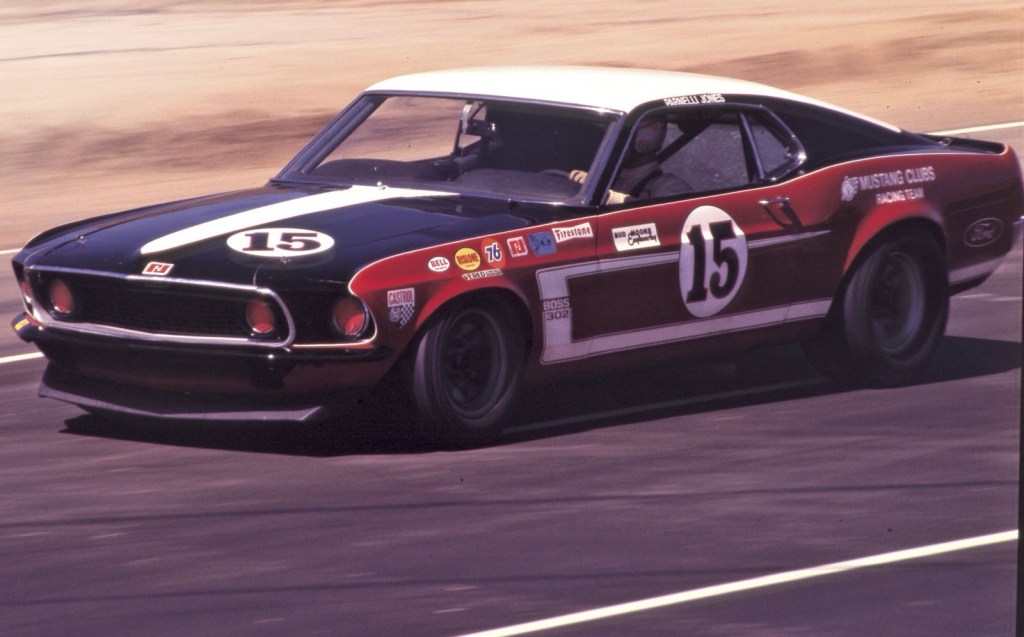
Parnelli Jones in the 1969 Mission Bell 250 at Riverside aboard a Bud Moore Boss 302. Mark Donohue won the race in a Penske Chev Camaro Z28. GM won the Trans-Am.
The following year Jones won the title with Moore, albeit the cars were repainted the yellow FoMoCo wanted to more effectively grab the punters eye! That’s Jones below winning at Laguna Seca in April 1970, and the following shot is a Laguna pit lane scene.


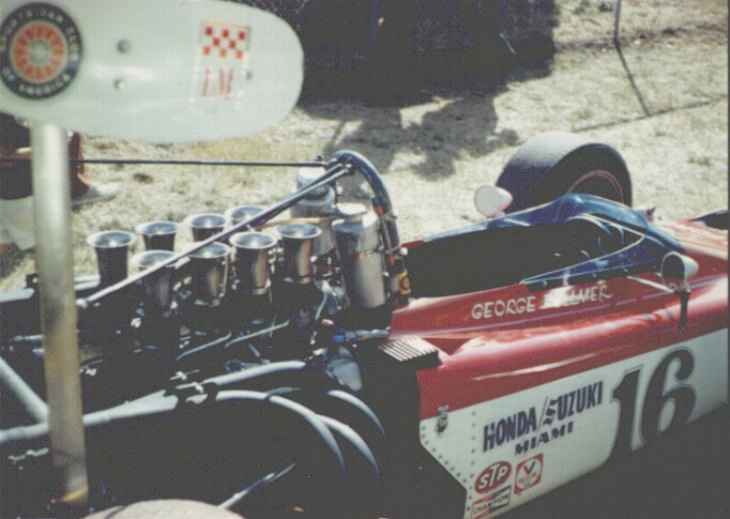
Lotus 70-01, Follmer, Sebring October 25, 1970 Q5 and DNF overheating. Falconer & Dunn built Boss 302.
I’ve never really rated these cars – most of the books don’t – but Follmer won at Mont Tremblant and Mid-Ohio during the hotly-contested SCCA Continental Championship in 1970, so there cannot have been too much wrong with either the chassis…or engine! George’s skill at twiddling the wheel duly noted.
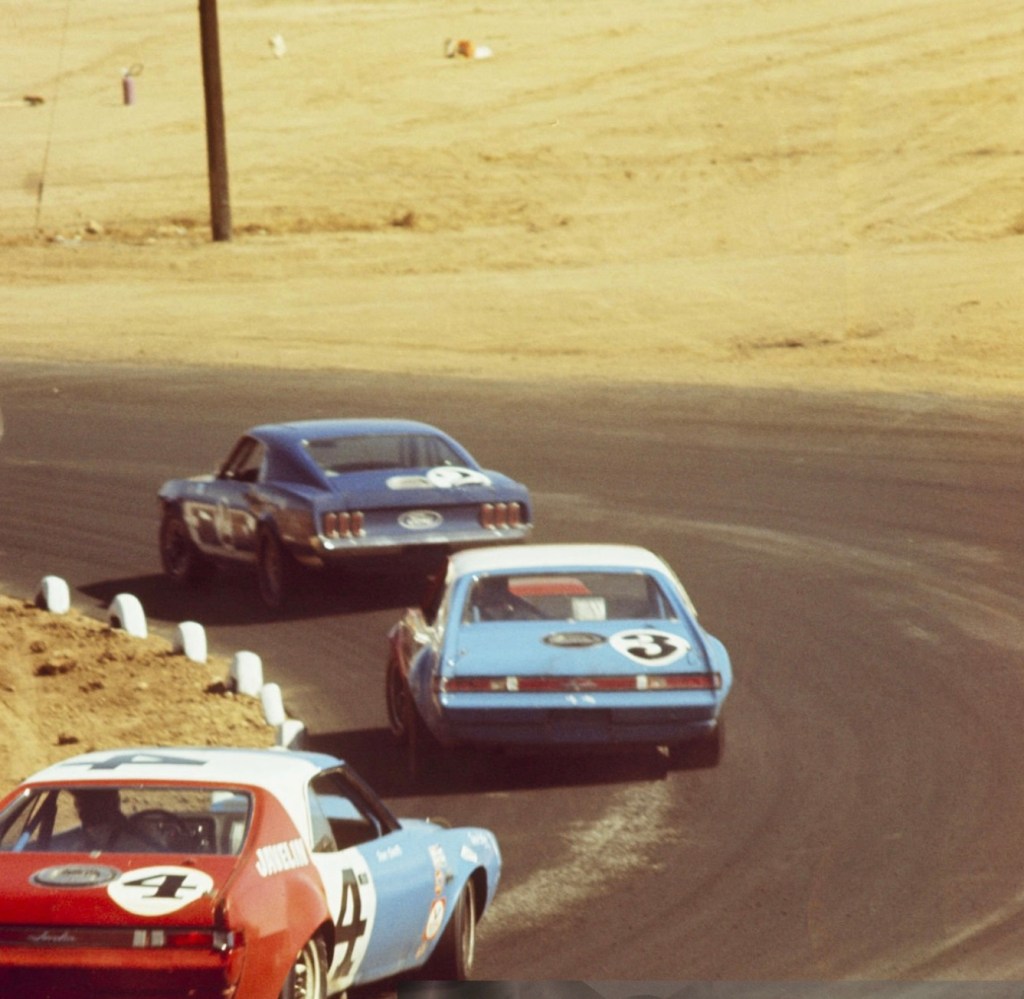
Let’s finish with the Trans-Am stuff as we started, with the Mission Bell 250.
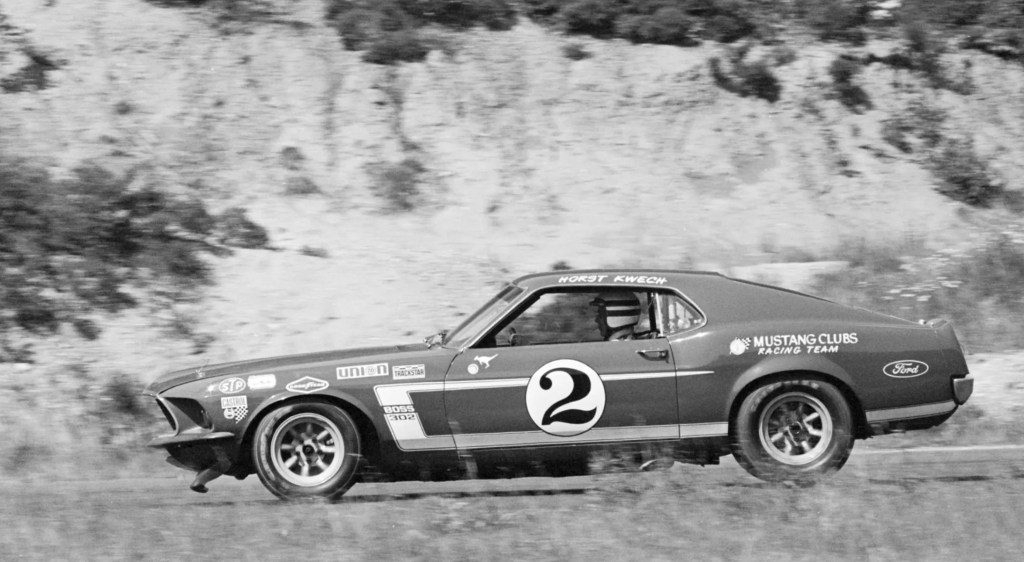
Horst Kwech leads the AMC Javelins of Jerry Grant #3 and Ron Grable #4. October 6, 1969. The Donohue and Ronnie Bucknum Z28s were up front with Jerry Titus’ Pontiac Firebird third.
What a fabulous spectacle of under and over 2-litre variety the Trans-Am must have been!

Follmer at Sebring during the final round of the 1970 SCCA Continental F5000 championship on October 25. Q5 and DNF overheating. Looks like he’s ‘winged’ somebody or something.
George didn’t contest the championship in 1971 but came back with the Roy Woods Matich A50 Bartz-Ford Boss shown below in the Watkins Glen pitlane during the June 18, weekend. Q9 and retired, it was the last time he raced the Matich.
About which he was disparaging in a December 2009 Vintage Racecar interview. Follmer regarded the chassis as too flexible, which is intriguing as the other five Repco-Holden V8 powered chassis did not suffer from that affliction at all.
The plot thickens in the sense that Carroll Smith helped build Matich A50-03 over the Southern Summer of 1971-72 in Sydney inclusive of the critical mounting plate and related components to mount the Boss Ford to the Matich tub. A dummy block was used in this process. The installation of the Bartz-Ford race engine was done in Wood’s Northridge, California workshop.
I don’t doubt George’s diagnostic skills, but am intrigued to see if any of you can find contemporary accounts of this lot.
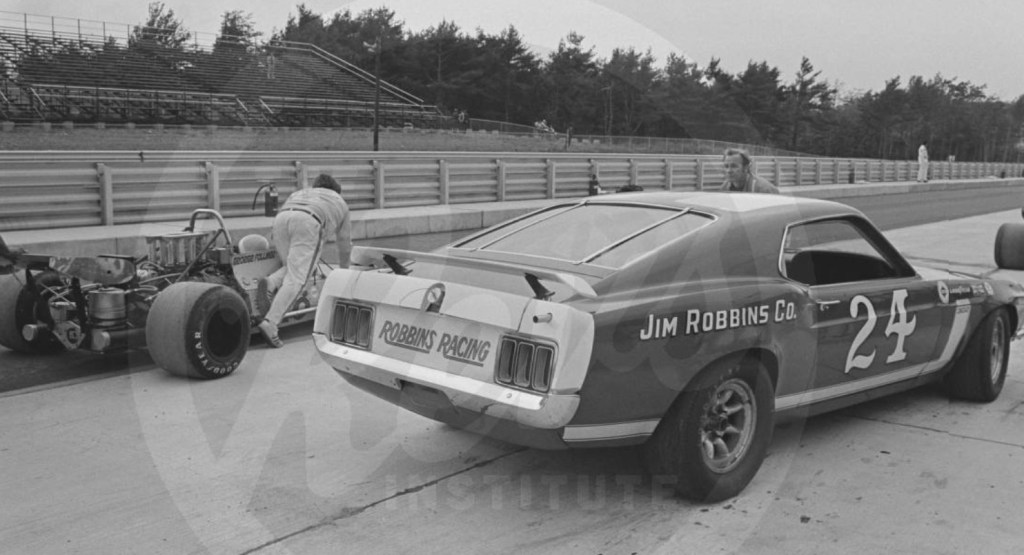
While George didn’t have a happy time with the Matich at the ‘Glen, all wasn’t lost that weekend as he won the Trans-Am round in a Roy Woods AMC Javelin! Jerry Thompson’s Mustang (above #24) was second and Woods in his other team Javelin, third.
Credits…
Getty Images, FoMoCo, Jim Smart, Bonhams-Revs, Harry Hurst, Allen Brown, Greg Feltham, John Lemm, Mike Follmer Collection, Stephen Dalton Archive, Ian Smith, Phil Brosius, oldracingcars.com
Tailpieces…

I forgot about the national championship won by a Boss Ford 302 in Australia…
Stan Keen won the four-round 1975 Australian Hillclimb Championship in his ex-John Walker Elfin MR5 #5724.
Keen ran the car on the circuits and in the hills. While it was off the pace at Tasman and Gold Star F5000 level it was always a frontrunner on the South Australian circuits with Stan a quick driver. It would have been interesting to have seen him have a steer of something a bit more current.
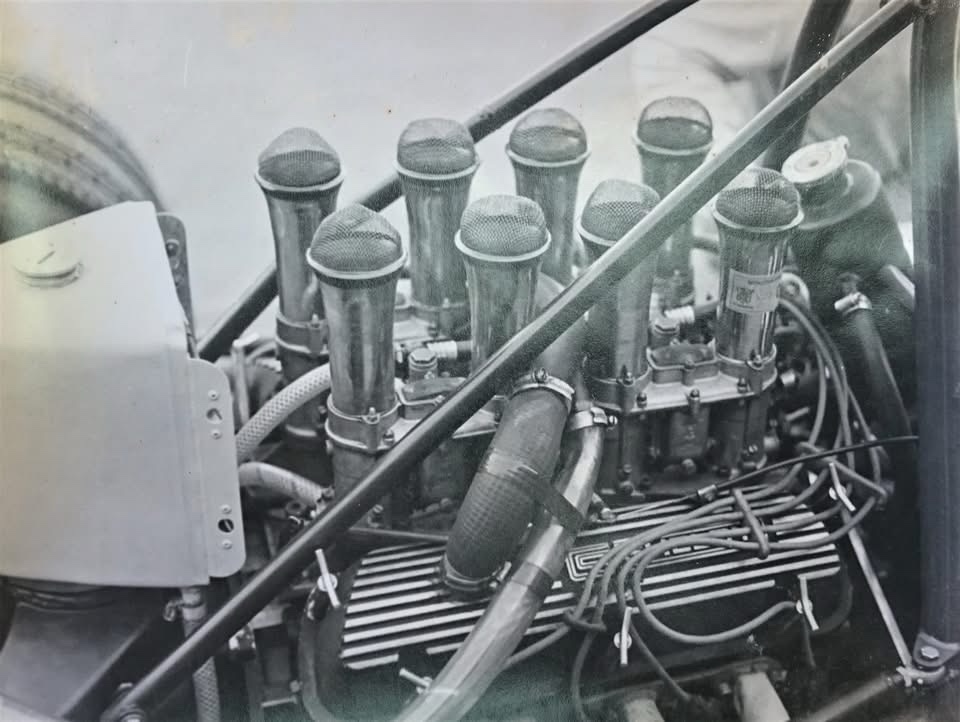
The engine was self prepared and is fed, as you can see, by 48IDAs. Output? Who knows, well short of the Chevs and Repco-Holdens though! Really a Ford Boss 302, or a Boss Ford 302 in name only?…dunno.

Happy chap, certainly Collingrove, perhaps after Stan’s bagged the ’75 AHCC round there? And yes, he usually ‘climbed it with the MR5 cockpit surround off.
Afterthought…
What about Gossy’s Matich A53-007 Ford aka A55 Ford ya’phuckin idiot? I can hear some of my Orstralian friends saying.
Nobody seems to know exactly what concoction of Ford bits that Peter Molloy built ‘Boss engine’ comprised…watch this space, I’ll spare you the ‘I reckons’.
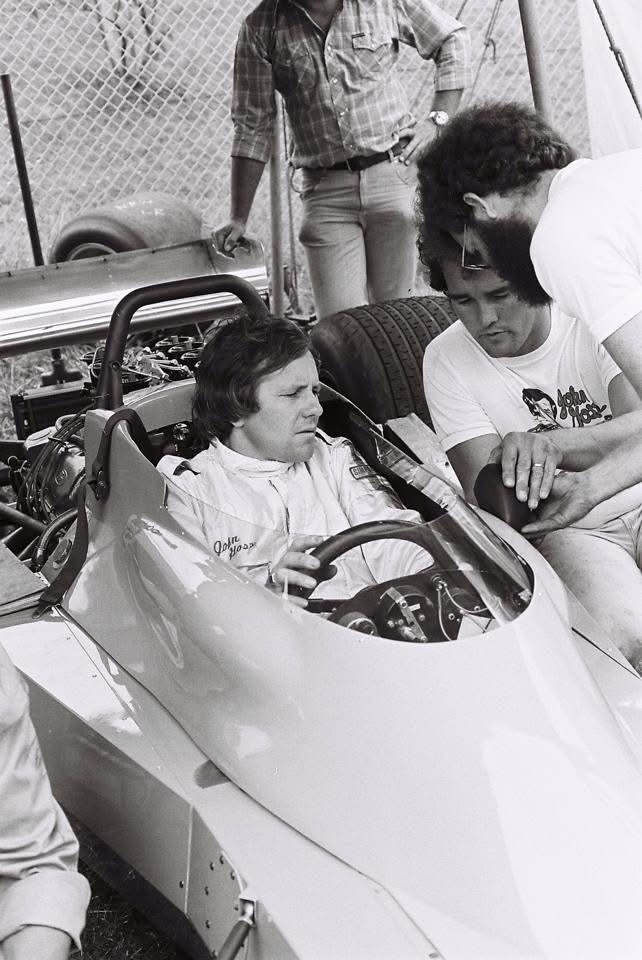
The shot below is of JG being installed in the car in the Sandown paddock by Grant O’Neill and bearded Peter Doulman over the February 5, 1978 Rothmans International round weekend. From memory he did only few laps before it broke, not enough to be given a time.
Goss did practise it at Oran Park over the February 26 weekend, doing a 1.07.9, he did a 1.06.8 in A51/53 Repco-Holden; and this was one-second away from Warwick Brown’s pole in the latest Lola T333/T332C Chev.
Finito…
 primotipo...