


Allan Moffat does his best to avoid soiling his undergarments as Fred Gibson lines up his works-Ford Falcon 500 XC on Moff’s right-hip-apex of the swerve. Colin Bond is behind, with John Goss, Murray Carter and Ron Dickson the other unsighted members of the troupe.
The angle on the camera dangle heightens the excitement but there is still no way known I’d want to do it.
By 1973 Australian tariffs on manufactured goods were significantly reduced, this exposed the local products of Ford, Holden and Valiant (Chrysler) for the junk they were.
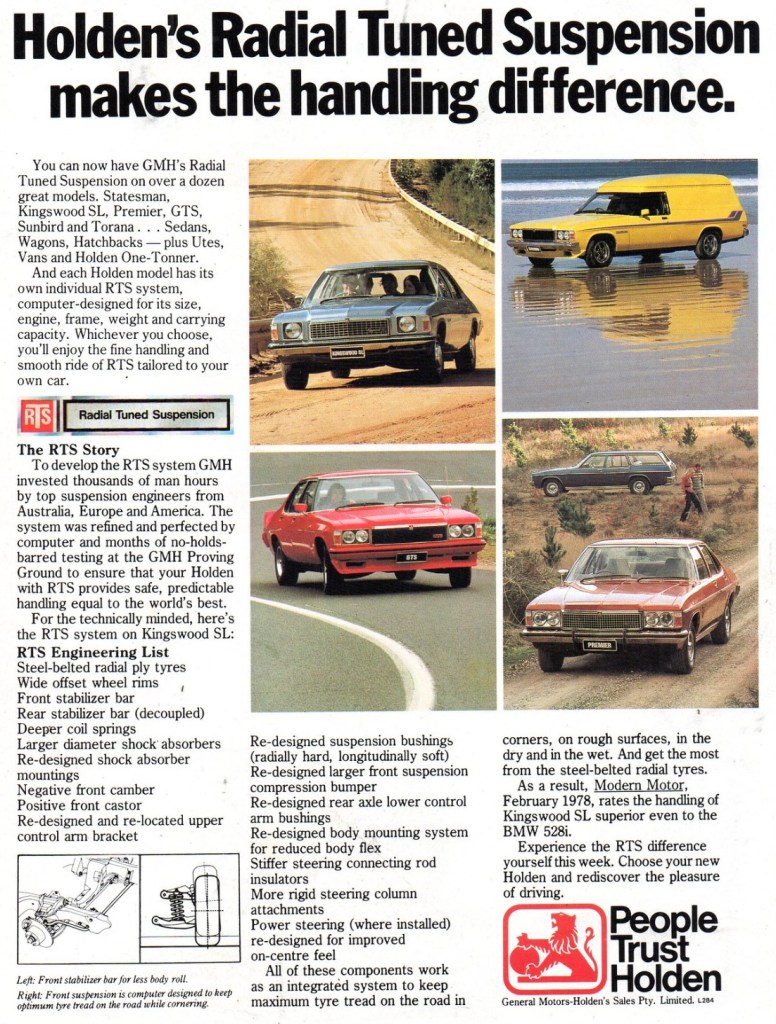
Holden responded, inter alia, with their RTS – Radial Tuned Suspension – HZ Holdens under the leadership of Peter Hanenberger aka ‘Handlingberger’. Hanenberger was a GM Opel-trained engineer who rose all the way through the GM Empire of Suits to be, in his second Australian stint, MD and Chairman of General Motors Holden.
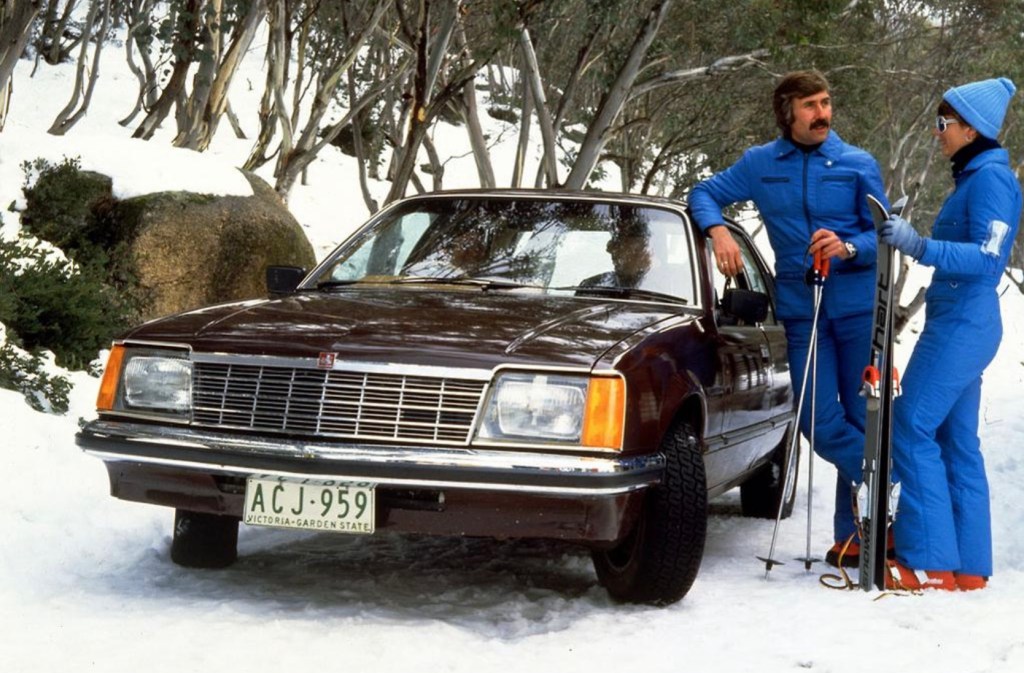
RTS was all piece of piss stuff: changes to geometry, springs, bars, shocks, bushes, mounts etc. The exact specs are neither here nor there; the point is that Hanenberger instructed his staff to do what they should have done when the HQ was originally designed and developed way back circa-1971.
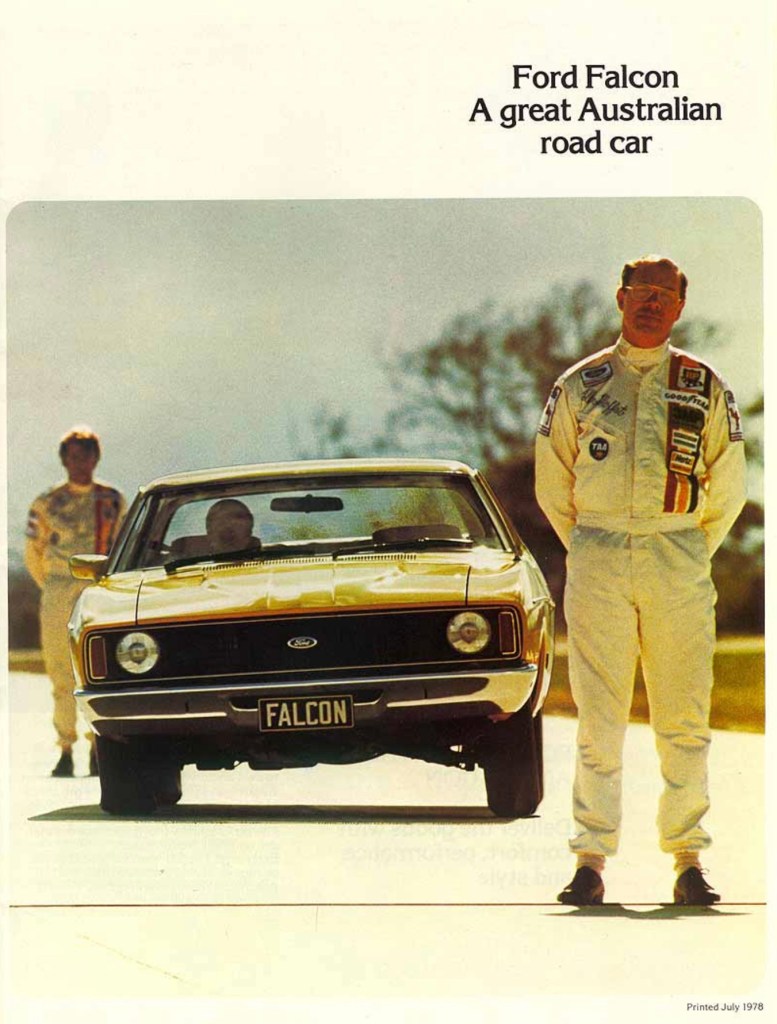
Ford did the same thing; this ad (first pic above) made the point in a wonderfully engaging kinda way. See Ford’s 1978 TV ad here: https://youtu.be/9lb4sZJz2ww?si=rFcKzQD_q1LMXkPN
Hanenberger was a breath of fresh air at Holdens after a succession of crew-cut Americans on the corporate climb who ran the show without much savoir-faire.
Artificial Intelligence
Then I thought, hang on a minute, my currrent Trump inspired high level Anti-American stance is maybe clouding my judgement. So I put my favourite AI tool to work (CoPilot) to produce a list of GMH Managing Directors and then teased out of it, their contributions.
I use AI – when I do at all – very carefully and only where I have strong subject matter knowledge in order to exclude the bullshit. I don’t have the interest or subject matter knowledge of this stuff much at all; it’s all reproduced verbatim, including all the floral adjectives and American spelling, so I am in your hands, Holden experts…
Managing Directors of GM-Holdens
| Managing Director | Tenure | Nationality | Notable Contributions or Context |
|---|---|---|---|
| A.N. Lawrence | 1931 | Australian | First MD after GM-Holden’s formation |
| H.W. Page | 1930s–1940s | American | Oversaw wartime production and early expansion |
| Laurence Hartnett | 1936–1946 | British-Australian | Instrumental in developing the first Holden car (48-215) |
| Harold Bettle | 1950s | American | Managed post-war growth and Holden’s market dominance |
| David H. Hayward | 1960s | American | Expanded Holden’s export programs |
| John Bagshaw | 1970s | Australian | Oversaw HQ Holden development and local engineering initiatives |
| Chuck Chapman | 1980s | American | Promoted Commodore and Group A racing involvement |
| Bill Hamel | Late 1980s–1990s | American | Focused on global integration and platform sharing |
| Peter Hanenberger | 1999–2003 | German | Revitalized Holden’s engineering culture; ex-Opel executive |
| Denny Mooney | 2004–2007 | American | Led VE Commodore development and global platform alignment |
| Mark Reuss | 2008–2009 | American | Later became GM President; emphasized global product strategy |
| Alan Batey | 2010–2013 | British | Managed Holden during restructuring and brand repositioning |
| Mike Devereux | 2013–2015 | Canadian | Announced Holden’s manufacturing exit |
| Mark Bernhard | 2015–2018 | Australian | Last Australian MD; led Holden through transition to import-only |
| Kristian Aquilina | 2019–2020 | Maltese-Australian | Final MD before Holden’s closure in 2020 |
The Shifting Helm of Holden : A Narrative of Leadership and Legacy
From its 1931 inception as General Motors-Holden’s Ltd, the company’s leadership mirrored its hybrid DNA: Australian in spirit, American in ownership. Each Managing Director brought a distinct lens—some engineering-driven, others commercially focused—shaping Holden’s trajectory through war, prosperity, global integration, and eventual closure.
Foundations and National Pride (1930s-1940s)
- A.N. Lawrence (Australian) was the first to steer GM-Holden’s after its formation, laying the groundwork for a uniquely Australian automotive identity.
- H.W. Page (American) oversaw wartime production, embedding GM’s industrial discipline into Holden’s operations.
- Then came Laurence Hartnett (British-Australian), whose visionary leadership birthed the first Holden car—the 48-215. Hartnett’s push for local design and manufacturing made him a national figure, often dubbed the “father of the Holden”.
Post-War Expansion and Engineering Dominance (1950s-1970s)
- Harold Bettle and David H. Hayward (both American) managed Holden’s post-war boom, with the FX and FJ Holdens becoming cultural icons.
- John Bagshaw (Australian) took the reins during the HQ Holden era, championing local engineering and design. His tenure reflected a shift toward Australian autonomy within GM’s framework, with Holden’s technical teams gaining global respect.
Commodore Era and Global Integration (1980s-1990s)
- Chuck Chapman (American) embraced motorsport, aligning Holden with Group A racing and the rise of the Commodore.
- Bill Hamel (American) began integrating Holden into GM’s global platform strategy, a move that would later define the VE Commodore’s architecture.
Engineering Renaissance and Strategic Realignment (1999-2013)
- Peter Hanenberger (German), a former Opel executive, reignited Holden’s engineering culture. Under his leadership, the Monaro was reborn, and the VE Commodore became a world-class platform.
- Denny Mooney and Mark Reuss (both American) continued this global alignment, balancing local innovation with GM’s broader product strategy.
- Alan Batey (British) managed Holden during a time of brand repositioning and market uncertainty.
Decline and Closure (2013-2020)
- Mike Devereux (Canadian) announced the end of local manufacturing—a seismic moment in Australian industry.
- Mark Bernhard (Australian) became the last local MD, tasked with guiding Holden through its transition to an import-only brand.
- Kristian Aquilina (Maltese-Australian) closed the final chapter, overseeing Holden’s wind-down in 2020 with a focus on dignity and legacy.
Each Managing Director’s nationality wasn’t just a footnote—it often shaped Holden’s priorities. Australian leaders like Hartnett, Bagshaw, and Bernhard emphasized local engineering and cultural relevance. American and European MDs brought global integration, technical rigor, and strategic realignment. Together, they formed a mosaic of leadership that reflected Holden’s complex identity: proudly Australian, yet forever tethered to Detroit.
Holden’s Leadership and the Pulse of Performance : Motorsport and Engineering in Motion
Holden’s Managing Directors didn’t just steer corporate strategy—they shaped the soul of the brand. Their decisions echoed across racetracks, engineering labs, and suburban driveways, where the roar of a Holden V8 became a symbol of national pride.
Engineering Identity : From FX to HQ
- Under John Bagshaw, Holden’s engineering teams flourished. The HQ Holden wasn’t just a car—it was a declaration of independence. Designed and engineered in Australia, it featured a perimeter frame chassis, a bold departure from GM’s global norms. Bagshaw’s support for local innovation gave engineers like George Roberts and Leo Pruneau the freedom to craft a car that could handle Australia’s rugged terrain and reflect its cultural swagger.
- The HQ’s success wasn’t just commercial—it laid the groundwork for Holden’s motorsport dominance. Its robust chassis became the backbone for touring car variants, and its V8 engines roared across Bathurst.
Motorsport as Brand DNA : The Monaro and Commodore Era
- Chuck Chapman saw motorsport as a marketing weapon. Under his watch, Holden embraced Group C and later Group A racing, with the Commodore becoming a fixture on the grid. The Monaro’s rebirth in the early 2000s—thanks to Peter Hanenberger—was more than nostalgia. It was a technical triumph, blending heritage with modern performance. Hanenberger’s engineering-first ethos revived Holden’s credibility among enthusiasts and racers alike.
- The VE Commodore, launched during Hanenberger’s tenure and refined under Denny Mooney, was Holden’s magnum opus. It was the first car developed on GM’s global Zeta platform, but it was engineered entirely in Australia. Its success in V8 Supercars and export markets (like the Pontiac G8 in the U.S.) proved that Holden could punch above its weight.
Strategic Shifts and Motorsport Legacy
- As Holden’s global integration deepened under Mark Reuss and Alan Batey, motorsport remained a cultural anchor. Even as manufacturing wound down, Holden’s presence in Supercars endured—until Kristian Aquilina oversaw its final race at Bathurst in 2020, where Shane van Gisbergen gave Holden a fitting farewell victory.
- Mark Bernhard, the last Australian MD, understood the emotional gravity of Holden’s motorsport legacy. His leadership ensured that Holden’s final years weren’t just about winding down—they were about honoring a legacy built on grit, speed, and national pride.
Holden’s story isn’t just about cars—it’s about the people who led it, the engineers who built it, and the racers who drove it into legend. From Bagshaw’s HQ to Hanenberger’s Monaro and Bernhard’s final Bathurst, each chapter reflects a tension between global strategy and local soul.’
Credits…
FoMoCo, General Motors Holden, Co Pilot
Finito…
 primotipo...