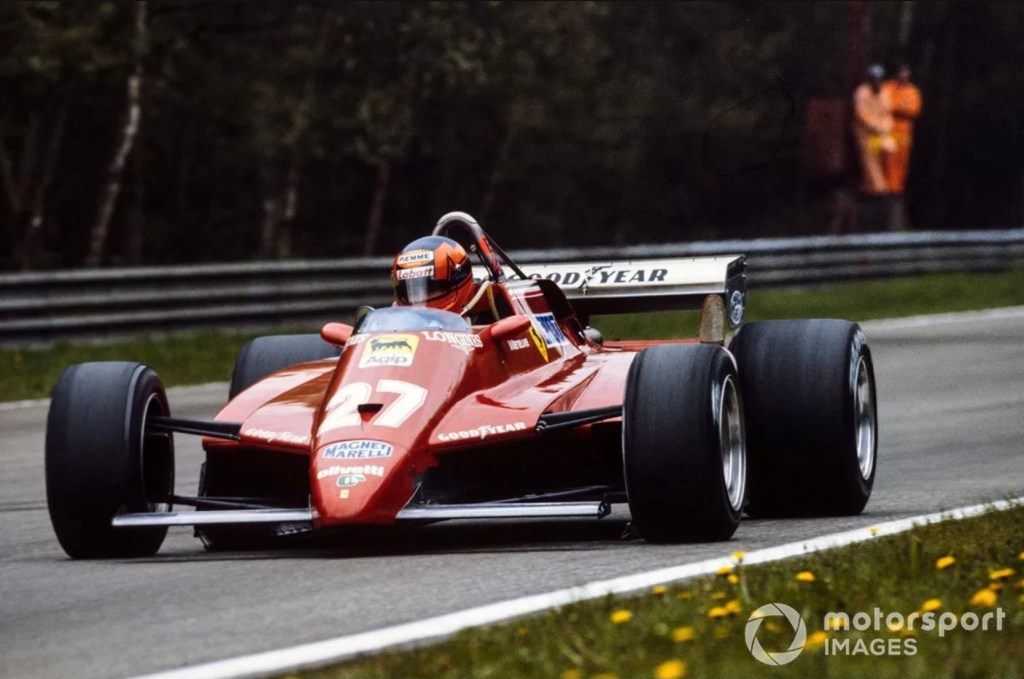
Posts Tagged ‘Gilles Villeneuve’

(Autosport)

Following its successful early-1950s World Sportscar Championship front-running Lancia D24, Grand Prix racing Lancia D50, and 1960-70’s World Rally Championship campaigns with the Fulvia HF and stunning Stratos, Lancia reverted to international sportscar racing to build its brand in 1979. Lancia Corse/Martini Racing contested the Group 5 title from 1979-82 with the Lancia Beta Montecarlo Turbo.

The shot above shows Riccardo Patrese on the way to winning the Brands Hatch 6 Hour on March 16, 1980. He shared the car with Walter Rohrl, second was Eddie Cheever and Michele Alboreto in another Lancia Corse entry, with Alain De Cadenet and Desire Wilson third in De Cad’s De Cadenet Lola LM Ford. To reinforce the Lancia rout, the Jolly Club Montecarlo raced by Mario Finotto and Carlo Facetti was fourth.

Eddie Cheever, second, from Desire Wilson, De Cadenet Lola LM Ford, third at Paddock Bend during the 1980 Brands race (N Forsythe)
Patrese in the cockpit of chassis #1002 before the off at Brands Hatch (N Forsythe)

Group 5 was a silhouette formula for modified production cars spilt into under and over 2-litre classes. Lancia’s weapon of war was an extensively modified version of the Beta Montecarlo Coupé.

While normally aspirated in road trim, Lancia Corse sporting director Ceasare Fiorio concluded that turbo-charging the 1,425cc four-cylinder engine would give sufficient power and torque to win the 2-litre class allied with wild chassis and body modifications. As it transpired, the machines were also outright contenders.

(unattributed)
(unattributed)

Engineer, Gianni Tonti was in overall control of the project. Ex-Lamborghini designer Gianpaolo Dallara built the Group 5 Stratos that won the 1976 Giro d’Italia, Fiorio was impressed with his work and therefore engaged Dallara Automobili to design and build the chassis. Carrozzeria Pininfarina designed and built the bodies.

Group 5 permitted bulk modifications, so the roof and door centre monocoque section of the donor car was retained but it was sandwiched by bespoke tubular subframes to carry the front suspension, wishbones and coil springs, and rear suspension, McPherson Struts, wishbones and engine/gearbox and ancillary components.

Pininfarina’s striking fibreglass coachwork was designed to increase downforce and featured an aggressive chin spoiler, extended wheel-arches and big rear wing. Only the car’s centre section retained any resemblance to the production car, yet it weighed 300kg less than the road car at about 810kg.

The Patrese/Hans Heyer Lancia Beta Montecarlo Turbo during the Nurburgring 1000km, May 1980. Led then slipped to fourth outright in the final laps with overheating, won the 2-litre class (unattributed)
Watkins Glen 6 Hour, July 1980 Lancia Beta Montecarlo Turbos. #33 Jolly Club Finotto/Ghinzani sixth, #32 Cheever/Alboreto second, and #31 Patrese/Heyer, first (D Balboni)

The engine development programme was supervised by Gianni Tonto at Abarth. With an engine naturally aspirated to turbo-charged capacity equivalency factor of 1.4 times, the Aurelio Lampredi designed, twin-cam, two-valve, Kugelfischer-Bosch injected engine had a capacity of 1425cc to pop in under the 2-litre limit.

Maximum output was boosted to 370bhp at 8,800rpm using a KKK-K27 turbo-charger and 1.2 bar of boost, a result slightly more than the 118bhp of the standard 2-litre Monte! The car was tested with up to 420bhp but the engines became grenades with 1.6 bar of boost.

The engine and five-speed transaxle was mounted transversely behind the driver as per the donor car and the regs. While the gearbox was cast using production moulds, the use of magnesium saved weight while Colotti internals provided a gearbox fit for purpose.

Michele Alboreto on the Daytona road course section. DNF dropped valve in the January 1981 24 Hours, the car was shared with Beppe Gabbiani and Piercarlo Ghinzani
Michele Alboreto aboard the car he shared with Eddie Cheever and Carlo Facetti at Le Mans in 1981. Eighth outright and first in the 2-litre class (Getty Images)
Riccardo Patrese on the way to a Brands Hatch 6 Hour class win in August 1979. Rohrl shared the car to fifth outright and first in class (unattributed)
Launch of the Lancia Monte Carlo Turbo at the Pininfarina wind tunnel in December 1978 (Wiki)

Presented to the press at the Pininfarina factory in December 1978, the Montecarlo commenced testing in February 1979, initially with a 220bhp 2-litre Mirafiori normally aspirated rally engine until the 1.4-turbo was ready.

It first raced in the Silverstone 6 Hours in May (#51 below) having missed the Championship’s first two rounds. Finished in dramatic Zebra livery, Montecarlo chassis #1001 was driven by rising F1 racer Riccardo Patrese and ex-European Rally Champion and 1980/82 World Rally Champion Walter Rohrl, proving impressively quick in qualifying (seventh) but retired from the race after only four laps with a blown head gasket.

Despite continuing unreliability the team bagged sufficient points with class wins at Enna and Brands Hatch to take the World Championship of Makes Division 2 title in its debut season.

The Zebra Patrese/ Lancia Monte Carlo Turbo in the Silverstone 6-Hour pits in 1979. Q7 and DNF after 4-laps; head gasket failure after the radiator cap failed (unattributed)
Lancia Corse pit action at Watkins Glen in July 1980 where the Monte Carlo Turbos finished first, second and sixth, vanquishing a squadron of Porsche 935s (French Speed Connection)

Lancia Corse made great advances with the five new cars which were built for 1980, the most significant developmental changes were in relation to tyres, suspension geometry, engine power, and weight.

Two extended sessions with Pirelli resulted in substantial changes despite the P7 Corsa radials being of the same construction and compounds. ‘Both the front and rear the overall diameter of the wheel-tyre assembly is unaltered, the front rims are now an inch smaller at 15 inches, and rears three inches larger at 19 ins. The new front tyre is narrower with a higher profile to provide a softer ride and better turn-in,’ Autosport reported. ‘The new rear is more significant, with a very low profile and greater width on the road, utilising all but 4mm of the maximum permitted 14ins of tread.’ Lancia made suspension changes to suit, with the drivers much happier with the overall balance of the car by the end of the sessions.

The engines were improved from the 380bhp delivered through a power band of 5500-8600rpm in 1979 to 410bhp arriving between 4500 and 9000rpm. In addition, a trip to the Jenny Craig Clinic reduced the ’80 cars weight to circa 770kg compared with circa 810kg of the early cars.

The Zebra livery continued but now with white/red and white/blue combinations. Although the team fared badly at Le Mans 24 – of three cars that started only the Finotto/Facetti machine finished in 19th – victories at Brands Hatch, Mugello and Watkins Glen brought the Lancia Montecarlo overall victory in the World Sportscar Championship. Patrese was the ‘winningest’ Lancia pilot, being the lead driver in each win.

The Cheever/Alboreto/Facetti car at Le Mans in 1981. Eighth outright and first in the 2-litre class with engines tuned to 400bhp spec (unattributed)
Cockpit of one of the Monte Turbos at Le Mans in 1981 (R Schlegelmilch)

Having clinched victory by the penultimate Vallelunga round, Lancia missed the final event at Dijon in favour of the Giro d’Italia, in which the works cars appeared in the stunning, iconic Martini Rossi colours for the first time. First and second places ended a great year for the Montecarlo.

Lancia Corse raced with Martini livery from the start of 1981, that year the Montecarlo was equipped with twin turbo-chargers giving circa-450bhp. This was final year in which Lancia Corse used the Montecarlo as its frontline tool, they planned to enter Group C with the LC1 Barchetta in 1982. Despite that, the Monte proved good enough to secure its second World Championship with wins at the Nurburgring and Watkins Glen.

The works cars – 11 were built between 1979 and 1981 – were then sold, some were raced by privateers in 1982 in the last year of Group 5 but by then they were also-rans. See here for bulk detail: http://www.lanciabetamontecarlo.nl/Gp5/group%205+6.html

Watkins Glen pitstop for the Patrese seated, and Alboreto assisting, Lancia Beta Monte Carlo Turbo in 1981. Outright and 2-litre class winners (Belles Italiennes)

Etcetera…

(N Forsythe)

Shots of the launch function at the Pininfarina wind tunnel on December 19, 1978. Walter Rohrl is facing us at left with Cesare Florio further back.

(N Forsythe)
(N Forsythe)
Monte Group 5 chassis was a mix of standard’ish pressed steel monocoque and Dallara fabricated steel frames at each end (unattributed)
(Pure Racing GT)

Fiorio achieved a promotional coup by signing Walter Rohrl and Gilles Villeneuve/Christian Geistdorfer to drive one of two Lancia Monte Carlo Turbos (Riccardo Patrese/Markku Alen/IIkka Kivimaki raced the other car to second place) entered in the 1979 Giro D’ Italia Automobilistico.

Both cars were set up to give about 360bhp with Villeneuve contesting only four of the races due to his Ferrari testing commitments. Rohrl/Villeneuve were first on the road aboard chassis #1002, but were later disqualified for using the motorway – failing to follow the route-book.

(unattributed)

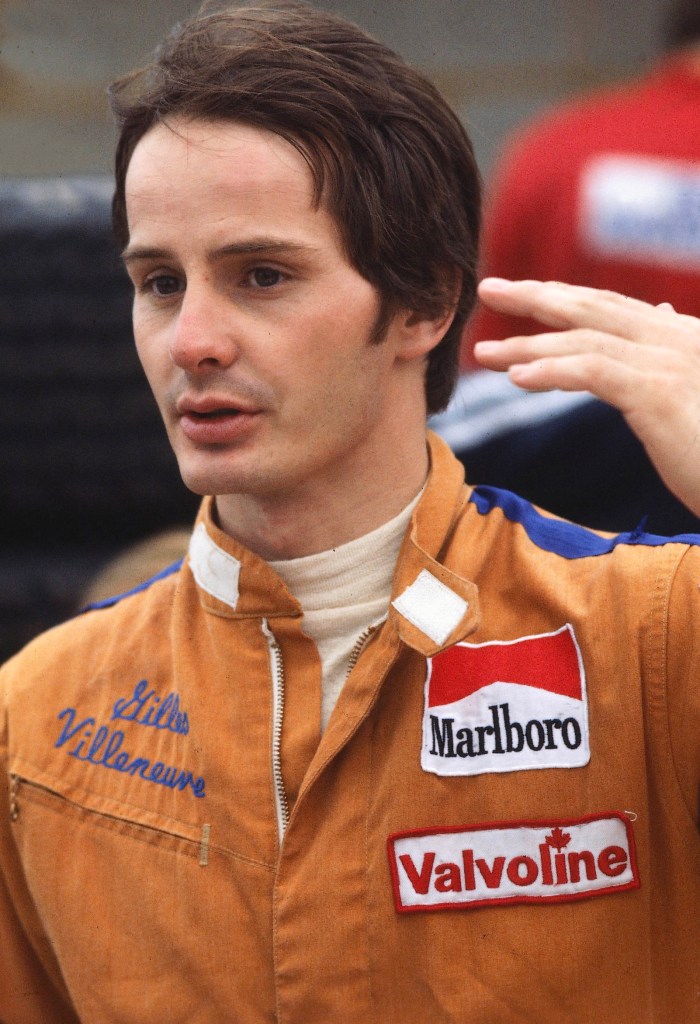
Villeneuve ready to rock in these shots above and below, in his Ferrari overalls. Note the Momo steering wheel and stopwatches in the cockpit shot below.

(unattributed)
(French Speed Connection)

The shot above shows the business end. You can see where the structural frame ends where the top of the strut mounts and the KKK-turbo is mounted. The lighter frame sections carry the other bits: oil tank, roll bar, exhaust etc.

The contemporary (Goodwood FOS) shot below completes the rear suspension picture by showing us the disc/hub/strut assembly which is located below by a barely visible boxed inverted wishbone.

Front of the Patrese/Cheever Monte Carlo during the 1981 Silverstone 6-Hour weekend. DNF crash after losing a wheel (A Fosh)
(Bonhams)

The engine is shown above, it looks innocuous enough with the giant KKK-turbo out of picture. Camshafts are belt-driven, two-valves per cylinder. Fuel injection is Kugelfisher-Bosch.

(F Kraling)

Eddie Cheever about to climb aboard, and Michele Alboreto coming out of the car at Le Mans in 1981, eighth outright and first 2-litre car. This shot makes one feel as though you are there!

(rainmakerbell.com)

Kyalami 9 Hours, November 1981, Emanuelle Pirro and Michele Alboreto enroute to fourth place. The three cars in front were all Porsches, the winners, Jochen Mass and Reinhold Jost, raced a 936/80.

Credits…

Autosport, Anthony Fosh, Getty Images, Pure Racing GT, French Speed Connection, Nick Forsythe, Belles Italiennes, Bonhams, Dominic Balboni, Ferdi Kraling, rainmakerbell.com

Tailpiece…

Finito…
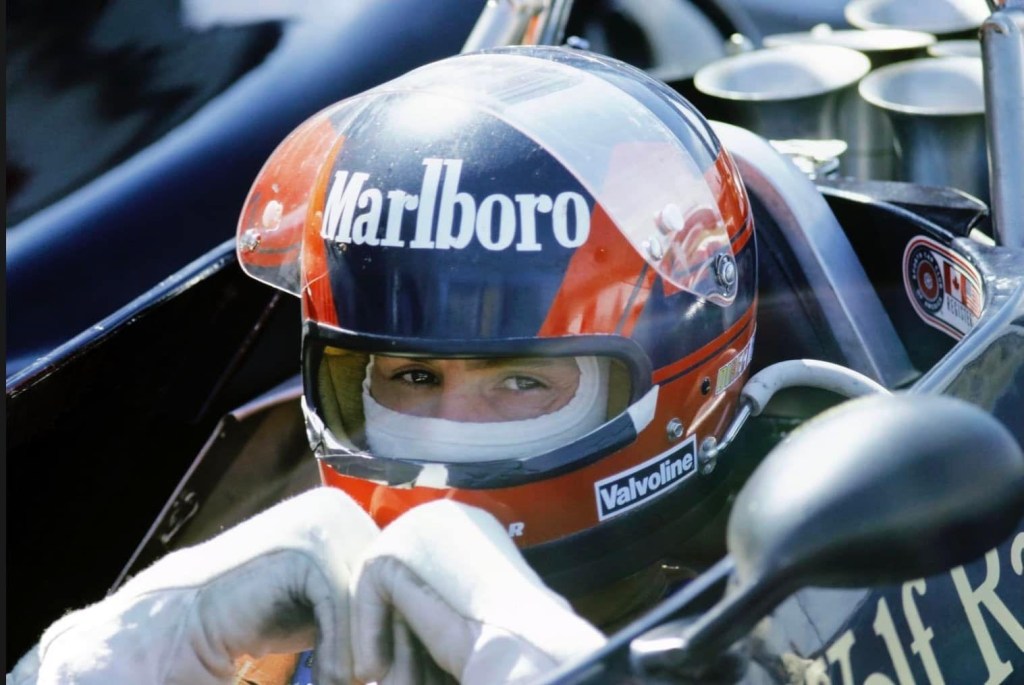
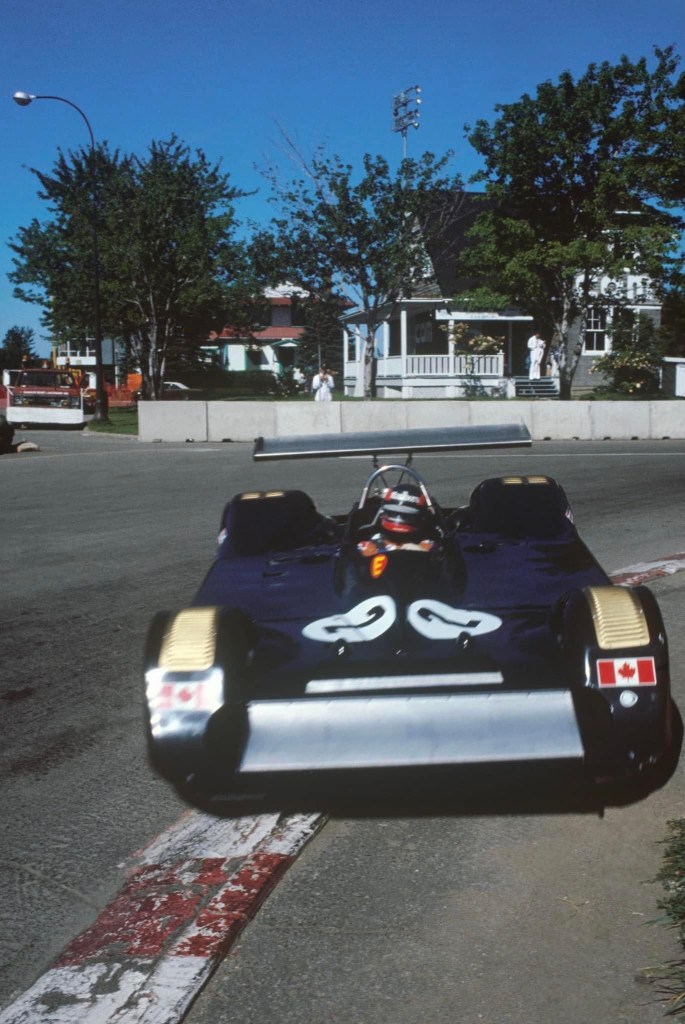
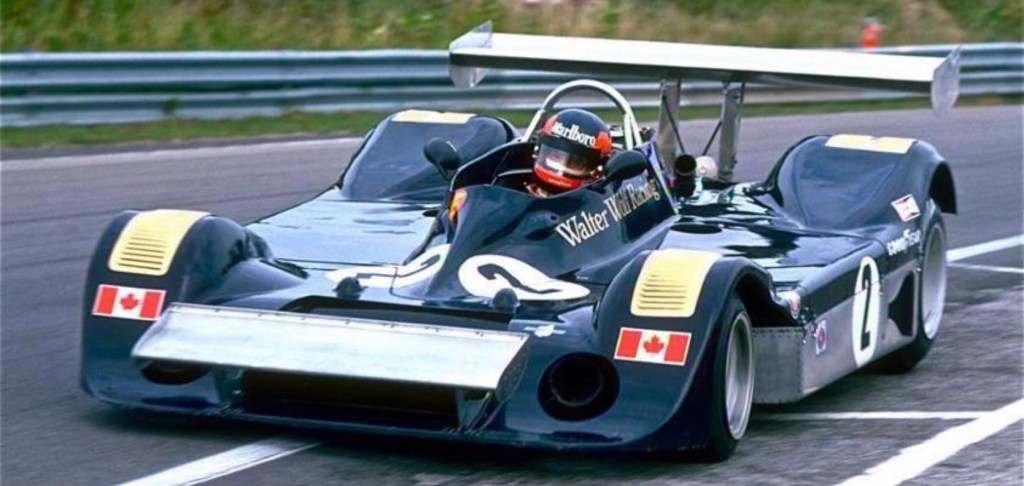
GV Wolf WD1 Chev, Trois Rivieres 1977 (MotorSport)

1997 F1 World Champion Jacques Villeneuve’s dad doesn’t have awe inspiring race-statistics, so why is he revered by generations of F1 fans born long after he died? Mark Bisset looks back at the French-Canadian legend 40 years after that tragic May 8, 1982 Belgian GP weekend at Zolder

Before the carbon-fibre era few of motor racing’s supreme automotive acrobats died quietly in their beds.

Bernd Rosemeyer, Jochen Rindt, Ronnie Peterson, Ayrton Senna, Stefan Bellof, Gilles Villeneuve and their ilk had God-given skills which awed fellow competitors and spectators alike.

Spectacular car control, seemingly impossible passes and flagrant disregard for their own safety were their modus operandi, performed without the many ‘safety nets’ of modern F1.

Attack! GV during the September 1977 GP de Trois Rivieres, Canada weekend. Q3 and 14th with engine problems aboard Walter Wolf’s Wolf WD1 Chev. Patrick Tambay took the win, Lola T333CS Chev (MotorSport)
Gilles during the 1977 British GP weekend at Silverstone, F1 newbie (LAT)

Joseph Gilles Henri Villeneuve (18/1/1950-8/5/1982) was one of the most spectacular practitioners of his art, he wanted – needed – to be the quickest racer out there in every session. To his ultimate cost.

Seville Villeneuve whetted his son’s competitive juices by giving him a snowmobile, by 1972 Gilles was a pro-driver with Skiroule, in 1974 he won the World Championship Snowmobile Derby at Eagle River, Wisconsin.

Villeneuve mounts his Alouette 650 single-track, all set to win at Eagle River in 1974 (CJ Ramstad)

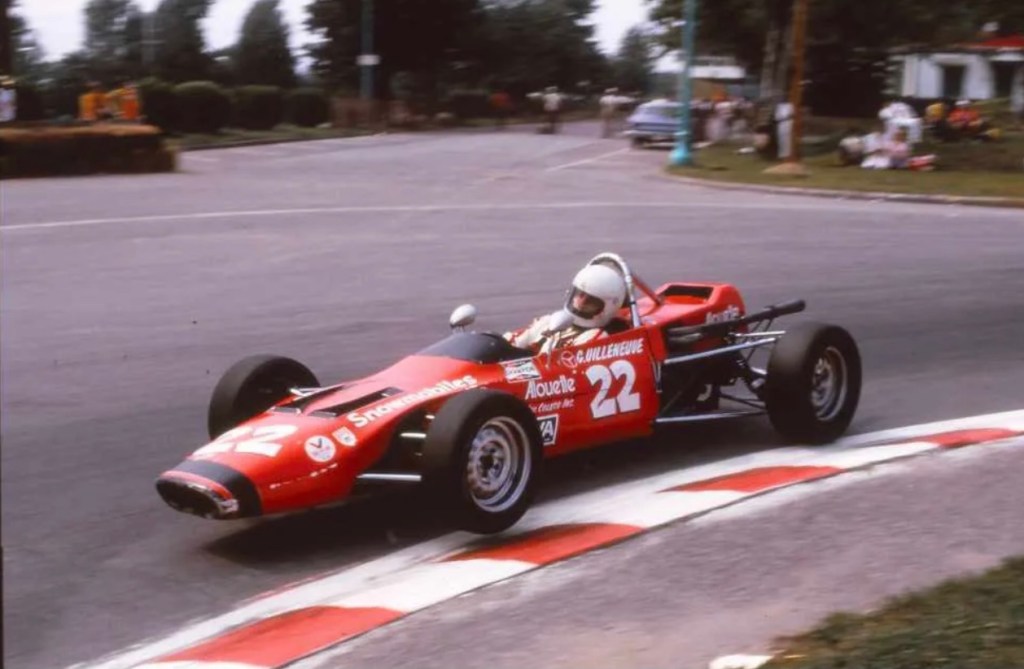
Seville nurtured Gilles’ early interest in cars too. Villeneuve took a Jim Russell course at Mont Tremblant, then demonstrated the same mastery of machine on bitumen as on snow aboard a Magnum Formula Ford, winning a regional Quebec championship in 1973.

Villeneuve later said of snowmobiling “Every winter you could reckon on three or four big over 100mph spills. They slide a lot, which taught me about control. Unless you were in the lead you could see nothing with all the snow blowing about, it was good for the reactions and stopped me worrying about racing in the rain.”

GV, Magnum Formula Ford in 1973 Trois Rivieres? (MGV)
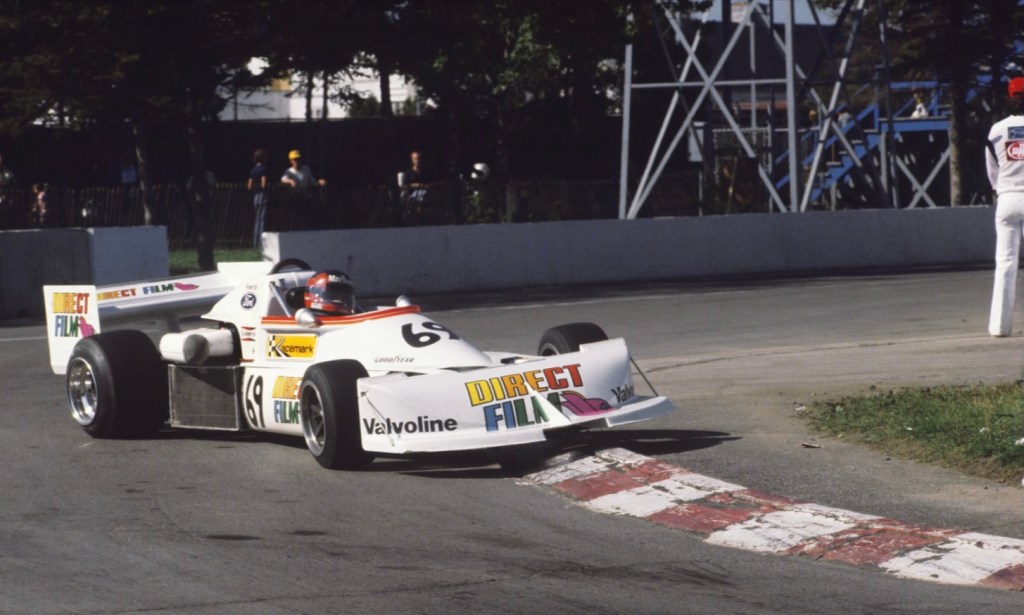
March 77B Ford BDA, Trois Rivieres 1977. Fourth from pole, Price Cobb won in another 77B (MotorSport)

Villeneuve progressed and was immediately quick in an Ecurie Canada March 74B Formula Atlantic (FA) in 1974 until the wild-man broke his leg at Mosport mid-season.

Fully committed, Gilles sold his home to fund a privately run March 75B the following year, travelling to the races with wife Joann and his children Melanie and Jacques in a motorhome. His breakthrough win came in the wet at Gimli, then he stunned visiting GP drivers by putting the March third on the grid at Quebec’s GP de Trois Rivieres street race.

Racing for the top-gun Ecurie Canada equipe again in 1976, he won Canadian and US (IMSA) FA Championships then popped the icing on the cake by winning Trois Rivieres from pole ahead of Alan Jones, James Hunt, Vittorio Brambilla, Bobby Rahal and Patrick Tambay.

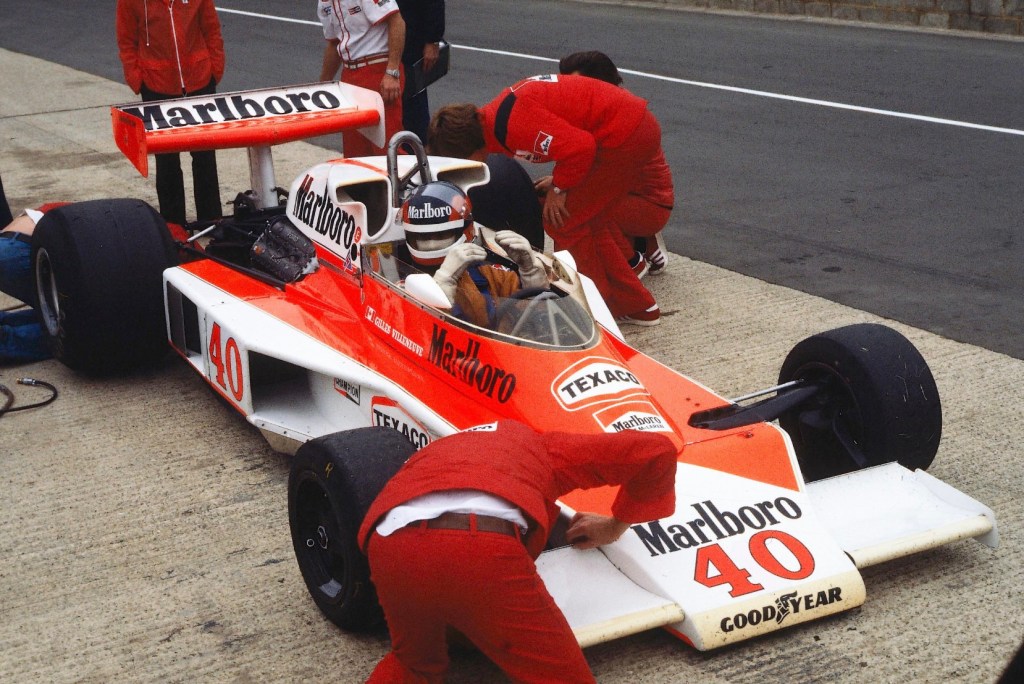
Teddy Mayer tasked Leo Wybrott, Stevie Bun and John Hornby to look after Gilles’ McLaren M23/8. “He was communicating with me so well, and we started to change the set-up of the car and he went faster and faster. We were fourth or fifth quickest, eventually qualifying ninth. We didn’t qualify higher because we didn’t have access to the soft Goodyears” Wybrott recalled. (MotorSport)
Villeneuve lapping Silverstone in ’77. His first race outside North America was in the 1976 Pau GP for Ron Dennis’ Project Four outfit, Q10 and DNF in a year old March 752 Hart impressed the F2 regulars (LAT)

The international racing world was abuzz with the other-worldly-skills of the pint-sized Canadian magician. No less an admirer than James Hunt pressed his cause with McLaren’s Teddy Mayer who ran a car for Gilles at the 1977 British GP.

Villeneuve explored the limits of his M23, spinning on most of Silverstone’s corners as he worked out the car’s limits, outqualifying his vastly more experienced teammate, Jochen Mass. He finished 11th despite a pitstop for what turned out to be a broken water temperature gauge.

Further impressive Formula Atlantic drives and pace aboard Walter Wolf’s wilful Wolf WD1 Chev Can-Am car established his big-car credentials.

Villeneuve in the Wolf WD1 Chev, circuit unknown, 1977. The Canadian was immediately quick in this challenging car vacated by Chris Amon upon his retirement from racing (unattributed)
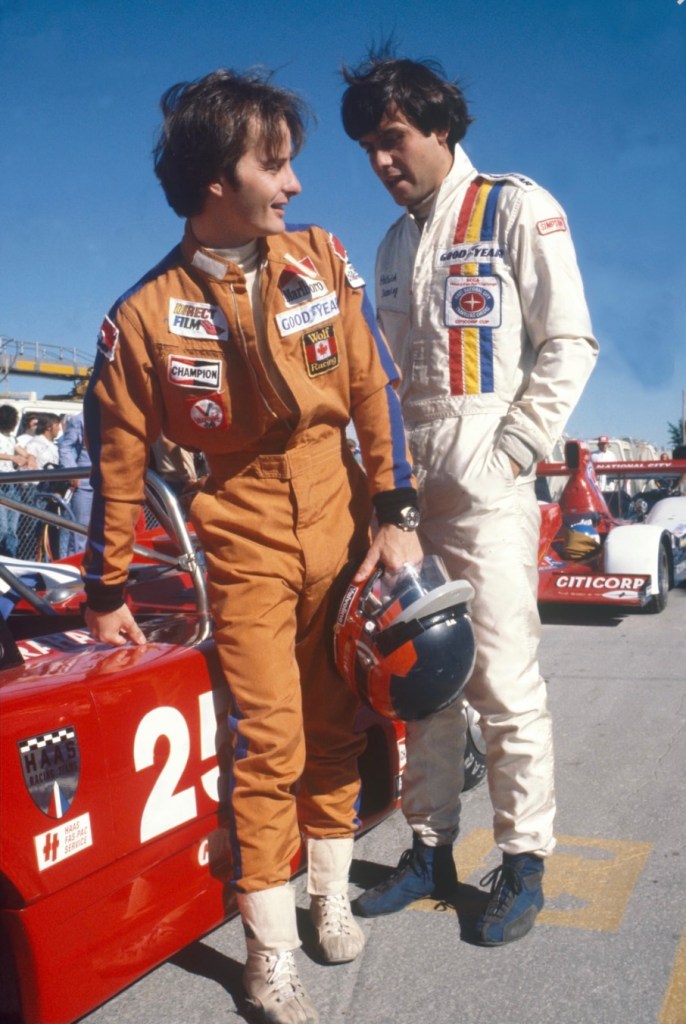
GV and Patrick Tambay at Trois Rivieres in September 1977. Tambay won the race (and the series overall) in the Carl Haas’ Lola T333CS Chev behind him, GV DNF engine from Q3. #25 is Bobby Rahal’s Lola T296 Ford BDX (LAT)

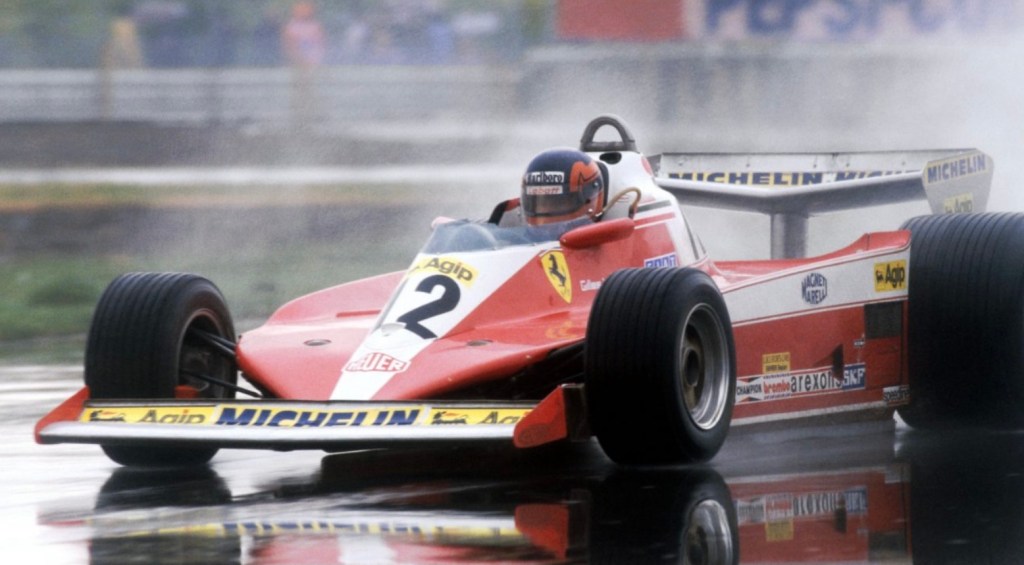
When Mayer signed Patrick Tambay to replace Mass in 1978, Enzo Ferrari bagged Villeneuve. Gilles remained a Ferrari driver – surely ordained at his birth – for the balance of his way-too-short career.

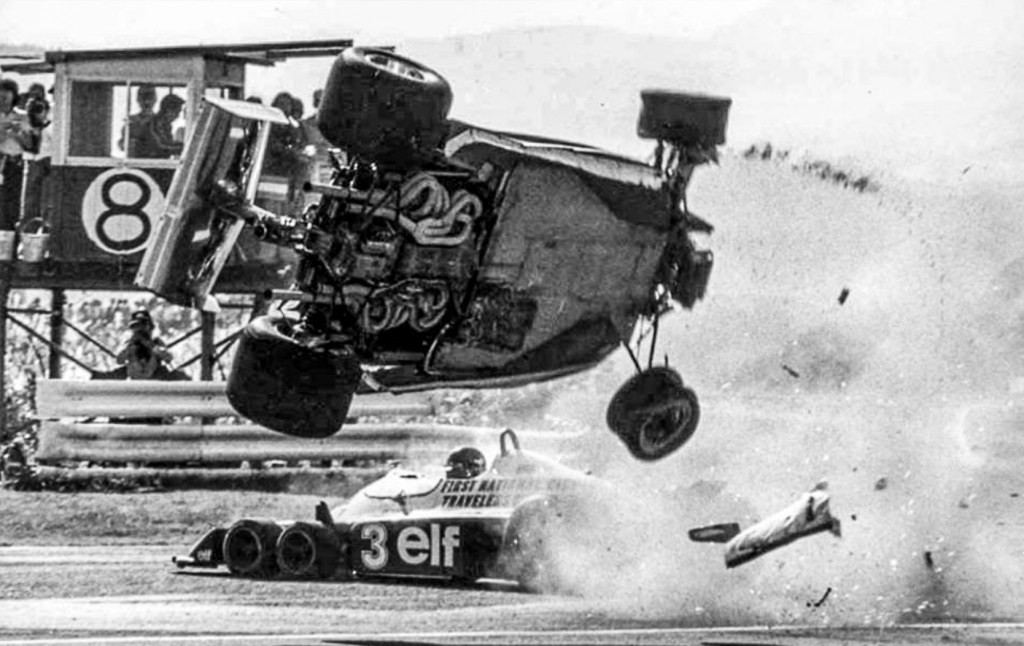
His first 1977 start at Mosport ended with a DNF, tragedy followed at Fuji a fortnight later. Gilles challenged Ronnie Peterson’s Tyrrell P34 six-wheeler under brakes, the pair collided causing the Canadian’s Ferrari to vault the armco into a restricted area where it killed a spectator and a marshall. Despite a no-fault finding his year couldn’t have ended on a worse note.

Villeneuve mid-flight at Fuji with the fatal consequences imminent. Peterson’s Tyrrell P34 rear damage ‘clear’. Rare shot of the underside of a 312T2 Ferrari inclusive of the pipe-bender’s artistry (unattributed)
GV on the way to his first GP win at home in October 1978, Montreal, Ferrari 312T3. His future teammate, Scheckter was second in a Wolf WR6 Ford and present teammate Reutemann was third (unattributed)

1978 was character building. Villeneuve was unsurprisingly bested by his seasoned Ferrari teammate Carlos Reutemann who won three Grands Prix in the year of the dominant ground-effect Lotus 79, Mario Andretti and Ronnie Peterson.

After a series of early season DNFs and accidents the Italian press were baying for his blood, twelve months later they wanted him anointed a Saint.

Better performances in later ’78 were capped by a season-ending Mosport home win. His emotions at the year’s conclusion were the complete reverse of those twelve months before.

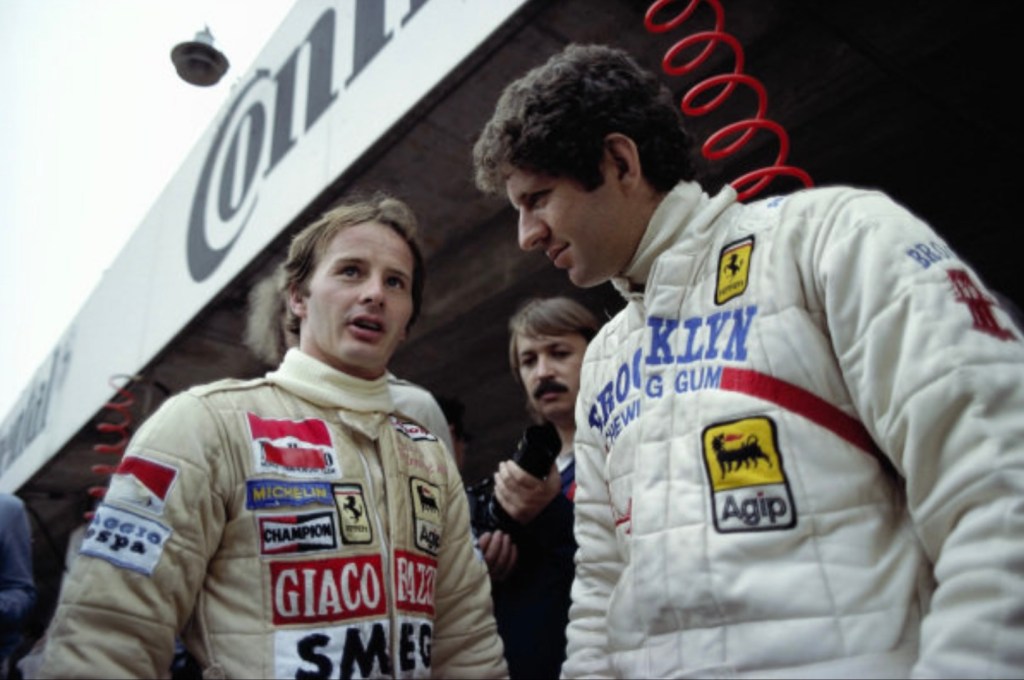
Gilles and Jody at Hockenheim in July1979. Alan Jones started his late season run of wins that weekend in his Williams FW07 Ford. Sceckter was fourth and Villeneuve eighth (unattributed)

Enzo Ferrari’s pairing of F1’s 1973 and 1978 enfants terrible, Jody Scheckter and Villeneuve in 1979 seemed a volatile Molotov Cocktail to many pit-pundits, but the kindred spirits gelled.

They extracted all Mauro Forghieri’s ground effect Ferrari 312T4 had. Gilles had the edge in outright pace – both won three Grands Prix – but Jody’s better placings, and Gilles preparedness to keep to team instructions, in a line-ball season edged out the Canadian by four points.

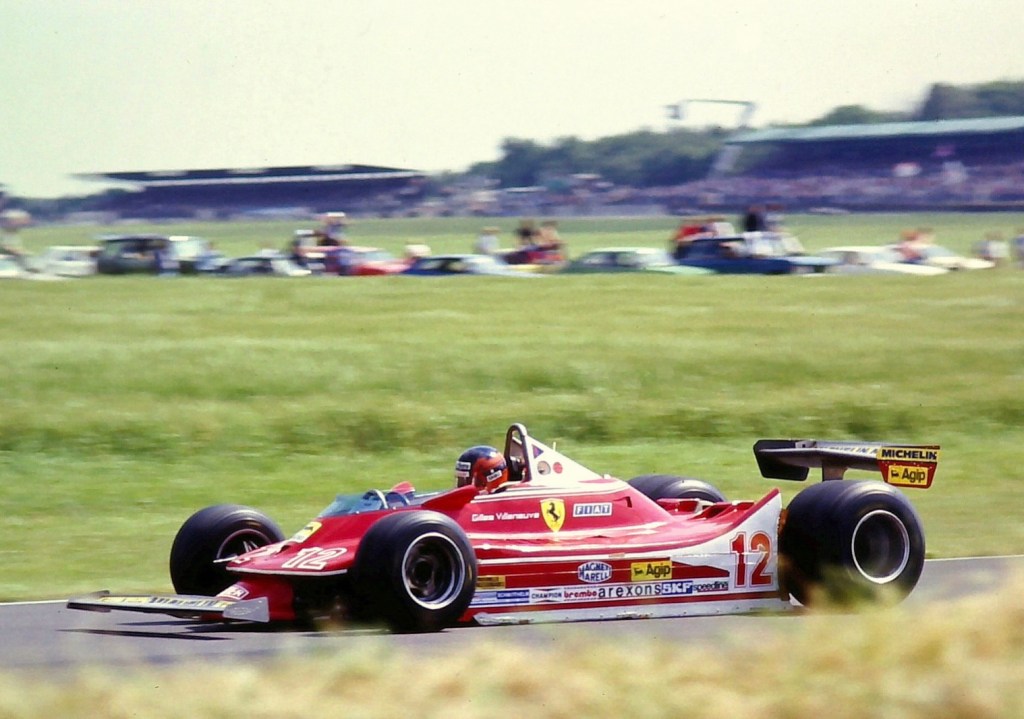
British GP, Silverstone 1979. Ferrari 312T4 14th on the day Clay Regazzoni i took a famous first win for Williams – FW07 Ford (M Lee)
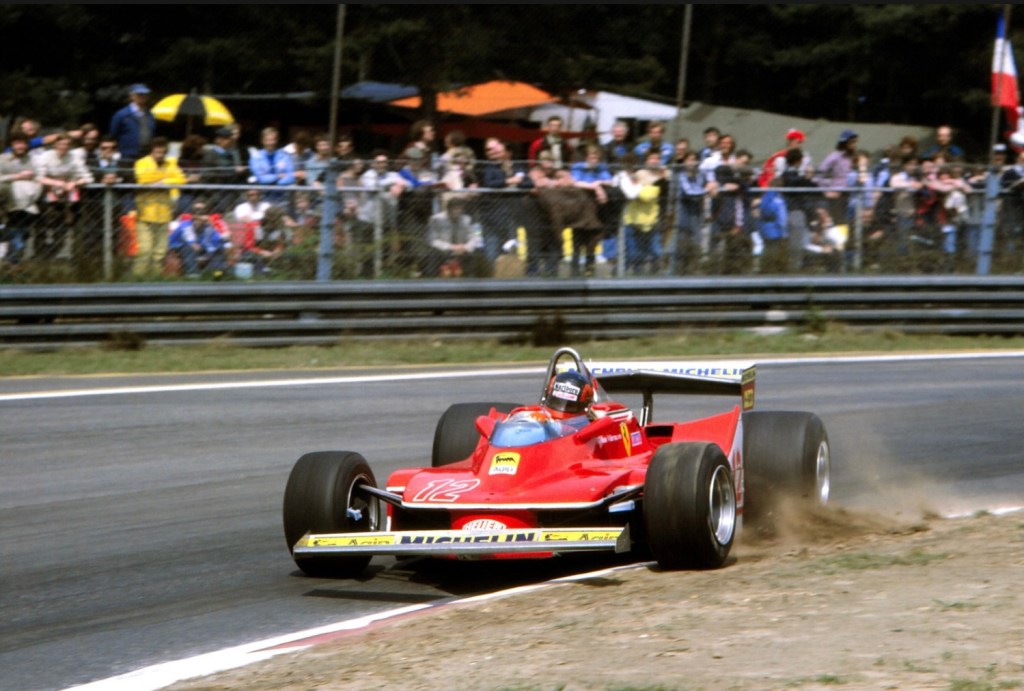
It may not always have been the quickest way around a racetrack, but GV’s style sure was entertaining! Zolder, May 1979, 7th, Scheckter won (MotorSport)

Two races which partially forged the Villeneuve legend were at Dijon and Zandvoort.

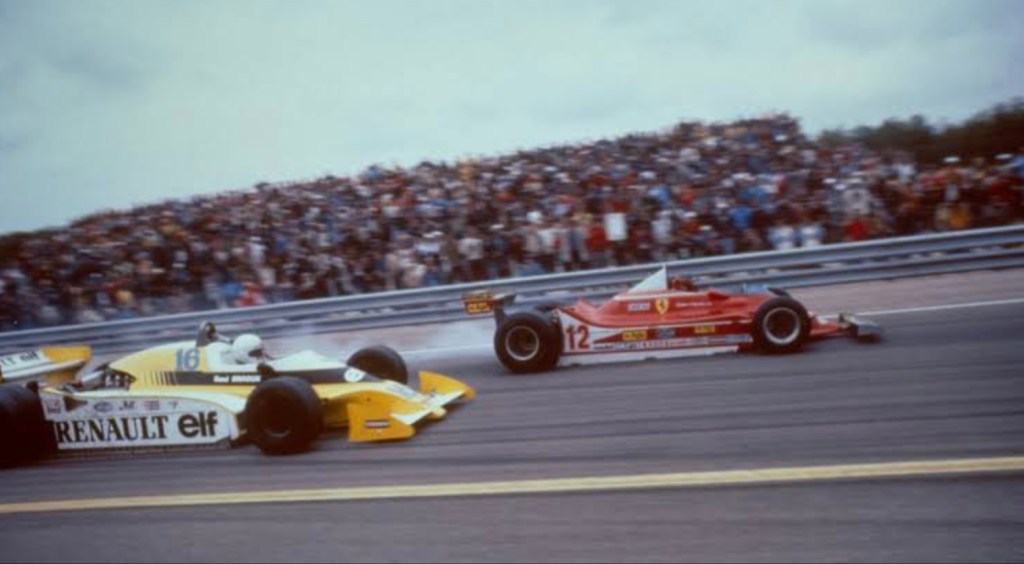
Two-mad-little-Froggies, Auvergne’s Rene Arnoux and Quebec’s Gilles Villeneuve went at it hammer and tongs in the French GP’s final laps in an epic, breath taking, wheel to wheel-tapping battle between Renault RE10 and Ferrari 312T4 for second place.

 In a magnum-opus of car control the pair waged a dice the likes of which GP racing hasn’t seen since. The duo gave each other just enough room – centimetres – to carry off a balletic-opera rather than tragic-comedy which concluded in Gilles’ favour.

So all-consuming was this dice that Renault and Jean Pierre Jabouille’s first turbo-car, and first GP win (Renault RE10) were almost forgotten!

During the Dutch GP’s closing laps Villeneuve’s left-rear tyre exploded. Undeterred, and desperate for points he reversed back onto the track and headed for the distant pits shredding the tyre, wheel and left-side suspension assembly. Gilles devotees saw it as his passionate will to win while his detractors offered the display as further evidence that he was absolutely bonkers…

Crazy last laps at Dijon in 1979: Villeneuve 312T4 and Rene Arnoux, Renault RE10 (MotorSport)
Ferrari 126CK, Dijon DNF French GP 1981 (MotorSport)

1980 was a Ferrari disaster as more advanced ground effect cars bested the 312T5, limited as it was by the width of its 180-degree V12 (or Flat-12 if you wish) which impinged on critical sidepod/tunnel size.

Ferrari joined the turbo-age in 1981 with the 550-600bhp 1.5-litre 126CK. Its combination of tricky power delivery mixed with chassis and aerodynamic shortcomings created a machine in which Gilles comprehensively blew-off new teammate, Didier Pironi after Scheckter retired (Villeneuve outqualified Pironi 10-5 that year).

Villeneuve showed plenty of controlled aggression, winning at Monaco after keeping the tricky car on the island as others crashed or had mechanical misfortune.

Three weeks later at Jarama, Gilles took the Spanish GP lead on lap 14 then fronted a high-speed freight train of Jacques Laffite, John Watson, Carlos Reutemann and Elio De Angelis, nose-to-tail for 18 laps in a classic battle of a more powerful but ill-handling car holding off four better handling cars. The top-5 were separated by 1.5 seconds at the finish of a thriller in which Gilles put not a foot wrong.

On the way to winning the 1981 Monaco GP, Ferrari 126CK. Jones second in his Williams FW07C Ford and Laffitte third in Ligier JS17 Matra (unattributed)
Here we go with 2 laps to run, Imola 1982 (unattributed)

And so, to the Final Act.

1982 started as ‘81 finished, Gilles outqualified his friend Pironi – they were mates let’s not forget – four nil aboard the improved 126C2 at Kyalami, Rio, Long Beach and Imola.

Pironi was feeling the pressure, why would Ferrari keep him if he couldn’t deliver the goods?  The consistent gap between he and Gilles was marked.

The San Marino Grand Prix grid was decimated by the ongoing FOCA/FISA turf/sporting/commercial battle, ten of the FOCA teams didn’t enter. After the retirement of the leading Renaults, Villeneuve led Pironi (as usual).

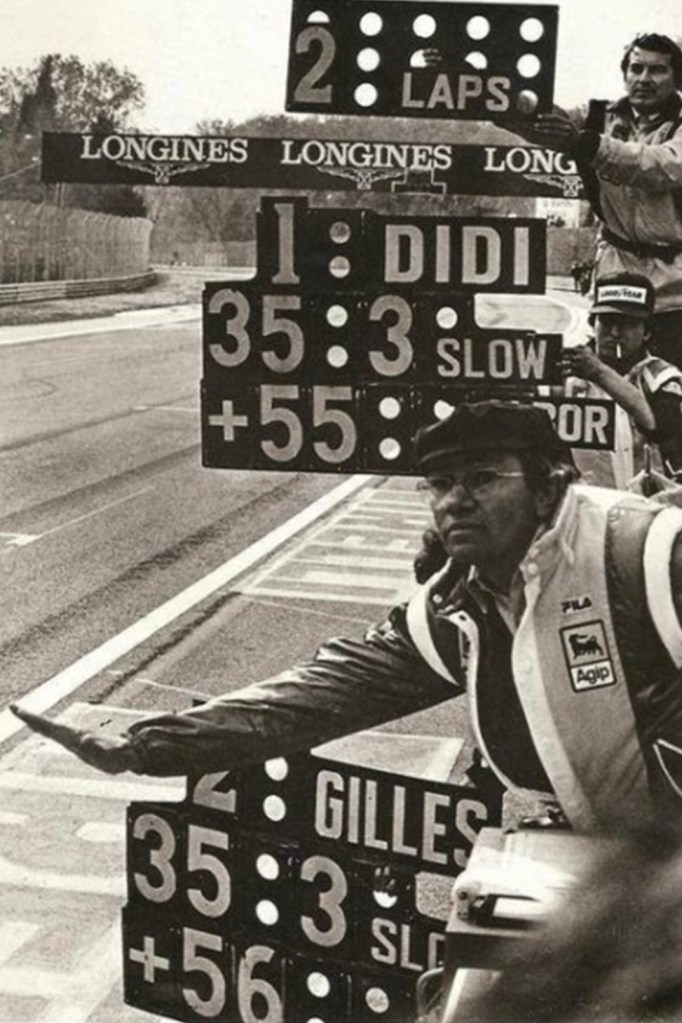
Ferrari’s ‘slow’ pitboard was interpreted as slow and hold position by Gilles. Pironi passed Villeneuve, Villeneuve re-took the lead three times, and then slowed thrice. Despite this – Villeneuve’s superiority over the Frenchman crystal clear to all over the previous 15-months – Pironi passed again and took the chequered flag having interpreted the signal differently. Or took a win he badly needed and hadn’t achieved mano et mano in fair combat.

Gilles burned with fury, setting up the tragedy which unfolded at Zolder a fortnight later on May 8, 1982.

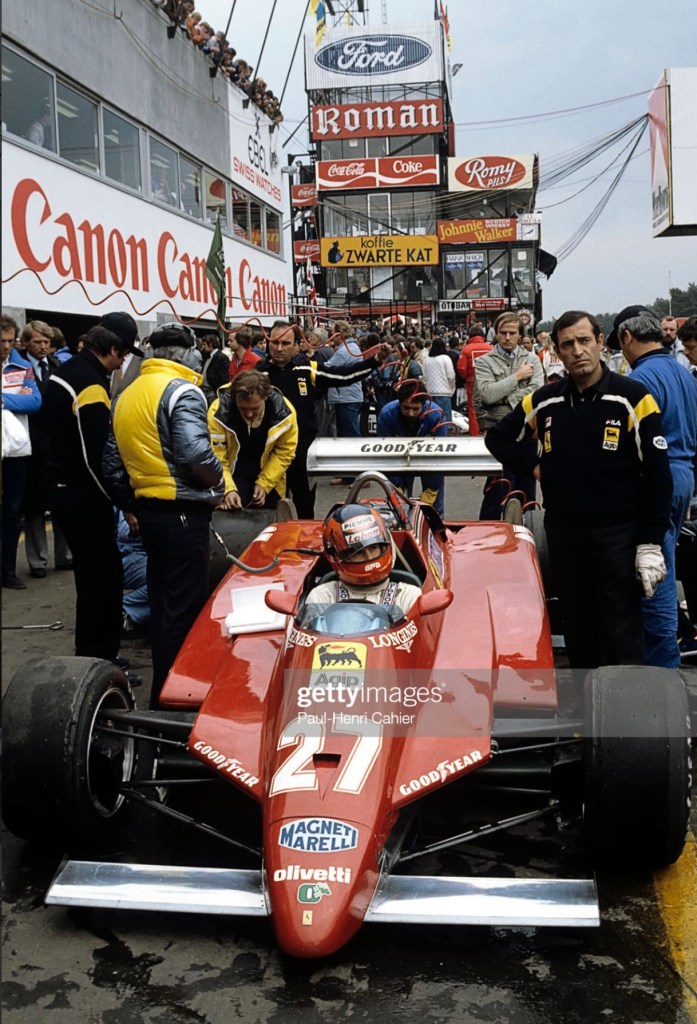
Zolder pits, May 8, 1982. GV ready for the off, Ferrari 126C2 chassis #056
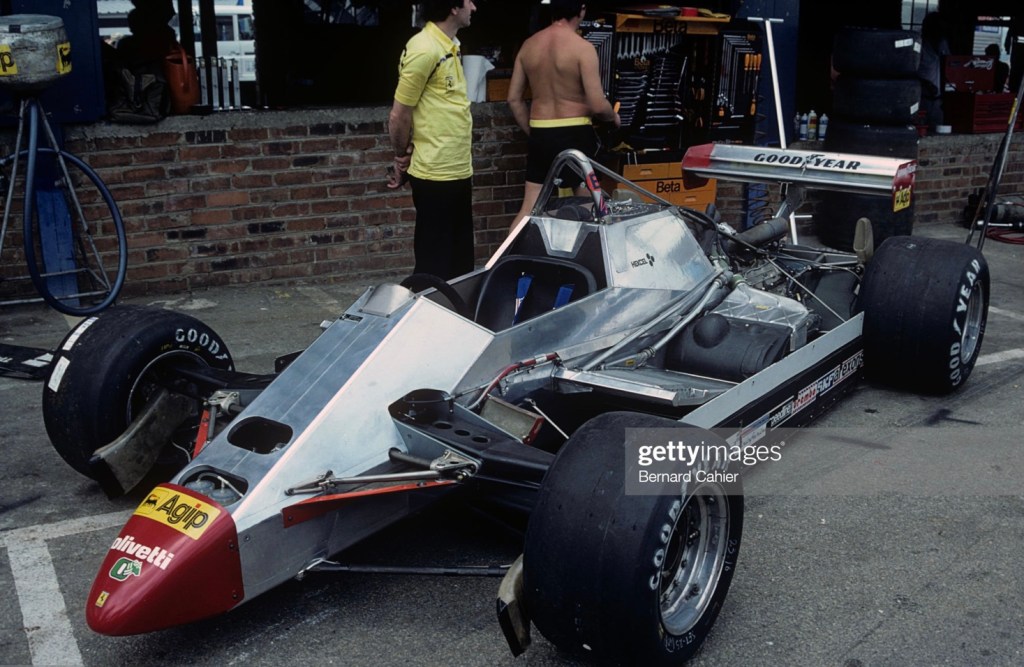
GV 126C2 #055 at Kyalami in January 1982. The monocoque chassis was a composite structure made of Hexcel carbon fibre and aluminium honeycomb, a far cry from the strength of the high speed carbon fibre dodgem-F1s of today

Fuelled by anger and determined to beat Pironi’s better qualifying time, Villeneuve set off on those final laps, fell short, then collided with Jochen Mass’ March at 120-140mph as both cars changed direction before Terlamenbocht – Mass moved his March, in fifth gear but going much slower than Villeneuve, to the right to allow the Ferrari to pass on the left – launching the Ferrari into the air and then a series of horrific cartwheels. The hapless racer suffered a fracture of the cervical vertebrae and a severed spinal chord, he died at 9:12pm that evening at the University of St Raphael Hospital in Louvain

Canada and the racing world mourned, as many still do.

Based on statistics Villeneuve isn’t one of the greats, but like Nuvolari, Rosemeyer, Rindt and Peterson, Gilles is revered for the passion, brio, fire and electricity he produced in a racing car every time he jumped aboard.

When Villeneuve was on track the beer-tents emptied. The automotive acrobat was about to strut his stuff, sadly the catch-net and the gods were absent on that day in Belgium 40 short years ago.

“I know that no human being can perform miracles. But Gilles made you wonder sometimes,” quipped Jacques Laffite.

R.I.P Gilles Villeneuve. We salute you.

Credits…

MotorSport, LAT, CJ Ramstad, museegillesvilleneuve.com, Martin Lee, Leo Wybrott on auto123.com, Getty Images, ‘Gilles Villeneuve:The Life of the Legendary Racing Driver’ Gerald Donaldson

Tailpiece…

Last lap. Still on the hop, quallies useless by then but he was still on the hop…

Finito…