


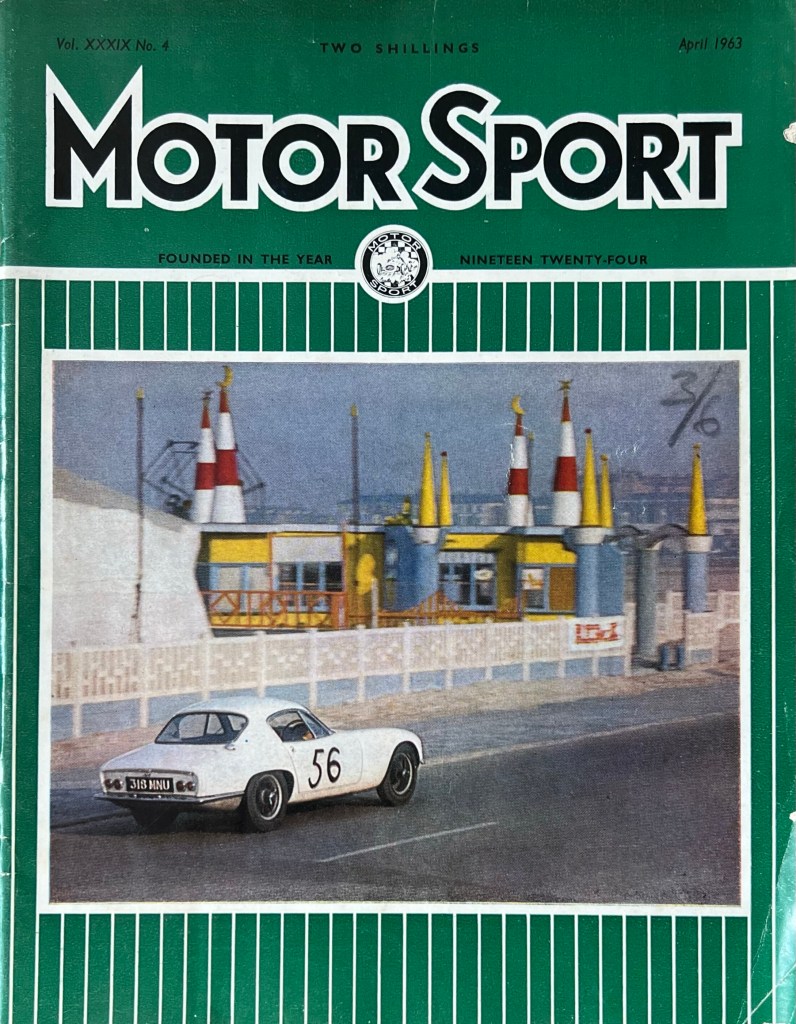
‘Cedric Brierley was well known in Club racing until a bad crash put him out of racing for some time, leaving him with a disability which precludes the use of a normal gearbox. He has had a Lotus Elite fitted with a 1.5-litre single-cam Coventry Climax engine and Hobbs automatic gearbox and at the Southport Speed Trials he proved to be nearly as quick as the E-Type Jaguars.’ MotorSport wrote.
It was the beauty of the shot that initially captured my attention, then you start to dig…I thought there was only one Elite fitted with a Hobbs Mecha-Matic gearbox – Howard Frederick Hobbs was an Adelaide born engineer – not so…
Rupert Lloyd Thomas wrote on The Nostalgia Forum, ‘Let us try and put the achievements of Howard Hobbs in context. He built the 1015 automatic transmission and fitted it to a Lotus Elite for the 1961 season.
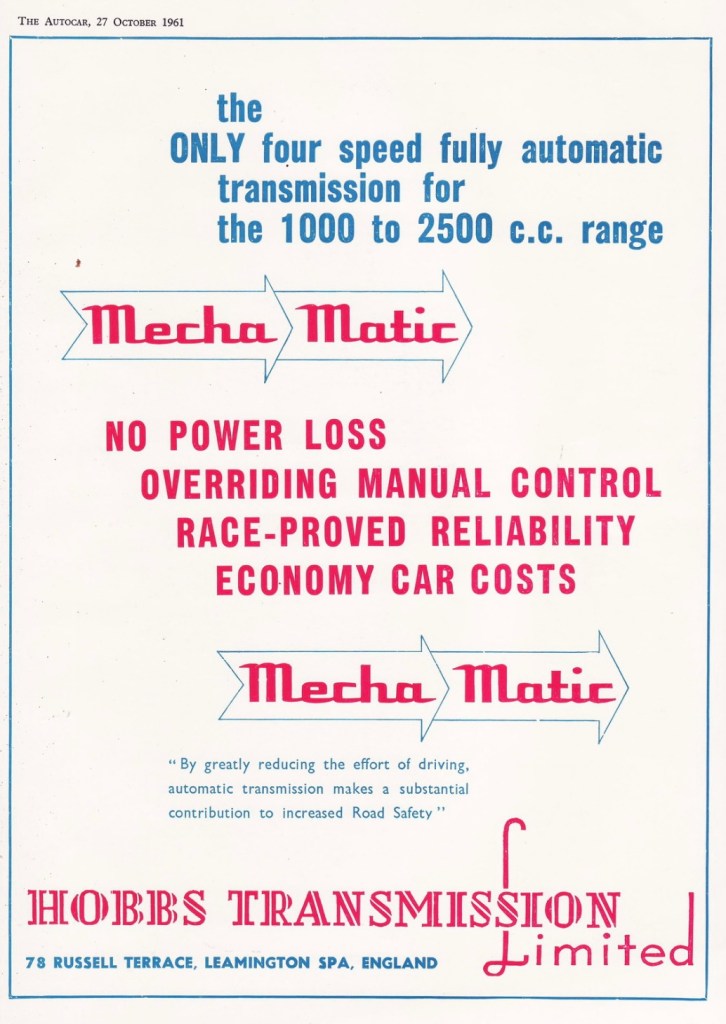
In November 1960, David Hobbs, Howard’s son, acquired Lotus Elite, 5649 UE, from Chequered Flag, Chiswick, London, that was to launch his international racing career. The engine of the Elite was modified by Cosworth to Stage III tune producing 108 b.h.p. and a Hobbs Mecha-Matic gearbox was fitted, specially modified for racing. Hobbs said, “Chapman was not involved in the project, but our engine was blueprinted by some young tuner by the name of Keith Duckworth.”
The Hobbs Mecha-Matic gearbox high point came at the Nurburgring on May 28, 1961, when David Hobbs, and Bill Pinckney, two Midlands lads, defeated the might of Porsche in the 1600cc sports racing class in the Nurburgring 1000 kms with their automatic Lotus Elite. Bumped up to the 1600cc class by the organisers for their non-standard gearbox, after protests from fellow competitors, they faced much more powerful opposition from Porsche. After this remarkable achievement the future of the gearbox looked set fair. A long trip to Italy for Le Quattro Ore di Pescara on August 15 was less successful. The car dropped a valve early in the race, mechanic Ben Cox remembers worrying about taking the blame for what turned out to be a material failure.
Colin Chapman was sufficiently impressed to contact Hobbs in order that Jim Clark could drive the car in the 3 Hours of Daytona on 11 February 1962. As David Hobbs fought to establish himself as a professional racing driver he had also come to the attention of the Jaguar factory, and for 1962 he took over the privateer Peter Berry-entered E-Type from Bruce McLaren for the season. He was entered in the Jaguar, 3 BXV, for the inaugural Daytona 3 hours with the Lotus sitting idle. As Hobbs tells it, “Colin Chapman rang up and asked if he could borrow the Mecha-Matic Elite for Jim Clark to race at the same event.” Clark drove the Mecha-Matic in Florida, streaking away in the class lead but retiring after 60 laps with a failed starter motor and being classified 29th.
Jim Clark later had a road-going Elite, HSH 200, fitted with a Hobbs gearbox, as did Stirling Moss. Clark said in the book ‘Jim Clark at the Wheel’, “Those who scorn automatics take note!”
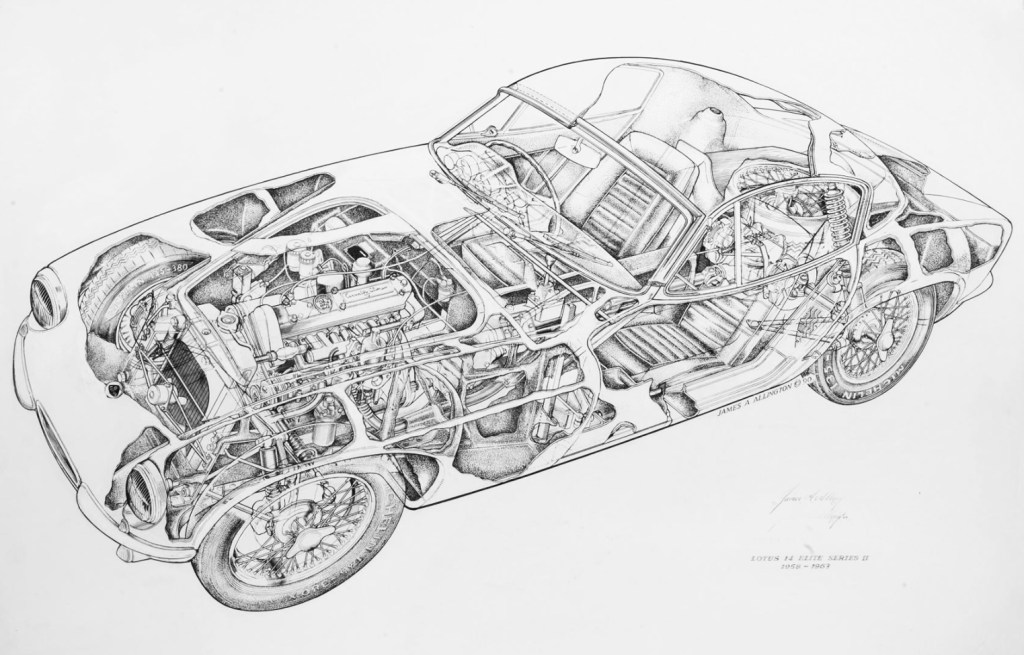
The Mecha-Matic Elites…
Thomas again, ‘I have found three:
The road car of Jim Clark Reg # HSH 200. This plate would have been issued in 1961 by Berwick C.C. Chassis No: EB-1659, Engine No: FWE10233 – SUPER 95 Specification. Bristol Plate No: EB-1659. Originally yellow and silver. Subsequently sold in 1962 to a George V. Simpson, who painted it dark blue, Scottish racing colours.
The Cedric Brierley car, Reg # 318 MNU.
The Stirling Moss road car Reg # HRT 163D. Body/Chassis no.1789 and was fitted with a Twin-cam engine, make unknown. Colour yellow. This is a 1966 reg no. so car may have been re-registered that year on change of specification. Car thought to be in the USA, last known owner was a Richard Richardson.
So we have a story involving David Hobbs, Keith Duckworth, Colin Chapman, Jim Clark and Stirling Moss. Duckworth later put cash into developing the ideas of Howard Hobbs, Clark and Moss bought the cars.
An intriguing footnote. About the time Duckworth was taking up the VKD transmission for racing, Howard Hobbs was still battling his old nemesis Borg-Warner in the road car game: http://archive.comme…ly-transmission ‘
See Howard Hobbs here: https://en.wikipedia.org/wiki/Howard_Frederick_Hobbs and more about the detail of the Mecha-Matic transmission here: https://go4trans.com/technical-transmission-general-articles/howard-frederick-hobbs-and-his-transmission-heritage/
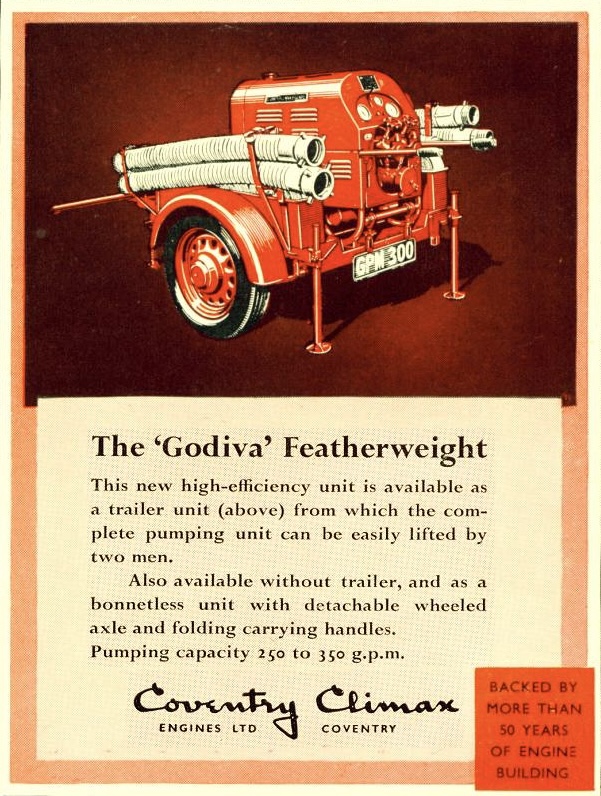
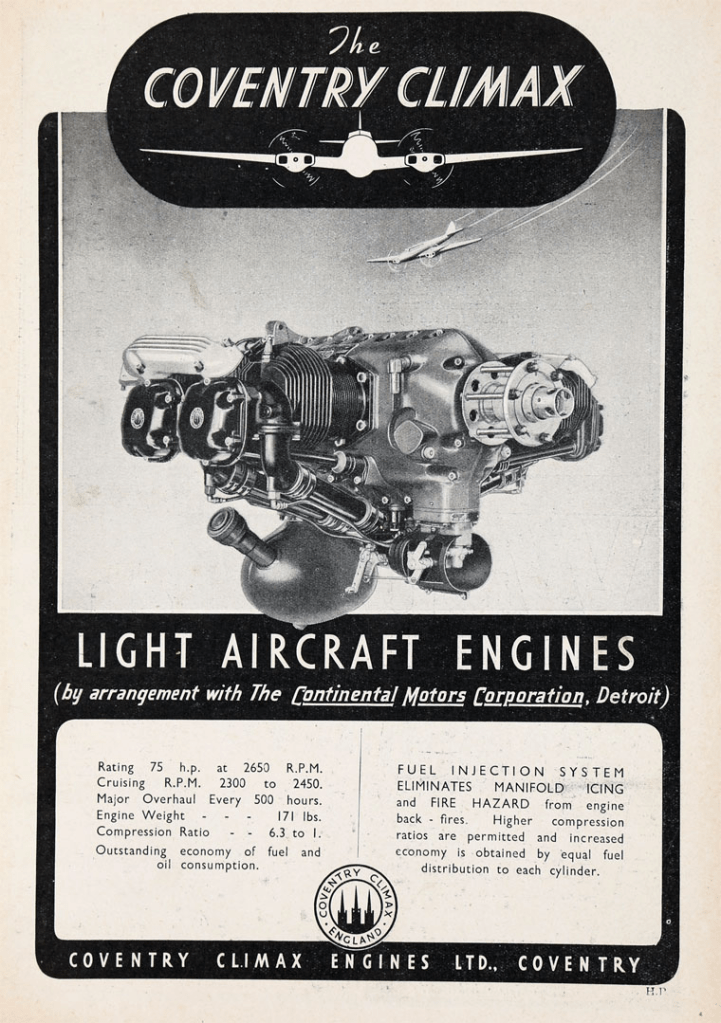
Coventry Climax…
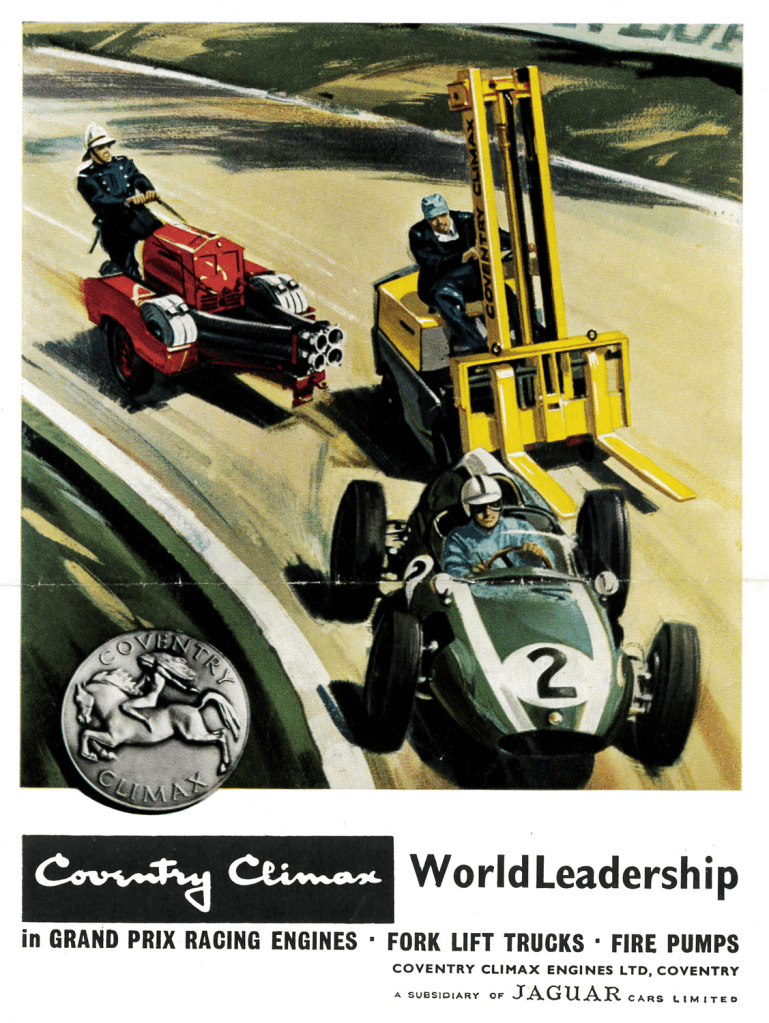
Coventry Climax’ mega racing successes were begat by the Godiva Featherweight engine as you all know. Here is a great Graces Guide summary of the corporate evolution of Coventry Climax, formed in 1917: https://www.gracesguide.co.uk/Coventry_Climax_Engines
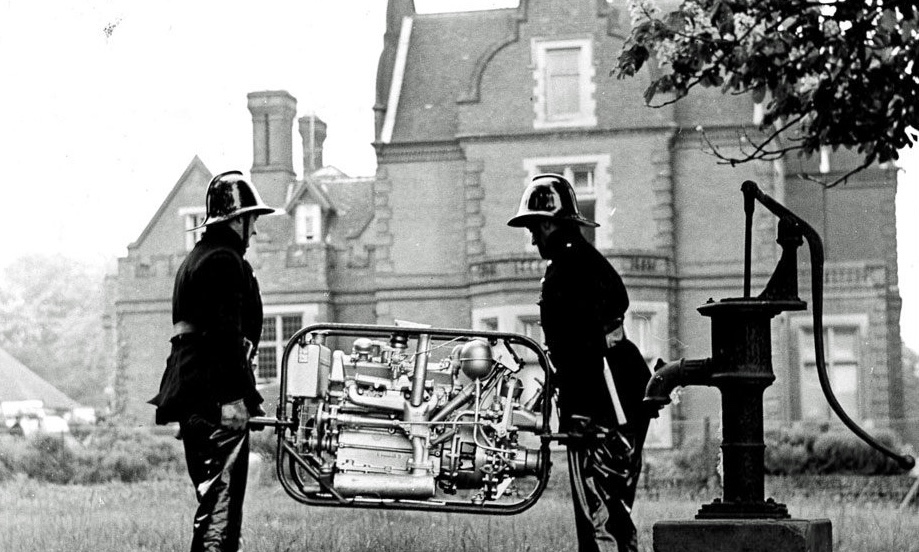
Etcetera…
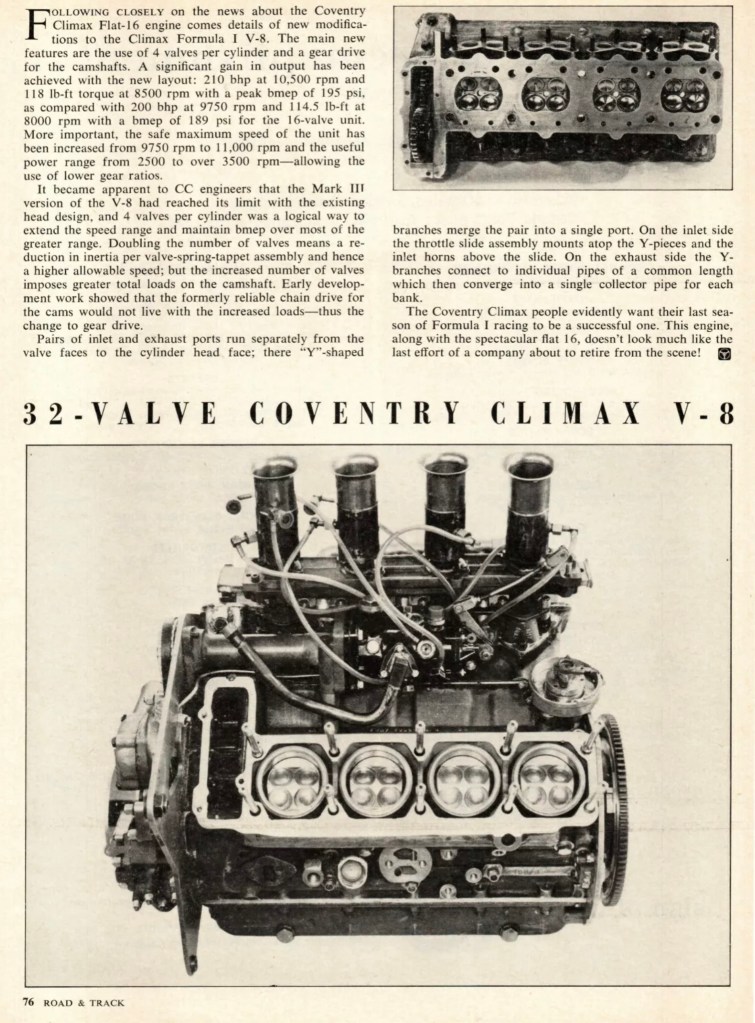
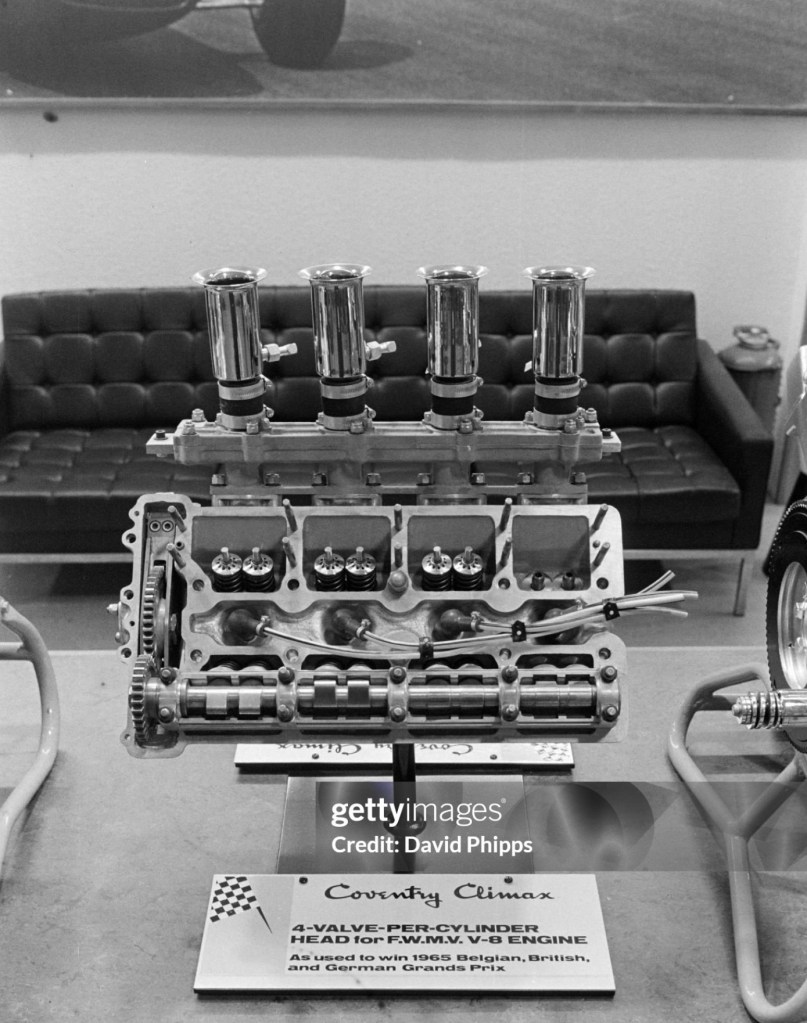
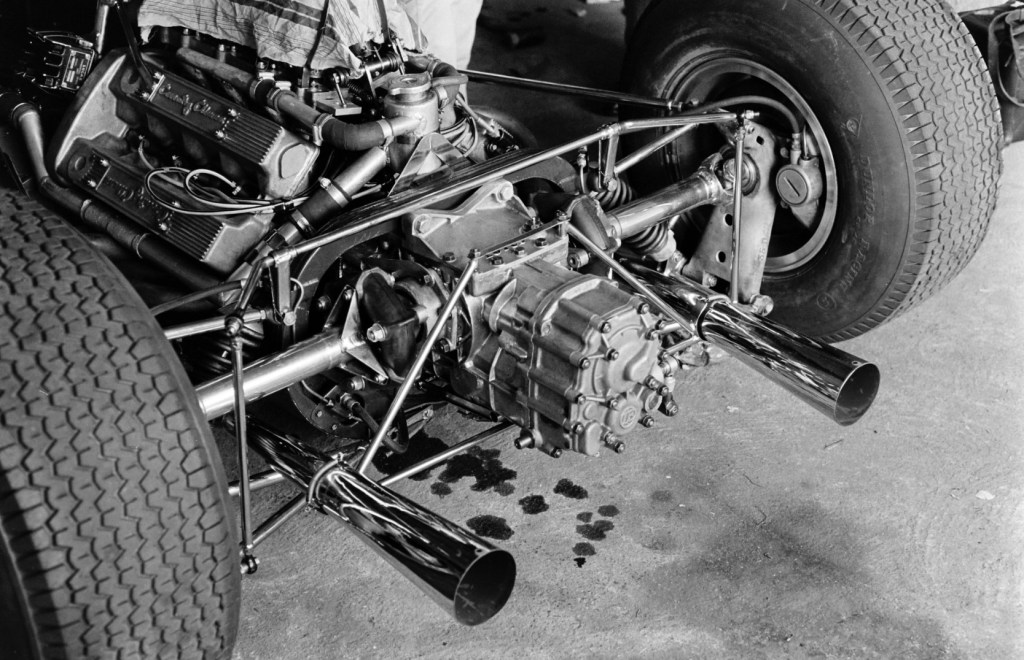
Irrelevant in the context of this article but it popped up in my Google search, so why not. Shots of the two (?) semi-undressed F1 Coventry Climax FWMV Mk 6 and Mk 7 1.5-litre four-valve V8s aren’t common.
The Cams were gear, rather than chain-driven as in the case of the earlier FWMVs, as David Phipps’ London Motor Show shot taken at Earls Court in October 1965 demonstrates.
The Mk6 FWMV Coventry Climax V8 (below) made for Lotus fitted to a 33 chassis in 1965, circuit unknown. Quick visual differentiators (below) from a two-valver are the ribbed cam-covers and, depending on the crank spec of the engine concerned, and ‘conventional’ rather than crossover exhausts. Aren’t the megaphones nice…212bhp @ 10,300rpm are the numbers I have. ZF five-speed transaxle.
Credits…
MotorSport April 1963, Rupert Lloyd Thomas, James Allington, Road & Track, MotorSport Images, Godiva Ltd, Getty Images-David Phipps
Tailpiece…
Finito…
 primotipo...