Posts Tagged ‘Lotus Elite’

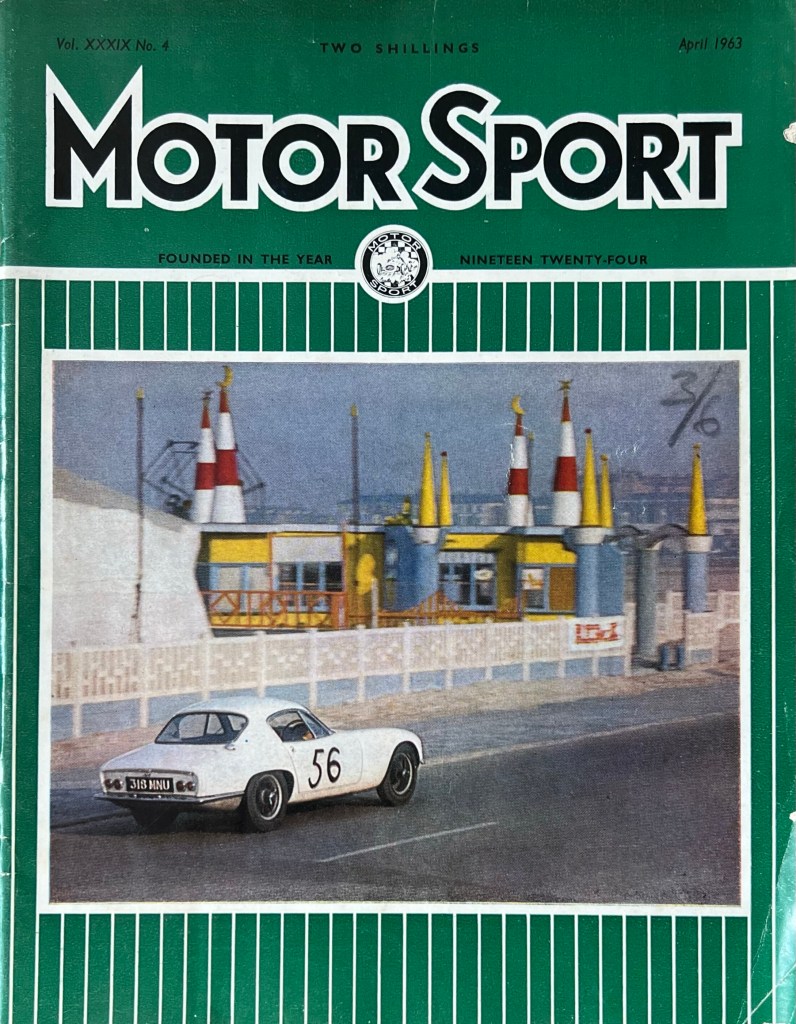
‘Cedric Brierley was well known in Club racing until a bad crash put him out of racing for some time, leaving him with a disability which precludes the use of a normal gearbox. He has had a Lotus Elite fitted with a 1.5-litre single-cam Coventry Climax engine and Hobbs automatic gearbox and at the Southport Speed Trials he proved to be nearly as quick as the E-Type Jaguars.’ MotorSport wrote.

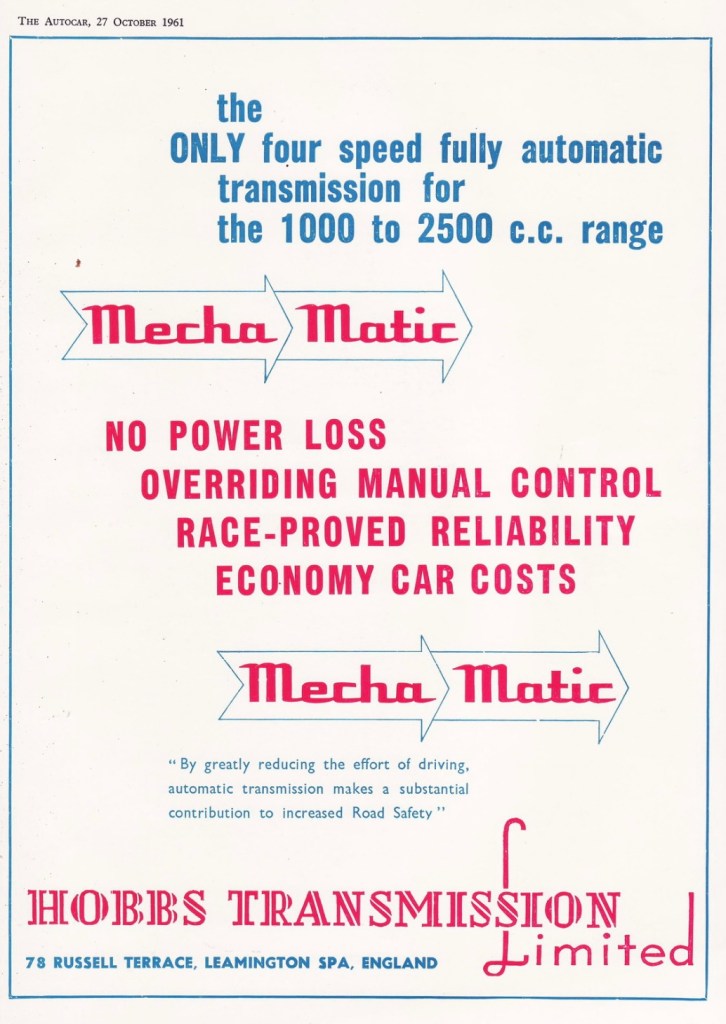
It was the beauty of the shot that initially captured my attention, then you start to dig…I thought there was only one Elite fitted with a Hobbs Mecha-Matic gearbox – Howard Frederick Hobbs was an Adelaide born engineer – not so…

Rupert Lloyd Thomas wrote on The Nostalgia Forum, ‘Let us try and put the achievements of Howard Hobbs in context. He built the 1015 automatic transmission and fitted it to a Lotus Elite for the 1961 season.

In November 1960, David Hobbs, Howard’s son, acquired Lotus Elite, 5649 UE, from Chequered Flag, Chiswick, London, that was to launch his international racing career. The engine of the Elite was modified by Cosworth to Stage III tune producing 108 b.h.p. and a Hobbs Mecha-Matic gearbox was fitted, specially modified for racing. Hobbs said, “Chapman was not involved in the project, but our engine was blueprinted by some young tuner by the name of Keith Duckworth.”

The Hobbs Mecha-Matic gearbox high point came at the Nurburgring on May 28, 1961, when David Hobbs, and Bill Pinckney, two Midlands lads, defeated the might of Porsche in the 1600cc sports racing class in the Nurburgring 1000 kms with their automatic Lotus Elite. Bumped up to the 1600cc class by the organisers for their non-standard gearbox, after protests from fellow competitors, they faced much more powerful opposition from Porsche. After this remarkable achievement the future of the gearbox looked set fair. A long trip to Italy for Le Quattro Ore di Pescara on August 15 was less successful. The car dropped a valve early in the race, mechanic Ben Cox remembers worrying about taking the blame for what turned out to be a material failure. 

Colin Chapman was sufficiently impressed to contact Hobbs in order that Jim Clark could drive the car in the 3 Hours of Daytona on 11 February 1962.  As David Hobbs fought to establish himself as a professional racing driver he had also come to the attention of the Jaguar factory, and for 1962 he took over the privateer Peter Berry-entered E-Type from Bruce McLaren for the season. He was entered in the Jaguar, 3 BXV, for the inaugural Daytona 3 hours with the Lotus sitting idle. As Hobbs tells it, “Colin Chapman rang up and asked if he could borrow the Mecha-Matic Elite for Jim Clark to race at the same event.”  Clark drove the Mecha-Matic in Florida, streaking away in the class lead but retiring after 60 laps with a failed starter motor and being classified 29th.

Jim Clark later had a road-going Elite, HSH 200, fitted with a Hobbs gearbox, as did Stirling Moss. Clark said in the book ‘Jim Clark at the Wheel’, “Those who scorn automatics take note!”
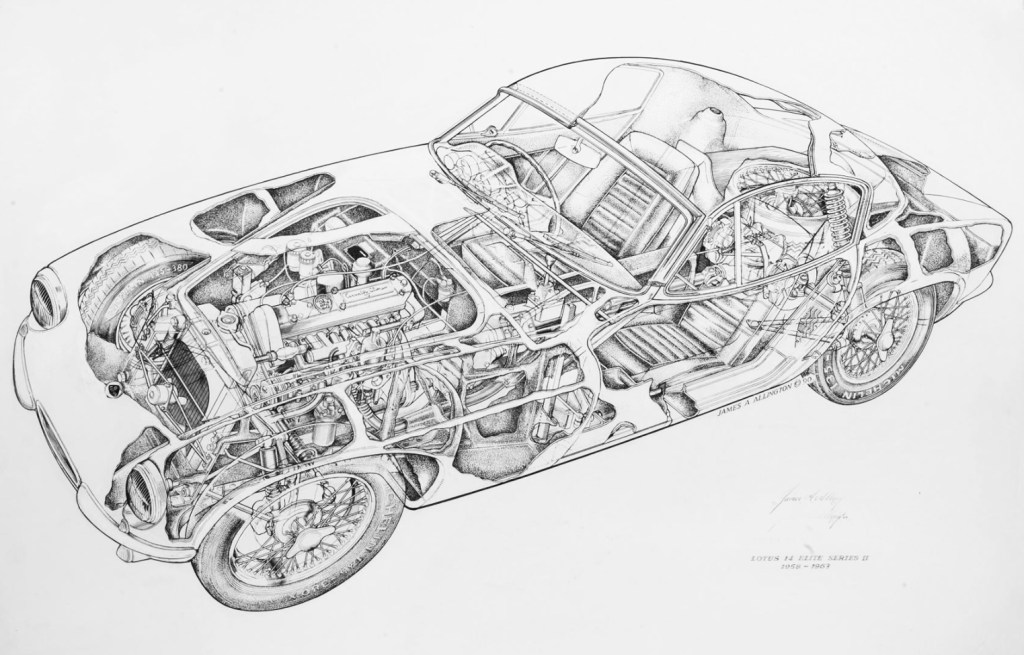
(J Allington)

The Mecha-Matic Elites…

Thomas again, ‘I have found three:

The road car of Jim Clark Reg # HSH 200. This plate would have been issued in 1961 by Berwick C.C. Chassis No: EB-1659, Engine No: FWE10233 – SUPER 95 Specification. Bristol Plate No: EB-1659. Originally yellow and silver.  Subsequently sold in 1962 to a George V. Simpson, who painted it dark blue, Scottish racing colours.

The Cedric Brierley car, Reg # 318 MNU.

The Stirling Moss road car Reg # HRT 163D. Body/Chassis no.1789 and was fitted with a Twin-cam engine, make unknown. Colour yellow. This is a 1966 reg no. so car may have been re-registered that year on change of specification. Car thought to be in the USA, last known owner was a Richard Richardson.

So we have a story involving David Hobbs, Keith Duckworth, Colin Chapman, Jim Clark and Stirling Moss. Duckworth later put cash into developing the ideas of Howard Hobbs, Clark and Moss bought the cars.

An intriguing footnote. About the time Duckworth was taking up the VKD transmission for racing, Howard Hobbs was still battling his old nemesis Borg-Warner in the road car game: http://archive.comme…ly-transmission

See Howard Hobbs here: https://en.wikipedia.org/wiki/Howard_Frederick_Hobbs and more about the detail of the Mecha-Matic transmission here: https://go4trans.com/technical-transmission-general-articles/howard-frederick-hobbs-and-his-transmission-heritage/
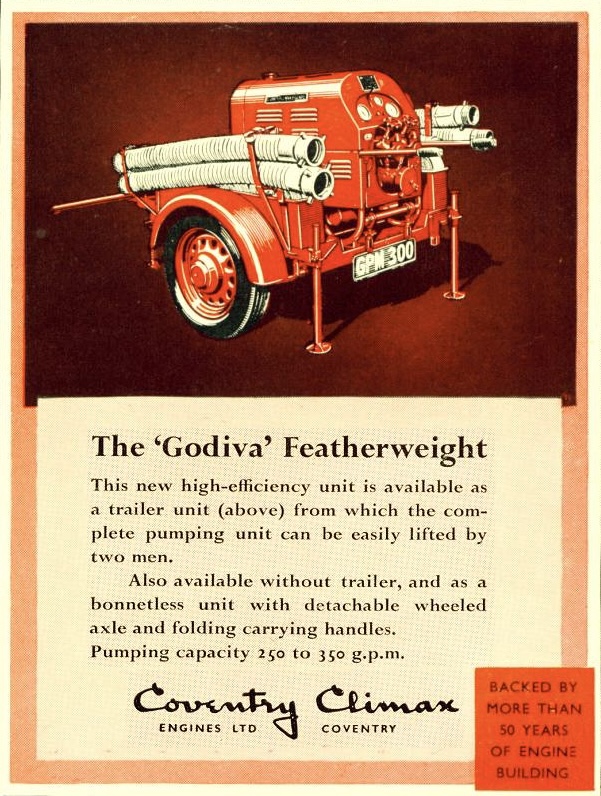
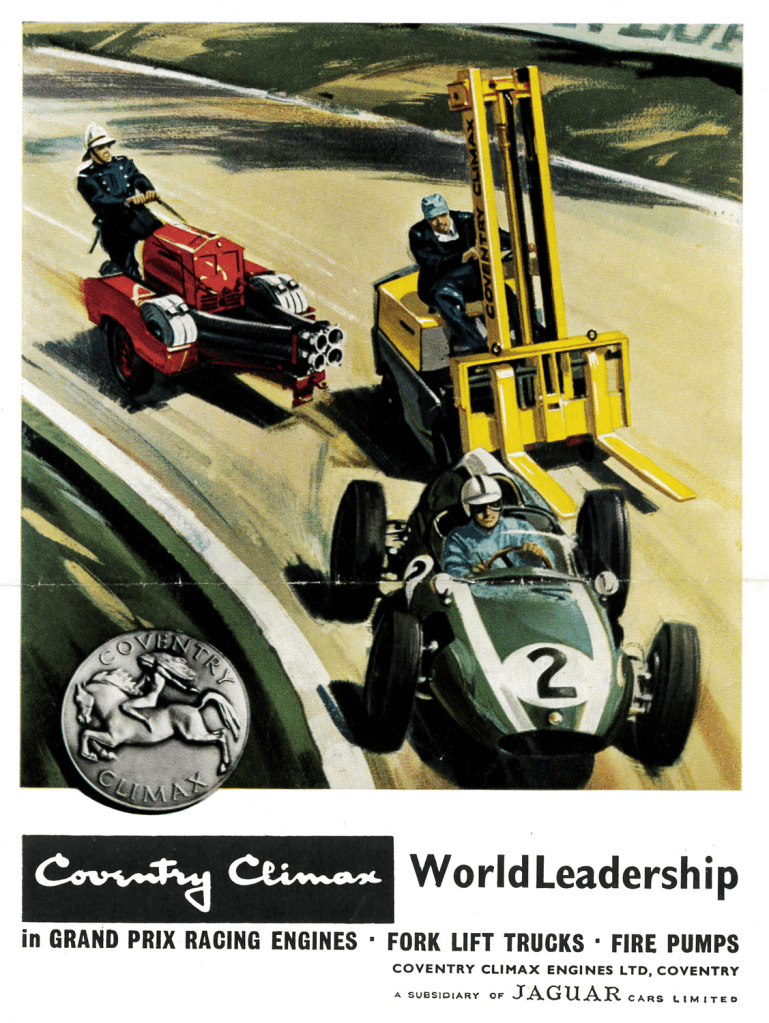
Coventry Climax…

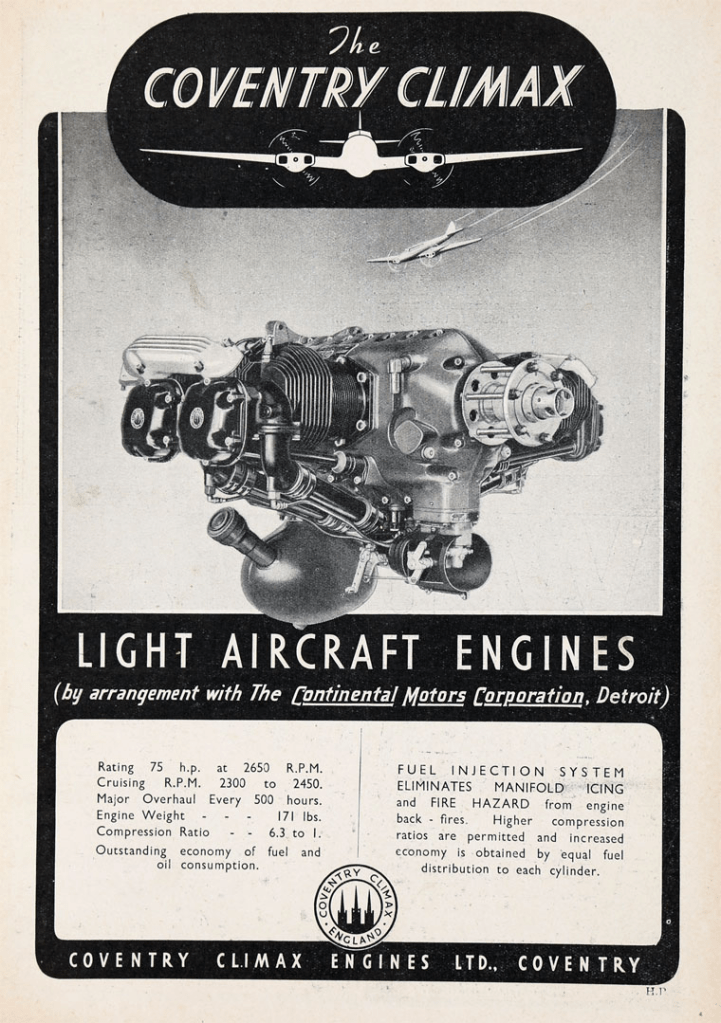
Coventry Climax’ mega racing successes were begat by the Godiva Featherweight engine as you all know. Here is a great Graces Guide summary of the corporate evolution of Coventry Climax, formed in 1917: https://www.gracesguide.co.uk/Coventry_Climax_Engines
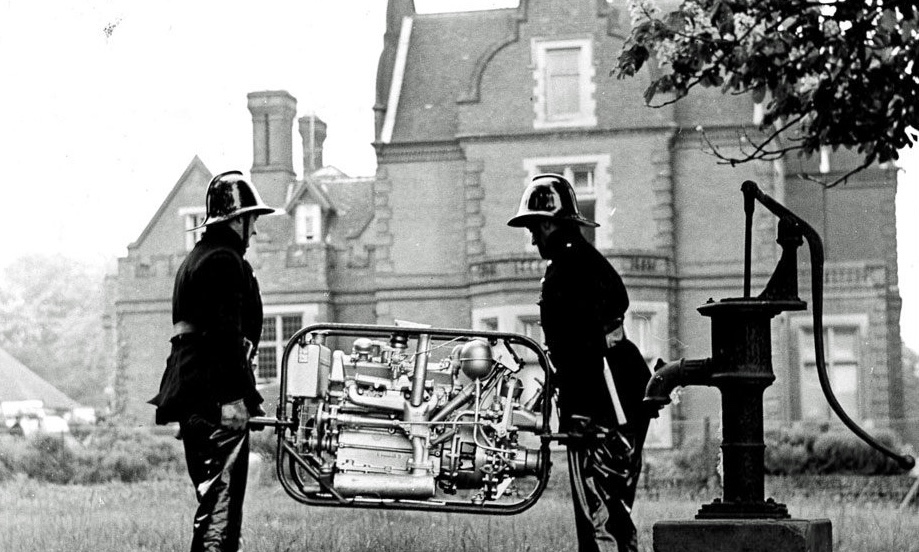
(Godiva Ltd)

Etcetera…

1939

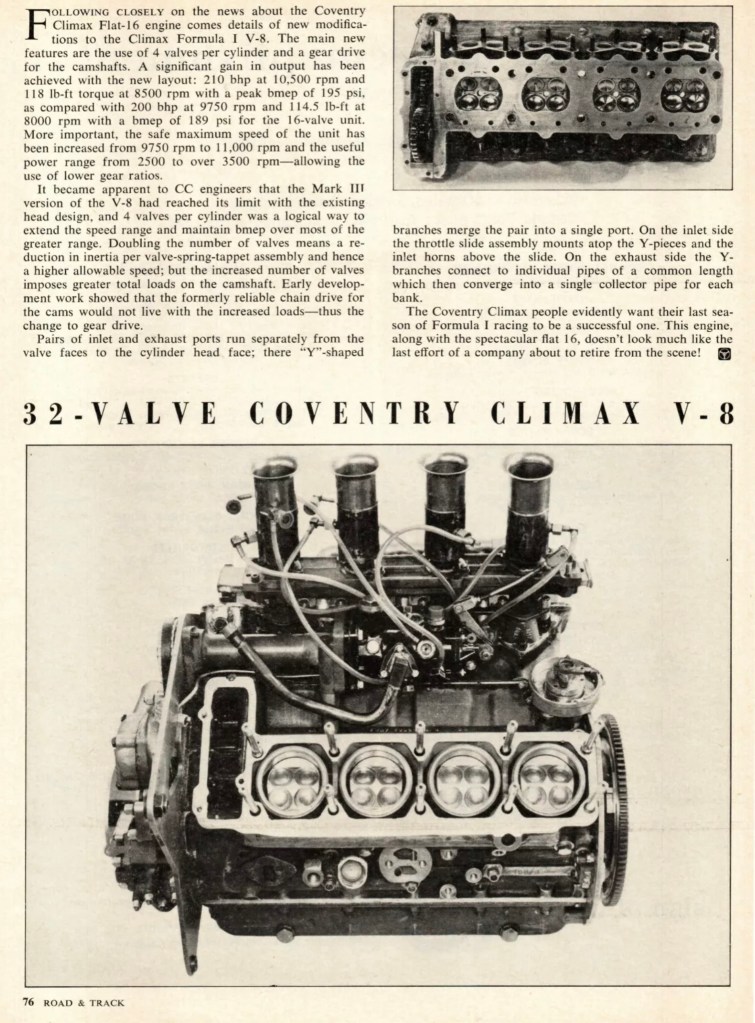
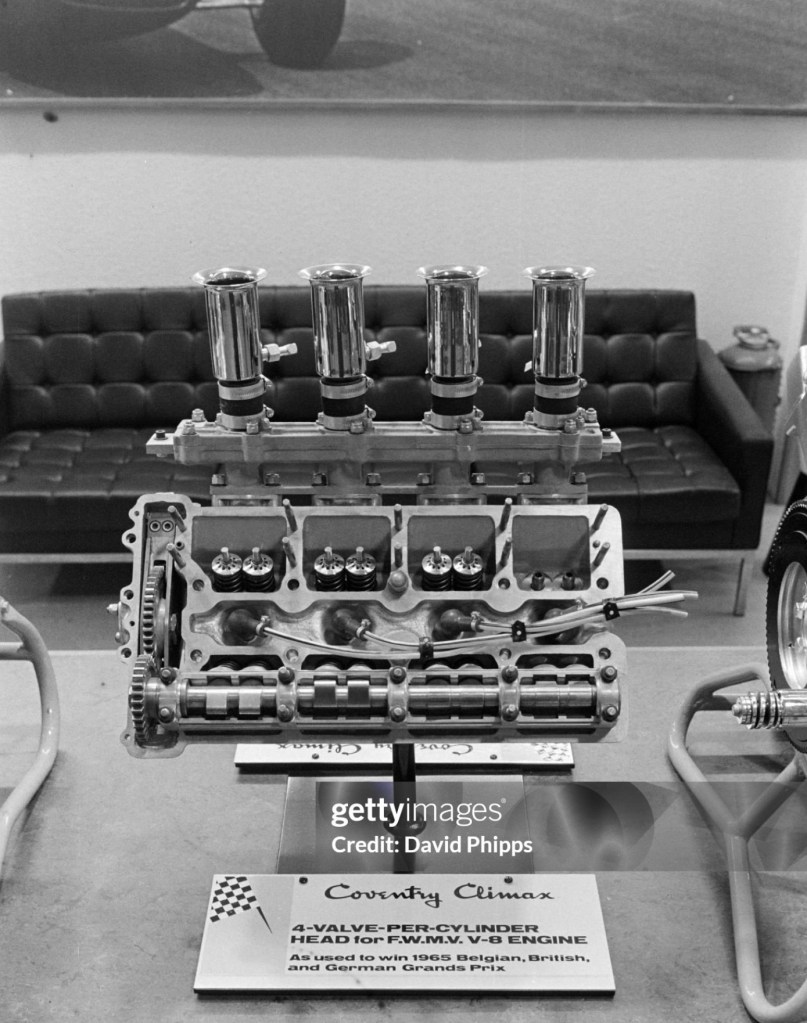
Irrelevant in the context of this article but it popped up in my Google search, so why not. Shots of the two (?) semi-undressed F1 Coventry Climax FWMV Mk 6 and Mk 7 1.5-litre four-valve V8s aren’t common.

The Cams were gear, rather than chain-driven as in the case of the earlier FWMVs, as David Phipps’ London Motor Show shot taken at Earls Court in October 1965 demonstrates.
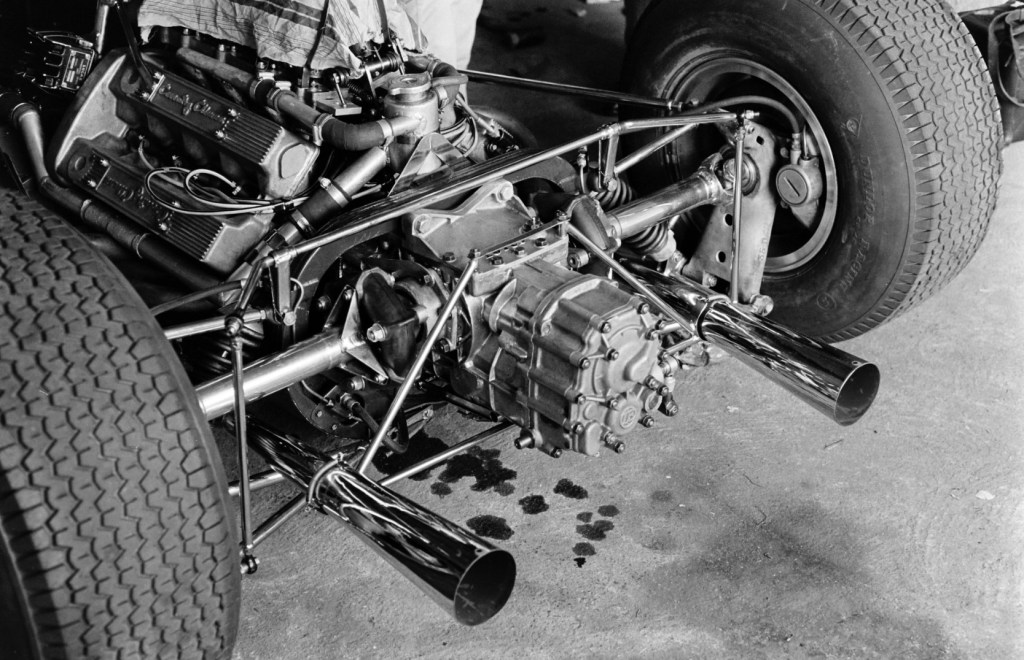
The Mk6 FWMV Coventry Climax V8 (below) made for Lotus fitted to a 33 chassis in 1965, circuit unknown. Quick visual differentiators (below) from a two-valver are the ribbed cam-covers and, depending on the crank spec of the engine concerned, and ‘conventional’ rather than crossover exhausts. Aren’t the megaphones nice…212bhp @ 10,300rpm are the numbers I have. ZF five-speed transaxle.
(MotorSport)

Credits…

MotorSport April 1963, Rupert Lloyd Thomas, James Allington, Road & Track, MotorSport Images, Godiva Ltd, Getty Images-David Phipps

Tailpiece…
Finito…
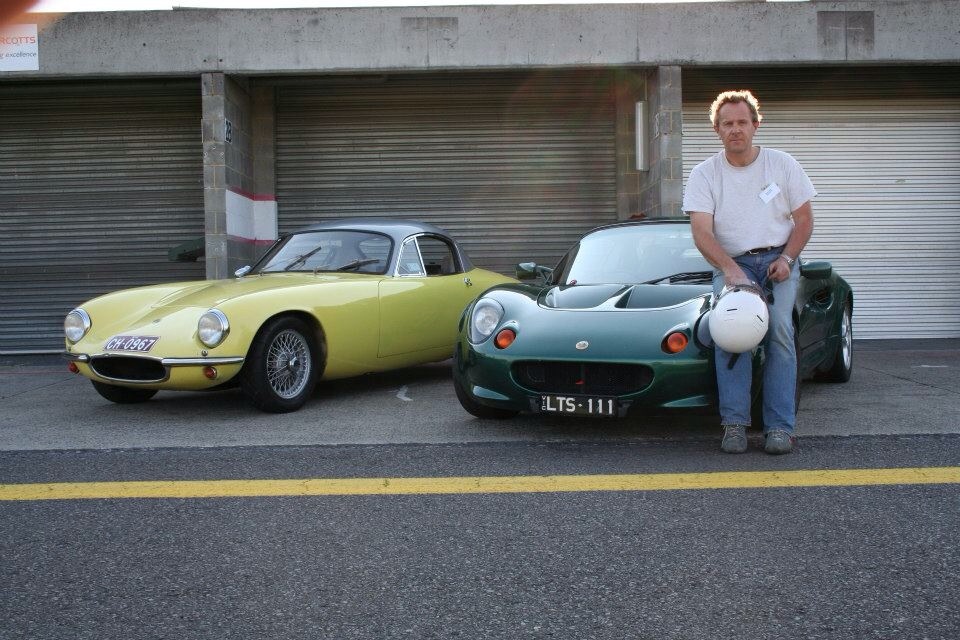
I was travelling down Alexandra Avenue in the twee Melbourne suburb of South Yarra last summer and fell in line behind a Lotus Elite and Lotus Elise, it reminded me of a magic day a few years ago…

My mate David Mottram is a doyen of the Victorian MG and Lotus Clubs. He is a racer, restorer and fettler of renown of these and other marques. On occasion he invited me along to the MG Car Club Driver Training Days to help out, it was always fun to attempt to impart some knowledge, the only downside being scared shitless once or twice alongside people whose levels of bravery made Gilles Villeneuve look like a ‘Big Sheila’.

The best part of the day was always the final 45 minutes during which the instructors had the track to themselves. At the time I had a standard’ish Series 1 Elise, the original Rover K-Series powered jobbie. It didn’t have a lot of power but with a free-flowing exhaust, a smidge stiffer springs which the standard Koni’s could just control, some decent track tyres on original wheels and competition brake pads it was both a fun road and track car.

My frame of reference at the time was a Lola T342 Historic Formula Ford I raced for over a decade. My 911 Carrera 3.2, using the same Formula Ford prism was a horrible track car! The Elise’ standard gearset was the only circuit shortcoming really-  second was too short and fifth ‘moonshot tall’ even at Phillip Island without a strong tailwind. The 111S gear cluster was the solution but I never quite got around to making that change.

Lotus Elite cutaway (James Allington)


(S Dalton)

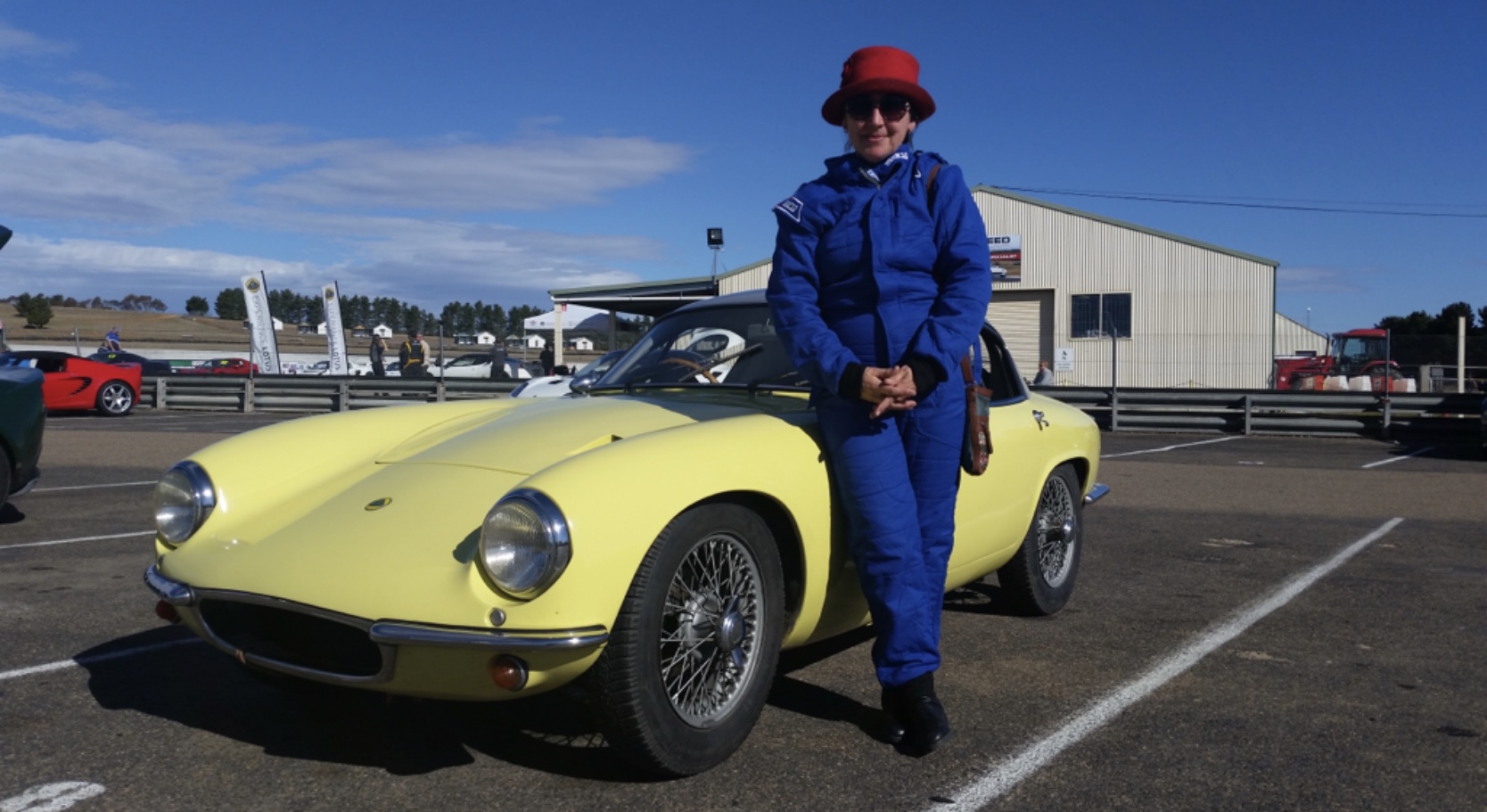
Anyway, on this particular Sandown day David brought along his ex-Derek Jolly Lotus Elite Super 95. This buttercup yellow car will be familiar to many Australian enthusiasts of historic racing as David and Pat Mottram have contested a gazillion Regularity events in it across this great brown land of ours for the best part of 25 years. Whilst I had ridden in it on the road I’d never had a steer before.

I jumped out of the Elise after 15 laps or so and straight into the Elite, cars built forty years apart.

The thing which struck me like the proverbial bolt from the blue after only a couple of laps was the sibling similarity of these two wonderful, light, low powered, beautiful handling cars.

Chapman had nothing at all to do with the Elise of course, the design team were fiddling about with its key design elements 15 years or so after the great mans death of a heart attack in late 1982.

But the Lotus brand values transcended the founder, which is of course exactly as it should be. ‘Brand Essence’ is what we ‘arty-farty, limp wristed commo-poofter bastard’ branding practitioners call the intrinsic elements of a brand. One of my buddies used to refer to me in those glowing terms during my years as a Partner of one of Australia’s foremost branding consultancies.

Lotus Elise 111s cutaway (Lotus Cars)


Elise conceptual drawing or sketch (Lotus Cars)

The first thing which impressed about the Elise as I drove what became my own car down bumpy, rutty Church Street Richmond on the initial test drive was the ‘pitter-patter’ of the cars tyres as the wheels rode the bumps with the chassis absolutely stiff. It was like a honeymooners todger- rock solid.

You can feel what the wheels and tyres are doing as they are so beautifully controlled with a light aluminium chassis of amazing torsional stiffness by road car standards. Still, our Col did invent the modern aluminium monocoque, the 1962 Lotus 25 GP car was his first expression of the art.

These cars have relatively soft springs, the bushes are firm to give good control- the cars are noisy as a consequence of minimal sound deadening but the springs themselves are softish and have reasonable travel. Just like the Elite, the chassis of which, famously, was the worlds first fibreglass monocoque.

It was a bastard to make, but magnificent in conception and in use as long as you didn’t have an early, ‘problem-child’ car. Things improved when Bristol Aircraft took over construction of the chassis from Maximar, the original ‘trail blazers’ in interpretation and manufacture of Colin’s baby.

The Elite is also ‘drummy’, noisy just like its younger cousin, mind you I’d rather do the Melbourne to Sydney trip in the older of the two cars despite the lack of a tall fifth, cruisin’ down the highway gear.

Lotus Elite and 16 Climax FPF F2/F1 car at the London Motor Show in 1958


David Mottram aboard the family Elite 95 at Phillip Island (Mottram)

Your freckle is very close to the ground too, the Elise’ seat is a ‘form-fit’, no barge-arses should apply thing. To sit in it is the closest thing to the feel of a sports-racer on the road as is possible to experience. Use enough imagination and the view is pretty much what drivers of a Lola T70 Coupe had with the ultra low seating position, curved minimalist dash, exposed aluminium each side of you and guards not much higher than your nose. The seat isn’t sprung, its solidly mounted to the cars tub so all of the messages from the road are transmitted to your bum, fingers, wrists and toes- the sensory side of things, if that kinda stuff gives you your jollies, is amazing. Lotsa rubber bushings, who needs ‘em?

The Elite is more generous in the comfort department but only marginally so.

You sit up a little more and the seats whilst thinly padded are more comfy than the Elise. Even with a lap-sash road type belt you are retained nicely between the high transmission tunnel and the door with an array of Smiths instruments in front of you which is oh-so-period. My Elise was fitted with a six-point Willans harness which held me in the standard seat rather nicely for competition work, the Elite was not so endowed but the driving position is the same, a very comfortable one with long arms to the wheel and pedals nicely set for heel-‘n-toe operation

Steering of the Elise is delicious- in my experience there is nothing close to it on the road. Jumping from the Lola to the Elise was ‘same, same’- that’s not an indictment of one of 1975’s most competitive Formula Fords but an acclamation of Lotus design.

The weight of the steering, its feel, the wheel’s design, size, material and rim thickness, feedback and directness are superb in the way you can place the car on the road and the warning you get as the limits of adhesion are approached. The Elite rack is a Triumph item, the Elise’s was made by Titan Motorsport. Both have the same characteristics though in terms of the way the cars have steering of exceptional feel, delicacy and precision. The Elites wood-rimmed wheel is larger and thinner, the suspension, wire-wheels, tyre width and aspect ratio are period differences which mitigate against the same Elise level of precision but the Elite was a steering benchmark in the late fifties-early sixties period and a pleasure to guide around Sandowns fast corners. The Elite rolls about a bit, as you would expect, the Elise sits much flatter and ‘points’ or turns in much more nicely despite the lack of a rear roll bar- its mid-engined and 40 years younger after all.

That other marques/supplier donated the steering rack highlights another Lotus attribute down the decades. In part they are an assemblage of parts made by others. It doesn’t impact in a negative way in use. Mind you if you are in the market for an alternative to a 911, the bragging rights of an Evora powered by a Toyota V6 are not quite on a par with a Porsche despite the utility of the Japanese motor.

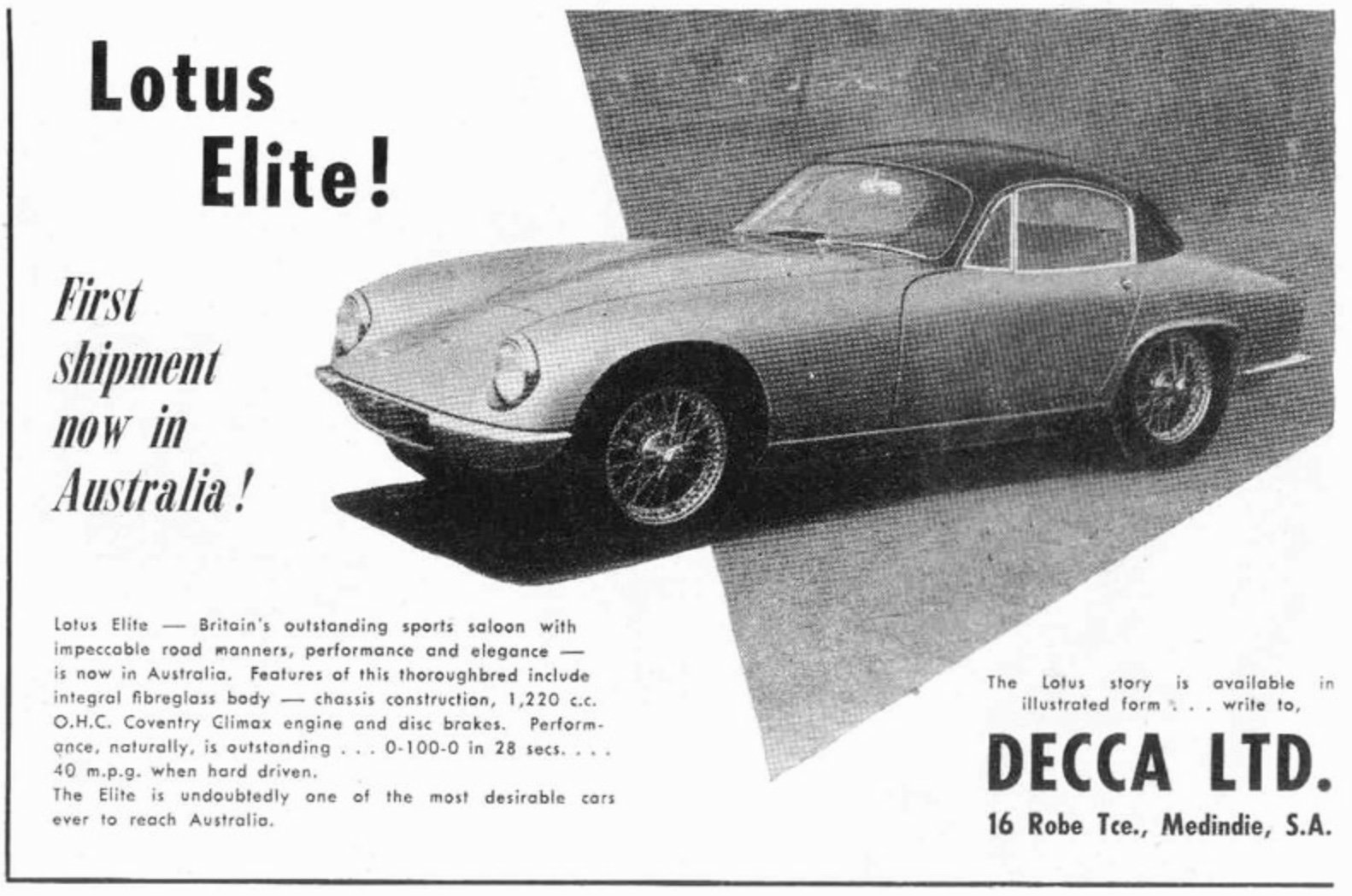
The Elite’s Coventry Climax FWE engine was revolutionary in its day, the 1216cc SOHC, 2 valve all aluminium road version of the very successful FWA race engine was quite something in the context of the wheezy, mainly push-rod engines of the competition. Sensitive, regular maintenance was important. In Super 95 spec, the twin-Weber fed engine produces over 100bhp and punches the car along nicely but the lap times are achieved by the cars brakes, entry speed, neutrality with limited power thru the corners and fine aerodynamics rather than outright mumbo.

It’s a ‘momentum car ‘ just like the Elise and lower powered single-seaters. Whilst the performance variants of the Elise/Exige are a different kettle of fish, the original all alloy DOHC, 4 valve, fuel injected 1796cc 118bhp Elise was all about economy of power, weight (circa 725Kg) and delivery. They are subtle delicate things which respond well to inputs of a similar type, they are not tools for the ham-fisted. So too was the Elite, its competition record belied its specifications.

The Elite’s ZF gearbox is a much nicer snickety-snick thing to use than the Elise’s. The linkages of the modern car are sub-optimal but familiarity and ‘light hands and wrists’ as Frank Gardner put it, soon has you slicing thru the gears ok. Both cars have superb brakes too- unassisted discs all round, inboard on the rear of the Elite, all outboard on the Elise with the latter rotors in aluminium to help keep unsprung weight down.

‘Uncle Dave’ was soon waving at me from the pitlane, I pretended it was encouragement for a couple of more laps but his intent soon became clear when he waved an empty fuel drum at me.

I buzzed for hours afterwards, it was a magic, fun day- the Elite was a vastly better car to drive than I had imagined. On the suburban grind back to Camberwell I reflected on just ‘how right’ Chapman would have thought Julian Thomson and his design and engineering team got the Elise. Chapman bottled the essence of Lotus- his designers have since periodically dispensed it in a manner in which he would be proud…

Pat Mottram and Elite at Wakefield Park, Goulburn (Mottram)

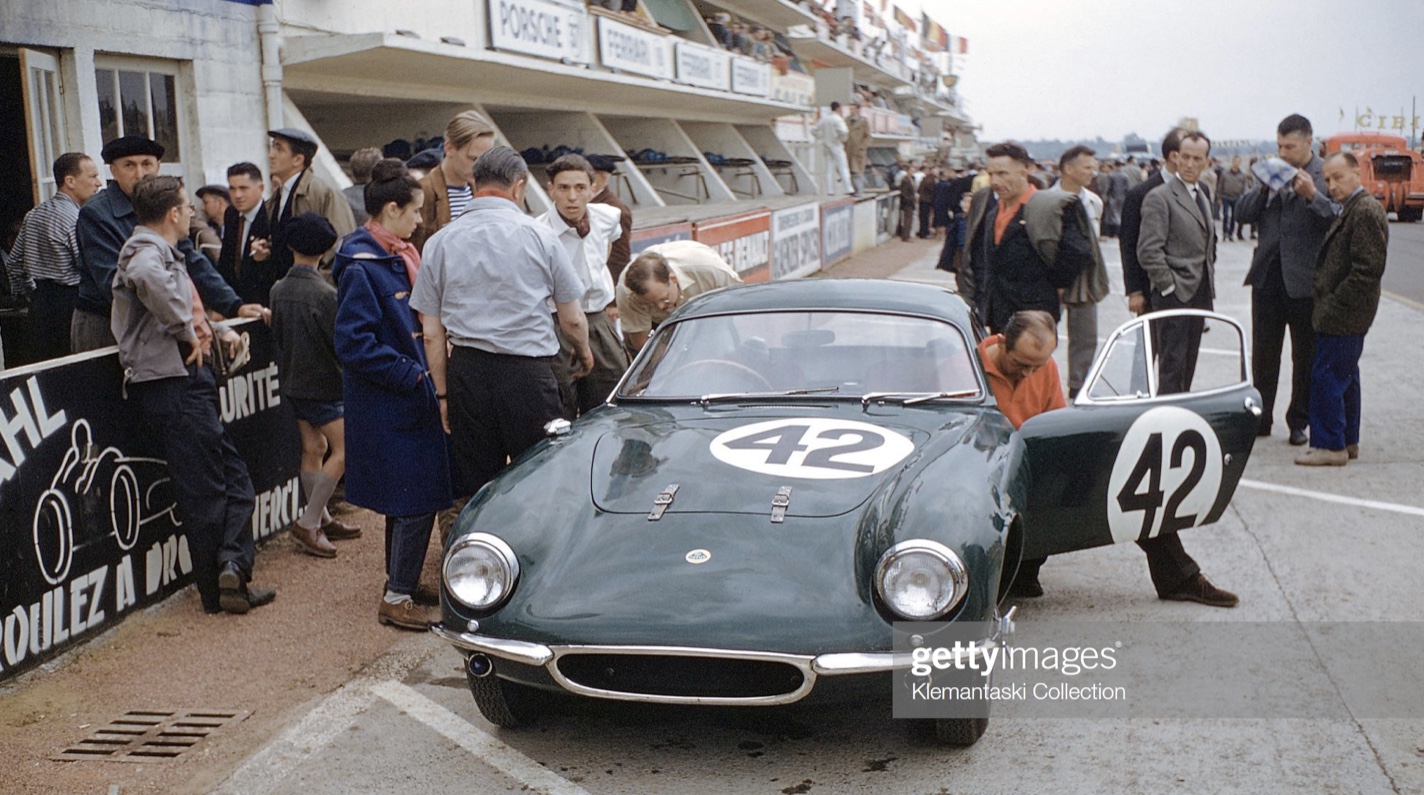
Etcetera: Clark/Whitmore Elite at Le Mans in 1959…

How youthful does white-shirted Jim Clark look?

The pair were tenth outright and second in class behind the Peter Lumsden/Peter Riley Elite, the Roy Salvadori/Carroll Shelby Aston Martin DBR1 were victorious.

Photo Credits…

M Bisset, Mottram Family and Stephen Dalton Collections, Getty Images-Klemantaski

Finito…