Posts Tagged ‘March 712M Ford’

(NAS)

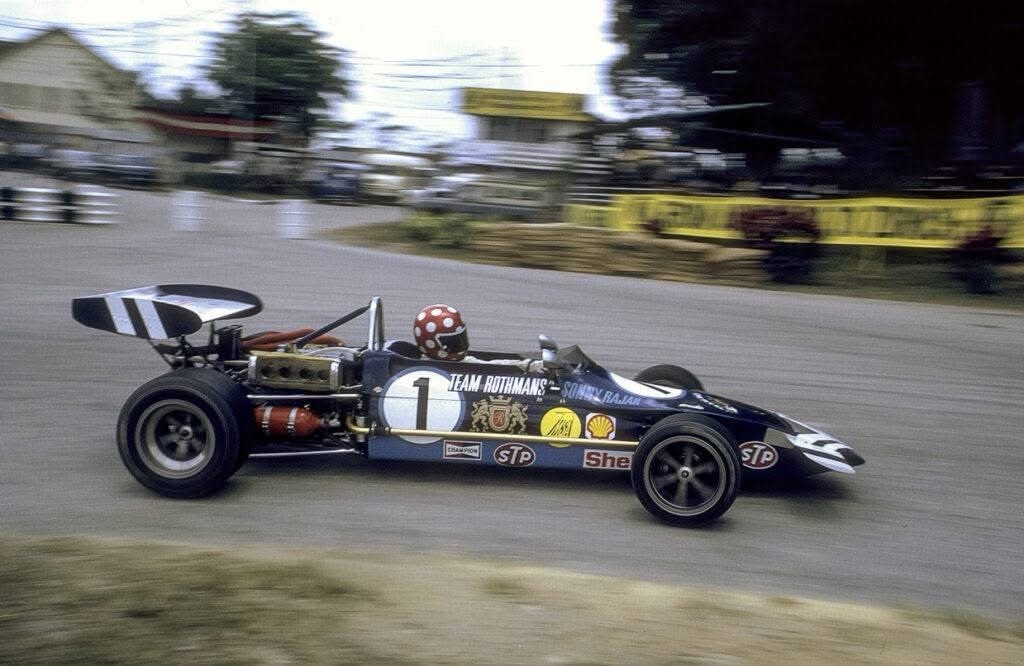
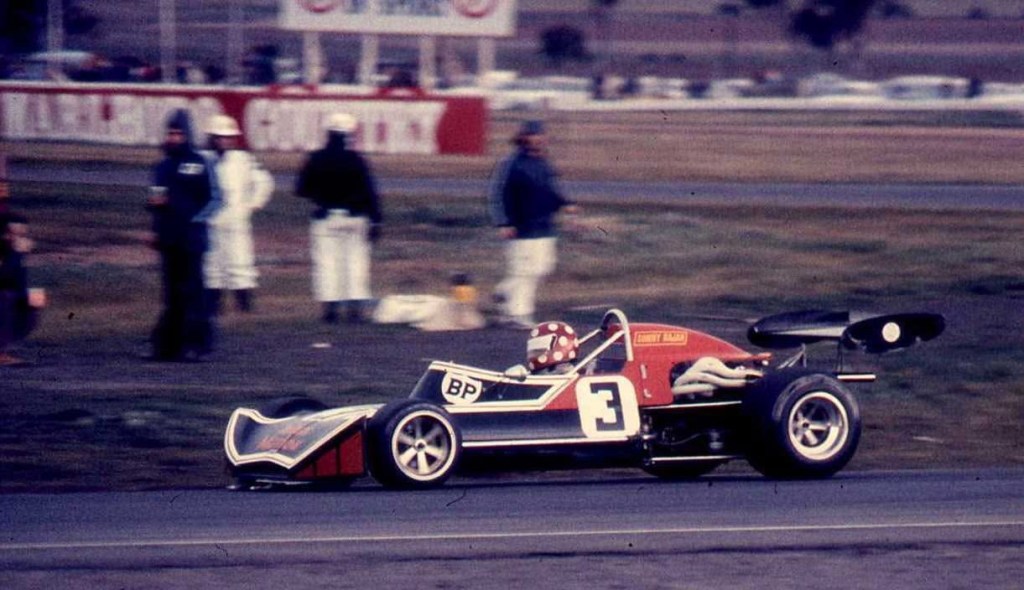
Sonny Rajah negotiates the tricky Thomson Road circuit during the 1972 Singapore Grand Prix aboard his March 712M Lotus-Ford twin-cam, chassis #712M-7, the same car in which Ronnie Peterson won the 1971 European F2 Championship.

Max Stewart won that race from Vern Schuppan and Bob Muir – Aussies first to third – with Singaporean local, Sonny fourth. Stewart raced his venerable Mildren, Schuppan his March 722 and Bob Muir his Rennmax BN3, all of the cars were Lotus-Ford 1.6 powered.

Eli Solomon wrote in MotorSport that ‘Sonny Rajah had struck up a partnership with the ex-Ronnie Peterson March 712M. He was the local hero and looked the part with his long hair and Zapata moustache. But to gain admittance into a country (Singapore) where long hair was associated with drugs, he had resorted to wearing a short-hair wig! A fellow competitor once remarked: “He had brilliant car control but someone other than bullshit-artists had to take him in hand! Natural talent and character too boot.”
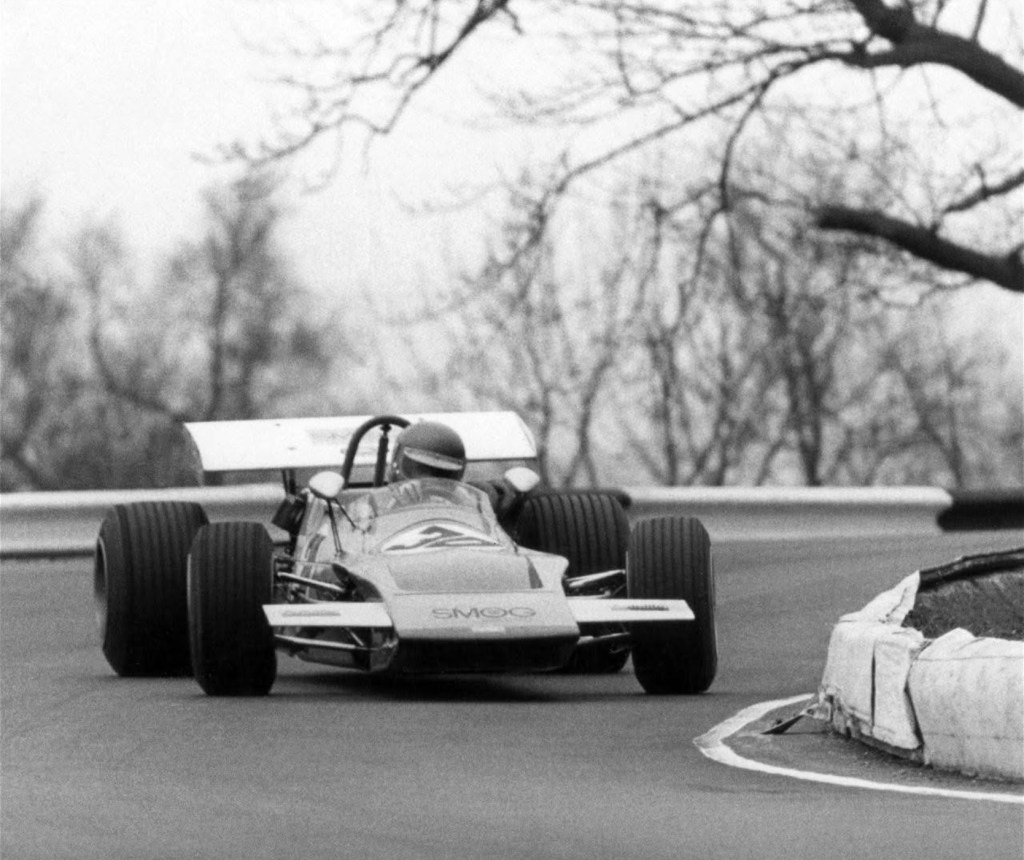
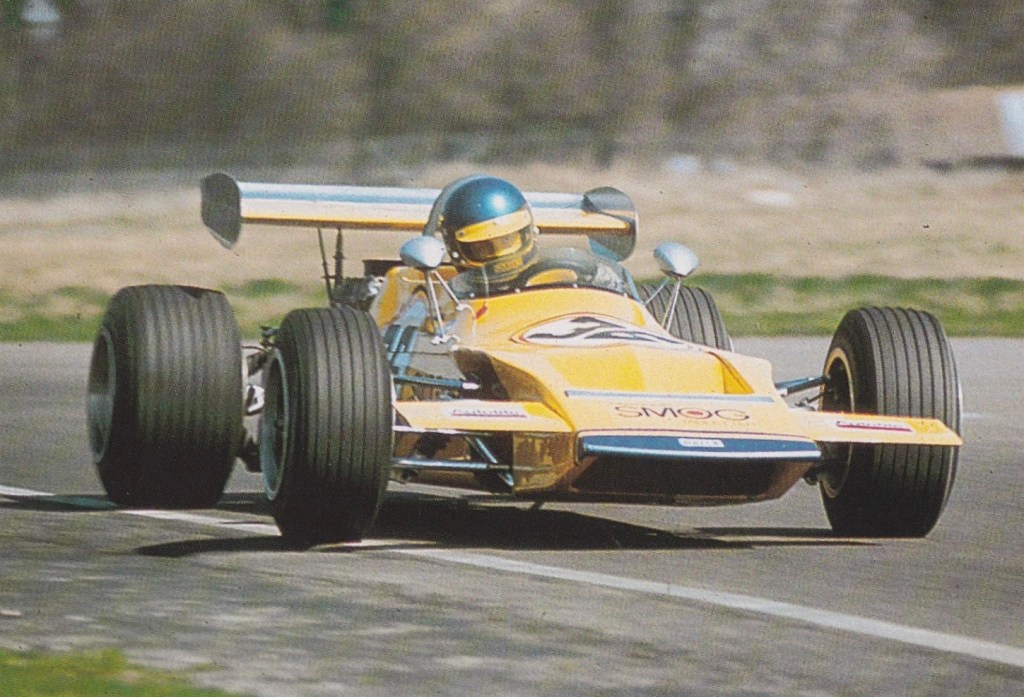
Signature Peterson. ‘Very fast, off-camber, downhill, made for Ronnie Peterson’, Yoshiaki Hirano said. Mallory Park non-championship (n/c) March 14: accident in heat 1, DNS heat 2. Winner Henri Pescarolo in a Frank Williams 712M FVA (C Walker)
Peterson bagged first place F2 Championship points – Graham Hill won the race, as a Graded Driver he was ineligible for points – in the Jochen Rindt Memorial Trophy at Thruxton on April 12 (unattributed)

Ronnie Peterson bagged maximum points in five of the ten F2 championship rounds he contested and won the title from Carlos Reutemann’s Brabham BT30/Brabham BT36 and Dieter Quester’s March 712M BMW.

Ronnie won at Thruxton, Rouen, Mantorp Park, Tulln Langenlebarn and the GP di Roma at Vallelunga. Note that Graham Hill (Brabham BT36) won at Thruxton – a real tear-jerker for race-fans as it was Graham’s first race-win since his huge Lotus 49 Watkins Glen crash at the end of 1969 – but as a graded-driver Hill was ineligible for Euro F2 Championship points.
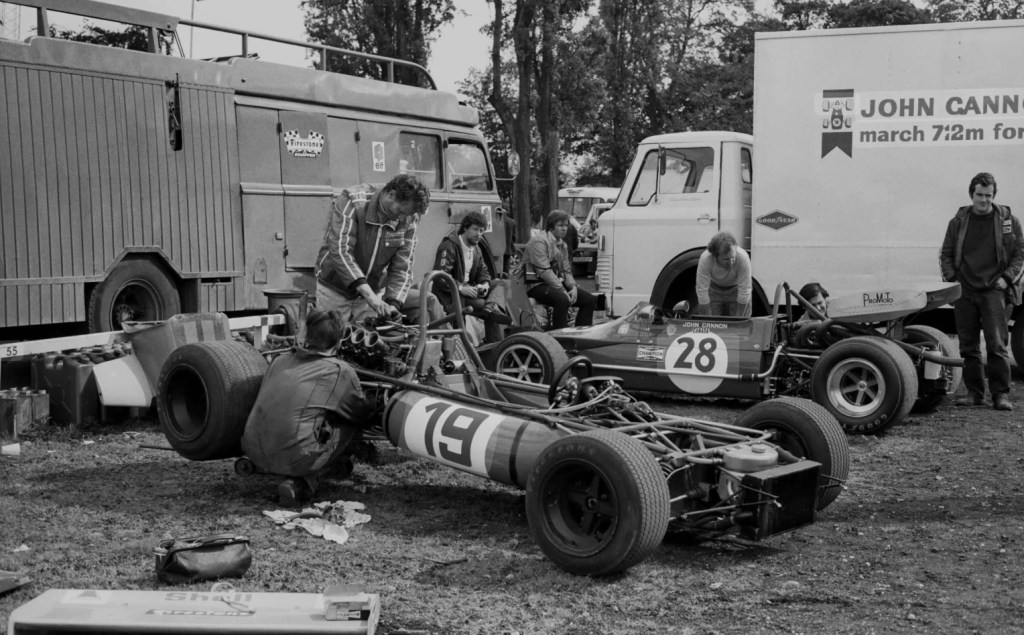
London Trophy weekend at Crystal Palace, May 31, 1971. Adam Potocki’s spaceframe Brabham BT30 is made ready for battle while John Cannon’s monocoque 712M is similarly fettled (J Fausel)

F2 Wind-Shift from Spaceframes to Monocoques…

This season marked a shift in F2 with Brabham’s dominance – and spaceframes’ dominance – at an end. March Engineering led the charge with their 712M, while Lotus continued with the 69 and Brabham and Tecno stuck to their successful spaceframes.

It wasn’t that cut and dried though: Alan Rollinson won the Bogota GP n/c (non-championship round) in his Brabham BT30, Graham Hill at Thruxton in his BT36 and Carlos Reutemann, BT36 at Hockenheim n/c.

Noteworthy was Carlos Reutemann’s pace in both his Brabham BT30 and BT36 all year, so too Tim Schenken’s BT36 speed throughout without actually winning a round.

It was all over at the end of ’71 in the sense that Ron Tauranac sold Brabham to Bernie Ecclestone late that year with Bernie building monocoque customer F3 and F2 cars in 1972 before pulling out of production racing car manufacture at the end of that year.

Technical interest in the era of Absolute Ford FVA dominance was provided by Tecno in 1971 who fitted in-house-prepped Ford BDA engines which bagged two-championship wins at Hockenheim and the Nurburgring, and a non-championship victory at Vallelunga for Francois Cevert.

Emerson Fittipaldi won at Madrid, Crystal Palace and Albi, and Reine Wisell at the GP de Pau n/c in monocoque Lotus 69 FVAs but Emmo was a graded driver so didn’t bag F2 championship points.
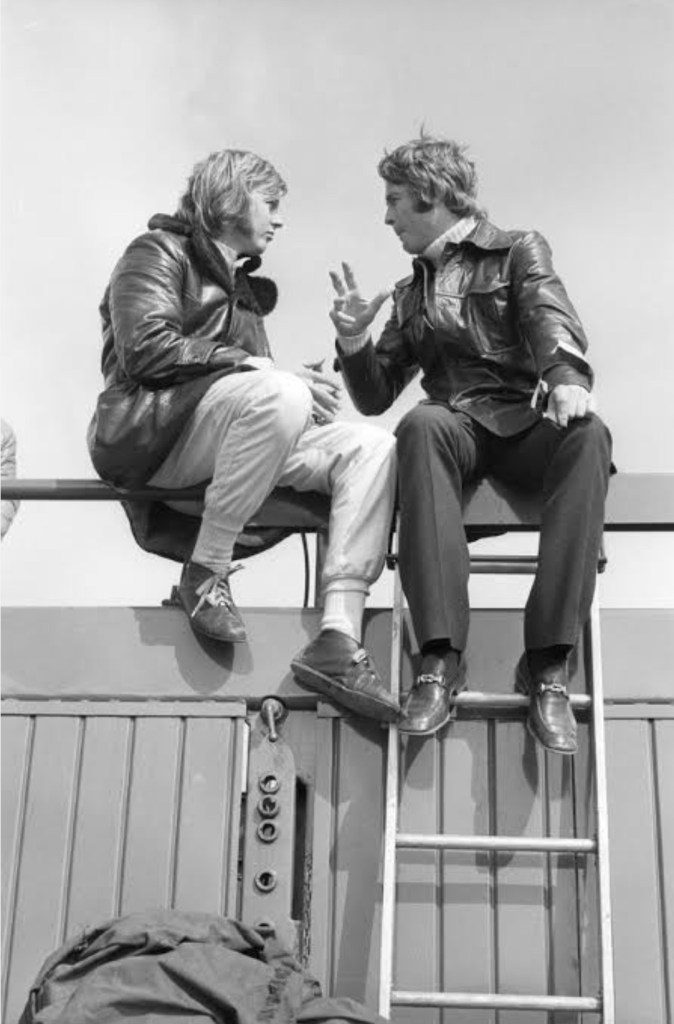
Potent partnership: Ronnie Peterson and Max Mosley at Thruxton at the start of a great season for them both in F2 and F1 (J Fausel)

The 712M in the March Pantheon

That the 712M was a good customer car was proved by the number of drivers who won in them apart from Ronnie: Henri Pescarolo at Mallory Park n/c, Dieter Quester Monza n/c, Carlos Pace Imola n/c and Mike Beuttler the GP Madunina at Vallelunga.

Quester’s 712M was fitted with a works BMW 1.6-litre, four-valve, M12/2 engine providing the category with much-needed and ongoing technical interest, and plenty of pace: third place in the championship with five second places on top of his non-championship Monza win was a great season.

Critically, it was the start of a relationship with BMW Motorsport that was so important commercially and competitively for March from 1973, the second year of the 2-litre F2.
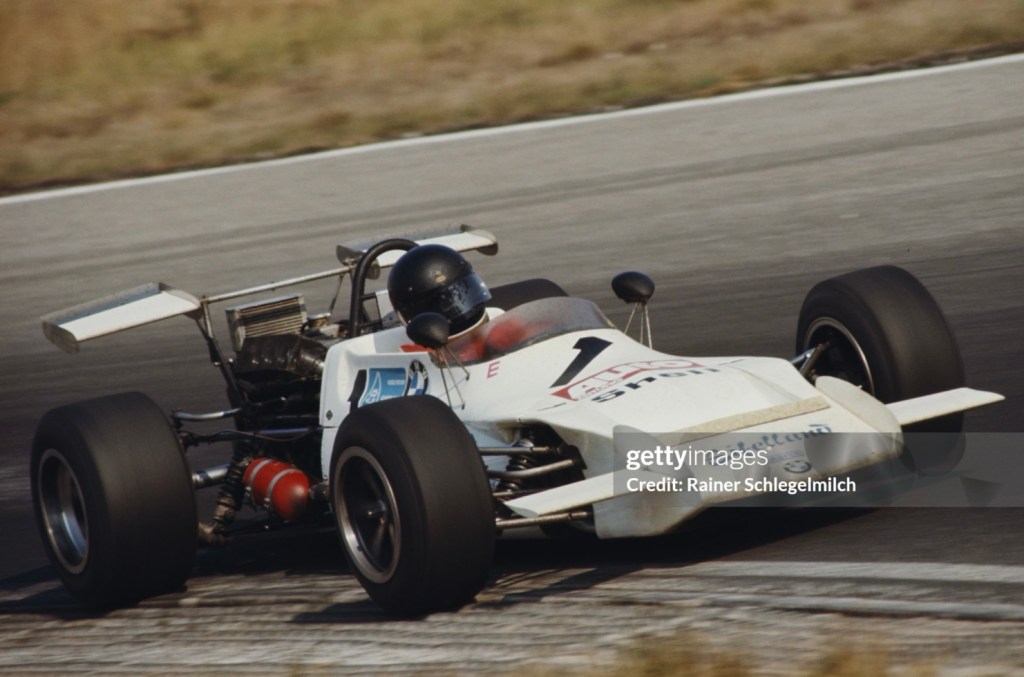
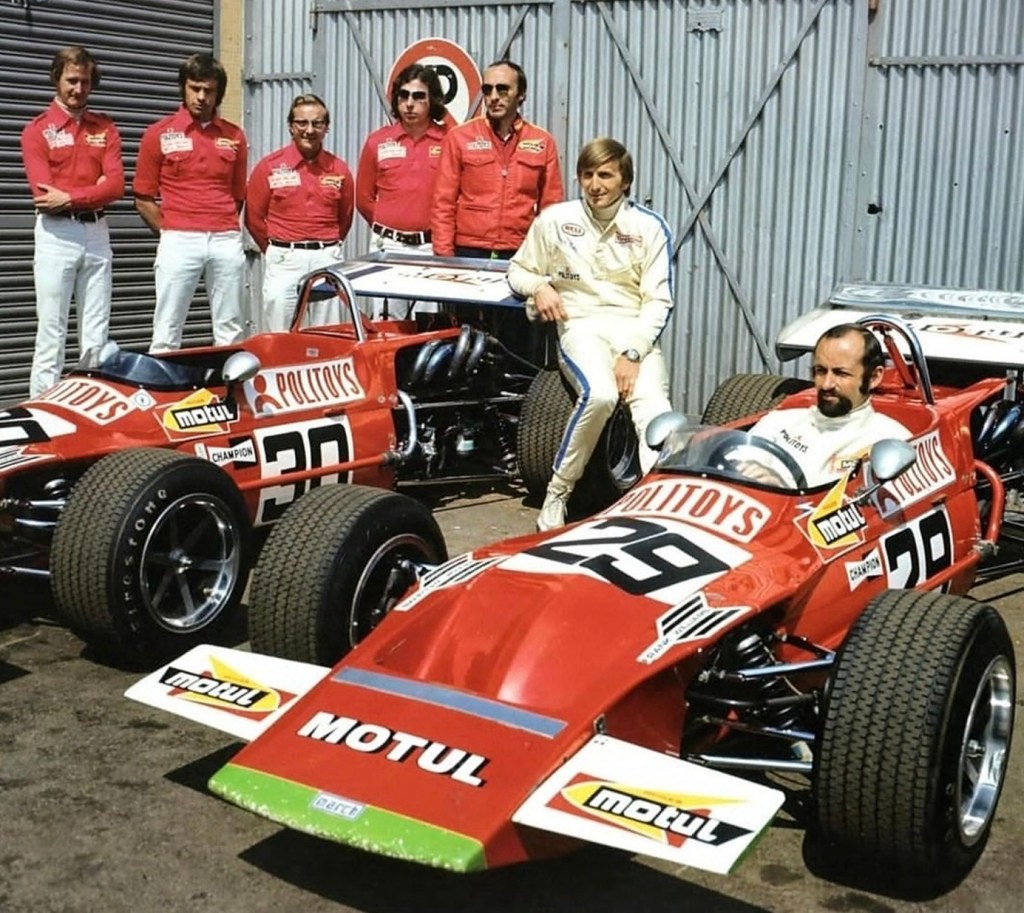
Dieter Quester, March 712M BMW at Hockenheim in October 1971 (R Schlegelmilch)
Derek Bell and Henri Pescarolo and Frank Williams 712M FVAs at the Nurburgring in 1971 (unattributed)

‘What makes March’s 1971 F2 season all the more creditable is that no fewer than 16 drivers went on to works F1 drives, nine would win Grands Prix and two, Lauda and Fittipaldi, would become World Champions.’ March biographer, Mike Lawrence wrote.

Beyond that, the 712M wasn’t a one-hit wonder, it just gave and gave. Its aluminium monocoque provided sterling service from 1971-77 in F3, F2 and F Atlantic form; it was a ‘banker’ at a critical time in March’s history.

Mike Lawrence picks up the thread, ‘Robin was getting on with the job of designing both the new F1 car and, what in the long term was to be more significant, a monocoque for F2 and F3.’

Herd, ‘It took us three or four goes to get it right; I did the detail mechanical design, Roger Silman and Dewar Thomas who made the prototypes put in a lot of their ideas as well, and John Thompson’s operation actually built the production tubs. Apart from the fact that it worked, and was still winning races in 1977, it was very well production engineered and I think we can be pleased with it. When the car was finished, I was away at an F1 race, so Dewar simply took it up to Silverstone and did 60 laps in it, which is something one cannot imagine happening today.’

‘Apart from the sharp new body and the monocoque itself, which had the engine as a semi-stressed member supported by the detachable multi-tubular frames, the broad layout of the design was similar to the 1970 cars, although there were detail changes such as such as narrower wishbones and the use of foam-filled fuel Carl’s which were required by the new regulations.’
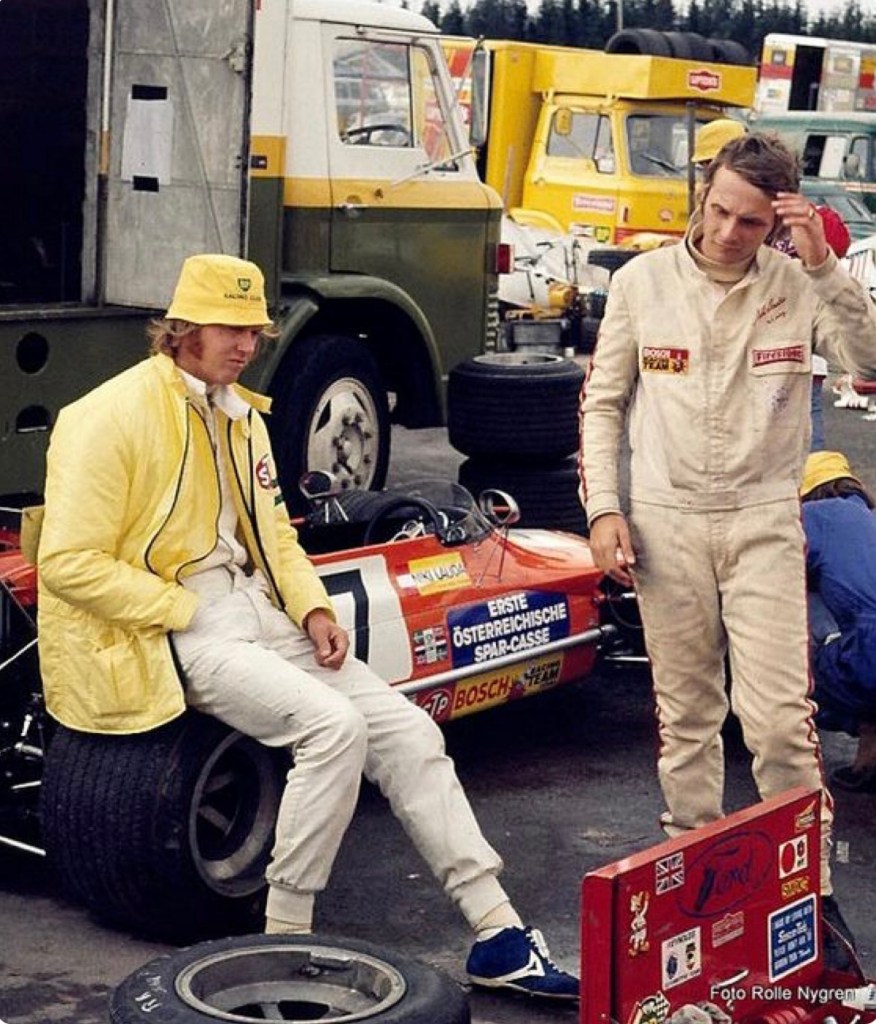
Ronnie sits on Niki Lauda’s tyre at Mantorp Park in August. A win for Ronnie and seventh in the first heat and DNS the second for the Austrian who raced a works-entered 712M (R Nygren)
Sonny during the Calder AF2 championship round in August 1974, March 712M Lotus-Ford. 11th in the race won by Leo Geoghegan’s Birrana 274 (S Gall)

Sonny Rajah raced an ex-James Hunt F3 Lotus 59/69 by then fitted with a Lotus-Ford twin-cam in the 1971 South East Asian season for a best of second place in the Malaysian Grand Prix at Batu Tiga on September 5 behind John MacDonald’s ex-Mike Costin Brabham BT10 Lotus-Ford twin-cam.

By the commencement of the 1972 South East Asia season – the April 4 Singapore GP- Sonny was racing his new, ex-March-Peterson 712M. his strong performance in Singapore was succeeded by victory in the April 9 Malaysian GP at Batu Tiga in front of Ken Smith, Lotus 59/69, Vern Schuppan March 722 and Kevin Bartlett, Brabham BT30 – all Lotus-Ford twin-cam powered. He was third in the season-ender at Macau on December 4 behind John MacDonald’s Brabham BT36 Lotus-Ford and Max Stewart’s Elfin 600B Lotus-Ford.
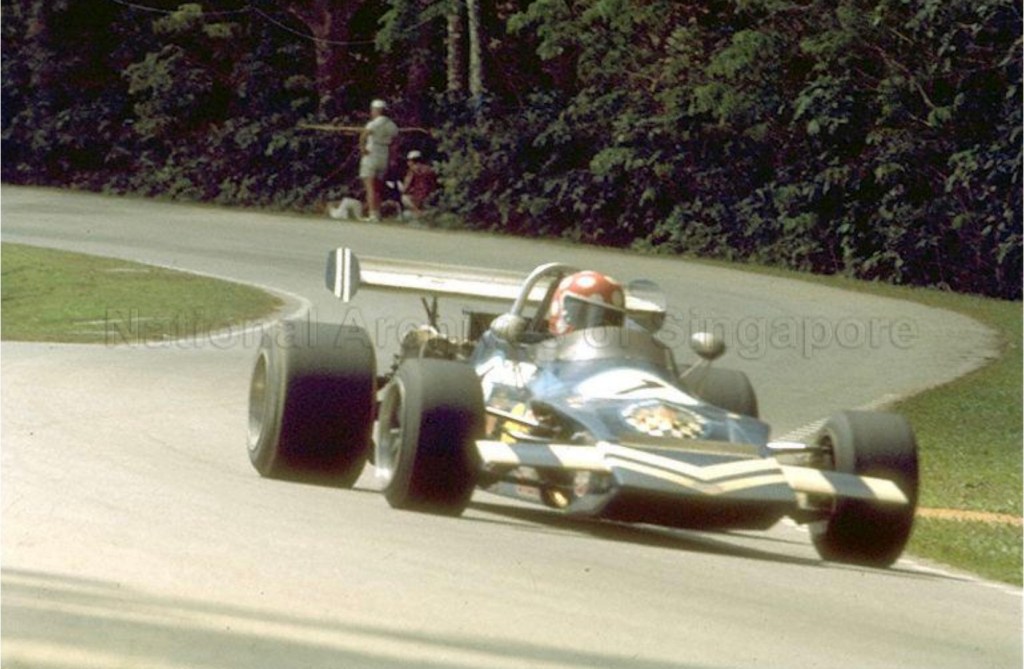
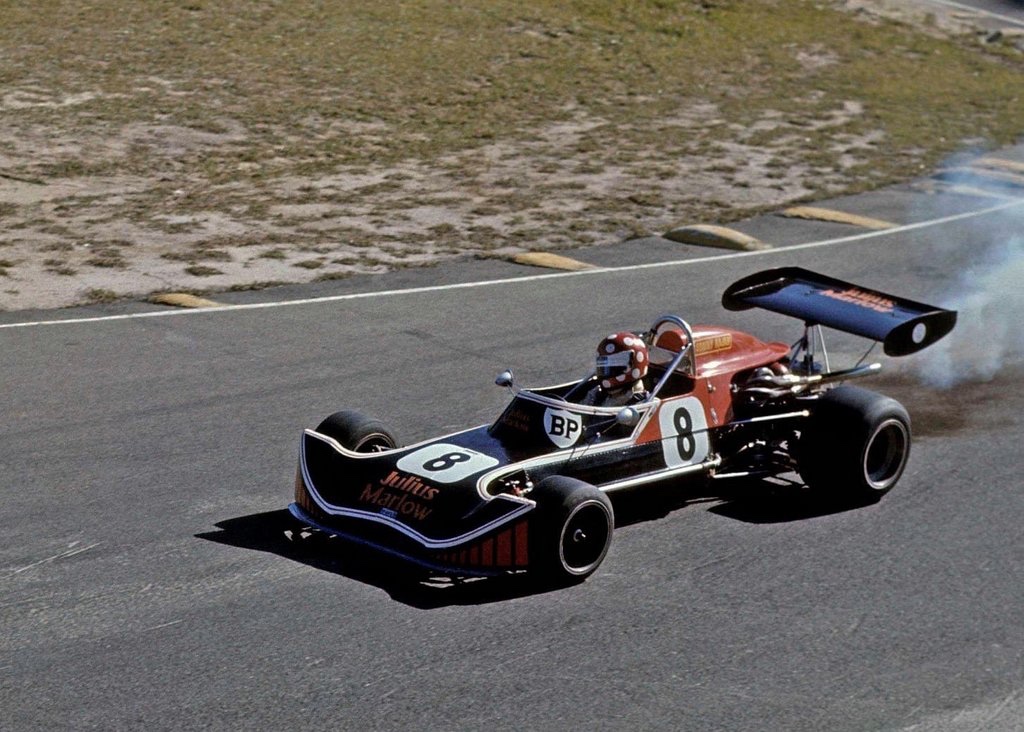
Rajah on the jungle-surrounded Thomson Road track, Singapore GP weekend 1972. March 712M-7 (NAS)
Rajah, March 732/712M Hart Lotus-Ford twin-cam, Amaroo Park July 21, 1974 (B Henderson)

In 1973 Sonny bought a March 732B in the UK and took in a number of British Formula Atlantic Championship rounds from late May to late July. With best results in the highly competitive championship of ninth at Silverstone in May and fourth at Mallory in July he was sharpish by the time he returned home and promptly won the September 9 Selangor Grand Prix at Batu Tiga aboard the 712M-7! Graeme Lawrence was second in his Surtees TS15 and Percy Chan was third in the March 732B raced by Rajah in the UK. He capped off a busy season with second place to John MacDonald’s Brabham BT40 at Macau in the now 732 bodied 712M (probably says Allen Brown).

Into 1974 he had time to run the March 732 bodied 712M-7 in the Malaysian GP on April 7 DNF, before shipping the car to Australia before the first Australian F2 Championship round – also a twin-cam, two-valve formula – at Hume Weir on June 16.
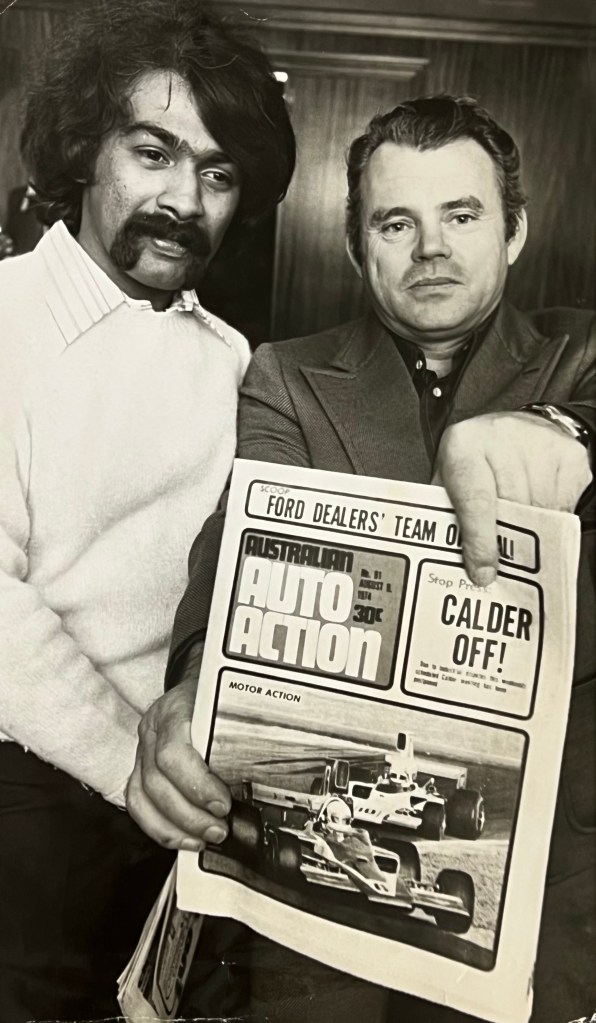
Sonny Rajah and Bob Jane in August 1974 (Auto Action)

The popular Singaporean born racer, Rajah contested the full eight race 1974 championship with the March, updated, as already noted, with 732 bodywork in a low-budget campaign run largely out of Paul England’s workshop in Moonee Ponds, Melbourne

It was the most competitive second-level motor racing championship ever run in Australia thanks to the support of Van Heusen Shirts, the story of how that came about is one for another time

Rajah in the Julius Marlow Shoes sponsored 732-712M from Ray Winter, Mildren Yellow Submarine Lotus-Ford and Bruce Allison, Birrana 274 Lotus-Ford at Adelaide International. Rajah ninth, Winter fourth and Allison seventh in the race won by Bob Muir, Birrana 273 and John Leffler, Bowin P8 (Auto Action)

Up front the contest was between the Birranas of Leo Geoghegan and Bob Muir, and when he got it sorted, John Leffler’s Bowin P8; all of these cars were powered by Brian Hart built ‘416-B’ Lotus-Ford 1.6-litre, DOHC, two-valve (mainly) fuel injected engines giving about 205bhp.

Rajah’s contested all eight rounds with his best third place at Symmons Plains and sixth at Hume Weir. He’s not listed in the point score because – I guess – he wasn’t a CAMS licence holder.

Leo Geoghegan won the title in his works-Birrana 274, Bob Muir’s Bob and Marj Brown owned Birrana 273 and Leffo’s ‘works’-Bowin P8.

Etcetera…
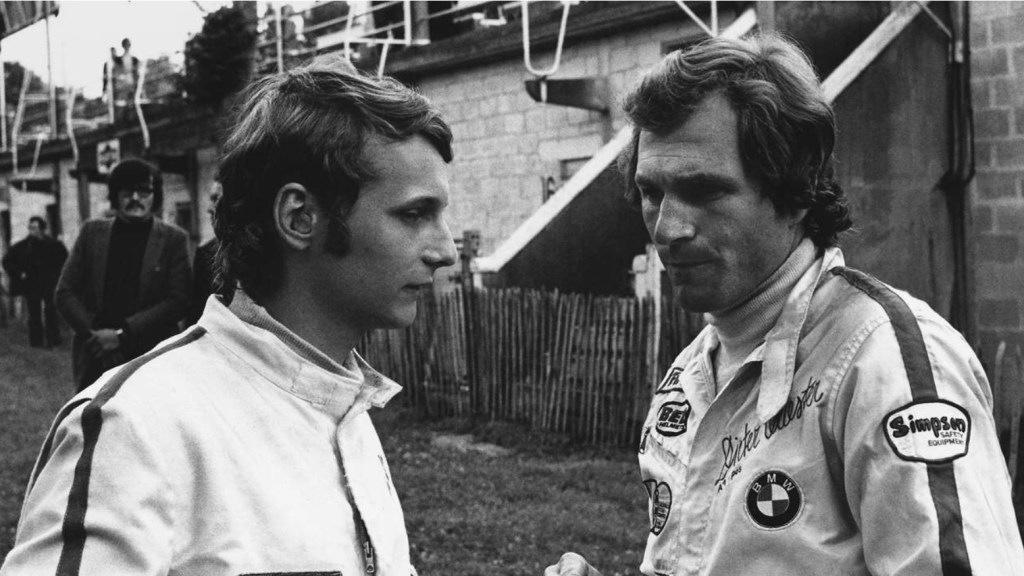
(LAT)

March 712M Brothers in Arms Niki Lauda and Dieter Quester swap notes during the Rouen-Les-Essarts June 27 weekend in 1971. Peterson won from Quester and Graham Hill’s Brabham BT36 with Niki fourth.

Niki at Mallory Park (below) at for the F2 season-opener – non-championship – Speed Championship Trophy over the March 14, 1971 weekend.

His works-March-Bosch Racing 712M-9 didn’t finish either heat. The renta-driver had plenty of top-six finishes that season and memorably duelled with Graham Hill and Peter Westbury at the Nurburgring for fourth place. In the first heat at Rouen, he almost sling-shotted past Peterson to win, dipping out on the line and finishing second by 0.1 secs…

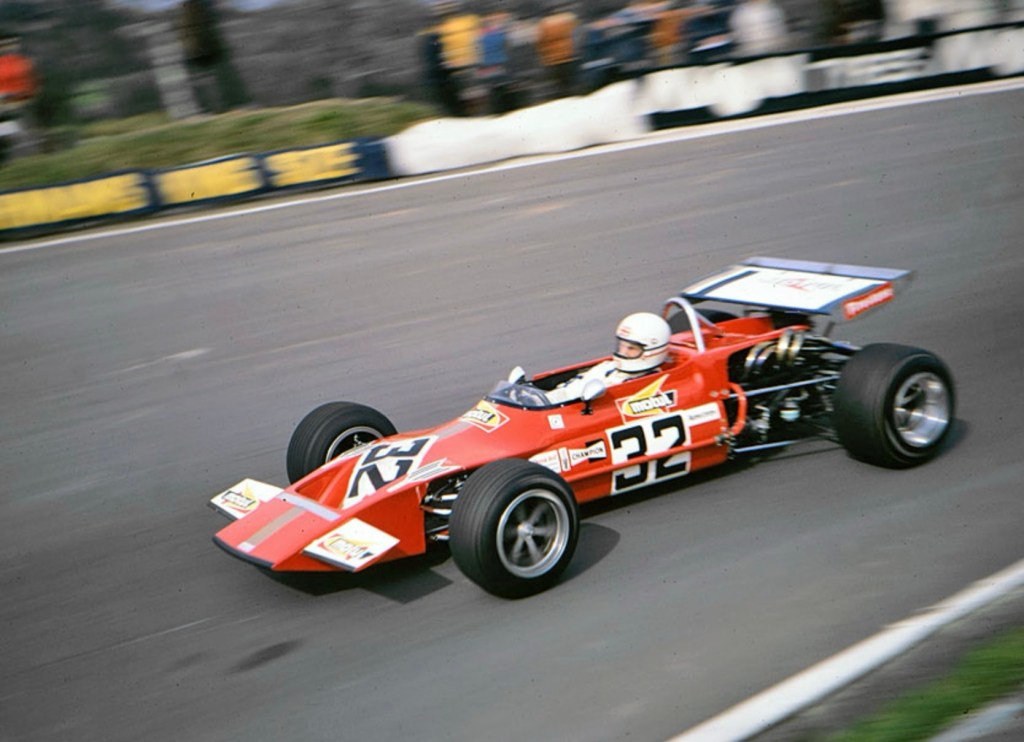
(I Hubbard Collection)

Still at Mallory Park, Derek Bell 712M-2 and Henri Pescarolo 712M-4, below, in the Frank Williams March 712M Ford FVAs. Henri won from Gerry Birrell’s Lotus 69 and Brian Hart’s Brabham BT30.
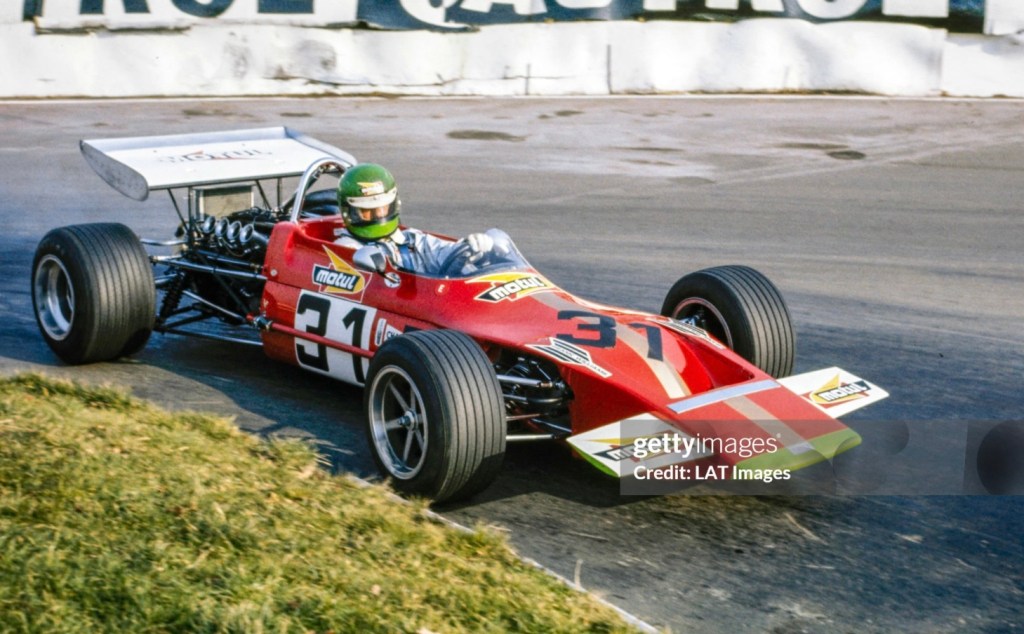
(Ed Brunette Collection)

Tino Brambilla tests his March 712M Ferrari Dino 206 V6 at Monza in 1972. This chassis is the ex-Pescarolo 712M-4.

Its amazing that a family of engines born in 1957 were still being used in 2-litre form at the dawn of the 1980s, not very successfully mind you! See here: https://primotipo.com/2023/06/17/ralt-chevron-and-minardi-ferrari-dino-206-v6s/

Tino retired his ‘Ferrari’ retired from the Monza Lottery non-championship F2 race – Gran Premio della Lotteria – won by Graham Hill from Silvio Moser and Jean Pierre-Jarier: Brabham BT38 Ford BDA, Brabham BT38 Ford BDE and March 722 Ford BDE.

(J Benak)

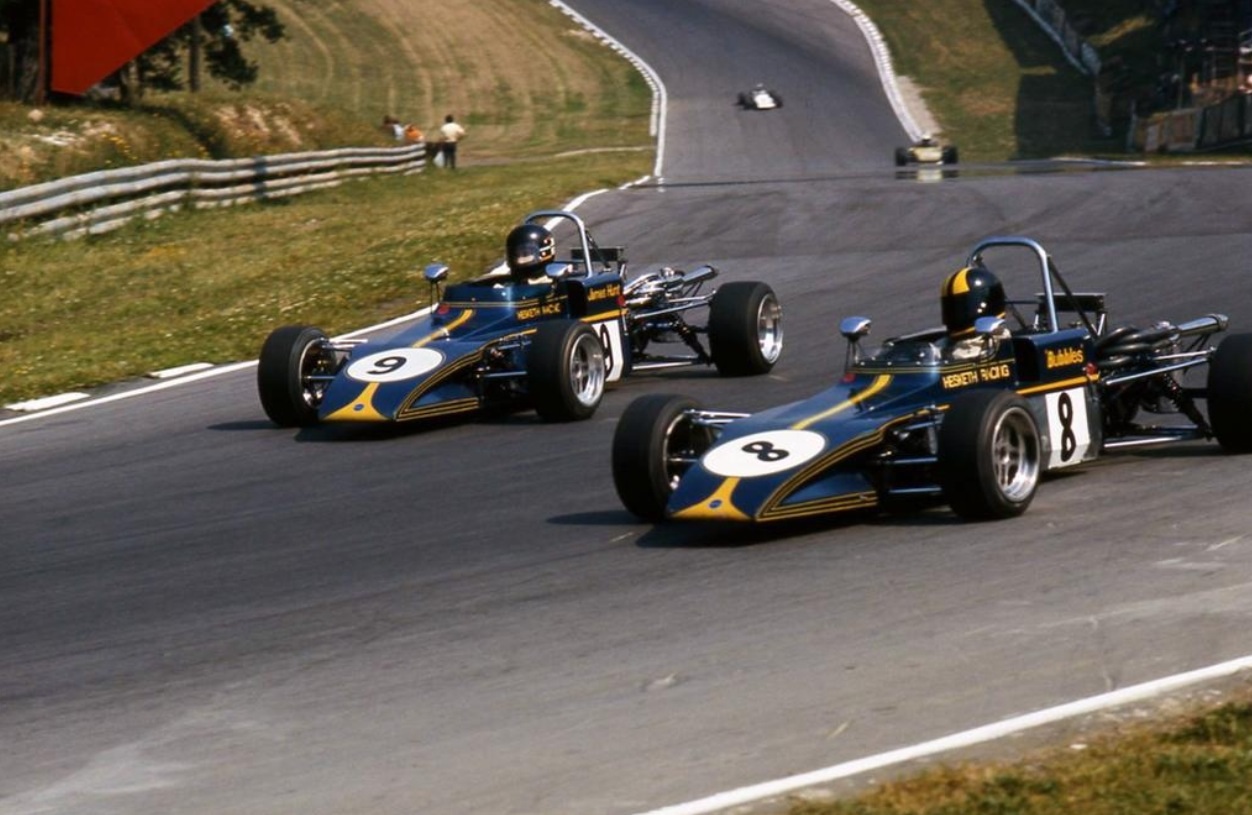
James Hunt in the Hesketh Racing March 712M-5 Ford BDA during the September 16, 1972 British F2 Championship race at Oulton Park. The soon-to-be F1 Star was third behind the works-March 722 Fords of Ronnie Peterson and Niki Lauda.

In several late season Euro F2 rounds in September-October he was Q3 and DNF at the Salzburgring, Q 11 and fifth at the Albi GP, Q12 and eighth at Hockenheim.

(B Henderson)

Rajah at Amaroo Park, Sydney on July 21, 1974. DNF engine in the race won by Bob Muir’s Birrana 273.

I’m intrigued by what Allen Brown (oldracingcars.com) makes of the photos in this article which show the obvious difference in ‘our car’s’ bodywork – 732 rather than 712M – but in addition the roll-bar mounts are different between the two cars. I do wonder whether the car that came to Australia by then had a 732 tub. we know Sonny raced a ‘mystery’ ‘732B’ in British Atlantic then took it back to Asia. I wonder whether the car in Oz was the 732 chassis rather than the 712M?

Credits…

National Archives of Singapore via Rewind Media via Ed Brunette, Clarke Walker, Rolle Nygren, ‘The Story of March : Four Guys and a Telephone’ Mike Lawrence, Stephen Gall, Jutta Fausel, Ed Brunette Collection, Bryan Henderson, Auto Action, Ian Hubbard Collection, Singapore Fling : Singapore GP piece in MotorSport by Eli Solomon

Tailpiece…
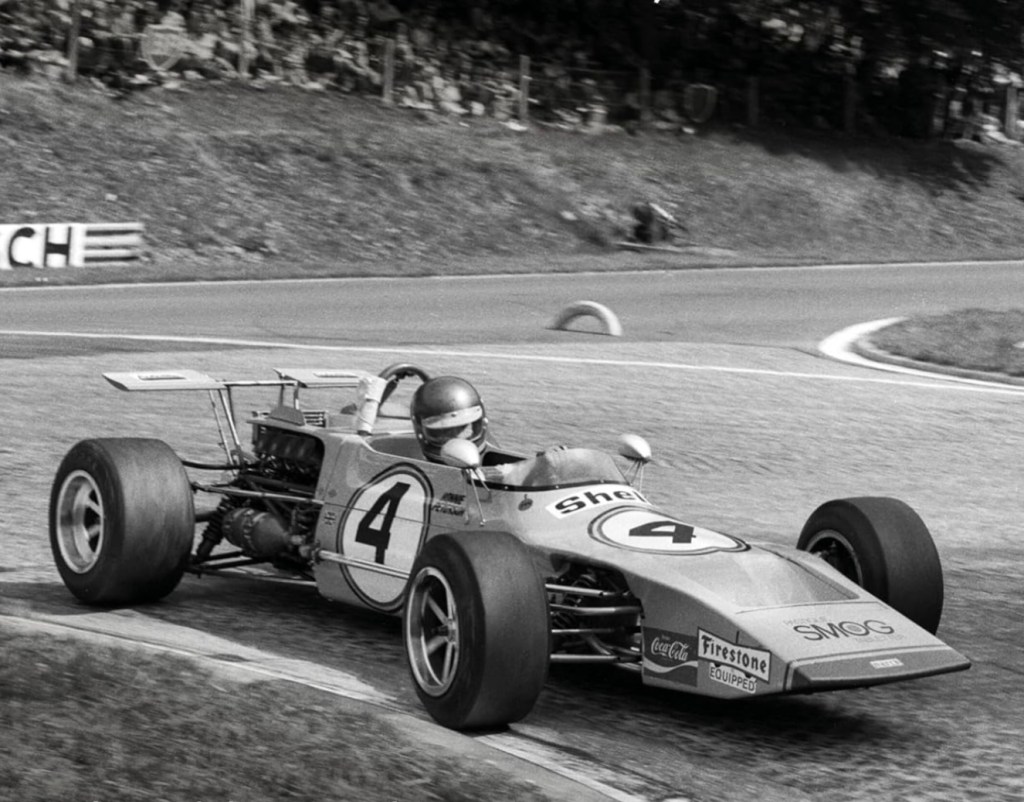
(J Fausel)

Ronnie during the Grand Prix de Rouen on June 27, 1971.

The Swedish Star won from Dieter Quester’s 712M BMW and Graham Hill’s Rondel Racing Brabham BT36 and Lauda’s works-712M. Graham was still a plenty-quick F2 driver in that lovely Ron Dennis prepped BT36 that year. Always loved those March wheels…
Quite a few of the photos in this article are by now US domiciled German photographer Jutta Fausel who I collaborated with in an article published in MotorSport a couple of years ago on the 1970 Israel Grand Prix, an obscure F2 race.

I really must buy her book, F2 Devotee as I am, which comes highly recommended!

Finito…

James Hunt and Brendan McInerney looking confident before the start of the 1973 British F3 season with a brand new March 723, Bicester 1 March…

They were not newcomers to March having driven works 713M’s in 1971- Hunt’s was a paid drive, Brendan was paying his way, under the banner of ‘Rose Bearings-Team Baty Group’. In Autosport journalist Ian Phillips 1971 F3 season review, his pantheon of drivers of the season had Hunt at #5. Phillips wrote that he had been ‘ one of the disappointments of the year. The season started well enough but suddenly a run of accidents and mechanical problems struck. It seemed he was a victim of his own enthusiasm but he really suffered at the hands of those less experienced than himself who by the nature of F3 were able to mix it with the quicker drivers. When he was able to get clear he proved that he was capable of showing everybody the way round and hopefully things will turn out better next season.’

Phillips Top 3 for ’71 were David Walker, Jody Scheckter and Roger Williamson- all future F1 drivers of course. In fact Walker made his F1 debut in 1971, his potential victory aboard the 4WD, gas turbine powered Lotus 56B, in the wet at Zandvoort one of thousands of motor racing mighta-beens! McInerney finished 6th in the BRSCC / MCD North Central Lombard F3 Championship with Hunt 8th  and also 10th in the more prestigious BRSCC / MCD F3 Championship with Brendan 20th. So, the sad news for James was another year in F3- the good news was he still had his works drive…

image

This very famous shot of young James Hunt and a gorgeous leggy lady was taken at Brands on 17 August 1969. Despite the obvious distraction Hunt drove his Brabham BT23B to 3rd place in the Lombard F3 Championship round, Emerson Fittipaldi won it in a Jim Russell Lotus 59 Ford (unattributed)

1972 was to be rather a difficult season for them, despite high expectations, especially on Hunt’s part. The duos first race as members of the STP March Racing Team was at Brands on March 5, their last at Monaco on 13 May. In the ten meetings they raced the works 723, the best result was Hunt’s 3rd at Mallory Park amongst a swag of DNQ’s and DNF’s due to accidents.

A year later, on June 3 1973 Hunt ran as high as 6th in the main race at Monaco on the Sunday, the F1 Monaco Grand Prix that is, before the engine in his Hesketh Racing March 731 Ford failed. The stuff of movies really! Hunt was out of a job at March after Monaco ’72 and a front-runner upon his Championship Grand Prix debut at Monaco in a customer March 12 months later.

Its interesting to look at that year, ‘Monaco to Monaco’ as context and background to the charismatic, driven champions subsequent achievements. Only a ‘Hunt true believer’ would have thought it possible to get into F1, let alone win a World Championship in those difficult months of mid-1972 when motor racing oblivion seemed the most likely outcome for James.

The 1972 March F3 efforts of Hunt and McInerney need to be put into perspective, ‘The mechanical shortcomings, political manoeuvring, dissent and strife within the team caused Autosport to describe the 1972 works STP March effort as ‘shambolic’…The…723 cars were plagued by inconsistent handling characteristics and a shortage of straight line speed’ Gerard Donaldson’s James Hunt biography says.

March were in big trouble with their F1 program in 1972, Ronnie Peterson had been a consistent front-runner in 1971 in the wonderful, unconventional 711 Ford, much was expected of March in 1972.

The 721X Ford low polar moment, Alfa Romeo gearbox’d (Alfa gears and diff in a March case) design was a dismal failure, even Ronnie Peterson could not drive around its shortcomings. Designer, Robin Herd later put the problems of the car down to issues with the gearbox- its gearchange, lack of ratios, differential problems. Robin also acknowledged his failure to design the car around the needs of the customer Goodyear tyres. In essence too much load was on the front of the car which overheated the tyres and caused excessive understeer.

A quick fix, it took only 9 days to build the first one for Mike Beuttler!, was the March 721G, essentially a 722 F2 car to which was attached a Ford DFV, Hewland FG400 ‘box and additional fuel tankage. In fact, Herd points out, from then on that philosophy of the F2 car design of each year forming the basis of March’ simple and often competitive Grand Prix cars for the period of the original founders ownership of the company served them quite well given the budgetary constraints they always had.

The point is that Robin Herd’s and others time was sucked up in the F1 effort which meant the 723 F3 and 722 F2 cars did not get the development attention they needed. Both inherently were not as good cars as the 1971 F3/F2 713M and 712M were. In addition, in F3, the GRD 723 and Ensign LMN3 were very quick little cars, drivers like Roger Williamson, who could afford to do so, backed by Tom Wheatcroft as he was, decamped from their March cars to GRD’s. The running of the March F3 team had also been contracted out and the preparation of the cars was not up to snuff.

Hunts first race at Mallory yielded 3rd but he was excluded when his engine restrictor did not hold the required air pressure. His best efforts at Brands, the next meeting were a distant 4th and 5th. At Snetterton the car wandered alarmingly all over the road- he was 8th. He tangled with 2 other cars at Oulton Park but bounced back to 3rd at Mallory Park and thrilled the crowd , his duel with Roger Williamson the races highlight. The two following races at Silverstone yielded 7th and an accident when a spinning car punted his March hard off the circuit into an earth bank. Before he could drive it again he was fired by March.

The back story to this is that the two 723’s failed to front at Zandvoort in early May, ostensibly because new bodywork was being developed to give the car more straight line speed. But Hunt, at the circuit as a spectator, given his car had not arrived heard rumours that March, chronically short of funds, had been approached by Ford Germany with an offer to run their protégé, Jochen Mass. This was not good for James as Brendan was paying March whilst in James’ case March were paying him…

Brands BRSCC F3 C’ship R1 19 March 1972. Hunt’s works March from Colin Vandervell Ensign LNF3 Ford and Ian Ashley Royale RP11 Ford. Hunt was 5th in the race won by Tom Pryce Royale RP11 Ford (Getty)

Roll on Monaco.

Hunt had tried to contact the chiefs at Bicester but could not get hold of anybody to find out what was going on. Then the F3 cars did not arrive in time for Monaco first practice, critical on this tight demanding circuit for the most important F3 race of the year. Late that night the transporter arrived with two cars which had not been adequately prepared- the mechanic, tired from the trip driving the truck went to bed. Furious, Hunt consulted his former team manager Chris Marshall- who happened to have a spare car as one of his drivers had his licence suspended. They decided that if James’ works car was not ready in the morning James would drive the Marshall car- this is what occurred, Hunt then qualified it.

Whilst Hunt was aboard the Marshall 713M awaiting his heat a missive arrived from March Director, Max Mosely to the effect that Hunt drive the works car or leave the team. By that stage James was certain he was being manoeuvred out of the team or would be sacked anyway so he decided to race the 713M which he promptly stuffed into a barrier- partially at least given the lead up to the race none of which put the driver in the best frame of mind to excel!

Several days later March announced Hunt’s dismissal and Mass’ appointment with McInerney also departing given that he thought the car horrendous and the team terrible! Mosely, Donaldson writes, ‘admitted the fault at Monaco, the delay in preparing the car and the failure to communicate with Hunt, lay with the factory, but the March directors felt it was wrong for their sponsors that Hunt should race for another team. This, and the recent lack of results had brought about the firing. Besides Mosely offered, Hunt would probably go much better without the pressures of being in a works team’, no doubt said with all of the sincerity lawyers possess…

In reality, putting contractual obligations and morality to one side!, the decision was an easy one for Max Mosely to make as he had Ford Germany keen to pay him to put Jochen Mass into James car. March needed the cash desperately so it was a ‘no brainer’ for Max to tip James out of the ride. Russell Wood drove the other works car, with both drivers failing to impress much during the rest of the year.

The long and the short of it was that the ‘bright eyed and bushy tailed lads’ were out of a drive mid-season.

In the interim James raced a Chris Marshall ‘Equipe La Vie Claire International’ F3 March 713M  to 5th place at Chimay on 21 May, it was during that meeting the world changed for Hunt.

James popped the year old 713M 2nd on the grid with Hunt running 2nd with 3 laps to go when a tyre started to deflate but he still finished 5th. Amongst those who noticed the performance that weekend was ‘Bubbles’ Horsley.

Hesketh Racing was formed to run Anthony ‘Bubbles’ Horsley in F3, they had been running a Dastle Mk9 and were looking for another driver for the 2nd car. In addition ‘Bubbles’ was not really up to it- Steve Thomson was engaged to race the car at Monaco as Horsley was unlikely to qualify for this elite race. Hunt needed a drive, Hesketh wanted a driver, the Hesketh team, funded by the young English aristocrat, Lord Alexander Hesketh, at the time were regarded as a bit of a joke, it was not necessarily the opportunity which other drivers may have sought- but there was a happy alignment of the planets between the circumstances of Hunt, Horsley and Hesketh.

Hunt raced Marshall’s 713M at Mallory Park the following week on 29 May to 10th place- in 2nd place was Alan Jones in James’ STP March 723- the best result the Australian had for quite some while! The Melburnian was clearly sussing alternative chassis to the Brabham BT38 he had been running, he purchased a GRD 372 shortly thereafter mind you! An astute choice, it was with a GRD 373 that he did so well in F3 in 1973.

Team Hesketh Dastle Mk9 Ford’s, Hunt on the inside, Bubbles on the outside, Druids Hill, Brands Hatch, British GP meeting, July 1972. It’s early in qualifying, Horsley has not yet damaged his car, an even bigger accident awaits Hunt in the race- collision with Keele’s Lotus 69. Roger Williamson took the win in a GRD 372 Ford. Dastle were built by Geoff Rumble- orthodox monocoque, outboard suspension, Mk9 Hewland box- cars held back by budgets, insufficient testing and ordinary engines (Dent)

Hunt first raced a Hesketh Dastle at Silverstone on 11 June, it was memorable as Hesketh recounts in Donaldson’s book. ‘The first race I saw him drive for me was in the wet at Silverstone. He actually took the lead, which we had never done before, indeed we’d never even been near the front of the grid. But when he was leading it was backwards- because he’d spun. He must have travelled about 40 yards in this way- then crashed into the pitwall right in front of me, which I wasn’t impressed by’.

James raced the car at Thruxton on 18 June to 10th  and then had an even worse accident than at Silverstone which destroyed his car during the British GP support event at Brands Hatch on 14/15 July. Bubbles car was damaged in a qualifying prang with another racer and then Hunt had an accident which could have killed him. He was closely following another car which spun as a result of a suddenly deflating tyre, Hunt spun his car to avoid it, made contact with it and the Dastle was launched skywards, completing some mid-air aerobatics then landed, upside down astride the barrier on one side of the circuit- the engine and gearbox on the other side of the track.

Hunt was uninjured in the accident, the situation worsened when the Mini he was driving had a head on collision with a Volvo which was being driven on the wrong side of the road, on the way home from the circuit. ‘…bloodied but unbowed, James, who treated himself with emergency first aid in the form of a pint of beer from a nearby pub, was carted off to hospital…In an effort to cheer him up, some of his F3 mates procured a female ‘specialist’ to administer to the needs of the wounded driver in his hospital bed. When a shocked matron entered the room and discovered James, again with a pint of beer in his hand, and the lady engaged in a private therapy session he was sent packing for his flagrant misuse of visiting hour privileges’- I had forgotten just how amusing the Donaldson book is.

It was effectively the end of Hesketh’s F3 team. Hunt was 35th in his final race in a cobbled together Dastle at Mallory Park on 25 July.

Hunt, March 712M Ford ahead of Lauda, works March 722 Ford at Oulton Park in the final round of the British F2 Championship on 16 September 1972. Hunt finished a splendid 3rd behind Peterson and Lauda in the works March 722’s- and having diced with Ronnie in the latter stages of the race. Impressive run in the Brian Hart tweaked 1790cc BDA engined year old March  (unattributed)

The year looks fairly shitful at this point does it not!? The ‘Hunt The Shunt’ epithet seemed an apt one.

Then Hunt and Hesketh doubled their bets, with a couple of damaged Dastles in his garage. Hunt had had enough of four years in F3, he decided it was time to go F2, but to do so there was the small matter of a car, engine and all the other bits and pieces necessary.

Hunt and Chris Marshall obtained the loan of an F2 March 712M for the rest of the year after threatening legal action against March for breach of Hunt’s contract. Max Mosely conceded the potential liability and was quick to offer a car Hunt knew was sitting in March’s Bicester factory. From Max’ perspective to give them a car for the balance of the season to mollify the pair of vexatious litigants was smart. And who knows, they may do well! The Ford BDA engine fitted to the car was Hesketh’s. Wisely, or luckily it was a 1790cc unit, those who ran the BDA at close to 2 litres that year had plenty of engine problems, their simply was not enough meat in Fords cast iron ‘711M’ block to run the bore size needed to get to the F2 class capacity limit. The plan was to contest the remaining rounds of the European F2 Championship, that year won by Mike Hailwood in a Surtees TS10 Ford BDA.

At that point Hunt showed what he could do- and in races of longer duration. It is almost as though James knew ‘It Was Now Or Never’- his reputation was shot and the chances of another Alexander Hesketh coming his way were Zero.

The first event contested was close to home, the ‘Rothmans 50000’ Formula Libre race at Brands Hatch. He was 5th , having qualified his March as the second quickest F2 car, in a great drive in his year old, down on power March amongst F1, F2 and F5000 cars. Emerson Fittipaldi won in a Lotus 72D Ford, the 2500 pounds of prize money was a valuable addition to the teams kitty.

Team Hesketh then headed off to the Salzburgring where he was 19th and non-classified, the team returned to the UK for a John Player round, the final of the British F2 Championship at Oulton Park where he was 3rd, from grid 2, the race won by Ronnie Peterson’s works March 722 with Niki Lauda’s similar car in 2nd. Again, a great performance.in a stellar field that included Hill, Surtees, Scheckter, Schenken, Roger Williamson all in works or very professional teams. Amongst the first to congratulate James were his erstwhile March teammates Peterson and Lauda who ‘…were not surprised at the gritty performance of their former F3 rival…’ Hunt having a great dice with Ronnie in the races final stages.

At the end of the season the team took the March to Brazil to contest the 3 races at Interlagos in October and November with Hunt again finishing strongly in 5th and 4th places, missing the second race having crashed in the pre-event warmup. The races were won by Emerson Fittipald’s Lotus 69 Ford BDF and Mike Hailwood’s Surtees TS10 Ford BDA.

For Hunt, the season started and ended with promise. The bit in the middle was rather ugly! He was lucky to meet Hesketh but did brilliantly, with Hesketh, Horsley when he adopted the team management role and the mechanics in knuckling down and delivering well in a good, albeit year old car. His ability to deliver consistent speed in the company of very talented racers, some of them ‘graded drivers’ over distances longer than 10 lap screamers was demonstrated between August and November 1972. One of the things great drivers have in common is towering self-belief. What Hunt achieved in that short space of time was wonderful mind management. He simply put all of the dramas of the year behind him and delivered. Not once, but continuously.

Donaldson wrote of Hunt’s determination ‘…he was so accustomed to setbacks he used them as inspiration. Indeed he thrived on adversarial situations to the point that if they didn’t exist it sometimes seemed he went out of his way to create them, then employed the Hunt theory of reverse psychology to turn negatives into positives’. Hunt responded ‘I’m a great fatalist. Whenever I think I’m going to achieve something, it turns out that I don’t. I always have to “negative think” to get the best out of myself.’ Sportsman’s mind management is all important. However he did it, Hunt’s ability to mentally apply himself in positions of extraordinary adversity and stress was exceptional.

image

Euro F2 Championship round 1 at Mallory Park on 11 March 1973. The Hesketh Surtees TS15 Ford at rest. Hunt 15th in the race won by Jarier, March 732 BMW (unattributed)

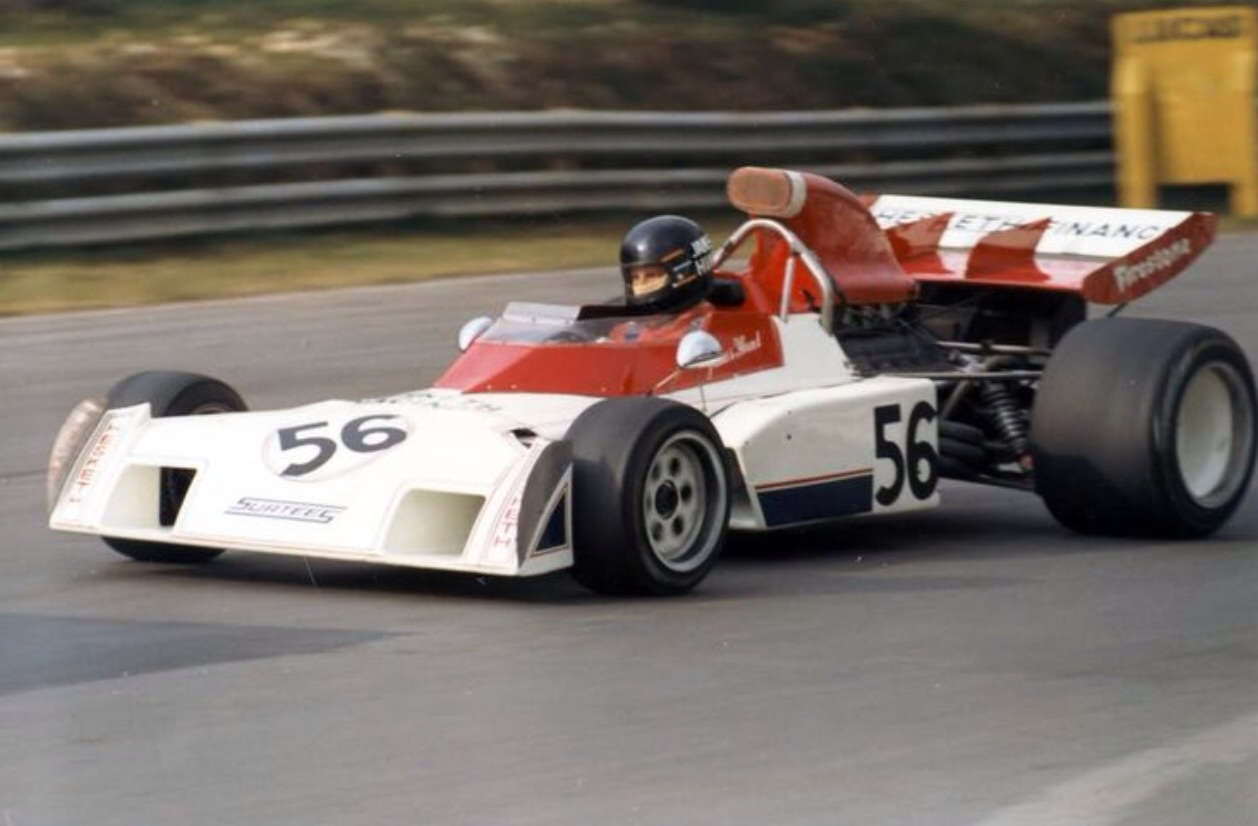
Given Hunt’s performances it was easy for Hesketh to decide to continue with him. Off the strength of the Surtees marque’s showing in 1972 Hesketh ordered a new F2 TS15 to mount a serious European F2 Championship campaign for 1973. It was a good car but the March 732 BMW M12 combination started a period of domination that year. As to Hunt’s early season performances; he raced the Surtees at Mallory, Hockenheim, Thruxton, the Nurburgring and the Pau GP for 15th, DNS with fuel metering unit problems, 10th, DNF tyres and wrote off the TS15 at Pau! All of the sudden its ‘hell in a hand basket’ again.

F1/F5000 Brands ‘Race of Champions’ 18 March 1973. Hunt in the leased Surtees TS9 Ford, 3rd from Q13. Peter Gethin Chevron B24 Chev F5000 won from Hulme, McLaren M23 Ford (unattributed)

So what does Hesketh do?, doubles up again of course and purchases a new F1 March 731 Ford off the back of Hunts performance in a 2 year old F1 Surtees TS9 Ford in the 18 March 1973 Brands ‘Race of Champions’, and that my friends is where the story really starts.

Just look at what happened between Hunt and McInerney posing out front of the Bicester factory on 1 March 1972, and Hunt finishing in front of most of the works teams in a 2 year old Surtees at Brands on 18 March 1973 only 12 months later.

Incredible, unbelievable. Some fellows peak before F1, Hunt really only took it all seriously, the racing anyway, when he commenced in Grands Prix. What was priceless was how easy the Hesketh boys made it all look in 1973 with their off the peg car being carefully developed by Harvey Postlethwaite and driven within an inch of its life by Hunt J…

The Hesketh, Postlethwaite modified March 731 Ford during the 1973 British GP at Silverstone. Hunt 4th from grid 11- attacked Peterson for 2nd till his tyres faded- the grid was schredded by 10 cars due to Jody Scheckter’s famous end of lap 1 crash. Revson’s McLaren M23 Ford won  (Schlegelmilch)

Postcript: Brendan McInerney

What about Brendan though? Born in Dublin on 30 November 1945, he had his own team, the modestly named!, as he put it ‘Race Cars International’ which ran his, and customer cars. He raced in FF, F3, F2, F5000 and Sportscars where he achieved his best results.

Amidst the tough 1972 F3 season he linked up with good friend Trevor Thwaites racing an Intertech Steering Wheels backed 2 litre Chevron B19/21 to 8th in the Brands 1000Km, 9th at the Osterreichring and Spa 1000 Km events, great results in amongst the 3 litre factory entered missiles of Ferrari, Matra, Lola, Mirage et al. Finally they had a splendid 5th in the Jarama 2 Hours 2 litre championship round and non-qualified at the Nurburgring 1000Km.

Confidence intact, he upped the ante and raced in most of the 1973 European F2 Championship in a ‘GRS International’ GRD 273 Ford BDA. It was a tough year racing in a field of great depth. He DNQ at Hockenheim, Pau, and Mantorp Park and had DNF at Karlskoga and Albi. He was 20th at the Nurburgring, 10th at Rouen, 12th at Monza and 6th at the Norisring in a race of attrition, finally he was non-classified at Nivelles. A March 732 BMW was the car to have in 1973, none of the GRD drivers had strong results in 1973.

In ’73 the Thwaites/McInerney duo again contested some endurance championship events finishing 12th in a Chevron B21/23 at the Vallelunga 6 Hour and had a DNF at the Nurburgring 1000Km. Late in the year Brendan also had a steer of Thwaites Lola T330 Chev F5000 in some European Championship rounds at Brands/Snetterton/Brands without showing great competitiveness.

Into 1974, the last of his racing career,  McInerney contested some late season European F5000 championship rounds, again in the Thwaites T330 and getting more out of the year old car at Thruxton/Brands/Snetterton and Mallory Park for 16/12/11th and 9th placed finishes.

Brendan became a professional backgammon player after motor racing in between stints of helping with his family’s Dublin based contracting business, he also worked in real estate whilst living in England. He now lives in Charlotte, North Carolina

Bibliography…

‘The Story of March: Four Guys and a Telephone’ Mike Lawrence, ‘James Hunt: The Biography’ Gerard Donaldson, GP Encyclopaedia, F2 Index, oldracingcars.com

Photo Credits…

Getty Images, Stuart Dent, Rainer Schlegelmilch, Mirrorpix

Tailpiece: Its not as though the hot and cold running babes started in Hunt’s GP years but no doubt the thru-put went up a couple of gears then. Hunt was livin’ the life of every schoolboys dream in 1973. He was certainly living mine…

image