Posts Tagged ‘Maria Teresa de Filippis’

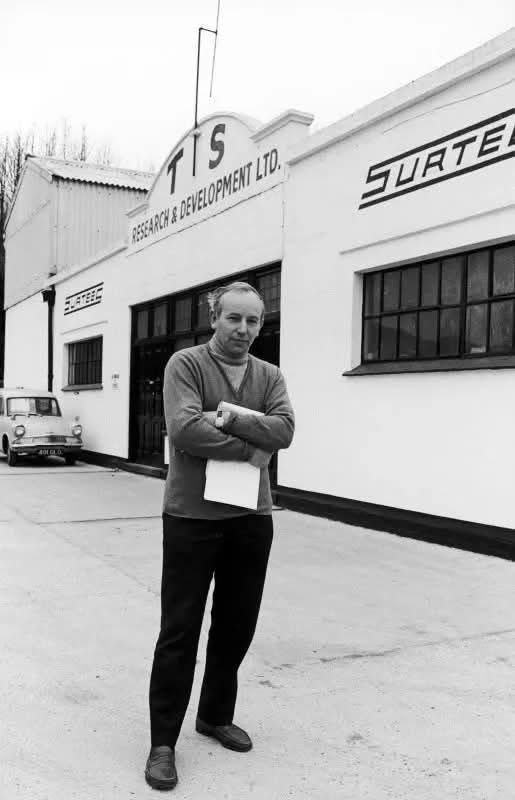
This shot of John Surtees out front of his business in Fircroft Way, Edenbridge, Kent took my fancy.

I’ve been writing‘Australian Racing Random’ posts for a few years now, they seem to have hit the spot, so I thought I’d do the same thing with some international photographs.
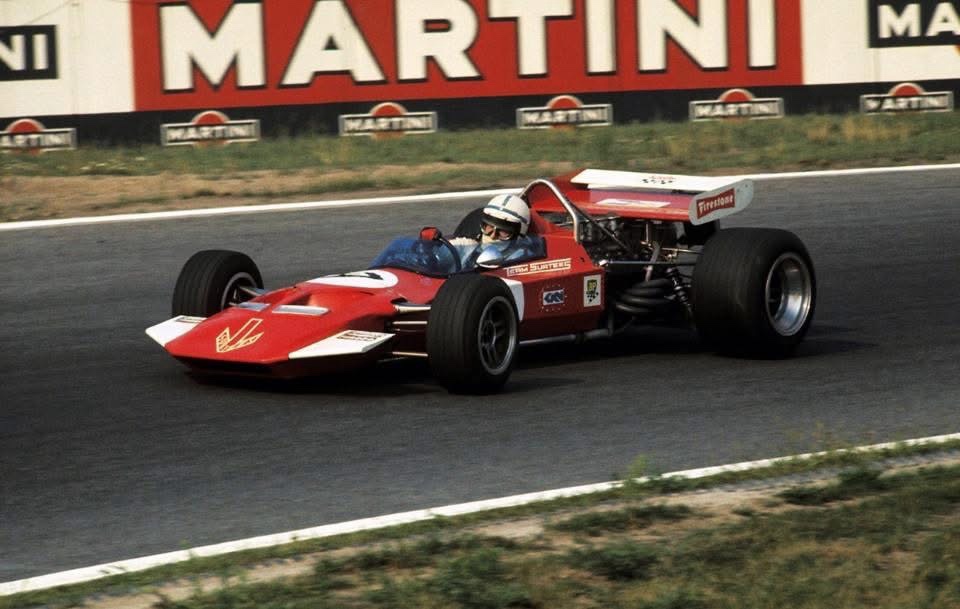
John Surtees, Surtees TS7 Ford, Hockenheim 1970 (unattributed)

The photo of John Surtees was posted on Gabriel Brizuela’s Team Surtees Facebook site. Peter Connew, co-designer of the Surtees TS7 Ford communicated with Brizuela about his time at Surtees and about his own Connew GP car.

‘Hi Gabriel, I am so pleased with your interest of the history of the F1 car that I built and raced with Francois Migault.’
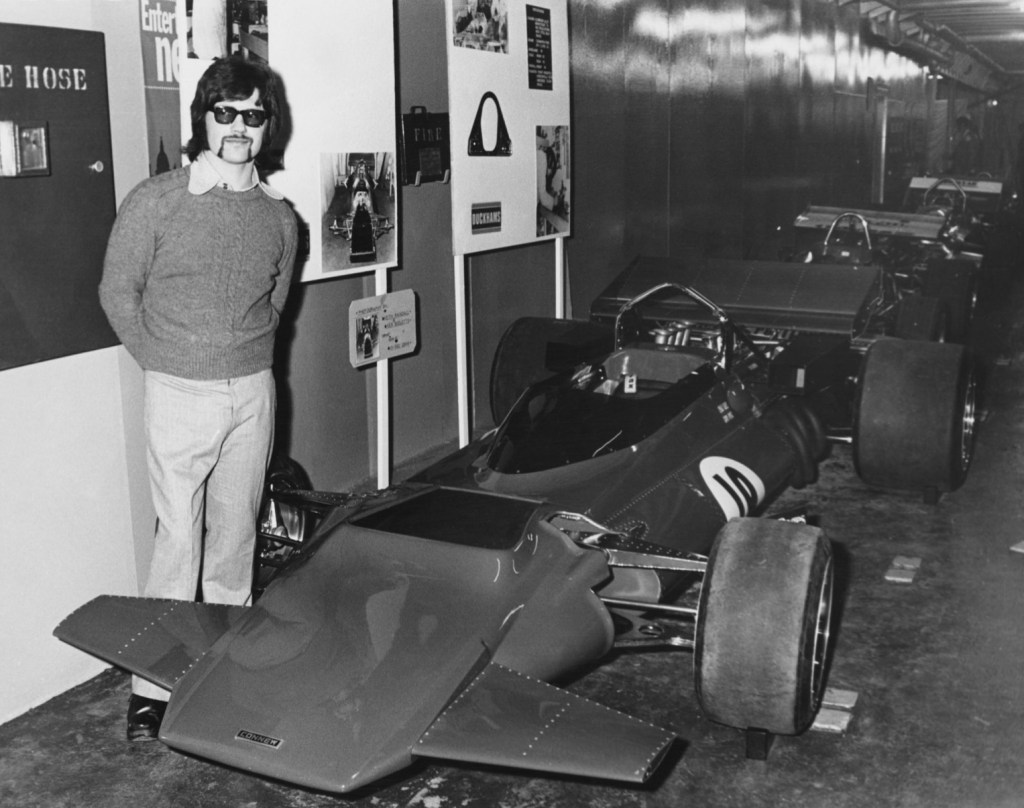
Peter Connew at the launch of his new F1 car at the Evening News Racing Car Show aboard the Townsend Thorensen ferry Enterprise 2, December 31, 1971 (J Wilds-Getty)

I have followed your stories and pictures of the Surtees Team history and are very impressed with your knowledge and enthusiasm about the Surtees Team history.
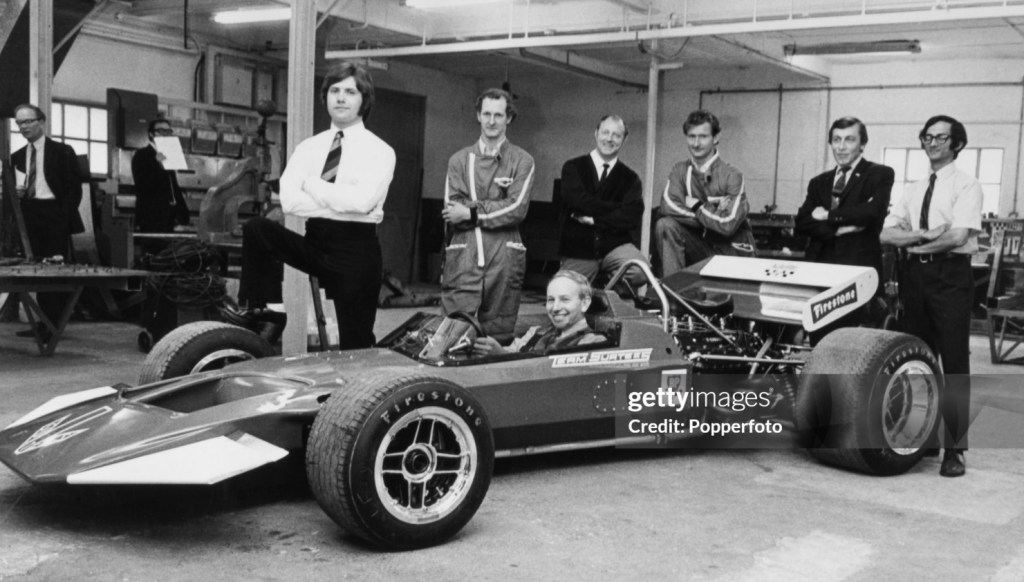
John Surtees seated in the new Surtees TS7 Ford with Peter Connew, Roger Flynn, Rex Stone, Bill Granger, Arthur Fowler and co-designer Shabab Ahmed. Edenbridge, July 15, 1970

They were fortunate times for me when John Surtees decided to build his own F1 car in 1970 … the TS7 … and I was lucky to be there at that time.

I have many fond memories of that time and are happy to share them. John Surtees was a very special person, and his engineering expertise and kindness is an example to us all.’

The Connew story is well told here: https://www.hagerty.co.uk/articles/motorsport/the-likely-lads-in-a-lock-up-who-made-it-to-the-f1-grid/
(S Taylor)

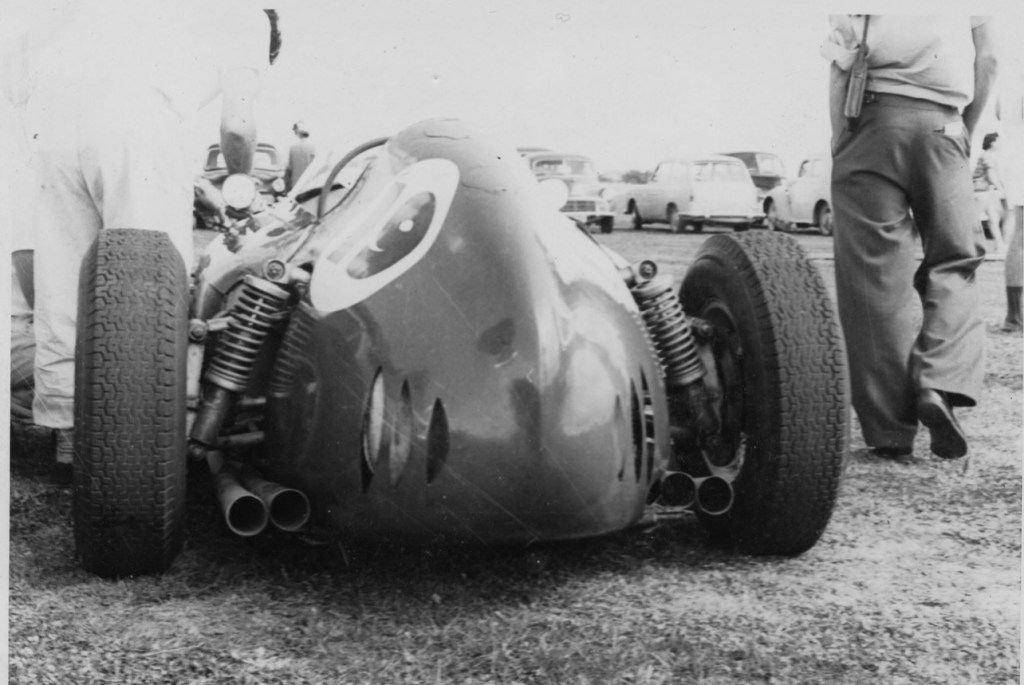
The erotic rear quarters of Pat Hoare’s Ferrari 256 3-litre V12 circa 1961, Ardmore perhaps.

The story of the last front-engined car to win a World Championship Grand Prix – as a Dino 246/58 – is an interesting one, see here: https://primotipo.com/2020/02/07/pn-hoare-440-papanui-rd-christchurch-nz/
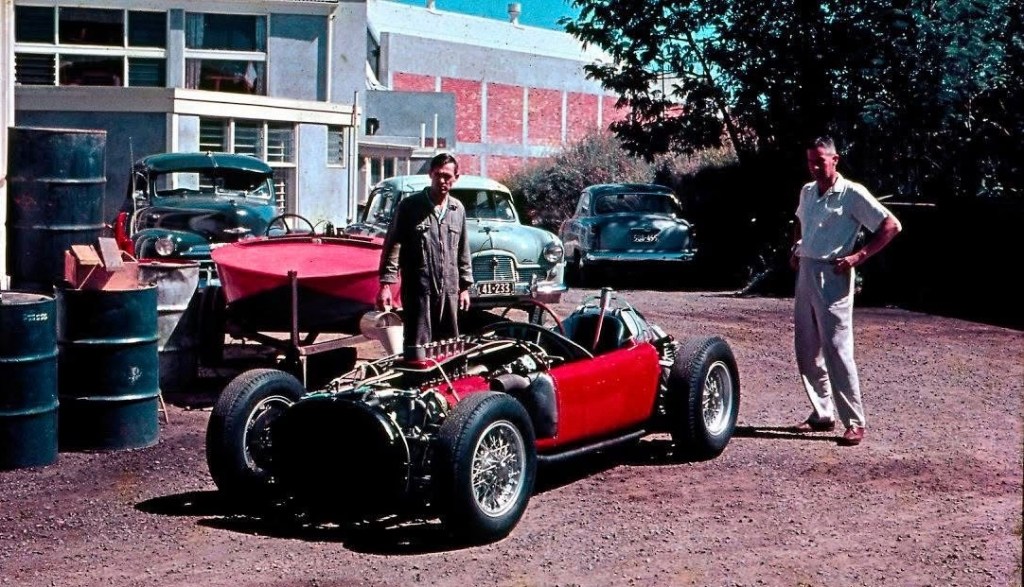
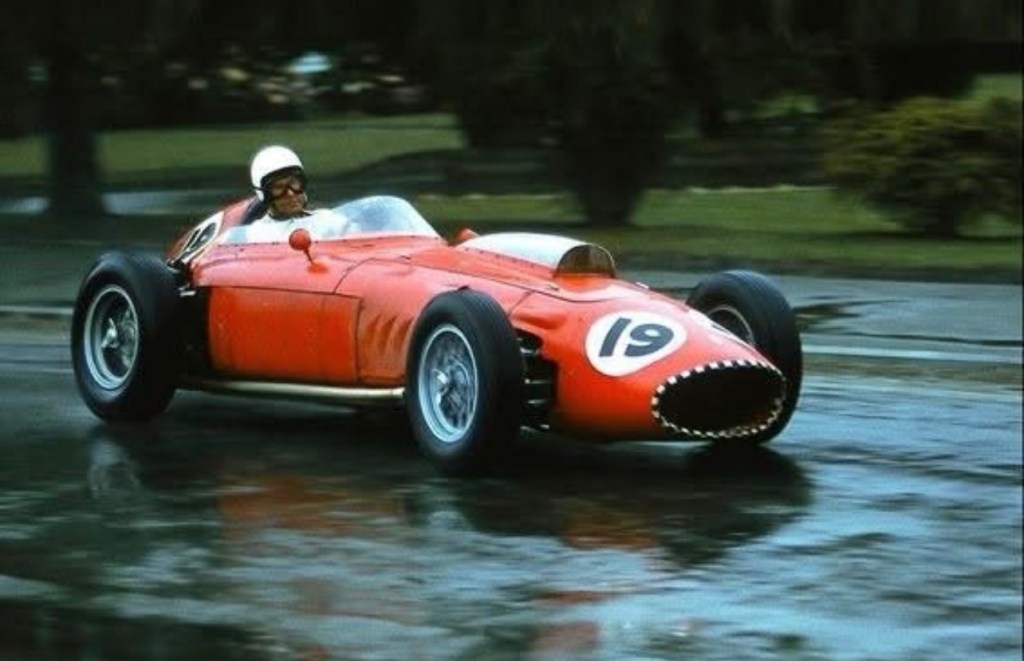
(E Stevens)
(N Matheson-Beaumont)

Pat Hoare on the way to victory in the Waimate 50, New Zealand, in November 1961 and below, George Begg shot it in its ‘Fugly GTO’ phase in a race paddock, date and place unknown.

Pat’s best results in the car are as follows: 1960- NZ GP Ardmore eighth, Dunedin Road race and Waimate 50 second 1961- NZ GP Ardmore seventh, Dunedin Road Race second, Teretongaa International fourth, Waimate 50 first 1962- Dunedin Road Race first, Waimate 50 second.
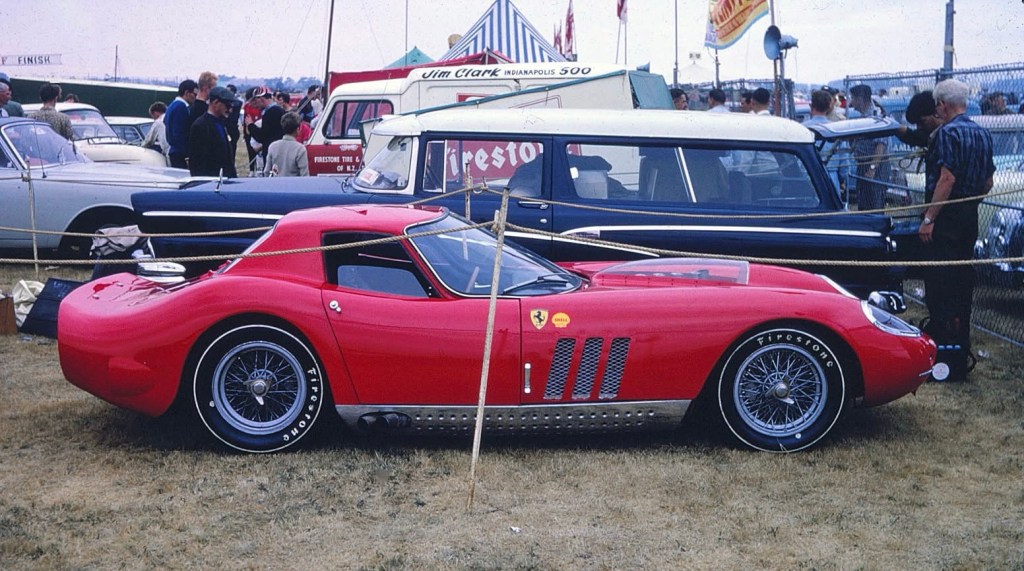
(G Begg)
(B Cahier)

It can only be Targa, even at a glimpse…

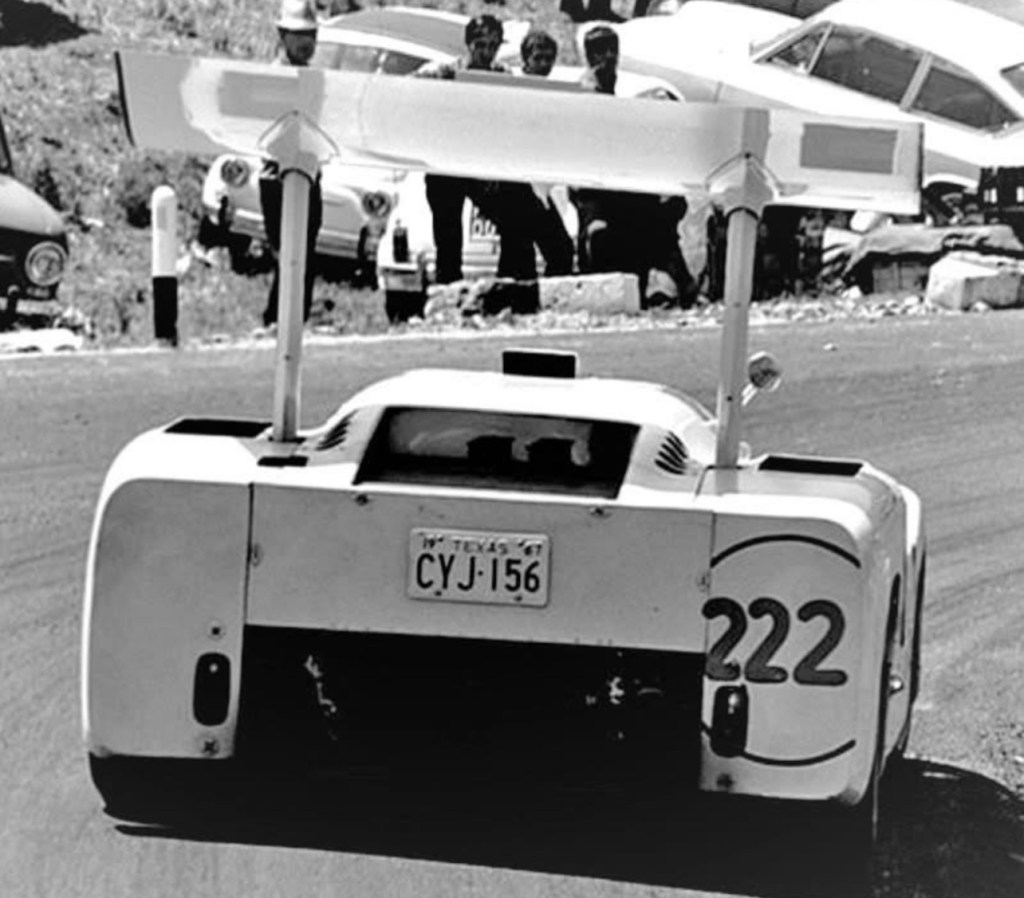
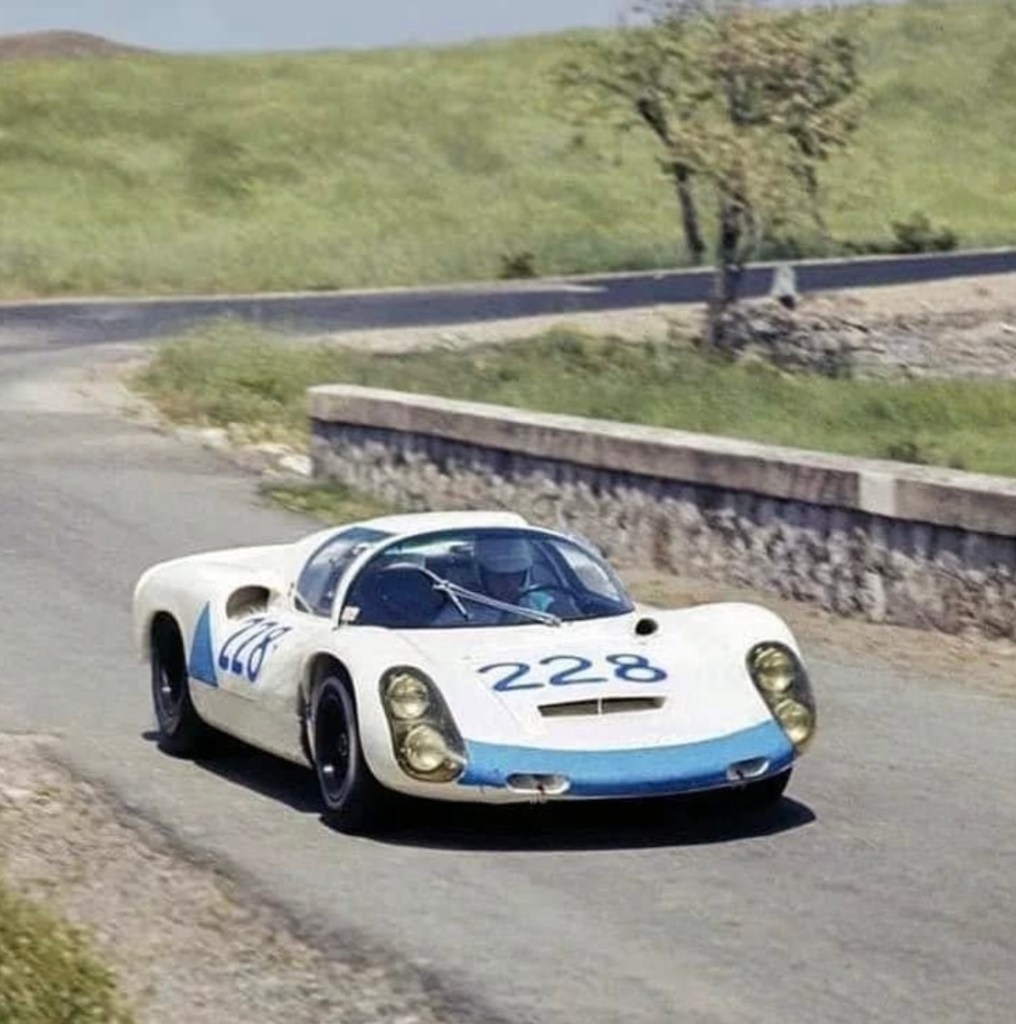
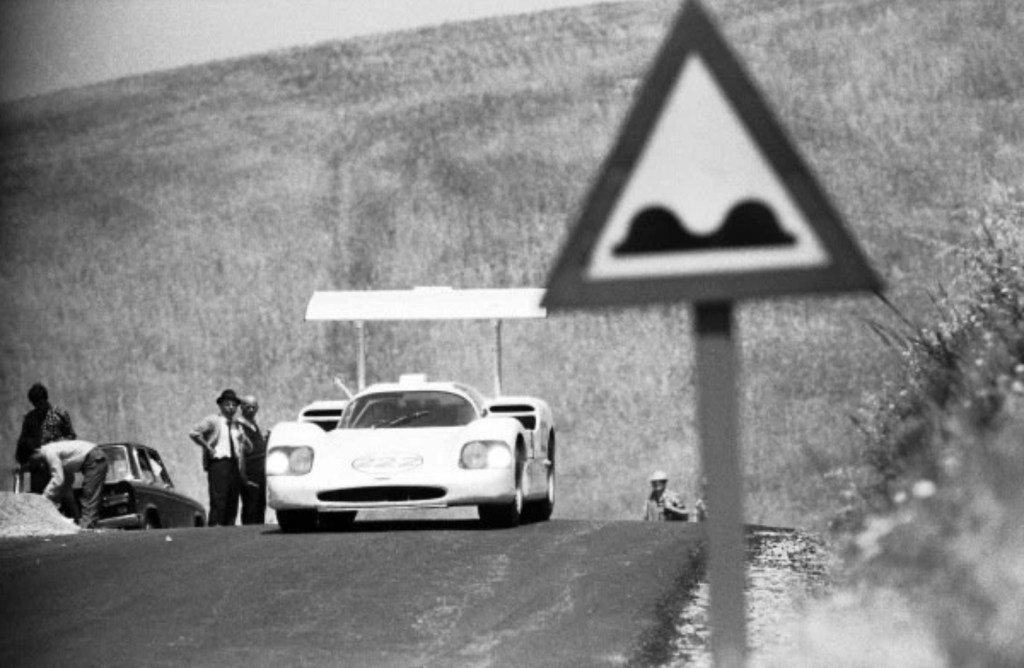
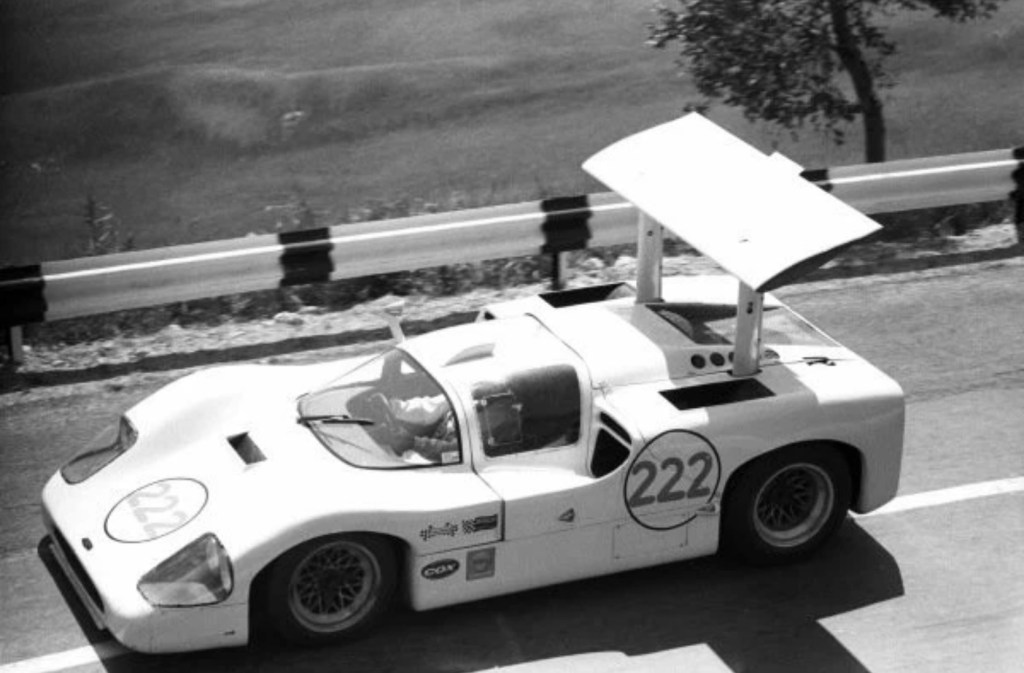
The Chaparral 2F Chev raced by Phil Hill and Hap Sharp during the 1967 event, DNF after eight of the 10 laps. The classic was won by the more nimble works-Porsche 910/8 crewed by Paul Hawkins and Rolf Stommelen below. It was a 910 one-two-three with Cella/Biscaldi second and Elford/Neerpasch third.
(unattributed)
(Getty)

If only the 2F had an ‘automatic’-transaxle with the durability and reliability to match the quality of the rest of the car. A mighta-been indeed, see here for a lengthy feature on the car: https://primotipo.com/2014/06/26/67-spa-1000km-chaparral-2f/
(unattributed)
(Getty Images)

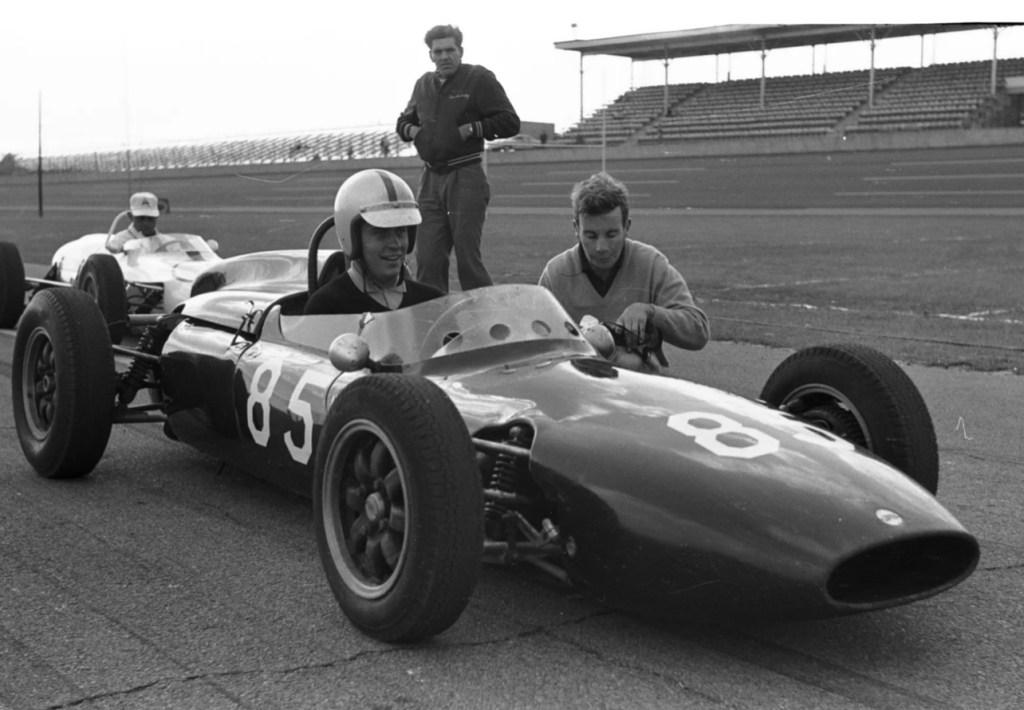
Later Chaparral pilot and rather successful entrepreneur, Roger Penske aboard Teddy Mayer’s Cooper T59 Ford FJ during the 1962 Daytona Continental 3-Hour meeting on February 11.

Penske was filling in for Tim Mayer, who had been drafted into the US Army at the end of 1961. That weekend’s Formula Junior ‘Count Lurani Cup’ was won by Pete Lovely’s Lotus 22 Ford; Penske wasn’t entered, it appears to have been a test session. Penske raced a Cooper T57 Climax in the 3-Hour but withdrew when his oil pressure plummeted.

Mind you, Tim had time enough to win the ‘62 USA-SCCA Interdivisional Championship. He prevailed in many Formula Junior races aboard big-brother Teddy Mayer’s RevEm racing Cooper T59 Ford including those at Marlboro Raceway, Maryland where Mark Donohue’s Elva was second, and Cumberland Airport, in front of teammate Peter Revson in Maryland, Bridghampton, Road America, Meadowdale Raceway, Illinois, and Thompson Raceway, Connecticut.
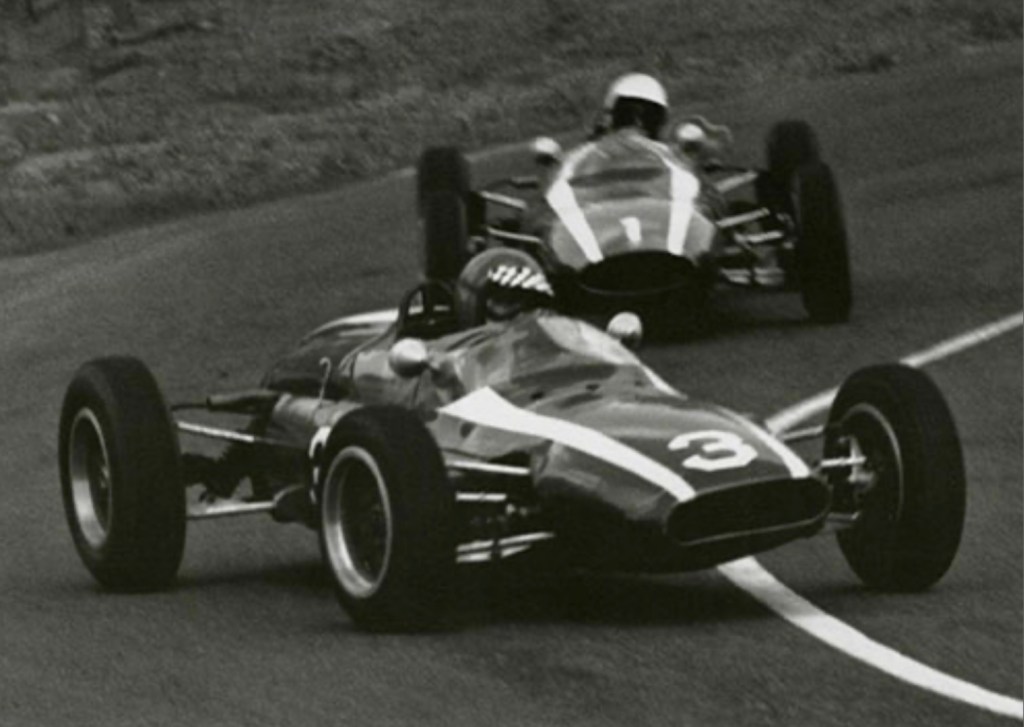
Tim Mayer chases Peter Revson during the 1962 Puerto Rico Grand Prix, RevEm Cooper T59 Ford FJs (Tom Burnside Collection)
President’s Cup, Virginia Raceway, Danville, Virginia April 28/29 1962 (B Reynolds)

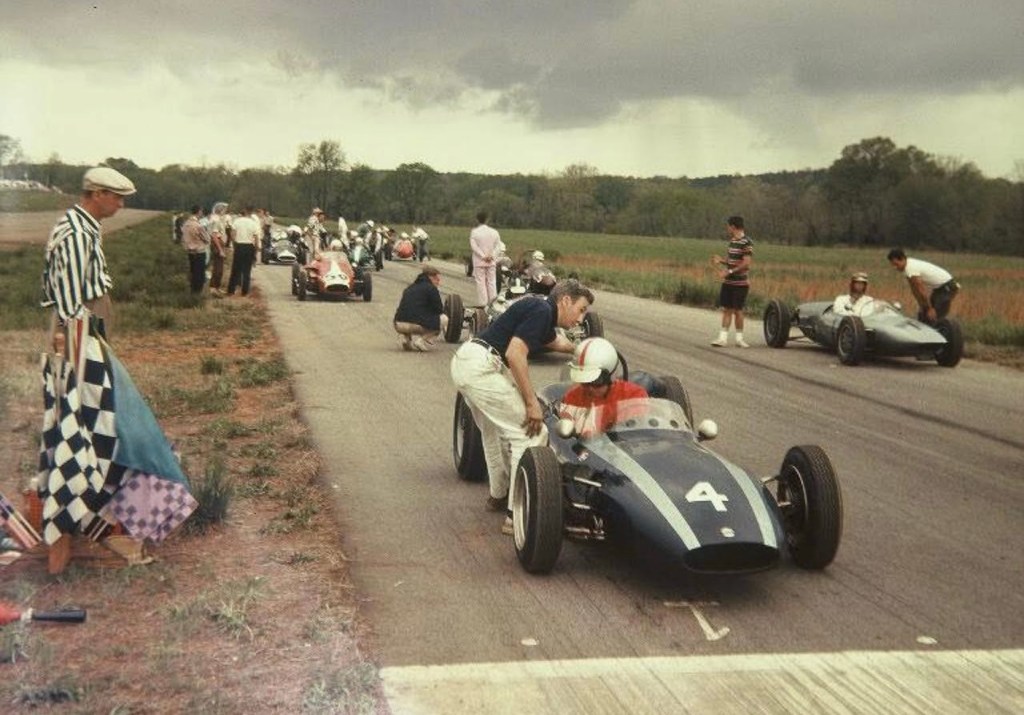
Penske raced the car once at Virginia Raceway, Danville where he was second behind Walt Hangsgen’s similar car over the April 28/29 weekend.

He’s being looked after by Teddy Mayer on the grid at Virginia above. Car #1 is the Charlie Kolb Merlyn Mk3 Ford, while the front-engined red/white Stanguellini Fiat has Pierre Mion at the tiller.
(J Culp)

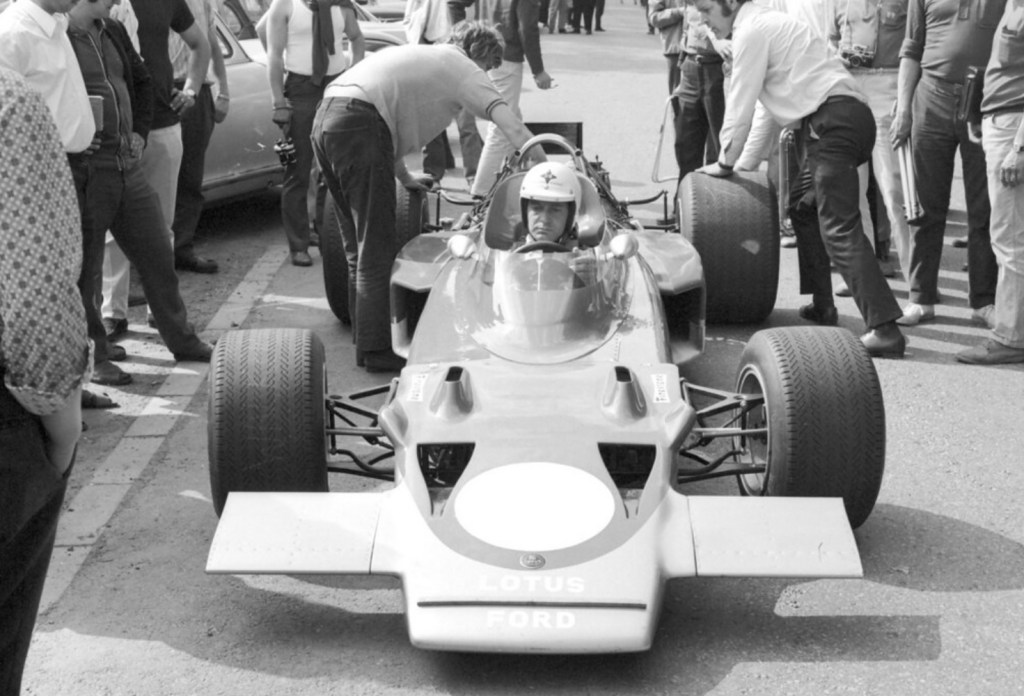
Jim Culp reports from practice over the 1970 Belgian Grand Prix weekend. ‘On Saturday I arrived in the spectator parking area to discover a Team Lotus van with a brand new Lotus 72. Alex Soler-Roig arrived in slacks and polo shirt, climbed in, and after a brief orientation, pulled on his helmet and drove out for a slow lap of the circuit.’
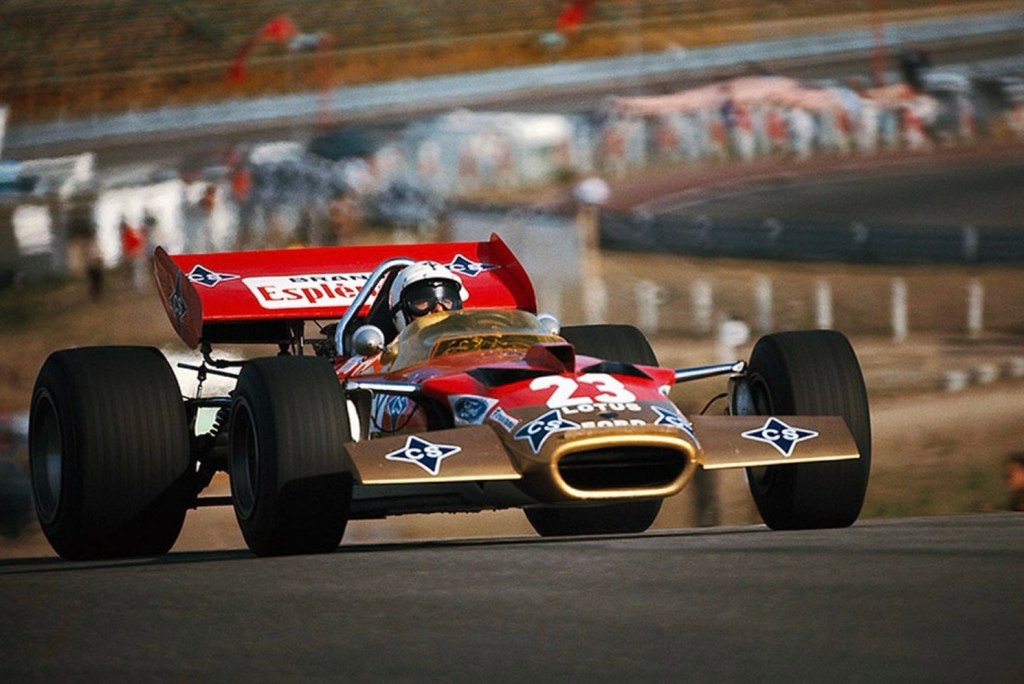
(A Sievers)

Soler-Roig was entered by Team Lotus at home (above), Spain, Jarama (Lotus 49C Ford), where he was a DNQ, at Spa (72C Ford) DNS, and in France, DNQ (49C Ford).

He started four races in a March 711 Ford in 1971, two in a BRM P160B in 1972 and failed to finish in all of them.
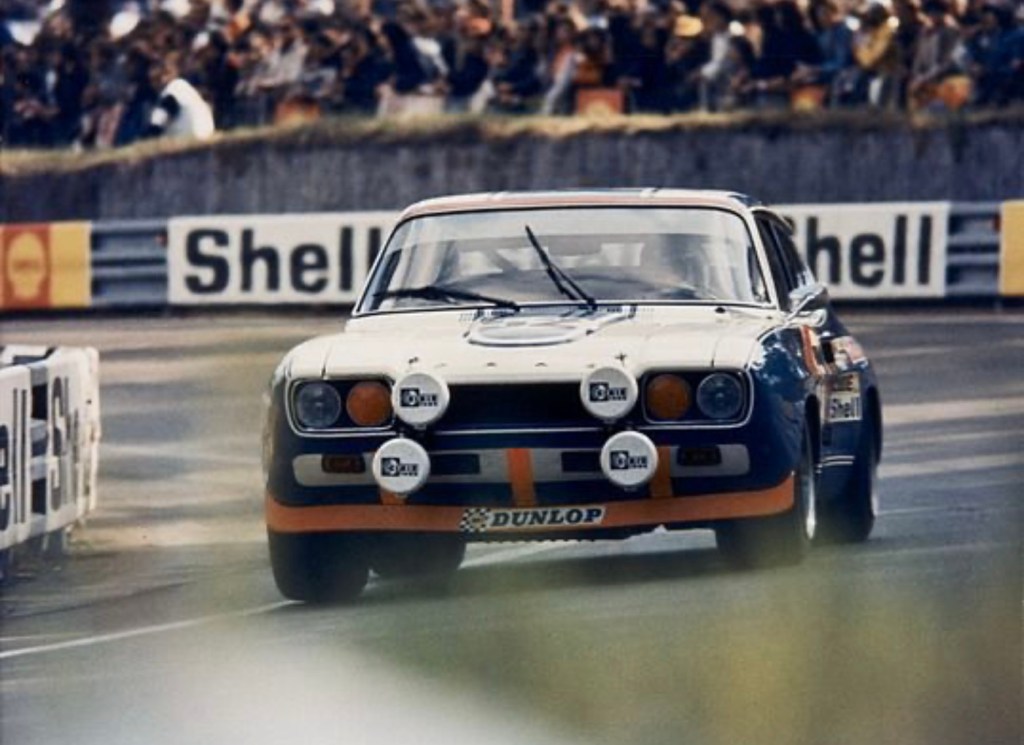
Dieter Glemser/Alex Soler-Roig, Ford Capri RS2600, Le Mans 1972. Second in class, 11th outright (unattributed)

After the futility of the five or so car 1972 BRM team became clear to him he ended his career in fine fashion racing works and quasi-works Ford Capri RS2600s in the European Touring Car Championship.

A Zandvoort Trophy win with Dieter Glemser and Jochen Mass, third at Spa with Dieter Glemser, third at Paul Ricard with Mass and Gerard Larrousse and a rousing win at home – Jarama – with the same crew were great results. See here: https://www.f1forgottendrivers.com/drivers/alex-soler-roig/
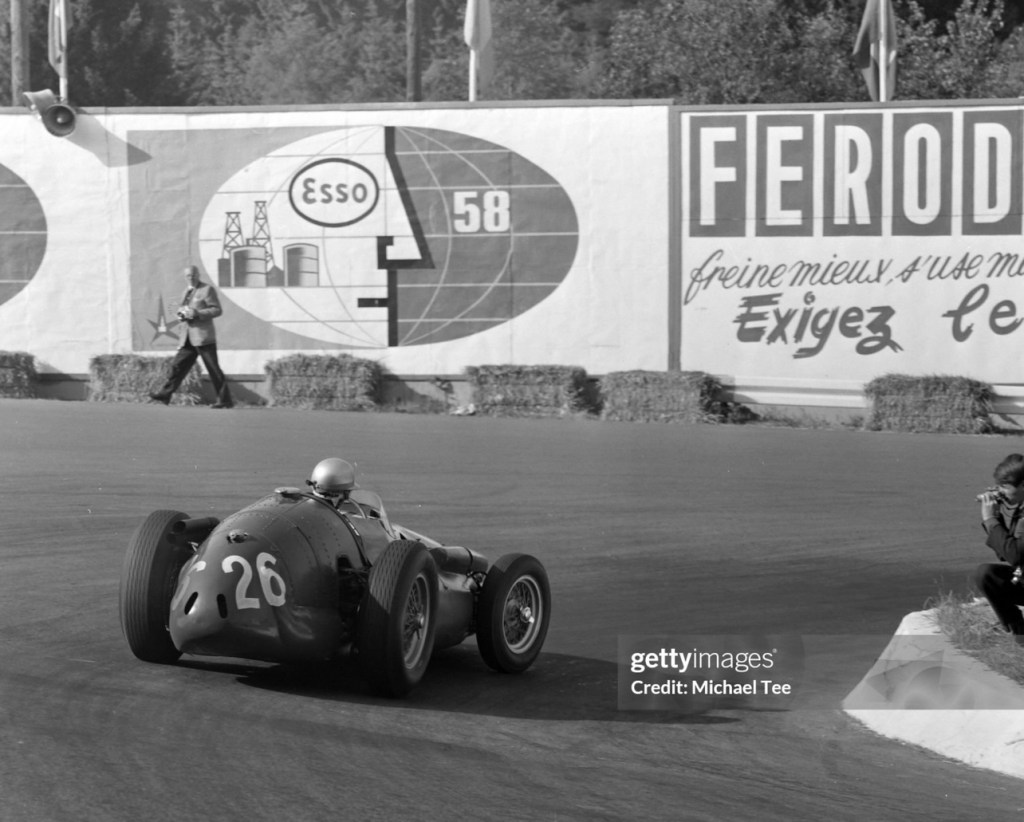
Doesnt the Maserati 250F look great from every angle?

Maria Teresa De-Filippis entering La Source at Spa in 1958, Q19 and tenth place, her best result in three Championship GP starts. See here: https://primotipo.com/2016/09/23/maria-teresa-and-stanguellini-fj/
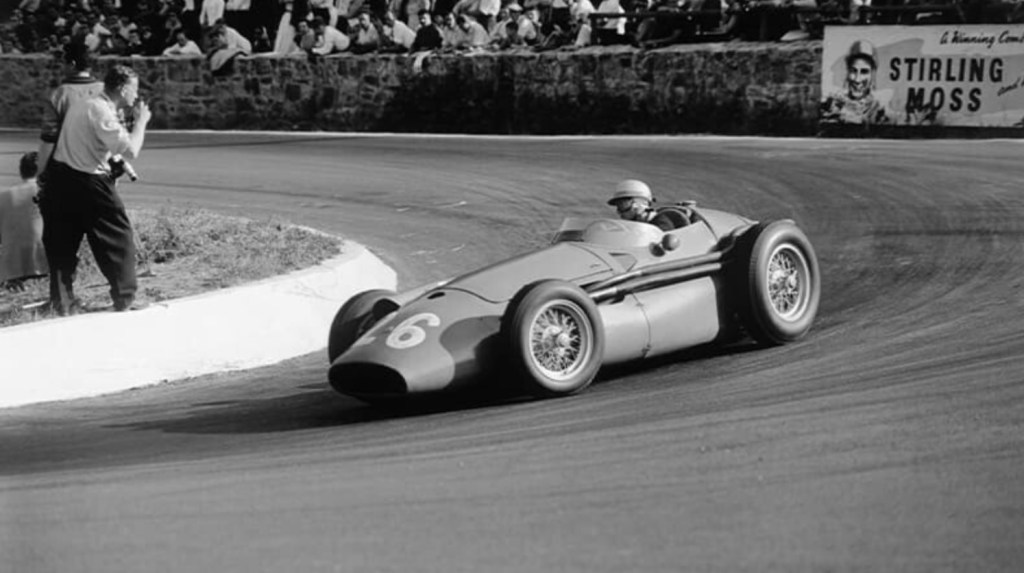
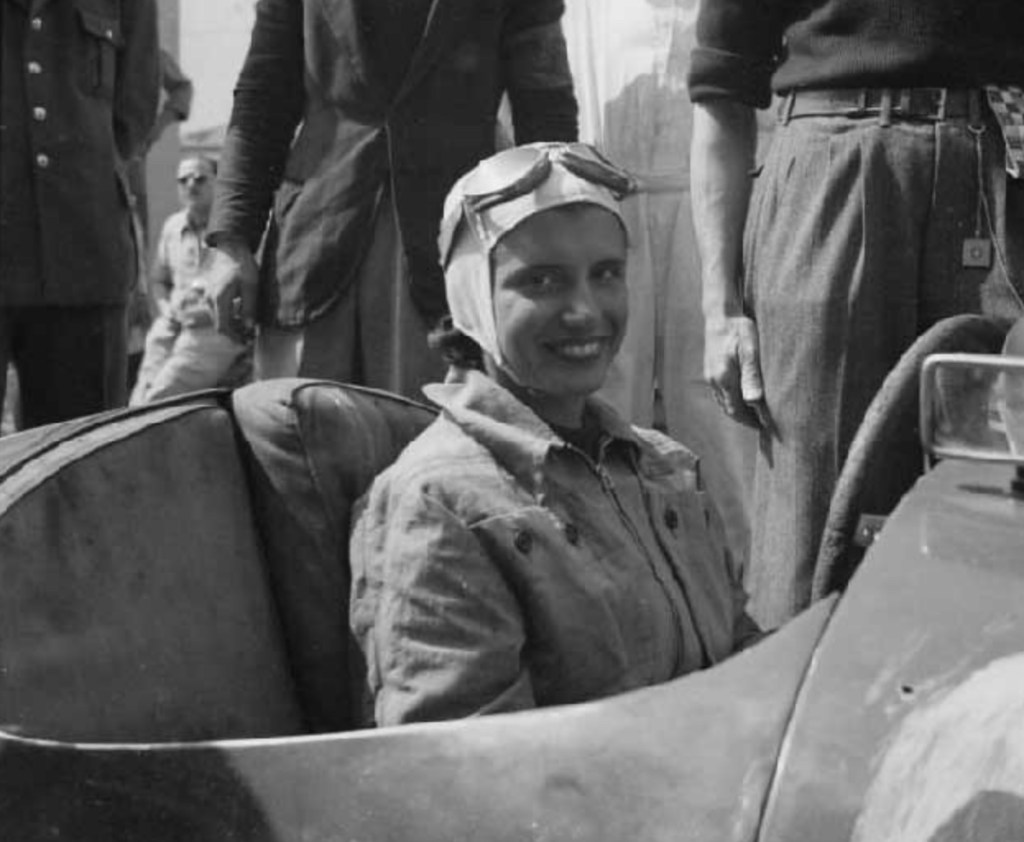
(pirelli.com)
(unattributed)

De Filippis at the September 1, 1949 Aosta–Gran San Bernardo hillclimb where she was fifth in the under 750cc class in a Meccanica Taraschi built Urania BMW 750 Sport.

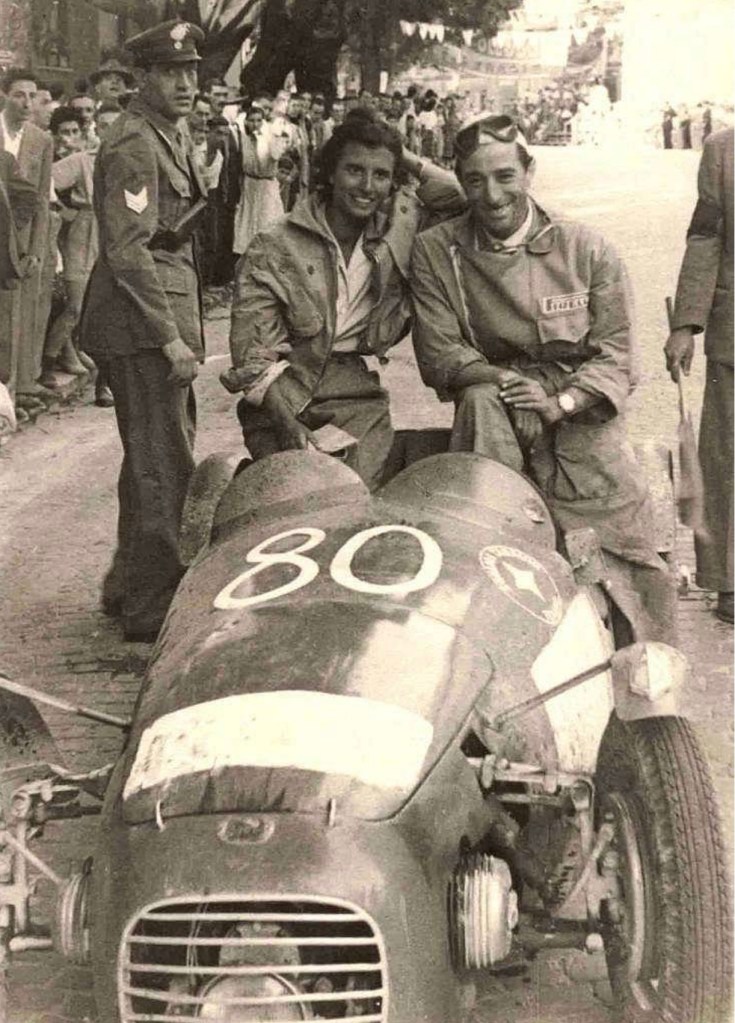
Below she is pictured during the August 4 Stella Alpina together with Giuseppe Ruggiero in a Squadro Taraschi machine operating from Berardo Taraschi’s base in Teramo. They were sixth with a time of 4 min 52.41, the winning Stanguellini S1100 did a 4:43. More about the company here:https://www.cortilepittsburgh.org/taraschi.html
(unattributed)

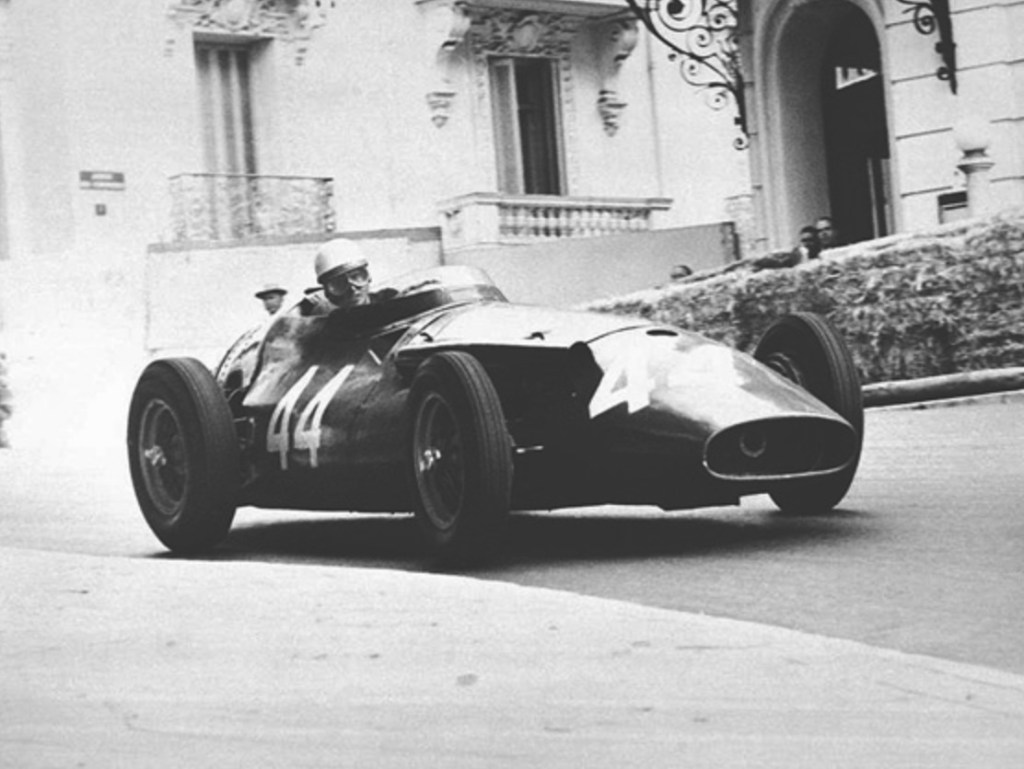
And below nearly a decade later in a Maserati 250F during practice for the 1958 Monaco Grand Prix where she was one of 15 drivers who didn’t qualify; Maurice Trintignant won in a works-Cooper T45 Climax.
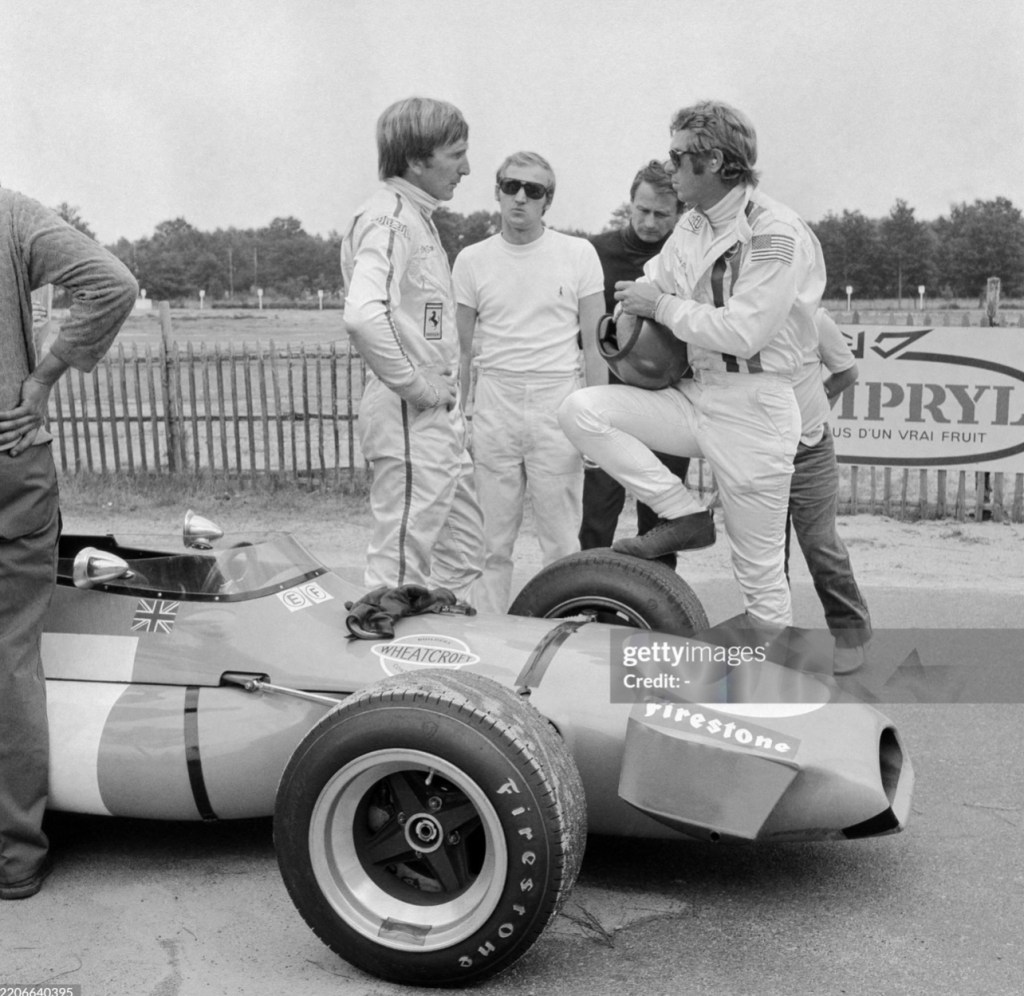
I get Derek Bell being at Le Mans for shooting The Film with Steve and all of the boys, but I don’t get the presence of his Brabham BT30 Ford FVA at La Sarthe on July 18, 1970.

Any clues folks? Show and tell perhaps? Did Steve do a few laps in the Brabham?

Derek was second in the 1970 European F2 Championship in the Wheatcroft Racing Brabham with Clay Regazzoni the victor in works-Tecno 69 and 70 Ford FVA machines.

It may well be that the car was kept in France during this period, as there were two French Euro F2 rounds back to back: on June 28 at Rouen-les-Essarts (seventh) and Paul Ricard on July 26 (DNF accident).
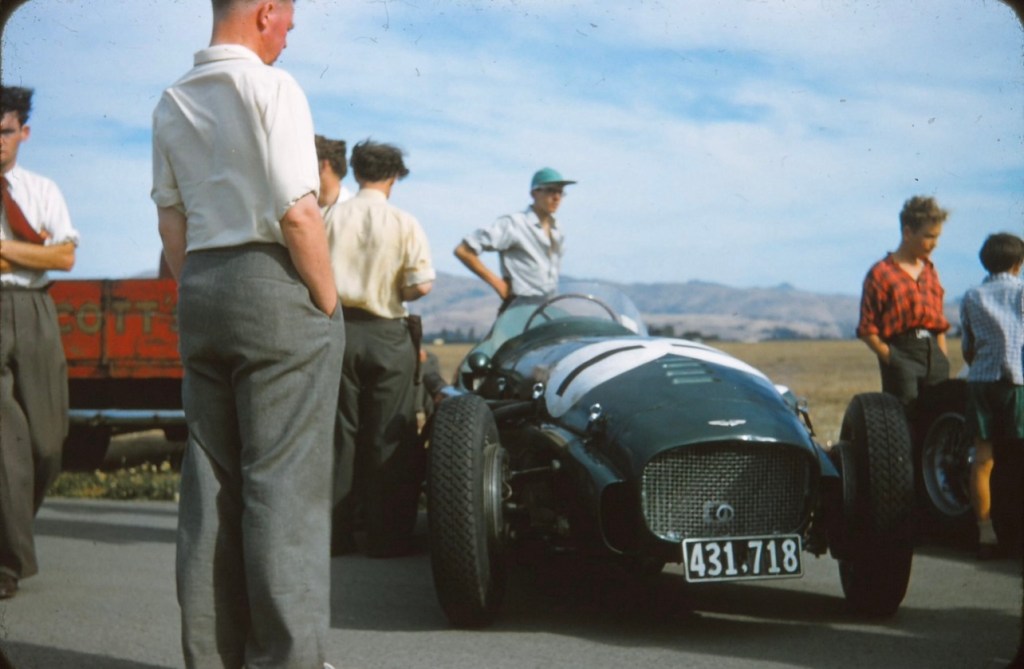
Aston Martin DP155 at New Zealand during the Kiwi Internationals in the summer of ’56.

Reg Parnell drove the experimental DB3S-based Grand Prix monoposto well but was blown off by the ex-works Ferrari 500/625 3-litre machines raced by Peter Whitehead and Tony Gaze. Note the rego-plate, it would have been quite an Aston-Roadie!
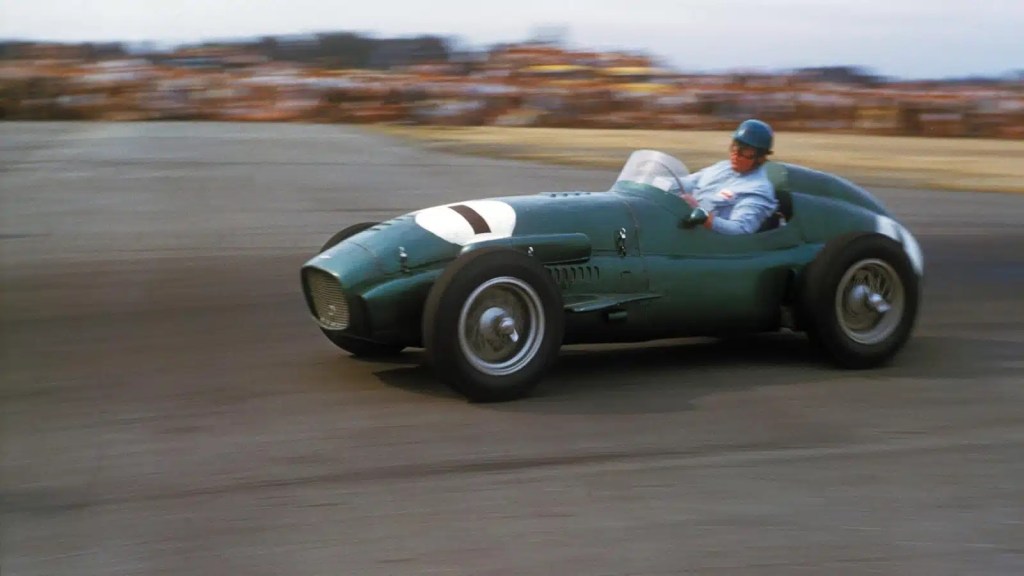
See here for a feature on this car,where is the shot of Reg above, Kiwis?: https://primotipo.com/2019/09/05/the-gp-aston-martin-dp155/ and here: https://www.motorsportmagazine.com/articles/single-seaters/f1/aston-martins-failed-first-f1-attempt-the-dp155/
(primotipo archivio)

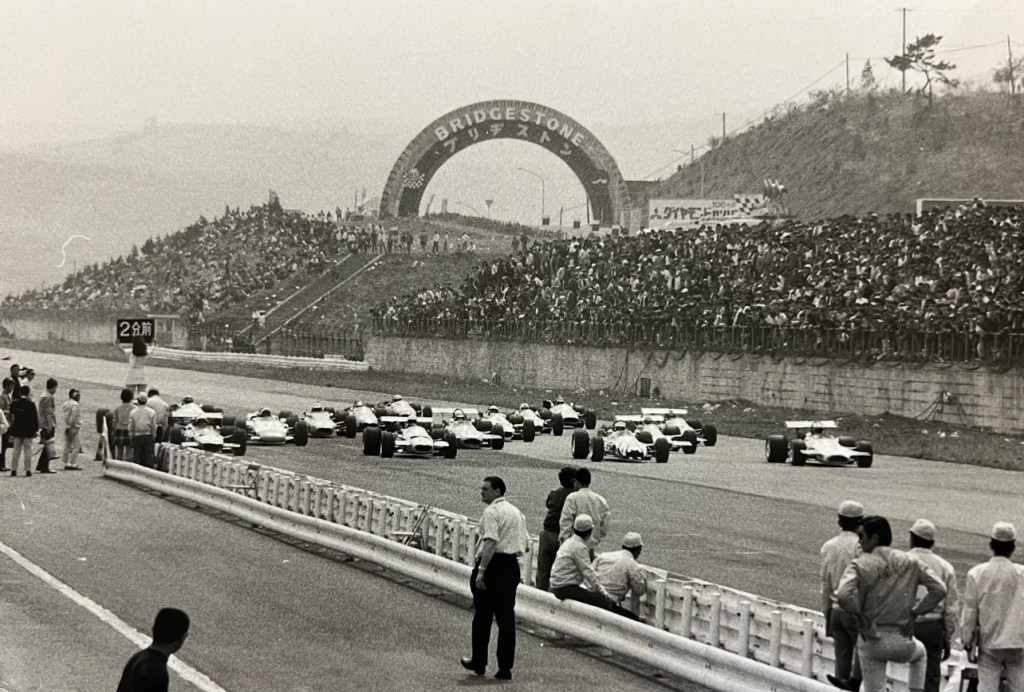
Start of the 1970 JAF Japanese Grand Prix at Fuji International on May 3, 1970. The three cars at the front, sorta, are Leo Geoghegan’s Lotus 59B Waggott TC-4V 2-litre, Tetsu Ikuzawa’s Mitsubishi Colt F2-D R39 1.6-litre and Jackie Stewart at the far right, Brabham BT30 BDA, capacity uncertain.

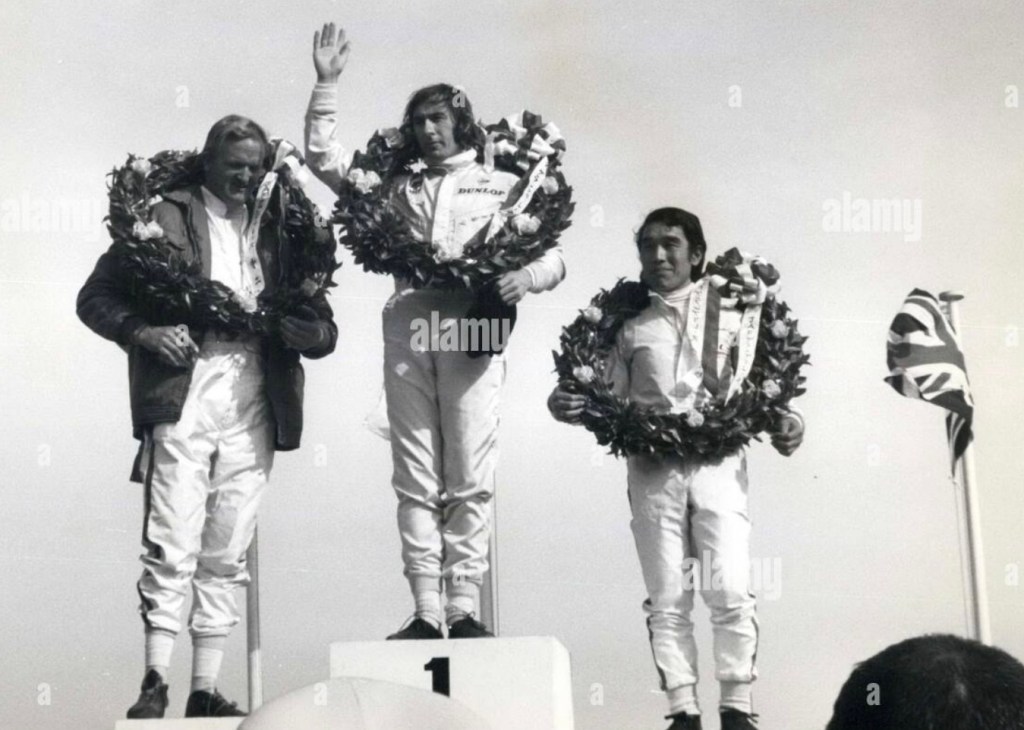
70,000 spectators watched the reigning World Champion, Stewart, win the 50 lap, 300 km race in the John Coombs Brabham BT30 Ford raced by Jackie and Jack Brabham in Euro F2 races that year.

Max Stewart’s Mildren Waggott TC-4V 2-litre was second, 50 seconds adrift of his much shorter namesake, and Kuniomi Nagamatsu was third in a Mitsubishi Colt F2-D 1.6.
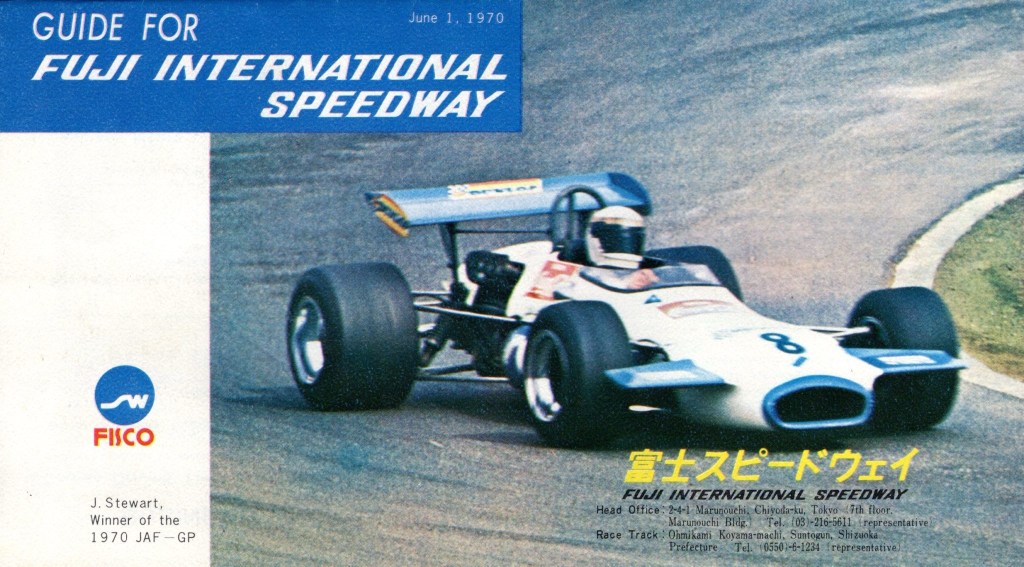
Other notables who started the race included 1969 fourth placegetter Graeme Lawrence aboard the howling Ferrari Dino 246T in which Graeme and Chris Amon won back-to-back Tasman Cups in 1970-69, Leo Geoghegan’s fifth placed Lotus 59B Waggott TC-4V, and sixth placed Alastair Walker’s Brabham BT23C Ford FVA.
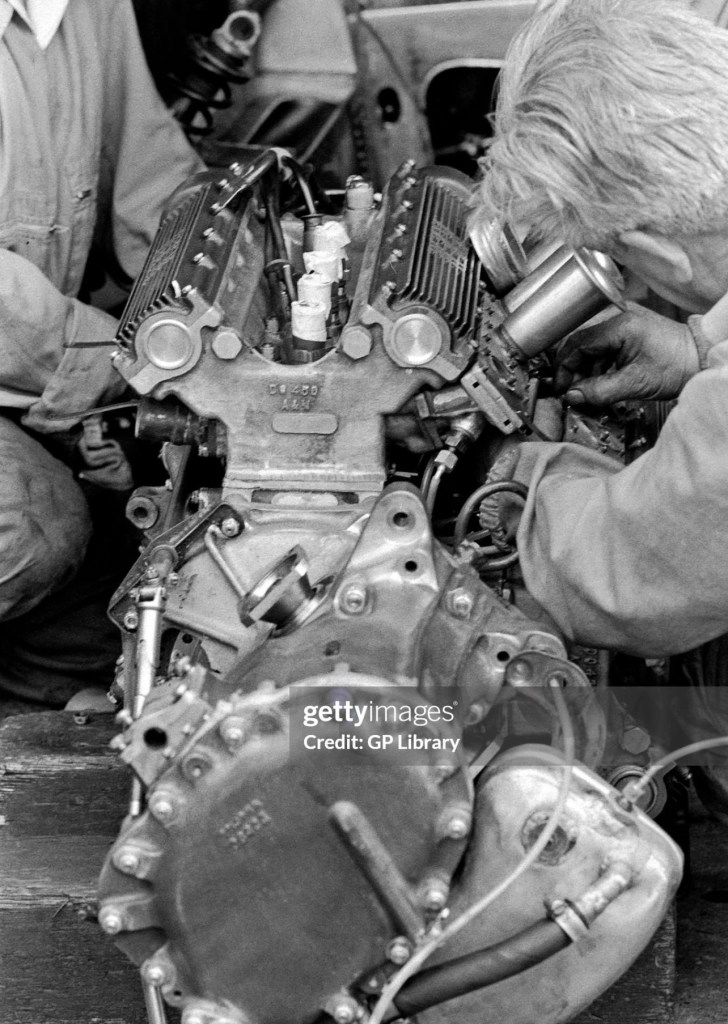
BRM mechanic, Willie Southcott, fettling a BRM 1-litre P80 four-cylinder twin-cam, fuel-injected Formula 2 engine circa 1965.

Power was quoted at 128 bhp @ 9750 rpm with bore/stroke of 71.555/61.595 mm in 1965, and increased to a claimed 136bhp @ 10,500 rpm when the bore-stroke changed to 74.63/56.95 mm in 1966.

The interesting bit for OCDers like me is that the inlets and exhausts of this engine are on the opposite side to most photographs of the unit; and yes, the shot isn’t being shown arse-about.

See here: https://primotipo.com/2017/11/06/jim-clark-lotus-35-and-the-cosworth-sca-f2-engine/ Part of the development process, I guess…

The eagle-eyed may have picked up ‘A&M’ on the head casting ‘facing us’. A&M was/is Automotive & Marine Foundry Ltd, based in Grantham, Lincolnshire, England. This company was a key supplier of precision sand castings for BRM during the 1950s and 1960s.
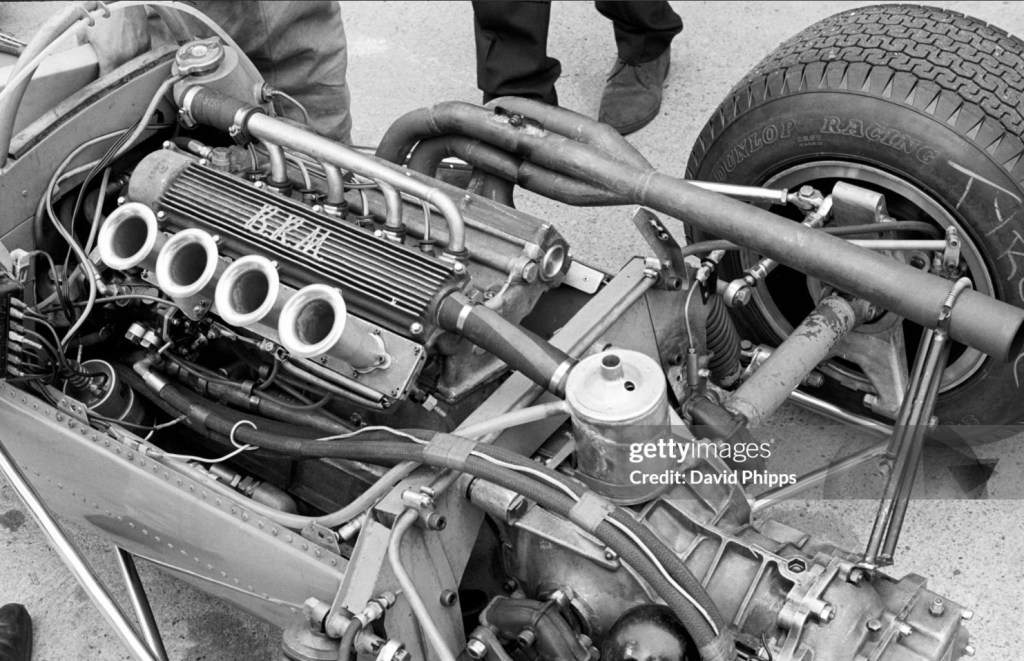
The P80-engined Matra MS5 of Hubert Hahne during the 1966 German GP meeting in August 1966. He was ninth outright and first in the F2 class ahead of Hans Hermann, Brabham BT18 Ford and Jo Schlesser’s works-Matra MS5 Ford.

Credits…

Peter Connew, George Begg, Bernard Cahier, Eric Stevens, Jim Culp, Bill Reynolds, GP Library, Alex Sievers, Dariel-Paris, Repco, Russ Cunningham

Tailpiece…
(Darien-Paris)

Did he catch it?…

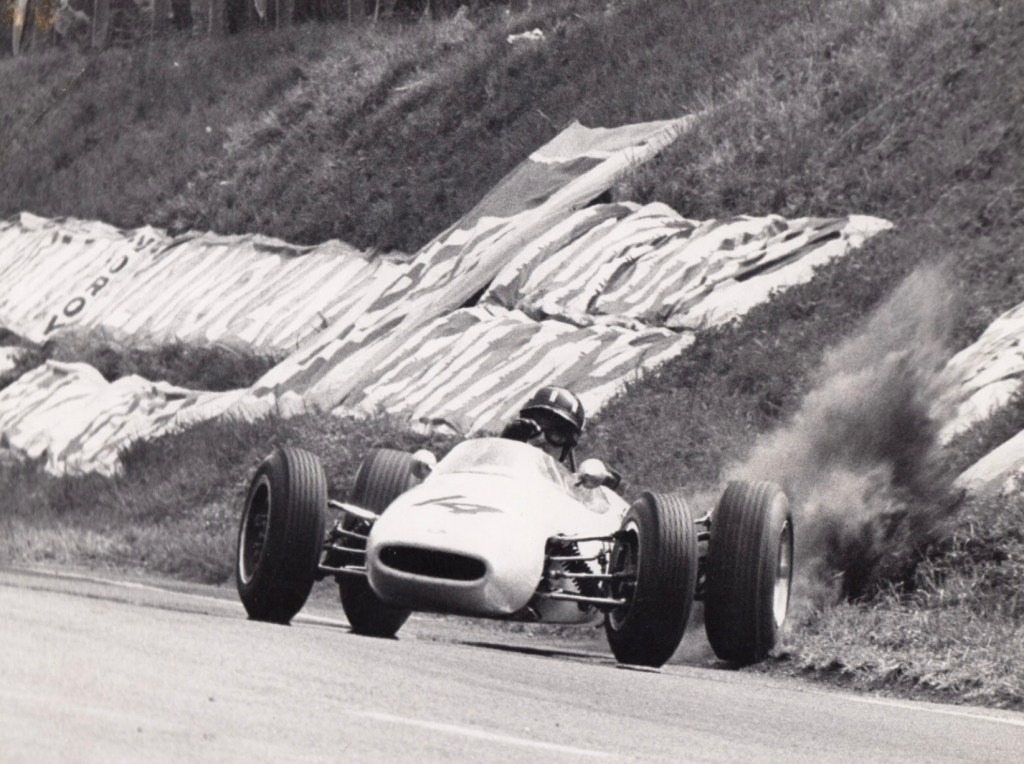
This shot popped up in my BRM P80 research adventures. It’s Graham Hill doing his best to cut the Rouen-Les-Essarts grass during the 1965 meeting aboard John Coombs’ Brabham BT16 BRM P80 1-litre; Graham was a works-BRM pilot then.

Understandably so, as Hill is trying to catch Jim Clark’s victorious Lotus 35 Cosworth SCA, unsuccessfully as it transpired. Graham was second and Jack Brabham third in a BT19 Cosworth SCA; Brabham knocked the Honda S800 F2 engine into shape that season, then went and pulverised F2 with it the following year. Jack used the SCA for a while mid-season after dispatching the Japanese to go home and try again…they did a mighty fine job! See here:https://primotipo.com/2015/07/30/xxxii-grand-prix-de-reims-f2-july-1966-1-litre-brabham-hondas/
(R Cunningham)

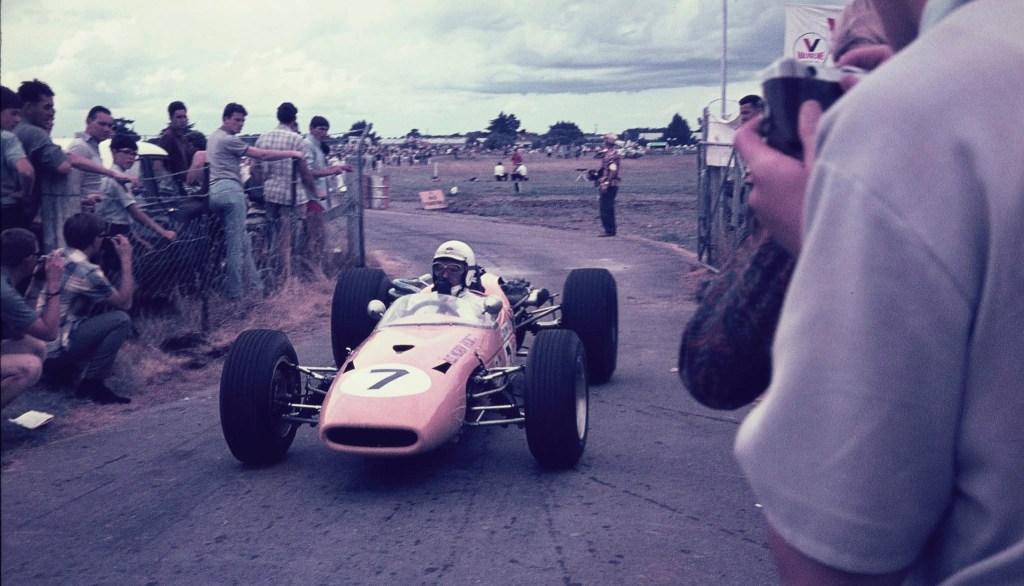
There is an Australian aspect to this story. At the end of the ’66 season Frank Gardner bought the car on behalf of Alec Mildren in Sydney. The chassis was fitted with a Coventry Climax 2.5 FPF four and raced by Gardner successfully in the 1967 Tasman Cup, here at the Levin International on January. The car is still here, see this piece: https://primotipo.com/2020/03/13/brabham-bt16-climax/
(Repco)

Finito…

image

The trouble with so many shots of Maria Teresa de Filippis is that many were shot by non-racing photographers so are devoid of the detail we want!…

‘Maria Teresa with racing car’ is about as precise as it often gets, it gives we amateur historians a research challenge I guess. Having trawled through the ‘F2 Register’ Formula Junior Archive as best I can (although the listing for this event does not include competitor numbers) this is the ‘Confronto Nord-Sud’ contested at Vallelunga on 1 November 1958. Lucio de Sanctis won the final in his own de Santis Fiat with Maria Teresa 4th in the first heat and 6th in the final. I wrote a short article after de Filippis died last year, click here to read it;

Maria Teresa de Filippis…

The car behind Maria Teresa is another Stanguellini, unfortunately the mid-engined car has been largely cropped out of the shot, ‘twould be interesting to know what it is if any of you FJ experts can identify the machine.

image

MTdF in her Stanguellini at Vallelunga in 1958 (Popperfoto)

Formula Junior had 11 events in 1958, 9 of them in Italy, the category’s champion was Count Giovanni Lurani an Italian who saw the need for a relatively inexpensive entry-level single-seater class. The category was for cars with engines of 1100cc and a minimum weight of 440Kg (their was a 1000cc class as well with a lower weight limit) exploded in 1959 with meetings all over Europe, the UK from mid-year and a couple towards the end of the year in the US.

image

Count Giovanni ‘Johnny’ Lurani, here in the mid-30’s, was an Italian auto engineer, driver and journalist who raced Salmson, Derby, Alfa and Maserati’s after graduating in engineering at the Politecnico di Milano. He won his class in the Mille Miglia thrice and founded Scuderia Ambrosiana in 1937. Post WW2 he worked with the FIA, his credits include the creation of FJ in ’59 and the GT Class in ’49. He also designed record breaking motorcycles and was president of the FIM in a life of achievement (ISC Images)

The category was immensely successful largely due to a progressively more buoyant post-war global economy, improving personal incomes and the arrival of consumer credit which meant young aspirants to Fangio’s world crown could buy a car.

There was plenty of choice of weapon too as builders of chassis and related componentry popped up all over the joint from Australia to Russia. An article on FJ and its incredible growth is an interesting one for another time!

image

Stanguellini factory in Modena with a swag of FJ’s lines up out front in 1959 (stanguellini.it)

Stanguellini were beautifully placed to build cars for Formula Junior given their rich history of racers based on the Fiat parts bin…

That glib phrase does not do the heritage of this firm justice however, click on this link to the marques website which provides a great summary of their cars and engines since the 1930’s, the photographic archive is also rich, take the time to cruise through it; http://www.stanguellini.it/en/100-years-of-history-stanguellini-car/

The ‘Stang’ is often often said to be a mini-250F but its as much Vanwall or Lotus 16, either way those comparisons don’t do justice to a car which has a beauty all of its own.

image

Stanguellini Fiat FJ cutaway drawing, all the key elements of the car clear and as described in the text (unattributed)

Vittorio Stanguellini engaged Alberto Massimino who was very clever in his design approach; its not innovative in terms of its ladder frame chassis, or choice of front-engined layout although the first cars appeared in late ’57 or ‘early ’58, the ‘Cooper Revolution’ wasn’t necessarily clear at that exact moment in time. A year later the mid-engined trend was, but the Stang with its circa 80bhp, twin Webered 1098cc pushrod engine was the most competitive thing around in 1958 and 1959.

In part it was due to a clever layout which provided the driver a low driving position, getting the weight down by the use of an offset drive line, the Fiat 4 speed gearbox kinked to the right, the driver to the left. The cars had conventional upper and lower wishbone front suspension and a Fiat live axle nicely located with parallel trailing arms and sprung by coils, co-axial shocks were used front and rear. The ‘look’ was completed by the use of Borrani 12 inch wire-wheels, brakes were finned Fiat 9.8 inch drums front and rear. The wheelbase was 79 inches, front and rear track 48 inches.

image

Snug cockpit of Norm Falkiners Stanguellini FJ in late 2015, offset transmission to get the driver down nice and low clear . Engine and ‘box Fiat 4 speed (Bisset)

None of these Stanguellini’s raced in Australia ‘in period’ but Melbourne driver Norm Falkiner imported one a decade or so ago. I happened to be testing my Van Dieman RF86 Historic Formula Ford at Calder when its restoration was just completed by Jim Hardman, who still fettles it. These mixed track days are interesting to see how different cars do their stuff (or not!) up close, I can still recall how nice the thing put its power down and how much punch it seemed to have, I could hear the little Fiat engine buzzing to circa 7500rpm each time I ranged up near it. It was less impressive under brakes, but chances are they were still being sorted.

Maria-Teresa’s views on the ‘Stang relative to the GP machines she was piloting at the time would be interesting!

image

de Filippis in her 250F at Spa in 1958, 11th in the Belgian GP won by Tony Brooks Vanwall VW57 (unattributed)

Robert Lippi won the Italian Championship in 1958 and Michel May won both the ’59 Monaco FJ GP and ‘Auto Italiana International Championship for Drivers’ and Stanguellini the ‘Quattroroute International Championship of Makes’. The ‘Campionato Italiano’ went to Stanguellini driver Raffaele Cammarota.

In 1960 things got tougher. The Brits ran their first championships for the class, Chapman’s mid-engined Lotus 18 was just as quick with an 1100 Ford bolted into the back of it as a 2.5 litre Coventry Climax FPF. It and the Cooper T52 BMC made the pickings tougher for the ‘front-engined brigade the best of which that year was perhaps the Lola Mk2.

image

The GP Icecar, Cortina 17/18 January 1959. In Italy racing on ice was a novelty, circuit at Monti Pallidi, contestants line up for the first heat. L>R Stanguellini Fiat’s of Crivellari, Zanarotti and De Carli. At right the VW based Mathe VW of Otto Mathe. The final was won by Manfredini’s Wainer Fiat (Stangullini)

In 1960 Colin Davis Osca Fiat won the ‘Campionato A.N.P.E.C/ Auto Italiana d’ Europa’ from Jacques Cales Stanguellini Fiat, Denny Hulme in a Cooper T52 BMC and Lorenzo Bandini, Stang Fiat.

image

Beautiful period shot; Michel May lines up his #33 Stang Fiat FJ on the front row of the second heat of the Trofeo Vigorelli, Monza on 24 April 1960, which he won. 2nd in the ‘final 2’ . Car #57 alongside is Rob Slotemaker’s Cooper T52 DKW (stanguellini.it)

That FJ was nurturing drivers of great talent is shown by the fields of the 1960 championship which included Henry Taylor, Giancarlo Baghetti, John Love, Gerhard Mitter, ‘Geki’ Russo, Kurt Ahrens, Trevor Taylor, Jo Siffert, Peter Arundell, Ludovico Scarfiotti and Jim Clark, to name a diverse global few!

Clark won the ‘BRDC/Motor Racing’, ‘British FJ Championship’ and ‘John Davey British FJ Championship’ aboard his works Lotus 18 Ford and Peter Arundell the ‘BARC Championship’ in the other works 18.

image

Jim Clark happy after winning the ‘Kentish 100 Trophy’ at Brands Hatch 27 August 1960, Lotus 18 Ford (Lee)


Stanguellini rose to the mid-engined challenge, building the multi-tubular chassis Delfino FJ. Again Fiat engined, but inclined at 45 degrees, it had a very distinctive high mounted exhaust. By 1962 Cosworth modified Ford engines were well out of the Fiat’s reach, the car had little success, with Stanguellini losing interest in the class.

image

Colin Davis testing the Stanguellini Delfino Fiat at Modena in winter 1962, distinctive exhaust system clear. ‘Sharknose’ styling modelled on Carlo Chiti’s 1961/2 Ferrari 156 F1 machine (stanguellini.it)


Credits…

Botti, Popperfoto, Lee, Stanguellini.it, F2 Register, ISC Images

Tailpiece: Maria-Teresa helping get her Stanguellini into position at Vallelunga, car behind a 250F. I’ve a feeling the ‘ogling fans in the background are focused on the lines of the lady not her car…

image

(Popperfoto)


jean behra portrait

(Yves Debraine)

Jean Behra portrait taken by Yves Debraine in 1959, the year in which he died at the wheel of a Porsche RSK at Avus…

Not an article about this great and perhaps underrated driver but rather some 1959 snippets.

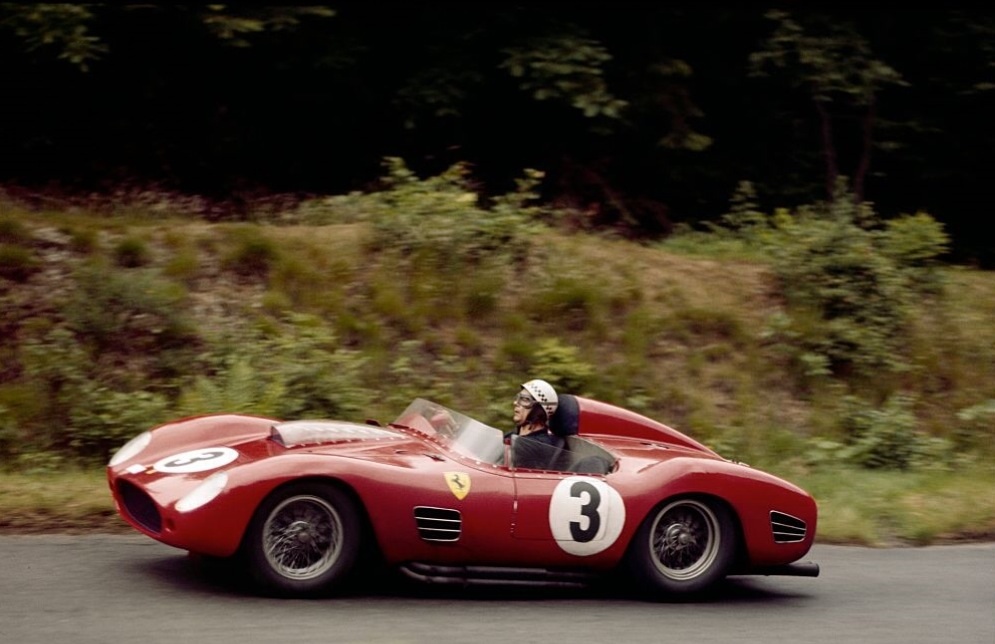
The shot below is of Behra at the wheel of the works Ferrari 250TR59 at Brunnchen, the Nurburgring on 7 June 1959. He and Tony Brooks were 3rd in the race won by Stirling Moss and Jack Fairman in an Aston Martin DBR1.

image

(Klemantaski Collection)

The great Frenchman switched from BRM to Ferrari in 1959, he started the year well winning the non-championship ‘BARC 200’ at Aintree, one of three non-champ events in the UK before the first F1 title events commenced at Monaco in May.

‘BARC 200’ Aintree on 18 April

In an encouraging start to the season Jean won the race from teammate Tony Brooks and Bruce McLaren’s works Cooper T45 Climax.

image

Monaco Grand Prix…

At the tiny principality Jean (below) was both a driver and entrant, he had built a Porsche RSK based F2 car which he entered for Maria de Filippis.

image

Despite her best efforts she couldn’t qualify the car amongst the mixed grid of F1 and F2 cars. In a sign of the times, and Porsche’s commitment to open-wheelers the factory built and entered their own car which was raced by Taffy Von Trips until a collision with Cliff Allison in an F2 Ferrari Dino.

The car, based on a new RSK had a tubular chassis built by Valerio Colotti (then of Maserati and later of transmission fame) which picked up the original front and rear suspension. The machine followed the general principles of the donor with track and wheelbase the same. The driver was placed centrally of course, the 4 cam spyder engine, gearbox, battery ignition, dynamo starter were all retained.

Colotti’s neat aluminium body was beautifully formed, the result low, streamlined and small given the cars underpinnings. DSJ’s Motorsport report of the event likened it to the Sacha-Gordini of several years before. The circa 150bhp F2 car proved to be prodigiously fast. Hans Hermann raced it for Behra at the Reims GP on 5 July finishing 2nd only to Stirling Moss’ Rob Walker Cooper T45 Borgward…in the process beating the factory Porsches of Von Trips and Bonnier and Allison’s Ferrari 156 much to the consternation of the Maranello management.

Click here for further details on this interesting car;  https://revsinstitute.org/the-collection/1958-porsche-behra-formula-ii/

image

The shot above is de Filippis in Behra’s Porsche Spl during Monaco practice, the lines of Colotti’s car sleek and low.

Below the field blasts off at the start, Behra in the middle is first away in the snub-nosed Dino from Moss on the left and Brabham on the right in Cooper T51 Climaxes, Rob Walker’s for Stirling and the works car for Jack, the latter on the way to his first GP win.

image

(unattributed)

Further back is #48 Phil Hill’s Dino 4th, #50 Tony Brooks 2nd placed Dino and Jo Bonnier #18 in the first of the BRM P25’s DNF.

The photo below shows Stirling Moss chasing Behra’s Ferrari, the Frenchman led the race until Stirling got past on lap 21 and then Brabham, after the Ferrari had engine failure on lap 22. Jack went on to take his first championship win.

image

Moss, Cooper T51 Climax chasing Behra Ferrari Dino early in the race (unattributed)

Sportscars…

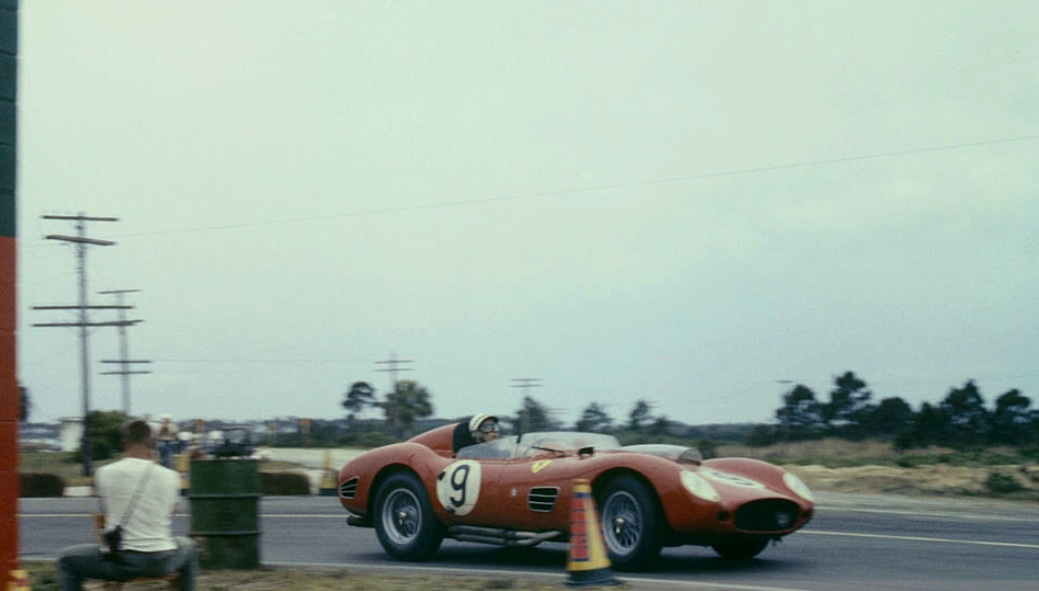
Jean contested 4 of the World Sportscar championship events from March to June in the Ferrari TR250, his best results 2nd at Sebring with Cliff Allison and 3rd at the Nurburgring with Tony Brooks. The latter combination failed to finish Targa and at Le Mans Jean and Dan Gurney were out on lap 129 with gearbox problems.

jean sebring

Behra during the 21 March 1959 Sebring 12 Hours, he was 2nd in this Ferrari 250 TR/59, the winning car the sister entry driven by Gurney/Daigh/Hill/Gendebien (TEN)

image

Talking to co-driver Tony Brooks during the Targa weekend on 24 May, the winner was Barth/Seidel Porsche 718 RSK, the factory cars all DNF (unattributed)

Dutch Grand Prix, Zandvoort, and 1959…

Behra’s Ferrari Dino 246 being fettled in the Zandvoort paddock, cars were entered for him, Cliff Allison and Phil Hill qualifying 4th, 8th and 12th respectively with Bonnier’s BRM P25 on pole. His promise in practice was fulfilled in the race with the first championship win for the Bourne concern.

image

(Inside the motorsport paddock)

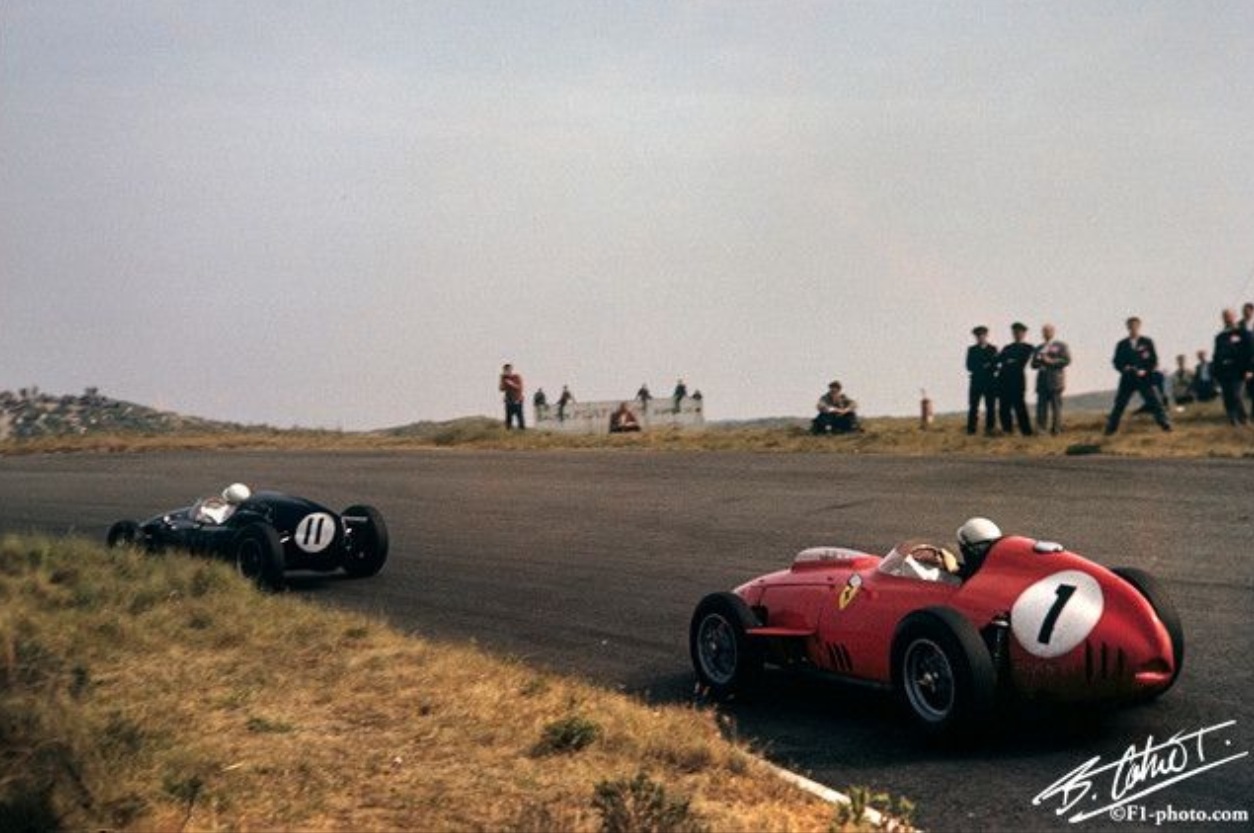
Behra below chasing Stirling Moss’ Cooper T45, he qualified 4th and finished in the same position, Brabham and Gregory were 2nd and 3rd underlying the performance of the 2.5 Coopers on a course which required a blend of power and handling.

image

Behra chasing Moss, the lines of the ’59 Dino about as good as a front engined GP car got? (Cahier)

French GP…

Onto Reims, Jean’s home race of course where things totally unravelled.

In a year in which the mid-engined revolution took hold, full 2.5 litre FPF Coventry Climax engines made clear the performance advantage of the Coopers, Ferrari only had an advantage on the faster courses of which Reims was one.

Some reports have it that Behra, a handy mechanic with great mechanical sympathy was over driving and abusing his engines in the final months of his life in his efforts to remain competitive.

image

Beautiful Reims first lap, 5 July 1959. Brooks winning Dino from Jack’s Cooper T51 3rd, #26 Hill’s Dino 2nd #10 Gregory’s Cooper T51 DNF, #2 Moss’ BRM P25 and McLaren’s Cooper T51 5th then the rest strung out thru Champagne country (unattributed)


Brooks was on pole with Phil Hill 3rd on the grid, Jean was on the 2nd row. Tony Brooks Ferrari 246 convincingly won the race in a great display of high speed precision driving in an event made incredibly demanding due to heat and stones thrown up by cars as the tracks surface suffered.

Jean qualified 5th and raced hard, having been left on the line, he made a lunge for 2nd on lap 25, but spun and dropped back to 4th. He equalled the lap record set by Trintignant on lap 28, he was racing for a hometown win after all, only for the cars engine to cry ‘enough’ on lap 29, he was out with piston failure.

The only member of the Scuderia driver line-up that year that didn’t speak English, fired up after the race, he had a ‘spirited’ exchange with team manager Romolo Tavoni. Tavoni glanced at the cars rev counter ‘tell tale’ in the pits and began, very unwisely, his driver full of adrenalin, to remonstrate with him about one-too-many over-rev and subsequent engine failure. The stocky Frenchman thumped him, knocking him over with one punch. Inevitably and predictably Jean was ‘shown the Maranello door’ giving Dan Gurney a Ferrari opportunity he took full advantage of.

image

Behra hustling his Dino hard, too hard perhaps, at Reims during the ’59 French GP (unattributed)

Ferrari missed the following GeePee at Aintree with industrial strikes in Italy but returned to the fray at Avus for the 2 August German GP.

Jean made contact with Raymond Mays to return to the BRM team there, but there was not the time or resources to make available a P25.

Jean therefore entered and qualified the 1.5 litre F2 Behra Porsche (pictured above) 16th of 17 cars but didn’t take the start of the GP after crashing, in the wet at over 100mph in a Porsche RSK in a support race. He died instantly in the awful accident in which he was flung from the car, hit a flagpole on the bankings outer extremity and then dropped into the outfield below.

A bright, charismatic light was extinguished.

Credits…

Yves Debraine, Louis Klemantaski, Cahier Archive, The Enthusiast Network, MotorSport June 1959/March 1998

Tailpiece: Le Mans 20-21 June 1959. Behra at the wheel of the car he shred with Dan Gurney DNF with gearbox problems on lap 129…

image

This race famously won by the Shelby/Salvadori Aston Martin DBR1, none of the factory TR’s finished the race (unattributed)


monza

de Filippis in the cockpit of her Maserati 250F. Monza, Italian Grand Prix 1958…

de Filippis started racing Fiat 500s aged 22 after her brothers bet her she couldn’t drive fast. In 1954 she finished second in the Italian sports car championship and was scooped up by Maserati as a works driver.

In 1958, driving Maserati 250F chassis #2523 a ‘T car’ used by Fangio in 1957, she became the first woman to take part in a World Championship Grands’ Prix at Spa, Belgium finishing 10th. She missed the French Grand Prix when an official with Gallic charm and chauvinism suggested to her that ‘The only helmet a woman should wear is the one at the hairdresser’s.’

Jean Behra offered her a drive in his Porsche team in 1959. Behra’s death led to her reconsidering her future and she quit. ‘Too many friends had died,’ she told the Observer in 2006. ‘There was a succession of deaths – Luigi Musso, Peter Collins, Alfonso de Portago, Mike Hawthorn. Then Behra was killed in Berlin. That, for me, was the most tragic because it was in a race that I should have been taking part in. I didn’t go to the circuits any more. The following year I got married, then my daughter was born and family life became more important.’

Her GP results are; 1958 Syracuse Q8, DNF Belgium Q19 DNF, Italian Q21 DNF all 250F. 1959 Monaco Porsche 718 DNQ and BRDC Intl Trophy Silverstone 250F Q23 DNF.

spa

de Filippis, Maser 250F, Spa 1958 (The Cahier Archive)

Credits…

The Cahier Archive, silhouet.com