


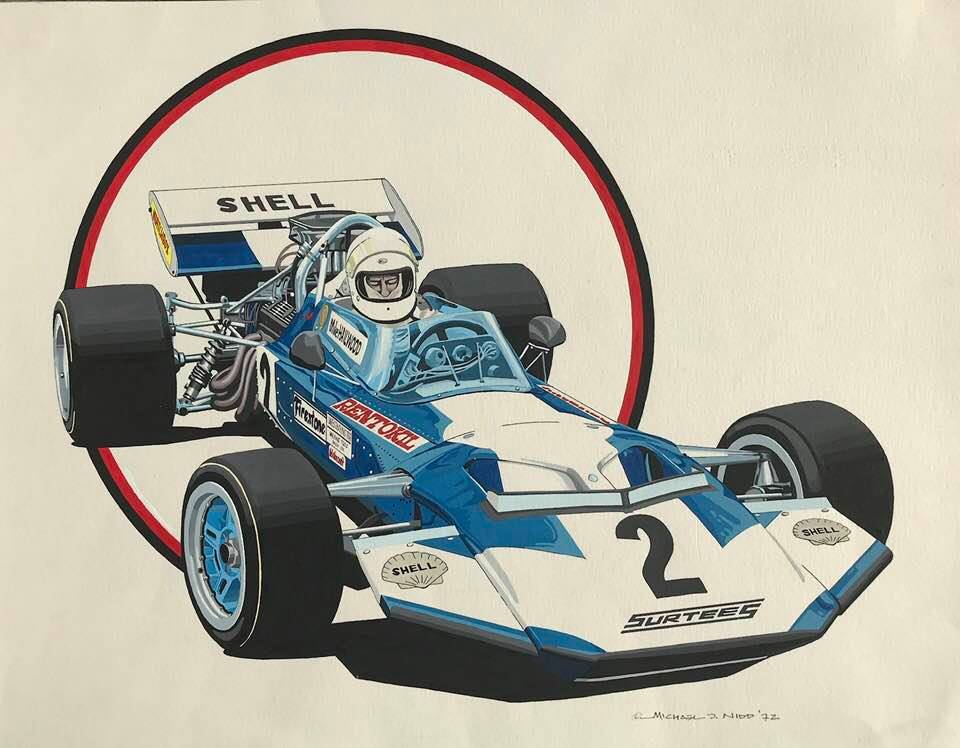
Mike Hailwood had a fantastic season with Matchbox Team Surtees in 1972, winning the European F2 Championship in a pair of Surtees TS10 Ford BDAs.
The lovely lady above is shown with an almost visually identical – but quite different under the skin – 1973 TS15 during the International Racing Car Show held at London Olympia on January 1, 1973.
Hailwood commenced the year in Australasia in the Tasman Series, then returned to Europe for F1 and F2 campaigns in early March.
In the European F2 Championship he bagged maximum points in five of the 14 rounds – Rouen-les-Essarts, the Österreichring, Mantorp Park, the Salzburgring and the Hockenheim finale – to win the title with 55 points from Jean-Pierre Jaussaud, Brabham BT38 Ford 37, and Patrick Depailler, March 722 Ford on 27. The impact of Graded Drivers on the results will be shown below.

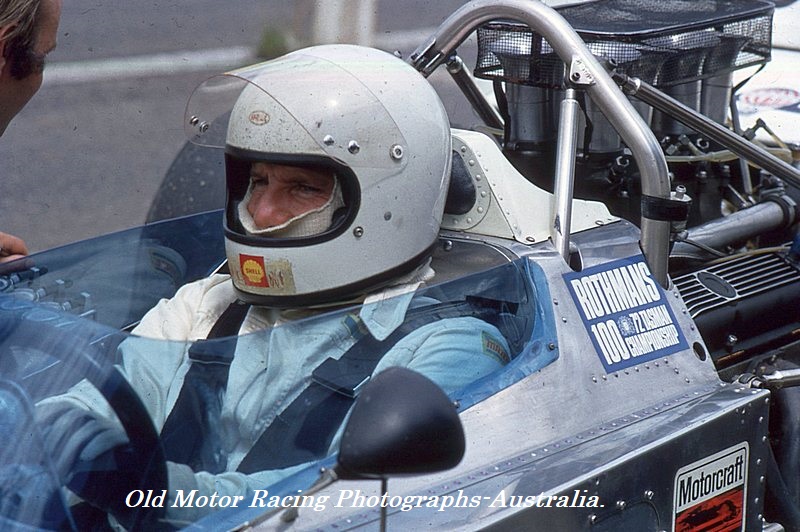
Mike Hailwood arrived in New Zealand for the Tasman in sparkling form. He did two late-season ’71 Grands Prix for Surtees at Monza and Watkins Glen, and then a full South African series of sportscar races before arriving in Auckland to race the Surtees TS8/9 Chev #TS8-002 that John Surtees raced in the November 21, 1971 Australian Grand Prix at Warwick Farm, DNF.
He started the Tasman with a bang: second behind Frank Gardner’s works-Lola T300 Chev in the NZ GP at Pukekohe, second again in the Lady Wigram Trophy, then third at Levin. Then the momentum he had was lost when the car was badly damaged at Teretonga, the final NZ round.
A TS11 monocoque #TS11-03 was shipped to Australia. The team had the car ready for the fifth round at Surfers Paradise, but the win that had seemed likely didn’t happen; his best in the four Australian rounds was second in the final round at Adelaide International.


I attended my first car race at Sandown for the Australian Grand Prix, Hailwood was on my list of four to watch all weekend: Hailwood, Gardner, Matich and Bartlett. Mike had an aura to 15 year old me for sure and seemed a good bloke. You know, the way you can tell when you watch the way someone interacts with those around them, the familiar and the fans?
So I followed his fortunes in F1 and F2 that year, rejoicing in his successes in both categories that cemented his place in Grand Prix racing.
When Mike flew out of Adelaide on February 27, it was to South Africa where the Grand Prix at Kyalami was held the following weekend. His year of F1 intent started with Q4 and challenging Jackie Stewart’s Tyrrell 003 Ford for the lead before a rear suspension breakage on the TS9B Ford after 28 laps.


Surtees TS10 Design and Construction…
John Surtees seized a commercial opportunity in 1972, that season F2 changed from 1.6 to 2-litres, potentially throwing the paradigm up into the air. Surtees had reasonable success with both his F1 works designs and F5000 cars.
In addition to those programs, the team designed and built a neat, conventional aluminium monocoque racer with a Tyrrell/sportscar type nose section powered by Brian Hart prepared, fuel-injected Ford Cosworth BDA engines quoted as 1850/1860cc. An F1 spec Hewland FG400 five-speed gearbox was used, stronger but heavier than the FT200 used by many.


Simple slab sided aluminium monocoque chassis, the engine was mounted to the rear bulkhead and supported by an A-frame which is visible. Suspension single top link, inverted lower wishbones, two radius rods, mag-alloy uprights and Koni/coil springs. Inboard brakes, Hewland FG400 5-speed transaxle (unattributed)

The engine de jour in ’72 was the BDA in various capacities, generally those who ran engines of 1860cc did better than those of over 1.9-litres as the good-old cast iron Ford 711M block simply couldn’t be bored out that far within the pistons coming awfully close to one another and water passages.
Cosworth’s BDE was 1790cc and gave a quoted 245bhp @ 9000rpm with a bore of 85.6mm. Their 1972 1927cc BDF used an 88.9mm bore that was achieved by brazing liners into the standard block, which gave 270bhp @ 9250rpm.
Hart’s alloy 1975cc 275bhp @ 9250rpm BDG solved all those problems when it was homologated later in the year, then in 1973, March Engineering did their exclusive deal with BMW Motorsport for the supply of the BMW M12/7 2-litre F2 engine and the poor old BDG then never got the works-team attention it really deserved.


1972 European F2 Championship…
The array of talent that contested the series in whole or part that year was typically deep. Graded Drivers – drivers who participated but were not be awarded championship points, see definition at the end of this piece – included Jean-Pierre Beltoise, Francois Cevert, Emerson Fittipaldi, Graham Hill, Ronnie Peterson, Tim Schenken, John Surtees and Reine Wisell.
Future World Champions in the ’72 mix comprised James Hunt, Niki Lauda, Jody Scheckter, while the GP winner roll call included Vittorio Brambilla, Peter Gethin, Patrick Depailler, Jean-Pierre Jabouille, Jochen Mass, Carlos Pace, Carlos Reutemann and John Watson, not to forget Le Mans victors Derek Bell, Jean-Pierre Jaussaud, Henri Pescarolo, Vern Schuppan and Bob Wollek.
It’s an interesting pub fact – perhaps – that no winner of the old European F2 Championship 1967-84, or modern FIA Formula 2 Championship 2017-present, has ever won the F1 World Championship. Oscar Piastri, the 2021 victor, has a chance, therefore, of making history this year, depending on how things go over the next couple of months!
By the time Hailwood got his bum into TS10-01 Surtees had the car nicely sorted, with Mike taking fifth place overall from the two heats of the opening round of the European F2 Championship at Mallory Park on March 12.
Privateer, Dave Morgan sensationally won the round in a year-old spacframe Brabham BT35 BDA 1860cc from Niki Lauda’s works-March 722 BDA 1825cc, Carlos Reutemann, Brabham BT38 BDF 1927cc, Jody Scheckter’s one-off McLaren M21 BDF 1927cc, then Hailwood using a BDA prepared by RES (Race Engine Services) of 1825cc.
That variety of cars set the pattern of lots of different car-driver winning combinations for the season. The subtext, for F2 anoraks, were the BDA battles between the various engine builders/preparers.
Ronnie Peterson’s works-March 722 BDF-1927cc won at Thruxton, then Jean-Pierre Jaussaud’s Brabham BT38 BDA-1850cc at Hockenheim in mid-April, before Hailwood collected fifth place points in the Pau GP on May 5-6 using one of Brian Hart’s 1850cc BDAs; Peter Gethin’s Chevron B20 BDA took the champers that weekend.
John Surtees raced TS10-02 at Oulton Park and Thruxton then took that chassis to Japan to contest the Japan Auto Federation Grand Prix of Japan at daunting Fuji Speedway on May 3. He splendidly won the race using new a Hart-prepped 1930cc alloy block BDG. Japanese drivers Hiromu Tanaka and Hiroshi Fushida were second and third aboard a March 722 and Brabham BT38, both powered by 2-litre Mitsubishi Colt R39B engines.


Back home in London, Hailwood and Scheckter thrilled the crowds at Crystal Palace on May 29. Reutemann’s Rondel Racing – Ron Dennis and Neil Trundle – Brabham BT38 won the first heat, Hailwood the second and then Scheckter, works-McLaren M21 Ford BDF 1927cc the final in a thriller-diller dice with Carlos third. Mike’s best lap of 48.4 seconds set in the second heat of the Greater London International Trophy is the all-time lap record of a venue then in its final season.
By mid-season, there was no lack of Surtees TS15s in circulation, but they were all works-run cars; no customers stumped up to buy one. Argentinian Carlos Ruesch raced TS10-03, Andrea De Adamich, TS10-04 and later in the season Carlos Pace, TS10-07.
See here for Allen Brown’s TS10 fantastic chassis-by-chassis analysis: https://www.oldracingcars.com/surtees/ts10/. My other chassis/race results reference is the F2 Index-Fastlane: https://www.the-fastlane.co.uk/formula2/F272_Index.htm People like me cannot do what we do without these stunning online repositories of accurate information and data…


Emerson Fittipaldi, in amongst winning his first F1 World Championship for Lotus (72? Ford DFV) made a number of successful F2 raids in a modified Lotus 69 fitted with 1927cc Cosworth BDFs. He won at Hochenheim on June 11 and Rouen Les Essarts on June 25. Hailwood got the points for the latter win as Emerson was a Graded Driver.
The same pair did the one-two at the Osterreichring on July 9, this time Mike was 36 seconds adrift of Emmo on the road, but again got the nine championship points. Carlos Ruesch was seventh in a good weekend for Matchbox Team Surtees.


At Imola the boss showed his fellow motor-cycling ace how to do it! Surtees was fourth in the first 28 lap heat, was third in the second and won on aggregate with Bob Wollek, Brabham BT38 BDA and Niki Lauda, March 722 Ford BDA third. Wollek won a heat, and Peter Gethin, Chevron B20 the other…there was no shortage of race winners that year as I wrote earlier! Mike was second in the first heat but failed to finish the second after his fuel pump failed.
Hailwood bounced back at Mantorp Park, Sweden, a fortnight later, he was second in the first heat behind Gethin, won the second from Jean Pierre-Jabouille (March 722 Ford BDA) and the round overall. It was a timely win at the business end of the season, capped by Ruesch’s sixth place.
Hailwood had his tail up at Enna on August 20, winning the first heat from Henri Pescarolo but bombing out of the second with transmission failure. Patrick Depailler won that one, Alpine A367 Ford BDA, but veteran-Pesca was again second and won the round on aggregate. Carlos Ruesch got his best result for the year in TS10-05, third place, having placed third in both heats.


On the fast Salzburgring, Hailwood again showed his class, winning on aggregate after beating Carlos Pace in the second heat and placing second behind David Morgan’s Brabham BT38 BDA in the first. Pace was second overall aboard TS10-07, and Ruesch TS10-05 tenth, giving Matchbox Team Surtees its best result for the year, and perhaps securing Pace’s place in Team Surtees F1 for 1973.
Jean-Pierre Jaussaud won the penultimate round, the Albi Grand Prix in his Brabham BT38 BDA from Depailler’s March 722 and Bob Wollek’s BT38 in a French one-three. Reusch was sixth and Hailwood 14th; disappointing as Mike won the second heat but isn’t listed in my results of the first. What was the problem, folks?
Tim Schenken won the final round of the European F2 Championship at Hockenheim on October 1 from his Surtees F1 teammate Hailwood: Rondel Brabham BT38 BDF and Surtees TS10 BDA. Ronnie Peterson, March 722 BDA, was third.


Mike won the championship with 55 points from Jean-Pierre Jaussaud – the Le Mans winner, sometimes a forgotten Frenchie? – Brabham BT38 on 37 points, and Patrick Depailler March 722 third on 27 points.
With adequate funding, John Surtees ran a strong program: chassis, engines and driver, Matchbox Team Surtees delivered the goods.
As to the best-chassis of 1972? The Brabham BT38 won four European F2 Championship rounds – Jean-Pierre Jaussaud won at Hochenheim-Jim Clark Memorial Trophy and Albi, Tim Schenken Hochenheim-Preis von Baden-Wurttemberg, Henri Pescarolo, Enna – not to forget David Morgan’s BT35 victory at Mallory. The Surtees TS10 won three rounds – Hailwood at Mantorp Park and Salzburgring, and Surtees at Imola. Emerson Fittipaldi took three in his works-Lotus 69 at Hochenheim-Rhein-Pokalrennen, Rouen and the Osterreichring with single round wins to the March 722, Peterson at Thruxton, the Chevron B20, Gethin at Pau and finally Jody Scheckter won at Crystal Palace in his McLaren M21.


So, drum-roll, the Champion F2 Constructor for 1972 – was there such a title – would have been Brabham, who, after years of ‘F2 Dominance’, got their come-uppance the year before with March. I’ve always thought the ultimate test of a customer racing car is the number of different drivers to have been victorious behind its steering wheel.
While Ron Tauranac was rightly famous for his spaceframe Brabhams, there was nothing wrong with the BT38, Brabham’s first production monocoque design, the work of Geoff Ferris. New owner Ecclestone would soon get rid of all this production racing car rubbish, of course…


Etcetera…

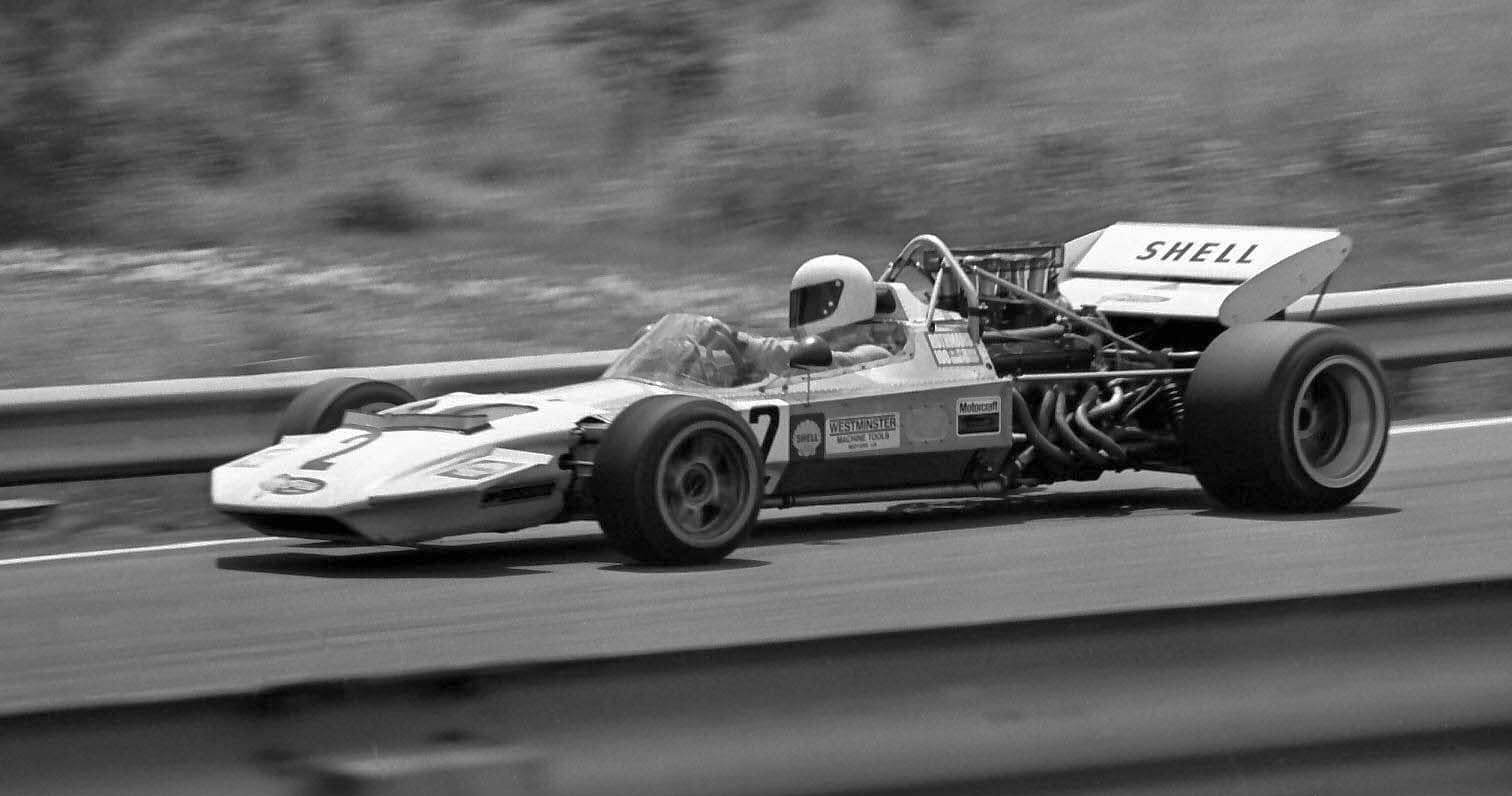
Mike Hailwood enroute to setting the all-time lap record at Crystal Palace on May 29, 1972, aboard TS10-01, such an attractive car, doesn’t it look the goods!

John Surtees aboard TS10-07 at Oulton Park over the September 16, 1972 weekend, DNF with electrical problems without completing a lap of the final round of the British F2 Championship. The race was won by Ronnie Peterson from Niki Lauda and James Hunt; works March 722 by two, and Hesketh Racing March 712M BDA.
The British championship was won by Lauda – a flicker of light in a pretty grim March year for him – from Peterson and David Morgan.
The Matchbox Team Surtees transporter in the Oulton Park paddock on that same weekend below.


Imola 1972 is a kaleidoscope of Formula 2 colour and variety that would over-stimulate the poor punters of today who are swamped in dull, shit-boring one make drossful classes.
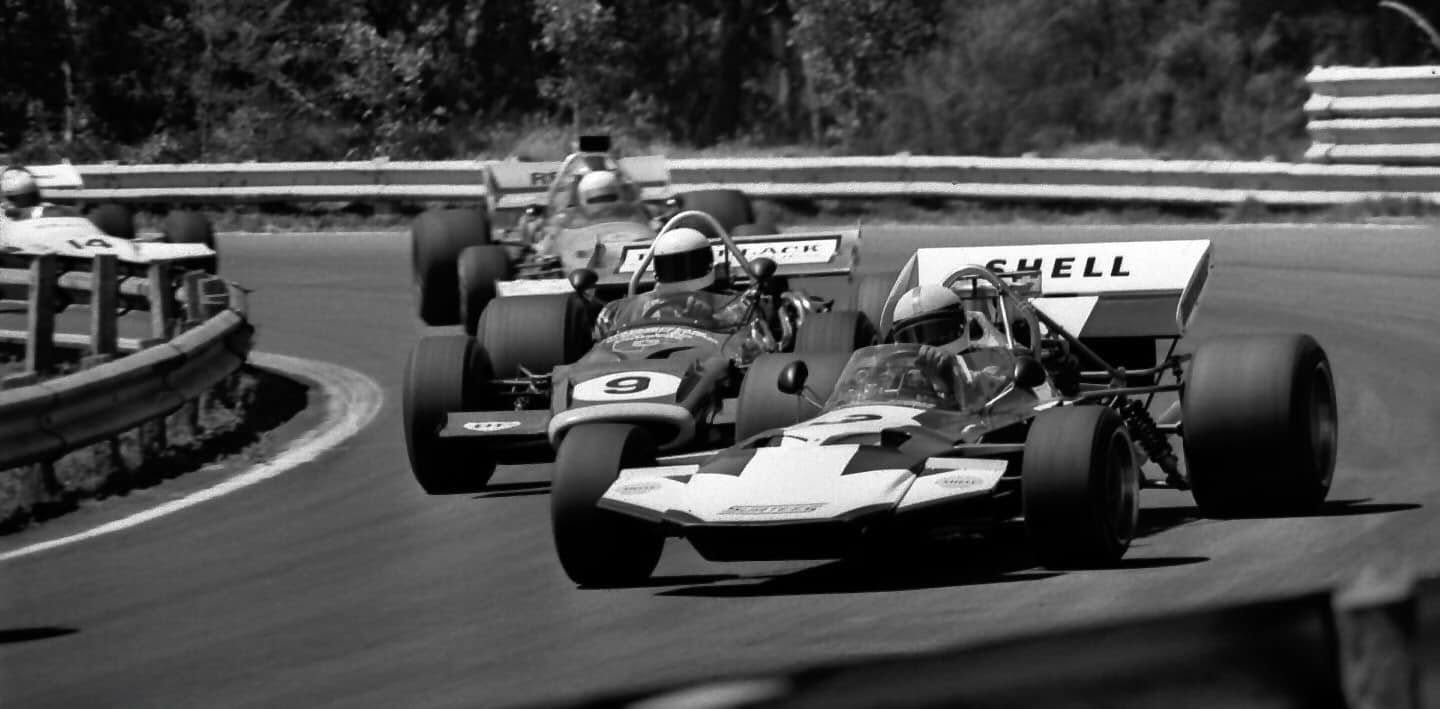
Foreground car folks? Mike is facing us, shielding his eyes from the sun, with Surtees #3 behind. #14 Hiroshi Kazato March 722, #11 is Carlos Reuttemann, Brabham BT38, #27 Adrian Wilkins March 722, #25, Jose Dolhem March 722, #6 Peter Getin, Chevron B20. All BDAs of one sort or another…

Mike Hailwood, John Surtees and Helmut Marko in the Monza paddock during the 1972 Italian Grand Prix weekend on September 5.

Carlos Ruesch, Surtees TS10 BDA, NC, and Claudio Francisci, Brabham BT38 Cosworth BDE, ninth, at Hockenheim during the Jim Clark Memorial meeting in April.

(Getty)
Niki Lauda, March 722 BDA-RES 1927cc, Rouen, June 25, 1972, DNF with a popped engine. Fittipaldi’s Lotus 69 won and Mike bagged the nine points, placing second behind the Graded Driver.
Niki was fifth in the Euro F2 points standings.

Hailwood’s TS10 in the paddock during the Pau Grand Prix weekend. You can see the top wishbone, front suspension was conventional upper and lower wishbones, coil spring/Koni dampers, adjustable roll bar and mag-alloy uprights. Perhaps Mike wiped a nosecone off in practice?

Graham Hill’s Brabham BT38 Ford BDA-RES 1927cc has aero modifications neatly exercised by KayDon Racing. David Kaylor and John Donnelly, being ex-MRD employees who ran the car for owner Graham Hill with Jäegermeister sponsorship. This shot is at Hockenheim on October 1, fifth.
Hill won the non-championship Gran Premio della Lotteria at Monza with BT38-1 in June.

At Pau Emerson Fittipaldi’s Lotus 69 Ford BDF – apart from its Moonraker Yachts livery – didn’t look much different to the 69s of 1970-71 but the adoption of a sportscar type nose brought the old, very fast jigger up to snuff aerodynamically. Lotus 69 bias declared herein!
The shot below is at Hockenheim during the October Preis von Baden-Wurttemberg meeting, DNF engine. Lotus 69 Ford BDF Cosworth and sports nose. There is a useful snippet about Chapman and Moonraker in this forum: https://forums.ybw.com/threads/jcl-boats-and-moonraker-the-history.532631/

Graded Drivers…
By courtesy of Vitesse 2 on The Nostalgia Forum.
From 1/1/72:
1. Grand Prix Graded Drivers
World Champion drivers of the previous five years.
Drivers who, in one and the same year, have been classified at least twice among the first six in a race of the World Championship for Drivers, while taking into account the Championship of the two previous years.
The winner of the Indianapolis 500 Miles of the previous year.
The winner of the Can-Am Series of the previous year.
The winner of the European Championship for Formula 2 drivers of the previous year on condition, however, that he has won at least three first places in the Class B drivers’ classification (ie non-graded) of an event qualifying for the said Championship.
Drivers who, in the same year, won at the same time one classification among the first six in an event counting for the World Championship of Drivers, and one classification among the first three in the general results of an event counting for the Makes’ Championship. Only the Championships of the two previous years shall be taken into consideration.
2. Long Distance Graded drivers
Drivers who, in one and the same year, havew been classified at least twice among the first three in an event of the Makes’ World Championship, while taking into account the two previous years. However, only those teams of not more than two drivers, and that for the whole duration of the event, will be retained for inclusion on the list of graded drivers.
The text for 1975 is identical, except that it omits the winner of the Can-Am title.
Credits…
Team Surtees and Formula 2 Facebook pages, Yoshiaki Hirano, Popperfoto, Michael Lee, Yoshinori Komura, Alejandro De Brito, Patrick Amoudru, Walter Harbers, Rafael Kalatayud, Denis Btiot, LAT, Rainer Schlegelmilch, Joe Regami, Caz Caswell, Hans Fohr, Trevor Legate, F2 Index-Fastlane, oldracingcars.com, Joe Regami, Ferdi Kraling
Tailpiece…

Hailwood on the hop at Crystal Palace in May…
Finito…









 primotipo...