


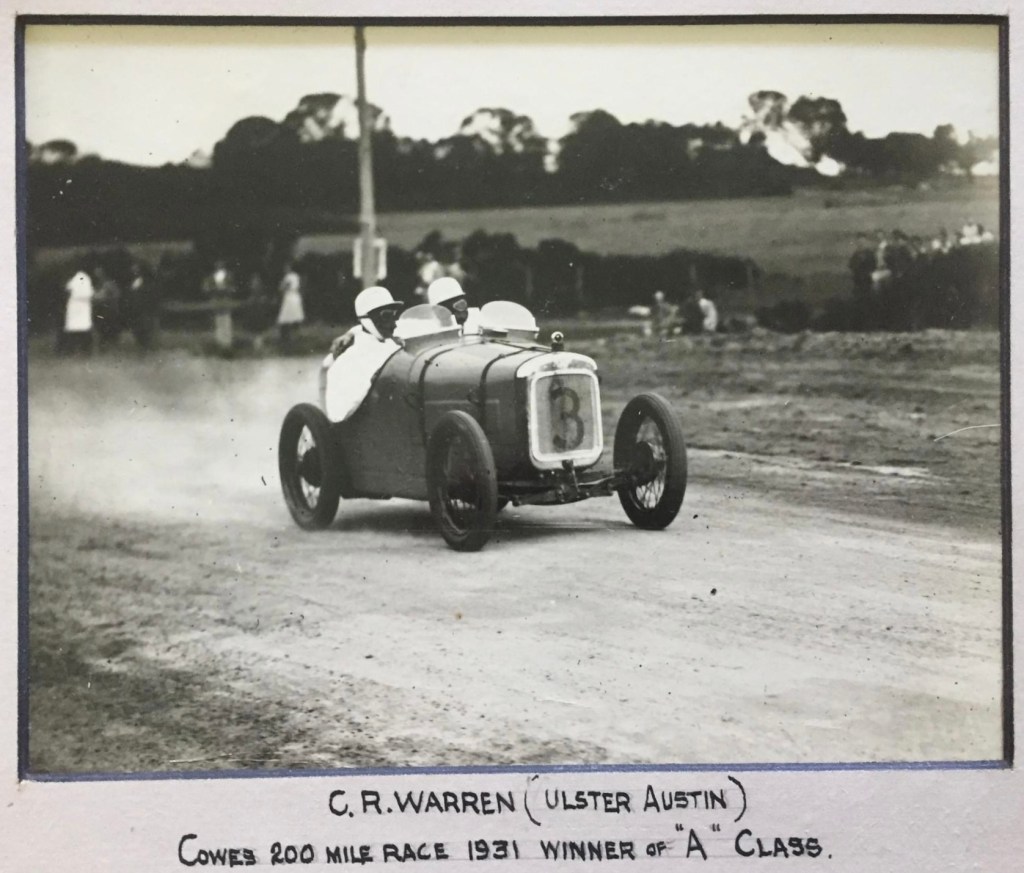
Cec Warren class winner, and perhaps the rightful outright winner of the Cowes 200 Mile Race aka the 1931 Australian Grand Prix at Phillip Island.
Tony Johns picks up the story, ‘This unsupercharged Ulster was one of three imported by Austin Distributors for the 1930 AGP. In that race, it was driven by Harry Burkell. The #1 team car driven by Cyril Dickason is still in Melbourne.” The controversial elements are dealt with here: https://primotipo.com/2023/02/18/carl-junker-cyril-dickason-and-the-controversial-1931-australian-gp/
Melbourne racer/raconteur/engineer/mechanic Greg Smith put these three shots up on his ‘Pre-1960 Historic Racing in Australasia’ Facebook page – very highly recommended – a while back. He is the custodian of Cec Warren’s photo archive.
For those with an interest in Austin 7 racing in Australia, Tony John and Stephen Dalton’s The Nostalgia Forum thread on same is the place for your enjoyment: https://forums.autosport.com/topic/215085-austin-seven-racing-in-australia-from-1928/?hl=%20austin and a book coming very soon.
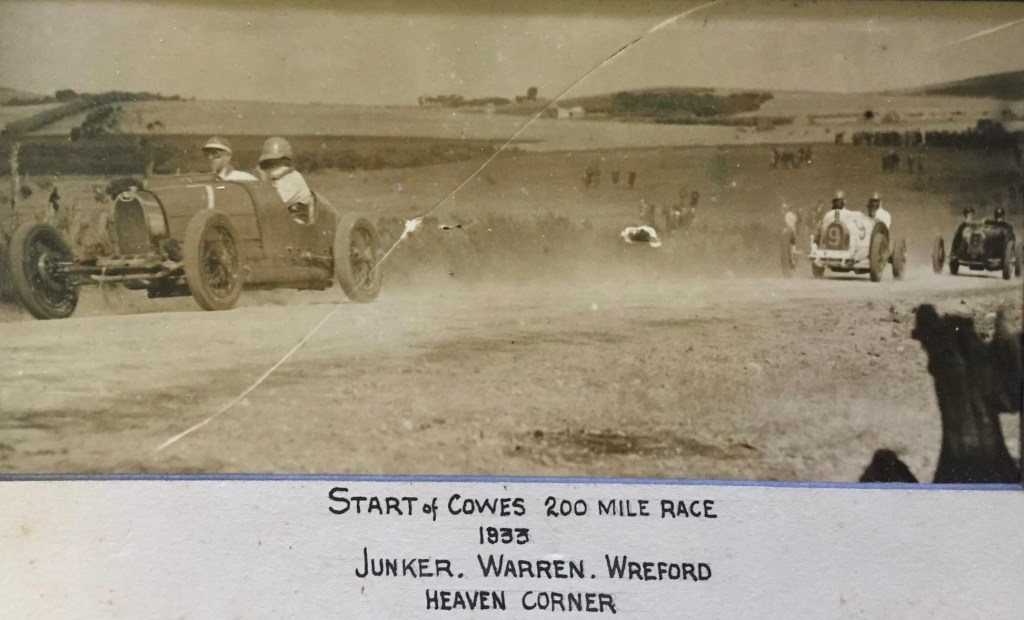
The 1933 200 Mile Race aka the Australian Grand Prix. EG Mackay Bugatti T39, Cec Warren, Bugatti T37 and Mert Wreford, Bugatti T39.
Two 1.5-litre straight-eight unsupercharged, three-valve, SOHC 80-90bhp Type 39s, sandwiching a 1.5-litre four cylinder, unsupercharged, three-valve SOHC 60bhp Type 37. The race was won by Bill Thompson’s Riley Brooklands.
Interestingly, perhaps, The Argus started its coverage of the race on March 24, 1933, with the headline, ‘Australian Grand Prix’, then went on to describe it as the Victorian Light Car Clubs 200-mile race – the Fourth Australian Grand Prix. They really weren’t too sure what to call the thing.
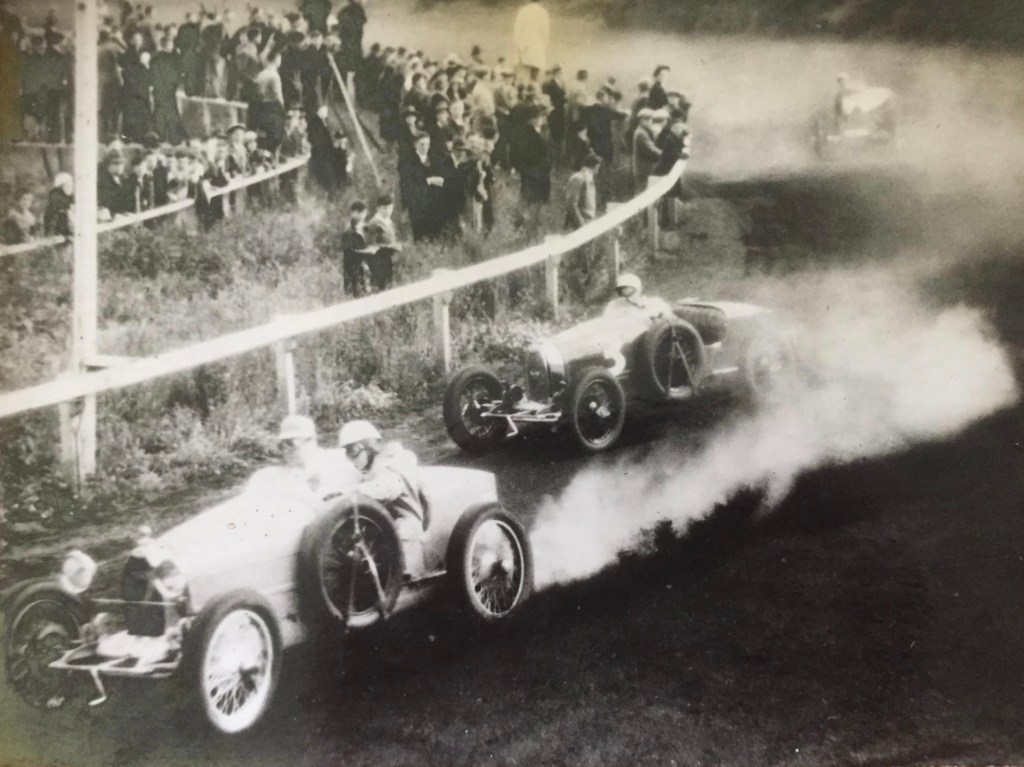
Cec Warren, Bugatti T37, on his way to winning the Invitation Handicap on the short-lived Richmond Racecourse Speedway, Melbourne track in 1932.
For you Melburnians, the track was primarily a horse racing facility owned by the ‘colourful legendary’ John Wren, which was located on land abutting a site near the Yarra River and abutting Bridge Road.
Etcetera…
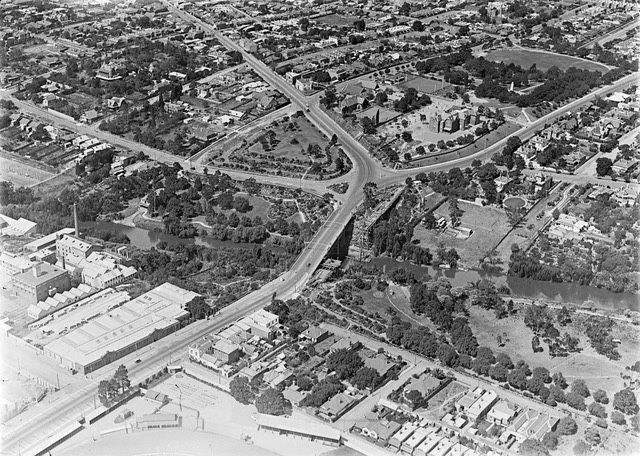
Many thanks to Steven King for these photographs and advice as to the exact location of the Richmond Racecourse.
It will mean nothing other than to those familiar with Melbourne’s inner east, that’ll be me and a few others active on this site!
The bottom left of the top shot has just the north-eastern corner of the racecourse in shot. That’s Bridge Road in the bottom left corner, go up the page, and you are heading east. This side of the Yarra River is Richmond, with light industry – textiles, clothing and footwear back then – and workers. East of the river is Kew to the left and Hawthorn to the right, then, as now ‘stockbroker-belt’ suburbs. Church Street branches diagonally to the left heading north and all of the features are still there a century on: the parklands, and Hawthorn West Primary School at the intersection of Church Street, and Burwood Road, the main road that branches to the right heading east.
There is now, and has been forever, a rowing club on the east bank of the river, beside the bridge and the Melbourne Girls College on the west bank; the parklands alongside the bridge there fuses into sporting facilities, then the school.
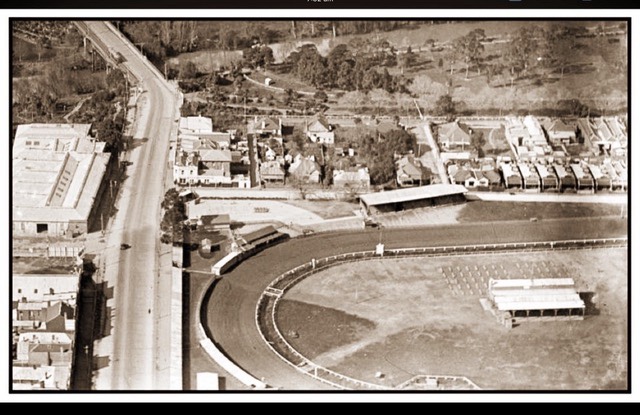
The shot above shows the north eastern corner of the I racecourse on the Bridge Road and Westbank Terrace corner, and the Bridge Hotel on that corner, which I highly recommend. The part of the course shown is now residential housing and ‘Officeworks.’
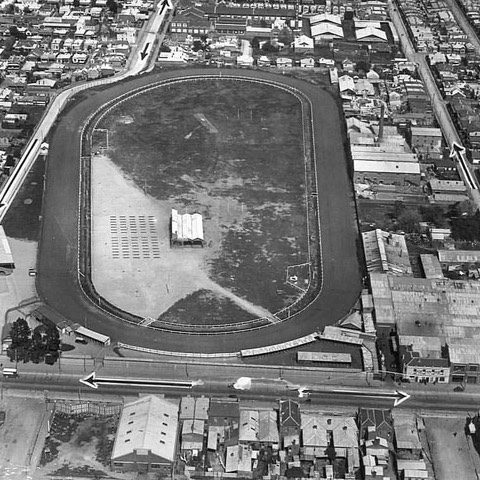
The shot below shows Bridge Road at the bottom, and Westbank Terrace to the left – heading up the photo is south – keep going and you hit Swan Street. The side road with the arrow on it to the right is Stawell Street.
This article in the Melbourne Argus published on January 14, 1941, answers the question on all of your lips: when did the race course site become housing?
‘RICHMOND RACECOURSE HOUSING PLAN
Erection of 138 working-men’s homes on the old Richmond racecourse will begin soon when contracts, tenders for which closed on Friday, are let by the Housing Commission.
In preparation for building, the commission has removed the high iron fence surrounding the racecourse and levelled the area. Streets and sites have been marked out.
The commission undertook the new housing plan on the suggestion of Richmond Council.
Many applications have already been made for the new houses. Tenants of dwellings condemned in Richmond are expected to receive preference.’
Credits…
Cec Warren Collection via Greg Smith,
Finito…
 primotipo...