Posts Tagged ‘Ronnie Peterson’

(NAS)

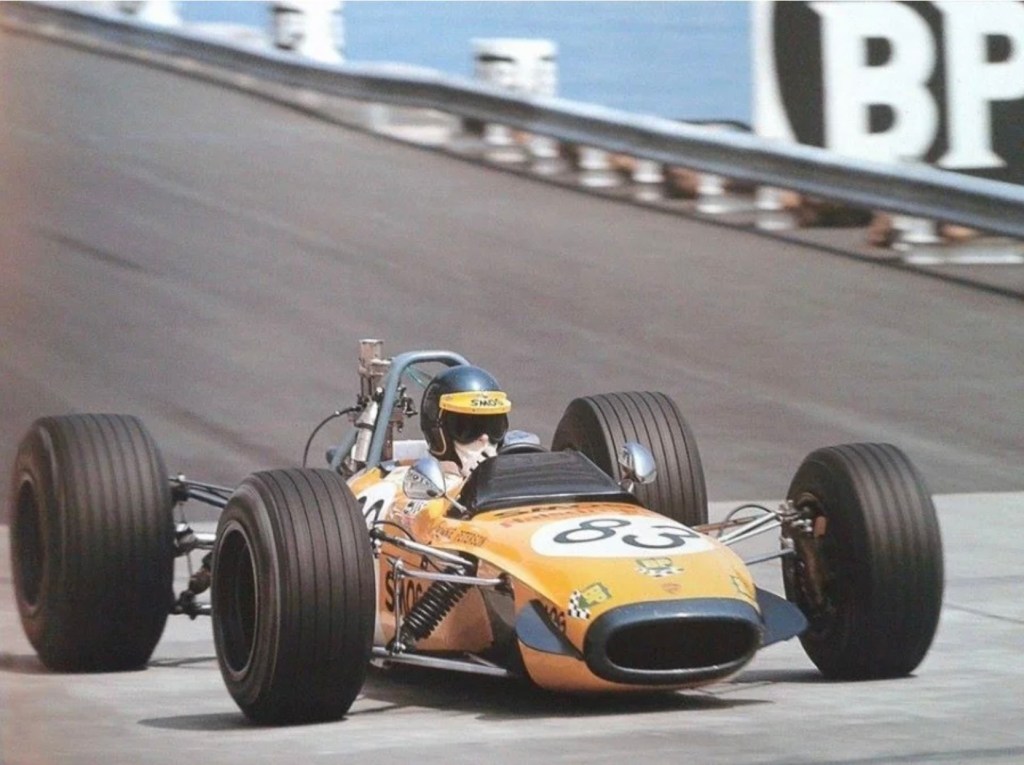
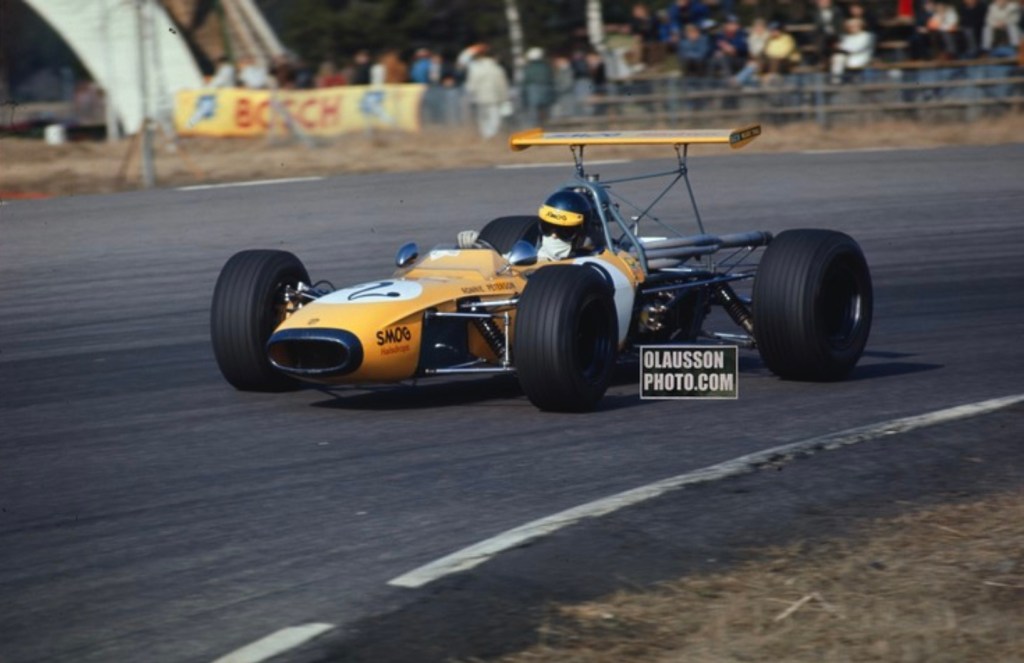
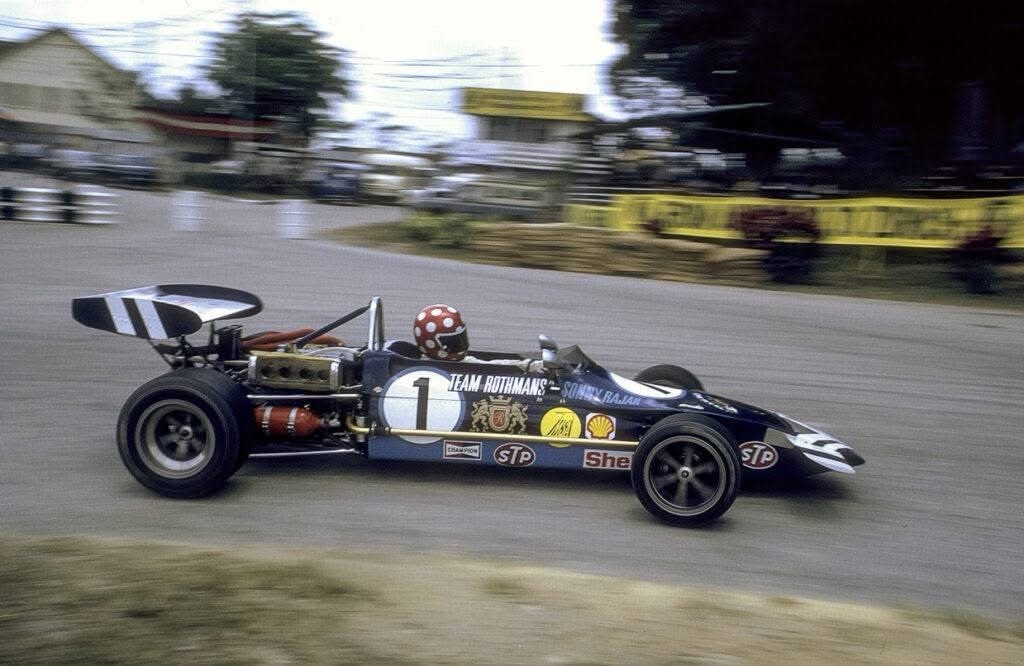
Sonny Rajah negotiates the tricky Thomson Road circuit during the 1972 Singapore Grand Prix aboard his March 712M Lotus-Ford twin-cam, chassis #712M-7, the same car in which Ronnie Peterson won the 1971 European F2 Championship.

Max Stewart won that race from Vern Schuppan and Bob Muir – Aussies first to third – with Singaporean local, Sonny fourth. Stewart raced his venerable Mildren, Schuppan his March 722 and Bob Muir his Rennmax BN3, all of the cars were Lotus-Ford 1.6 powered.

Eli Solomon wrote in MotorSport that ‘Sonny Rajah had struck up a partnership with the ex-Ronnie Peterson March 712M. He was the local hero and looked the part with his long hair and Zapata moustache. But to gain admittance into a country (Singapore) where long hair was associated with drugs, he had resorted to wearing a short-hair wig! A fellow competitor once remarked: “He had brilliant car control but someone other than bullshit-artists had to take him in hand! Natural talent and character too boot.”
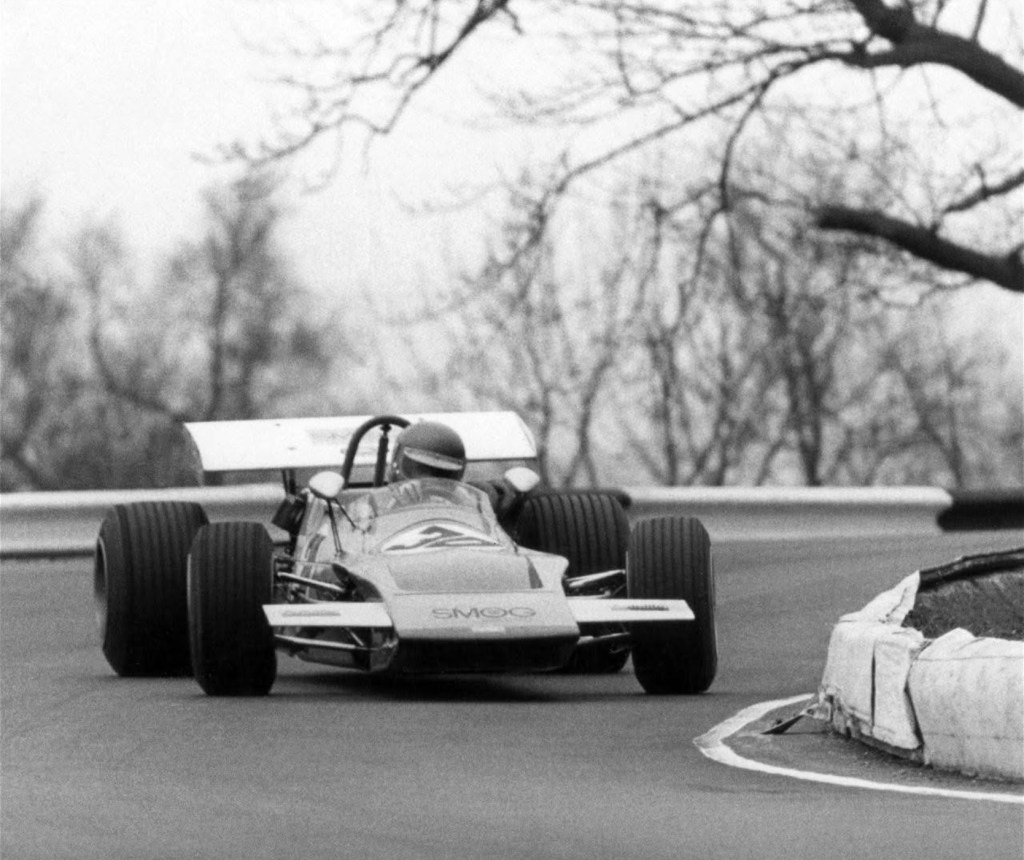
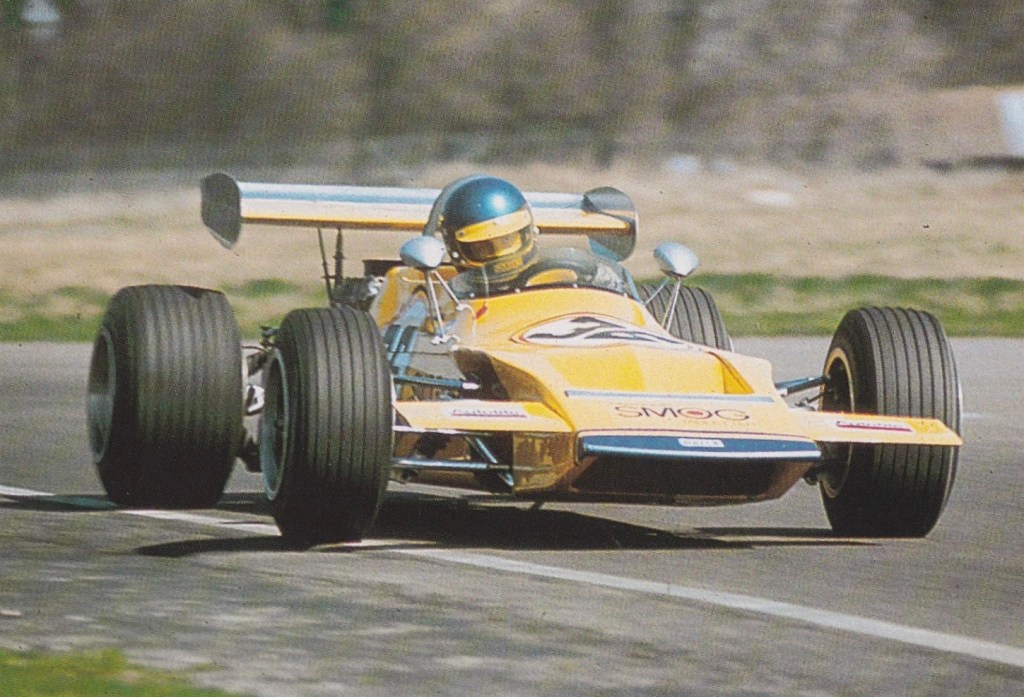
Signature Peterson. ‘Very fast, off-camber, downhill, made for Ronnie Peterson’, Yoshiaki Hirano said. Mallory Park non-championship (n/c) March 14: accident in heat 1, DNS heat 2. Winner Henri Pescarolo in a Frank Williams 712M FVA (C Walker)
Peterson bagged first place F2 Championship points – Graham Hill won the race, as a Graded Driver he was ineligible for points – in the Jochen Rindt Memorial Trophy at Thruxton on April 12 (unattributed)

Ronnie Peterson bagged maximum points in five of the ten F2 championship rounds he contested and won the title from Carlos Reutemann’s Brabham BT30/Brabham BT36 and Dieter Quester’s March 712M BMW.

Ronnie won at Thruxton, Rouen, Mantorp Park, Tulln Langenlebarn and the GP di Roma at Vallelunga. Note that Graham Hill (Brabham BT36) won at Thruxton – a real tear-jerker for race-fans as it was Graham’s first race-win since his huge Lotus 49 Watkins Glen crash at the end of 1969 – but as a graded-driver Hill was ineligible for Euro F2 Championship points.
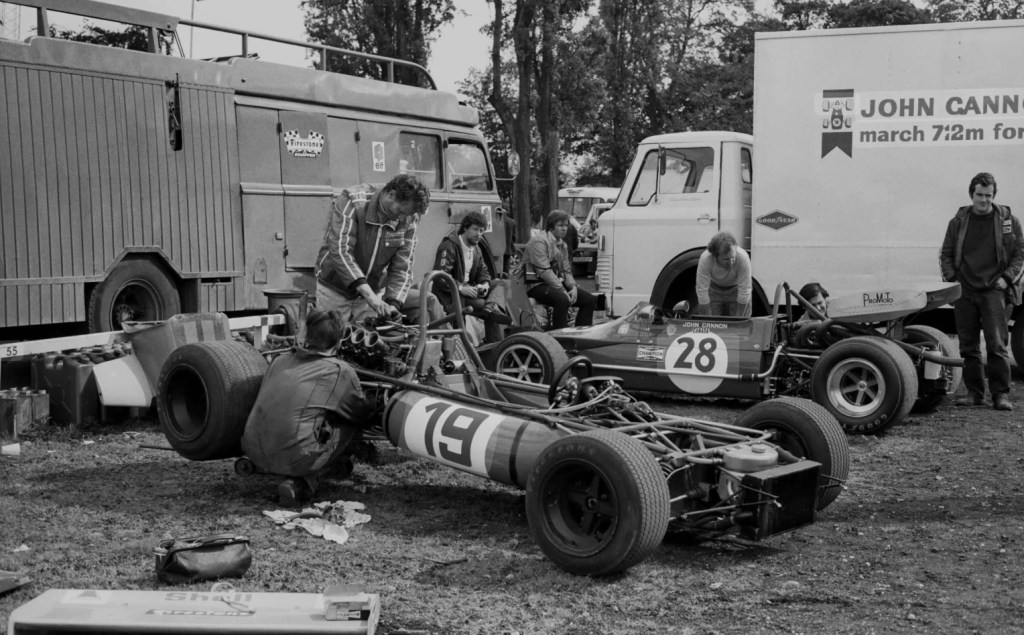
London Trophy weekend at Crystal Palace, May 31, 1971. Adam Potocki’s spaceframe Brabham BT30 is made ready for battle while John Cannon’s monocoque 712M is similarly fettled (J Fausel)

F2 Wind-Shift from Spaceframes to Monocoques…

This season marked a shift in F2 with Brabham’s dominance – and spaceframes’ dominance – at an end. March Engineering led the charge with their 712M, while Lotus continued with the 69 and Brabham and Tecno stuck to their successful spaceframes.

It wasn’t that cut and dried though: Alan Rollinson won the Bogota GP n/c (non-championship round) in his Brabham BT30, Graham Hill at Thruxton in his BT36 and Carlos Reutemann, BT36 at Hockenheim n/c.

Noteworthy was Carlos Reutemann’s pace in both his Brabham BT30 and BT36 all year, so too Tim Schenken’s BT36 speed throughout without actually winning a round.

It was all over at the end of ’71 in the sense that Ron Tauranac sold Brabham to Bernie Ecclestone late that year with Bernie building monocoque customer F3 and F2 cars in 1972 before pulling out of production racing car manufacture at the end of that year.

Technical interest in the era of Absolute Ford FVA dominance was provided by Tecno in 1971 who fitted in-house-prepped Ford BDA engines which bagged two-championship wins at Hockenheim and the Nurburgring, and a non-championship victory at Vallelunga for Francois Cevert.

Emerson Fittipaldi won at Madrid, Crystal Palace and Albi, and Reine Wisell at the GP de Pau n/c in monocoque Lotus 69 FVAs but Emmo was a graded driver so didn’t bag F2 championship points.
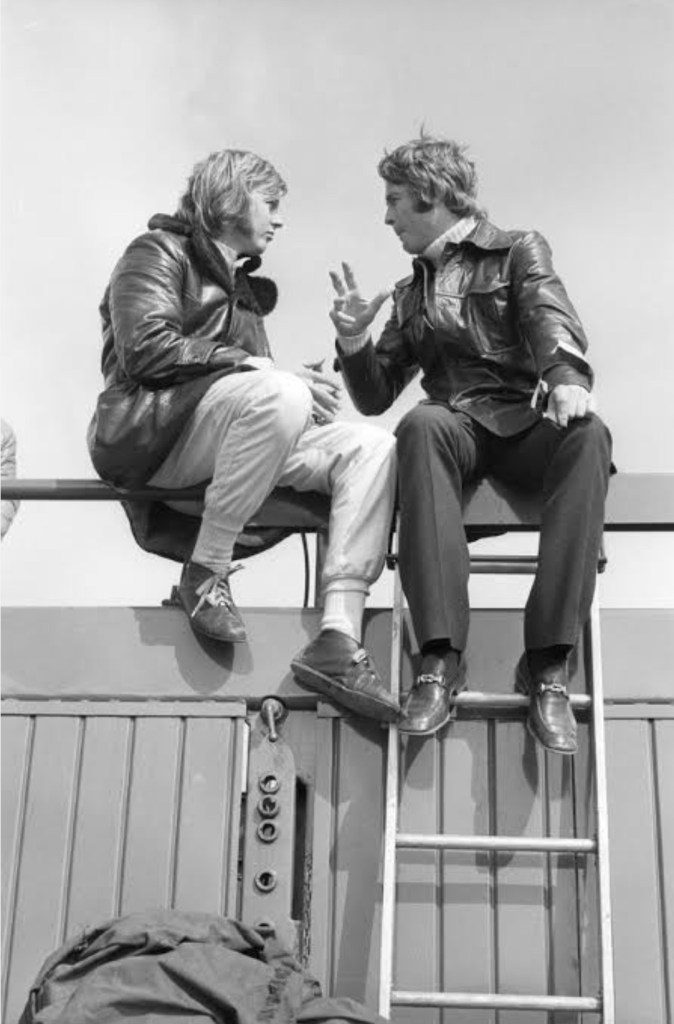
Potent partnership: Ronnie Peterson and Max Mosley at Thruxton at the start of a great season for them both in F2 and F1 (J Fausel)

The 712M in the March Pantheon

That the 712M was a good customer car was proved by the number of drivers who won in them apart from Ronnie: Henri Pescarolo at Mallory Park n/c, Dieter Quester Monza n/c, Carlos Pace Imola n/c and Mike Beuttler the GP Madunina at Vallelunga.

Quester’s 712M was fitted with a works BMW 1.6-litre, four-valve, M12/2 engine providing the category with much-needed and ongoing technical interest, and plenty of pace: third place in the championship with five second places on top of his non-championship Monza win was a great season.

Critically, it was the start of a relationship with BMW Motorsport that was so important commercially and competitively for March from 1973, the second year of the 2-litre F2.
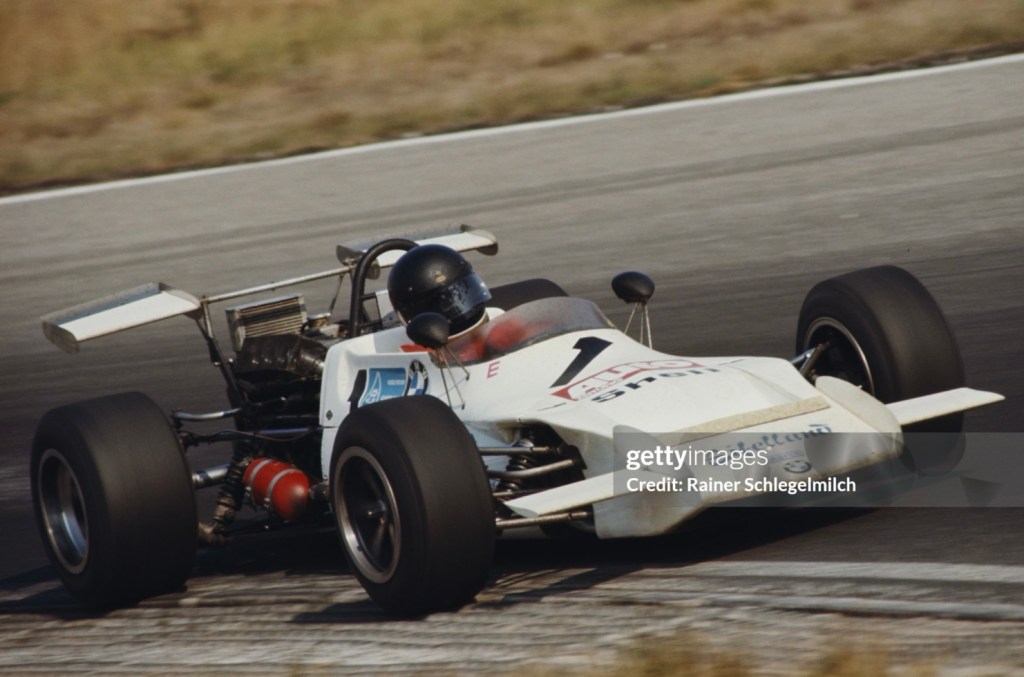
Dieter Quester, March 712M BMW at Hockenheim in October 1971 (R Schlegelmilch)
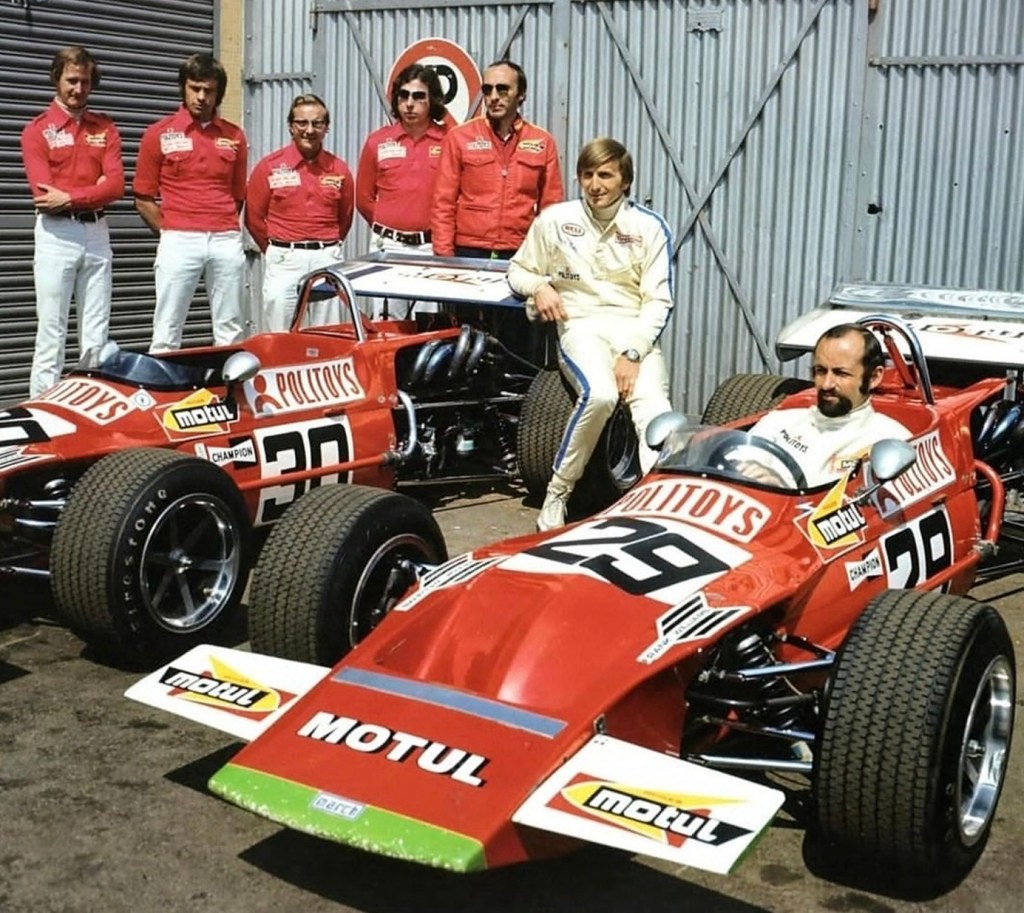
Derek Bell and Henri Pescarolo and Frank Williams 712M FVAs at the Nurburgring in 1971 (unattributed)

‘What makes March’s 1971 F2 season all the more creditable is that no fewer than 16 drivers went on to works F1 drives, nine would win Grands Prix and two, Lauda and Fittipaldi, would become World Champions.’ March biographer, Mike Lawrence wrote.

Beyond that, the 712M wasn’t a one-hit wonder, it just gave and gave. Its aluminium monocoque provided sterling service from 1971-77 in F3, F2 and F Atlantic form; it was a ‘banker’ at a critical time in March’s history.

Mike Lawrence picks up the thread, ‘Robin was getting on with the job of designing both the new F1 car and, what in the long term was to be more significant, a monocoque for F2 and F3.’

Herd, ‘It took us three or four goes to get it right; I did the detail mechanical design, Roger Silman and Dewar Thomas who made the prototypes put in a lot of their ideas as well, and John Thompson’s operation actually built the production tubs. Apart from the fact that it worked, and was still winning races in 1977, it was very well production engineered and I think we can be pleased with it. When the car was finished, I was away at an F1 race, so Dewar simply took it up to Silverstone and did 60 laps in it, which is something one cannot imagine happening today.’

‘Apart from the sharp new body and the monocoque itself, which had the engine as a semi-stressed member supported by the detachable multi-tubular frames, the broad layout of the design was similar to the 1970 cars, although there were detail changes such as such as narrower wishbones and the use of foam-filled fuel Carl’s which were required by the new regulations.’
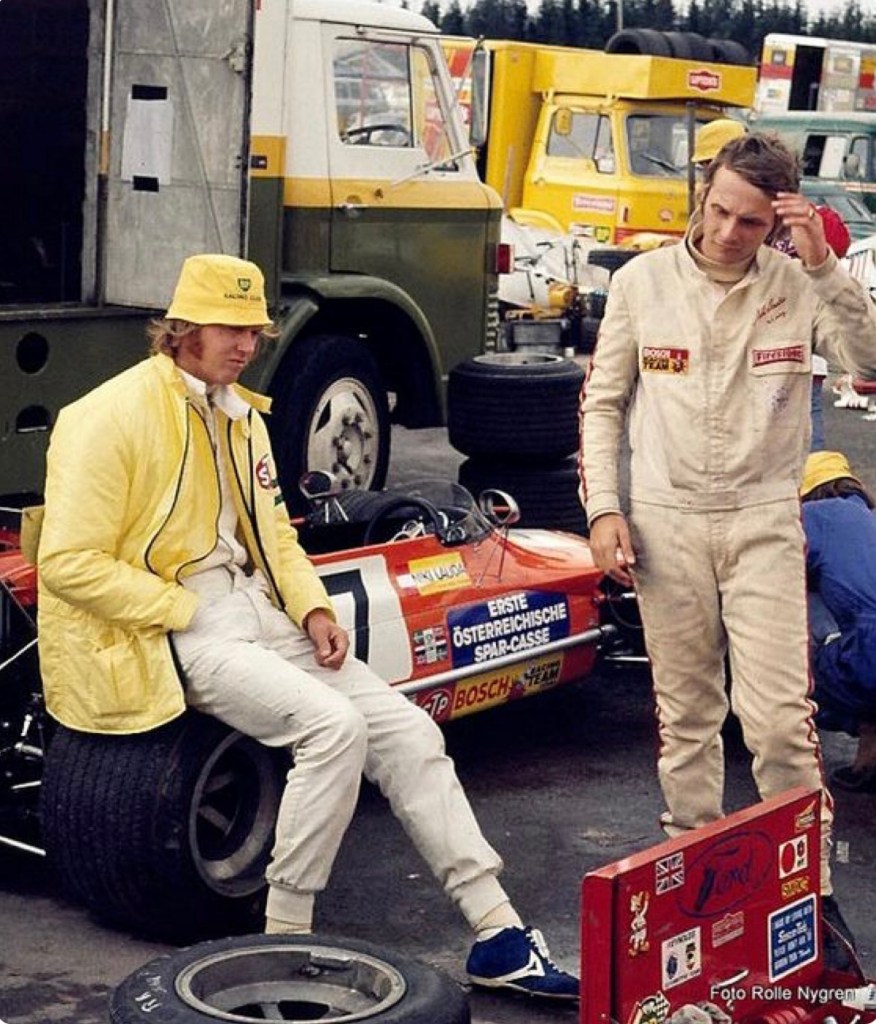
Ronnie sits on Niki Lauda’s tyre at Mantorp Park in August. A win for Ronnie and seventh in the first heat and DNS the second for the Austrian who raced a works-entered 712M (R Nygren)
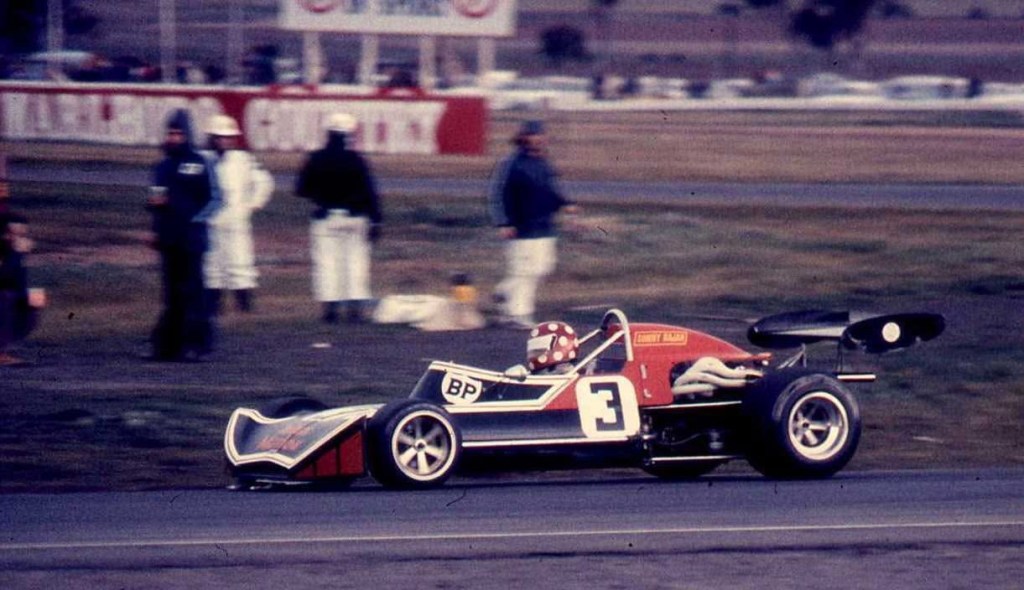
Sonny during the Calder AF2 championship round in August 1974, March 712M Lotus-Ford. 11th in the race won by Leo Geoghegan’s Birrana 274 (S Gall)

Sonny Rajah raced an ex-James Hunt F3 Lotus 59/69 by then fitted with a Lotus-Ford twin-cam in the 1971 South East Asian season for a best of second place in the Malaysian Grand Prix at Batu Tiga on September 5 behind John MacDonald’s ex-Mike Costin Brabham BT10 Lotus-Ford twin-cam.

By the commencement of the 1972 South East Asia season – the April 4 Singapore GP- Sonny was racing his new, ex-March-Peterson 712M. his strong performance in Singapore was succeeded by victory in the April 9 Malaysian GP at Batu Tiga in front of Ken Smith, Lotus 59/69, Vern Schuppan March 722 and Kevin Bartlett, Brabham BT30 – all Lotus-Ford twin-cam powered. He was third in the season-ender at Macau on December 4 behind John MacDonald’s Brabham BT36 Lotus-Ford and Max Stewart’s Elfin 600B Lotus-Ford.
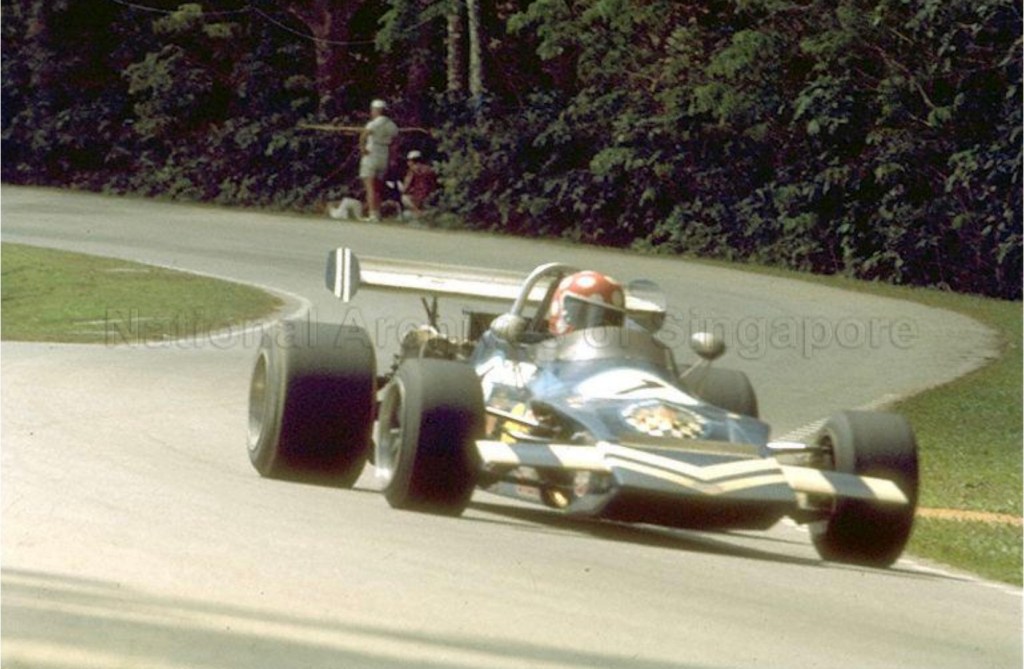
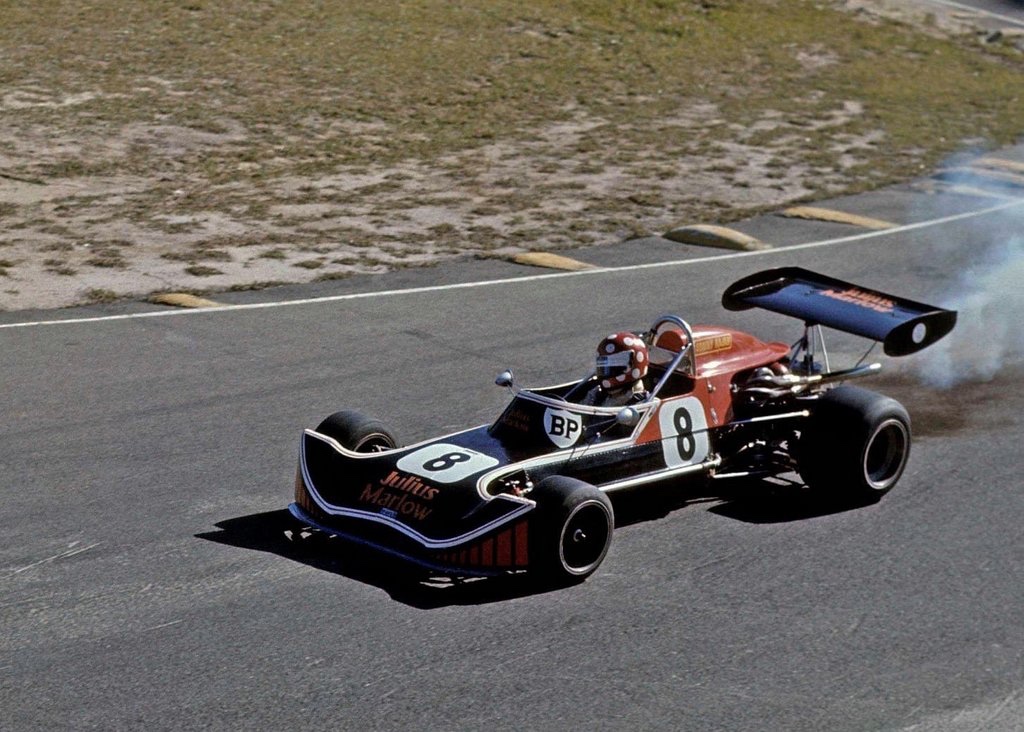
Rajah on the jungle-surrounded Thomson Road track, Singapore GP weekend 1972. March 712M-7 (NAS)
Rajah, March 732/712M Hart Lotus-Ford twin-cam, Amaroo Park July 21, 1974 (B Henderson)

In 1973 Sonny bought a March 732B in the UK and took in a number of British Formula Atlantic Championship rounds from late May to late July. With best results in the highly competitive championship of ninth at Silverstone in May and fourth at Mallory in July he was sharpish by the time he returned home and promptly won the September 9 Selangor Grand Prix at Batu Tiga aboard the 712M-7! Graeme Lawrence was second in his Surtees TS15 and Percy Chan was third in the March 732B raced by Rajah in the UK. He capped off a busy season with second place to John MacDonald’s Brabham BT40 at Macau in the now 732 bodied 712M (probably says Allen Brown).

Into 1974 he had time to run the March 732 bodied 712M-7 in the Malaysian GP on April 7 DNF, before shipping the car to Australia before the first Australian F2 Championship round – also a twin-cam, two-valve formula – at Hume Weir on June 16.
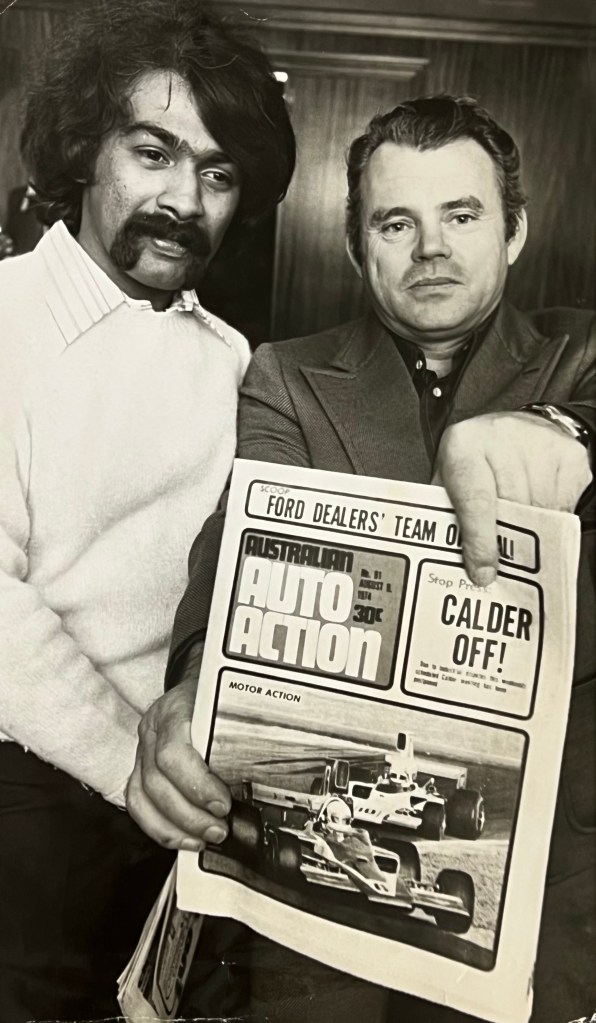
Sonny Rajah and Bob Jane in August 1974 (Auto Action)

The popular Singaporean born racer, Rajah contested the full eight race 1974 championship with the March, updated, as already noted, with 732 bodywork in a low-budget campaign run largely out of Paul England’s workshop in Moonee Ponds, Melbourne

It was the most competitive second-level motor racing championship ever run in Australia thanks to the support of Van Heusen Shirts, the story of how that came about is one for another time

Rajah in the Julius Marlow Shoes sponsored 732-712M from Ray Winter, Mildren Yellow Submarine Lotus-Ford and Bruce Allison, Birrana 274 Lotus-Ford at Adelaide International. Rajah ninth, Winter fourth and Allison seventh in the race won by Bob Muir, Birrana 273 and John Leffler, Bowin P8 (Auto Action)

Up front the contest was between the Birranas of Leo Geoghegan and Bob Muir, and when he got it sorted, John Leffler’s Bowin P8; all of these cars were powered by Brian Hart built ‘416-B’ Lotus-Ford 1.6-litre, DOHC, two-valve (mainly) fuel injected engines giving about 205bhp.

Rajah’s contested all eight rounds with his best third place at Symmons Plains and sixth at Hume Weir. He’s not listed in the point score because – I guess – he wasn’t a CAMS licence holder.

Leo Geoghegan won the title in his works-Birrana 274, Bob Muir’s Bob and Marj Brown owned Birrana 273 and Leffo’s ‘works’-Bowin P8.

Etcetera…
(LAT)

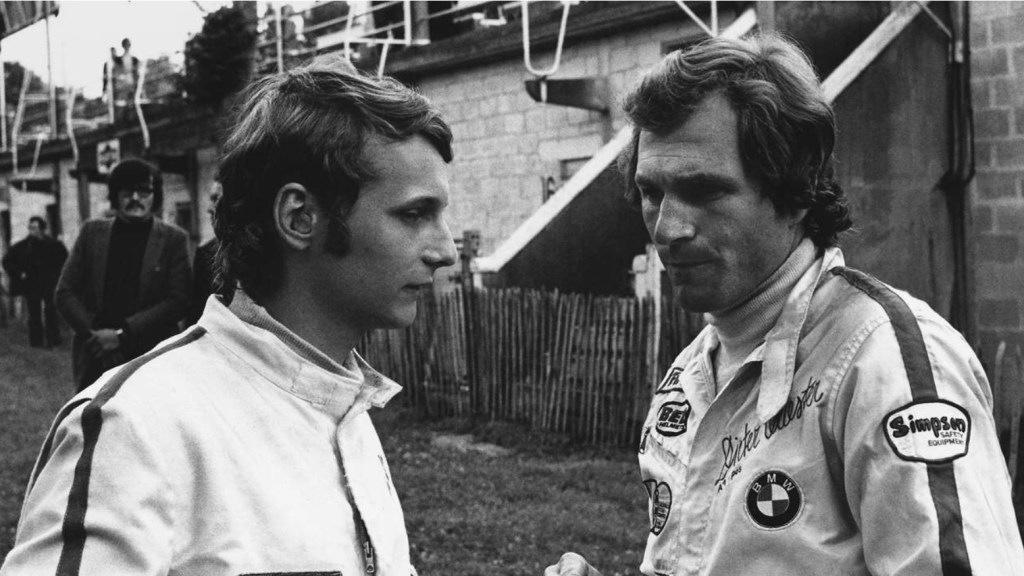
March 712M Brothers in Arms Niki Lauda and Dieter Quester swap notes during the Rouen-Les-Essarts June 27 weekend in 1971. Peterson won from Quester and Graham Hill’s Brabham BT36 with Niki fourth.

Niki at Mallory Park (below) at for the F2 season-opener – non-championship – Speed Championship Trophy over the March 14, 1971 weekend.

His works-March-Bosch Racing 712M-9 didn’t finish either heat. The renta-driver had plenty of top-six finishes that season and memorably duelled with Graham Hill and Peter Westbury at the Nurburgring for fourth place. In the first heat at Rouen, he almost sling-shotted past Peterson to win, dipping out on the line and finishing second by 0.1 secs…

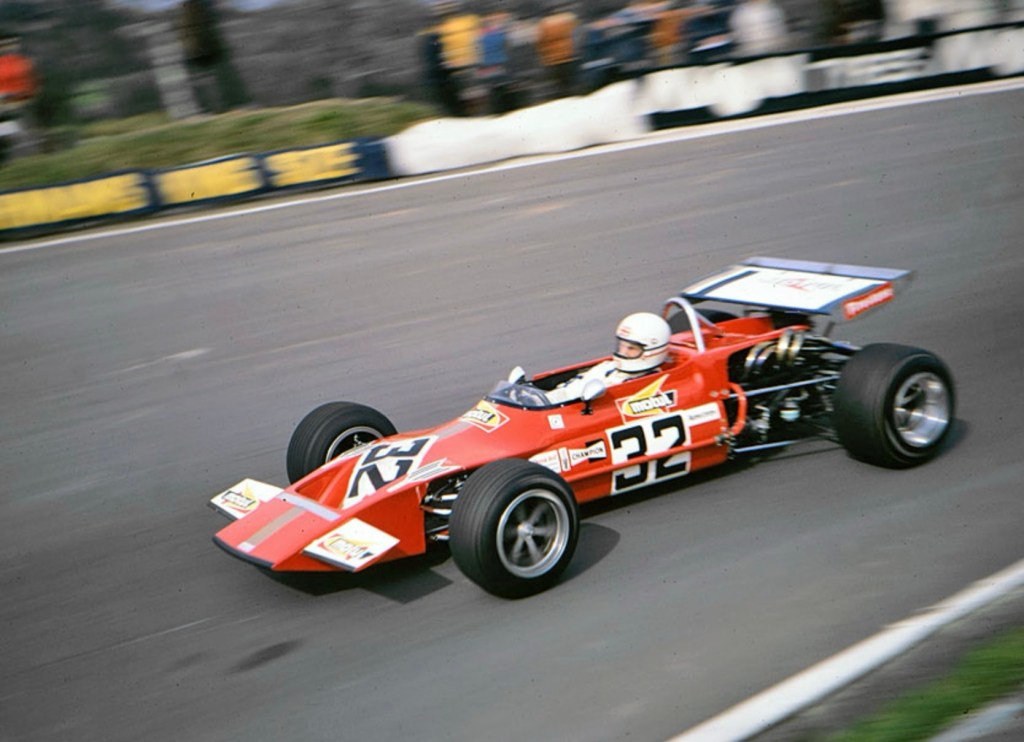
(I Hubbard Collection)

Still at Mallory Park, Derek Bell 712M-2 and Henri Pescarolo 712M-4, below, in the Frank Williams March 712M Ford FVAs. Henri won from Gerry Birrell’s Lotus 69 and Brian Hart’s Brabham BT30.
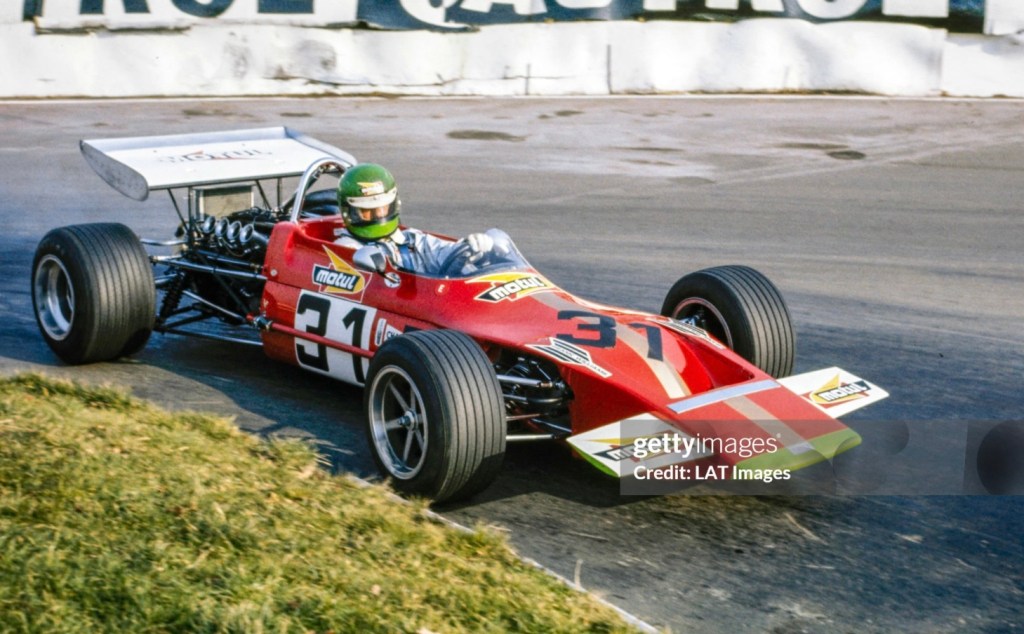
(Ed Brunette Collection)

Tino Brambilla tests his March 712M Ferrari Dino 206 V6 at Monza in 1972. This chassis is the ex-Pescarolo 712M-4.

Its amazing that a family of engines born in 1957 were still being used in 2-litre form at the dawn of the 1980s, not very successfully mind you! See here: https://primotipo.com/2023/06/17/ralt-chevron-and-minardi-ferrari-dino-206-v6s/

Tino retired his ‘Ferrari’ retired from the Monza Lottery non-championship F2 race – Gran Premio della Lotteria – won by Graham Hill from Silvio Moser and Jean Pierre-Jarier: Brabham BT38 Ford BDA, Brabham BT38 Ford BDE and March 722 Ford BDE.

(J Benak)

James Hunt in the Hesketh Racing March 712M-5 Ford BDA during the September 16, 1972 British F2 Championship race at Oulton Park. The soon-to-be F1 Star was third behind the works-March 722 Fords of Ronnie Peterson and Niki Lauda.

In several late season Euro F2 rounds in September-October he was Q3 and DNF at the Salzburgring, Q 11 and fifth at the Albi GP, Q12 and eighth at Hockenheim.

(B Henderson)

Rajah at Amaroo Park, Sydney on July 21, 1974. DNF engine in the race won by Bob Muir’s Birrana 273.

I’m intrigued by what Allen Brown (oldracingcars.com) makes of the photos in this article which show the obvious difference in ‘our car’s’ bodywork – 732 rather than 712M – but in addition the roll-bar mounts are different between the two cars. I do wonder whether the car that came to Australia by then had a 732 tub. we know Sonny raced a ‘mystery’ ‘732B’ in British Atlantic then took it back to Asia. I wonder whether the car in Oz was the 732 chassis rather than the 712M?

Credits…

National Archives of Singapore via Rewind Media via Ed Brunette, Clarke Walker, Rolle Nygren, ‘The Story of March : Four Guys and a Telephone’ Mike Lawrence, Stephen Gall, Jutta Fausel, Ed Brunette Collection, Bryan Henderson, Auto Action, Ian Hubbard Collection, Singapore Fling : Singapore GP piece in MotorSport by Eli Solomon

Tailpiece…
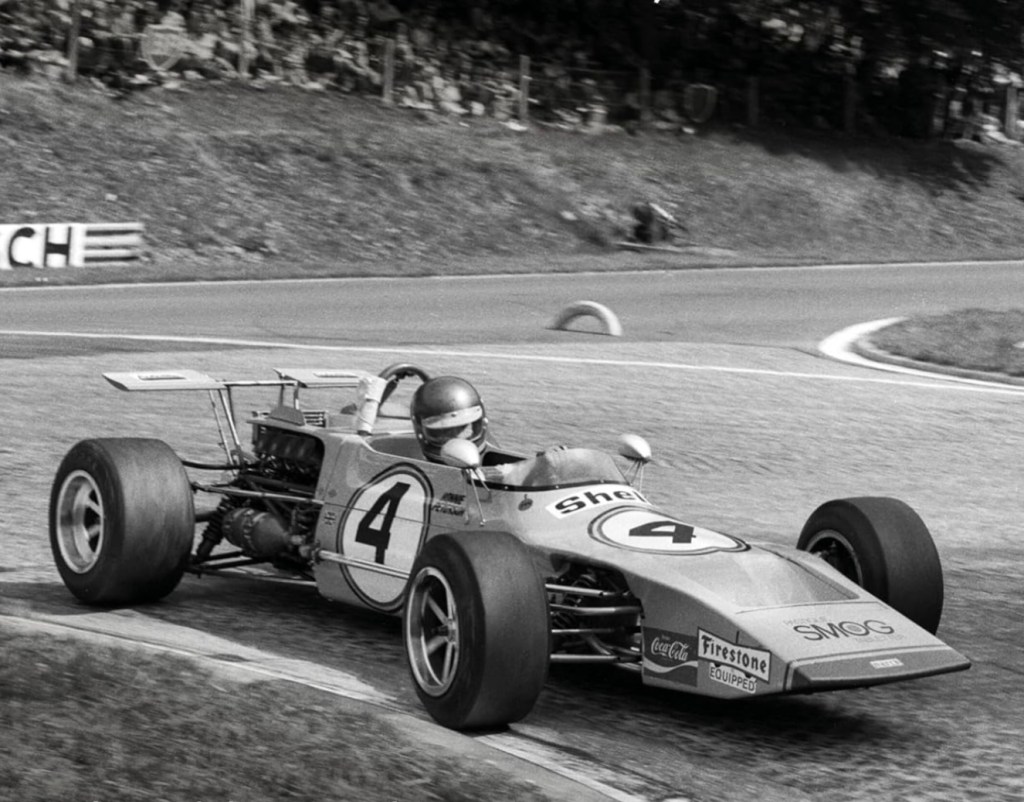
(J Fausel)

Ronnie during the Grand Prix de Rouen on June 27, 1971.

The Swedish Star won from Dieter Quester’s 712M BMW and Graham Hill’s Rondel Racing Brabham BT36 and Lauda’s works-712M. Graham was still a plenty-quick F2 driver in that lovely Ron Dennis prepped BT36 that year. Always loved those March wheels…
Quite a few of the photos in this article are by now US domiciled German photographer Jutta Fausel who I collaborated with in an article published in MotorSport a couple of years ago on the 1970 Israel Grand Prix, an obscure F2 race.

I really must buy her book, F2 Devotee as I am, which comes highly recommended!

Finito…
(bilsportarvet.se)

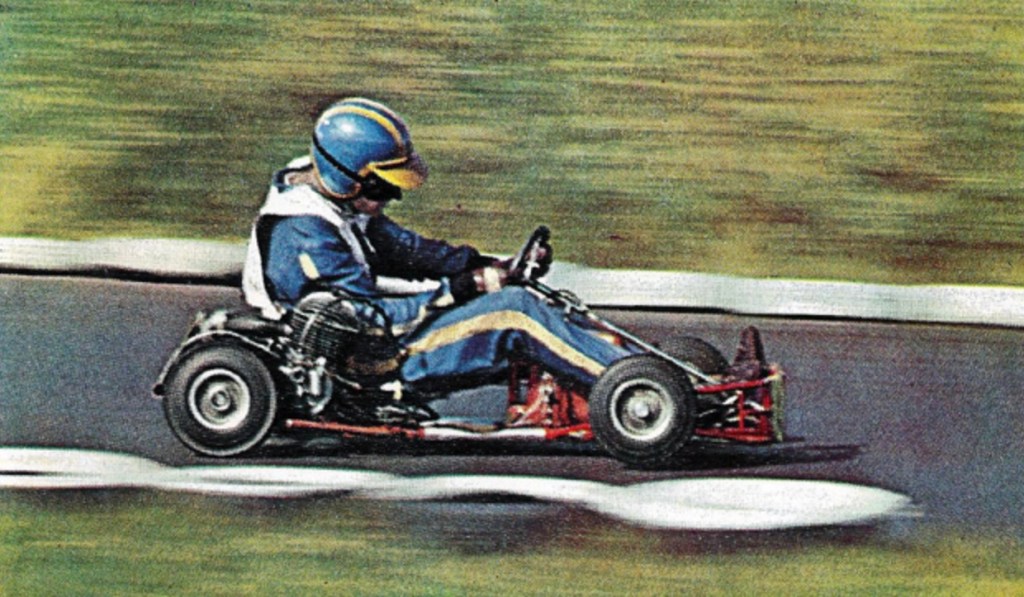
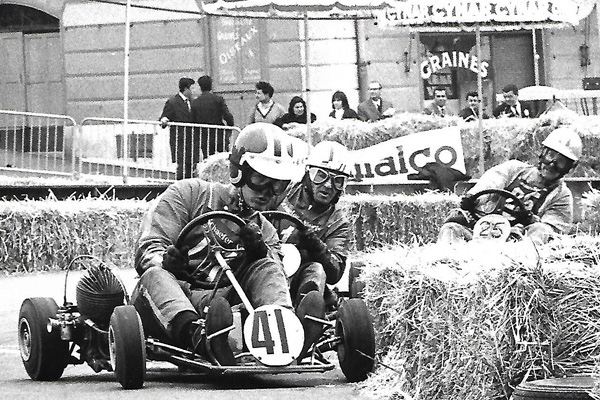
Ronnie Peterson in the style which made him a famous crowd favourite ahead of a gaggle of other karts at Laxa, Sweden circa 1965.

3,000 people watched the Laxa Motorstadion’s – Sweden’s first Kart track – first race meeting in 1961, a venue that can take some of the credit for Sweden’s 1970s and 1980s motor racing successes.

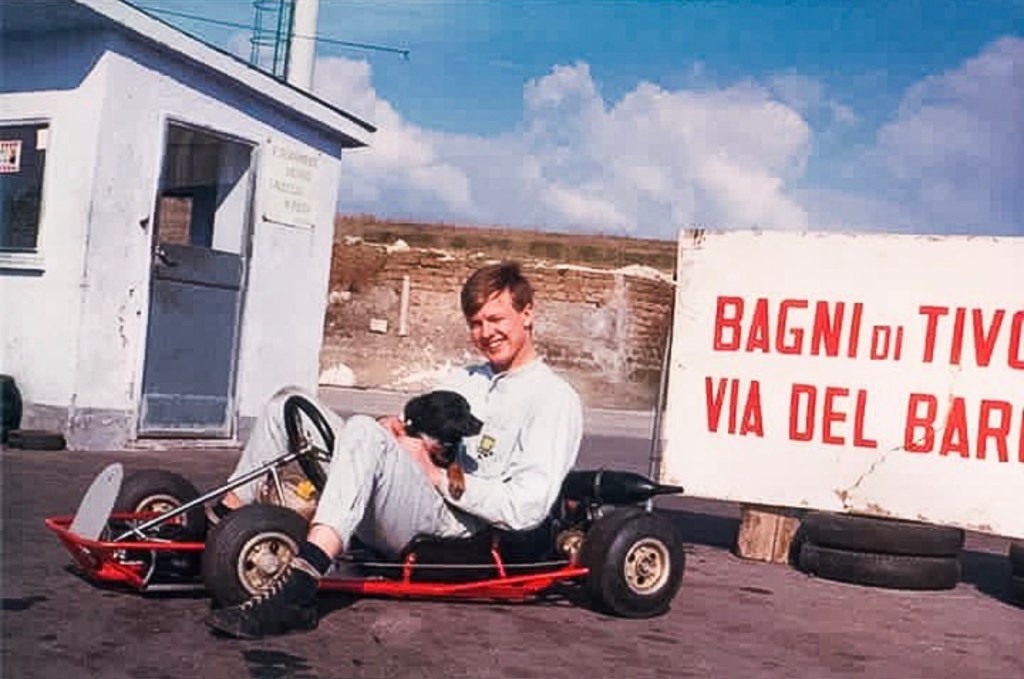
Ronnie regularly practiced and raced there together with his father Bengt ‘Bagarn’ Peterson, a skilled car builder/fabricator. His competitive instinct was there from the start, but Laxa pit-pundits bet on Ronnie hitting the straw-bales on either lap one or two in his early days.

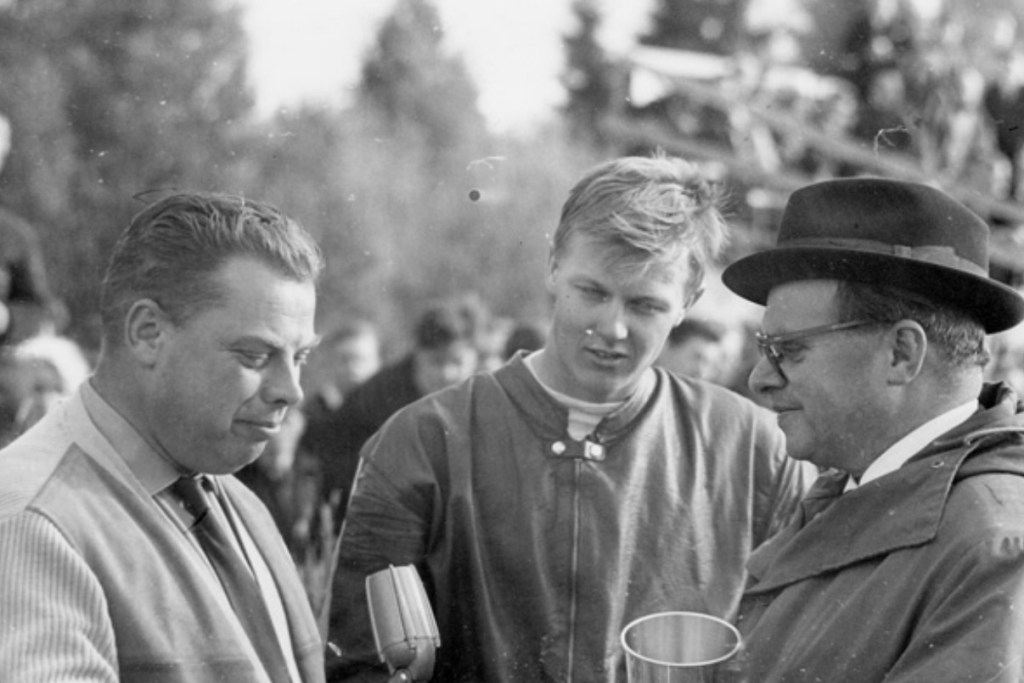
Prize presentation at Laxa circa 1964 (bilsportarvet.se)
Ronnie, Robardie Parilla circa 1965 (federicascarscelli.com)

By 1964 Ronnie had made a clean sweep of Laxa events, two years later, in September 1966, he place third in the World Kart Championships at Kopenhamm, Denmark in front of Toine Hezemans and one Keijo Rosberg.

While all the hotshots raced Parilla powered Tecnos and Birels, Ronnie’s Robardie was built by his dad. Bengt’s Robardies were good enough to win world kart titles for Tomas Nilsson in 1968 and Francois Goldstein in 1968-69.

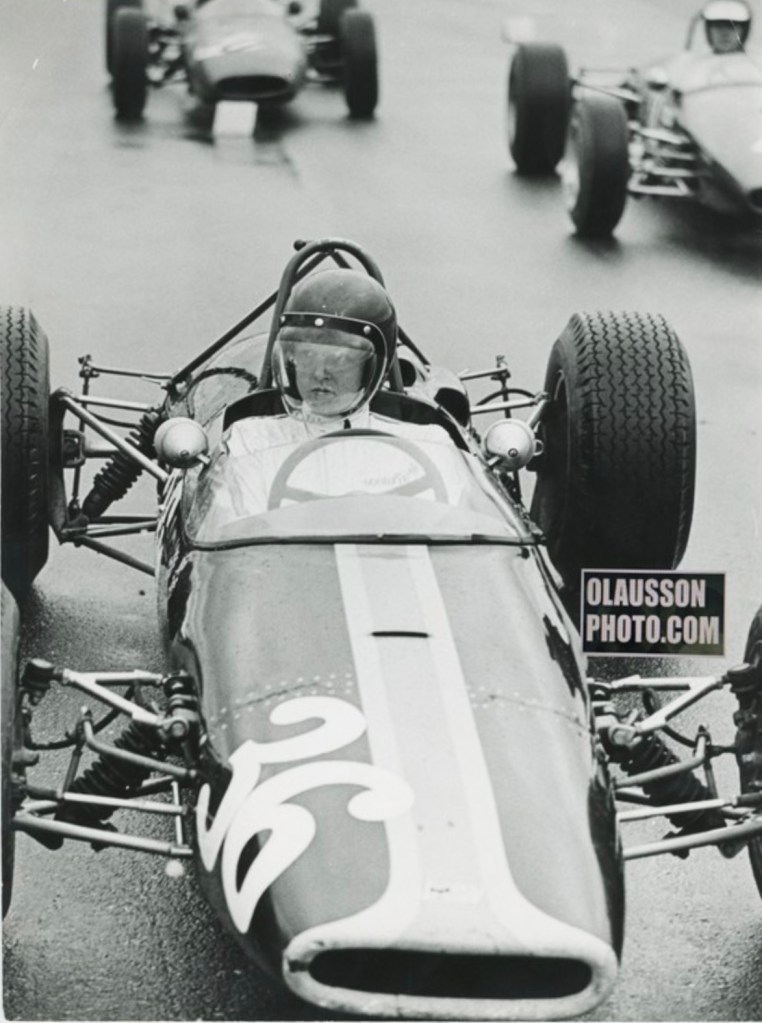
By mid-1966 Peterson father and son had progressed to Formula 3, racing the Swebe Ford (most references have it as Svebe but the name on the original steering wheel says Swebe) which was built by Bengt and engineer Sven Andersson. It was essentially a Brabham BT15 clone fitted with Brabham like suspension, uprights and other components.

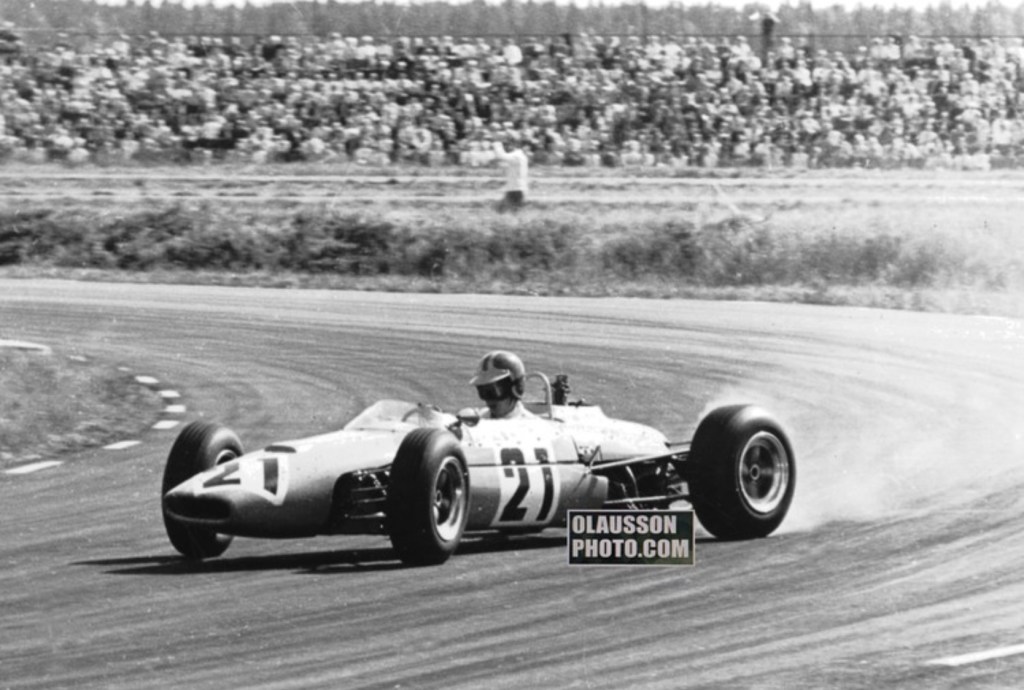
Ronnie’s best result in a half-dozen mid-year Swedish events was a third at the Dalsland Ring (below) in July.

Ronnie’s car control was legendary from the very start. He was never the best at working with the engineers to get the best out of a car, preferring to just drive around the problem
Ronnie, BT18, on the grid of the Danmarksmesterskab final at the Jyllandsringen, Denmark in October 1967 – second behind Reine Wisell’s BT18

By the Karlskoga meeting that October Ronnie raced a Brabham BT18 Ford in advance of a full campaign at home in 1967. He was fourth in the Swedish F3 Championship won by Reine Wisell, Ronnie then took back-to-back titles in 1968-69.

The 1969 F3 win which vaulted him into consideration for Colin Crabbe’s privately run F1 March 701 Ford in 1970 was victory over Europe’s cream-of-the-racing-crop at Monaco in May.

That field included fellow future F1 drivers Reine Wisell, Jean-Pierre Jabouille, Tim Schenken, Patrick Depailler, Howden Ganley and Mike Beuttler. Ronnie won his heat and Wisell the other, with Ronnie nine-seconds in front of Reine in the final.

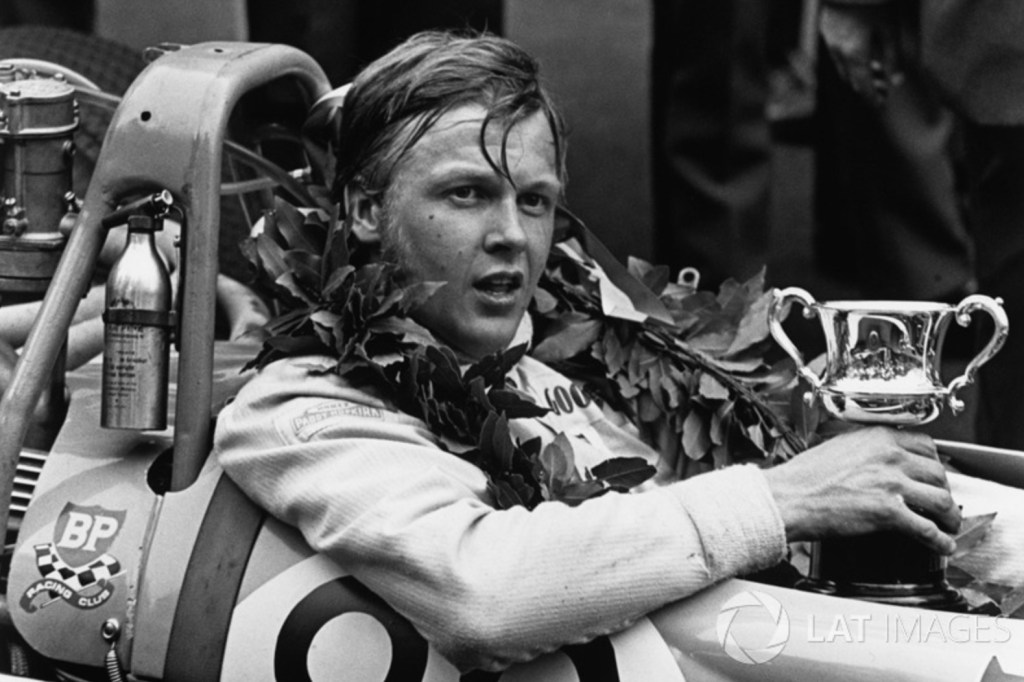
Happy and exhausted, Peterson after winning the 1969 Monaco F3 GP, Tecno 69 Ford Novamotor (LAT)
Quayside at Monaco. Tecno 69 chassis #TO334 won 16 F3 races in 1969 in Sweden, Italy, France and of course Monaco (unattribured)
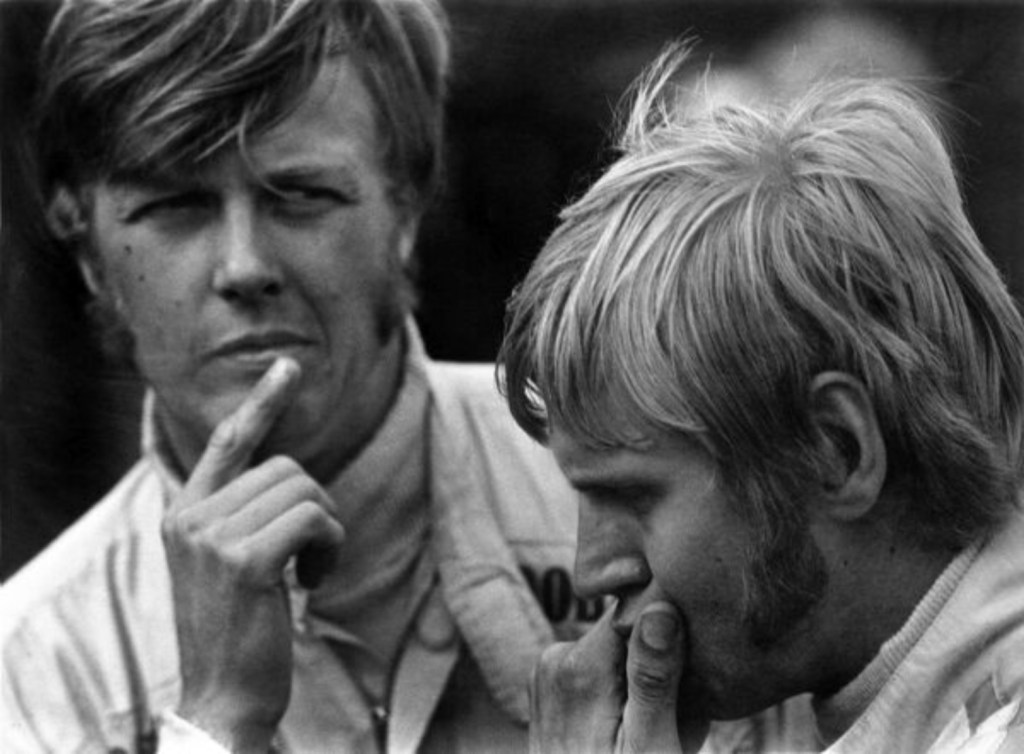
SuperSwedes both, friends and rivals Ronnie and Reine Wisell at Anderstorp in June 1969 (LAT)

Even more impressive was that all of his F1 compatriots, with the exception of Howden Ganley, raced works or quasi-works cars, while Ronnie’s Squadra Robardie Tecno 69 Novamotor was spannered by Ronnie and his mechanic.

The world was on notice.

Nascent March Cars co-owner Alan Rees chased Ronnie’s signature at Crystal Palace the following weekend to drive the very first March, an F3 machine designated 693.

Ronnie at Karlskoga, Tecno Ford on the way to a win in May 1969
(MotorSport)

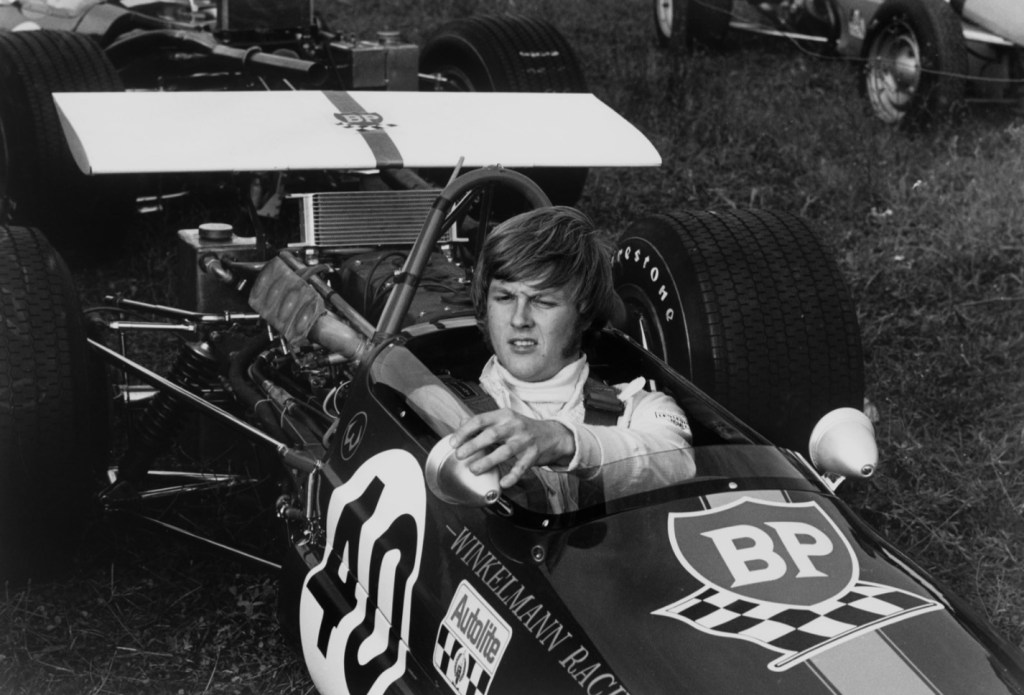
In September Peterson had his first F2 drive for Roy Winkelmann Racing (above) in the Albi Grand Prix.

Ronnie finished fifth aboard the unfamiliar Lotus 59B Ford FVA, in front of him were GP drivers Graham Hill, Johnny Servoz-Gavin, Jochen Rindt and Henri Pescarolo. It was his first Lotus drive, but far from his last!

Ronnie was on his way, and the rest, as they say, is history…

Credits…

‘Laxa-The country’s first Go-Kart Track’ Anders Bjork, bilsportarvet.se, olaussonphoto.com, federicascarscelli.com, LAT, MotorSport, F2 Index

Etcetera…

(unattributed)

Date place and event unknown, and welcome!

Tailpiece…

(MotorSport)

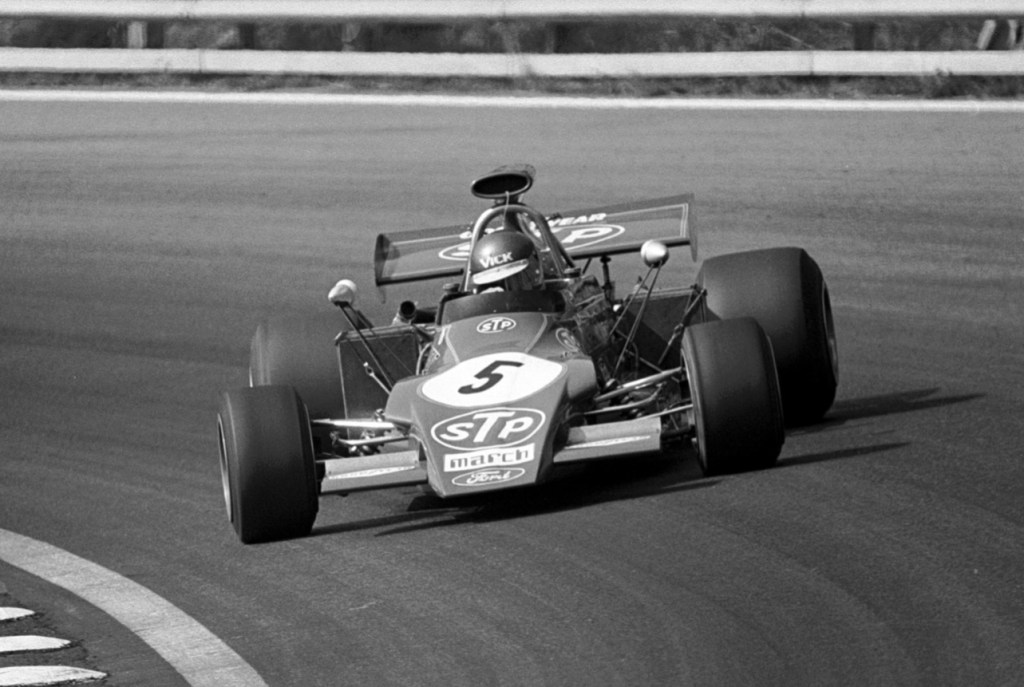
So often Ronnie had his cars all cocked up well before the apex of a corner, as here at the Osterreichring aboard his March 721G Ford in 1972.

It wasn’t always the quickest way of course but car control exhibitions like this was the best part of a weekend for many spectators.

He ran as high as third from Q11 in Austria, finishing 12th. Colin Chapman liked what he saw, Ronnie had a Lotus seat in 1973 and gave Emerson Fittipaldi, the reigning World Champ a serious run for his money. Emerson won three GPs, and Ronnie four, which gave Lotus the constructors title but Jackie Stewart won the drivers championship with five wins…

Finito…

ronnie

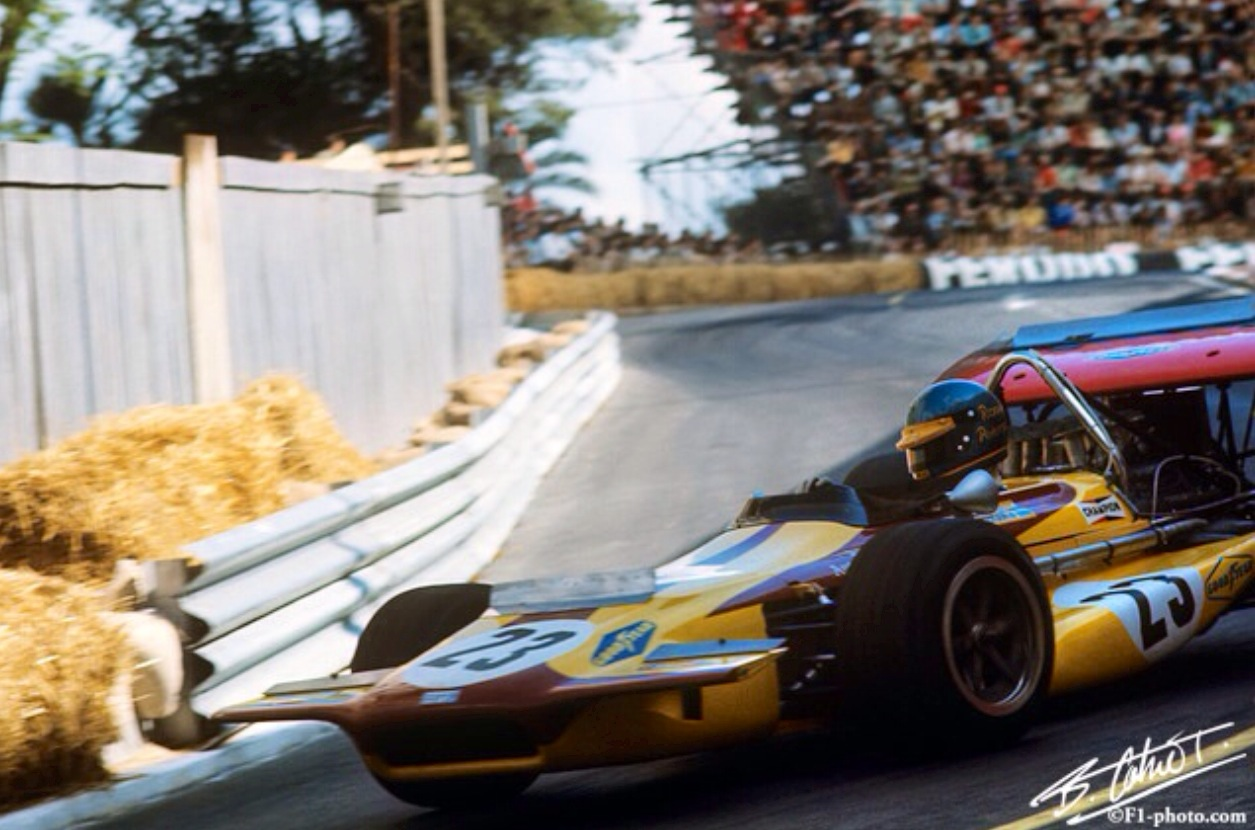
Monaco Panorama; Ronnie Peterson eases his March 711 Ford around the hairpin at Monaco in 1971 on the way to second place, Jackie Stewart won in a Tyrrell 003 Ford…

Monaco was a happy hunting ground for the Swede, his brand of ‘balls to the wall’ driving was not necessarily the style that was rewarded in the principality but he took wins in the F3 Grand Prix in 1969 in his Tecno 69 Ford and in the F1 event in a Lotus 72E Ford in 1974.

He had a great year in the 711, an excellent Robin Herd design, he finished second to Jackie Stewart in the 1971 drivers championship, not bad for a driver in his second GP season!

The more radical 1972 March 721X made conceptual sense but was not so successful…Ronnie was then snaffled up by Lotus for ’73…

ronnie 2

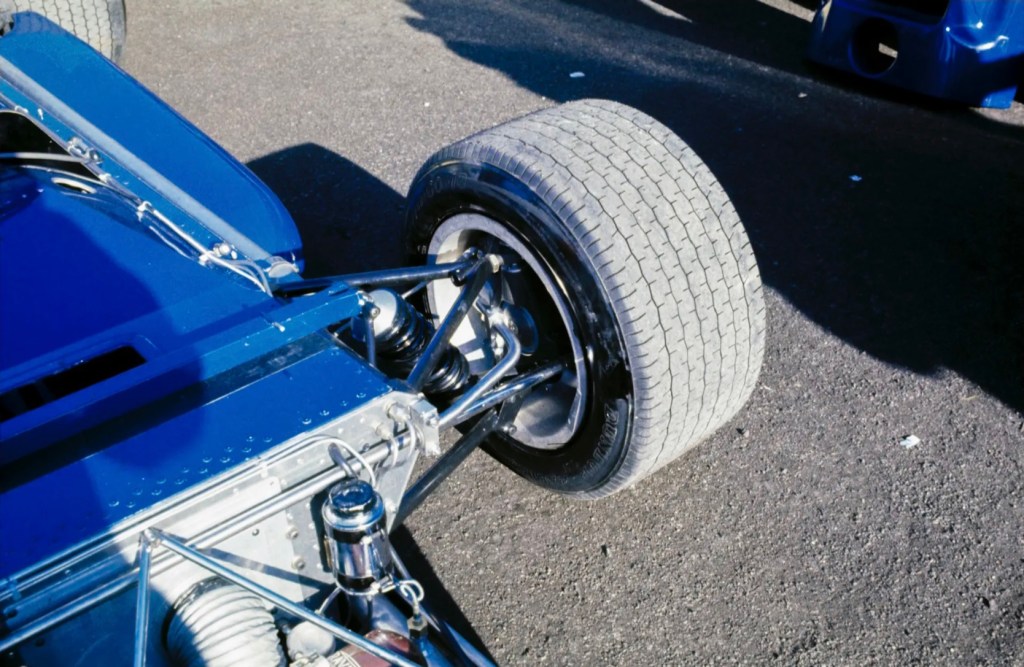
Close up of Ronnie in the 711, Dutch GP 1971, he was 4th in the race won by Ickx’ Ferrari 312B2. Front suspension; top rocker, lower wishbone, inboard coil spring/Koni damper and adjustable roll bar all clear and beautifully fabricated by the Boys From Bicester (unattributed)

A couple of other posts on ‘Mad Ronald’ to look at…

His first GP season in 1970;  https://primotipo.com/2014/05/15/blue-cars-rock/

With Colin Chapman;  https://primotipo.com/2014/08/03/the-gentle-art-of-driver-seduction-colin-chapman-and-ronnie-petersen-clermont-ferrand-1972/

Photos…unattributed


ronnie & col

Colin Chapman and Ronnie Peterson ‘chewing the fat’ on the French GP grid, Clermont Ferrand 1972. Car is a March 721G Ford, Peterson finished 4th in the race won by Jackie Stewart (Pinterest)

‘C’mon Ronnie, its time to move to Hethel?! Other than Bernard Charles Ecclestone there were few people with Lotus boss Colin Chapmans’ charm, and powers of  pursuation when it suited him…

I doubt the weather was the topic of conversation! Ronnie learn’t his F1 stuff with March, starting with a quasi-works 701 in 1970, but the 721G, on which he is leaning, was an F2 car onto which a Ford Cosworth engine was grafted after the failure of its 721X and not as quick as the Lotus 72 Chapman is talking to Ronie about!

Ronnie replaced Aussie Dave Walker at Lotus in 1973, Peterson proving quicker than Emerson Fittipaldi, the 1972 World Champion. As is usually the case, these ‘Dream Teams’ usually end in tears.

Chapman refused to apply team orders later in the season, costing Fittipladi, the better placed driver, his second title, Lotus did pick up the Manufacturers Championship however.

Fittipaldi decamped to McLaren at the years end and a second title in ’74, Ronnie and Jacky Ickx were quick in the Lotus 72 in ’74 but it was getting long in the tooth and Lotus missed Emerson’s testing and development skills, neither of which were Petersons’ forte…

photo (2)

Ronnie Peterson and Colin Crabbe…

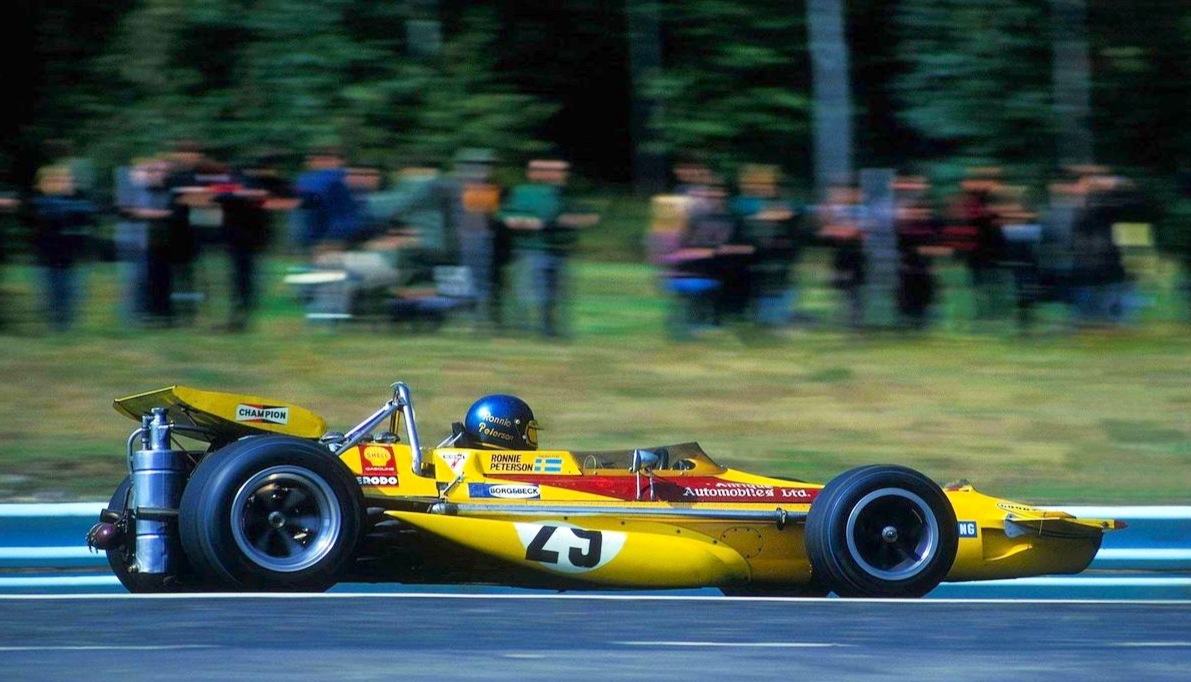
This superb shot is of Ronnie Peterson at La Source hairpin, Spa 1970 aboard privateer Colin Crabbe’s Antique Automobiles March 701 Ford.

In the good ‘ole days one could, if one had the readies, buy a car, pay the entry fees and race in Grands Prix.

Perhaps the greatest in modern times was Rob Walker’s Team (he of the whisky company) which scored the first championship victories for Cooper and Lotus (in Stirling Moss’ hands) and the last victory for a privateer team when Jo Siffert triumphed in Walker’s Lotus 49 in the 1968 British GP.

Since the early 1980s the FIA have mandated that F1 entrants own the intellectual rights to the chassis they enter, in essence this means that the entrant builds the car and races it, ending the long tradition of private entrants buying and racing cars built by others in the sport’s highest echelons.

Crabbe’s Antique Automobiles business entered Vic Elford in a Mclaren M7 in 1969. March’s Max Moseley offered Crabbe/Peterson a 701, all Colin needed to provide were the engine and ‘box both of which he happened to have from the previous years campaign with Elford. And the readies of course which he was confident of securing through trade support.

Peterson jumped from the F3 ruck in 1969 winning the European F3 Championship, including the Monaco F3 GP race in a Tecno. At the end of the the year he raced the very first March, the 693 F3 car which James Hunt also raced that winter.

ronniw monaco 69

The Birth of March…

Due to unusual circumstances March’s first year in the sport resulted in them supplying customer F1 701 cars to the reigning world champion Team Tyrrell who were unable to run Matras with a Ford Cosworth engine as they had in the previous two years. The French concern wanted their own V12 to be used exclusively in their cars.

Jackie Stewart tested the MS120 but was convinced the DFV remained the superior engine. Lotus and Brabham were not prepared to sell Tyrrell cars, so off to Bicester Ken went; no pressure on designer Robin Herd in designing a car for the reigning world champ!

Matra never won a GP with their own V12 engined car, despite going very close with their single car Chris Amon entries in 1971-72, that  Matra honour going later to Ligier with Jacques Laffite’s first GP win in Sweden in 1977.

That Tyrrell couldn’t buy a competitive car was the reason he became a manufacturer rather than a privateer, he set designer Derek Gardner to work on the first Tyrrell which appeared in late 1970.

But I digress. March also sold a privateer 701 which was driven occasionally by Mario Andretti in addition to the March works cars for Chris Amon and Jo Siffert, a remarkable roll call of drivers in a constructors first year, not the full list either!

Aussie rival, friend and 1972 Ferrari 312P sports car teammate, Tim Schenken nicknamed Peterson Mad Ronald, observing up close one of the sport’s automotive acrobats sublime car control, tail out balls-to-the-wall style in the mould of Nuvolari, Rindt and Gilles Villeneuve.

The 701 wasn’t the ‘cream of the 1970 crop but it was good enough to win the Spanish GP in Stewart’s hands plus non-championship events in Stewart and Amons hands.

peterson

Ronnie did well in his car #701-08 justifying March’s faith in him and the rest, as they say, is history. Petersen won nine Grands Prix for Lotus as well as March’s only factory team win, their prodigal son returned in mid 1976 frustrated by the uncompetitiveness of his Lotus 76 and took the Italian GP in a March 761 Ford.

Peterson, racing a Lotus 78 was an innocent victim of an accident at the start of the 1978 Italian Grand Prix and died of his injuries the following day.

watkins

march cutaway 701

March 701-08 cutaway drawing.

Aluminium monocoque chassis, Ford DFV 3-litre V8, Hewland DG300 gearbox, classic and very effective ‘British F1 Kit Car’ of the period. Ronnie’s car first raced at Monaco in May 1970.

11 March 701 chassis were built, see Allen Brown’s old racing cars for the chassis by chassis list: https://www.oldracingcars.com/march/701/

(LAT)

Etcetera…

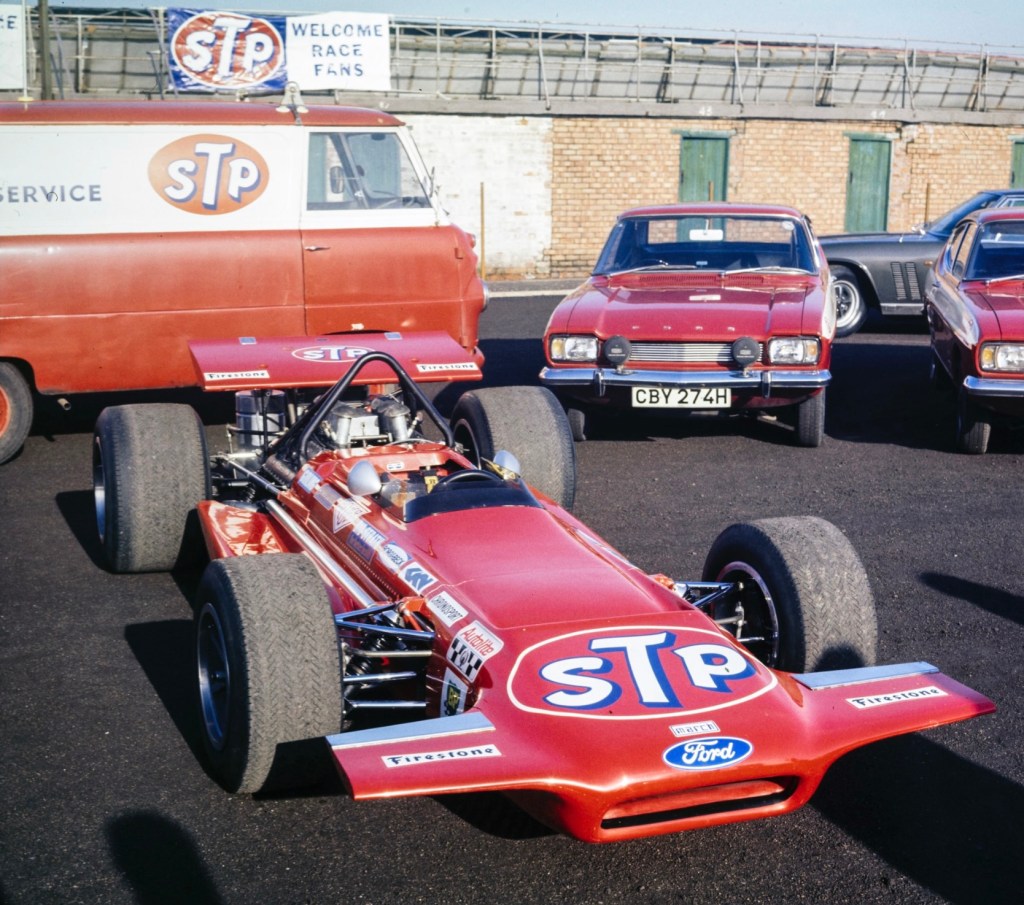
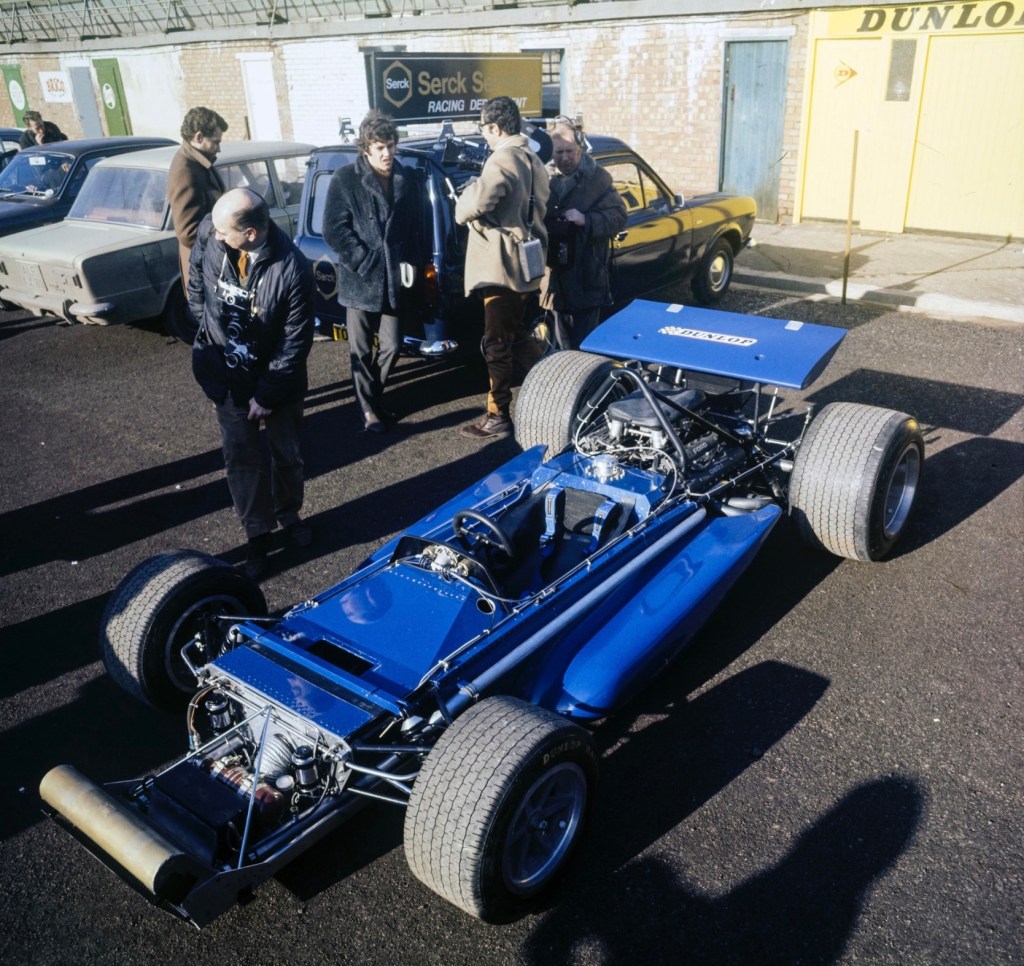
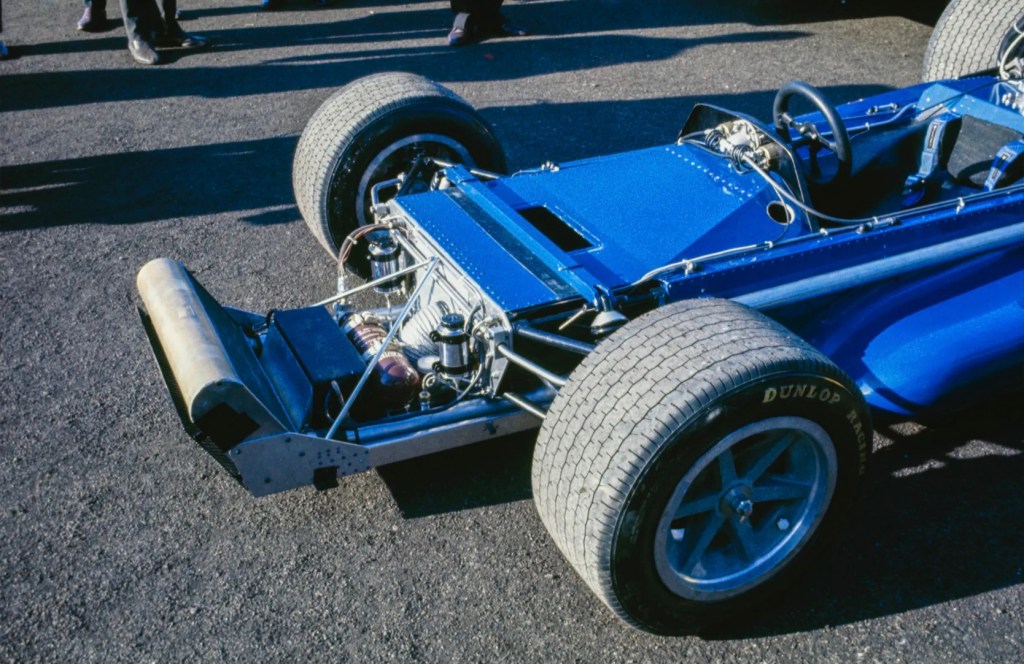
This group of photographs were taken at Silverstone on February 6, 1970 at what appears to be the press launch of the 701, you will note the presence of both works and Ken Tyrrell cars.

(LAT)

John Bolster, notebook in hand, takes in Robin Herd’s new design. Chris Amon’s chassis 701-01.

(LAT)

This shot of Chris Amon’s second placed car at Spa on June 7, 1970 is out of sequence with the rest. It shows the elegant simplicity of the design, which simply, given the number of orders in hand, had to work right outta the box. Its biggest shortcoming was perhaps its weight.

(LAT)

Jackie Stewart’s Ken Tyrrell March 701-02.

(LAT)
(LAT)
(LAT)

A journalist about to go for a whirl in Amon’s car, I wonder who?

(LAT)

Photo Credits…

Rainer Schlegelmilch, The Cahier Archive, oldracingcars.com, LAT Images

Tailpiece…

(LAT)

“Vrooom, vrooooom. I’m only a little bloke, maybe they won’t see me and I can do a touring lap!?”

Denis Jenkinson tries Chris Amon’s car for size at Kyalami during the 1970 South African GP weekend.

Finito…