


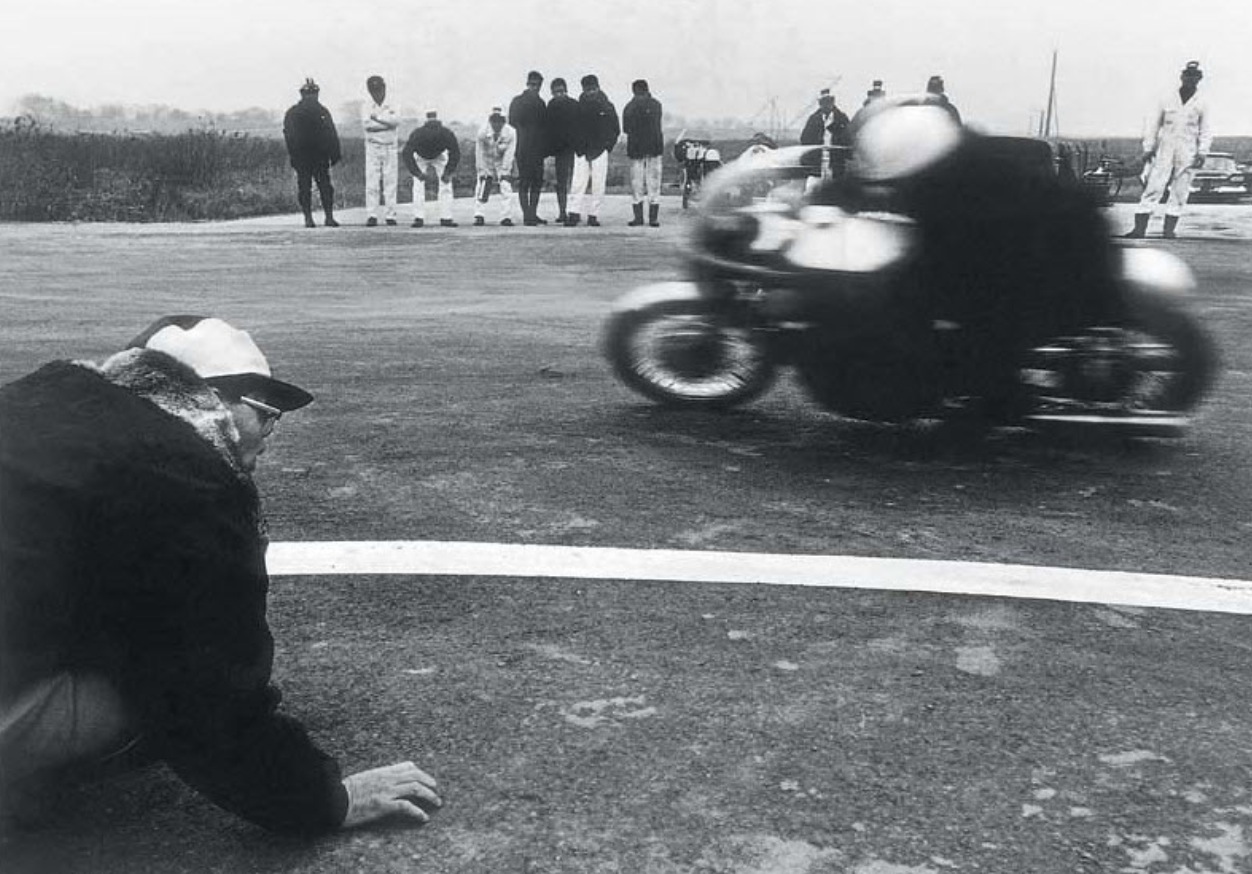
Richie Ginther in search of the La Source Hairpin apex, with photographer’s assistance, Honda RA272, Belgian Grand Prix, Spa 1965…
Soichiro Honda was a talented engineer who created the largest motorcycle manufacturing company in the world, it could be said that he helped mobilise the masses in many Third World countries. He was a passionate racer and in the early 1960s challenged the dominance of the European motorcycle marques, notably MV Agusta, on the circuits of the world.

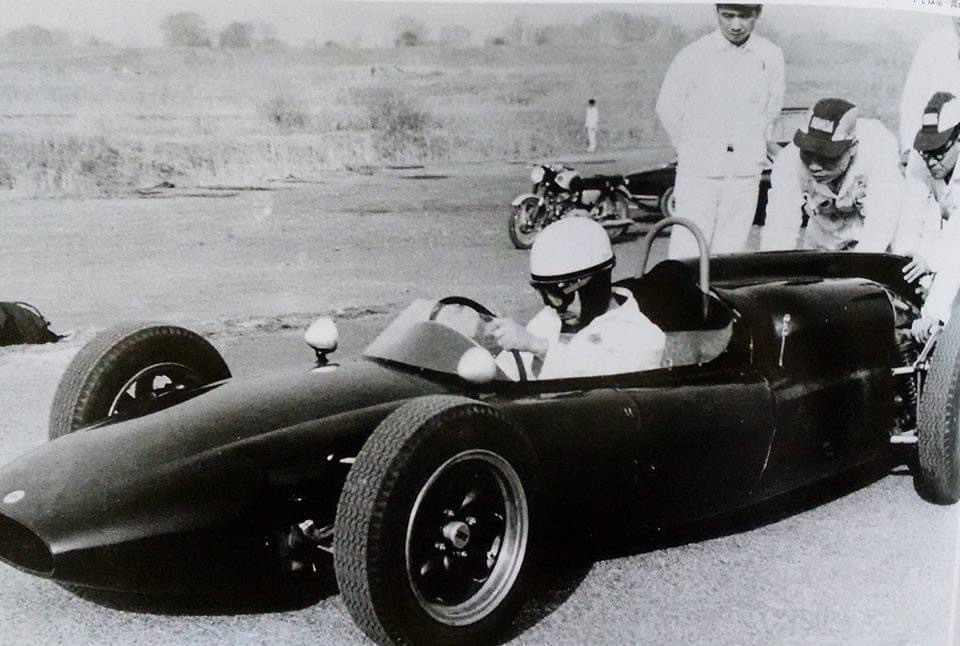
By that time Honda R&D already had a 2.5-litre Cooper T53 Climax F1 car to tinker with (above) and study, they announced their entry into Grand Prix Racing in 1964, a sensational 1.5-litre transversely mounted V12 stressed-skin chassis car their weapon of choice.

Honda had already started building road cars – the S600 and S800 sports cars – and by 1972 built their first Civic, a car which didn’t revolutionise the class but brought amazing standards of refinement and performance into the market for the time. It was the first of many outstanding mass market cars which would define the marque as the Japanese BMW in the eyes of many.
Honda were on a climb and motor racing was part of the plan to develop innovative technology, resilient engineers and promote and build the Honda brand.
Honda RA271…
The chief engineer of the project was Yoshio Nakamura, later to become Honda’s CEO.
The initial prototype, the RA270F was a spaceframe car, derivative of the Cooper, and was tested extensively at Arakawa on 6 February 1964 and then Suzuka, by many including Jack Brabham. Brabham and his partner, Ron Tauranac were to race Honda 1-litre, four cylinder engines in their F2 Brabhams, winning the ‘European F2 Championship’ – there wasn’t an official one until 1967 – in 1966.
In fact Honda had decided to be an F1 engine manufacturer, not the builder of their own chassis and had entered into a partnership with Lotus, but problems with Lotuses existing Ford agreements precluded contract execution by Lotus…so Honda built the chassis after all.
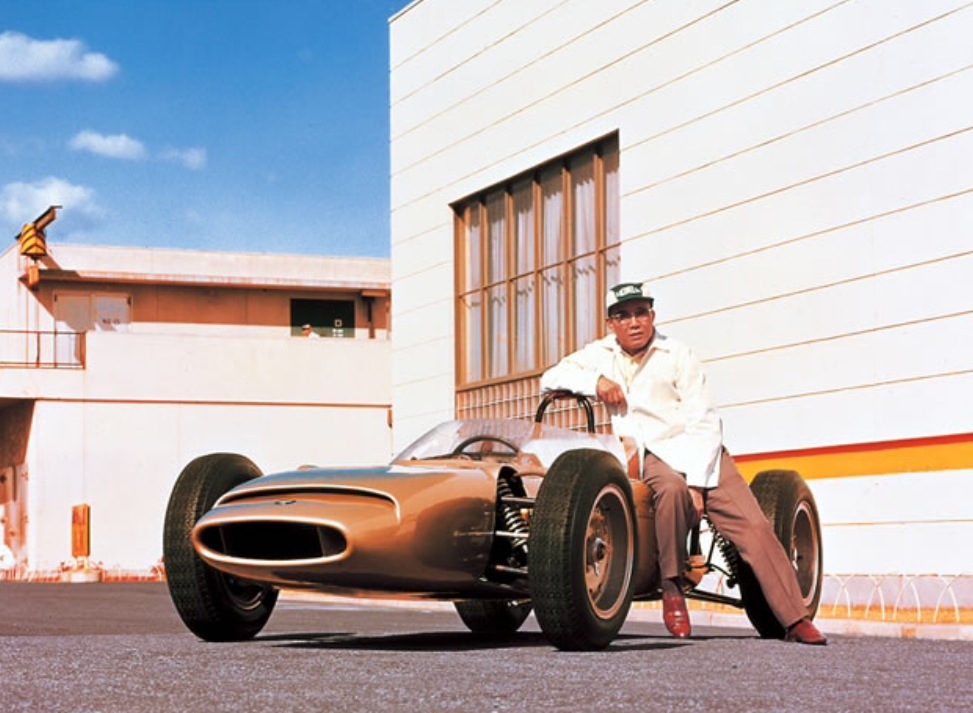
The definitive RA271 used a stressed skin monocoque chassis which ended at the rear of the cockpit to which was mounted the transverse 60 degree 1495cc V12. A tubular subframe picked up the rear suspension assembly which could be unbolted and wheeled away.
The engine was DOHC, four-valves per cylinder and was fed initially by six Keihin carburettors mounted across the frame behind the cockpit. Fuel injection was being developed and was soon adapted to the engine. Power takeoff was by spur gears from the centre of the crankshaft driving directly into a transverse shaft six-speed transaxle.

Front suspension was by top rocker operating inboard mounted coil spring damper units and a lower wishbone. The rear was by way of reversed lower wishbone, single top link with outboard mounted coil spring damper units and two radius rods providing lateral location. Sway bars were adjustable front and rear. Dunlop disc brakes were used and Goodyear tyres, Honda and Brabham were the first users of Goodyears in F1.


Ronnie Bucknum…
Somewhat bizarrely, the Japanese, as if to emphasise the experimental nature of the program, chose Bucknum, a little known American sportscar driver with single-seater experience, to pilot the car. His family owned a Honda dealership in the US and he raced an S600 at home, these days a Superlicence would not have been issued!
He tested the car extensively in Japan before the car’s first race in the German GP, at the Nurburgring. What a baptism of fire for car and driver in August 1964!
Bucknum qualified the RA271 slowest, no disgrace in that, and then drove a steady race in the wet, the power curve of the engine was somewhat peaky, he was in 11th place when a steering problem caused him to crash out of the race.


The team missed the Austrian GP but returned with the definitive fuel injected version of the engine at Monza, qualifying mid-grid and racing in fifth before overheating problems intervened. In the US he retired with a blown head gasket to finish the teams truncated first season.
1965, the final year of the 1.5-litre Formula…
Honda were more serious about its 1965 campaign, building a new car, the RA272 and signing Richie Ginther ex-BRM and Ferrari, and a noted test and development driver to lead the team, retaining Bucknum for a second year. The team were based in Amsterdam, the centre of Honda’s distribution operation in Europe.
The power of the engine was increased from circa 220bhp @ 11000rpm to 230bhp @ 12000rpm with chassis weight reduced by 30kg. Minimising heat build up became key as the engines lost power significantly as the races wore on, Ginthers ‘banzai’ starts came to nought as the engines lost grunt.
The cars appeared at Monaco, qualifying up the back and both dropped out, Richie with a UJ failure and Ronnie with gear change maladies.

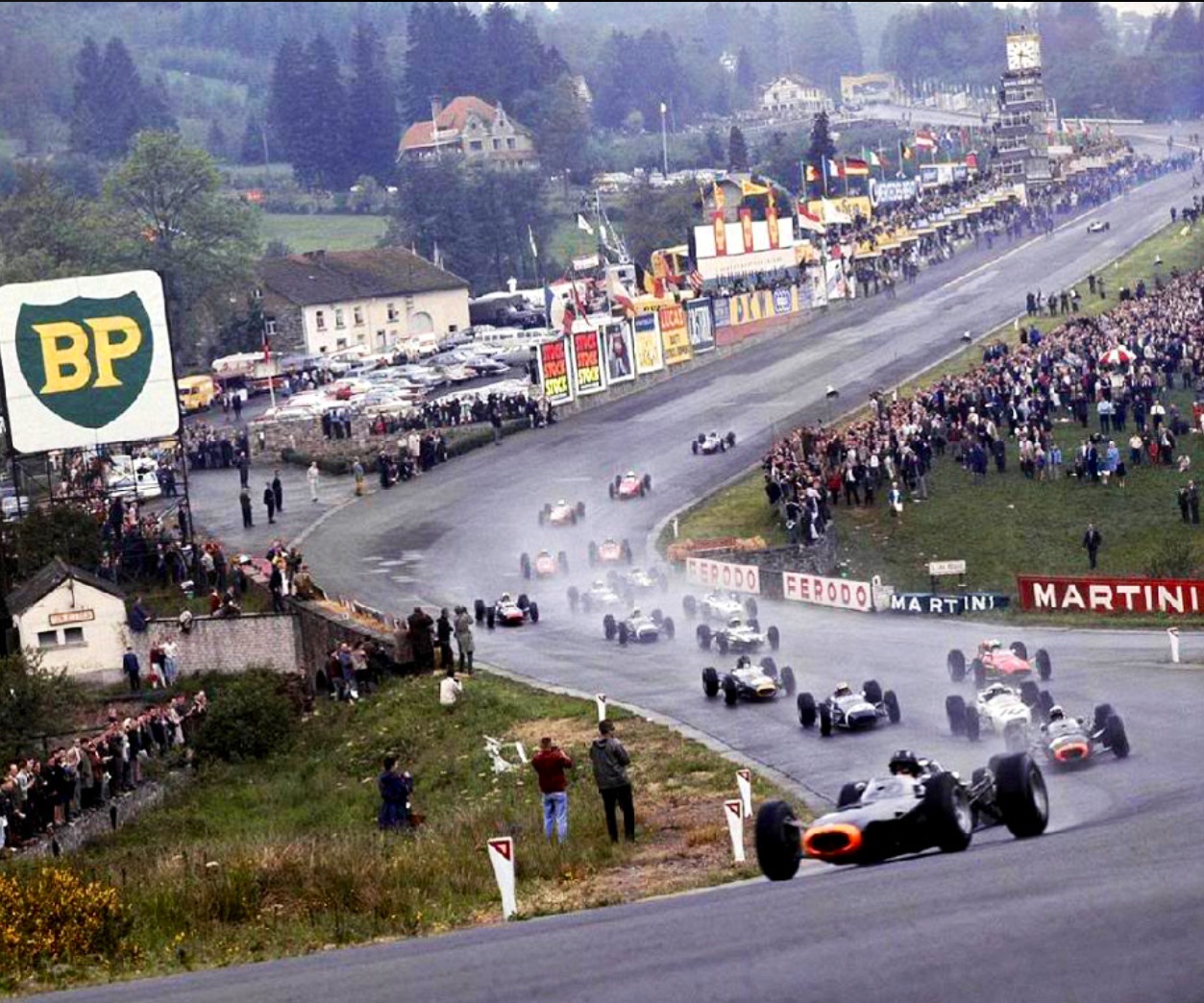
The Belgian GP was typically wet, Ginther qualified fourth and finished sixth while Bucknum’s transaxle failed. Both cars failed to finish at the French GP with ignition problems although Richie qualified seventh.
The Honda was well suited to the wide open spaces of ex-RAF airfield Silverstone, one car was entered for Ginther which he duly qualified third and led from the start, the Honda yowling its way out front. He ran third for much of the race but again ignition problems ended his race.

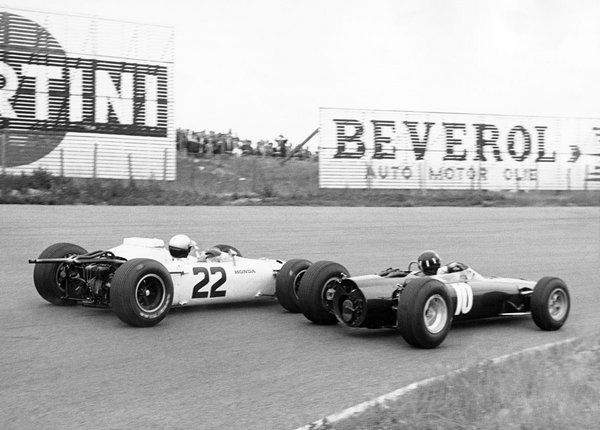
Ginther again qualified third at Zandvoort and led the race but then spun twice and finished sixth. Honda missed the Nurburgring, but reappeared at Monza with engines mounted lower and using sleeker bodywork, Bucknum qualified sixth and Richie 17th after various dramas. Both popped engines again failing to finish. Both cars finished for the first time at Watkins Glen in the US Grand Prix, Bucknum an uninspired 13th and Richie seventh having again qualified third.
And so, onto the last race of the season and of the 1.5-litre formula. The Magdalena Mixhuca circuit at Mexico City was the venue for the Mexican Grand Prix, famous for the difficulties caused to engines at a height 7500 feet above sea level.
Ginther again! qualified third and Bucknum tenth. At the drop of the flag Richie simply took the lead and ran off into the distance, the little jewel of an engine never missing a beat and scoring Honda’s, Goodyear’s and Ginther’s first Grand Prix victories. Bucknum was a strong fifth. Hondas fuel injection system, problematic at times was one of the reasons for the Mexican success, thriving at the higher altitude.
And so Honda won a famous and well deserved win and would be back late in 1966 with a heavy but powerful 3-litre V12 engined car, the RA273…


As an enthusiast I love those marques which have racing as part of their DNA, for that Honda have their founder to thank. Soichiro Honda gave the following press conference speech after the Mexico win, I love the insights it provides into his thinking about how racing improves the breed.
He said, ‘Ever since we first decided to build cars we have worked hard and been willing to take the most difficult path. Now we must study the reasons why we lose, and do the same when we win, so that we can use that knowledge to improve the quality of our cars and make them safer for our customers. That’s our duty. Once we had established our goal, we decided to choose the most difficult path to get there. This is why we entered the Grand Prix series. We will therefore not be content with this victory alone. We will study why we won and aggressively apply those technologies to new cars’.


Etcetera…



Sources…
Doug Nye ‘The History of The Grand Prix Car 1945-65’, Honda International, Bernard Cahier, Yoshiro Inomoto
Tailpiece…

Finito…
 primotipo...