Posts Tagged ‘Tony Southgate’

(MotorSport Images)

Oh yeah baby!

The 1970-71 BRM P153/P160 are two of my favourite Grand Prix cars, designer Tony Southgate at his best. Jackie Oliver is using every inch of Snetterton in this first test (?) of Bourne’s new P153.

It’s chassis P153/01 on January 1, 1970. This car had rather a short life sadly, it was burned to a crisp after Oliver had front stub-axle failure on the first lap of the Spanish Grand Prix on April 19. Ollie ploughed into the innocent Jacky Ickx’ Ferrari 312B – 312B/01 in fact – the ensuing massive conflagration and incompetence of the marshalls ensured both cars were destroyed.

The P153/P160 were race winning cars too. Pedro Rodriguez was victorious in a P153 in the 1970 Belgian Grand Prix after an epic dice with Chris Amon’s March 701 Ford. He also won the Oulton Park Spring Cup in 1971 aboard a P160. P160 championship victories went to Jo Siffert and Peter Gethin at the Osterreichring and Monza in 1971, while Gethin also won the non-championship Brands Hatch Victory Race that October. In 1972 Jean-Pierre Beltoise took his only GP win at Monaco in soggy conditions in a P160B.

The P153 in its early traditional, pre-Yardley, BRM green with orangey-red trim looked superb! We have Southgate to thank for the new colour too. “The F1 BRMs had been painted a dark, dull, metallic green I thought looked terrible. I called it British Racing Mud…I persuaded the team to change to a more lively green and I ended up with a colour used by Vauxhall Motors, which looked great.

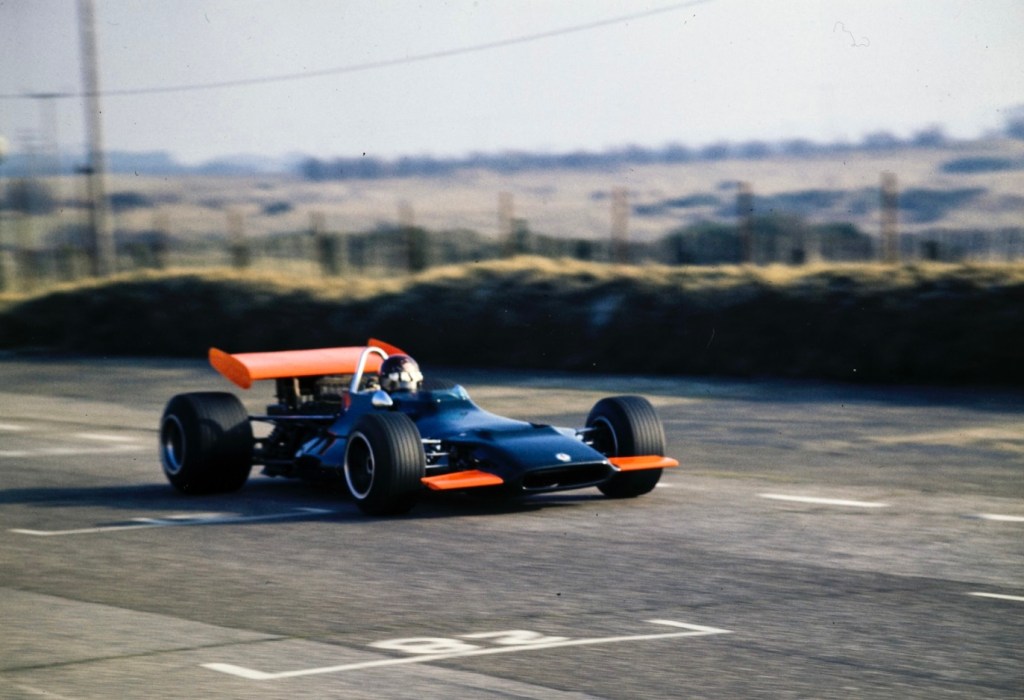
“Cor, this BRM really does look the goods boys!” Snetterton, January 1, 1970 (MotorSport)
(MotorSport)

After the phenomenal speed and results of the simple, light 1.5-litre P261 V8 Grand Prix car from 1963-65, BRM had been in the doldrums since 1966-67 with the phenomenal lack of speed of its complex, heavy P83 H-16.

While the 1968-69 P101 and P142 V12 powered P126/133/138/139 had shown occasional flashes of speed, to an extent Bourne had lost its way in both chassis and engine competitiveness. See here: https://primotipo.com/2018/01/25/richard-attwood-brm-p126-longford-1968/

Much respected, long-time engineering chief Tony Rudd – the architect of BRM’s late 1950s-early 1960s rise and rise – left Bourne for Hethel where he became Group Lotus’ Director of Engineering in mid-1969 and was replaced by Tony Southgate who had been drawing and building winning Eagles for Dan Gurney in California.
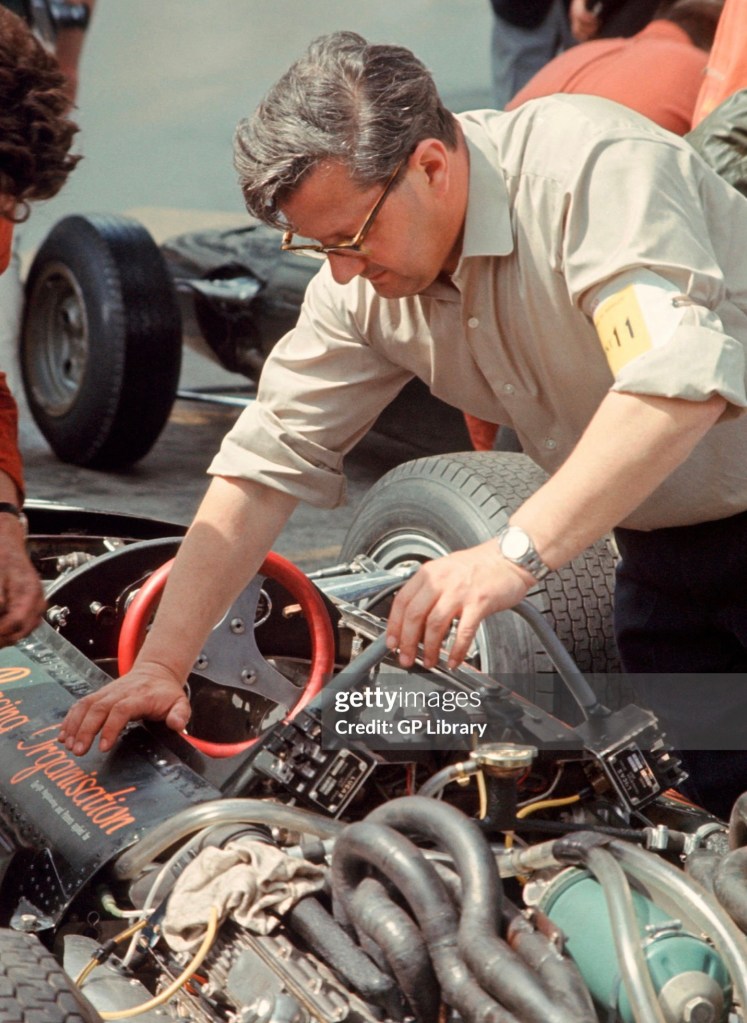
Tony Rudd fettles his nemesis at Monaco in May 1966, the gloriously-nuts P75 H-16 engined BRM P83.
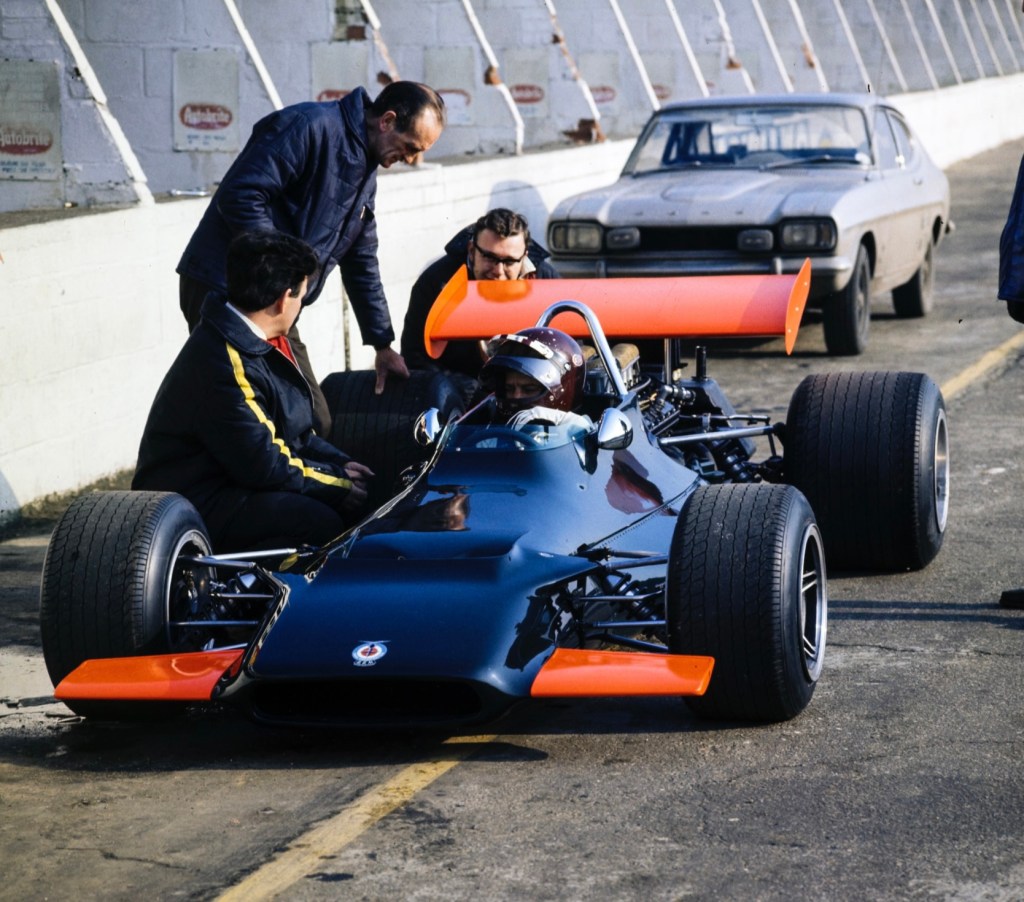
Oliver gives his early impressions of the new car to a Dunlop technician at left, and who else? Snetterton (MotorSport)
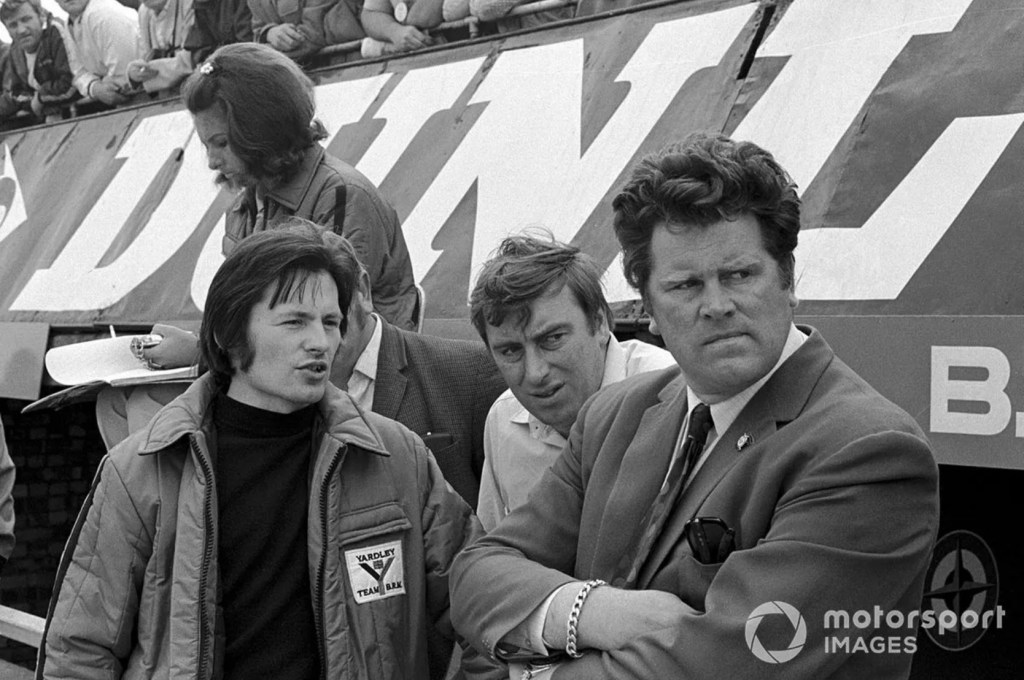
BRM Brains Trust during the 1971 British GP weekend: Tony Southgate, technician Gerry van der Weyden and Tim Parnell with the Bastard! look on his face

When 29 year old Tony Southgate arrived at BRM in June 1969 his boss was the self-styled, polarising, ‘Lord’ Louis Stanley. The leadership team comprised Southgate, in charge of chassis design and development, Aubrey Woods of engine development with Alex Stokes as the gearbox specialist.

“My brief was to improve the existing P139 for the remainder of the 1969 season, if possible, and then to deliver an all-new car for 1970,” he wrote in his great ‘Tony Southgate : From Drawing Board to Chequered Flag’.

Southgate decided Alec Osborn’s (who departed BRM along with Peter Wright when Southgate arrived) P139 wasn’t worth spending time on as “Some of the suspension systems and mountings deflected, which produced very spooky handling…Surtees withdrew from the German Grand Prix on the Nurburgring after two of the three practice periods; he was convinced that something was going to break on the car…”

As many of you will recall, John Surtees was having something of an annus horribilis that year, driving shit-heaps on ‘both sides of the Atlantic’: the BRMs and Jim Hall’s Chaparral 2H Chev in North America.
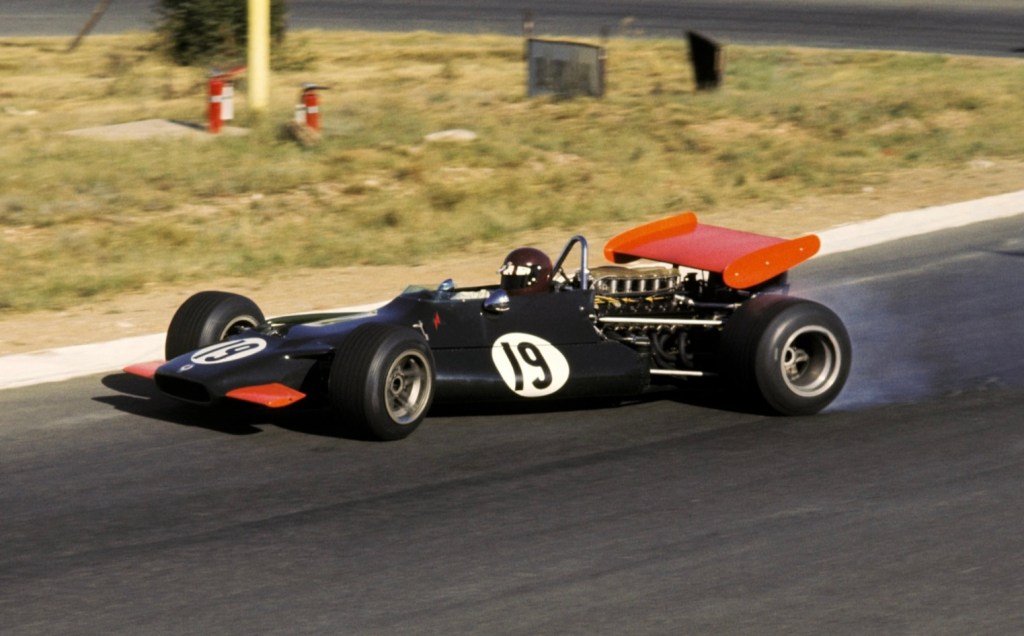
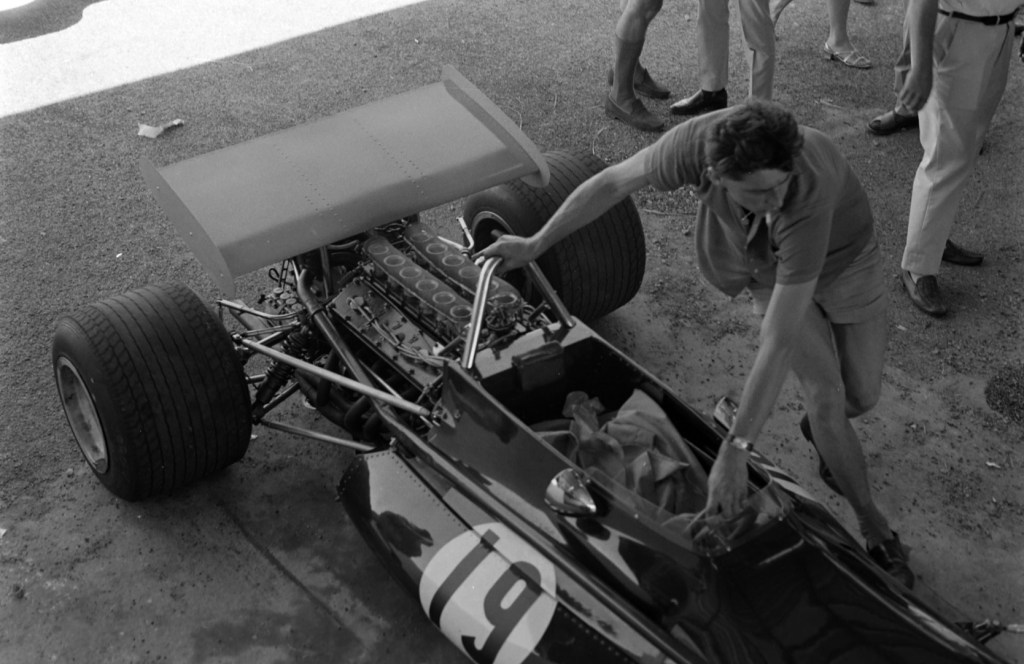
Jack Oliver giving his P153 plenty during the 1970 South African GP weekend (MotorSport)
Kyalami pits 1970 (MotorSport)

Design and construction…

Tony Southgate wrote that “The philosophy behind the P153 design was maintaining my obsession with low CG, with the fuel concentrated in the centre of the car to achieve minimal interference with the weight distribution as the fuel level changed. Coupled with this was very good torsional stiffness between the wheel centres, and great rigidity of the suspension and its mountings.”

“Aerodynamic testing in 1969 was still basic by modern standards…The full-size race car ran in the MIRA wind tunnel, and the scale model work was done in the Campbell tunnel at Imperial College, London.”

“One of the cars interesting points of note was that it ran on 13-inch diameter wheels both front and rear, when the opposition were using 15-inch at the rear. The car ran on very fat Dunlop tyres (their last year in F1), giving it a very low, squat appearance.”

“The monocoque was unusual in that it had a very pronounced double-curvature shape, being 4 feet wide at the centre. The panels were hand rolled in-house and have a very ‘pregnant’ look to the car.”
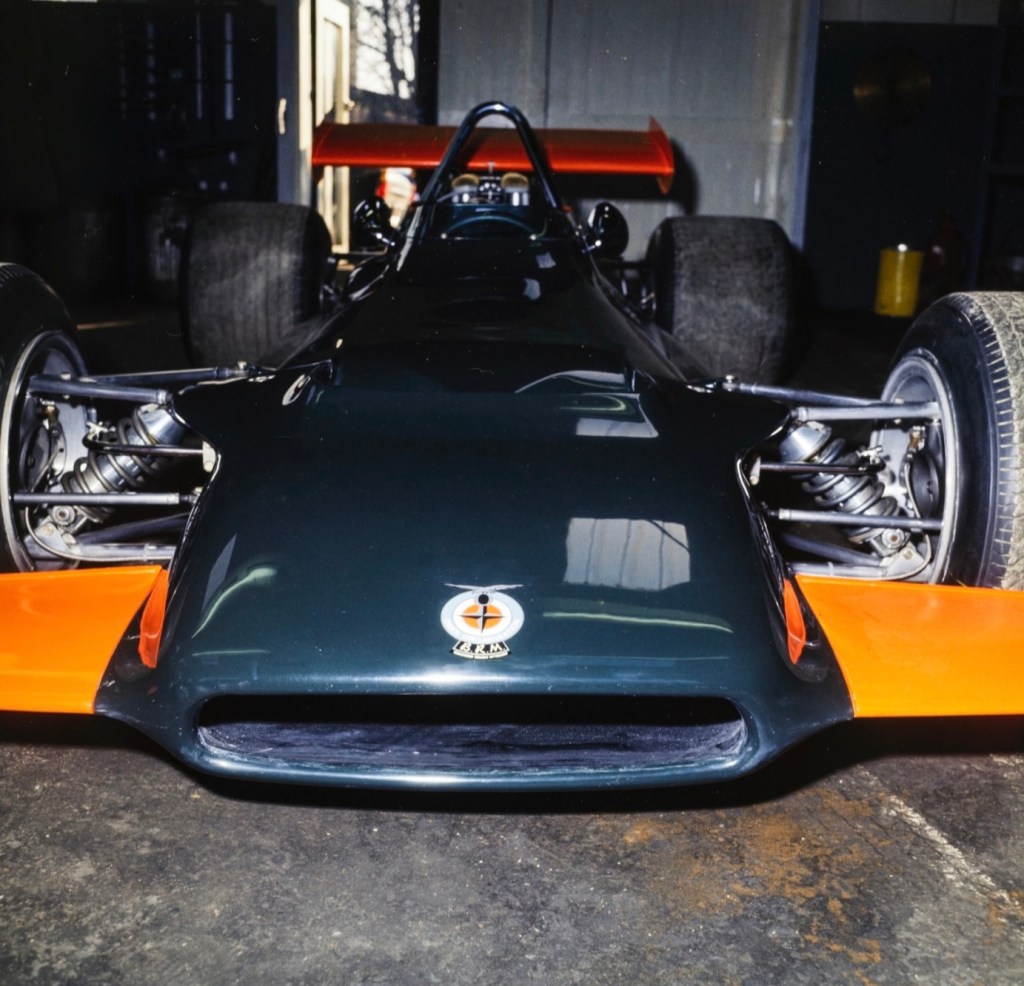
(MotorSport)

Front suspension was period typical: magnesium uprights, upper and lower wishbones with Koni shocks and coil springs and an adjustable roll-bar.
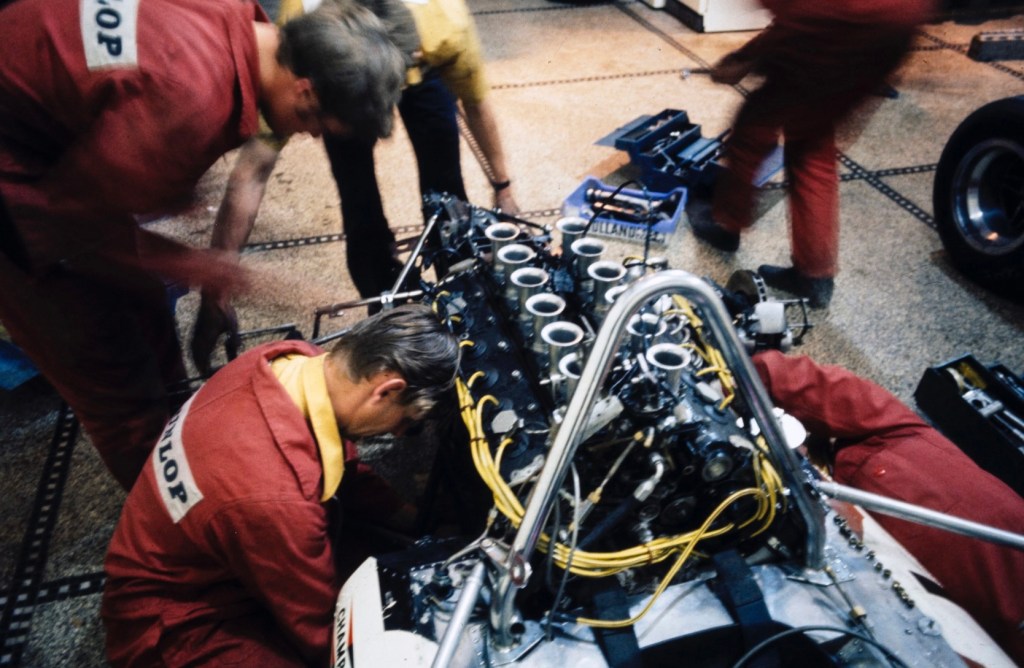
Engine change of Rodriguez’ P153 on Sunday June 7, 1970 during the victorious Belgian Grand Prix weekend (MotorSport)

“The V12 engine, as originally designed by Geoff Johnson, was unstressed, but we modified it to make it semi-stressed. A small, neat triangular framework was added to the rear of the monocoque to take part of the load. The engine was very light for a V12. It weighed the same as a Cosworth DFV and had more or less the same maximum horsepower, approximately 427bhp, but less torque. We used 11,200rpm whereas at that time the DFV was limited to around 9300rpm.”

Doug Nye adds further detail about the 1970 engine developments of the 48-valve BRM P142 engine in his ‘History of the Grand Prix Car 1966-85’.

“In 1970, the P142s powered more adequate Southgate designed chassis and began winning races, but power was not destined to improve dramatically in the years left to BRM and its V12 engines. After Rudd had gone to Lotus, Aubrey Woods took over engine development.”

“Woods considered the chain-driven four-cam centre exhaust P142 overheated both its water and oil too easily, and suffered badly from detonation. Its relatively long stroke was a limiting factor, new pistons were required and they took along time to make. He designed new cylinder heads lowering engine CoG with outside exhausts and in’ve inlets with improved ports and enlarged cooling waterways. The crankcase was now cross-bolted and stiffened to allow use as a semi-stressed chassis member.”

“The BRMs would always retain their camshaft chain-drive as the systems last refuge in Formula 1.”

Southgate, “The (Project 131) gearbox for the P153 was the existing one carried over, but with a new outer casing and rear cover castings carrying the complete rear suspension, the rear wing and oil tank assembly. The P153 had np problem getting down to the minimum weight requirement…”
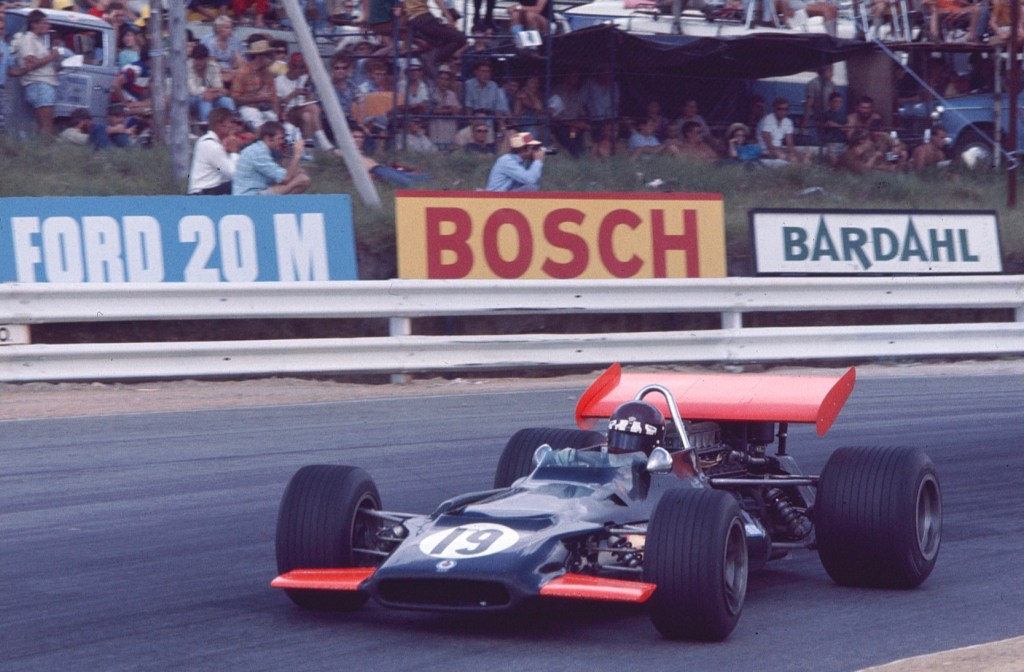
Oliver, Kyalami 1970 (MotorSport)

Racing the P153 in 1970…

“The car was immediately quick, but somewhat fragile. Our new number-one driver, Pedro Rodriguez, did a great job and became an instant star within the team. He was amazingly easy to work with, simply a natural, but not a technical driver like John Surtees.”

Frustrated with the lack of progress, and already building Surtees F5000 cars, Big John left to build and race his own F1 cars and to expand his range of customer cars. Jackie Oliver replaced him.

“I had some problems with the P153 in the beginning. A rear axle broke during Kyalami testing…then a similar problem at the front caused a famous fiery accident…” that destroyed both Oliver’s P153 and Jacky Ickx’ Ferrari 312B at Jarama, Spain.
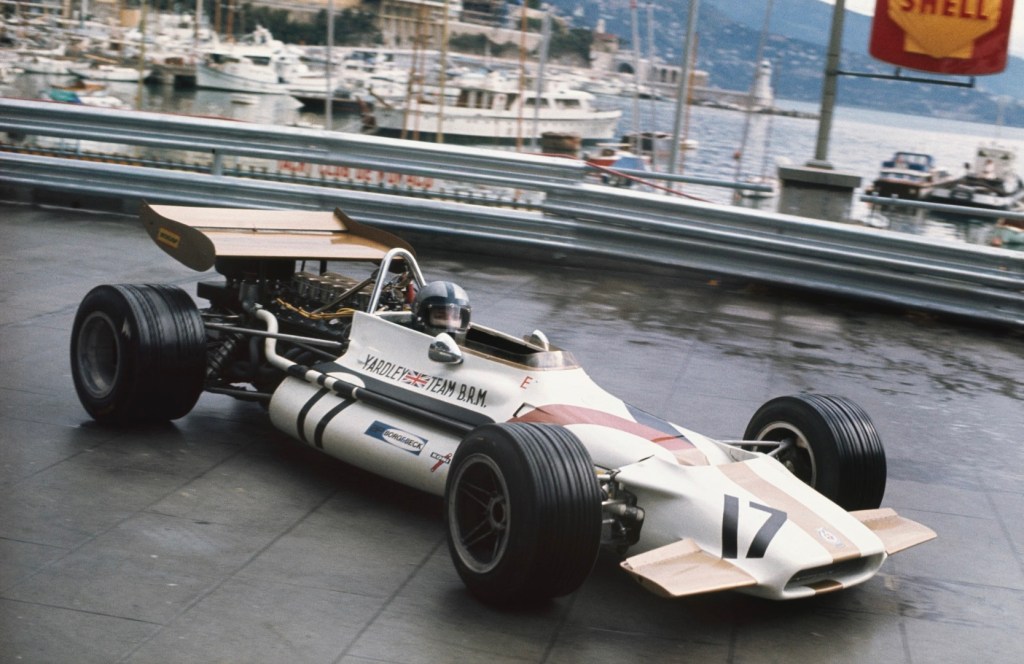
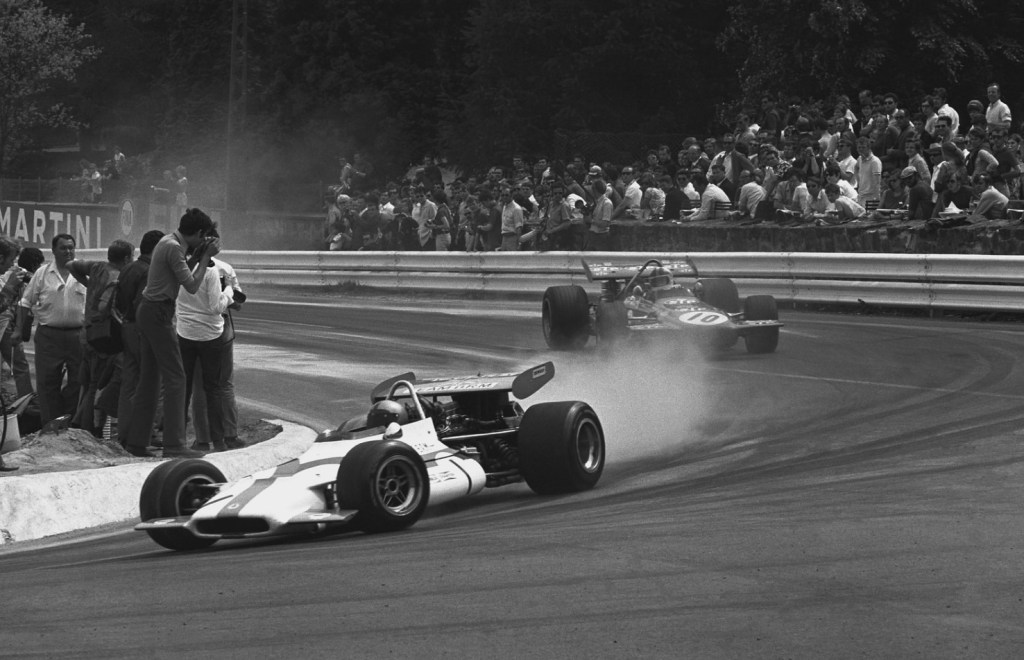
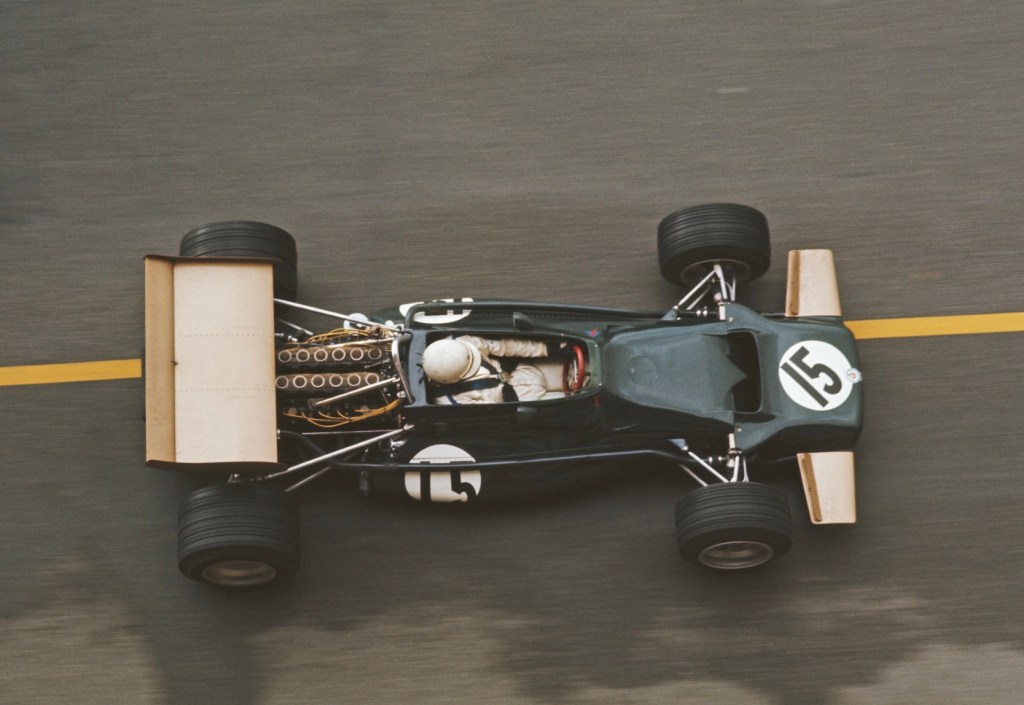
At Monaco the ‘commercial rot had set in’, or less emotionally, commercial reality, the pristine P153 pledged allegiance to Yardley. Not entirely though, George Eaton’s was in each-way bet livery as below: green car and Yardley-gold wings (MotorSport)
Pedro leads Chris at La Source during their titanic dice at Spa in 1970. That day the mighty BRM stayed together, Rodriguez sizeable wedding-tackle did the rest (MotorSport)

“Reliability was the main problem of 1970. The engine oil system was being particularly difficult. I tried ‘trick’ oil tanks, and by the time we got to the Belgian Grand Prix at Spa-Francorchamps, the oil-tank had grown to 4.5 gallons in capacity and was fed by 1.25 inch bore Aeroquip pipes (these were hardly hoses)! Miraculously, this did the job for a while. Pedro won the race after leading most of the way, closely caused by Chris Amon’s March 701 Ford. BRM was back…”

“But engine problems still dogged BRM throughput the year, although Pedro gained a second place in the US GP at Watkins Glen and a couple of fourths in other races, and he also won the non-championship Gold Cup at Oulton Park.”

Pedro was leading at Watkins Glen until a splash-and-dash pitstop for fuel, Doug Nye wrote. Fuel consumption had slipped from about 4.8mpg to 6mpg at St Jovite, the BRMs were forced to make pitstops in both Canada and the US as a consequence.

Southgate, “My thoughts on the engine problem were simple: the main bearings were all too small, too narrow. However, this was one of the main reasons the engine was so short. There was no chance of any major design changes in this area, so we had to do with lots of detail design improvements including even better oil tank systems.”

To Southgate’s point, look at the truly massive oil tanks under the BRM’s rear wing in the Mont Tremblant, Canada pitlane below; a few RPM were lost in aero-drag in that lot! Some of the fuel consumption problem is right there…
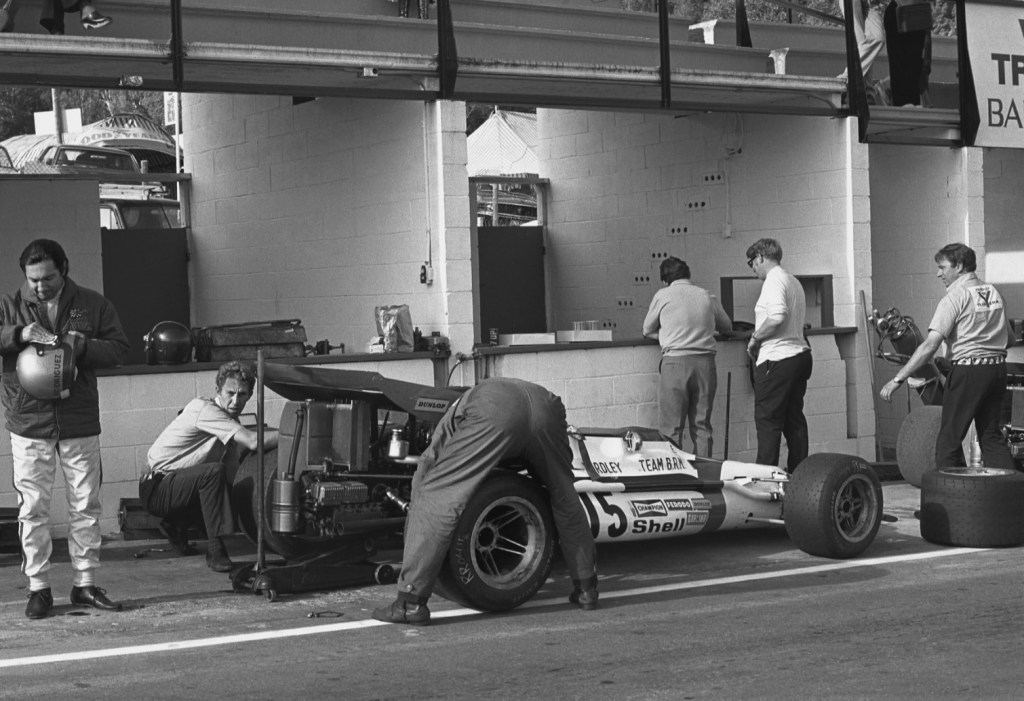
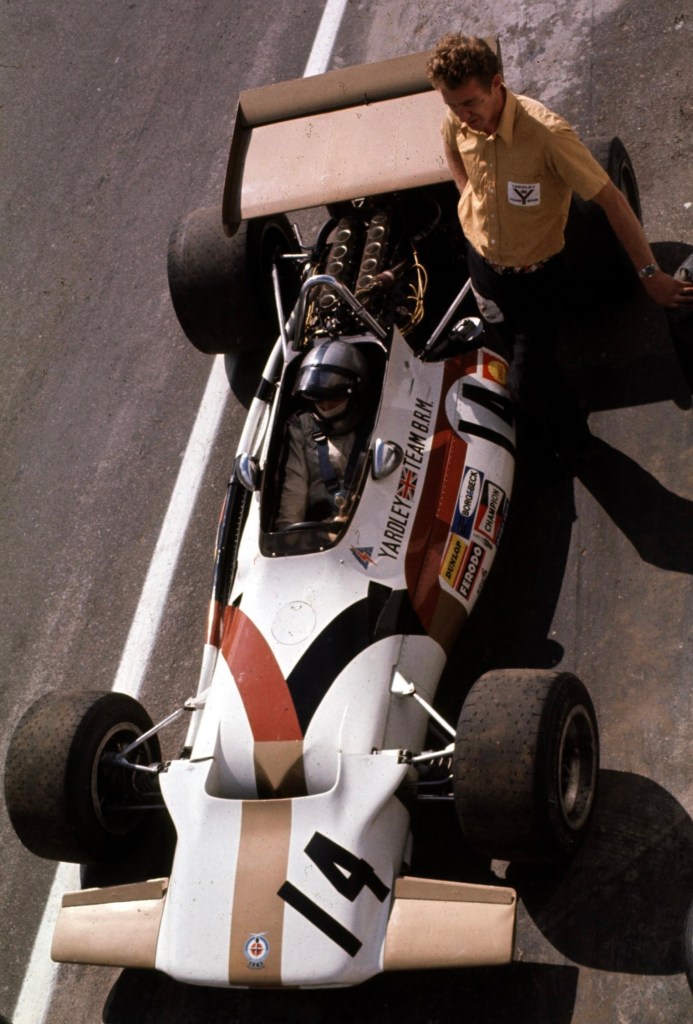
Pedro readies himself in the Mont Tremblant-St Jovite pitlane, fourth that weekend. #15 is Oliver’s P153 (LAT)
Pedro, Mont Tremblant 1970 (MotorSport)

In 1970 BRM finished 16 times from a total of 37 starts and placed sixth in the World Constructors Championship with Rodriguez seventh in the driver’s and Oliver a disappointing twentieth after retirements in 10 of the 13 rounds!

Nye, “Southgate produced the finest 3-litre BRM in 1971: the definitive chisel-nosed P160, a cleaner, lower, lighter development of the P153, though actually incorporating few interchangeable parts.” A story for another time folks…
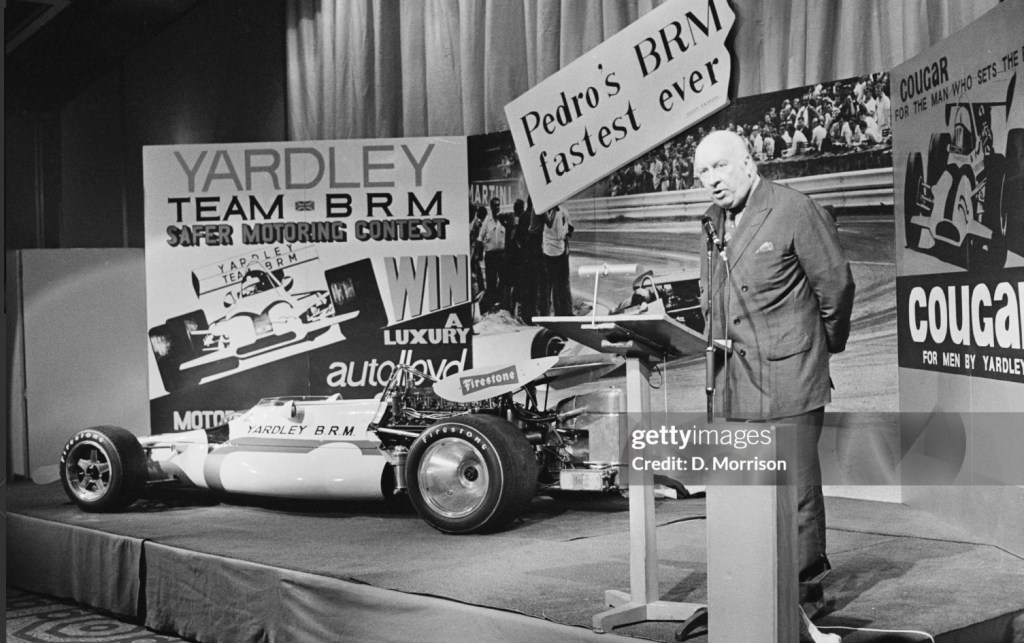
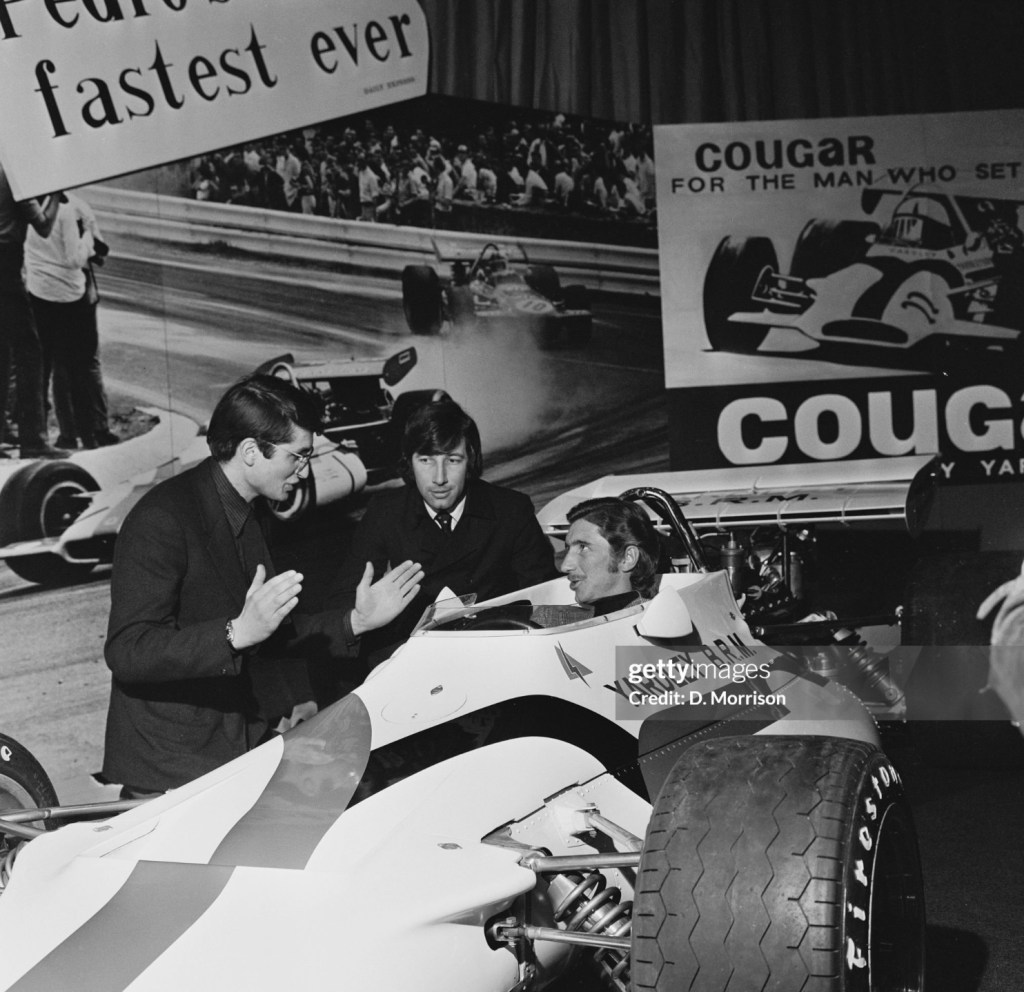
Big Lou extolls the virtues of the new BRM P160 and Cougar aftershave – ‘it’ll drive your mistress wild I tell you’ – place unknown, February 17, 1971

Etcetera…

(MotorSport)

A pair of compare and contrast shots: George Eaton, 1970 BRM P153 at Monaco in May 1970 above, and John Surtees, 1969 BRM P139 during the British GP meeting at Silverstone that July.

The photographer in the Surtees shot looks suspiciously like Rob Walker, he has wandered away from his car, Jo Siffert’s Lotus 49B Ford.
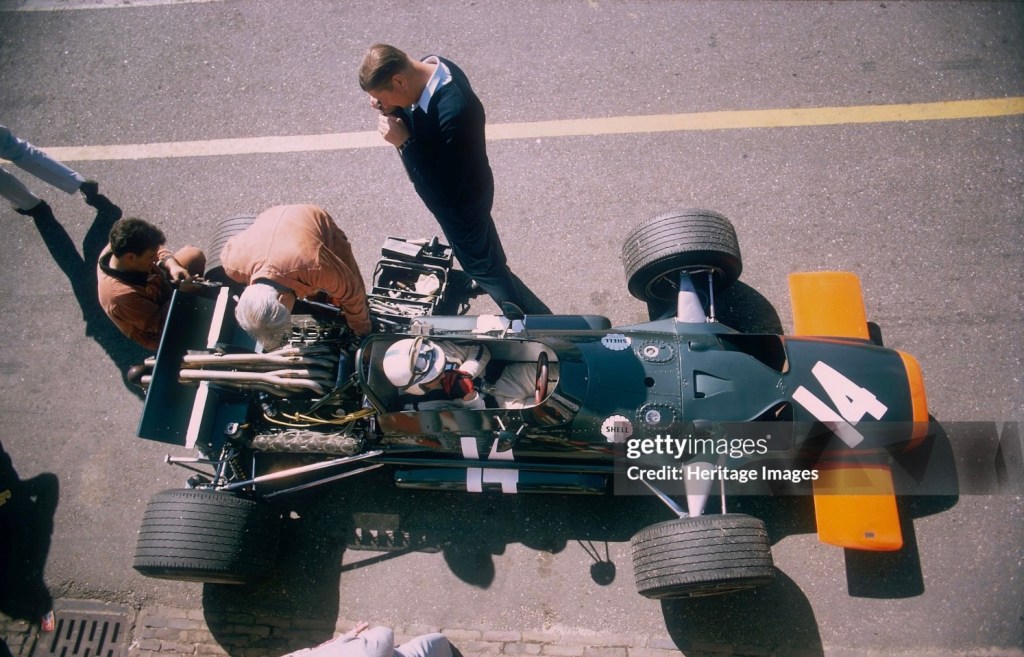
Note the flatter, wider aerodynamic form of the P153, partially informed by the wind tunnel, and earlier P138.

The front suspension of Southgate’s car comprises simpler outboard wishbones, the earlier car uses more complex to make, and more aerodynamic, top rocker and lower wishbone layout. Rear suspension is the same albeit the more advanced two-lower links on the P138 were replaced by Southgate with lower inverted wishbones.

The engine fitted to the P153 is 1970 spec P142 inlet between the vee and side exhaust, that to the P139 is a 1969 spec P142 centre-exhaust V12.
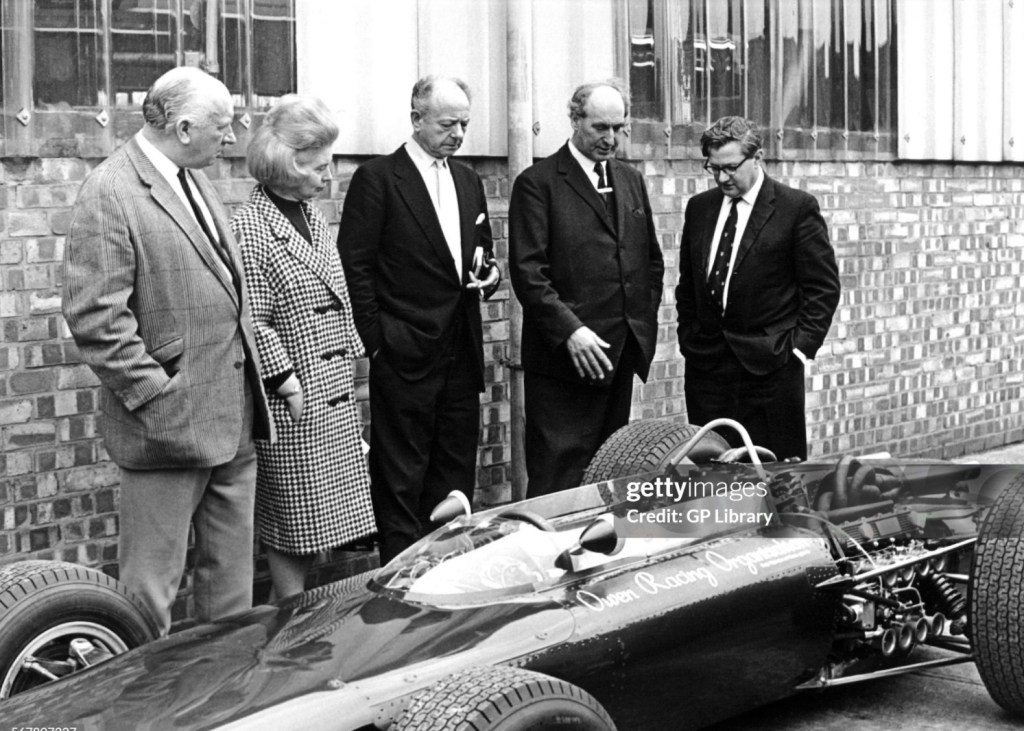
Louis Stanley, Jean Stanley nee-Owen, Raymond Mays, Sir Alfred Owen and Tony Rudd with a BRM P83 at Bourne, allegedly in 1969.

I say allegedly as by 1969 the H16 hadn’t been raced since late 1967, and it makes sense for the PR shot to be with the latest model, not the problem-child. The H-16’s solitary GP win was powering Jim Clark’s Lotus 43 at Watkins Glen in 1966.

In the best tradition of nepotism, Stanley’s power and position arises from his marriage to Jean Stanley, Alfred Owen’s sister.
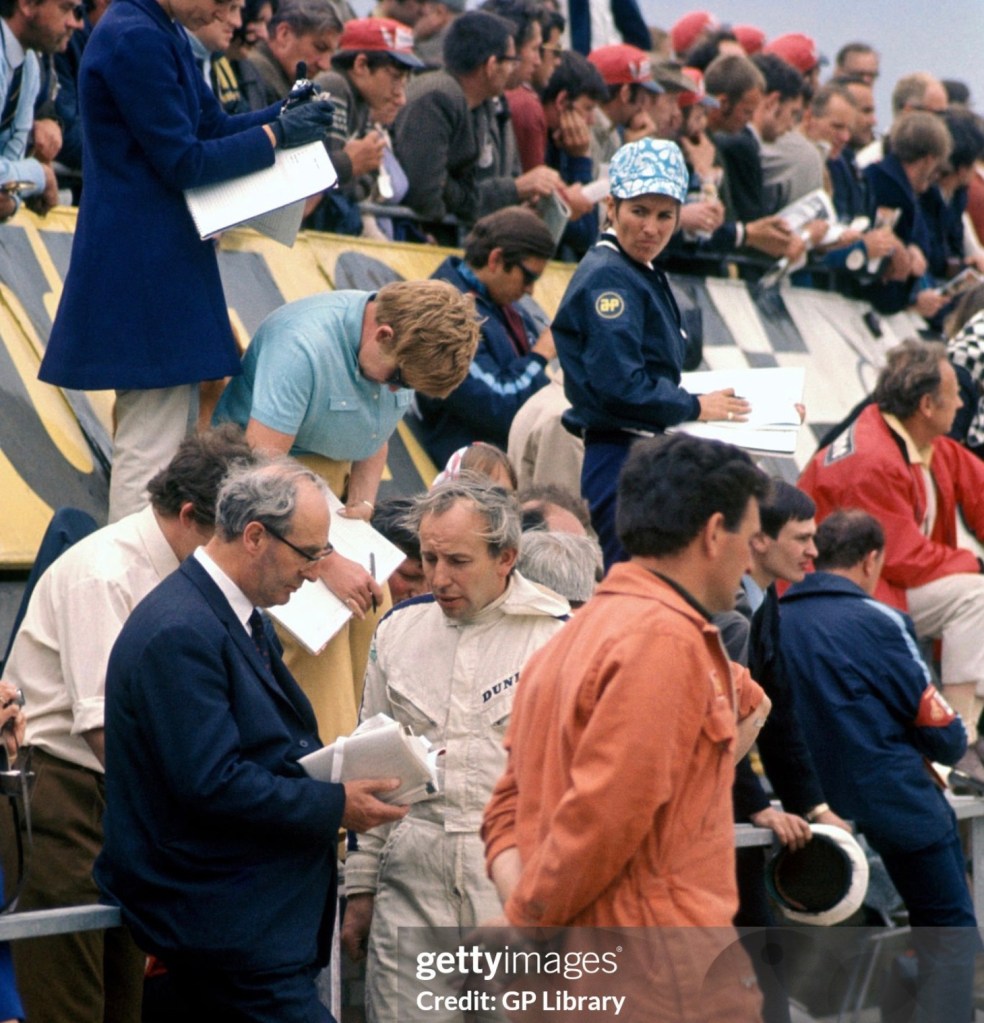
John Surtees tells it like it is to his boss, Sir Alfred Owen at Silverstone during the July 19, 1969 British GP meeting. Owen was a great industrialist and corporate leader, respected by all who came within his orbit. The AP-Lockheed lady is all over what’s going on, the rest are doing their best to look the other way…

Surtees qualified his BRM P139 sixth, and Oliver his P133 13th, Surtees was out with a suspension problem after completing one lap and Oliver on lap 20 when his transmission failed.

By that weekend Southgate was already onboard. He discloses in his autobiography that the approach for him to join BRM was made by Surtees in the US, John being delegated the task given his regular travel between the UK and US.
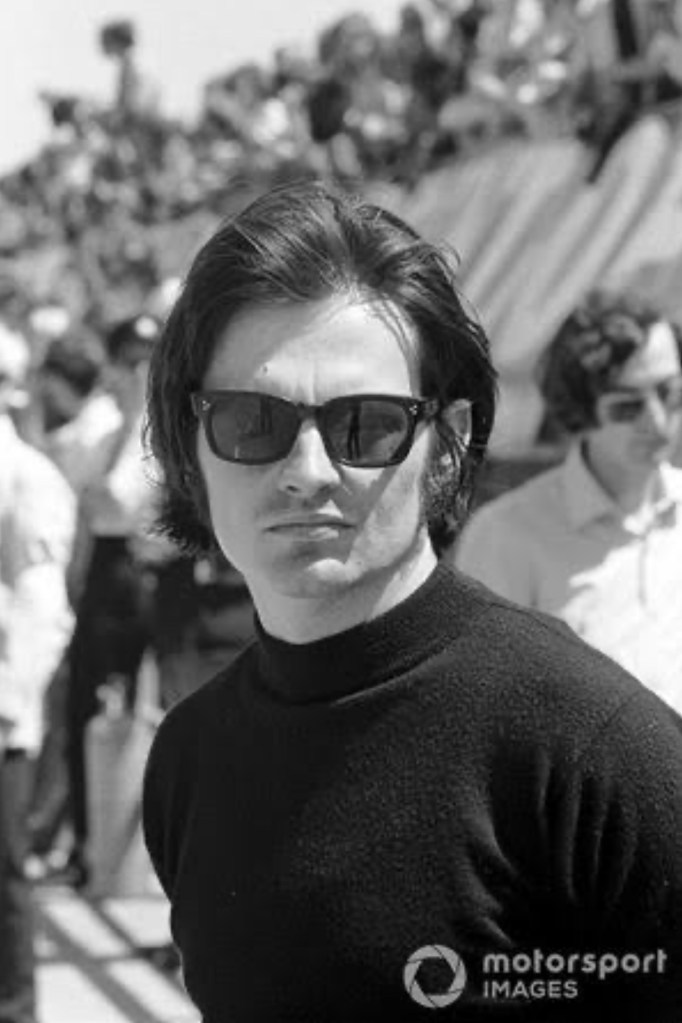
Lovely portrait of Tony Southgate (born May 25, 1940) at Silverstone during the July 1971 British GP weekend.

The funniest part of Southgate’s BRM chapters involves his first month at Bourne and running-the-gauntlet from the ageing (August 1, 1899-January 6, 1980) but still very frisky ‘Gay Ray’ Mays!

By that stage – the English Racing Automobiles and British Racing Motors founder – “RM had no particular job at BRM but he was still very much on the scene as a sort of ambassador.” As a handsome young bloke, Southgate was potential Mays’ fresh-meat despite the fact he was married.

Suffice it to say – and do re-read the chapter, in fact the whole fantastic book – after Tony declined to return RM’s car-keys to him to his bedroom, having borrowed said vehicle to visit the team mechanics across town earlier in the evening. Mays then refocussed his energies back on the hotel bell-boys for which he was somewhat infamous…
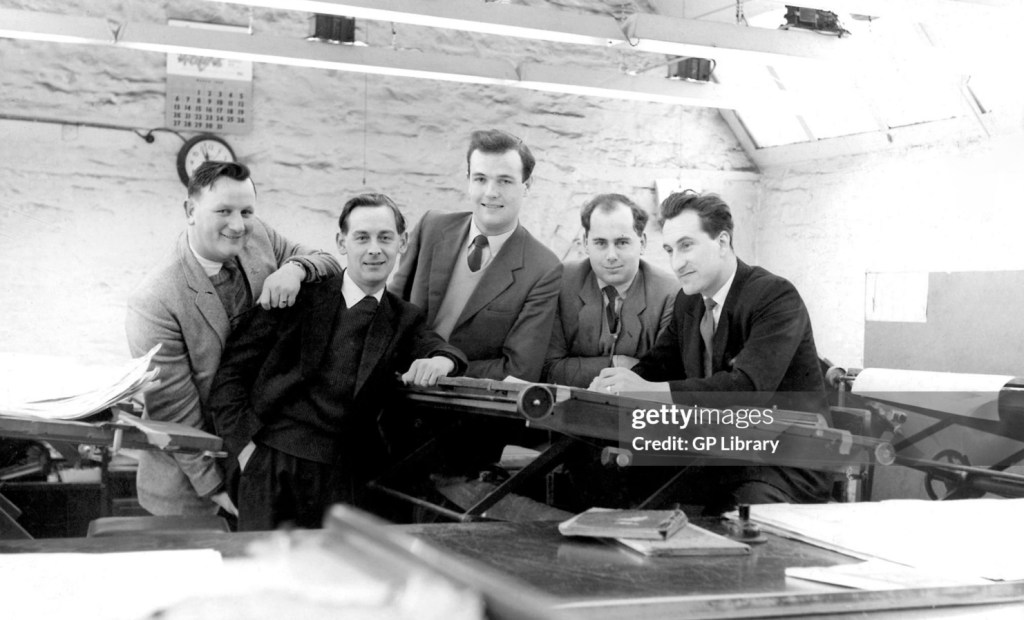
This fantastic shot of the BRM design team is diminished only because the caption cites four names rather than the requisite five!

Alec Stokes, Aubrey Woods, Alec Osborn and Geoff Johnson in 1959, who is missing folks? The drawing office was then located in the old maltings building behind Raymond Mays’ house.
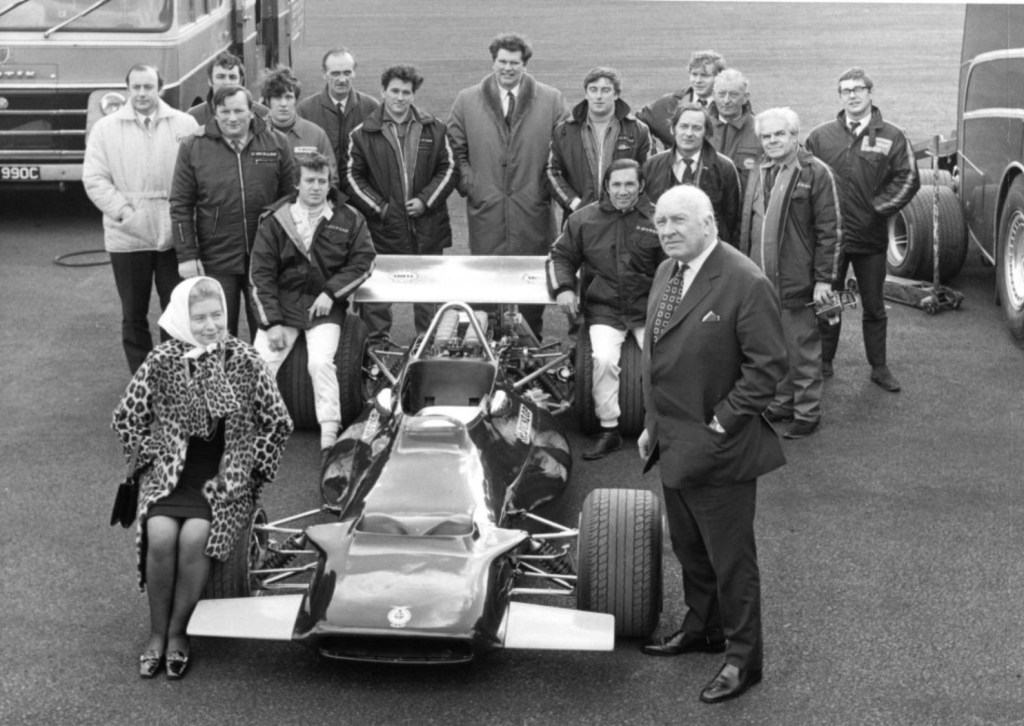
(BRM Association Archive)

P153 launch at Silverstone, the car has grown a Dunlop decal since Snetterton in early January. Date folks?

From the left, back row – Dunlop employee Ken Spencer, Alec Stokes, Dave Mason, Len Reedman, Alan Challis, Tim Parnell, Gerry Van-Der-Weyden, Aubrey Woods, then two Shell employees, Willie Southcott, Dunlop employee. Centre Jackie Oliver and Pedro Rodriguez. Front, Jean and Louis Stanley.
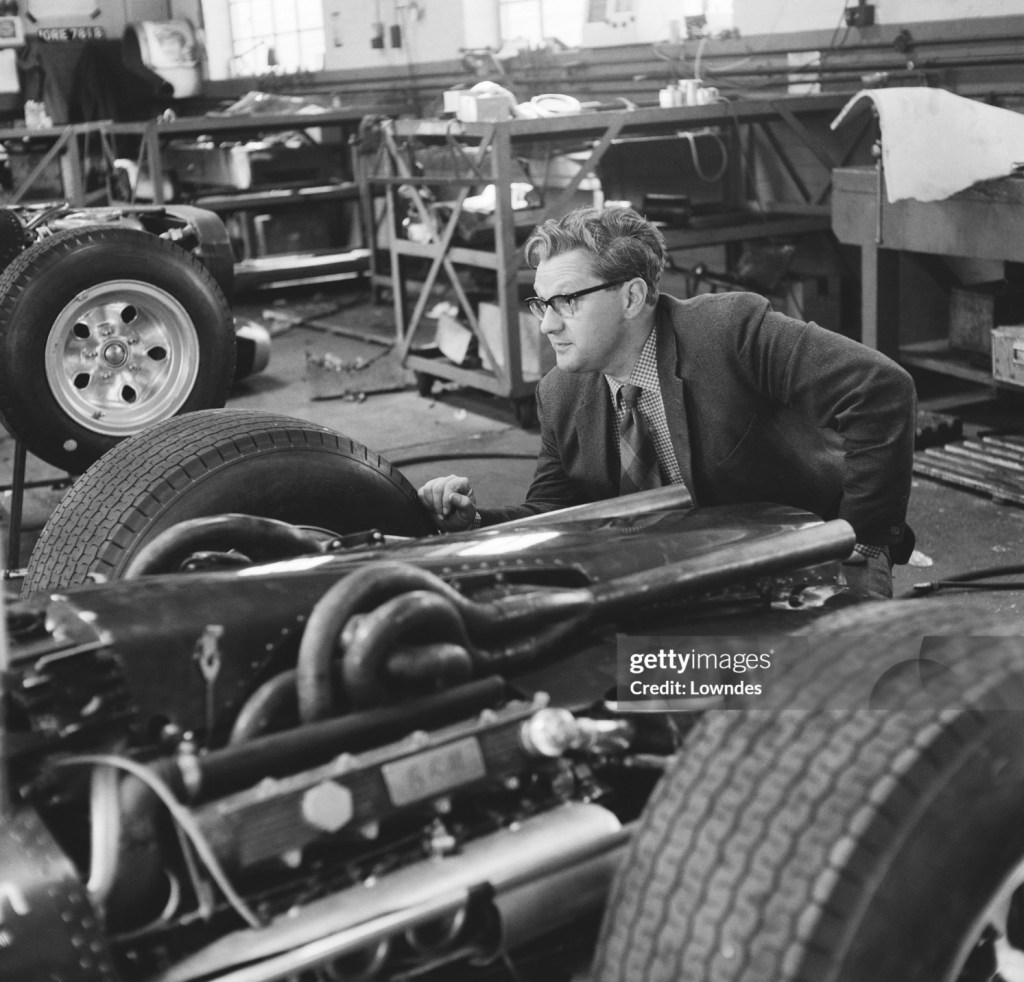
Tony Rudd with BRM P83 at Bourne on May 17, 1966.

I suspect there are a couple of generations of BRM fans like me who feel we almost know Tony Rudd thanks to the all-embracing manner in which he worked with Doug Nye to produce the magnificent ‘Saga of British Racing Motors’ Volumes 1-3, with Vol 4 in-the-pot at present.

There are so many documents and corporate reports contained within written by him that you can form an impression of the way he thought, operated and communicated as part of the team. There nothing to suggest he was anything other than someone to know, like, trust and respect…

He was clearly determined, and stubborn too…Doug Nye wrote that “the ultimate, much modified, magnesium block four-valve-per-cylinder H16 engine (yes 64 valves, 128 valve springs – imagine assembling it all) was completed and tested for 1968 but the policy decision was taken to set it aside and concentrate on the simpler, lighter V12.”

Despite that, “The engine continued in test as late as from 13 December 1968 to 25 January 1969. It was number ‘7541’ and the best of its eight runs peaked at only 378bhp at 10,300rpm; that was nothing like enough to compete with Cosworth’s DFV, which was already beyond 430bhp.”

It seems the catalyst, or straw that broke the camels back in terms of Rudd’s departure from BRM was pursuing the H16 for too long, contravening the policy direction of a year or so before. Southgate wrote that “Tony Rudd…hadn’t done what had been ordered, which was to drop the team’s H16 engine programme and proceed with the V12 only.”
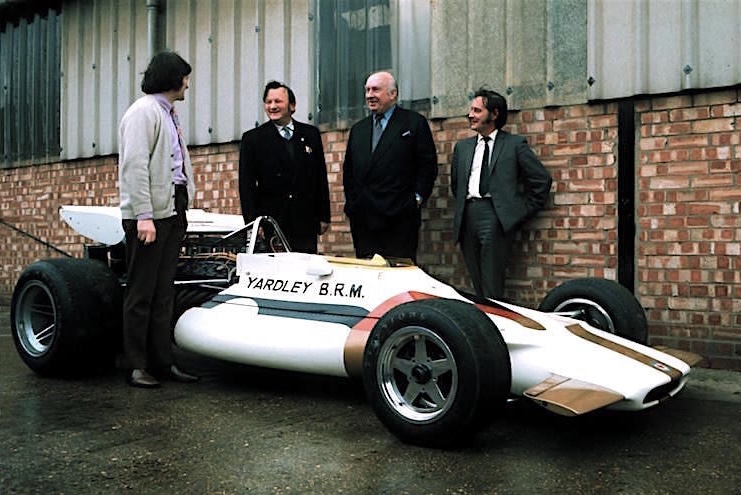
Clearly pink was in! Southgate, Alec Stokes, Stanley and Aubrey Woods perhaps at the time the Yardley deal was done. Bourne.
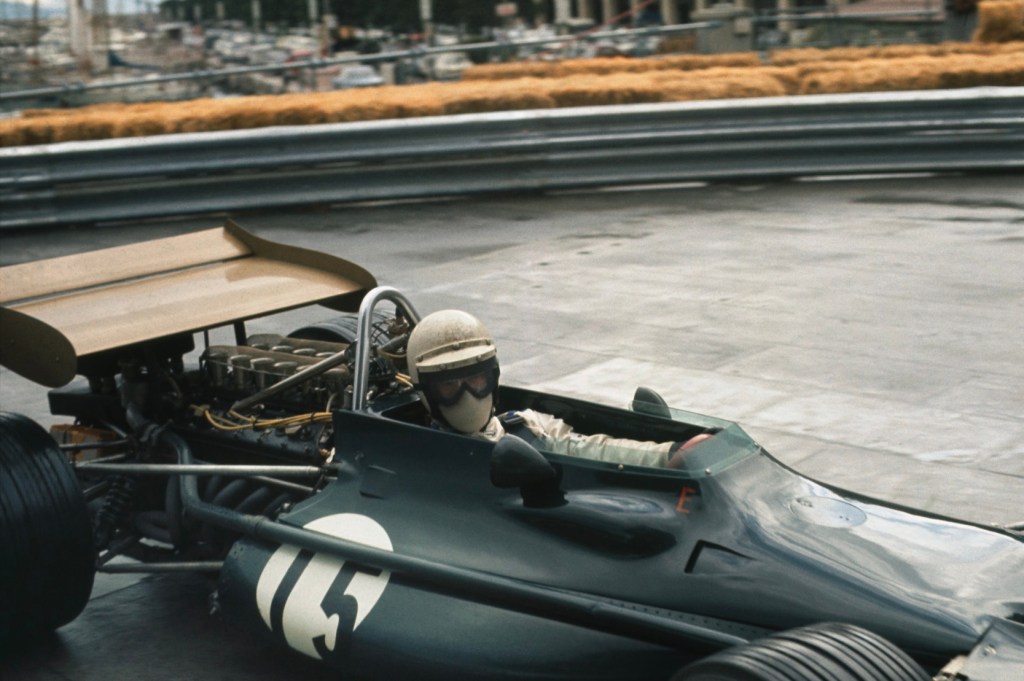
George Eaton, BRM P153, Monaco 1970 (MotorSport)

Every man and his poodle raced a BRM P153…

The long-lived machines, in P153, P153/P160B spec, were raced by a swag of drivers, many of them F1 virgins. The roll-call includes Rodriguez, Siffert, Oliver, George Eaton, Howden Ganley, Reine Wisell, Helmut Marko, Alex Soler-Roig, Vern Schuppan, Peter Westbury (DNQ US GP 1970) John Miles and John Cannon. Quite a list, in part due to Stanley’s crazy Marlboro-multiple-entry 1972 season and renta-ride availability.

Allen Brown’s chassis by chassis record of the seven P153s built from late 1969 to early 1971 is here: https://www.oldracingcars.com/brm/p153/ The shot below shows three BRM P153 pilots at Brands Hatch in early 1971: John Miles, Howden Ganley, and Jo Siffert in the car.
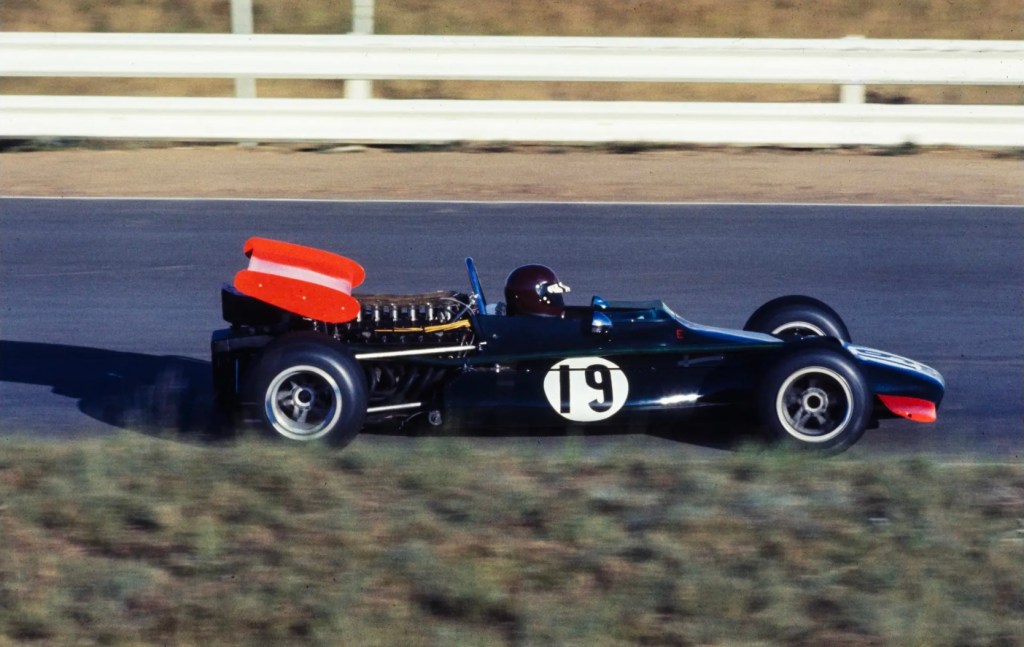
Jack Oliver, South African GP, Kyalami 1970 (MotorSport)

Credits…

‘Tony Southgate : From Drawing Board to Chequered Flag’ Tony Southgate, ‘History of The Grand Prix Car 1966-85’ Doug Nye, MotorSport Images, Rainer Schlegelmilch, Getty Images, GP Library, BRM Association Archive

Tailpiece…
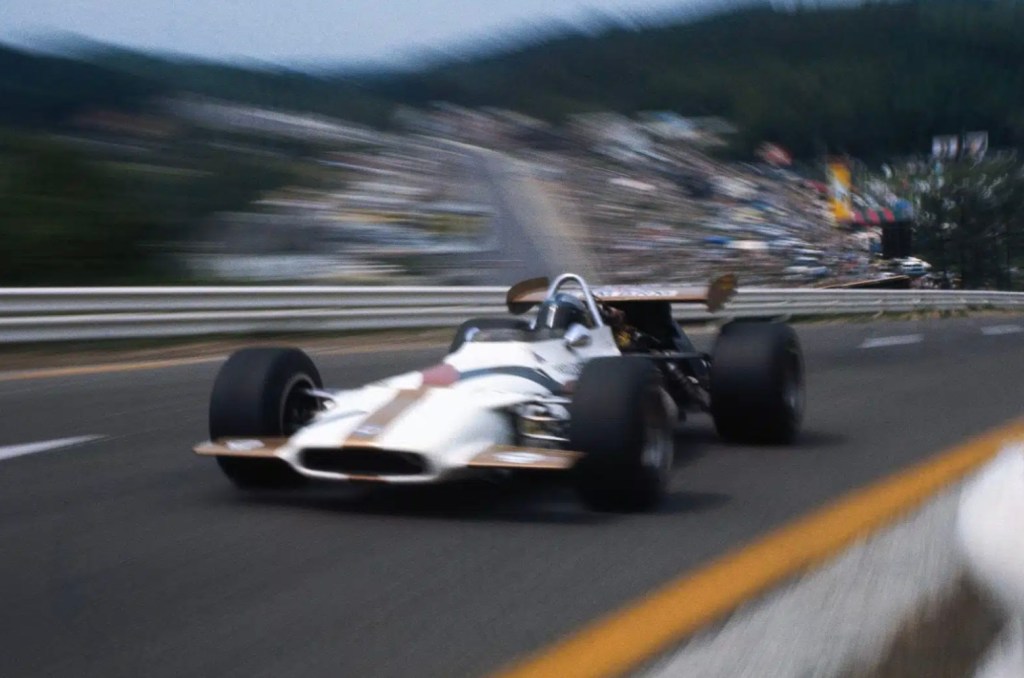
(MotorSport)

Superb MotorSport Images shot of Pedro Rodriguez blasting through Eau Rouge on his way to that hard-fought Belgian Grand Prix, P153 3-litre V12 win.

Any win at daunting Spa was pretty special, and Pedro had a few there, but that one must have been the sweetest of all given fabulous Chris Amon pushed him very hard all the way. It was the last Grand Prix held on the old circuit too…
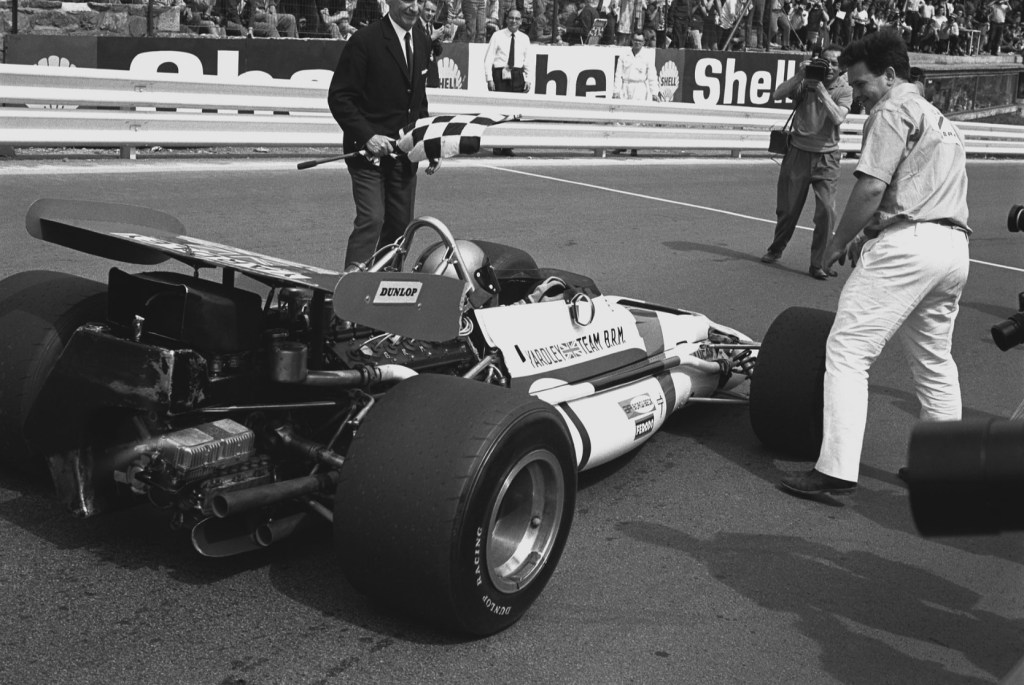
(LAT)

Finito…
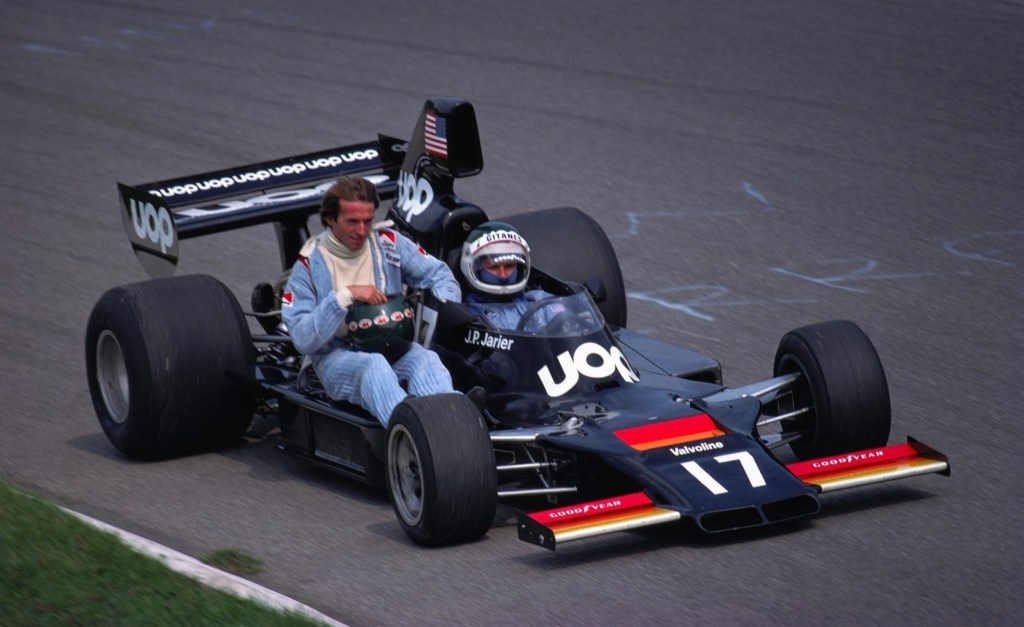
image

‘If she would just ease her grip a smidge it really would be perfect’…

Seems to be the look on Jackie Oliver’s face. He and the delightful young lady are aboard Jackie’s ’74 Can Am Championship winning Shadow DN4 Chev. It’s the London Olympia ‘Speedshow’ on 2 January 1975.

By 1974 the heyday of the greatest motor racing spectacle on the planet was over, the Porsche roller-coaster effectively did that in 1972/3 as well as some poor decision making by officialdom which drove the likes of Jim Hall from the series. Sans Chaparral the show was never quite the same.

Longtime Don Nichols driver Oliver didn’t have an easy time of it in 1974 though, his teammate and ’72 Can Am champ George Follmer gave him a serious run for his money. Oliver won 4 rounds, George followed him home in 3 of them. Scooter Patrick won the other round in an old McLaren M20 Chev.

image

Road America 1973. Oliver DNS in the championship race after an engine failure in the sprint event. Compare and contrast the 1973 DN2 with the 1974 DN4 below. Donohue won in a Porsche 917/30. #47 is Ed Felter McLaren M8E Chev DNF and #51 is not on the results data-base i have if anyone can assist (unattributed)

New cars for 1974, the DN4 design (below) was fundamentally smaller than the ’73 DN2 (above) and built around fuel cells of only 45 gallons, the legislators reaction to the oil crisis of the time. Track, wheelbase and overall width were less than the DN2. Southgate used some DN3 F1 hardware in the DN4, ‘the last great CanAm car’, but the layout-aluminium monocoque, Hewland LG ‘box and ally-block Chev, which still gave a reputed 800bhp were all CanAm standard issue. Albeit a brilliantly executed one which was driven mighty well by a couple of Group 7 veterans in Ollie and George…

Credits…

J Wilds, nwmaracing

Tailpiece: The ole DN4 one-two. Oliver from Follmer at Mosport on 16 June 1974, they finished in that order with Scooter Patrick 3rd in a McLaren M20 Chev…

ollie-mosport

(nwmaracing)


monza 2

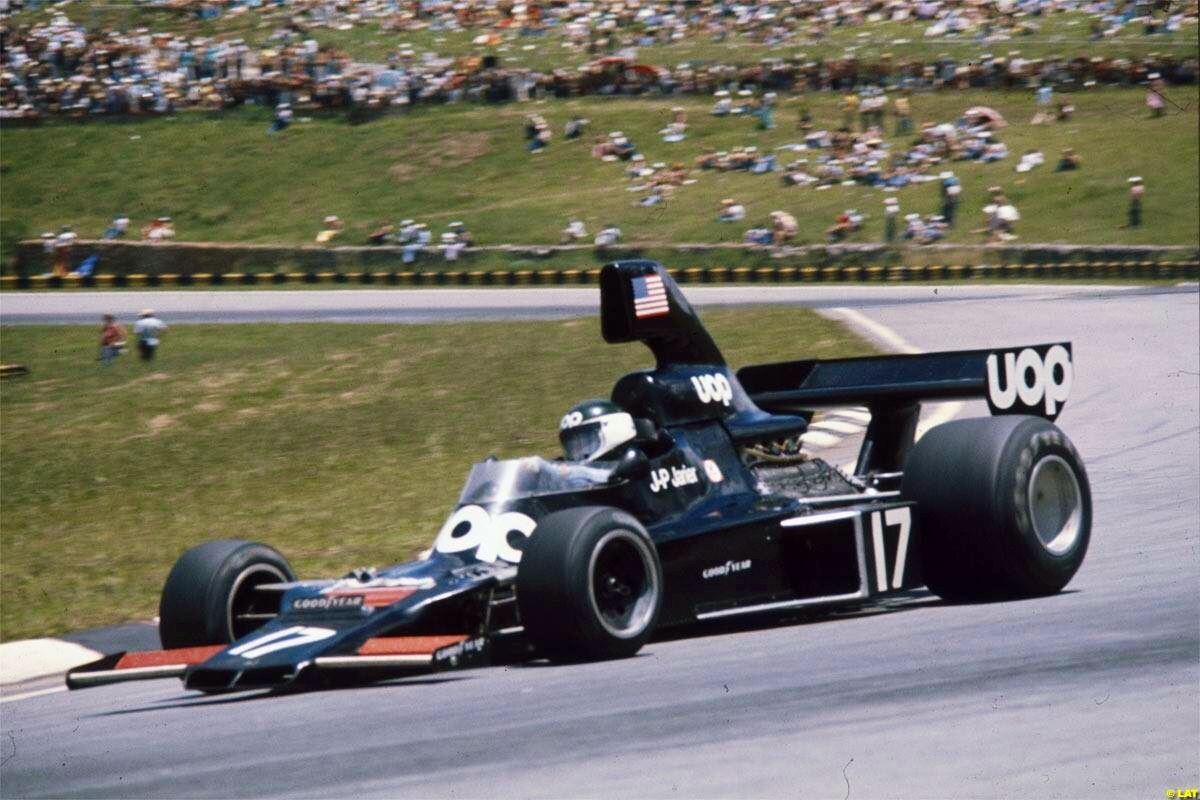
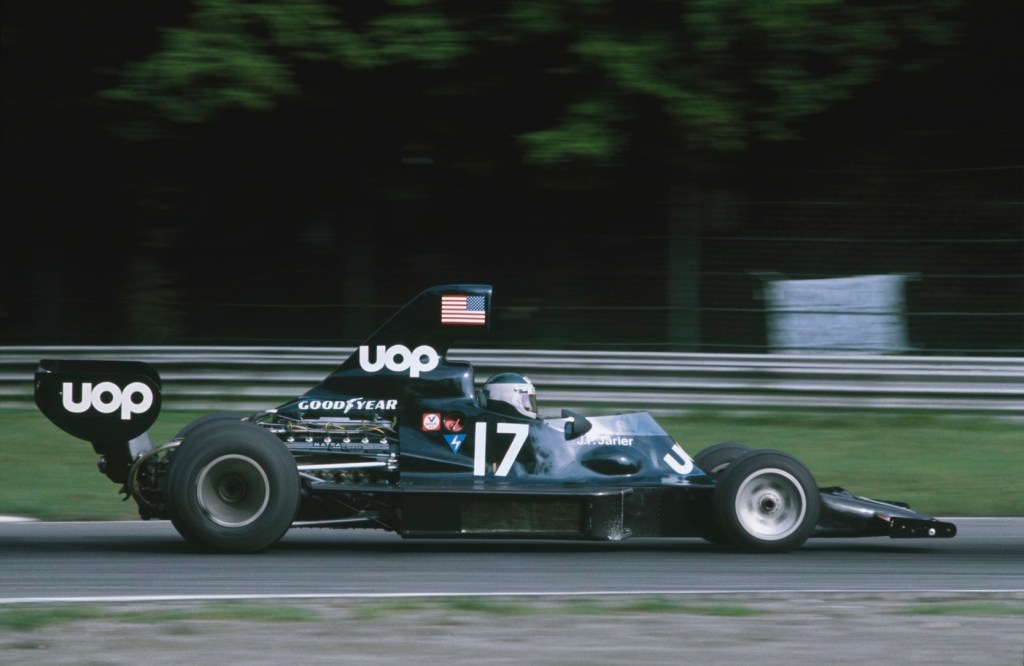
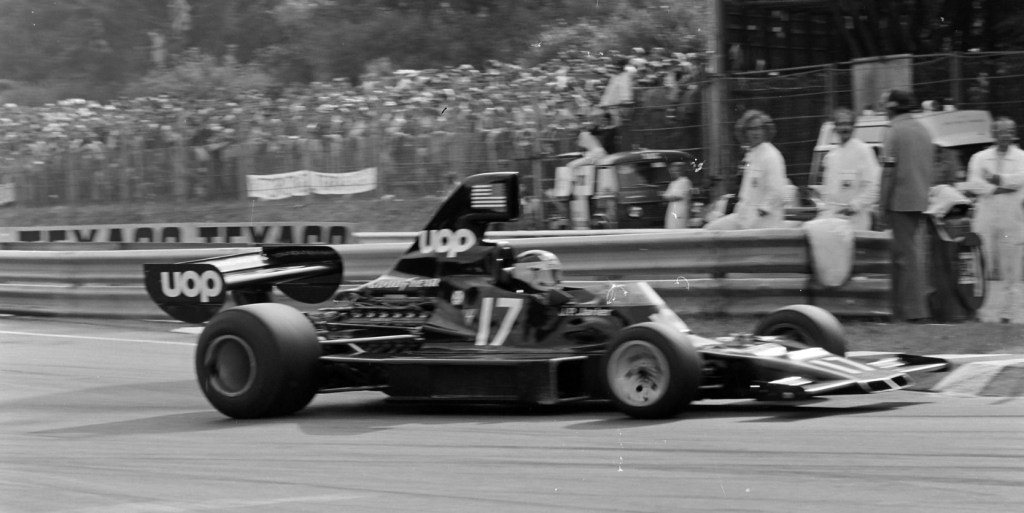
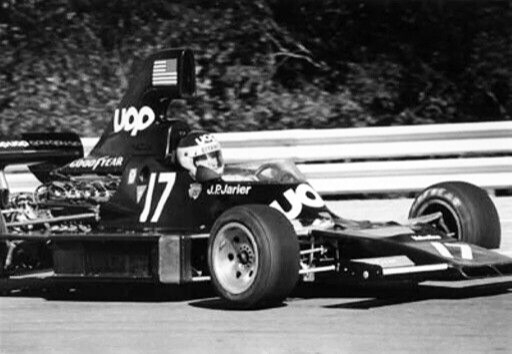
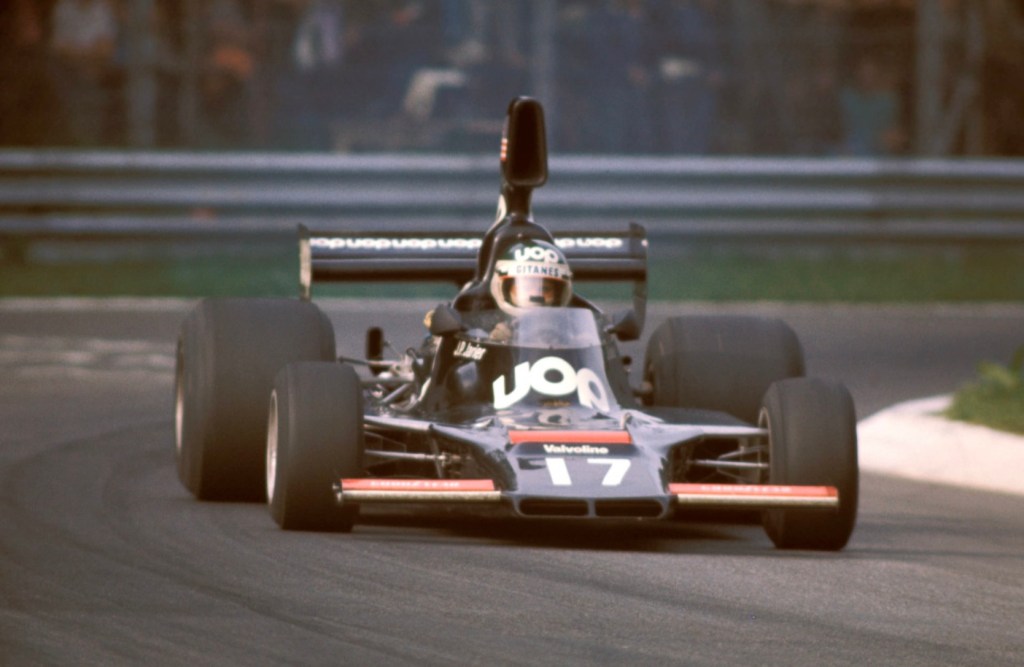
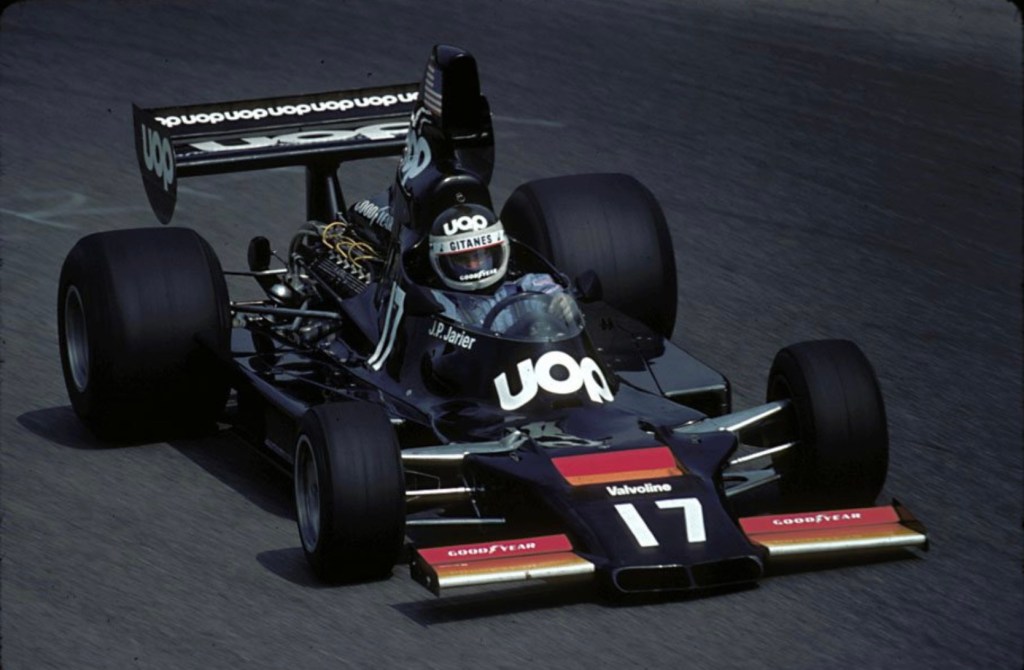
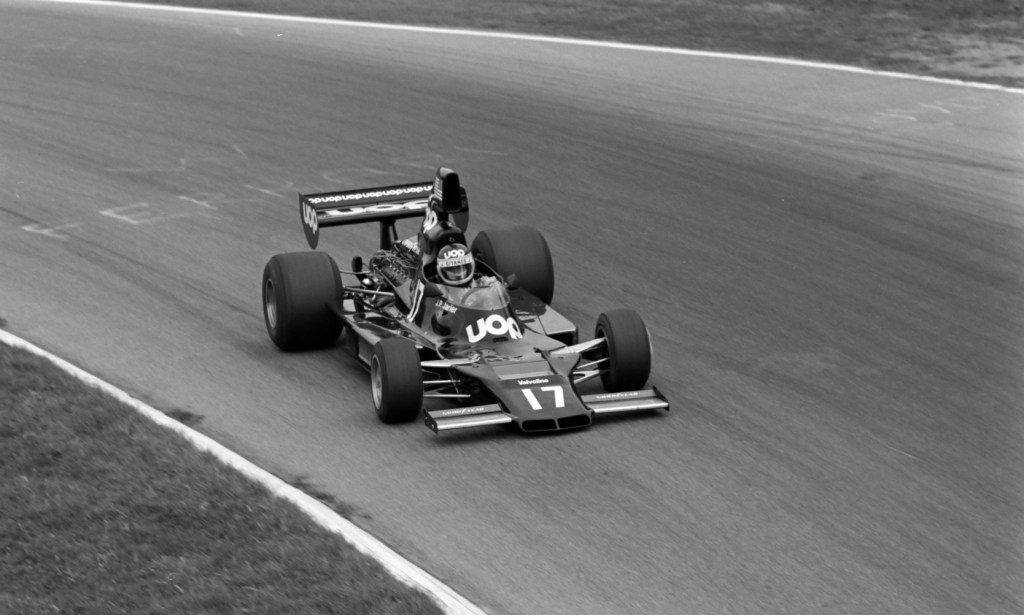
Jean Pierre Jarier nips a front brake during qualifying for the 1975 Italian Grand Prix, pushing his Shadow DN7 Matra ever so hard…

One of the revelations of the early 1975 GP season was the speed of the new Shadow DN5 Ford, an evolution of the 1973/4 DN1 and DN3 designs penned by Tony Southgate. Frenchie Jean Pierre Jarier rocked the socks off the established aces setting a time eight-tenths/second clear of the rest of the season opening Argentinian GP grid.

There were mutterings of Shadow getting development Cosworth engines but the truth was an aero tweak which is indicative of the importance of aerodynamics over the coming years.

Tony Southgate, ‘ I spent half my life doing aero at Imperial College and DN5 was the first to use the new rolling road wind tunnel, as far as i know, the first in the world. What we discovered was a massive split, front to back, in downforce. People always thought they had about 30-40% on the front. In fact it was no more than 20. And only we knew.’

Southgate moved the driver forward 2.5 inches within  a longer wheelbase (with removable spacer between engine and gearbox), developed deeper nose fins and placed the front springs and dampers inboard.

‘The car was an aero jump. We matched downforce to its static weight distribution-about 35/65% front/rear – and the spacer allowed us to tune the chassis to different circuits; we would find 1.25 seconds at Silverstone just by removing it. Immediately it was clear that our car had more downforce than the others and was very well balanced. In its short chassis specification Jarier was taking the fast bend after the pits at Interlagos, Brazil without lifting…’

shadow paul ricard
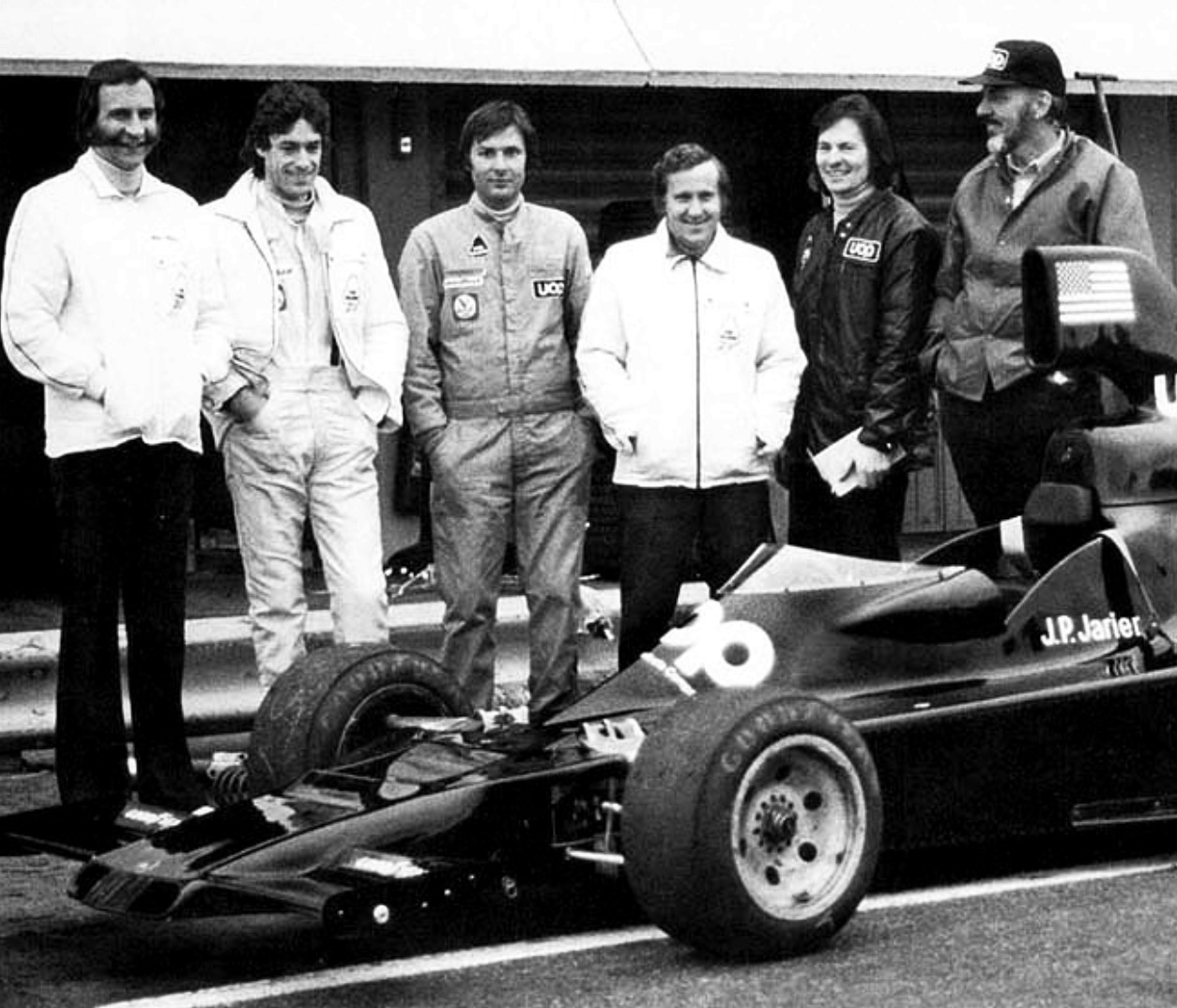
Shadow hierachy at an early 1975 season Paul Ricard DN5 Ford test. L>R Chief Mechanic Phil Kerr, Tom Pryce, JP Jarier, Team Manager Alan Rees, Tony Southgate and El Capitano Don Nichols (unattributed)
pjpj argentina
JPJ Shadow DN5 Ford, Argentina 1975. Pole and DNS with CWP failure on the warm up lap (unattributed)

Despite being on pole in Argentina, raceday was a disaster with a crown wheel and pinion failing on the warm-up lap. ‘I had been pursuaded to use Hewland’s latest TL200 gearbox instead of the FGA400, I think we and Copersucar did so. It was meant to be more reliable, with helical gears 20% stronger and more bearings in the pinion shaft, improper heat treatment was blamed for the failure’.

In Brazil Jarier was running away with the race from pole when the metering arm of the Lucas injection unit seized. In fact JPJ’s season was a mix of spins and mechanical failures, teammate Tom Pryce getting the better results with a win in the non-championship Race of Champions at Brands Hatch and third in the Austrian GP after qualifying on pole for the British GP before retiring from the lead.

Southgate; ‘Our budget was tight and there was little development left of the car. It wasn’t good on fast circuits where we had to unbolt downforce so we weren’t swamped on the straights. Plus better funded teams cottoned onto what we were doing and were ringing Imperial College to ask if they could use its wind tunnel.’

‘Shadow’s Grand Prix results for 1975 were very disappointing, especially in view of the competitiveness of the DN5. Our finishing record was simply poor. The cars either broke down or crashed. Jarier only finished two Grands Prix for the year. Pryce’s statistics were better, but he still only finished six GP’s…I often think that, if the DN5 had been prepared and raced by one of the top teams it would have won the Championship.’ said Southgate in his autobiography.

pryce brands
Tom Pryce on his way to winning the Race of Champions at Brands Hatch on 16 March 1975 from pole, the Welshman’s only F1 win sadly. He won from John Watson’s Surtees TS16 Ford and Ronnie Peterson’s Lotus 72E Ford. The field included Ickx, Scheckter, Emerson Fittipaldi, Mass, Donohue and others, it was a great win for both him and the DN5 in a classy field (Autosport)

The Ford Cosworth DFV and alternative engines…

The diligence of team owner, Don Nichols’ designer had given the team the ‘unfair advantage’ of which Mark Donohue spoke so eloquently, with a car whose origins dated back to Shadow’s first year in GP racing in 1973. Whilst Southgate pursued this aero approach Nichols eventually concluded discussions with Matra to use its glorious V12 in a modified DN5 chassis christened the DN7.

The Ford Cosworth DFV 3 litre V8 was the dominant engine of the 3-litre formula, by the end of 1974 it had taken drivers titles in 1968/9 and 1970-4 but Ferrari’s speed in 1974 gave pause for many team managers – Cosworth users – to find an alternative which allowed them to leap clear of the garagiste pack as Enzo Ferrari christened the British Cosworth/Hewland hordes! The DFV was a tough proposition to beat given its blend of power, packaging, weight, economy, reliability, price and Cosworth’s servicing backup.

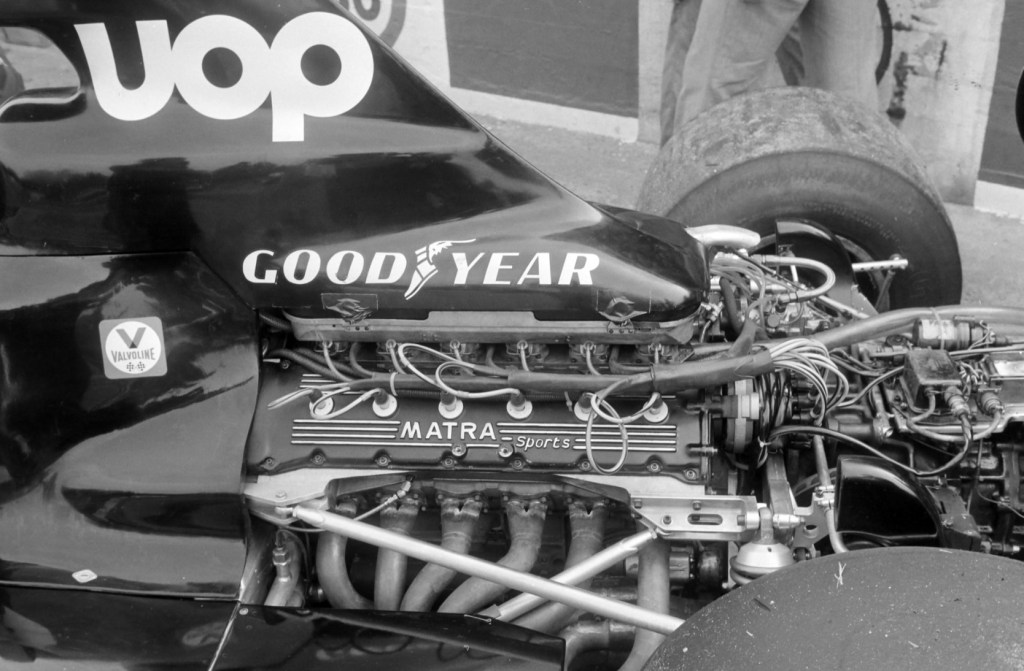
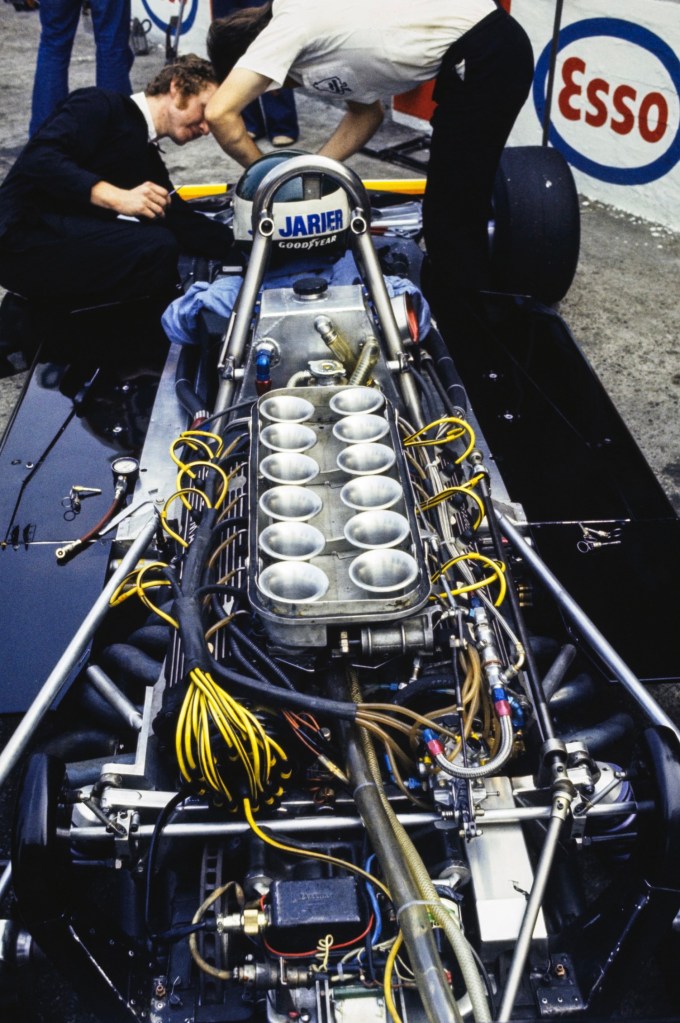
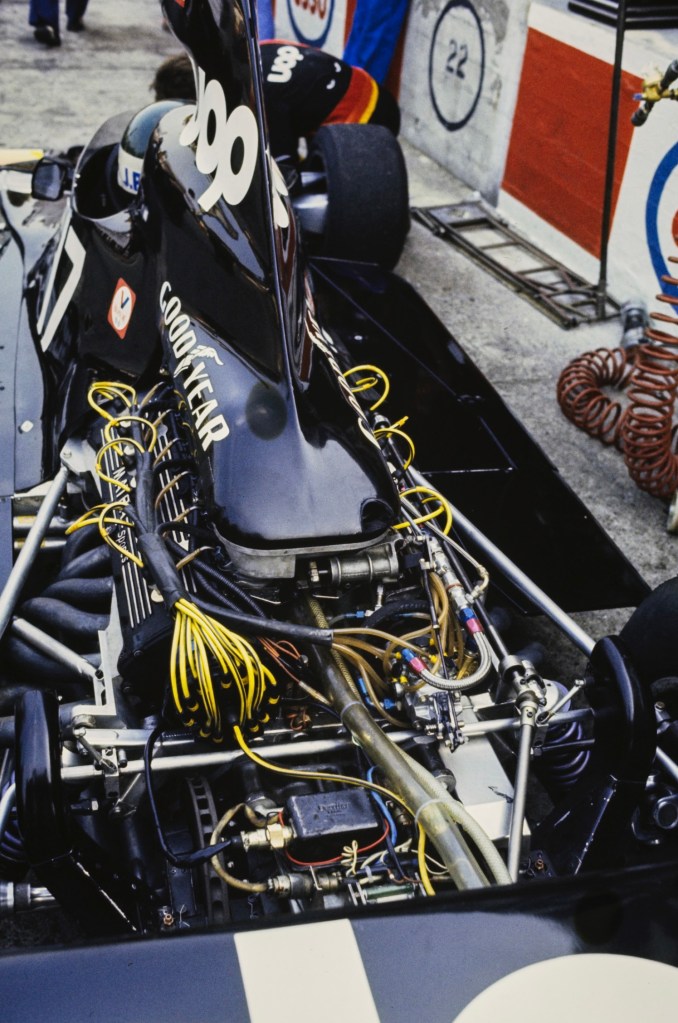
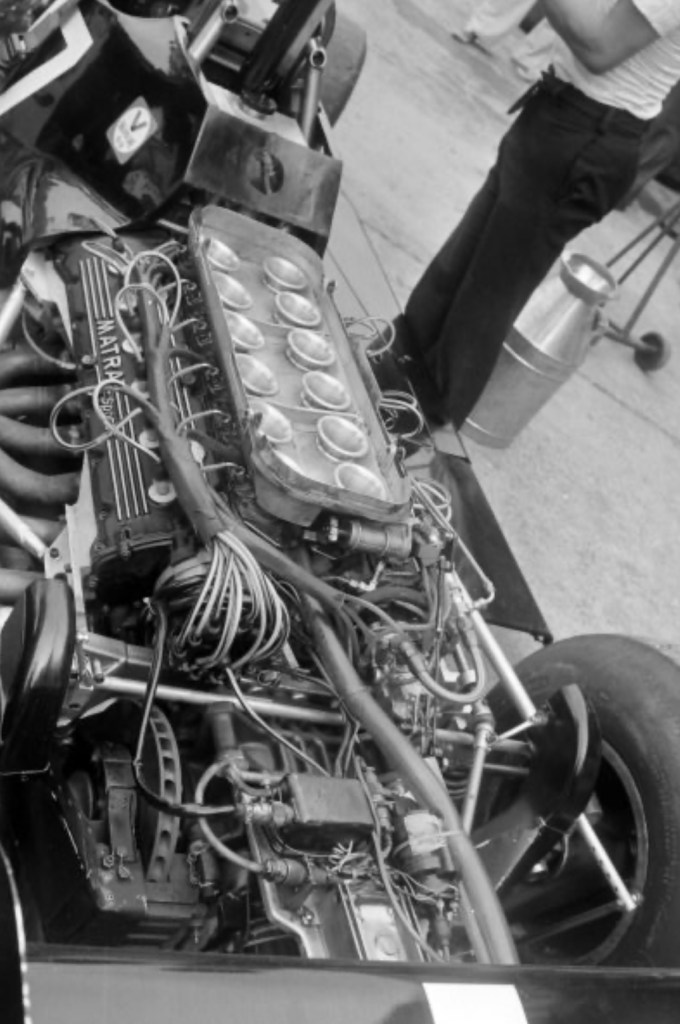
Shadow DN7 Matra. Type 73 3-litre V12 – circa 500bhp – engine installation at Monza in September1975. Note single plugs and distributor driven off the rear of the inlet camshaft, also exhausts and neat brackets to which the top radius rod at the front and shock/spring mount attaches at the rear – the main bracket runs the length of the cylinder head. You can just see the roll bar behind the spring, radiator header tank also clear (MotorSport)

The obvious alternatives were the Matra V12 and Alfa Romeo Flat-12, both 3-litre endurance engines, and the venerable BRM V12. The latter was easily ruled out as being way past its prime, the BRM P207 was a sad joke in 1974/5 for all concerned. The Matra and Alfa were successful endurance engines. In the event BC Eccclestone, then Brabham’s owner, did a deal to use Alfa engines from 1976 whilst Nichols pursued the Matra option.

While the French V12 last appeared in GP racing in Matra MS120s driven by Chris Amon in 1972, the engine had been continually developed as an endurance unit. Given Matra’s Le Mans wins from 1972-74 and a whole swag of other endurance events; so it was not too difficult to adapt Matra’s learnings to a sprint-spec of the engine, from whence it originated in any event way back in 1968.

silverstone
Silverstone Shadow DN7 Matra first test, July 1975 (unattributed)

Evolving the DN5 Ford into the DN7 Matra…

Whilst commercial negotiations dragged on between Nichols and Matra, Southgate and his team focussed on keeping the DN5 competitive while concepting the DN7, which was essentially a DN5 adapted to fit the longer, heavier, thirstier but more powerful V12.

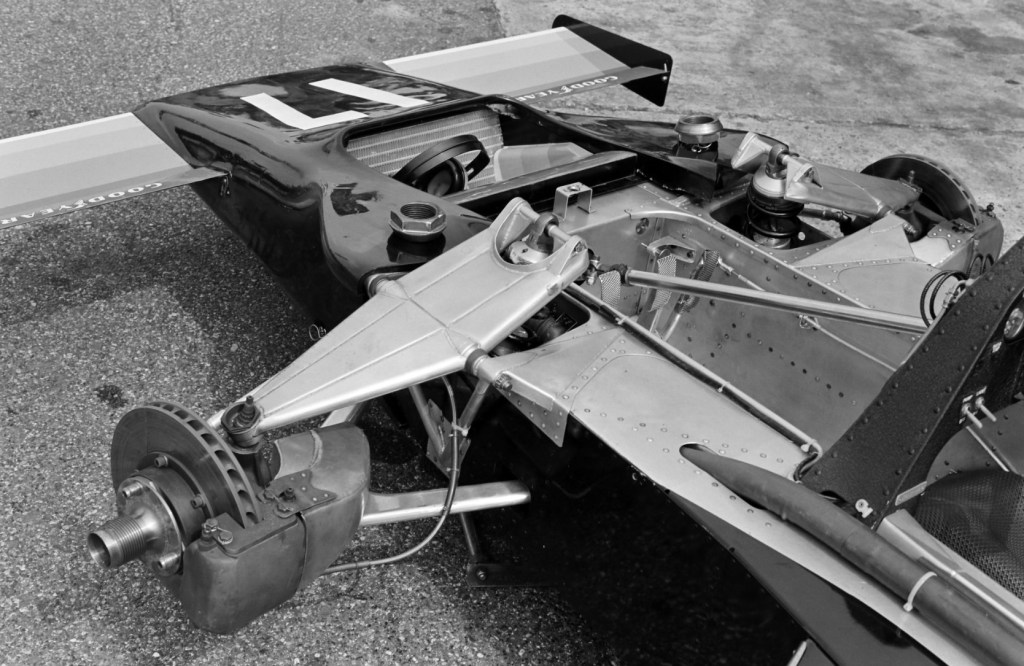
Major differences were increased fuel tankage and a longer wheelbase, otherwise the key elements of both cars – chassis, body, aero and inboard front suspension by rockers, conventional outboard rear suspension and Hewland TL200 gearbox were the same. This gearbox was developed by Hewland for endurance purposes and was used by Matra in their MS670 sports cars.

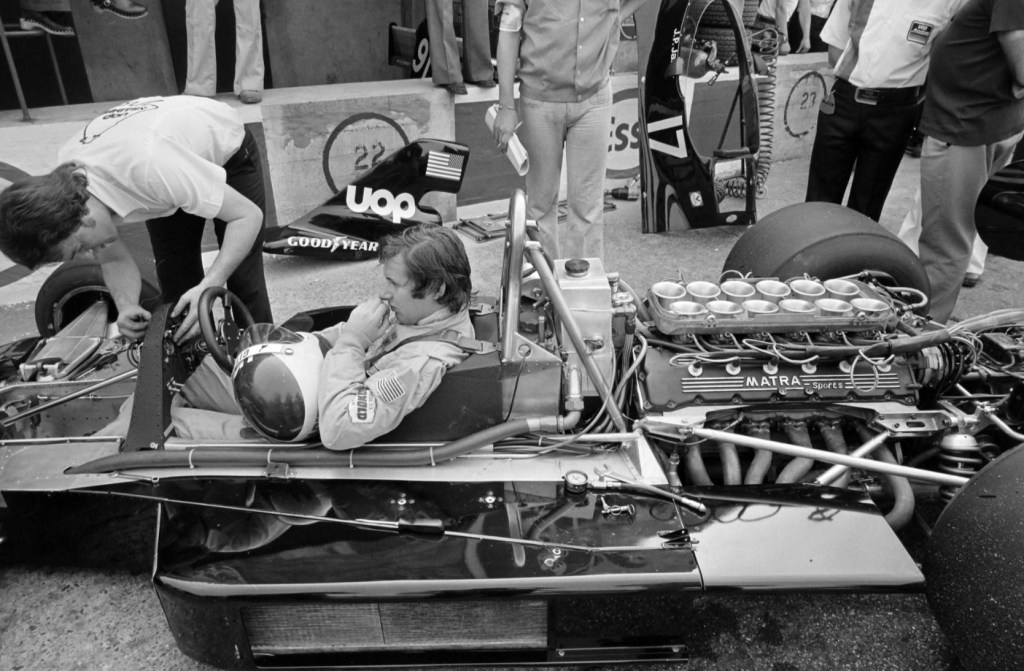
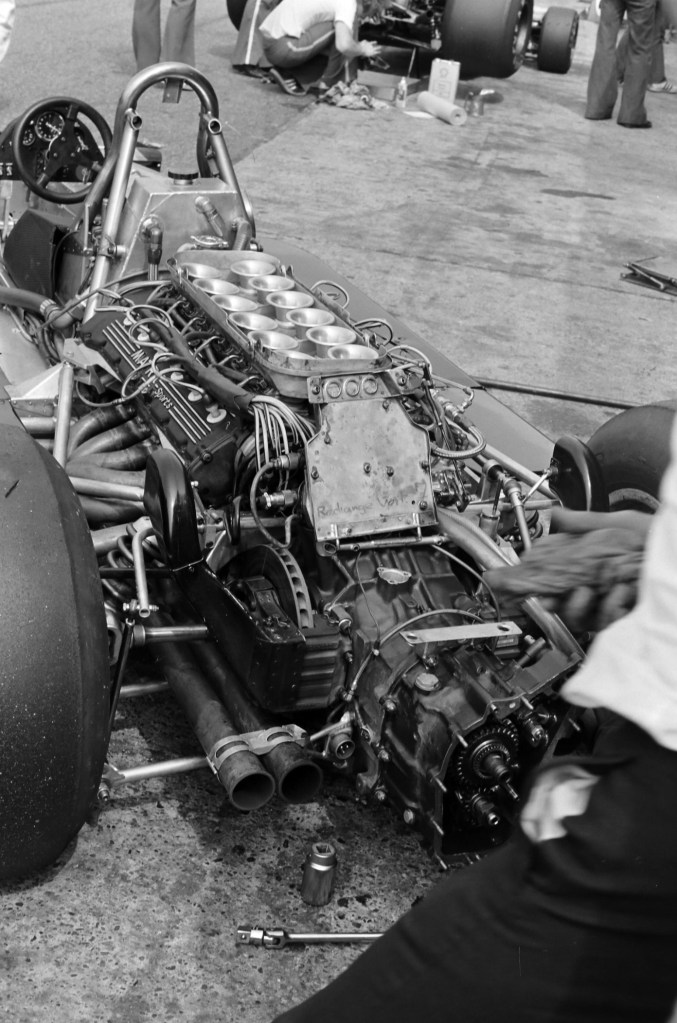
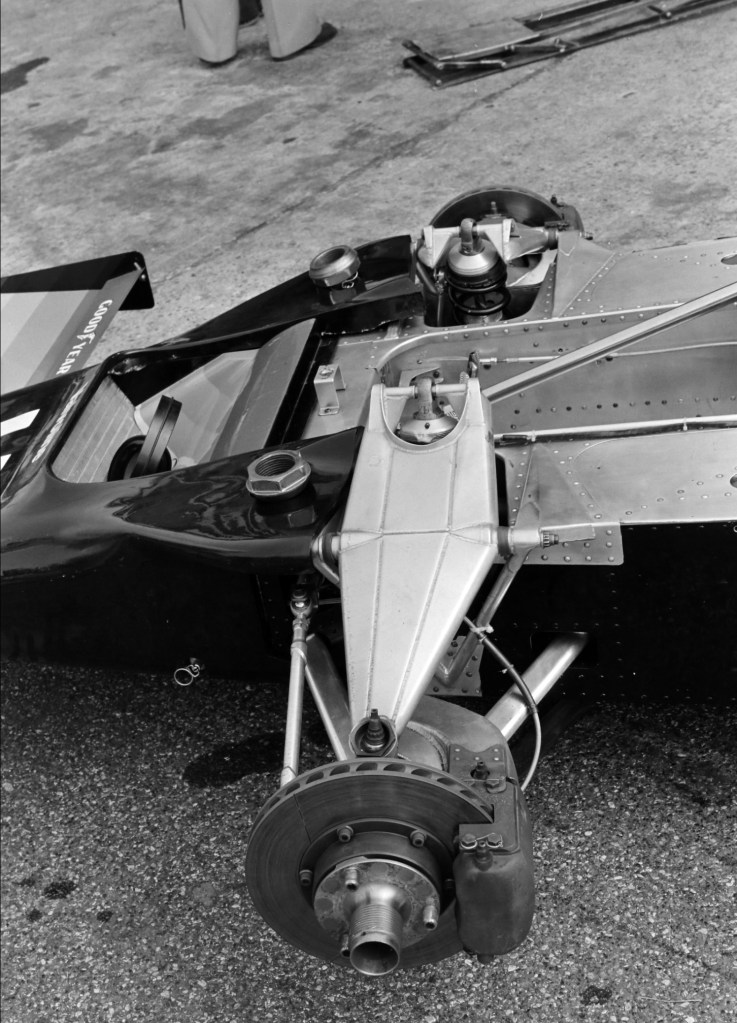
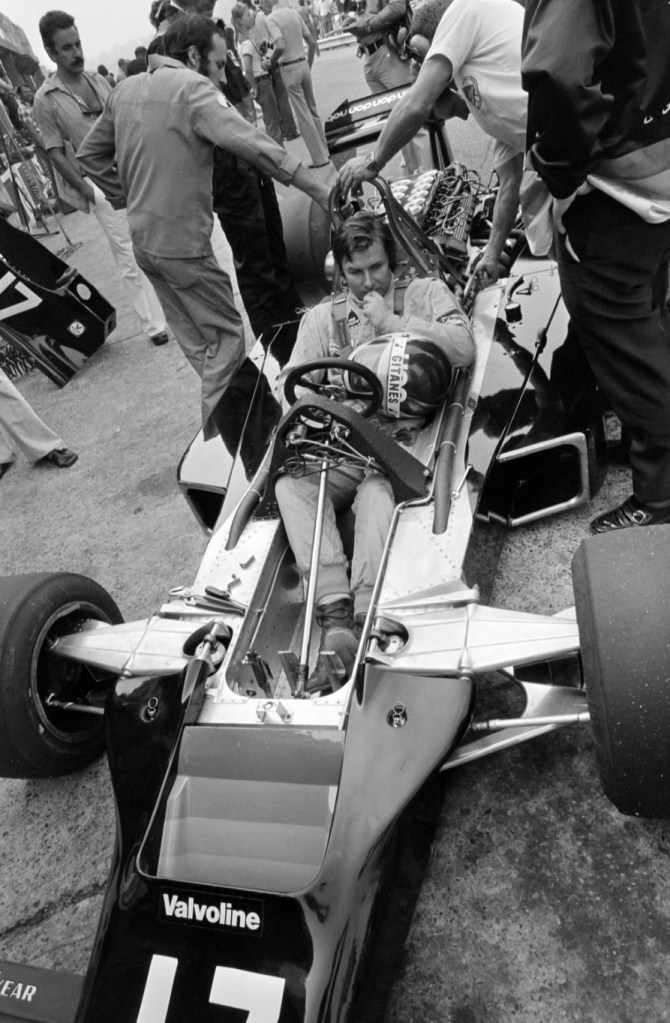
Three body-off shots in the Monza paddock 1975. Exquisite standard of fabrication clear (MotorSport)
(MotorSport)
Hewland TL200 ratio change (MotorSport)

Tony Southgate spoke of the challenges of adapting the Matra engine to the DN5 in his autobiography.

‘In view of my V12 experience with Eagle and BRM the powers that be most likely thought I was a bit of a V12 expert and that I might be able to resurrect the old Matra engine and get it to the front of the grid. Fitting the Matra engine was not that straightforward and of course the V12 engine required a lot more fuel cell capacity. The engine ran at 12000rpm, about 30% more than the DFV, so extra tanks were fitted into the sides of the car alongside the existing seat tank.’

‘Due to the extra engine RPM and horsepower the cooling system needed to be increased in size, so I fitted larger side pods and set the water radiators further forwards to maintain the weight distribution of the Cosworth engined DN5. The V12 was longer than the DFV, of course, so the wheelbase was increased a little’.

‘The end result was a longer, heavier but more powerful DN5 which we called the DN7. I thought that it would do about the same lap times as the DN5 and that proved to be the case’.

Matra MS73 V12 ultimately successful in Matra sports prototypes and Grands Prix winner in Ligier chassis. Famously aurally erotic, circa 500bhp @ 11600rpm when a good Cosworth DFV gave circa 470bhp. Note Lucas injection trumpets, inboard rear discs and duct, engine electronics behind radiator header tank (MotorSport)

When finally completed the car was tested by ‘Jumper’ at Silverstone in July and made its race debut in practice for the Austrian GP on 17 August.

Tom Pryce drove his usual Ford engined DN5 and offered a direct comparison, both drivers being more or less equivalently FAST. The car was heavier than the DN5, it wasn’t bespoke, but still provided the team and of course Matra a sense of competitiveness of the package.

The Austrian GP was a horrible weekend, Mark Donohue crashed his Penske March 751 in practice as a result of a Goodyear tyre failure, dying in a Graz hospital several days later of brain injuries sustained in the high speed crash. Half points were awarded to finishers of the rain shortened race won by Vittorio Brambilla’s works March 751 Ford, that teams first, long overdue win.

Denis Jenkinson in MotorSport had this to say about the re-appearance of Matra in GP racing; ‘Another welcome return was made by the Matra V12 engine, this time in the back of a UOP Shadow DN7, but somehow it seems to have lost that car-splitting scream that it used to have in the days of Beltoise and Pescarolo in the blue cars from Velizy. Perhaps the Ferrari and Cosworth engines have caught it up on the decibel scale, for they certainly have on bhp output. None-the-less it was nice to see and hear a Matra V12 in Grand Prix racing again’.

‘Particularly pleasing was to see the enthusiasm with which JPJ was tackling the job of driving the DN7. It was not a half-hearted attempt, with one eye cocked over the Cosworth powered DN5 standing in the paddock, or a dickering between the two cars. As far as Jarier was concerned there was only one car for him and that was the DN7. With that approach in the cockpit the Shadow Matra V12 project could get somewhere. It certainly started well by being ahead on the grid of Pryce in the Shadow Cosworth V8, even if it was only 0.2 sec ahead’

Jarier qualified the DN7 13th, one grid slot in front of Pryce, Tom had a great race finishing third while the Matras fuel injection system malfunctioned causing JP’s retirement on lap 10. It was an ok start for a car with limited testing, the Shadow boys prepared the same mix of cars for the Italian GP held on 7 September.

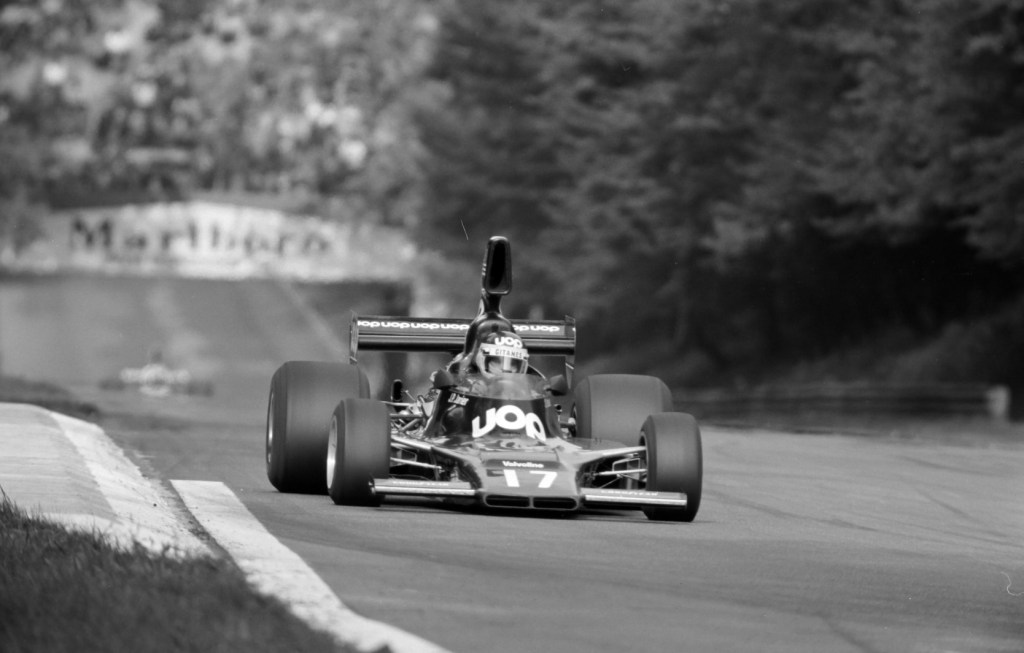
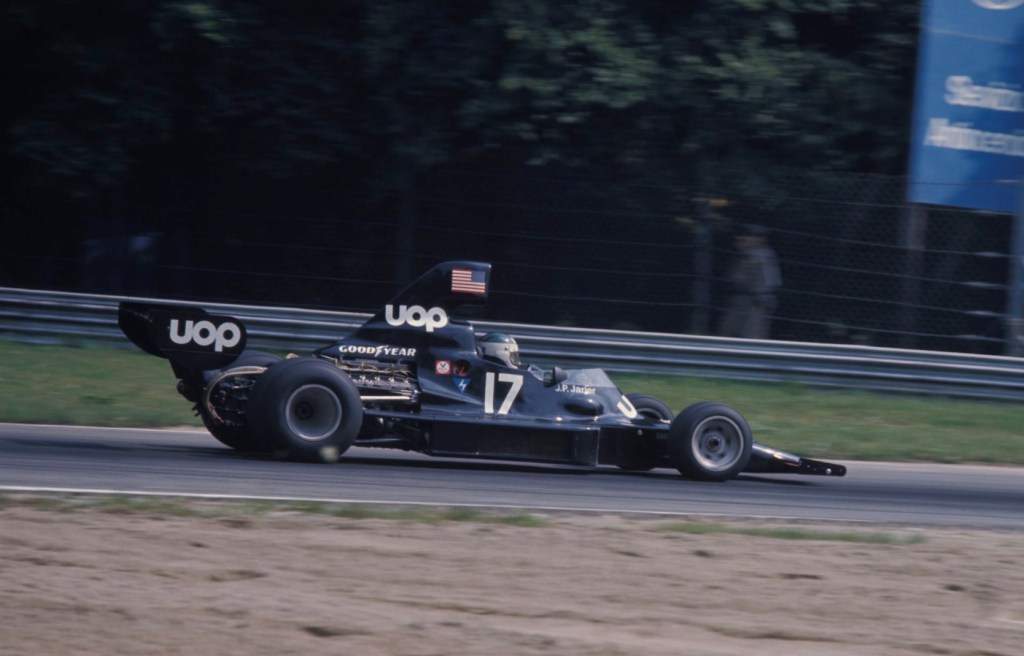
Jarier, DN7 Matra, Monza 1975. GP cars of the era don’t look better than this (LAT)
italian grand prix
1975 Italian Grand Prix, just look at the variety of aero approaches in this shot let alone mechanical specification, Oh for the days before F1 was a ‘control formula’?! Regazzoni’s winning Ferrari 312T Flat-12 from Jarier’s Shadow DN7 Matra V12, Carlos Pace’s Brabham BT44B Ford V8 and Ronnie Peterson’s similarly powered Lotus 72E (unattributed)
(MotorSport)

In between the Osterreichring and Monza the non-championship Swiss Grand Prix was held at Dijon, France, there being no circuits in Switzerland, with Jarier putting his Shadow on pole. He led the first 23 laps until retirement with gearbox trouble; but he was back in his Ford engined DN5 while the DN7, the team only built one chassis – #DN7/1A – was readied for Monza. Clay Regazzoni won the event in his Ferrari 312T and then doubled up also driving to victory at Monza.

The Shadows qualified in Italy exactly as they had at the Osterreichring, the results similar as well; ‘Jumpers’ Matra failed, this time with fuel pump failure and Pryce was sixth after a good mid race battle with James Hunts Hesketh. Niki Lauda won his first drivers championship, his third place in his Ferrari 312T assuring him of the championship.

shadow us
Shadow DN5 Ford in the nuddy, Kendall Centre, Watkins Glen US GP 1975. Pryce DN5, 16th in the race, non-classified with Jarier’s similar car DNF. Car getting a fresh Ford DFV. Rear suspension/’box assy at the rear, with the Cossie about to be unbolted, aluminium monocoque and quality of build and finish clear. Note cast alloy instrument bulkhead (unattributed)

At the season ending Watkins Glen race both Shadows were very fast; Q4 for Jarier and Q7 for Pryce but both were in DN5s, the Matra experiment was, sadly for the sport, over.

‘Jean-Pierre Jarier was fighting hard with the Shadow V12 during the first session, a revised fuel system and some titanium exhausts from the sports car endowed it with appreciably improved performance at the top end of its rev band. Alas, Jarier’s enthusiasm would be channeled into the Cosworth powered DN5 after it was calculated that the engine would consume fuel at the rate of 4mpg under racing conditions, and the French engined car was sadly pushed away for the remainder of the weeekend’ (therefore the car would not hold sufficient fuel to complete the race without a stop) said Denis Jenkinson in his MotorSport race report.

It may be that that was the case, or simply that Don Nichols had learned that Matra engines would be used exclusively by the new Ligier team for 1976 and simply put the car to one side to focus on the quicker DN5 Cosworths.

Lauda won the race, both Shadows well down the field despite qualifying times which showed just how quick a package the car was on a circuit which was a great test of a car’s medium to high speed handling characteristics.

shadow watkins
JPJ in the DN7 during the first practice session at Watkins Glen, the last time #DN7/1A turned a wheel before its restoration by Grant Beath in recent times. Car was for 35 years part of Don Nichols collection fitted with a dummy, blown V12 (unattributed)

Both Nichols and Ligier wanted exclusivity in terms of engine supply, from a France Inc perspective the choice of the well connected former rugby international’s team made more sense than the American owned British based concern; French car, team and driver.

From Matra’s viewpoint it makes more sense to me, given the aerospace conglomerates immense resources, to supply two teams in 1976 especially given Shadow’s speed, if not reliability in 1975.

Ligier were an unknown 1976 quantity, Shadow were. Both Shadow drivers had shown prodigious speed in 1974-75, one was French and Southgate did a neat job integrating the Matra V12 into an existing chassis designed for a different engine. His bespoke 1976 Matra chassis would have been lighter overall and designed around the engine architecture rather than an adaptation of what he had based on the Ford Cosworth.

Ligier were to be a one car entry in 1976 so Matra very much had all their eggs in one basket. Ligier’s JS5 1976 car was a horrible looking, bulky thing, mind you it delivered the goods in a a way Shadow did not that year. Jacques Laffitte was eighth in the drivers championship, Pryce 12th and poor Jarier didn’t score a point in the lightly updated 1976 Shadow DN5Bs and new DN8. Matra finally achieved a GP win when Laffitte won the 1977 Swedish Grand Prix in his Ligier JS7, the whole paddock were delighted for him, Ligier and Matra.

Don Nichols retained ownership of Shadow, but his company, United Oil Products, was no longer the team’s major sponsor and the slippery slope of progressive loss in competitiveness began, whilst noting Alan Jones’ lucky 1977 DN8 Ford, Austrian GP win.

If only Nichols had jagged the Matra deal or the Velizy concern supplied both teams he may have stayed more involved and we would have had the chance of seeing Tony Southgate designed, bespoke, Matra engined cars driven by two of the fastest chargers around at the time. It’s an interesting ‘mighta been’ I reckon?!…

Jarier, DN7 Matra, Monza (MotorSport)

Shadow DN7 Matra Technical Specifications…

Chassis; aluminium monocoque using the Matra MS73 V12 as a fully stressed member. Front suspension by lower wishbone and top rocker actuating inboard mounted coil spring/damper units. Rear suspension twin parallel lower links, single top link, coil spring/damper units and twin radius rods. Adjustable roll bars front and rear. Wheelbase 2667mm, front and rear tracks 1473/1549mm. Weight 612Kg.

Front and rear disc brakes, inboard at the rear. Rack and pinion steering. Wheel sizes front/rear 9.2/20 13 inch in diameter, 16.2/26/13 inches.

Engine; Matra MS73 3-litre, DOHC, four valve, Lucas fuel injected, all aluminium 60 degree V12. 2993cc, bore/stroke 79.7/50mm, circa 500bhp @ 11600rpm. Gearbox; Hewland TL200 five speed transaxle

(MotorSport)

Etcetera…

(MotorSport)

More shots at Monza in 1975, probably too much of a good thing…

(MotorSport)
(MotorSport)
(MotorSport)
(MotorSport)
(MotorSport)
(MotorSport)
jarier
JPJ sitting on his March 731 Ford during 1973. He did a year of F1 and F2 for the team comprehensively lifting the Euro F2 title in a March 732 BMW (unattributed)

Tony Southgate on ‘Jumper’ Jarier in ‘MotorSport’…

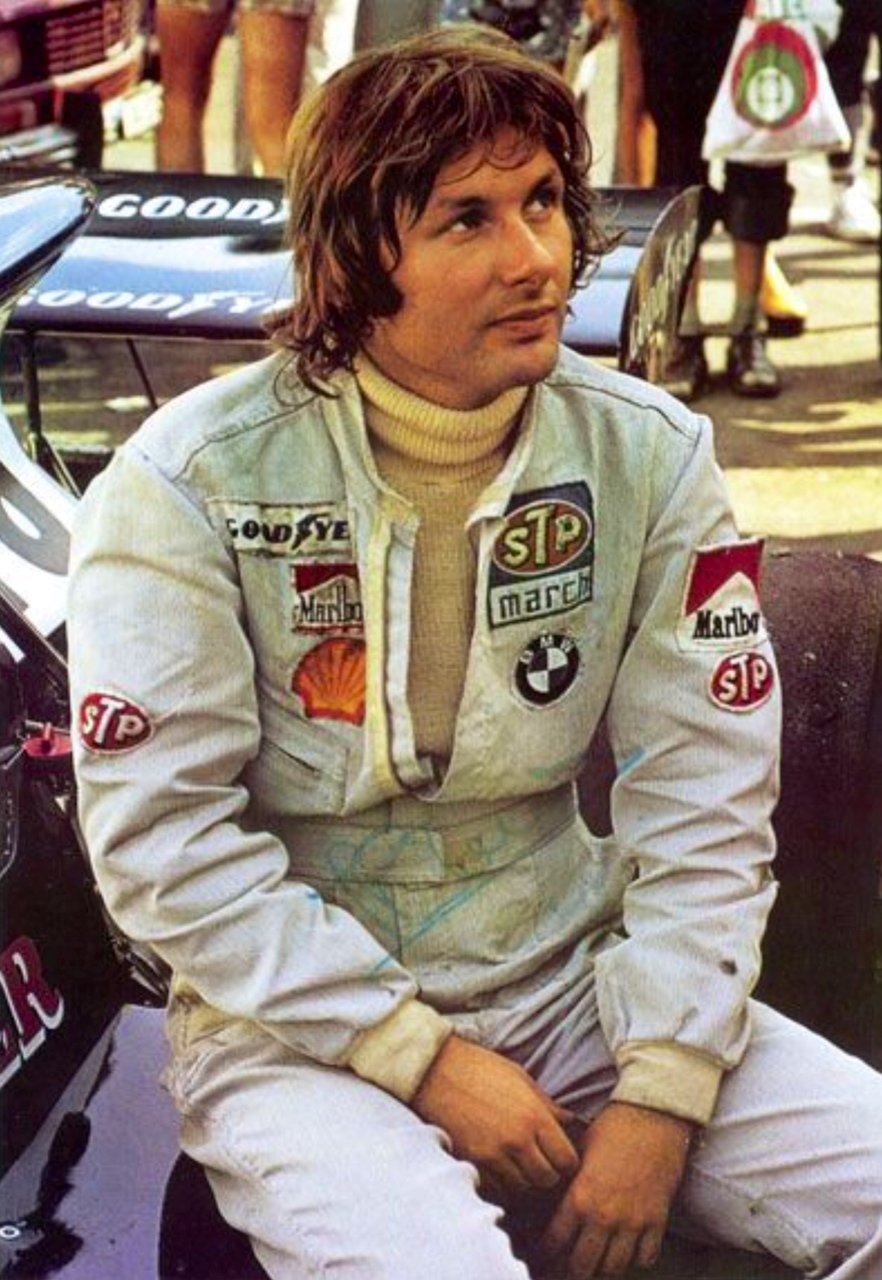
‘He had such fantastic car control and speed but just didn’t have the commitment. I’m sure he could have been World Champion if only he could have been bothered. Jean-Pierre got bored very easily and in practice or testing he would adapt himself to the car and do the same times after you had made adjustments. He was a typical French driver in that he was more interested in going out of an evening, eating a good meal and chasing the ladies. It soon became clear that he wouldn’t go on to the next level’.

ligier on circuit
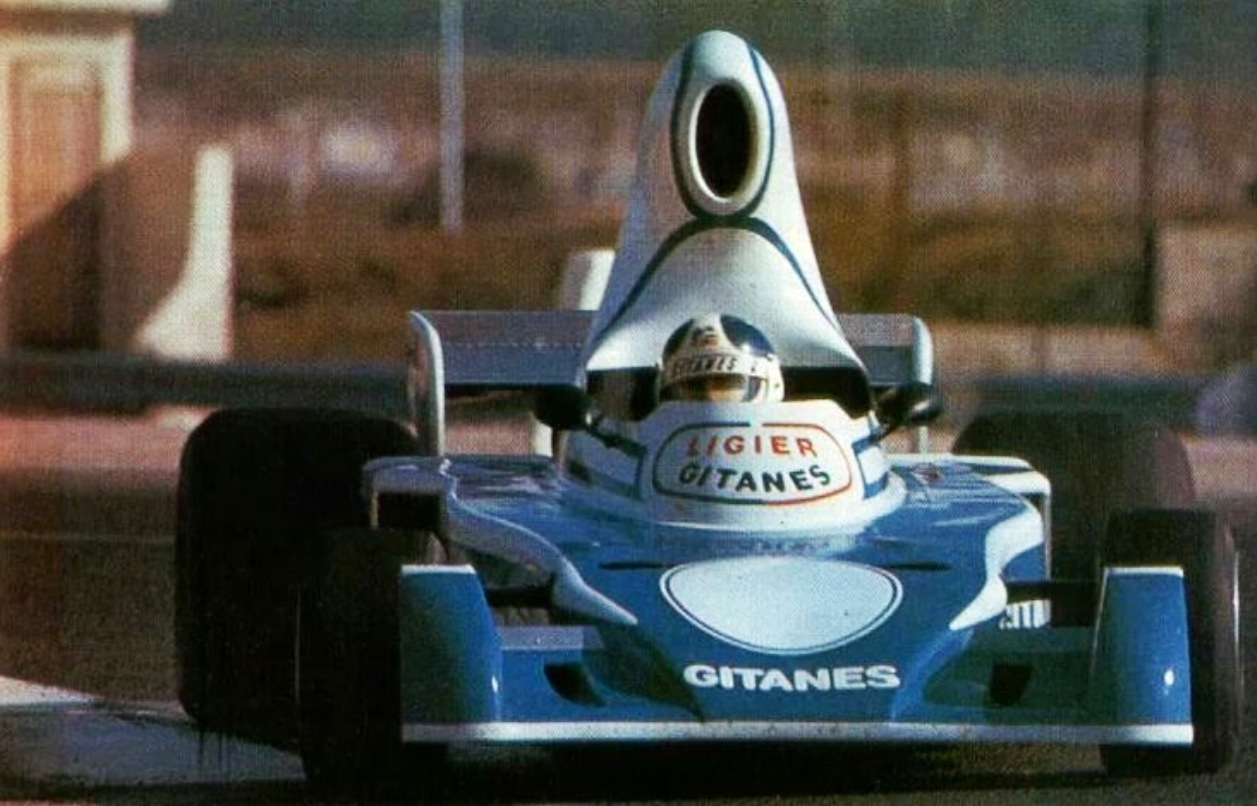
Jean-Pierre Beltoise testing the brand new Ligier JS5 Matra at Paul Ricard in December 1975 (unattributed)

1976 Ligier JS5 Matra…

The Ligier JS5 Matra was a sinfully ugly car, it had the looks only a mother could love but its ‘fugliness’ was only skin deep!

Gerard Ducarouge and his team had the aero spot on, the enormous airbox which led to the car’s nickname The Flying Teapot chanelled air beautifully over the car and smoothed it onto the rear wing. Eighth in the drivers title for Laffitte and sixth for Ligier in the constructors race in a one car team entry was an exceptional first year performance.

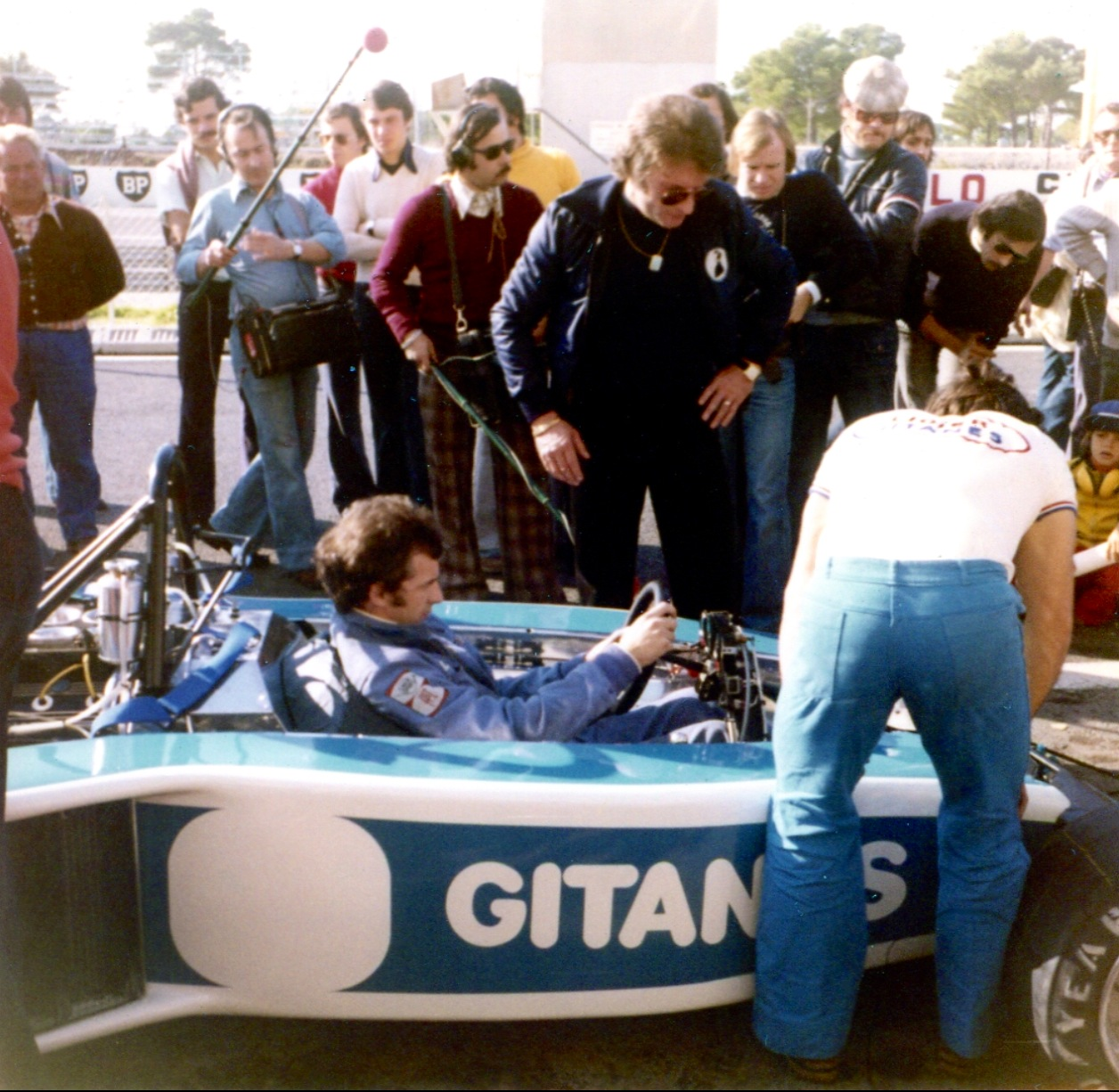
The pictures are of the JS5’s first test at Paul Ricard in December 1975 with Jean Pierre Beltoise up. JPB had been announced as the driver, perhaps via sponsor Gitanes, but Guy Ligier was not convinced and organised a driver test over two days. Jacques Lafitte the quicker of the two in a car which had been tweaked by JPB who tested on the first day.

There was disquiet in France in some quarters over the choice of Laffitte, JPB at the time was France’s only contemporary GP winner, but Ligier’s choice was sound. Jacques in Frank Williams’ Ford engined Williams FW04 and Martini Mk16 Euro F2 crown ahead of the March BMW hordes in 1975 made it fairly clear that he was the better choice. JPB, fine driver that he was, ‘ultimate speed’ had been shown over the years to be not in the Ace category whereas Jacques’ potential, relative novice that he was, was pretty clear. It was an astute choice if not an entirely popular one.

ligier pits
JPB smiles for the cameras and gets himself comfy in JS5, designer Ducarouge, what a talented chappy! looks at JPB’s feet. Paul Ricard December 1975 (unattributed)

Bibliography…

MotorSport January 2015, Denis Jenkinsons MotorSport Austrian and US GP reports 1975, GP Encyclopaedia, Tony Southgate ‘From Drawing Board to Chequered Flag’

Photo Credits…

MotorSport Images, LAT, Car Blueprints, Alejandro Saldutto

Tailpiece…

(MotorSport)

‘So waddya think of the engine Jean-Pierre? is perhaps the question Jacques Lafitte is asking JPJ on their way back to the Monza paddock’? He knew full well of course as an ex-Matra sportscar driver…

Finito…