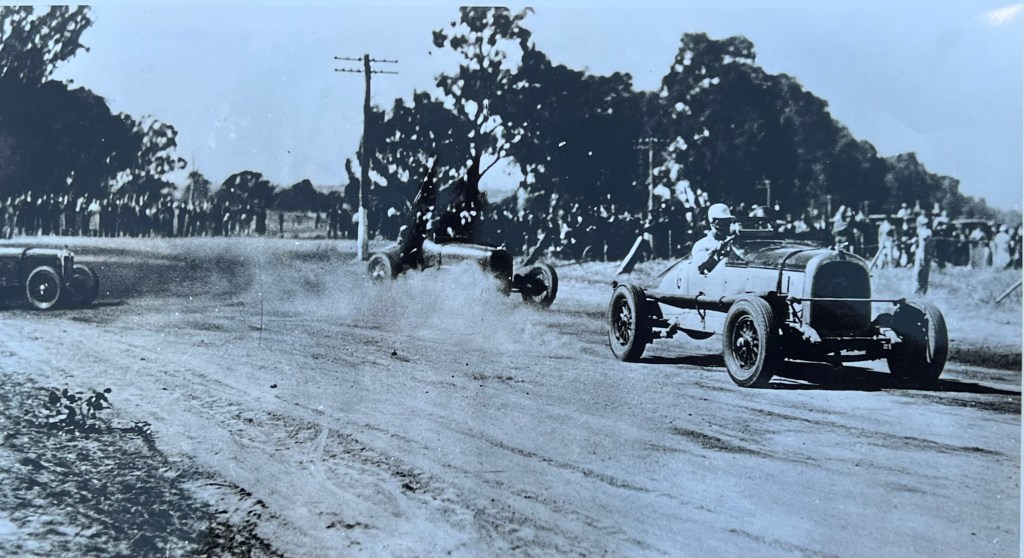
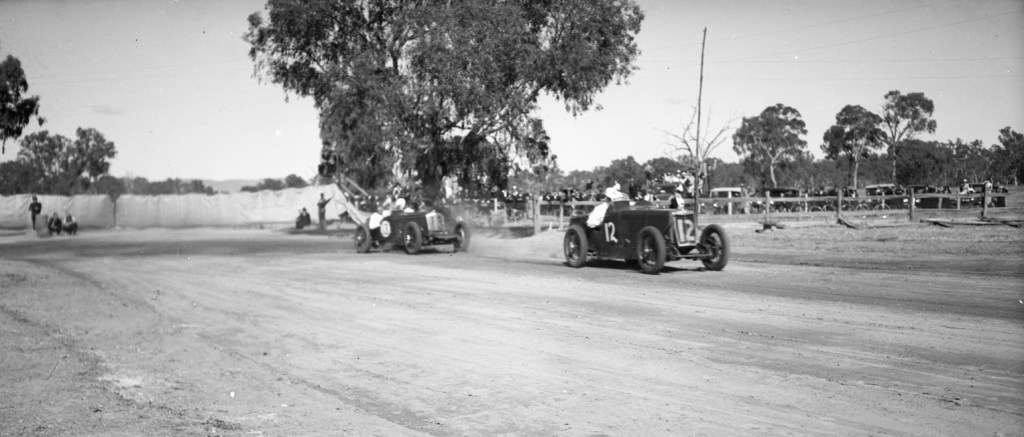
Harry Beith Chrysler, from Jack Day, Day Special and Norm Hamilton or Les Murphy, MG P-Type during the early laps of the Benalla Centenary 100, Easter Monday, April 13, 1936.
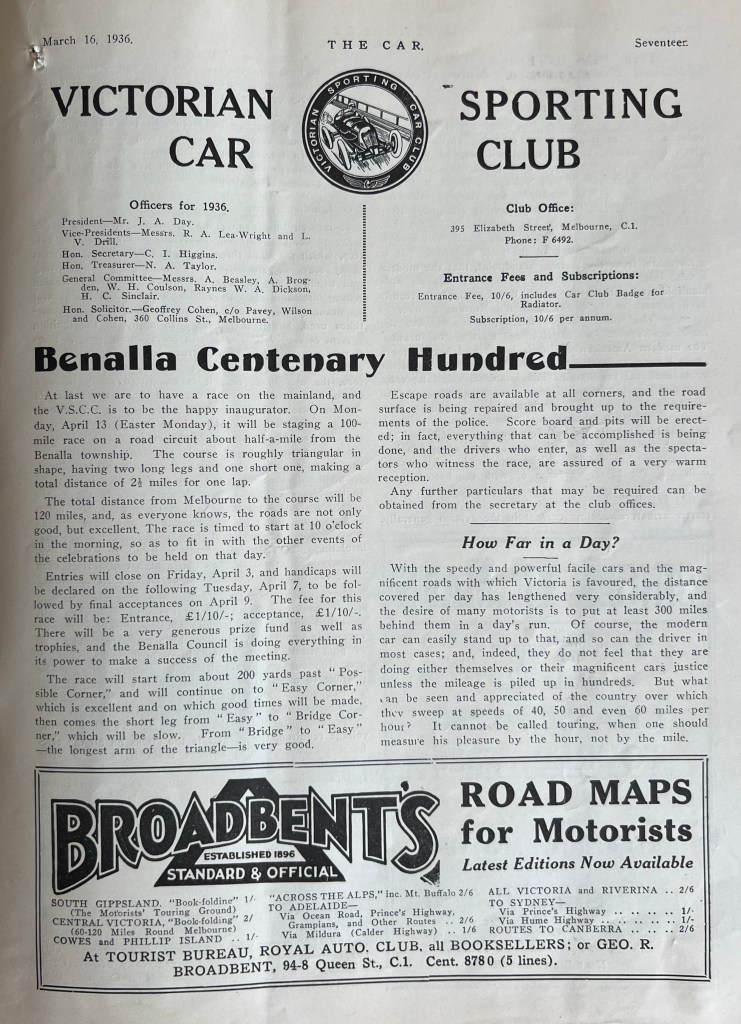
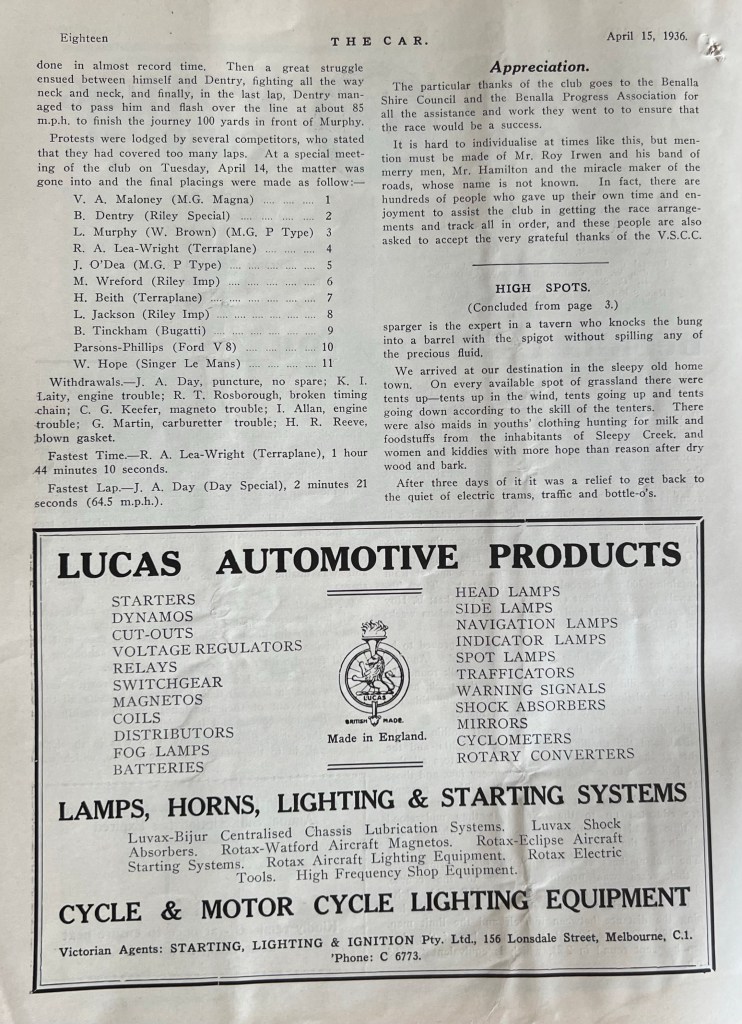
Teaser for the little-known Benalla Centenary Hundred to be held by the Victorian Sporting Car Club.
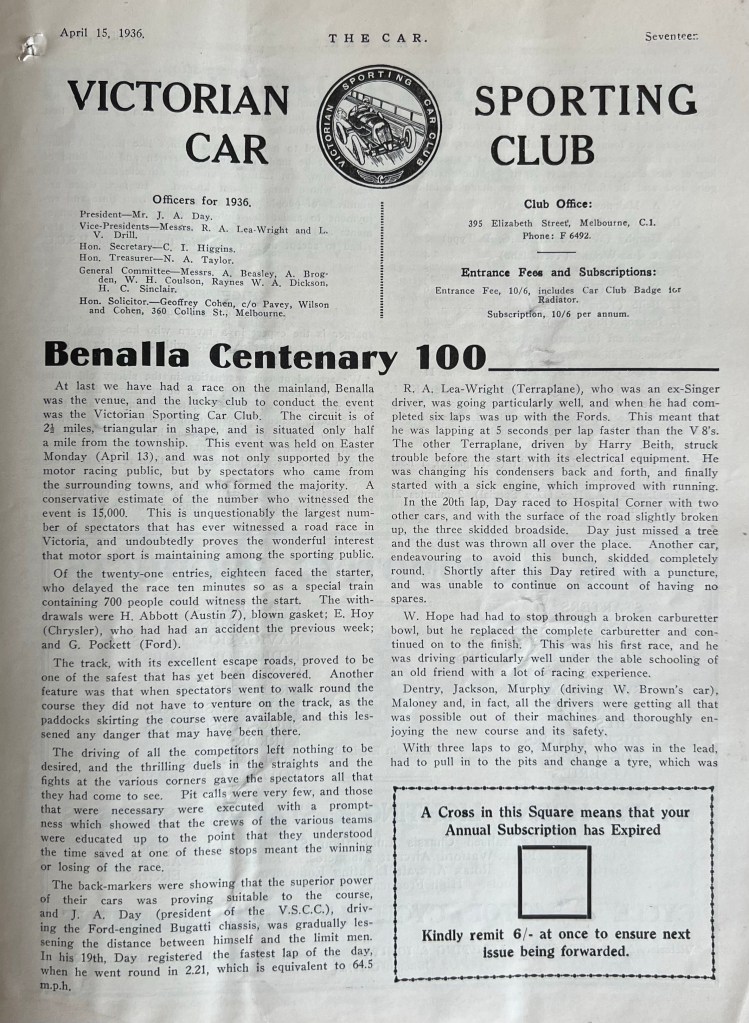
The centenary being celebrated, was the European-settler establishment of the township of Benalla 210km northeast of Melbourne. There is bugger-all in the way of photographs of this meeting, I’m not helping solve the problem here either, but the firsthand report of the meeting is a start; photo contributions invited!
Jack O’Dea’s MG P-Type ahead of a Riley (E Trevithick-SLV)
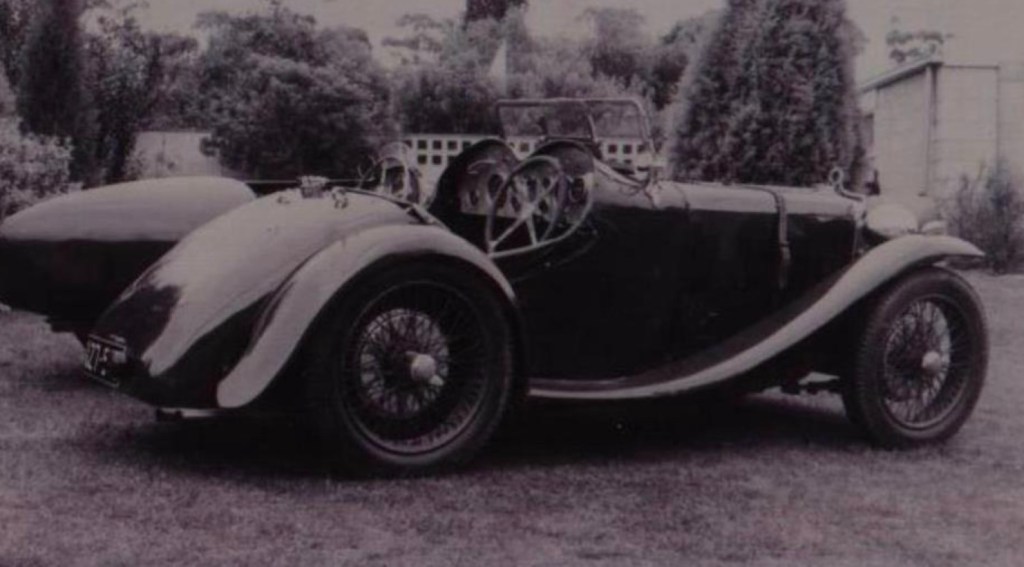
The correct name of the winner is Vincent Aloysius Moloney, born 1902, later in life a resident of Murrumbeena, Melbourne, while the winning car is an MG Magna L-Type chassis #L0658.
The car was imported by Lanes Motors and lobbed at Port Melbourne in December 1933. It was locally bodied by Chas Aspinall, a common practice at the time to minimise the exposure to import duties levied by The Fiscal Fiend. Vin raced the car mainly in Victoria until 1936, after which the car was sold to a South Australian owner. The car has lived in New Zealand since 2014, click here for an interesting, comprehensive history of the car, scroll down to #L0658:https://www.mgclub.org.nz/download/167741/L%20Types%2C%2007%20October%202024%20V2.%20PDF.pdf
MG Historians are certain the VA Maloney (sic) who competed in four Australian Grands Prix: Nuiootpa 1950, Narrogin 1951, Bathurst 1952 and Albert Park in 1953 aboard a Head Brothers, Murrumbeena, Melbourne built MG TC Monoposto Special is our boy.
MG Magna L0658 in Adelaide in the 1940s, probably still with the Aspinall body. L0657 behind has an Aspinall pointed tail body (MG Register Australia)(SLV)
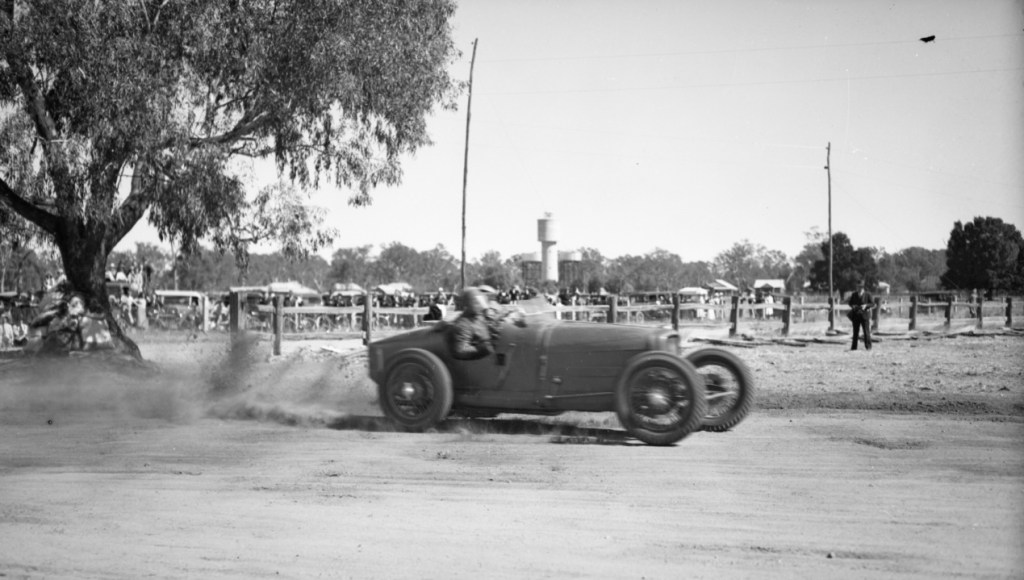
Jack Day punches his Ford V8-powered Day Special – Bugatti T39 Ford – out of one of the right-handers. That water tower will be a tip for a local as to the precise locale.
Credits…
The Car March 1936 via the Bob King Collection, Edward Trevithick-State Library of Victoria
John Sawyer’s MG K3 #K3752 tail out on the Mount Martha Hillclimb, on Melbourne’s Mornington Peninsula, in November 1955.
Richard Millington wrote that ‘K3752 was the K3 prototype and was the recce car for MG’s attack on the 1933 Mille Miglia.’
Sawyer originally ‘did his time’ with Otto Stone, assisting in the preparation of Stan Jones’ Maserati 250F and other cars, ultimately becoming team manager of Bob Jane Racing in the glory years from the early 1960s, when it was Australia’s biggest and most diverse.
Some healthy exchanges on Bob Williamson’s Facebook page between Richard Millington, David Trunfull and Tony Johns, and then later between Tony, Bob King – who competed at the Mount Martha Hillclimb – and I determined that the event was at Mount Martha, near Balcombe rather than the Tuerong Valley Hillclimb, the other contender, ‘just down the road from Foxey’s Hangout, close to the corner of Tubbarubba and Balnarring Roads where the local farmers slung their dead foxes over the fence!’
(J Plowright)
What is clear in these two shots: Laurie Rofe’s Jaguar SS100 in 1955 above, and Bob King’s Bugatti T57C below, on November 18, 1962, is the encroachment of suburbia upon Mount Martha in the intervening seven years.
(J Plowright)
Laurie Rofe’s Jaguar SS100, again in 1955.
Bob King giving his Bugatti Type 57C Atalante Coupe some wellie at the VSCC Mount Martha meeting in November 1962, not too long after the purchase of chassis #57788 from Henry and Peter Dale.
‘I set equal FTD with my great friend, Graeme Lowe’s Alfa Romeo 6C1750.’ Bob owned the car for only two years; the end of his exciting ownership came during a trip to Sydney to take in the Warwick Farm 100 Tasman Cup meeting over the February 16, 1964 weekend.
Overheating problems diverted the young Doctor’s attention from both Jack Brabham’s on-track performances and, more importantly, the attractive young lass who accompanied him north to Sin City. Salvation came over that weekend in the form of Eric Pengilley, who paid a good deal more for the car than the classy Frenchie owed Bob. The machine has been owned for decades by Stuart Murdoch.
(J Plowright)
Laurie Rofe again in 1955, this time aboard an MG SA Coupe, and R Dowrick below in a Talbot 105.
(J Plowright)
More on the locational stuff from Tony Johns, who spectated at the 1962 event, and provided this excerpt from a Victorian Drivers Club magazine outlining one of the upcoming Sporting Motor Club’s Mount Martha events.
‘COMING EVENTS:
Hill Climb at Mt. Martha…This meeting is being organised by the Sporting Motor Club under a C.A.M.S. permit, and we are being invited as a club to take part. There will be a special category for Vintage Cars.
For those who can come in the morning, meet at the Mornington War Memorial at 11 a.m (then, I think, located on the intersection of Main Street and the Nepean Highway, Mornington). Entry fee £1. Unregistered vehicles 25/-. Prize: Pewter Tankard (Vintage Class). Fastest of several runs.
Hill climb not steep, and a picture-postcard atmosphere prevails. All food to be brought. Barbeque to be held after the finish of the climb. Any members without cars will be welcome to come in other members’ cars. If not, bring Pop’s Holden.
If members come later, drive down the Nepean Highway three miles past the War Memorial, turn right on the first road past the bridge at the School of Signals. Drive along the road one mile, then turn left a half mile, where the hill climb will be seen on the left.’
Credits…
Richard Millington, Jon Plowright, Don Ashton Archive via Tony Johns, Bob King Archive
Tailpiece…
(R King Arc)
King’s Bugatti Type 57C, and friend, in Dicer Doug’s – Doug Whiteford Tuning Service – emporium of speed at number 5 Carlisle Street, St Kilda, in late 1961 or early 1962, not long before he bought it. Ring for an appointment on XJ1233…
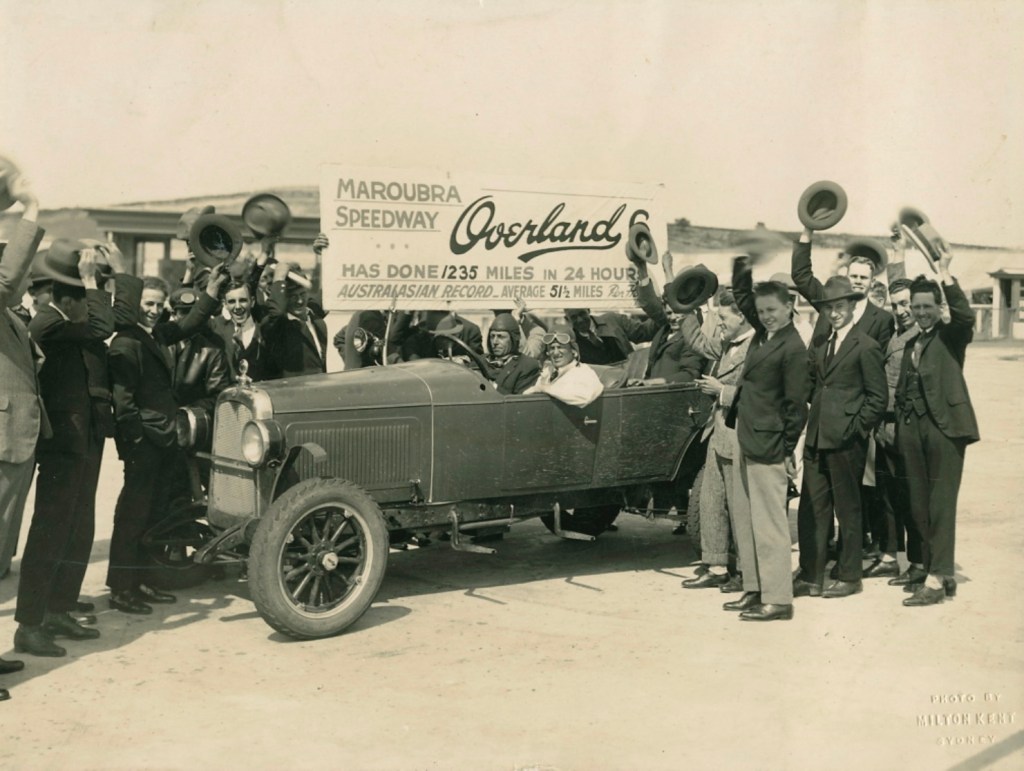
Cec Dickason and C.V Whitta on the banking at Aspendale during a Chevrolet 24-Hour track record attempt on August 1 and 2, 1924.
‘Credit is due to Messrs. C. R. Dickason and C. V. Whitta, who, driving a standard Chevrolet chassis equipped with a ‘racing body’ last week, established an Australian ‘double-12’ hour record on the Aspendale Speedway in Victoria.
The distance covered in the 24 hours was 1.063 miles 8 chains. On the first day of the test, the mileage travelled in 12 hours was 584 1/2. The car was driven 600 miles in 10 hours and 21 min. 19 4-5 вес. On the following day, rain made the track slippery, necessitating great care in negotiating the turns.
The test was conducted under observation by officials of the Aspendale Park Motor Racing Club and the Royal Automobile Club of Victoria. S.A. Cheney Pty.Ltd ran the attempt. See here:https://adb.anu.edu.au/biography/cheney-sydney-albert-5574
The Victorians hold on to ‘the Australasian motoring record for 24 hours’, extended until Saturday, December 12, 1925, The Argus reported.
Don Harkness and Phil Harbutt covered 1236 miles and 122 yards, averaging 51 1/2 miles an hour aboard a ‘standard four seater Overland 6 from which the mudguards and rear seats were removed’ at the Olympia Speedway, Maroubra, Sydney.
(Powerhouse Museum)
Both Dickason and Harkness were prominent mechanics/engineers, racers and automotive industry executives. Google away, particularly in relation to Harkness. Cyril Dickason’s place in the Australian automotive/racing pantheon is dealt with comprehensively in my friend Tony Johns’ upcoming history of sporting/racing Austin 7s in Australia. Watch this space…
Credits…
Edwin G Adamson photographer via Cec Dickason and Tony Johns Archive, The Herald, August 4, 1924, The Argus, December 14, 1925, Powerhouse Museum
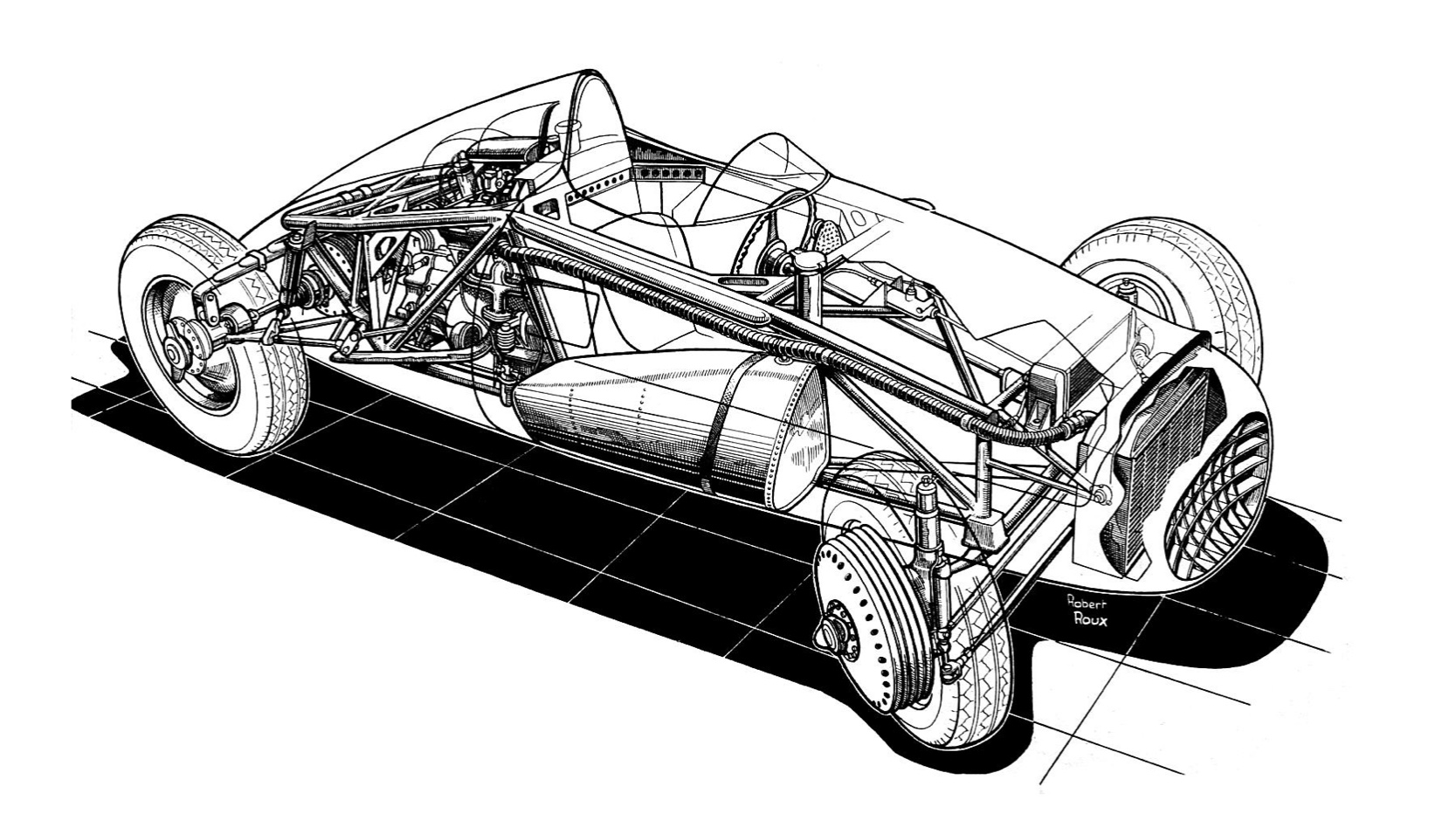
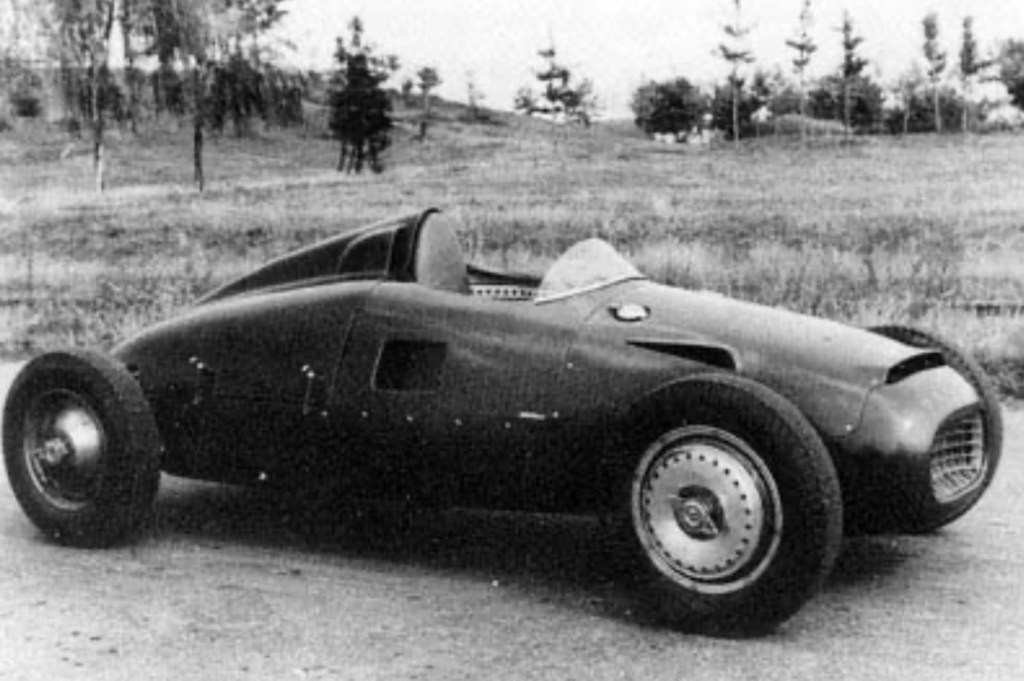
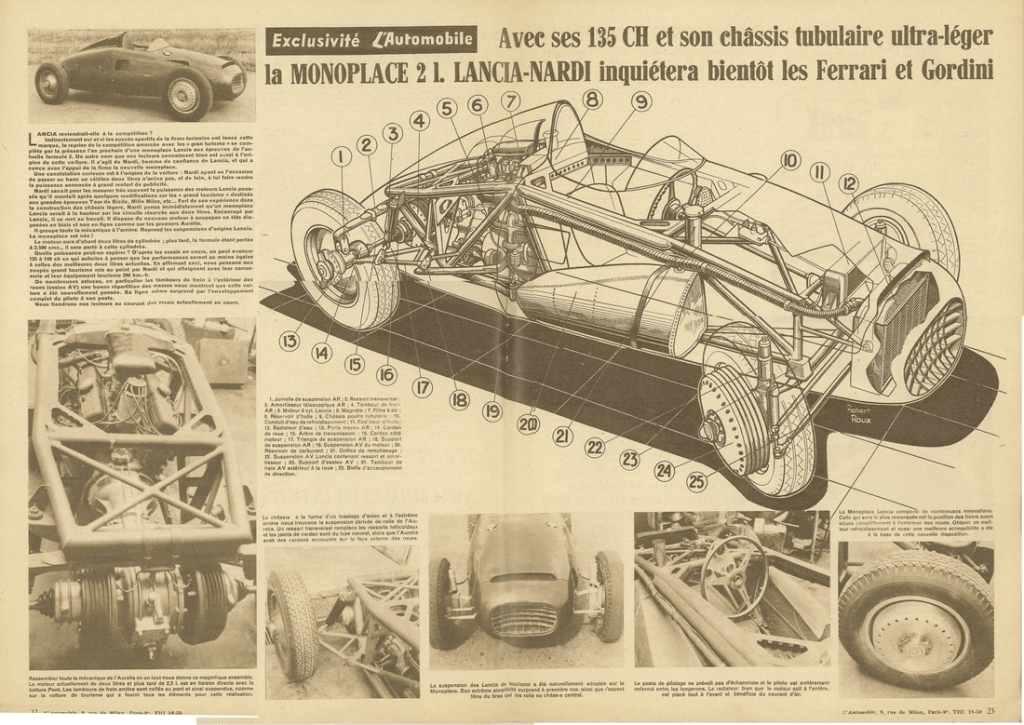
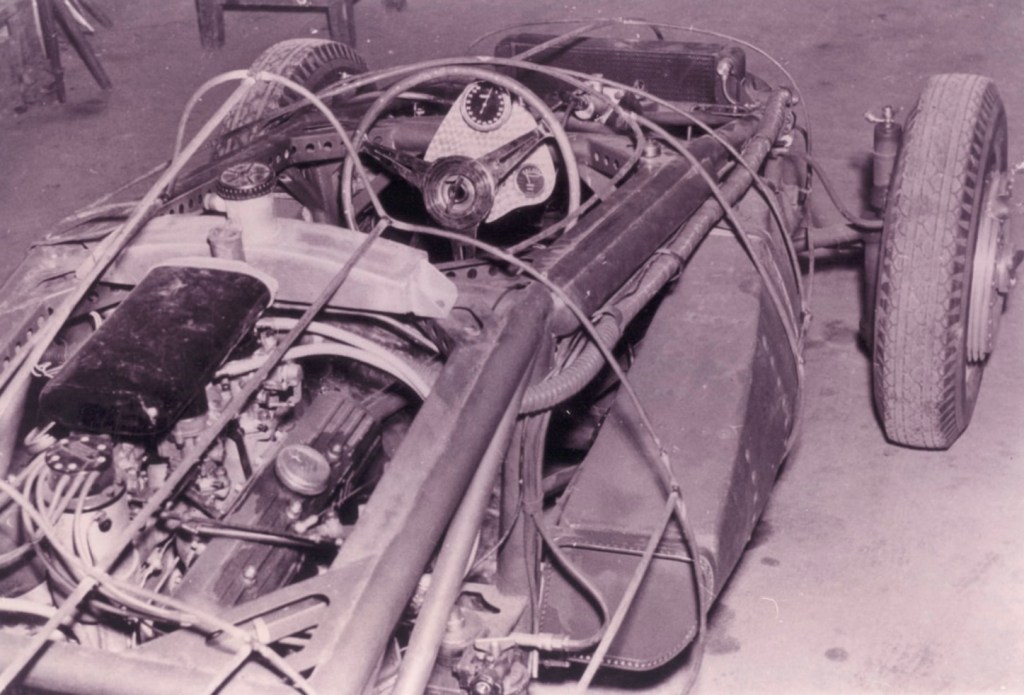
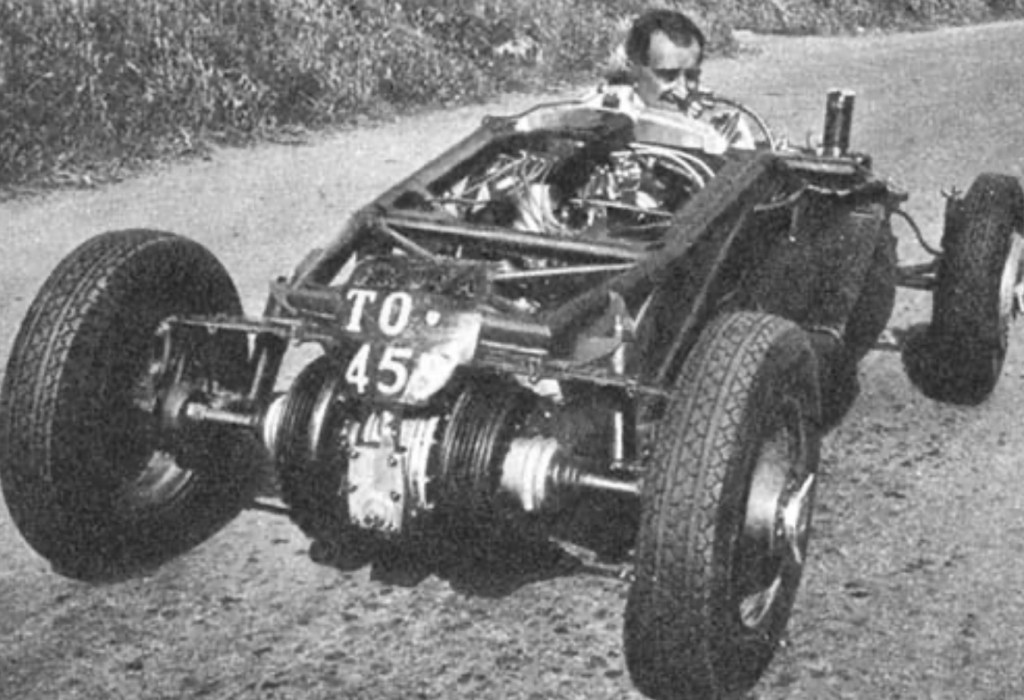
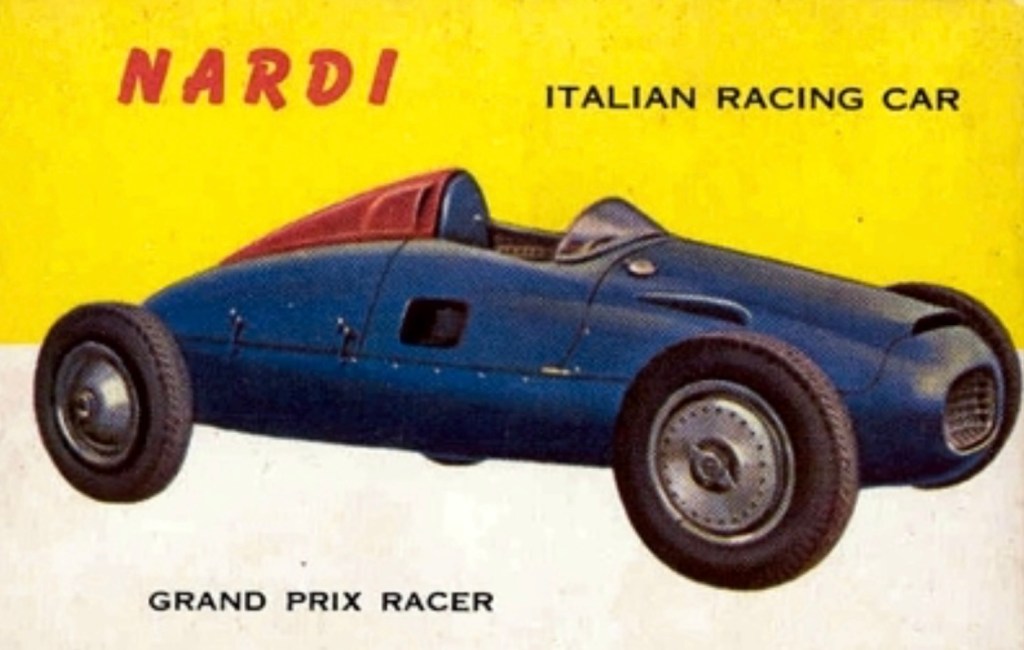
The ‘LAutomobile’s headline confidently predicted that ‘With its 135 hp and ultra-light tubular chassis, the monoposto 2-litte Lancia-Nardi will soon be a threat to Ferrari and Gordini.’
It proved a tad optimistic, only a few test sessions circa-September 1952 made it clear that the power of the modified production Aurelia V6 was well short of the Gordini, let alone the dominant Ferrari 500, so Enrico Nardi put the car aside in favour of other projects, the one machine built was never raced. Reader Henk Vasmel has a record of the car being entered for the Gran Premio Monza on September 7, 1952, but it didn’t appear; no driver was nominated.
(forix.com)
While some may say that the car is just another mighta-been – and such folks are indeed correct – Nardi was on the button, ahead of the curve in fact, in terms of the car’s conception, it’s 1952 remember: mid-engined, tubular frame, however butch it appears to be, mid-mounted fuel tanks, independent front and rear suspension, inboard rear drums, outboard of the wheels at the front.
Beefy tubular frame and plenty of fuel capacity. 2-litre Aurelia V6 was fed, perhaps, by four single-choke Webers, magneto ignition? (lanciaaurelia.info)
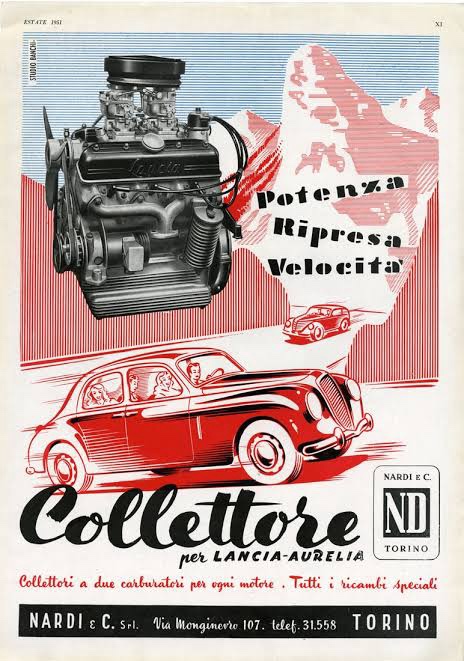
The Lancia parts bin donated the Nardi-modified V6 engine, the gearbox and final drive and the front and rear suspension components. If only Gianni Lancia had said to Vittorio (Jano), ‘This has merit, why don’t you have a play with it?’ History could have been quite different if he had!?
(forix.com)(uniquecarsand parts.com)
Credit…
Robert Roux, L’Automobile, lanciaaurelia.info, forix.com, uniquecarsandparts.com
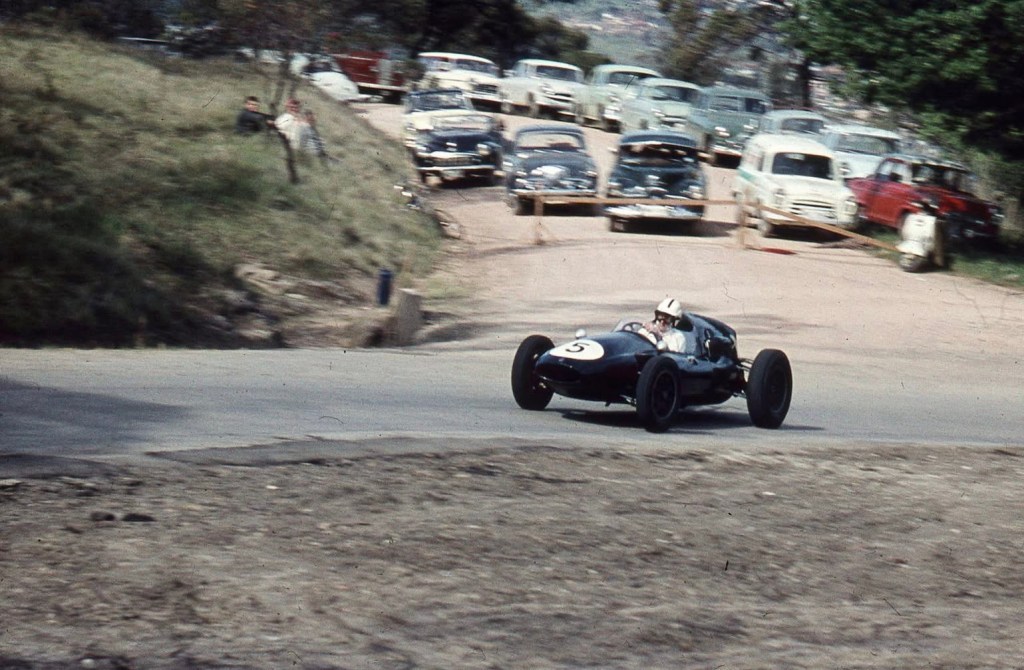
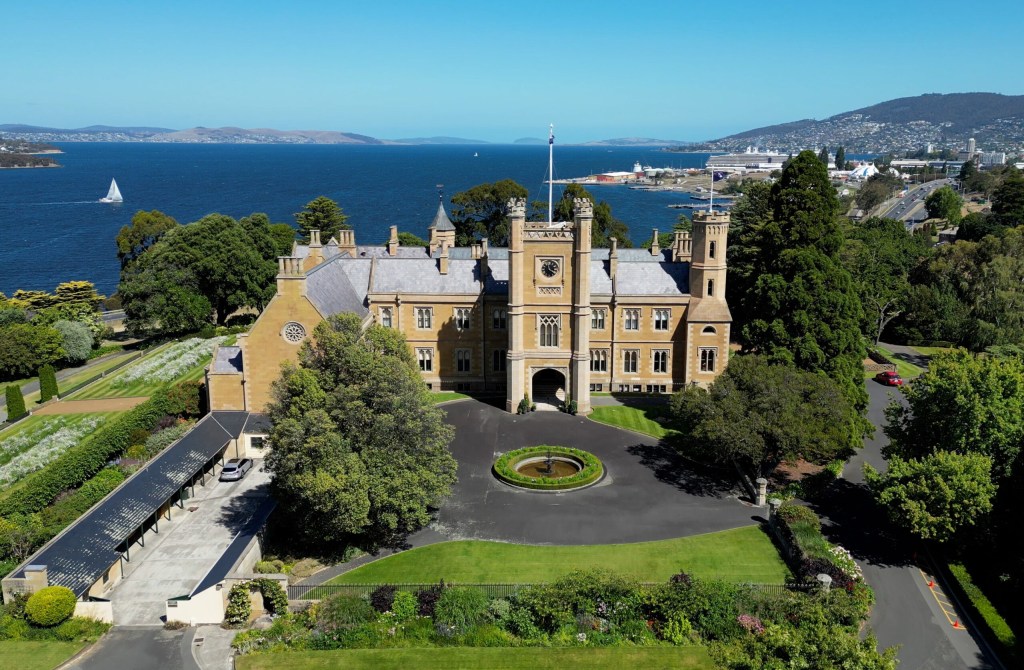
David Sternberg corrects a delicate slide in his Cooper T51 Climax at the Queens Domain hillclimb, Hobart, Tasmania, early 1960s. Date folks? As the name suggests, the locale contains the Governor’s Tasmanian pad.
Its a magnificent shot, photographer unknown, of a short-lived venue in central Hobart that was used from circa-1955-65. A modern event is held there. The climb was well regarded enough to hold the November 14, 1959, Australian Hillclimb Championship, which was won by the legendary Bruce Walton in his Walton Cooper.
Government House within the Queens Domain. Where are the hillclimb roads? Good question (Australian Gardens)(G Brooks)
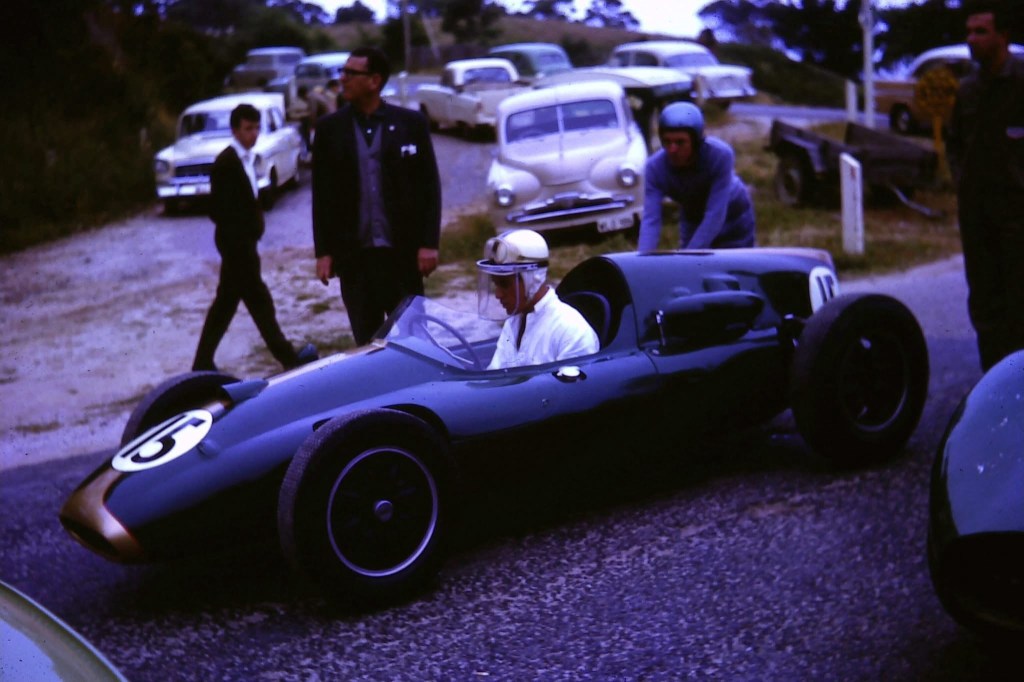
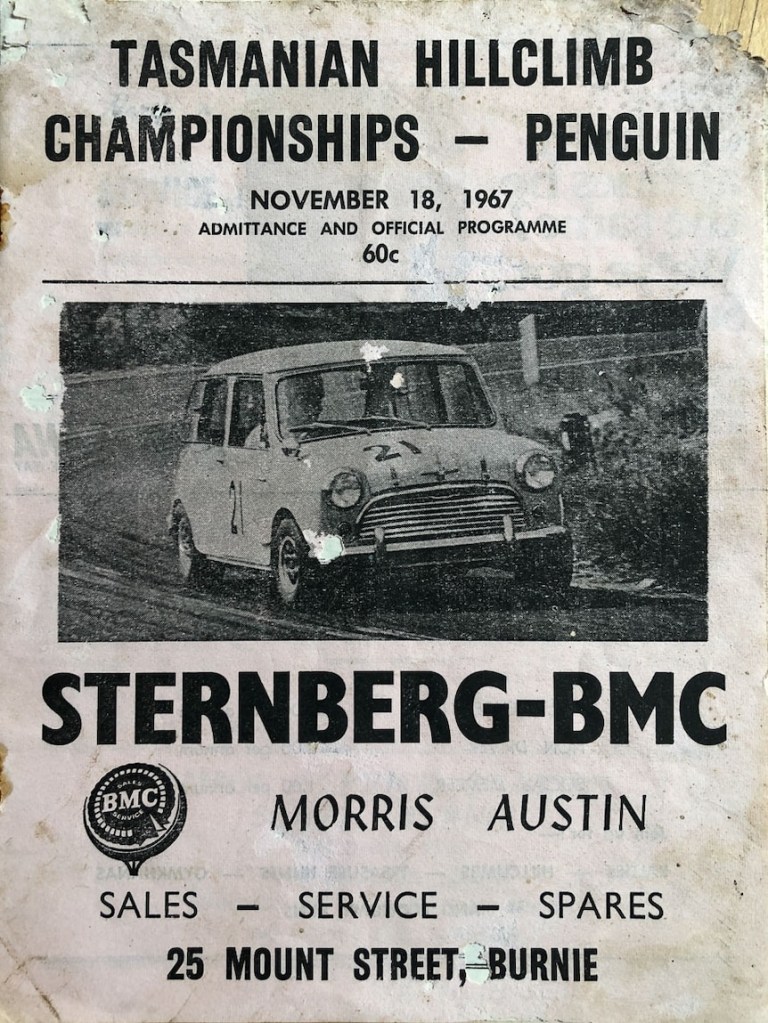
David Sternberg lines up the family Cooper at Penguin Hillclimb, on the island’s north coast at about the same time. That’s father Lex hanging onto the right rear.
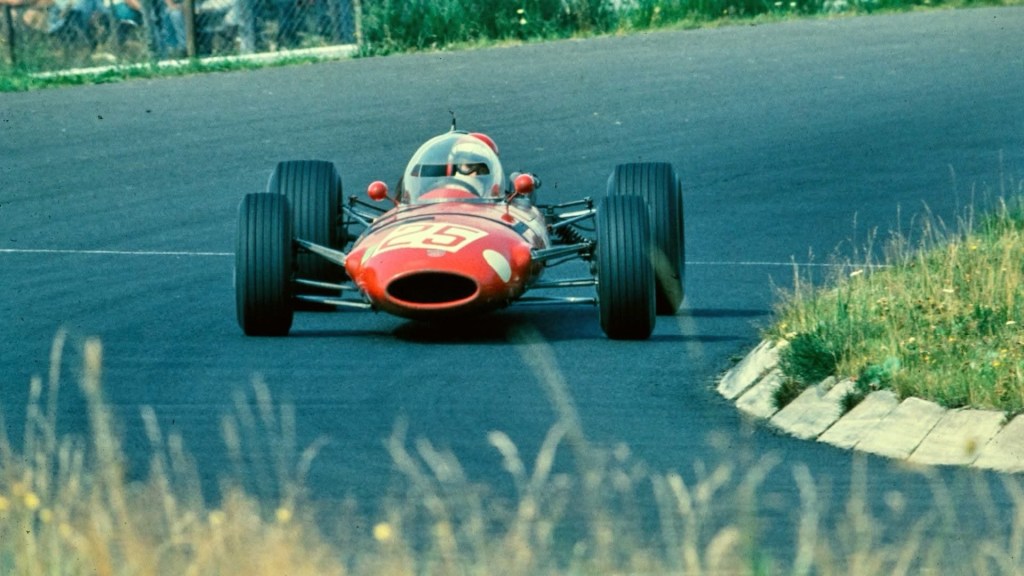
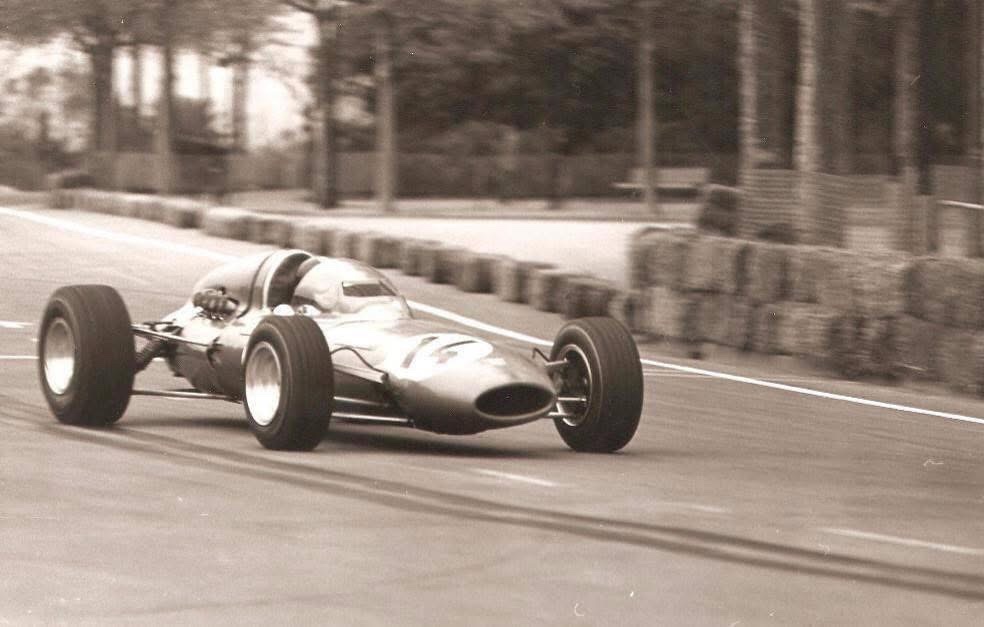
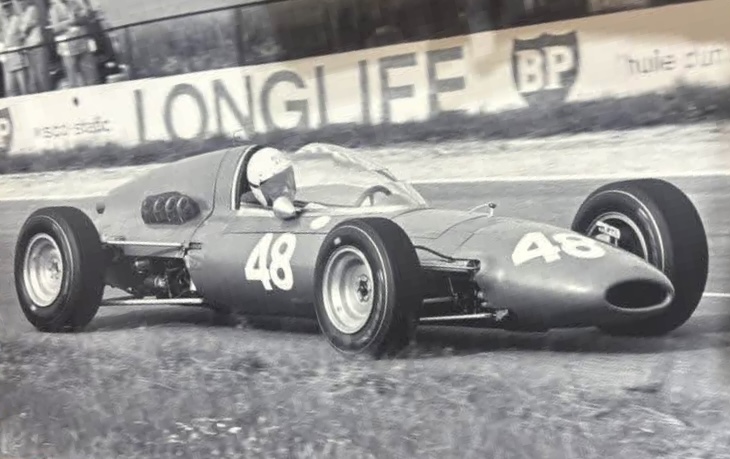
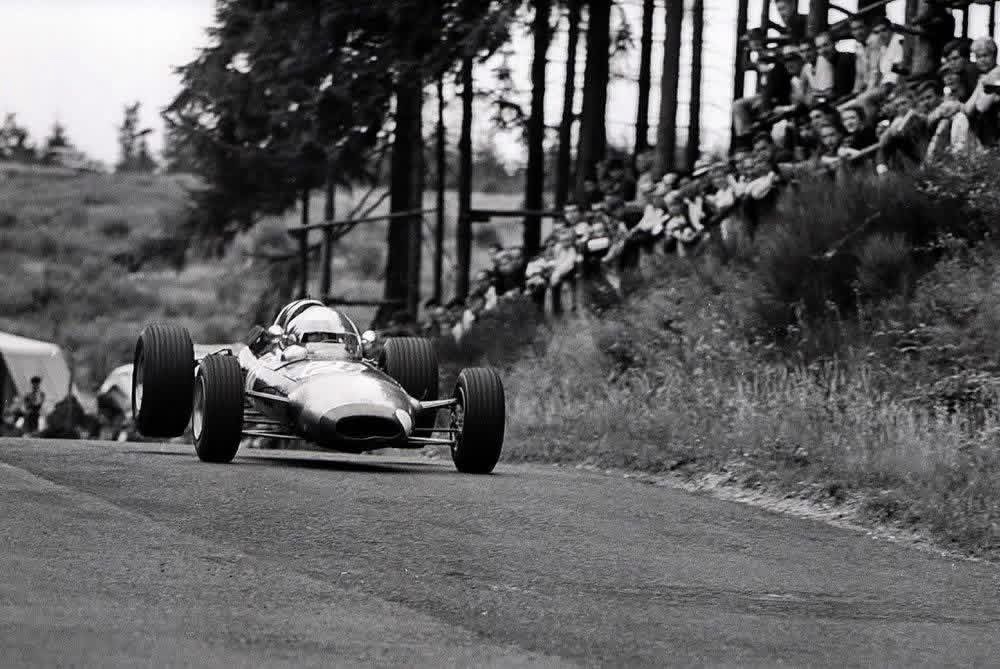
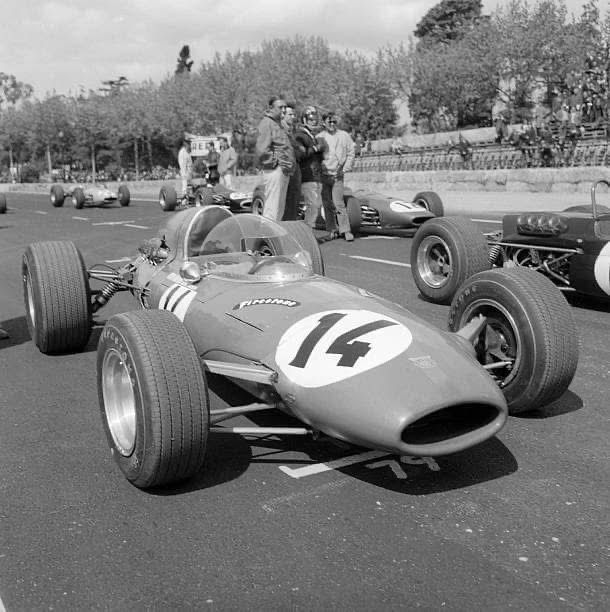
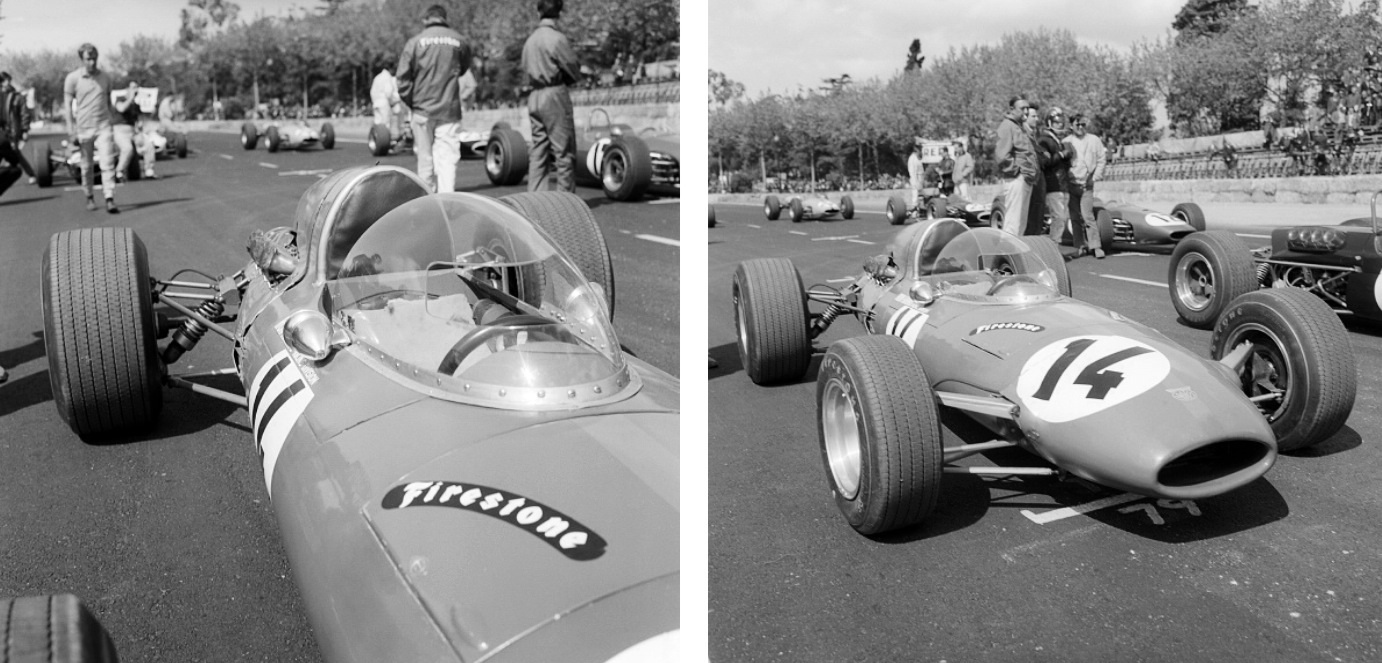
Sighting an apex, Brian Hart, Protos 16 Ford FVA, German Grand Prix, Nurburgring 1967
Brian Hart raced a Lotus F2 and F3 cars for Ron Harris in 1964-66 and was looking for opportunities in the 1.6-litre F2 that had been announced for commencement in 1967. He was after an Unfair Advantage as an innovative engineer.
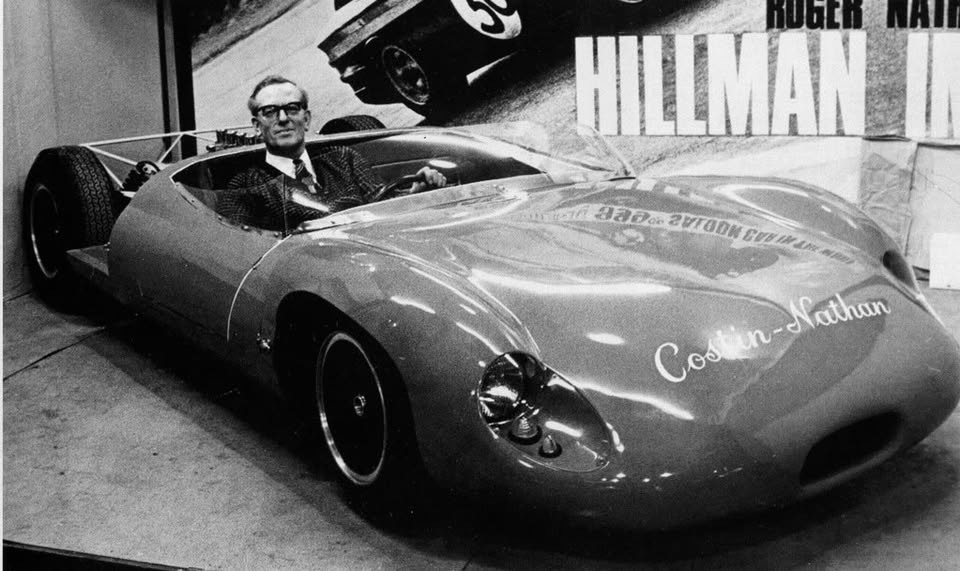
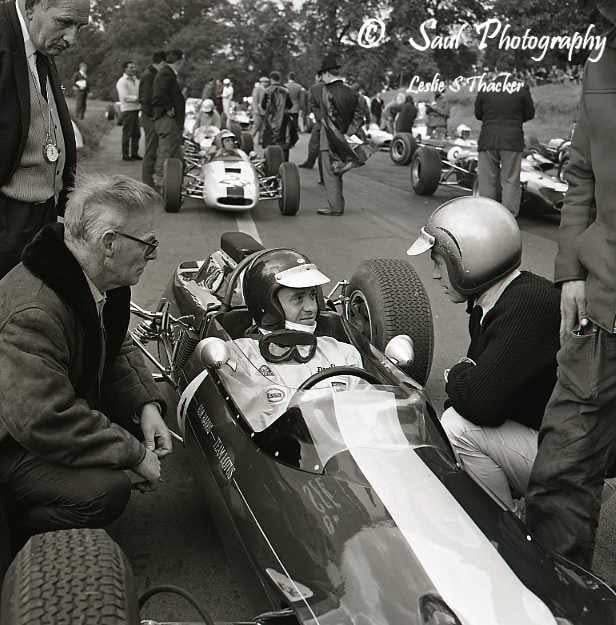
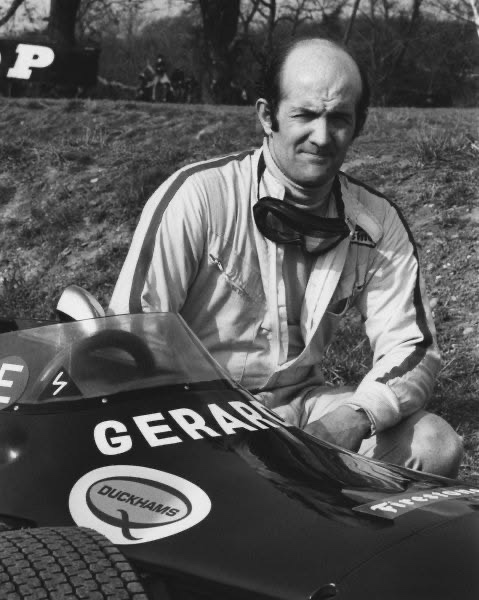
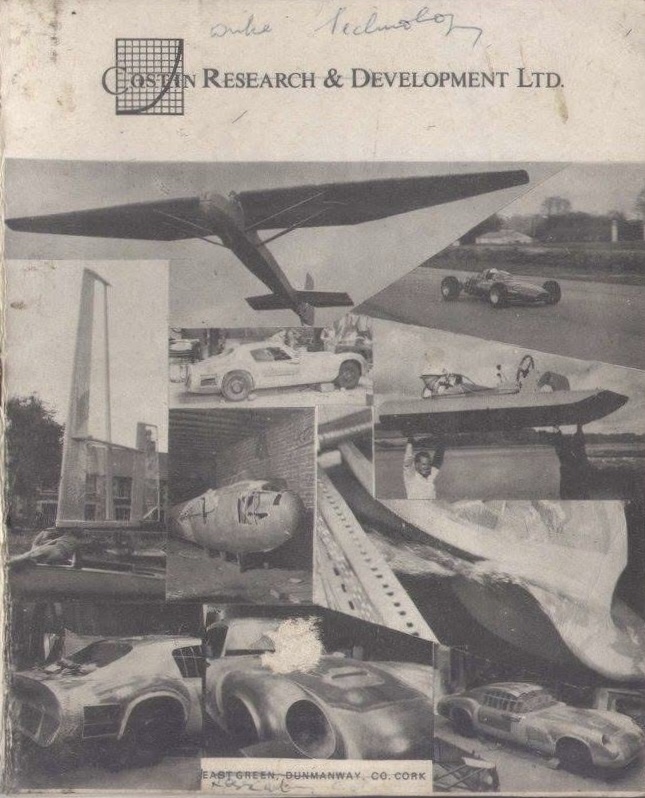
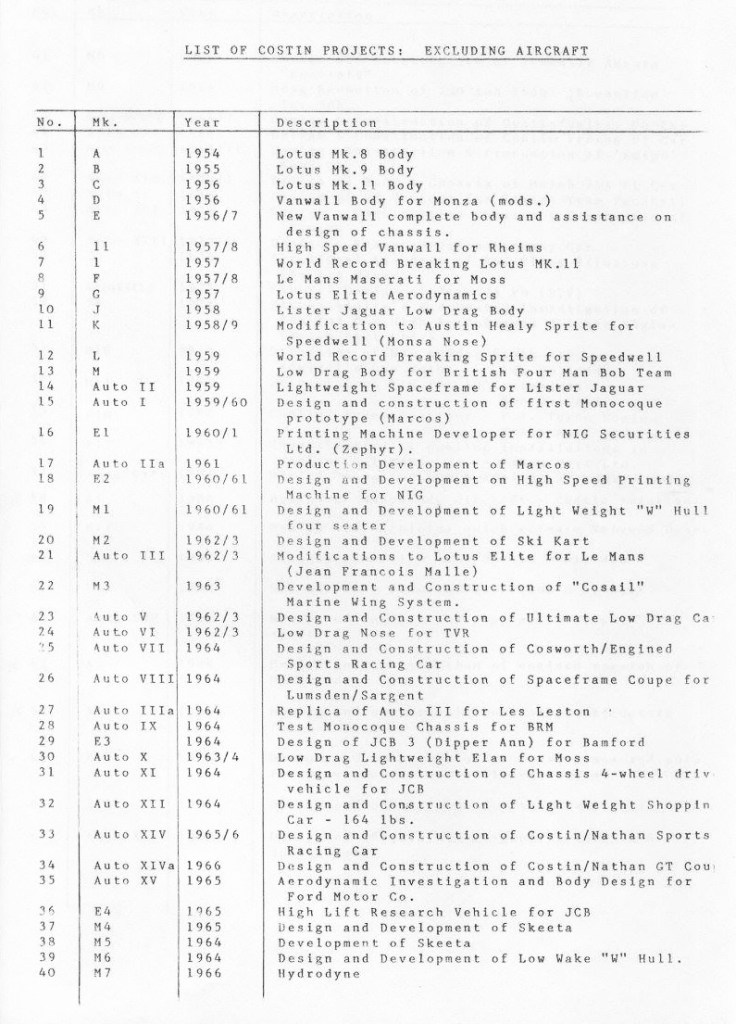
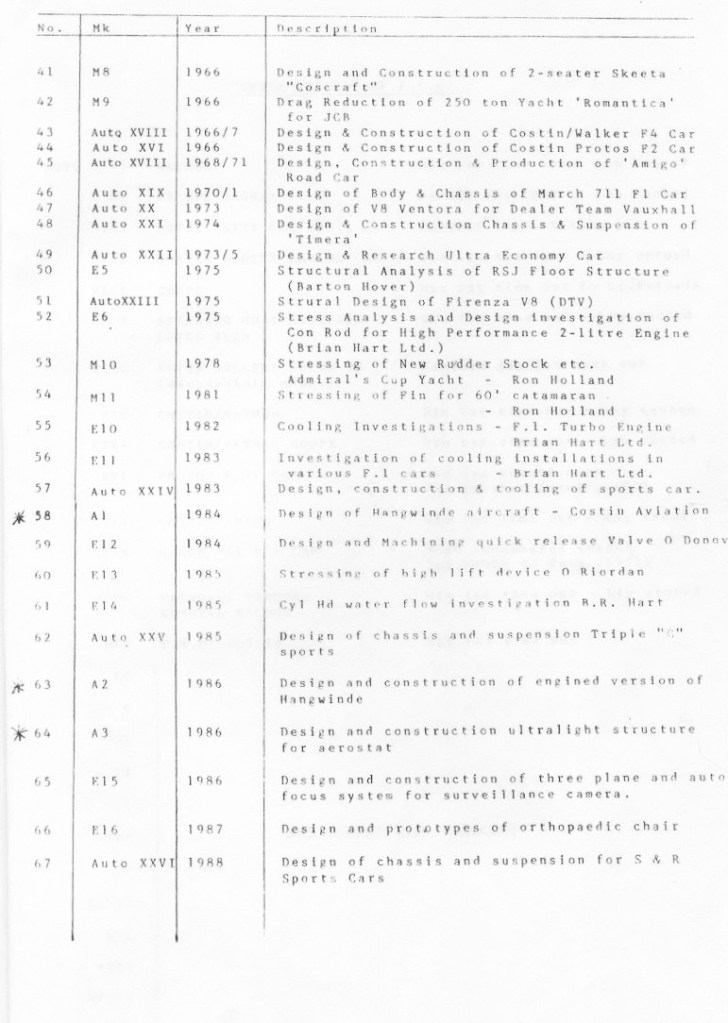
At the January 1966 London Racing Car Show, Hart sought out aerodynamicist/engineer Frank Costin – both were De Havilland Aircraft graduates – about the coming season. Costin was there to sell his new, very light Hillman Imp-powered wooden chassis Costin-Nathan sports car (below). Hart knew of Frank via his younger brother, Mike, who co-founded Cosworth Engineering together with Keith Duckworth, where Brian was an employee.
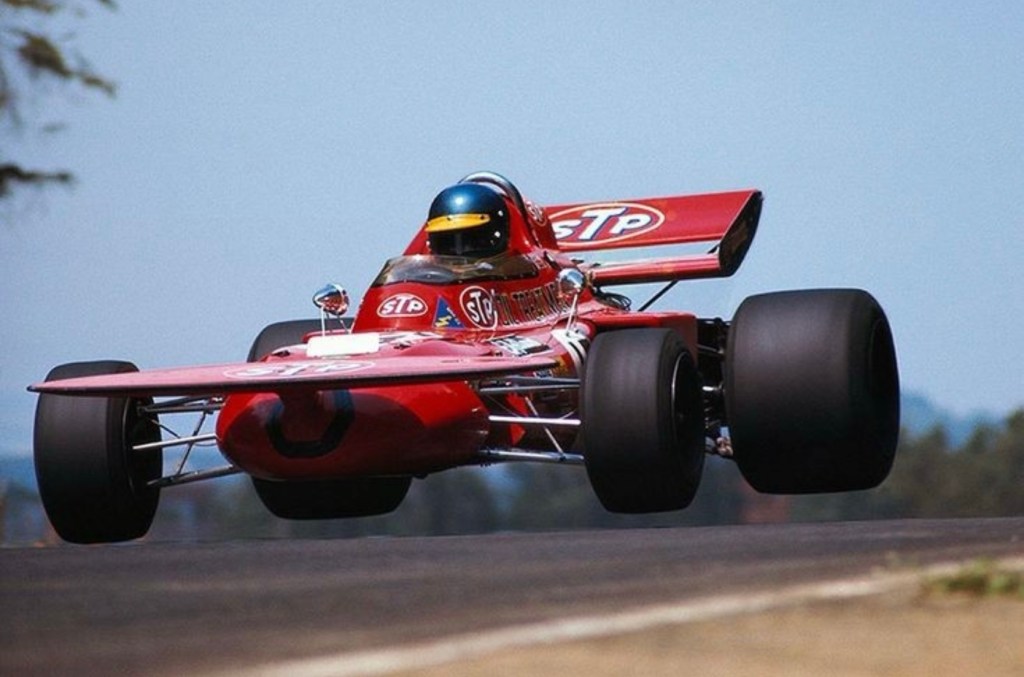
Ronnie Peterson, March 711 Ford, Nurburgring 1971 (R Schlegelmilch)
Earlier, Frank Costin had started Marcos with Jem Marsh. The first Marcos had a wooden chassis too, but Costin’s reputation came from 20 years in aviation, where he developed vast knowledge of the use of wooden structures and aerodynamic theory and practice, to wit, the De Havilland Mosquito
Post war Frank had been summoned by Mike to assist Colin Chapman on the Lotus Mk 8 sports car. Costin improved the car and worked on several more of Chapman’s designs, including Vanwall VW5, the 1958 F1 Manufacturers Championship (then called the International Cup) winning car.
Frank’s Grand Prix involvement extended to the body design of the March 711 Ford Ronnie Peterson drove to second place in the 1971 F1 Drivers World Championship.
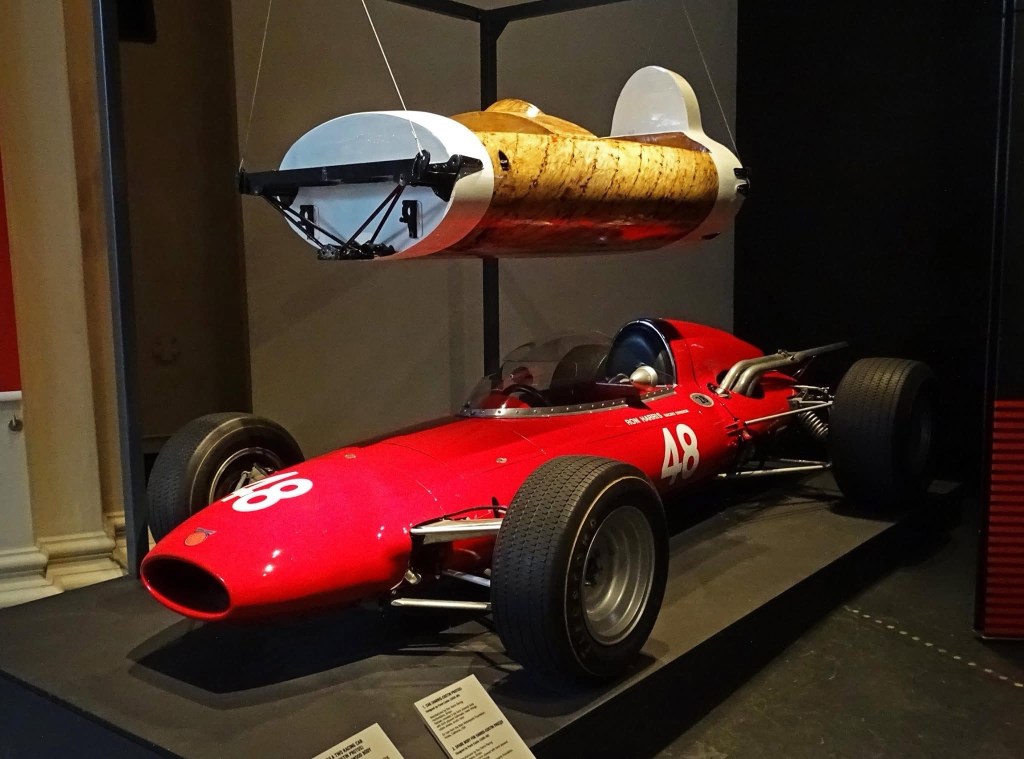
Protos 16 Ford FVA and spare monocoque on display in the Victoria and Albert Museum in 2017 (V & A Museum)
Protos Design and Construction…
Ron Harris (24/12/1905-18/9/1975), hailed from Maidenhead, Surrey, and was a motorcycle racer/dealer who made his name on Manx Nortons and other machines from the early 1930s until the war. Post conflict, he was involved in film distribution, the cash flow from that business initially funded his return to motorsport, the Ron Harris Racing Division, which ran a pair of Lotus 20 Ford FJs in 1961 (John Turner/Mike Ledbrook).
Success with them attracted Lola’s Eric Broadley’s attention in 1962 (John Fenning/John Rhodes in Lola Mk5s) and the Team Lotus F2 machines from 1963 – Lotus 35/44 – where the driving roster included Peter Revson, Brian Hart, Peter Arundell, Francisco Godia, Piers Courage, Picko Troberg, Eric Offenstadt, Jackie Stewart, Jim Clark etc.
Harris’ Lotus gig came to an end in 1966; it was time to become a manufacturer in 1967!
Ron Harris, Jim Clark and Mike Spence with the works Ron Harris Racing Division Lotus 35 Cosworth SCA. Gold Cup Oulton Park, September 18, 1965Frank Costin in Costin Research & Development’s first factory in North Wales (Wales Library)
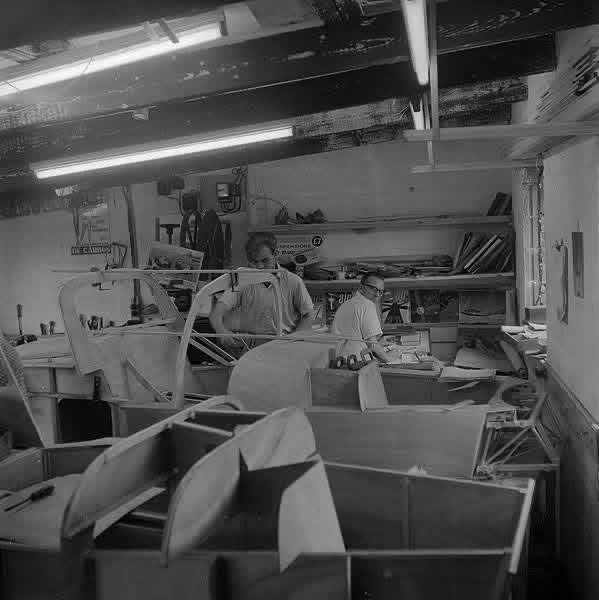
Set in his ways, Costin built the prototype at his home in North Wales with Brian Hart doing the legwork, over 40,000 miles of fetch and carry of component purchase and sub-contracting between London and Wales in the early months of 1967. ‘Frank was a fascinating chap and spoke with such enthusiasm: he was adamant that he could build an F2 car way ahead of its time.’ Brian Hart told Paul Fearnley in a MotorSport 2009 interview.
There was huge excitement among drivers and racing car manufacturers for the new 1.6 F2 with monocoque designs, including the Matra MS5/7, McLaren M4A, and Lola T100, as well as spaceframes, with the dominant car of the year in a variety of hands, Ron Tauranac’s new, spaceframe Brabham BT23.
What became the ubiquitous engine/gearbox combination for the duration of 1967-71 1.6-litre F2, was the Ford Cosworth circa 220bhp @ 9000rpm twin-cam, four-valve, Lucas injected four, and the Hewland FT200 five-speed transaxle, was used by most. BMW, Alfa Romeo four-valve engines, the Ferrari Dino 166 and several others duly noted.
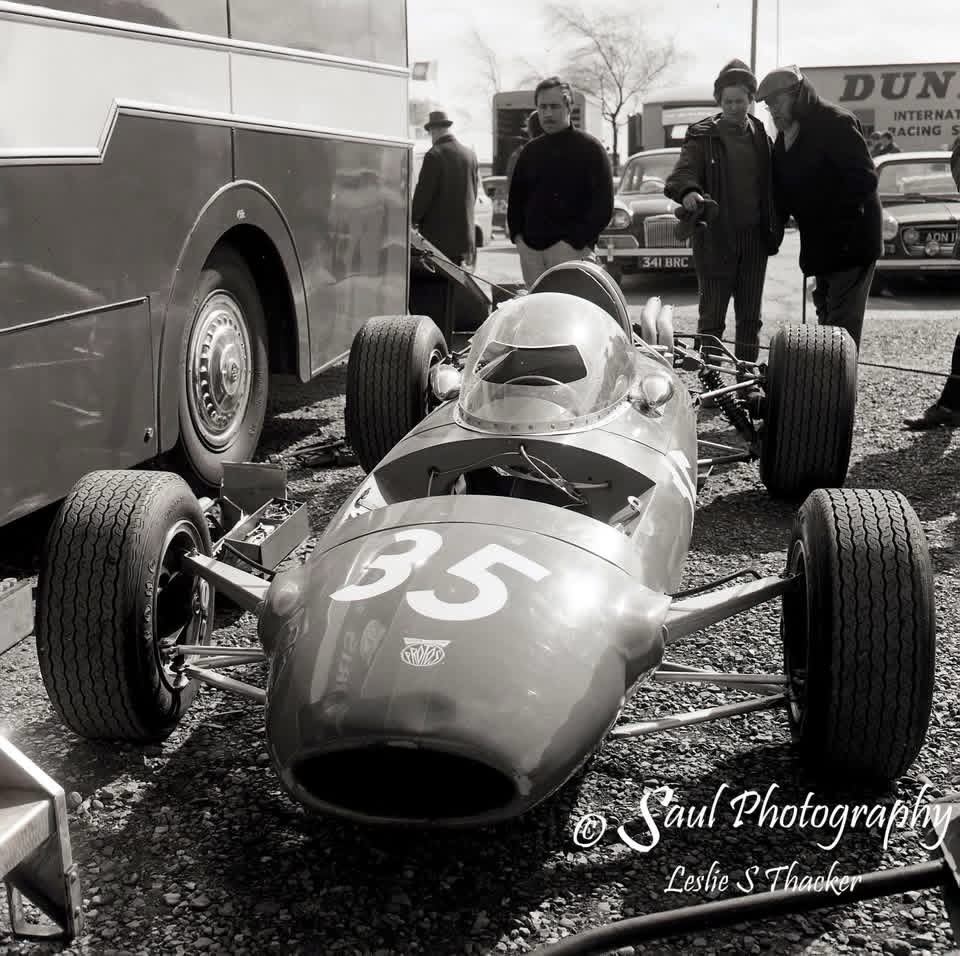
Into that environment of competitive activity, the Costin and Harris team – based in Maidenhead, Hertfordshire – designed and built two strong, light, aerodynamically advanced Protos 16 Ford FVA timber-skinned monocoques in 128 days.
Hart, ‘We were making everything apart from the engine and gearbox; there was no template like there was on a privateer Brabham.’
Brian Hart with his Brabham BT30 Ford FVA at Mallory Park in 1970 (LAT)(L Ghys)
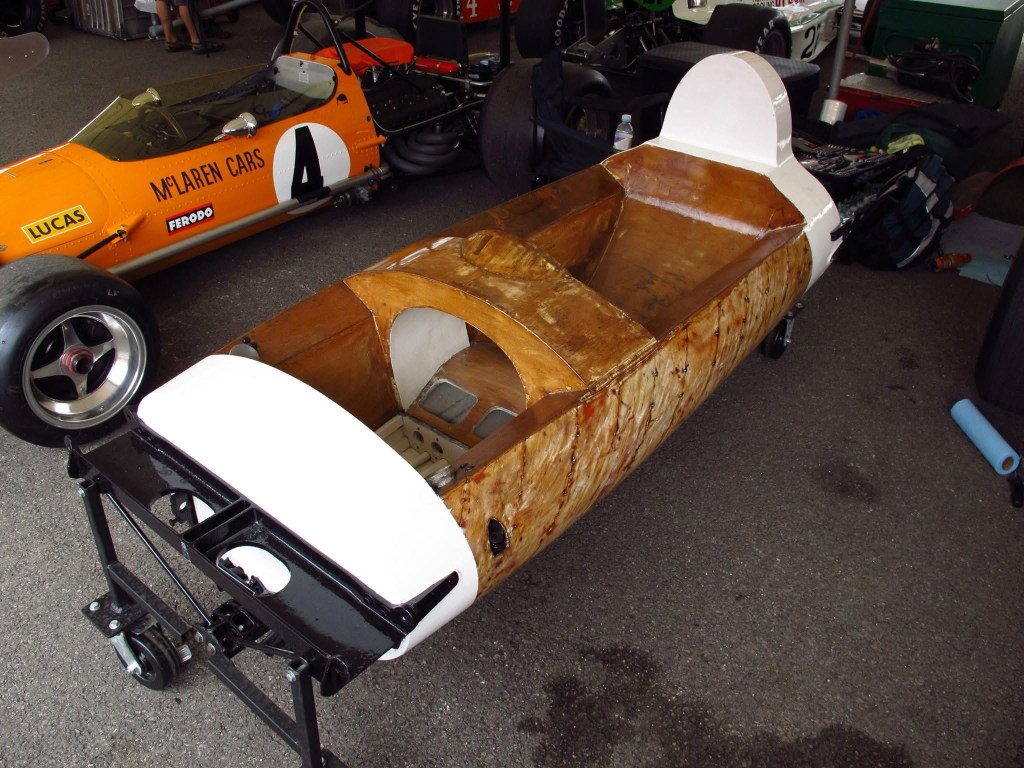
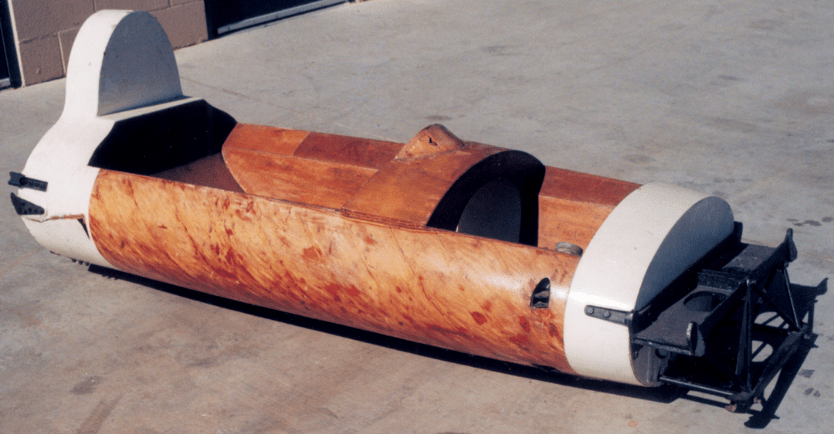
Ed McDonough wrote of the chassis that, ‘Costin’s original intention was to have one set of plywood panels bonded to elliptical plywood end panels and bulkheads with adhesives and further stress-bearing panels of spruce made to form strong box shapes on both sides of the cockpit area. Then, further layers of overlapping strips would form the outer skin. Much like modern carbon-fibre construction, Costin intended for the whole monocoque unit to be placed into a rubber tube to clamp the adhesive and form the proper shape, with the air being sucked out by vacuum. The outcome, Costin reasoned, would be very high levels of strength and low weight in a smooth shape.’
‘Unfortunately, the old spectre of time rushing by meant this elaborate process wouldn’t be possible. So birch plies were used for the outer skin, and the whole thing was clamped conventionally, and the finished wooden structure was smooth-sanded when the glue was dry.’ While this process added weight, after painting, it was hard to tell the difference between this and a steel or alloy unit.’
A tub with a difference, note the diagonal banding of the birchwood plies (Blain Motorsports Foundation)
With the prototype finished in Wales, the other cars were built in Harris’s Maidenhead workshop. Given its unusual construction, Harris coined it ‘Protos’, first in Greek.
With inherent fire risk, Costin designed neoprene-coated alloy fuel tanks, housed in fragile wooden bearers within the chassis. In the event of a big one, the tanks were designed to break away from the car, an element that was tested all too soon…
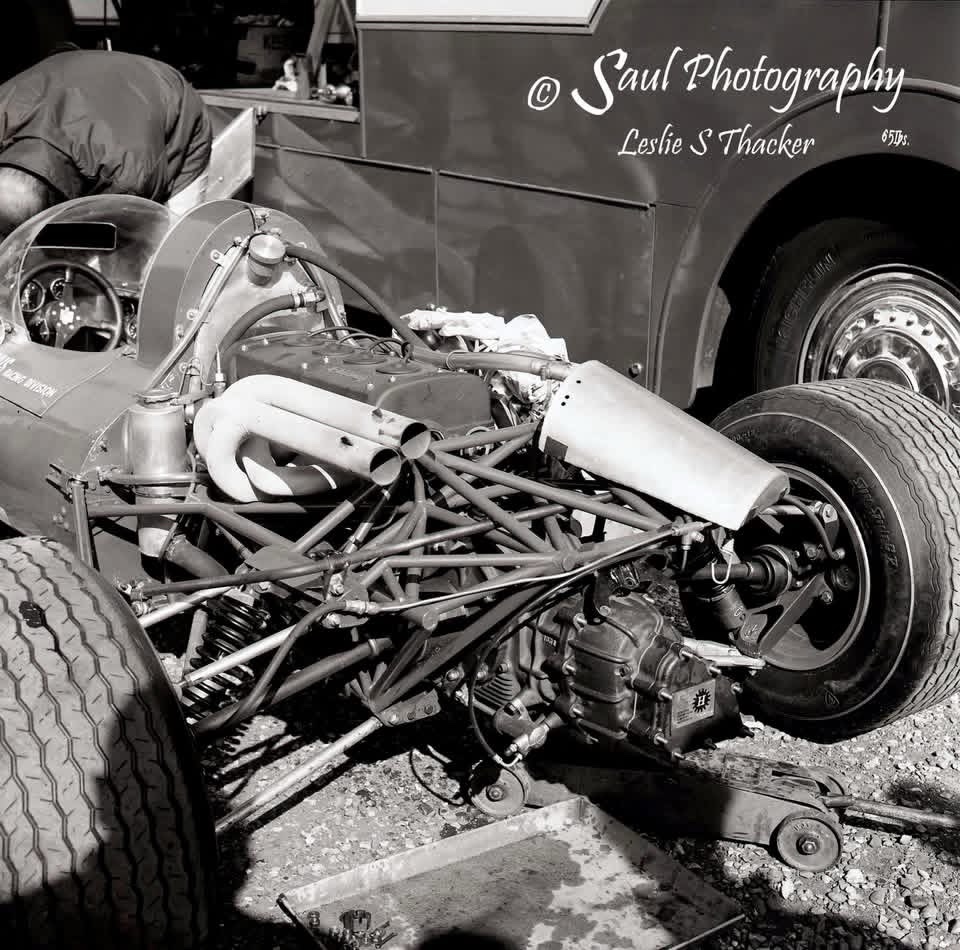
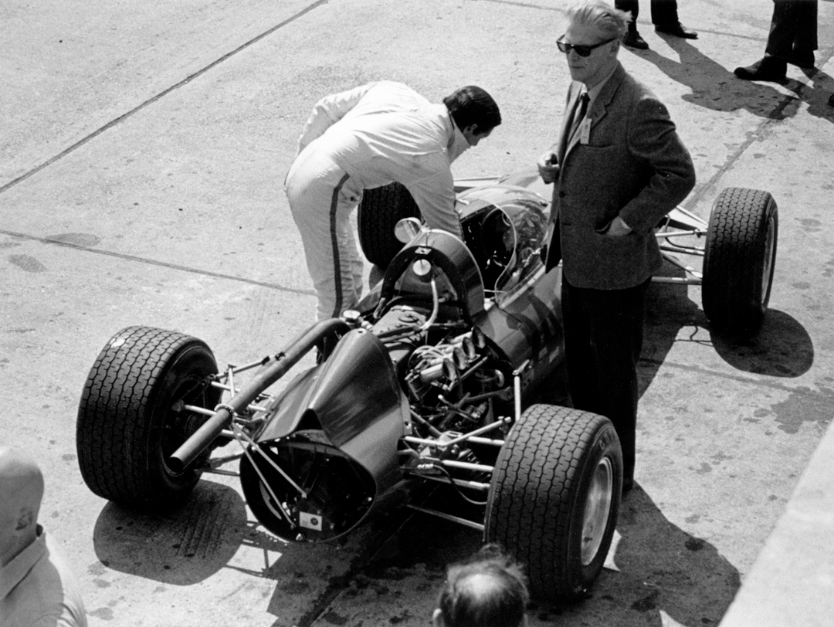
A magnesium bulkhead was mounted across the front of the car, and together with a light tubular subframe, located top-rockers which actuated vertically mounted, inboard Armstrong shockers, wide-based lower wishbones and an adjustable roll-bar. Front and rear uprights were magnesium.
Brian Hart’s Protos 16 HCP-1 BARC 200 Wills Trophy Silverstone March 27, 1967
At the rear, a complex steel tubular spaceframe structure supported the FVA/FT200 combo with six bolts attaching the mechanicals to the tub with the load spread through the wooden monocoque via clever internally glued metal spreaders.
The rear suspension was a combination of magnesium uprights, twin top links, a wide-based wishbone with a pair of radius rods doing fore and aft locational duties, Armstrong shocks and an adjustable roll-bar. Brakes were Girling and tyres Firestone: 9 x 13 inches at the front and 11 x 13 at the rear, with wheels also magnesium.
The car looked the goods when it was launched with some fanfare at Selfridges London store’s ‘Grand Prix Exhibition’ on March 3, 1967.
1967 European F2 Championship…
Harris’s outfit built four tubs (it’s not clear to me if the four build number includes the prototype made in Wales or not), two of which were built up into complete racers with Brian Hart testing HCP1 – Harris Costin Protos – at Goodwood, putting in some competitive times despite the bodywork snagging Hart’s right-hand gear shifting gears, a ‘bubble’ alleviated the problem. Excessive front understeer was cured with changes to the ‘bars and springs.
The cars were entered in the first round of the European F2 Championship on March 24, but failed to appear. All of the other new cars were present with the heats going to Jochen Rindt and Denny Hulme, in Winkelmann and works Brabham BT23 FVAs, with Rindt – the King of F2 – taking the final from Graham Hill, works Lotus 48 FVA and Alan Rees in the other Winkelmann Brabham.
Rees took the Euro F2 Championship points as an ungraded driver. The FIA cleverly created a two-class system. Graded drivers were those who had achieved/won in F1, Can-Am, WSC etc. Ungraded drivers were up-and-comers who had not. Graded drivers could win the races and prize money but were ineligible for Euro F2 Championship points.
Hart raced the car at Silverstone three days later, on March 27, in the BARC Wills Trophy. From grid 16 alongside the Lola T100 BMW of Jo Siffert, Hart and HCP-1 retired in heat 1 when a fuel pump belt broke, while a misfire cruelled his second heat, a recurrent problem throughout the season. Rindt won again.
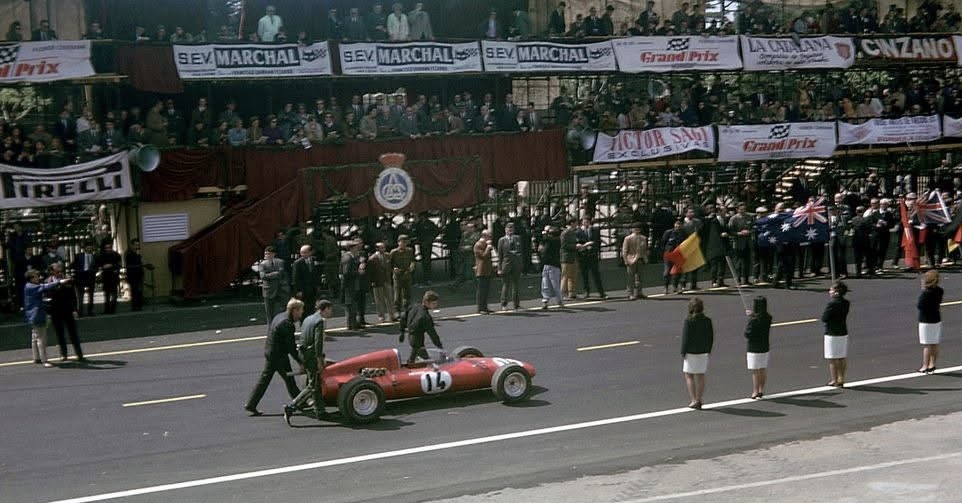
Eric Offenstadt, Montjuïc Parc, Barcelona 1967 (H Fohr Collection)Pomp and ceremony as Offenstadt’s car is rolled onto the Magic Montjuïc grid (J Arch)
Harris entered two cars in the Pau Grand Prix (Rindt, Brabham BT23) on April 4 but the machines weren’t ready, with only Offenstadt contesting the GP de Barcelona at Montjuïc Parc on April 9. After several off-course excursions, he retired with brake and misfiring problems, having done only 12 of the 60 laps completed by Jim Clark’s winning Lotus 48 FVA.
The team missed the Spring Trophy at Oulton Park where many of their competitors raced against Grand Prix cars. Up front the Brabham BT20 Repco V8s of Brabham and Hulme were first and second, with the first F2 home Jackie Oliver’s Lotus 41B FVA.
Just two weeks later, the F2 Circus were off to the Nurburgring for the Eifelrennen and there Offenstadt took Graham Hill off in practice and non-started HCP-1.
HCP-2, was finally finished and tested by Hart. Engine misfires continued to come and go, but the team were optimistic as they headed for the RAC Autocar Trophy at Mallory Park on May 14, a British F2 Championship round. Hart qualified a good fifth, but both cars were withdrawn from the race after Costin found a crack in an upright following another shunt by Offenstadt.
New uprights were cast but the team missed the May 21, Limborg GP at Zolder, where John Surtees’ Lola T100 FVA won.
Hart tested HCP-2 at Brands Hatch, where the misfire appeared to have been cured. He then raced it in the London Trophy British F2 Championship round at Crystal Palace on May 29. Offenstadt was allocated HCP-1.
Both did well in practice and in their heat until the misfire returned: Eric was sixth and Brian seventh. On a track he knew well, Hart ran as high as third in the final before troubles dropped him back to tenth. Offenstadt’s troubles continued; this time, he retired with a broken engine mount, while up front was Jacky Ickx in a Ken Tyrrell Matra MS5 FVA.
The next championship round wasn’t until Hockenheim on July 9, so the team set to with some strengthening modifications while noting that both drivers reported the chassis itself to be immensely stiff.
(M Stegmann Arc)
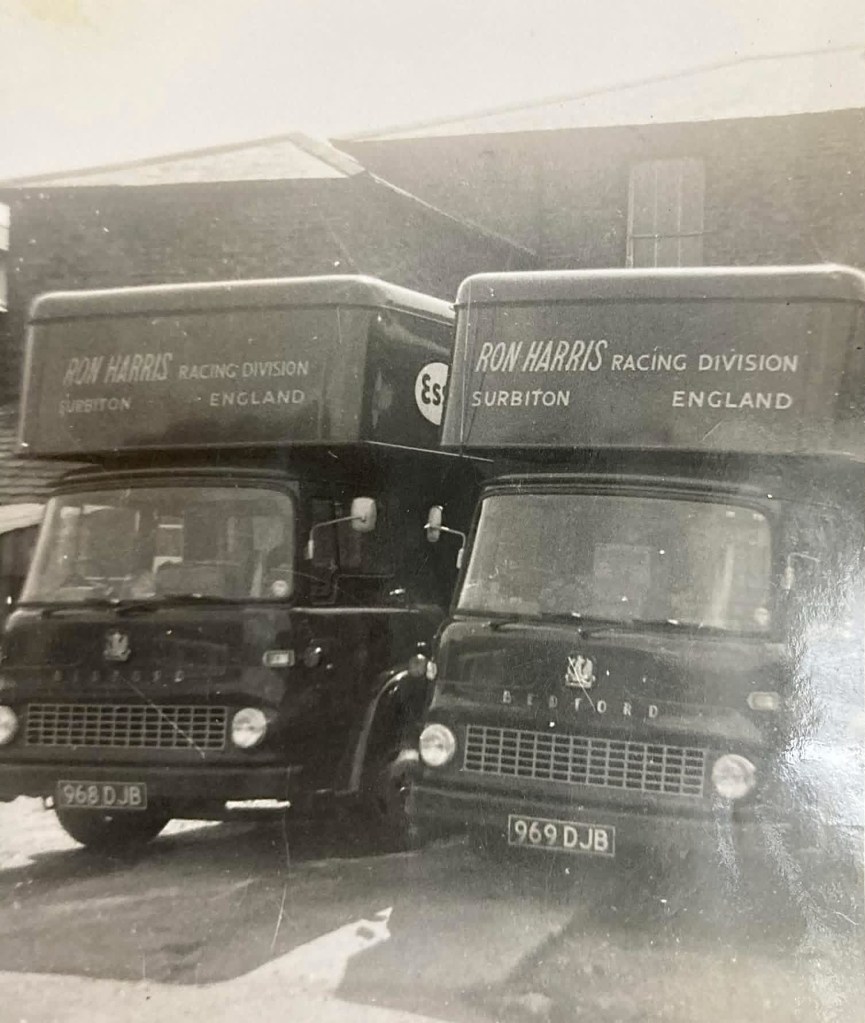
With the work completed the Ron Harris Racing trucks headed for Dover to contest the non-championship Rhein-Pokalrennen on June 11.
Offenstadt demonstrated the promise he showed in 1965 and Hart was in the leading group when he lost fuel pressure.
‘I thought I could win. The car was capable of 180mph, and I was cruising. I could pick up five to six places a lap,’ before the dreaded misfire returned. Brian eventually finished tenth with Offenstadt in a personally rousing fourth. Post-race calculations indicated a top speed of 163 mph without a tow and 172 with one! The customer car favourite Brabham BT23 Ford FVA indicated its user friendliness in that Chris Lambert won the race in a privateer BT23.
Costin observed of his Hockenheim handiwork in 1975, ‘The Protos was approximately 9mph faster at maximum speed than the slowest opposition, and 3-4mph faster than the quicker opposition. This means, given all cars were using the same engine (Cosworth FVA giving 218-220bhp), the aerodynamic advantage of the Protos was about 15bhp over the faster rivals and 40bhp over its slowest competitors at maximum speed.’
Brian Hart was the class of the field during the June 25, 1967 Reims Grand Prix (unattributed)
With the high-speed Reims Grand Prix coming up on June 25 the team continued to refine the Protos aero, including the extension of the cockpit canopy back to the roll bar.
Practice was again marred by problems, not least Offenstadt crashing again. ‘Some of these problems stemmed from the fact that one of the sponsors hadn’t paid some bills, so there wasn’t the funding for bigger brakes, a real limitation at Reims’, McDonough wrote.
‘Hart and the Protos amazed everyone with the car’s speed, catching and passing Jim Clark and Jackie Oliver (Lotus 48/41B) after a spin. The French crowds cheered as Hart would drop back under braking and then catch and retake the leaders. Unfortunately, the swirlpot cracked on lap 37, and the overheated engine quit, but the car was clearly the fastest of all the F2 machines on the day.’ Despite not finishing, Brian was classified ninth…
Pedro is bubbled-up by Ron Harris before heading out at Hockenheim on the July 9, 1967 weekend for his Protos race debut (Blain Motorsports Foundation)
The team elected to miss the non-championship GP de Rouen-les-Essarts (Rindt, Brabham BT23 FVA) on July 9 to contest the Deutschland Trophäe Preis Von Baden on high-speed Hockenheim, on the same day.
Offenstadt was replaced by Pedro Rodriguez from this meeting. Mechanical changes included new front and rear subframes, bigger brakes, and on Rodriguez’s rebuilt HCP-1, a more enclosed rear body section.
Rodriguez turned Q3 into the lead of heat 1, but he spun the Protos in the stadium section when it jumped out of gear and ultimately finished fourth in front of Hart. The Mexican again led heat 2, spun again, and then retired with a bent wishbone while Brian was third. Better was to come in the final, where Hart drove an inspired race, battling with Jackie Ickx and Frank Gardner, and ultimately finished third and bagged fastest lap. Gardner won the round on aggregate in a works BT23 FVA from Hart, with Piers Courage’s McLaren M4A FVA third.
Johnny Servoz-Gavin’s works Matra MS5 FVA from Hart’s UFO Protos (fifth) at Zandvoort July 30, 1967 (LAT)
Ron Tauranac watched Protos progress closely and figured Costin’s something-for-nothing aerodynamic lessons were worth pursuing. Brabham was battling for F1 World Championship honours with Team Lotus and their Ford Cosworth-powered Lotus 49s, so Ron developed his own canopy cover and bodywork to the very rear of his Brabham BT24 Repco’s Hewland gearbox to buy critical RPMs at Monza. Brabham had trouble sighting apexes so equipped, and didn’t race the car in that form. The point is that Costin had some of the competition thinking…
Rodriguez, Jarama, July 23, 1967 (Whittlesea Collection)
The team missed the Tulln-Langenlebarn aerodrome race in Vienna on July 16 for undisclosed reasons but rejoined the fray in Spain, where Hart and Rodriguez contested the GP de Madrid at Jarama on July 23. Hart retired his car due to overheating, and Rodriguez was seventh in the race won by Clark’s Lotus 48 FVA.
Zandvoort hosted an F2 Championship round on July 30 that year; the race in Holland was won by Ickx’s Matra MS5 FVA. Hart was sixth, with Rob Slotemaker a DNF due to gearbox problems after only eight of the 30 laps. The Dutchman stood in for Rodriguez, who was racing a JW Automotive Mirage M1 Ford in the Brands Hatch 6-Hours.
Kurt Ahrens from Brian Hart during the August 1967 German GP, Nurburgring (LAT)Ahrens landing at Flugplatz? DNF radiator (K Tweddel)
Talented German, Kurt Ahrens, raced HCP-1 in the F2 class of the German Grand Prix at the Nurburgring on August 6 and retired, while Hart finished fourth in class with Jackie Oliver the first of the F2s in this non-championship Euro F2 round. Ahrens was an F3 and F2 Brabham veteran of some years, his opinions of the Protos would have been interesting.
The Harris equipe missed the non-championship Kanonloppet, the Swedish Grand Prix, at Karlskoga on August 11, where Jackie Stewart prevailed in a Tyrrell Matra MS7 FVA. The F1 championship aspirant added his name to a long list of F2 race winners (in all championships) in 1967: Rindt, Clark, Brabham, Surtees, Ickx, Widdows, Gardner and Oliver.
The long haul to the wilds of Sicily for the GP del Mediterraneo at Enna-Pergusa on August 20 followed, a day on which Rodriguez put Costin’s woodie to the ultimate test!
Luc Ghys was there. ‘The track, similar to Hockenheim with long straights, led to fierce slipstream battles. On lap 10, Jackie Stewart’s Matra had Pedro on his tail, and both were passing Beltoise’s leading Matra. The Frenchman gave way to Stewart but immediately tucked in behind, touching Pedro’s car at high speed.’
Beltoise told Ed McDonough decades later how he had been surprised by the speed of the Protos. When Rodriguez attempted to pass the Frenchman’s Matra, Beltoise admitted not being ready for the move and didn’t give Pedro enough room as a consequence.
Enna-Pergusa August 1967. Stewart Matra MS7 in the middle has just jumped out of Beltoise’s MS7 slipstream on the right, JYS then passes JPB, who immediately pulls in behind JYS and collects Pedro the Innocent at left, who was in the process of making his own run in the slippery Protos (Blain Motorsports Foundation)One careful lady owner…Protos wooden, aluminium and rubber remains at Enna (J Gleave)
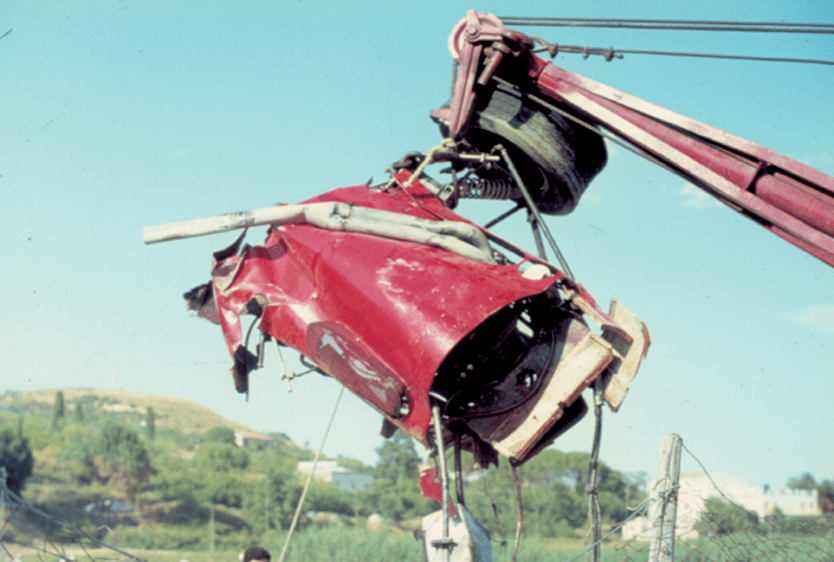
The car careered out of control, hit the guardrails and broke in half, jettisoning the fuel cells as intended. The tub bore the impact as designed and protected the Mexican from serious nasties: he was still in second place as the Protos-in-bits blasted past the finishing line! Said components were then deposited into Enna’s famous snake-infested lake! Hart had a weekend of consistency, finishing eighth in both heats and the final; both Protos did 165 mph on Enna’s straights.
Pedro, interviewed not long after the race, said philosophically, ‘If it wasn’t for that Protos, I wouldn’t be here talking to you now. It has a wooden monocoque body, you see, and at about 150 miles an hour, it absorbed the impact completely. The car starts to disintegrate, and I went out of the car with the seat on in the middle of the road! The only thing that happened to me was that my right heel was what they call a poolverise fracture.’ Pedro also suffered a small fracture in his left ankle.
‘Ron called us into his hotel room (after the race),’ says Hart, ‘and not only did he say that there wouldn’t be a next year, he also said that he wouldn’t be able to pay off Frank for the remainder of this year.’ Hart’s eighth at Enna was the programme’s denouement. ‘I don’t think we would have won in our second year, but we would have been closer to the front; I think Frank could see that some compromises were needed. But we never got the chance. But what a project. I’ve got a soft spot for that car.’
Despite making four tubs, no more than two complete cars ever existed; HCP-1 was rebuilt over the winter, consuming one of the spare monocoques. Harris and Costin had initially intended to run an evolved Protos in 1968; the same decision was made by most of the major manufacturers to run evolutions of their ’67 cars, but the year had been so expensive that Harris decided to run Tecnos instead.
The Carnival is Over. Rodriguez prepares to saddle up at the Nurburgring on April 21, 1968 while Ron Harris waits, and below on track. The last Protos in-period race (Blain Motorsports Foundation)(Blain Motorsports Foundation)
When the Pederzanis delivered the Tecnos hopelessly late, Rodriguez, clearly fond of the Woodies, asked Harris to enter a Protos for the non-F2 Championship Eifelrennen at the Nurburgring on April 21.
Pedro raced HCP-1 and Vic Elford HCP-2 on his single-seater debut. Rodriguez retired out of fuel while Vic finished a splendid seventh. Man On The Rise Chris Irwin won in a works Lola T100 FVA, his next visit to the Eifel didn’t end quite so well.
Sadly, that was it, Rodriguez raced the first of Harris’ Tecno PA68 FVAs at Crystal Palace on June 3 1968, then added insult to Ron Harris’ injury by crashing it on the first lap of the final, having placed fifth in his heat…the Protos never raced again.
The 1968 season was so expensive and difficult for Harris that it ended his active involvement in racing. Much of his equipment disappeared or was damaged on the late-season Temporada tour in South America, so ultimately everything was sold off.
Vic Elford and Pedro Rodriguez in the final race weekend for the Protos 16 Ford FVA during the April 21, 1968 Eifelrennen weekend
Hindsight…
Brian Hart told Paul Fearnley, ‘It was incredibly fast in a straight line (a useful asset in those slipstreaming days), but it had shortcomings. The engine was carried in a metal subframe, and where this was affixed to the wooden tub was a weak point. And because the car had a rounded shape, the side fuel tanks were carried quite high, giving a bad CoG. It was heavy, too – about 25kg more than the rest – and when this was coupled with an initial lack of anti-roll bars (Costin had yet to be convinced of their necessity), it was a bit of a handful in the corners. One of our biggest failings was our inability to engineer the car once the season had started: money was tight, and we had no baseline from which to work.’
Eric Offenstadt said of the car to Michael Dawson, ‘I had a picture of my pole position at Hockenheim in front of Jochen Rindt with the Protos…but I lost it. The roadholding was “peculiar”, not because of the wooden chassis, but because of “rare suspension geometry”.
Firestone funded the project, which explains in part why Ron Harris was adventurous. The challenge to design, build, develop, prepare and race a new car was a far more complex and costly process than racing works-Lotuses that were competitive outta the box.
That the designer was reluctant to leave Wales must have made the development of the car a challenge!
Despite the design’s shortcomings, it was clearly competitive on faster tracks, with suspension geometry the area that required focus over the 1967-68 winter, had the Harris team raced on with the Protos.
The Ford Cosworth FVA engine problems the Harris team experienced in 1967 are somewhat ironic given Brian Hart Engines Ltd’s capabilities in preparing and developing these engines by 1969!…
What extraordinary racing cars those Protos were/are.
Historic Era…
Englishman Richard Whittlesea bought the two cars, HCP-1 complete and HCP-2 as a rolling chassis, restoring and racing HCP-1 and displaying it at Donington, before selling the cars to American Norbert McNamara, then later he sold them to Californian Brian Blain/Blain Motorsports Foundation, who retains them.
Etcetera…
(Getty Images-GP Library)
The Protos Ford FVA of Eric Offenstadt on the Montuic Park grid, April 9, 1967. Nice shot of the swept-back rockers and cast-mag upright
Credits…
Getty Images, Hans Fohr Collection, Steve Wilkinson Archive, Ed McDonough article on supercars.net, Pete Austin, Les Thacker, Josef Arch, ‘Aerodynamics of the modern car’, Frank Costin in Automotive Engineer magazine in 1975, ‘Ply in The Ointment’ Paul Fearnley, MotorSport November 2003, Formula 2 Racing and Frank Costin Autos Facebook pages, Mike Stegmann, Rafael Calatayud Collection, Blain Motorsport Foundation, Jim Gleave
Tailpiece…
(R Calatayud)
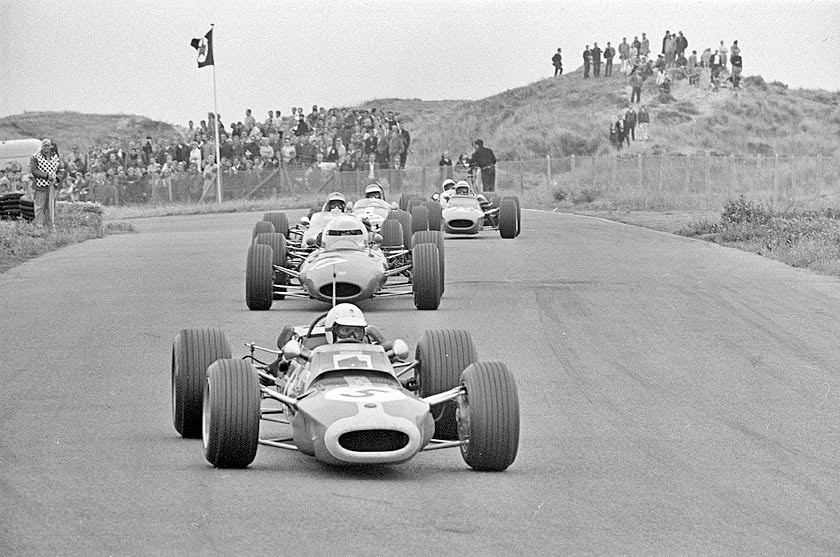
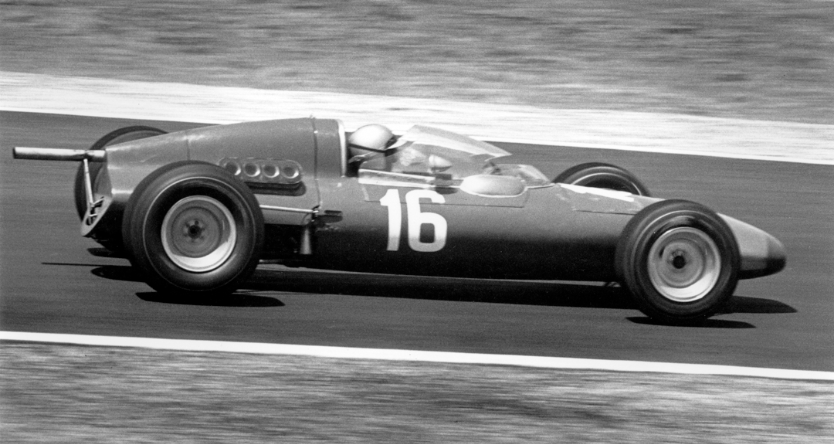
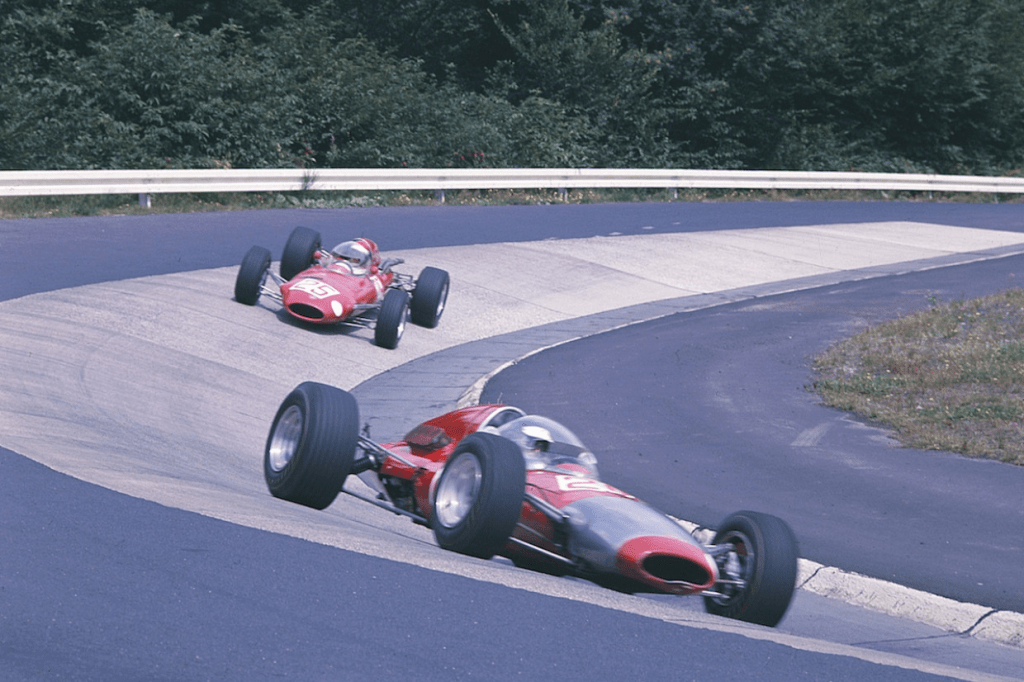
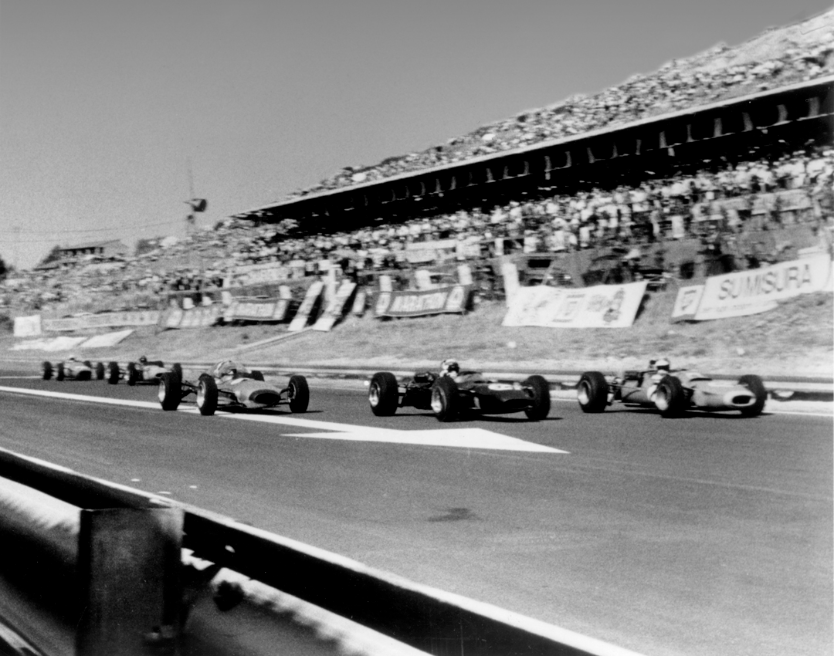
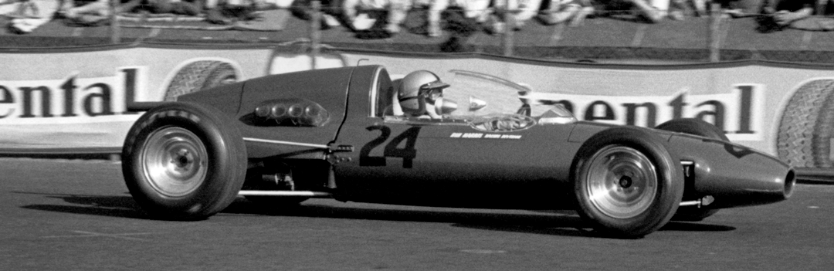
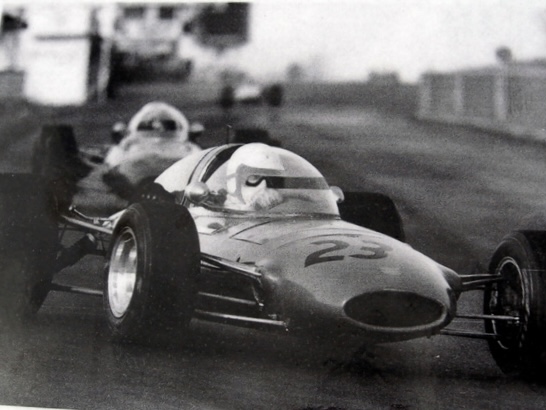
Hmmm…which cars are the Protos’ I wonder?
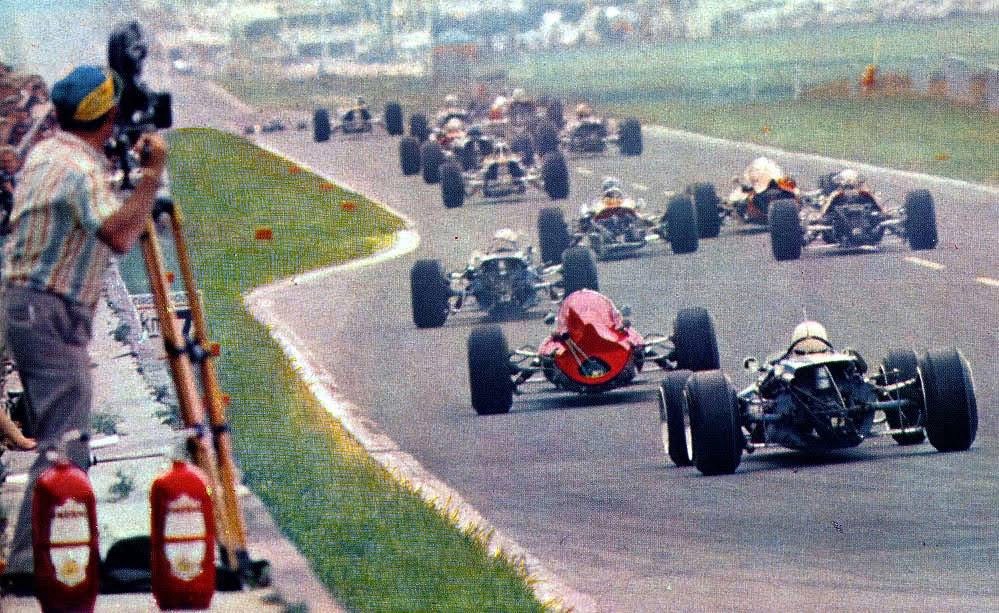
Reims June 25, 1967. DNF’s for both Hart and Offenstadt. Jochen Rindt’s Winkelmann BT23 FVA won from Graham Hill, John Surtees, Jackie Stewart and Denny Hulme, World Champions all! In its heyday(s) F2 was absolutely marvellous.
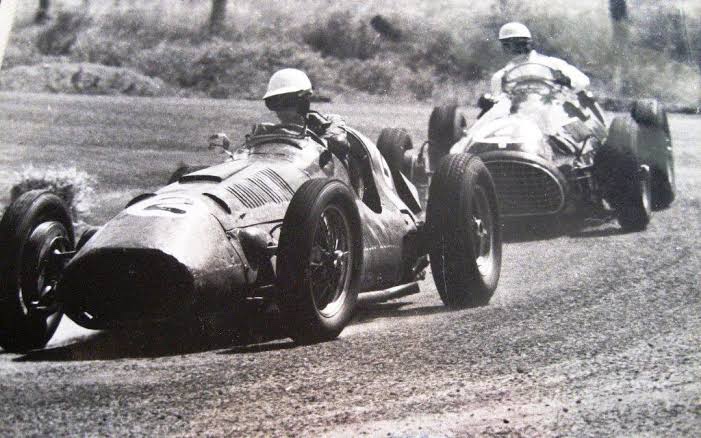
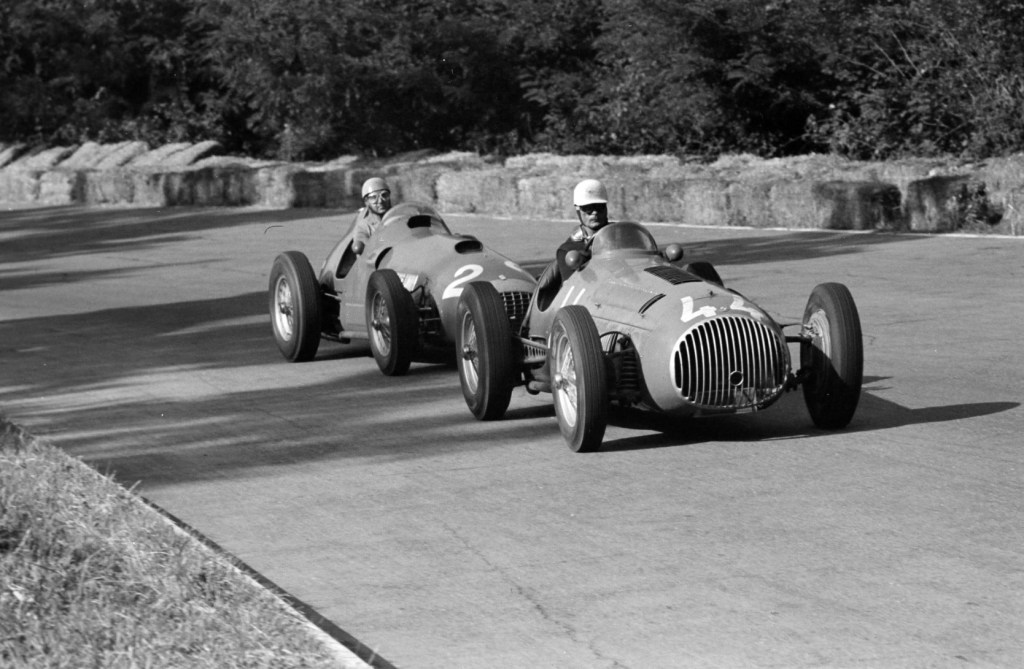
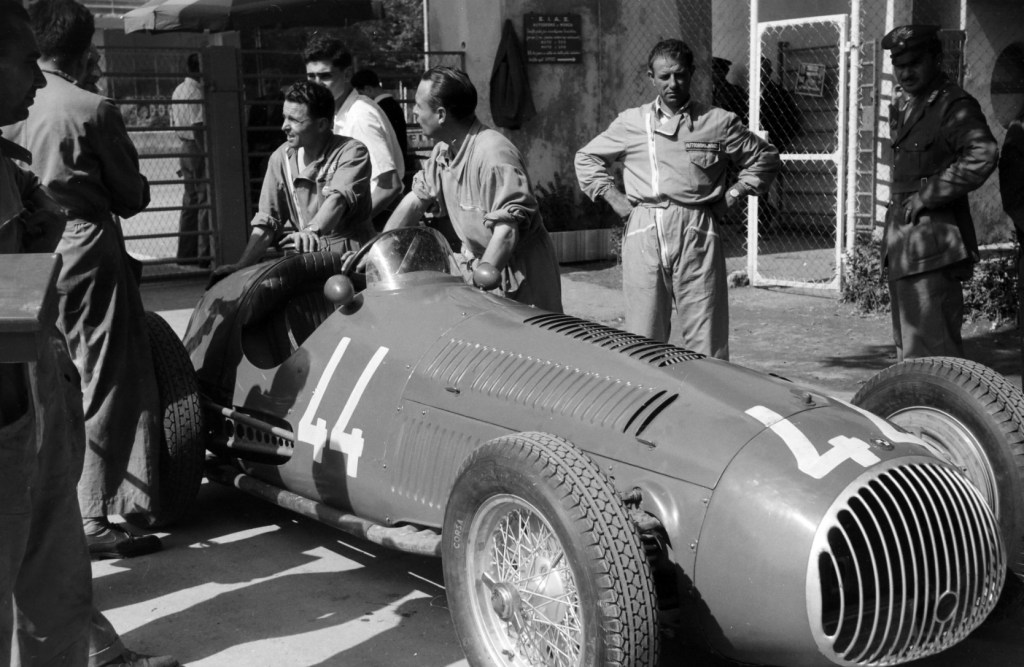
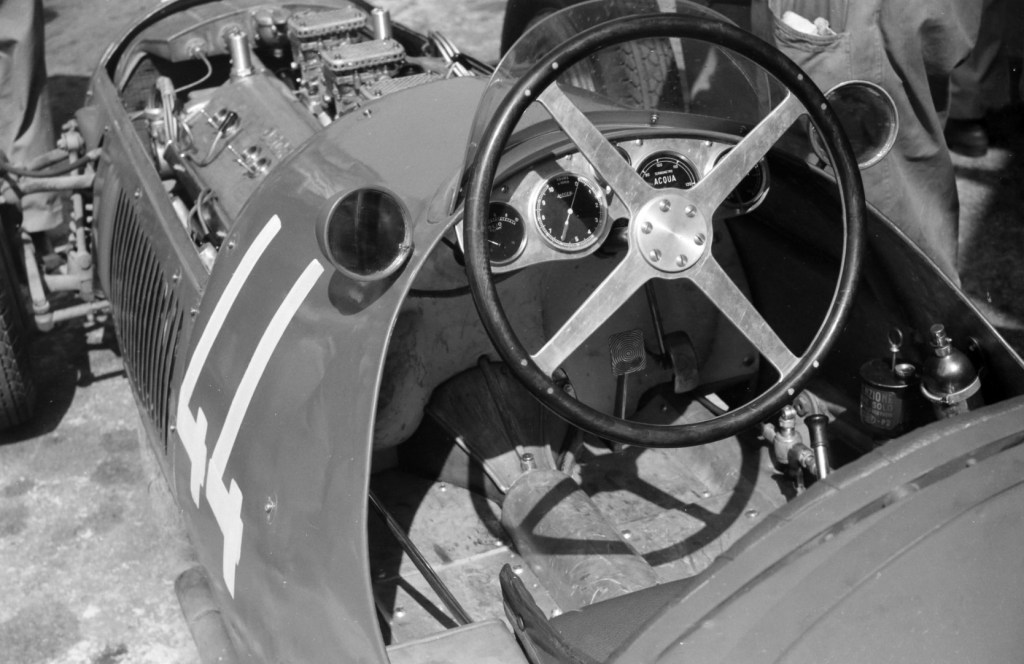
Alf Harvey leads Curley Brydon in a blue-blood duo at Gnoo Blas, Orange, on January 30, 1956. Ex-Enrico Plate/Prince Bira Maserati 4CLT/48 OSCA #1607 in front of the ex-Peter Whitehead/Dick Cobden Ferrari 125 #F1/114.
Reg Hunt won the South Pacific Championship that weekend aboard his Maserati 250F from Jack Brabham’s Cooper T40 Bristol, Kevin Neal, Cooper T23 Bristol and Brydon’s Ferrari. Harvey’s gearbox misbehaved in practice, so the OSCA didn’t start the race.
Bira, Maserati OSCA, South Pacific Championship weekend, Gnoo Blas 1955 (Cummins Family Archive)
The Maser-Osca was brought to Australia by Prince Bira during his 1955 Australasian tour, which yielded a New Zealand Grand Prix win at Ardmore aboard his Maserati 250F. He then brought the Maserati and Maserati OSCA to Australia to contest the South Pacific Championship on January 31, 1955. See here: https://primotipo.com/2020/04/09/1955-south-pacific-championship-gnoo-blas/
The 250F failed in practice, so too did the OSCA in the preliminary race. Former Wollongong MG T-Type punter Alf Harvey was the well-heeled enough, optimistic buyer when Bira offered it for sale.
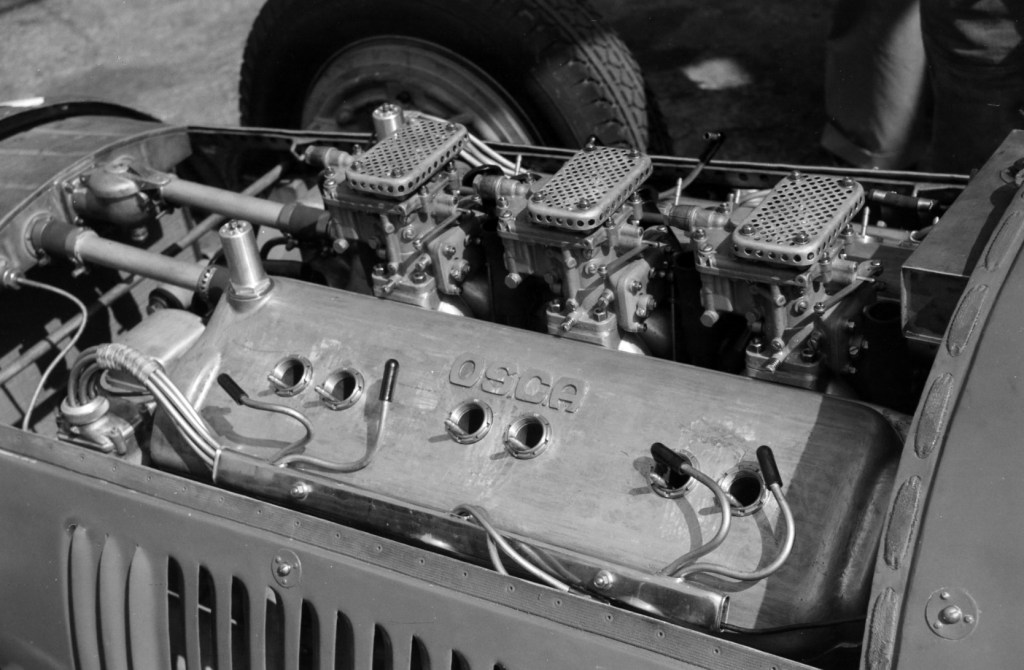
The OSCA 60-degree, twin-cam – driven by a train of gears – two valve, all alloy, triple Weber 40 DCF fed 4472cc (78mm x 78mm bore/stroke) V12 initially gave circa 290-300bhp, rising to 330bhp @ 6500rpm. Here, it’s shown in an uber-rare colour shot in Harvey’s car during the 1958 AGP weekend (K Drage)
Harvey then commenced a lengthy rebuild of the car, aided by Frank Ashby. This prominent, successful British engineer was by then living on Sydney’s Northern Beaches. Ashby did the chassis and Repco Research in Melbourne, the exotic, fussy V12.
Ashby, trading as Mona Vale Engineering Services, had provided sage advice to young Jack Brabham on carburetion and cylinder head modifications to the 2-litre Bristol engine powering his Cooper T23.
By 1958, the Maserati OSCA was ready to boogie. Harvey’s best result was a win in the first of two preliminary heats during the AGP weekend at Bathurst. It was the B-preliminary in the sense that the quicks were in the other race, but a win is a win. He wasn’t so fortunate in the GP itself; a plug worked its way loose, and he retired after 16 laps of the race won by Lex Davison’s 3-litre Ferrari 500/625.
Old mate taking a happy-snap or two at the start of the ’58 AGP, Hell Corner, Bathurst. The light blue car is Harvey’s Maserati OSCA (ABC)
The V12 engine project was an interesting one by the then newish OSCA enterprise. The Maserati brothers sold their Maserati business – Officine Maserati S.p.A. – to the Adolpho Orsi family in 1937. By December 10, 1947 they were clear of the 10 year consultancy agreement which formed part of the contract of sale with the Orsis. O.S.C.A. – Officine Specializzate Costruzione Automobili-Fratteli Maserati S.p.A. – was their next Bologna based venture. Soon they were building small sportscars which enjoyed commercial and competition success.
A mainstay of post-war European racing was Amedee Gordini’s single-seater and sportscars. Gordini was anxious to contest the new F1 (4.5-litres unsupercharged, 1.5-litres supercharged) with a more competitive engine than his various twin-cam fours.
‘Ernesto and Alfieri Maserati and Amedee Gordini were old acquaintances going back to the 1920s,’ wrote Roy Smith in Amedee Gordini : A True Racing Legend. ‘Gordini kept up regular contact, even doing some work for them on several occasions and exchanging ideas.’ See here for a lengthy epic on Gordini; https://primotipo.com/2019/08/30/equipe-gordini/
Smith wrote that Maserati had come up with a new V12 engine design, a simple one page letter – in reality more a letter of intent than a formal contract – from Automobili O.S.C.A. to Gordini dated 10 March 1949 formalised the arrangement for OSCA to design and build an OSCA badged V12 for Gordini.
This arrangement contravened Gordini’s existing commercial and sponsorship deal with Simca, who weren’t interested in Gordini’s F1 aspirations, content as they were with his F2 and sports car racing, which was more closely aligned, they felt, with their road cars. Gordini was able to fund the deal with OSCA thanks to financial support from ‘his longtime friend, the wealthy Far Eastern emperor and racing enthusiast Bao Dai,’ the ‘Last Emperor of Vietnam.’
Amedee’s thinking was sound, he planned to have a V12 powered F1 winner and derivatives of the competition V12 for sports and grand touring cars.
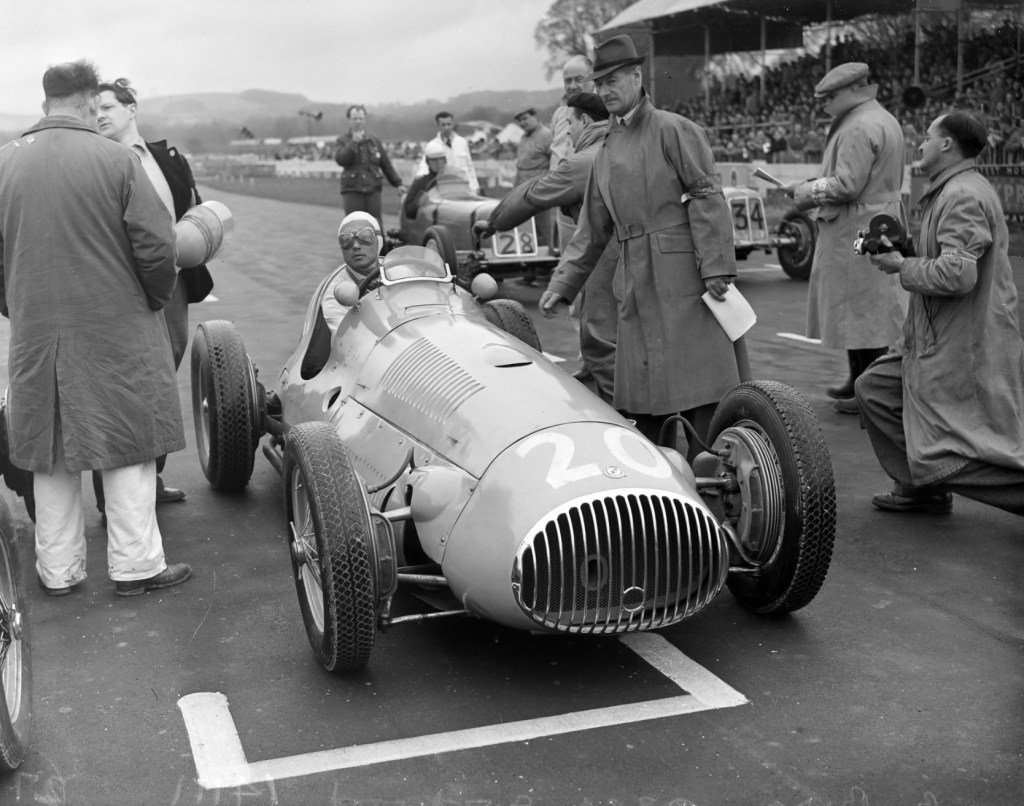
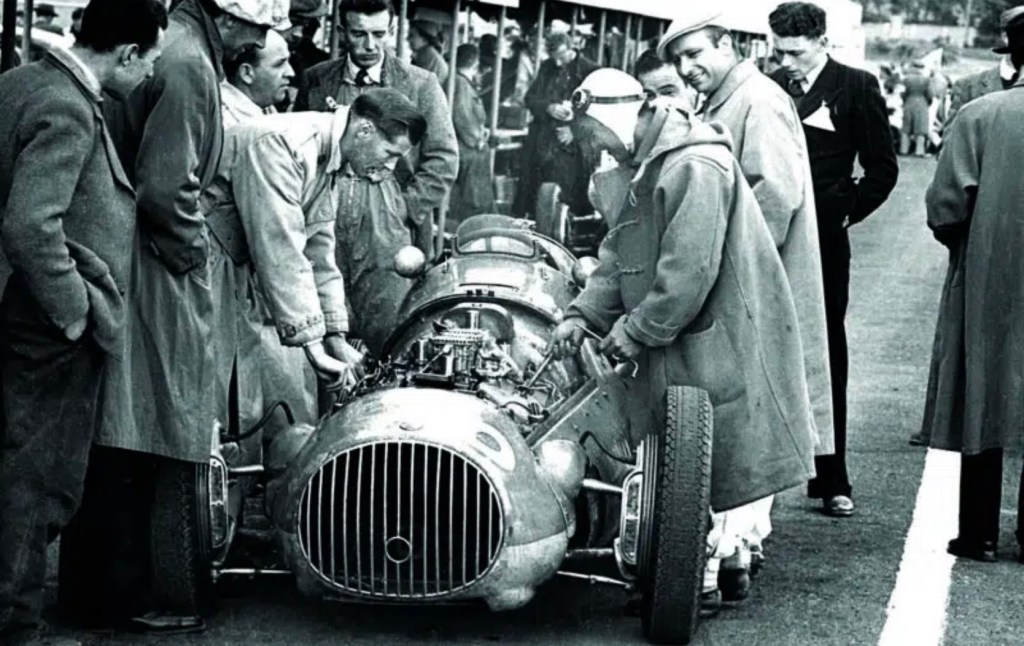
Bira first time out win in the Ecurie Siam Maserati 4CLT-48 OSCA V12 at Goodwood, Richmond Trophy, Easter 1951. #28 is Duncan Hamilton, ERA B-Type, and #34 ? (MotorSport)Bira wielding a plug-spanner much to JM Fangio’s amusement, during the 1952 Ulster Trophy weekend (Neville Armstrong-MotorSport)
When, inevitably, push came to shove, and Simca, Gordini’s primary backer, withdrew its support, OSCA decided to complete the design and build of the engine and offer it for sale. Their thinking was that the motor could form part of an update kit for the Maserati 4CLT they knew so well, plenty of which were in circulation.
Ultimately, Bira was the only taker, with his late build chassis, 4CLT-48 #1607 – first delivered to Enrico Plate on November 14, 1949 and raced by Bira throughout 1950 – updated by fitment of the OSCA V12, de Dion rear suspension and other tweaks race-ready for 1951.
The Thai Prince raced the car only a few times that year and in 1952. A debut victory against modest opposition during the 12 lap Richmond Trophy at Goodwood on March 26 flattered to deceive. He raced the car in the GP di San Remo on April 22 Q5/DNF accident, the GP de Bordeaux for Q7/fourth, the Silverstone International Trophy on May 5 no time/heat third/17th. He entered but didn’t arrive at various events mid-season.
Bira concluded that the car was uncompetitive in Europe and put it to one side until its trip to Australasia, where it was also only ever going to be an also-ran too. By 1956, Australia had some quicker cars: Maserati A6GCM and 250F, Ferrari 500/625, the Tornado Ford, etc.
Franco Rol about to be lapped again by Alberto Ascari during the 1951 Italian GP, Monza. OSCA 4500G and Ferrari 375 (MotorSport)
OSCA 4500G V12…
In addition to the engine for Bira, OSCA built two more. So as not to let them go to waste, one was fitted to a new ladder-frame chassis/double wishbone and coil spring front suspension/de Dion and torsion bars rear, Grand Prix car dubbed the 4500G. G for Gordini to honour his part in the engines gestation.
Handsome engine – SOHC in some texts, DOHC in others – with plenty of development potential in 1951. 300-330bhp wasn’t going to cause much of a fright among the circa-375bhp normally aspirated Ferraris, or circa 425bhp supercharged Alfa 159s (MotorSport)Great looking car, body aluminium on twin-tube period typical ladder frame chassis. De Dion rear suspension with torsion bars and Panhard rods a considerable advance on the 4CLT’s solid rear axle, the differential of which was a weak link (MotorSport)Wishbone front suspension, four speed ‘box front mounted. Wheelbase and front/rear track 2450/1280/1260mm, weight circa 760kg (MotorSport)
Franco Rol debuted the car in the 1951 Italian Grand Prix at Monza (photos above) the second last championship round that year. Q18 and ninth/last wasn’t a catastrophe at first glance, but Rol was 13 laps adrift of Alberto Ascari and Froilan Gonzalez’ first and second placed Ferrari 375s.
Rule changes, which meant the world championship was run for 2-litre F2 cars in 1952-53 made all F1 cars obsolete overnight. The CSI/FIA were forced to act due to the withdrawal of Alfa Romeo from F1 at the end of ’51, and uncertainty about BRM, OSCA and others continuing, leaving a Ferrari whitewash a certainty. Of course, the Maranello, Ferrari 500 2-litre whitewash happened anyway!
Despite the ‘F2 World Championship’ there were ten F1/F Libre races held in 1952. Bira gave his Maserati OSCA a gallop in the Ulster Trophy meeting at Dundrod on June 7, but he had an accident on the first lap. He raced at Silverstone in July, finishing 10th in the Daily Express Formula Libre Trophy, four laps adrift of Piero Taruffi aboard the Ferrari 375 Thinwall Spl. The last libre-race of the year was the Daily Record International Trophy at Charterhall on October 11, there Bira retired with a fuel tank problem.
OSCA 4500G #4501 at Monza in 1951 (MotorSport)
Two OSCA 4500Gs were entered in the April 6, 1952 GP del Valentino, the first non-championship F1 race of the year. Franco Rol was in chassis #4501, and Luigi Piotti in #4502. In a poor weekend for the team, Piotti’s #4502 didn’t arrive, and Rol’s #4501 didn’t complete the first lap for undisclosed reasons; two other cars had accidents, perhaps that is what befell Rol, although oldracingcars.com – my bible – does not record that.
The two 4500Gs weren’t entered as single-seaters again. What became of the two cars seems clear but the journeys they made is not fully clear, not to me anyway. Those with a more extensive Maserati library may be able to assist.
#4501 was sold to Rol. It was later fitted with a Frua Spider body with a central driving position, it would be great to have a photo of the car in this form. It was ultimately rebuilt as the single-seater many of you will be familiar with in European historic racing.
OSCA 4500G, #4501 at Goodwood in recent years OSCA 4500G #4502 in gorgeous Zagato couture (unattributed)
The unraced ‘Piotti’ 4500G #4502 was also converted into a sports coupe with a beautiful body by Zagato. It was entered in the September 6, 1953, Supercortemaggiore non-championship sports car race at Merano, driven by Clemente Biondetti. He qualified 23rd but failed to finish the race, won by Fangio’s works Alfa Romeo 6C 3000CM Spider.
It was sold to Piedmontese winemaker, Paolo Di Montezemolo and rebodied by him as a sports car in 1954. He contested the Sassi-Superga hillclimb outside Turin in October 1956 as below. The car is now in France and resides in the Henri Malarte Museum in Lyon.
(Di Montezemolo Collection)
Cycling back to the Bira Maserati 4CLT OSCA and Alf Harvey.
After the fiscal ravages of the experience, and one last run in a quarter-mile sprint at Castlereagh in 1959, Alf Harvey offered the car for sale in 1961. It then passed, via an interlude of 1960s historic racing with Morin Scott in the UK, to Tom Wheatcroft. In more recent times it has returned to historic racing.
Maserati 4CLT-48 OSCA #1607 (unattributed)
Credits…
Gnoo Blas Classic Car Club, Australian Broadcasting Commission, Neville Armstrong, ‘History of The Grand Prix Car’ Doug Nye, ‘Maserati : A Racing History’ Anthony Pritchard, ‘Amedee Gordini : A True Racing Legend’ Roy Smith, Kevin Drage, Di Montezemolo Collection, Alex Book, Boudewijn Berkhoff
Tailpiece…
(Alex Book)
Franco Rol enroute to a lonely last place in OSCA 4500G #01 during the 1951 Italian GP at Monza.
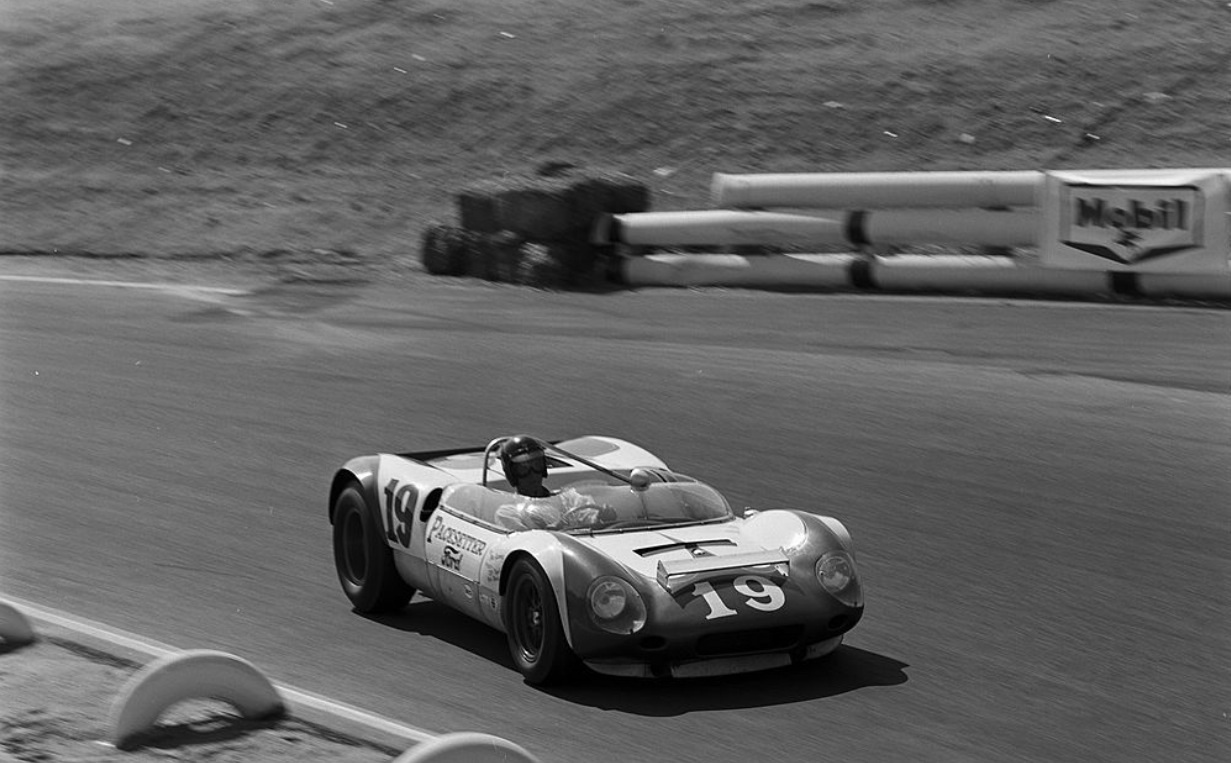
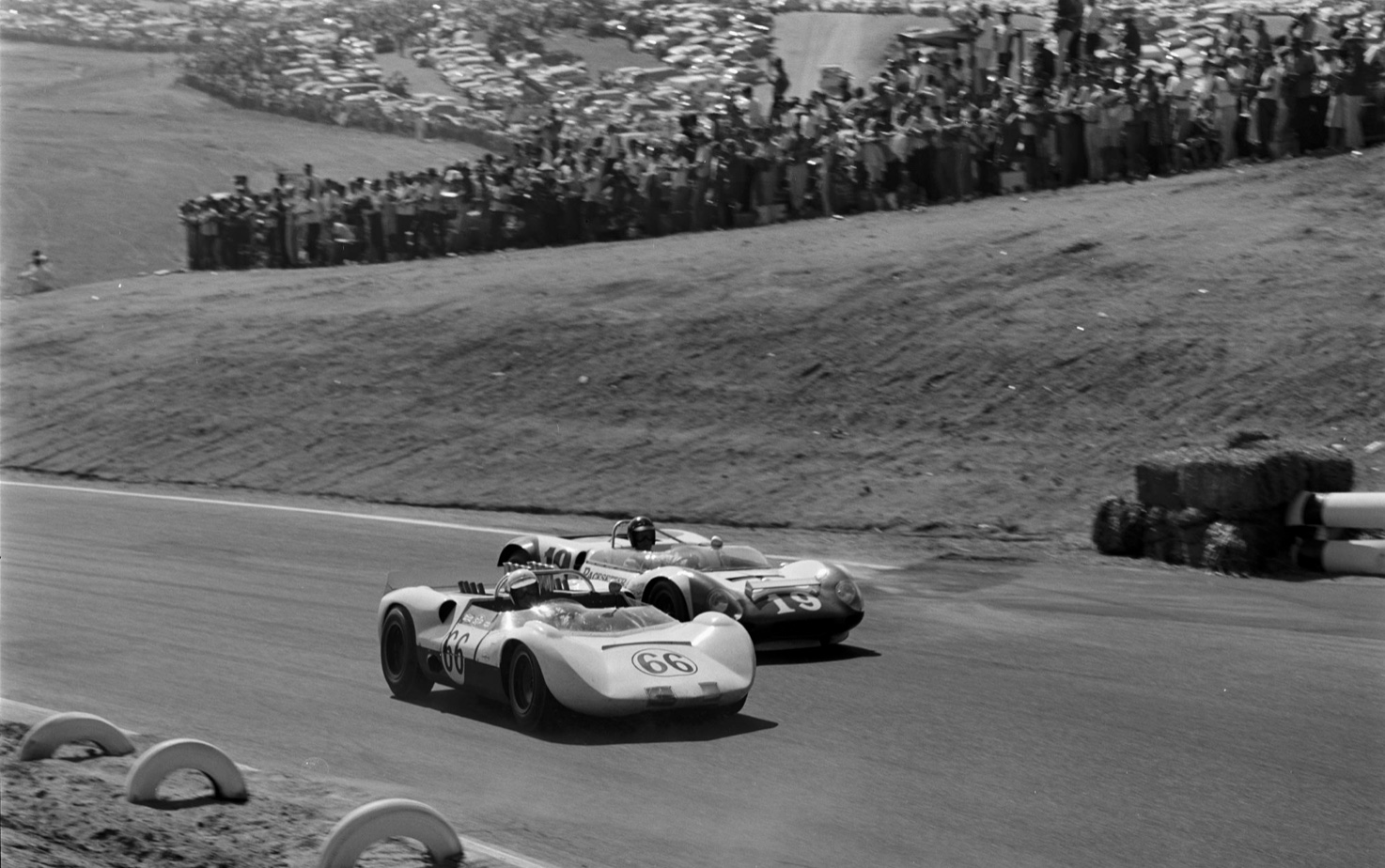
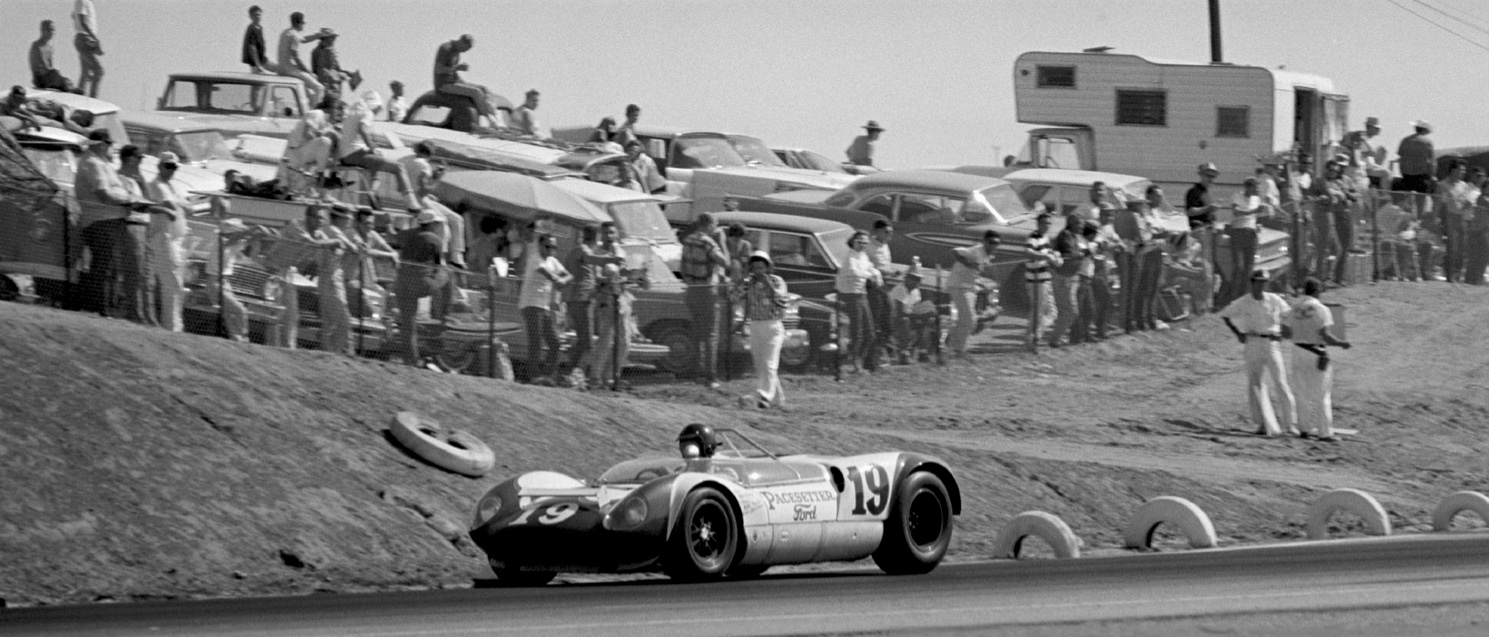
Dan Gurney’s winged Lotus 19B Ford V8 during the 1964 Times Grand Prix aka Riverside 200 on 20 October…
Ok, it’s only a little one but Dan is still testing a front wing on the nose of his Lotus 19B. Remember the year folks, 1964, the year the Chaparral lads were getting serious about spoilers but not a wing like this, even if it’s of poverty pack dimensions.
I wonder that he thought of it? He raced it so it can’t have been all bad? I am intrigued to know what contemporary reports made of the experiment.
This one of a kind Lotus 19 variant, the very last made, chassis number 966, was designed by Len Terry for Dan to accept the ubiquitous Ford 289cid pushrod V8 via the relationship created between the two men through the Lotus/Ford Indy program. It culminated in a win for Lotus, Ford, Colin Chapman, Len Terry and not least Jim Clark. Len joined Dan’s All American Racers after the historic 1965 victory.
Colin Chapman and Dan Gurney at Indy in 1963966, Riverside paddock in 1964Dan, and Roger Penske’s Chaparral @A Chev at Nassau in 1963
966 was delivered from Cheshunt to Dan’s new Costa Mesa, California workshop as a rolling chassis and built up by his team before its first race at Nassau in late 1963 (above).
966 is still extant, racing at elite level as late as 1969 in two Can-Am events at Riverside and Texas as the ‘BVC Mk1’- the poor little spaceframe must have been groaning under the strain of a 5.7-litre ‘hevvy Chevvy’.
Dan’s car was hardly the first of the Anglo-American V8 lightweights but it was a mighty quick car in its day, a better car than Chapman’s backbone chassis Lotus 30 and ‘ten more mistakes’ Lotus 40 successor.
Fast but unreliable is a fair description of it. In December 1963, it was 16th in the Nassau Classic and DNF in the blue riband Nassau Trophy, which AJ Foyt won in a Scarab Mk4 Chev.
The Weber fed 4.7-litre Cobra engine produced circa 360bhp @ 6500rpm in period, the gearbox was a ZF. It evolved continuously of course, below in its original guise.
Laguna Seca, Ed La Mantia’s Genie Mk 5 Corvair, DNQ, about to be passed by Gurney during practice. Look at the practice crowd, FFS!Penske, Chaparral 2A Chev and Gurney, Lotus 19 Ford, Laguna Seca 200 Miles October 1964
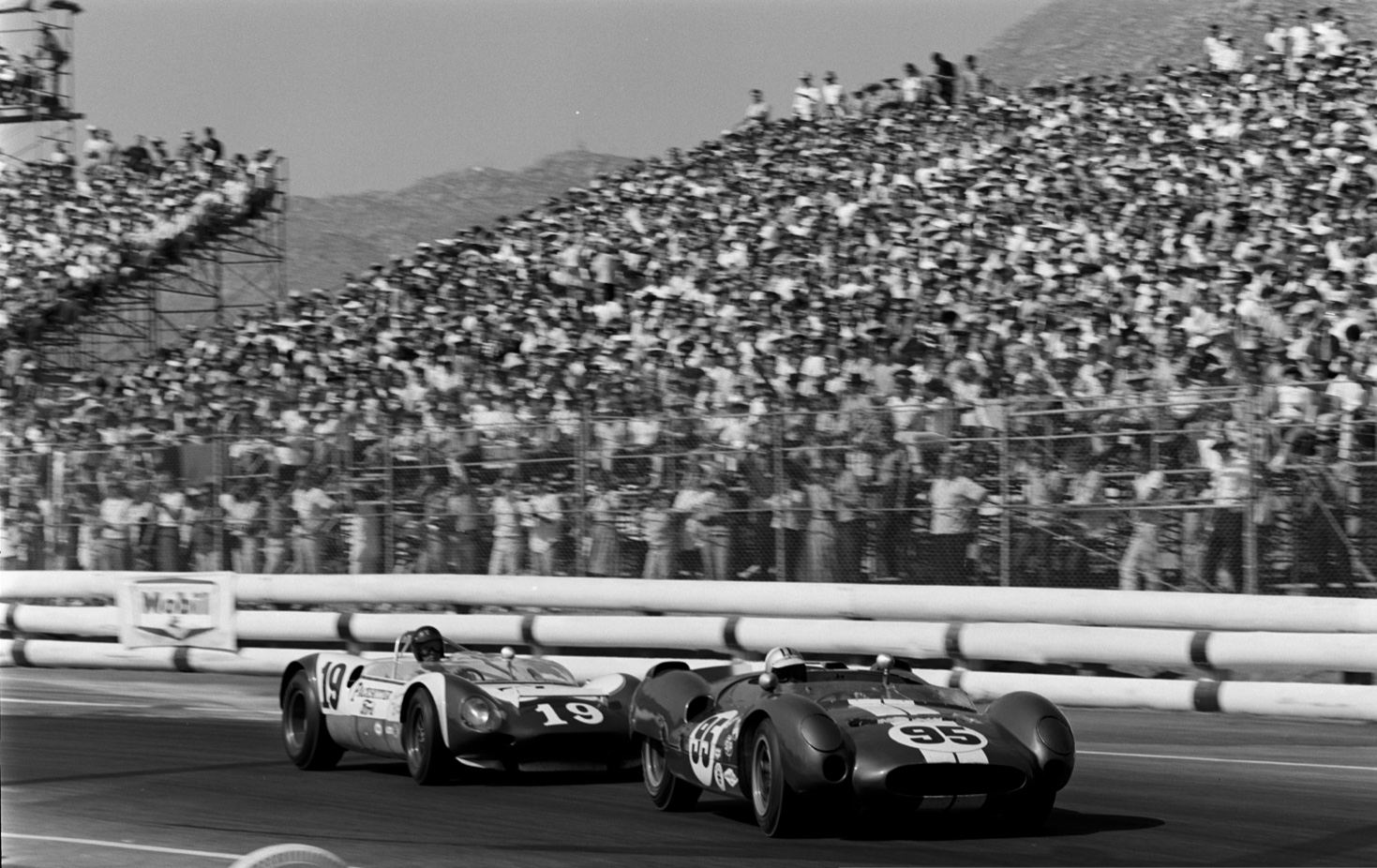
Parnelli Jones won the 1964 LA Times GP in a more developed and robust Cooper King Cobra from Roger Penske in Jim Hall’s Chaparral 2A Chev and Jim Clark’s works Lotus 30 Ford. The following weekend Dan was second to Penske in the 200 mile Monterey GP at Laguna Seca.
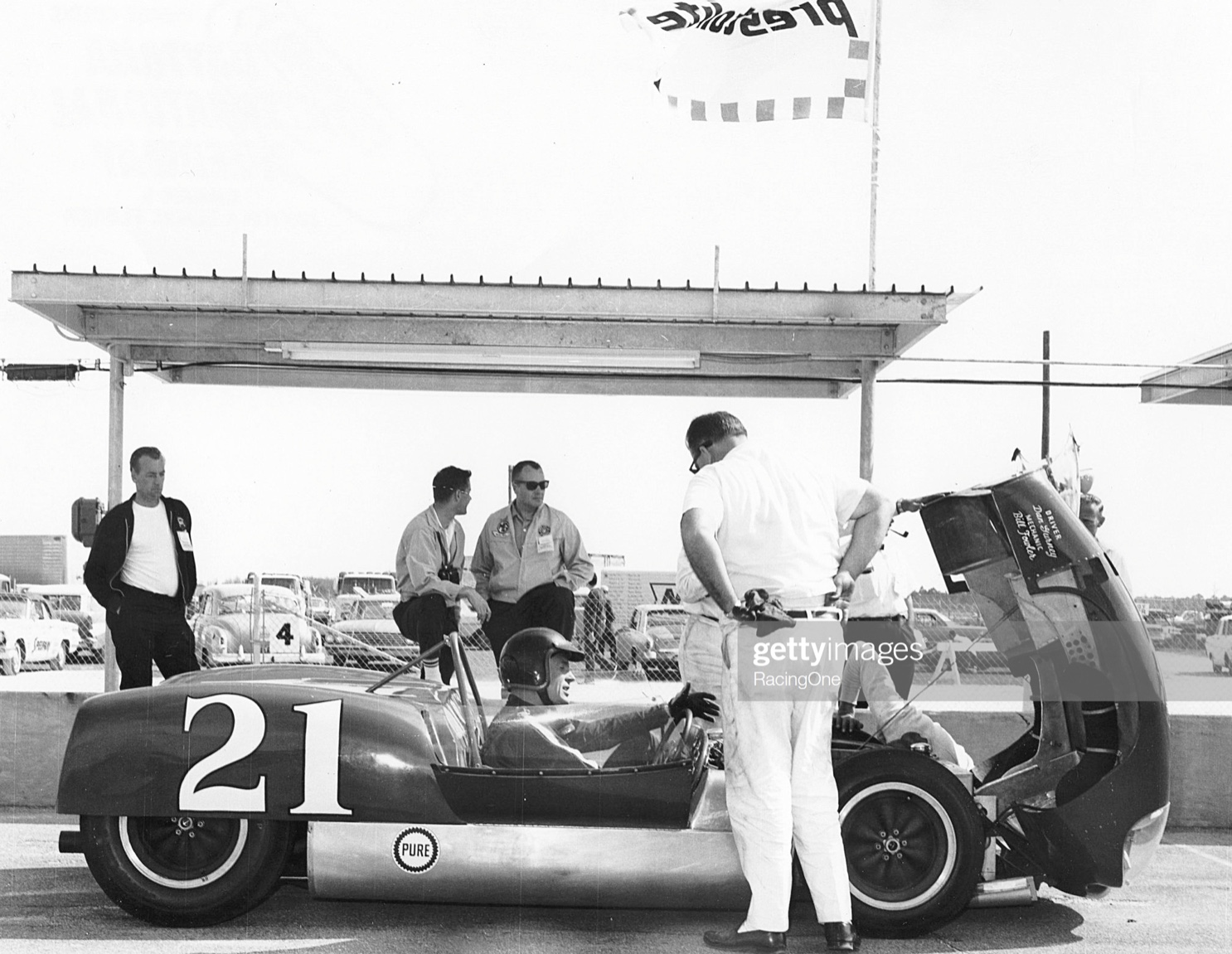
Gurney shared the All American Racers entered car at Daytona and Sebring in 1965. He led at Daytona for 211 laps before retiring at two-thirds distance with engine problems. At a very soggy Sebring he again ran up the front for a bit until the oil pump ended a valiant run. The car, by then entered as a Lotus 19J Ford, raced in Shelby American colours as below.
966 Lotus 19J Ford at Sebring in 1965 (L Galanos)
Louis Galanos wrote of Sebring (this group of photographs), ‘Gurney had an arrangement with Carroll Shelby to be ‘the rabbit’ and get the Chaparrals and Ferraris to chase him and hopefully retire early. This would leave the door open for either Shelby’s Cobra Daytona Coupes to win or one of the GT40s taking home the trophy for the overall win. Unfortunately it was Gurney who retired early with a broken oil pump chain drive. Gurney’s co-driver Jerry Grant never got the chance to drive. Jim Hall’s Chaparral won the race.’
Gurney negotiates Sebring’s Webster Turns – be interesting to know who built the body, Shelbys I guess? – whoever it was didn’t rate the little front wing…
Etcetera…
In the beginning…
The delicate little flower as it arrived from Cheshunt, here (above) at Daytona in February 1964 still fitted with skinny Lotus wobbly-web magnesium alloy wheels. Dan took the view that 360 odd bee-aitch-pee needed more rubber on the road so a call to Halibrand was made.
The car was quick, on pole for the SCCA American Challenge Cup, he led the 15 February 400km race for 12 laps before stalling during a pitstop and was then disqualified for a push-start from his crew, a breach of the rules. Clearly Gurney had concerns about the cars endurance as he chose to contest this shorter race rather than the Daytona 2000km, as it then was, the following day.
Laguna Seca 1964. Gurney’s Lotus with Bruce McLaren, McLaren Mk1 Elva Olds at left, #8 is Jerry Grant’s Lotus 19 Chev and the white helmeted driver is probably Parnelli Jones’ Cooper King Cobra.
Penske won from Gurney and Bob Bondurant then Ronnie Bucknum- here dicing with Gurney in the photograph below the week before at Riverside.
Ronnie Bucknum, Shelby prepped Cooper King Cobra Ford, DNF, from Gurney’s Lotus 19 – 19G – in some texts, Riverside 1964
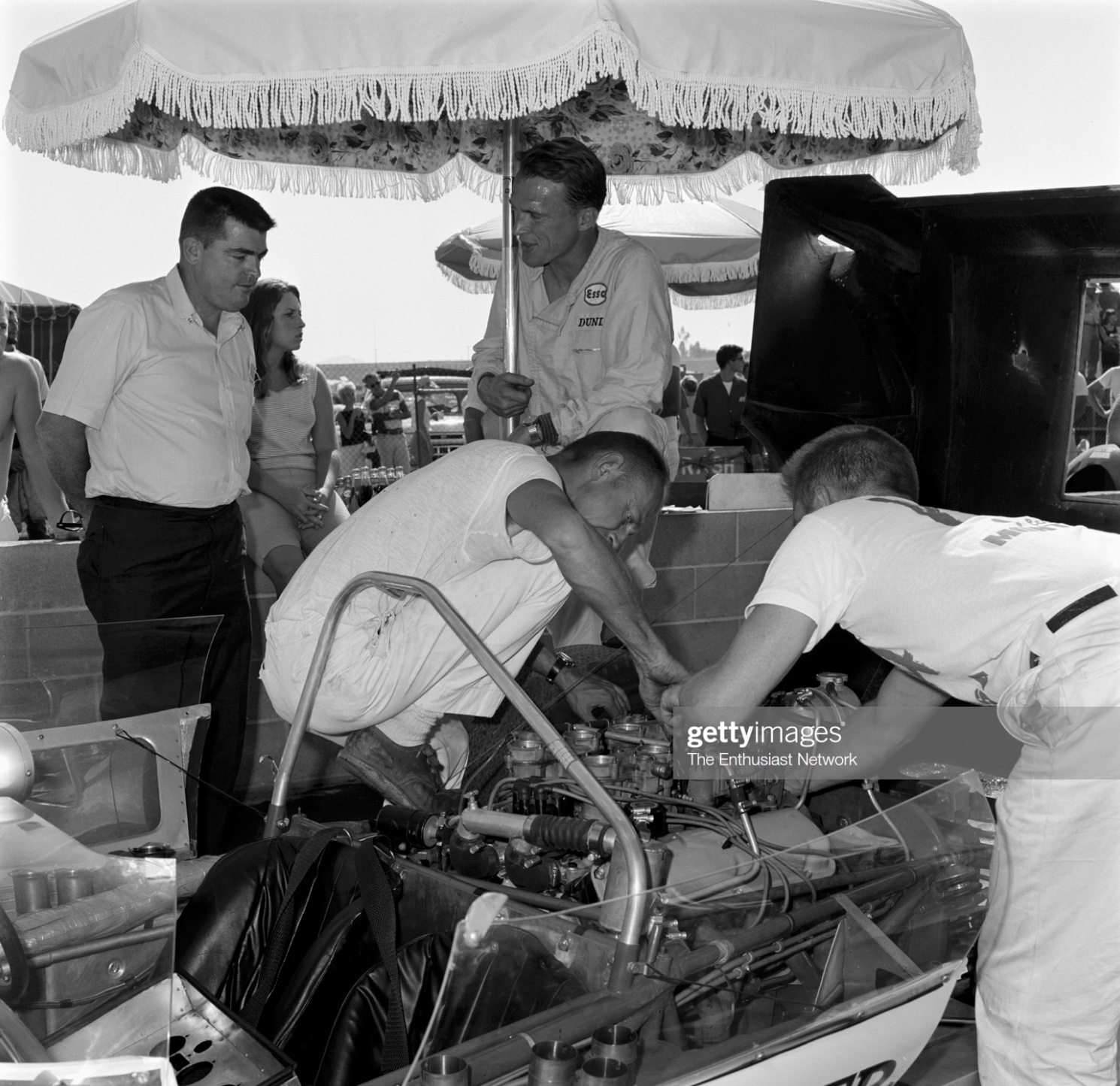
Dan and Mickey Thompson take shelter from the Laguna Seca, California, heat under Gurney’s beach umbrella. I wonder what plan they are hatching?
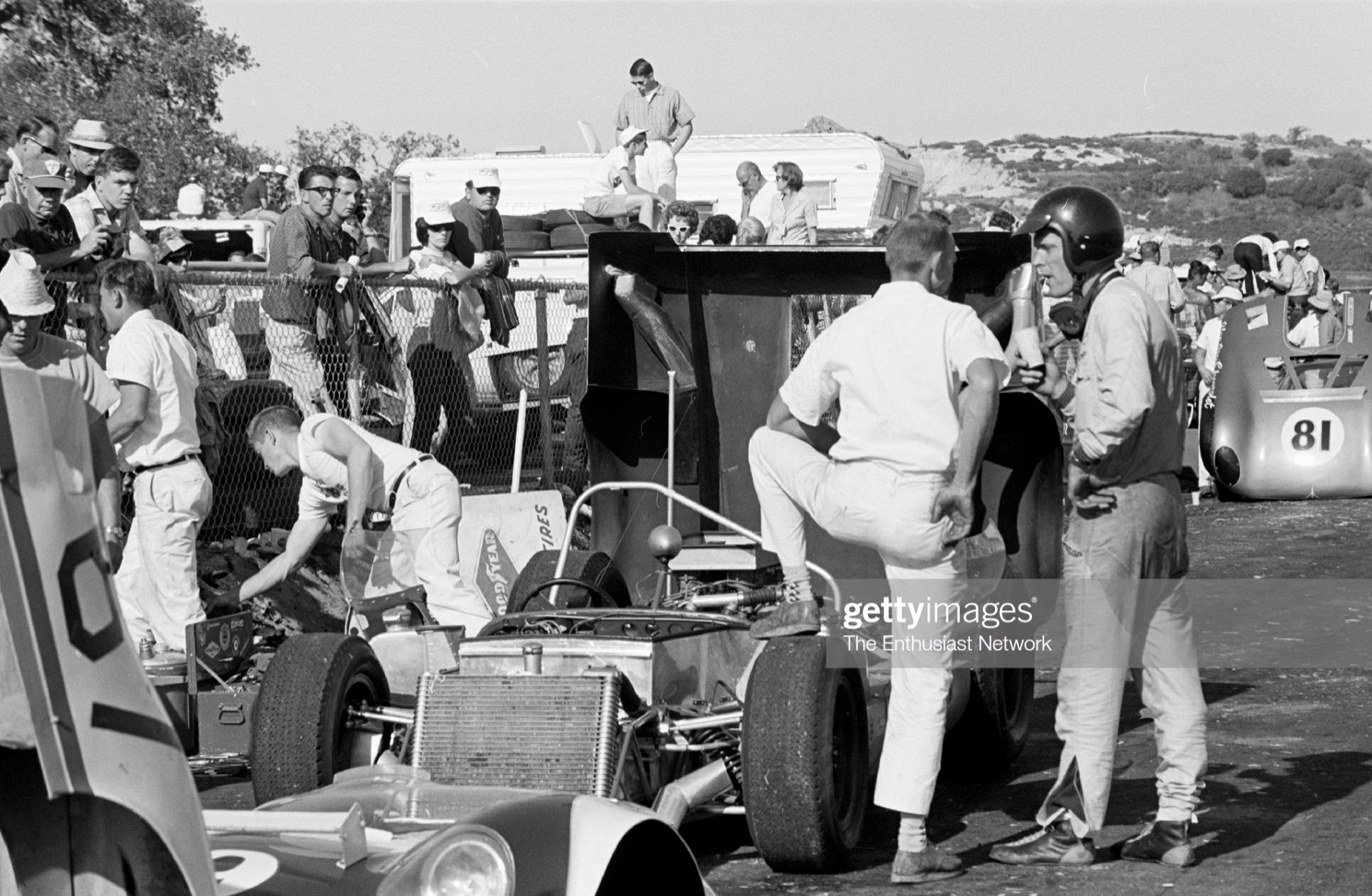
That roll bar is braced (removed in this shot) but is still a bit limp. Note the Lotus chassis and Weber fed 289 Ford V8, these little, light Windsors were and are gems of things, at 302cid they were the last ‘real production’ engines to win Le Mans outright in 1968 and 1969 in the back of JW Ford GT40s??
Between session changes at Laguna Seca. Note the Lotus 18 parts bin front suspension, and vestigial roll-over bar. Car #81 is Allen Grant’s Cheetah Chev, 14th.
Riverside again, at a glance the pretty car looks like a beefy Lotus 23. Team plagued with multiple mechanical issues over the weekend so did not finish.
Driver Bruce Campbell with his Ecurie Vickie Racing Team BVC Mk1 Chev 5.7 at Riverside in October 1969.
The car was given this name as a ruse to try and ensure race organisers didn’t know the derivation and age of the car. He qualified twentieth of 35 starters 14 seconds off the pace of Denny Hulme’s McLaren M8B Chev pole time and finished fifteenth 14 laps down. After his impressive qualifying time, race winner Denny spoke to Bruce and suggested a more modern car for the coming season!
At Texas International, Houston, the following weekend Bruce was 20 seconds off Denny’s pole and DNF. Hulme won aboard his M8B with Bruce winning the ’68 Can-Am Drivers championship and McLaren the Constructors of course.
Credits…
Getty Images, The Enthusiast Network, Louis Galanos, Bob D’Olivo, Pat Brollier, Vickie Callouette, Bill Stowe. Sorry about most of the photo credits, folks, I drafted this years ago and have long since lost those notes
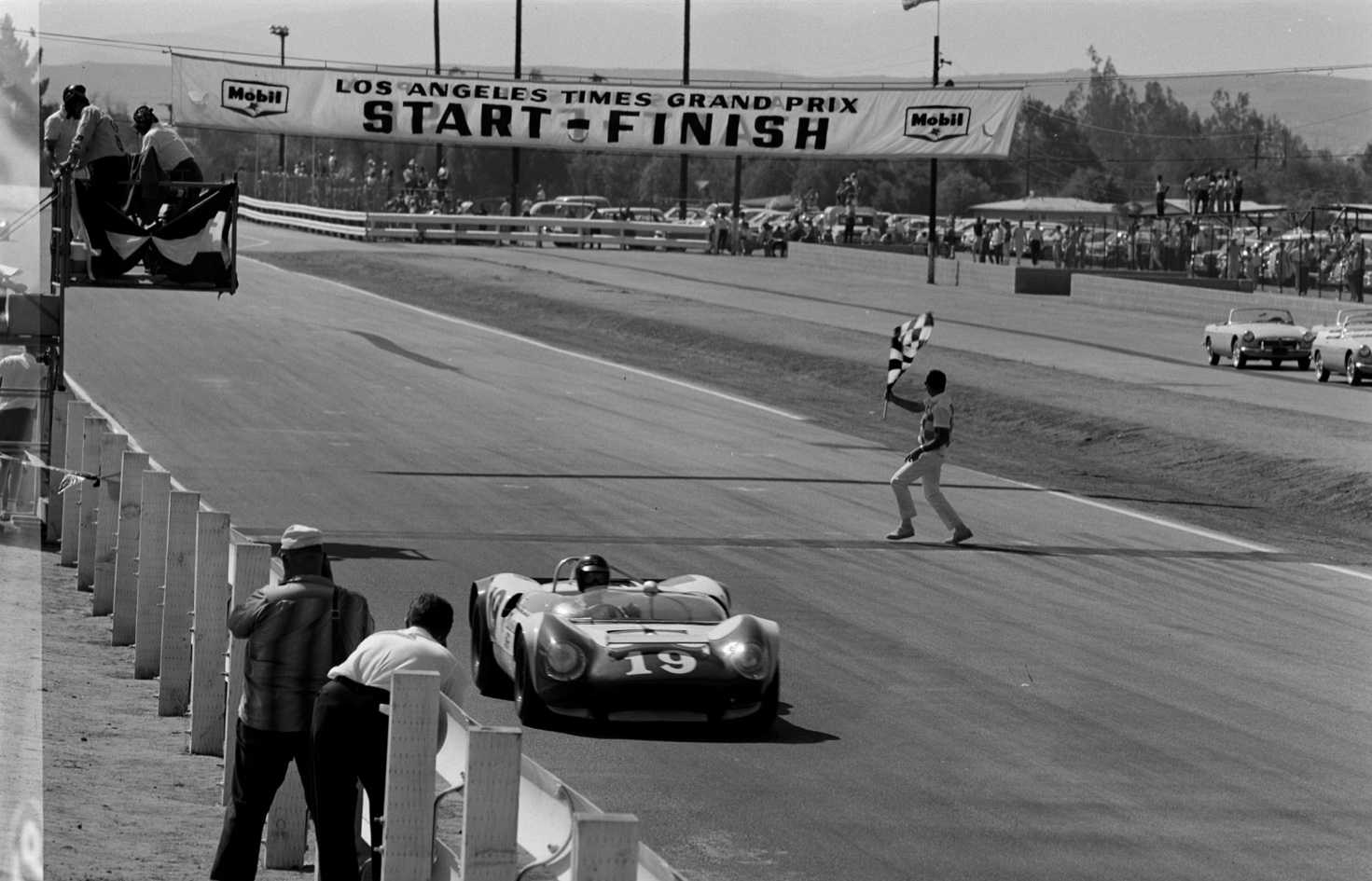
Tailpiece: 1964 LA Times GP, Riverside…
Sadly for Dan it’s just the end of qualifying not the end of the 200 mile race the following day! Lotus 19B Ford.
I’m not sure of the date of Dan’s last drive in the car, but it seems Joe Leonard crashed it whilst tyre testing. It then passed through the hands of Steve Dulio, Dick Callouette, Wayne Linden, Gordon and Nancy Gimbel, then back to Steve Dulio, who is the last name I can see online. The car is still historic raced in the US, which is wonderful.
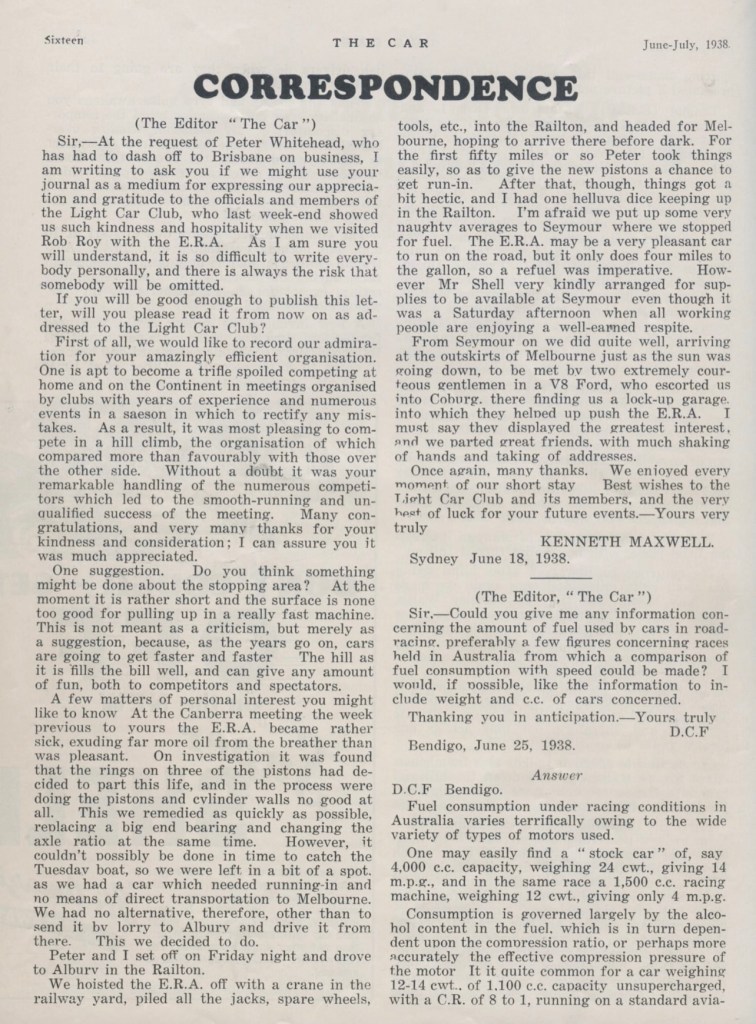
The Referee Sydney, June 16, 1938(L Sims Collection)
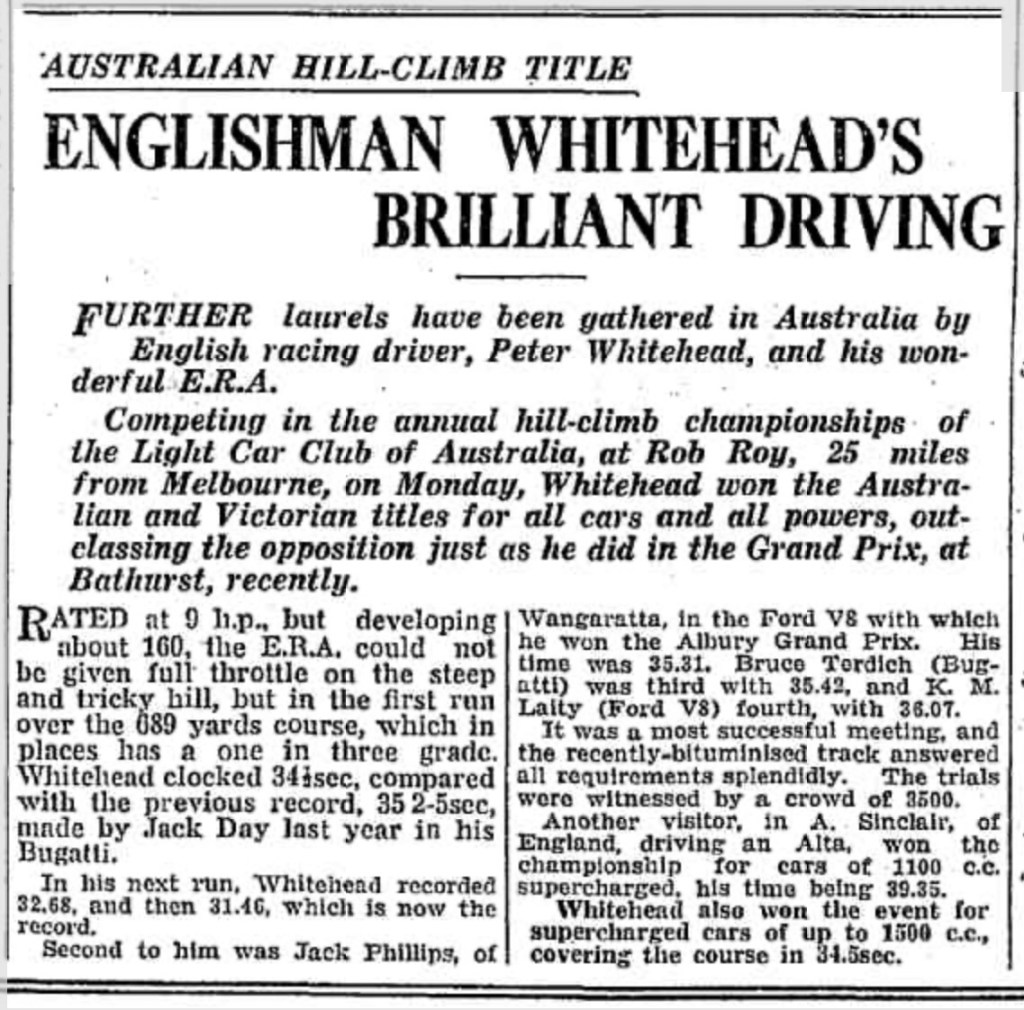
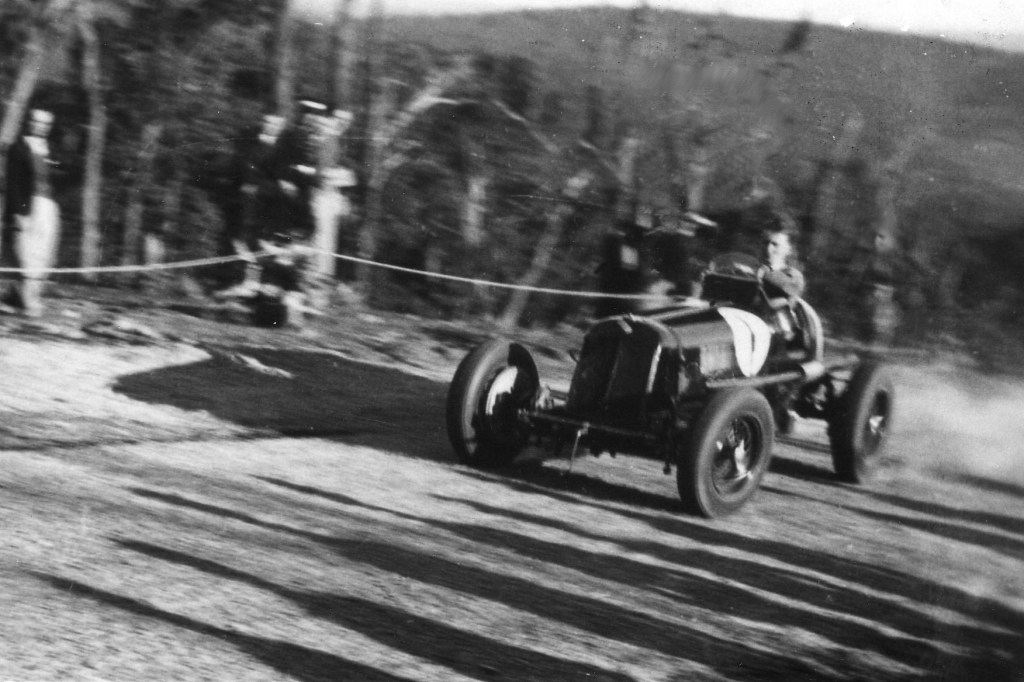
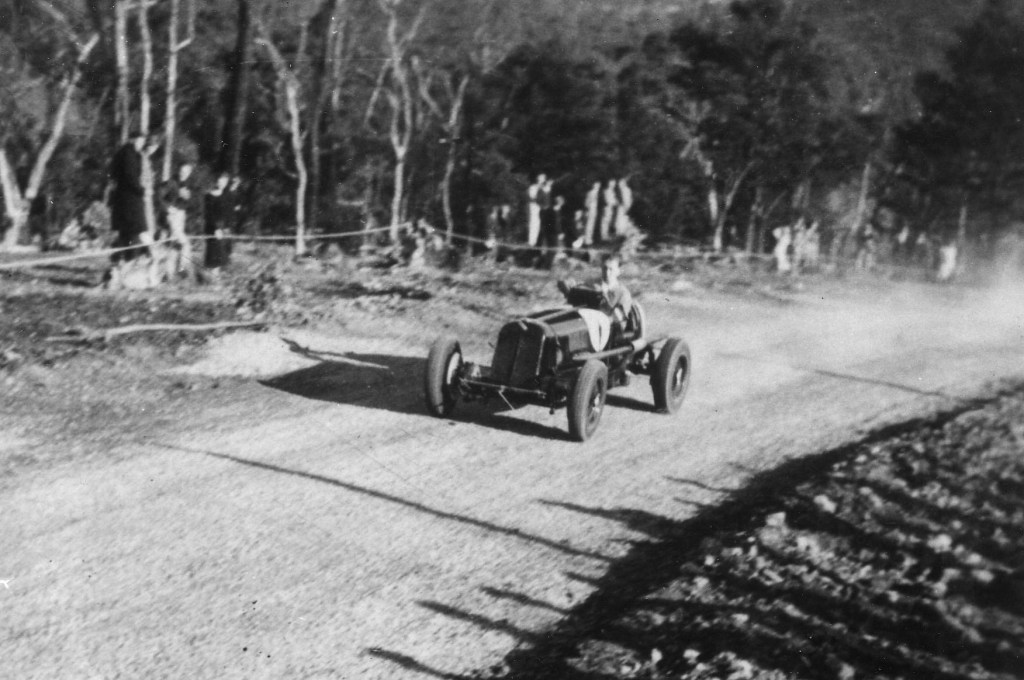
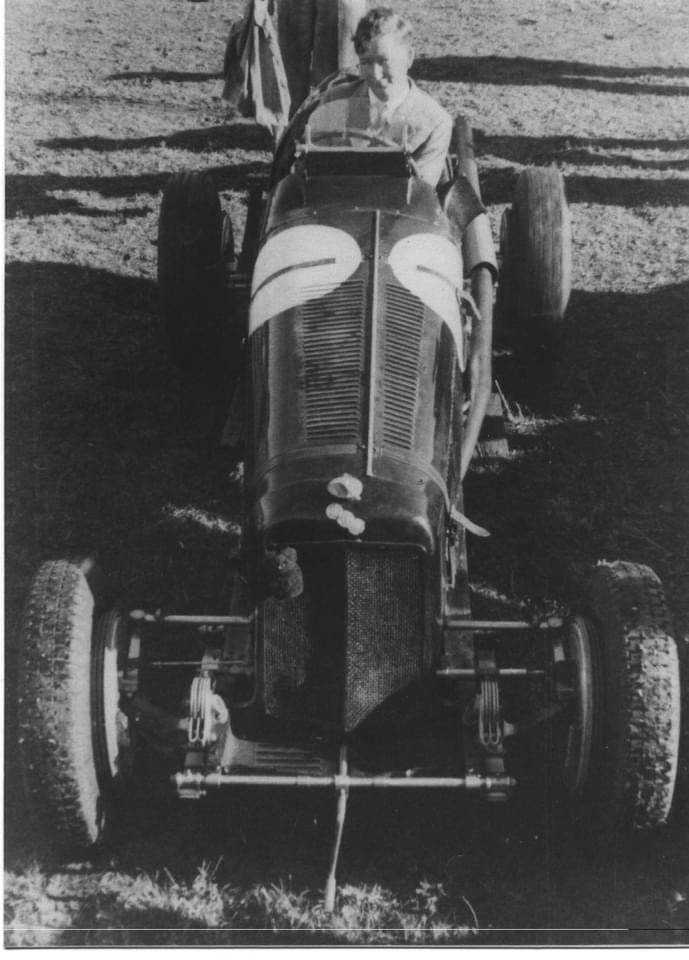
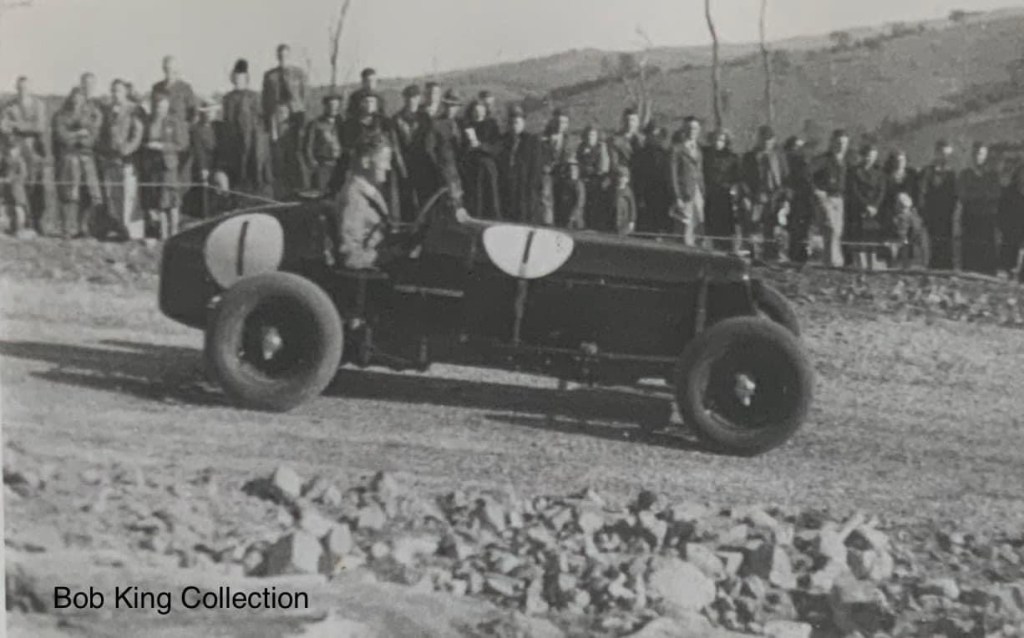
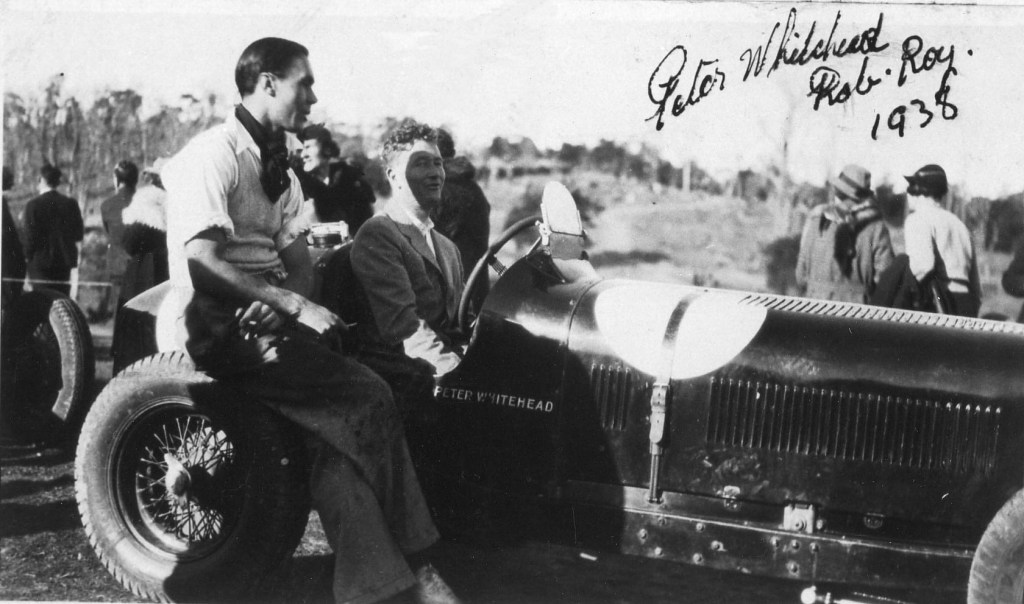
Peter Whitehead sans helmet on the way to an Australian Hillclimb Championship win aboard his ERA B-Type #R10B, then 1.5-litres supercharged, on Monday, June 13, 1938, at Rob Roy, 40 km east of Melbourne.
He came, saw, and conquered Australia in 1938, winning the Australian Grand Prix and Hillclimb Championship and attended to the needs of the family wool processing and spinning business too.
What follows are Whitehead’s observations about Rob Roy and related adventures, as told to his Australian friend, Kenneth Maxwell, and published in The Car, the official organ of the Light Car Club of Australia, the organiser and promoter of Rob Roy.
(T Johns Collection)(L Sims Collection)
She’ll be comin’ down the (Rob Roy) mountain as she comes…
Etcetera…
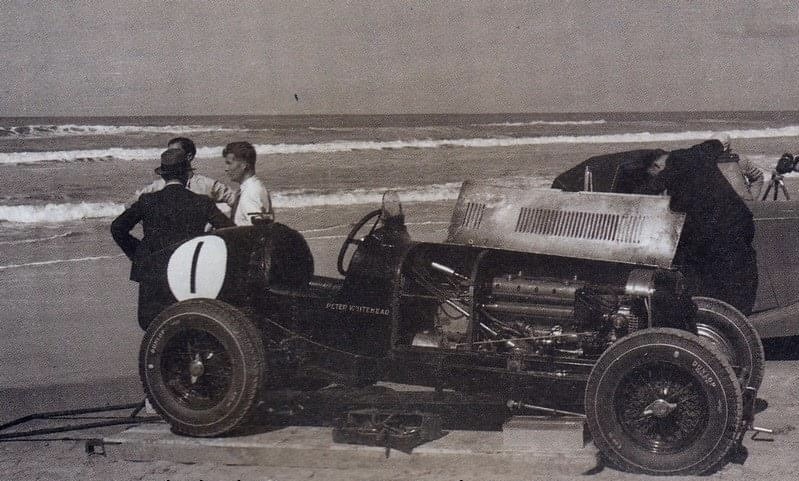
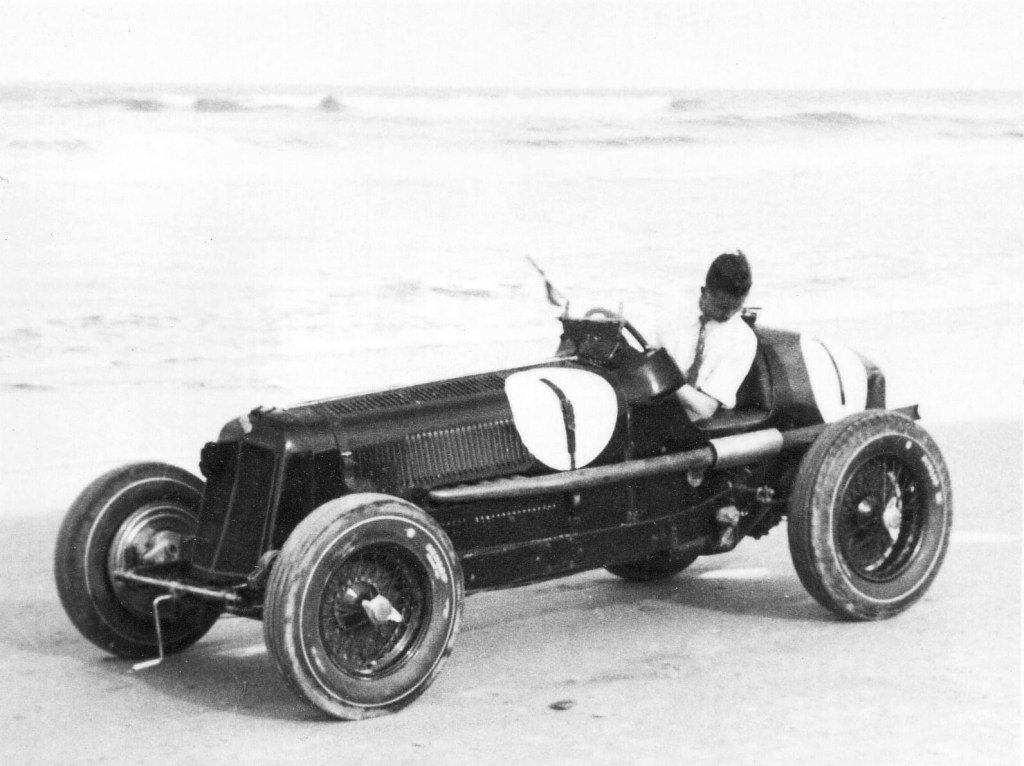
Surfs-Up albeit not that much! Whitehead and entourage keep a close eye on the 90 Mile Beach’s rising tide during a spot of land speed record breaking in Victoria
Greg Smith wrote that ‘A young bloke from Orbost rode his pushbike to 90 Mile Beach to watch this car on the sand in the speed trials and it was his inspiration to get involved in motorsport. That bloke was (Oz driving and engineering legend) Harry Firth.’
Peter didn’t run the ERA in Rob Roy’s November 20, 1938 meeting but LCCA stalwart, Jim Leech gave him a run in his Frazer Nash, he did an amazing 34.77-sec run. Car now owned by the Davey-Milne brothers.
(Cummins Collection)
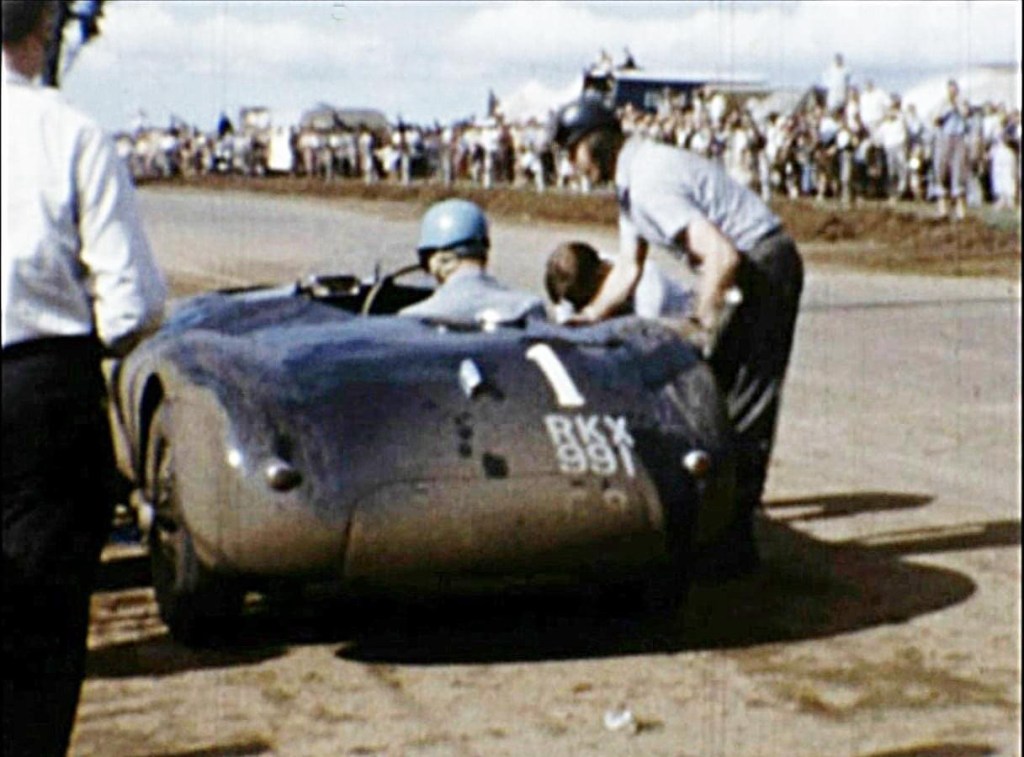
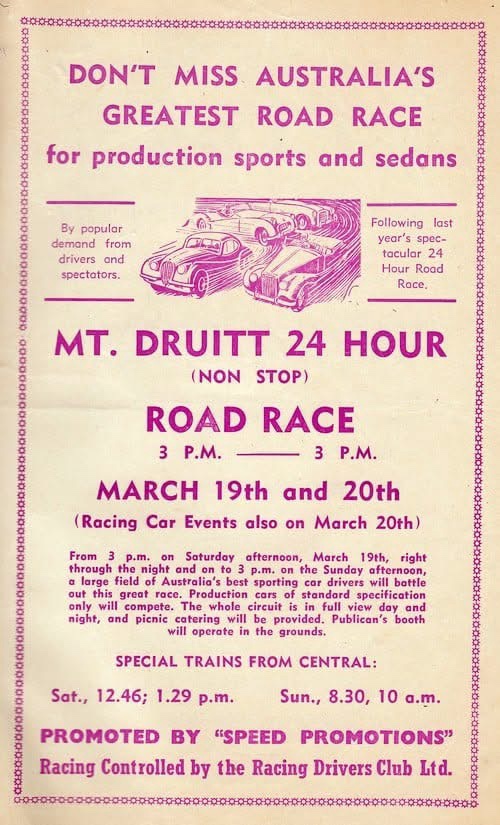
Peter returned to Australia a number of times, the visit I tend to forget is when he entered his Jaguar C-Type in the Mount Druitt 24-Hour in January 31-February 1, 1954.
Paul Cummins tells the story, ‘Whitehead’s Jaguar ‘C’ Type XKCO39 was co-driven by Tony Gaze and Alf Barrett. The race started at 2 pm on January 31st, with a Le Mans Start. Organised by Belfred Jones and his company Speed Promotions and run under the ARDC for unmodified production cars, it was the first 24-hour race in Australia and attracted 22 cars.’
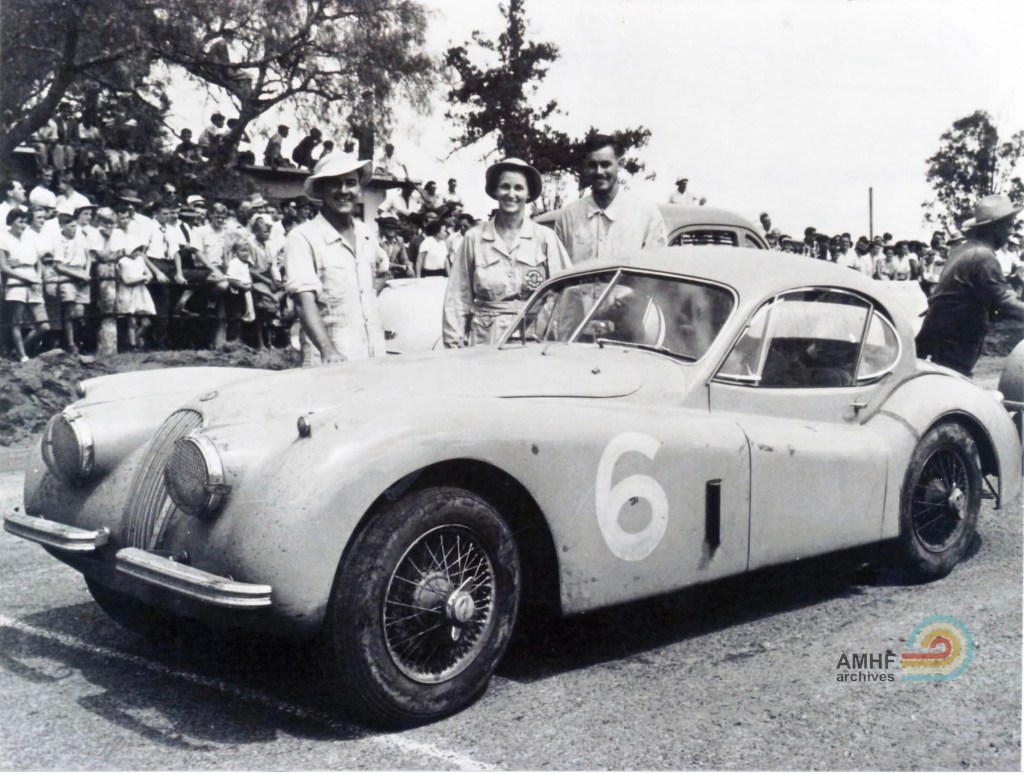
It all looks good other than the dates! (B Williamson Collection)The Mount Druitt 24-Hour winning Jag XK120 FHC crewed by Geordie Anderson, Bill Pitt and Charlie Swinburne (B Caldersmith-AMHF)
‘There was no crowd control and the road surface gradually disintegrated making it a rough going and forcing the ‘C’, which was leading, to pull out with rear suspension problems. Peter Whitehead started the race and by the third lap had already started overtaking slower cars. By the end of the first hour he overtook the Geordie Anderson XK120 FHC that was in second.
By the eight hour mark the ‘C’ had completed 217 laps and was 23 laps ahead of the second placed Holden of Shaw. Hitting a pothole at midnight put an end to the ‘C’ Type’s race. All 22 cars finished as the ‘retirements’ rejoined at the end. The car race wasn’t repeated but amazingly in October the world’s first 24 hour bike race was run there.’
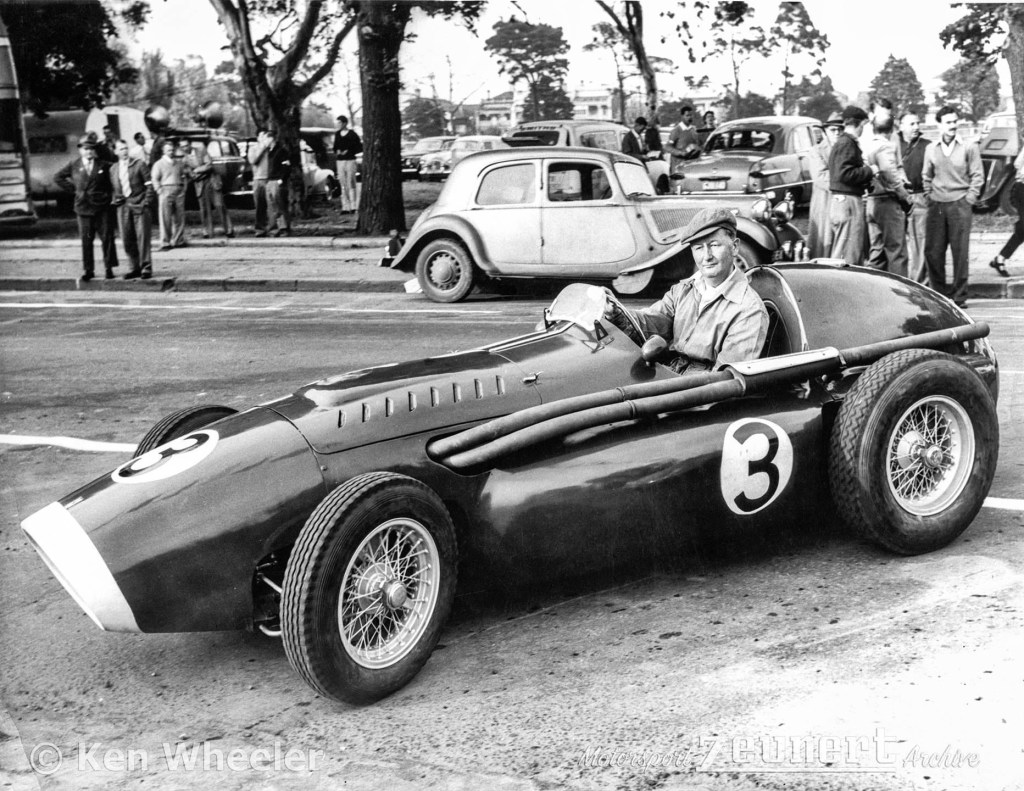
Peter is shown above manoeuvring his Ferrari 555 Super Squalo 3.4-litre in the paddock. He was third in the race, behind Moss and Behra, in his final competition appearance in Australia. I wonder if he continued to travel to Melbourne on business in the period between then and his untimely death during the September 1958 Tour de France.
Credits…
The Referee Sydney June 16, 1938, Leon Sims Collection, Bob King Collection, Ian & Paul Cummins Collection, Ken Wheeler via David Zeunert Collection, Bob Williamson Collection, AMHF Archive
Allan Moffat does his best to avoid soiling his undergarments as Fred Gibson lines up his works-Ford Falcon 500 XC on Moff’s right-hip-apex of the swerve. Colin Bond is behind, with John Goss, Murray Carter and Ron Dickson the other unsighted members of the troupe.
The angle on the camera dangle heightens the excitement but there is still no way known I’d want to do it.
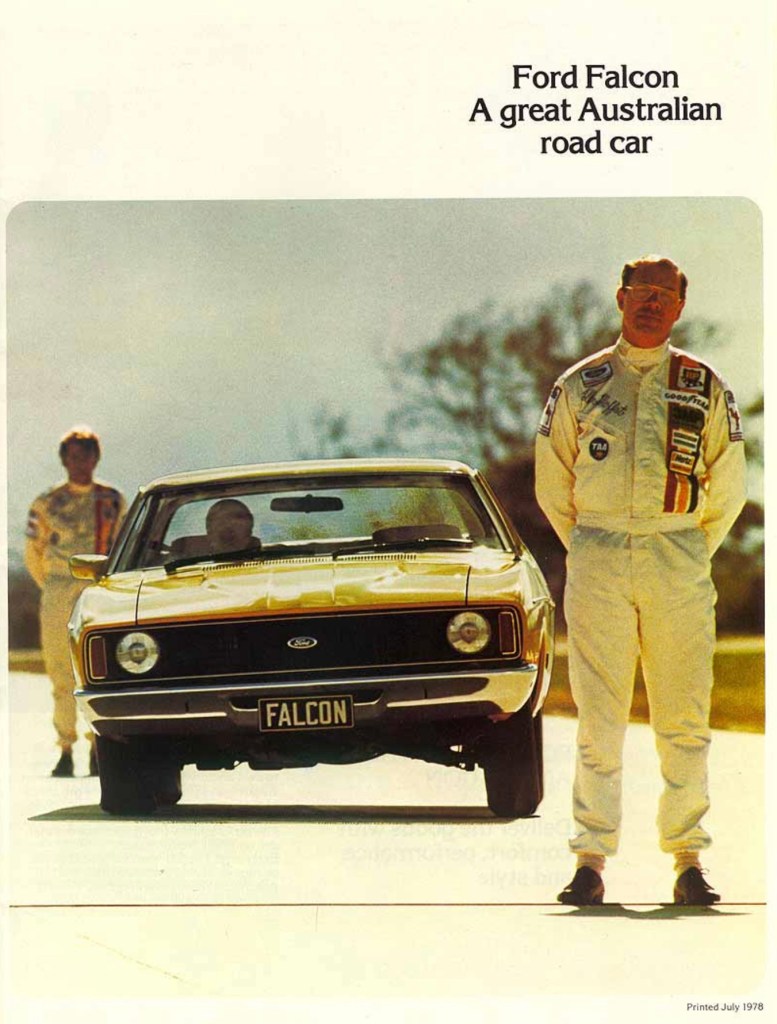
By 1973 Australian tariffs on manufactured goods were significantly reduced, this exposed the local products of Ford, Holden and Valiant (Chrysler) for the junk they were.
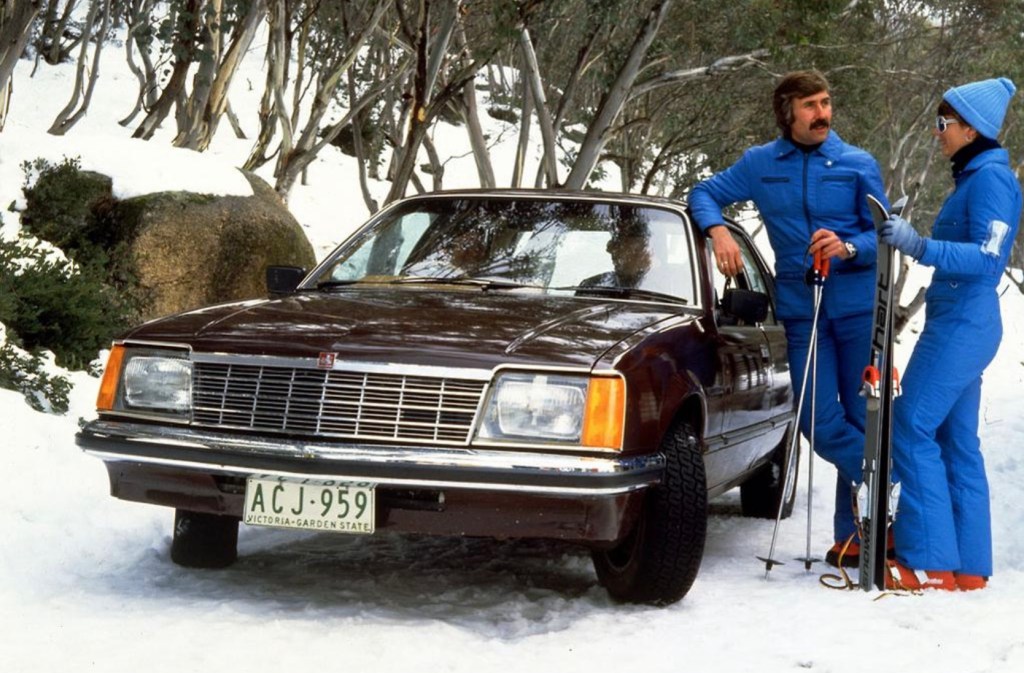
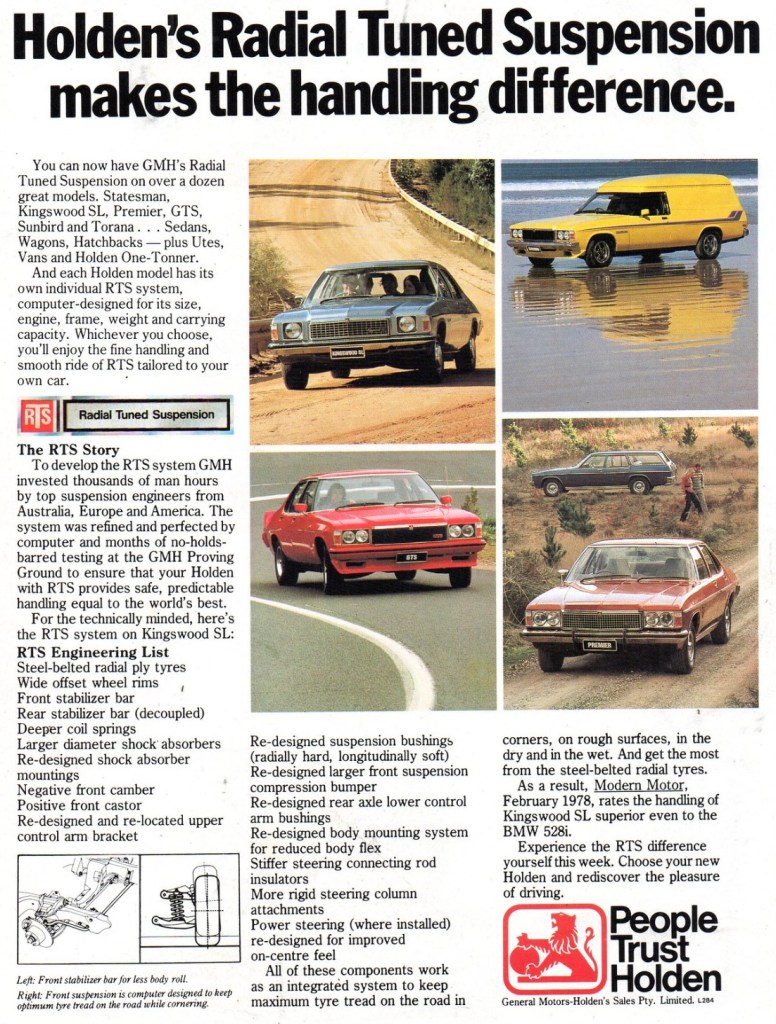
Holden responded, inter alia, with their RTS – Radial Tuned Suspension – HZ Holdens under the leadership of Peter Hanenberger aka ‘Handlingberger’. Hanenberger was a GM Opel-trained engineer who rose all the way through the GM Empire of Suits to be, in his second Australian stint, MD and Chairman of General Motors Holden.
Hanenberger, spunk-muffin and early Commodore (GMH)
RTS was all piece of piss stuff: changes to geometry, springs, bars, shocks, bushes, mounts etc. The exact specs are neither here nor there; the point is that Hanenberger instructed his staff to do what they should have done when the HQ was originally designed and developed way back circa-1971.
Hanenberger was a breath of fresh air at Holdens after a succession of crew-cut Americans on the corporate climb who ran the show without much savoir-faire.
Artificial Intelligence
Then I thought, hang on a minute, my currrent Trump inspired high level Anti-American stance is maybe clouding my judgement. So I put my favourite AI tool to work (CoPilot) to produce a list of GMH Managing Directors and then teased out of it, their contributions.
I use AI – when I do at all – very carefully and only where I have strong subject matter knowledge in order to exclude the bullshit. I don’t have the interest or subject matter knowledge of this stuff much at all; it’s all reproduced verbatim, including all the floral adjectives and American spelling, so I am in your hands, Holden experts…
Managing Directors of GM-Holdens
Managing Director
Tenure
Nationality
Notable Contributions or Context
A.N. Lawrence
1931
Australian
First MD after GM-Holden’s formation
H.W. Page
1930s–1940s
American
Oversaw wartime production and early expansion
Laurence Hartnett
1936–1946
British-Australian
Instrumental in developing the first Holden car (48-215)
Harold Bettle
1950s
American
Managed post-war growth and Holden’s market dominance
David H. Hayward
1960s
American
Expanded Holden’s export programs
John Bagshaw
1970s
Australian
Oversaw HQ Holden development and local engineering initiatives
Chuck Chapman
1980s
American
Promoted Commodore and Group A racing involvement
Bill Hamel
Late 1980s–1990s
American
Focused on global integration and platform sharing
Led VE Commodore development and global platform alignment
Mark Reuss
2008–2009
American
Later became GM President; emphasized global product strategy
Alan Batey
2010–2013
British
Managed Holden during restructuring and brand repositioning
Mike Devereux
2013–2015
Canadian
Announced Holden’s manufacturing exit
Mark Bernhard
2015–2018
Australian
Last Australian MD; led Holden through transition to import-only
Kristian Aquilina
2019–2020
Maltese-Australian
Final MD before Holden’s closure in 2020
The Shifting Helm of Holden : A Narrative of Leadership and Legacy
From its 1931 inception as General Motors-Holden’s Ltd, the company’s leadership mirrored its hybrid DNA: Australian in spirit, American in ownership. Each Managing Director brought a distinct lens—some engineering-driven, others commercially focused—shaping Holden’s trajectory through war, prosperity, global integration, and eventual closure.
Foundations and National Pride (1930s-1940s)
A.N. Lawrence (Australian) was the first to steer GM-Holden’s after its formation, laying the groundwork for a uniquely Australian automotive identity.
Then came Laurence Hartnett (British-Australian), whose visionary leadership birthed the first Holden car—the 48-215. Hartnett’s push for local design and manufacturing made him a national figure, often dubbed the “father of the Holden”.
Post-War Expansion and Engineering Dominance (1950s-1970s)
Harold Bettle and David H. Hayward (both American) managed Holden’s post-war boom, with the FX and FJ Holdens becoming cultural icons.
John Bagshaw (Australian) took the reins during the HQ Holden era, championing local engineering and design. His tenure reflected a shift toward Australian autonomy within GM’s framework, with Holden’s technical teams gaining global respect.
Commodore Era and Global Integration (1980s-1990s)
Chuck Chapman (American) embraced motorsport, aligning Holden with Group A racing and the rise of the Commodore.
Bill Hamel (American) began integrating Holden into GM’s global platform strategy, a move that would later define the VE Commodore’s architecture.
Engineering Renaissance and Strategic Realignment (1999-2013)
Peter Hanenberger (German), a former Opel executive, reignited Holden’s engineering culture. Under his leadership, the Monaro was reborn, and the VE Commodore became a world-class platform.
Denny Mooney and Mark Reuss (both American) continued this global alignment, balancing local innovation with GM’s broader product strategy.
Alan Batey (British) managed Holden during a time of brand repositioning and market uncertainty.
Decline and Closure (2013-2020)
Mike Devereux (Canadian) announced the end of local manufacturing—a seismic moment in Australian industry.
Mark Bernhard (Australian) became the last local MD, tasked with guiding Holden through its transition to an import-only brand.
Kristian Aquilina (Maltese-Australian) closed the final chapter, overseeing Holden’s wind-down in 2020 with a focus on dignity and legacy.
Each Managing Director’s nationality wasn’t just a footnote—it often shaped Holden’s priorities. Australian leaders like Hartnett, Bagshaw, and Bernhard emphasized local engineering and cultural relevance. American and European MDs brought global integration, technical rigor, and strategic realignment. Together, they formed a mosaic of leadership that reflected Holden’s complex identity: proudly Australian, yet forever tethered to Detroit.
Holden’s Leadership and the Pulse of Performance : Motorsport and Engineering in Motion
Holden’s Managing Directors didn’t just steer corporate strategy—they shaped the soul of the brand. Their decisions echoed across racetracks, engineering labs, and suburban driveways, where the roar of a Holden V8 became a symbol of national pride.
Engineering Identity : From FX to HQ
Under John Bagshaw, Holden’s engineering teams flourished. The HQ Holden wasn’t just a car—it was a declaration of independence. Designed and engineered in Australia, it featured a perimeter frame chassis, a bold departure from GM’s global norms. Bagshaw’s support for local innovation gave engineers like George Roberts and Leo Pruneau the freedom to craft a car that could handle Australia’s rugged terrain and reflect its cultural swagger.
The HQ’s success wasn’t just commercial—it laid the groundwork for Holden’s motorsport dominance. Its robust chassis became the backbone for touring car variants, and its V8 engines roared across Bathurst.
Motorsport as Brand DNA : The Monaro and Commodore Era
Chuck Chapman saw motorsport as a marketing weapon. Under his watch, Holden embraced Group C and later Group A racing, with the Commodore becoming a fixture on the grid. The Monaro’s rebirth in the early 2000s—thanks to Peter Hanenberger—was more than nostalgia. It was a technical triumph, blending heritage with modern performance. Hanenberger’s engineering-first ethos revived Holden’s credibility among enthusiasts and racers alike.
The VE Commodore, launched during Hanenberger’s tenure and refined under Denny Mooney, was Holden’s magnum opus. It was the first car developed on GM’s global Zeta platform, but it was engineered entirely in Australia. Its success in V8 Supercars and export markets (like the Pontiac G8 in the U.S.) proved that Holden could punch above its weight.
Strategic Shifts and Motorsport Legacy
As Holden’s global integration deepened under Mark Reuss and Alan Batey, motorsport remained a cultural anchor. Even as manufacturing wound down, Holden’s presence in Supercars endured—until Kristian Aquilina oversaw its final race at Bathurst in 2020, where Shane van Gisbergen gave Holden a fitting farewell victory.
Mark Bernhard, the last Australian MD, understood the emotional gravity of Holden’s motorsport legacy. His leadership ensured that Holden’s final years weren’t just about winding down—they were about honoring a legacy built on grit, speed, and national pride.
Holden’s story isn’t just about cars—it’s about the people who led it, the engineers who built it, and the racers who drove it into legend. From Bagshaw’s HQ to Hanenberger’s Monaro and Bernhard’s final Bathurst, each chapter reflects a tension between global strategy and local soul.’











 primotipo...