Archive for the ‘Obscurities’ Category

image

(Schlegelmilch)

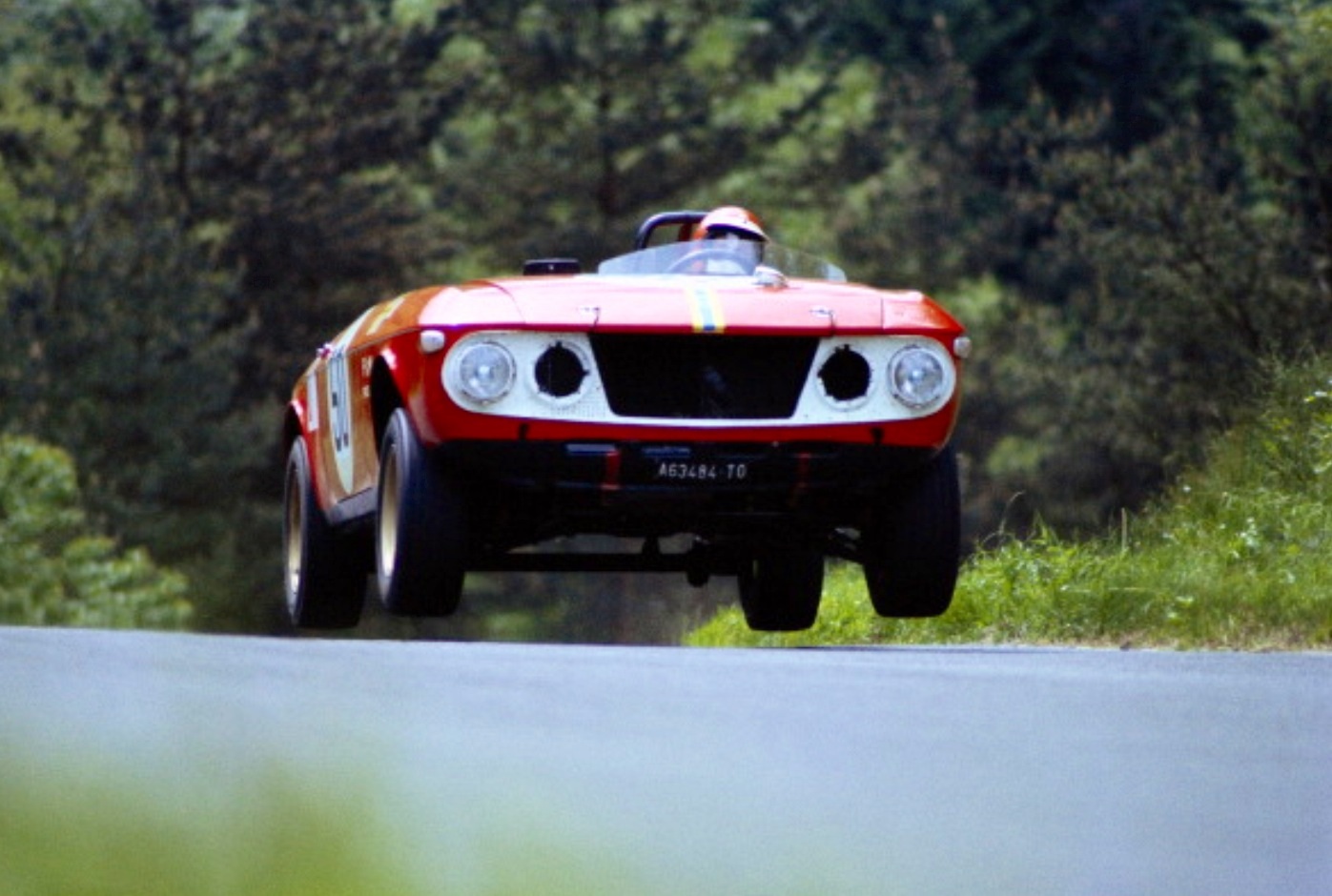
The Lancia Fulvia HF ‘F&M’ barchetta of Sandro Munari and Rauno Aaltonen jumping its way to a class win at the Nurburgring 1000Km on 1 June 1969…
The story of this Lancia is an interesting one, well known to fans of the marque, three cars were factory built in period plus a couple by Sicilian Lancia tuners.

Cesare Fiorio and Claudio Maglioli, respectively team manager and works driver of Lancia’s Squadra Corse HF, saw that the team´s drivers were fried by the Daytona heat in 1969 and decided to create something more competitive and cooler for the drivers for the Targa Florio. Given there was no budget for a more sophisticated approach they chopped the roof off the HF coupé and shortened its chassis by 28 mm. The roof, windscreen and side windows were removed and interior completely stripped with the exception of the driver’s seat. The result, a car 200 pounds lighter with consequent benefits to acceleration, handling and braking.

Whilst lightened the structural rigidity of the chassis was retained by the addition of some tubular framework. The fuel tank was centralised by placing it where the rear seat had been.

The first factory car eventually became the test mule for the Lancia Stratos, the second exists although in what form is a little unclear, the location of the third is unknown.

image

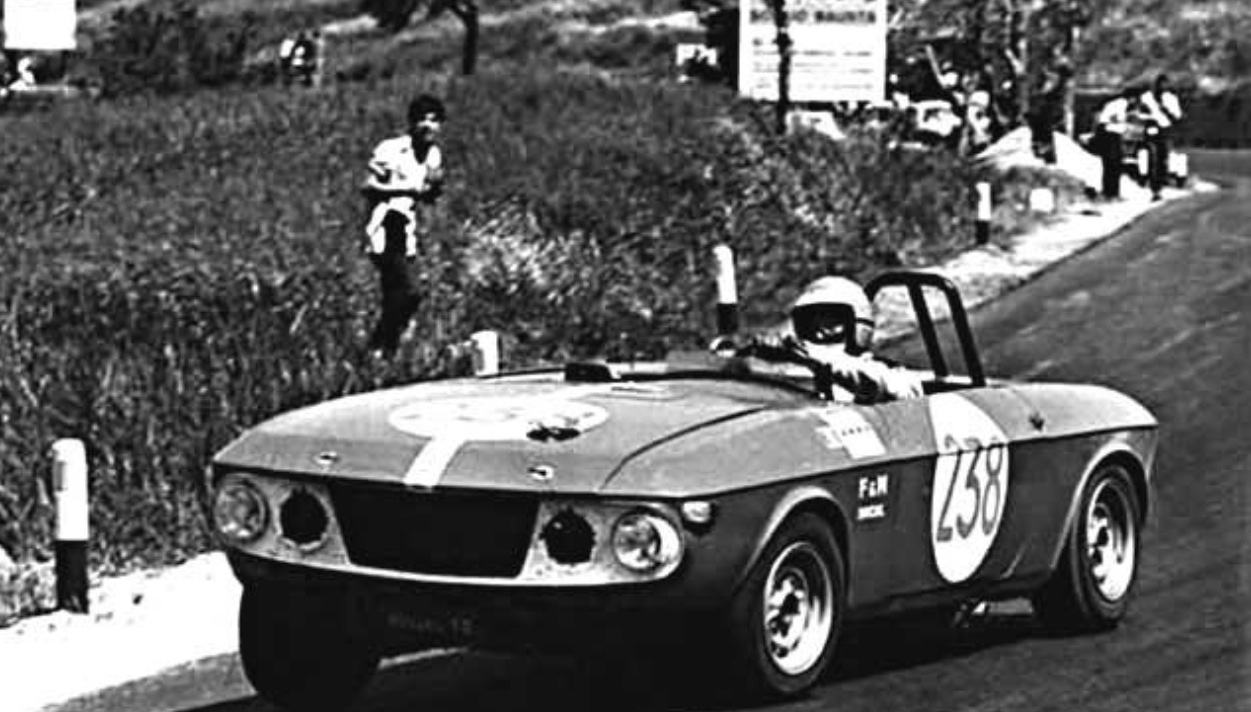
Pretty lines of the Fulvia F&M Barchetta shown in this Targa shot of the 9th placed Aaltonen/Munari chassis (unattributed)

The cars made their race debut at Targa in May where Claudio Maglioli /Raffaele Pinto retired due to overheating caused by an errant newspaper obstructing the radiator, but ninth place overall was a great result for rally-drivers Sandro Munari and Rauno Aaltonen in the other car. The race was won by the Mitter/Schutz Porsche 908/2.

At the 1000 km of Nurburgring on June 1, Munari /Aaltonen were 27th outright and won their class and Maglioli / Pinto finished 29th/2nd in class. Porsche again won the race with their 908/2, this time the car crewed by Jo Siffert and Brian Redman.

At the Grand Prix of Mugello in July Sandro Munari was 5th, a great result amongst 2 litre Abarth and Porsche sports-prototypes and a 5 litre Lola T70!

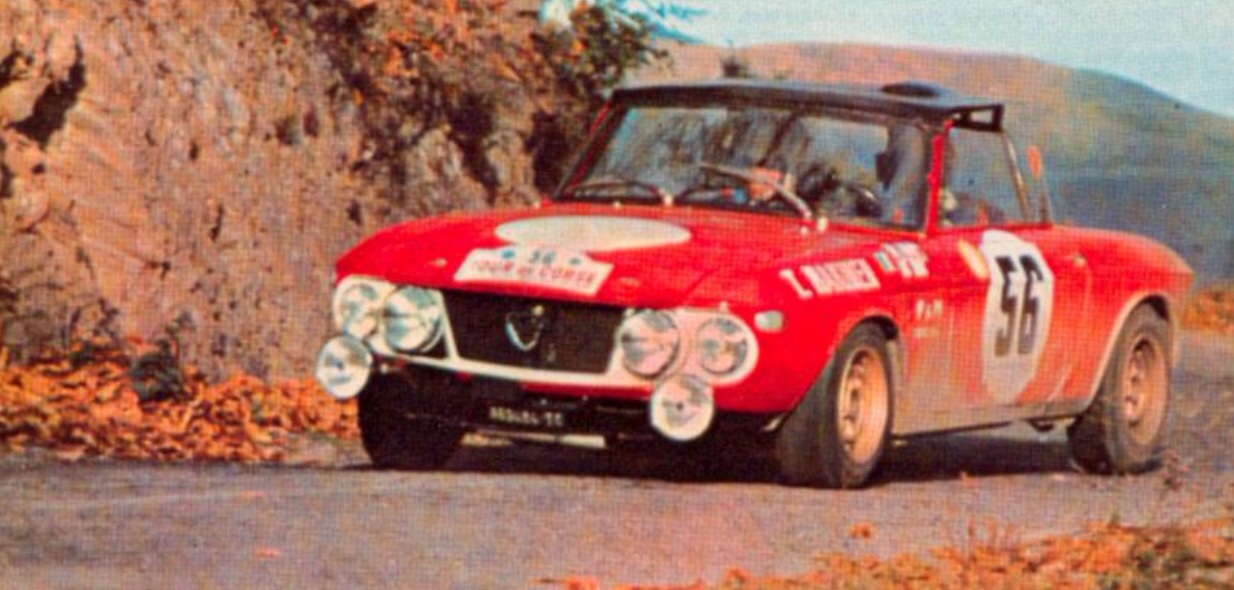
Two of the cars were then further modified (see post-script below) to accommodate a navigator and rudimentary weather protection to allow them to compete in Group 4 at the 1969 Tour de Corse/Rally Corsica where the Munari/Davenport car was 13th and Timo Makinen/Paul Easter 11th.

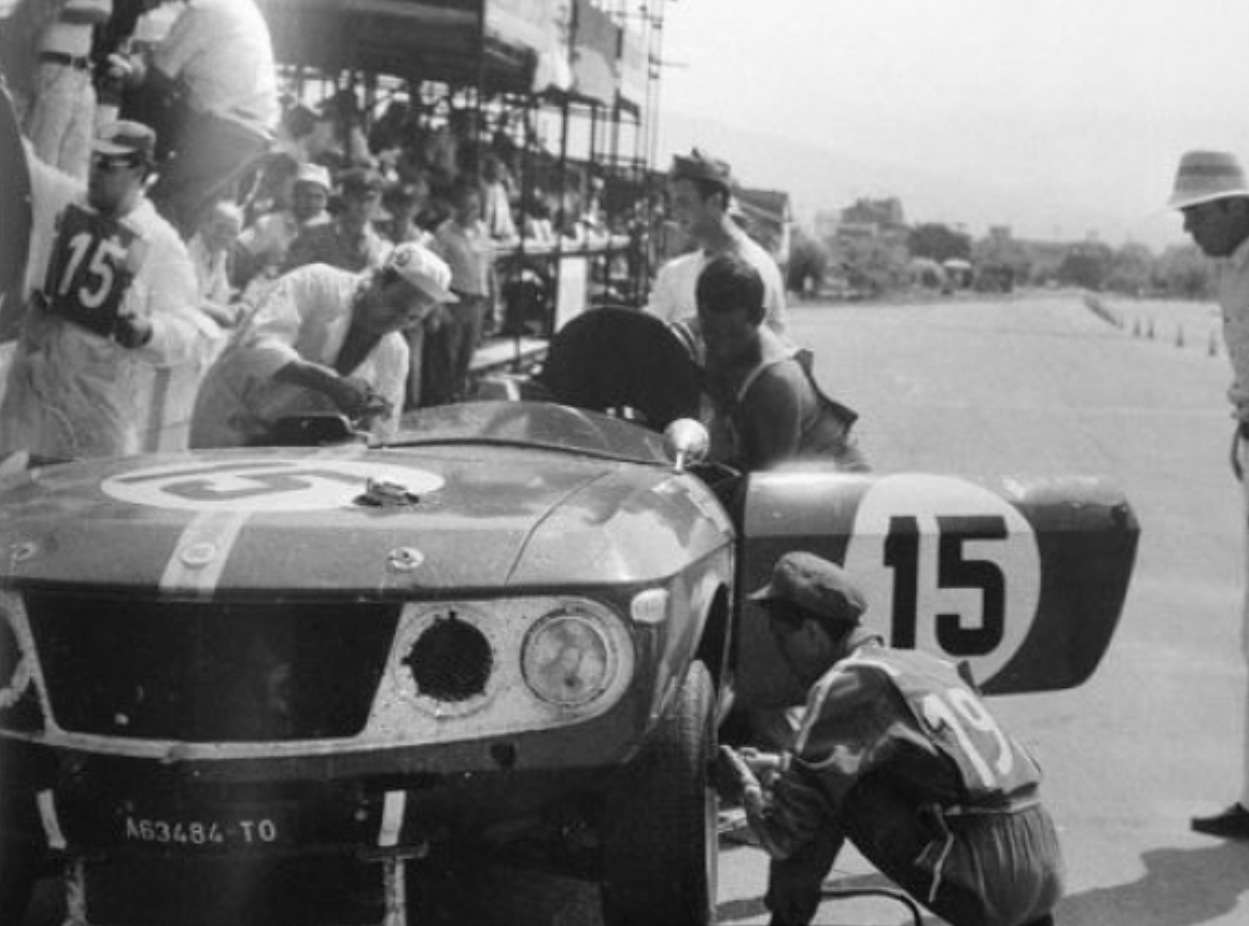
image

Munari’s car into the Mugello pits en-route to 5th amongst some pretty quick sportscars and prototypes, Fulvia F&M. Munari won the ’69 Mugello GP in a Abarth 2000SP (unattributed)

Technical Specifications…

Lancia Fulvia’s were front-engined and FWD of course.

Engine, SOHC, 2 valve 13 degree, all aluminium 82.4X75mm bore/stroke, 1600cc V4. Circa 160bhp@8200rpm. Gearbox, 5 speed with limited slip diff, final drive ratios to choice.

Spider body with front suspension by wishbones, tranverse leaf spring and guide-bar and rear by beam axle, transverse rod and longitudinal transverse spring with telescopic hydraulic shocks front and rear. Brakes were non-servo assisted discs

The little cars were 3670 mm long, 1580 mm wide and 840 mm high with weight quoted as 720 Kg.

image

Timo Makinens car during the Tour de Corse, note lights back on the car and the basic windscreen and ‘roof’ (unattributed)

‘Tour de Corse’ Rally Corsica, 9-11 November 1969 Postscript…

Just love Lancia’s creativity; when looking at the Barchetta’s above you wouldn’t think they could be crafted into ‘all-weather’ rally machines, particularly given the winter of 1969, but that belies Lancia’s focus!

Lancia felt they would be more competitive against the Porsche 911R, Alpine A110 and 2002Ti opposition with the F&M Specials than their usual HF machines

Tests in Corsica resulted in some changes to the cars; which had reinforced doors, a wider roll-bar to protect both driver and navigator, navigation rally gear and thin Plexiglas, 24cm high, windscreen and wipers.

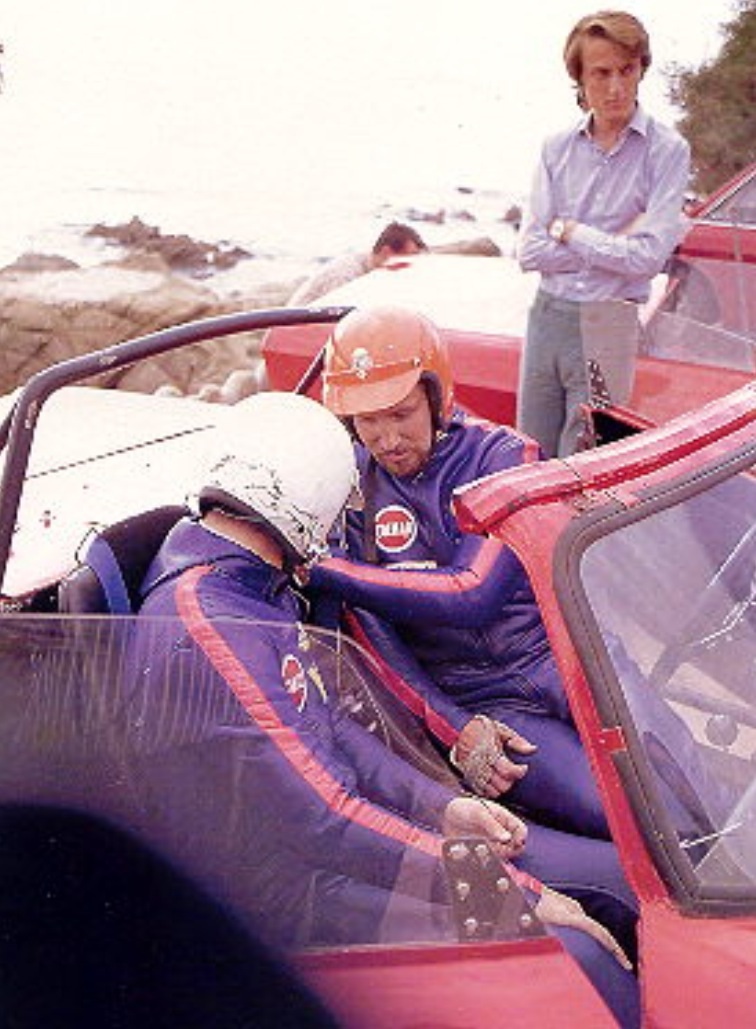
During the last week before the rally the weather worsened greatly, Sandro Munari realised the open car was going to be virtually impossible to drive in conditions down to 4 degrees so he decided to clothe himself more appropriately in rubber suits sourced by the Turin factory; one flew around too much at speed, the black divers wetsuit! didn’t ‘breathe’ causing lots of sweating.

image

Munari in orange helmet and Davenport in their warm ‘sub-suits’, no roof in this shot. Later Ferrari chief Luca Montezemolo looks on skeptically! (unattributed)

After tests both Munari, Makinen and their navigators decided to use a race suit similar to that utilised by submariners. In Turin, the racing department considered further changes to the cars…More shelter was provided for the occupants by raising the windscreen, the earlier one tested replaced by one from a Fulvia Coupe albeit modified with special uprights and with plastic side windows which were anchored to the front section of the roll bar.

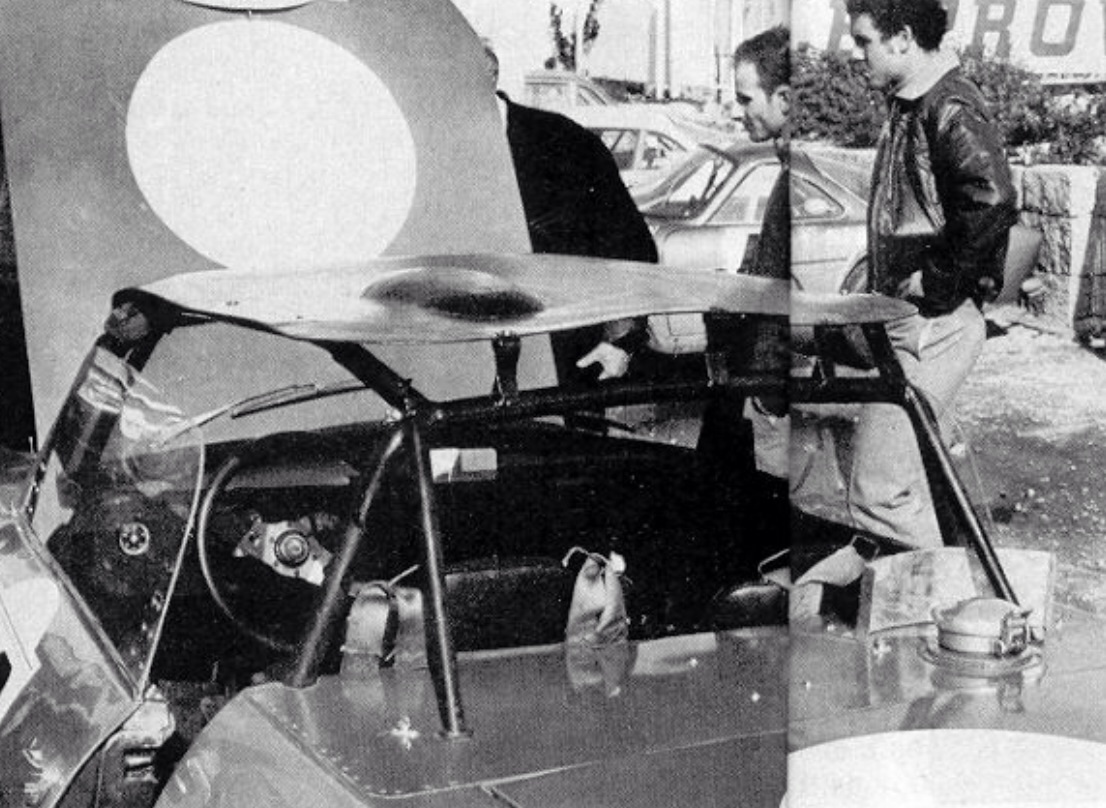
By the time the cars arrived in Ajaccio for the Tour de Corse start the ‘F&M’s had lost both the appearance of the Targa Barchettas as well as their light weight! Makinen’s car at the last minute was fitted with a rudimentary sheet metal roof, an addition scornfully rejected by Sandro Munari! Softie!, he thought of Timo.

image

The quickie roof! as per the text, note fuel filler, rough as guts geddit done finish (unattributed)

The two ‘F & M Special’ were part of Lancia’s six car team in the event, the final result was disappointing with the normal 1.6HF of Kallstrom/Haggbom 9th, 1.3HF of Ballestrieri/Audetto 10th ahead of the trick ‘F&M Specials’; Makinen-Easter 11th and Munari-Davenport 13th.  The rally was won by Gerard Larrousse/Gelin in a Porsche 911R ahead of an Alpine A110 Renault, Ford Capri RS2600 and a swag more A110’s…

image

Normal HF following the Munari car during the Tour (unattributed)

Credits…

Rainer Schlegelmilch, Rallymania

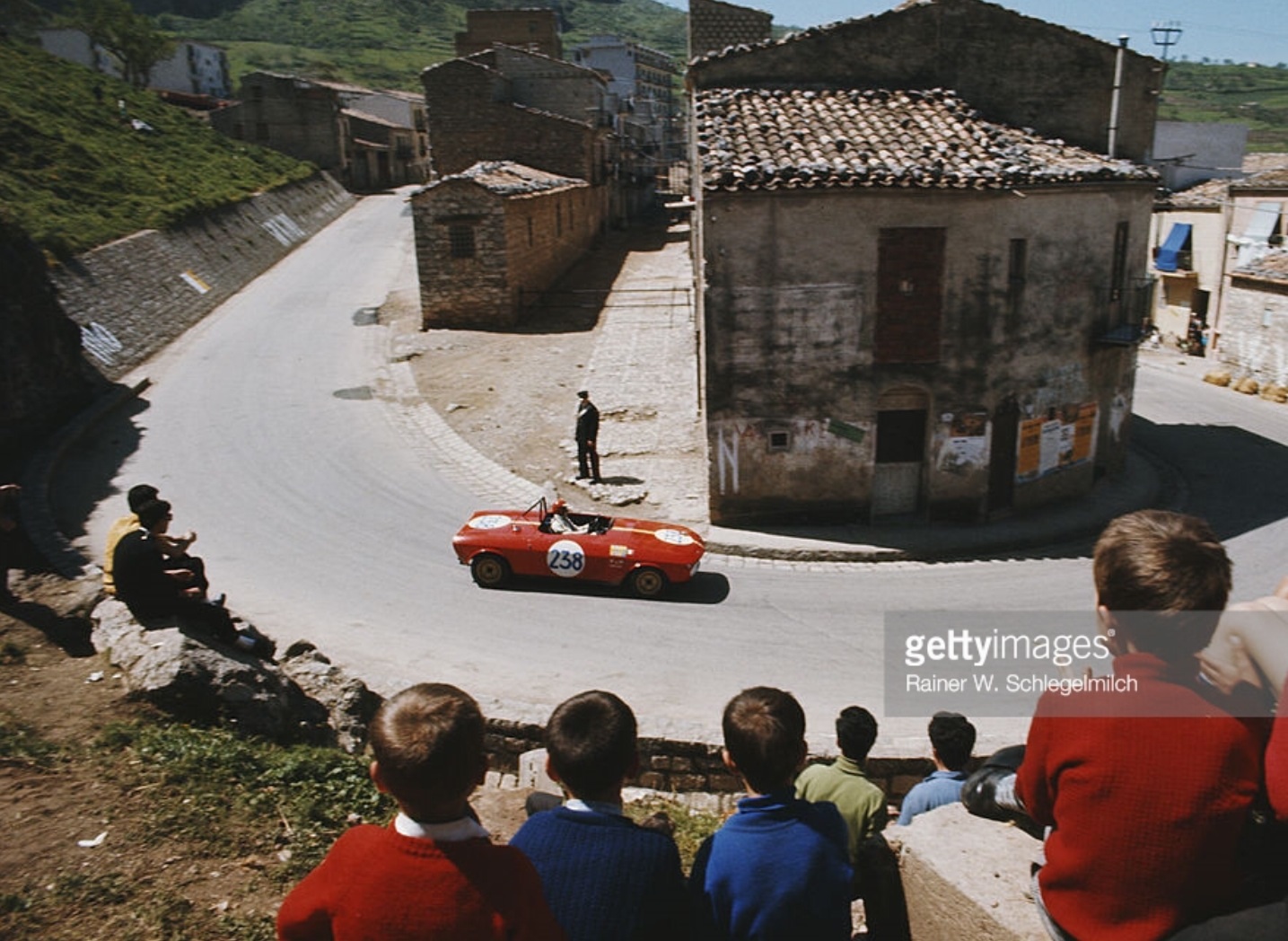
Tailpiece: Collesano, Rauno Aaltonen, Lancia Fulvia F&M, Targa 1969. The short, squat efficient lines of the car clear in this wonderful shot…

image

(Schlegelmilch)


image

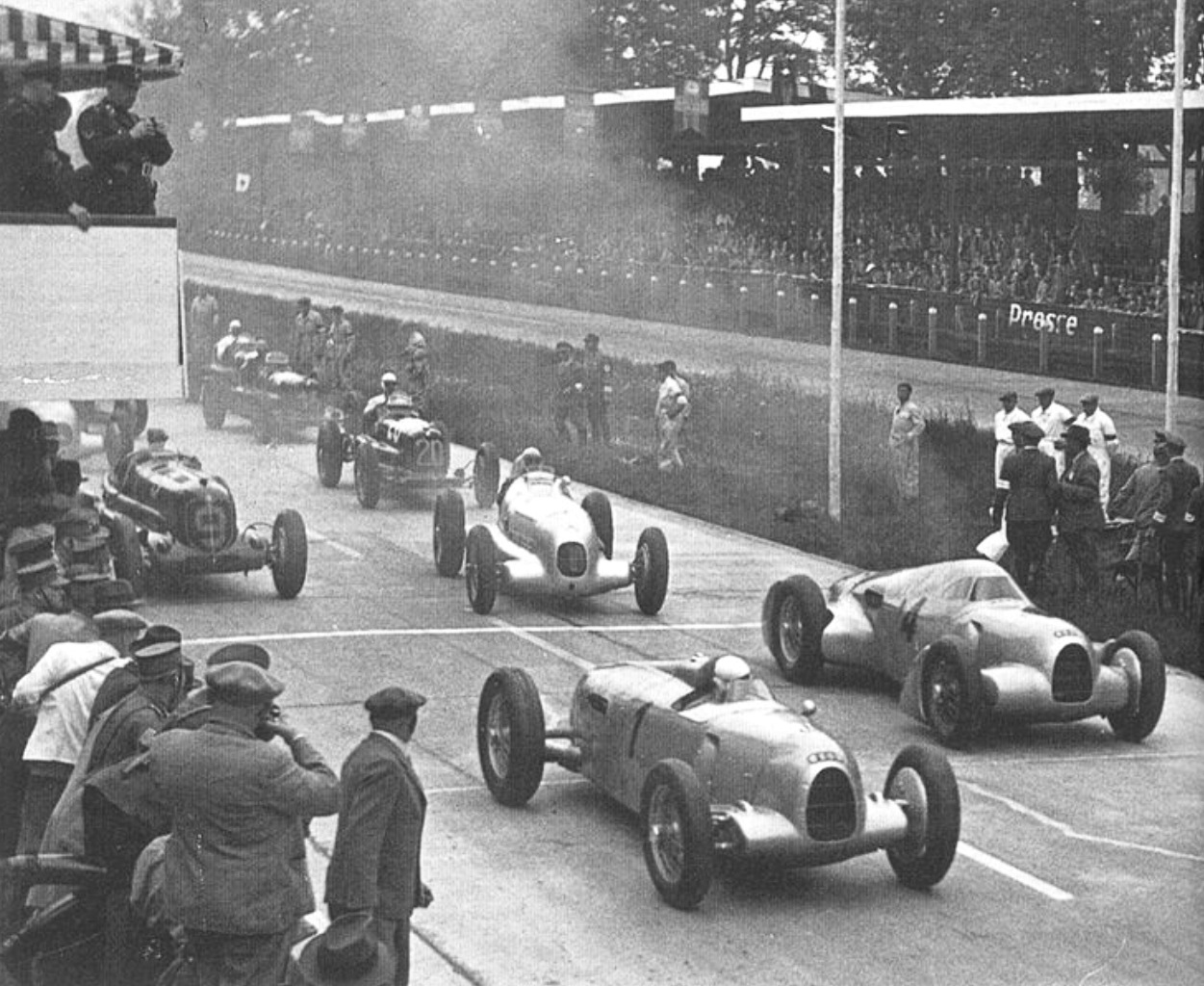
The Hon Jock Leith’s Bugatti Type 35B leads EG Hughes Frazer Nash, Brooklands 16 March 1935…

JA Hamptons shot is all about composition, just love that background Vickers factory, a well known  aviation name of course.

image

By 1919 Vickers was already famous for the first non-stop crossing of the Atlantic Ocean when Alcock and Brown flew their converted Vickers Vimy bomber from Newfoundland to a crash landing in an Irish bog.

image

The company was known as a shipbuilder, but early in the 20th century saw aviation as a profitable future opportunity. In 1908 the British Admiralty ordered the R.1 airship from them, a few years later Vickers built a French monoplane under license. In 1913 their first design, the F.B.I. flew.

Vickers Flying School opened at Brooklands on 20 January 1912,  aircraft construction commenced on the site in 1915, Vickers having taken over the Itala Motor Works factory, by the Wars end they had built 4500 aircraft there…

image

Wellingon bombers being built at Vickers factory, Brooklands in December 1939 (Keystone-France)

Click on these links for interesting websites about Vickers and its history…

This one is more about Vickers on the Brooklands site; http://www.subbrit.org.uk/sb-sites/sites/v/vickers_shelter/index.shtml

And this one more about the aircraft themselves; http://www.vc10.net/History/vc10_origins.html

image

Credit…

JA Hampton, vc10.net, subbrit.org.uk, Keystone France, Underwood Archive

Tailpiece…

image

British GP, Brooklands Saturday 1 October 1927, Vickers factory in the background. The race ‘Royal Automobile Club Grand Prix’ was won by Robert Benoist’s Delage 155B, first 2 cars here both Bugatti’s (Underwood Archives)


image

Dodgems 1936 style, Royal Adelaide Show, Wayville…

Timeless, ageless and still fun for kids of all ages, the gentleman in the photo adds an air of formality normally lacking in sideshows!

‘twould be interesting to know what these little buzz-box, bumper cars were powered by, no sign of an electrical connection in evidence here. The Show traditionally starts on the first Friday in September and lasts 10 days, so its early September ‘36.

I chanced upon the shot looking for something else, it was too good not to share. The Adelaide Showgrounds are still in the same spot, Wayville is not too far from the cities ‘Square Mile’ which defines its CBD.

Credits…

Raymond Gordon, State Library of SA


Credits…

pau

Juan Manuel Fangio wins the first F1 Grand Prix at Pau. Maserati 4CLT/48, 10 April 1950…

He is ahead of Luigi Villoresi’s Ferrari 125, 2nd. Louis Rosier was 3rd in a Talbot-Lago T26C.

The first championship Grand Prix for ‘Formula 1’ introduced at the start of 1950 was the British GP held at Silverstone on May 13.

Fangio, somewhat fittingly is therefore the first winner of an F1GP albeit a Non-Championship one! Farina took the Silverstone race in an Alfa 158, the car of 1950/51.

Credit: Keystone-France

Tailpiece…

pau gp


image

Mrs Cook’s Cooper is fettled at Brands Hatch during 1957…

Clearly an inspirational woman for the teenagers with the cameras looking on. All information about the driver gratefully received.

Credit…

Charles Hewitt

gethin 1

(Schlegelmilch)

Peter Gethin subbing for Denny Hulme in the tragic 21 June 1970 Dutch Grand Prix, McLaren M14A Ford…

1970 was a tragic season for driver deaths, Piers Courage perished in a gruesome fiery accident in his De Tomaso 505 Ford in this race.

Peter was drafted in the McLaren team after Bruce’s death at Goodwood on 2 June. To make matters worse Denny Hulme burned his hands at Indianapolis so McLaren were represented at Zandvoort by Dan Gurney, Gethin with Andrea de Adamich in an Alfa Romeo V8 engined M14A, the other team cars Ford Cosworth DFV powered.

What draws the eye to this shot is the helmet, Gethins and Jackie Olivers designs were so similar to Jim Clark’s at the time.

McLaren’s weekend was poor; Andrea DNQ and both Dan and Peter retired with a mechanical problem and accident respectively. John Surtees M7C was the best placed McLaren in 6th, the race won by Jochen Rindt’s Lotus 72 Ford, the iconic car scoring its first win. Surtees drove the ex-works 1969 car until his own Surtees TS7 made its debut later in the season.

Credit…

Rainer Schlegelmilch

image

Helmut Polensky and Walter Schluter on the way to outright victory in the event also known as the Marathon de la Route in their 1.5 litre Porsche 356…

An early important win for the marque in this Gmund built Coupe, a bit lighter than the Stuttgart cars. Porsche were 1st, 3rd, 4th, 9th and 10th taking the Team Prize as a result.

Credit…Unattributed

image


image

Prince Bira grabs a nip of ‘Red Bull’ between practice sessions in his Maserati before the Crystal Palace Cup on 14 August 1937…

Bira is standing beside his Fiat Topolino, these cars in some ways the ‘Cooper S’ of their day. The Franco Fessia designed car was noted for its safe road-holding, good ride and willing performance. The ‘mouse’ had hydraulic brakes, independent front suspension and a synchro 4 speed ‘box.

In an article about the cars in MotorSport’s November 1995 issue Bill Boddy noted that they were the ‘in-thing’, the cars competition history included entries and finishers at Le Mans in 1937-9 and a class win in the 980 Mile Tobruk-Tripoli race which replaced the Mille Miglia in 1939.

Post-War the cars components were a feature of the Cooper 500 and thirteen other Italian racing cars.

image

Bira in his ex- Whitney Straight, Reid Railton modified Maserati 8CM at Crystal Palace in 1937 . The car was fitted with a Wilson pre-selector box and other tweaks, the ‘heart shaped’ radiator giving the car, very successful in both drivers hands, a distinctive look (Dennis Oulds)

Bira raced his Maserati 8CM in the Cup Race, having rebuilt it after its International Trophy race blow up, Lord Austins cars were driven by Hadley and Kaye Petre. Hanson and Aitken raced 1.5 litre Masers and Connell a 1.5 litre ERA. ‘Crack-runners’ (rather a different meaning that phrase these days!) were non starters included the brothers Dobson ERA and Maserati, Tony Rolt’s Triumph and Peter Whitehaeds ERA.

The race was a handicap Bira giving away 75 seconds to the 1.1 litre cars, and 25 seconds to the 1101-2500cc cars.

Hadleys Austin lead away with Bira eventually away with lots of wheelspin and by lap 15 all cars were on the same lap. Bira was up to 2nd and within striking distance by the last lap but he ‘got into a slide at Ramp Bend’ but despite restarting finished 44 seconds behind Hadleys Austin 744cc, Reg Parnell was 3rd in an MG Magnette 1087cc and P Maclure 4th in a Riley C 1486cc.

image

Bira in the Maser again, this time practicing at Brooklands in March 1938 (David Savill)

Credits…

Imagno, David Savill, John Stephenson, MotorSport September 1937

Tailpiece: ‘White Mouse Stable’ Dalling Road, Hammersmith, Maser 8CM preparation in 1938…

image

Bira’s Ex-Whitney Straight Maser 8CM #’3011′ in 1938. Car still alive and well in Peter Gidding’s loving care (John Stephenson)


image

The Jappic billed as ‘the smallest racing car in the world’ in a very bleak Wimbledon streetscape in April 1925…

The cars ‘main advantages are it’s lightness and portability’ is the prosaic caption.

My problem, one of the many!, is I struggle to finish projects, articles that is, I’ve started.

I have owed Rod Wolfe the next chapter of our Repco Engine story for about 12 months. I get distracted by the lure of ‘something new’ like this Jappic shot I’ve just spotted.

I see the picture, ‘go wow WTF’ and then can’t help myself with research and then jump from tangent to tangent, all of which takes loadsa time. In this case the Jappic led to Gwenda Stewart who drove it, she is an interesting character herself, then there is Montlhery as a record breaking venue and so it goes on.

End of confession! And yes Rodway, I need to complete my research of the ’67 Brabham Repco F1 year!

jappic side

The location of this luvverly Jappic profile shot is no doubt well known to you Londoners, 1925 (Topical Press Agency)

Isn’t the Jappic the most amazing looking little creation, though!? Other worldly.

It was a JAP engined cyclecar designed by motor-cycle racer HM Walters who intended it as a road racer for sale to special order, equipped with front brakes and fitted with either 350 or 500cc engines.

When announced in early 1925 the car was to make its first appearance at the Brooklands Easter Meeting on 11-13 April. Bill Boddy in a short piece about the car in the January 1983 issue of ‘MotorSport’ said that photos ‘were circulated of the car in front of a K Type LGOC omnibus…presumably…taken somewhere near the premises of Jarvis & Co Wimbledon, who handled the Jappic and made its shapely body. The day previously the Jappic (Reg MH3995) had broken Class1 (up to 350cc) records at Brooklands at from 63 to over 70mph, so it might have been returning’ to Wimbledon.

In fact it appears Jappic attacked the 350cc cycle-car record at the 6 June 1925 Brooklands meeting ‘races confined to drivers and motorcyclists who had never competed at the track before’ so the first photo above is probably either April or June 1925.

jap lat

Walters and his creation, Brooklands meeting in 1925 (Austin Harris,LAT)

May the lord above bless MotorSport. If something happened in the UK, from circa 1920 you can pretty much guess Boddy, Jenkinson or one of their merry band covered it ‘in period’, which is rolled god for schleppers like me. Give me a report written in period, or the recollections of a dude who was there at the time over a modern interpretation any day.

In a more comprehensive article in the August 2000 MotorSport issue Boddy wrote again about the Jappic; ‘Cyclecars and other small cars had been encouraged to race at Brooklands before and after WWI, but the former were mostly crude devices, if one excludes the Morgans and the GNs, which had engines of around 1100cc. Anyway, apart from the latter two, the Austin 7 rather ousted cyclecars from the Weybridge scene as the 1920s rolled along. So when visitors to the Track opened their programmes on Easter Monday in 1925 and saw that a 344cc car had been entered for the second race they could be excused for being mildly surprised’.

jappic cant

Refer to Boddy’s text for details of Jappic’s specifications, it appears to be rather light! Brooklands 1925 (unattributed)

‘The tiny racing car was called the Jappic, in deference to its JAP engine. It had been designed by motorcycle racer H M Walters, and built by the coachbuilders Jarvis of Wimbledon in London. The Jappic’s entrant was J V Prestwich of the JAP engine company’.

‘The baby was no lash-up. It was a proper miniature racer. The frame was of ash with 3/32in steel flitch plates and tubular cross-members, with another cross-member of T-section channel by the cockpit. The tubular front axle had forward-facing, underslung quarter-elliptic springs, the shock absorber anchorages adjusting the steering castor angle.

At the back, reversed quarter-elliptic springs supported an axle of tubular transverse rods instead of a solid casing, this enabling the final-drive sprocket to be accommodated in a three-armed spider, roller and ball bearings being used for the driveshafts. Expanding rear wheel brakes sufficed, and the wire wheels were shod with minuscule 650×65 tyres. The engine was a two-port ohv 74x80mm single-cylinder JAP, driving by chain to a three-speed gearbox giving ratios of 6, 8 and 12:1, and fitted with a kick-starter. Another chain drove the back axle’.

‘The slender body was actually a two-seater, because production of Jappics at 1,150 pounds each was contemplated, though this was in the end never proceeded with. But this Jarvis-bodied 5cwt car, its hemispherical nose admitting air to the engine, looked every inch a racing car. The cramped cockpit had seats of sheet aluminium and the bottom half of the steering wheel was cut away to improve access. The driver sat at a head level of 2.1/2ft. Minute gear and brake levers were mounted externally, as were the two exhaust pipes’.

image

Brooklands, 13 April 1925 during the Easter meeting, crowd undaunted by the chill rain and fascinated by Jappic’s small size in relation to some of the Brooklands giants! 30000 attended on the Monday, tho racing was curtailed by poor weather. Note front suspension described in detail by Boddy in text (MacGregor)

‘On that long-ago Bank Holiday afternoon the Jappic was driven by Walters, who had l min 14sec start from the scratch cars, Victor Gillow’s sidevalve Riley and a 1914 GP Nazarro, with Reid Railton’s Amilcar, an entry probably prompted by Parry Thomas, leaving 1 sec after the tiny cyclecar, in the 5.3/4-mile race.

Walters was not placed, but did a lap at 66.85mph, implying a top speed of some 70mph. Enough for one day. But the Jappic was out again at Whitsun, lapping at 68.03mph and just missing a third place. Walters then used it to break records, such as the Class J flying mile at 70.33mph.

In 1926 Kaye Don, the famous Sunbeam driver, was not averse to driving cyclecars, attempting records with the Avon-JAP and the Jappic, the latter now with a 495cc JAP engine, which gave Don some Class I records of up to 10 miles, at around 65mph.

After which Mrs Gwenda Stewart, of Derby-Miller fame, took it over, changing the mite’s identity to HS (Hawkes-Stewart) and refitting the 344cc engine. At Montlhery in 1928 she set the Class J 10-mile record to 70.95mph. Alas, in the garage fire at that circuit in 1932 the HS was completely destroyed’.

jap mont

Gwenda Stewart in the Hawkes Stewart aka Jappic JAP ‘breaking records 50Kms to 1oo miles in June 1929 at Montlhery’ (Adrian Ward)

The Jappic story isn’t entirely over, an exacting replica is being built by Adrian Ward so enthusiasts of today can enjoy HM Walters design brilliance 100 years or so after the cars original construction. Check out his progress on this link;

http://thekneeslider.com/jappic-racing-cyclecar-re-creation-project-in-progress/

For ‘Facebookers’ there is a fascinating, ongoing diary by Adrian of his progress in recreating the car, its a ripper, with loads of information, just key ‘Jappic recreation’ into the FB search engine and ‘like’ in the usual way.

I’m on FB BTW, pop primotipo.com into the same search function.

Etcetera…

jap sunbac

Walters at the Brooklands June 1925 ‘SUNBAC’ meeting (Austin Harris/LAT)

jap article

(Light Car & Cyclecar)

Credits…

Topical Press Agency, MacGregor, Light Car & Cyclecar, Stefan Marjoran, Adrian Harris/LAT

Graces Guide to British Industrial History, Adrian Ward

Tailpiece…

jap pic

(Stefan Marjoran)


Tintin…

Posted: June 29, 2016 in Obscurities
Tags: , , ,

image

The Adventures of Tintin was a post-war weekly Belgian/French comic, subtitled (luvvit) ‘The Journal for Youth from 7 to 77’, it was originally published by Le Lombard in 1946 and ceased publication in 1993…

I was researching an article on Alberto Ascari’s Lancia D50 Monte Carlo ‘harbour swim’ in ‘55 and tripped over the Tintin cover below featuring that amazing event and more recently the Nuvolari Alfa Romeo P3 cover above. Unfortunately I don’t speak French and therefore understand the articles the covers relate to, a shame as the artwork itself is so arresting. Maybe one of you Tintin fans can tell me what the articles were about!?

As usual, not knowing much about the publication, my enquiring mind got the better of me, this precis of Tintin is the result.

tin tin

As a kid I sorta missed the ‘comic phase’ altogether. I dunno why, the only time I looked at cartoon mags was in Steve The Barbers Fine Emporium of Short Back n’ Sides waiting chair and even then only when their were no ‘nudie-rudie’ publications in the rack. ‘Truth’ (‘Lies’ would have been more apt) was a naughty paper in Oz then and much in demand by barber customers for its page 3 ‘editorial direction’. The back pages were also pretty good if I recall.

The first magazines of any sort I bought were about racing cars; dragsters for 6 months before circuit racing made more sense, ‘round and round’ rather than ‘a standing quarter’ looked to be the go from my 12 year old perspective.

I think I ‘found cars’ via the cheap annuals mum and dad gave as Xmas stocking fillers. No Autocourse or Automobile Year ever found their way into those sacks sadly! My diet of young kids books was all Pommie stuff by Enid Blyton. ‘Noddy’, very politically incorrect these days segued into her ‘Secret Seven’ and ‘Famous Five’ series. Next came Capt WE Johns ‘Biggles’ (dads books) and then the more demanding and interesting stuff mandated once I ascended to Secondary School. Quite wot happened to the ‘Batman’, ‘Mad’ etc phase I dunno, a lost opportunity I suspect. The compensation being I am NOT collecting those comics now being afflicted by that obsession enough already! There is only so much space to keep all this shite.

Tintin’s primary content focused on a new page or so from several coming but unpublished comic albums. There were always several ongoing stories at any given time, all of which provided wide exposure to lesser-known artists.The content included ‘filler material’; alternate versions of pages of Tintin stories, interviews with authors and artist etc.

Raymond Leblanc and his partners started a small publishing house after World War II, the concept an illustrated youth magazine. Tintin was perfect, as the intrepid reporter hero was already well known, having been created by Belgian artist Georges Remi aka ‘Hergé’ in 1929 for Le Petit Vingtieme. A deal was done, Tintin and Le Lombard publishing group was away.

The first issue was published in September 1946, a Dutch edition, titled Kuifje, was published simultaneously, 40000/20000 Belgian/Dutch copies were published. In 1948 it grew from 12 to 20 pages and a French edition was created. Hergé had artistic control over the magazine for decades.

In the 1950s new artists and series commenced, the magazine became more international and successful: at one time there were French, Swiss, Canadian, Belgian and Dutch versions with  600,000 copies a week published.

Jean Graton joined Tintin in 1957 and soon created the very popular character, F1 driver ‘Michel Vaillant’, that series was about his racing exploits and those of the family race team. It was so successful that it was published in album format by Lombard until 1976, the character still going strong today.

image

image

In the 1960s the magazine kept attracting new artists, its editorial direction biased in favour of humor. In the 1970s the comics scene evolved to reflect the changing times, its characters given psychological dimensions, ‘real women characters appeared’ and sex. New foreign artists series were added, moralising articles and long biographies disappeared. These changes were successful, Tintin won the prestigious ‘Yellow Kid Prize’ at the Lucca Comics Festival in 1972.

In the 1980s demand steadily declined despite attempts to attract new audiences. At the end of 1980 the Belgian edition was cancelled. The French edition remained, by 1988 its circulation dropped to 100,000. The name was changed to Tintin Reporter, but attempts to revive the magazine ceased after six months of significant losses. The Dutch version ended in 1992 and the French title renamed ‘Hello BD’ disappeared in 1993.

Time and time again we see that everything has a ‘shelf life’!?

In our own specialist world the efforts of MotorSport are a good example of a great publication which has ‘picked the windshifts’ proactively or reactively enough to survive and thrive since 1923, long may it and others of its ilk continue!

Credits…

Wikipedia, tintin.com

Tailpiece: Ascari being rescued from the Monte Harbour deep…

image