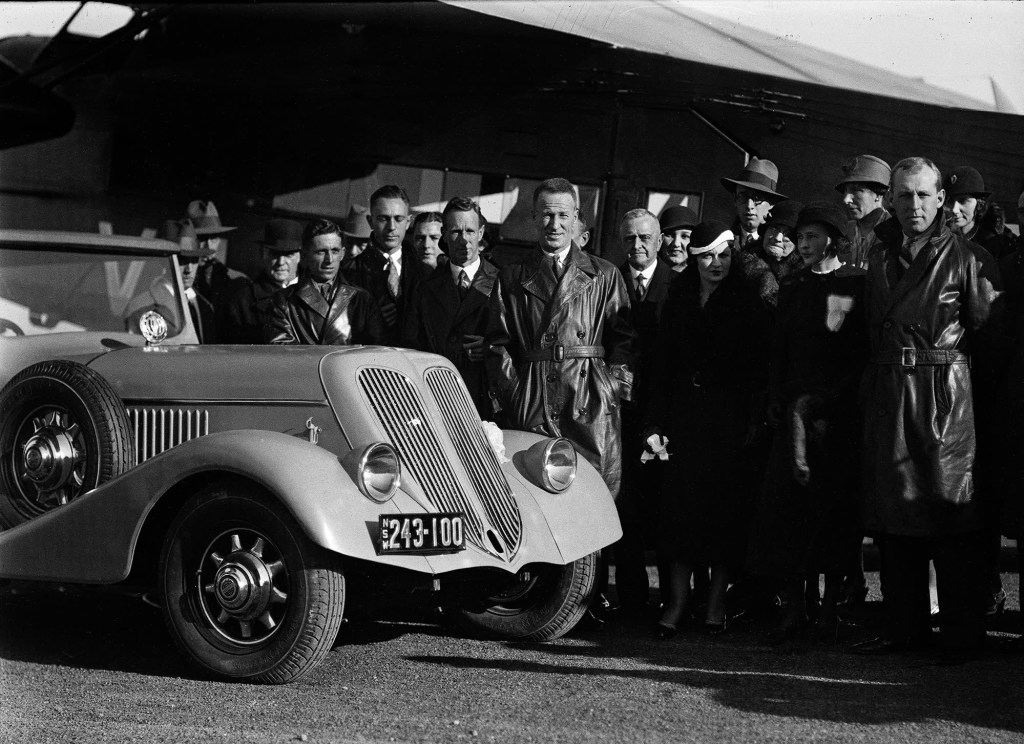
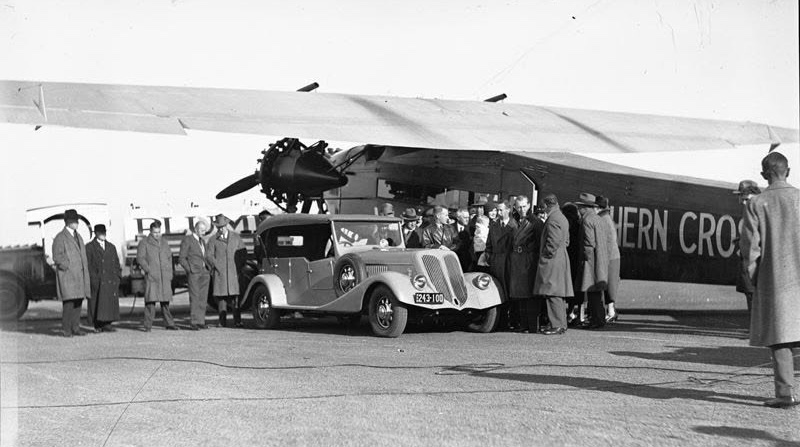
‘Australian aviator Sir Charles Kingsford Smith (centre) with his specially designed Southern Cross car, Mascot Aerodrome, Sydney on June 6, 1933,’ recorded the Sydney Morning Herald.
‘The car was the first chassis-less – unitary or monocoque construction – Kingsford Smith was in the process of raising additional capital for the project at the time of his disappearance over the Bay of Bengal in 1935 (9/2/1897-8/11/1935).’
‘The Southern Cross was produced in Sydney by Marks Motor Construction Pty Ltd, of which Kingsford Smith was a director.’
(SMH)
Smithy’s ‘Southern Cross’ was a Fokker F.VIIb trimotor monoplane powered by three 220 bhp Wright Whirlwind J-5 nine-cylinder, air-cooled radial engines.
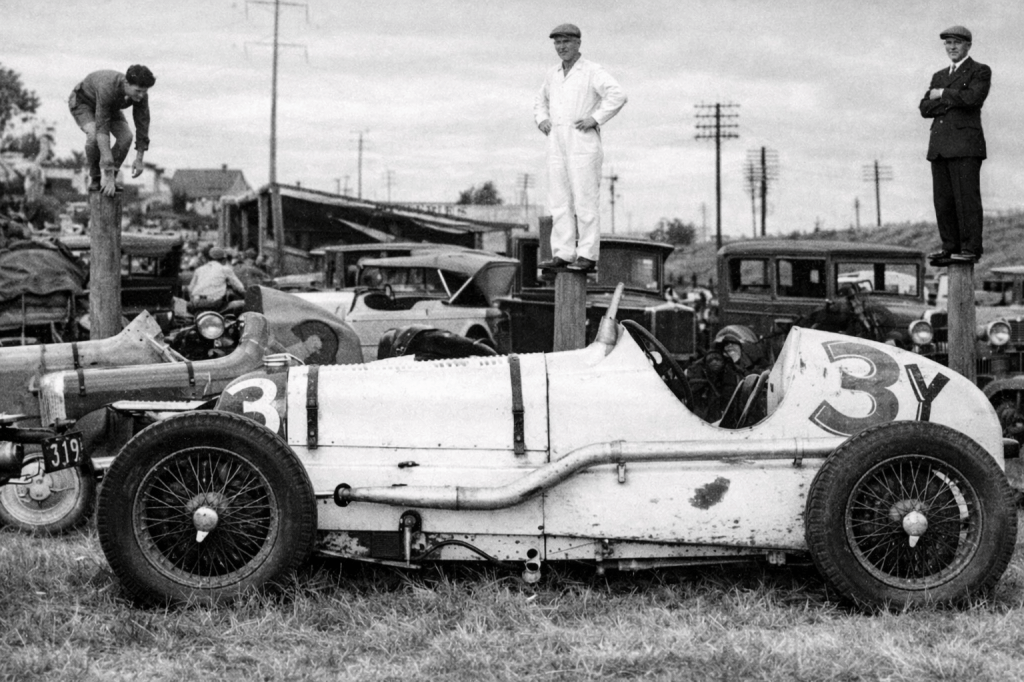
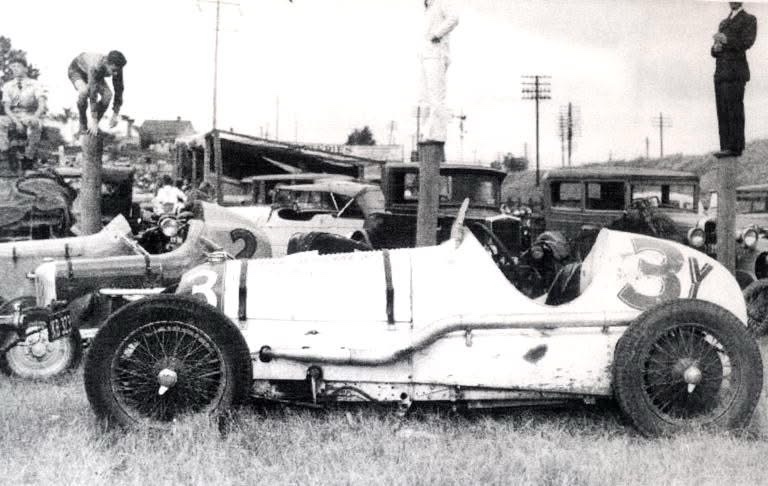
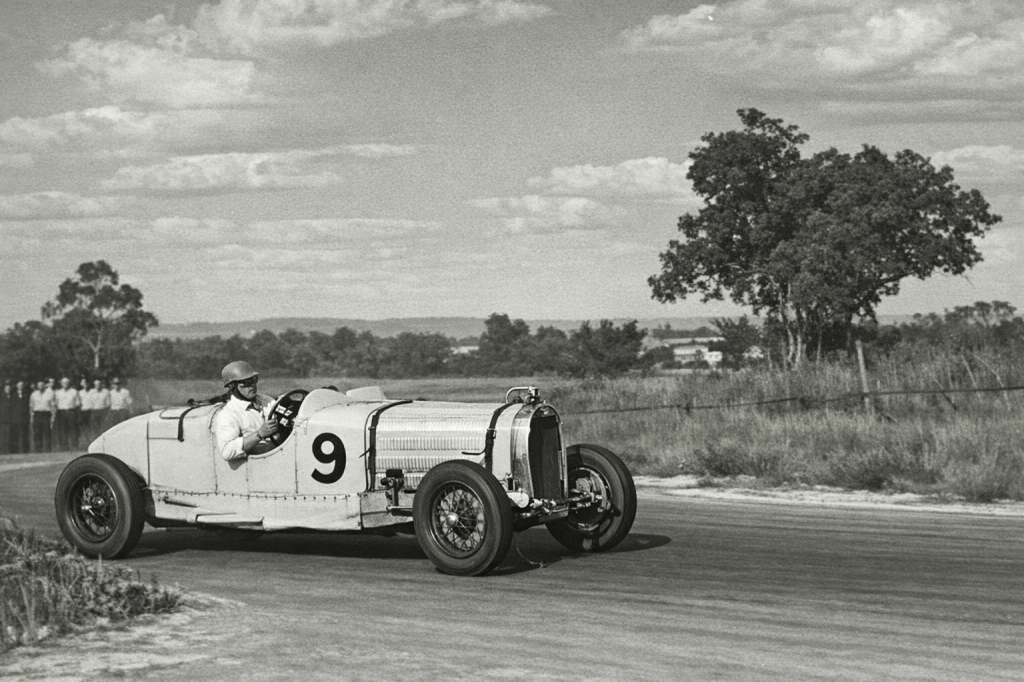
Ted Gray’s Alta 21S Ford V8 at rest in the Penrith Speedway paddock during 1940.
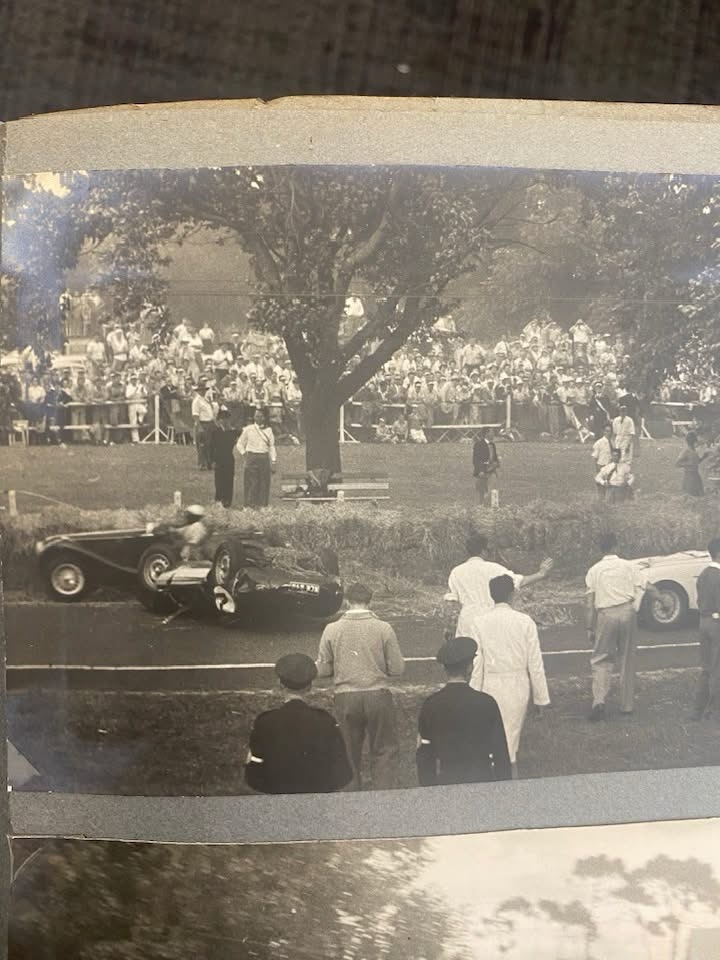
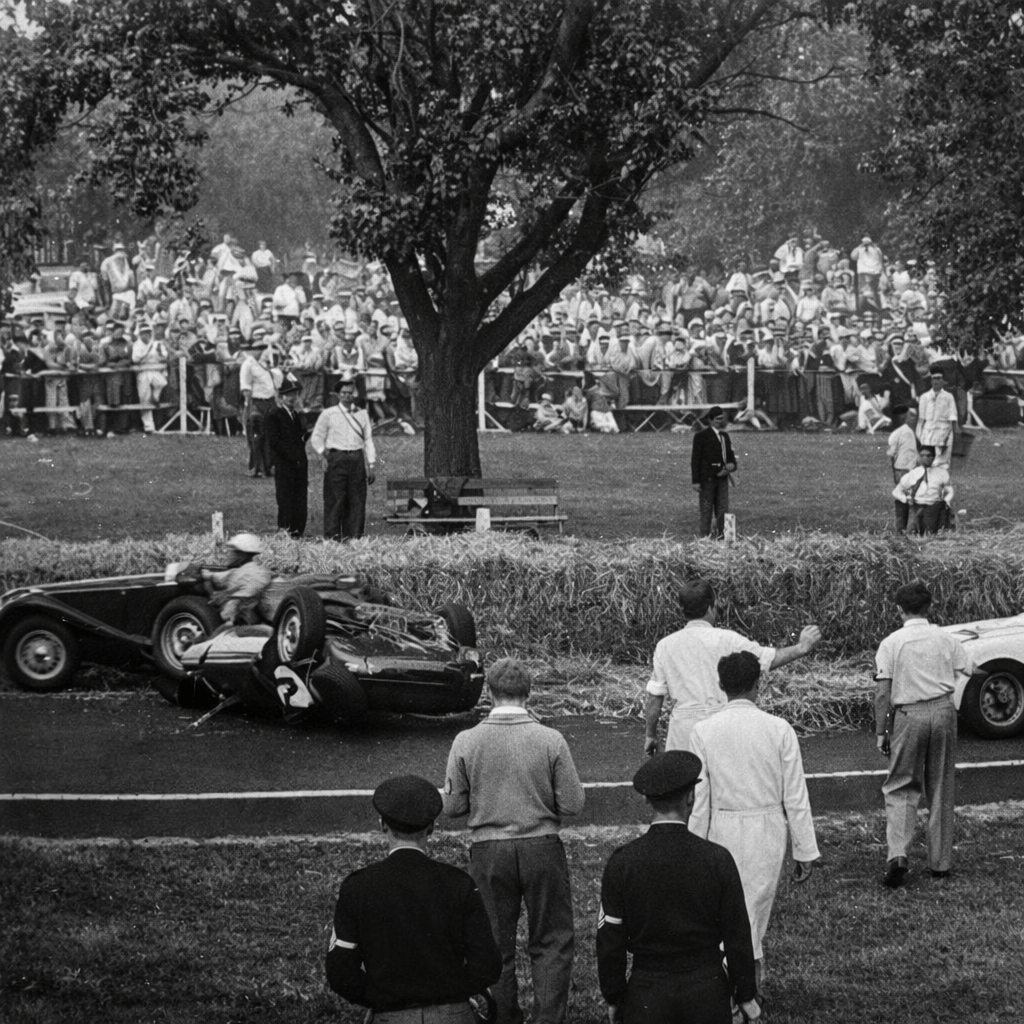
Take a look at the original shot below. Two of the blokes on poles have avoided the guillotine, they’ve got their heads back! How good is that!? Hmm, let’s think about that.
(Penrith Library)
I’ve been playing with Copilot as a research tool for about 18 months now. This AI device is only occasionally useful for me given the world of obscurities in which I tend to reside. In essence, if the answers to the questions asked aren’t in the digital world it can’t help you.
Encouraged by a couple of historian buddies who have been having a play ‘enhancing photos’, I thought I’d dick around a bit too.
And yes, the rego number on the left has been changed from whatever it is ending in 323 to 319. I didn’t notice that till later, and once you’ve finished it, it’s hard to go back in with the poverty version, the free version, of Copilot.
My ethos in all of this is to make a shot a bit clearer but retain ALL of its original content. Obviously, giving a couple of blokes their heads back is altering the original content, which is ok as long as I declare it to you, I think? People have been playing with photographs since photography was invented, of course. Photoshop has been with us since at least 1988, when I bought into a design business. That was the province of black-clad Graphic Designers playing around with very expensive early series Macs, but AI means every Tom, Dick and Irving can have a play. Fake Nooz is available to all of us, not just Donny!
(S Wills-Co Pilot)
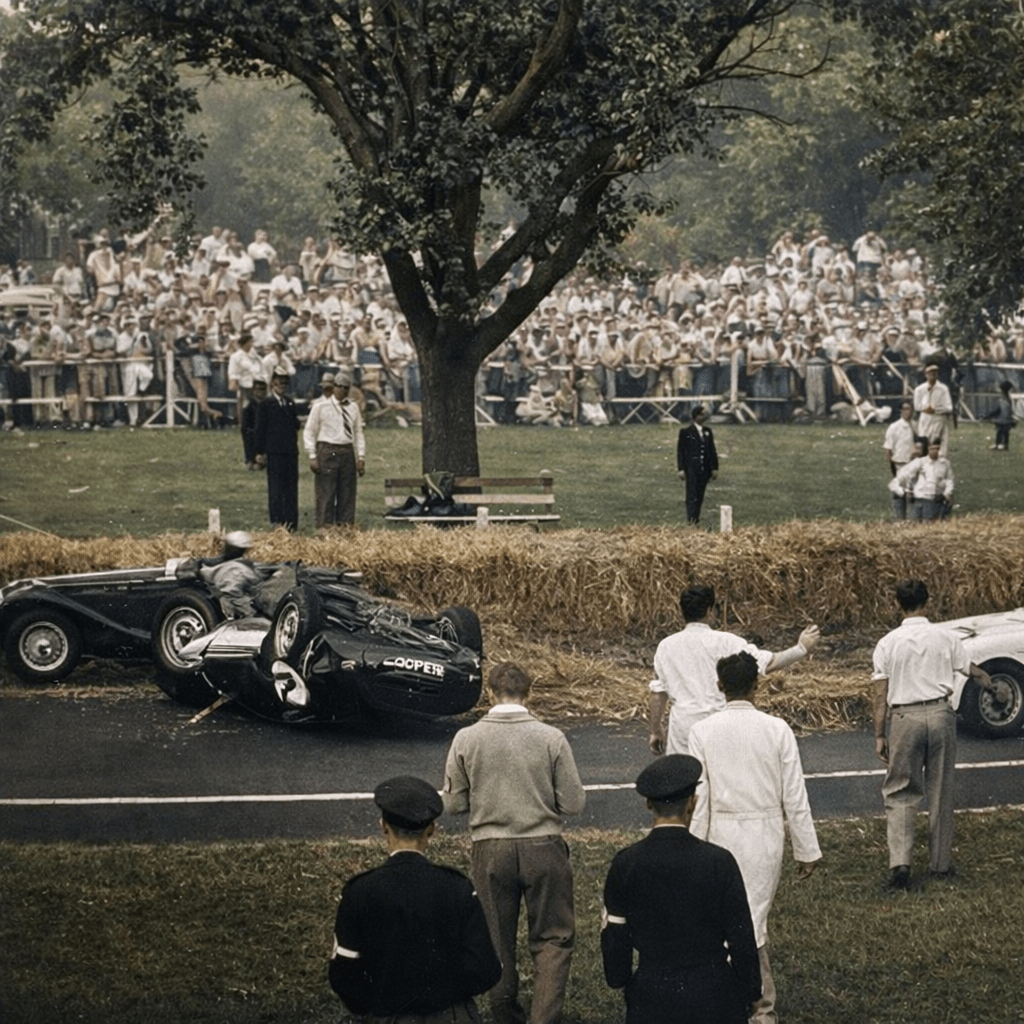
A much more vexed area is the colourising of images, because the thieving arseholes who do it almost never credit the photographer or the fact that they’ve altered the artwork.
The shot above of Bill Pitt’s rolled Jaguar D-Type was taken during the 1956 Argus Trophy at Albert Park.
The place that often provides the inspiration for my articles, Bob Williamson’s ‘Old Motor Racing Photographs – Australia’ Facebook page, with strong leadership from my friend, Lynton Hemer, has banned colourised shots from that locale. The right move!
I am a hypocrite, though, I do often find them addictive. So I may slip in the odd one, but I’ll always tell you when I do, credit the original snapper and the AI tool that did the magic.
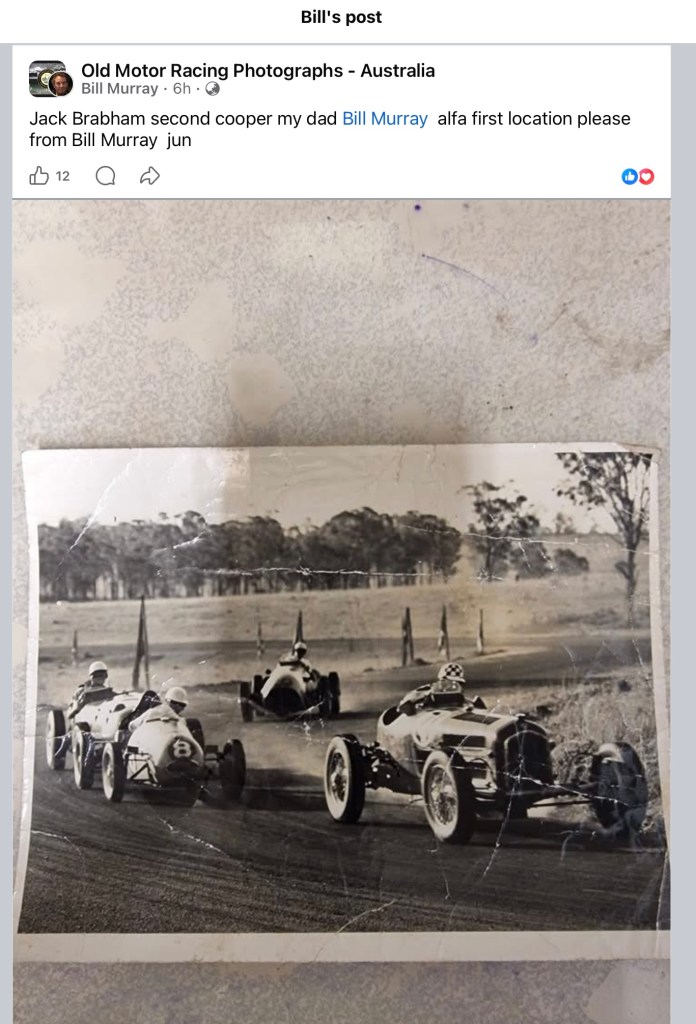
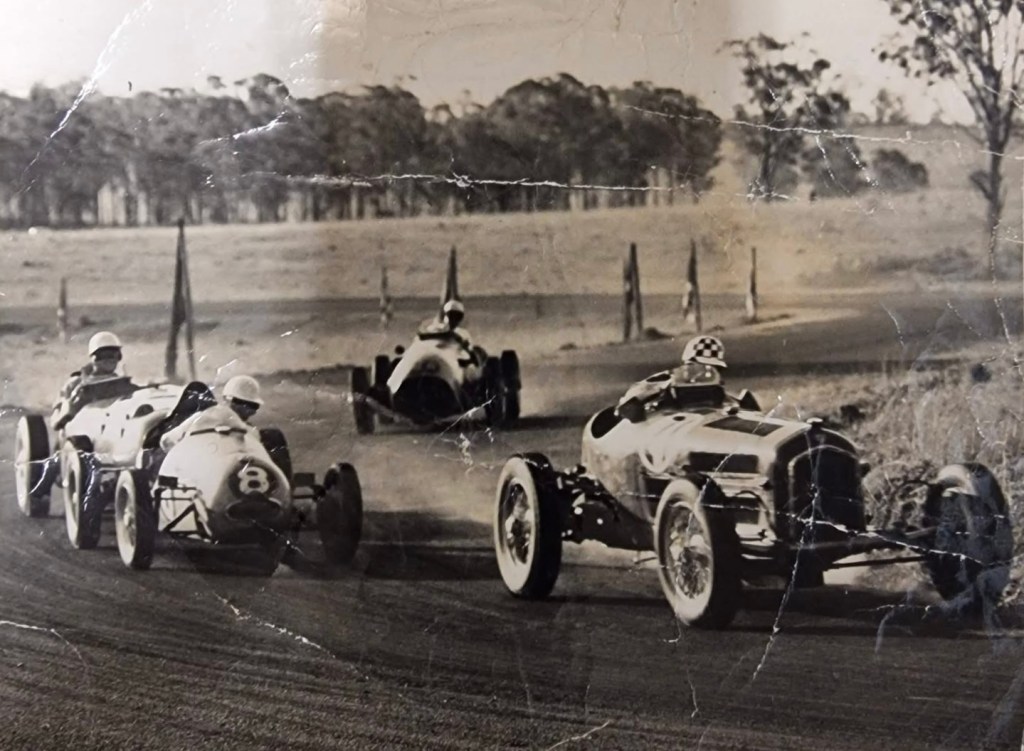
The purest use of the technology is with shots like this. Roughly ‘scanned’, chucked up on Facebook and having all the ravages of time.
(Murray Family Arc)
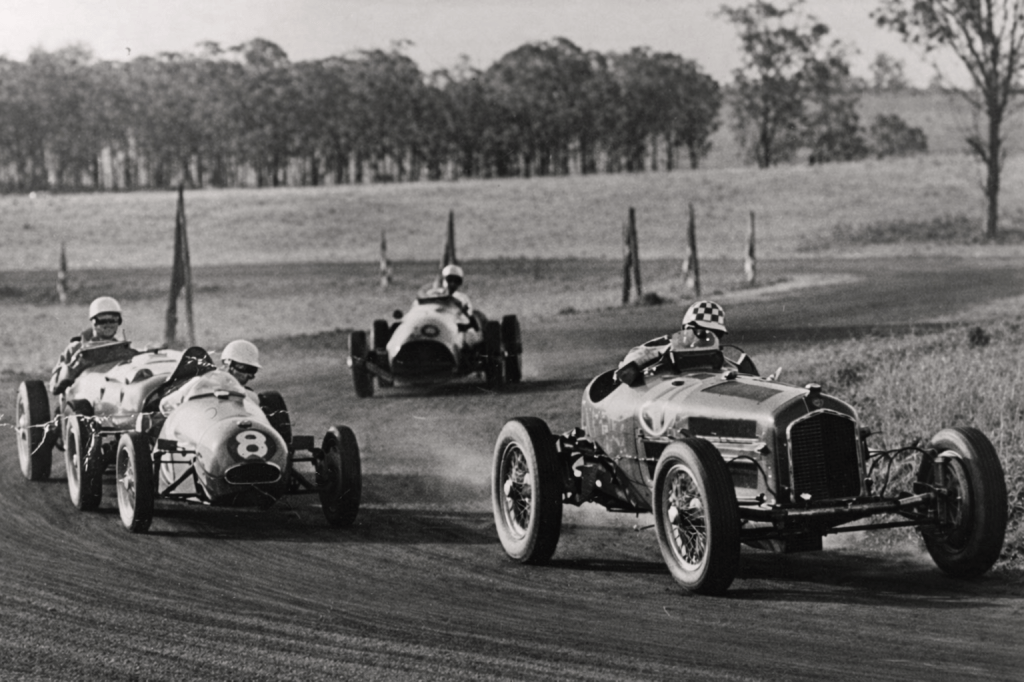
My preferred version is the warts and all one above. I’ve just cropped it with my iPhone. The one below is Copilot-lite; tidying up and sharpening a bit, but not too much. Not fucking-over the original work. You know, Milton the Monster’s tincture of tenderness but not too much…
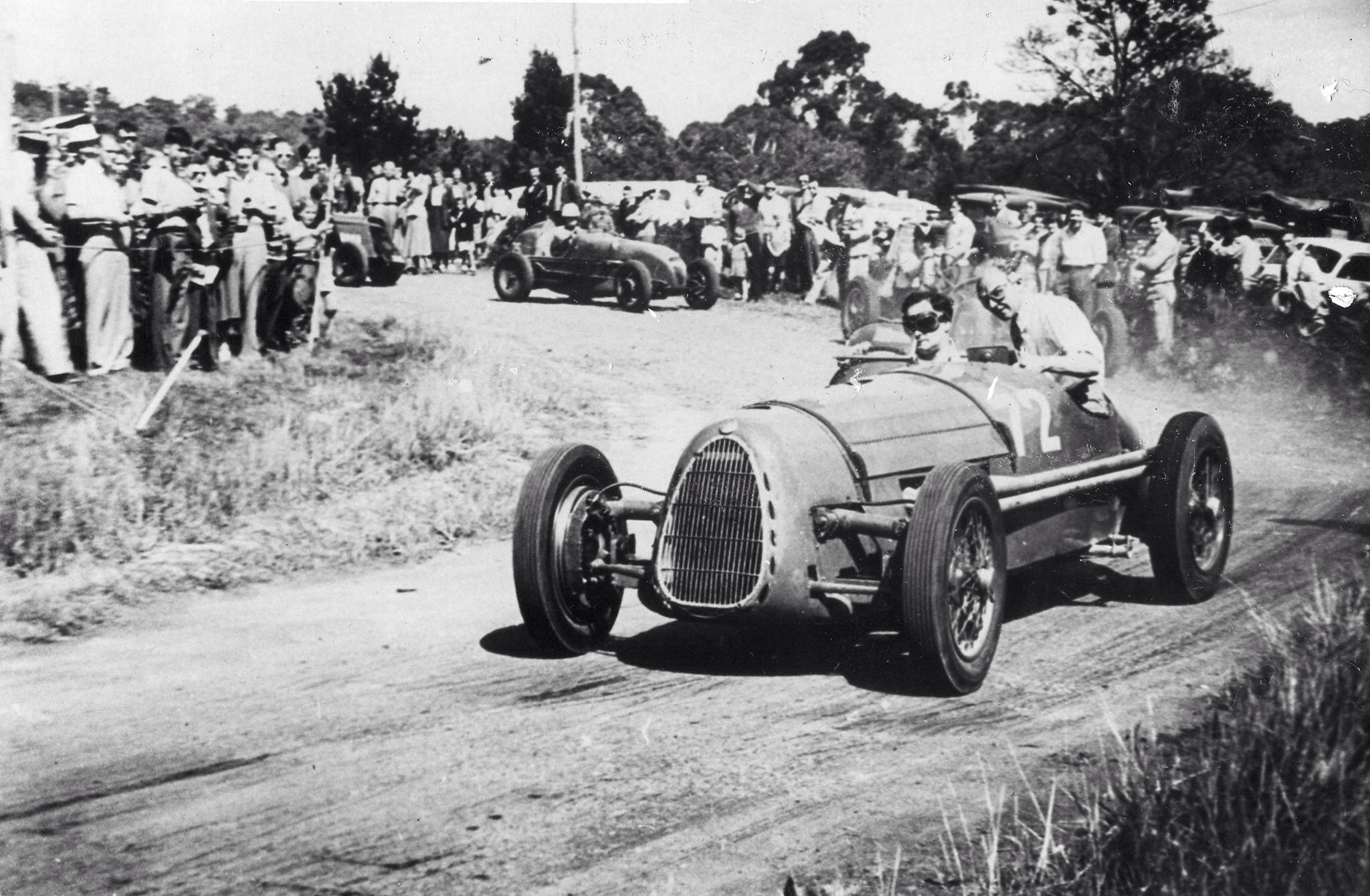
I reckon it’s Mount Druitt circa-1954, anybody got the meeting date? Bill Murray’s Alfa Romeo P3 Alvis leading Jack Brabham’s Cooper, Holt Binnie’s MG T-Type Special and Jack Robinson’s Jaguar Special.
(Murray Family Arc-Copilot)
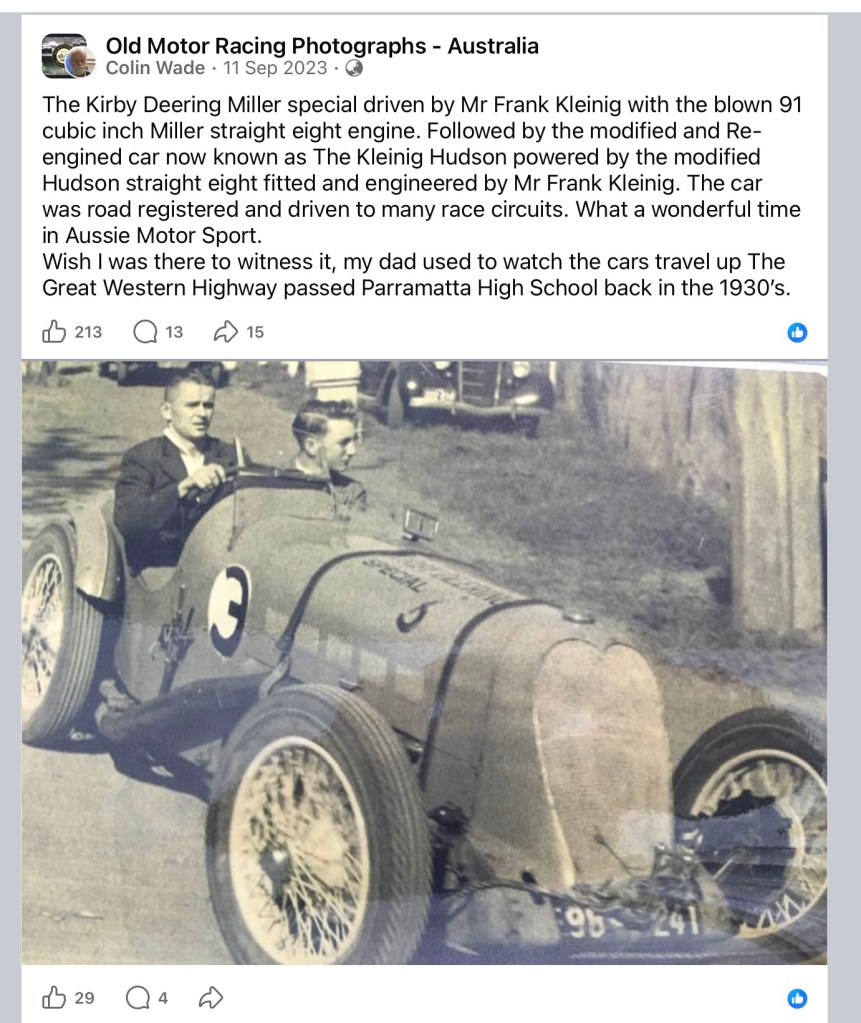
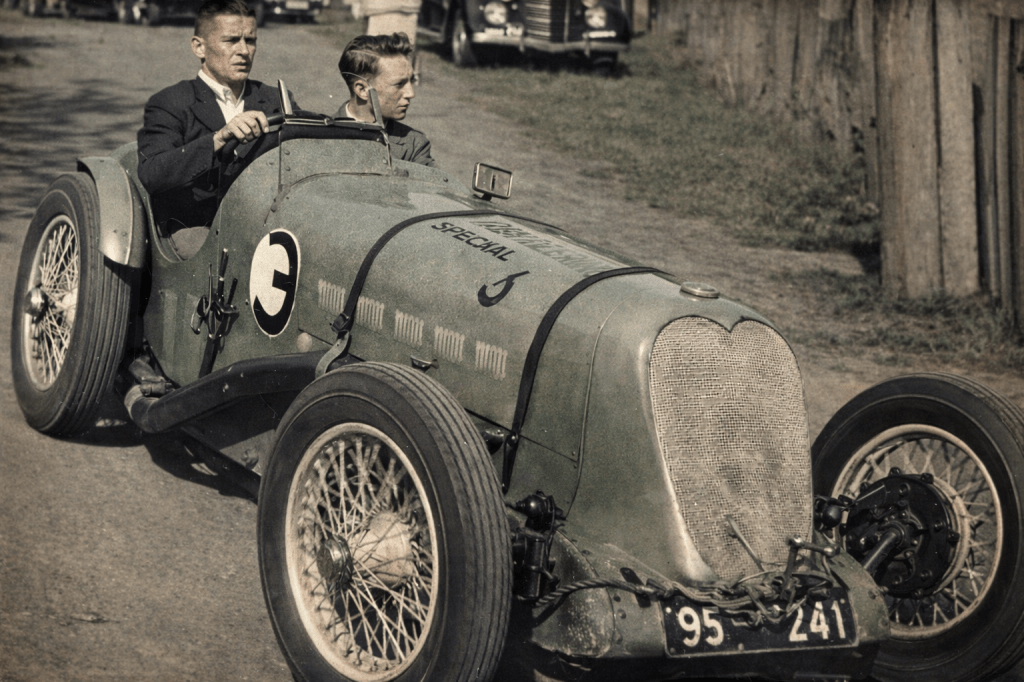
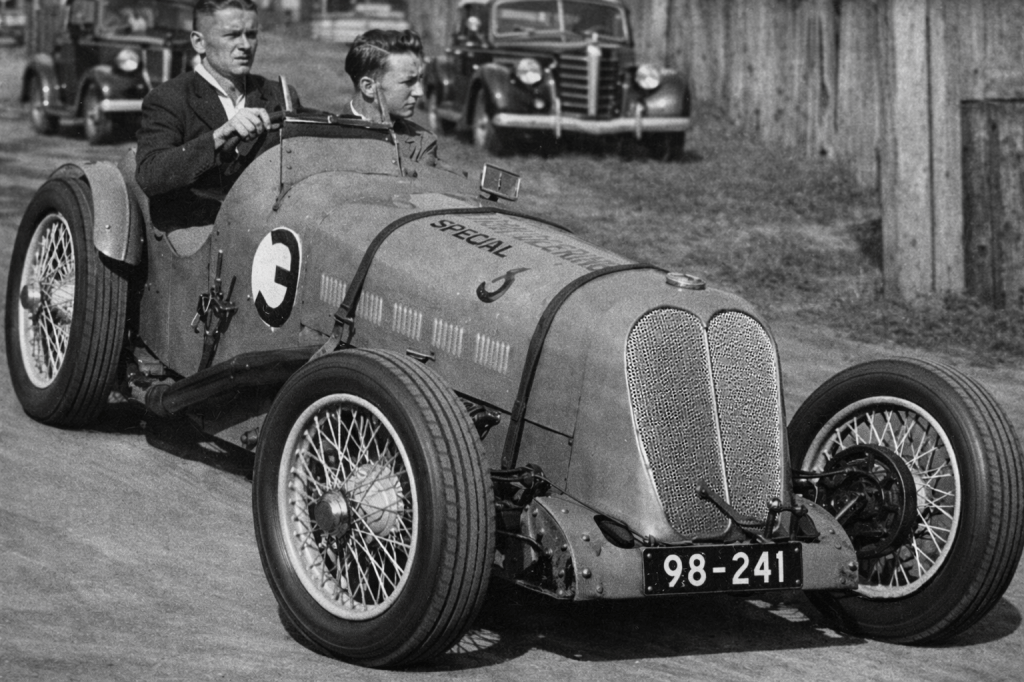
Here’s another in similar vein. Frank Kleinig aboard the Kirby Deering Special, the Miller straight-eight s/c powered original variant of the Kleinig Hudson Special after the same chassis was re-engined with a Hudson motor.
(C Wade Arc-Copilot)
The first evolution was pretty good, colour, not that I asked for it! I’ve no idea what the original hue was.
Then you ask for the rego to be corrected to 98-241 and things go a bit kooky…The lesson is that Copi’s first shot is its best, so the briefing needs to be very good and comprehensive.
(C Wade Arc-Copilot)(C Wade Arc)
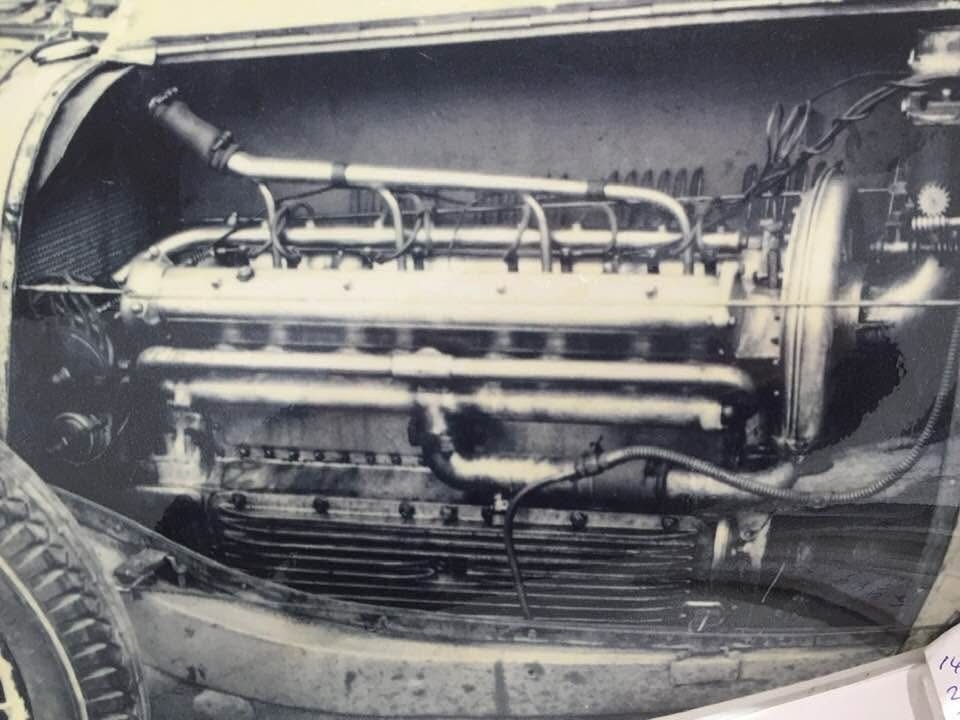
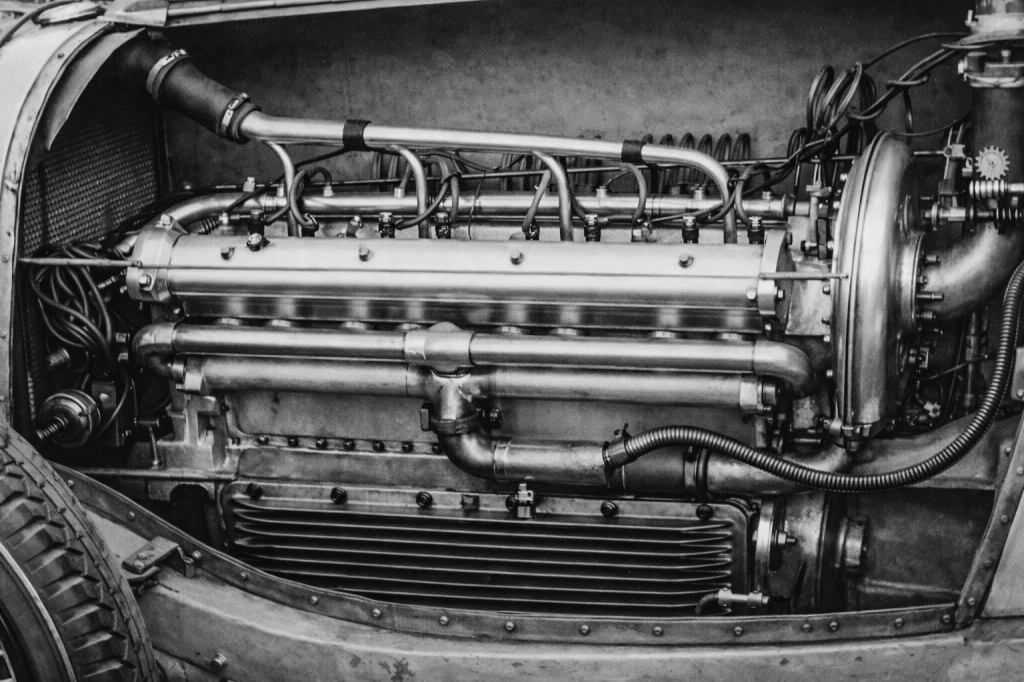
The engine tidy up looks ok, but! Slightly too good, I think.
Hmmm, let’s just go back to the drawing board. This was my first play around. Copilot has a mind of its own to an extent; you have to have your foot on its throat. All kinds of atrocities can be performed, as here.
(B Gunther)
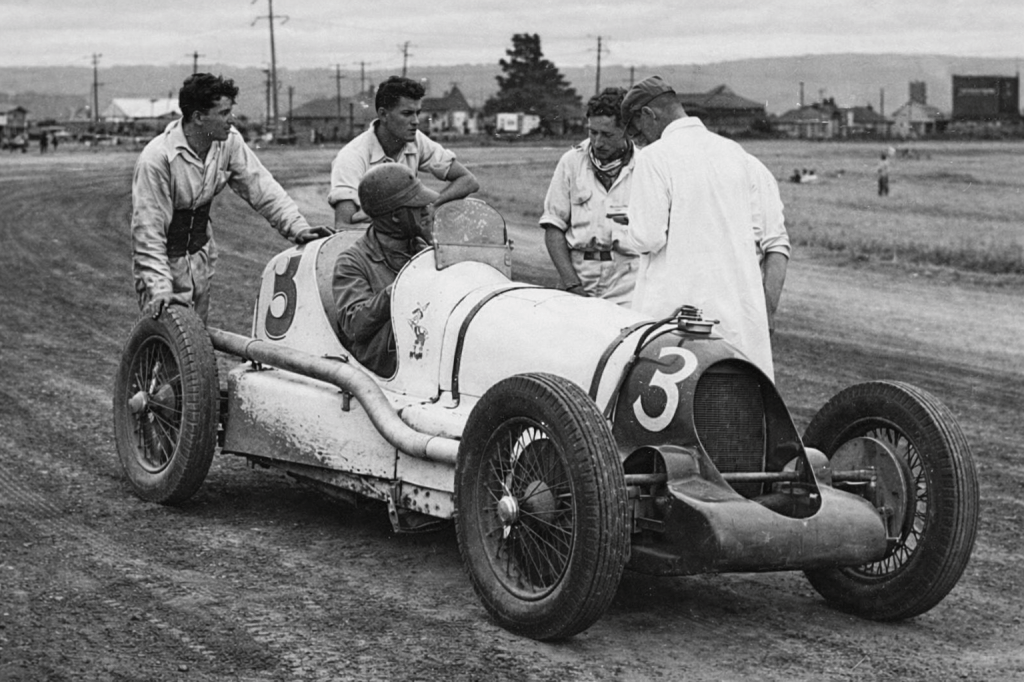
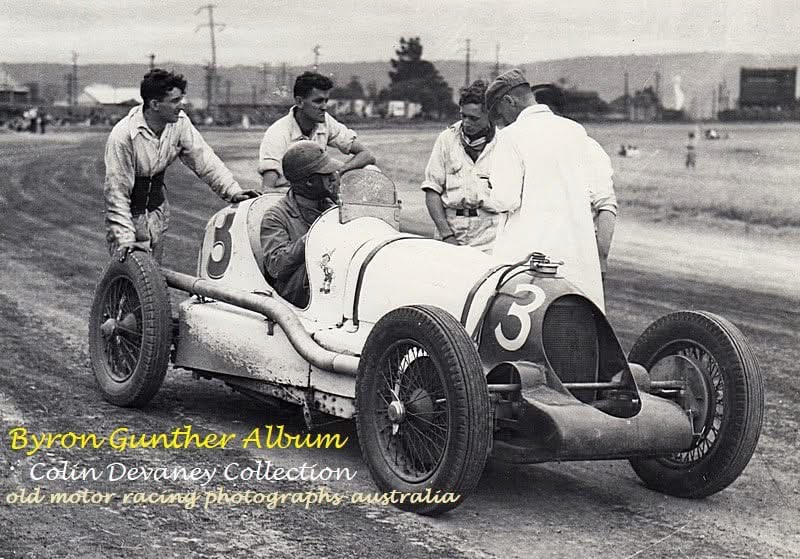
Back to where we started with one of my favourite cars, Alta 21S, with Tiger Ted Gray at the wheel, talking to fellow Victorian Ken Wylie, Penrith, Easter 1941. Last time I put this up, I don’t think I got to the bottom of the Pinocchio thing on the side of the scuttle.
I’ve got rid of all the IP Credits (sic) and just sharpened things by a bees-dick, you’d get away with another 10% or so actually, without making the shot look unreal? More about the Alta here:https://primotipo.com/2023/07/15/alta-1100-special/
(B King Archive)
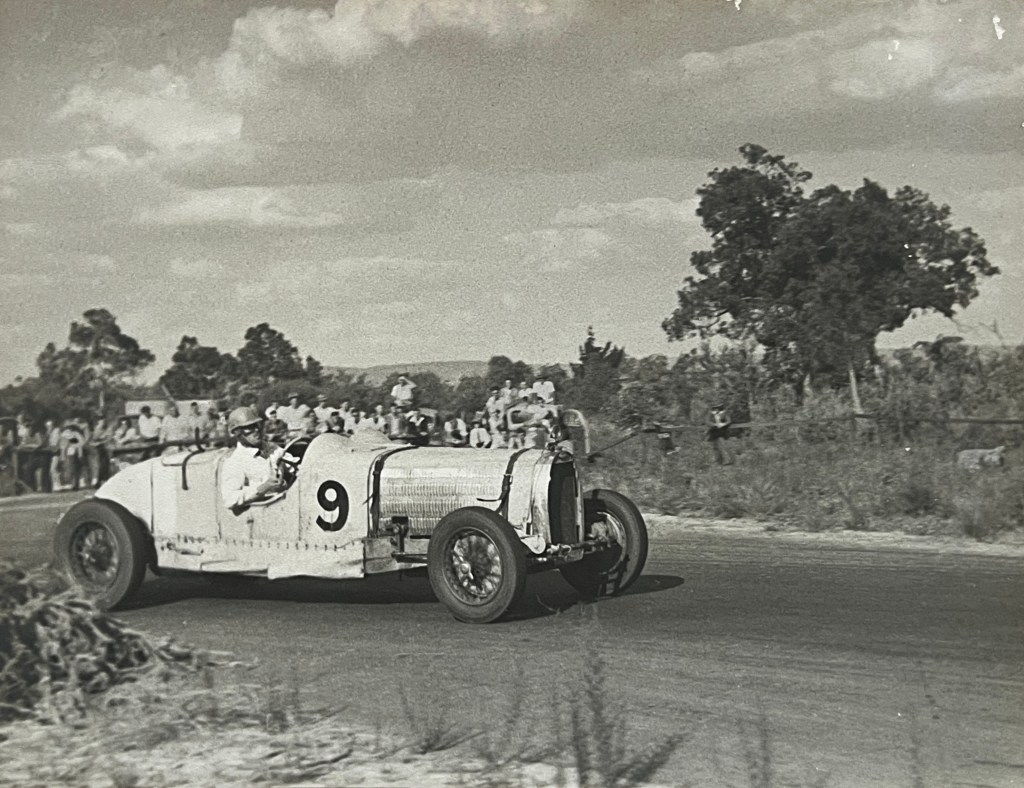
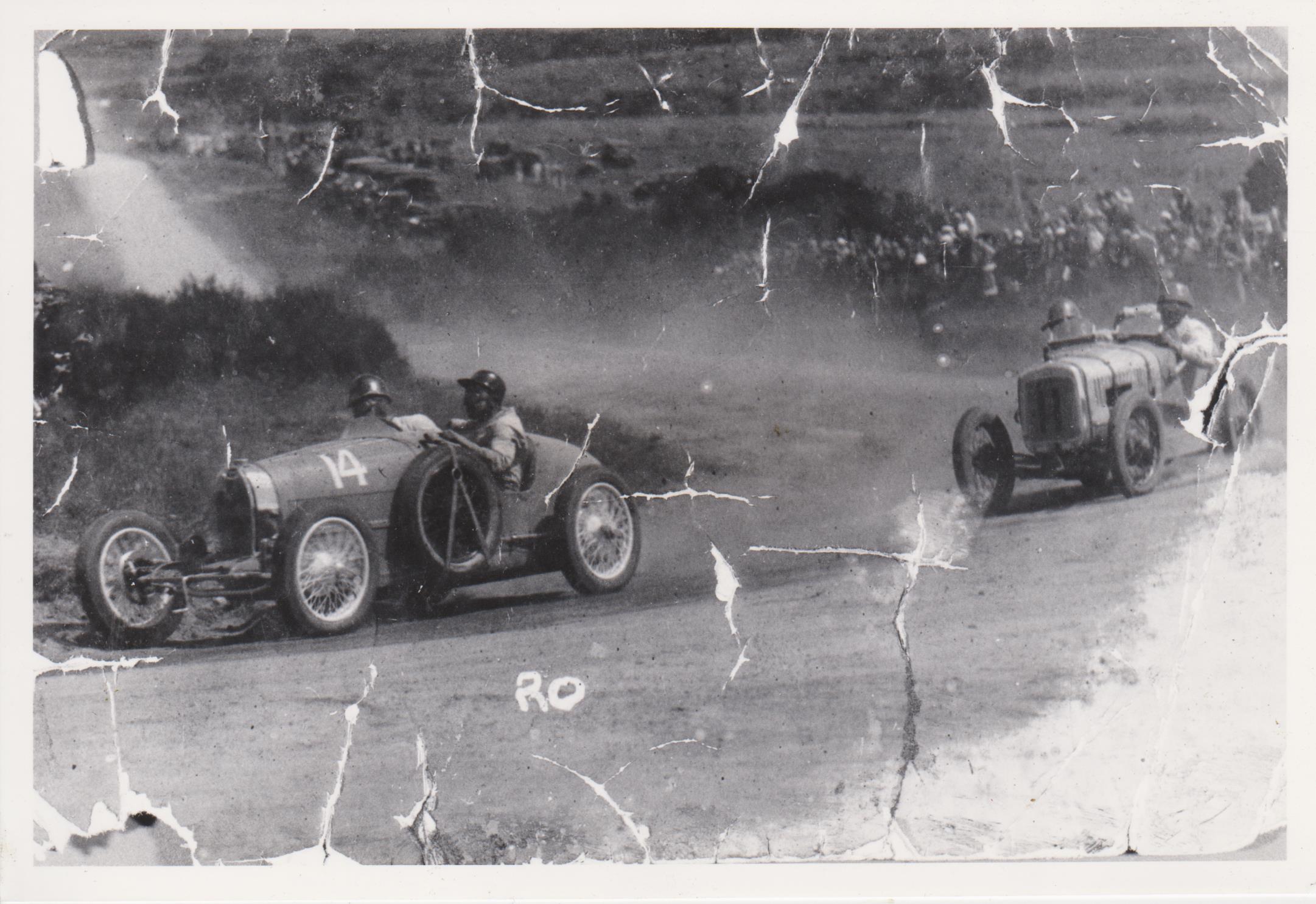
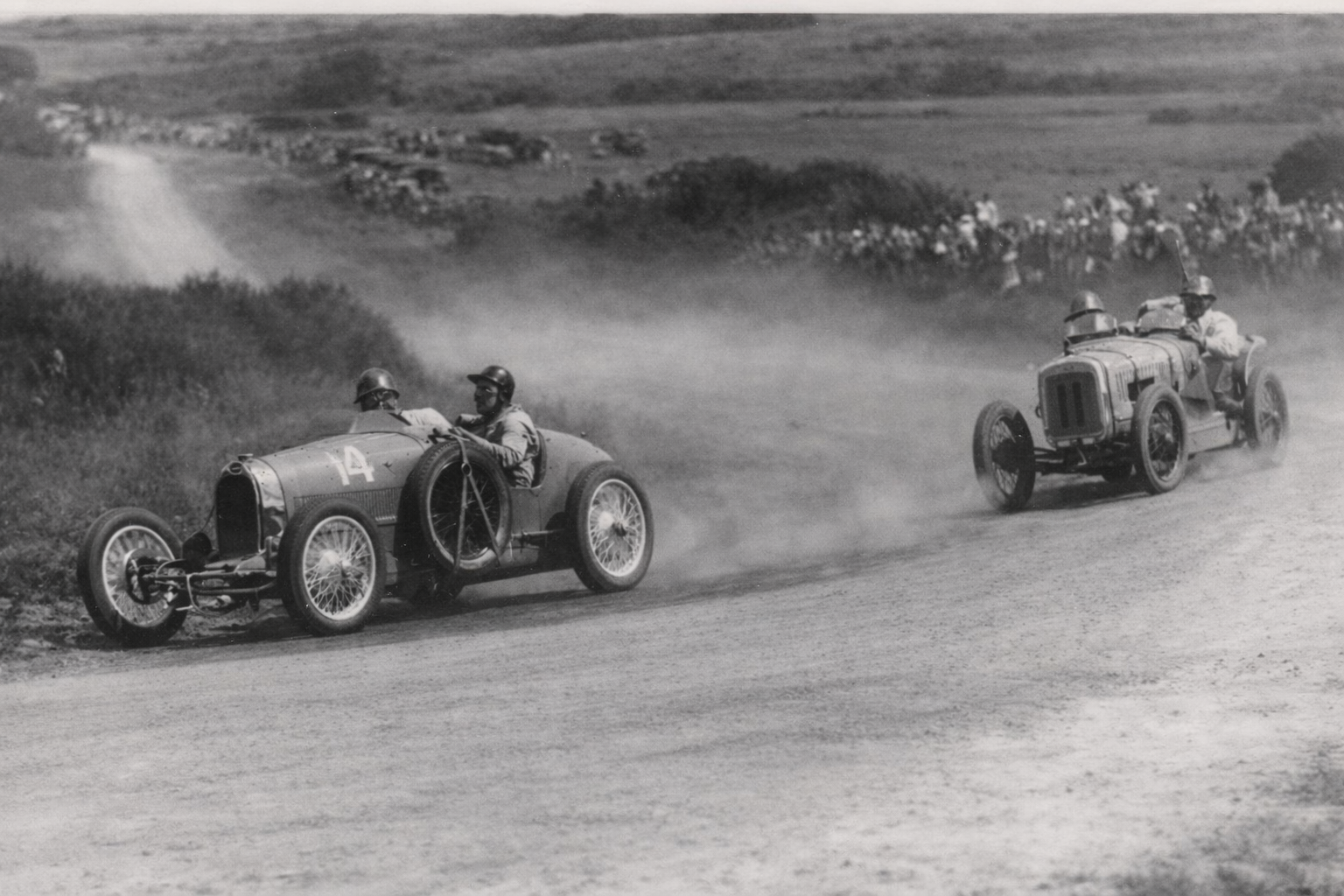
Jack H McGrath’s Bugatti T37 from Ken McKinney’s Austin 7 during the January 1, 1934, Phillip Island 100 won by JW Willamson’s Riley.
Again, this shows the positives of AI enhancement/repair/sharpening: that rear guard refashioning of the Austin may not be to Tony Johns’ satisfaction, but if it’s not, I’m sure I couldn’t instruct Copilot on the necessary remedy…however, for the lay observer, it’s pretty tickety-boo.
(B King Arc-Copilot)
Finally, from my favourite viewpoint, high atop Mount Morality.
I’m sorta a low ego kinda guy, I’m generally not a cock-spanker, albeit I do occasionally have moments when I give it a bit of a slap. This photo manipulation stuff is shit-easy even with the intellectual firepower of a Trump Voter. I don’t take or appropriate intellectual property that I don’t own, or imply that I have ownership by putting my name on shots. But there are plenty of strokers out there who slap their names on everything despite having no legal or moral right to do so. Why don’t you pricks fuck off? I’ll tell you, my patient readers, when I’ve had a play with somebody else’s IP and continue to credit the photographer, or source in the absence thereof, and the AI tool involved in the sorcery…
Credits…
Copilot, Penrith Library, Spencer Wills, Bob King Archive, Blanden Collection, Murray Family Archive, Byron Gunther, Graham Woods Archive
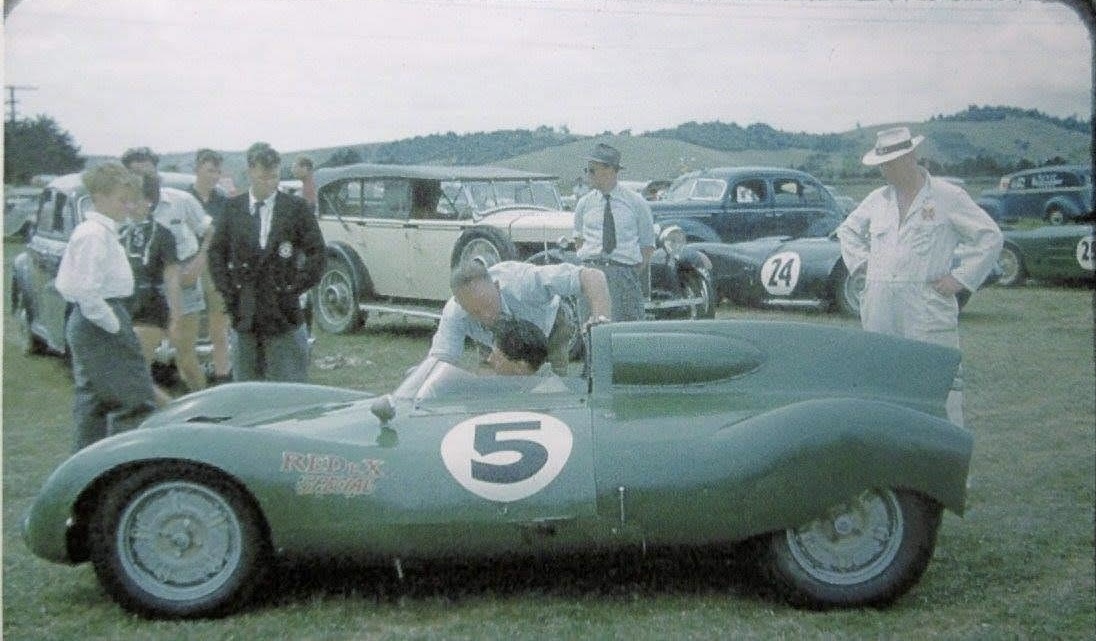
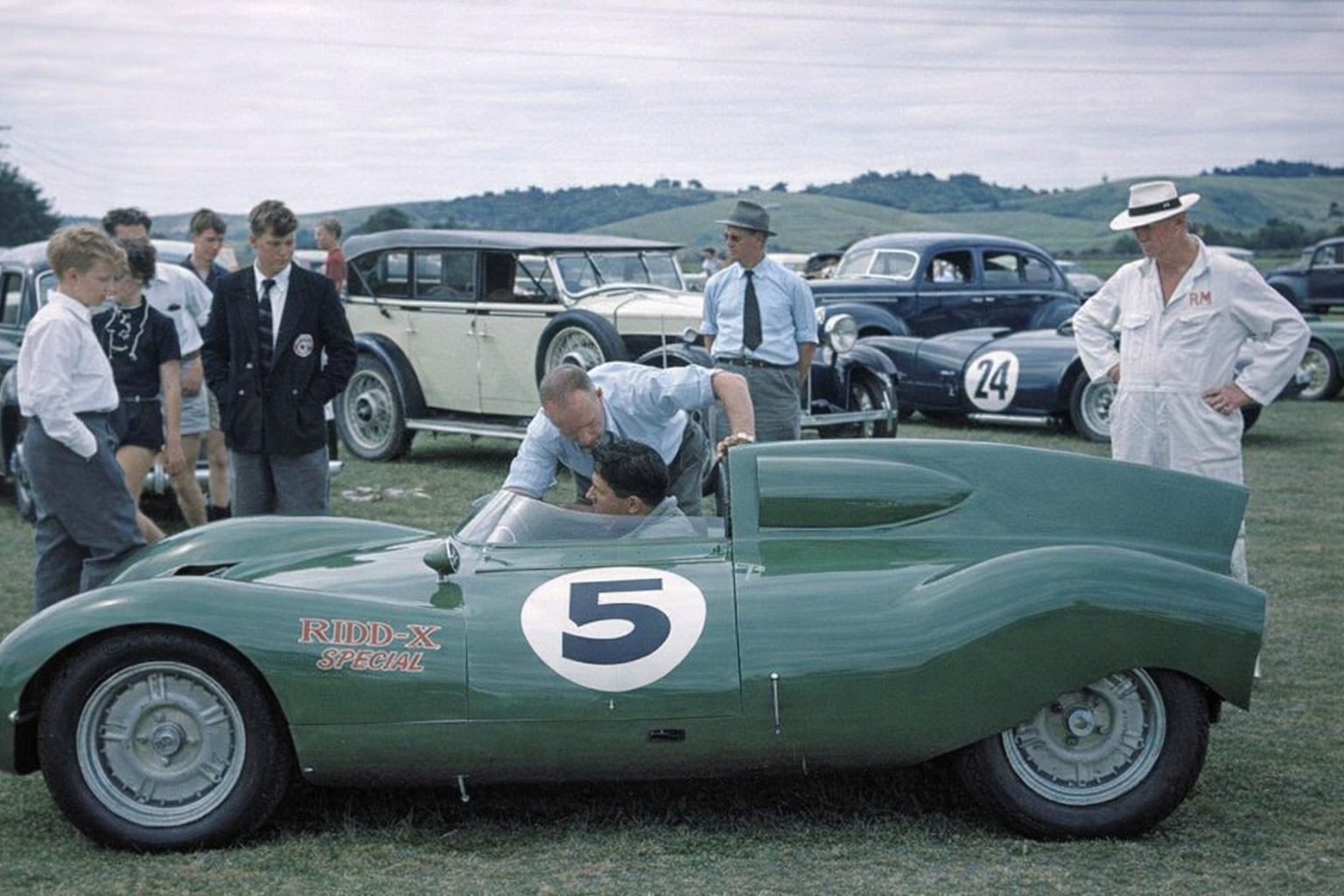
The tidy up looks pretty shit-hot for a moment or three! The tool can be quite subtle; it has retained the different hues of green made in various touch-ups, but the signage is problematic! #24 is Peter Whitehead’s Cooper T38 Jaguar, soon to be Stan Jones’, the other sports car glimpse at far right is Tony Gaze’s HWM Jaguar VPA9, soon to be Lex Davison’s. Back to the drawing board, methinks…
Australian motoring journalists and the organisations they work for have always been innovative, very much at the cutting edge in terms of their deployment of objective assessment of the steeds with which they are entrusted.
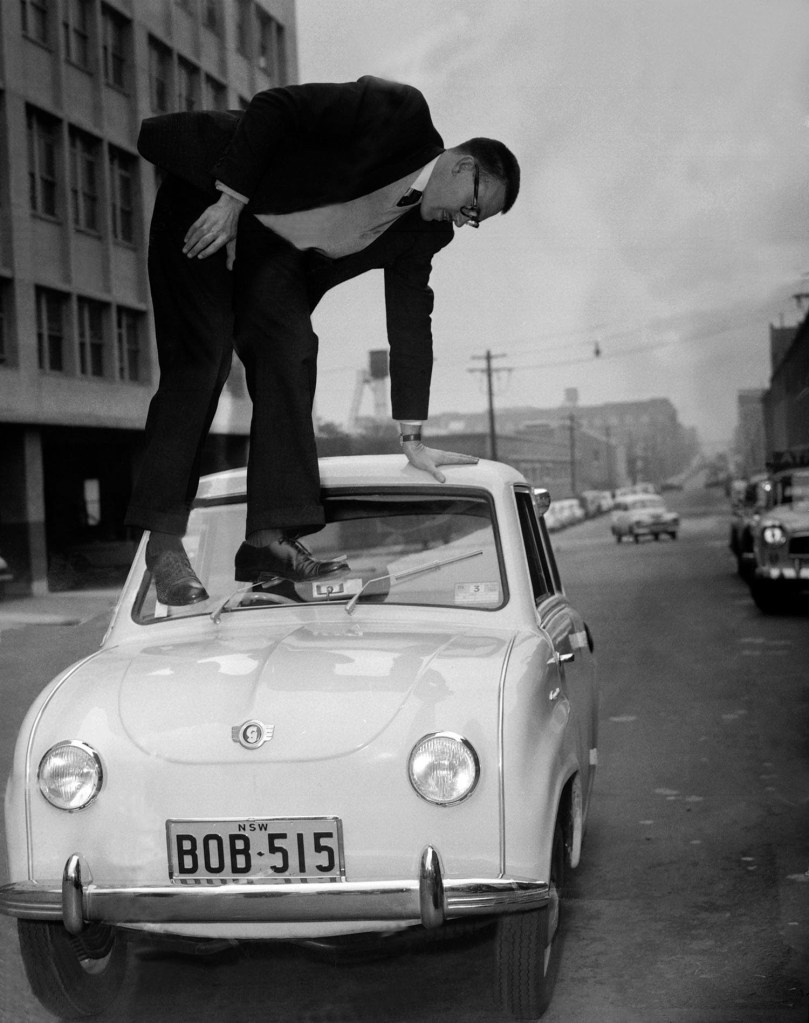
The Sydney Morning Herald captioned this part of their routine road-testing as the ‘Jump Start. Testing the durability of the German Goggomobile’s body by jumping up and down on it in Sydney on June 27, 1958.’ Poor old BOB-515!
Some years ago ex-Repco Brabham Engines Pty. Ltd. Engineer and Automotive Components Ltd Director Nigel Tait placed the archives of RBE into the safe archival care of RMIT University in Melbourne.
There the documents are available for scrutiny and research. Professor Harriet Edquist, a member of the RMIT Research Institute, and a team of researchers produced the following piece for the 2016 annual meeting of the Automotive Historians of Australia.
The wonderful work does several things;
.Summarises the growth of Repco from its foundation by Geoff Russell
.Explains and analyses the contributions of various senior executives and the roles they played in creating a devolved management structure and an innovative culture within the company
.Given the foregoing, identifies the key contributors to the racing ethos of Repco which ultimately yielded two World F1 Championship winning engines in 1966 and 1967, and more
The work is significant as its conclusions are documented and fact-based, free of the ‘I reckon’s of Repco Historians, including me. Even then, some of the documents relied upon are challenged when conflicts between elements of supporting evidence arose.
Some of the motor racing facts or conclusions may be debatable or require a little more contextual exploration or explanation to be supported as they are put, but that doesn’t detract at all from a comprehensive piece which contributes significantly to the Racing History of Repco and gives appropriate credit to key people where it is due.
The work is reproduced in full; the annotation numbers are, of course, for the reference sources relied upon. I’ve added a couple of things, only in parentheses, and only to provide clarity. The images used are my choices to break up what would otherwise be one slab of dense text.
Harriet Edquist | RMIT Design Archives, RMIT University
‘The Repco Racing Programme 1940-1970: Innovation and Enterprise in the Private Sector’…
In 1966 Jack Brabham (1926-2014) became the first, and still the only, person to win a Formula One world championship driving one of his own cars. The BT19 was designed by Ron Tauranac and powered by a Repco Brabham engine (RB620) designed by Phil Irving and engineered by Repco under the supervision of Frank Hallam in Melbourne. While built in England, the BT19 was an all-Australian affair.
Brabham’s story is well known; an online search will bring up dozens of sites dedicated to him and his three Formula One world championships. The contribution of those who worked with him is less well known to the general public, if not to those interested in the history of Australian motorsport.1
With this in mind, the intention of the present paper was to account for the surprisingly widespread Australian involvement in international post-war racing, focussing on Brabham, Tauranac and Irving with some consideration of Repco. Once in the Repco archive, however, my attention turned to the company itself and the development of its racing program.
This research showed that Repco’s commitment to racing was almost as old as the company, and was not a response to Brabham’s 1963 request for a replacement for the Coventry Climax engine, as much of the literature suggests. It also showed that Repco’s decentralised company structure, that encouraged personal initiative within its groups, may have been instrumental in providing the conditions under which a racing culture could thrive, a culture that was not necessarily nurtured for financial gain.
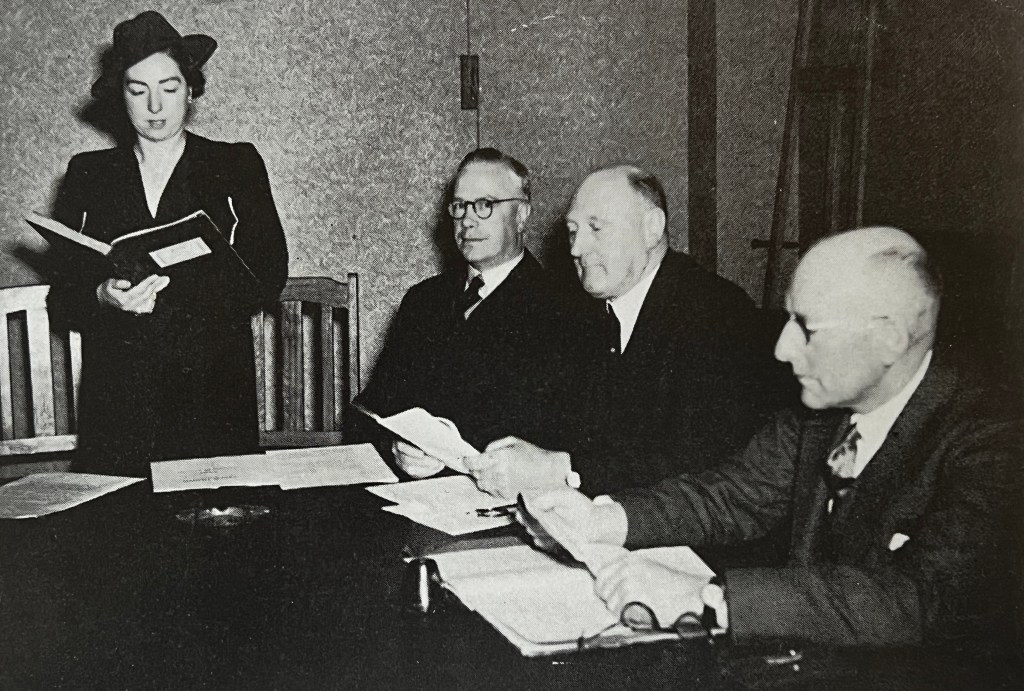
M Terdich, Company Secretary, and Directors J Martin, W Richardson and Geoff Russell at right during a Repco Ltd Board Meeting after the company’s 1937 Australian Stock Exchange listing (Repco)
Robert Geoffrey Russell (1892-1946) and the Repco Organisation…
In November 1922, 30-year old Robert ‘Geoff’ Russell registered Auto Grinding Company, an engine-reconditioning business he had established in a galvanised iron shed at the corner of Gipps and Rokeby Streets in Collingwood.2 Catering to the growing automotive industry, the venture was successful, and in 1924, Russell moved to larger premises at 278 Queensberry Street on the corner of Berkeley Street, Carlton, near the centre of Melbourne’s motor trade, which clustered around the top end of Elizabeth Street near the former Haymarket.
In 1926, he and a friend, Bill Ryan, formed Replacement Parts Pty Ltd, and a year later, Russell Manufacturing Company was established in North Melbourne for piston-grinding and finishing. The office for Replacement Parts moved to a more central location at 618 Elizabeth Street in 1930, which fronted the Berkeley Street building. Carrying the largest stock of its kind in Australia, they invested in good point of sale design and customer relations and famously comprehensive catalogues; stock was always ready to hand, it was kept up to date, and the staff were well trained, factors that explain ‘the remarkable speed with which the right part comes to light when asked for’.3 In the four years from 1932 to 1936, staff numbers increased from 50 to 150, premises grew, and Repco extended its activities into the accessory and equipment fields.4 The Elizabeth Street premises were rebuilt.
Replacement Parts (known as Repco from 1930 and incorporated as Repco Limited in 1937) expanded into regional Victoria (Sale and Hamilton) in 1932 and interstate to Tasmania in 1933 when it purchased 50% of Edmondson’s Auto Spares in Launceston, soon buying out the remaining 50% to create Replacement Parts (Tas). In 1941, Repco also acquired engineering firm A T Richardson and Sons.
In 1930, Russell had bought 89-95 Burnley Street, Richmond and created a new company, Russell Manufacturing Co. Pty Ltd, where they established a foundry to manufacture their own piston castings and piston rings, operating out of open-sided buildings on the extensive Richmond site. Growth of the business and its foundry footprint continued during the war when it ramped up production to meet wartime demand.5 A new building on the corner of Burnley and Doonside streets was erected in 1942, which, along with the Auto Grinding and Elizabeth Street buildings, still exists.6
So, from the earliest years, Russell created a particular business culture – of manufacture as well as merchandising, of acquisition, decentralisation (which was a new idea at the time),7 experimentation and training that not only gave him considerable market advantage over his competitors but was to characterise Repco for years to come. Auto Grinding, Replacement Parts and Russell Manufacturing were the core around which Repco built its organisation.
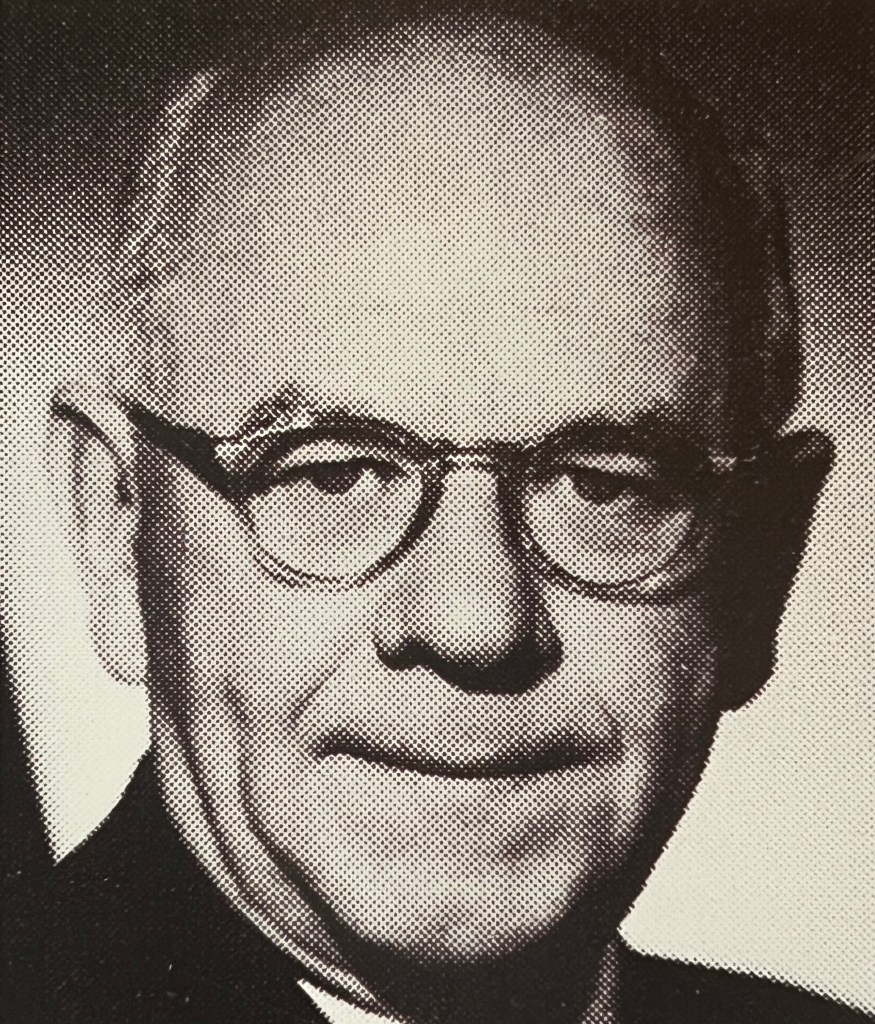
Sir John Stanley Storey (Repco)
John Storey (1896-1955) and Industrial Management…
Russell retired in 1945 due to ill health and died the following year. In 1945, John Storey became Chairman of Directors, and during his ten years at the helm, Repco enjoyed a period of extraordinary growth.
Storey was a supremely accomplished industrialist and businessman. In 1934, he had become director of manufacturing at GM-H, based in Melbourne, and joined the board. He supervised the erection of GM-H factories at Fishermans Bend (completed 1936), and Pagewood (1940) and the refurbishment of plants in Brisbane and Perth. Denis Nettle argues that Storey used his position as Director of Manufacturing at GM-H to try to persuade GM’s US management to allow Australia to manufacture its own car, both through advocacy and “through the way he adapted Sloan system management approaches to Australian conditions”. For example, in the US, GM had outplayed Ford through its ability to coordinate mass production of components from several plants to manufacture multiple models. Storey used these techniques to show how the coordination of small lot production of components across plants could also be used to efficiently produce cars in small volumes.8
Storey was appointed a director on the board of Commonwealth Aircraft Corporation, and during the war, when the decision was made to undertake complete local manufacture of the Beaufort aircraft, Storey, having resigned from GM-H, was put in charge. Building the Beaufort bomber was one of the Australian industry’s more spectacular achievements.9 In this role, Storey sub-contracted to some six hundred firms across Australia the production of components which were fed into seven sub-assembly workshops and, finally, the main assembly factories at Fishermans Bend and at Mascot, Sydney. 10
Thus, by the time Storey came to Repco, he was highly qualified to transform the company from a distributor and manufacturer of engine parts, rings and pistons into the largest integrated manufacturer and distributor of car components in Australia.11 Importantly, in terms of the organisation’s future, in 1949, he reconstituted Repco as a holding company with subsidiary and associated firms becoming self-contained units or companies within its overall structure.
During the 1940s and early 1950s, Storey undertook an aggressive acquisition campaign, bringing in successful manufacturing enterprises that complemented the core business of servicing the automotive sector. These included Patons Brake Replacements (1947), Warren and Brown, which included gasket manufacturer Brenco (1949), Precision Metal Stampings (1949), Specialised Engineering Co (1950), P J Bearings (1952), Hardy Spicer (Aust) specialists in universal joints (1954), and piston manufacturer Brico (1955). At the same time, Repco created new companies that sat alongside the acquisitions, including Repco Electrics (Replex 1946), Repco Cycles (1947), Repco Bearing Co. (1948) and others.12 It was a pattern that continued for many years and resulted in ‘a strong Australian-owned components sector, which meant that as large US component suppliers began to enter the Australian market in the 1950’s, they were required to negotiate with Repco. ‘ 13
In 1970 when interviewed about Repco’s success, then Managing Director Peter Rosenblum referred to these owned and affiliated companies as ‘profit centres’, terminology that had been coined by Austrian-born American management theorist Peter Drucker in about 1945.14 In 1943 Drucker had conducted research on the GM organisation and in his findings, Concept of the Corporation, published in 1946, he used the term ‘federal decentralization’ to describe the way GM was organised around a number of autonomous businesses each under is own manager. A factor in its dominance over Ford by the late 1920s was the way in which Alfred Sloan, unlike Ford, had embraced the idea of management and welded his ‘undisciplined barons’ into an effective management team.15
Similarly, under Storey’s leadership, Repco’s structure could be likened to that of ‘federal decentralisation’, in that when a new company was acquired, it continued to operate as before, and its manager became part of the larger management team. Storey also adhered closely to the “line and staff” management principles he had encountered at GM-H.16 Not surprisingly, given this background, Storey established a close relationship with Holden in the supply of parts, such that, according to Murray and White, “Repco rode on the Holden’s back to spectacular growth”.17
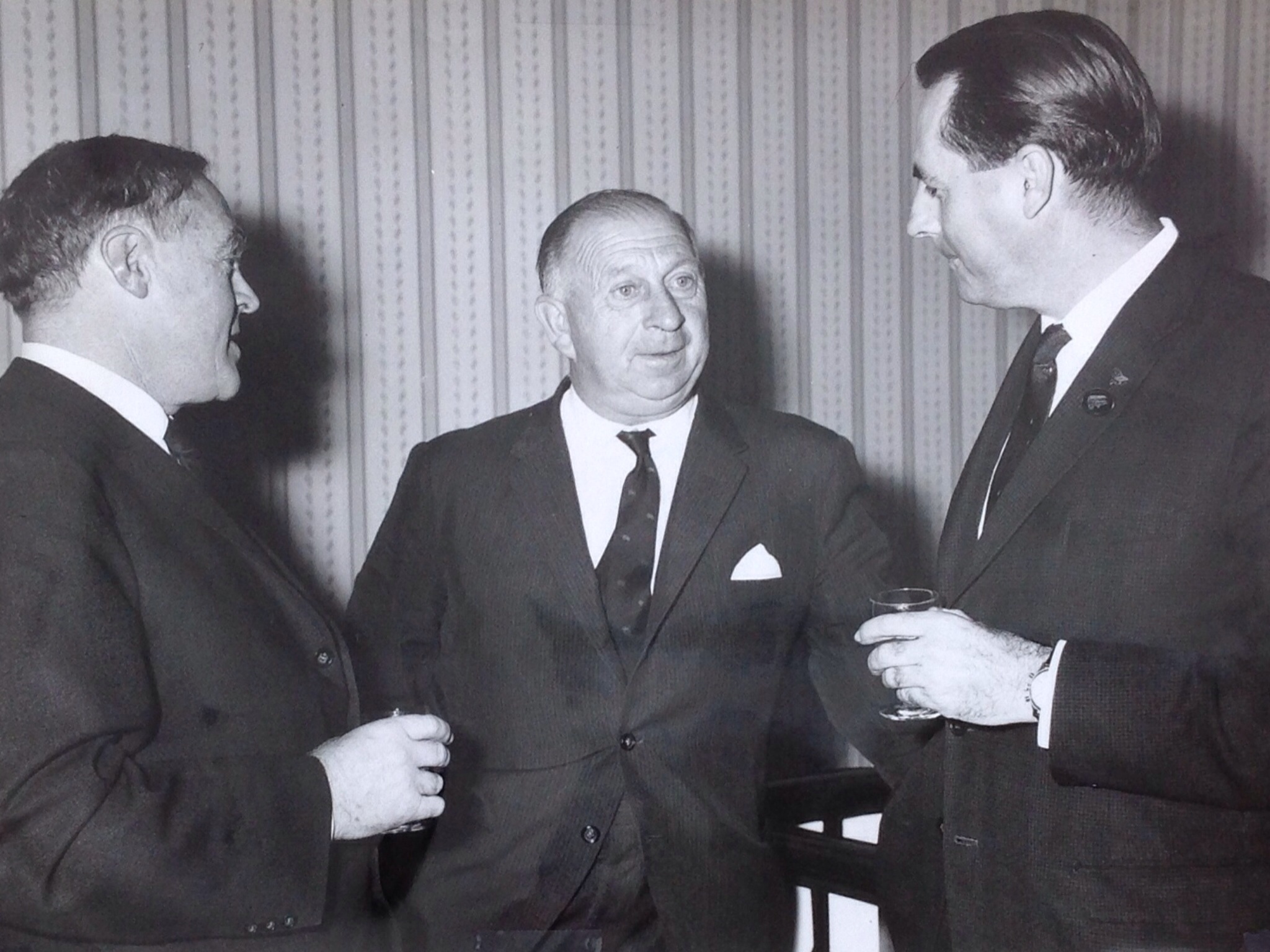
Repco Managing Director Charles McGrath (Knighted in 1968), Victorian Premier, Sir Henry Bolte and Jack Brabham at a function in early 1967 to recognise Repco/Brabham’s 1966 World Championships, or, in late 1967, to recognise Repco/Hulme’s 1967 World Championships! (Repco)
Charles McGrath (1910-1984) and Repco Racing…
The acquisition strategy adopted by Repco had to do with enhancing core business and lessening dependencies on outside resources. But from the 1930s, there emerged another field of enterprise that was not the core business but did bring Repco local recognition and eventually, international fame. This was racing.
In 1934, Repco sent Charles ‘Dave’ McGrath, who had begun as a messenger boy at the company in 1927, to reorganise the Launceston business along Melbourne lines, which he did with great success. McGrath, a motorcycle enthusiast, assembled a riding team from his engineers, who eventually included Frank Hallam, Gordon Dangerfield and George Wade, and the business attracted other keen motorcyclists for parts and advice.18 During the war, McGrath used his own initiative to expand the Launceston workshop to manufacture engine bearings and other components essential to the war effort. The bearings business eventually became a separate company in the established Repco manner.19 Repco management was impressed with McGrath, and in 1946, he relocated to Melbourne to assist the joint managing director, O R Wadds. 20 This position gave him access to Storey, and with Storey’s backing, his rise through the organisation thereafter was fairly seamless. In 1947, he was appointed general manager of Replacement Parts, director of Repco Ltd in 1948, director of sales in 1952 and managing director under the chairmanship of Storey in 1953.21 Storey died in 1955, and following the death of his successor, W T Richardson in 1957, McGrath was elected Chairman of Directors. 22
The significance of McGrath to this story is, I believe, paramount. He was a racing enthusiast, and fellow enthusiasts Wade and Hallam joined him in Melbourne, and Hallam was to have a central role in the development of racing engines as chief engineer of Russell Manufacturing (1955) and chief engineer of Repco in the engine parts group (1959).23 When McGrath stepped down as managing director in 1967, the Financial Review noted: Just as triple world champion Jack Brabham has steered the Repco-Brabham to numerous racing circuit victories, so Mr McGrath has led Repco through a period of dramatic growth.24
The identification of Repco with racing was complete, but how had it come about?
Charlie Dean and the intrepid Jack Jones aboard Maybach 1, Rob Roy 29 January 1951 FTD (L Sims)
Horace Charles (Charlie) Dean (1914 – 1985) and Repco Research…
As McGrath, Hallam and Wade were settling in, a memo of November 1946, Storey informed staff that ‘a new department of the business was created to manufacture specialised automotive electrical equipment’ to be under the management of Charles Dean. 25 Replacement Parts had established a workshop at 50 Sydney Road, Brunswick, during the war, to manufacture some electrical test equipment.26 They also sold ‘Ajax’ battery chargers that were manufactured by a small operation set up by Dean soon after the war in rented space in Elizabeth Street, opposite Repco.27
Importantly for this story, Dean was a racing enthusiast who had built his first special at the age of 17. He also developed an interest in electric vehicles, an enthusiasm he shared with Russell who advised him on setting up in electric charger production; it was Storey who made the offer in 1946 to incorporate the business into Repco. Dean was appointed manager, with products using the trade name ‘Replex’.28
This acquisition, however, was unusual – Repco usually acquired businesses with a track record, assets and some standing as successful enterprises. Dean’s business was relatively new and had not yet established any market prominence, although Dean was said to design and manufacture ‘the first “fast” battery chargers in Australia’.29 What is significant is the fact that throughout his 27-year career at Repco, Dean’s line manager was nearly always McGrath, and a number of important decisions about the Repco engines discussed here seem to have been Dean’s that had McGrath’s sanction.
Replex was not financially successful until it began to produce electric wheel balancers, which, while important for the day-to-day automotive industry, were also critical in racing. Dean was responsible for this development, and in 1951, Replex moved from Sydney Road to larger premises in Weston Street, Brunswick, where an assortment of existing buildings, including dwellings, was pressed into service. In 1960, they were all demolished, and a new factory was built.30 The Sydney Road premises were therefore vacant, and it was here that Dean had the space to develop and test cars.
In 1946, the year he joined Repco, Dean had begun construction of what has become one of Australia’s most successful early open-wheeler racing cars, the Maybach. It was not the first locally-designed open-wheeler. In 1929, Alan Chamberlain and his friend Eric Price built a special, now known as the Chamberlain 8, powered by a Daytona Indian motorcycle engine. Continuously modified thereafter, it raced throughout the 1930s and briefly after the war.31 But the Maybach was more sophisticated and more successful.
Dean had bought a 1940 Maybach engine that had been used to power a German Army scout car captured from the Afrika Korps in the Western Desert and then shipped to Australia.32 With Wade, Hallam and Jack Joyce from Repco, Dean designed and constructed a two-seater sports racing chassis to house it.33 It debuted at the Rob Roy hill climb in November 1947 and over the next few years, during which time it acquired a body, and competed in hill climbs, speed trials and road races, including the 1948, 1949 and 1950 Australian Grand Prix, and Bathurst in 1951. At the Rob Roy hill climb championship in November 1951, the Maybach set a new race record for its class, while newcomer Jack Brabham won the overall championship in a speed car of his own construction.34
However, prior to this in June, Dean had sold the Maybach to driver Stan Jones but came to an arrangement with McGrath to house it at the Sydney Road premises now vacated by Replex, where he could continue to work on it – the benefit to Repco being publicity and a test bed for its products. The building also housed a Holden 48-215 used for testing Repco components, as well as young employee Paul England’s Ausca special, then under construction.35 When Dean was sent overseas in 1951 to look at licensing agreements with firms in the USA, he took time to visit the Maybach factory in Stuttgart and was surprised to learn they had heard of his Melbourne venture.36 Jones drove the Maybach with great success through 1952 and 1953, and in 1954 took out the New Zealand Grand Prix against significant Italian and British cars, including Brabham in a Cooper Bristol.
By this time, if not before, Repco had claimed the Maybach as its own. Indeed, in their literature, they designated it the Repco-Maybach, presumably because of the quantity of Repco parts Dean used to modify the original engine.37 Two articles published by Russell Manufacturing in August 1954, proprietarily illustrated the rings, bearing, piston pins and pistons used in the car. Paton Brakes also helped out. The Maybach became, at this time, Repco’s ‘unofficial mascot’.38 After the New Zealand win, Dean rebuilt the car as the single-seat Maybach II in which Jones had initial success before he crashed and destroyed it in the November 1954 Grand Prix at Southport, Queensland.
Two of Australia’s F1 engine designers at Sandown in 1962: Harold Clisby and Phil Irving (K Drage)
Phil Irving (1903-1992) and the Racing Engines…
Dean had been appointed chief automotive experimental engineer at Repco, reporting to McGrath in 1954.39 A little later, Phil Irving appears on the salary books. He had approached Dean, whom he had met years before at the racetrack, when he heard of plans to build the Maybach III on completely new, radical lines.40 He had been working with Chamberlain Bros (with whom Repco had close business connections through their Rolloy piston rings), on an engine for their famous Chamberlain tractor, but now he was ready to leave.41
He was taken on in Dean’s experimental division, but to do what is not clear. If it was to work only on the Maybach, which was essentially Dean’s private project, Repco was being quite extravagant in hiring him. But then again, Irving was easily the most credentialled racing engine designer in the country, so employing him was shoring up specialised resources in that field.
Irving was over fifty and came with an established international reputation as an engine designer and author. He was a maverick, something of a loner, and over the years acquired an almost legendary status for engine design in the automotive world. After studying mechanical and electrical engineering at the Melbourne Technical College (RMIT University) and thwarted in his ambition for further study at Melbourne University, in 1922, Irving obtained his first job with the eminent and brilliant Australian engineer Anthony Michell at the firm of Crankless Engines in Fitzroy.42 In 1930, he left Australia as a pillion passenger on a Vincent HRD and eventually fetched up in England. He spent the following nineteen years working for Velocette motorcycles, where he patented a number of designs, and with Philip Vincent, with whom he designed the legendary Black Shadow Vincent motorcycle, while during the war, he designed a submersible lifeboat engine for the RAF. In the 1930s and 1940s, Irving wrote a technical column in Motor Cycling, and he published several books, of which Tuning For Speed was the most celebrated.43
Dean and Irving started a new project, with the blessing of McGrath, to make rallying more lively. The new Holden had proved a boon to road racing and rallying, which had been popular since the early 20th century. Then the preserve of the few, the Holden made rallying accessible to many more Australians: ‘engine tuners began to exploit the latent possibilities of the FJ Holden engine with such effect that they converted a fairly humdrum tourer into a respectable, if not actually formidable, device for sedan car racing’.44 However, as tuning required skills that not everyone had, Irving designed a high-power cylinder replacement head (Repco Hi-Power) that produced enough power to make a ‘racing Holden sedan capable of over 115 mph’.45 In 1953, Repco assisted the country’s best racing drivers, Stan Jones, Lex Davison and Tony Gaze in the set-up of the Holden 48-215, which they drove to 64th place in the Monte Carlo Rally. By 1956, Russell Manufacturing was running its own trials for its staff.46
In the first issue of Repco Record, an in-house magazine McGrath established in September 1956 to replace Storey’s Repco Topics, there was a separate motorsport section, a feature that would continue well into the 1970s. Under the title ‘stories of initiative’, the issue reported on Irving’s cylinder head, Paul England’s Ausca, another private venture carried out on Repco premises with Repco staff, and Repco’s support of PIARC, in the establishment of which Irving was heavily involved.47
In fact, in the early years of Phillip Island circuit development, Repco support was rewarded with the naming rights to the ‘U’ bend opposite Grandstand Hill, which became known as ‘Repco Corner’. In 1955, Repco guaranteed PIARC a bank loan of £10,000, thus helping to ensure the circuit’s development was completed.48 In 1957, McGrath led a Repco staff team of 19 to assist at the racetrack during the races where Dean and Irving were ‘directors of the meeting’. Both were on the PIARC committee, and Irving was vice-president.49 Irving’s extensive involvement in motorsport, including his Mobilgas rallies in 1956 and 1957, was closely followed by Repco Record, and his fame as the designer of the Vincent engine was a constant source of company pride.50 By this time, sanctioned by McGrath, ably fronted by Dean, helped by the charismatic Irving, and operationalised by Hallam and his expert team, a diverse and vibrant racing culture was embedded in Repco.
In 1957, McGrath had announced the formation of a ‘central research establishment’ with Dean in charge. Research had been important for Storey51, but it was under McGrath’s watch that Repco’s potential for engineering research and product design (as yet unacknowledged in Australian design history) came to be realised. Dean’s managerial duties included research in a broad sense, but his position also gave him the power to implement his own projects tucked away at the Brunswick site. He now embarked on the design and manufacture of a modest version of a gran turismo sports car.
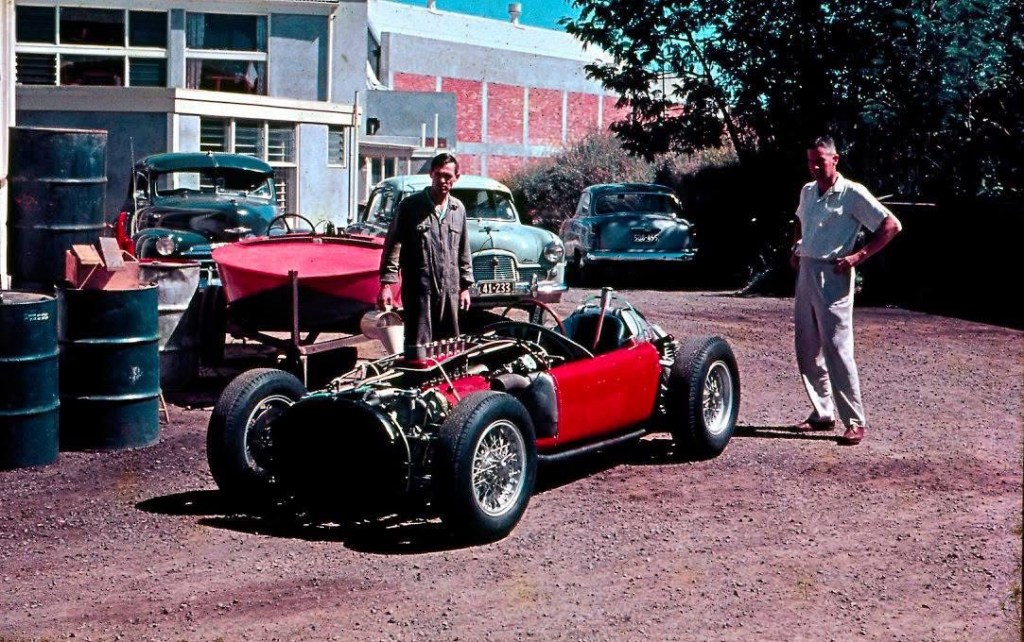
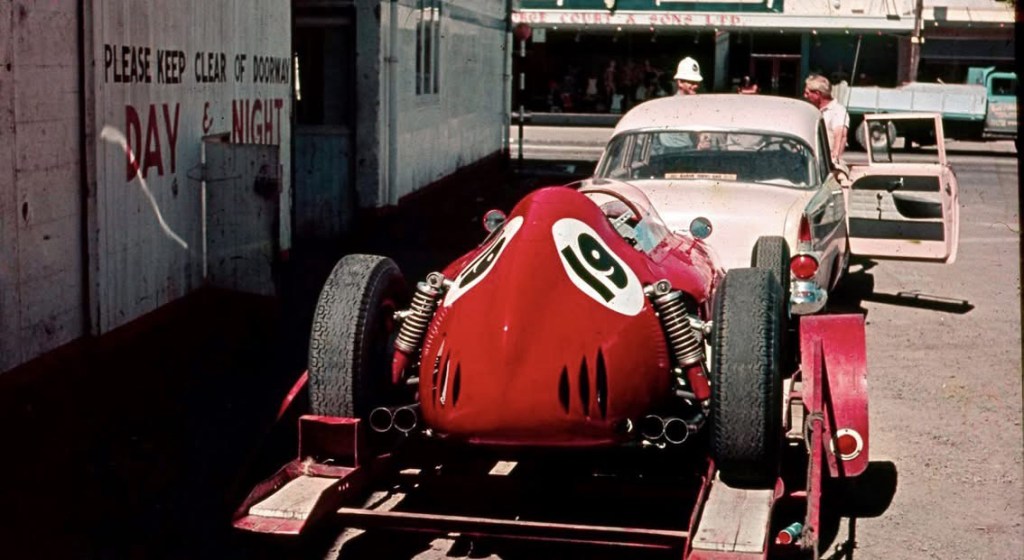
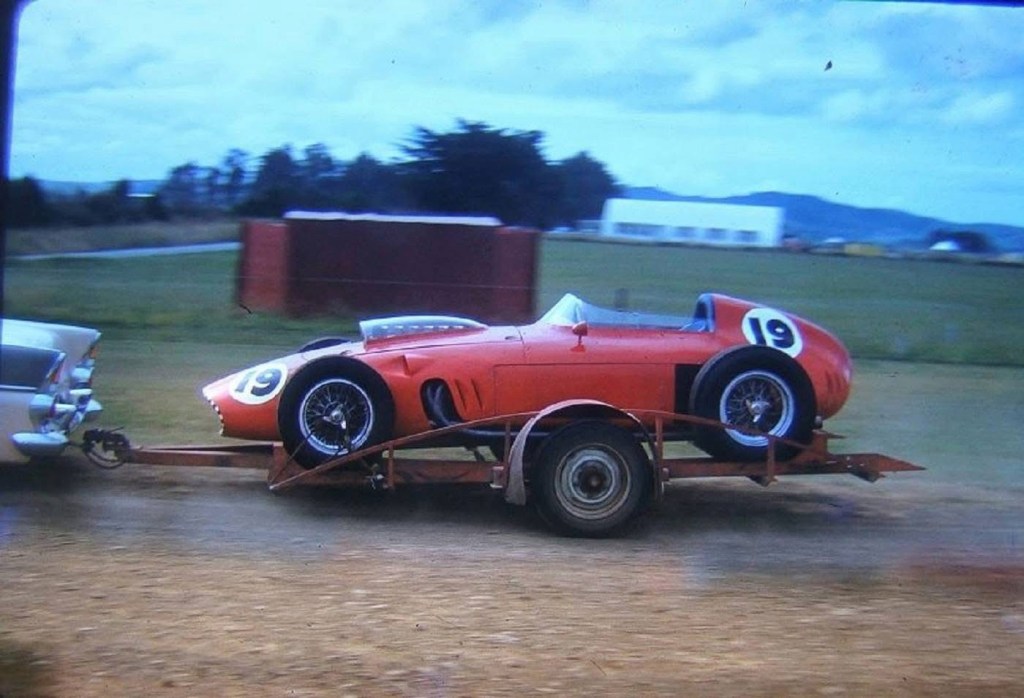
Like the Maybach, it was originally a private project that was brought into the Repco fold with McGrath’s permission.52 Perhaps it was the presence of former GM-H employee Tom Molnar on staff, whose extensive knowledge of car manufacture provided sufficient in-house skill to pull it off. It was of unitary construction like a big production car, and its Repco Hi-power cylinder head was tuned for racing. It was an expensive project, and it’s hard to see where the financial return would come from, although it was assembled with a great deal of Repco product, a fact that was exploited for publicity. Fortuitously, the ‘Repco Record’ car appeared in the race scene, shot at Phillip Island, in the 1959 film On the Beach, and Repco made the most of the exposure.53 It was also sent to New Zealand on a promotional tour in 1960.54 This project, even more than the Maybach, is indicative of a culture at Repco that encouraged innovation in motorsport.
In 1959, Dean was appointed director of Repco Research, again reporting to McGrath, an independent entity within Repco to which all the other companies would contribute as required.55 It would seem that his independent projects and initiative suited the company. In 1960, he joined the Board of Directors, and in 1961, he became a divisional general manager.56 A purpose-designed research facility in Dandenong opened in 1960.57 In 1964, in an effort to encourage cooperation and ‘freer exchange of ideas’ between its various branches and groups, Dean was appointed Director of both Research and Engineering.58 By this time, the RB620 engine was well underway.
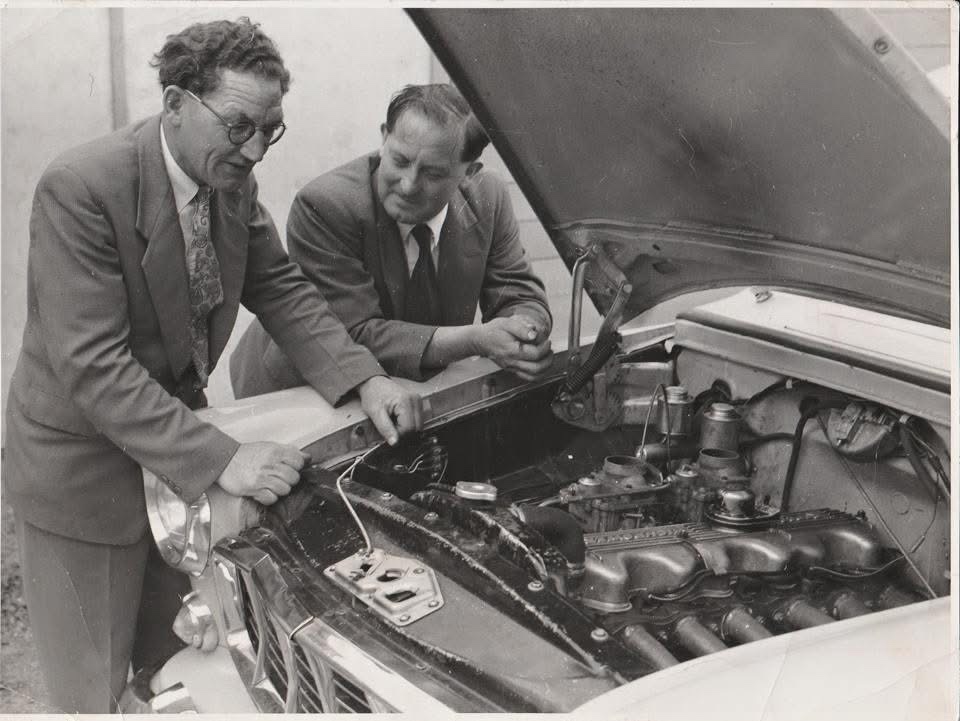
A couple of scally-wags having some fun with the photographer…Phil Irving and Charlie Dean with an FE Holden equipped with a Holden Grey six-cylinder engine topped with a Repco Hi-Power crossflow cylinder head, dual Strombergs and extractors (Repco)
Repco and Formula 1: Brabham, the RB620 and its aftermath…
Up to this point, Repco’s engagement with racing at both sports/racing car and production car levels was primarily local, with some overseas exposure in New Zealand. It became truly international through the agency of Jack Brabham in the late 1950s.
Repco had established a presence at the 1957 Earls Court Motor Show, had set up a London headquarters at St James’s Street in the West End at the same time, and had leased a warehouse in Surbiton two years later. From this base, they expanded throughout Europe, the USA, South America, India, South Africa and elsewhere.59 The story goes that in 1958 Brabham approached the Repco stand at Earls Court and spoke to the Hardy Spicer representative about trouble he was having with the universal joints in his Cooper – at the time, he was a works driver for Charles and John Cooper. In Melbourne, Repco made special forgings for him and sent out ten kits in time for the opening of the 1959 season, in which Brabham won his first world championship. Repco, therefore, could claim some of the glory of his success.60
In 1960, the year of his second world championship, Brabham decided to set up his own works to build sports and racing cars. He initially worked from a space rented from Repco and asked Ron Tauranac, a fellow racer from Sydney and brilliant racing car designer, to join him in England. His cars carried the Repco Brabham brand, irrespective of the engine used, as a result of a sponsorship deal between Brabham and Repco.61
In the meantime, the Tasman Cup had been introduced in 1964, and at the time, the 2.5-litre four-cylinder Coventry Climax engine was the most popular and successful engine in contention. Brabham, who regularly drove in the Tasman, along with other British racers like Stirling Moss and Roy Salvadori, enlisted the aid of Repco’s resources to service and brake-test his Climax engines as well as supplying pistons, liners, bearings and so on as required, and this service was extended to other drivers. Eventually, the short-stroke 2.5-litre engine was evolved, and the job of supplying components to keep the numerous 2.5-litre units in Australia in race-worthy condition was landed entirely on Repco.62 As Graham Howard points out, Brabham’s Australian Grand Prix wins in 1963 and 1964 were strongly Repco-based. ’63 or as Repco put it, ‘whoever wins a big race anywhere in Australia – or a small one for that matter – Repco is very likely to have had a share in it’.64
However, the Climax engine was coming to the end of its life, and according to Mike Lawrence, Brabham worked on Hallam to induce Repco to build a V8 replacement, but how the decision was made and who made it is a moot point.65 If indeed Hallam were persuaded by Brabham, he would not have taken the decision alone, and R A “Bob” Brown, head of the division in which Hallam worked, was an important player in the decision-making process. It might not have taken much to persuade Dean and McGrath, and other board members, to commit to the project. It belonged in Hallam’s engine parts group, still headquartered in Richmond and in the normal way of things, he would have chosen the team to design as well as test and build it. However, in late 1963, Irving was assigned the top-secret design job. Irving would not have been Hallam’s choice, and the likelihood is that Dean chose him, although Hallam agreed to it.66 Dean was senior to Hallam and close to McGrath, and his appointment to oversee both Research and Engineering might have been to keep an eye on the Repco-Brabham V8 engine project. Of course, Irving had a track record. Howard’s detailed account of the V8 engine programme glosses over this issue, simply stating that Irving was in the ‘parts’ group with Hallam. But he was not there in the early stages of the V8 development.67
In 1961, Dean had appointed him (Irving) to the Research Centre in Dandenong, given him his own desk and what appears to have been a remarkably open remit that allowed him to travel to England to visit the Isle of Man TT (Tourist Trophy) Race and continue his writing.
In January 1964, Irving was in London to work on the engine, for secrecy and also probably to keep out of Hallam’s way. He spent the next 10 months there, liaising with Tauranac and Brabham and accessing specialist manufacturers. The engine was ready for its first test in Melbourne less than a year after the project began, and in September 1965, it was unveiled in Repco Record.
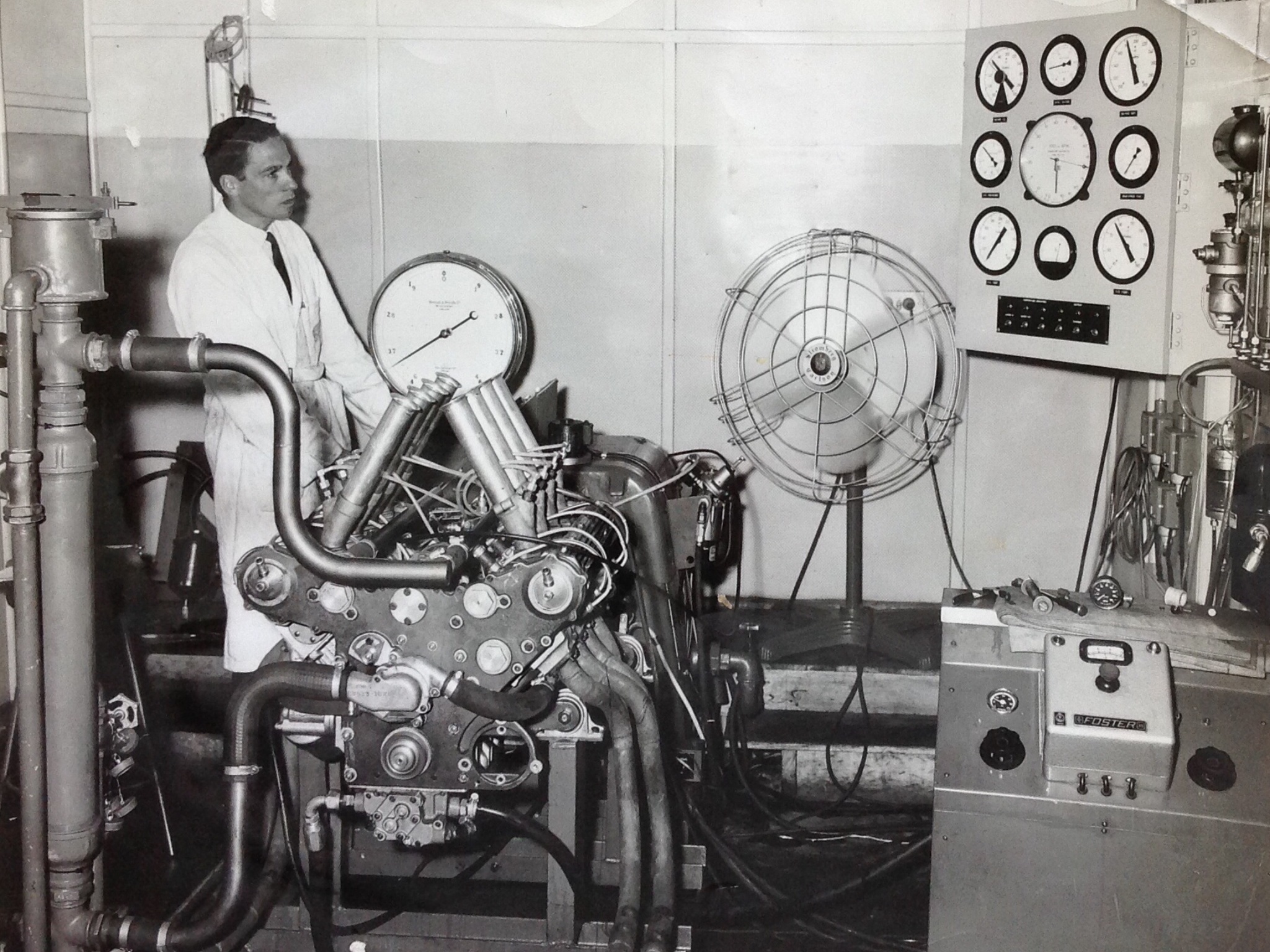
Michael Gasking dyno-testing the 2.5-litre RBE620 V8 #E2 used by Jack Brabham in the two races he contested in the 1966 Tasman Cup at Sandown and Longford aboard the Brabham BT19 chassis (Repco)
There, it was announced it would be built in two versions: a 2.5-litre Tasman Formula engine and a 4.3-litre for sports-car racing.68 As it turned out, the engine was unsuccessful in the Tasman Cup, but the long game was to enlarge it to 3-litres so it could run in the Formula One World Championship in 1966 under the new rules.69
In April 1966, as the RB620, in its 3-litre form, was powering its way to Brabham’s third world championship, Repco formed a new company, Repco Brabham Engines Pty Ltd at 87 Mitchell Street, Maidstone. Situated in the Engine Parts group under Bob Brown, a director of subsidiary Warren and Brown, it was formed ‘to manufacture and market Repco Brabham racing and sports car engines’ and to ‘develop other high performance equipment for motor vehicles.’ 70
Hallam, then divisional chief engineer of the Engine Parts group, became the general manager of Repco Brabham Engines.71 A new engine, the RB740, was already under development; Irving had begun work on it but fell out with Hallam and left Repco early in 1966.72 In 1967, the RB740 saw success in the world championship with Denny Hulme first and Brabham a close second, Brabham again winning the constructor’s championship. 73
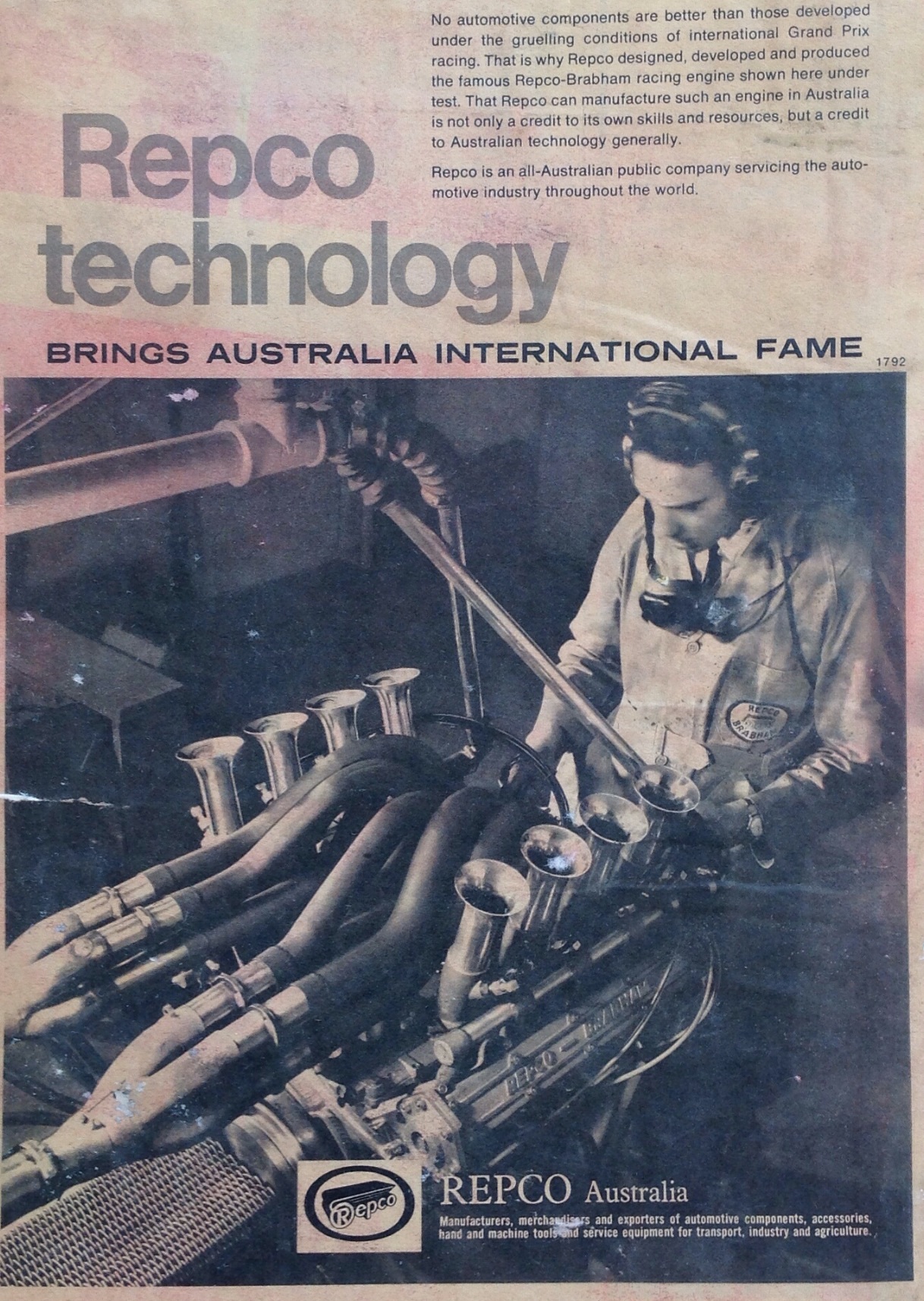
Repco made much of these wins: As we have said before, car racing is not our business, but central to our business is the technology required to design automotive parts and to produce them to the highest standards of precision and reliability. We believe it will long be a source of reassurance to our customers, our employees and our shareholders that in 1967/68 engines completely designed and manufactured by Repco Limited outperformed the world’s best, in race after race. 74
Noticeably absent here was the reassurance of the profitability of Repco Brabham, and indeed Lawrence suggests that by this stage it was ‘bleeding money’. Lawrence also discusses the complications of the engine projects, the poor sales, the falling out between Hallam and Irving, the company’s unrealised plans to build more engines and enter the international market in a major way, the lacklustre attitude to Repco promotion by both Brabham and Tauranac, and much else. Given the devolved nature of Repco’s companies, Hallam was responsible for the financial success of Repco Brabham Engine Co., and it was in trouble.75
For the 1968 season, Repco Brabham developed a new engine (the DOHC, four-valve RBE860 3-litre V8) to meet the competition from the newly developed Ford Cosworth DFV V8, but it was not a success. It picked up some points in the Indianapolis 500, but rather than develop it further, the company abandoned the project. But by this stage, the Repco board was having serious doubts about the huge expense entailed in trying to keep ahead of an increasingly sophisticated opposition and decided to withdraw from Grand Prix racing. 76
On 12 December 1968, Repco Brabham Engines was transferred to Manufacturing Division III with Hallam as general manager reporting to Dean.77 A few months later, in April 1969, Hallam was transferred out of the engine section and moved to Repco Research to enable him to concentrate fully on new product development with the new title of Chief Automotive Research Engineer. 78 Importantly for this story, he was to be ‘undisturbed by current engine projects’.
At the same time, Dean was charged with creating a new entity from the residue of the V8 project at Maidstone; the Repco Engine Development Co.79 Rather than desist from racing, Dean suggested that Repco return to production cars.80 Dean once again called in Irving, now in his late sixties, to provide the design expertise to transform the recently developed Australian-designed Holden V8 engine into a racer for stock or production cars with a capacity limited to 5-litres.81(the Repco-Holden F5000 engine)
Working with a newly assembled team, Irving modified the block and head castings of the Holden engine and filled it with special components designed by Repco, bringing it up to the mark for the new Formula 5000 class. Frank Matich won the 1970 Australian Grand Prix in record time at Warwick Farm, NSW, driving a Repco-Holden-powered McLaren M10B, the first of numerous successes for this engine.
Michael Gasking fettling a 3-litre RBE740 1967 F1 engine (Repco)
Conclusion…
Charlie Dean retired in 1973, and the engine-manufacturing program ended not long after. Although Repco continued to be involved in racing, for example, sponsoring the (round Australia) Repco Reliability Trial in 1979, its ambition to be a player on the world stage as a designer and manufacturer of racing engines was over.
Surveying the evidence thus far, it appears that Repco’s racing programme was coterminous with Dean’s employment and that, as head of Research, under which umbrella much of the racing development was carried out, he, together with McGrath, played a substantial role in its development. The decentralised company structure, which gave leeway to an individual manager’s discretion, aided him.
Furthermore, while Repco argued that the financial outlay for its racing programme was rewarded with global brand recognition, its effect on the profitability of the company has yet to be assessed. If, as legitimacy theory suggests, a corporation must act in congruence with society’s values and norms, 82 then Repco’s racing programme might have been nurtured more for its perceived impact on a nation that places a high value on sporting achievement, particularly in the international arena, than for financial gain.
Bibliography…
1 Jack Brabham, When the Flag Drops (London: William Kimber & Co,1971); Jack Brabham with Doug Nye, The Jack Brabham Story (Mindi Windsor NSW, 2004); Mike Lawrence, Brabham, Ralt Honda, The Ron Tauranac Story (Motor Racing Publications, Croydon, UK 1999); Phil Irving, Phil Irving. An Autobiography (Sydney: Turton & Armstrong, 1992); Simon G Pinder, Mr Repco-Brabham. Frank Hallam (Geelong: Victoria, 1995); Malcolm Preston, Maybach to Holden. Repco, the Cars, People and Engines (Mansfield, QLD: Hughes Graphics & Design, 2010).
2 For Russell, see Robert Murray, ‘Russell, Robert Geoffrey (1892–1946)’, Australian Dictionary of Biography, National Centre of Biography, Australian National University, http://adb.anu.edu.au/biography/russell-robert-geoffrey-11588/text20687, published first in hardcopy 2002, accessed online 13 June 2016. The history of Repco up to 1960 is outlined in R A Murray and K B White’s unpublished typescript “History of Repco” c. 1985, kindly made available to me by David McGrath.
3 ‘A parts service built on Ford-like principles’, The Australian Automobile Trade Journal (27 January 1930): 33, Repco company files, University of Melbourne Archives.
4 ‘Repco’s ten years of progress’ in Repco. Tenth Anniversary Celebrations, Repco company files, University of Melbourne Archives.
5 R G Russell, ‘A modern Australian foundry’, Foundry Trade Journal (7 September 1933): 129-130, Repco company files, University of Melbourne Archives; ‘Repco. In step with the nation’s war effort’, GM-H Pointers magazine 8 (4) (Nov 1941); I owe this reference to Norm Darwin.
6 Bryce Raworth, ‘Former Repco Factory 81-95 Burnley Street, Richmond’ Expert witness statement o panel amendment C149 to the Yarra Planning Scheme (March 2013): 4-6.
7 ‘In these days [1930s] when the idea of decentralising industries was still new, replacement parts followed a definite policy of decentralisation in the building of its country branches’, ‘The story of replacement parts’, typed notes p. 2, Repco company files, University of Melbourne Archives. Each branch was a smaller replica of the Melbourne warehouse and workshop model. See also Murray and White, “History of Repco”, chapter 4.
8 Denis Nettle, ‘John Storey and the Nature of Australian Management Practice’, sydney.edu.au/business/__data/assets/pdf, accessed 1 June 2016.
9 John Lack, ‘Storey, Sir John Stanley (1896–1955)’, Australian Dictionary of Biography, National Centre of Biography, Australian National University, http://adb.anu.edu.au/biography/storey-sir-john-stanley-11783/text21077, published first in hardcopy 2002, accessed online 8 May 2016. Murray and White, “History of Repco”, chapter 5.
10 Nettle, ‘John Storey and the Nature of Australian Management Practice’.
11 Nettle, ‘John Storey and the Nature of Australian Management Practice’; Murray and White, “History of Repco”, chapter 4.
12 ‘Repco Limited. Chronological growth – subsidiaries’, typed list, Repco company files, University of Melbourne Archives.
13 Nettle, ‘John Storey and the Nature of Australian Management Practice’.
14 ‘The profit centre concept – the Repco story’, Rydges Journal (May 1971), Repco company files, University of Melbourne Archives.
15 Peter F Drucker, People and Performance (New York: Butterworth Heinemann, 2011 (1977)): 5.
16 Murray and White, “History of Repco”, 51 and chapter 5.
17 Murray and White, “History of Repco”, 88.
18 Repco Record 1972, p. 28 notes that Repco racing began in Tasmania with these motorcyclists. In 1950, McGrath had negotiated for Repco to sell imported DMW motorcycles from England, although this came to nothing. Frank Hallam arrived at Repco in April 1943, having been transferred from CAC. He came from a distinguished family, being a descendant through his father of English historian Henry Hallam and his poet son Arthur Hallam, and through his mother, of Tasmanian Attorney General and Australian explorer J T Gellibrand; Pinder, Mr Repco-Brabham Chapter 1.
19 Murray and White, “History of Repco”, chapter 7.
20 Murray and White, “History of Repco”, 56, 112.
21 O R Wadds, management memorandum no. 6, 17 September 1946, announced McGrath’s appointment as assistant to managing director; O R Wadds, management memorandum no.18, 23 May 1947, notes McGrath’s appointment to Replacement Parts; John Storey, management memorandum no. 30, 4 May 1948 for McGrath’s appointment as Director; John Storey, management memorandum no. 67, 17 October 1952 for McGrath as Director of Sales; ‘Our chairman’s history with Repco’, Repco Record (June 1967): 2, Repco company files, University of Melbourne Archives.
22 C G McGrath, management memorandum 152, 18 November 1957, Repco company files, University of Melbourne Archives.
23 For Wade: http://www.motormarques.com/editorial/item/196-george-wade-1913-1997, accessed 15 May 2016. O R Wadds, management memorandum, 10 July 1947, Repco company files, University of Melbourne Archives. Hallam’s appointment was announced in the management memorandum no. 112, 11 August 1955; in a memo of 6 August 1959, he is referred to as chief engineer in the Engine Parts Group, Repco company files, University of Melbourne Archives.
24 Repco Record (June 1967): 3.
25 John Storey, management memorandum, 20 November 1946, Repco company files, University of Melbourne Archives.
26 ‘Replex’, Repco Record (September 1962): 2.
27 Murray and White, “History of Repco”, 80.
28 O R Wadds, management memorandum no 4, 21 August 1946, Repco company files, University of Melbourne Archives. Dean’s various appointments were noted in Storey’s office memoranda for 6 August, 24 August, 17 September, 8 October, 6 December and 17 December 1946; 11 November 1948; 31 January 1951, Repco company files, University of Melbourne Archives.
29 Repco Record (December 1973): 8. According to Malcolm Preston, Dean also produced large industrial transformers and services and reconditioned automotive electrical components. Preston is incorrect, however, about the name of Dean’s business and the address of its initial premises, Maybach to Holden, 26; Murray and White, “History of Repco”, 80.
30 ‘Replex’, Repco Record (September 1962): 4.
31 Harriet Edquist and David Hurlston, Shifting gear. Design Innovation and the Australian Car, (Melbourne: National Gallery of Victoria, 2015).
32 ‘The technical history of Australia’s fastest car – the Repco-Maybach’, Repco Technical News (August 1954): 1 Repco company files, University of Melbourne Archives.
33 Repco Record, special 50th anniversary issue (1972):
34 Preston, Maybach to Holden, 28-30.
35 Preston, Maybach to Holden, 37.
36 Preston, Maybach to Holden, 39.
37 ‘The technical history of Australia’s fastest car – the Repco-Maybach’, Repco Technical News, 1.
38 Repco Record (1972): 28.
39 C G McGrath, management memorandum no 88, 28 June 1954, Repco company files, University of Melbourne Archives.
40 Irving, ‘How we beat the world’, 3; Irving, An Autobiography, 457.
41 Irving, An Autobiography, 457ff on Chamberlain.
42 Irving, like Frank Hallam, came from a distinguished family. In 1855, his grandfather, Martin Irving, son of famous Scots preacher and heretic Edward Irving, was appointed professor of Greek and Latin Classics at the University of Melbourne; he was later headmaster of Wesley College, which Phil Irving attended. G. C. Fendley, ‘Irving, Martin Howy (1831–1912)’, Australian Dictionary of Biography, National Centre of Biography, Australian National University, http://adb.anu.edu.au/biography/irving-martin-howy-3840/text6099, published first in hardcopy 1972, accessed online 13 June 2016.
43 Irving, An Autobiography, 154-398.
44 Phil Irving, ‘Chapter 14: How we beat the world’, typescript, Repco company files, University of Melbourne Archives.
45 Irving, ‘How we took on the world’, 5.
46 Repco Record (December 1956):
47 ‘Stories of initiative’ Repco Record (September 195): 6,13; ‘Stories of progress’, Repco Record (December 1957): 10, followed up on Dean and Irving and the Hi-power Head. See also Jim Scaysbrook, Phillip Island. A History of Motorsport since 1928, (Melbourne: Bookworks, 2005): 47,50.
48 http://www.islandmagic.net.au/about-piarc/history-piarc/, accessed 13 June 2016 quoting PIARC Newsletter, 8.6.1954 and PIARC letter to Repco Ltd, 9.8.1955. Murray and White (84) note that the Repco Board agreed to pay “£4000 in sponsorship of the Phillip island Racing Club, believing that it would be an excellent advertising medium”.
49 ‘At the Motor Races’, Repco Record (March 1957): 10.
50 ‘Repco Man in Car Trial’, Repco Record (September 1956): 5; Repco Record (September 1957): 5; see also Repco Record (September 1964): 15.
51 In 1949, Storey appointed L G Russell Technical Manager with a brief to establish and manage a modern development and research laboratory, located at Russell Manufacturing; management memorandum no 42, 5 July 1949. In 1951, he appointed Lionel Stern, an accomplished industrial designer who took out a number of patents. The May 1952 edition of Repco Topics featured an article on the Repco research division, while the December 1950 issue featured an article on the Repco Dynamometer. Even in the 1930s, Repco had encouraged innovation in its manufacturing enterprises, see Murray and White, “History of Repco”, 36-37.
52 ‘Repco, first in research!’, Repco Record (June 1959): 2.
53 C G McGrath, management memorandum no 164, 14 April 1959; ‘We’re in “On the Beach”‘, Repco Record (June 1959): 15, Repco company files, University of Melbourne Archives.
54 Repco Record (June 1960): 8.
55 C G McGrath, management memorandum no 164, 14 April 1959; Repco company files, University of Melbourne Archives.
56 C G McGrath, management memorandum no 193, 8 December 1960, Repco company files, University of Melbourne Archives.
57 ‘New quarters for Repco Research’, Repco Record (March 1960): 6. For Dean’s later appointments, see McGrath’s office memoranda for 14 April 1959; 8 December 1960; 18 August 1961, Repco company files, University of Melbourne Archives. The reviewer of this paper noted how Repco’s commitment to R & D was in stark contrast to many other Australian organisations of that era.
58 C G McGrath, management memorandum no 247, 20 December 1964, Repco company files, University of Melbourne Archives. Dean was stationed at the Dandenong research facility and Lionel Stern became its chief engineer in 1965.
59 Repco Record (December 1957); Murray and White, “History of Repco”, 150.
62 Repco Record (March 1960):15; Repco Record (1972): 29.
63 Graham Howard, ‘Made in Australia. The Repco Brabham V8s’, Australian Motor Racing Year, 1983/84, 34-41.
64 Repco Record (March 1964): 34I.
65 According to Lawrence, Brabham worked on Hallam directly, see Brabham, Ralt Honda, The Ron Tauranac Story, 51; Preston claims Brabham approached McGrath directly, Maybach to Holden,103; Pinder argues that Bob Brown, Hallam’s boss, had a significant role, Mr Repco-Brabham, pp.23ff.
66 In Pinder’s account of Frank Hallam’s life at Repco, largely taken from interviews with Hallam, the latter’s dislike of Irving seeps through. He particularly disliked Irving’s odd working hours, hostility to changes to his designs, and preference for working alone rather than in a team. He thus finds it impossible to discuss Irving’s contribution to the design of the RB620 engine in an impartial way, see Mr Repco-Brabham chapters 4 to 6.
67 Howard, ‘Made in Australia’, 35.
68 Repco Record (September 1965): 3.
69 Irving, ‘How we beat the world’, 8.
70 C G McGrath, management memorandum no 276, 18 April 1966; Repco Record (June 1966): 12.
71 Management memorandum 276, 18 April 1966, Repco company files, University of Melbourne Archives.
72 Irving, An Autobiography, 552-554.
73 Repco Record (June 1967):
74 ‘Report’, Repco company files, University of Melbourne Archives.
75 Lawrence, Brabham, Ralt Honda, The Ron Tauranac Story, 86-87; Pinder, Mr Repco-Brabham.
76 Preston, Maybach to Holden, 130-131.
77 D E Callinam, management memorandum no 338, 12 December 1968, Repco company files, University of Melbourne Archives.
78 C H McGrath, management memorandum no 346, 28 April 1969, Repco company files, University of Melbourne Archives.
79 D E Callinan, management memorandum no 363, 10 February 1970, notes that Malcolm Preston remains manager of the company reporting to Dean, Repco company files, University of Melbourne Archives.
80 Preston states that the decision to build the F5000 engine was Dean’s, Maybach to Holden, 133.
81 Irving, ‘How we beat the world’, 13-17.
82 Gary O’Donovan, Legitimacy theory as an explanation for corporate environmental disclosures, (PhD thesis, Victoria University of Technology, 2000).
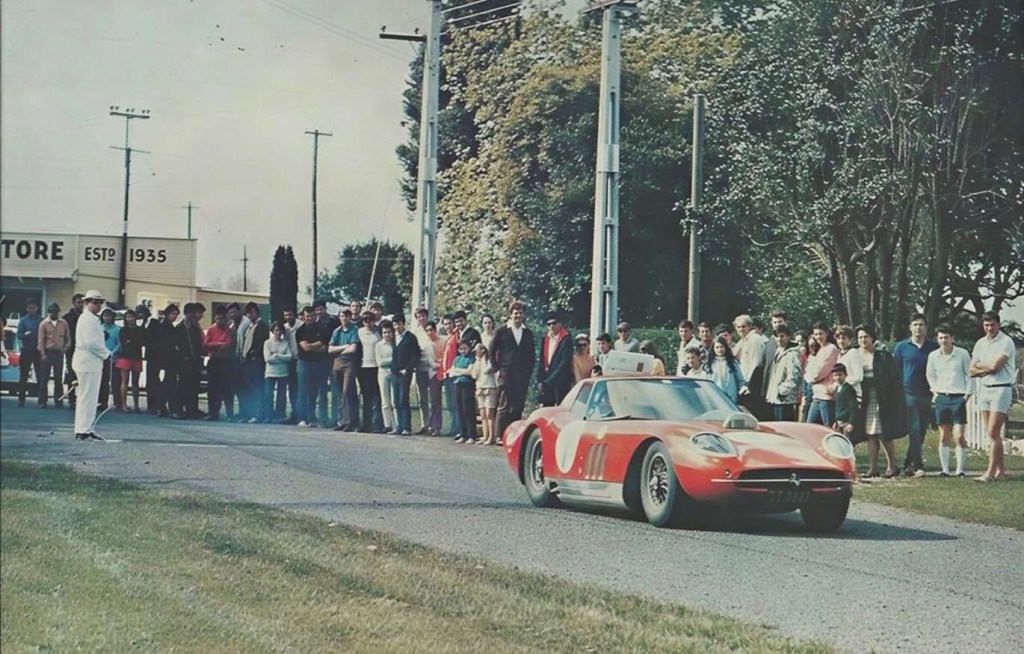
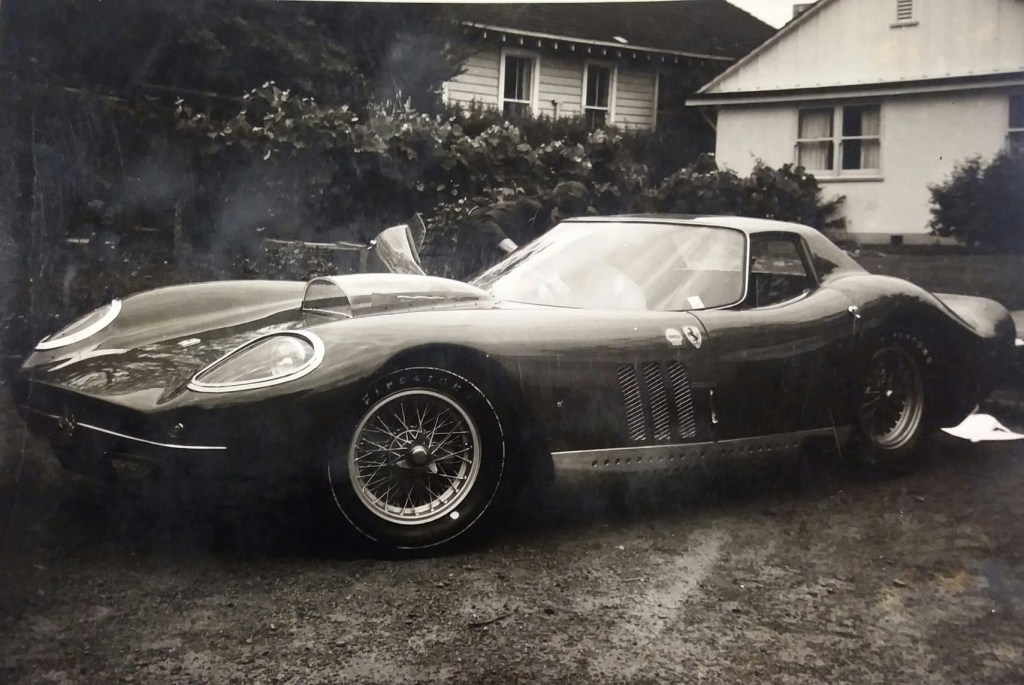
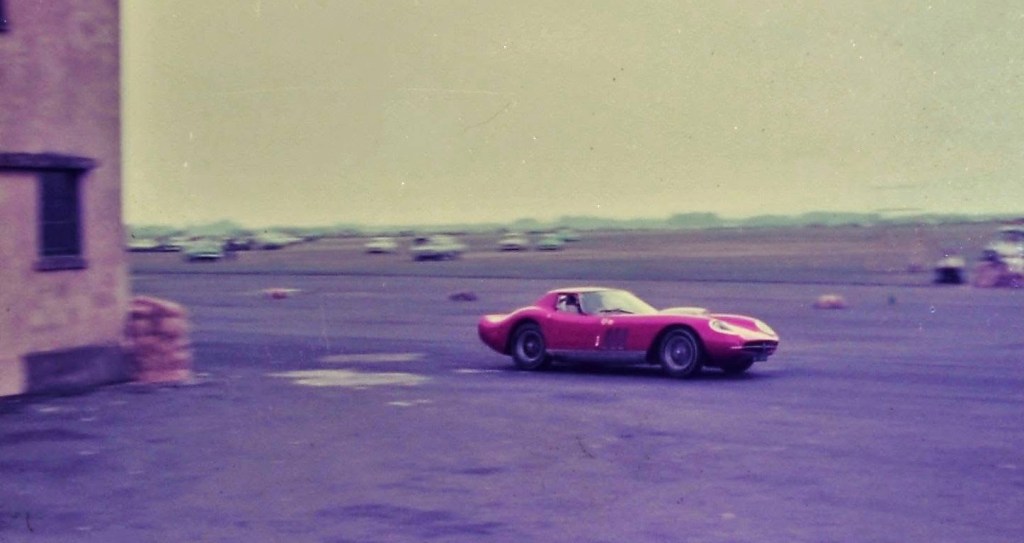
Fantastic shot of Logan Fow in the ex-Pat Hoare Ferrari 256 GTO – nee Ferrari Dino 256/60 #007 – launching from the line at the Tikorangi Speed Trials in November 1970. The Colombo Tipo 128 3-litre V12 gave about 310 bhp, so it was a quick car, the fastest registered Ferrari of all at the time according to Signor Ferrari himself.
I’ve already written about this car here: So there’s no point going over it all again, but the magic of Facebook – in this case the Old New Zealand Motor Racing and South Island Motorsports pages – means there have been many more photographs shared in the ensuing five years, and being a sharing, caring kinda guy, I thought you might like to see them. See here for a lengthy feature on Pat’s Feraris:https://primotipo.com/2020/02/07/pn-hoare-440-papanui-rd-christchurch-nz/
Pat Hoare won the Waimate 50 on February 11, 1961, from Angus Hyslop’s Cooper T45 Climax (M Beaumont)Here’s Pat Hoare with 256/60 #007 Coupe in the driveway of his 440 Papanui Road home in Christchurch circa 1963 (J Manhire)
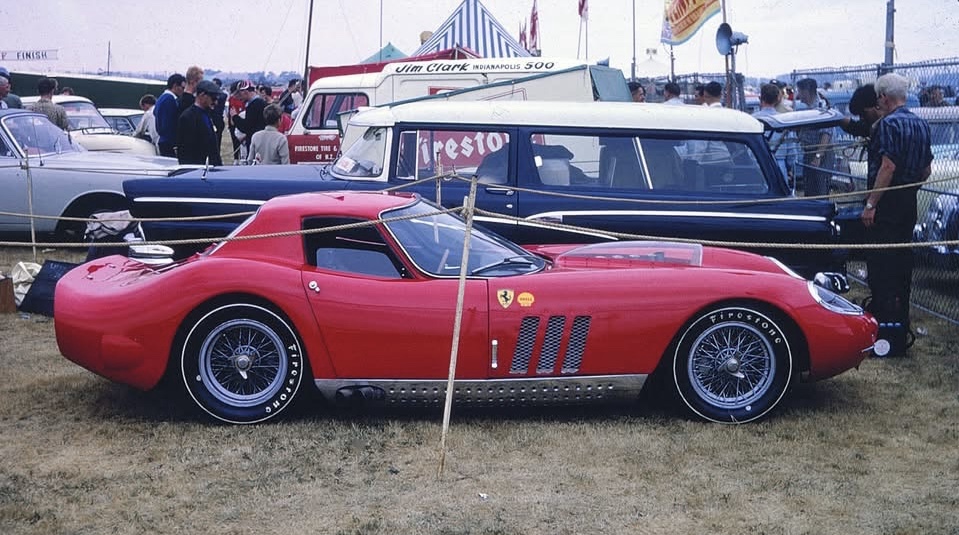
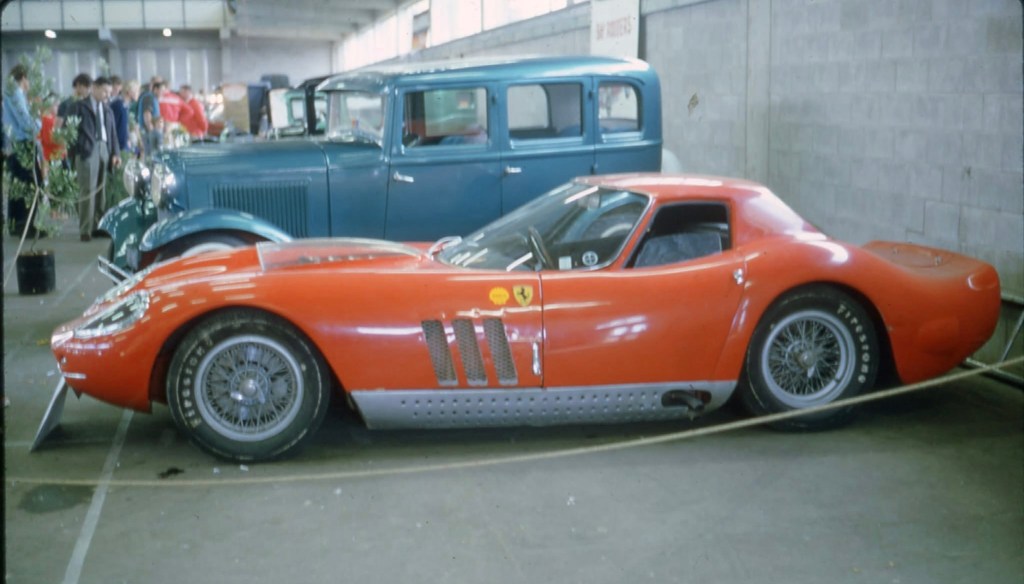
Unable to sell the obsolete racing car internationally after two years of racing, Hoare had this ‘GTO-esque’ body made for the machine, turning it into a road car of prodigious performance and striking, if controversial looks.
The artisans involved were Ernie Ransley, Hoare’s long-time race mechanic, Hec Green, who did the body form-work and G.B McWhinnie & Co’s Reg Hodder, who built the body in sixteen-gauge aluminium over nine weeks and painted it. A very young George Lee, still doing his apprenticeship, did the upholstery.
Pat’s brief was to use the chassis and mechanicals as was, modified in relation to popping the steering wheel offset to the right. Given the wheelbase of the 256 was a fair bit shorter than that of a 250 GTO, the packaging and styling challenges were manifest, especially given that Hoare was a reasonably LWB model himself. Ferrari assisted by providing factory drawings and some components, such as a GTO windscreen.
Date and place of this car show folks? (J Manhire)256/60 007 during Logan Fow’s ownership. Tipo 128 3-litre all-aluminium, SOHC, two-valve, six-Webered engine gave circa 310 bhp. Note the straight run of the steering rod into the cockpit, and light, tubular steel bodywork supports on ‘this side’. I wonder what type of Firestones they are? (K Tisch)Logan Fow contesting a Brentwood Sprint Meeting, date unknown (K Tisch)
I don’t for a moment find the styling of the car on the same planet as the Bizarrini/Scaglietti original, but I don’t mind the result. Pat had an unsaleable old racing car at the time, who can argue with a road car solution like this that retained ALL of the key elements of a grand prix winning chassis without sodomising it!?
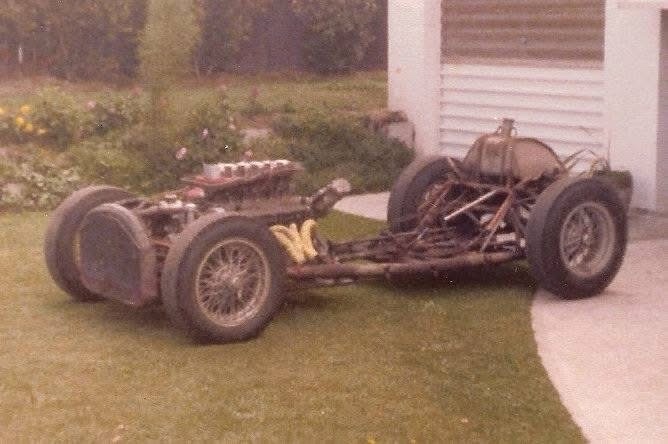
After using it for a few years, Pat sold it to Hamilton school teacher Logan Fow in 1967. He ran it as a roadie and occasional track day use for several years until British racer/collector Neil Corner struck a deal to buy the car sans ‘GTO’ body, but with the open-wheeler panels, which had been carefully retained and set aside. The Ferrari was converted back to its 256 V6 race specifications and still competes in Europe.
Fow took a new Ferrari 365 Berlinetta Boxer in exchange for all of the 256 bits and pieces, running the Boxer around Europe on a holiday for a while, but ran foul of NZ Government import rules when he came home and had the machine seized from him by customs when he failed to stump up the taxes demanded by the Fiscal Fiends. A sub-optimal result, to say the least.
256 GTO in Logan Fow’s Hamilton front yard (K Tisch)A shitty photograph that shows the car in the form it was shipped by Logan Fow to Neil Corner, sans coupe body and 007’s body panels, which were also shipped to the UK (CAN)(G Begg)
256-007 during the 1966 Lady Wigram Trophy meeting over the January 22 weekend, during which Jackie Stewart took some time out from his BRM duties and did some demonstration laps in the car. JYS won the big Tasman Cup race too, in his 1.9-litre BRM P261.
(G Guy)
The Body…
The home-made body stayed in New Zealand and ‘disappeared’, although it seems clear from the Facebook posts that it never really did…and in 2022, the then-owner decided to monetise it, to use a modern word.
(L Lawson)
The mortal remains of the car’s GTO Phase were sold in February 2022 via trademe.co.nz. 188 bids pushed the price to $NZ37,310.
It was described thus, complete with all of the errors: ‘Starting life as a Formula One Dino 246, V6-engined car, it was later altered to a 3-litre V12 for the Tasman Series.
‘At one time raced by Phill Hill, this Formula one car was rebodied into a G.T. road car of fine tradition. This was done with the knowledge of, and express approval of Enzo Ferrari who provided many of the G.T.O. parts. This creation was driven by Jackie Stewart at Wigram N.Z. Lighter than a 250 G.T.O. and with a fully independent rear axle, Ferrari said it was the fastest G.T. road car in the world at that time.’
‘The body only is now offered for sale on behalf of the owner who has treasured it for the last 40 years. It is N.Z. registered and comes with papers and plates. Ref, Enzo Ferrari’s secret war, by David Canton.’
(Trade Me)(Trade Me)
It will be interesting to see the mechanical specifications of the car this body clothes next!
Etcetera…
(E Stevens)
Ernie Ransley and Pat Hoare suss what they have after the 256 V12 arrived from Modena in early January 1961. 440 Papanui Road, out the back.
(E Stevens)
Hi Ho, Hi Ho, it’s off to Ardmore we go…
(J Manhire)
Hoare’s Pantech arrives at Ardmore for the 1961 New Zealand Grand Prix; a home-made two-wheel trailer and trusty pink Holden FB tow-mobile. Such a handsome racing car!
(M Feisst)(G Woods)
Let’s finish with the ‘original’…Pat Hoare during the 1961 Lady Wigram Trophy weekend. DNF in the race won by Jack Brabham’s Cooper T53 Climax.
(A Smith)
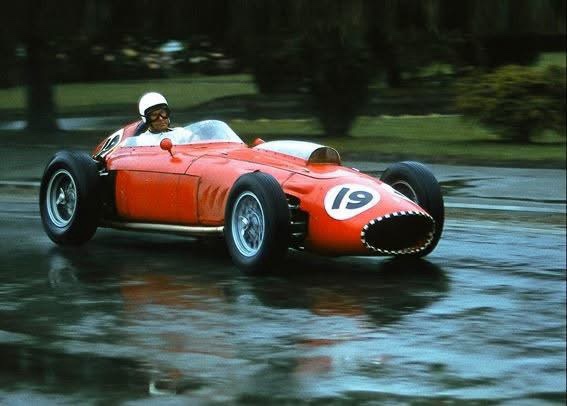
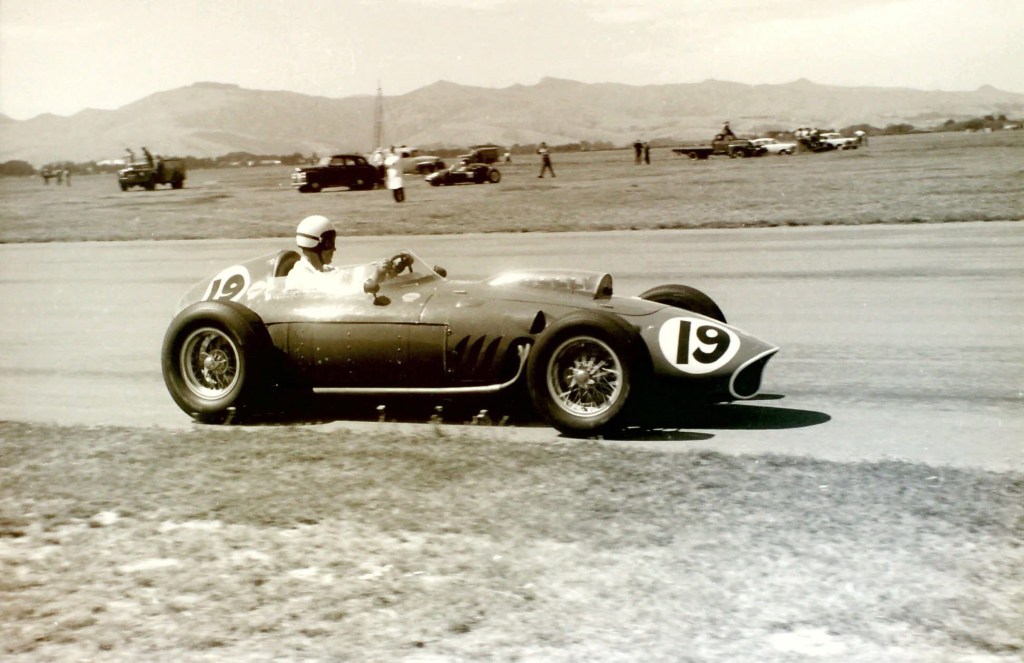
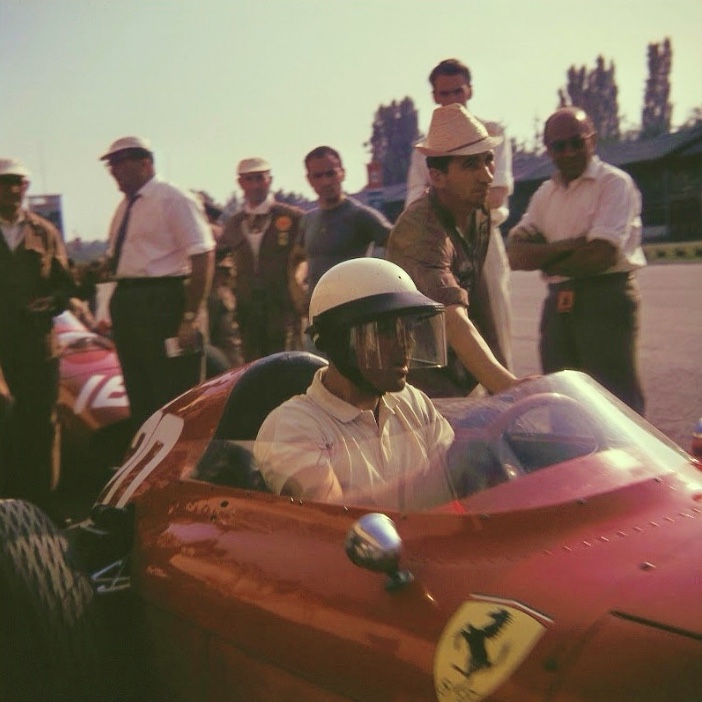
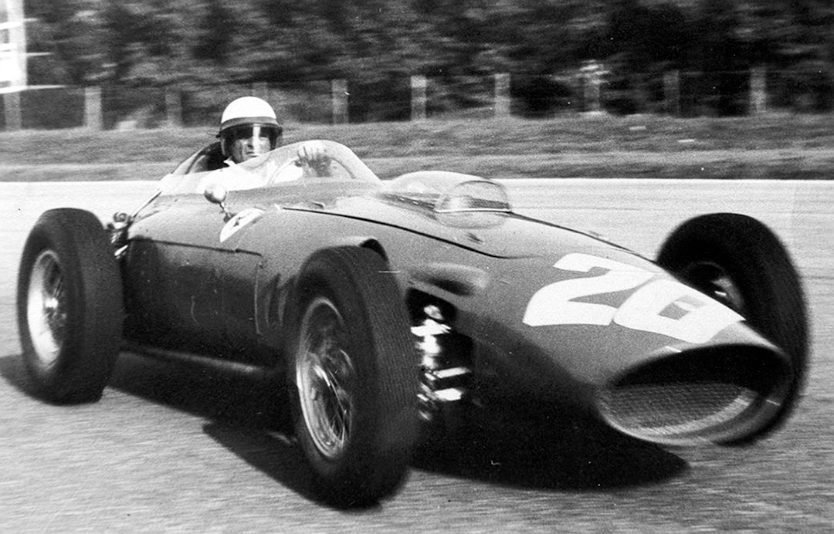
Not to forget Phil Hill’s victory aboard Ferrari Dino 256-007 V6 in the September 1960 Italian Grand Prix; the last championship win for a front-engined car. Yes, yes, the Italian national racing governing body gave Ferrari a free kick in a winless year by using the combined banked/road circuit. A significant chassis that one, all the same…
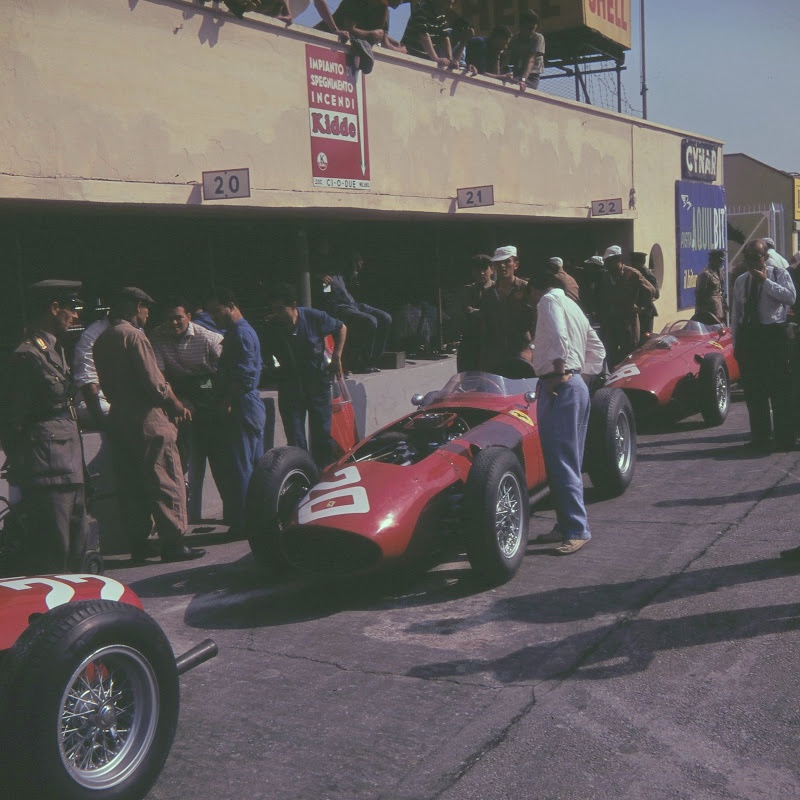
(R Jenkins)Monza pitlane: Taffy von Trips’ Ferrari Dino 156P F2 car, #20 Phil’s Dino 246/256 and #18 Richie Ginther’s 246/256 (A Smith)
Credits…
George Begg, Eric Stevens, Mike Feisst, John Manhire, Eric Stevens, Graham Guy, Matheson Beaumont, Lance Lawson, Archie Smith, R Jenkins
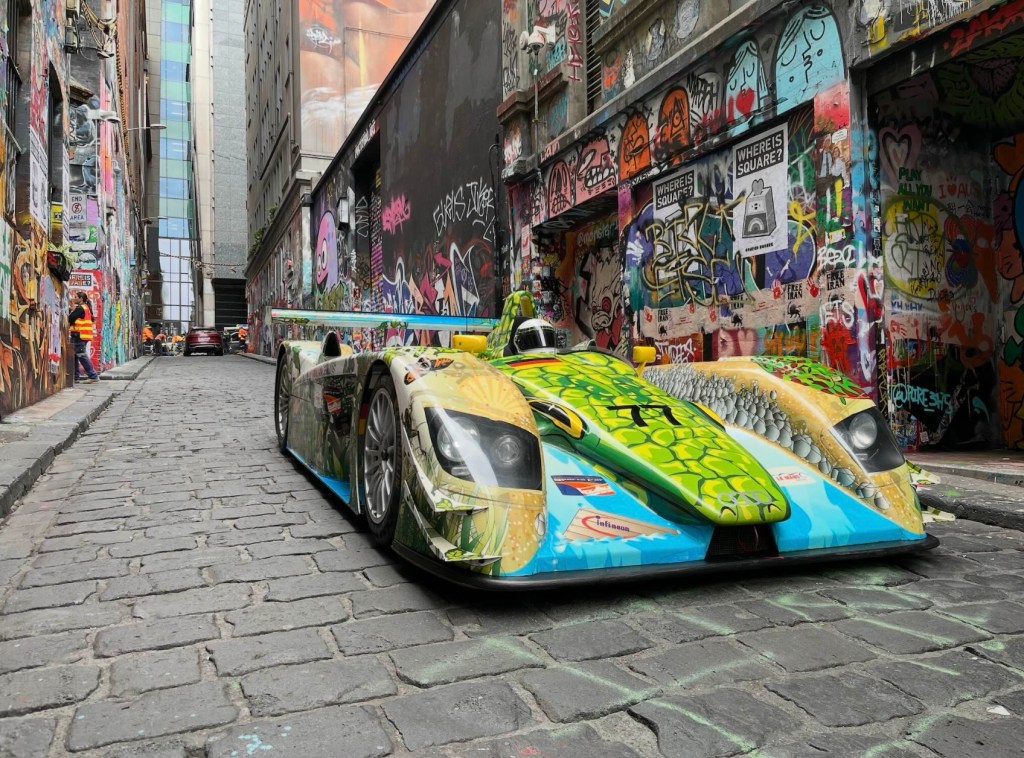
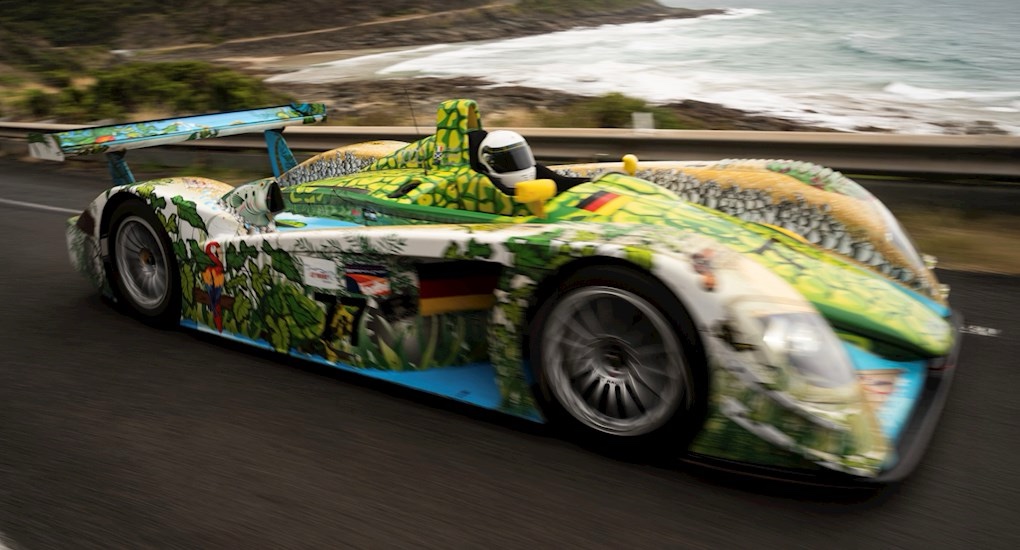
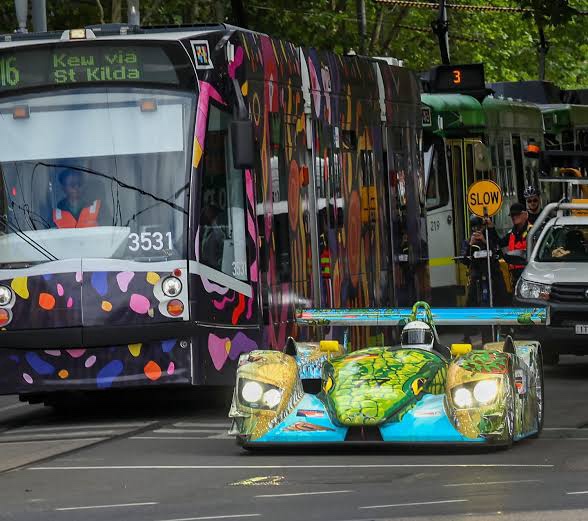
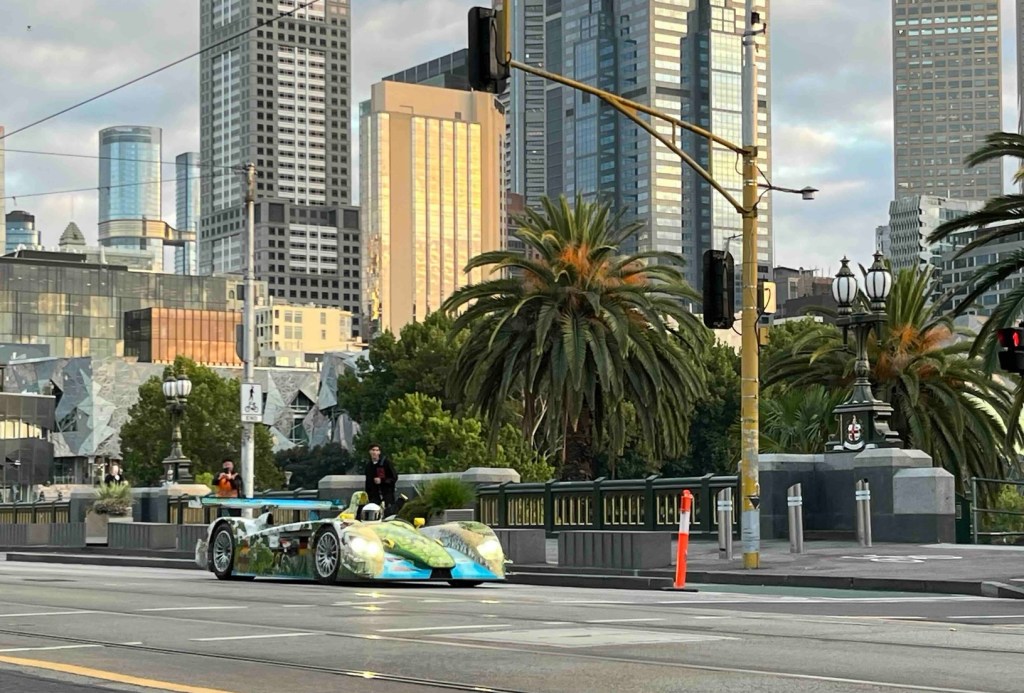
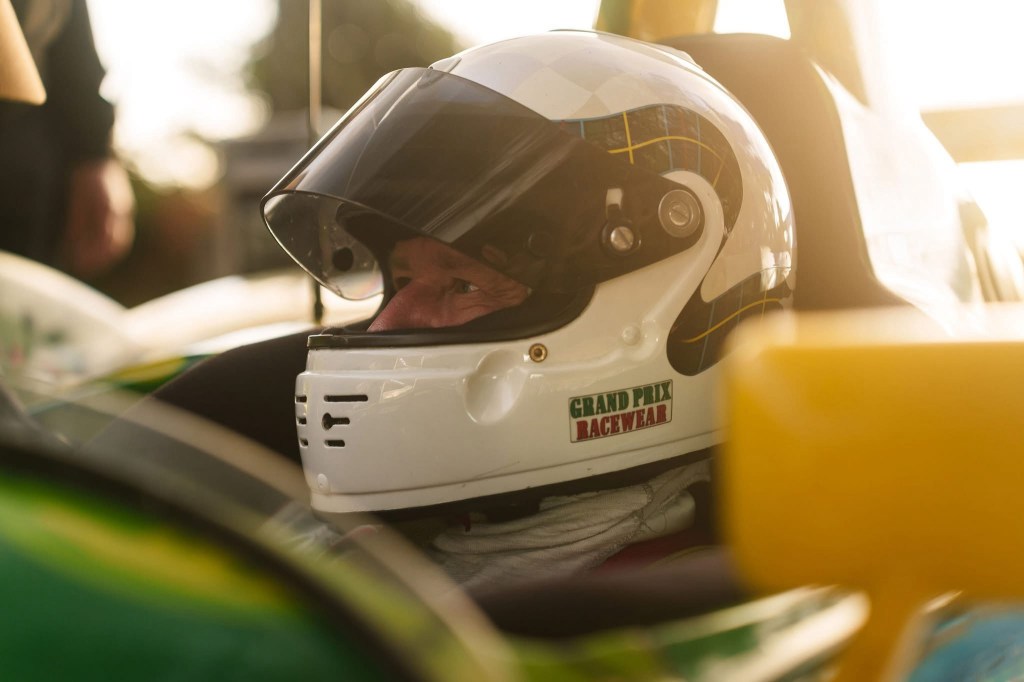
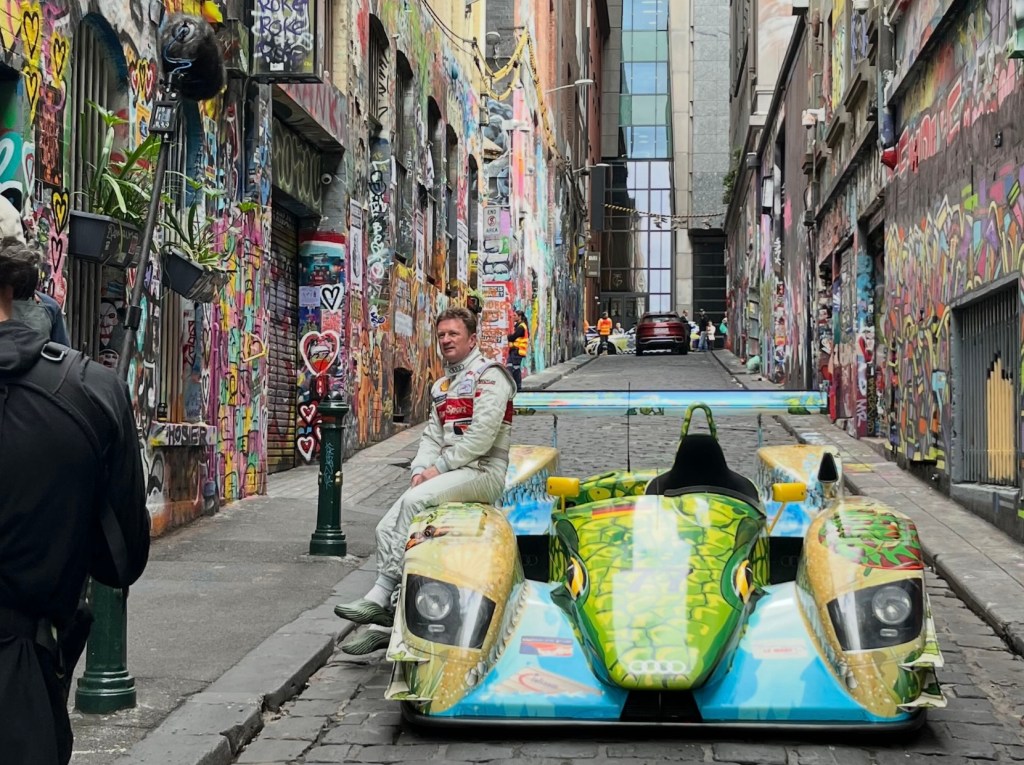
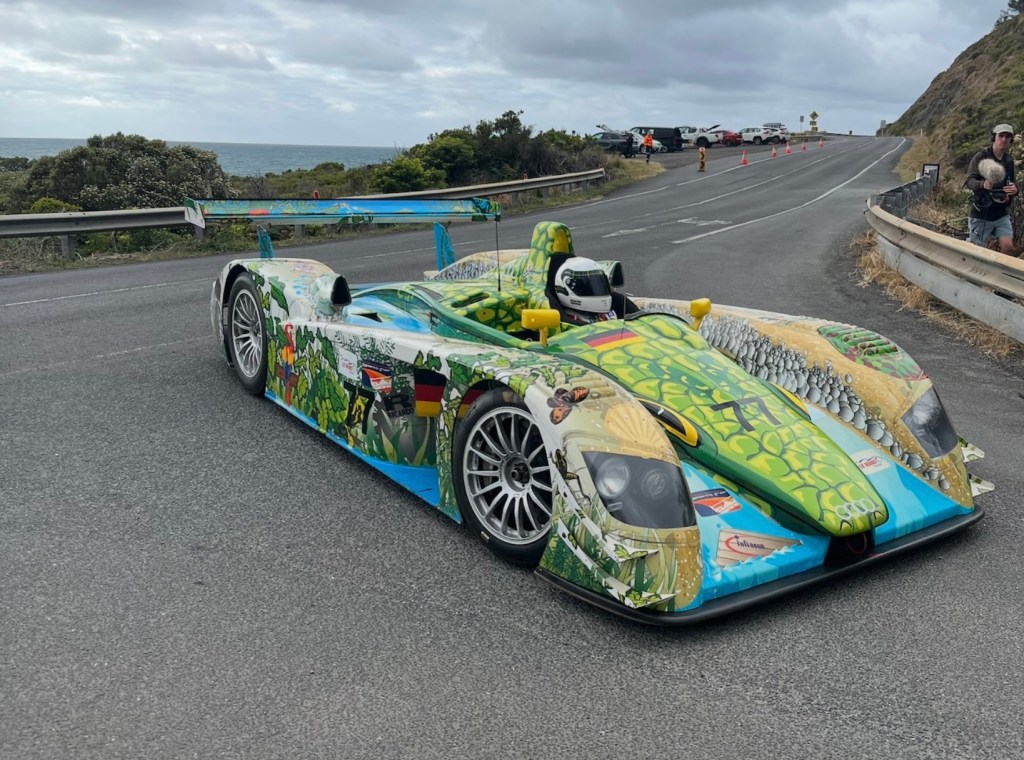
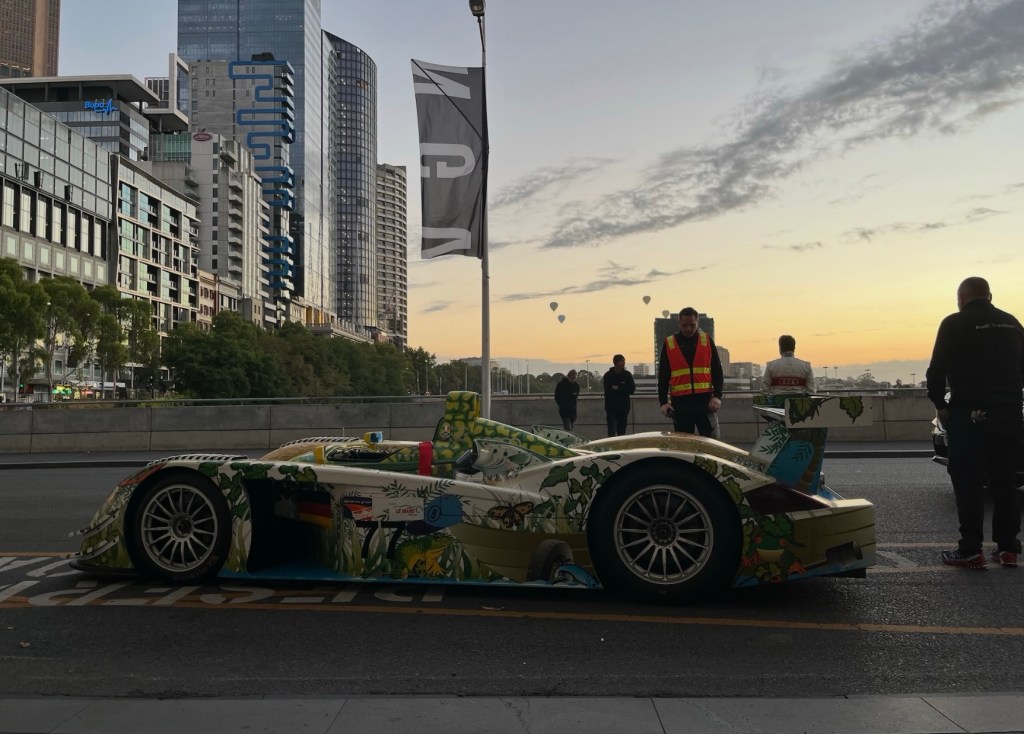
Allan McNish, descending Hosier Lane, pops his Audi R8 Croc, chassis #403, into first gear for the slow left-hander before blasting up the short Flinders Street straight in the 2027 Melbourne 1000 km…I wish!
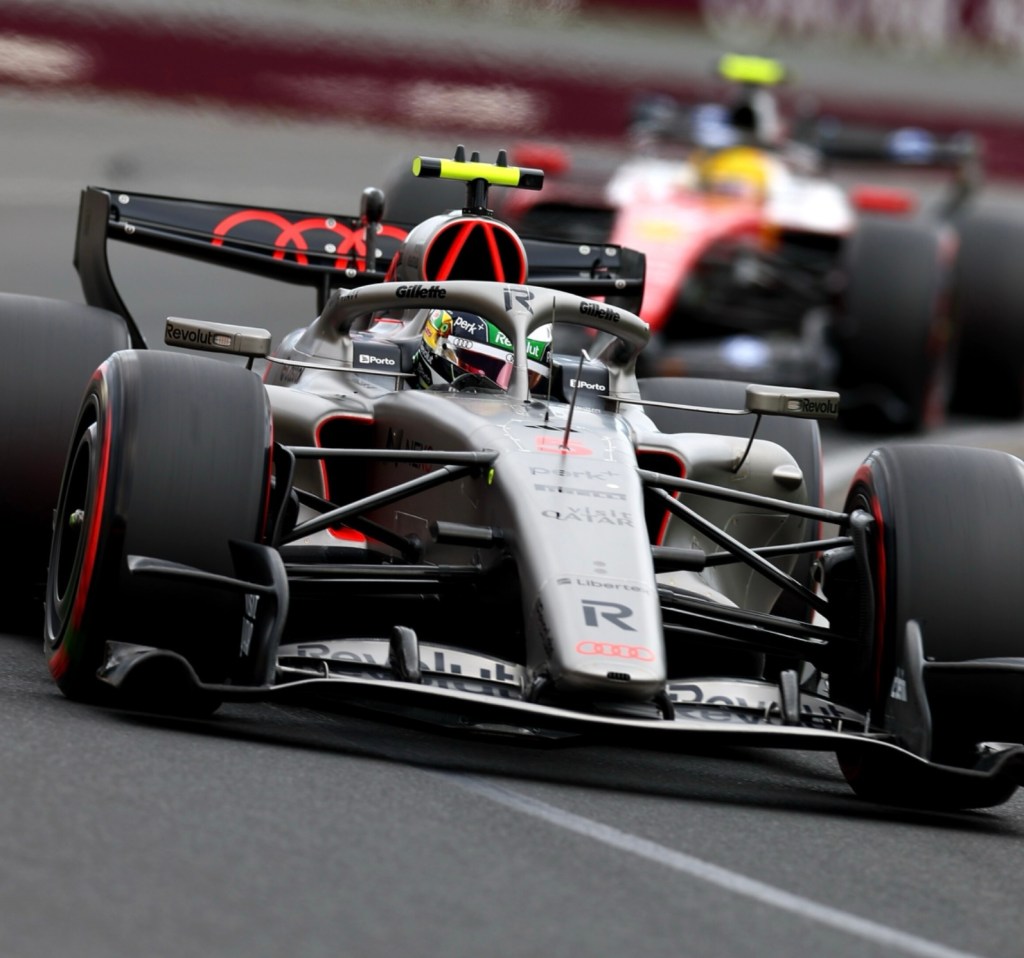
Gabriel Bortoleto gaining some points in his Audi R26 was an impressive start from a ‘newcomer marque’ upon debut at the 2026 Australian Grand Prix.
So too were their marketing and promotional activities in and around the race – activations – I think is the name given to this stuff by today’s, perky little brand-meisters.
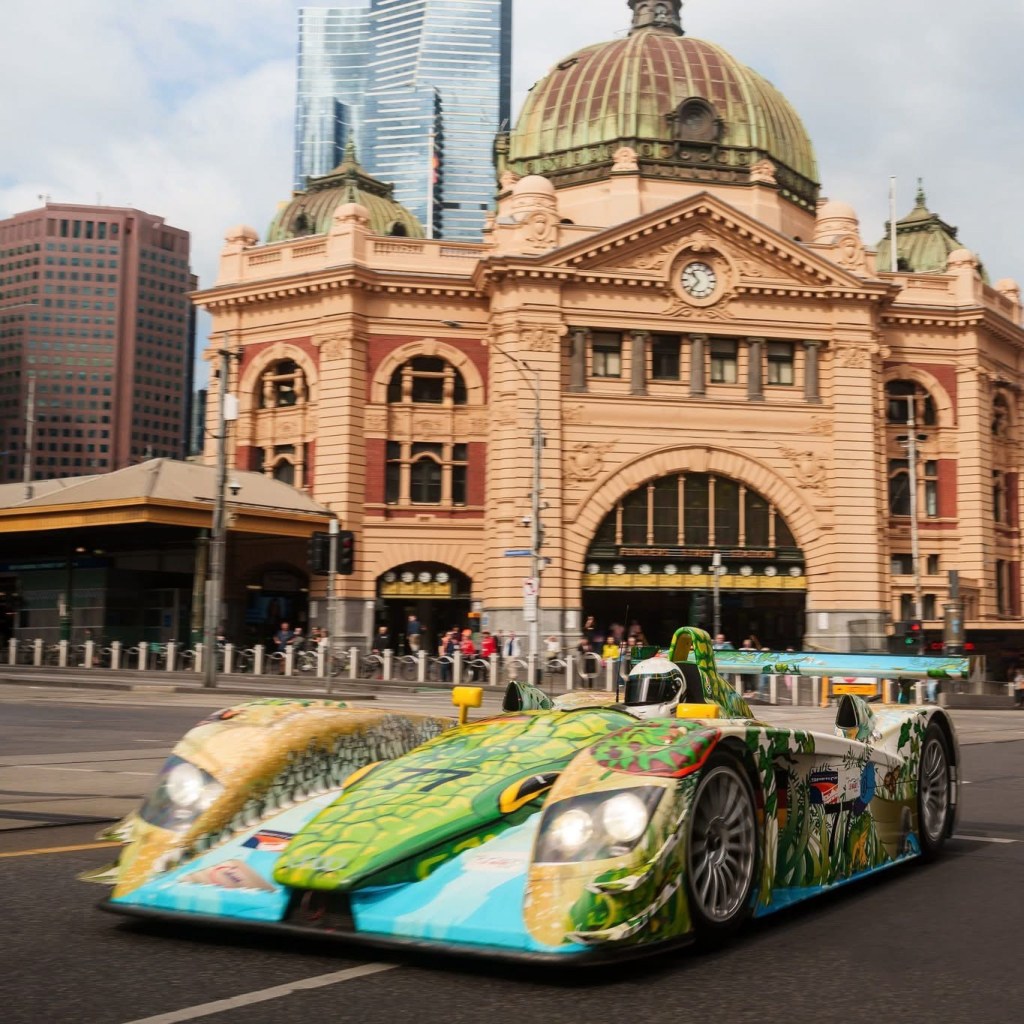
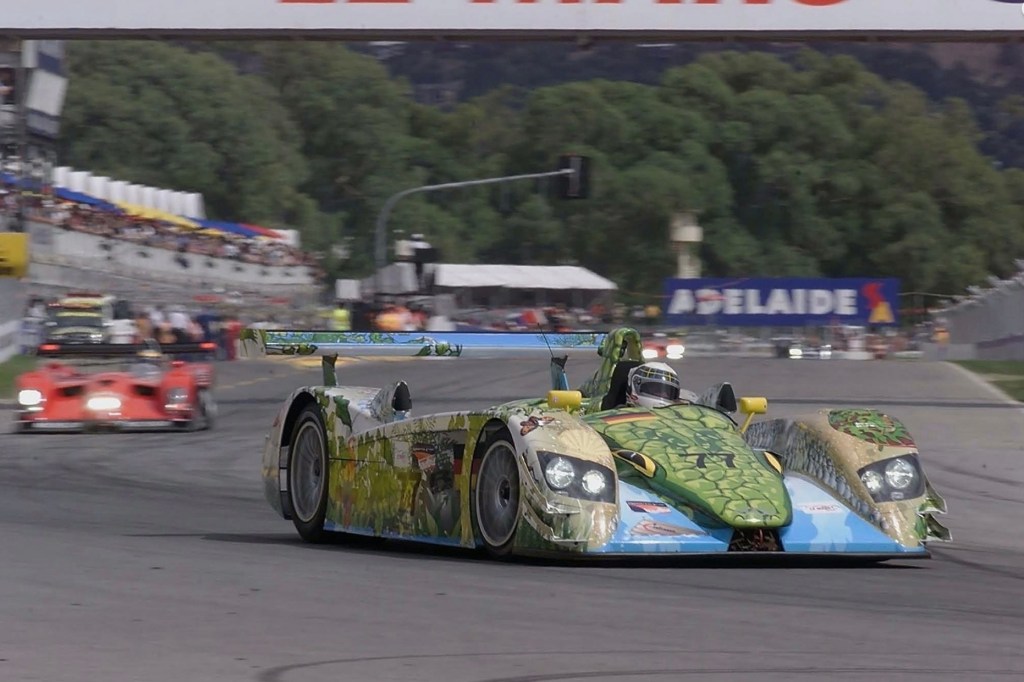
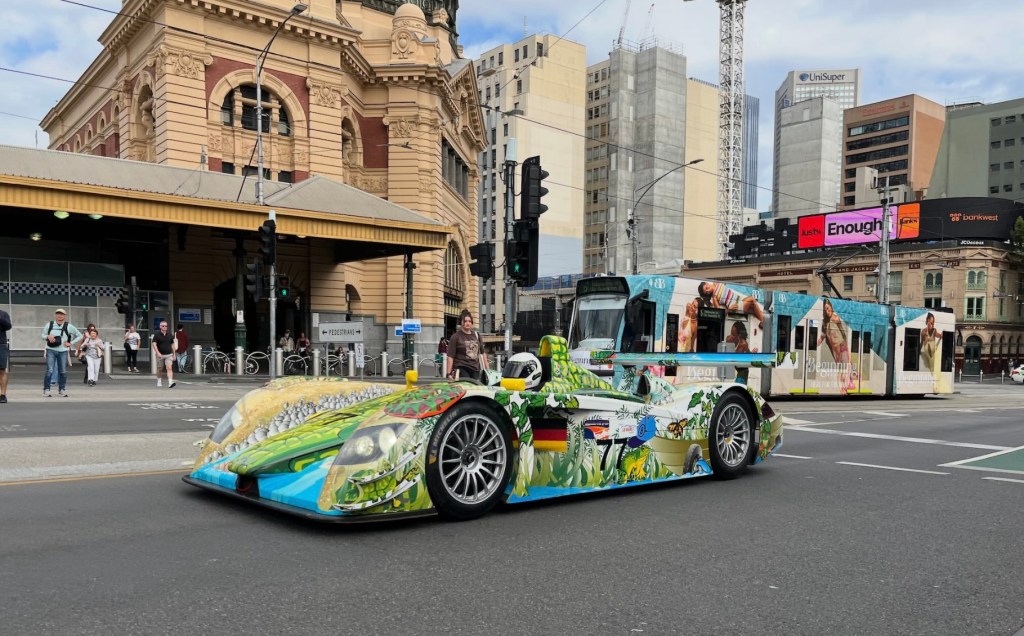
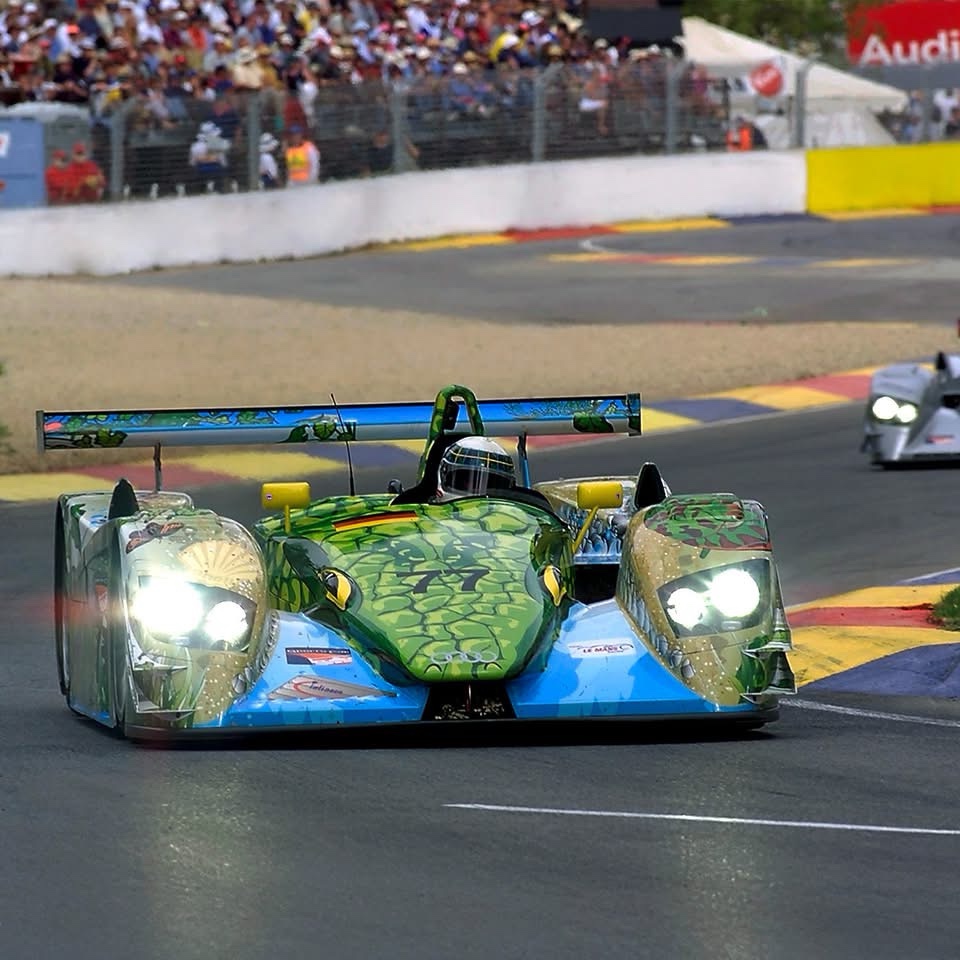
McNish opposite Flinders Street Station heading east on Flinders Street, corner of Swanton Street. To meet ‘under the clocks’ at Flinders Street is a century old Melbourne tradition before heading off to your boozer of choice (Audi) McNish , Audi R8 ahead of David Brabham’s Panoz LMP-1, about to hook into the Adelaide GP circuit’s Chicane early in The Race of 1000 Years on 31 December 2000 (Audi Sport)Borteloto, Audi R26 in front of Hamilton, Ferrari SF-26 during qualifying at Albert Park in 2026 (J Portlock-Getty)
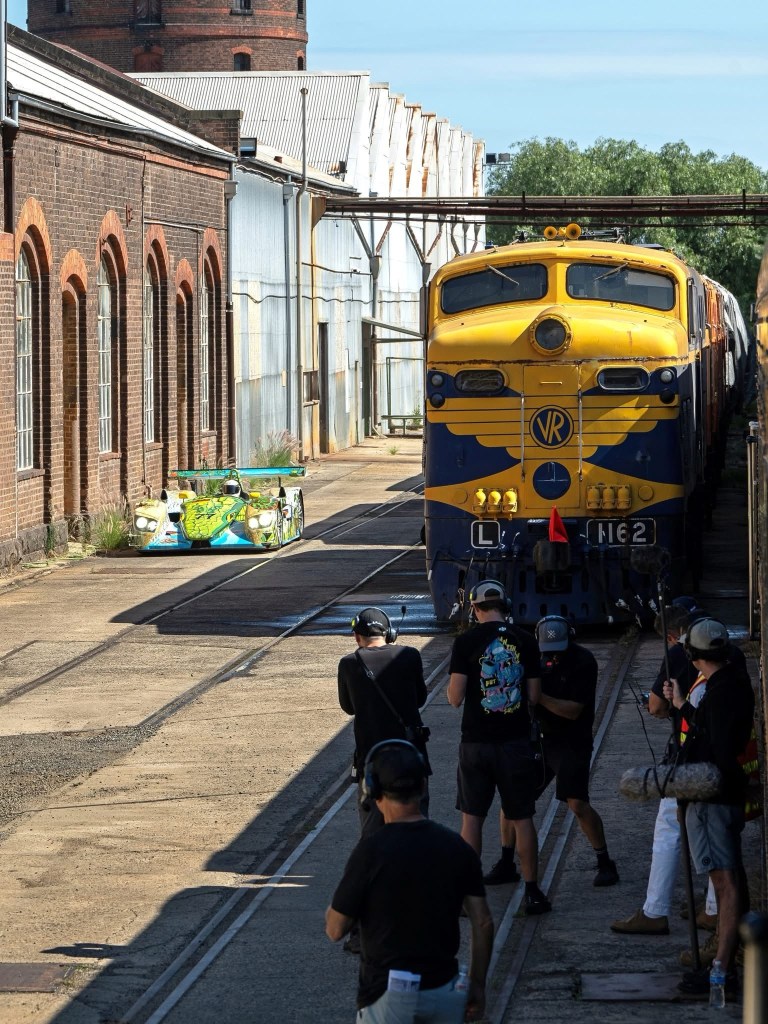
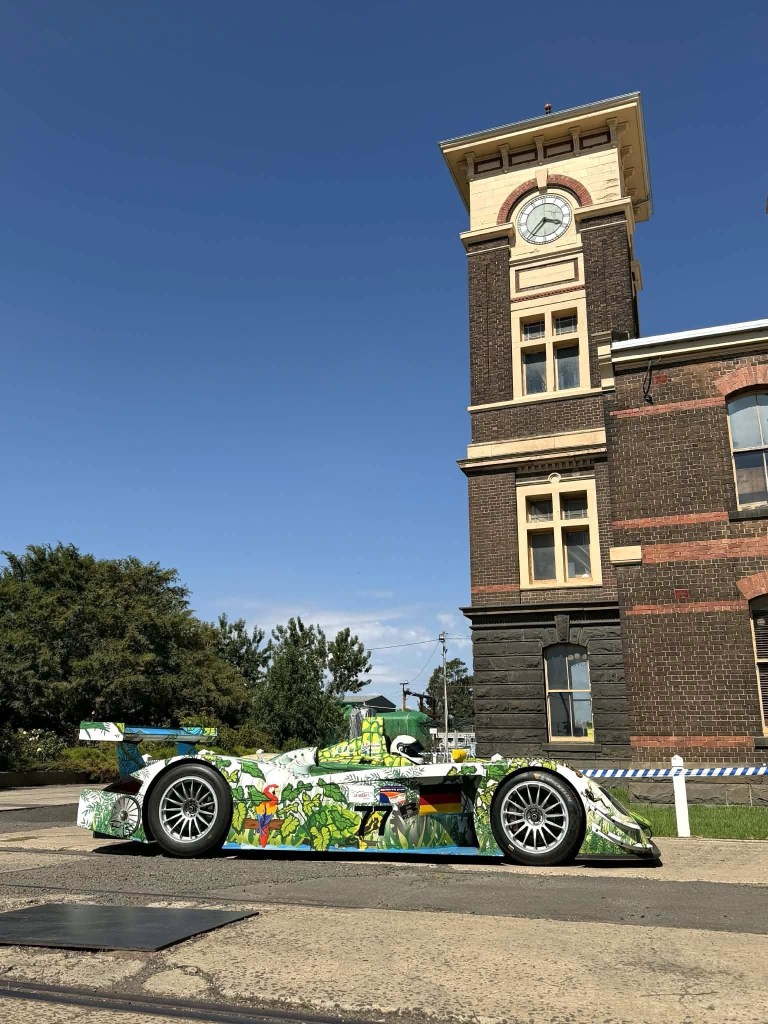
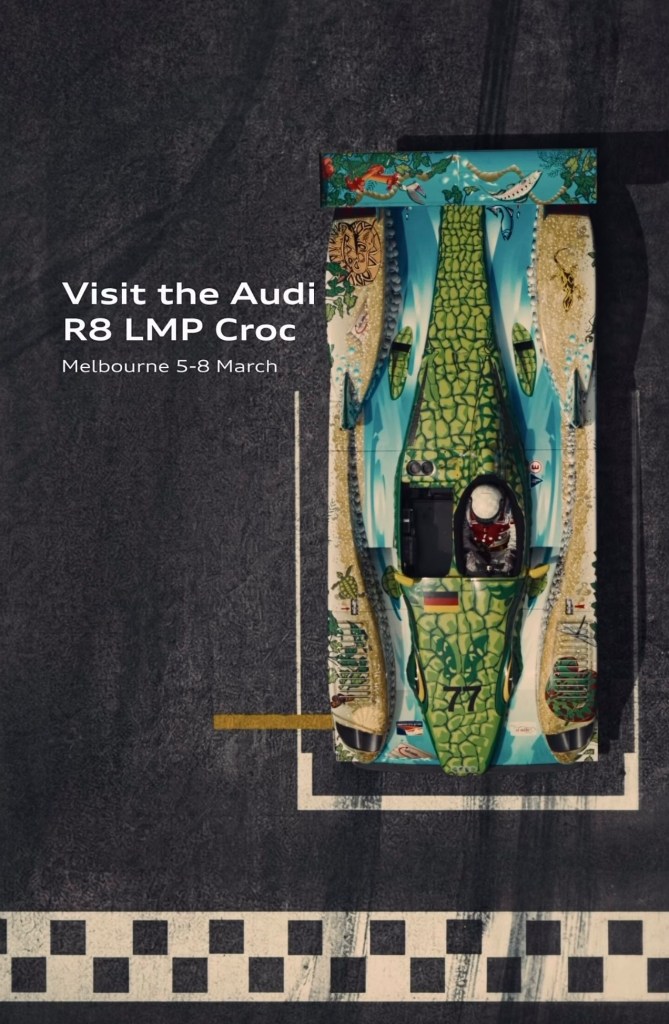
Not least Audi Australia’s short film to reintroduce the Audi R8 LMP900 ‘Crocodile car’ that won the Race of a Thousand Years in 2000 driven by Rinaldo Capello and Allan McNish.
70,000 enthusiastic spectators saw McNish and Capello prevail in an event shortened to 850 km from its scheduled 1000 km, from the Franz Konrad/Charles Slater/Alan Heath Lola B2K/10 Ford and the Dodge Viper GTS-R raced by Olivier Beretta/Karl Wendlinger/Dominique Dupuy.
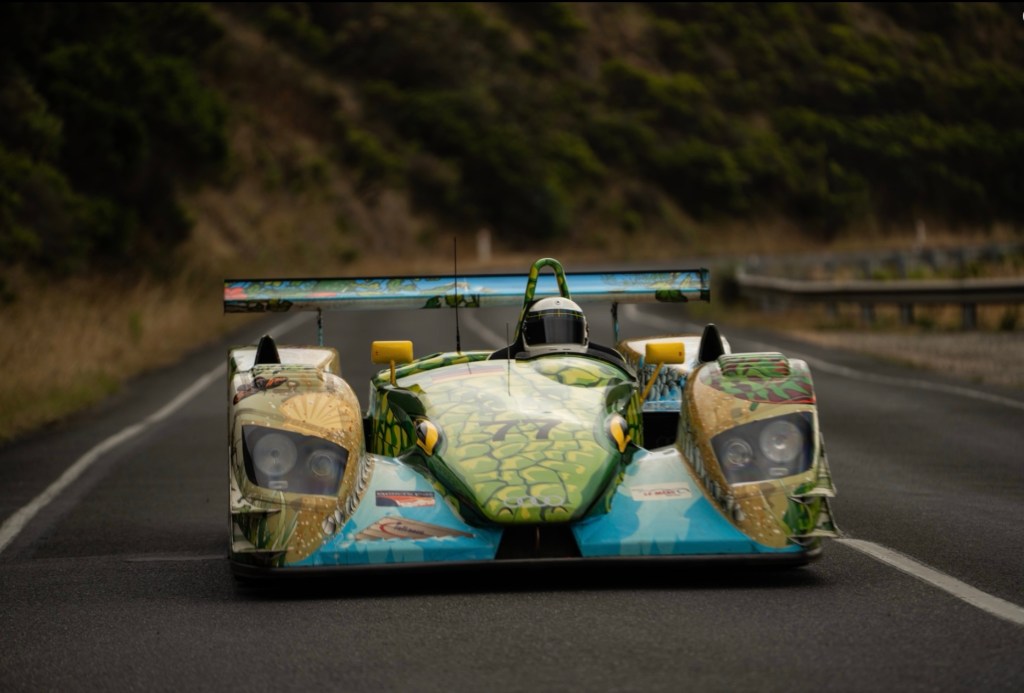
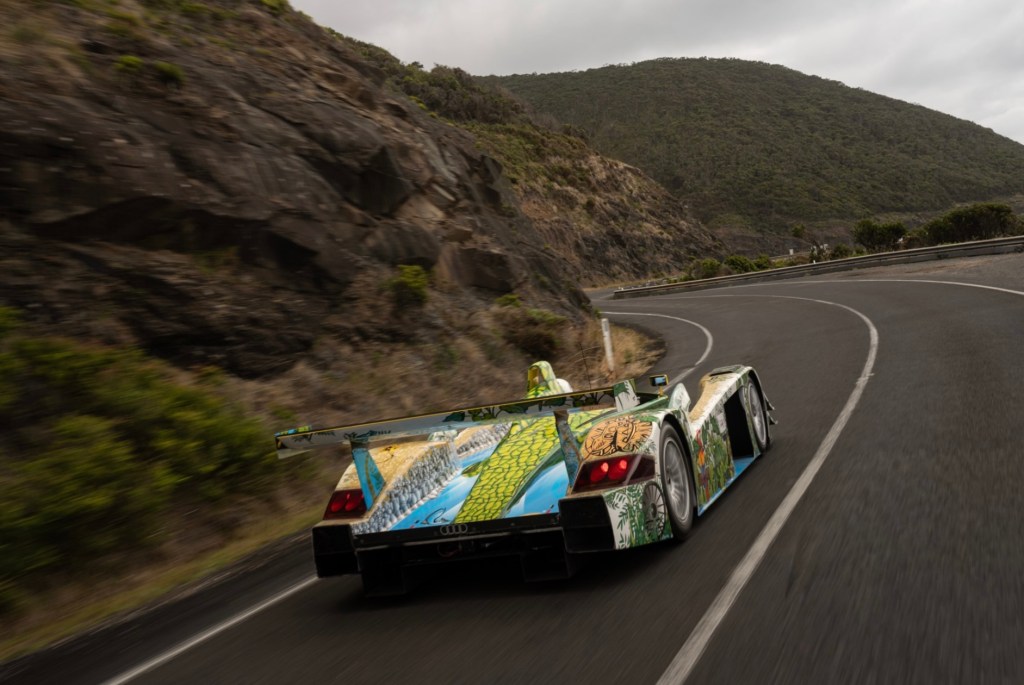
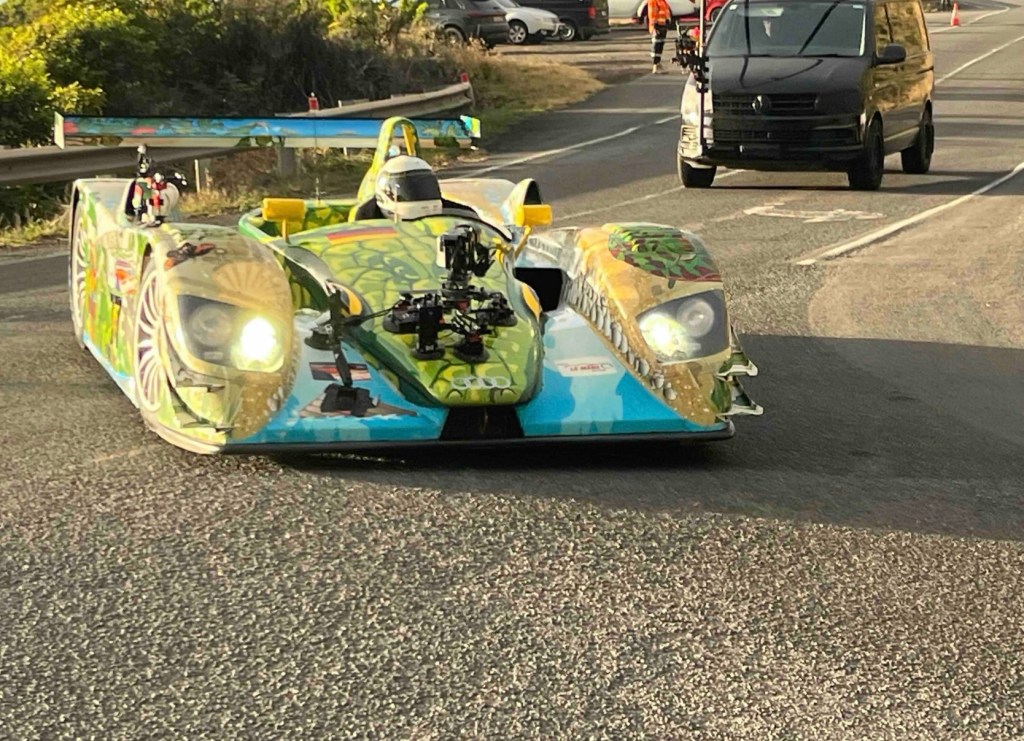
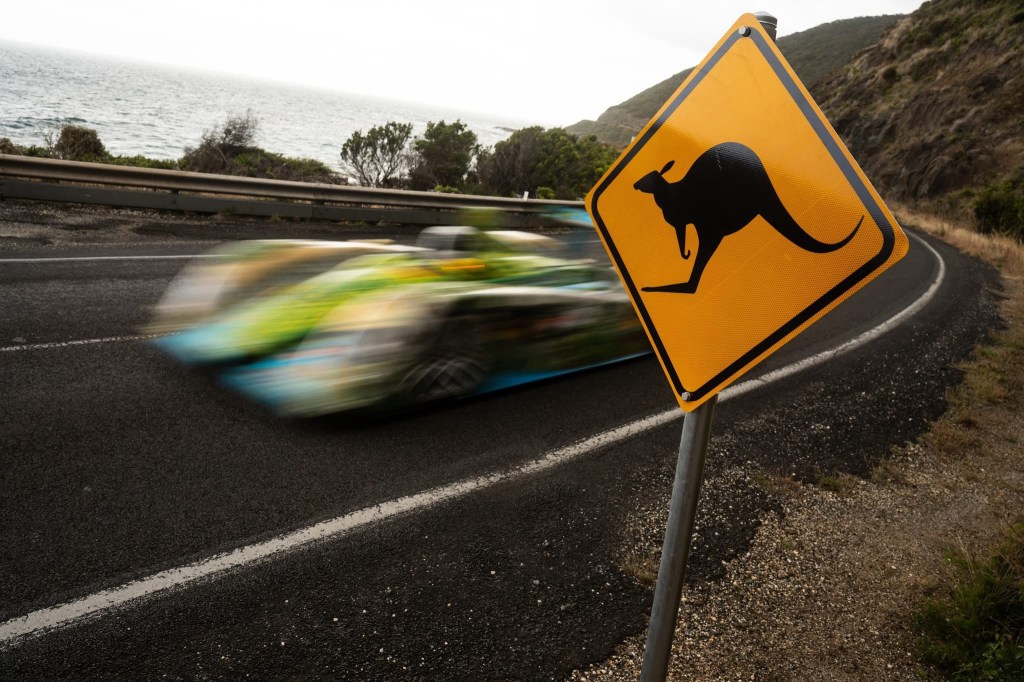
‘The concept for the film called for the car’s original driver, three-time Le Mans winner Allan McNish, to reprise his role behind the wheel, pulling the dust covers off the car in a warehouse at an undisclosed location, before blasting up the Great Ocean Road in Victoria on his way to Melbourne where Audi’s next great motorsport challenge was about to take place. McNish is now the Director of the Audi Revolut F1 Driver Development Program. See here:https://youtu.be/1mvWxrqLCL4?si=di_c8Gkf1AzFkTN_
The railway shots were taken at the Newport Rail Museum in Champion Road. Specifically ‘in 5 Road and the laneway between the West Block and Centre Block, with L1162 (English Electric L-Class) making a background feature!’ (Newport Rail Museum)(Newport Rail Museum)(Audi)
The R8’s race livery was a nod to Australia hosting its first ALMS (American Le Mans Series) race at the end of a season that saw Audi dominate Le Mans, taking the first of a record number of Le Mans wins.
“The ‘Crocodile R8’ is the perfect bridge between the brand’s racing history in Australia and our entry into Formula 1,” said Audi Australia’s General Manager of Marketing, Nick Reid.
The Race of a Thousand Years ended a near perfect year for Audi in which McNish won the 2000 ALMS driver’s championship and Audi the manufacturer’s.
The Croc was retired after Adelaide and has since lived between visiting gigs at Audi’s Ingolstadt Museum. In advance of its movie star role, Audi Tradition engineers shook the car down on an airstrip and blew one of the R8’s twin-turbos in the process. Without a spare on the shelf, they used the original blueprints to fabricate a turbo casting (perhaps a pattern?) and then made a new one.
While the Great Ocean Road part of the video shows the obligatory Twelve Apostles shot, as a former Wye River local, I think the footage and shots are in the Mount Defiance area, with the turnaround point in one of the photos below, at Cumberland River, close to Lorne. Not that it really matters, just my OCD kicking in (J McRory)(J McRory)(Audi)
The logistical nightmare of this undertaking in the red tape and due process capital of the world – Australia – fries my brain. In masterful understatement, James McRory wrote, ‘Putting a race car on public roads – never mind iconic stretches of blacktop like the Great Ocean Road is best described as a ‘logistical nightmare’. Wanting to drive one through a major city like Melbourne only increased the degree of difficulty by a significant margin. Add to all this a schedule that was tighter than two coats of paint.’
‘Permits and road closures, traffic marshals, police escorts, technical support for the car and transporting it all over Victoria required tremendous forward planning and execution. Just getting the car to Australia in time and through customs presented all manner of challenges, the car arrived Down Under two weeks before the Australian Grand Prix and days before filming was set to commence.’
Blowing off a couple of trams in these two shots. Still opposite Flinders Street Station, Allan is heading south, towards Princes Bridge.
(J McRory)
Heading in the same direction below, this time about to clear Princes Bridge, St Kilda Road over the Yarra River, our murky, but cleanish wonderful river. Engine note at this point would have been worth hearing! My rat run in Collingwood to my girlfriend’s 1.5 km away on St Kilda Road, is on this stretch. I shall be making R8 noises as I cross Princes Bridge from now on…
(J McRory)(J McRory)
McNish. What a fun start to his AGP carnival weekend it must have been!
Etcetera…
(Audi Sport)
McNish in #403 during the Adelaide Race of a Thousand years.
(J McRory)
And pretty relaxed in Hosier Lane in late February 2026. This graffiti/street art lane between Flinders Street and Little Collins Street works hard from pre-dawn to midnight every day.
(J McRory)
Great Ocean Road, Cumberland River turn-around point? No shortage of recording devices in use. How ancient does the technology of ‘Grand Prix’ seem?
(J McRory)(J McRory)
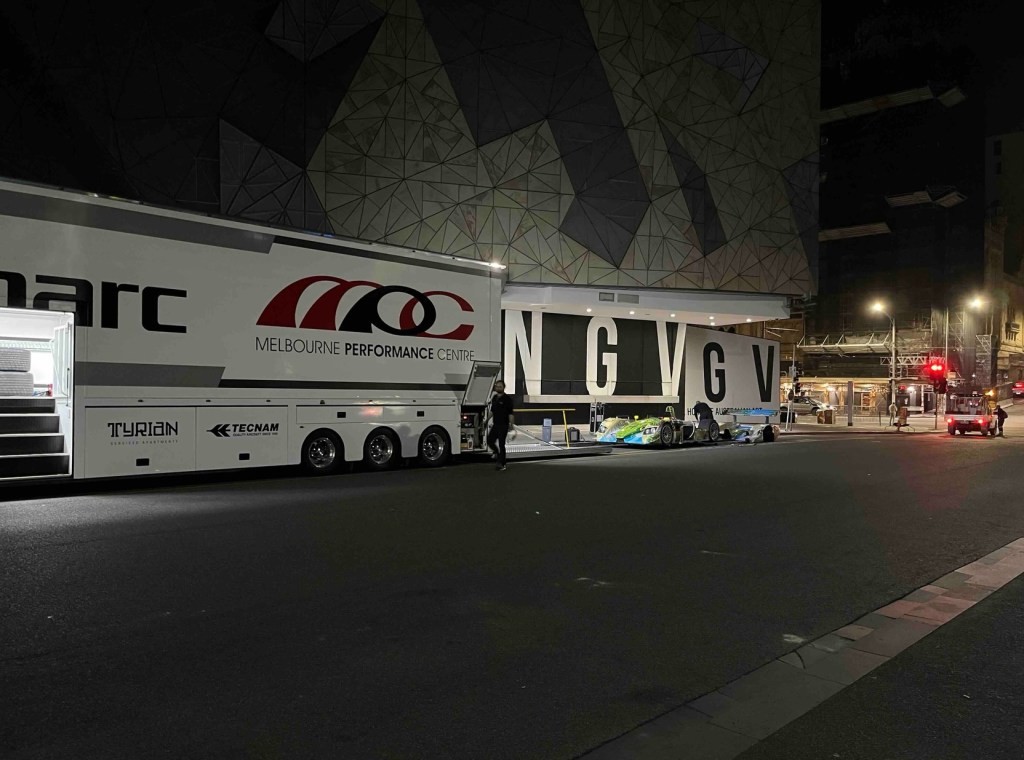
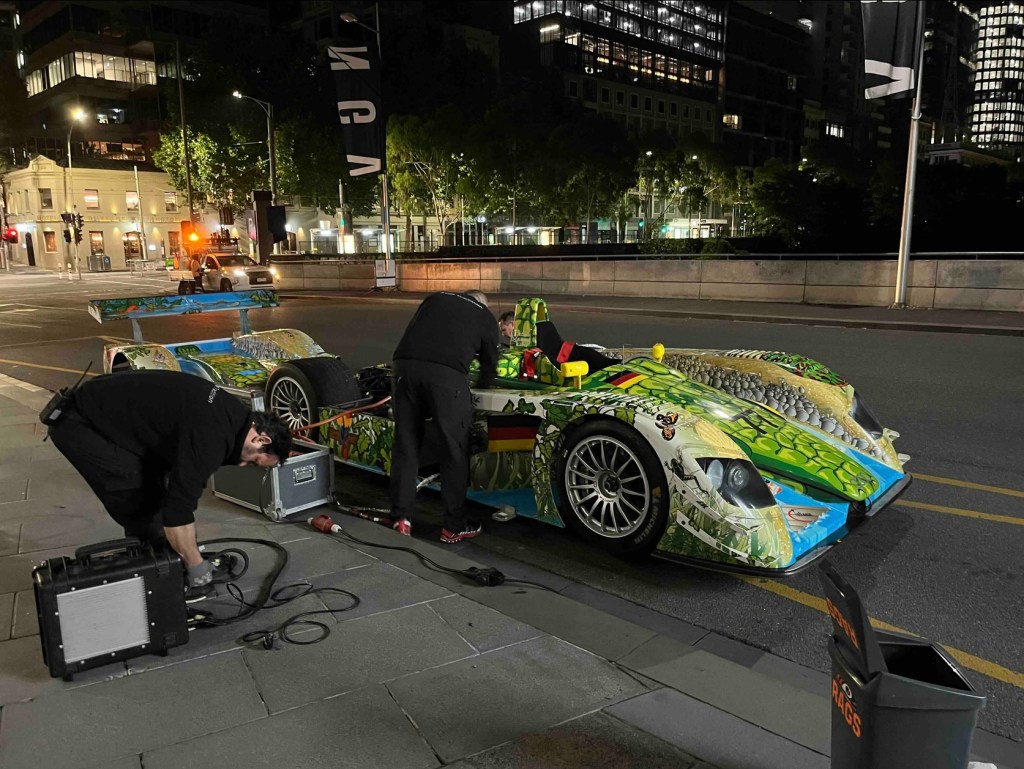
Night-time service depot for the Melbourne Performance Centre crew, who look after Audi customer racing in Australia. It’s at the south, dead-end section of Russell Street behind the Ian Potter Centre-National Gallery of Victoria.
(J McRory)
Beavering away on the car in the wee small hours above, and below, enjoying the dawn view east with three Balloons in sight beyond the Melbourne Cricket Ground.
(J McRory)(M Bisset)
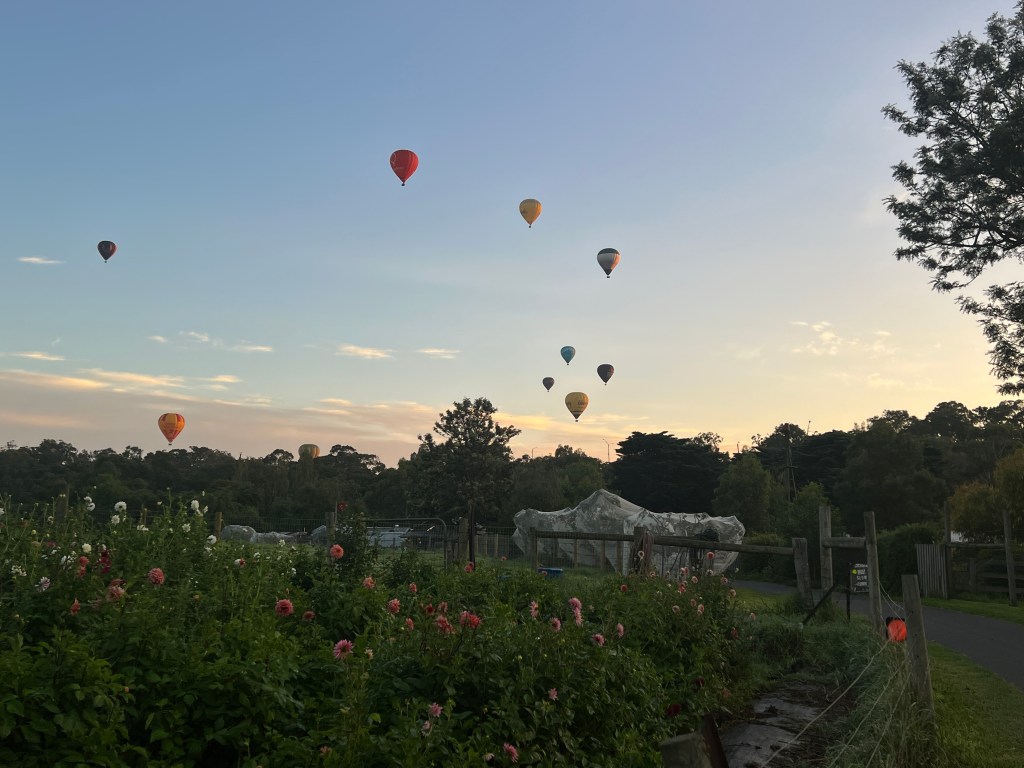
This is more like the Balloon view Melbourne inner-east early-birds get on a good day!
6.45am on April 5 taken beside the Yarra on the Saint Heliers/Collingwood Children’s Farm site in Abbotsford.
Credits…
Audi Australia, James McRory for words and most of the photographs, Audi Sport, Newport Railway Museum, Joe Portlock-Getty Images
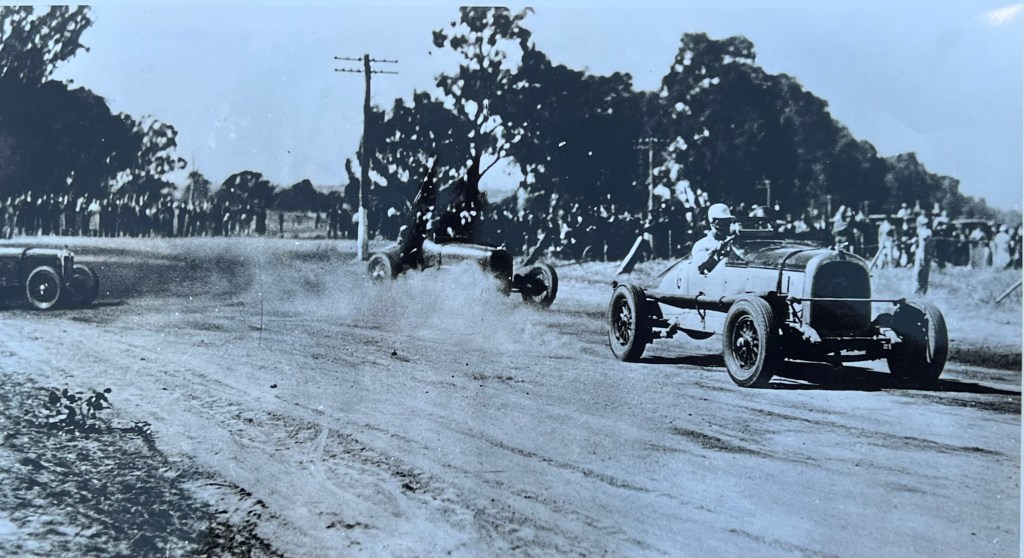
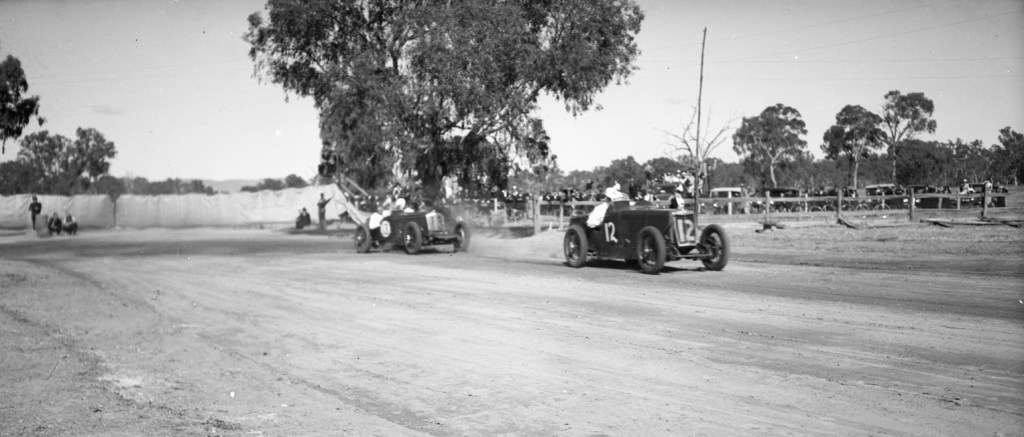
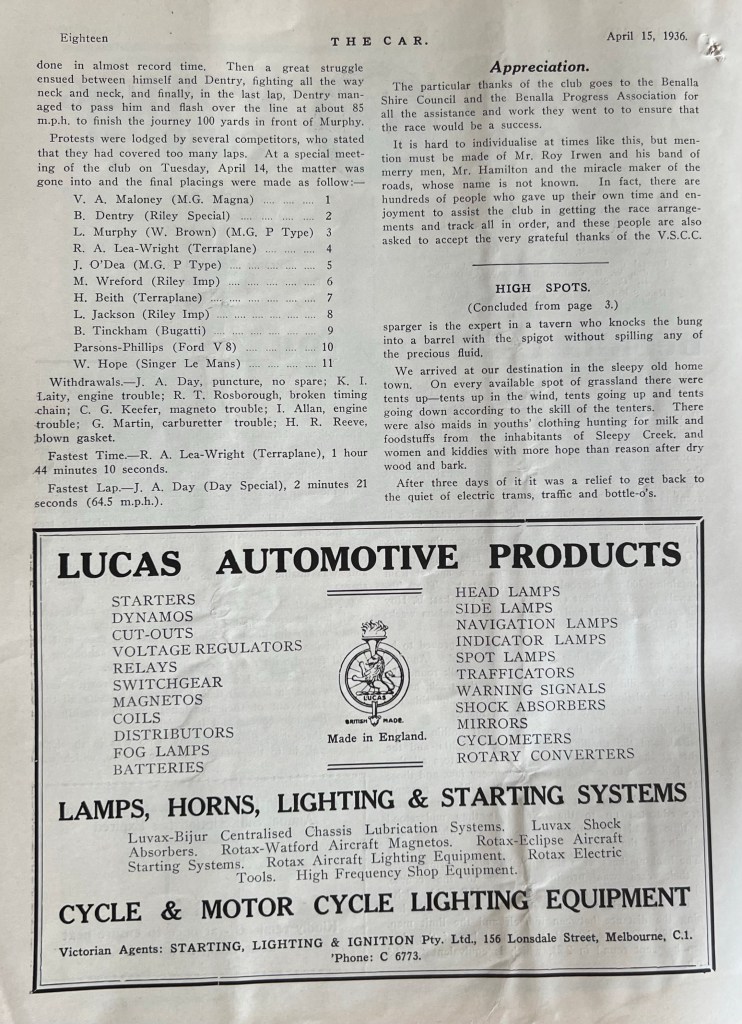
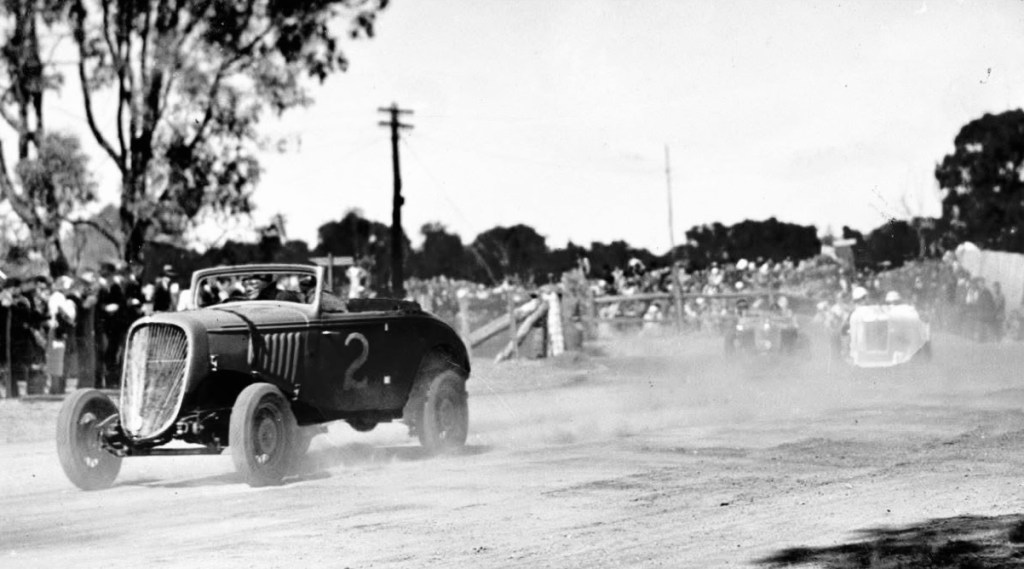
A Roseborough, perhaps, Bob King thinks the driver may be Doug Whiteford racing under a pseudonym, from unknown, and Norman Hamilton or Les Murphy, MG P-Type during the early laps of the Benalla Centenary 100, Easter Monday, April 13, 1936.
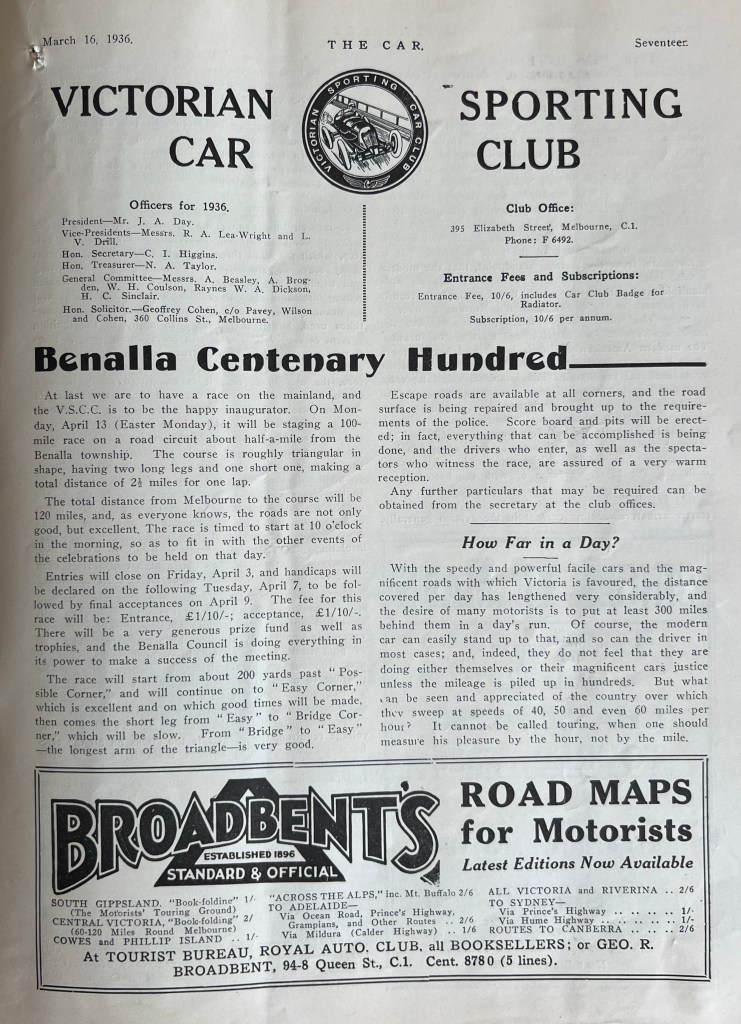
Teaser for the little-known Benalla Centenary Hundred to be held by the Victorian Sporting Car Club.
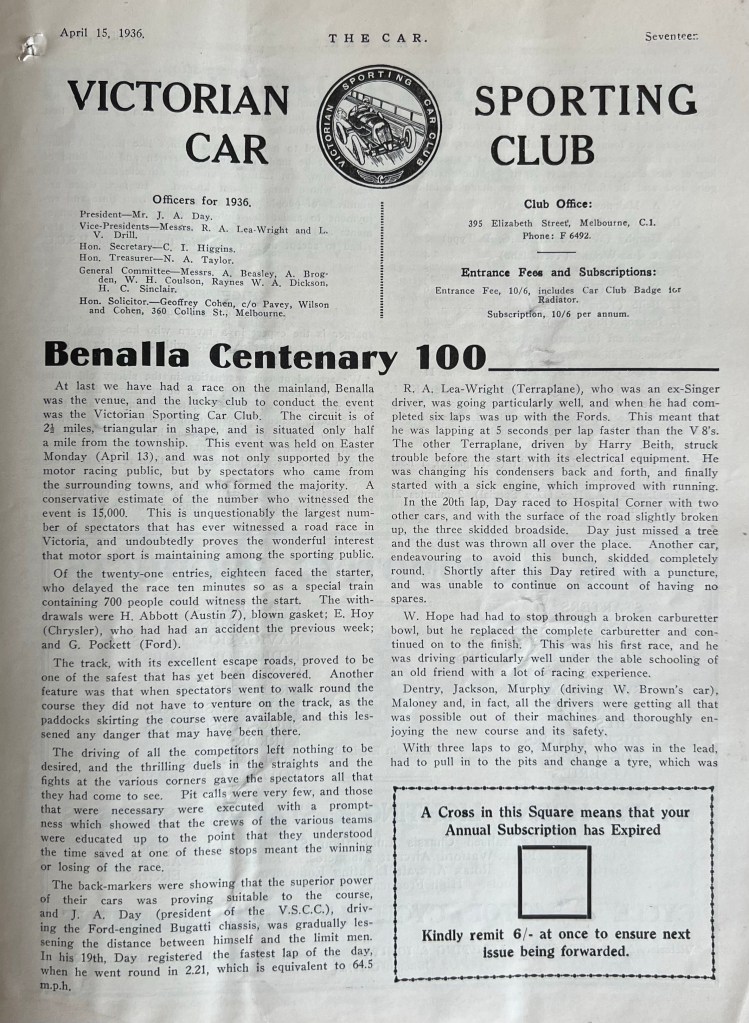
The centenary being celebrated, was the European-settler establishment of the township of Benalla 210km northeast of Melbourne. There is bugger-all in the way of photographs of this meeting, I’m not helping solve the problem here either, but the firsthand report of the meeting is a start; photo contributions invited!
Jack O’Dea’s MG P-Type ahead of a Riley (E Trevithick-SLV)Bob Lea-Wright, Terraplane at Benalla. Nathan Tasca, ‘The car was borrowed from a mate, driven to the event, stripped of all the luxuries, raced, and then returned to standard, driven back to Melbourne, and returned to his mate, who apparently was none-the-wiser!’ (N Taska Arc)
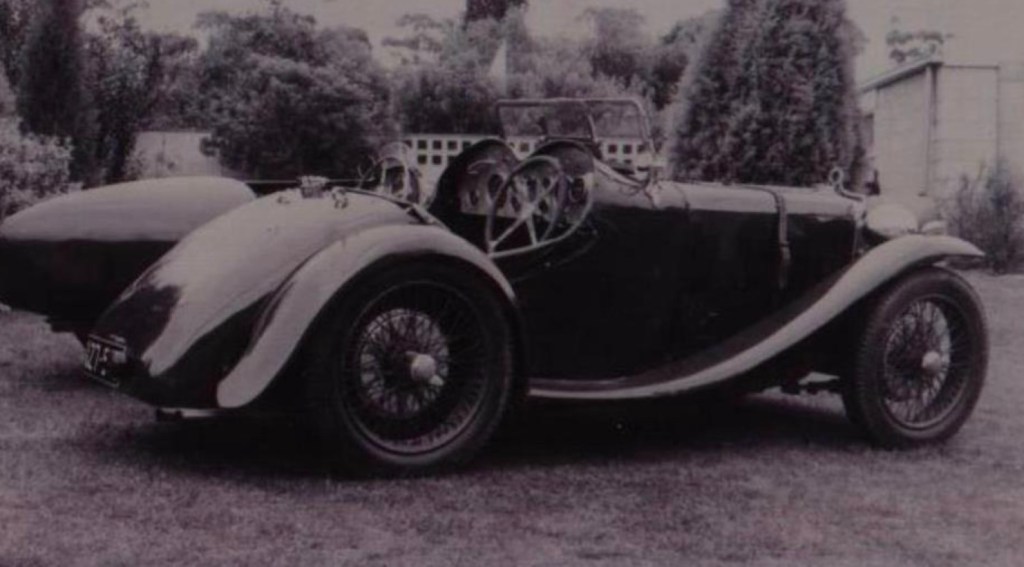
The correct name of the winner is Vincent Aloysius Moloney, born 1902, later in life a resident of Murrumbeena, Melbourne, while the winning car is an MG Magna L-Type chassis #L0658.
The car was imported by Lanes Motors and lobbed at Port Melbourne in December 1933. It was locally bodied by Chas Aspinall, a common practice at the time to minimise the exposure to import duties levied by The Fiscal Fiend. Vin raced the car mainly in Victoria until 1936, after which the car was sold to a South Australian owner. The car has lived in New Zealand since 2014, click here for an interesting, comprehensive history of the car, scroll down to #L0658:https://www.mgclub.org.nz/download/167741/L%20Types%2C%2007%20October%202024%20V2.%20PDF.pdf
MG Historians are certain the VA Maloney (sic) who competed in four Australian Grands Prix: Nuiootpa 1950, Narrogin 1951, Bathurst 1952 and Albert Park in 1953 aboard a Head Brothers, Murrumbeena, Melbourne built MG TC Monoposto Special is our boy.
MG Magna L0658 in Adelaide in the 1940s, probably still with the Aspinall body. L0657 behind has an Aspinall pointed tail body (MG Register Australia)(SLV)
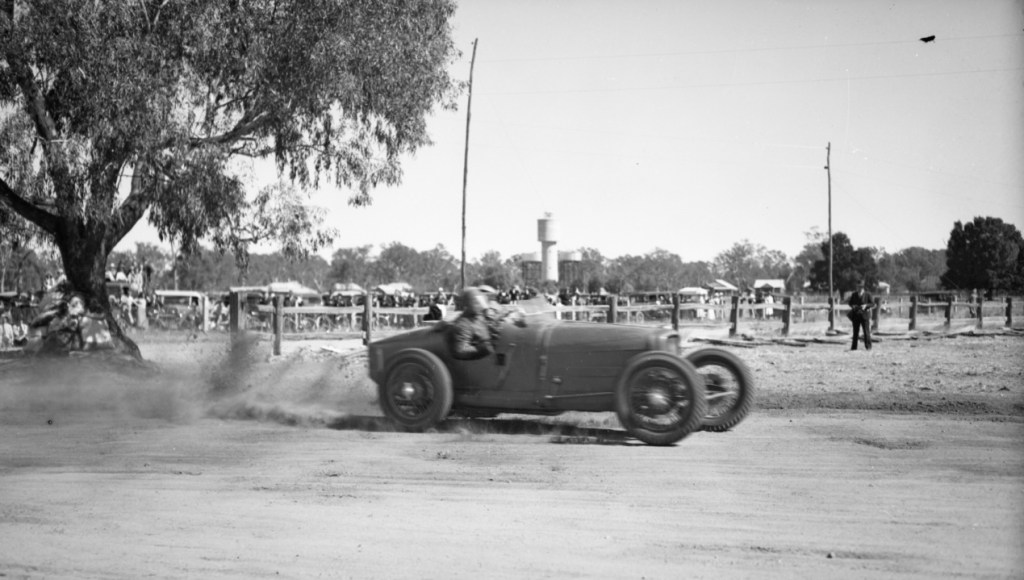
Jack Day punches his Ford V8-powered Day Special – Bugatti T39 Ford – out of one of the right-handers. That water tower will be a tip for a local as to the precise locale.
Etcetera…
Bob King on the first photograph, which he posted on Greg Smith’s ‘Pre 1960 Historic Racing in Australasia’ Facebook site. ‘I know very little about the Benalla road races of 1936, said to be the first Victorian mainland races on public roads. This photo given to me by David Watson in 1975, shows an unlicensed (too young) Doug Whiteford driving the ex-Beith Chrysler followed by Reg Nutt in the Day Special (painted purple) and either Norman Hamilton or Les Murphy in a P Type MG – they were both in the race.’
John Medley, ‘Just a glance at my records of this event offends the historian in me. So many mis-spellings, obvious errors, outright mistakes and fabrications, earnest over-amplifications and over-simplifications (not unlike Australian or USA or world politics 2025!). And of course officials and more who couldn’t count, so results were changed overnight…. One thing veteran competitors in any sport learn is calmness under pressure– so the competitor in me is offended by what I see in my records of this event. This is and was a mess, and extended by people 2025 trying to re create from snippets of information what we think may have happened in 1936, from the work of 1936 scribblers who didn’t know all that they didn’t know…. One needs at least a PhD in Philosophy to unravel the thinking.’
On Norman Hamilton – of later Porsche Cars Australia fame – ‘Distant memory, but I’m pretty sure that Norman told me that he drove at that meeting. He was old enough and was a friend of Jack Day who owned the Day Special,’ Bob King.
So what does this all mean? Who knows who really won the race.
Credits…
The Car March 1936 via the Bob King Collection, Edward Trevithick-State Library of Victoria, Nathan Taska Archive
If Jack Brabham were immortal, he would have been 100 today. He was born in Hurstville, Sydney, on April 2, 1926.
Many thanks to Stephen Dalton for the reminder. The date should have been at the front of my mind, as Jack and the cars he and Ron Tauranac designed and built – and Jack’s pending 100th – were the focus of the Racing Past celebrations throughout the Australian Grand Prix carnival a month ago.
In the absence of a dedicated article, this one ‘in stock’ will have to do, key Brabham into the primotipo search engine and that will keep you going for a couple of days…
Onya Jack!
Tiger in ‘yer Tank!
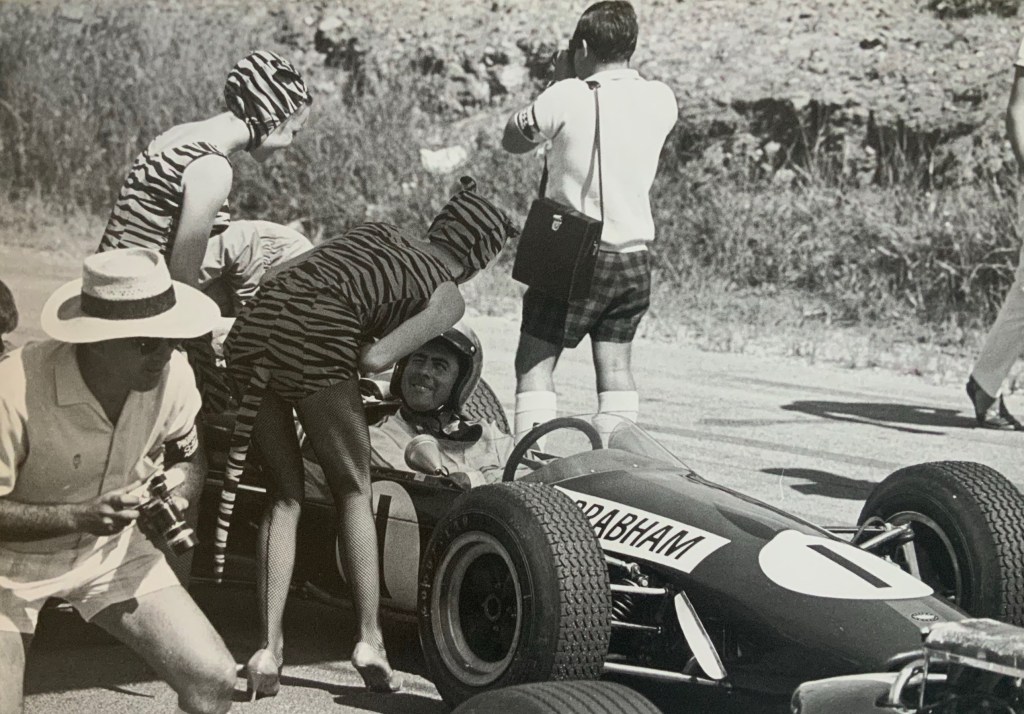
Jack Brabham is trying to focus on the start of the February 12, 1967, Lakeside 99 Tasman Cup round, but is set upon by a couple of tigers intent on getting into his tank…
Esso babes, high heels and all, doing their promotional thing in the hot Queensland sun. It wasn’t too bad a day in the office. Jack was second behind Jim Clark’s Lotus 33 Climax FWMV 2-litre V8 in his Brabham BT23A Repco 640 2.5 V8, with Frank Gardner third in Alec Mildren’s Brabham BT16 Coventry Climax FPF 2.5. Brabhams occupied five of the first six placings, but not the one that mattered.
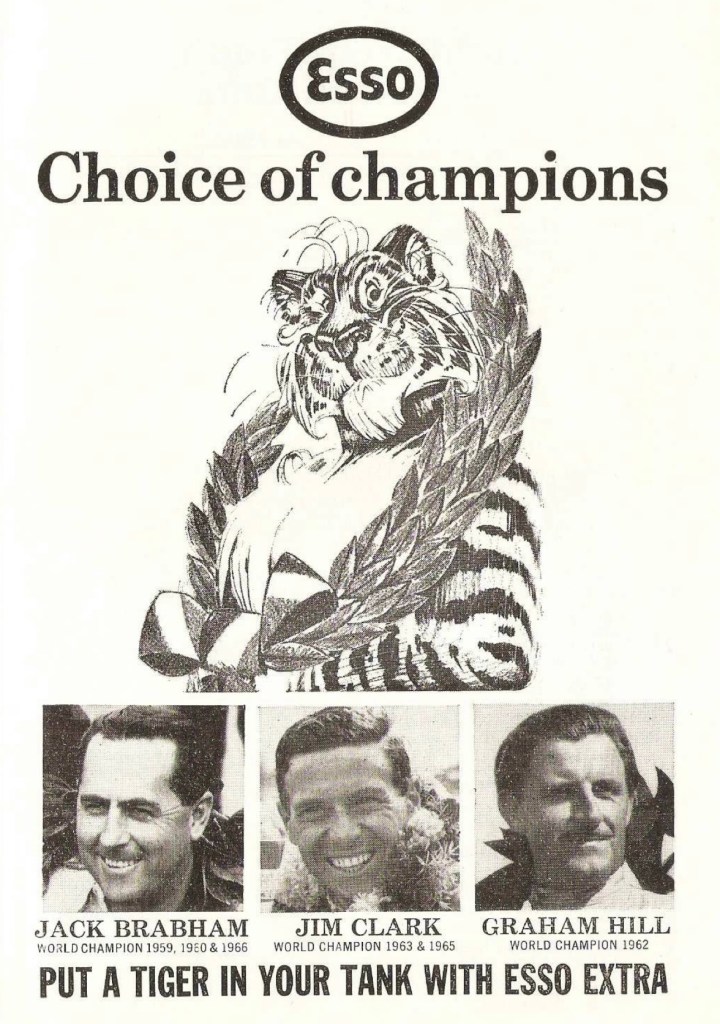
It’s the year before the FIA/CSI threw open the floodgates and allowed commercial advertising on racing cars, but even in those faraway days, Brabham’s commercial relationships included Repco Ltd, Esso, Goodyear, Lukey Mufflers, plus whatever freebees he/they could wrangle here and there.
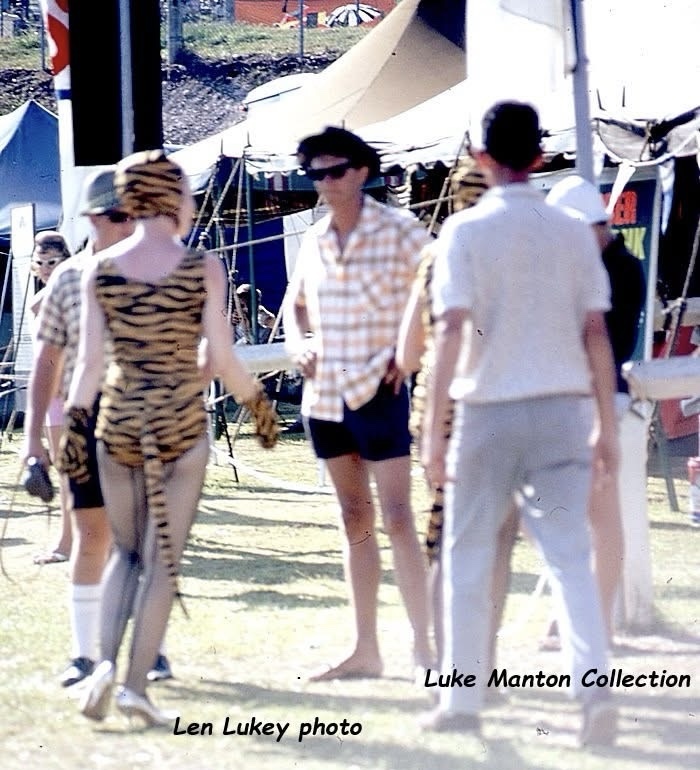
We’re still at Lakeside, where the pair of tigresses are doing the rounds of the paddock, an undertaking fraught with danger, I would have thought.
It’s a ten-point caption competition, really? You can see Sonny-Jim is trying to think of a zinger that will get him a drink in the bar later on. I figure, ‘Can I measure yer’ tail’, probably wouldn’t have done the trick.
Etcetera…
Repco-Brabham Engines Pty. Ltd. and the Brabham Racing Organisation mounted their only full assault – two works-backed cars doing the full eight-round series – only once, in their commercial relationship between 1963-68, in 1967, and fell well short of the mark.
It’s ironic that an engine program originally designed for the 2.5-litre Tasman Cup and Gold Star Championships only ever yielded one Tasman round win, at Longford that year, where the photo above was taken. Yes, there were some Gold Star round wins, but not that many. Still, a couple of World F1 Drivers and Manufacturers Championship wins in 1966-67 plus multiple Australian Sports Car and Hillclimb Championships were reasonable levels of compensation for the investment made!…
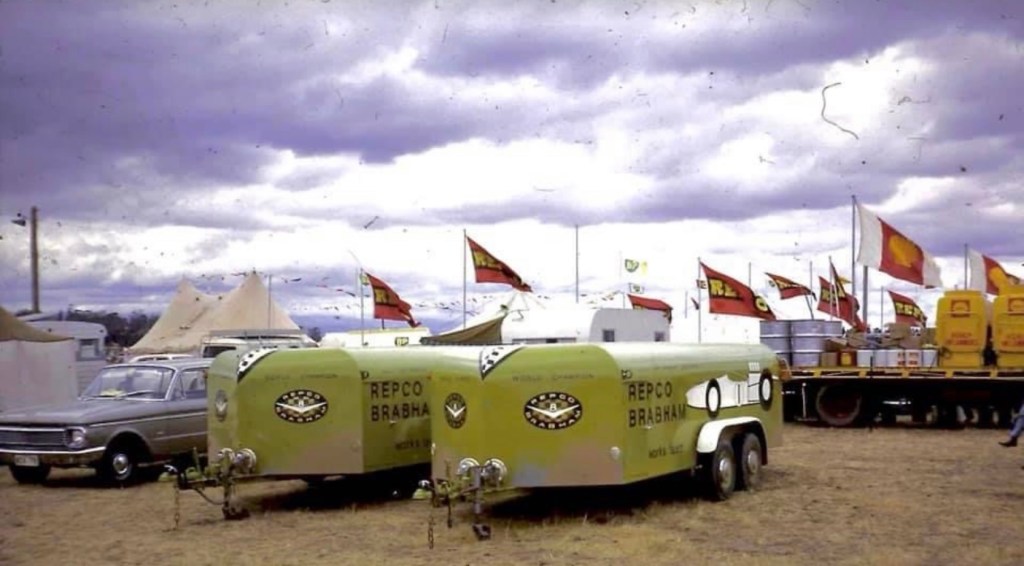
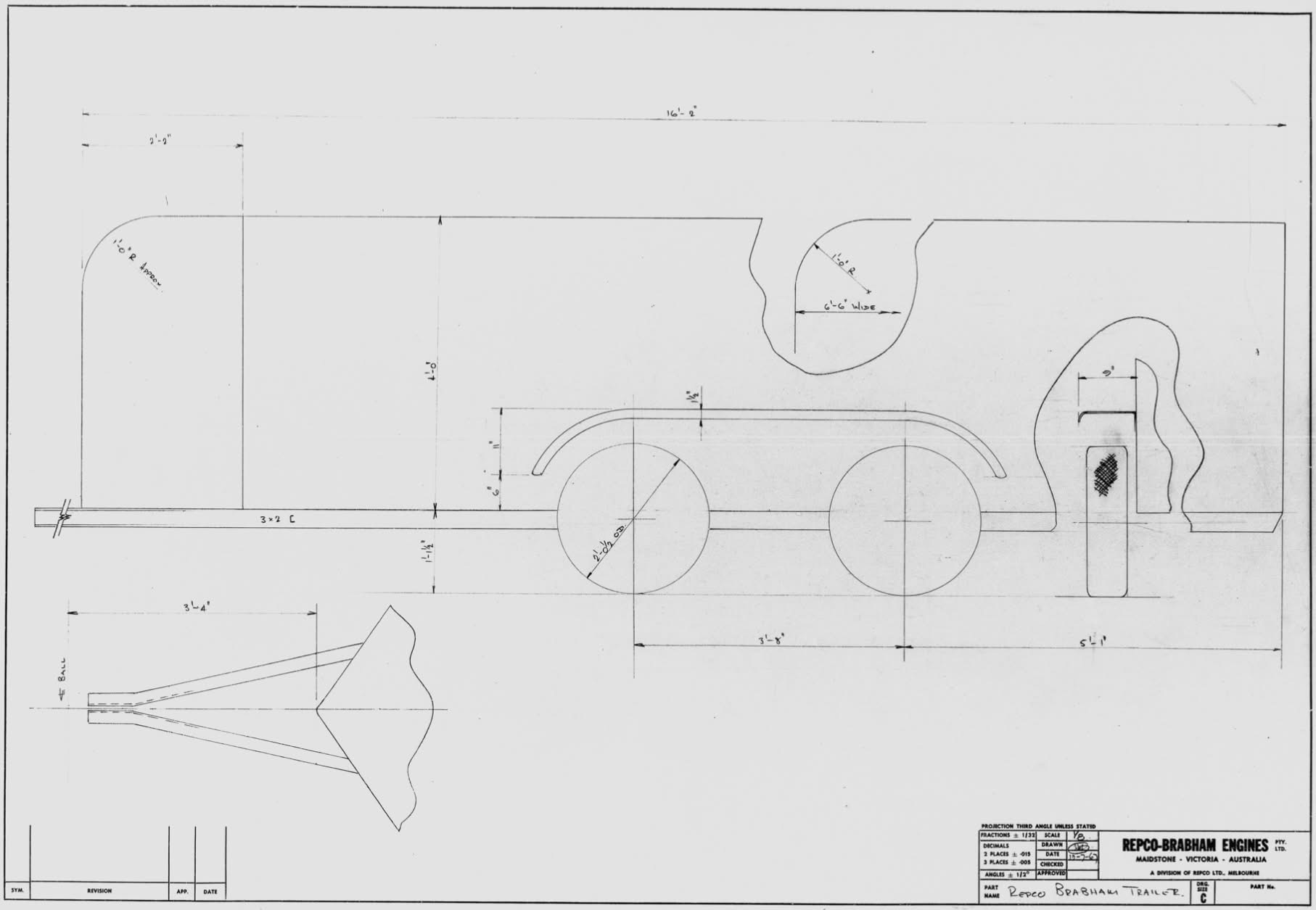
Yep, they were Rice Trailers, but Repco-Brabham Engines Pty. Ltd. designed them!