


Many a driver’s career has been inspired by films. The most iconic of which is surely Grand Prix, the 1966 John Frankenheimer epic. Australian John ‘Buzz’ Buzaglo worked on Grand Prix and became a Formula Ford ace in the UK shortly thereafter…
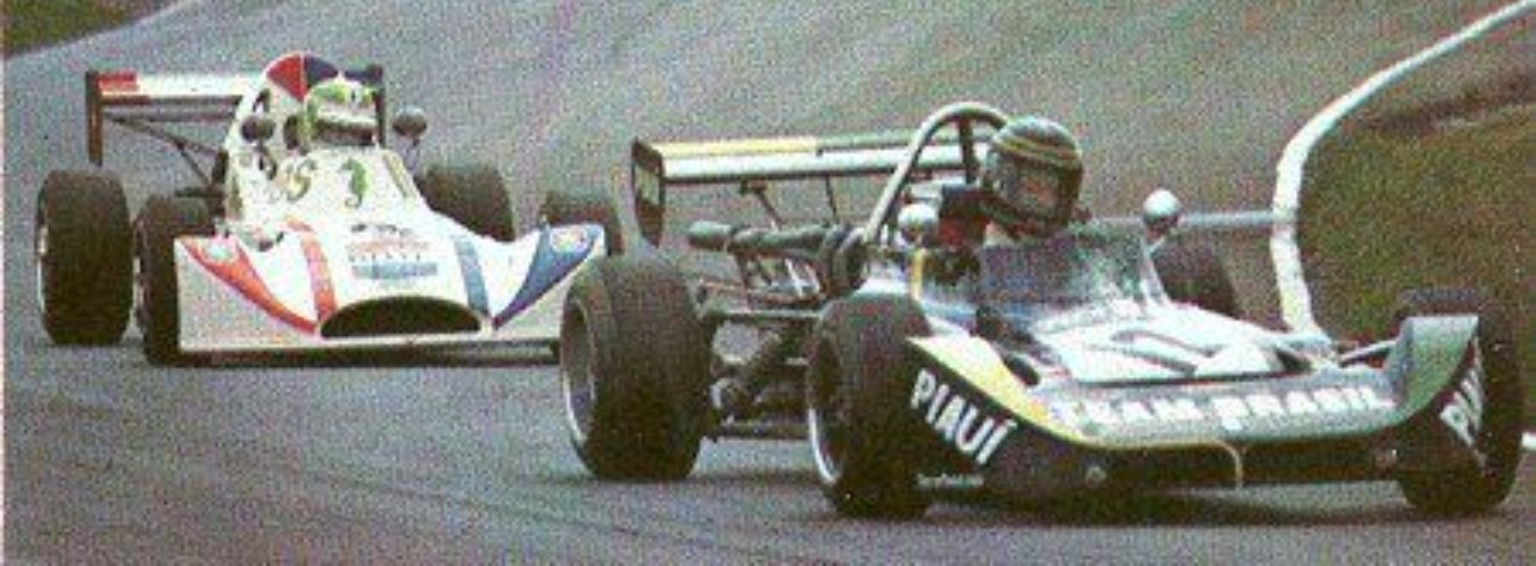
The opening photograph was taken during the British GP Meeting, John Player British F3 Championship round in July 1973. Fired up in his heat, having been unable to fasten his Willans harness, Buzz’ March 733 Ford Novamotor passes John Sheldon’s Royale RP11A on the outside of Woodcote using all of the circuit and surrounds!
He failed to finish but made the final as one of the fastest non-finishers, coming seventh from the back of the grid against world class opposition including later F1 drivers Alan Jones, Brian Henton, Larry Perkins, Danny Sullivan and Roelof Wunderink. Tony Rouff won the race in a GRD 373 Ford from Russell Woods’ March 733 Ford and Jones’ GRD 373 Ford.
Billycarts with Jonesy…
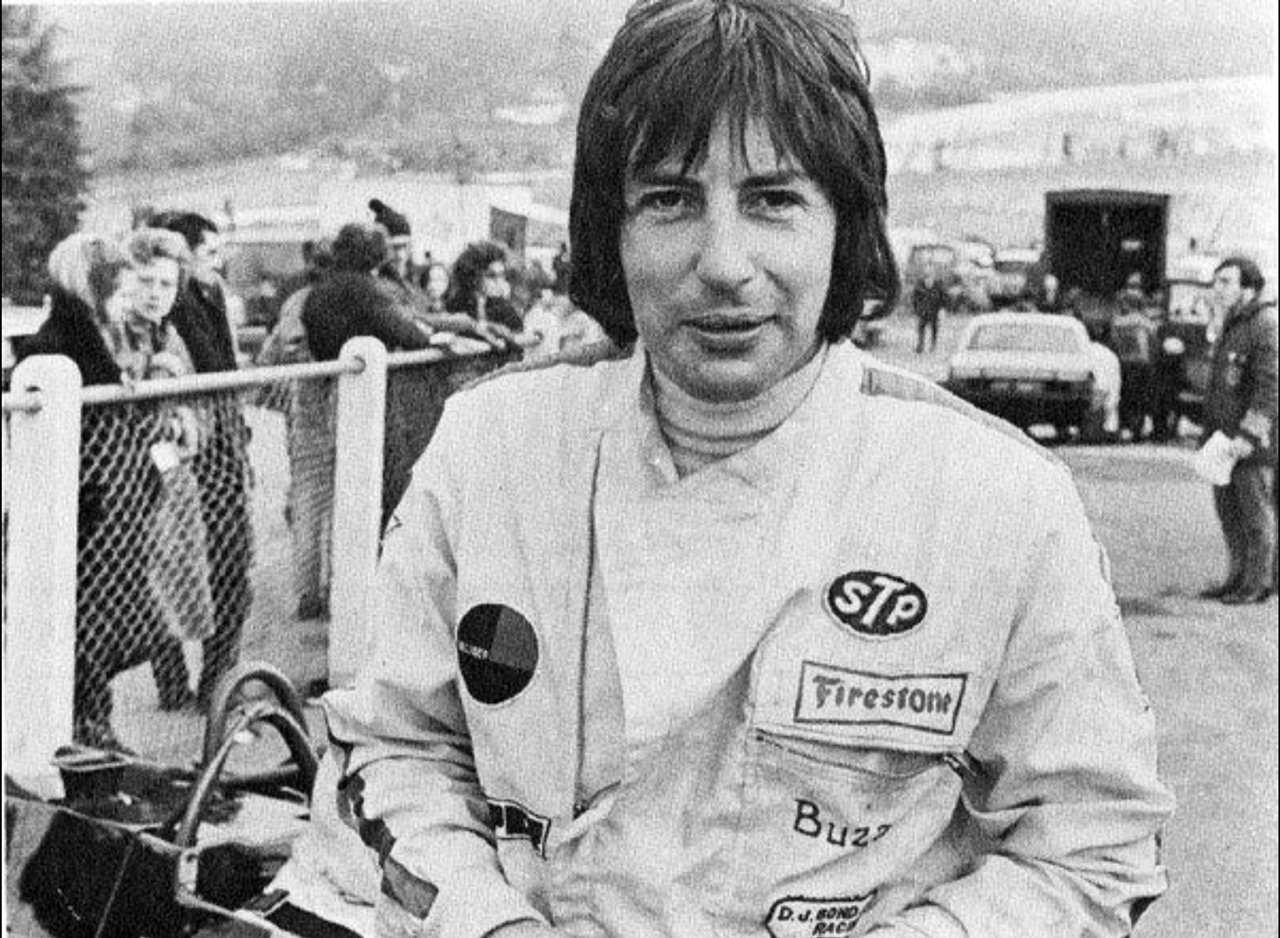
Growing up in the Melbourne’s Balwyn, early ‘motoring’ exploits were shared with local lads including Alan Jones. They took on The Billycart challenge of the eastern suburbs, the formidable drop from Belmore Road down Balwyn Road to Hyslop Park. It was enough to test even the very best ‘gun suspension setup’ of pram wheels up-front and ball-bearings at the rear. How many of us developed a love of oversteer in such sophisticated machinery! Jones and Buzaglo were to meet again a couple of decades later in British F3.

Kangaroo Valley and Grand Prix…
Bored with his job, Buzaglo set off for Europe in 1965 to see the sights and soon set up digs in Earls Court, ‘Kangaroo Valley’. A succession of jobs followed including film extra work. While at Brands Hatch as an extra, Buzz befriended one of the producers and was offered a job as a Second Assistant Director on Grand Prix, at £150 per week. It was too good to resist, off to Clermont Ferrand and Monza Buzaglo and best mate, Jeff Morrow went.
Their task was to manage the cars into position to allow the shoot of the day to take place. In the process they got to know both the cast and drivers well including Jochen Rindt, Peter Revson, Bob Bondurant, Mike Spence, Chris Amon, Jackie Stewart and co-star James Garner.
Much fun was had driving the cars into position and into ‘parc-ferme’ in the evenings. James Garner asked the boys to take his Mustang GT350 from Clermont to Monza ‘which took a week, we did it ever so carefully’. The most dangerous part of Buzaglo’s job was an invitation by Frankenheimer’s bored wife to visit her hotel suite. It was immediately clear Scrabble wasn’t her game of choice, discretion was the better part of valour, after one drink, Buzz departed, job and hide intact!


The Revolution Club and Merlyn FF…
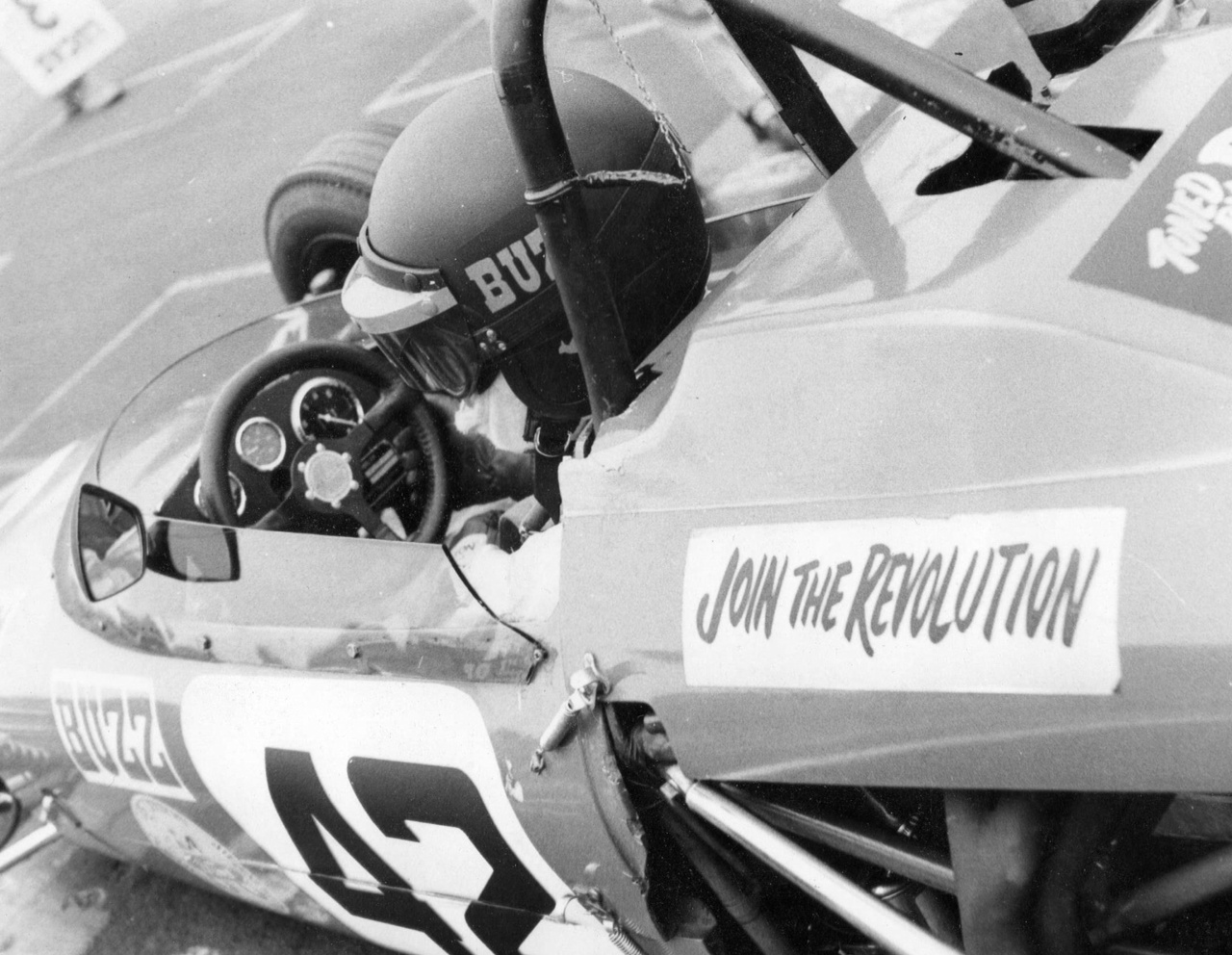
Buzz’ competitive juices were fired by close proximity to the scene. He was soon saving hard for a car, working in two clubs, one of which, The Revolution Club was a haunt of racing people including Stewart, Rindt, Frank Williams, Bill Ivy, Mike Hailwood, Piers Courage, Emerson Fittipaldi and many others.
Eventually he chose a Merlyn Mk 11 Formula Ford which was promptly loaded up for a test session at Brands Hatch. Tim Schenken happened to be watching proceedings, having a quiet ale by the fire in bar. He soon appeared in overalls lapping in the Merlyn and made various changes to the set up. Schenken had won the first British FF Championship in a similar car in 1968 and was running an F3 Brabham and other cars that year, 1969.
Buzaglo launched a campaign of club events commencing at Brands, finishing fifth, and Castle Combe, third in late ’69. He soon established a reputation as a young man to watch from Oz, having wound his actual age back by five years in the best traditions of the sport.
Winning in Jochen’s overalls…
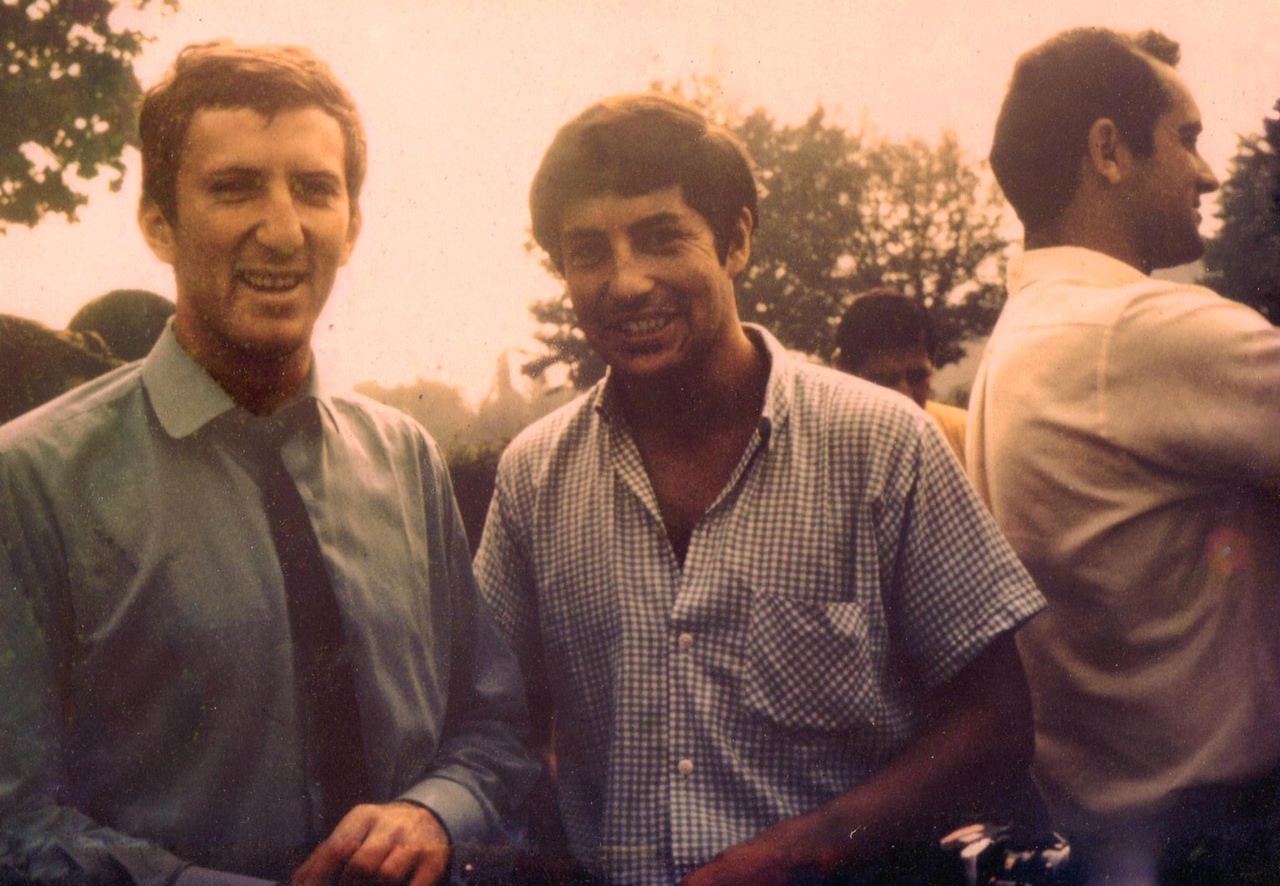
Into 1970 the car was raced frequently, picking up several wins at Brands Hatch. His first, on June 11, was achieved wearing a pair of overalls given to him by Rindt. ‘Jochen came into the club one night and asked if I had bought a car yet, he immediately offered me a pair of overalls and delivered them the following week telling me to make sure I had some wins in them. They were beautiful plain light gold, triple-layer nomex, he had hardly worn them.’
‘Emerson Fittipaldi offered to help me by talking to my sponsor after an enormous lose from bank to bank in the Snetterton Esses on some oil dropped by motorbikes in the previous practice session.’
‘I was sitting there in the middle of the track thinking WTF!?, and he shouted down to see if I was alright. He was towing his F3 Lotus 59 back to the pits over the bridge and saw the whole thing. He walked me down to the track to show me the oil which was there in the earlier car session. It was a wonderful gesture, he and his wife Maria came into the Revolution Club for a meal on me a few nights later. An amazing, genuine and ever so friendly bloke.’
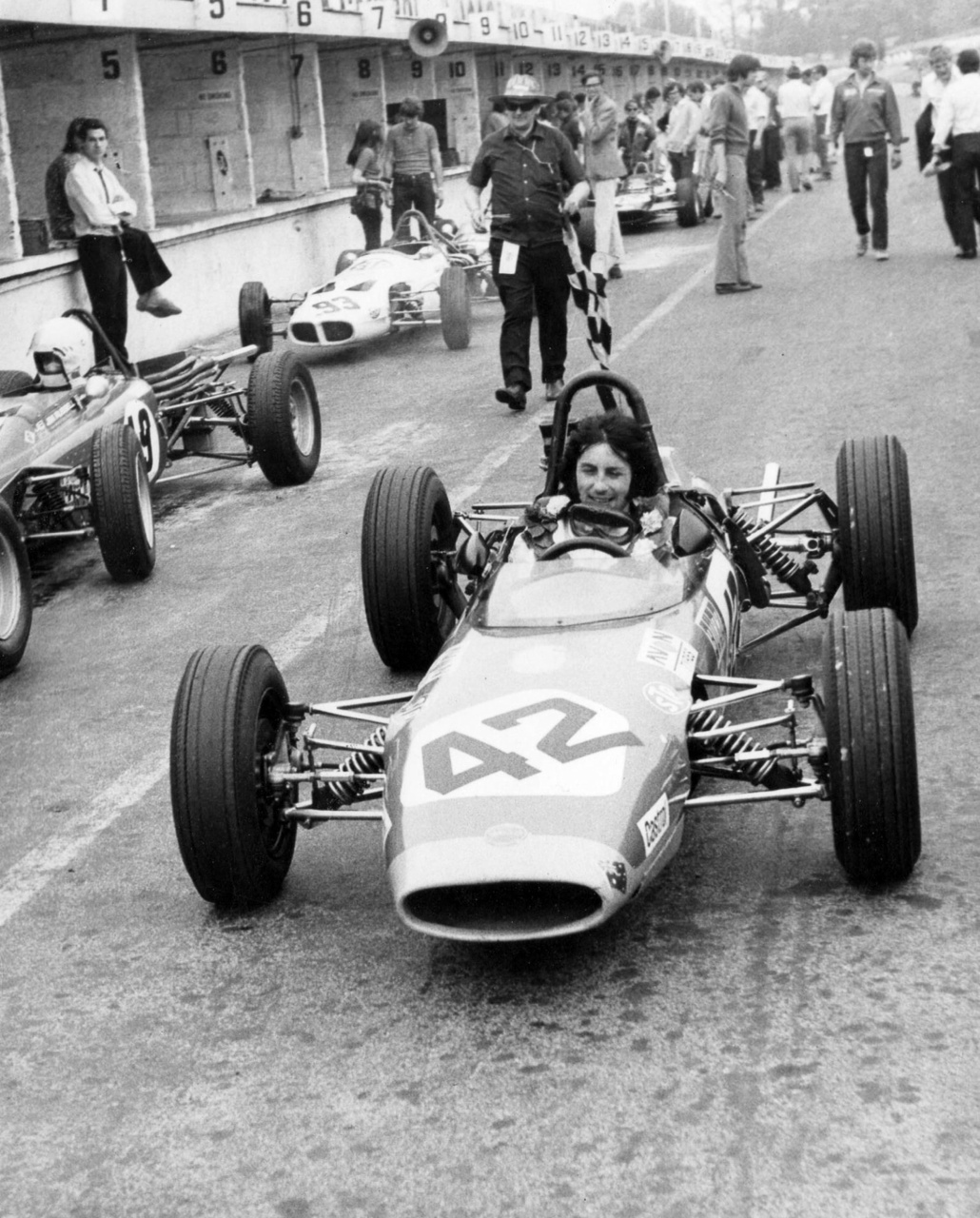
At Oulton Park Buzz and another car touched, the Merlyn was rolled into oblivion. Fellow Aussie Brian McGuire extricated him from the wreck with Buzaglo finally waking up in Cheshire and District Hospital on the following Wednesday. Buzz was out for three months, no racing and no income.
Buzaglo saw Rindt ‘steal’ a lucky 1970 Brands Hatch British GP win from Jack Brabham when his BT33 famously ran out of fuel on the last lap. Very late for work in London, good mate Mike Hailwood gave Buzz the ride of his life making it back to London in record time, ‘the Honda 750/4 was a stunning bit of kit’, he recalls.
Another memorable Brands day involved Buzz and his girlfriend being picked up by Frank Williams in London and schmoozed in the plush Grovewood Suite in the belief the Revolution Club could assist in Williams’ future campaigns. FW was not too miffed to learn Buzz was the manager; such was his work ethic, Williams figured he owned the place!

Palliser in 1971…
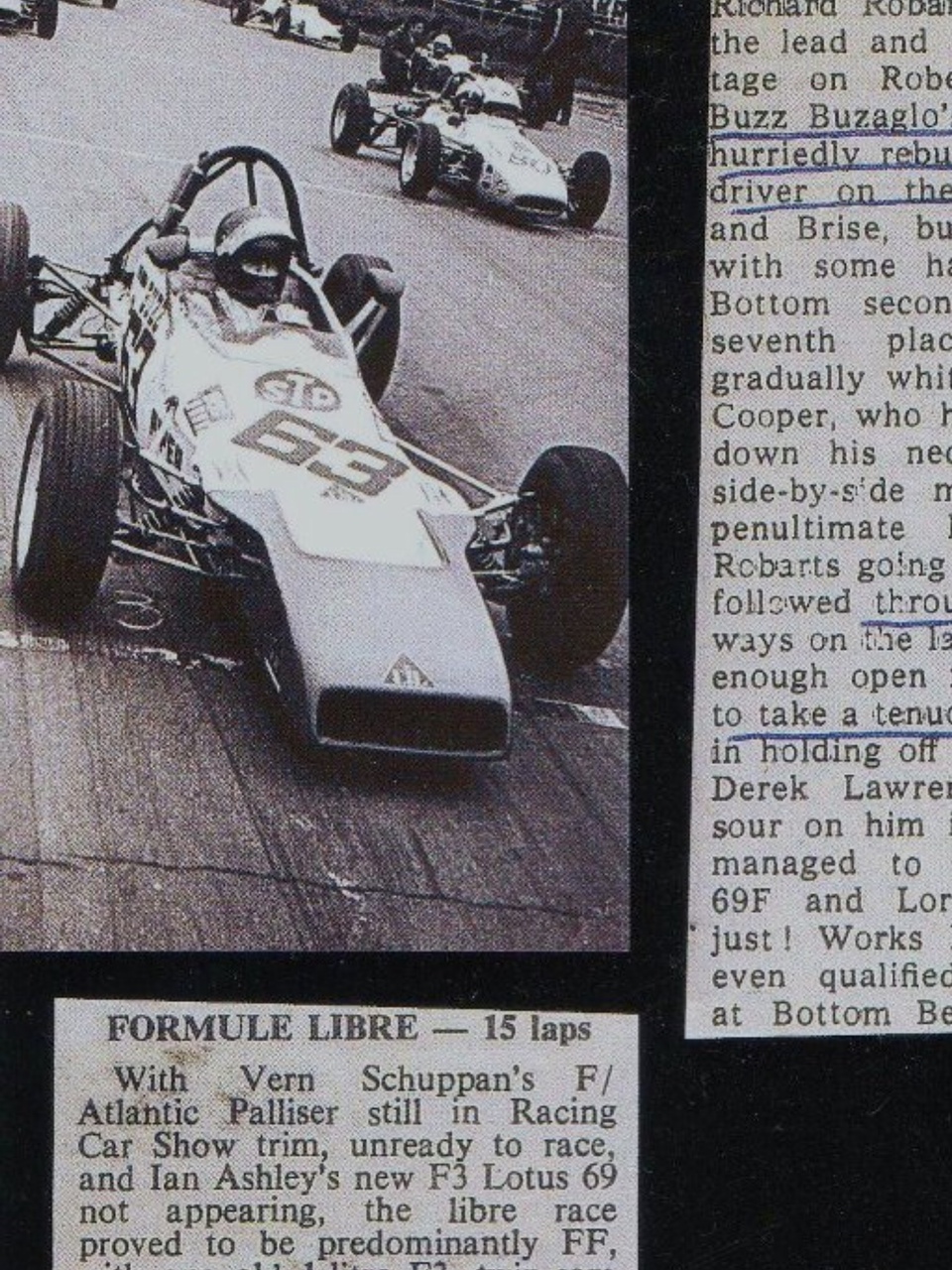
Upon recovery from the shunt he and Richard Knight – winner of the first Australian FF Championship in a Bib Stillwell Racing Team Elfin 600 in 1970 – built up a pair of Palliser WDF3 Formula Fords to attack the 1971 season.
Buzz continued his run of success, a win in a championship round in front of Tony Brise, and a BARC Silverstone round over Richard Knight in identical cars, both setting lap records were highlights.

KVG Racing and 1972 success in an Elden Mk10a…
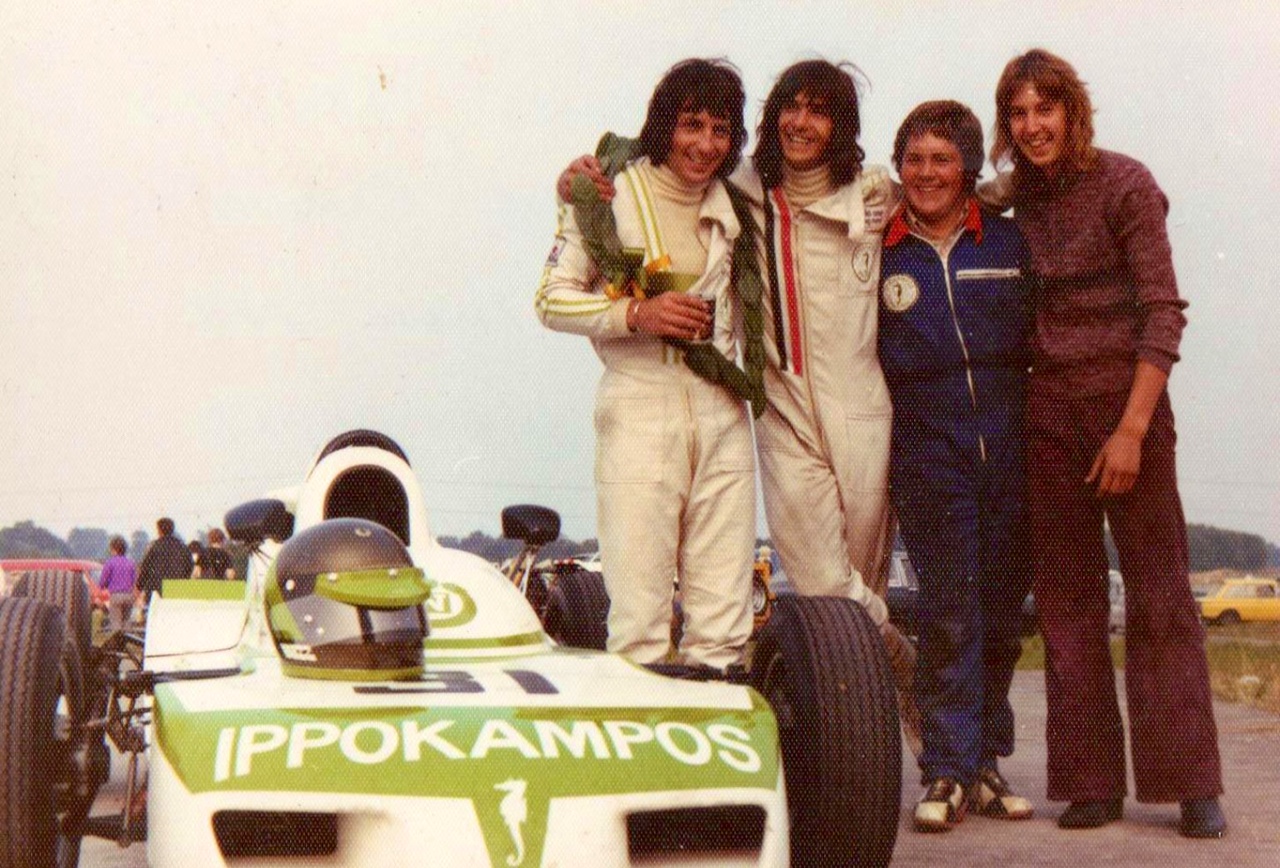
Strong 1971 results attracted KVG Racing sponsorship in 1972 to support a two car team: a new Palliser WDF2 for Buzaglo and Buzz’ WDF3 for Ian Grob.
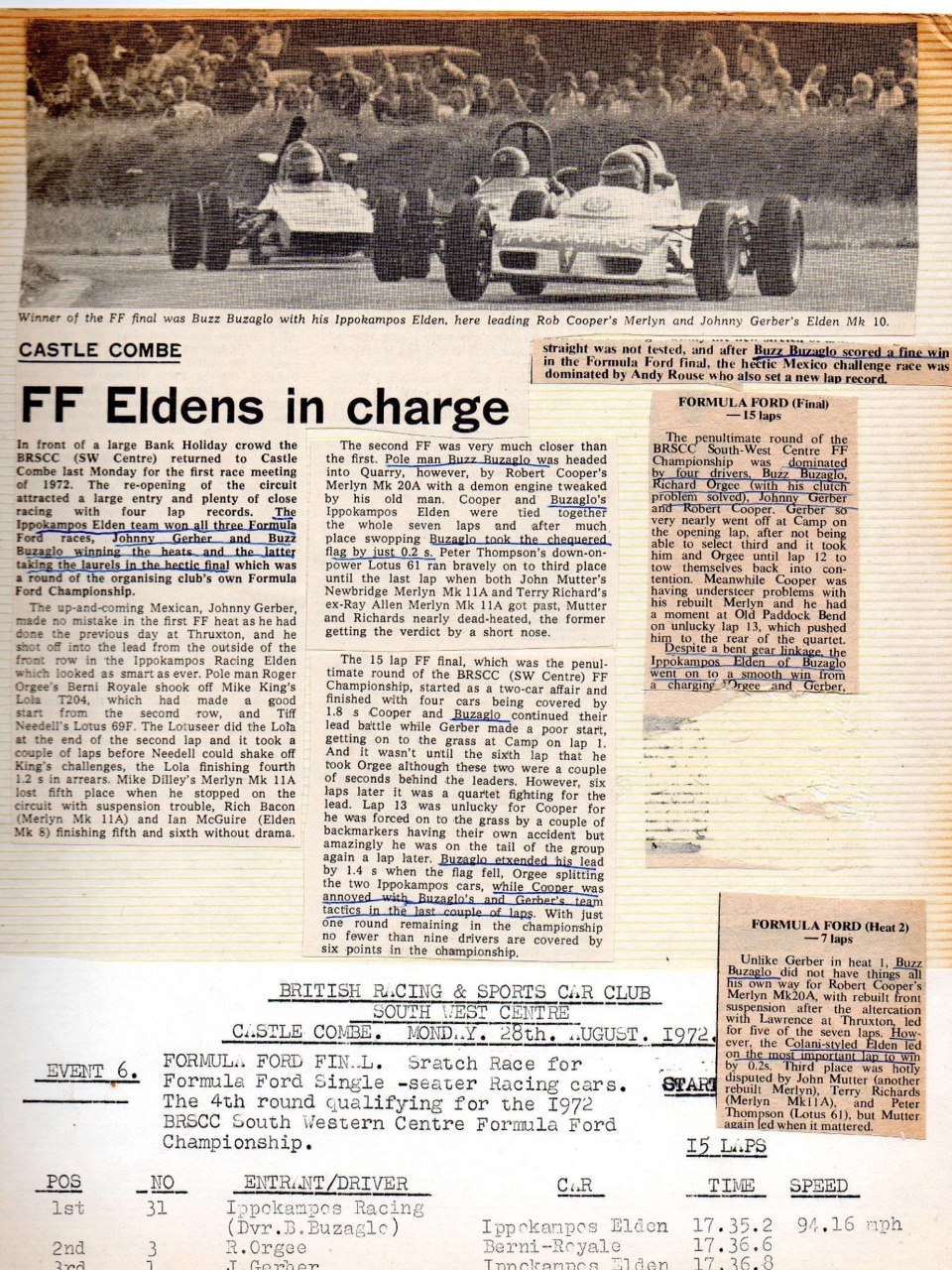
Early in the season it was decided to replace the Pallisers with a pair of Elden Mk10a’s, the ducks-guts in FF equipment at the time. Buzz was having a strong season and tipped to win the BOC Championship before a bad accident at Croft in March hospitalised him again, this time with a broken leg and ribs.
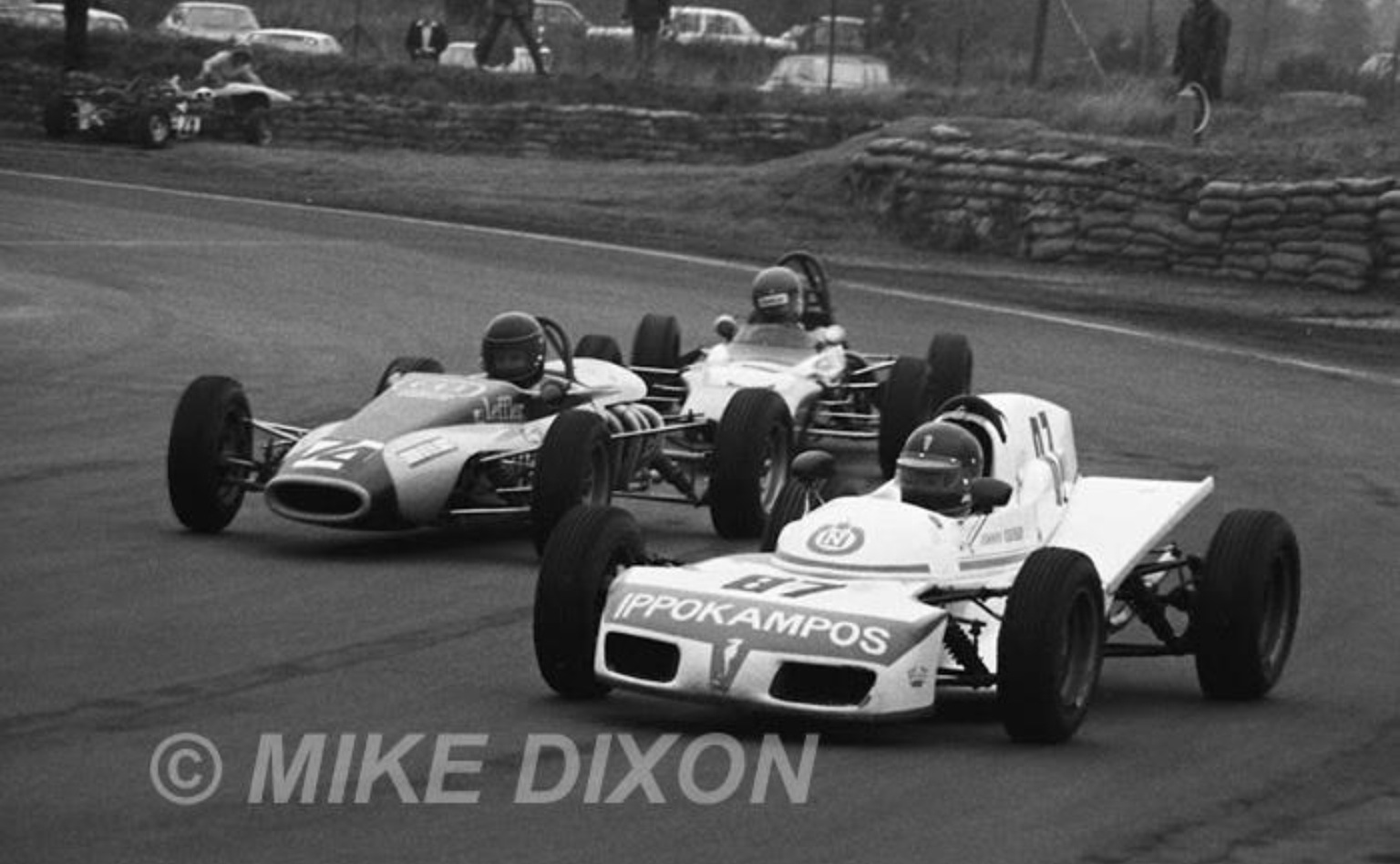
Ken Grob, of KVG Racing, wanted to focus on sportscars for his son to drive, so Mexican driver Johnny Gerber bought Grob’s car, the other was given to Buzz. The cars were made more competitive by the purchase of two Dennis Falconer built very slippery – and contentious – bodies, ‘they good for an extra 250rpm over the standard Elden body down a decent straight and a tad more downforce depending upon how the bodywork was supported,’ according to Buzz. At this time British businessman, lawyer/shipbroker Tony Vlassopulos of Ippokampos Shipping, Johnny Gerber’s sponsor, provided financial support.
Johnny and Buzz won many races that year with Buzaglo taking the Castle Combe FF lap record which stood for eight years, and the BRSCC South Western FF Championship.

There was a strong Australian contingent at Snetterton for the inaugural Formula Ford Festival on November 5, then as now the launchpad of many a Grand Prix career.
Larry Perkins took the very first Elfin 620 to the UK, he had raced and pranged it at Amaroo Park before its shipment to England. John Leffler was in the Bowin P4A in which he finished second in the 1972 Australian Driver to Europe FF Championship and the winner of that title, Bob Skelton, took over the very latest, variable-rate suspension Bowin P6F. Peter Finlay entered the Palliser WDF2 in which he would finish third in the EFDA/European FF Championship in 1973 before shipping the car home and doing so well in 1974-75, second in the 1975 DTE.
Future F1 drivers in a field of great depth included Danny Sullivan, Patrick Neve, Tiff Needell and Hans Binder and Perkins.

Buzz qualified well and finished second to Sullivan in his semi-final but back in the pack of the final having initially run third off the front of the grid and moving forwards, then distributor moved, causing a misfire which pushed him back down the field. The final was run over 25 laps, a long race by FF standards with the cars refuelled after the warm-up lap! Ian Taylor in a Dulon LD9 won from Derek Lawrence in a Titan Mk6.
The best placed of the Aussies was Perkins who was third, and at the start of what turned out to be a five year sojurn in Europe. Finlay was tenth in his Palliser, finishing one slot behind future GP driver Hans Binder’s Merlyn. They would have many a battle during the European Formula Ford Championship the following year, Binder won that title in his Merlyn Mk24 and the F3 prize car and drive for 1974 with Peter second in his Palliser. (Bengt Gilhorn who is usually listed as the winner in most references of the series was disqualified from the final Brands Hatch round ‘proof of the finishing positions of the 1973 Euro was that Binder won the F3 car…’Peter points out.
Finlay recalled ‘I was amazed that I was the best placed Aussie after Perkins…the car had been damaged in a prang (not my direct fault) at Oulton Park, when we assisted Leffo to run there, and it took a while to get it sorted at the Festival’. The visiting Aussies all did the Oulton meeting to have a run on the tyres used in the UK before Snetterton.
Leffler was third in his heat and Skelton fourth in his. Buzz recalls the guys as ‘great blokes with the cars creating huge interest and making a strong impression,’ in what was the global Formula Ford Grand Final for 1972.

The FF year finished with a meeting at Zolder in Belgium. ‘It was a two race format, in the first race Patrick Neve won, I was third, I won the second race and set the lap record winning overall,’ recalled Buzz. 1972 had been a mixed year with the accident, but a successful one despite the ‘might-have-beens’ particularly at the FF Festival.

Lookin’ good, F3 in 1973…
Ippokampos were happy with the results of both drivers and provided some support to Buzz’ mount for the last year of the 1.6-litre F3, a March 733 Novamotor (Lotus-Ford Twin Cam) owned by Kiwi Peter Bloore. The car and engine were great choices in what would be a year of phenomenal F3 depth.
There were dozens of F3 races in England in 1973 with Alan Jones, Larry Perkins, Brian Henton, Richard Robarts, Tony Brise and Mike Wilds to name the future F1 drivers who ran in the three main championships. These fellows did the lot, Buzz did six selected rounds as funds permitted. Jacques Laffite, Lella Lombardi, Conny Andersson, Jean Ragnotti, and Michele Leclere ran occasional forays in the UK in the midst of their domestic European campaigns.
Buzz’ first F3 year was an impressive one particularly given he did no testing pre-season, and the self run, self prepared nature of the car. The first time he sat in the thing was at its first race meeting.
His best results in the BARC Championship were a seventh, eighth and second at Silverstone, Brands and Castle Combe. At the latter he set fastest lap and the lap record behind winner, Ian Taylor, at an average speed of 103mph; the lap record stands in perpetuity as the F3 1.6-litre record.
His best in the Northern Central Rounds was a ninth at Brands. Buzz memorably ‘save Perkins life in the tunnel under the circuit’ as Jones threatened to ‘fuckin knock those ice-cubes (glasses) off your nose’ if his Cowangie driving habits were not altered! It would have been amusing to see that exchange between the three Victorians!
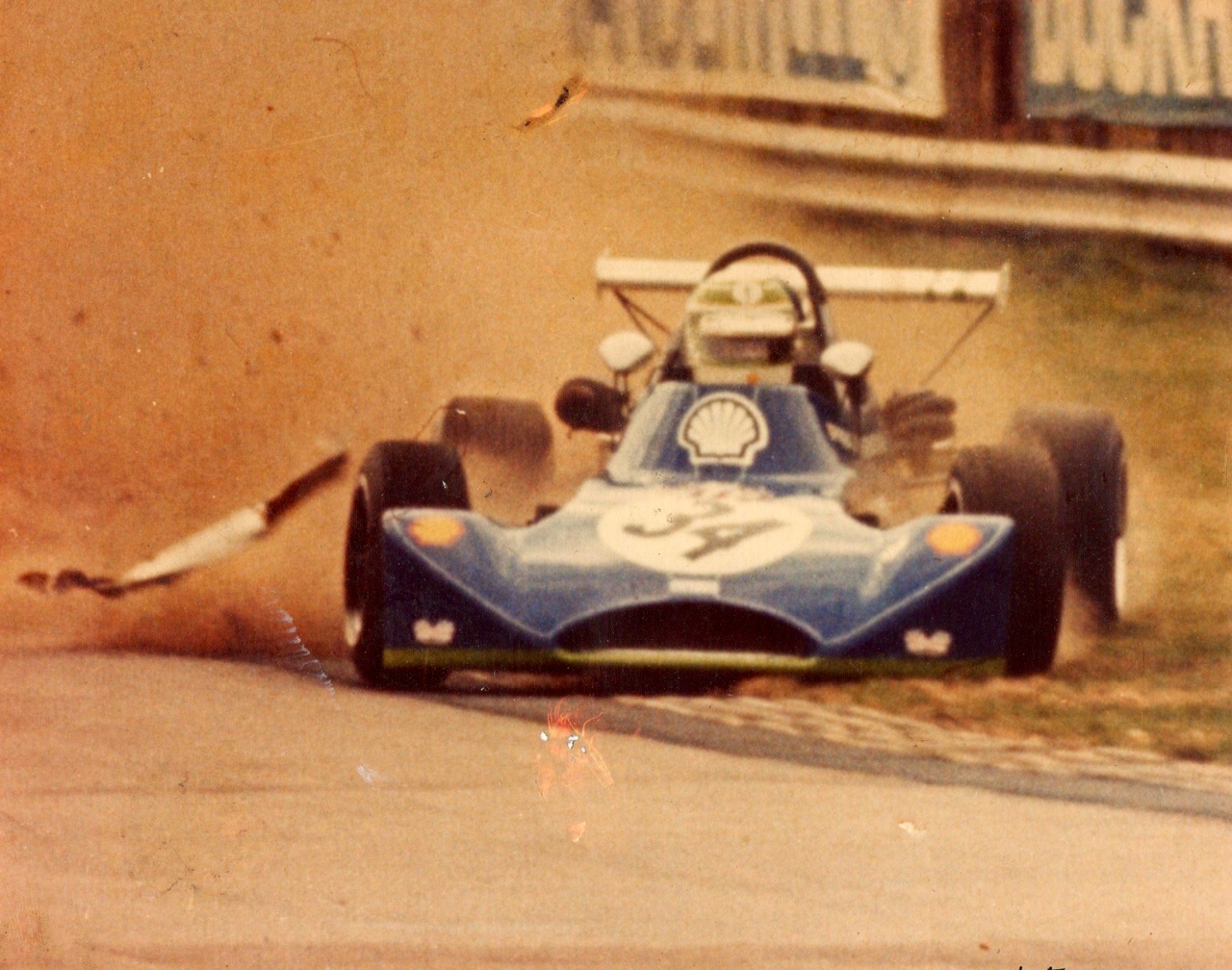
Contesting the British Grand Prix in the BRSCC F3 Championship round was a huge thrill with a strong seventh in a field which included six future F1 drivers, only two of them – in works cars – Jones and Henton finished in front of him in the leased March.
‘I started my heat on the second row behind Jones. Before the start, for the life of me I couldn’t get the belts done up. While trying to do them up, in a panic I missed the drop of the flag and just about the whole field passed me. I drove like the clappers and passed John Sheldon on the outside of Woodcote putting three wheels into the dirt. A stone went through the fuel filter a lap later so I DNF’d but I had one of the fastest non-qualifier laps so I made the final.
‘From the back row I worked myself up to seventh getting a European F3 Championship point. I remember AJ saying to me later you really had your eyes on this weekend.’
It had been a very promising first F3 season, his sponsor was happy, things were looking good and on the rise. Australia’s Sports Car World Magazine ran an article about Australian drivers doing well in Europe. Buzaglo was in the best of company being featured along with Tim Schenken, Alan Jones, Larry Perkins, Vern Schuppan, Dave Walker and the late Brian McGuire. Roll on 1974.
A year which seemed full of promise: March 743 Ford Holbay in 1974…
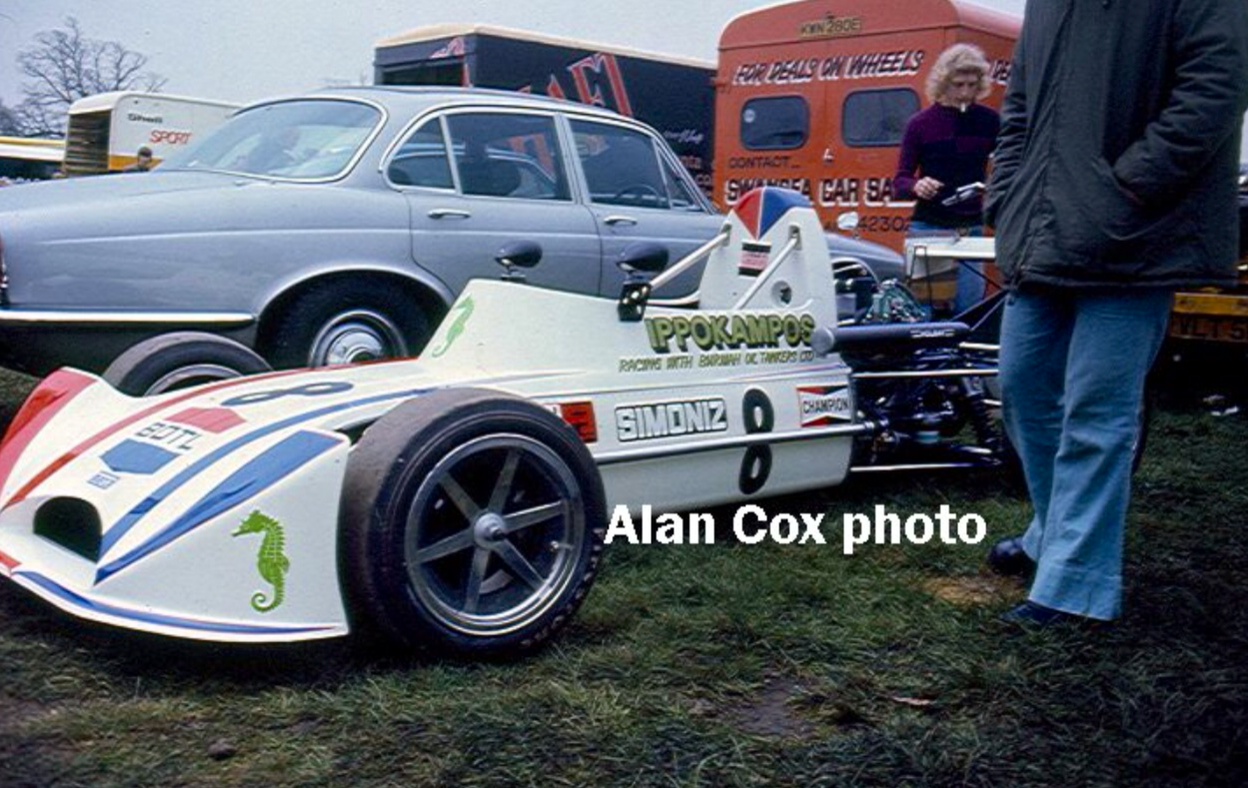
Ippokampos provided a £150,000 budget to run a two-car team in 1974. Unlike today, when control classes largely hold sway throughout the open-wheeler world, the choice of chassis and engine was critical.
1974 was the first year of the 2-litre F3. The March 743 was a good choice, the Holbay engine, based on the Ford Cortina/Pinto SOHC unit, was not. The good ‘ole Lotus Ford Twin-cam, suitably bored and stroked and prepped by Novamotor in Italy would have been the better choice and therein lay the problems of the season.
Buzz blames himself as the budget was adequate to purchase Novamotors. He knew them well and they offered their engines at a favourable price, but Holbay offered a works-deal with engines free, ‘it made sense at the time.’
Some good qualifying results were ruined in races where the engine lacked competitive power and torque. Poor car preparation also let the team down with a bad run of results for both drivers early in the season, Buzz’ best results was a sixth, seventh and eighth at Oulton Park, Silverstone and Snetterton respectively. The next race was the most prestigious of the season, the XVI Grand Prix de Monaco Formule 3.
Monaco, or not…
Buzz was excited, he was entered for Monaco, and picked up a special engine from Holbay’s John Reed. ‘We have given you a special engine you can rev to 9,000rpm, you have had so much bad luck’, which was fitted to the car the week before the event.
Whilst helping the mechanics fit the engine, Ron Dennis and Neil Trundle called into the workshop suggesting removal of the rear bodywork due to the expected heat in the principality and fitting a bigger rear wing. Great blokes Buzz thought!
On the Monday before the event Buzz was summoned to Tony Vlassopulos’ (Ippokampos) office to be told his seat was being taken by Tom Pryce, who duly won the race.
Rondel Racing (Ron Dennis and Neil Trundle) ran Pryce in their Motul M1 F2 car in 1973, the Token was to be their Motul F1 car for 1974. Motul’s (French oil company) withdrawal of funds meant the F1 project was sold by Rondel to Tony Vlassopulos and Ken Grob, they re-named it Token, an acronym of their names.
The car was a dog. Pryce’s Monaco F1 entry was refused as a consequence of poor results in preceding Grands Prix. The F3 ride was a calculated way of re-launching Tom’s career. Buzz, further down the team-totem-pole was pushed aside.
Pryce won his heat by 16 seconds from Tony Brise and the final by 20 seconds, again from Brise, unheard of margins at Monaco given the driver depth. Brise, another star of that generation was no slouch, to say the least. Buzz wishes he had been in the car such was its pace. Unbeknown to Buzaglo, the engine was a-cheater with a device which allowed air past the restrictor, then as now mandated by the class, allowing more revs and power.
He feels no ill will to Pryce, whom he knew and believes had no knowledge of the special engine either. As Buzz put it ‘it was the one and only 2-litre F3 race Pryce ever did, he had no point of reference to the performance of a ‘normal Holbay’. No other Holbay engined car was in the top 15 finishers. By the end of the year Holbay’s ruse was known and Novamotor were dominating with their variant of the Toyota 2TG DOHC, four-valve engine.
What was memorable was that Buzz and his girlfriend were flown from Luton to Nice in Ken Grob’s Learjet, living it up for the Monaco weekend. If only! For Buzz it was all over. Tony V was focussed on Grand Prix racing not on his Formula 3 team, no further 1974 F3 appearances were made.
Brands Hatch 1000 km…
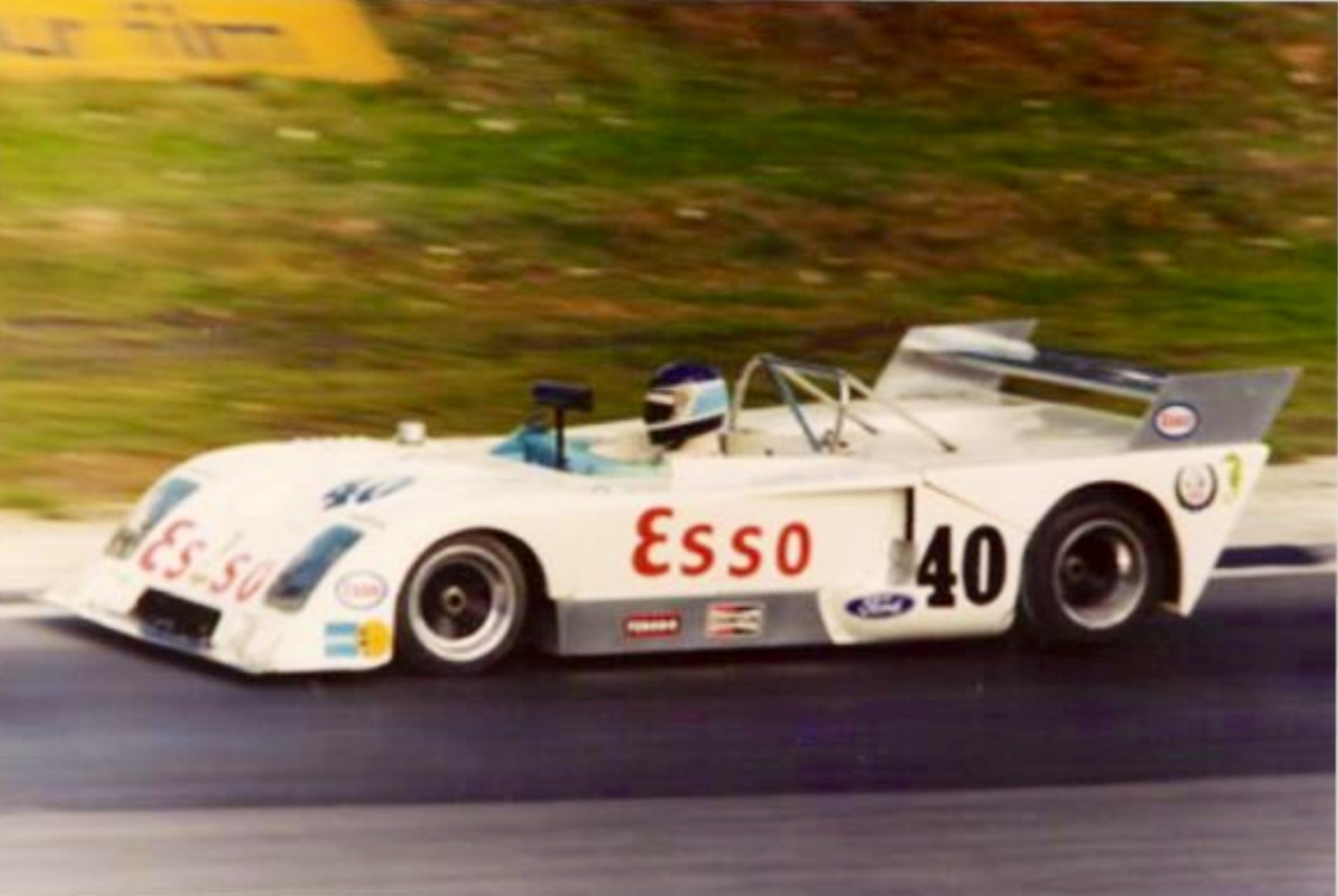
For Buzz with no money, his career was over but for a one-off drive in fellow F3 driver John McDonald’s 2-litre Chevron B19/23 Ford 2-litre sports car in the 1974 Brands Hatch 1000 Km race.
McDonald was struggling with the car in practice but eventually gave the Australian a few laps, qualifying the car around fifteenth. ‘I was black flagged after 19 laps for dropping oil so that finished the race, I was really pissed off as I was in my element driving this great handling car, from memory I was up to seventeenth at the time I was stopped.’ Outright victors were the the two Jean-Pierres – Beltoise and Jarier in a Matra MS670C, its banshee like 3-litre V12 wail ‘was enough to blow smaller cars sideways’, Buzz recalls.
Not forgotten by March, who had a high regard for his skills, he test drove the prototype March 75S 2-litre sports car in late 1974, giving his feedback about a car which ‘was not much chop’. Subsequent results proved this analysis pretty correct.

Post racing and home…
And that was it, Buzz had run out of money and ideas.
He had a reasonable run, partially supported by sponsors along the way but did not have the chance to hone his skills and put aside a bad trot and maintain enough support to go forward in the way Perkins and Jones did. It took them four and three years respectively to jump out of F3, incredibly competitive then as now, Buzaglo represents one of Australia’s might-have-beens.
He started his career late, won his first race within six months in a second hand, self run car and was beating future grand prix drivers with extensive karting experience by 1971. Buzz achieved fourteen FF wins at a time the category was at its most competitive anywhere in the world. He also set four lap records: three in FF, Silverstone in 1971, Castle Combe and Zolder in 1972 and the Castle Combe F3 lap record in 1973.
You wonder what he may have achieved with a little more luck, funds or a mentor/patron? Buzz never raced in Australia other than a few Grand Prix Rallies, these fun events were a contrast to the International races he contested a couple of decades before.
Wanting to stay in the UK, good friend and future F1 entrant/entrepreneur John (RAM Racing) McDonald organised a job at his Datsun outlet. From 1975 he worked for well known dealer/entrant The Chequered Flag selling Lancias helping to build the number one Lancia dealership in Europe. He then joined old mate, Richard Knight’s then fledgling Mazda dealership before finally returning to Australia in 1982-83. He joined Allan Johnstone’s Penfolds Dealership group selling Mazda’s in Melbourne’s Burwood before retiring to Albert Park and an wasy walk to the lake.
Buzz keeps in touch with many of his UK racing friends, meeting journalists Joe Saward and Mike Doodson each year at the AGP. Good friend Jo Ramirez, the well known ex-Eagle/McLaren Team manager gave Buzz his most prized possession, the empty Moet Magnum sprayed by Senna and personally signed and marked ‘Adelaide 1993’ by him, after his last GP win.
Sadly ‘those overalls’, along with many other items were lost in a container which never arrived home from the UK .

So many Aussies have taken the European racing plunge over the years. Then, as now, success is difficult for even the well funded, ‘it was a blast, magic’ as Buzz puts it, and a great might-have-been at the same time all fired by Grand Prix and the enthusiasm of his Revolution Club racer mates.
Photo and other Credits…
Alan Cox, Mike Dixon, most from Buzz Buzaglo’s collection, Peter Finlay, F2 Index
Etcetera…


Tailpiece…

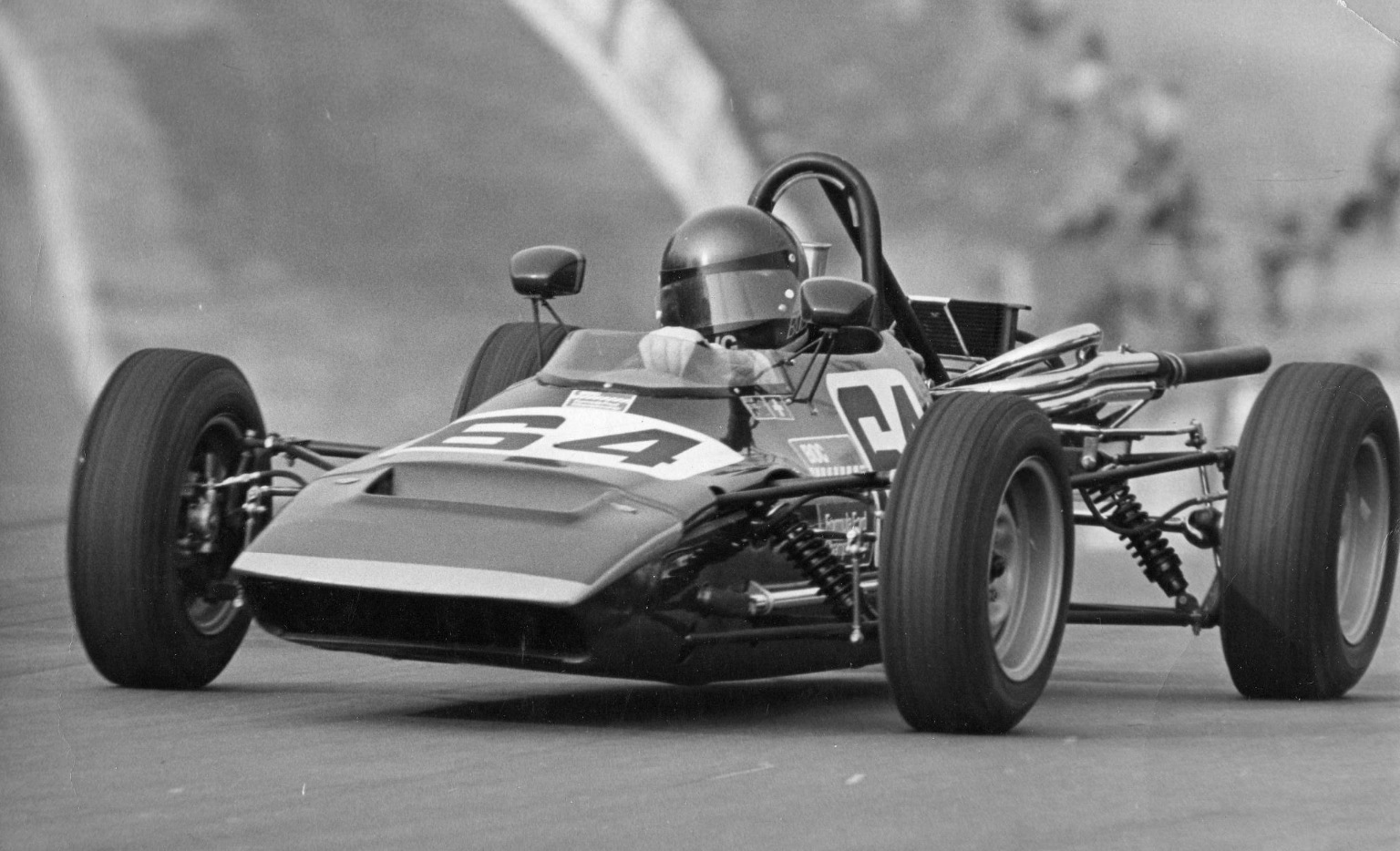
Nerve settling drag on the fag…11 June 1970…just before the off and a race win. Merlyn Mk 11.
Finito…










 primotipo...