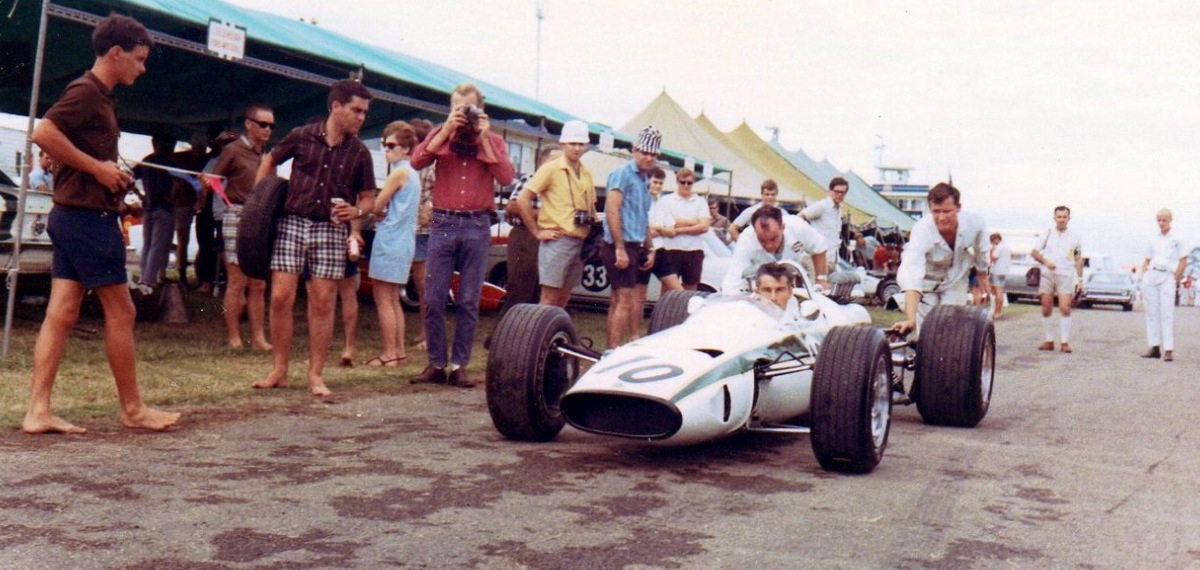
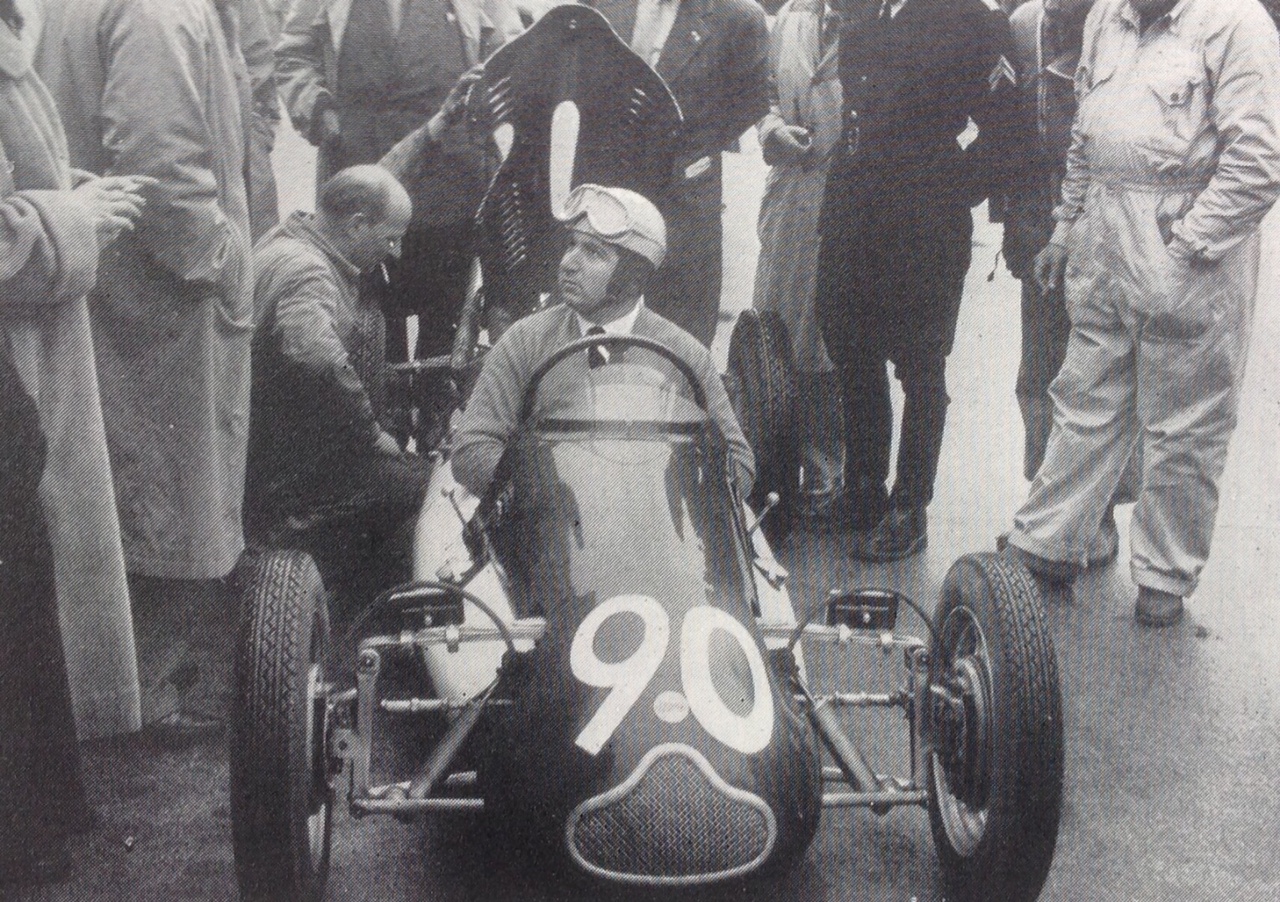
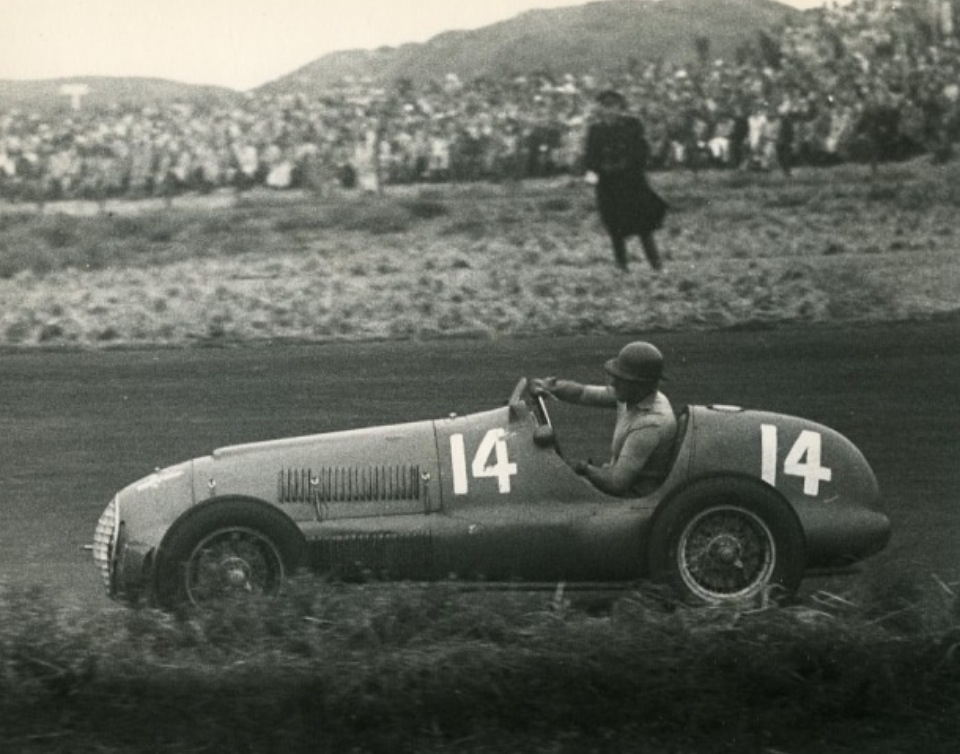
Pat Hoares’ Ferrari 246/256 V12 being towed into Ardmore for the 1961 New Zealand Grand Prix, open trailer towed by an ‘FB’ Holden…
I blew my tiny mind when sent through this post of another time and place on ‘The Roaring Season’, check it out! One of the wonderful things about blogs and websites is how amateur shots which would never see the light of day like this ‘cache’ can now be shared for all to see.
It was raced by Gendebien, Von Trips, Gurney and Phil Hill who won the 1960 Italian GP in it.
It was converted at Maranello to 3 litre V12 ‘Testa Rossa’ power, re numbered ‘0788’ and raced successfully in NZ amongst the ‘mid-engined hordes’ and ultimately restored to its original specs by Crosthwaite and Gardiner many years ago.
(Gearbox Grinder/The Roaring Season)
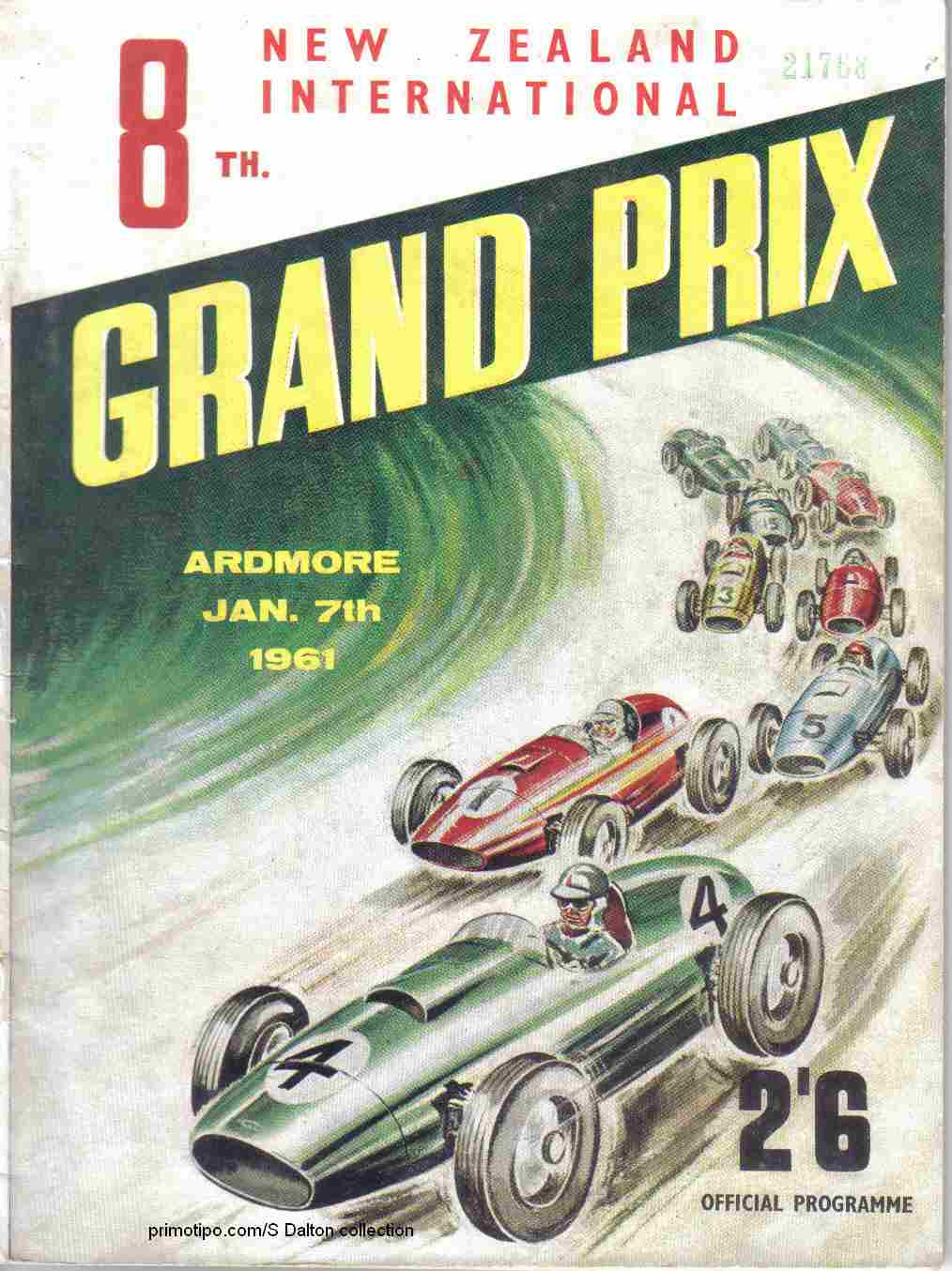
1961 NZ GP start, Ardmore January 1961. Jack Brabham won from Bruce McLaren and Graham Hill in works Cooper T53 Climax x 2 and BRM P48.
(The Roaring Season/Gearbox Grinder)
Pat Hoare on his way to seventh and first of the front engined cars in the ’61 NZGP. Ferrari 246/256.
In an interesting sign of the times ten front engined cars failed to qualify, the first six finishers were mid engined, other front engined finishers were ninth placed Malcolm Gill in the amazing aero-engined Lycoming Spl, eleventh Frank Shuter Ferrari 625 and twelfth Bib Stillwell Aston Martin DBR4-300. Three Maser 250F’s DNF’d.
Credits…
The Roaring Season/Gearbox Grinder, Barchetta, Stephen Dalton Collection
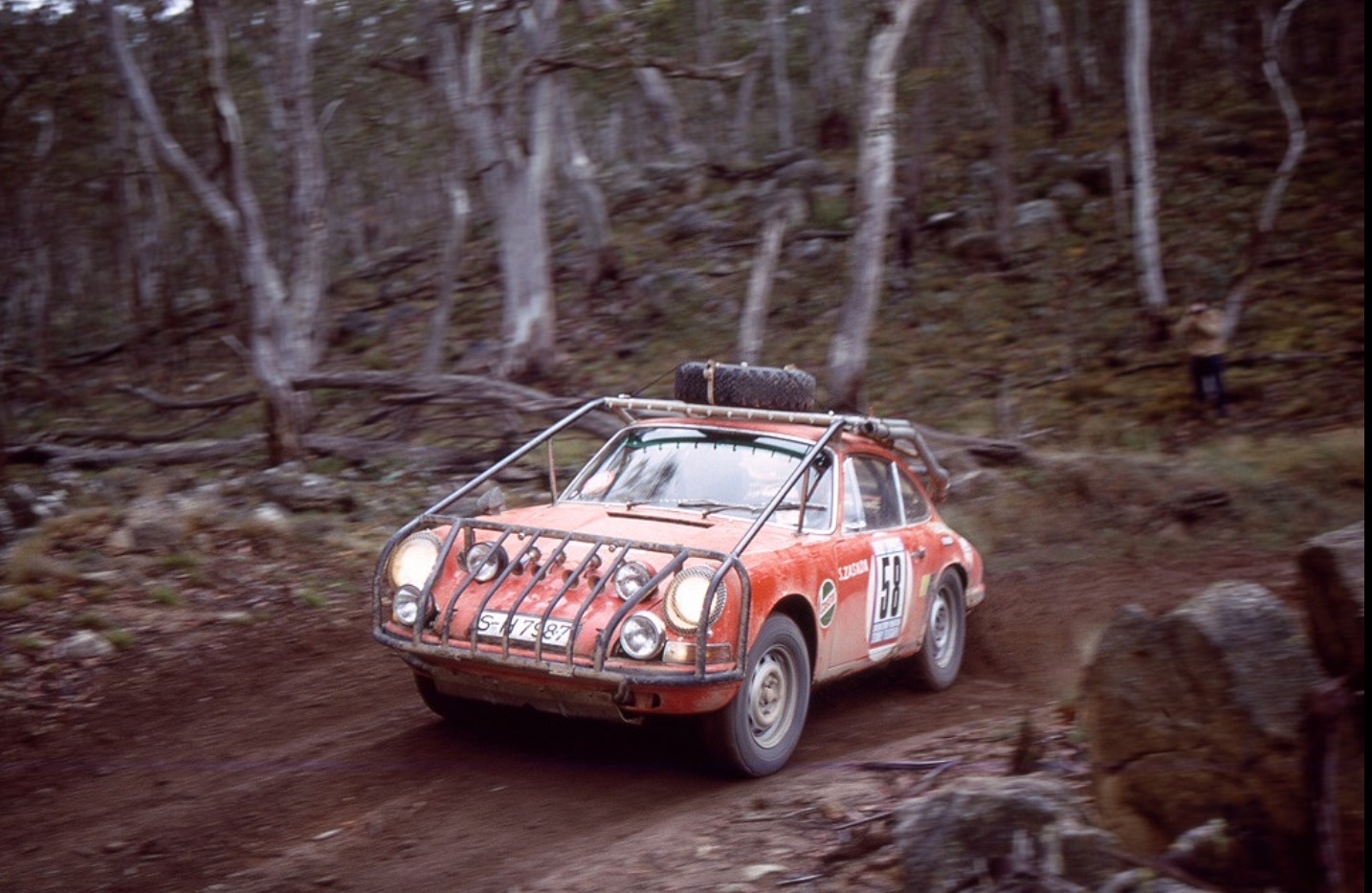
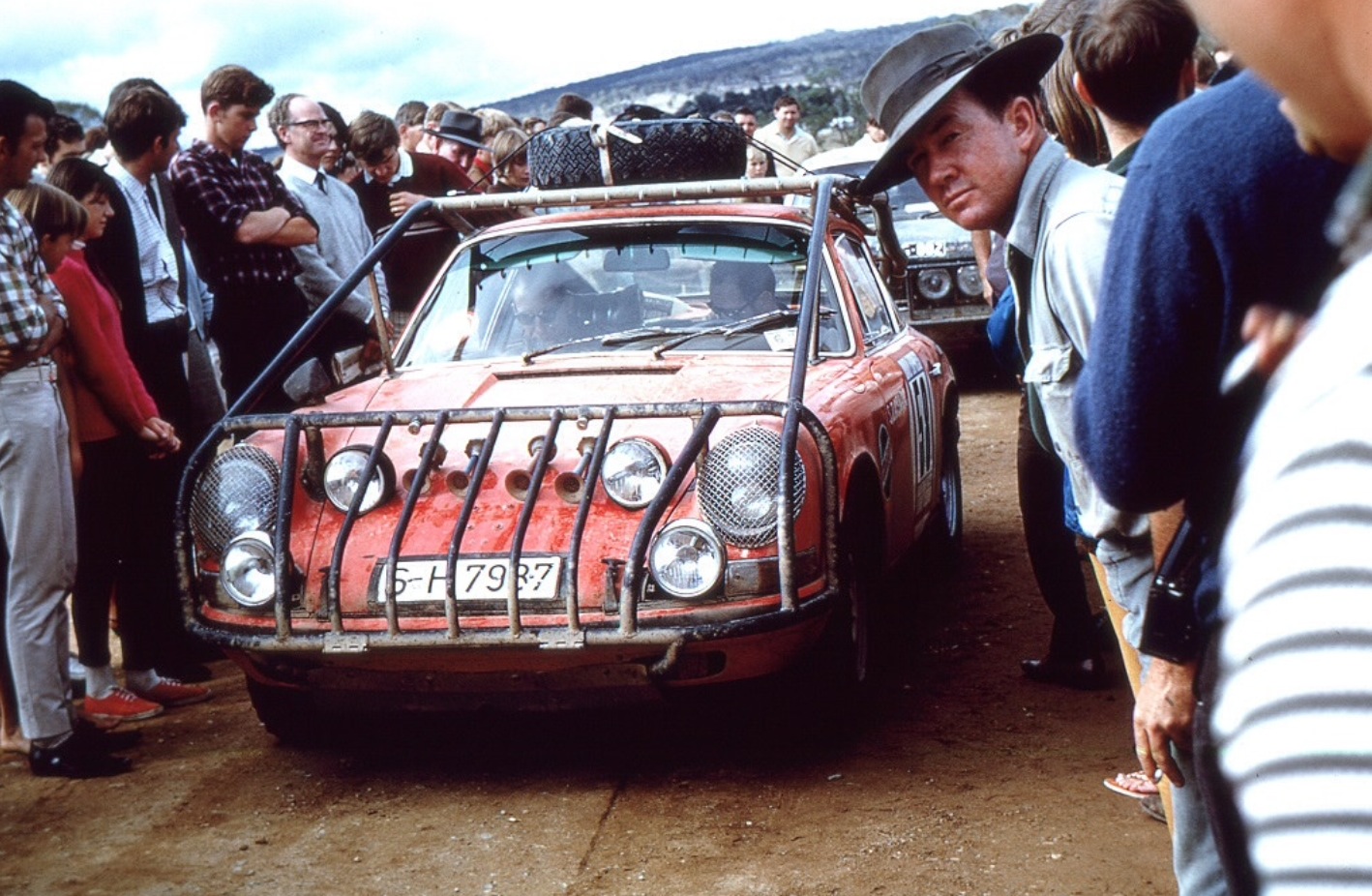
‘Polish rally ace Sobieslaw Zasada gave it all he had on the Numeralla to Hindmarsh Station stage, and the Porsche responded with the characteristic wail of its air cooled flat six engine. He improved from 9th to 5th place on this stage and ultimately took 4th place in the Marathon.’
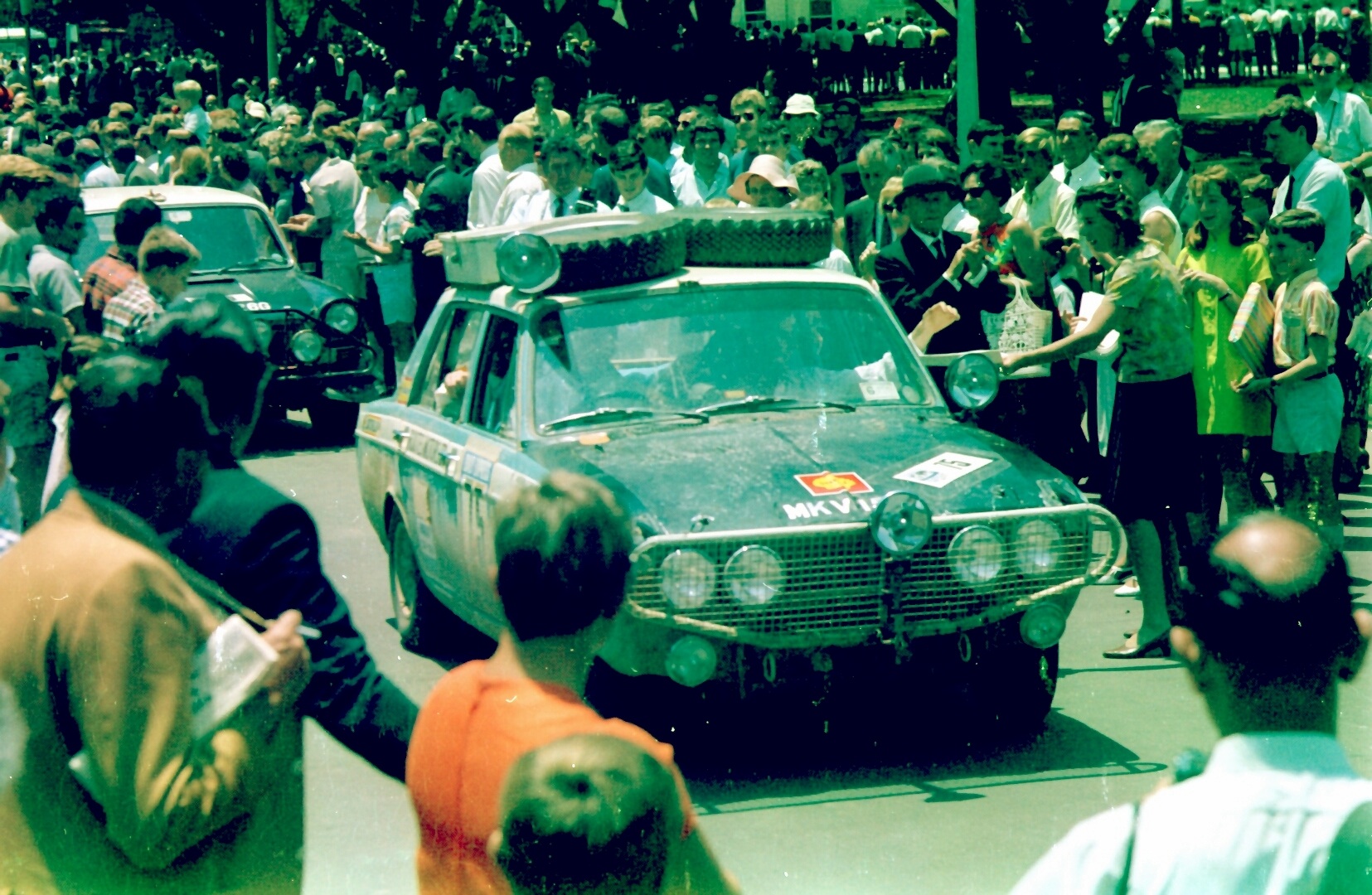
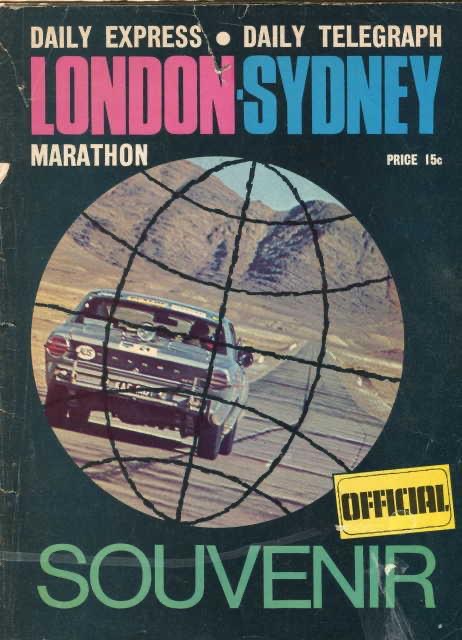
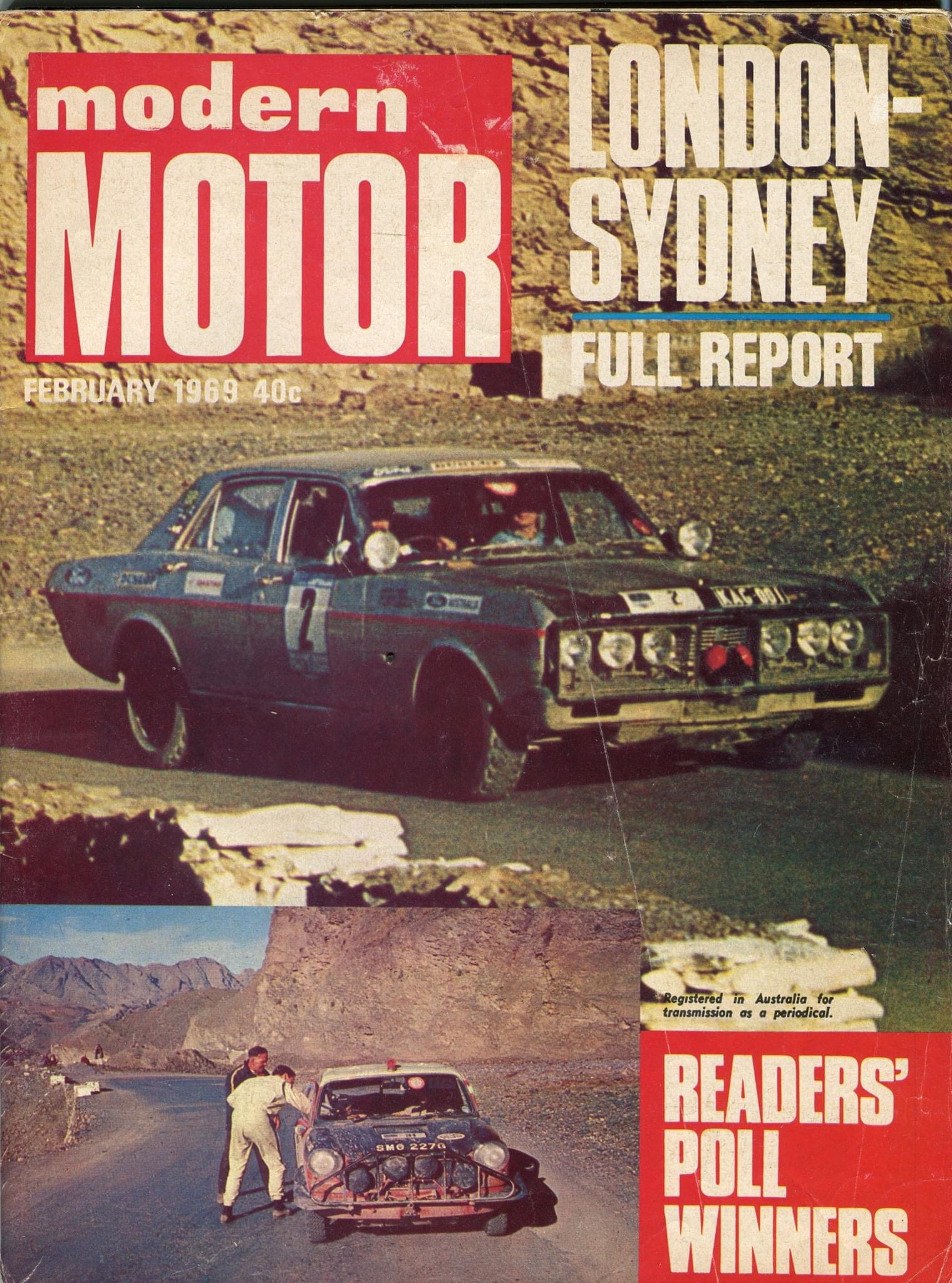
The London-Sydney Marathon was run between 24 November and 17 December 1968. A field of 98 cars set out on a route covering 10,000 miles (16,000 kilometres) across Europe and Asia to Bombay, then from Perth to Sydney in Australia. It was the first in a series of epic transcontinental car rallies held in subsequent years, and possibly the most memorable of all. The event was sponsored by the London Daily Express and the Sydney Daily Telegraph and captured the imagination of the world, as the respective newspaper proprietors had hoped.
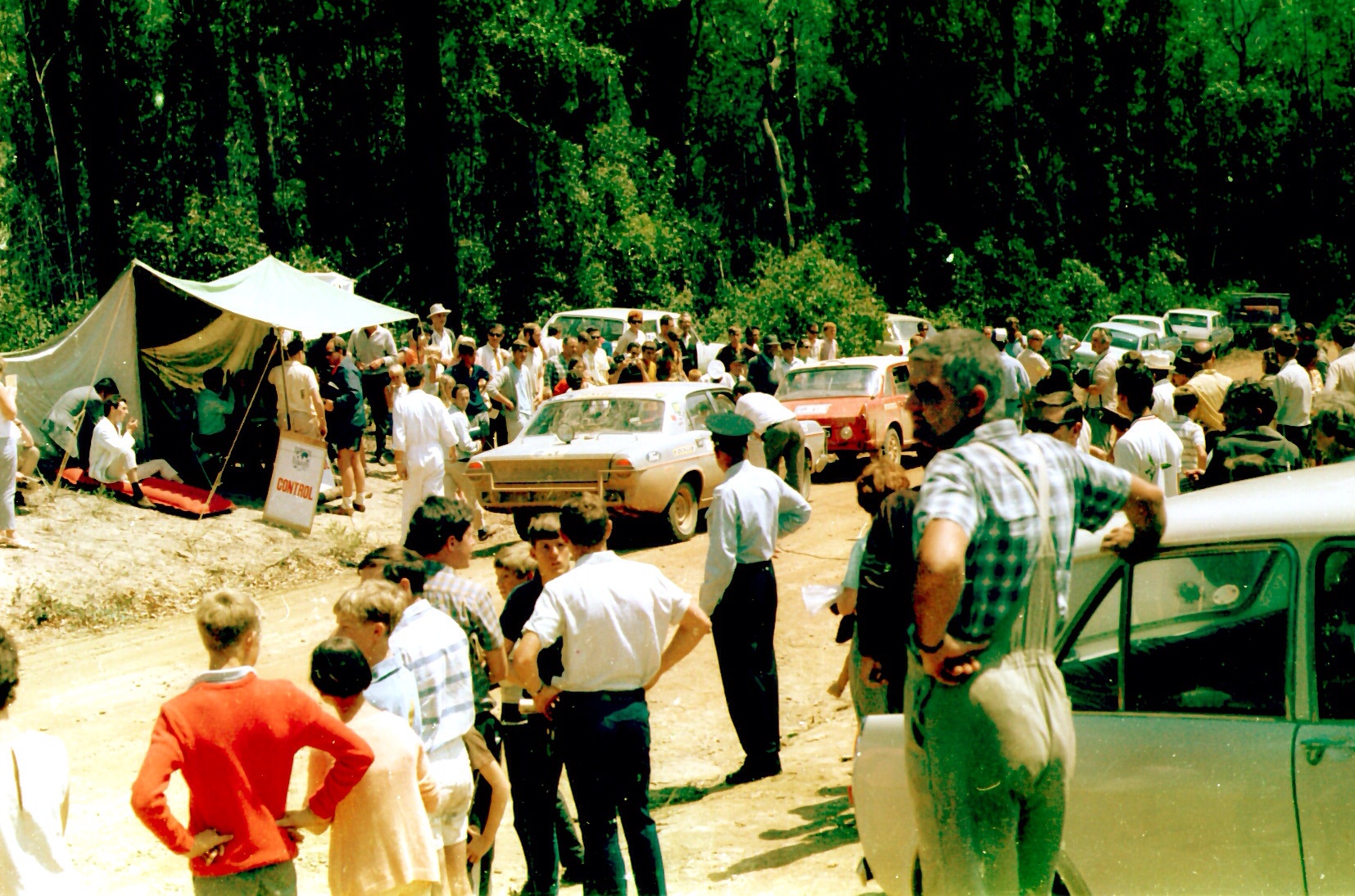
I was fortunate to be able to witness and photograph the final competitive stage of the event, over rough, unmade roads between Numeralla and Hindmarsh Station in southeastern New South Wales. This stage was designed to be a final, extreme test in order to find a clear winner.’
(Numeralla is a tiny little hamlet in sub-Alpine country not far from Cooma, between the national capital, Canberra and the NSW snowfields areas of Thredbo/Perisher Valley. The final run to Sydney was circa 420Km)
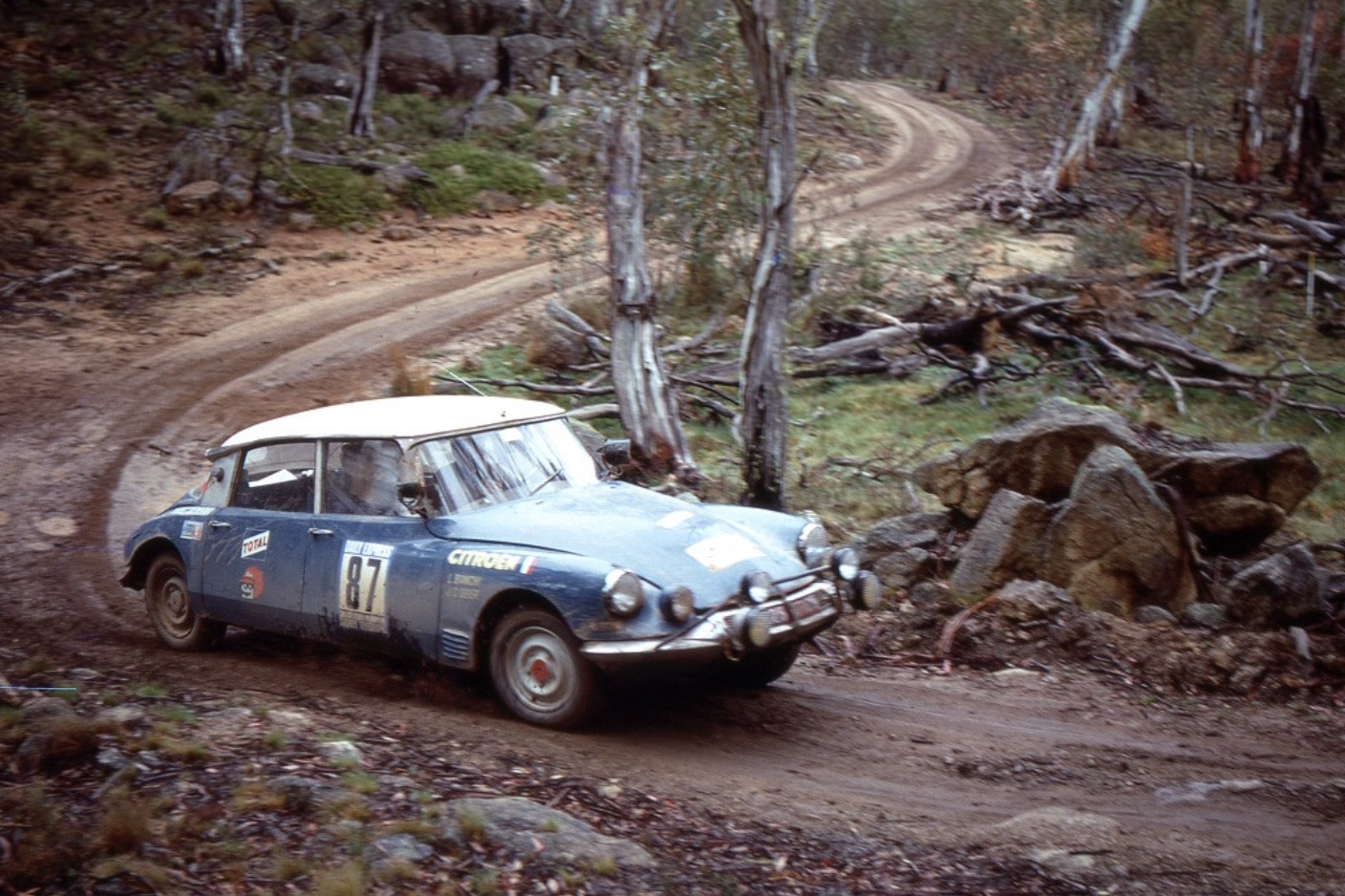
‘The Bianchi/Ogier Citroen was a clear leader on this final competitive stage from Numeralla to Hindmarsh Station. There were only easy transport stages then until the finish in Sydney. The Citroen had excelled on the rough, outback roads of Australia as other competitors, including Roger Clark in a very fast Cortina Lotus, succumbed to mechanical problems.
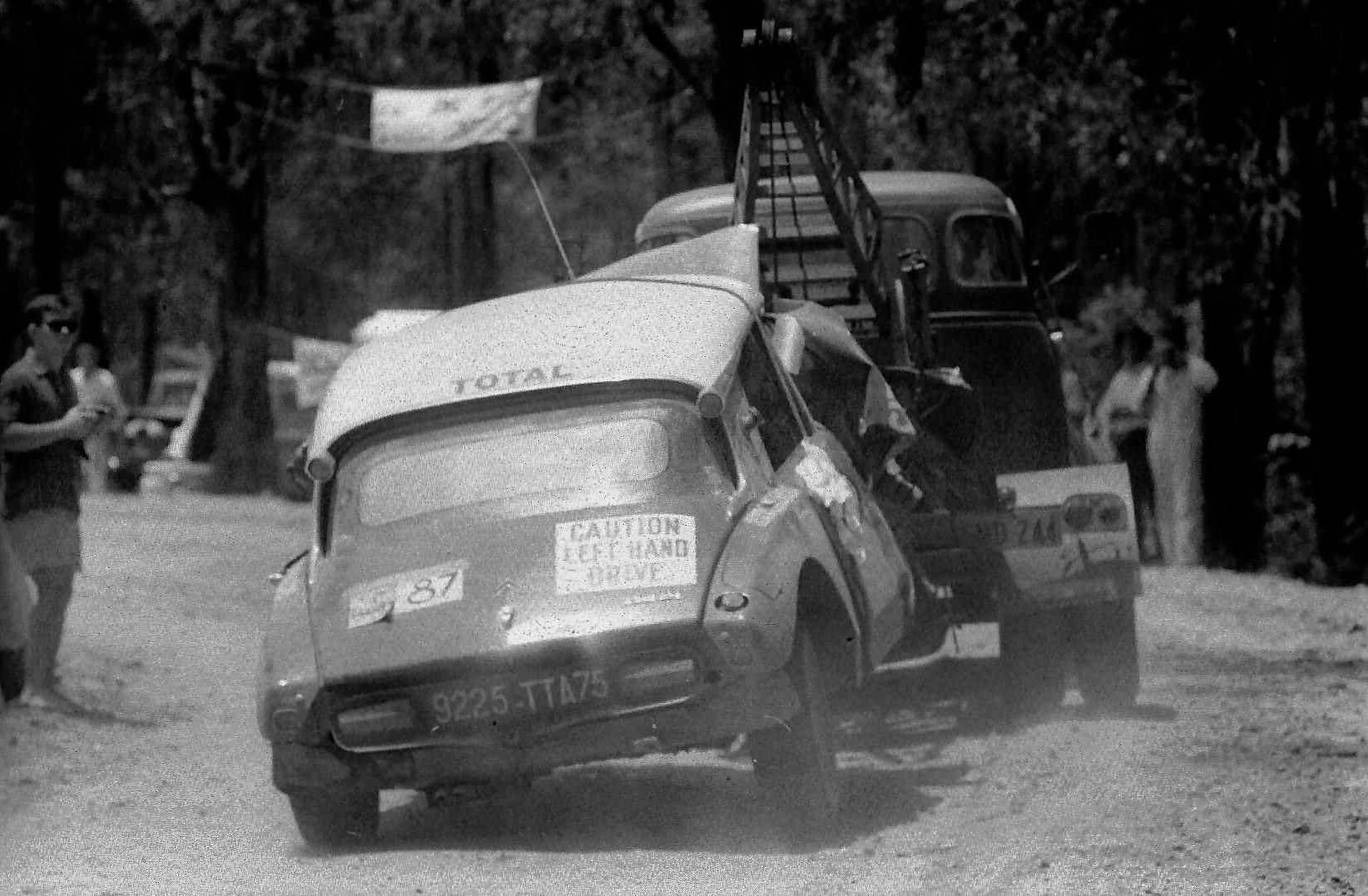
As it happened, the result was determined on the subsequent, easy transport stage when the leading car, the Citroen DS21 of Lucien Bianchi and Jean Claude Ogier, was put out of the event in a crash with an out of control spectator car. Andrew Cowan/Coyle/Malkin in a Hillman Hunter unexpectedly inherited the lead and won the Marathon. A total of 56 cars reached the finish line in Sydney.’
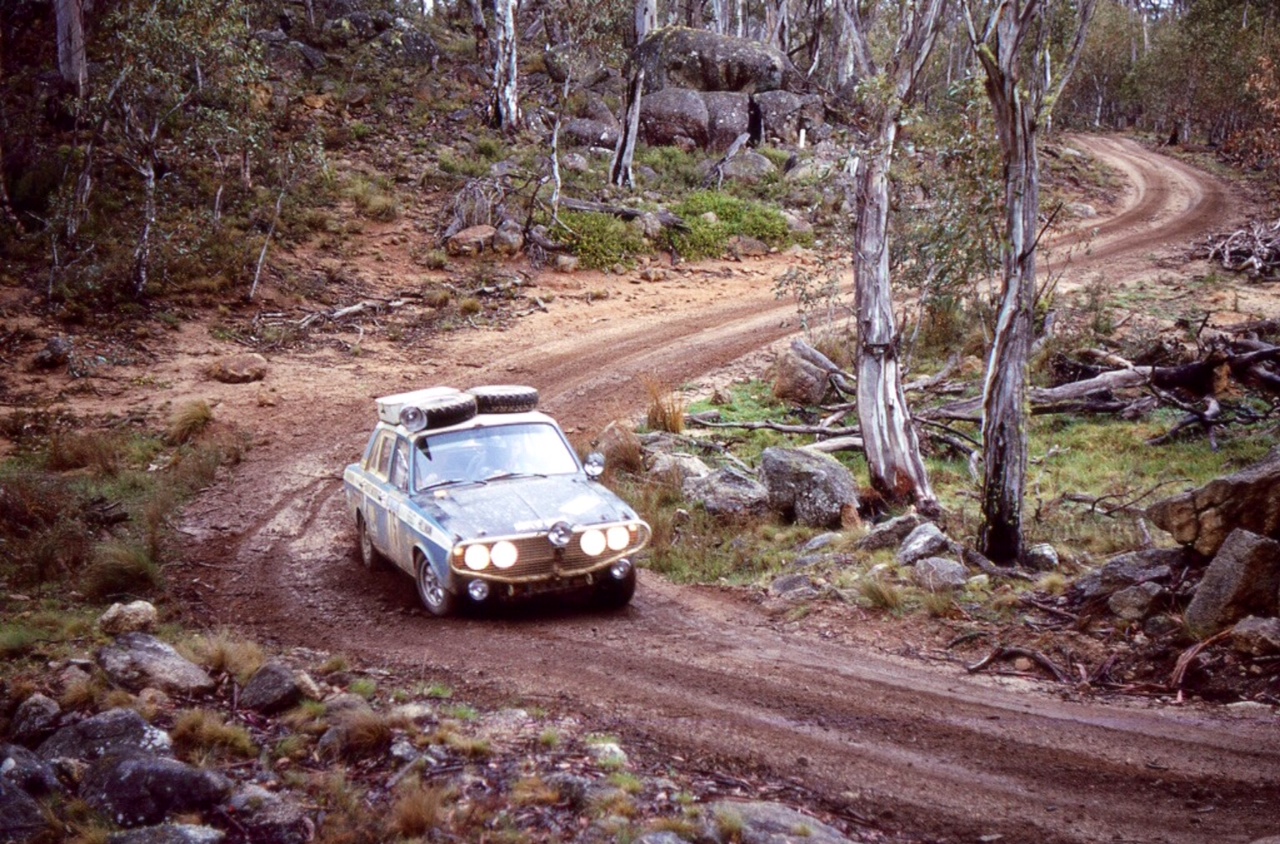
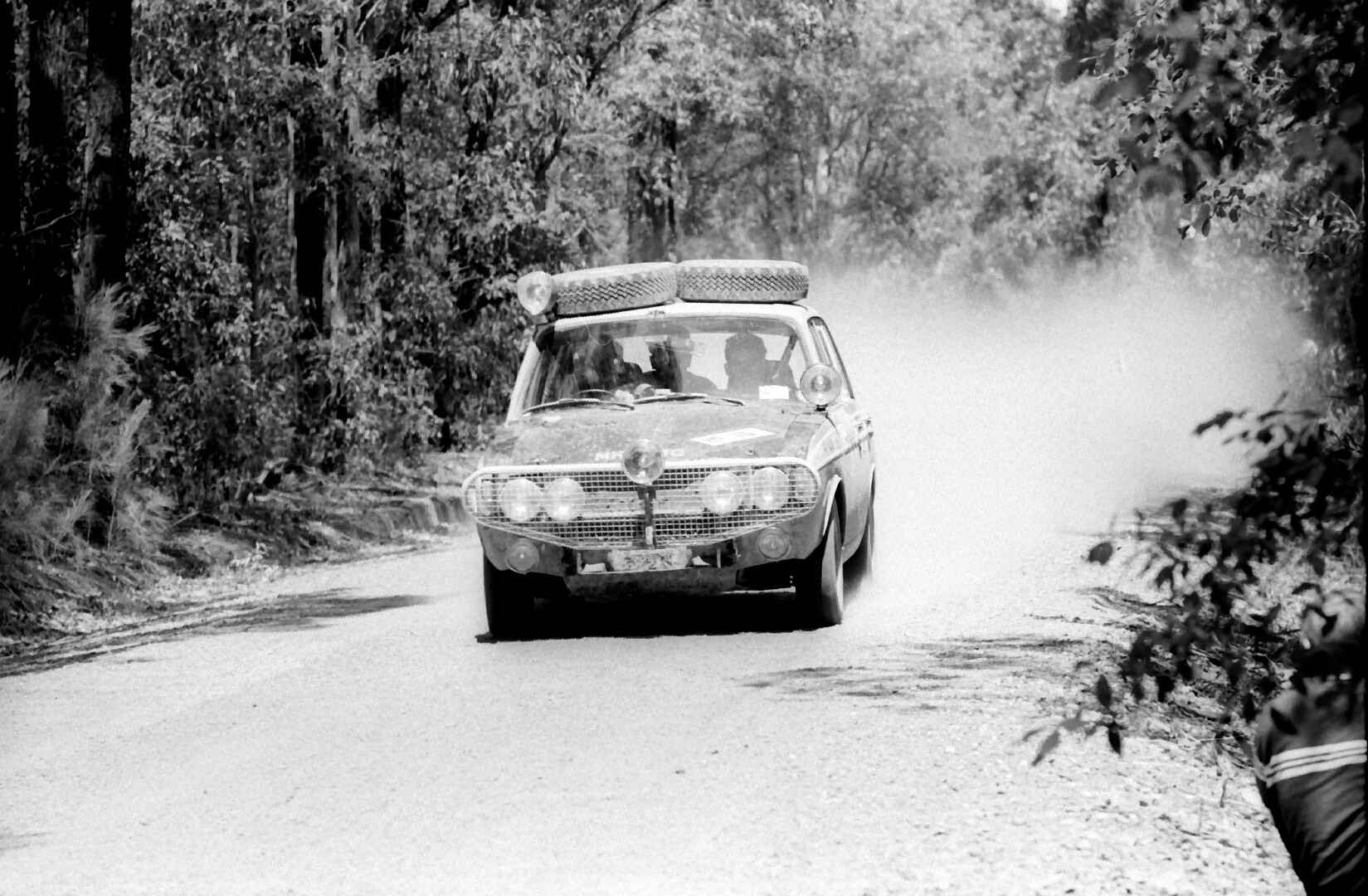
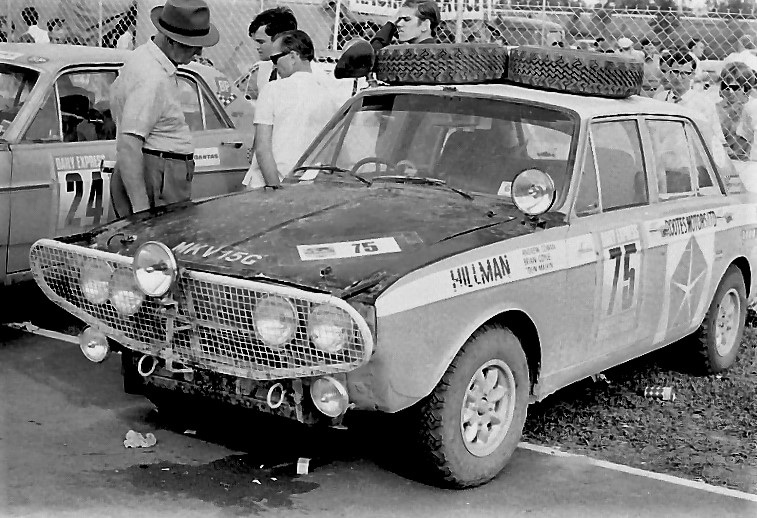
‘The Hillman Hunter seemed an unlikely contender, but Andrew Cowan had this low budget, works car in second place to Bianchi by the end of the Numeralla to Hindmarsh Station stage. He then simply inherited the lead when Bianchi’s Citroen was cruelly eliminated when it was hit by an out of control spectator car on the following transport stage’.
‘The mighty Zasada/Wachowski Porsche waits to leave at Hindmarsh Station. It finished in 4th place. Its interesting ‘kangaroo catcher’ was never tested.’
Check out Bruce Thomas’ photographs of the rest of the Numeralla to Hindmarsh Stage…
The first part of this article above was uploaded in April 2015.
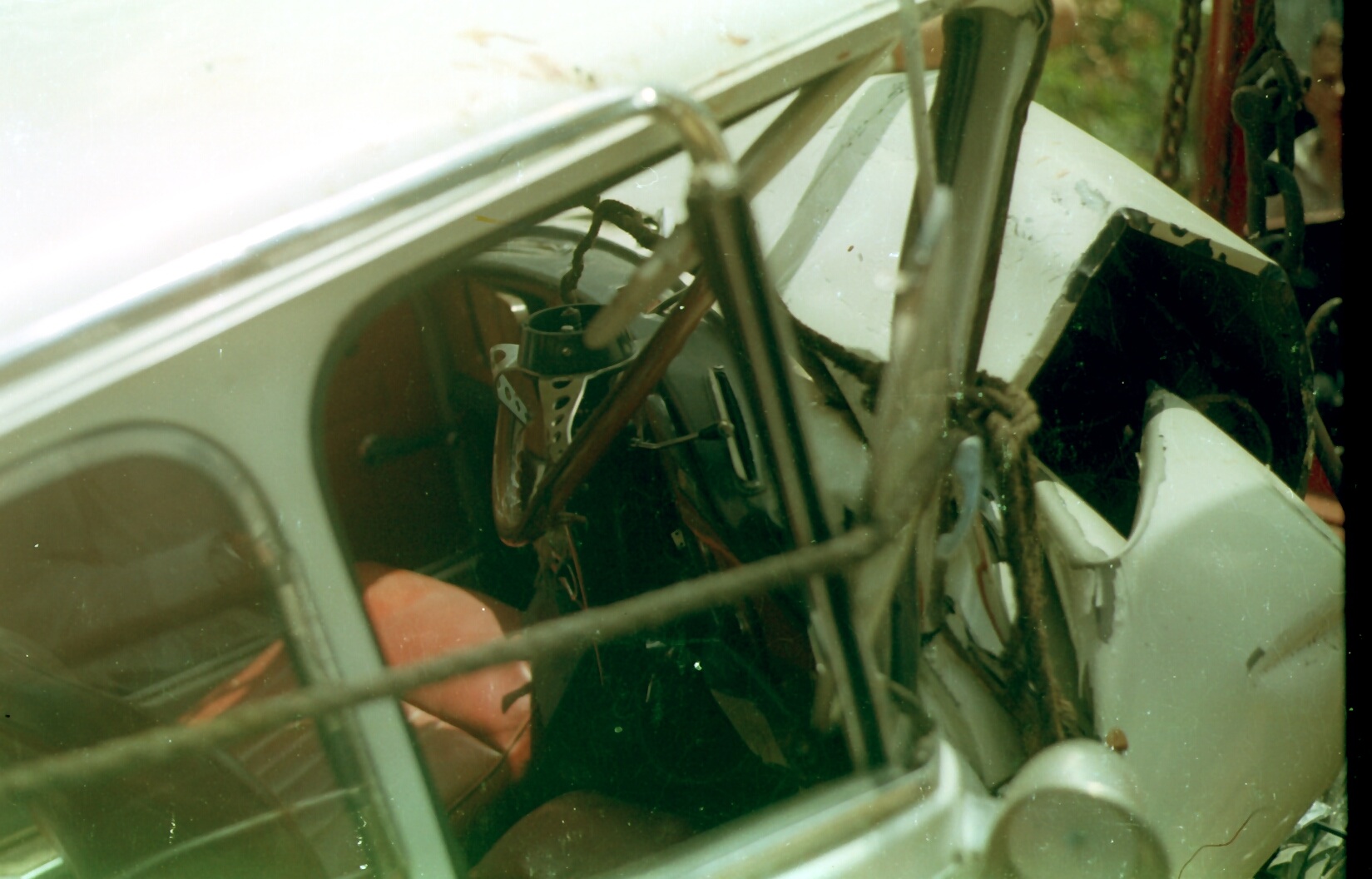
In September 2018 Rod MacKenzie, a professional photographer whose work I have used many times offered to share the following photographs he took of the Cowan Hillman, crashed Bianchi Citroen and destroyed spectator’s Mini during the Nowra stage.
(R MacKenzie)
(R MacKenzie)
(R MacKenzie)
(R MacKenzie)
(R MacKenzie)
(R MacKenzie)
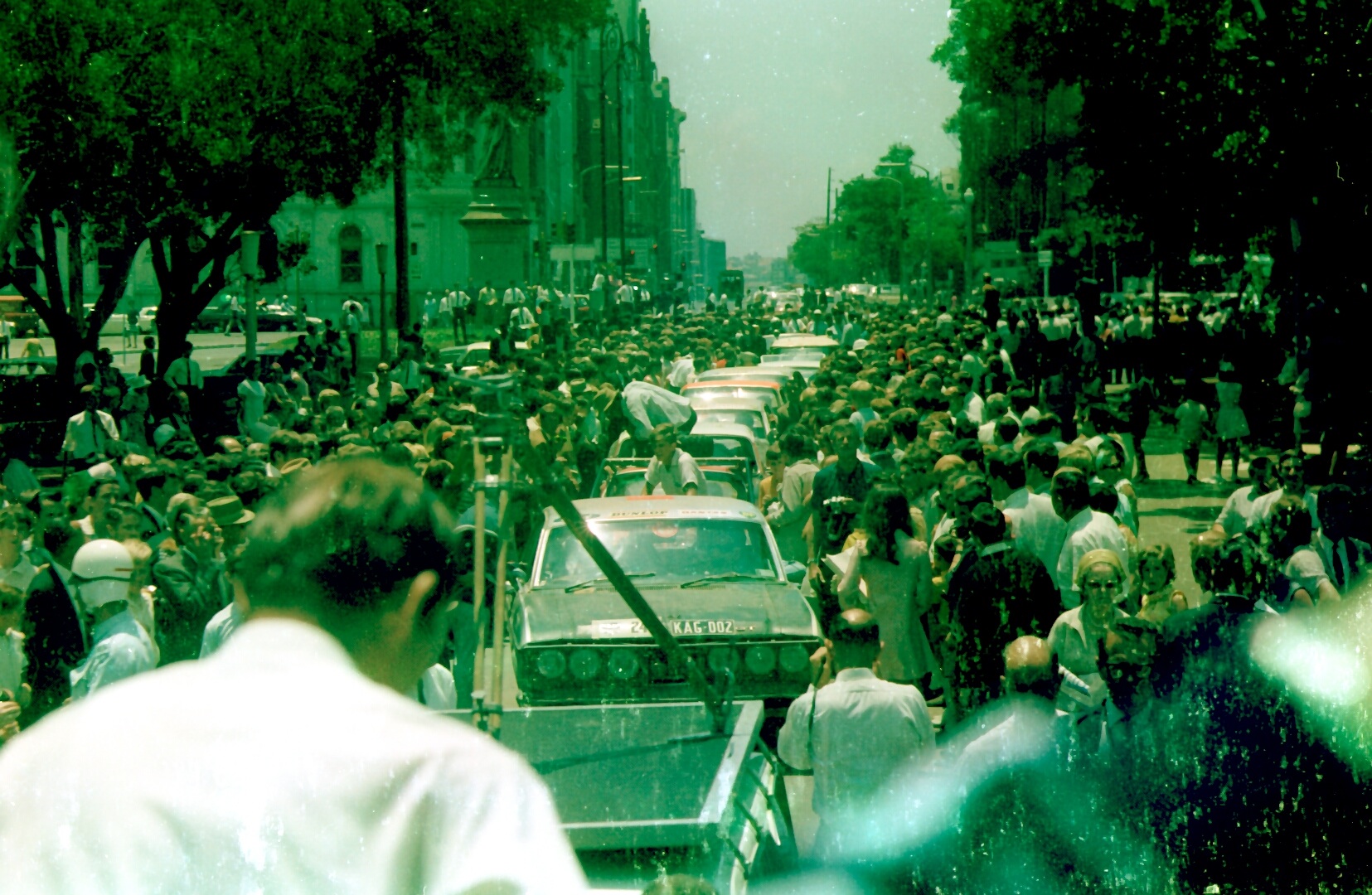
The final series of photographs are of scenes at the finish in Hyde Park, Sydney.
This is a very familiar place for many Australians- I lived in the CBD very close to this spot for 9 years, it is thrilling to think of the end of the Marathon all those years ago, the excitement of the crowd, the colour, noise. Wonderful evocative shots.
(R MacKenzie)
The Cowan/Coyle/Malkin Hunter above and the crew imbibing some of a sponsors product below- a well earned drop no doubt!
(R MacKenzie)
(R MacKenzie)
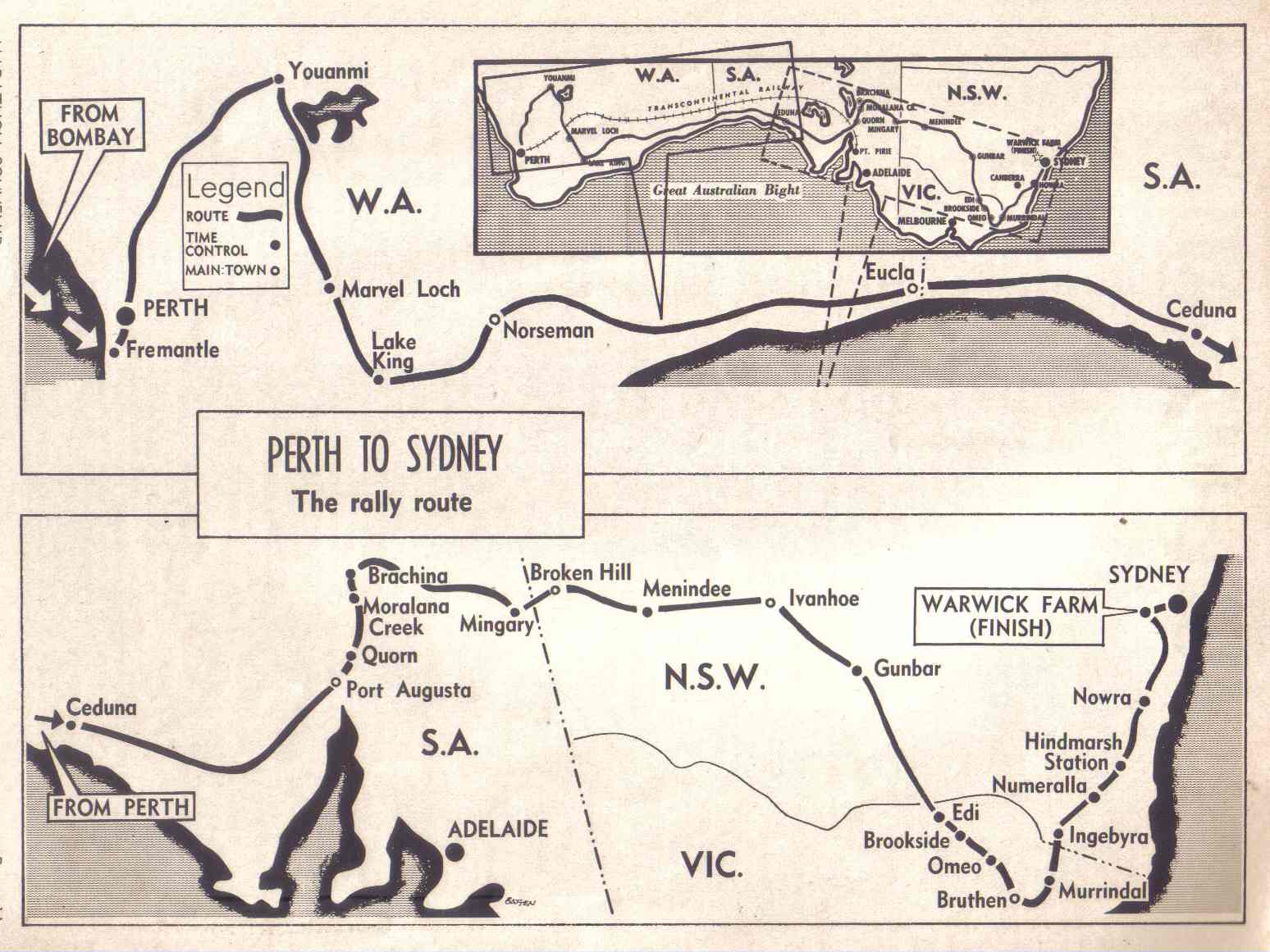
Australian Leg of the Marathon Map…
(Stephen Dalton Collection)
Etcetera…
(M Thomas)
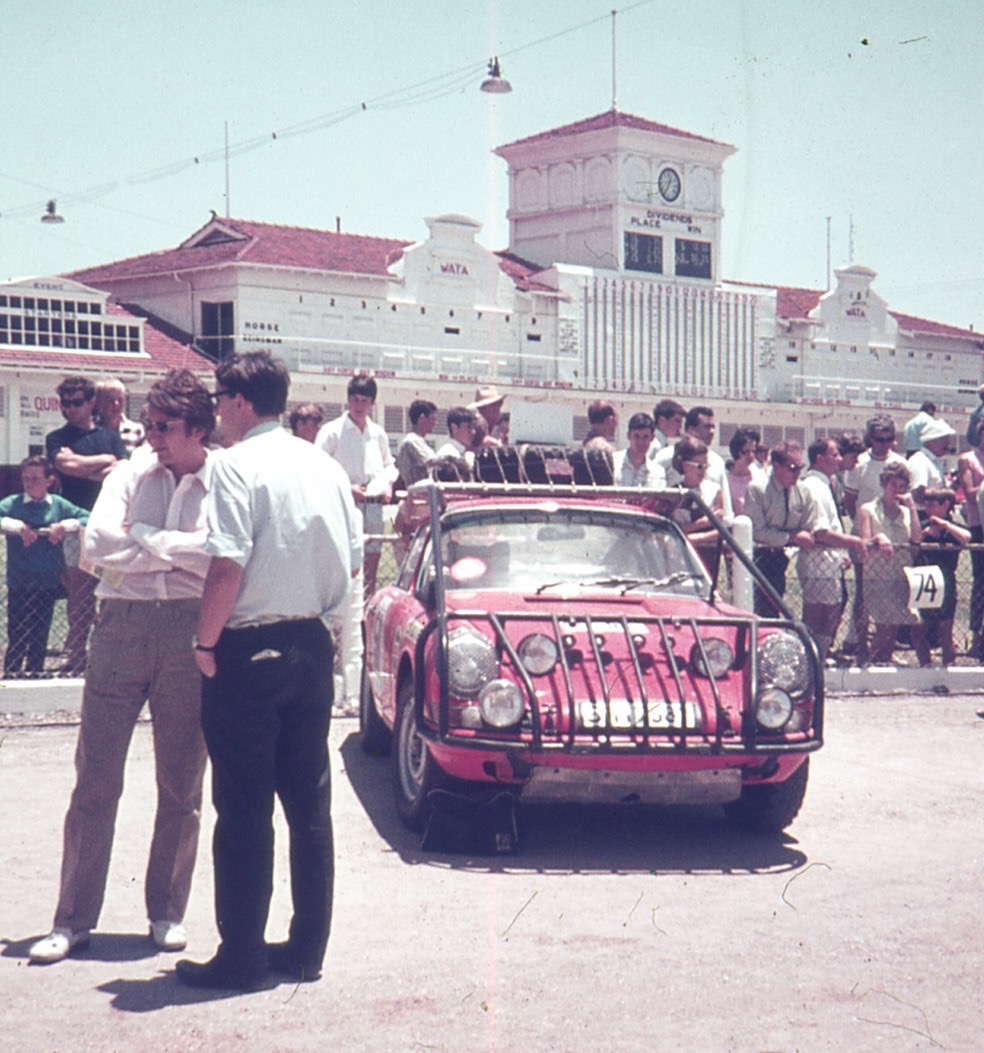
The Zasada and Yannachas Porsche 911s at rest in Perth.
Resting place for the public to check out the cars was Gloucester Park trotting track.
(M Thomas)
(M Thomas)
(M Thomas)
(M Thomas)
(L Manton)
British Leyland press photographs…
This series of shots are from the collection of Luke Manton.
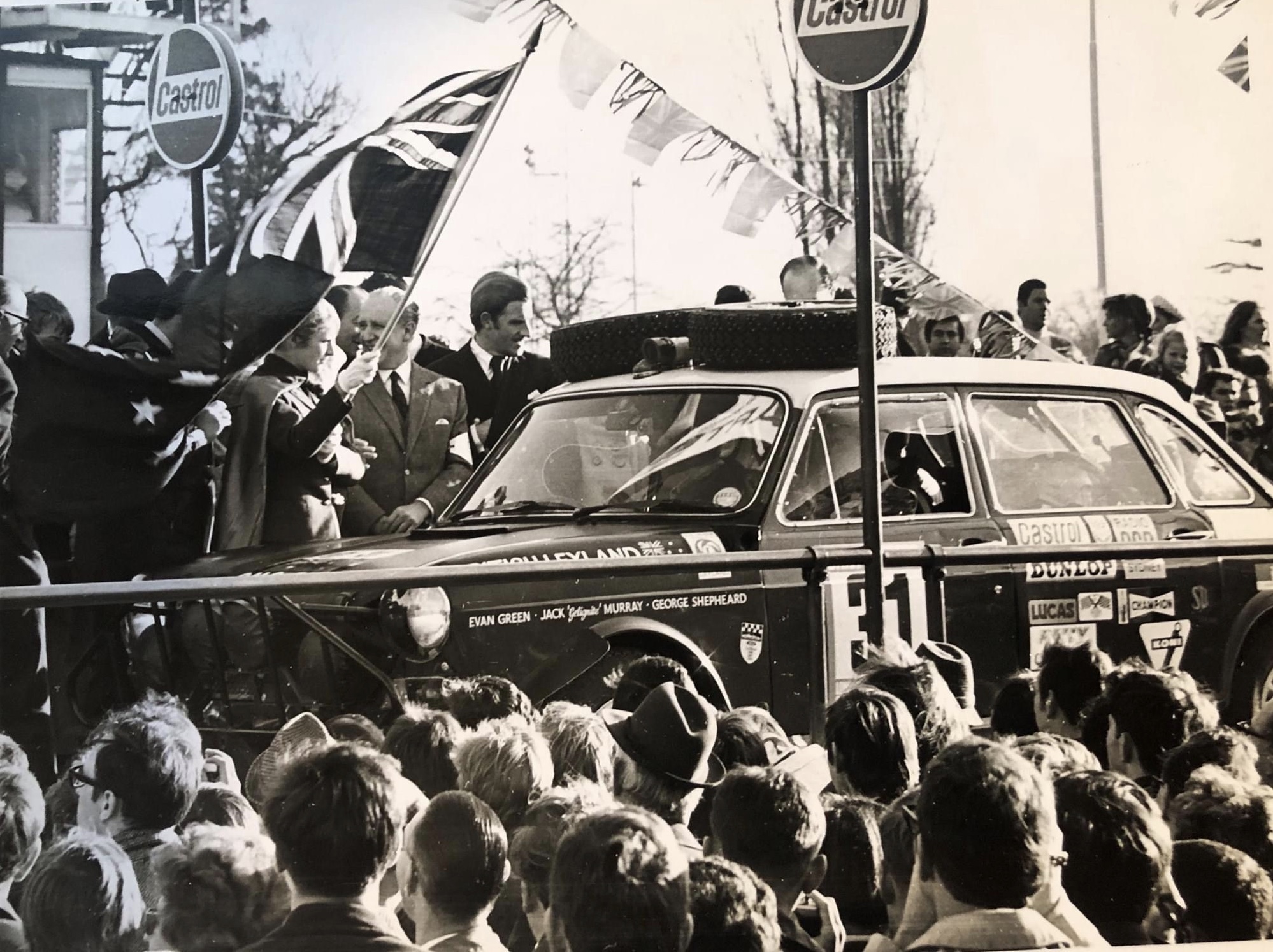
The first photo is on the start ramp at Wembley, Graham Hill just to the right of the flag.
(L Manton)
Evan Green, Jack Murray, did Miss World accompany them perhaps?
(L Manton)
(L Manton)
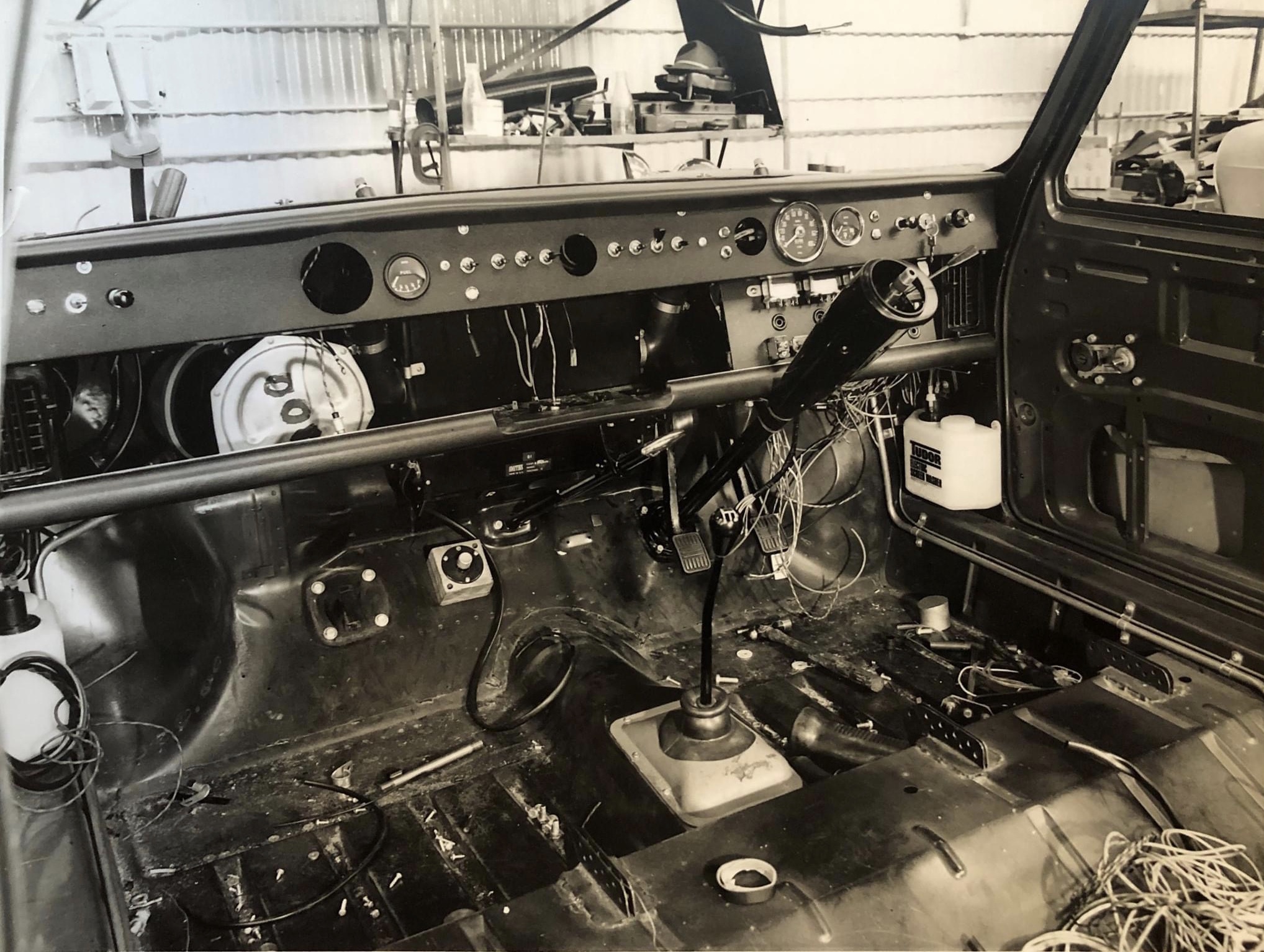
Cooper S and Austin 1800s in build at Abingdon.
(L Manton)
Credits..
Bruce Thomas photos and writing, Rod MacKenzie photos and Stephen Dalton Collection for the maps. Murray Thomas Collection, Luke Manton
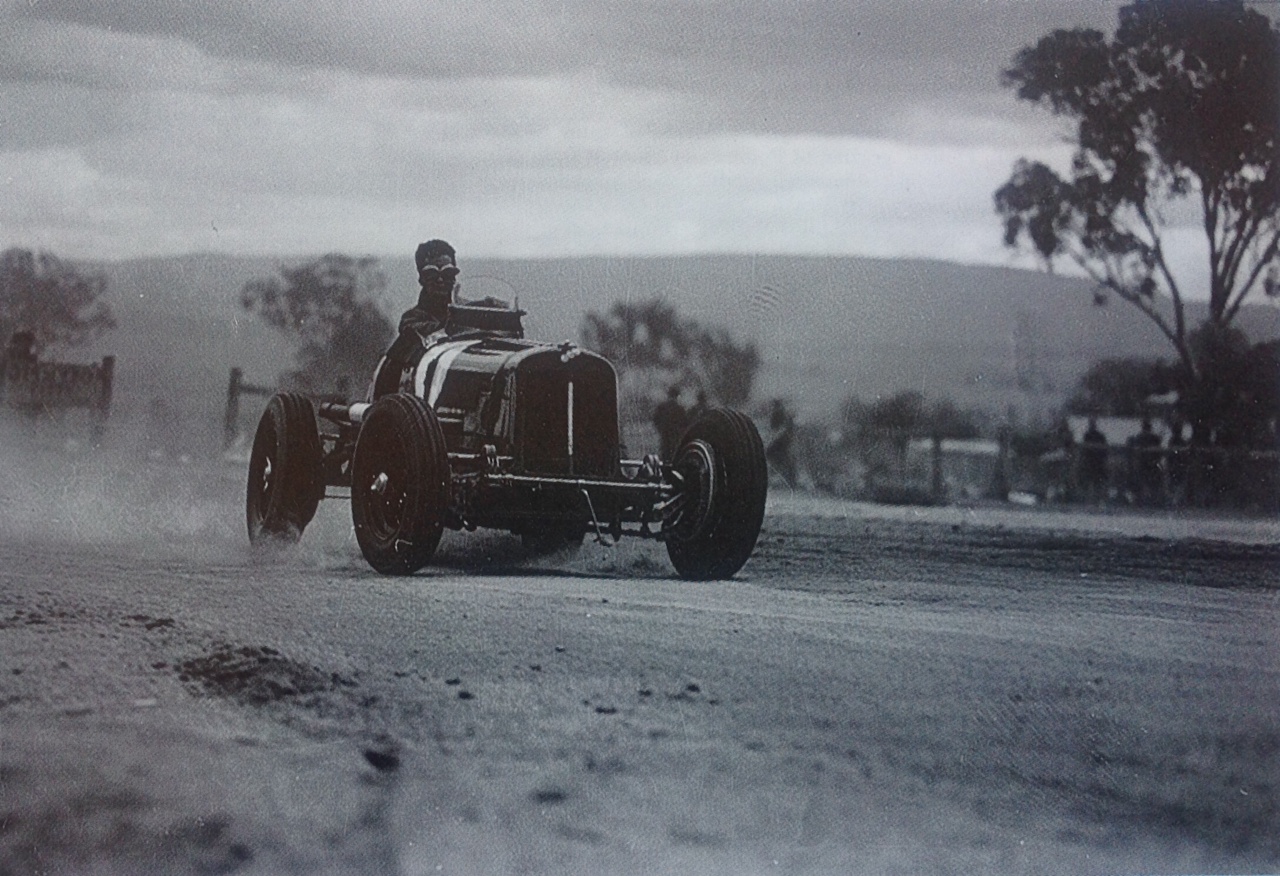
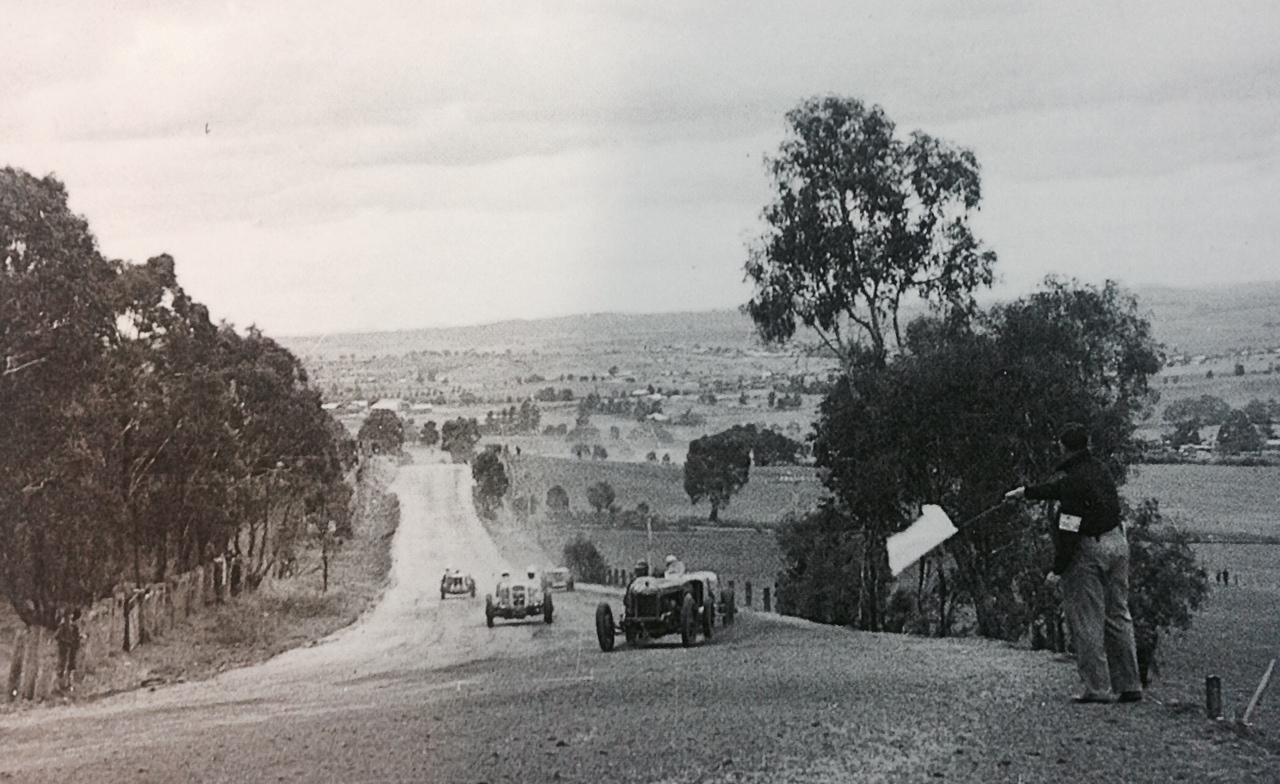
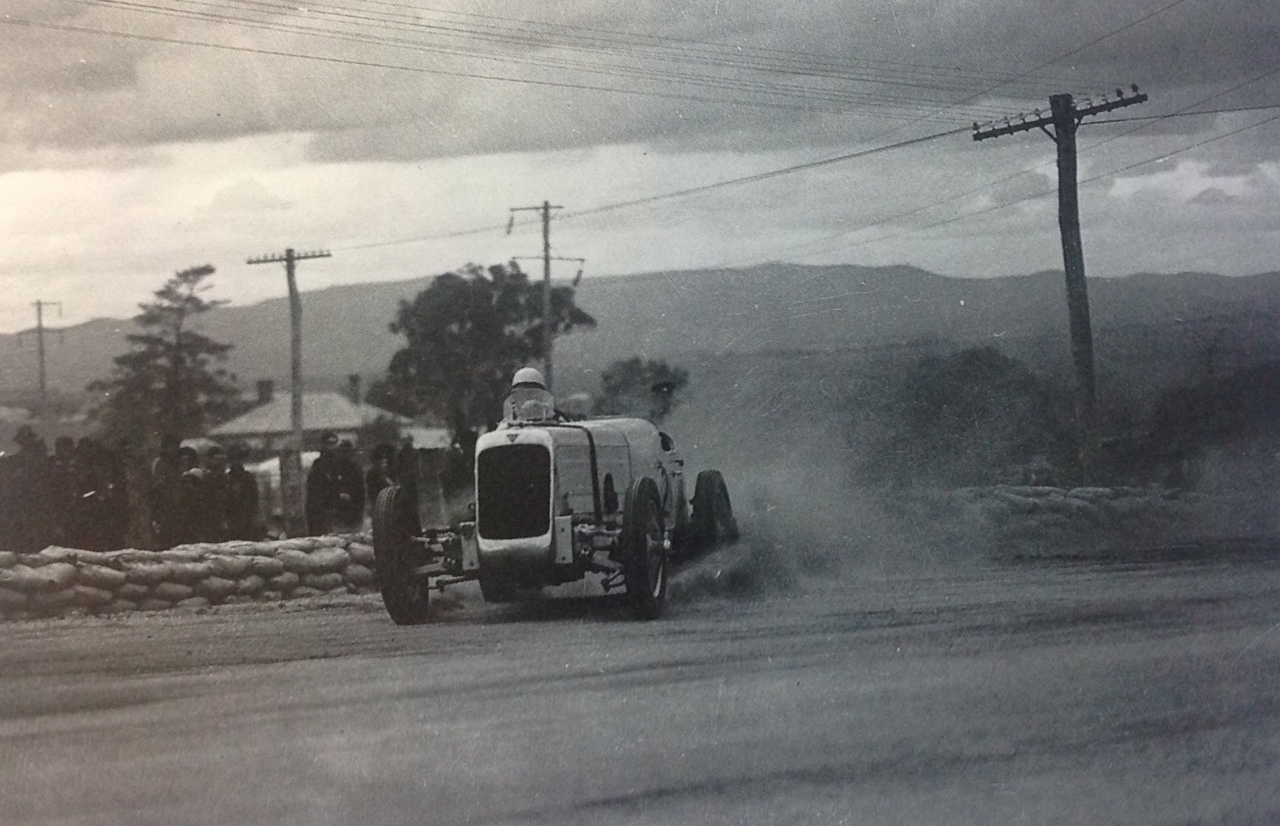
Peter Whitehead kicks the tail of ERA R10B out on the dirt surfaced Mount Panorama circuit, Bathurst AGP 1938…
It was said in those far away pre-synthetic fabric days that Australia ‘rode on the sheep’s back’ :120 million of the critters roamed Australia in 1938, we clothed the world, with 50% of the wool clip sold to the United Kingdom.
Peter Whitehead was a member of a wealthy Bradford family with extensive interests in the textile industry including Australia. The family company, W & J Whitehead were worsted wool spinners making yarn for products ranging from clothing to furniture. Whitehead lived on a farm near Reading, ‘Motorwork’ of Chalfront St Peter was the base for his racing activities.
He was despatched to the Colonies in 1938 to help expand the family empire, his ‘tour’ creating enormous press and public interest as, in addition to his ‘sheep shears’ he brought with him ERA R10B the ‘fastest car in Australia’. During his visit he ran the car at every opportunity in addition to his well known victory in the 1938 Australian Grand Prix at Bathurst including several attempts on the Australian Land Speed Record.
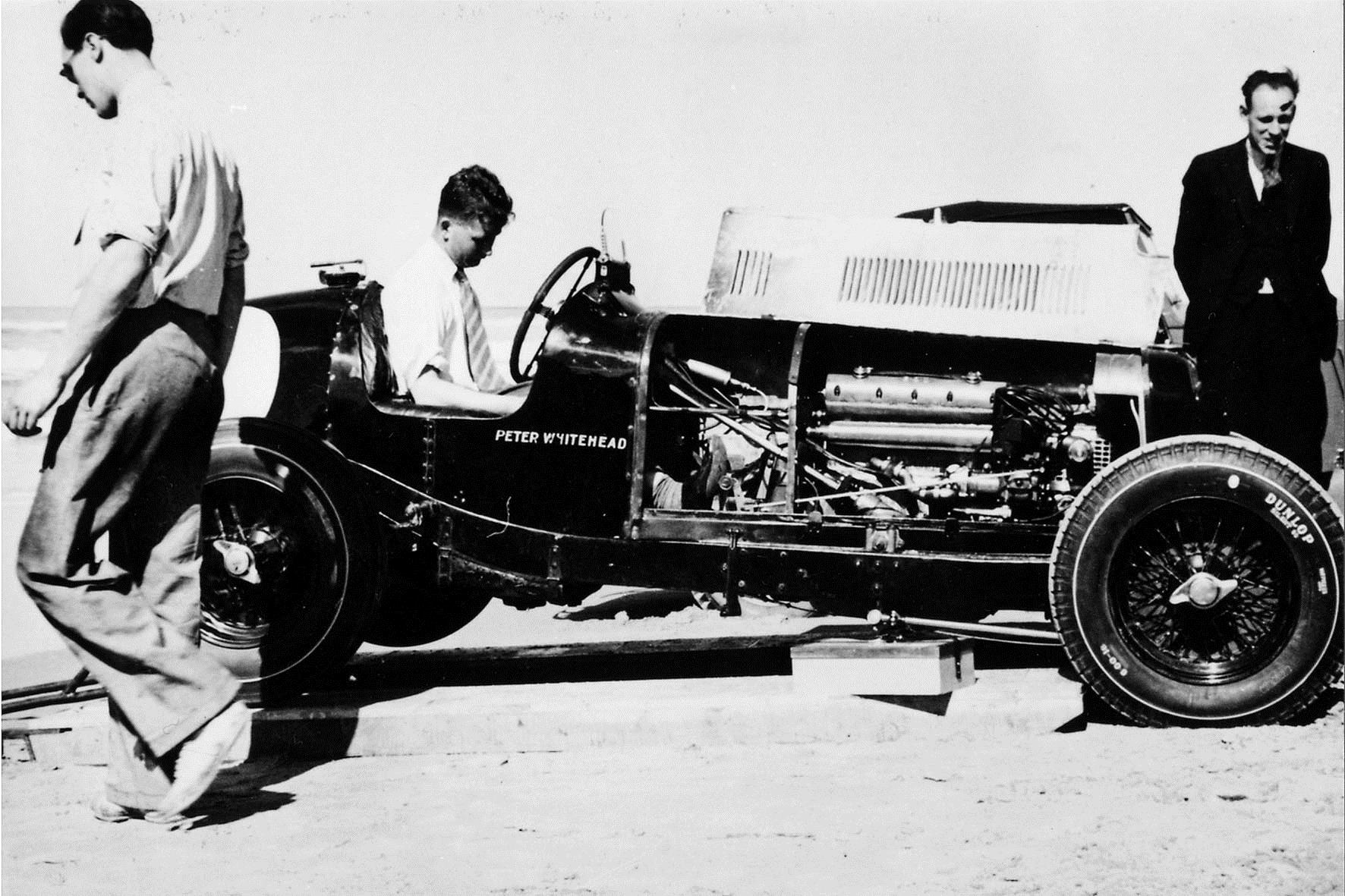
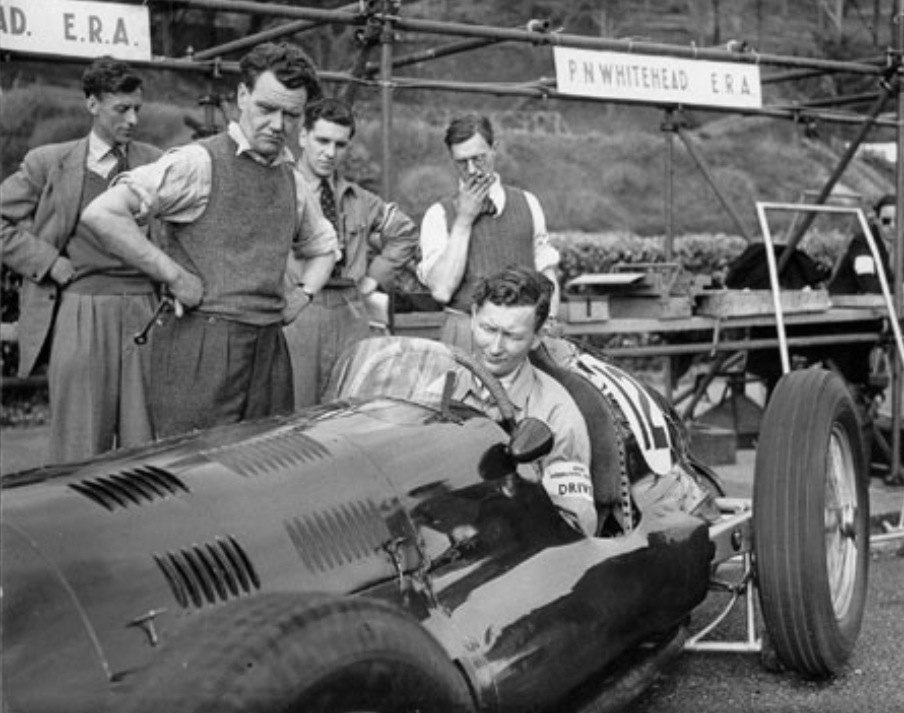
Whitehead and his crew at Bathurst. Nice cockpit detail of R10B. ‘Although Whitehead dominated the AGP in terms of speed and equipment, he had to drive hard all the way, and vastly impressed onlookers with his style. He was allowed to drive bareheaded so he might better listen to his engine’ (History of the AGP G Howard)
Whitehead, born in Yorkshire on 12 November 1914, started racing in a Riley progressing to an Alta and soon the ERA,acquired new from Raymond Mays and Humphrey Cooks’ concern in 1936.
Peter was a ‘wealthy amateur’ but also a fast world class driver, a lifelong enthusiast who won Le Mans in a C-Type Jaguar in 1951 in a long, varied career in sports cars and single seaters. His life was cut short by a 1958 Tour de France crash, he was a passenger in a Jaguar Mk1 driven by his half-brother Graham.
But back to the start…he commenced racing a Riley, quickly progressing, he finished third in the Limerick GP, a Formula Libre race, which was the first major result for Geoffrey Taylor’s Alta firm. In 1936 he finished third in the Donington Grand Prix, sharing his ERA, with his driving partner in the car throughout, Peter Walker.
During the war he joined the RAF as a pilot. Once the war was over he was back racing, taking his ERA to second place in the British Empire Trophy on the Isle of Man in the summer of 1947. Later that year he raced at Lausanne as well. In 1948 he survived a plane crash at London’s Croydon Aerodrome being seriously injured. He had been preparing to fly to Milan to arrange the purchase of a Ferrari 125.
In 1949, after convincing Enzo Ferrari to sell him the car, he became the first Ferrari F1 privateer. With the green painted 125, he won the Czech GP, becoming the first Briton to win a major race abroad since Seaman. He almost won the French GP as well but gearbox problems pushed him back to third.
Victory at Le Mans in 1951 with Peter Walker, Jaguar XKC (unattributed)
In 1950 he won the Jersey Road Race and the Ulster Trophy at Dundrod and achieved a career highlight at Le Mans in 1951 sharing the winning Jaguar C-Type with Peter Walker.
He continued to race and win in Formula 2 events across Europe in 1951 and 1952 with an Alta, a Cooper-Alta and his Ferrari. In 1953 he shared victory with Stirling Moss in the Reims 12 Hour in a C-Type Jaguar winning the race again the following year in a D-Type, sharing with Ken Wharton, it was the ‘D’s first win.
Whitehead 7th in the Italian GP, Monza 1950. Ferrari 125 (unattributed)
In 1953 he won the French 12 Hours of Hyeres and added Ferrari single-seater victories in the Lady Wigram Trophy in New Zealand and in the Rand GP in South Africa. He returned to Australia in 1956 contesting the ‘Olympic Grand Prix’ at Albert Park finishing third in his Ferrari Super Squalo in the race won by Stirling Moss’ works Maserati 250F.
At Le Mans in 1958 he shared the second-placed Aston Martin DBR1 with his half-brother Graham then, a couple of months later, Peter lost his life during the Tour de France. Their Jaguar, with Graham at the wheel, crashed over a bridge parapet into a ravine, injuring Graham and killing Peter.
Lovely portrait of a happy driver, Peter Whitehead. Car, Alta? date and place unknown (unattributed)This is not R10B…or even a ‘B Type’, its actually a ‘C Type’, ignore the Porsche type front IFS and pretend it’s the beam axle of the A/B Types…otherwise the overall look is captured, too nice a drawing by Bob Shepherd of ‘Australian Motor Sports’ not to use I reckon! (Bob Shepherd)
ERA R10B…
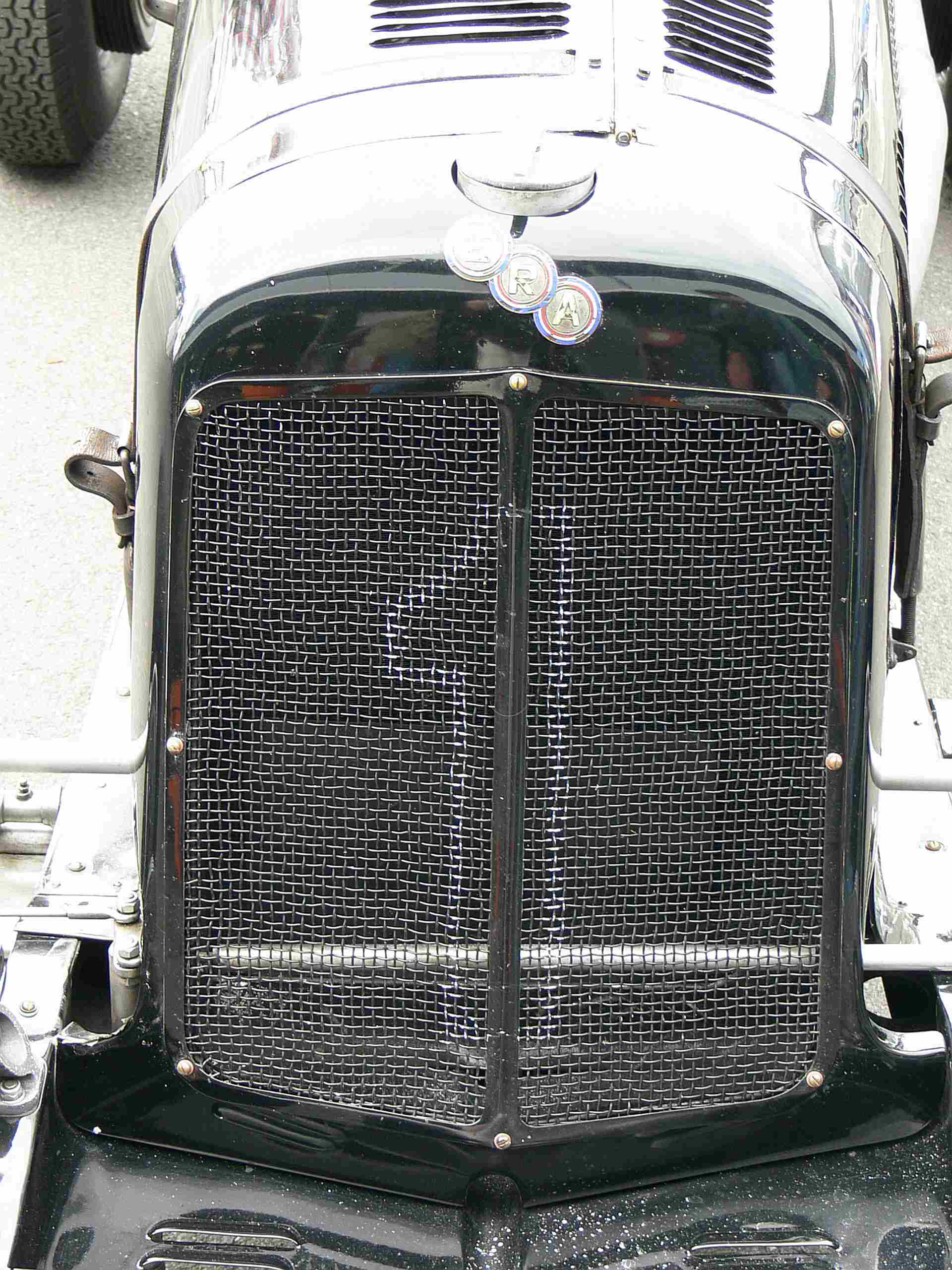
ERA was founded by Humphrey Cook, Raymond Mays and Peter Berthon on November 6 1933 and established in Bourne, Lincolnshire next to Eastgate House, Mays family home.
Their ambition was to build a team of single-seaters capable of upholding British prestige in European racing. Given the cost of Grand Prix racing, they focussed on the smaller voiturette, 1500cc supercharged class, the Formula 2 of the day.
Humphrey Cook financed the operation. Peter Berthon was responsible for the overall design of the cars, while Raymond Mays became its principal driver, he had most recently raced the White Riley, the success of which inspired Cook to back its creators in founding ERA.
It’s said the first design drawing by Reid Railtons’ assistant Ralph Beauchamp was dated 23 October, before ERA was formally incorporated. The chassis, a channel section frame, was designed by Railton who had also successfully designed the Bluebird Land Speed Record cars for Malcolm Campbell. The frame was built by Thomson & Taylor at Brooklands.
The wheelbase was 96 inches, the front and rear track 52.5 and 48 inches respectively. Panel-beating brothers George and Jack Gray hand crafted the bodywork, to a design credited to a Mr Piercy who had previously designed ‘Bluebird’s body.
Peter Whitehead warming up the engine and transmission of R10B before his unsuccessful attempt on the Australian Land Speed record on the 90 Mile Beach, Victoria in September 1938 (EH Price)
Suspension front and rear (A & B types, the works team raced the A-Type in 1934/5, the B-Type had a slightly revised chassis and more reliable engine) comprised H-Section live axles forged by Hadfields, sprung by semi-elliptic leaf springs, dampers were Hartford friction type.
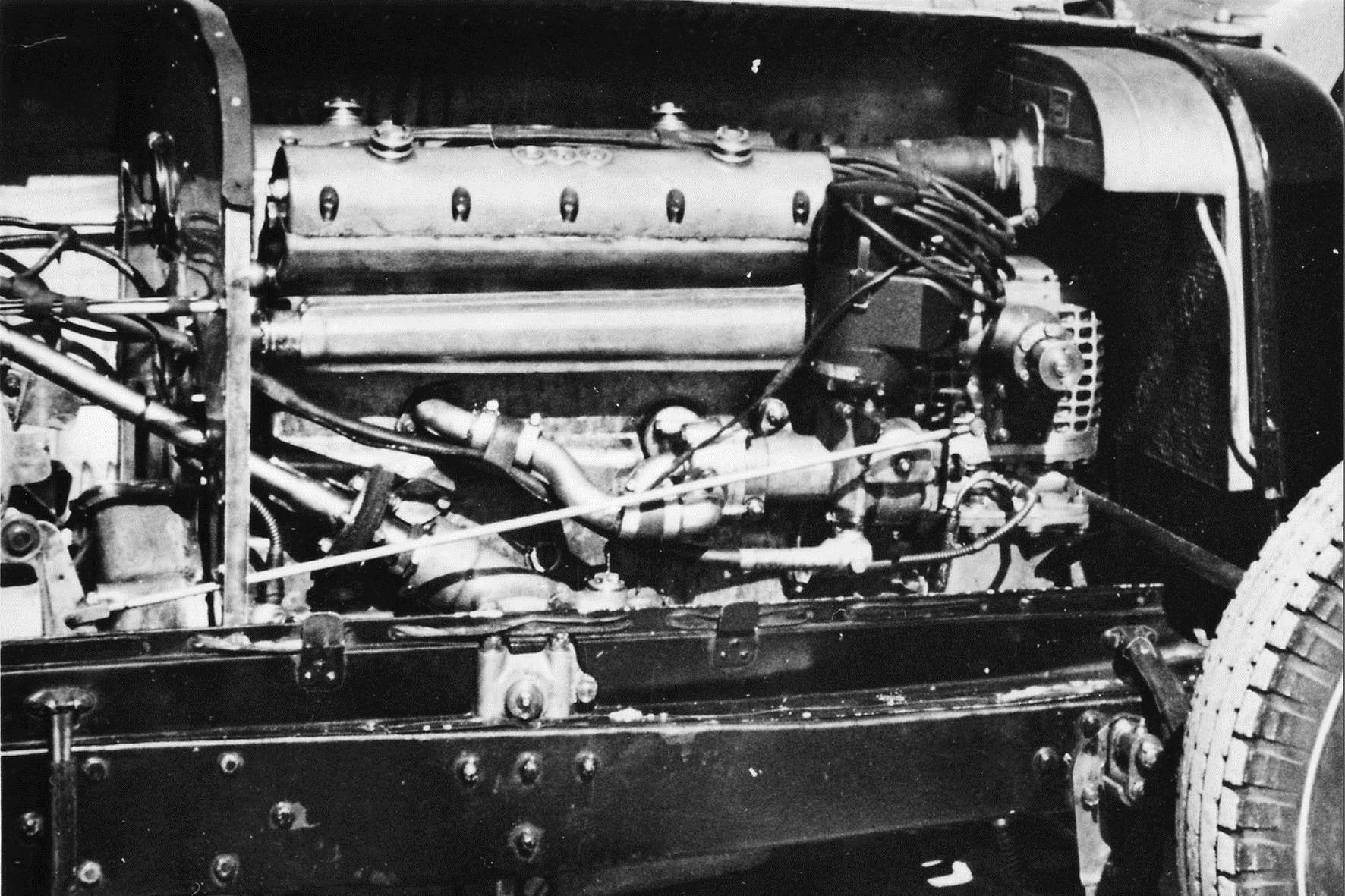
The engine was based on the well proven Riley 6-cylinder unit, modified in a number of significant ways. A stronger forged crankshaft with a large centre Hyatt roller bearing, three main bearings in all, was made and an entirely new aluminium cylinder head designed. The engine used a bespoke supercharger designed by Murray Jamieson which was fed by a single SU carburettor. One plug per cylinder was ‘sparked’ by a Lucas magneto. The engine was designed in three capacities: a base 1488cc, 1088cc and 1980cc. It ran on methanol, in its 1500cc form it produced circa 220-240 bhp with in excess of 275 bhp in 2000cc form.
The cars were fitted with Wilson four-speed pre-selector gearboxes, Girling mechanical brakes and 16X5.25 inch tyres, total dry weight was 2016 pounds.
The unveiling of ERA, R1A took place at Brooklands on 22 May 1934. After initial handling problems, which required a number of modifications, ERA had a winning formula. By the end of the year ERAs had scored notable victories against many more established marques.
R10B was built to Peter’s order in 1936 with a capacity of 1.5-litres. The price quoted was £1500. R10B remained 1.5-litres in capacity until Whitehead fitted a 2-litre engine and two-stage blower in 1949, but for the period we are covering was a standard-spec 1.5-litre B-Type ERA.
Supercharged 1.5-litre inline six cylinder, cast iron block, alloy head Riley based engine of R10B at the 90 Mile Beach, Victoria in September 1938. Steering column and box, throttle linkage, magneto, super-charger, engine rocker cover detail and chassis rails all visible (EH Price)Cutaway drawing nicely shows the key elements of the very successful design (DMJ Illustration)
England to Australia : Maroubra Speedway: Sydney, NSW April 1938…
It’s not recorded from whence the Whitehead crew set sail in England but the first event for the car in the Southern Hemisphere was the Australian Grand Prix held at the new Mount Panorama circuit on the Easter Sunday weekend, 18 April 1938
That Whitehead tested his ERA or ‘ran in his engine’ on what remained of the Maroubra Speedway’s concrete bowl whilst in Australia does not seem to be in doubt. Perhaps it was prior to travelling to Mount Panorama. This is plausible if the car was shipped from the UK to Sydney, docking at King Street’s ‘Hungry Mile’, infamous as the place where thousands of unemployed labourers sought a days work in the long years of The Depression or Jones Bay Wharf in Pyrmont.
To test the car with the resources of the Sydney ‘fettlers’ closeby makes ‘racers sense’ after the ERA’s long voyage. The other possible time of the Maroubra test was perhaps after the failure of a piston and the engines rebuild or replacement after the car’s failed Australian Land Speed attempt at Gerringong Beach, NSW on November 10. That seems to have been the cars last event in Australia, R10B needed to be race ready for the two events in South Africa Whitehead contested in January 1939 on the way back to the UK.
Maroubra is a Sydney Southern Beaches suburb adjoining internationally known Bondi. Speedwayandroadracehistory describe the history of ‘Olympia (Maroubra) Speedway’ as follows…’The paved bowl Maroubra Speedway opened on the 5th of December 1925. It had the reputation as Australia’s most notorious ‘Killer Track’
‘Situated South of Sydney in a natural hollow in the Maroubra sandhills, it was an ideal area for the track as the natural landscape lent itself to a huge saving on the cost of earthworks and the large population of Sydney was just down the road. Once the track was completed claims of up to 70,000 spectators were made. The track was that steep through the turns that it was impossible to walk up the track face.’
‘Snakes were a major problem as they would come out during the heat of the day to soak up the sun’s rays on the race track, a bit of a worry with no protection from another cars wheels flicking up a Dugite snake into the open cockpit’. Hmm, yep!
‘Five competitors would lose their lives in just two years during the 1920s. In 1927 the great Phil Garlick driving his super-charged Alvis, blew a tyre and rode over the top edge of the race track, hitting a light pole and died instantly.’
Plagued with problems the short 5/6th of a mile venue closed in 1927, long gone were those two years of large crowds looking on in amazement at the motorcycle racers reaching speeds of up to 100mph side by side on the big banked oval.
Less sensationally, Graham Howard in an article for Motor Racing Australia remarked on the bravery of the promoters in building a facility unlike any in Australia before, the short concrete track having curves of 16 degrees and dizzying 48 degrees elevation built by contractors with no expereince in anything like it.
Crowds never matched any more than one third of the 60000-90000 estimated on the opening day, many spectators avoided paying for the entertainment on offer by making use of the local surrounding sandhills which attracted the investors in the first place. The original entrepreneurs went bust in 1926, subsequent management tried night racing for both cars and ‘bikes. The danger of the place caused competitor entries to decline, all the racer fatalities occurred on the same section of track after the north-east curve.
Maroubra’s last race meeting was held in November 1934, the original crown lease was assumed by the Housing Commission, by 1951 construction of dwellings had commenced and by 1961 the area was occupied by 4000 people. Sydneysiders can check out the area bounded by Anzac Pde, Malabar Rd and Fitzgerald Avenue as the site of actions of derring-do in the 1920’s…
I’ve not uncovered any photographs of Whitehead at Maroubra but have chosen a couple of period photos’ to provide the flavour of the place.
This shot of Hope Bartlett’s Bugatti Brescia chosen to show the steepness of the concrete bowl. 22 December 1926 (unattributed)Harry Cooper Ballot 2LS and Hope Bartlett, one of the stars of the day, Bugatti Brescia. Big crowd, date uncertain (unattributed)
Whitehead timed his stay in Australia around The Australian Grand Prix, held that year at Bathurst, Easter in April…
The daunting circuit was newly built and had a gravel surface. Whilst Whitehead’s ERA was the most advanced new car in the race, the AGP was held to Formula Libre and handicapped until 1953 due to the paucity of equivalently competitive cars, the sport very much an amateur activity at the time.
John Medley wrote the 1938 chapter of Graham Howard’s magnificent ‘History of The Australian Grand Prix’, Medley records…’The new circuit over Bald Hills near Bathurst was the sene of the 150 Mile AGP…The first ‘real’ AGP outside Victoria, it drew the largest field so far, 39 entries, it continued the trend towards larger engines, it had a multi-state entry (and two from the UK), it produced the first overseas winner of an AGP, and was run on the only one of the great traditional old circuits to survive to the present day’.
AGP field awaits the start, R10B in shot (History of The AGP)
The ERA dominated the entry list, the car had been raced by both Whitehead and Peter Walker, having finished third in the 1936 Donington GP, the 1936 Nuffield Trophy, the 1937 Junior Car Club 200 Mile event at Donington and the 1937 Empire Trophy also at the Leicestershire circuit.
Medley reports the quickest Australian cars entered were the McIntyre owned, Frank Kleinig driven Kleinig Special an eight cylinder Terraplane powered car based on an MG L-Type Magna chassis; the development of this amazing car over 15 years is a story in itself. Tom Peters was entered in the Ford V8 powered Bugatti T37A which won both the 1930 and 1932 AGPs at Phillip Island in Bill Thompsons’ hands. Colin Dunne entered an ex-Bira MG K3, Jim Fagan another K3, ex-Birkin/Don/Hall, and Lyster Jackson the final K3 ex-Hall.
Fellow Englishman Alan Sinclair joined Whitehead racing an ex-Winterbottom Alta 21S 1100…’The Alta an infrequent starter in Australia, being a temperamental beast-apparently like its owner who had a lively time whilst in Australia. The Alta non-started at Bathurst too, but that may have had something to do with Sinclair spending the previous Friday night in the cells on sundry drunk and disorderly charges’ Howard reports.
Other entries included Tim Joshua’s Gough engined Frazer Nash, the Mrs Jones owned Alfa Romeo 1750SS to be driven by future AGP winner John Barraclough, George Martin’s BMW 328,(this 328 won the 1948 AGP in Frank Pratt’s hands) Barney Dentry in the Riley which won the 1932 Brooklands 500 Mile Race, Dentry having competed in all but one AGP.
Limit man Ron Uffindells Austin 7 is away. AGP start 1938 (John Blanden Collection)
The importance of Australian Specials at the time is highlighted by the entry of George Bonser’s and Harry Beith’s Terraplane Spl’s. Wangaratta’s Jack Phillips’ entered his Ford V8 Spl, so too were Queenslander Charlie Whatmore and Arncliffe, Sydney garage proprietor Fred Foss similarly mounted.
Shanghai born Bob Lea Wright was remakable chracter, a WW1 fighter pilot, national swimming champion and a good boxer who rose to the rank of Major during WW2 in the Service Corps. He was in a Terraplane Spl as was Bowral, NSW, Hudson/Terraplane dealer Les Burrows.
Alf Barrett, about whom I wrote not so long ago entered his Morris Bullnose Spl for Colin Anderson and the ex-Jack Day 1927 supercharged Lombard AL3 for himself. New MG ‘T’s were entered for John Crouch, Alan Crago and R Kerr stripped of ‘guards and lights as was the 1934 Riley Imp of George Thame.
On the face of it the ERA was easily the fastest car in the race but the AGP was a handicap, anything can and did happen over the years the event was held to the F Libre/Handical format.
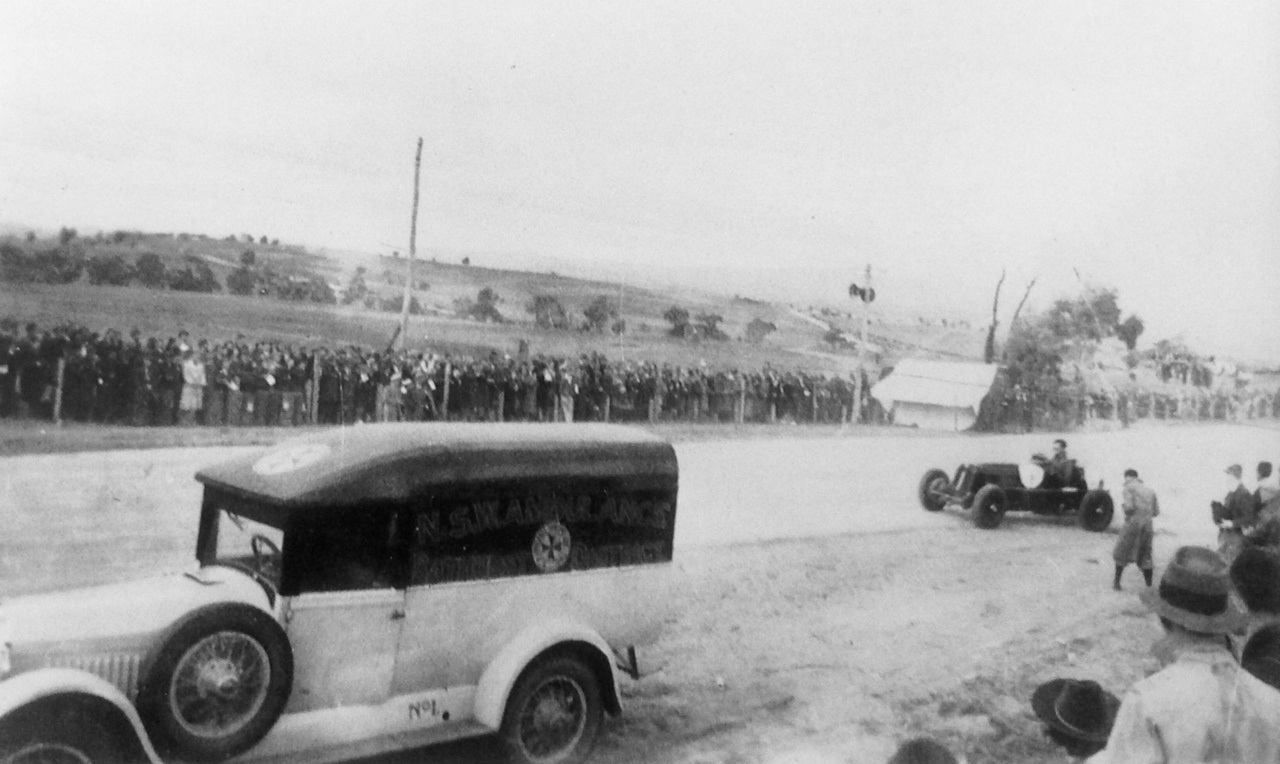
John Medley reported that, ‘Despite the bitterly cold morning over 30000 spectators thronged all parts of the circuit…After a grand parade, the limit marker, Ron Uffindell’s Austin 7 was away on its long journey. Over the next half hour the rest of the field left the line, scratch marker Whitehead leaving a blanket over the ERA radiator until the last moment’.
34 minutes after limitman Uffindell’s Austin 7 set off Whitehead is away, past the St Johns Ambulance. Grey, cold Easter Bathurst day (History of The AGP)
‘Already by the time of Whitehead’s raucous departure there had been pitstops and retirements’: Thames Riley Imp broke its crank, Barretts Lombard was out with either magneto trouble or run bearings but Alf was impressed by the ERA, the purchase of an Alfa Monza via Thomson and Taylor shortly thereafter the result of a desire to get a competitive, reliable car. Les Murphy lost time with a long stop and Frank Kleinig retired after throwing a fan-belt.
‘So through the dust and ruts and the flying stones Uffindell lead with Anderson and Pike in pursuit…the battling MG T’s were next from Crouch, Keir…further back Burrow’s Terraplane, the McKellar V8 but already Whitehead was looking the likely winner, lapping faster than expected’.
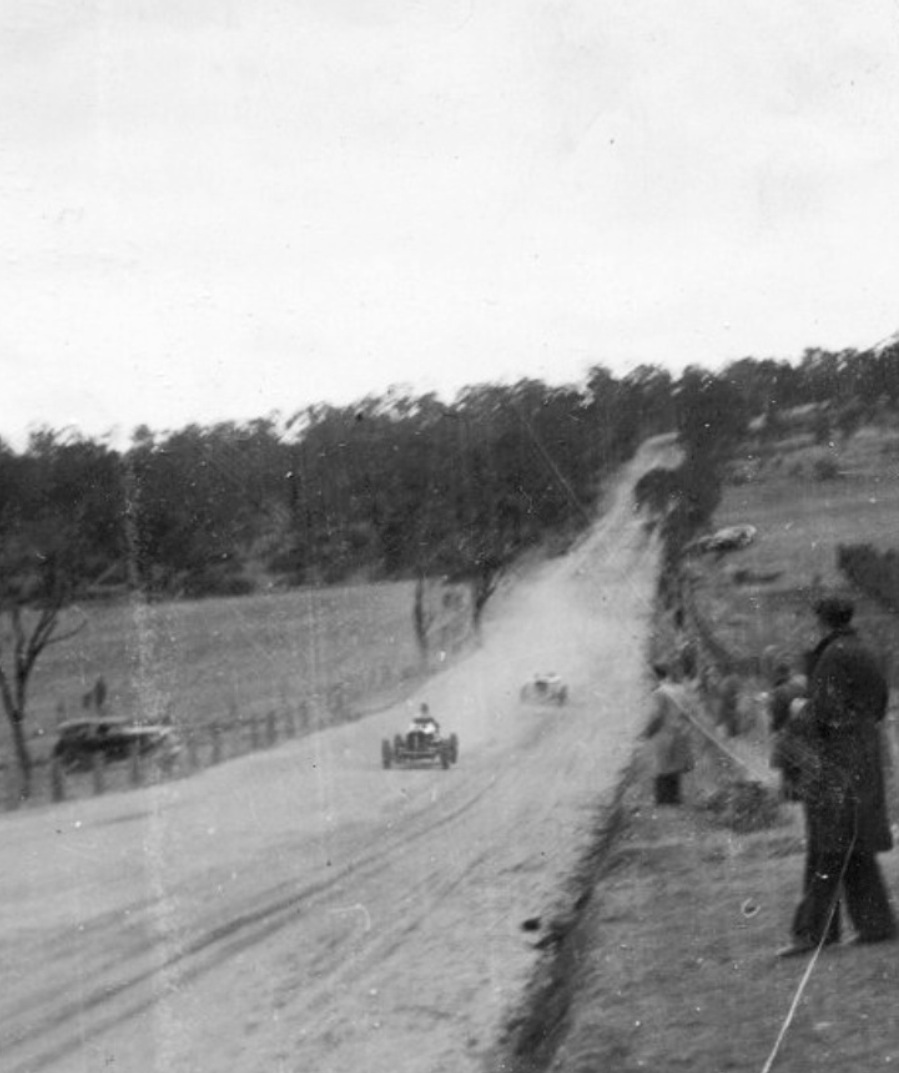
Shot shows the challenges of high speeds on the narrow, dirt surface of Conrod Straight, perhaps the Dentry Riley behind Whitehead’s ERA. The Esses/Forrests Elbow in the distance (Dave Sullivan Album)
On lap 20 Peter pitted for oil, fuel and water, by then the Norman Aubin Ford V8 Spl, Williamson Chrysler, Joshua Frazer Nash and Weir MG had retired.
‘According to the Bathurst Advocate…this intrepid Englishman apparently does not know the meaning of fear. Once or twice his car slid badly and began to waltz about on the road but he just smiled unconcernedly and set it racing on a perfect course again with the utmost simplicity’.
The Crago/Sherwood stripped MG T Type lead at the halfway mark. Here he is at the top of Mountain Straight turning into Quarry. Bathurst countryside as far as the eye can see (Bob King Collection)
At the 100 Mile mark, the Crago MG, driven now by John Sherwood, led Uffindell by a minute, Crouch and Burrows side by side across the line in third and fourth. ‘But the writing was on the wall-either Whitehead or Burrows would win’.
‘The race continued with the corners badly rutted and increasingly dangerous. The Foss Ford V8 Spl, Pike and Beasley Singers and Fagan’s noisy megaphoned MG K3 also fell out and the Burton Alvis in a race punctured by incidents spun again at the Esses’.
Paul Burton was a WW2 test pilot. His 1482cc supercharged FWD Alvis was ‘driven with enterprise’, the car survives today (John Blanden Collection)Ron Uffindell, Austin 7 Spl (GB Bevan)
‘On lap 30 Burrows lead by 8s from Sherwood with Whitehead in sixth place and 3m 40s behind…rapid calculations suggested that Burrows might beat the black ERA home-but it was not to be; a disappointed Burrows slowed, the Terraplane sounding woolly, and Whitehead, despite a windscreen broken by a flying stone 5 laps from the end, passed him during lap 35 to forge away. Burrows maintained his distance ahead of Sherwood in the Crago MG’.
Whitehead received the chequered flag from Whatmore and Sherwood. Many pitcrews disagreed with the official results, after protests the placings were: Whitehead in R10B, Les Burrows in the Terraplane Spl, Crago in MG T, T Peters in the MacKellar Spl s/c, John Crouch MG T and Jack Phillips, Ford V8 Spl.
Beith’s 3455cc straight-eight Terraplane Spl leads Kerr’s 3621cc V8 Ford Spl – his passenger working hard! Australian Specials were the essence of this race for so long. Hell Corner, the run onto Mountain Straight (Wheels)
Medley…’Whitehead received a tremendous ovation at the finish and afterwards was surrounded by a huge crowd. Dusty, dirty and deaf in a dark blue shirt, spotted tie and grey slacks, mug of beer in hand, he praised the circuit, fellow competitors, and the race itself: ‘I think it is a really fine track. It has the fast corners and the slow corners and a long straight that enables cars to make up lost time…when tar paving is carried out it will be hard to better it…some nasty bumps appeared down the Mount during the latter part of the race’. He said he had not been troubled by spectators walking on the track!
In the best traditions of motor racing Whitehead and Sinclair led the celebrations. Jim Leech in the Light Car Club of Australia History ‘…at the prize presentation His Worship The Mayor had just finished his address to the multitudes and was on the point of handing the winner’s trophy to Whitehead when he was squarely hit on the head by a large cauliflower. This being followed by a shower of similar vegetables resulting is His Worship, his two daughters and other Councillors retiring in disordered haste’.
John Medley, ‘The sporting newspaper The Referee had earlier predicted that ‘Englishmen Whitehead and Sinclair will add tone to the event…’
Peter Whitehead takes the chequered flag in Pit Straight in cold, dusty conditions, love the salute of the bloke on the right! (Frank Wetton in ‘Bathurst: Cradle of Australian Motor Racing’)Amazing photo of Peter Whitehead fettling R10B in between runs, first hand accounts suggest he would have attained the record had the timing equipment done its thing. Canberra in June is bloody cold! hence the cardboard – by the look of it – blind to assist in retaining some water temperature (Ted Hood)
Land Speed Record Attempt : Canberra, ACT June…
The Canberra Speed Trials were annual events conducted during the 1920s and 1930s featuring standing start and flying start time trials along a rural road which is now Northbourne Avenue, literally Canberra’s main street. I can find little reference to these events but the photos in Ted Hoods’ Collection in the State Library of NSW make up for the paucity of information otherwise.
Racer Arthur Rizzo, in an article about his Rizzo Riley Spl said of Whitehead’s attempt, ‘1938 saw us in Canberra to watch the attempts on the Australian records. Peter Whitehead’s ERA sounded terrific and was hand timed to around 150mph.’ (the timing gear refused to record his time)
‘Later the same year we saw the ERA at Bathurst on a circuit that was all dirt. We were at the top of Conrod looking up at The Esses and I remember the ERA coming down into Forrests Elbow in the deep wheel tracks, the fixed crank handle digging into the mound between the tyre tracks and making a noise like a machine gun’.
Tiny crowd, at least from this angle watching the record attempts. Its a hazy shot but its Whitehead on one of his runs. Road now Northbourne Ave, a main Canberra artery (Ted Hood)Whitehead in Canberra. Nice detail shot of forged ‘H Section’ beam axle, Hartford friction dampers, finned brake drum, fixed crank handle which received a serious workout on Bathursts’ late race rutted surface! (Ted Hood)R10B Rob Roy, June 1938 (Leon Sims/MGCC)
After the AGP the ERA journeyed from Central New South Wales to the outskirts of Melbourne to contest the Australian Hillclimb Championshipat Rob Roy in the Christmas Hills on 13 June…
Peter needed to run in some engine parts so did part of the journey in R10B from Canberra on the Hume Highway, the main road between Melbourne and Sydney! It’s hard to imagine Lewis Hamilton doing something similar in his ‘Benz whilst he was in Oz for the 2015 AGP. Mind you, according to one report the ERA was locked up for a bit due to this escapade. Such were those wonderful far away days.
Rob Roy is still in use, it’s a short climb and was then, as so many of our venues were, unsealed until the following year. The Melbourne Argus reported that 3500 people attended the pretty little hamlet and watched Whitehead clip 3.94 seconds off the previous record. His best time was 31.48 seconds, winning both the Australian and Victorian Hillclimb Championships from Jack Phillips’ Ford V8 Spl and Arthur Terdich’s Bugatti T37A.
Rob Roy, Christmas Hills panorama in 1947, looking down to the start. Not that much different today, its still rural despite being (longish) commuting distance from Melbourne (George Thomas)Whitehead at Rob Roy, Victoria (MG Car Club)Peter Whitehead battles an unfavourable tide. 90 Mile Beach September 1938. The relatively narrow patch left for the ERA of ‘solid’ sand is clear between the soft sand and the shallows (EH Price)
Land Speed Record Attempt : 90 Mile Beach, Woodside, Victoria Sunday 4 September…
The Perth Sunday Times expected the Australian record of 92mph to be surpassed at the 90 Mile Beach – as the name suggests – a long expanse of coast at Woodside near Yarram 210 kilometres from Melbourne. The attempt was made under the auspices and control of the Australian Automobile Association and a top speed of over 120 mph was expected over the four miles of pristine beach chosen for the attempts of Whitehead and others.
The Adelaide Mail in its pre-event report described Whitehead ‘as a pleasant young Yorkshireman, a shock headed wool buyer and amateur racing motorist’.
Whitehead was quoted as saying ‘ The car can do it if the conditions are good…You just sit there and tread on the gas, and hold tight to the wheel. On a good test run particularly, it is not the driver that counts but the engine. The ERA is good class here, but in England she is pretty slow. At the beach on Sunday I am not going to be a Segrave or a Campbell!! So do not be disappointed’.
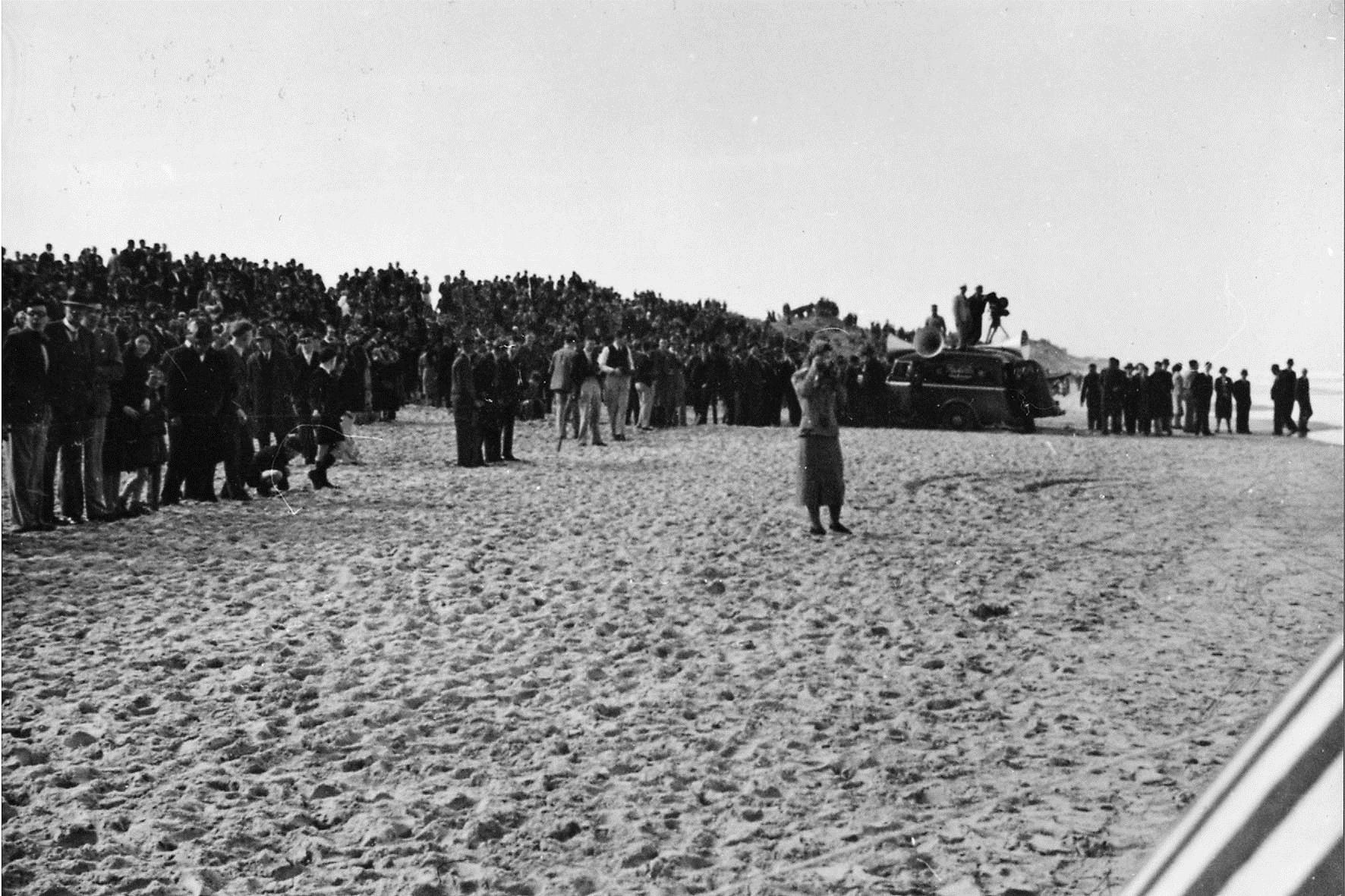
Crowd scene at the 90 Mile Beach near Woodside, Victoria, September 1938. 6000 people a large number at this remote location far from any City of substantial size (EH Price)
That 6000 people ‘conveyed by nearly 2000 motor vehicles ‘attended the event at the time is remarkable given the distance from Melbourne, the small local population and the lack of public transport to access the then relatively remote location.
The Melbourne Argus reported that the attempts were stymied by a strong south easterly wind which prevented the usual fall of the tide. After Whitehead achieved 118.8 mph in the ERA waves washed over the track preventing any further serious attempts. As Peter’s speed was in one direction, the rules requiring a two way average, a new record was not recognised, the existing record set in Canberra some years before, by Bill Thompson’s Bugatti at 112.5mph remained. The report noted that Thompson was an interested onlooker.
‘The Sunday Times’ Perth 4/11/38.
I love the terminology of the day ‘…the crowd began to throng the sand hummocks along the picturesque track many hours before the events were timed to begin. Trials were impossible owing to the tide. When Whitehead warmed his engine up for the first run at 2pm officials expressed keen disappointment at the failure of the tide to fall to within 20 yards of the usual mark’
‘With only a few yards of wet sand between the flags and the waves on the four mile course, Whitehead pluckily started up so as not to disappoint the crowd. He was obstructed by water in his first run however, and although he averaged 118.8 mph in his next run, his car plunged through the lip of a wave, tearing away the apparatus for cooling the brakes, ripping off the oil filler cap, and partially flooding the crankcase with salt water. He maintained control but it was evident that he had no chance of putting the record up to 135mph which was his hope’.
Whitehead gently warms up the cars engine and Wilson pre-selector ‘box prior to a 90 Mile Beach run. The shot shows the packaging of car and driver in the day – collar and tie a nice touch! (EH Price)
Officials decided to allow other drivers some runs whilst Whitehead attempted repairs but the day was abandoned ‘with waves lapping the tent containing the electric timing apparatus and washing completely over the finishing point…there was a rush to get cars off the beach before the tide rose further’.
In an indictment of the morals of the men of the day The Argus on the same page breathlessly reported that ’55 men were arrested in Flinders Lane, Melbourne having been in a ‘common gaming house’, punting on the horses not allowed off course at the time!
Surfs not really up. Whitehead thwarted by bad luck, weather conditions, engine or timing gear failure at all four of his attempts on the Australian Land Speed Record in 1938 (EH Price)Peter Whitehead winning the feature event at Aspendale Speedway, Melbourne, Victoria in October 1938. ERA R10B. He also set the lap record (EH Price)
Aspendale Speedway : Melbourne, Victoria 1 October…
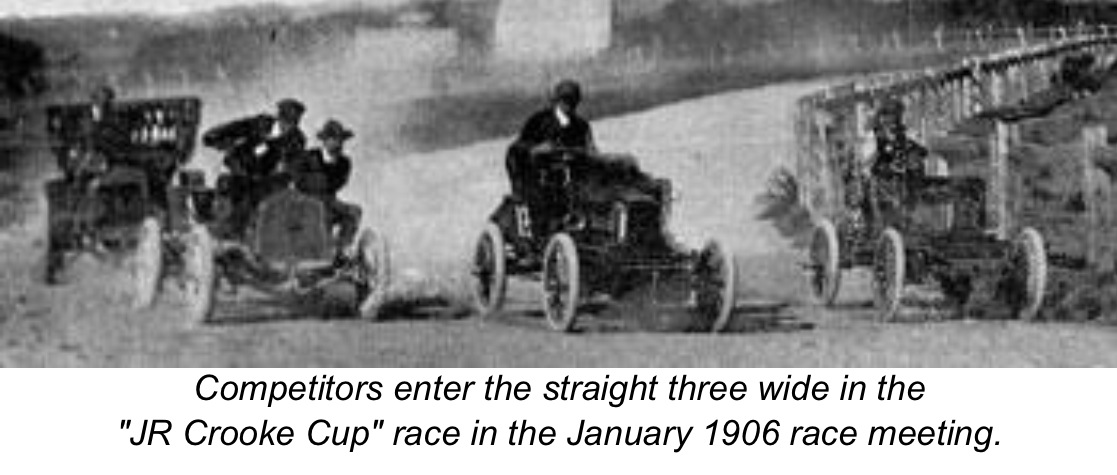
That Whitehead would run the car everywhere was shown again when he contested a ‘feature race’ at Aspendale Speedway in October. The venue was conceived as a horse racing track by James Crooke in 1891 but incorporated a track for ‘new fangled automobiles’ from 1906. In fact one of the very first races in Australia was contested at the venue that year.
Aspendale is a suburb 25 Km from Albert Park, also on Port Phillip Bay, which you can see from the AGP telecasts. When built, the facility was on Melbourne’s fringe but growing urban encroachment meant the track was subsumed for housing, the venue was used for motor racing into the 1940s.
The Argus reported that ‘The success of Peter Whitehead, the English racing car driver was a feature of the motor races conducted at the Aspendale Speedway on Saturday by the Light Car Club of Australia. Whitehead displayed the amazing acceleration and power of the car on the straights, especially the back stretch where he attained about 100 miles an hour. In the invitation race of 10 laps he completed 1 lap in 43.45 seconds at 82.79 mph. This established a lap record for the track.’
Whitehead won the feature from R Curlewis, MG and P Chain, Frazer Nash.
Other unidentified competitors at Aspendale Speedway during the 1938 meeting at which R10B competed (EH Price)Peter all loaded up and ready to go, Parramatta Park. His was one of a couple of practice accidents which gave ‘the coppers the wobbles’ and caused the events cancellation (unattributed)
Parramatta Park Grand Prix : Sydney 5 November…
It was the first time such an event was to be held in Sydney, a Grand Prix in Parramatta Park, an inner city suburb 25 kilometres from Sydney’s centre. The event, conducted by the NSW Light Car Club and Empire Speedways was to be held on 5 November 1938, the finale of a series of events which were part of Parramatta’s 150th Anniversary celebrations.
Interest from drivers and the public was enormous. Twenty five entries were received including Whitehead, Frank Kleinig, Les Burrows and Hope Bartlett. Jack Saywell’s Alfa Romeo and John Snow’s Delahaye, two of the fastest cars to have been brought into Australia were also set to oppose each other at the Parramatta Park track, described as being ideal with a good straight and challenging corners.
A grandstand with a capacity for 1100 spectators was built at the start-finish line, one thousand reserve tickets had been sold and about 50,000 people were expected to turn up to watch the event, which comprised three 20 lap heats and a 50 lap final.
Leading up to the race the safety of the track was reviewed. Graham Howard reported ‘some corners had been protected with sandbag walls, and spectator fences erected and at police request resited further back from the road. In practice Whitehead hit a sandbag wall, more worrying was Reed’s collision with an off course tree after the steering jammed in his Willys 77’
Peter Arfanis wrote ‘However, all the excitement of the event was transformed to astonishment then fury by 5.30pm Friday 4 November. At the eleventh hour Police Commissioner Mr. MacKay decided to ban the race. The decision immediately caused an outcry with the Mayor of Parramatta, Alderman Irwin, calling for a public inquiry into the decision. Crowds had begun gathering on race day unaware that the race had been cancelled. It was a major disappointment for the people of Parramatta.
The organisers were adamant that the race should continue and placed a fresh application for the race to be held on the following Saturday. Organisers were prepared to protect the public by erecting a ‘stout wire-meshed safety fence’ at any point that the police felt it necessary.
The police stood firm stating that the track with its difficult bends would have been dangerous to both the public and the participants’.
Graham Howard in his article in Motor Racing Australia about the circuit speculated, I suspect accurately, that the ‘twitchiness’ of the authorities about circuit safety was probably a consequence of the death of spectators at the privately owned Penrith Speedway (in Sydneys outer west) five months earlier. ‘Not on my watch etc!’
In practice Whitehead lapped the track in 1m 4.5 seconds ahead of Frank Kleinig (Hudson Spl) 1:7.6 and Jack Saywell’s Alfa P3 1:9.0, the circuit was 1.1 miles long. Several events were run post war. Stan Jones did 1.01 in Maybach 1 in 1952 and Jack Brabham 59.5 in his Cooper T23 Bristol in 1954 with no quicker car beating his time at the final meeting in the Park in 1955.
Not Whitehead’s ERA… but a group from 16 November 1929 to give the flavour of the place…L>R; Studebaker 8, Chrysler with outside exhausts, W Thompson Bugatti T37A and Hope Bartlett Bugatti T43. (MC Hinder, Sydney Morning Herald)
Land Speed Record Attempt : 7 Mile Beach, Gerringong, NSW 10 November…
‘Seven Mile Beach’ became known as the Gerringong Speedway, it was a popular outing to attend the races, and was the scene of a significant event in Australian motor sport history when the 100 miles per hour barrier was broken.
There were regular races throughout the 1920s and early 1930s. Around 2000 spectators were present at the Royal Automobile Club speed trials in March 1925, hoping to see the 100mph barrier broken. Don Harkness did so on October 7, 1925, his official speed was 107.75mph in a Hispano-Suiza V8 powered Minerva.
The crowds were excited by the car racing and land speed trials on Seven Mile Beach but in 1933 an entirely new era of transport began there. Local cars used their headlights to provide extra illumination for the first commercial flight between Australia and New Zealand. Sir Charles Kingsford-Smith used Seven Mile Beach as the runway for this flight between Australia and New Zealand and several thousand people came to watch the 2:30am take off.
The Canberra Times reported on 11 November 1938 of another attempt at the Australian LSR which continued to elude Peter ‘An attempt to establish an Australian Land Speed record by the English racing driver, Peter Whitehead on the Seven Mile Beach at Gerringong, yesterday failed at 132 mph when a piston broke.’
It would be interesting to know who rebuilt the engine in Oz, or perhaps he had a spare, probably did given the professionalism involved.
Whitehead returned to the UK…
I’ve not been able to ascertain exactly when Whitehead shipped R10B back to England, he travelled via South Africa on the way home. R10B contested two races, DNF with piston failure in the 5th South African GP at East London on 2 January 1939, the race was won by Luigi Villoresi in a Maserati 6CM. On January 14 he raced in the Grosvenor GP at Capetown again suffering piston failure, Franco Cortese won in another 6CM.
His third place in the Nuffield Trophy at Donington Park on 10 June 1939, the race won by Bira’s ERA R12C, appears to be his last success in the car before it was laid up for the long years of the War…
Peter returned to Australia to race post war as recorded earlier, he was a welcome visitor, but few racers have made the impact Whitehead and R10B did throughout 1938…
R10B Returns to Oz in 1978…
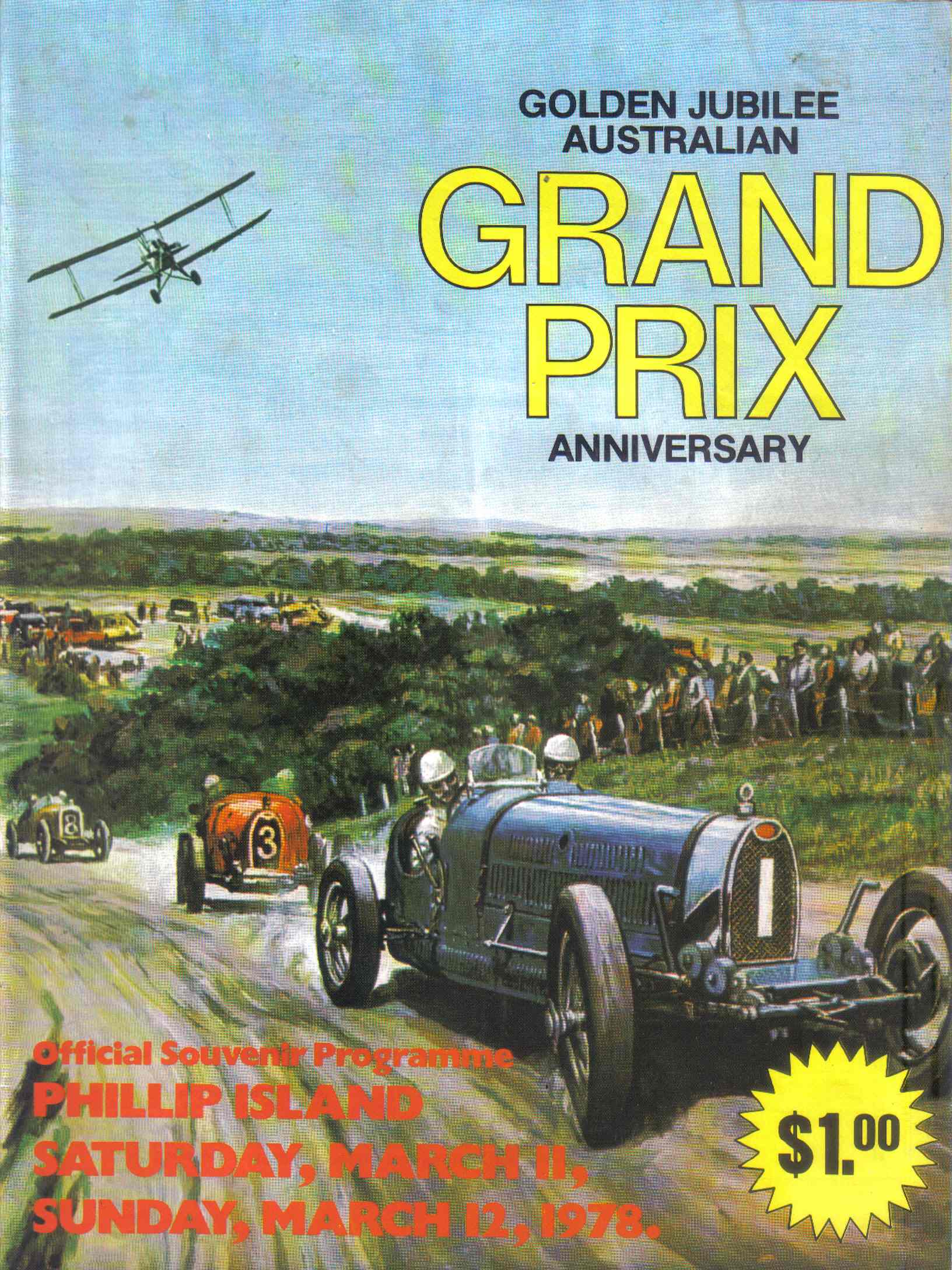
1978 was the 50th anniversary of the first AGP held on the dusty public roads of Phillip Island in 1928, fittingly there was a fantastic weekend of celebrations to recognise what is one of the oldest continuous Grands Prix in the world. A championship event only since 1985 granted, but a GP with a long history all the same.
I was a young university student at the time and camped there for the weekend, the Phillip Island circuit had not long since been reopened. In addition to the re-enactment runs on the public roads there was a fantastic weekend of historic competition bringing together many of the cars which contested the event, including the 1938 victor, R10B. At the time the cars custodian was Joel Finn, he provided a great demonstration of the sight and sound of these fabulous cars.
R10B returns to Oz again in 2015…
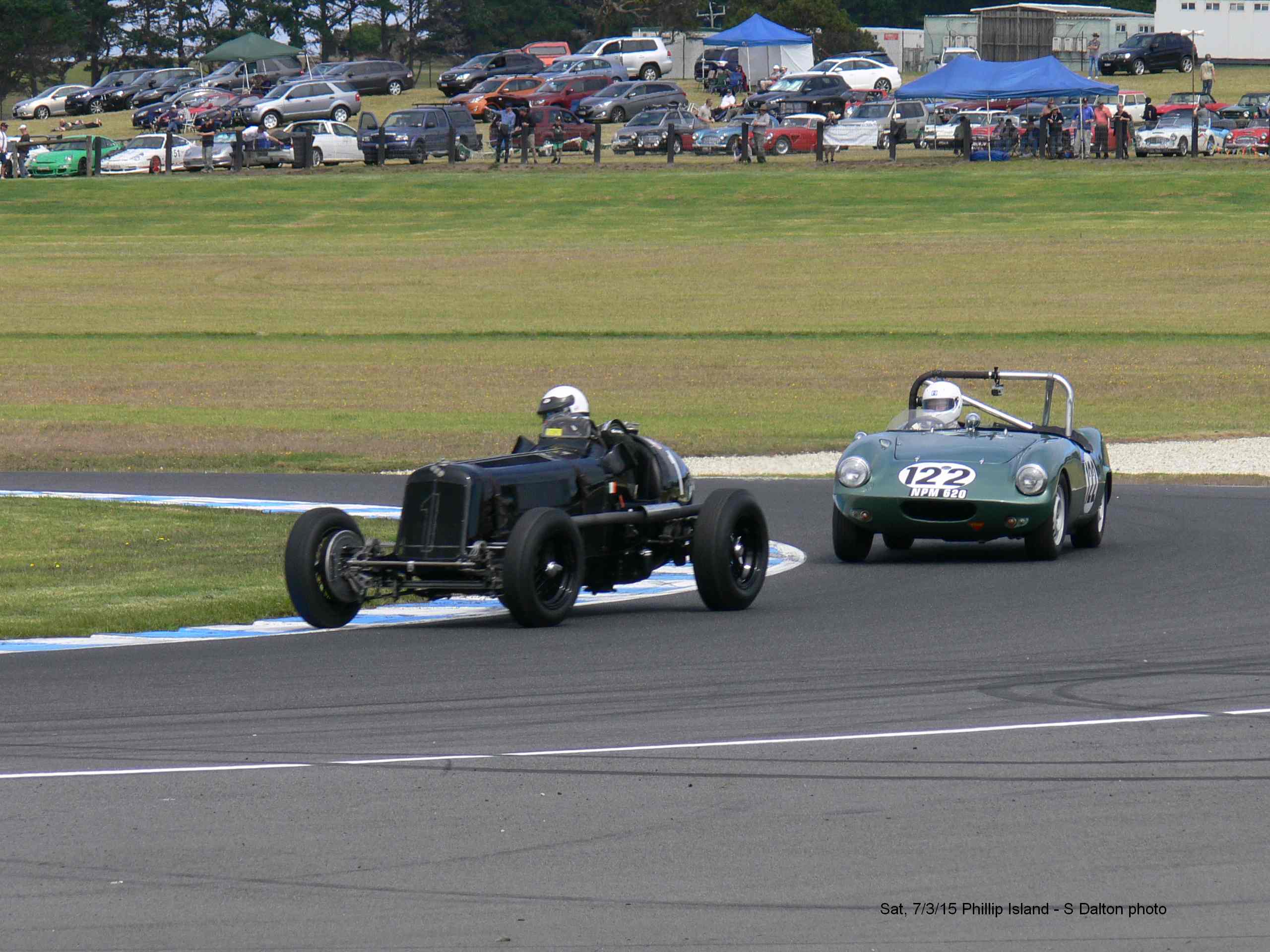
The current custodian of the car Paddins Dowling raced in the Phillip Island Classic in 2015, Stephen Dalton took these shots of the car.
Etcetera : Whitehead in Oz…
From the 1948 Bathurst program via Stephen DaltonThe ERA at the 90 Mile Beach , Victoria in September 1938 (Stephen Dalton Collection)‘The Mail’ Adelaide
Etcetera : Whitehead…
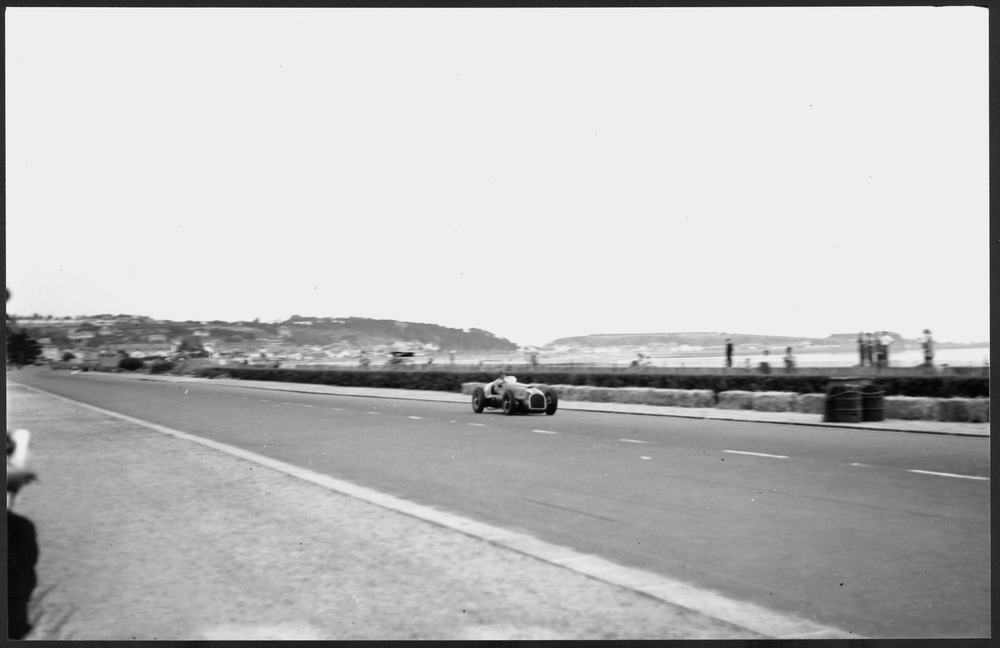
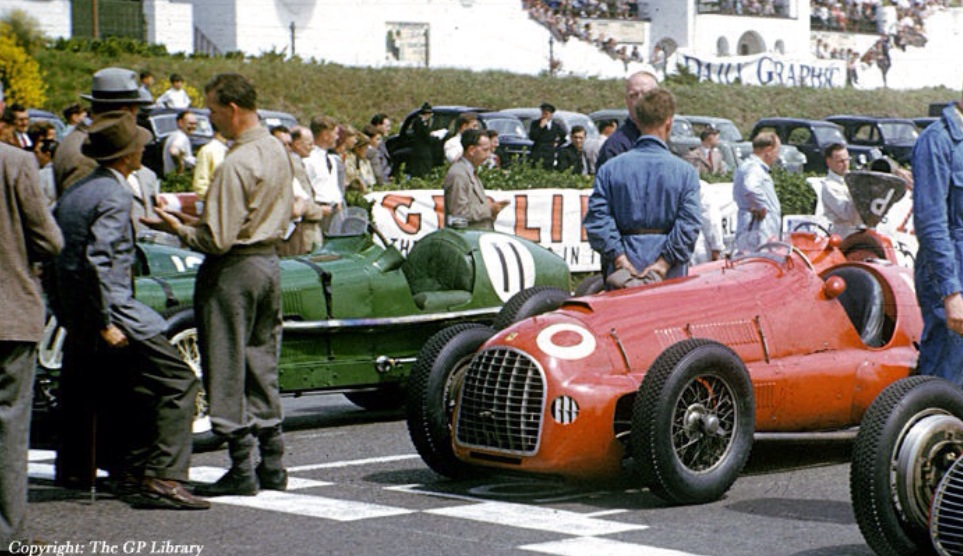
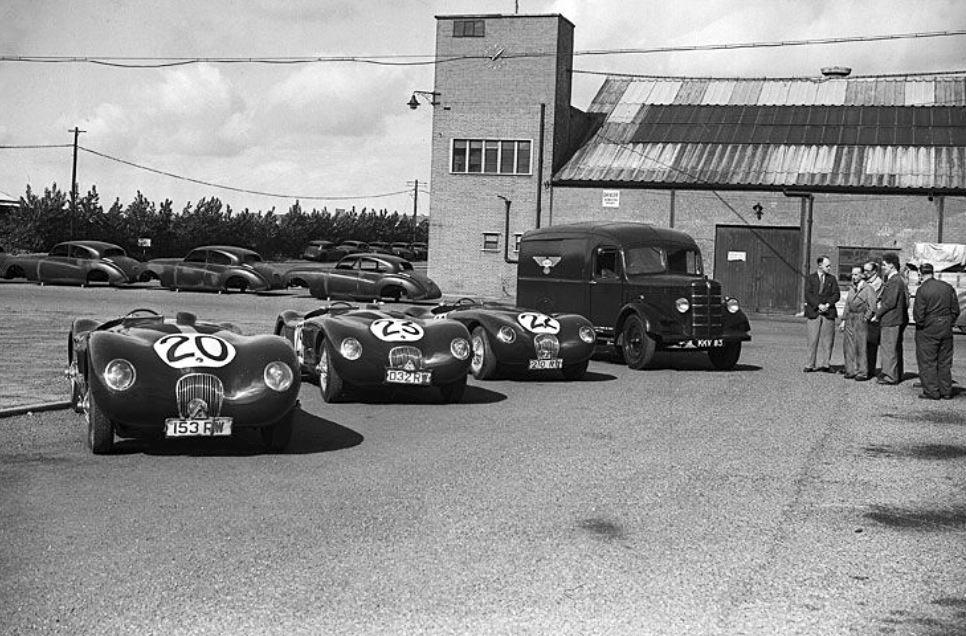
Whitehead warms up the engine and transmission of his ERA E-Type in the pits of the 1947 Jersey International Road Race. Charlie White standing beside the cockpit. Eighth on the grid, DNF on lap 1 ‘cracked tank’. Race won by Reg Parnell’s Maserati 4CL (adam@forgham.com)1950 JCC Jersey Road Race ‘Jersey GP’. Whitehead Ferrari 125 victorious. His half-brother Graham was seventh in good ‘ole R10B, then 14 years old. 9 July 1950 (George Thomas)Whitehead’s (pants tucked into his socks) Ferrari 125 alongside #11 Bob Gerards’ ERA R14B, 4th. Jersey Road Race 1950. Lord Freddy March sitting on the shooting stick (Doug Nye-The GP Library)Peter Whitehead races to victory in his Ferrari 125 # ’10-C’. Ulster Trophy, Dundrod, 12 August 1950. (unattributed)Whitehead #17 Ferrari 125 on the Silverstone grid alongside Giuseppe Farinas’ Alfa 158, 3rd and 1st respectively in the final. BRDC International Trophy, 26 August 1950 (unattributed)L>R The 1951 Le Mans winning #20 Whitehead/Walker Jaguar XK120C Type beside the #23 Biondetti/Johnson DNF oil pump and #22 Moss/Fairman DNF oil pressure, cars (Autosport)
Bibliography…
John Medley’s 1938 Chapter in Graham Howard’s ‘History of The AGP’. Howard’s Motor Racing Australia article on ‘Closed Circuit-Maroubra Speedway’, Arthur Rizzo interview via Ray Bell TNF, Illawarra Shire website, Parramatta City website/Peter Arfanis, ‘Closed Circuit:Parramatta Park’ article by Graham Howard in Motor Racing Australia, Whitehead career summary historicracing.com, vintagespeedway.com, ERA Club, The Nostalgia Forum, Guy Bond Bevan, ‘The Mail’ Adelaide 3/9/38, ‘The Argus’ Melbourne 5/9/38, 14/6/38, 3/10/38, ‘Sunday Times’ Perth 4/9/38, ‘The Canberra Times’ 11/11/38, Sydney Morning Herald 4/11/38
Research Assistance…
Stephen Dalton, enthusiast/historian for the advice, photos, sourcing some of the references, and ‘post posting’ errors detection!
Photo Credits…
Ted Hood, John Blanden Collection, Bob King Collection, Graham Howard ‘History of The Australian GP’, State Library of NSW, Leon Sims/MG Car Club, Stephen Dalton, Bob Shepherd, DMJ Illustration, Dave Sullivan Album, The GP Library, Autosport, Wheels magazine, Frank Wetton, John Medley ‘Bathurst: The Cradle of Australian Motor Racing’
Martin Stubbs of the Dacre Stubbs Collection for securing the use of the 90 Mile Beach and Aspendale Speedway images of the late EH Price from the Collection of John Hazelden. Thanks Martin and John for the use of these rare images.
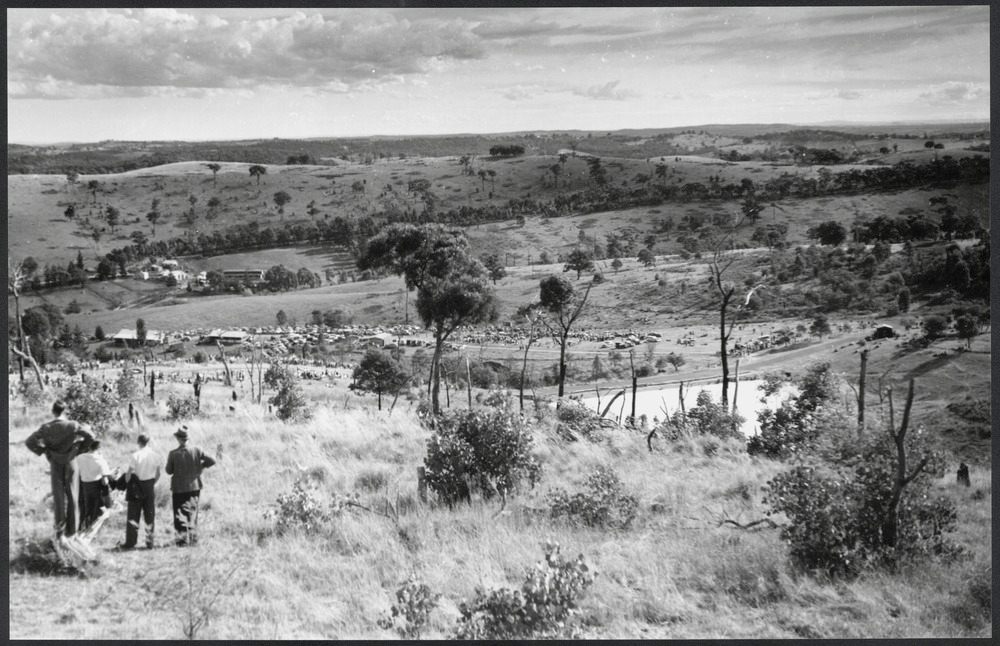
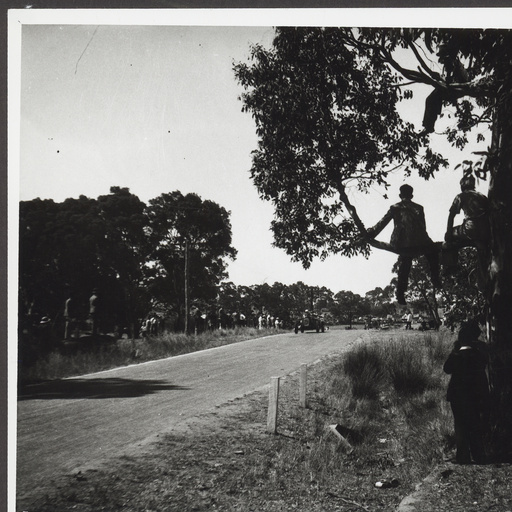
Terraplane Special at Lobethal in January 1939, with three enthusiasts watching from the ‘Grand Stand’ whilst sheltering from the hot summer sun…
Some of these older shots blow me away and take me back to a time of racing well before my own…It’s not possible to identify actually which car this is. The shot is more about the ‘atmospherics’ of the most challenging ‘race track’ in Australia than the car in any event.
It’s a photo i found in the State Library of South Australia Archive marked ‘Terraplane Lobethal 1939’. Ace researcher/historian Stephen Dalton reckons its the AGP meeting held at Lobethal on 1 January 1939, ‘The SA Junior GP’ had 3 Terraplane Specials entered for Les Burrows, H Beith and Bob Lea Wright..take your pick…
Terraplane Spl…
Terraplane was a car brand built by Hudson between 1933 and 1938 and were ‘rich pickings’ for special builders throughout the world as the 8 cylinder cars were supposedly the highest power to weight ratio production cars of the day…and favoured transport of US Gangsters John Dillinger and Baby Face Nelson.
From AMS December 1947
Photo Credit…
State Library of South Australia, Stephen Dalton research
This fantastic shot of Lex Davisons’ Alfa Romeo P3 ahead of Doug Whitefords’ Ford V8 Spl ‘Black Bess’, Nuriootpa, in South Australia’s’ Barossa Valley on 23 April 1949…
Look at the hay bales, stone houses characteristic of South Australia, the ‘Stobie’ light poles are still a feature of SA streets and the relaxed crowd. Captures the flavour of the day doesn’t it?
It’s funny where you find stuff. I was researching my article on Alf Barretts’ career and Alfa Monza a while back and tripped over this shot of Davo on the ‘South Australia History Hub’, but no details were provided. I knew who it was but not exactly when or where, Stephen Dalton fellow enthusiast/historian identified the place, date as well as the event.
‘The Vintage (as in wine vintage, the Barossa is a world renowned wine region) Festival Championship’ was a 25 mile event, 8 laps of the Nuri road circuit, it was reported in Graham Howard’s biography of Lex Davison, from which this article draws heavily.
As you will see from the cars described, the bulk of our elite fields were Australian Specials in the main, we are still several years away from a reasonable number of European GP cars on our grids and 5 years away from the ‘Red Car Period’ of the mid to late fifties, the factory cars then dominant.
The last AGP win for an Australian Special was the 1951 Narrogin event in WA…
It was won by Warwick Pratley’s Ford ‘Flathead’ V8 powered George Reed Special.
The last AGP win for an Australian built car was John Goss’ victory at Sandown in 1976 in a Matich A53 Repco F5000 car- Australian built but not a ‘Special’ in the sense meant above!
‘The Vintage Festival Championship…’
‘Non-starters included Jack Days Talbot Darracq, Barracloughs Delage and Alfa Mercury. Cars were marshalled with the fastest at the back, Whiteford made the cleanest start. On his hammer was Jim Gullan Ballot Olds with Davison, Neale Ford V8 Spl, Wilcox Dodge Spl and Robinson Sunbeam Mercury, his car the 1922 GP Sunbeam fitted with a Ford V8 and with a body reminiscent of the Segrave 200mph car.’
‘In the next lap Davison passed Gullan and was right behind Whiteford, whose Ford V8 Spl was going very well, this car winning the 1950 AGP at this circuit, I covered this car a while back. Wilcox was close to Neale and behind Robinson.
Davo passed Whiteford by lap 4, the order remained unchanged from then. ‘Doug Whiteford did everything but tie knots in the Ford keeping up with the Davison Alfa and it was the first time he has been seeing really trying. The two leaders outstripped the rest by over a minute and a half and lapped the last man home…’
A great race and a portent of things to come from the two Melburnians…
Davison the wealthy industrialist from Clendon Road, Toorak in the aristocratic GP Alfa and Whiteford the garage proprietor from Carlisle Street, St Kilda in the self built/developed but incredibly clever, quick Ford V8 Spl…several suburbs and poles apart but very much racing enthusiasts and champion drivers both.
4 AGP wins for Davison and 3 for Whiteford, some splendid racing was to follow in the ensuing decade from these two great competitors…
Credits…
SA History Hub, Graham Howard ‘ Lex Davison:Larger Than Life’, Stephen Dalton research
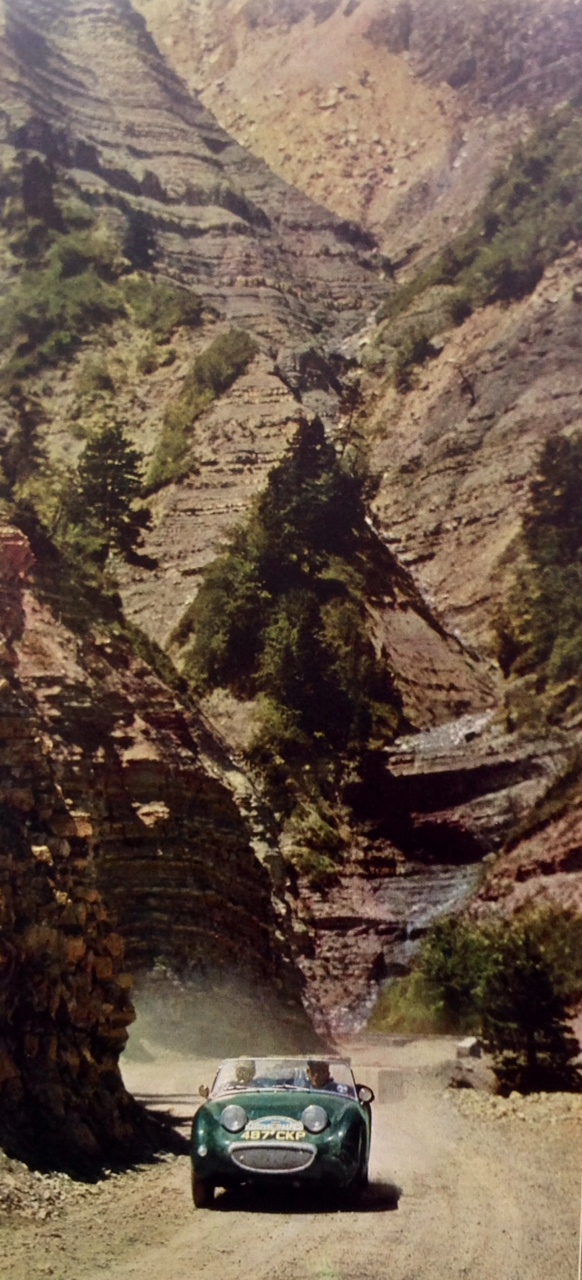
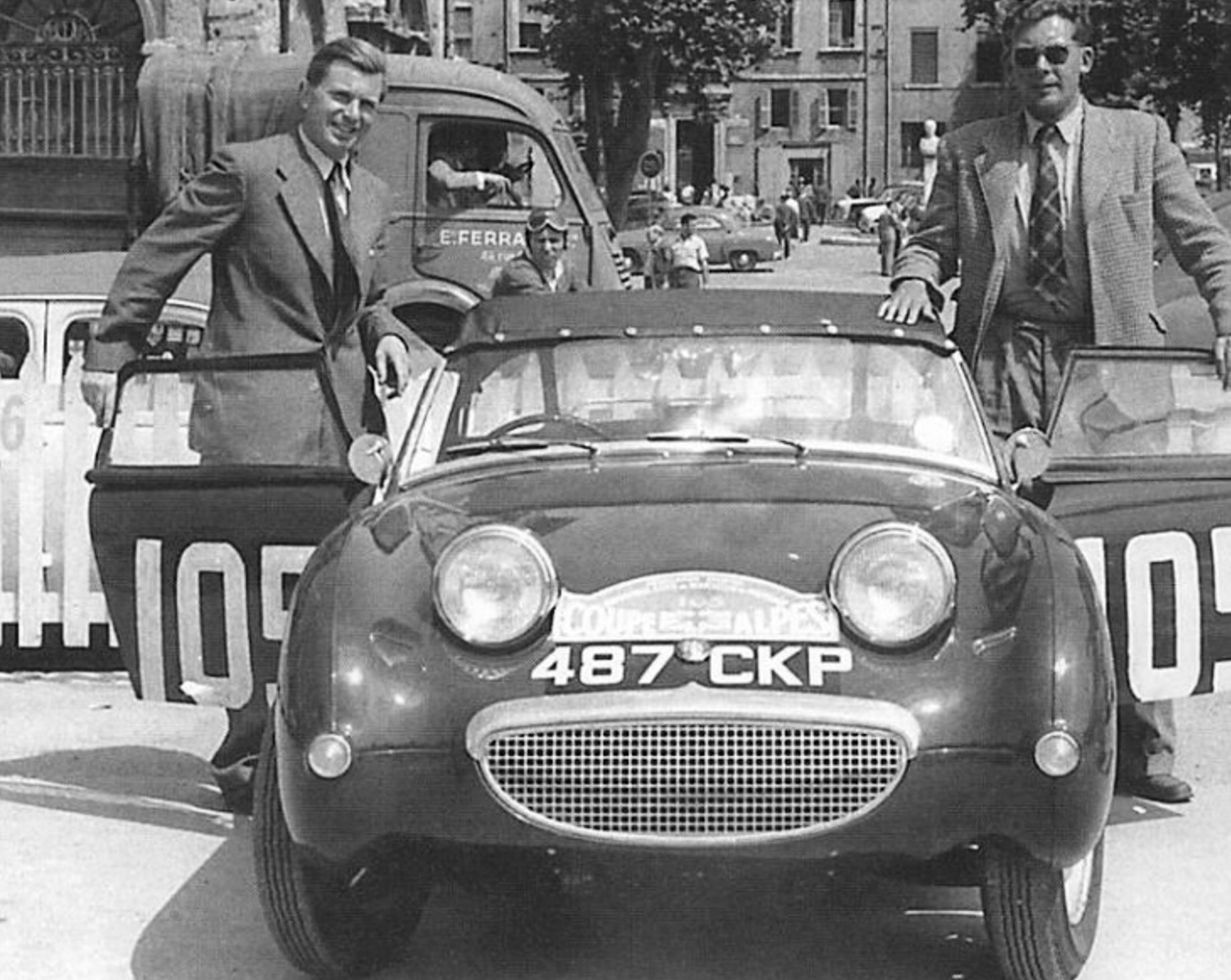
The Ray Brookes/Rob Wells-West Austin Healey Sprite zips through the Alps on is competition debut. Sprites finished first, second and third in their class…
The iconic Bugeye was released to the press on 20 May 1958 just prior to the Monaco Grand Prix. The cars competition debut was shortly thereafter, in the July Coupe des Alpes, John Sprinzel and Willy Cave leading home a 1-2-3 in class and finishing 15th overall. Tommy Wisdom drove the second placed Sprite and Ray Brookes the third. The event was won by the Consten/de La Geneste Alfa Romeo Giulietta.
The first of many Sprite International and Club competition successes cars which continue to give pleasure to their owners 60 years after release. See this Shell film of the 1958 event;
Ray Brookes and Rob Wells-West at Monaco during the 1958 Coupe des Alpes (unattributed)
Sprites were all about fun, modification and competition.
They begged for it and were responsive to it. I flirted with one for 18 months or so when i first got my licence, my younger brother couldn’t afford a car so i part funded/owned his Bugeye which had been fitted with a Skoda! engine and gearbox in its past.
It sounds naff but the all alloy engine fed by a 45DCOE Weber and breathing through bigger valves and extractors made good power, the engine also considerably lighter than the good ole A-Series, so handling was enhanced as the road testers would say.
I was busy fiddling with open wheelers at the time, so it was never used competitively but it was a quick, nimble, pointy, fun road car…as they were and are.
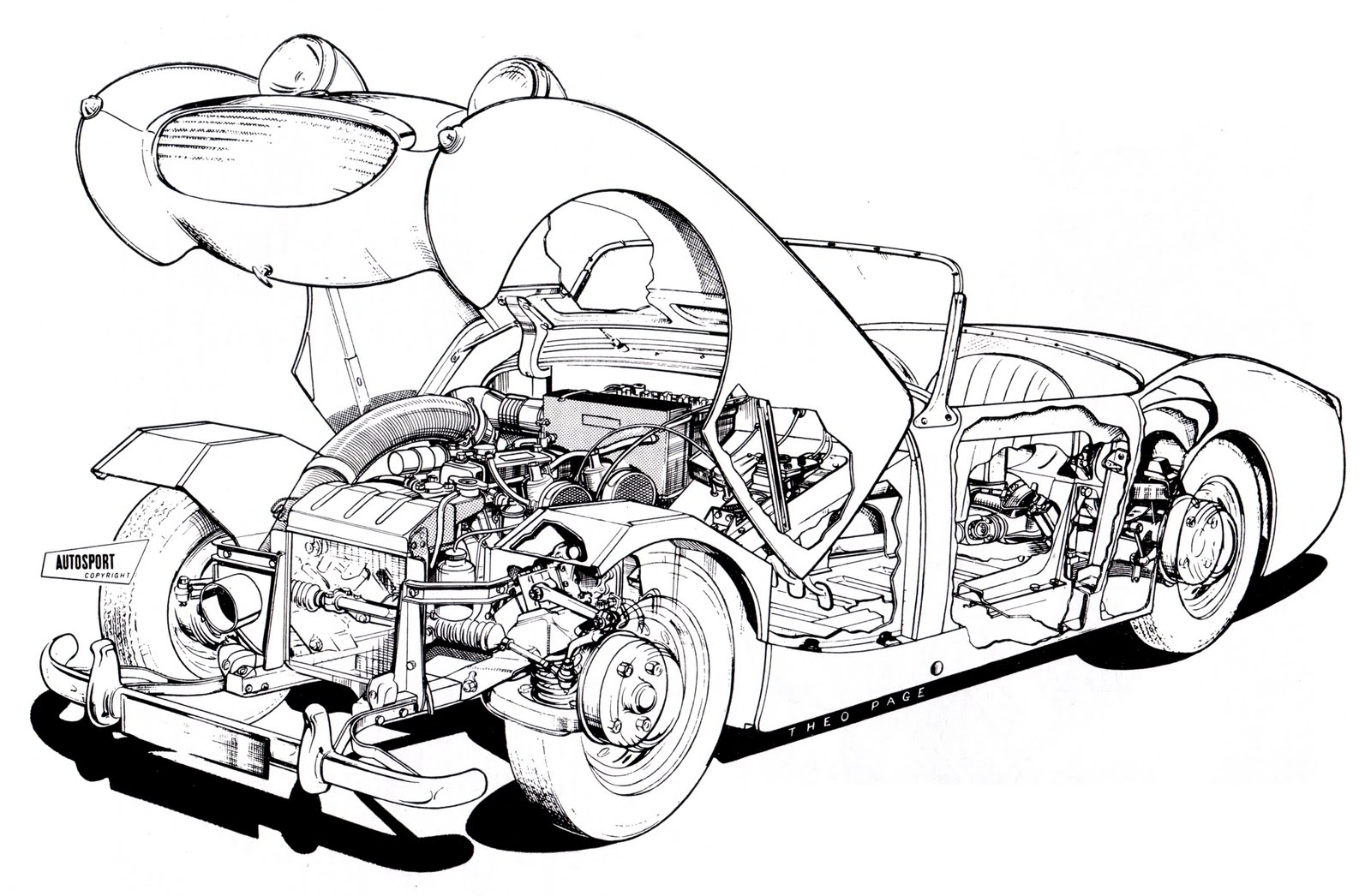
(Theo Page)
The chassis is of unitary construction, 948cc BMC A-Series OHV four cylinder 43bhp engine fed by twin 1 1/8 inch SU carbs, four speed gearbox. Front suspension coils and wishbones with the lever arm shock as the top links. Rear solid axle sprung by quarter-elliptic springs again with lever arm shocks. Drum brakes front and rear.
(C Youde Collection)
Etcetera…
In March 2022, Caroline Youde, Rob Wells-West’s niece got in touch, below are her recollections of her uncle. Many thanks Caroline!
“Hi Mark,
Happy to share memories! Circa 1996 I took my boyfriend (now husband) to meet my uncle and aunt. Rob was a pilot in the war captured over enemy territory when the glider he was travelling in was downed (they had taken to the air for a bit of fun!) – my husband was ex-RAF.
They got chatting about cars, another shared passion and he talked of his family owning a successful garage. This allowed him to get into racing and it was only during their meeting did I finally get to hear his stories (he was a true gentleman, the war was never normally discussed and never liked to brag about his achievements).
His illness had taken hold so his recollections were a little muddled, but when my aunt produced an old suitcase full of his racing photos etc, he talked of the rally and the excitement of the race. Many of his photos from other races he could not recall when or where they were taken. But he spoke of Stirling Moss’s sister Pat Moss, and others, racing in full skirts!
I’ve enclosed a picture of memorabilia from the rally (above) that I had framed for my husband; it hangs with pride in the dining room and is often the topic of conversation with visitors.
They didn’t have any children so I asked if I could have his racing collection when he died. It’s still kept in the same suitcase, with the exception of the cup and framed pieces. Mary (my aunt) and I are in touch regularly, she’s naturally very proud. They met before the rally and his racing was a large part of their courtship, before eventually marrying.
Rob settled into a civil servant role, but his sense of adventure led them to travel the world by train, plane and automobile their whole married life (and often by iconic means, e.g. Concorde).
He inspired my husband to buy and fully restore our own Frog Eye, which we had sprayed British Racing Green in tribute to him. Thankfully he lived to see it finished.
Kind Regards
Caroline”
Credits…
Yves Debraine, Theo Page cutaway
Many thanks to Caroline Youde, Martin Ingall, John Sprinzel, Steve Nash and David Scothorn for assistance in identifying the driver/co-driver of 487CKP. For those with an interest in competition Sprites check out this wonderful site; http://www.sebringsprite.com/
Roger Penske aboard his devilishly clever Zerex Special sportscar in 1963…
By 1962 Penske was a well established competitor. While later his friend and driver Mark Donohue coined The Unfair Advantage phrase in racing, Roger himself contrived a clever plan to develop a very quick sportscar for the lucrative US series.
After careful study of the SCCA Rulebook Penske concluded that while the sports car regulations required said cars to have two seats, the rules didn’t define their dimensions.
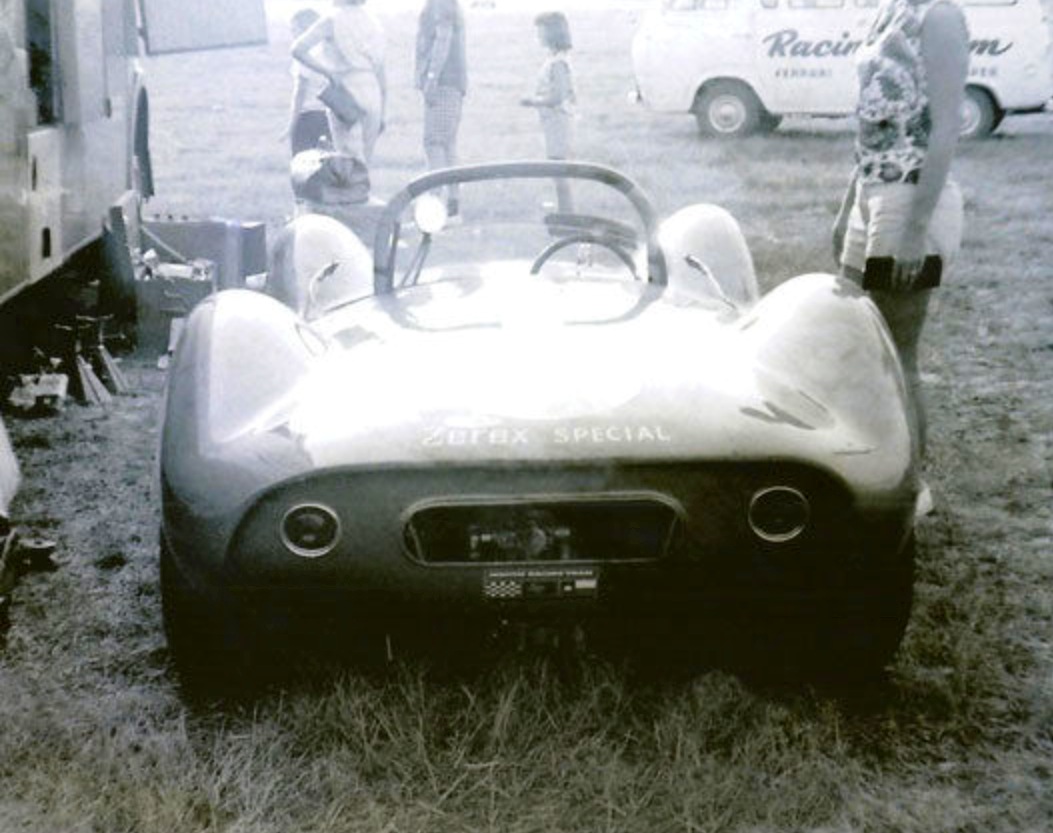
Roger’s cunning stunt involved resurrection and fitment of a very small passenger seat and sportscar bodywork to a Cooper T53 Climax F1 car (chassis #T53 F1-16-1) crashed by Walt Hansgen during the 1961 US Grand Prix at Watkins Glen.
Walt was launched over Olivier Gendebien’s Lotus, Olivier having spun and re-entered the circuit right in Walt’s path. Briggs Cunningham, the Cooper’s owner, sold the damaged car to Penske in the ‘Glen paddock less engine.
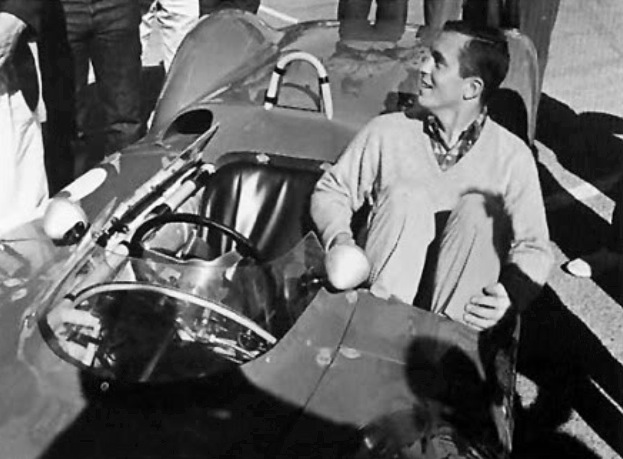
Walt Hansgen Cooper T53 Climax T53 F1-16-1, the Zerex donor car, behind is Penske in his Cooper T53 Climax. US GP Watkins Glen 1961. Both cars 1.5-litre Coventry Climax FPF powered (Ron Nelson)
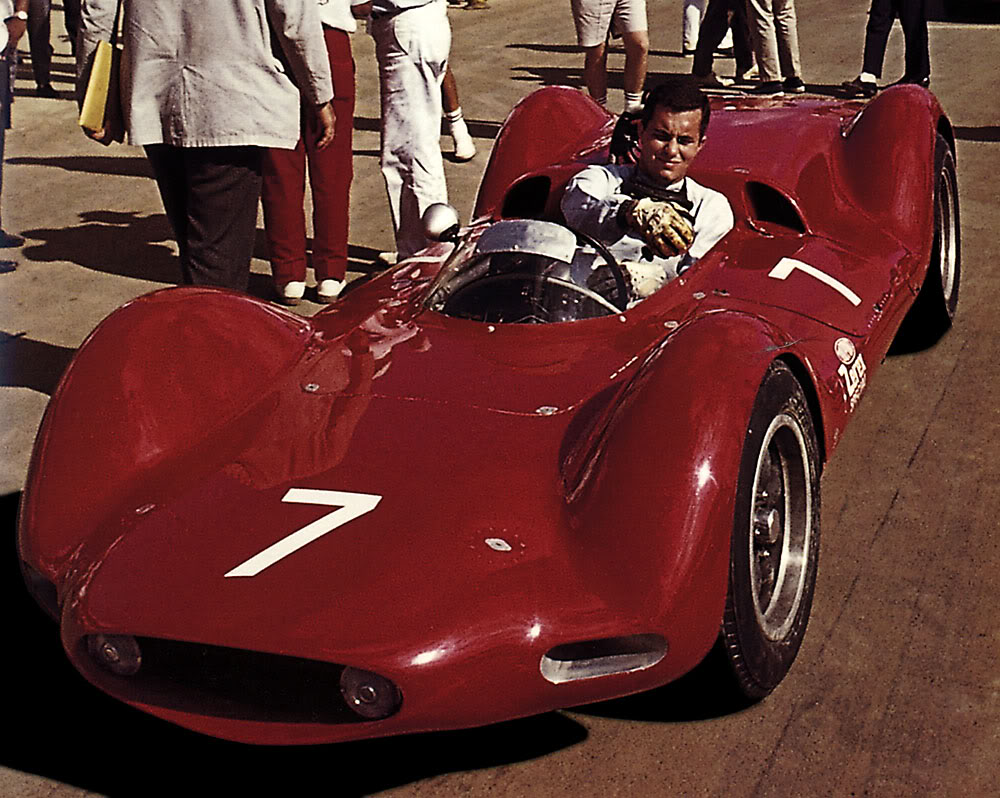
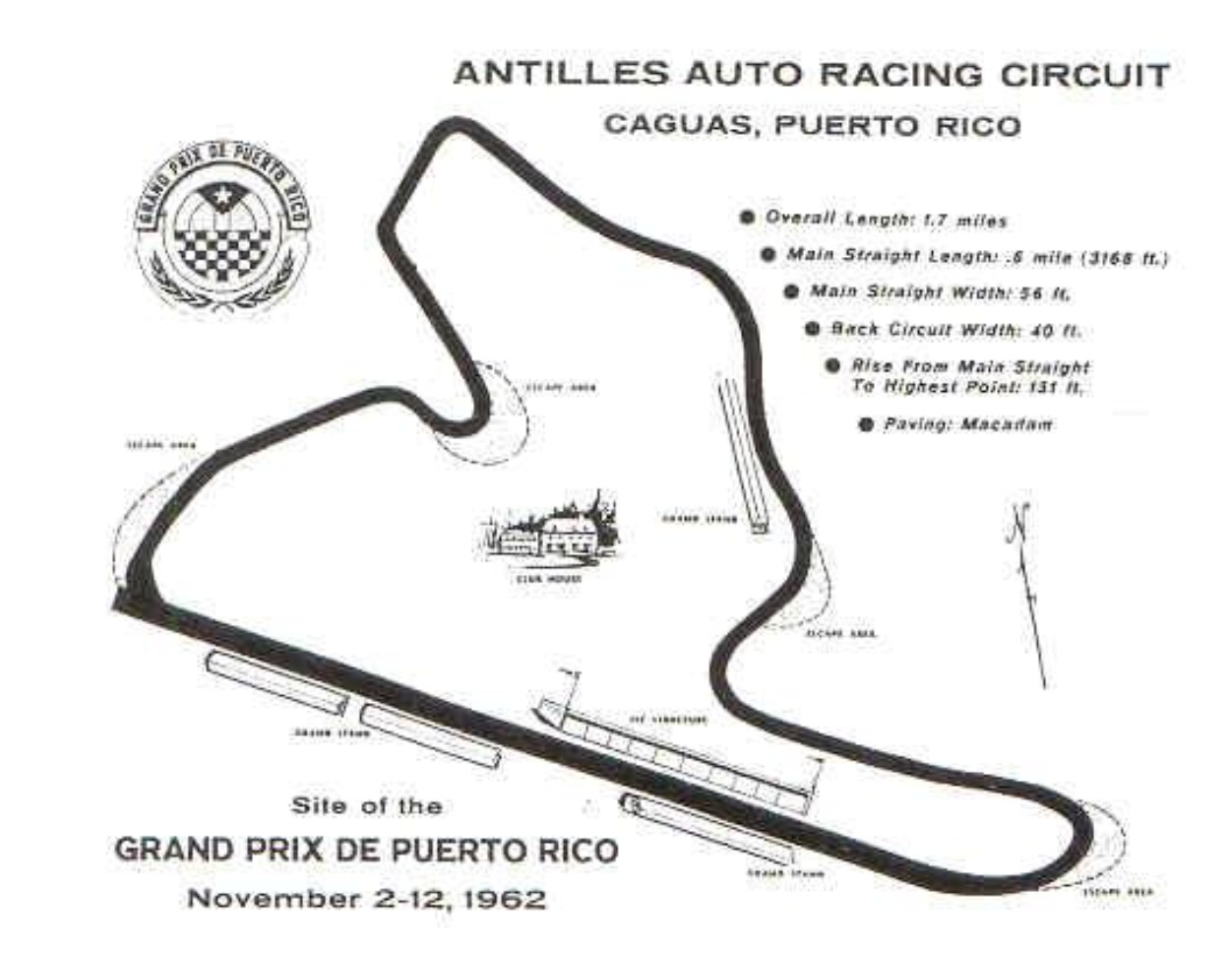
Zerex Climax looking absolutely superb on pole as Penske settles himself into the cockpit for the 200 mile Puerto Rico GP in 1962. He won from Tim Mayer’s Cooper T57 Monaco and Dan Gurney, Porsche 718 WRS (Getty Images)
The car was then repaired, rebuilt and transformed by Roy Gane and Penske himself by fitting a wider alloy body with round and square tubing and added brackets to support the new body and mini-seat. Its first race, still 2.7-litre Climax FPF powered, was the LA Times Grand Prix at Riverside in October ’62.
It was an International event that attracted the world’s best including Jack Brabham, Graham Hill, Dan Gurney, Innes Ireland and Masten Gregory as well as world class Americans Penske, Jim Hall, Hansgen, Ken Miles, Lloyd Ruby and others.
The Zerex, to all intents and purposes a current GP car with an all-enveloping body, promised to be competitive!
At a distance, even up close, the car appeared to be a single seater in contravention of the rules, as soon as it was unloaded in the paddock the SCCA was deluged with protests.
Watched by a large crowd of media, mechanics, spectators and drivers Penske calmly undid the Dzus fasteners attaching the left side panel to reveal a small, cramped, passenger seat, whereupon the lanky Philadelphian attempted to insert himself into said seat…The car was kosher, legal to the letter of the rules, Penske was canny enough to have the SCCA Chief Technical Inspector see the car when it was being concepted and approve it as being compliant.
Nearly in…Penske sees the funny side even if the competition doesn’t before the car takes to the track, LA Times GP 1962 (Dave Friedman)
The car won three events in late 1962; at Riverside during its first race meeting from Jim Halls Chaparral 1 Chev, at Laguna Seca and the Puerto Rico GP.
The Riverside and Laguna races were USAC sanctioned. The car was protested but USAC allowed it to run, but storm clouds were brewing from some very pissed off, wealthy, influential car owners.
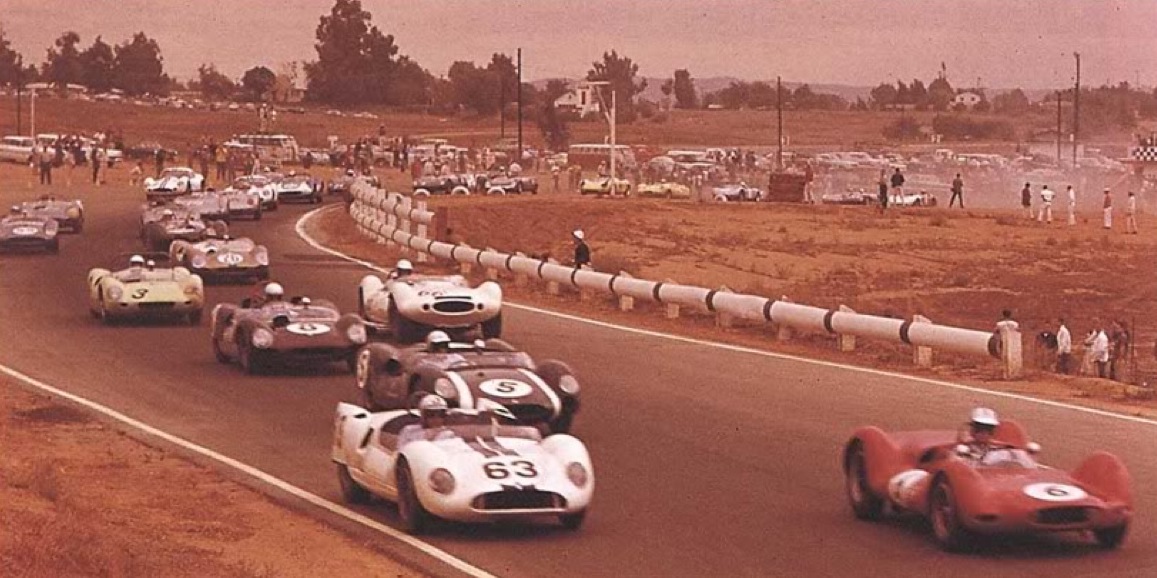
LA Times Riverside 1962. Penske leads # 63, the Hansgen Cooper Buick, #5 McLaren Cooper Monaco Climax, #8 Jerry Grant Lotus 19 Buick, #66 Jim Hall Chaparral 1 Chev, #3 Masten Gregory and #26 Lloyd Ruby both Lotus 19 into turn 1 lap 1. Penske won (Dave Friedman)
Penske on the grid at Puerto Rico. The car looks simply fantastic, workmanship a treat (Dave Friedman)
In the winter of 1962, the entire chassis centre section was cut, shut and widened by Penske’s team to provide a seat either side of the Zerex centre-line to meet the quickly-tightened 1963 rules…
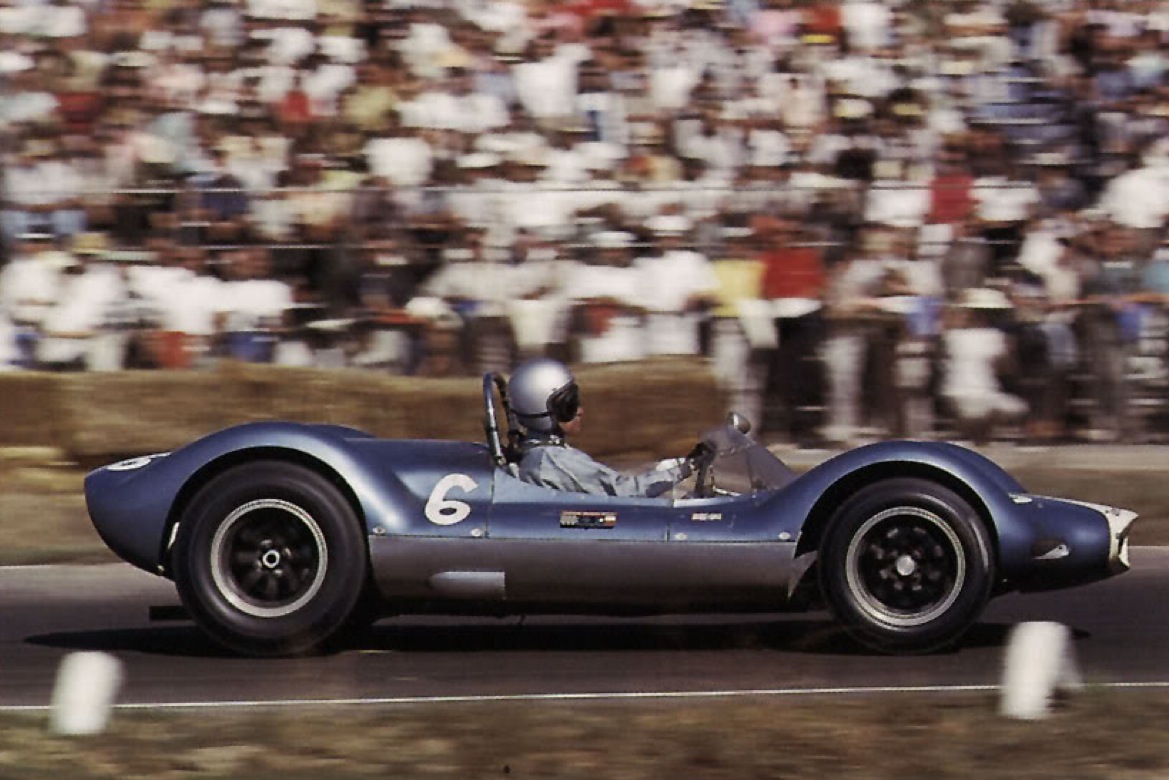
The car (lets call it Evolution 3 in this form) was sold to John Mecom, the body modified to conform, a new windshield and roll bar was added and the machine repainted in Mecom’s blue and white colours.
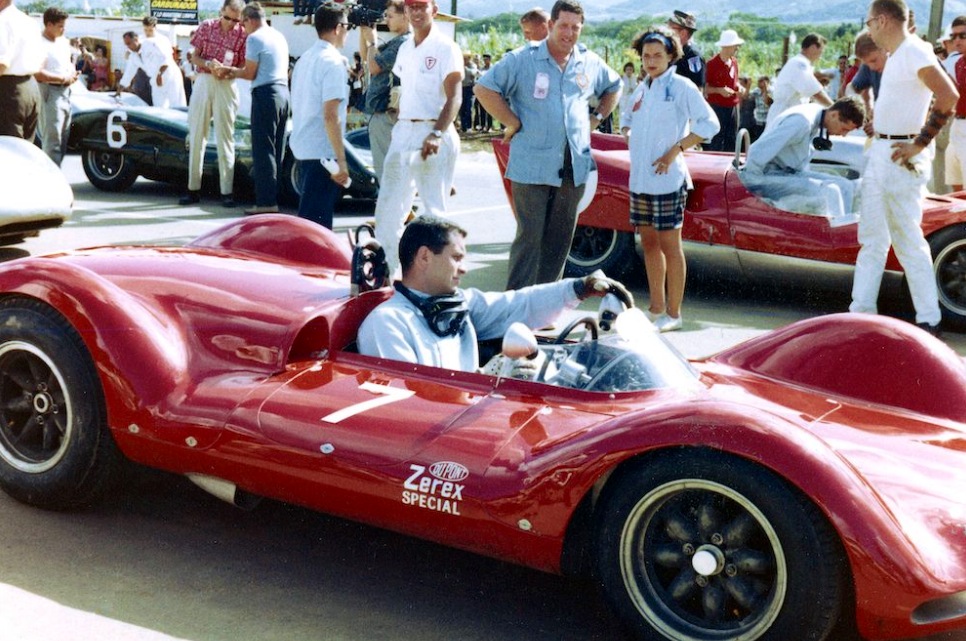
Zerex in the paddock, circuit unknown in 1963 with full roll bar and space for second seat, offset driving position-Zerex Evolution 3. Climax FPF and CS5 ‘box on display, as are simple brackets to retain the body and truly ‘orrible but seemingly effective curvy frame (unattributed)
The Zerex raced throughout 1963 in this form winning two SCCA national events at Marlboro Motor Raceway and Cumberland. Across the Atlantic it was first in the Guards Trophy at Brands Hatch in August, Roy Salvadori placed second in a Cooper Monaco Climax that day.
LA Times GP, Riverside 1963. Owned by Mecom, still driven by Penske it was second to Dave McDonald’s Cooper Ford ‘King Cobra’ (Dave Friedman)
LA Times GP ’63. A fantastic 200 mile race initially led by Halls Chaparral, DNF. Here is the later dice between Penske and McDonalds’ Shelby Cooper Ford for the lead, McD prevailed in the 289cid small block Windsor engined Cooper (Dave Friedman)
See this YouTube footage of both the 1963 LA Times GP and 1964 Sebring 12 Hour…
The Zerex is historically significant in that it was sold to Bruce McLaren after Nassau in 1963. It was effectively the first in the long line of very successful McLaren sportscars which became the dominant force in Can-Am/Group 7 racing from 1967…
In 1962 Bruce, a factory Cooper driver, and Penske shared a Cooper Monaco Maserati at Sebring. Bruce later wrote, “After that race I came back to England and asked Charlie Cooper if I could run the sports car side of the Cooper Car Company because I felt sure there was a tremendous market for this type of car to use an American engine for American racing. I was convinced at that stage that sportscar racing was going to really boom providing there were cars available, and that it would be a great market for an English manufacturer. Charlie turned me down flat.”
Penske moved on from the Zerex as it became less competitive. He drove a Chev engined Cooper for Mecom and later a Chaparral before retiring from driving in late 1964, having signed to race for Jim Hall again in 1965.
The Zerex Climax was still sitting in John Mecom’s workshop together with an aluminium Traco modified Oldsmobile F85 engine which had never been fitted to the car. Bruce bought it and shipped it back to the UK, fitted with a 2.7 FPF. The Olds F85 (the block was used in much modified form, as the basis of the 1966 F1 Championship winning Repco Brabham RB620 3-litre V8) was on a pallet.
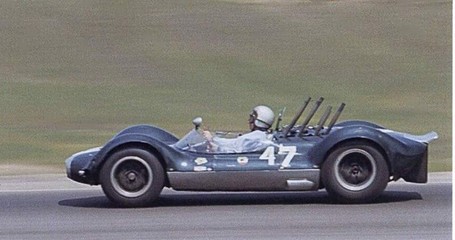
Bruce raced it with the 2.7 Climax and slightly modified bodywork (Evolution 4 if you like) in the Aintree 200 where he defeated Jim Clark’s Lotus 30 Ford, and in the Silverstone International where he won again, this time from Salvadori’s Cooper Monaco Maserati 5-litre.
Start of the 1964 Aintree 200. L-R: #87 John Coundley Lotus 19 Climax, #95 Tony Lanfranchi Elva Mk7 BMW, Jack Sears AC Cobra, Bruce is on the right in the Zerex Climax. McLaren won from Jim Clark, Lotus 30 Ford and Sears’ Cobra (unattributed)
The day after Silverstone Zerex was stripped at Bruce’s new, modest, dirt-floor workshop in New Malden, South London where the chassis rebuilt from just behind the front suspension to just ahead of the rear suspension with a new McLaren designed centre-section welded in. The work was done by Wally Willmott and Tyler Alexander.
In its Penske modified form the car lacked the torsional rigidity to cope with the additional power and torque of the Olds V8. The (Evolution 5) chassis was far stiffer that the Zerex modified frame. The main chassis longerons performed dual purposes as structural members and as conduits for oil and water from the respective radiators to the engine. A Colotti gearbox from one of Bruce’s Tasman Cooper T70s was mated to the Olds engine.
With no time to fabricate a new exhaust system, the car was flown to Mosport with eight stub exhausts poking up through the tail, there he won first time out.
McLaren victorious upon debut of the (then named) Cooper Oldsmobile with its new chassis centre section and Olds engine. Players 200, Mosport, Canada 1964 (unattributed)
Given the sensitivities about Jack Brabham’s departure from Cooper and construction of his own cars with Ron Tauranac, calling the car a McLaren was not going to wash with Charlie and John Cooper so the hybrid was entered as a Cooper Oldsmobile at Mosport.
Back in the UK he won the Guards Trophy at Brands Hatch in August, then starred at Goodwood’s Tourist when he started from pole, led and set fastest lap before retiring.
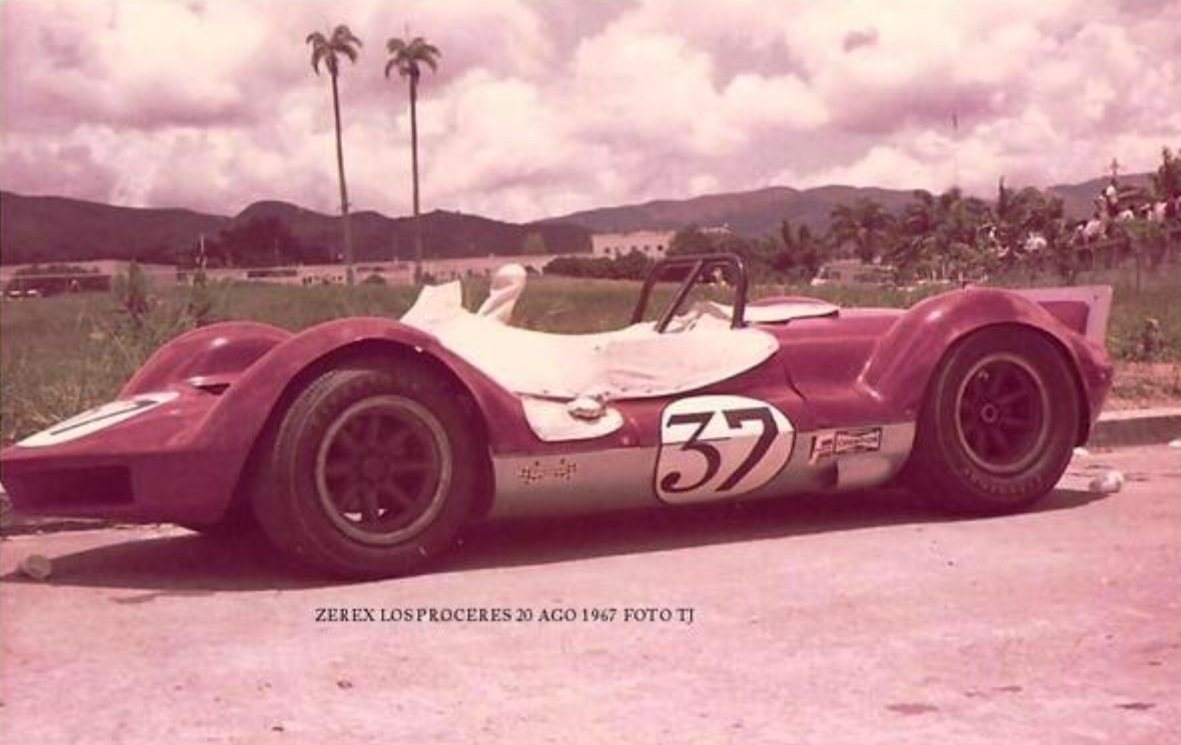
With all of his research complete – with the aim of building a McLaren sportscar – Bruce sold the car, via John Mecom and Teddy Mayer to Dave Morgan. The Texan raced it throughout 1965 and 1966 in the US and Nassau. From Morgan the car was sold to Leo Barboza in Venezuela and then on to two other South American owners.
The prototype McLaren M1A Oldsmobile appeared later in 1964, dominance was not too far away!
Continually modified, the hybrid Cooper T53/ Zerex/McLaren Olds maintained its Unfair Advantage for three years…
Cooper T53 aka Zerex aka Cooper Olds in Venezuela shortly after its arrival in 1967 (unattributed)
In late June 2022 the Zerex/Cooper Olds was shipped to the UK and is to be offered for sale by Bonhams during the September 2022 Goodwood Revival Meeting.
Paddock shot in 1963, circuit unknown. Cooper T53 standard front suspension comprises upper and lower wishbones and coil spring/damper units. Evolution 3 widened chassis and offset driving position, and second full size seat to comply with end of ’62 tightened rules is clear (unattributed)
Mosport ’64 colour shot of Bruce’s ‘new’ Cooper Olds – ain’t she sweet? (Bruce McLaren Trust)
Bibliography and Credits…
The Nostalgia Forum generally and Doug Nye’s posts on topic specifically, Bruce McLaren Trust, MiniWerks Forum. Photos credits David Friedman, Ron Nelson and the Bruce McLaren Trust
Tailpiece…
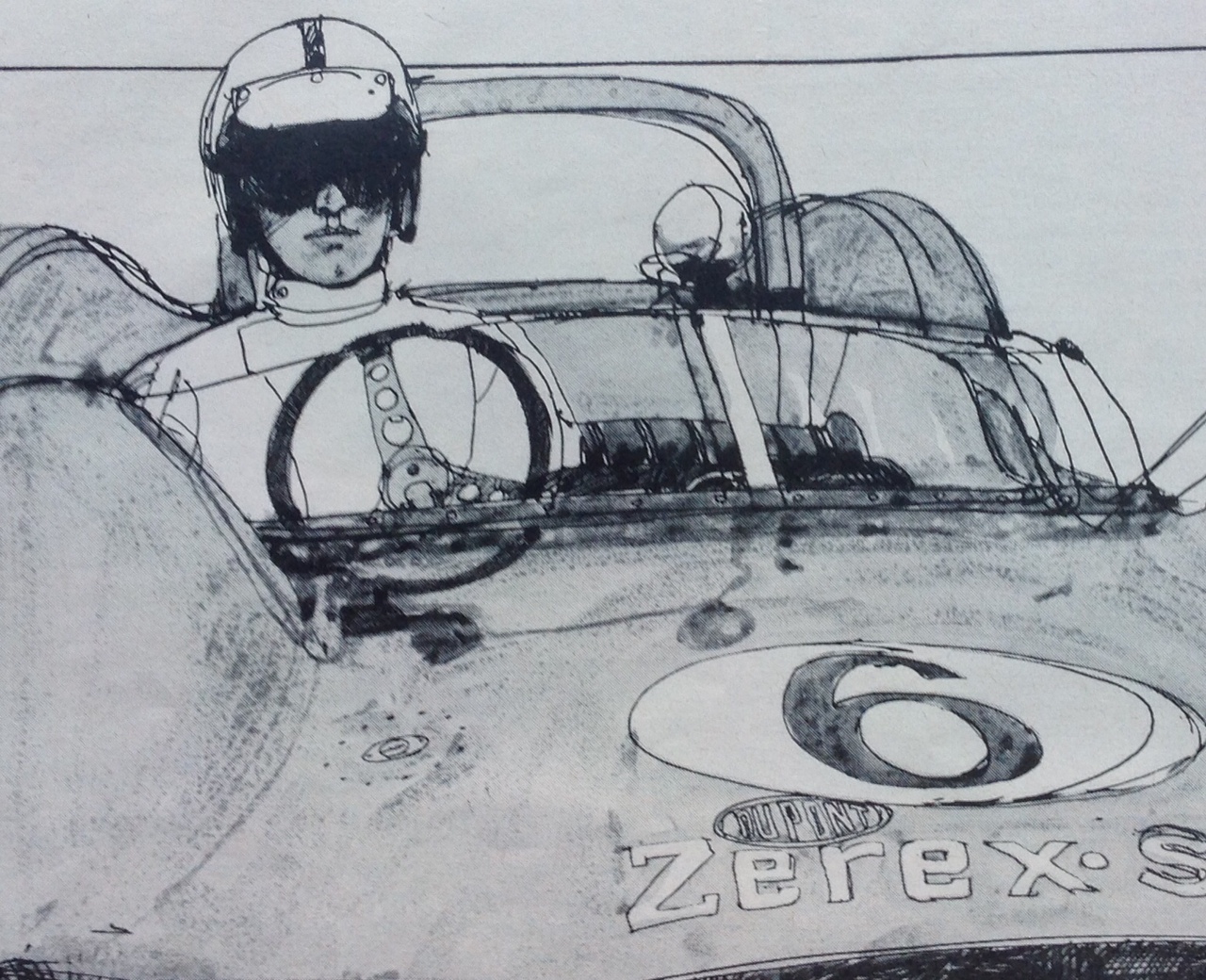
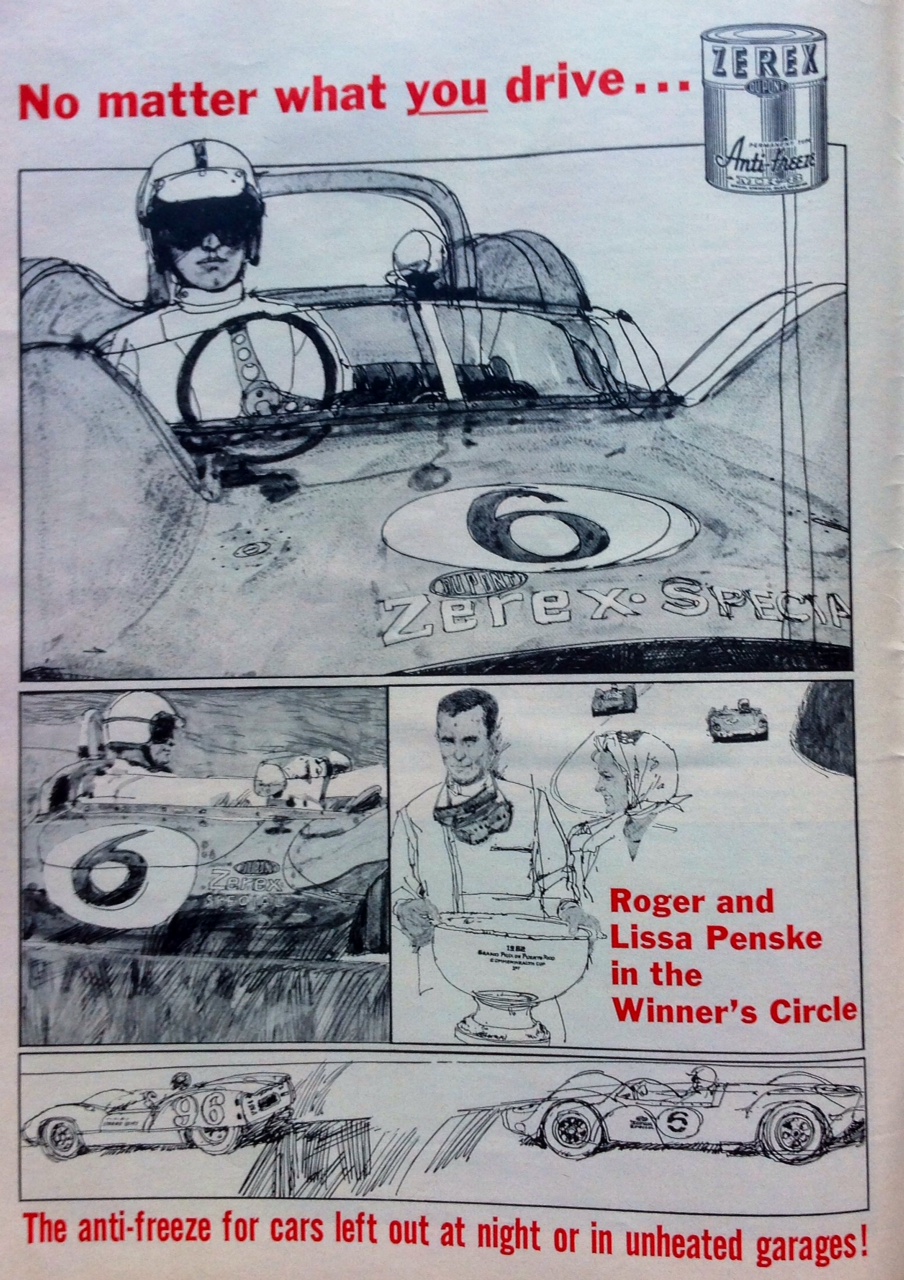
The ad which inspired this article I spotted in a pile of Road and Track magazines I bought. I was well aware of the Zerex Special, if not the infinite detail. The thing I didn’t know or care about was the derivation of the Cooper’s name. Penske secured sponsorship from Dupont to promote their Zerex antifreeze, not a product ever available in Australia, so now I know!
We all have our favourite local motoring and motor racing publications...
When I was a youngster here in Australia it was ‘Sports Car World’ for fast road cars, the monthly letter from noted NZ born but global motoring journo, Eoin Young on the European and American racing scene was not to be missed nor the column of Romsey Quints, a crusty curmudgeon who wrote about ye olde days.
And for racing it was ‘Racing Car News’ supplemented by the global giant ‘Autosport’ which required a tram trip into the big smoke as it wasn’t carried by my local newsagent.
RCN was the bible tho.
It was national, maybe a bit Sydney centric, edited and owned by Max Stahl, an ex-racer who knew everybody from clubbies to visiting World Champions in Australia annually for the Tasman Series. It was chock full of local to global news and events with ‘Stringers’ all over the place making its coverage remarkable at the time.
Delivery of information digitally takes the sense of excitement out of the visits to the newsagent eagerly anticipating these monthly publications arrival instore…having said that the ‘democratisation of the media’ means even ‘Schleppers’ like me can ‘have a go’.
There was not a page of RCN to be missed from Stahls’ editorial upfront to the classifieds up ze back, the paintings by David Atkinson, Colin Anderson and others reason alone to buy the thing.
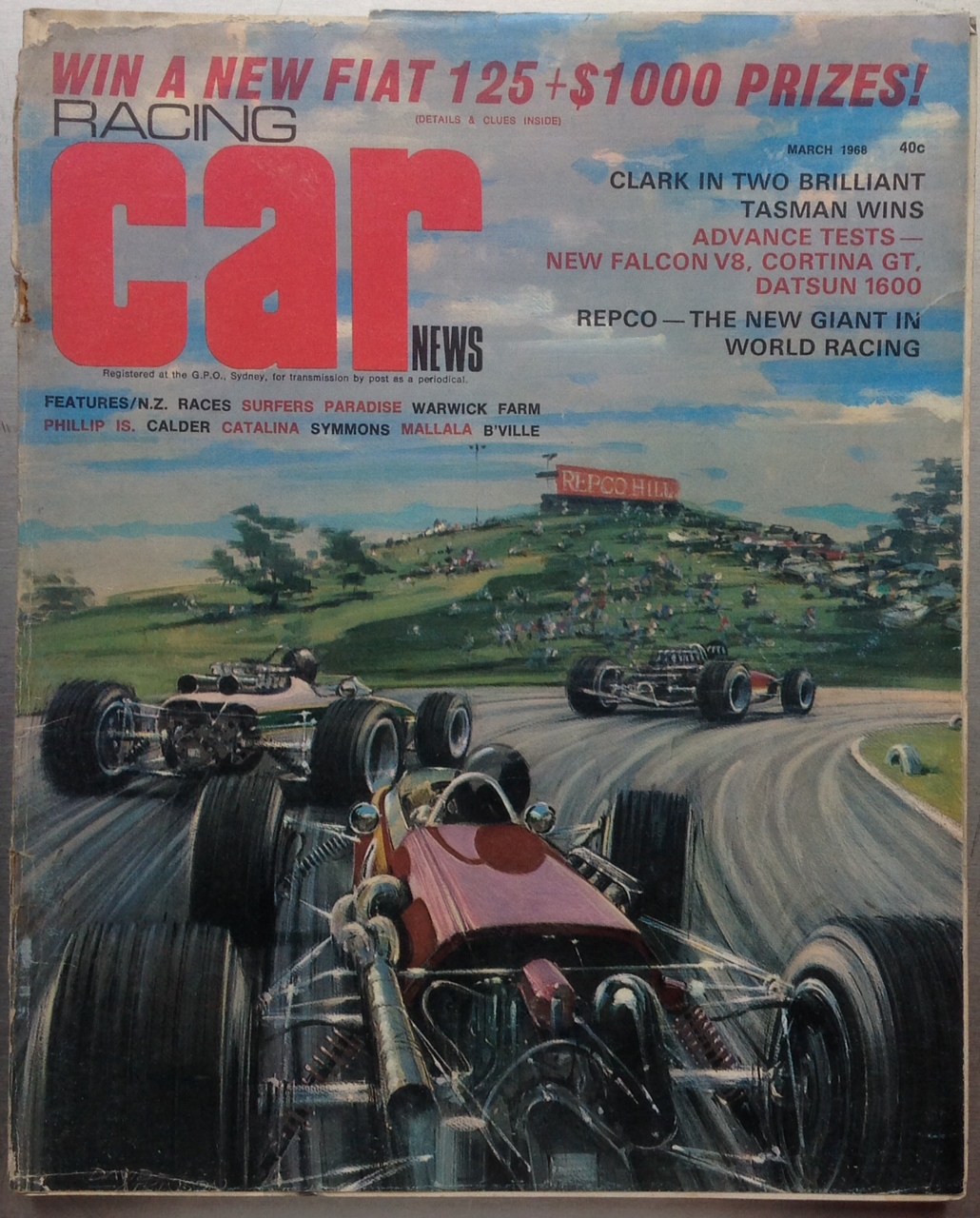
This cover by David Atkinson captures the action of the 11 February 1968 Tasman Series Round at Surfers Paradise. It depicts Graham Hills’ Lotus 49 DFW leading Leo Geoghegans’ ex Clark Lotus 39 Repco from the Piers Courage McLaren M4A FVA around the ‘Repco Hill’ section of the circuit.
Clark won the race from teammate Hill, Courage in second, a great performance on this power circuit in the little 1.6 litre Ford FVA engined M4A and Leo G, first local home in third place.
RCN survived into the ’80’s but was never the same after Stahl sold it, somehow the thing lost its soul…these days there are print and digital Australian ‘publications’ but none are as good as Racing Car News…
Stunning Roderick MacKenzie shot of Clarks’ Lotus 49 leading Chris Amons Ferrari 246T, Surfers Tasman 1968. Clark won, Amon DNF with an engine failure. Tweed Ranges in the background. Clark won the series and Amon returned in 1969 winning the it in a Dino. (Roderick MacKenzie)
Leo Geoghegans Lotus 39 Repco ‘740’ Series 2.5 V8 being given a big push, John Sheppard at the wheel and Geoff Smedley at left. ‘Castrol’ colors, Repco installation replacing the Climax FPF 4 cylinder engine lead by Sheppard creating just about the best looking 60’s single seater ever, this is not the cars best angle however! (wolseley680)
Surfers dummy grid. Hill #5 loaded up, the Lotus behind awaits Clark. You can just see the #11 nose of Rodriguez BRM P126 (10th) a Ferrari nose amongst the crowd and the nose, far right of the Courage McLaren. (wolseley680)
Tasman 1968 Highlights…
Etcetera…
(K Rogers)
Tasman race grid with Chris Amon at left, Ferrari 246T, the Lotus 49 Ford DFW’s of Clark and Hill. On row two Geoghegan’s Lotus 39 Repco and Denny Hulme, Brabham BT23 Ford FVA with the distinctive yellow Brabham BT23D Alfa Romeo of Frank Gardner further back.
‘Once yer heard these Ford engines a couple of times they aren’t that special’- a couple of disinterested marshalls as Clark’s Lotus goes by on Surfers main straight.
Alberto Ascari looking dapper in shirt and tie but a little uncomfortable at the wheel of the new-fangled mid-engined Cooper…
Its rare to see the 1952/3 World Champion in anything other than an Italian car. The Cooper must have seemed tiny in comparison with his Grand Prix Lancia D50 but the opportunity to have a steer of Gilomens’ car during a Racing Driver School in Switzerland in 1954 was too good to miss…his critique of the car unrecorded.
See the article i wrote about these fabulous 500cc/F3 cars a while back.
The Mini photographed in the year of its launch, 1959, at Paddington Station by Henry Manney of ‘Road & Track’ fame…
The Mini was launched to the press in April 1959, this photo taken by Henry Manney at Paddington Station. Maybe one of our British readers can tell us if this is the site of the cars launch?
Leonard Lord, the head of British Motor Corporation, laid down the design parameters for a small fuel efficient car during the Suez Crisis, which spiked the price of oil and caused its rationing in the UK. Alec Issigonis and his small team at Morris created a design icon which was voted the second most influential car of the last century after Henry Fords Model T.
The Cheltenham Spa Express or ‘Cheltenham Flyer’ is a train service from Paddington to Cheltenham Spa in Gloucestershire. Rivalry between railway companies in the 1920’s increased speeds, the ‘Cheltenham Flyer’ so named as trains on this route were the fastest in the world at various times…Train Driver Harry Rudduck, the Tazio Nuvolari of steam ! pushed his ‘Castle Class 5006 Treganna’ train to a record of an 81.6 mph average for the 77 mile trip in 1932.
Steam hasn’t survived nor has the ‘A Series’ powered Mini but it’s comforting that both forms of transport are as contemporary now as they were in 1959…





























![1958-Austin-Healey-Sprite-Hambro-All-Part-Of-The-Fun-ad[1]](https://primotipo.com/wp-content/uploads/2015/03/1958-austin-healey-sprite-hambro-all-part-of-the-fun-ad1.jpg)