


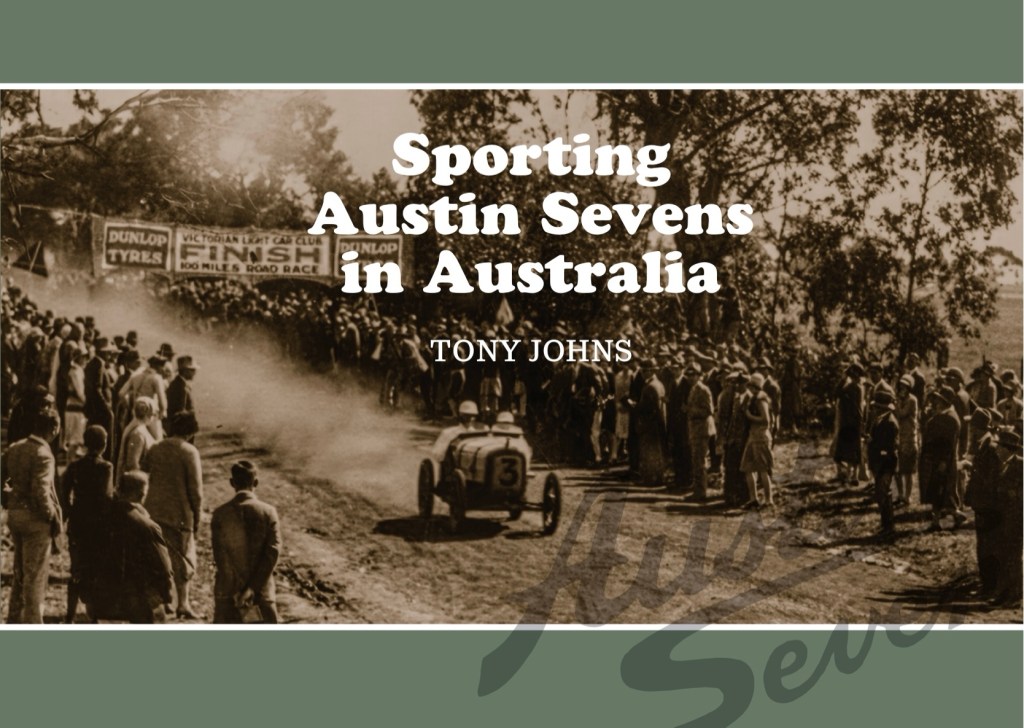
This century-old story has finally been told by lifelong Austin 7 enthusiast, car-builder and racer Tony Johns. Austin 7s have been around since 1922, first arriving in Australia in 1923.
Johns’ dab hand as a storyteller was first demonstrated in ‘Vintage Bentleys in Australia’, written with three colleagues.
This book relates their important role in the history of Australian motor sport compellingly, from the early days of amateur owner-drivers competing in trials and hillclimbs to Captain Arthur Waite’s victory in the 1928 Australian Grand Prix at Phillip Island aboard a factory supercharged Austin 7 ahead of a classy field including Bugatti, Alvis and Amilcar.
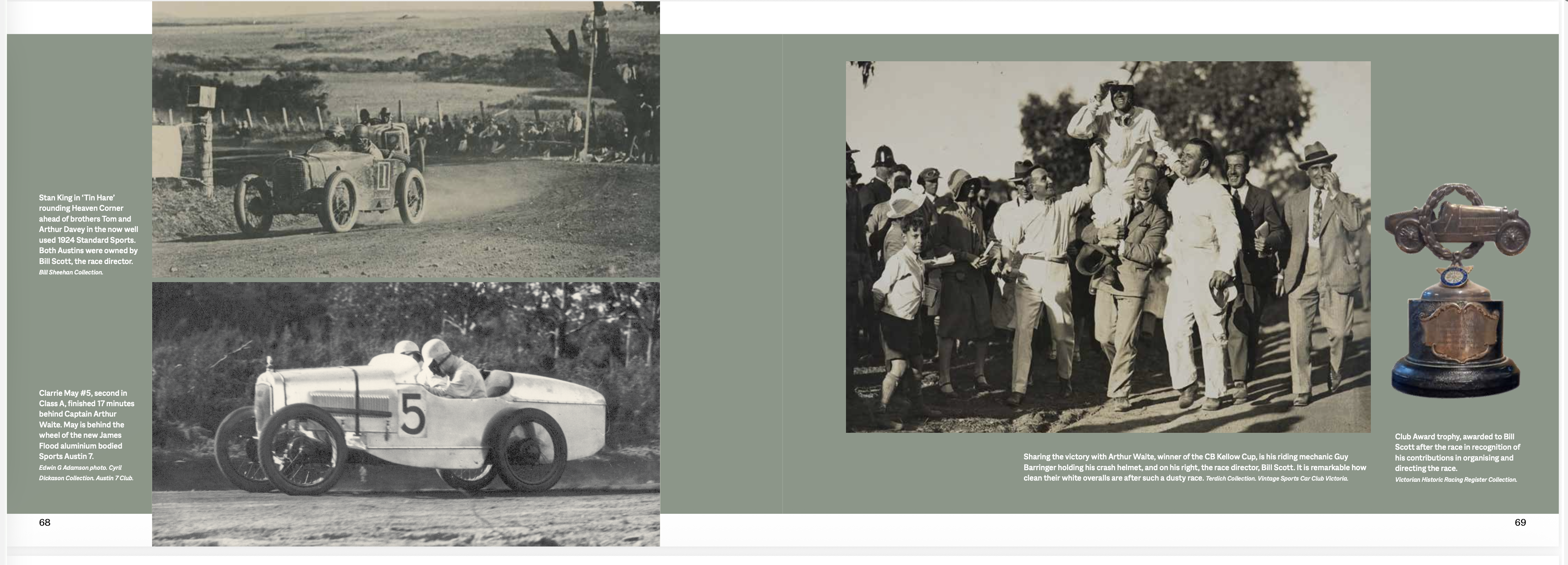
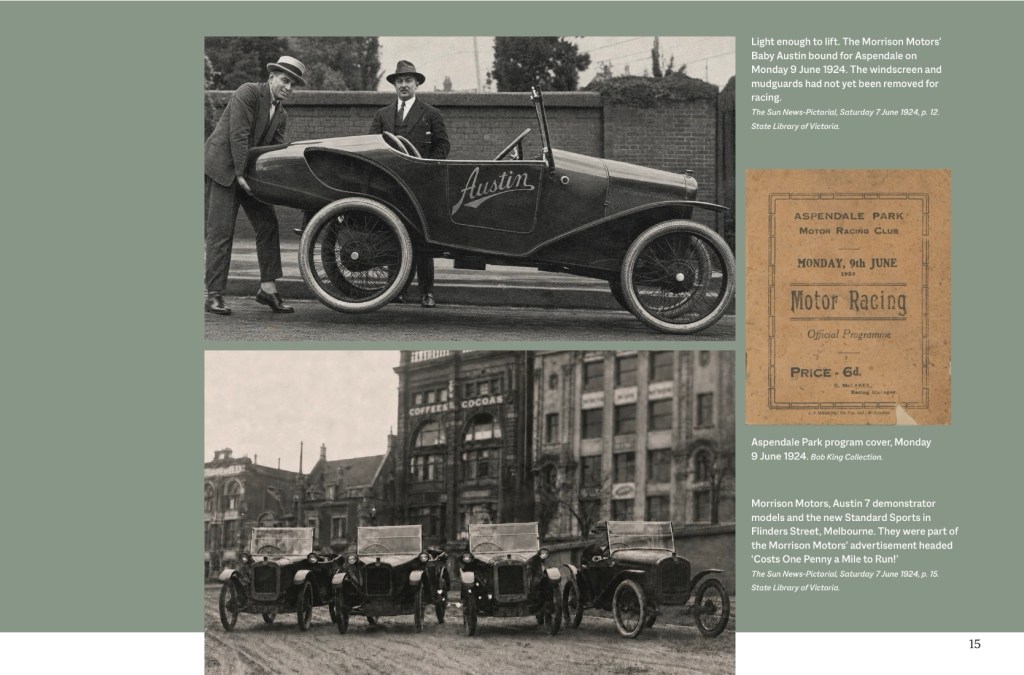
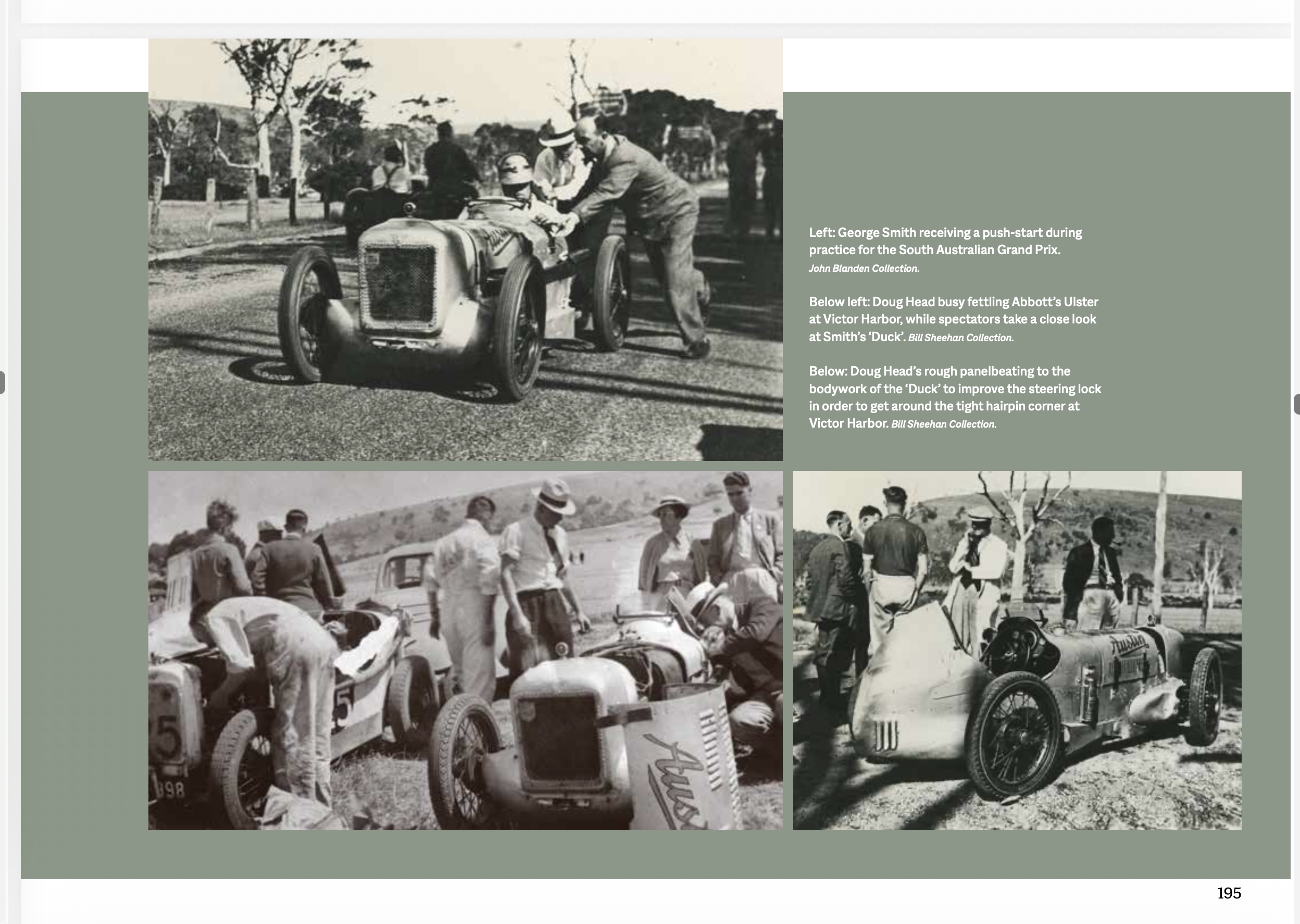
Drawing from historical documents, including original programs, the pre-war era is well researched. The post-war special-building and club racing sections draw on drivers who participated in those events, including the author’s own experience.
Herbert Austin’s most important formative years were spent in Australia from 1882-93. He did his engineering apprenticeship in Melbourne before working for the Sydney-based Wolseley sheep-shearing machine company, an opportunity that led to Austin designing the first Wolseley car in 1891.
Johns relates that the first Austin was built in 1906 and covers the design and development of the epochal Austin Seven in 1922; the boardroom battles to get it built are fascinating.
By the time the Austin 7 became a mainstay of the 1928-35 Phillip Island Australian Grand Prix era, the 7 was already an established competitive car via its performances in the Australian hills and reliability trials that radiated from the various state capitals, on the speedways at Aspendale and Claremont, and on the firm sand of Sellicks and Gerringong beaches.
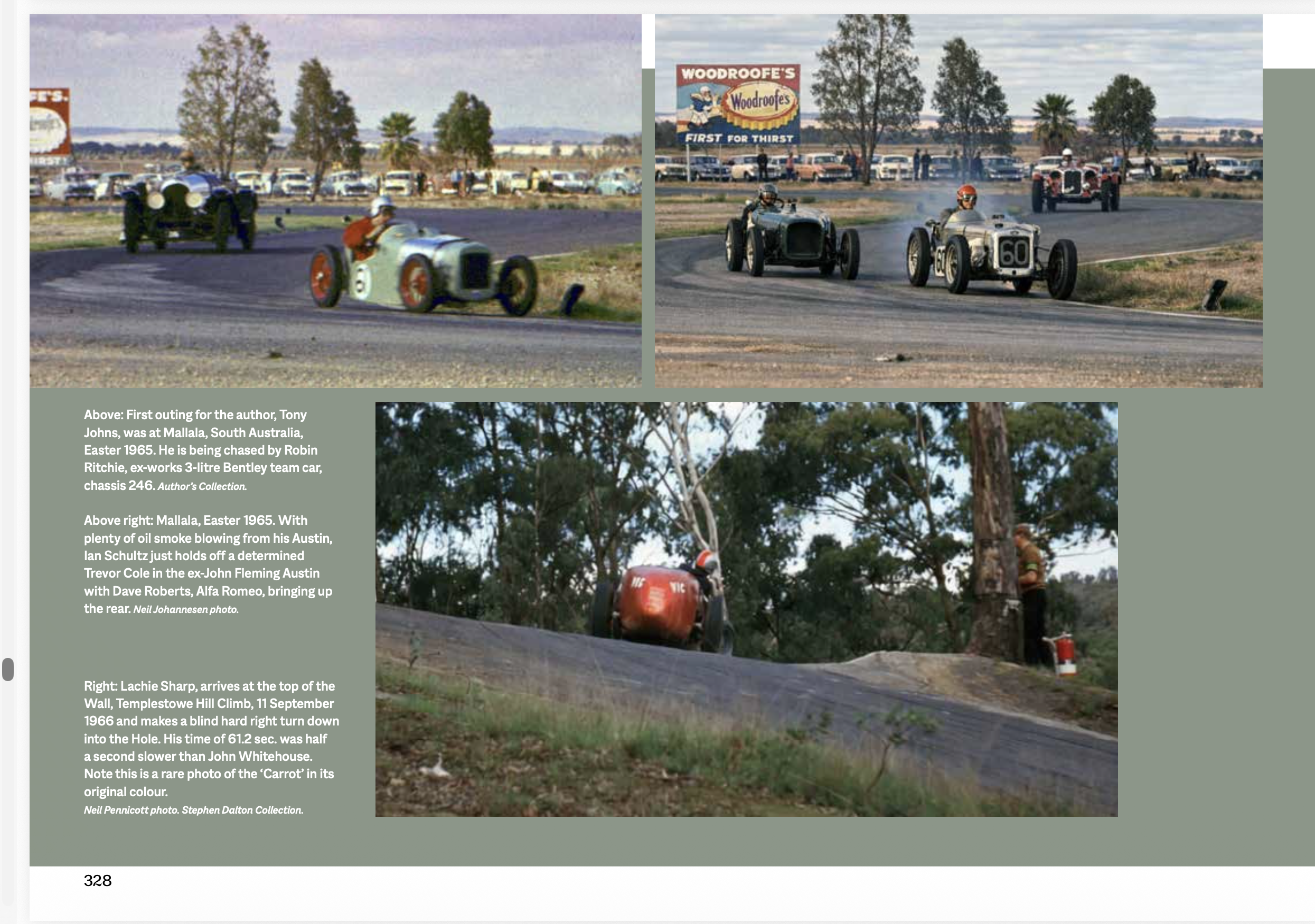
While Arthur Waite’s – the Aussie was Herbert Austin’s son-in-law – ’28 win is well known, less so is Cyril Dickason’s victory in an unsupercharged Ulster in 1931. Cyril got the cup, the babe, and the plaudits of the crowd, but the Victorian Light Car Club committee decided overnight that while Dickason won on handicap, the winner of the AGP was the bloke who did the fastest time, Carl Junker in a Bugatti Type 39. Johns notes that more than half the committee were Bugatti owners then and that Clarrie never handed the cup back! God bless him for telling ‘em to get-rooted or the 1931 equivalent thereof…
Like ‘Professor’ John Medley’s Bathurst and John Snow books, Johns’ manuscript is rich with marvellous industry, locational, economic, people and event tangents, the most significant of which are dealt with by way of breakouts. A decent index allows these gold nuggets to be mined.
Tony has amassed a colossal motor racing archive in a six-decade obsession. It’s reflected in stunning period material and photographs, most of which haven’t been published before. The photo content alone is worth the ridiculous, low $A99 price. Plus postage, of course.
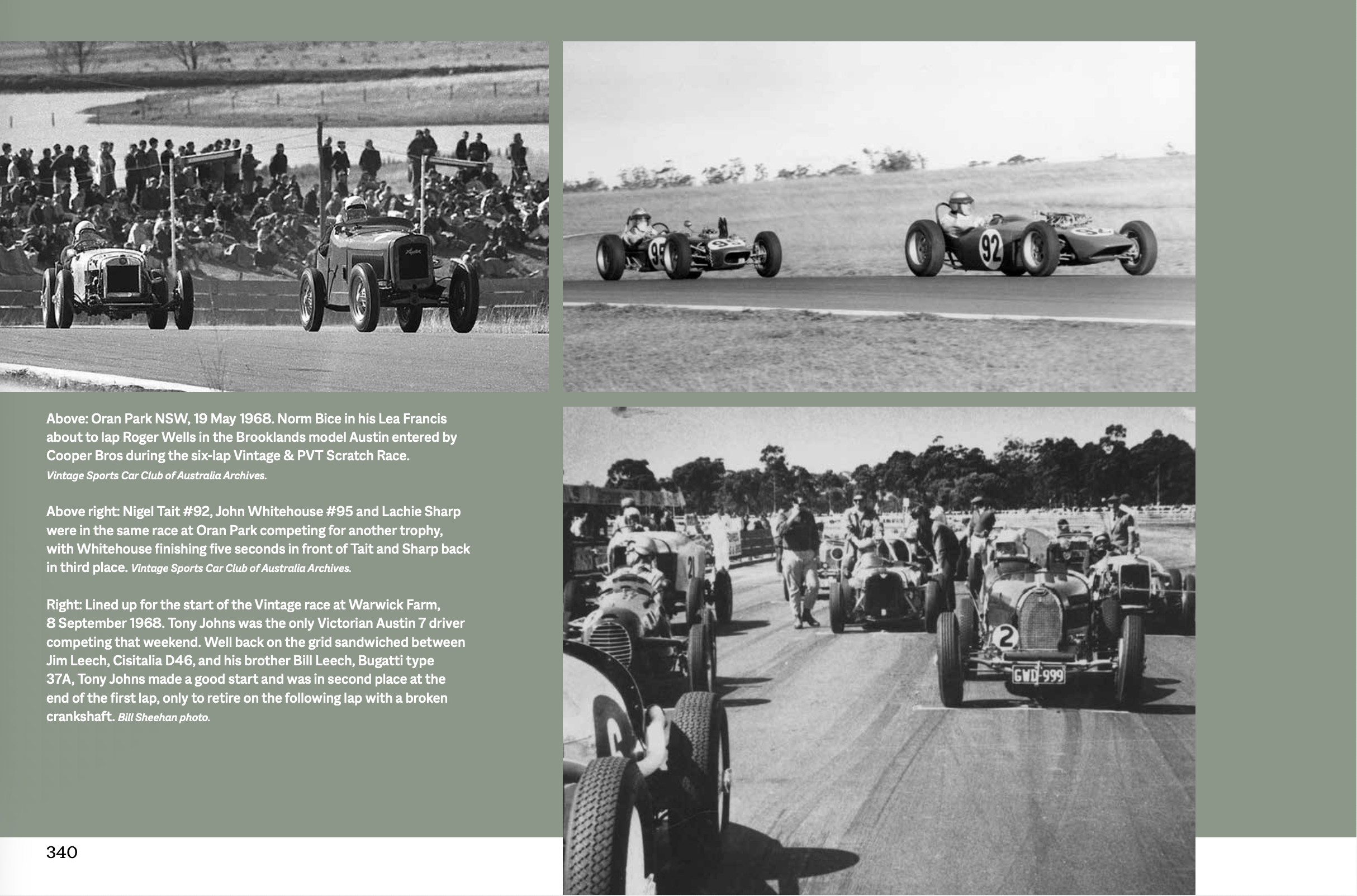
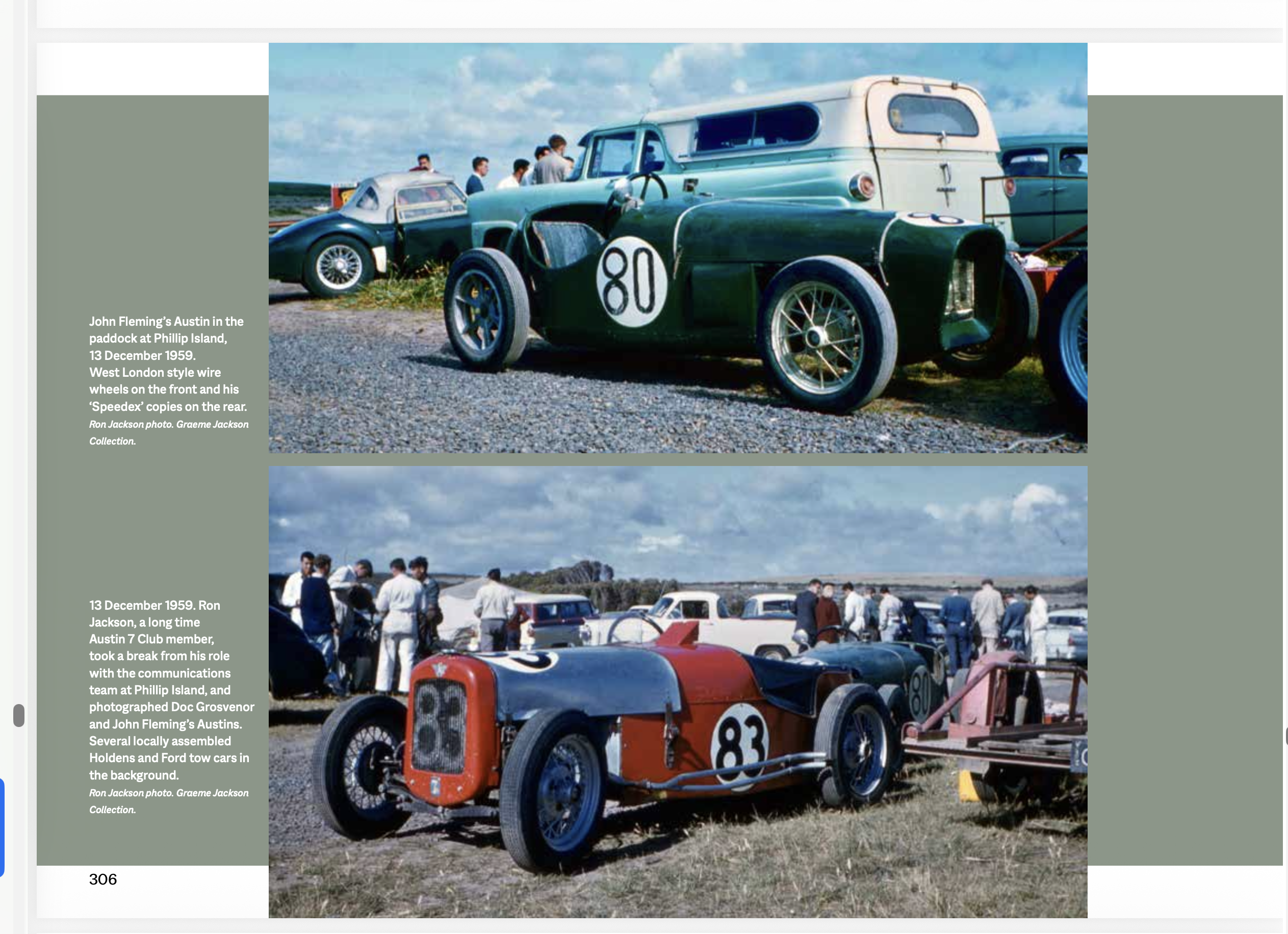
There are some fabulous tales; Ron Uffindell features prominently in a couple of them. Driving from Adelaide to Bathurst and back and finishing the 1938 AGP at Bathurst, won by Peter Whitehead aboard ERA R10B, is impressive. Perhaps more influential on motor racing history are the secrets in the Austin 7 engine owned by Derek Jolly and given to Colin Chapman for use in his Lotus Mk3 in 1951; the brilliant machine got its Unfair Advantage with those engine tricks.
Austin 7s competed in the support races at Grand Prix meetings until 1958. The Austin 7 Club, formed in Melbourne in 1950, and the publishers of this book, still have over 400 members and have marshalled the troops down the decades to recraft the rules and keep competitor numbers up.
Johns cites the first race for vintage racing and sports cars as perhaps The Argus Trophy held at Fishermans Bend on February 2, 1956. The point being that as Formula Vee, Formula Ford and particularly Clubmans – the latter very much of the A7 owner-builder mindset – grew in popularity as entry-level categories, Austin 7s always got a run in ‘Division 3’ events and then provided a critical grid mass as Historic Racing got underway; the ’78 AGP Golden Jubilee at Phillip Island, ’76 First Amaroo All Historic and ’77 Winton meetings (organised by the Austin 7 Club) are all covered.
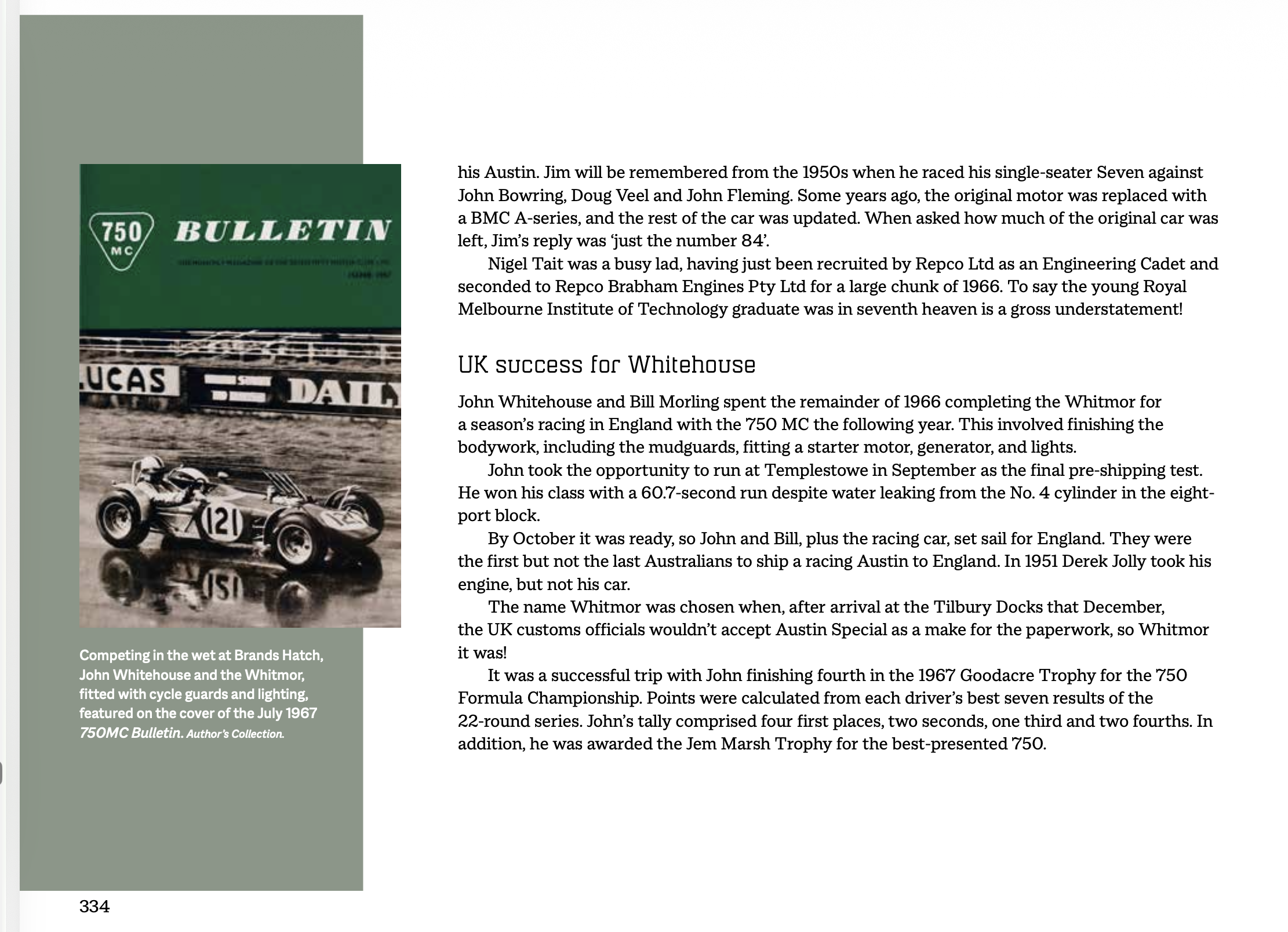
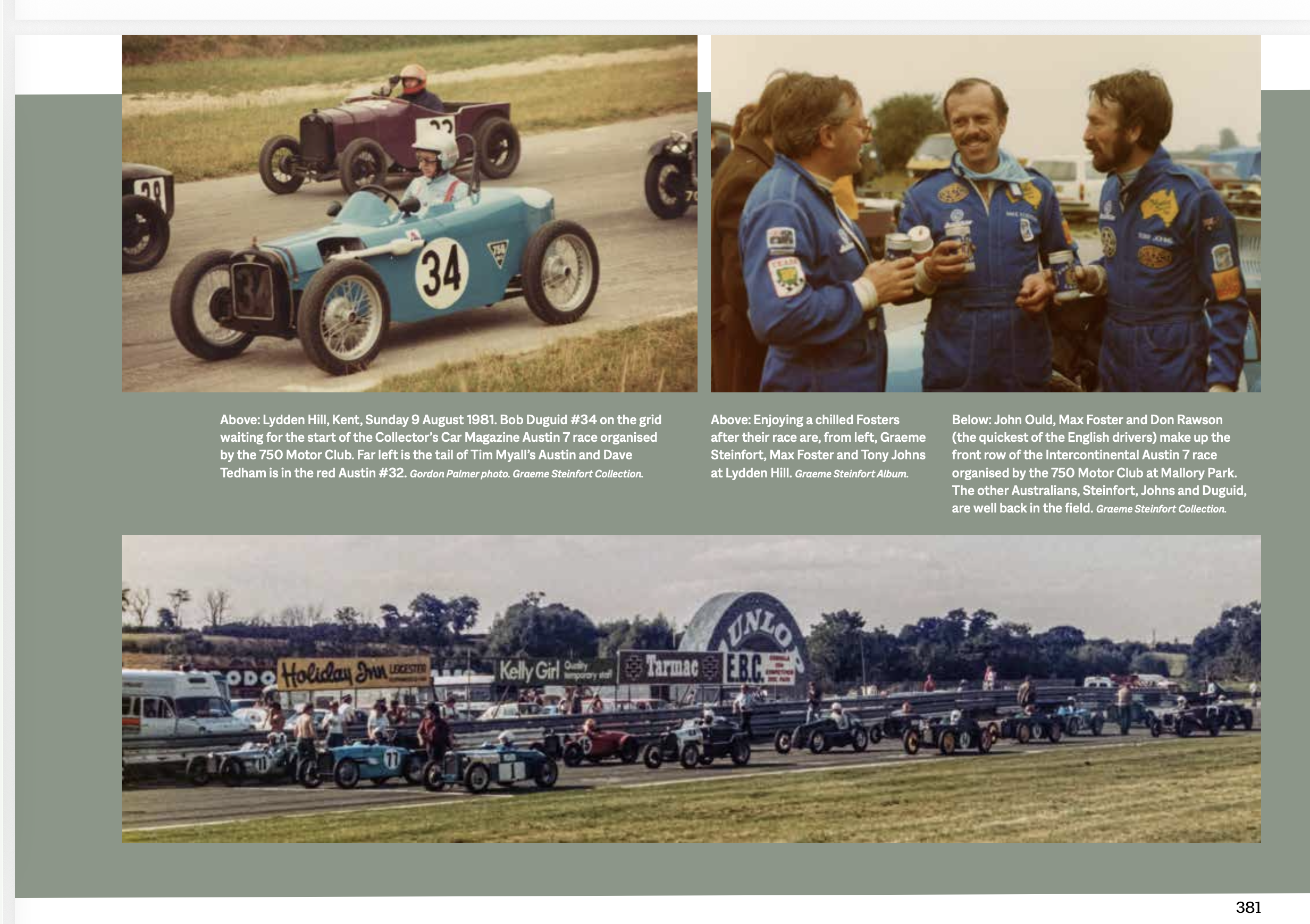
The story ends with the 1981 UK Raid, when five racing ‘Australian Austins’ and their owners spent a month racing the Poms on their home turf in a hard-fought series of races akin to The Ashes! The Brits thought they understood ‘their creations’ better than any other A7 racers on the planet, but they found the colonials’ ahem, interpretation of English was at the very literal end of things…
I need to declare an interest in this project, having worked with Tony, a mate of 30 years, to cut and polish his manuscript. With over 400 words and nearly 500 photos/images, Sporting Austin Sevens in Australia – professionally written, edited, sub-edited, designed and printed – deserves a place on the bookshelves of Austin 7 enthusiasts, motor racing readers and automotive historians.
The 500 individually numbered books – there won’t be second edition – are on schedule to arrive in Melbourne in mid-November and will be mailed to purchasers then. I’s one to have and hold, love and cherish, folks, email this Austin Seven Club address to secure your copy: mailorderparts@austin7club.org


Hi Mark looks good