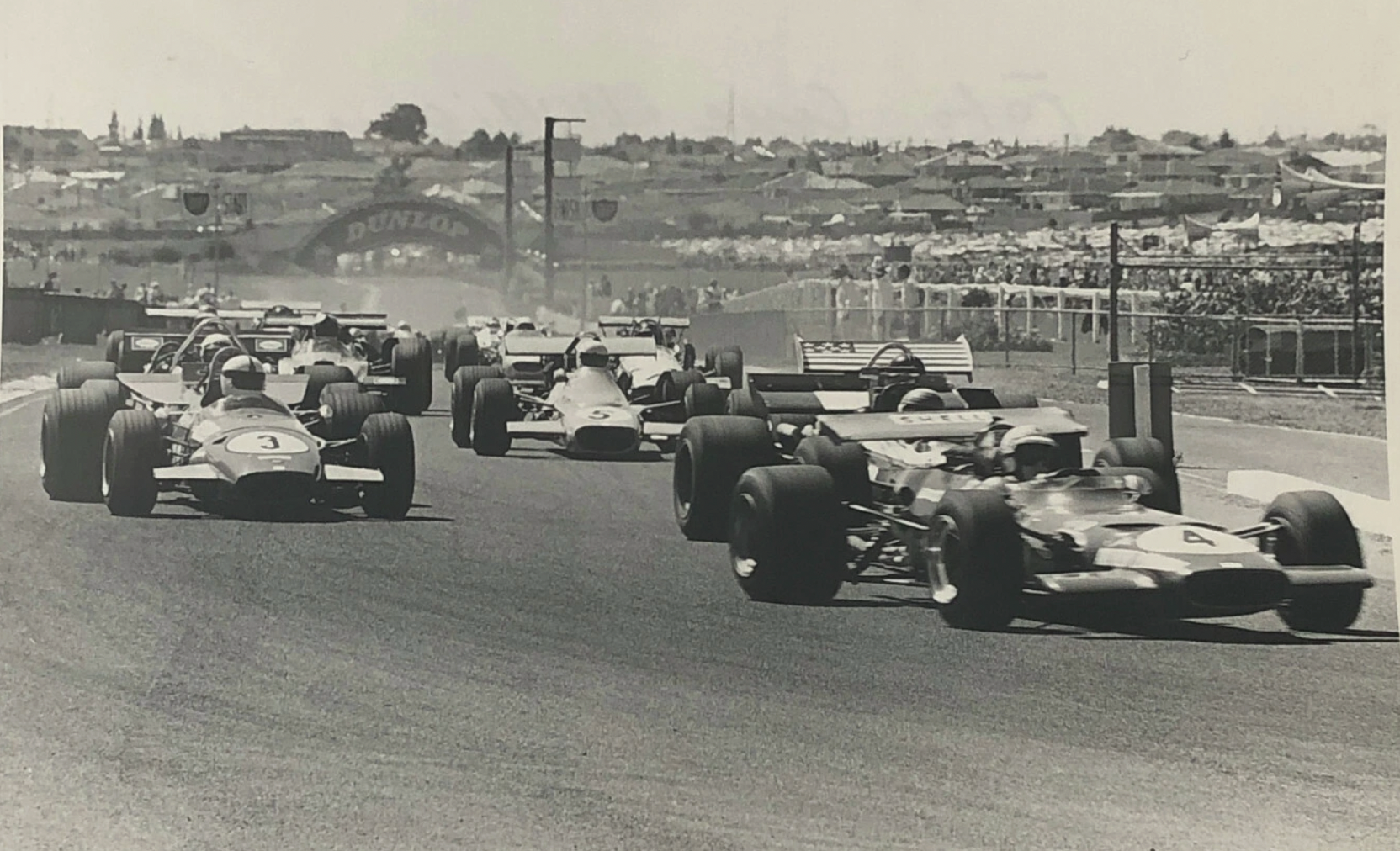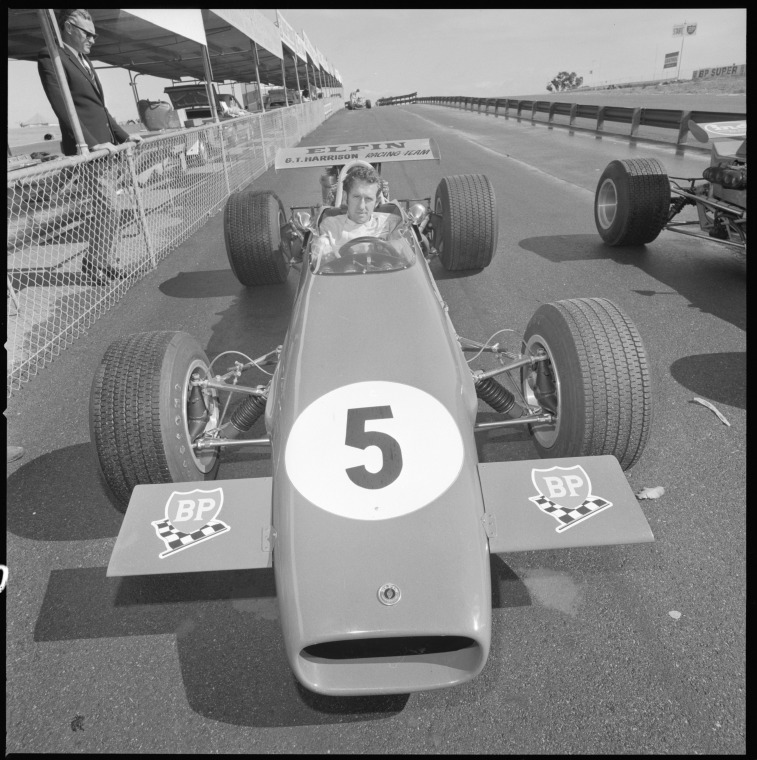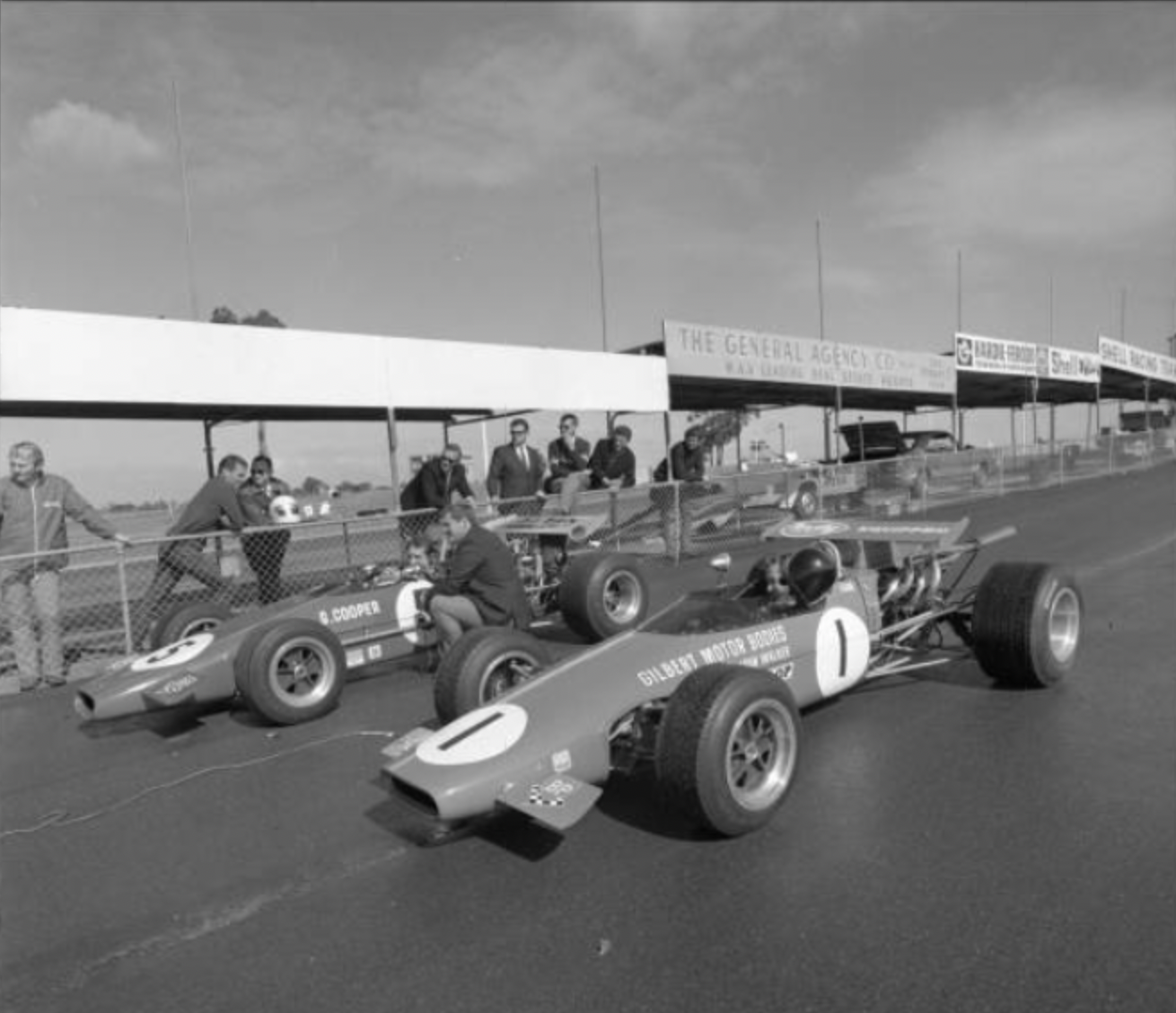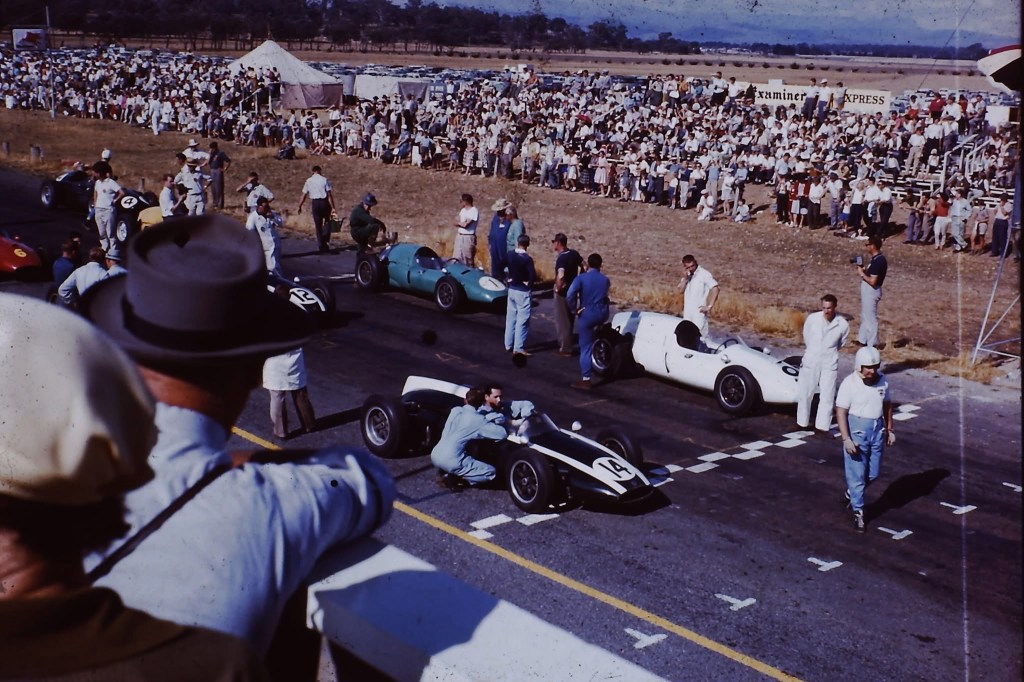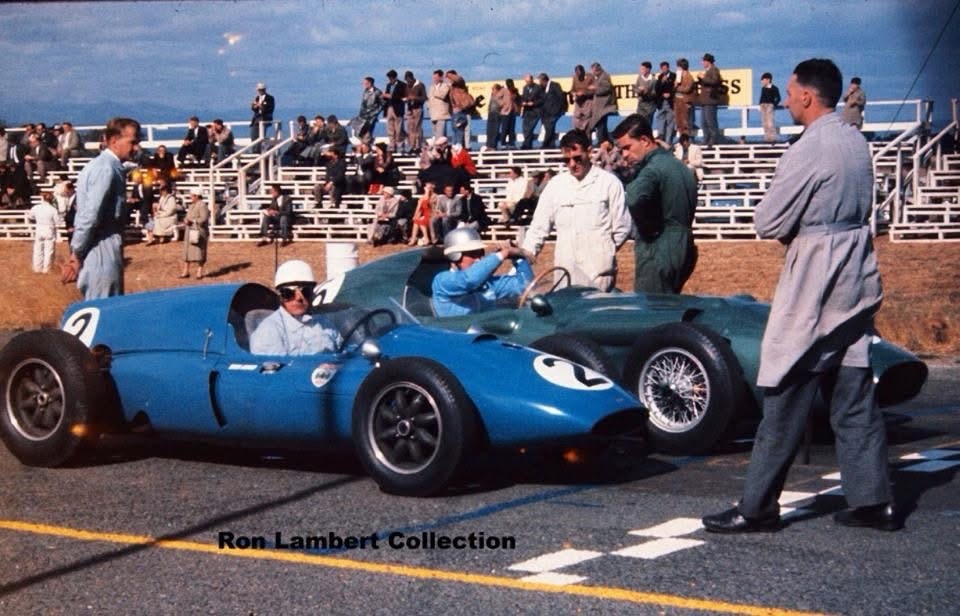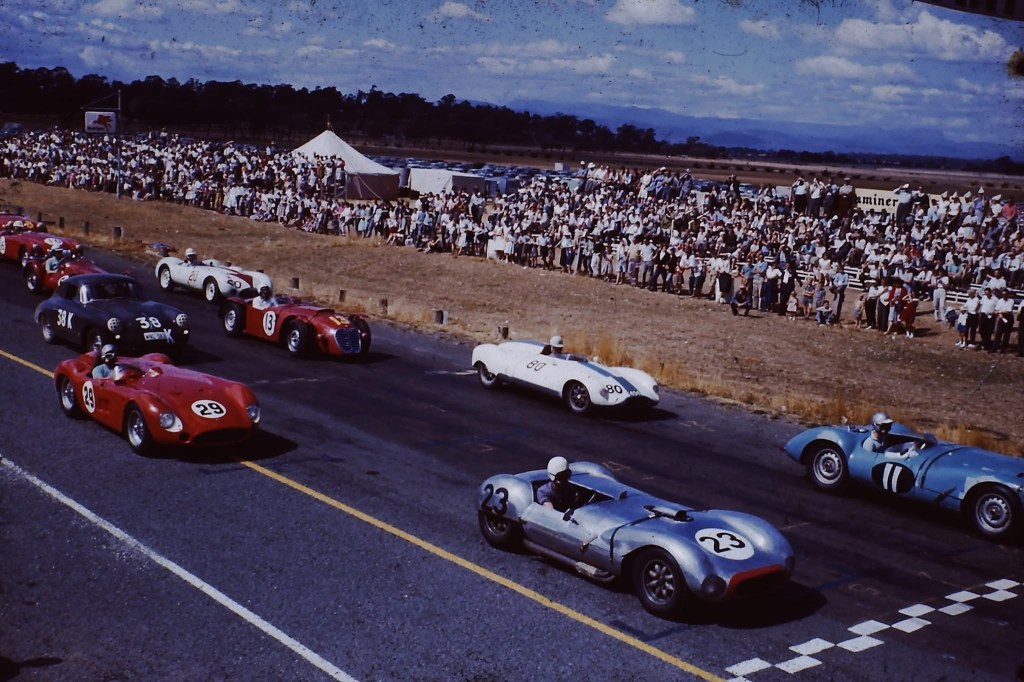
Jack Brabham, Cooper T53 Climax on pole of the Longford Trophy grid, March 5, 1961
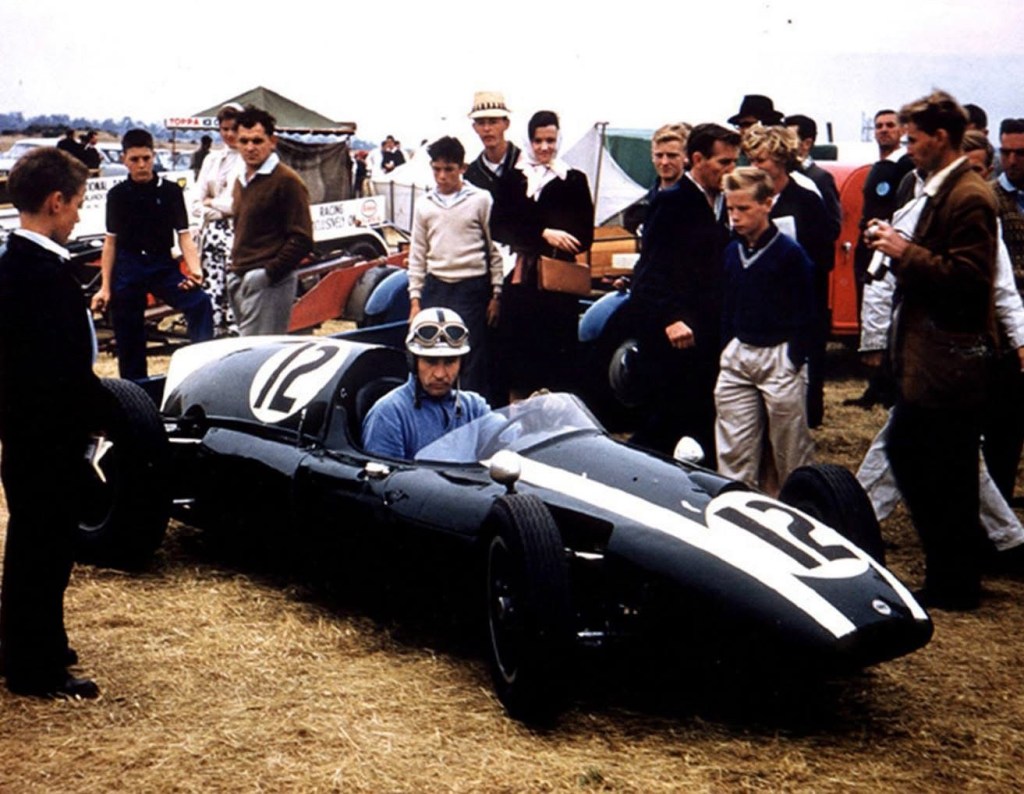
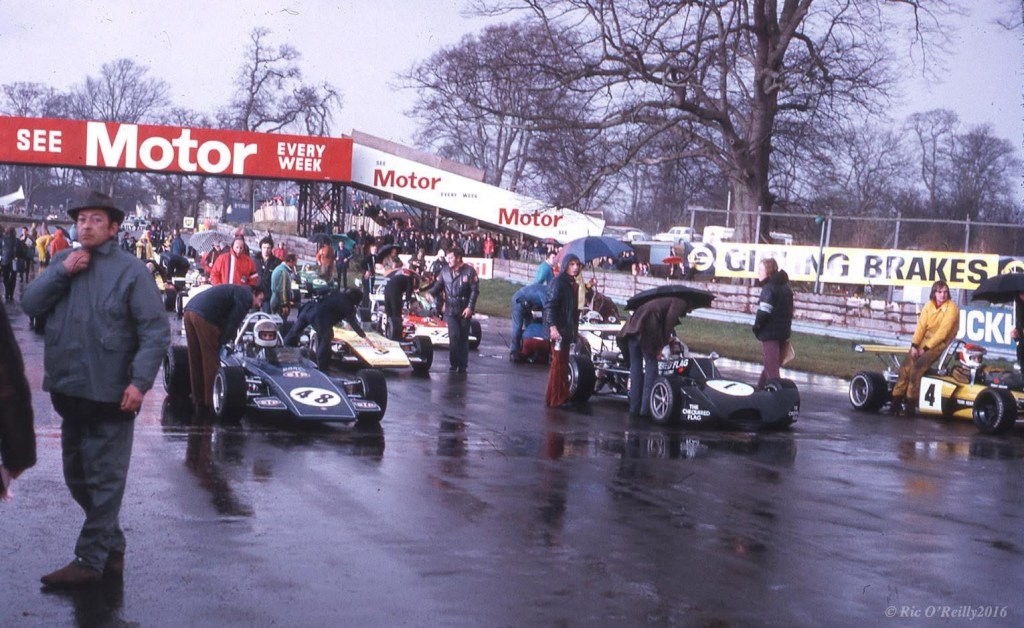
He is surrounded by Cooper T51s: Bill Patterson‘s white one, that’s Patto walking away from the grid, Stan Jones blue machine, the nose of Roy Salvadori’s car is #12. Car #4 on row three is Lex Davison’s front engined interloper, Aston Martin DBR4/250 3-litre.
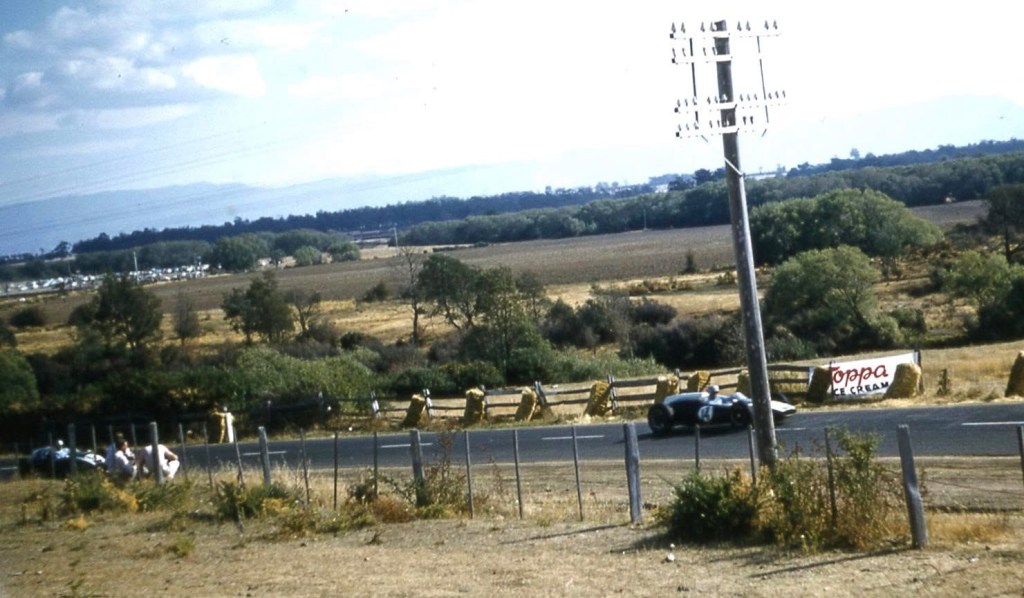
Salvadori won the Longford Trophy race aboard an Ecurie Vitesse – Jack Brabham Motor Racing – Cooper T51 Climax from Patterson, John Youl, and Austin Miller, all Cooper T51 mounted, then Davo’s Aston Martin. Brabham had a driveshaft break after completing 14 of the race’s 24 laps.
We’ve done this before of course, but a whole swag of Maurice Monk photographs justifies another crack I think, see here for the previous effort:https://primotipo.com/2018/02/22/roy-salvadori/
(J Richardson)(A Lamont Collection)(M Monk)
Brabham chewing the fat with Longford Motor Racing Club Supremo, Ron MacKinnon. Given Salvadori’s presence we can probably call that years Longford meeting the first international one, for cars at least
The other Australian Internationals that summer were the Warwick Farm 100 won by Stirling Moss in Rob Walker’s Lotus 18 Climax, and the Victoria Trophy held at Ballarat Airfield won by Dan Gurney’s BRM P48. I guess the Longford Motor Racing Association didn’t have the readies to pay the start money to Walker or BRM.
Roy had better luck in Australia than he did in New Zealand where he raced a Yeoman Credit Lotus 18 Climax at Ardmore, Levin, Wigram and Teretonga, his best a second place at Teretonga. He had gearbox problems twice and a leaking radiator in the other events.
(B Wright)
‘Salvo’ crossed the Tasman Sea to Australia and raced the Cooper used by Ron Flockhart that Australasian season, in Tasmania and two International races a day apart at the new Hume Weir circuit outside Albury on the New South Wales/Victoria border. He was fourth in one, DNF the other, both races were won by Brabham’s Cooper T53 ‘Lowline’ photographed in this piece.
In this pre-Tasman period the Longford Trophy was an Australian Drivers Championship – Gold Star – event. It was one of the five rounds in 1961 albeit the very full calendar had 15 Formula Libre events.
Bill Patterson took the title with victories at Bathurst, Lowood and Caversham. Lex Davison nicked the AGP at Mallala from David McKay after a very ropey jumped-start call, and Salvadori won in Tasmania.
Stan Jones, Cooper T51 FPF, Bib Stillwell, Aston Martin DBR4 3-litre before one of the Saturday preliminaries(A Lamont Collection)(M Monk)
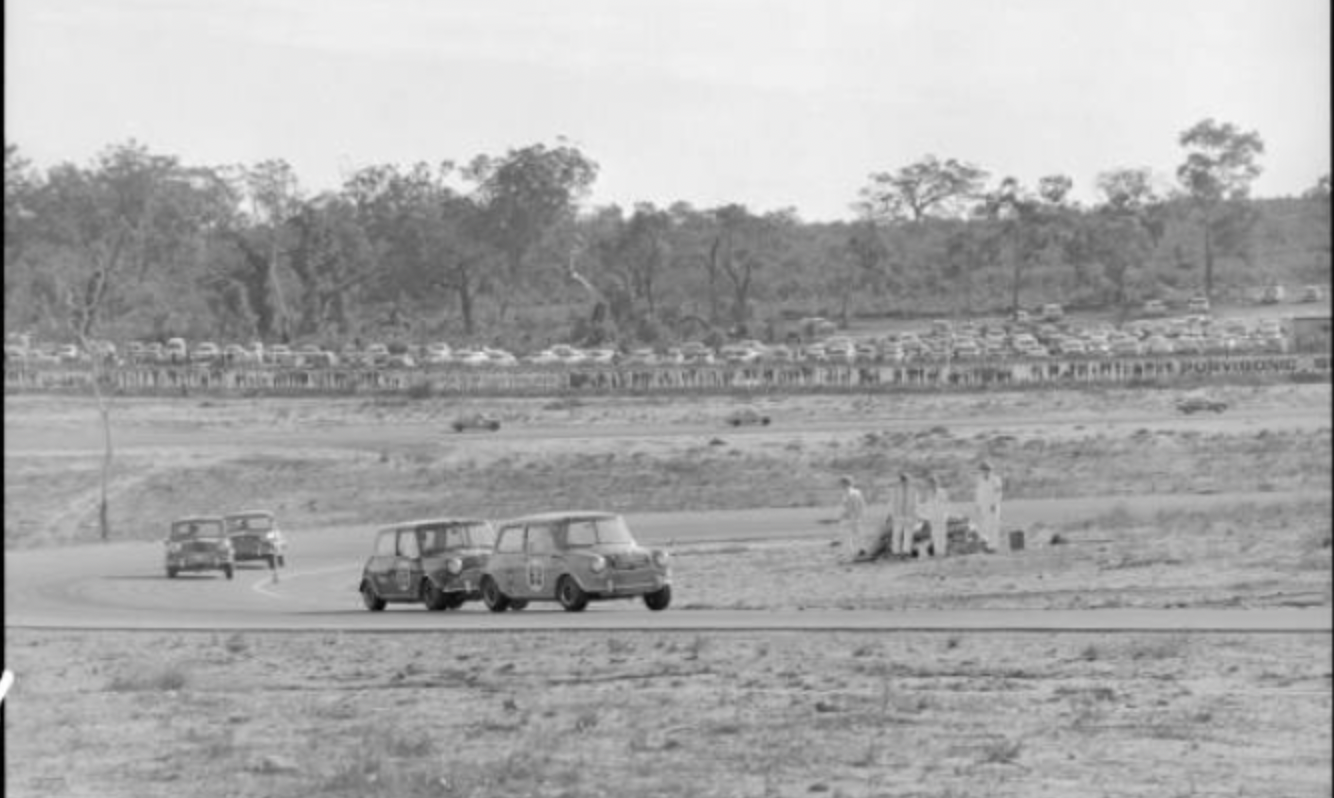
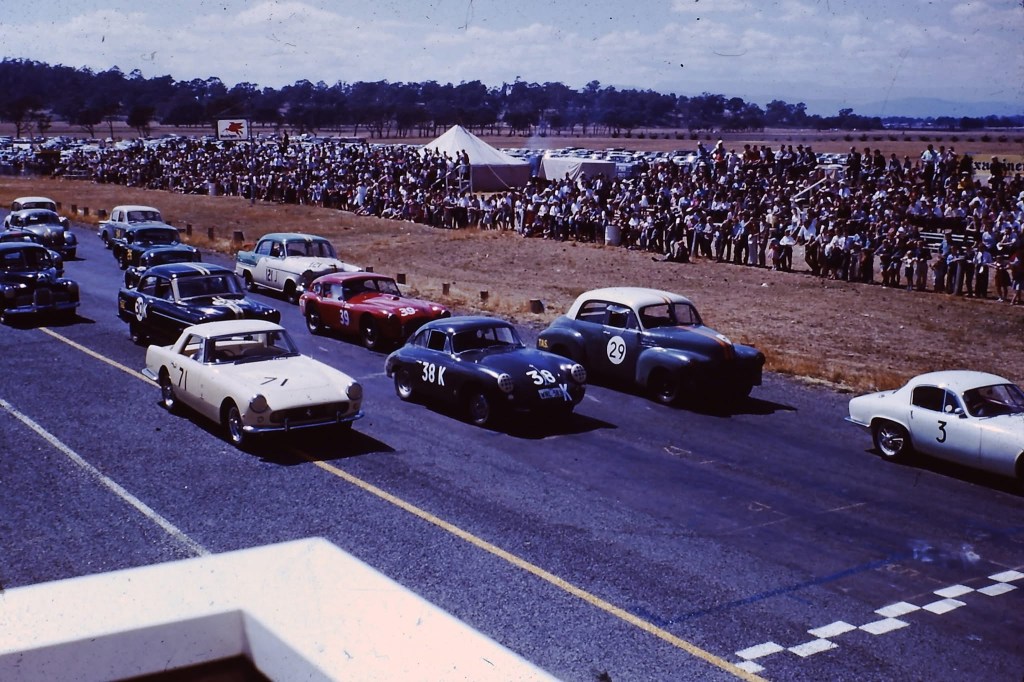
Grid of a mixed touring car and GT race.
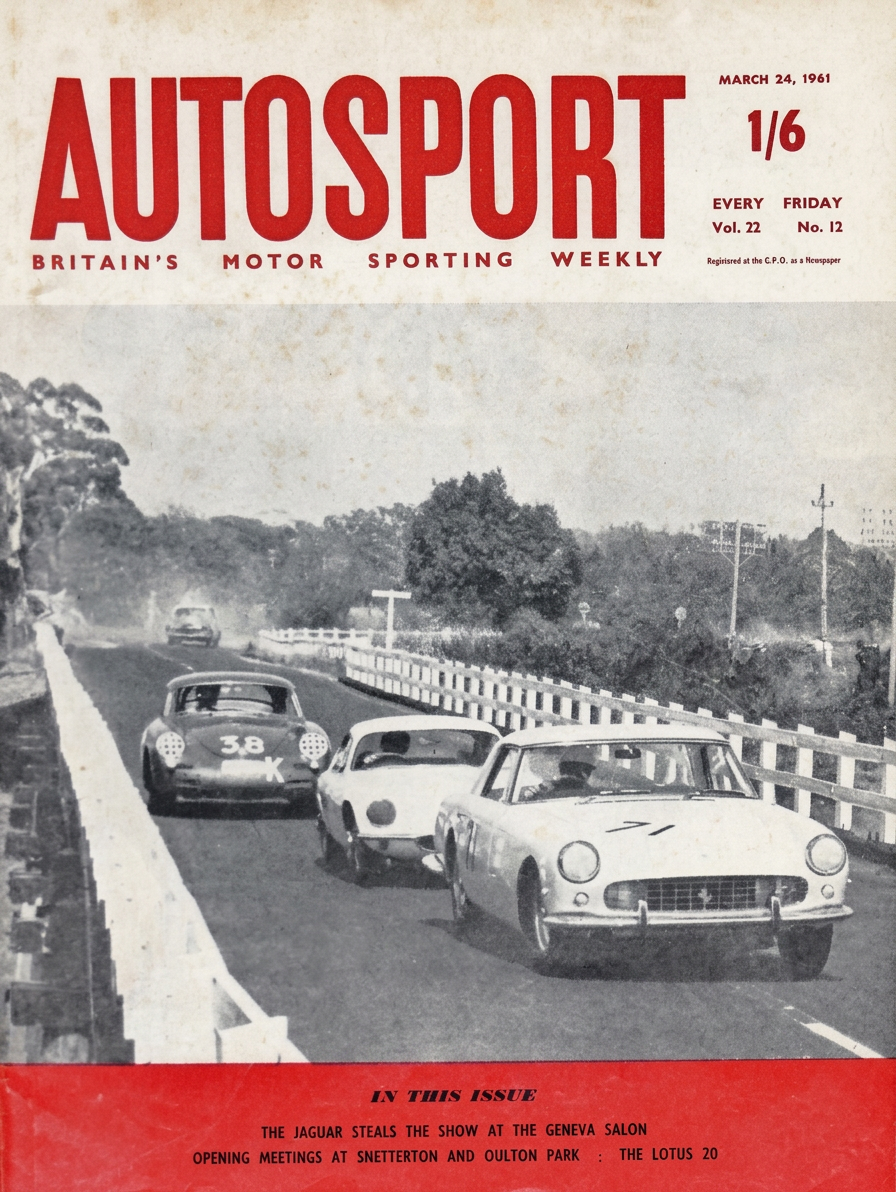
Leo Geoghegan, Lotus Elite from David Lewis’ Holden Grey, Gavin Youl, Porsche 356, David McKay, Ferrari 250 Pininfarina, #39 Ron Marshall, AC Bristol, #30 Alan Ling, Holden, #121 Davison, #26 Doherty, #34 Maguire, #66 Gorringe, #130 H Cape, #40 Beechey and the rest! And below, McKay, Geoghegan and Youl charge across Long Bridge.
(B Wright)(M Monk)
Grid of ‘The Examiner’ sports car handicap on the Monday morning. Murray Carter’s Carter Corvette V8 on pole from John Ampt in the ex-Whitehead/Jones/Phillips Cooper T38 Jaguar, Bob Jane’s Maserati 300S, Alan Jack, Cooper Climax, #13 Geoff Smedley, Le Mans Jaguar Spl, Gavin Youl’s Porsche 356B, #20 JW Barrie, Zephyr Spl and the #16 MGA of RS Ward towards the rear.
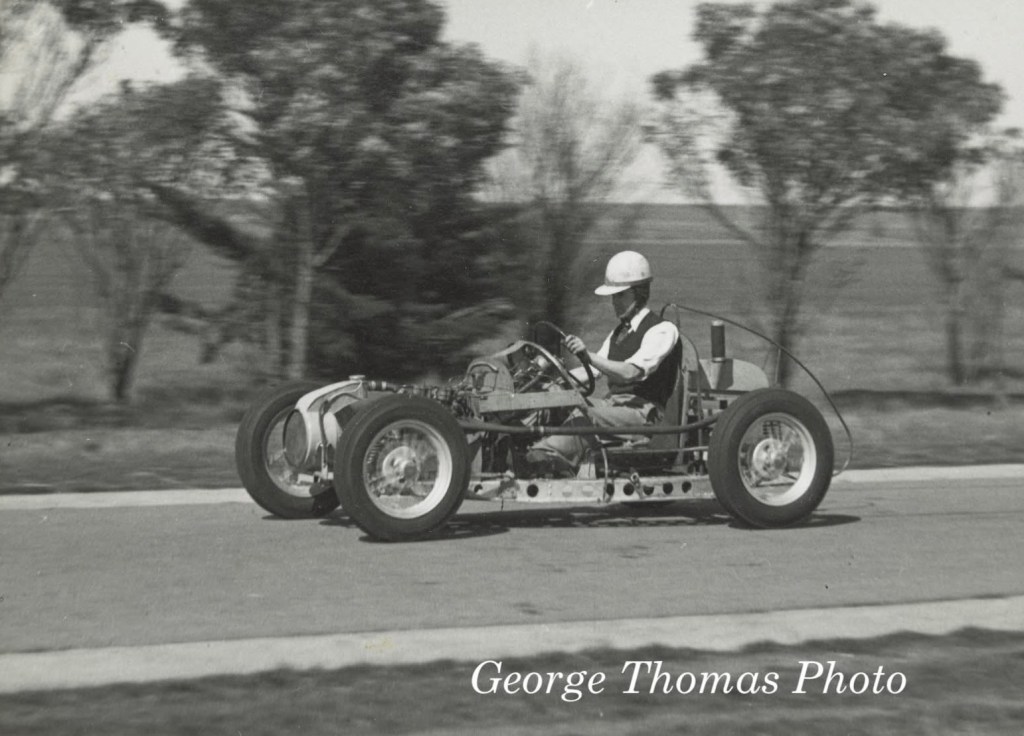
Maurie Monk, Austin 7 Spl, Aust Motor Sports Club speed trials, Geelong Road, September 1947
Etcetera…
Maurice Monk, who took many of these marvellous photographs, was co-founder of the Confederation of Australian Motorsport, CAMS, along with Donald Thomson.
‘Maurie’ was awarded the CAMS Award of Merit for his contribution to motorsport as a competitor, organiser and administrator. He was CAMS first President in 1953 and served again in that role in 1956.
He constructed a line of some 17 competition cars for motorsport events ranging from mud-trials to sprints and hillelimbs. These were successful in his and other family member’s hands.
(A Wylie)
Maurie Monk and Harry Firth with their HL Firth entered Standard Vanguard before the start of the 1957 Mobilgas Round Australia Trial. Car damaged at Mt Isa-Gloncurry as below.
(A Wylie)(M Monk)(M Monk)
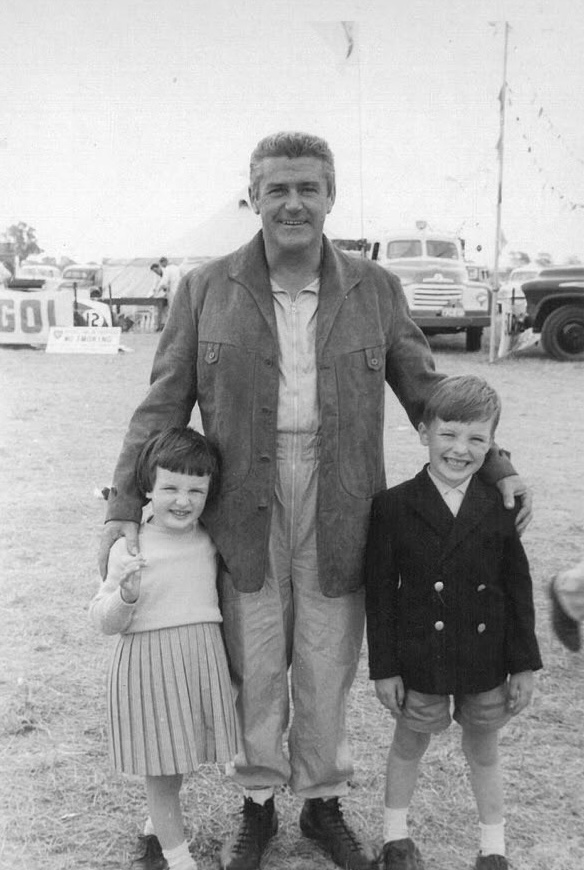
Stan, Anita and Michael Monk in the Longford paddock in 1961. Gotta be a Ronson Stan, surely?
(M Monk)
Longford was born to host the February 27-28, 1953 Australian Motorcycle Tourist Trophy.
The key men to get the event out of the water were local identity, Martin Coombe, and Longford councillor, Ray Chortle. Then local landowner Ron MacKinnon added his weight and muscle…and agreement to use his land.
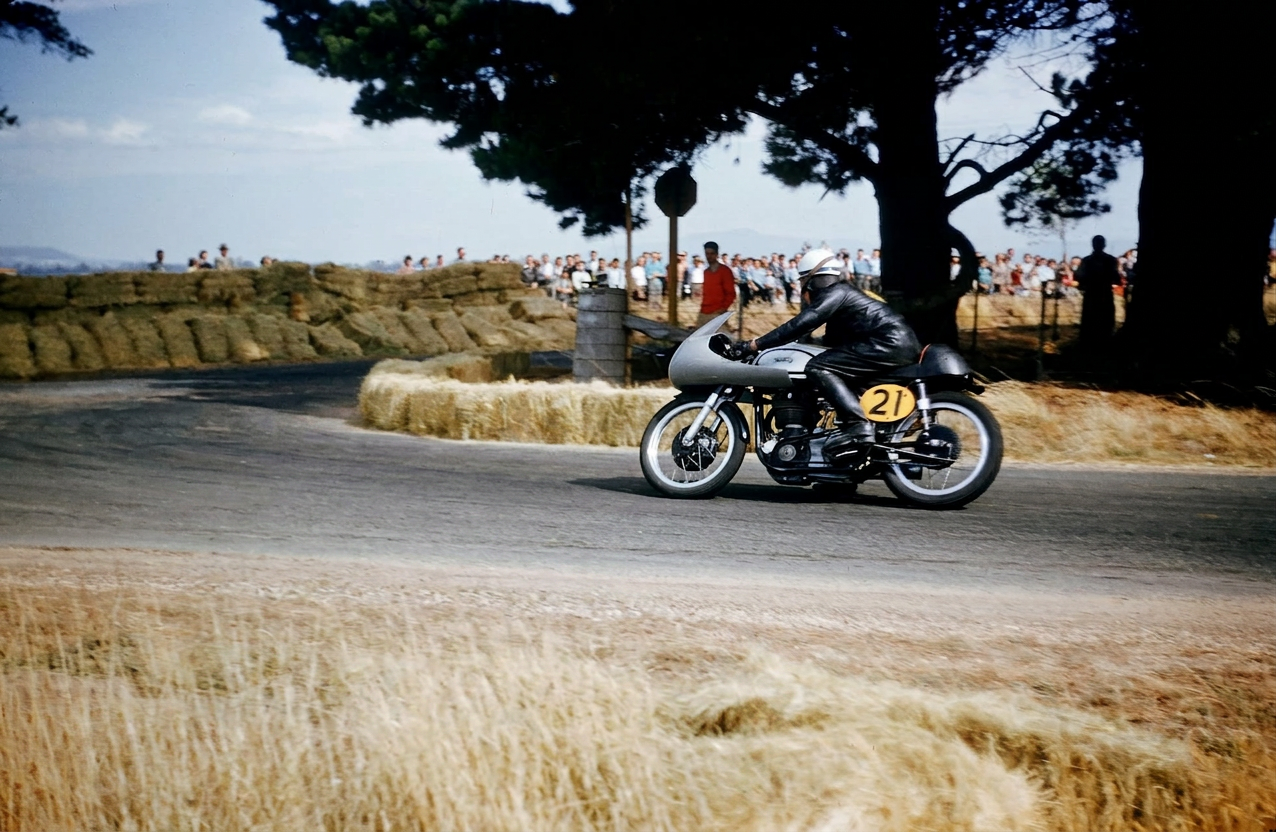
Maurie Quincey won the Unlimited TT on his Norton Manx. The 12-lapper was reduced to four laps as the program was running late, so the race was shortened to ensure the Launceston-Hobart evening train crossed the track unimpeded!
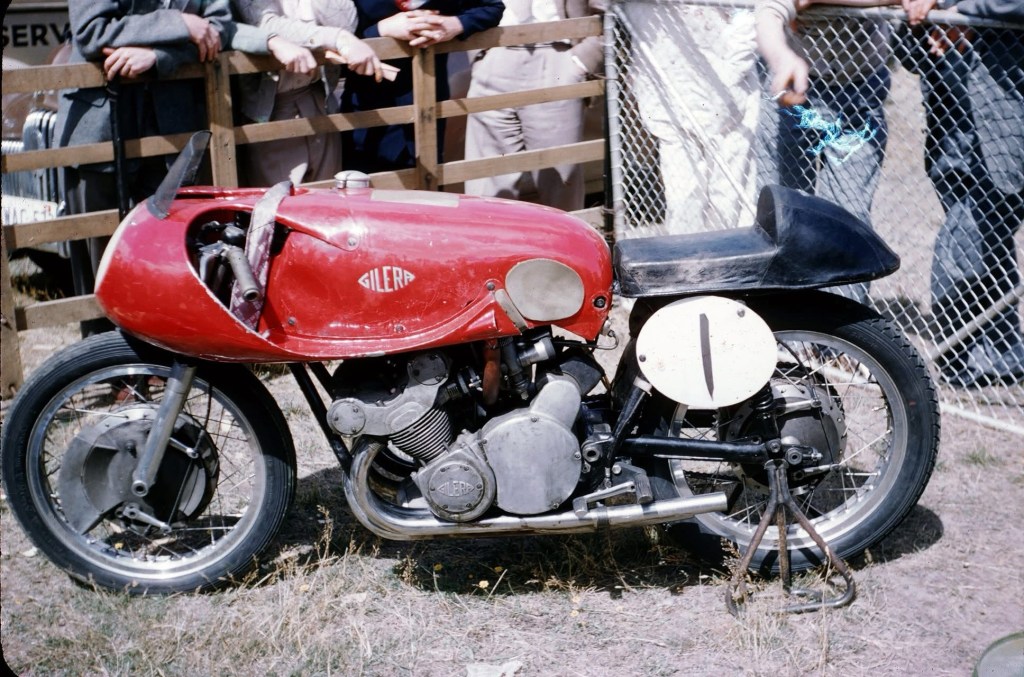
The 1955 meeting included Geoff Duke on the final leg of his Australian Tour, so I guess his works-Gilera participation constitutes the first International Longford.
Geoff Duke’s Gilera 500-4 at Longford during the 1955 meeting (B Young Collection)
Jim Scaysbrook wrote that ‘Duke was timed at 144mph on his works-four cylinder Gilera on The Flying Mile, and despite severe misgivings about certain aspects of the track, he won both his races.’
‘Duke noted that the planks used to surface the bridges ran in the direction of travel, and had sizable gaps between them! In the first start, magneto trouble knocked 1600rpm off the Gilera’s maximum of 10,600 set in on lap 6 of the eight-lap race, allowing local star Max Stevens on the ex-Quincey Norton to close within nine seconds when the chequered flag came out. A replacement magneto was flown across from Melbourne, and after a quick trip to Launceston to fit it, he returned to win again and raised the lap record to a 92mph average.’
Maurie Monk and Arthur Wylie via the Anita Monk Collection, John Richardson, Andrew ‘Slim’ Lamont, Bob Wright via Kay Wright, Ron Lambert, oldracingcars.com, ‘Longrod. Fast, furious, friendly.’ by Jim Scaysbrook, Old Bike Australia, February 2019, Bob Young Collection, Ellis French for car identification, George Thomas via Tony Johns Archive
Nurburgring 1000km Paul Hawkins competing with S221, the Cyril Simson owned, Healey homologated, ‘Sebring Sprite’ in the pit area during 1960. The Team 221 machine Hawkins shared with Simson machine was 38th.
John Whitehouse-Bird wrote, ‘Then again, during 1961, following the car’s extensive reworking, as one of just five, John Sprinzel marketed, Williams & Pritchard Ltd, alloy-bodied, Sebring Sprite’ coupes. The car survives.’ The same duo shared the J Sprinzel entered car but failed to finish. See more on Hawkins and Healeys here:https://primotipo.com/2020/09/25/hawkeye/
Isn’t it a pretty car! The two Lotus Elites are the #93 Greenall/Baillie, DNF, and #97 Busch/Schmitz Lotus Elite, DNF engine (J Whitehouse-Bird)(C Jack Collection-MBisset-WordPress)
Ayrton Senna, Van Diemen RF82, sneaks a look in his mirrors in the March 8, 15 lap round of the 1982 British Formula Ford 2000 Championship. That’s Aussie, Colin Jack in the #9 Reynard SF82 alongside.
Colin picks up the story, ‘I was second on the grid in my third race in England, Silverstone, British Formula Ford 2000 Championship in 1982. I was in the new Reynard Super Ford, while all around me were Van Diemens, Senna was seven-tenths of a second quicker in qualifying and drove away after I tried to hustle him into Copse. Still my claim to some little fame is that I came second to one of the best ever. I also beat a couple of others that went into F2 and F1. Great memories.
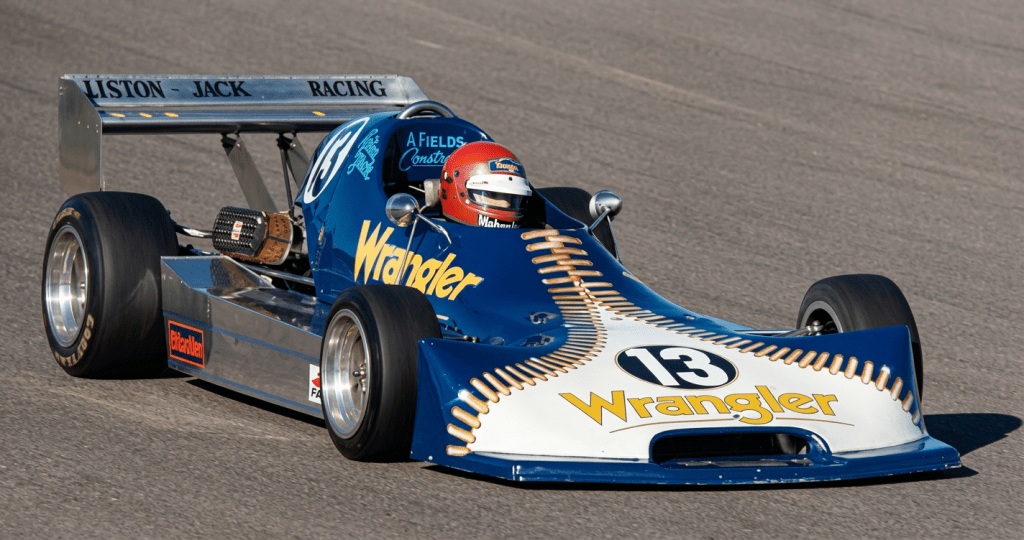
I started racing in 1977, in a 250 Supercart, then switched to cars with a Bowin P6F. I had a hard shunt at Surfers, rebuilt it with some mods, before being offered the Birrana (F2) drive with Paul Liston, Wrangler sponsorship was secured by my girlfriend Liz Ainsly and after a learning year in F2, I decided to see what I could do against the best from around the world. Great experience and eternal memories!’
(C Jack Coll-MBisset-WordPress)
Colin first caght my eye when I was ‘helping’ Alan Bisset with his Bowin P4A FF and Colin was rattling around in a P6F, not exactly the thing to have by then in the Bridgestone RD102 road-radial days when P4A’s were the duck’s guts.
Paul Liston’s 1974 Birrana 274-012 (shown here) was long in the tooth by 1980 but it was wings and slicks – ground effect tunnels even! – progress which Jack’s skills behind the wheel pursuaded it into equal seventh position in the 1980 Australian F2 Championship; all of the cars in front of him were much more modern.
Steve Wiessner built Ford 711M 1.6-Crossflow with all-steel internals, fed by a pair of 45DCOE Webers would have given 160bhp or so in the day. ‘Box looks like a Hewland Mk9 rather than the FT200 fitted ex-factory (C Jack-MBisset-WordPress)
Birrana 274-012 was ex-Wolfgang Prejawa. The car was originally fitted with a Lotus-Ford 1.6-litre twin-cam for the then ANF2 1.6-litre twin cam rules, and then Wolfy fitted a Ford BDA to race in the 1976-77 New Zealand Formula Pacific Championship.
Several of the Birranas competed there, BDA powered: memory suggests that Graham Baker bought and raced Chas Talbot’s 274-016 and Graeme Crawford raced his 273-010, the 1976 ANF2 Championship winner.
(W Clayton)
Bueselmann contesting the the 1977 New Zealand Formula Pacific Championship aboard Birrana 274-012 Ford BDA qualifies him as an Aussie Abroad of course; above, circuit unknown.
The place of a journeyman-racer amongst That Grid in That Year was a challenge: Keke Rosberg, Tom Gloy, Bruce Allison, Steve Millen, David Oxton, John Nicholson, David McMillan, Andrew Miedecke and others were a take-no-prisoners bunch of young thrusters! Rosberg won the five round series aboard a Fred Opert Chevron B34 from Gloy and Allison.
Enno didn’t have the happiest times of it in New Zealand with brake problems at Baypark, a DNS at Pukekohe, he was 14th at Manfield, had engine dramas at Teretonga, and didn’t enter the final round at Wigram.
(Birrana Cars via Steve Bannister-MBisset-WordPress)
I love this 1972 Birrana magazine ad, I wonder if the comedian was Mal Ramsay or Tony Alcock…or another member of the team? It’s Mal aboard the #51 272 Ford.
(M Bowyer)
Frank Gardner in the SCA European Freight Services Chev Camaro ZL-1 he raced in Europe during 1973, here at Silverstone during the July British Grand Prix weekend.
The engine will be familiar to Oz Taxi Fans as the 427cid/7-litre Reynolds 390 silicon aluminium block – note the McLaren Chevrolet rocker covers – run by Bob Jane in his ZL-1 until CAMS cracked the shits with him and changed the Improved Touring rules at the end of ’71. And yes, he won the Australian Touring Car Championship with a ‘little-350’ in 1972. The Holley 850CFM fed monster gave somewhere north of 600 bhp and lb/ft of torque…more than adequate as Rolls Royce would say.
(M Bowyer)
Brian Muir shared the touring car grids with Gardner aboard a 385bhp 3.5-litre BMW CSL. I was thinkin’ it would be an ETCC round and therefore the results would be easy to find, not so! Who won the tourer events that weekend folks? More about Brian’s 1973 here:https://primotipo.com/2022/09/03/brian-muir/
(M Bowyer)
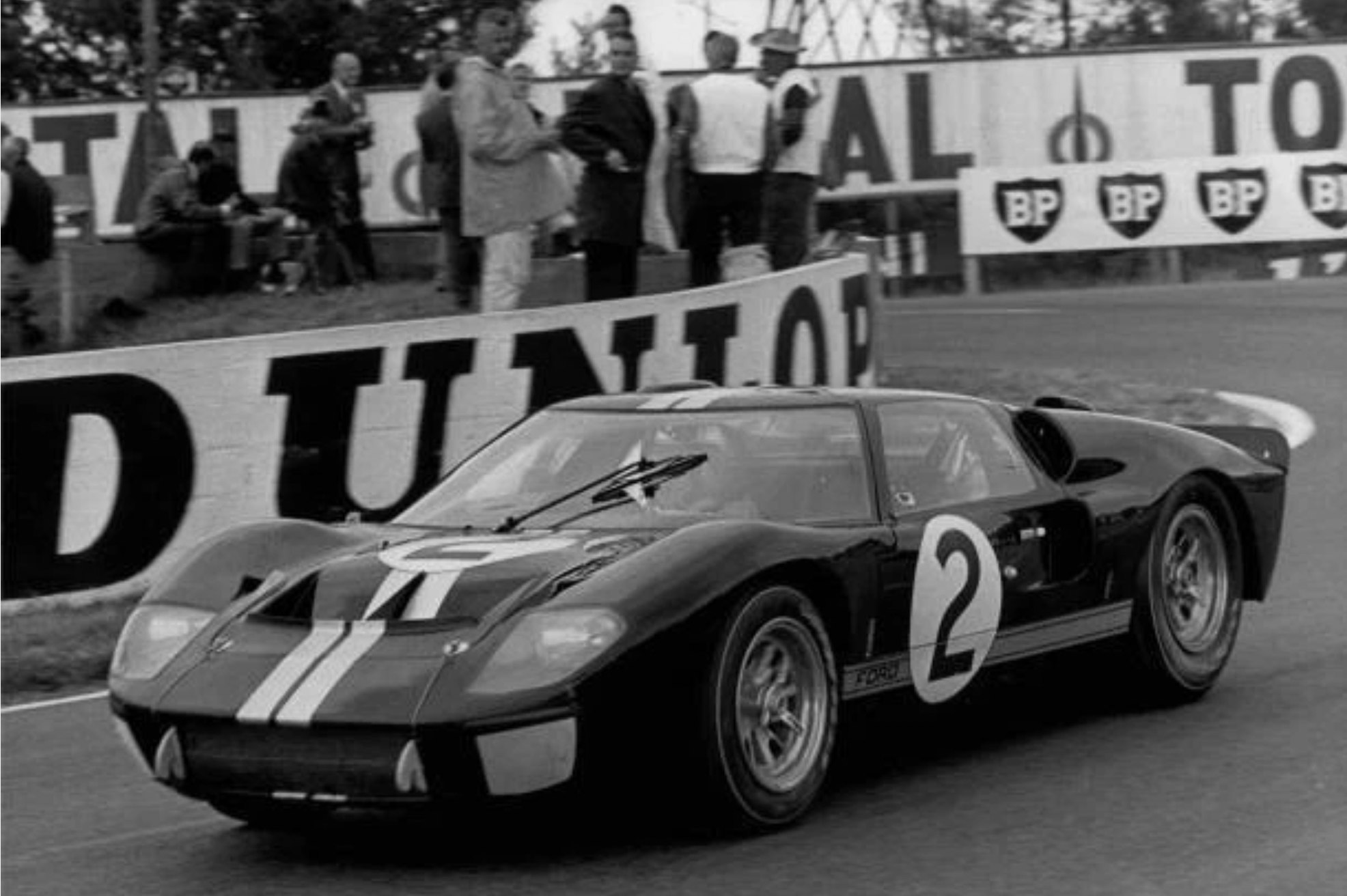
The shot below is of Brian five years earlier with Francisco Godia-Sales having won the April 7, 1968 Barcelona 6-Hour, at fabulous Montjuïc Parc in this Escuderia Montjuïc Ford GT40
In a great weekend for Muir, he popped the car on pole, set fastest lap and won it, game over! John Fitzpatrick and Allan Rollinson were second in a Porsche 910.
(J Vinals)(M Bowyer)
Alan Jones had a great 1973 season, finishing second in the British F3 Championship in this DART – Dennis Dobbie’s Dobbie Automobile Racing Team – GRD 373 Ford-Vegantune. Tony Brise beat him by only two points in a similar GRD. He finally broke free from F3 that year, and then his rise and rise was rather rapid.
Malcolm Bowyer took this British GP 1973 shot where AJ was third in the race won by Tony Rouff, GRD, with fellow Aussie, Buzz Buzaglo a great seventh in a leased March 723 Ford, while Larry Perkins was a DNF in his Ensign LNF3 Ford after an accident.
A few more shots of the Jones boy’s GRD – chassis 060-F3 – rare as they are, at Oulton Park, April 2, second round of the BRSCC John Player British F3 Championship.
Group Racing Developments was founded by ex-Lotus Components folks after Colin Chapman closed it: notable David Lazenby, Dave Baldwin and Gordon Huckle. The Jo Marquart designed cars were quick. Van Diemen acquired acquired the business in late 1975.
(R O’Reilly)(R O’Reilly)
The Oulton front row comprises Jones, Russell Wood, March 733 Ford, and Tony Brise, GRD 373 Ford. Wood won from Jones with Brise a DNF accident.
Brise won heat one from Wood, and Jones heat two from Larry Perkins, GRD 372 Ford, with Larry a DNF in the feature after an accident on the first lap.
(Barratt Press)
Joan Richmond and Margaret Allen at Brooklands in 1934, Joan’s ride is a Ernest Henry designed Ballot 3/8 LC 3-litre, straight-eight built for the 1921 Grand Prix season; the ex-Malcolm Campbell/Jack Dunfee 100bhp @ 4000rpm beautiful bolide was hardly a State of the Art machine by ’34.
She bagged one fastest lap at Brooklands in a somewhat frustrating season with chassis 1006 before the exotic Frenchie threw a rod at warp speed and punched an expensive hole in the crankcase at about 103 mph.
The same thing happened to the pair of Stephen Brown/Cooper Brothers Ballots. Jim Gullan had the ? fail in his ex-Louis Wagner Ballot 5/8LC chassis #1004 in January 1939 AGP at Lobethal. He related in his book, ‘As we approached the end of Kayannie Straight (during practice) around 120 mph, there was an enormous crash under the bonnet and the air was filled with pieces of flying metal. The crankcase had a huge hole, the sump had been carved in half by an errant rod, and the Scintilla magneto was hanging by its plug leads.’ Not to forget that poor Jack Nelson had the crankshaft of the ex-Jules Goux 2LS #15 blow up the year before during the 1938 Albany Grand Prix.
The Richmond 3/8LC is owned by an Austrian, the remains of the 2LS are in the hands of an Australian marque enthusiast. ‘Racing Ron Edgerton’ ‘woggerised’ the 5/8LC a bit is his 1970-80s restoration but it was a runner when sold to a UK owner about 40 years ago and hasn’t seen the light of day since.
(G Moores)
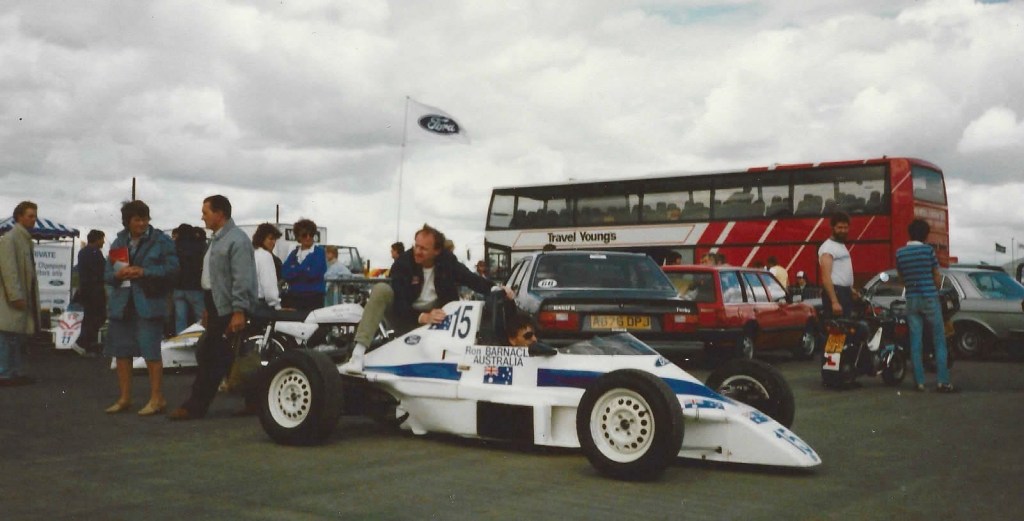
Ron Barnacle was a Melbourne advertising executive who raced a Wren F3 machine before ‘stepping back’ into Formula Ford for some years before winning the 1984 Driver to Europe Series in a Royale RP31.
Here he is in the Brands Hatch paddock during the 1985 Formula Ford Festival weekend, his mount, a Van Diemen RF85, I’m not sure how he went. Johnny Herbert won the event in a Quest FF85, from Jonathon Bancroft, Damon Hill and Mark Blundell. Other notables on the grid included Eric van de Poele, Frank Biela, Perry McCarthy, Tim Harvey and Roland Ratzenberger.
AS a Victorian I saw a lot of his racing, he did well in an ex-Charlie O’Brien Ralt RT1 Ford BDA (RT1/78-145) in the early years of Ralt RT4 dominated Formula Pacific and lived the dream by contesting an the AGP in 1981 (13th).
These days he operates a commercial 900 acre cattle property (vealers and dairy heifers) in South Gippsland after retiring from the top of the ad industry, including a stint as Chairman of the Clemenger Group, in 2010.
(Schenken Collection)
This has a late 1971 feel about it to me. Tim Schenken tests the Ferrari 312PB he raced as part of the Scuderia Ferrari squad in 1972-73, here at Modena.
(G Hoffman-MBisset-WordPress)
Cruising through the Brands Hatch paddock with great mate, Ronnie Peterson here, during the ’72 Brands 1000k – second in the race won by teammates Jacky Ickx/Mario Andretti – and below, on the hop at Le Mans in 1973 in the car he shared with Carlos Reutemann, DNF engine in the 12th hour. The race was won by the Henri Pescarolo/Gerard Larrousse Matra-Simca MS670B.
Tony Gaze set an early precedent and benchmark for Aussies racing abroad post-war, here in a press conference over the 1956 New Zealand Grand Prix weekend, at Ardmore, near Auckland.
From the left it’s RM Grierson, President of the Auckland International Grand Prix Inc, Gaze, Stirling Moss, Reg Parnell, Peter Whitehead and Leslie Marr.
Gaze and Whitehead raced 3-litre Ferrari 500/625s, Moss, the family Maserati 250F, Parnell the Aston Martin DP155 ‘F1 prototype’ and Leslie Marr, a 3.4-litre Jaguar XKD spec powered Connaught B-Type; Moss won from Gaze, Whitehead, Marr and Parnell.
(Bonhams)
Gaze aboard the HWM Alta s/c, chassis #52-107, during practice at Wigram in 1954.
Beautiful pan of Gaze out in the breeze, HWM #52-107, Wigram 1954 (J Manhire Collection)(R Moormann)
Rolled Gold Australian Formula Ford shot from Romain Moorman taken during the October 22, 1972 Formula Ford World Cup race meeting at Brands Hatch.
1971 Australian Formula Ford Champion (Driver to Europe) Larry Perkins in the very first Elfin 620, and behind him, the just minted 1972 Champ, Bob Skelton in the very first Bowin P6F. The Elfin 620/620B/623/622 – Formula Ford/ANF3/ANF2 – were a very successful series of cars for Garrie Cooper while the variable-rate-suspension P6F/P6 – Formula Ford/ANF3/ANF2 – were successful in the right hands, for John Joyce.
Larry’s international career started right here. Note ‘Team Elfin’, it was a works-entry (chassis #7248 was deliverd to Perkins in July 1972, early enough for him to do a DTE round or two before it was shipped to Ye Olde Dart) that was returned to Edwardstown post-trip, and the open-face Bell Magnum helmet. David Oxton reckons the bloke striding purposefully between Skelton’s car and the pit counter may be ace mechanic, Bruce Richardson.
The Norman Reeves Motor Group – signage on each car – was a prominent Ford dealer with multiple outlets, I’ve no idea what the connection to Larry or Bob was.
Skelton, Bowin P4A, Bob Skelton, Bowin P4X, Larner, Wren and an Elfin 600, circuit dunno. Bowins won all eight rounds of the 1972 TAA Formula Ford DRiver to Europe Series (Colin Anderson-RCN)
The decision for Bob Skelton as 1972 wore on was what car to take to England. His championship winning Bowin P4A or the modern as tomorrow, edgy-wedgy, variable rate suspension P6F; the known and trusted, or, maybe, The Unfair Advantage. What would you have done? Bob chose the latter. More about him here:https://primotipo.com/2020/03/24/bobs-on-the-job/
Skelton took delivery of his new P6F-119-72 on September 8, 1972 and had time to test it at Sandown, Melbourne (below) – Bowins were made in Brookvale, Sydney – before plonking it on a boat/plane for the UK.
Bob Skelton in his brand new Bowin P6F #119-72, Torana Corner, Sandown, date unknown in August/September 1972. The Goodyear RR12 was the Oz FF control tyre then (autopics.com.au-MBisset-WordPress)Bob Skelton, Bowin P6 Hart-Ford 416B, ahead of Leo Geoghegan’s similarly powered Birrana 273-006 during the August 18, 1973 ANF2 Championship round at Amaroo Park. Leo and Bob qualified one-two and finished the 41-lap race in the same order (J Payne)
The really neat thing about the whole exercise was that when Skelton returned to Australia he took the car back to Brookvale and John Joyce converted that same spaceframe chassis machine above – P6F-119-72 – from Formula Ford to Australian National Formula 2 spec.
Out with the Ford Crossflow, Hewland Mk9, solid rotors and Ford calipers and on with a Hart-Ford 416B, Hewland FT200, Girling calipers, wings etc. Hey presto, a car quick enough to best 1973 ANF2 Champion’s, Leo Geoghegan’s dominant Birrana 273 Hart-Ford – following Skello at Amaroo Park above – occasionally in qualifying during that dominant year for Leo. Geoghegan won the title from the similarly mounted Enno Buesselmann with Skelton a distant third.
The two Bowin P6 Formula 2 cars were P6F-119-72 and Bruce Allison’s P6F-129-73, a car Bruce disliked intensely. Both became hillclimbers in their mid-life, powered by Leyland P76 V8s. Have either been restored?
Allan Grice shared this Paul Vestey/Charles Ivey Racing Porsche 956 with Chris Craft and Alain De Cadenet at Le Mans in 1984, DNF engine in the fifth hour, and below in the Nissan R88C he shared with Mike Wilds and Win Percy at La Sarthe in 1988 to 14th place.
The performances of the touring car ace late in his career, DOB October 21, 1942, in these very demanding, powerful, ground-effect cars was really something to behold. It makes you wonder what he could have achieved had Howard Marsden/Allan Heaphy or whoever got him over-yonder a little earlier. A bit more here:https://primotipo.com/2025/09/18/aussie-porsche-le-mans-racers-random/
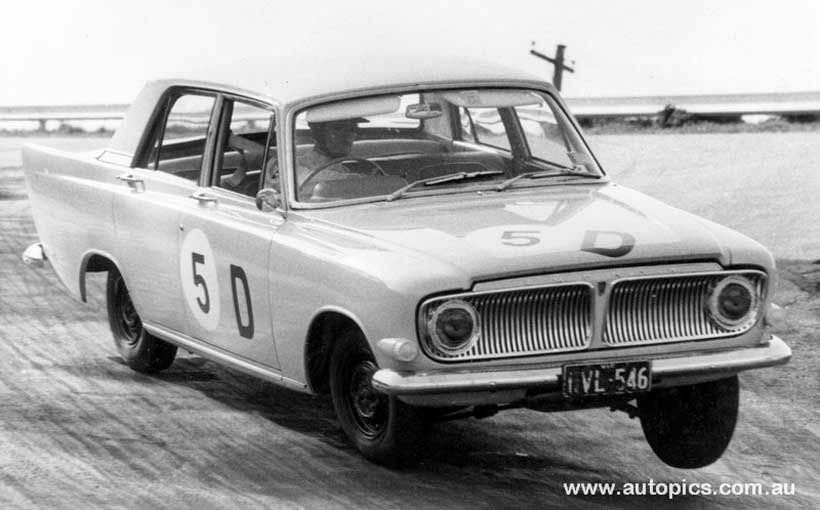
Here’s the John Reaburn/Geoff Russell Mk3 Ford Zephyr three-wheeling through the Dipper on its way to second in class and fifth outright in the 1963 Bathurst 500. It bagged the same result the previous year at Phillip Island.
Credits…
Jonathon Whitehouse-Bird, Colin Jack Collection, Birrana/Steve Bannister, Romain Moormann, Malcolm Bowyer, J Vinals, J Manhire Collection, Warwick Clayton, Greg Moores, Barratt Press Agency, Ric O’Reilly, Auckland Library, John Payne, John Reaburn Archive, autopics.com.au
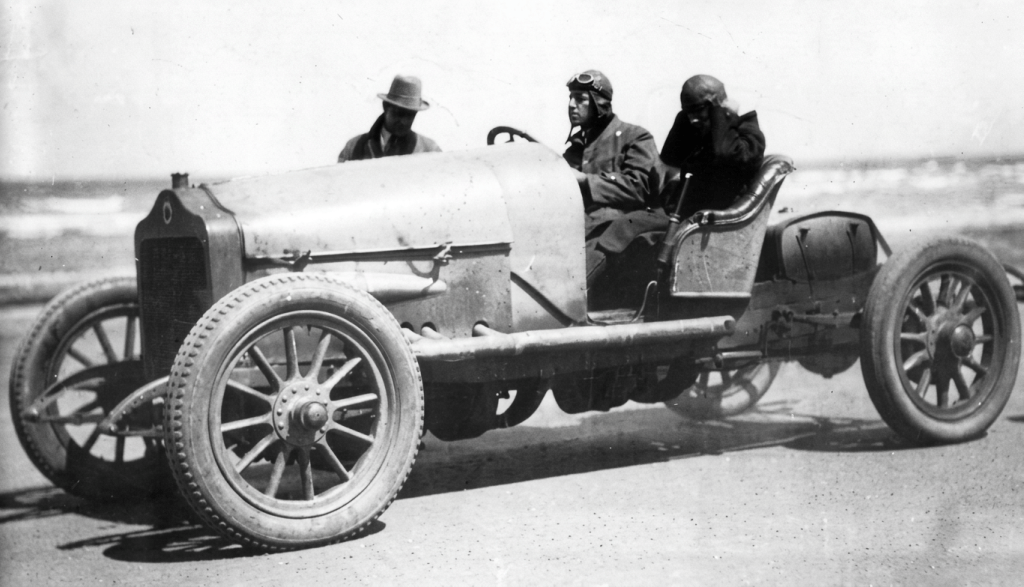
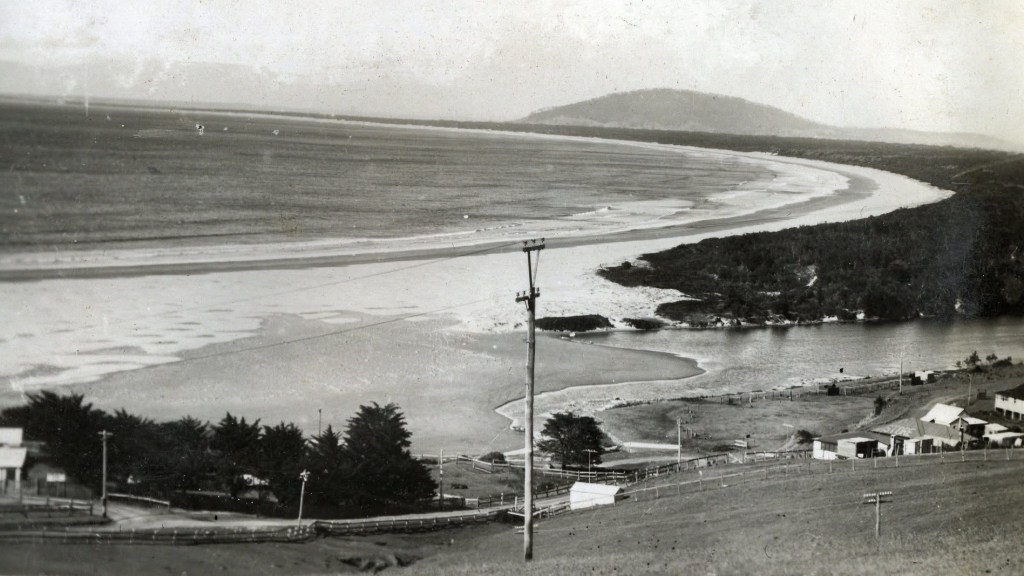
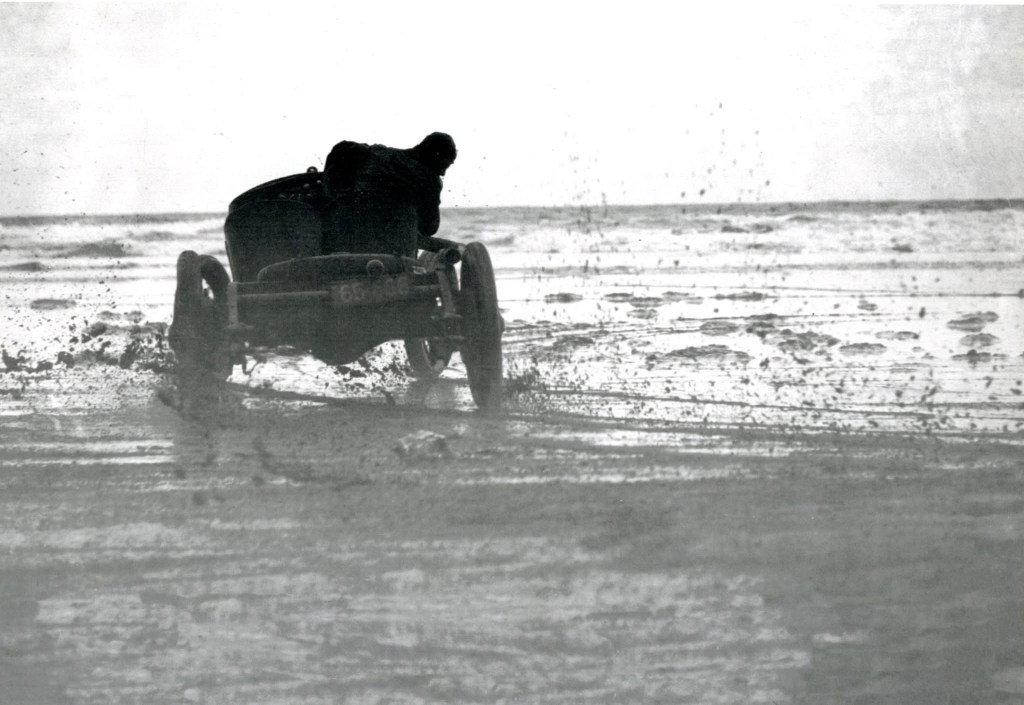
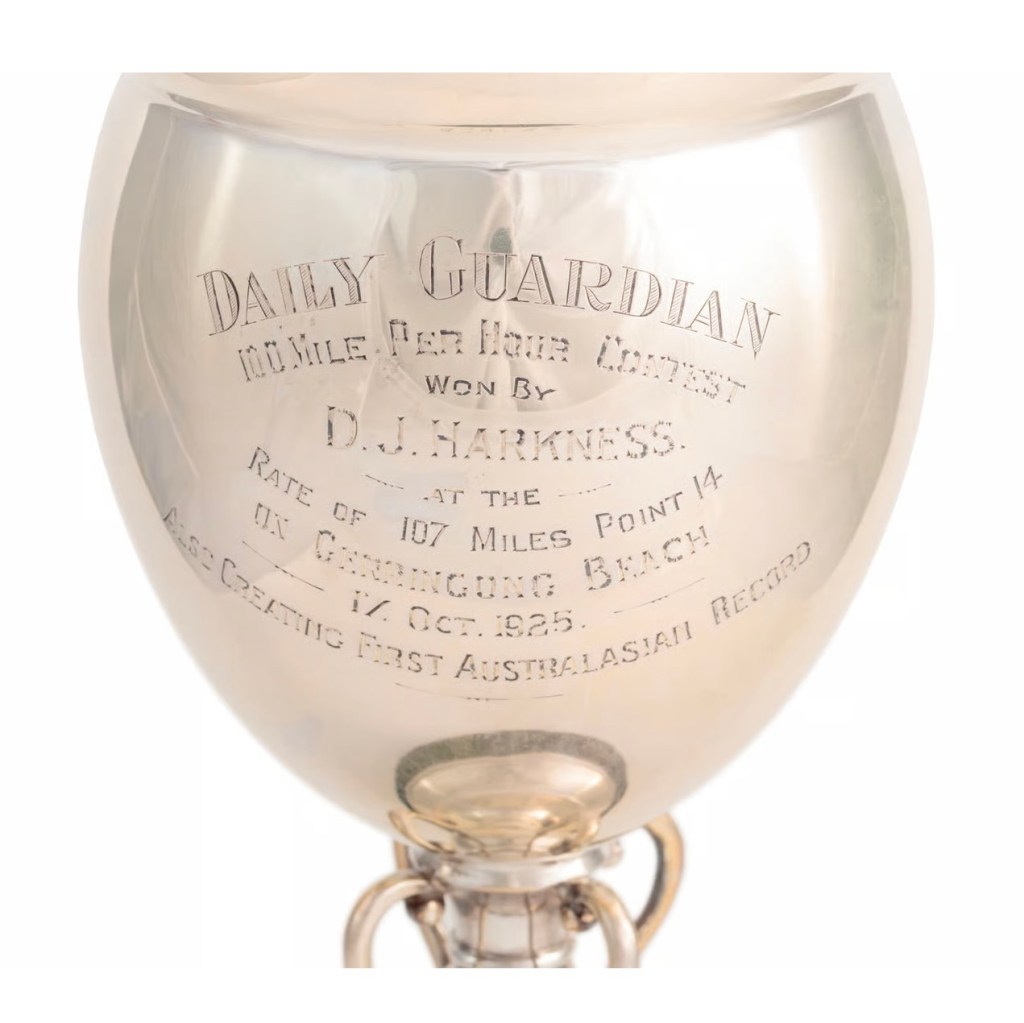
Australian auto and aero engineering genius and ace racing driver, Donald Harkness set the first official over 100 mph Australian Land Speed Record in front of about 1,000 people in a self-built Minerva Hispano Suiza V8 special at 107.14 mph on Seven Mile Beach, near Gerringong, New South Wales on October 17, 1925.
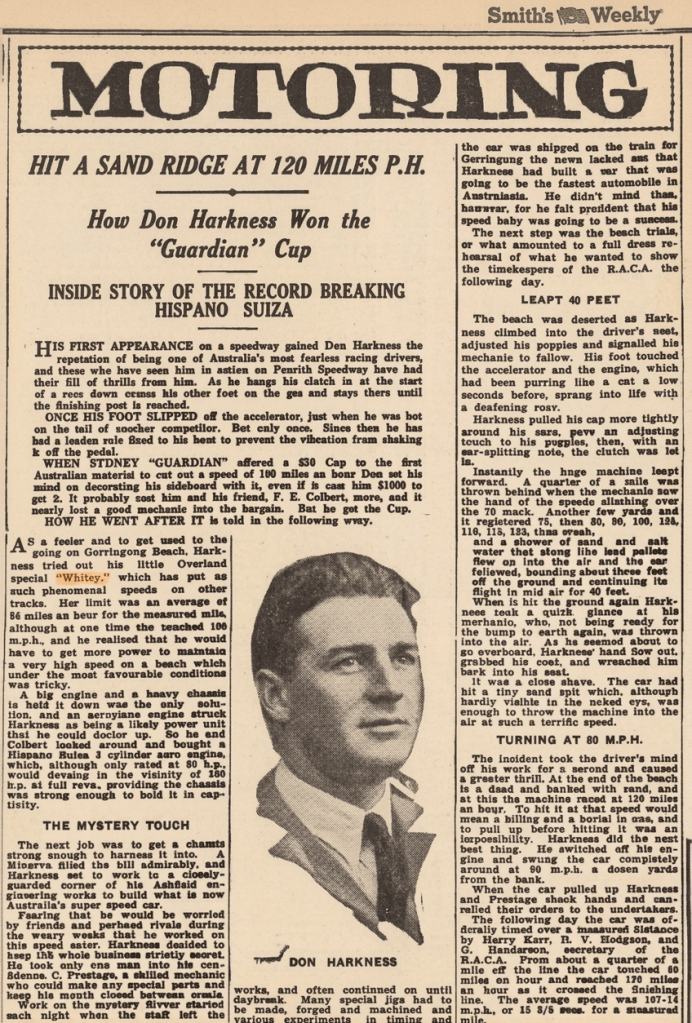
Smith’s Weekly, covered the story in its motoring column, on Saturday October 31, 1925.
HIT A SAND RIDGE at 120 MILES P.H. How Don Harkness Won The Guardian Cup.
INSIDE STORY OF THE RECORD BREAKING HISPANO SUIZA
HIS FIRST APPEARANCE on a speedway gained Don Harkness the reputation of being one of Australia’s most fearless racing drivers, and those who have seen him in action at Penrith Speedway have had their fill of thrills from him. As he bangs his clutch in at the start of a race down comes his other foot on the gas and stays there until the finishing post is reached.
ONCE HIS FOOT SLIPPED off the accelerator, just when he was hot on the tail of another competitor. But only once. Since then he hss had a leaden sole fitted to his boot to prevent the vibration from shaking it off the pedal.
WHEN THE SYDNEY GUARDIAN offered a £50 Cup to the first Australian motorist to cut out a speed of 100 miles an hour Don set his mind on decorating his sideboard with it, even if it cost him £1,000 to get it. lt probably cost him and his friend, F. E. Colbert, more, and it nearly cost a good mechanic into the bargain. But he got the Cup.
HOW HE WENT AFTER IT is told in the following story.
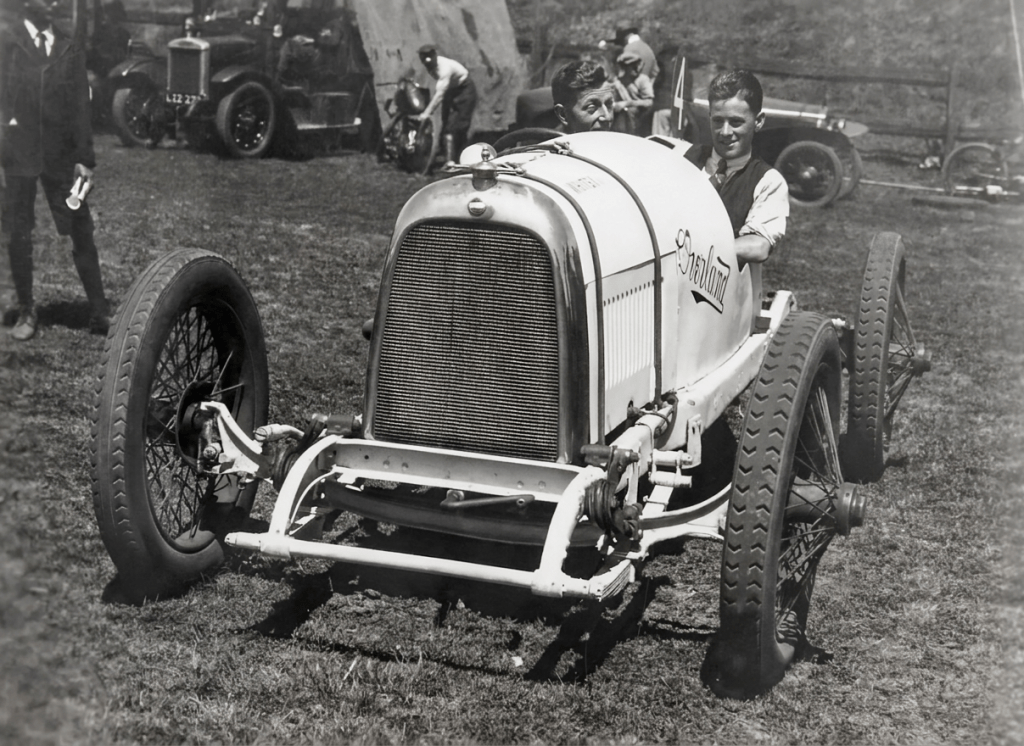
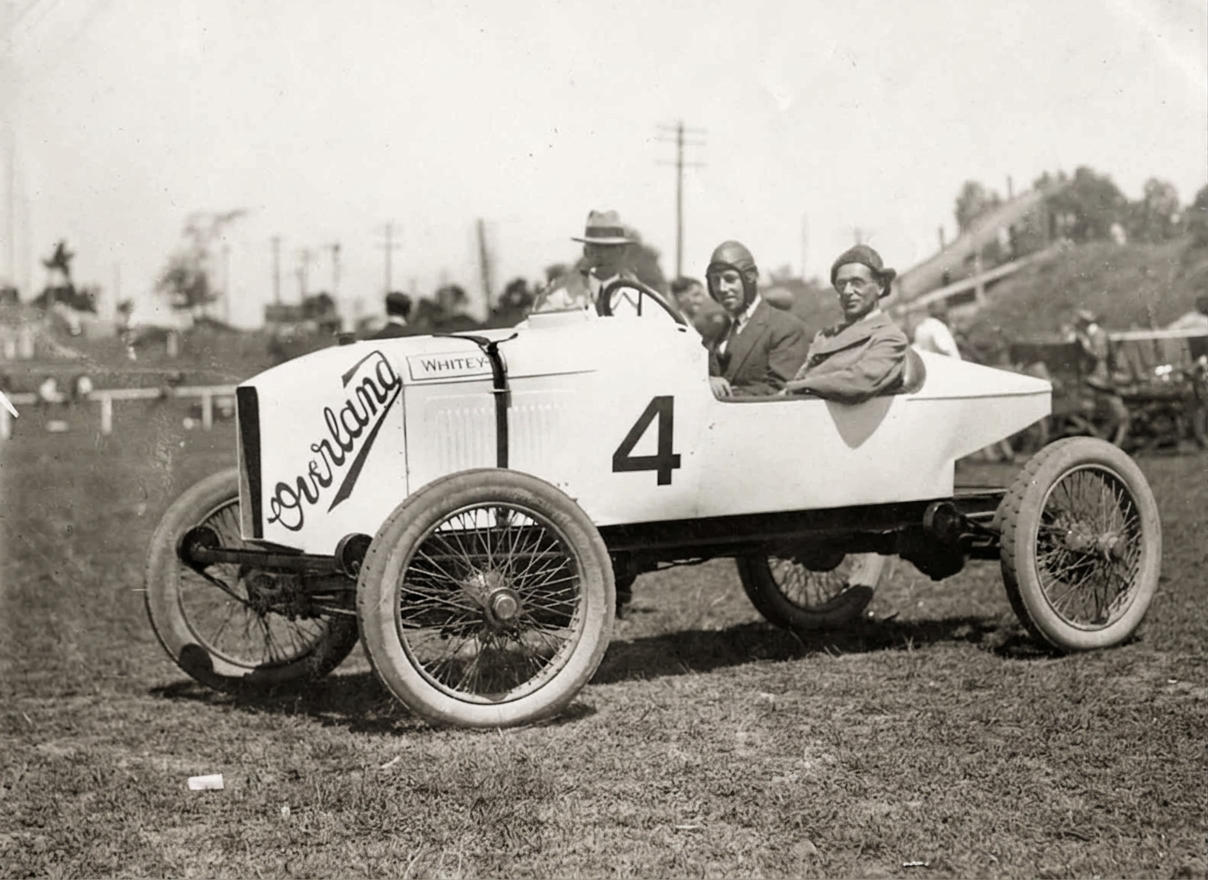
As a feeler and to get used to the going on Gerringong Beach, Harkness tried out his little Overland special “Whitey,” which has put up such phenomenal speeds on other tracks. Her limit was an average of 84 miles an hour for the measured mile, although at one time she touched 100 m.p.h., and he realised that be would have to get more power to maintain a very high speed on a beach which under the most favourable conditions was tricky.
A big engine and a heavy chassis to hold it down was the only solution, and an aeroplane engine struck Harkness as being a likely power unit that be could doctor up. So he and Colbert looked around and bought a Hispano-Suiza 8-cylinder aero engine, which although only rated at 80 hp would develop in the vicinity of of 200 hp at full revs, providing the chassis was strong enough to hold it in captivity.
THE MYSTERY TOUCH
The next job was to get a chassis strong enough to harness it into. A Minerva filled the bill admirably, and Harkness set to work ln a closely-guarded corner of his Ashfield engineering works to build what is now Australla’s super speed car.
Fearing that be would be worried by friends and perhaps rivals during the weary weeks that he worked on this speed eater. Harkness decided to keep the whole business strictly secret. He took only one man into his confidence, C. Prestage, a skilled mechanic who could make any special parts and keep his mouth closed between meals.
Work on the mystery flyer started each night when the staff left the works and often continued on until daybreak. Many special jigs had to be made, forged and machined, and various experiments in timing and gearing carried out.
(Smith’s Weekly-MBisset-WordPress)Gerroa, Crooked River and Seven Mile Beach c-1930 (Kiama Library)
After nearly two months work this Goliath of the car world was ready for its initial trials. Two days before the car was shipped on the train for Gerringong the news leaked out that Harkness had built a car that was going to be the fastest automobile in Australasia. He didn’t mind them however, for he felt confident that his speed baby was going to be a success.
The next step was the beach trials or what amounted to a full dress rehearsal of what he wanted to show the timekeepers of the R.A.C.A. the following day.
LEAPT 40 FEET
The beach was deserted as Harkness climbed into the driver’s seat, adjusted his goggles and signalled his mechanic to follow. His foot touched the accelerator and the engine, which had been purring like a cat a few seconds before, sprang into life with a deafening roar.
Harkness pulled his cap more tightly around his ears, save an adjusting touch to his goggles, then, with an ear-splitting note, the clutch was let in.
Instantly the huge machine leaped forward. A quarter of a mile was thrown behind when the mechanic saw the hand of the speedo climbing over the 70 mark Another few yards and it registered 75, then 80, 90, 100, 105, 110, 115, 120, then, crash, and a shower of sand and salt water that stung like lead pellets flew up into the air and the car followed, bounding about three feet off the ground and continuing its flight in mid air for 40 feet.
When it hit the ground again Harkness took a quick glance at his mechanic who, not being ready for the bump to earth again. was thrown into the air. As he seemed about to go overboard, Harkness’ hand flew out, grabbed his coat, and wrenched him back into his seat.
It was a close shave. The car had hit a tiny sand spit which, although hardly visible to the naked eye, was enough to throw the machine into the air at such a terrific speed.
Don Harkness – perhaps according to the ABC, I’m not so sure – on a solo test run of the Minerva Hispano Suiza at Gerringong (Kiama Library)
TURNING AT 80 M.P.H.
The incident took the driver’s mind off his work for a second and caused a greater thrill. At the end of the beach is a dead end banked with sand, and at this the machine raced at 120 miles an hour. To hit it at that speed would mean a killing and a burial in one, and to pull up before hitting it was an impossibility. Harkness did the next best thing. He switched off his engine and swung the car completely around at 60 m.p.h. a dozen yards from the bank.
When the car pulled up, Harkness and Prestage shook hands and cancelled their orders to the undertakers.
The following day the car was officially timed over a measured distance by Harry Kerr, R. V. Hodgson, and G. Henderson, secretary of the R.A.C.A. From about a quarter of a mile off the line the car touched 50 miles an hour and reached 120 miles an hour as it crossed the finishing line. The average speed was 107.14 m.p.h., or 83 3/5 sec. for a measured mile.
The trial went off without a hitch, and the car pulled up in good order. There were no thrills. They had happened the day before.
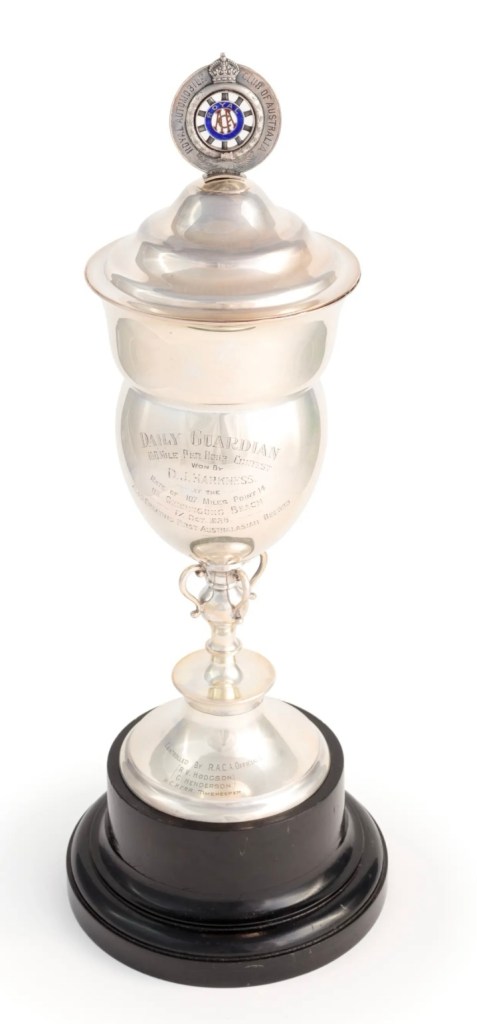
The Daily Guardian Cup (Harkness Archive-Powerhouse Museum)
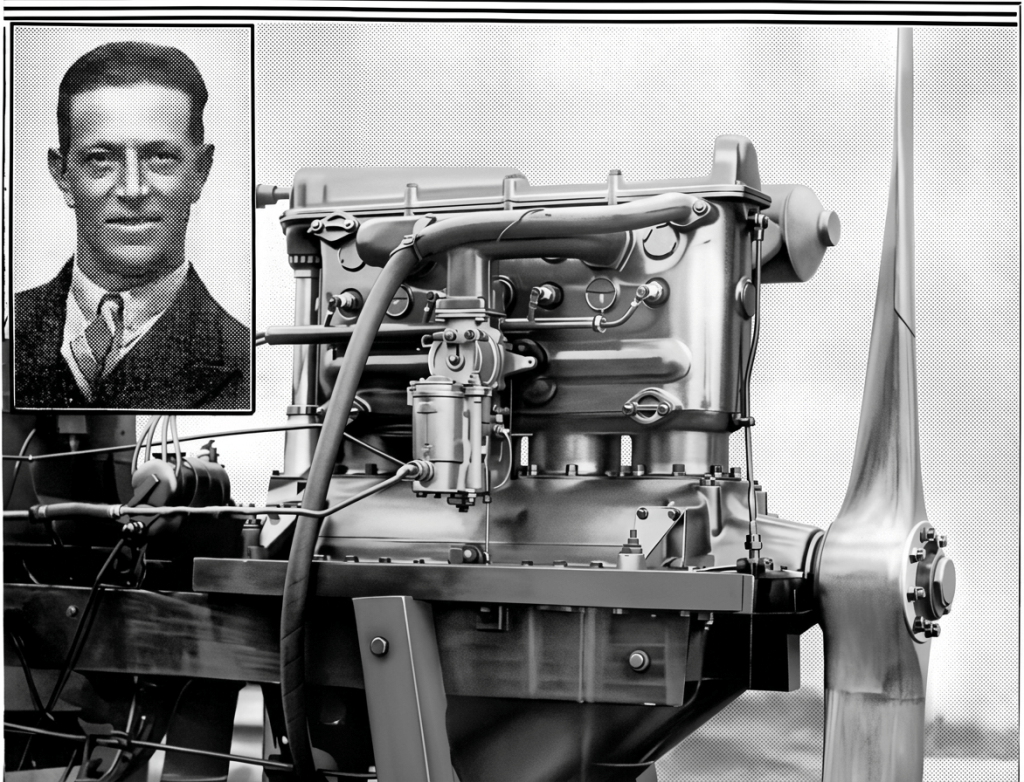
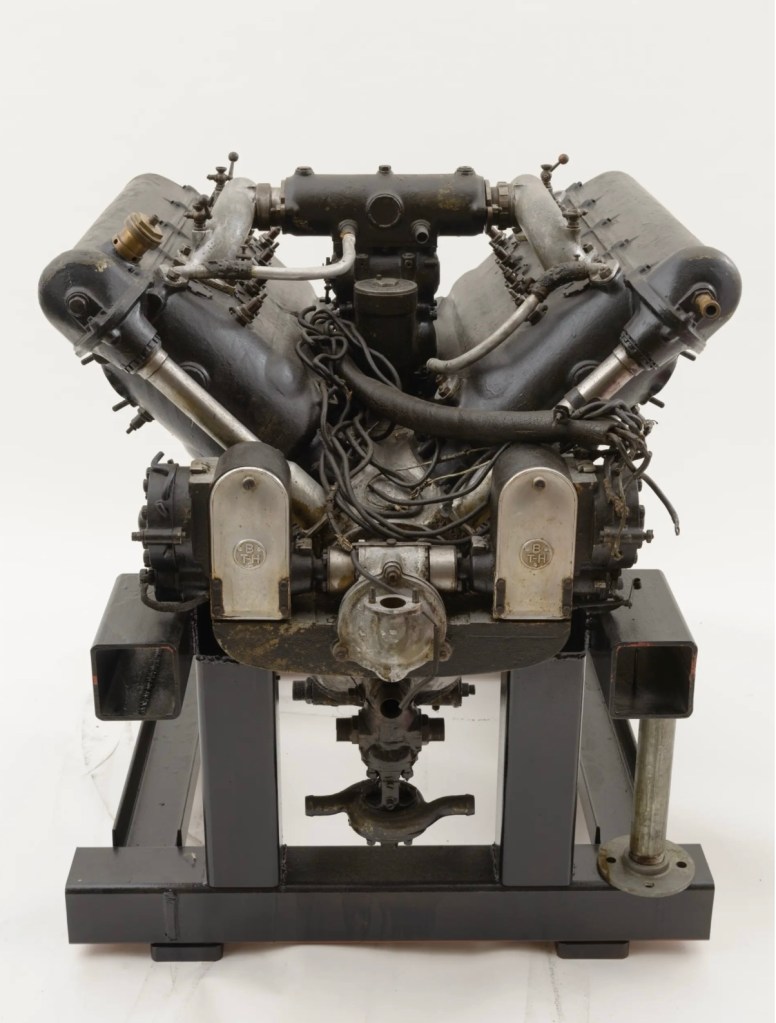
The Hispano-Suiza V8 chosen by Harkness, an easy one given his aeronautical knowledge, was a Type 8, water-cooled, SOHC engine, ‘the most commonly used liquid-cooled engine in the aircraft of entente powers during the First World War.’
The original Type 8A (11.76 litres/717.8 cid) was rated at 140 hp, and the later larger displacement Type 8F (18.5 litres/1128.94 cid) reached 330 hp.’ Harkness’ engine was a Wolseley Viper variant, 3,050 of which were built. The engine shown below is a H-S Viper W.4a unit of 1918 vintage rated at 210 bhp.
(Powerhouse Museum)(The Referee-MBisset-WordPress) July 9, 1930)
Five years after setting the Australian LSR, Harkness had designed, built and was testing the Harkness Hornet, a water-cooled, inline four-cylinder, SOHC, two-valve aero engine which used one cylinder bank of his favourite Hispano-Suiza engine married to a crankcase of his own design. See here:https://collection.powerhouse.com.au/object/208620
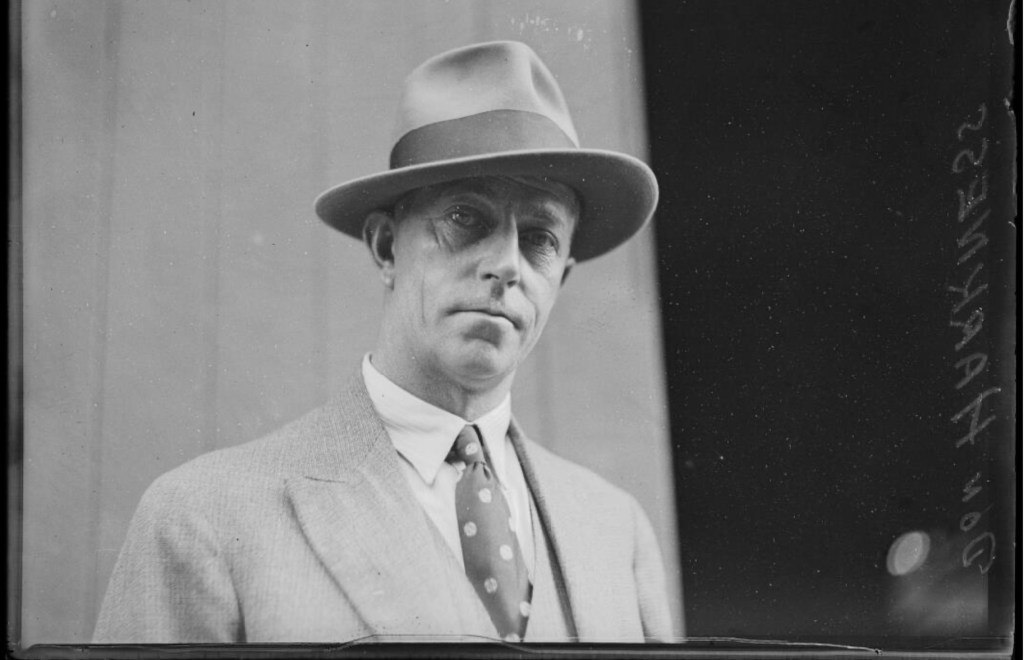
Donald James Harkness, December 1898-November 11, 1972, shown here in the 1930s (Fairfax)
Willys Overland…
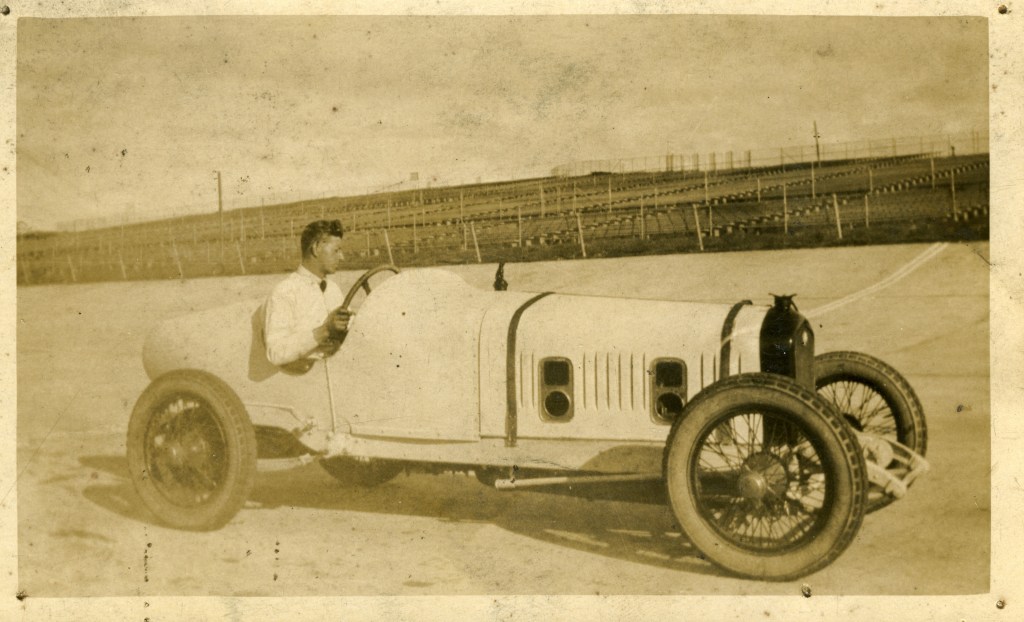
The Smith’s Weekly article makes mention of Harkness’s Overland racer nicknamed Whitey, two of which Don raced circa 1924-26, so let’s take a high-level, as against race-by-race look at them.
Over time Harkness seems to have become the ‘Overland Dealer Team’ in the way Harry Firth (and others) managed to attach themselves to a manufacturer or importer to prepare competition cars to help build the brand.
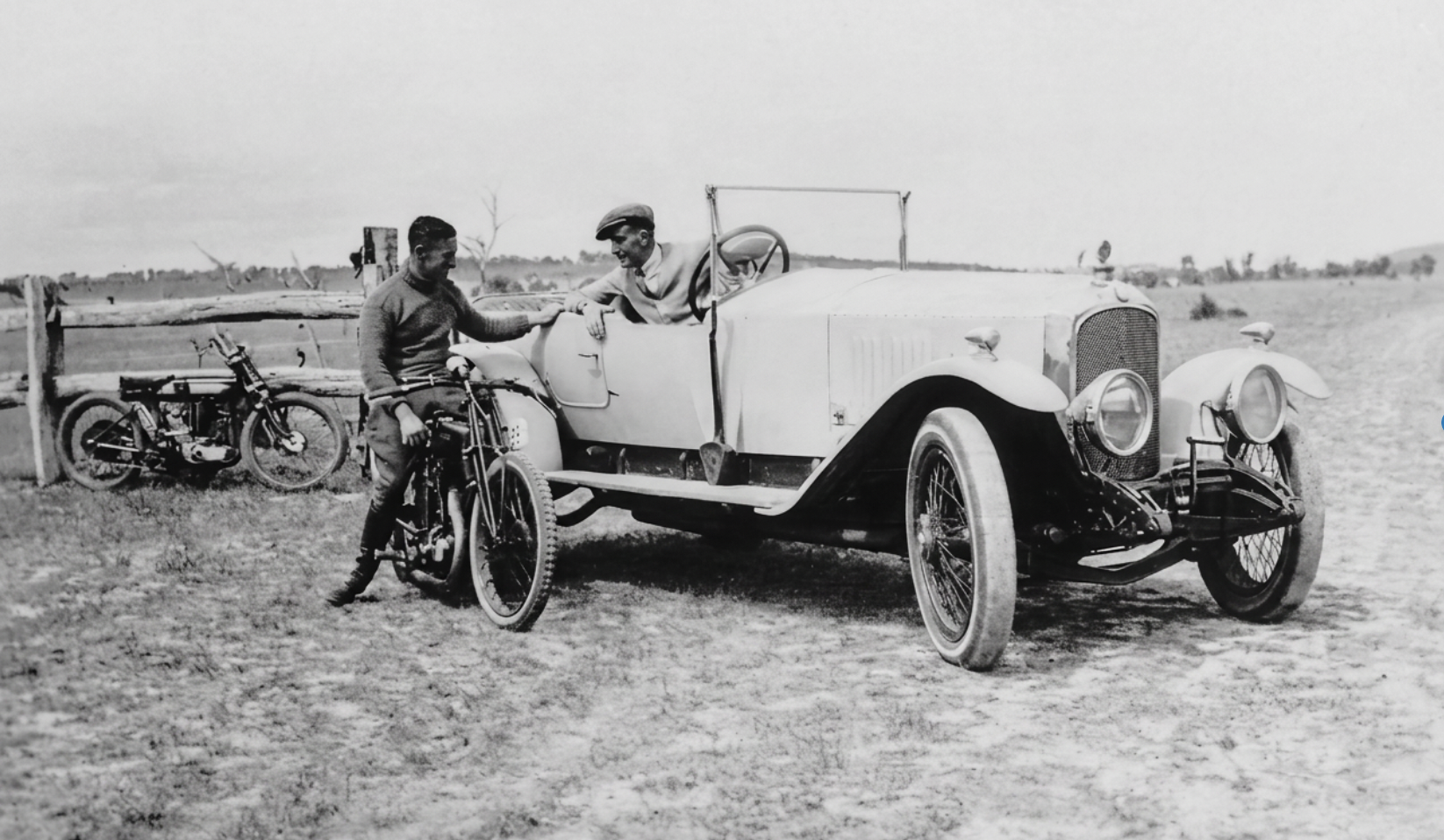
A cursory Trove search reveals that Harkness ran Overland 15/18hp’s in NSW Reliability Trials (the rallies of the day) from circa 1922, before getting more serious with the construction of the Willys-Overland 91 based (1923-26), four-cylinder, 154 cid, three-bearing, side-valve – but OHV soon enough – Whitey (lets call them W1 and W2) racers circa-1924.
A variety of ex-factory body styles all sat on a 100-inch wheelbase chassis, Willys-Overland produced their own diff, but outsourced the standard artillery wheels from Hayes. Type 91 suspension was Overland’s ‘trick’ ‘Triplex’ system, a three point cantilever design front and rear which comprised a pair of quarter-elliptic springs mounted to the chassis at angles rather than the more conventional set-up of springs being parallel to the frame.
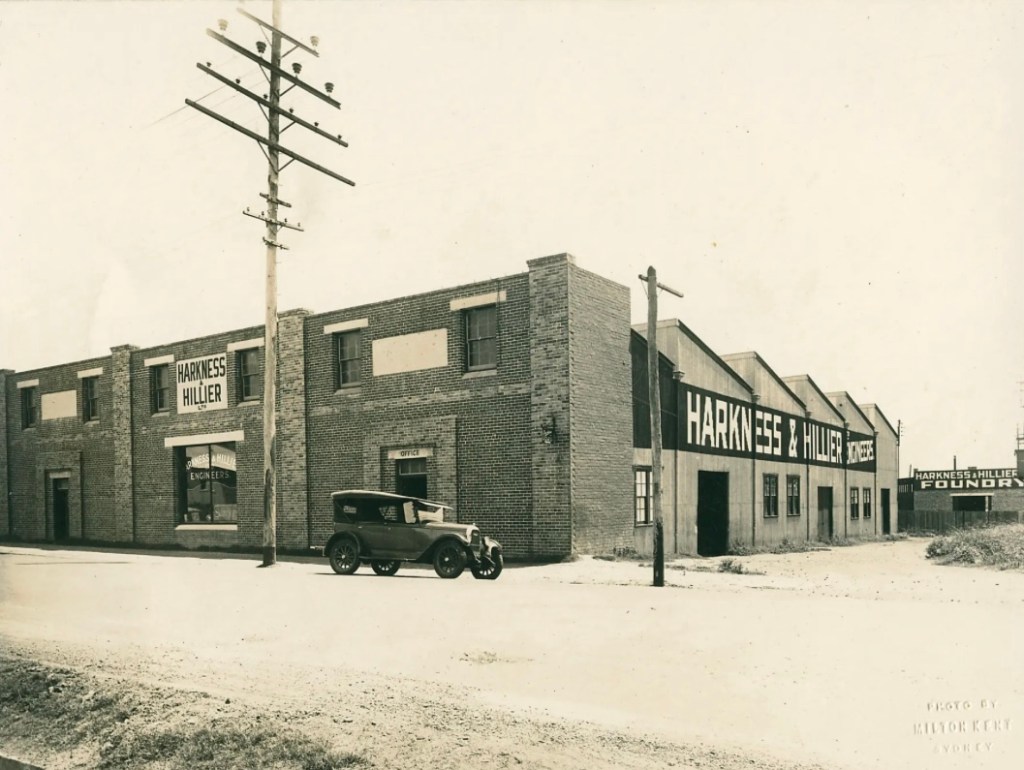
The racers were built and prepared at Harkness & Hillier. Don Harkness did his apprenticeship at JC Hillier’s garage in Bridge Street, Drummoyne, the pair became business partners in 1922-23. (also H&H Ltd and H&H Pty Ltd depending on the date). Their involvement in the Australian Six car project resulted in the move to much bigger premises on the corner of Parramatta Road and William Street, Five Dock.
Whitey 1, place and date unknown (Harkness Archive- Powerhouse Museum)Harkness & Hillier factory and foundry at Parramatta Road, Five Dock, Sydney undated (Harkness Archive-Powerhouse)
Whitey 1 was immediately competitive with the French Blue Bloods – Bugatti and Ballot – and the quicker British and American marques at Penrith, Maroubra, Gerringong and elsewhere.
The Daily Telegraph reported in its October 11, 1924 issue, under the headline, OVERLAND SPORTS: A Very Fast Car, that, ‘There has been quite a lot of discussion in motor circles lately regarding the Overland special sports car driven by Mr. D. Harkness in the recent Artillery Hill Climb and in the car race at Penrith on Monday last. Which latter race it won. On Tuesday last, in his account of the Penrith: races, the writer described this car as being a “Miller-Overland,” and “Miller-engined Overland,” being under the impression that it was a special job,’which had been converted into a racing chassis, outside of the Overland factory, by the fitting of a Miller-head with overhead valves and two Miller carburetters.’
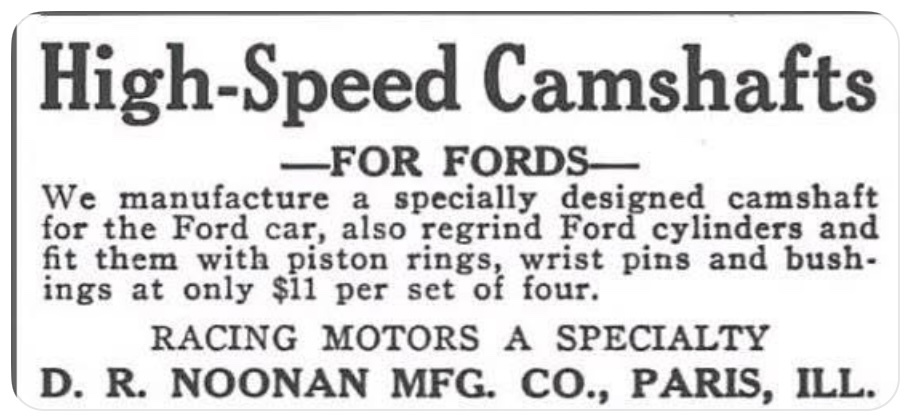
D.R. (Daniel R) Noonan was a Paris, Illinois, American machinist, inventor and racing driver famous for high-performance heads and aftermarket modifications for Ford and Overland. He was a Californian Overland dealer (G Murnane Collection)
‘To this, Messrs. Overland, Sydney, Ltd., have taken exception, stating that this special Overland sports is a product of the Willys-Knight-Overland factory, in America, and is one of six recently supplied by that factory to its Sydney agents. Whether Miller is the maker of the special cylinder-head and overhead valve gear, they are unable to say, but, in any case, the product was assembled in, and sent out from, the Overland factory, and has every right to be termed an Overland Sports.’
‘As a matter of fact, except for the modification mentioned above, as well as a special high-pressure lubricating system and lightened reciprocating parts, the sports chassis is identical with the chassis of the standard chassis of model 91, selling at £190. In addition, Gabriel Snubbers have been fitted, as well as wire wheels, and, naturally, the gear ratios have been altered to fit the chassis for racing purposes. The chassis thus modifled can be purchased by anyone desiring it at a sum of £400. The engine is said to “rev” at 5000 r.p.m., and with a top gear ratio of 3.5 to 1, and 80-inch wheels, a speed well over 100 m.p.h, should be attained on this chassis under favorable conditions.’
‘The writer was informed by a representative of Messrs, Overland, Sydney, that Mr. Boyd Edkins had issued a challenge for a race between a 30-98 h.p. Vauxhall and the Sports Overland, and that this race would probably take place shortly, on the Penrith Speedway.’
CABLE FROM AMERICA.
Since writing the above, the writer has been notified by telephone that Messrs. Overland, Sydney, Ltd., have received a cable from the factory in America, stating that the head on the Overland Sports “is not a Miller head” (but WAS a Noonan two-OHV head).
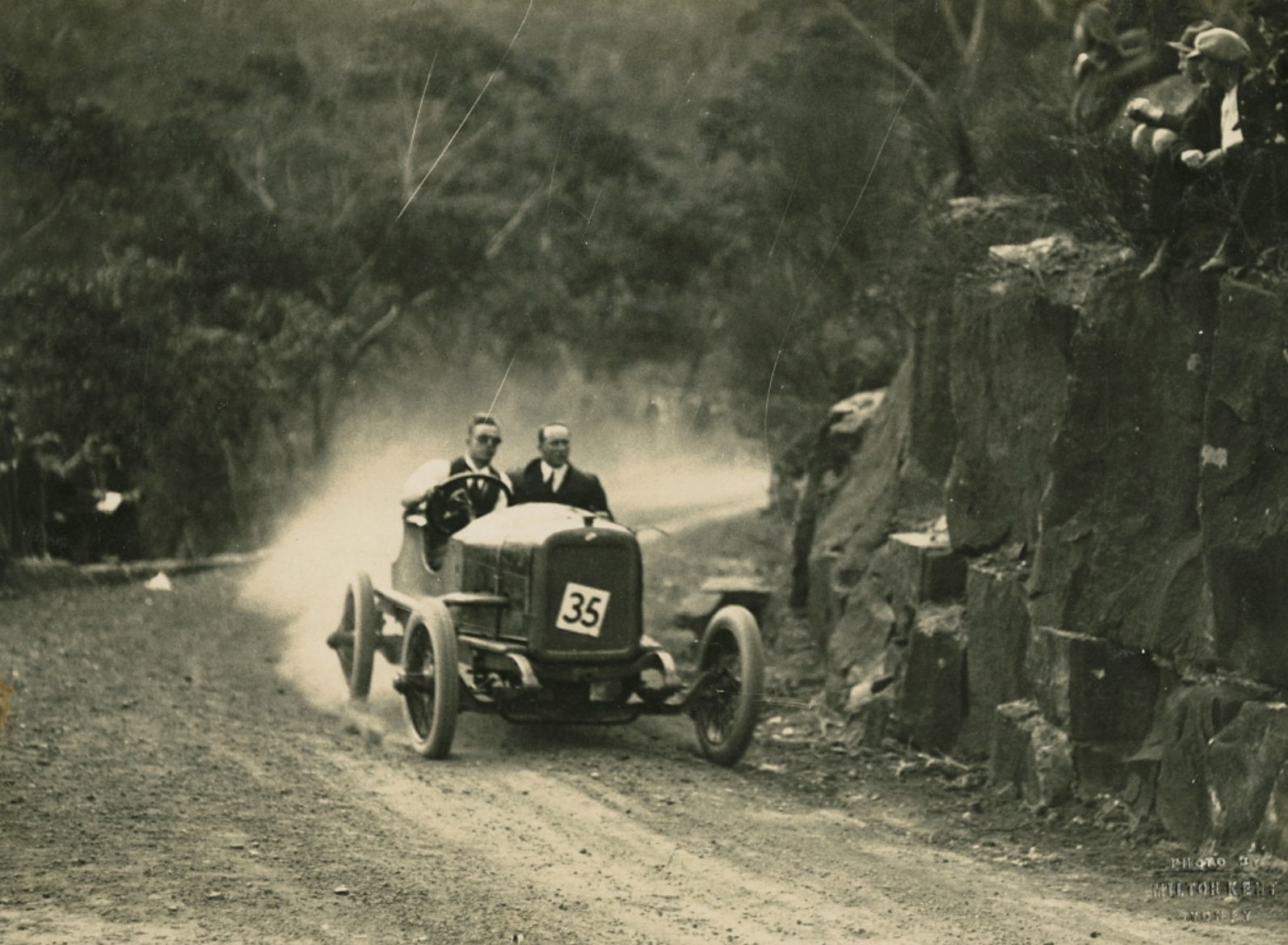
Harkness taking Wizard Smith for a serious spin during a R.A.C.A. 1926 Royal National Park Hillclimb meeting in one of his beloved Overlands (Milton Kent-Harkness Archive-Powerhouse Museum)Harkness and passenger aboard Whitey 2 at Penrith circa-1925 (unattibuted)
Whitey 2…
Whitey 2 had broken cover by January 1925 when the motor-noter of the Lithgow Mercury remarked upon ‘the consistency and speed given at Penrith on New Year’s Day by Mr D. Harkness in the Overland Sports Model Whitey II.’ Did W2 have some carry-over components of W1? Dunno.
‘Matched against the fastest ears in New South Wales, the Overland Sports cleaned the programme by completely outclassing every car in each event. The 10 miles Championship of New South Wales was easily won from the Vauxhall and the Itala. The much discussed Challenge Race between the Vauxhall and the Overland Sporta resulted in an easy victory for the Overland, the 5 miles being covered in the phenomenal time of 4 minutes 51 seconds, which is a track record for the course.’
‘Overland Whitey II, the victor, is the successor to the once famous Whitey I, which some years ago beat the same Vauxhall in the Queensland Automobile Club’s hill climbing championship.’
‘The Overland referred to is a special sports model and differs only from the famous model 91 inasmuch as it is fitted with overhead valves, high pressure lubrieating system, two Miller carburettors and a Noonan (Willys Knight representative) head. All reciprocating parts, connecting rods, pistons, ete., are standard, but machined down to secure lightness, as is usually the case in all sports models or racing cars. Overland Sydney Limited, 148 Castlereagh Street, Sydney, are the agents.’
In February 1925 the Managing Director of Overland Sydney Ltd was R Cobden. I wonder if that’s Dick Cobden’s father?
By May 1925 the capacity of Whitey 2 in a ‘paper report of Penrith race results was 2672cc, in August, 2260cc. By May 1926, if not earlier, W2 was supercharged. John Medley suggests that the Overland was probably the first car supercharged locally. I’ve no under-bonnet shots of either Whitey, I’ll gratefully receive them if any of you can oblige…
The Whiteys won over 50 races including the first race at Maroubra on November 21, 1925 a match race between Harkness and Hal Cooper’s Stephen Brown financed ex-Jules Goux Ballot 2LS 2-litre, ‘a magnificent Ballot racing car, which it’s said, cost £4,000.’
Don Harkness settles himself behind the controls of Alan Cooper’s 1919 Ballot 5/8 LC 4.8-litre straight-eight; chassis #1004 was Louis Wagner’s Indy 500 mount. H&H rebuilt the car – see text- probably using an Australian Six chassis, and fitted the other body acquired with the car and spares when purchased by Stephen Brown, of the enormous J & A Brown Newcastle coal mining and distribution business, from E.Ballot et Cie in mid-1925 (ClarkeFamilyCollection via VSCCA)
Harkness was in the news again in August 1926 when he took to the track at Maroubra in Alan Cooper’s Stephen Brown financed Ballot 5/8 LC. Cooper destroyed the chassis and much else of the car – ex-Louis Wagner works 1919 4.8-litre straight-eight Indy racer – in a massive Maroubra January 2, 1926 accident from which he survived ok but broke both of his riding mechanic’s thighs. It’s thought the car was rebuilt around an Australian Six chassis. Harkness & Hillier were up to their armpits in that project at the time in an attempt to recover unpaid debts incurred as a supplier before F.H Gordon & Co’s insolvency. See here:https://primotipo.com/2023/10/27/ballots-and-coopers/
There are so many strands to Don Harkness’s life, great grandson, Stephen Ottley’s biography will be well worth the read when finished!
On December 11, 1926 Don had a tyre failure and spun to the inside of Maroubra into the soft sand. Phil Garlick, close to him at the time reasoned that ‘it turned several complete circles before the deep sand brought it to a standstill, and Harkness was thrown out in the process.’ He was uninjured.
A month later Harkness contested the first Australian Grand Prix at Goulburn on January 15, but Whitey 2 was beaten by Morgan’s Rajo Ford in the first heat, and by Jack O’Rourke’s Bugatti T39 in a match race. Geoff Meredith won the final in a Bugatti T30.
Three weeks after Goulburn, Harkness loaned the car to seasoned 27 year old Glebe racer, Fred Barlow to race at Maroubra on February 5, his car was hors d’ combat. Barlow lost control on the last lap of a night race when in contention for the lead, and ‘crashed over the embankment into the darkness beyond, at the exact spot where Phil Garlick met his death a few weeks ago.’ The poor racer survived the accident but died overnight.
I’m not so sure Don Harkness raced after this. I can’t see anything about a fiery accident in 1935 that various sources say caused his retirement from racing?
I’ll take marque experts advice as to the existence of the mortal remains of the Whiteys or parts thereof. Gerard Murnane wrote that, ‘the head was foe sale in Sydney in 1945. Prior to that is was raced by many different members of the Dirt Track Club of NSW 1933-34 as the Miller Special at Ascot, Granville etc.’
(Daily Pictorial November 21, 1930)
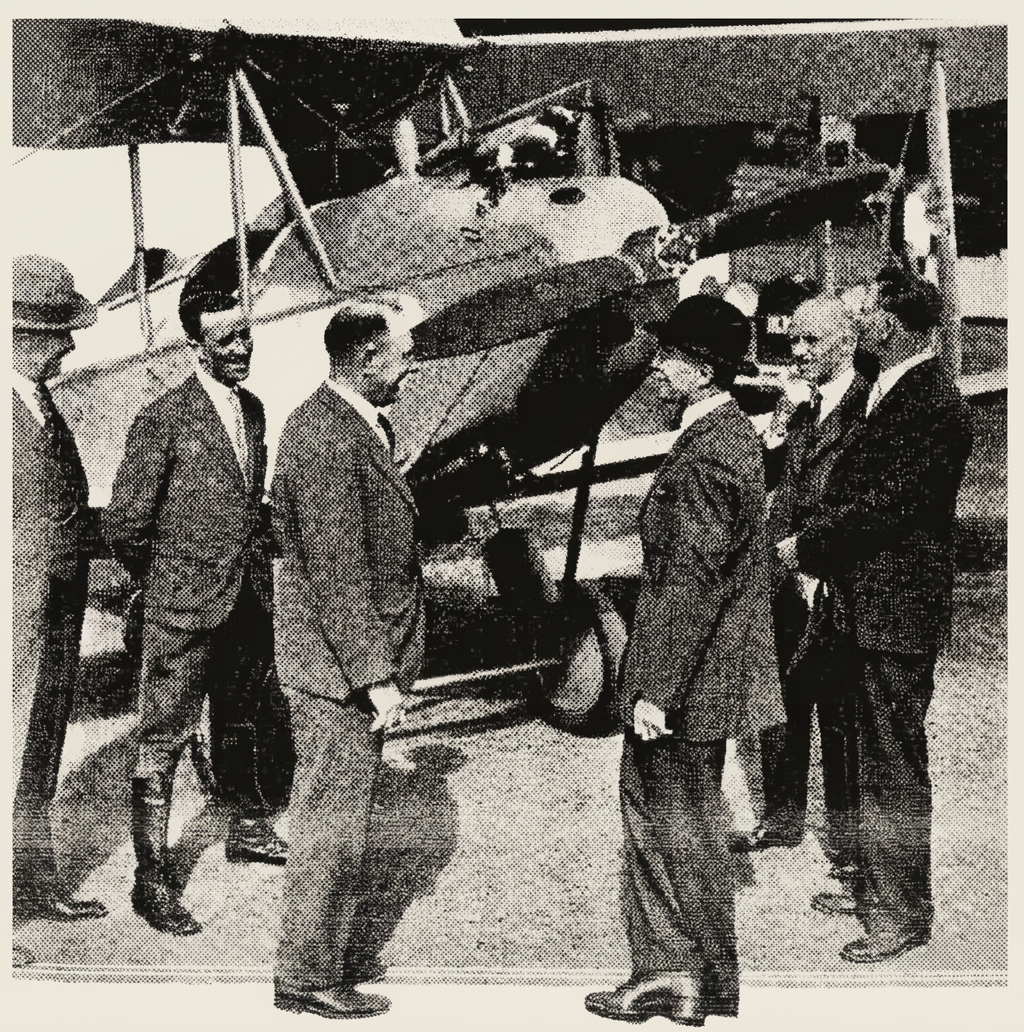
Don Harkness at far right on the occasion of a test flight of the first All-Australian built plane, the Genairco Harkness Hornet at Mascot on November 20, 1930.
From left to right is Mr Childs, Commissioner of Police, Capt Leggatt, pilot, Geo Beohm, designer of the plane, the Governor, Sir Phillip Game, Mr Boyle, the MD of General Aircraft Co, and Harkness. More on the plane here:https://collection.powerhouse.com.au/object/372510
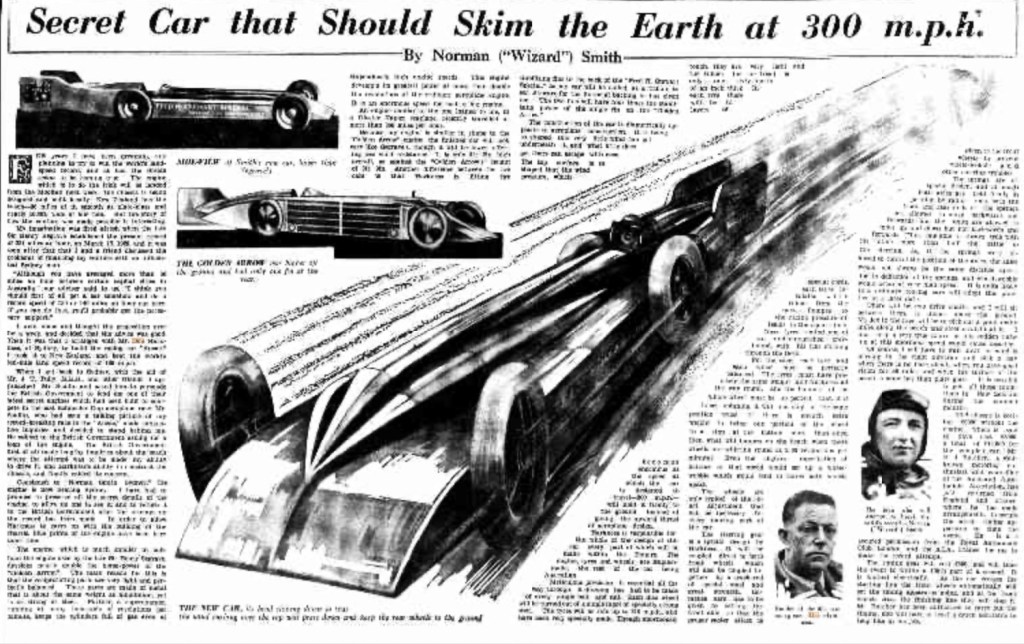
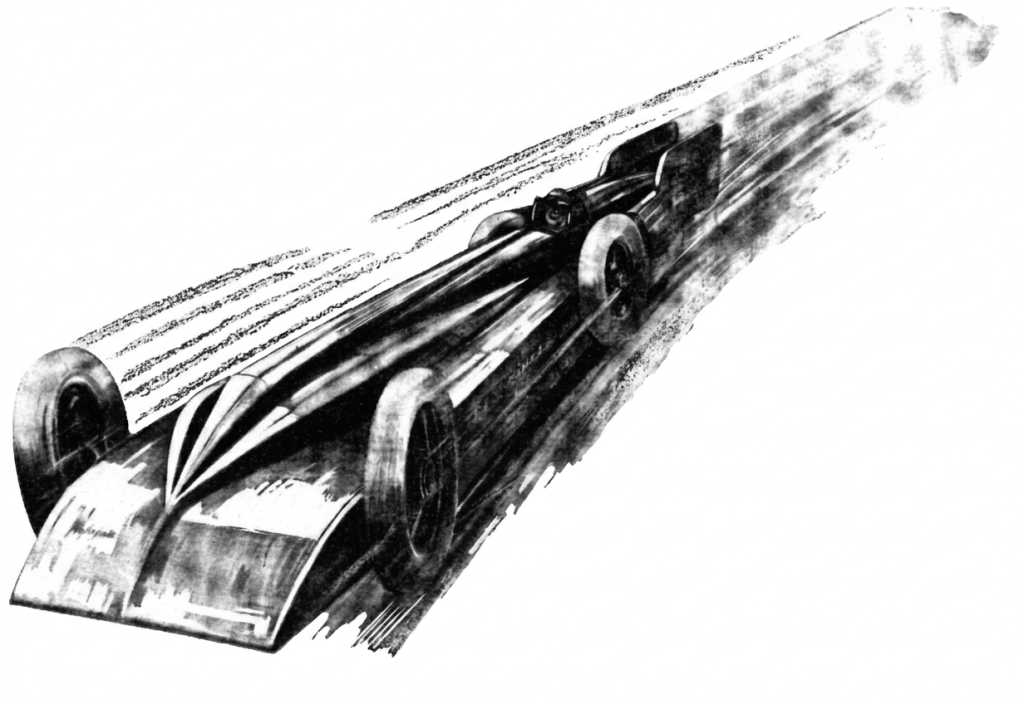
You’ve got to hand it to Harkness, not content with running a company that built and serviced buses and timber jinkers, stationary and marine engines and gas producers, engaged in automotive and contract manufacturing, a spot of motor racing and record setting for a large US auto-maker, so why not start the build of a Secret Car that Should Skim the Earth at 300 m.p.h, a story for next time…
(The Sun November 16, 1930)
Credits…
Smith’s Weekly, Kiama Library, Don Harkness Archive in the Powerhouse Museum, Wikipedia, Lithgow Mercury February 9, 1925, many contemporary newspapers of the day via Trove, Gerard Murnane Collection, Stephen Ottley, Clarke Family (as in JAS Jones) Collection via the VSCCA courtesy of Tim Shellshear
Tailpiece…
(The Sun November 16, 1930)
The Don Harkness designed, Harkness and Hillier built, Wizard Smith driven Fred H Stewart Enterprise Napier Lion W12 LSR contender.
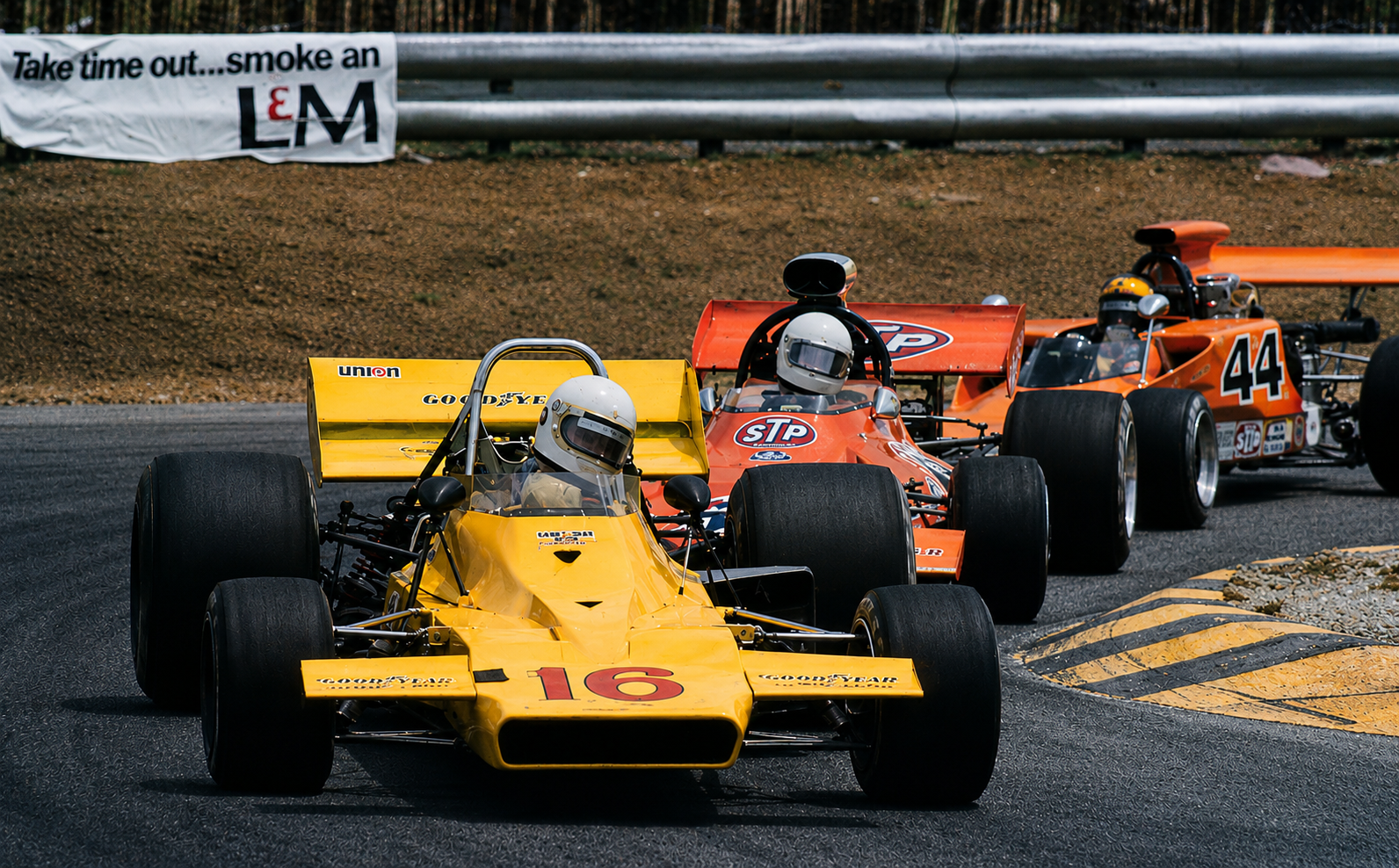
Monterey GP, Laguna Seca, May 7, 1972, the first L&M Championship round. Follmer, A50-003 Ford, Graham McRae, Leda GM1 Chev – his ’72 Tasman Cup-winning chassis – and Jerry Hansen, Lola T300 Chev. McRae won from Sam Posey, Surtees TS11 Chev and Brett Lunger, Lola T300 Chev (FollmerColl-MBisset-ChatGPT)
The Frank Matich, Carroll Smith and George Follmer Mighta-Been
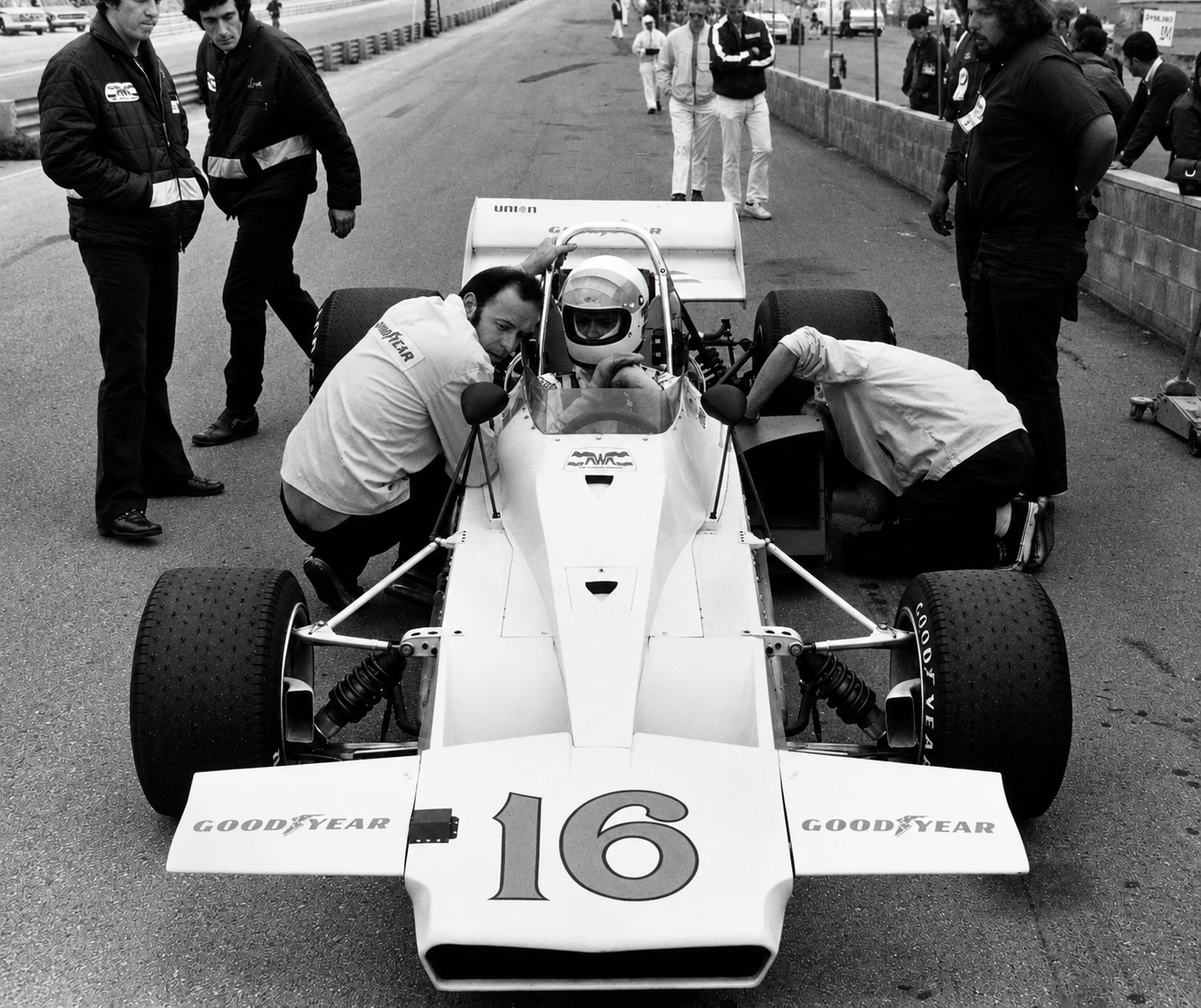
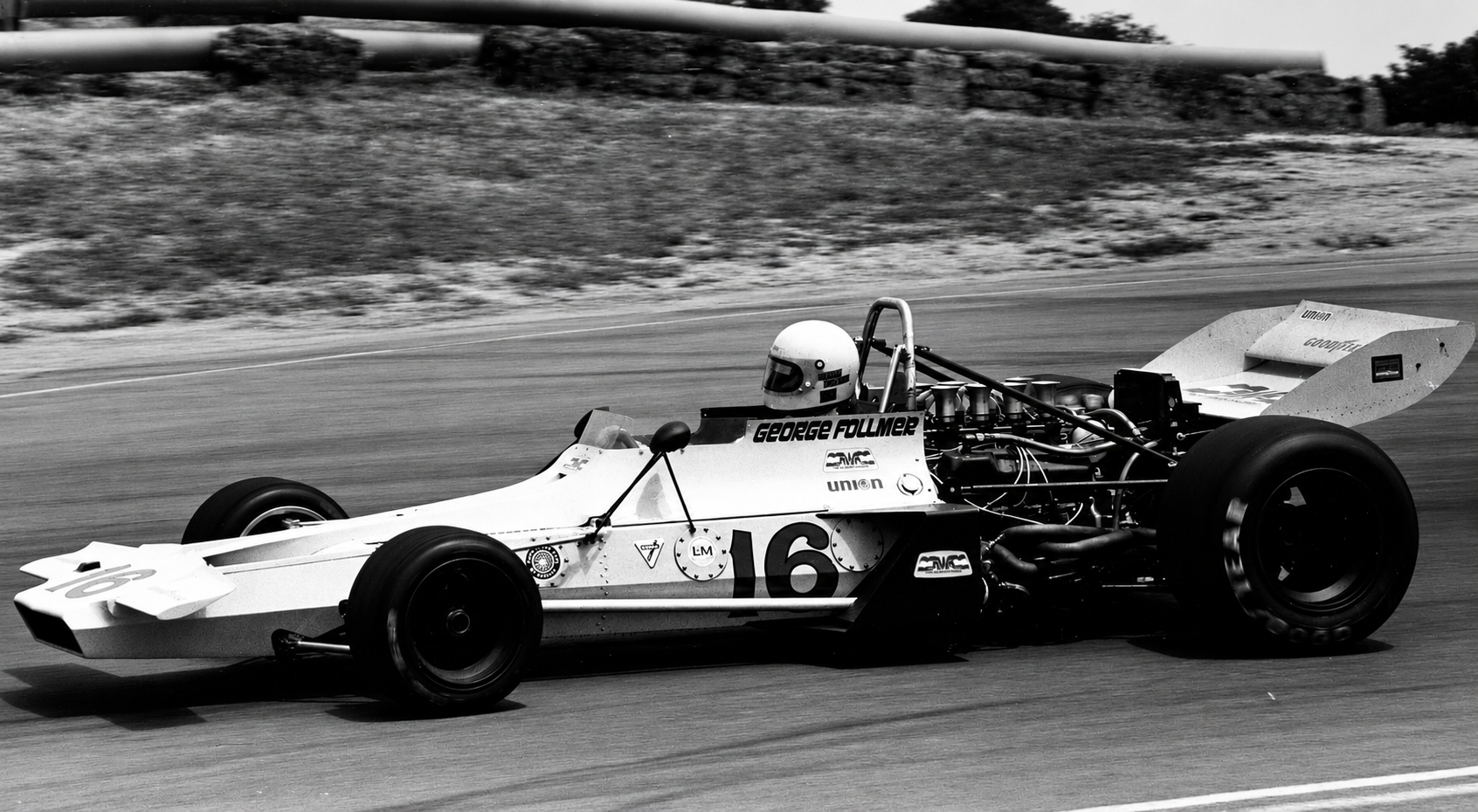
US ace George Follmer raced a Matich A50 F5000 in 1972. Stateside commercial success seemed within Frank Matich’s reach, but when ‘Tinker’ Bell gave Follmer the plum Porsche Can-Am drive, Frank’s deal turned to custard.
In the words of that Confucian philosopher Frank Gardner, ‘If yer aunty had balls she’d be yer uncle’. Ifs, buts and maybes mean nothing in motor racing; results are everything, the only thing.
At the start of the 1972 L&M US F5000 championship, Frank Matich (FM) had George Follmer – one of the best American road racers of his era and soon to be a Shadow F1 driver – aboard a Matich A50 in a well-funded professional team.
By mid-season, Mark Donohue – one of the greatest American racers of the era – had a near-death experience which gifted George the plum Roger Penske Porsche 917/10 Can-Am drive. Three weeks before Donohue’s accident, Follmer shunted the Matich badly enough to put it to one side.
Matich’s anticipated A50 sales off the back of Follmer’s probable success were shot out of the sky. Fame and fortune for Follmer, rooster to feather duster for Matich.
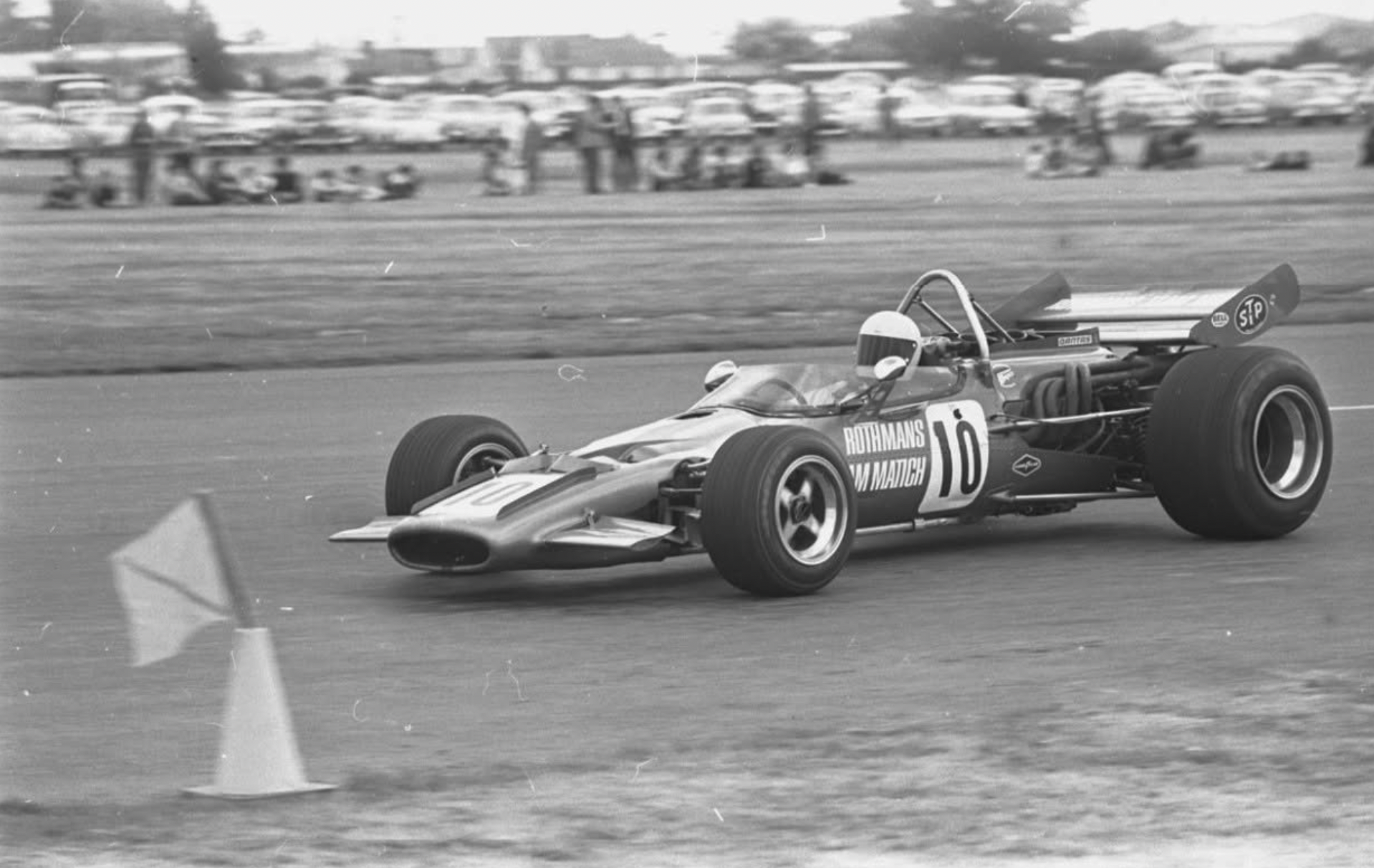
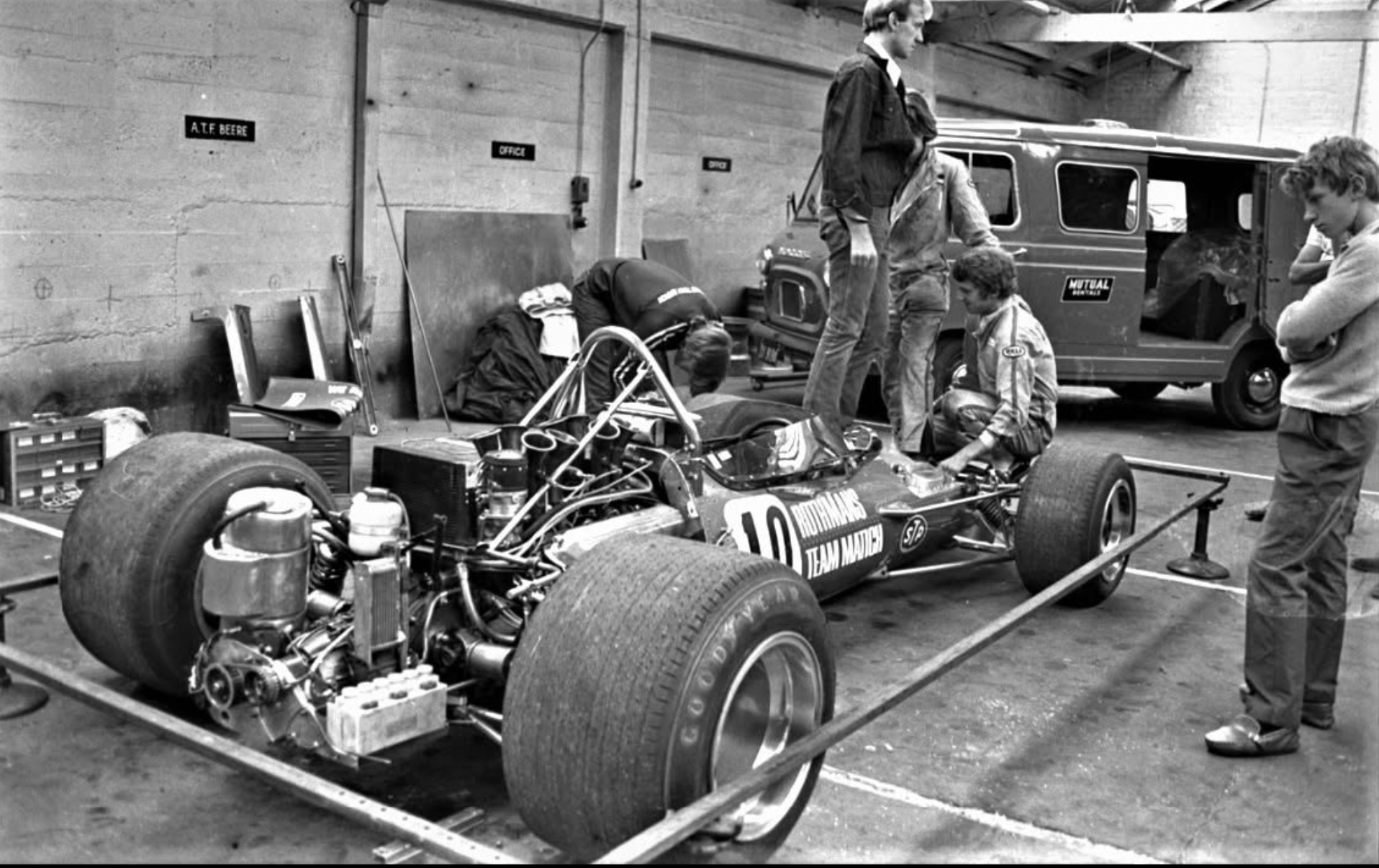
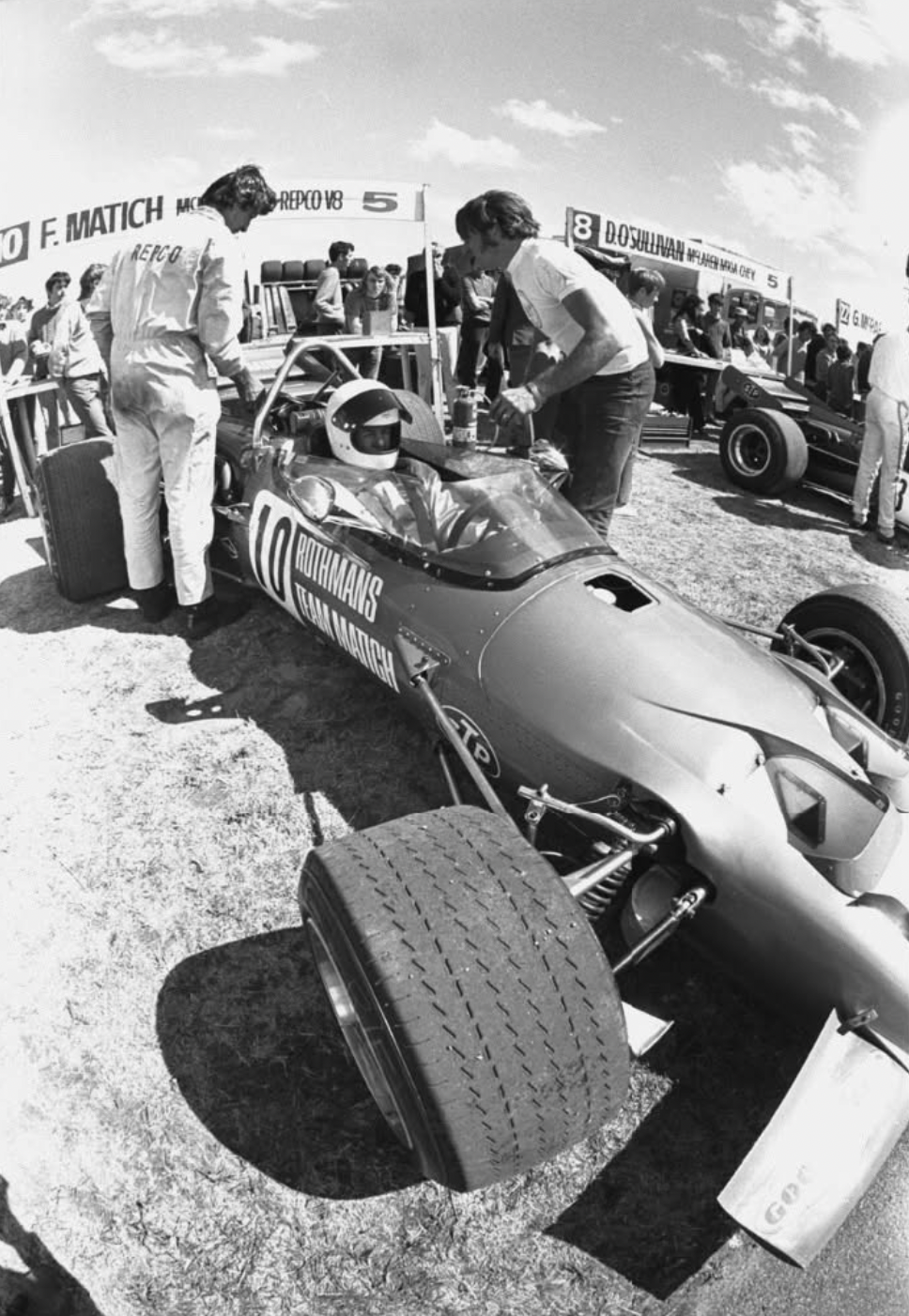
Team Matich council of war around A50 Repco-Holden 001/002 during the 1972 Warwick Farm 100 Tasman Cup round: FM Carroll Smith and Derek Kneller. Alistair McNaughton with his hat chopped in half? (ANA)
Carroll Smith
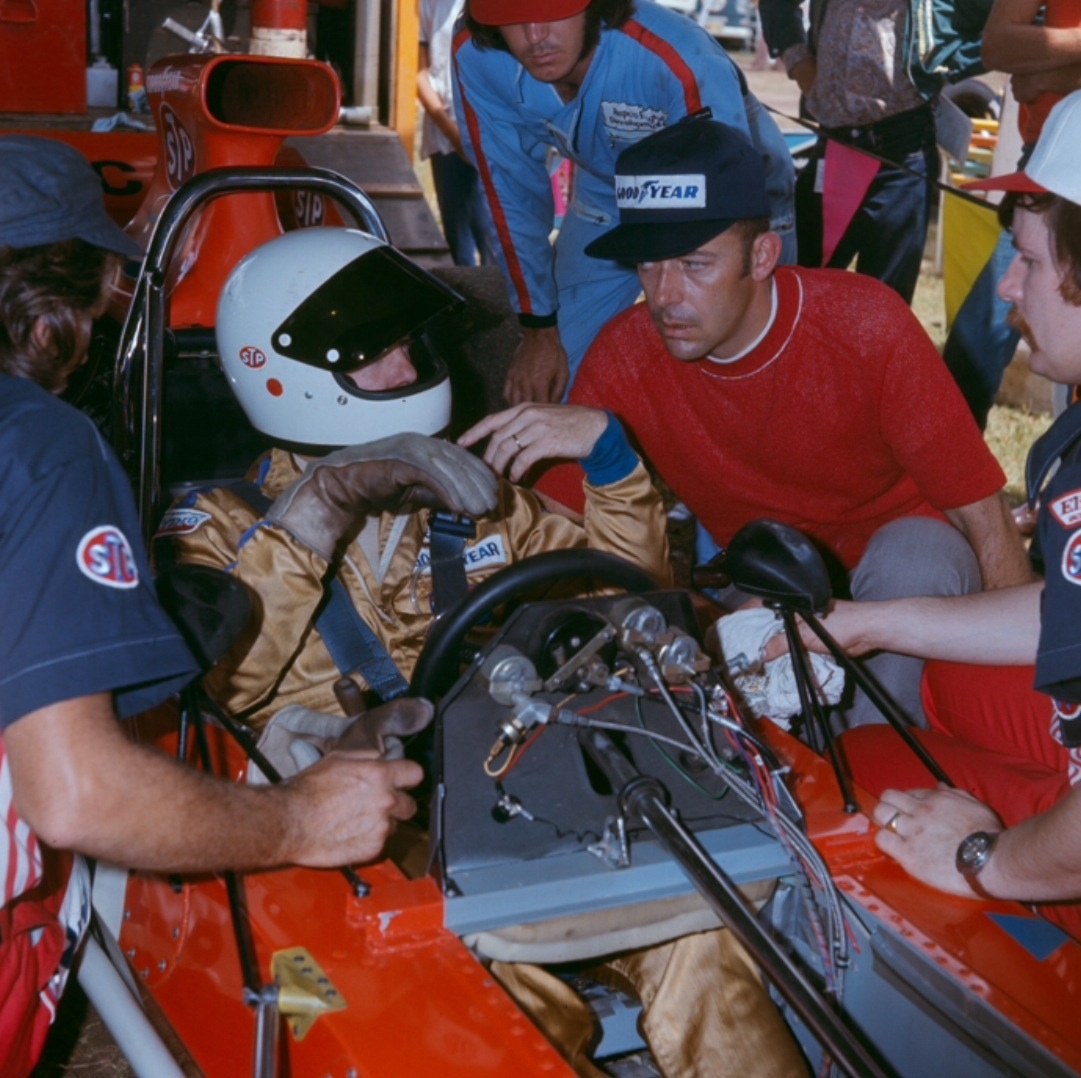
Carroll Smith was the man responsible for the deal that put Follmer into a Roy Woods Racing Matich A50 Ford.
Smith cut his racing teeth as a driver aboard a Formula Junior Cooper in Europe. When his money ran out, Carroll Shelby brought him home to San Francisco to work on his works-Ford endurance program.
Plying his trade as Carroll Smith Consulting from 1969, he became a race engineering/team management gun for hire.
As many of you will recall, he and his wife came to Australia in 1977 to assist Allan Moffat’s Ford Falcon GT Coupe race program. These Moffat and Colin Bond-driven cars ruled the 1977 roost – six one-two Australian Touring Car Championship finishes plus a Bathurst 1000 win were amongst a great season’s results.
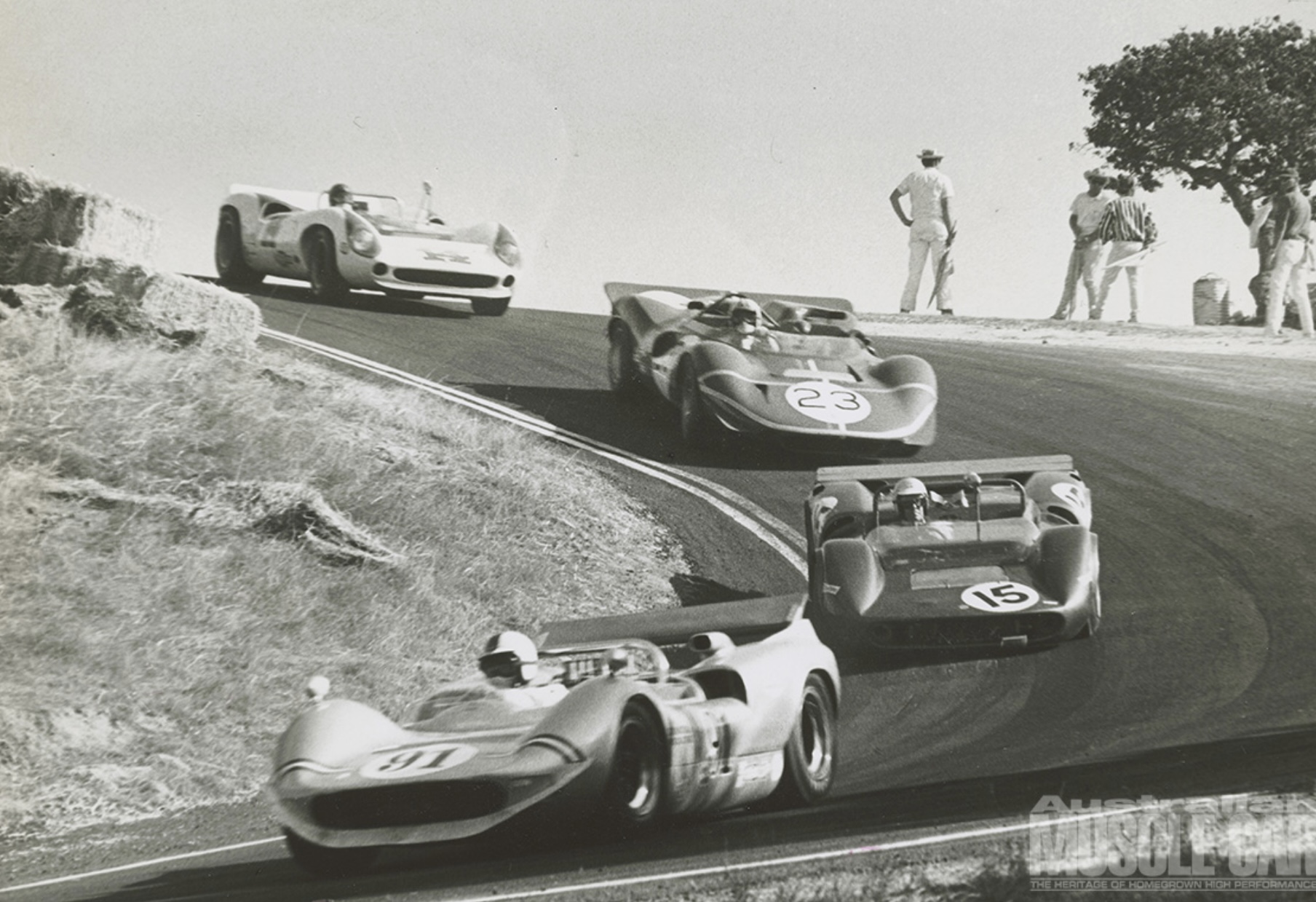
Smith met Matich during the 1967 Can-Am series. FM raced two Repco 4.4-litre V8-powered Matich SR3s in four rounds: Road America, Bridgehampton, Laguna Seca and Riverside. Matich was no threat to the 6-litre McLarens and Lolas, but he impressed pit-pundits with the speed of his light, great-handling cars. His planned return in 1968 with the Matich SR4 came to naught when the chassis and 5-litre Repco 760 quad-cam V8 ran hopelessly late. But Frank and Carroll stayed in touch throughout.
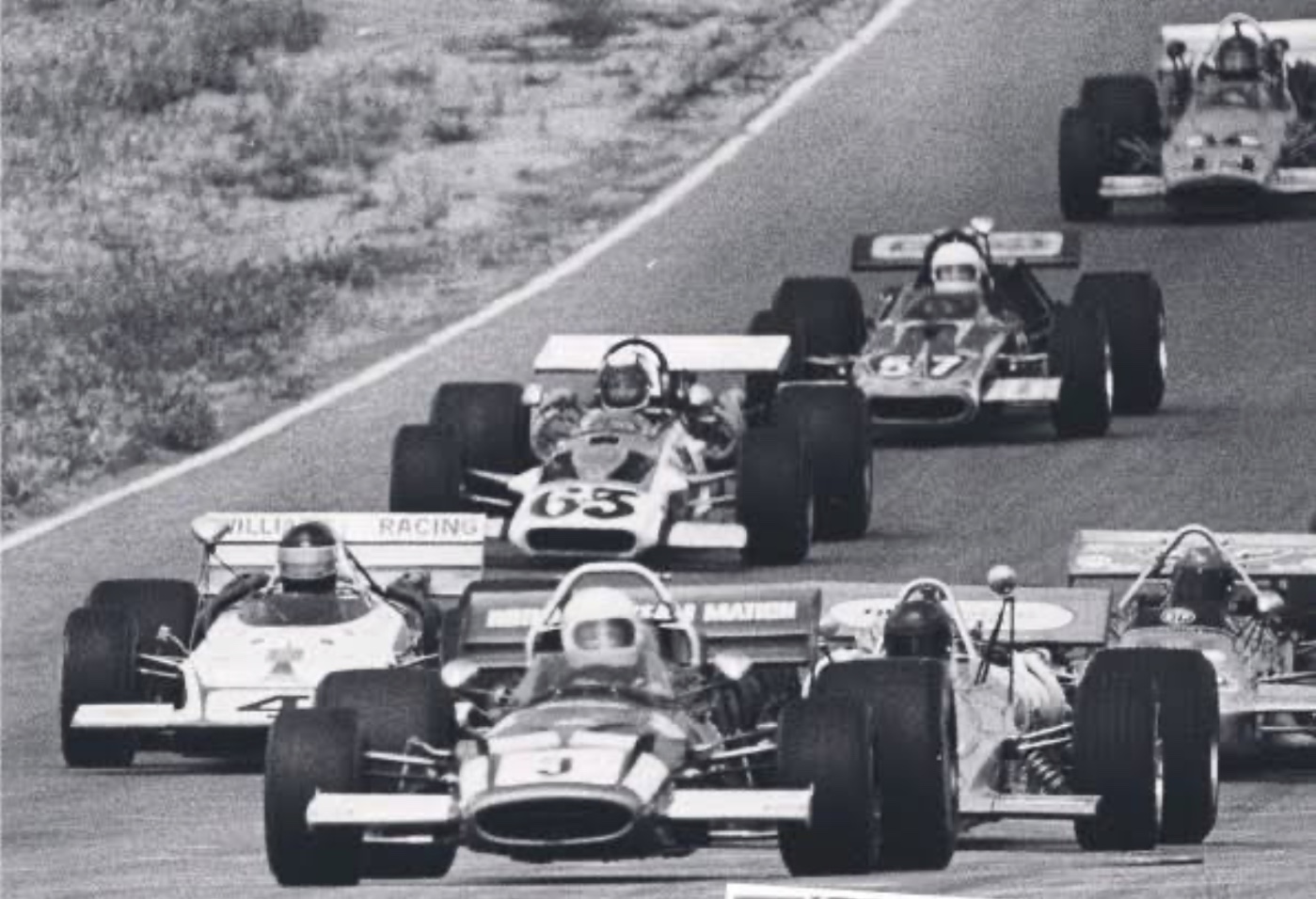
Laguna Seca Can-Am October 1967. The Skip Scott, McLaren M1C Chev, leads Frank Matich, Matich SR3 Repco-Brabham 620 4.4, from Charis Amon, Ferrari 350 Can-Am V12 and a Lola T70 through the Corkscrew. Bruce McLaren’s McLaren M6A Chev won (Chevron)Monterey GP, May 1971. Matich, McLaren M10B Repco-Holden, #4 is Ron Grable’s Lola T190 Chev, #65 is Nick Dioguardi’s Surtees TS5B Chev and #57 Monte Sheldon’s Eagle Mk5 Chev. David Hobbs won the round, M10B Chev, with Matich second (Chevron)
Formula 5000
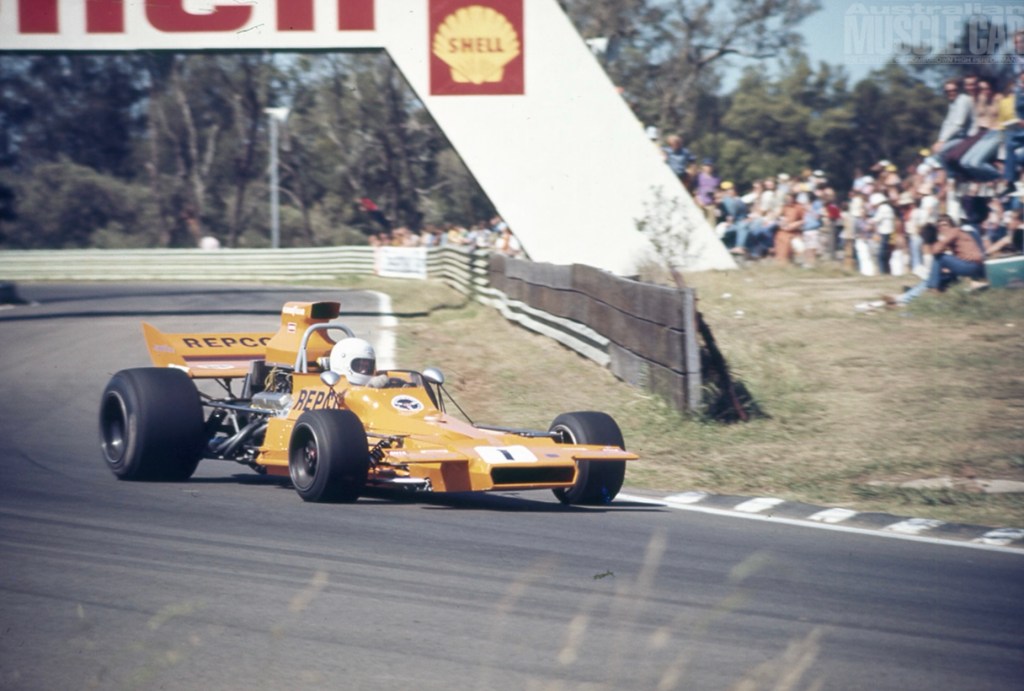
In a typically ballsy move, Matich bought a McLaren M10A F5000 before CAMS had chosen the class as Australia’s next ANF1. By the end of 1970, he had won a couple of Tasman Cup rounds and the Australian Grand Prix; his new McLaren M10B was fitted with an equally new Repco-Holden ‘308’ F5000 engine on that sunny Warwick Farm day.
Emboldened by success, Matich contested the first two 1971 US L&M rounds. In this April/May ‘hit and run visit, he won at Riverside and was second at Laguna Seca before returning home to chase the Gold Star.
Smith noted Matich’s pace and reliability. His Repco-Holden M10B was quicker than some highly developed Chev and Ford-powered McLaren, Lola, Lotus, Surtees and Eagle cars.
Matich then won the November 1971 AGP at Warwick Farm, racing his brand new Matich A50 Repco. The sleek aluminium monocoque racer turned a wheel for the first time on the Thursday morning. Straight out of its Brookvale box, it was immediately quick, winning the big race on Sunday.
Over in the States, looking for his next gig, Smith pitched a deal to American team owner, Roy Woods, to race a Matich A50 Repco-Holden. Additionally, he wanted the US distribution rights for the car and engines.
FM in the lead of the November 1971 Australian Grand Prix in Warwick Farm’s Esses, Matich A50 Repco-Holden on its race-winning debut. Bartlett’s M10B was second, and Alan Hamilton’s similar car third (Chevron)
Matich A50 Repco-Holden
Australian F5000 historian Jay Bondini has a copy of Smith’s December 1971 proposal to Woods. While it’s a sales pitch, it makes a fascinating insider’s view of the late 1971 State of F5000 Play.
Of the A50, he wrote, ‘Most other vehicles are two to four year old Formula 1 designs with 550lb engines mounted high…this car was designed for the Repco-Holden engine. A great deal of attention has been paid to the inter-relation of thrust lines, roll-centres, jacking lengths, vehicle static and dynamic mass-centres. The result is a car that is very close to a good Formula One car in concept.’
‘The chassis platform is remarkably stable under dynamic conditions. It is relatively softly sprung with very progressive weight transfer and soft, linear camber curves. It puts power down very, very smoothly. Like a good Formula One car, it will not want to slide much, and if its suspension is stiffened to allow sliding, lap times will suffer. The car will be sensitive to chassis set-up and aerodynamic changes, but not to gearing and fuel load. It is very strong and straightforward. It will be relatively easy to maintain and repair. The engine program should be cheaper than a Chevrolet program. Chassis and engine development costs should be very low.’
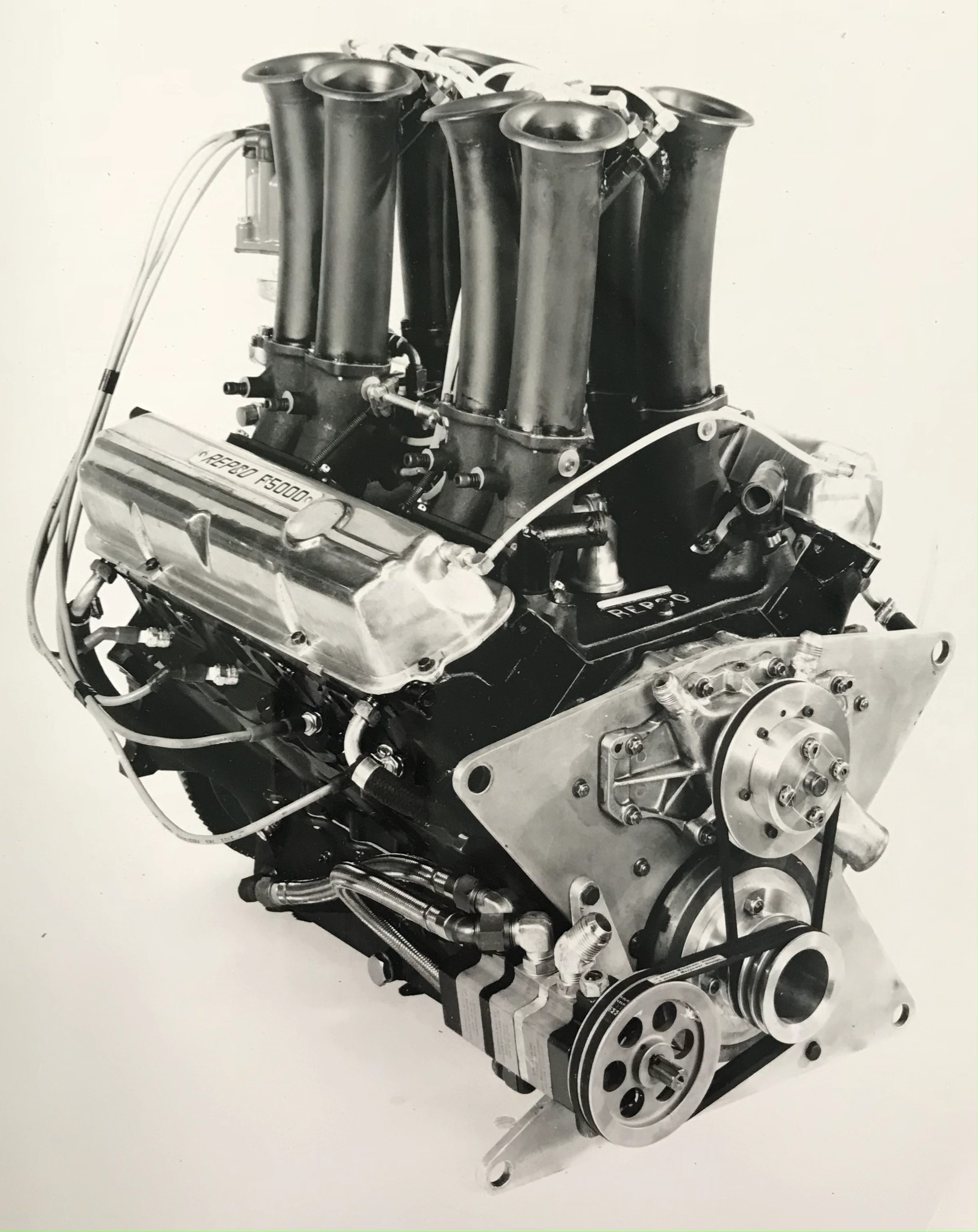
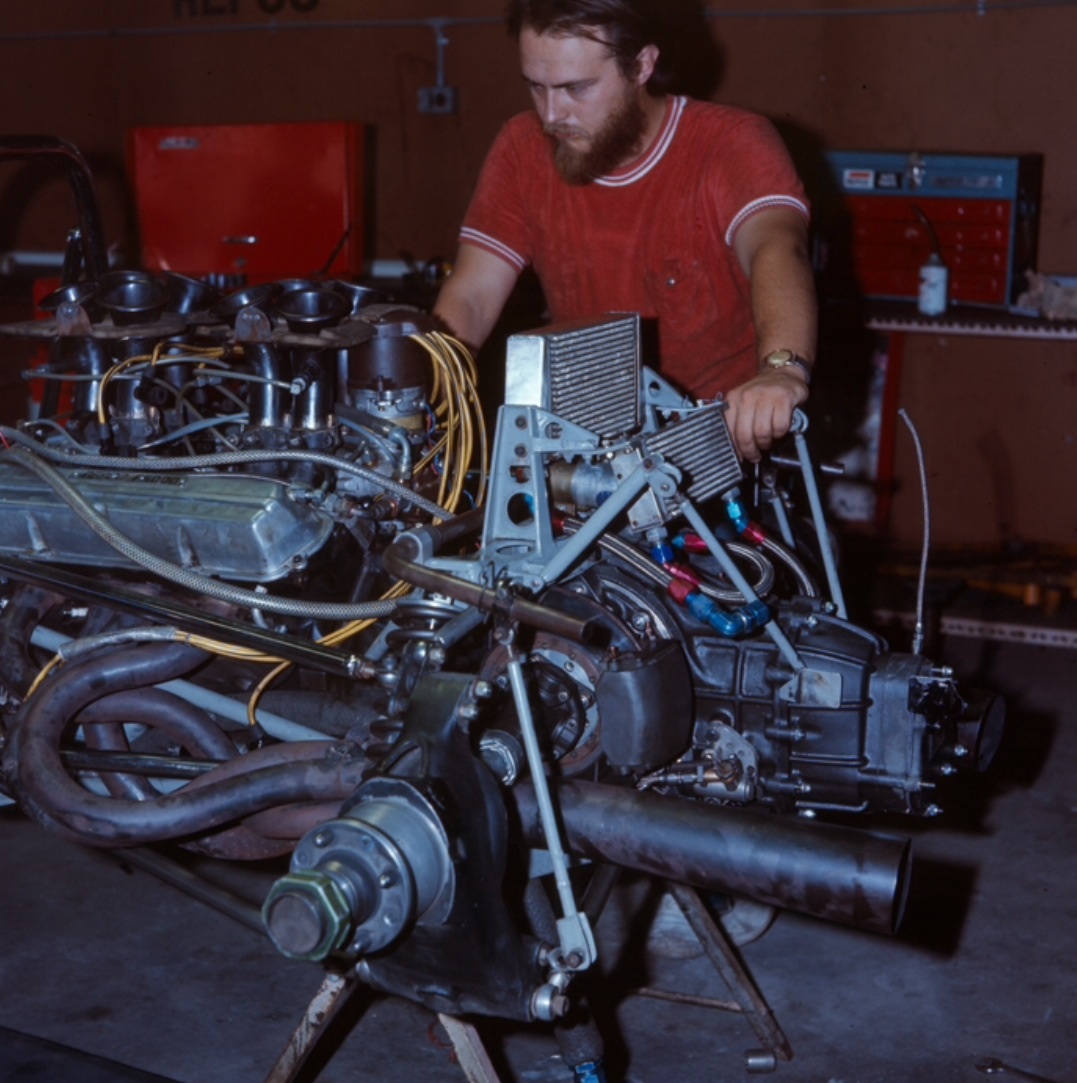
Repco-Holden Formula 5000 V8 (Repco)
REDCO
Smith was even more effusive about Repco Engine Developments Pty Ltd (REDCO).
This Repco subsidiary was formed to design, build and develop the F5000 engine using some of the team and equipment in the same Maidstone, Melbourne factory which built the twice-F1 championship-winning 3-litre Repco-Brabham F1 V8s.
‘…their dyno procedures are much more rigorous than ours…their power runs last at least a minute, nothing is read on the upswing. The Repco curve is notably flatter than the Ford or Chev.’
‘…they have a design staff of about four men, including Phil Irving. (designer of the 1966 Repco-Brabham F1 engine). They have a full machine shop and employ a permanent build crew of about 10 men. Two complete dynos and a very complete flow bench are in operation. They have the most complete dyno instrumentation I have seen.’
‘The build procedure is impressive…Each individual intake and exhaust port is flowed. Connecting rods and pins are made by Repco Development, as is the entire valve train, which is the lightest (and most expensive) I have seen. Pistons are cast, the attitude being that good design allows a lighter and cheaper piston this way and that forged pistons are only a necessity when poor design or incomplete development must be overcome with brute strength.’
‘The man-hours and dyno hours of development behind the engine are staggering…The number of cam profiles, cam timing changes, injection timing changes, dynamic balancing, etc., is almost beyond belief…Present major development areas are a vertical port head configuration, a flat plane crank…The basic attitude, much influenced by Brabham and Matich, is to produce a racing engine with a very wide operating range, flat power curve, instantaneous throttle response and outstanding reliability. To achieve this, they are more than willing to sacrifice peak power.’
‘Repco intends to establish spares in the United States for the Continental Series and to provide an engine man.’
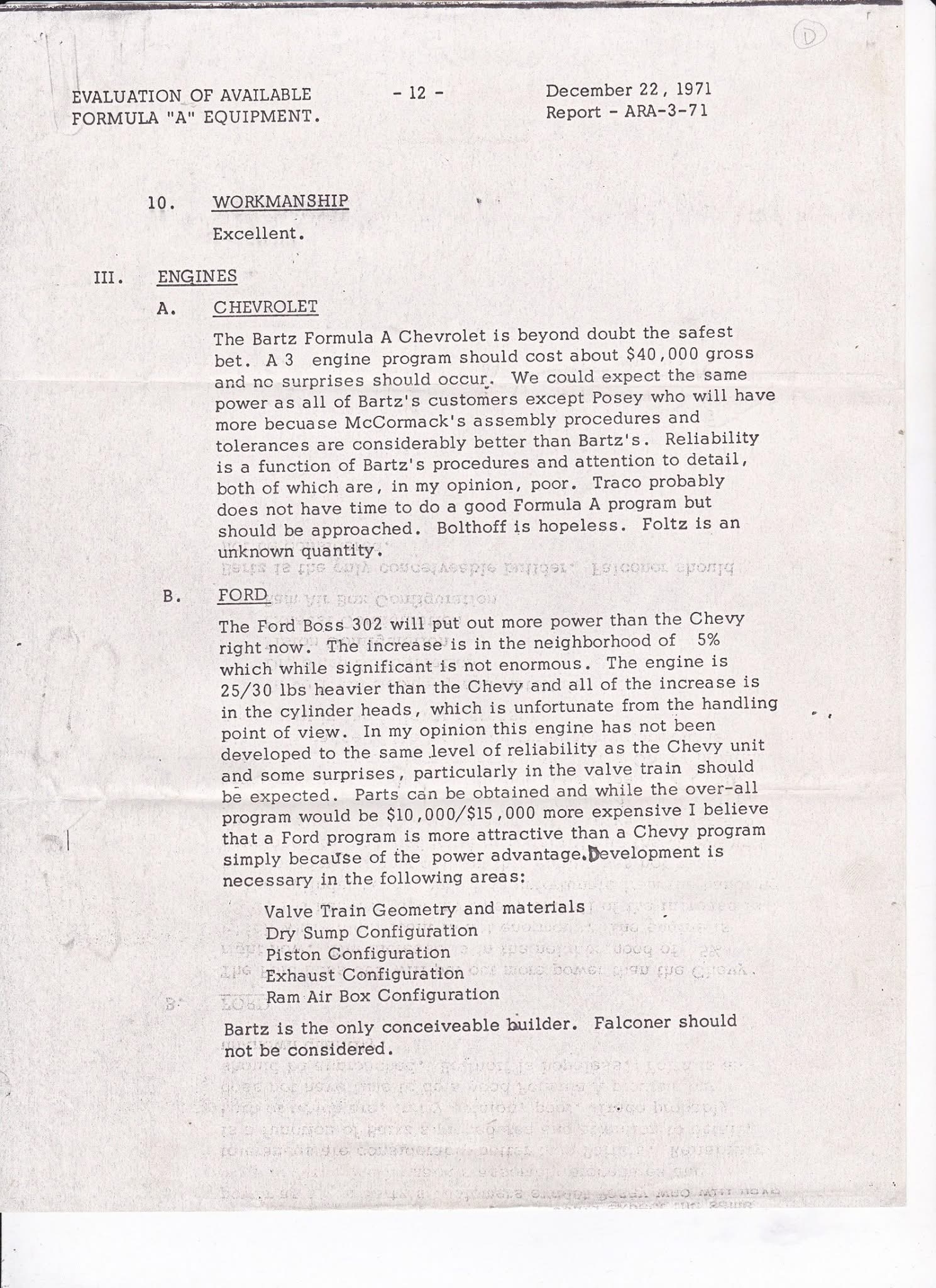
The Ford engine was 25/30 pounds heavier than the Chev, about 45/50 pounds more than the Repco-Holden. Smith estimated the ultimate power of the Boss as 5% greater than the Chev, with the Ford’s areas of development to achieve that, its valve train, dry sump, pistons, exhaust and airbox.
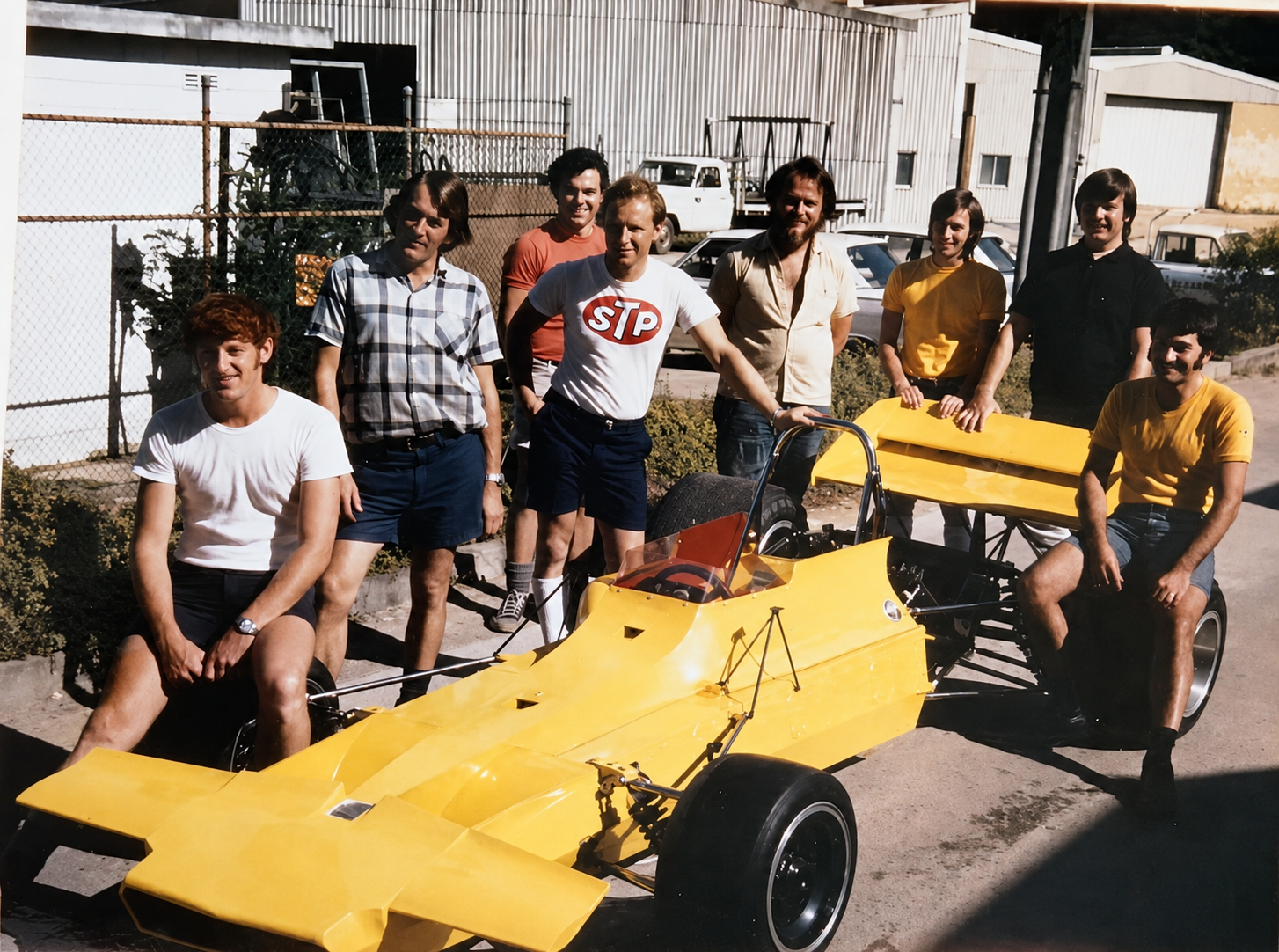
A50 ready for shipping to the US. Jim Hunter, Scott McNaughton, Charlie Munro, Henry Nehrbechi, Mr Arcadia, Bob Riley, Derek Kneller, John Bug, March 1972. What was the address of Matich’s Brookvale factory? (D Kneller Coll)
Half a Deal
While Smith sold his socks off, he only got half his deal over the line. Woods went with the A50 but not the Repco motor; he wanted an Al Bartz prepped Boss 302.
Follmer raced Shelby Boss Mustangs in 1970 and won two Formula A races in a Lotus 70 Ford; he was keen to stay with a known quantity, Roy Woods agreed. Had Follmer contested the two Californian races Matich dominated the year before, perhaps he would have voted for the Repco-Holden. More on the Ford Boss 302 here:https://primotipo.com/2025/02/25/ford-mustang-boss-302-v8/
This was still a great commercial opportunity for Matich. ‘Had Follmer won consistently, the sale of 10 cars was possible in the US and Europe,’ observes Derek Kneller, FM’s chief mechanic throughout his F5000 program
‘Frank had the capital to build them. We were already a subcontractor in the way Brabham was. The Commonwealth Aircraft Corporation in Melbourne cast our wheels, uprights and the steering rack. They fabricated some of our tubs, too. The cars were then built up by our team, fabricating the rest in Sydney. It would have been a pinch, but it was doable, flexing the size of our team as we needed.’
When Woods finally popped his seal on the deal, Smith jumped on a Pan-Am 707 and was soon ensconced at Brookvale assisting in the build of A50 chassis 003.
‘With the first 1972 Tasman round on January 8, we were focused on FM’s car and spares package for eight races in eight weeks. Having Carroll there was great, essential really; they wouldn’t have got their car otherwise!’
‘We changed the chassis bell-housing and rear cradle to suit the Ford. Even though the tub wasn’t designed for the bigger and heavier Ford, we were happy with the installation.’
Smith joined Matich for a few rounds to get a feel for setup changes in the field, but he was soon back in the US chasing Al Bartz.
GF Laguna Seca L&M F5000 1972. Names folks? Matich A50-003 Ford Boss-Bartz (Follmer Family Collection)
Roy Woods Racing
Final preparation of A50-003 was completed in Woods’ Northridge, LA, workshop. The package appeared good, aided by Smith’s intimate understanding of it. Matich was a Goodyear test driver, so the tyres were sympathetic to the needs of the chassis too.
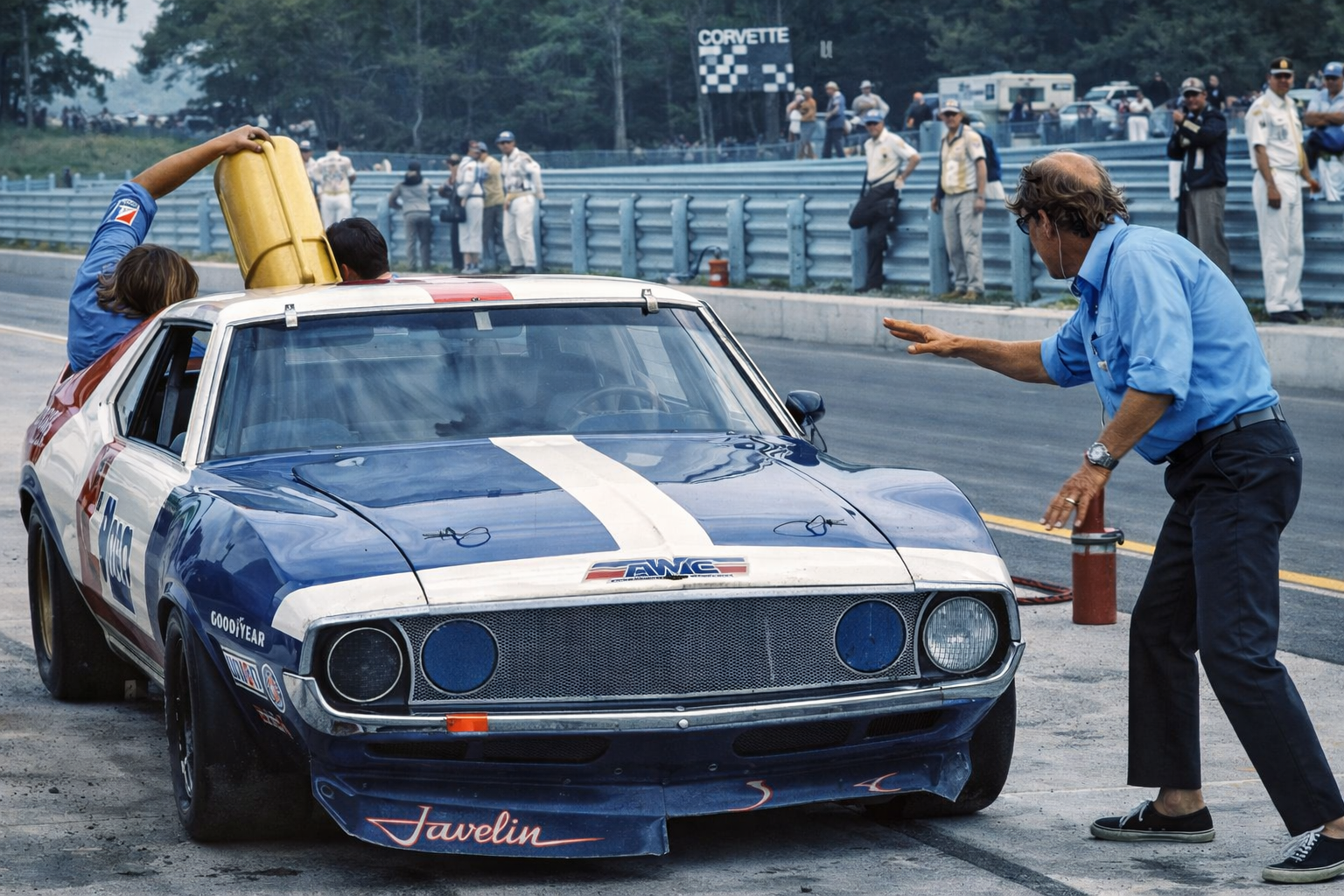
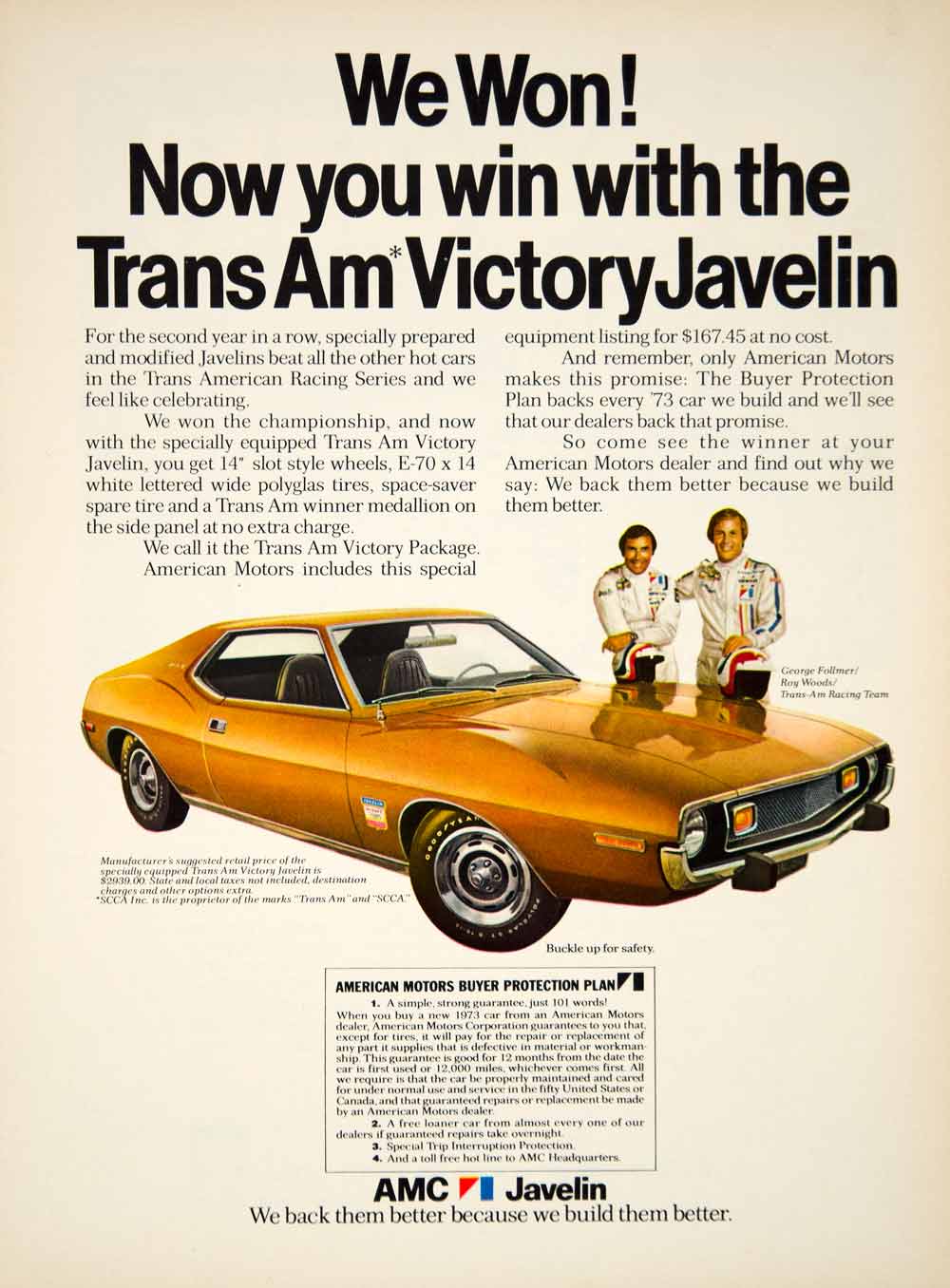
Follmer’s season upswing started at Lime Rock on May 6 when he won the first Trans-Am round at Lime Rock. Later, he was victorious at Bryar, Watkins Glen and Donnybrooke, taking the title aboard his works AMC Javelin.
Roy Woods Racing commenced in 1969. Early success resulted in the outfit being awarded the Javelin factory race contract when Penske relinquished it to run the Porsche Can-Am program.
All was coming along well with the Porsche 917/10 until it lost its rear bodywork at 150mph during testing before the second round at Road Atlanta on July 3, with Mark Donohue at the wheel.
His accident was similar to Bruce McLaren’s fatal 1970 Goodwood crash. Donohue’s out-of-control car was launched by a mound of earth into the air, whereas Bruce hit an unyielding marshal’s post in his Can-Am McLaren M8D Chev. While lucky to survive, Donohue’s leg/knee injury kept him out of action for months. Follmer, the best credentialled available bloke, got the drive.
It was a big pair of size-nines to fill. Donohue had been there every step of the way from the first tests of the unruly beast at Weissach, and then as the Penske crew worked hard with Porsche to develop race-winning pace and reliability.
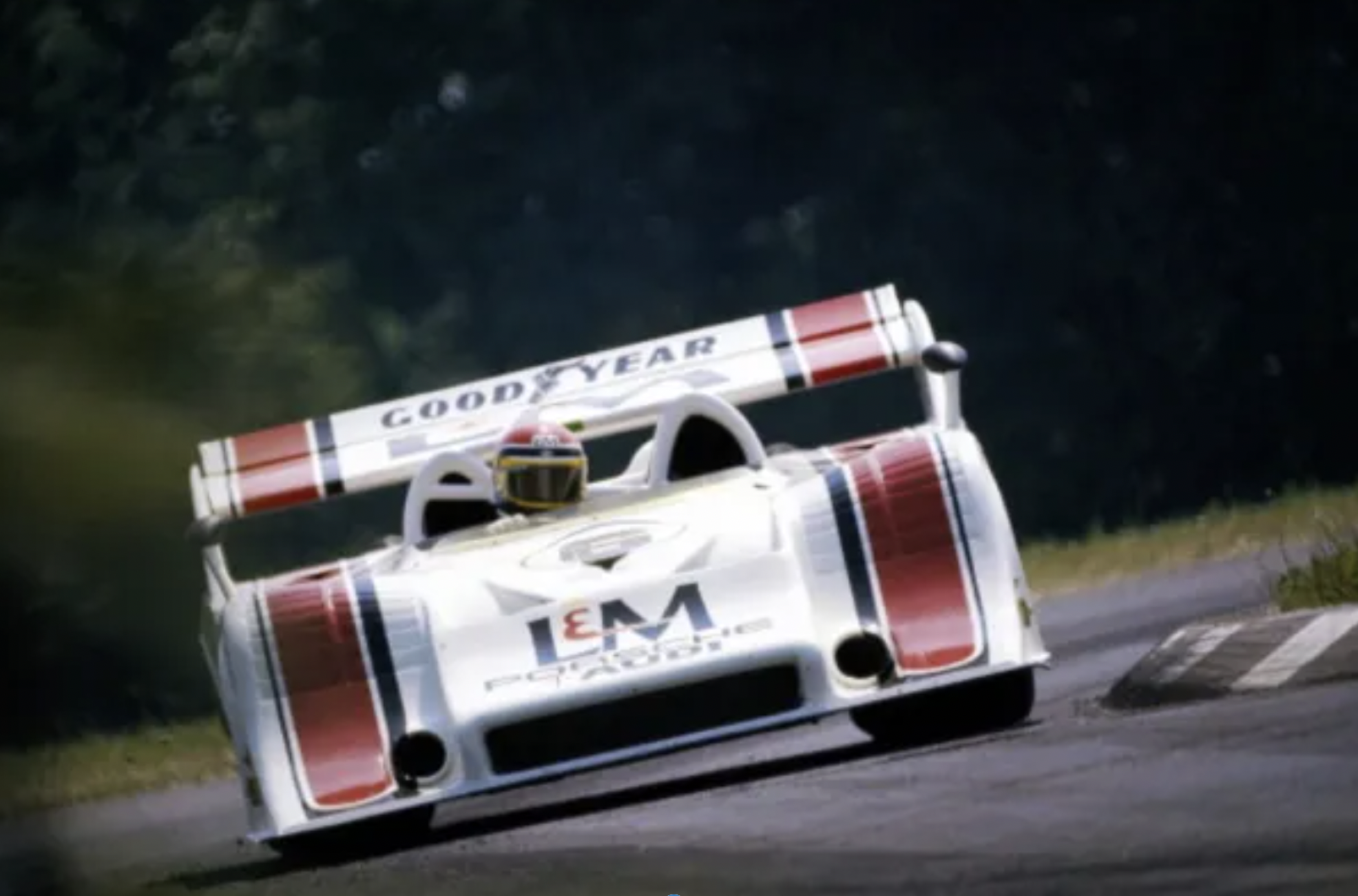
While the Porsche was quicker than the McLaren M20 Chevs pedalled by Denny Hulme and Peter Revson, the potential had to be converted. Despite minimal testing, Follmer delivered big time, taking five of the nine rounds, winning the Can-Am drivers and he and Donohue the manufacturers titles.
Follmer, Roy Woods Racing AMC Javelin, Watkins Glen Trans-Am, June 1972. GF won from Jerry Thompson’s Mustang and RWR chief, Roy Woods (Alamy-MBisset-WordPress)
The Roy Woods Racing program, which suffered the most from Follmer’s change in focus was Smith’s eight-round Matich A50 Ford project.
Follmer put the A50 third on the grid at Laguna Seca’s Monterey Grand Prix on May 7, a weekend in which he was mixing commitments with the Lime Rock, Trans-Am round.
Sam Posey’s Surtees TS11 Chev was on pole from David Hobbs’ Lola T300 on grid 2. Follmer was fifth in the first heat and retired after 10 laps of the second, finishing well back. Graham McRae won the race in his Tasman Cup-winning Leda GM1 Chev.
The week before Edmonton on June 4, George won his second Trans-Am round at Bryar. He was in great form. In qualifying, he was equal seventh with McRae; Brett Lunger’s Lola T300 was on pole. A problem with the A50 resulted in a DNS; the round was won by Hobb’s T300.
Follmer was a busy lad over the June 18 Watkins Glen Grand Prix weekend, racing the Matich and Javelin. He won the Trans-Am event but crashed the Matich in heat one from grid 9. The busted car didn’t start the second heat; McRae won the weekend overall.
The A50 was too badly damaged to be repaired quickly, and they had no spare tub. It was set aside in the workshop while Follmer raced a Lotus 70B Ford. That was it, the Matich A50 program was over almost before it started.
Given Follmer’s Can-Am focus from mid-July, it made sense to him to run a Lotus 70 with Kerry and Charlie Agapiou, who had successfully run him before, but by then the 70B was well past its use-by date; fifth in a Road Atlanta heat was his best performance.
Watkins Glen Can-Am, July 1972. George Follmer, Penske Porsche 917/10, fifth. Denny Hulme’s McLaren M20 Chev won in the final works McLaren Can-Am victory (A Upitis-Getty Images)
If yer Aunty
If the A50 program had been more important to Follmer, that is, the Porsche 917/10 hadn’t popped into his lap, the focus may have been on repairing and racing the A50.
Carroll Smith rated Matich big time. In a 1979 Auto Action interview, he said, ‘Matich was one of the best drivers I ever worked with. The Matich car was superb, the Repco engine program was excellent, and the engineering standard was superb – it was all good enough to ensure international success.’
This is a small footnote in Australian motor racing history, a huge mighta-been, but let’s pursue the ifs, buts and maybe’s for a sec. Follmer’s feedback would have assisted the development of the A51s Matich took to the US in 1973. If the car had been Repco-powered and performed, engine sales in the US would have ensued. Had Follmer raced the engine, the oil scavenge problems Matich encountered in long, high-speed, open US corners in 1973 would have been nipped in the bud twelve months before. Therefore, Matich’s performances in 1973 would have been vastly better. Greater engine sales would have given Redco a business case to survive the cuts Repco made in response to softening global and local demand in 1974.
Oh boy, if Follmer ran an A50 Repco-Holden stateside, the path of Matich and Repco-Holden history may have been quite different. Then again, if yer aunty had balls she’d be yer uncle.
Laguna, A50-003 Ford-Boss Bartz (Follmer Family Coll)
Etcetera…
(Jay Bondini Collection)(ANA)
Repco-Holden not Ford Boss Bartz, but engine, rear suspension and Hewland DG300 trasaxle installation for the hell of it. FM’s A50-001/002 during the 1972 Warwick Farm 100 Tasman Cup round.
Credits…
Follmer Family Collection, Australian National Archives, Repco, Jay Bondini Collection, Chevron Publishing, Getty Images-Alvis Upitis, Alamy, Derek Kneller Collection