


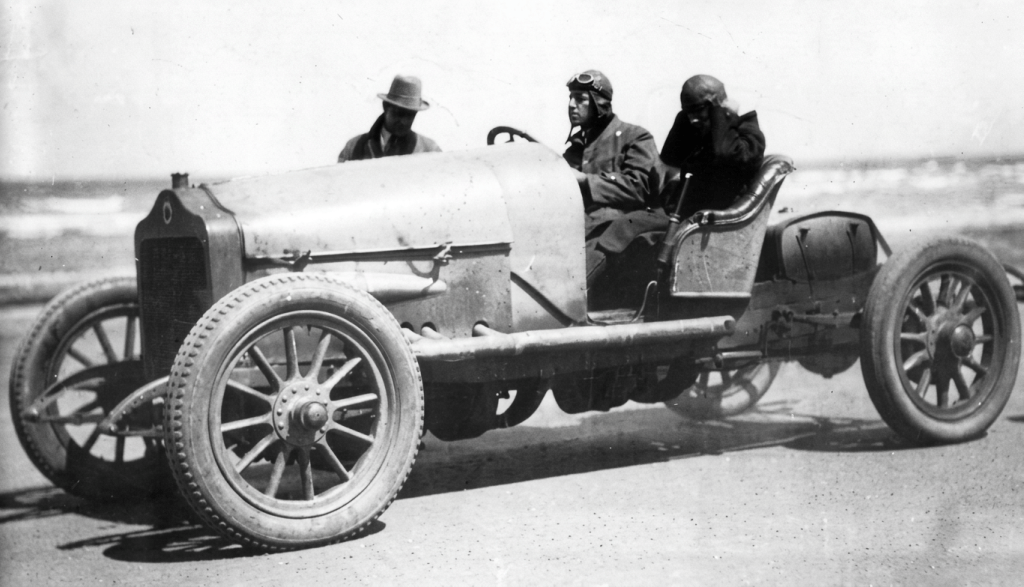
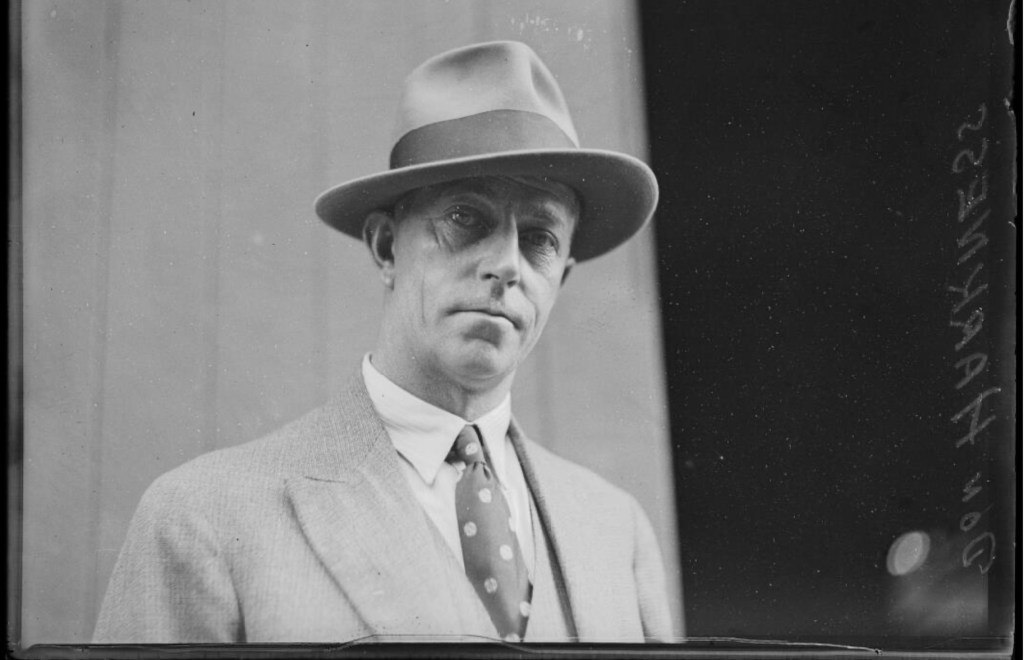
Australian auto and aero engineering genius and ace racing driver, Donald Harkness set the first official over 100 mph Australian Land Speed Record in front of about 1,000 people in a self-built Minerva Hispano Suiza V8 special at 107.14 mph on Seven Mile Beach, near Gerringong, New South Wales on October 17, 1925.
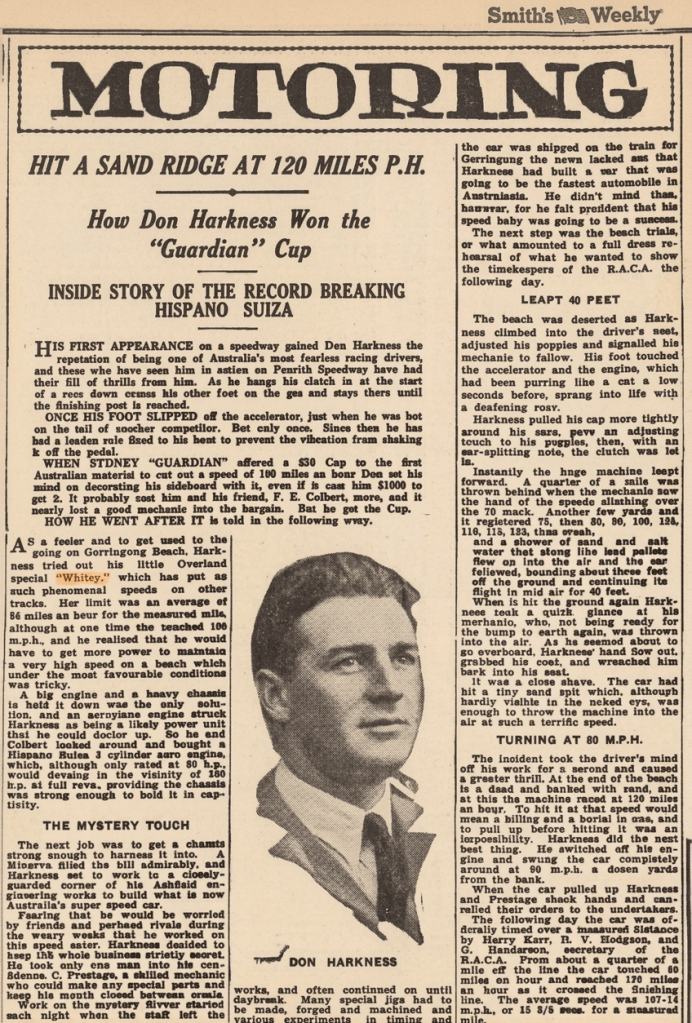
Smith’s Weekly, covered the story in its motoring column, on Saturday October 31, 1925.
HIT A SAND RIDGE at 120 MILES P.H. How Don Harkness Won The Guardian Cup.
INSIDE STORY OF THE RECORD BREAKING HISPANO SUIZA
HIS FIRST APPEARANCE on a speedway gained Don Harkness the reputation of being one of Australia’s most fearless racing drivers, and those who have seen him in action at Penrith Speedway have had their fill of thrills from him. As he bangs his clutch in at the start of a race down comes his other foot on the gas and stays there until the finishing post is reached.
ONCE HIS FOOT SLIPPED off the accelerator, just when he was hot on the tail of another competitor. But only once. Since then he hss had a leaden sole fitted to his boot to prevent the vibration from shaking it off the pedal.
WHEN THE SYDNEY GUARDIAN offered a £50 Cup to the first Australian motorist to cut out a speed of 100 miles an hour Don set his mind on decorating his sideboard with it, even if it cost him £1,000 to get it. lt probably cost him and his friend, F. E. Colbert, more, and it nearly cost a good mechanic into the bargain. But he got the Cup.
HOW HE WENT AFTER IT is told in the following story.
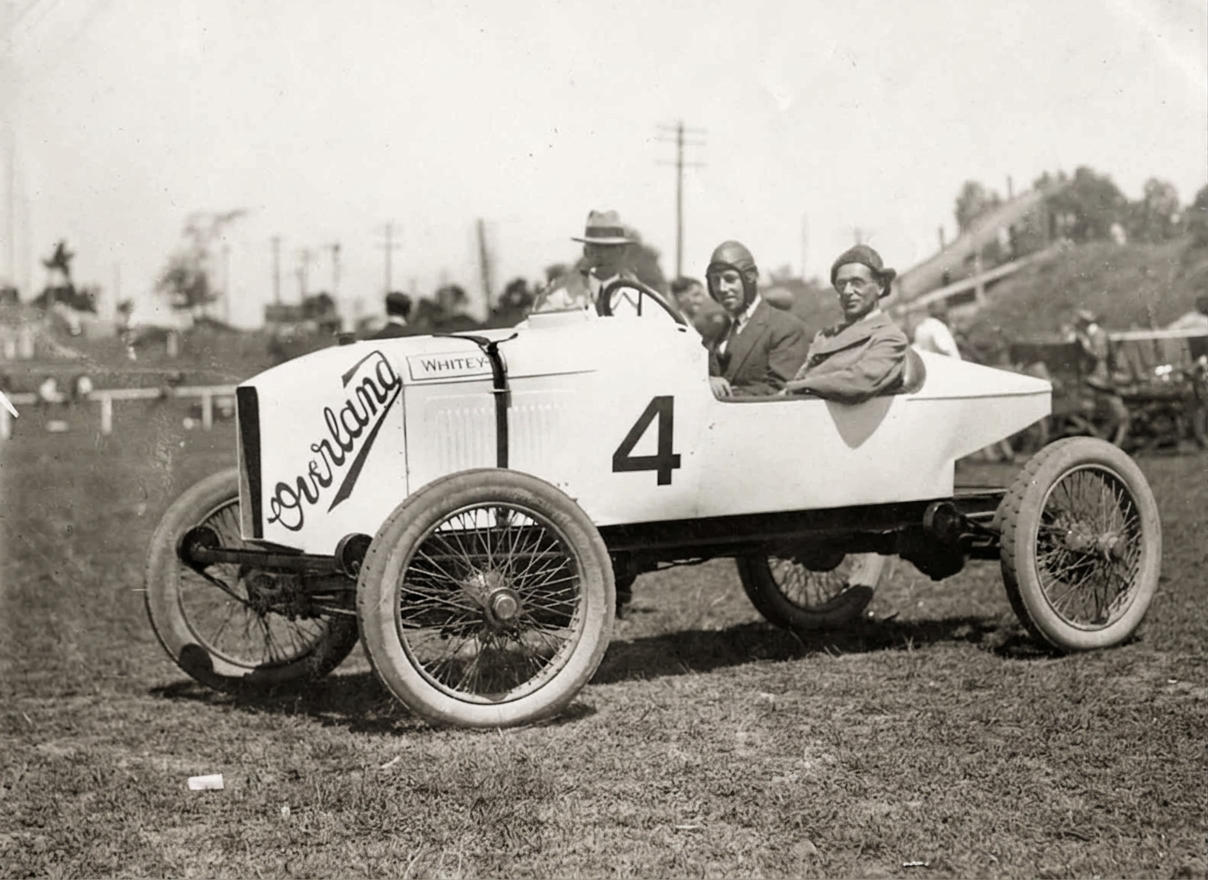
As a feeler and to get used to the going on Gerringong Beach, Harkness tried out his little Overland special “Whitey,” which has put up such phenomenal speeds on other tracks. Her limit was an average of 84 miles an hour for the measured mile, although at one time she touched 100 m.p.h., and he realised that be would have to get more power to maintain a very high speed on a beach which under the most favourable conditions was tricky.
A big engine and a heavy chassis to hold it down was the only solution, and an aeroplane engine struck Harkness as being a likely power unit that be could doctor up. So he and Colbert looked around and bought a Hispano-Suiza 8-cylinder aero engine, which although only rated at 80 hp would develop in the vicinity of of 200 hp at full revs, providing the chassis was strong enough to hold it in captivity.
THE MYSTERY TOUCH
The next job was to get a chassis strong enough to harness it into. A Minerva filled the bill admirably, and Harkness set to work ln a closely-guarded corner of his Ashfield engineering works to build what is now Australla’s super speed car.
Fearing that be would be worried by friends and perhaps rivals during the weary weeks that he worked on this speed eater. Harkness decided to keep the whole business strictly secret. He took only one man into his confidence, C. Prestage, a skilled mechanic who could make any special parts and keep his mouth closed between meals.
Work on the mystery flyer started each night when the staff left the works and often continued on until daybreak. Many special jigs had to be made, forged and machined, and various experiments in timing and gearing carried out.
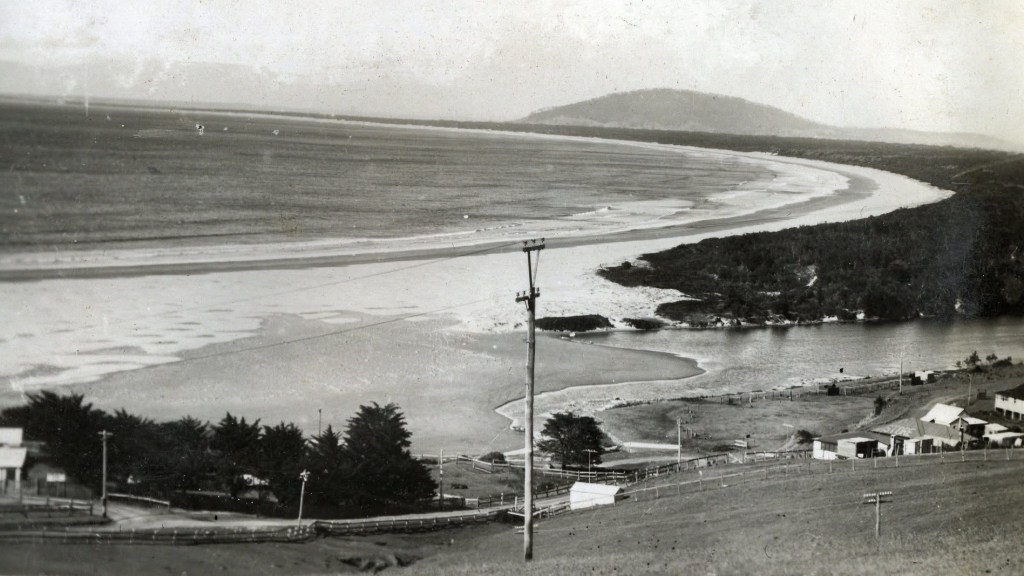
After nearly two months work this Goliath of the car world was ready for its initial trials. Two days before the car was shipped on the train for Gerringong the news leaked out that Harkness had built a car that was going to be the fastest automobile in Australasia. He didn’t mind them however, for he felt confident that his speed baby was going to be a success.
The next step was the beach trials or what amounted to a full dress rehearsal of what he wanted to show the timekeepers of the R.A.C.A. the following day.
LEAPT 40 FEET
The beach was deserted as Harkness climbed into the driver’s seat, adjusted his goggles and signalled his mechanic to follow. His foot touched the accelerator and the engine, which had been purring like a cat a few seconds before, sprang into life with a deafening roar.
Harkness pulled his cap more tightly around his ears, save an adjusting touch to his goggles, then, with an ear-splitting note, the clutch was let in.
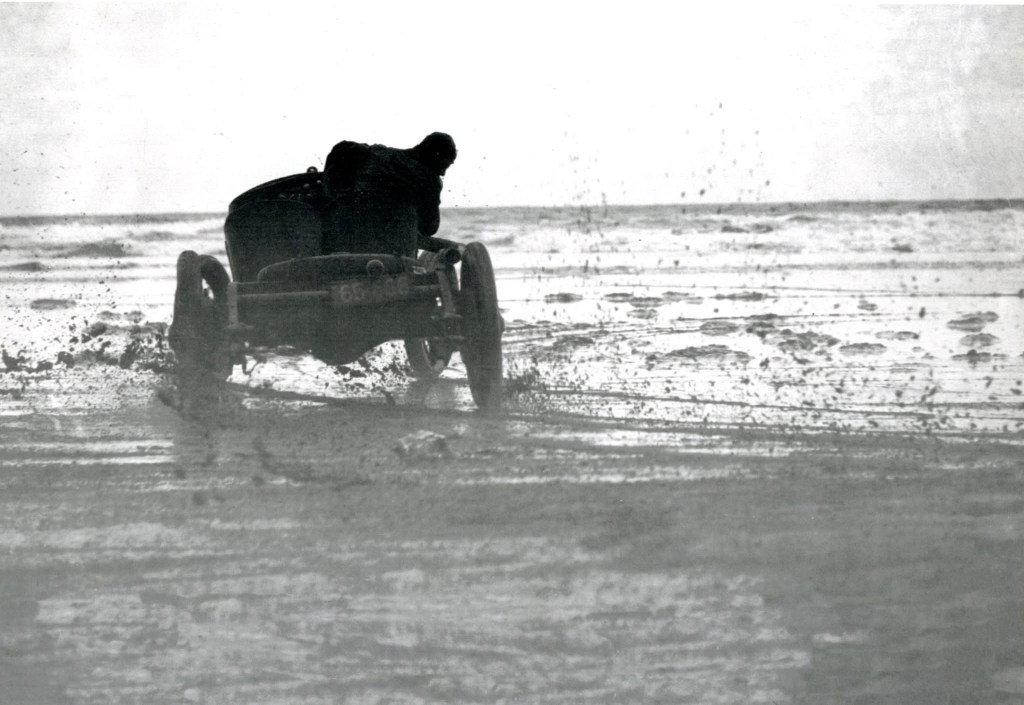
Instantly the huge machine leaped forward. A quarter of a mile was thrown behind when the mechanic saw the hand of the speedo climbing over the 70 mark Another few yards and it registered 75, then 80, 90, 100, 105, 110, 115, 120, then, crash, and a shower of sand and salt water that stung like lead pellets flew up into the air and the car followed, bounding about three feet off the ground and continuing its flight in mid air for 40 feet.
When it hit the ground again Harkness took a quick glance at his mechanic who, not being ready for the bump to earth again. was thrown into the air. As he seemed about to go overboard, Harkness’ hand flew out, grabbed his coat, and wrenched him back into his seat.
It was a close shave. The car had hit a tiny sand spit which, although hardly visible to the naked eye, was enough to throw the machine into the air at such a terrific speed.
TURNING AT 80 M.P.H.
The incident took the driver’s mind off his work for a second and caused a greater thrill. At the end of the beach is a dead end banked with sand, and at this the machine raced at 120 miles an hour. To hit it at that speed would mean a killing and a burial in one, and to pull up before hitting it was an impossibility. Harkness did the next best thing. He switched off his engine and swung the car completely around at 60 m.p.h. a dozen yards from the bank.
When the car pulled up, Harkness and Prestage shook hands and cancelled their orders to the undertakers.
The following day the car was officially timed over a measured distance by Harry Kerr, R. V. Hodgson, and G. Henderson, secretary of the R.A.C.A. From about a quarter of a mile off the line the car touched 50 miles an hour and reached 120 miles an hour as it crossed the finishing line. The average speed was 107.14 m.p.h., or 83 3/5 sec. for a measured mile.
The trial went off without a hitch, and the car pulled up in good order. There were no thrills. They had happened the day before.
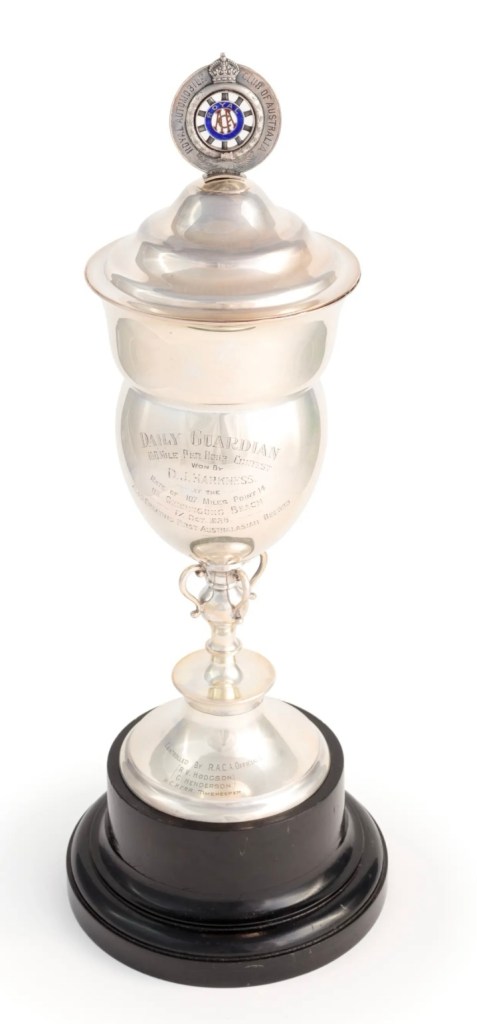
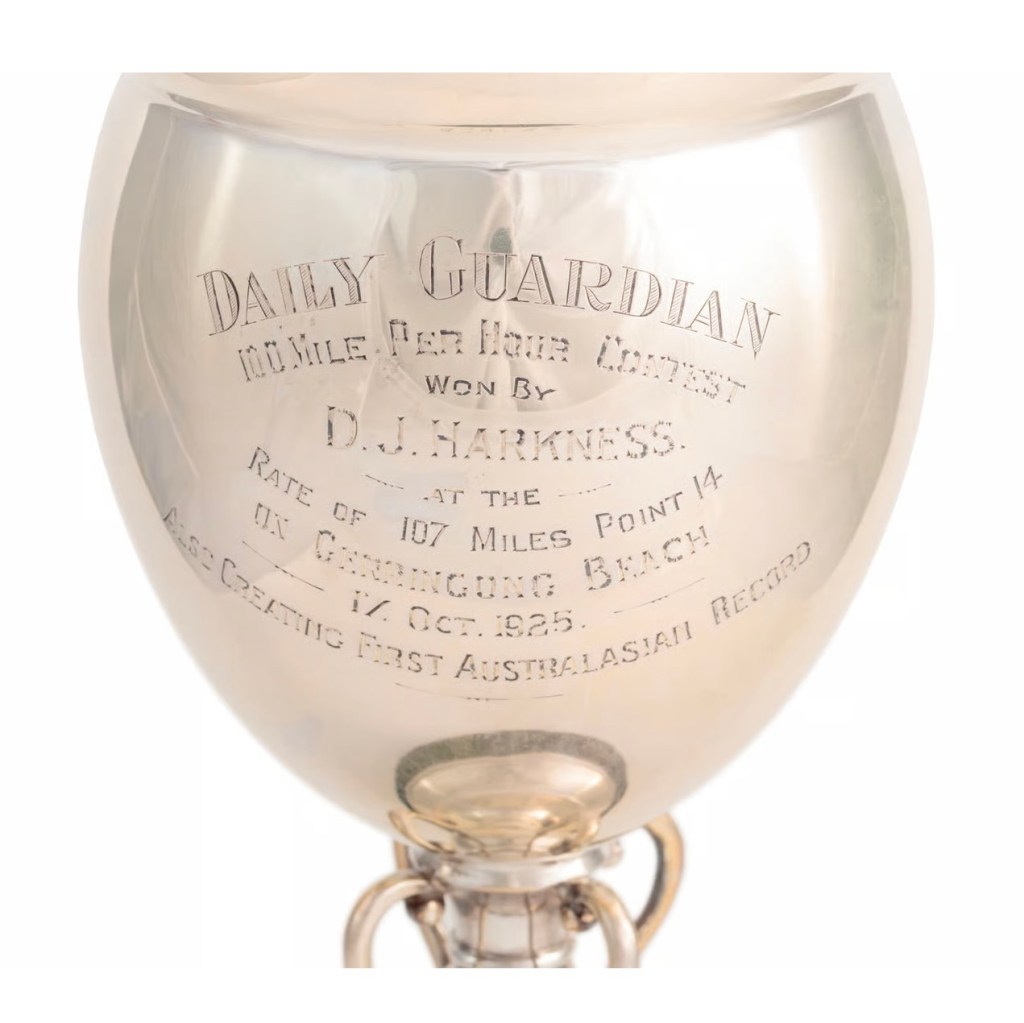
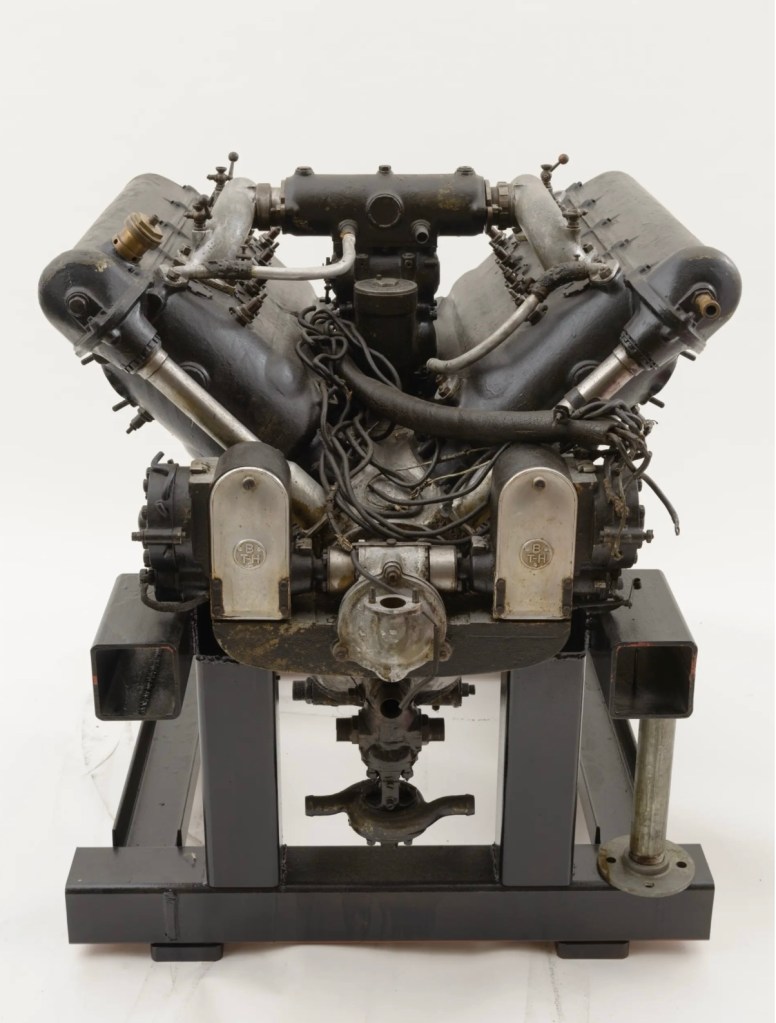
The Hispano-Suiza V8 chosen by Harkness, an easy one given his aeronautical knowledge, was a Type 8, water-cooled, SOHC engine, ‘the most commonly used liquid-cooled engine in the aircraft of entente powers during the First World War.’
The original Type 8A (11.76 litres/717.8 cid) was rated at 140 hp, and the later larger displacement Type 8F (18.5 litres/1128.94 cid) reached 330 hp.’ Harkness’ engine was a Wolseley Viper variant, 3,050 of which were built. The engine shown below is a H-S Viper W.4a unit of 1918 vintage rated at 210 bhp.
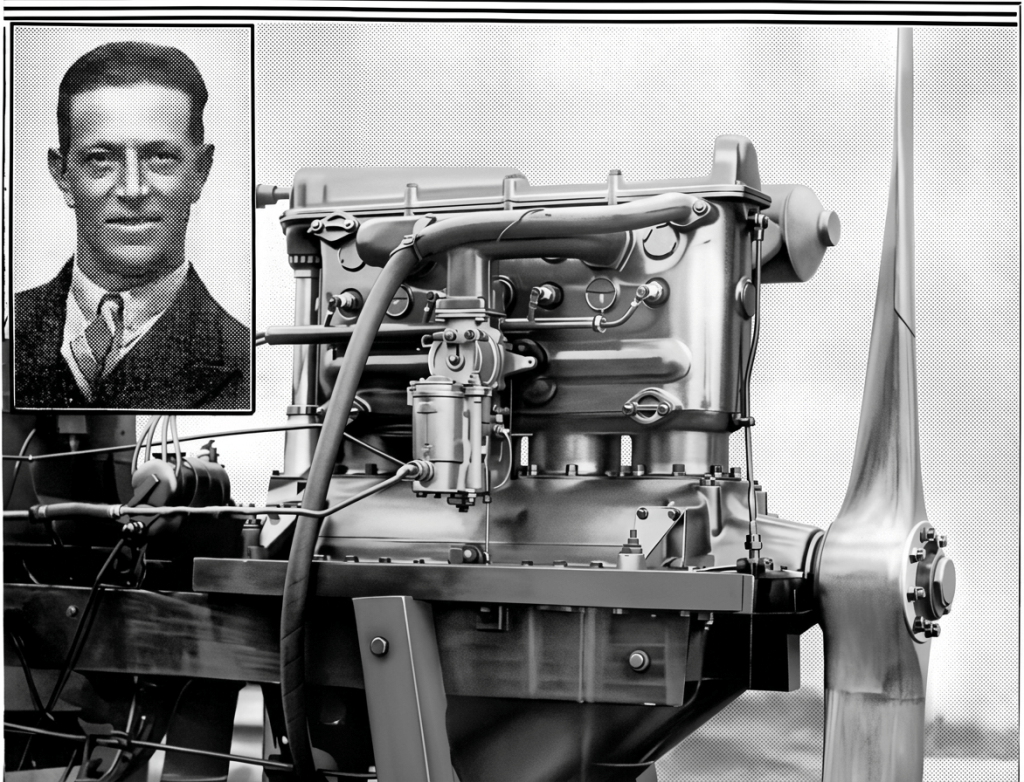
Five years after setting the Australian LSR, Harkness had designed, built and was testing the Harkness Hornet, a water-cooled, inline four-cylinder, SOHC, two-valve aero engine which used one cylinder bank of his favourite Hispano-Suiza engine married to a crankcase of his own design. See here:https://collection.powerhouse.com.au/object/208620
Willys Overland…
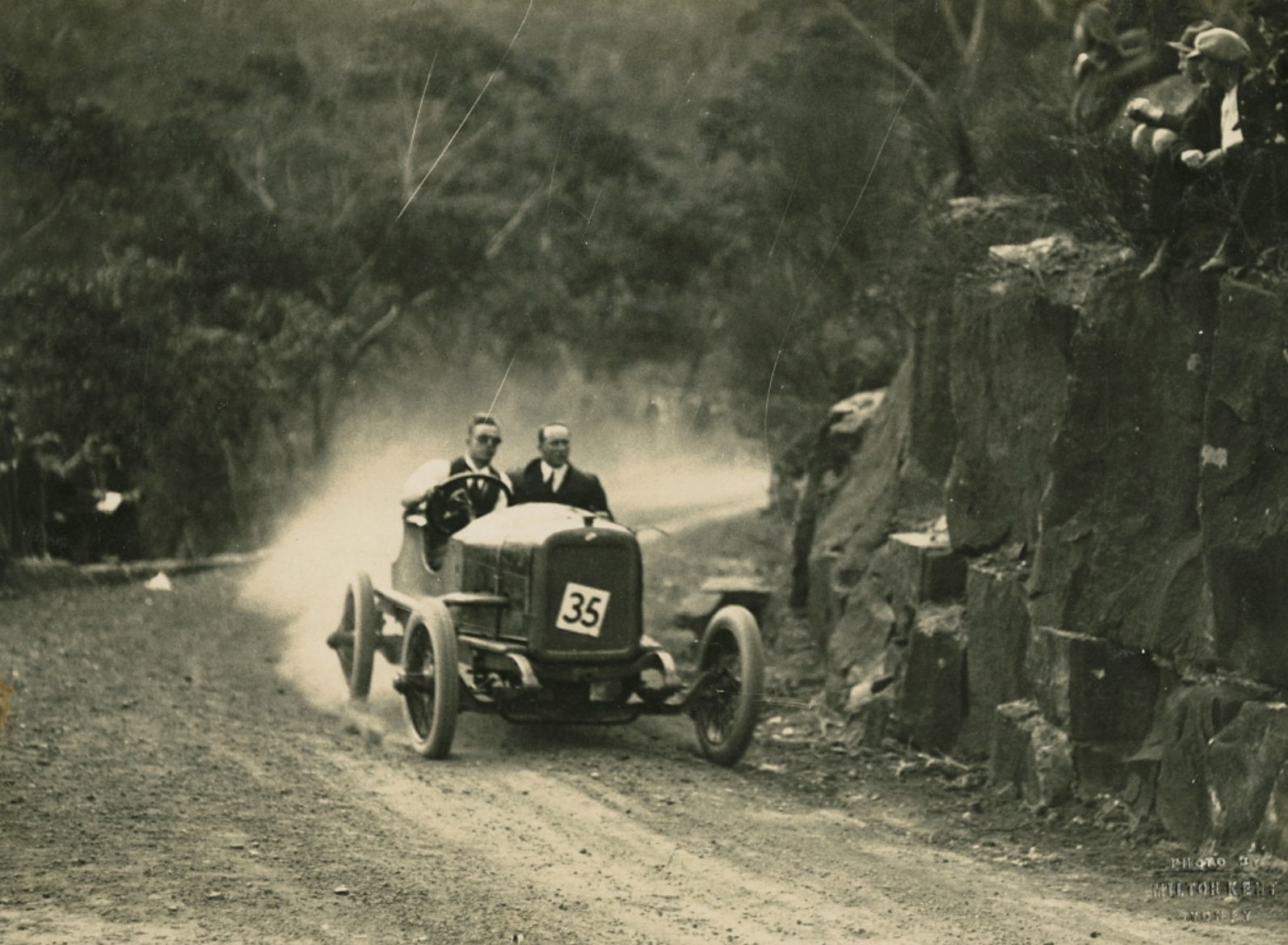
The Smith’s Weekly article makes mention of Harkness’s Overland racer nicknamed Whitey, two of which Don raced circa 1924-26, so let’s take a high-level, as against race-by-race look at them.
Over time Harkness seems to have become the ‘Overland Dealer Team’ in the way Harry Firth (and others) managed to attach themselves to a manufacturer or importer to prepare competition cars to help build the brand.
A cursory Trove search reveals that Harkness ran Overland 15/18hp’s in NSW Reliability Trials (the rallies of the day) from circa 1922, before getting more serious with the construction of the Willys-Overland 91 based (1923-26), four-cylinder, 154 cid, three-bearing, side-valve – but OHV soon enough – Whitey (lets call them W1 and W2) racers circa-1924.
A variety of ex-factory body styles all sat on a 100-inch wheelbase chassis, Willys-Overland produced their own diff, but outsourced the standard artillery wheels from Hayes. Type 91 suspension was Overland’s ‘trick’ ‘Triplex’ system, a three point cantilever design front and rear which comprised a pair of quarter-elliptic springs mounted to the chassis at angles rather than the more conventional set-up of springs being parallel to the frame.
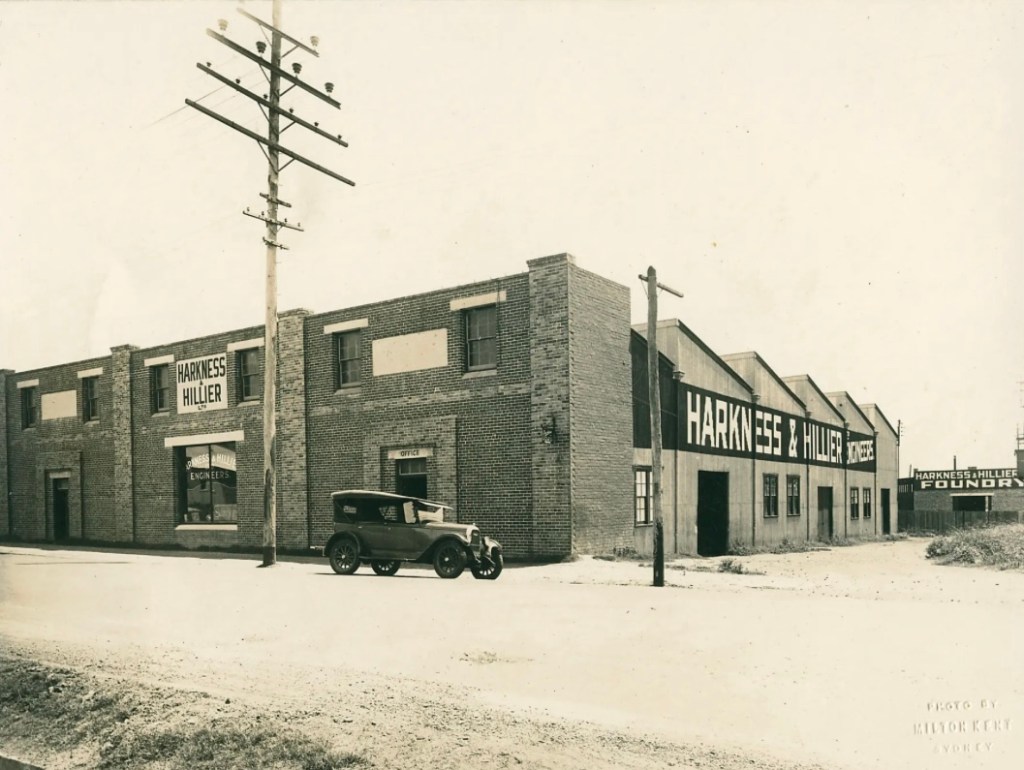
The racers were built and prepared at Harkness & Hillier. Don Harkness did his apprenticeship at JC Hillier’s garage in Bridge Street, Drummoyne, the pair became business partners in 1922-23. (also H&H Ltd and H&H Pty Ltd depending on the date). Their involvement in the Australian Six car project resulted in the move to much bigger premises on the corner of Parramatta Road and William Street, Five Dock.
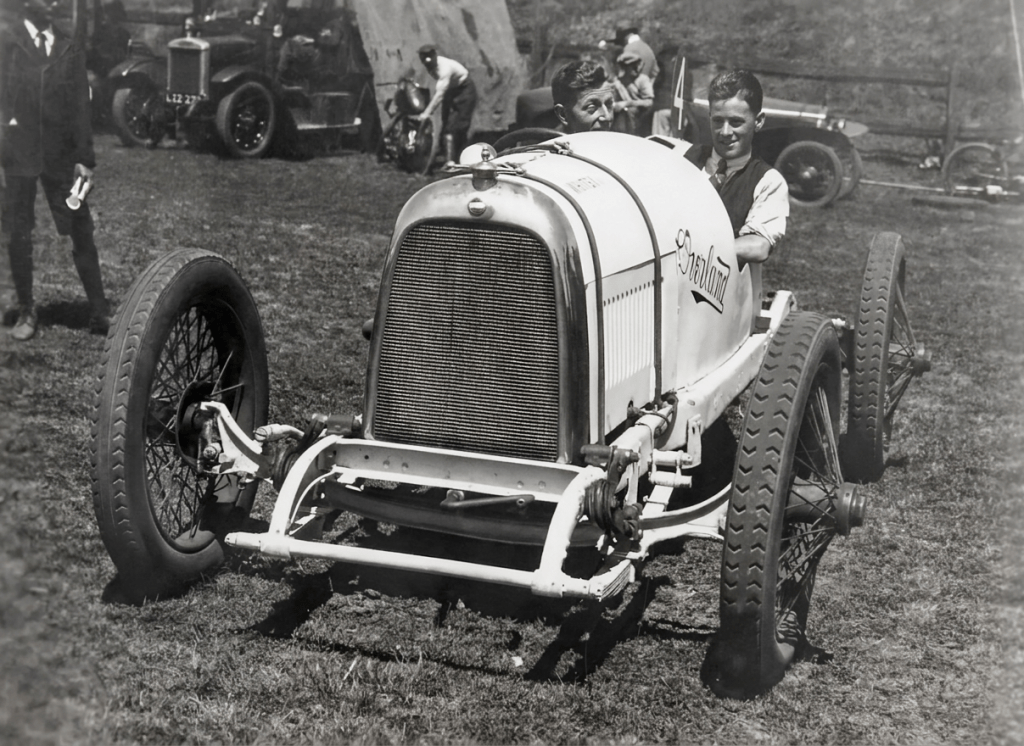
Whitey 1 was immediately competitive with the French Blue Bloods – Bugatti and Ballot – and the quicker British and American marques at Penrith, Maroubra, Gerringong and elsewhere.
The Daily Telegraph reported in its October 11, 1924 issue, under the headline, OVERLAND SPORTS: A Very Fast Car, that, ‘There has been quite a lot of discussion in motor circles lately regarding the Overland special sports car driven by Mr. D. Harkness in the recent Artillery Hill Climb and in the car race at Penrith on Monday last. Which latter race it won. On Tuesday last, in his account of the Penrith: races, the writer described this car as being a “Miller-Overland,” and “Miller-engined Overland,” being under the impression that it was a special job,’which had been converted into a racing chassis, outside of the Overland factory, by the fitting of a Miller-head with overhead valves and two Miller carburetters.’
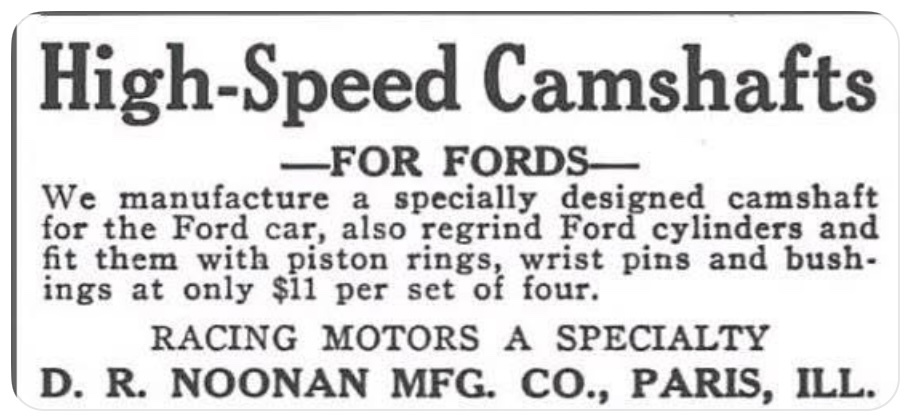
‘To this, Messrs. Overland, Sydney, Ltd., have taken exception, stating that this special Overland sports is a product of the Willys-Knight-Overland factory, in America, and is one of six recently supplied by that factory to its Sydney agents. Whether Miller is the maker of the special cylinder-head and overhead valve gear, they are unable to say, but, in any case, the product was assembled in, and sent out from, the Overland factory, and has every right to be termed an Overland Sports.’
‘As a matter of fact, except for the modification mentioned above, as well as a special high-pressure lubricating system and lightened reciprocating parts, the sports chassis is identical with the chassis of the standard chassis of model 91, selling at £190. In addition, Gabriel Snubbers have been fitted, as well as wire wheels, and, naturally, the gear ratios have been altered to fit the chassis for racing purposes. The chassis thus modifled can be purchased by anyone desiring it at a sum of £400. The engine is said to “rev” at 5000 r.p.m., and with a top gear ratio of 3.5 to 1, and 80-inch wheels, a speed well over 100 m.p.h, should be attained on this chassis under favorable conditions.’
‘The writer was informed by a representative of Messrs, Overland, Sydney, that Mr. Boyd Edkins had issued a challenge for a race between a 30-98 h.p. Vauxhall and the Sports Overland, and that this race would probably take place shortly, on the Penrith Speedway.’
CABLE FROM AMERICA.
Since writing the above, the writer has been notified by telephone that Messrs. Overland, Sydney, Ltd., have received a cable from the factory in America, stating that the head on the Overland Sports “is not a Miller head” (but WAS a Noonan two-OHV head).
Whitey 2…
Whitey 2 had broken cover by January 1925 when the motor-noter of the Lithgow Mercury remarked upon ‘the consistency and speed given at Penrith on New Year’s Day by Mr D. Harkness in the Overland Sports Model Whitey II.’ Did W2 have some carry-over components of W1? Dunno.
‘Matched against the fastest ears in New South Wales, the Overland Sports cleaned the programme by completely outclassing every car in each event. The 10 miles Championship of New South Wales was easily won from the Vauxhall and the Itala. The much discussed Challenge Race between the Vauxhall and the Overland Sporta resulted in an easy victory for the Overland, the 5 miles being covered in the phenomenal time of 4 minutes 51 seconds, which is a track record for the course.’
‘Overland Whitey II, the victor, is the successor to the once famous Whitey I, which some years ago beat the same Vauxhall in the Queensland Automobile Club’s hill climbing championship.’
‘The Overland referred to is a special sports model and differs only from the famous model 91 inasmuch as it is fitted with overhead valves, high pressure lubrieating system, two Miller carburettors and a Noonan (Willys Knight representative) head. All reciprocating parts, connecting rods, pistons, ete., are standard, but machined down to secure lightness, as is usually the case in all sports models or racing cars. Overland Sydney Limited, 148 Castlereagh Street, Sydney, are the agents.’
In February 1925 the Managing Director of Overland Sydney Ltd was R Cobden. I wonder if that’s Dick Cobden’s father?
By May 1925 the capacity of Whitey 2 in a ‘paper report of Penrith race results was 2672cc, in August, 2260cc. By May 1926, if not earlier, W2 was supercharged. John Medley suggests that the Overland was probably the first car supercharged locally. I’ve no under-bonnet shots of either Whitey, I’ll gratefully receive them if any of you can oblige…
The Whiteys won over 50 races including the first race at Maroubra on November 21, 1925 a match race between Harkness and Hal Cooper’s Stephen Brown financed ex-Jules Goux Ballot 2LS 2-litre, ‘a magnificent Ballot racing car, which it’s said, cost £4,000.’
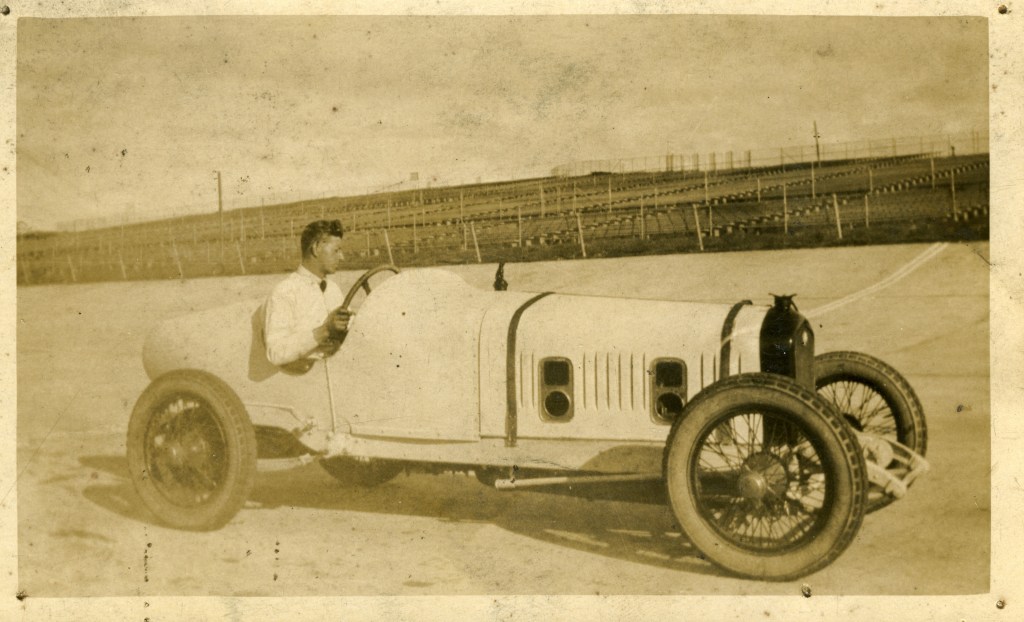
Harkness was in the news again in August 1926 when he took to the track at Maroubra in Alan Cooper’s Stephen Brown financed Ballot 5/8 LC. Cooper destroyed the chassis and much else of the car – ex-Louis Wagner works 1919 4.8-litre straight-eight Indy racer – in a massive Maroubra January 2, 1926 accident from which he survived ok but broke both of his riding mechanic’s thighs. It’s thought the car was rebuilt around an Australian Six chassis. Harkness & Hillier were up to their armpits in that project at the time in an attempt to recover unpaid debts incurred as a supplier before F.H Gordon & Co’s insolvency. See here:https://primotipo.com/2023/10/27/ballots-and-coopers/
There are so many strands to Don Harkness’s life, great grandson, Stephen Ottley’s biography will be well worth the read when finished!
On December 11, 1926 Don had a tyre failure and spun to the inside of Maroubra into the soft sand. Phil Garlick, close to him at the time reasoned that ‘it turned several complete circles before the deep sand brought it to a standstill, and Harkness was thrown out in the process.’ He was uninjured.
A month later Harkness contested the first Australian Grand Prix at Goulburn on January 15, but Whitey 2 was beaten by Morgan’s Rajo Ford in the first heat, and by Jack O’Rourke’s Bugatti T39 in a match race. Geoff Meredith won the final in a Bugatti T30.
Three weeks after Goulburn, Harkness loaned the car to seasoned 27 year old Glebe racer, Fred Barlow to race at Maroubra on February 5, his car was hors d’ combat. Barlow lost control on the last lap of a night race when in contention for the lead, and ‘crashed over the embankment into the darkness beyond, at the exact spot where Phil Garlick met his death a few weeks ago.’ The poor racer survived the accident but died overnight.
I’m not so sure Don Harkness raced after this. I can’t see anything about a fiery accident in 1935 that various sources say caused his retirement from racing?
I’ll take marque experts advice as to the existence of the mortal remains of the Whiteys or parts thereof. Gerard Murnane wrote that, ‘the head was foe sale in Sydney in 1945. Prior to that is was raced by many different members of the Dirt Track Club of NSW 1933-34 as the Miller Special at Ascot, Granville etc.’
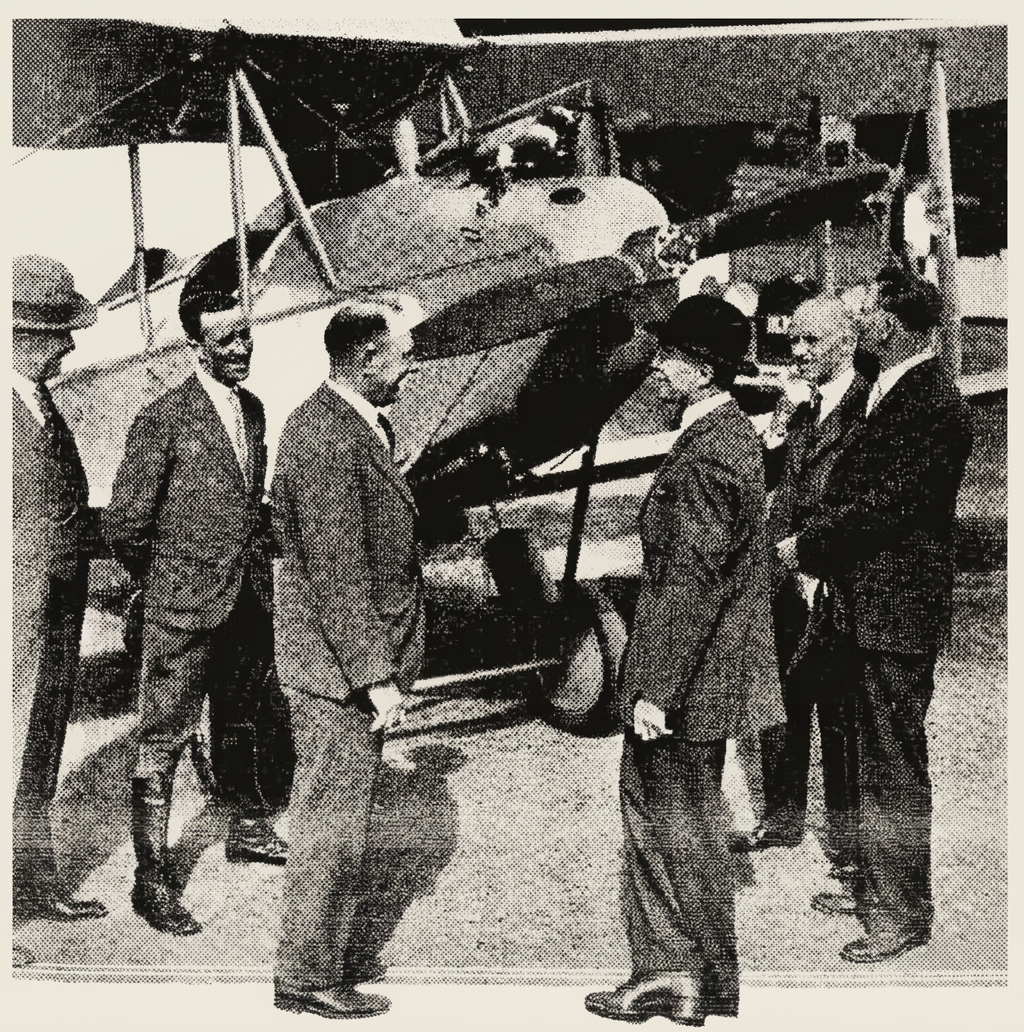
Don Harkness at far right on the occasion of a test flight of the first All-Australian built plane, the Genairco Harkness Hornet at Mascot on November 20, 1930.
From left to right is Mr Childs, Commissioner of Police, Capt Leggatt, pilot, Geo Beohm, designer of the plane, the Governor, Sir Phillip Game, Mr Boyle, the MD of General Aircraft Co, and Harkness. More on the plane here:https://collection.powerhouse.com.au/object/372510
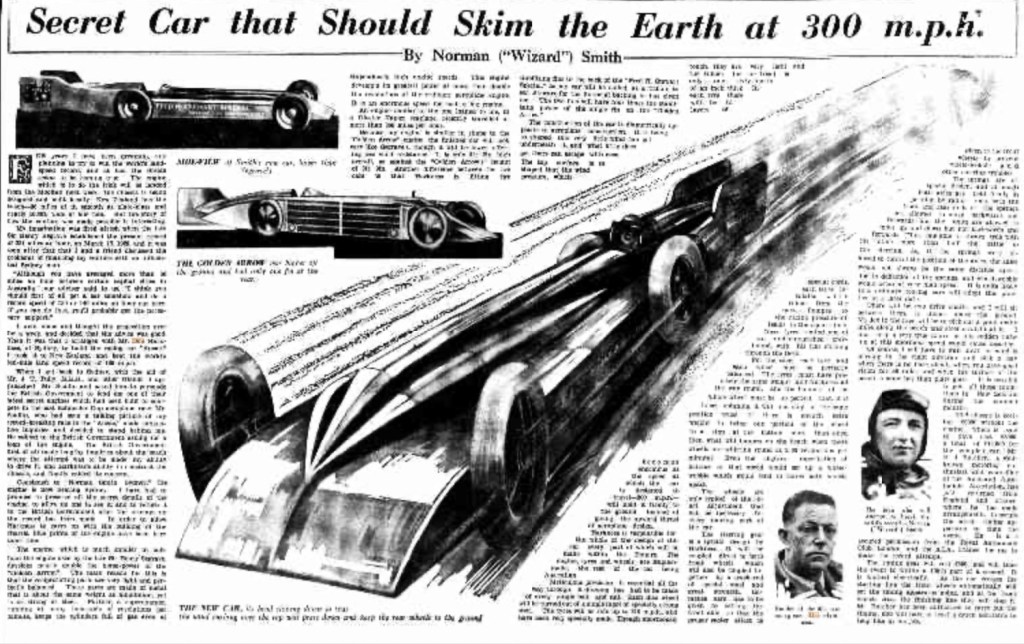
You’ve got to hand it to Harkness, not content with running a company that built and serviced buses and timber jinkers, stationary and marine engines and gas producers, engaged in automotive and contract manufacturing, a spot of motor racing and record setting for a large US auto-maker, so why not start the build of a Secret Car that Should Skim the Earth at 300 m.p.h, a story for next time…
Credits…
Smith’s Weekly, Kiama Library, Don Harkness Archive in the Powerhouse Museum, Wikipedia, Lithgow Mercury February 9, 1925, many contemporary newspapers of the day via Trove, Gerard Murnane Collection, Stephen Ottley, Clarke Family (as in JAS Jones) Collection via the VSCCA courtesy of Tim Shellshear
Tailpiece…
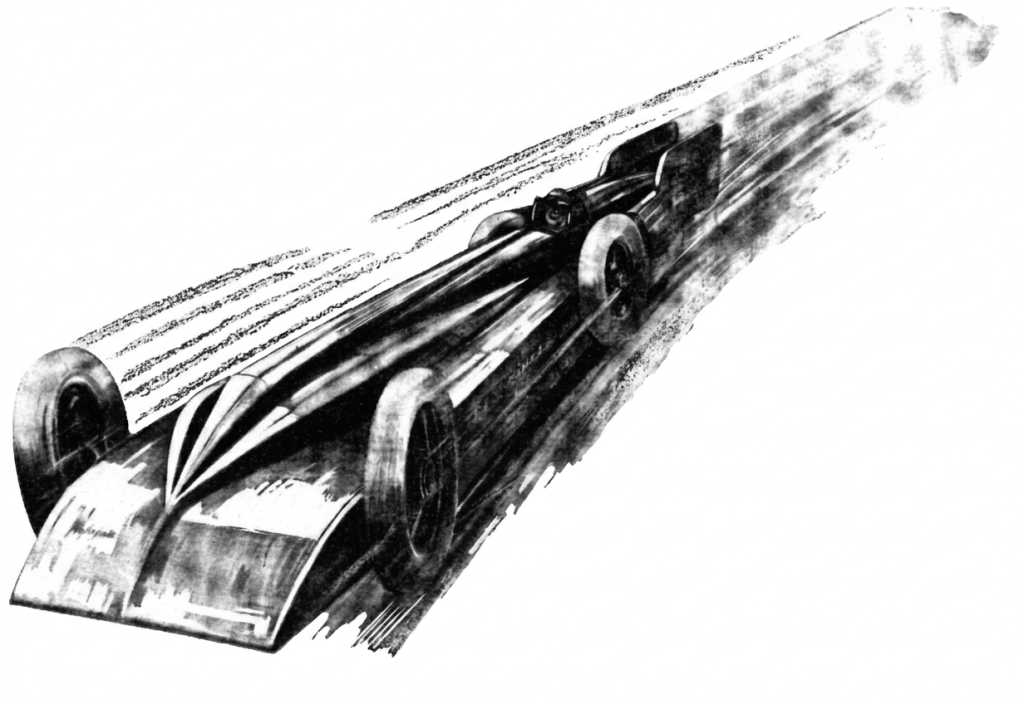
The Don Harkness designed, Harkness and Hillier built, Wizard Smith driven Fred H Stewart Enterprise Napier Lion W12 LSR contender.
Finito…

