Archive for November, 2026

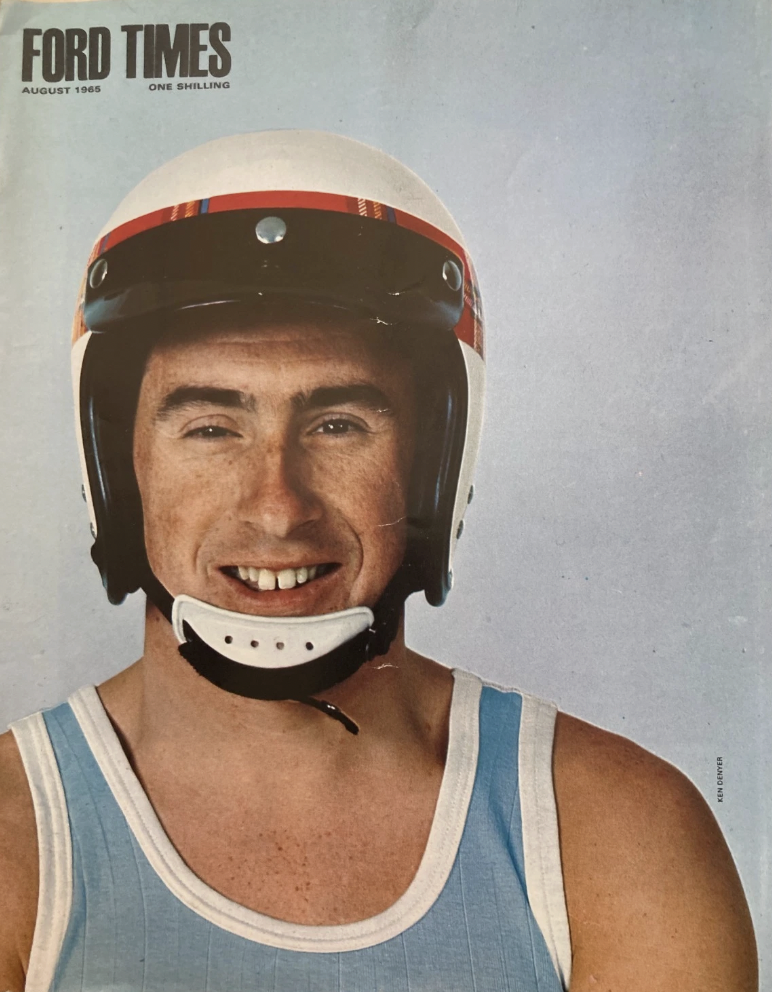
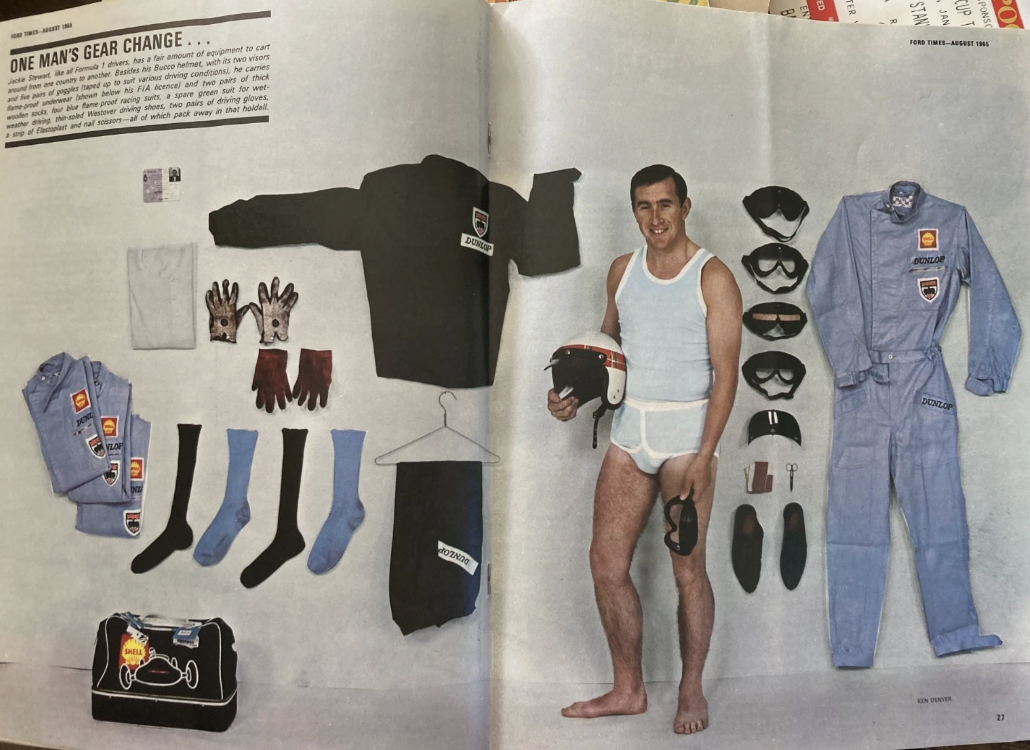
The thrust of this piece is that Jackie had a fair amount of equipment to cart around in addition to his Buco helmet: two visors and goggles, flameproof nomex overalls, FIA licence, spare green suit for wet weather driving, Westover driving boots anda hold-all.

Ford Times ran continuously throughout the 1960s as part of Ford Motor Company’s publication history spanning 1908-1993. They mixed product information with lifestyle articles.
(Unatt/MBisset/WordPress)

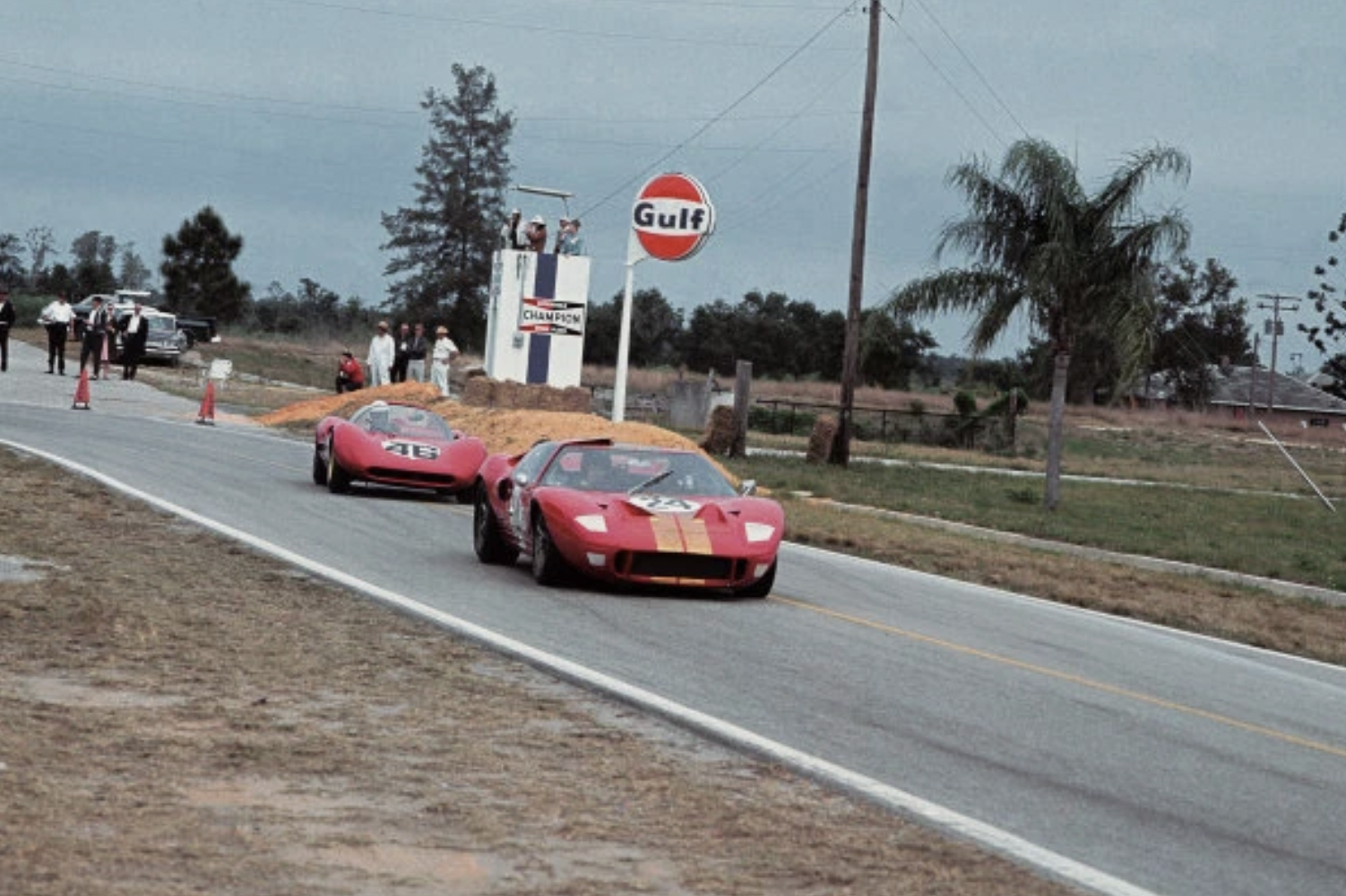
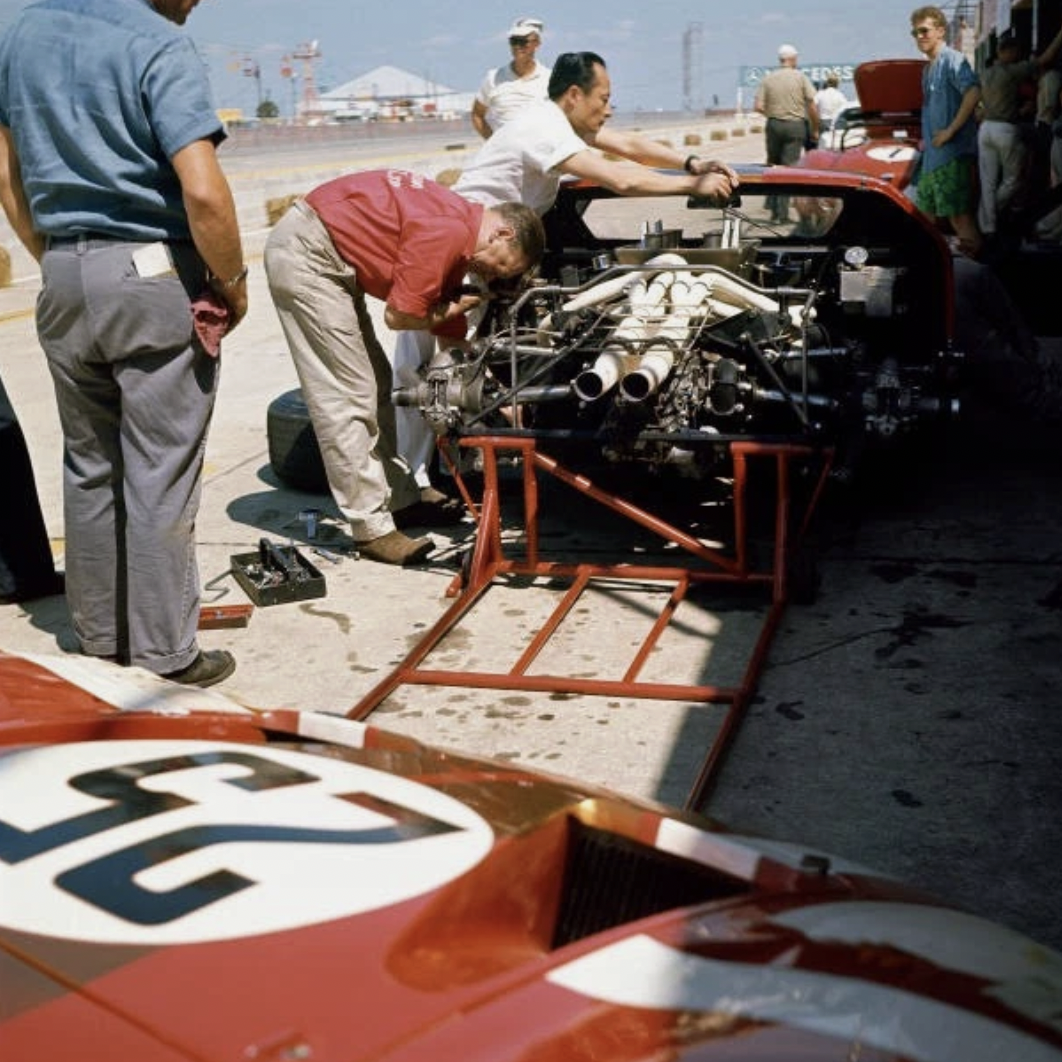
Jackie shared this Alan Mann Racing Ford GT40 in the March 26, 1966 Sebring 12 Hours with Graham Hill, they were Q3 and out with clutch and engine problems. Ken Miles and Lloyd Ruby won in a Shelby Ford X1 Roadster in a Ford 1-3 with the Walt Hansgen/Mark Donohue Ford Mk2 second and the Skip Scott/Peter Revson Ford GT40 third.
(Unatt/MBisset/WordPress)
(FoMoCo)

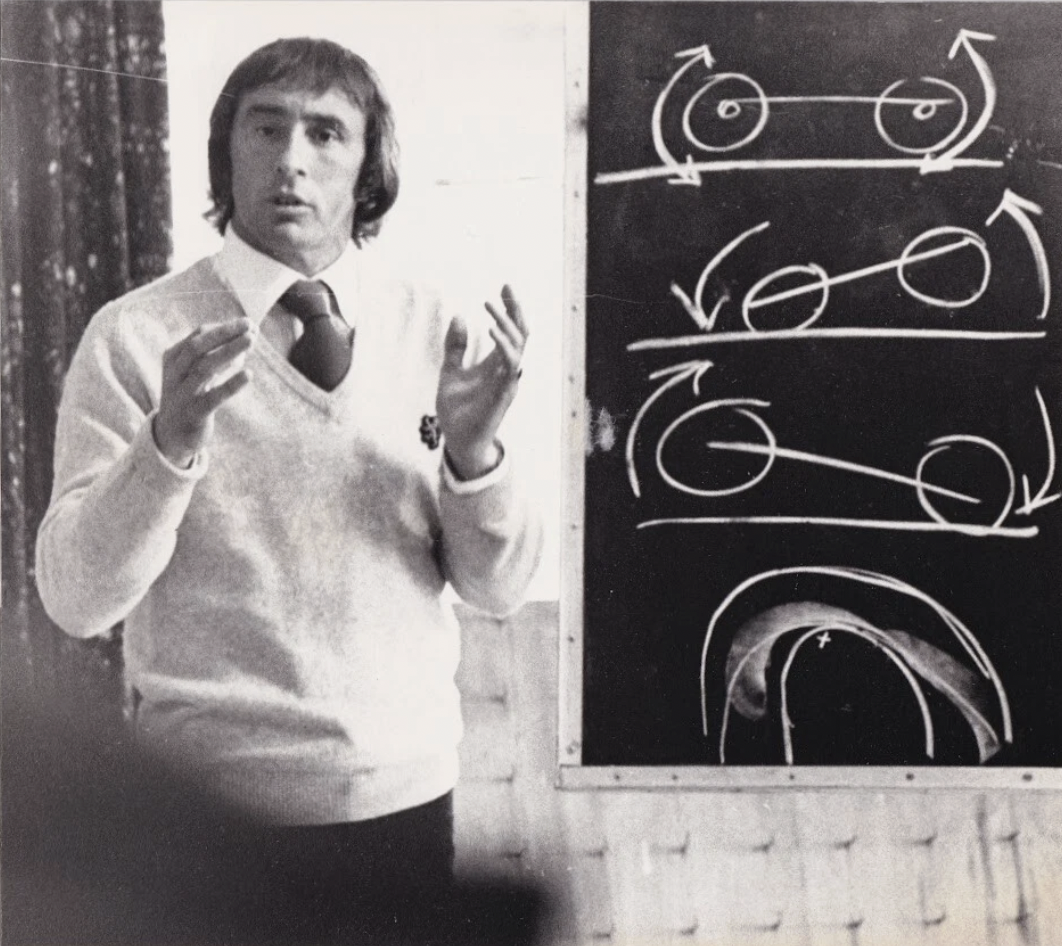
‘Jackie Stewart illustrates the results of harsh braking and acceleration at a “Formula Finesse” teach-in,’ wrote the Ford Motor Company. It’s hard to guess the date, but circa-1974? a bit more here:https://youtube.com/shorts/OmEJK_cj2fU?si=lq_urVI4m6qKJs50
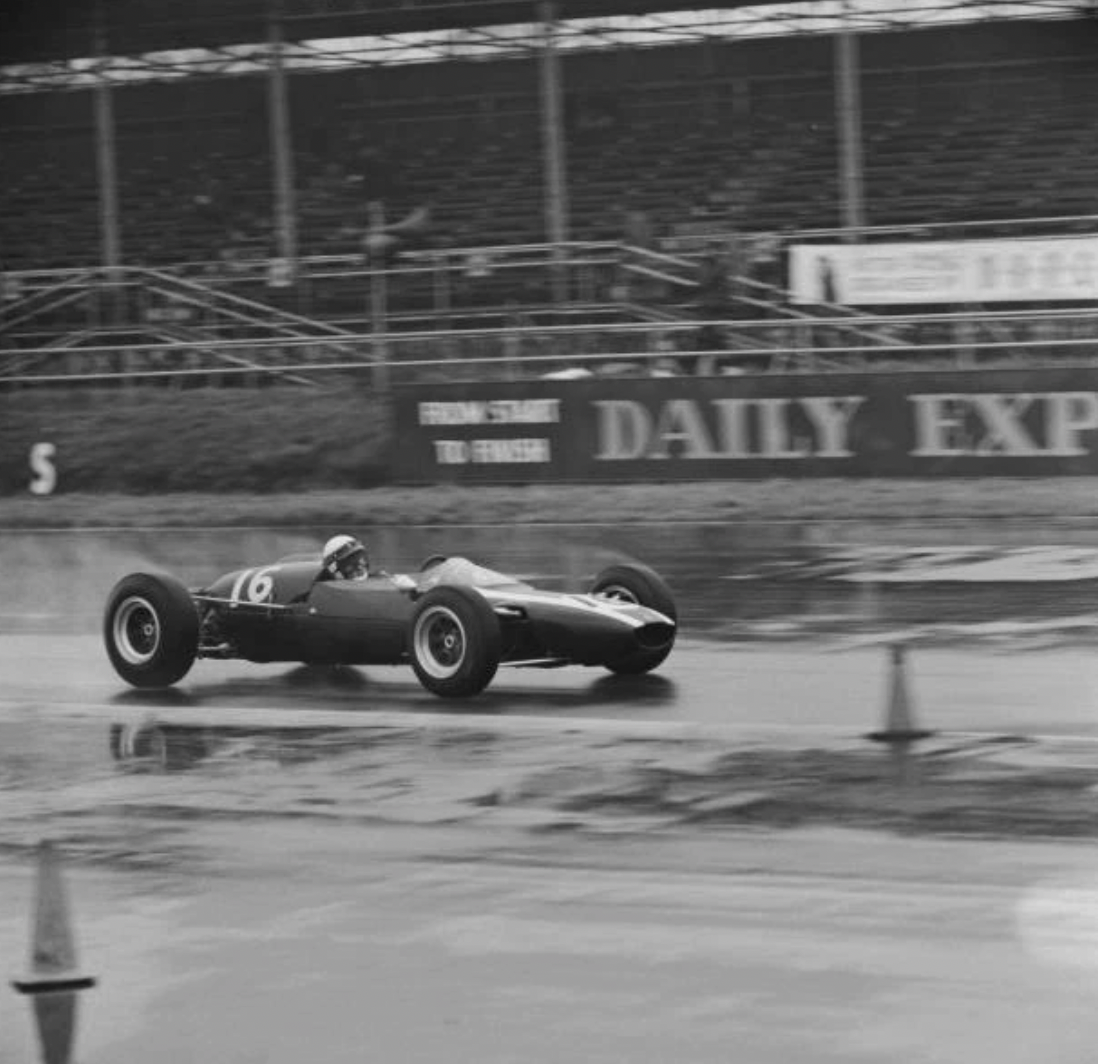
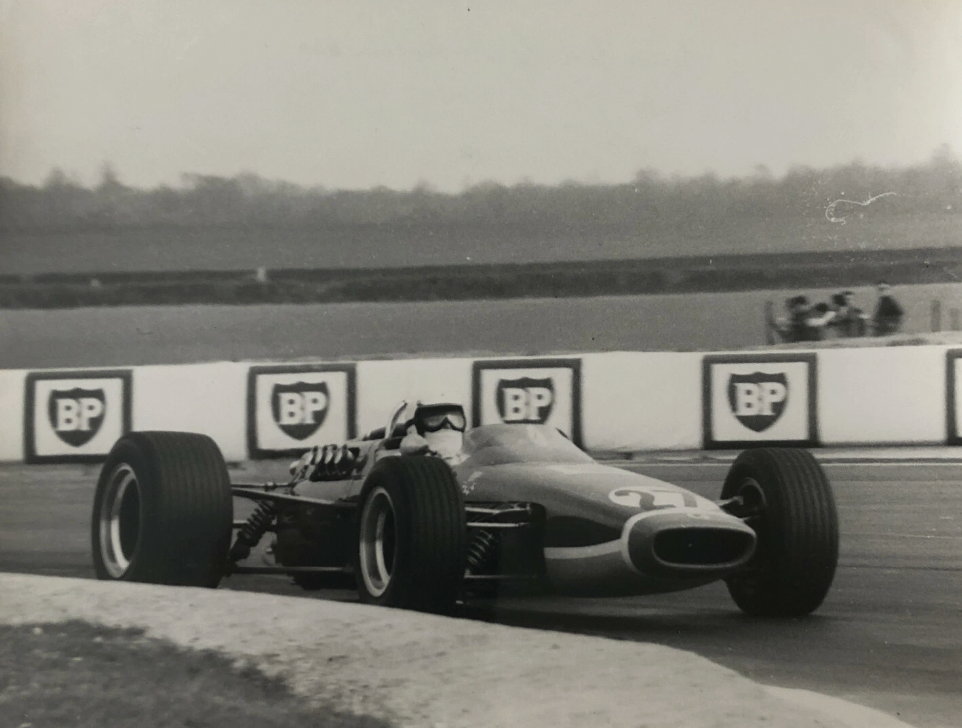
Stewart racing Ken Tyrrell’s Cooper T75 BRM P80 in the BARC 200 at Silverstone on March 20, 1965. He was seventh in the race won Mike Costin’s Brabham BT10 Ford Cosworth SCA from the similarly powered Lotus 35 of Jim Clark and Dick Attwood’s Lola T60.

His best result in this car was second place in the Spring Trophy at Oulton Park in April where Denny Hulme won in a works Brabham BT16 Ford Cosworth SCA. See here for a bit more on 1-litre F2:https://primotipo.com/2017/11/06/jim-clark-lotus-35-and-the-cosworth-sca-f2-engine/
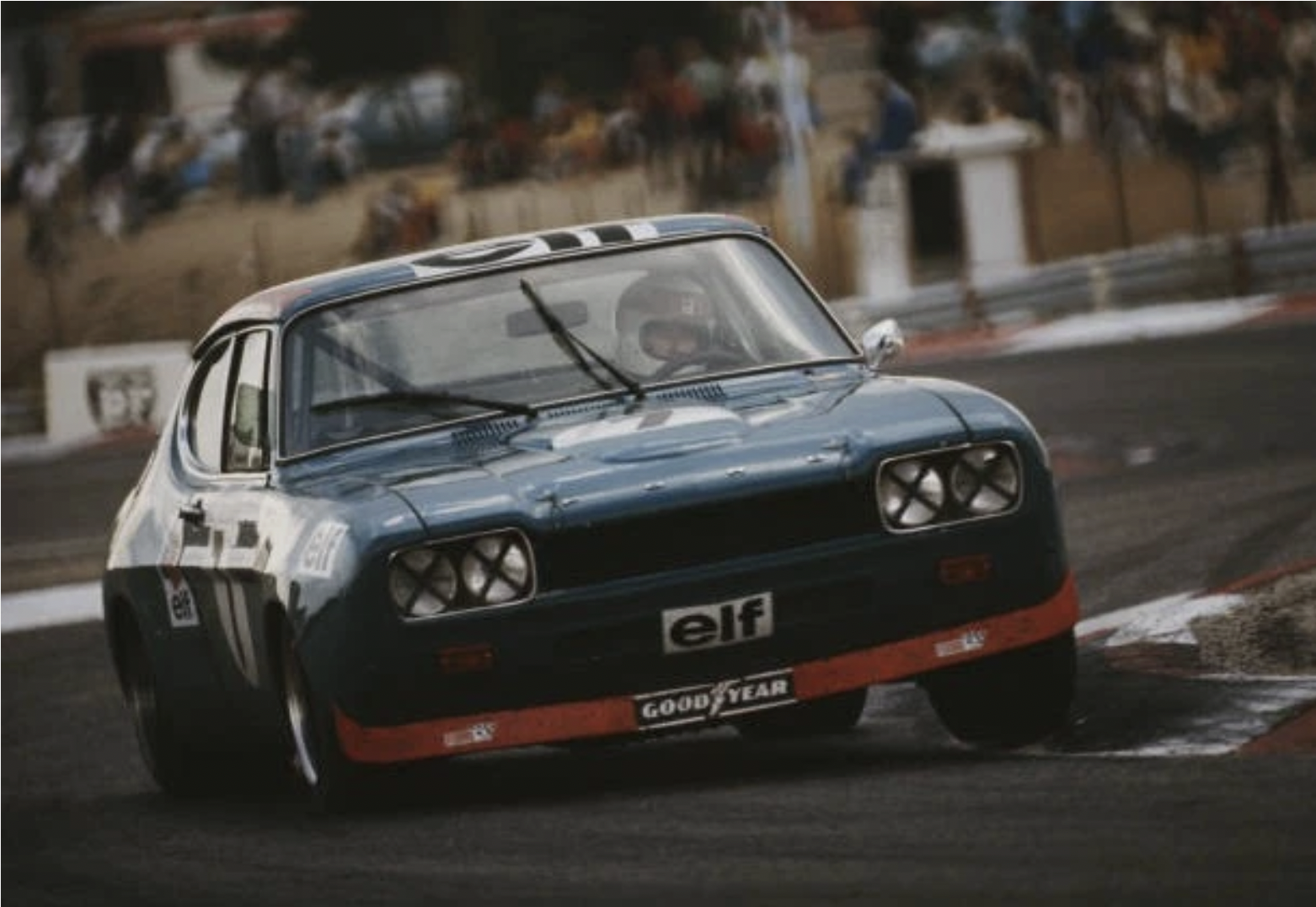
Jackie at the wheel of a ‘Cologne Capri’ RS2600 during the September 3, 1972 6 Hours of Paul Ricard. He shared the car with Francois Cevert, the pair finished second behind a similar, privateer car crewed by Brian Muir and John Miles. The race was a blue-oval rout, Ford took the top-5 placings.

Jochen Mass won the ’72 Drivers ETCC title in a works Capri from Ford mounted Dieter Glemser and Gerard Larrousse. Alfa won the manufacturers with class wins.
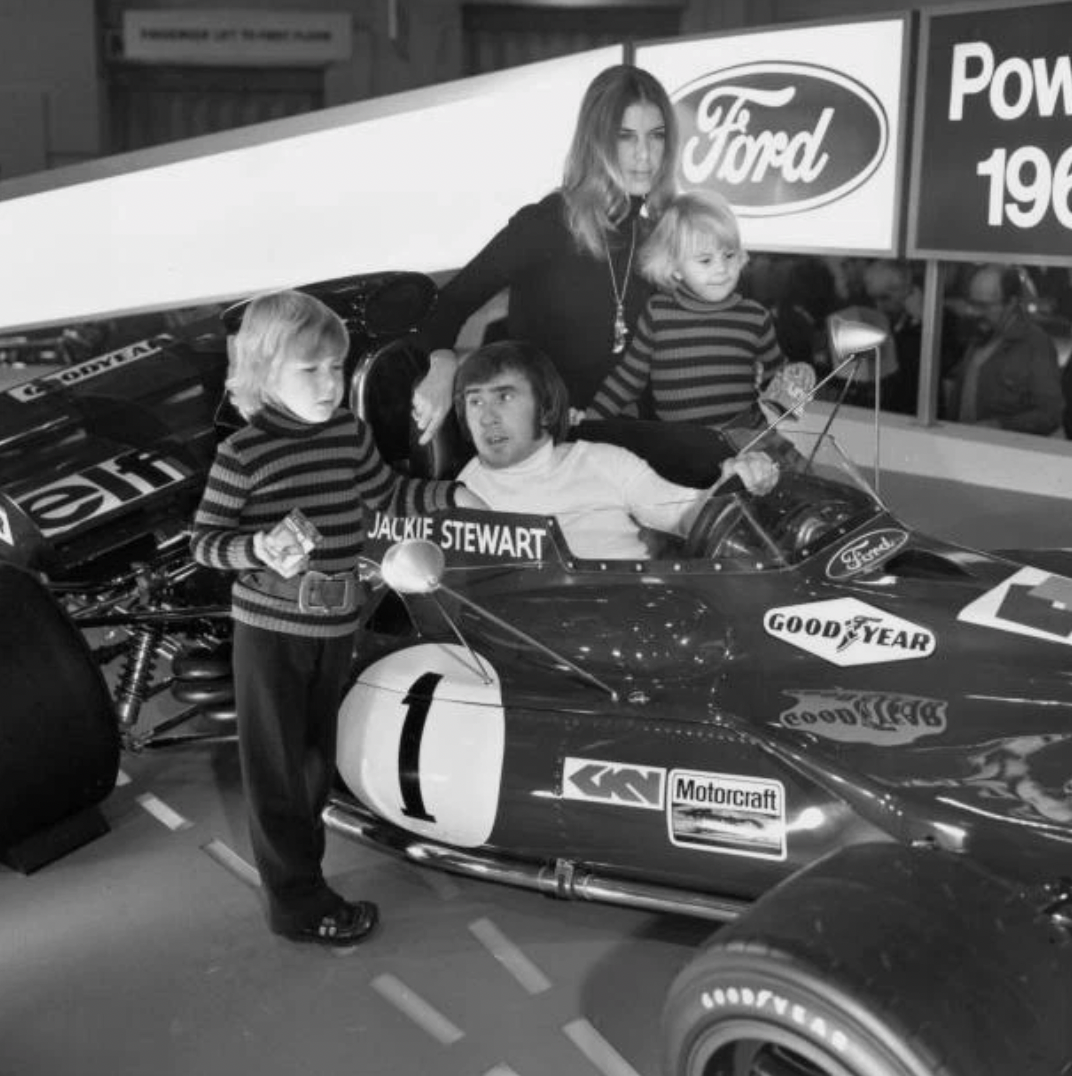
(Ford)

Jackie, Helen, Mark and Paul Stewart circa-1971. Tyrrell 001 or 002 Ford Cosworth DFV, does anybody know what gig it was? Feature on 001 here:https://primotipo.com/2023/10/02/tyrrell-001-ford/
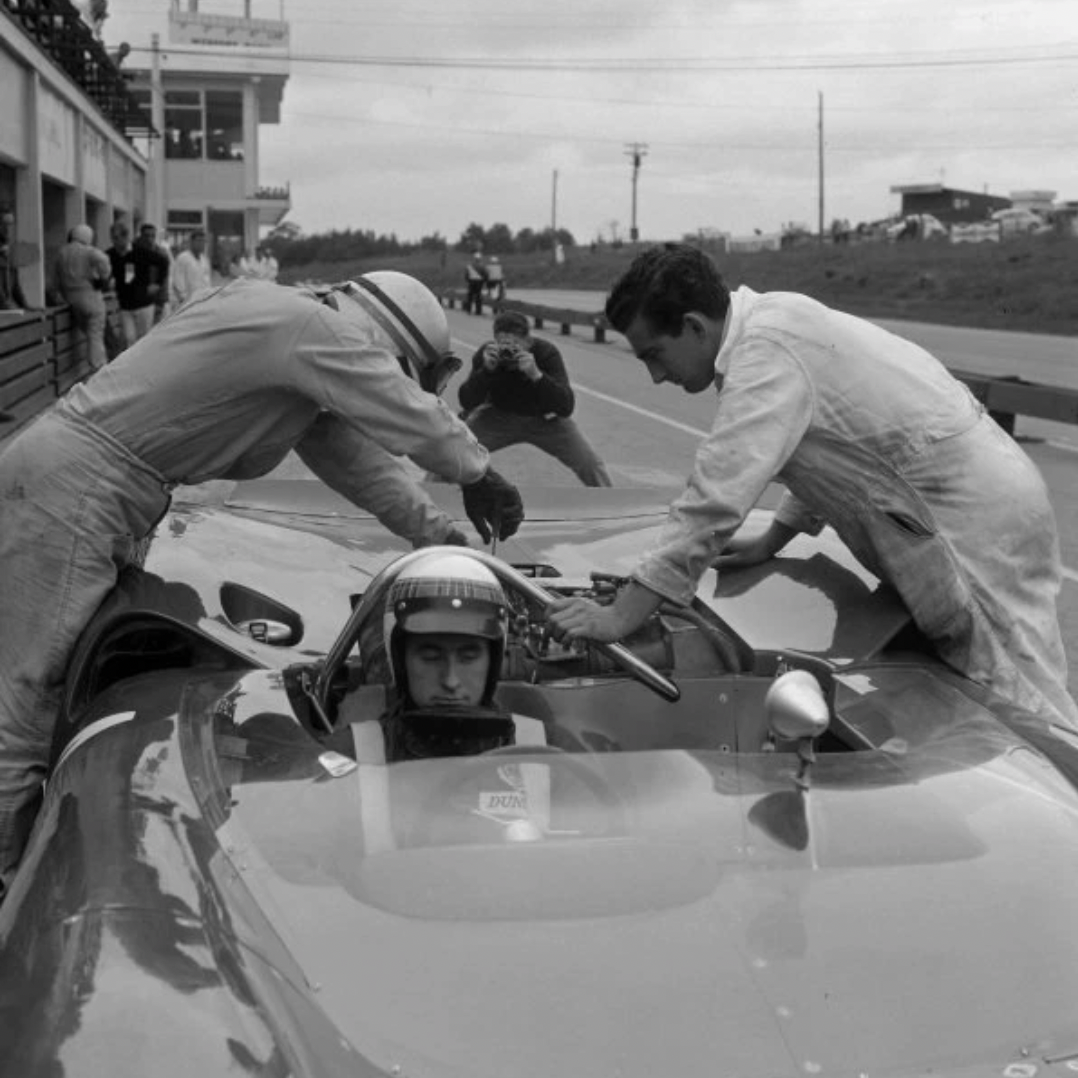
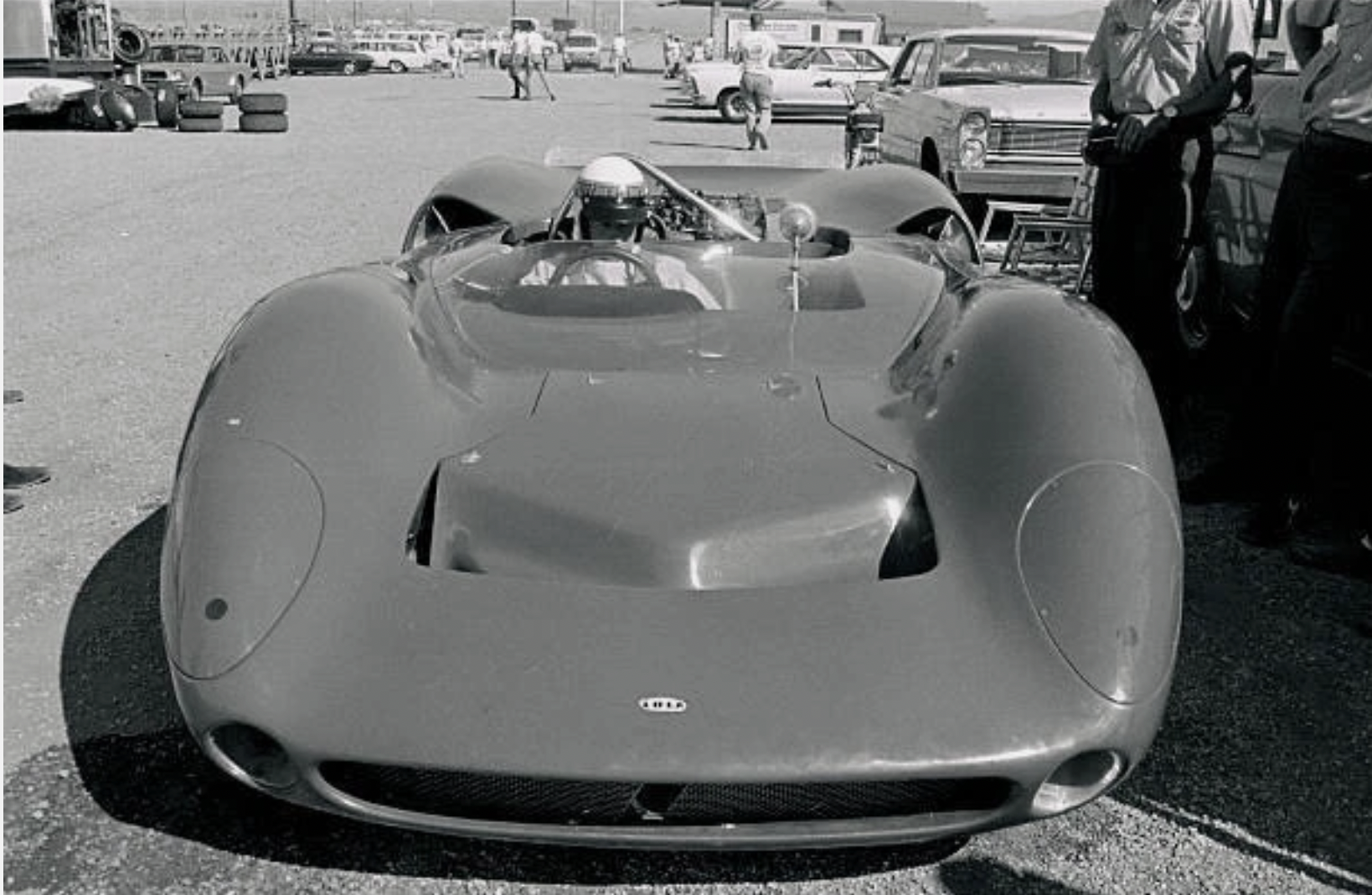
John Surtees twiddling the spanners on a Team Surtees Lola T70 being raced by JYS, at, I think, Mosport during the September 25, 1965 Canadian Grand Prix meeting.

Surtees entered two cars. Jackie wasn’t happy with his so John took it for spin during practice on the Friday and had a colossal accident after a front upright failure hospitalised him for months…so Jackie was very lucky!

In characteristic style, ballsy Surtees showed what he was made of by winning the 1966 Can-Am Cup in a T70 Chev on top of a grand prix season in which he should have won another World Championship were it not for the puerile shenanigans between Ferrari and their ’64 World Champ…Our Jack was happy to pick up the spoils!
(Unattributed)

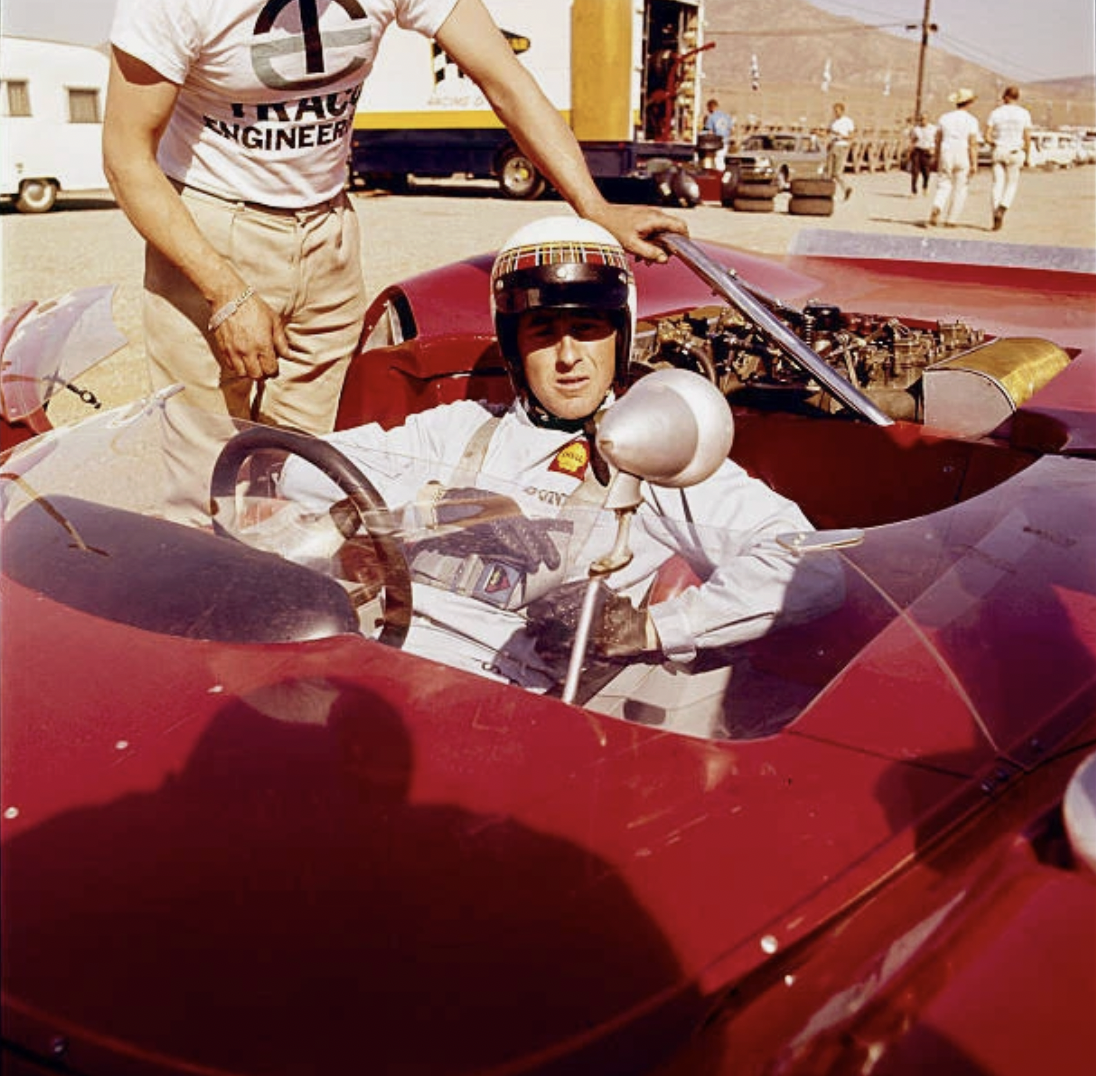
Jackie buckling up – note the four point harness in this shot and the one above in 1965 – for a practice session in his Team Surtees Lola T70 Chev at Riverside during the October 31, 1965 LA Times Grand Prix weekend.

The presence of the Traco Man suggests the side-draught Weber fed Chevy was built by the Travers-Coons boys.

Jackie’s weekend finished early after he failed to complete his qualifying heat. Up the front, the Hap Sharp Chaparral 2A Chev won the 77 lap race from Jim Clark’s Lotus 40 Ford – a great result for a dog of a car in a field of depth – and Bruce McLaren’s McLaren Elva Mk1 Oldsmobile.
(Unattributed)
(Unattributed)

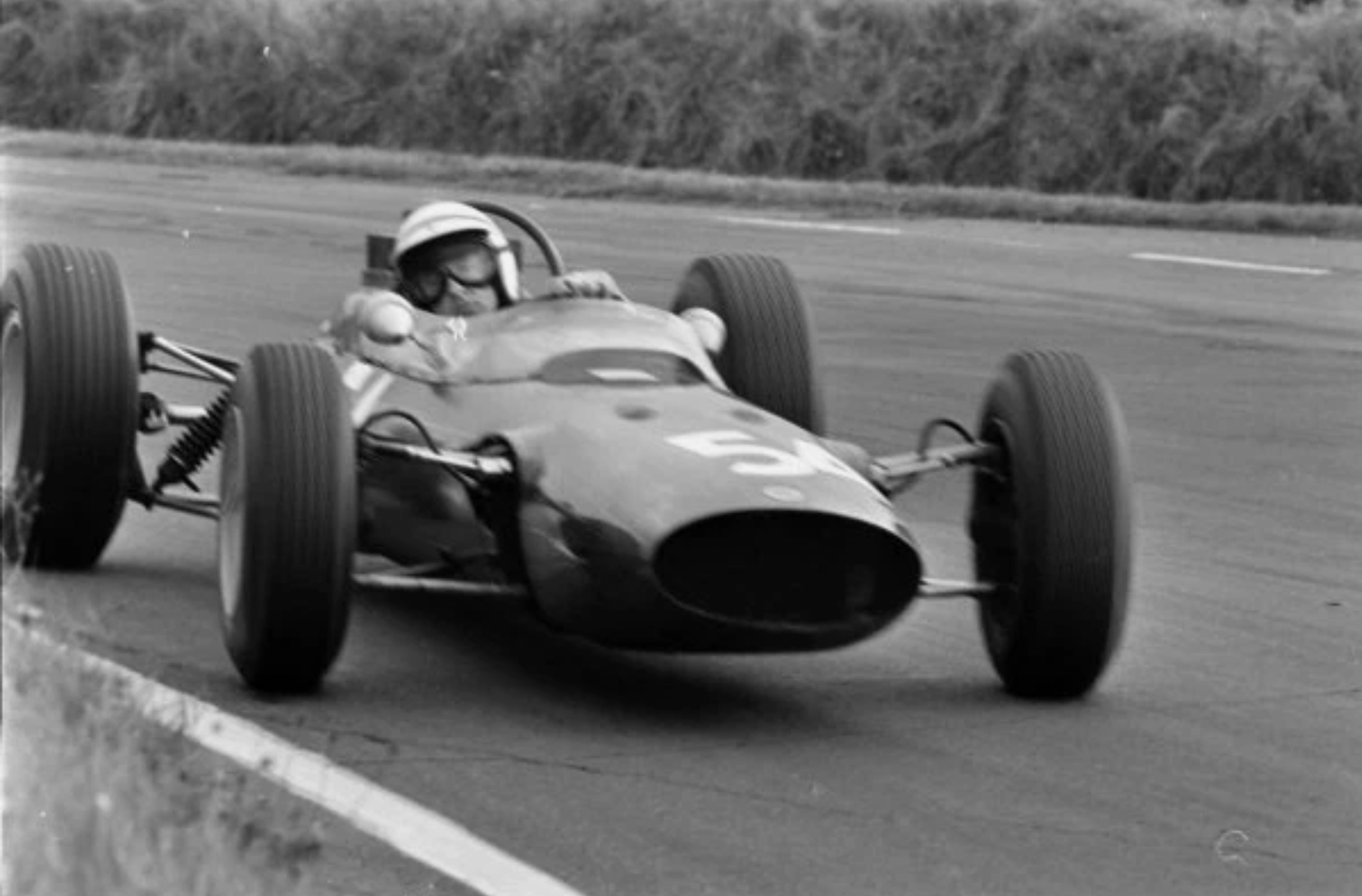
Jackie raced this Ron Harris-Team Lotus Lotus 32 Ford Cosworth SCA F2 car in 1964 making his class debut in the Auvergne Trophy at Clermont Ferrand (second) on July 19 – Limborg 23/8 non-classified, Albi 13/9 DNF camshaft, Oulton Park 19/9 third – and took his maiden F2 victory in the Vanwall Trophy at Snetterton on September 26 (above), finishing the season on September 27 at Montlhery with second place sandwiched by the Brabham BT10 SCAs of Jack Brabham and Jo Schlesser

Stewart’s F2 racing extended all the way to 1970 when he shared a John Coombs Racing Brabham BT30 Ford FVA with Jack Brabham in the European F2 Championship including capping his F2 career by winning the May 3, 1970 JAF Japanese Grand Prix using that chassis fitted with a Ford FVC (some sources say BDA) engine in a race that allowed 2-litre cars.
(Unattributed)

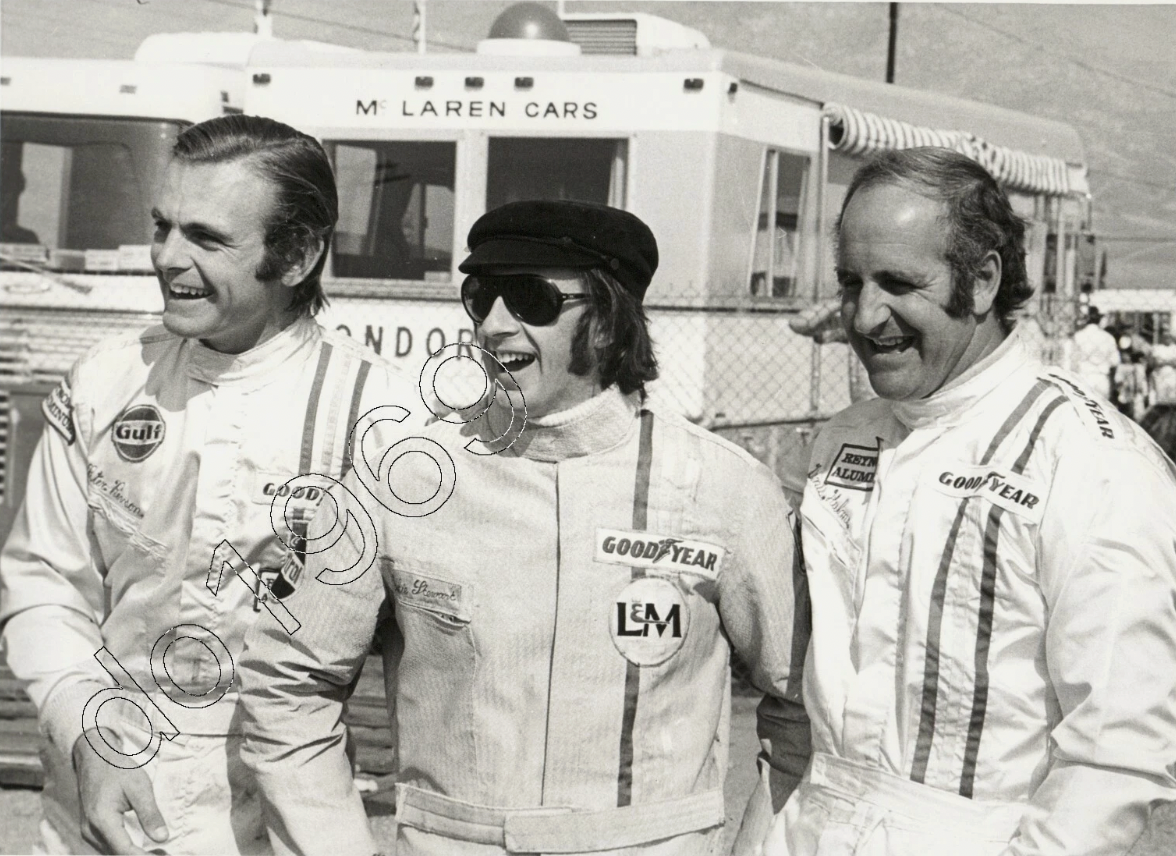
Stars on the 1971 Can-Am Cup, Peter Revson, JYS and Denny Hulme.

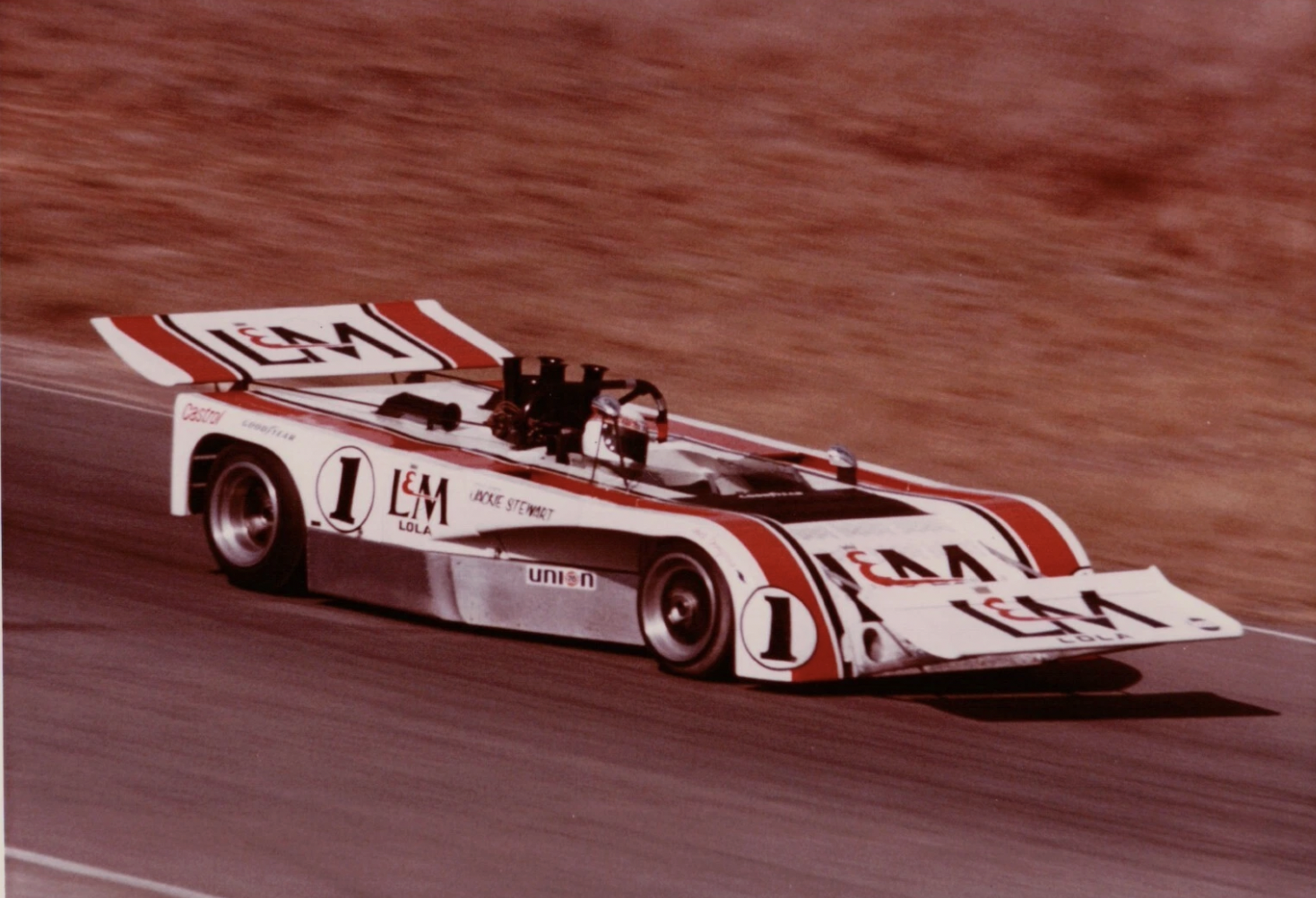
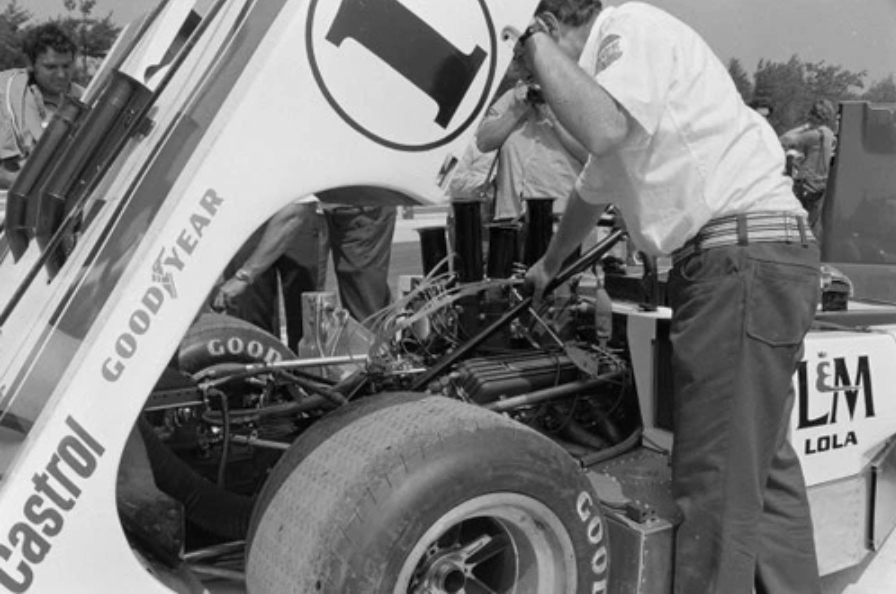
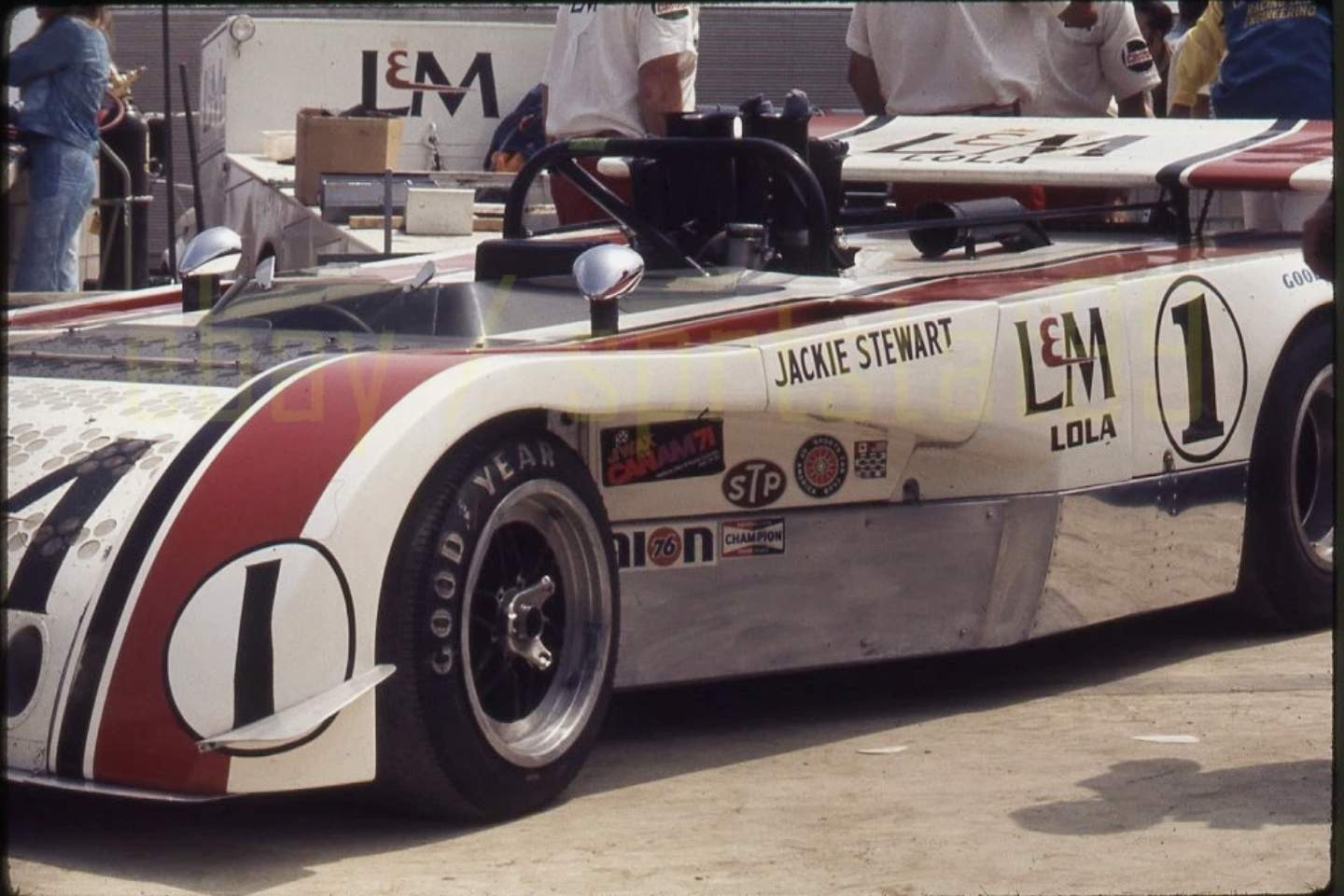
The 1971 Lola T260 Chev wouldn’t be on Wee Jackie’s list of favourite cars but he did win the St Jovite and Mid Ohio rounds of the Can-Am Cup.
(Unattributed)
(MotorSport)

Eric Broadley’s latest was a worthy contender steered by the world’s best driver but it needed a bit more development work in the UK beyond the session or two by Frank Gardner and Jackie before the car was flown stateside. The shot above shows the enormous cow-catcher front wing fitted mid season to get more front bite.
(Unattributed)

McLaren’s gradual evolution of their Can-Am cars until Porsche arrived paid off in spades. The M8F was the dominant car of the year with Revson taking the drivers title with 142 points from Denny on 132 and Jackie on 76. Five DNFs from 10 starts was never going to win the title for Lola in an environment where the Big Macs always demonstrated Swiss watch type levels of reliability:Revvie and Denny both finished eight times.

The T260 wasn’t a slug, JYS was on pole twice, at Mosport in the opening round on June 13, and at Watkins Glen in late July, but generally he started – rolling starts – from row two and lacked the absolute pace of the M8Fs. More here:https://primotipo.com/2022/03/21/lola-t260-chev-take-2/ and here:https://www.lolaheritage.co.uk/type_numbers/t260/t260.html
(Unattributed)

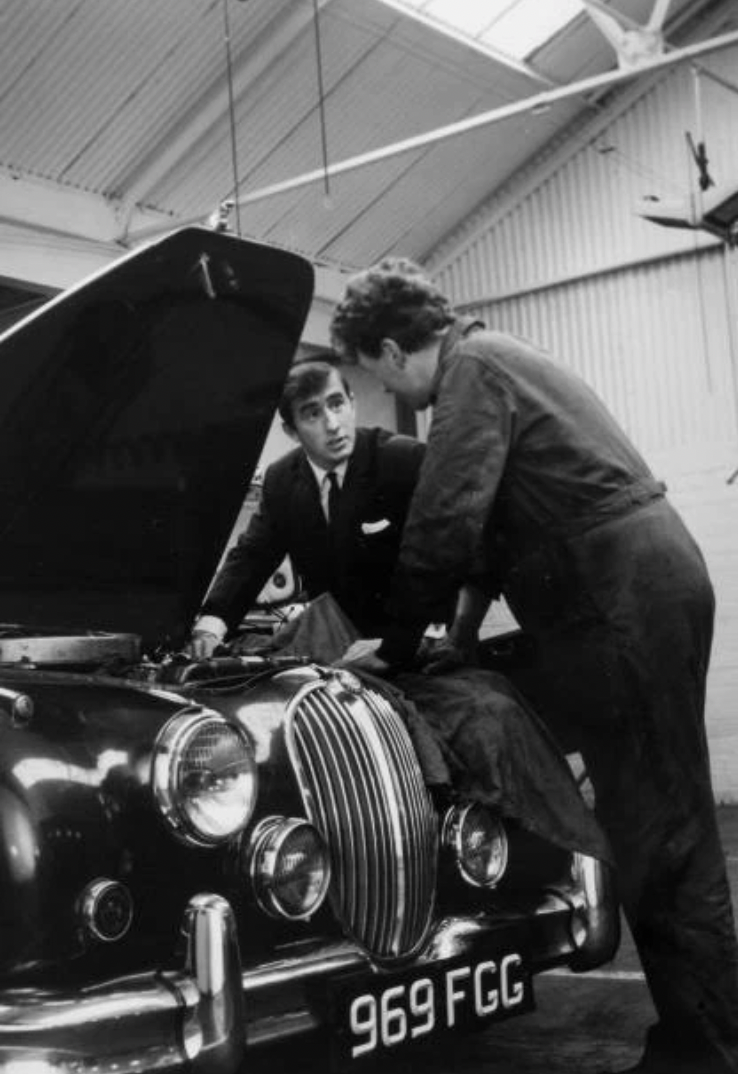
Jackie Stewart chews the fat with a colleague in the family garage at Milton, Dumbarton, Scotland, 1966.

Dumbuck Garage/RP Stewart & Sons was started Jackie’s father and was successful Austin and Jaguar dealerships. Jackie worked there as an apprentice mechanic before his fame and fortune phase.
(MotorSport/MBisset/WordPress)

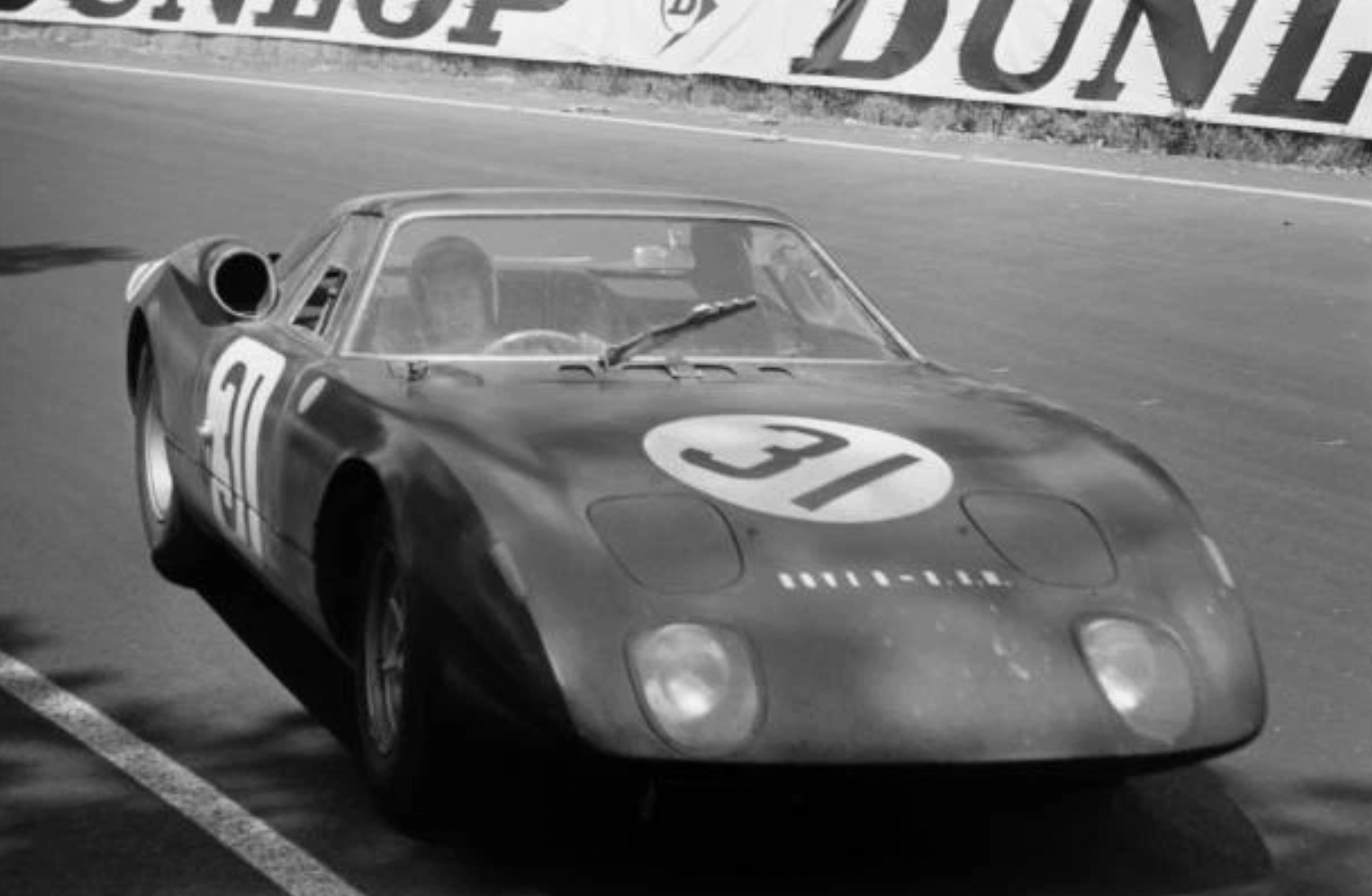
Jackie in the BRM-Rover gas turbine at Le Mans in 1965, he shared the car with Graham Hill to tenth place in the race won by the Masten Gregory and Jochen Rindt NART Ferrari 250LM. Olde faithful won after the quicker but fragile Ford GT40s and Ferrari P2s fell by the wayside.

It was the same BRM chassis ‘raced’ by Hill/Richie Ginther to 13th place in 1963 albeit extensively revised in terms of its aerodynamics; coupe vs spyder, engine and other more minor changes. Try this article:https://www.autoevolution.com/news/rover-brm-the-jet-powered-car-that-proved-it-could-hang-with-the-big-boys-at-le-mans-186560.html
(Unattributed)

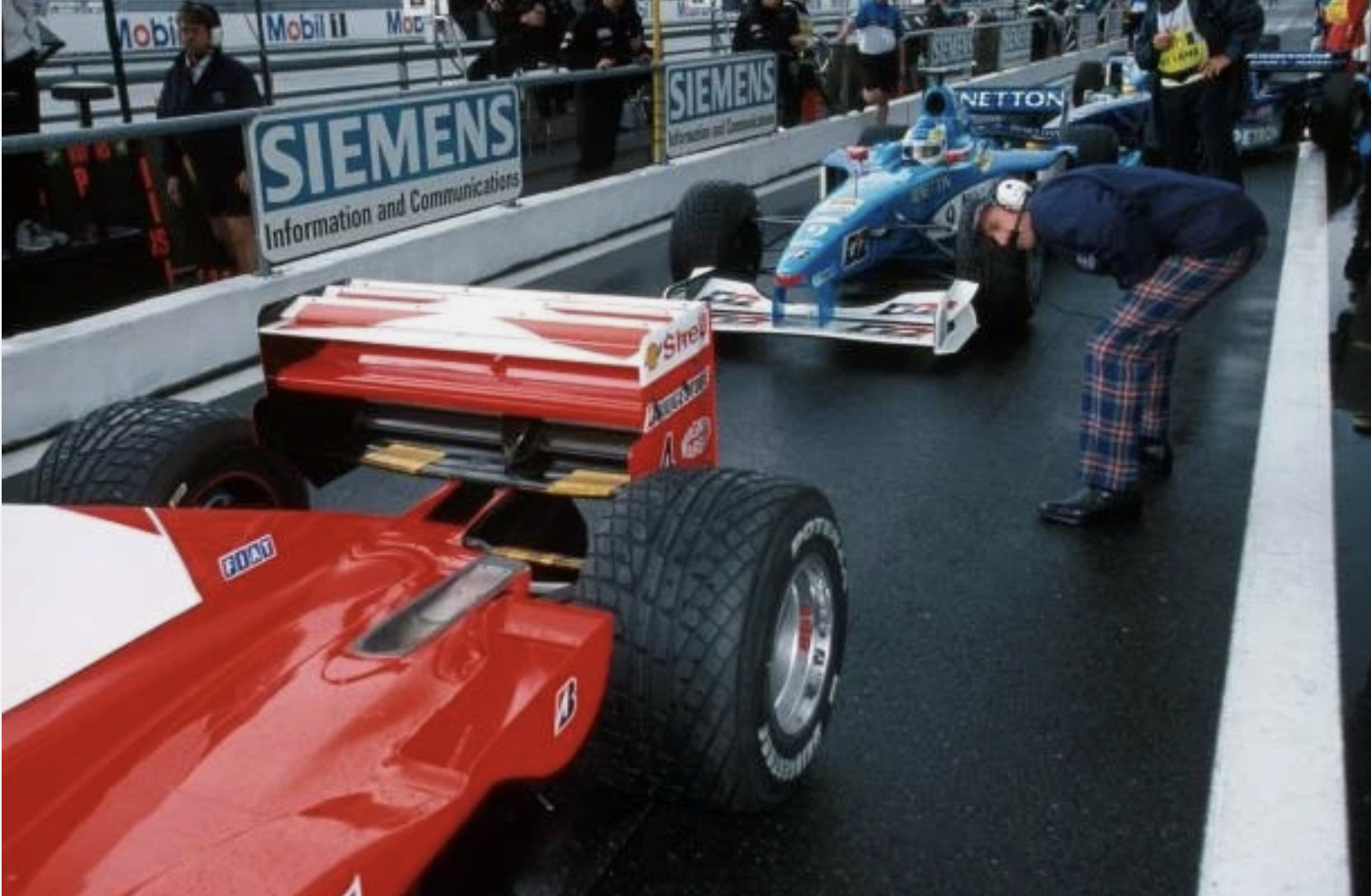
A spot of industrial espionage in the 1999 French Grand Prix, Magny Cours pitlane. Jackie sussing the rear of a Ferrari F399 with a view to improvements to the Stewart SF3 Fords raced by Rubens Barrichelo and Johnny Herbert that season; Herbert won the European GP at the Nurburgring in September.
(Unattributed)

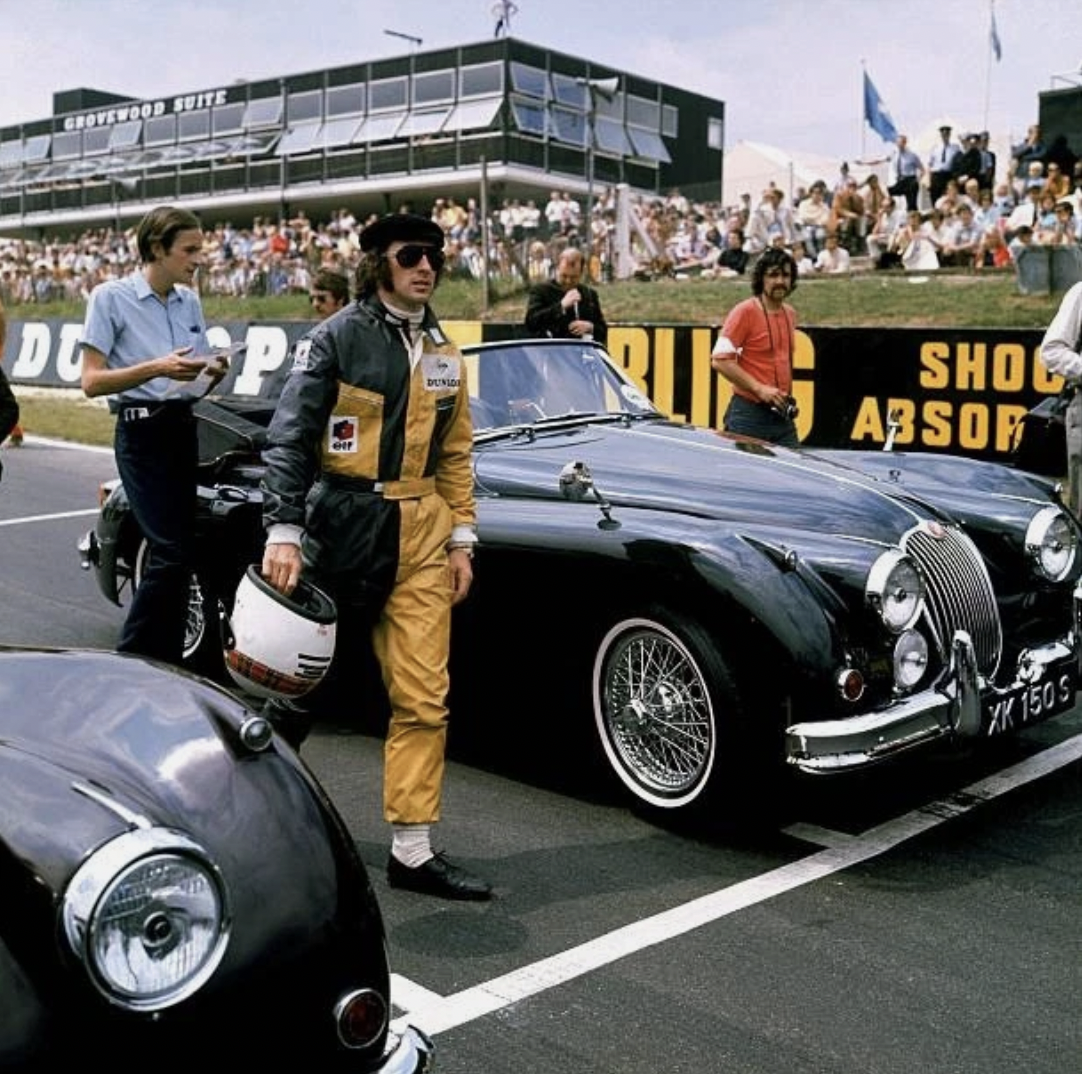
Jackie brings a tad of disco to the British Grand Prix grid in 1970 resplendent in a Faramaz Nomex ‘NAZA’ racesuit of the type worn by other drivers in the period including Francois Cevert, Jean-Pierre Beltoise and Henri Pescarolo.

Several of the shots in this piece show Jackie in overalls made by Faramaz, a boutique French clothing manufacturer active in the 1960s and 1970s. They operated as a specialised contract tailor that created custom sportswear and professional athletic uniforms, in this case for their clients Elf and Matra.

We’ve all got our favourite overalls. For me its the Hinchman/Goodyear mid-1960s-early 1970s, Linea Sport FPT ‘denim’ suits of the mid 1970s and Simpson ‘panelled’ suits of the early 1980s.
(MotorSport)

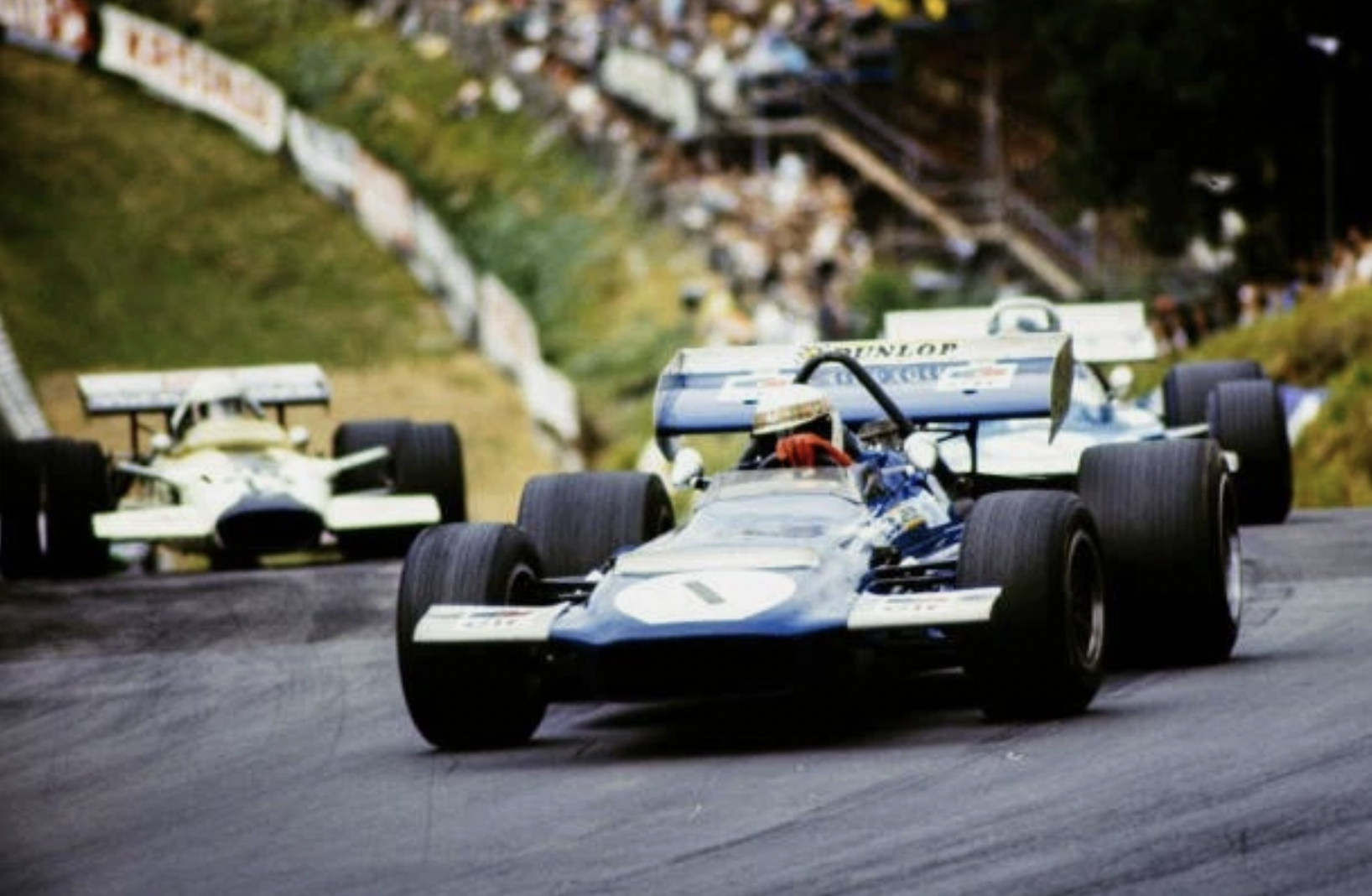
The March 701s, regardless of tyre contract, were all at sea at undulating Brands Hatch with Jackie quickest in grid slot eight and Chris Amon the best finisher in seventh place of the six 701 Fords that started the race. Up front, Jack Brabham, Brabham BT33 Ford, got the better of Jochen Rindt, Lotus 72 Ford, in an absorbing dice that had the crowd enthralled until Australia’s favourite pensioner ran out of fuel within sight of the finishing line.

Stewart retired after 53 laps when clutch trouble caused a flash fire that was readily extinguished. More on the March 701 here:https://primotipo.com/2014/05/15/blue-cars-rock/ and the Britisg GP here:https://primotipo.com/2018/05/24/jochens-bt33-trumped-by-chunkys-72/

Credits…

Ford Motor Company, Sports Illustrated, MotorSport

Tailpiece…
(Sports Illustrated)

Finito…

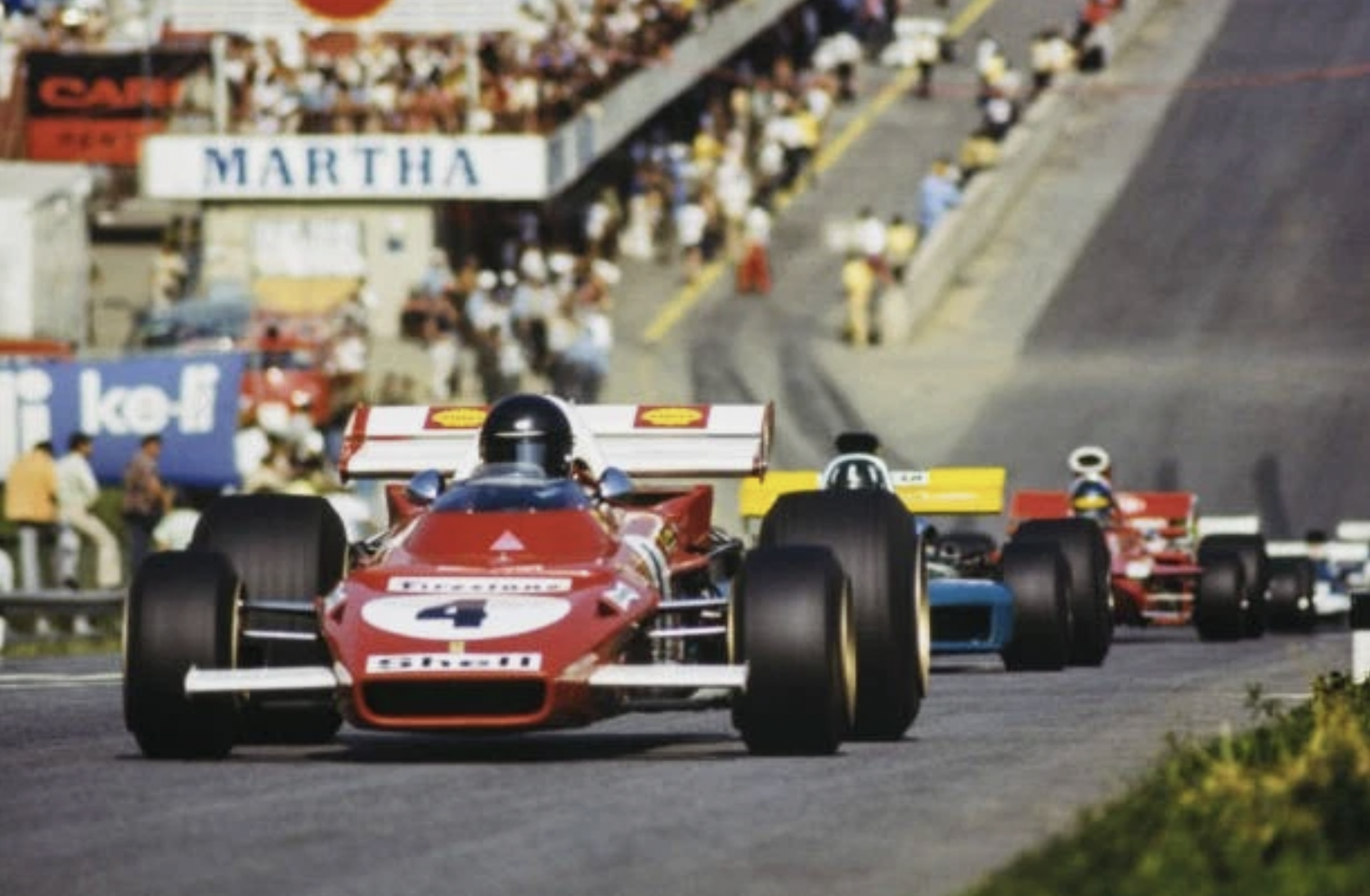
Osterreichring 1971: Jacky Ickx, Ferrari 312B2, Graham Hill, Brabham BT34 Ford, Ronnie Peterson, March 711 Ford (R Schlegelmilch)
(T Matthews)

The fortunes of war always amuse me…in relation to Scuderia Ferrari in this instance.

Everybodies favourite team won five of the first seven races held in 1971: front row in every race, pole on three occasions and setting four fastest race laps. But they died in the bum in the second half: 17 starts in seven races with only five finishes.

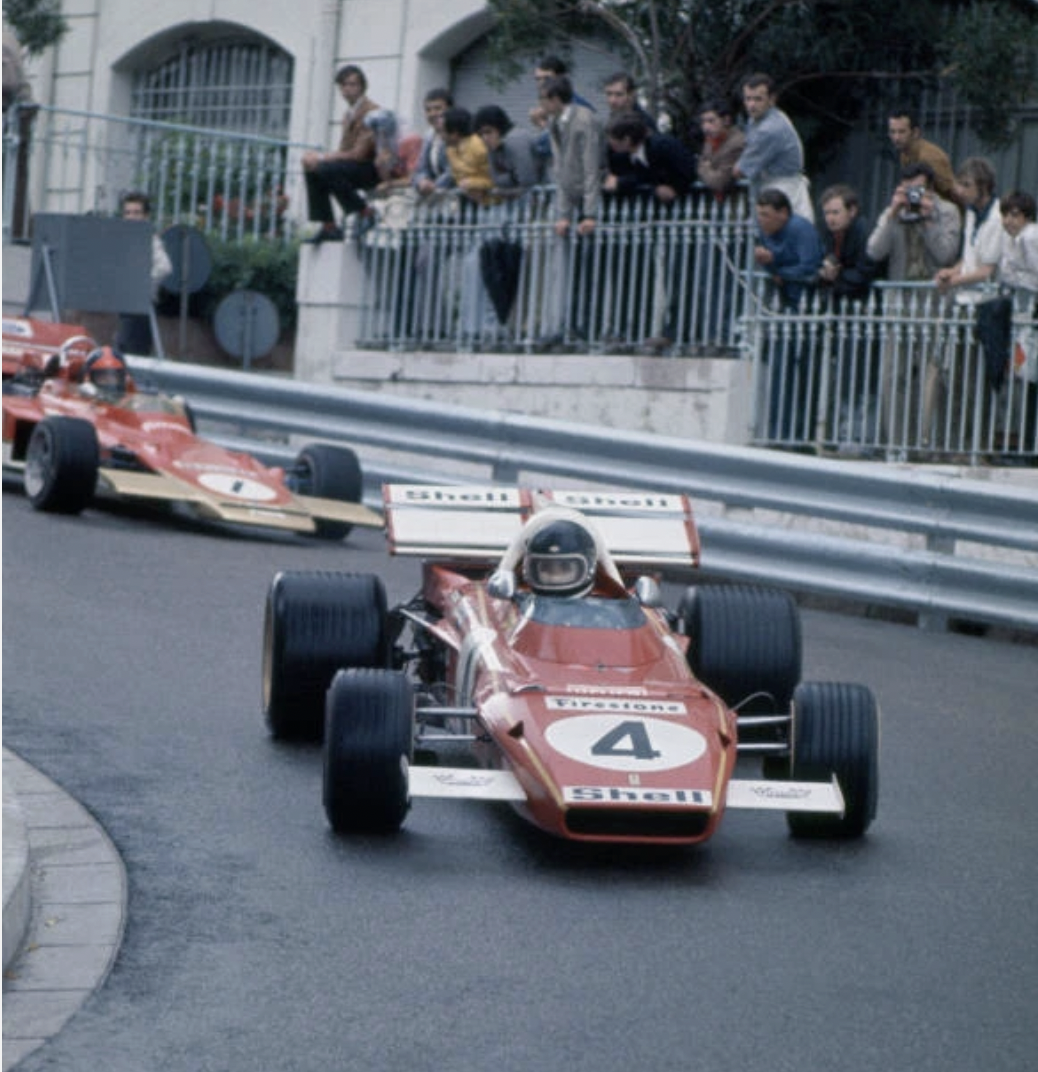
Jacky Ickx from Emerson Fittipaldi, Ferrari 312B2 and Lotus 72D Ford at Monaco in 1971 (MotorSport)
(MotorSport)

Why?

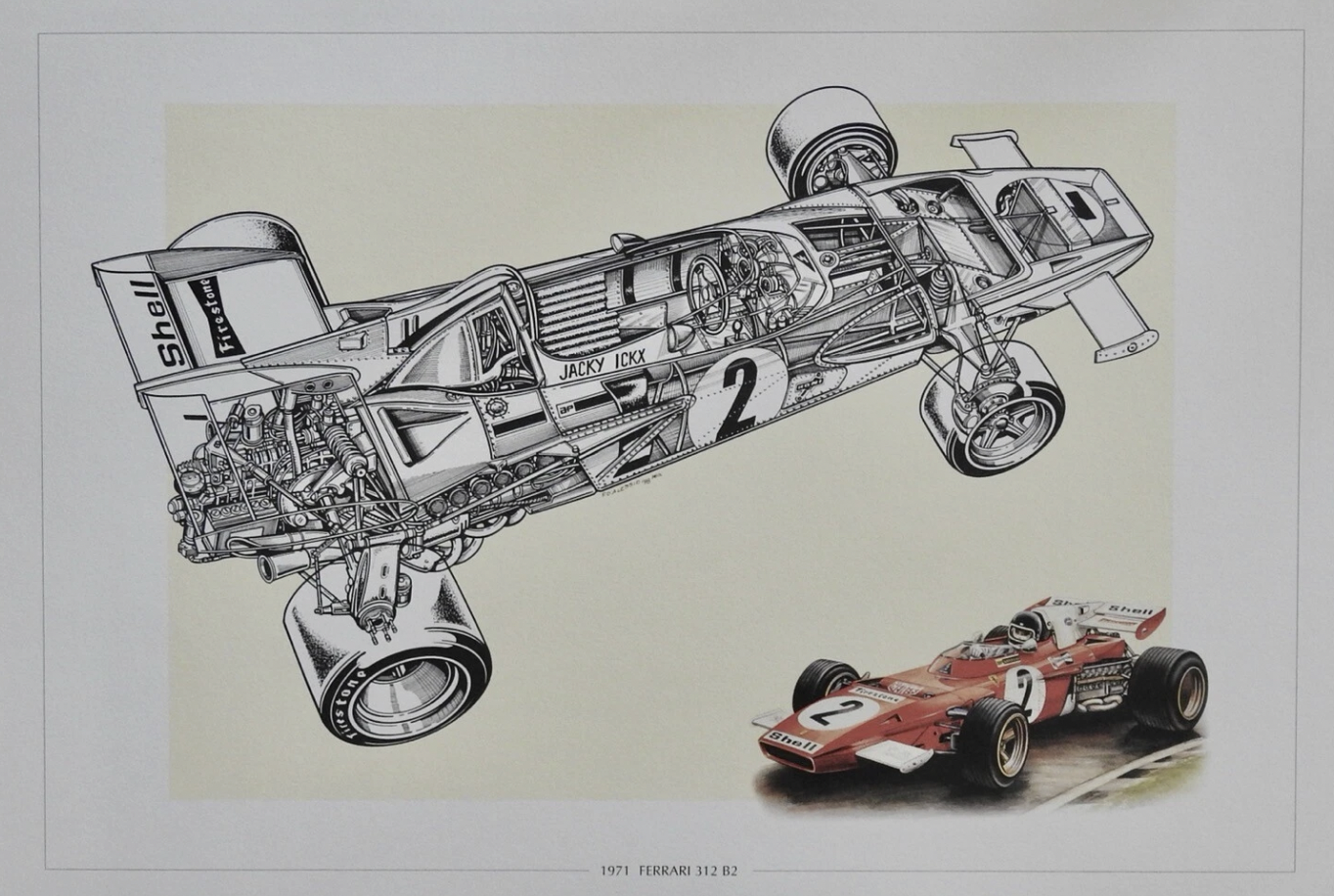
Mauro Forghieri evolved the fabulous 1970 312B into the 1971 312 B2 by creating squarer section monocoques which reduced the car’s frontal area and giving a ‘wedgy flat-topped, vertical sided form’, wrote Doug Nye.

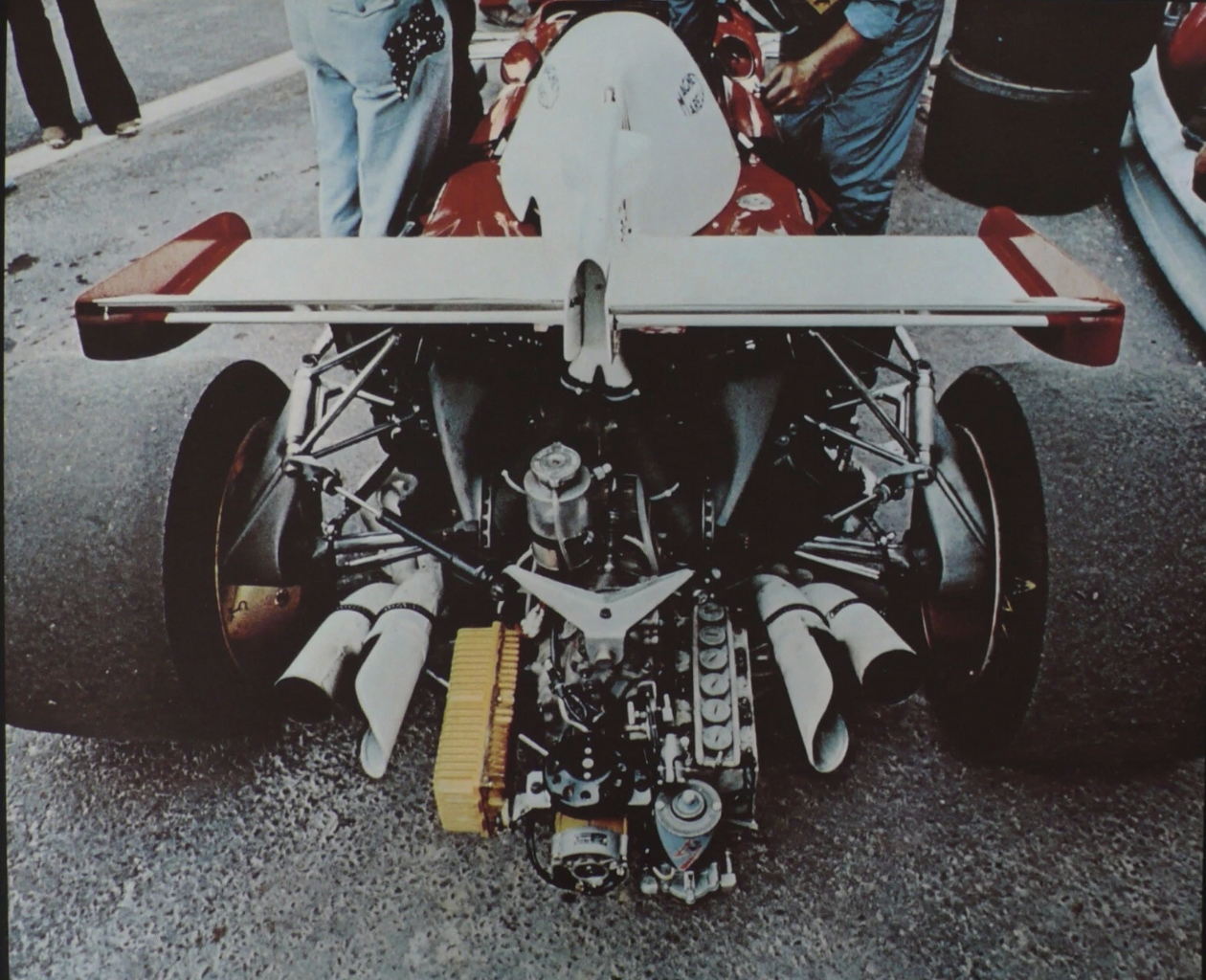
The inboard front suspension was retained but at the rear Mauro mounted the coil springs and dampers above the five-speed transaxle, using bell-crank extensions of the upper suspension links. The engine was also improved in respect of improved combustion. Note that the rear suspension, as originally designed, is shown in this Monaco GP shot of Ickx’ B2 over the May 25 weekend (above).

(J Alexander)

Ferrari’s second half fell apart because of ill-handling and unreliability. ‘The ‘B2’s ill-handling, especially upon bumpy surfaces, was exacerbated by Firestone’s development of ultra low-profile tyres which encountered harmonic vibration problems shaking the cars to pieces, both Ferrari and BRM (P180) losing races for this reason,’ Nye wrote.

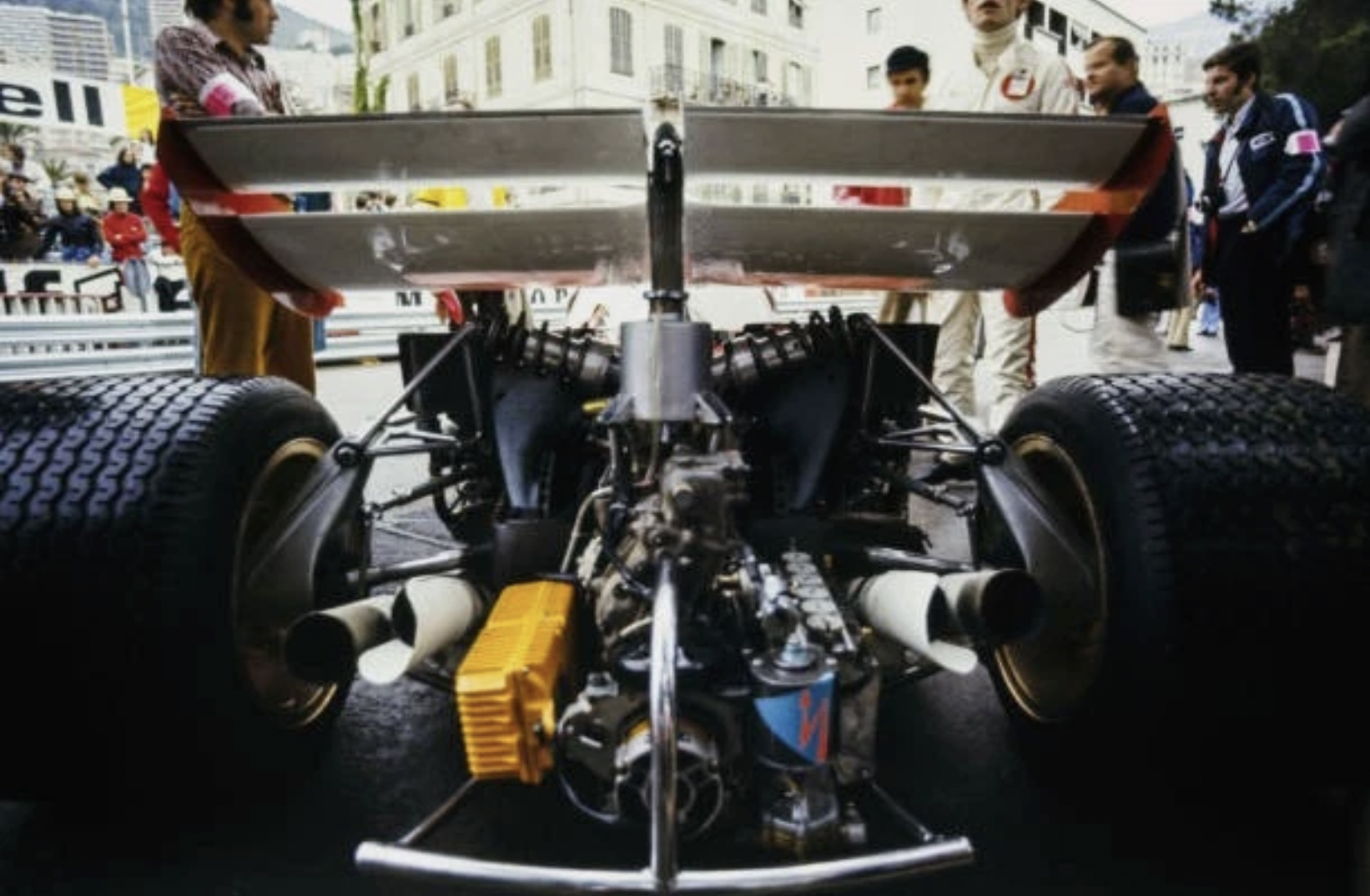
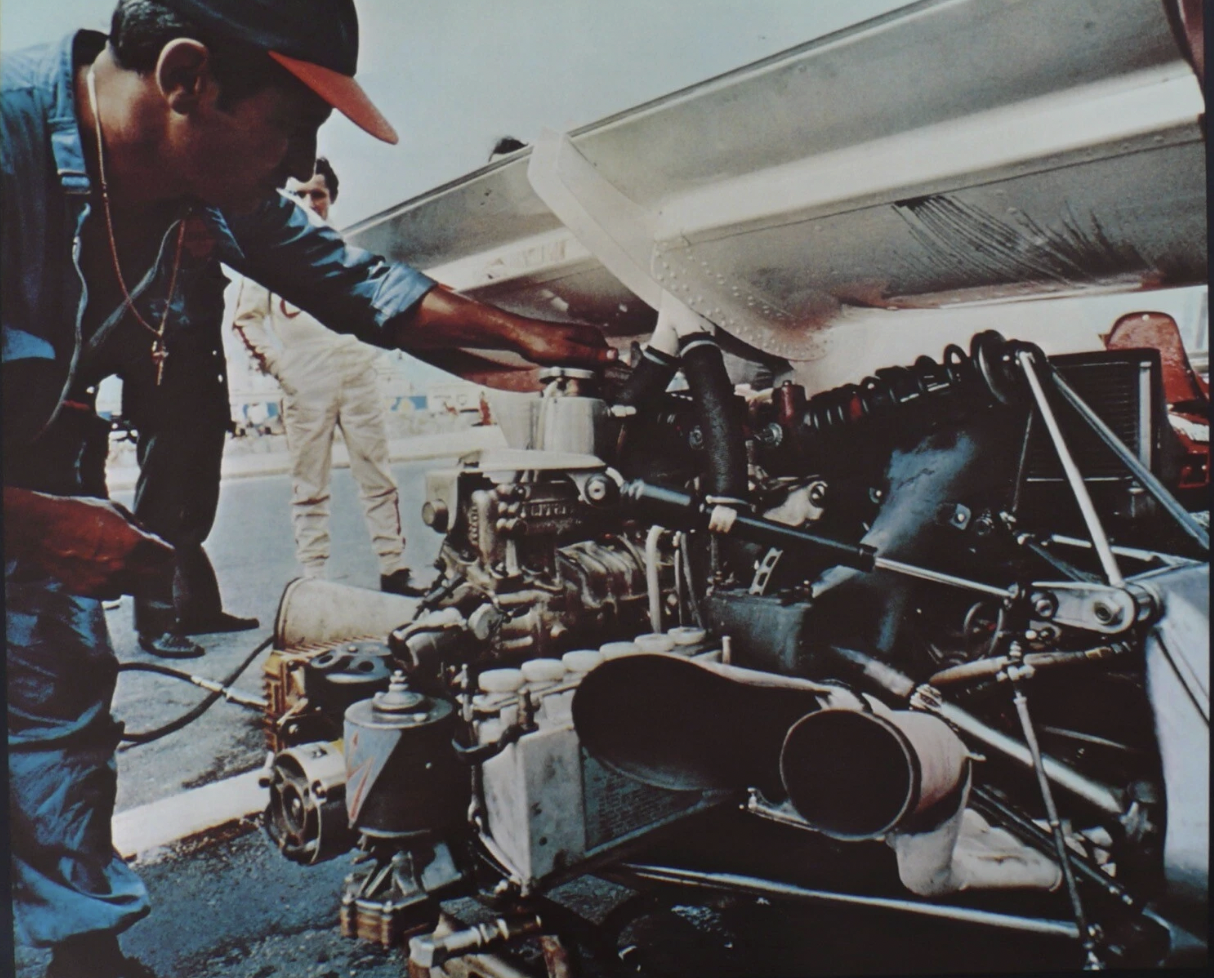
If you look closely at the later in the season rear suspension shot you will see a pair of slender dampers connected to the top of each upright, and joined in a vee-shaped bracket atop the transaxle; clearly one of Mauro’s attempted fixes to the problem. By October 1971 the fix was the simple expedient of adopting more conventional rear suspension linkages for 1972, as well as wider tracks, front and rear.

While the rear of the car looks cluttered – and is – the focus on putting more weight on the back of the car was an ongoing trend from the front to the back of the grid.

(J Alexander)

Another Jesse Alexander shot showing the complexity of the B2-mid 1971 rear suspension spec. His focus is on one the dampers fitted to deal with Firestone’s bad-vibrations. Note the Koni/spring and its bell crank, the water pipes heading for the spine of the wing, driveshaft, exhausts and the flaring to keep the fumes and heat away from the battery and Magneti Marelli electrics. The roll bar is lower right, so too the inboard brake caliper and rotor.

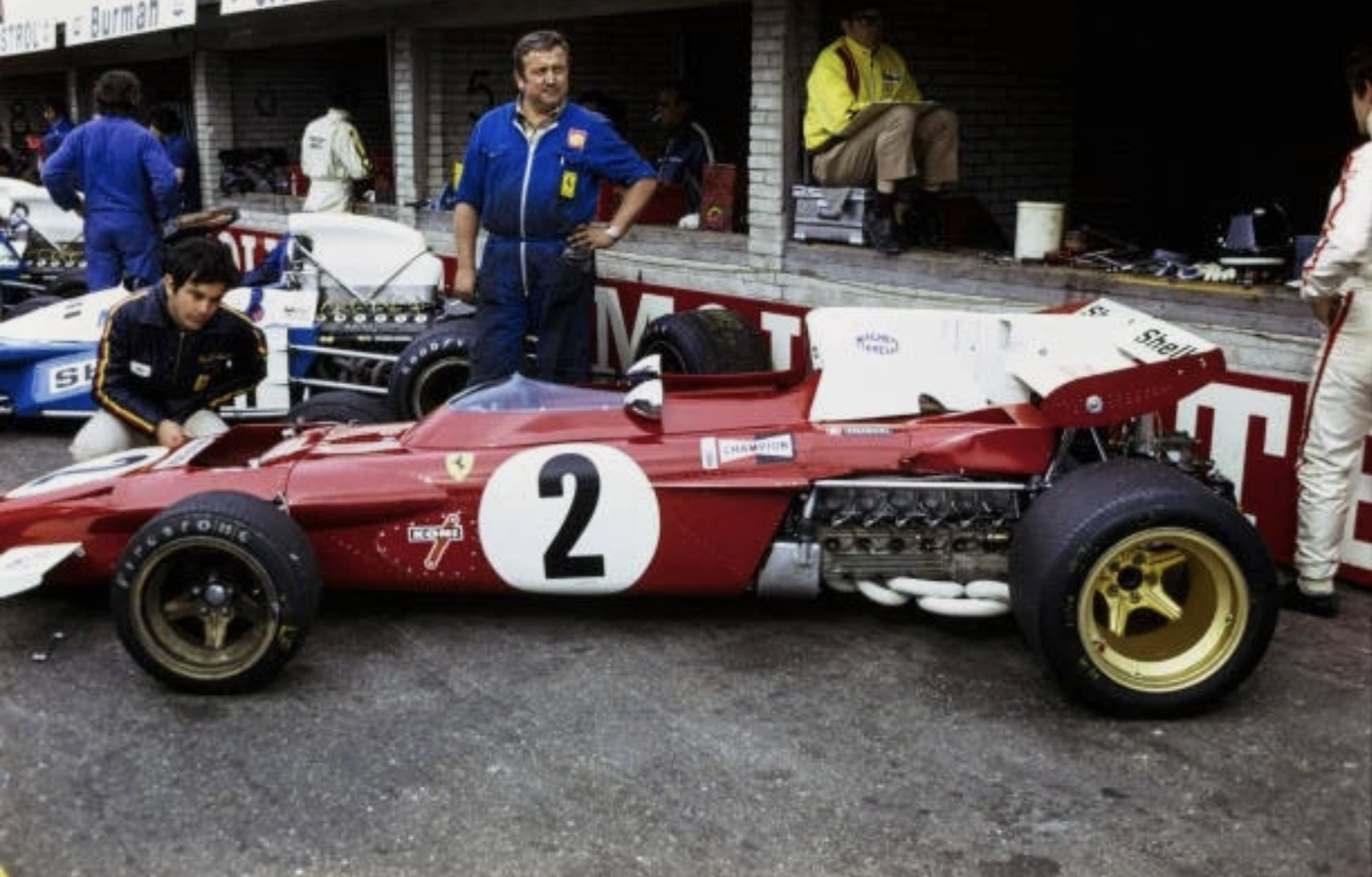
Side view of the Ickx 312B2 at Zandvoort in 1971; he won. Chris Amon’s Matra MS120B beyond, spin DNF (Unattributed)

Back to the fortunes of war where we started, and Ferrari’s two-part 1971 season. As Doug Nye put it, ‘Had Ferrari’s run been concentrated in one calendar season, insted of being split, back-end of 1970/front end of ’71, the cars would have made history indeed!’

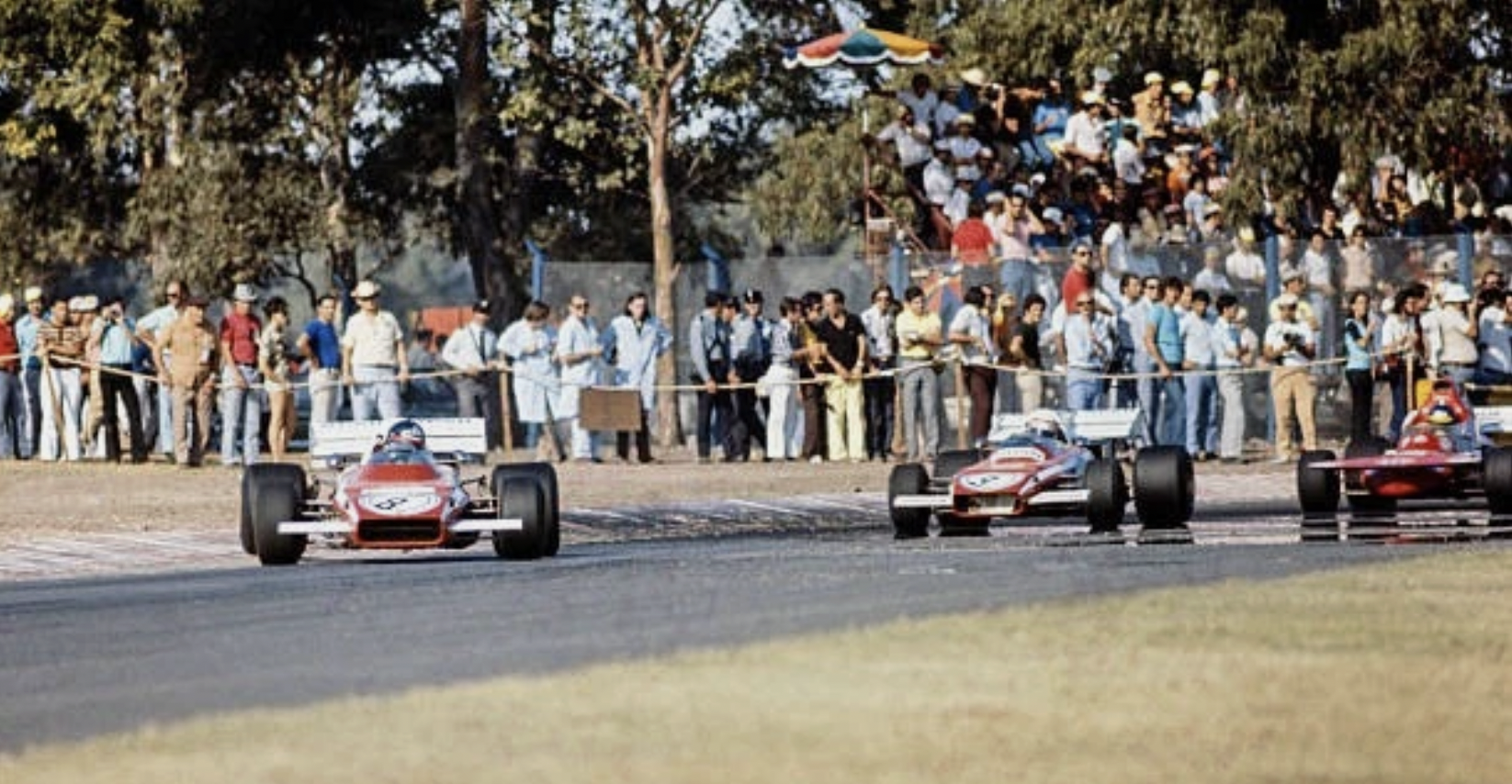
Ickx from Regazzoni, Ferrari312Bs and Ronnie Peterson, March 711 Ford in the season commencing South African Grand Prix: eighth, third, and tenth. Andretti won in another 312B.

Credits…

MotorSport, Rainer Schlegelmilch, Tony Matthews, Jesse Alexander, ‘History of The Grand Prix Car 1966-85’ Doug Nye

Finito…

(ANSA Foto)

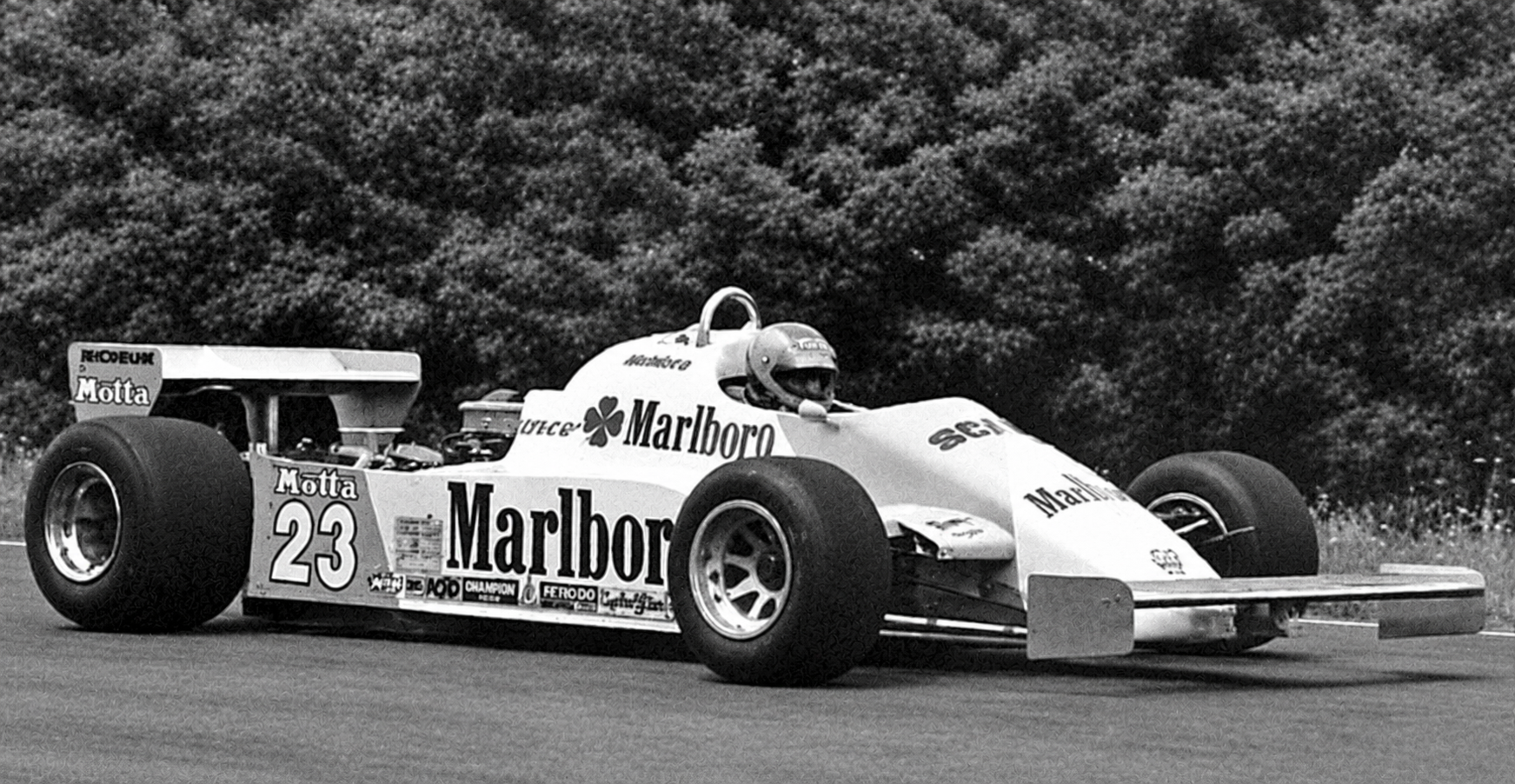
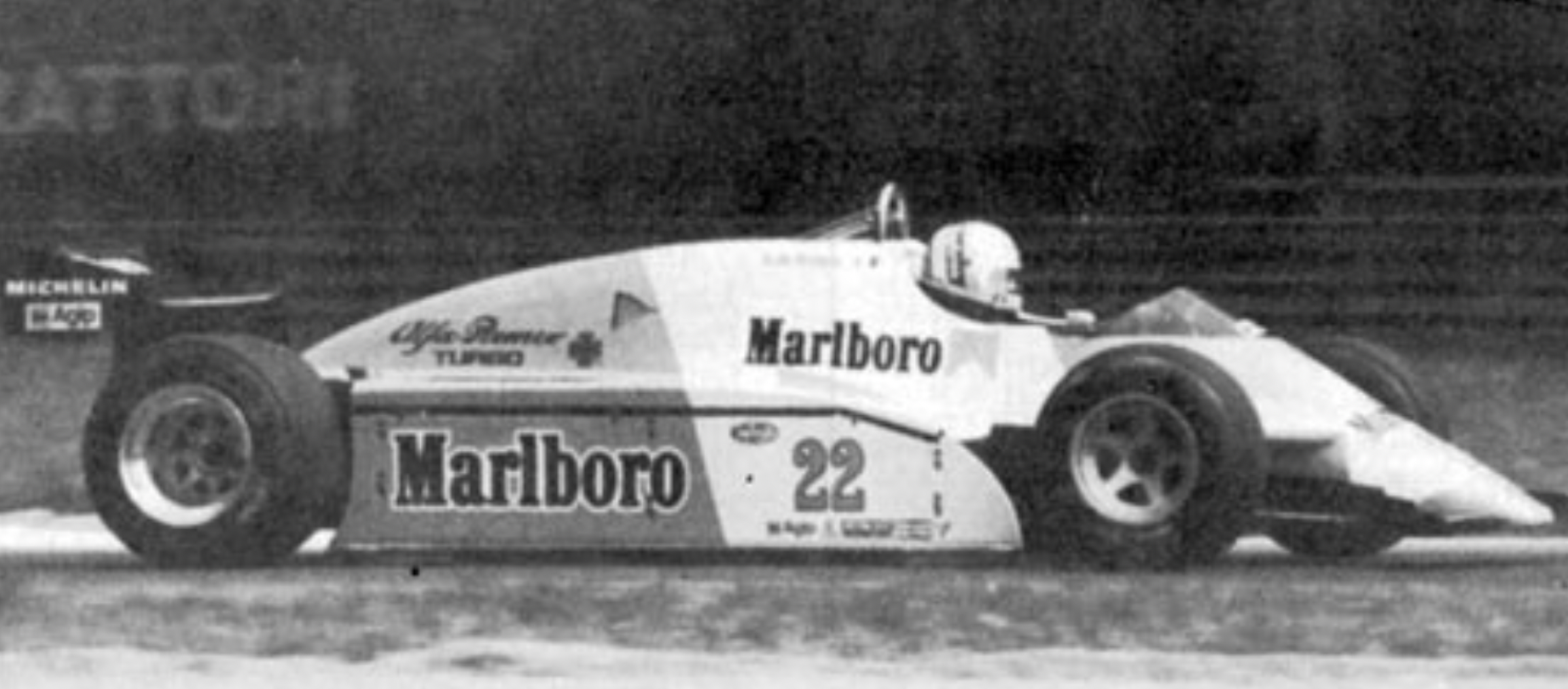
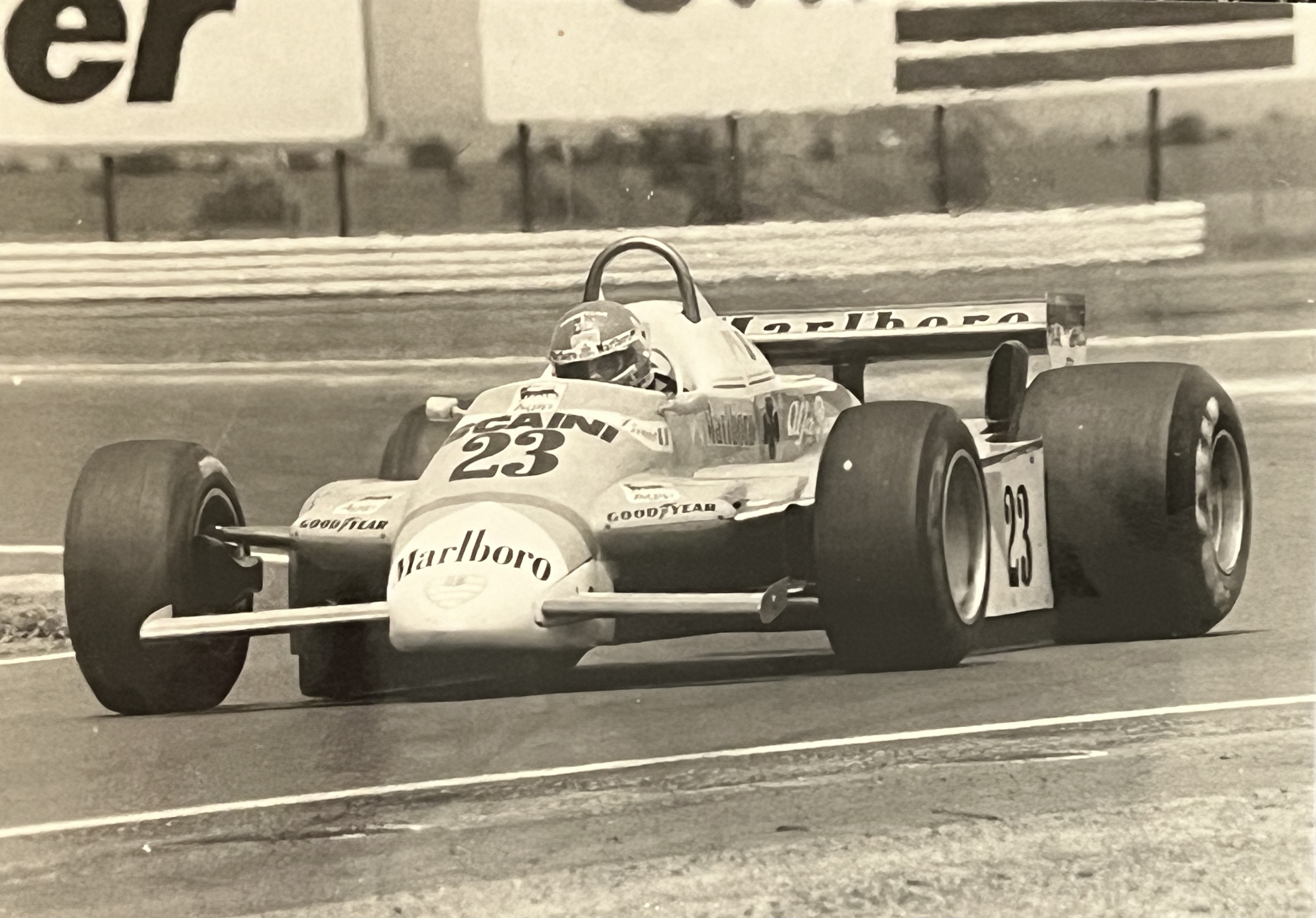
Alfa Romeo’s 1982 turbo-charged 182T V8 F1 car comprised their new Tipo 890T V8 married with an Alfa Romeo 182D chassis.

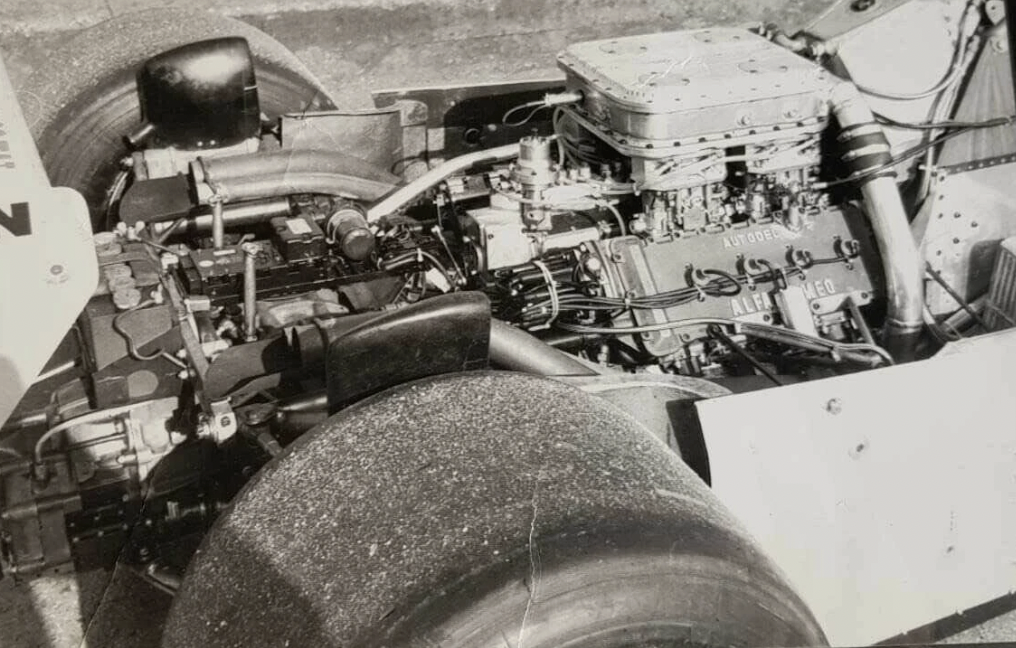
Autodelta’s first experiments with the turbo-V8 were in a modified 179 chassis – #179/2 perhaps – as shown here during a test session conducted by Giorgio Francia at Misano on March 31, 1982 (above and below). Alfa’s photograph caption adds, that ‘the vehicle completed around 50 laps, setting a new unofficial track record.’

(Forix/MBisset-ChatGPT)

Andrea De Cesaris tested the definitive Alfa Romeo 182T ahead of the ’82 Italian GP (above), but it was unraced that year, making its race debut when it morphed into one of 183Ts raced throughout season 1983.

It wasn’t the first time Autodelta had developed a turbo-charged engine of course. The final 1976 variant of the 3-litre Flat 12 Tipo 33s deployed a 2134cc version of that engine fed by twin-KKK K26-turbo-chargers, intercooling, indirect Lucas fuel injection, Magneti Marelli ignition and the rest…

(Alfa Romeo)

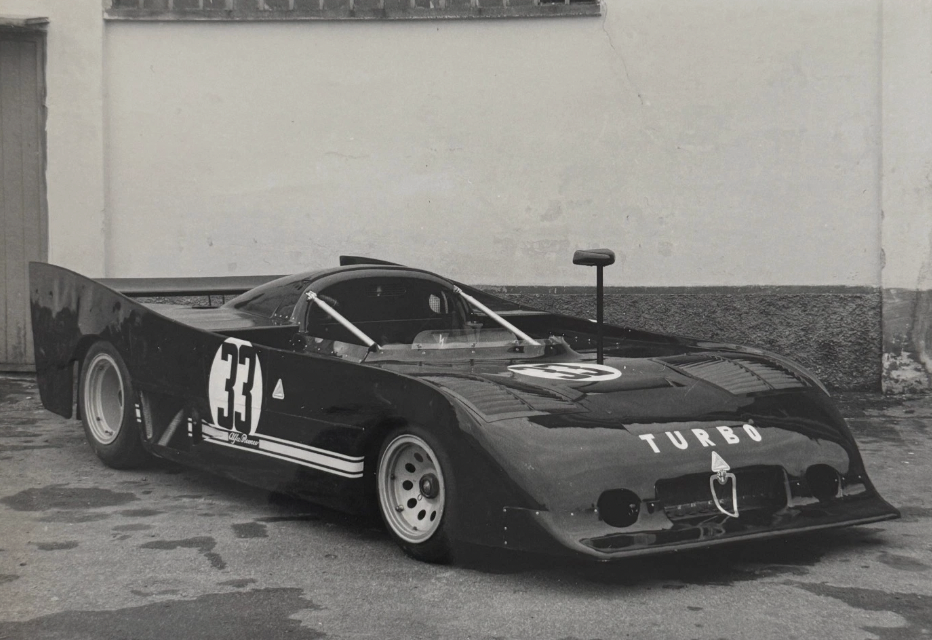
Proving that Alfa Romeo had a sense of humour, the text on the reverse of this factory shot reads, ‘The last of the Mohicans (Tipo 33s) was the 33 TT12 Turbo, which was equipped with two KKK turbo-chargers and had its engine displacment reduced to just over 2-litres.’

The muletta at Autodelta’s premises above is a spaceframe chassis ‘TT’. The company was testing its new turbo-charged Flat-12, while simultaneously building an aluminium monocoque variant ‘SC’ to better cope with the rigours imposed thereon by the muscular engine and prodigious grip of the design/tyres.

Ultimately the turbo SC only raced twice, on both occasions with Arturo Merzario at the wheel. He was second in the Salzburg 300k World Sports Car Championship round on September 18, 1977 behind Vittorio Brambilla’s T33/SC/12, and won the final round of the Interserie – the ADAC Rennsport – at Hockenheim on October 9, 1977; on both occasions racing chassis #11512.016 which nowadays resides in Alfa’s fabulous museum.

Alfa Romeo then did a left-turn away from sports cars and recommenced a long, fruitless – very frustrating for we Alfisti – dalliance with Grand Prix racing.

(primotipo archivio)

Bruno Giacomelli during the November 16, F5000/F1 1980 Australian Grand Prix at Calder won by Alan Jones’ Williams FW07B Ford Cosworth.

Alfa Australia – bless ’em – saw the sense in bringing Bruno and a 179 (179/6) for the AGP; Oz is a decent sized market for their product and Victoria has a large Italian/parentage population. He was five-tenths adrift of AJ in practice and finished a lap adrift in the race, Didi Pironi was third in an Elfin MR8-C Chev F5000.

The sight, and especially the sound of the 3-litre V12 I’ll never forget. The cogs had to be swapped sequentially on the way down the 6-speed box. Bruno’s four banzai-fast double-shuffles at the end of each straight and howl of the engine in response really did – ahem – stir ones erectile tissue.

From memory the 179 was in winning/points scoring positions in it its first couple of years of competition…bias freely acknowledged mind you.

Credits…

ANSA Foto, Alfa Romeo, Forix, primotipo, oldracingcars.com

Finito…

(Underwood & Underwood)

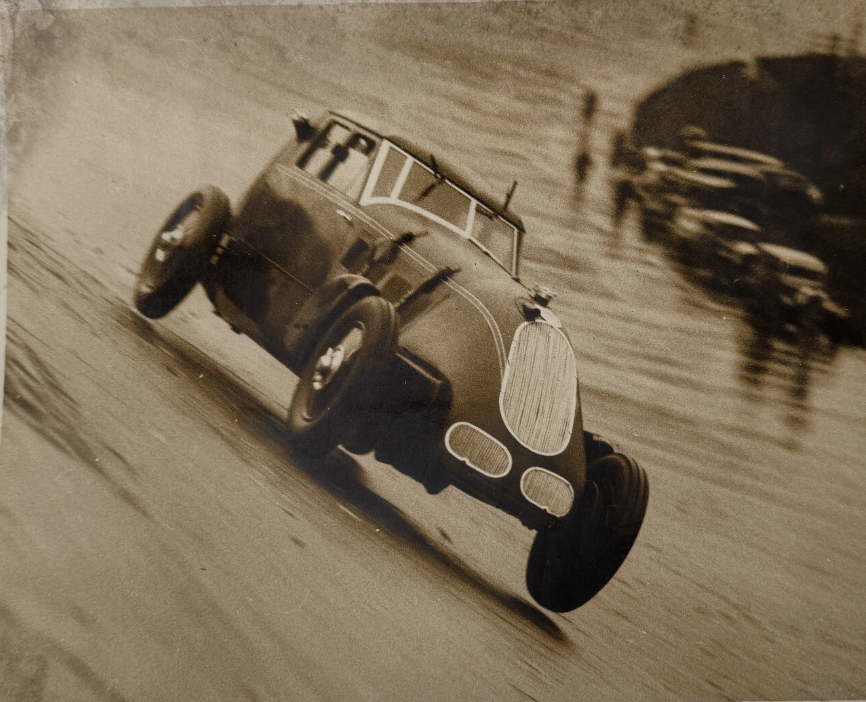
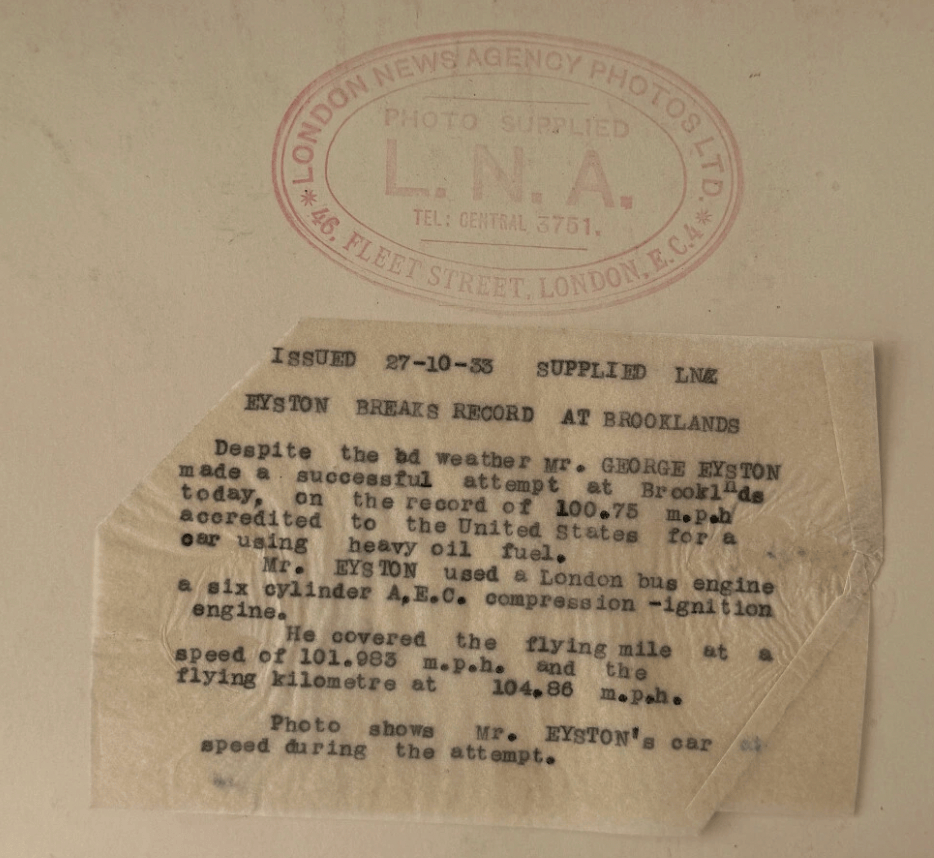
Versatile British racer/record breaker Captain GET Eyston setting new diesel powered World Land Speed Records of 101.983 mph for the flying mile, and 104.86 mph for the measured kilometre in his AEC Fuel Oil Safety Special at Brooklands on October 27, 1933.

The EA Eldridge designed, LT Delaney of Ataida Vale built car was essentially a marriage of a Genevans cross braced, Chrysler Imperial chassis, A.E.C. (Associated Equipment Company) 8.85-litre, 130bhp six-cylinder, pushrod OHV engine – pulled ex-stock from a London double decker bus – a Chrysler four speed gearbox, and bespoke Vanden Plas built body

Four pairs of shock absorbers were used on conventional solid axles front and rear, with Lockheed providing the hydraulic drum brakes, while the fuel tank was big enough to take the car from London to Edinburgh and back.

(Underwood & Underwood)
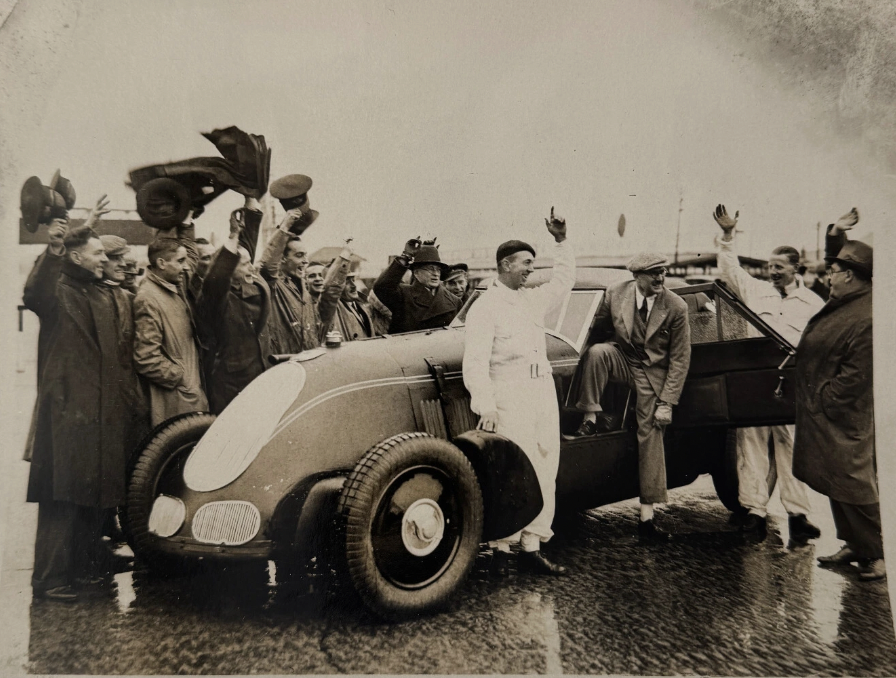
George Edward Eyston MC, OBE, 28/6/1897-11/6/1979 with his Chrysler AEC Spl at Brooklands in October 1933 (unattributed)

The plan was to attack long distance records later in the year at Montlhery, so driver comfort was a feature of the c-45cwt car. ‘The saloon body was very comfortably fitted up and long distance records should be put up very comfortably, but there was a certain smell about the inside of the car,’ the MotorSport reporter wrote.

‘After the (cold and wet) record breaking run the spectators adjourned to the BARC clubhouse, as the guests of Messrs CC Wakefield and Co, whose fuel and lubricating oil helped make the record attempt possible, and restored their circulation with welcome refreshments.’

Note that Eyston improved his world record to 115.41mph for the measured mile and kilometre at Montlhery in March 1934, a record eclipsed within a year. In 1936 he returned to France, setting a 24-hour diesel record of 94.99 mph.

Eyston at Montlhery on March 19, 1934 (Alamy)

Etcetera…

(London News Agency)

Several of the shots show how testing the conditions were on that October day, I wonder how effective the aerodynamics of the distinctive car were?

Credits…

Underwood & Underwood, London News Agency, MotorSport, Alamy

Tailpiece…

Finito…
(Unattributed)

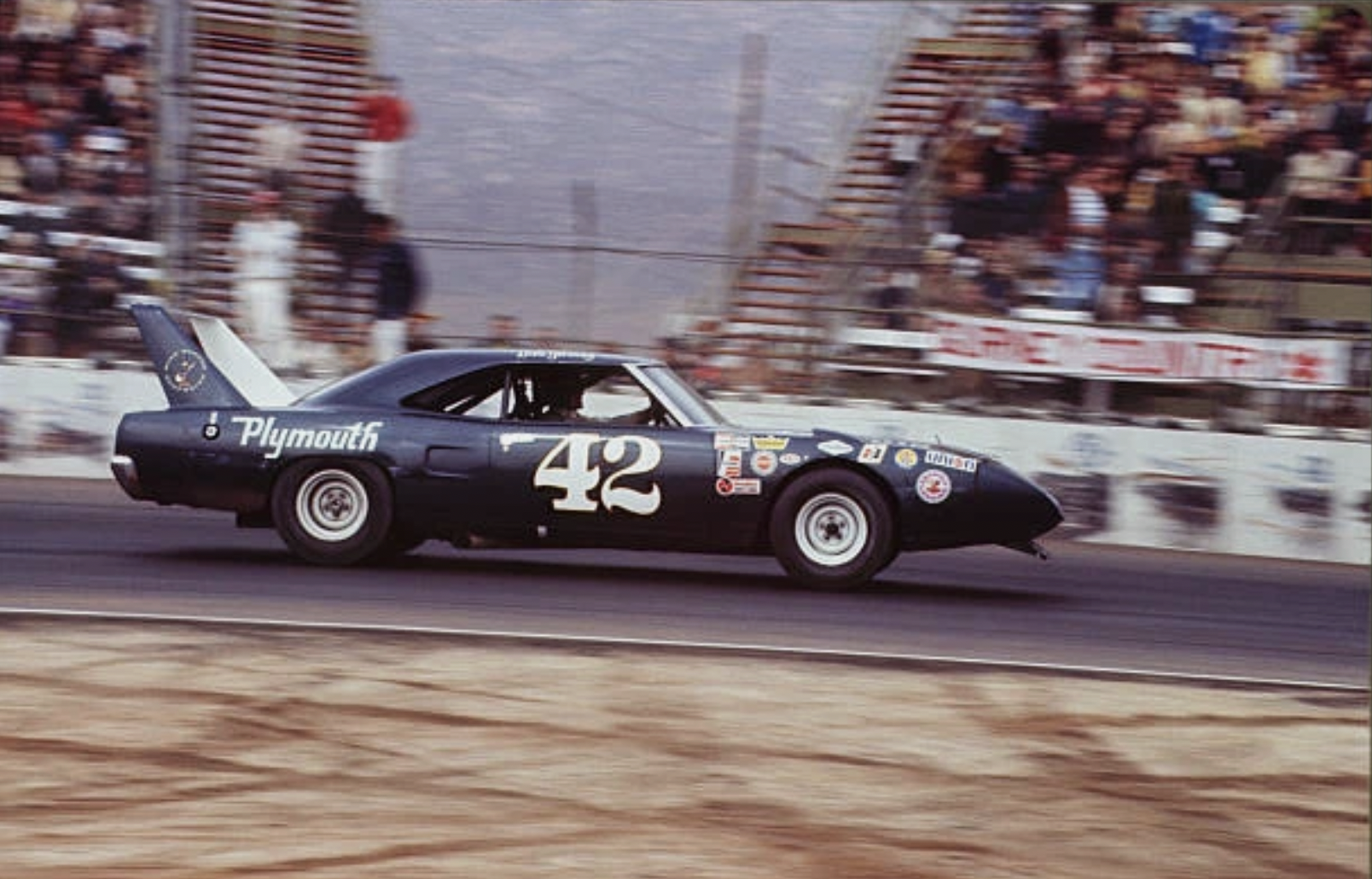
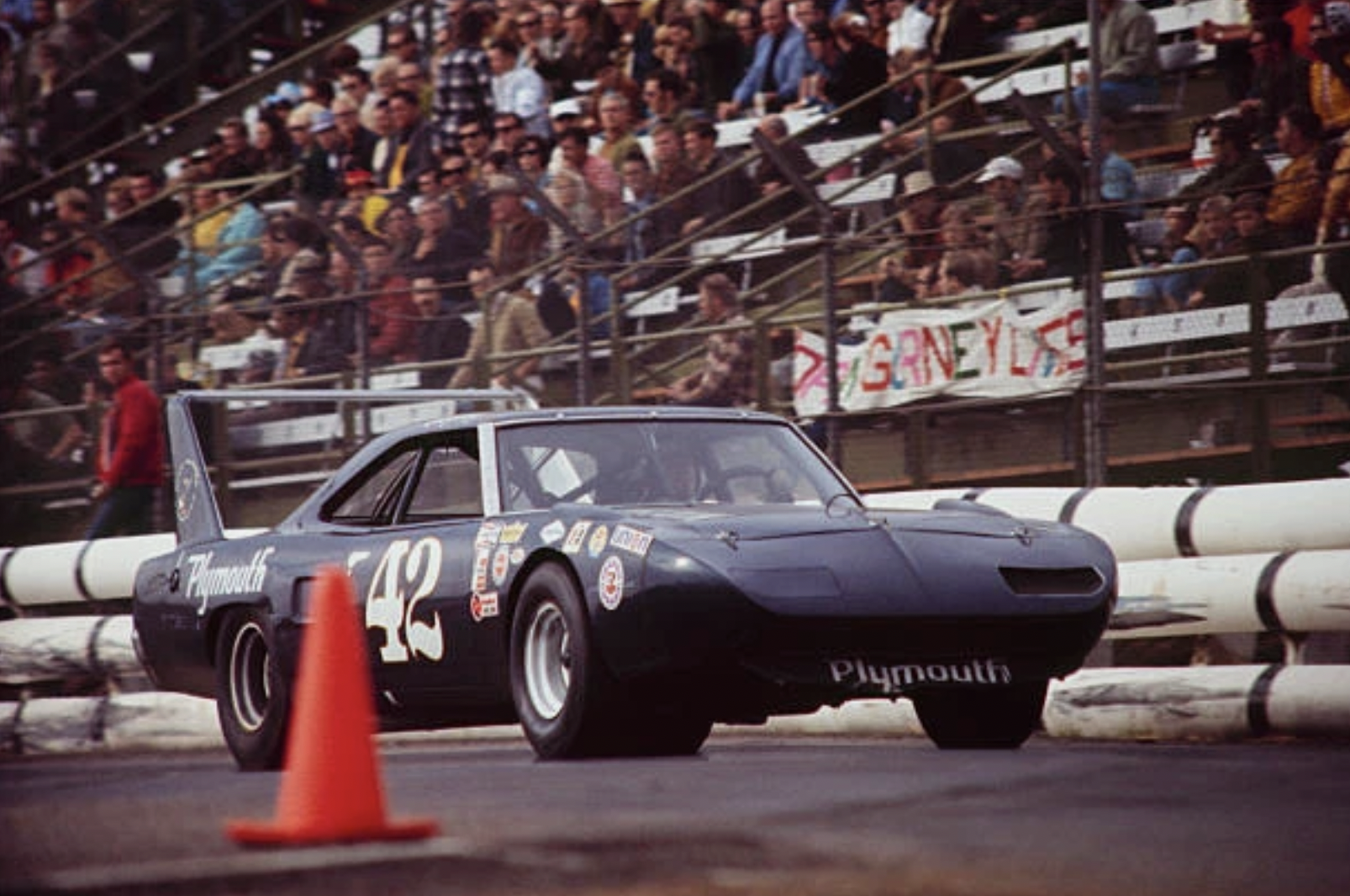
Dan Gurney raced a Plymouth Superbird for Richard Petty Enterprises in the January 18, 1970 Riverside NASCAR round – the Motor Trend 500 – popping the thing on pole but having mechanical gremlins during the race, finishing sixth. Petty was fifth, AJ Foyt won in a Ford Torino Cobra.

(Unattributed)

The season came good for Petty and Plymouth for this wildest of all homologation specials: King Richard was enticed back into the Mopar fold from Ford, winning 18 NASCAR races and the title.

This article tells the story of the 1935 Superbirds built in late 1969 well:https://www.autoevolution.com/news/first-owner-got-no-markup-plymouth-superbird-picked-it-up-after-6-months-it-s-an-amazing-survivor-277783.html

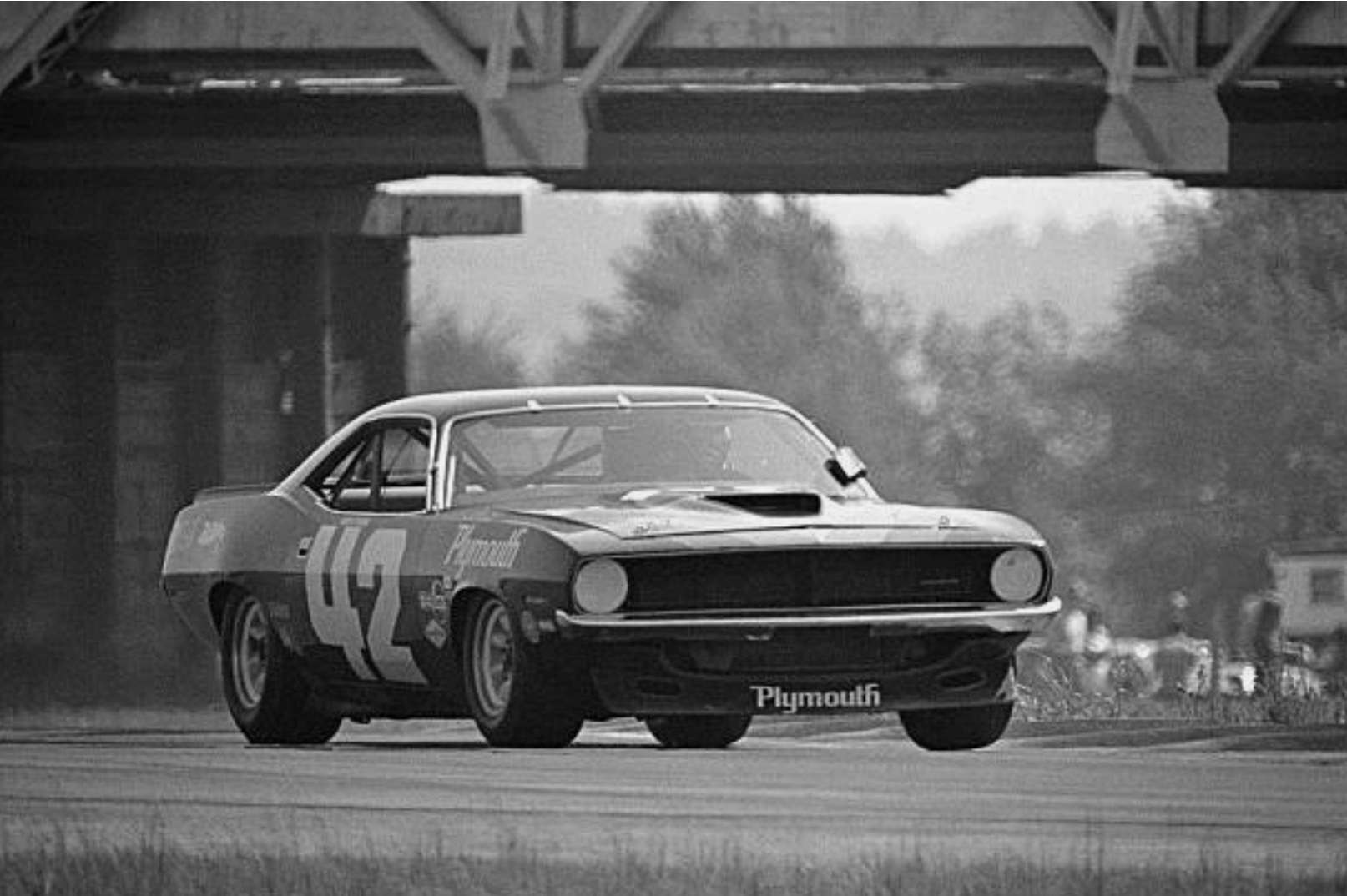
Swede Savage – where folks? – Plymouth Barracuda during 1970 (Unattributed)

AAR prepared and raced three (some sources have the build number as four) Plymouth Barracudas in the Trans Am that year too: Dan and Swede Savage drove the cars in the 1970 Trans-Am, widely considered as the high-water mark of American pony car racing.

It featured an all-out, factory-backed engineering war between Ford, AMC, Chevrolet, and Chrysler. While Ford and AMC battled for ultimate honours Chrysler entered the fray late with a dual-pronged Mopar assault: the Dodge Challenger T/A and the AAR Plymouth Barracuda,

Chrysler commissioned Dan Gurney late in the piece 1969. AAR built three racers cars from ‘body-in-white’ shells, including acid-dipping the panels to thin the steel and fitting various titanium components carried over from Gurney’s F1 and Indy programs.

SCCA rules limited engine capacity to 305 cubic inches, AAR destroked Plymouth’s 340 V8 to 303.8 cubic inches, yielding over 450bhp.

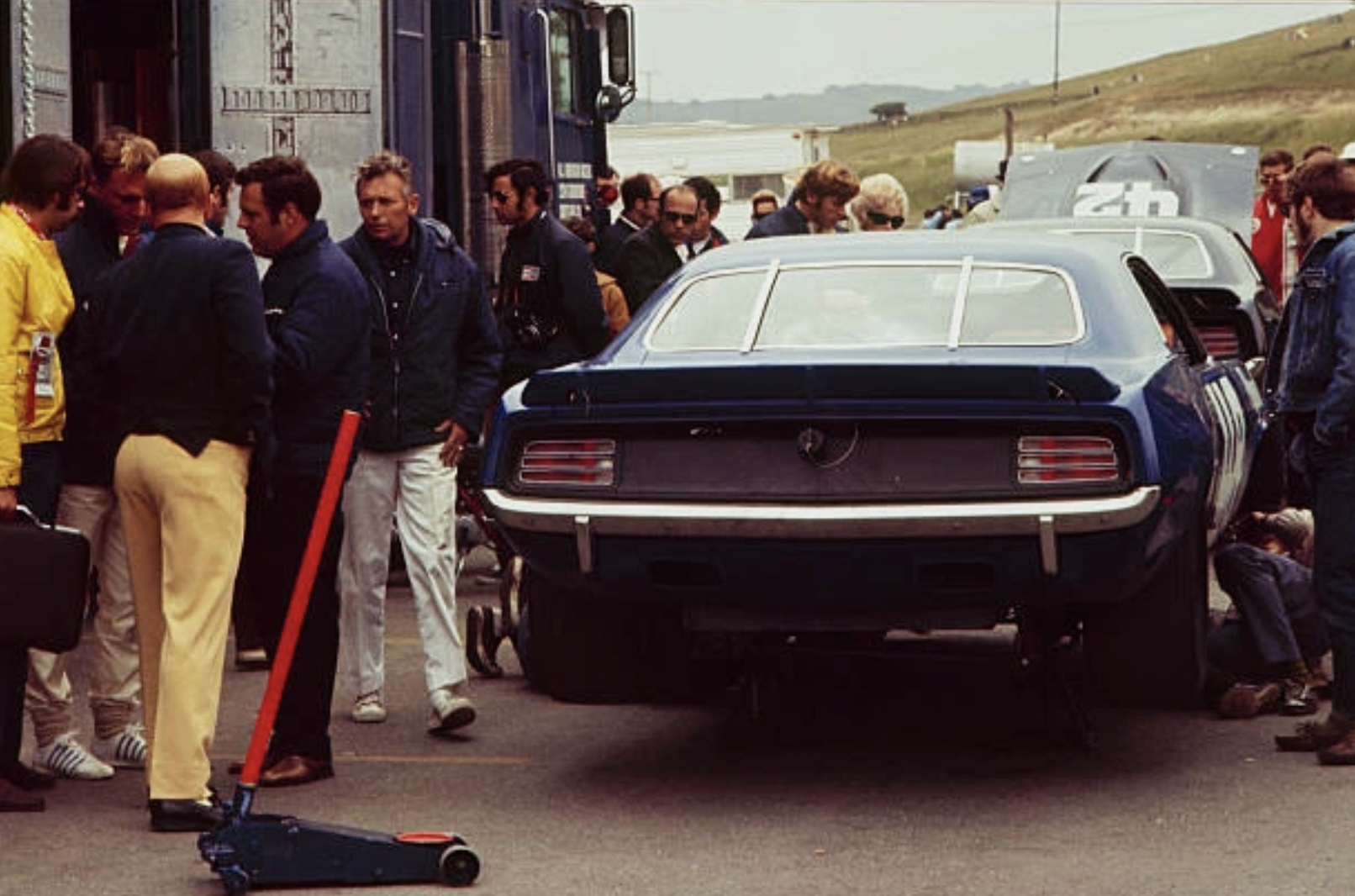
Savage’s car in the paddock, where? (Unattributed)

Driven by Swede Savage and Gurney (sometimes) the cars were quick in qualifying but were unreliable given late season engine development and underfunding.

Savage bagged three poles (Bryar, Bridgehampton, and Donnybrooke) with the season’s peak at Road America, where Savage was a great second behind Mark Donohue’s AMC Javelin.

Early in the season, Chrysler’s cost cutting downsized AAR’s two-car effort to a single entry for Savage. Gurney retired from driving after the Riverside finale on October 4, 1970. Much more from Revs here:https://automedia.revsinstitute.org/glorious-cudas-and-challengers

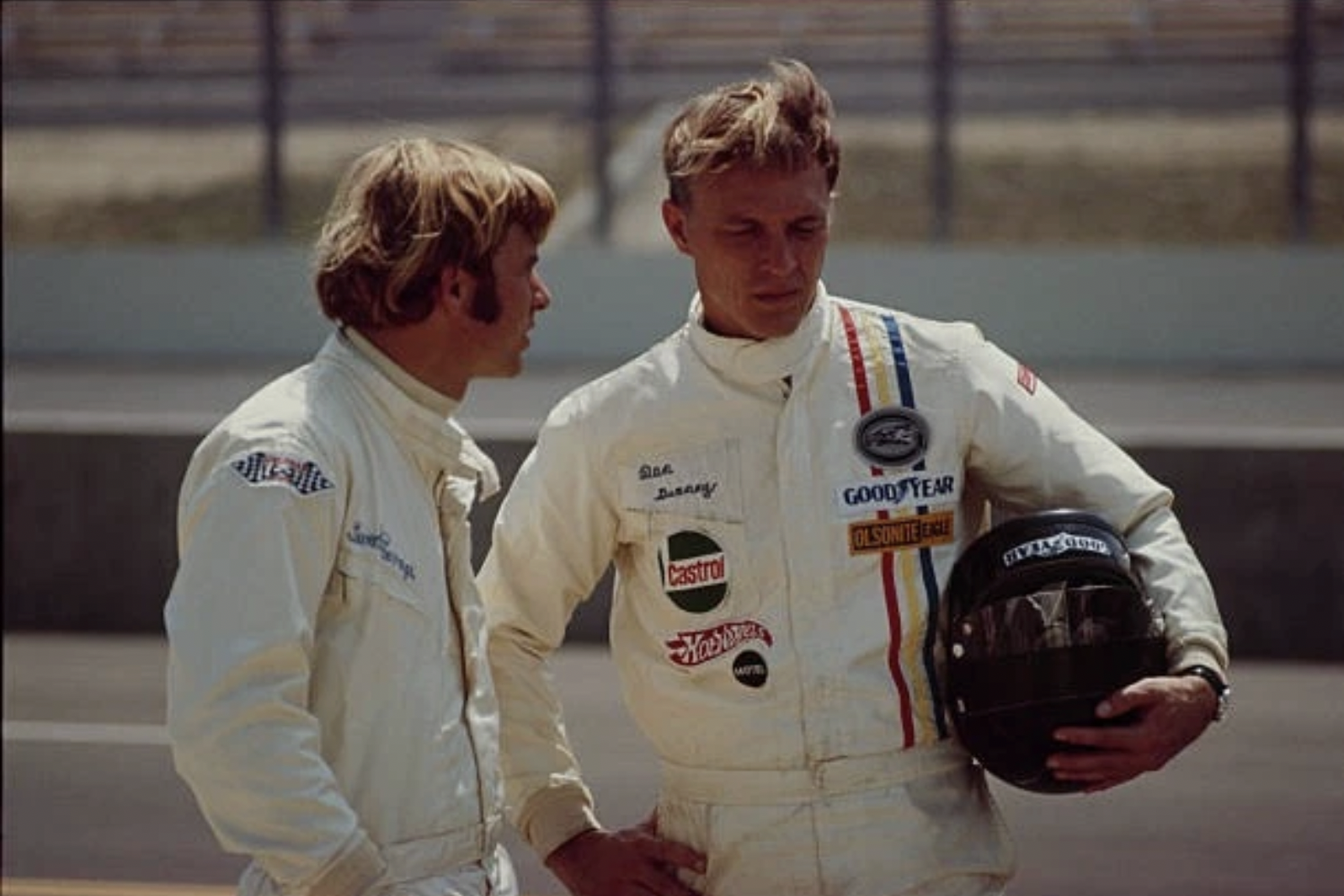
Swede Savage 26/8/1946-2/7/1973 and Dan Gurney 13/4/1931-14/1/2018 in 1970 (Unattributed)
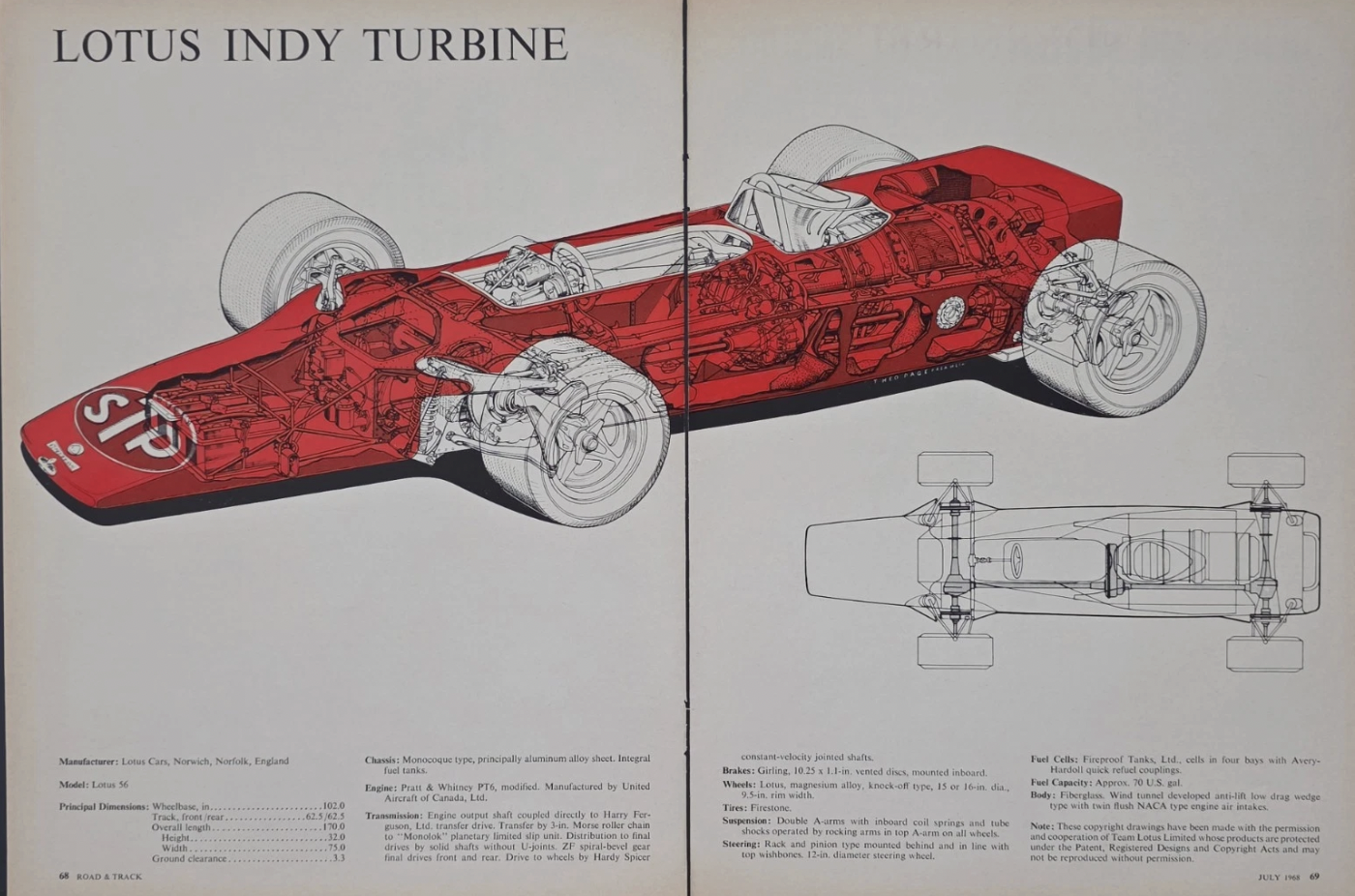
(Road & Track)

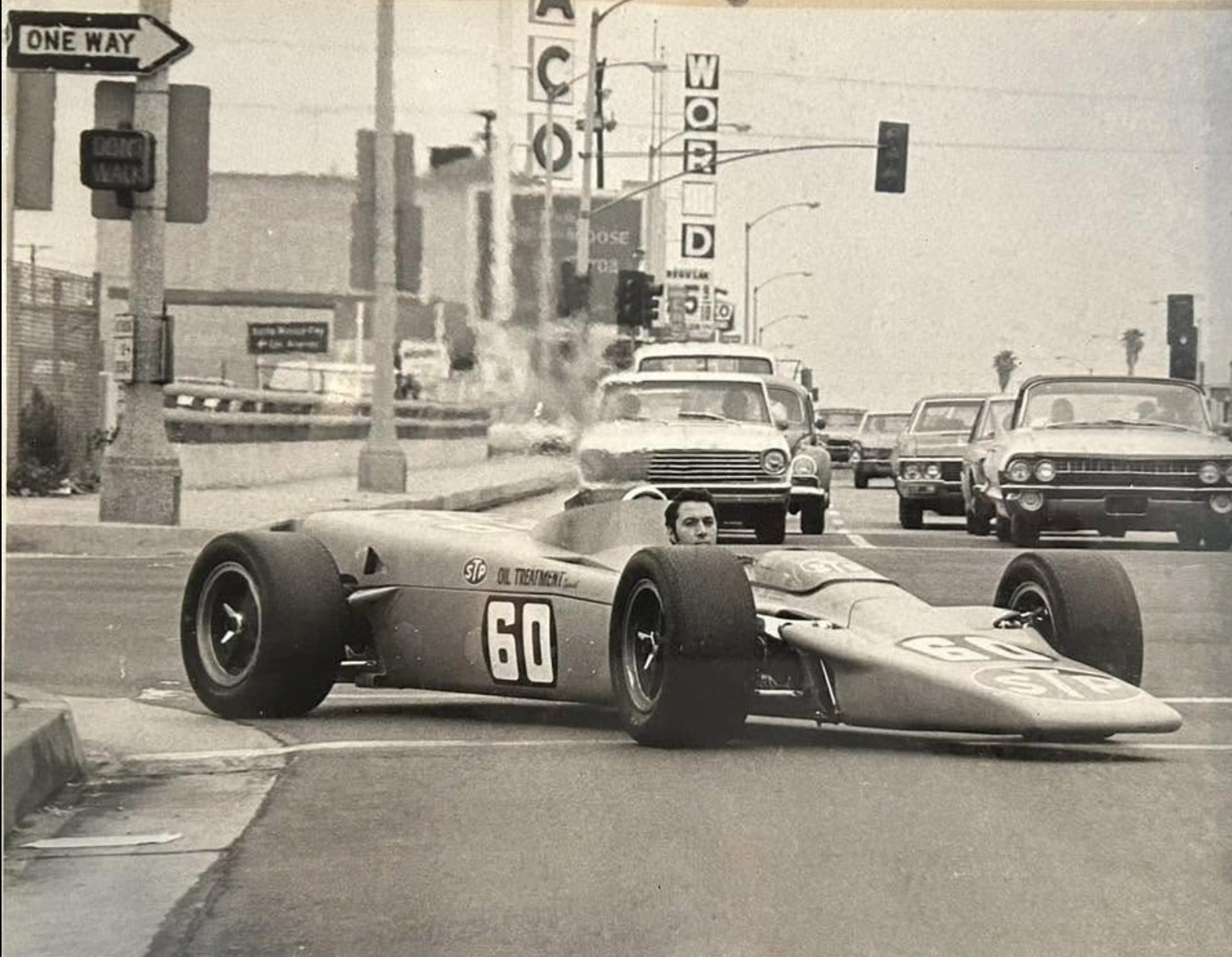
Crazy shot of Joe Leonard’s Lotus 56 Pratt & Whitney gas turbine – complete with heat haze – ‘Turning into Lincoln Boulevard, Santa Monica, Los Angeles, towards Phil Hill’s ‘shop in 1968. The Paxton/STP workshop was located on the Olympic Boulevard a couple of blocks away,’ wrote Lotus ex-employee/historian Richard Parramint.

(R Parramint Collection)

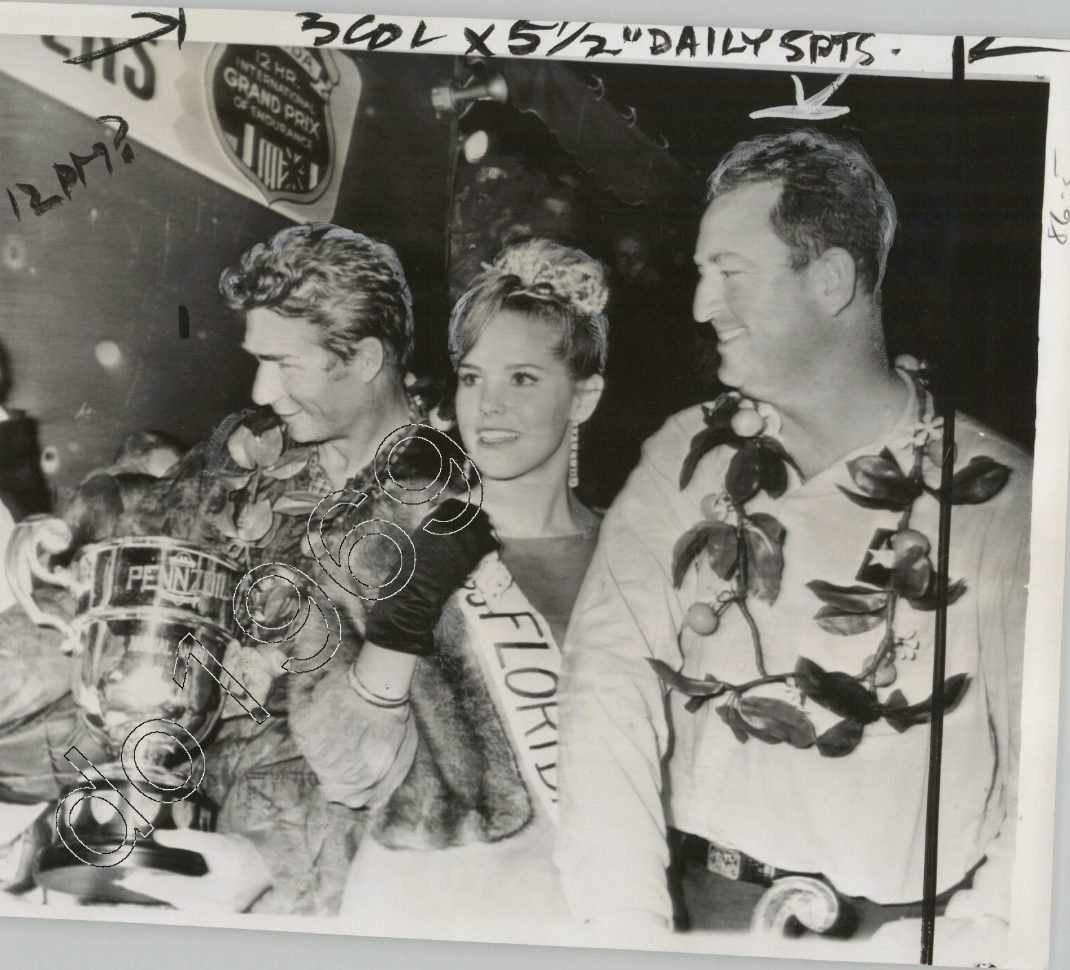
Jim Hall, Miss Florida, and Hap Sharp celebrate their Sebring 12-Hour victory on March 27, 1965. Second was the Ken Miles/Bruce McLaren Shelby Ford GT40, ahead of David Piper/Tony Maggs in Piper’s Ferrari 250LM.

See my feature on the race and Chaparral 2A Chev here:https://primotipo.com/2020/01/25/chaparral-2a-chev/

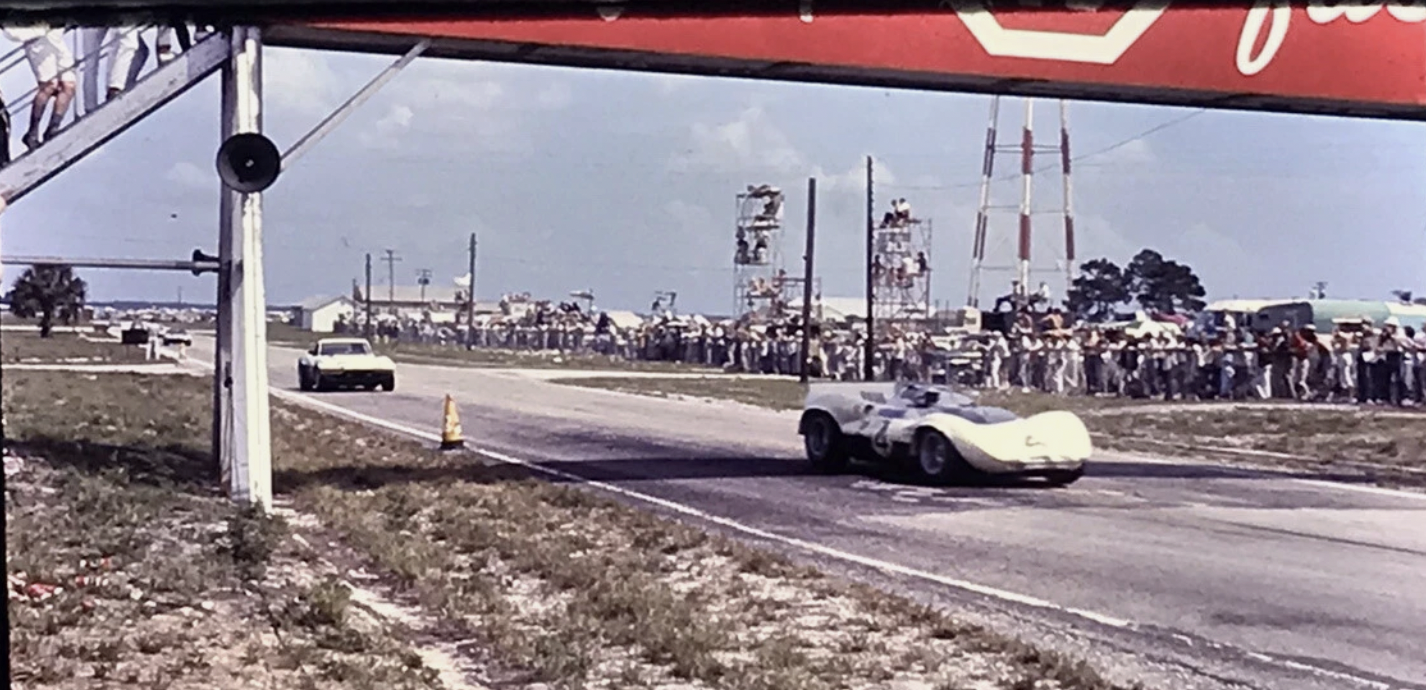
Jim Hall ahead of a Chev Corvette at Sebring in 1965 (Unattributed)

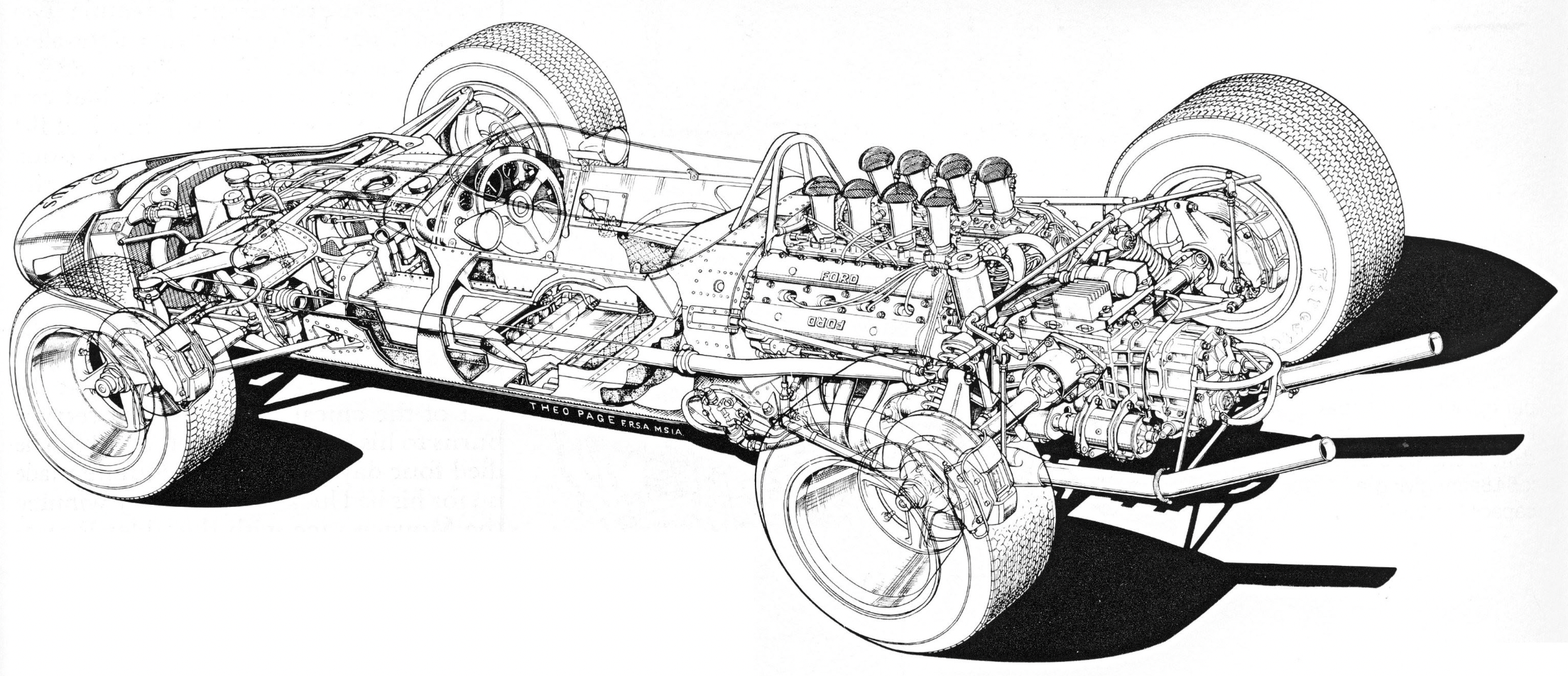
The Lotus 49 Ford Cosworth DFV blew the socks off the motor racing industry when it landed at Zandvoort in 1967; here with BRM employees present, Messrs Rudd, Stewart and Spence. The other fella is Keith Duckworth.

‘It’s no big deal Tony, despite all Colin’s froth and bubble, it’s pretty much the Lotus 43 with a decent engine!’See here:https://primotipo.com/2015/02/17/jim-clark-taking-a-deep-breath-lotus-43-brm/

Peter Arundell’s Lotus 43 BRM at Spa in 1966 (MotorSport)
1967 Lotus 49 Ford Cosworth DFV cutaway (T Page)
(Unattributed)

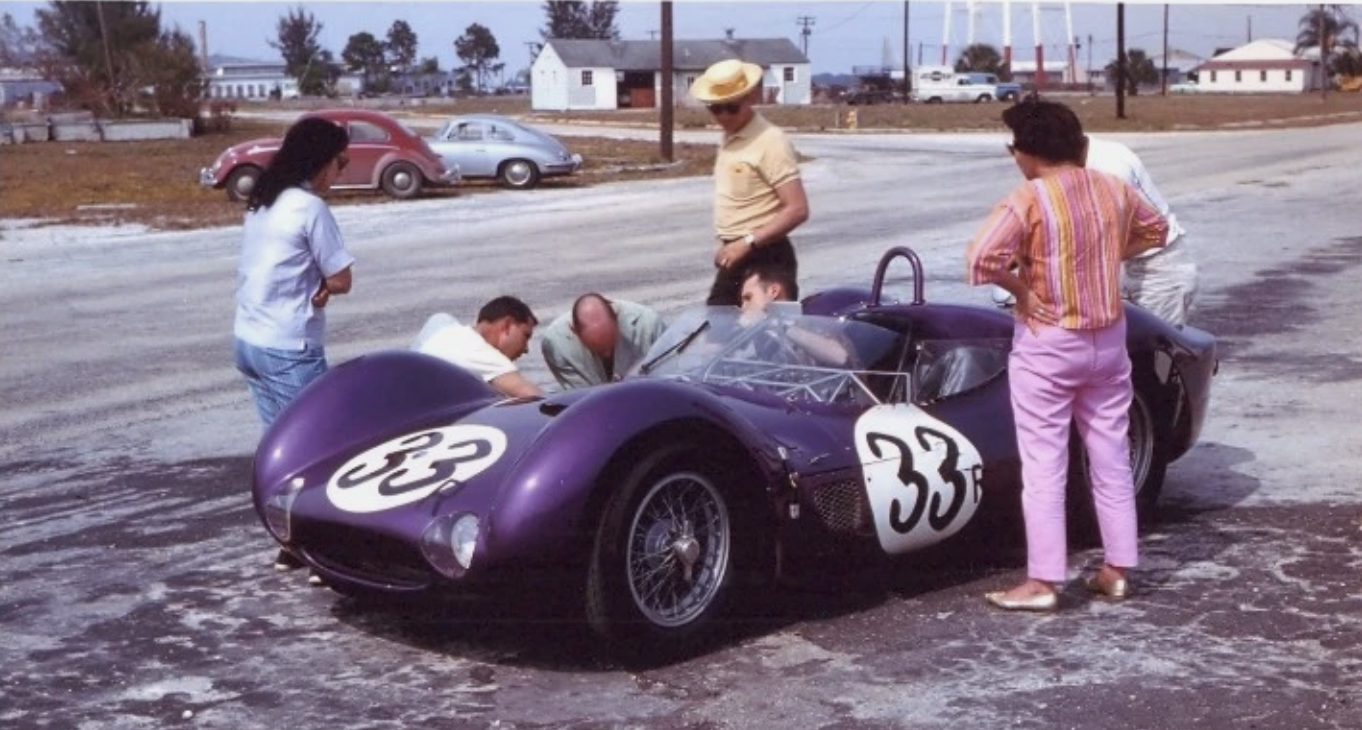
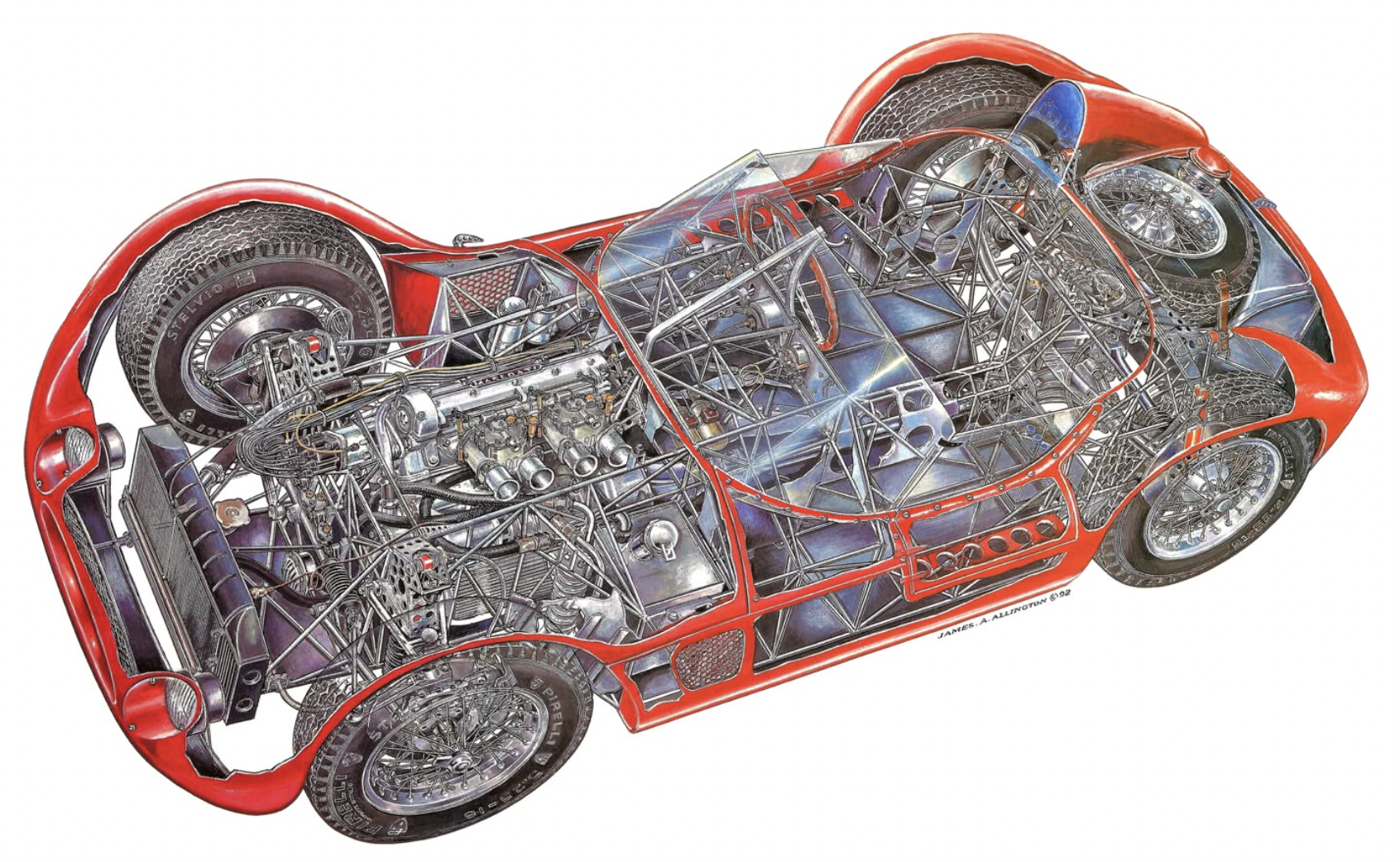
This family affair privateer entry of Enus Wilson in the 1962 Sebring 12-Hours is a bit about what the 2.9-litre, four cylinder, DOHC, two-valve, Weber fed 250bhp Maserati Birdcage was about, a customer racing car.

He shared his T61 Maser with his brother in law, Ernie Grimm, sadly the pair didn’t finish in #2471, a major engine failure caused a DNF and fire. Shortly after this incident an aluminium GM-BOP 3.5-litre V8 was cranked into the engine bay of the ex-Roger Penske car.

More about Enus here:https://forums.autosport.com/topic/103561-enus-sonny-wilson/ and here:https://www.schaudtfuneralservice.com/obituaries/sonny-wilson-jr

Maserati T60-61 Birdcage cutaway (James Allington)
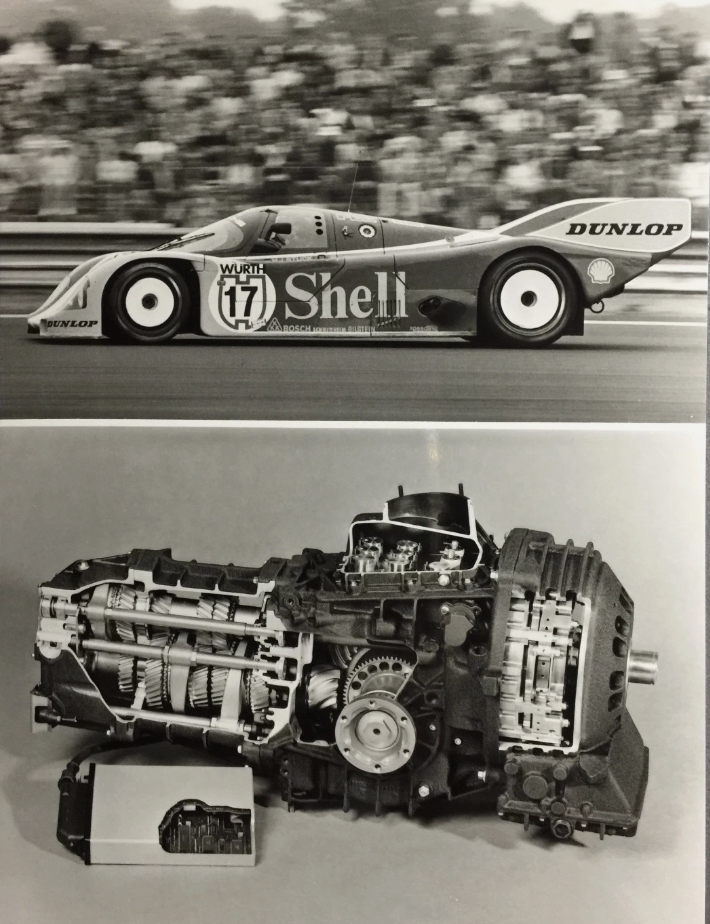
(Porsche AG)

Porsche 962C Doppelkupplungsgetriebe, or PDK, for short! Would’t German spelling competitions be a challenge!?

In 1987 Hans Stuck contested and won the ADAC Supercup sprint series in this PDK equipped lightweight 962C, chassis 962-009/962-137, the technology having made its race debut in a 962 raced by Stuck and Derek Bell to an historic win in the 1986 Monza 360km.

Nice Hemmings piece on the evolution of the PDK from its 1960s beginnings here:https://www.hagerty.com/media/automotive-history/the-shifting-history-of-porsches-pdk-transmission/ And great Porsche article about the restoration of this car:https://newsroom.porsche.com/en/2021/history/porsche-hans-joachim-stuck-962c-racing-car-reunion-35-years-26012.html

(Unattributed/Misset/WordPress)

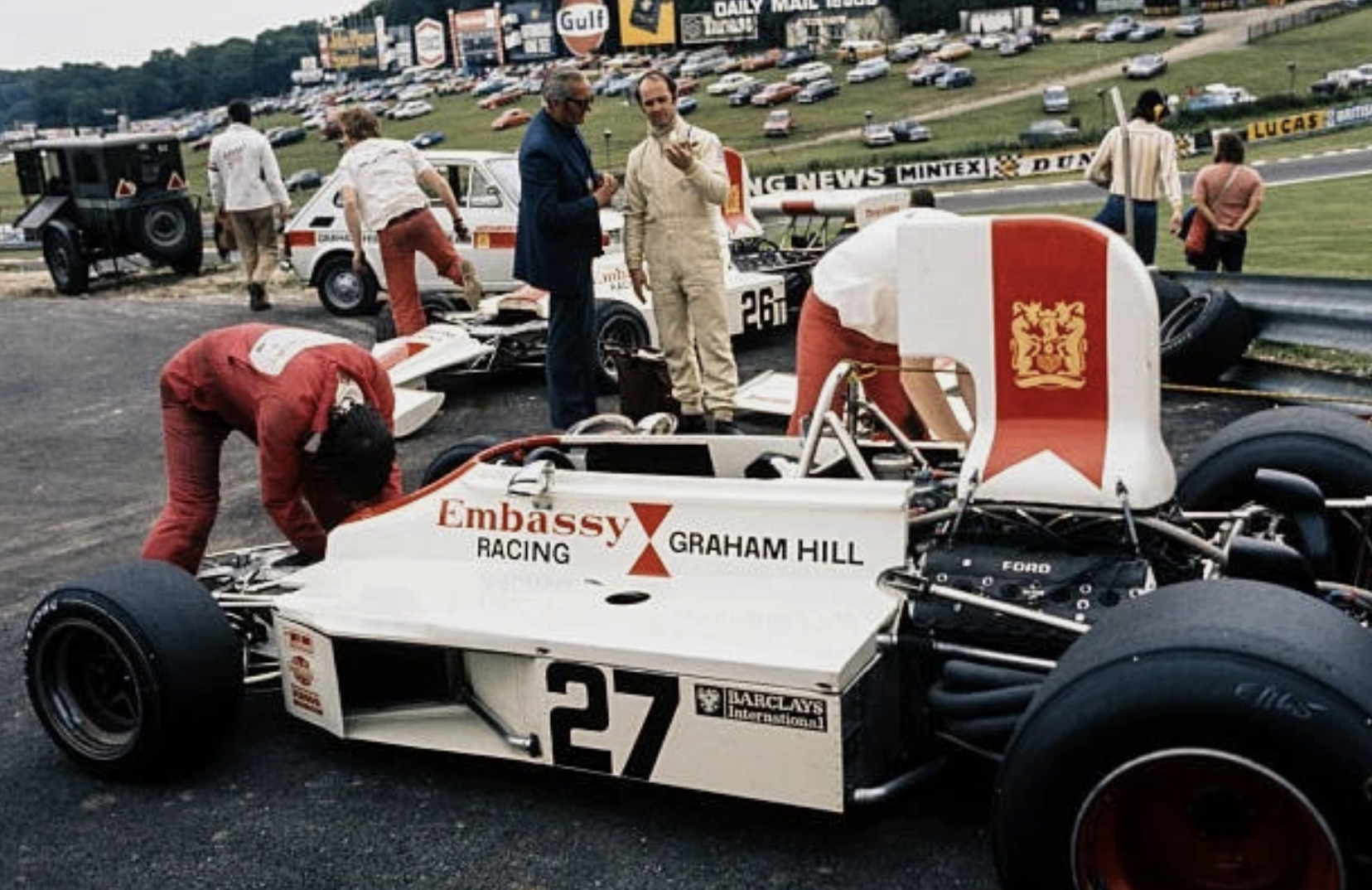
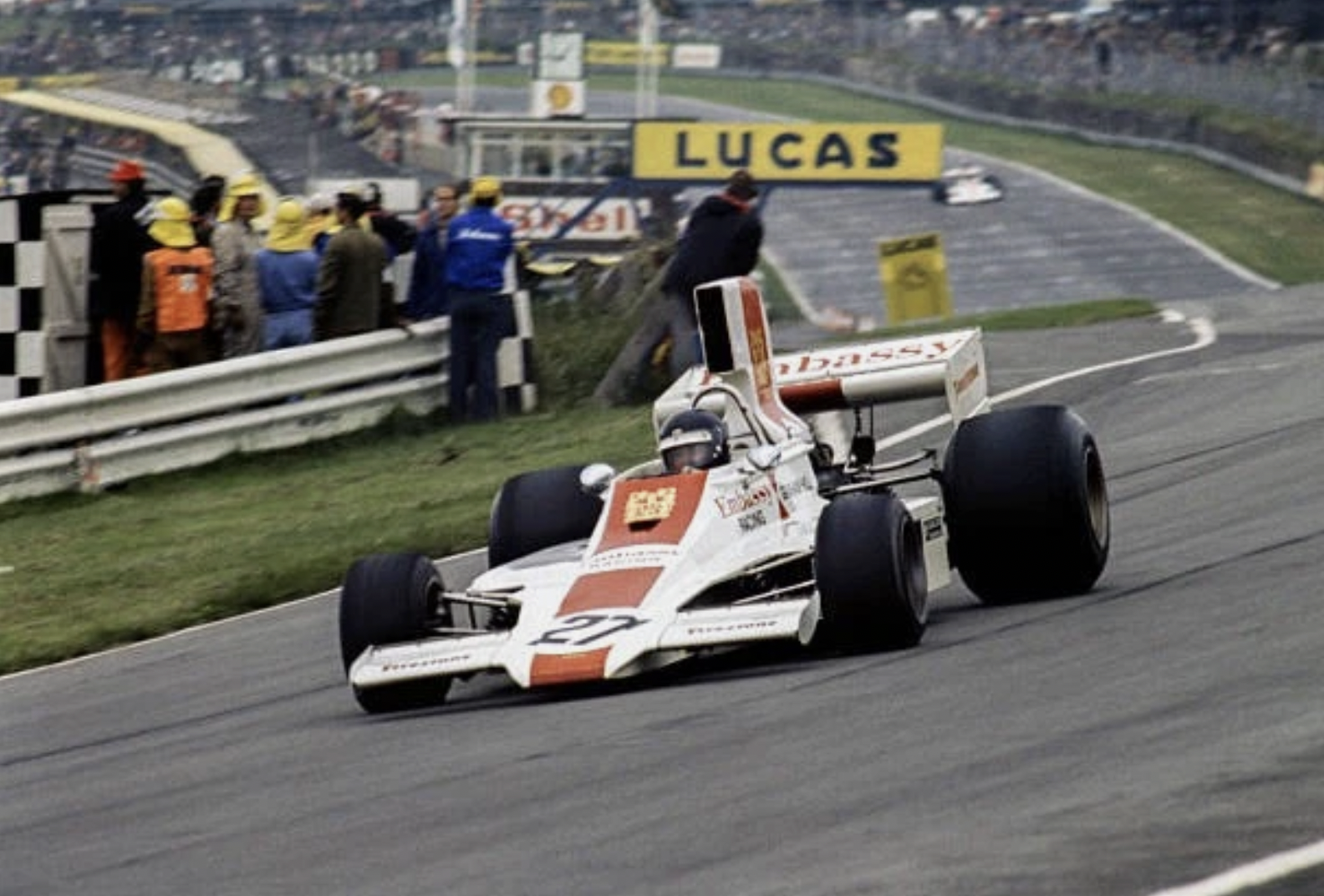
Peter Gethin at Brands Hatch over the July 20, 1974 British Grand Prix weekend with his Graham Hill Racing Lola T370 Ford DFV.

(MotorSport)

Q21 and DNF in this one-off appearance, see here for Lola Heritage on this design:https://www.lolaheritage.co.uk/type_numbers/t370/t370.html Team chief Graham Hill was 13th in Lola #26, albeit six laps adrift of race winner, Jody Scheckter’s Tyrrell 007 Ford, from Emerson Fittipaldi’s McLaren M23 Ford and Jacky Ickx’ Lotus 72E Ford

While the Lola Heritage piece relates that the T370 owed much to the uber-successful T332 F5000 design, it’s equally clear that the 1975 T400 F5000 machine bore more than a passing familiarity with the T370.

(Lola Heritage)
(M Louche)

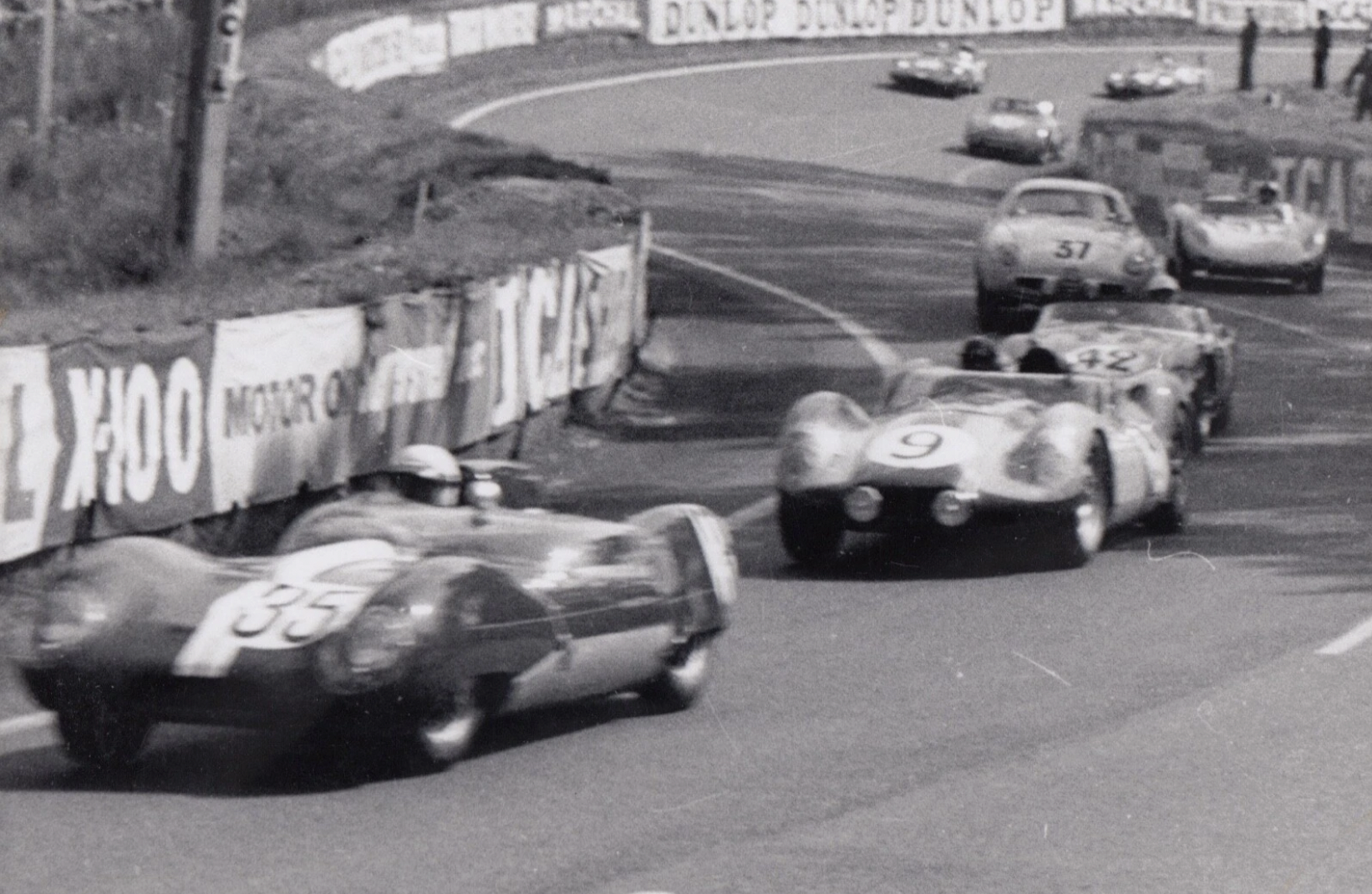
Jay Chamberlain in the Lotus Engineering Lotus Mk15 Climax 1.5 leads a gaggle of cars in the early laps of the 1958 Le Mans 24-Hours, DNF accident during the ninth hour after completing 39 laps.

The #9 Lister-Jaguar driven by Freddy Rouselle was out in the fourth hour with plunging oil pressure. Alessandro De Tomaso finished 11th in the #42 OSCA Sport 750 TN he shared with Colin Davis, while the #37 Alfa Romeo Giulietta SV Zagato, driven at this point by Marcel Lauga, was out in the eighth hour after an accident. Up front was the Olivier Gendecbien/Phil Hill Ferrari 250TR 1958.

(Motor-T Lofthouse)

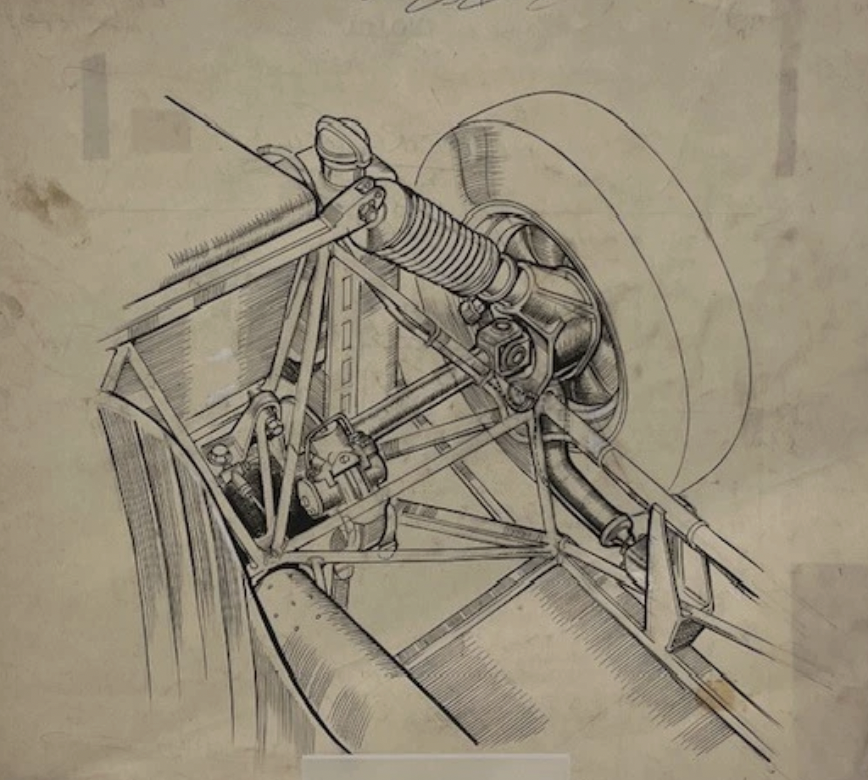
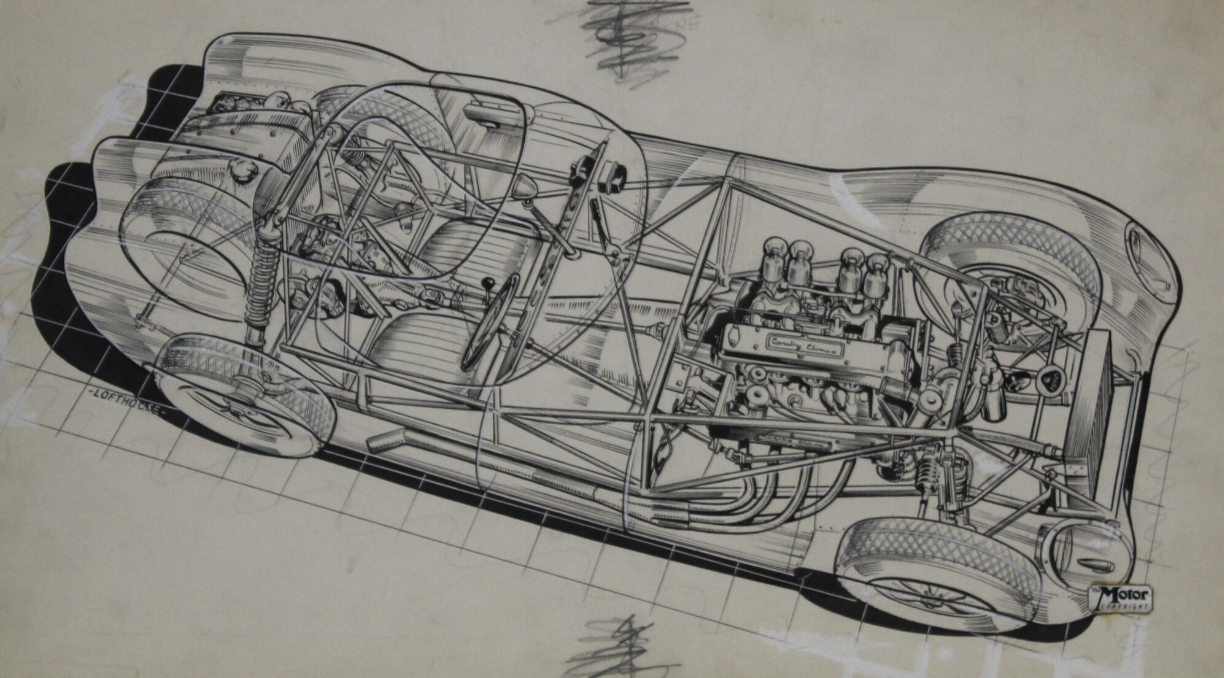
Lotus 15 Climax rear suspension detail, and car in full, in these cutaway drawings commissioned of Tony Lofthouse by Motor in 1958. Feature on the Lotus 15 here:https://primotipo.com/2017/11/09/dereks-deccas-and-lotus-15s/

Motor-T Lofthouse)
(Unattributed)

A couple of not-the-usual-suspects shots of F2 McLaren M4A Ford FVAs at Thruxton in 1968: Graham Lawrence above, and Guy Ligier below.

Ligier was eighth in his Ecurie Intersport machine, while the Kiwi was 13th in his Chequered Flag/McLaren Racing entry.

Their best results in the three Euro F2 rounds they contested that year – Hockenheim, Thruxton and Jarama – were in the first heat at Thruxton where Guy was fifth and Graeme seventh.

(Unattributed)

Credits…
MotorSport, Road & Track, Theo Page, Porsche AG, Lola Heritage, Maurice Louche, Motor-Tony Lofthouse, James Allington, Richard Parramint Collection, Vintage Everyday

Tailpiece…

(Vintage Everyday)

What a shot!

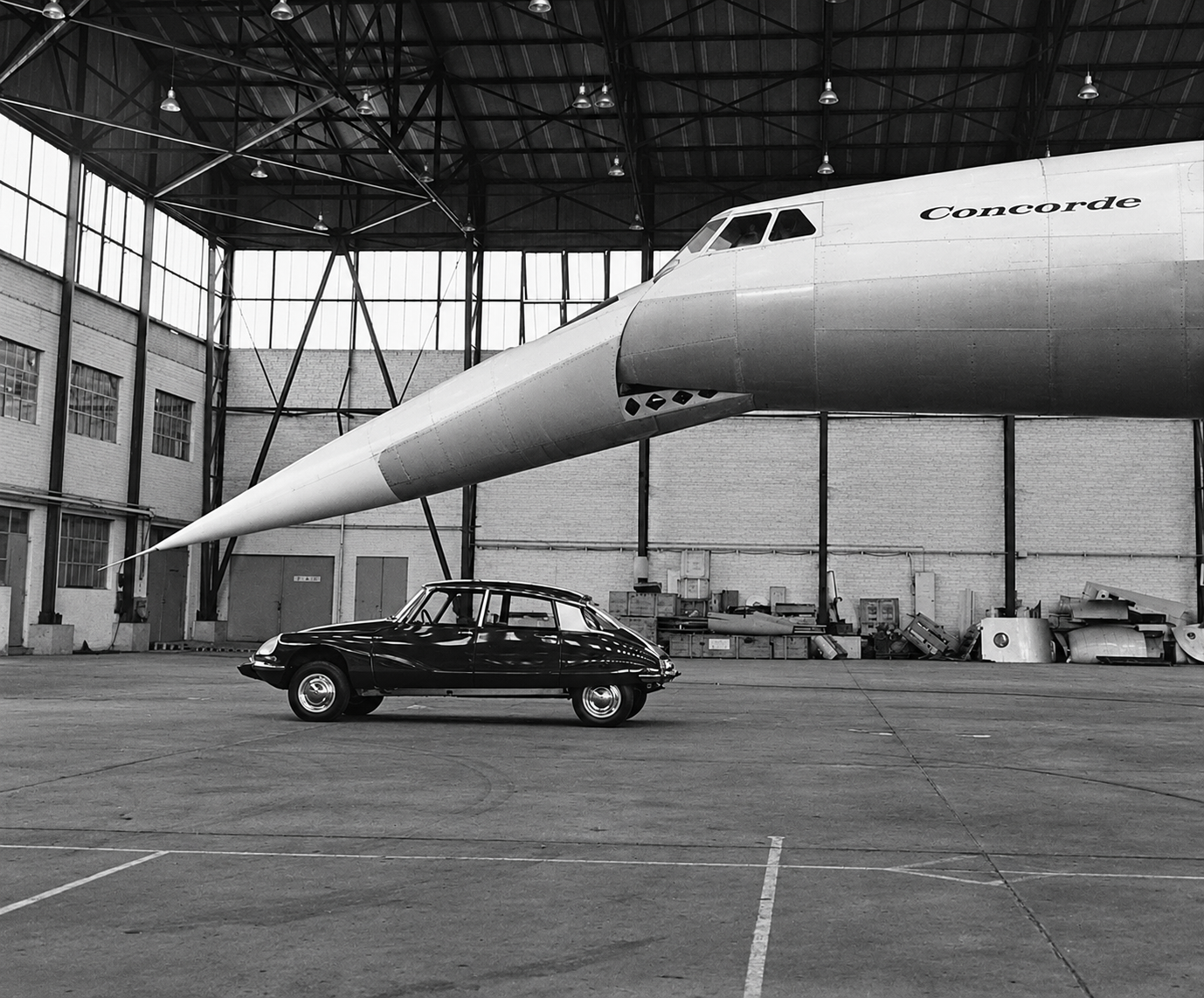
Citroen DS Goddess and a Concorde prototype at Le Bourget Airport, Paris in 1969 just after Concorde 001 F-WTSS made the stunning aircraft’s maiden flight from Toulouse on March 12, 1969.

More on the shoot here:https://www.vintag.es/2025/12/concorde-citroen-ds.html

Finito…