

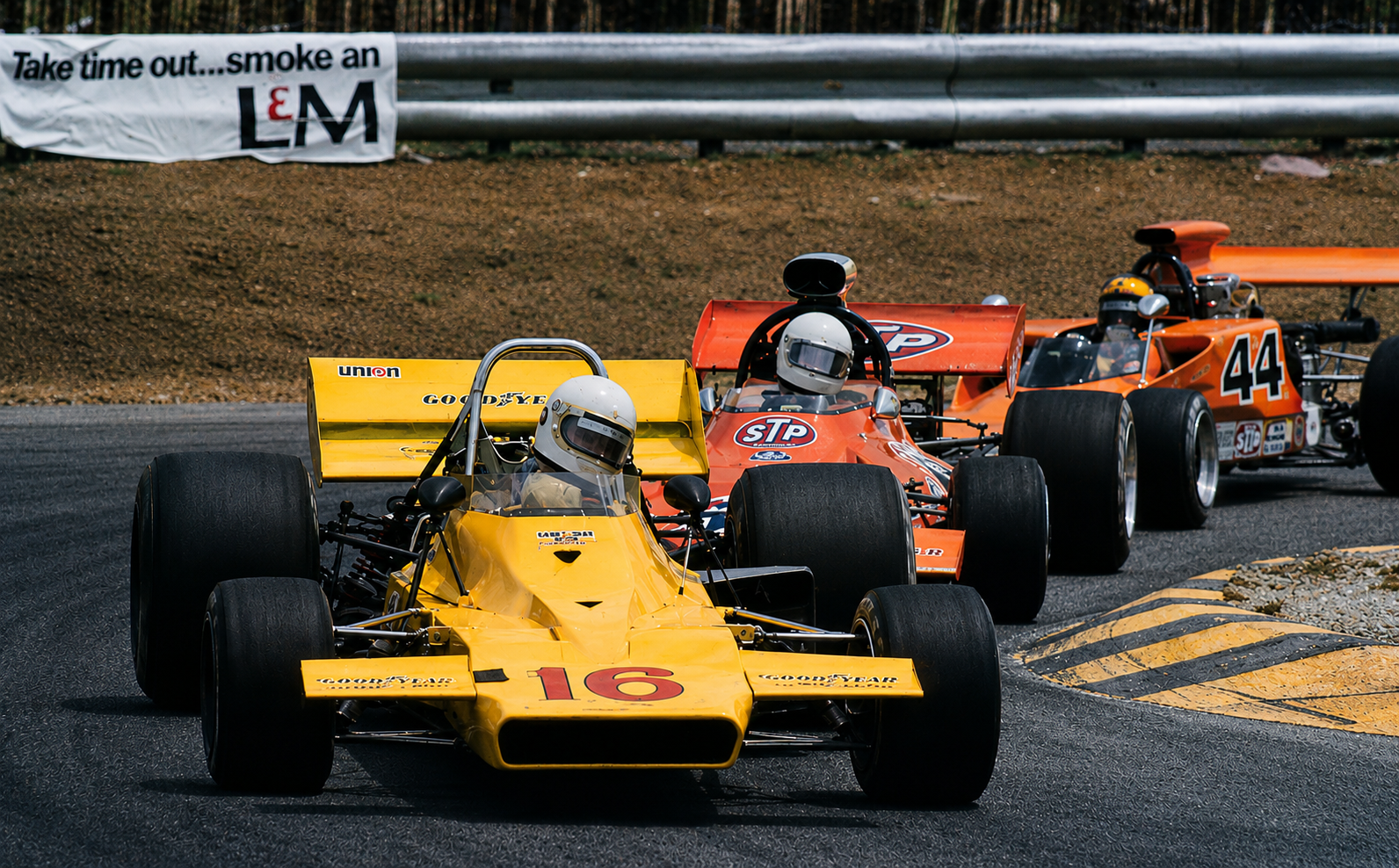
The Frank Matich, Carroll Smith and George Follmer Mighta-Been
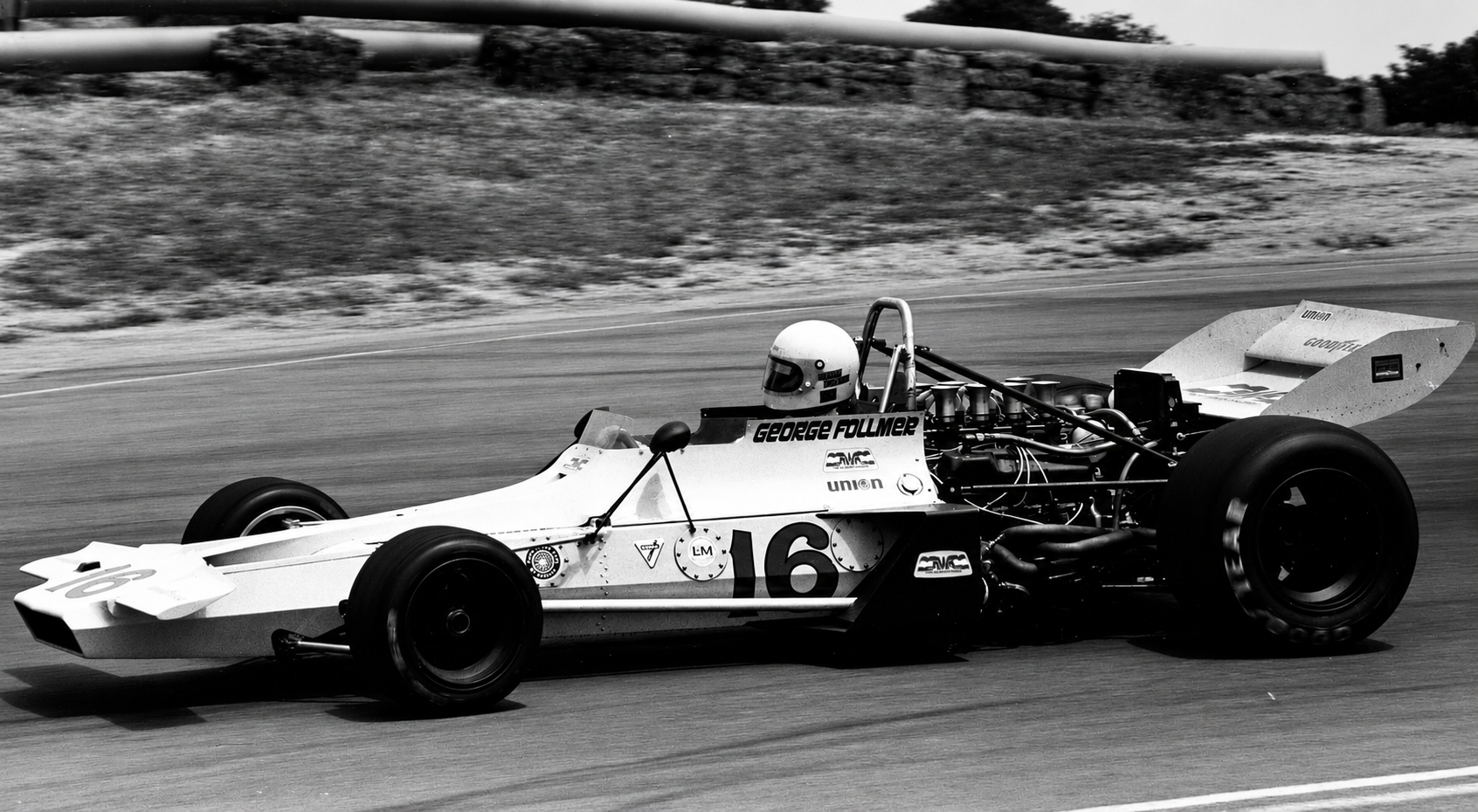
US ace George Follmer raced a Matich A50 F5000 in 1972. Stateside commercial success seemed within Frank Matich’s reach, but when ‘Tinker’ Bell gave Follmer the plum Porsche Can-Am drive, Frank’s deal turned to custard.
In the words of that Confucian philosopher Frank Gardner, ‘If yer aunty had balls she’d be yer uncle’. Ifs, buts and maybes mean nothing in motor racing; results are everything, the only thing.
At the start of the 1972 L&M US F5000 championship, Frank Matich (FM) had George Follmer – one of the best American road racers of his era and soon to be a Shadow F1 driver – aboard a Matich A50 in a well-funded professional team.
By mid-season, Mark Donohue – one of the greatest American racers of the era – had a near-death experience which gifted George the plum Roger Penske Porsche 917/10 Can-Am drive. Three weeks before Donohue’s accident, Follmer shunted the Matich badly enough to put it to one side.
Matich’s anticipated A50 sales off the back of Follmer’s probable success were shot out of the sky. Fame and fortune for Follmer, rooster to feather duster for Matich.
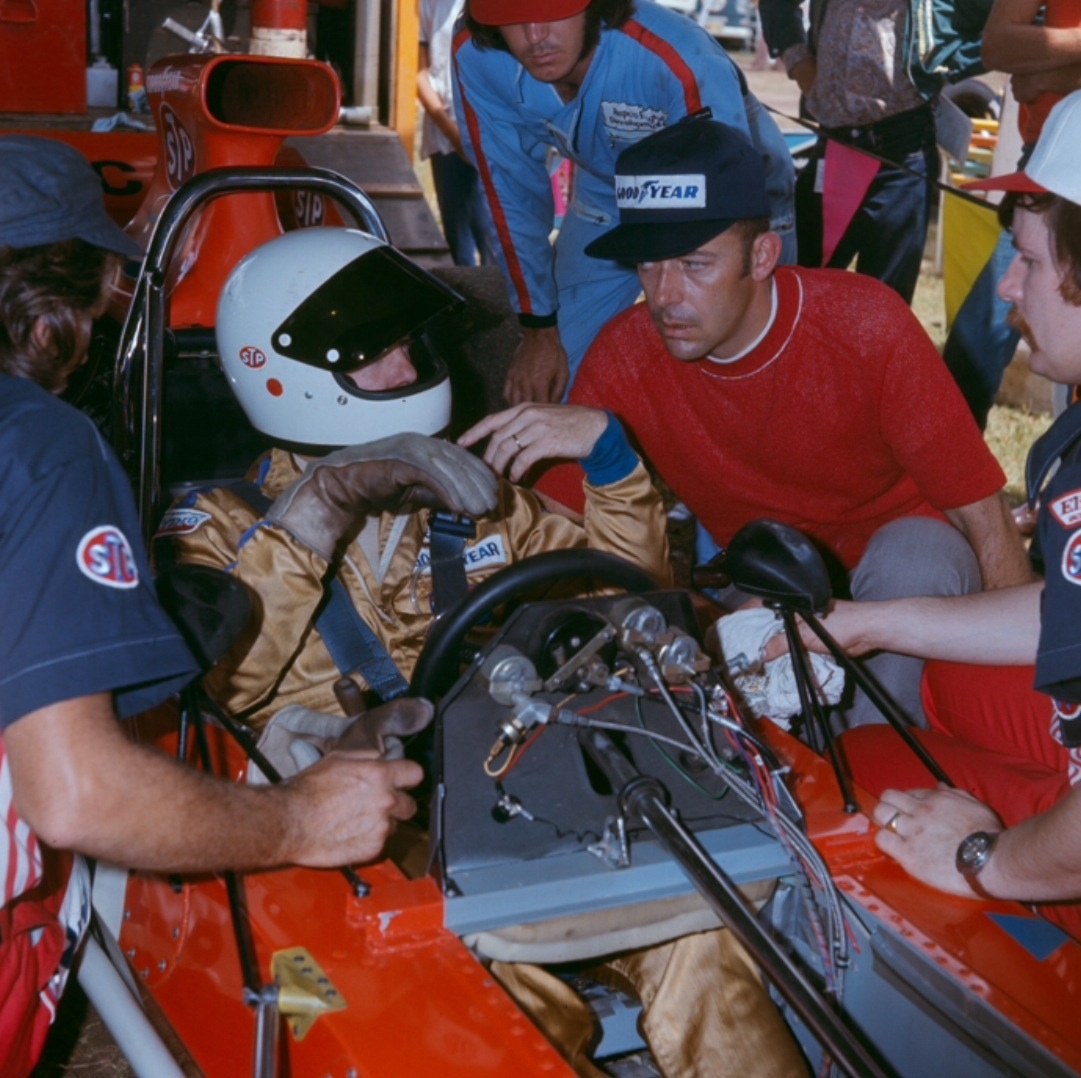
Carroll Smith
Carroll Smith was the man responsible for the deal that put Follmer into a Roy Woods Racing Matich A50 Ford.
Smith cut his racing teeth as a driver aboard a Formula Junior Cooper in Europe. When his money ran out, Carroll Shelby brought him home to San Francisco to work on his works-Ford endurance program.
Plying his trade as Carroll Smith Consulting from 1969, he became a race engineering/team management gun for hire.
As many of you will recall, he and his wife came to Australia in 1977 to assist Allan Moffat’s Ford Falcon GT Coupe race program. These Moffat and Colin Bond-driven cars ruled the 1977 roost – six one-two Australian Touring Car Championship finishes plus a Bathurst 1000 win were amongst a great season’s results.
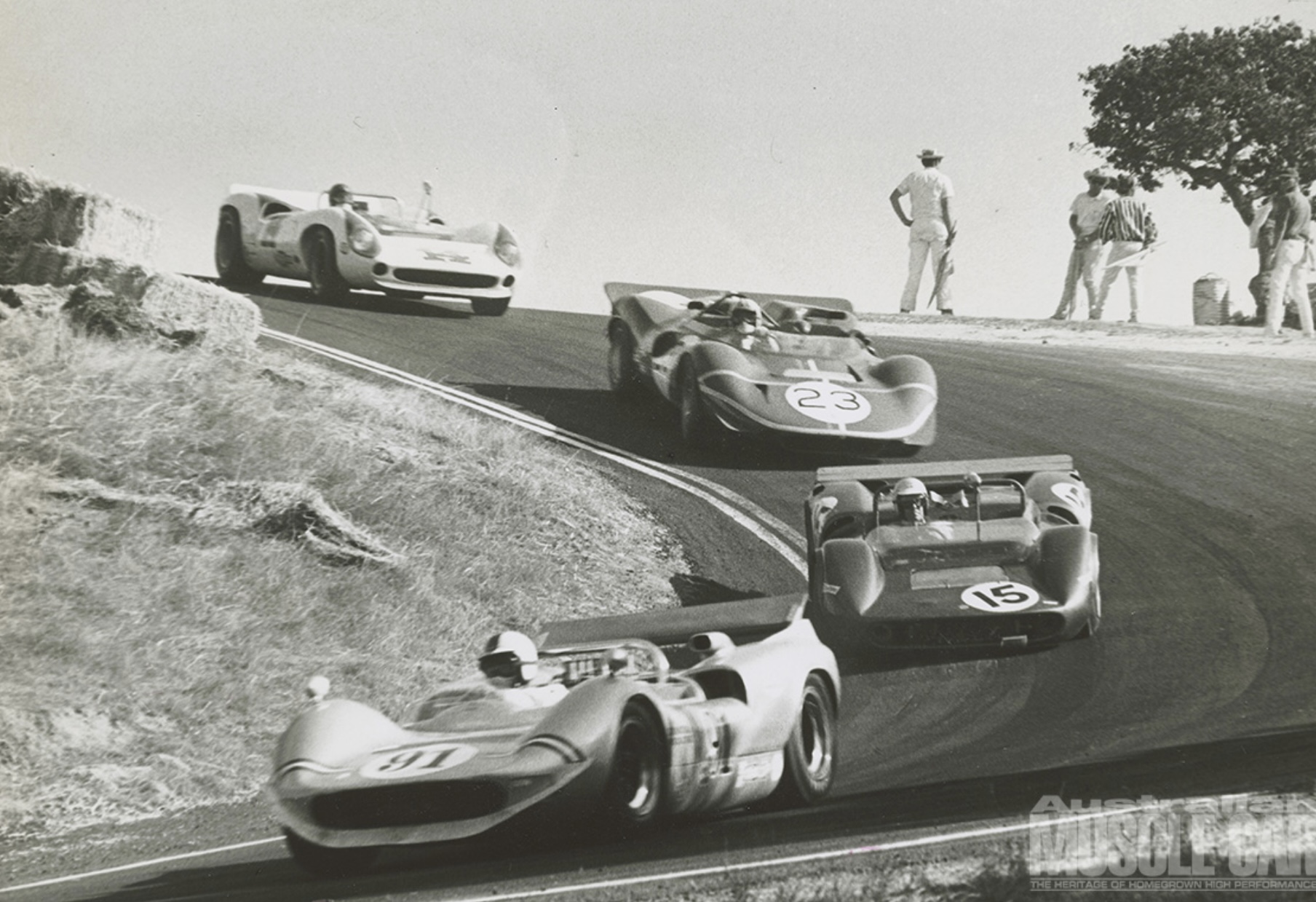
Smith met Matich during the 1967 Can-Am series. FM raced two Repco 4.4-litre V8-powered Matich SR3s in four rounds: Road America, Bridgehampton, Laguna Seca and Riverside. Matich was no threat to the 6-litre McLarens and Lolas, but he impressed pit-pundits with the speed of his light, great-handling cars. His planned return in 1968 with the Matich SR4 came to naught when the chassis and 5-litre Repco 760 quad-cam V8 ran hopelessly late. But Frank and Carroll stayed in touch throughout.
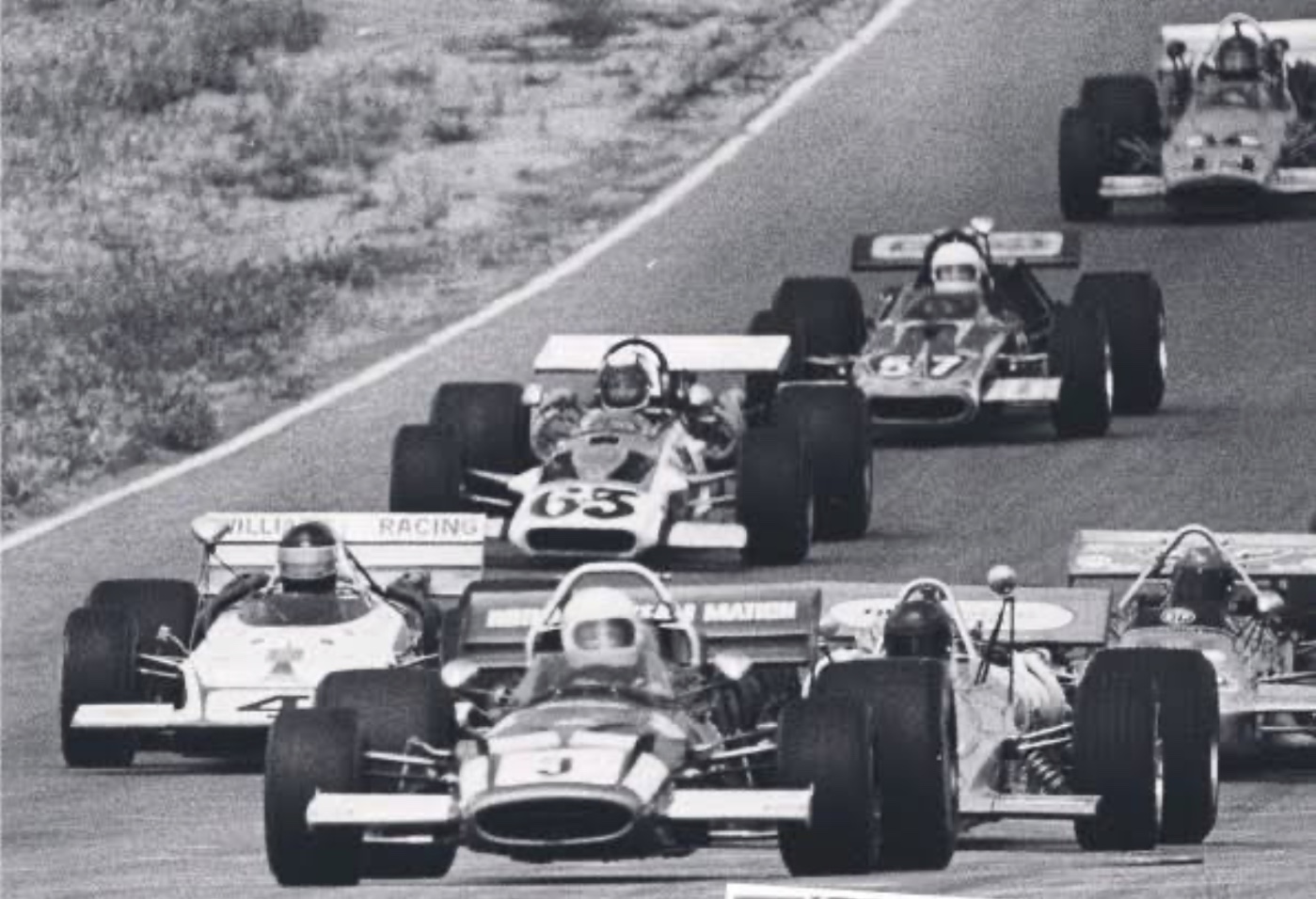
Formula 5000
In a typically ballsy move, Matich bought a McLaren M10A F5000 before CAMS had chosen the class as Australia’s next ANF1. By the end of 1970, he had won a couple of Tasman Cup rounds and the Australian Grand Prix; his new McLaren M10B was fitted with an equally new Repco-Holden ‘308’ F5000 engine on that sunny Warwick Farm day.
Emboldened by success, Matich contested the first two 1971 US L&M rounds. In this April/May ‘hit and run visit, he won at Riverside and was second at Laguna Seca before returning home to chase the Gold Star.
Smith noted Matich’s pace and reliability. His Repco-Holden M10B was quicker than some highly developed Chev and Ford-powered McLaren, Lola, Lotus, Surtees and Eagle cars.
Matich then won the November 1971 AGP at Warwick Farm, racing his brand new Matich A50 Repco. The sleek aluminium monocoque racer turned a wheel for the first time on the Thursday morning. Straight out of its Brookvale box, it was immediately quick, winning the big race on Sunday.
Over in the States, looking for his next gig, Smith pitched a deal to American team owner, Roy Woods, to race a Matich A50 Repco-Holden. Additionally, he wanted the US distribution rights for the car and engines.
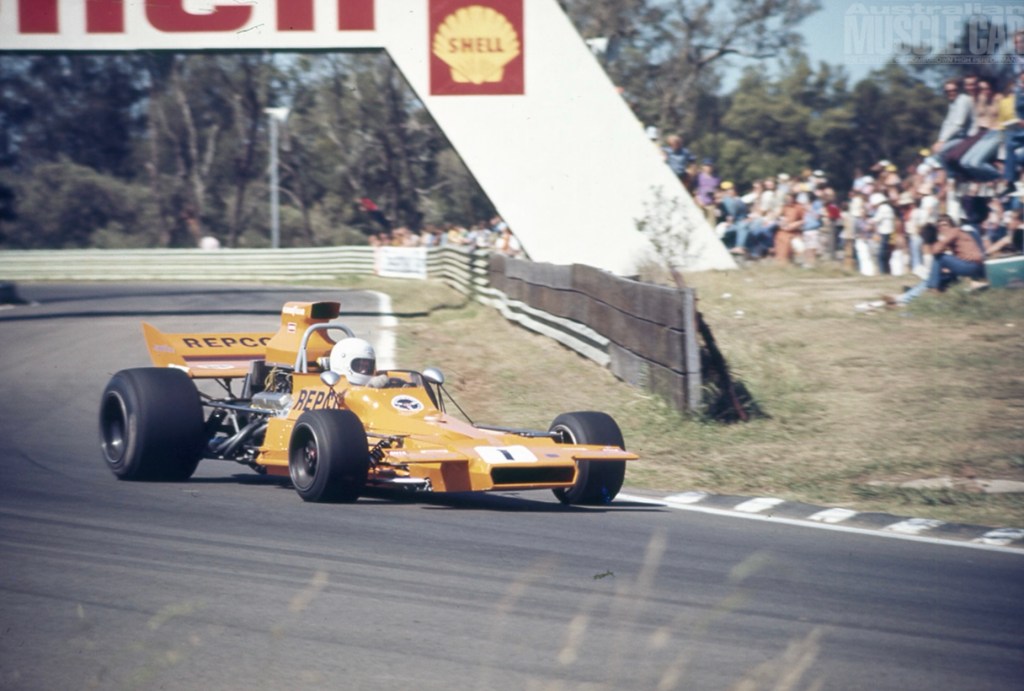
Matich A50 Repco-Holden
Australian F5000 historian Jay Bondini has a copy of Smith’s December 1971 proposal to Woods. While it’s a sales pitch, it makes a fascinating insider’s view of the late 1971 State of F5000 Play.
Of the A50, he wrote, ‘Most other vehicles are two to four year old Formula 1 designs with 550lb engines mounted high…this car was designed for the Repco-Holden engine. A great deal of attention has been paid to the inter-relation of thrust lines, roll-centres, jacking lengths, vehicle static and dynamic mass-centres. The result is a car that is very close to a good Formula One car in concept.’
‘The chassis platform is remarkably stable under dynamic conditions. It is relatively softly sprung with very progressive weight transfer and soft, linear camber curves. It puts power down very, very smoothly. Like a good Formula One car, it will not want to slide much, and if its suspension is stiffened to allow sliding, lap times will suffer. The car will be sensitive to chassis set-up and aerodynamic changes, but not to gearing and fuel load. It is very strong and straightforward. It will be relatively easy to maintain and repair. The engine program should be cheaper than a Chevrolet program. Chassis and engine development costs should be very low.’
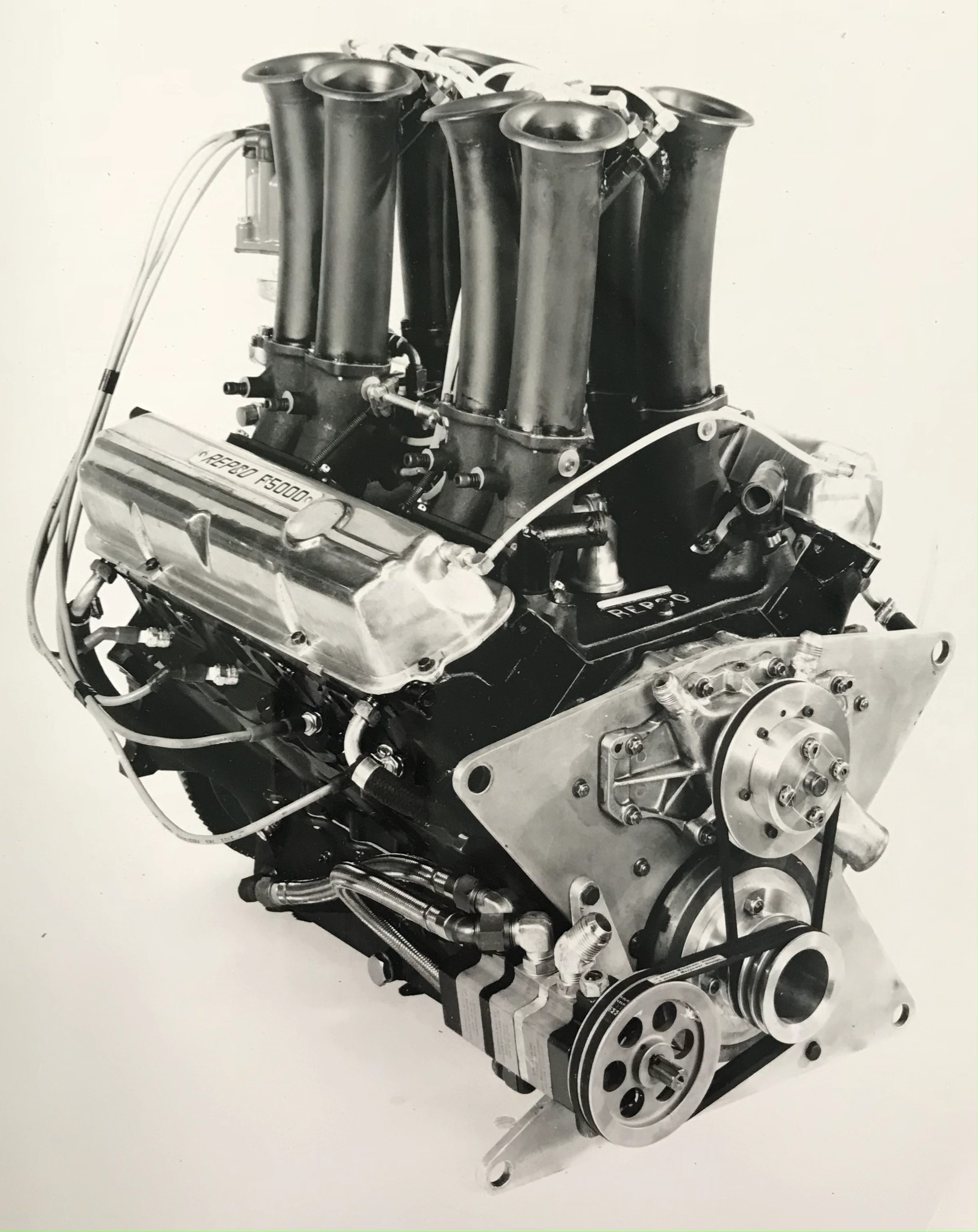
REDCO
Smith was even more effusive about Repco Engine Developments Pty Ltd (REDCO).
This Repco subsidiary was formed to design, build and develop the F5000 engine using some of the team and equipment in the same Maidstone, Melbourne factory which built the twice-F1 championship-winning 3-litre Repco-Brabham F1 V8s.
‘…their dyno procedures are much more rigorous than ours…their power runs last at least a minute, nothing is read on the upswing. The Repco curve is notably flatter than the Ford or Chev.’
‘…they have a design staff of about four men, including Phil Irving. (designer of the 1966 Repco-Brabham F1 engine). They have a full machine shop and employ a permanent build crew of about 10 men. Two complete dynos and a very complete flow bench are in operation. They have the most complete dyno instrumentation I have seen.’
‘The build procedure is impressive…Each individual intake and exhaust port is flowed. Connecting rods and pins are made by Repco Development, as is the entire valve train, which is the lightest (and most expensive) I have seen. Pistons are cast, the attitude being that good design allows a lighter and cheaper piston this way and that forged pistons are only a necessity when poor design or incomplete development must be overcome with brute strength.’
‘The man-hours and dyno hours of development behind the engine are staggering…The number of cam profiles, cam timing changes, injection timing changes, dynamic balancing, etc., is almost beyond belief…Present major development areas are a vertical port head configuration, a flat plane crank…The basic attitude, much influenced by Brabham and Matich, is to produce a racing engine with a very wide operating range, flat power curve, instantaneous throttle response and outstanding reliability. To achieve this, they are more than willing to sacrifice peak power.’
‘Repco intends to establish spares in the United States for the Continental Series and to provide an engine man.’
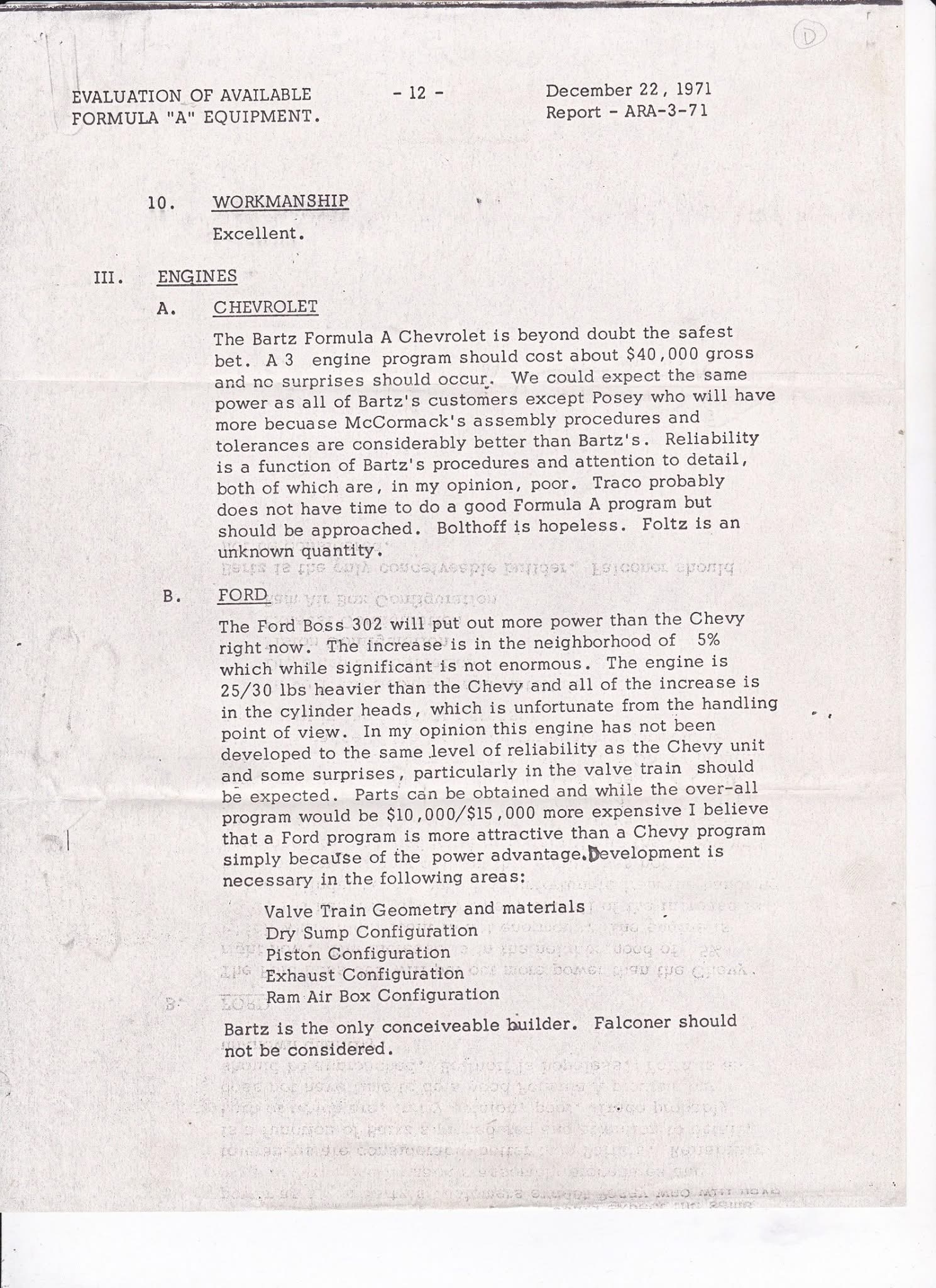
The Ford engine was 25/30 pounds heavier than the Chev, about 45/50 pounds more than the Repco-Holden. Smith estimated the ultimate power of the Boss as 5% greater than the Chev, with the Ford’s areas of development to achieve that, its valve train, dry sump, pistons, exhaust and airbox.
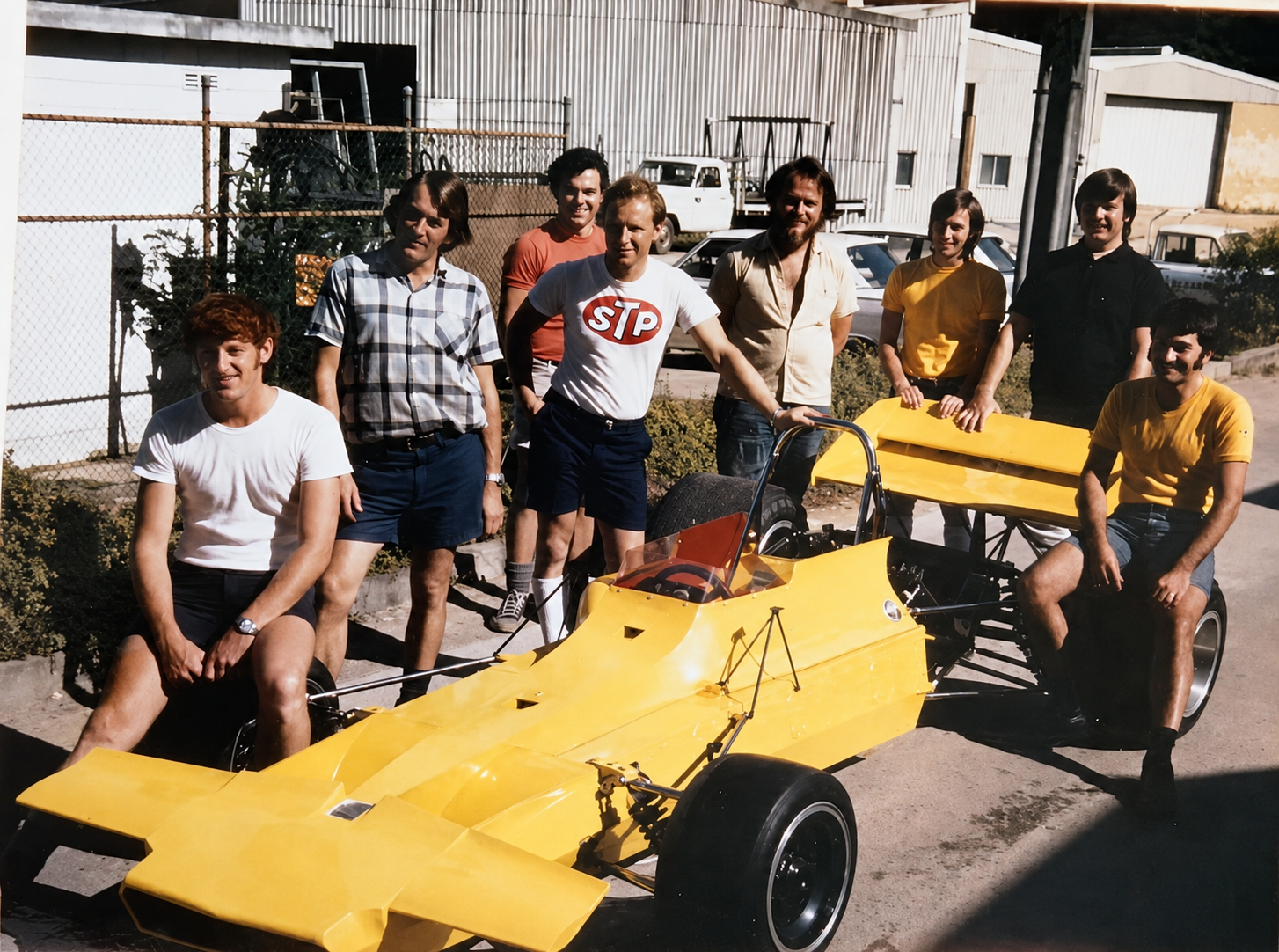
Half a Deal
While Smith sold his socks off, he only got half his deal over the line. Woods went with the A50 but not the Repco motor; he wanted an Al Bartz prepped Boss 302.
Follmer raced Shelby Boss Mustangs in 1970 and won two Formula A races in a Lotus 70 Ford; he was keen to stay with a known quantity, Roy Woods agreed. Had Follmer contested the two Californian races Matich dominated the year before, perhaps he would have voted for the Repco-Holden. More on the Ford Boss 302 here:https://primotipo.com/2025/02/25/ford-mustang-boss-302-v8/
This was still a great commercial opportunity for Matich. ‘Had Follmer won consistently, the sale of 10 cars was possible in the US and Europe,’ observes Derek Kneller, FM’s chief mechanic throughout his F5000 program
‘Frank had the capital to build them. We were already a subcontractor in the way Brabham was. The Commonwealth Aircraft Corporation in Melbourne cast our wheels, uprights and the steering rack. They fabricated some of our tubs, too. The cars were then built up by our team, fabricating the rest in Sydney. It would have been a pinch, but it was doable, flexing the size of our team as we needed.’
When Woods finally popped his seal on the deal, Smith jumped on a Pan-Am 707 and was soon ensconced at Brookvale assisting in the build of A50 chassis 003.
‘With the first 1972 Tasman round on January 8, we were focused on FM’s car and spares package for eight races in eight weeks. Having Carroll there was great, essential really; they wouldn’t have got their car otherwise!’
‘We changed the chassis bell-housing and rear cradle to suit the Ford. Even though the tub wasn’t designed for the bigger and heavier Ford, we were happy with the installation.’
Smith joined Matich for a few rounds to get a feel for setup changes in the field, but he was soon back in the US chasing Al Bartz.
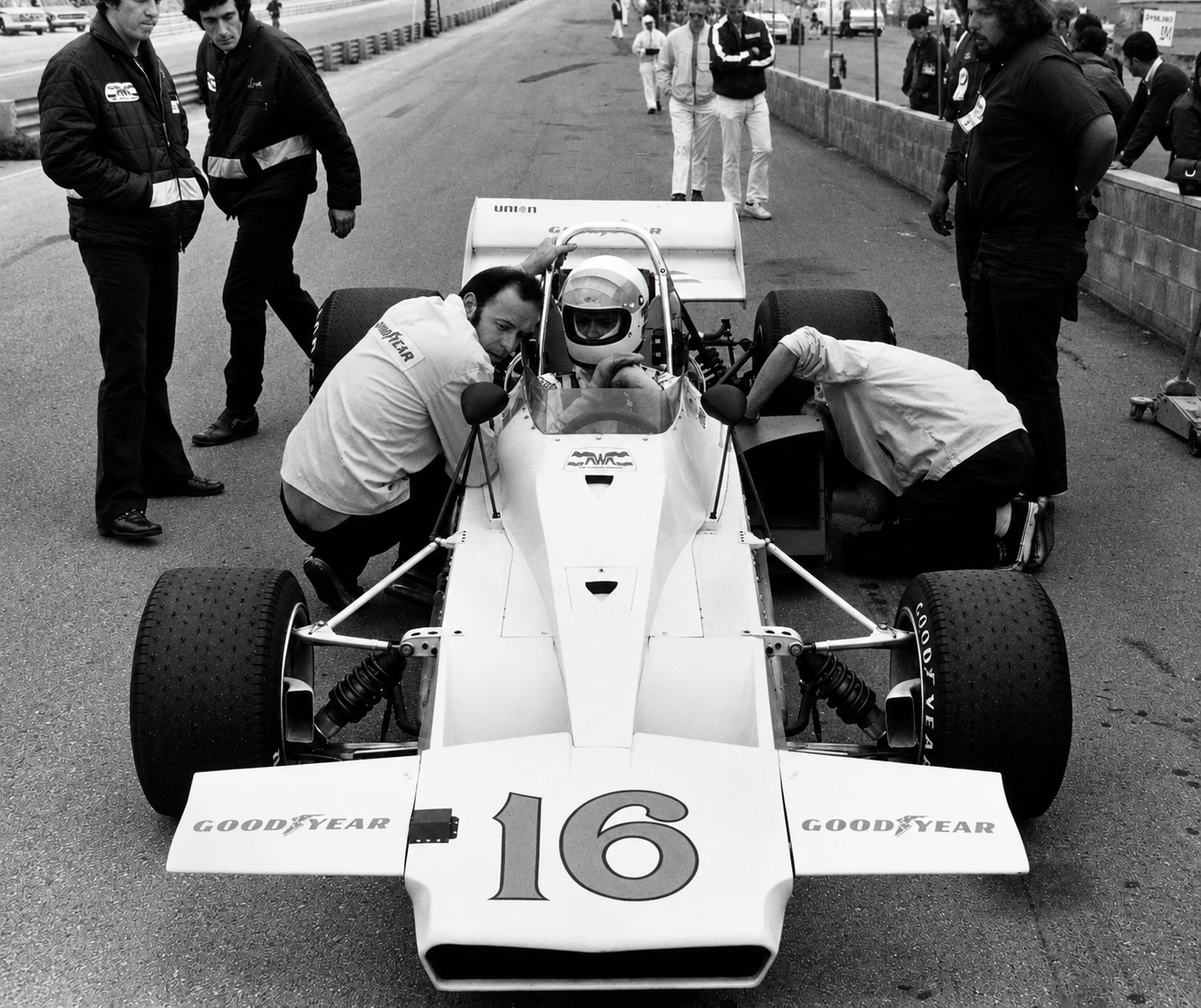
Roy Woods Racing
Final preparation of A50-003 was completed in Woods’ Northridge, LA, workshop. The package appeared good, aided by Smith’s intimate understanding of it. Matich was a Goodyear test driver, so the tyres were sympathetic to the needs of the chassis too.
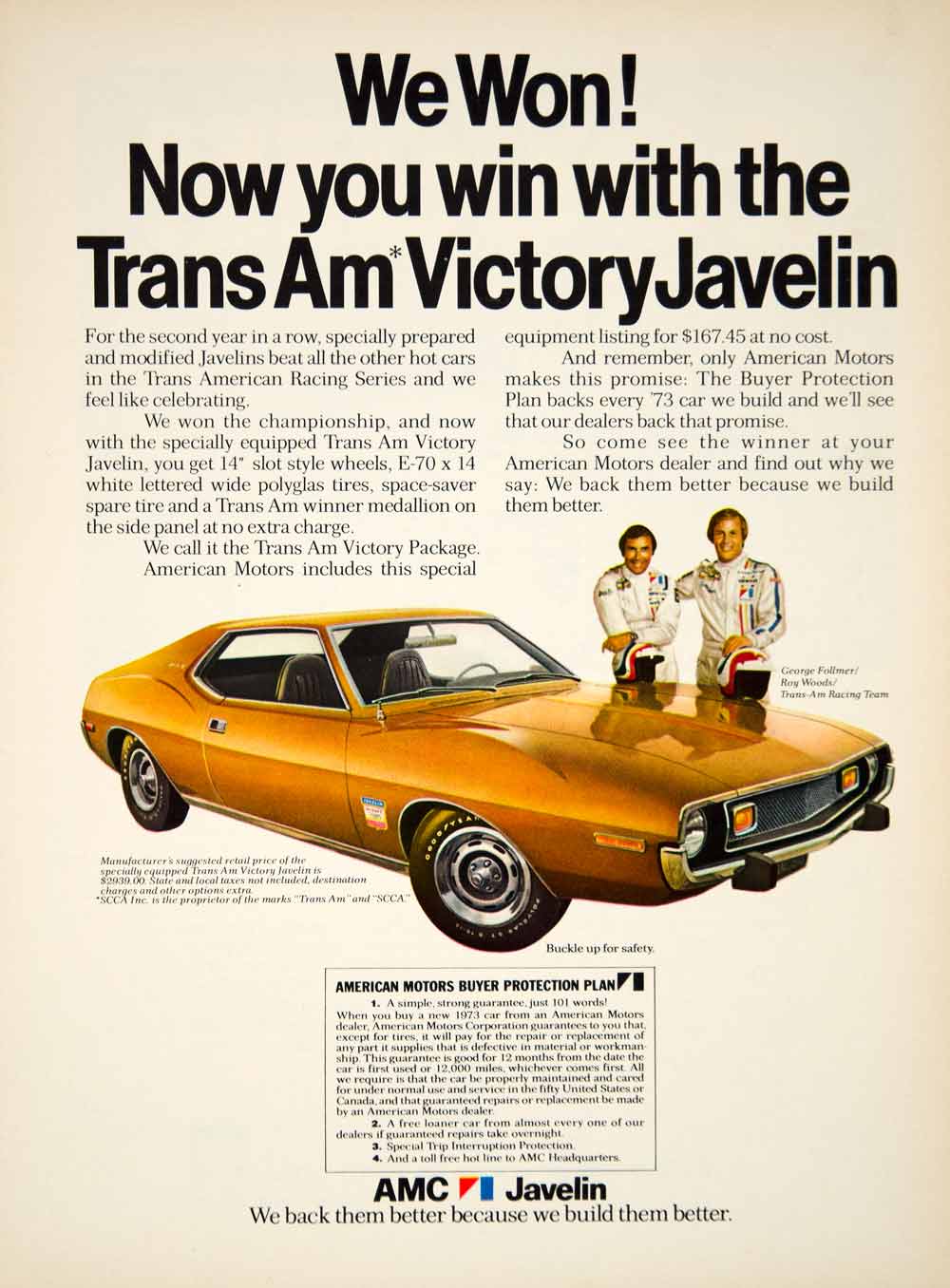
Follmer’s season upswing started at Lime Rock on May 6 when he won the first Trans-Am round at Lime Rock. Later, he was victorious at Bryar, Watkins Glen and Donnybrooke, taking the title aboard his works AMC Javelin.
Roy Woods Racing commenced in 1969. Early success resulted in the outfit being awarded the Javelin factory race contract when Penske relinquished it to run the Porsche Can-Am program.
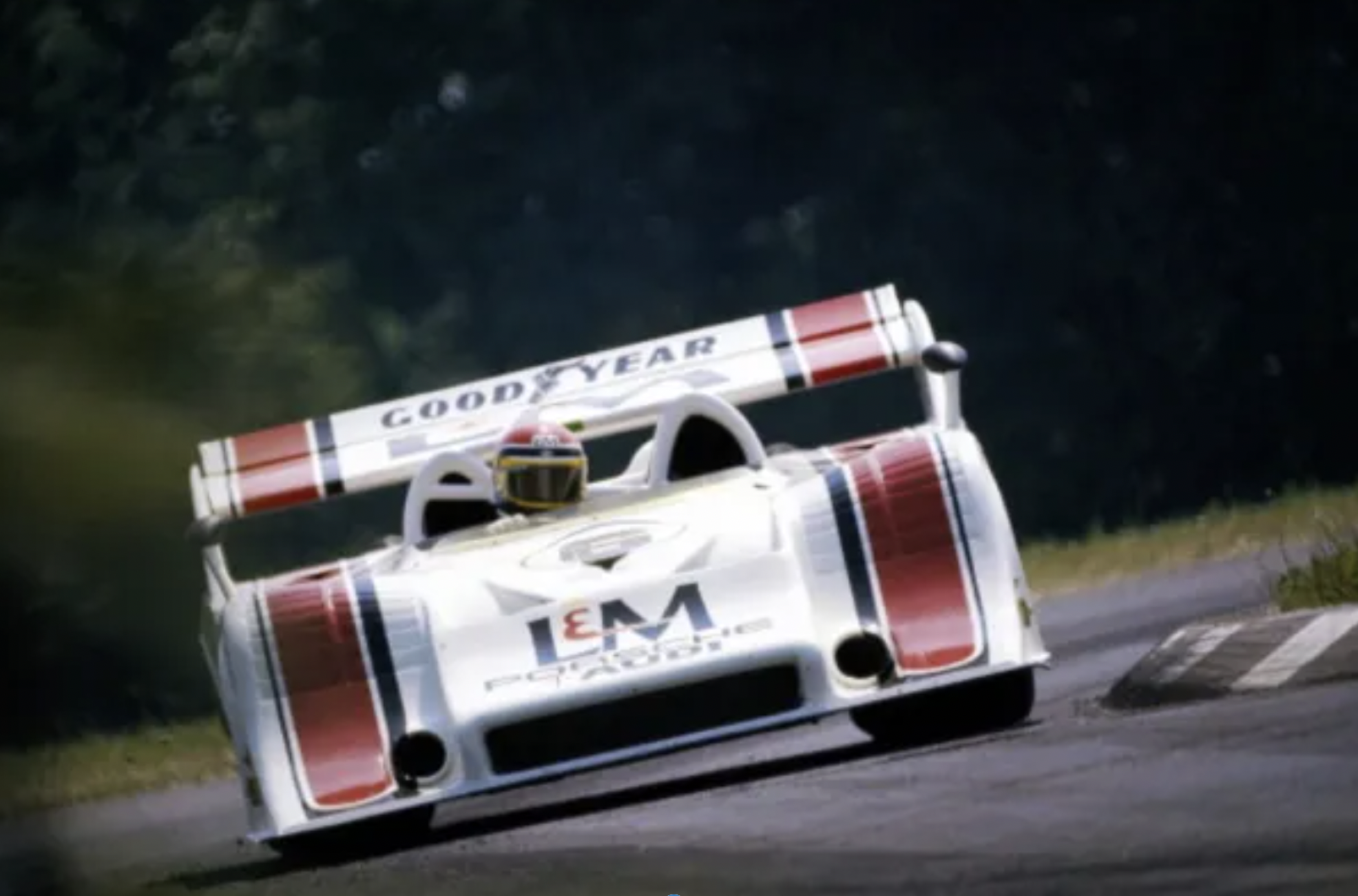
All was coming along well with the Porsche 917/10 until it lost its rear bodywork at 150mph during testing before the second round at Road Atlanta on July 3, with Mark Donohue at the wheel.
His accident was similar to Bruce McLaren’s fatal 1970 Goodwood crash. Donohue’s out-of-control car was launched by a mound of earth into the air, whereas Bruce hit an unyielding marshal’s post in his Can-Am McLaren M8D Chev. While lucky to survive, Donohue’s leg/knee injury kept him out of action for months. Follmer, the best credentialled available bloke, got the drive.
It was a big pair of size-nines to fill. Donohue had been there every step of the way from the first tests of the unruly beast at Weissach, and then as the Penske crew worked hard with Porsche to develop race-winning pace and reliability.
While the Porsche was quicker than the McLaren M20 Chevs pedalled by Denny Hulme and Peter Revson, the potential had to be converted. Despite minimal testing, Follmer delivered big time, taking five of the nine rounds, winning the Can-Am drivers and he and Donohue the manufacturers titles.
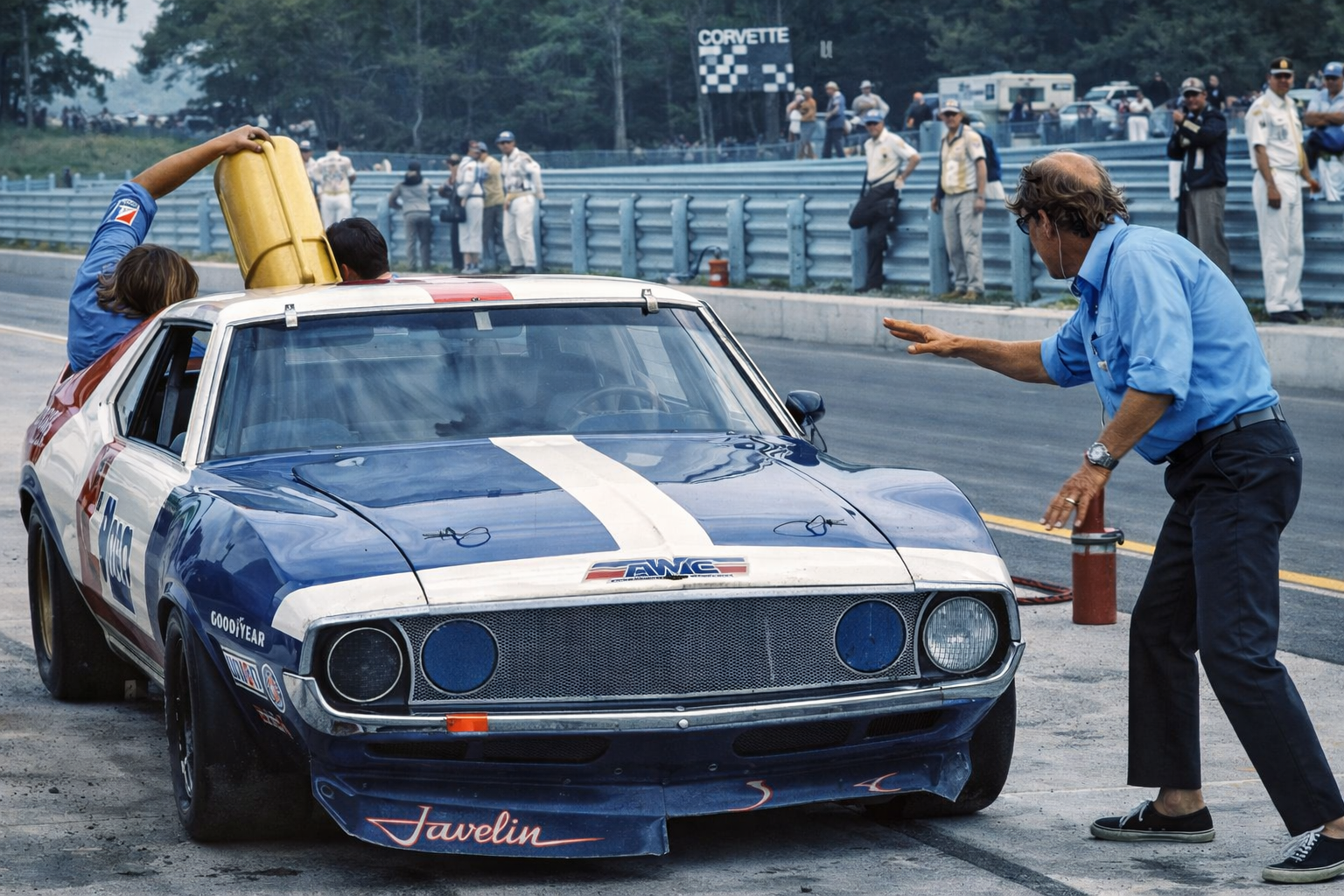
The Roy Woods Racing program, which suffered the most from Follmer’s change in focus was Smith’s eight-round Matich A50 Ford project.
Follmer put the A50 third on the grid at Laguna Seca’s Monterey Grand Prix on May 7, a weekend in which he was mixing commitments with the Lime Rock, Trans-Am round.
Sam Posey’s Surtees TS11 Chev was on pole from David Hobbs’ Lola T300 on grid 2. Follmer was fifth in the first heat and retired after 10 laps of the second, finishing well back. Graham McRae won the race in his Tasman Cup-winning Leda GM1 Chev.
The week before Edmonton on June 4, George won his second Trans-Am round at Bryar. He was in great form. In qualifying, he was equal seventh with McRae; Brett Lunger’s Lola T300 was on pole. A problem with the A50 resulted in a DNS; the round was won by Hobb’s T300.
Follmer was a busy lad over the June 18 Watkins Glen Grand Prix weekend, racing the Matich and Javelin. He won the Trans-Am event but crashed the Matich in heat one from grid 9. The busted car didn’t start the second heat; McRae won the weekend overall.
The A50 was too badly damaged to be repaired quickly, and they had no spare tub. It was set aside in the workshop while Follmer raced a Lotus 70B Ford. That was it, the Matich A50 program was over almost before it started.
Given Follmer’s Can-Am focus from mid-July, it made sense to him to run a Lotus 70 with Kerry and Charlie Agapiou, who had successfully run him before, but by then the 70B was well past its use-by date; fifth in a Road Atlanta heat was his best performance.
If yer Aunty
If the A50 program had been more important to Follmer, that is, the Porsche 917/10 hadn’t popped into his lap, the focus may have been on repairing and racing the A50.
Carroll Smith rated Matich big time. In a 1979 Auto Action interview, he said, ‘Matich was one of the best drivers I ever worked with. The Matich car was superb, the Repco engine program was excellent, and the engineering standard was superb – it was all good enough to ensure international success.’
This is a small footnote in Australian motor racing history, a huge mighta-been, but let’s pursue the ifs, buts and maybe’s for a sec. Follmer’s feedback would have assisted the development of the A51s Matich took to the US in 1973. If the car had been Repco-powered and performed, engine sales in the US would have ensued. Had Follmer raced the engine, the oil scavenge problems Matich encountered in long, high-speed, open US corners in 1973 would have been nipped in the bud twelve months before. Therefore, Matich’s performances in 1973 would have been vastly better. Greater engine sales would have given Redco a business case to survive the cuts Repco made in response to softening global and local demand in 1974.
Oh boy, if Follmer ran an A50 Repco-Holden stateside, the path of Matich and Repco-Holden history may have been quite different. Then again, if yer aunty had balls she’d be yer uncle.
Etcetera…
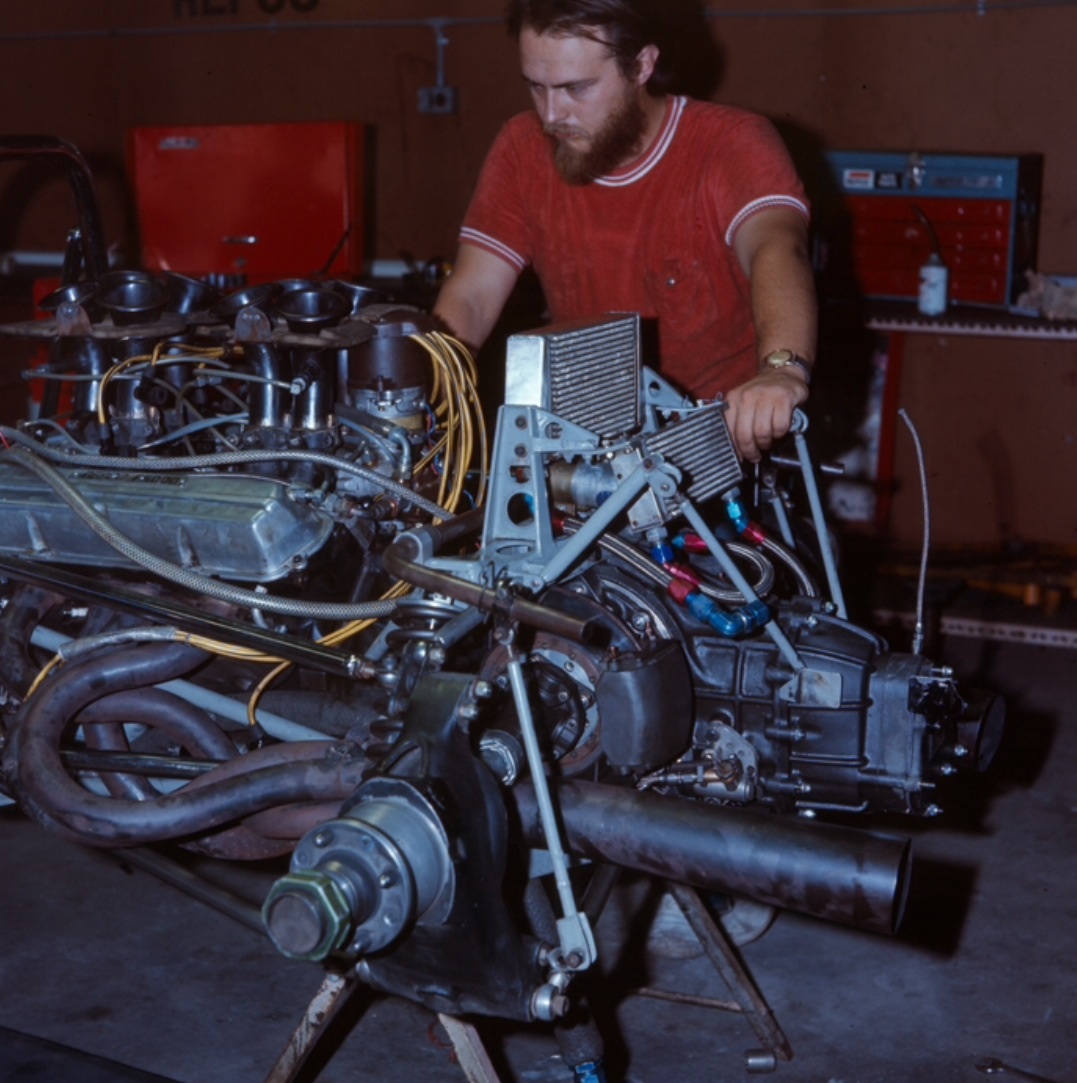
Repco-Holden not Ford Boss Bartz, but engine, rear suspension and Hewland DG300 trasaxle installation for the hell of it. FM’s A50-001/002 during the 1972 Warwick Farm 100 Tasman Cup round.
Credits…
Follmer Family Collection, Australian National Archives, Repco, Jay Bondini Collection, Chevron Publishing, Getty Images-Alvis Upitis, Alamy, Derek Kneller Collection
Finito…

