


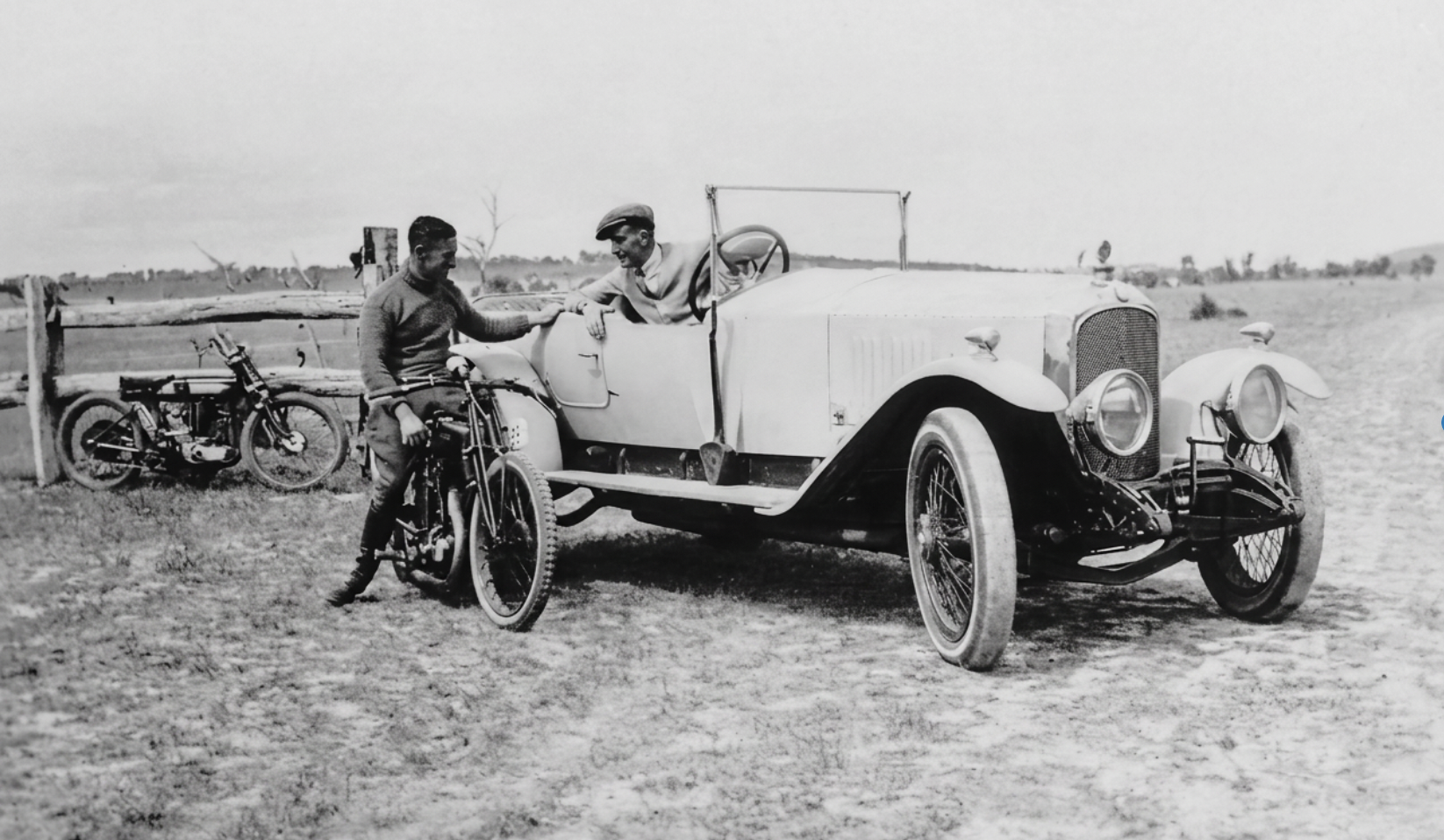
Ken McLachlan and Dr Geoff M Faithfull, Vauxhall 30/98 #OE53, discuss track conditions of the ‘one mile, grass circular track’ laid out on Faithfull’s Inveralochy Station (farm), 20km south of Goulburn circa 1925.
Faithfull, bought OE53 new from noted Sydney Vauxhall competitor/dealer, Boyd Edkins in 1923, coming out of an E-Type Vauxhall.
Geoff, patron of the Goulburn Motor Club, offered the use of his property for motorsport – motorcycle racing primarily but with cars as well – in December 1924, the first meeting being held on January 18, 1925. The grass track was about one mile long, the same length as Calder in its original form.
The September 1926 meeting to contest the Inveralochy Cup, a straight half mile, included events for cars amongst them, K McDonald’s Buick, the R Bryce Dodge with P O’Keefe’s ‘Ford Racer’ the winner at 57 1/2 mph.
The Argus reported that visitors arrived at Inveralochy at short notice in September 1924 when the field of the RACA six-day reliability trial contested a flying half-mile contest there when the chosen roads between Goulburn and Queanbeyan were deemed unsuitable due to deep gutters.
Hope Bartlett’s Vauxhall 30/98 was quickest at 68 mph, with only 14 of the 25 cars doing better than 50 mph. ‘The grass surface would not allow the highly geared British cars to develop their greatest speed in such a short distance. AV Turner was second on an Itala and SC Ottoway third, Vauxhall. Another notable was Mrs JAS Jones, Chandler.
Into 1937 and March 1938 the venue was still in use, a large crowd watched M Johnstone exceed 100mph and win the flying quarter mile award with a two run average of 92 1/2 mph, no mention of his mount, sadly.
Faithfull died suddenly in Sydney, aged 49 on Monday July 1, 1940. His obituary in the Goulburn Evening Post noted that, ‘He was interested in motor racing, at one time and for several years, was the Goulburn Motor Club’s patron.’
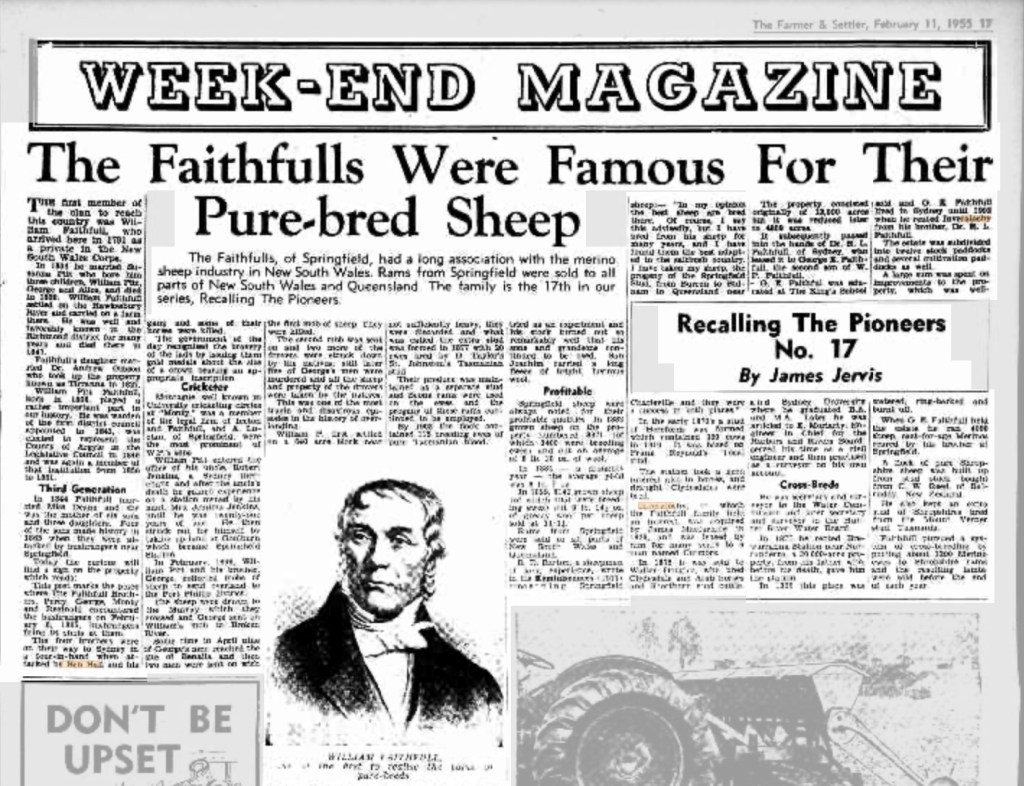
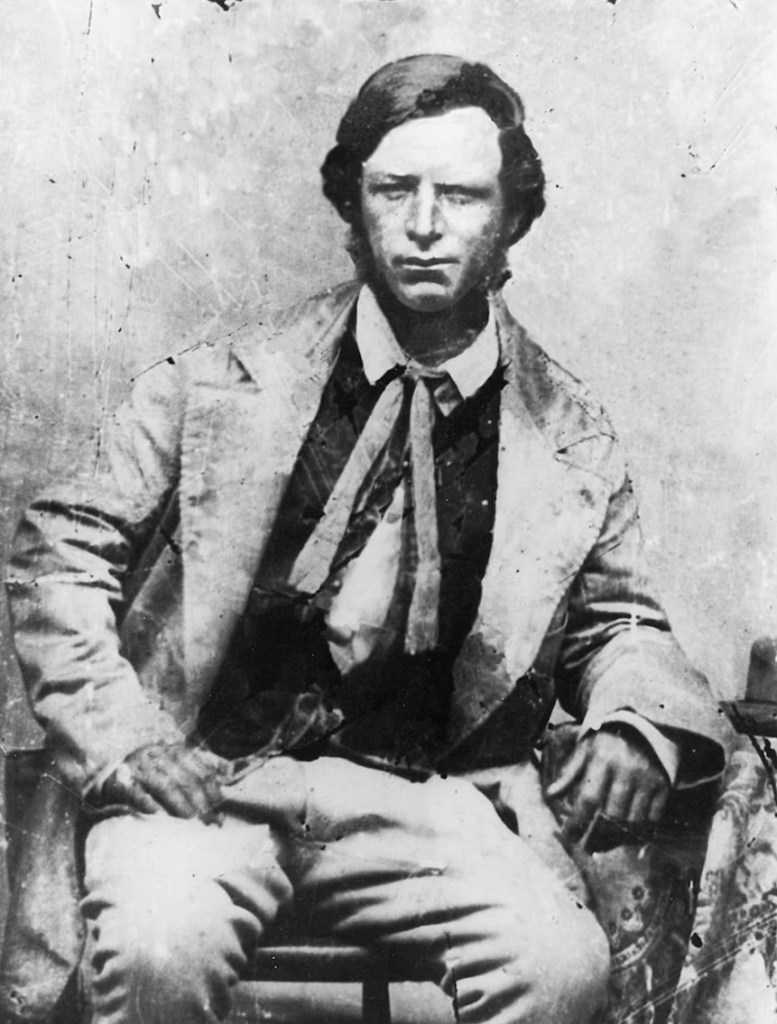
A cursory Google search shows the property sold earlier this year for $M18, doubtless the selling agent recounted the amazing firefight between a group of four Faithfull youths and ‘notorious bushrangers, Ben Hall, Gilbert and Dunn in 1865…they provided quality resistance, over 20 rifle and revolver rounds were fired by the goodies, and ‘between thirty and forty shots by the bushrangers’.
As a result of the clash with Ben Hall and John Gilbert, the four brothers were each awarded a gold medal by the government. A sign on the property reads, ‘This post marks the place where the Faithfull Brothers encountered the bushrangers on February 6, 1865, the bushrangers firing 94 shots at them.’
More about Ben Hall here:https://www.sl.nsw.gov.au/stories/ben-hall-australian-bushranger Hall’s career as a bushranger is much more impressive than Ned Kelly’s but the Long Arm of the Law shot him on May 5, 1865.
The perils of an inquisitive mind and too much time on one’s hands are apparent in this piece. Trove is such a wonderfully distracting resource…
Road Racing and Ratepayers…
As John Medley explained in his piece on the growth of motor cycles and road racing, and car racing, the subject was a touchy one for ratepayers wanting to go about earning their daily bread, but Geoff Faithfull, member of the local squattocracy, stepped up to the plate on the side of the racers.
To the Editor. Goulburn Evening Penny Post, February 13, 1923
Dear Sir,
Your paper, this morning reports this morning that the Shira Council still disapproves of the Goulburn Motor Cycle Club holding their Easter carnival on the open road. As the points against road racing have been fully enumerated. perhaps one or two in favour of it will assist those who are neutral, or at any rate not openly antagonistic to it, to see the other wide.
During the war motor cyclists played a very big part indeed as dispatch riders, and machine gunners. These men had to be taught to ride a bike, and, furtber, to handle it at speed. Many men can ride a motor cycle at ordinary touring pace, but it takes no mean ability, not to mention pluck to handle a machine at high speeds on the road. On the continent and in England, this is realised and road races over closed circuits are frequently held both for cars and motor cycles. On the outbreak of war those, who had previously taken part in these tests, saw their opportunity, and in the early days we read of well known riders and drivers being with the French staff. They not only knew the roads, but they knew how to take their machines at speed, which was then necessary, along them.
If the members of a motor cycle club wish to race on the road, I feel that they should be given every encouragement. During the process, which in an expensive one for them, they are furthering experience, which may be of infinite in value, for a man who can keep a cycle in tune, and race it, is a specialist. Speeding in the presence of traffic in rightly discouraged, but here is an opportunity to warn traffic, for a short period over a given circuit, and develop the skill of the riders. It is frequently said that road racing ruins the roads. This cannot be admitted in the case of motor cycles, but were it so, then the roads must be at fault. We need roads that will stand speeds. When the country can afford them we will have them. In the meantime the same process that selected the most suitable machine will select the type of road, and the man to convey the machine along it.
There are two sides to every question, but controlled road racing is far from being an unmitigated evil.
Yours, etc.
G. M. FAITHFULL. Inveralochy.
Credits…
Goulburn Evening Penny Post, The Argus, various newspapers via Trove, The Albury Banner and Wodonga Express September 23, 1910, Lithgow Mercury October 10, 1950, State Library of New South Wales, Australian Broadcasting Commission
Finito…
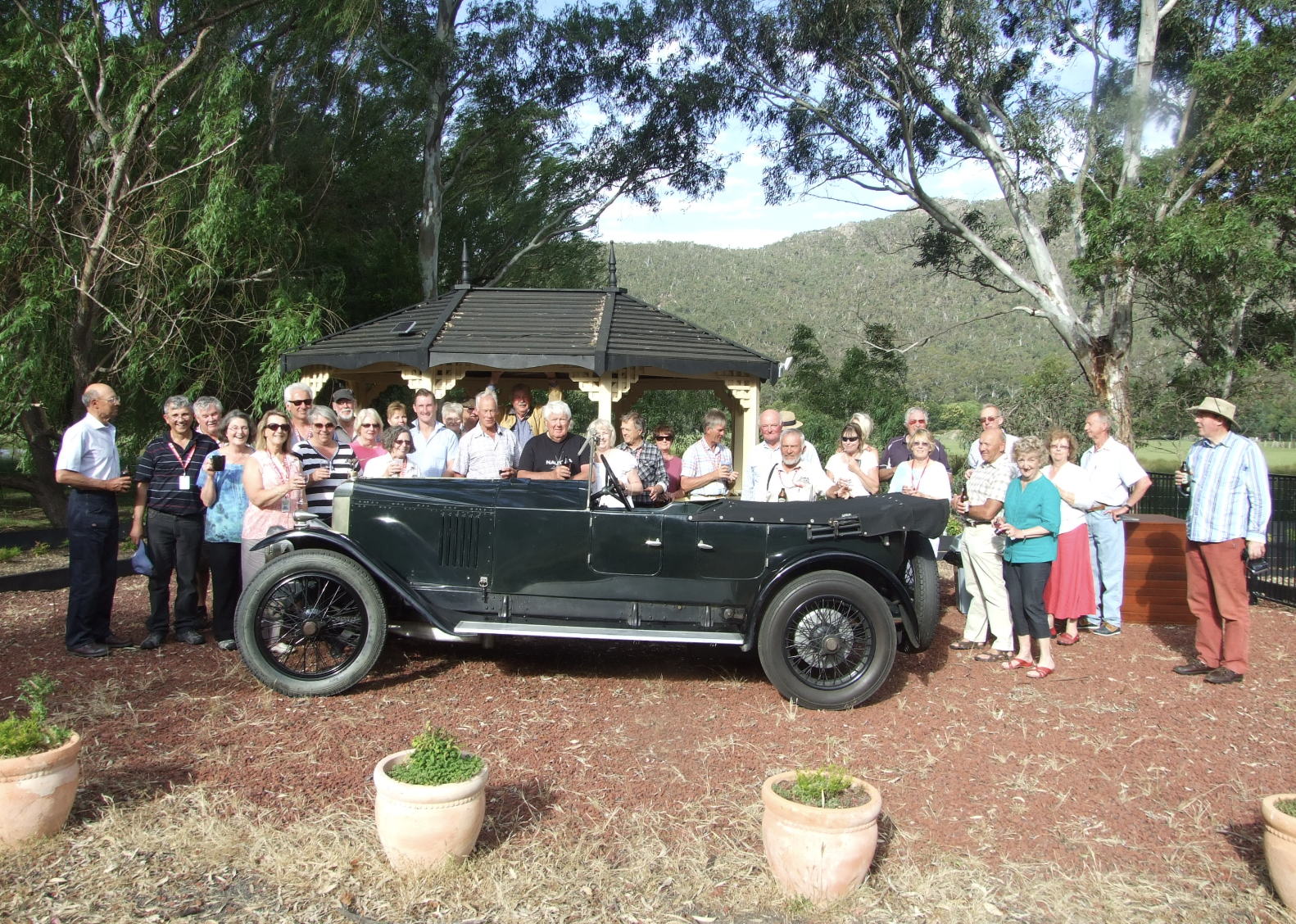
Vauxhall 30-98 OE53 lives on in the hands of Richard Walton, who has owned it since 1996. ‘One of the few Thirsty’s with a full continuous history,’ I am told.
Finito…

