Archive for the ‘Obscurities’ Category

steve

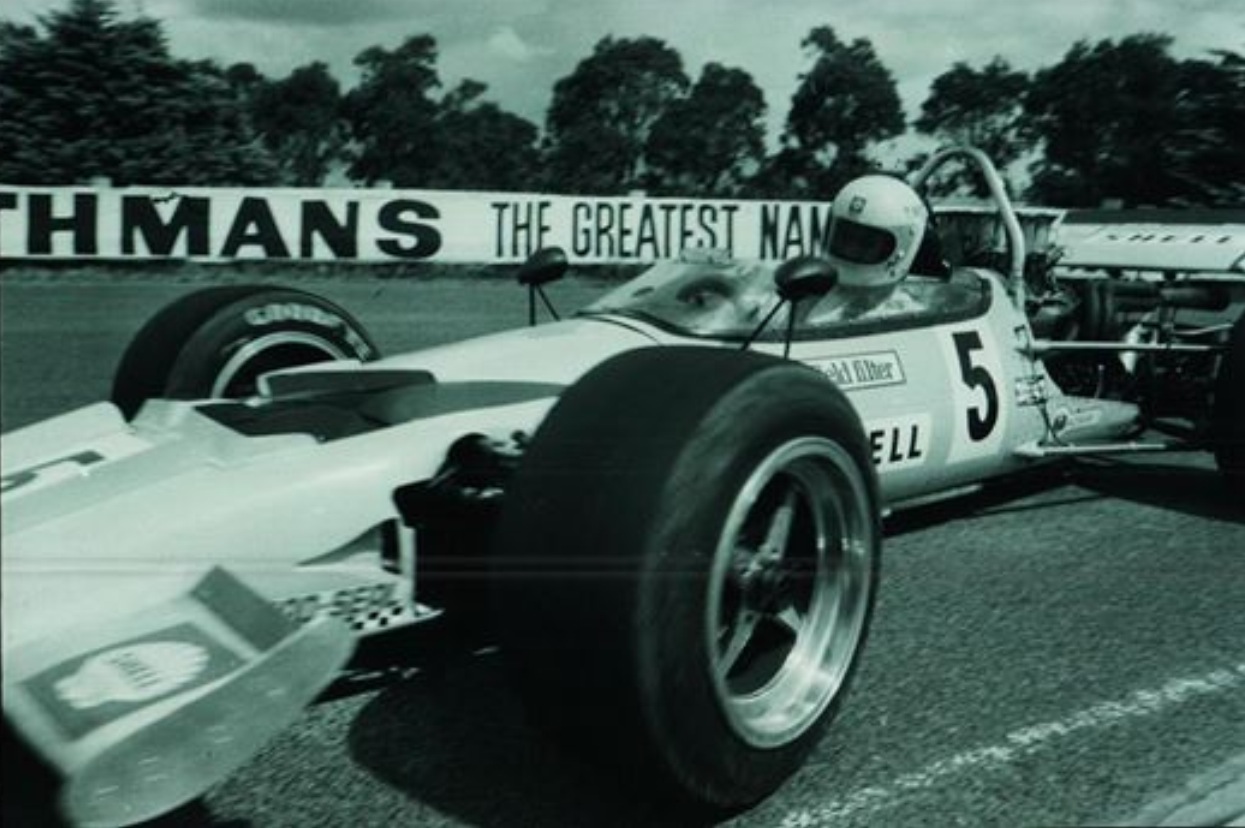
Steve McQueen (or is it John Whitmore) at the wheel of a Lotus 30 shooting some of the million feet of unused footage for this cancelled movie…

John Frankenheimer and MGM were in a race with Steve McQueen and Warner Bros to make a movie with Grand Prix racing as its theme.

John Sturges was the Director of Day of The Champion, filming of footage, using many cars specifically acquired for the purpose commenced in 1965.

‘The Sand Pebbles’ in which McQueen starred, and for which he received his only Academy Award Nomination ran over time, delaying the production of ‘Day of The Champion’, his Hollywood neighbour James Garner played the lead role in ‘Grand Prix’, the iconic 1966 F1 movie and a huge commercial success, beating ‘Day of a Champion’ into the cinemas.

The pin was pulled on the “Day of The Champion’, there was no value in two similar movies appearing at about the same time.

McQueen didn’t speak to Garner for over two years…but came back with a vengeance in ‘Le Mans’, not much of a story, a commercial flop but a sensational racing movie!

John Sturges famously quit ‘Le Mans’ after arguments with McQueen who wanted a documentary style ‘slice of racing life’ film, Sturges equally adamant that a strong story line was essential for commercial success…’I’m too old and rich to put up with this shit’ was his parting line.

‘Le Mans’ was completed, after running hopelessly over budget, but only after Steve tipped his acting fee and forfeited his gross in the films takings to fund it…

But what a movie!

dotc

‘Day of The Champion’ production teaser (Pinterest)

surplus

Getting rid of cars now surplus to stock…(Pinterest)

steve 2

‘Day of The Champion’ morphed into ‘Le Mans’ several years later, a commercial flop but a triumph as McQueens creative tribute to motor racing (Pinterest)

pete

‘Pete Arron’ ready to race… James Garner proved himself a dab hand at the wheel during the filming of ‘Grand Prix’ (Pinterest)

gp

‘Grand Prix’ cut it creatively, commercially, and as a racing movie. Iconic to this day, and one of the top ten grossing films of 1966 (Pinterest)

Photo Credits…

Pinterest


image

Doncha’ love old automotive street advertising signs!?

 I was tootling home after my early morning coffee on Sunday and came upon this sign for ‘Perdriau Master Cord Tyres’.

For Melburnians the sign is on a development site on the corner of Malvern Road and Francis Street, Hawksburn.

In most of Australias’ cities, as I guess elsewhere in the world, people are moving closer to town with old industrial buildings converted into interesting residential places or more often modern ones constructed. Often their are interesting old signs exposed when demolition occurs.I don’t recall what was on this corner before, but this sign on the adjoining building wall has been exposed, looking at the history of the Perdriau it’s been hidden since the 1920’s!

The developer has erected a hoarding so thus far it’s been spared the ravages of graffiti-ists.

perdriau rider sydney

Perdriau sidecar delivery service; out front of 21 Wentworth Avenue, Sydney date unknown. (Tedd Hood)

My friend Google tells me Henry Perdriau commenced importing rubber into Sydney in 1897 and manufacturing tyres in 1904, older motorists may remember the company as a market leader. Corporate consolidation is not new of course, the company was absorbed by what is now Pacific Dunlop Ltd in 1929.

I’ve not heavily cropped the shot, I love it juxtaposed with the modern inner urban environment in which it sits.

Still, it will be covered again within 12 months or so, to be exposed by another group of ‘archaeologists’ in 100 years time when once again the site is adapted for whatever use is appropriate then. I have a feeling by then ‘we’ will be getting around in ‘The Jetsons’ style of vehicles than something using rubber tyres. Who knows?

This Shell sign is a ripper as well. It’s on the Horrocks Highway, in the small village of Auburn in South Australia’s Clare Valley, i  spotted it on a cruise up there a month ago.

sheell

It’s interesting what you can spot out and about, mind you I’ve nearly been hit ‘up the chuff’ a couple of times in the process, these sightings are always accompanied by an application of brakes Daniel Ricciardo would be proud of! In fact my partners Cooper S has a neato coffee stain on the dash of said vehicle as a consequence of one of these manouevres.

My quip that the ‘brakes grab a bit’ didn’t remotely come close to making up for the mess i made in her otherwise pristine car…it does have a nice coffee smell, almost cafe like, inside however!

The follow up jibe that ‘car manufacturers would pay for that coffee smell’ didn’t work either…No sense of humour these women.

patz

‘WUB’ speeding past the MCG…in the words of Basil Fawlty…’don’t mention the coffee stain…i did it once and i think i got away with it’…

Mini Cooper S …

That Cooper S is a great car by the way. Its an R56, the just superseded jobbie. 1.6 litre DOHC turbocharged, circa 128KW and 240 Nm of torque.

Patrizias car is an auto, sub-optimal I know but the ‘box and its operation is great, almost enough to convince me to change to the ‘dark-side’.

The auto is a bit ‘clunky’, in fact you can drive the thing smoother manually than in auto mode. Perversely the thing starts in first (of 6) in auto but second in manual mode, unless you select first. Its much less aggressive on lift off in manual mode as a consequence around town. Counter intuitive, but Der Deutschlanders have their ways I guess. That aside the steering wheel, and shift mounted manual controls work a treat.

Its fast, has heaps of mid-range punch, has beautiful turn in, great brakes and sharp steering in a ‘modern car sense’ but lacking compared to my personal road car benchmark, my S1 Elise which I should not have sold!

They are not the most practical of things though, the rear seats a bit of a joke, one of my ‘well-nourished mates’ couldn’t get out of it for a fortnight until his girth disappeared a tad. Not feeding him helped.

I looked at an R53 when they first came out, under pressure from the ‘little sabre-toothed tiger to whom I was betrothed’ to get a more practical car than ye olde 3.2 Carrera, much to the disappointment of my sons who rather liked riding in the old bus. The Mini had less rear seat space than the ‘parcel-shelf’ type seats of the 911!

‘WUB’ has done a lotta trips since acquisition 6 months ago, the only touring downside is a fair amount of road-noise from the sunroof, even when closed, the price you pay for the pleasure of the thing. The car has done 85000Km so its no ‘spring-chicken’ but is still as ‘tight as a mackerals bottom’ in terms of ‘shake, rattle and roll’. Panel fit and the detailing of the thing inside and out is a designers delight. More ‘Audi flair’ than ‘BMW spartan’.

Its far from the rorty original Cooper S’ driven in my youth none of which were standard, all taken out from 1275cc to 1293 or 1310cc, had a 45DCOE Weber, extractors and the factory rally cam ‘AEA 544’ if memory serves…but still a nice small, fast jigger albeit far more refined than the original.

Worth considering if you are in the market for a small, stylish, fun, fast, well built, practical car…for two!

min 1

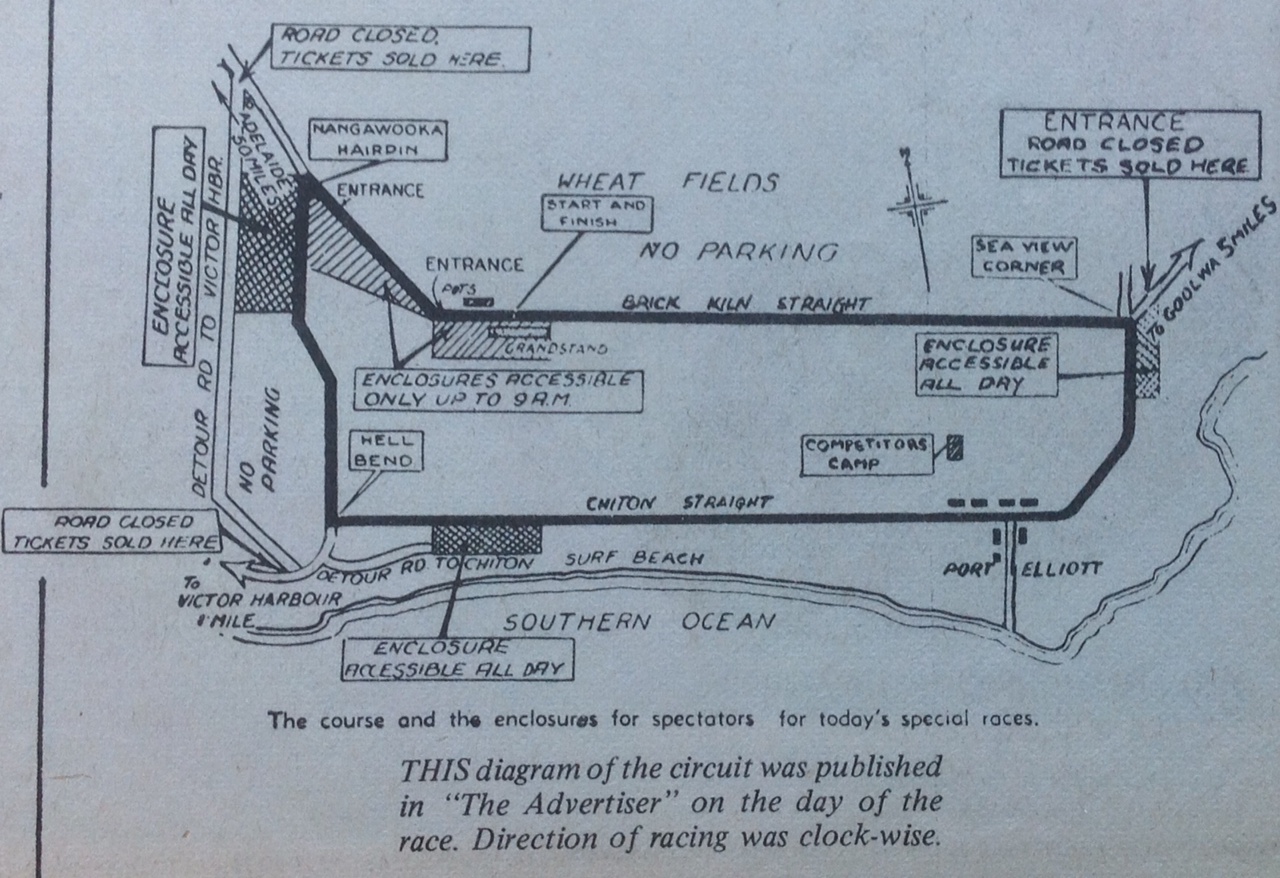
Australian Grands’ Prix at Nuriootpa & Lobethal…Suggested Driving Tour

map

Back to the earlier thread about the Clare Valley. It ocurred to me having driven through the Clare for the first time on one of my weekends here a month ago (i work in Adelaide but live in Melbourne), that other interstaters with a penchant for Australian GP history may enjoy a tour, if you are ever in Adelaide, which takes in the Clare, Barossa Valley, and Nuriootpa and Lobethal.

A nice loop to the Clare, back through the Barossa, which contains Nuriootpa, then on to Lobethal, and back to Adelaide.

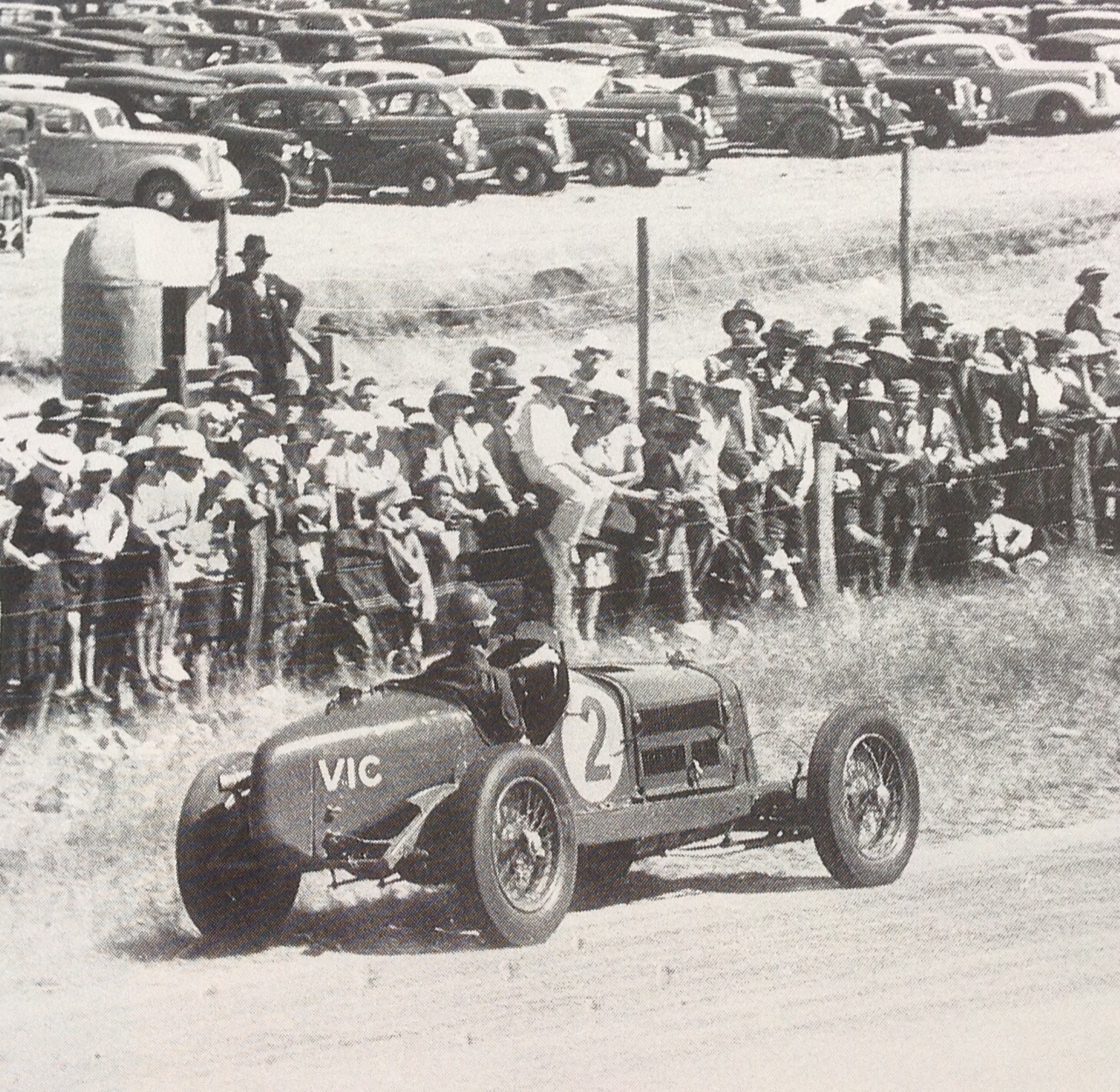
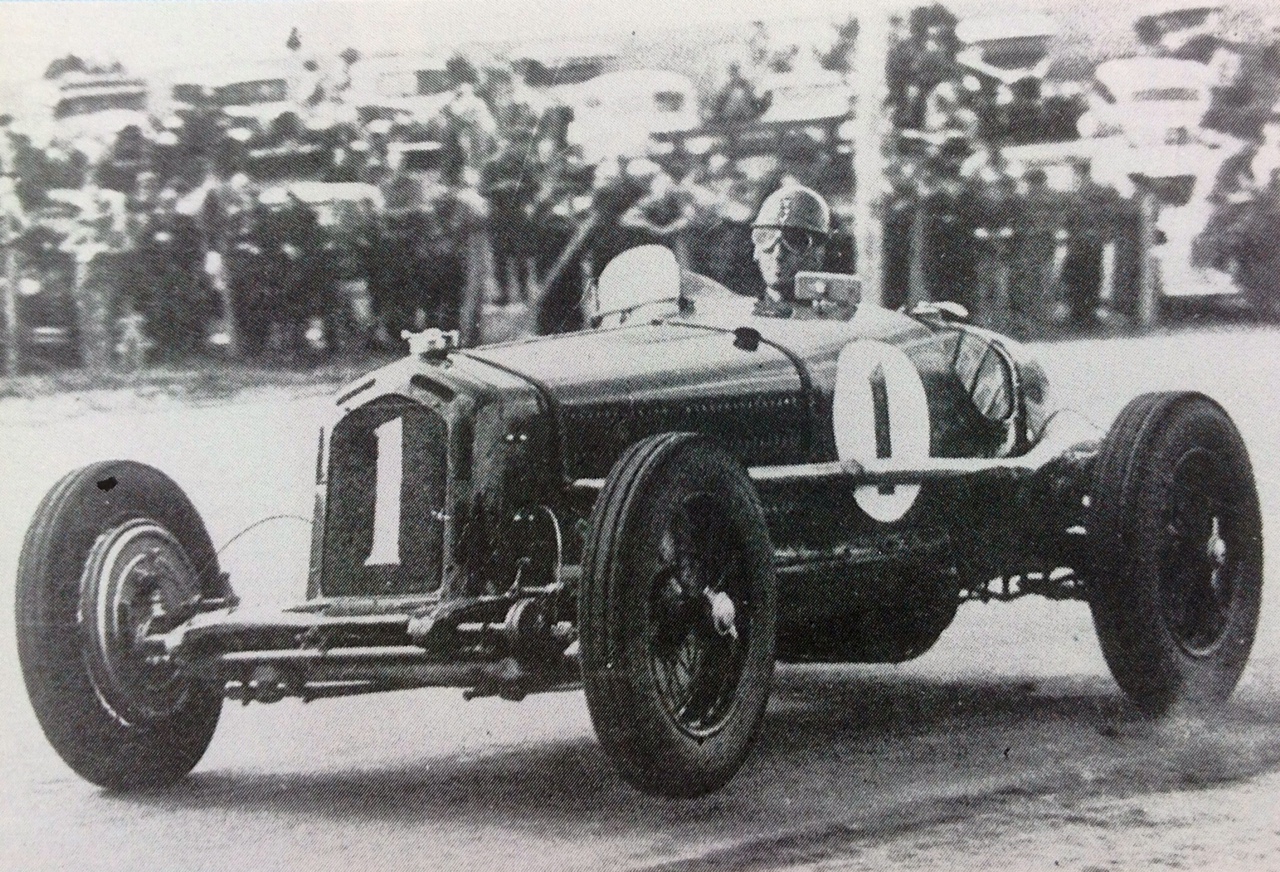
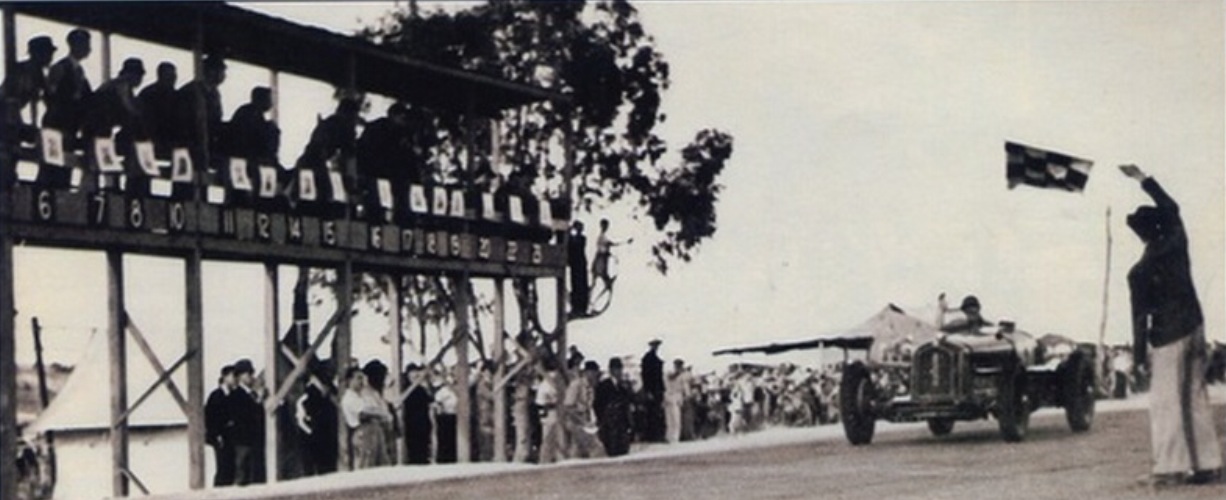
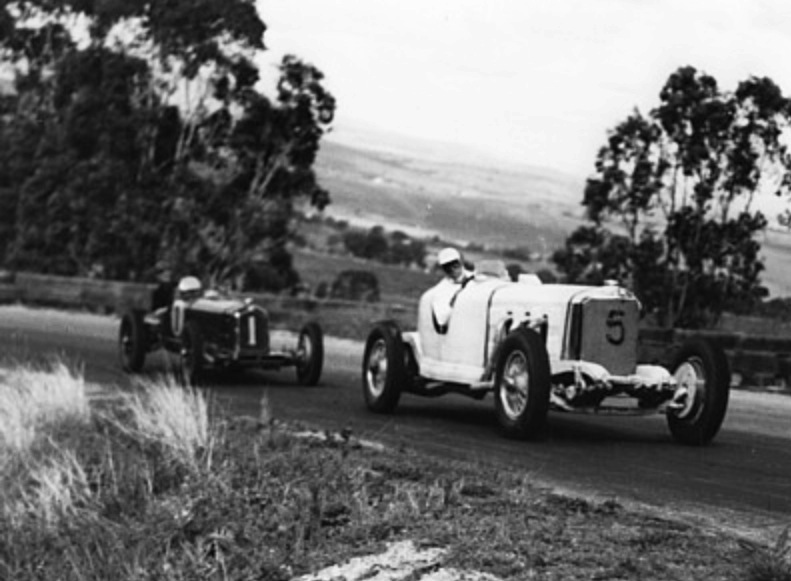
The AGP is one of the oldest Grands’ Prix in the world. It started at Phillip Island in Victoria and for many years each state held it in turn annually. Over the decades in South Australia its been held at Victor Harbour in 1937, Lobethal in 1939, Nuriootpa in 1950, Port Wakefield in 1955, Mallala in 1961, and from 1985 to 1995 at the fantastic Adelaide GP circuit.

My suggestion is a tour which could be done in a day but would be best over 2 days depending upon how large an element you want to make of the wineries as against the driving. I won’t advise on the wine as there is red stuff and white stuff, i like to drink both but am no connoiseur. You COULD, if you wanted add Mallala, and Port Wakefield into the loop, in the first half-day as both are West of Adelaide, which is the direction in which we head. This is all GPS stuff so i won’t go into too much detail.

1.Punch ‘Auburn into your GPS. Head West up the A20 and A32 bypassing Gawler .(116Km)

2.At Auburn by all means check out the Shell sign! Then do a ‘Clare Valley Loop’, i suggest (and South Australian readers please chip in with comments)…Auburn, Mintaro (stop and have a good look its a really interesting little historic village with a good Pub), Farrell Flat then into Clare itself. Check out Clare.

Then go through Emu Flat and Emu Flat to Skillogallee’ for a meal or a look. Its at Trevarrick Road, Sevenhill. It was very good.

3. Now we head for Nuriootpa in the Barossa. go via Kapunda, and Koonunga to Nuriootpa. (90Km) There are lots of wineries in the Barossa so do your research accordingly.

nuri

With the AGP due to be run in SA in 1950, the search was on to replace, ‘vast, fast, treacherous Lobethal’ as historian Terry Walker put it. With lots of local support a circuit was laid out which included the Nuriootpa main street. Its all still there to see, but only the starting stright , Research Road looks the way it did in 1950, the sweeping curves over the river are smoother, wider and armco lined (‘Lost Circuits’ Terry Walker)

black bess

Doug Whiteford , winner of the 1950 AGP at Nuriootpa in ‘Black Bess’, his Ford Mercury engined cut down ex Forests Commission Ute Special. In those days the AGP was a Handicap event, but Black Bess was a fast car by any standards

bess

A better shot of # 8 Black Bess driven by Bill Hayes albeit at Fishermans Bend, Victoria in 1953. Lex Davison is leading in an Alfa P3, with Bill Pitt #1 Alta. ‘Bess was built for Whiteford in an Albert Park, Melbourne backyard in 1939. Ford ute chassis , bed iron frames and panneling from the Footscray tip. A coat of black paint gave its name. When Whiteford returned from the war a Mercury engine was fitted, benefitting from US Hot Rod experience. From 1946-52 the car was one of the fastest in the country, inclusive of the AGP win. As imported cars came in it became obsolete, being tracked down and restored before its debut in the 1977 City Of Sydney Trophy (Old English Sports Cars)

4. Now go through Tanunda in the direction of Birdwood (42 Km)  where the National Motor Museum is. There is not a lot of motor racing stuff in it to really float my boat but if you haven’t been before its worth a look. Go via Lyndoch, Williamstown, and through Mount Crawford Forest, on to Birdwood.

5. Birdwood to Lobethal (17Km)

lobethal 1

tommo

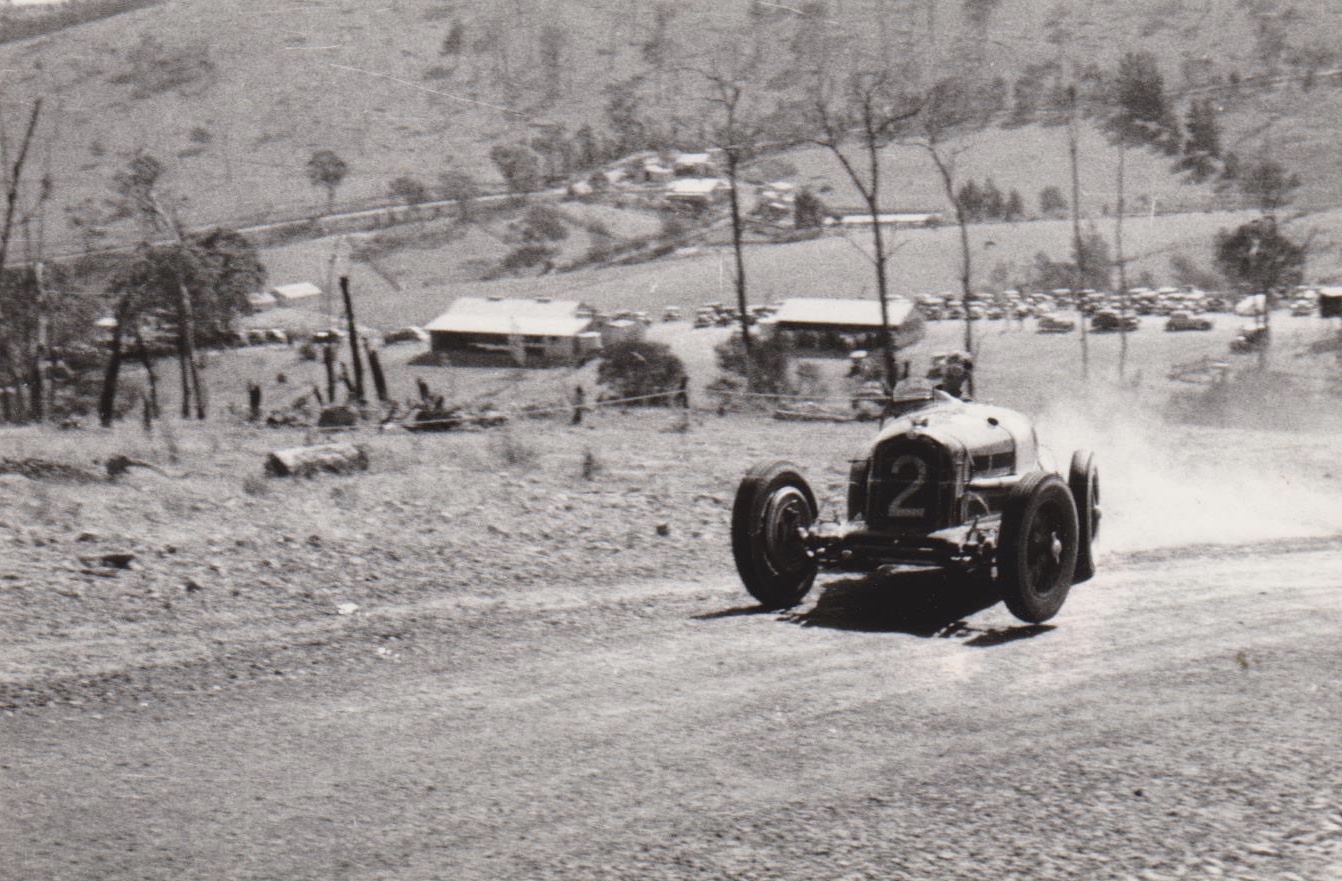
Alan Tomlinson came all the way to Lobethal from WA and won the 1939 AGP in his very fast, light, powerful,supercharged MGTA Spl. He returned to compete in the 1940 SA Grand Prix and was hospitalised after crashing the same car at high speed. In second and third places were Australian Specials’: Bob Lea Wright in the Terraplane Spl, and Jack Phillips in a Ford Spl.(Google)

lobethal

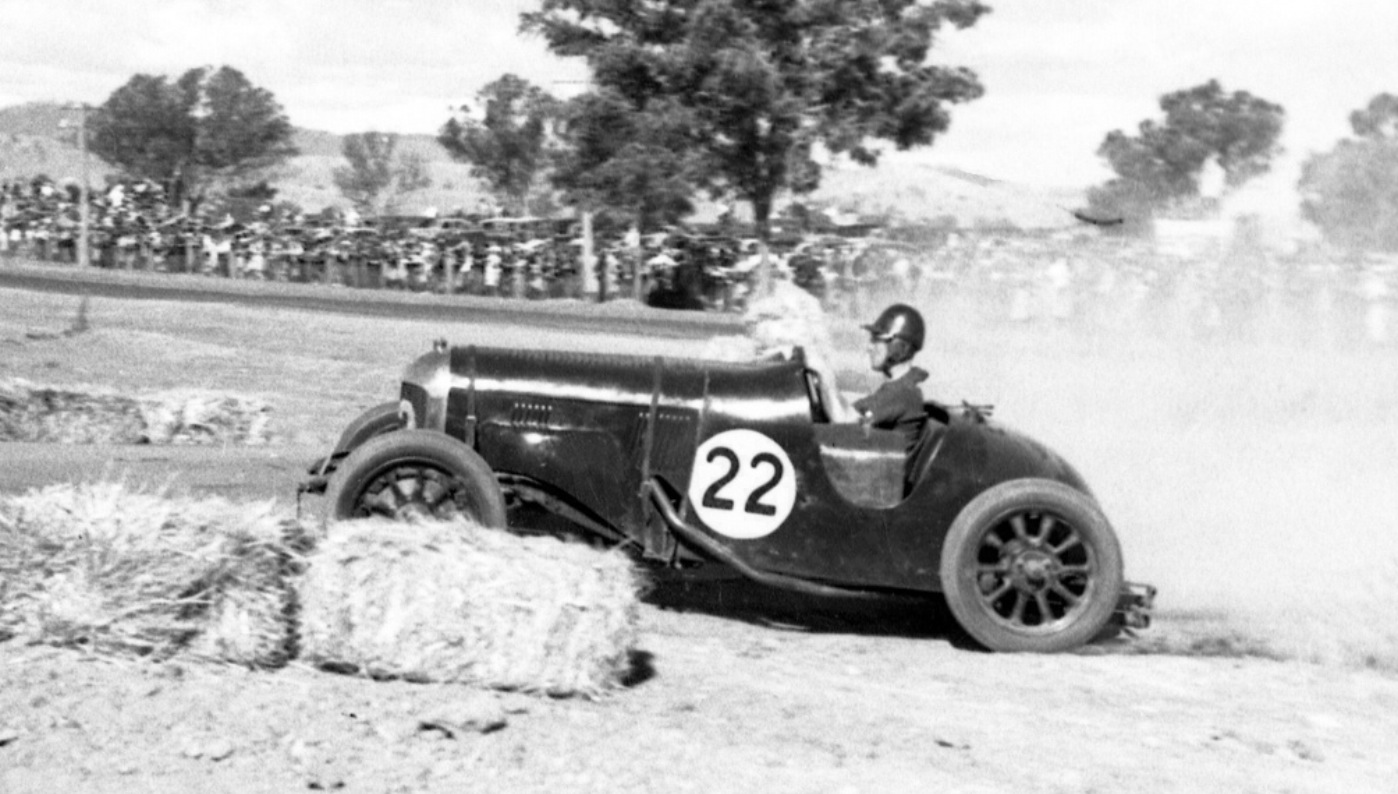
Lobethal was developed as a motor sporting centre off the back of the successful 1936/7 SA Centenary/ Australian GP’s at Victor Harbour. WA driver Alan Tomlinson won the race in both the fastest elapsed time and on handidcap, he drove a self prepared superchaged MG TA Spl. Lobethal was revived in 1948, but three sensational accidents saw it fall into disuse in favour of Woodside, and Nuriootpa. In 1951 the SA Government banned motor-racing on public roads, such ban was in place until the 1985 Adelaide AGP.

6.Lobethal to Adelaide (45Km). key in your location and away you go…


Etcetera…

perdy

Contenporary magazine advert for Perdriau tyres…late 1920’s (ANU Archives)

enzo

Enzo Ferrari was a big Cooper S fan, and driver! Modena circuit mid 60’s (Pinterest)

nuri

AGP Nuriootpa 1950. 3 MG TC Spls…#30 David Harvey (4th), #29 Vin Maloney (12th), and # 35 Don Cant (8th). MG’s of all kinds were the backbone of Australian Racing including AGP’s for decades (Unattributed)

References…

Pinterest, Wikipedia, ANU, ‘Lost Circuits’ Terry Walker

Finito…

image

Despite its sculptured Scaglietti flanks, never has an 860 Monza looked quite so good…actress Linda Christian adorns Fon de Portago’s Ferrari

The Marquis Alfonso De Portago, Spanish nobleman and journey-man driver was accompanied by Linda Christian at the 1957 Cuban Grand Prix sports car event.

Fidel Castro’s insurgents were on the move in the countryside but for the Batista’s’ life went on. Keen to attract wealthy American tourists to the country to pump much needed funds into their moribund economy, an annual motor race was part of a plan to raise Cuba’s profile and provide an event to attract the punters.

malecon
Out of focus and slightly surreal as a result…Fangio in his Maserati 300S, Malecon Boulevard, Havana, 1957 (Hy Peskin Collection)
cuba 2
Wonderful panorama of Havanas Malecon circuit. 14 is the Phil Hill Ferrari 857S, De Portago’s Monza behind it with Linda Christian alighting. #16 also a Ferrari, driver unknown (Pinterest)

Ferrari 860 Monza…

port
‘Fon De Portago Ferrari 860 Monza, unprotected nature of the circuit clear, seven spectators were killed in the 1958 event (Pinterest)

The 860 Monza was Ferrari’s front line sports car weapon, together with the V12 290MM in 1956.

It was part of the family of sports cars built over much of the ’50’s based on the Lampredi designed DOHC, two valve, Weber carbed four cylinder engine which first found success in the Tipo 500 F2/F1 cars. Ascari won the World Drivers Championship in 1952 and 1953 in the Tipo 500.

The engine gave circa 310bhp from its 3431cc, gearbox was four speed. The usual Ferrari ladder frame of the period was used, drum brakes all round stopped the relatively light car which tipped the scales at 860kg. The cars curvaceous body was built by Scaglietti.

Independent front suspension by wishbones and coil springs was new for the 860, and effective. A De Dion rear axle was at the rear, sprung by a transverse leaf spring.

 Three cars were built, the model’s most notable victories were at the ’56 Sebring 12 Hours and the Rouen GP.

port 3
The field before lining up pre grid on Malecon Avenue, Havana

The Race and Aftermath…

grid
On the front row, De Portago Ferrari Monza, Phil Hill Fazz 857S Monza and Schell in the yellow Maser 300S, all the fun of the fair, over 100,000 spectators (Pinterest)

De Portago fought a race long battle with Fangio’s 300S and Carroll Shelby’s Ferrari 410, finishing third on the Havana waterfront street circuit.

The public relations opportunities for Batista evaporated when the Presidential motorcade, enroute to his palace, was confronted by a relatively small group of ‘natives’ seeking favours from the President. Armed escorts beat them with unbelievable ferocity and brutality. This fueled the flames of the resistance movement further .

port 4
Start of the race, Moss Maserati 300S, D Type Jag #24 of local driver Alfonso Gomez-Mena (Pinterest)
fang
Fangio #2 passes De Portago who is slowing a bit on lap 69 in Parque Mart. Maserati 300S and Ferrari Monza (Pinterest)

Jumping forward a year Fangio was kidnapped at gunpoint from his hotel the evening before the race by the rebels. He was returned to the Argentinian Embassy after the abortive event in which 40 spectators were injured and seven died after local driver Armando Cifuentes lost control of his Ferrari and ploughed into the unprotected crowd.

The race lasted 15 minutes or six laps, Stirling Moss was declared the winner in his Maserati 300S.

Fangio was later to say he was never concerned for his safety, he was held in a comfortably appointed apartment, was fed well, given a radio to listen to the race, and was personally apologised to by Castro’s second in command.

Joe Sheppard races to victory at Ala-Mar in 1959 aboard Porsche 550RS #550A-0144 (J Shea Collection)

In 1959 a four hour race held around a 2.8-mile course at Ala-Mar, a Havana suburb, was won by ‘The Tampa Hotshoe’, Joe Sheppard and Fritz Schiedel in a Porsche 550RS. It was Sheppard’s first race in his new car – very familiar though he was with 550s – so it was quite a debut! Schiedel was Sheppard’s mechanic.

With Castro’s revolution in its final stages, in 1960 he had power, anxious to create a sense of normality, the race proceeded, albeit on a circuit at army Camp Freedom, Moss was the winner in a Maserati Birdcage.

Such grubby bourgeois activities as motor racing ceased and Camp Freedom was used to house the sort of people who attended such events…

city
The beauty of the city and enthusiasm of the crowd, and its size come thru in all these shots! De Portago, Ferrari Monza 860 (Pinterest)

Linda Christian and De Portago…

Linda Christian was a successful Mexican/ American actor who starred in the first TV adaptation of the Bond novel Casino Royale and in Tarzan, amongst many others. She was with De Portago during that fateful Mille Miglia weekend later in 1957.

De Portago kissed Christian, jumped into his Ferrari 335S, and 70km before Brescia the car blew a tyre, ploughed into the crowd killing Portago, co-driver Ed Nelson, nine spectators and the Mille Miglia.

portage
De Portago and Phil Hill before the race, Havana 1957 (Pinterest)

Etcetera…

pits
Hill/O’Shea Ferrari 857S Monza, Malecon Circuit pits, Cuba 1957 (Pinterest)
image
The Castellotti Ferrari 290MM, V12 engined compared with the Monza four cylinder engine, both were Ferrari works 1956 Sports Car Championship entries. Castellotti in yellow polo shirt (Pinterest)
shelby
‘Chicken-plucker’ Carroll Shelby in trademark farmers overalls in the third place Ferrari 410, 1957 would be a great year for him (Pinterest)
start
Military very much to the fore. Fangio Maserati 300S #2 and Castellotti Ferrari 290MM #10 (Pinterest)
fang 2
Juan Manuel Fangio beside his Maserati 300S in Cuba at the start of his final full season of racing in 1957. He drove for Maserati in both Sports and Grand Prix events, winning his fifth F1 World Title in the fabulous, and by that time evergreen Maserati 250F; that car finally getting the title it long deserved (Pinterest)
moss
Moss Maserati 300S beside the John Edgar owned #78 Ferrari 4.9 driven by Carini (Pinterest)
hill
Hill/O’Shea Ferrari 857S Monza, Cuba 1957. Paul O’Shea checking out the engine (Pinterest)
building
malecon 4
malecon 3
image
Fangio after the 1958 Cuban Grand Prix and release by his Castro captors…(Pinterest)
che
It is not recorded if Che and Fidel attended one of Cuba’s Grands Prix…
Entry list for the 1960 event at Camp Freedom (J Shea Collection)
circuit
poter

Photo and Other Credits…

Pinterest, Havana May Blogspot, Hy Peskin Collection, John Shea

Finito…


hunt

Reg Hunt, Murrays Corner, Bathurst, Bathurst 100 in April 1956 driving his recently acquired ex-works Maserati 250F ‘2516’. Hunt set fastest race time, the race a handicap won by Lex Davison’s Ferrari 500/625.

Reg Hunt, Bathurst 100 April 1956…

Many Melburnians will recognise the name as a very successful retailer of Holdens and many other makes from his acreage’s of dealerships fronting the Nepean Highway in Elsternwick.

He was also a very successful racer in the 1950’s who retired in his mid 30’s. Little has been written about him. He was ‘up there’ with all of the businessmen/motor dealer/racers of the day; Stan Jones, Lex Davison, Bib Stillwell, Alec Mildren and the rest .

His last racer was an ex-works Maserati 250F  ‘2516,’ a car driven by Moss and Jean Behra early in 1956. In this car he was as quick as any of the locals, a great ‘mighta-been’ is what he could have achieved had he not retired to focus on family and his expanding automotive empire.

This interesting article about the little known Hunt, was written by Richard Batchelor and published in the Maserati Club of Victoria magazine;

https://www.google.com.au/#q=reg+hunt+article+maserati+club+of+victoria

gnoo-blas-reg-hunt-Jan-29-1956-2

Hunt winning the ‘South Pacific Championship’ at Gnoo Blas, Orange, NSW on 30 January 1956. He beat a class field in his recently acquired Maserati 250F, Brabham was 2nd in his Cooper Bristol. Fantastic shot of this road circuit. (Gnoo Blas Classic Car Club)

Reg Hunt Unsung ace of the 1950’s…

Reg Hunt 'Sports Cars and Specials'

Reg in his 250F on the cover of the October 1956 issue of ‘Sports Cars and Specials’ magazine

Etcetera…

gnoo-blas-reg-hunt-maserati

Reg Hunt, Maserati 250F, Gnoo Blas, Orange 30 January 1956. (Gnoo Blas Classic Car Club)

port wakefield

Start of the 1955 Australian Grand Prix, Port Wakefield, SA. Reg Hunt Maser A6GCM  and stan Jones Maybach 3, on the front row left and RH side. Jack Brabham and Doug Whiteford, Cooper Bristol and Lago Talbot respectively on row 2, the race won by Brabham. (‘From Maybach to Repco’ Malcolm Preston’)

port wakeforedl grid

Hunts’ Maserati A6GCM on the AGP Grid Port Wakefield 1955. Hunt was leading this race by 23 seconds in this 250F engined car, broke a cam-follower and then slowed allowing Brabham’s Cooper T40 Climax through for the win, finishing second. Saltbush country, Port Wakefield, 80 Km from Adelaide was a shortlived circuit but the first permanent circuit built in Australia post war (Max Fotheringham)

a6gcm

Hunt’s A6GCM Maserati prior to the 1955 AGP Port Wakefield paddock, this model was the precursor to the 250F, it was an interim car using the chassis of Maser’s F2 car and the 250F engine…4 or 5 built (Kevin Drage)

cockpit maser

Cockpit shot of Hunts Maser A6GCM in the Port Wakefield paddock, 50’s driver safety to the fore…4 speed box aft of engine, 250F’s transaxle mounted at rear in front of De Dion tube giving much better traction (Kevin Drage)

prep

Hunt supervises preparation of the 250F in his Elsternwick, Melbourne, workshop. He was close to the factory team who based themselves here during the 1956 AGP at Albert Park…2493 cc straight 6, 2 valves per cylinder, twin ‘plugs, 3X Weber DCO3 Webers, circa 250BHP in 1956. ‘Space frame’ rails can be seen, ditto front wishbones, roll bar, big 14 inch finned alloy brake drums and the rest…(Garry Baker Collection)

Photo Credits…

Garry Baker Collection, Kevin Drage, Max Fotheringham, ‘From Maybach to Repco’ Malcolm Preston


British gp support
(Buzaglo Collection)

Many a driver’s career has been inspired by films. The most iconic of which is surely Grand Prix, the 1966 John Frankenheimer epic. Australian John ‘Buzz’ Buzaglo worked on Grand Prix and became a Formula Ford ace in the UK shortly thereafter…

The opening photograph was taken during the British GP Meeting, John Player British F3 Championship round in July 1973. Fired up in his heat, having been unable to fasten his Willans harness, Buzz’ March 733 Ford Novamotor passes John Sheldon’s Royale RP11A on the outside of Woodcote using all of the circuit and surrounds!

He failed to finish but made the final as one of the fastest non-finishers, coming seventh from the back of the grid against world class opposition including later F1 drivers Alan Jones, Brian Henton, Larry Perkins, Danny Sullivan and Roelof Wunderink. Tony Rouff won the race in a GRD 373 Ford from Russell Woods’ March 733 Ford and Jones’ GRD 373 Ford.

buzz
Brands Hatch 1971 paddock, Palliser WDF3, KVG Racing

 Billycarts with Jonesy…

Growing up in the Melbourne’s Balwyn, early ‘motoring’ exploits were shared with local lads including Alan Jones. They took on The Billycart challenge of the eastern suburbs, the formidable drop from Belmore Road down Balwyn Road to Hyslop Park. It was enough to test even the very best ‘gun suspension setup’ of pram wheels up-front and ball-bearings at the rear. How many of us developed a love of oversteer in such sophisticated machinery! Jones and Buzaglo were to meet again a couple of decades later in British F3.

gp

Kangaroo Valley and Grand Prix…

Bored with his job, Buzaglo set off  for Europe in 1965 to see the sights and soon set up digs in Earls Court, ‘Kangaroo Valley’. A succession of jobs followed including film extra work. While at Brands Hatch as an extra, Buzz befriended one of the producers and was offered a job as a Second Assistant Director on Grand Prix, at £150 per week. It was too good to resist, off to Clermont Ferrand and Monza Buzaglo and best mate, Jeff Morrow went.

Their task was to manage the cars into position to allow the shoot of the day to take place. In the process they got to know both the cast and drivers well including Jochen Rindt, Peter Revson, Bob Bondurant, Mike Spence, Chris Amon, Jackie Stewart and co-star James Garner.

Much fun was had driving the cars into position and into ‘parc-ferme’ in the evenings. James Garner asked the boys to take his Mustang GT350 from Clermont to Monza ‘which took a week, we did it ever so carefully’. The most dangerous part of Buzaglo’s job was an invitation by Frankenheimer’s bored wife to visit her hotel suite. It was immediately clear Scrabble wasn’t her game of choice, discretion was the better part of valour, after one drink, Buzz departed, job and hide intact!

mustang
Buzaglo in James Garner’s Mustang GT350 en-route from Clermont Ferrand to Monza in the Swiss Alps


garner
On the ‘set’ of Grand Prix at Monza. In front, James Garner, Bob Bondurant and Buzz. Mike Spence is holding the yellow helmet, beside him is Ken Costello (F3 driver), Peter Revson is wearing the white helmet with Director, John Frankenheimer behind Revson and looking sideways
merlyn
Buzz on the Brands grid, Merlyn Mk11, June 11 1970, the day of his first win

The Revolution Club and Merlyn FF…

Buzz’ competitive juices were fired by close proximity to the scene. He was soon saving hard for a car, working in two clubs, one of which, The Revolution Club was a haunt of racing people including Stewart, Rindt, Frank Williams, Bill Ivy, Mike Hailwood, Piers Courage, Emerson Fittipaldi and many others.

Eventually he chose a Merlyn Mk 11 Formula Ford which was promptly loaded up for a  test session at Brands Hatch. Tim Schenken happened to be watching proceedings, having a quiet ale by the fire in bar. He soon appeared in overalls lapping in the Merlyn and made various changes to the set up. Schenken had won the first British FF Championship in a similar car in 1968 and was running an F3 Brabham and other cars that year, 1969.

Buzaglo launched a campaign of club events commencing at Brands, finishing fifth, and Castle Combe, third in late ’69. He soon established a reputation as a young man to watch from Oz, having wound his actual age back by five years in the best traditions of the sport.

jochen
A couple of happy chappies- Jochen Rindt, Buzz and Bob Bondurant during the filming of ‘Grand Prix’, Monza 1966

 Winning in Jochen’s overalls…

Into 1970 the car was raced frequently, picking up several wins at Brands Hatch. His first, on June 11, was achieved wearing a pair of overalls given to him by Rindt. ‘Jochen came into the club one night and asked if I had bought a car yet, he immediately offered me a pair of overalls and delivered them the following week telling me to make sure I had some wins in them. They were beautiful plain light gold, triple-layer nomex, he had hardly worn them.’

‘Emerson Fittipaldi offered to help me by talking to my sponsor after an enormous lose from bank to bank in the Snetterton Esses on some oil dropped by motorbikes in the previous practice session.’

‘I was sitting there in the middle of the track thinking WTF!?, and he shouted down to see if I was alright. He was towing his F3 Lotus 59 back to the pits over the bridge and saw the whole thing. He walked me down to the track to show me the oil which was there in the earlier car session. It was a wonderful gesture, he and his wife Maria came into the Revolution Club for a meal on me a few nights later. An amazing, genuine and ever so friendly bloke.’

brands win
First win, Merlyn Mk11, Brands June 1970

At Oulton Park Buzz and another car touched, the Merlyn was rolled into oblivion. Fellow Aussie Brian McGuire extricated him from the wreck with Buzaglo finally waking up in Cheshire and District Hospital on the following Wednesday. Buzz was out for three months, no racing and no income.

Buzaglo saw Rindt ‘steal’ a lucky 1970 Brands Hatch British GP win from Jack Brabham when his BT33 famously ran out of fuel on the last lap. Very late for work in London, good mate Mike Hailwood gave Buzz the ride of his life making it back to London in record time, ‘the Honda 750/4 was a stunning bit of kit’, he recalls.

Another memorable Brands day involved Buzz and his girlfriend being picked up by Frank Williams in London and schmoozed in the plush Grovewood Suite in the belief the Revolution Club could assist in Williams’ future campaigns. FW was not too miffed to learn Buzz was the manager; such was his work ethic, Williams figured he owned the place!

brise

paliser
Palliser WDF2

Palliser in 1971…

Upon recovery from the shunt he and Richard Knight – winner of the first Australian FF Championship in a Bib Stillwell Racing Team Elfin 600 in 1970 – built up a pair of Palliser WDF3 Formula Fords to attack the 1971 season.

Buzz continued his run of success, a win in a championship round in front of Tony Brise, and a BARC Silverstone round over Richard Knight in identical cars, both setting lap records were highlights.

win 2
Victorious weekend in 1972 at Castle Combe, 2 wins and the lap record. Johnny Gerber between Buzz and the mechanics. Elden Mk10a
mallory
In the KVG Elden Mk10a, Mallory Park hairpin, before the Falconer wide-body was fitted

KVG Racing and 1972 success in an Elden Mk10a…

Strong 1971 results attracted KVG Racing sponsorship in 1972 to support a two car team: a new Palliser WDF2 for Buzaglo and Buzz’ WDF3 for Ian Grob.

Early in the season it was decided to replace the Pallisers with a pair of Elden Mk10a’s, the ducks-guts in FF equipment at the time. Buzz was having a strong season and tipped to win the BOC Championship before a bad accident at Croft in March hospitalised him again, this time with a broken leg and ribs.

Ken Grob, of KVG Racing, wanted to focus on sportscars for his son to drive, so Mexican driver Johnny Gerber bought Grob’s car, the other was given to Buzz. The cars were made more competitive by the purchase of two Dennis Falconer built very slippery – and contentious – bodies, ‘they good for an extra 250rpm over the standard Elden body down a decent straight and a tad more downforce depending upon how the bodywork was supported,’ according to Buzz. At this time British businessman, lawyer/shipbroker Tony Vlassopulos of Ippokampos Shipping, Johnny Gerber’s sponsor, provided financial support.

Johnny and Buzz won many races that year with Buzaglo taking the Castle Combe FF lap record which stood for eight years, and the BRSCC South Western FF Championship.

paper article

silverstone
Buzaglo in the Elden Mk10a leads Rob Cooper and the rest of the pack for a Silverstone win, 1972.

There was a strong Australian contingent at Snetterton for the inaugural Formula Ford Festival on November 5, then as now the launchpad of many a Grand Prix career.

Larry Perkins took the very first Elfin 620 to the UK, he had raced and pranged it at Amaroo Park before its shipment to England. John Leffler was in the Bowin P4A in which he finished second in the 1972 Australian Driver to Europe FF Championship and the winner of that title, Bob Skelton, took over the very latest, variable-rate suspension Bowin P6F. Peter Finlay entered the Palliser WDF2 in which he would finish third in the EFDA/European FF Championship in 1973 before shipping the car home and doing so well in 1974-75, second in the 1975 DTE.

Future F1 drivers in a field of great depth included Danny Sullivan, Patrick Neve, Tiff Needell and Hans Binder and Perkins.

perkins
Formula Ford Festival, Snetterton 1972. Doug Bassett goes straight on at the Hairpin, Larry Perkins, Elfin 620 leads Tiff Needell’s Lotus 69, Chris Smith’s Elden and Buzaglo in the Ippokampos Elden Mk10a and the rest

Buzz qualified well and finished second to Sullivan in his semi-final but back in the pack of the final having initially run third off the front of the grid and moving forwards, then distributor moved, causing a misfire which pushed him back down the field. The final was run over 25 laps, a long race by FF standards with the cars refuelled after the warm-up lap! Ian Taylor in a Dulon LD9 won from Derek Lawrence in a Titan Mk6.

The best placed of the Aussies was Perkins who was third, and at the start of what turned out to be a five year sojurn in Europe. Finlay was tenth in his Palliser, finishing one slot behind future GP driver Hans Binder’s Merlyn. They would have many a battle during the European Formula Ford Championship the following year, Binder won that title in his Merlyn Mk24 and the F3 prize car and drive for 1974 with Peter second in his Palliser. (Bengt Gilhorn who is usually listed as the winner in most references of the series was disqualified from the final Brands Hatch round ‘proof of the finishing positions of the 1973 Euro was that Binder won the F3 car…’Peter points out.

Finlay recalled ‘I was amazed that I was the best placed Aussie after Perkins…the car had been damaged in a prang (not my direct fault) at Oulton Park, when we assisted Leffo to run there, and it took a while to get it sorted at the Festival’. The visiting Aussies all did the Oulton meeting to have a run on the tyres used in the UK before Snetterton.

Leffler was third in his heat and Skelton fourth in his. Buzz recalls the guys as ‘great blokes with the cars creating huge interest and making a strong impression,’ in what was the global Formula Ford Grand Final for 1972.

festival

The FF year finished with a meeting at Zolder in Belgium. ‘It was a two race format, in the first race Patrick Neve won, I was third, I won the second race and set the lap record winning overall,’ recalled Buzz. 1972 had been a mixed year with the accident, but a successful one despite the ‘might-have-beens’ particularly at the FF Festival.

march
In the Peter Bloore owned March 733 Novamotor, British GP meeting 1973, an amazing weekend and ‘tigerish’ drive

 Lookin’ good, F3 in 1973…

Ippokampos were happy with the results of both drivers and provided some support to Buzz’ mount for the last year of the 1.6-litre F3, a March 733 Novamotor (Lotus-Ford Twin Cam) owned by Kiwi Peter Bloore. The car and engine were great choices in what would be a year of phenomenal F3 depth.

There were dozens of F3 races in England in 1973 with Alan Jones, Larry Perkins, Brian Henton, Richard Robarts, Tony Brise and Mike Wilds to name the future F1 drivers who ran in the three main championships. These fellows did the lot, Buzz did six selected rounds as funds permitted. Jacques Laffite, Lella Lombardi, Conny Andersson, Jean Ragnotti, and Michele Leclere ran occasional forays in the UK in the midst of their domestic European campaigns.

Buzz’ first F3 year was an impressive one particularly given he did no testing pre-season, and the self run, self prepared nature of the car. The first time he sat in the thing was at its first race meeting.

His best results in the BARC Championship were a seventh, eighth and second at Silverstone, Brands and Castle Combe. At the latter he set fastest lap and the lap record behind winner, Ian Taylor, at an average speed of 103mph; the lap record stands in perpetuity as the F3 1.6-litre record.

His best in the Northern Central Rounds was a ninth at Brands. Buzz memorably ‘save Perkins life in the tunnel under the circuit’ as Jones threatened to ‘fuckin knock those ice-cubes (glasses) off your nose’ if his Cowangie driving habits were not altered! It would have been amusing to see that exchange between the three Victorians!

sideways
Caught it! Sideways at Woodcote corner sans seatbelts in the heat. Scheckter lost his McLaren M23 in the British GP here at the end of the first lap the following day, taking out half the field

Contesting the British Grand Prix in the BRSCC F3 Championship round was a huge thrill with a strong seventh in a field which included six future F1 drivers, only two of them – in works cars – Jones and Henton finished in front of him in the leased March.

‘I started my heat on the second row behind Jones. Before the start, for the life of me I couldn’t get the belts done up. While trying to do them up, in a panic I missed the drop of the flag and just about the whole field passed me. I drove like the clappers and passed John Sheldon on the outside of Woodcote putting three wheels into the dirt. A stone went through the fuel filter a lap later so I DNF’d but I had one of the fastest non-qualifier laps so I made the final.

‘From the back row I worked myself up to seventh getting a European F3 Championship point. I remember AJ saying to me later you really had your eyes on this weekend.’

It had been a very promising first F3 season, his sponsor was happy, things were looking good and on the rise. Australia’s Sports Car World Magazine ran an article about Australian drivers doing well in Europe. Buzaglo was in the best of company being featured along with Tim Schenken, Alan Jones, Larry Perkins, Vern Schuppan, Dave Walker and the late Brian McGuire. Roll on 1974.

743
Buzaglo in the Ippokampos March 743, following Luis Correia Moraes GRD 374 at Bottom Bend , Brands Hatch in a test session

A year which seemed full of promise: March 743 Ford Holbay in 1974…

Ippokampos provided a £150,000 budget to run a two-car team in 1974. Unlike today, when control classes largely hold sway throughout the open-wheeler world, the choice of chassis and engine was critical.

1974 was the first year of the 2-litre F3. The March 743 was a good choice, the Holbay engine, based on the Ford Cortina/Pinto SOHC unit, was not. The good ‘ole Lotus Ford Twin-cam, suitably bored and stroked and prepped by Novamotor in Italy would have been the better choice and therein lay the problems of the season.

Buzz blames himself as the budget was adequate to purchase Novamotors. He knew them well and they offered their engines at a favourable price, but Holbay offered a works-deal with engines free, ‘it made sense at the time.’

Some good qualifying results were ruined in races where the engine lacked competitive power and torque. Poor car preparation also let the team down with a bad run of results for both drivers early in the season, Buzz’ best results was a sixth, seventh and eighth at Oulton Park, Silverstone and Snetterton respectively. The next race was the most prestigious of the season, the XVI Grand Prix de Monaco Formule 3.

743 2
Buzz’ Ippokampos March 743 Holbay Ford in the Oulton Park paddock, he finished 6th, April 1974.

Monaco, or not…

Buzz was excited, he was entered for Monaco, and picked up a special engine from Holbay’s John Reed. ‘We have given you a special engine you can rev to 9,000rpm, you have had so much bad luck’, which was fitted to the car the week before the event.

Whilst helping the mechanics fit the engine, Ron Dennis and Neil Trundle called into the workshop suggesting removal of the rear bodywork due to the expected heat in the principality and fitting a bigger rear wing. Great blokes Buzz thought!

On the Monday before the event Buzz was summoned to Tony Vlassopulos’ (Ippokampos) office to be told his seat was being taken by Tom Pryce, who duly won the race.

Rondel Racing (Ron Dennis and Neil Trundle) ran Pryce in their Motul M1 F2 car in 1973, the Token was to be their Motul F1 car for 1974. Motul’s (French oil company) withdrawal of funds meant the F1 project was sold by Rondel to Tony Vlassopulos and Ken Grob, they re-named it Token, an acronym of their names.

The car was a dog. Pryce’s Monaco F1 entry was refused as a consequence of poor results in preceding Grands Prix. The F3 ride was a calculated way of re-launching Tom’s career. Buzz, further down the team-totem-pole was pushed aside.

Pryce won his heat by 16 seconds from Tony Brise and the final by 20 seconds, again from Brise, unheard of margins at Monaco given the driver depth. Brise, another star of that generation was no slouch, to say the least. Buzz wishes he had been in the car such was its pace. Unbeknown to Buzaglo, the engine was a-cheater with a device which allowed air past the restrictor, then as now mandated by the class, allowing more revs and power.

He feels no ill will to Pryce, whom he knew and believes had no knowledge of the special engine either. As Buzz put it ‘it was the one and only 2-litre F3 race Pryce ever did, he had no point of reference to the performance of a ‘normal Holbay’. No other Holbay engined car was in the top 15 finishers. By the end of the year Holbay’s ruse was known and Novamotor were dominating with their variant of the Toyota 2TG DOHC, four-valve engine.

What was memorable was that Buzz and his girlfriend were flown from Luton to Nice in Ken Grob’s Learjet, living it up for the Monaco weekend. If only! For Buzz it was all over. Tony V was focussed on Grand Prix racing not on his Formula 3 team, no further 1974 F3 appearances were made.

chevron
John McDonald’s Chevron B19/23 Ford shared with Buzaglo, Brands 1000Km 1974

 Brands Hatch 1000 km…

For Buzz with no money, his career was over but for a one-off drive in fellow F3 driver John McDonald’s 2-litre Chevron B19/23 Ford 2-litre sports car in the 1974 Brands Hatch 1000 Km race.

McDonald was struggling with the car in practice but eventually gave the Australian a few laps, qualifying the car around fifteenth. ‘I was black flagged after 19 laps for dropping oil so that finished the race, I was really pissed off as I was in my element driving this great handling car, from memory I was up to seventeenth at the time I was stopped.’ Outright victors were the the two Jean-Pierres – Beltoise and Jarier in a Matra MS670C, its banshee like 3-litre V12 wail ‘was enough to blow smaller cars sideways’, Buzz recalls.

Not forgotten by March, who had a high regard for his skills, he test drove the prototype March 75S 2-litre sports car in late 1974, giving his feedback about a car which ‘was not much chop’. Subsequent results proved this analysis pretty correct.

chevron 2
John McDonald in the Chevron B19/23 he shared with Buzaglo, Brands Hatch 1000Km  1974

Post racing and home…

And that was it, Buzz had run out of money and ideas.

He had a reasonable run, partially supported by sponsors along the way but did not have the chance to hone his skills and put aside a bad trot and maintain enough support to go forward in the way Perkins and Jones did. It took them four and three years respectively to jump out of F3, incredibly competitive then as now, Buzaglo represents one of Australia’s might-have-beens.

He started his career late, won his first race within six months in a second hand, self run car and was beating future grand prix drivers with extensive karting experience by 1971. Buzz achieved fourteen FF wins at a time the category was at its most competitive anywhere in the world. He also set four lap records: three in FF, Silverstone in 1971, Castle Combe and Zolder in 1972 and the Castle Combe F3 lap record in 1973.

You wonder what he may have achieved with a little more luck, funds or a mentor/patron? Buzz never raced in Australia other than a few Grand Prix Rallies, these fun events were a contrast to the International races he contested a couple of decades before.

Wanting to stay in the UK, good friend and future F1 entrant/entrepreneur John (RAM Racing) McDonald organised a job at his Datsun outlet. From 1975 he worked for well known dealer/entrant The Chequered Flag selling Lancias helping to build the number one Lancia dealership in Europe. He then joined old mate, Richard Knight’s then fledgling Mazda dealership before finally returning to Australia in 1982-83. He joined Allan Johnstone’s Penfolds Dealership group selling Mazda’s in Melbourne’s Burwood before retiring to Albert Park and an wasy walk to the lake.

Buzz keeps in touch with many of his UK racing friends, meeting journalists Joe Saward and Mike Doodson each year at the AGP. Good friend Jo Ramirez, the well known ex-Eagle/McLaren Team manager gave Buzz his most prized possession, the empty Moet Magnum sprayed by Senna and personally signed and marked ‘Adelaide 1993’ by him, after his last GP win.

Sadly ‘those overalls’, along with many other items were lost in a container which never arrived home from the UK .

jo 2
Ramirez with the Moet Magnum sprayed by Ayrton Senna after his last Grand Prix victory in Adelaide in 1993..one of Buzz’ most prized possessions

So many Aussies have taken the European racing plunge over the years. Then, as now, success is difficult for even the well funded, ‘it was a blast, magic’ as Buzz puts it, and a great might-have-been at the same time all fired by Grand Prix and the enthusiasm of his Revolution Club racer mates.

Photo and other Credits…

Alan Cox, Mike Dixon, most from Buzz Buzaglo’s collection, Peter Finlay, F2 Index

Etcetera…

jo
Buzz with Jo Ramirez in recent years, a regular visitor to Australia for the AG Prix
druids
Buzz in the KVG Elden Mk10a, Druids’ Brands Hatch 1972
combe 3
Castle Combe 1972…last lap thrash to the flag, Buzz leading Roger Orgee, Gerber and Rob Cooper. Victory by 0.8 of a second and the lap record held for around 8 years. Buzz observed the Falconer wide-bodied Eldens pulled an extra 250 revs at places like the ‘Combe but were banned as contravening the FF regs in relation to aerodynamics the following year
leffler
FF Festival Snetterton 1972. Buzaglo’s Elden leads Aussie John Leffler’s Bowin P4a and Tiff Needell in his Lotus 69

Tailpiece…

fag

Nerve settling drag on the fag…11 June 1970…just before the off and a race win. Merlyn Mk 11.

Finito…

pistol

Steve McQueen , the ‘King of Cool’ to a couple of generations fettles his Jaguar XKSS on the set of ‘Wanted : Dead or Alive’…

McQueens movie exploits included such classics as ‘The Magnificent Seven’, ’The Great Escape’, ’The Thomas Crown Affair’, ’Papillon’, and in an automotive sense ‘Bullitt’ and the iconic racing movie ‘Le Mans’, ‘up there’ with ‘Grand Prix’ and now ‘Rush’ perhaps as THE racing movie.

‘Wanted : Dead or Alive’ ran as a tele-series in the US from 1958 to 1961 McQueen playing the role of bounty hunter Josh Randall, it essentially made his career, he was the first TV star to cross over to equivalent movie success.

He was a car, ‘bike and motor racing fanatic  competing early in his career until the studios said ‘its racing or us, your choice!’.

Amongst the cars he owned were Cooper T62 Formula Junior, Lotus 11 Le Mans, Austin Healey (Sebring) Sprite, Porsche 1600 Super, AC Cobra and perhaps most famously the Porsche 908 he placed second in the 1970 Sebring 12 Hour race, one of the Blue Riband endurance events then as now.

revvie and steve

Revvie and McQueen being interviewed by Chris Economaki at the end of Sebring 1970. Revson looks fresh enough to do another race! Revson on the cusp of greatness at the time. (Dave Friedman)

Sebring 12 Hour ’70…

In those days Grand Prix Drivers also competed in the World Endurance Championship, McQueens  co-driver Peter Revson, a Lola Can Am racer in 1970 ,and later a Grand Prix winner with Mclaren drove the greater number of laps but McQueen  who raced in a plaster cast as a consequence of a broken ankle in a motorbike accident several weeks before was no slouch in a field which included Mario Andretti, Jacky Ickx ,Pedro Rodriguez, Jo Siffert and many more. The race was won by Andretti, Ignazio Giunti and Nino Vaccarella in a works Ferrari 512S.

Steve in pits

McQueens own company ,Solar Productions, made ‘Le Mans’ , ‘his cars owned cv’ therefore includes the cars used in making the film ; Ferrari 512S, Porsche 917, LolaT70, Ford GT40, Chevron B16 and so on…some of the best sports cars of all time.

XKSS…

The Jaguar XKSS is the roadgoing variant of Jaguars ‘50s endurance winner the XK’D’ Type which won Le Mans 3 years on the trot , 1955-57. McQueens car is chassis number # 713, construction of the cars ending with the awful fire which all but destroyed Jags’ Browns Lane, Coventry factory in February 1957. 16 were built and later that year 2 more D Types were converted to full XKSS specs, but retaining their XKD chassis plates.

The division between the seats of the ‘D’ were cut away, headrest removed, and a windscreen fitted. The spartan interior was trimmed, a ‘pack rack’ mounted on the boot, hood and sidescreens fabricated.

Most of the cars went to the ‘States and all retained their D Type mechanical specifications making them amongst the fastest road cars of their day…3.4 litre DOHC straight 6, 3 X 45 DCO3 Webers , 4 speed box, independent front suspension, live rear axle, Dunlop disk brakes, circa 250 BHP and good for between 124 and 166 miles per hour dependent upon the final drive ratio specified.

The automotive tastes and talent of the ‘King of Cool’ were great, McQueen died of cancer, aged 50 on November 7 1980

D Type cutout

Jaguar ‘XKSS’ Cutaway drawing ‘The Autocar’ magazine


Mc Queen D Type

Checkout this YouTube footage of  the ex McQueen XKSS # 713 in Jay Leno’s hands…

http://youtu.be/4Ai0uSj_OVE

Photo Credits…

Photos ‘Pinterest’ unattributed, ‘The Autocar’ cutaway, ‘Profile Publications’, Dave Friedman

pistol 2

The John Wyer Engineering Porsche 917K of Siffert/Redman/Kinnunen (DNF) passes the Solar Productions Porsche 908/2 of McQueen/Revson

pistol 3

photo (4)

Australian Sportscar Championship, the ‘Endeavour Cup’, Phillip Island 1975…

One of the stranger public relations exercises in 1975 was Alfa Romeo Australia’s entry of a Motor-Show Circuit-Queen in the Australian Sports Car Championship.

The one race Endeavour Cup – 30 laps 143km – held at Phillip Island on 30 November attracted a strong field of 40 or so of Group A or Can-Am type open sportscars, Production Sports and Clubman cars.

Elfin’s Garrie Cooper built a new car to contest sportscar racing in 1974, his MS7 was powered by one of his F5000 Repco-Holden engines, and was designed using all of the experience Ansett Team Elfin had gained in running 5-litre single-seater cars since 1971. The Elfin would offer the Alfa’s major competition.

Tipo 33/3 ‘75080-005’ Coupe…

The superb looking Alfa Tipo 33/3 had been on the show circuit for some years, including an appearance at the Melbourne Motor Show in early 1975.

Alfa’s Tipo 33 in various forms was Autodelta’s entry in the World Sports Car Championship or Championship of Makes for over ten years with Alfa winning the championship in 1975 and 1977 using flat-12, circa 500-530bhp 33TT12 and 33SC12 machines.

‘Our’ Tipo 33/3 Coupe was built in 1969. The accepted history is that the car was updated by Autodelta in 1971 and is possibly chassis #75080-005.

The consensus is that the car is the machine raced by Nino Vaccarella at Hockenheim in July 1969. He popped the swoopy-coupe on pole at the Solituderennen and finished third behind Hans Hermann in David Piper’s Lola T70 Mk3B Chev, and Gerhard Koch in a Porsche 908/02. A month later in Sicily, he won the Coppa Citta di Enna against modest opposition. The rest is a bit uncertain, but at some point, perhaps 1971, a 4-litre DOHC, four-valve, circa 510bhp V8 replaced the 3-litre circa 400bhp four-valve unit originally fitted when raced by the Sicilian.

The 4-litre unit was developed for Can-Am series use. Chassis T33/3 75080-023 was raced by the Otto Zipper team with both 3 and 4-litre motors fitted. It was driven by Scooter Patrick without much success in the famous Group 7 series in 1970 and 1971. The results are hardly surprising given the 7-litre papaya coloured monsters (McLaren M8D/F Chev et al) running up front.

Zipper’s “4-litre car, a T33/3 was often referred to as a T33/4” according to Collins and McDonough. In the same way that T33/2s which raced with 2.5-litre V8s did not become T33/2.5s when so fitted, so too, our subject car when fitted with its 4-litre V8 did not become a T33/4.

Both the Zipper and subject car, are Tipo 33/3s. These are type, or model numbers, not engine capacities. To differentiate both cars (Zipper and the subject car) from T33/3s fitted with the usual 3-litre V8, the correct description is Tipo 33/3 4-litre. If evidence can be produced of Autodelta or Alfa Romeo using the T33/4 model designation in period, I will stand corrected.

In addition to the engine change, the T33/3 4-litre’s curvaceous original nose (see photos) was replaced by one to later 1971 specifications, which is as it raced in Australia. No photographs have come to light of the car competing in this later form elsewhere in the world.

The Alfa is a marked contrast visually with Cooper’s Elfin which was aerodynamically influenced by the all-conquering 1972-73 Can-Am Porsche 917/10-30.

By 1972 the Alfa T33/3 4-litre was being used as a promotional tool by Alfa Romeo globally in car shows, some poor quality photographs online show it in Beijing that year in the form shown below.

33 front

The Race…

The exotic Alfa Romeo created a lot of interest at Phillip Island but it wasn’t race prepared, and was fitted with unsuitable gear ratios. It smoked its way around the ‘Island for three days, Fred Gibson did a great job bringing the gorgeous, misfiring car home in third place.

Fred was in Alfa Romeo’s touring car squad at the time running 105 Series 2000 GTVs, but his pedigree included a potent Brabham BT16 Climax Tasman 2.5 single seater and a 5 litre-Elfin 400/R&T Chev sports car. His considerable engineering prowess and mechanical sympathy brought her home and gave we spectators the chance to see the fabulous car race in Australia for its one and only appearance. A lesser driver would not have been able to stroke the thing home.

Garrie Cooper ran away with the event, his sprint car was far quicker than the heavy endurance racer, unprepared as it was. Henry Michell was second in the Elfin 360 Repco 2.5 in which he won the Australian Sports Car Championship in 1974 (a four race series). Fourth was Paul Gibson in a Rennmax Repco 2.5 and fifth, Stuart Kostera in an ex-Frank Matich, Matich SR3A.

The shrill note of the 2.5-litre Repco Tasman V8s and muscular note of the Alfa, also running a single plane crankshaft was in marked contrast to the basso-profundo bellow of the Chev and Repco Holden production based V8s; that long straight and open nature of Phillip Island was, and still is an aural and visual feast.

autopics

I was there for the weekend which also featured the final round of the Australian Formula 2 Championship. Geoff Brabham won that race and title in a Birrana 274 Hart-Ford, then headed off to Europe to pursue F3 and subsequent fame and fortune.

The ordinary black and white paddock shots were the best I could manage with my little Olympus Trip 35 but show the car’s lines well. Call it Alfa’s 917 or 512S in looks without quite the success rate!

Retirement…

The Tipo 33/3 was sold to Melbourne Alfista Ern Stock for a nominal sum, and the cost of outstanding Customs duties, it was just an old racing car after all!

Stock was more of an old-car-guy than a racer. The car appeared at an Alfa Romeo Owners Club day at Winton driven by Col Goldie once. It also did a few laps of a Canberra Motel carpark at an Alfesta – the annual Easter gathering of the Australian Alfa Romeo clubs – one morning in the early 1980s. The poor old Canberra pollies had not heard such excitement since the Petrov Affair!

Eventually the car was Hoovered up by an American dealer as cars of its ilk became global Automotive Monets.

Only Alfa would have done the nutty thing they did, but god bless ’em for doing so, the car was worth travelling a long way to see and hear. It only ran in Australia, just once!

photo (5)

The scrappy photos above and below show the car being driven in anger. While perhaps not as pretty as in its original 1969 guise the machine has a muscular beauty all of its own – quite Ferrari 512S like.

It does make you wonder how it could have fared had it raced at 4-litres in 1970 or 1971 in endurance events. I’m not suggesting it would have knocked off the Ferrari or dominant Porsche 917 mind you, but in 1971 the T33/3 3-litre prototypes were quicker and more reliable than hitherto, taking wins at Brands Hatch, Targa and Watkins Glen thereby giving Alfa Romeo/Autodelta a very well deserved second placing behind Porsche, in the International Championship of Makes; a 4-litre Coupe in the mix is an interesting mighta-been?

G1

Fred Gibson, Phillip Island 1975

G1 (3)
(M Bisset)

Butt shot at Phillip Island 1975. With the addition of fresh rubber and attention to coolant, lubricants and brake fluid, a safety check and a wheel alignment it was off-we-go-with-what-we-have, superb opportunism by Alfa Australia really.

With a fresh engine and suitable ratios the car would have been competitive, but would not have knocked off Cooper’s Elfin. Melbourne Alfista and historian, Vin Sharp, recalls that Ern Stock bought a second engine with the car. Presumably the spares’ health was unknown otherwise the team could have swapped engines overnight at the Island to address the weekend long misfire.

photo (15)
(M Bisset)
image

Bullshit…

retirement

conceptcarz.com wrote in an article about the ‘1970 Tipo 33/4 Tasman Coupe’, and that the T33 was ‘Driven by Pescarolo and De Adamich in three liter form in Europe, it was later run with a 4 liter V8 in Europe’s InterSeries (in blue livery) driven by Teodoro Zeccoli. Later sent to Australia, at the request of Sig Tadini of Alfa-Romeo, Australia, the car was campaigned in the Tasman Cup, since it was already fitted with the larger V-8. It was driven by Graham Lawrence. It was brought to the United States in 1988’ our star writer/researcher wrote. Richard Cranium is his name I suspect.

I can be accused of slavishly following, what has on occasion turned out to be the utter crap written by others, but this nonsense is a total crock-of-shit.

The T33/3 Coupe was never, ever, referred to as a ‘1970 Tipo 33/4 Tasman Coupe’ in period – in any period, not at least until it became a beauty princess in the USA.

The 1970 Tasman Series was a championship of seven races in New Zealand and Australia that January/February for Tasman 2.5 (and under) and Formula 5000 single-seater racing cars. Not 3-litre or 4-litre or sportscars of any sort. The 1970 Tasman was won by Graeme (not Graham) Lawrence, a Kiwi, in an ex-Chris Amon Ferrari Dino 246T, a little, itty-bitty, red, cigar shaped cutey-car which bares little similarity to a big, red, butch 1969 Alfa Romeo T33/3 Coupe or a ‘1970 Alfa Romeo T33/4 Tasman Coupe’, whatever that is.

Lets raise a glass to utter Disney-esque, fanciful bullshit…

Etcetera

Another shot of Col Goldie?, Amaroo Park ‘Tribute to Alfa Romeo’ meeting in the eighties.

The car when owned by Ern Stock during an Alfesta in Canberra, 1982.

Dick Willis and Colin Bond (left) with the Tipo 33/3 4-litre during the launch of the Alfa 33 road car at Dick’s Coffs Harbour Alfa Romeo/Datsun dealership in 1984.

Bondy was racing Alfa’s amongst other things by that stage, and was present as an ‘Alfa Ambassadore’ as Dick put it.

Smile kid. ‘Walter Anker’ and our star car date and place unknown.

Photo and other Credits…

Autopix, Alfa Bulletin Board, Vin Sharp, Autodelta, Mark Bisset, Conceptcarz.com, ‘World Sports Racing Prototypes’- wsrp.cz, racingsportscars.com, Claudy Schmitz, Dick Willis, Tim Bartsch, ‘Alfa Romeo Tipo 33:The development & racing history’ Peter Collins & Ed McDonough, Auto Action December 4, 1975

Finito…