‘50 years ago today, Gentleman Jim Richards chasing Allan Moffat at Wigram, Christchurch, New Zealand, January 19, 1975,’ wrote Mike Norris.
‘On this occasion Allan took the honour of being the only saloon car to average 100mph over a lap. As Jim recorded the same lap time just inches behind him the record was equalled within the blink of an eye. As Allan had done it first he got the chocolates.’
Mike’s post was on Facebook, one of his respondees observed ‘Kar-Kraft vs Chook Shed’ in terms of the respective Moostang’s parentage! Murray Bunn’s was one helluva shed! Boss 302 vs Boss 351 mind you.
Jim Crossed the Ditch in ’75 of course, Bathurst ’74 duly noted. I was at that first wet Sandown meeting he did in June/July. I don’t remember who he beat – ok, he had 12-inchers rather than the tens or whatever he had to have here – but it was a convincing display, the first of thousands of great drives in Australia.
I dips ‘me lid to them both…
(T Marshall)
Same weekend with Jum on it and up it, flat knacker into Bombay…final in-period meeting for Moff’s car that weekend?
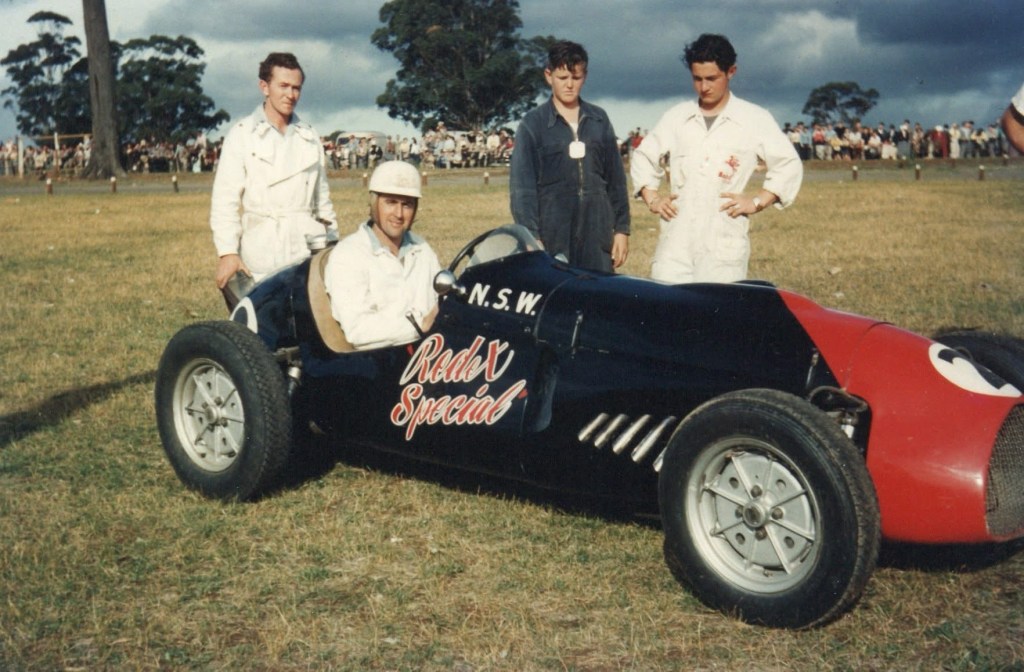
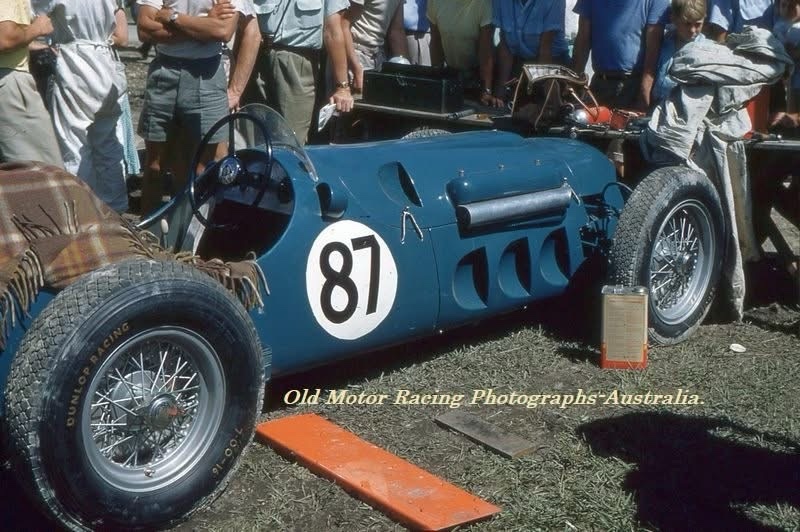
Jack and Betty Brabham during the 1954 Australian Grand Prix weekend in the Southport paddock attending to the needs of Jack’s Cooper T23 Bristol.
I’ve done Cooper Bristols to death but these two colour shots of Jack are the earliest I’ve seen – Kodachrome at its best – so I thought I’d pop them up rather than add them to an existing post and effectively lose them.
Brabham had a lousy weekend in Southport, out with engine troubles on lap 2. Lex Davison won the race in his HWM Jaguar after Stan Jones suffered a chassis weld failure that pitched him off the road and through the undergrowth, killing the car but thankfully not its intrepid driver.
Brabham at Mount Druitt, the youngster is a youthful Pete Geoghegan (D Willis)(LAT)
CB/Mk2/1/53 was pretty trick by this stage, where is the photo above folks?
Jack had been racing it for a couple of years and made some modifications – some suggested by British mechanic/engineer Frank Ashby who was then living at Whale Beach on Sydney’s Barrenjoey Peninsula – including fitment of triple Stromberg carbs instead of the usual trio of Zeniths and taking bulk weight off the Bristol engine’s flywheel by adapting a Harley Davidson type clutch as used on his speedcar, and extensive machining. The Stromberg BXOV-1 carbs were lightly modified units of examples fitted as standard to the Holden 48-215.
Stan didn’t have it for long before selling it to Tom Hawkes in time for the 1955 Australian Grand Prix at Port Wakefield.
The rare shot below shows Hawkes in Jack’s old Cooper Bristol #8, with Brabham looking on from car #6, the monoposto Cooper T40 Bobtail Jack built at Coopers for his championship Grand Prix debut at Aintree in the British GP that July. He then brought it home and scored a lucky win at Port Wakefield after top-guns, Reg Hunt, #5 Maserati A6GCM-250 and Stan Jones, #4 Maybach 3 retired.
(E Steet)Hawkes on the way to a DNF in the 1957 AGP at Caversham in the ex-Brabham Cooper T23, now fitted with a Repco-Holden engine (E Steet)
The ultimate spec of CB/Mk2/1/53 was created when Tom Hawkes got his hands on it. He raced it initially as was and then made changes to the suspension, replacing the transverse leaf suspension with wishbones and coil springs, added a slimline body, fitted wider Lukey alloy wheels, and critically, replacing the 2-litre Bristol six with a 2.3-litre pushrod Holden Grey six topped by a crossflow Repco Hi-Power cylinder head and a pair of SU carbs.
Hawkes in the Albert Park paddock, 1956 AGP weekend. Repco-Holden engine, car still fitted with transverse-leaf IFS (NAA)Hawkes ascends Mount Panorama during the ‘58 AGP weekend, note the stance of the car and Lukey alloy wheels (T Martin)
Tom was third in the 1958 AGP at Bathurst – the ultimate Australian power circuit – with the Cooper in this spec behind Lex Davison’s 3-litre Ferrari 500/625 and Ern Seeliger’s 4.6-litre Maybach 4 Chev V8. Sure, Ted Gray, Tornado 2 Chev and Stan Jones, Maserati 250F retired from the lead, but was the best ever AGP finish for a Holden six, a great achievement.
Etcetera…
Brabham and crew at Mount Druitt circa 1953, names folks? (A Cox)(A Patterson Collection)(A Patterson Collection)
John Sherwood and Jack Brabham, perhaps at one of the send-off functions for Jack when he left for the UK in early 1955
Brabham chats to Doug Whiteford on the Australian Grand Prix-Port Wakefield grid in 1955. Cooper T40 Bristol and Talbot Lago T26C.
(unattributed)
This pair of shots show Jack aboard the Cooper T40 Bristol during the January 30, 1956 South Pacific Championship meeting at Gnoo Blas. Brabham was second behind Reg Hunt’s new F1 Maserati 250F with Kevin Neale third in, you guessed it, a Cooper T23 Bristol.
These cars – Type 20 and Type 23 or Cooper Bristol Marks 1 and 2 if you like – were hugely important machines in Australian racing for a decent chunk of the 1950s in original spec and modified from mild to wild…
(unattributed)
Credits…
Old Motor Racing Photographs Australia, Dick Willis, Allen Cox, LAT photographic, Ed Steet shots via David Zeunert, Lex Denniston shot via Tony Johns, Tony Martin, Adrian Patterson Collection
Tailpiece…
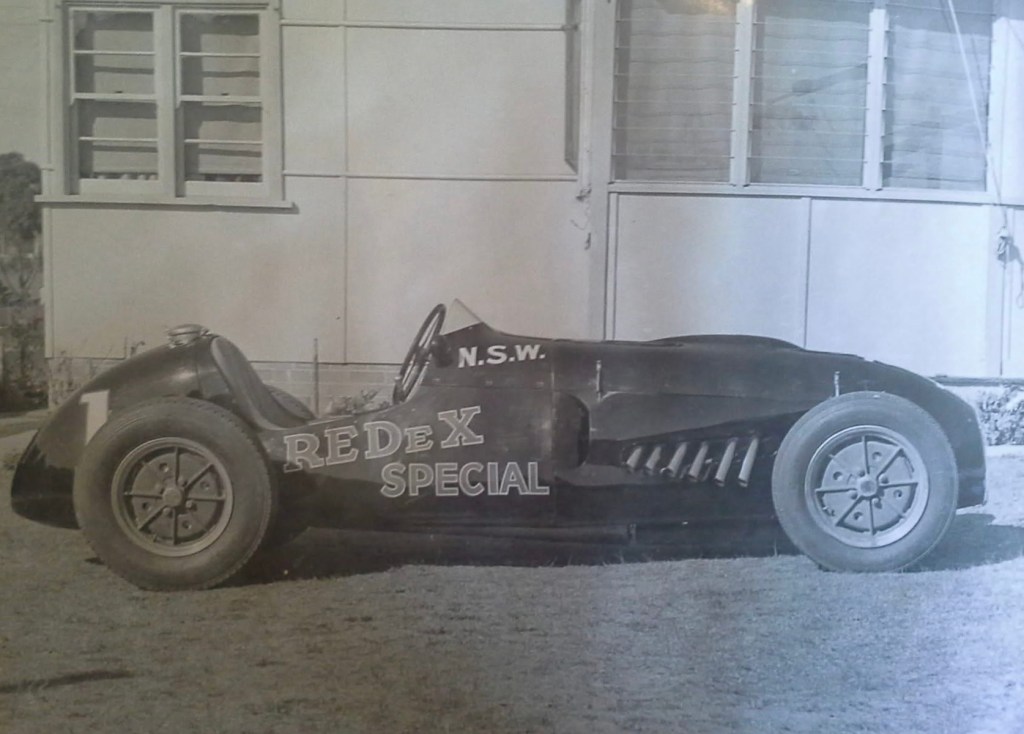
Three of the 1954 AGP protagonists on the cover of Wheels magazine in January 1955. Lex Davison’s HWM Jaguar, an ex-Moss F2 chassis fitted with a C-Type engine, Dick Cobden’s ex-Whitehead Ferrari 125 s/c and Jack Brabham’s RedeX Special Cooper T23 Bristol.
Quite why yerd’ put the winner, Davison, on the cover and two DNFs I know not…the answer is probably the timelines in hand-colouring the photographs for a race held on November 7, 1954.
Warwick Brown and the Wrightcars truck he used in New Zealand during his successful 1975 Tasman Cup campaign. He was the only Aussie to win the coveted series, shown here with Lola T332 Chev #HU27 at Pukekohe, where he won the NZ GP on January 12.
HU27 is the first T332 built, first racing in the opening Tasman round at Levin on January 6, 1974. Brown won the Adelaide 100 on February 24 and in so doing won the first of hundreds of in-period victories for the 332 and its many variants on every continent.
A very successful machine, Brown showed well in the US L&M F5000 championship in mid-1974 before coming home and proving the class of the AGP field before his Peter Molloy Chev broke a harmonic balancer. Then followed the Tasman in which he won two of the eight rounds in a very open year, five drivers won races.
Brown on the hop in HU27 in the 1975/Surfers Paradise Tasman round. He and mechanic/engineer/driver-whisperer Peter Molloy developed the car to a fine pitch in some US L&M races in mid-1974. Lola perves will notice the single-post supported banana-wing. Compare and contrast with the Lola factory fitment twelve months before (unattributed)Brown during the February 1974 Oran Park Tasman round. Rear view of the early spec T332s-HU27 here. Compare and contrast with the Jones’ T332C further on. Car owned by Brown’s patron, Sydney businessman Pat Burke (D Harvey)
This article is largely an assemblage of factory/Carl Haas T332 information accumulated by Australian racer/restorer Jay Bondini who owned, restored and raced two T332s: HU43 ex-Carl Hogan and HU37 ex-Sid Taylor.
The Lola T330/T332/T332C/T332CS/T333 as a series of ‘same chassis’ related models are right up there as a contender for the title of ‘greatest production racing car’ – where greatest is defined as the most wins relative to production numbers.
Others that spring to mind are the Bugatti T35/T37/T39 series, Ralt’s RT2/3/4/5, the McLaren M7/M10 series and McLaren M8/8A/12/8B/8C/8D/8E/8F and Ford GT40 Marks 1-4 and more. Oh yeah, not to forget Lola’s own T70 series…it would be an interesting list to create and debate. One for another time.
For those unfamiliar with a T330, here is Max Stewart in HU1 ahead of Graeme Lawrence’s T332 HU28, both Chev powered, during the 1974 Sandown Tasman round won by Peter Gethin’s Chevron B24 Chev (B Keys)
Only 10 carryover parts from other model Lolas. No surprises there albeit most of the T330/332s I recall seeing in paddocks were fitted with Koni double-adjustable alloy shocks not Armstrongs.
Jongbloed 15-inch rear wheels became the-go later in ’74 from memory. So too, did the Chaparral type all-enveloping engine cowl/airbox, that turned a stunning looking car into the positively sinful: the T332C followed.
$US3,650 for a new tub in 1974 is about $US26,000 today. I wonder how much a new monocoque actually costs now from Lola’s designated chassis maker (who owns those rights these days?) or your favourite fabricator?
(C Parker Archive)
Alan Jones in Teddy Yip’s T332C HU61 Chev at Riverside in 1976, the final year of the US F5000 Championship before changing to 5-litre central-seat Can-Am in 1977…and further Lola T332 domination.
Chaparral were the first to do the enveloping engine cover/airbox on a T332. Apart from the body changes, the oil tank was moved, the roll-bar mounting changed and a central post rear-wing adopted. The later 332s also had the FIA mandated roll-hoop over the dash which had the byproduct of providing a bit more chassis stiffness.
See the letter from Chaparral‘s Jim Hall to Eric Broadley via Carl Haas explaining improvements to their car raced so successfully by Brian Redman in 1974-75 that allowed Lola to ‘productionise’ them as the T332C for 1976. Fascinating detail stuff of all the one-percenters that made a topline well funded outfit like Chaparral so successful: https://www.lolaheritage.co.uk/type_numbers/t332c/t332c.html
‘What are your three favourite racing cars Alan?’ I asked Jones at the Governor’s function before the 2023 AGP. ‘My F1 Williams FW07, the Lola T332, both the 5000 and Can-Am versions, and Alan Hamilton’s Porsche 935…’ was his response.
About says it all really, given his career spanned the mid-1960s well into the early-2000s and hundreds of different cars.
It’s not a factory drawing but is useful to show how wide and shallow the chassis of the T332 and T330 are. Note that, unlike the T300 chassis, the 330/332 used the engine as a semi-stressed member.
The flaw in the drawing – purportedly T332 – is that the rear suspension shows an inverted rear wishbone (T330) arrangement rather than the twin-parallel link set up used on T332s.
Steve Elliot, Jay Bondini Archive, Dale Harvey, Chris Parker Archive, oldracingcars.com, Getty Images
Tailpiece…
(S Elliott)
Graeme Lawrence in the second T332 built, HU28, from Max Stewart in T400 Chev HU2 during the 1976 Peter Stuyvesant New Zealand F5000 Championship.
Just love Steve Elliott’s shot above – a corker! – but I have no idea of the circuit, help please Kiwis!?
Lawrence, the 1970 Tasman Cup winner aboard an ex-Amon Ferrari Dino 246T, fought out the 1975 Tasman with fellow T332 exponents Lawrence, John Walker (T330 HU23 Repco-Holden was rebuilt around a T332 tub) and Brown.
The battle went down to the wire at the final Sandown round where WB prevailed after Walker lived-to-fight-another-day with a monster first lap accident and Graeme had problems. John Goss won the race in his Matich A53 Repco-Holden.
Lawrence won the 1975 NZ Gold Star in this car and was always a front-runner in Australasian F5000. You can’t mention Kiwi Lola exponents without recognising Ken Smith, who won the Peter Stuyvesant Series, NZ GP at Pukekohe, and the NZ Gold Star in 1976. A big year! His mount was an ex-Chaparral/Brian Redman Lola T330/2 HU8. He may still be having the occasional Lola steer in his eighties!
Max Stewart was pretty-handy in Lolas too. In T330 HU1 he won the Australian Grand Prix at Oran Park and the Gold Star series in 1974, then took another AGP victory in the wet at Surfers Paradise the following year in the T400.
Brian Redman in the Chaparral/Haas Lola T332 HU42 Chev at Riverside, the final round of the 1974 US championship on October 27. Mario Andretti won from Brian aboard…the Vel’s Parnelli Jones T332 HU29 (Getty Images)
Afterthought…
The fact that the first and second T332s built were sold to colonials allowed me to make this piece Australasian centric, not that I need encouragement.
But how can you write something about Lola’s T330/332 without mentioning Brian Redman, King of F5000 in its latter era? Earlier Monarchs were, arguably, Peter Gethin and Graham McRae, the latter gets bonus points for doing much of his work aboard cars of his own manufacture.
It’s not that Brian was a Lola F5000 man early on either. He had success in McLaren’s M10 and M18s and did all the early development testing of the Chevron B24 in mid-1972 together with Derek Bennett.
But when he decided F1 wasn’t for him and made US F5000 his primary programme, his partnership with the factory-Carl Haas/Chaparral team yielded a trio of championships from their 1973-76 F5000 partnership – subsequent short Can-Am programme duly recognised. He raced Lola T330s in ’73 and T332s from ’74-76.
Redman didn’t give a yard away to any of the Formula One Johnnies he raced with in Scuderia Ferrari’s 1972-73 World Sportscar Championship campaign aboard 3-litre flat-12 312PBs: Ickx, Andretti, Peterson, Schenken, Pace, Reutemann etc. Surely Brian was the best driver outside F1 at the time? Bias duly declared…
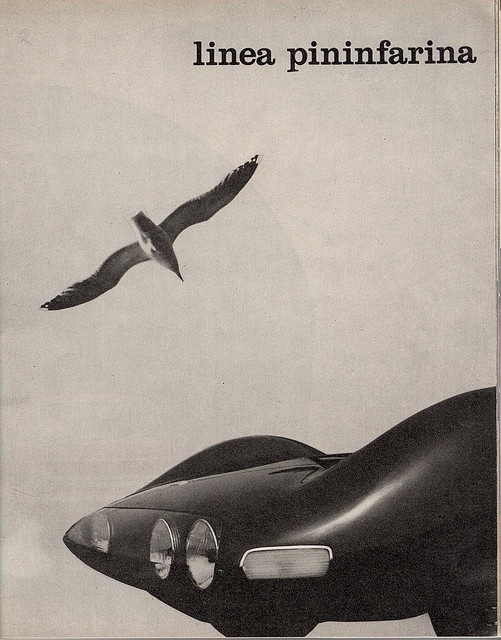
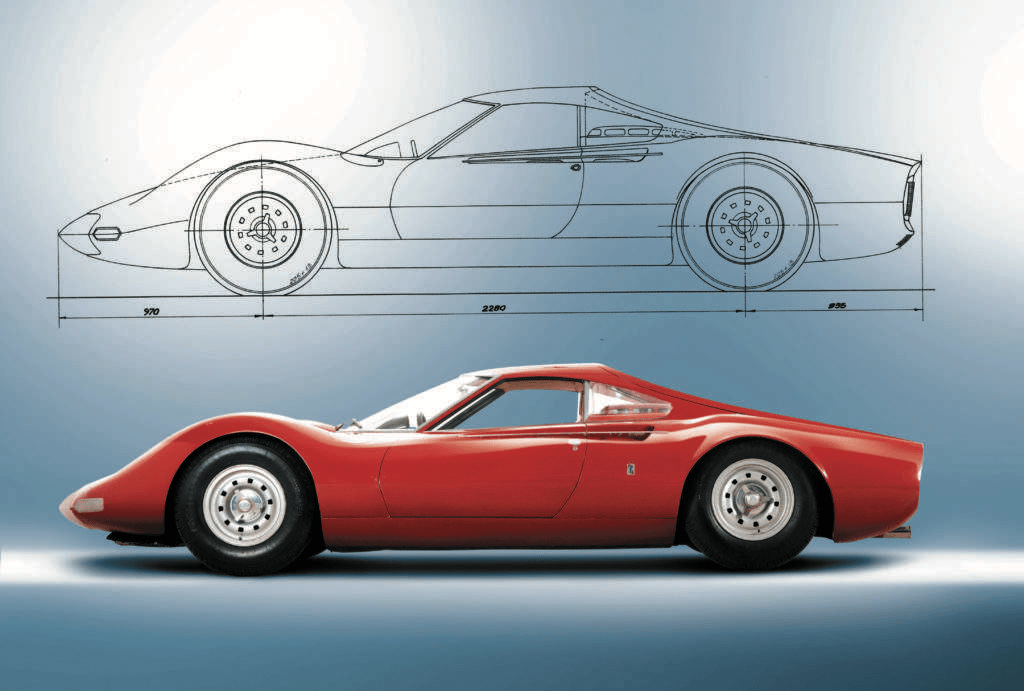
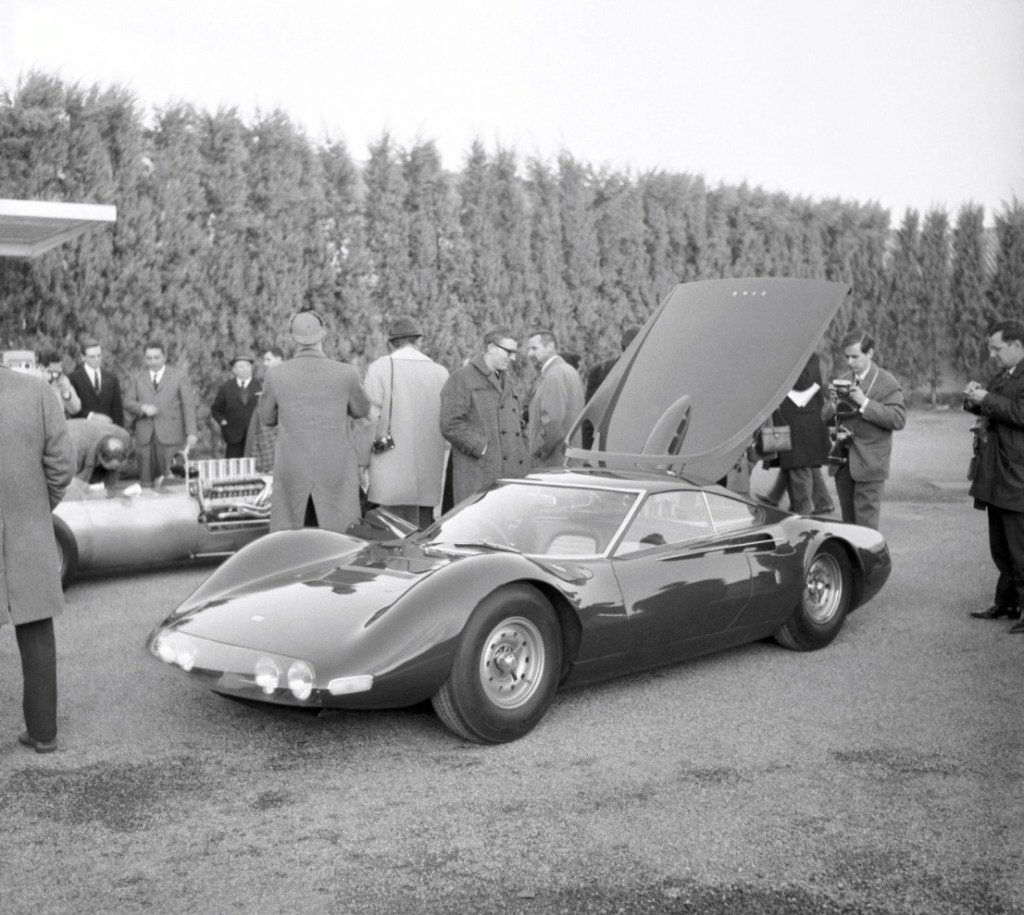
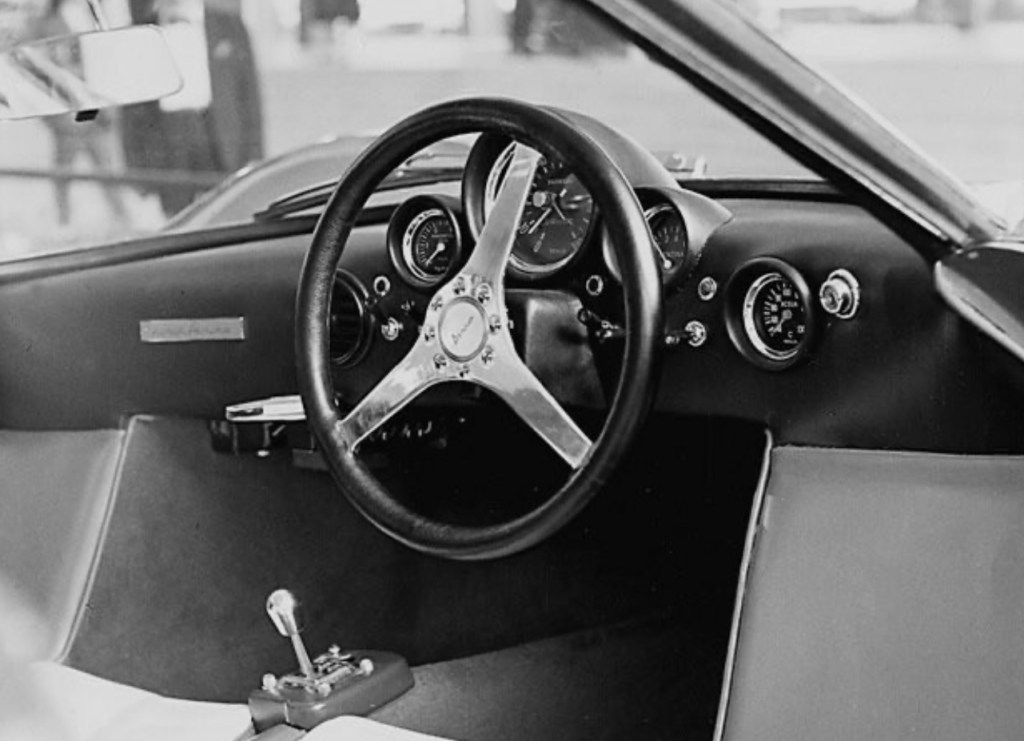
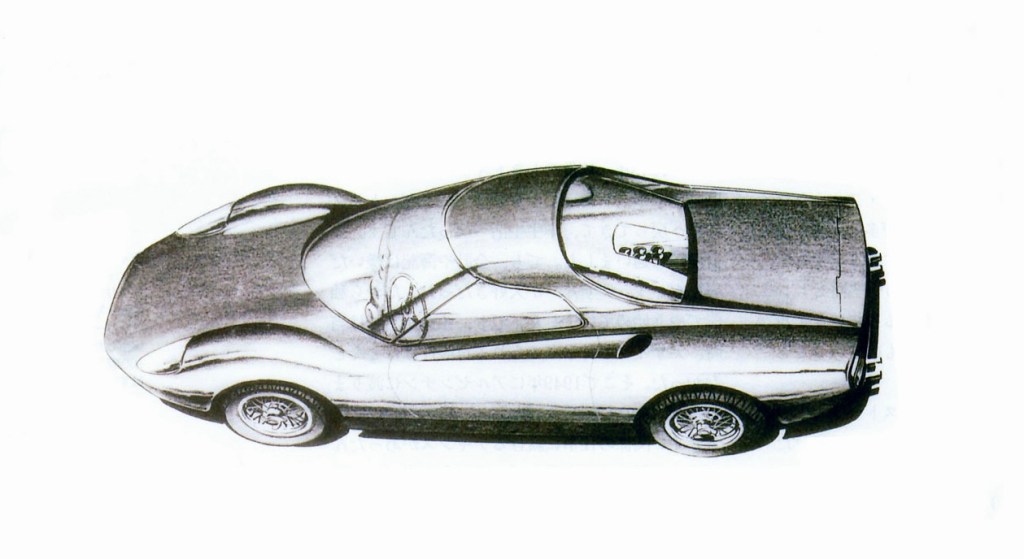
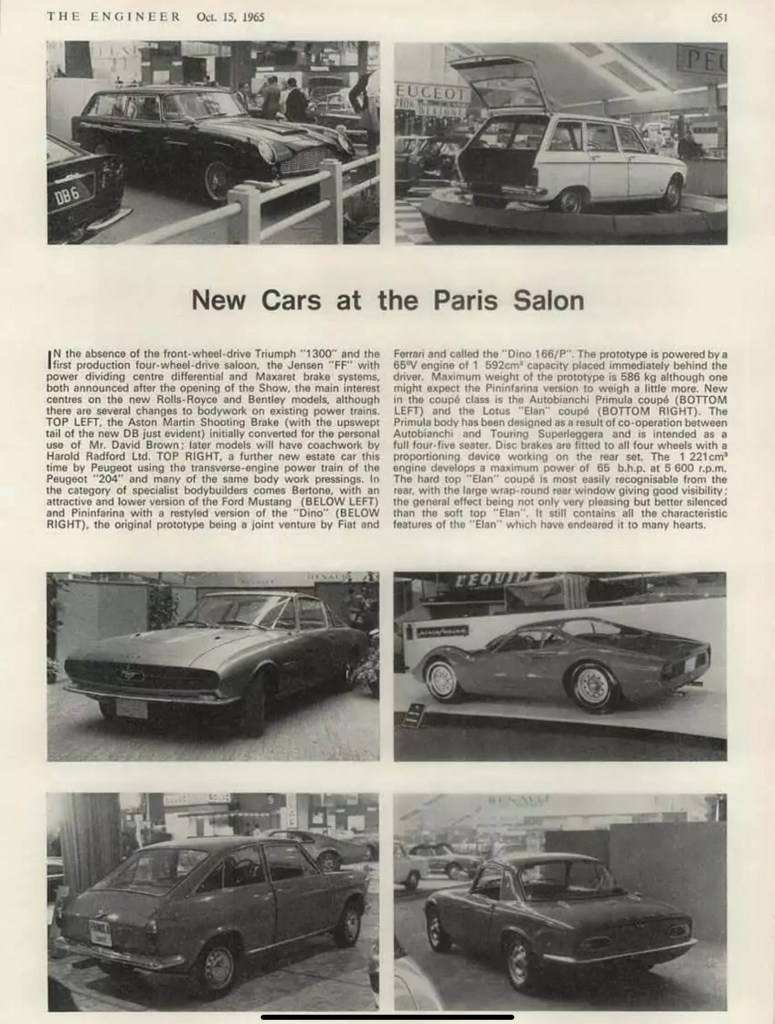
Chassis #840 was sourced from SEFAC, Ferrari’s racing department with the completed car presented at the Paris Salon in the October .
(unattributed)(Getty Images)
Here the cutie is being largely ignored by the world’s horsepower press at the launch of Ferrari’s new 3-litre Tipo 312 Grand Prix car at Maranello in March 1966. John Bolster’s Deerstalker stands out! More about that Ferrari 312 launch here: https://primotipo.com/2017/10/26/surtees-ferrari-312-modena-1966/
Charlie Dean in magnificent Maybach 1, then 4.3-litres in capacity, descending The Mountain.
The original machine of 1947, hillclimbed initially sans bodywork, has now evolved into a refined racing car in its middle age; the last hurrah for Maybach 1 was victory in the 1954 New Zealand Grand Prix held on the Ardmore airfield circuit on January 9.
Charlie was third at Bathurst behind Lex Davison’s Alfa Romeo P3 and Doug Whiteford’s Talbot-Lago T26C in the 6 lap over 1500 handicap, but didn’t finish the 3-lap scratch or start the Redex 100 mile – the Bathurst 100 became the Redex 100 with a few sponsorship £’s – feature with mechanical dramas.
As you will see below, by the October Bathurst meeting Stan Jones had bought the car from Dean and entered into a deal with Repco Research, of which Charlie was general manager/chief engineer, whereby the preparation and ongoing development of the car(s) was Repco’s responsibility.
These fabulous photographs were taken by FS Furness and posted on Bob Williamson’s ‘Motor Racing Photographs – Australia’ Facebook page recently by enthusiast Mal Elliot. With the help of John Medley’s Bathurst Bible ‘Bathurst:Cradle of Australian Motor Racing’ I have cobbled together a few words to go with the images. So large was Mal’s post that there are a couple more pieces to come. Many thanks Mal, information on FS Furniss would be most appreciated folks!
(FS Furness)
Tom Hawkes ex-Louis Chiron Talbot-Lago T26C #110007 had not been long in the country and was shared with, and soon sold to very experienced racer, 1950 AGP winner and fellow Victorian Doug Whiteford.
Whiteford soon had the big car going well that weekend, doing 136mph down Conrod. That combo, aided by Doug’s skilful preparation became the top-gun combination in Australia for the next few years. Hawkes was third in the Redex 100 feature, while Whiteford was third in the 3 lap scratch and fifth in the over 1500cc handicap.
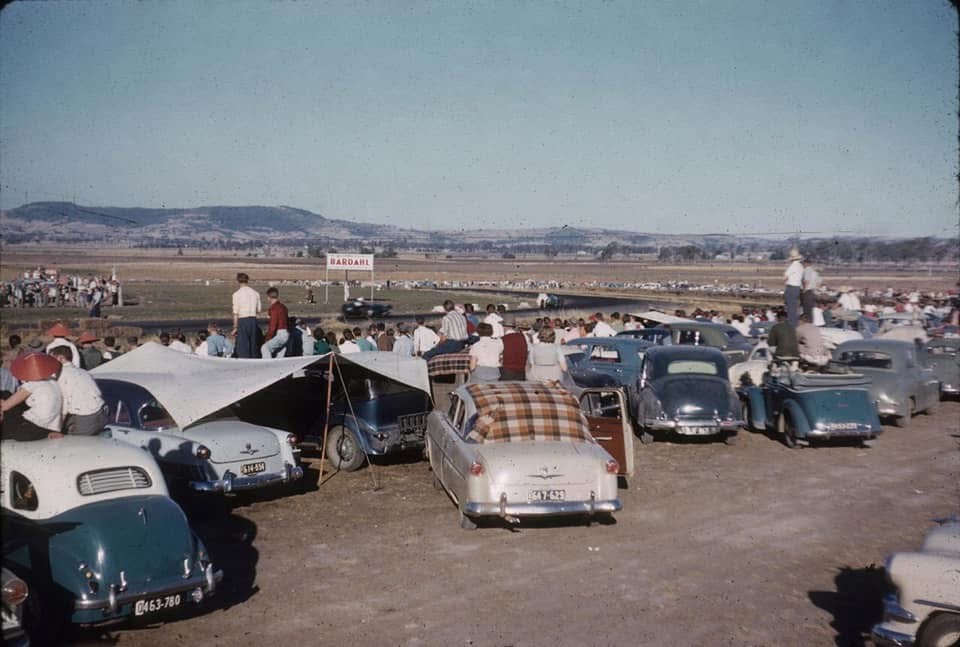
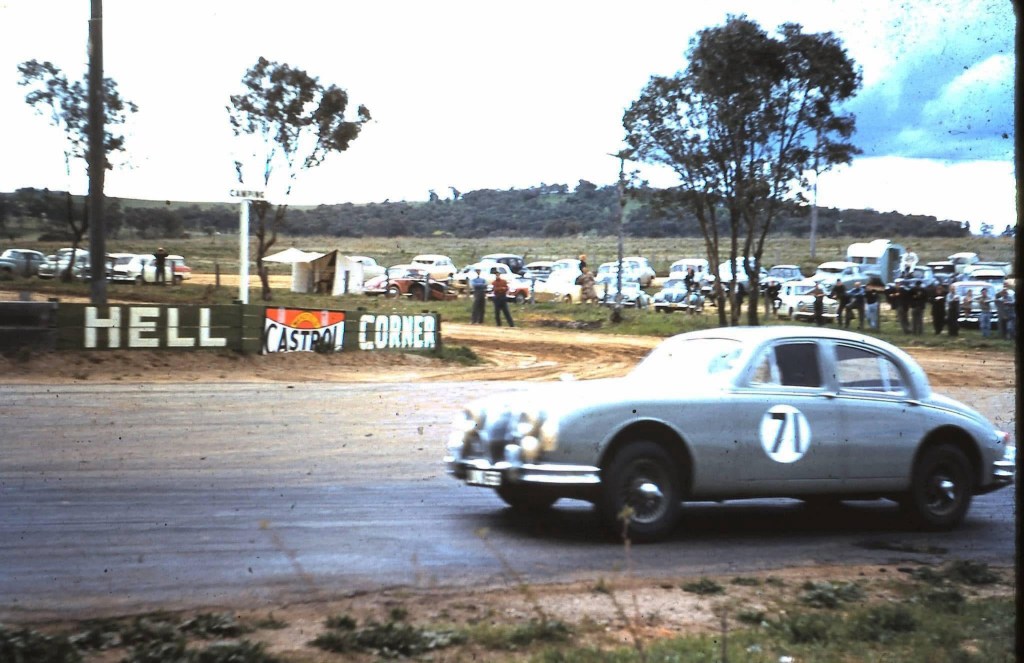
The big blue, 4.5-litre six-cylinder Grand Prix car was ‘blooded’ in its first meeting in the Antipodes. That ding in the nose was caused when Whiteford gave Lex Davison’s Alfa Romeo P3 a tap-up-the-bum during the latter stages of the over 1500cc handicap won by Laurie Oxenford’s Alvis Mercury. Lex’s P3 Alfa brakes were usually problematic, a moments hesitation into Hell corner resulted in the hit. The blue and white T-L nose badge became lodged in the Italian’s perky rump, incensed after the race, Lex didn’t return it. Davo was fourth and Whiteford fifth. More about the Talbot-Lago here: https://primotipo.com/2022/05/04/doug-whiteford-talbot-lago-t26c-take-3/
(FS Furness)
Jack Murray had a great weekend aboard his Allard J2 Cadillac. Three J2s were entered by the NSW distributors, Gardiner Motor Service. The best result of the four Allards entered was Murray’s third place in the over 1500cc 6 lap handicap.
(FS Furness)
Dick Cobden had a great weekend in his MG TC Spl. He was third in the 6 lap under 1500cc handicap, and won the 12 lap 50 mile handicap for Redex 100 non-qualifiers.
The first four cars home were MGs; George Pearse’ TB Spl s/c, Curley Brydon’s TC Spl s/c, Cobden, and LG Barnard’s TC. MGs were in many years Australia’s ‘FF and F2 cars’, depending on specification, for decades of handicap racing.
Uber-rare shot of champion cyclist’s Nino Borsari’s Cisitalia from Alf Mazengarb’s Riley, neither car was well up in the closed production car handicap where French cars were to the fore: the M Rolls Renault 750 won from Citroens raced by Bill Buckle and P Damman.
(FS Furness)
Jack Saywell’s 1-litre JAP 8/80 powered Cooper Mk4. He did well, winning the 3 Lap Scratch from Frank Kleinig’s Kleinig Hudson Spl and Whiteford’s Talbot-Lago T26C.
(FS Furness)
Lyndon Duckett aboard the Ecurie de Pur Sang Bugatti Type 51A – T35B-4847 converted by the factory to a 51A- substituting for Peter Menere. The car doesn’t appear to have figured in the results.
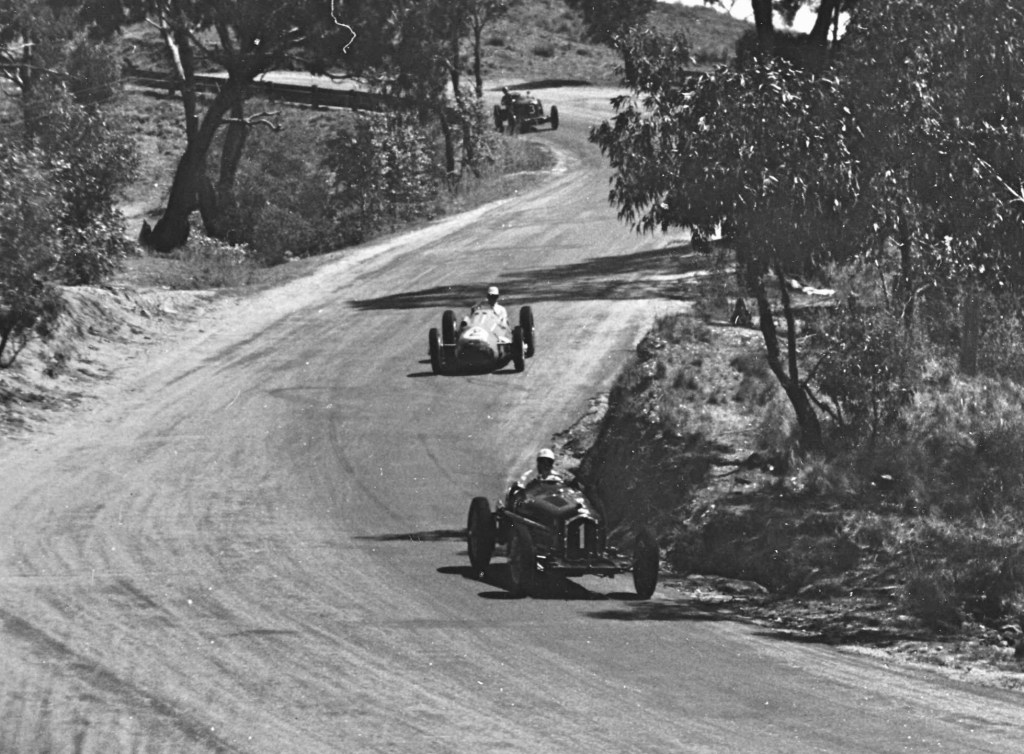
Eldred Norman blasting his Maserati 6CM down Mount Panorama during the feature race, the Redex 50 Mile Championship held over 12 laps on October 1.
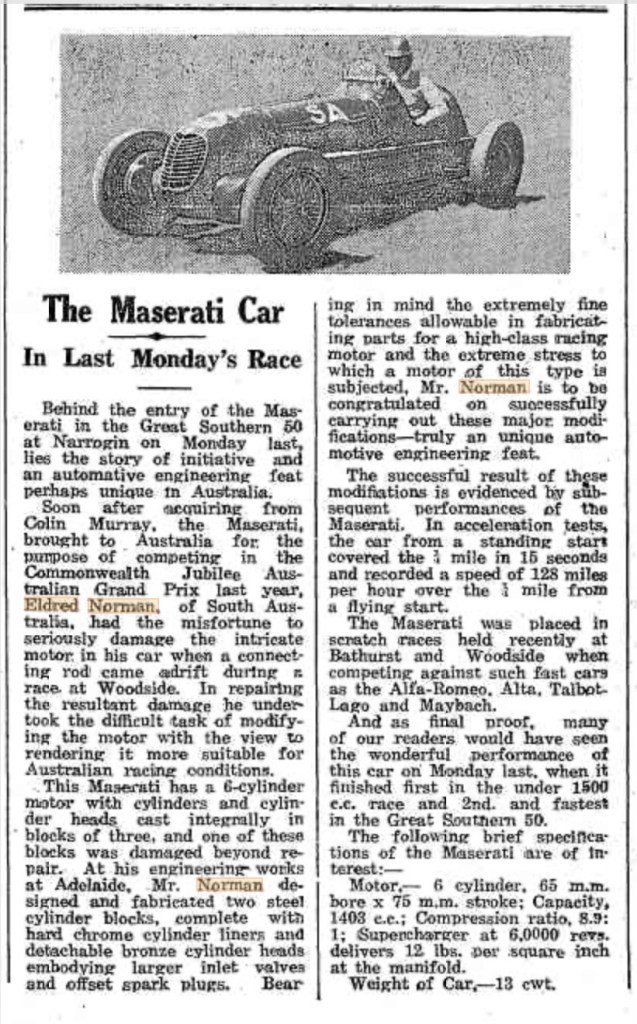
Colin Murray brought 6CM #1542 to Australia to contest the 1951 AGP held on the Round the Houses circuit laid out at Narrogin, a wheatbelt town 200km south-east of Perth. He failed to finish the race, then sold the car to Norman who also contested the GP, leading it for a while aboard his famous Double Eight, twin-Ford Mercury V8 engined special until it expired. Eldred sold that car to Perth’s Syd Anderson and ‘stepped-up’ to the Maserati. Quite why he bought a car he soundly belted with the Double Eight is intriguing.
Eldred had a baptism of fire with the Maserati. By the time he got to Bathurst he had already blown the Maserati’s 1.5-litre, six-cylinder twin-cam engine after a connecting rod came adrift at either Gawler or Glen Ewin and reconstructed it.
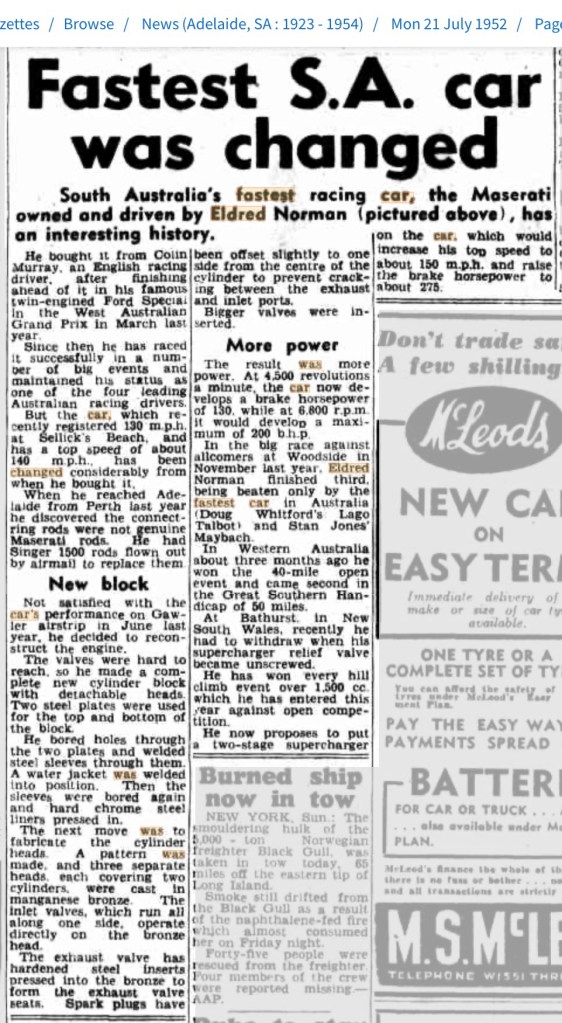
‘He fabricated up a new steel block and cast new detachable bronze cylinders heads. The detachable heads not only made engine maintenance easier but allowed the fitting of larger valves. The conrods are now 1500 Fiat and the pistons are from a BSA motorcycle,’ AMS October 1951 reported. See the Etcetera section below for more detail on Eldred’s engine reconstruction and ongoing developments.
How much testing the car had undergone before the tow from Adelaide to Bathurst is interesting. It was running well at that stage though, the weekend after Bathurst, on October 8, the Maserati/Norman duo were third in Australia’s first F1 race – The Jubilee Woodside Formula 1 Race – behind Whiteford and Jones.
Other front-runners were Whiteford‘s Talbot-Lago T26C, Ron Edgerton’s ex-Alf Barrett Alfa Romeo 8C2300 Monza, Jones’ Maybach 1 and Davison’s Alfa P3 albeit Lex didn’t leave the startline with transmission failure.
Whiteford raced well, clear of Jones in second, then Edgerton who gave the Monza’s former owner Barrett a look at the Monza from close-quarters when Alf took Mischa Ravdell’s Cooper into fourth place before hitting a displaced sandbag and retiring.
Whiteford won in a large, quality field from Jones (above) and Edgerton.
(FS Furness)
Above, DA ‘Bill’ MacLachlan in a Bugatti T37A-37358 Ford V8 Spl – originally Bill Thomson’s 1930/32 Phillip Island AGP winning machine – from Clive Warwick Pratley in the George Reed Spl Monoskate 2 (Ford V8 Spl) and Clive Adams, Brad Holden. Pratley was fourth in the Redex feature and had won the Australian Grand Prix in George Reed’s ‘Red Car’, another Ford V8 Spl at Narrogin in March.
(FS Furness)
Reg Hunt in his Hunt Vincent 998 aka The Flying Bedstead, from Barrett in Ravdell’s Cooper Vincent 998 and DG Leonard’s MG-Vauxhall .
Medley records that Barrett took over the car after Ravdell and mechanic Harry Firth were injured in a road accident in Bathurst before racing began. Hunt ran fourth early on before brake troubles intervened.
(FS Furness)
Lex Davison, Doug Whiteford and Ron Edgerton aboard Alfa Romeo P3 #50003, Talbot-Lago T26C #110007 and Alfa Romeo 8C2300 Monza #2211134 respectively. Whiteford won the 6 lap 25 mile over 1500cc race from Davison and Frank Kleinig, Kleinig Hudson Spl.
(FS Furness)
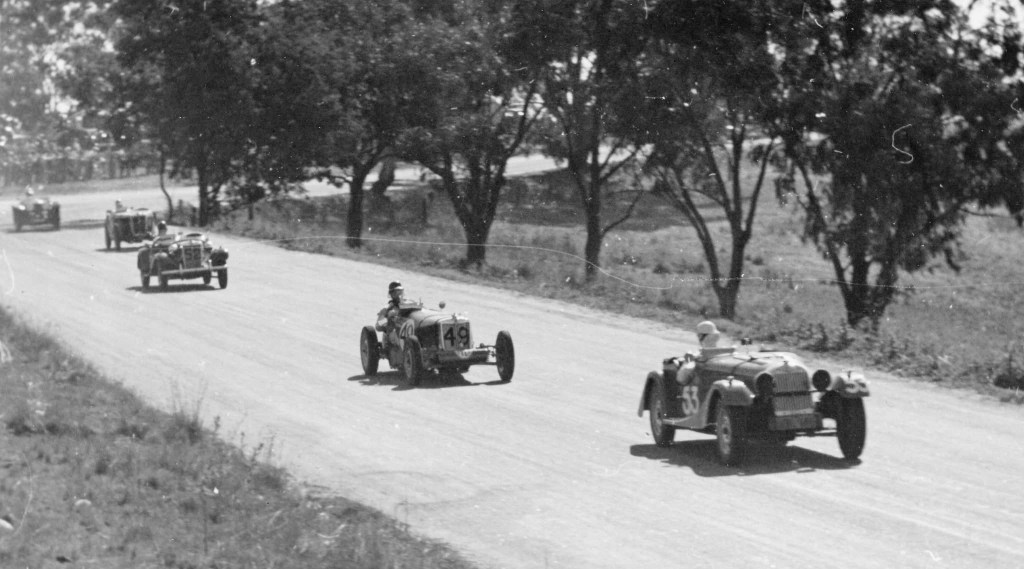
DW McDonald Morgan Plus-Four leads the PG Harrison MG TD Spl and Holt Binnie MG TC Spl s/c.
(FS Furness)
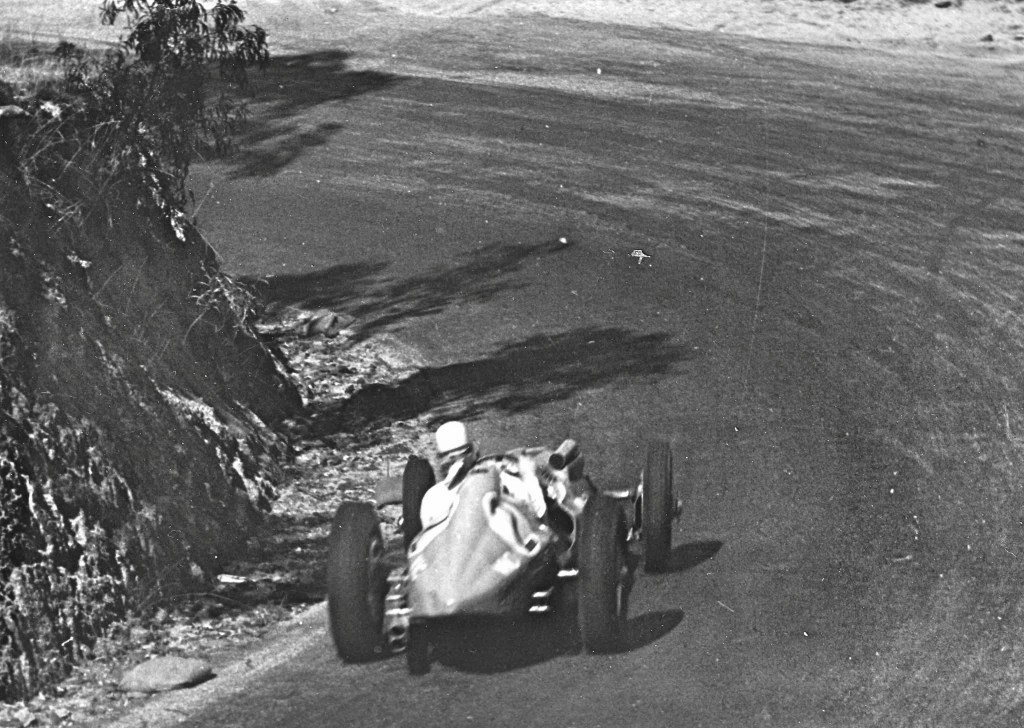
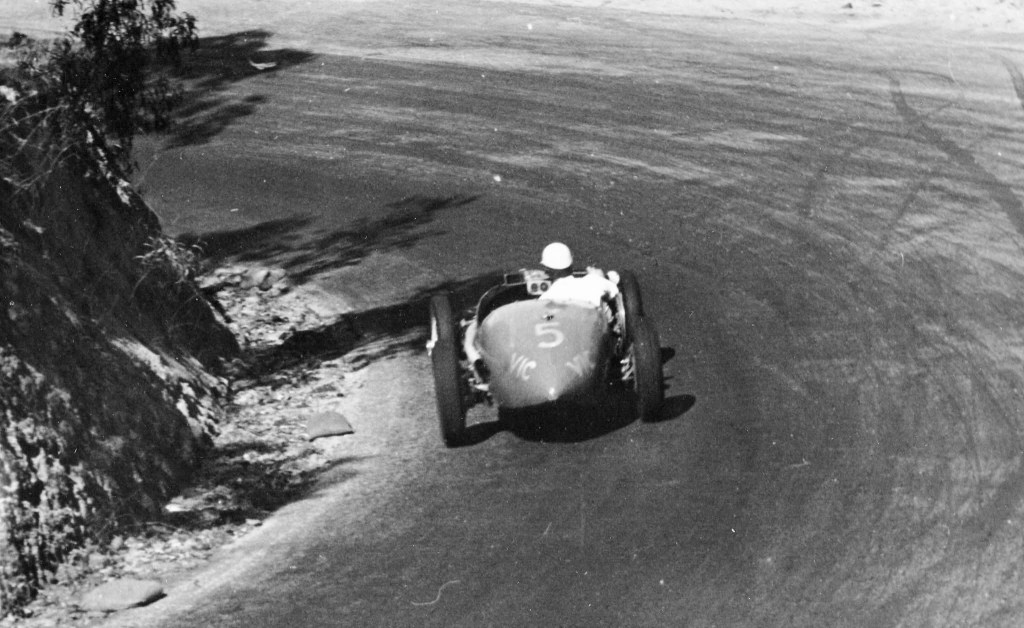
Doug Whiteford’s monoposto Grand Prix 4.5-litre six-cylinder Talbot-Lago T26C above, and Stan Jones biposto 4.3-litre six-cylinder Maybach 1 below, through Forrest’s Elbow. This relatively rare shot of Maybach 1 from the rear shows just how capacious the cockpit was.
The Melbourne motor dealers had much in common, not least combative determination but were otherwise like chalk and cheese.
(FS Furness)
Etcetera…
The Narrogin Observer March 28, 1952
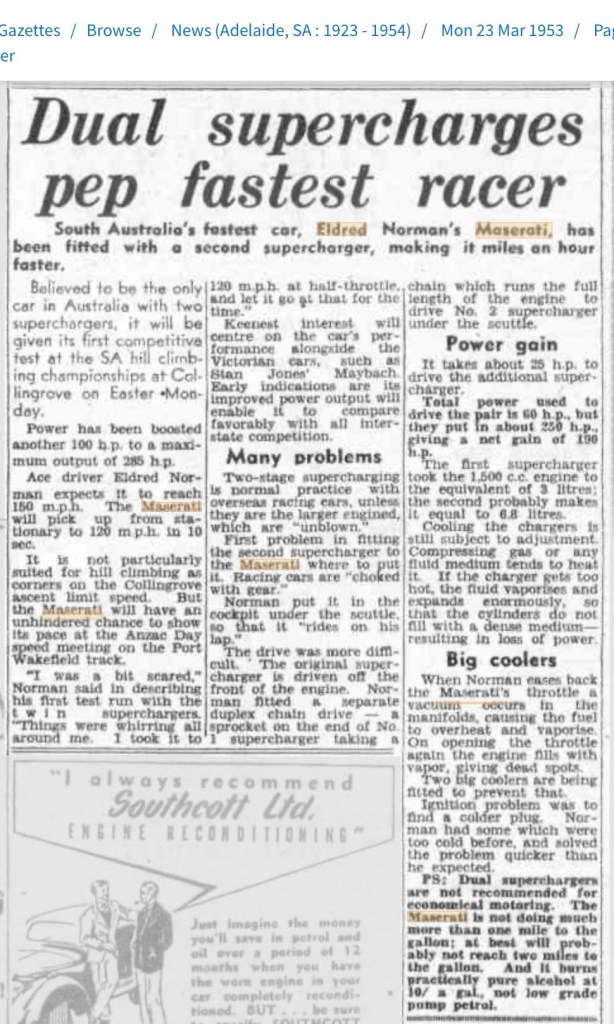
These three articles are for Maserati fetishists interested in the evolution of Eldred De Bracton Norman’s engine developments of his Maserati 6CM #1542 in the two and a bit years he owned it. He made changes to the chassis as well, hydraulic front shock absorbers being the most obvious but unfortunately these articles focus just on the engine, interesting as it is!
Note that the engine damage wasn’t sustained at Woodside ’51, he raced successfully that weekend, David Beaumont reckons the venues the engine popped are either Gawler Airfield or Glen Ewin Hillclimb. That June 11, 1951 meeting at Gawler was perhaps the car’s first appearance in Eldred’s hands. The article below says that Norman’s engine changes were made because ‘he was not happy with the car’s performance at Gawler,’ so maybe the internal haemorrhage didn’t actually occur.
The big races referred to are: Woodside, the ’51 Jubilee Formula 1 race, in Western Australia the March 1952 Great Southern Flying 50 at Narrogin, and at Bathurst, the April 1952 Australian Grand Prix. Clearly, the Maserati by then had a good level of reliability and performance.
One of the many apocryphal Eldred Norman stories was reported in the October 9, 1951 issue of the News Adelaide newspaper. ‘Norman had two purposes in mind as he hurtled around Woodside. One was to win the race, the other to get his lunch ready. Strapped to the exhaust pipe of his Maserati as it sped around the circuit were two cans of pork and beans – piping hot for lunch as soon as the race was over.’
Norman sold the car to Melbourne businessman/motor dealer Ted McKinnon in time for McKinnon to contest the November 1953 Australian Grand Prix at Albert Park, DNF after 50 of 64 laps. #1542 was restored by Alf Blight between 1966’ish and 1982 when he raced it at Mallala. The car left Australia shortly thereafter and went through various European owners before Bernie Ecclestone swallowed it whole in 1997…and not been seen since, pending auction/sales duly noted.
Credits…
FS Furness via Mal Elliott, ‘Bathurst:Cradle of Australian Motor Racing’ John Medley, Australian Motor Sports, ‘A History of the Woodside Motor Racing Circuit 1947-51’ David Beaumont, Narrogin Observer, News Adelaide
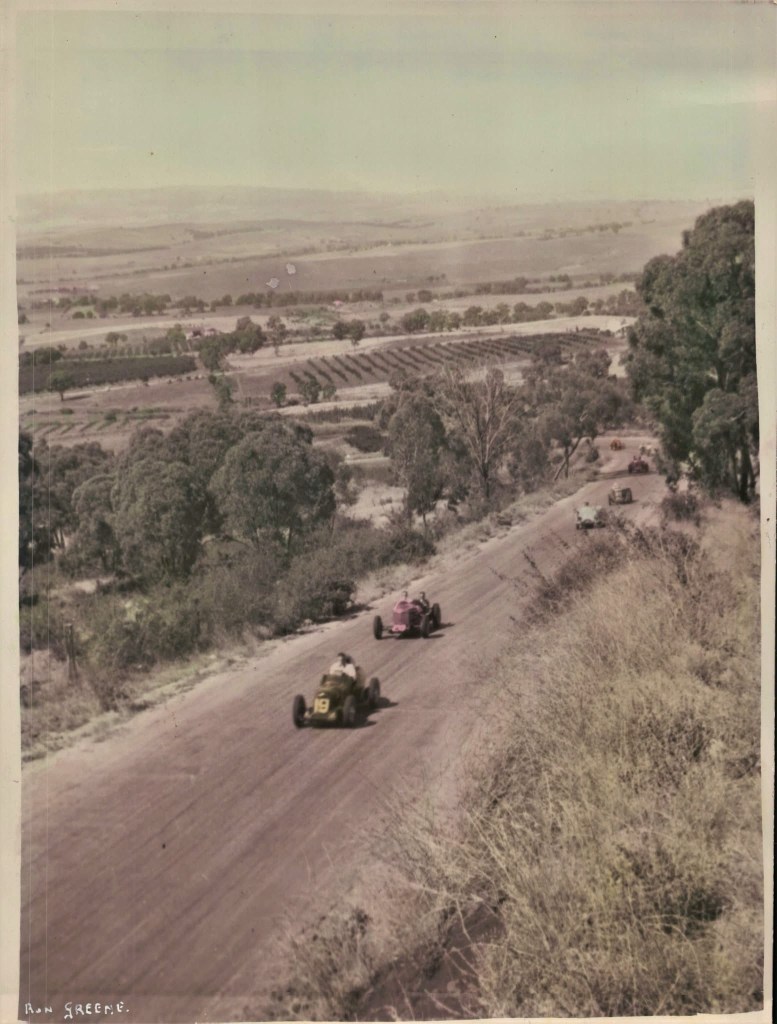
‘Here’s an oldie my dad took when he came home from the war aged 20. He said he took this in 1946, it’s heading up Mountain Straight towards The Cutting,’ Wayne Greene said of his father, Ron Greene.
He’s a bit out, it’s actually 1948 John Medley tells us, and Alf Najar’s MG TB Spl is leading the pack on the parade lap before the start of the New South Wales Hundred, a race won by John Barraclough’s MG NE Magnette. Najar, winner of the event in 1946, was unplaced.
Bathurst pits, date unknown (VSCCA)
Chris Amon, Lotus 70 Ford in the Warwick Farm pitlane during the 1971 Warwick Farm 100 Tasman Cup round. He was second in the race won by Frank Gardner’s Lola T192 Chev.
Lotus shipped the car, Lotus 70-02, to Australia for works-driver Dave Walker to race in the 1970 Australian Grand Prix at Warwick Farm (below), he was fifth in the race won by Frank Matich’s McLaren M10B Repco-Holden.
Chris Amon and David Oxton then played swapsies during the 1971 Tasman Cup with a pair of STP sponsored cars: the Lotus 70 and a March 701 Ford DFW 2.5-litre. There is a bit about that at the end of this arcticle: https://primotipo.com/2024/08/11/new-zealand-racing-random-1/
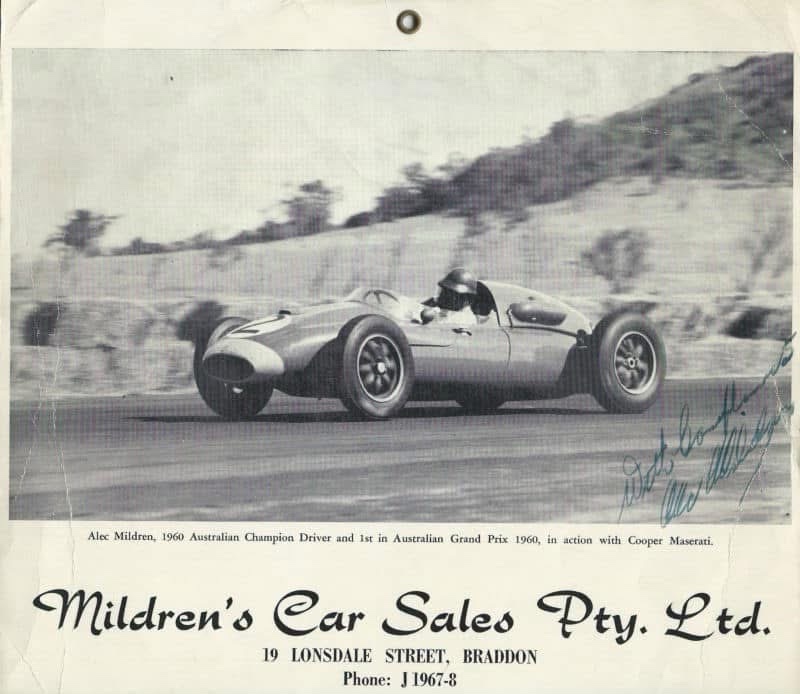
Alec Mildren on his way to winning the 1960 Australian Grand Prix in the very clever Cooper T51 Maserati concepted by Alec and built up by Glenn Abbey in their Sydney ‘shop.
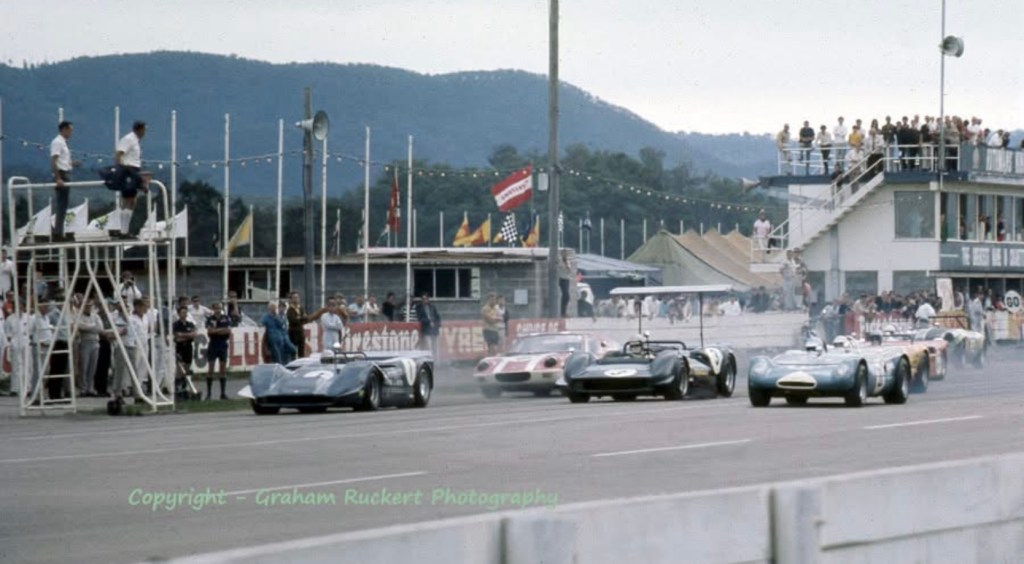
Frank Matich and his Matich SR4 Repco 760 4.8 V8 about to blow off the high-winged Matich SR3 Repco raced by Don O’Sullivan, Bob Beasley’s Lotus 47 behind Matich and Glyn Scott’s Lotus 23B Ford at right and the rest blast off during Surfers Paradise Australian Sportscar Championship round in 1969.
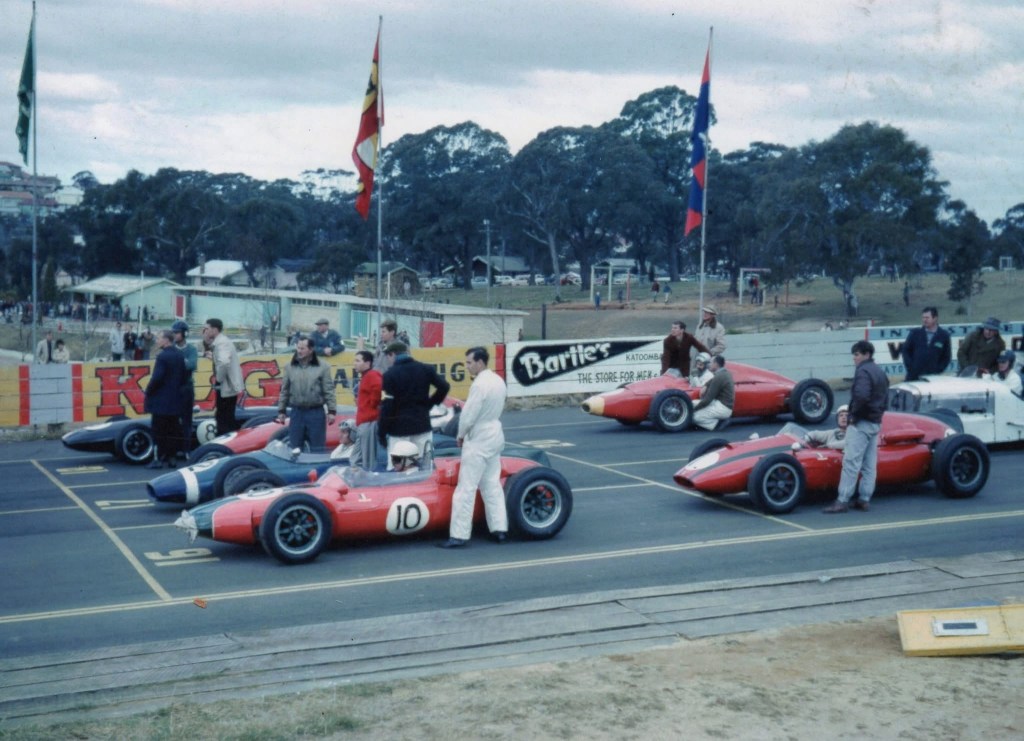
Catalina Park, Katoomba grid in August 1962: David McKay in the #10 Scuderia Veloce Cooper T53 Climax, then Kevin Bartlett, Lynx BMC FJ, the obscured red BRM P48 of Arnold Glass and Leo Geoghegan’s dark Lotus by the KLG sign. It’s Greg Cusack in the older SV T51 Cooper on the second row, alongside him is the Gordon Stewart, Stewart MG and Frank Walters in the George Reed Special Ford V8 ‘So Cal’.
(G Moulds)
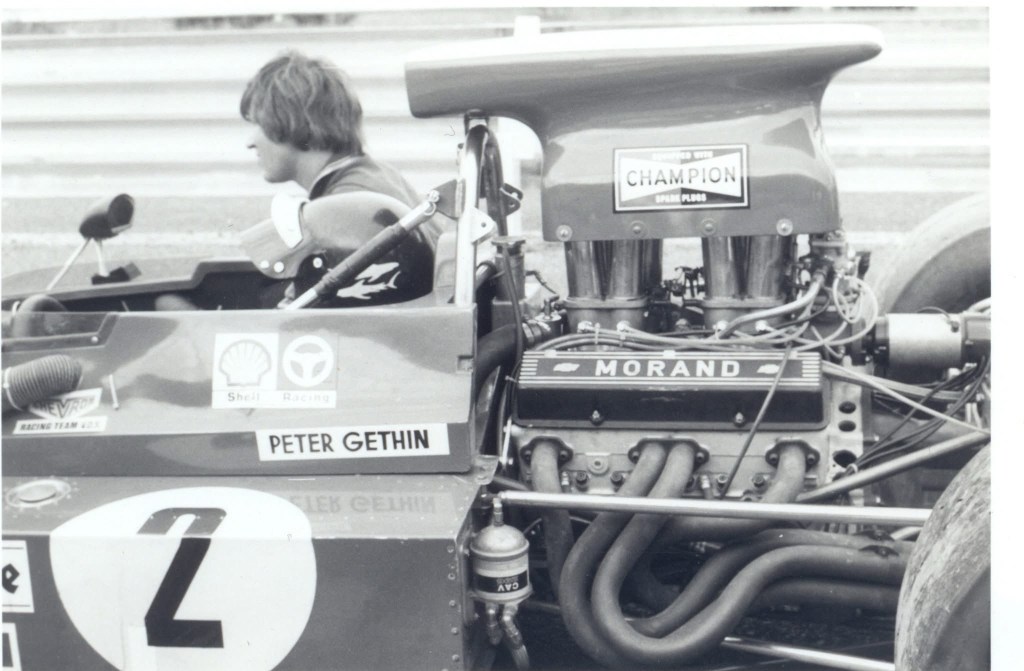
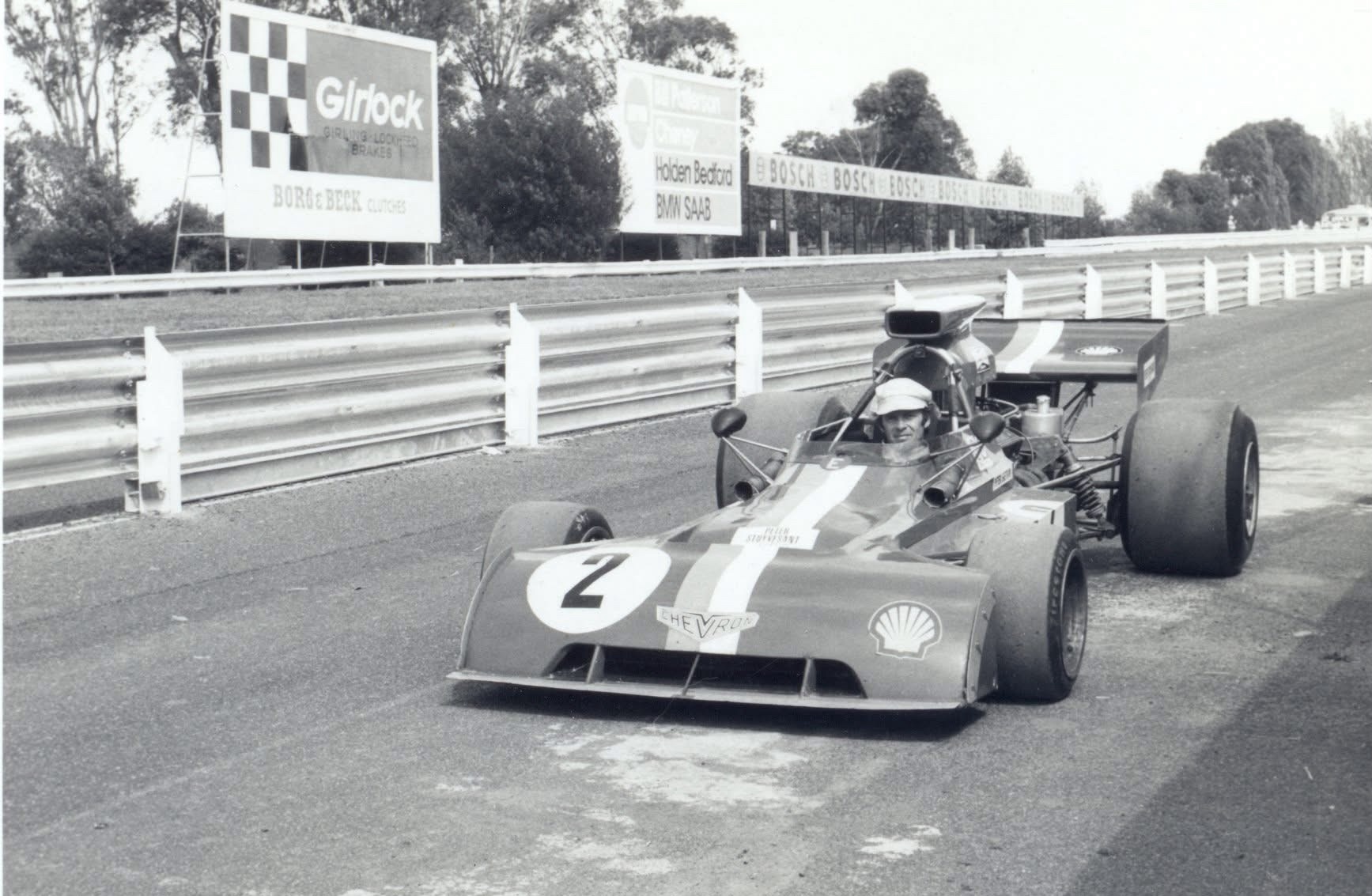
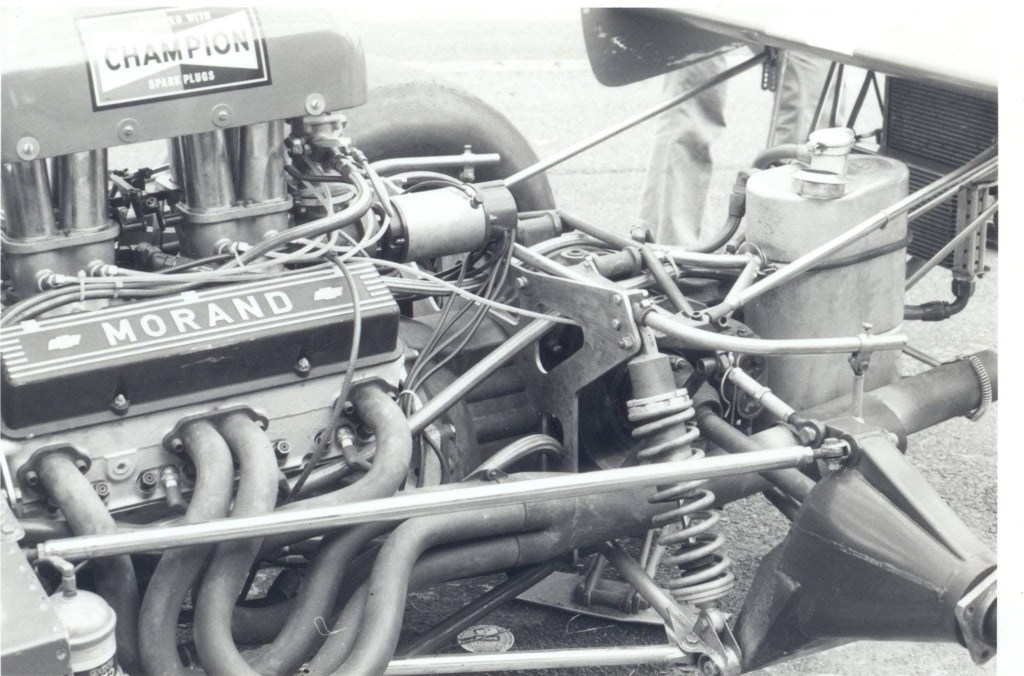
Swiss engine-whizz, Louis Morand provided the Chev engines which powered the Racing Team VDS Chevron B24s of Teddy Pilette and here, Peter Gethin, before the off at the Sandown Tasman round in February 1974.
Peter had a great weekend, winning the race from Graham McRae, McRae GM2 Chev and John Walker, Lola T330 Repco-Holden. He had a great series too, winning it with victories here at Sandown and at Pukekohe, the NZ GP.
(C Hyams Archive)(G Moulds)
Peter Gethin was one of the Kings of F5000 from its earliest days, winning the first British F5000 Championship in 1969, and then won it again in his F1 breakthrough year, 1970. He mixed F5000 with other single-seater and sportscar drives throughout his career; he was a very popular racer in Australasia with regular visits through until 1977.
The dominant F5000s of that era were the Lola T330/T332 and derivatives, but Chevrons B24 and B28 won their share of races steered by the likes of Gethin, Teddy Pilette – who won the 1973 Euro F5000 Championship aboard the same VDS B24 he raced that Australasian Summer of ’74 – Tony Dean, Steve Thompson, and Brian Redman until he threw in his lot with Jim Hall’s Chaparral/Lola outfit, dominant in the US of course.
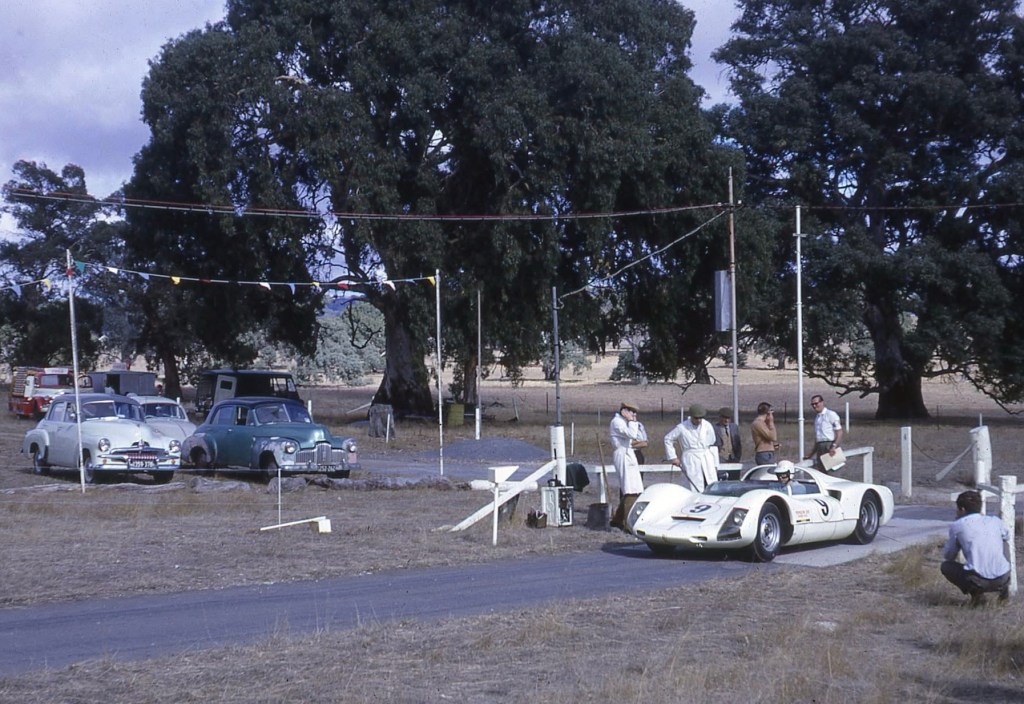
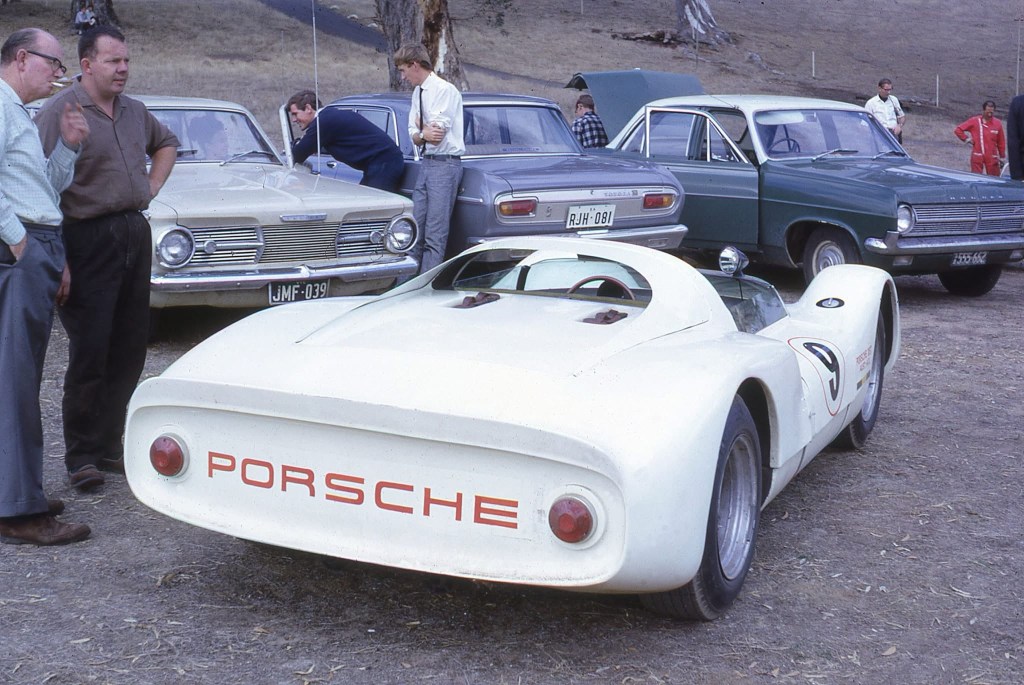
Alan Hamilton about to launch his Porsche 906 Spyder #906-007 off the line at Collingrove in South Australia’s Barossa Valley in April 1967. He set a course record of 35.60 seconds that day.
The road cars of the day always provide valuable visual context for just how advanced a racing car is, don’t you think? Chrysler Valiant, Toyota Crown and Holden HD in the Collingrove paddock in 1967 (J Lemm)
The Bugatti Holden – T37-37209 – at Phillip Island circa-1958. Who is the driver folks, John Elkins or John Pyers?
#37209 gave Bill Thompson his AGP debut at Phillip Island in 1929, he only did two laps before blowing the engine. It had nine or so owners before ‘Bud’ Luke fitted a Holden Grey six-cylinder engine in time for the 1952 Bathurst Easter meeting. Bob King claims that Luke created the very first Holden engined racing special in so doing.
A lousy photograph before the start of an Easter 1970 Racing Car Scratch at Mount Panorama: John Harvey, Brabham BT23E Repco, Leo Geoghegan Lotus 39 Repco, and on this side, Niel Allen, McLaren M10B Chev.
But as Lynton Hemer wrote ‘an important bit of Bathurst history is about to start…Lap 3 of 3 in the Captain Cook Trophy was a 2.09.7sec’ journey. Nigel Allen set a lap record that stood for 32 years, see here: https://primotipo.com/2018/11/26/bathurst-lap-record/
(M Bradley)
Kevin Bartlett turns into Warwick Farm’s Esses in the iconic ‘Yellow Submarine’, the Alec Mildren Racing Mildren Waggott 2-litre TC-4V.
It’s the 1970 Warwick Farm 100 Tasman Cup round that KB won in splendid fashion ahead of a swag of 2.5-litre Tasman and 5-litre F5000 cars. Surely the Sub’s finest hour was on February 15, 1970? To make Alec Mildren’s day complete, Max Stewart, KB’s teammate and great mate finished second, a second back, in the Rennmax built spaceframe-Brabham BT23 copy Mildren Waggott TC-4V 2-litre.
Just can’t get enough of the Sub…originally Alfa Romeo Tipo 33 2.5-litre V8 powered, the Mildren Alfa was designed by Len Bailey and built by Alan Mann Racing for Frank Gardner’s 1969 Tasman Cup campaign. Then Bartlett took it over and won his second Gold Star with it later that year using Alfa Romeo and late in the year, Waggott TC-4V 2-litre power. See here: https://primotipo.com/2017/11/14/missed-it-by-that-much/
(Guy & Penny)
The best of the Maybachs…
The coulda-woulda-shoulda been Maybach 2, here in the Southport paddock before its untimely death the following day during the 1954 Australian Grand Prix on November 7.
A chassis weld broke pitching Stan Jones into the mother-and-father of an accident he was lucky to survive. His mount didn’t share his good fortune.
John McCormack awaits the start of the Sandown 100 Tasman Cup round in February 1975, Elfin MR6 Repco-Holden. To the right is John Leffler’s new Bowin P8 Chev.
It was a great day for SuperMac, he finished second behind John Goss’ similarly powered Matich A53 Repco. That ’75 Tasman was a bounce-back campaign for the understated Tasmanian, his new Elfin MR6 had problems, mainly with the also new Repco-Leyland engine, the development of which stalled when Repco withdrew from racing mid-year.
Frustrated with continuous engine failures, McCormack set the Repco-Leyland V8 aside and went back to reliable Repco-Holden power and finished fourth in the Tasman with a pair of seconds at Teretonga and Sandown. Finishes in all but one round was a further indication of a change in fortunes.
Then he brought home the Gold Star bacon for the second time winning the ’75 title in the MR6 Repco-Holden with two wins in the five rounds at Oran Park and Calder. See here: https://primotipo.com/2021/02/11/repco-rbe-980-series-billy-cart/ He would win a third ‘Star of course, Repco-Leyland-McCormack/Irving V8 powered…
(C Adams)
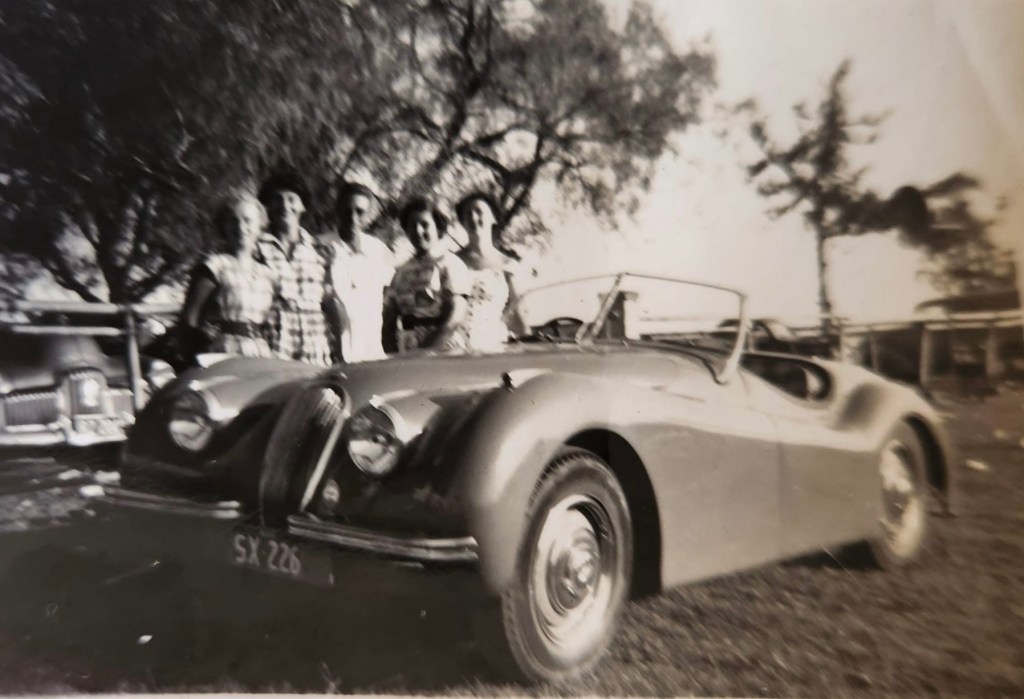
Jeweller Jack Robinson and a group of friends at a race meeting with his Jaguar XK120, chassis 660178, purchased on January 26, 1951.
Terry McGrath reports that he raced the car at Mount Druitt and Bathurst – winning a race at Mount Panorama in October’51 – in 1951-52 and was thought to have been sold before he built up his XK120 special,’ which is shown below at Bathurst in October 1955.
(I Arnold)
Robinson’s best race was a win in the handicap section of the October 1953 New South Wales Grand Prix at Gnoo Blas. He raced the car right through into the early-1960s including the first Warwick Farm meeting, the Warwick Farm Trophy event on December 18, 1960. What became of it?
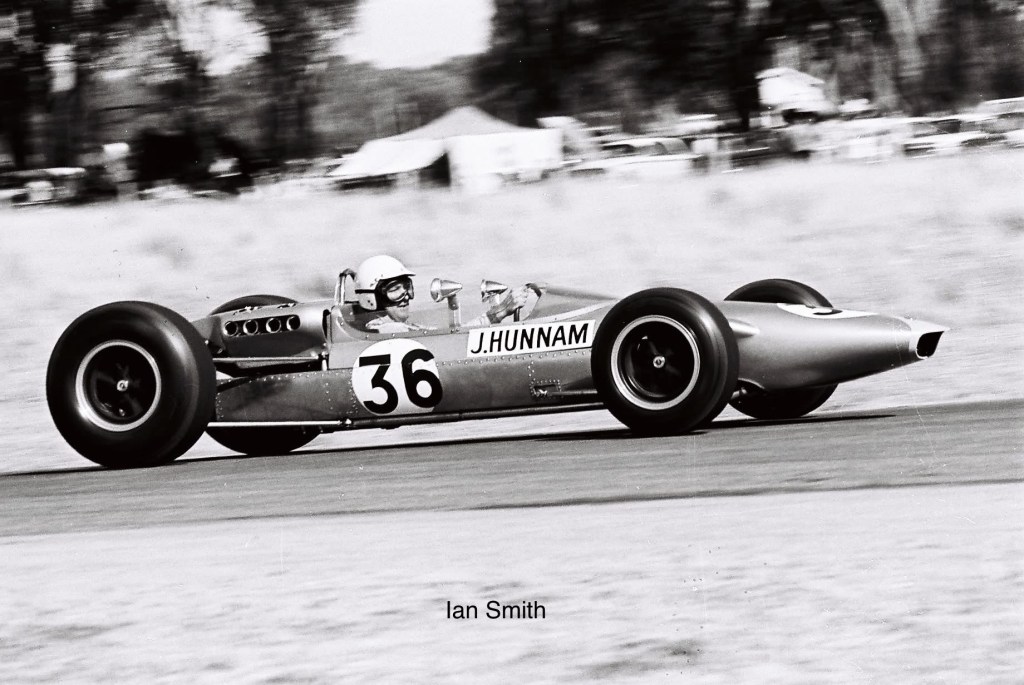
Jack Hunnam’s Elfin Mono Mk2D Lotus-Ford ANF 1.5 #MD6574 was completed at Elfin Sports Cars Edwardstown workshop in January 1967 and is shown above upon its debut at Winton that March.
Hunnam was Elfin’s Victorian agent. He was third in the 1963 Australian FJ Championship at Warwick Farm aboard an Elfin Ford FJ #6312 behind Leo Geoghegan’s Lotus 22 Ford and Greg Cusack’s Brabham Ford.
(unattributed)
He was seventh in the 1966 Australian One and a Half Litre Championship in a Mark 1 Mono Lotus-Ford #M6443 and ninth in the ’67 Championship with the Mk 2D. He scored four Gold Star points in 1966 with his Mono Mk1 (at Calder above) and one point in 1967 with the #36 car above.
Operator of a Glenhuntly Road, Elsternwick servo in the period he raced the Elfins, by the early 1970s Jack Hunnam Motors (JHM) was in Wren Road, Moorabbin (below).
David ‘Chocolates’ Robertsons Ford Capri Boss 302 Sports Sedan awaits its turn on the dyno…What became of Jack after those years?
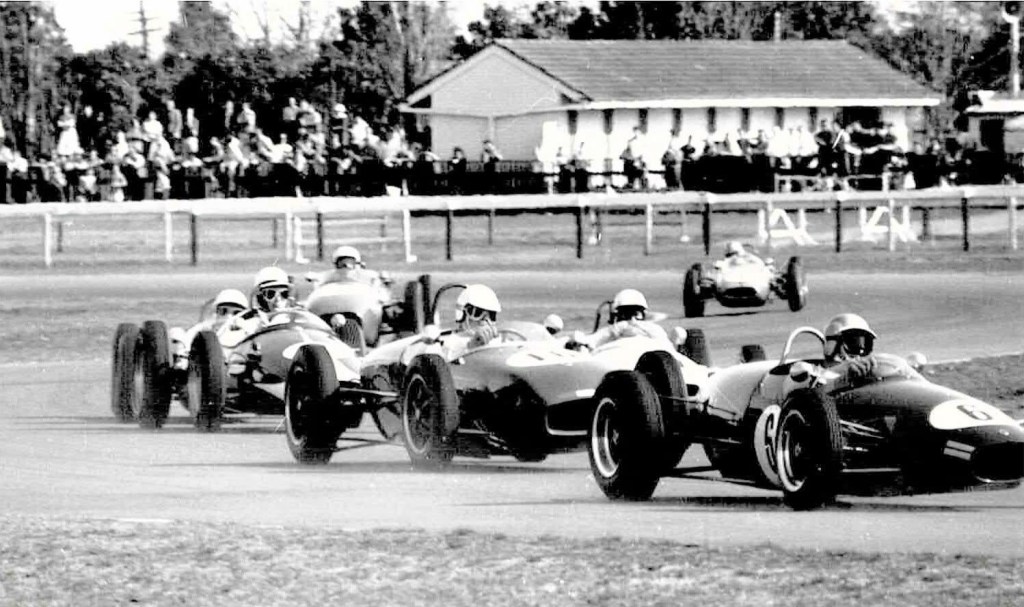
(M Leslie)Hunnam leads a gaggle of cars at Warwick Farm during the 1963 Australian FJ Championship race. His Elfin Ford FJ is being chased by the J Gates Lotus 18 (E Holly Collection)(A Thompson)
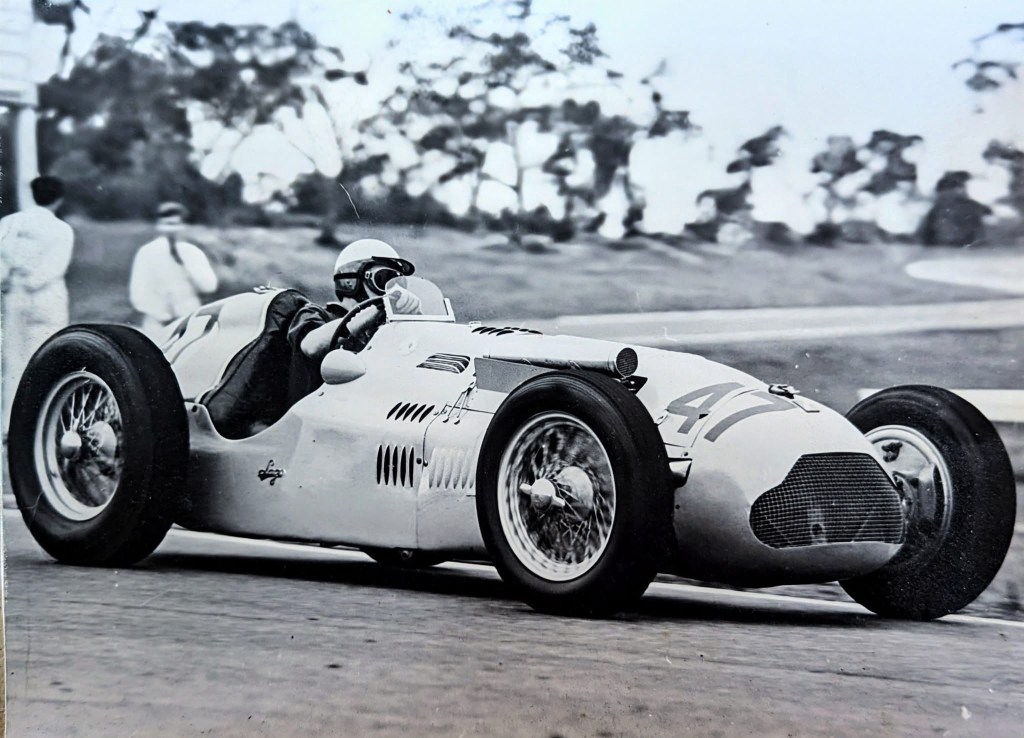
Graham Thompson in the ex-Doug Whiteford Talbot Lago T26C #110007 1952-53 Australian Grand Prix winning car going through Dandenong Road corner at Sandown circa 1963 in an historic event. Amazing given that Barry Collerson raced the car very skilfully in-period into 1961!
Thompson acquired the car from Arnold Glass’ Capitol Motors in Sydney in September 1962, here she is below in the driveway of his Bendigo home shortly thereafter.
Bill Anderson aboard the Prad Healey 100-6 at Lakeside during the Queensland Tourist Trophy meeting in November 1962. John Dickson advises that it’s Sid Sakzewski’s Porsche Carrera with Orlando ‘Tony’ Basile the driver while Sid was in Italy on a business trip.
Leo Geoghegan, Lotus 20 Ford and Gavin Youl, MRD Ford? at Lakeside in 1962. Geoghegan won the Australian FJ Championship at Warwick Farm in 1963 racing a Lotus 22 Ford.
Credits…
Ron Greene, Vintage Sports Car Club of Australia, Graham Ruckert, Glenn Moulds, Colin Hyams Archive, John Lemm, Janice Jamieson, Garry Woodward, Mal Bradley, Keith Trotter, Chantelle Adams, Terry McGrath, Paul Geard Collection, Ed Holly Collection, Ian Smith, Ian Arnold via Mark Arnold, Thompson Family Archive, Ray Bell, Monty Leslie
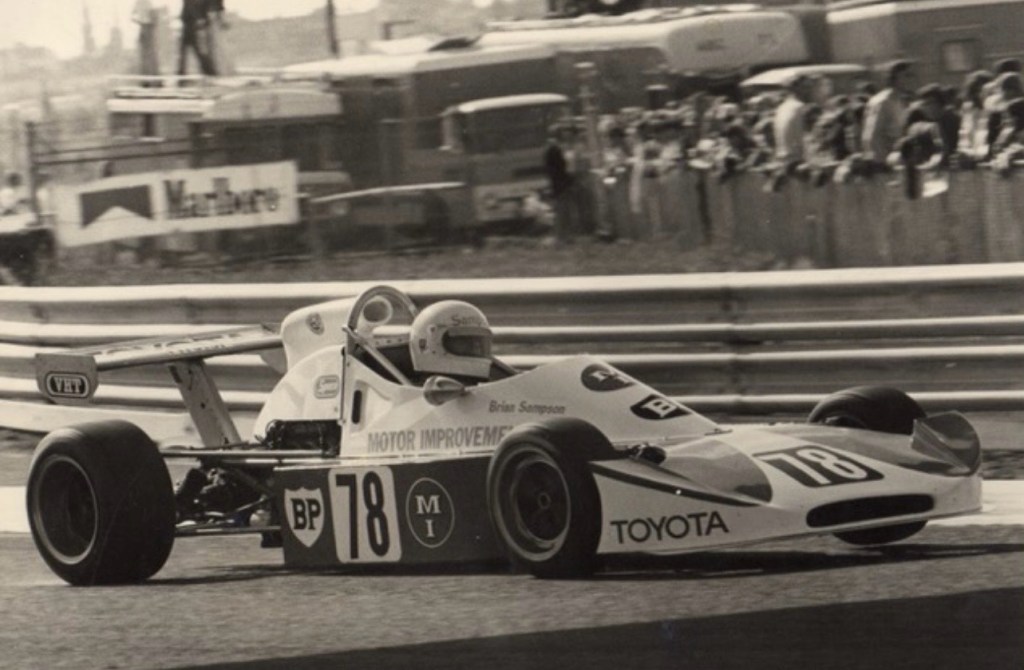
Would you believe Brian Sampson blasting his Cheetah Mk5 Chev through Shell corner at Sandown in 1973? Nup, me neither…
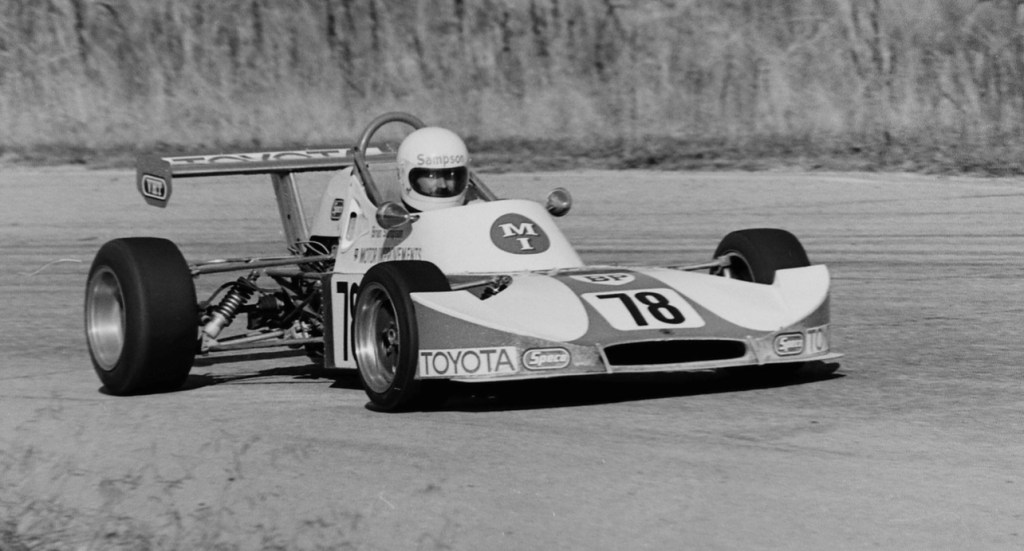
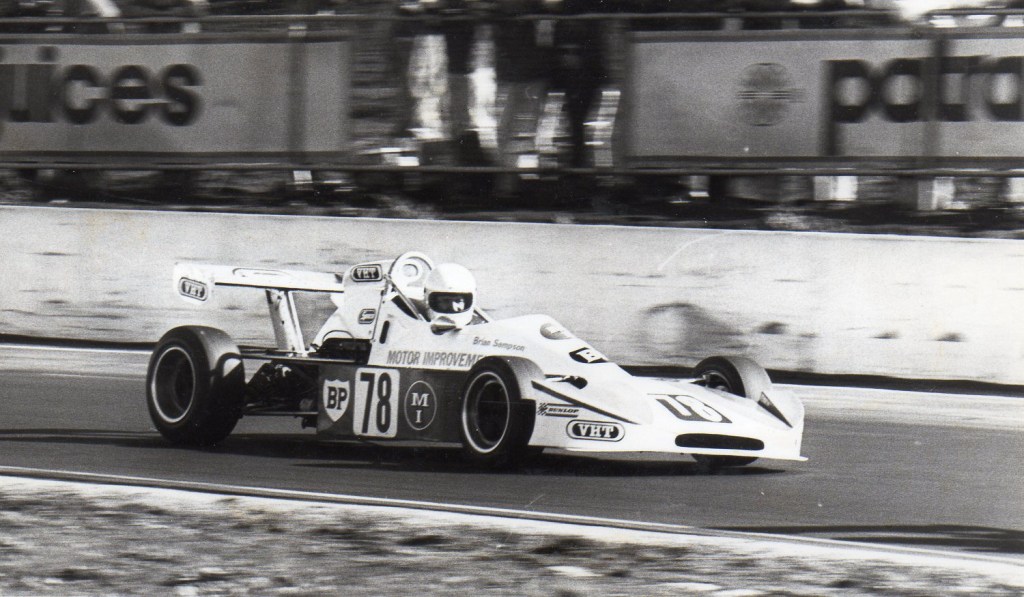
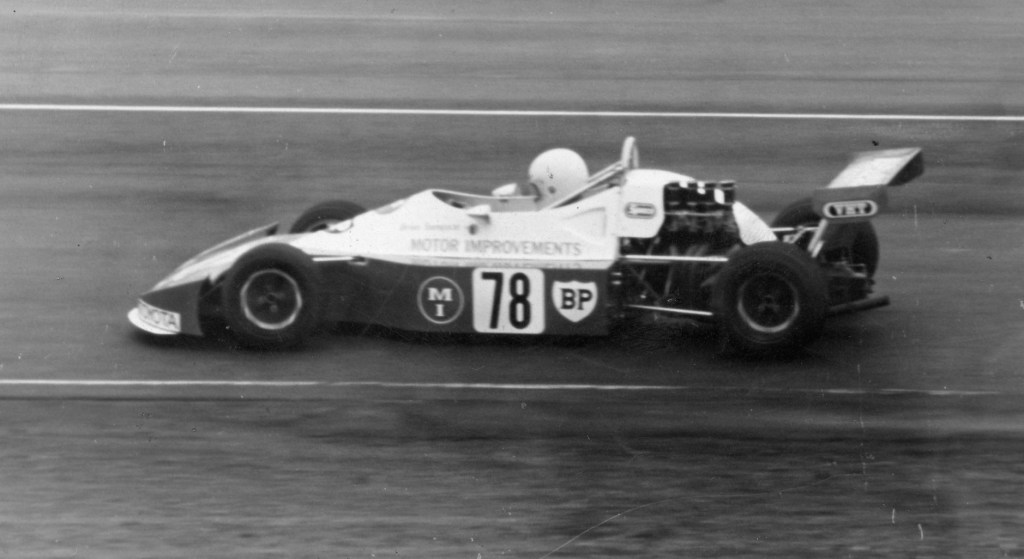
Clearly he was playing with downdraught Webers instead of the 40DCOE’s usually fitted to his works-Motor Improvements 1.3-litre Toyota Corolla based F3 engine, an experiment that didn’t cause him to change induction direction: the car is a Cheetah Mk5 Toyota.
Sambo in his Cheetah Mk5 Toyota at Hume Weir circa 1973 (M Bishop)
Great little motors, one was fitted to an ASP 340 Clubman car I owned. Lordy knows how many 1.3-litre ANF3 and Clubman races those engines won in mid-1970s in the hands of works-pilots Brian Shead, Brian Sampson and Peter Jones plus a swag of customers of whom Peter Macrow, Paul King and Dean Hosking readily spring to mind. There were plenty more.
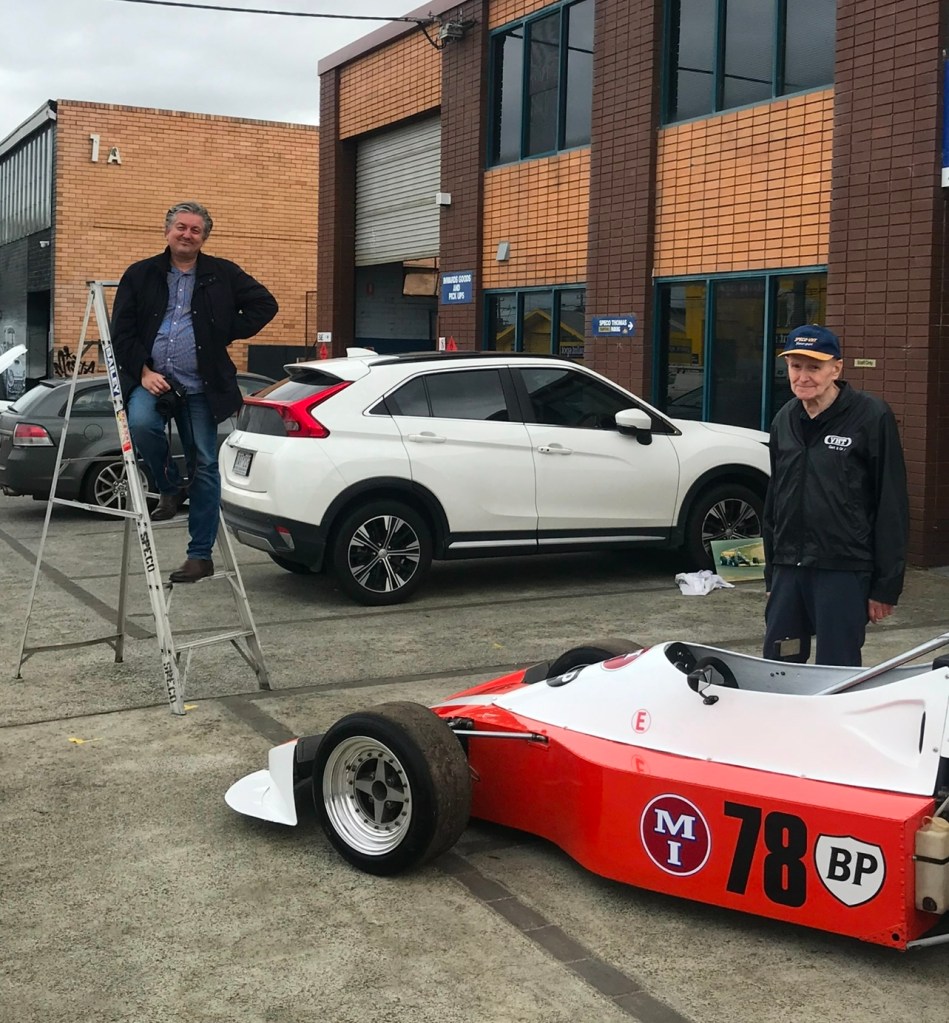
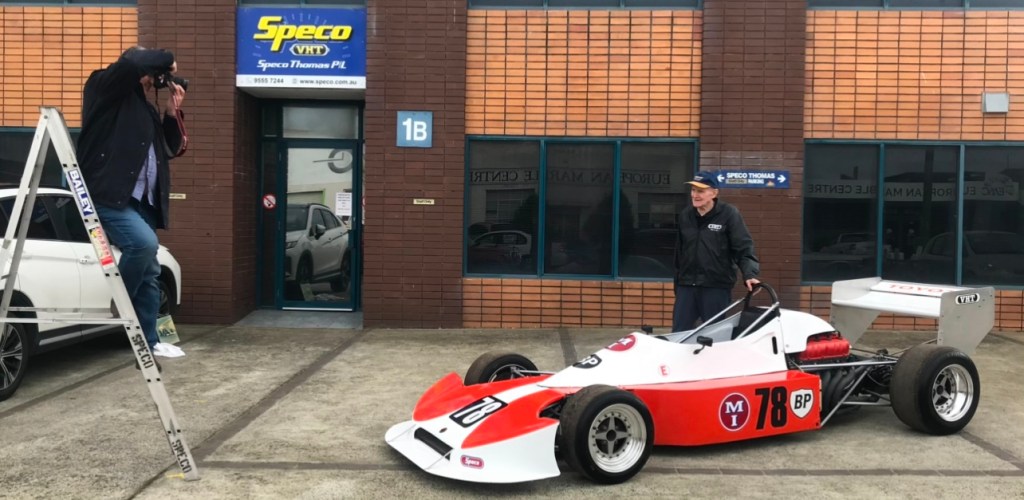
The Two Amigos, Bruce Williams and Brian Sampson, outside Brian’s Speco Thomas, Moorabbin warehouse on July 6, 2021. The car is Sambo’s Cheetah Mk6 Toyota Celica 1.6 ANF2 car (M Bisset)(M Bisset)
I got to know Brian later in his life via my friend and Auto Action publisher/owner Bruce Williams. I did a piece about the Cheetah Mk6 for Auto Action in July 2021 and spent the better part of a day talking to Brian and Brendan Jones while Sambo and Williams relentlessly and hilariously hung-shit on one another for the duration. They had known and worked together for the better part of 40 years.
We did a return bout not too long before Brian died (17 November 2023), I’ve never completed the planned two articles, but we taped the long three-way chat and one day will remove the too-naughty bits and pop it up on the A-A website. Such a talented driver, engineer and businessman, not forgetting the top-bloke factor.
(Sampson Archive)
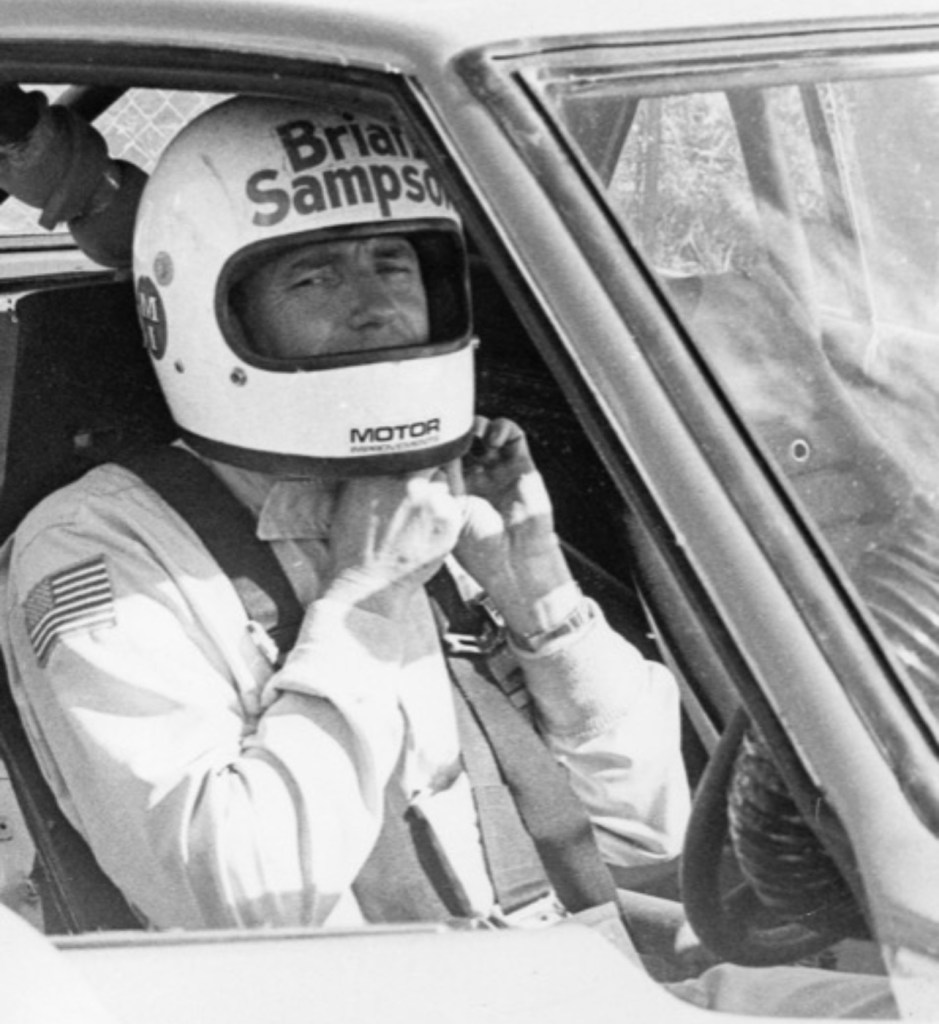
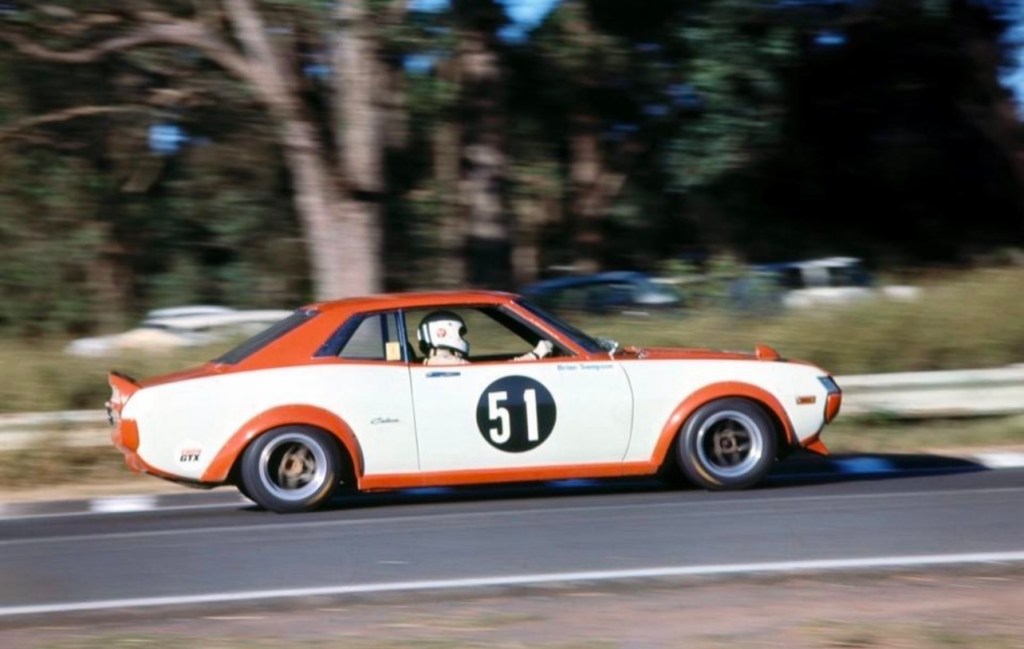
Brian buckles up, probably, but not definitely in the works-Toyota Celica sports-sedan which is shown below at Warwick Farm, perhaps in early 1973.
(Sampson Archive)
Etcetera…
(Sampson Archive)(Sampson Archive)
After the initial post, racer, Brendan Jones, Sampson’s stepson sent me some more shots of Brian racing with the downdraught setup. The two shots above are at Adelaide International?, the two below at Calder. That’s David Crabtree’s #70 self modified Cheetah MK 4 below, a car he still owns. Dates of the meetings would be a bonus too.
(Sampson Archive)(Sampson Archive)
Credits…
Brian Sampson Archive via Brendan Jones, Auto Action Archive-Greg Stanfield by courtesy of Bruce Williams, Mark Bishop
Tailpieces…
(Greg Stanfield)
Of course, Cheetah aficionados know that Brian Shead built an F5000 car – of sorts – the Cheetah Mk4 Oldsmobile 3.5-litre V8. Originally to Don Biggar’s order, it’s raced above by Ian Judd at Mount Leura, Camperdown in the mid-1970s. Judd won the Australian Hillclimb Championship with it at Morwell in 1977.
Of course there was a time when motor-noters speculated about Brian Shead building an F5000 Cheetah, in the mid-1970s.
Auto Action’s graphic designer has used a shot of Sambo aboard a Mk5 at Calder as the basis of his rendering of a potential ‘Cheetah Chev’ in issue #126, December 1975.
Bernie Bignell in his Lotus 23B Oldsmobile GT at Winton in 1976, that’s Alan Newton’s R&T Chev aka the ex-Frank Matich-Niel Allen Elfin 400 Chev behind, and a gaggle of Clubmans in the distance..
This remarkably ugly Lotus was bought by Dr Bernie from Willie Green in the UK in 1970. Motor Racing and Sportscar reported in January 1968 that Green, ‘a very rapid bra-strap manufacturer’ planned to turn Lotus 23 #23-S-70 into a GT car.
D &A Shells operating from the Bow flyover area of East London, in the region of Abbey and Livingstone Roads produced the Mercury GT ‘kit’. Quite a few were sold as the 23/23B approached middle-age and GT-racing grew.
The unfinished project, complete with Mercury body, Hewland HD5 transaxle and a bell-housing to suit an aluminium Oldsmobile/Buick V8 ended up in the hands of a dealer in Redditch from whom Bignell acquired the car.
Attractive enough at a distance! Bignell at Lakeland Hillclimb, east of Melbourne in 1972 (R Rodgers)
Bignell soon installed an 3.5-litre aluminium Oldsmobile V8 fed by four downdraught Webers, the thing was an arresting sight on-track and certainly sounded the goods. As a teenage spectator I remember it – how could you forget? – racing at Calder and Phillip Island, and perhaps Sandown.
Bernie enhanced the performance of the thing by lengthening the wheelbase by six inches, making changes to the suspension, adapting F5000 brakes and in a back-to-the-future moment returned the car back to open-sports spec. The result was a towering monument to supreme ugliness, ‘as the coupe was like a sauna even with the air-scoop’.
Bignell’s car at Calder in 1974. Gulf colours distract from a multitude of sins… (oldracephotos.com-Hammond)(G Stanfield via Marc Schagen)
Marc Schagen records that Bernie contested 32 race meetings until an engine failure sidelined it in 1978.
Master engineer/mechanic/team manager, the legendary John Sheppard – he has 13 national championships and two Bathurst 1000s to his name – bought the car and restored it to original Lotus Ford twin-cam specs circa 1981, it has passed through many hands since.
John Sheppard in the Lotus 23 at the Mangalore Airport sprints in 1993. Both the 23 and Lotus 22 Ford are in Geoghegan colours. Sheppo prepared their cars in period, the 22 is ex-Geoghegan, the 23 is not. Roy Williams in Sabrina awaits his turn (S Dalton)The RH Millar Lotus 23B Ford 1.6 Mercury GT, Llandow August 1968 (H Llewelyn)
Etcetera… Mr Sainswor wrote on the tentenths.com forum about the ‘Background on D&A and the Mercury GT. Founders Dennis Pollard and Alan Fowler, of D & A Shells, Ltd., started in London in 1962 to provide body kits and chassis for customers to convert their own cars (i.e. the Merlyn MK6 and Lotus 23) into closed GT cars.
In addition they produced a small number of space frames specifically to fit their fibreglass bodies. They continued to produce bodies and chassis for various frames and manufacturers until 1970 under the trade name Mercury.
The cars from D & A were period frames from various manufacturers fitted with the required body at D & A’s London site. The Mercury has a square tube frame originally thought to have been built by Chevron or Groopers of London and fitted with a Lotus 23 body, (note that the frame is four inches shorter than the Lotus 23). Because of it’s extremely light weight, rigid frame and semi-monocoque construction, it is much stronger than the Lotus 23.
I fell in love with these cars about 1965 when I saw one racing at the 750MC Relay at Snetterton entered by Mike Spence Racing (along with a Tojeiro EE ) – they were in the Scratch team. I know that George Silverwood raced one for some time (1300cc car?), and there was one that ran in the up to 2000cc class in the Motoring News GT Championship driven by Reg Skeels(?). The 2 litre car had cast magnesium MRE (Brabham) wheels – 7″ fronts and 9″ rears. I recall one well known Mercury GT had the registration number UWT2F (this might have been George Silverwood’s car – but can’t remember)’.
Credits…
Mark Bishop, Richard Rodgers, Lotus : The Historic Sports & Racing Cars of Australia’ Marc Schagen, The Nostalgia Forum, sainswor on tentenths.com, oldracephotos.com, Hugh Llewelyn via Wikipedia, Stephen Dalton
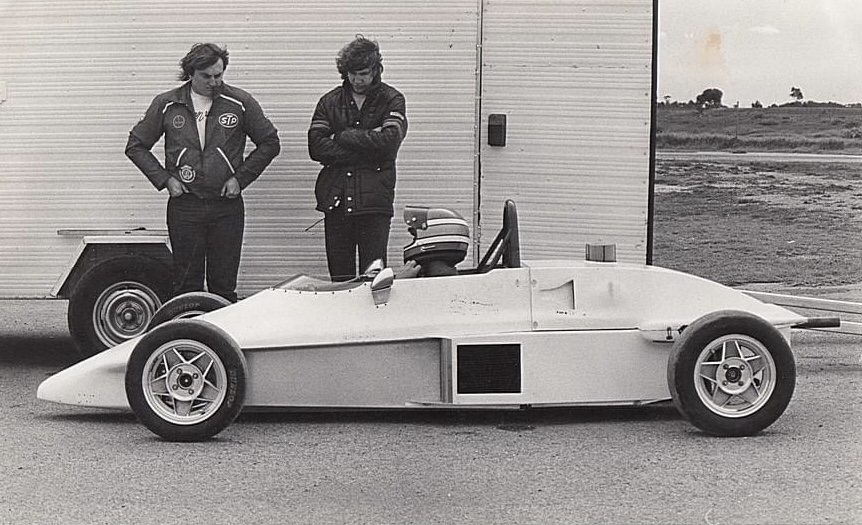
Elfin boss, Tony Edmondson, about to have a steer of his new Elfin FF84P on July 27, 1984 before handing the car over to Mark Poole in the centre. It’s a significant day in the history of Elfin Sports Cars.
Company founder, Garrie Cooper’s untimely death was on April 25, 1982. Garrie’s father, Cliff, kept the wheels on the wagon after dealing with his grief, building and selling six Elfin NG (New Generation) Formula Vees and continuing repair and restoration work. This car is the first built under the Don Elliott and Tony Edmondson ownership/management regime after the sale by the Coopers to them in 1983.
All enveloping body work, inboard rear suspension by upper and wide based lower wishbones. Vertically mounted spring-shock assy actuated by a pullrod with a separate link for toe adjustment (C Canon)
Reflecting on the early period of his Elfin ownership, Elliott said, ‘We thought, bugger it, there’s no-one building cars (in Australia), so we built a couple of Formula Fords. It started from there. We were flat out from that time building and repairing cars.’
FF84P #EP006 was designed by Jon Porter together with Edmondson, and built by that pair and legendary Elfin welder/fabricator Fulvio Mattiolo; Porter and Mattiolo stayed on after the sale of the business.
Mark Poole was the designated driver, he had been making name for himself in an Elfin NG and an old Elfin 623 VW ANF2 car. Poole’s father, Keith made the very first Elfin NG sing way back in 1976. Keith’s business, Volksrepair was Elfin Sports Cars neighbour at 3-7 Conmurra Ave, Edwardstown; Elfins were at 1 Conmurra. Mark Poole operates RSR Sports Cars, a Porsche race, service and restoration business from the same address today.
Poole contested local meetings (?), the 1984 Winton round of the Australian Formula Ford Driver to Europe Series finishing ninth, he took in the ’85 Oran Park round and was seventh. The car was sold to David Craig in 1986, he ran Russell Ingall in it in the ’87 FF race at the Australian GP carnival in Adelaide, finishing ninth. Clive Hill bought it in 1989.
Russell Ingall negotiates one of Adelaide’s chicanes during the 1987 AGP weekend aboard the FF84P (ETSS)Right hand shift for the four-speed Hewland Mk 9 transaxle (C Canon)
Tony Edmondson, ‘The Formula Ford was an in-house development funded entirely from the factory and the intention was always to be competitive in that car, then make multiple cars for customers.’
Only one customer car was sold, #EP009 was completed in 1985, and therefore called an FF85 and sold to David Duncombe.
‘With Formula Ford, the leaning was always for competitors to buy tried and proven cars from England. That was disappointing. That’s the sort of marketplace that we were dealing with all the time’, recalled Edmondson.
It’s the sort of marketplace Elfin, Bowin, Birrana, Cheetah, Rennmax and others have always faced, and in which they often prevailed.
If Edmondson and Elliott wanted to sell FFs in volume, the-go would have been to put Elfin Old-Boy Larry Perkins into the FF84P for two days of testing to get the basic settings right: springs, bars, camber, castor, toe, brake bias etc. Then plonk into it a seasoned FF campaigner, bringing a bit of a budget and win a few races. Ingall would have done quite nicely, not that he was a seasoned FF pilot at that stage; he won the Australian title/series aboard a Van Diemen RF90 in 1990 before heading to the UK and more FF success. His subsequent FF credentials are well covered here: https://en.wikipedia.org/wiki/Russell_Ingall
Lovely top-rocker actuating coil spring shocks, wide based lower wishbones (C Canon)
The standout FF designs in 1984-85 were Adrian Reynard’s Reynard FF83-84, and the Van Diemen RF85, these cars were inspired by David Bruns’ Swift DB1 in the United States, one of THE FF designs; none raced here in-period.
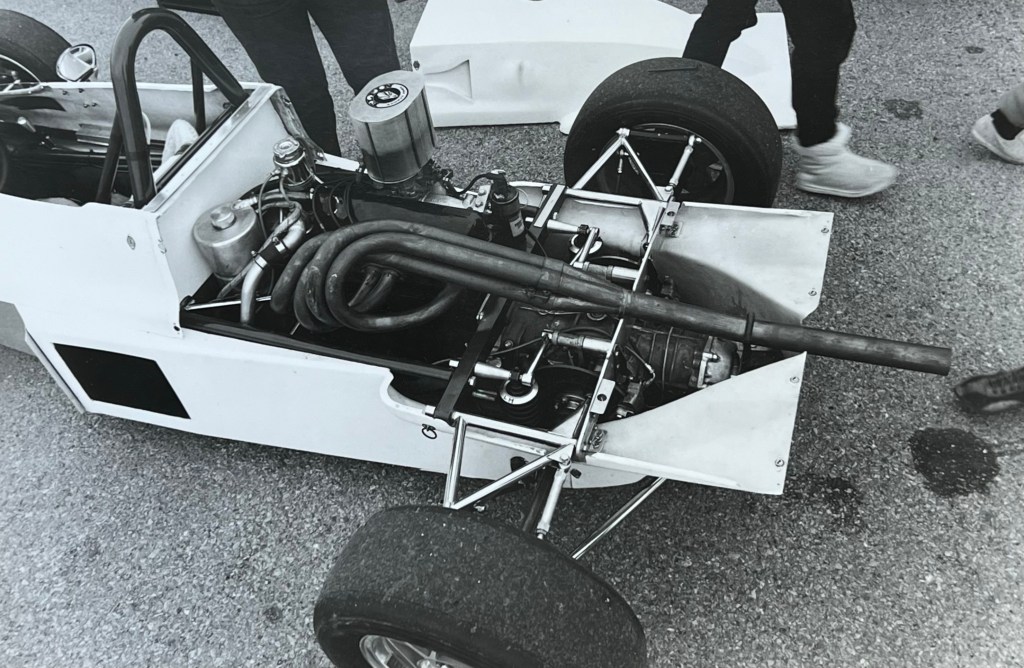
Edmondson mucks in. 1.6-litre Ford Cortina 711M overhead-two-valve, single twin-choke Weber fed engine gives about 110bhp (C Canon)
The slender chassis, needle nose, hip radiators, central fuel tank and inboard suspension front and rear are all absolutely state of the FF art at the time. It does make you wonder what the cars could have done with the right development…
Credits…
Steve McCawley, Colin Locke Canon via the Auto Action Archive courtesy of Bruce Williams, ‘ETSS’ ‘Elfin:The Spirit of Speed’ David Dowsey
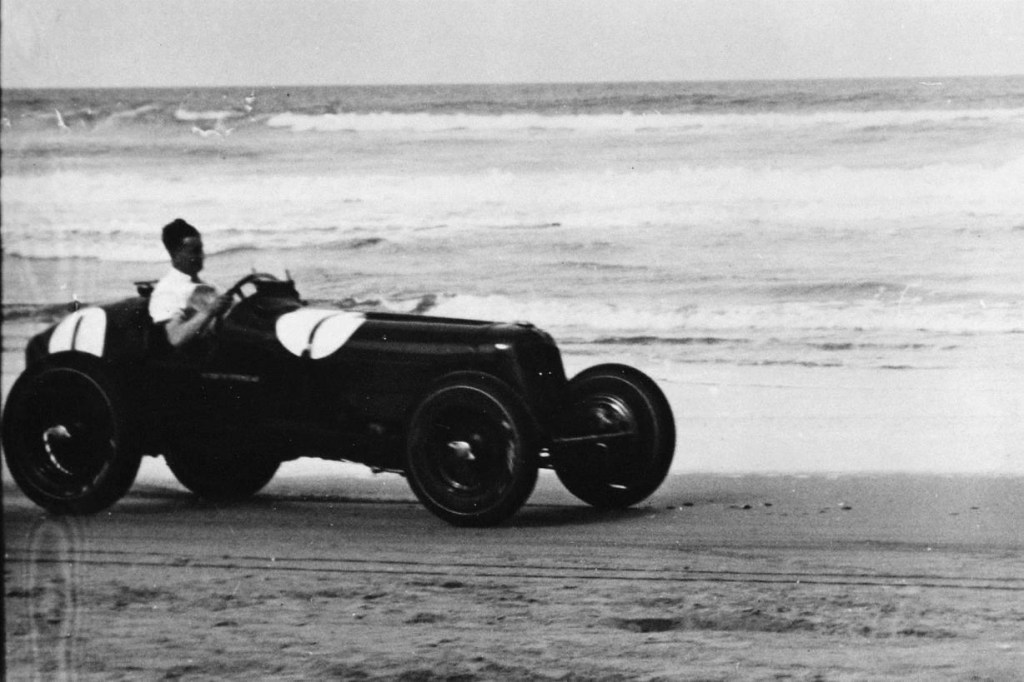
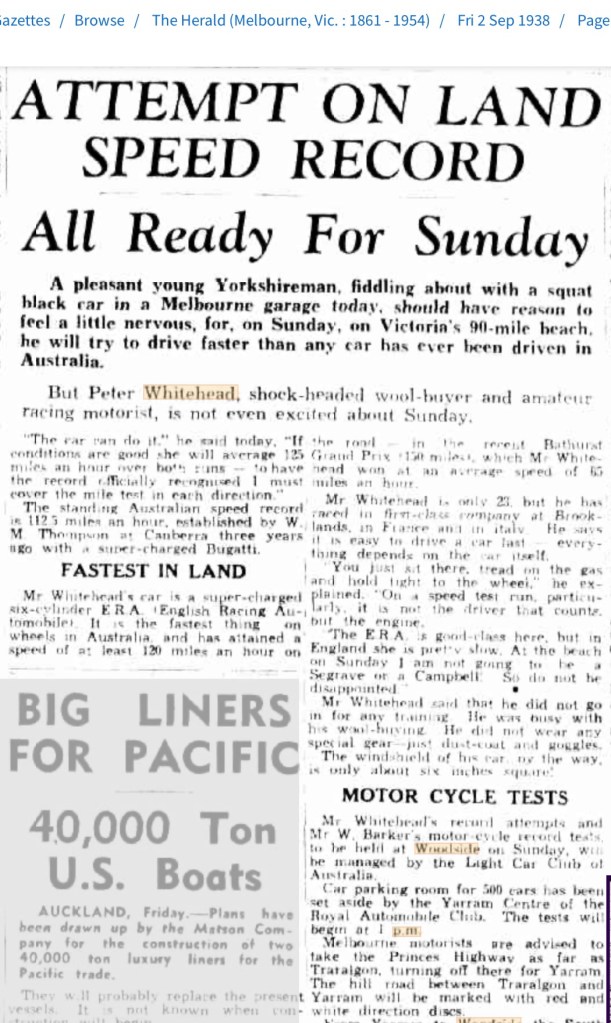
The Australian Land Speed Record session held at Woodside on the Ninety Mile Beach in Gippsland on September 4, 1938 was the first held in Victoria.
The Light Car Club of Australia promoted it, while the Yarram branch of the Royal Automobile Club of Victoria (RACV) ran the event which used you-beaut electrical timing apparatus accurate to one-hundredth of a second approved by the Australian Automobile Association.
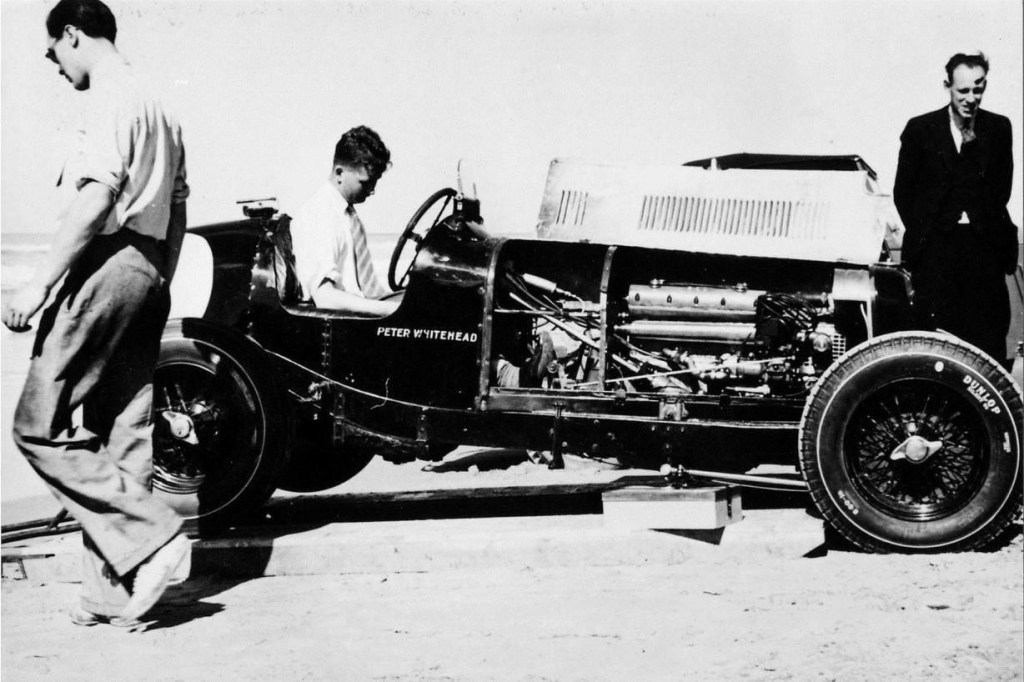
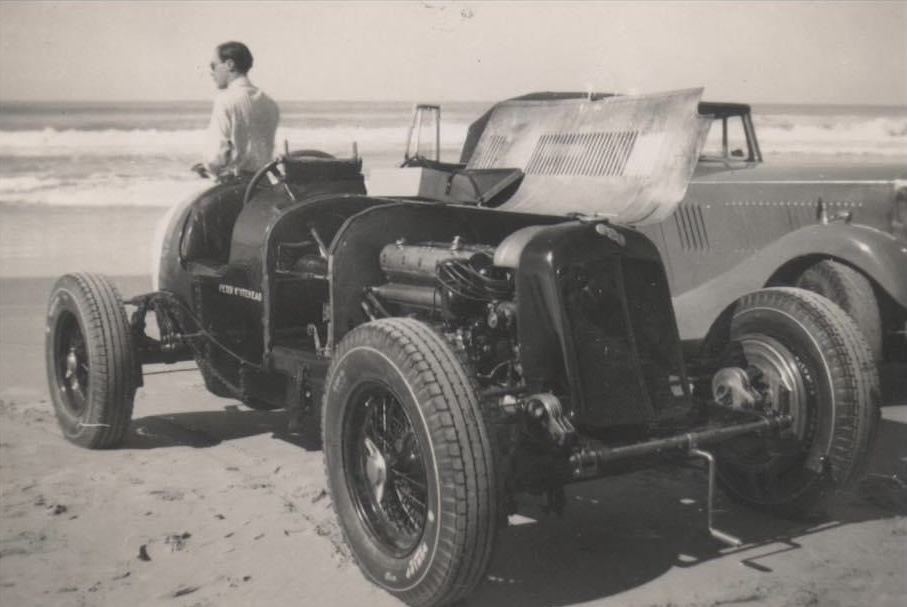
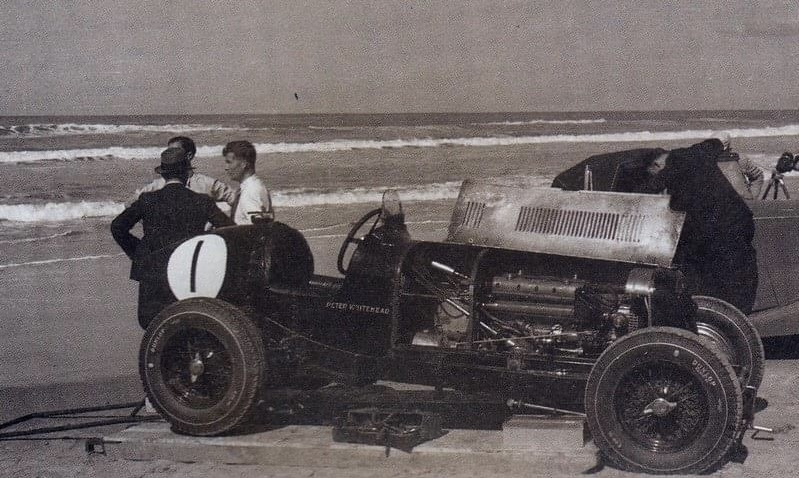
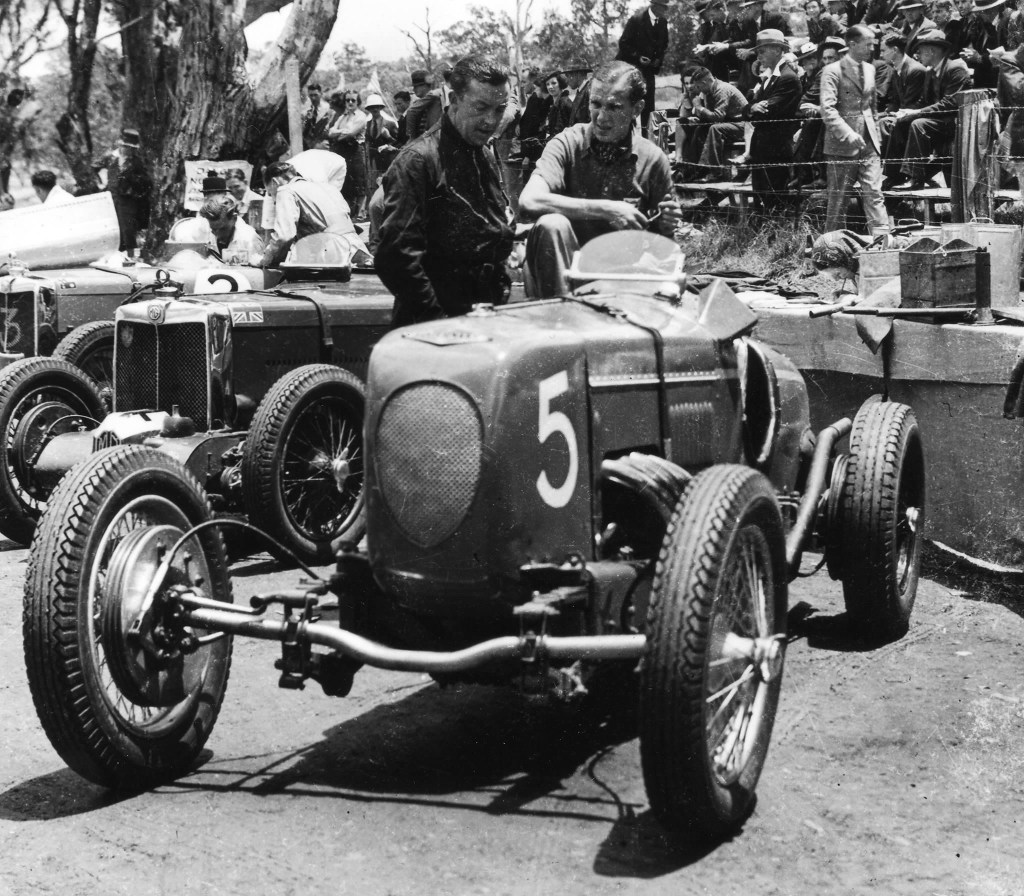
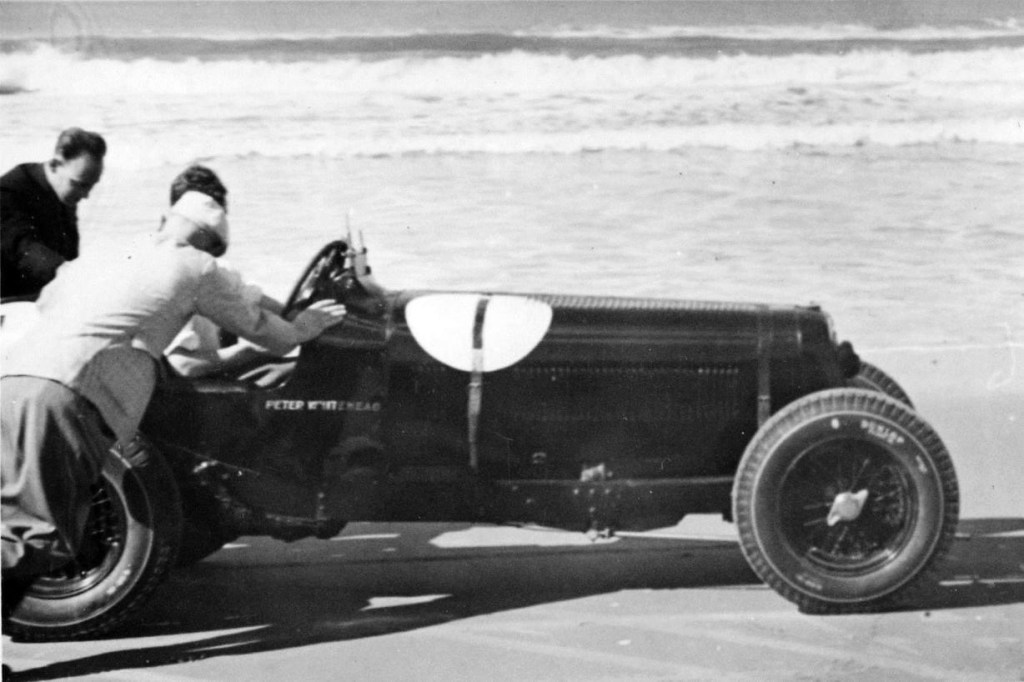
The drawcard was Peter Whitehead and his ERA B-Type R10B. The photograph above shows him warming the engine and transmission of the car at Woodside, collar, tie and all.
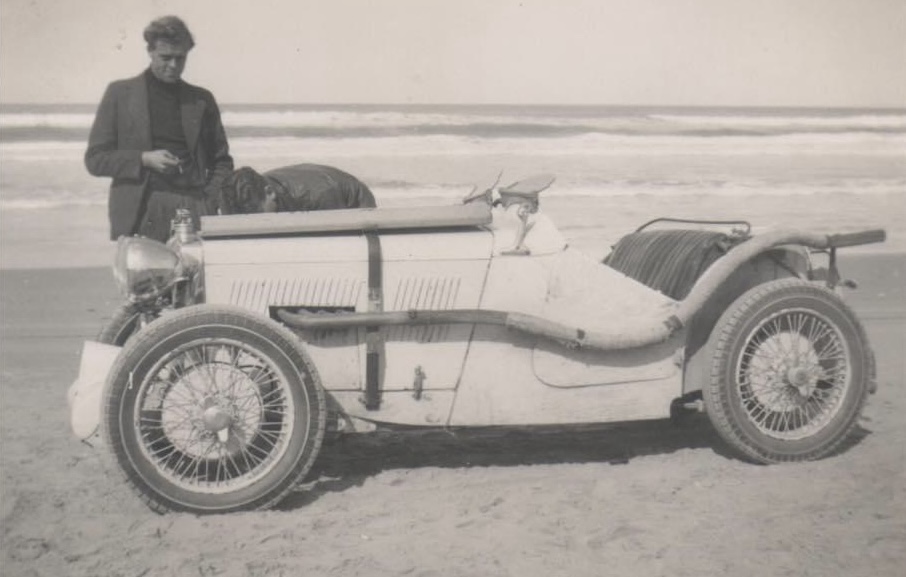
Other drivers granted permission to have a crack were the following: Class C 3-5-litres: RND Miller, Vauxhall 30-98 and AH Oliver, Lagonda Class D 1.5-2-litres: JN Derham, Vauxhall Class F 1-1.5-litres: JP ‘Jim’ Leech, Frazer Nash TT Replica and Class H 500-750cc: DM George MG J4 supercharged.
The stretch of beach chosen was four miles long and 60 feet wide, the existing outright record was held by three-times Australian Grand Prix winner Bill Thompson on a supercharged 1.5-litre Bugatti T37A.
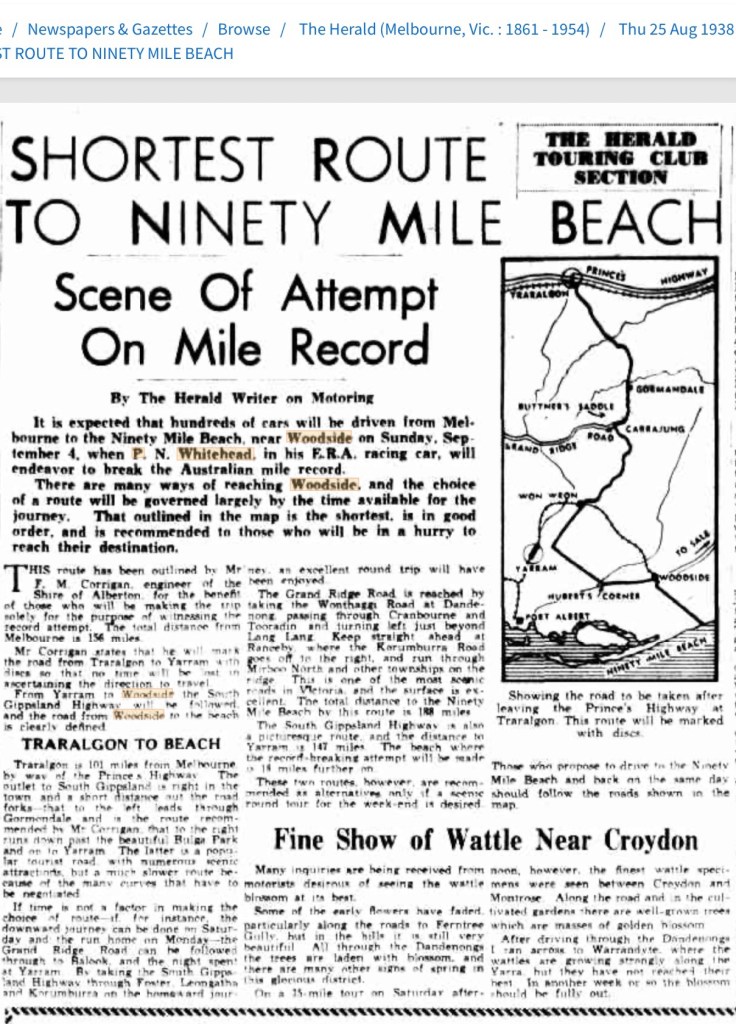
The 156 mile trip from Melbourne was quite a journey for the time. It’s amusing now to look at how much of the newspaper (the what?) coverage in the week before the event was devoted just to getting there, the three suggested routes were explored by the papers in some detail inclusive of maps. Different to the Google maps exercise on ‘yer iPhone today…
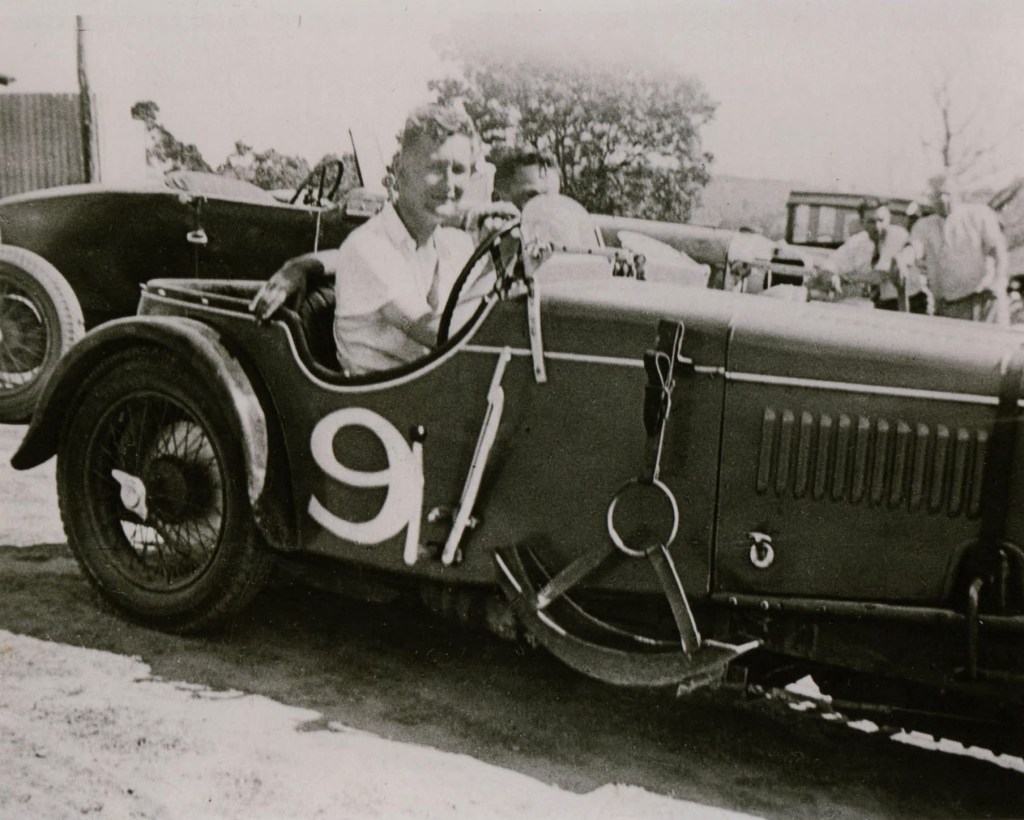
Peter Whitehead and Jim Leech aboard the latters Frazer Nash TT Rep #2134 at Rob Roy Hillclimb – where Peter had won the Australian Hillclimb Championship in R10B not long before – November 20, 1938. Whitehead did a 34.77 sec best (Davey Milne Archive)(unattributed)
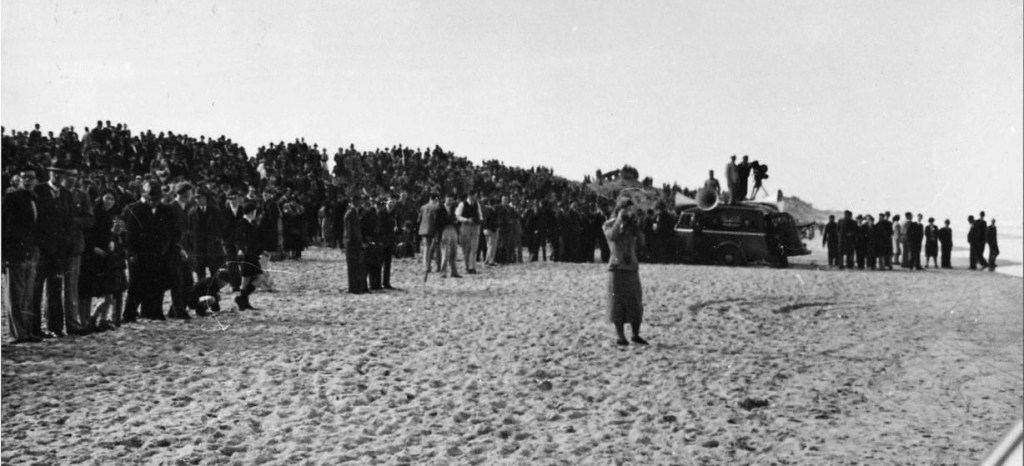
Poor Jim Leech ran off the road on the way to the event in his Frazer Nash, but 6,000 others came from far and wide to see the spectacle before the fickle finger of weather fate ruined the day.
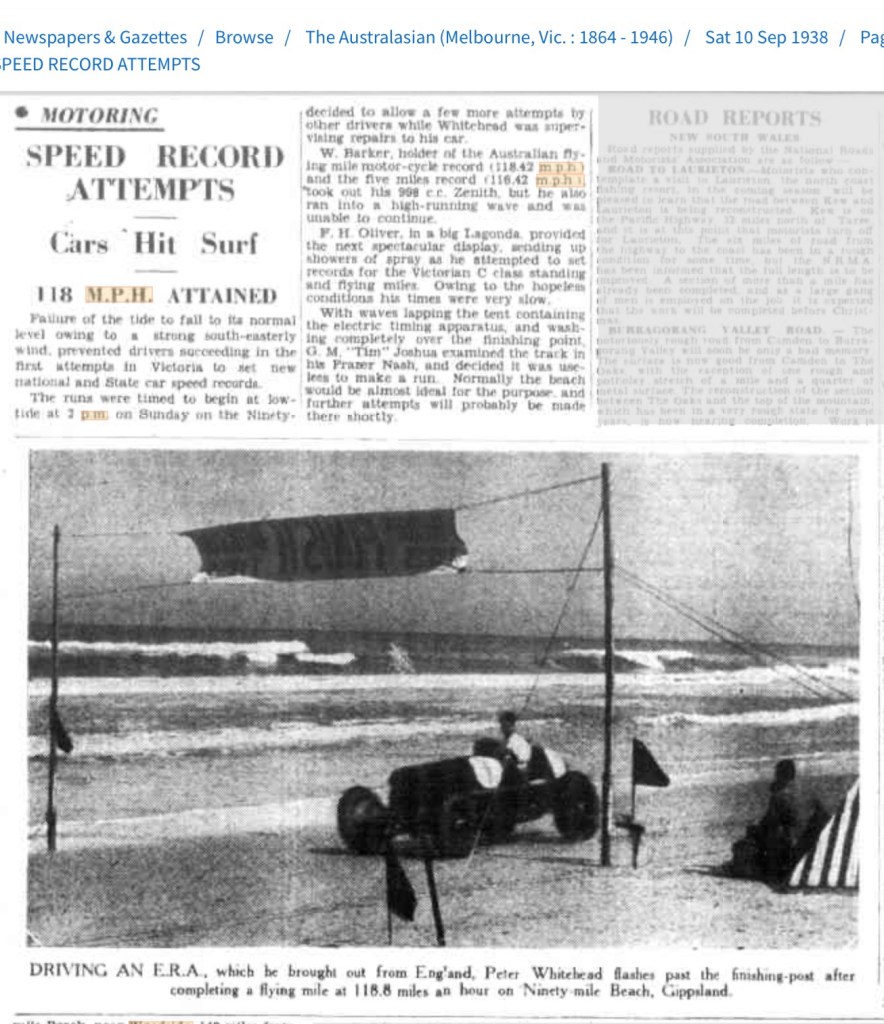
A strong south-easterly wind prevented the usual fall of the tide, ‘after the English driver Peter Whitehead had covered a flying-mile at an average of 118.8mph in his special 1500cc E.R.A. car the waves washed over the track and prevented any further serious attempts,’ recorded the Melbourne’s The Argus.
As Peter’s speed was set on one run, rather than the required each-way average of two, Thompson’s one-mile record of 112.5mph set in Canberra on May 11, 1935 still stood; Bugatti T37A.
No helmet for Whitehead, as at Bathurst when he won the AGP, proximity of Bass Straight clear and threatening (unattributed)
An estimated 2,000 cars conveyed the punters into the sand hummocks along the picturesque track many hours before the events were scheduled to begin.
‘Trials were impossible owing to the tide. With only a few yards of wet sand between the flags and the waves on the four mile course. Whitehead pluckily started up so as not to disappoint the crowd. He was obstructed by water on his first run, however, and although he averaged 118.8mph in his next run, his car plunged through the lip of a wave, tearing away apparatus for cooling the brakes, ripping off the oil filler cap, and partially flooding the crankcase with salt water.’
‘He maintained control, but it was evident that he had no chance of putting the record up to 135mph which was his hope.’
Derry George, MG J3 #3763 this shot and below (M Gallagher Collection)(unattributed)
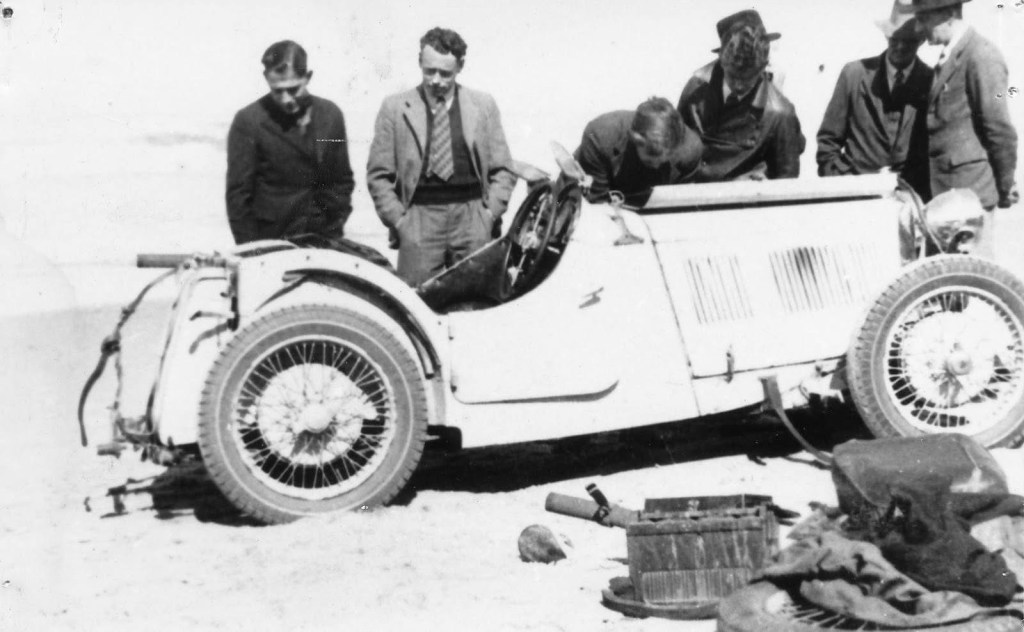
The AAA, LCCA and RACV reps then met and decided to allow some attempts by other drivers while Whiethead and his crew effected repairs to R10B.
W Barker, holder of the flying-mile motorcycle record (118.42mph) and five miles record (116.42mph) took out his 998cc Zenith but he also clouted a wave and was unable to continue.
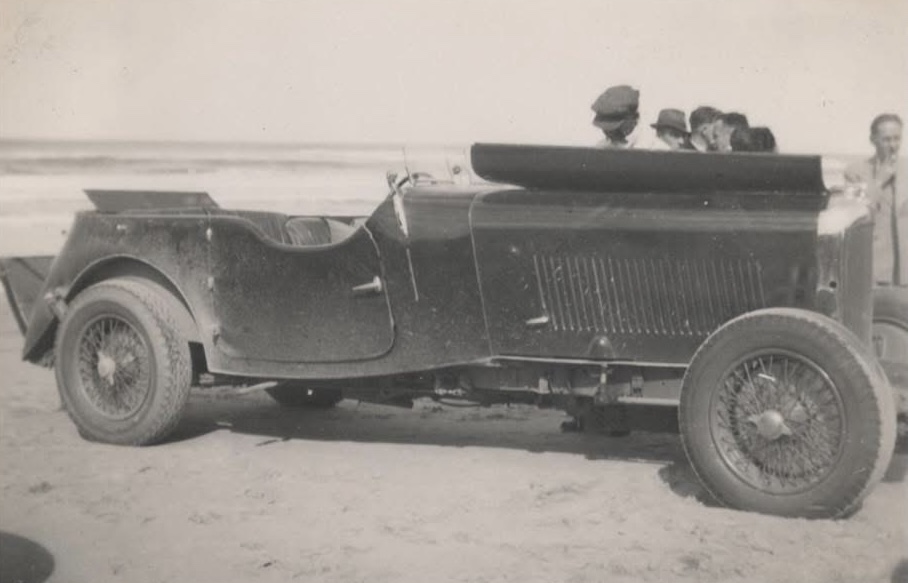
Next up was Big Bertha. F Oliver’s Lagonda provided a spectacular display sending up showers of spray in attempting to set Class C records but the conditions ensured his times were slow.
The AH Oliver Lagonda (M Gallagher Collection)Tim Joshua’s Frazer Nash Single Seater (what chassis number folks, ‘SS1’ is I think the chassis type, not the number?) at Lobethal during the 1938 South Australian GP weekend. Ron Edgerton at left, later owner of the FN, Joshua on the right alongside the MG K3s #3 Colin Dunne and #2 Lyster Jackson (Leon Sims Collection)
‘With waves lapping the tent containing the electric timing apparatus and washing completely over the finishing point, GM ‘Tim’ Joshua examined the track in his Frazer Nash and decided it was useless to make a run. Officials prevented any further attempts and there was a rush to get cars off the beach before the tide rose farther. The crowd had to lend willing hands to help several vehicles out of difficulties.’
‘Afterwards, the director of the trials, Mr JW Williamson, expressed supreme disappoint with the result. The crowd, who had enjoyed the outing in brilliant sunshine, took it in good part.’
‘It was the first attempt made in Victoria to set such records. Normally the beach would be almost ideal for the purpose, and further attempts will probably be made there shortly.’ The Argus concluded…
Not so, as it transpired.
(unattributed)
Etcetera…
(T Johns Collection)(T Johns Collection)
The Car was ‘the official organ of the Light Car Club of Australia’, so this is the way the organiser saw the day.
(T Johns Collection)
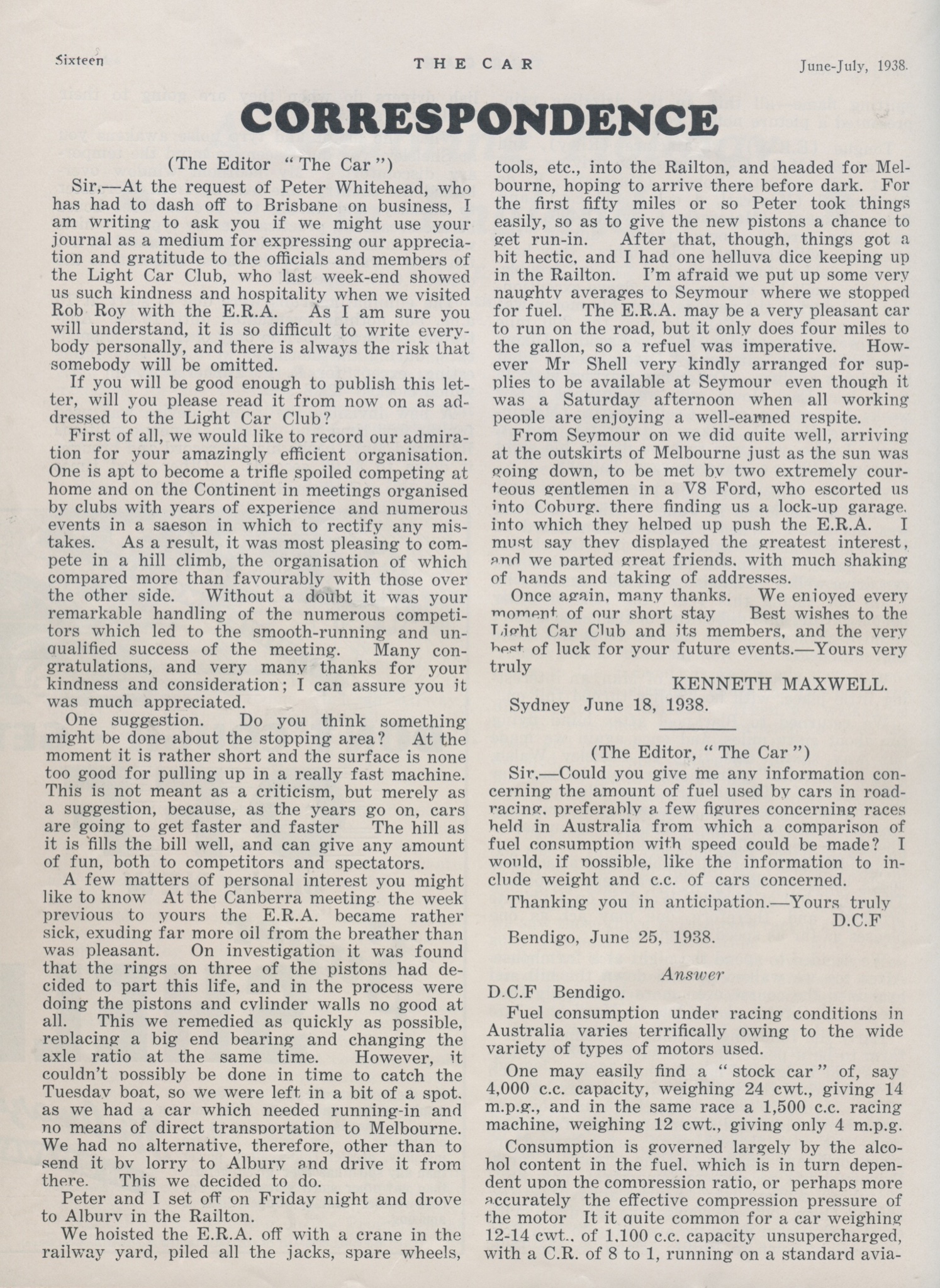
Kenneth Maxwell was a member of Whitehead’s ’38 Touring Party and wrote this letter to the editor of The Car about the equipe’s experiences early in the trip, published in the June-July issue.
The Car was the Light Car Club’s magazine, the trip to run-in the ERA between Albury and Melbourne sounds interesting!
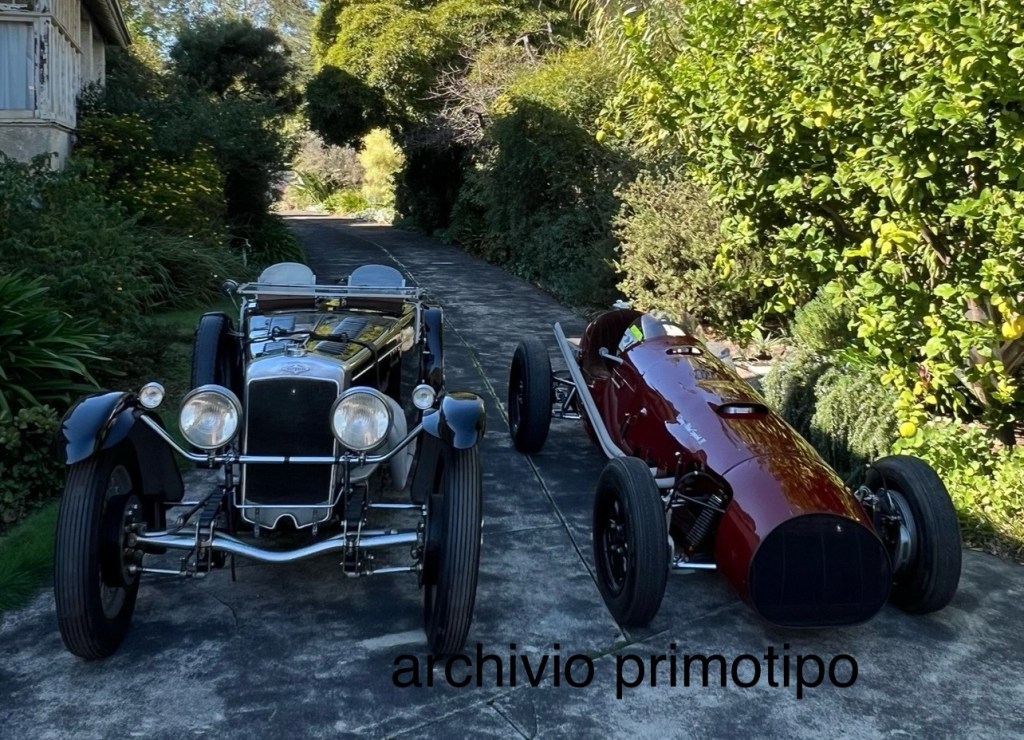
The Fraser Nash TT Rep and Single Seater, MG J3 and the ERA are still alive and well, all but the latter remain in Australia.
Coincidentally, both the J3 and TT Rep were brought to Australia and first raced by George Martin, the Melbourne based Cunard White Star Line representative who died on the way home from the 1938 AGP at Bathurst. He and his wife crashed the BMW 328 in which George had finished 15th near Wagga Wagga.
The shot above shows the Frazer Nash TT and ex-Brabham Cooper T23 Chev aka RedeX Special, at the Davey Milne home in April. The FN requires recommissioning but the Cooper is a runner, ask the neighbours!
Credits…
The Argus September 5, 1938, Martin Gallagher Collection, Davey Milne Archive, Leon Sims Collection, Tony Johns Collection












 primotipo...