Frank Matich, Matich SR3 Oldsmobile ahead of Bud Morley, McLaren Elva Mk2 Chev during the United States Road Racing Championship round at Riverside, California on April 30, 1967
Many of you will be aware that FM contested Can-Am Challenge rounds that year whereas this race largely goes unreported
He had sold an SR3 to Marvin Webster in California and raced his own car in the Can-Am. This car was fitted with a modified 4-litre Oldsmobile F85 aluminium V8 by Webster’s crew while the other machine was powered by a customer Repco-Brabham Engines 620 4.4-litre V8.
(D Friedman)Mark Donohue on pole with George Follmer on the right, Lola T70 Mk2 Chevs, #52 Peter Revson and #71 Bud Morley in McLaren Elva Chevs. Matich on the far right five rows back (D Friedman)Mark Donohue, Lola T70 Mk2 Chev (D Friedman)
Mark Donohue won the 70 lap, 300km race in a Penske Lola T70 Mk2 Chev from Bob Bondurant and Peter Revson’s pair of Dana Chevrolet McLaren Elva Mk3 Chevs.
The pro-series was the Can-Am Cup, the USRRC was the next level down but still a national series with some topline steerers: George Follmer, Jerry Titus, Masten Gregory, Lothar Motschenbacher, Moises Solana, Scooter Patrick, Jerry Grant, and Sam Posey and Mike Goth, the latter a pair of drivers who did the Tasman in the F5000 years .
(D Friedman)
Matich qualified 13th and retired from the race with falling oil pressure after only 19 laps, not a happy weekend as they had blown an engine in the first USRRC round at Las Vegas the week before. The final race of his tour was the Laguna Seca round on May 7 with a finish this time, eighth from grid 10.
Matich from Mike Goth, Lola T70 Mk3 Chev, fifth (D Friedman)
Etcetera…
(D Friedman)
The Matich SR3 is derivative of a whole swag of sports-racers of the day but distinctively handsome all the same.
(D Friedman)
Marvin Webster calling the shots.
(D Friedman)(D Friedman)
Skip Scott’s McLaren Elva Mk3 Chev, DNF engine with Matich at the rear of this group.
(D Friedman)
Matich in front of Peter Revson’s McLaren Elva Mark 3 Chev.
(D Friedman)(D Friedman)(D Friedman)
FM had the Australian franchises for Firestone Racing Tyres and Bell Helmets, I wonder if he landed both those fish during his ‘67 trips? Yes, he went with Goodyear a bit later when it seemed the way to go…
Credits…
David Friedman Archive
Tailpieces…
(D Friedman)
How far back did Roger Penske and Mark Donohue go? About here actually.
After Roger stopped driving in 1965 he fielded a pair of Corvettes at Daytona and Sebring in 1966 before forming the partnership with Donohue. USRRC titles followed in 1967-68 with Lola T70s, and the rest, as they say, is history.
An Adelaide collector of speedcars is likely to buy Mal Ramsay’s ingenious rear-engined Birrana S74 Midget.
The collector, whose name is unknown, apparently hordes famous or unusual speedway cars. At present count, he is said to have about 15 oval track cars – mostly midgets – worth thousands of dollars.
Ramsay’s pavement track Birrana, which caused such a stir among the heavily traditional ranks of speedcar racing that rear engined cars have been banned in Australia, is being valued at $6000.
The S74 has been put on the market before it has fired its blown VW motor in anger following a letter received by Ramsay recently by Birrana patrons Bob and Marj Brown.
The Browns have moved their business overseas and have told Ramsay to sell the Birrana speedcar, as well as their Sesco-powered dirt track midget, spare Sesco motor and many other bits of gear the Brown speedway team had accumulated.
(The Browns were in mid-1975 establishing a business in the UK – Thermax – and running two Birrana 273 Ford BDAs for Bob Muir, and very occasionally, Dean Hosking, in the British Formula Atlantic Championship).
(A Ramsay)
The impending sale of the shocking green coloured revolutionary midget is almost sure to end eight months of controversy raised by it. Ramsay, fascinated by the lure of pavement speedway racing at Adelaide International Speedway, decided last year to hand in his road racing license and go speedway in the little mid-engined car he envisioned.
He planned to debut it at the Australian Grand Prix at Liverpool in January, anxious to take on AJ Foyt in a local car. However, the ultra-conservative RDA in South Australia would not clear the car to compete in the AGP because they said it had not been proved in competition yet.
That was the beginning of a line of establishment reactions against the S74 that eventually led to the Australian Speedcar Control Council banning rear engined midgets.
Their thinking was of the type that it would dominate racing, make conventional cars obsolete, increase costs exorbitantly, etc – traditional USAC thinking, in other words. The only concession made was that the S74 could continue racing for two years, then that’s it for the ‘radicals’.
What the ASCC did was to very effectively stifle the only show of imagination presented for more than twenty years. They were afraid the Birrana would overrun speedcar racing, and everyone would have to follow suit and build a ‘funny car.’
Despite problems getting the blown 1600cc VW engine to work in the initial stage of the project it showed tremendous potential when Mal took the S74 around the ½ mile AIS track in 22.7 seconds, 0.1 under Mel Kenyon’s record.
In its first race at the May Adelaide lnternational Speedway meeting, it was again impressive in gaining a second, third, and fourth from the rear of the field in three races.
The Birrana has not raced since then because of the cancellation of a number of AIS meetings in recent months, so it is unlikely now that it will ever be known just how good the S74 could have been.
Two big SU carbys feed the supercharger induction system to the big bore Volkswagen engine. Notice the beautiful detail work (M Jacobson)Wheels are four Birrana F2 ‘fronts’, IFS by wishbones clear (M Jacobson)
The Birrana looks more like a fat Formula GP midget than a full speedier. Its rounded nose and faired in tail, despite the best efforts of the RDA, still leave it looking unlike any midget ever built or raced here.
It is not, as is popularly thought, based on the monocoque chassis of the Formula Two Birrana 274. Only the front and rear suspensions are F2, and even then they are considerably beefed up to endure the rigours of speedway. Even the fact that the S74 uses full racing independent springing was probably enough to send the midget purists with their leaf springs, beam axles, and solid rear ends spinning.
The chassis is of a spaceframe construction, clothed in aluminium body panels and houses a supercharged VW engine running at 12 pounds of boost. Horsepower of the unit is unknown, being air-cooled, Mal has been unable to dyno it for fear of it overheating and blowing it up — as happened with he first motor he had in the car.
All the sophistication that made Birrana into F2 Champions on the road circuits is featured in the chassis and suspension design. Was it just too much for the other contestants? (M Jacobson)
The gearbox is a Holinger unit with a wide range of ratios available, while the brakes are 9¾ inch disc outboard-mounted all round. Wheels are the same as used on the F2 Birrana, fitted with F3 Firestone slicks.
The cockpit is even roomier than Tatnell’s Winfield Export Offy’s, with the driver nestling in a fibreglass racing seat. Although the S74 is presumed to be lighter than conventional cars. Ramsay said it has yet to be weighed because he had planned for the bulk in a lot of areas to be reduced after it had been fully sorted.
This Auto Action classifieds ad ran in the November 20, 1975 issue.
I’m not sure when it sold, but it’s still alive, I believe, in the Holmes’ family collection of Birranas in Queensland.
It’s gotta be the ultimate Group Q novelty historic machine. CAMS’ Historic Committee would choke on their chocolate-donuts when reviewing this COD application!
Credits…
Auto Action September 12, 1975, Mike Jacobson, Ann-Maree Ramsay
Once upon a time the in-crowd could pick a driver by his helmet design, Derek Bell in this case. That era spanned the 1960s-1980s and a bit. These days the helmets have more of a puke-the paint from on-high-factor about them. Drivers change them as often as they do their jocks, so one may be just getting a ‘design’ into ones head, then out she goes…
Derek shared this Ron Hodgson Holden Torana A9X 5-litre with Dieter Quester in the October 1, 1978 Bathurst 1000. They were out after 5 of the 163 laps from Q5 (Bell) after Derek experienced a steering failure and crashed. Peter Brock and Jim Richards won in a Holden Dealer Team A9X.
(Motorsport Images)
Paul Hawkins on his way to third place in the Zeltweg 500km, round 9 of the International Championship of Makes on August 25, 1968.
In front of him were the works-Porsche 908s of Jo Siffert and Hans Herrmann/Kurt Ahrens. Hawkins car was his own.
In Paul other 1968 results, he and David Hobbs won the Monza 1000km in a JW Automotive GT40. The same pair were fourth in the Brands Hatch 6 Hours in a Hawkins entry, Hawkins and Ickx were third in the Nurburgring 1000km in a JW car, at Spa Hawkins/Hobbs were fourth, and at Watkins Glen second in JW entries. More on Paul here: https://primotipo.com/2020/09/25/hawkeye/
(I Smith)
A very poignant photograph of Alan Hamilton in the Sandown pitlane during the 1978 Australian Grand Prix weekend; The Fangio Meeting at which the great JMF demonstrated a Mercedes Benz W196 Grand Prix car with much brio.
The utter excitement of the sight and sound of that legendary car-driver combination was to an extent ruined by the accidents that befell Garrie Cooper and Alan Hamilton, and to a lesser extent Vern Schuppan, in the Grand Prix. See here in my Hamilton tribute: https://primotipo.com/2025/03/16/alan-hamilton-rip/
(T Wright)
Robin Pare over the top at Skyline, Baskerville, in Don Elliott’s Elfin ME5 Chev.
What a fabulous racetrack it is too. This car, with a relatively short track to wheelbase ratio was reputedly a twitchy little bugger, its bit Robin circa 1973-74.
Here are the remains of the car after a reasonably Big One at Baskerville on October 12, 1975. ‘I was only 30 metres away from the crashing, cartwheeling car with my camera tucked away securely in my bag while I was having lunch,’ photographer Bruce Smart wrote. The car still exists today.
(B Smart)(J Spinks(
Warwick Brown’s McLaren M10B Chev in the Sandown paddock in September 1973, ‘when he got back into an F5000 and did a demonstration run after his huge accident at Surfers paradise earlier in the year.’ Neil Stratton.
It was a remarkably brave thing to do, I attended the Glyn Scott Memorial Trophy Gold Star round at Surfers Paradise while on a family holiday on the Gold Coast only ? weeks before. Warwick was at that meeting hobbling around with crutches/ walking stick. No way would I have thought he’d be back in the car even for an exploratory run such a short time later. Mind over matter folks…
Peter Brock, Birrana 273 Ford #008 during the August 5 Oran Park round of the 1973 Australian F2 Championship.
Brocky finished second behind Leo Geoghegan’s works 273 in this second round of the Championship but only did the following round at Amaroo before pulling the pin; no funds and no Hart 416-B Twin-cam the reasons given if memory serves. See here: https://primotipo.com/2018/05/07/brocks-birrana/
(Auto Action)
As good as an XU-1 got…
Peter Brock in a Holden Dealer Team Holden Torana GTR XU-1 on the exit of Torana Corner at Sandown during the 250k Manchamps round on September 10, 1972.
Harry finally got around to slapping a decent coat of paint on his cars, fitted by then with the just homologated Globe alloys.
A DNF for Peter and Colin Bond. Fords reigned supreme in the traditional Bathurst warm-up event: John Goss from Fred Gibson and Murray Carter in Phase 3 GTHO’s. It all came good for Brocky on the mountain of course…
(Auto Action)
A list of all of the Coopers owned by Bib Stillwell would be interesting…
Here the T53 Climax and T49 Monaco are shown in the Mallala paddock during The Advertiser Trophy Gold Star meeting weekend on October 8, 1962.
Aussie Invaders Brian Muir and Frank Gardner on the front row of the 1972 British Grand Prix BTCC support race at Brands Hatch on July 15. Ford Capri RS2600 and Chev Camaro Z28 Mk2.
Gardner won the sixth round of the BTCC, 20 lap race from the David Brodie and David Matthews Ford Escort RS1600s. Brian Muir led the first 16 laps and sliced a big chunk off the lap record before spinning to rest on his own oil after a major engine failure on lap 17.
This Jaguar XK150 was used to test tyre compunds and tbe way they reacted to Lake Eyre salt in 1963.
Chassis T825278DN, a late 3.8S was loaned to Dunlop for tyre testing purposes for the Donald Campbell-Bluebird Proteus land speed record attempt. What became of the car folks?
Lynton Hemer catches Frank Gardner on the hop through the Warwick Farm Esses during his victorious run in the works Lola T192 Chev in February 1971. Warwick Farm 100 Tasman Cup race.
Tim Schenken at right with the Team Tiga Formula 3 Ralt RT1/76 Toyota chassis 16 with Eddie Jordan aboard during during a test session at Goodwood in 1978. From the left are Steve Elly Ellison, John Love, Eddy and Tim.
Jordan won the 1978 Irish Formula Atlantic Championship aboard a Marlboro Team Ireland Chevron B29 Ford BDA. EJ seems to have only done one race in this car, at the November 11, 1978 Thruxton round where he qualified ninth and finished seventh in the race won by Derek Warwick’s RT1 Toyota.
(T Schenken)
Tiga ran this chassis for Andrea de Cesaris in the British F3 Championship that year, he brought the Marlboro money via his father. Andrea got quicker as the year went on, finishing seventh in the title chase with his best results thirds at Mallory Park in May, Brands Hatch and Donington in July, and fourth placings at Paul Ricard and Silverstone in July and Donington in August.
Tim Schenken and Howden Ganley ran De Cesaris again the following year in a Team Tiga March 793 Toyota, he was second in the championship that year…behind Chico Serra in the other Team Tiga 793. Not to worry, Andrea graduated to F2 and F1 in 1980.
Back to Eddie. When his own race-career was on the decline he formed Eddie Jordan Racing which proved to be rather a successful enterprise!
Tom Sulman looking very pre-War in ‘his’ Maserati 4CM at Mount Panorama in October 1960.
Unclassified in the Craven A International won by Jack Brabham’s Cooper T51, with four Coopers behind him. More about Sulman in this feature here: https://primotipo.com/2018/04/19/tom-sulman/
Jim McKeown in the short-lived Porsche Cars Australia Porsche 911 Turbo mid-engined Sports Sedan at Calder in 1975. I’ll take your advice on the meeting date please?
Allan Moffat giving chase in his RS3100 Cologne Capri then Leo or Pete Geoghegan in the Grace Bros Porsche 911S.
CAMS could never work out what category to pop the 911 into, they chopped and changed a number of times. In this case Hammo pissed a lot of money up against the wall to build a car that was kosher one minute and daffied the next. See here: https://primotipo.com/2018/09/04/long-neck-fosters/
Peter Larner during the 1978 New Zealand Formula Pacific Championship, circuit folks? By then Paul England’s Dolphin Ford BDA – a Brabham BT36 built up by Don Baker using an Arch Motors chassis – was an old gal by then, but Pedro contested the whole series with bests of ninth at Baypark and 11th at Manfield and Wigram. The 1977 Australian F2 Champion (Elfin 700 Lotus-Ford twin-cam) deserved a better mount.
Up at the pointy end Keke Rosberg won the championship from Larry Perkins and Bobby Rahal aboard Chevron B39, Ralt RT1 and Chevron B39 respectively.
Leo Geoghegan, Lotus Elite from David Lewis Holden Grey, Gavin Youl, Porsche 356, David McKay, Ferrari 250 Pininfarina, #39 Ron Marshall, AC Bristol #30 Alan Ling, Holden and the rest at Longford in 1961, mixed GT and Touring Car race.
McKay raced the Tony Oxley owned car – chassis 1973 – which I believe is still in the same family.
And below a better shot of the ‘Ron Marshall, Yass, ex-Mary Seed AC Ace with Sydney made hardtop for Appendix K GT regulations’. Thanks to Stephen Dalton and Rob Bartholomaeus. There is a bit more about this Ace at the end of this piece here: https://primotipo.com/2022/10/02/australian-racing-random-11/
(speedwayandroadracehistory.com)(M Heeler)
What an impactful cover. The Bunbury Speedway’s first season was in 1972.
Bib Stillwell and Stan Jones in the front row of a race during the Victorian Trophy meeting at Calder over the February 25, 1962 weekend. Coopers T53 and T51 Climax.
Stan (below) didn’t start the feature event which was won by Bib from Lex Davison, Aston Martin DBR4 3-litre and Bryan Thomson, Cooper T51 Climax FPF 2.2.
Ian Smith, Tony Wright, John Spinks, Graham C Forsyth, Chevron Publishing, Auto Action, Robert Clayton, Lynton Hemer, Steve Elly Ellison via Ed Brunette, Bruce Smart, Mark Heeler, Lynn Keetelaar Collection, speedwayandroadracehistory.com via Rob Bartholomaeus
Not so much NZ Formula Ford but some shots my favourite Formula Fords in New Zealand…David McMillan and Lola T342 in 1975, circuit folks?
The Lola T342 was surely the first FF with genuine lust factor, I should know, I bought one in the US and historic-raced it here for a decade or so. More about the T342 here:https://www.lolaheritage.co.uk/type_numbers/t342/t342.html
(W Clayton)McMillan on the hop at Wigram in 1979 or 1980. He won the Lady Wigram Trophy in both years aboard his trusty Ralt RT1 (T Marshall)
McMillan was the real deal. He won the NZ FF Championship in 1975/76 and went on to bigger and better things including winning the NZ Gold Star Championship in 1977 and 1979-80. Taking the hotly contested 1980 NZ International Formula Pacific Championship/Series in front of Steve Millen and Andrea de Cesaris was quite a feat.
His mount throughout was the same Ralt RT1/76 Ford BDA chassis #36 an ex-Kevin Cogan car raced with success in McMillan’s hands in Canada and New Zealand before being rebuilt as a Super Vee for Dave’s use in the US in 1980…and success in that form too!
(S Elliott)
NZ Championship action at Baypark in October 1973, Grant Walker’s Elfin 600 from Bryan Scobie, Begg FM3 and Landon Hutchinson, Kea FF. Walker won the 1974-75 NZ FF Championship in this car. More about the Elfin 600 here: https://primotipo.com/2022/04/23/sinfully-sexy-600/
Norm Smith in car #187 below, a Hustler FF won both heats, while car #25 is Neville Bailey’s Palliser.
(S Elliott)
Tustle between Grant Walker Elfin 600 #27 and David McMillan in a Titan Mk6 #41, both in Dawes Racing Team cars.
The amusing bit for me is that Grant brought the Titan Mk6 across the ditch to contest the Australian Driver to Europe Series in 1977 finishing second…and races the same car in Oz Historic FF now. He’s no longer the youngster he was back then but is still mighty quick!
Car #87 is none other than Brett Riley in another Titan Mk6, he too was a Kiwi International of some renown.
(M Fistonic)
Eric Morgan, Bowin P6F at Pukekohe in November 1974. The chassis in which Peter Hughes won the 1973-74 NZ Championship?
Warwick Clayton, Steve Elliott, Milan Fistonic, Terry Marshall
Tailpiece…
(S Elliott)
A change of mount for Grant Walker, here aboard the ex-Paul Fahey Ford Capri RS3100 at Baypark circa 1975-76. He raced this car in Australia too now I think of it.
‘Santa Claus Hill-The remarkable drive by Graham Hill (17) in a Lotus 7 at Brands Hatch on Boxing Day, when he outdrove Piper (19) and Ashdown (18) in Lotus Elevens, to win the Christmas Trophy at an average speed of 64.8 m.p.h.’
This piece by Denis Jenkinson caught my attention – the great man’s words always do – incredibly, by modern standards, the over 5,000 word feature has no photographic support whatsoever. It’s gold as a piece of in-period analysis…so I thought why not reproduce it in full with photographs.
Sylistically, it’s amazing, the longest paragraph is a staggering just over 700 words. DSJ isn’t a big fan of too many commas or full stops and there are no colons or semi-colons or fancy shit like that to be seen. At all. He explores all of his points in great detail using a less-is-more dicta throughout. It flows so well as a consequence…
While I have reproduced Jenkinson’s words and punctuation as was, I have added in a heading here and there to assist with your navigation having considered and rejected the use of photographs for that purpose.
Over to you, DSJ, hopefully he isn’t turning in his grave at the result!
In this article which I write every two years in MotorSport, I discuss the design trends in Grand Prix racing only, because it is in Formula 1 where designers and constructors have the freest hand unhampered by regulations.
As we know the Formula 1 is quite simple in limiting engine capacity to 2,500 c.c. without supercharger and 750 c.c. with supercharger, so that in all other respects the designer can make any decisions he likes. As things have turned out no one has made any serious attempt to build a supercharged 750 c.c. Grand Prix car and the supercharger and all its attendant complications and knowledge has died completely in racing circles. On the other hand the knowledge of getting power from an unblown engine has increased enormously and the science of carburetters and fuel injection has benefited.
Rule Brittania! Change is afoot. Lewis-Evans on pole, then Moss and Brooks on Vanwalls, and Fangio, obscured, Maserati 250F. Italian GP, 1957. Moss won from Fangio and Von Trips, Lancia-Ferrari D50 (LAT)
Formula changes since the last review…
Since the last review in February, 1957, the Formula for Grand Prix racing has been slightly modified, in that the type of fuel to be used has now become specified by the F.I.A., whereas previously there were no restrictions. This freedom allowed experiments to be made with all manner of alcohol mixtures, and also with oxygen-bearing fuels such as nitro-methane. As the basis of engine power is a matter of how much oxygen can be burnt in a given cylinder and as this amount was limited to the amount of air that could be pumped into the cylinder, the principle of getting more oxygen in by using a fuel that carried its own was opening up some interesting new ideas, even though much of the chemistry of fuels was beyond a lot of engine designers and tuners, as was shown by the haphazard way in which nitro-methane was used by some people.
JM Fangio at Aintree, July 20 1957. Maserati 250F. DNF in the British GP won by Brooks/Moss. JMF won his fifth and final World Championship that year (Getty/L Klemantaski)
Since the beginning of 1958 Grand Prix engines have had to use a straight petrol of aviation category, rated at 130 octane, and the only reason for using this was a complete bungle on the part of the Commission Sportive International of the F.I.A. It was originally decreed that Grand Prix cars should use what the Paris congress described “pump fuel,” until someone asked them to define pump fuel and it was realised that no two pumps supplied the same fuel, and anyway, as Mr. Vandervell pointed out to the F.I.A., “the fuel that comes out of a pump depends on what you put in the tank.” A change of definition was made then to “100-octane petrol, as supplied to the public” but this was no good as a lot of European countries that intended to run Grand Prix races did not sell 100-octane petrol to the public. In desperation the F.I.A. searched about for some sort of straight petrol that was universal and available in all European countries, and of course, the only one they found was aviation petrol which was of 130 octane rating, so that was defined as the standard fuel for Grand Prix racing for 1958 and onwards.
Stirling Moss on the way to winning a game-changer, the January 19, 1958 Argentine Grand Prix aboard Rob Walker’s Cooper T43 Climax 1960cc (unattributed)
Design and development in two parts…
In consequence of this we can look back upon the last two years of racing-car design as being in two distinct parts, even though there is a great deal of overlapping. In 1957 design and development had a free hand in everything except total cylinder capacity, and races were of 300 miles in length or ran for three hours, so that the conception of a Grand Prix car remained as in the previous Formula of 1947-53. As I have already written the year 1954 saw a reformation in Grand Prix car design, with many new ones and some really revolutionary ones, while the years 1955 and 1956 saw the development of the 1954 ideas, with a settling down of activities and a concentration on perfecting such as were available. As far as the British constructors were concerned 1957 saw a continuance of this long-term development, Italy produced new ideas as well as continuing with the old, France disappeared from the scene completely and Germany took no part. It saw the disappearance of Gordini from the Grand Prix field, after introducing his eight-cylinder car, and also Connaught, who though they lagged in engine design were well up on chassis design, and prepared to make interesting experiments in road-holding and also in aerodynamics as applied to racing-car bodywork.
Tony Brooks, Vanwall VW5 on the way to winning at Spa in 1958 (LAT)Vanwall, Spa June 15, 1958. Vanwall VW5 2.5-litre, DOHC four good for circa 270bhp in 1958 Avgas spec (LAT)
Engines…
Taking the engine side of Grand Prix building first, as it is the engine which is really the heart of a racing car, we find that during 1957 Vandervell continued to develop his fuel-injection system on his four-cylinder engine and overcame many detail troubles connected with the installation. The actual mechanism of injecting the fuel into the ports caused very few problems on the Vanwall engine, the real difficulty being the control of this mechanism and practical installation problems such as the pump drive and mounting, piping operating rods, levers and joints. On power output the Vanwall was well up with its rivals, giving as much as 280 b.h.p. after using a small percentage of nitro-methane in the alcohol fuel mixture. It is interesting that all the Vanwall horsepower gain was achieved by mixture and combustion improvements, for the engine still turned at 7,400 r.p.m., retained the 96 by 86 mm. bore and stroke and two valves per cylinder.
BRM P25 engine on the Folkingham test bed (J Ross)Harry Schell, BRM Type 25, Reims 1958 (Getty/M Tee)
The B.R.M. engineers followed a similar programme to Vanwall in that they continued with the same four-cylinder engine as they used in 1955 and 1956 and they remained on carburetters, failing to fulfill the promise of fuel-injection mooted when the car first appeared. As far as engine development went the B.R.M. did not make any startling advances and most of the time was spent on achieving reliability of such things as valves and timing gears, though in this quest for reliability the bottom end was completely redesigned from a four-bearing crankshaft to a five-bearing one. Engine r.p.m. remained down at 8,000 r.p.m. after the over-9,000 limit used in the very beginning, and though power increased slightly, to 270 b.h.p., there was little need to stretch things beyond this as the weight of the whole car was kept admirably low and a good torque curve was maintained, so that the increase in reliability provided B.R.M. with some measure of success.
Stuart Lewis-Evans’ victorious Connaught B-Type. He won the Glover Trophy on Easter Monday, Goodwood, April 22, 1957 (J Ross)
At the time that Connaught dropped out of Grand Prix racing a newcomer arrived from England in the shape of Cooper and in discussing engine development we must really overlook Cooper and deal with Coventry-Climax Ltd., the firm who designed and built the engines used in the Grand Prix Cooper cars. The four-cylinder FPF engine designed by Wally Nassan and Harry Munday for the Coventry-Climax engine-building firm was of necessity a compromise from the word ” go” and can hardly be allowed to influence any serious thoughts of Grand Prix engine design, even though its usage influences Grand Prix racing.
Originally conceived as a 1,500-c.c. engine for Formula 2 racing, which was introduced at the beginning of 1957, the FPF engine was contrived from pieces from the ill-fated 2,500-c.c. V8 Godiva engine built by the same firm. That engine was a complete failure for various reasons, and realising the need for an engine for Formula 2 racing Coventry-Climax used the cylinder head design from the Godiva and adapted it to a four-cylinder engine of 81.2 by 71.1 mm. bore and stroke. Being a commercial firm interested solely in selling engines, and having no direct connection with motor racing the FPF had to be designed and built to a definite price limit, unlike a pure Grand Prix engine, and in consequence it was sold as a 1,500-c.c. unit with a reasonable power output, but nothing phenomenal, nor was there anything particularly outstanding about the layout, having gear-driven twin-overhead camshafts and single sparking plugs to each cylinder, and using two double-choke carburetters.
Lotus 16 Climax FPF (Alan Stacey or Graham Hill) during the British GP weekend July 16, 1958. Silverstone (LAT)Graham Hill’s Lotus 16 Climax ahead of Jack Brabham’s Cooper T45 Climax during the 1958 British Grand Prix at Silverstone (unattributed)
Seeing the possibility of getting into Grand Prix racing by using his Formula 2 racing car John Cooper got together with R. R. C. Walker who was racing Cooper cars and between them they contrived to enlarge the FPF engine as much as possible in order to take advantage of the 2,500-c.c. engine limit. By increasing the bore until the cylinder walls were wafer thick, and making new crankshafts with a longer stroke the capacity was raised to 1,900 c.c. but the operation was in the nature of a bodge, rather than a piece of design, for this increased stroke necessitated fitting a quarter-inch aluminium plate on top of the block forming in effect a very thick gasket, in order to accommodate the increased travel of the pistons. At the bottom end the clearance between the piston and the crankshaft webs was such that any good engine designer would have curled up and died on the spot. The Walker equipe went even further and increased the bore even more until the cylinder walls were way beyond the reasonable safe limits of thinness and got the capacity out to 2,014 c.c. All this ” bodgery” worked up to a point, in a manner that has become the hall-mark of the Cooper firm, the point being that the engine was never able to produce anything like enough horsepower to make it a contender in a serious Grand Prix race, but at least it meant the addition of another manufacturer at a time when Connaught were on their way out.
A Vanwall fuel-injected four during the 1958 British GP weekend (LAT)
Of all the British Grand Prix cars the Vanwall was undoubtedly the most successful and its power output was sufficient to allow the cars to win convincing victories in some of the faster races. Their real opposition came from Italy, to be more precise from Modena and Maranello, and during 1957 two entirely new and unhampered engine designs appeared, one from Maserati and the other from Ferrari.
V12 Maserati engined 250F at Pescara on August 18, 1957. With the kitty running low we never did get to see what Maserati could have done with this engine in 1958-59 (Getty/B Cahier)Harry Schell aboard a V12 equipped Maserati 250F during practice at Monaco in 1957. Oh to have heard that thing…(LAT)
From the Maserati drawing office, under the leadership of Alfieri, came a truly remarkable engine in the shape of a 2,500-c.c. twelve-cylinder in vee formation, with the two banks of six cylinders at an included angle of 60 degrees. With space restricted in the centre of the vee, there being two overhead camshafts to each bank, the inlet ports were arranged down through each cylinder head and special double-choke Weber carburetters were used to give one choke per cylinder. This arrangement of inlet ports running down past the plugs was unusual but not new, having been used by Mercedes-Benz on the W196 engine, and by B.M.W. before that. The Maserati engine used a bore and stroke of 68.5 by 56 mm., and this very short stroke allowed for high r.p.m. with 10,000 often being used. With such high speeds in use ignition was a problem, the orthodox magneto being unable to withstand the speeds and deliver sufficient sparks to the 24 plugs, there being two to each cylinder. A high voltage coil and distributor system was used, with a 12 contact distributor driven off each inlet camshaft and 24 separate coils mounted on the scuttle, current being supplied by a battery carried in the cockpit. Revs and power were no problem to this new engine, nor was the reliability factor lacking, but as B.R.M. had found back in 1950-53 such high revolutions with a limited power range proved very difficult for the driver to control. Although Maserati used a five-speed gearbox the car was always suffering from the r.p.m. dropping below 6,000 at which there was little torque. Without the use of extra special fuels this engine developed over 300 b.h.p. and had it been used with a six- or eight-speed gearbox it might have proved successful. However, after a whole season of development, during which time it proved remarkably reliable, but not very practical, the project was shelved due to Maserati giving up factory racing participation.
A rebuilt Ferrari Dino V6 awaits its new home in the Spa paddock, June 15, 1958. Ferrari’s V6 family of engines were still winning well into the 1970s (LAT)Factory shot of the 1958 Ferrari Dino 246 Ferrari)
The other new engine to come from Italy emanated from that genius of design inspiration, Enzo Ferrari, though much of the idea for this new engine came from his son Dino Ferrari, who was to die from an illness before the new engine was really under way. In memory of his son, Enzo Ferrari named the new engine the Dino and it was originally built as a 1,500 c.c. Formula 2 unit, but the basic design was such that it was eventually enlarged to a full 2.5-litres and used for a new Formula 1 Grand Prix car. This engine was a 65-degree vee six-cylinder, the two blocks of three cylinders being staggered relative to one another, with the left-hand block slightly ahead of the right-hand one on the crankcase. Whereas the new Maserati vee engine had driven the four camshafts and all the accessories by a vast train of straight cut gears, the Dino Ferrari engine used roller chains to drive its four camshafts; three down-draught double-choke Weber carburetters were mounted in the vee of the engine. As a Formula 2 engine, with a bore and stroke of 70 by 64.5 mm. it was specifically designed to run on straight petrol of 100-octane rating and used a 9.5 to l compression ratio and 9,000 r.p.m. At the end of 1957 this design was enlarged to 2,417 c.c. by increasing the bore and stroke to 85 by 71 mm. and with the compression lowered to 8.8 to l and the r.p.m. dropped to 8,300 it still ran on straight petrol. Consequently when the 1958 season began the Dino engine was all set to race under the modified Formula. By the end of a season of development it was producing nearly 290 b.h.p. and was quite safe at 9,400 r.p.m., a figure quite often used by the drivers in the heat of the battle, even though 8,500 r.p.m. was given as a rev-limit. This new Ferrari engine replaced the Lancia V8 engine that the Scuderia had been using during 1957, for it had reached the end of its development after four years of hard usage.
In the two years under review these two Italian engines were the only two new designs to appear, and while of completely opposing views they had in common such things as four overhead camshafts, two plugs per cylinder, two valves per cylinder and a high r.p.m. range for maximum power and had carburation by Weber instruments specially designed for each particular engine.
With the 130-octane ruling in 1958 one might have expected engine design to change, but such short notice was given of the fuel regulation that Vanwall, B.R.M. and Maserati could do little except adapt their existing engines. Cooper had to rely on whatever engine development work was being done by Coventry-Climax, and they were joined by Lotus in the Formula 1 field, who also relied on the Coventry firm for their power unit. Ferrari was the only one who was able to take advantage of the new fuel regulation and had no trouble as his engine had never used anything else but straight petrol. As Maserati had given up racing officially they did not bother too much about converting their trusty 250F six-cylinder to run on aviation petrol, and for the first race they merely recommended a change of jets to their customers, not even bothering to lower the compression ratio. The surprising thing was that the Maserati engine responded to this treatment and went on working throughout the season with no drastic alterations, though later the factory built some new engines with modified cylinder heads. This fact rather indicated that in 1957 they were either not taking full advantage of the alcohol/nitro-methane mixture they were using, the engine was running too cool, or that 130-aviation spirit was able to produce as much power as alcohol. This latter suggestion, coupled with different working temperatures, seemed to be the keynote of Grand Prix engines in 1958 for Vanwall found their power output still around the 270 b.h.p. mark, as did B.R.M., but working temperatures had gone up by as much as 200 degrees at the exhaust valves so that getting the Vanwall and the B.R.M. engines to run on straight petrol was not so much a problem of thermo-dynamics and combustion as one of metallurgy. Coventry-Climax made little advance in 1958 the unit being used in Formula 1 still being the mechanical “bodge” that had been perpetrated in 1957, though it did prove surprisingly successful as a result of unreliability in the more advanced designs. With Lotus taking part in Grand Prix racing it was not surprising that some new ideas were forthcoming and Chapman designed an intriguing new car with the engine canted over to lie almost horizontal. This meant a few modifications being made to the FPF unit in respect of oil collection, but it is interesting that drainage of the valve gear was no problem for the cylinder head had been originally designed to run in a canted-over position on the Godiva V8. The main problem involved was that of carburation, for they had to use an existing Weber horizontal double-choke instrument for each pair of cylinders, and within the space limitations under the bonnet the only possible shape of inlet manifold caused a considerable power loss, which they could ill-afford.
End of an era, Fangio aboard a Maserati 250F at Reims in 1958. Q8 and fourth in the race won by Hawthorn’s Dino 246 (Getty/L Klemantaski)A twin-Weber fed Climax 1.5-FPF in the back of a Cooper T45 F2 car at Surbiton in February 1958 (J Ross)
One cannot help feeling that had Lotus been based in Italy they could have got the help of the Weber carburetter firm who would have designed suitable carburetters for the engine layout, probably of the semi-downdraught type as used on the vee-12 Maserati. Throughout the whole period of unsupercharged racing engine design, it has been noteworthy that Alfa-Romeo, Ferrari, Maserati and O.S.C.A. have been able to work in close co-operation with Weber and have special carburetters designed specifically for an individual engine, whereas British engine designers have had to adapt an existing instrument if using Weber. The only co-operation in England has been from the S.U. Company, who designed new double-choke instruments to fit the standard Coventry-Climax FPF unit. Because of his inability to solve the power loss through the altered inlet manifold Chapman had to abandon his horizontal engine position and return to one of near vertical. In passing it is interesting that some years ago when Moto-Guzzi were dominating motor-cycle racing with their 250-c.c., 350-c.c. and 500-c.c. single-cylinder machines with horizontal cylinder layout, Norton Motors experimented with the same idea, turning the renowned Manx Norton engine through 90 degrees, but the idea was abandoned because they could never overcome the carburation problems.
Over the past two years we can sum up the engine design trend briefly by saying that Britain has shown no trend, except the further development of old designs, while Italy has tried two completely new units, one successful and one not so much so. As has been the case for many years, even back in the 1920s, the limit of power production for a given type of engine has seldom been one of design knowledge, but has been a question of metallurgy and being able to build the engines to withstand the designed power production.
Lotus 16 Climax, Silverstone July 19, 1958. Driveshaft from front mounted FPF to the rear mounted box at left, and yet another angle of Chapman’s chassis mastery. It wasn’t a great car of course…(LAT)
Gearboxes…
Before turning to chassis design, which includes the basic frame itself, suspension units and the road-holding qualities, we might look briefly into gearboxes.
We find that Vanwall, and B.R.M. have made no changes at all, while Maserati merely developed their existing gearbox, to make all five speeds usable all the time, instead of first gear being merely for starting from rest. Ferrari designed an entirely new gearbox for his Dino engine, but it was in reality a scaled-down version of the Lancia D50 box, mounted to one side of the differential and having the clutch incorporated in it, between the bevel gears which turn the propshaft drive at right angles, and the box itself. Unlike most people, Ferrari decided that four speeds would be sufficient for his new gearbox. Cooper continued to use an adaptation of the Citroën four-speed unit, though for 1958 it was completely reworked, made stronger and used all Cooper-manufactured parts.
The dreaded Lotus Queerbox sequential five-speed tranny. Despite plenty of development attention it never quite hit the mark. Note too the small tube frame, Chapman Struts, driveshafts and inboard discs. ’58 British GP (LAT)
The only other new gearbox to appear in Grand Prix Racing was from Lotus, this being a constant-mesh five-speed unit mounted in one with the final drive and differential housing, and appeared in 1957 in the Lotus Formula 2 car, and in 1958 in the Formula 1 version. This gearbox is remarkable in its compactness and light weight, there being five pairs of gears mounted very close together, each pair continually in mesh and the drive from the engine is locked to any one of the bottom five gears at choice, by a sliding locking mechanism that travels through the hollow centres of the gears. Chapman has added to this design by trying two types of gear-change mechanism, one a positive-stop arrangement where the lever is always in the same position and a movement one way or the other effects a change up or down, as desired; the other arrangement was still positive-stop but had a progressive lever position, the short lever travelling along a slotted guide from first to fifth gears.
Vanwall chassis in the Spa paddock, June 15, 1958. Another bit of Chapman magic. De Dion tube, inboard disc, twin radius rods and coil spring-shock all clear. So too that whopper fuel tank (LAT)
Chassis and Suspension…
In the realm of chassis and suspension design it has again been Colin Chapman who has provided the new ideas, on his own Lotus cars, and in consultation with B.R.M. and Vanwall. One thing that is significant is that space-frames are now universal, except that Ferrari went from a full space-frame on his Formula 2 car to a semi-space-frame on his Dino Formula 1car.
Ferrari Dino 246 chassis is multi-tube but dominated by a pair of lower big-tube longerons. Mechanics load a car onto a truck at the Nurburgring on August 3,1958 (LAT)
Vanwall remained unchanged, being set with a near-perfect design for the car in question, while B.R.M. changed to a fully-stressed space-frame of Chapman inspiration and naturally both Formula 1 and Formula 2 Lotus cars have the acme of lightweight space-frames.
Vanwall spaceframe chassis, de Dion tube and oil filter housing present, undated (J Ross)Lotus 16 Climax, British GP July 1958 Silverstone. Beautiful spaceframe chassis, note the twin-throat SUs feeding the Climax FPF (LAT)
Cooper employs the general principles, but still fails to carry them through to finality, relying on heavy gauge tubing to impart strength and continuing to use curved tubes which are anathema to the space-frame designer. Maserati built new chassis frames in 1957 and again in 1958 and both times took a decided step forward in space-frame design, the layout being reasonable and diameter and gauge of tubing getting positively daring for Modena designers, who have long been reluctant to contemplate anything under 12 or 14 s.w.g. tubing.
Maserati 250F ‘big tube spaceframe’ chassis at Monaco in 1956A row of Maseratis lined up in Modena on January 10, 1956
As regards front suspension there is now universal agreement in the double-wishbone and interspersed coil-spring layout, though the execution varies. Last to join this school of thought was Cooper who introduced it for his 1958 cars. Vandervell still uses beautifully machined forgings for his wishbones, as did Maserati in 1957, though on the 1958 Modena car a welded tubular construction was used. B.R.M. also used welded tubular construction of particularly nice design, while Cooper uses a very simple tubular layout, as does Ferrari on the Dino. Once again it is Chapman who differs, for his top wishbone is formed by a tubular strut and the end of a torsion anti-roll bar, his top wishbone member thus doing two jobs. Coil springs with tubular telescopic shock-absorber in the centre are popular, but some people still prefer the Houdaille vane-type shock-absorbers.
Cooper T45 Climax undressed revealing its upper and lower wishbone front suspension, Alford & Alder front uprights and coil spring-damper units – Coil Overs in modern vulgaresque – fuel tanks in close proximity to the pilot. You can just see the tip of the rear transverse leaf at right-rear (J Ross)Front suspension of Graham Hill’s Lotus 16, British GP 1958. Note the roll bar doubling up for locational duty, caliper is Girling (LAT)
At the rear coil springs are equally in favour with British designers, Vanwall, B.R.M. and Lotus using them, while Cooper remains faithful to the transverse leaf spring, as does Ferrari and Maserati, though the Maranello concern experimented with coil springs on one car. The bigger cars still adhere to a de Dion layout at the rear, Vanwall, B.R.M., Ferrari and Maserati all using variations on the theme, while the small cars as exemplified by Cooper and Lotus have independent rear suspension. While Vanwall and B.R.M. provide lateral location by a Watt-linkage, Ferrari and Maserati still using a sliding guide. B.R.M. and Maserati mount their de Dion tube ahead of the rear axle assembly, and Vanwall and Ferrari mount theirs behind. On one thing all four agree, and that is that fore and aft location is provided by two parallel radius rods at each end of the tube.
BRM Type 25 rear suspension. De Dion tube and spring-shocks units clear. The driveshafts await their transmission (J Ross)BRM Type 25 1958 spec (C LaTourette)
On rear suspension Chapman and Cooper diverge widely, though both are fully independent, the former having an ingenious layout in which the hub is positioned in three directions, one forwards and inwards by a radius arm, one completely inwards by the half-shaft which has two universal joints but no sliding spline, and the third by the coil-spring unit which provides upwards and inwards location. With the radius arm, the half-shaft and coil spring forming an equilateral triangle with the whe l hub at the apex, this suspension is a new approach and in consequence called for a new name, and was called the “Chapman Strut Principle.”
Chapman’s tiny F2 Lotus 12 Climax FPF grew into just as small a GP car! Superb small-tube spaceframe chassis, note the Chapman Struts to which DSJ refers. Inboard discs, Queerbox, oil filter. Big brother Lotus 16 alongside (LAT)Graham Hill in Lotus 12 Climax (#353) during the 1958 BRDC International Trophy Meeting on May 3, 1958. A significant day: Lotus’ F1 debut…and Hill G’s (GPL)
Cooper continues to use his transverse leaf spring and lower wishbone layout, which originates from back in 1945 when he built his first car using Fiat Topolino front suspension. Nowadays the Cooper rear end is a sound and solid affair, with elektron hub carrier, roll-free leaf-spring mounting and good lateral location. On some cars used in Formula l a second wishbone was mounted above the existing one on each side and the transverse leaf spring was coupled to the hub carrier by a free link, thus relieving the spring of braking and accelerating stresses.
Dunlop alloy wheels on the BRM Type 25 at Bourne in early 1959. Peter Berthon and Tony Rudd admire the latest iteration of a car that finally fulfilled its promise at Zandvoort in Jo Bonnier’s hands that year (J Ross)
Wheels…
As regards wheels the British have a very definite liking for the solid type of alloy wheel, while the Italians still retain the old-fashioned wire-spoke wheel of Rudge pattern. Vanwall made some interesting experiments with wheels, assisted by Lotus, in the search for reducing unsprung weight and designed alloy wheels for the front which were non-detachable, having the wheel races mounted in the wheel casting itself, the whole assembly being held on by a conventional single split-pinned stub axle nut. These alloy wheels were not a success as they shrouded the front brakes and prevented air flow round the brake discs so were replaced by the normal Rudge hub wire wheel. Later a new wheel was designed on the same principle as the alloy wheel, in having the races mounted in the wheel itself and doing away with the heavy splined hub. With Grand Prix races reduced to two hours’ duration and tyres showing marked improvement in wear capabilities there is little need for a k.o. hub at the front. Like Connaught in the past, Cooper and Lotus use bolt-on wheels at each end of their cars. Vanwall still retain k.o. hubs at the rear, the splined portion being shrunk into the alloy wheel. B.R.M. use Dunlop alloy disc wheels all round, with k.o. hubs, these being a standard Dunlop racing component.
Owen Maddock’s Cooper T45 Climax showing both its curved chassis tubes and ubiquitous alloy wheels. The essence of pragmatic simplicity (J Ross)Rear suspension of Peter Collin’s Ferrari Dino 246 during the 1958 British GP weekend. Big ventilated drum, transverse leaf spring, two radius rods and spinner for the wire wheel (LAT)
Brakes…
On the question of brakes the British are unanimous in their agreement on the use of disc brakes, though how they are used and what type still vary greatly. Vanwall continue to use their own manufacture, made under Goodyear patents, with the rear ones mounted inboard; B.R.M. use Lockheed components, with a single unit at the rear, mounted on the back of the gearbox and braking through the final drive unit, while Cooper and Lotus both use proprietary Girling units, one mounted on each wheel back and front.
After struggling along with cast-iron drums of excellent design on the Lancia/Ferraris and again on the Dino Ferraris, the Maranello engineers then developed a bi-metal drum and finally succumbed to the British influence and experimented with Dunlop and Girling disc brakes on the Dino cars. Maserati took an interesting step backwards on braking, for after developing bigger and better alloy drum brakes with steel liners, for the 250F in 1957, they then built a much smaller and lighter car for 1958 and were able to use a design of alloy drum brake that they had discarded in 1956.
Vanwall front suspension and ventilated front disc at Zandvoort during the Dutch GP weekend, May 26, 1958. Cooper alloy wheel at right (LAT)Tony Brooks’ Vanwall at Oporto, Portuguese GP 1958. Note Frank Costin’s superb aero-body and mix of front wire, and rear alloy wheels (Getty)
Experiments in fully streamlined bodywork still continue to appear, in particular at Reims, and in 1957 Vanwall produced a Grand Prix car with a fully enveloping front half, and with fairings over the rear wheels which blended into the tail. The car never had a proper test and development never proceeded, but in 1958, at Monza they tried a further idea, in having a fully enclosed cockpit. formed by a detachable Perspex bubble which clamped on top of the normal wrap-round windscreen. 1958 at Reims was left to the Walker equipe to try full streamlining, by fitting their Coopers with panelling that enclosed all four wheels and merged into the normal body, but the results were inconclusive and the project was abandoned after practice. The Italians realised after 1956 that streamlining and aerodynamics was not their forte.
The Vanwall Streamliner at Monza in 1958 (LAT)
Summing Up…
Summing up briefly, we can say that British Grand Prix designers fall into two categories, one consisting of Vanwall and B.R.M., who were prepared and able to design racing cars from scratch, and having done so carried on with long-term development programmes and the other consisting of Lotus and Cooper who have very limited capabilities and design their cars around a number of limited factors, but both are ready and willing to experiment as far as their facilities allow them to go.
While Vanwall and B.R.M. started the Formula with cars built in the light of past Grand Prix car designs, and with the modification in 1958 to two-hour races, they have had to continually strive to modify their cars down in the question of size and lightness, and in Italy Maserati have done likewise.
Cooper and Lotus, on the other hand, started in Grand Prix racing with a car designed for an entirely different type of event, and by good fortune the change in the Formula tended to sway in their direction so that only a very slight increase in size in 1958 made their cars much more suitable for the racing encouraged by the present Formula, which is in the nature of non-stop sprint-like events.
Ferrari stands alone in all this, in being the only constructor to start all over again, with a car that was a good compromise between the old Lancia/Ferrari, or such things as the Mercedes-Benz W196 or the original 250F Maserati, and the Formula 2 lightweights as exemplified by Cooper and Lotus. The result has been that the Dino Ferrari proved itself eminently suited to all Grand Prix circuits as far as its general character, size and robustness was concerned.
The size and lightness point is illustrated here during the Goodwood Glover Trophy in May 1959 with Moss’ Cooper T51 Climax chasing Harry Schell’s bigger, heavier BRM Type 25. Moss won from Brabham and Schell (Getty/M Tee)Mike Hawthorn on the way to victory aboard a Ferrari Dino 246 in the Glover Trophy at Goodwood on April 7, 1958 (LAT)
Because the F.I.A. deemed it wise to run Grand Prix cars on aviation petrol, and reduce race lengths to 200 miles, there has been a distinct trend towards building smaller and lighter Grand Prix cars and in consequence there has been a search for reducing the unsprung weight on the cars.
By a logical series of steps the design trend of today’s Grand Prix car is undergoing a radical change, for without the possibility of using wasteful alcohol, fuel consumption has improved from something like 4-5 m.p.g. to 9-10 m.p.g.; the shorter races have reduced the total carrying capacity required, this large reduction in weight has allowed smaller tyres and lighter suspension parts to be used, and a smaller overall car has permitted smaller and lighter brakes and the whole character of Grand Prix racing is changing from one where driver, mechanics, team-manager and designer all had to work as a unit, to one where each member of the team does his job and then sits back and watches the next man do his.
Not so long ago the driver depended on his mechanics to change tyres and refuel the car during a race, and they depended on the team manager to control them sensibly, while the designer stood by to see any flaws in the design of his car both from the driving angle and the pit-work angle. Now the design is finished, the mechanics prepare the car, the manager organises the entry for a given race and then they sit back and watch the driver drive his short, but of necessity, concentrated race.
With the new rule for Grand Prix racing introduced in 1958 that drivers should not change cars once the race has begun, there has been even less encouragement for team work. The result has been one of clashing individuals and although it has nothing to do with the trend of racing-car design, the Grand Prix picture has changed in recent years because of the trend of design, encouraged by small modifications to the Grand Prix Formula.-D. S. J.
Moss at Silverstone during the 1958 British GP. DNF, Collins’ Ferrari won (Getty)
Credits…
Denis Jenkinson, MotorSport February, 1959, LAT Images, C La Tourette, John Ross, Getty Images, Grand Prix Library
Tailpiece…
Not a Cooper to be seen in this shot at Ain Diab, Morocco on October 19, 1958.
It shows Olivier Gendebien’s Ferrari Dino 246 leading Harry Schell’s BRM Type 25 and Graham Hill’s Lotus 16 Climax in a mid-field Moroccan GP dice.
The Coopers would become rather more prominent in 1959…
Jack Quinn, Michelle Mantsio and team ran a stunning concours event at the Rippon Lea Estate National Trust home, Melbourne, on Sunday March 23, 2025.
The 100 cars covered everything from veterans to morbidly obese mid-engined Ferrari Supercars and much else in between. Background on Rippon Lea here: https://www.ripponleaestate.com.au/history/
The notoriously capricious Melbourne weather played by the rules for a change and a $30 entry price got the punters out in the Autumn sunshine in droves.
Jack and Michelle have run this event at Wombat Hill, Daylesford for the last two years and brilliant as they were, there is no substitute for making the cars more easily accessible to a bigger potential audience, hence the move to central Melbourne. Wombat Hill concours here: https://primotipo.com/2023/02/25/wombat-park-classic/
Equipe Davey Milne drew plenty of attention with Lindon’s ex-Jack Brabham Cooper T23 Chev, Bristol engined in its RedeX Special days of course.
The boys have the Bugatti Chev running, it broke cover in Daylesford last year.
Australian enthusiasts will be pleased to know that the target date for ‘completion’ of the resto of their ex-Barrett/Steele/Edgerton Alfa Romeo 8C2300 Monza are the 2027-2028 Australian Centenary Grand Prix celebrations at Albert Park and elsewhere. Time is ticking mind you.
Phil Allen says his ‘Three Amigos lead a celibate life‘ – Ferrari V6 engined Dino 246, Lancia Stratos and Fiat Dino – but they are all driven often and double-up rather nicely as beauty queens. I’ll have the Lancia please. Enzo looks on with approval.
Phil off to the side is ready to provide advice to The Judges upon their request of same…
These neat, white, carefully pressed overalls and caps replete with sponsors logos were a refreshing change to the Global Concours Judge Uniform of brown trousers, blue shirt, blue blazer and Boater hats. They always look like escapees from a Liberal Party Meeting to me, why wouldn’t you be an escapee from such meetings of course?
A two-stroke perhaps!
Jack is amazingly well-connected and has the ability to pull-cars-out-of-his-arse, the number of machines ‘most of us’ haven’t seen before is notable each year.
One that fits into this category is the Bentley 3-litre Super Sports 100 MPH which one of the authors of ‘Bentleys in Australia’ has not seen, so its appearance was very special. Body by Floods, Melbourne.
This car was delivered new in Melbourne in 1925, has an in-period competition history and by some type of miracle – great work by Australian Bentley Club members down the decades duly noted – still resides here.
Bob King getting stuck into the sauce. A $5000 fine if any of the punters ended up in the pool Jack told me; to him not the punter.
Lindsay Fox doesn’t tend to let his cars loose too often but Quinn has deceptive powers of pursuation, five cars from Australia’s most prominent ‘truckie’ this time was fantastic. I thank the Fox Collection for their support of these events on behalf of all of us…more, more, more!
The Mercedes-Benz SLR McLaren and 540K are both big bits of real estate devoid of appeal to me but Jo Publik clearly loved-em!
Its a looong way from the driving seat of the Merc-Mc to the nose, it would be quite a wrestle from Moggs Creek to Apollo Bay I suspect. Still, the market was a mix of collector cars doing SFA and across Europe autobahn-storming for a few.
Too many episodes of Hogans Heroes always has me thinking of goose-stepping German perverts whenever I see one of these Mercs unfortunately; engineering quality undeniable of course.
The Murdoch’s ex-Bill Lowe Lombard AL3 s/c is much more up my alley.
With an Oz racing history going back to the earliest of Phillip Island days this amazing time capsule has been continually race prepared and rebuilt over its 100 or so years of life rather than restored, thank goodness.
The only Oily Rag racing cars in Australia of that era left ‘untouched’ are the Lombard and Sydney domiciled ex-Bill Thompson Bugatti Type 37A. I’ve written that assertively but I’m not sure its right, name others folks, racing cars not roadies, I’m well aware of Alistair McArthur’s Ballot 2LS.
Geoff Murdoch just reccied a car club rally route up Tumbarumba way in the Lombard recently so the petite bolide doesn’t mind a few kays.
Adam Berryman’s Bugatti T37A also does plenty of miles (below) and will always have a special place in my heart as the first Bugatti I drove. Geoff Murdoch and Bob King are behind the Lombard.
The subtlety of this chopped and channelled – is that what they call it ? – American thingy took ya breath away. Variety is the spice of this show…no-one else in Portsea has one of those. Giulia Super service car alongside.
It was very interesting having Warwick Anderson explain the differences between his (red) Lamborghini 400 and Joe Calleja’s just arrived from the US, (silver) Lamborghini 350.
Amusing are his stories about his father, Colin Anderson, corresponding with Ferruccio Lamborghini about his ownership journey of that red 400, the first Lambo imported to Australia. The company owner even adopted Colin’s targa-type pop-off roof as a factory option!
Another ‘never seen before’ for me at least, Chrysler Ghia ST of 1954-55.
Why not finish with Nigel Hunt’s achingly erotic Ferrari 250 Testa Rossa replica?
We are lucky to have one of these in Australia, it looks so kosher it’s not funny, all it needs are a few miles to provide the patination it lacks. Needless to say the crowds made a beeline for it, its pontoons are so iconic. And yes, THAT is the Great Ocean Road drive of drives…
It’s a bunga-bunga pine botanist Bob King tells me.
The results are below, my favourite was that Bentley 100 MPH.
An awesome, stunning event in every respect, surely the best Concours in Australia, and only three years in the making?
I’ve occasionally wondered exactly when Repco Ltd commenced operating in the UK, in a Repco-Brabham connection. Repco’s in-house magazine, the ‘Repco Record’ Christmas 1964 issue tells me the former Australian automotive industry colossus hung-the-shingle out at 59 St James Street, London on August 1, 1957.
The meetings Frank Hallam had in London that are of the most interest to us go unrecorded of course: Messrs Irving, Brabham and Tauranac, Laystall and Lucas spring to mind.
I suspect the primary purpose of the trip was to put-a-rocket up Phil Irving, who in Hallam’s mind, was running late with the design of RBE620, the SOHC, two valve, fuel-injected 2.5-litre Tasman Cup V8 based on the Oldsmobile F85 aluminium block. Worse to Frank, Phil and Jack were occasionally leaving-the-reservation on ‘agreed design direction.’ Said engine fired its first shot in Repco’s Richmond engine laboratory dyno on March 26, 1965.
Credits…
Repco Ltd, the Repco Record is from Rodway Wolfe’s archive
Spitfire, Alan Hamilton and a Bentley not long after Hamiltons Rolls Royce was created to take on the Rolls and Bentley franchises, ‘Laverton, Victoria on December 20, 1988’ Tony Johns advises.
Alan Douglas McKinnon Hamilton, a wonderful man, Australian Porsche importer, racer, entrepreneur and entrant died on March 3, 2025 in Melbourne. He was born on July 29, 1942.
What follows is a photograph based tribute. I was lucky enough to meet with and speak to Alan in the last five years about various articles, and sometimes just racing shite more generally…a Prince of a Bloke.
(R Rundle)
Early days aboard a 356 Coupe at Calder circa-1962
This tribute is a pot-pourri of the cars he raced but is far from all of them. It excludes machines he entered for others…of which they are a lot.
(G Chennells)
It could be Europe but its outer Melbourne. Hamilton’s 2-litre six powered 904-8 Bergspyder #007 at Templestowe Hillclimb during 1966.
‘Alan Hamilton leaving The Hole with the Porsche engine making its very distinctive and glorious bellowing sound. It always scared me a bit watching Alan because he was so quick out of The Hole that when he arrived at Barons, a sharp U-turn with trees on the outside, he was going so fast that if anything went wrong…I hated to think. But always fantastic to watch and hear.’
(B Jackson)
In the paddock at Surfers Paradise during the 1966 12-Hour meeting. Alan was sharing the car with Brique Reed.
And below during the March ‘66 Longford Tasman meeting while contesting the Australian Tourist Trophy. Hammo is turning into The Viaduct in front of Lionel Ayers’s MRC/Lotus 23B Ford and Spencer Martin aboard the Scuderia Veloce Ferrari 250LM.
Frank Matich won in his new Elfin 400 Traco-Oldsmobile from Hamilton and Martin.
(S Fryer)(R Rundle)
Hamilton rounds up the John Kiran/Colin Bond/Max Winkless Volvo P1800 during the 1967 Surfers Paradise 12 Hour. Alan and Glyn Scott were third behind the Scuderia Veloce Ferrari 250LM raced by Bill Brown and Greg Cusack, and the Paul Hawkins/Jackie Epstein Lola T70 Mk3 Chev.
This 906 is his first – chassis#007 – had its lid lopped off locally to accommodate Alan’s considerable length. His second 906 was tagged 007 too… That’s it below at Warwick Farm during the RAC Trophy meeting in May 1971.
(L Hemer)Longford, March 1967 aboard the first 906Peters Corner Sandown in 1967 with Neil Allen’s ex-Matich Elfin 400 Olds behind (unattributed)(oldracephotos.com/King)
Hamilton having a drive of a front-engined car for a change. The MW Motors Alfa Romeo GTA at Longford in 1968, Murray Wright was the Melbourne Alfa Romeo dealer.
(MotorSport)
Hammo taking some air during the 1968 Nurburgring 1000km. He was 28th, sharing the Porsche 911S 2-litre with Hans Dieter-Blatzheim on May 19.
Up at the front was a pair of Porsces: Jo Siffert and Vic Elford won in a 908 with local-lads Hans Herrmann and Rolf Stommelen second in a 907.
(Porsche)
Alan at Station Pier for the handover of a of carton of beer or three to the Waterside Workers Federation dogs to avoid his new Porsche 911 T/R being accidentally damaged on the downward drop onto said Pier…
MG corner at Phillip Island? (A Scott)Warwick Farm with the car dancing on its tippy-toes, lots of shots of this car are in this pose (Porsche)
Hammo in his maiden single-seater drive in his new McLaren M10B Chev at Lakeside over the June 6 weekend in 1971. Third behind Kevin Bartlett and Max Stewart.
Chassis #400-19 was Niel Allen’s spare tub which was built up into a complete car when Allen retired from racing after the end of the 1971 Tasman Cup.
(B Jackson)
Hamilton inserts himself into the McLaren’s cockpit in the Warwick Farm pits and is shown below in the very best of company dicing with John Surtees, Surtees TS8 Chev during the ‘71 AGP.
That’s Colin Bond in Frank Matich’s McLarens M10C Repco-Holden and the Graeme Lawrence’s Brabham Ford FVC. A deflating tyre cruelled Surtees chances, Frank Matich won the race from with Hamilton third and Lawrence fourth, Bondy lost Phil-pressure and retired.
Max Stewart’s fast and reliable Mildren Waggott TC-4V won the Gold Star that year with the two ex-Allen M10Bs driven by Bartlett and Hamilton in equal second-place.
(L Hemer)(J Lemm)
Hamilton at Collingrove on the way to a 33 seconds-dead run at Easter, taking FTD in the Australian Hillclimb Championship (AHC) in April 1971.
Alan had won here before, taking the 1966 title in the 904 Bergspyder. He returned to hillclimbing after losing his General Competition Licence as a result becoming an insulin dependent diabetic as a consequence of his 1978 massive Sandown accident. He won the 1981 AHC in a Porsche Special, then took it one final time at Gippsland Park, Morwell in a Lola T87/50 Buick, a device which started life as a Formula 3000 car.
(unattributed)
Hammo leading Allan Moffat and Bryan Thomson during the 1972 Sandown Tasman meeting.
The 911S 2.4-litre, ex-Brian Foley/Jim Palmer, Mustang Boss 302 and Holden Torana Chev glimpse in a mixed Improved Tourer and Sports Sedan race. Neil Stratton wrote that this was palmers first race in the car and that Moffat retired the Mustang after losing its brakes over Lukey – the rise at the top of the back straight – and hitting the Armco protecting the Marshalls.
The same pair at Calder later in the year below.
(P Husband)
On the hop at Oran Park in a 3-litre Carrera RSR in 1976. Famously the 1975 Paris Show 911 Turbo/930 prototype, long since left our shores and lives in Europe.
(Auto Action)
Allan Moffat created a crushing touring car team in 1977 by recruiting American engineer-team manager Carrroll Smith, engine builder Peter Molloy and Colin Bond.
After winning the ATCC Moffat recruited Jacky Ickx and Hamilton for the Enduros. Moffat’s 1-2 form finish has had taxi fans foaming at the mouth for decades with colulda-woulda-shouldas but The Boss prevailed, as he should have: Moffat/Ickx first, Bond/Hamilton second.
(B Atkin)
A very poignant photograph of Hammo in the Sandown pitlane during the 1978 Australian Grand Prix weekend; The Fangio Meeting at which the great JMF demonstrated a Mercedes Benz W196 Grand Prix car with much brio.
The utter excitement of the sight and sound of that legendary car-driver combination was to a large extent ruined by the accidents that befell Garrie Cooper and Alan Hamilton, and to a lesser extent Vern Schuppan, in the Grand Prix. Racing Car News summarised it thus:
Hamilton turns in to Dandenong Road not long before the crash. If the Lola T430 Chev looks a little odd, it’s because Porsche Cars Australia modified the car by removing the sportscar-type-front and replaced it with a T332 type wing which provided more bite…and looked better.
Alan lost control of the twitchy, unforgiving Lola on the fast left-hander off The Causeway then went backwards into the Dunlop Bridge breaking the car into two and breaking a leg, his pelvis and sustaining serious head injuries. While there that day I was nowhere near the accident which is in a no-spectators area on the inside of the track. The vibe of the place that day with three big-hits, and limited information flow to we punters, is something I still remember.
(B Polain)
Hammo competing in the Seaforth Tourist Trophy in 1983. Not a lot of safety for cars doing 180mph…
This 917/30 #004 was Mark Donohue’s unraced spare in 1973. Alan always had a snoop around the Zuffenhausen ‘shops on his trips to Deutschland and spotted this little baby on one of those trips. Long-since left our shores.
Hammo’s 908 Coupe following the 917/30. The 908 was, ahem, road-registered for a while in Victoria (unattributed)(unattributed)A cursory glance at the 917/30 spaceframe chassis and its driver-forward driving position shows the importance of not having a frontal impact at anything more than 30mph…(unattributed)(unattributed)
The Seaforth Racing Car parade was a fantastic event put together by Bruce Polain and a bunch of his mates at the Historic Racing Car Club of Australia in Sydney.
The street circuit was about 2.5km around the heights of Seaforth, descending to Spit Bridge with views of the inner-harbour, then winding up through the gears to the top of Spit Hill to Sydney Road, then left into the Seaforth shopping centre. Twice. Two runs during the day.
December 10, 1983 with Bob Jane’s Chev Monza and Bruce Polain’s Wylie Javelin heading out of town towards Seaforth. Any tourist who has taken a dip at Manly will have made this trip…unless you went the fun way by ferry! Shot taken from the Ethel Street overpass (unattributed)(unattributed)(T Johns)
Tony Johns, ‘Alan Hamilton driving the Porsche Factory Museum 1962 Type 804 F1 racing car.’
‘Sandown Tribute to Champions meeting February 14, 1982. A real gentleman to have worked for at Porsche all those years ago.’
‘Another photo from the same morning. The 804 and 718 RSK ex-USA and the ex-factory 908 Coupe were part of Alan’s collection. Rob Walker, Stirling Moss’ long-time patron is seated in the Spyder and Moss is chatting with Norman Hamilton (jacket and cap), the founder of Porsche in Australia.’
(D Pearce)
Alan Hamilton, Porsche 911SC during the 1987 Sea Lake Mallee Rally, perhaps with Jim Hardman alongside.
It’s not just any SC either! This car is ‘C20’ the prototype of what ultimately became the 911-964 four-wheel-drive, and along the way the competition 953 Paris-Dakar rallycars. The 3.2-litre car started life as Helmuth Bott’s brown-SC company car before morphing into a double-front wishbone machine with front and rear diffs. When it was pensioned off guess who spotted it on one of his trips to Germany in 1986?…
Hamilton on the hop at Gippsland Park Morwell on October 15, 1989 aboard his Lola T87/50 Buick 4.9 V6, another AHC victory, not the last for this chassis either.
This machine, T87/50 HU12 Cosworth V8 3-litre, was Michel Ferte’s 1987 Euro F3000 Championship car. It and another T87/50 – acquired by Bob Minogue for Formula Holden use – were purchased by Hamilton.
Paul Newby’s research (written on The Nostalgia Forum) says that the car was at one time fitted with a Ford DFL-035 3.3-litre ex-Spice Engineering Racing acquired at the 1988 Sandown WEC race attended by Hamilton, wearing his PCA hat.
(D Hardman)
Hamilton and friends – Jim Hardman constructor of the three F2/FPac cars of the same name and Porsche Cars Australia Chief Engineer/Mechanic during the Costanzo glory years is behind him – with a Cosworth V8 powered hillclimb special at Morwell, date unknown but circa 1981-82.
Spaceframe chassis with the DFV/DFL used as a stressed member, as it was intended. Nick Bennett observed that ‘I believe Alan only dove it once and scared the shit out of himself.’ Two meetings only perhaps folks: Morwell and Collingrove? More information on this car welcome.
(D Hardman)
Credits…
Ian Smith, Ron Rundle, Stephen Fryer, Geoff Chessells, Bob Atkinson, Lynton Hemer, Australian Autosportsman, Alexis Scott, Lynton Hemer, Brian Jackson, Racing Car News, Brian Stratton, Auto Action, Daryl Pearce, Peter Husband, Jarrod Bryant, David Hardman, John Lemm
Tailpiece…
(I Smith)
Ian Smith was a long time friend of Alan, I love this portrait which was taken circa-1978.
Afterthought…
1985 AGP Historic Demo Adelaide (J Lemm)
The final words go to Rob Newman.
‘Years ago, when John Walker was driving the 934 Martin Sampson had purchased from Alan Hamilton I had the privilege of preparing the car for each race in Alan’s workshop out by Sandown, so I spent some time there.’
‘Late one day Alan gave John and I a personal tour of the complex and his toys, one of which was his 917. The car was on stands without bodywork, the chassis with engine, suspension and various bits fitted including the fibreglass seat. But what caught my eye was the size of the hole in the seat where the crutch belts were fed through, it was massive, a large square cut out in the seat. I must have made comment because I clearly remember Alan, pipe in hand and with a straight face replied “That’s how big your balls need to be to drive this thing.”
Auto Action Premium is on sale in NSW today, Victoria, South Australia, Western Australia and Tasmania on Friday, and Queensland probably Saturday, in your favourite news outlet.
This issue of ‘Premium’ is the first of an exciting features-based monthly. It’s the latest part of Auto Action’s multi-media coverage of motorsport in Australia and globally and takes the 54 year old title to another level.
Print is alive and well because it engages readers in a way websites cannot. It’s is not about clickbait or a 15-second read but rather deep immersion and perpetuity. The first issue is a 132-page example of what readers and the motorsport industry can expect from the new ‘Premium’ Auto Action monthly.
An expansive 12-page feature by me on Jim Clark’s 1965 season. Clark’s performance across many different categories that year in Formula 1, at Indianapolis, in sports cars, F2 and saloon car racing is regarded as the best individual season in history from a driver many rate as the best.
Our in-house F1 expert Reese Mautone looks at all the 2025 F1 Rookies including Jack Doohan as they prepare to take on their full time F1 drives.
Auto Action’s International F1 man Luis Vasconcelos takes a look at the season ahead and crystal balls Oscar Piastri’s potential to beome our third World Drivers’ Champion.
Supercars’ boss Tim Edwards talks about a year on the ‘Other Side of the Fence’ and how the changes to the series played out at the recent Sydney Motorsport Park round.
AA talks with the two new full time Supercar racers, Rookies Kai Allen and Cooper Murray as they fight for Supercars glory.
Shane van Gisbergen opens up about his NASCAR evolution in the world’s biggest tin-top series in an interview with Andrew Clarke. Andrew got to drive the new Corvette too, read his road-test of an icon.
Still on NASCAR, we were on the ground for the 2025 Daytona 500 and The Clash at Bowman Gray Stadium, a stunning quarter-mile oval.
Sprintcar driver James McFadden talks about his dominant sprintcar season including winning a third Grand Annual Sprintcar Classic and an Australian title in one season-a feat rarely done before.
Aussie Daniel Sanders talks with AA’s T W Neal and relives his stunning Dakar win.
With its soon to be realised commitment to Supercars, I investigate Toyota’s Australian racing past and reveal how its first forays into motorsport were here in Australia in 1957.
Aussie Rally driver Taylor Gill and co-driver Dan Brkic are in their second season in the ultra-competitive Junior WRC. They won the opening round of the season in the snow lands of Finland piloting a Ford Fiesta Rally3. They spoke to AA’s T W Neal about the program.
And then there’s a look at the new Aston Martin Valkyrie, a howling V12 hypercar targeting Le Mans glory… as is Ford with its return to Le Sarthe announced in the past month.
Plus, there is plenty of race coverage and ‘News Extra’ inside. Something for everyone!
Give the new mag a go, it’s traditional magazine size, so look up on the shelves not down amongst the newspapers where Auto Action inevitably got dumped!
In fact, buy two, one for yourself and one for a mate who hasn’t read us for a while. We need this thing to fire, if it doesn’t, nobody else will follow Bruce Williams’, Andrew Clarke’s and Betty Klimenko’s passionate belief in the look, feel and smell of traditional magazines…
Buy it folks and then give us some feedback on what you do and don’t like so we can evolve the mag to suit the tastes of the majority.
Jack Brabham on the way to winning the 1959 Monaco GP, Cooper T51 Climax
This ad in the December 1960 issue of MotorSport piqued my interest. I had a vague recollection of tripping over some Getty Images shots of school activity and soon rediscovered them.
Cooper launched the school at Brands Hatch on March 20, 1957 with The Honourable Gerald Lascelles in attendance to formally open the training facility. He is shown below shaking the hand of US Army Sergeant Henry Klyner, with John Cooper at the wheel of a Cooper T39 Climax.
Roy Salvadori in the same car
I’m intrigued to know if the school found any talent of note? It seems readily apparent that Jim Russell’s Jim Russell Racing Drivers School that started at Snetterton in May 1957 became the market leader of race-schools globally.
Pat Trigg was clearly a popular student with John Cooper, car above a Cooper T43 Climax 1.5-litre F2 machine, and below in the T39.
In the shot below Cooper is posed with the two Cooper T43’s being driven by Arthur Mallock and John Forster.
Denis Jenkinson wrote an article about the school’s activities in that December 1960 issue of MotorSport I referred to at the outset.
‘Last winter the Cooper Driving School selected six drivers from their many candidates to take part in races during the 1960 season in Formula Junior. At the time it was anticipated that the best two drivers, Bill Lacey from Ireland and Don Rickman the motorcyclist, would be given a Formula Junior Cooper on permanent loan for the whole season, but as things turned out this was not possible. Activity at the works with Formula 1 and Formula 2 cars, and the demand for Juniors by the sales department, rather left the school short of material. However, the school Junior was used many times during the past season for these six successful pupils to have a go at a proper race. In addition, when the idea of loaning cars to pupils originated Formula Junior in this country was barely beginning, and Coopers had no idea that it was going to develop into such cut-throat racing amongst experienced drivers, so that when they saw the trend of things as the 1960 season progressed they were a bit reluctant to send their pupils out into the free-for-all of Formula Junior. However, there were sufficient races at club meetings at Silverstone and Goodwood, both for Formula Junior and Formule Libre, for the six successful ones to have a go.
John Cooper with trainee, Henry Kilner in a Cooper T43 at Brands Hatch in March 1957
It will be recalled that Lacey was the most promising driver and he was entered by the school for Brands Hatch on Boxing Day, where he finished seventh, and then in the spring he had another drive at a Silverstone club meeting, but unfortunately retired. It should have been Don Rickman’s turn next, but his motorcycle scrambles activity prevented him from taking up the offer, so the next on the list had a drive, this being Tony Skelton, and he finished fifth in his first race. Then Freddie Jacks had a drive at Goodwood and finished fifth and back at another Silverstone club meeting Skelton scored a second place and Miss Elizabeth Jones finished eighth.
Before this second Silverstone meeting the school hired the Club Circuit for a day and Lacey, Jacks, Skelton, Rickman and Miss Jones had the opportunity to put in unlimited practice, using the school car. The sixth pupil to be selected was Keith Ballisat, but as he had contracted a regular drive with Ken Tyrell’s team, he did not avail himself of the school activities.
Charles Cooper flags the cars away, filming underway below (J Ross)
At a further Silverstone club meeting Lacey scored a fifth and Jacks scored a third, while at the end of the season the school entered Rickman for the B.R.D.C. race on the full Silverstone circuit, and set him off on his first race in the midst of the Open Formula Junior free-for-all. Being his first motor race, and his first visit to Silverstone on the full circuit, he did remarkably well to finish in eighth place. Although the season was not as active for the school pupils as had been hoped, at least the promise of driving a works-entered Junior had been fulfilled, and it is hoped that 1961 will see a lot more racing for the successful pupils.
Already two more names have been selected, these being Richard Wilson and Jean-Claude Franck, and they should get a start in a race early in the new season. Meanwhile, the school continues to sort out the many applications for membership.’
Credits…
MotorSport December 1960, Getty Images, John Ross Archive


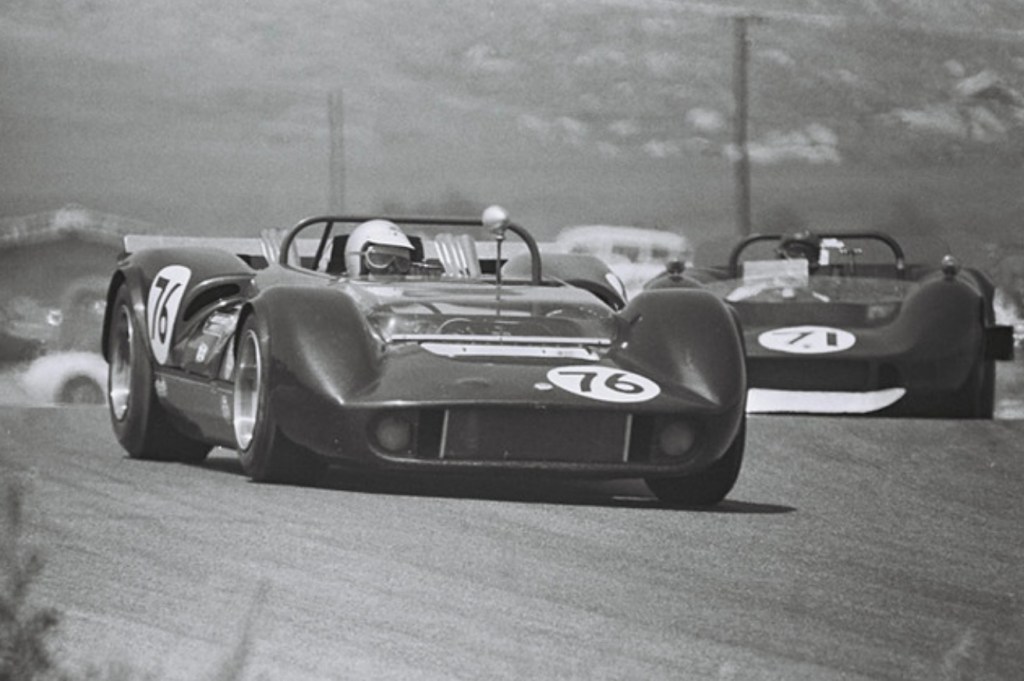
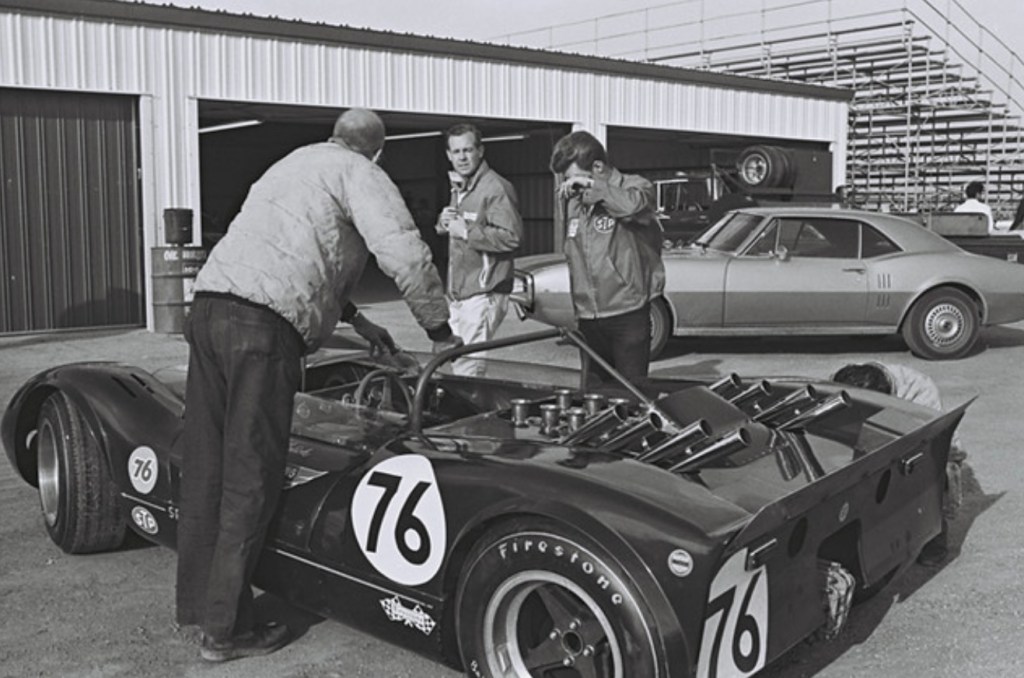
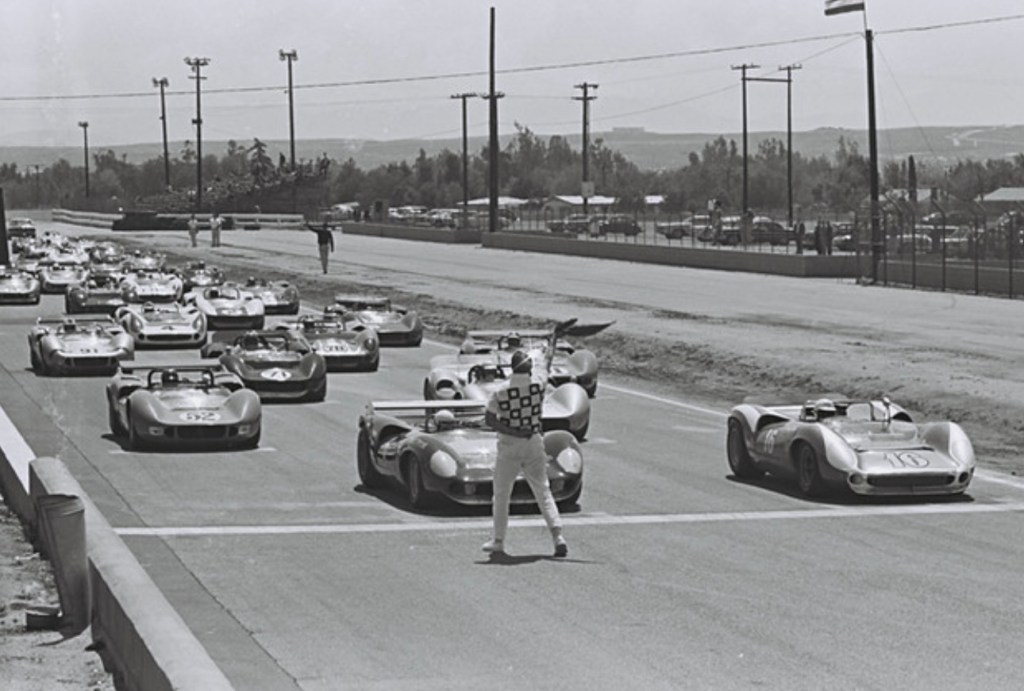
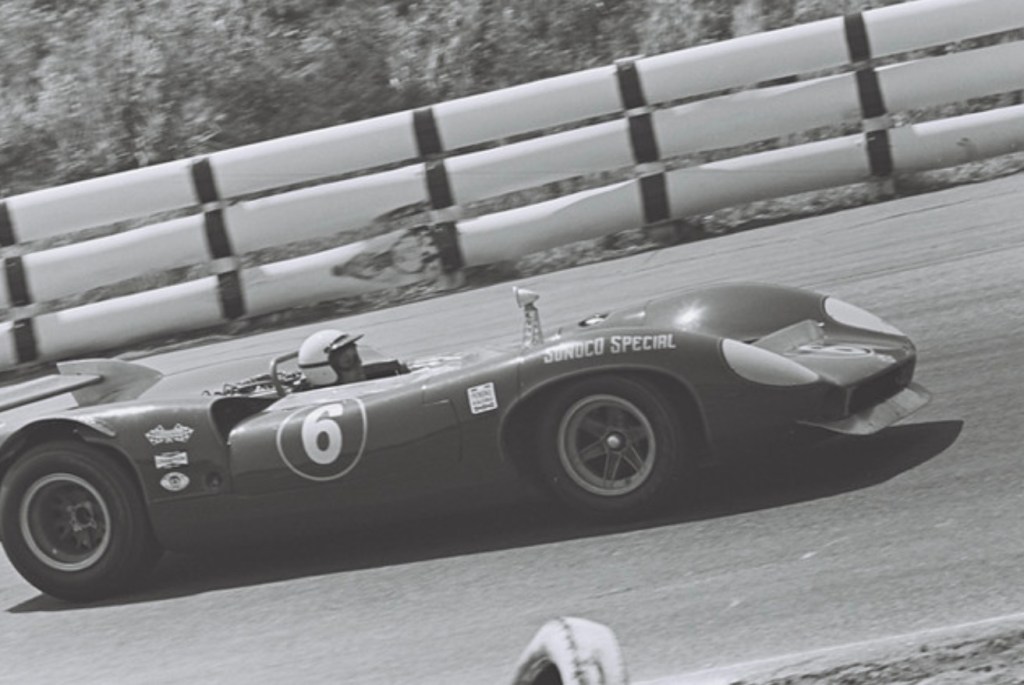
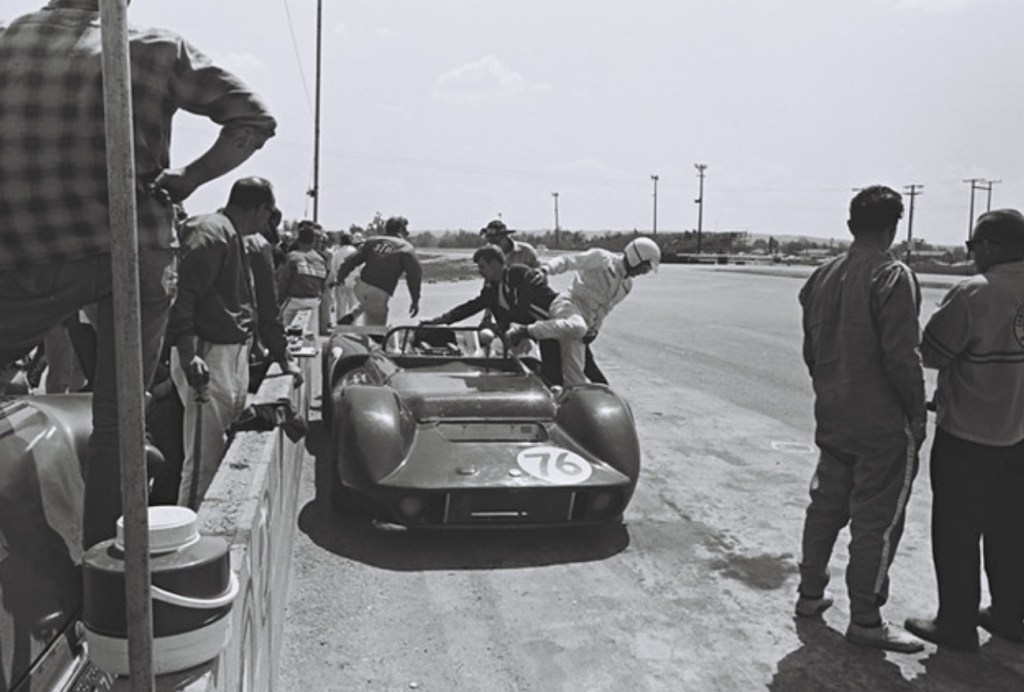
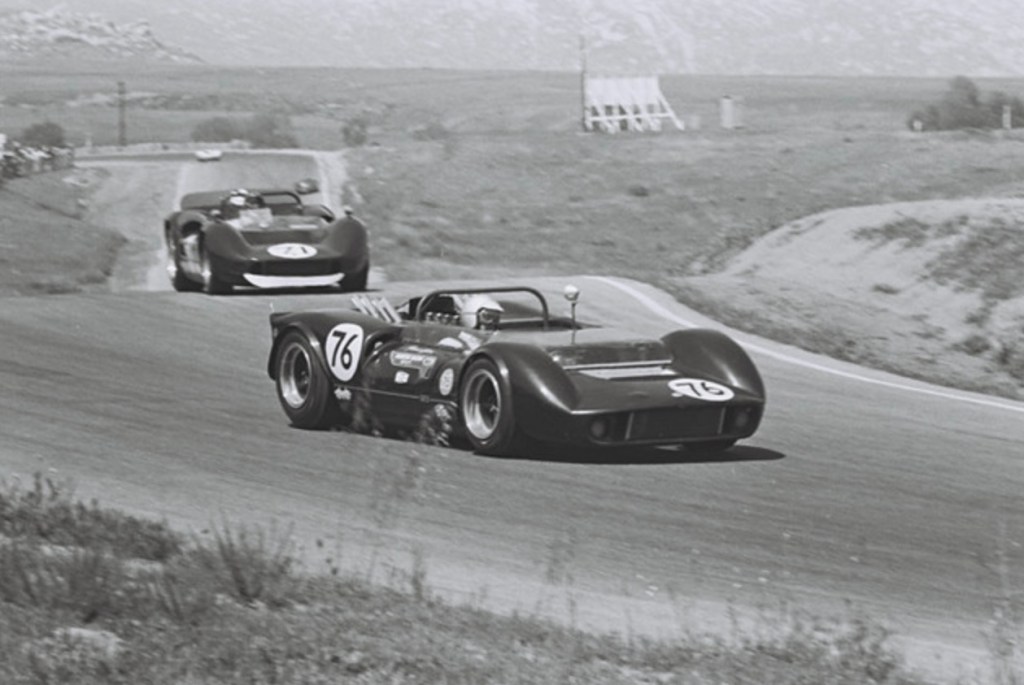
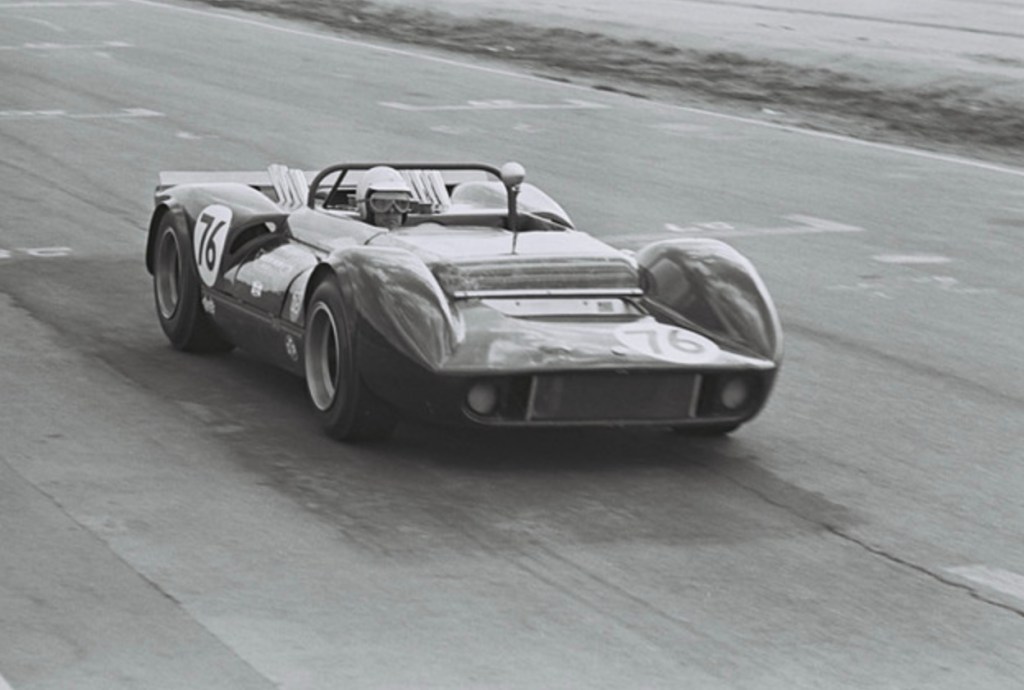
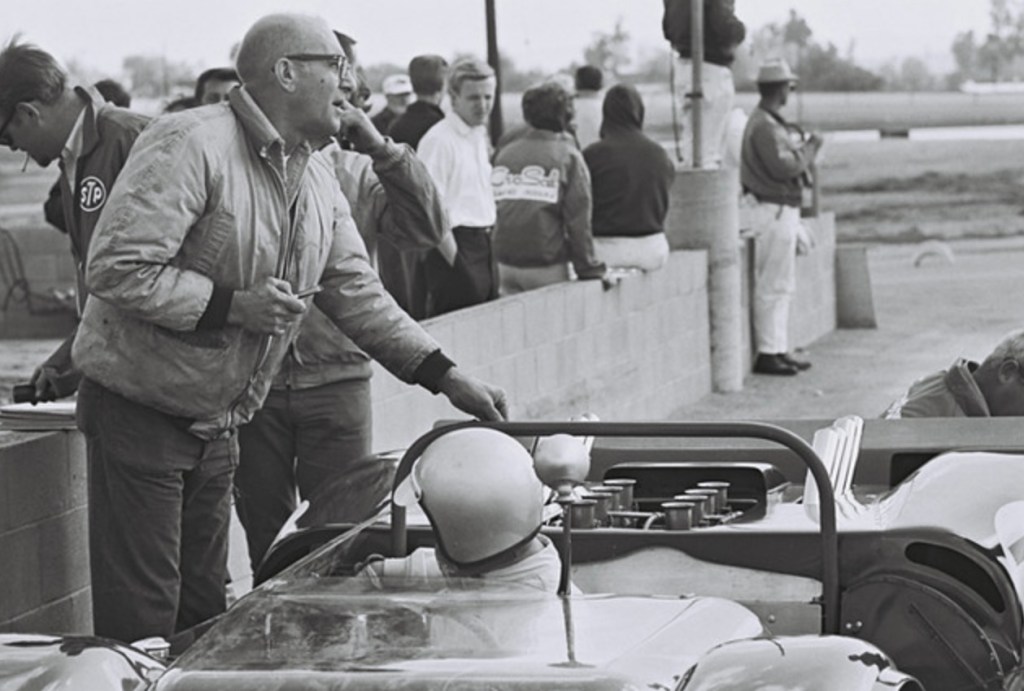
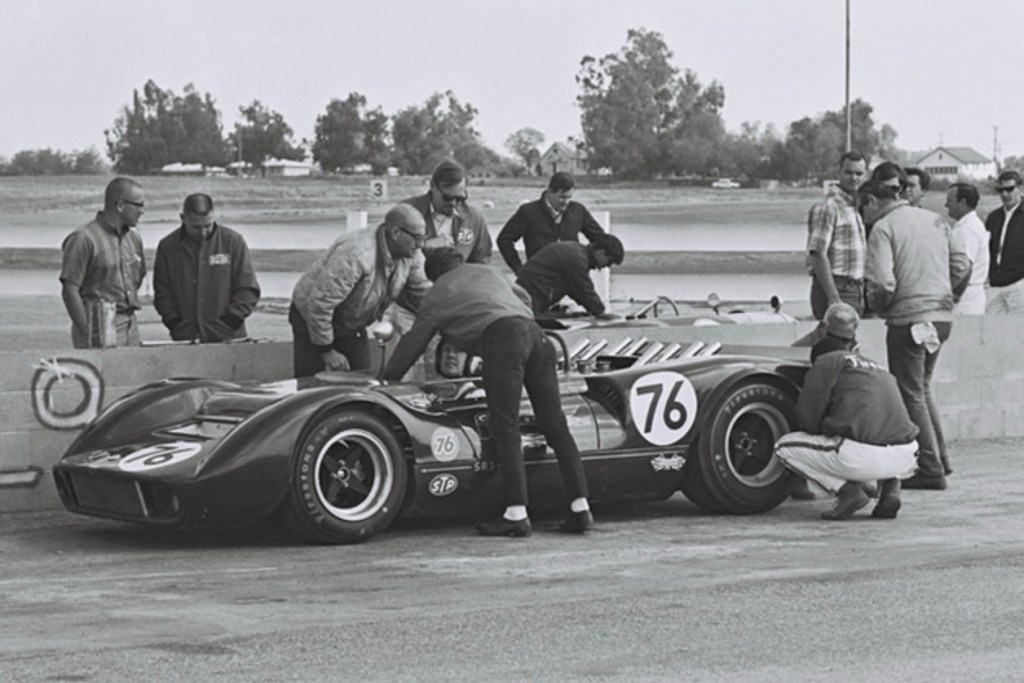
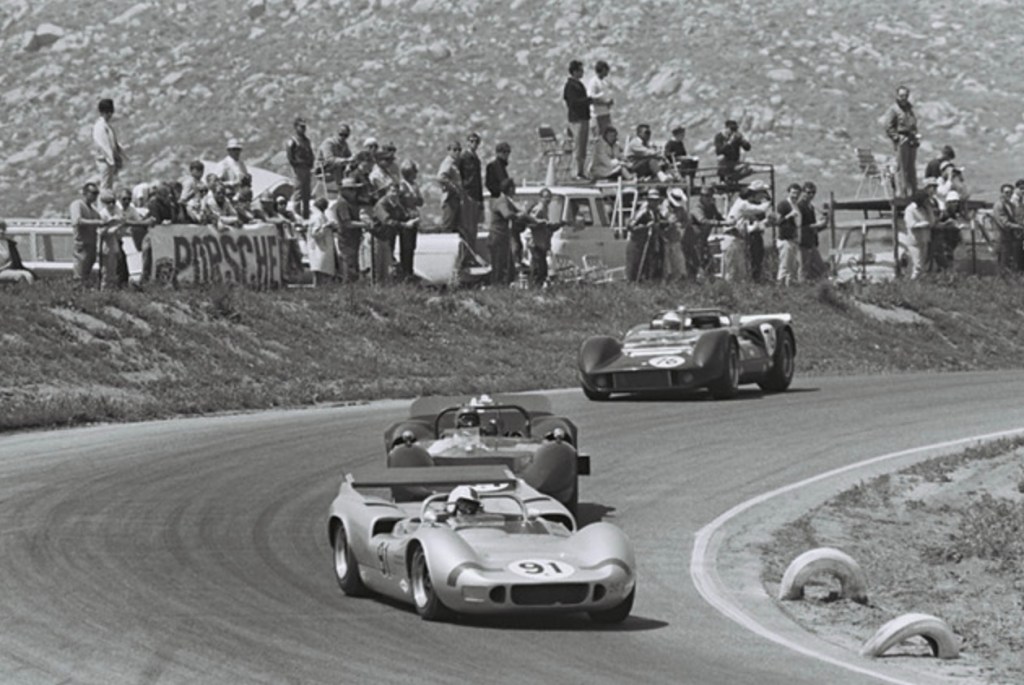
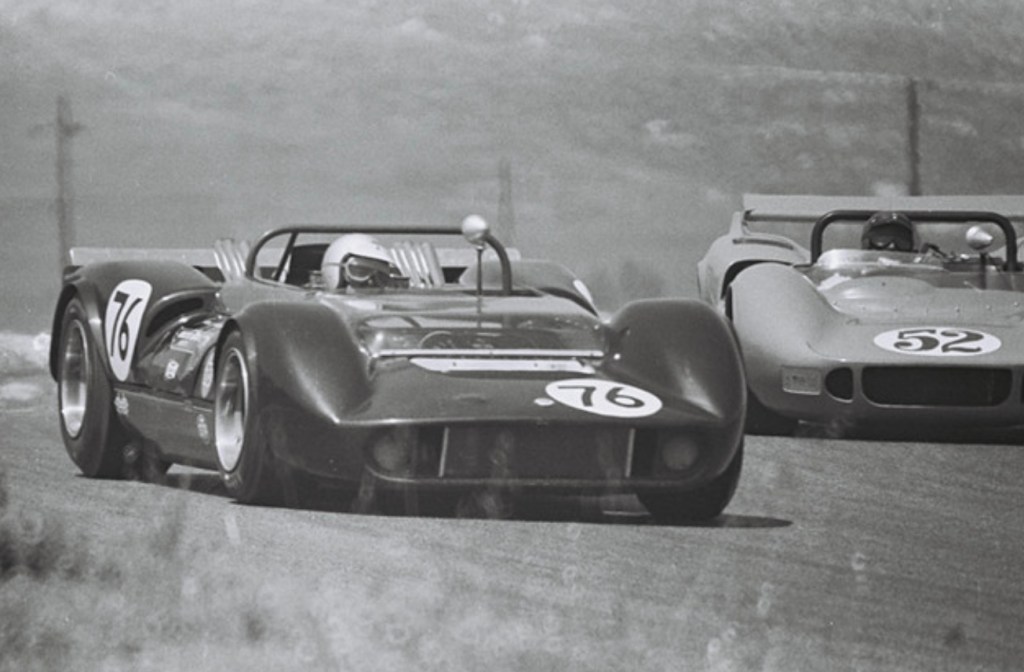
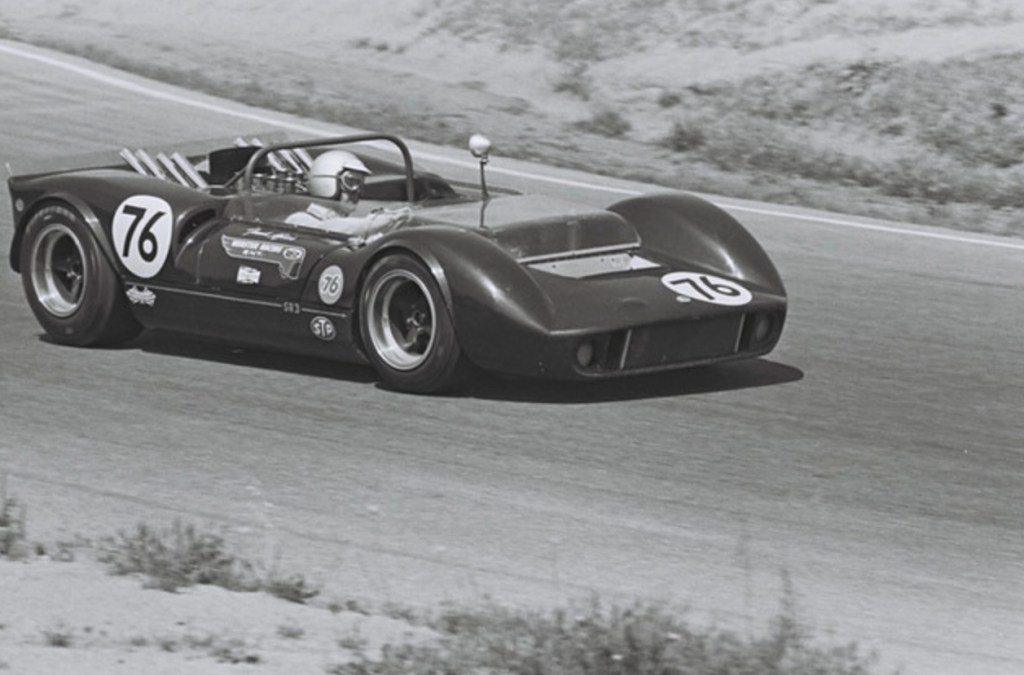
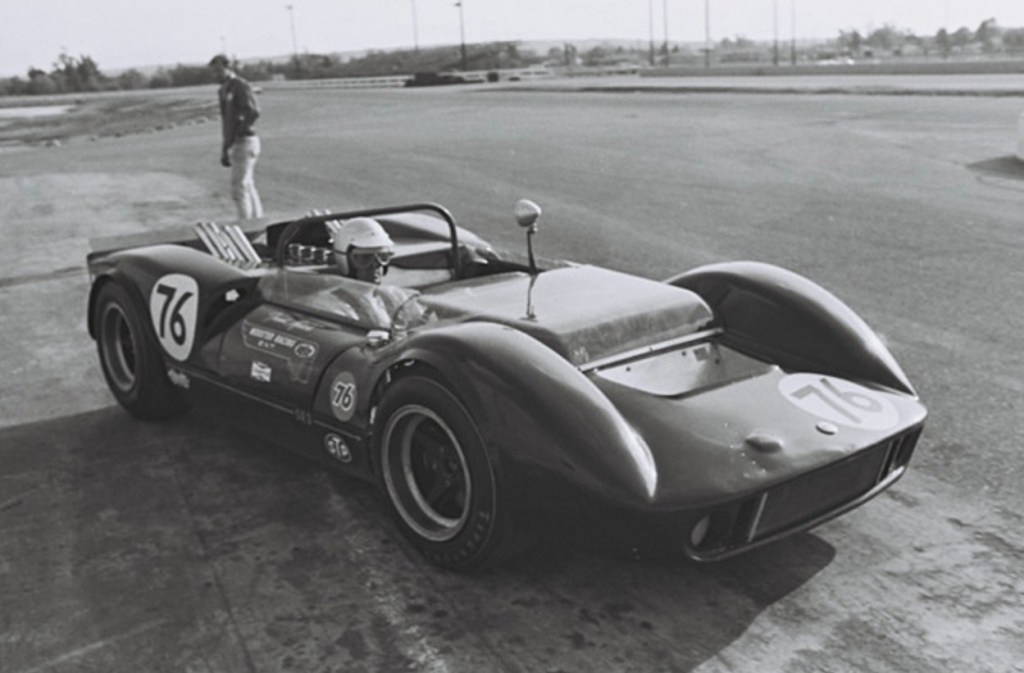
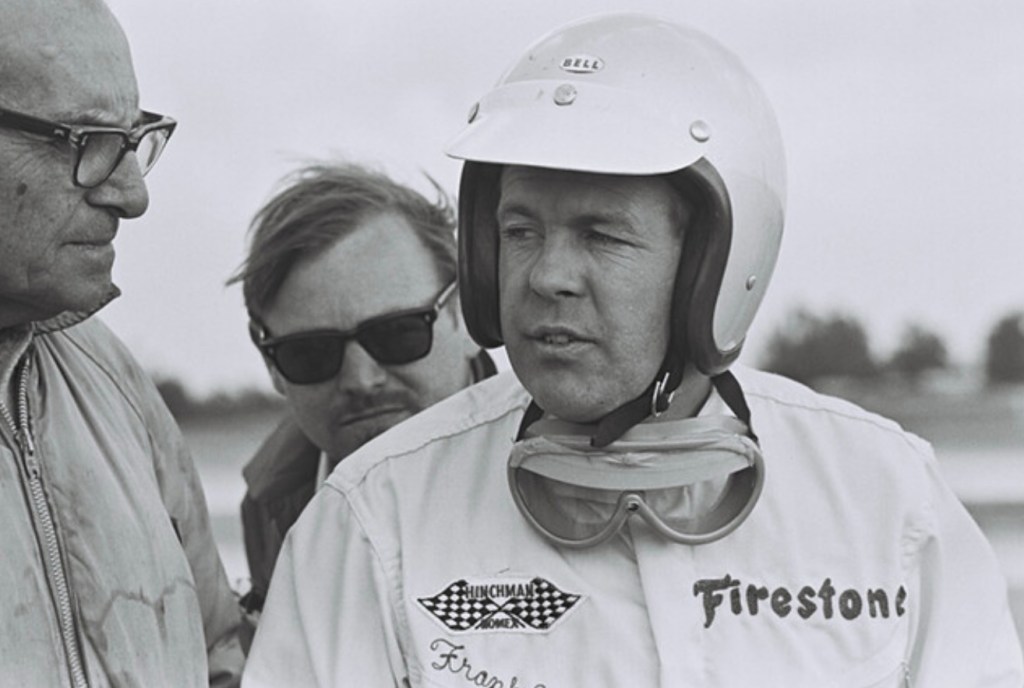
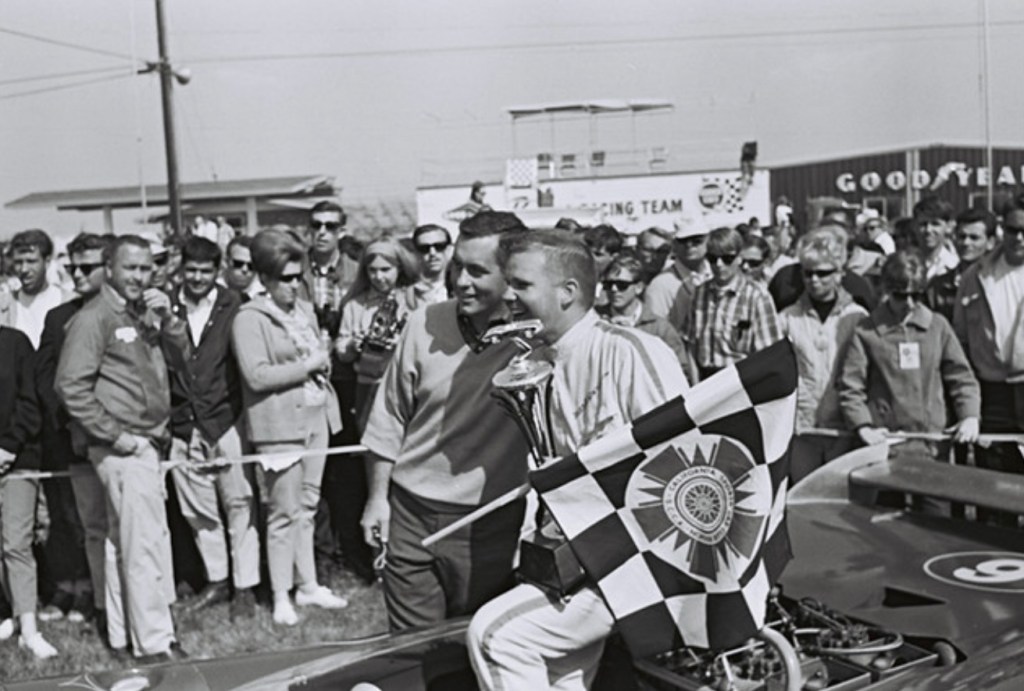
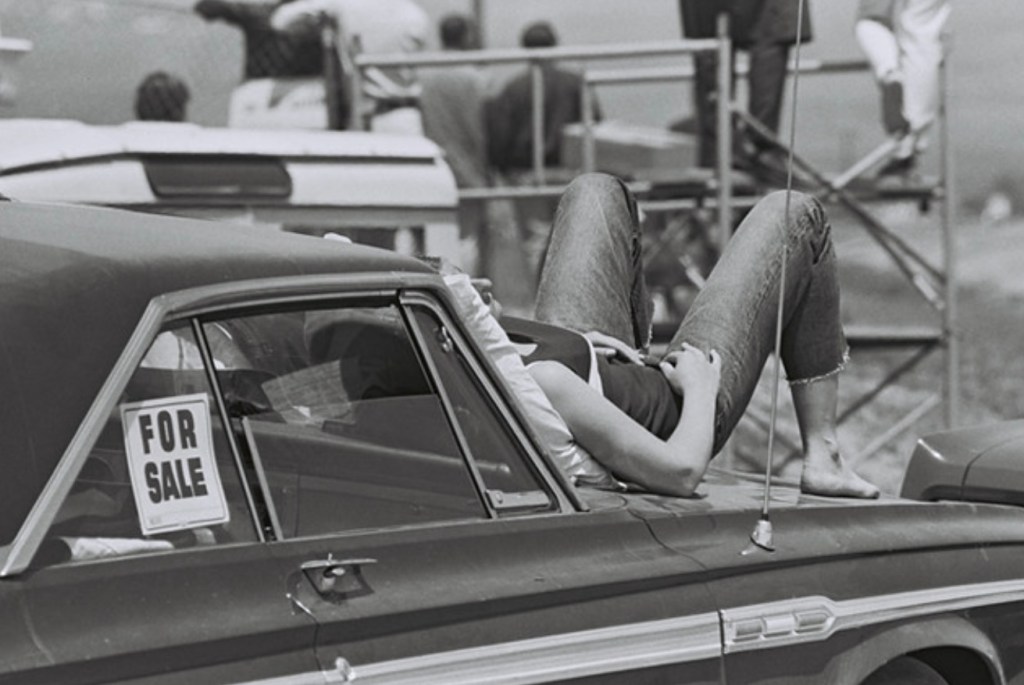
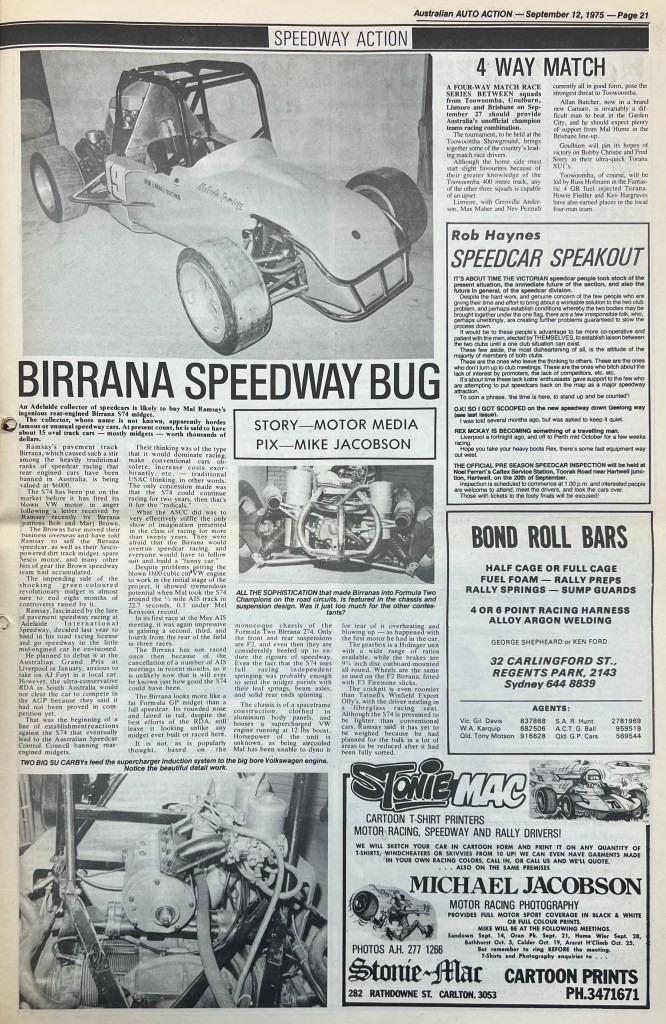
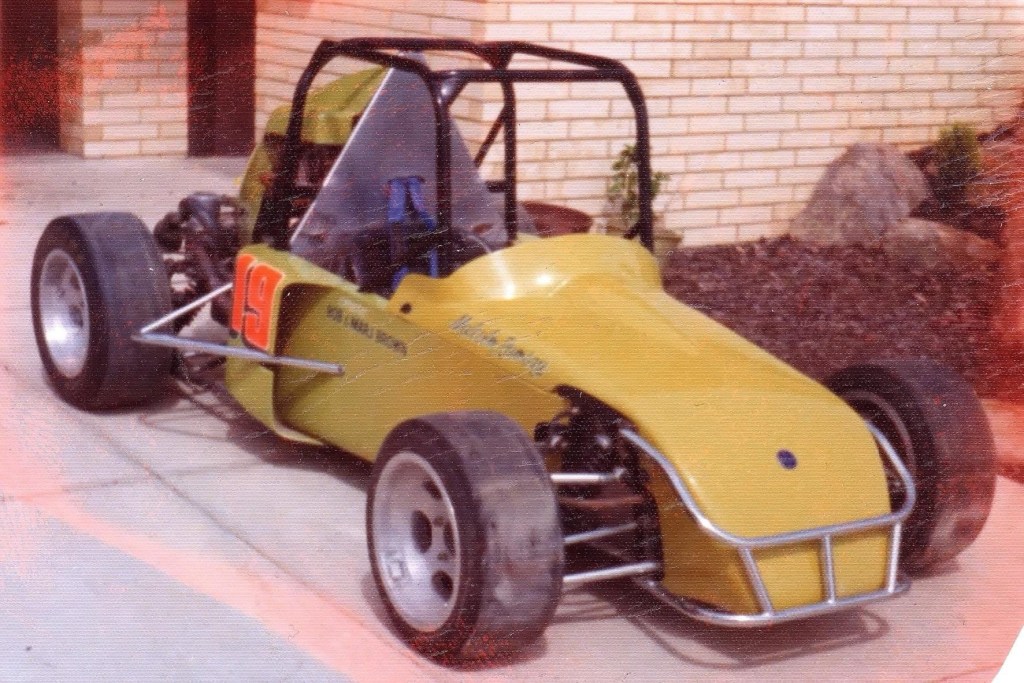
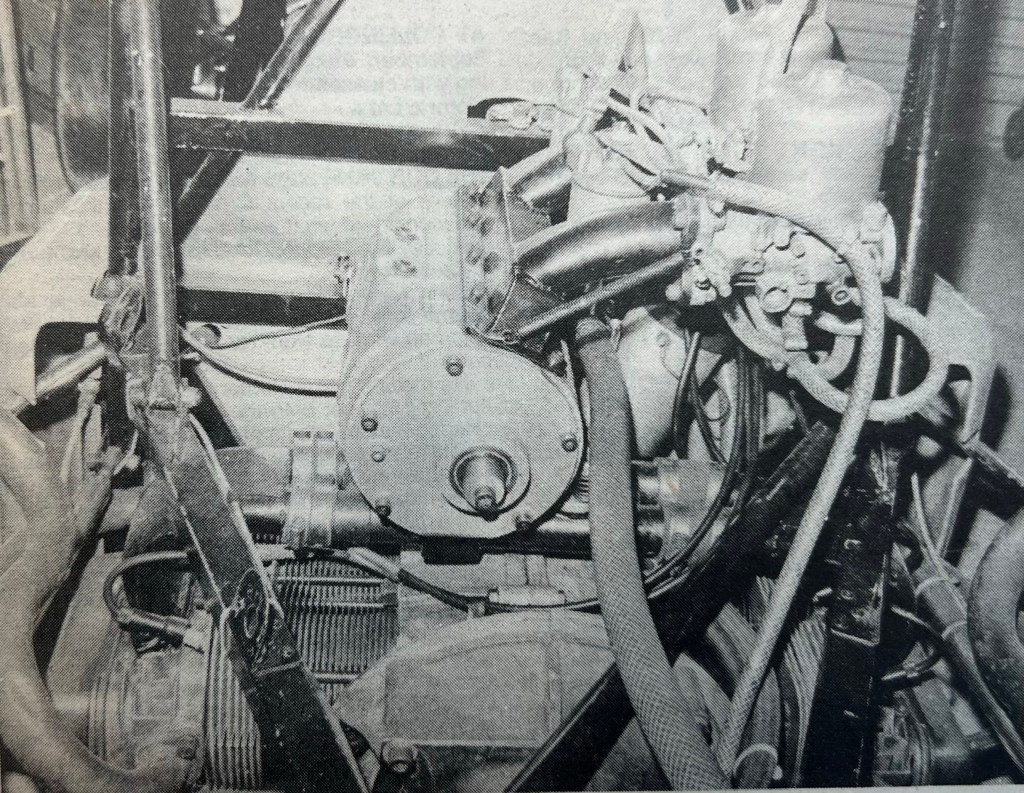
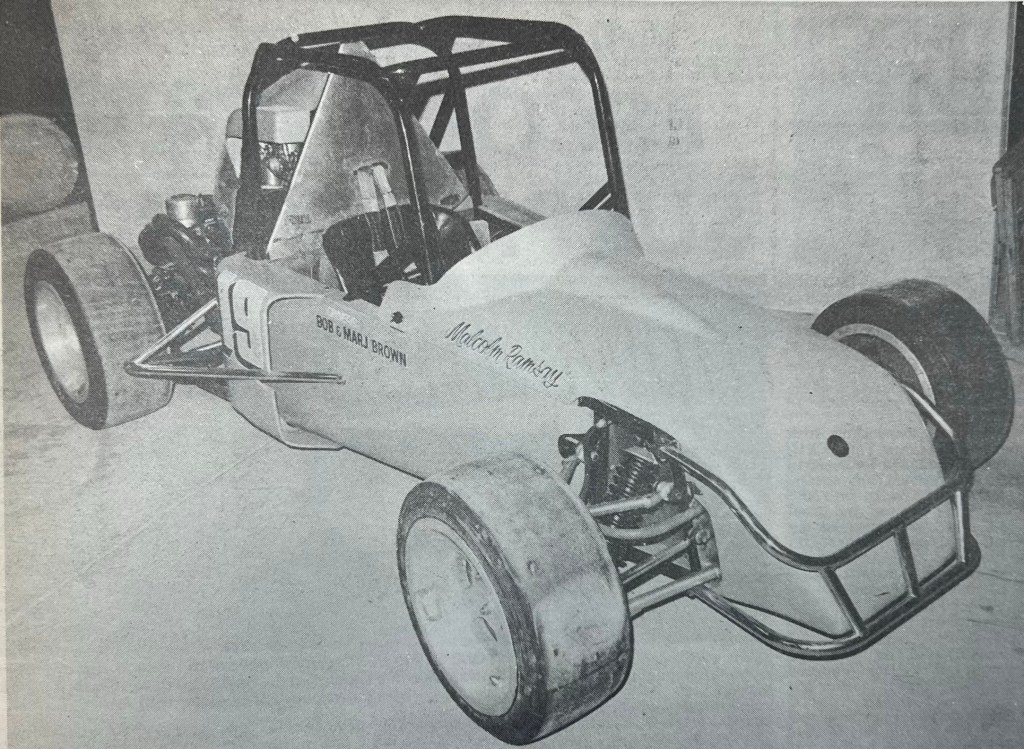
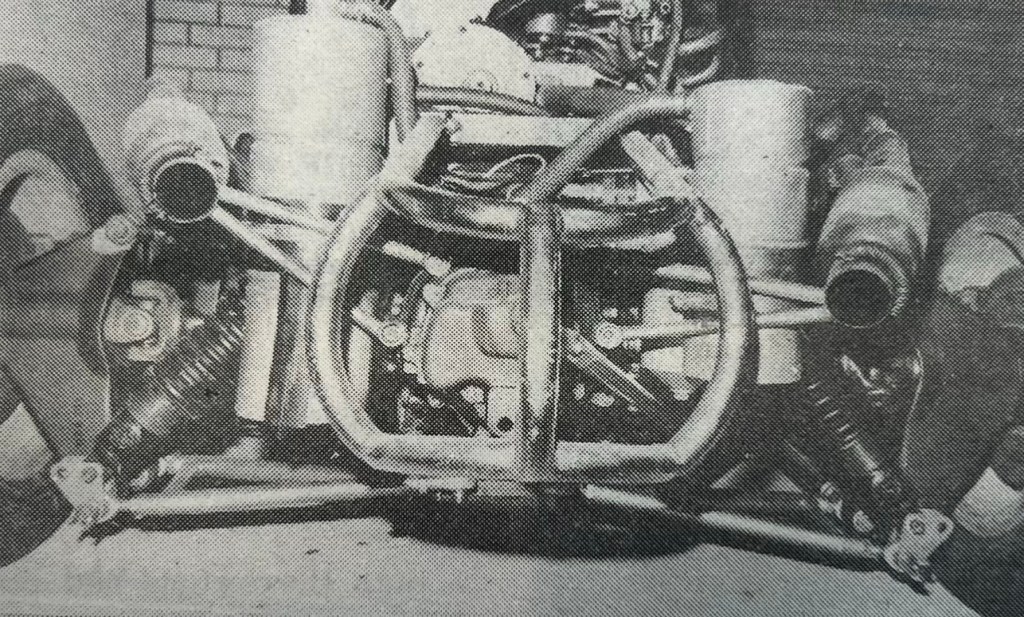
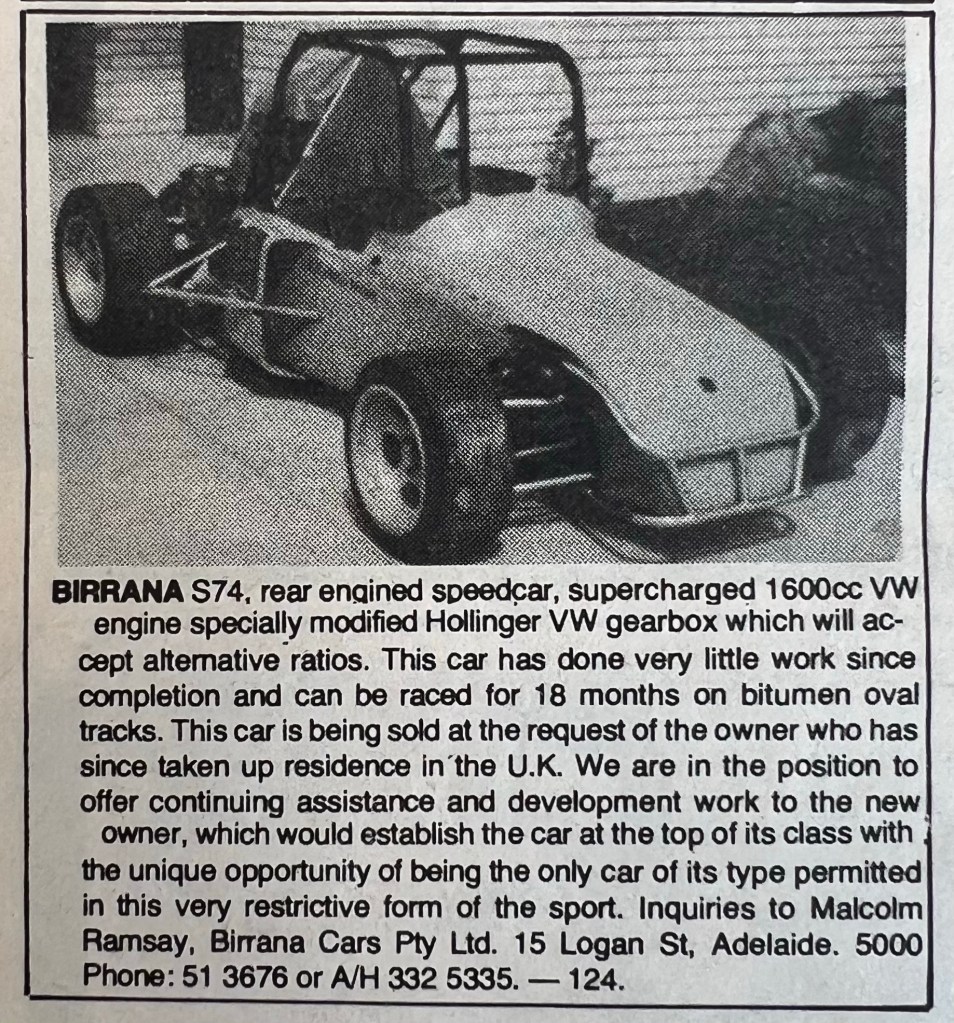
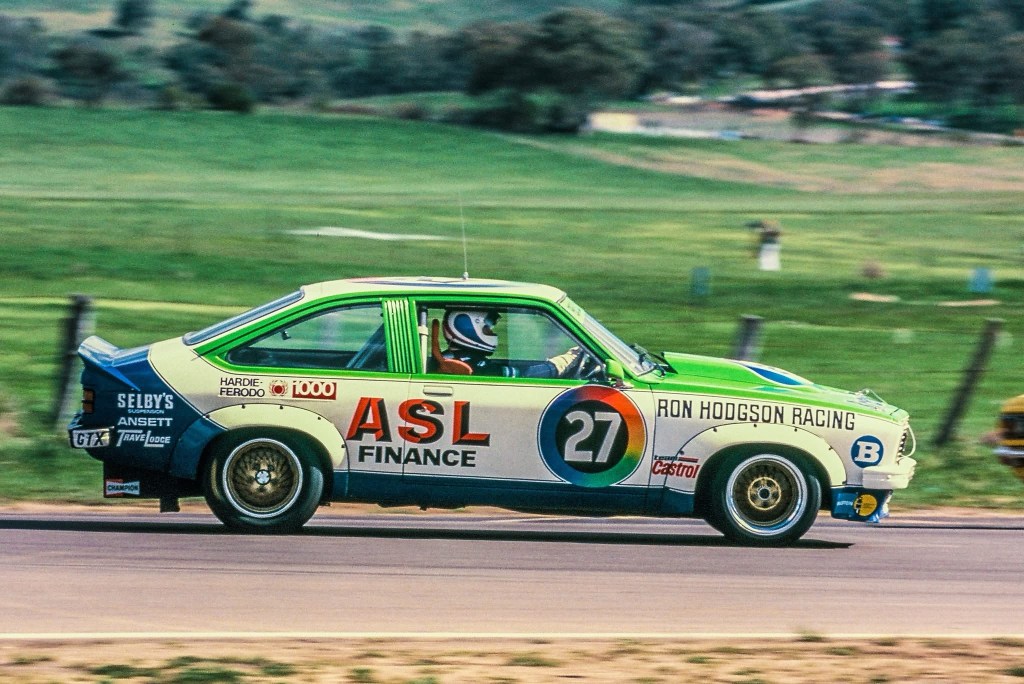
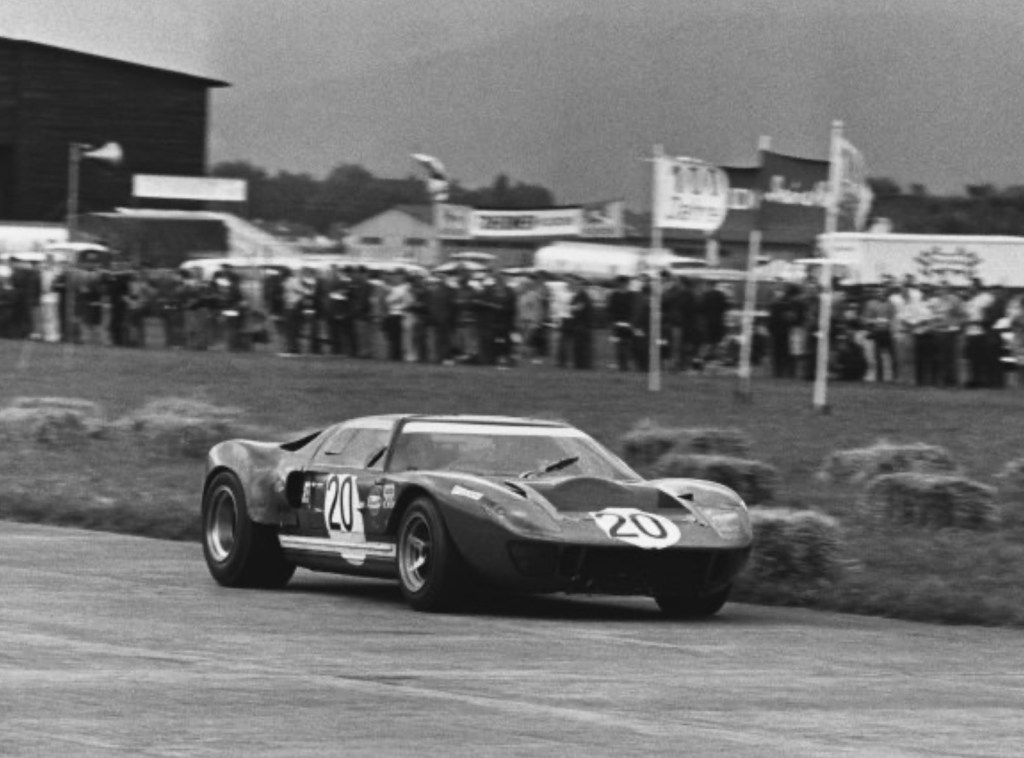
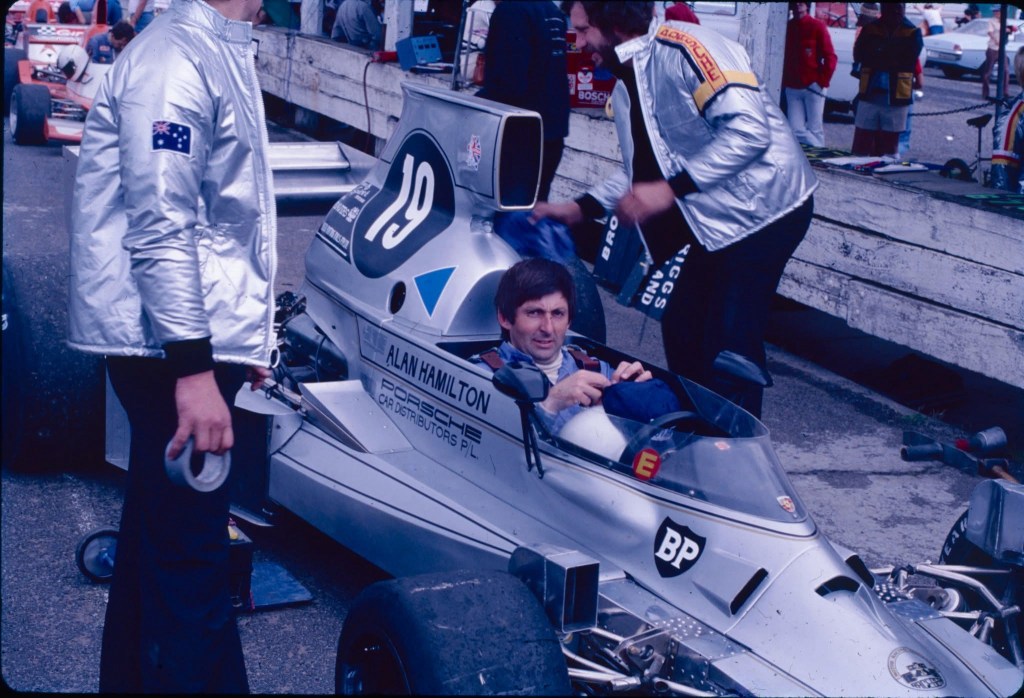
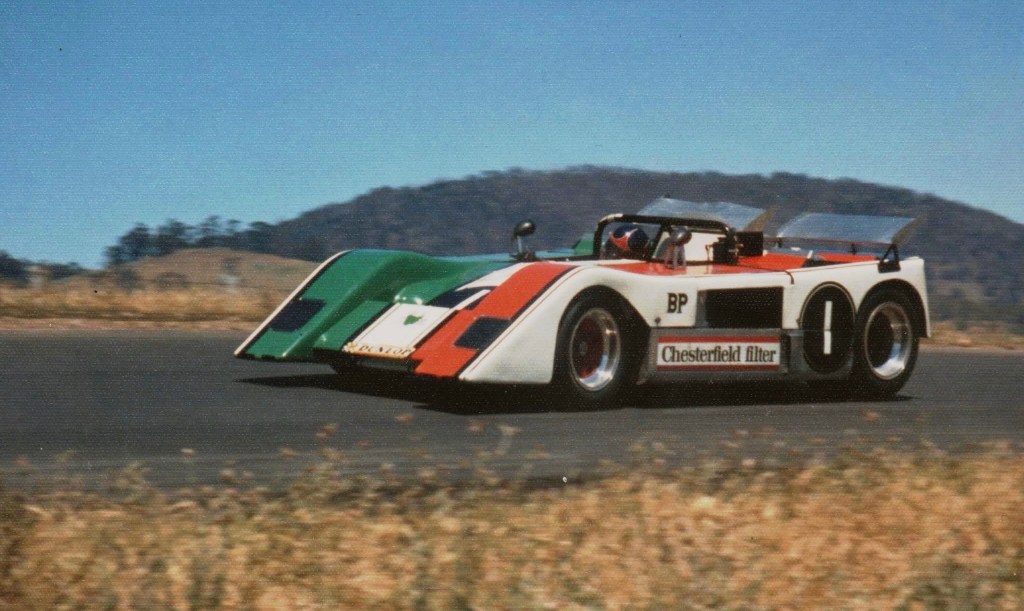
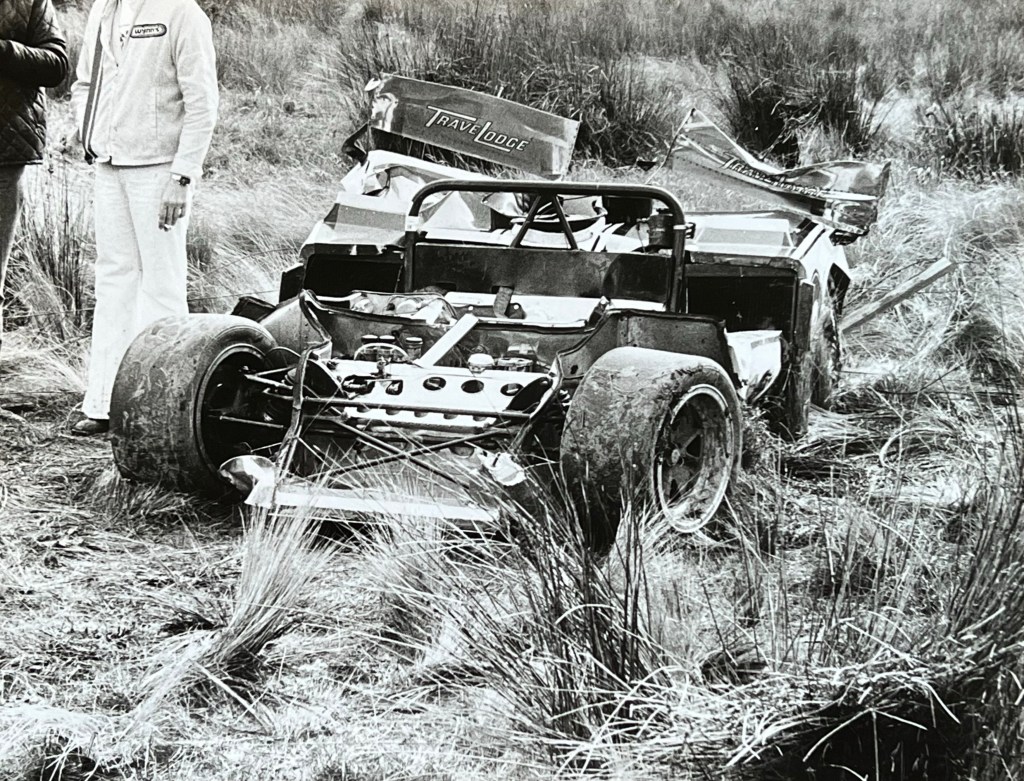
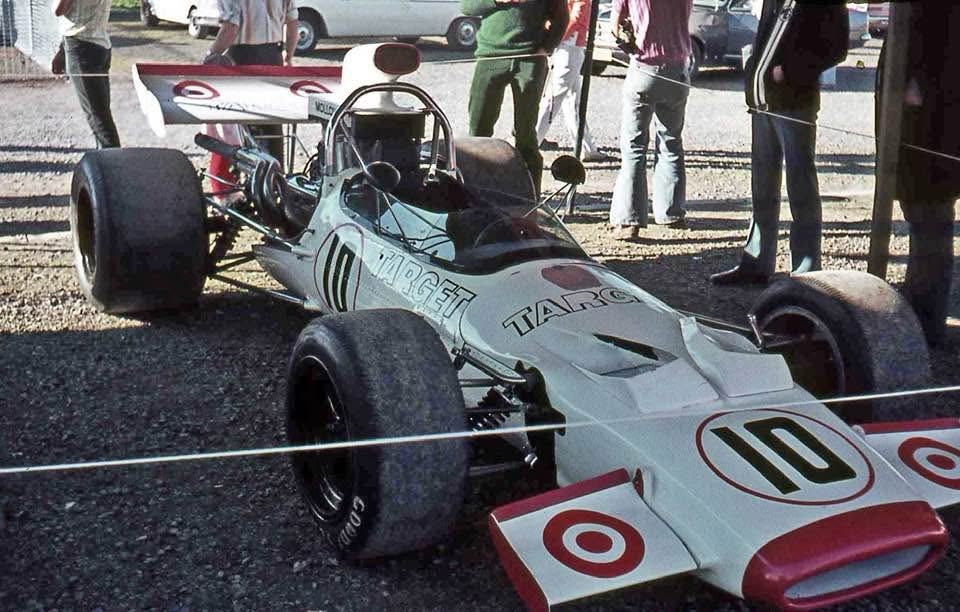
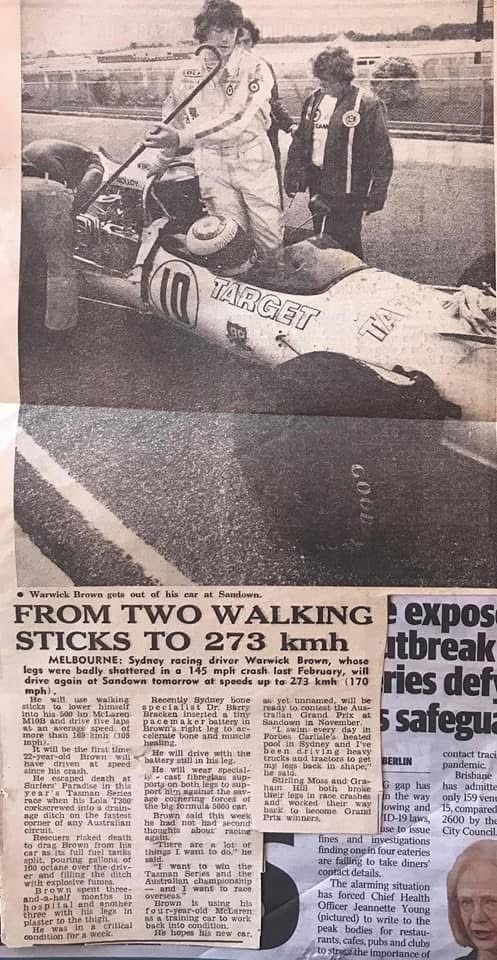
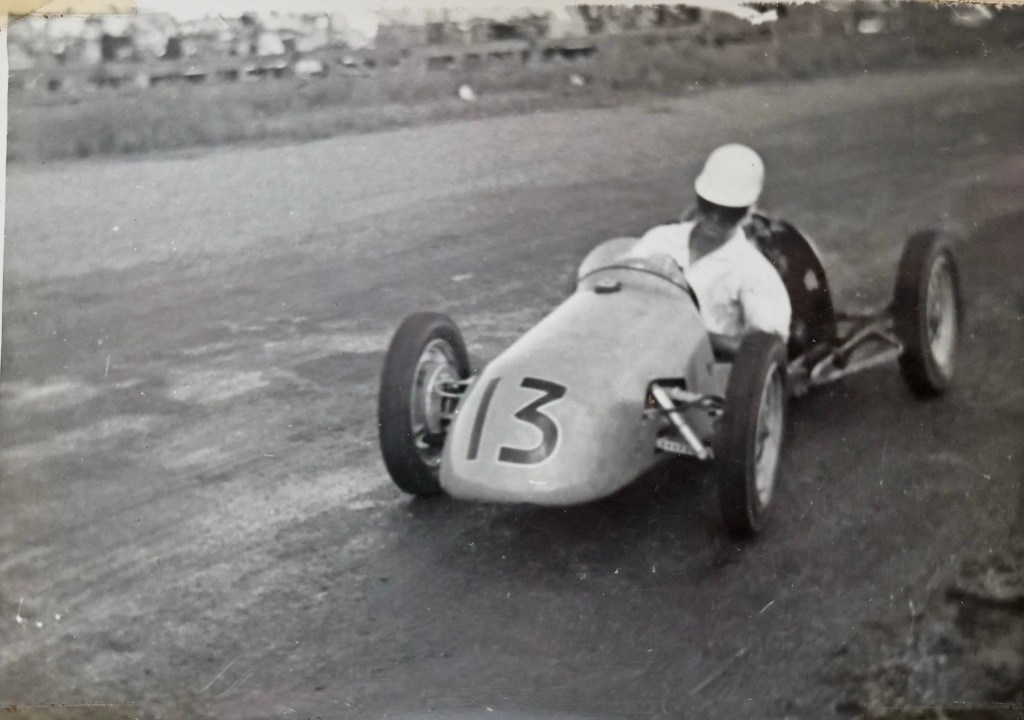
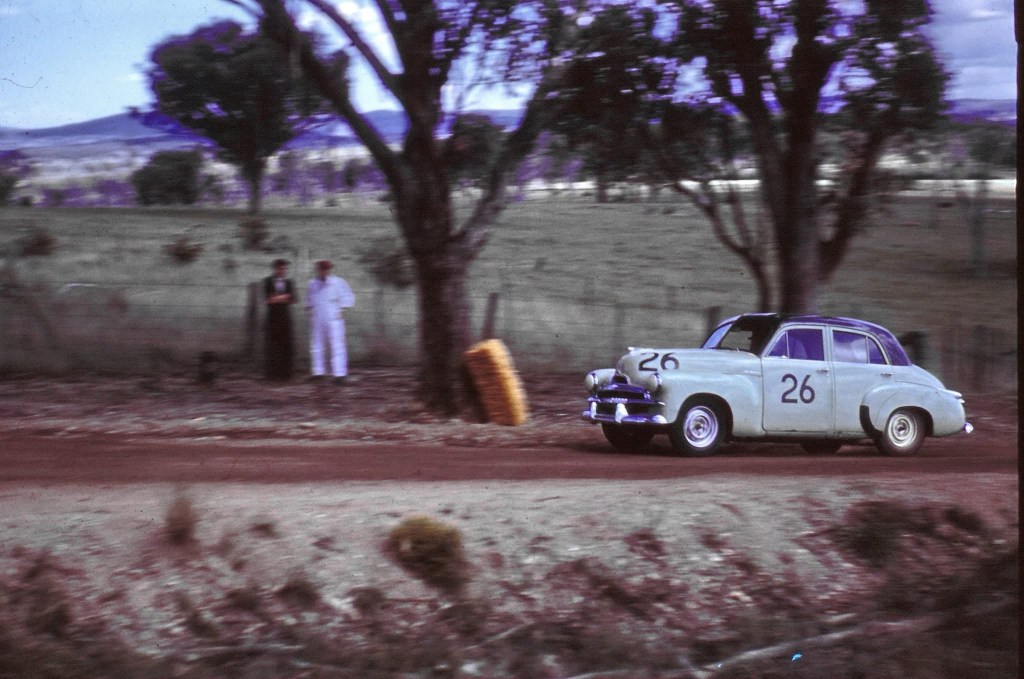
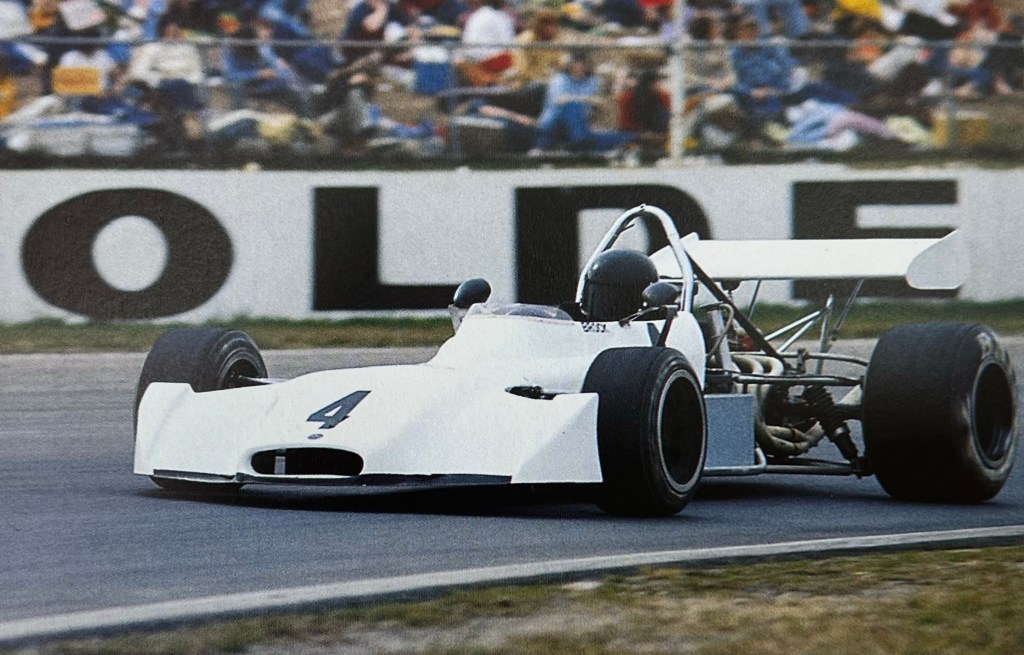
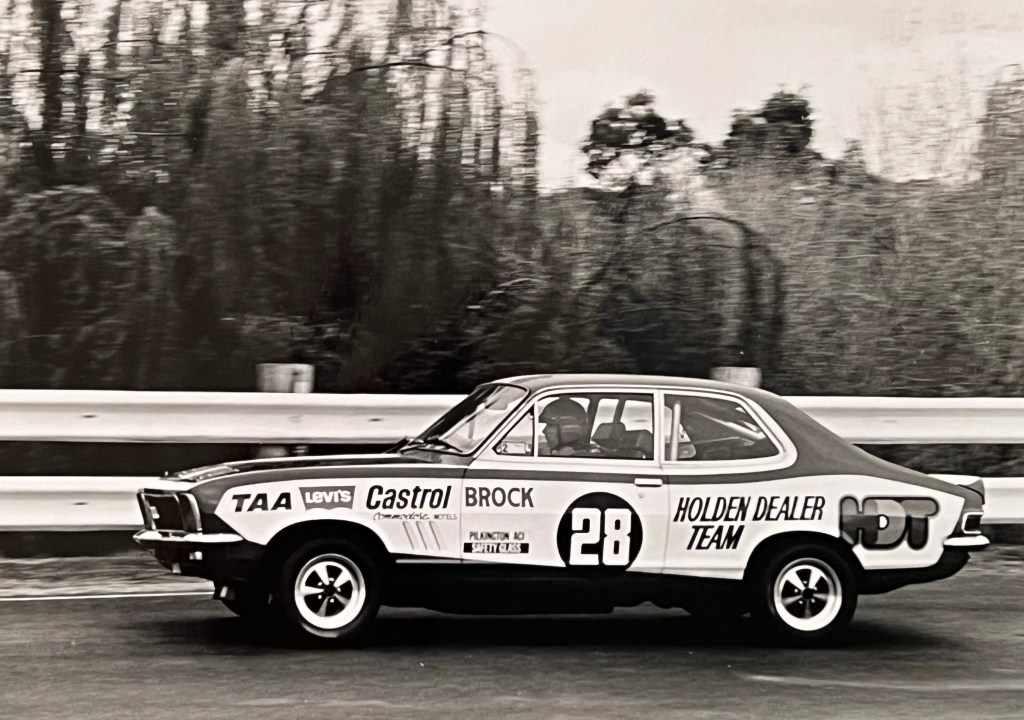
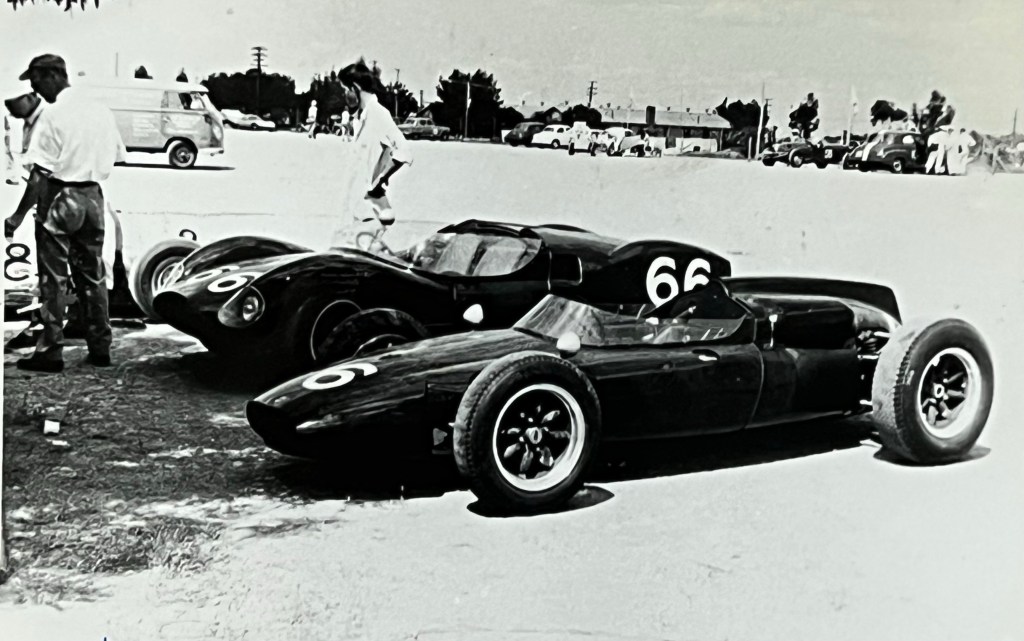
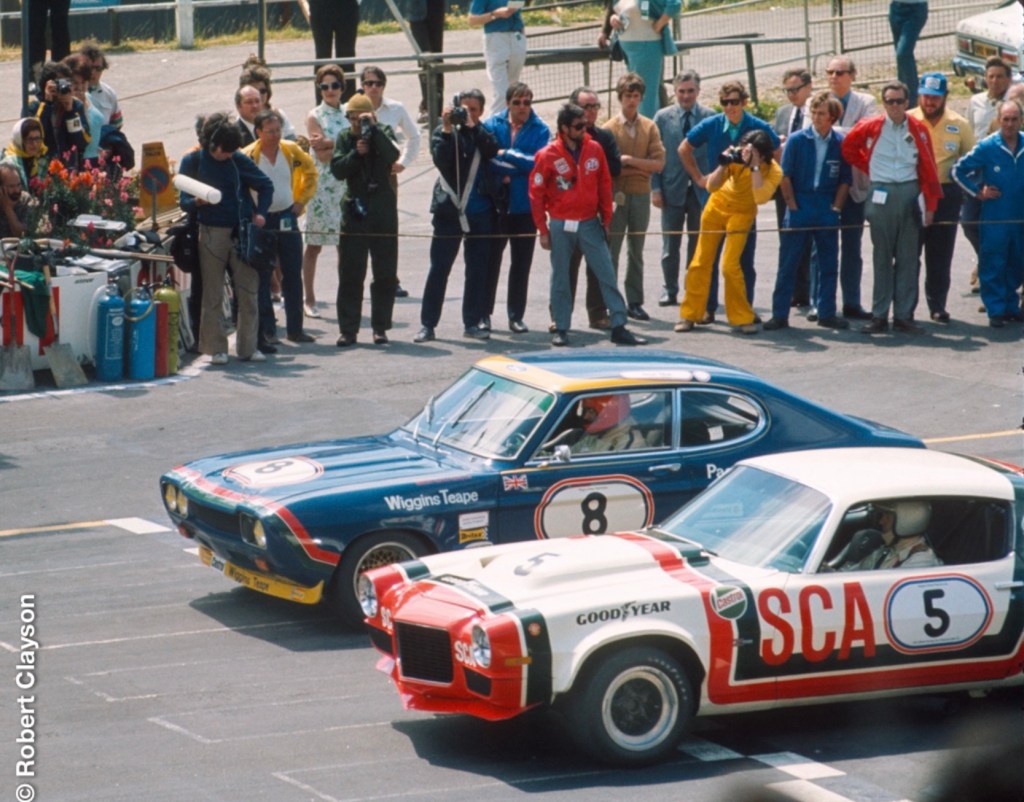
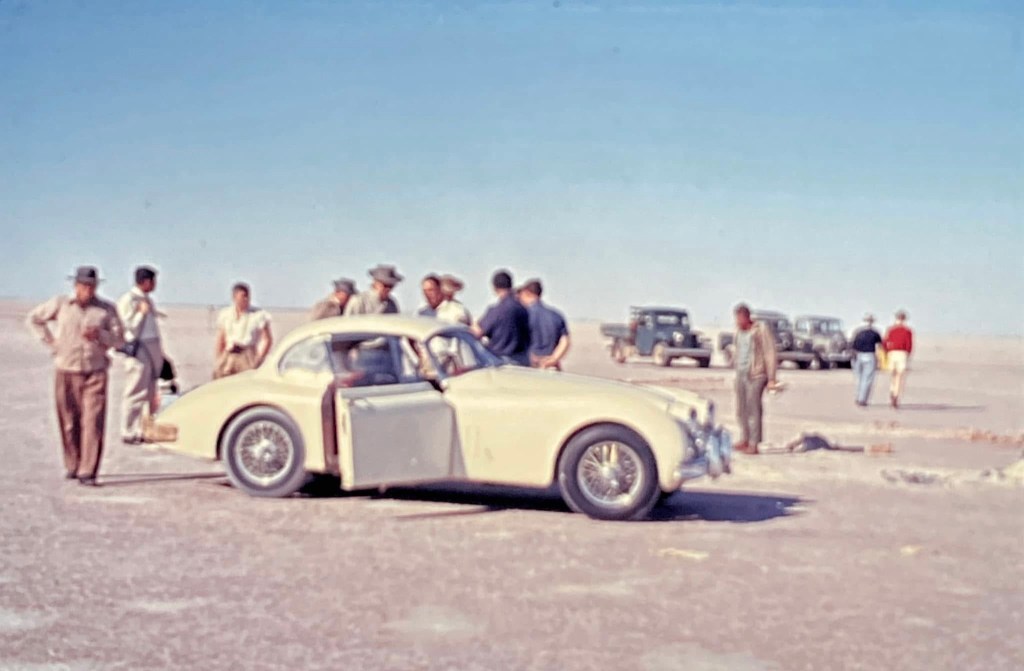
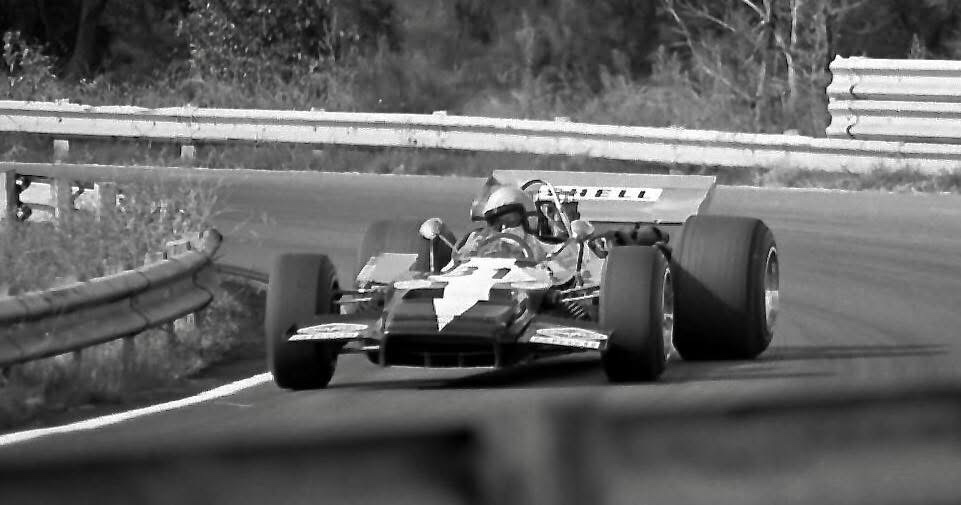
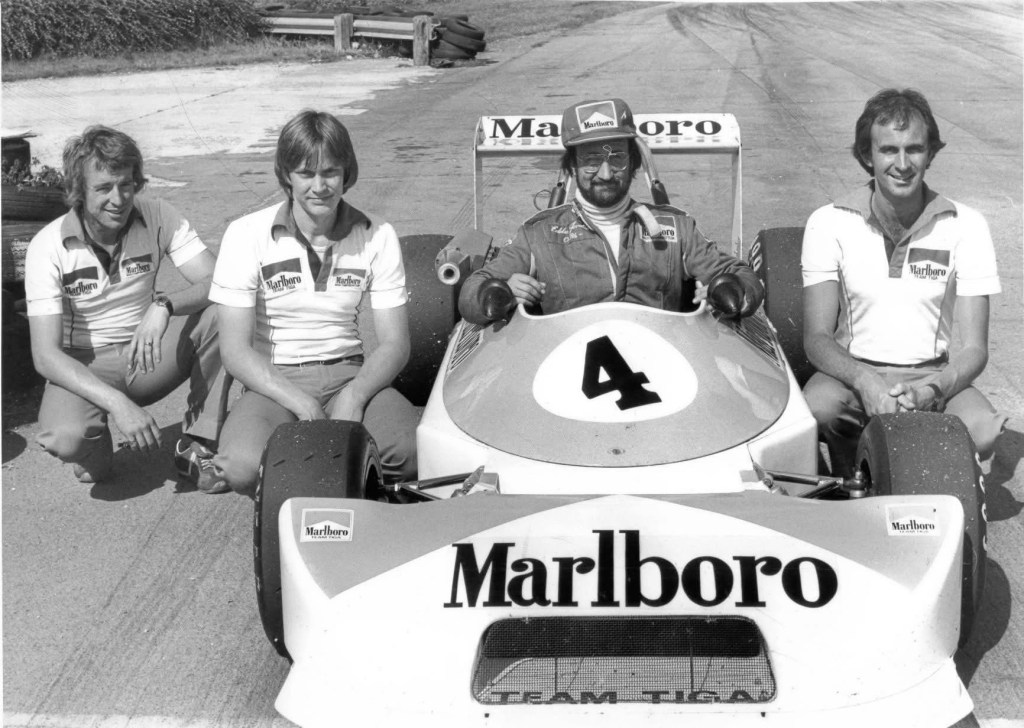
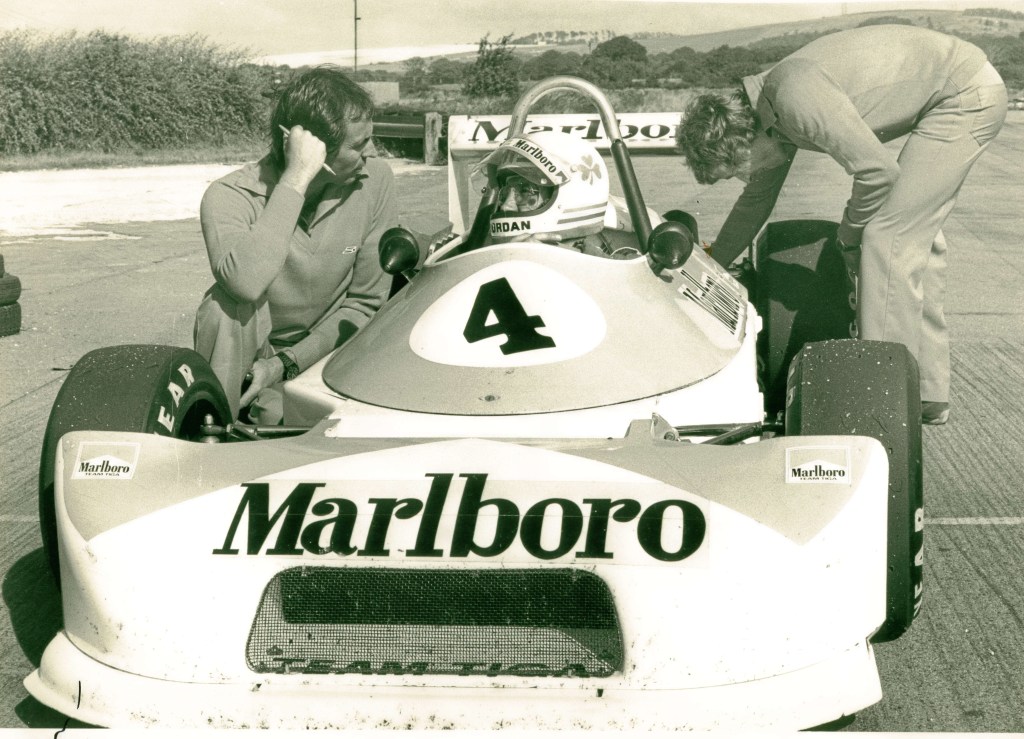
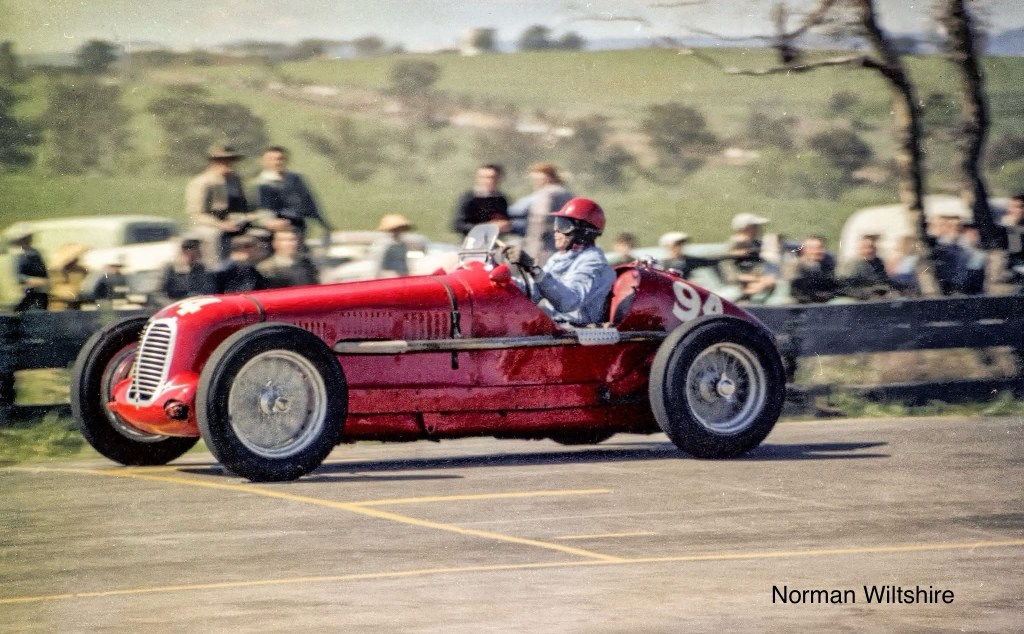
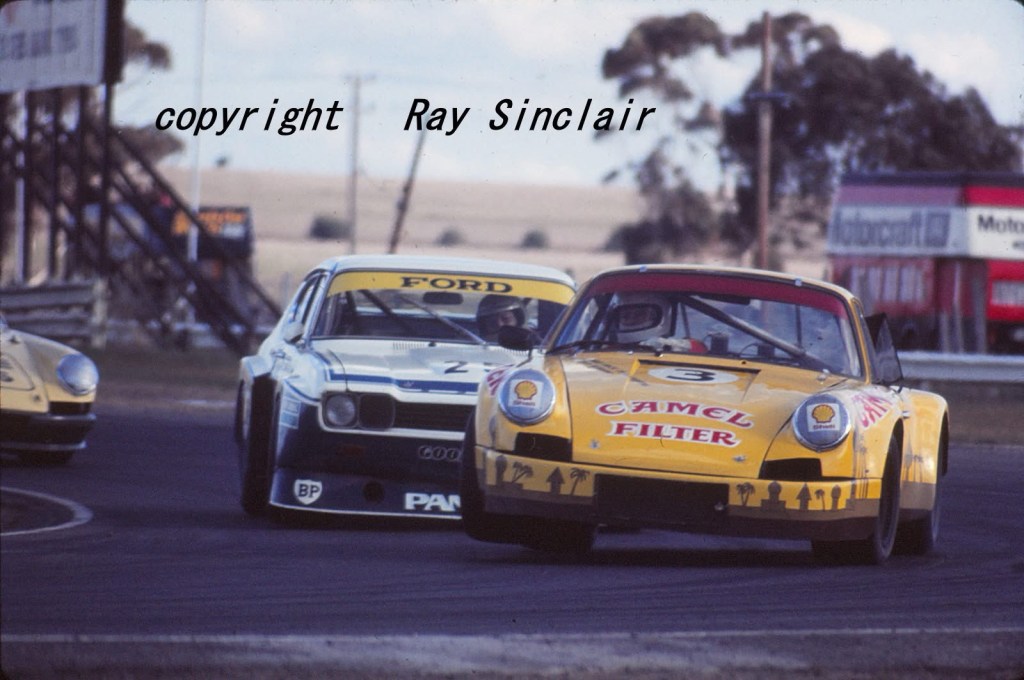
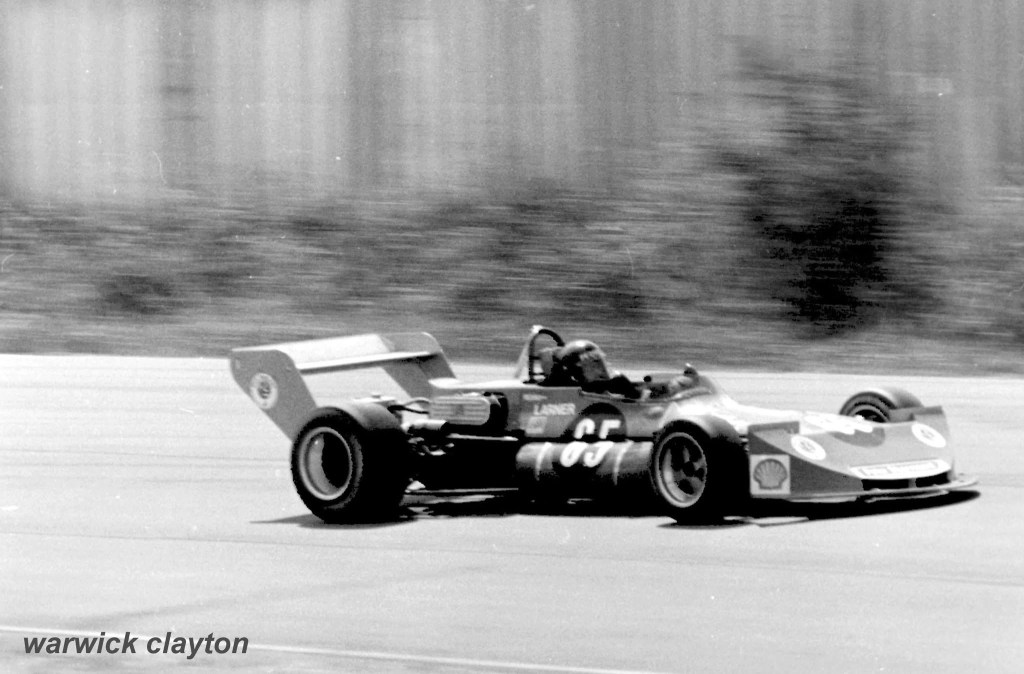
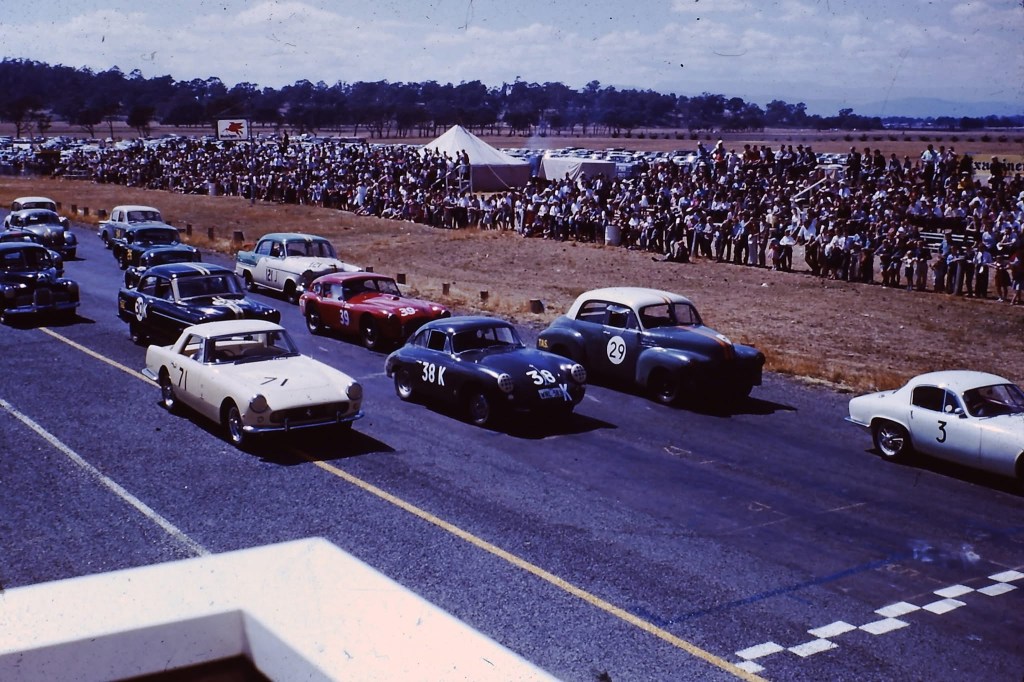
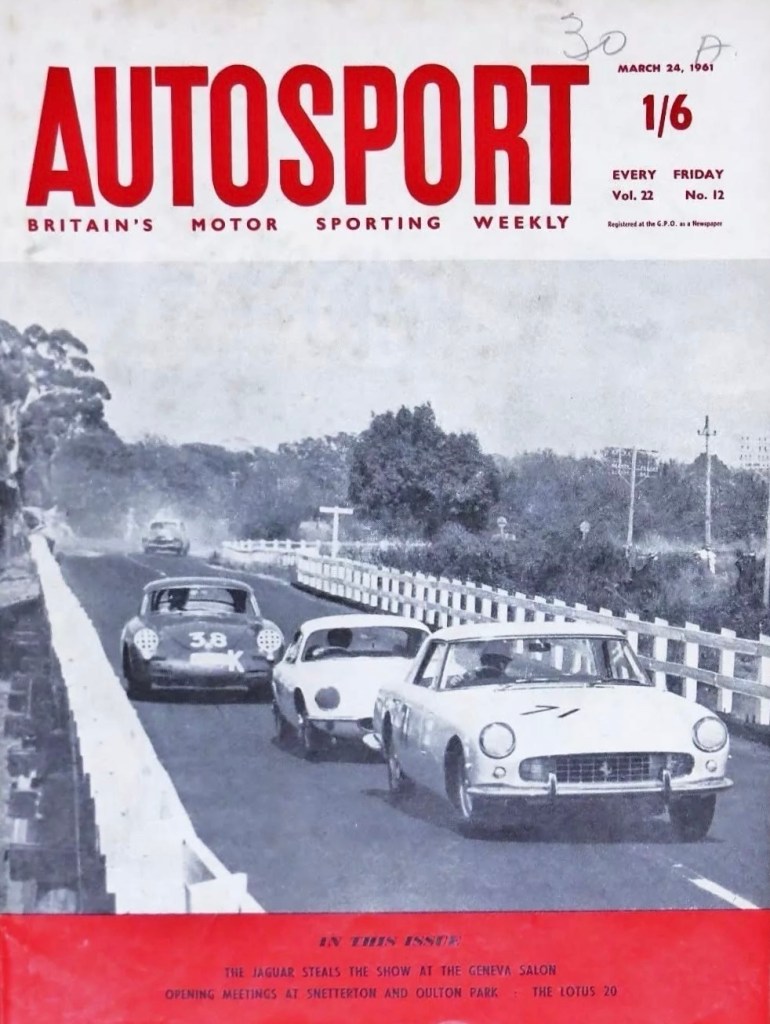
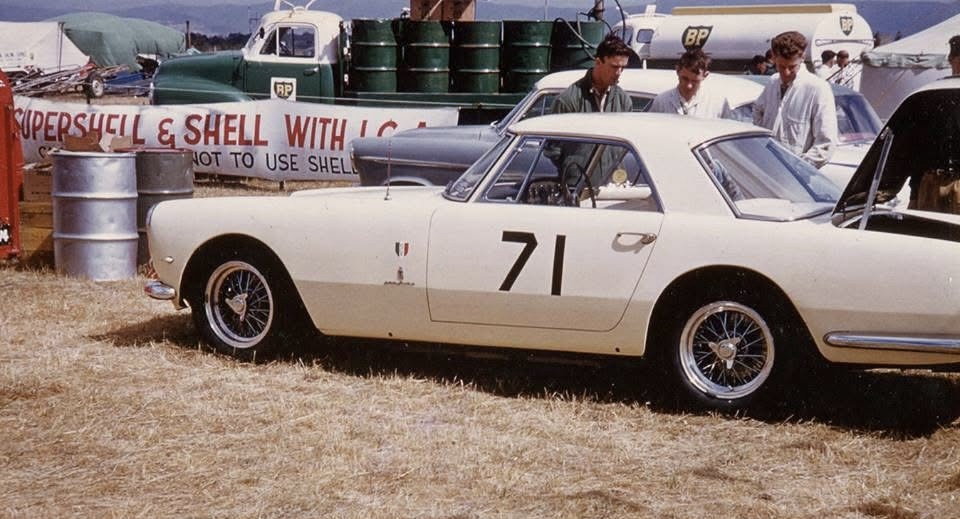
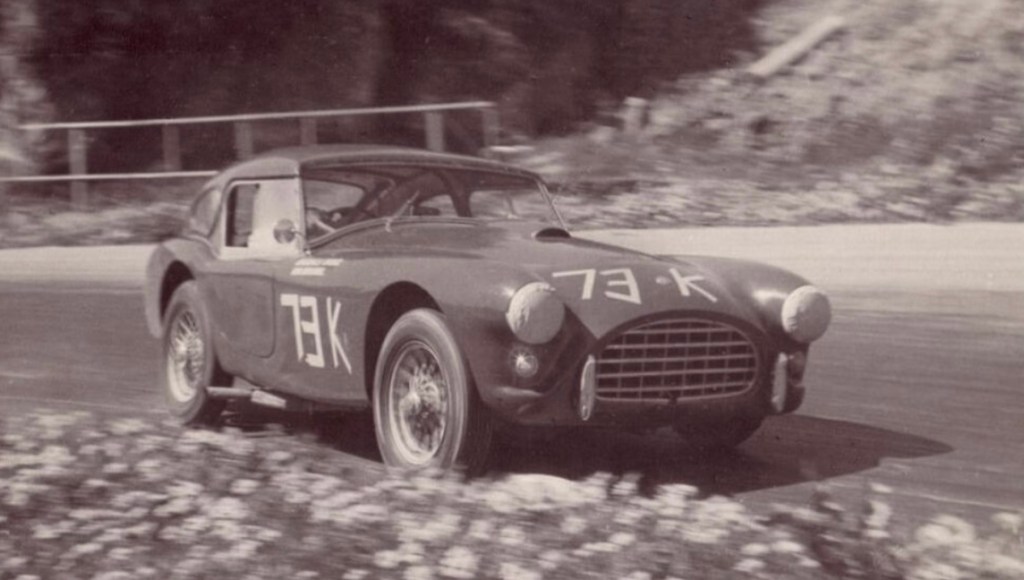
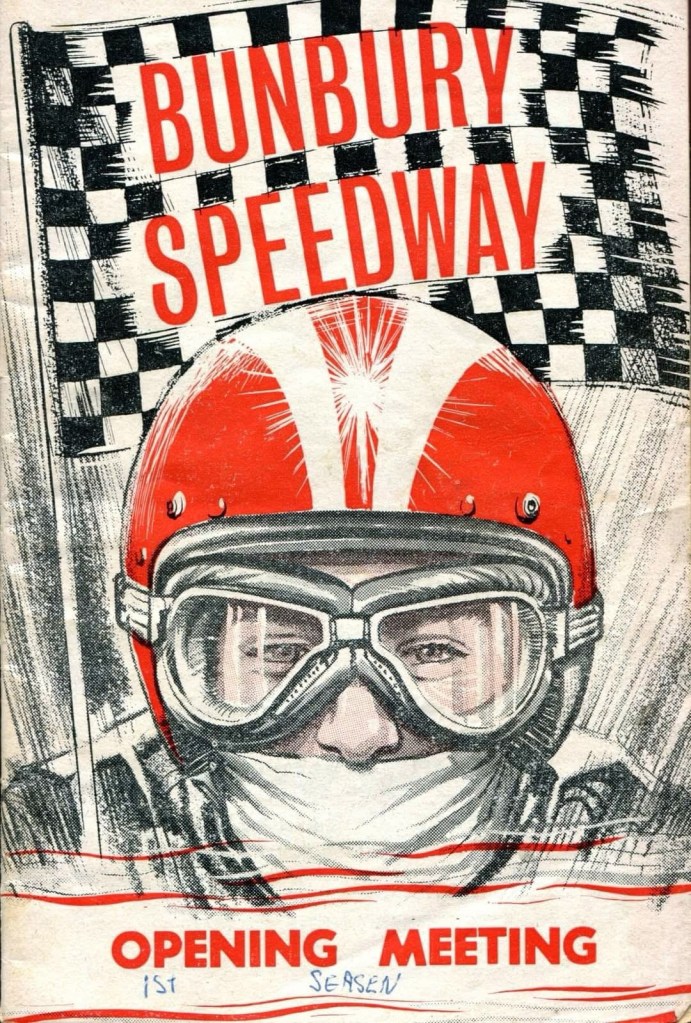
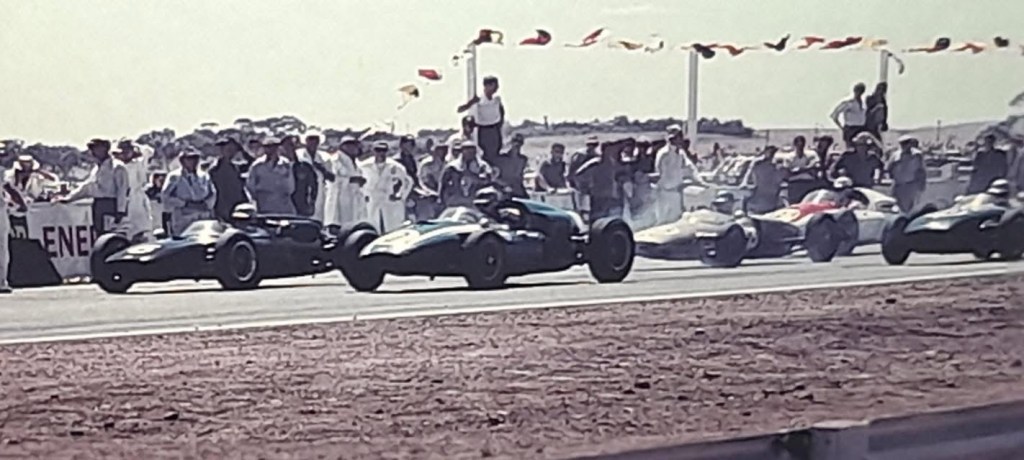
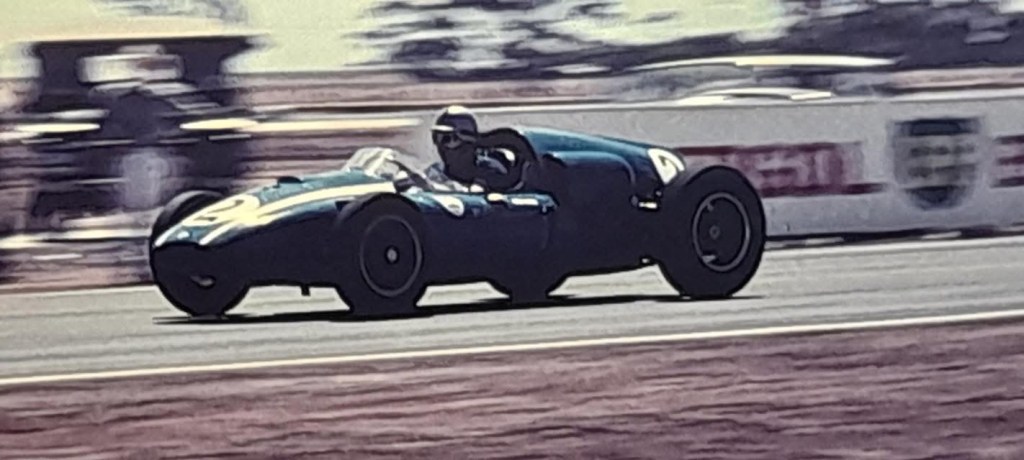
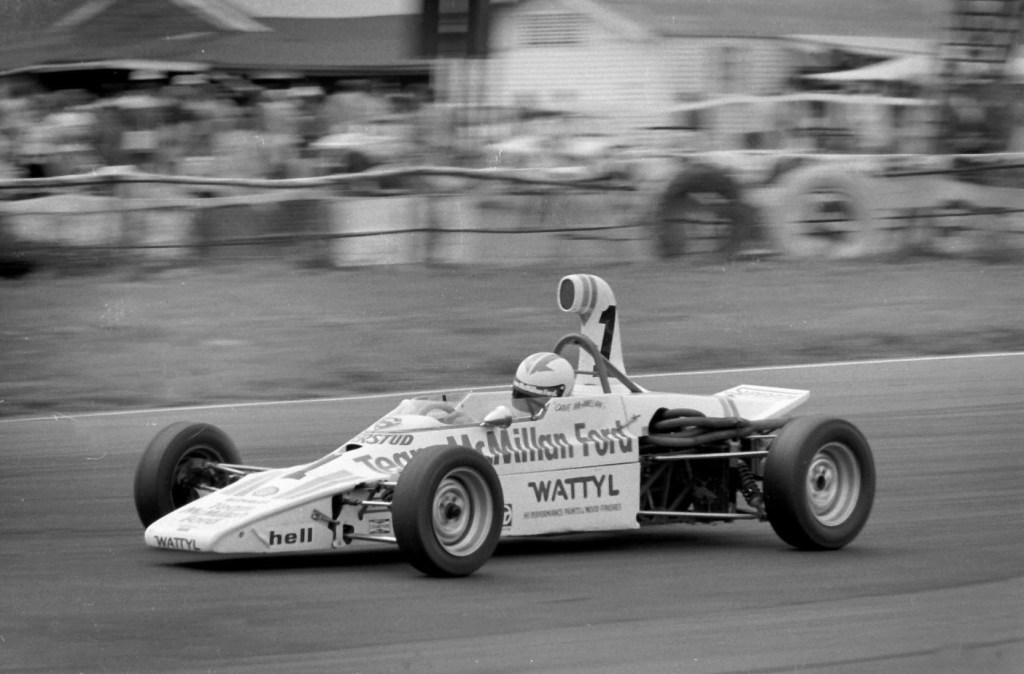
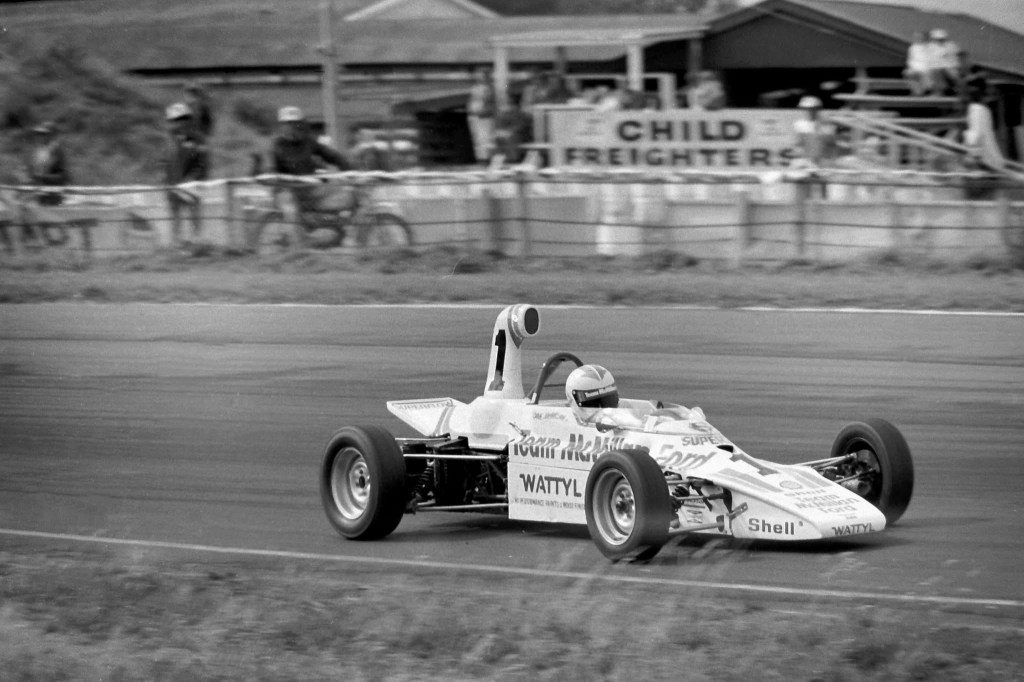
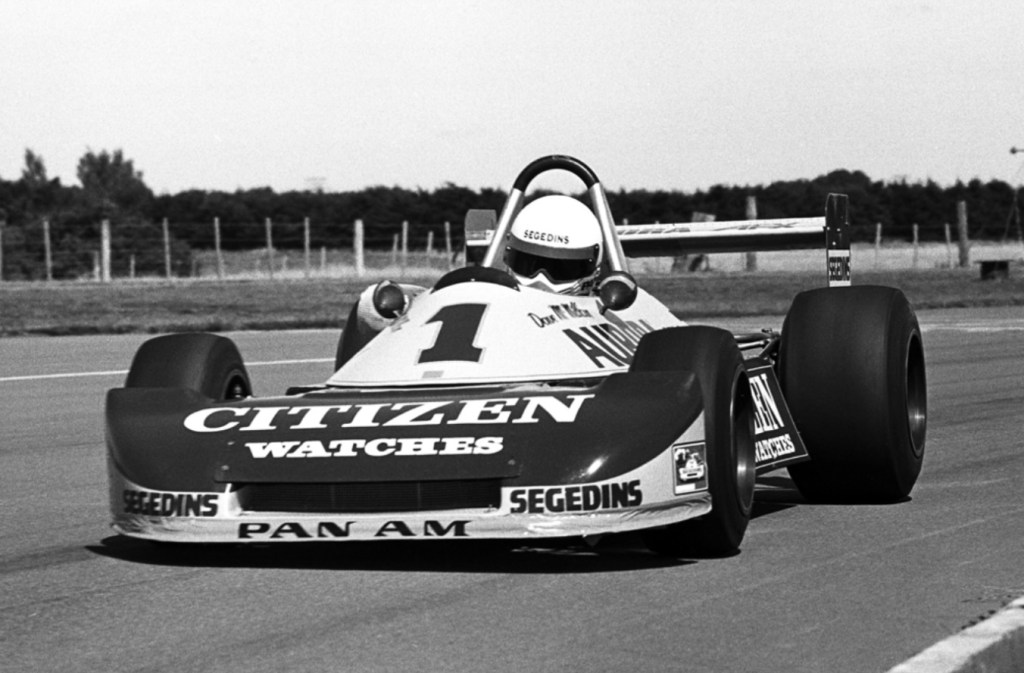
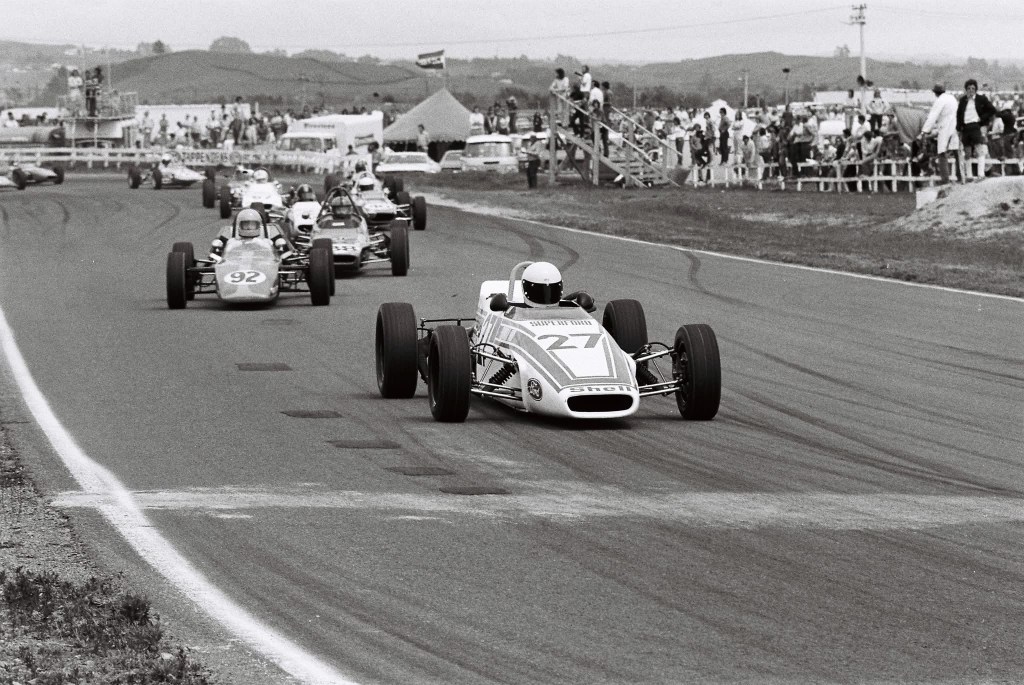
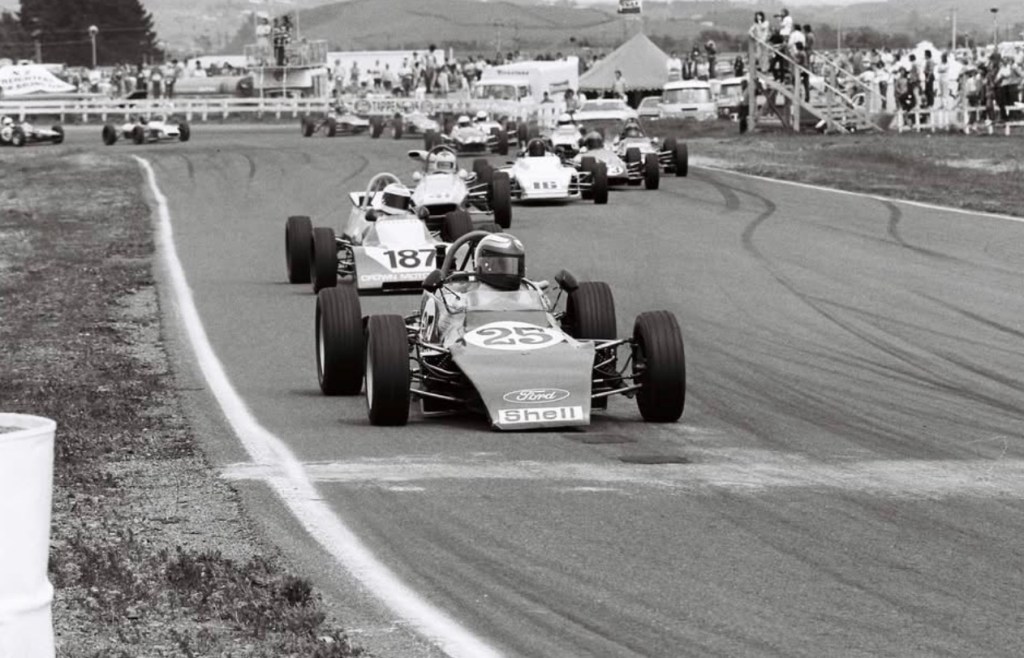
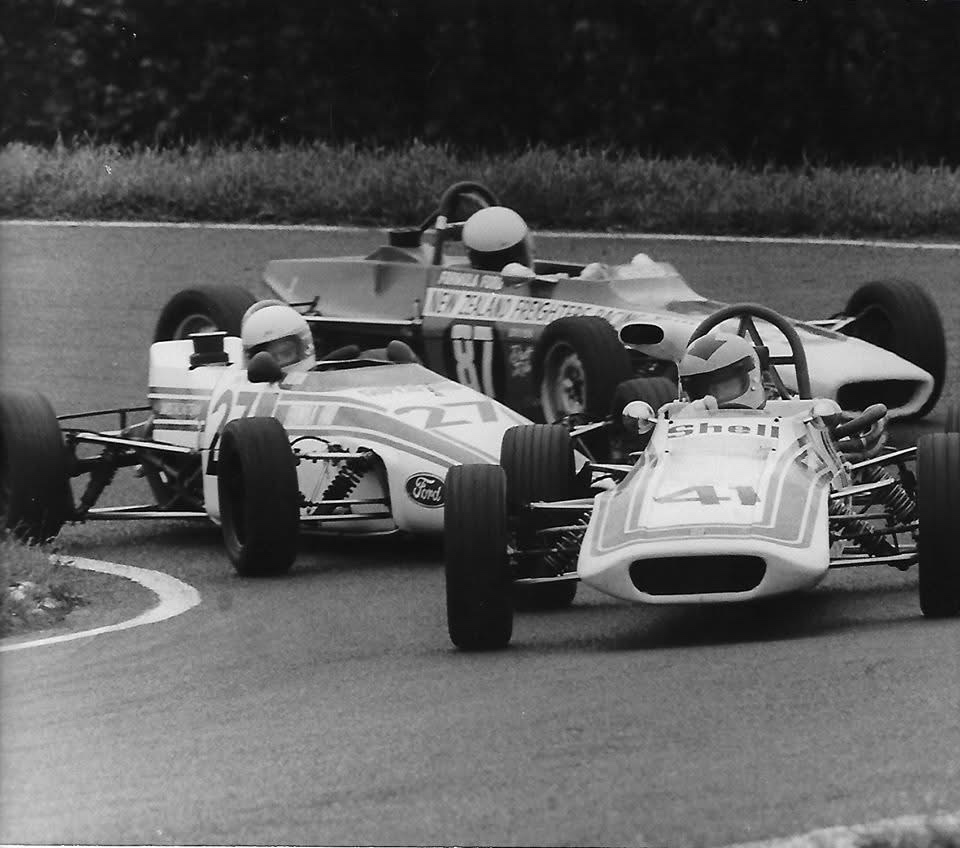
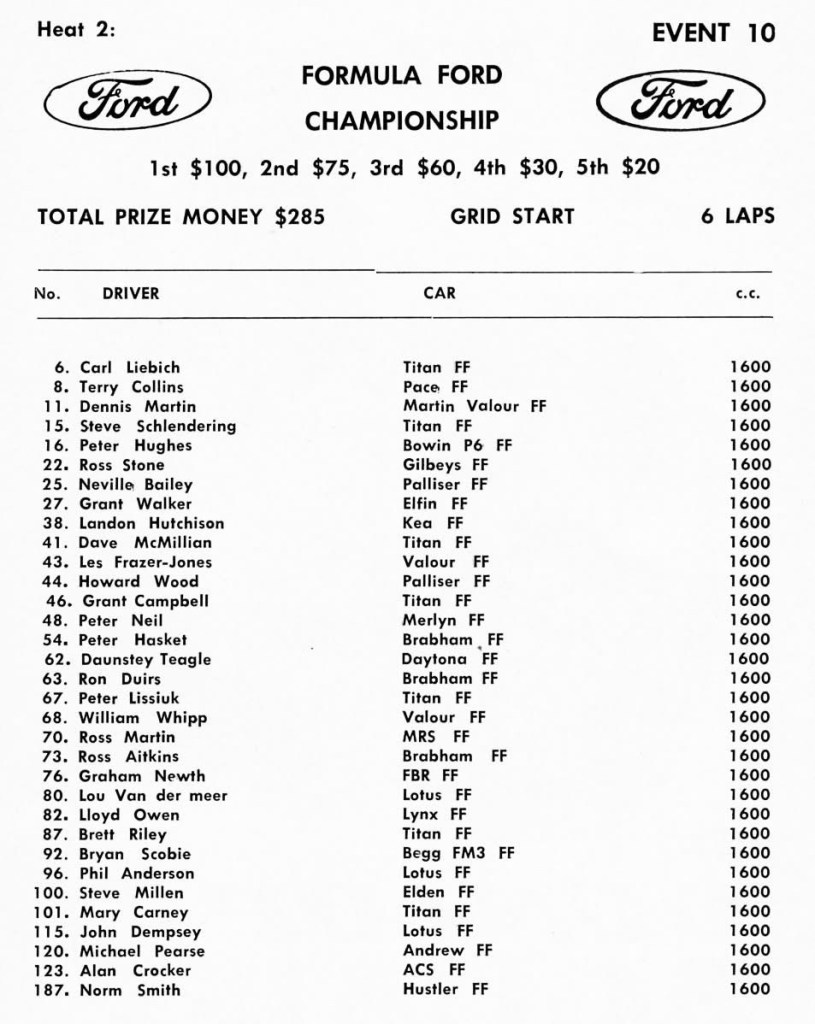
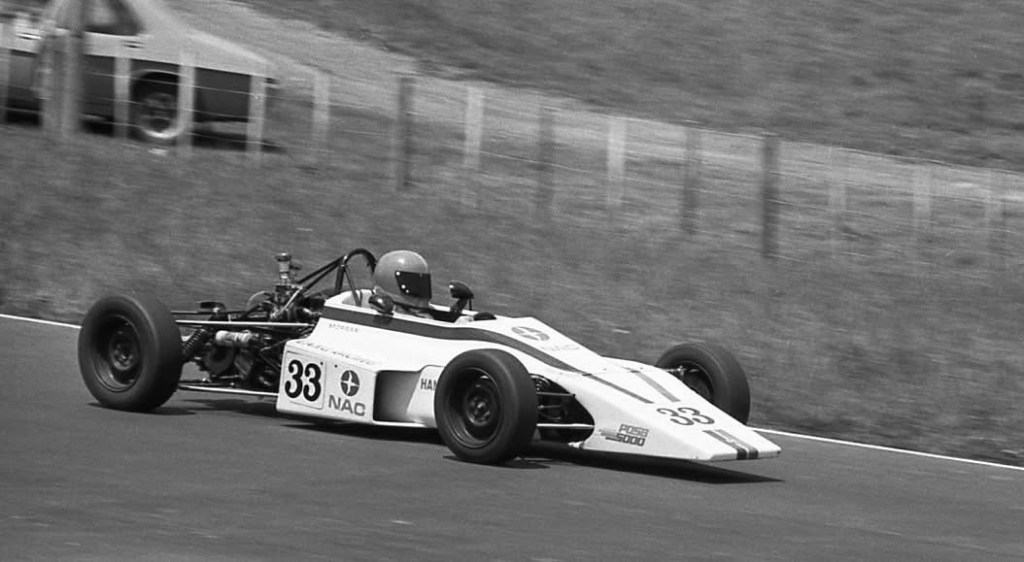
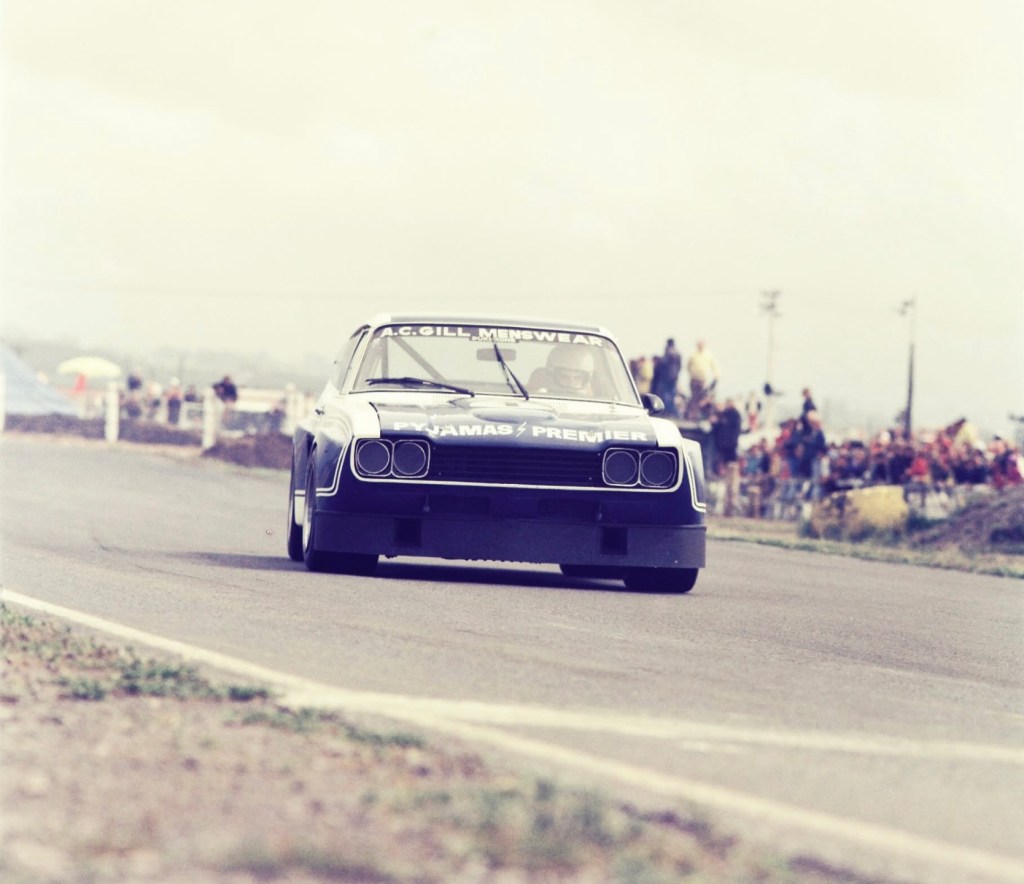
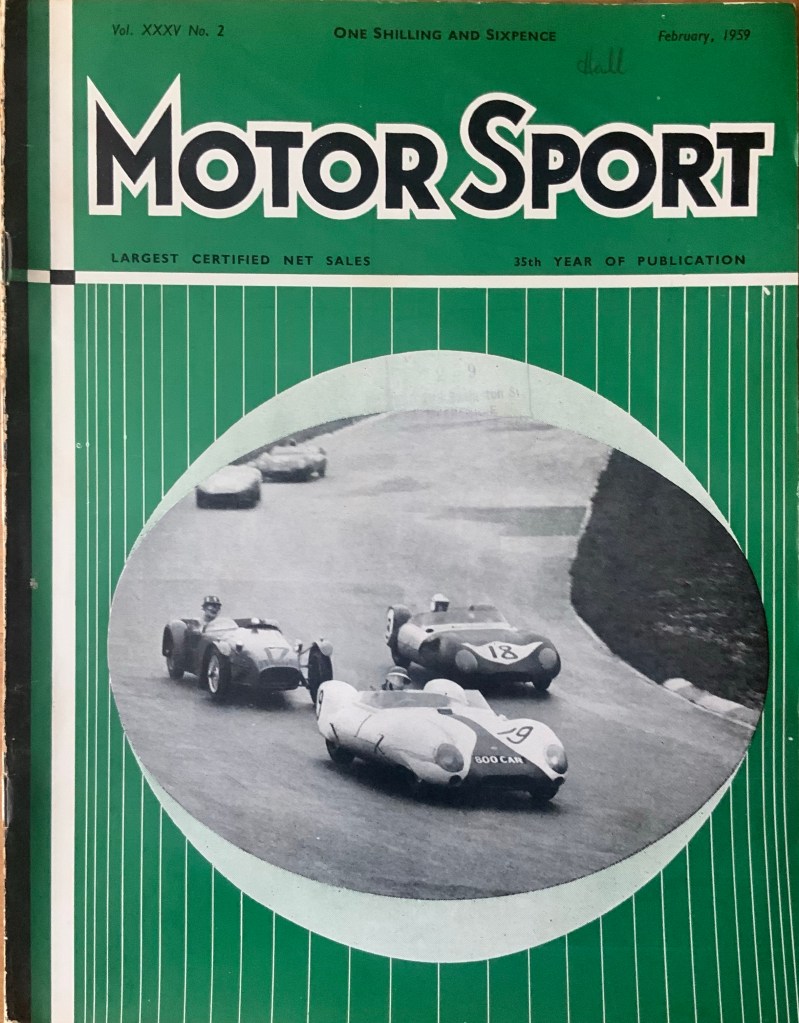
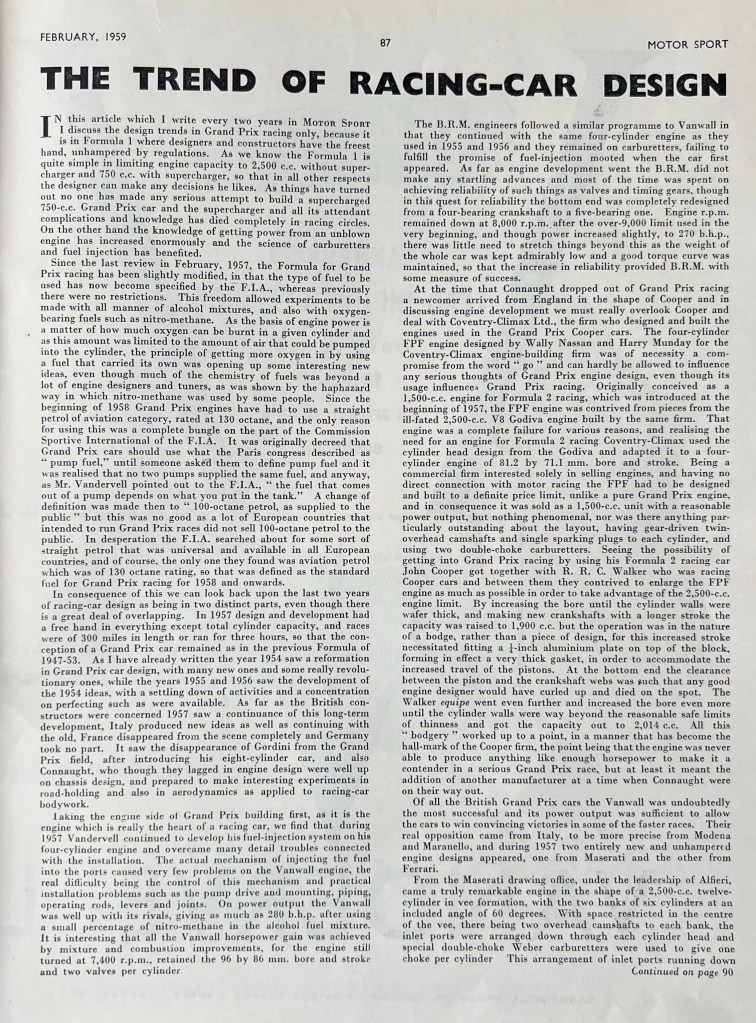
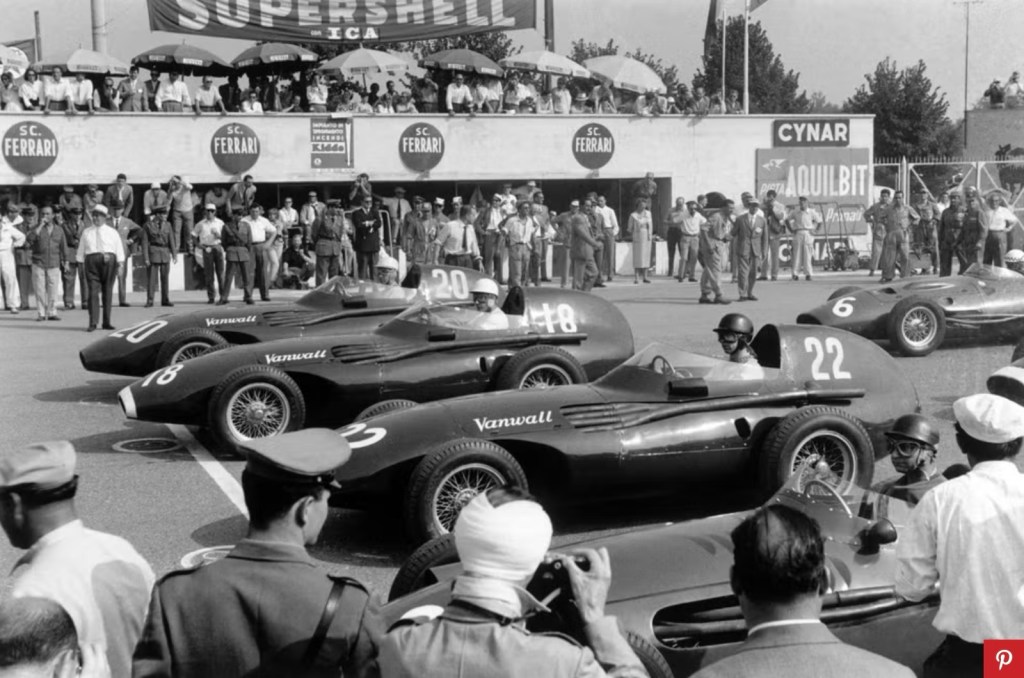
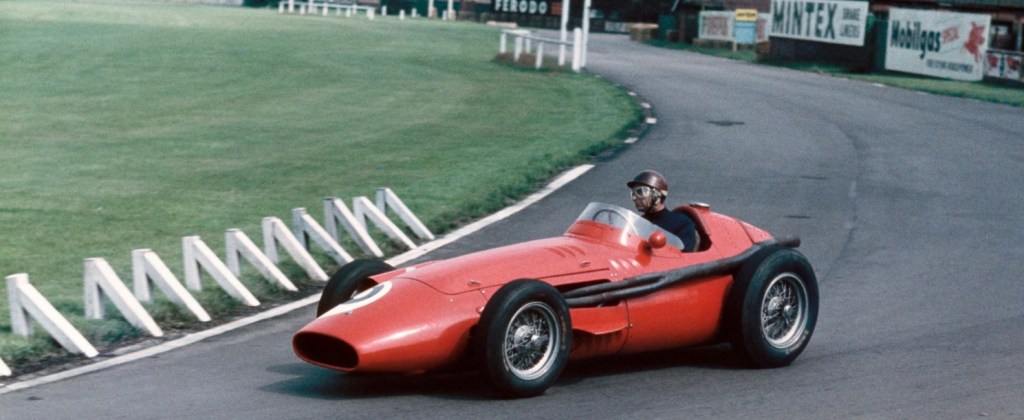
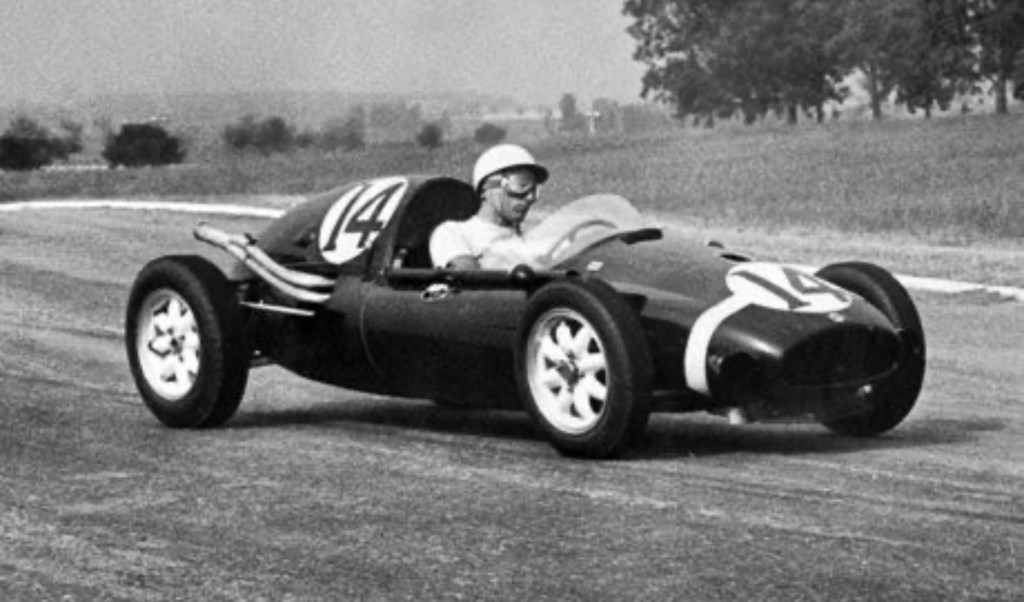
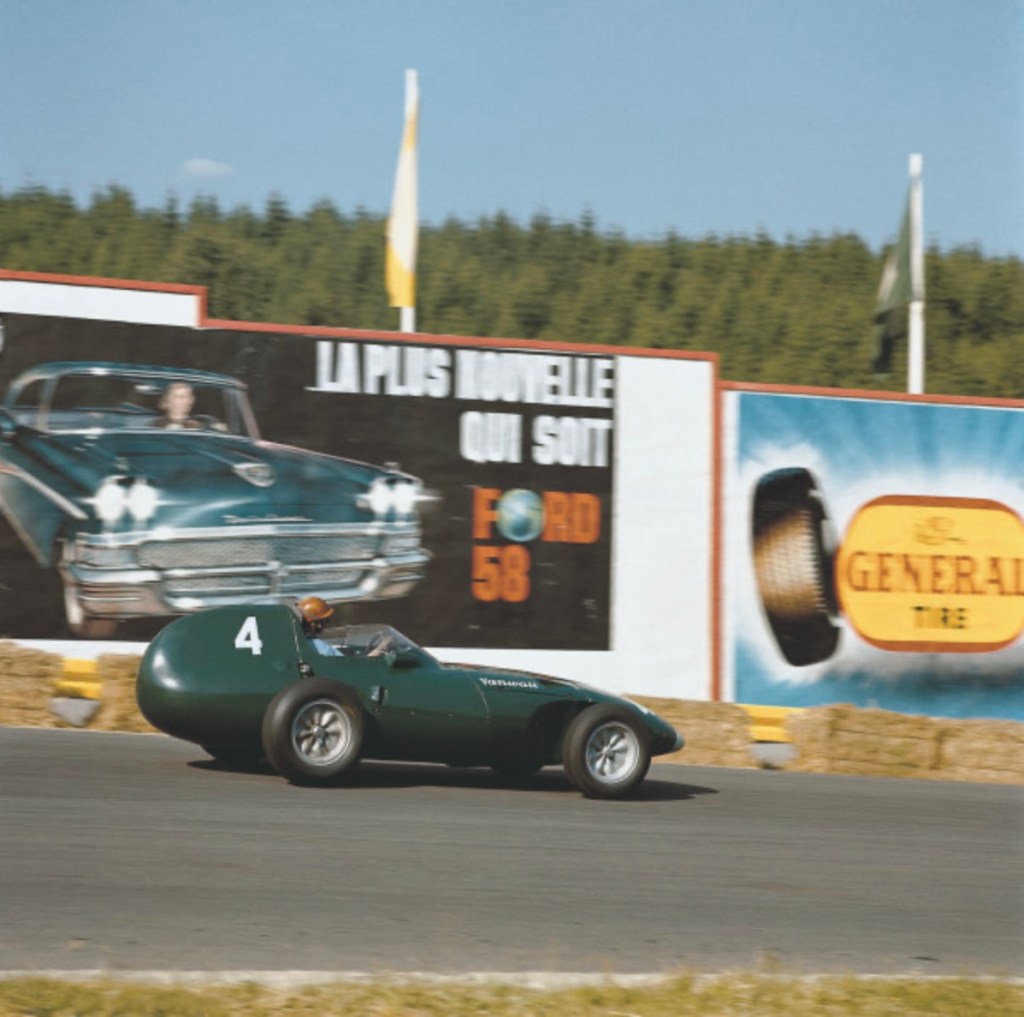
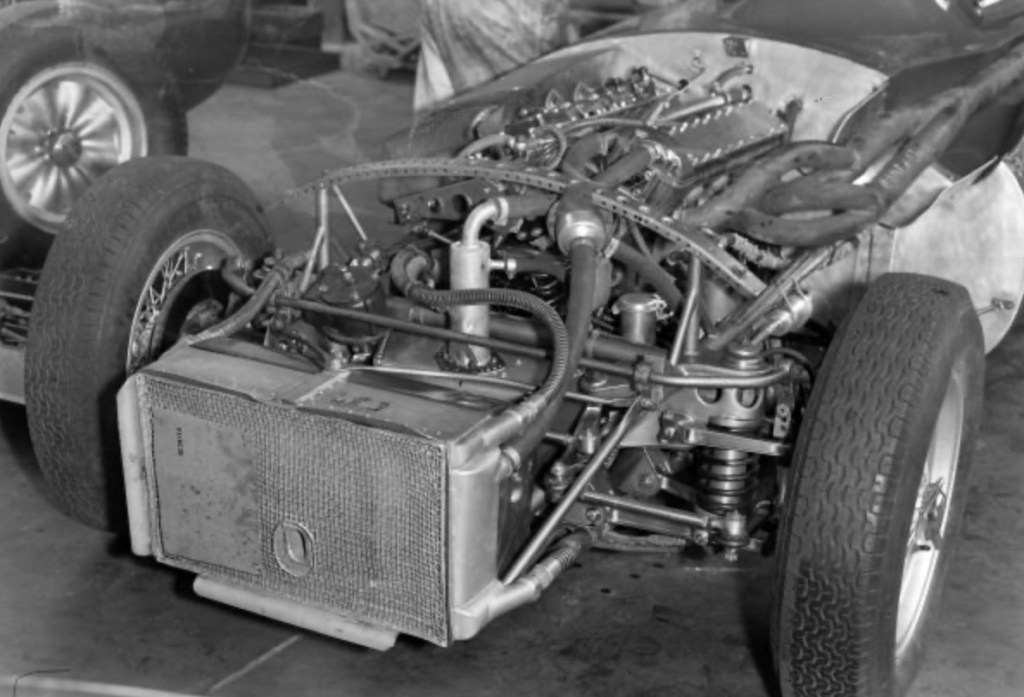
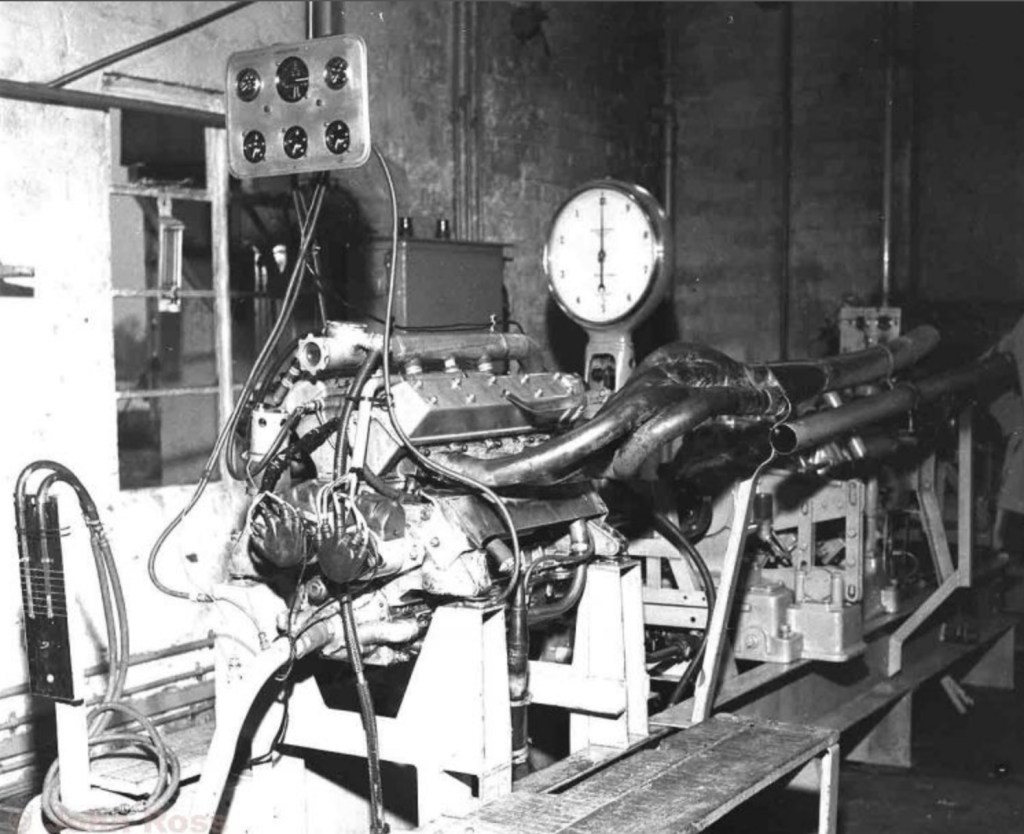
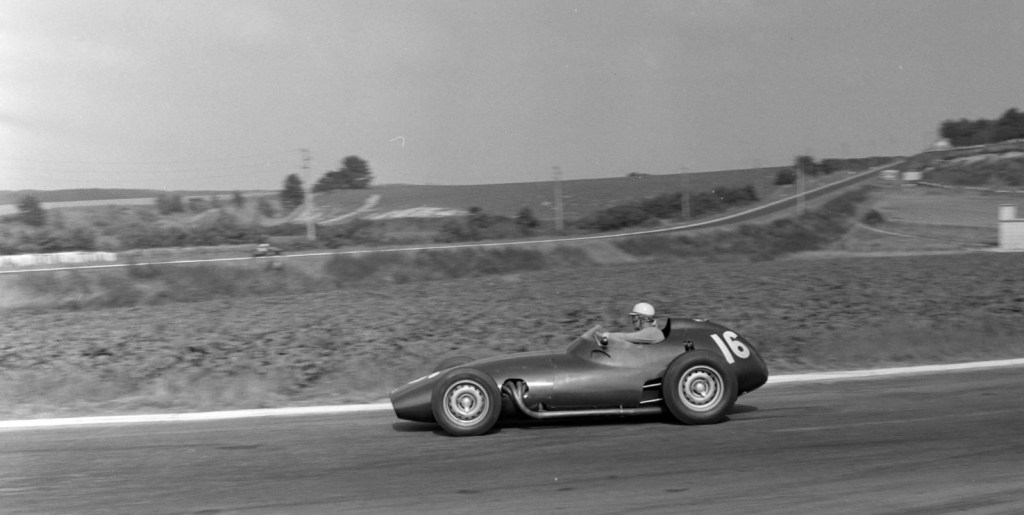
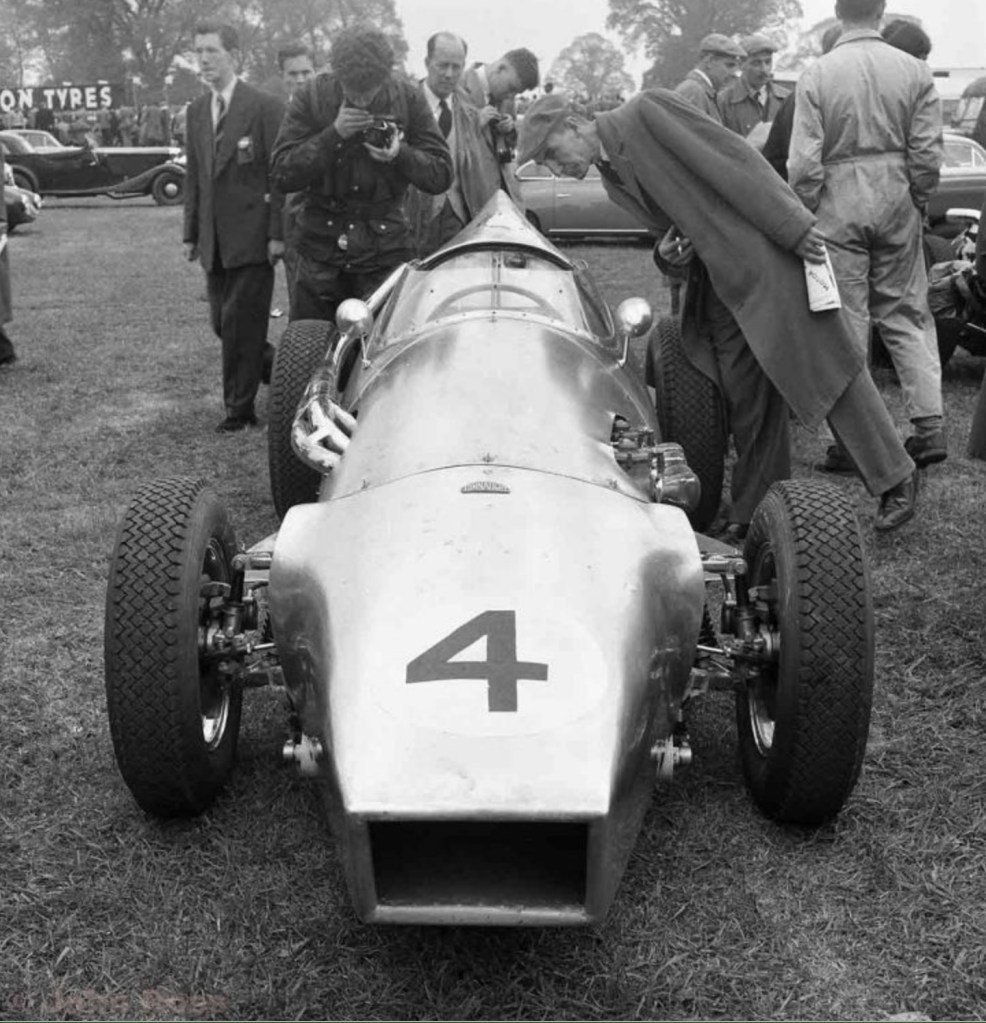


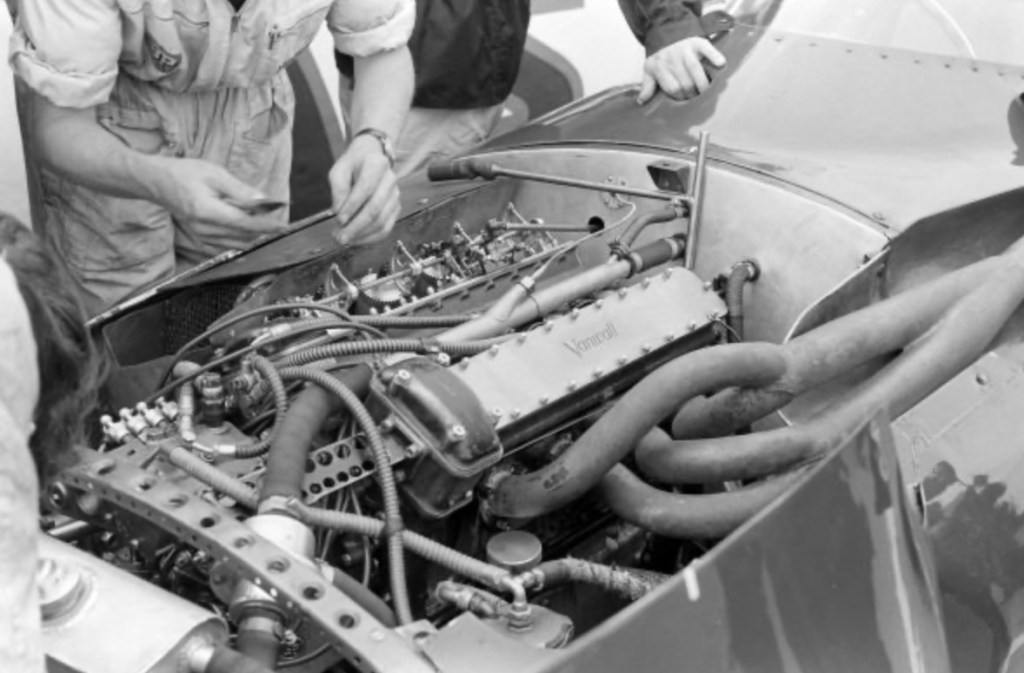
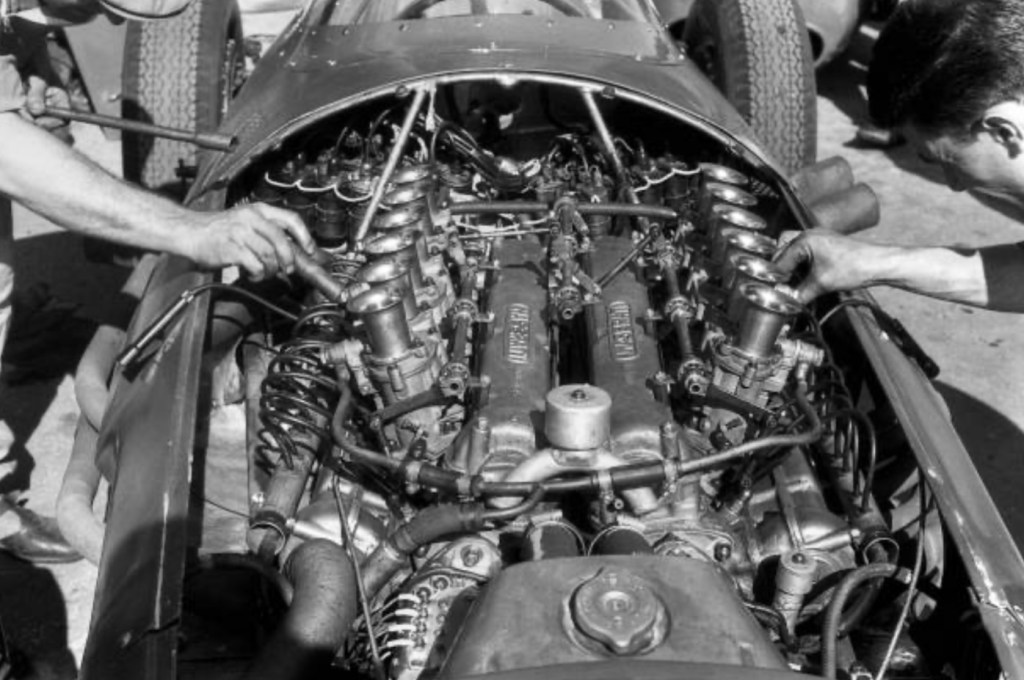
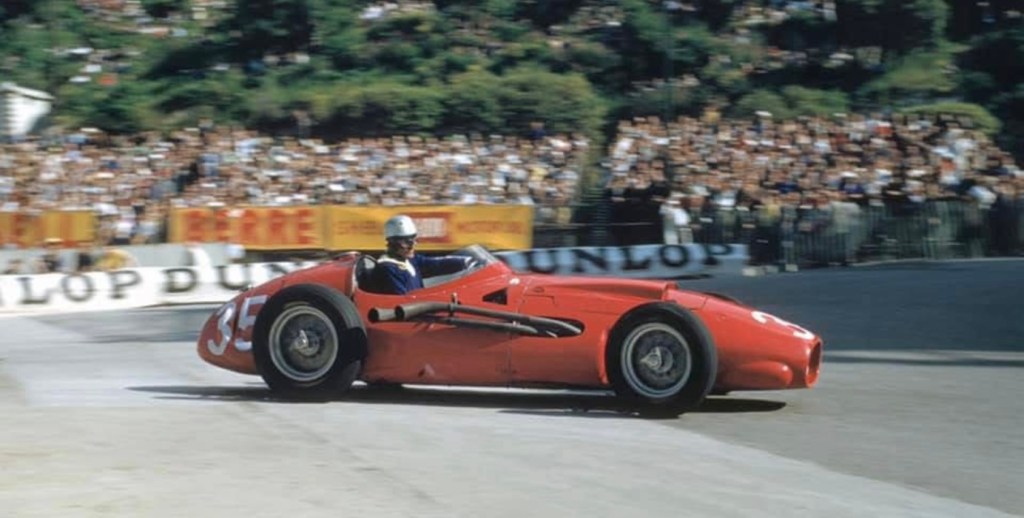
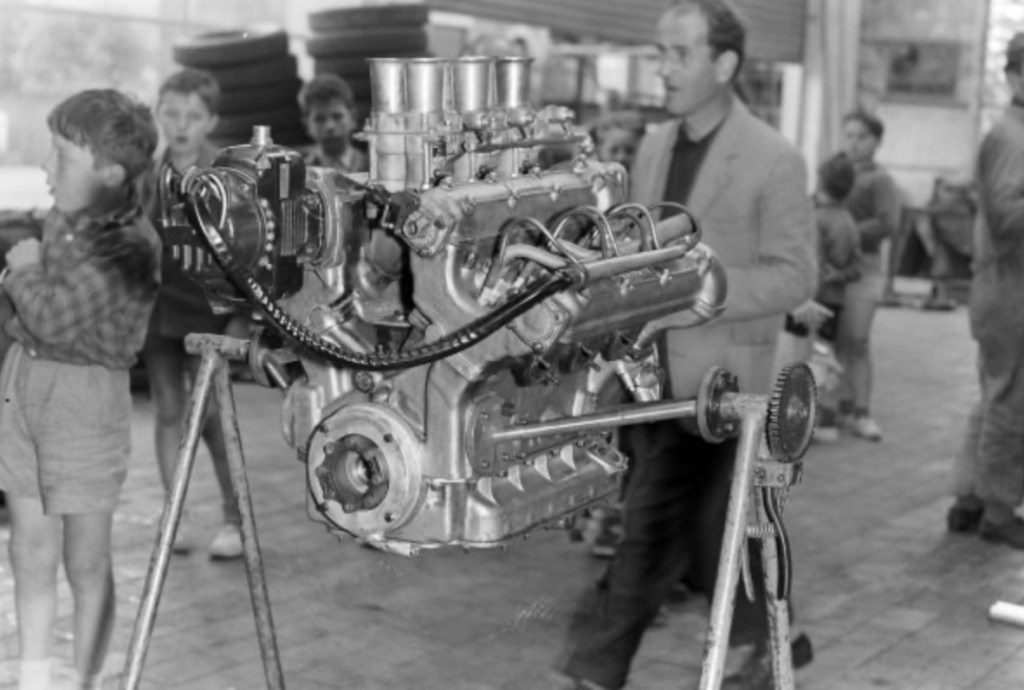
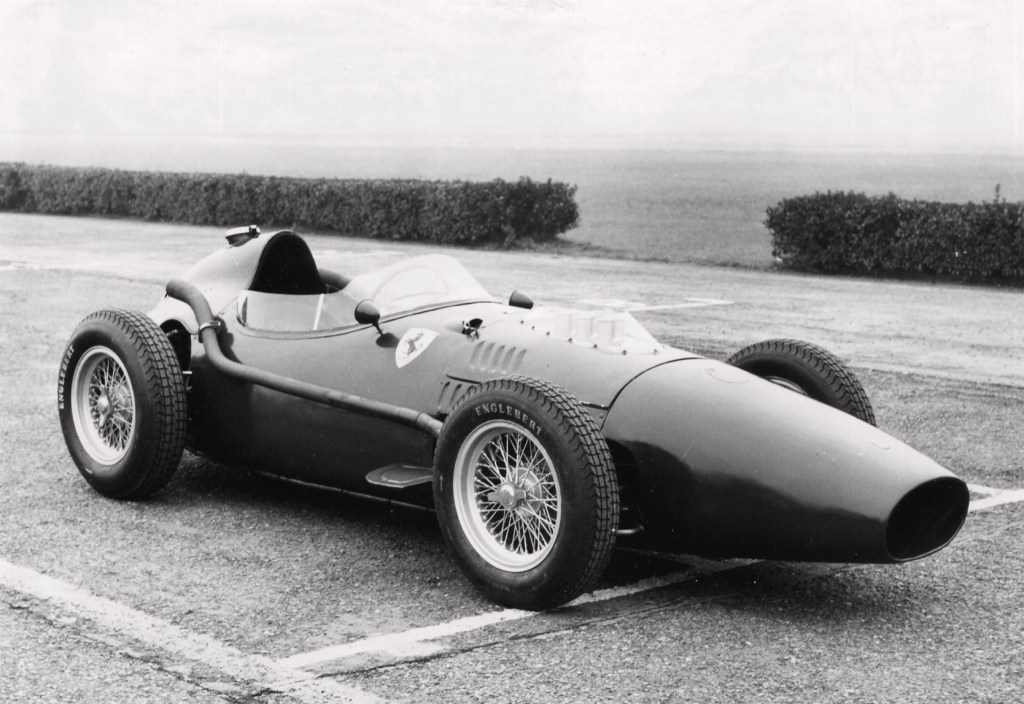
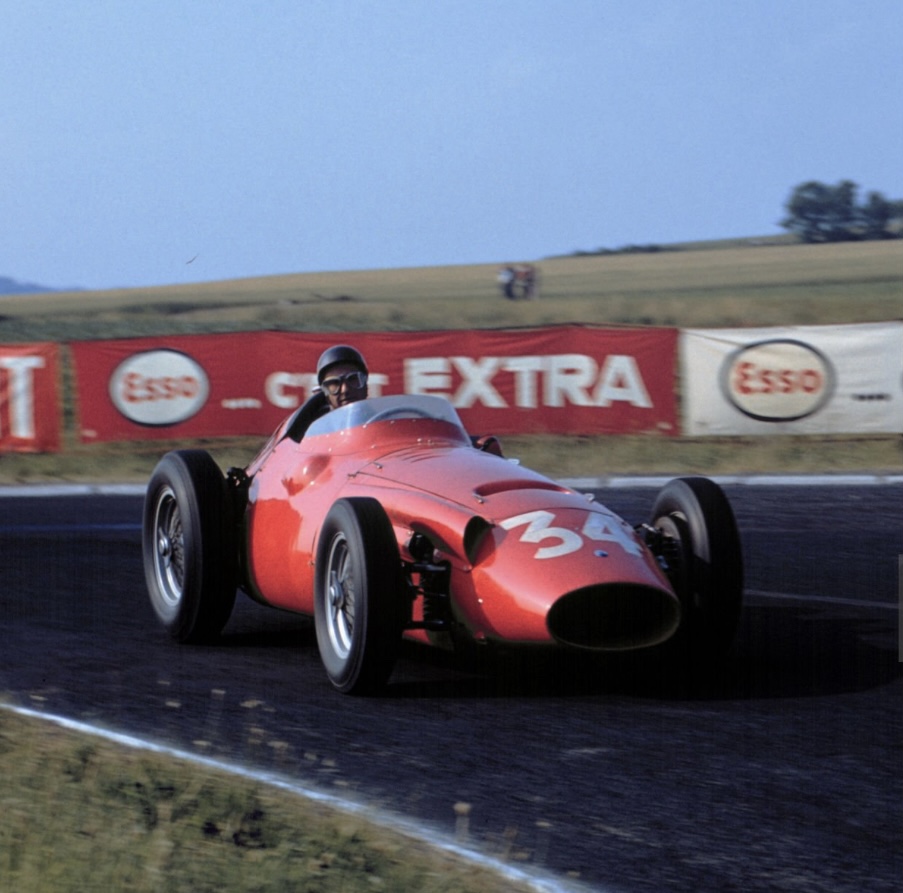
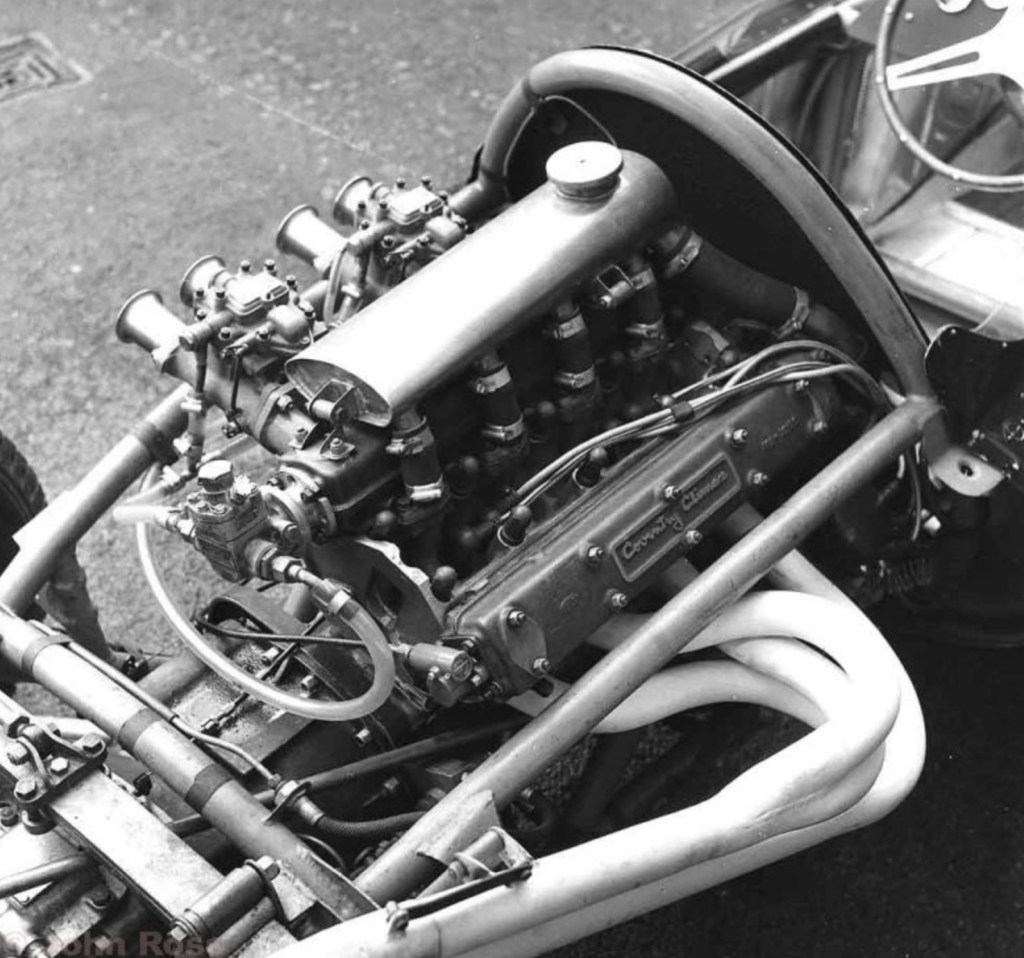
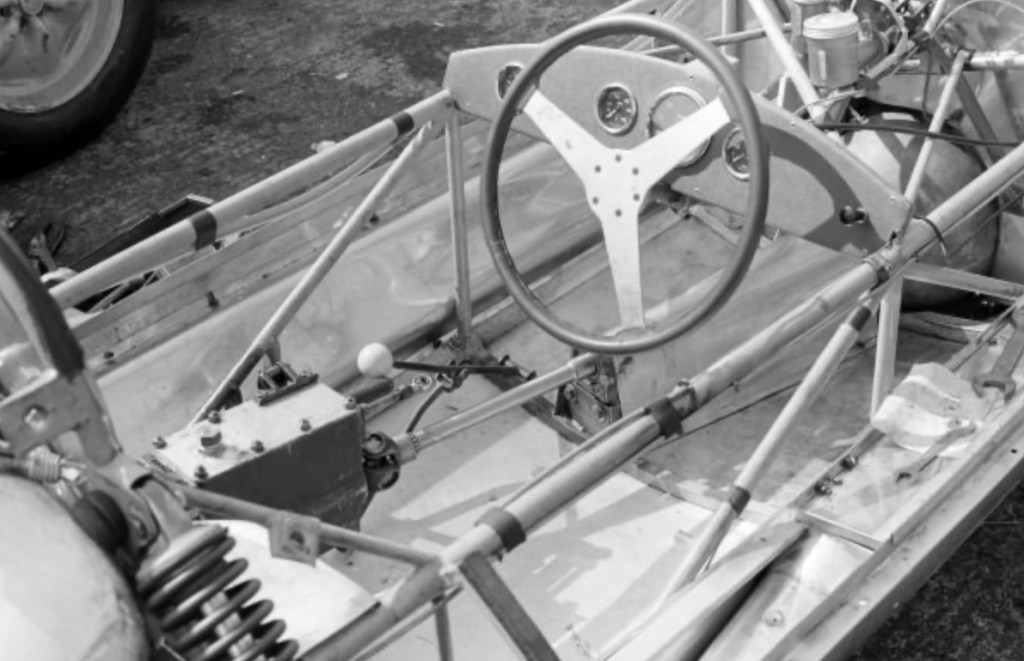
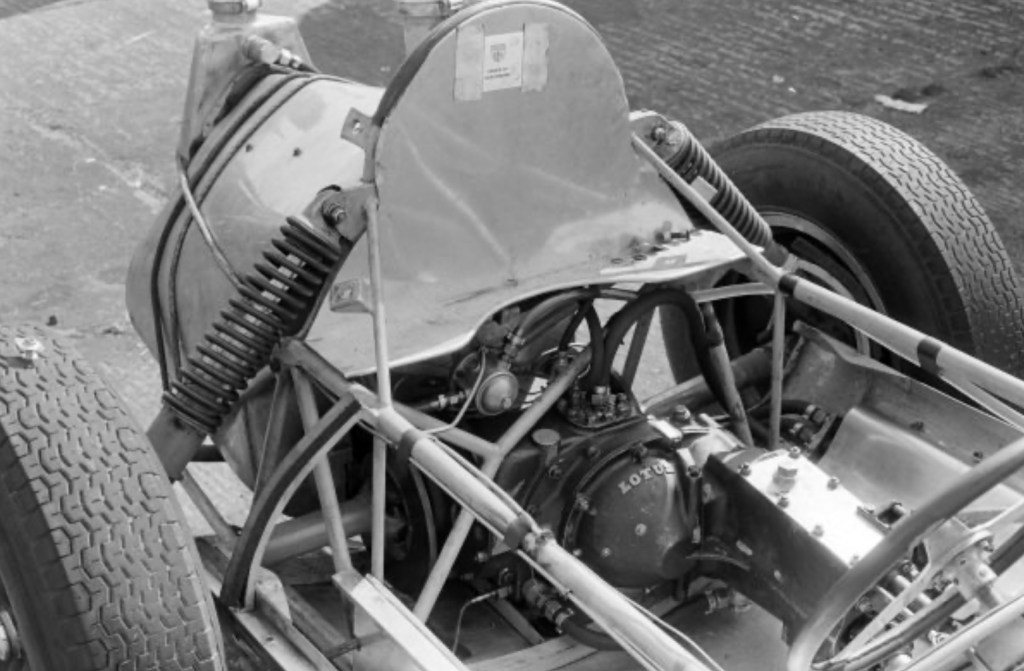
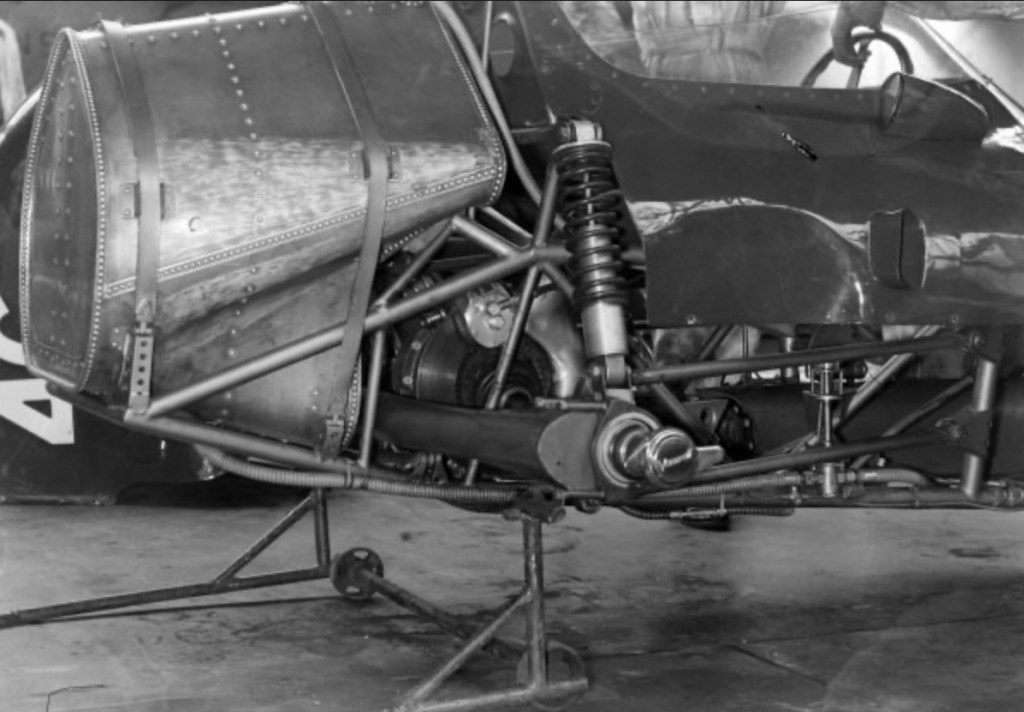
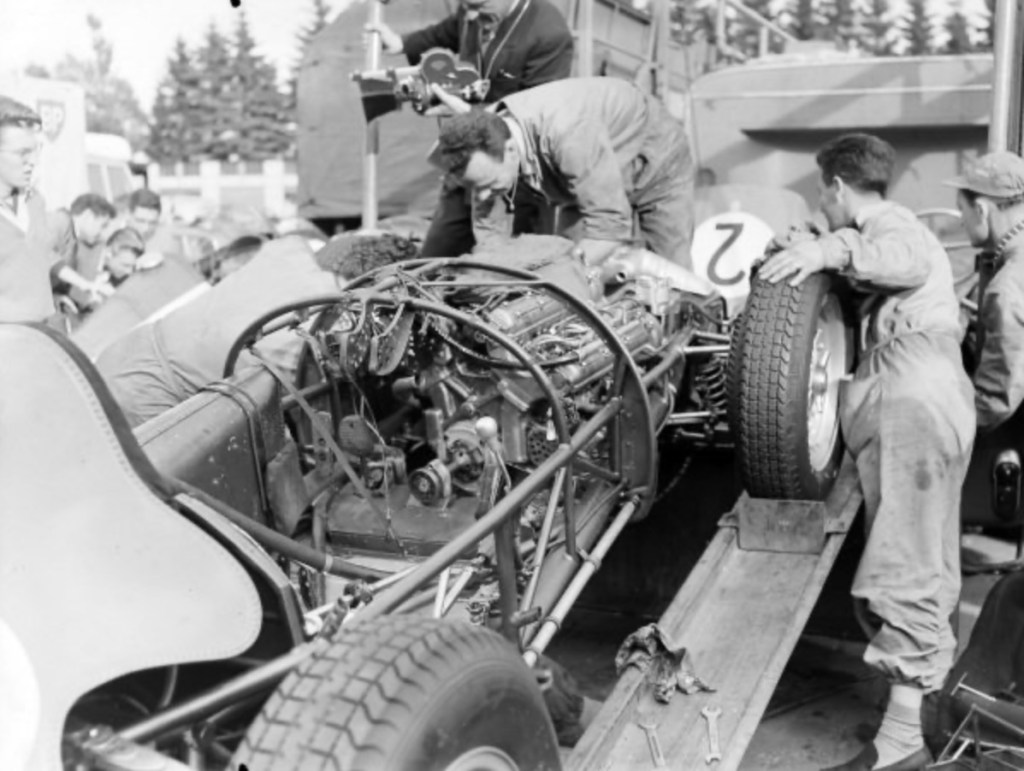
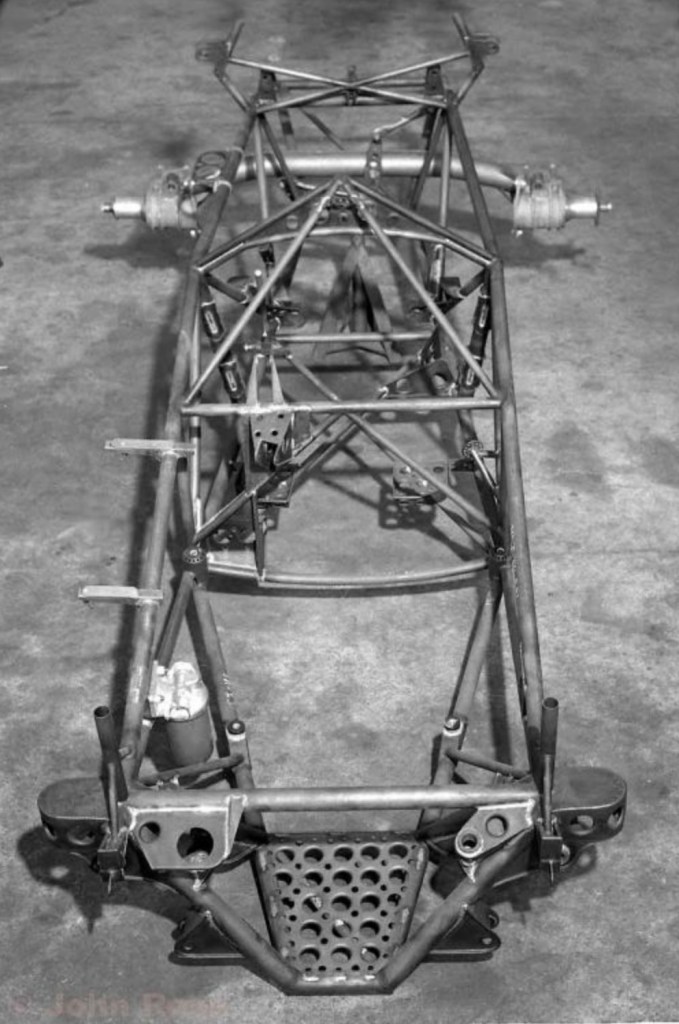
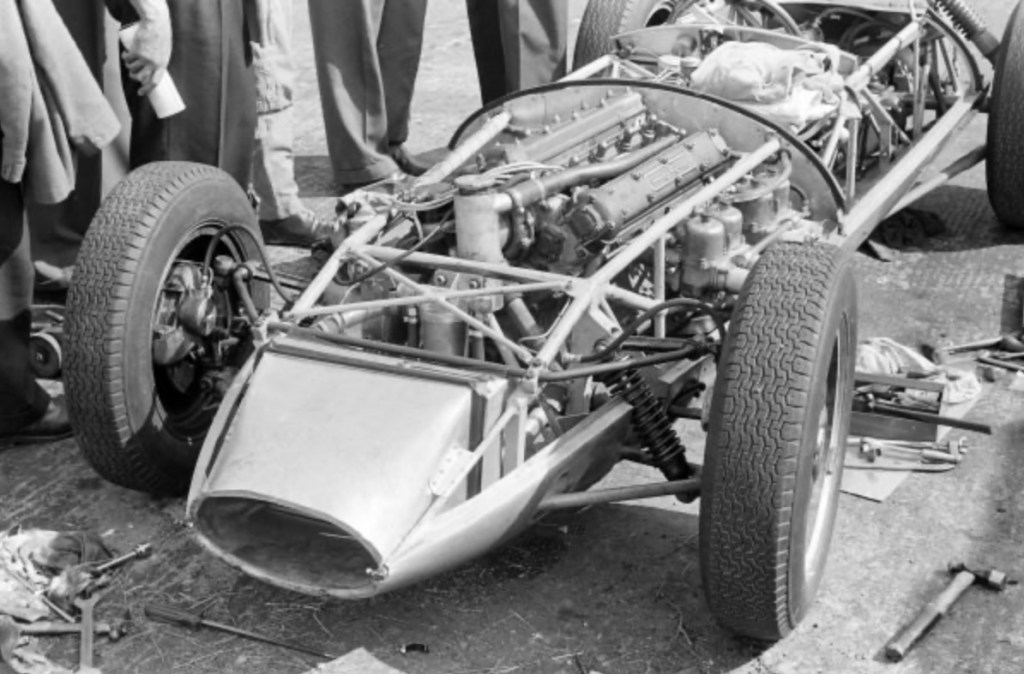
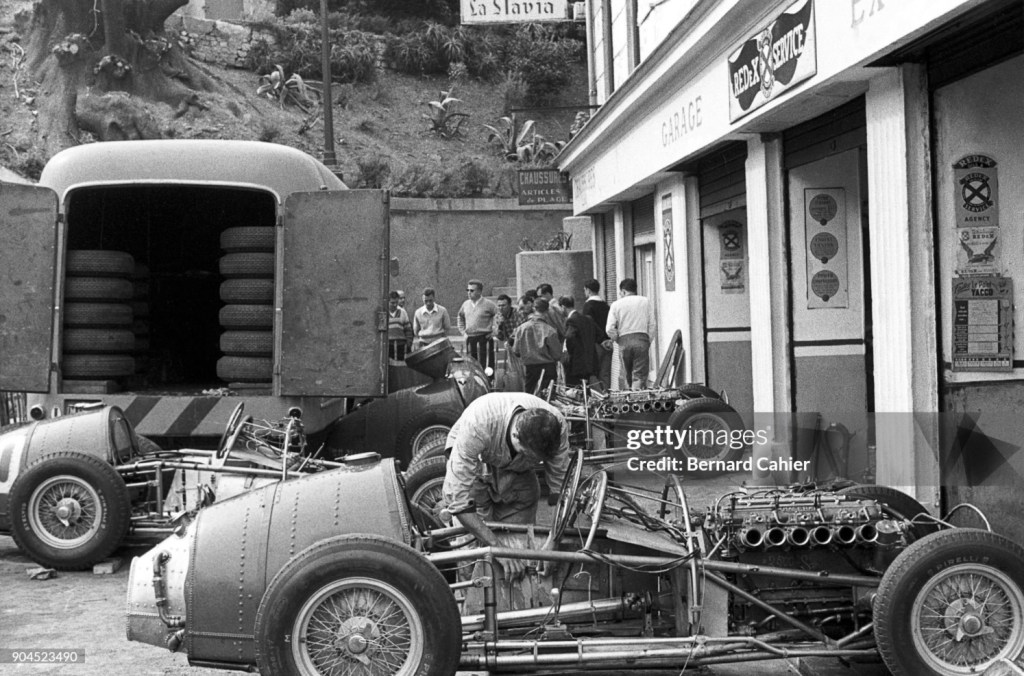
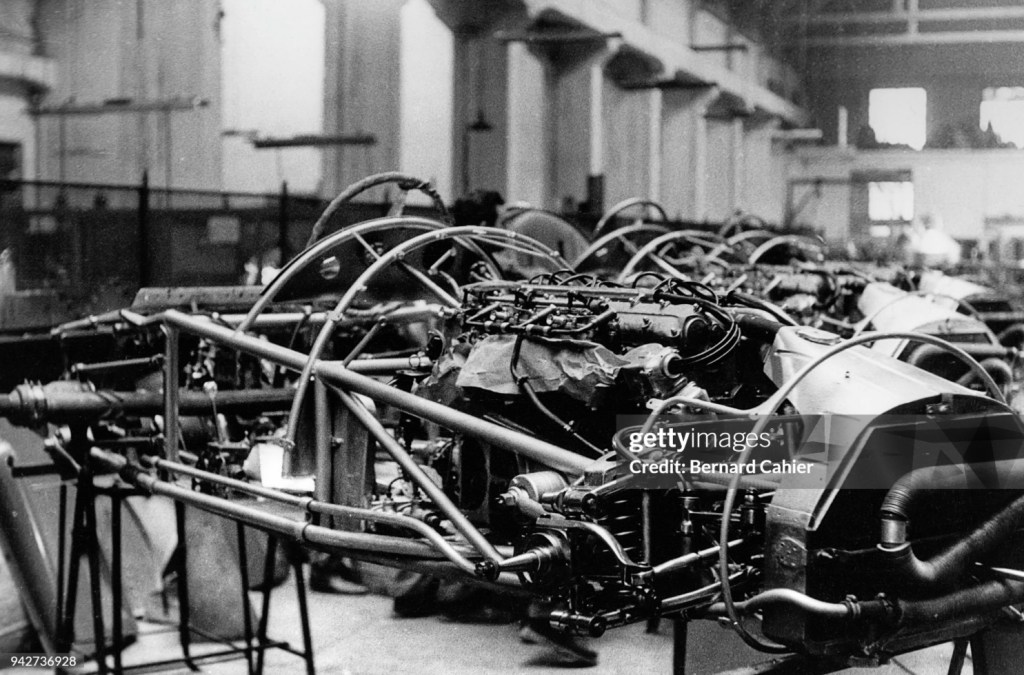
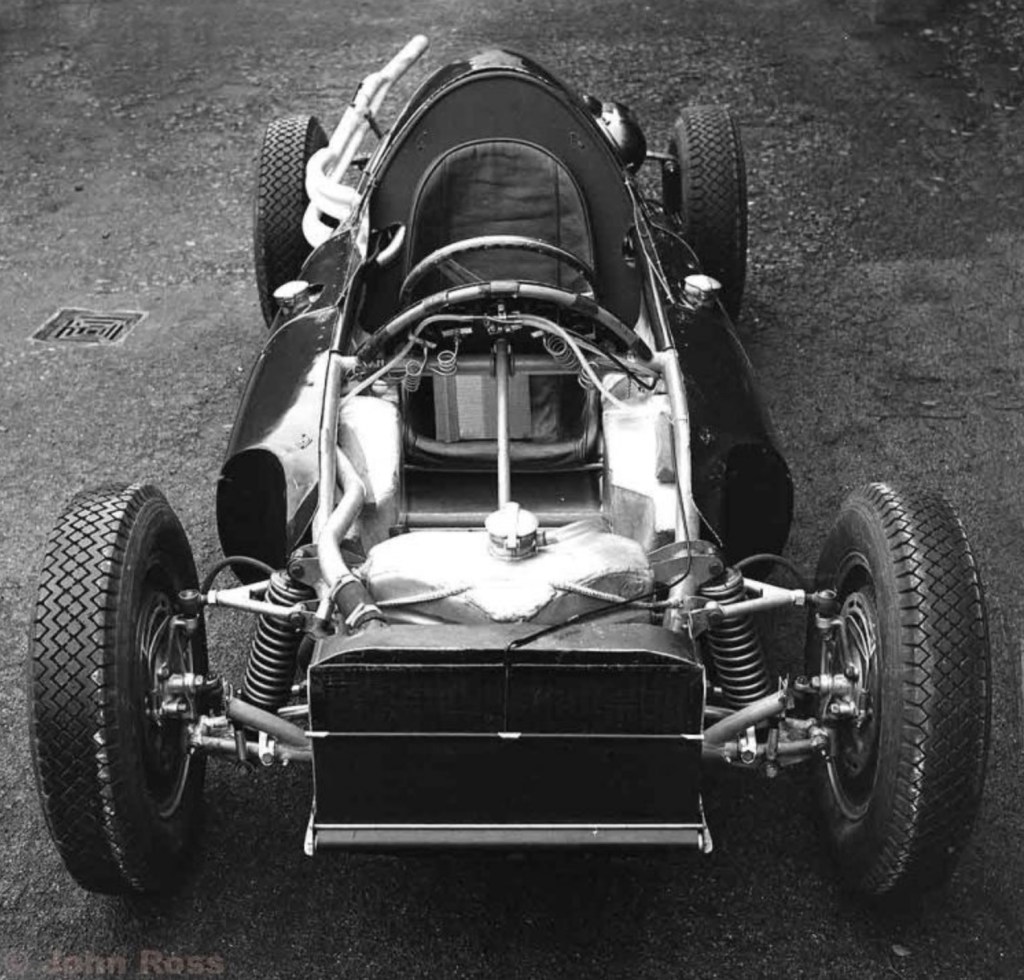
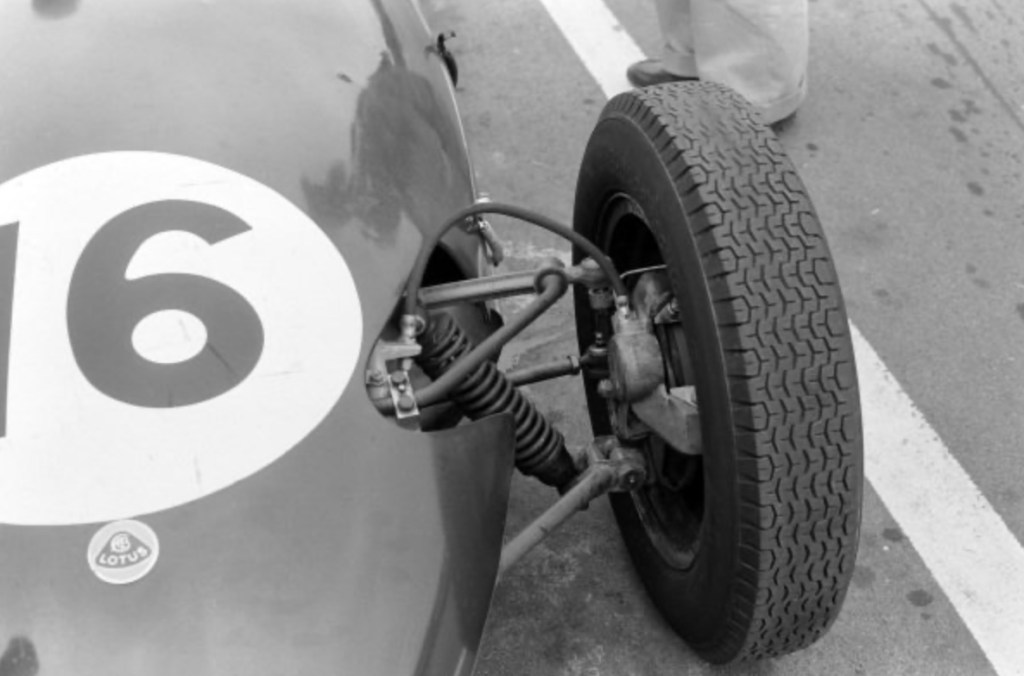
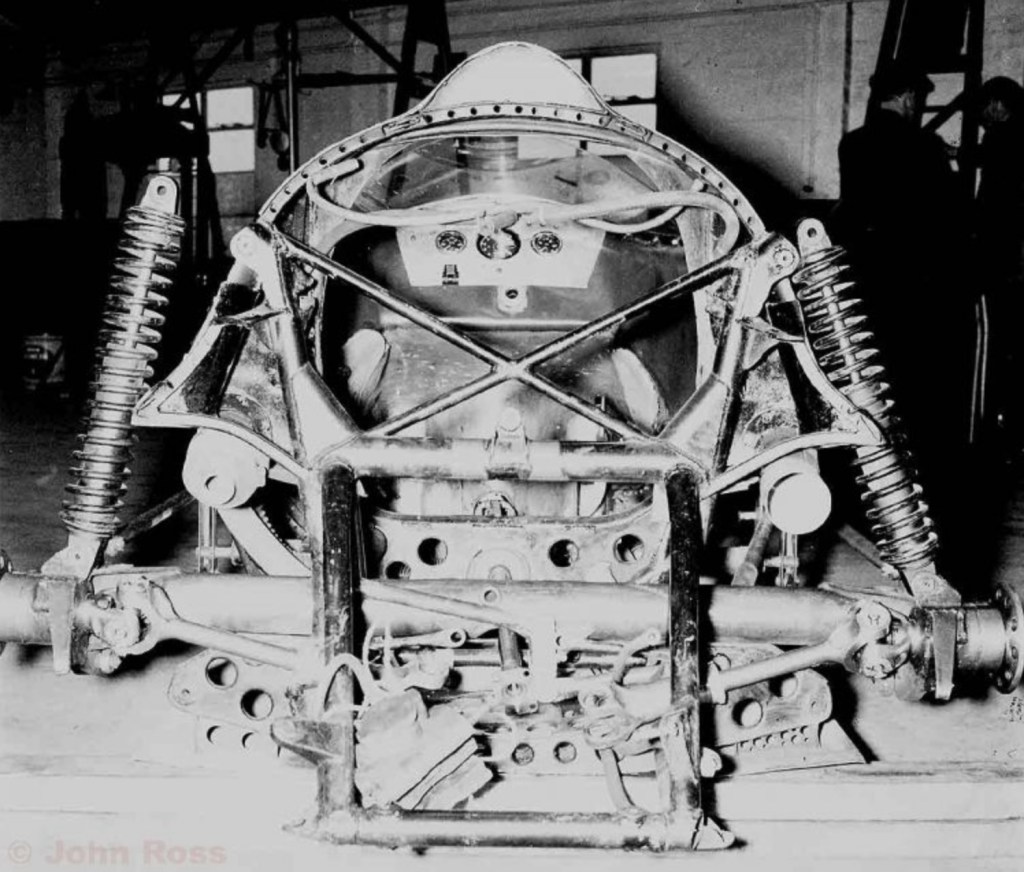
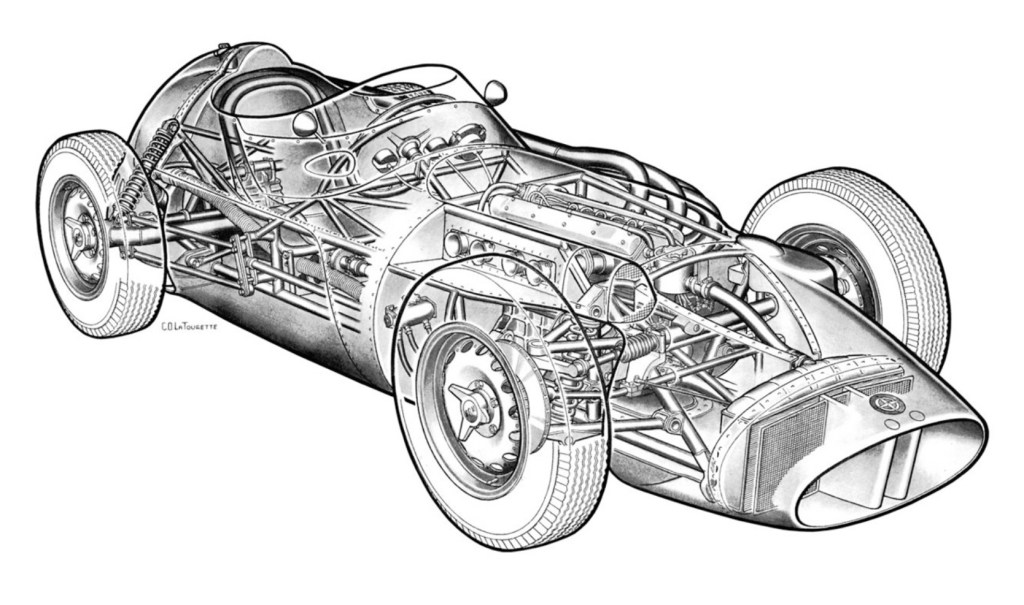
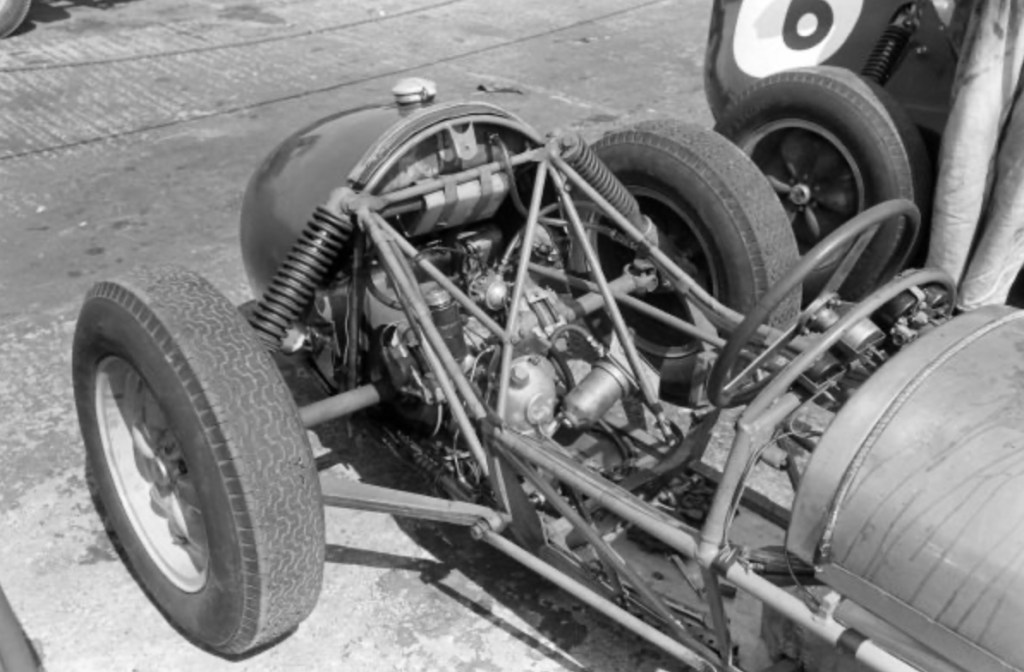
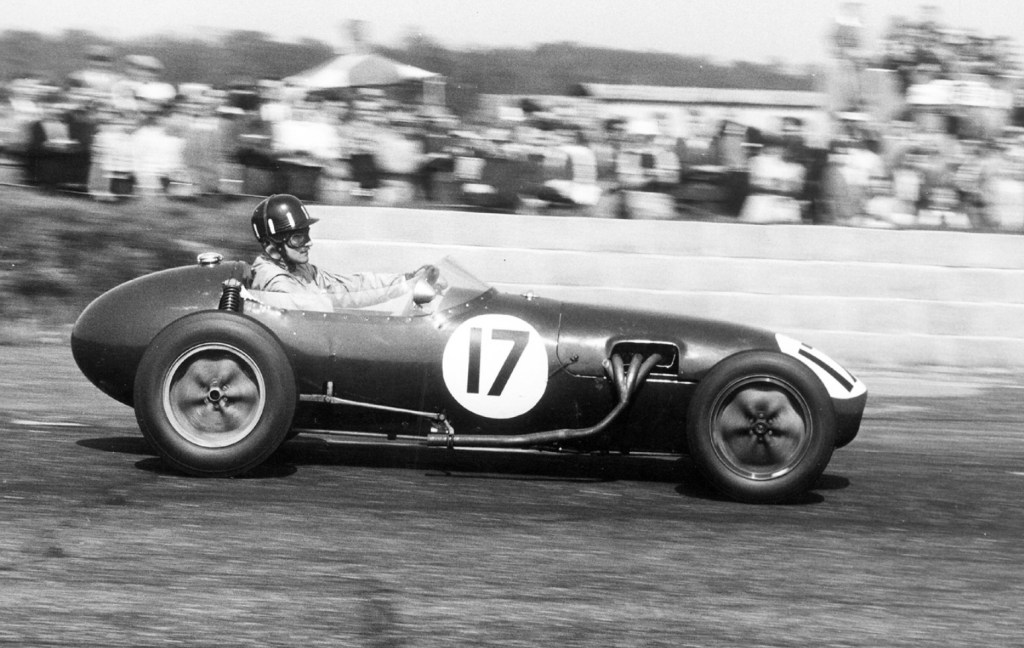
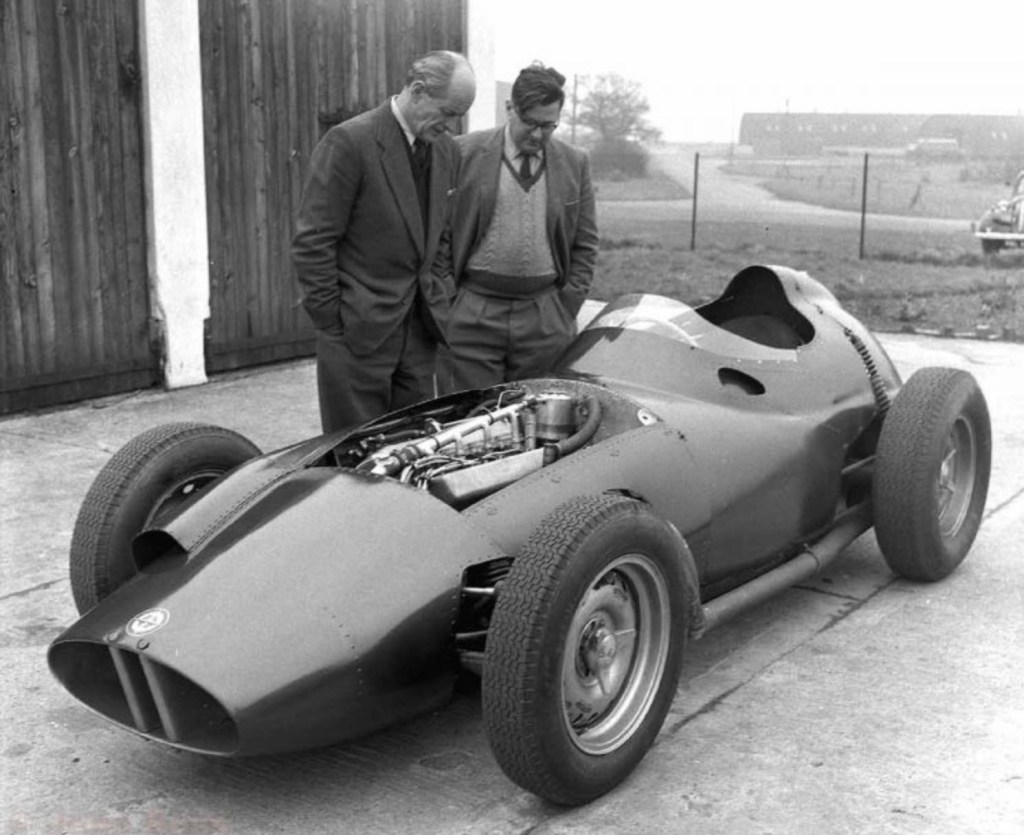
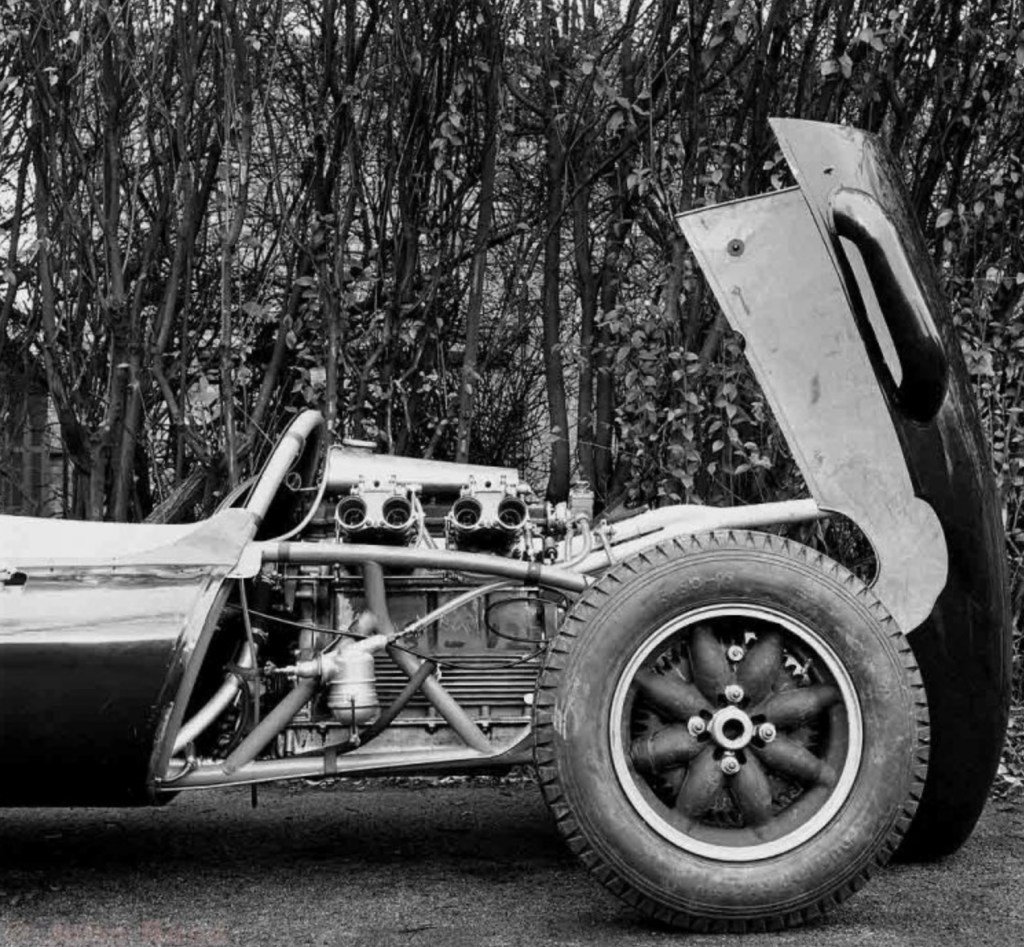
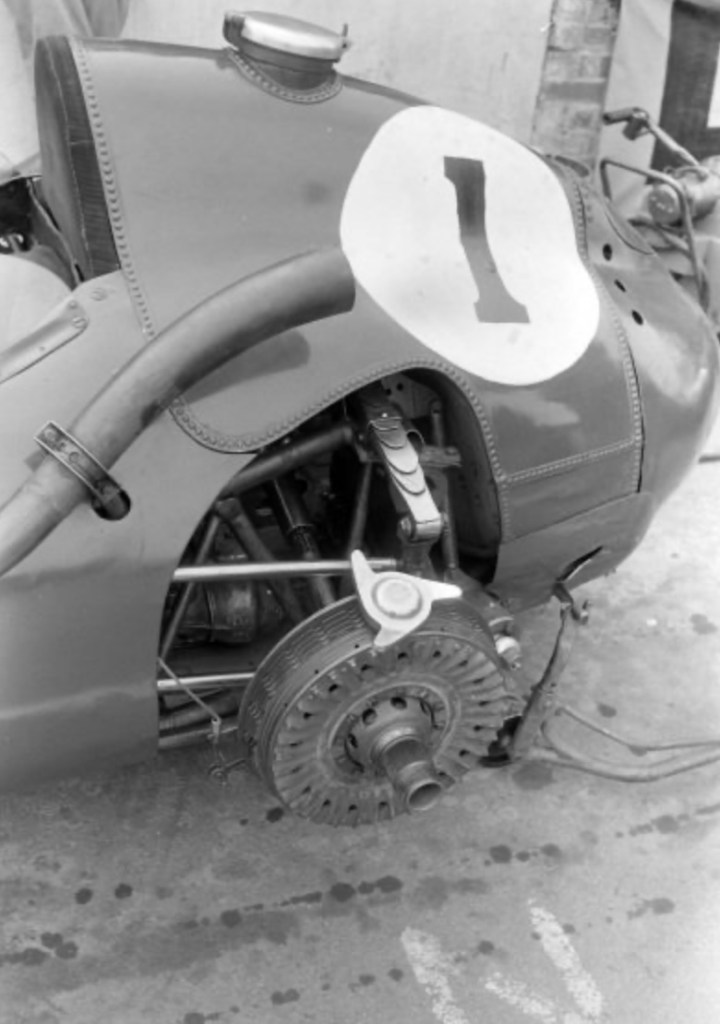
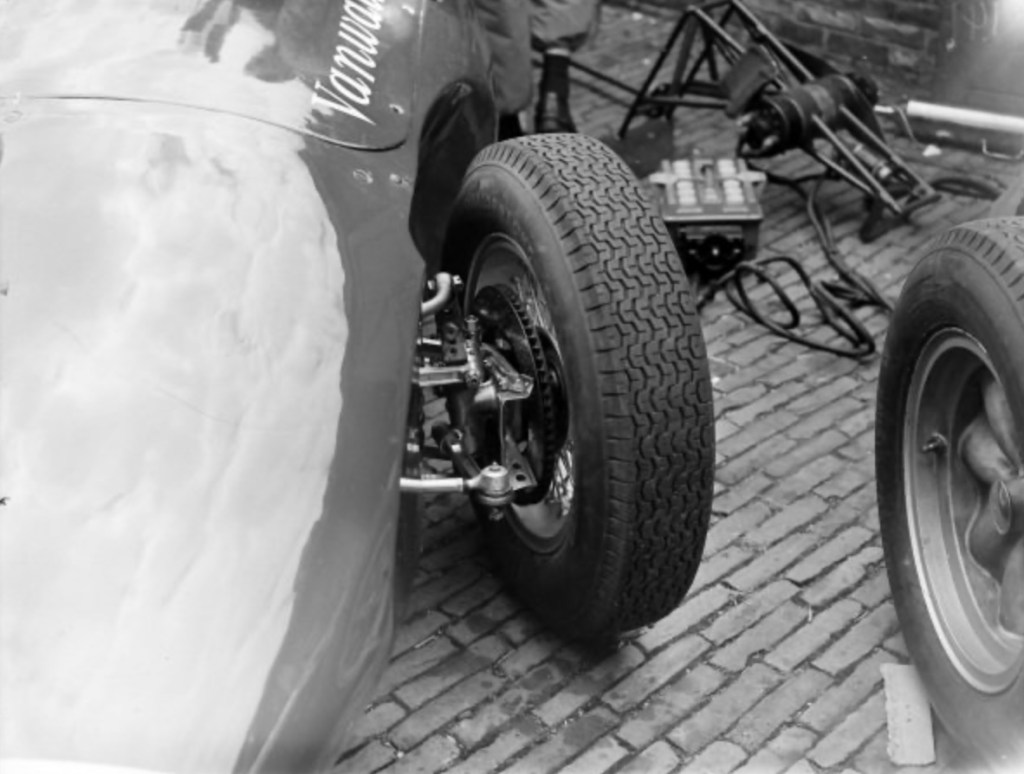
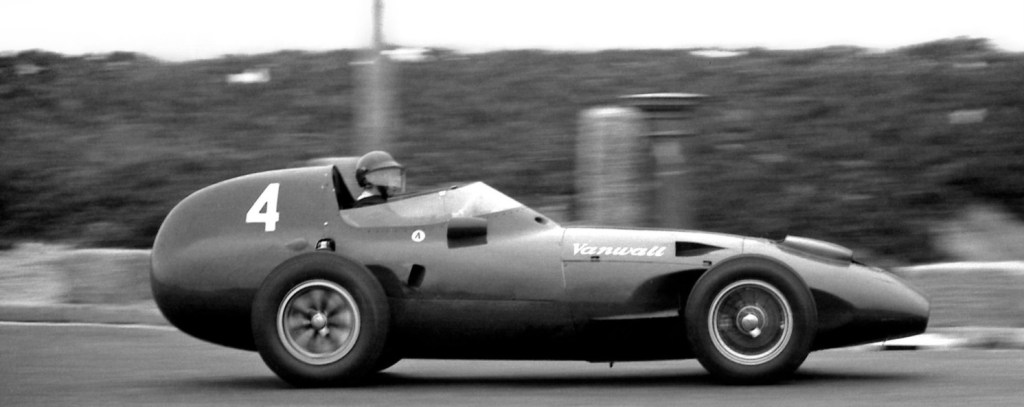
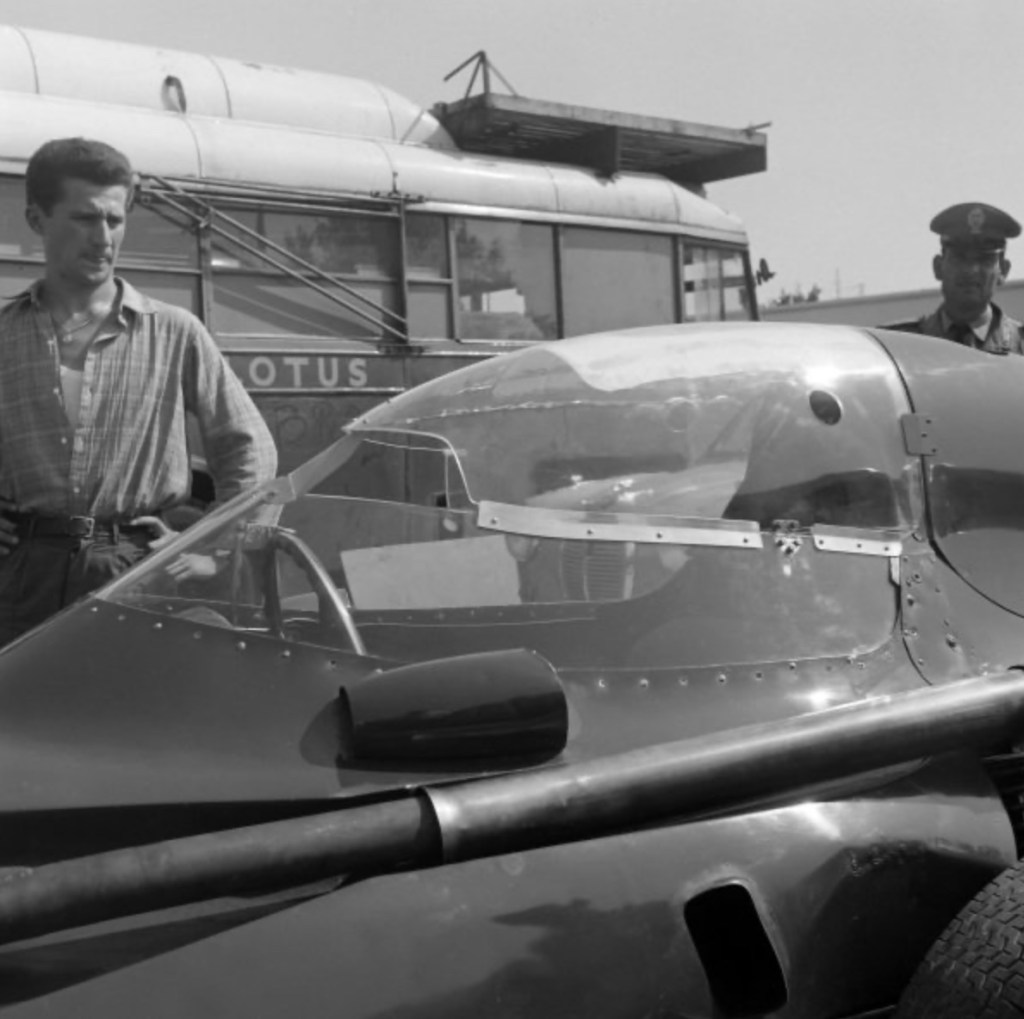
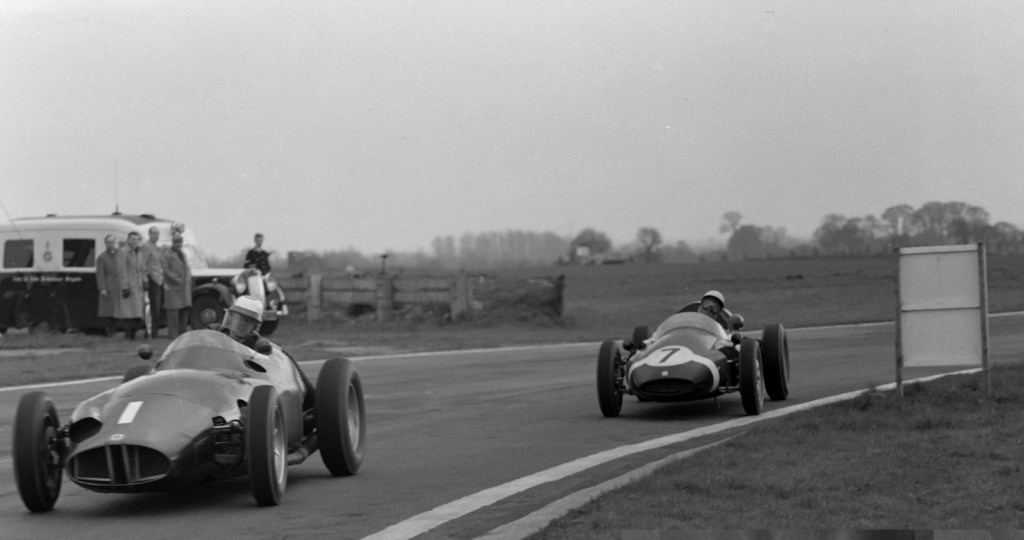
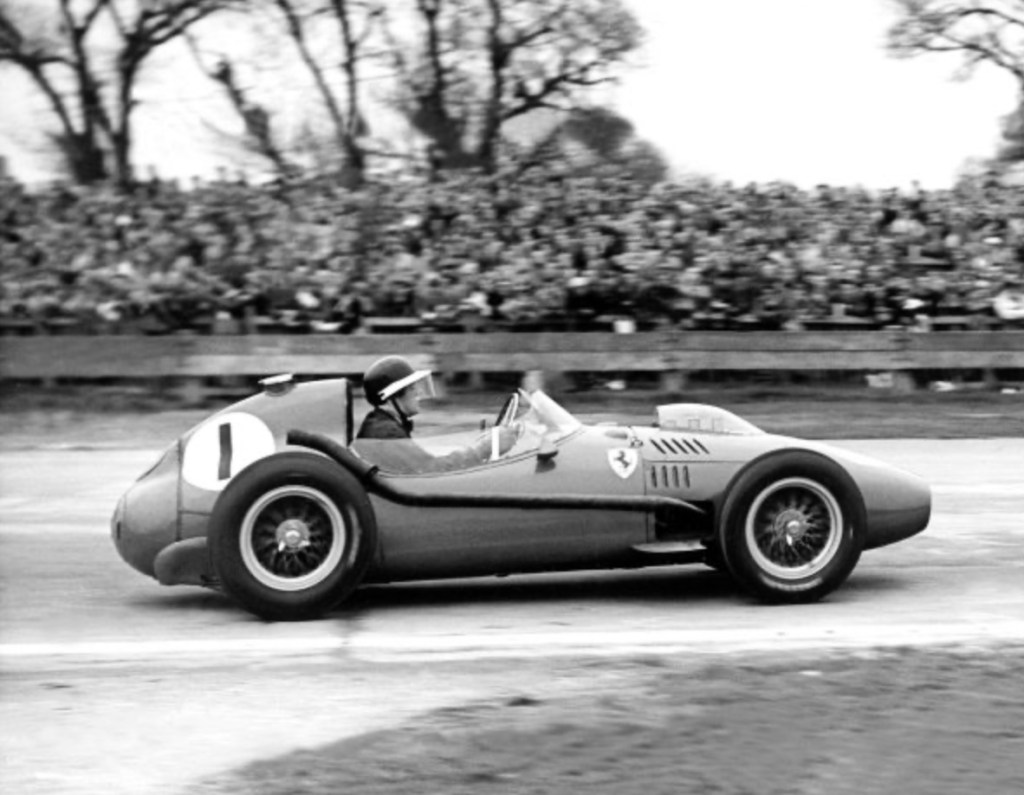
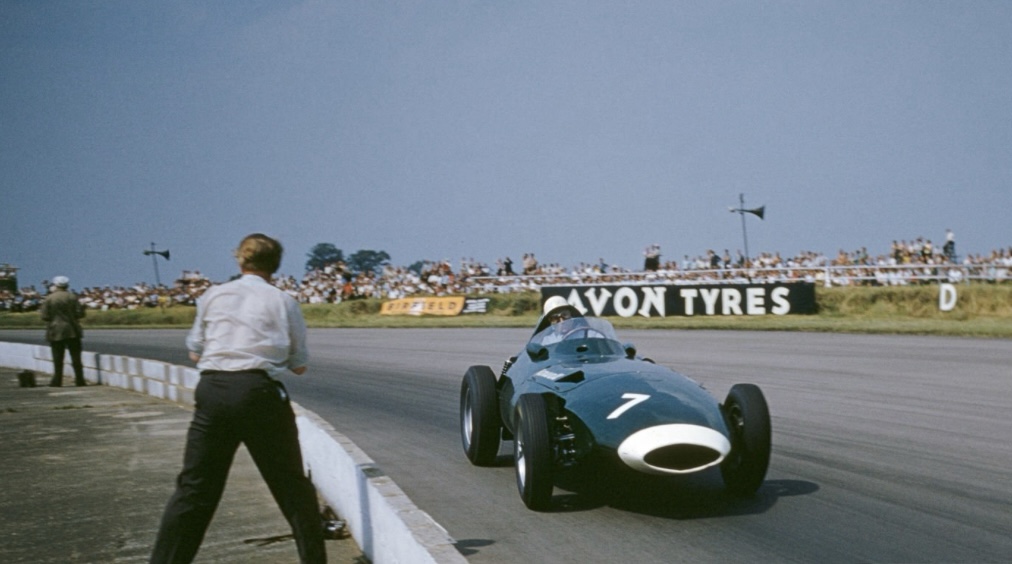
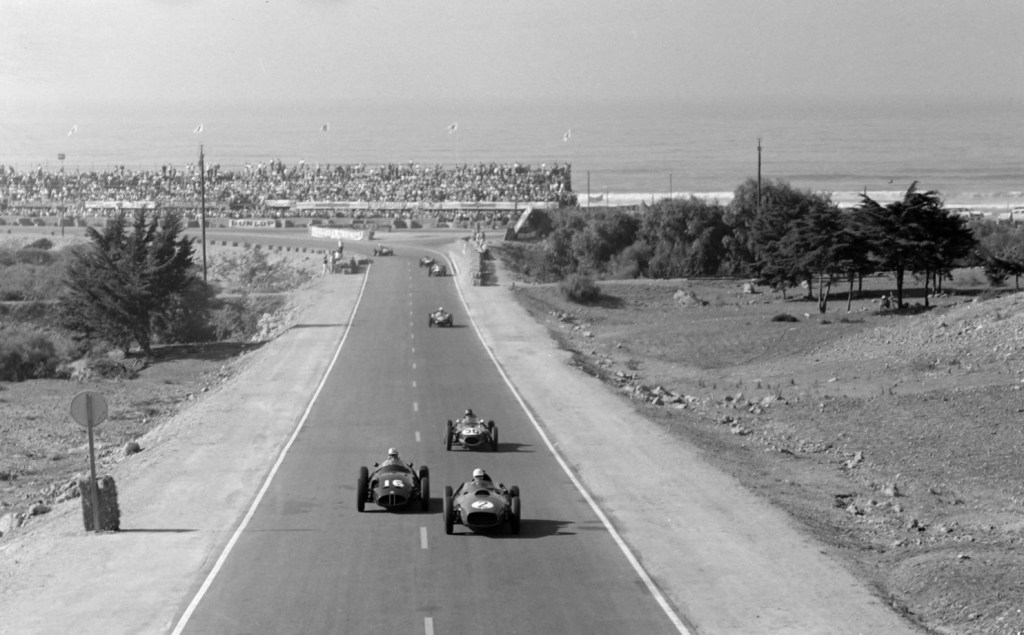
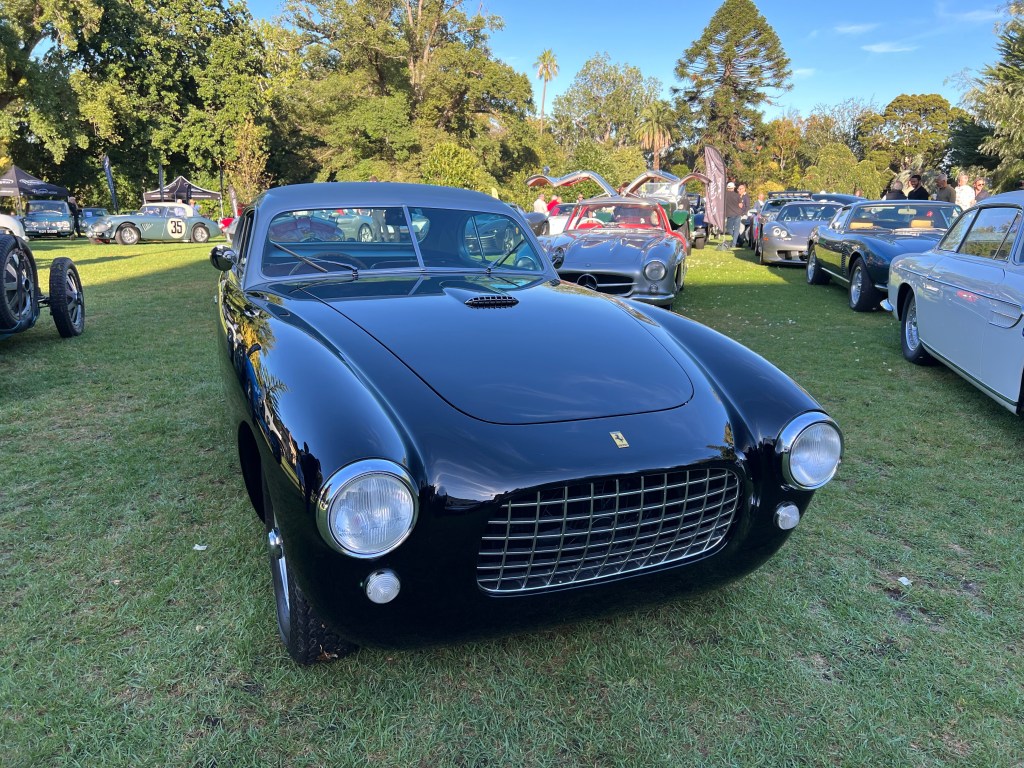
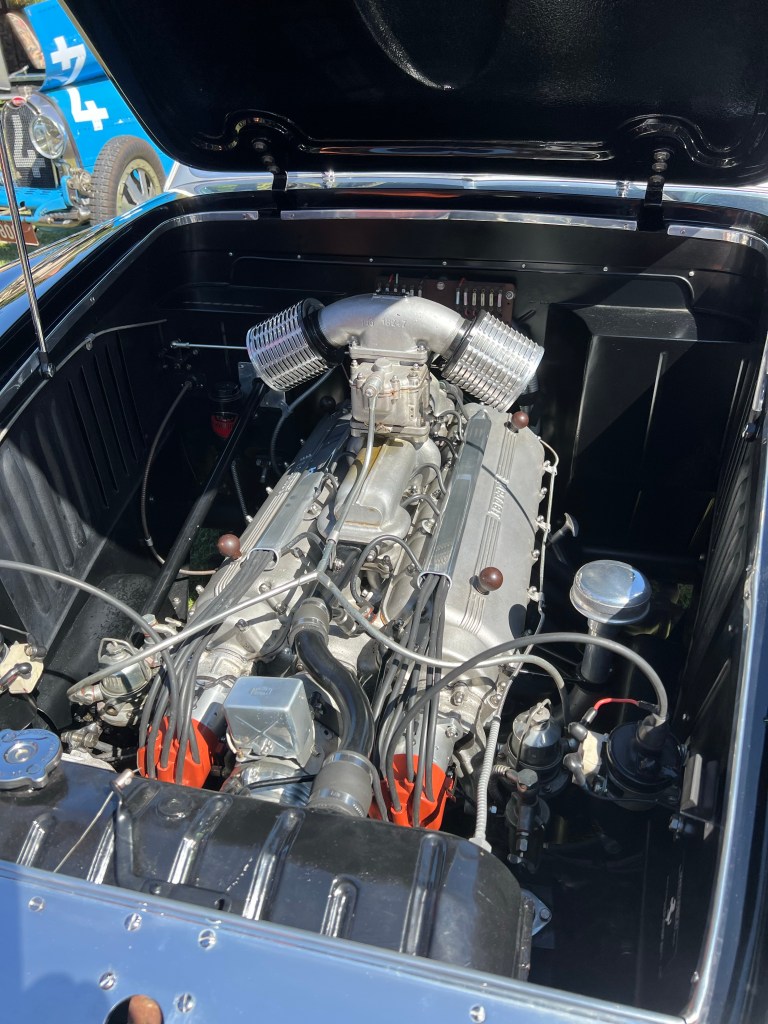
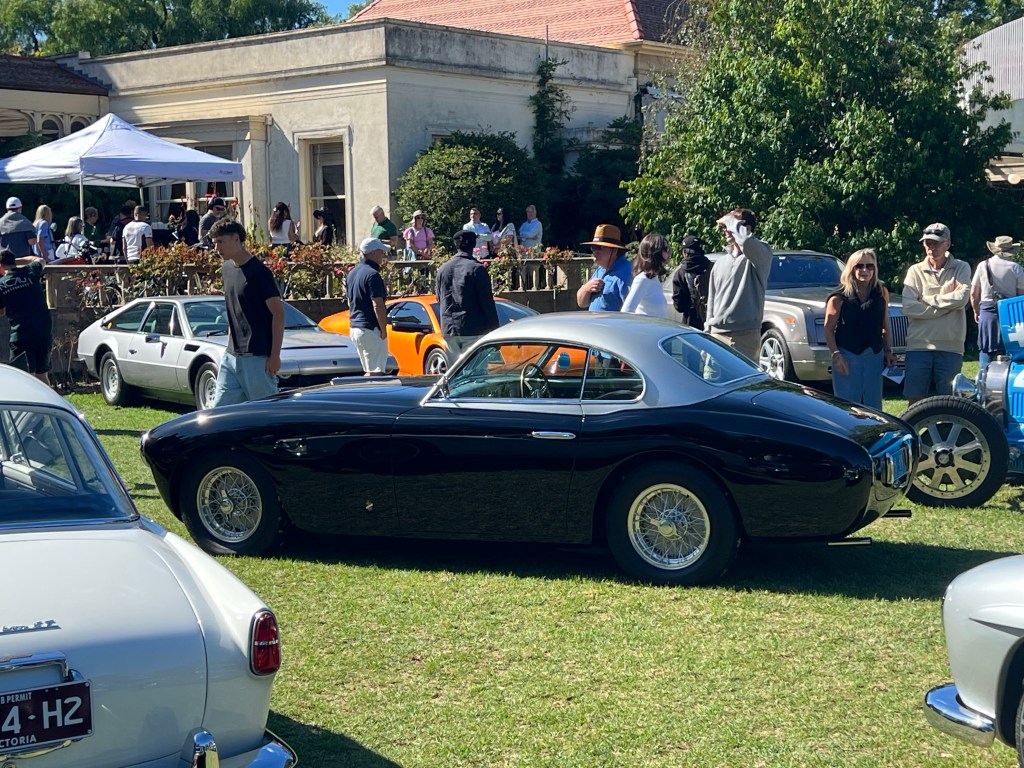
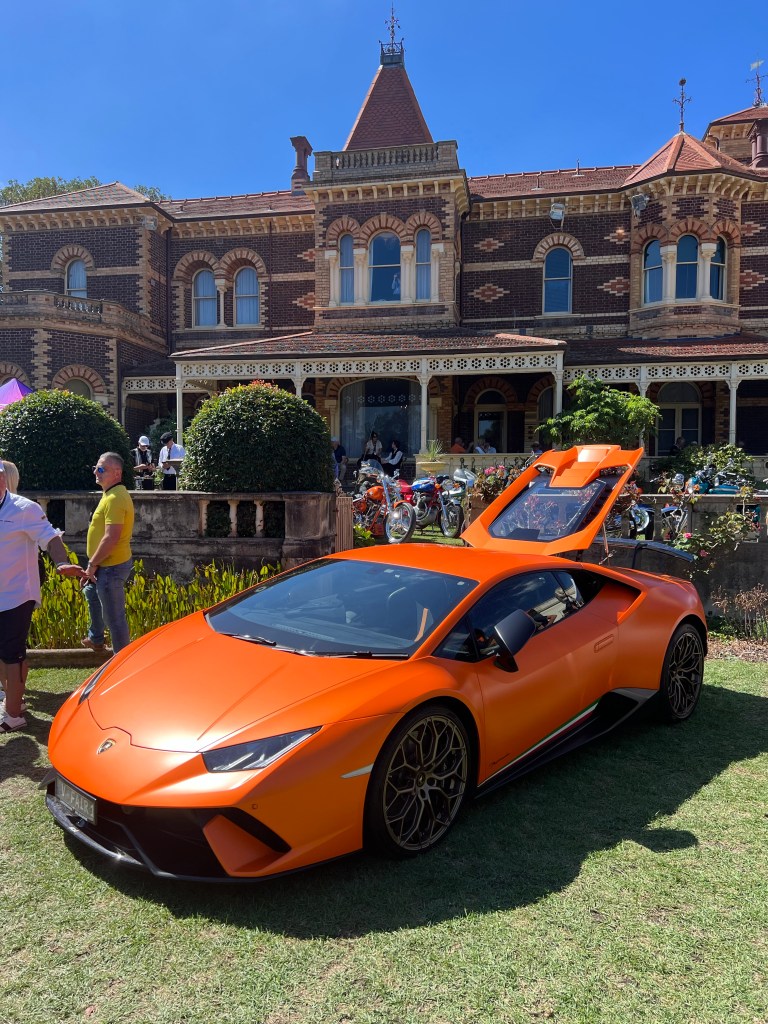
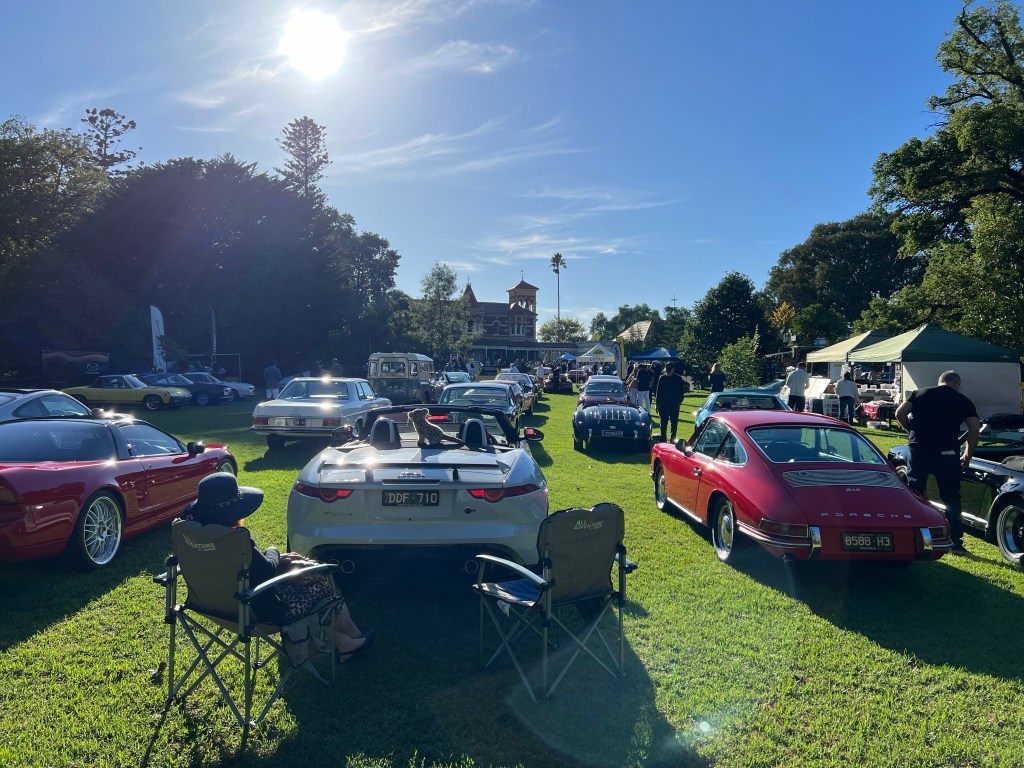
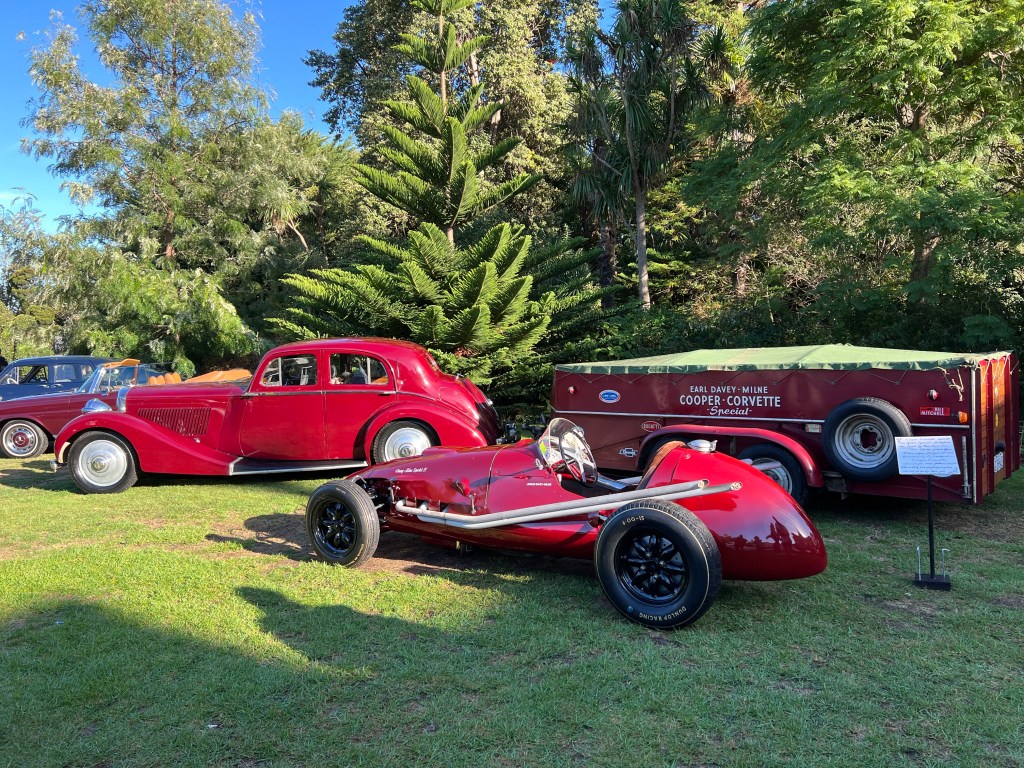
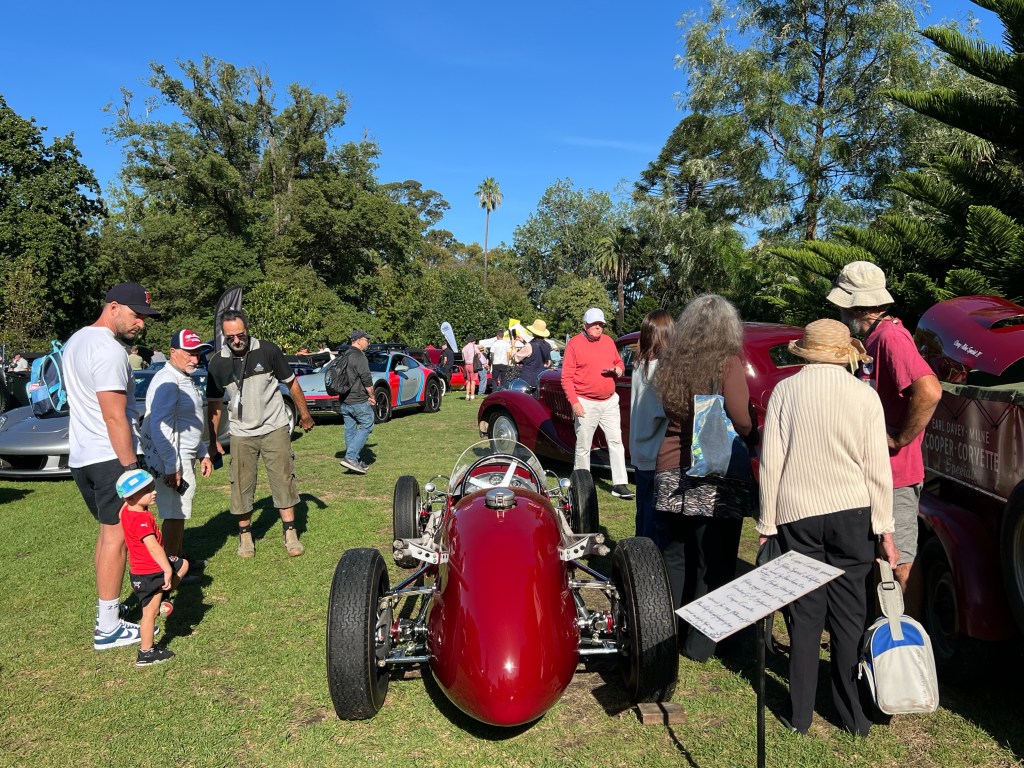
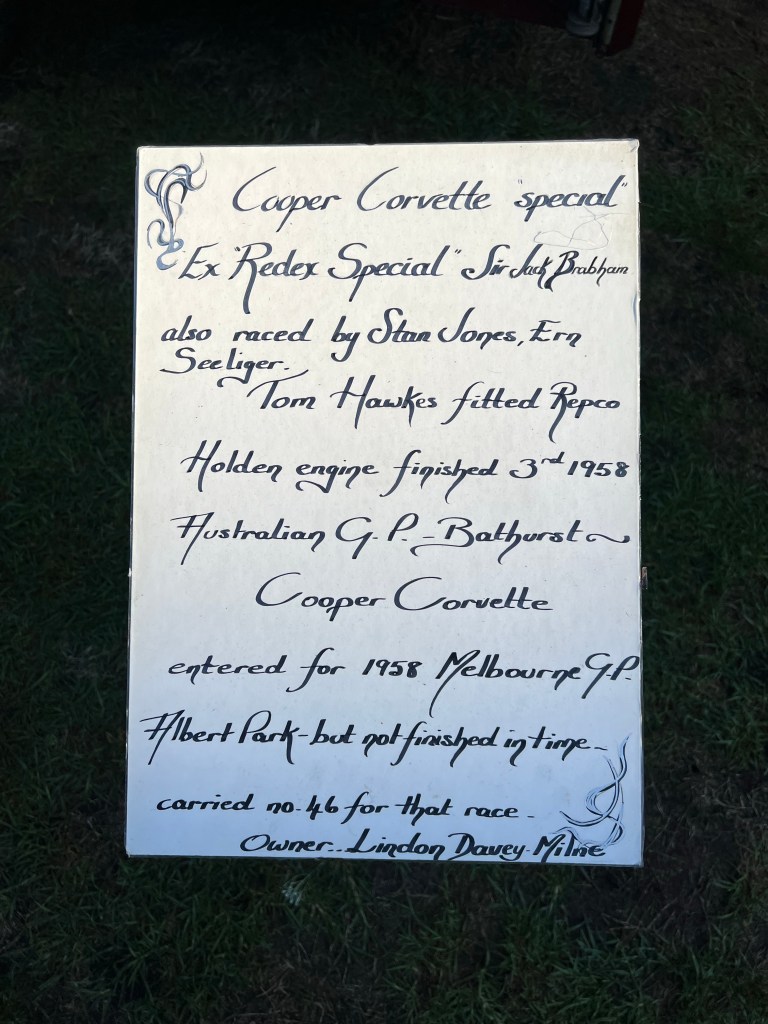
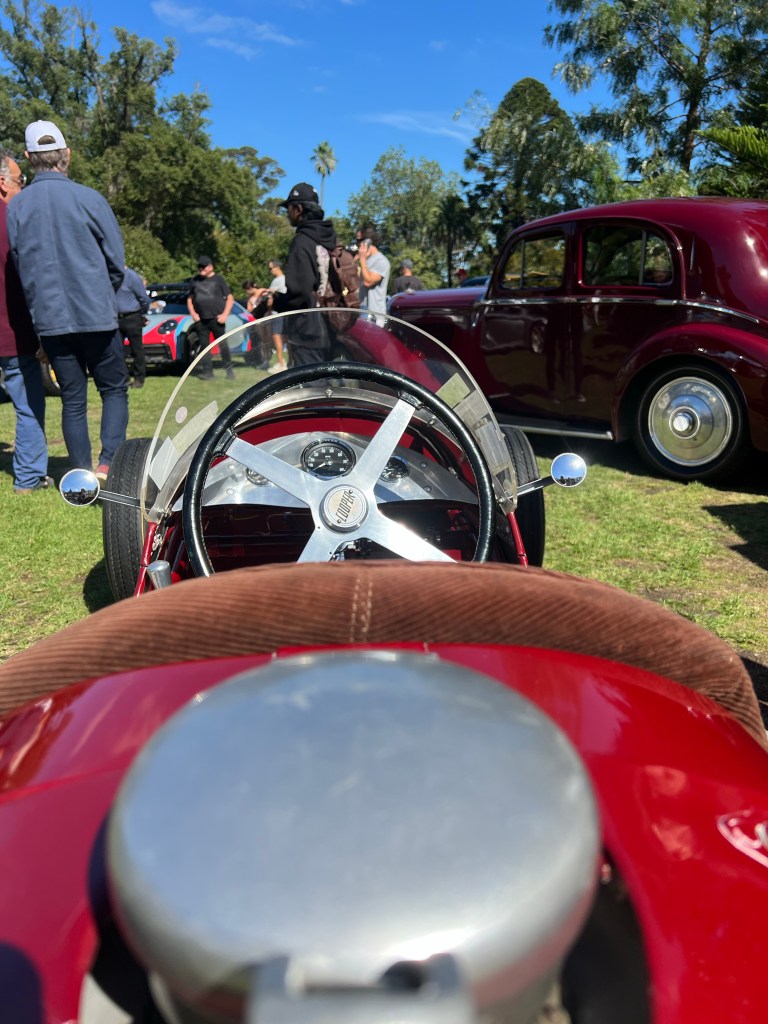
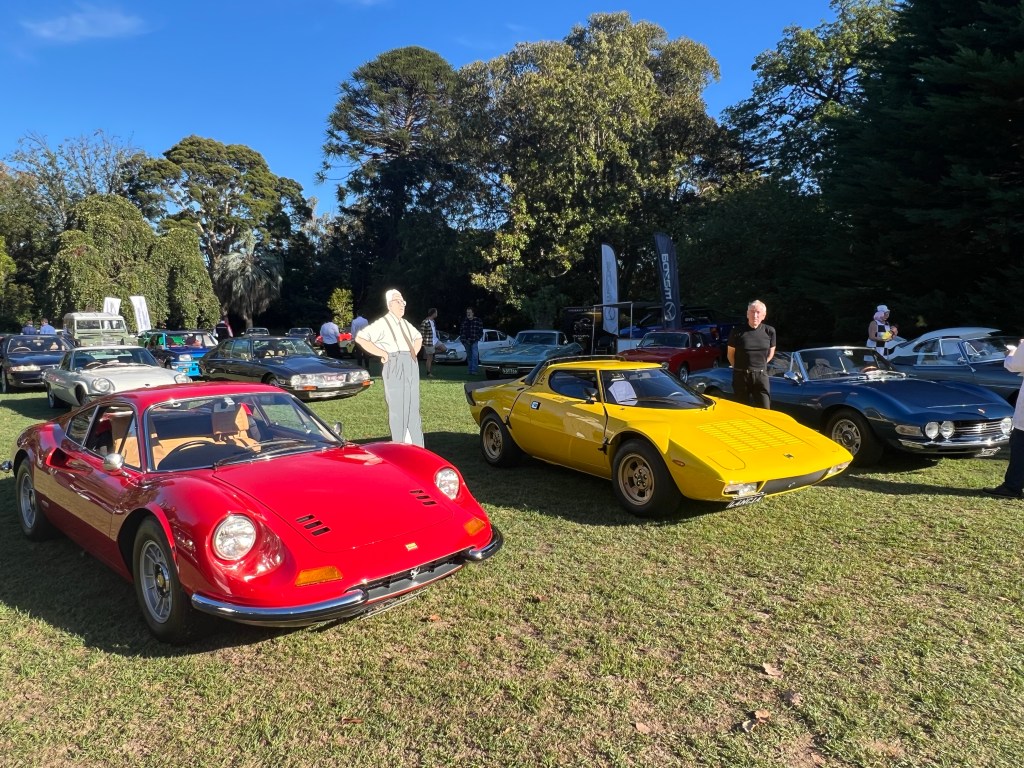
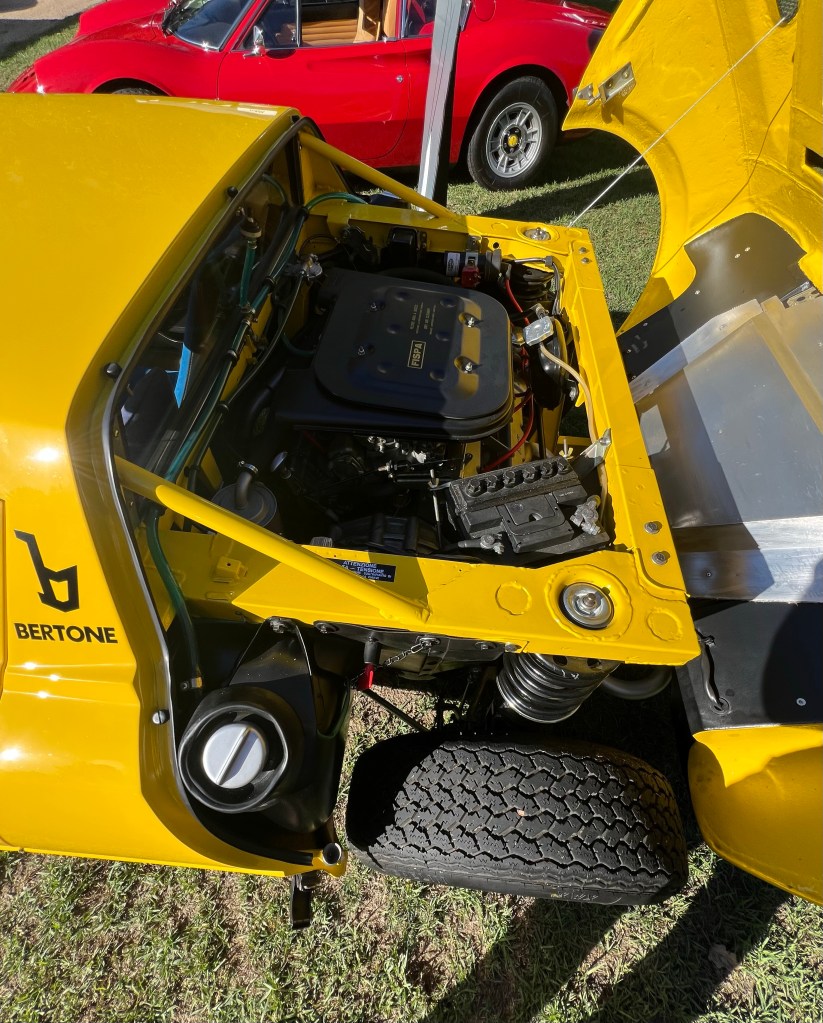
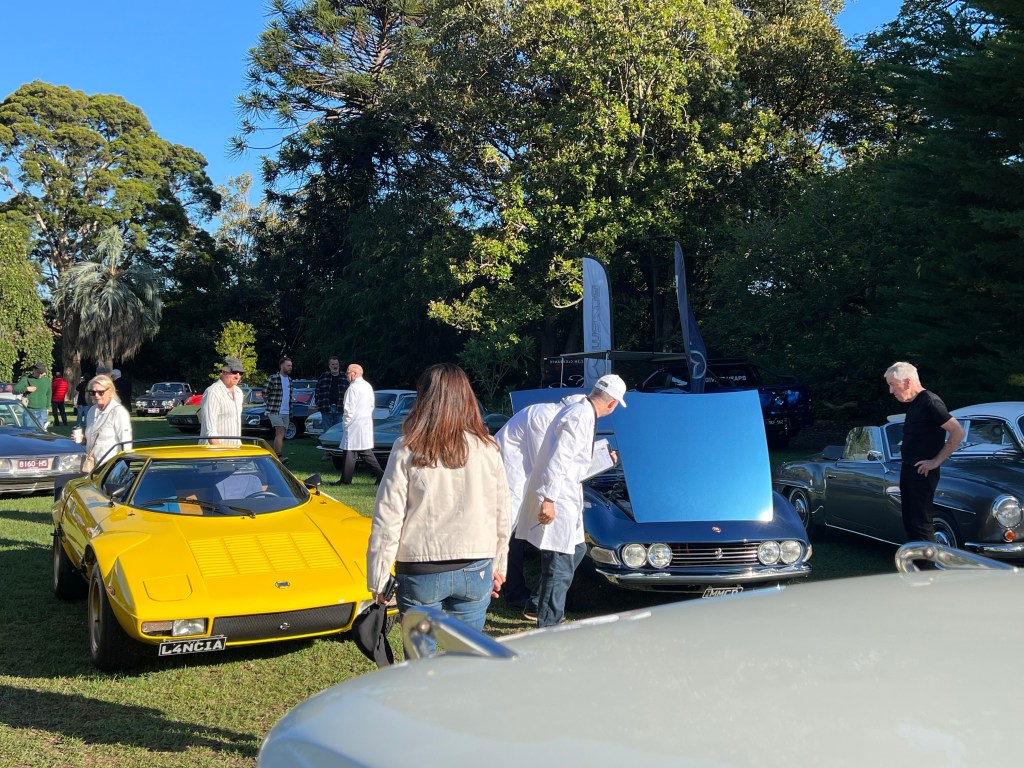
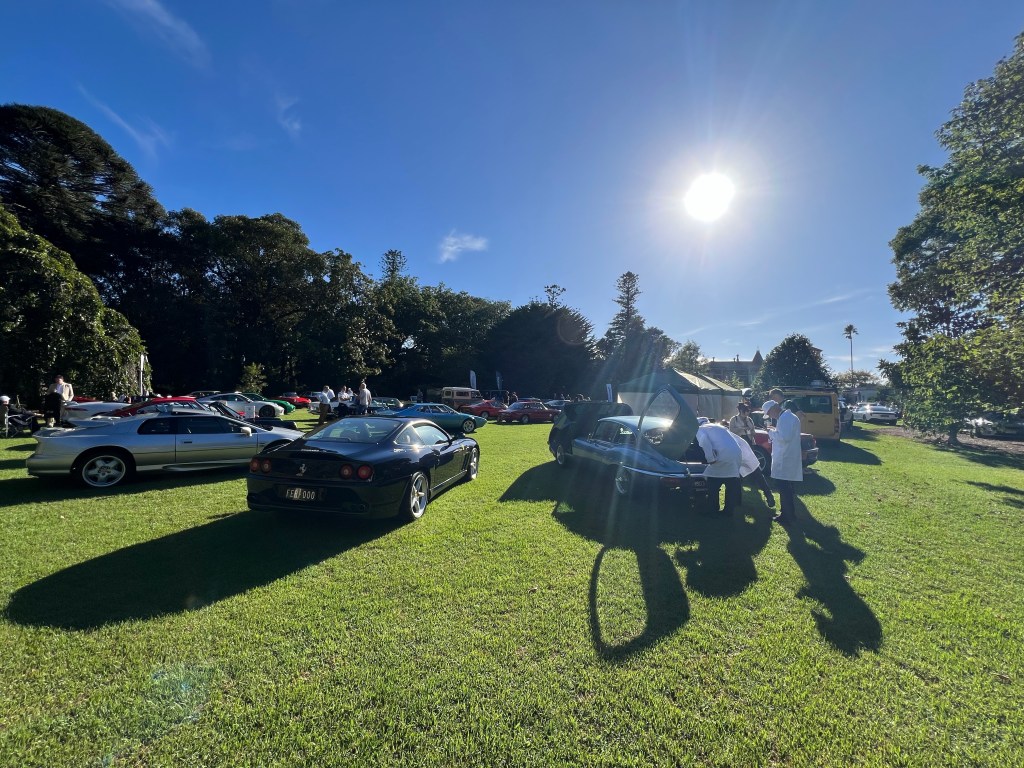
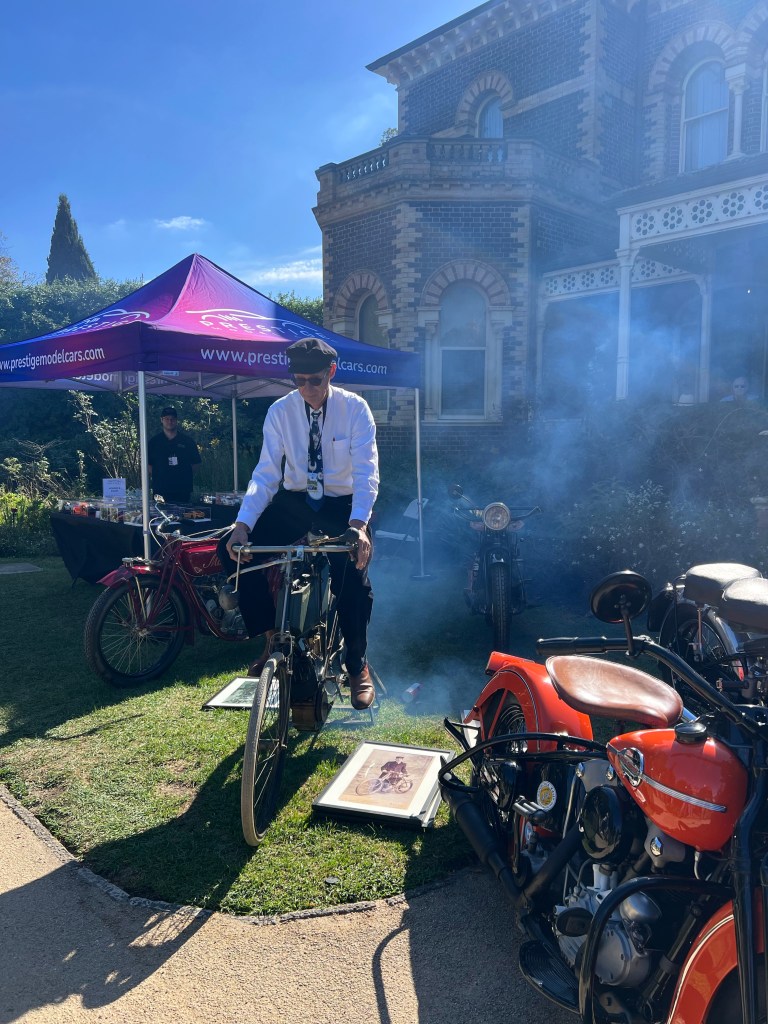
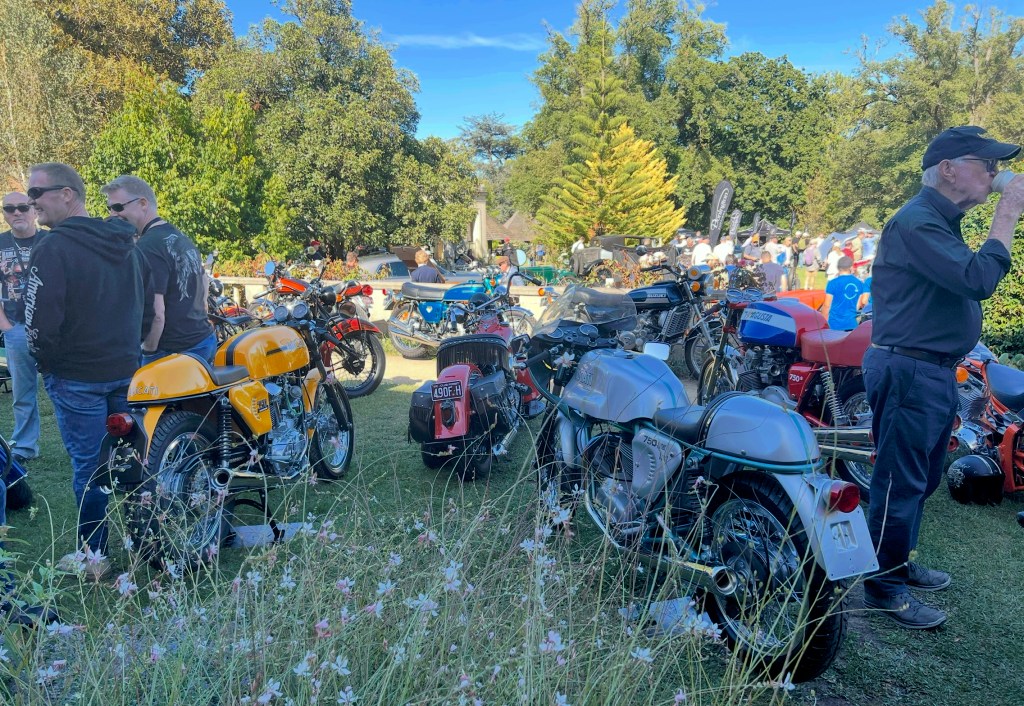
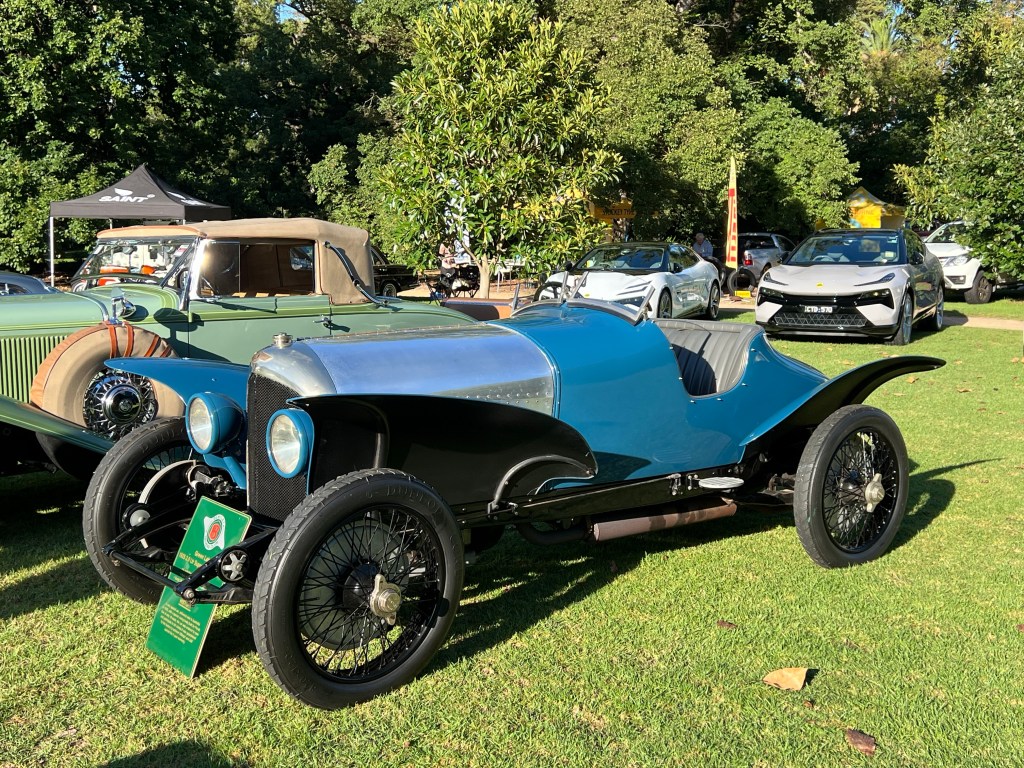
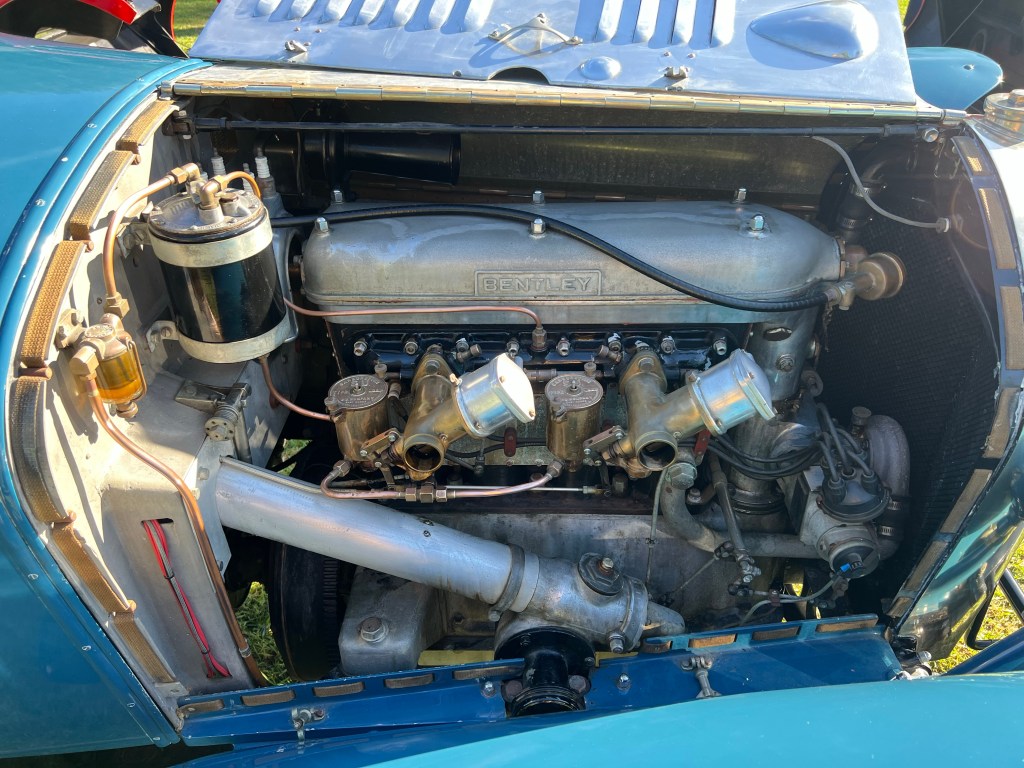
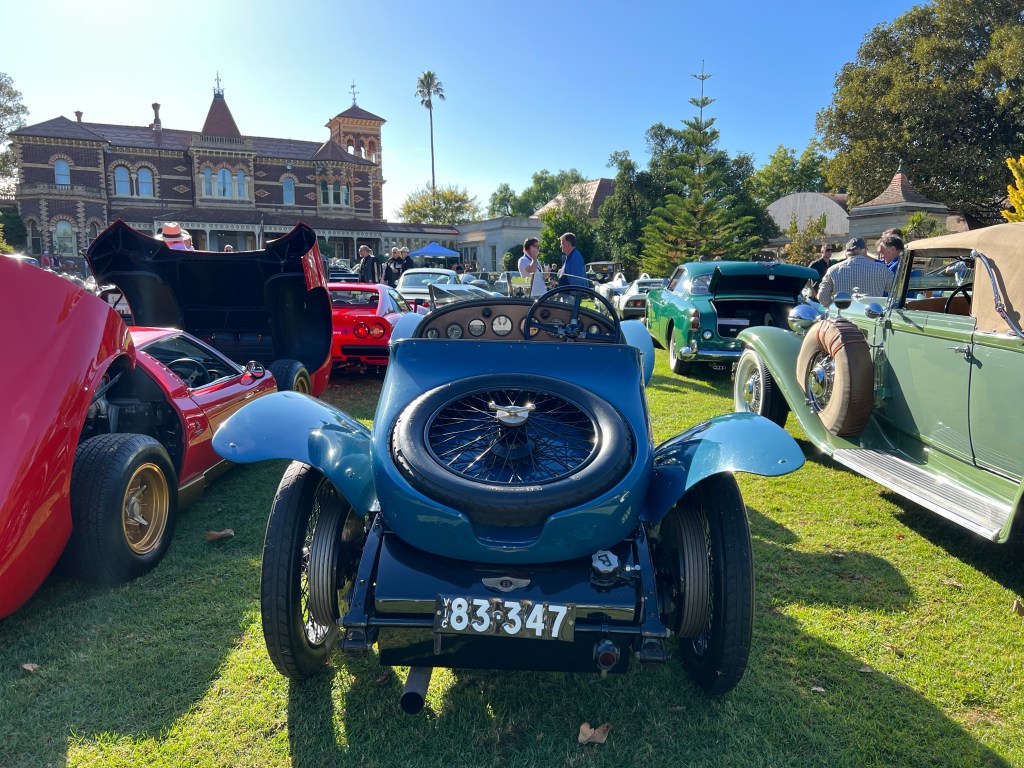
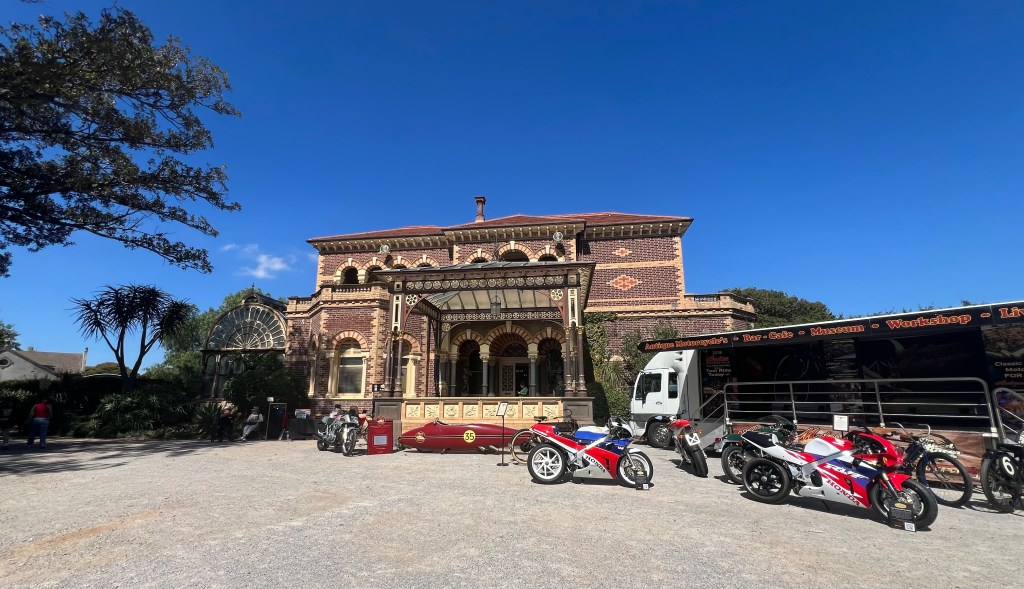
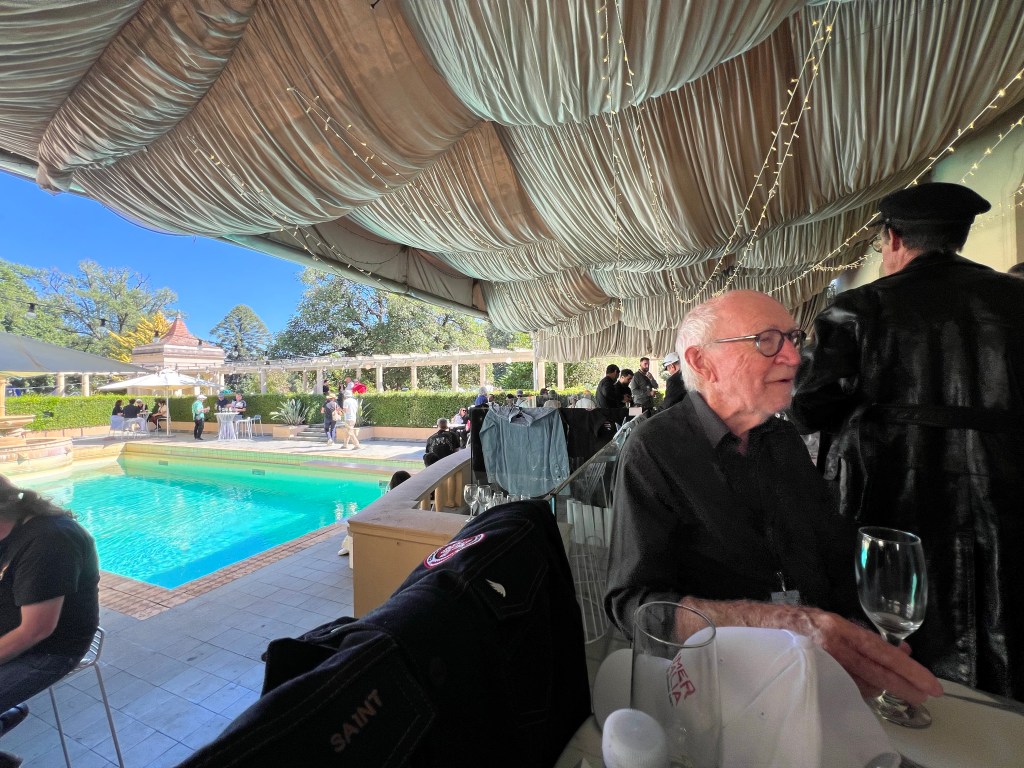
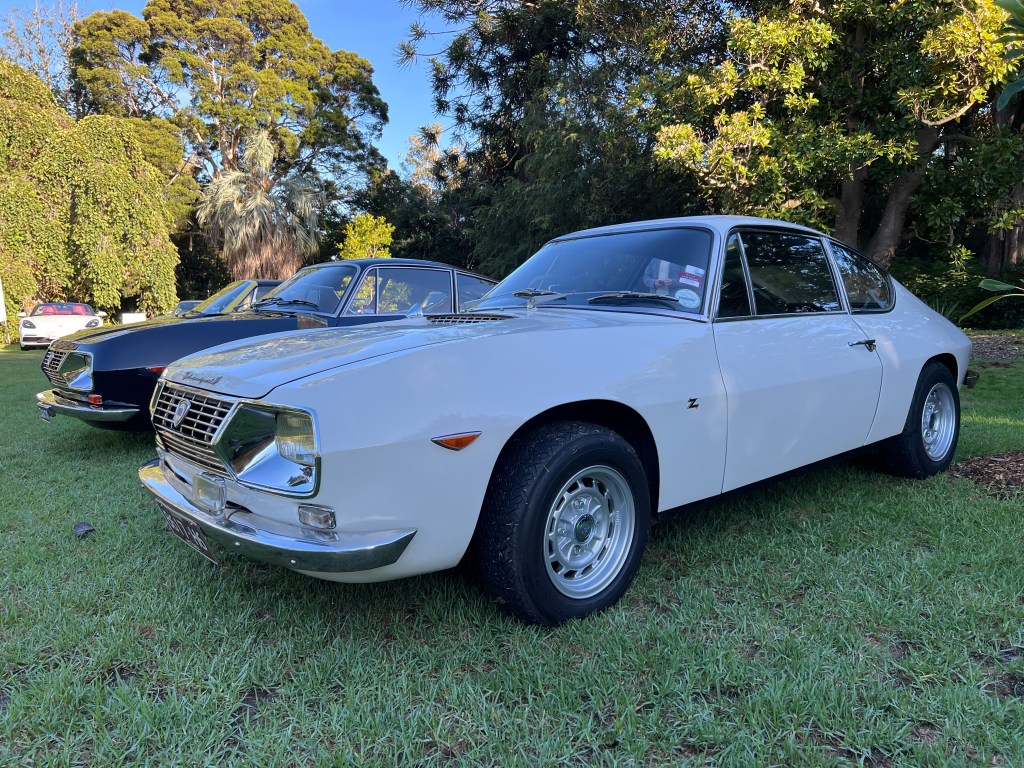
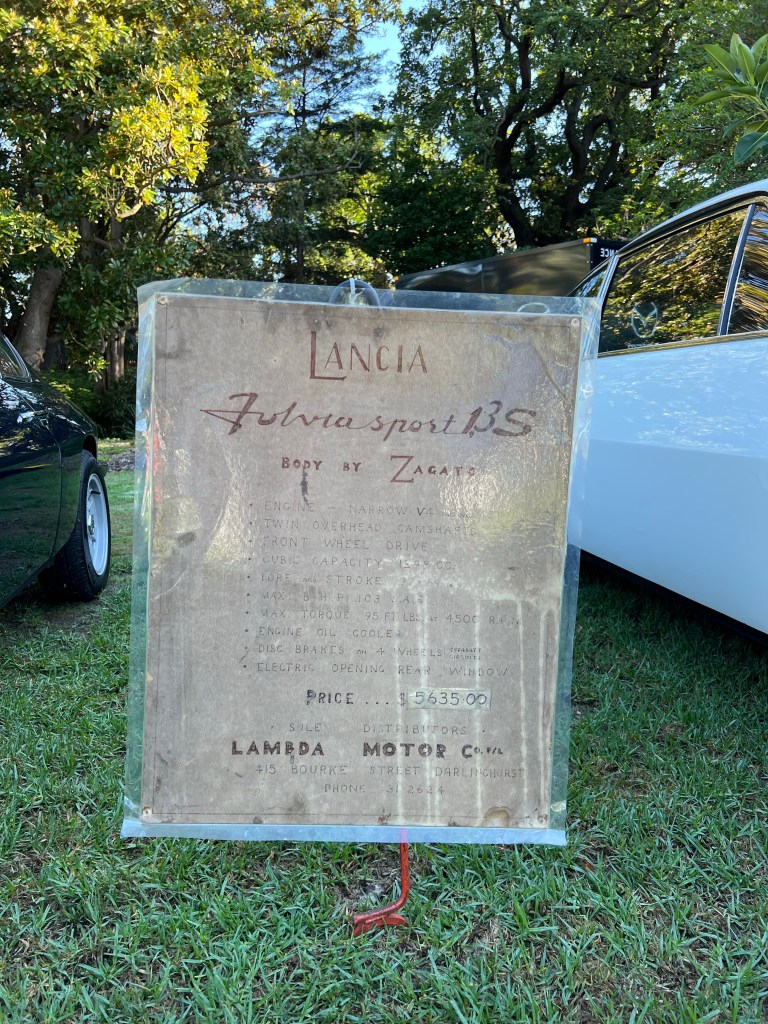
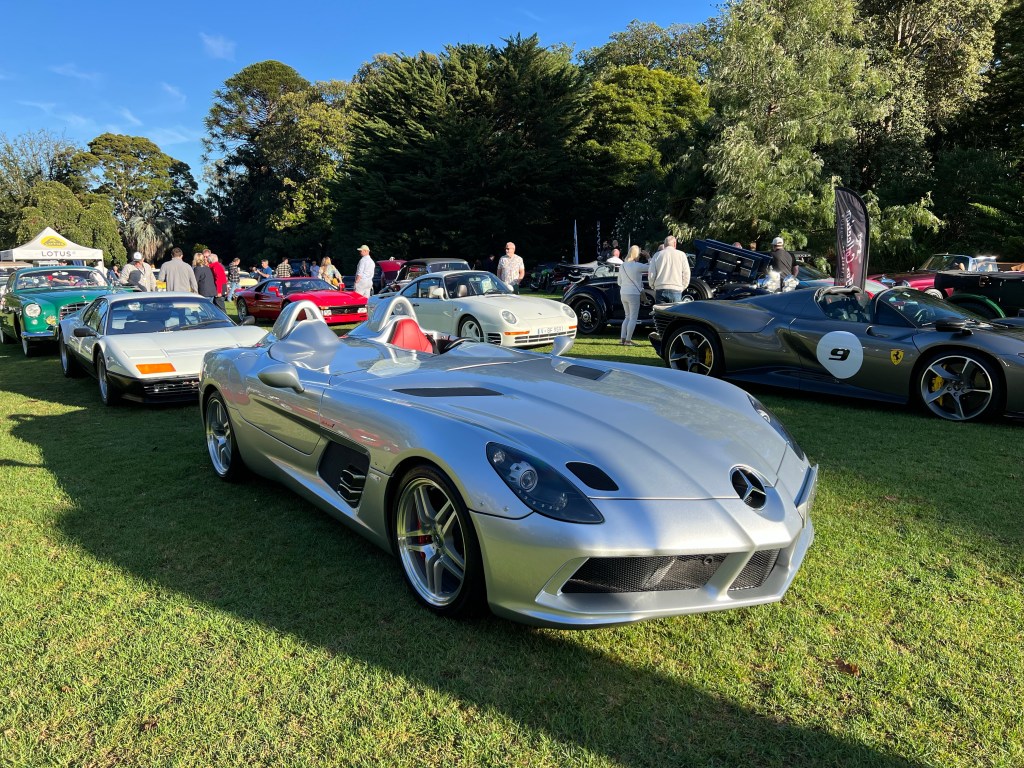
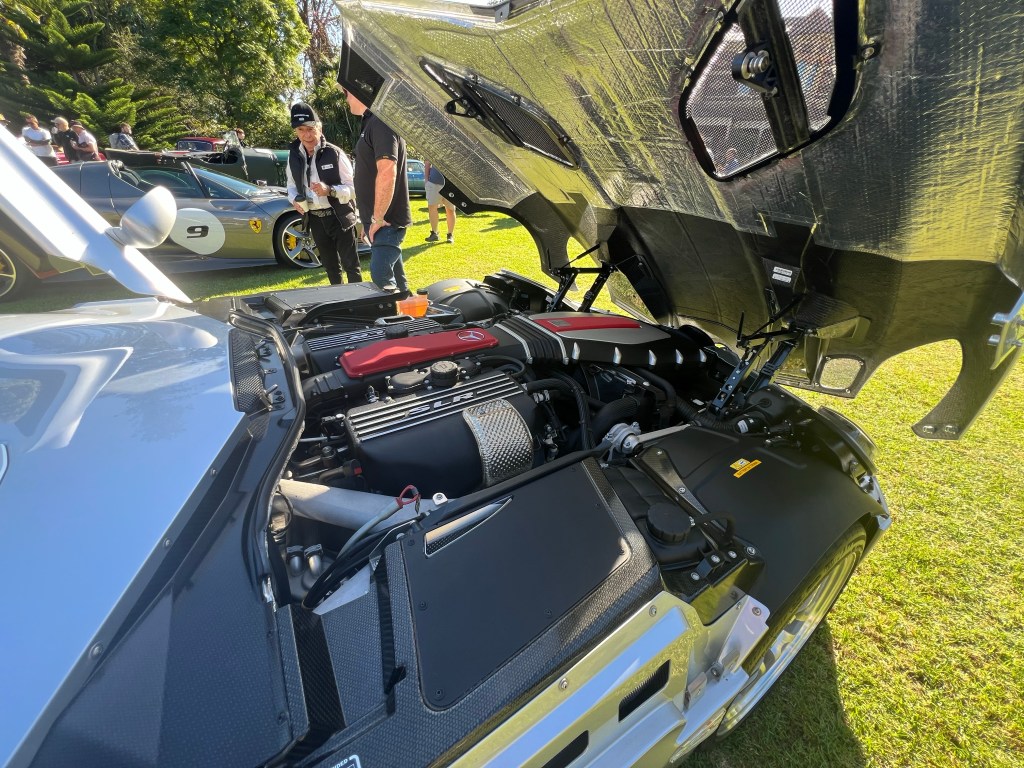
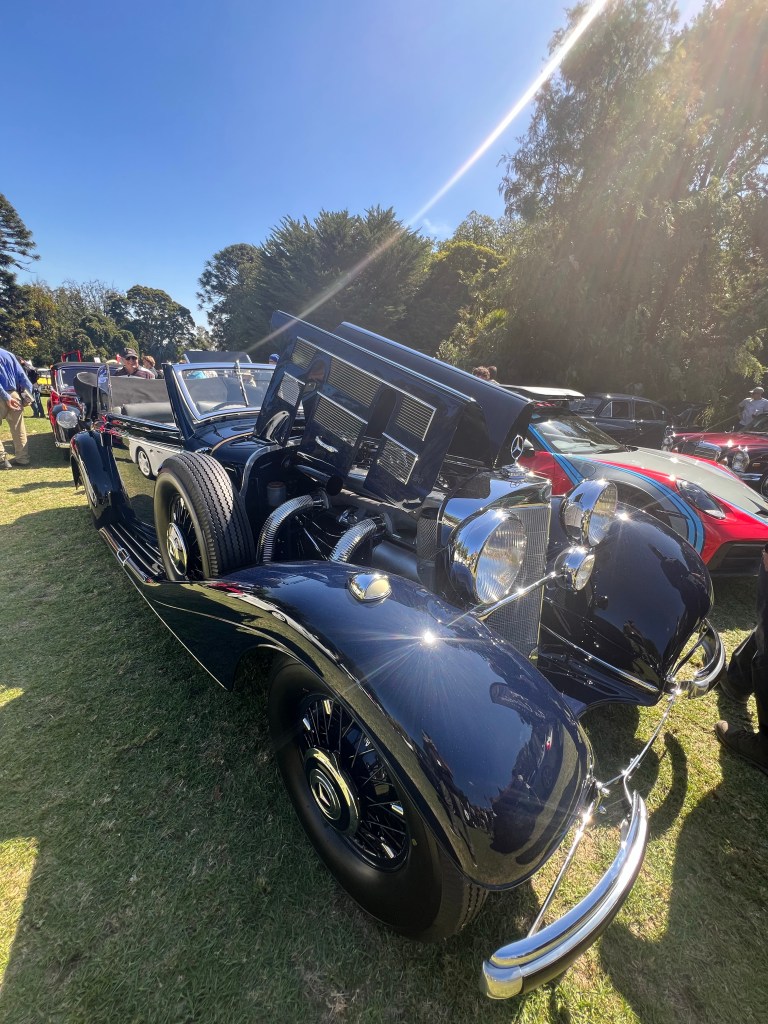
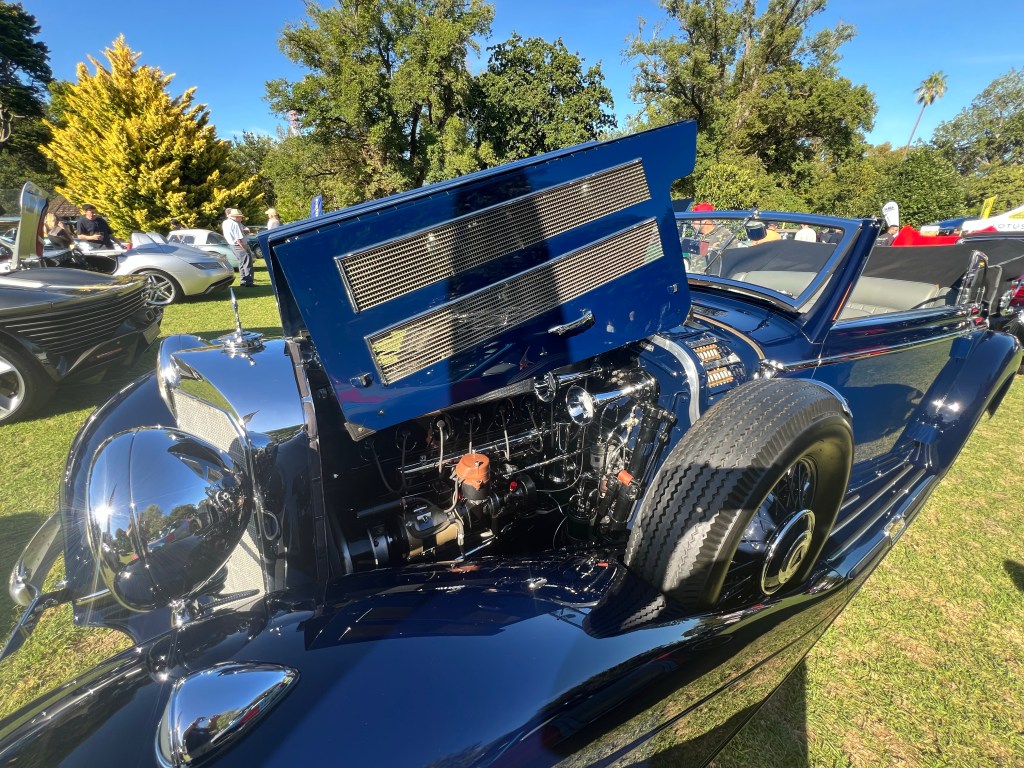
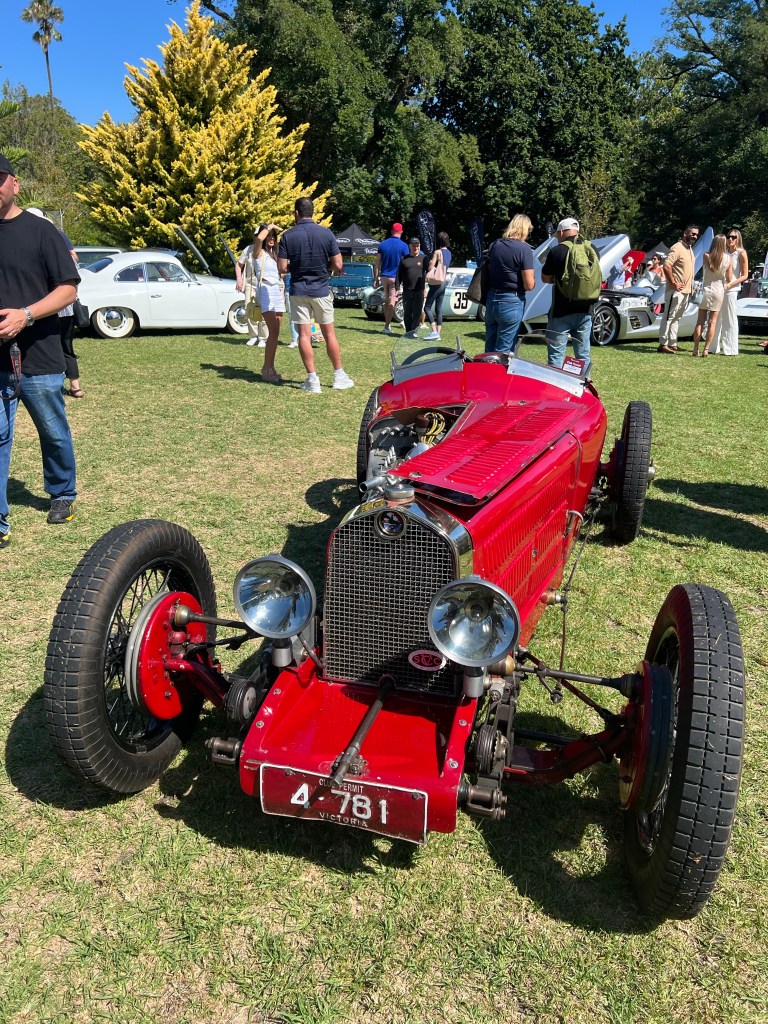
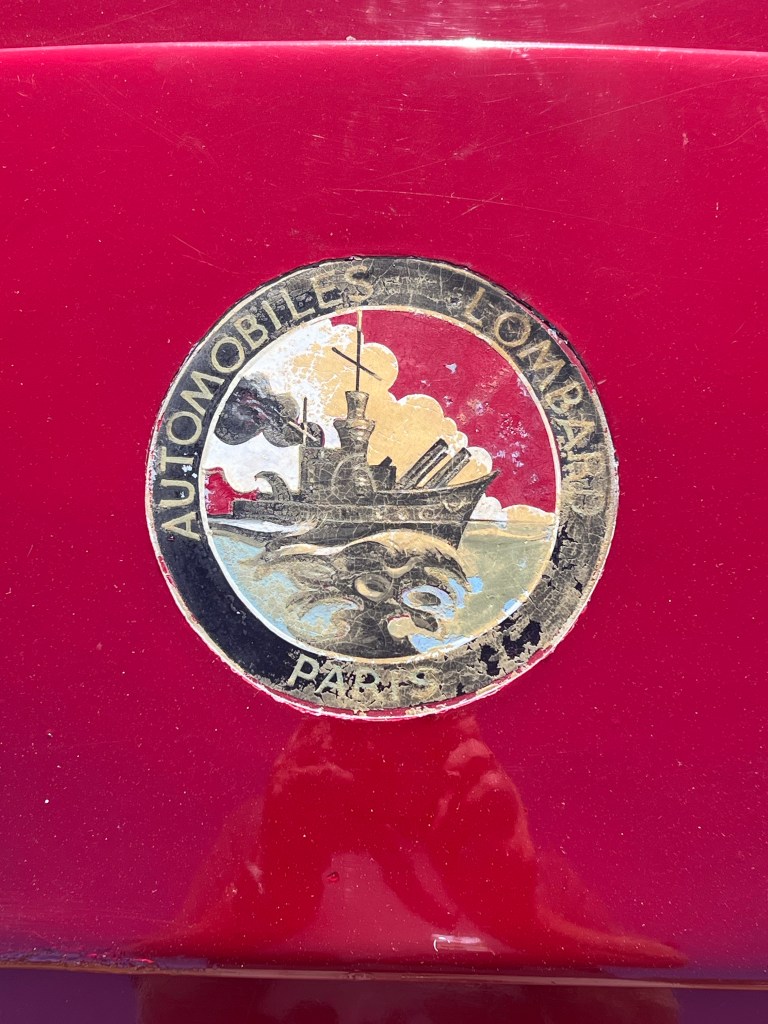
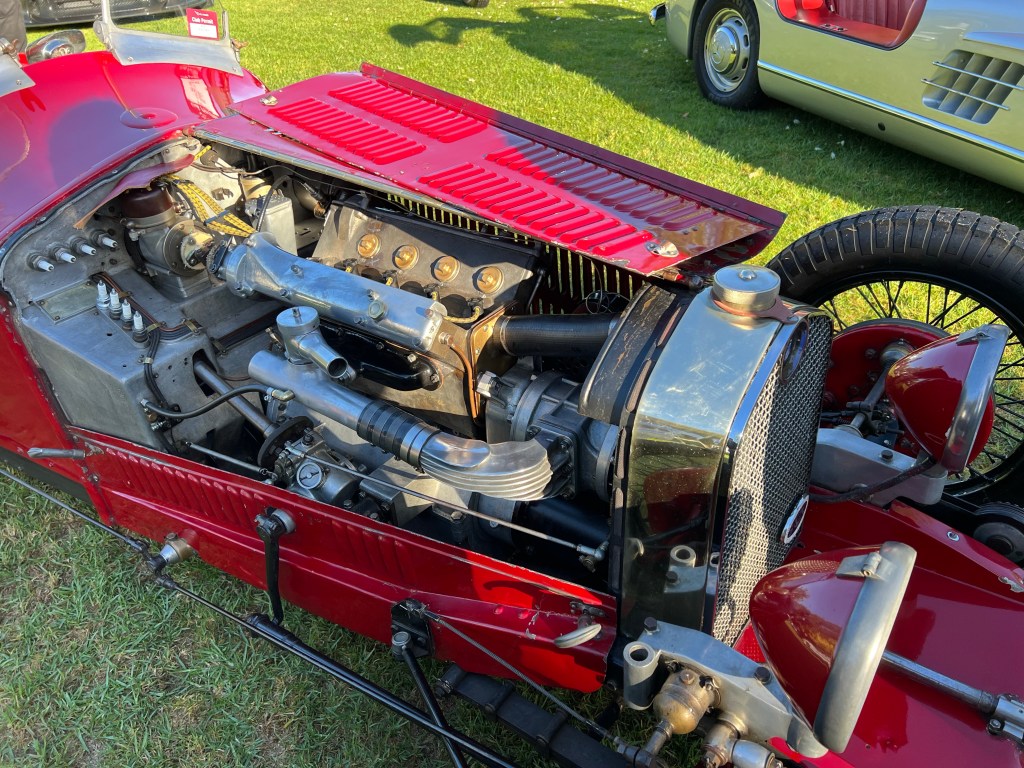
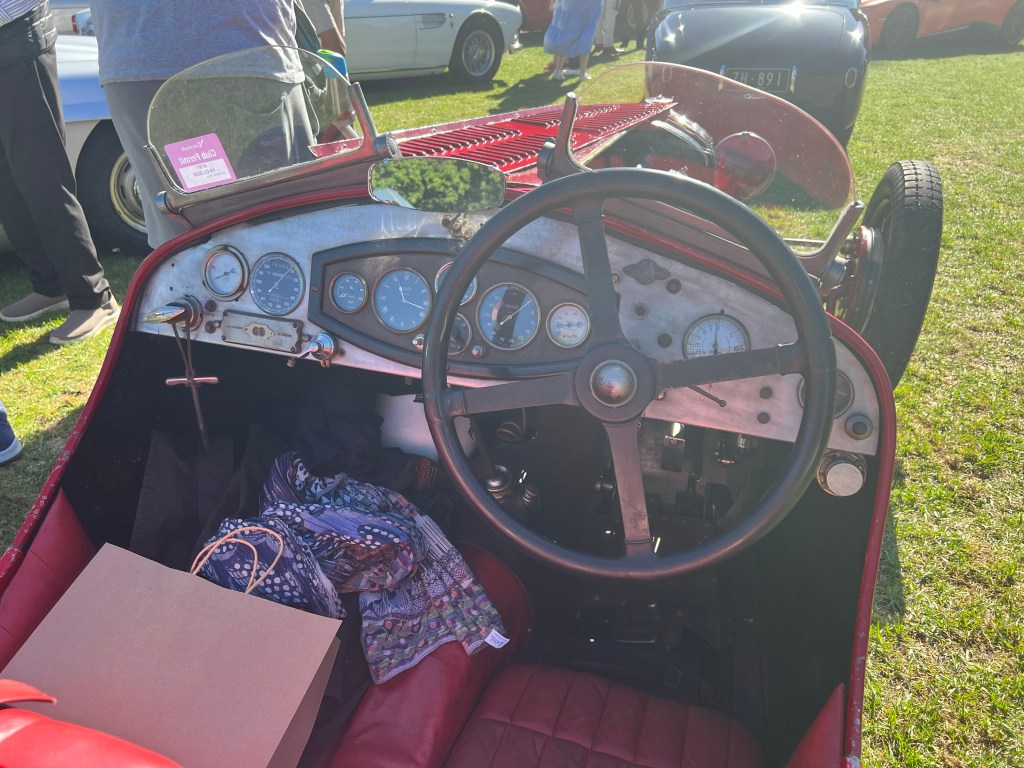
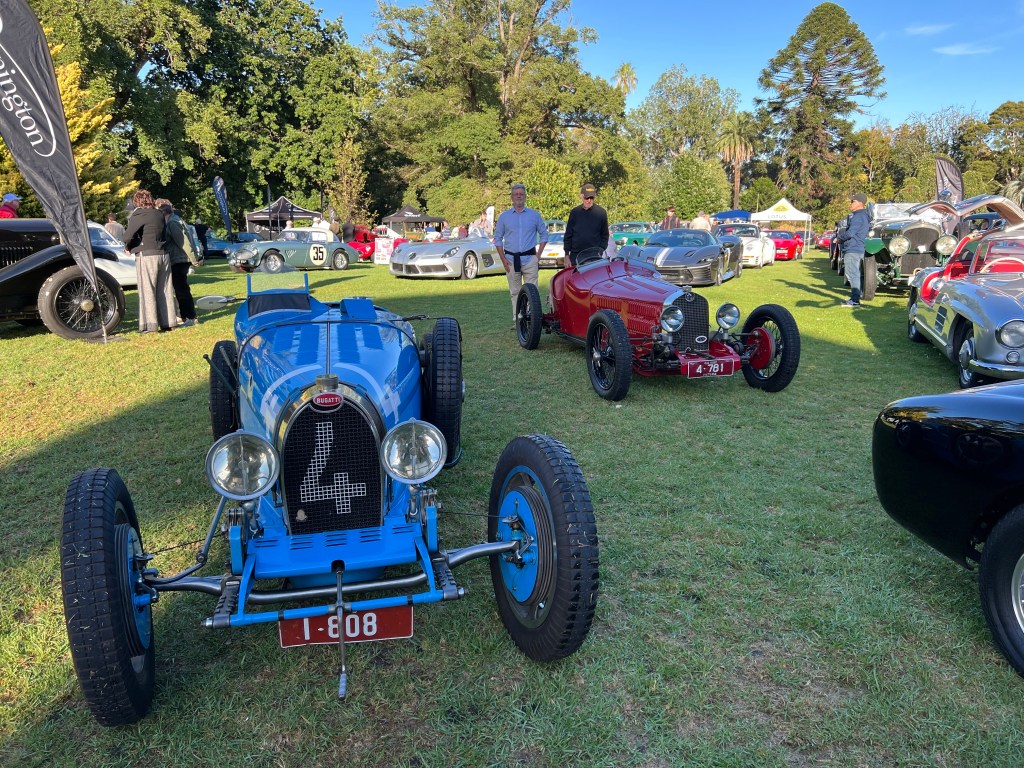
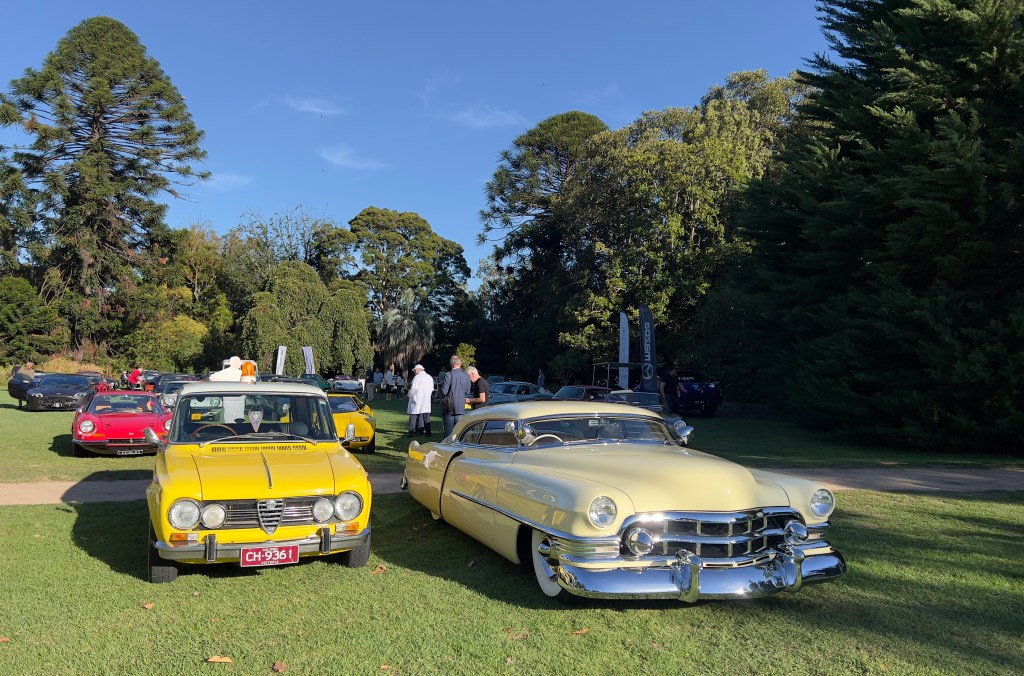
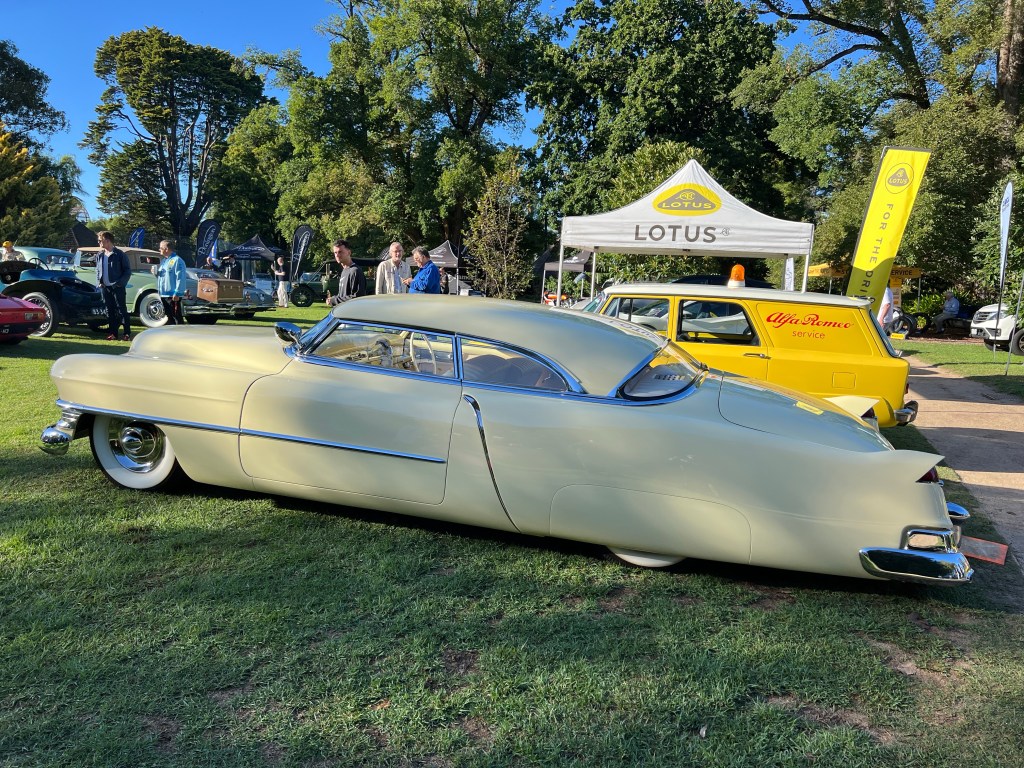
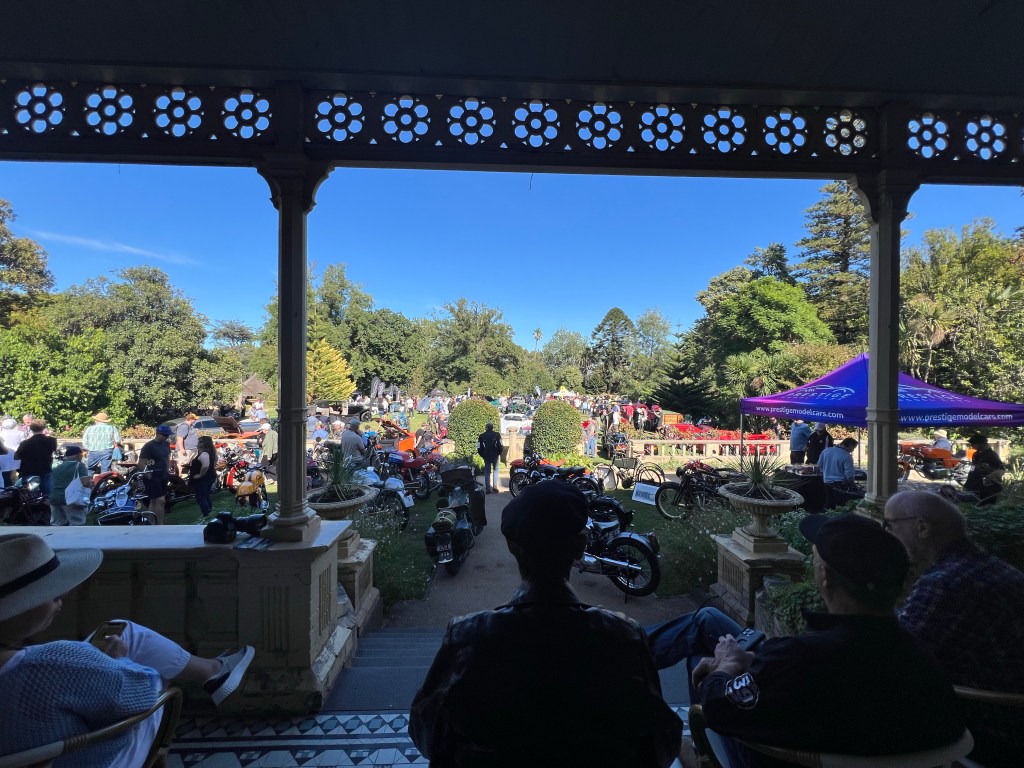
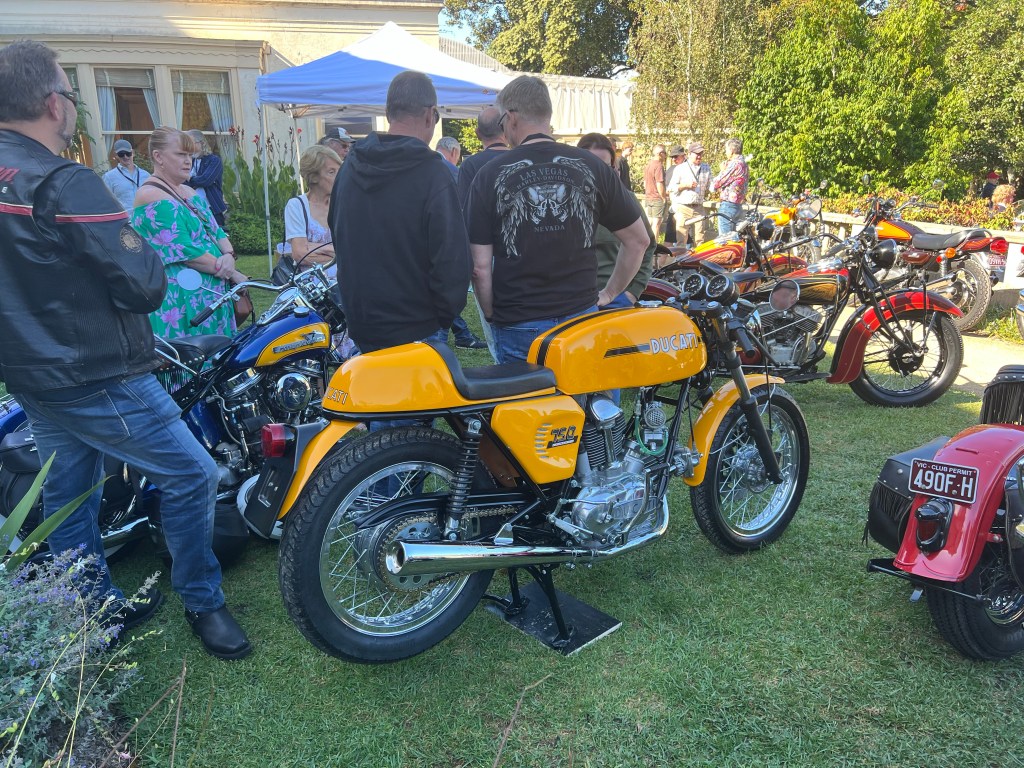
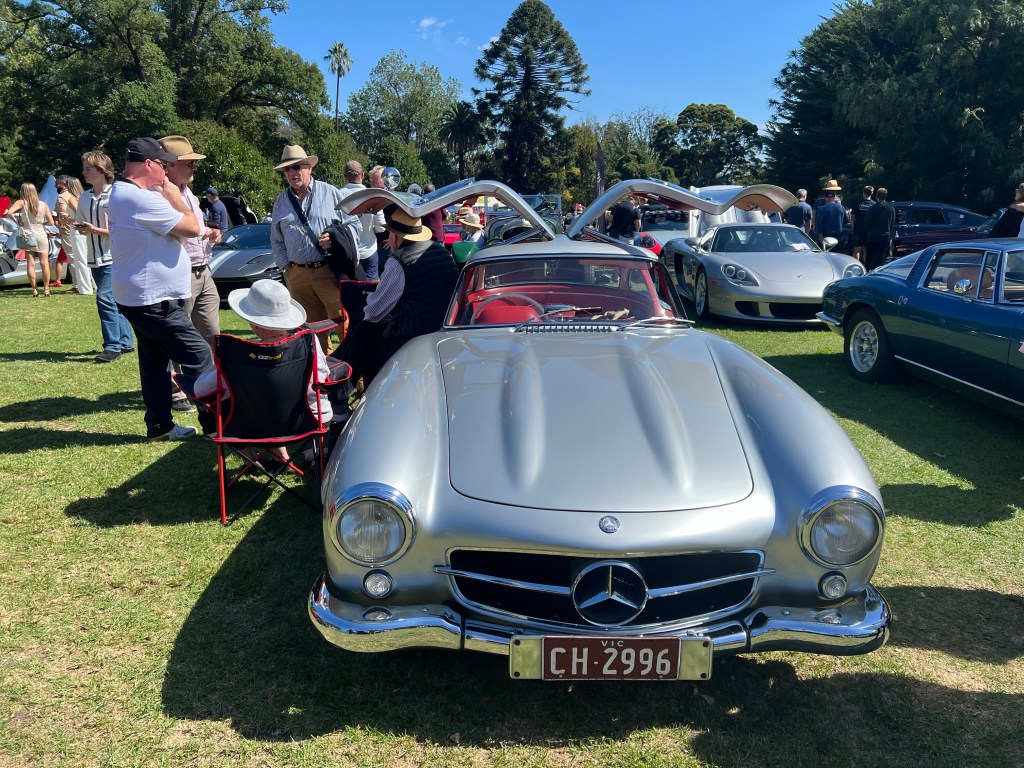
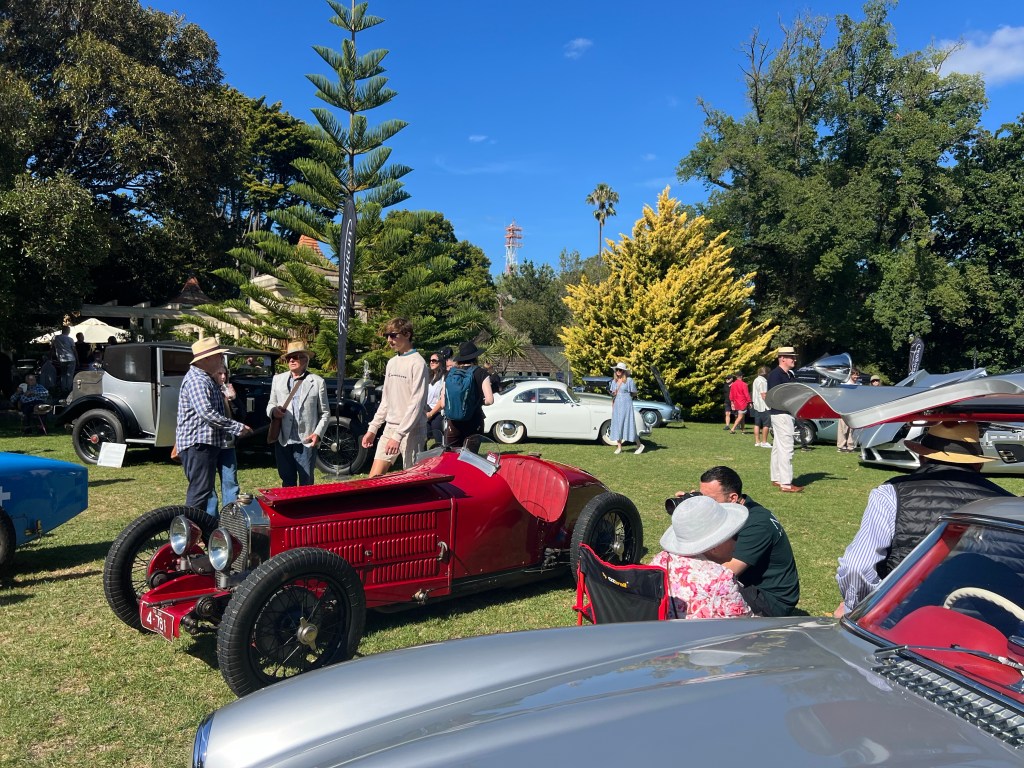
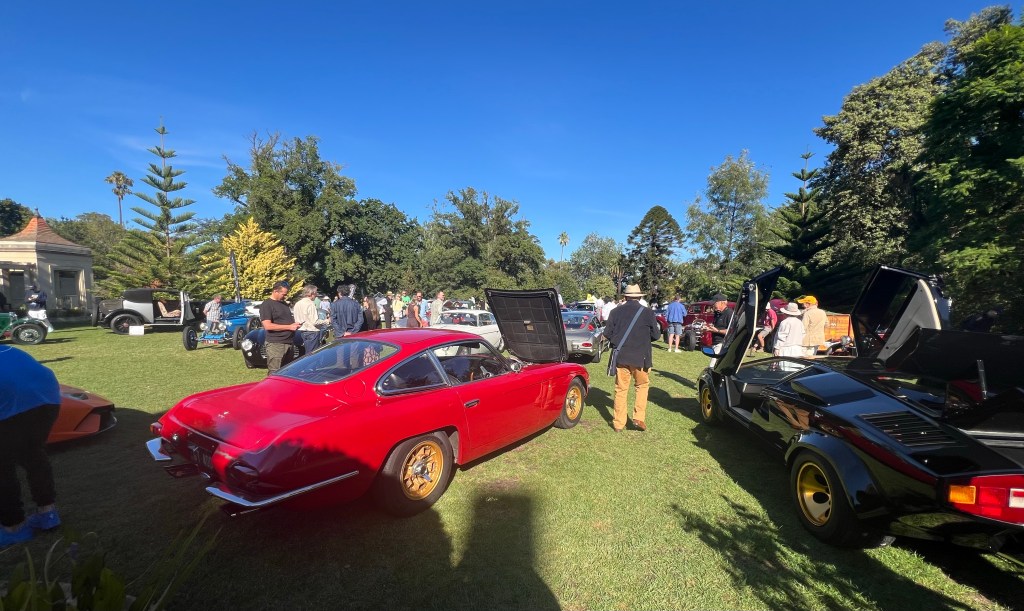
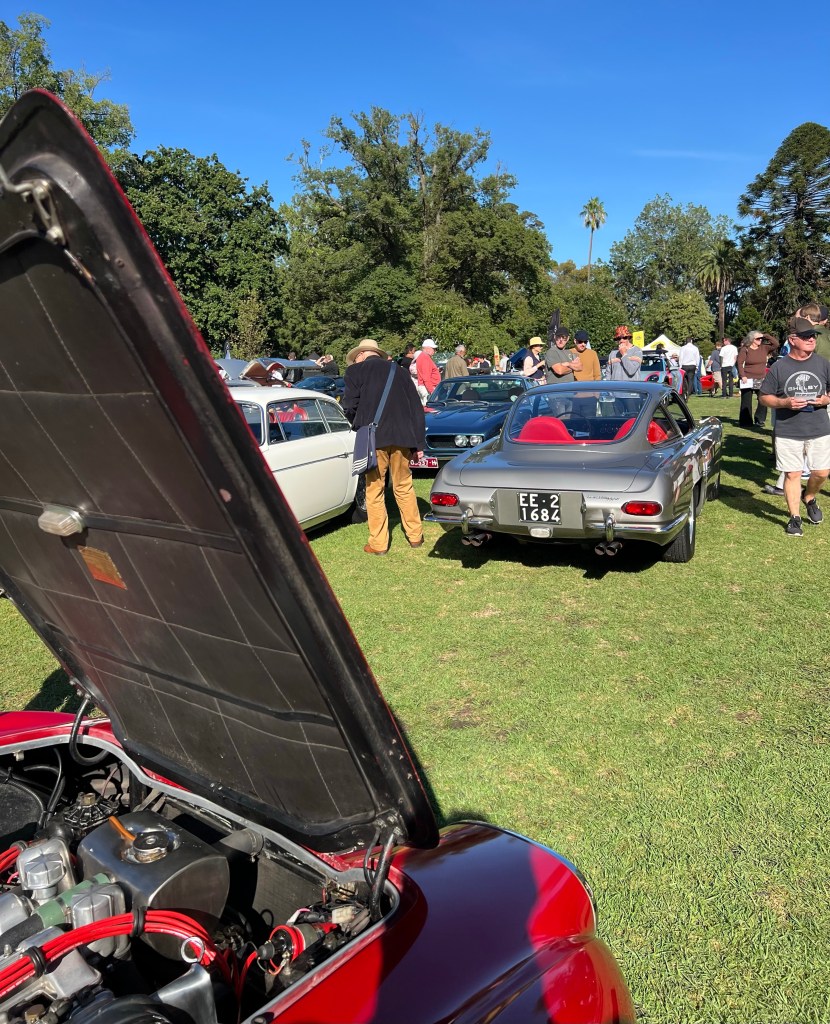
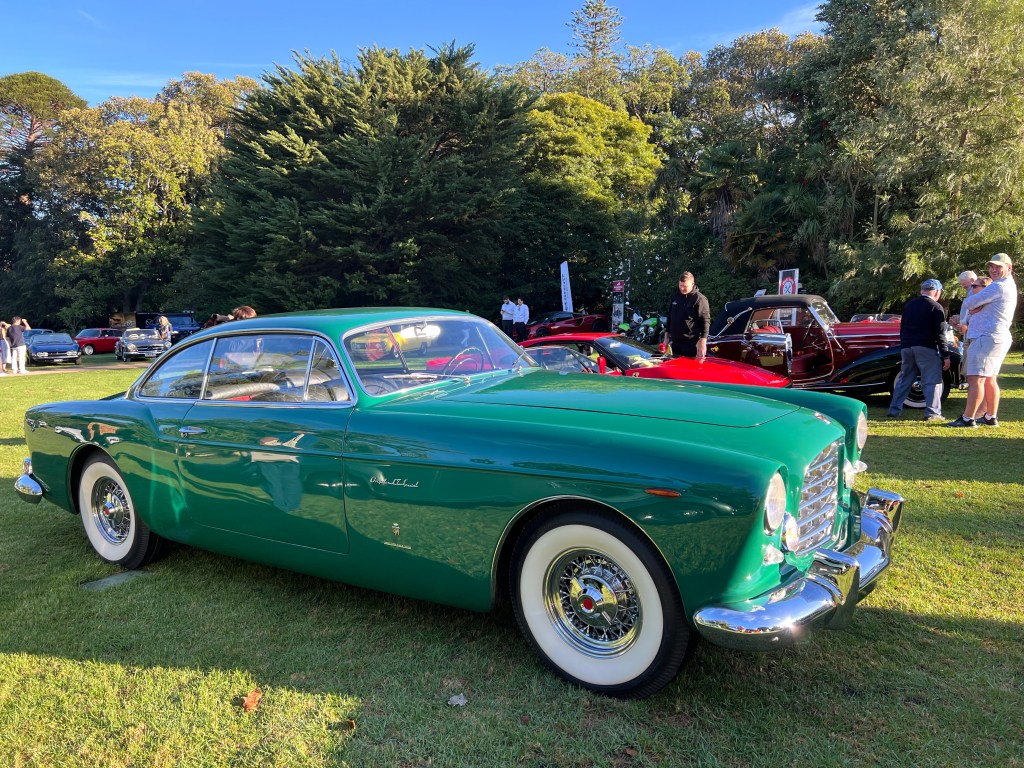
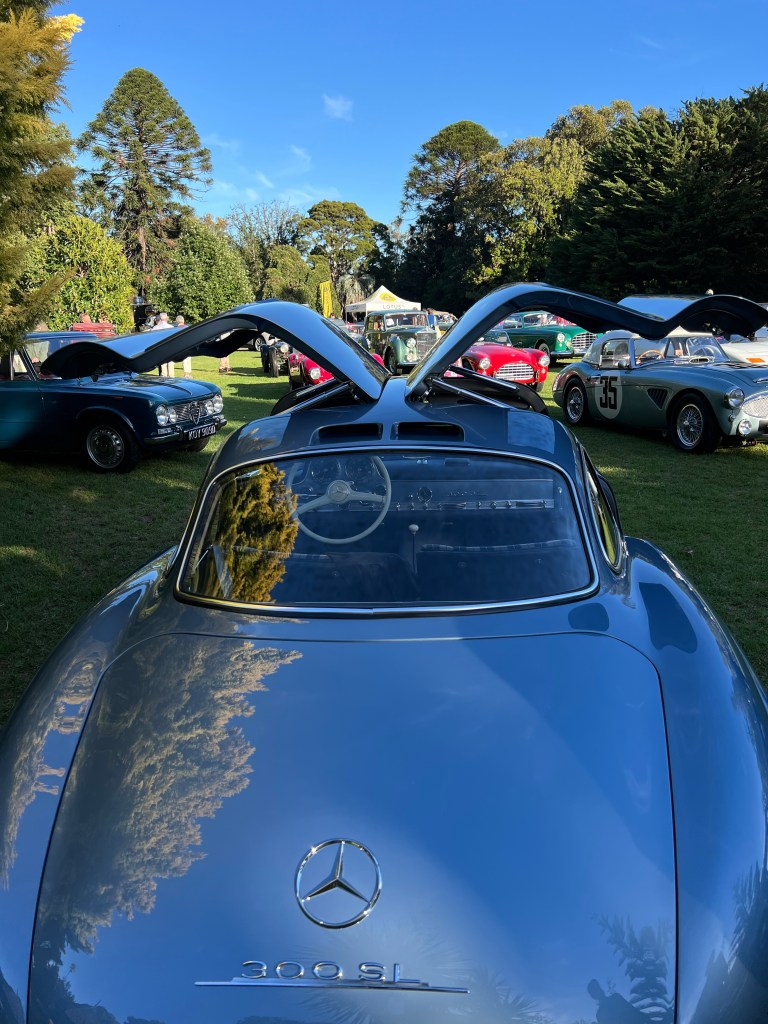
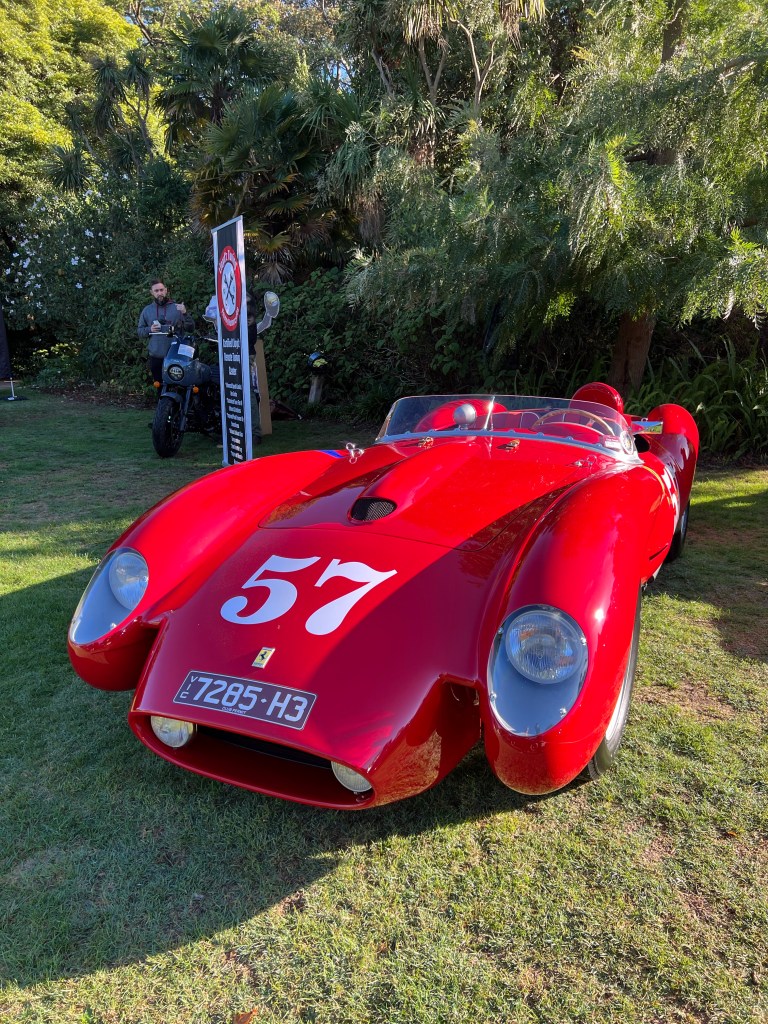
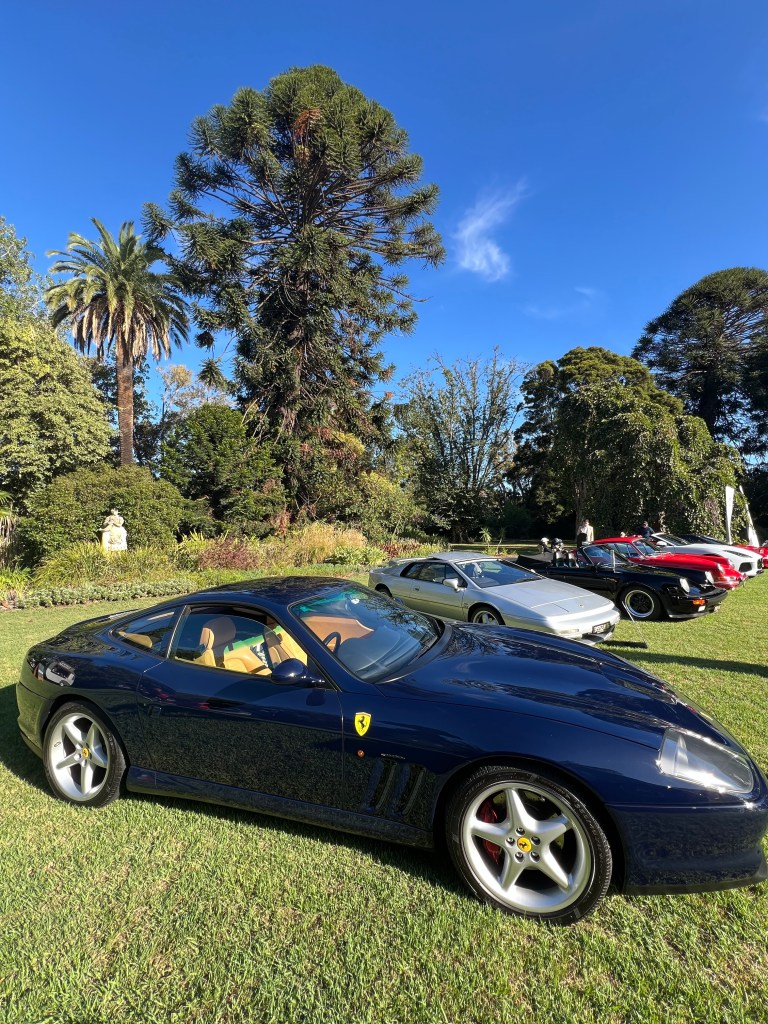
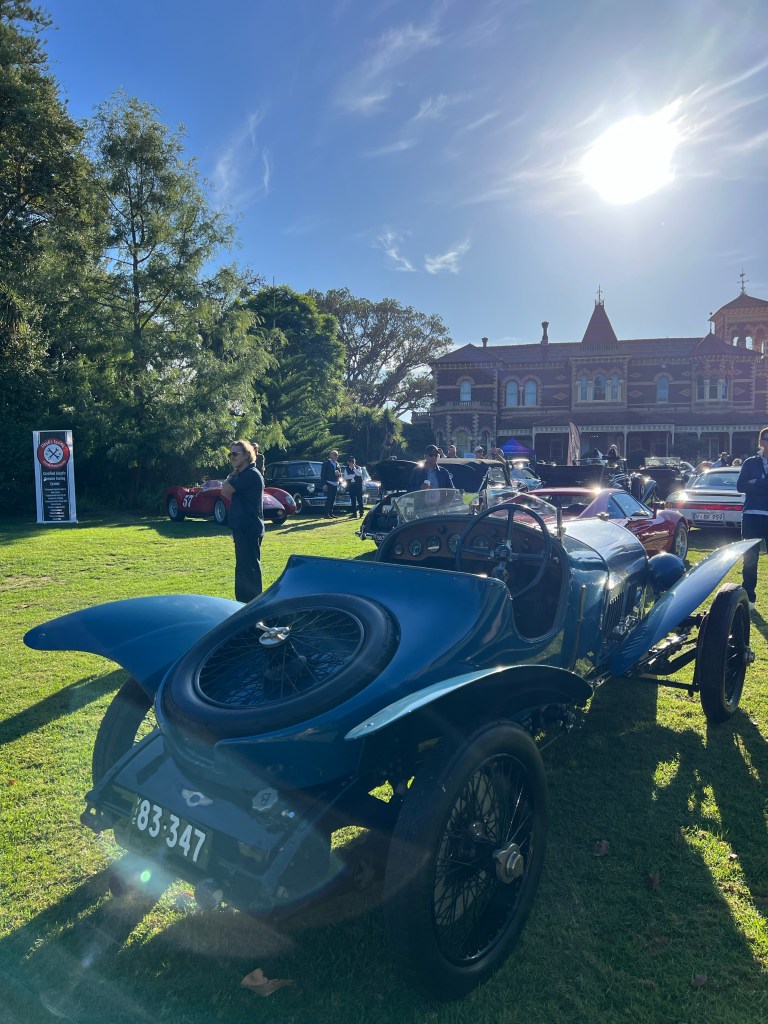
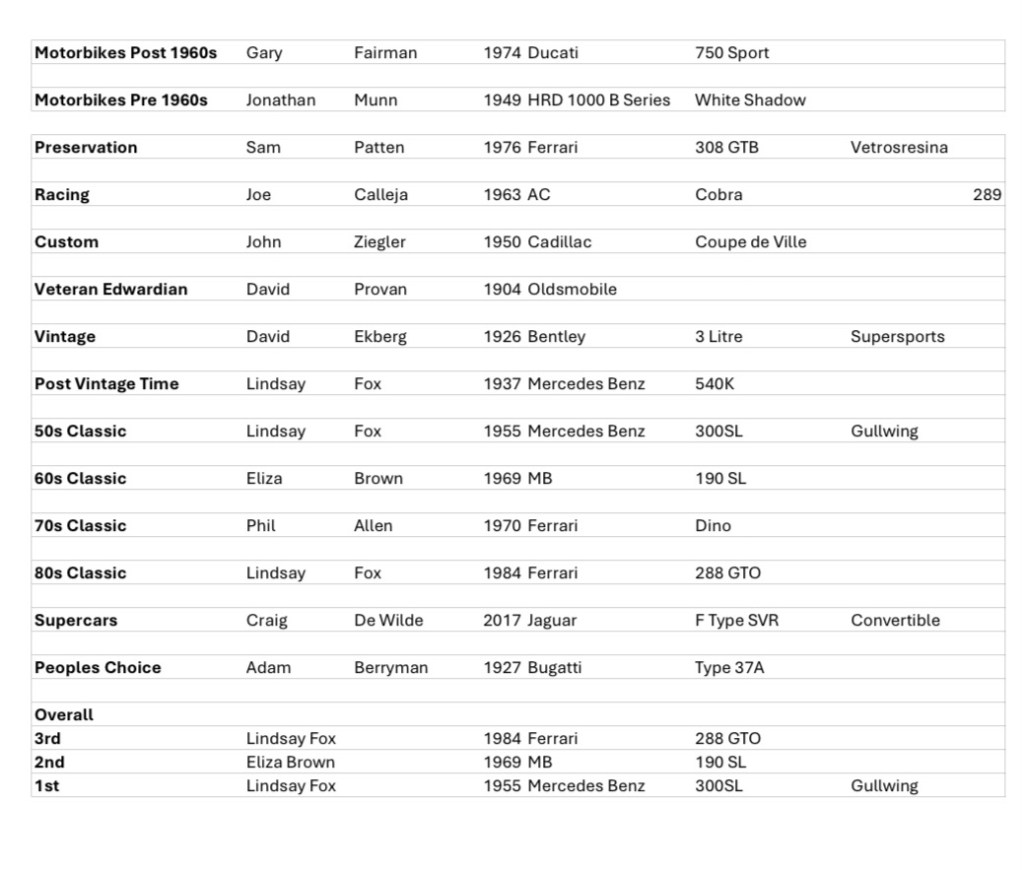
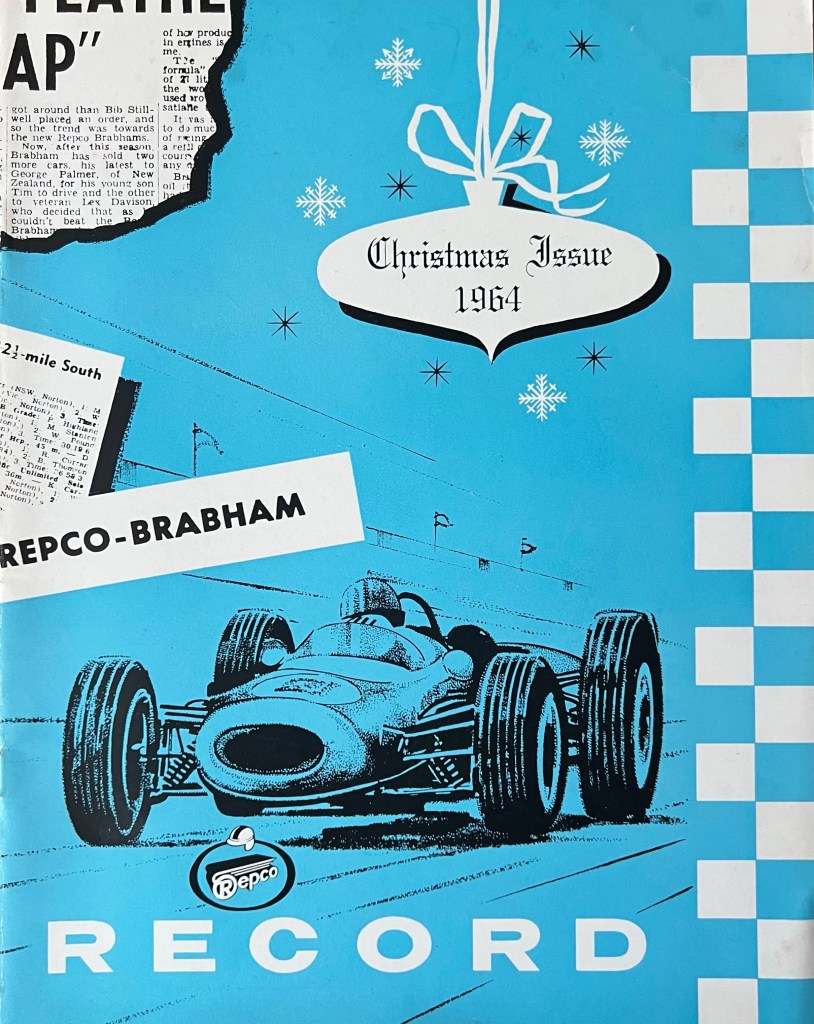
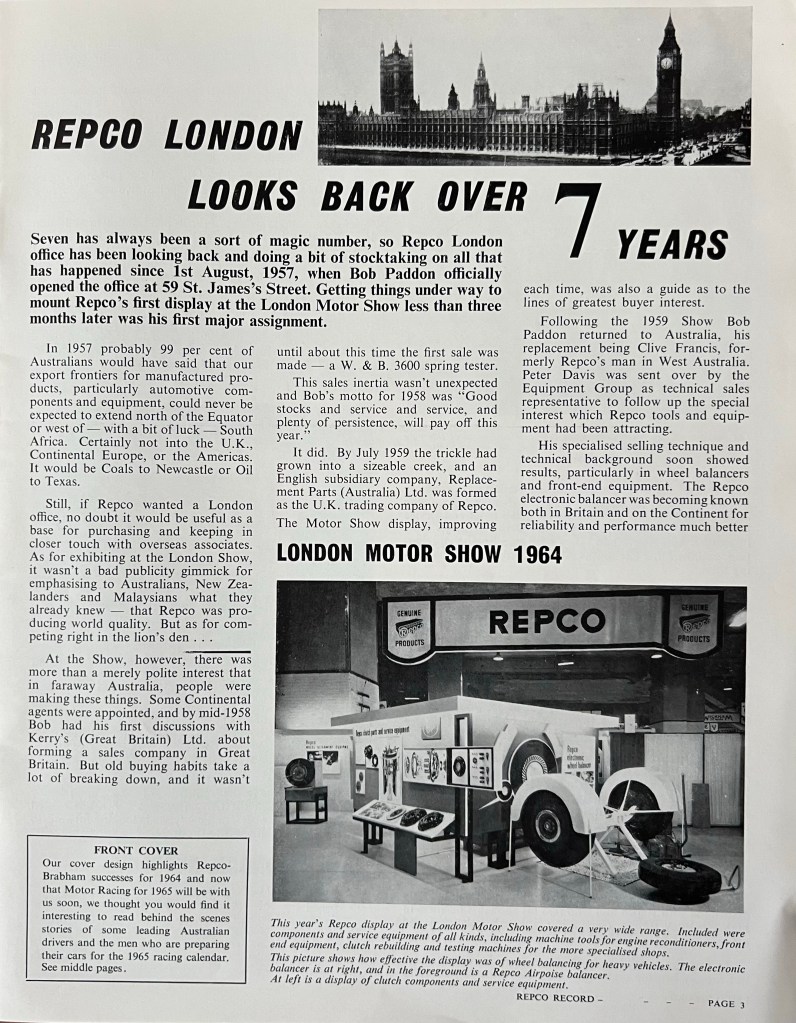
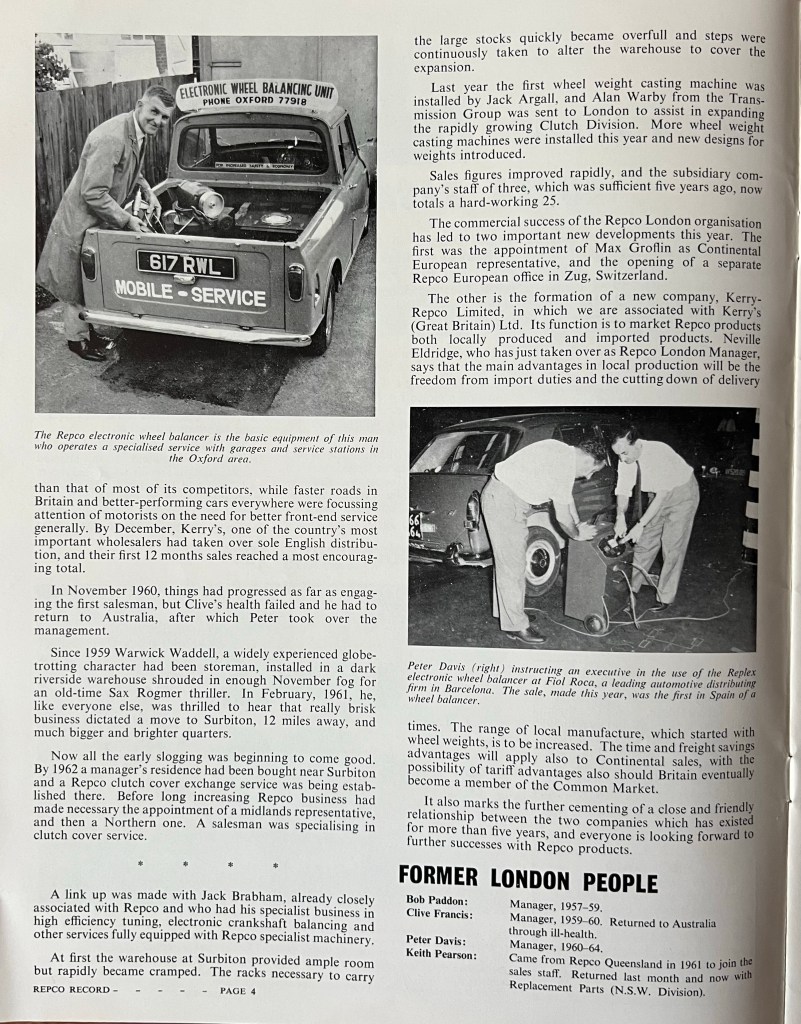
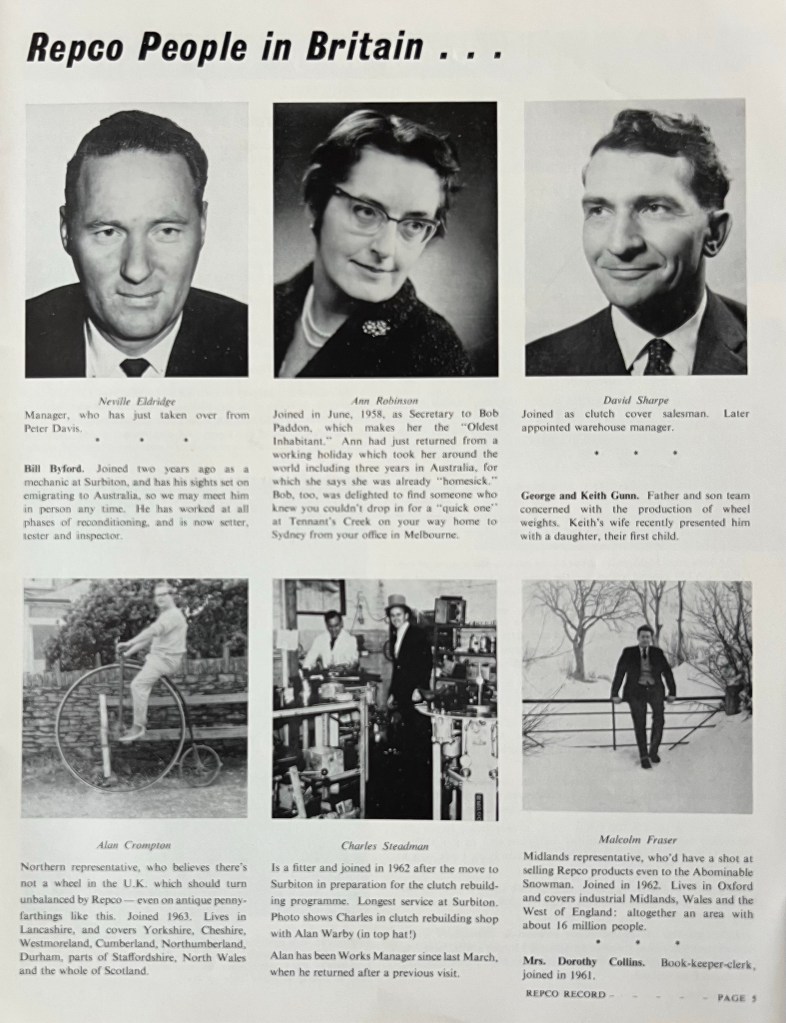
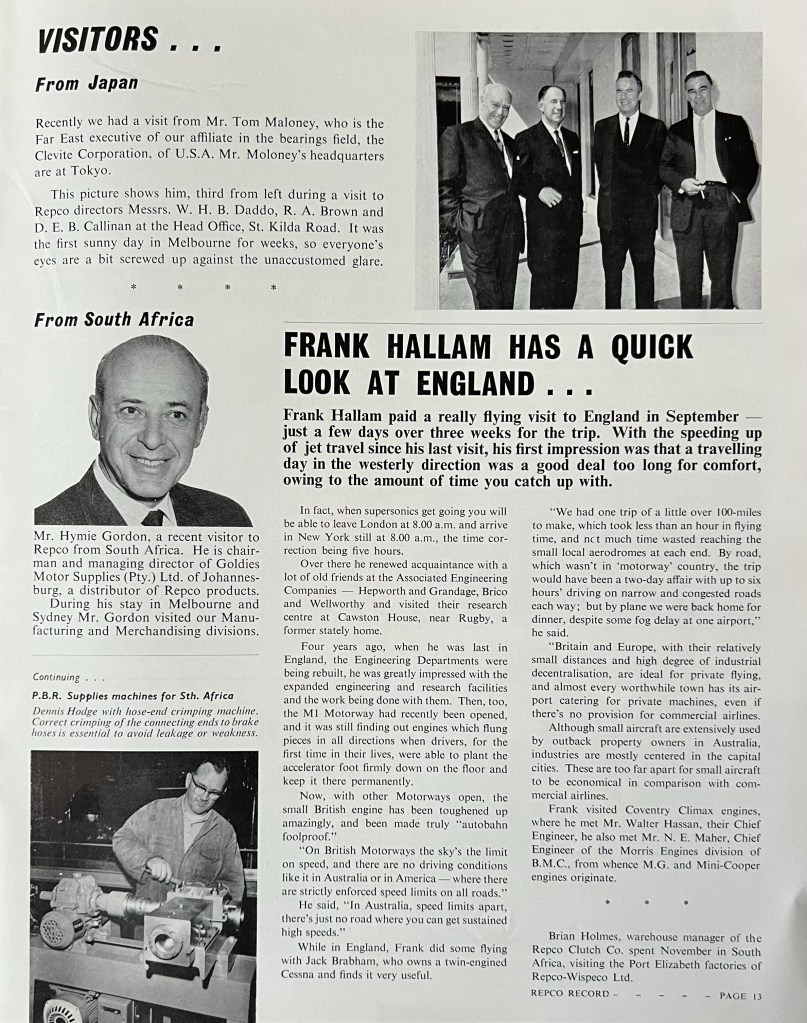
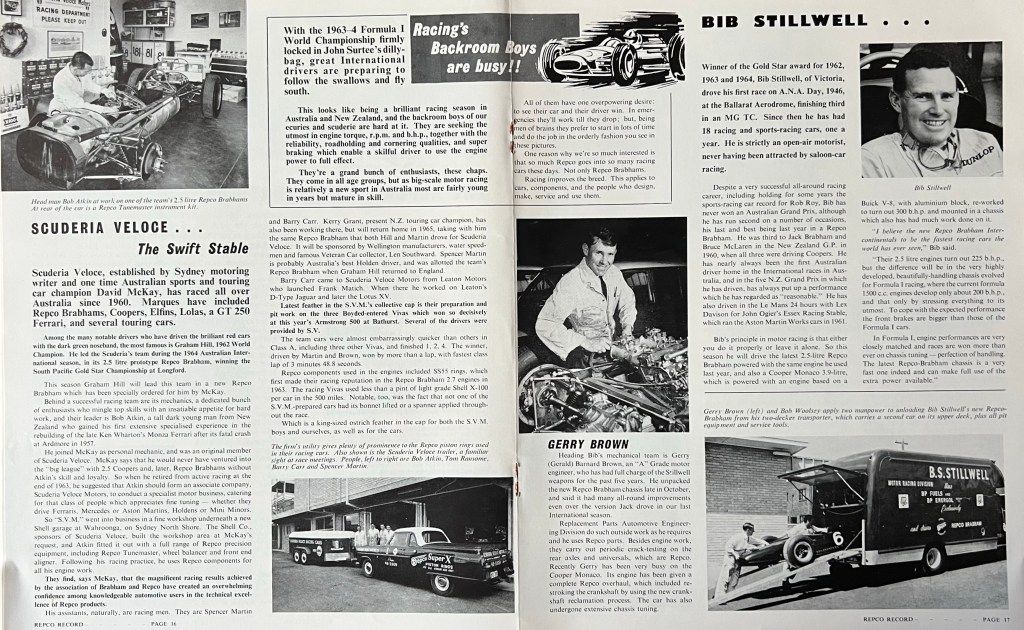
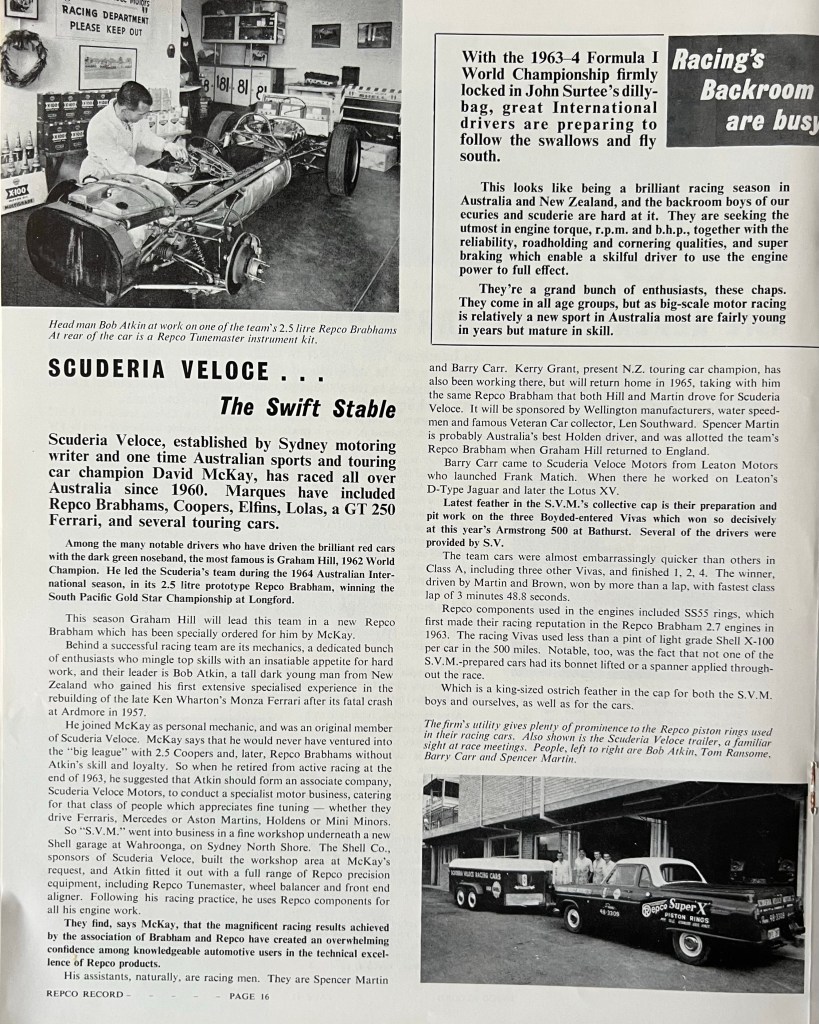
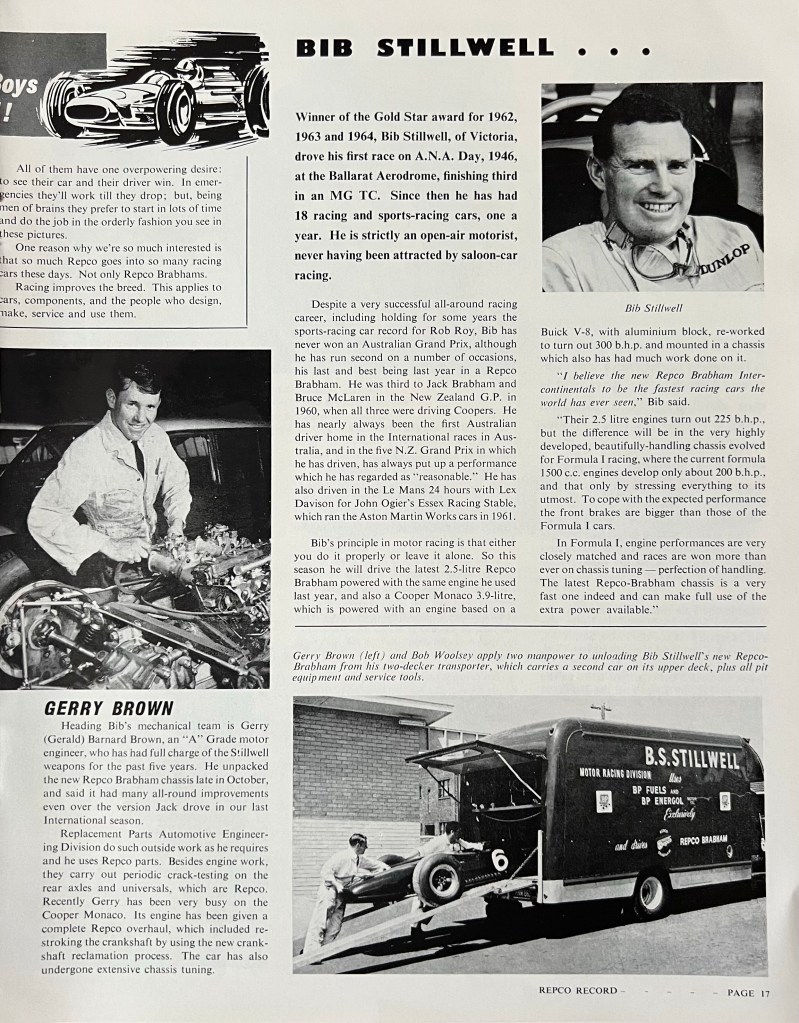
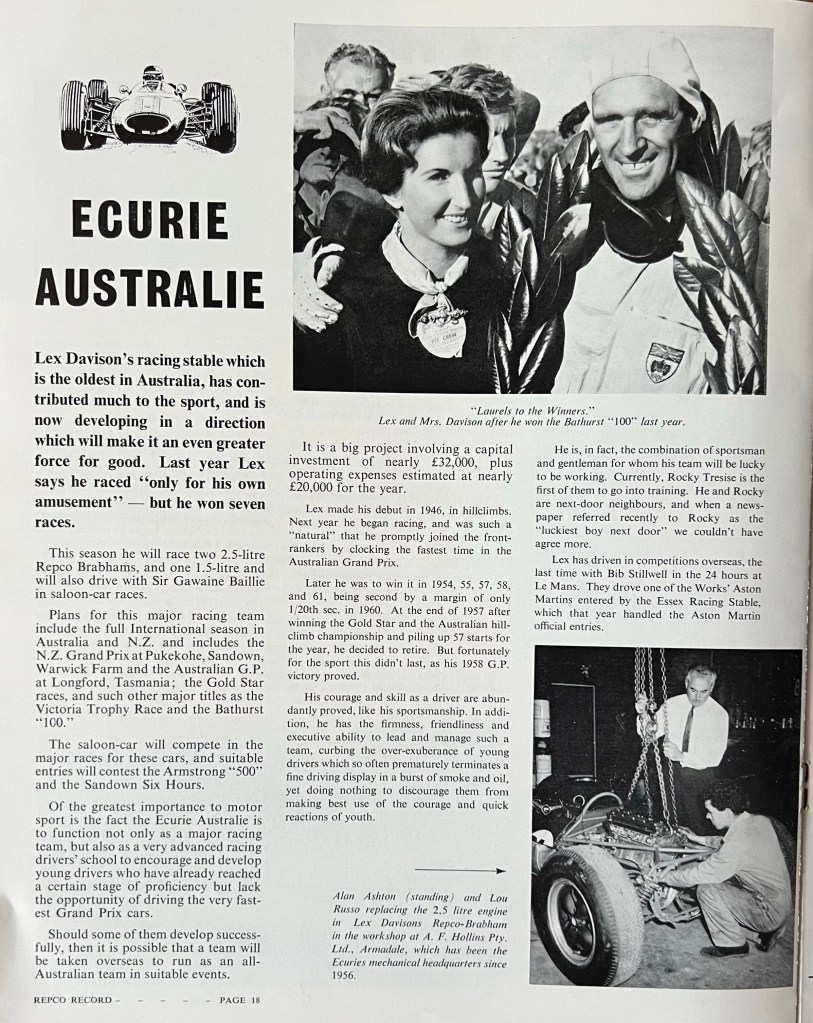
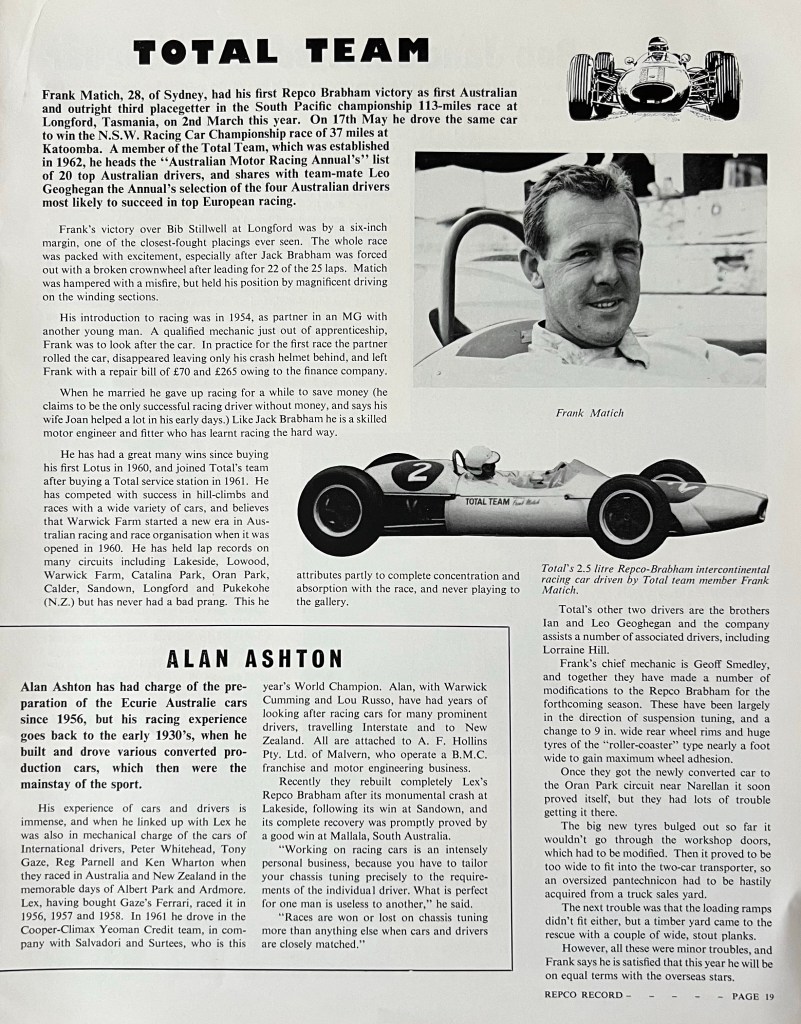
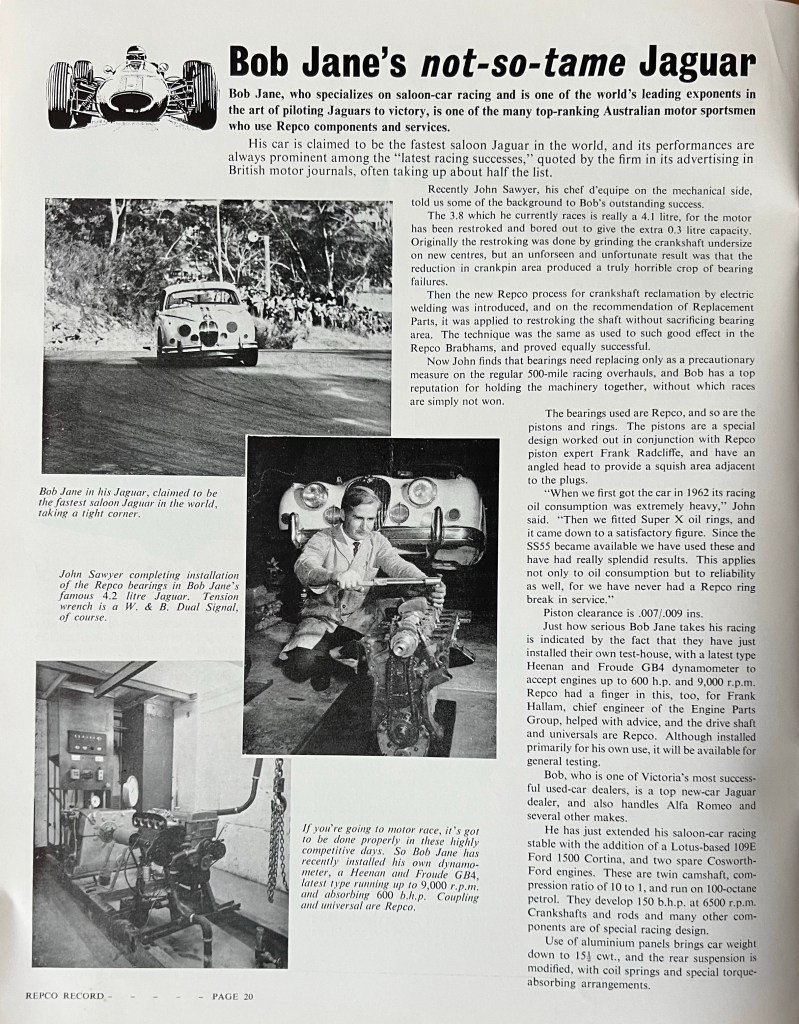
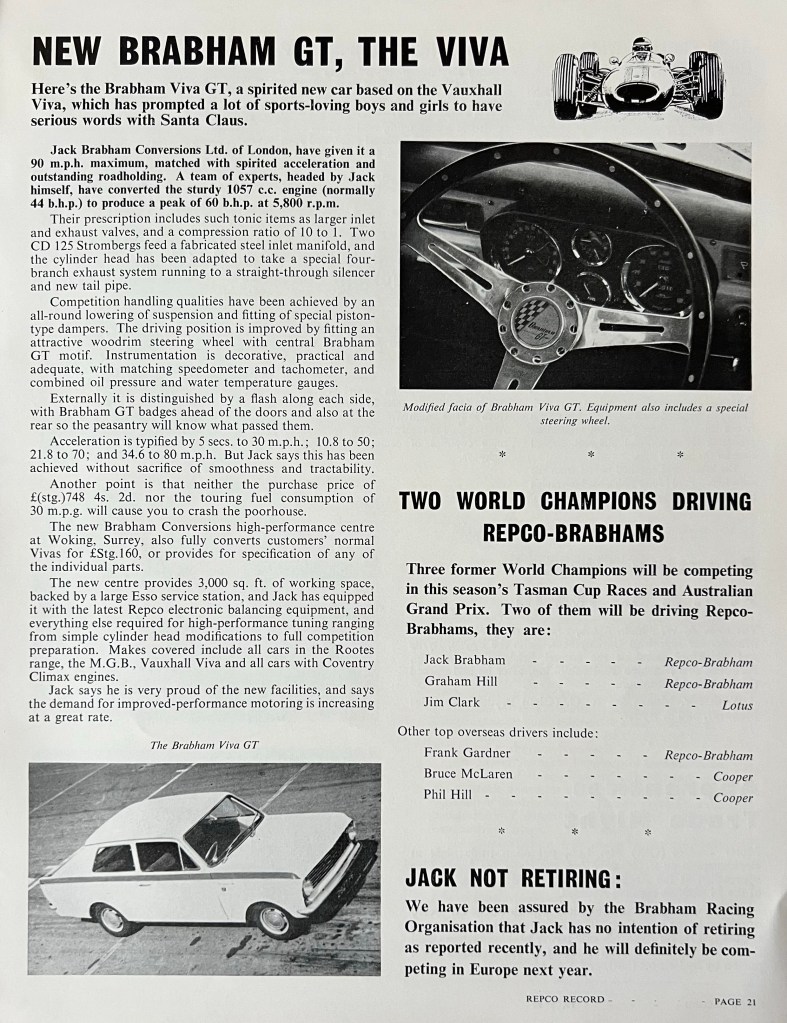
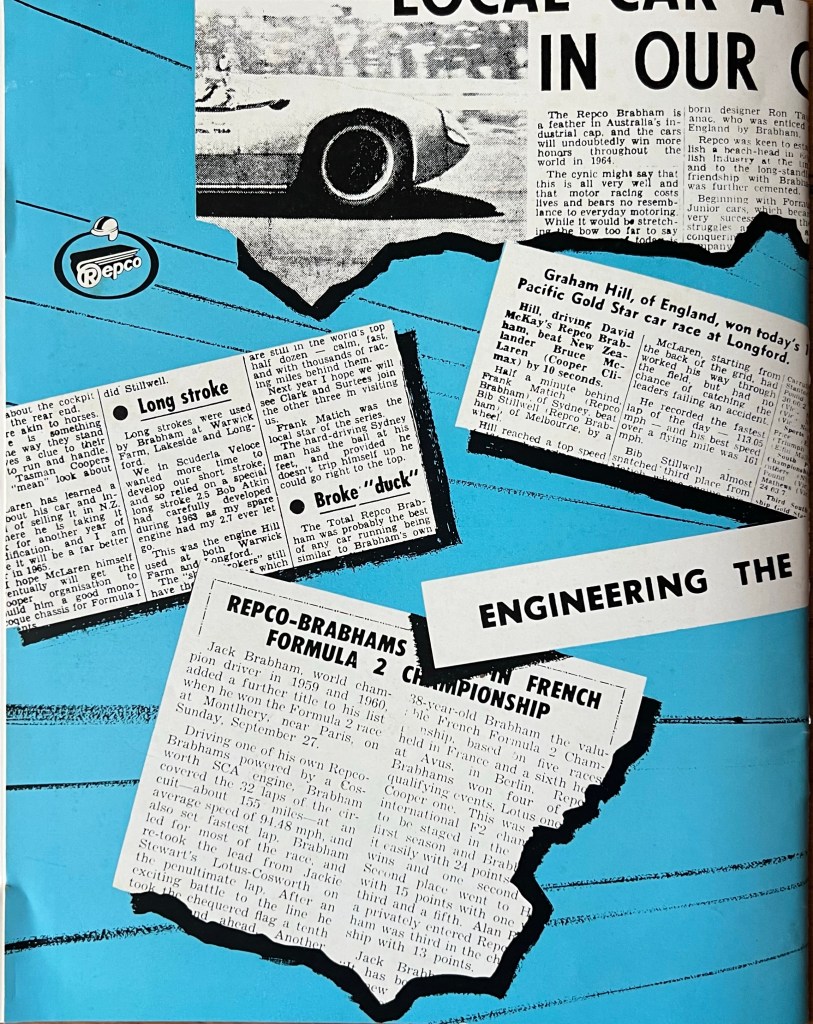
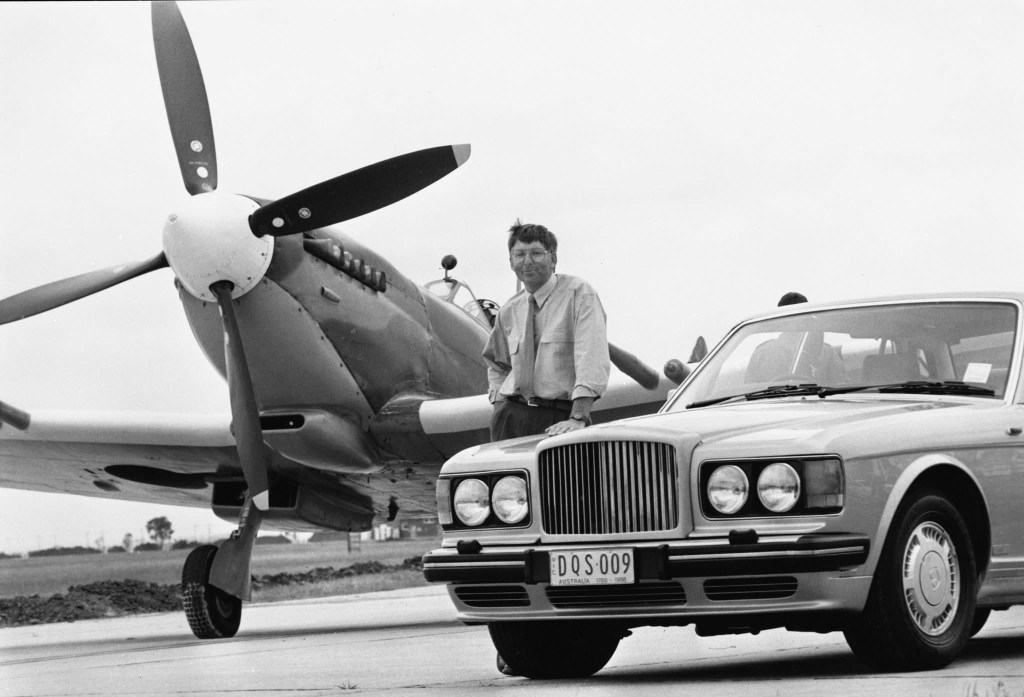
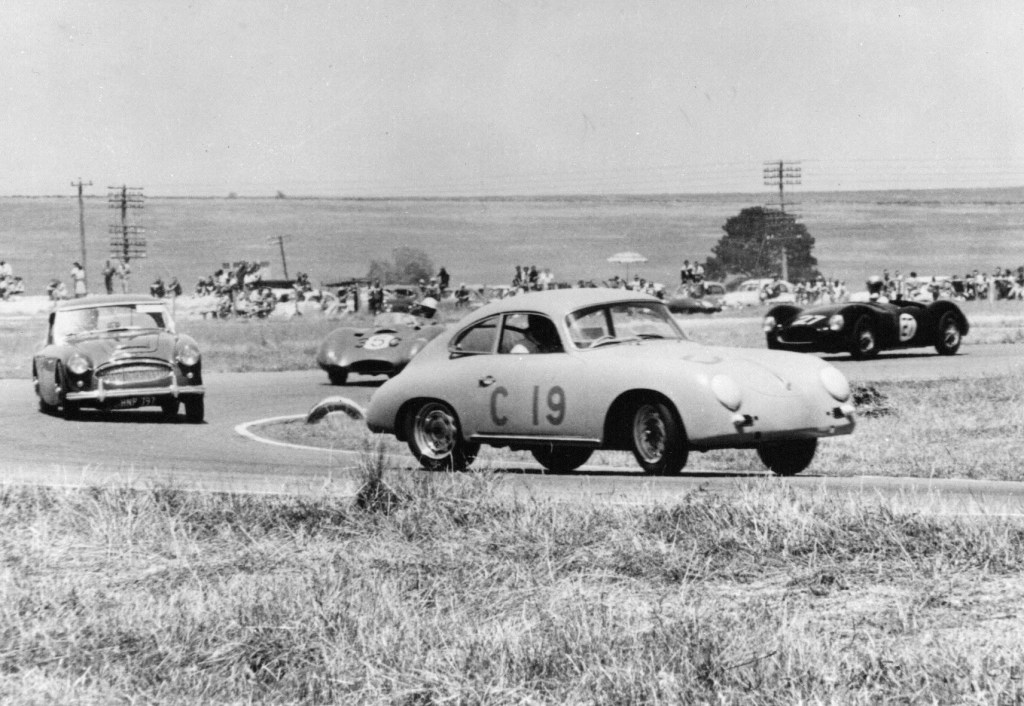
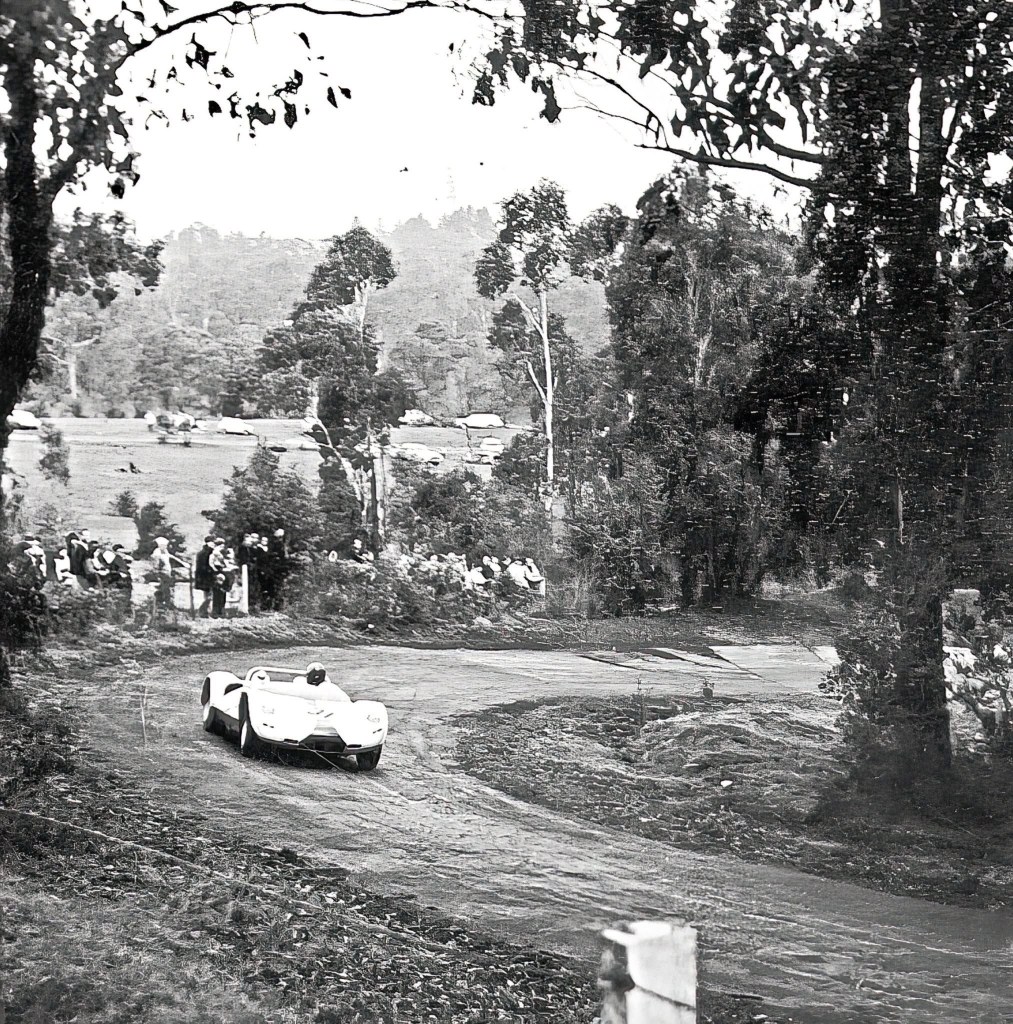
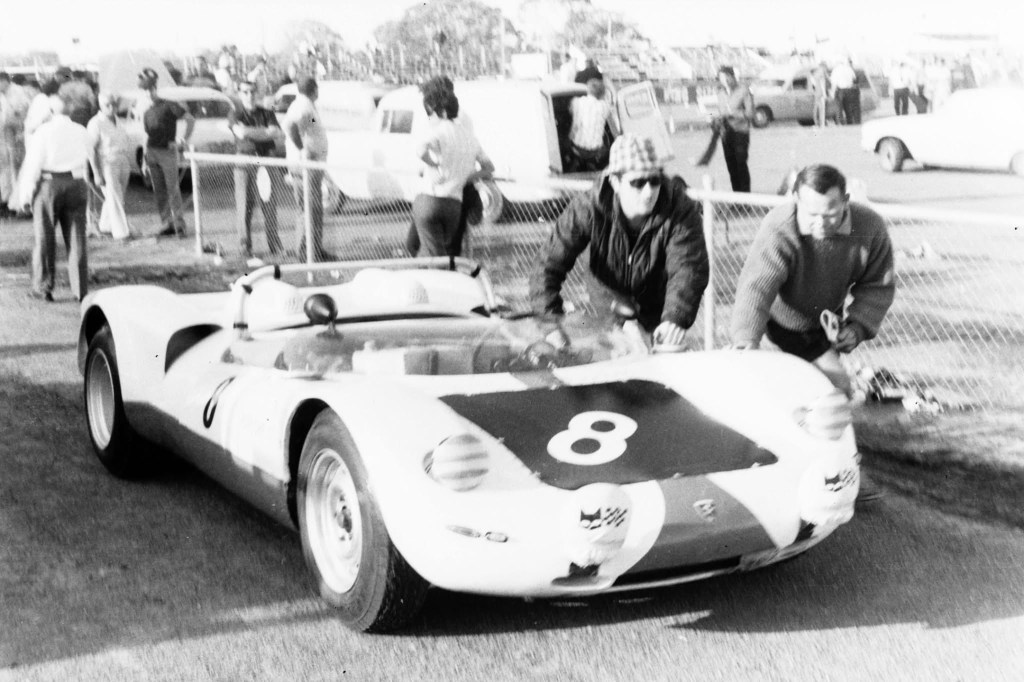
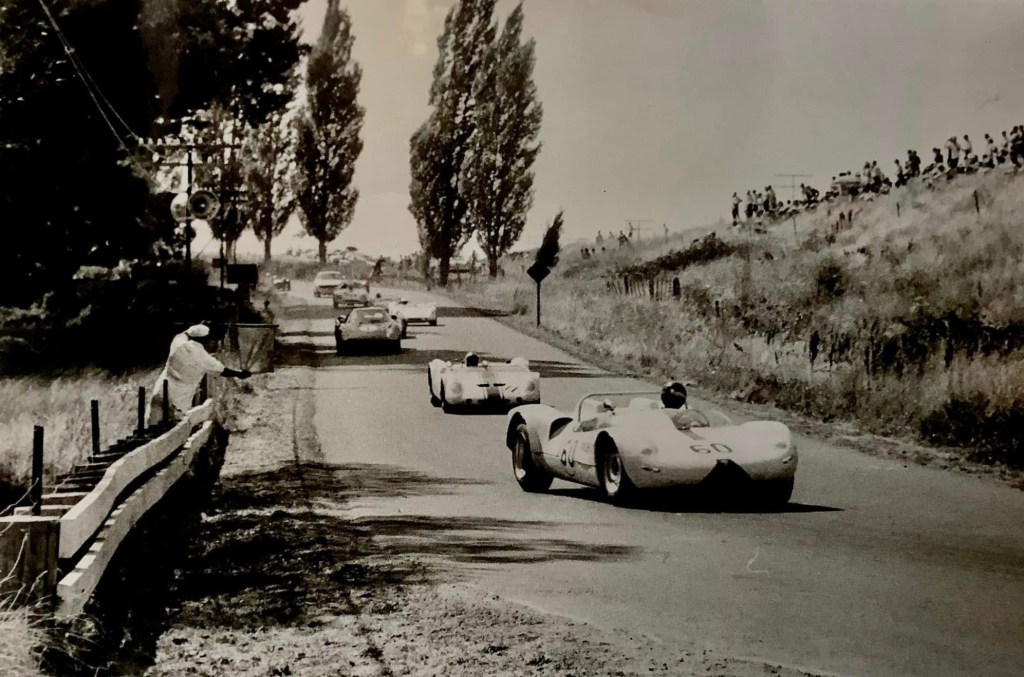
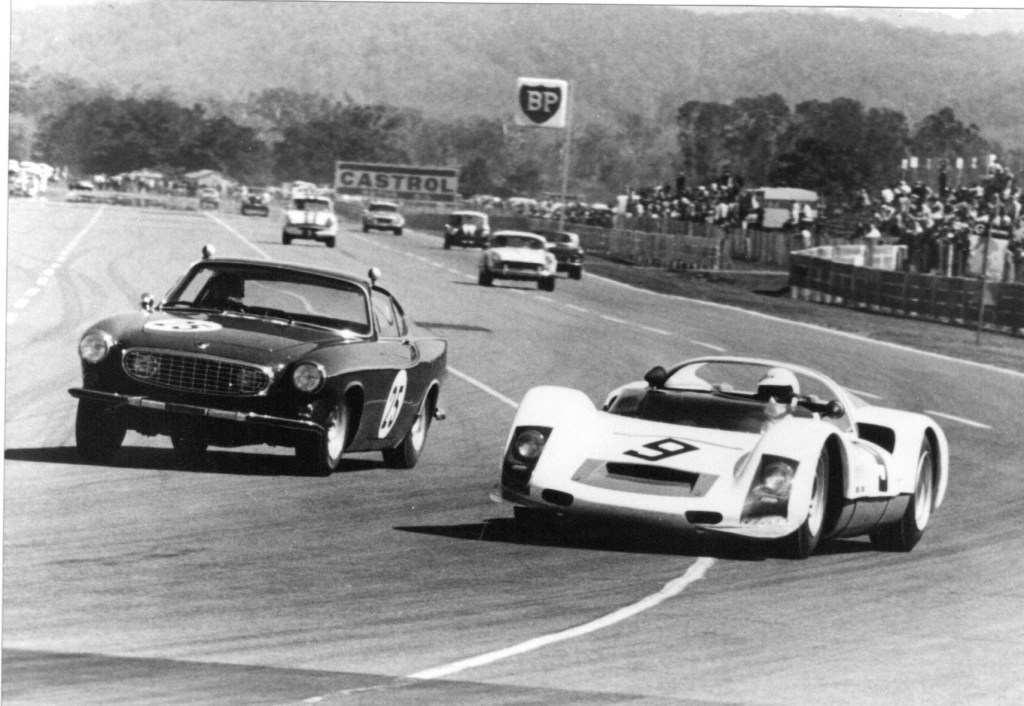
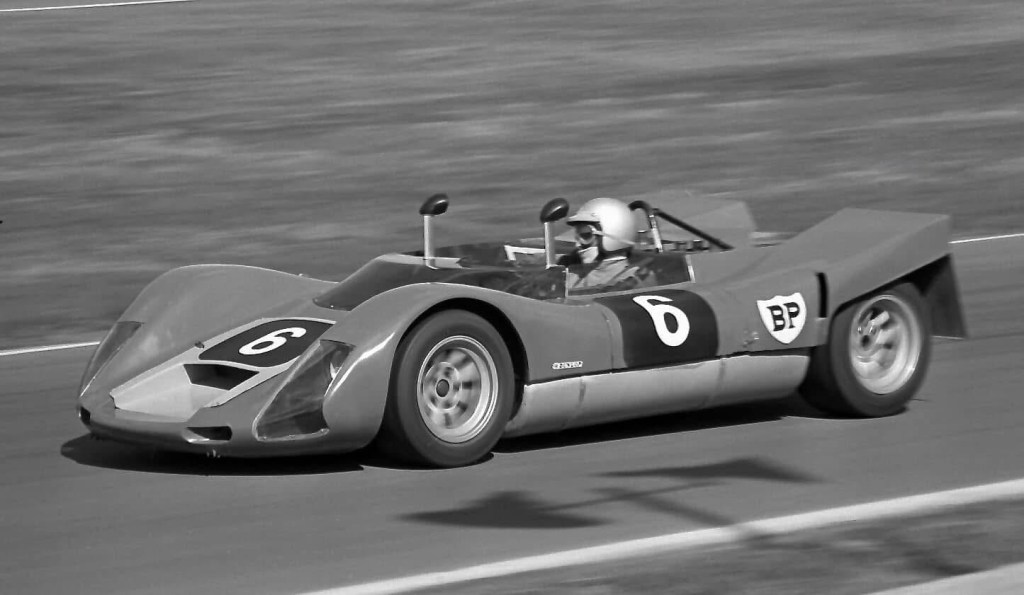
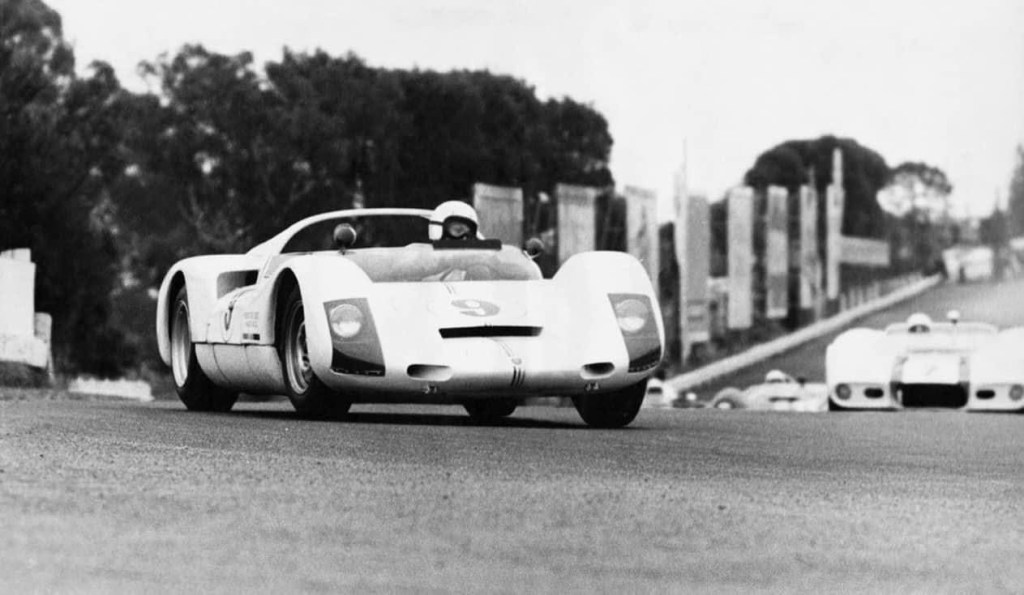
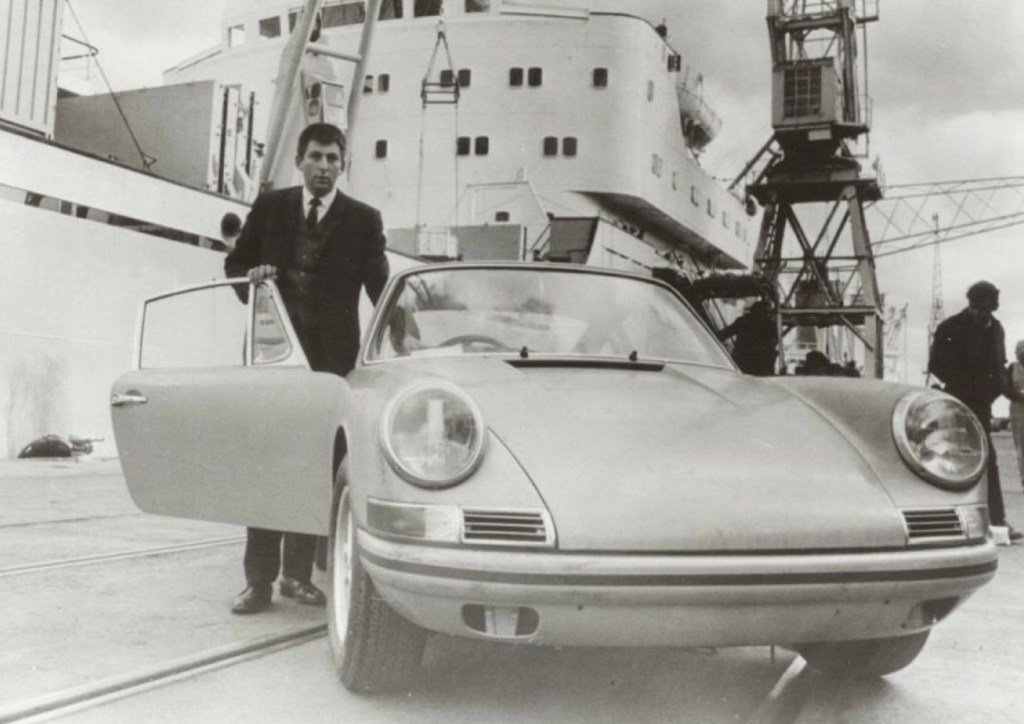
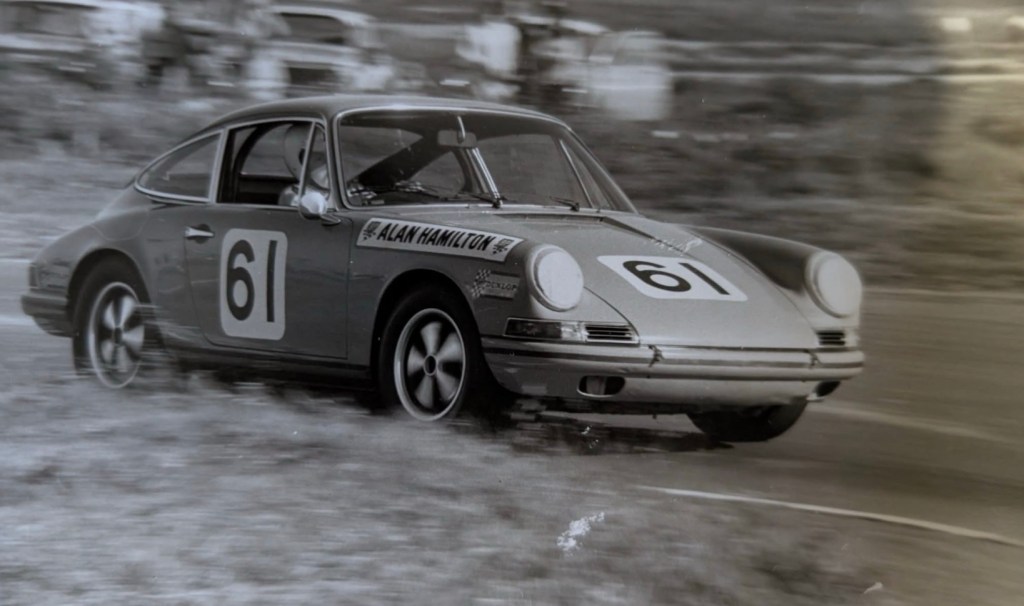
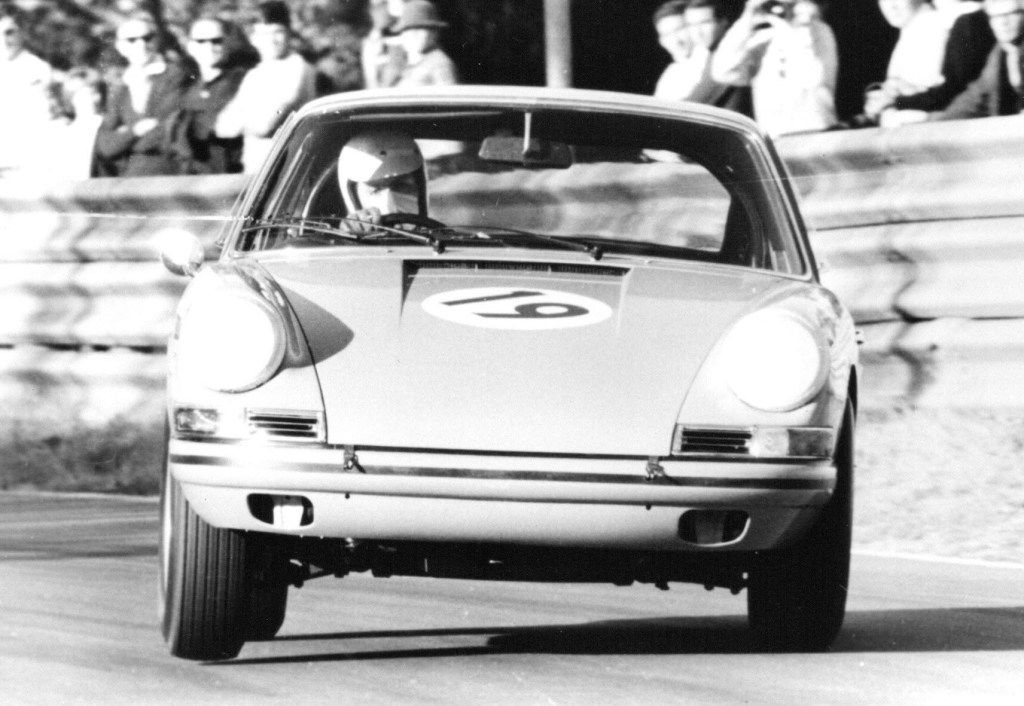
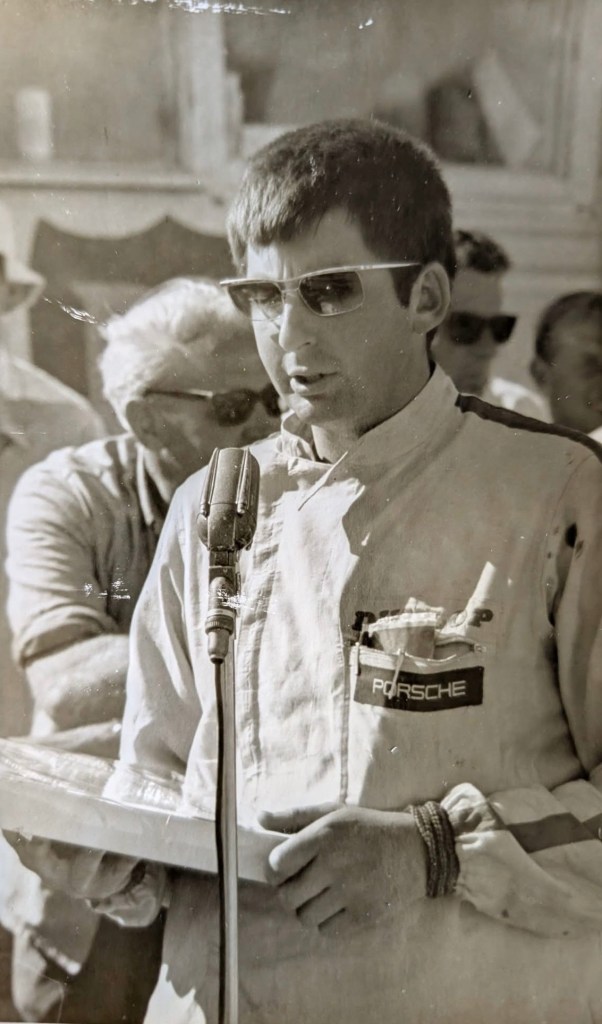
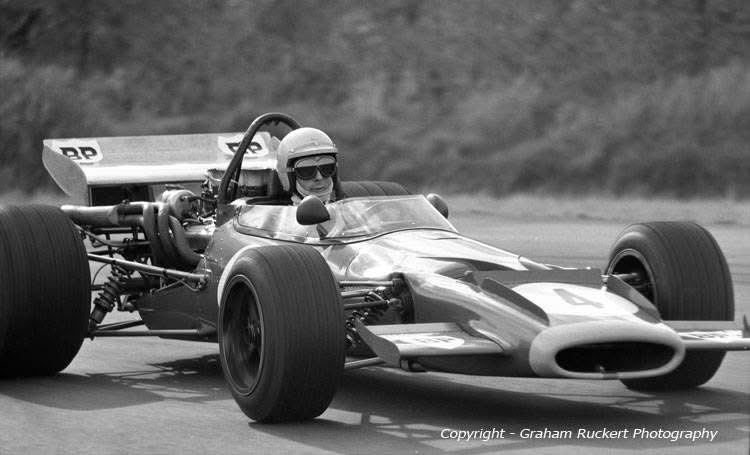
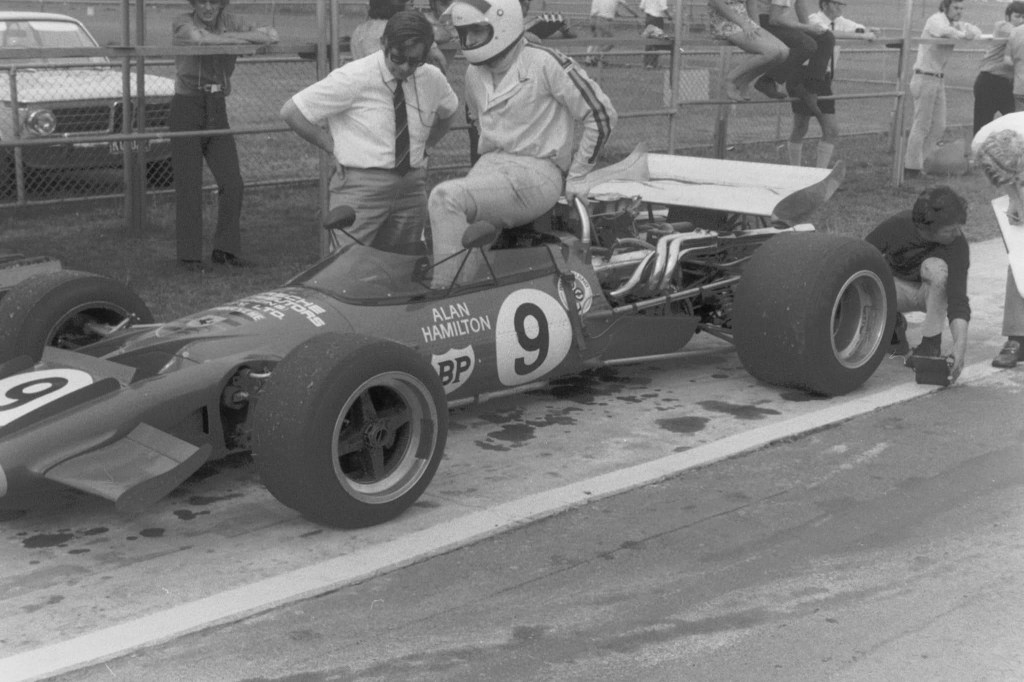
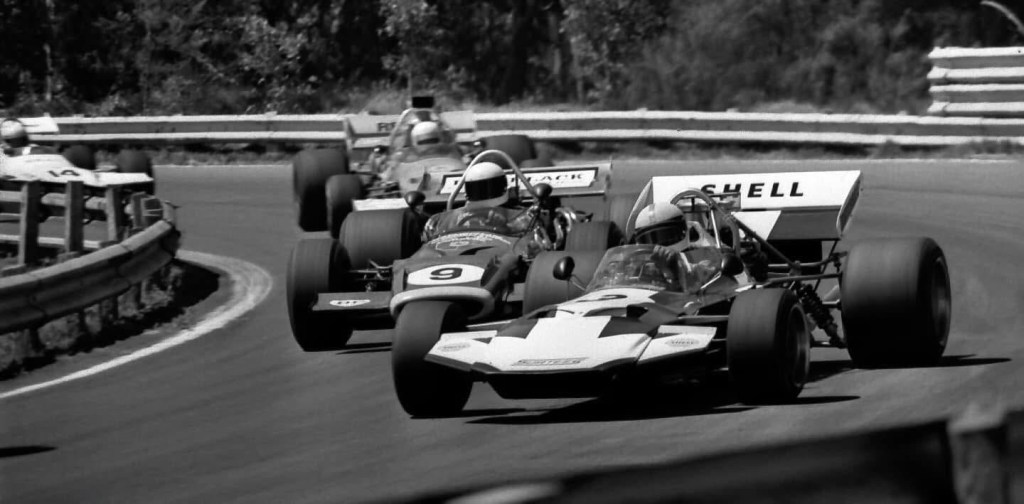
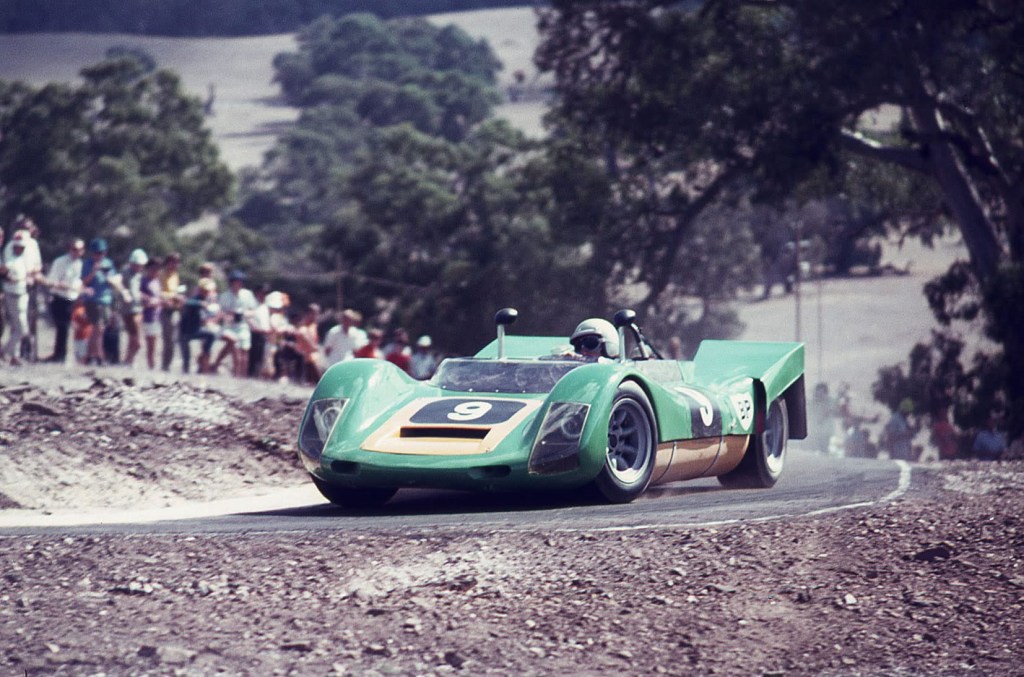
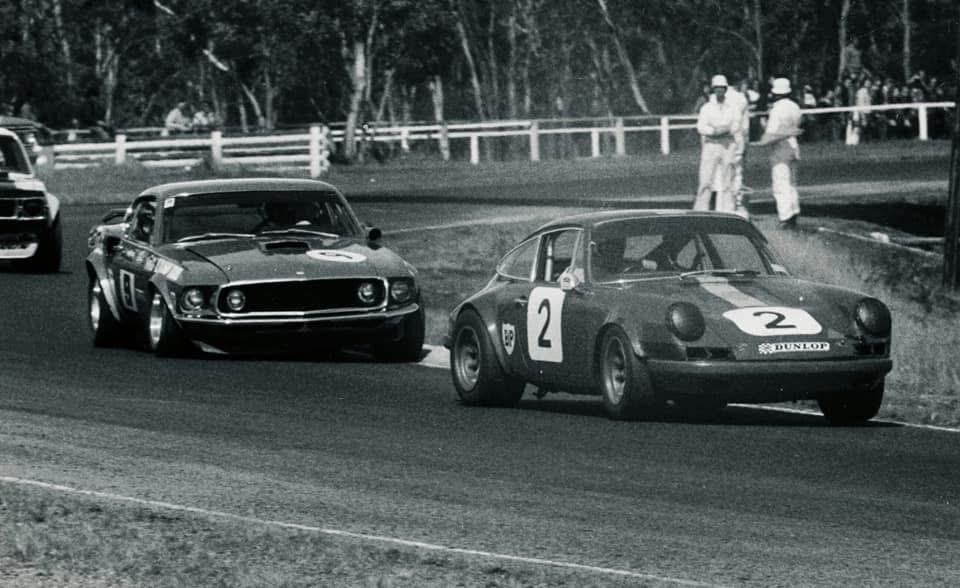
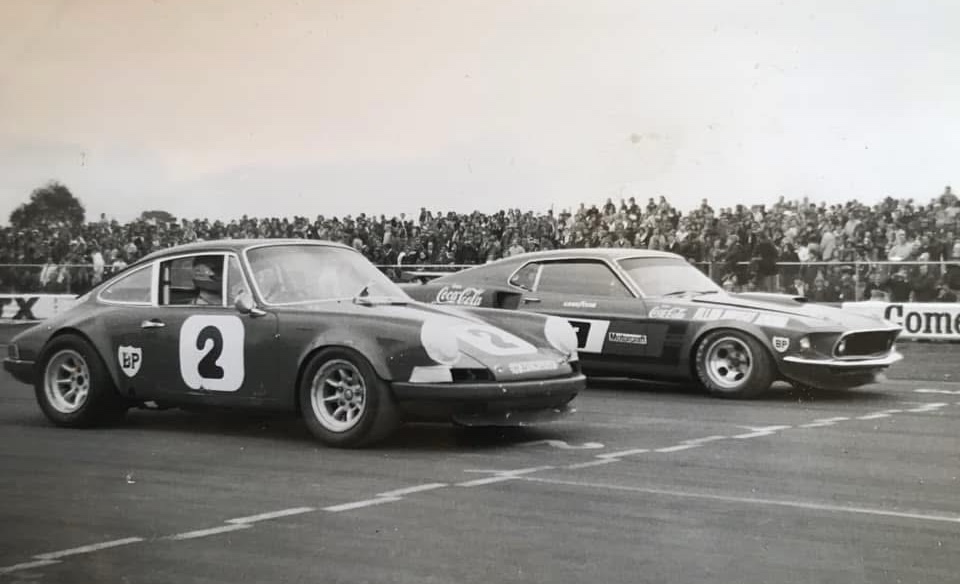
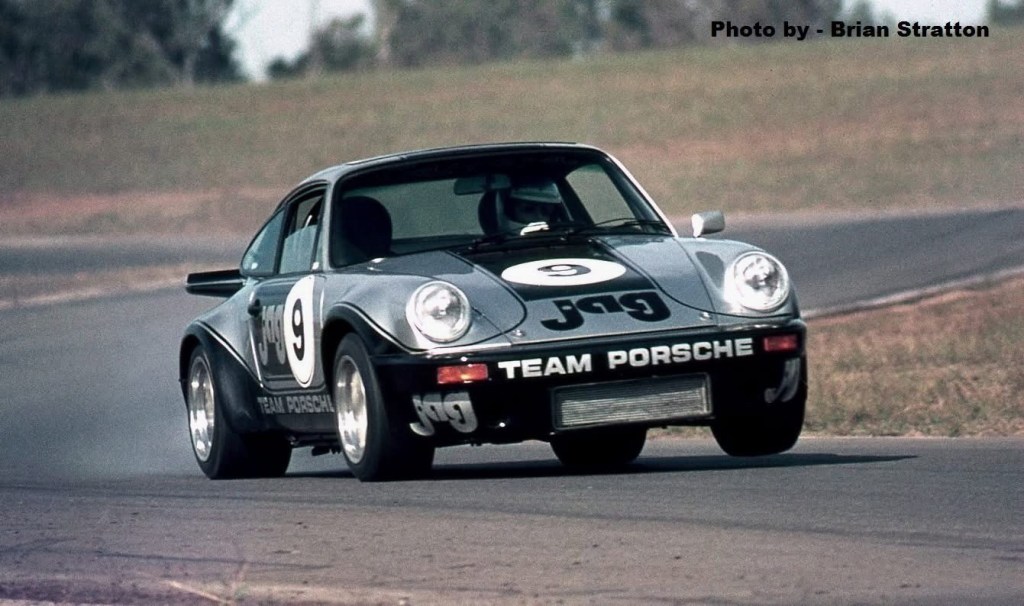
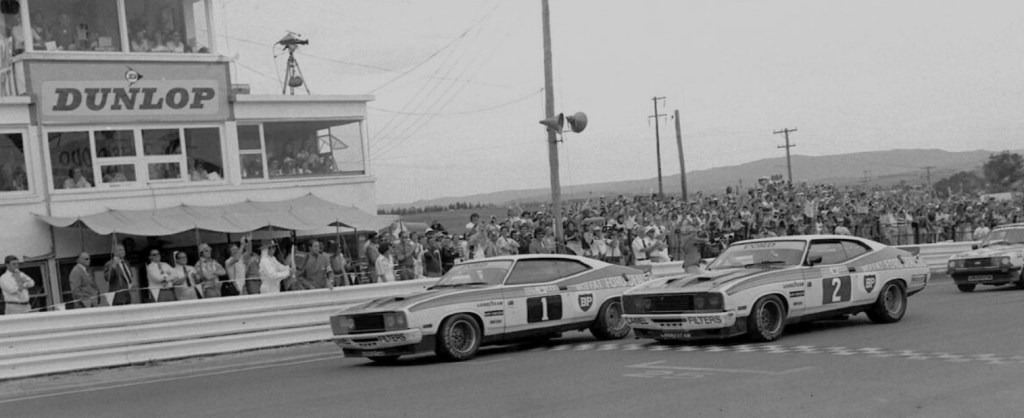
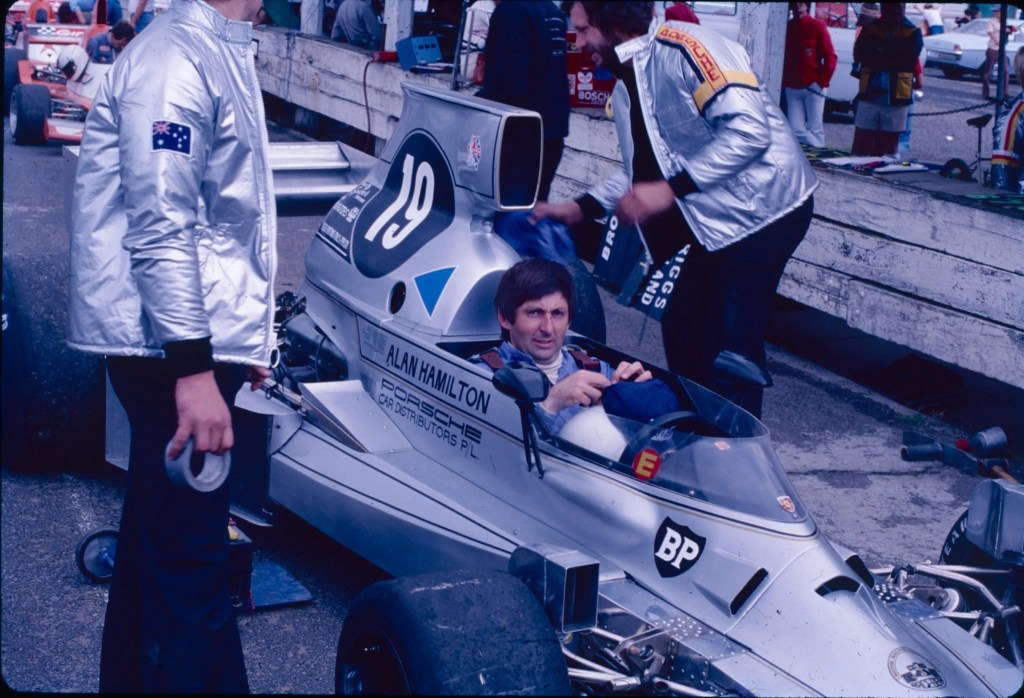
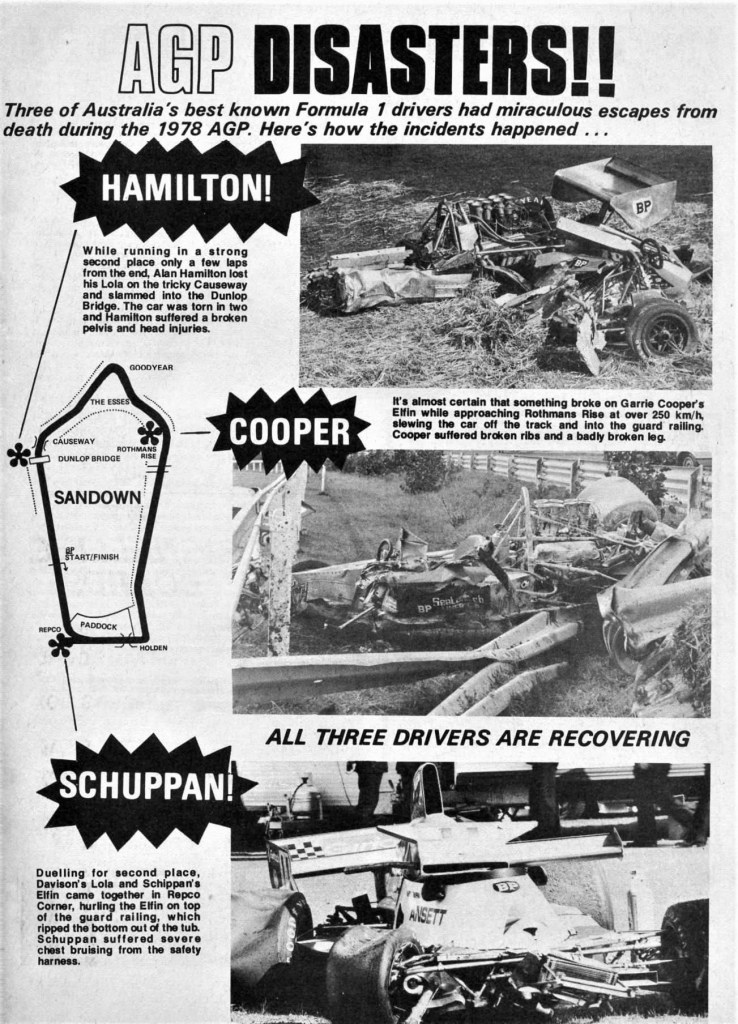
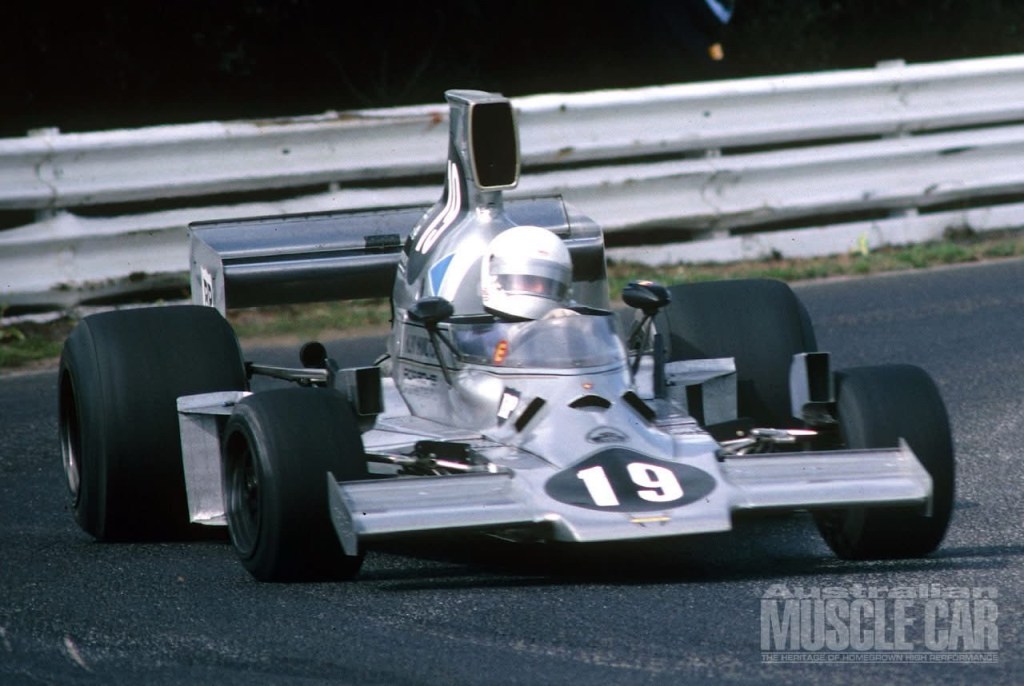
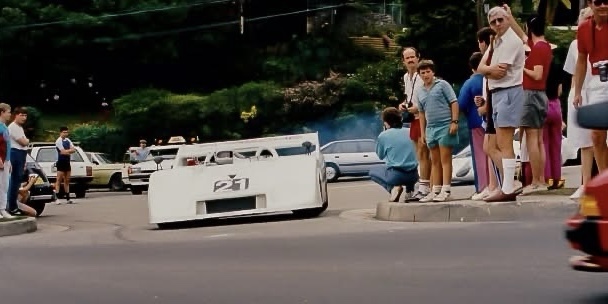
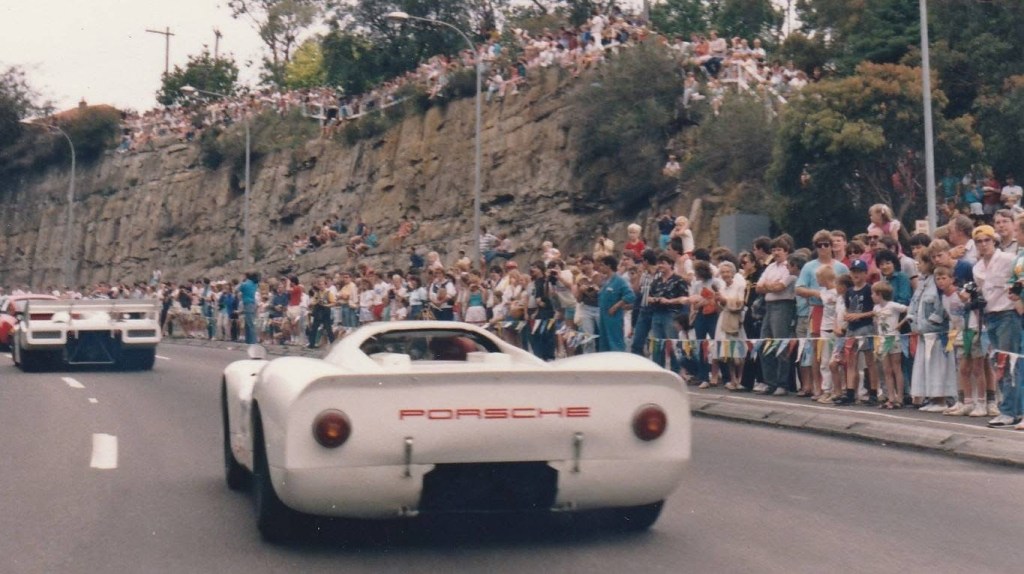
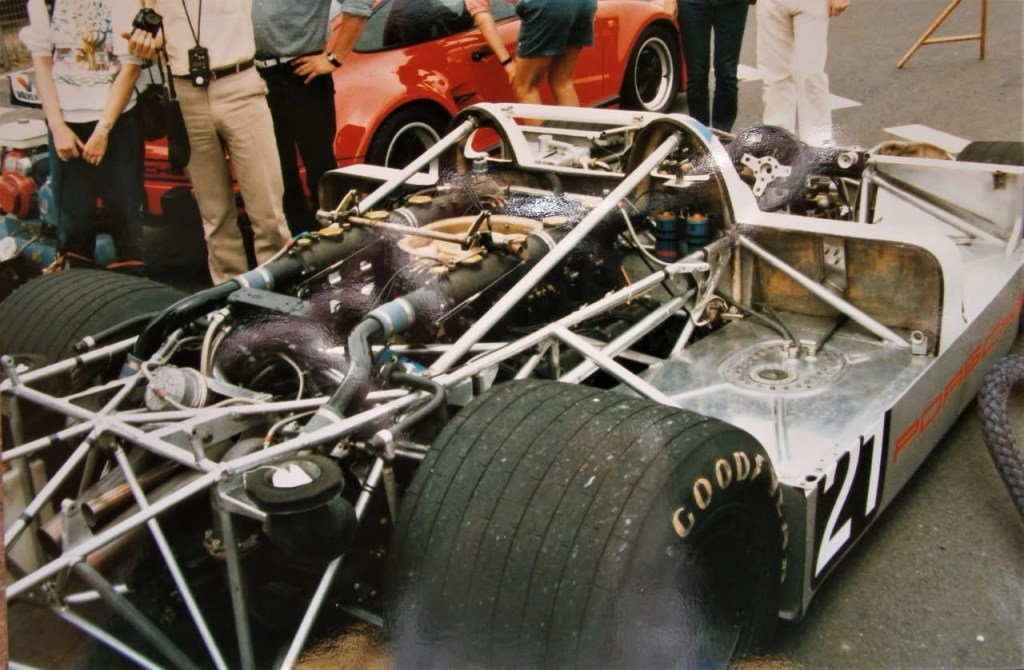
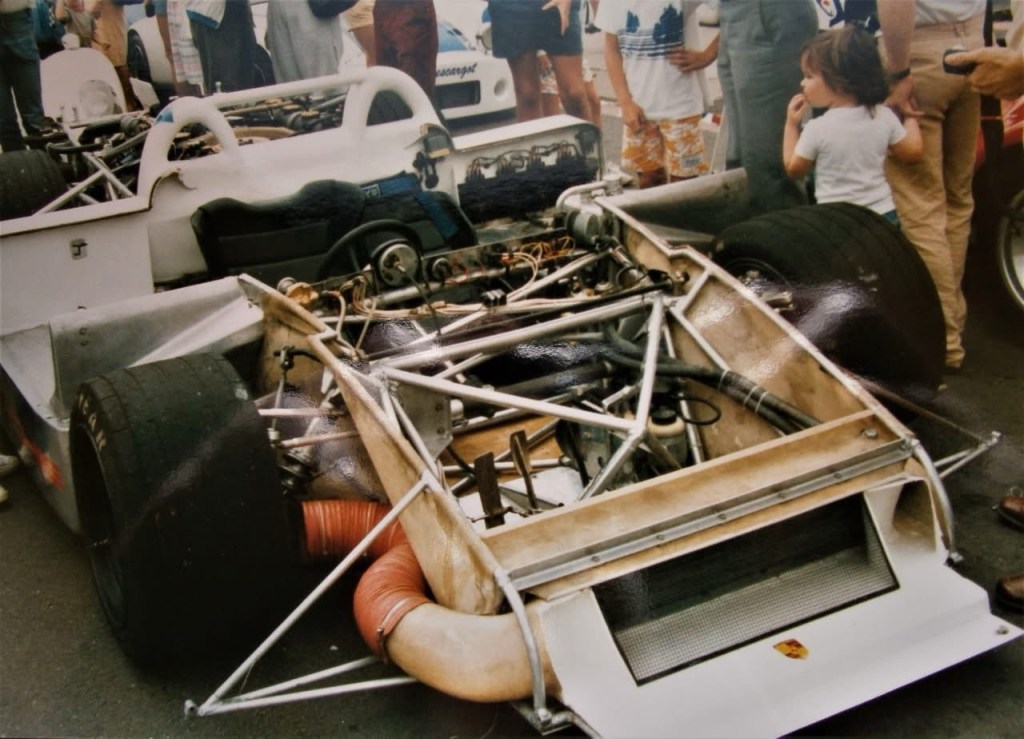
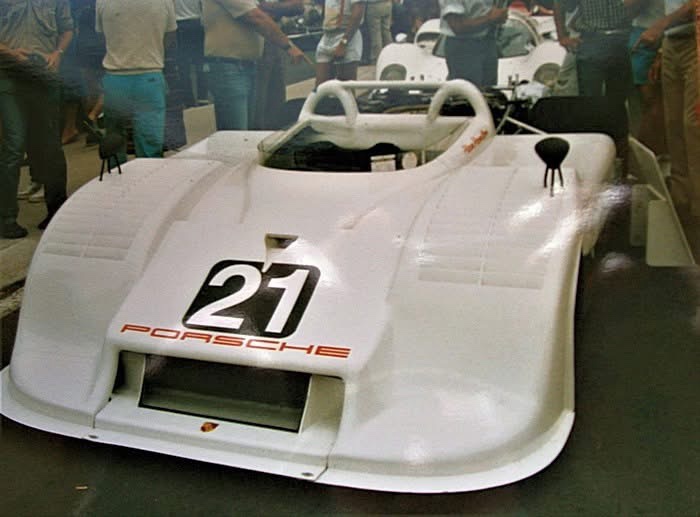
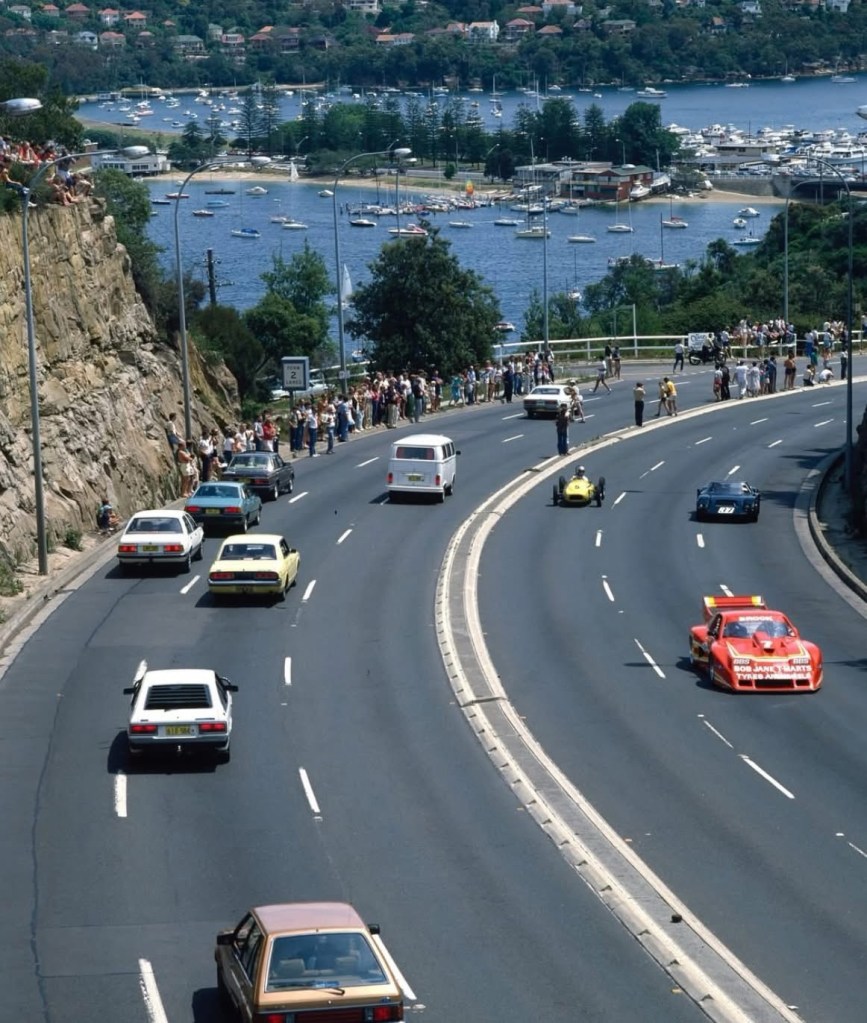
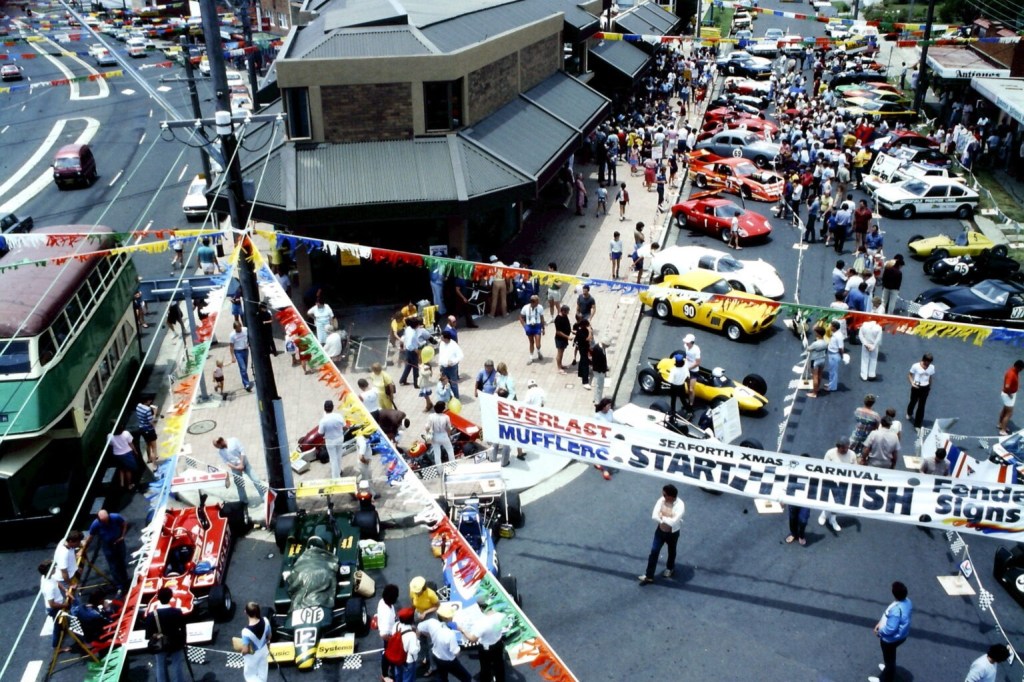
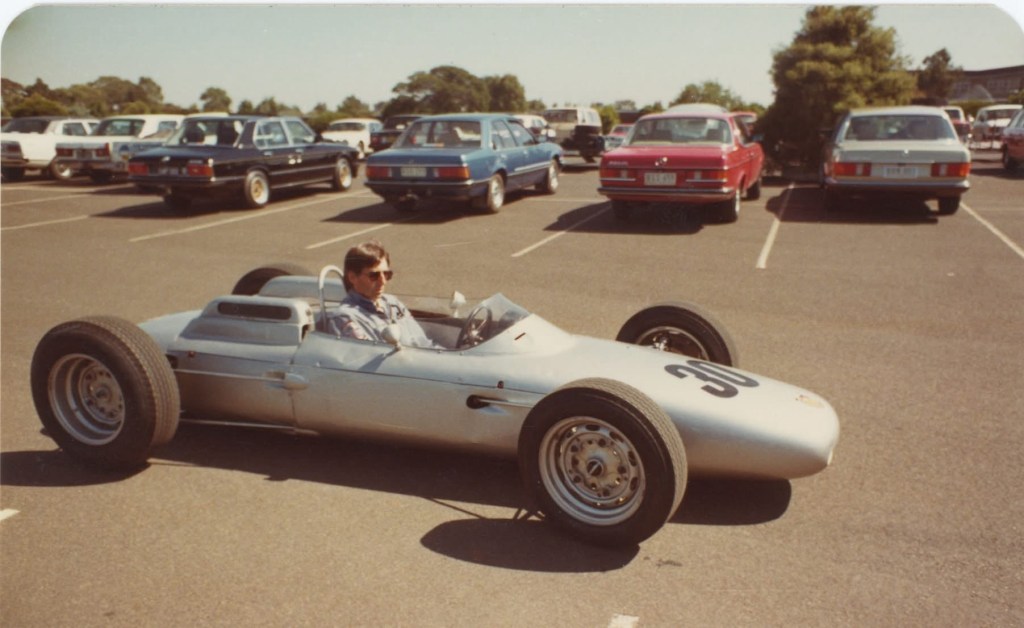
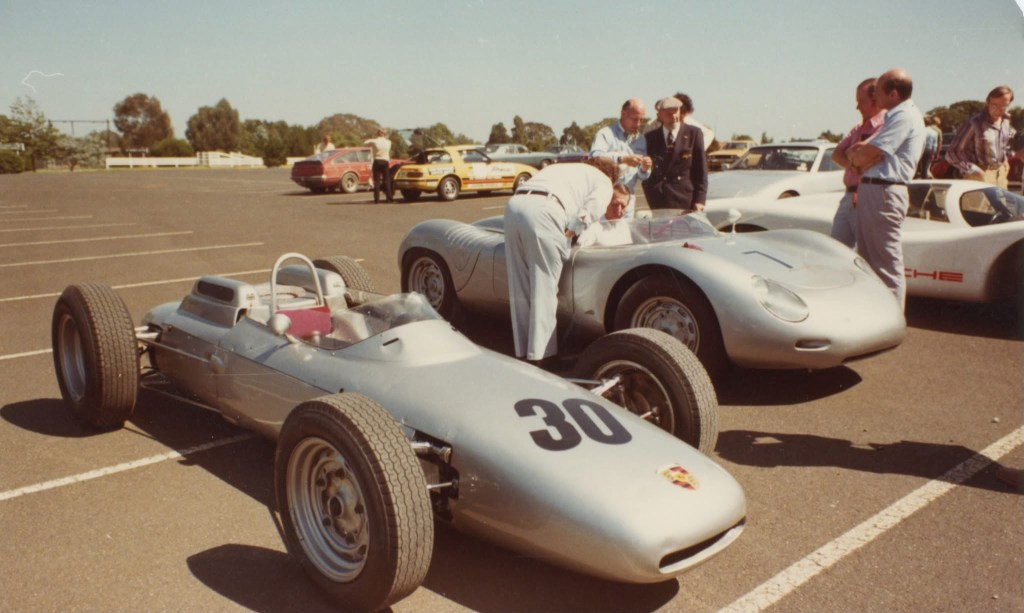
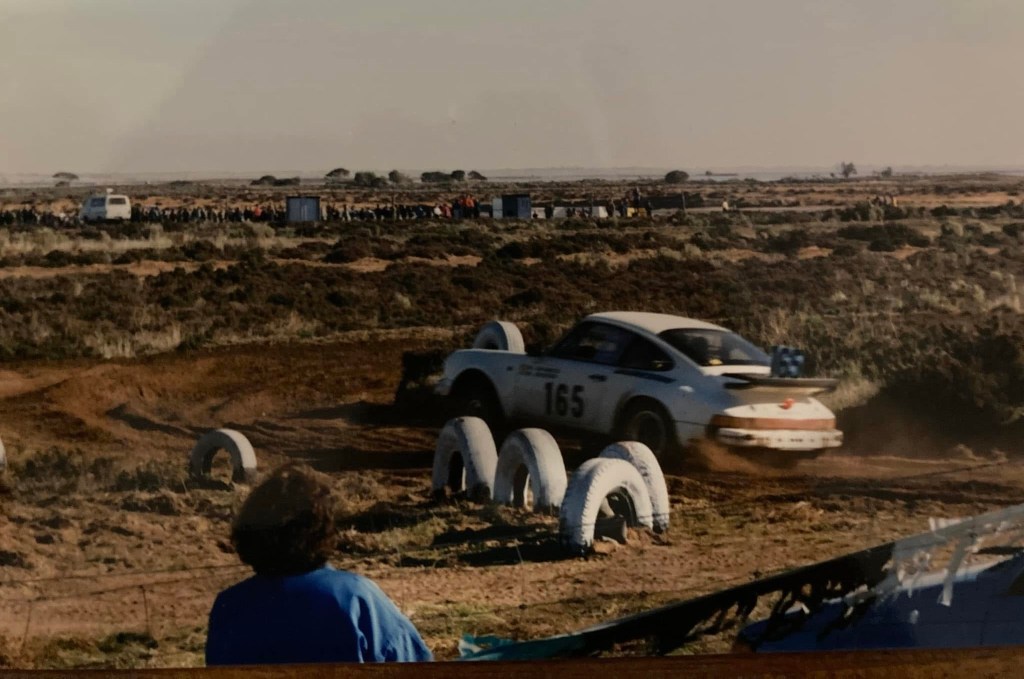
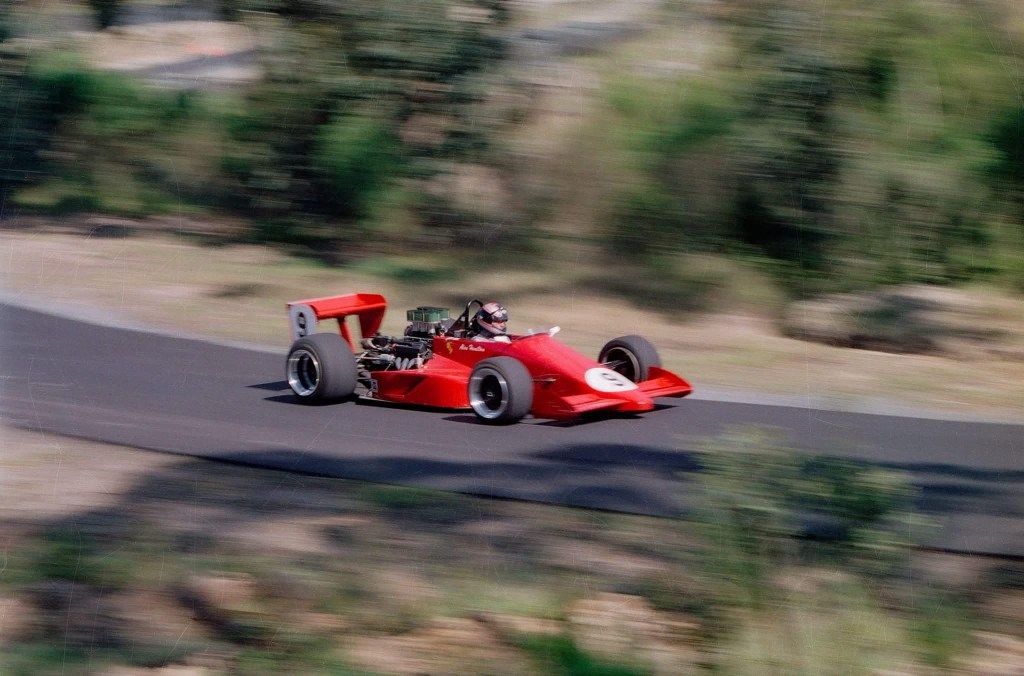
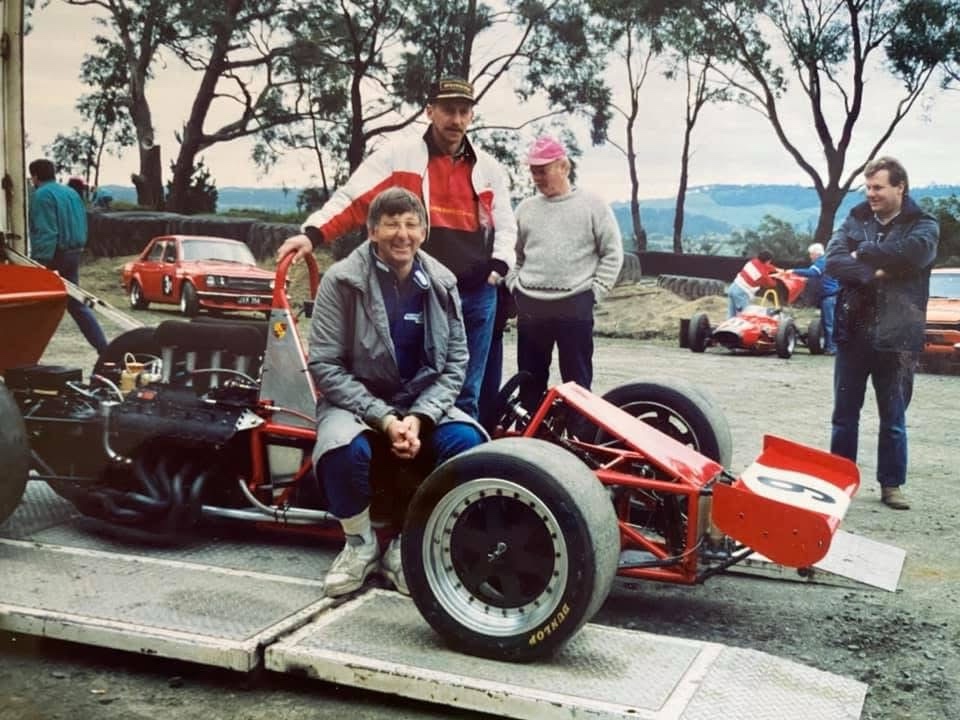
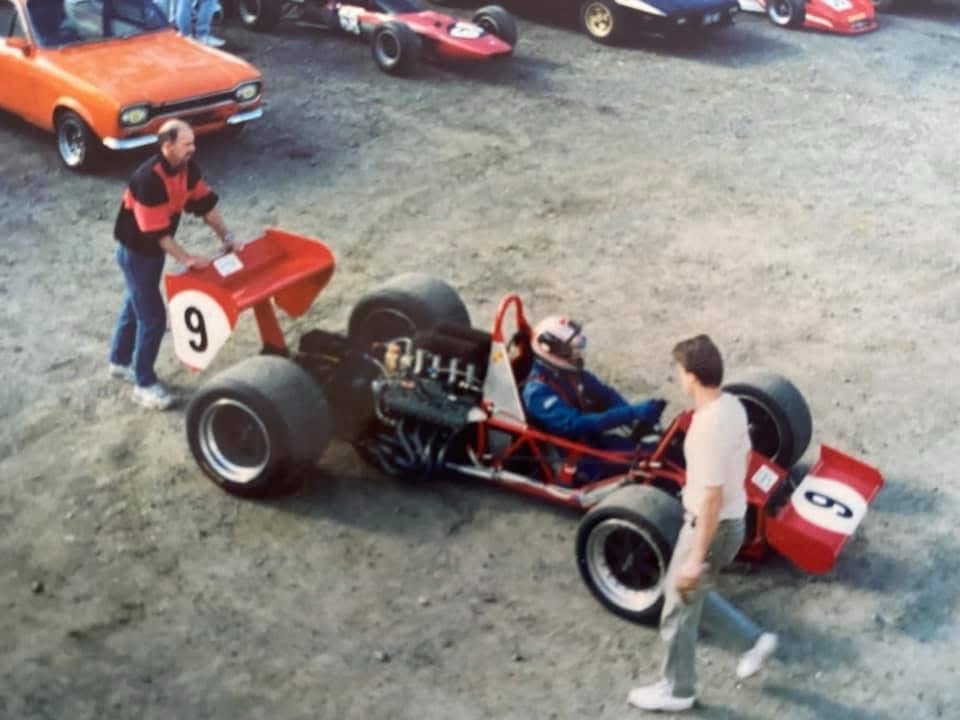
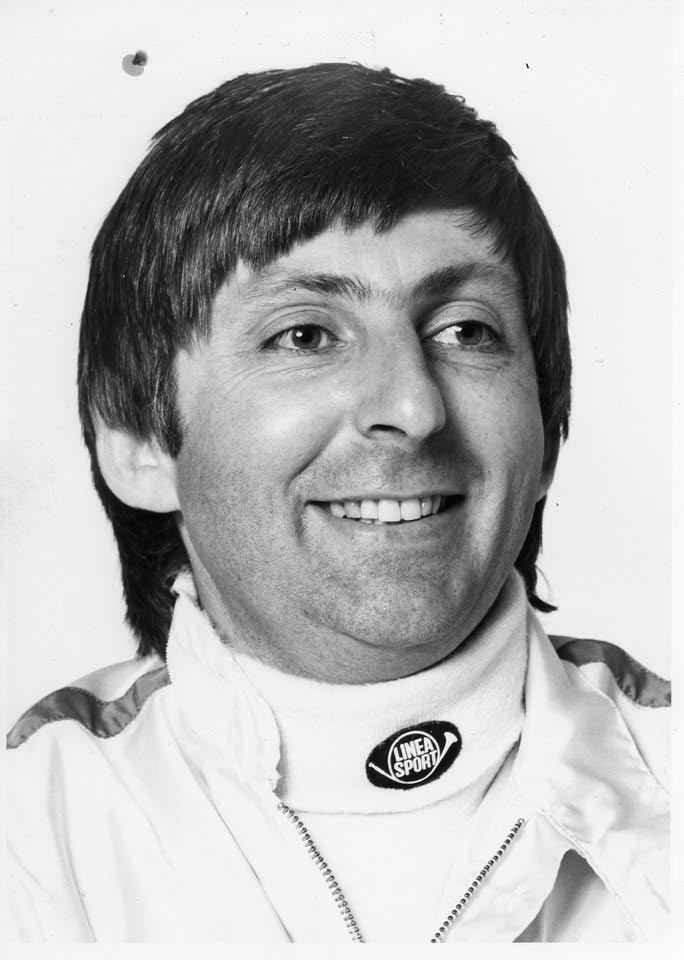
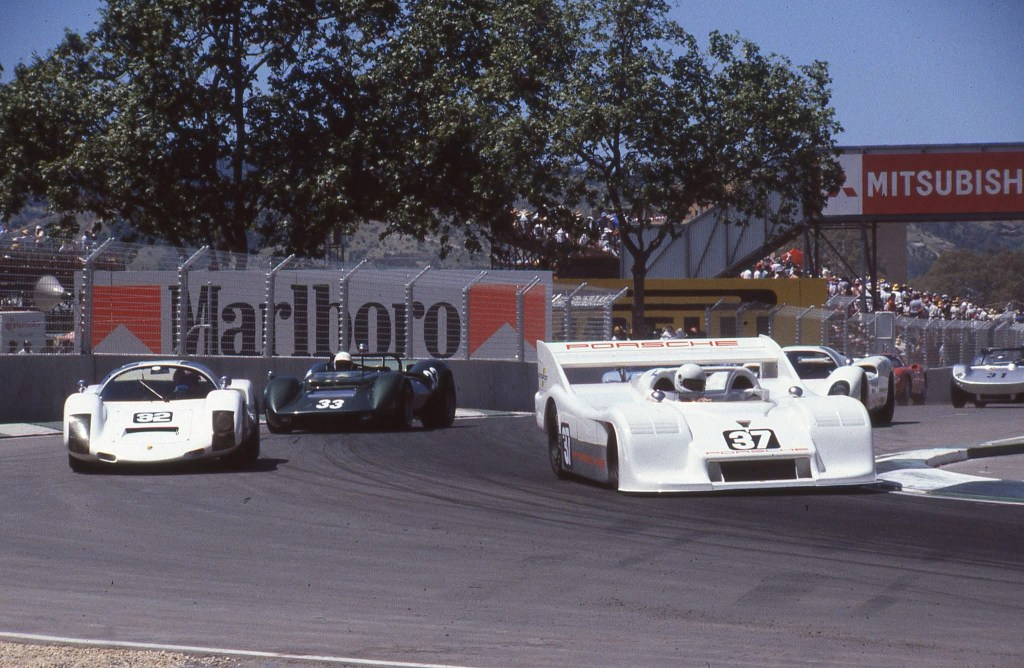
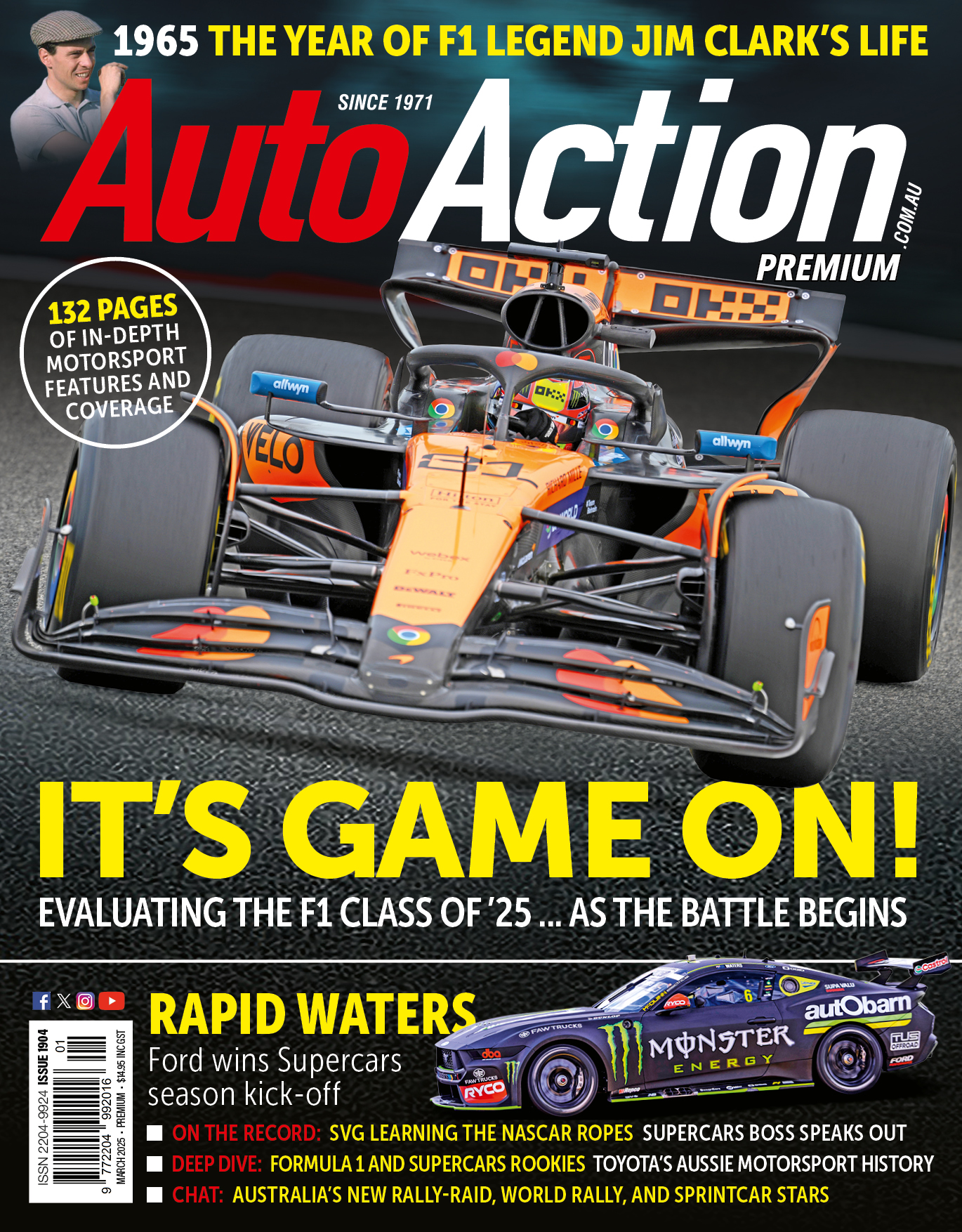
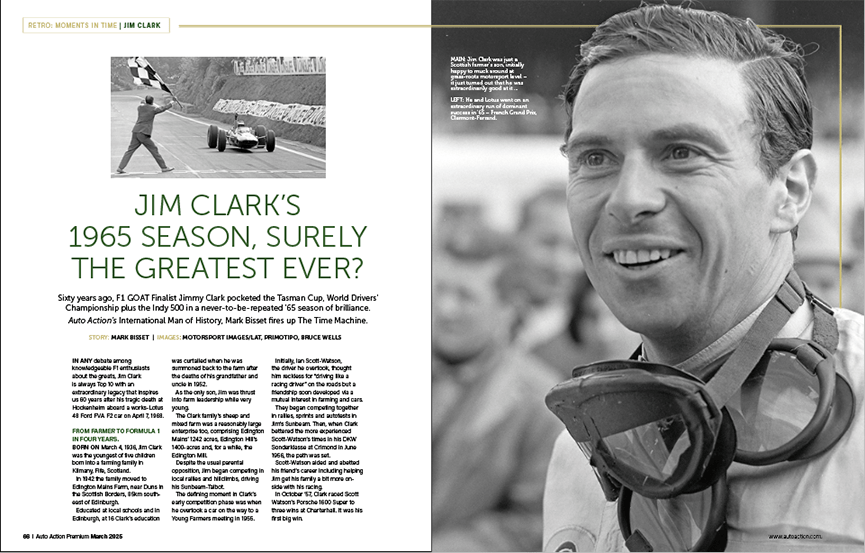
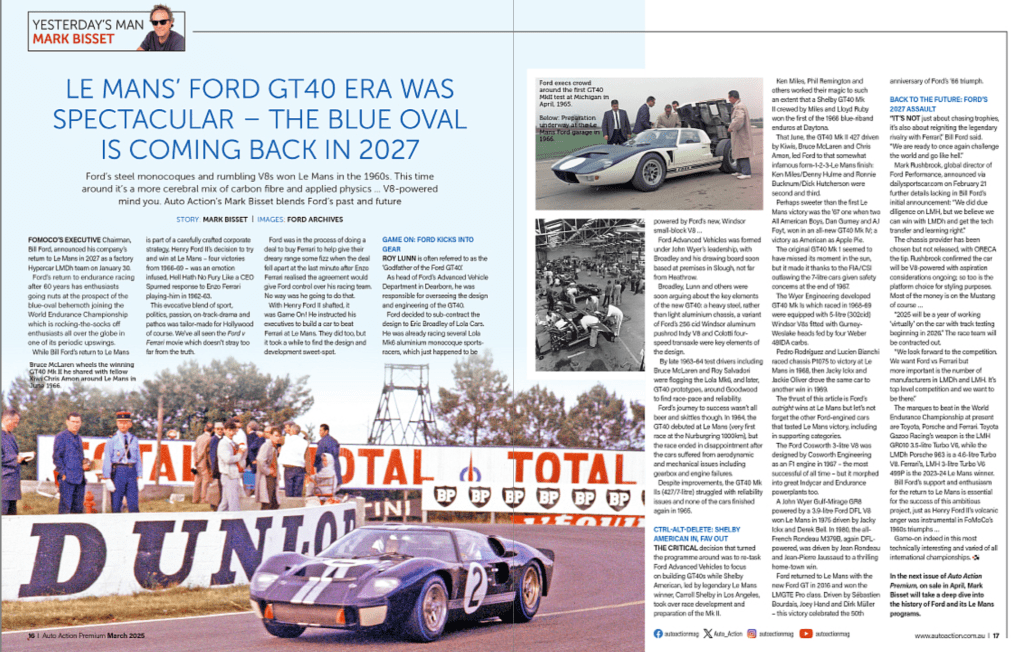
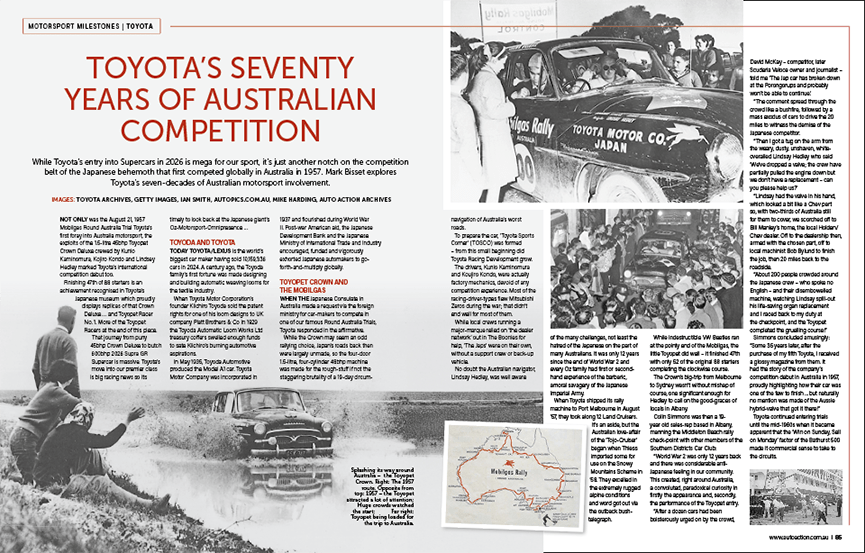
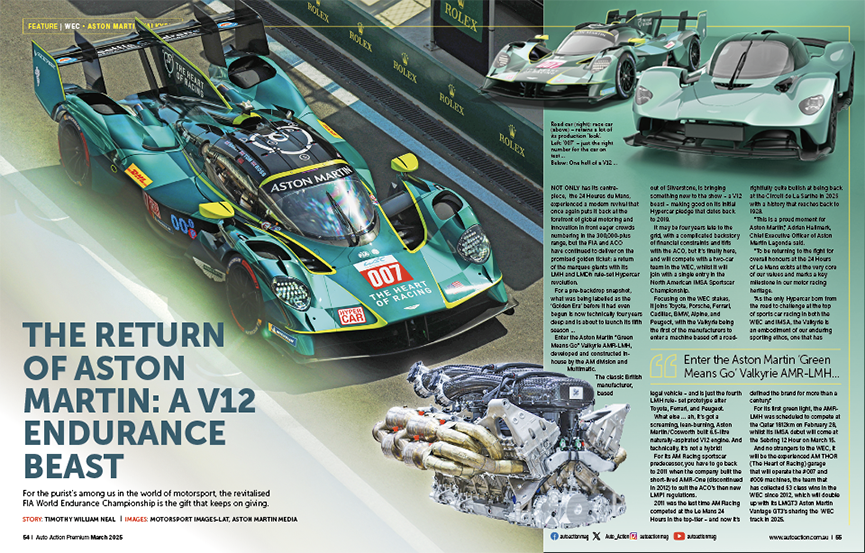
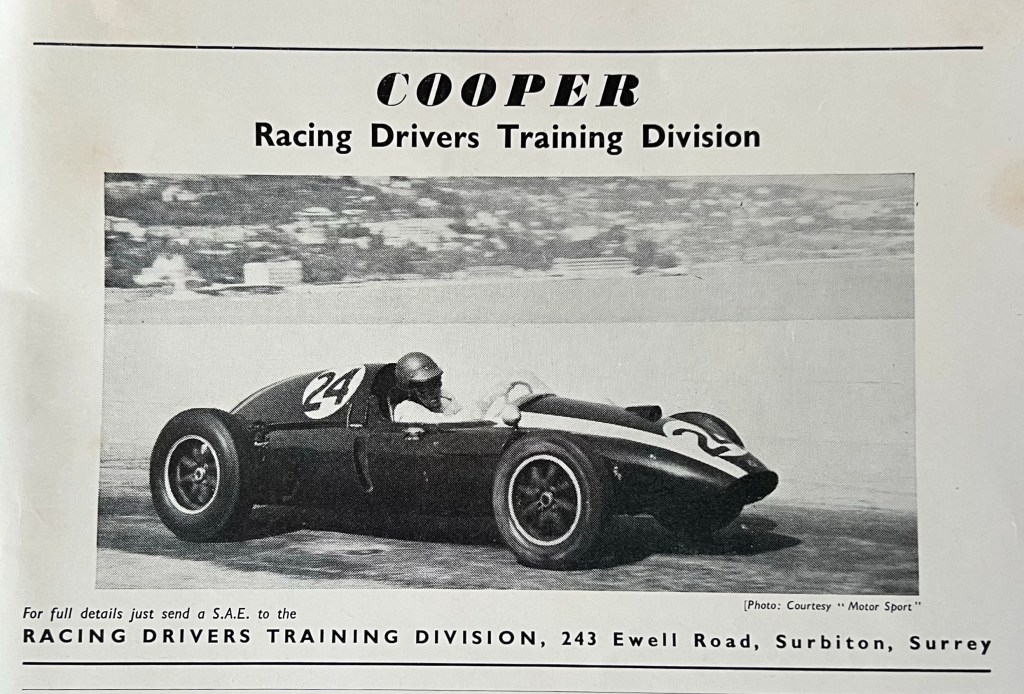
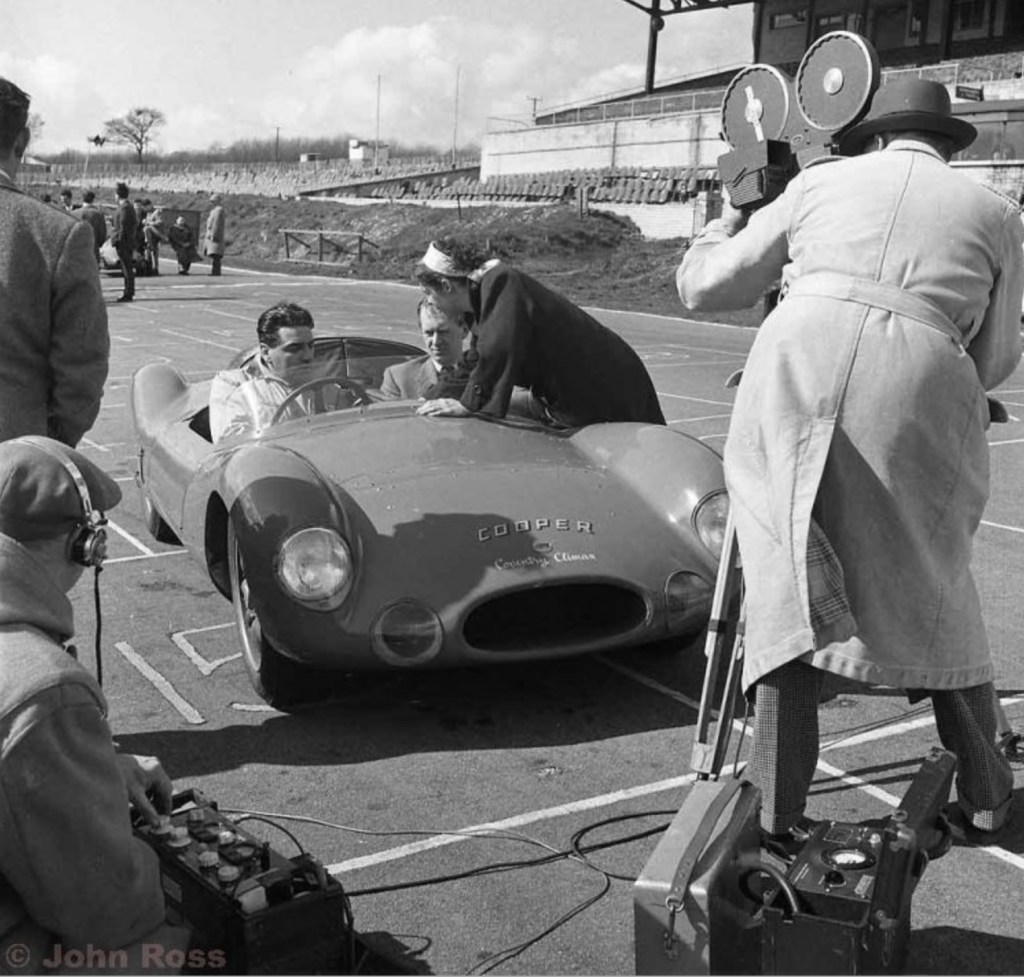
 primotipo...