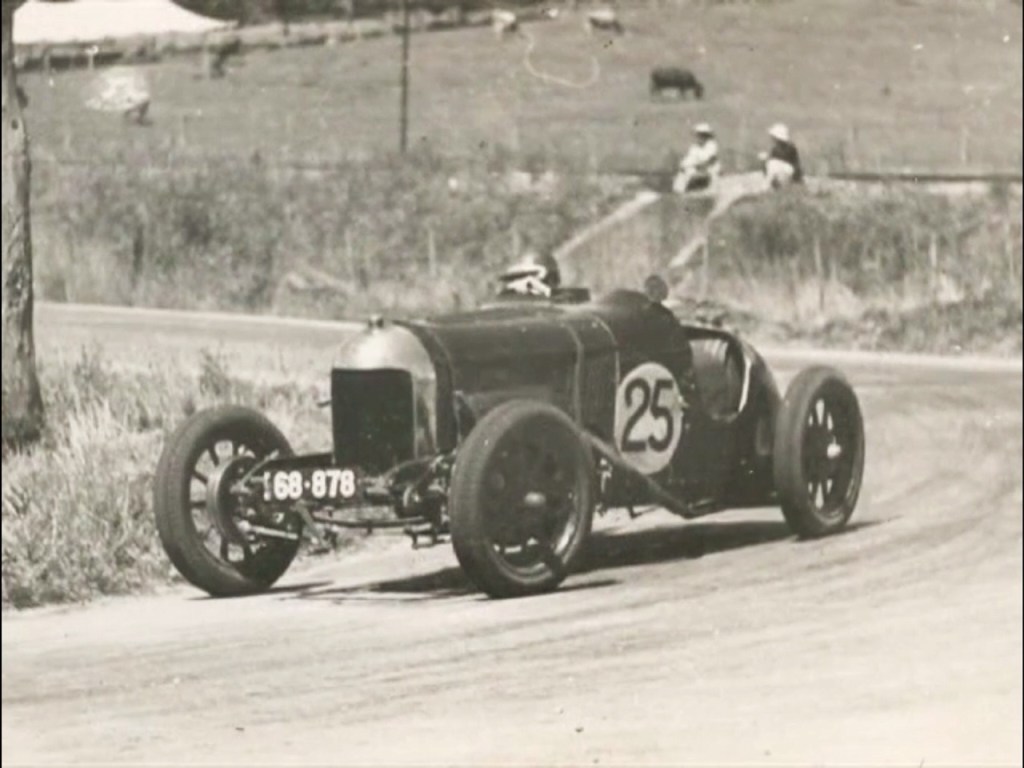
Colin Anderson and riding mechanic at Hell Bend on the Victor Harbor-Port Elliott road circuit during the Australian Grand Prix-South Australian Centenary Grand Prix held on December 26, 1936.
The pair are racing the Morris Special owned by Alf Barrett, one of Australia’s greatest racing drivers. He was a star of the immediate pre and post-war period aboard an Alfa Romeo 8C2300 Monza he raced from 1939. The car behind Anderson is George Martin’s AC 16/80.
Barrett entered three cars that Christmas 1936 weekend: a Lombard AL3 acquired from Jack Day in late 1935 for himself, an MG P-Type for Bryant & May family member Tim Joshua, and the Morris for another friend, Colin Anderson a principal of still respected Toorak based, multi-office real estate agency RT Edgar.
Alf retired the 1.2-litre Lombard after the supercharger pop-off valve blew off and could not be found despite a half-hour search! Colin Anderson wasn’t classified in the 1.5-litre Morris with overheating problems and a spin, but Tim Joshua had better luck. He was second in the P-Type behind the similar car driven by the winner, Les Murphy. Joshua led the race for some laps before a seven minute stop for unidentified maladies.
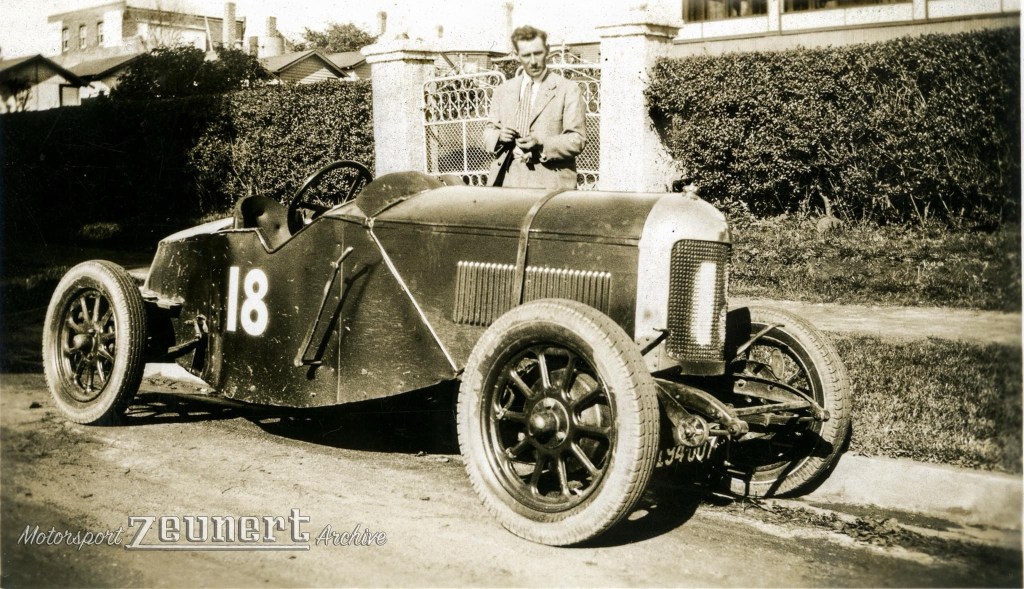
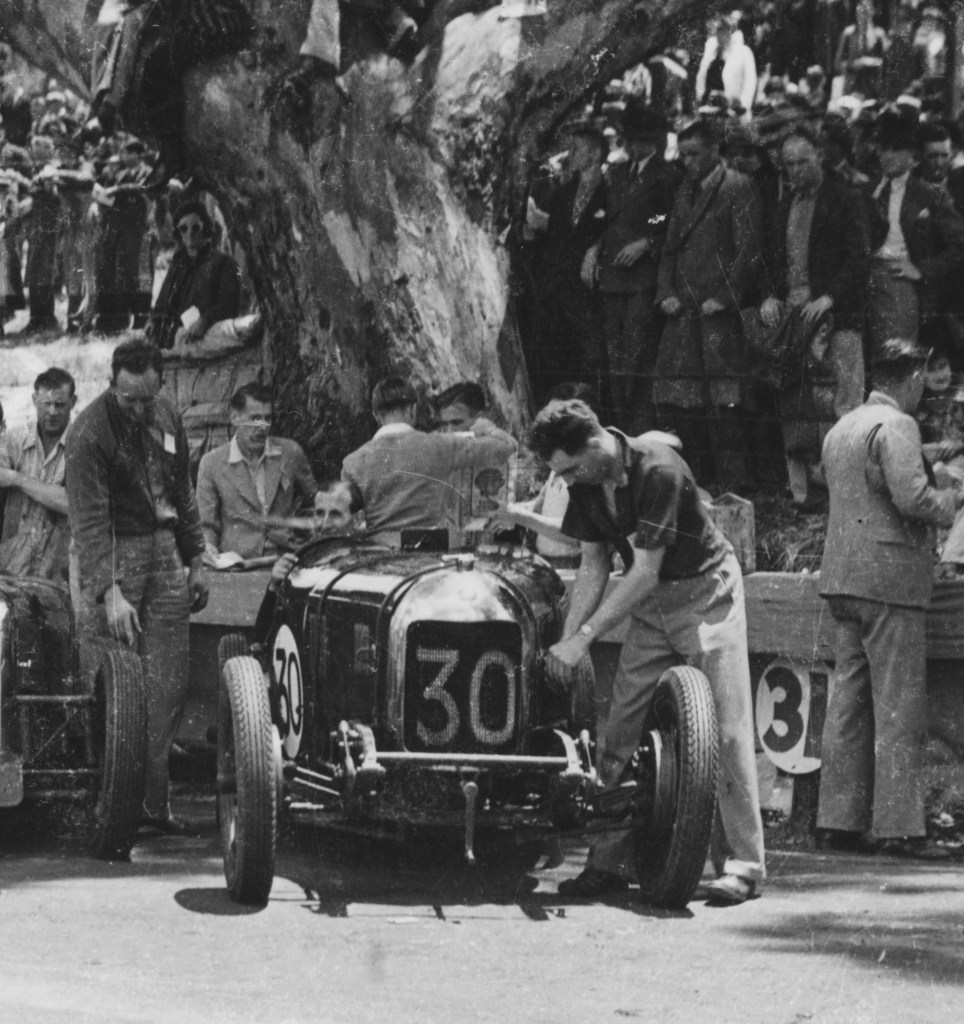
Alf Barrett alongside his Morris Special early in its life circa 1933, perhaps outside the family home in Armadale. Note the differences in bodywork and chassis undercut mentioned below (D Zeunert Collection)Barrett aboard his Morris at Kayannie Corner Lobethal during the January 3, 1938 South Australian GP weekend. Alf raced the Morris only once at Lobethal and used #30 in the race. Perhaps this is an early practice shot while still running a number used in a previous meeting, the Victorian rego plates were removed by raceday too (N Howard)
Barrett was born in 1909 to a wealthy family who made their fortune in malt. Today Barrett Burston Malting is part of the publicly listed United Malt Group Ltd. He grew up in Armadale in Melbourne’s inner-east and started messing around with petrol engined devices with his brother Gib (Julian) in the large grounds of their home.
Not far away, a young man destined to become a master-mechanic, preparing cars for Barrett, Tony Gaze and Lex Davison amongst others, Alan Ashton, was serving his time as an apprentice at AF Hollins Motor Engineers in High Street.
The three youngsters met and were soon messing around with cars and bikes which they tested at Aspendale Speedway.
Alf, Gib and Alan built their first racing car out of a Morris Cowley in 1933, initially hillclimbing the purposeful, attractive biposto. It was competitive in the handicap race events of the day too, winning the Light Car Club of Australia’s Winter 100 from 14 other competitors at Phillip Island in June 1935.
While the Lombard was the Morris’ successor, Alf had lots of trouble with it. John Medley wrote that ‘Pretty though it was, it was a nightmare for Barrett, a later owner discovering water jackets filled with bronze to heal unimaginable horrors. Never reliable , it was later re-engined with Vauxhall power.’
Amidst entries in the Lombard, he raced it in the Easter 1938 AGP at Bathurst won by Peter Whitehead’s ERA B-Type, Barrett continued to race the Morris which proved its pace with a great second place among much heavier metal in the 150 mile March 1937 Phillip Island Trophy.
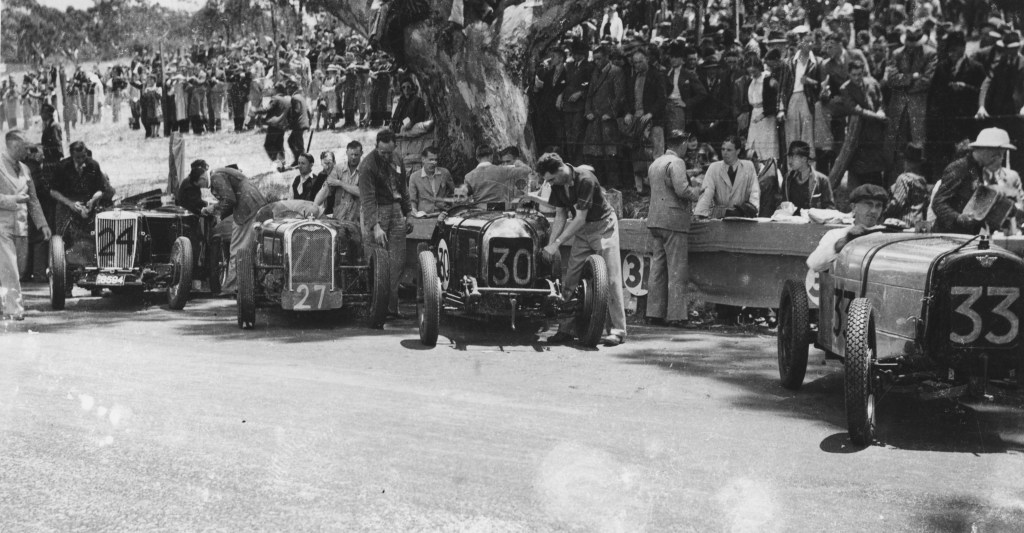
Barrett, at Lobethal before the start of the January 3, 1938 South Australian Grand Prix (N Howard)Tony Ohlmeyer, MG T-Spl, Jim Boughton Morgan 4-4, Barrett’s Morris Cowley Spl and Ron Uffindell’s Austin 7 Spl
He also raced the Morris in the 100 mile January 3, 1938 South Australian Grand Prix at Lobethal, but DNF in the handicap race won by Noel Campbell’s Singer Bantam from Colin Dunne’s MG K3 and Tony Ohlmeyer’s MG T-Type.
He also contested the 148 mile Interstate Grand Prix/Albury Grand Prix at Wirlinga near Albury that March. Alf was pretty handy behind the wheel, he was quite spectacular in the long suffering Morrie at Wirlinga despite the side-valve machine having a top speed of no more than 90mph, but again he failed to finish.
Barrett at Wirlinga in March 1938, the event was variously called the Interstate Grand Prix and Albury Grand Prix, the programme says the latter. Jack Phillips and Ted Parsons, local Wangaratta boys won in their Ford V8 Special (L Egan)
Little is known about the mechanical specifications of the car, but Stephen Hands wrote that ‘For many years Graeme Steinfort (a Melbourne lawyer/racer/restorer/historian had the block from Alf’s car. It had several interesting modifications, one was to reduce the reciprocating mass in the valvegear. Alf had cut away half the mushroom head of the cam-follower to leave only a bit directly over the cam lobe. It was prevented from rotating by a small block of metal screwed onto the block.’
‘Alf later modified the body somewhat, the photos show the dropped down radiator and cutaway body for more elbow-room. Some of the photos clearly show that Alf dropped the chassis under the rear axle. It would be interesting to see photos without the bodywork to illustrate how he did it.’
John Medley noted that the Morris was destroyed in a bushfire with only the engine surviving. It seems to have been fitted with a Laystall steel crankshaft, and the engine was fitted to Geoff Russell’s Russell Morris Special.
(Mildenhalls)
Etcetera…
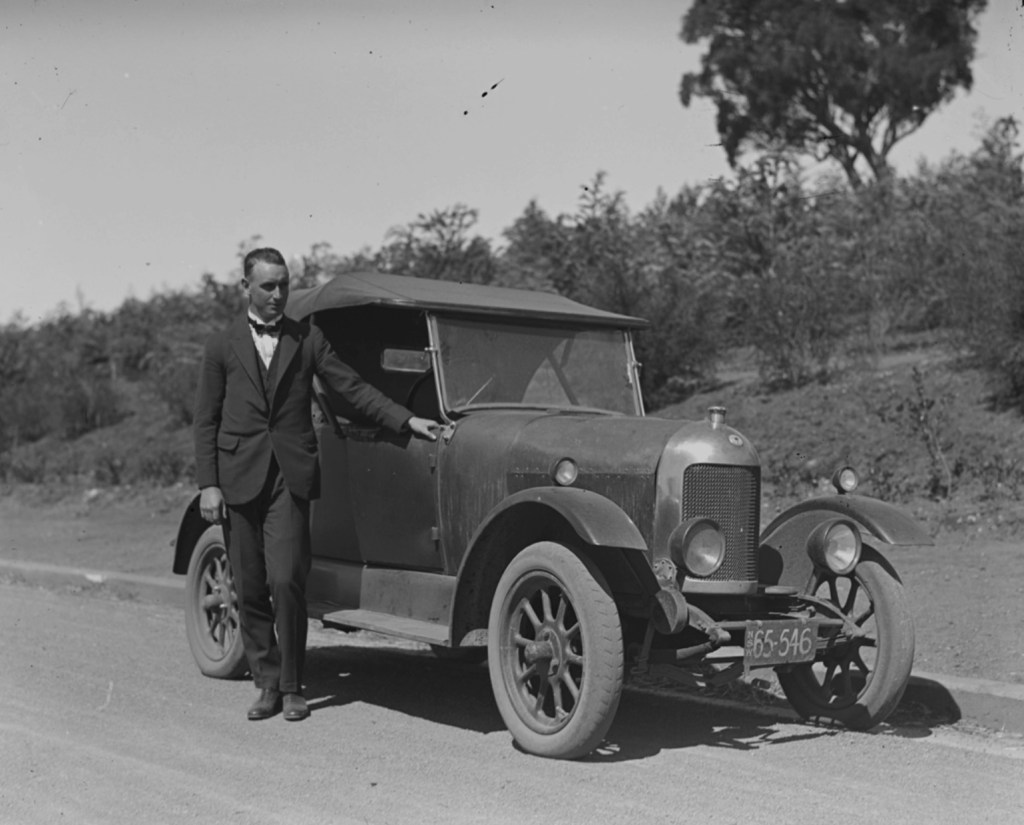
A Bullnose Morris Cowley with the proud owner in Canberra, date unknown. Ideal car for a public servant no doubt.
WR Morris, the Morris Company founder spent nearly a month in Australia in February/March 1928, accompanied by his chief designer, Mr Seaward, learning, Morris said ‘many things about tracks, clearance and other details that were required of the roads of Australia. It was up to him, when he returned to the old country, to do his best to supply the Britishers on this side of the water with what they required.’
Interestingly Morris said, ‘he could not leave Australia without saying he had never seen a better organised body works in the world than Holdens (then a body builder)’, which hw had seen in Adelaide that morning.
It’s easy to think of Morris as a marque that disappeared within the British Motor Corporation, but ‘the output of Morris products is approximately half the output of the whole of the British motor industry,’ The Register reported on April 2, 1927.
By November 1928 The Register reported that Morris products now embody many improvements as a result of WR Morris’ visit. Chief amongst these was enhanced pulling power of the new Morris Cowley engine, ‘in the past a second gear car for hill work but now having top-gear performance comparable with any four cylinder car on this market. Such improved performance and other engineering refinements makes the Cowley very desirable for country or city use.’ I wonder what Alf Barrett would have made of this lot!?
(Anderson Family Archive)
Credits…
Ron Blum Collection, Warwick Anderson, John Medley in ‘The Official 50 Race History of the Australian Grand Prix’, Norman Howard, Stephen Hands on Greg Smith’s Pre 1960 Historic Racing in Australasia Facebook page, David Zeunert Collection, Len Egan, Mildenhall’s Canberra, The Register March 7 and November 7, 1928.
THE BIGGEST CROWD ever to attend an Australian road race saw the Centenary Grand Prix won by Les Murphy (Victoria) over the Victor Harbor Port Elliot circuit this afternoon.
From the Special Staff of Adelaide’s ‘The Mail’ Writers at the Course…as they saw the race in the beautiful, descriptive language of the day, Saturday 26 December 1936.
‘Aerial view of Victor Harbour and Port Elliott for the South Australian Centenary Road Race’. Victor is in the lower right corner, Port Elliott is the smaller hamlet, the headland sticking out, above it. Using the diagram/map of the circuit below,taking the coast and the 2 settlements as reference points, you can see the roads used during the race. (State Library of SA)
Event Background…
It was the first AGP held outside Victoria and has been known over time as the 1937 AGP despite being held on Saturday 26 December 1936 and named then as the ‘South Australian Centenary Grand Prix’. It seems this ‘corruption of history’ as historian John Medley called it, commenced in the 1950’s, whence it originated nobody seems to know.
The Sporting Car Club of South Australia was formed in 1934 and played an active part in the celebration of 100 Years of European settlement of South Australia, the piece de resistance of the organising committee of the South Australian Centenary Committee was SA’s first real road race held 50 miles from Adelaide on the Fleurieu Peninsula, only a few miles from the mouth of the mighty Murray River on public roads between Port Elliott and Victor Harbor, then as now a summer playground. The event was run over 32 laps, 240 miles in total.
The race attracted the best cars and drivers from all around Australia, the limit men of the handicap race drove MG K3’s and Bugatti Types 37 and 43 and over 50000 paying customers came to an event then a long way from Adelaide.
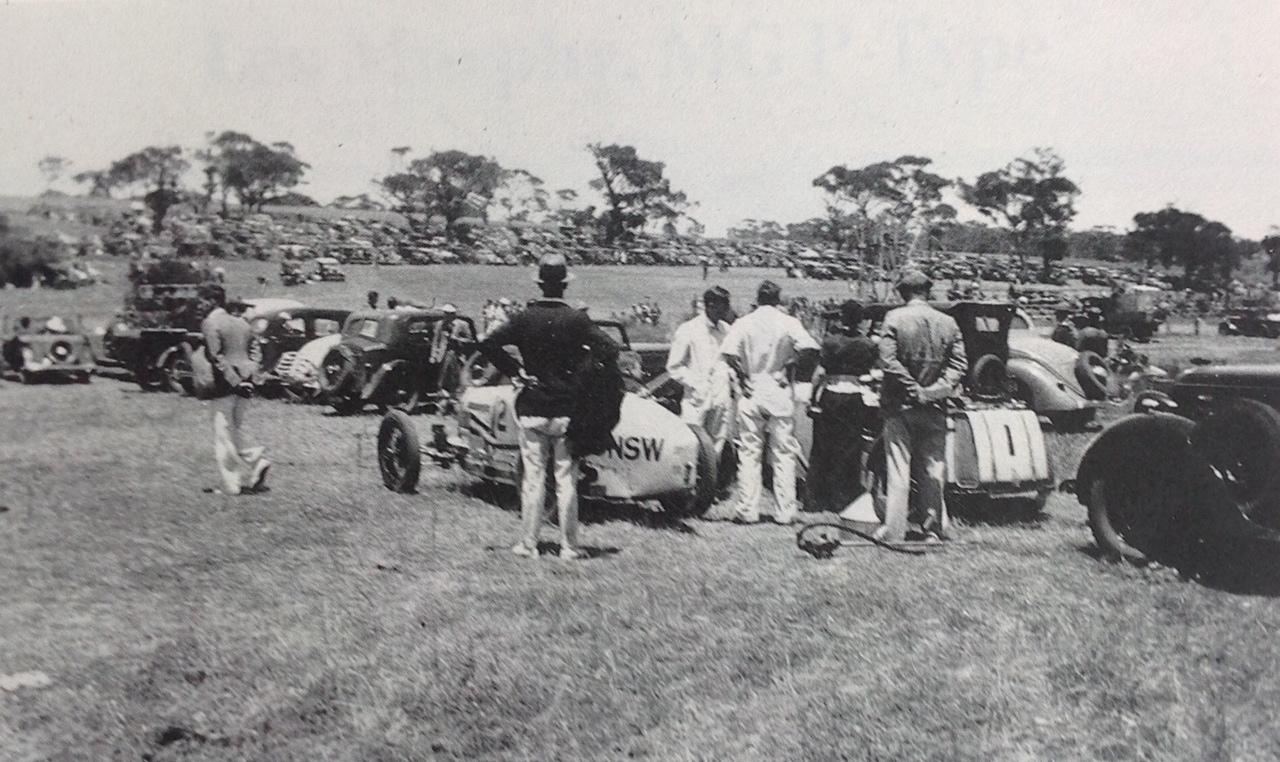
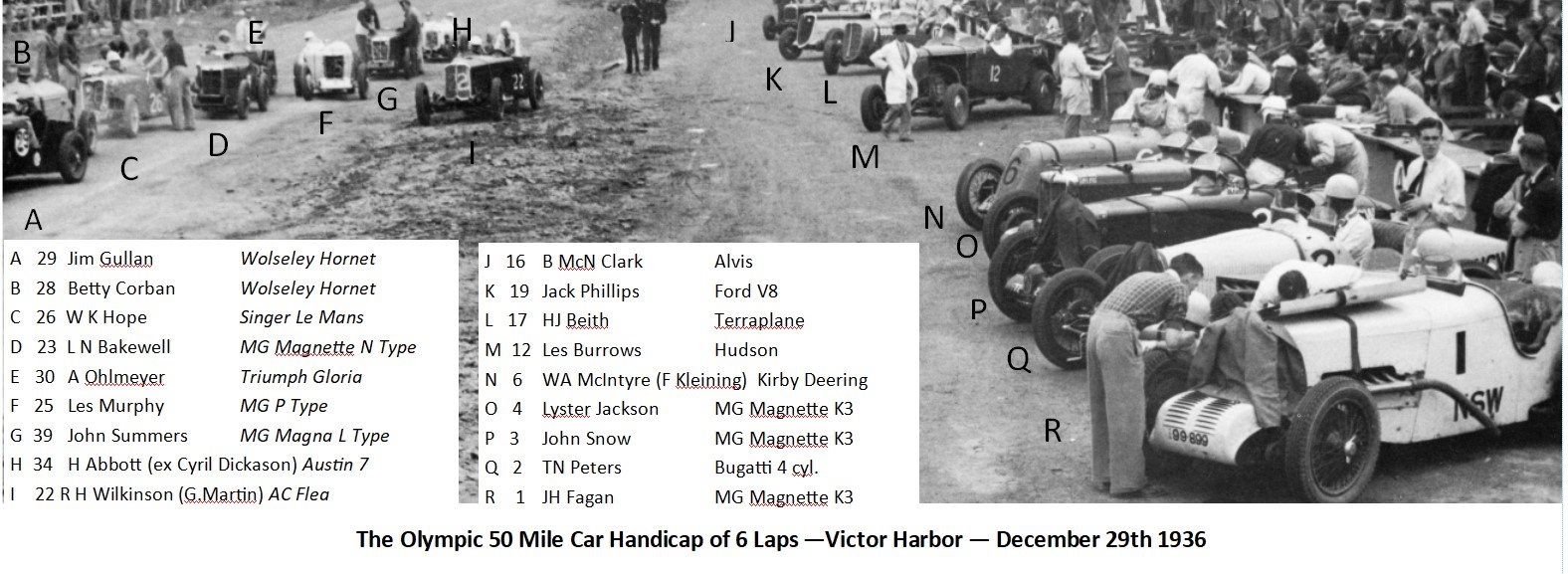
Victor paddock. #1 is the Fagan MG K3, #2 the Peters Bugatti T37. (Norman Howard)
‘VICTOR HARBOR, Saturday 26 December 1936. ‘The Mails’ contemporary report of the event…
Before the biggest crowd ever seen at an Australian road race, the South Australian centenary Grand Prix and sidecar tourist trophy races on the Port Elliot-Victor Harbor racing circuit filled the quiet country air with a thunder of power. Les Murphy, winner of the ‘Victorian Centenary 300′ in 1934, the Australian Grand Prix at Cowes, (Vic) in 1935, and one of the best known motor speed men in Australia, ran away with the Grand Prix after 250 miles of supremely consistent driving, while opponents in faster cars failed when the final test of endurance was applied. He averaged 68 1/2 miles an hour to win the first prize of £200 and a £50 gold cup.
Formally dressed crowd cruise the Victor paddock (SLSA)
The first of the long stream of cars, charabancs, motor cycles, and bicycles which conveyed the invading army of 45,000 to 50,000 spectators to the course left Adelaide at dawn, (Victor Harbor is 85 Km from Adelaide) and long before the start of the sidecar tourist trophy, vantage points on each of the five corners of the circuit were taken up. The crowd seethed with excitement from the moment when the 12 riders in the opening race roared away in a massed start to the fall of the checkered flag until the winner of the Grand Prix flashed past the finishing line. Paling into comparative insignificance when seen against the sustained thrill of the motor event, the motor cycles prepared the onlookers for the motor racing spectacle...There were no serious accidents, but many narrow escapes in the Grand Prix kept the crowd on its toes throughout the day. At several points the efforts of police and race officials were unavailing when the spectators broke through the barriers to watch the cars flash past.’
This State Library of SA shot does not record the competitors but shows the dirt/gravel road and the flat, scrubby terrain between Victor Harbor and Port Elliott. Popular summer playgrounds not far from Adelaide then as now. (RP Nicholas/State Library of SA)
‘Narrow Escapes’
‘A thousand people at the Grandstand Bend had their hearts in their mouths when the Bugatti of Hylton Dale (Vic) went into the corner too fast, skidded wildly round with screaming tyres, and regained its course with the driver fighting for control. Nearly an hour elapsed between the starting times of the limit men, E. M. Winter (SA) and R. S. Uffindel (SA) and the virtual scratch men Lyster Jackson (Vic), Jim Fagan (NSW). T. Peters and Lord Waleran. To make up this leeway the fast men attained speeds of more than 100 m.p.h. on the straights and made unbelievable speeds on corners.’
‘The demand for speed sapped the strength of the motors in the fastest cars, however, and it was a middle marker who took the honors of the day. Each of the virtual scratch men struck trouble while the excitement was at fever pitch, but Peters had established the lap record of 81 miles an hour before he dropped out of the running.’
There were plenty of thrills but no serious mishaps at the most difficult of corners. Hell Bend. Many drivers had narrow escapes, but only one, Jack Phillips, came to grief there. Taking the turn at too great a speed, he ran into an embankment and badly buckled the rear off wheel of his car.’
Harry Beith calls into the pits after crashing thru a fence at Seaview Bend, Terraplane Spl, he finished 9th (SLSA)
‘The crowd became out of hand at Hell Bend, and it was fortunate that the drivers showed such skill in regaining control of their skidding machines. Nearing the end of his race A. Barrett almost turned round just past the corner, but he managed to switch his car away from the crowd. The thousands of spectators at the bend spent an exciting afternoon. All eyes turned towards the Chilton Straight, when roaring engines warned of the approach of cars. As they quickly neared the bend the crowd was on tip-toes. Engines were throttled down, and the cars skidded and screamed round the corner, sweeping across the road, and sending up clouds of dust from the base of the embankment. Then engines roared again, and with a deafening noise the machines disappeared. Often spectators scampered for safety as the cars skidded out of control.’
Jack McDonald, Amilcar Grand Sport (R Fewster)
‘Determined efforts were made by the police to keep the corners clear, but soon the crowds took charge,and they swarmed everywhere, even over the grounds of a private residence. Nangawooka Hairpin, which was expected to provide many thrills, was surprisingly uneventful. The crowd at the corner was raised to heights of expectancy several times as the snarl of hard applied brakes and screaming tyres told of the drivers’ fight to get their cars round the corners safely. But apart from the unfortunate skid by G. C. Martin’s AC, which put him out of the race when in a handy position, and two or three cars which took the escape road, the bend was singularly free from incident.
Bob Lea-Wright’s Terraplane Spl takes Nangawooka Hairpin. Victor Harbor 1936. (State Library of SA)
The day of speed was remarkable for the precision and orderliness with which the arrangements for the drivers’ safety and the convenience and comfort of spectators were carried out.
The huge crowd was handled well by the large contingent of police and special constables who were on duty at the course. With the cars careering into corners to the very limit of safe speed, and often just a little more, the highlights of the day were seen by those who had secured corner positions.
Martin had bad lack when he skidded at the Nangawooka Hairpin, while challenging Murphy for the lead in the concluding laps. He was driving with the throttle flat on the floor, but on this corner he skidded and straddled the sandbag safety bank. Immediately dozens of spectators prepared to go to his help, but officials called them back, warning them that Martin would be disqualified if he received any help.
After several attempts to free his car, Martin gave up and two men helped him away. The spectators cheered sympathetically as he left.
Crowd at Victor Biggest in History.
Although in peak times the estimated floating population of Victor Harbor was about 40,000, never in the history of the town has there been such a crowd as there was tonight. Motor cars were parked everywhere, even down side lanes and blind alleys. Nevertheless, no accidents were reported to the police. Streets were gay tonight and many of the buildings had colored lights.’
Race Report…’The Mail’ then published a full account of the race in its Sports Section…
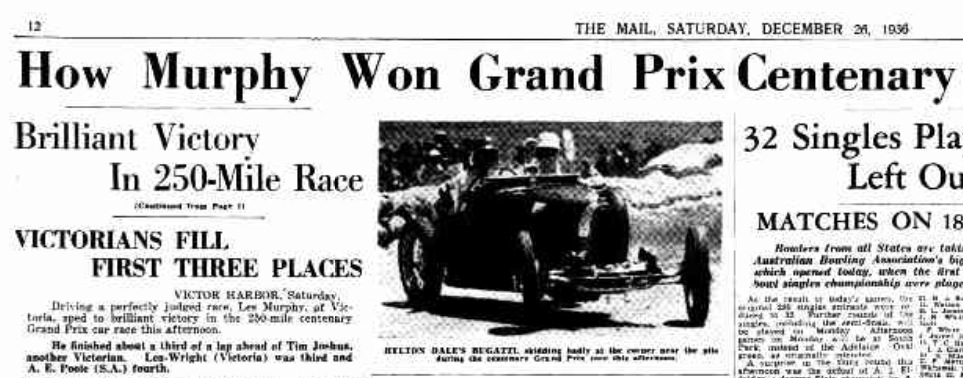
How Murphy Won Grand Prix: Brilliant Victory In 250-Mile Race.VICTORIANS FILL FIRST THREE PLACES VICTOR HARBOR. Saturday.
Driving a perfectly judged race, Les Murphy, of Victoria, sped to brilliant victory in the 250-mile Centenary Grand Prix car race this afternoon. He finished about a third of a lap ahead of Tim Joshua, another Victorian. Lea-Wright (Victoria) was third and A. E. Poole (SA) fourth.
START OF GRAND PRIX.
Uffindell (Austin) and Winter (Vauxhall) were first away off the limit mark in the Grand Prix. McDonald (Amilcar), who crashed in the practice trials this week, was a last-minute starter. It had been thought that the damage to his car would not be repaired in time. He went off 8 min. later. The next away were Gullan (Hornet Special), Anderson (Morris), and Tim Joshua (MG). Then followed at intervals Summers (MG), Moulden (Sunbeam), Dutton (MG), Barrett (Lombard), and Dale (Bugatti). The machines away were by this time well warmed, and the lap speeds began to soar. The next batch away comprised Poole (Oldsmobile), Lea-Wright (Terraplane), Beith (Terraplane). Anderson pulled into the pits with water streaming from his radiator and Barrett followed with his Lombard to change a wheel.
At this time 13 competitors were still at the pits waiting to get away on their handicaps. One by one the machines roared down the Brick Kiln Straight until the back markers ; Fagan (MG Magnette), Jackson (MG Magnette), Snow (MG Magnette) and Peters (Bugatti) were on their way. Churning the dirt from the calcium chloride treated track, Peters scattered it all over the spectators as this batch of expert drivers thundered down the straight Peters had a slight advantage.
Practice or parade lap prior to the race. L>R Lyster Jackson MG K3, winner Les Murphy MG P Type #29 and Alf Barrett Lombard #22. (Alan Griffin Collection)
CARBURETTOR TROUBLE.
Uffindell had covered eight laps, while the scratch men had completed only two laps of the circuit. There had been no retirements up to this stage. Winter howled his Vauxhall round the course at a good average speed. At 1.28 Dale drove bis Bugatti into the pit with carburettor trouble. The defect was remedied in three minutes. Trouble began frequently. McDonald had to pull up opposite the grandstand to adjust his goggles. It only took him a minute, and the car bounded off again. Minor mechanical troubles stalked abroad, and the men at the pits worked feverishly to correct them without serious loss of time.
The pace was now on, but with so many laps ahead for the competitors, spectators were unable to anticipate the winner. After several rounds Fagan (MG Magnette) lapped the circuit at 78 mph, while Burrows went round with his Terraplane in 6 min. 15 sec., which was equal to 74 mph Jackson, driving a MG Magnette, went round in the same time. Hylton Dale, driving a Bugatti, tore round the grandstand bend and went wide. His throttle jamming, he swung round and ricochetted into the pit with a side sweep. Diagnosed, his trouble was described as ‘plug.’
Les Burrows, in his flaming Terraplane, had to pull in because of plug trouble. Barney Dentry in his Riley, who has completed many thousands of miles in his little car, also pulled in for a mechanical adjustment. G. C. Smith (NSW) retired. He said that he had been under the impression that the track was smooth, but it was very rough in his opinion. Anderson (Morris Special) had to pull in several times for water. The last time he came into the pit the water belched from the radiator high into the air as the mechanics lifted the radiator cap. Abbott was making good progress in his supercharged Austin. He came into the pit with a loose distributor which was adjusted in three minutes. Gullan (Hornet Special) lost three minutes while he stopped to adjust his helmet.
Les Murphy on his way to victory, here on West Straight heading to Hell Bend. MG P Type. Additional fuel tank gave him a range of 300 miles per tanks.(Norman Howard)
DRIVERS WITHDRAW.
Halfway through the race Joshua was in a strong position. He was driving his MG K3 brilliantly. The Victorian driver Murphy was in second position, but Martin was giving a real fireworks display, lapping at 71 mph He was gradually overhauling Murphy. The South Australian representative, Uffindell, was still maintaining a good speed, and was not far behind, while Phillips, at the wheel of his Ford, was going at 74 mph. There had been no serious accidents up to this stage. Abbott experienced plug trouble, and a few minutes later Barrett and then Lord Waleran came into the pit with similar trouble. Mclntyre retired with his Hudson at 3.05 p.m., and Smith withdrew his Hudson a minute later. Frank Kleinig, who was driving Mclntyre’s entry, was forced to retire because of a broken radiator. Kleinig was one of the most popular and most spectacular drivers during practices.
Lord Waleran, who had relieved J. Snow at the wheel of the K3 Magnette, took Hell Bend too wide in the seventeenth lap. Handling his car skilfully, he headed his car down the Escape road, and a few minutes later joined in the fray again. With eight laps to go Murphy had taken the lead with Martin, lapping at 73 miles an hour second and Tim Joshua third. Phillips, driving his Ford, crashed into the embankment at Hell Bend through attempting to take the turn too fast, the off rear wheel was bent almost underneath the car. Neither Phillips nor his passenger was hurt. At 3.45 20 cars were left in the race. Shortly before 4 o’clock Murphy (Vic) was leading by six minutes.
Nangawooka hairpin. A Poole Oldsmobile. (State Library of SA)
PETERS’ FAST LAP.
Martin set out to catch Murphy with six laps to go and he was reducing the gap at the rate of several miles an hour. There was now only four and a half minutes’ difference between the two speedmen. With an hour’s racing remaining the fastest lap record was put up by Peters, who covered the circuit at 81 mph. Then the whole aspect of the race changed.
Martin broadsided, and saddled the sandbags at Hairpin Bend. There he tried to shift his car without success. Martin made desperate efforts but the rear was protruding across the track, to the danger of other competitors. Driving a perfectly judged race, Murphy, the Victorian driver, who was on a 40 minute handicap, maintained the lead and finished about a third of a lap ahead of Tim Joshua, another Victorian, who was driving A. Barrett’s M.G. Lea-Wright (Terraplane) was third, and A. E. Poole (SA) was fourth.
The winner’s time was 3 hr. 39 min. 6 sec. Poole’s actual time was 3 hr. 37 min. 59 sec., and he thus wins the £25 presented by ‘The News’ and ‘The Mail’ for the fastest time for any South Australian competitor. Dentry was fifth and then followed Cranston, Uffindell, Summers, Beith and Dutton. Others to finish were Terdich and Martin. The following competitors retired; Fagan, Peters, Kleinig, Smith, Burrows, Phillips, Dale, Barrett, Gullan, Winter. Fastest time was set up by Cranstonof Western Australia, who covered the distance in 3 hr. 20 min. 17 sec. T. Joshua’s time was 3 hr. 56 min. 10 sec., and Lea-Wright’s 3 hr. 26 min. 40 sec. Fastest lap was secured by T. Peters (NSW Bugatti), who went round in 5 min. 47 sec., equal to 81 miles an hour.
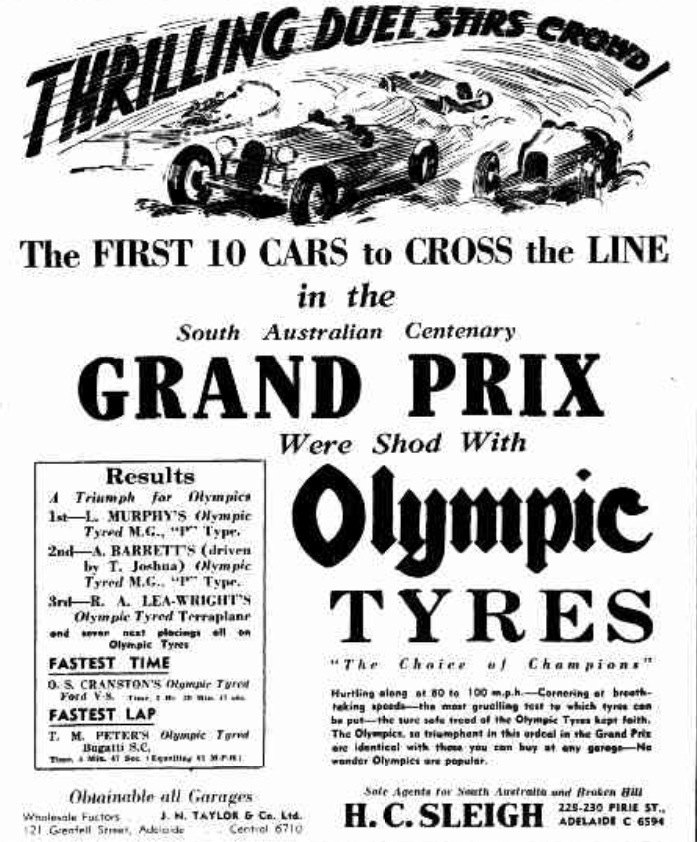
‘Win on Sunday, Sell on Monday’ adage started a long time ago! ‘The Mail’ ad the day after the GP.
Circuit Aerial Photographs…
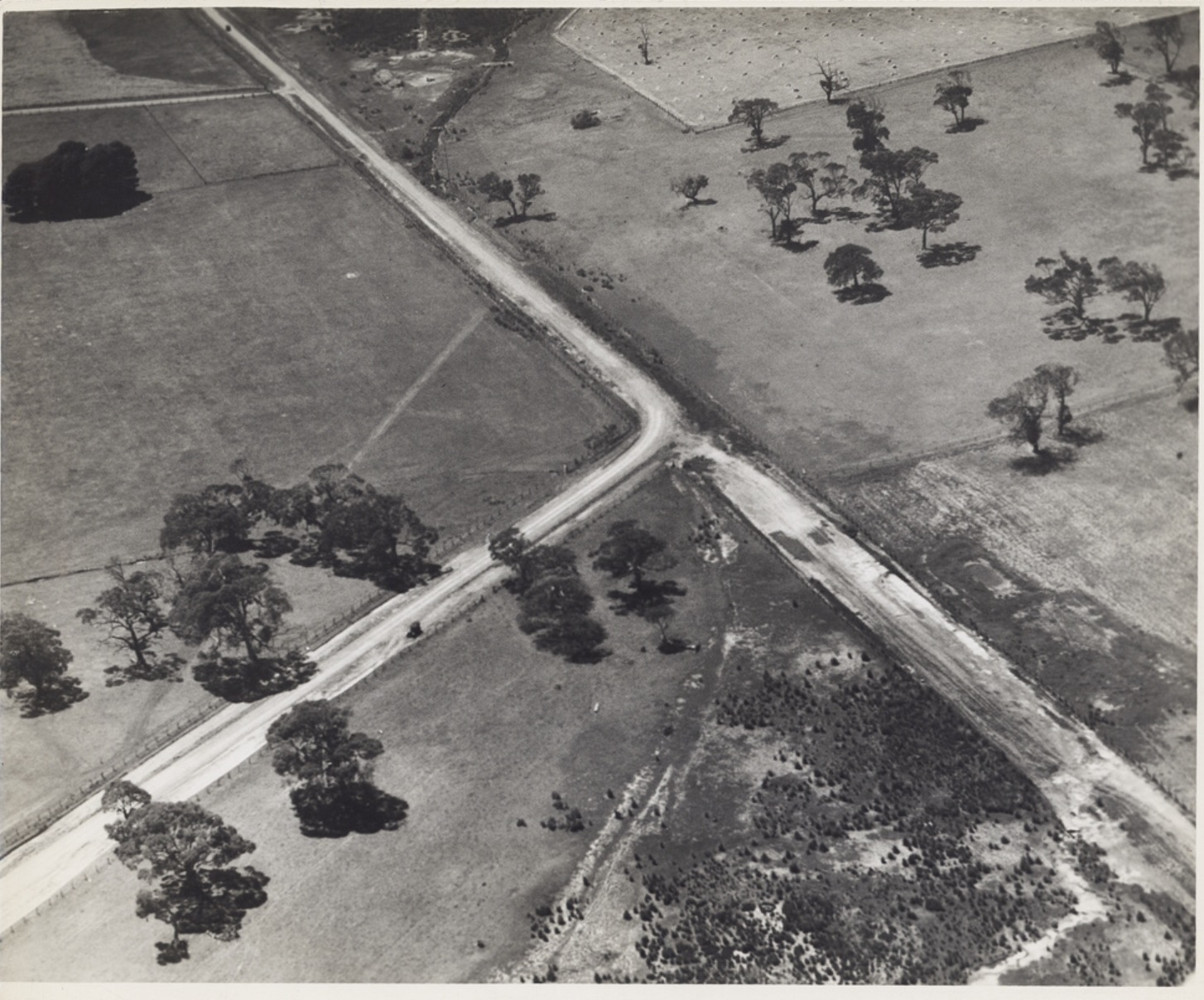
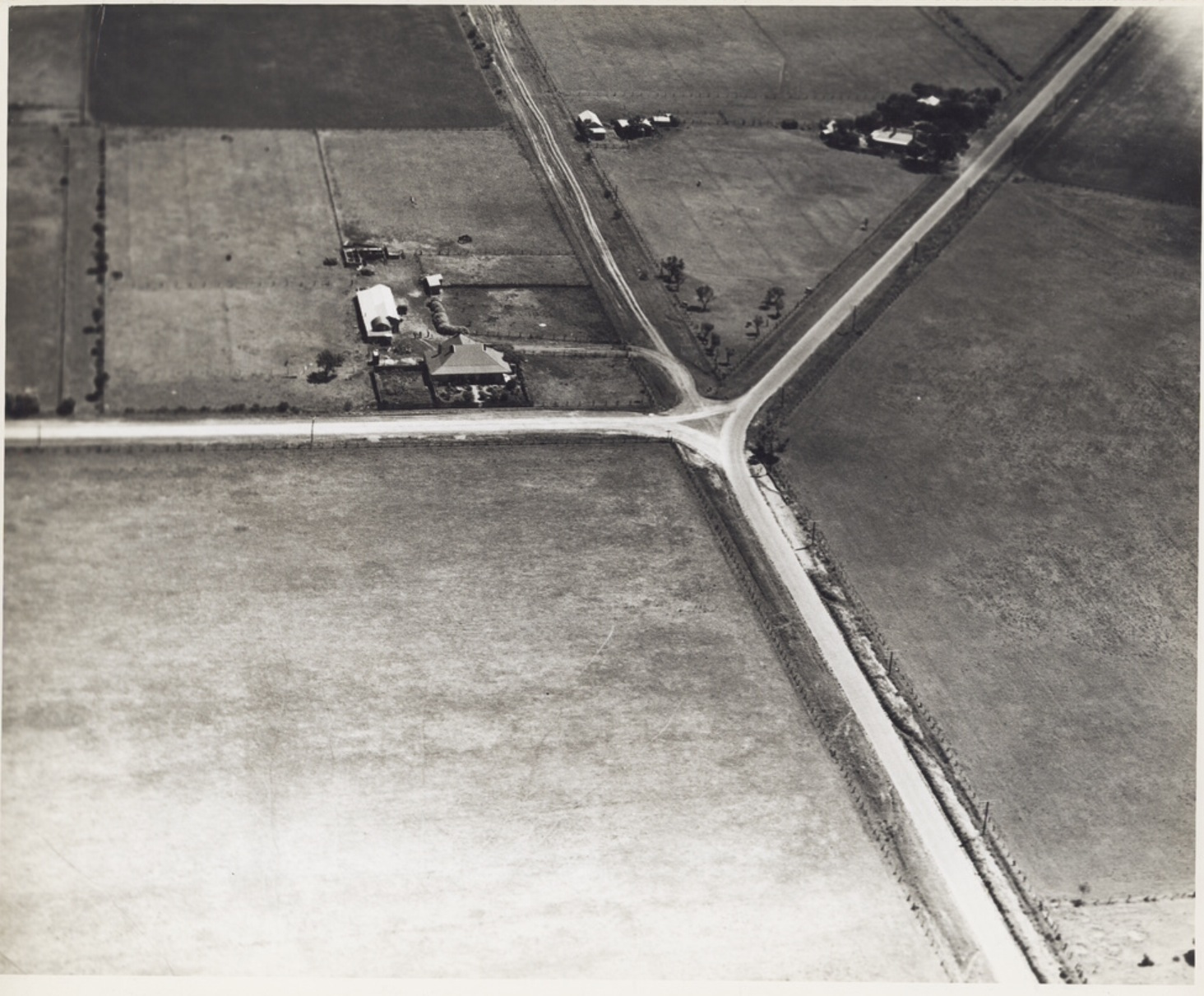
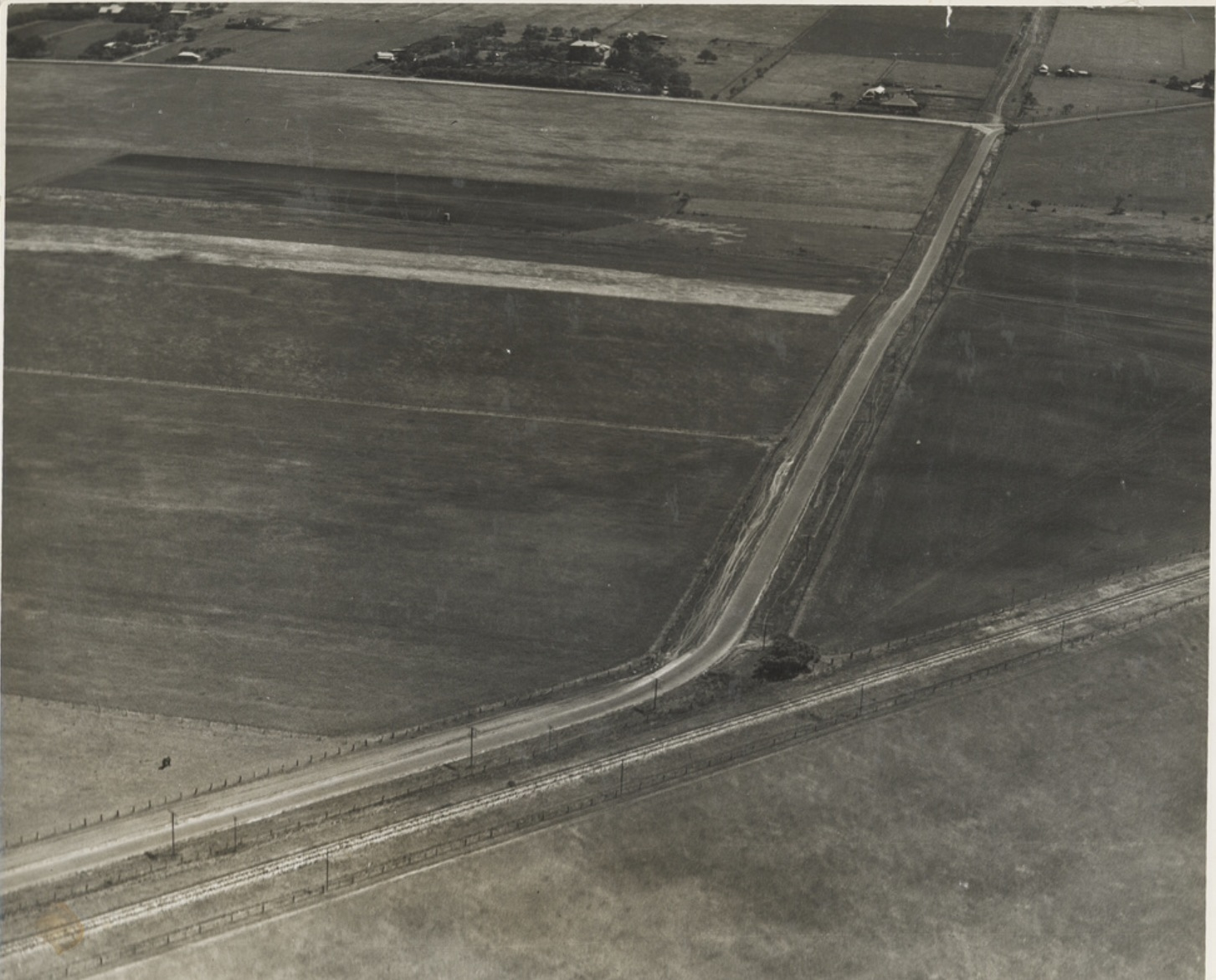
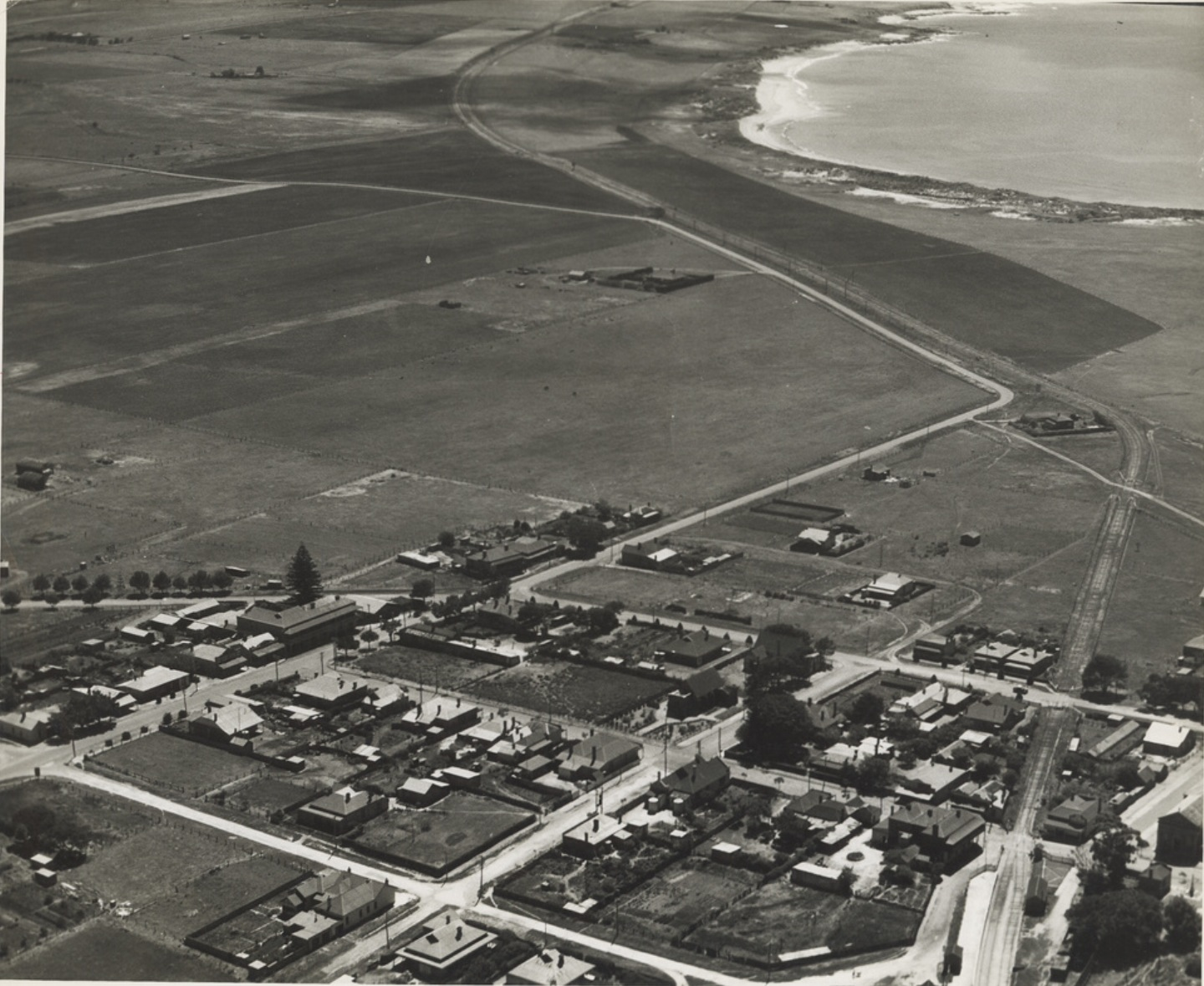
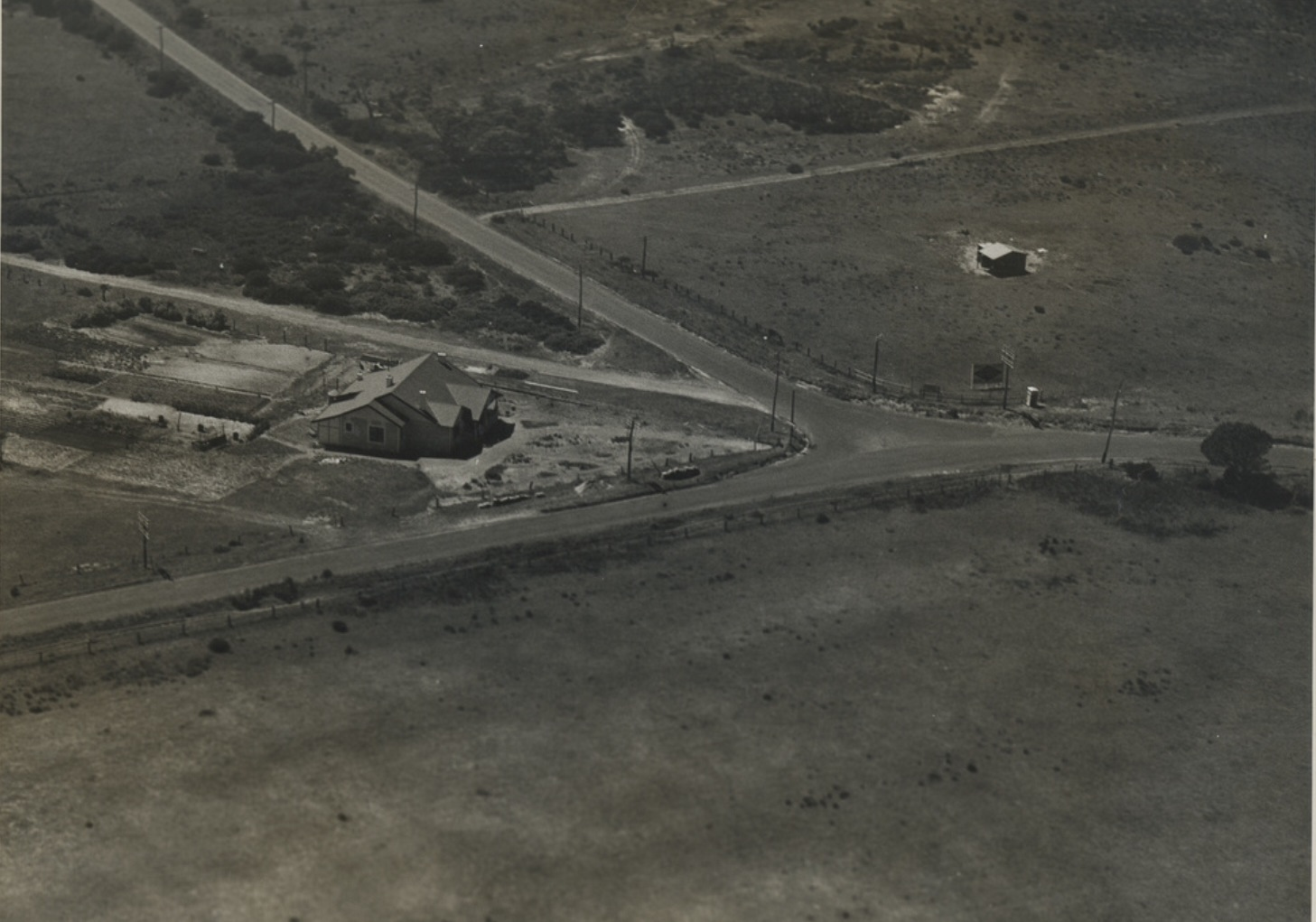
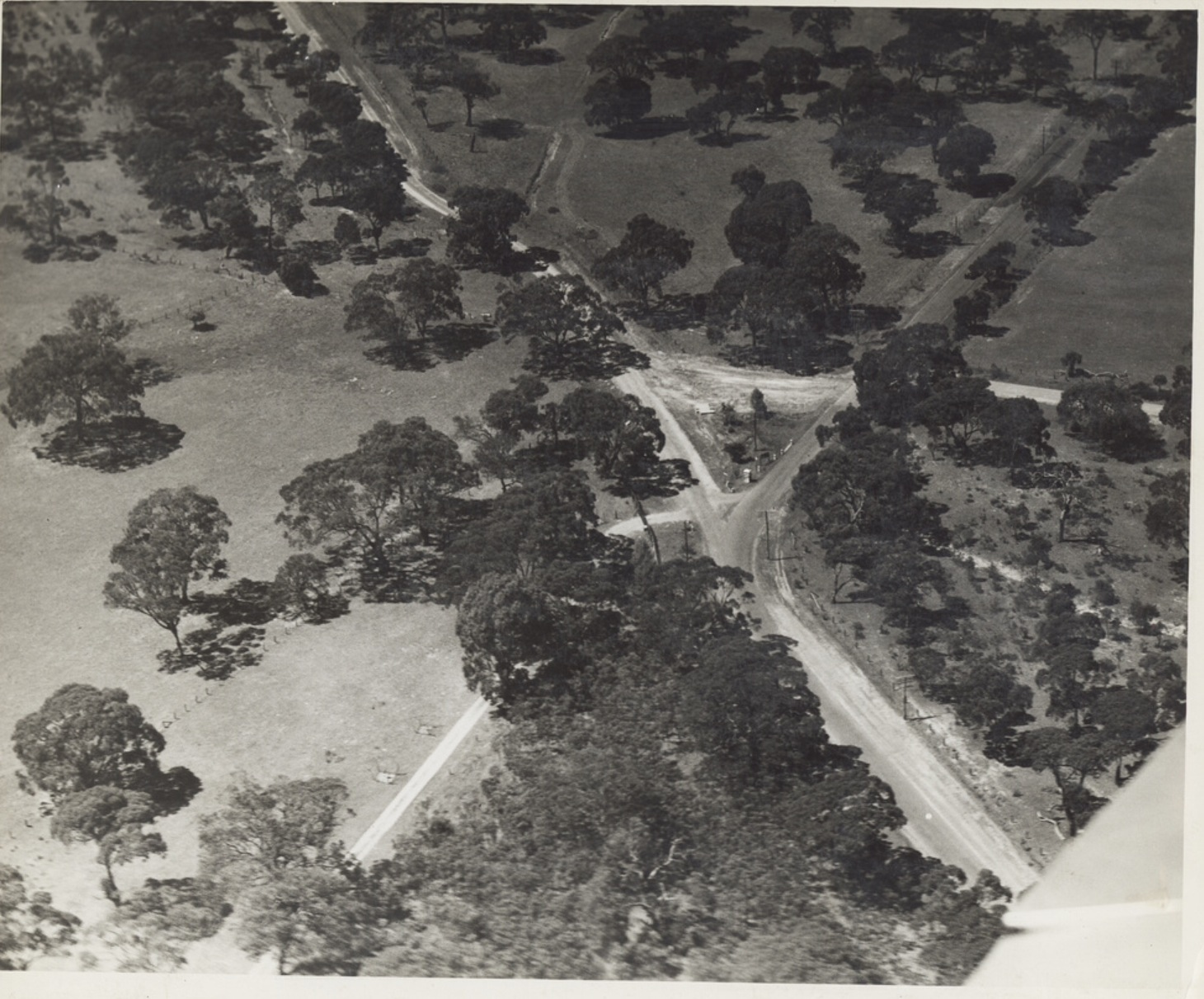
The State Library of SA (attribution of shots in all cases below) have a series of aerial photographs taken during the meeting, unfortunately not during the racing! They are reproduced below in the sequence, by image number published, which may or may not be corners in their order of a lap, there are no captions to assist the historian. I have included fthen for the sake of completeness.
They clearly show the loose nature of the gravel, the dust the drivers and spectators had to contend with as a consequence, the flattish nature of the area and the open, fast corners.
‘Aerial view of Victor Harbor and Port Elliott for the South Australian Centenary race’ is the caption on this series of shots. (State Library of SA)
(State Library of SA)
Perhaps; the fast LH kink after exiting ‘Nangawooka Hairpin’. The cars heading from top to bottom of this shot. (State Library of SA)
Perhaps; The cars race from top left to right, along ‘Brick Kiln Straight’ then the RH tight corner ‘Sea View Corner’, then the RH kink towards the bottom of the photo is the fast RH taking the cars into Port Elliott.(State Library of SA)
Port Elliott. The cars raced clockwise, so from left to right. Into the right hander at top left, then the right hand kink depicted in the previous photo,(the point of the track closest to the water) then another right hander and down ‘Chilton Straight’, thru the town and back towards Victor. (State Library of SA)
Perhaps; ‘Hell Bend’, the RH tight corner at the end of ‘Chilton Straight’ which then heads in the direction of the L/R series of corners towards ‘Nangawooka Hairpin’. (State Library of SA)
Perhaps; the L/R combination which leads to ‘Nangawooka Hairpin’. Looked at from top to bottom.(State Library of SA)
Etcetera: Motorcycle Events…
R Badger, Ariel Square Four winning the Sidecar TT. There were 12 competitors in a massed start, he gave a ‘brilliant exhibition’ to win the 56 mile race from Bill Barker, Levis and A Griffiths Morgan 3 Wheeler. Average speed 71 mph (SLSA)
A Griffiths and passenger aboard their 3rd placed Morgan 3 Wheeler during the Sidecar TT (SLSA)
Irish Champion Stanley Woods with some competitors and a fan during the Victor weekend. By then he had 4 successive Irish TT’s and the 1935 Junior and Senior IOM TT’s to his credit- and much more. Woods won the Junior TT on a Velocette by a half a lap in 58 minutes. He led the Senior TT, also Velocette but was slowed by clutch problems after a fuel stop, a South Aussie by the name of Foster won on a Norton (SLSA)
Bibliography…
‘The Mail’ 26 December 1936, John Medleys chapter on ‘The 1937 Australian Grand Prix’ aka ‘1936 South Australian Centenary Grand Prix’ on 26 December 1936 in Graham Howard’s ‘History of The Australian Grand Prix’
Photo Credits…
State Library of South Australia, ‘History of the AGP’ as above, Norman Howard, RP Nicholas, Russell Garth, Richard Fewster












 primotipo...