Posts Tagged ‘1963 New Zealand Grand Prix’

(B Donaldson)

John Surtees is chasing Jack Brabham hard in the latter stages of the 1963 Australian Grand Prix at Warwick Farm on February 10, 1963. He is racing a Lola Mk4A Climax 2.7 FPF chassis #BRGP44.

Jack’s Brabham, Brabham BT4 Climax passed him late in the race, John fell short by 12 seconds in a race run in intensive heat, but he had a good southern summer, winning two of the eight Australasian internationals, the NZ GP at Pukekohe and the Lakeside International.

I’ve had a crack at this topic before, but there are a swag of shots looking for a home, so why not? See here: https://primotipo.com/2017/10/05/cruisin-for-a-bruisin/ And here too, Lola Heritage have a great article: http://www.lolaheritage.co.uk/type_numbers/mk4/mk4.html

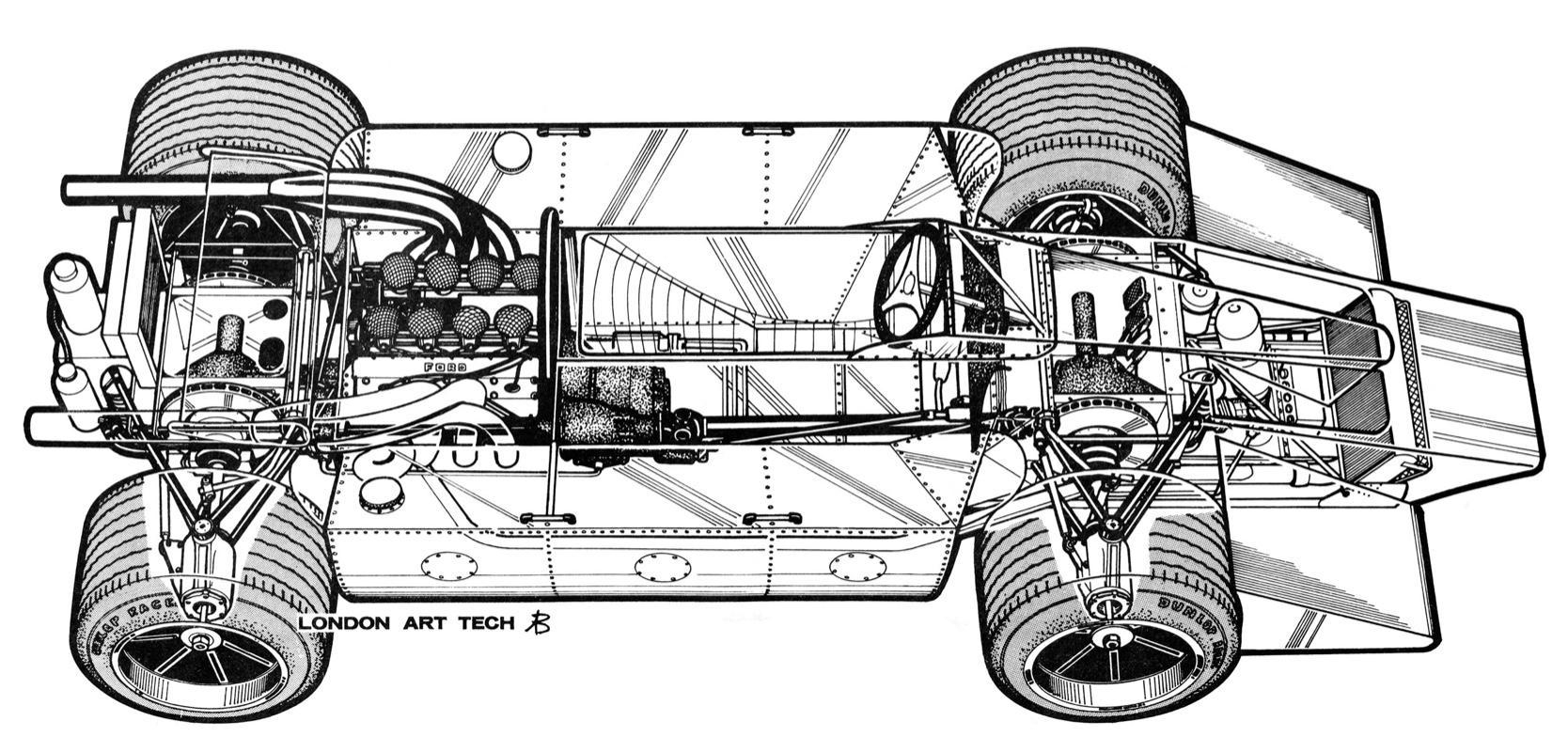
Dick Ellis cutaway of an F1 Lola Mk4 Coventry Climax FWMV 1.5 V8
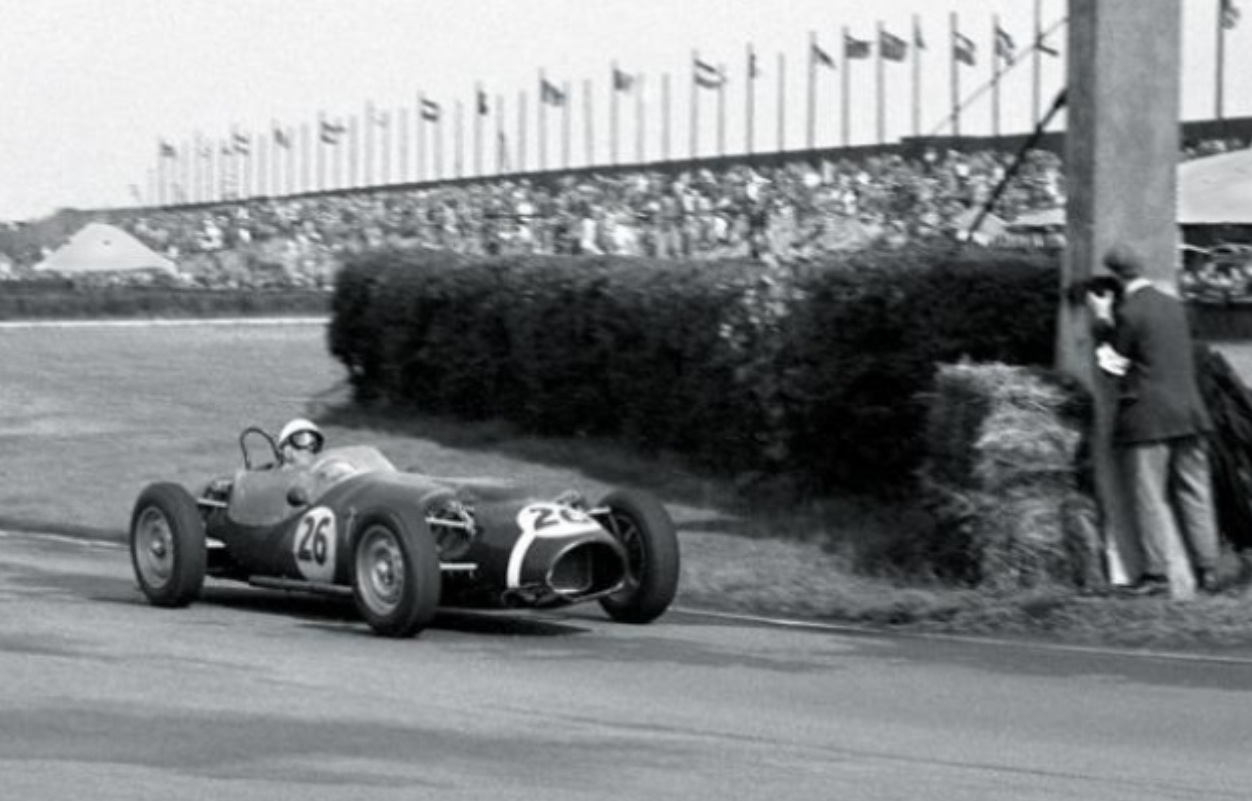
Surtees, Team Lotus Lotus 18 Climax at Ardmore during the 1961 NZ GP, DNF (M Fistonic)

1963 wasn’t his first trip Down Under. Il Grande John did the Kiwi Internationals with Team Lotus in 1961 when Innes Ireland, Jim Clark and Surtees raced Lotus 18 2.5 FPFs fitted with the dreaded Queerbox. In a grim tour for the team, Surtees didn’t finish any of his three races at Ardmore, Levin or Wigram.

He was back again in 1962, running a Reg Parnell Cooper T53 2.7 in Australia, finishing second at Sandown and winning from Jack Brabham’s Cooper T55 2.7 on Longford’s daunting mix of roads, undulations, railway viaduct and barbed wire.

Parnell ran a pair of Lola T4 Climaxes, 1.5 FPF powered early on, then 1.5 FWMV V8 engined when the engine became available in Grand Prix racing that year. Surtees finished a great fourth in the World Drivers Championship during the season in which the monocoque Lotus 25 Climax rewrote the chassis design rulebook.

Surtees winning Lola Mk4A and Bruce McLaren, Cooper T62 on the front row at Pukekohe, NZ GP 1963. That’s Brabham’s #4 BT4, and Tony Maggs in the other Parnell Lola Mk4 at far left (D Oxton)
Later Kiwi Ace, David Oxton attends to a Colotti ratio change on Surtees’ car, Pukekohe (D Oxton)

Reg (Bowmaker-Yeoman Racing Team) fitted 2.7FPFs to two of his T4s in place of the smaller F1 V8 for the 1963 Formula Libre Australasian Internationals for Surtees and South African driver, Tony Maggs use. Parnell knew the local-ropes, having raced a Ferrari Super Squalo 3.4 as part of a two car team together with Peter Whitehead in the 1957 New Zealand Internationals. He did well too, winning the NZ GP and the Dunedin Road Race in what was his last hurrah as a driver before taking on Aston Martin team management duties.

Other hot-shots that summer included Jack Brabham in his new F1 BT3 derived BT4 2.7 FPF, while Bruce McLaren raced the similarly powered Cooper T62 with which he won the 1962 Australian Grand Prix at Caversham, near Perth that November. Graham Hill (and Innes Ireland in some NZ races) raced the radical, fast Ferguson P99 albeit he lacked the mumbo of his completion, running 2.5 FPF’s rather than the more fancied 2.7 ‘Indy’ variant.

Young Cooper T53 mounted thrusters included Chris Amon, Jim Palmer and Angus Hyslop. In Australia the local quicks included David McKay and Bib Stillwell in new BT4s, while Lex Davison and young grazier John Youl raced Coopers T53 and T55 respectively.

Surtees’s Lola Mk4A #BRGP44 was quick everywhere, starting the tour with a bang by winning the NZ GP at the new Pukekohe circuit near Auckland, then gearbox problems caused DNFs at Levinand Wigram. He failed to finish at Teretonga as well, albeit Maggs placed second behind McLaren at the track near Invercargill at the very south of the South Island.

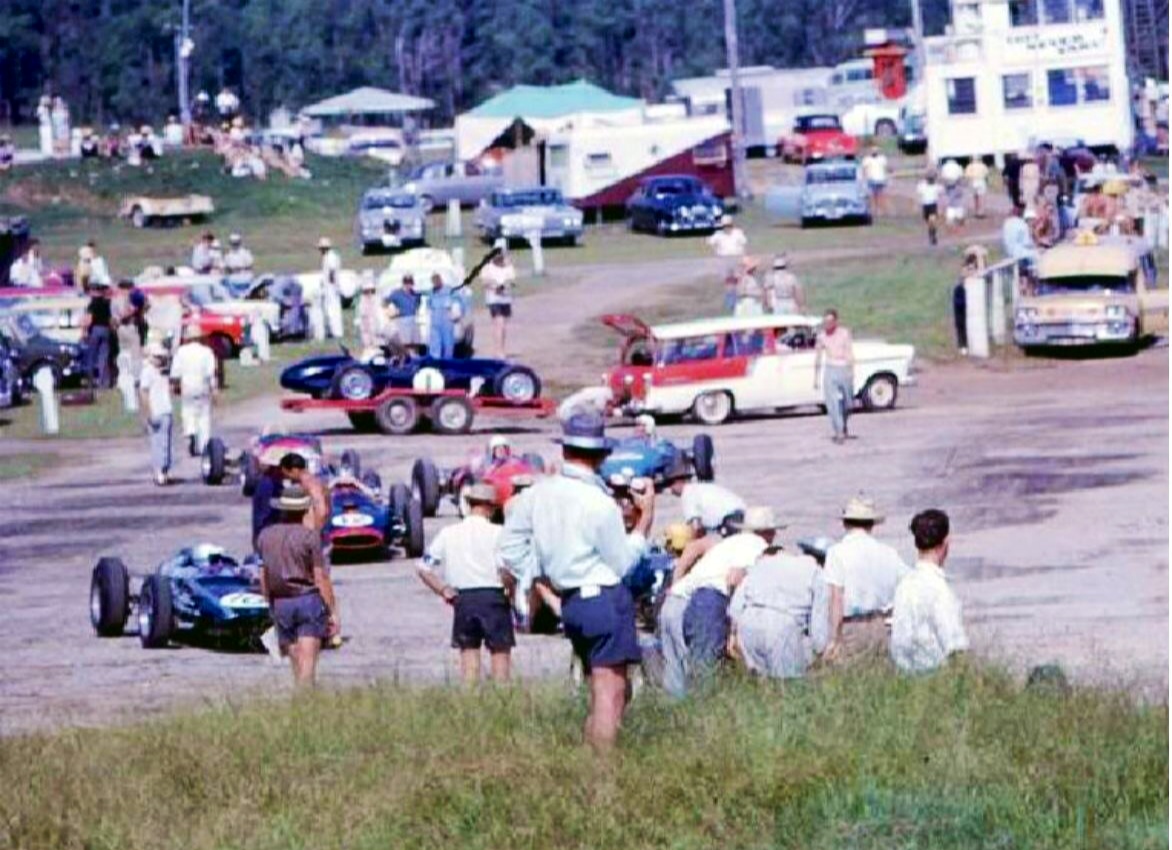
Surtees in the Wigram – RNZAF airfield – paddock. That Ferrari 250 SWB belonged to ‘Richardson’ for those wanting to do further research (W Collins)
Surtees and handsome Mk4A at Teretonga, ninth after undisclosed problems (G Woods)

There was then a fortnight to ship the cars across the Tasman Sea to Sydney Harbour for the AGP to be held on the challenging, technical Warwick Farm on February 10.

Surtees put down a marker, popping his Lola on pole in Jack’s backyard. He then led the race until Brabham – who started well back on the grid having sorted a new BT4 chassis during practice – passed him with 14 laps to run, the Brit suffering along with many others in the intense heat. John had the consolation of meeting fastest lap.

Then it was off to Lakeside, north of Brisbane. There Surtees started from Q3 and won from Hill, bagging the P99’s best result for the tour, with Stillwell third in his new Brabham BT4. Chris Amon was fourth and impressing pit-pundits with every drive. At the end of the summer Reg Parnell took the 19 year old off to Europe where he did rather well…initially racing #BRGP44 FWMV powered throughout 1963.

Shell drivers at Warwick Farm: David McKay, Tony Maggs, Graham Hill, John Surtees, Jim Palmer and Chris Amon (C Galloway)
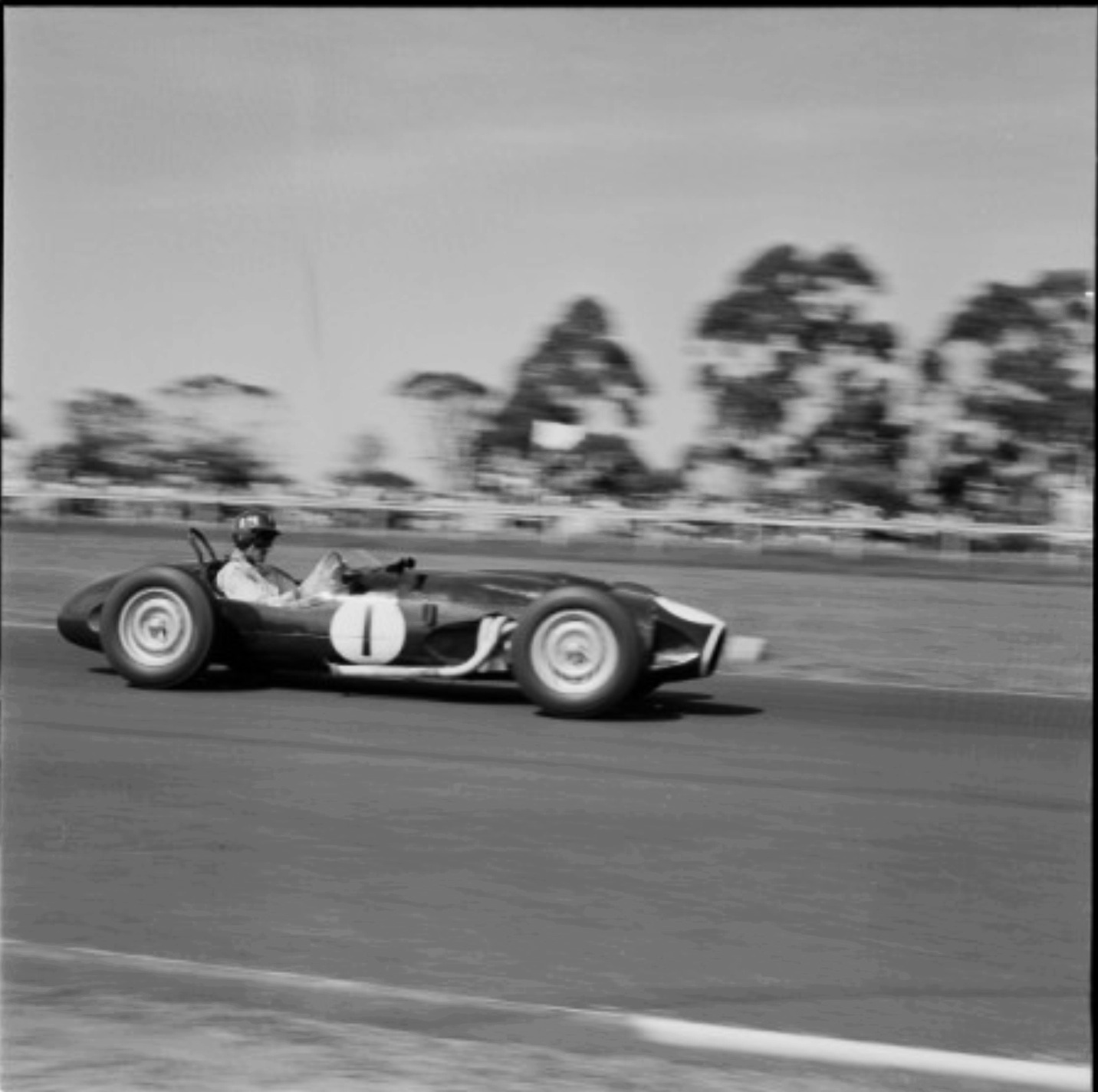
Surtees hooks into the right-hander at the end of Pit Straight, Paddock, at Warwick Farm 1963 (B Donaldson)

Surtees returned to Europe to meet his new Ferrari team commitments, missing the final two races at Longford and Sandown, with Tony Maggs, sixth and second in the Parnell Lolas respectively.

Had there been a Tasman Cup that summer – the first was contested and won by Bruce McLaren in 1964 – Bruce would have won it. Brabham won at Levin and Warwick Farm, Surtees at Pukekohe and Lakeside, while McLaren was victorious at Wigram, Teretonga, Longford and Sandown.

The Lolas had proved very competitive Formula Libre machines but were thoroughly outclassed in ’63 GP racing: Amon, Maurice Trintignant, Lucien Bianchi, Mike Hailwood and Masten Gregory all failed to bag a point for Reg Parnell Racing.

Surtees Mk4 during 1962. The idea of that yellow enamelled spaceframe chassis was to make it easy to see any cracks that arose (unattributed)

Etcetera…

(MotorSport)

Pretty car. Surtees during the soggy German Grand Prix was second behind Graham Hill’s BRM. He first raced the chassis he used throughout his 1963 Australiasion Tour, T4A #BRGP44, at Karlskoga in August, there he led until a valve spring broke.

(MotorSport)

Main Men. Reg Parnell, Surtees and who? during the May 1962 Dutch Grand Prix weekend at Zandvoort. John popped his car on pole but crashed in the early laps after a wishbone failure.

(MotorSport)

More Main Men. Surtees and Lola’s Eric Broadley at Aintree during the British GP meeting in July. And below, John with the car in the paddock. FWMV is on Webers, a bit cheaper, but less powerful than the Lucas injected alternative.

Lola had a fantastic weekend with Surtees qualifying and finishing second in the race. The cars gained pace after the cockpit area was found to be flexing by Surtees in the lead up to the Belgian Grand Prix, when additional tubes were added to the suspect area.

(MotorSport)
(N Beresford Collection)

Don Beresford – father of engineer Nigel Beresford of Ralt, Tyrrell, Penske Cars et al fame – working on a T4 at Bromley during 1962. It’s after the chassis cockpit section was strengthened, note the additional tubular section which has been added, so it’s probably the chassis Surtees raced carrying #6 in the December 29, 1962 South African Grand Prix at East London, DNF.

The ’63 New Zealand GP was a week later on January 5, no rest for the wicked!

Credits…

Bob Donaldson-State Library of New South Wales, Dick Ellis, Colin Galloway, Milan Fistonic, David Oxton Collection, Graham Woods Collection, Warner Collins, Lynton Hemer, Dick Simpson-oldracephotos.com, Michelle Glenn, Nigel Beresford Collection

Tailpieces

Surtees, Surtees TS8/9 Chev, Alan Hamilton, McLaren M10B Chev, Colin Bond, McLaren M10C Repco-Holden and Graeme Lawrence, Brabham BT29 Ford FVC (L Hemer)

John Surtees was a busy lad throughout the 1960s with Grand Prix, World Endurance Championship and Can-Am programmes in most seasons, so he never did do a Tasman.

Scuderia Ferrari had plans afoot for Surtees to race a Ferrari Dino V6 – the ‘Surtees Tasman Special’ Ferrari 246 #006 – in 1966 but a late season Can-Am accident at Mosport in a Lola T70 Chev hospitalised him that winter so that didn’t happen. Chris Amon subsequently went rather well with updated 246 variants in 1968-69.

(M Glenn)

By 1971 Surtees’ commercial imperatives had evolved somewhat. Not only was he contesting Grand Prix racing with a two car team, he was also a constructor of customer racing cars, including Formula 5000 machines, which had been adopted as the Tasman Formula from 1970.

So it made sense for Surtees to contest the November 1971 Australian Grand Prix at Warwick Farm in a Surtees TS8/TS9 Chev, perhaps selling a car or two, then leave the car here for his protege, Mike Hailwood to race in the following 1972 Tasman.

Surtees in front of Max Stewart’s Mildren Waggott TC-4V in the Farm’s Esses (D Simpson-oldracephotos.com)

Surtees qualified ninth after fraught practice sessions sorting handling problems, then had a miserable race without his preferred Firestones, but he still got as high as fourth before pitting for a new left-front tyre, losing three laps in the process, before having another puncture late in the race, finally finishing 14th. “He certainly gave the crowd good value while he was going, “The History of The Australian Grand Prix” recorded.

Frank Matich triumphed that day in his brand new Matich A50 Repco-Holden with Kevin Bartlett and Hamilton second and third in their McLaren M10B Chevs.

Finally, Mike Hailwood did well in the 1972 Tasman Series, he was second to Graham McRae’s Leda GM1 Chev despite not winning round, and was then the best of Team Surtees F1 drivers that season; eighth in the World Championship.

Finito

(P Mellor)

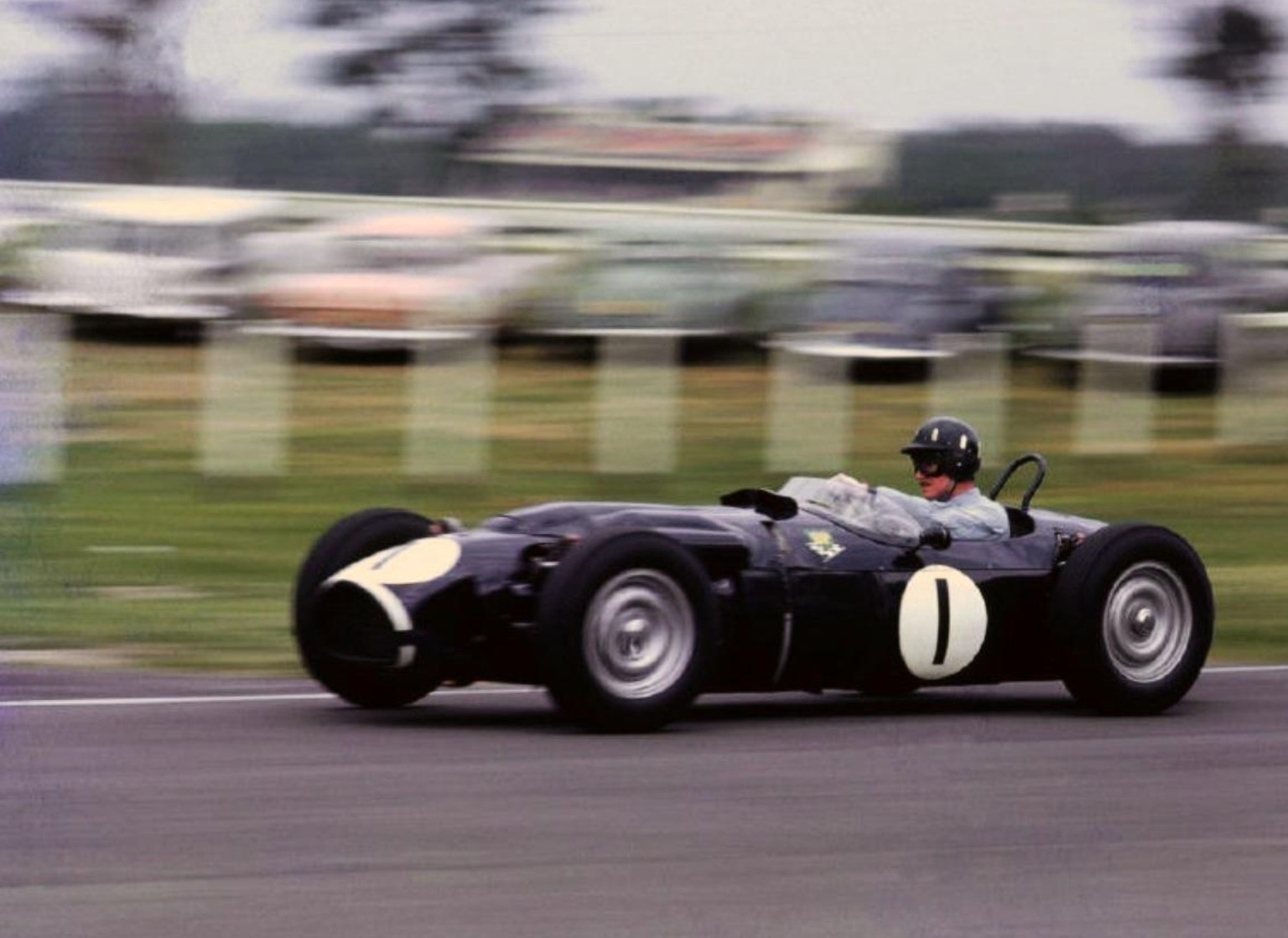
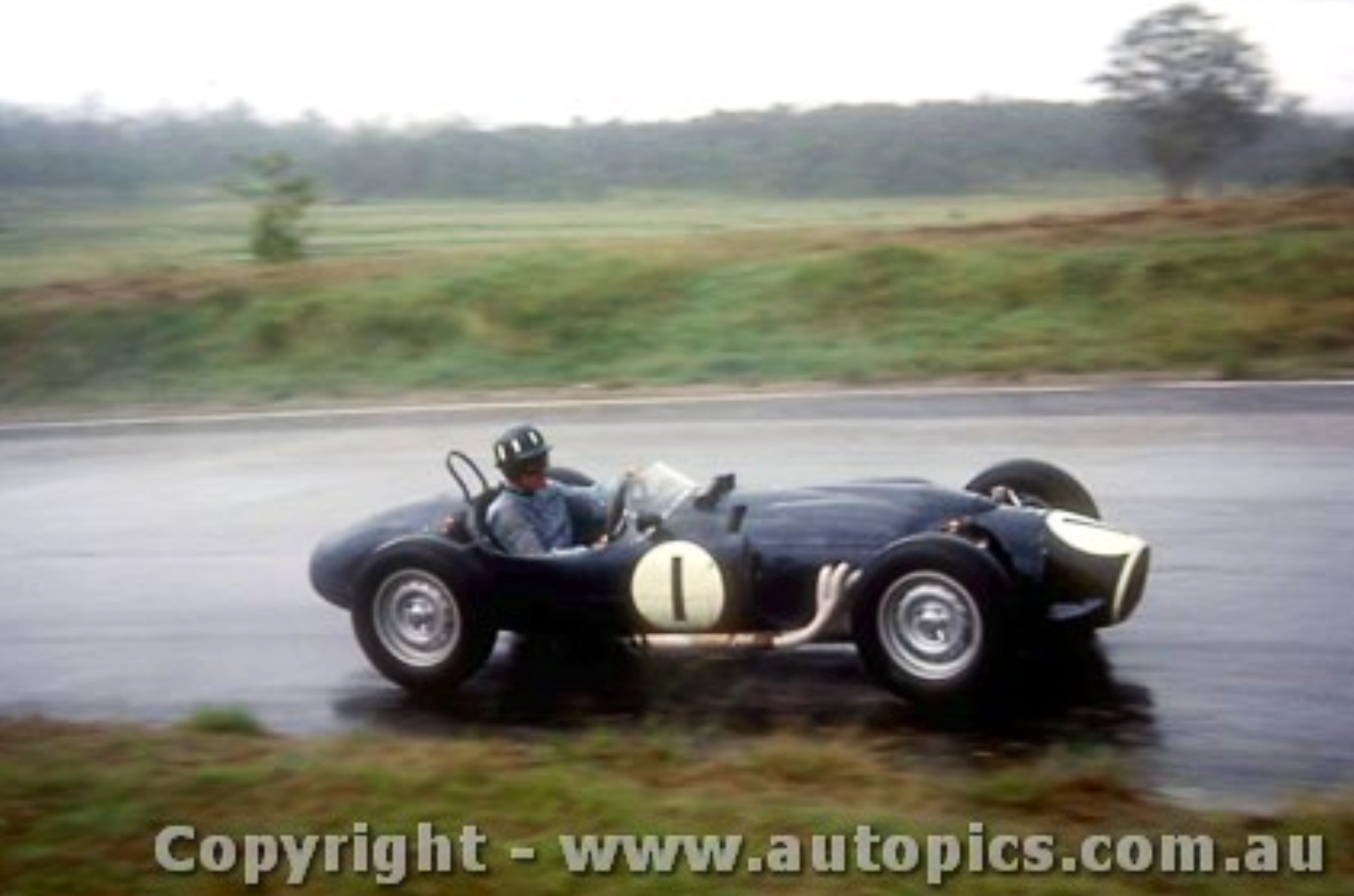
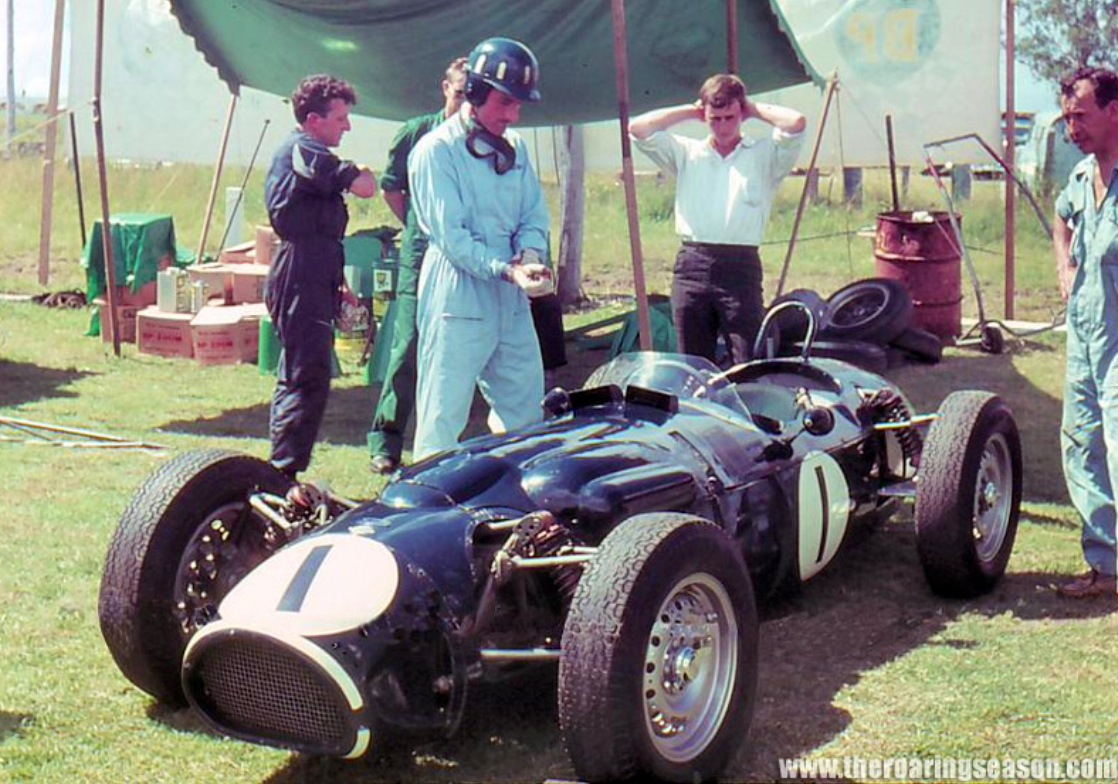
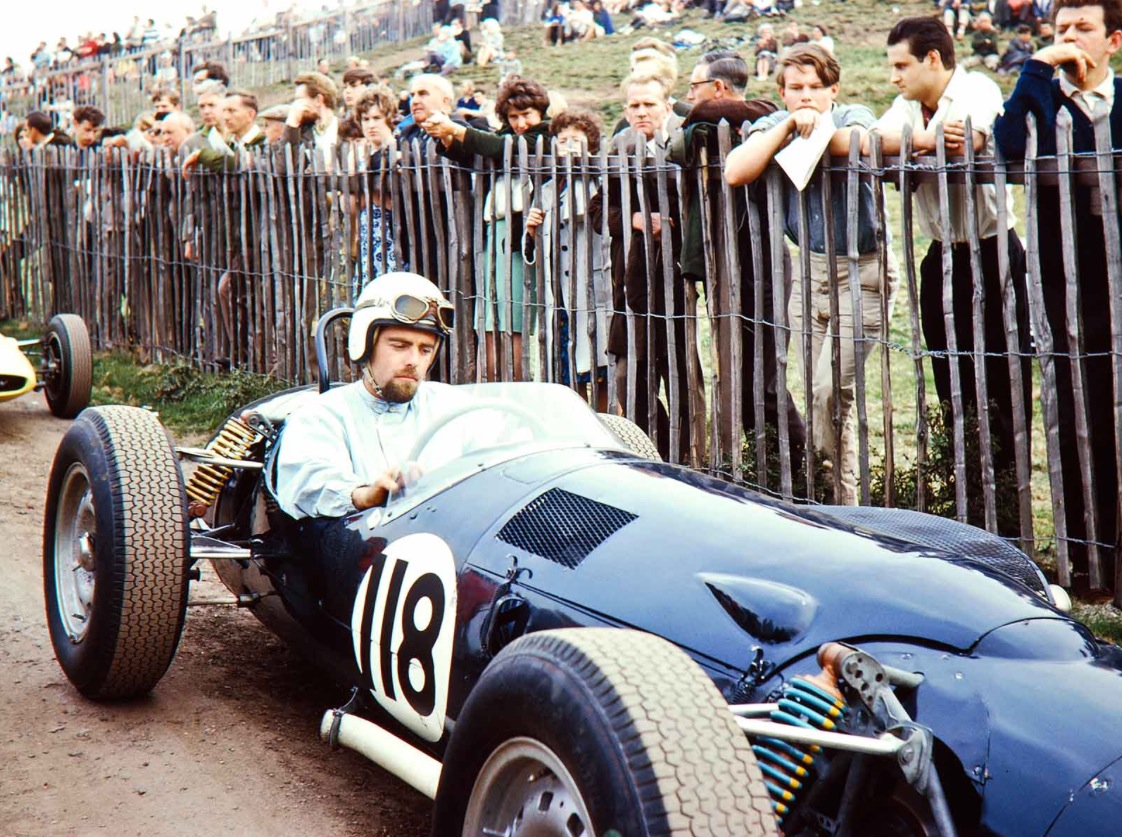
John Surtees cruising his Lola Mk4A Climax around the Lakeside paddock during the 1963 Australian summer…

No doubt he is on the way to or from scrutineering, the Lola devoid of its usual slinky ‘Specialised Mouldings’ fibreglass body. These cars were designed by Eric Broadley as F1 machines, they were the front line weapons of the Bowmaker Racing Team during the 1962 season.

Strong results at championship level were skinny even when the too flexible spaceframe Mk4 chassis was braced with aluminium to become the ‘semi-monocoque’ Mk4A. The last of the Mk4’s was modified in this manner and is the car Surtees raced in Australasia in the summer of ’63- chassis ‘BRGP44′. The chassis made its debut in the non-championship Kanonloppet at Karlskoga in Surtees hands on 12 August 1962 and was then raced in the GP’s of Danske and Italy before being converted for Surtees’ use in the South Pacific.

The Mk4’s were fitted with both the Coventry Climax FWMV 1.5 litre V8 for F1 use and the 2.5 or 2.7 litre Coventry Climax FPF engine for the Intercontinental Formula and for Formula Libre as the Australasian summer races then were.

The global stock of FPF’s found a ready home in Australasia after the commencement of the 1.5 litre F1 as the ‘engine de jour’ in our Formula Libre, Gold Star and Tasman races until 1966 when ‘multi-cylinder’ engines arrived. The BRM P261 V8 won the Tasman in 1966 in Jackie Stewart’s hands, soon the Tasman was awash with interesting engines from BRM, Repco, Ferrari and Ford. Mind you, the good ‘ole FPF was still a contender in Gold Star events with Spencer Martin and Kevin Bartlett consistently knocking off Repco V8’s in domestic Australian events into 1967.

Surtees was on the cusp of four-wheel greatness of course. In 1964 he won the World F1 Drivers Championship for Ferrari in a Tipo 158, an additional title to match those already won on bikes.

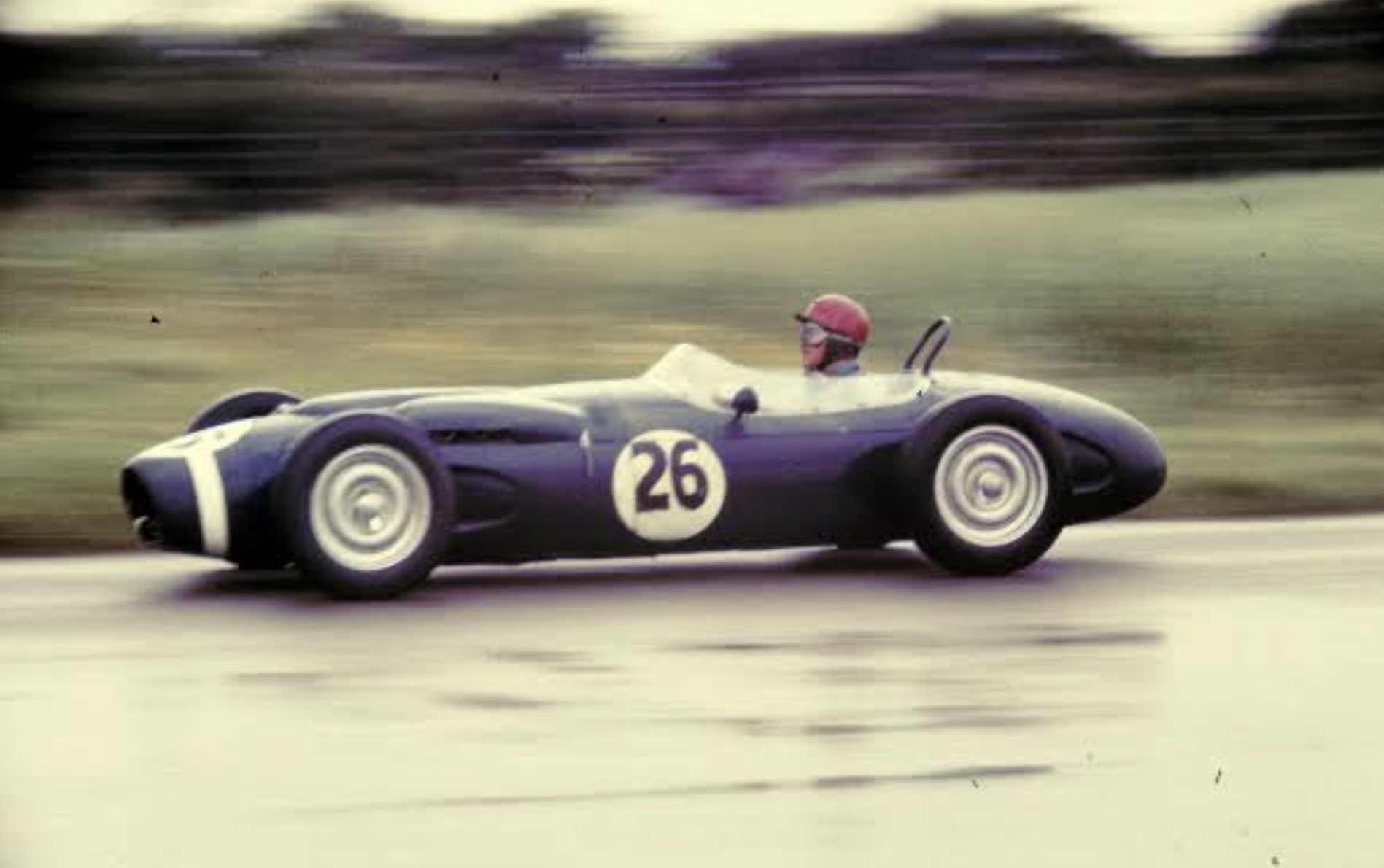
Surtees in the Bowmaker Racing Lola Mk4A chassis ‘BRGP44’ Coventry Climax 2.7 FPF during the 1963 Australian GP weekend at Warwick Farm in February. He was 2nd in between winner Brabham and 3rd placed Bruce McLaren in Brabham BT4 and Cooper T62 respectively, both 2.7 FPF powered (Ellacott)

Bowmaker Racing entered cars for John and Tony Maggs that season in Australasia achieving a good measure of success. Competition was stiff too. That year the internationals included Jack Brabham, Bruce McLaren, Graham Hill (Ferguson P99) and coming-man Chris Amon. In addition Australian and New Zealand Champions included Bib Stillwell, Lex Davison, John Youl, David McKay and Jim Palmer- not all of these blokes did the whole series mind you.

The Lakeside International was held in blistering Queensland summer heat with Surtees taking a fine win from Graham Hill and Bib Stillwell. He was first in the NZ GP at Pukekohe early in January too, having gearbox dramas at Levin and Wigram and a distant 9th at Teretonga with undisclosed problems. He then contested the Australian events at Warwick Farm, finishing 2nd in the AGP at Warwick Farm, took the win at Lakeside and then jetted home to the UK and testing duties with Ferrari. The rest, as they say is history…

Photo Credits…

Peter Mellor on The Roaring Season, John Ellacott

Surtees Article…

John Surtees: World Champion 50 Years Ago…1964

Amon on the way to 7th in the Lola Mk4A ‘BRGP44’ now re-engined with a Coventry Climax FWMV V8, at Rouen, French GP June 30 1963. Clark won in a Lotus 25 Climax (unattributed)

Tailpiece: Chris Amon, Lola Mk4A Climax, French GP 1963…

Lola Mk4A ‘BRGP44’ raced on into 1963. The car was converted back into an F1 machine, the 2.7 FPF was lifted out after its sojurn in Australasia and an FWMV Coventry Climax V8 re-fitted back at Lola in Bromley. Chris Amon was allocated the car for the ’63 F1 season, although Maurice Trintignant raced it at Monaco. The cars best result that year was funnily enough Amon’s first race in it- 5th in the Glover Trophy at Goodwood.

Graham Hill Ferguson P99

(John Ellacott)

Graham Hill working his radical four wheel drive Ferguson P99 Climax hard to stay in front of the mid-engined paradigm, Homestead Corner, Warwick Farm, Sydney…

Jack Brabham won the race from John Surtees and Bruce McLaren in Brabham BT4, LolaMk4A and Cooper  T62 respectively, all powered by Coventry Climax FPF 2.7 litre ‘Indy’ engines. Bored versions of Climax’ successful 2.5 litre F1 Championship winning motors. Hill finished 6th in his 2.5 litre FPF powered car. At the time Australian National F1 was Formula Libre, the ‘2.5 Tasman Formula’ commenced in 1964.

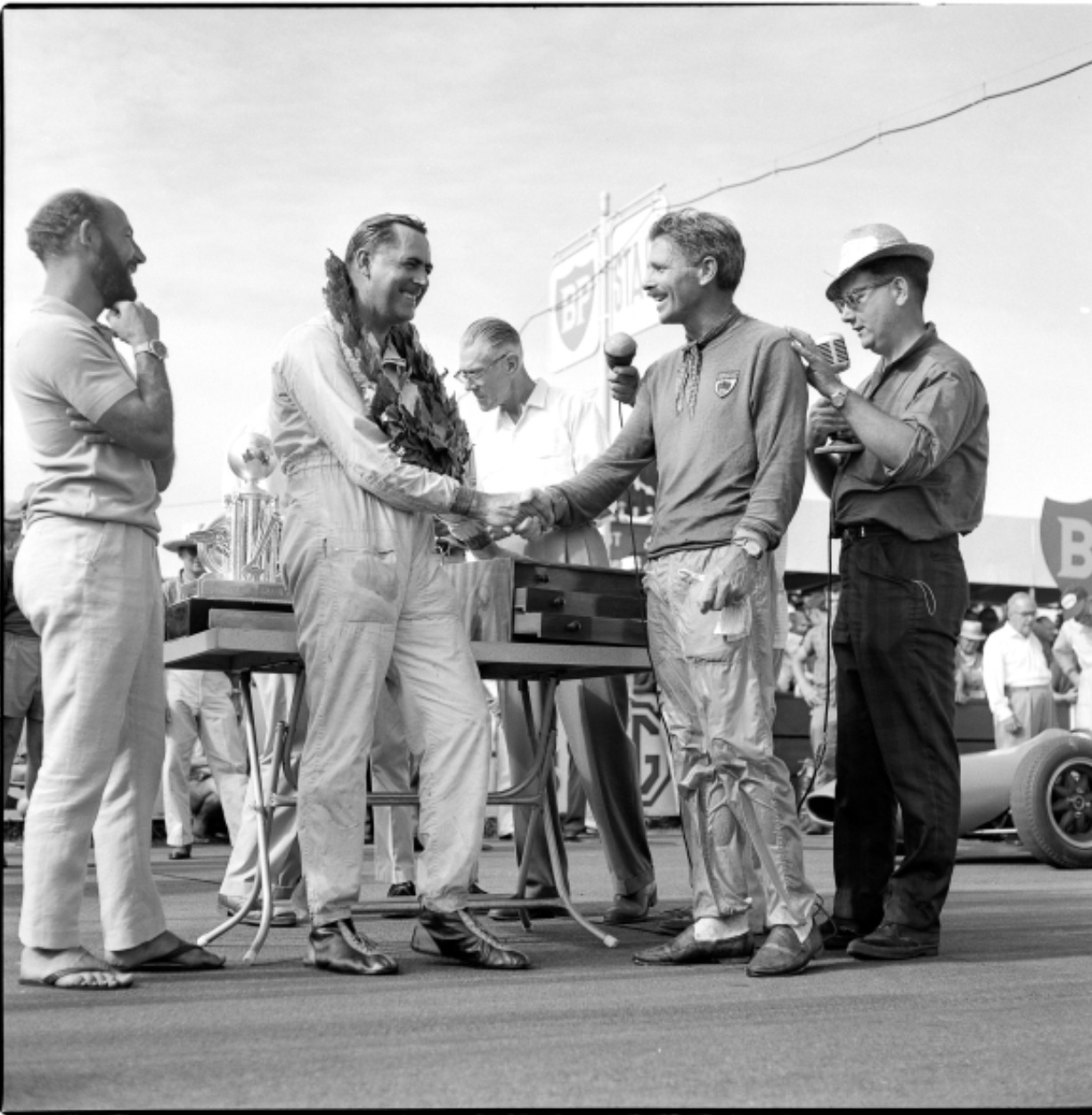
agp prizegivig 1963

David Mckay congratulates Jack Brabham, Brabham victorious in his BT4. A very relaxed, bearded Stirling Moss wearing that great Australian footwear fashion icon, rubber ‘thongs’ looks on. Moss still recovering from his Easter Monday, 23 April 1962, near fatal and career ending Goodwood Lotus crash. Mckay a great Australian driver and ‘Scuderia Veloce’ team owner/patron. McKay finished 4th in the race also Brabham BT4 Climax mounted. (David Mist)

Hill also raced the Rob Walker entered, 2.5 litre FPF engined car at the ‘Lakeside International’, in Queensland the following weekend finishing second to Surtees on this very fast track, not necessarily the sort of circuit on which one might expect the car to shine. Hill was victorious in a wet preliminary race on the Saturday, the car excelling in the wet conditions.

hill lakeside p99 in the wet

Graham Hill in the wet Lakeside preliminary event he won in P99. Lakeside. (John Stanley)

P99’s ‘Summer Sunshine Tour’ started in New Zealand in January the car being campaigned by ‘newly minted’ World Champion Graham Hill, victorious in his BRM P57 in 1962, and Innes Ireland.

I posted this short article a while back about Hills’ 1962 Championship winning car; https://primotipo.com/2014/10/12/graham-hill-brm-p57-german-gp-1962/

Hill drove in the NZGP, held at the brand new Pukekohe circuit on January 5, DNF with gearbox dramas on the second last lap, Surtees won in his Lola.

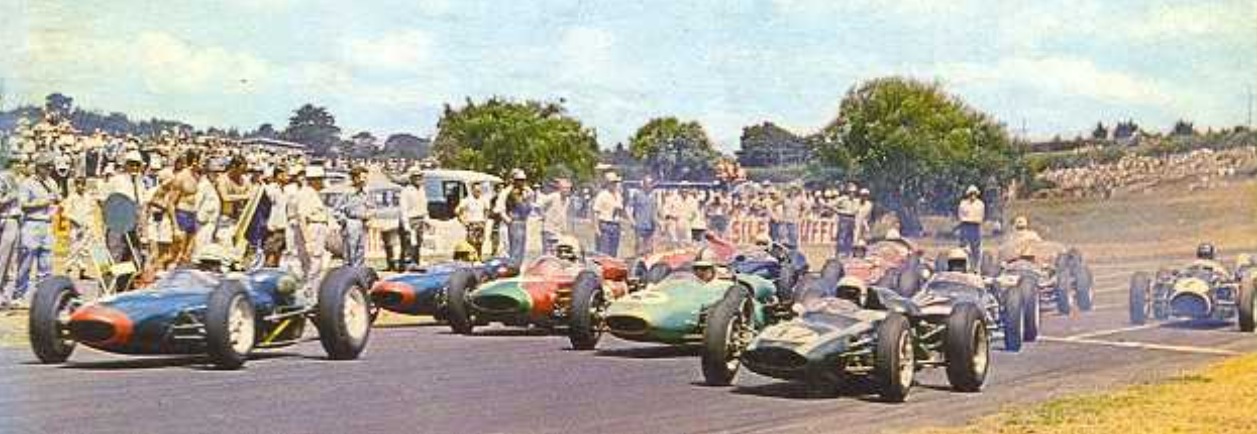
nz gp 1963

Start of the ’63 NZGP at Pukekohe. Surtees left and McLaren right LolaMk4a and Cooper T62 get the jump at the start. Hill is on the far right in P99. Beside Surtees and back is his teammate Tony Maggs LolaMk4a, the green nose of Amons’ Cooper T53 and Brabhams turquoise Brabham BT4…all Coventry Climax powered. (sergent.com)

Hill then returned to the UK, Ireland handling the car at Levin, Wigram and Teretonga on the 12th, 19th and 26th of January respectively. Innes was third at Wigram, victory going to Brabhams’ BT4, he retired with overheating at Wigram, the race won by Bruce McLarens’ Cooper T62 and was third at Teretonga, McLaren again victorious.

The car was then shipped to Sydney for the Warwick Farm AGP and finally north to Brisbane by road before returning to the UK.

lakeside on ute p99

Lakeside Queensland paddock scene 1963. P99 middle of shot lashed onto an open trailer behind a Holden FC ‘Station Wagon’, as we call an ‘Estate’ in Oz. The car travelled the 950 Km from Warwick Farm on Sydneys’ outskirts to Lakeside, north of Brisbane. McLarens Cooper T62 is at the front of this group, and the red nose car is Maggs’ Lola Mk4a. (Ray Bell)


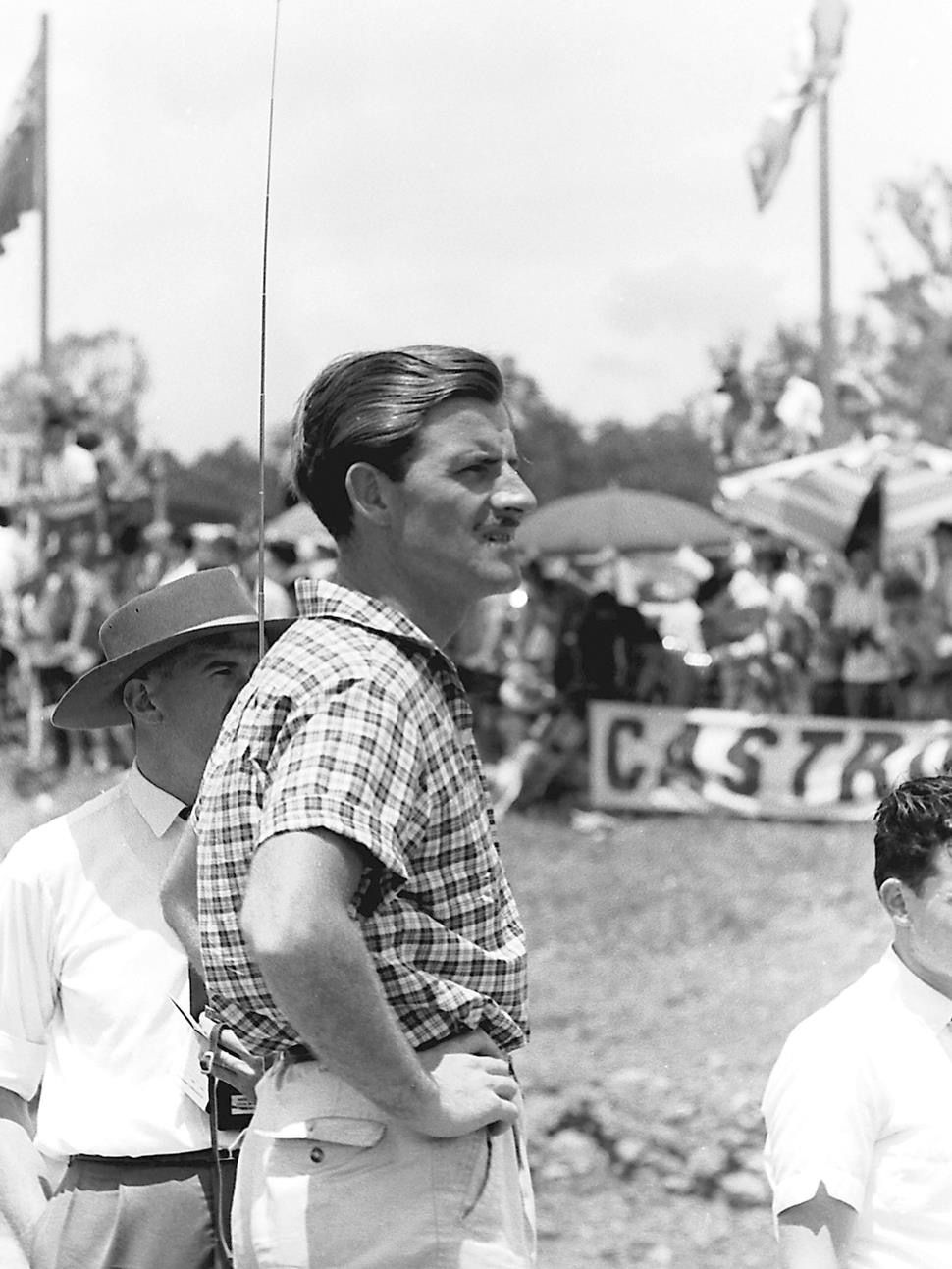
Graham Hill looking pretty relaxed at Lakeside in 1963 (J Psaros)

Ferguson Research…

The Ferguson Family Museum summarises the P99 as follows…’The creation of the Ferguson Formula four wheel drive system began shortly after World War II.

Harry Ferguson had always loved the world of motorsport and had a vision of creating a four wheel drive system with the purpose of improving road safety. The Ferguson car, ‘the R5’, was 40 years ahead of its time. It featured four wheel drive, anti-lock braking, electric windows, disc brakes and a hatchback design, it was the forerunner of the modern car.

ferguson r5

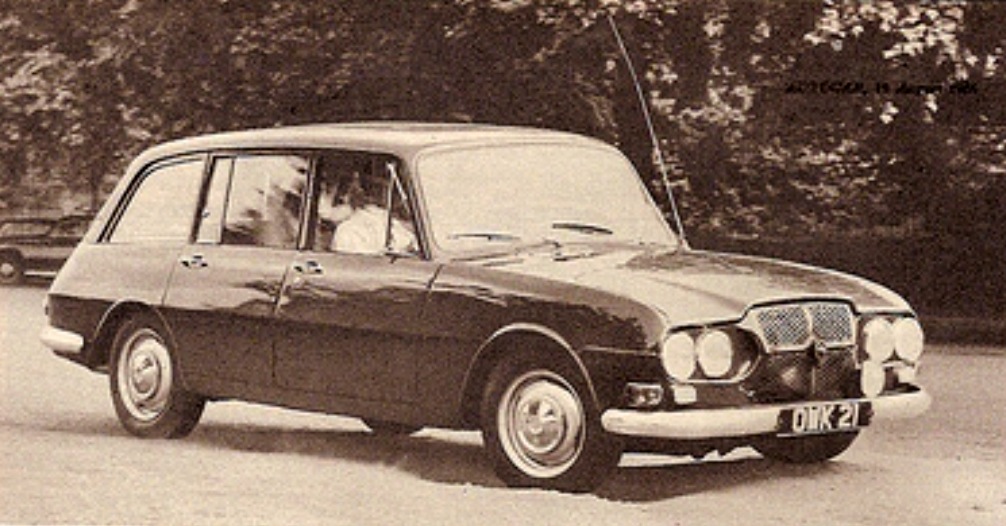
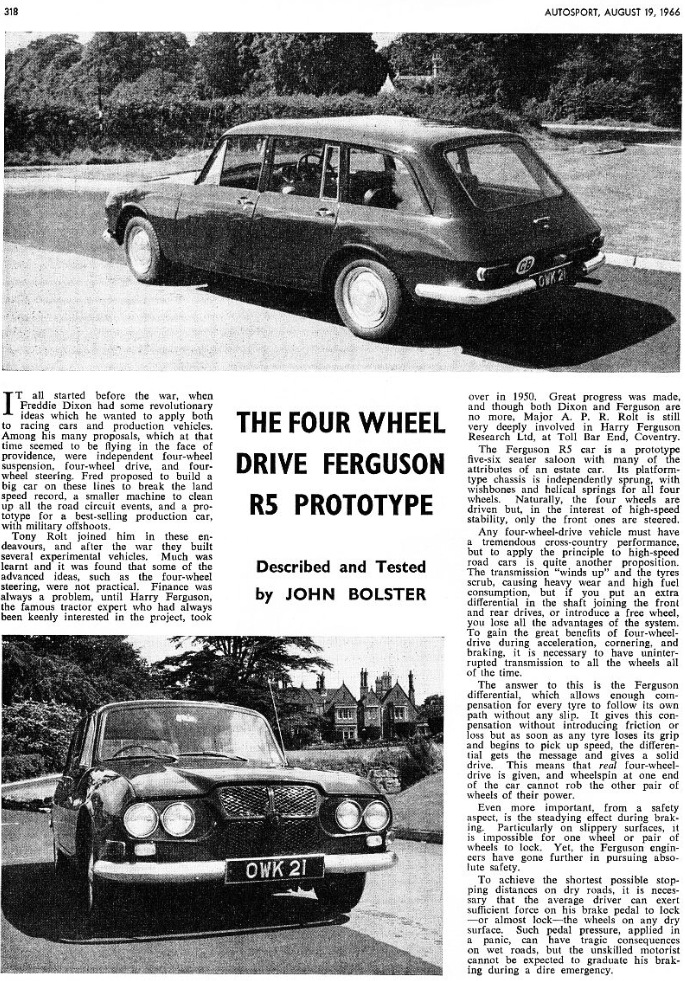
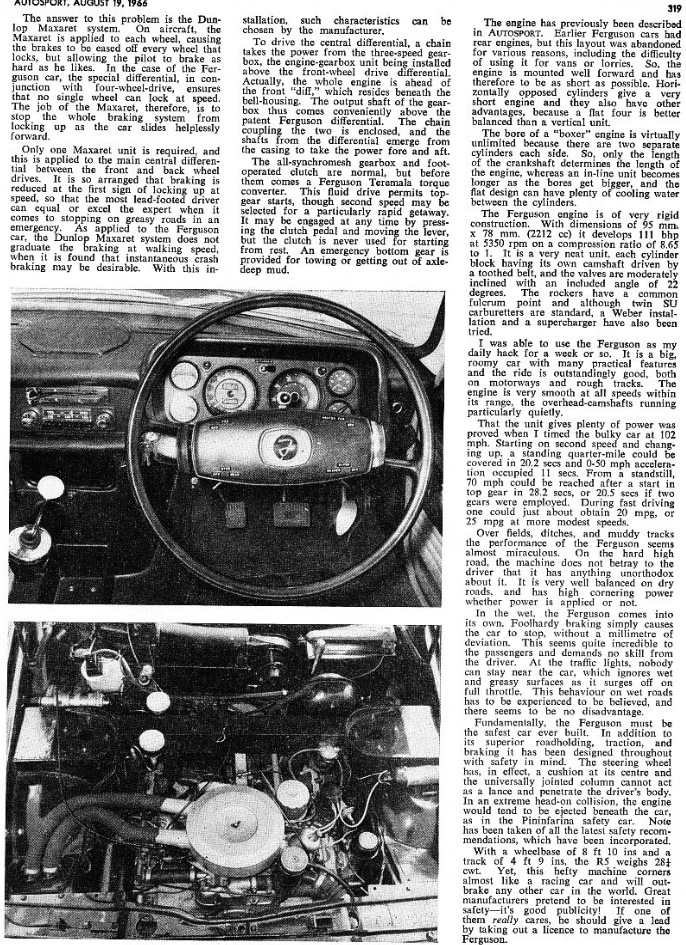
Not the prettiest of things but 4WD, powered by belt driven SOHC 2.2 litre engine, 4 wheel discs, ABS…all at the time of the Cortina Mk1. This car has escaped me, i have included John Bolsters’ Autosport road test of the prototype at the bottom of this post. (Autocar)

Harry Ferguson decided the best way to prove the importance of four wheel drive and anti-skid braking was to demonstrate it on a successful Formula 1 car.

In 1950 designer, Claude Hill, Brooklands Riley racer, Fred Dixon and Tony Rolt, a POW escapee and 24 hour Le Mans winner, teamed up with Harry Ferguson to start development on what was later to become the world’s only Formula 1 winning four wheel drive car – Project 99.

Later the Ferguson Formula four wheel drive system was widely adopted by rally cars and the motor industry worldwide in the form of the viscous coupling. Although designed as a racing car P99 was also a research vehicle intended to show the advantages and reliability of the four wheel drive system. What better way to generate public interest than to successfully race a car using the Ferguson Formula four wheel drive’.

p 99 fettled lakeside

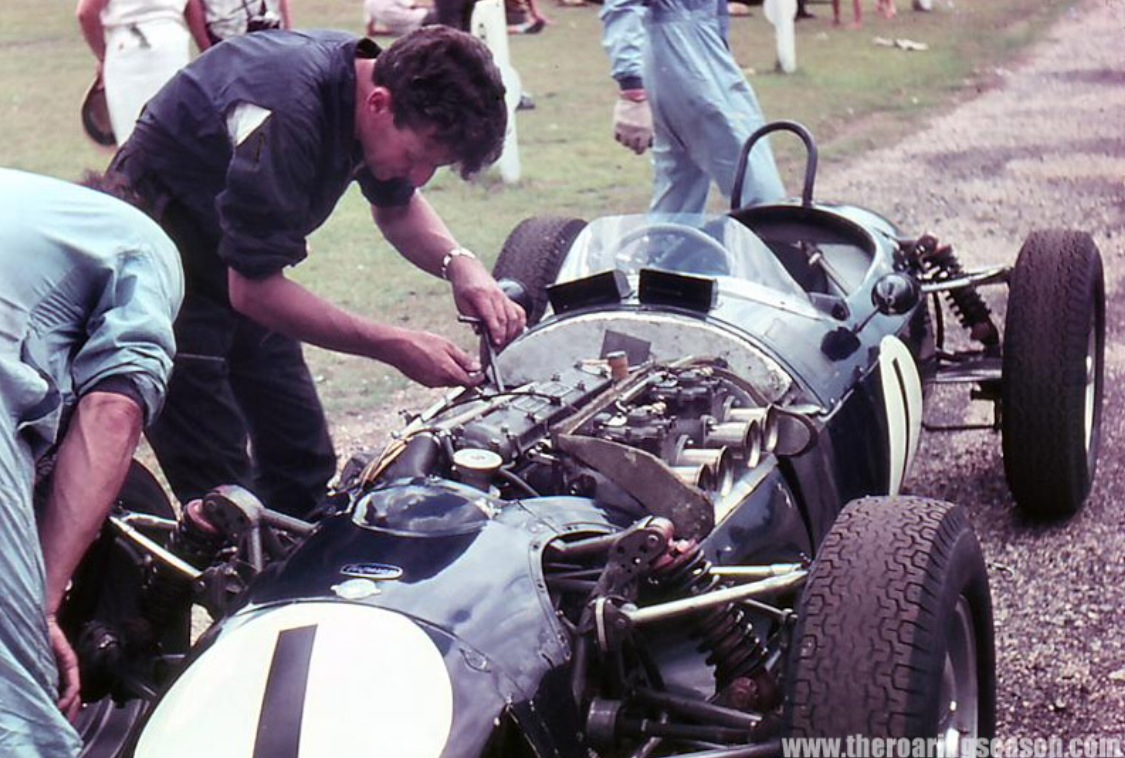
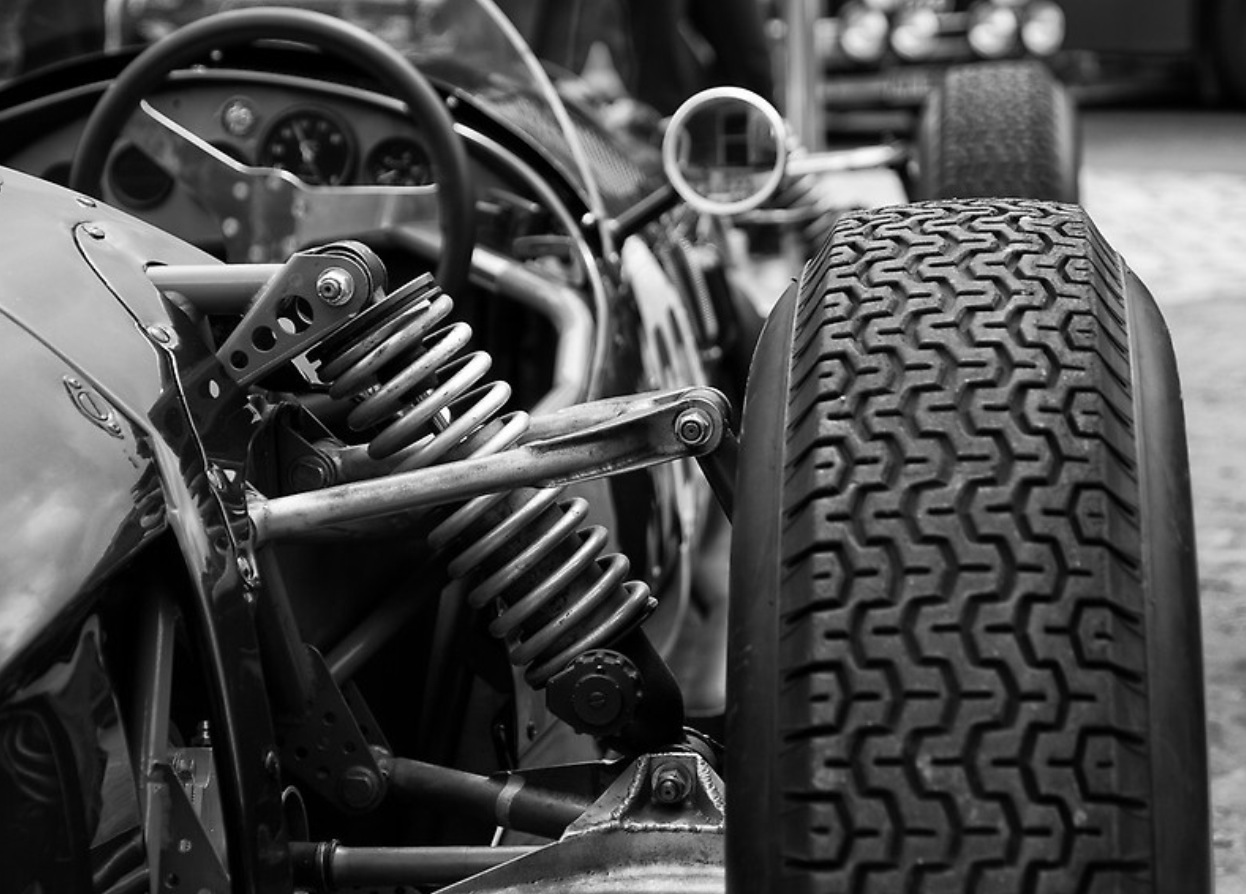
P99 being fettled by Rob Walkers team at Lakeside, February 1963. Thats’ G Hills legs in the driving suit at rear of the car. Lovely alloy body, Climax 2.5 FPF 4 pot engine, spaceframe chassis and upper and lower wishbone/ coil spring damper units, alloy Dunlop wheels,vestigial roll over bar all clear in this shot. (Peter Mellor)

P99 Design and Specifications…

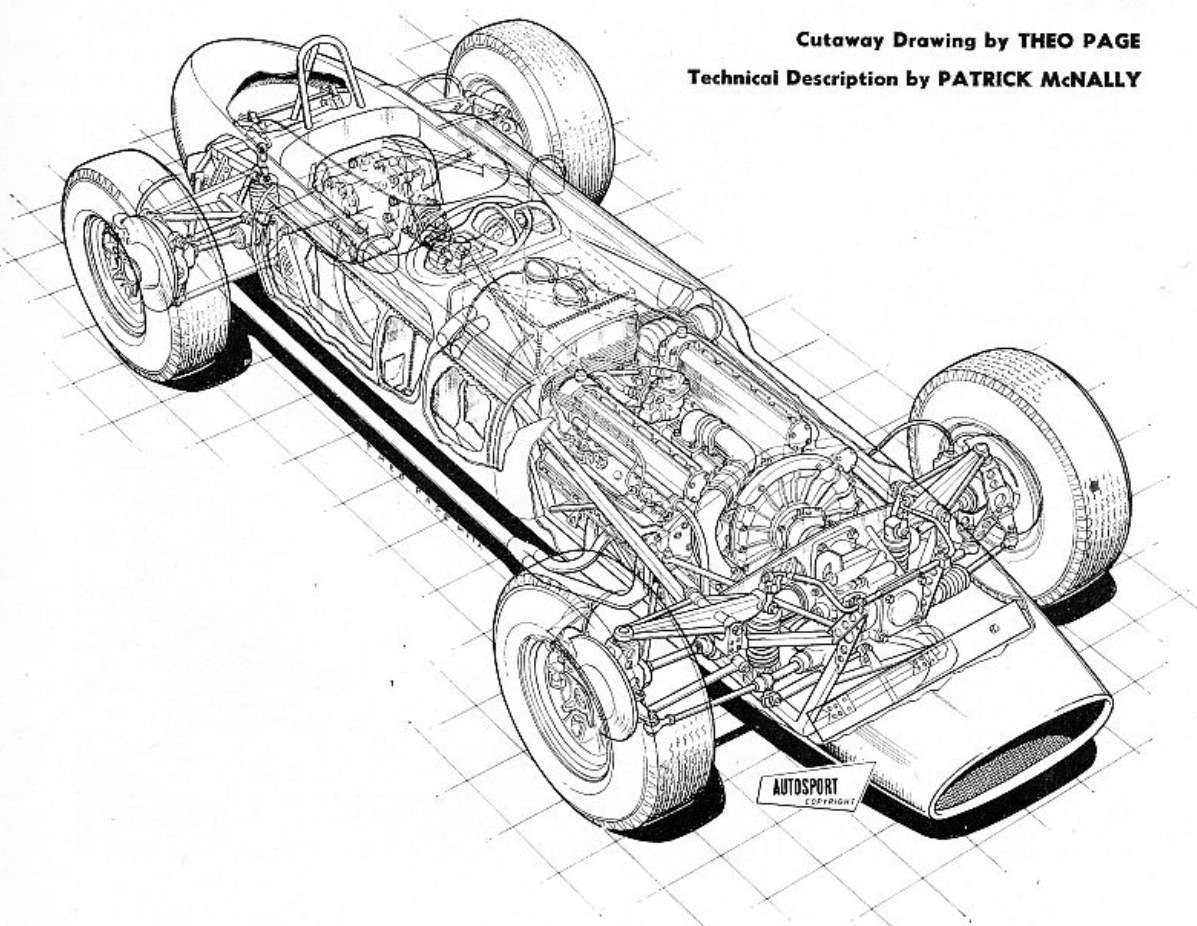
p 99 cutawy

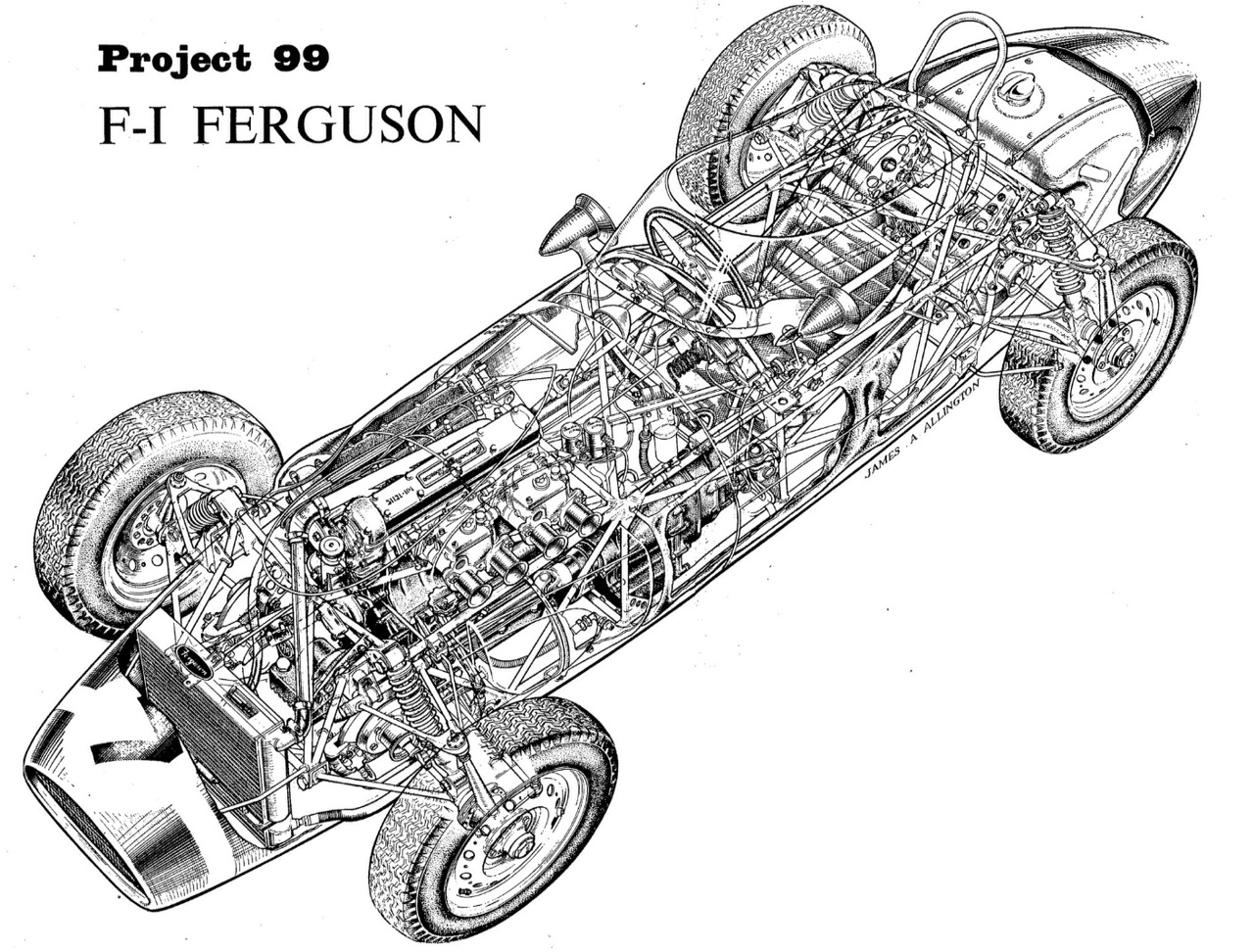
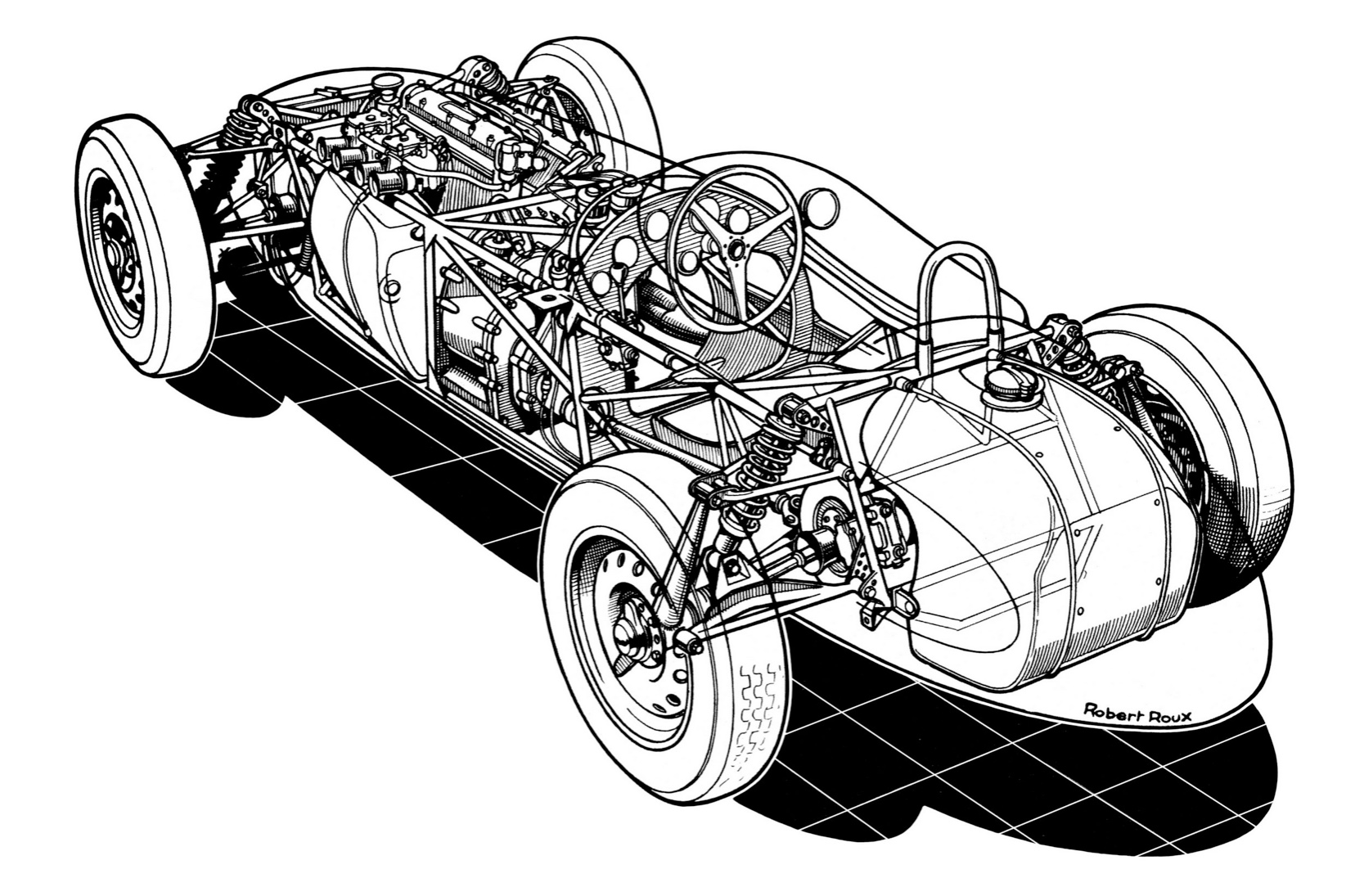
Spaceframe chassis, 2.5 litre Coventry Climax FPF 4 cylinder engine circa 235bhp. Suspension front and rear by upper and lower wishbones and coil spring/damper units. Rack and pinion steering. Dunlop disc brakes and alloy wheels. Ferguson 5 speed box and 4WD transfer case…(James Allington)

Ferguson hired Claude Hill from Aston Martin to design the car. He used a then ‘state of the art’ space-frame chassis, front and rear suspension comprising upper and lower wishbones and coil spring/Armstrong damper units and adjustable sway bars. Brakes were Dunlop anti-lock, which was tested but unraced.

Lightweight Dunlop alloy wheels were used, steering is rack and pinion.

The clever bit was of course the 4WD system. It comprised a transfer box bolted directly to the 5 speed gearbox. The Climax engine was installed at an angle to allow space for the driveshaft to the front differential. The rear driveshaft was installed on the left side of the chassis, the driving position slightly off centre to the right. Similar to the weight balance, the torque was evenly divided between the front and rear wheels.

P99 was planned for the 2.5-litre F1 utilising the championship winning Coventry Climax FPF 235bhp, DOHC, four-cylinder engine. The rules changed and Formula 1 was restricted to 1.5-litres from 1961, which meant the extra weight of the four-wheel-drive system was a handicap. The Intercontinental series was established for the old 2.5-litre engined F1’s, to be raced in 1962, the Ferguson was therefore built to accommodate both the Climax 1.5 (151bhp) and 2.5 litre (235bhp) FPF motors.

The whole project took less than a year.

There were to be no concessions in relation to tolerance. Perfection would only just be good enough. Dixon was right when he calculated that differentials, bearings, gears and other drivetrain parts could be lighter if the energy was dispersed to four wheels rather than two.

Ferguson’s central differential system, which would be the key to Peugeot’s and later Audi’s rally success in the 1980s, could balance out the delivery of that power to the wheels.

Ferguson were keen to try the Dunlop Maxaret anti-lock brake system, the whole assembly would eventually find its way into the automotive mainstream some 30 years later. Sadly, Harry Ferguson died before his dream took to the track and it was Rolt who eventually became the projects’ driving force.

P99 rear shot

P99 from aft. Rear suspension detail; upper and lower wishbone and adjustable Armstrong shock. You can just see the driveshaft below the upright. Beautiful ally bodywork of pretty car. Driving position offset to the right, gearchange for 5 speed box to drivers left, right side more conventional in a single seater. (Unattributed)

By 1961 Mid-Engined cars were de-rigeur the Front-Engine GP car obsolete, so the Ferguson P99 was a complete dark horse…

moss aintree

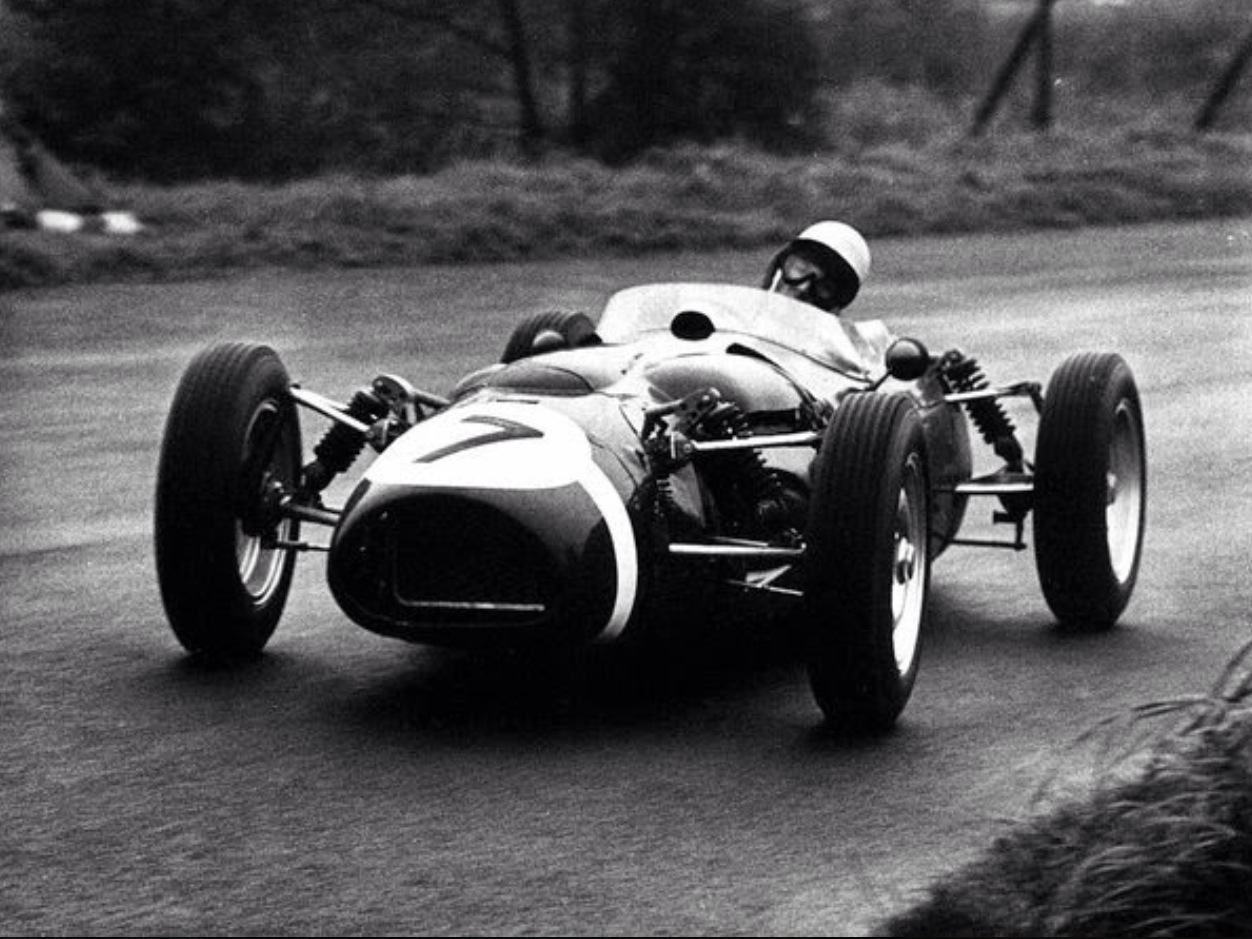
Stirling Moss, Aintree British GP 1961. On a charge and soon to be disqualified. The photograph below is of Jack Fairman earlier in the race before he pitted to allow Moss to take over the car (Unattributed)


(Simon Lewis Transport Books)

Launched at the 1961 British Empire Trophy at Silverstone, Jack Fairman drove the car which was entered by Rob Walker. The P99 had mechanical problems and didn’t finish.

Its next outing was at Aintree in the British Grand Prix. Rob Walker entered a Lotus 18 for Moss and the P99 for Jack Fairman, when the Lotus 18/21 brake pipe broke Moss took over the P99. The P99 was under investigation by the Stewards when Moss took it over because Fairman had a push start from the pits, which was not allowed by the rules- as a consequence the car was black-flagged on lap 57, his progress to that point had been swift…

For the September 1961 Oulton Park Gold Cup, Moss returned in the P99 and to his delight, it was a classically British summer’s day – 57 degrees, steady drizzle and a wet track! Moss won the race by 46 seconds from Jack Brabham’s Cooper T51 Climax, the only F1 race ever won by a four-wheel-drive car.

moss oulton gold cup

Moss wins the 1961 Oulton Park “Gold Cup’ in P99. The only GP win for a 4WD drive car, albeit Non-Championship F1 race. Greasy conditions tailor made for the fabulous, innovative car. (Unattributed)

The CSI then banned four-wheel-drive from F1.

Moss had the option of using the Dunlop Maxaret anti-lock brakes but preferred to turn them off and use his own judgment. They would reappear in 1967 on the Jensen FF- the Chrysler-power coupé that was a four-wheel-drive version of the Interceptor utilising both the Ferguson four-wheel-drive and anti-lock brakes.

The Ferguson P99 then raced in New Zealand and Australia in 1963 as outlined above fitted with a 2.5-litre engine in our 1963 F Libre International Series. It would have been interesting to see how the car would have performed with a 2.7 Litre FPF equivalent in capacity to the engines of the other front runners that summer.

hill lakeside p99 loading up

World Champ Graham Hill about to board P99. Lakeside, Queensland again. He was keen on the car, with his support BRM developed a 4WD variant of their P261/57 GP car, the BRM P67 1.5 V8 in 1964, using Ferguson technology, well ahead of the ‘1969 4WD pack’, comprising Lotus, Matra, McLaren and Cosworth. BRM P67 qualified in Richard Attwoods’ hands, second last on the British 1964 GP at Brands Hatch grid but was withdrawn from the race, circa 7 seconds off the pace. (Peter Mellor)

P99 returned to England and was lent to hillclimb racer Peter Westbury, who won the 1964 British championship with it, it also ran competitively in 1965 and 1966 and was retired in 1968.

p westbury p99

Peter Westbury, P99. Harewood Hillclimb 1964, he won the British Hillclimb Championship in the car that year. (Unattributed)

P99 also played a key role in the resurgence of 4WD at Indianapolis.

There had been a lot of activity both immediately pre and post war with Harry Miller’s 4WD specials. STP’s Andy Granatelli, on one of his trips to Europe was regaled by the recently retired Stirling Moss, his career ending accident was at Goodwood in 1962, about the dominance of his damp Oulton Park 1961 victory in P99.

Granatelli then approached Tony Rolt at Ferguson to try P99 at Indy, Jack Fairman shortly thereafter put in some impressive 140mph laps in the 2.5 litre car around the famous ‘Brickyard’.

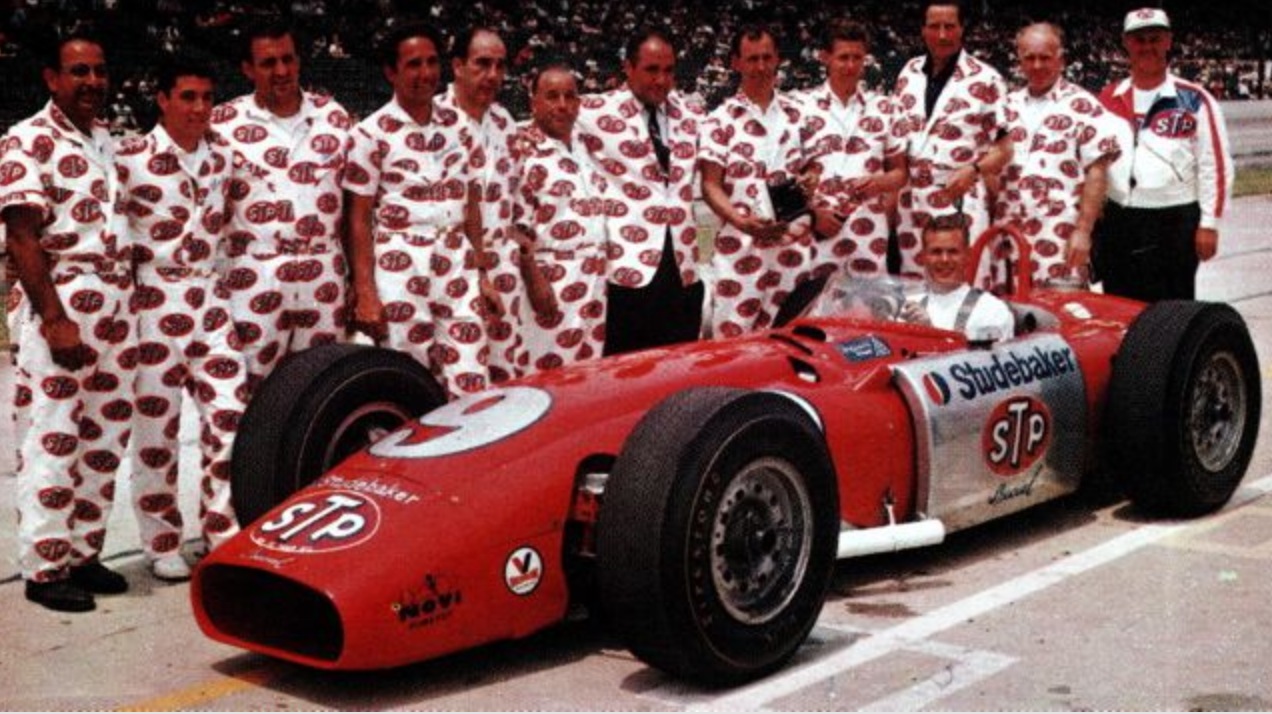
Andy was convinced and ordered a car from Ferguson powered by the Novi V8, the 4WD setup the same FF system as used on P99 but with the split being variable from 70/30 to 60/40 rear/front instead of the P99’s fixed 50/50 split.

Bobby Unser qualified the car sixth at Indy 1964.

This is a tangent too far for this article (see ‘Etcetera below for a cutaway drawing and further details) but for those with an interest in 4WD in motor racing click on this link to a great forix.autosport article on the subject; http://8w.forix.com/4wd.html

novi studebaker 1964

Ferguson Novi ‘STP Studebaker’ with Bobby Unser at the wheel. Indy 1964. Q6, DNF after hitting the wall seeking to avoid the fatal McDonald/Sachs accident. (Unattributed)

Four-wheel drive made another appearance in Formula 1 in 1969…

As teams struggled for more traction- the Ford Cosworth engine was developing well in excess of 400bhp at this stage, putting the power down was key to improved performance.

At the time 4WD was being used successfully at Indianapolis, it was therefore a natural direction for the F1 teams to explore, particularly Lotus who had been racing at Indy since 1962 and using 4WD competitively, putting accidents to one side, in their 1968 and 1969 contenders, the Lotus 56 Pratt & Whitney gas turbine powered car, and Lotus 64 Ford, powered by a Turbo Ford engine.

Matra, Lotus and McLaren all tried the Ferguson system and Cosworth devised their own 4WD car. The introduction of wings, which could achieve the same traction outcomes without the weight penalty, and advances in race tyre technology and widths provided simpler cost-effective solutions than persevering with 4WD.

Overall, only eight four-wheel-drive F1 cars were ever built.

Robin Herd’s Cosworth 1968 4WD design (Bennet)

In 2004  following a period of 35-plus years in the Donington Collection…

The ‘one of a kind’- only 1 chassis was ever built Ferguson P99 was retrieved by the Ferguson family to the Ferguson Family Museum on the Isle of Wight and overhauled.

The car was stripped and was in remarkably good order, it was re-assembled using all of the original parts, including the extremely rare twin-choke Weber 58 DCO carburettors and re-fitted with the totally original bodywork which still wears original Rob Walker team paint and livery.

Sir Stirling Moss drove it at the 2005 Goodwood Revival and at the Monaco Historic Grand Prix in 2008. In 2006 Moss handed it over to Barry “Whizzo” Williams at Goodwood, who started 18th and had worked his way up to third before his brakes faded, he finished in that position.

P99 still appears regularly in suitable events, its historic significance enormous.

moss p 99 in recent times

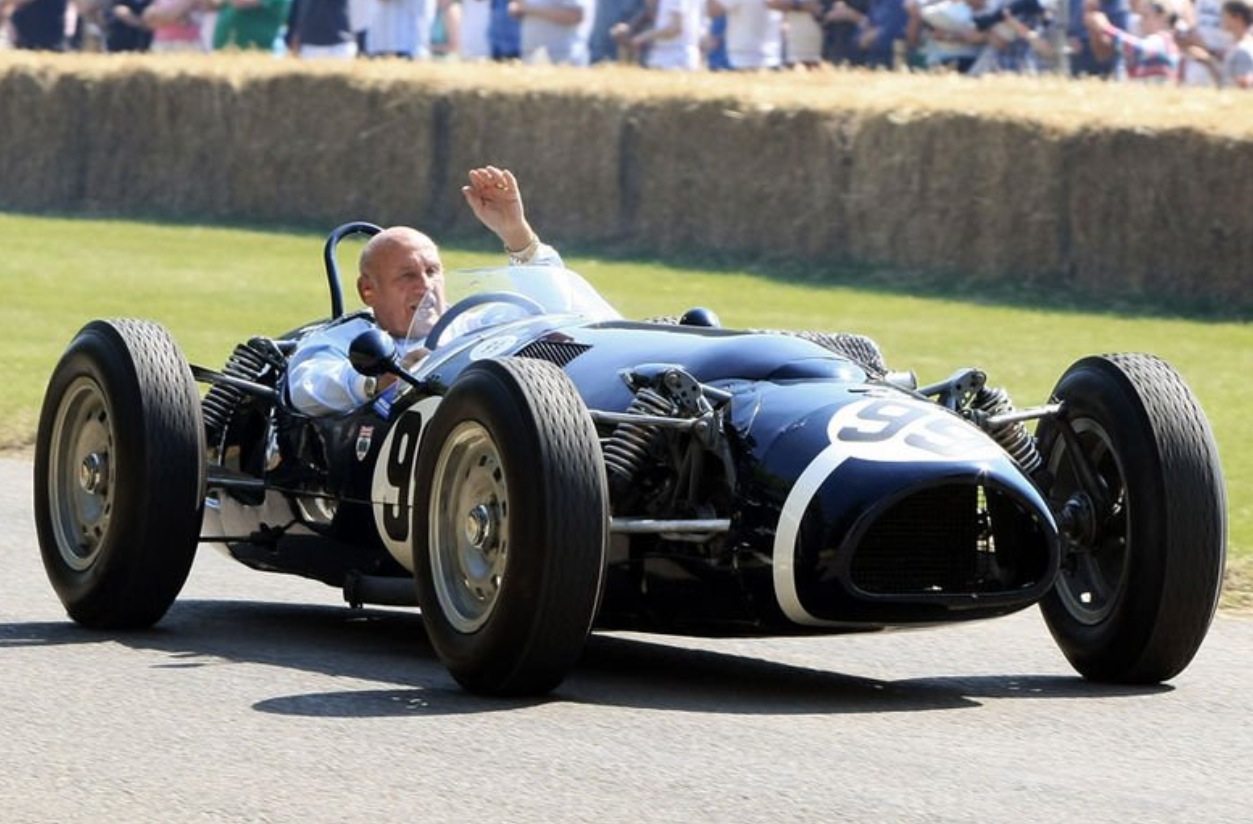
Stirling Moss in P99 at the Goodwood Festival of Speed. (Unattributed)

Etcetera…

P99

P99 (R Roux)


p99 british gp

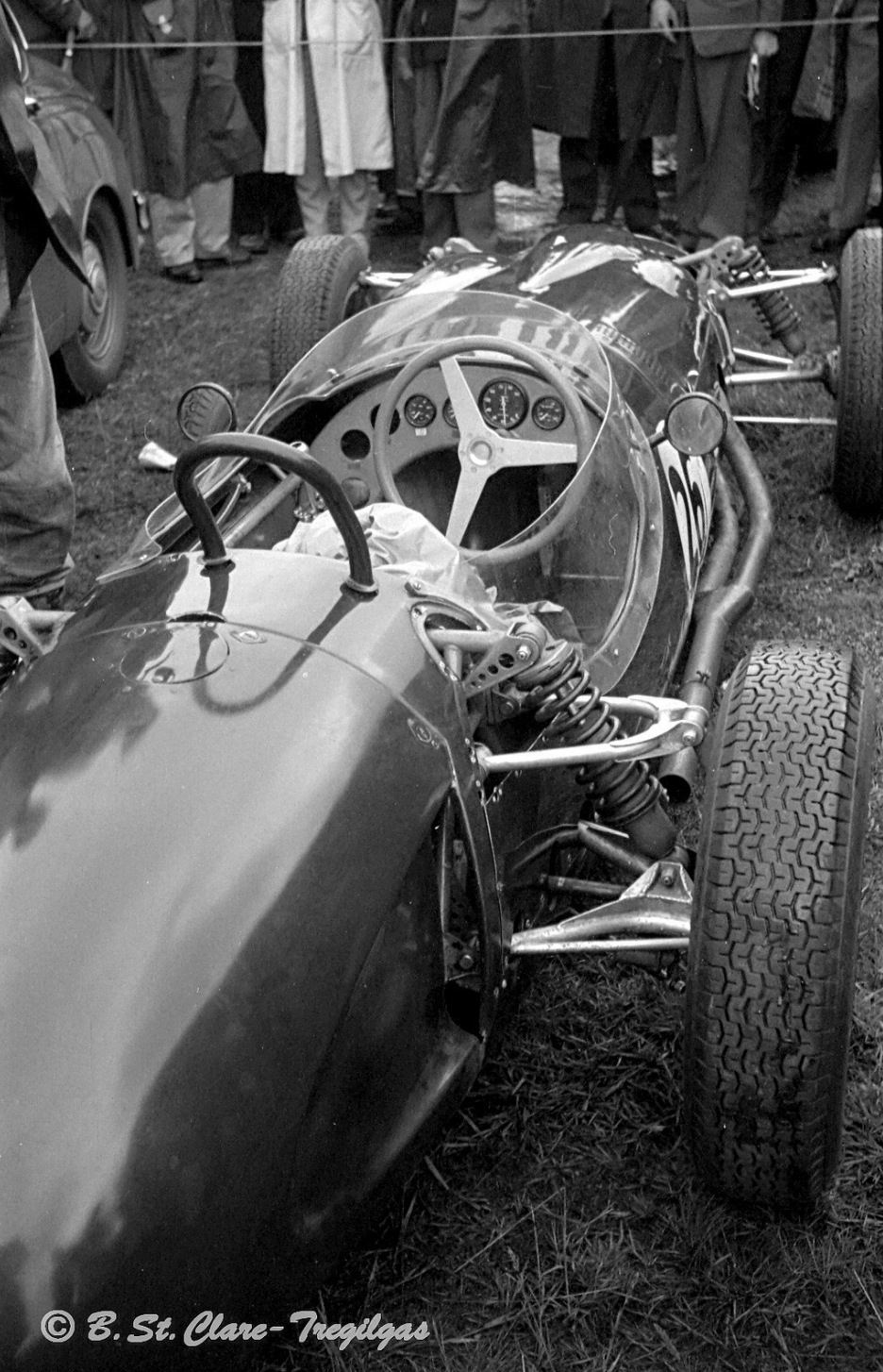
Cockpit shot British GP, Aintree 1961. Driving position offset to the right, gearchange for 5 speed box to the left. 1.5 litre FPF powered Climax engine in the last year of the 1.5 Litre Formula. (B St Clare-Tregilgas)


hill wf push start p99

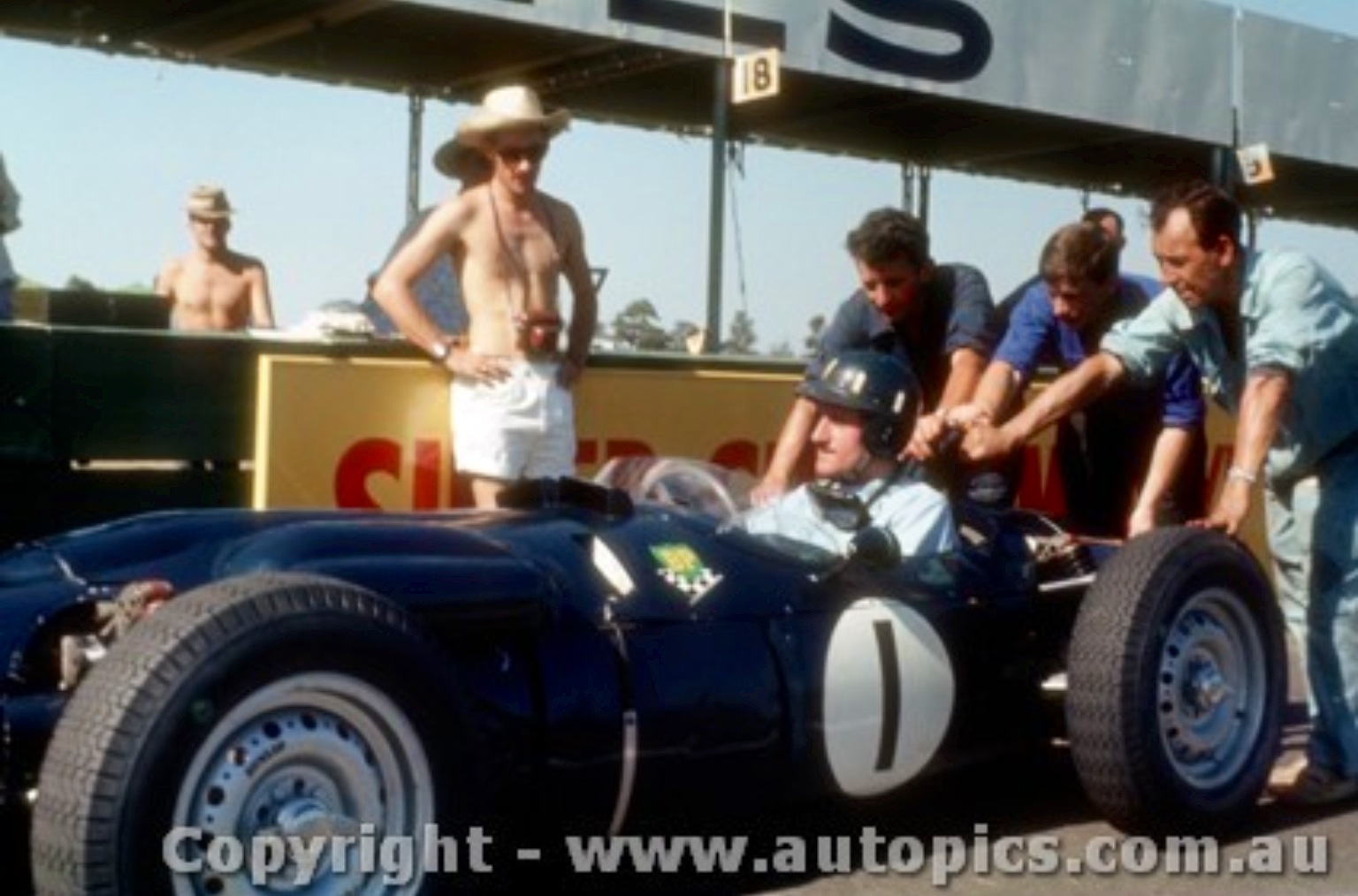
Push start for Hill from the Warwick Farm pit counter, P99. AGP meeting 1963. (autopics)


hill wf butt shot

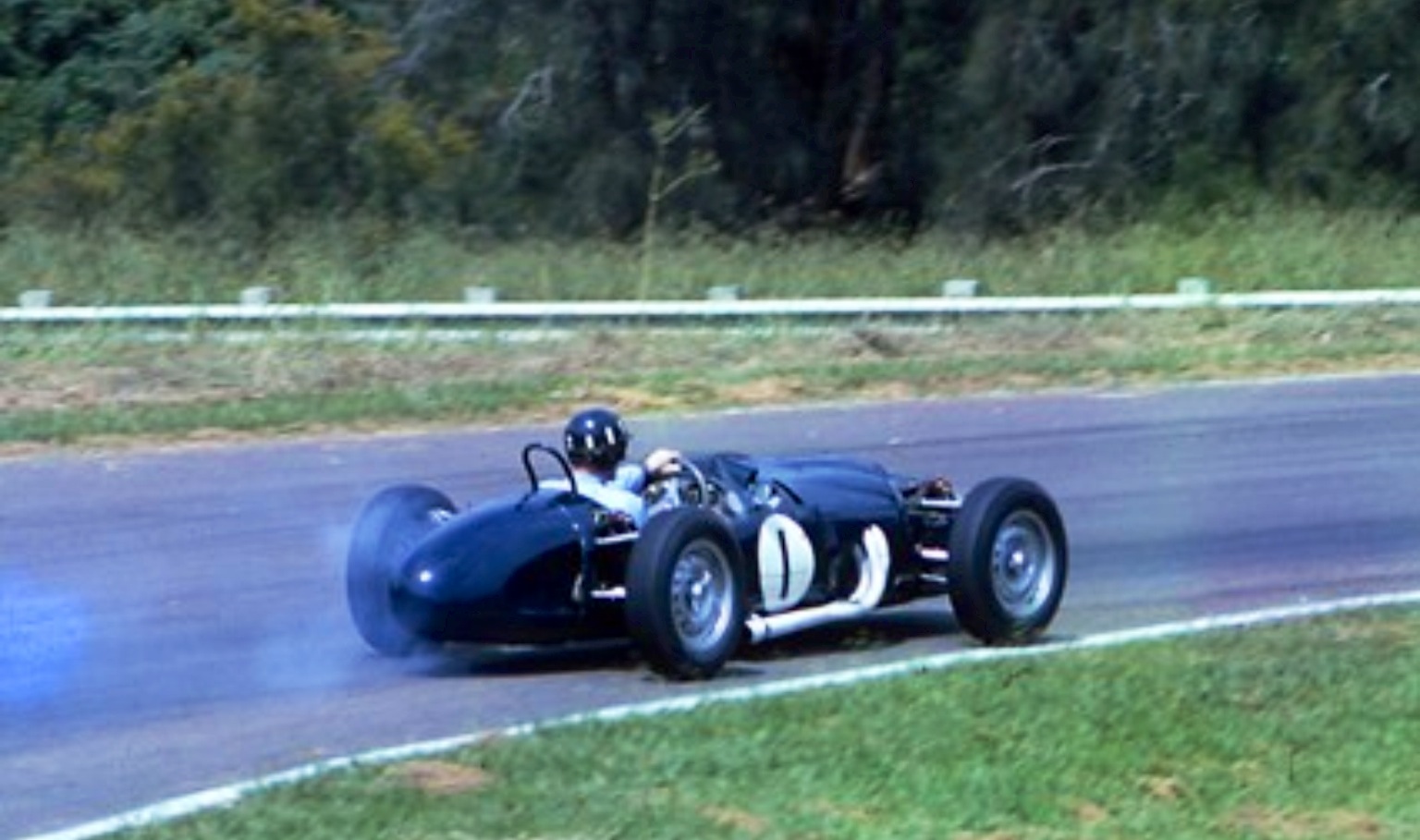
Hill at Warwick Farm trailing smoke from the rear. Probably practice as the car finished the race. (Adrian Schagen)


hill p99 wf mist

Evocative David Mist shot of Hill during the 1963 AGP Warwick Farm. P99. (David Mist)


p99 wf frontal rea

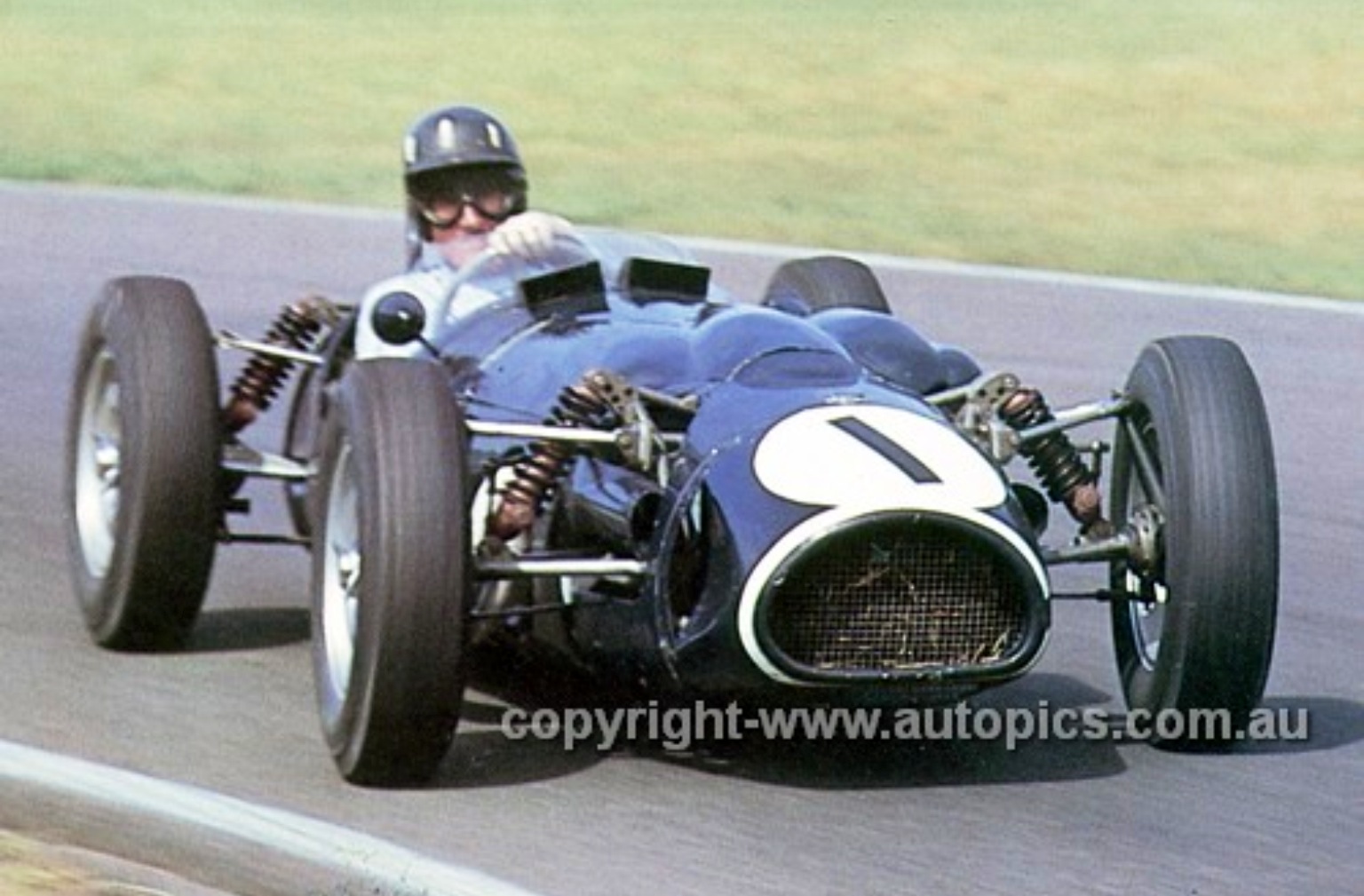
Hill again at Warwick Farm during the ’63 AGP, this shot showing the not inconsiderable frontal area of P99. Weight and width of car a function of ‘4WD hardware’. (autopics)


Ferguson Novi

ferguson novi page

What a wild car this is! Conceptually similar to the P99, the chassis was a spaceframe with a monocoque centre section. As you can see the suspension is inboard with rockers actuating the spring/dampers, P99 is outboard. Contrary to common Indy practice then the suspension was not offest, but the engine and transmission were, a simpler solution. Novi used Dunlop 7X15 inch tyres fitted to alloy wheels and disc brakes using alloy calipers.

The Novi engine was designed pre-War by Bud Wingfield and Leo Goossen and built by Fred Offenhauser. It was a 90 degree, DOHC V8, 2741cc in capacity. Bendix fuel injected and using a Paxton 2 stage centrifugal blower power was circa 830bhp @ 8200rpm.

The engine never won Indy but the engine and its unique sound remain iconic to this day.

R5 Prototype

fergy road car 1

Ferguson R5 road car prototype. Autosport Road Test P1.


fergy road car

R5 Road Test P2.

Credits…

John Ellacott, Bruce Wells, B St Clare-Tregilgas, James Allington, Adrian Schagen, John Stanley, autopics.com, David Mist, Peter Mellor, theroaringseason.com, Theo Page, Robert Roux, Autocar, Autosport, Jock Psaros, Simon Lewis Transport Books

Finito…