Posts Tagged ‘Brian Redman’

(McLaren)

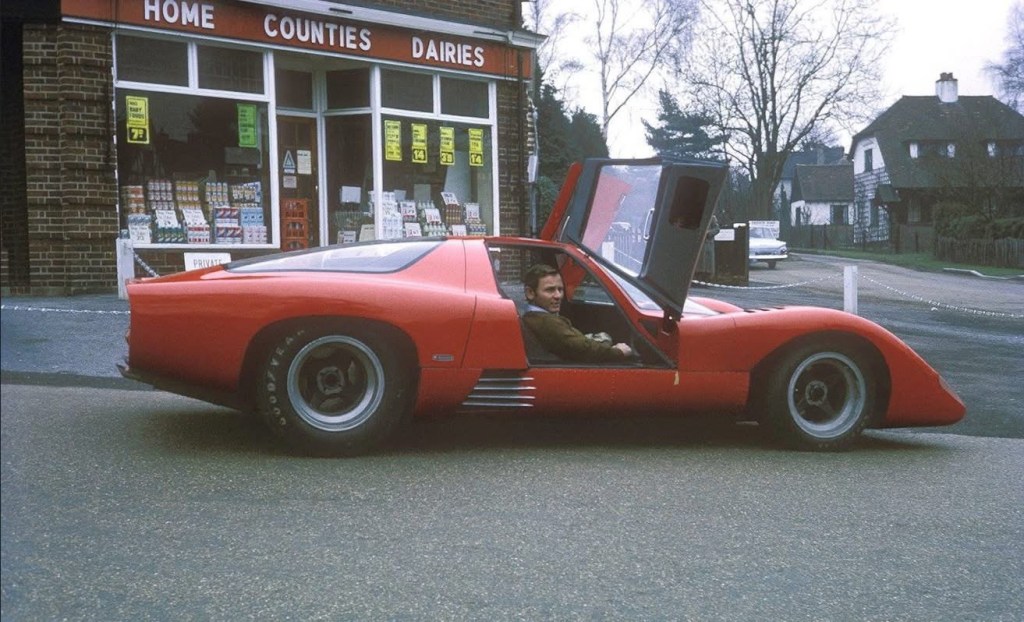
The famous shot of Bruce McLaren picking up the bread and milk from the East Horsley Home Counties Dairy in winter 1969, McLaren M6GT Chev. A good story about the car here:https://www.topgear.com/car-news/big-reads/driving-bruce-mclarens-m6gt

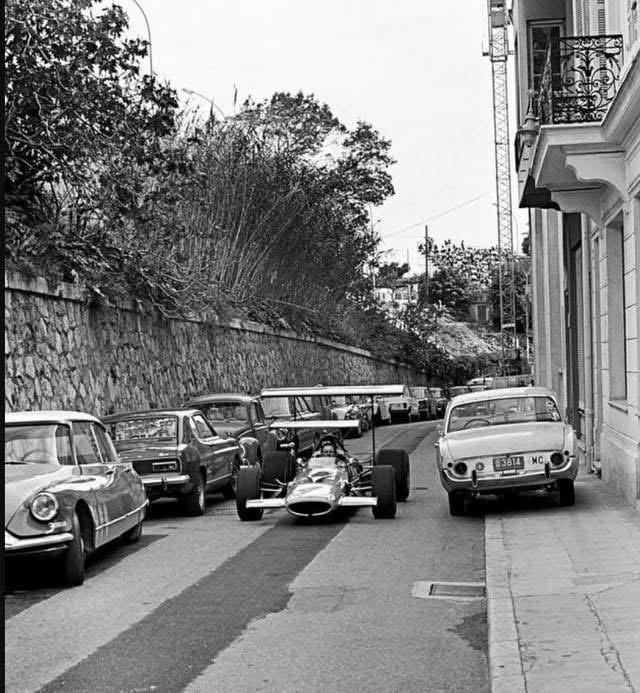
And below making up for lost time through traffic in the latter stages of the 1969 Monaco GP, McLaren M7C Ford, where Bruce was fifth in the race won by Graham Hill’s Lotus 49B Ford.

The CSI/FIA banned the hi-wings overnight Friday-Saturday so I guess this is the Thursday.
(G Johannson)

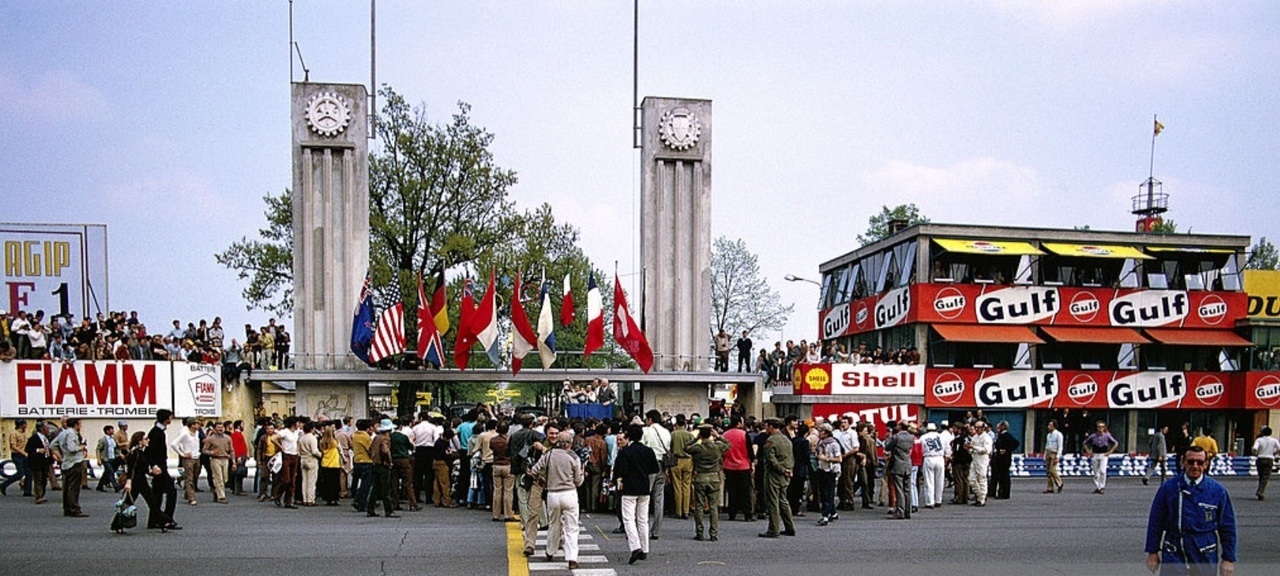
The victorious Surtees/Scarfiotti Ferrari 250P at Sebring in 1963, the Scuderia’s sixth outright Florida win in eight years

Ferrari took the first three places in the prototype and GT classes, the Index of Performance and the lap record, not a bad weekend’s work…
(M Fistonic)

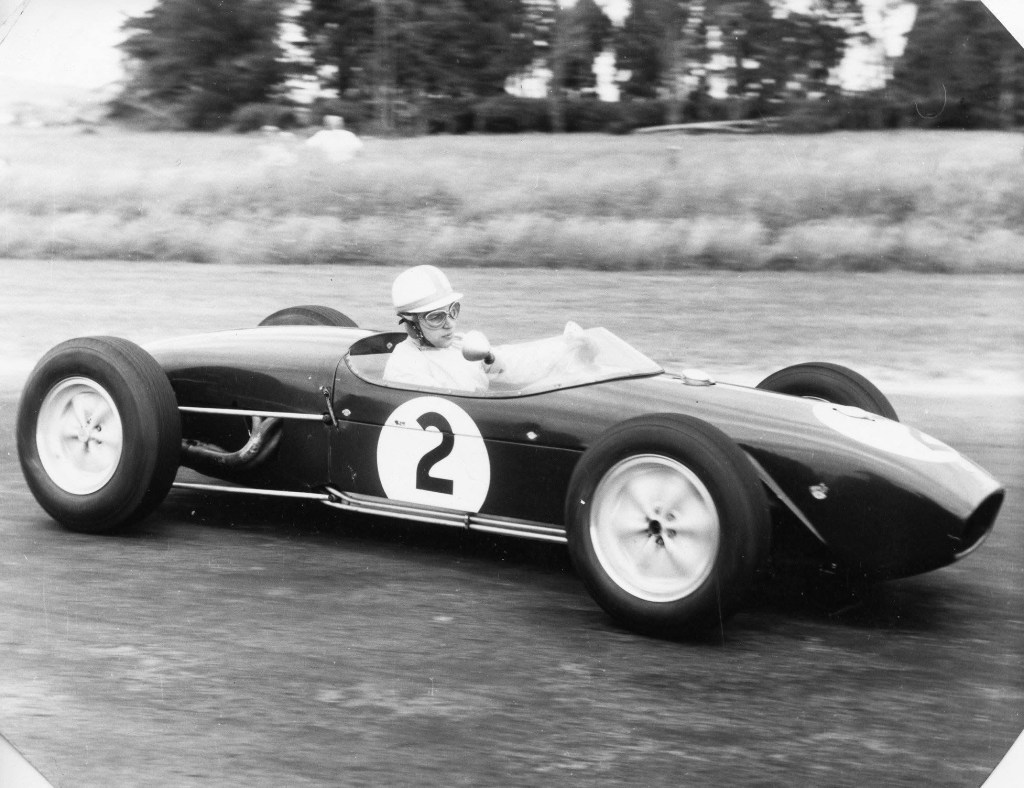
John Surtees guides his works-Lotus 18 Climax FPF 2.5 around Ardmore Aerodrome during the January 7, 1961 New Zealand Grand Prix.

Colin Chapman sent a pair of Lotus 18s south that summer to keep his drivers sharp over the European winter: team drivers Surtees, Jim Clark and Innes Ireland made the trip with Lotus’ Queerbox doing its bit to despoil the results.

Surtees was NZ GP DNF gearbox (winner Brabham Cooper T53), Levin DNF radiator (Bonnier Cooper T51), and Wigram DNF undisclosed from pole (Brabham Cooper T53).
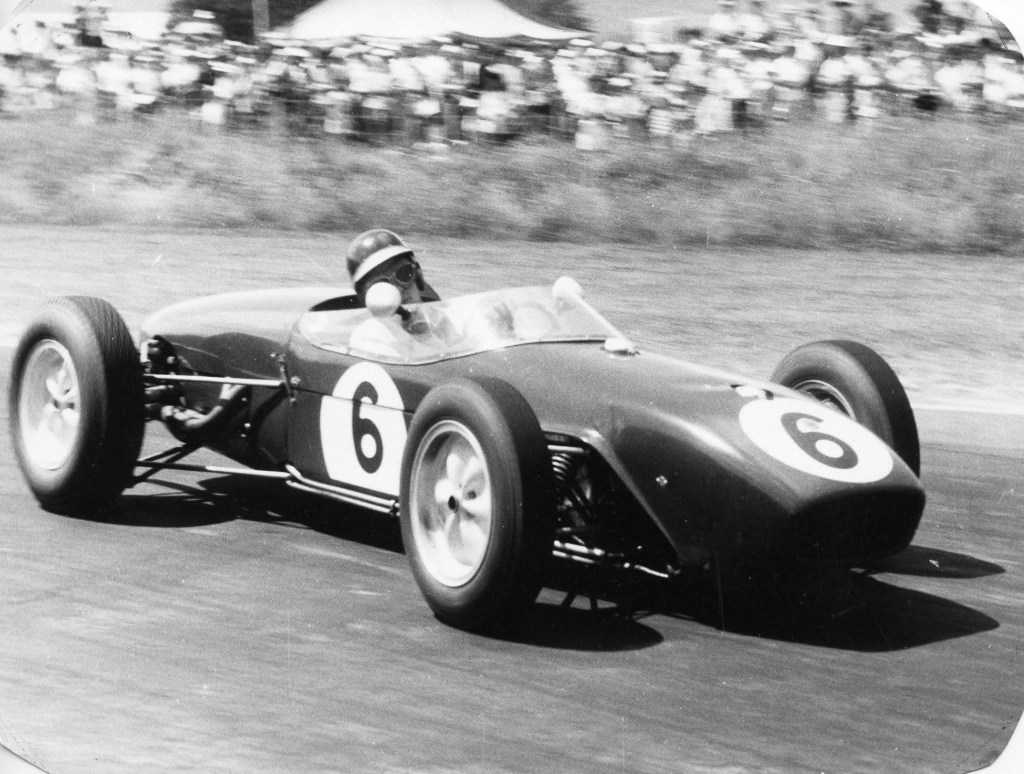
(M Fistonic)

For Jim Clark above, it’s a little better: NZ GP sixth, Levin second and Wigram DNF stall.

For the record, Roy Salvadori was a DNF gearbox at Wigram and second at Teretonga (Bonnier Cooper T51) in a Yeoman Credit Lotus 18 ‘on his way’ to Australia to do the Oz Internationals in one of Jack’s Cooper T51s.

Ireland was second to Moss in the ferociously hot Warwick Farm 100 (Moss Lotus 18) but DNF in the Victorian Trophy at Ballarat Airfield (Dan Gurney BRM P48).
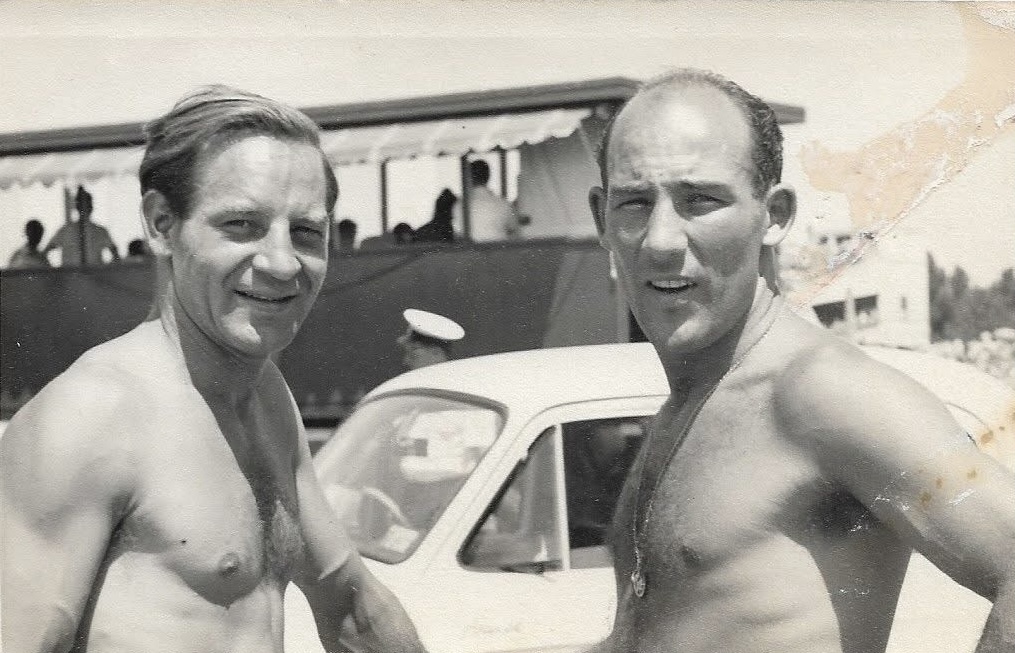
A couple of stud-meisters at Warwick Farm in 1961, Innes DOB 12/6/1930, Stirling 17/9/1929 (M McGuin)
(CAN)

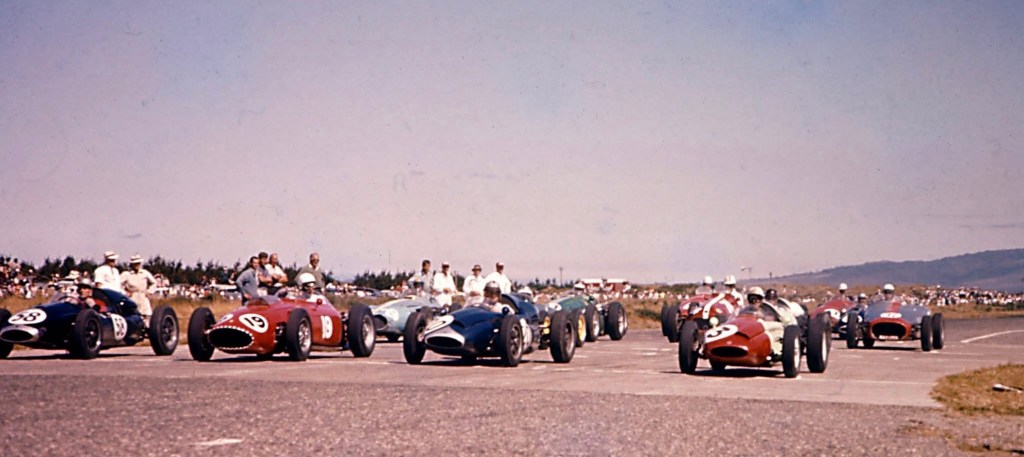
I’d forgotten Jo Bonnier’s two ‘Tasman’ wins in 1961 aboard an old Cooper T51 Climax.

Here he is on the Teretonga International grid on pole at right with Denny Hulme’s Cooper T51 Climax, Pat Hoare, Ferrari 256 and Tony Shelly’s Cooper T45 Climax – with ? Lycoming Special looming large at the far right.

Bonnier won from Roy Salvadori, Lotus 18, then Hulme, Hoare and Shelly.
(CAN)

And, the wonders of Facebook, one for the Cooper historians from Classic Auto News‘ Allan Dick.

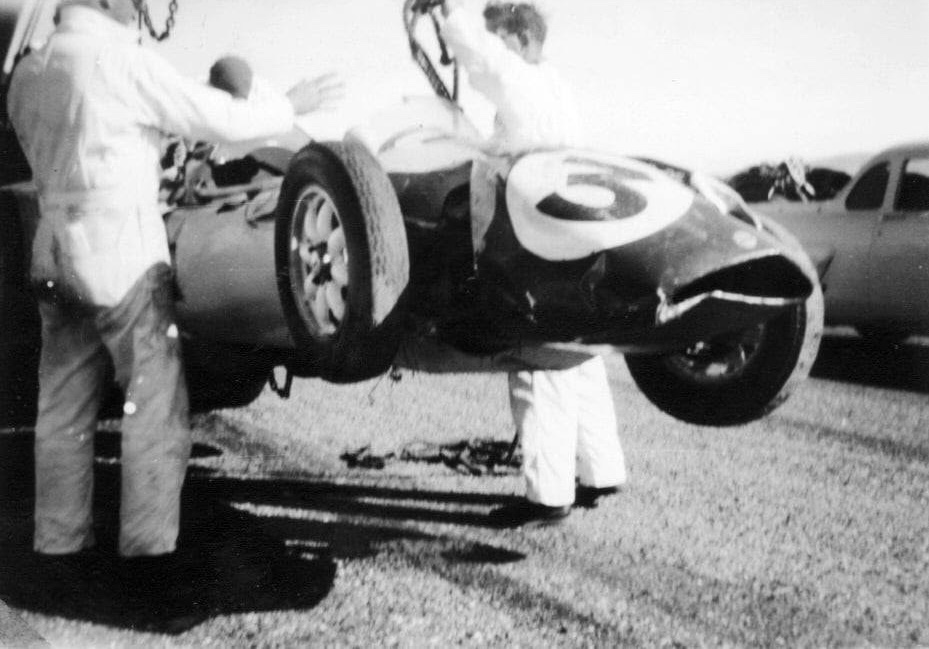
‘Bonnier had a successful 1961 tour with Yeoman Credit. He won convincingly at Levin (beating Jim Clark) and Teretonga despite having an old car. After winning the main Teretonga race, he went off in the Flying Farewell (an all-in race at the end of the race weekend, a ‘Butcher’s Picnic’ in Australia), damaging the car so badly that it wasn’t considered worthwhile taking it back to Europe, so it was stripped of its parts and left in Invercargill. Nobody knows what happened to it. Here it is being recovered from the lupins (above) at the end of the main straight.’
(Lister Cars)

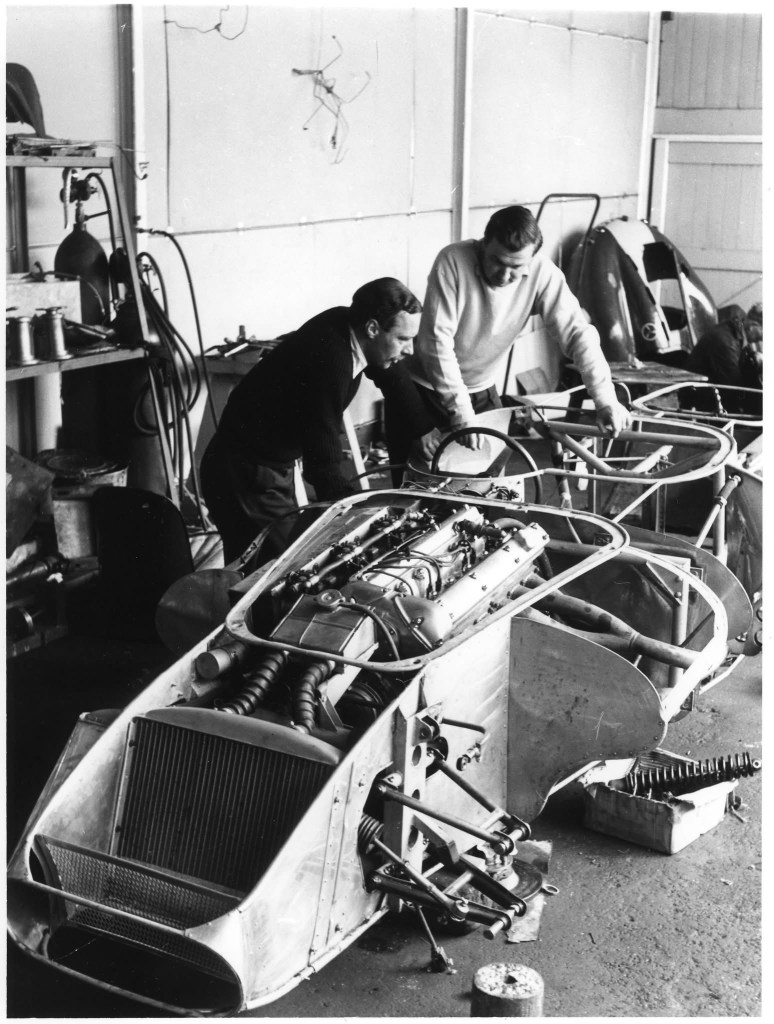
Archie Scott-Brown and Brian Lister ponder the construction of the prototype Lister-Jaguar chassis BHL2, registered MVE303…and 506 306 in late 1956 or early 1957 at the Lister family’s Cambridge workshop.

Scott-Brown had a fabulous season, winning 11 of the 14 races he entered including breaking the unlimited sportscar lap record, during the race or practice, on every circuit the team visited.
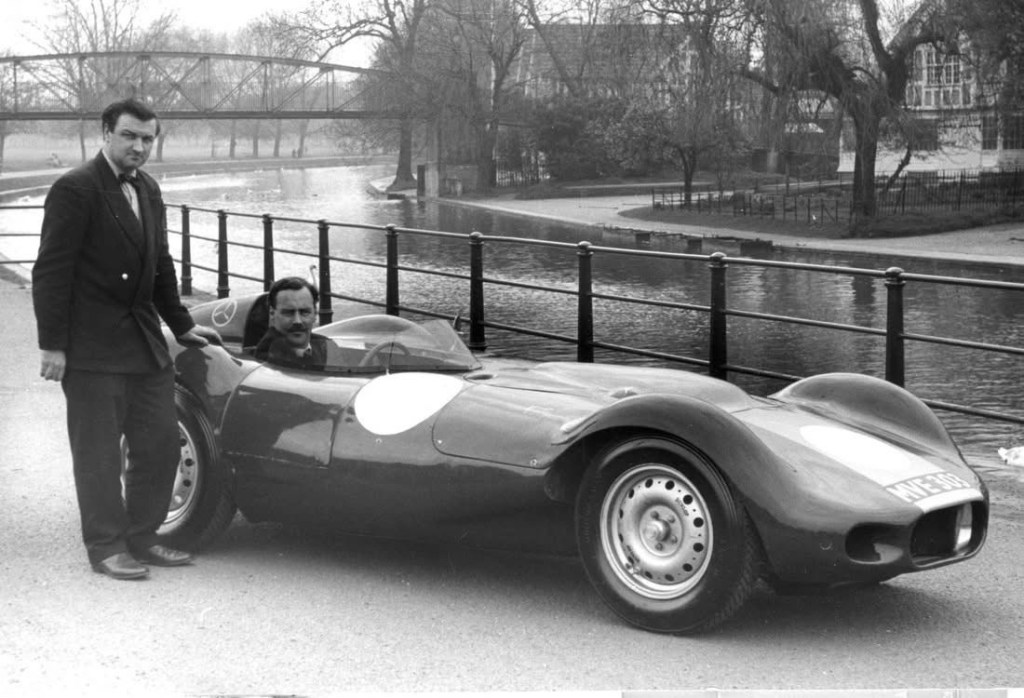
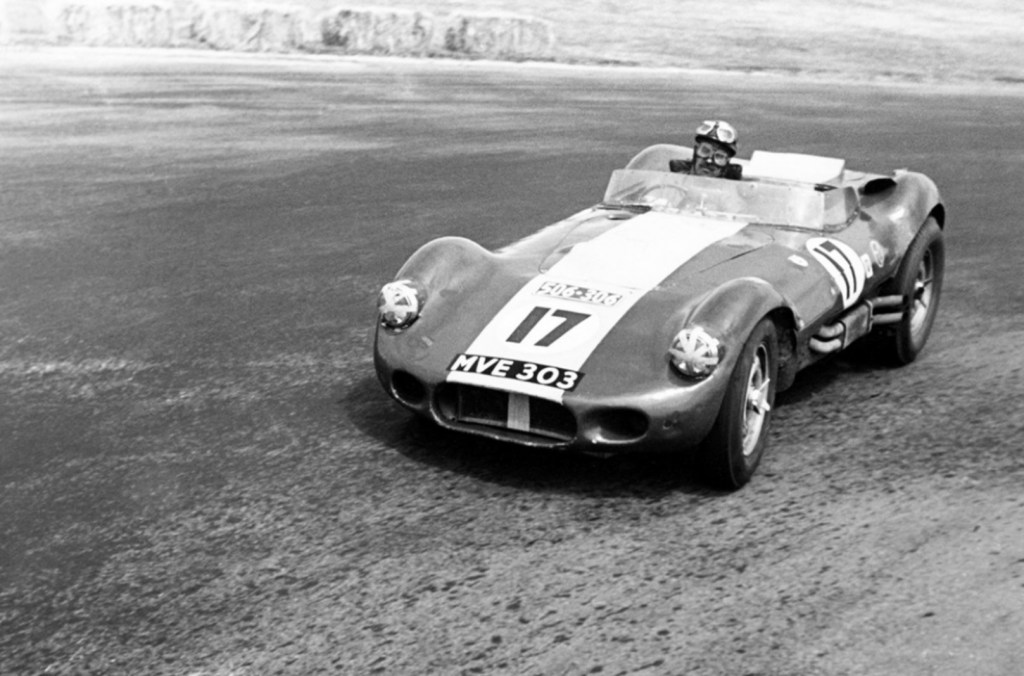
Press release, what date folks? (Lister Cars)
(Classic & Sportscar)

He and a mechanic then took the Lister to New Zealand for their 1958 summer internationals, where the car – registered 506-306 – won two more races. Archie took a 12-lap Le Mans start preliminary at Teretonga and the 150-mile Lady Wigram Trophy (above), finishing ahead of two Grand Prix cars: Ross Jensen’s Maserati 250F and shooting star Stuart Lewis-Evans’ Bernie Ecclestone-owned Connaught B3 Alta.

In an era where such fast cars were usually sold to a lucky (or not) colonial at the end of the trip, the Lister returned home ‘to clear the Customs bond in New Zealand,’ wrote Doug Nye. Sadly, BHL2 was then torn down with many of its fit and well components used in the build of other car(s).
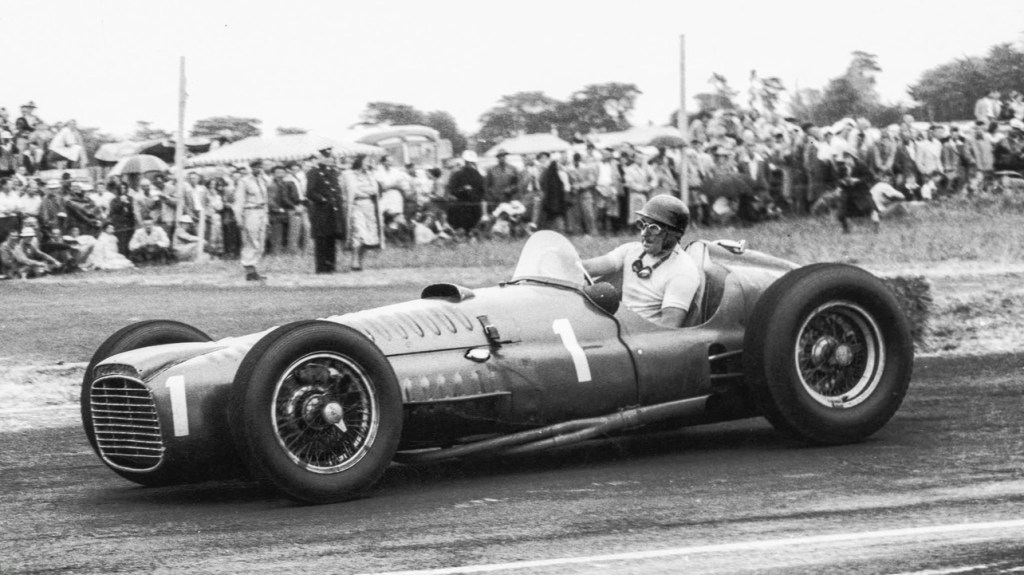
Ken Wharton punts his awesome BRM P15 V16 around Ardmore during the January 9, 1954 New Zealand Grand Prix

He had the 100 lap 300km race shot to bits when brake problems intervened, finishing second behind Stan Jones in Maybach 1, with Tony Gaze HWM Alta third.

See here for that race:https://primotipo.com/2024/01/08/stan-jones-won-the-1954-nz-gp-70-years-ago-today/ and here for the BRM:https://primotipo.com/2019/11/18/ken-wharton-and-brms-grand-turismo-south-in-1954/
(LAT)

What The Fanculo!?

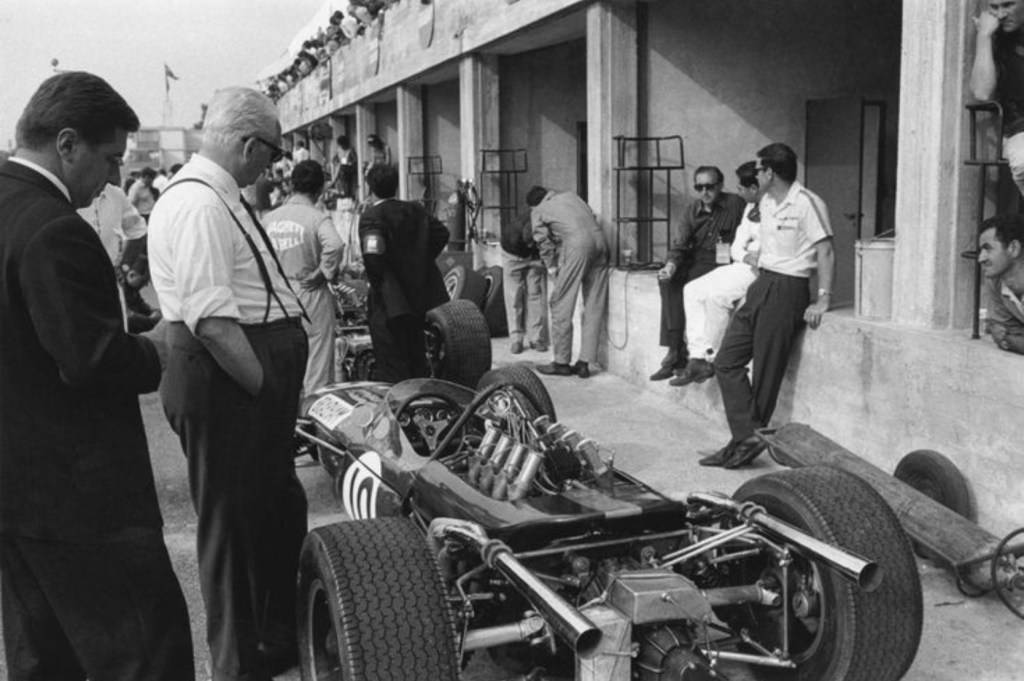
Enzo Ferrari ponders the 300bhp, SOHC, two-valve Repco-Brabham V8-engined Brabham BT19 in the Monza pits during the September 1966 Italian GP weekend.

Ludovico Scarfiotti brought home the pancetta for the Scuderia, mind you, winning the race from Mike Parkes in another Ferrai 312 with Denny Hulme third in his Brabham BT20 Repco.
(LAT)

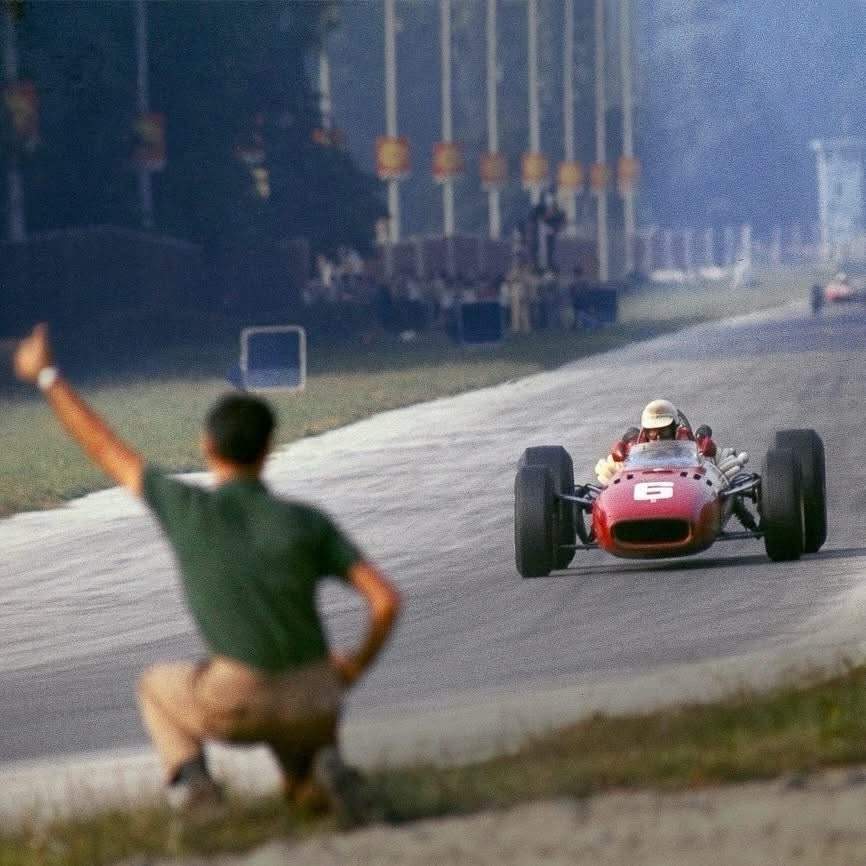
Still, the pace of the little-ies shouldn’t have surprised Enzo in that transitional year: the 2-litre Coventry Climax and BRM-powered Lotus 33s of Jim Clark and Graham Hill, and his own Dino 246 of course. The title was there for Ferrari’s taking; all they had to do was keep John Surtees in the saddle for the year…

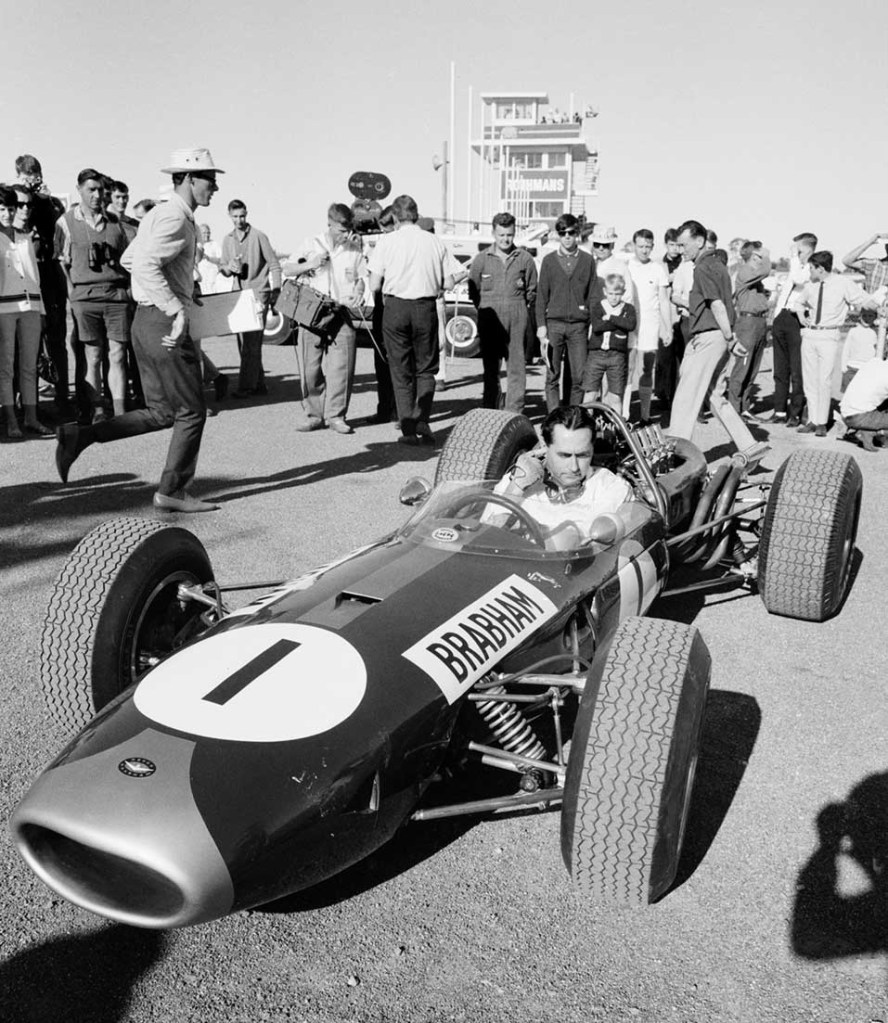
Meanwhile, Jack was having a grouse time. Time enough to slip home mid-season for the opening week of Surfers Paradise International Raceway – his race was on August 14 – collect some cash, demonstrate Repco’s wares to the punters, then go back to Europe and wrap up the World Championship…which he did at Monza.
(NAA)

The logistics of it all are interesting.

Win the German GP in BT19 on August 7, pop it in a Qantas 707 to Australia (or whatever), get it from Melbourne or Sydney to Surfers. Do the whole thing in reverse, get BT19 race prepped, then truck it off to Italy.

Meanwhile, Jack jumped a jet to Scandinavia and won two ‘Euro F2’ rounds from Denny: the Kanonloppet, Karlskoga on August 21, and the Finlands GP at Keimola Ring on August 24. JB in a BT21 Honda, DH in a BT18 Honda. August wasn’t a bad month, really. Some sort of engine problem let the Repco side down in Queensland, it could easily have been a win a weekend for Jack…
(Ebay)

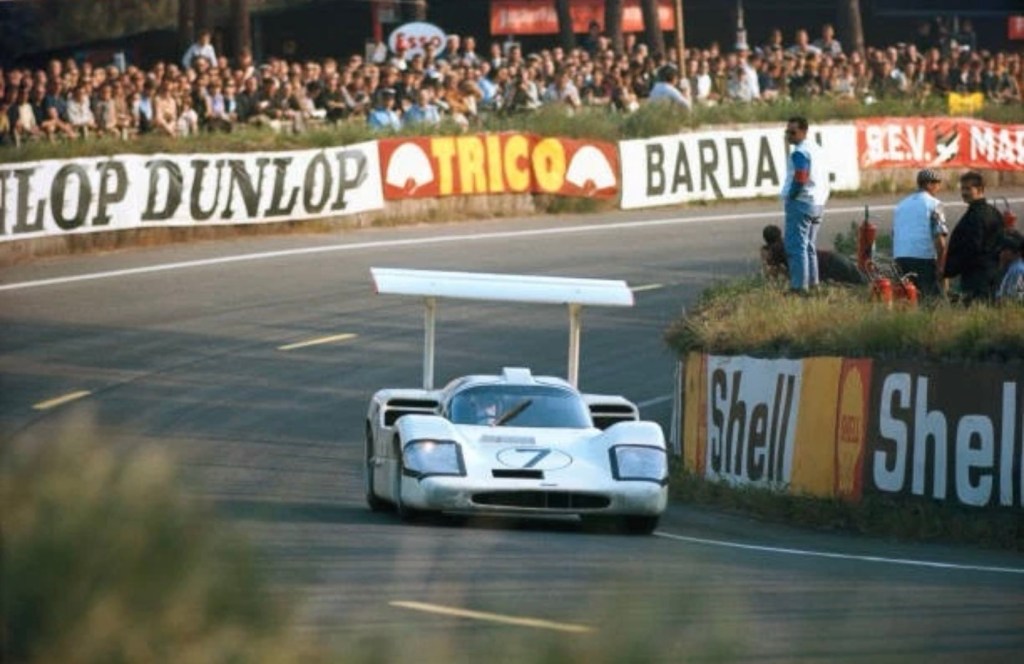
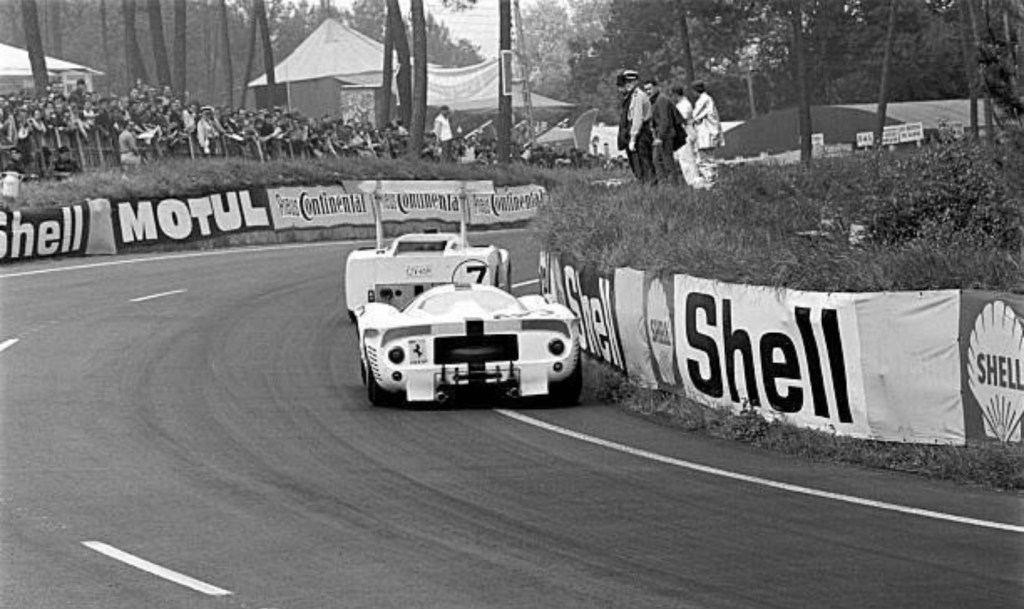
Mike Spence at the wheel of the Chaparral 2F Chev he shared with Phil Hill at Le Mans in 1967, DNF transmission failure after 225 laps in the race won by the Ford Mk4 raced by Dan Gurney and AJ Foyt.

The Esses from another angle below, in front of the NART Ferrari 412P raced by Pedro Rodriguez and Giancarlo Baghetti, DNF piston during the 11th hour. See here:https://primotipo.com/2014/06/26/67-spa-1000km-chaparral-2f/ and Le Mans here:https://primotipo.com/2015/09/24/le-mans-1967/
(Ebay)
(Mitsubishi)

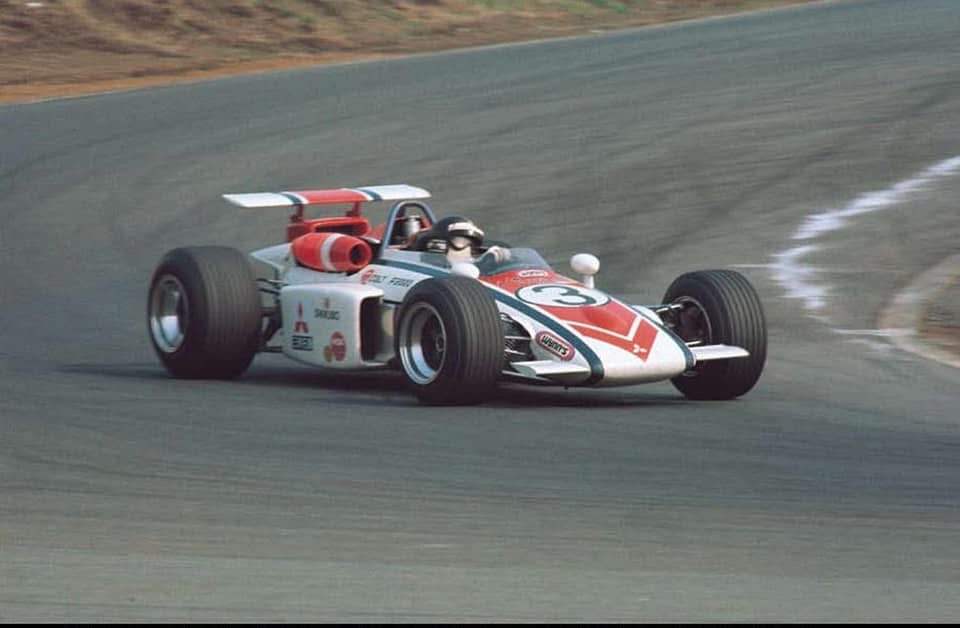
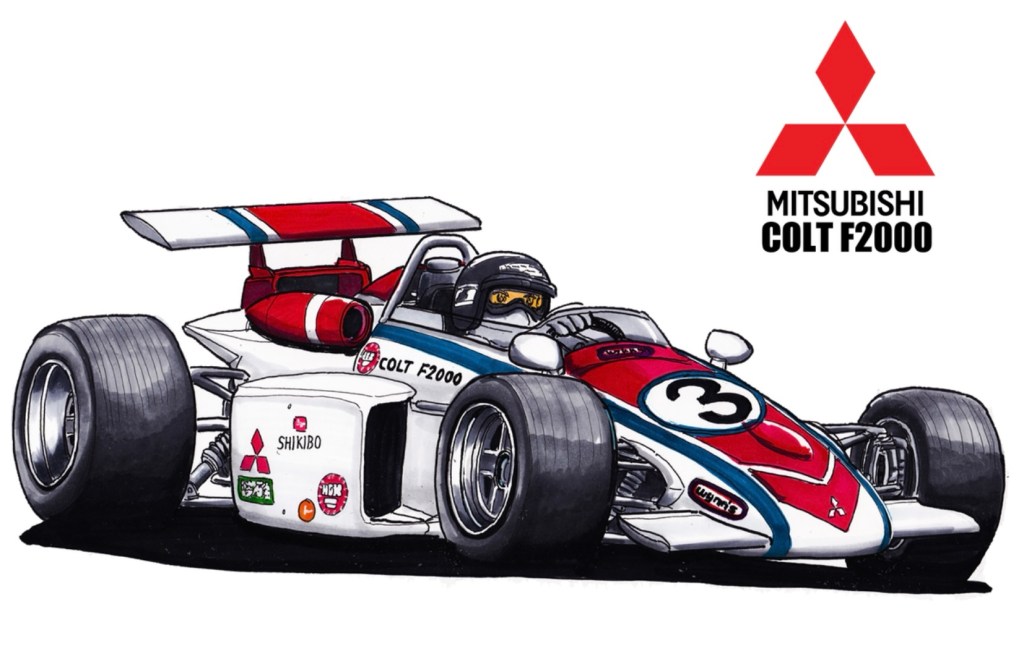
Kuniomi Nagamatsu on the way to victory in the May 3, 1971 Japan Auto Federation Japanese Grand Prix at Fuji International Speedway aboard his Mitsubishi Colt F2D/F2000 R39B 2-litre.

He won the 35 lap, 225km race from his teammate Osamu Masuko in another F2D from then Japanese International Tetsu Ikuzawa’s Lotus 69 Ford FVC 1790cc in third place.

Nagamatsu’s win was the culmination of six years of Mitsubishi single-seater racing in Japan and Macau using Brabham chassis/copies thereof; the F2Ds are Brabham BT30 chassis in drag. Lower drag that is, the aero on these cars was the work of Mitsubishi’s aviation subsidiary.
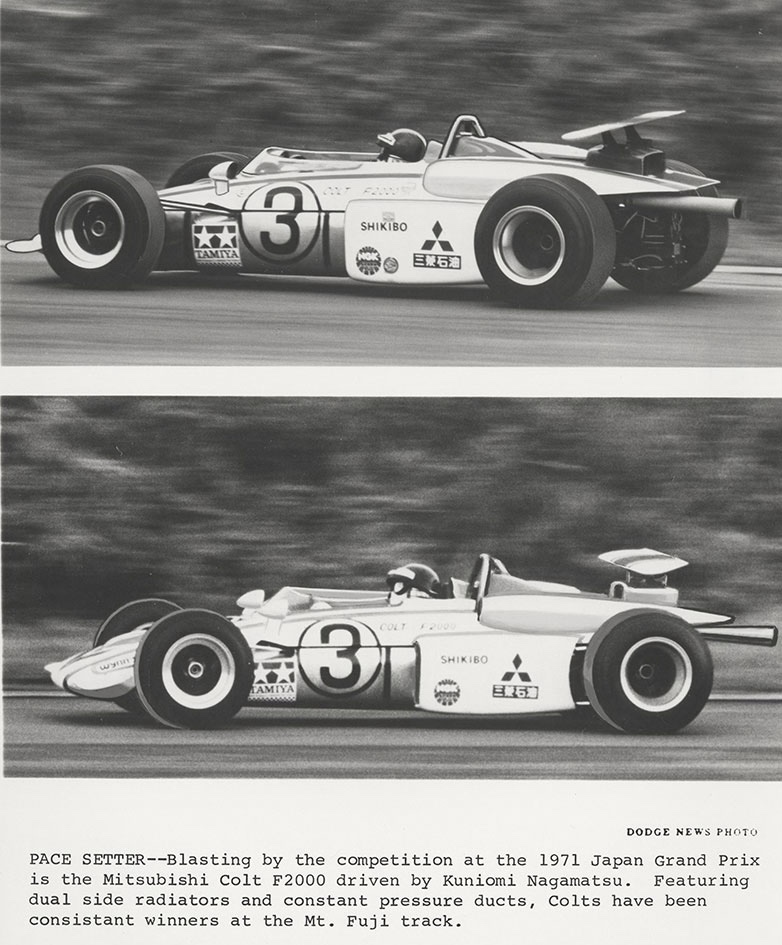
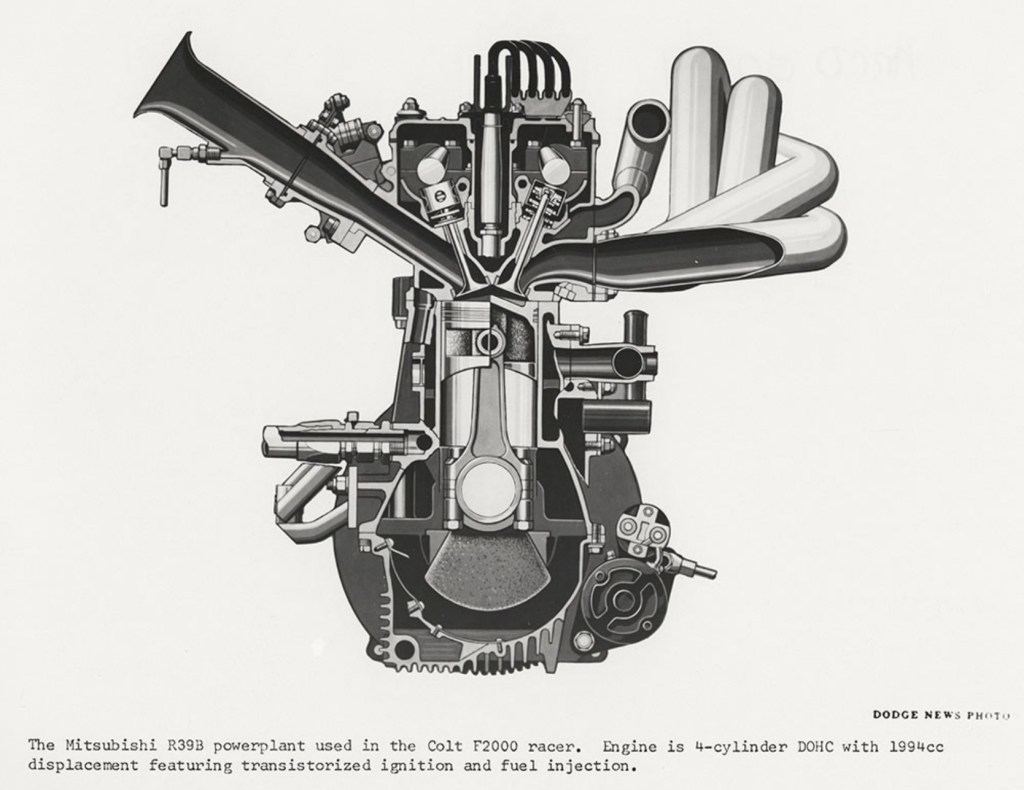
The engines were home grown too. Initially production motors with the usual mix of increased bore, heads, carbs and cams but by 1971 Topsy was a 2-litre, twin-cam, four valve, fuel injected F2 engine that should have won the 1972 European F2 Championship if someone – how bout Bernie Ecclestone, having just acquired Brabham – had done a deal. Instead, Mitsubishi handbrake turned away from single-seaters and into the forests where they were already gaining international success…

See here:https://primotipo.com/2023/05/28/mitsubishi-competition-formative-days/
(S Dent Collection)

Who said high-airboxes were started by Tyrrell/Matra during 1971?

Ferrari gave it a whirl on Richie Ginther’s Ferrari 156 at Reims during practice for the 1961 French Grand Prix, he didn’t race with it, so presumably the jury was out as to its performance. That’s Carlo Chiti with the top of his head chopped off.

See here for high-airboxes:https://primotipo.com/2014/09/16/tyrrell-019-ford-1990-and-tyrrell-innovation/

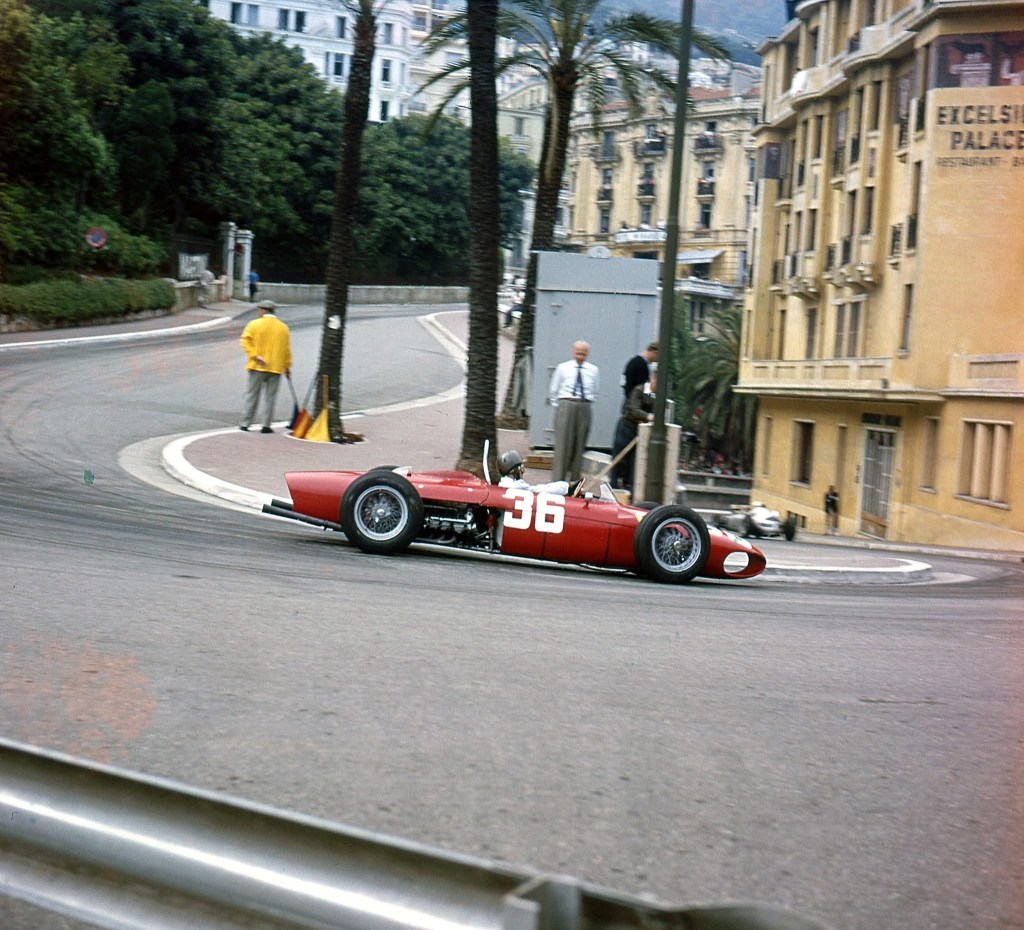
And below in the LWB (it’s a joke folks) Ferrari 156 #0001 at Monaco on May 14 where he scored a rousing second place behind Mighty Moss in Rob Walker’s Lotus 18 Climax and in front of more-fancied teammates Phil Hill and Wolfgang von Trips. See here for the evolution of 246P to 156:https://primotipo.com/2015/10/04/monaco-panorama-1958/
(GPL)

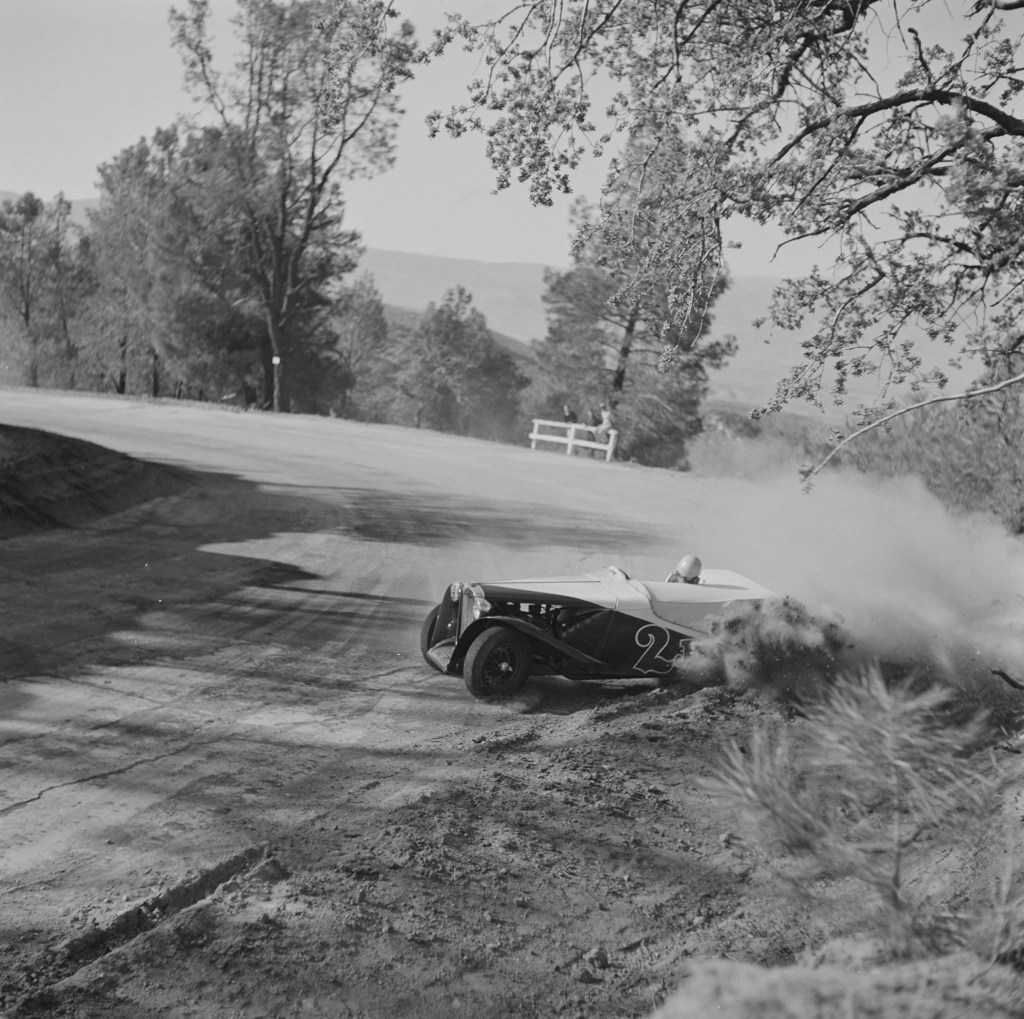
And below Richie all, fast and loose in his competition debut at Sandberg Hillclimb on April 8, 1951. The car is Bill Cramer’s MG TC 2 Junior Ford V8, the poor little chassis would have been groaning at the seams…
(Revs Institute)
(primotipo archivio)

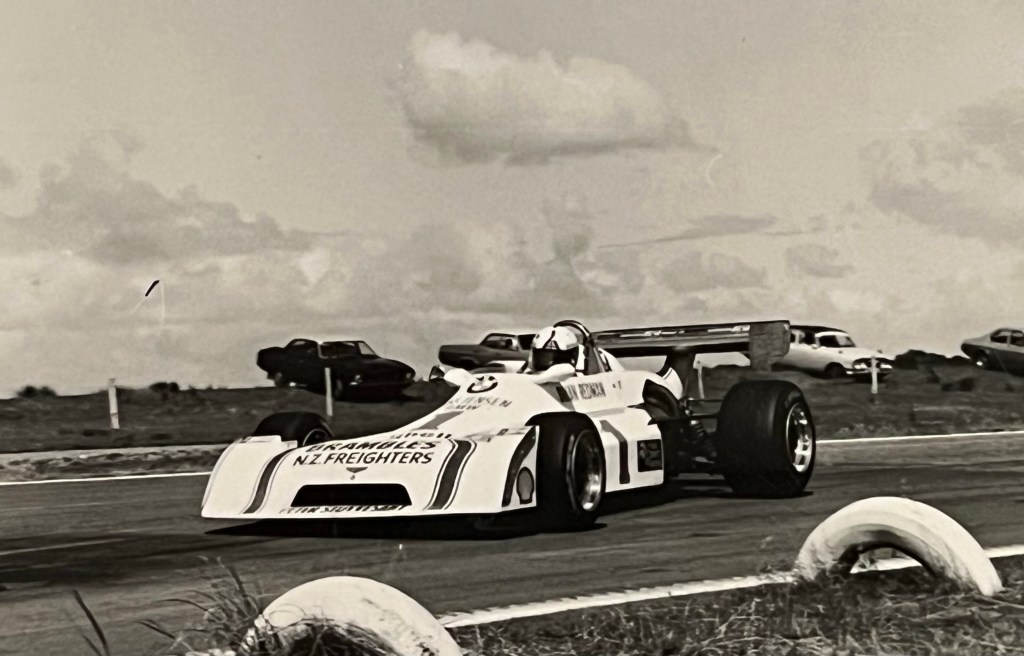
Brian Redman contesting the 1976 Teretonga International aboard a Fred Opert Chevron B29 BMW 2-litre Euro F2 car in the Peter Stuyvesant International F5000 Series.

F5000’s greatest star was to race a RAM Racing F5000 but Fred Opert came to the rescue after they withdrew. Brian thrilled the Kiwis with his talent, he was equal fourth in the series with Graeme Lawrence’s Lola T332, Ken Smith won the four race series in his Lola T330/332 Chev.

Redman was fourth at Pukekohe, second at Manfield, DNF engine at Wigram and DNF wheel at Teretonga.
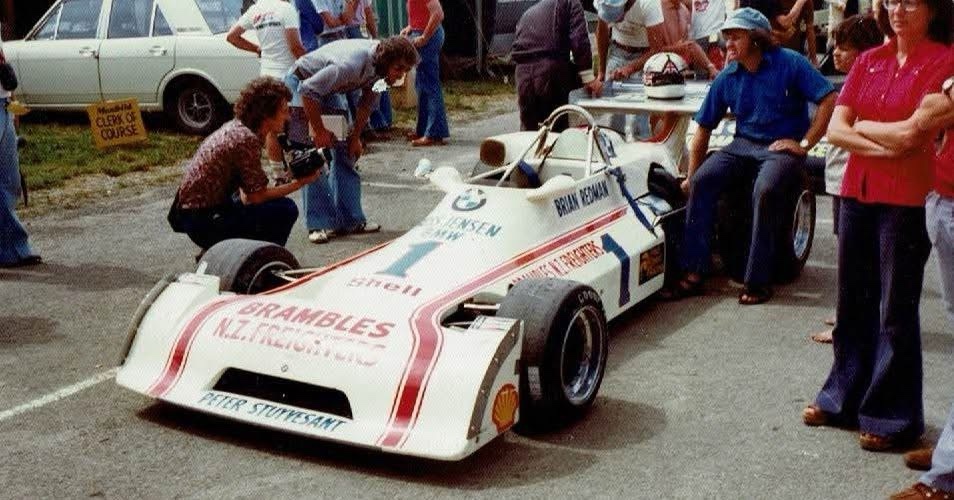
Manfield pits 1976 (D Bull)
(Getty)

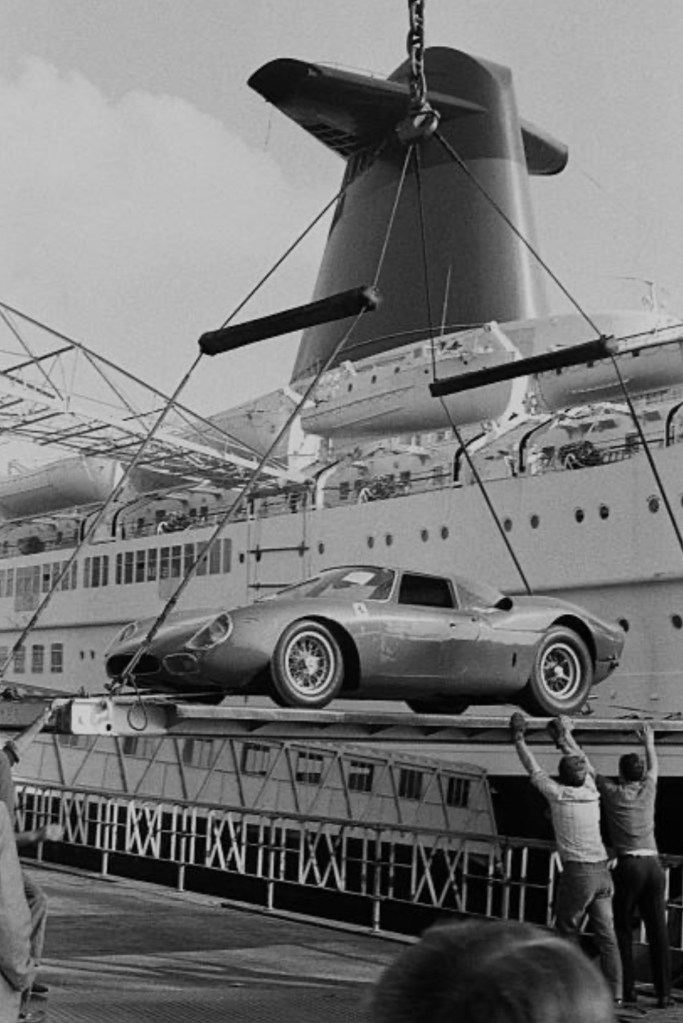
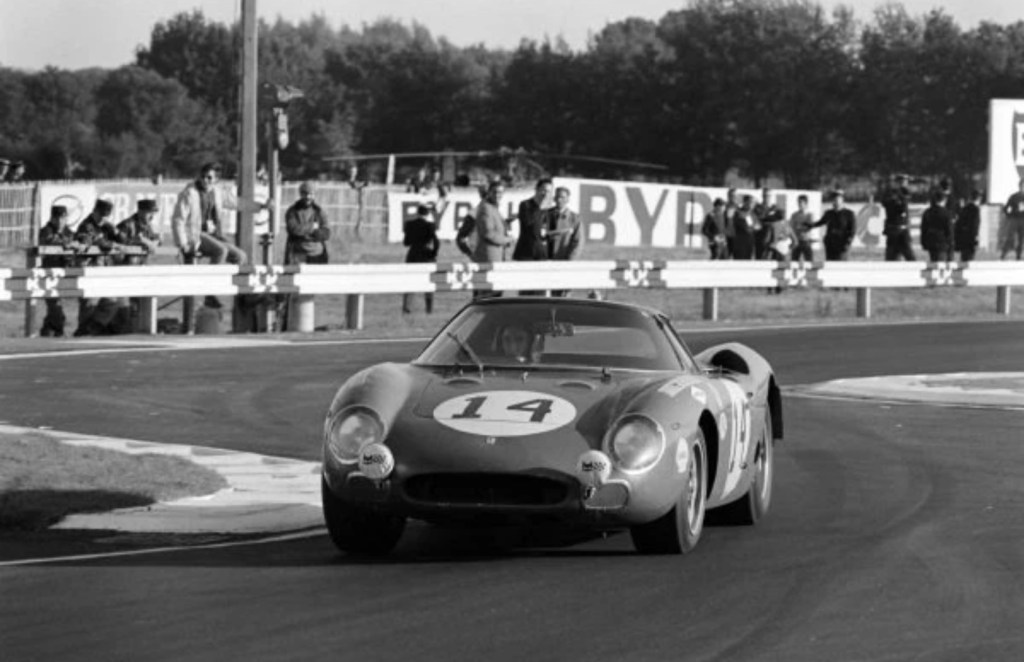
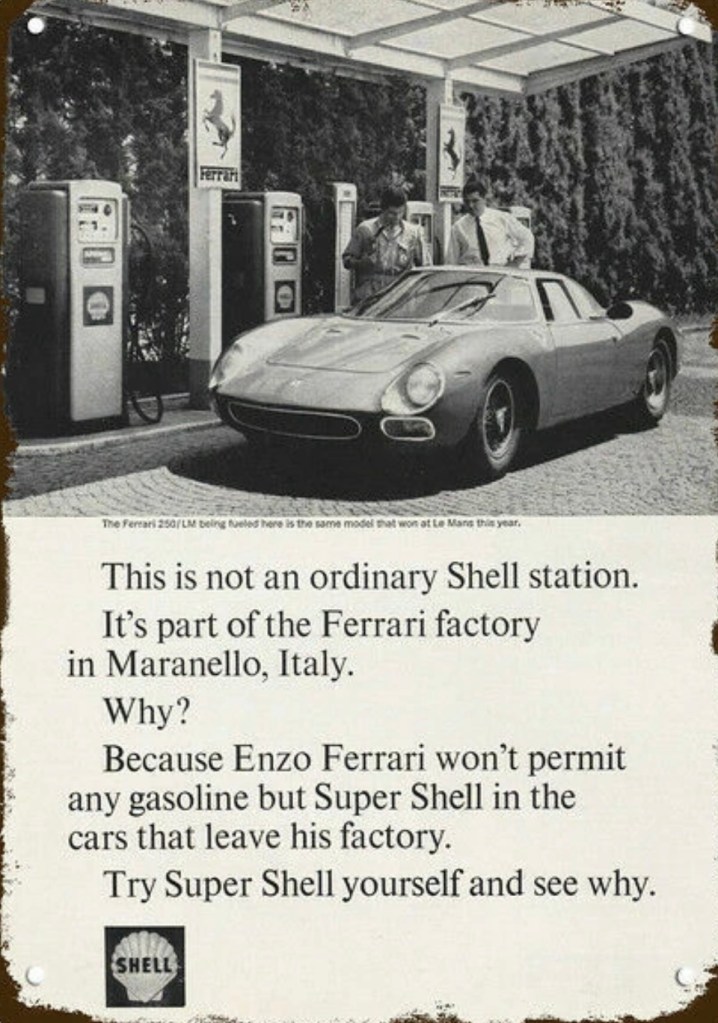
N.A.R.T.’s Ferrari 250LM #5893 – the 1965 Le Mans winner in the hands of Johen Rindt and Masten Gregory – dangles above the wharf at Le Havre after its trip from New York on the liner, France, September 18, 1968, destination, La Sarthe.

The ’68 drivers were Gregory and Charlie Kolb. The 3.3-litre V12 jewel was out after 209 of the winners’ 331 laps when Kolb had an accident. See here:https://www.ferrari.com/en-EN/magazine/articles/1965-Le-Mans-winner-returns-to-Fiorano and here for the 250P/250LM:https://primotipo.com/2014/07/03/pete-geoghegan-ferrari-250lm-6321-bathurst-easter-68/
(Ebay)

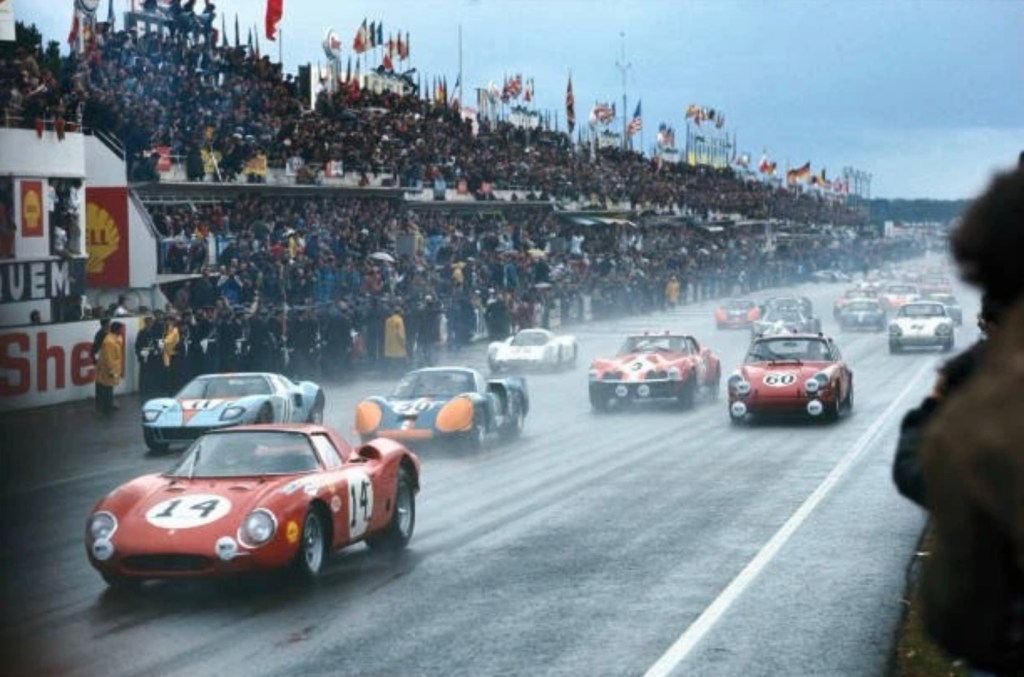
Masten Gregory ahead of a bunch of cars, including #11 Brian Muir’s Ford GT40, Andre De Cortanze #30 Alpine A220 Renault Gordini, the #60 Willy Meier Porsche 911T and Umberto Maglioli’s Chev Corvette. All were DNFs with the exception of the De Cortanze/Jean Vinatier Alpine, which was tenth. The ’68 race was won by Pedro Rodriguez/Lucien Bianchi in a JW Automotive Ford GT40.
(EBay)

The Gran Premio dell’Adriatico 1981 European F2 Championship round at Misano with Miguel Angel Guerra’s works Minardi Fly 281 Ferrari Dino, 13th, ahead of Oscar Pedersoli’s Ralt RT2 BMW, DNF.

Michele Alboreto’s works Minardi Fly BMW won from Geoff Lees and Mike Thackwell’s Ralt RH6/81 Honda V6s…much more modern engines than the Dino V6 unit in the back of Guerra’s car! See here:https://primotipo.com/2023/06/17/ralt-chevron-and-minardi-ferrari-dino-206-v6s/

Credits…

McLaren Cars, Milan Fistonic, Lister Cars, Stuart Dent Collection, Gerry Johannson, GP Library, National Archives Australia, David Bull, Ebay, Revs Institute, Getty Images, LAT, CAN Classic Auto News via Allan Dick, Mitsubishi, Michael McGuin

Finito…

(S Elliott)

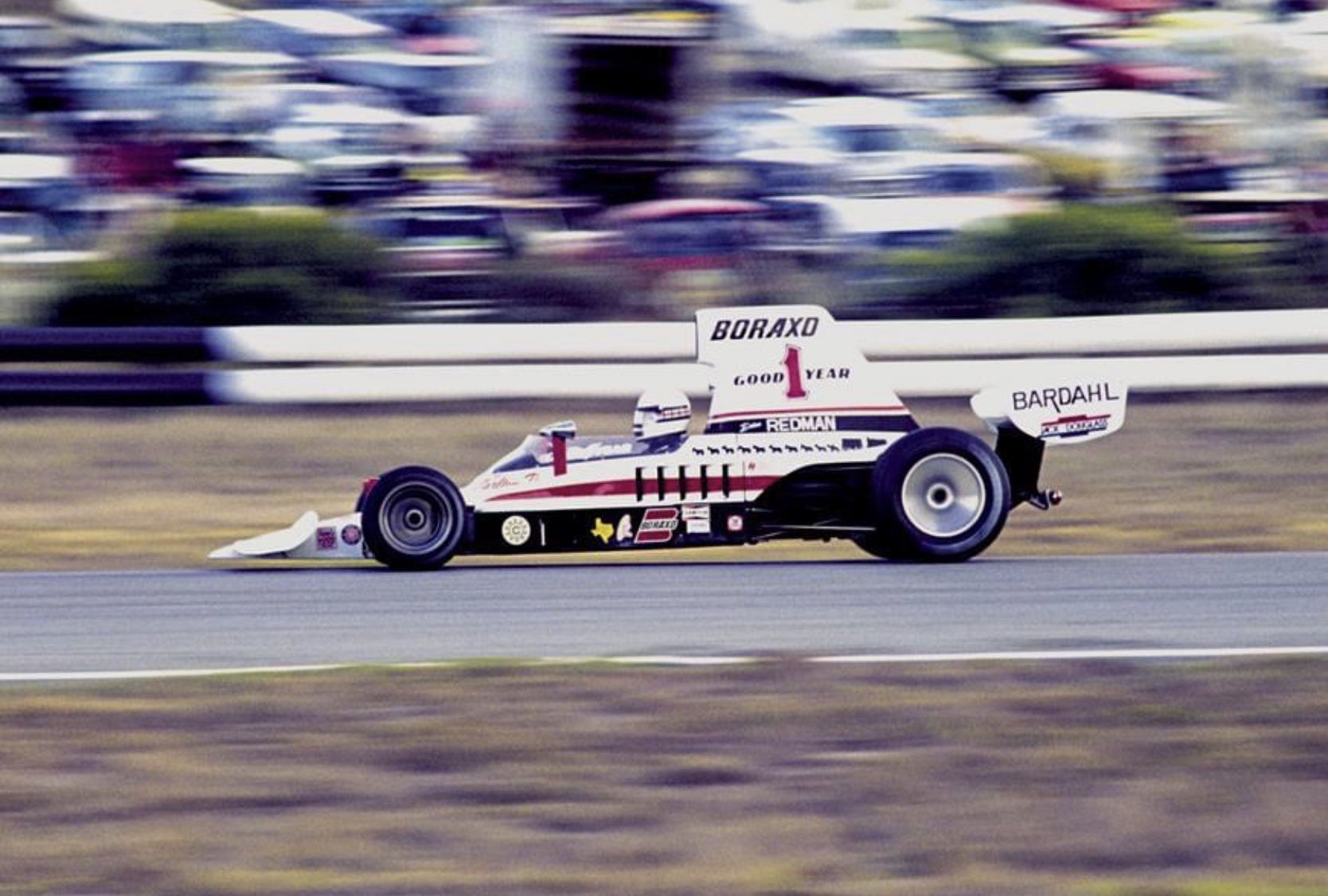
Warwick Brown and the Wrightcars truck he used in New Zealand during his successful 1975 Tasman Cup campaign. He was the only Aussie to win the coveted series, shown here with Lola T332 Chev #HU27 at Pukekohe, where he won the NZ GP on January 12.

HU27 is the first T332 built, first racing in the opening Tasman round at Levin on January 6, 1974. Brown won the Adelaide 100 on February 24 and in so doing won the first of hundreds of in-period victories for the 332 and its many variants on every continent.

A very successful machine, Brown showed well in the US L&M F5000 championship in mid-1974 before coming home and proving the class of the AGP field before his Peter Molloy Chev broke a harmonic balancer. Then followed the Tasman in which he won two of the eight rounds in a very open year, five drivers won races.

Brown on the hop in HU27 in the 1975/Surfers Paradise Tasman round. He and mechanic/engineer/driver-whisperer Peter Molloy developed the car to a fine pitch in some US L&M races in mid-1974. Lola perves will notice the single-post supported banana-wing. Compare and contrast with the Lola factory fitment twelve months before (unattributed)
Brown during the February 1974 Oran Park Tasman round. Rear view of the early spec T332s-HU27 here. Compare and contrast with the Jones’ T332C further on. Car owned by Brown’s patron, Sydney businessman Pat Burke (D Harvey)

This article is largely an assemblage of factory/Carl Haas T332 information accumulated by Australian racer/restorer Jay Bondini who owned, restored and raced two T332s: HU43 ex-Carl Hogan and HU37 ex-Sid Taylor.

The Lola T330/T332/T332C/T332CS/T333 as a series of ‘same chassis’ related models are right up there as a contender for the title of ‘greatest production racing car’ – where greatest is defined as the most wins relative to production numbers.

Others that spring to mind are the Bugatti T35/T37/T39 series, Ralt’s RT2/3/4/5, the McLaren M7/M10 series and McLaren M8/8A/12/8B/8C/8D/8E/8F and Ford GT40 Marks 1-4 and more. Oh yeah, not to forget Lola’s own T70 series…it would be an interesting list to create and debate. One for another time.

For those unfamiliar with a T330, here is Max Stewart in HU1 ahead of Graeme Lawrence’s T332 HU28, both Chev powered, during the 1974 Sandown Tasman round won by Peter Gethin’s Chevron B24 Chev (B Keys)

Only 10 carryover parts from other model Lolas. No surprises there albeit most of the T330/332s I recall seeing in paddocks were fitted with Koni double-adjustable alloy shocks not Armstrongs.

Jongbloed 15-inch rear wheels became the-go later in ’74 from memory. So too, did the Chaparral type all-enveloping engine cowl/airbox, that turned a stunning looking car into the positively sinful: the T332C followed.

$US3,650 for a new tub in 1974 is about $US26,000 today. I wonder how much a new monocoque actually costs now from Lola’s designated chassis maker (who owns those rights these days?) or your favourite fabricator?

(C Parker Archive)

Alan Jones in Teddy Yip’s T332C HU61 Chev at Riverside in 1976, the final year of the US F5000 Championship before changing to 5-litre central-seat Can-Am in 1977…and further Lola T332 domination.

Chaparral were the first to do the enveloping engine cover/airbox on a T332. Apart from the body changes, the oil tank was moved, the roll-bar mounting changed and a central post rear-wing adopted. The later 332s also had the FIA mandated roll-hoop over the dash which had the byproduct of providing a bit more chassis stiffness.

See the letter from Chaparral‘s Jim Hall to Eric Broadley via Carl Haas explaining improvements to their car raced so successfully by Brian Redman in 1974-75 that allowed Lola to ‘productionise’ them as the T332C for 1976. Fascinating detail stuff of all the one-percenters that made a topline well funded outfit like Chaparral so successful: https://www.lolaheritage.co.uk/type_numbers/t332c/t332c.html

‘What are your three favourite racing cars Alan?’ I asked Jones at the Governor’s function before the 2023 AGP. ‘My F1 Williams FW07, the Lola T332, both the 5000 and Can-Am versions, and Alan Hamilton’s Porsche 935…’ was his response.

About says it all really, given his career spanned the mid-1960s well into the early-2000s and hundreds of different cars.

It’s not a factory drawing but is useful to show how wide and shallow the chassis of the T332 and T330 are. Note that, unlike the T300 chassis, the 330/332 used the engine as a semi-stressed member.

The flaw in the drawing – purportedly T332 – is that the rear suspension shows an inverted rear wishbone (T330) arrangement rather than the twin-parallel link set up used on T332s.

The combination of Lola Heritage’s website: T330 here: https://www.lolaheritage.co.uk/type_numbers/t330/t330.html T332 here: https://www.lolaheritage.co.uk/type_numbers/t332/t332.html and Allen Brown’s oldracingcars will keep you going for a while: the T330 is here: https://www.oldracingcars.com/lola/t330/ and T332 here: https://www.oldracingcars.com/lola/t332/

Credits…

Steve Elliot, Jay Bondini Archive, Dale Harvey, Chris Parker Archive, oldracingcars.com, Getty Images

Tailpiece…

(S Elliott)

Graeme Lawrence in the second T332 built, HU28, from Max Stewart in T400 Chev HU2 during the 1976 Peter Stuyvesant New Zealand F5000 Championship.

Just love Steve Elliott’s shot above – a corker! – but I have no idea of the circuit, help please Kiwis!?

Lawrence, the 1970 Tasman Cup winner aboard an ex-Amon Ferrari Dino 246T, fought out the 1975 Tasman with fellow T332 exponents Lawrence, John Walker (T330 HU23 Repco-Holden was rebuilt around a T332 tub) and Brown.

The battle went down to the wire at the final Sandown round where WB prevailed after Walker lived-to-fight-another-day with a monster first lap accident and Graeme had problems. John Goss won the race in his Matich A53 Repco-Holden.

Lawrence won the 1975 NZ Gold Star in this car and was always a front-runner in Australasian F5000. You can’t mention Kiwi Lola exponents without recognising Ken Smith, who won the Peter Stuyvesant Series, NZ GP at Pukekohe, and the NZ Gold Star in 1976. A big year! His mount was an ex-Chaparral/Brian Redman Lola T330/2 HU8. He may still be having the occasional Lola steer in his eighties!

Max Stewart was pretty-handy in Lolas too. In T330 HU1 he won the Australian Grand Prix at Oran Park and the Gold Star series in 1974, then took another AGP victory in the wet at Surfers Paradise the following year in the T400.

Brian Redman in the Chaparral/Haas Lola T332 HU42 Chev at Riverside, the final round of the 1974 US championship on October 27. Mario Andretti won from Brian aboard…the Vel’s Parnelli Jones T332 HU29 (Getty Images)

Afterthought…

The fact that the first and second T332s built were sold to colonials allowed me to make this piece Australasian centric, not that I need encouragement.

But how can you write something about Lola’s T330/332 without mentioning Brian Redman, King of F5000 in its latter era? Earlier Monarchs were, arguably, Peter Gethin and Graham McRae, the latter gets bonus points for doing much of his work aboard cars of his own manufacture.

It’s not that Brian was a Lola F5000 man early on either. He had success in McLaren’s M10 and M18s and did all the early development testing of the Chevron B24 in mid-1972 together with Derek Bennett.

But when he decided F1 wasn’t for him and made US F5000 his primary programme, his partnership with the factory-Carl Haas/Chaparral team yielded a trio of championships from their 1973-76 F5000 partnership – subsequent short Can-Am programme duly recognised. He raced Lola T330s in ’73 and T332s from ’74-76.

Redman didn’t give a yard away to any of the Formula One Johnnies he raced with in Scuderia Ferrari’s 1972-73 World Sportscar Championship campaign aboard 3-litre flat-12 312PBs: Ickx, Andretti, Peterson, Schenken, Pace, Reutemann etc. Surely Brian was the best driver outside F1 at the time? Bias duly declared…

Finito…

seppi by night

Jo Siffert’s night-time Porsche 917 pitstop at Daytona made more dramatic by the exposure used by photographer Dave Friedman…

You can see Seppi’s distinctive helmet in the murk to the left of the car as Brian Redman gets ready to rejoin the race.

It was not to be Siffert’s race, the first in which the dominance of the 917 generally and John Wyer entered cars specifically was displayed in the Sports Car Championship that year. The Ferrari 512S (Ignazio Giunti/Nino Vaccarella/Mario Andretti) took a Sebring victory in March but otherwise it was a Porsche year, what the 4.5-5 litre flat-12 917 didn’t win, the 3 litre flat-8 908 did on courses for which it was designed.

Siffert/Redman led the race until after the three-hour mark. Not long after a driver change to Redman, Brian came into the pits with a punctured tyre, worse was the brake-pipe broken by the rotating tyre tread. It took a critical 17 minutes to make the car good. The pair’s day of drama wasn’t over yet though. They lost an hour to replace the clutch, and later still had another stop to ‘straighten the Porsche after a wall-scraping episode.’

Pedro Rodriguez and Leo Kinnunen won the race in the sister John Wyer entry, 45 laps ahead of Siffert/Redman with the Andretti/Merzario/Ickx Ferrari 512S three more laps in arrears, third.

seppi
Seppi in the 917 cockpit with old school Bell Magnum helmet and chinstrap (D Friedman)
(MotorSport)

I love the variety of cars in these events putting aside the performance differential arguments and issues. The Siffert/Redman cat-amongst-the-pigeons 917 amidst the Fleming/Johnson/Fleming Fiat 124 Coupe and Wonder/Cuomo Ford GT40.

And below in the midst of the Waldron/Lanier/Barros MGB and Clutton/Tatum Ferrari 275 GTB/C. Eyes on your mirrors folks…

(MotorSport)
(MotorSport)

Seppi again, this time in front of the Patterson/Sanford Porsche 911T.

Bibliography…

Automobile Year 18, Team Dan, MotorSport, Dave Friedman Archive

Tailpiece…

(MotorSport)

‘I’m leavin’ on a jet plane…that’s Daytona Beach International Airport behind. DC9.

Finito…

(MotorSport)

Yes, yes, yes, I know I’ve done these Dinos before many times. But I rather like the two photographs of the great Lancastrian, Brian Redman, racing Dino 166 #0008 in the XXXI ADAC Eifelrennen Euro F2 round at the Nurburgring in 1968.

That 21 April day was his Ferrari debut, Motoring News reported the sight of the great-Brit three-wheeling the car around the South Circuit’s turns as quite startling.

Redman finished a fine fourth despite a stop after his goggles were smashed, cutting one eye. Chief Engineer Mauro Forghieri was so impressed he telephoned Enzo Ferrari and recommended Ferrari contract him, an offer he turned down then. Later, Redman was a valued member of the Scuderia’s sportscar squad.

0008 was a new car for 1968. Chris Amon raced it at Montjuïc Parc, Barcelona on its March 31 debut, finishing third behind the Ford FVA engined Matra MS7s of Jackie Stewart and Henri Pescarolo.

Amon amid the trees and high speed swoops of marvellous Montjuïc Parc, behind is the #11 Lola T100 Ford of…Brian Redman, DNF engine (unattributed)

Amon raced it at Hockenheim in mid-June (eighth) before it was damaged in a multiple-car accident in the Monza Lotteria GP in June driven by Tino Brambilla.

Chris raced the repaired car at the Tulln-Langenlebarn airfield circuit in mid-July (classified twelfth) before Brambilla was third in a heat at Zandvoort, and bagged fastest lap. At Sicily in late August he was again third in the Mediterranean GP at Enna, this time behind F2 King Jochen Rindt’s Winkelmann Brabham BT23C Ford and Piers Courage’ similar Frank Williams entry.

Brian Redman three-wheeling on the Nurburgring in 1968 (MotorSport)

The little F2 1.6-litre Ferrari V6, even in four-valve spec, never had the legs of a decent Ford FVA four. Funnily enough, the 2.4-litre Tasman spec V6 gave very little away to the Ford Cosworth DFW, the 2.5-litre variant of Cosworth’s 3-litre DFV V8, GP racing’s most successful engine.

0008 was then prepared for the 1969 Tasman Cup, as part of a successful two car assault on the championship together with Derek Bell in #0010. As I’ve written before, Chris won the championship in fine style with 2.4-litre engines fitted – four wins of the eight rounds including the NZ GP – before selling the car to Graeme Lawrence who repeated the dose in 1970.

Graeme Lawrence on the hop during the 1970 Lady Wigram Trophy, DNF overheating #0008. (G Lawrence Collection)

Credits…

MotorSport, F2 Index, Graeme Lawrence Collection, oldracingcars.com

Tailpiece…

(MotorSport)

Chris Amon and Jochen Rindt, Ferrari 246T and Lotus 49 Ford, on the front row at Pukekohe, start of the New Zealand Grand Prix, first round of the 1969 Tasman Cup on January 4.

Amon won from Rindt and Piers Courage in Frank William’s Cosworth DFW powered Brabham BT24. All three were stars of the series, Chris won four races, Jochen two and Piers one.

Finito…

Brands Hatch 27 Sept 1970 F5000 Championship round. Gardner, Lola T190 Chev, Mike Walker, McLaren M10B Chev, Trevor Taylor, Lola T190 Chev, Graham McRae, McLaren M10B Chev. McRae won from Howden Ganley’s M10B and Mike Hailwood’s T190 (Autosport)

The answer is F1 of course, maybe the more interesting question is by how much. A warning, this piece is strictly for F5000 anoraks.

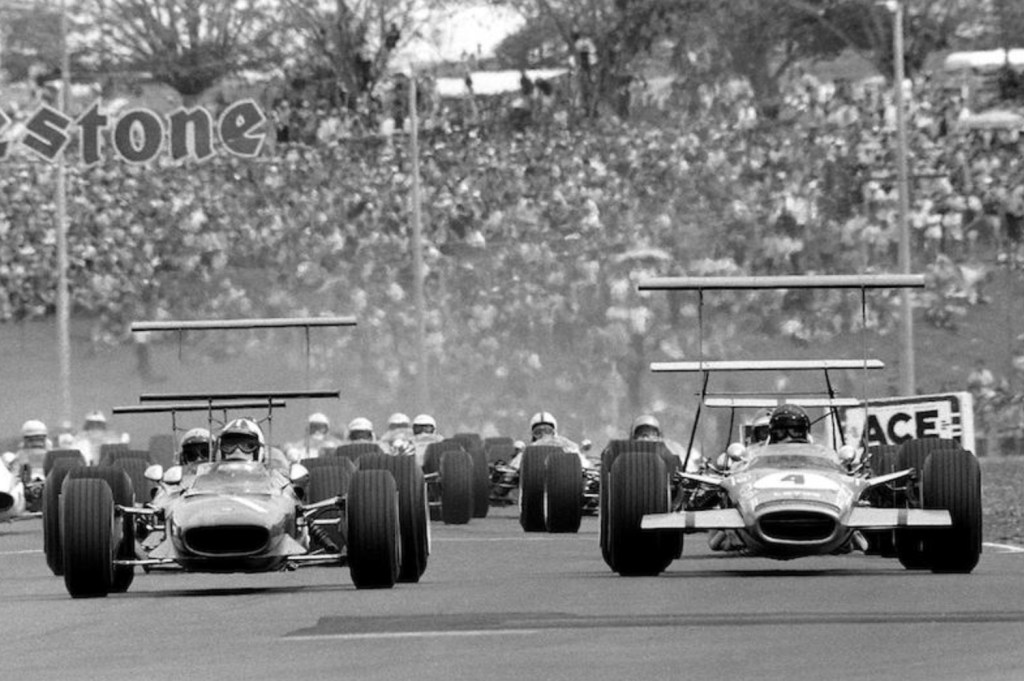
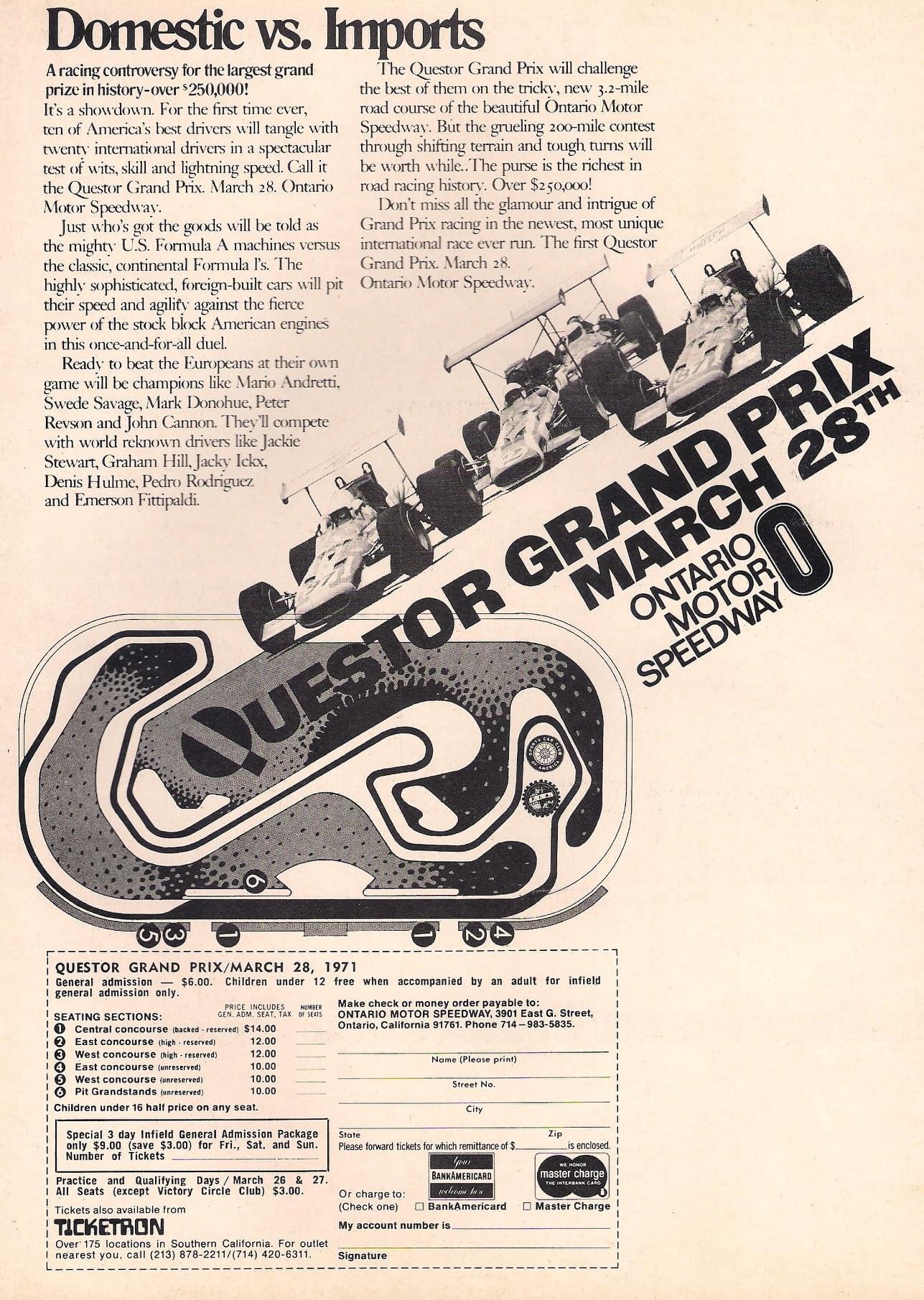
Some recent chatter among enthusiasts on the The Nostalgia Forum’s Ontario Raceway thread got me thinking about the relative speed of F1 and F5000 cars. The builder/promoters of the then new Ontario facility ran an F1/F5000 race won by Mario Andretti’s Ferrari 312B in early 1971, see here; https://primotipo.com/2015/10/30/questor-grand-prix-ontario-speedway-1971/

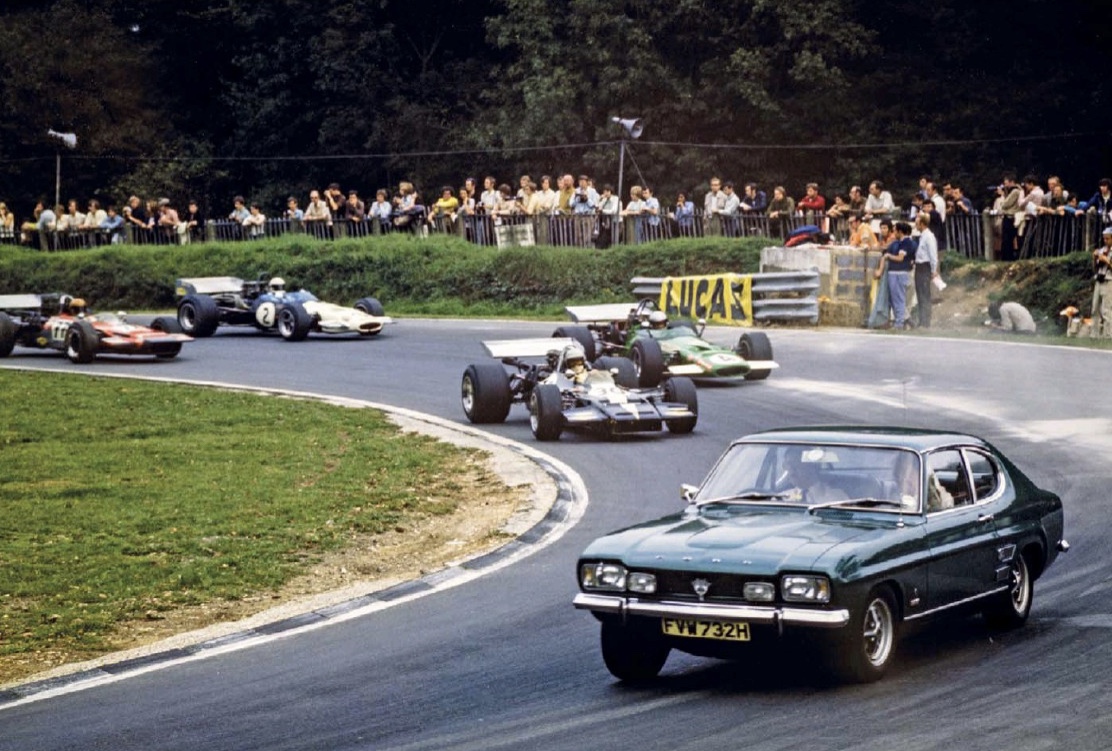
In those far away days the Race of Champions at Brands Hatch pitted the two categories together, the only occasion on which an F5000 car beat the Effwun jobbies ‘fair and square’ was in 1973 when Peter Gethin triumphed in a Chevron B24 Chev. The 1971 Italian GP winner was running third when Mike Hailwood’s leading Surtees TS14A Ford and Denny Hulme’s following McLaren M23 Ford F1 cars had mechanical troubles gifting Gethin the win. Peter had only qualified eighth though.

Its ‘raw speed’ I am more interested in.

Peter Gethin exits Druids on the way to his Brands Hatch Race of Champions win in 1973, Chevron B24 Chev (MotorSport)
Peter awaits a new sparkbox, ROC weekend 1973 (MotorSport)
Brand’s first round of the 1974 Euro F5000 C’ship 16 March 1974. Peter Gethin on pole, Chevron B28 Chev, alongside Brian Redman, Lola T332 Chev, then Guy Edwards in another T332 with Ian Ashley alongside in the yellow T330. Schuppan’s Trojan T101 and Steve Thompson’s Chevron B24 on the row behind. Gethin won from Mike Wilds’ March 74A Chev and Redman (Autosport)

During the peak years of the European and US F5000 championships both categories raced on some of the same tracks, viz; Brands Hatch, Silverstone, Zandvoort, Zolder, Monza, Mosport and Watkins Glen.

So. If we look at the fastest race laps in each event by the cars on the track in the same year, eg; the Italian GP and Euro F5000 round at Monza, we can calculate the difference in lap times. Originally I thought qualifying times would be the go but F1 had greater use of qualifying tyres than F5000 so race times are a fairer representation.

The obvious flaw in the logic above is that absolute comparisons can only be made by looking at performances on the same day with each class racing in identical climatic conditions. So we will not arrive at absolute answers but indicative ones.

What year do we use? To get the greatest spread of meetings let’s use 1974. By that stage the greatest F5000 car(s) of all, the Lola T330-332 was in its second year of development. I suspect (but can’t be bothered doing the comparison) that the difference in times between F1 cars and F5000 in 1970-1971 would have much more as the only great-F5000 then was the McLaren M10B. Mind you it’s father is McLaren’s 1968 F1 machine, Robin Herd and Bruce’s McLaren M7. By 1974 there were plenty of very competitive bespoke F5000s from Lola, McRae, Chevron, Matich et al.

In 1975 there were circuit changes (chicanes added) at Silverstone and Watkins Glen between the F5000 and F1 races which make comparisons impossible. After a shitfight over dollars (what else?) the Canadian GP at Mosport wasn’t held, and Monza held an F5000 race, in 1975 they didn’t. Further, in Europe, from 1975, the championship admitted the Ford 3.4-litre quad-cam, four-valve V6 engine with which Alan Jones and David Purley were very fast.

The comparison I am after is ‘one of purity’ between 3-litre F1 cars and 5-litre F5000s as originally concepted, so for all those good reasons 1974 it is.

Remember, it’s fastest lap of the race I have recorded, not pole.

Mosport 15 June 1975. Heat 1, turn 9, lap 1. Warwick Brown, Talon MR-1A Chev thinks about an inside run on Mario Andretti’s Lola T332, David Hobbs’ T332 #10 at left. Jon Woodner’s Interscope T400 behind Brown. Andretti won from Brown and Woodner (Norm Macleod)
Main men in the US, Jim Hall, Brian Redman, Mario Andretti and Lola T332 Chev at Elkhart Lake in 1974 (Getty)
Ryan Falconer prepared Chev in Andretti’s T332. Circa 525 bhp in period (J Morris)

Brands Hatch

F5000 16/03/74  1:25.90  Peter Gethin Chevron B28 Chev

F1       20/06/74  1:21.10  Niki Lauda Ferrari 312B3-74

Zandvoort

F5000  03/06/74 1:23.30  Peter Gethin Chevron B28 Chev

F1       23/06/74  1:21.44  Ronnie Peterson Lotus 72E Ford

Monza

F5000 30/06/74  1:37.40  Peter Gethin Chevron B28 Chev

F1       08/09/74  1.34.20  Carlos Reutemann Brabham BT44 Ford

Mosport

F5000 15/06/74  1:16.200  Brian Redman Lola T332 Chev

F1       22/09/74  1:13.659  Niki Lauda Ferrari 312B3-74

Watkins Glen

F5000 14/07/74  1:41.406  Mario Andretti Lola T332 Chev

F1       06/10/74  1:40.608  Carlos Pace Brabham BT44 Ford

Teddy Pilette, Lola T400 Chev playing in the snow at Oulton Park during Easter 1975. Gordon Spice and Guy Edwards were up front in their T332 Chevs with David Purley third in his Chevron B30 Ford Cosworth GAA-3.4 V6. While the T400 had plenty of success in Europe and Australia the prominent American teams never set aside their trusty, fast, winning T332s (A Cox)
Zolder 28 April 1974, unusual, great, from-the-grid shot. Look at that crowd. Heat 1 grid – the two VDS Chevron B28 Chevs of Pilette and Gethin on the front row. Bob Evans yellow winged T332, Chris Craft’s Chevron B24/28 in the foreground and a wheel of Mike Wilds’ March 74A at left. Gethin won the 25 lapper from Pilette and Evans (Zolder Museum)
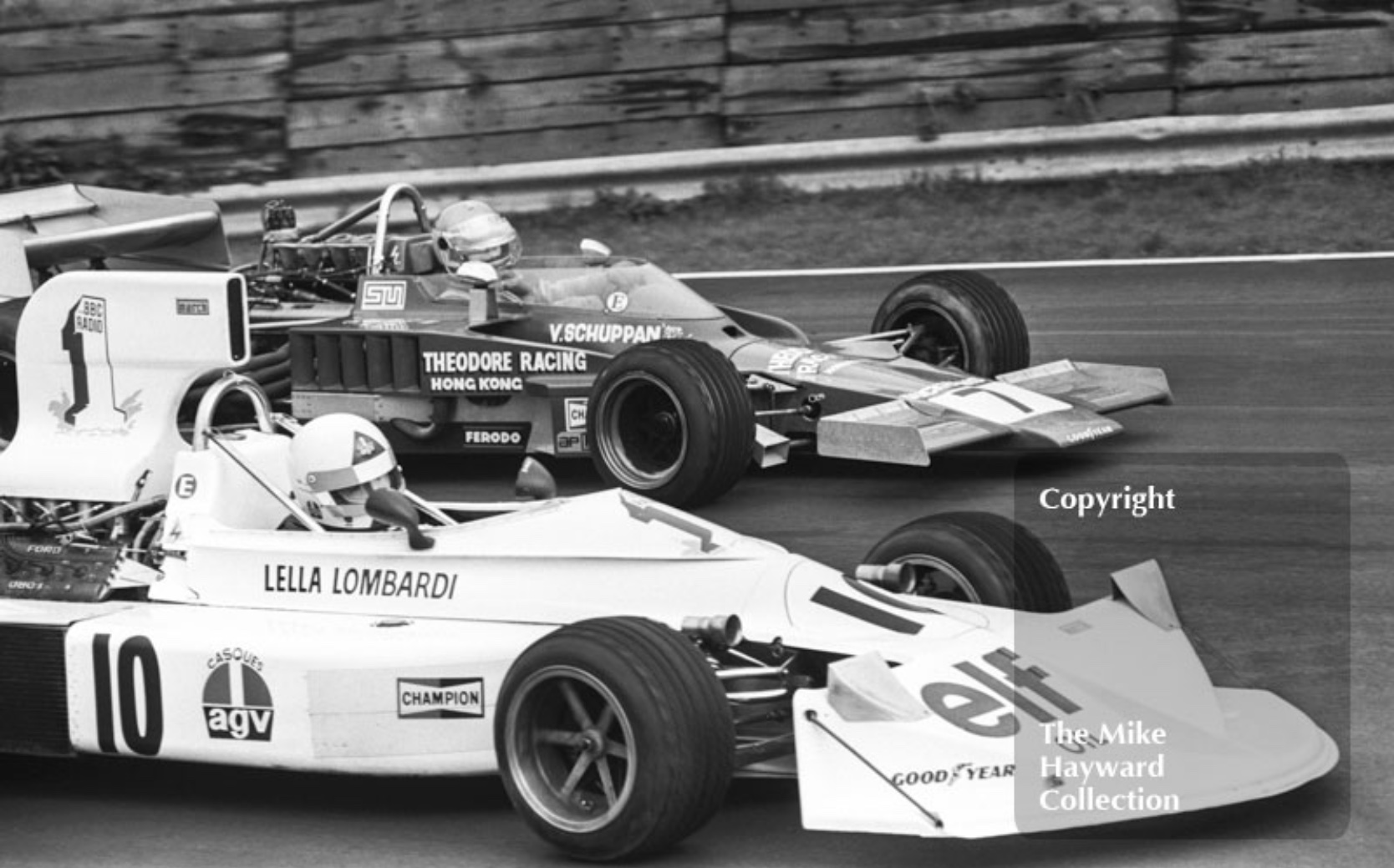
Lella Lombardi, March 751 Ford and Vern Schuppan, Lola T332 Chev scrap during the 16 March 1975 Brands Race of Champions, DNF both. Race won by Tom Pryce’s Shadow DN5A Ford. No F5000 was classified in a race run in cold, damp conditions

In making the assessment I’ve not considered the weather.

The biggest gap between the two classes is about four seconds at Brands, the smallest is one second at Watkins Glen.

Brands in March can be awfully chilly, and glorious in June, ambient temperature impacts the heat and grip of the tyres of course. Denis Jenkinson’s race report of the Brands F5000 race weekend (actually the Race of Champions weekend in which the F5000 championship race was on Saturday, the ROC on Sunday) does not help me as to weather conditions, but he makes no mention of rain. Similarly, the British GP was run in the dry. If you can help with mitigating weather or circumstances do get in touch.

Interestingly, Mario Andretti is on record in a number of publications as saying Vels Parnelli never approached the F5000 times set by the teams Lola T332 at Riverside and Watkins Glen in their F1 Parnelli VPJ4 Ford in testing, but then again that was not a great GP car.

The fastest F5000 cars on the planet in that period were the Haas-Hall and VPJ T332s raced by Brian Redman, Mario Andretti and Al Unser – what an awesome road-racer he was!

Bang-for-buck there has never been a greater single-seater class. It seems incredible today that, having killed the Can-Am Championship, the SCCA also slaughtered their F5000 Championship in the forlorn hope of recapturing Can-Am spectator interest and numbers.

In 1975-76 US F5000 had Redman, Andretti, Unser, Jones, Gethin, Oliver, Brown, Schuppan, Pilette, Ongais, McRae, Lunger and others. The Dodge powered Shadows added much needed variety to Formula Lola, mind you. Jones won a couple of races in 1976 with a March 76A Chev, it really was a brilliant blood and thunder spectacle even if the cars were not quite as fast as F1…

Oulton Park’s prestigious Gold Cup gets away on 9 September 1973. Ian Ashley’s Lola T330 sandwiched between the blue Chevron B24 Chev of Tony Dean and yellow striped one of Peter Gethin. #25 is Keith Holland, Trojan T101 Chev with Graham McRae’s McRae GM1 well back inside left in red with Guy Edwards’ light blue T330 behind him. Gethin won from Pilette – who is well back here – and Tony Dean (S Jones)
US Watkins Glen round, final, 11 July 1976. Teddy Pilette’s Lola T430 Chev leads a bunch of cars, DNF engine. Lola’s final F5000 design could not coax the Americans from their T332s either. His best place was third at Mosport, Q2 at Road America. Successful in Australia in Warwick Brown (1977 AGP & Rothmans Series) and Alf Costanzo’s (Gold Star) hands (T Pilette Collection)

Credits…

Wikipedia, MotorSport, Autosport, Getty Images, Alan Cox, Jonesy Morris, Zolder Museum, Norm Macleod, Larry Roberts, Mike Hayward Collection, Steve Jones, Teddy Pilette Collection

Tailpiece…

(L Roberts)

The great Brian Redman’s Lola T332 Chev looking as good as a racing car ever gets. Turn 9 at Laguna Seca in 1975, Brian was third that day behind the VPJ duo of Andretti and Unser, also aboard T332 Chevs.

What an amazing career in single-seaters and sportscars he had, while Brian dipped in and out of F1 from the mid 1960s to the mid 1970s he must be up there in any list of ‘greatest driver of the period outside Grand Prix racing’.

Finito…

(B Harmeyer)

Brian Redman’s Carl Haas Racing Lola T332CS Chev awaits the off at Mont-Tremblant, Quebec, Canada 12 June 1977…

That’s Jim Hall in the Texan hat and you can just see a glimpse of Brian’s driving suit to the far left of the photo. Randy Lewis’ Shadow in front of the Lola I think. Redman was the ‘King of 5 Litre Racing’ in the US having won the American F5000 championship from 1974 to 1976 aboard Lolas- T332, T332/400 and T332C respectively.

When I first spotted Bob Harmeyer’s photo, I thought, ‘what a beauty, I can do something with that pit scene’. Then I looked a bit closer at the date and venue and realised it was the weekend Brian came close to meeting his maker-it was not the only ‘biggie’ in his career either.

Its the very first race meeting of the single-seat 5 litre Can Am formula- Brian and his Lola are about to indulge in some involuntary aviation, the landing sub-optimal in comparison to takeoff.

Carl Haas in the blue shirt and Brian Redman (who is the other Shadow bloke?) in the Mid Ohio pits, August 1975. #1 is Brians T332 ‘HU45’, #48 Vern Schuppan’s Eagle 755 Chev- Brian won from Al Unser and David Hobbs aboard T332’s, Vern was 5th (unattributed)

With F5000 on the wane a bit, in part due to the dominance of the Lola T330/332, it was decided to spruce up the show by creating a single-seat Can Am series for 5 litre cars- in essence F5000 in drag.

Gordon Kirby wrote about that first single-seat Can Am season in the June 2010 issue of MotorSport- ‘The death of the old Can-Am left the Sports Car Club of America (SCCA) with Formula 5000 as its primary series. For a few years the American F5000 championship was pretty healthy, attracting big fields and top drivers like Mario Andretti, Al Unser Sr, Jody Scheckter and Brian Redman, who won the title for three consecutive seasons in Carl Haas and Jim Hall’s Lola-Chevrolets. But the SCCA and its promoters longed for the return of full-bodied Can-Am cars.

Burdie Martin ran the SCCA’s professional racing department in those days and says the series wouldn’t have come together had it not been for Haas. “Carl had sponsorship for his team from First National City Bank,” says Martin. “But he also talked them into sponsoring the series and, of course, thanks to Eric Broadley and Lola he provided the cars to make it happen. I talked to Carl and said we could make these 5000s into closed-wheel cars and call it Can-Am. I said it wouldn’t cost a lot of money and the cars were out there. We could add the 2-litre cars because there’s a lot of them around and they’re not that much slower. That would fill out the field. So Carl and I got on the phone and called some people, and all of a sudden we were putting a programme together.’

Team VDS Lola T333CS ‘HU2’ with standard Lola bodywork- albeit with the front wing added by the team- see text below

‘The SCCA’s last-minute decision to replace F5000 with the closed-wheel, single-seat ‘new era’ Can-Am didn’t inspire much confidence, or interest, from the racing industry. All the uncertainty surrounding the new series meant few teams were ready for the start of the 1977 season. In fact, Haas/Hall was the only Can-Am team able to do any serious pre-season testing and it quickly learned that the new nose for the enclosed wheels didn’t produce enough downforce. The team designed and built its own replacement, which incorporated an F5000 nose in place of the flat, cow-catcher nose of Lola’s T333CS ‘conversion kit’. The result was a car that looked more like an F5000 car with fenders rather than a sports/racer’.

Redman aboard his T332CS- note comments above in relation to the cars body/aero compared with the standard Lola body kit on Peter Gethin’s car above (Harmeyer)

‘Most Lola customers had installed the conversion kit on their F5000s and were pretty upset when Haas/Hall rolled out its unique car in first practice for the opening Can-Am race at St Jovite in Quebec’s Laurentian Mountains. But it soon turned out that in some circumstances even the Haas/Hall aerodynamic package wasn’t up to the job.

In the middle of St Jovite’s backstraight was a humpbacked rise over which the Can-Am cars of Paul Hawkins and Hugh Dibley had taken flight in 1966. Ditto Jackie Oliver in 1970. In afternoon practice Elliott Forbes-Robinson became the first driver to fly a new-era Can-Am car through the air when his flipped as he tried to go over the hump on full throttle. Miraculously, the car cartwheeled through 360 degrees and landed upright on all four wheels. Forbes-Robinson jumped unscathed from the wreckage.

Later that day Brian Redman had a much more serious accident. Redman’s car did a violent backflip, landing upside-down and leaving him unconscious and in a critical condition with a broken left collarbone, a cracked sternum, two broken ribs and a fractured vertebra in his neck. Redman lay heavily sedated in hospital for a week while the swelling and contracting of his brain’s epidermis ran its course and his doctors assessed the damage to his brain and nervous system.’

Harmeyer’s shot of Redman’s car back in the paddock. The Lola aluminium monocoque has stood up to the impact remarkably well, look closely tho- the roll over hoop is gone, torn off/flattened in the huge physics upon landing. Redman a very lucky boy (B Harmeyer)

‘Deeply shaken by Redman’s accident, the Haas/Hall team withdrew from the race and headed home. With the three-time F5000 champion in hospital, a makeshift chicane was installed before the backstraight hump.’

Redman recalled that ‘…the roll bar broke and my head went down on the road. My helmet was worn away on each side. But as the car rolled off the track onto the surrounding land, it landed on its wheels, which was a good job. Because my heart had stopped and the track doctor was a heart specialist- he got that going again. And then on the way to the hospital the ambulance blew a tyre!’

Tom Klausler in the Schkee DB1 Chev at Road America in August. Truly wild coupe like so many cars in this series Lola T332 based (oldracingcars.com)

The Mont Tremblant race was run in half wet, half dry conditions and was won Formula Atlantic standout Tom Klausler driving the unique Schkee coupé, a quite sensational looking Lola-based car built by veteran Can-Am builder Bob McKee. Unfortunately the little team didn’t have the money to race or develop the car and ceased to exist by the seasons end.

Haas/Hall missed the next race at Laguna Seca whilst they looked after Brian’s needs and sought another driver to replace their pilot of the previous near half-decade.

Brian in the Mont Tremblant pitlane, not sure of the chassis number of his T332CS. Randy Lewis Shadow DN4B Dodge # 00 alongside. The car behind the Shadow looks like a T332CS with ‘standard Lola body’ but am not sure which car (B Harmeyer)

During practice in California there were more problems with ‘Cessna 180’s as Aussie F5000 ace, Warwick Brown’s VDS Lola T333CS took off going over the fast brow beyond the pits.

Brown- already a ‘Lola Limper Club’ member by virtue of a T300 F5000 accident at Surfers Paradise in early 1973 broke both legs in the big accident. Teammate Peter Gethin, a vastly experienced driver with an Italian Grand Prix victory amongst his many credits withdrew from the race until a proper solution could be found. Clearly the aero treatment was ‘unresolved’, as the lawyers would put it.

Tambay in the Haas Lola T333CS Chev ‘HU6’ on the way to a win at Mosport on 21 August 1977 (B Cahier)

Kirby- ‘Haas signed up-and-coming French driver Patrick Tambay to replace Redman. A smooth, fluid driver and a gentleman too, Tambay won six of the seven Can-Am races he started in 1977, all from pole, and easily claimed the championship. “I was also doing my rookie F1 season with Ensign, so I had a lot of miles under my belt that year, not only aeroplane miles but driving miles,” he recalls. “The Can-Am car had a lot of power, gave good grip and was a good tool to do mileage to make me sharp for my F1 ride. My Can-Am successes helped me build a strong confidence.”

Back to Brian. As we all know Redman was a racers-racer with several successful comebacks- that he did in 1981 driving a Lola T600 Chev. The Cooke-Woods run car won the IMSA GTP championship on top of the 24 Hours of Daytona, a classic Brian won at the seasons outset together with Bobby Rahal and Bob Garretson in a Porsche 935 K3.

The Redman/Sam Posey Lola T600 Chev during the Road America 500 miles in 1981, 2nd (M Windecker)

Credits…

Bob Harmeyer, Bernard Cahier, Getty Images, oldracingcars.com, Mark Windecker, MotorSport magazine article by Gordon Kirby 2010

Tailpiece: Calm before the storm, Mont Tremblant…

Finito…
(K Hyndman)

Jody Scheckter’s works F2 McLaren M21 Ford BDF (left) at Trojan Racing’s workshops in Beddington Farm Road, Croydon on 1 October 1972…

Alongside it is the first Trojan T101 ‘101’ F5000 coming together, the cars are close relations.

Jody took one European F2 Championship win in chassis # M21-72-01 at Crystal Palace in May, the title was won that year by Mike Hailwood’s works Surtees TS10 Ford BDA.

The South African charger was competitive throughout the season, but like others running BDA’s stretched close to 2 litres struck engine dramas. The standard cast iron Ford Cortina 711M block just didn’t want to be bored that far, pistons came close to kissing each other which is rather sub-optimal. The bespoke alloy Ford Cosworth BDG block solved that from 1973. Hailwood ran Brian Hart prepped 1850cc BDA’s and took a hotly contested first 2 litre Euro F2 title from Jean-Pierre Jaussaud Brabham BT38 Ford and Patrick Depailler March 722 Ford.

Jody recalled his McLaren M21 F2 year in an article titled ‘McLaren and Me’ on mclaren.com…

It was Phil Kerr who approached me about driving for McLaren…I don’t think F2 was their major interest, and I think in a way they were playing on the side with it. Teddy Mayer preferred the big time stuff.

F2 obviously wasn’t F1 or CanAm, which had been their main thing, and I had the only M21. I can’t remember thinking at the time that they weren’t putting enough effort into it, however I would probably not have known at that stage. That was the first works drive after running my own car, so whatever it was was fantastic.

At the beginning we had an 1800cc motor, and the other guys were 2-litres, so it was underpowered. We would run less and less wing to try and do the same speed on the straights, and then we had no downforce.

The car wasn’t bad. But initially it had a broken shock absorber, which nobody discovered. We weren’t competitive at all, and with me being new in, obviously people thought I wasn’t competitive. If you’re on your own, when you go well it’s good, and if you don’t, you wish had others cars to compare against!

In one way it was nice because you’re the only driver they’re concentrating on. If there was another one could you have developed the car quicker? Possibly, but I didn’t really think about it.

After a few races we went down to Goodwood and Denny Hulme drove the car and played around with it a bit. They had found in the workshop that one of the shock absorbers was broken. So they changed that, and Denny went out and did 1m14.2s or something like that, and I went out and in three laps did a 1m13.8s. I think we were doing 1m15s before that.

London Trophy, Crystal Palace 29 May 1972. Scheckter won in his #60 McLaren M21 Ford BDF by 1.5 seconds after 50 laps from Mike Hailwood’s #46 Surtees TS10 Ford BDA and Carlos Reutemann’s Brabham BT38 Ford BDF (J Fausel)

And then we went to Crystal Palace. I’d raced there in F3 and Ford Escort Mexicos, and I quite liked that circuit. The car was going well, and we won. After that everyone was looking at the car, wondering why it was going so quickly. I remember at Rouen passing Carlos Reutemann on the outside of a bend going down the hill.

Crystal Palace was a real breakthrough in a way. In those days there were F1 drivers competing, and, if you did well in an F2 race, you immediately showed that you were good enough to go up to the next level. Which is what happened.

Later Lotus came and wanted me to drive for them. I told McLaren and they said, ‘OK, we’ll give you a drive in the last Grand Prix, at Watkins Glen.’ I don’t think they’d thought about it, but when other teams start making offers, they knew they had to do something!

Watkins Glen (1972 US GP) was good because nobody recognised me, and I could walk around and not be bothered. I thought the M19 was fantastic. It was my first F1 car, and it just seemed to grip more and more, you could go faster and faster and nothing was happening, rather than sliding all over the place. It was nothing compared to the downforce of today’s cars, but in comparison to my F2 car the M19 had much more downforce, and bigger tyres as well’.

The story of Scheckter’s rather successful F1 career is one for another time.

McLaren pulled out of the production racing car market with effect the end of 1972. Trojan, acquired by Peter Agg in 1960 took over Elva Cars in 1962, Bruce McLaren worked with Elva to develop his McLaren-Elva Mk1A for the 1965 season, the Trojan built McLaren cars dated from 1969. The mutually fruitful partnership lasted until the end of 1972 at which point Agg continued building cars named Trojan- the T101 was the first.

January 1973 Trojan T101 ‘101’ is the car shown ‘as advertised before Ron Tauranac arrived in the design department’ Ken Hyndman

Trojan went into 1973 with a new F5000 design which was in essence the marriage of  the Ralph Bellamy designed F2 M21 front end with an M18/22 McLaren F5000 rear attached to a new chassis. Bruce would have approved, very much in his ‘Whoosh-Bonk’ tradition this machine!

The new car, designated ‘T101’ was designed by Paul Rawlinson with Ron Tauranac- post-sale and exit of Brabham to Bernie Ecclestone, brought in by management at the seasons commencement to ‘make the car work’.

Work it did- Jody Scheckter won the US F5000 L&M Championship in 1973 with 3 wins in T101 chassis ‘103’ at Laguna Seca and Michigan in May and Mid Ohio in early June. He then decamped and raced a Lola T330 (HU20) owned by Bob Lazier winning in it at Watkins Glen in mid-June after boofing T101 ‘103’ during practice.

He was back aboard T101 ‘103’, the chassis repaired at Trojan, at Road America Elkhart Lake on 29 June and Road Atlanta in mid-August and then raced another T330 (HU24) said to have been bought with his winnings, at Pocono on 3 September before ending the season in his faithful T101 ‘103’ in the final of the nine round championship at Seattle on 30 September where he was 3rd.

Scheckter and Redman at Pocono in 1973 (J Knerr)

Brian Redman aboard a sinfully sexy Carl Haas Lola T330 Chev (HU14) at the Riverside first L&M series round in 1973, he won. Mechanics names anyone? (M Paden Hewitt)

The above puts a wonderful gloss on the Trojan season but does not tell the whole truth!

Brian Redman started his reign as the ‘King of F5000’ in 1973, although he was uncrowned that year. He won the US Championship from 1974-76, and aboard the works Carl Haas Lola T330 in ’73 won five rounds- Riverside, Elkhart Lake, Road Atlanta, Pocono and Seattle.

The only thing which cost him the title were his factory Ferrari 312PB World Endurance Championship sportscar rides, he missed several rounds. The only L&M Championship race where Jody beat Brian ‘man on man’ was at Watkins Glen where T330 ‘HU20’ prevailed over Redman’s ‘HU8’.

The evolved for 1973 Lola T330 (from the late ’71-’72 T300) was a stunning production racing car which begat a whole series of dominant F5000 and single-seat Can Am cars- T332, 332C, 332CS and 333. Category destroyers in some ways, these cars!

But let’s not take anything away from the Scheckter/Trojan 1973 L&M wins- to finish first, first you have to finish and that they did that in spades! Jody won with 144 points from Redman’s 130 and Mark Donohue, Lola T330 AMC on 64 points.

Scheckter in the Trojan T101 ‘103’ Chev at Brands on 17 March 1973, first British F5000 championship round. DNF in the race won by Peter Gethin’s Chevron B24 Chev from Brett Lunger’s Lola T330 Chev and Tony Dean’s Chevron B24 Chev (R Bunyan)

The team did a couple of British early season F5000 Championship rounds to shake the car down before shipping it to the US, where they were ‘match fit’ from the start of the season.

Sid Taylor and Jerry Entin owned the car Scheckter raced and expected Tauranac would work on its development during the season but Ron was sucked into the 1974 Trojan F1 program, so Taylor/Entin received little help. What development the car lacked was more than made up for by Jody’s endeavour behind the wheel mind you!

Scheckter 1st from David Hobbs Lola T330 3rd, Peter Gethin Chevron B28 at left 2nd and Kevin Bartlett Lola T330 DNF behind Gethin. Laguna Seca 1973. Bartlett had a guest drive of Redman’s works/Haas machine whilst Brian was away on Ferrari sportscar duties- he was 3rd in his heat and DNF the final (unattributed)

Kiwi Ken Hyndman worked at Trojan Racing and took the colour factory shots on his first work day there on 1 October 1972…

Hyndman wrote on ‘The Roaring Season’- ‘The M21 F2 race car that Jody Scheckter had driven at Oulton Park a few weeks prior (on 16 September, DNF transmission in the race won by Peterson’s works March 722), was in the midst of being dismantled so as to form the basis of a new F5000 car. The main body/tub was a McLaren M22 and the suspension/steering was from the M21.’

In fact it seems clear that whatever Trojan did with ‘M21-72-01’ late in 1972 the car was sold to French hillclimber Yves Martin who used it in the following years.

In more recent decades the car is part of Scheckter’s collection of cars he raced.

Perhaps some components were used in the F5000 T101-1 build. Given the M21 was a one-off- only one chassis was built and raced by Jody in 1972, maybe the car was used in the workshop to help create the necessary drawings/patterns for components needed for the T101 batch build of six cars.

Shape of the T101 nose as raced different in profile compared with the original design as being constructed here in October 1972. M21/1 at right (K Hyndman)

The photo above shows ‘The Trojan F5000 T101X (T101 ‘101’) was first drawn up by a likeable young designer, Paul Rawlinson. He had also been a mechanic…Paul had the design that was M21 ahead of the engine and a M22 F5000 behind.’

‘The T101X had a concave surface nose section like a Porsche 917/10 Can Am car for added downforce. It had a full width nose with NASA type ducts for cooling the front brakes. This was to be powered by an Alan Smith tuned 5 litre engine…and looked pretty neat…’

‘Note in the background is the inverted M10B tub for (then Australian F5000 coming-man) Warwick Brown’ Hyndman observed, adding in relation to the Brown tub ‘that does not seem to match the records of the car (M10B-19)’ which indeed it does not but the chassis at a glance does look like that car at that time Ken!

Etcetera…

McLaren M21 ‘M21-72-01’

Yves Martin in his ex-Scheckter McLaren at Saint-Germain-sur-Ille hillclimb in 1974.

(T Le Bras)

Trojan T101 ‘103’

Ron Bennett and Scheckter (below) ponder the setup of the T101 in the Elkhart Lake paddock in June 1973. Alan Smith brought over his slide-injected engine for this race, Jody didn’t like the feel of it though, so they went back to carbs for the rest of the season. Clearly from the Brands shot above Jody used the injection engine early in the season too.

Suspension of the T101 was period conventional- single top link, inverted lower wishbone, coil spring/dampers and adjustable roll bar at the rear with upper and lower wishbones at the front. The gearbox is the good ‘ole Hewland DG300, F5000 standard issue.

(J Entin)

Scheckter gridding up at Riverside. ‘Look’ of the car in terms of chassis and nose similar to its Chevron B24/8 and Elfin MR5 contemporaries (M Paden Hewitt)


References/Photo Credits…

 Ken Hyndman Collection, oldracingcars.com, Jutta Fausel, Jerry Entin, Joel Griffin, Richard Bunyan, Jim Knerr, Thierry Le Bras, Michael Paden Hewitt

Tailpiece: Scheckter in the mist, Trojan T101 Chev, Michigan 1973…

Jody won at Michigan on 20 May from Derek Bell guesting in the Haas/Redman T330 and Peter Gethin’s Chevron B24 Chev (unattributed)

Finito…

monza bros

Siffert, Pedro chillin’, Redman and Kinnunen- JW squad 1970 (Schlegelmilch)

The JW Gulf boys relax before the off, the winning duo were Pedro Rodriguez and Leo Kinnunen…
There was only one Porsche 917 amongst the first nine cars home at the duration of the Monza endurance classic on 25 April but the German flat-12 was first, Pedro Rodriguez and Leo Kinnunen were happy winners.

Three Ferrari 512S followed them home, the Ignazio Giunti/Nino Vaccarella/Chris Amon Spyder 1.5 minutes adrift of the John Wyer Porsche.

It wasn’t a happy season for Ferrari in sportscars. Supremely competitive in F1 with the first of its flat-12 engined cars, the 312B, the 5 litre V12 512S really didn’t receive the development it needed to knock off the Porsches.

The German cars mainly raced at 4.5 litres in capacity that year but it was still more than enough. A win at Sebring in the second round of the Manufacturers Championship was Ferrari’s best result, and the flat-8 3 litre, nimble, light Porsche 908/3 mopped up on the tight, twisty circuits unsuited to the 917. The dudes from Stuttgart had the game well covered.

seppi

Seppi in conversation, and for the horologists he is sporting a nice Heuer Autavia chronograph  (Schlegelmilch)

The speed of Ferrari’s evolved 512S, the 512M was clear at the Osterreichring 1000 Km in October, so 1971 looked to be a great battle of two amazing 5 litre cars but effectively the Scuderia waved a white surrender flag before the seasons commencement.

They chose to race a new 3 litre flat-12 engined prototype, the 312P in 1971 with an eye to the rule change to cars of that capacity in 1972, rather than the factory race the 512M.

The Ferrari privateers did their best against the Panzers but it was ineffective, the speed of the beautifully prepared and superbly Mark Donohue driven Penske 512M duly noted. The 1971 endurance season could have been the greatest ever had Scuderia Ferrari raced those cars!

monza car

Pedro drives, Leo and the boys ride

Back to Monza 1970. The other ‘works’ Porsches were well back- the JW 917K of Jo Siffert and Brian Redman finished 12th, the Porsche Salzburg 917K’s of Vic Elford/Kurt Ahrens DNF with puncture damage after 92 laps and the 1970 Le Mans winning combo of Hans Hermann and Richard Attwood were out with engine failure on lap 63.

Still there was strength in numbers, Pedro and Leo were there at the end, in front…

Credits…

Rainer Schlegelmich

Tailpiece: Tifosi @ Monza, not as many as if a 512S won…

monza

(Schlegelmilch)


image

‘yer don’t tend to think of Rodriguez as a Can-Am driver but he contested many races over the years without ever doing a full season’s program. A pity, as his fearless, blinding speed aboard big hairy V8’s would have been worth travelling a mile or three to see…

Here Pedro is with the 7.4 litre BRM P154 Chev during the Monterey Grand Prix weekend at Laguna Seca on 18 October 1970.

BRM built the P154 Chev to contest the 1970 Can-Am with George Eaton as its driver, the car was one of two brand new cars by Bourne’s just joined designer, Tony Southgate.

image

The immensely talented BRM Chief Engineer, team manager and designer Tony Rudd fettling his nemesis, the complicated, heavy and recalcitrant! BRM P83 ‘H16’, Monza, Italian GP practice in 1966 (GP Library)

BRM had two terrible years by their lofty standards in 1968 and into 1969. The BRM H16 engine was finally made reliable-ish in 1967 but it’s corpulence, it was well over 300 pounds in excess of it’s designed weight made the cars power to weight ratio poor whatever the chassis designers did to take weight out of the rest of the bolide.

The replacement P101 2 valve 3 litre V12, first raced by Bruce McLaren in his McLaren M5B at the Canadian GP  in late 1967 was concepted as a sports car engine. Whilst light it wasn’t a match for the Ford Cosworth DFV’s power, torque, fuel efficiency or reliability, the same problems being confronted by Ferrari and Matra with their own V12’s.  Into 1968 the DFV was being raced in numbers; by Lotus, McLaren, and Ken Tyrrell’s Matra International team.

As the Bourne engineers focussed on engines they lost their way with chassis direction, a strength prior to this. As a consequence Tony Rudd, who had masterminded BRM’s rise and consistency for over a decade left in mid-1969 to join Colin Chapman at Lotus.

image

British GP practice, Silverstone 1969 with Surtees telling the boss just how shite things really are! Sir Alfred Owen, the immensely successful industrialist listens carefully and acts, with ‘generational change’ at Bourne. Allan Challis is the BRM mech in orange (Rainer Schlegelmilch)

’69 BRM driver, John Surtees was having a shocker of a season on both sides of the Atlantic, Jim Hall’s conceptually brilliant but flawed Chaparral 2H CanAm car was an even bigger ‘sheissen-box’ than his BRM F1 P139 BRM. Time was ticking in terms of his own driving career, he was 35 and had managed to land in the wrong team at the wrong time, twice in the same year when time was very much a precious commodity!

image

Surtees in the BRM P138 in Monaco 1969 practice. The cars all raced raced sans wings due to a CSI  overnight safety decree severely limiting them. Surtees Q6 and DNF after Jack Brabham ran up his clacker when his gearbox failed, no injury to either driver (Rainer Schlegelmilch)

With BRM owner Sir Alfred Owen’s consent Surtees approached Tony Southgate, with whom he had worked at Lola on the T70 Can Am and T100 F2 cars and more recently designed competitive cars for Dan Gurneys ‘All American Racers’ in Santa Anna, California.

Southgate’s Eagle 210 Offy won the 500 in Bobby Unsers hands in 1968, he also designed a successful Formula A car and a stillborn ’68 F1 car design, elements of which were picked up in the Indy and ‘A Car’.

eaton monaco

George Eaton at Monaco in 1970 in Tony Southgate’s brand new, BRG BRM P153 V12. Compare the ‘old and new’ P138 Monaco ’69 with P153 Monaco ’70  (The GP Library)

Southgate’s brief when he joined BRM was twofold; ‘do what you can now to get the P139 competitive and design a new car for 1970’…

The Brit quickly decided their was little he could do with the P139 so pressed on with the design of the P153, it and the evolved for ’71 P160 were front running, GP winning (4 wins) cars.

Whilst in the middle of the P153 design the chaotic BRM ‘decision making process’ determined that a Can Am challenger for 1970 was a good idea. It was a good earn after all. In a way it was a good decision as Southgate had Can Am experience at Lola and AAR but at the time focus on the ‘main F1 game’ would have been the more prudent course, but racers to the core the BRM outfit were!

image

Tony Southgate’s quarter-scale layout drawing of the BRM P154 (Tony Southgate)

Given the designation P154, the car was very much a wedge-shaped device, developed at quarter scale in the Imperial College wind tunnel, then in MIRA’s full-size tunnel when it was completed.

Southgate recalled testing the car at MIRA (Motor Industry Research Association test facility); ‘MIRA has a large test track, with high banked corners to enable high average speeds to be maintained…the one and only Jaguar XJ13 was there for a filming run…an hour or two later whilst in the wind tunnel we heard a load bang. The XJ13 crashed violently at 125mph when a rear wheel collapsed, it rolled four times, I’m glad to say Norman Dewis, Jag’s legendary test driver was only bruised’.

‘By comparison with the 1965 prototype Le Mans car, certainly pretty but what then seemed like old technology, basically it looked like an E Type with an engine in the middle, very round in section with low drag the clear priority. By comparison the P154 was very aggressive looking, wedge-shaped with square sections and downforce was written all over it.’

image

‘The P154 model in the Imperial College wind tunnel. There was no moving floor in those days so the wheels were fixed with a small 1mm gap between them and the floor. The model was covered in chalk and paraffin so that when it dried the chalk left a surface air flow pattern for studying.’ (Tony Southgate)

The P154 had a neat lightweight monocoque chassis, the front suspension was similar to the P153 with a single upper link, lower wishbones, coil spring/Koni shocks and an adjustable roll bar. But the rear suspension was quite different as Southgate sought to run the exhaust low down, locating the exhaust primaries below the rear suspension lower wishbones, the aim was to lower the CG. ‘The end result looked good’. The suspension itself was conventional, single upper link, lower wishbones, twin radius rods for forward and lateral location and coil spring/Koni shocks and adjustable roll bar.

image

‘The prototype BRM P154/01 being assembled at Bourne. I am showing (TS left) the Castrol USA representative (sponsor) around whilst Tim Parnell (team manager at right) looks on. The monocoque was quite neat and full-length, finishing at the gearbox. The engine is a Chevy developed by BRM, the gearbox a Hewland LG500.’ (Tony Southgate)

Designed for super wide 19inch wide Firestones which never appeared, the car always looked ‘over bodied’ with the 17’s the car raced with. This contributed to the handling dramas attributed to the beast.

The engine was built in-house at BRM and seemed competitive; Chev ZL1 aluminium blocked 7.4 litre, Lucas injected, magneto ignited, dry sump V8 developing circa 650 BHP. The gearbox was one of Mike Hewland’s LG500’s.

The car had little testing, ‘it was thrown together and sent to America for the mechanics to sort out on the hoof” Southgate quipped in a MotorSport interview. The poor unfortunates sent to the US with the car were Roger Bailey and Mike Underwood!

The car sorely needed testing as BRM’s first Can Am machine and the cars driver, Canadian George Eaton didn’t have the experience of big sports cars of both other 1970 BRM F1 drivers, Pedro Rodriguez and Jackie Oliver. ‘It was a low budget operation and the results reflected that. For me, it was a distraction at the time from the real thing-Formula One’ said Southgate.

image

‘The completed P154 outside the Bourne workshop in 1970. Note the paintwork was not complete when this photo was taken. In this shot you can see the undersized tyres front and rear, which proved a problem on the circuit (Tony Southgate)

Racing the P154: George Eaton 1970…

eaton brm

George Eaton with the BRM P154 Chev, 11 June 1970 (Dick Darrell)

Eaton was far from devoid of ‘Big Car’ experience, however.

He raced a McLaren M10A Chev Formula A, 5 litre chassis successfully in North America in 1969 and had raced customer McLarens in the Can Am since 1967.

He was a very strong performer in his beautifully prepared McLaren M12 Chev in the 1969 Can Am consistently qualifying in the top 6 in a field with great depth of talent. His best results were in Texas 2nd, Edmonton 3rd, Watkins Glen 4th and Mid Ohio 6th. He was a bright young spark in these, big, demanding cars.

image

‘An early race for the P154, George Eaton, Eatons distant 3rd at St Jovite Canada being a rare highlight’ (Tony Southgate)

So George knew what a good, sorted McLaren was all about and how to drive it figuring a bespoke BRM works car would be a very good thing. Which it was not! The lack of development miles told in the early part of the season.

He qualified 7th at Mosport and 3rd at St Jovite for a DNF with oil and transmission problems and a strong 3rd place. At Watkins Glen he had brake failure, Edmonton a wheel bearing failure and at Mid Ohio fuel pressure problems having qualified 13th, 6th and 25th. At Road Atlanta an engine blew having qualified 5th.

Pedro Rodriguez joined the series from Donnybrooke in September where he was 9th, ‘it didn’t go well in Eaton’s hands so we put Pedro in a car’ was Southgate’s quip, it rather implied the problem was George, which it was not.  The Mexican finished 5th at Laguna and 3rd at Riverside but was out qualified at each round by George. Frustrating for Eaton was Pedro’s results given the hard yards he had put in. He had rocker failure at Donnybrooke and crashes at both Laguna and Riverside, in the latter event a practice shunt which prevented him taking the start.

No way did Eaton have Pedro’s speed in a GP BRM but he was certainly mighty quick in a Can Am car. Southgate ‘Pedro wasn’t a technical driver , he’d just get in and drive his heart out’, clearly Eaton was quick, Pedro was Top 5 in the world at the time, Top 7 anyway! One rather suspects the P154 needed testing miles with a development driver to both stress componentry, the role Eaton played in races early in the season and to re-engineer or tweak the package to make it behave. Southgate says the suspension geometry, designed for 19inch wide tyres didn’t work well with 17’s.

Best results for the P154 in a season dominated again by the papaya McLarens, the M8D in 1970, were George’s qualifying performances at Road Atlanta and Donnybrooke, his 3rd place at St Jovite, Pedro’s 3rd at Riverside and 5th at Laguna.

In essence Eaton did a very good job with an under-developed, evil handling car, one of the best in the world also struggled with it…

image

Eaton P154/01 Chev, Laguna Seca (The Enthusiast Network)

Development of the P154: Pedro raced the car later in the season and afterwards ‘came to see me in my office in Bourne to talk about the experience and told me in its present form the car was horrible to drive’ said Southgate.

‘I had great admiration for Pedro, so I knew it must be really bad. I was very embarrassed and immediately set about re-engineering it and fixing all the problems. The revised car, the P167 went on to be very good in 1971 but it was still a low budget operation’.

image

This is an interesting drawing of mine because it shows the wind tunnel development shapes that were produced to arrive at the distinctive ‘shovel’ nose on both the P154 and P167. The heavy line indicates the final shape.’ (Tony Southgate)

Modifications to make the car competitive comprised a large rear wing, widening the front and rear tracks to get the outsides of the wheels out to the most extreme width which the proposed for 1970 19 inch wheels were supposed to achieve. The front to rear balance was achieved with a shovel-type concave nose section. ‘It was the same design theory I arrived at in the wind-tunnel for the nose of the P160 ’71 F1 car.’

image

The 1971 BRM P167 was a P154 extensively modified.’…A new shovel nose section was added, new rear bodywork created and a rear wing fitted. The tracks, front and rear were widened.’ (Tony Southgate)

In fact when Howden Ganley, the talented Kiwi mechanic, engineer, racer and test driver drove the 1971 evolved car, the ‘P167’ at Goodwood the nose ‘grounded’ under brakes as so much downforce was being created. The fix was making the nose mounts more rigid.

Said Tony, ‘This was my first experience of very large aerodynamic loads deflecting the structure. The phenomenon was the visual interpretation to my understanding the sheer power of aerodynamics which could be produced on a modern car’.

image

‘The BRM developed Chevy V8 performed well and was quite reliable, the trouble was we had no spare available. The car ran without bodywork between the wheels as shown here.’ 1971 P167 (Tony Southgate)

image

‘The rear view of the P167 shows the exhaust system, which was unusual for a US V8 engined car. I liked it because of the lower CofG’ Note the rear suspension; single upper links, lower wishbones, coil spring/Koni alloy body dampers and roll bar. Inboard discs, LG500 Hewland ‘box with oil cooler above and magneto above it again. Note ‘stays’ to locate ‘mudguards’ above lower wishbones and monster wing compared with wingless P154 (Tony Southgate)

In a very limited Group 7 program by BRM in 1971 Pedro first raced the P167 in the European Interserie at Zolder in June, for Q7 and a DNF with a cylinder liner problem. He missed the next couple of rounds and then came the fateful Norisring round at which he lost his life, more of that below.

In September Brian Redman drove the P167 to a win at Imola and then in early October at Hockenheim against good fields, not Can Am quality mind you. The car was entered by Sid Taylor Racing, that year also running Brian in European F5000 events in a McLaren M18 Chev.

Buoyed by those results the Bourne hierarchy shipped the car to North America to contest the last two Can Am rounds in California. The car was raced again by Sid Taylor with his team providing the support. Jerry Entin and engine man George Bolthoff were with the team at both US races.

At Laguna Seca, Brian was Q6 and a strong 4th, and Howden Ganley raced the car at Riverside, Redman stayed in Europe to attend Jo Siffert’s funeral. The poor Swiss perished at the wheel of a BRM P160 at the end of season, 24 October, Brands Hatch ‘Victory Race’ after a tyre failure, the tyre moved on the rim and suddenly deflated, causing him to veer off the track and roll in the dip before Hawthorn Bend. He was almost uninjured but perished in a horrible fire. The plucky Swiss started the race from ‘equal pole’ with Peter Gethin, it demonstrated his competitiveness right to the very end of his career.

The talented Kiwi, Ganley a BRM F1 driver that season qualified 9th and finished 3rd behind the dominant McLaren M8F’s in the P167.

image

Howden Ganley at The Times Grand Prix, Riverside, P167/01 in 1971 definitive form, 4th (The Enthusiast Network)

‘Alcan Team BRM’ ran the car as a works entry in the 1972 Interserie with Ganley scoring wins at the Nurburgring and Zeltweg amongst a swag of DNF’s for the P167. Mike Pilbeam engineered the car with Reg Richardson, principally an engine man, the cars mechanic. Once the Porsche 917/10 appeared in Europe the going got much tougher for the V8 brigade, Leo Kinnunen took the title, Porsche mounted in ’72.

In an unfortunate and bizarre sequence of events the P167 led to Pedro’s death, Southgate again; ‘During 1971 when the P167 was showing promise, Pedro decided he wanted to race it in Europe. So the car was entered for the big Interserie race on the Norisring street circuit in Nuremberg’

‘Part of the preparation was to re-run the engine on the Bourne dyno, hoping to find a few more horsepower. Tragically, as it transpired, the engine was damaged and we had no spare so we cancelled our entry’.

Pedro ‘phoned me that evening to see how the cars preparation was going, only to be told as far as we were concerned the race was off. I told him I was sorry for letting him down. ‘Never mind he said, I have been offered a drive in a Ferrari (512M) for good money-£1500′. I wished him luck in the race. Little did I know this would be the last time that I ever spoke to Pedro. He was killed driving that Ferrari’.

image

Pedro and P167/01 in still evolving aero form, first race, Zolder, June 1971 (unattributed)

Tony Southgate has very fond memories of the great Mexican; ‘Pedro was extremely popular with everyone and I admired him both as a person and driver. He was a charismatic character with a particular aura about him, always appearing immaculate to the outside world, sleeking back his hair and wiping his brow after driving before he would talk to anyone. Actually he was a very private and quiet man…He never was a balls out qualifier; he preferred to save his efforts for the race. When his grid position was not as near the front as we would have liked, he would tell us that he would simply overtake a few cars on the first lap, which he often did. He was easy to work with, not a technical driver, but naturally talented and brave. Very brave…’

Bibliography…

‘Tony Southgate: From Drawing Board to Chequered Flag’ Tony Southgate, MotorSport interview by Simon Taylor, Jerry Entin on ‘The Nostalgia Forum’, classiccars.com

Credits…

The Enthusiast Network, Southgate biography as above, Getty Images

image

Pedro, P154/02 1970, Can Am circuit unknown (unattributed)

Build Numbers…

British racer and former twice national hillclimb champion David Hepworth bought all of the chassis’, patterns, drawings and moulds when BRM dropped the Can Am program, his best Interserie result was 5th at Silverstone in 1972.

It appears there were 5 chassis built: the two P154’s raced by Eaton and Rodriguez in 1970- P154/01 and P154/02. P154/02 was reduced, it’s parts donated to the P167 program, in recent years the car has been rebuilt/reassembled.

There was one P154/167 and two P167’s. The P154/167 ‘bastard car’ combined the P154 short wheelbase with P167 suspension geometry- this car does not appear to have been raced upon perusal of published records.

Rodriguez, Redman and Ganley raced the definitive P167/01 in 1971 in both the Interserie and Can Am.

Ganley raced P167/01 in the 1972 Interserie, Vern Schuppan practiced the same chassis but did not race it at the Nurburgring after engine failure in practice. Hepworth raced P154/01 in 1972 and in the 1973 Interserie, P167/01.

P167/02 was assembled later from spares acquired in the ‘job lot’ acquisition of cars and parts from BRM in 1972- it appears, entered for Hepworth, at the Nurburgring Interserie in 1974.

For many years the Hepworth family owned four of the five cars. I’m not sure of the present status of said racers but wouldn’t P167/01 be a nice thing to have?- ex-Rodriguez, Redman, Ganley, Schuppan and Hepworth…

Tailpiece: Racers Racer…

image

Pedro, Laguna Seca and P154/02 1970 (The Enthusiast Network)


image

Brian Redman looking pretty relaxed  prior to the start of the Monza 1000 Km on 25 April 1972…

It was a happy weekend (and year) for Ferrari, the Ickx/ Regazzoni 312PB won from the Jost/Schuler Porsche 908/3 with the sister SEFAC Fazz of the two great mates Petersen/Schenken third. Brian’s car was out on lap 32, the car was co-driven by Arturo Merzario.

Redman had a good year though, he won at Spa, a supreme test of high speed finesse, with ‘Little Art’ and at the Zeltweg 1000 Km paired with Ickx. Merzario took another win as well, Targa a big challenge, this time of speed and accuracy on the unforgiving, difficult to learn ‘Little Madonie’, in the singleton Ferrari entry he shared with rally ace Sandro Munari.

image

Ickx, Peterson and Redman lead away, Ferrari 312PB’s, gloomy Monza 1000Km 1972 (unattributed)

The only race of significance they didn’t win, didn’t enter for that matter was the one which mattered most, Le Mans. Ferrari chose not to enter due to the difficulty the team had in making its 3 litre F1 adapted flat-12 last 24 hours, a problem Matra didn’t have with its far less successful in F1, V12! Graham Hill and Henri Pescarolo won Le Mans in a Matra MS670, Matra breaking through for a long awaited French win at Le Mans. The fact that arch rivals Ferrari were absent made the win no less satisfying…

Credits…

Rainer Schlegelmilch

Tailpiece…

image