Posts Tagged ‘Ford V8 Special’

(G Thomas)

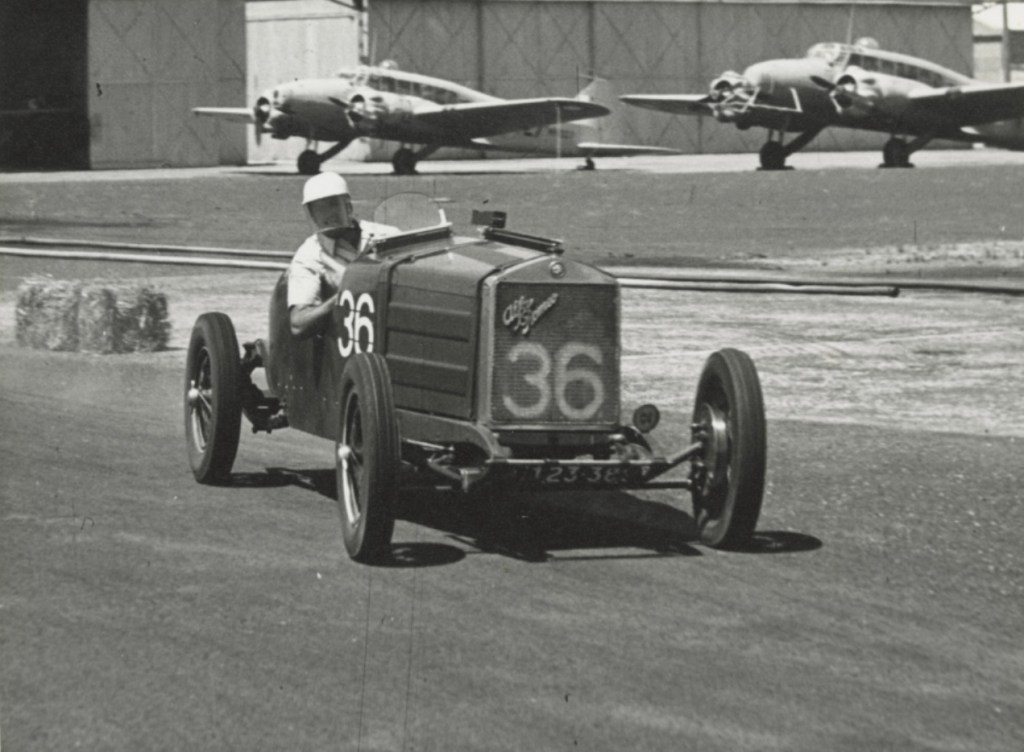
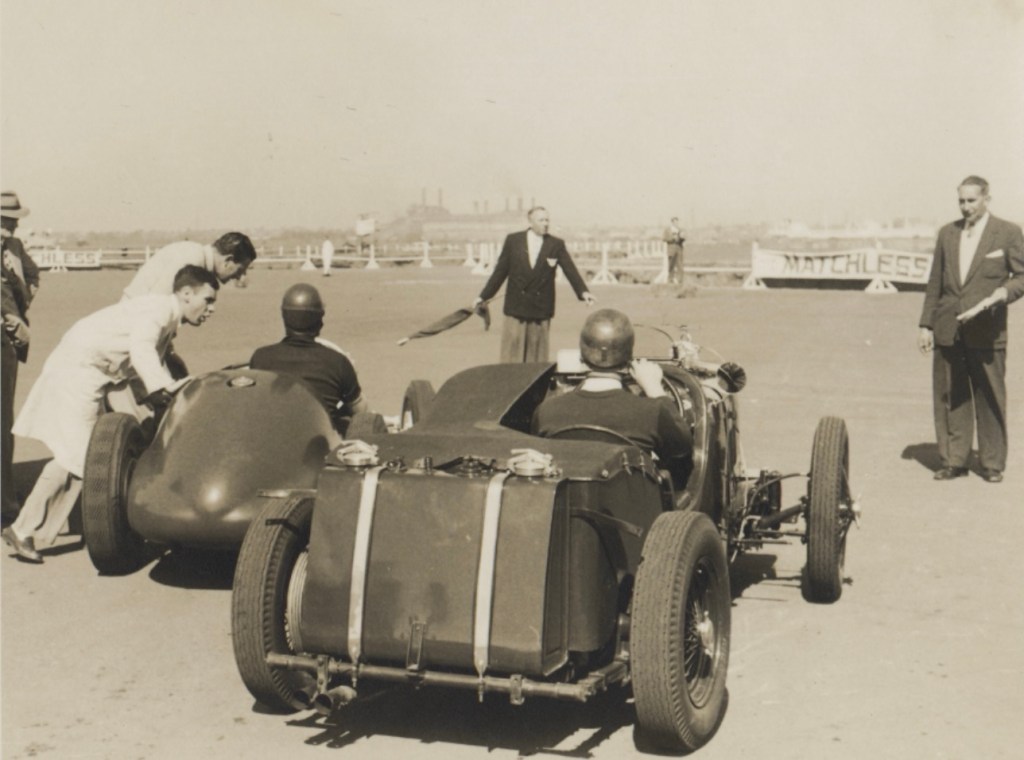
Lex Davison in the Little Alfa – Alfa Romeo 6C 1500 s/c Spl – at Ballarat Airfield with RAAF Avro Ansons in the background.

He is contesting the 75 mile Victoria Cup held on the Australia Day holiday, January 27, 1947.

The race was the first post-War ‘state level event’ held in Victoria and was promoted jointly by the Light Car Club of Australia and the Victorian Sporting Car Club.
(G Thomas)

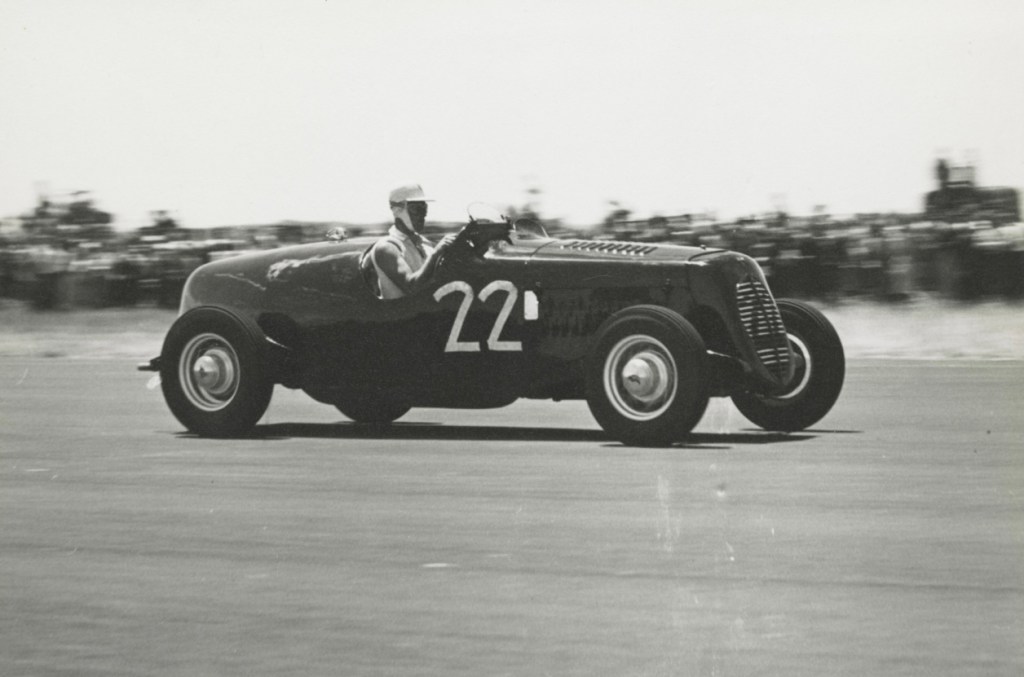
Doug Whiteford won the handicap race in Black Bess, his Ford V8 Special which was at the start of a long run of success.

See here for Black Bess: https://primotipo.com/2015/05/05/doug-whiteford-black-bess-woodside-south-australia-1949/ and here for the Little Alfa: https://primotipo.com/2015/01/22/race-around-the-barracks-balcombe-army-camp-davison-little-alfa/

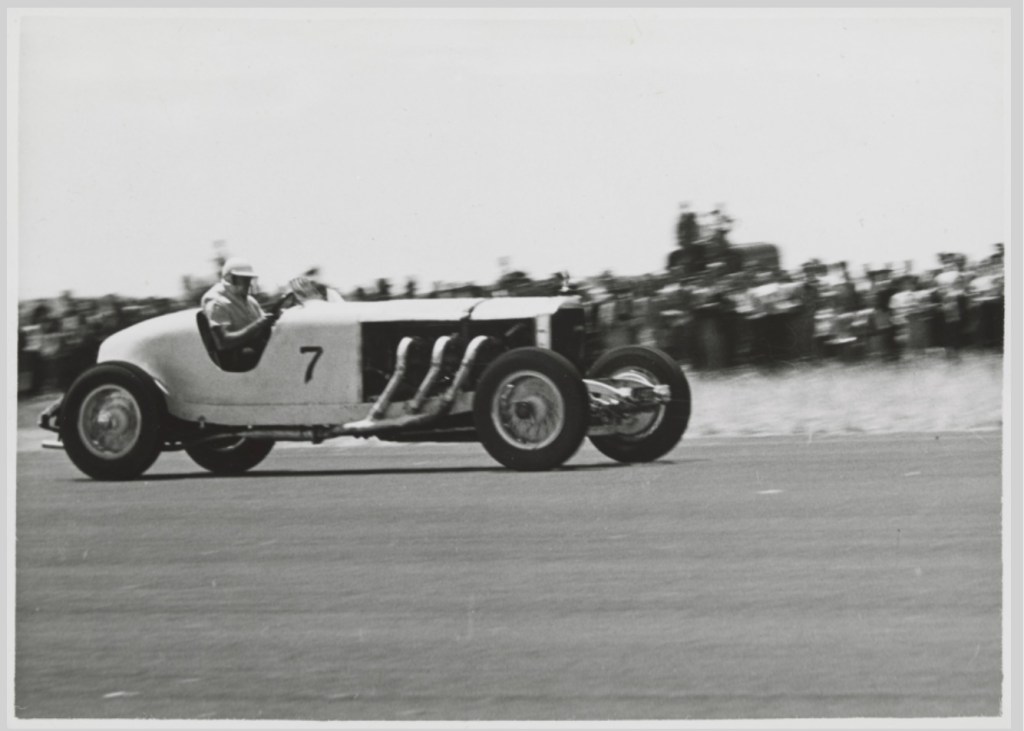
Davo also entered his rather imposing Mercedes Benz SSK, but the engine failed, see here: https://primotipo.com/2024/02/18/mercedes-38-250-ssk-lex-davison/
(G Thomas)
(SLV)

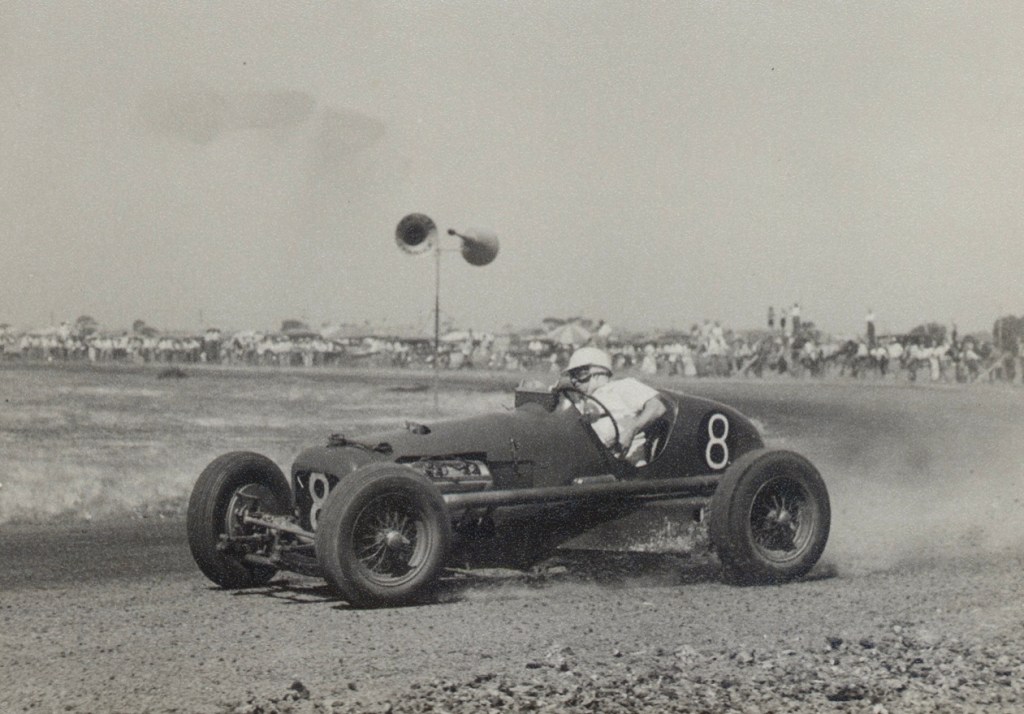
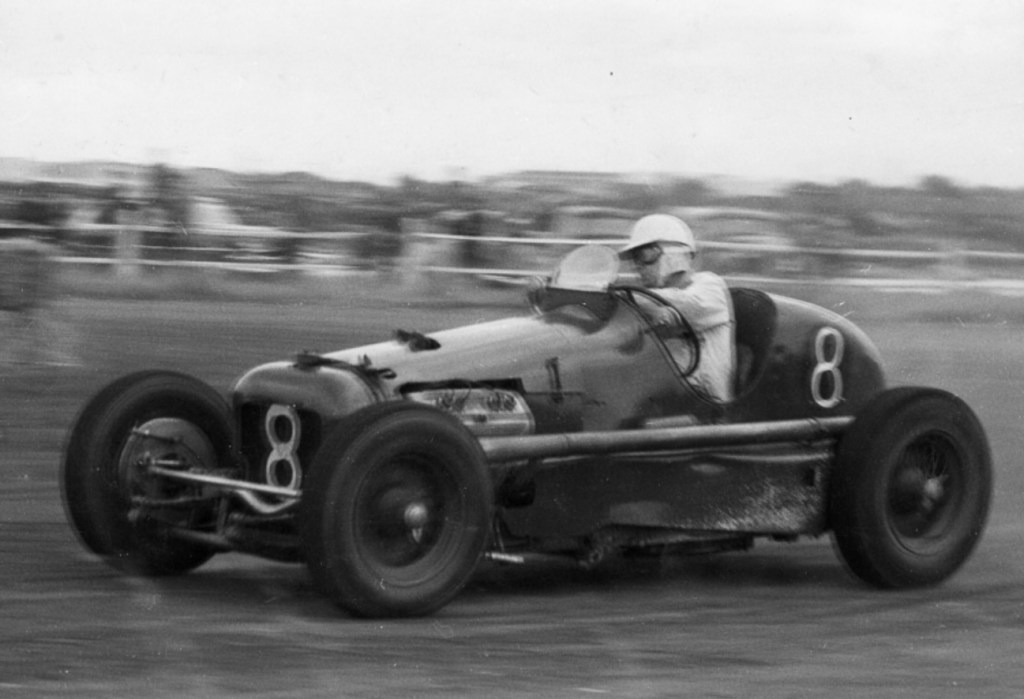
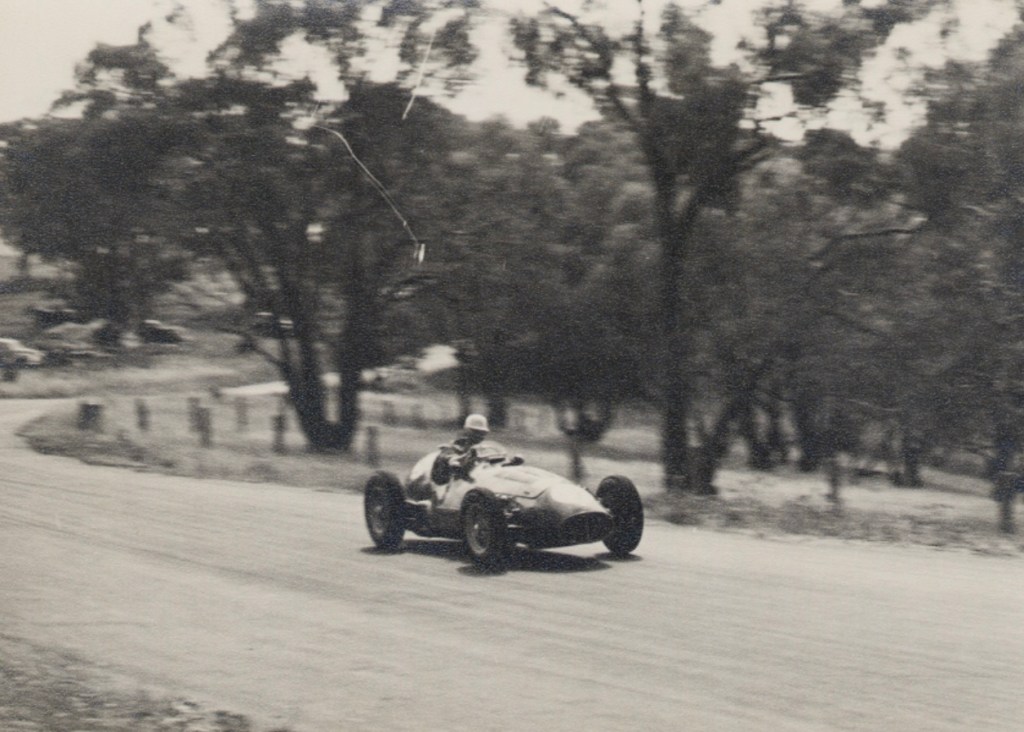
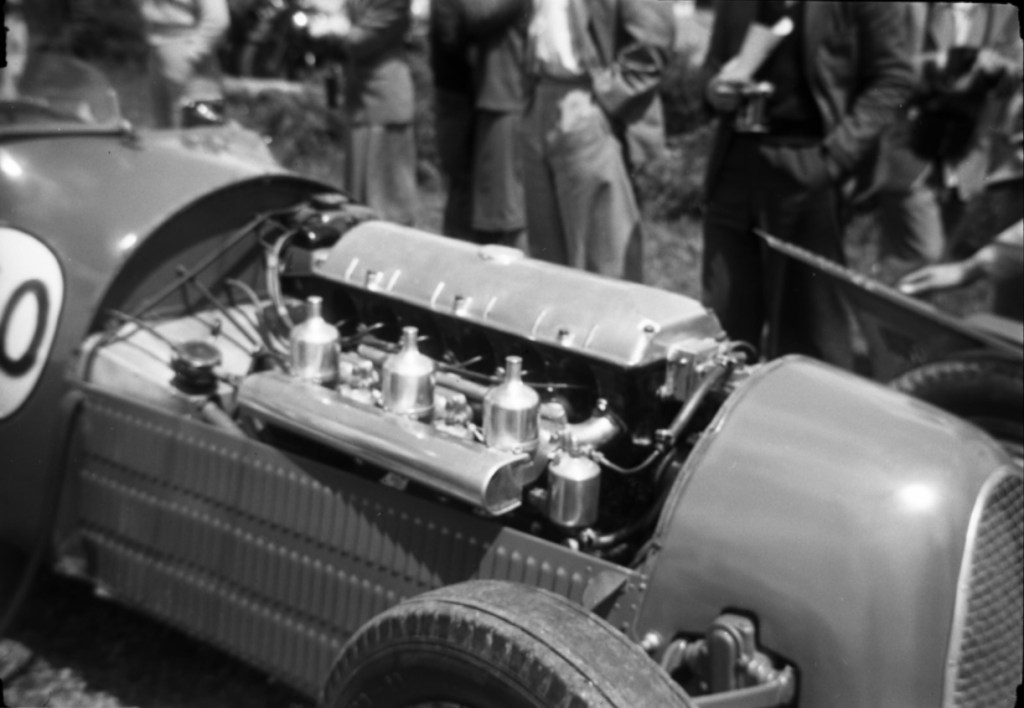
The caption says Fishermans Bend but it looks more like Altona to me, one for those with a programme collection. And below Ted again, Alta 21S Ford V8 Spl this time during the 1954 Victorian Trophy at the Bend on March 22, 1954.
(SLV)

This car, first brought to Australia by MI6 spook and sometime racing driver Allan Sinclair in 1938 is one of my obsessions, see here: https://primotipo.com/2018/11/08/the-spook-the-baron-and-the-1938-south-australian-gp-lobethal/

It’s alive and well too, restored by Graham Lowe several decades ago, it’s used regularly on road and track by current custodian, Fiona Murdoch. I’ve driven it too, in March 2023, for articles published in The Automobile and Benzina. And yes, it is sen-‘kin-sational.
(G Thomas)

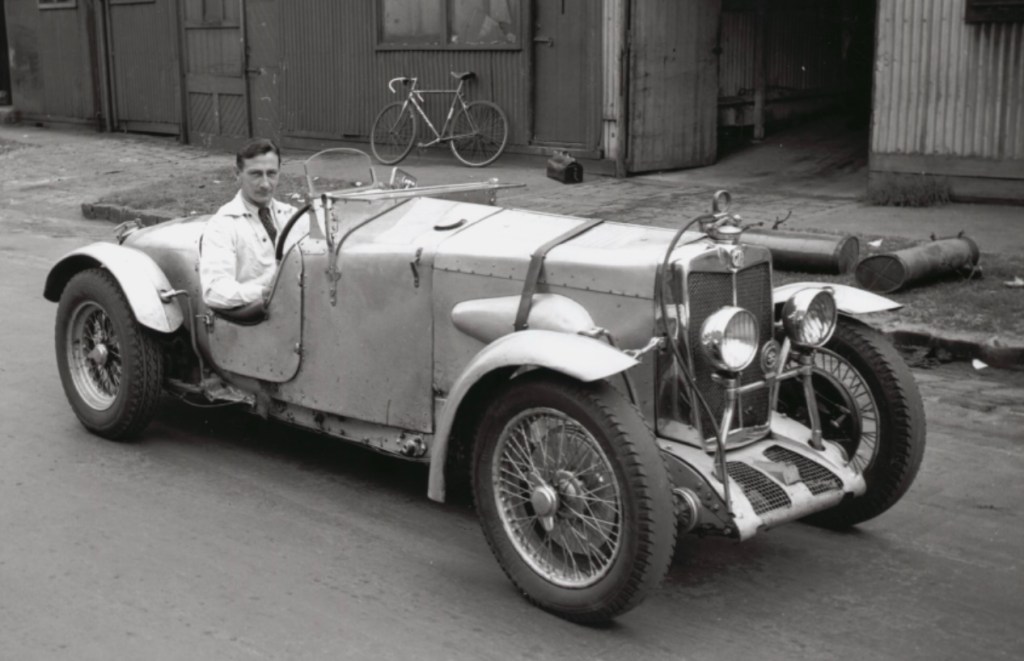
Reg Nutt aboard an MG NE Magnette Ulster, outside the Nutt/Jack Day premises in Whiteman Street, South Melbourne.

Greg Smith comments, ‘White street South Melbourne features to note : 16″ rear wheels, 18″ or 19″ front wheels, brakes still cable operated, door fitted to the original body maybe to comply with the CAMS draconian rule (what has changed since its inception in 1953 ? nothing!!) that “sports cars” must have a door of minimum dimensions.Tyres nearly bald. Expensive push bike leaning against the wall with the owners Gladstone bag on the footpath, maybe the photographer ?? Two fuel tanks out in the sun sweating the fumes out before solder repairs. The car was ex-Barraclough and very scruffy by this time.’

Nutt was both a master mechanic and driver with a pedigree going back to Phillip Island’s early days. He was Reg Brearley’s riding mechanic in 1929 when the pair placed second in a Bugatti T37A.

Better was to come when he won the race in 1931 alongside Carl Junker aboard a Bugatti T39 in 1931. T39-4907 is the very car shown below raced Jack Day’s Day Special (the car below) in the South Australian Grand Prix referred to above on daunting Lobethal, setting the fastest race time for that handicap race, and the following day did the fastest lap of the weekend…he could drive.

He got the bug early, recounting to Bob King memories of a Bugatti Brescia while doing his apprenticeship at Meaby’s Garage in Toorak Road, South Yarra.
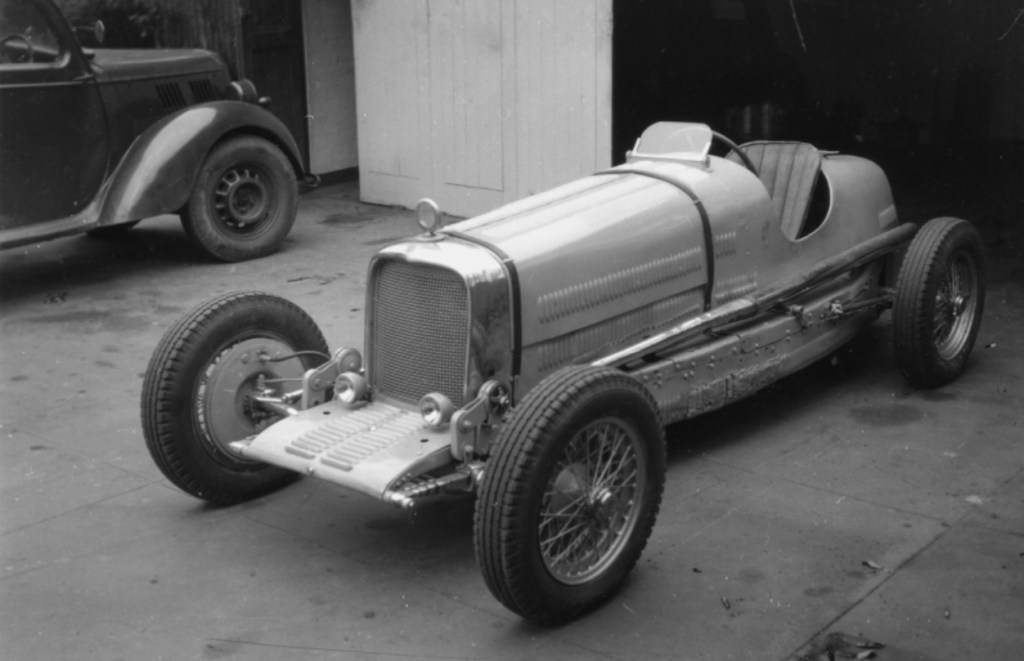
The Day Special was Bugatti T39-4607 fitted with a Ford V8 and other modifications (G Thomas)

Apart from his on-track exploits in this car, Nutt gave Norman Ellsworth the ride of his life, when towing Ellsworth’s just purchased Bugatti Brescia back from Adelaide to Melbourne.

The deal was that Reg would tow the car through the many country towns on the long trip as the Brescia was unregistered. But Reg ‘forgot’ about the Bugatti on the end of the tow rope and did several miles outside Dimboola at well over 100mph. Ellsworth’s reaction is unrecorded!

More about the Day Special here: https://primotipo.com/2021/06/11/werrangourt-archives-7-jack-day-and-his-superchargers-by-bob-king/
(SLV)

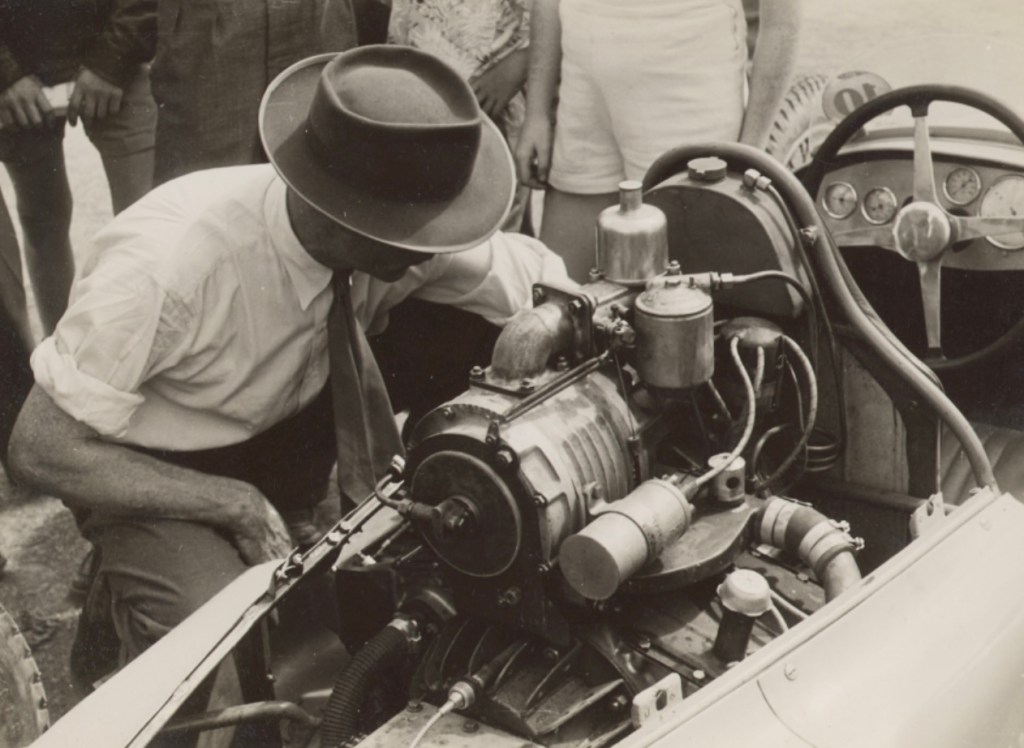
What an evocative shot of the business end of the brilliant Wylie Javelin Spl…

The gent in the Akubra makes the shot. Perhaps it’s the ’53 AGP weekend at Albert Park but that’s a guess. That looks like a rego-sticker on the windscreen! See this lengthy epic: https://primotipo.com/2018/09/14/the-wylies-javelin-special/
Arthur Wylie at Altona in 1954 (SLV)
(SLV)

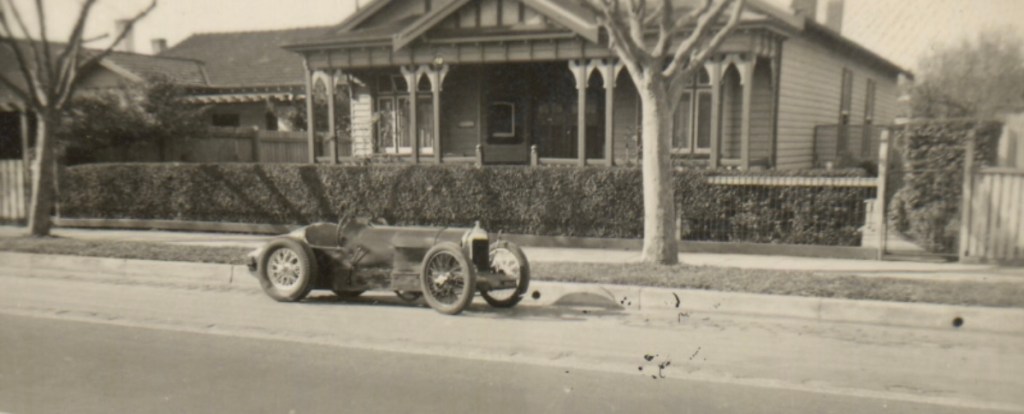
A D.F.P. out front of a home, probably in Melbourne, chassis number and street address please!? It has a touch of the Elsternwicks about it but could be anywhere.

The marque were in on the ground floor of racing in Australia, Les Pound finished last in the 100 Mile Road Race run by the Victorian Light Car Club in March 1928, the second Australian Grand Prix.

See here for more on D.F.P.: https://primotipo.com/2021/10/01/werrangourt-archive-11-dfp-the-greyhound-of-france-by-bob-king/
(SLV)

Reg Hunt enroute to winning the scratch-section of the Bathurst 100 during the 1955 Easter weekend at Mount Panorama, Maserati A6GCM-250.

Despite having only his short-diff fitted the Grand Prix car still did 145 mph down Conrod.

The handicap winner of the race was Curley Brydon in his new MG Special; a mix of the ex-Tomlinson ‘39 AGP winning chassis and the supercharged engine from Brydon’s ex-Patterson TC Spl.
(SLV)

I’ve done chapter and verse on Australia’s fastest combination in 1955-56 – Reg Hunt and Maseratis A6GCM and 250F – but start with these two: https://primotipo.com/2017/12/12/hunts-gp-maser-a6gcm-2038/ and https://primotipo.com/2024/02/10/australian-gold-star-championship-1956/
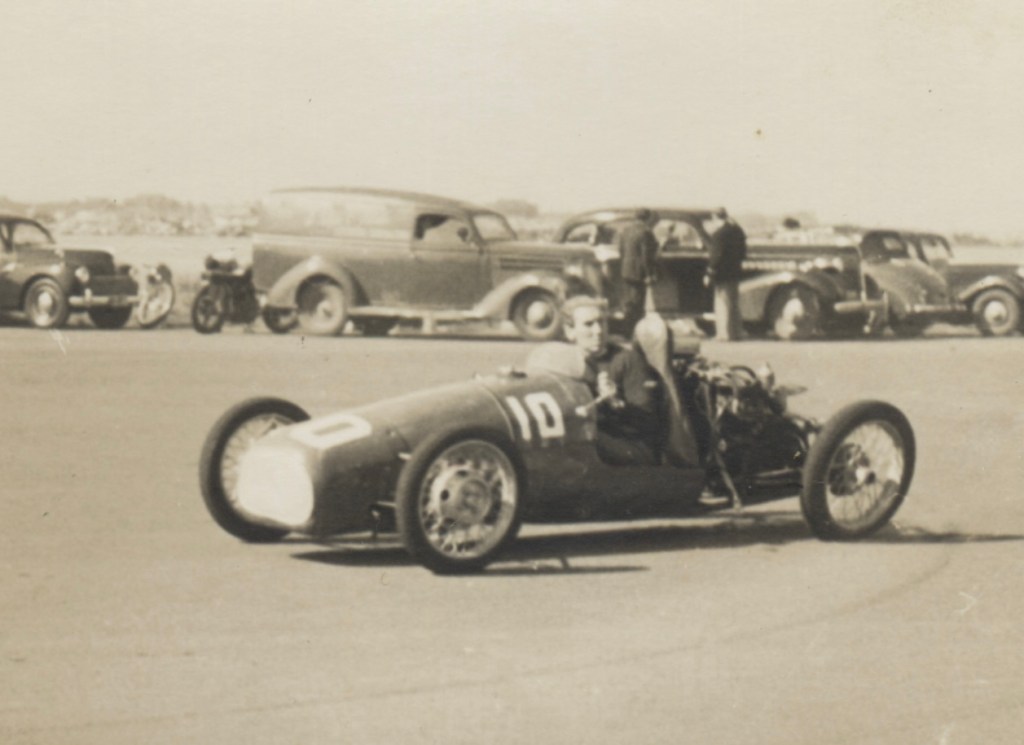
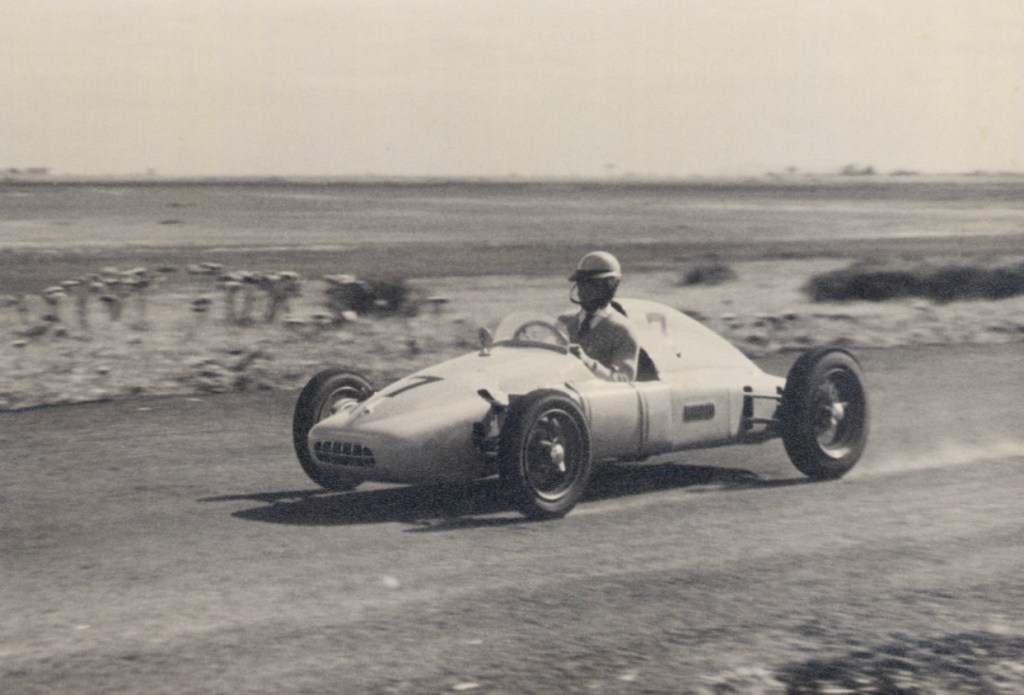
Manchester born Reg Hunt tootling through the Fishermans Bend paddock in his Hunt Spl aka The Flying Bedstead, date unknown but 1951 perhaps.

The Hunts arrived in Melbourne in May 1949 with Reg bringing with him various parts accumulated in the UK which he used to build this hillclimb /road racer affectionately known as the Flying Bedstead.

It was built between May-October 1949 by Hedley Thompson either in his Deepdene, Melbourne home garage or as a homer at Trans Australia Airlines, where Hedley was head of maintenance.

Thompson’s thoroughly modern chassis was a shallow multi-tubular spaceframe of welded steel construction. It had a light, tringulated front bulkhead and a more substantial rectangular one at the very rear of the car just aft of the gearbox.

Front suspension was modified Morgan pillar, and the rear comprised an upper transverse rear spring, swing axles and an underslung tubular shock absorber mounted at its top to the underside of the axle case and at its bottom to the chassis.

Bolt-on wire wheels were 3:25 inch x 18 at the front, and 3:50 inch x 19 at the rear. The ultra-light machine had hydraulic brakes with two leading shoes at the rear.

The engine was an Amal-fed 500cc J.A.P. (J.A. Prestwich) speedway engine with the power hitting the road via a Norton four-speed box.

The Flying Bedstead’s first outing was at Fishermans Bend in October 1949, where it was noticeably quicker and outclassed the numerous MG specials present. Some weeks later, at Rob Roy, it lowered the class record by nearly six seconds, to 31.4 seconds. In March 1950 he improved his time to 29.35 seconds.

Other successes followed, and soon a supercharged 998cc Vincent Black Lightning engine was fitted by Phil Irving, and the bodywork was improved; the form shown above.

‘First used in this guise at Bacchus Marsh in July 1951, at Bathurst in October it outpaced a Cooper Vincent in the first race and was pipped on the last lap in the second. The speed over the flying ¼ mile was reported at 134 mph.’ Really?!

When Hunt raced Cooper 500s in Europe in 1954, he made a side-trip to Italy on the way home and purchased the ex-works Maserati A6GCM shown above, so the Bedstead was set aside and later sold. Hunt repurchased it in 1978, and it was ultimately restored under his supervision, then later sold at auction and is extant.
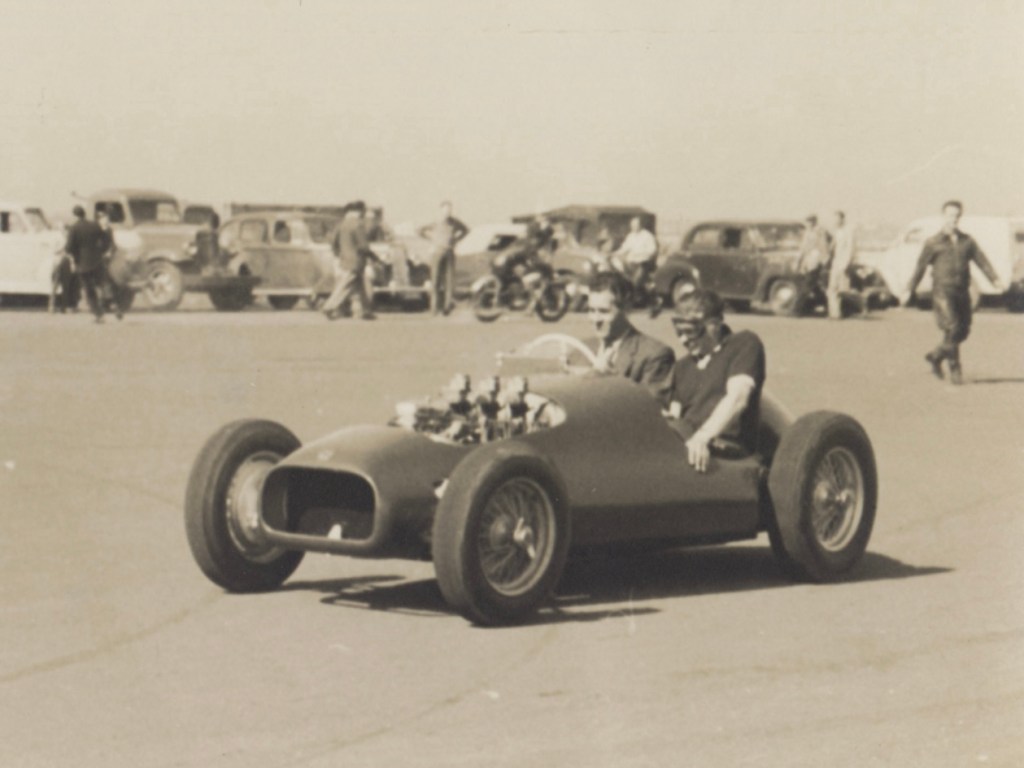
(SLV)

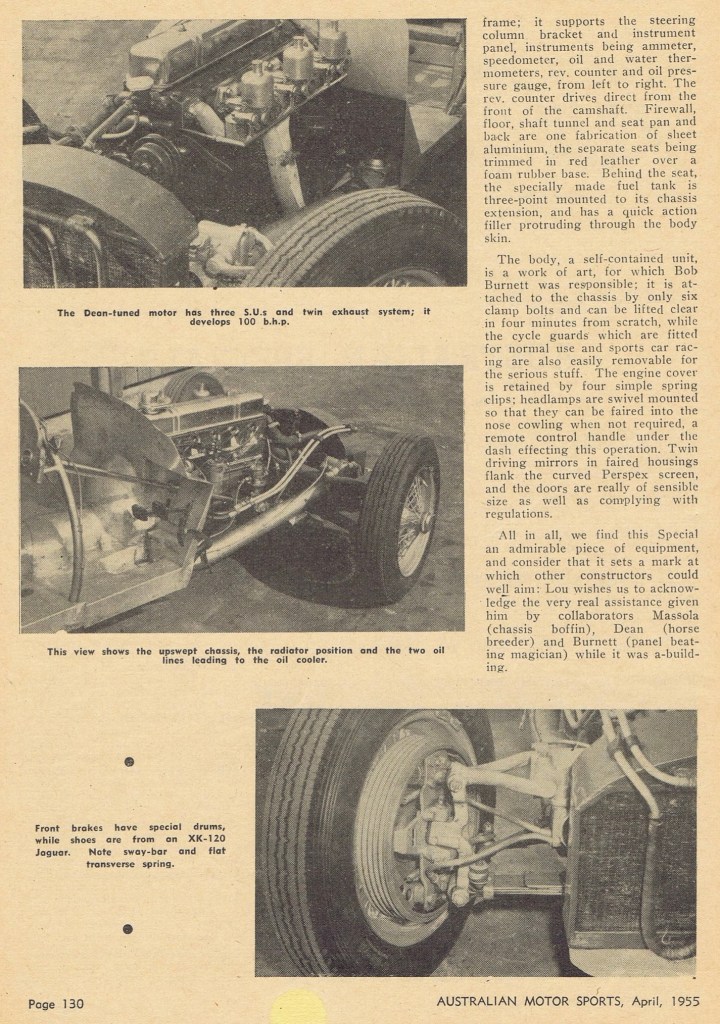
Conceived in Lou Molina’s Albert Park backyard the MM (Molina/Massola) Holden consisted of a Silvio Massola home-made chassis, Standard 12 front end, H.R.G differential and gearbox, Holden Grey six-cylinder engine and an attractive body made by Brian Burnett.

The MM had its first outing at Fishermans Bend on October 3, 1953, and I’m wondering if that’s when this photo of Lou and a Victim tootling around the paddock was taken?
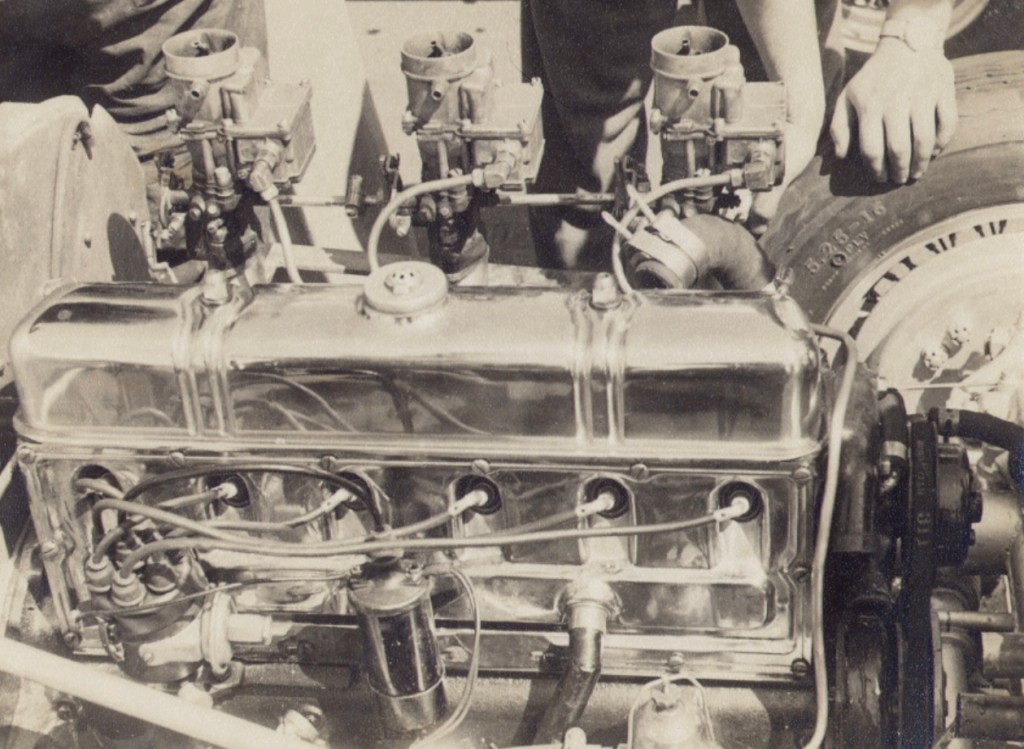
MM Holden was initially fitted with triple Stromberg carbs, later replaced by SUs (SLV)

Lou then contested the November 21 1953, Australian Grand Prix at Albert Park where he was an amazing fifth in the 64-lap 200-mile event won by Doug Whiteford’s Talbot-Lago T26C. The 2290cc MM Holden started from grid 30. The car appeared exactly as it is in the photograph above, sans bonnet and with triple-Strombergs pointing loud and proud at the sun.

The MM raced the following year at the January 1954 New Zealand Grand Prix with Molina competing alongside other Australians including Jack Brabham, Stan Jones, Tony Gaze and Alec Mildren. On this occasion, the MM was not successful, retiring early with mechanical problems. Stan Jones won the day of course in another rather famous Australian special

Amongst other notable runs, in 1956 the MM finished in the top six at the Argus Cup at Albert Park and clocked 15.3 seconds for the standing quarter mile at the Geelong Sprints.

Greg Smith has given me a shedload of material about this car from Lou’s Archive, I really must do something on the two Molina Specials soon.
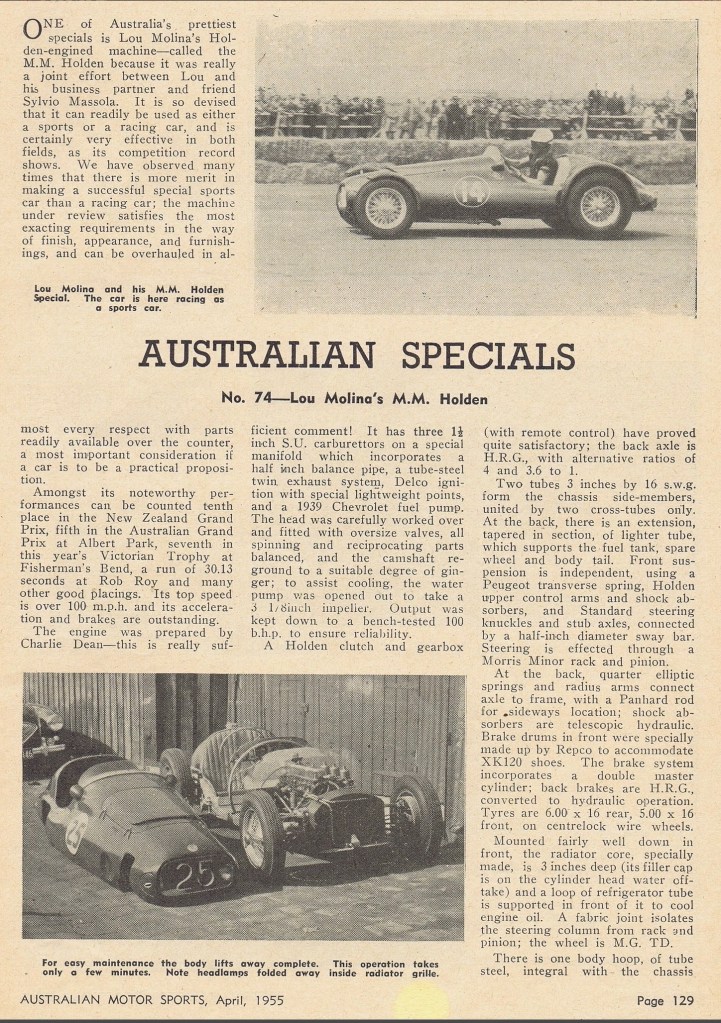
And below, the MM Holden and an MG?, before the off at Fishermans Bend.
(SLV)
(Peter D’Abbs)

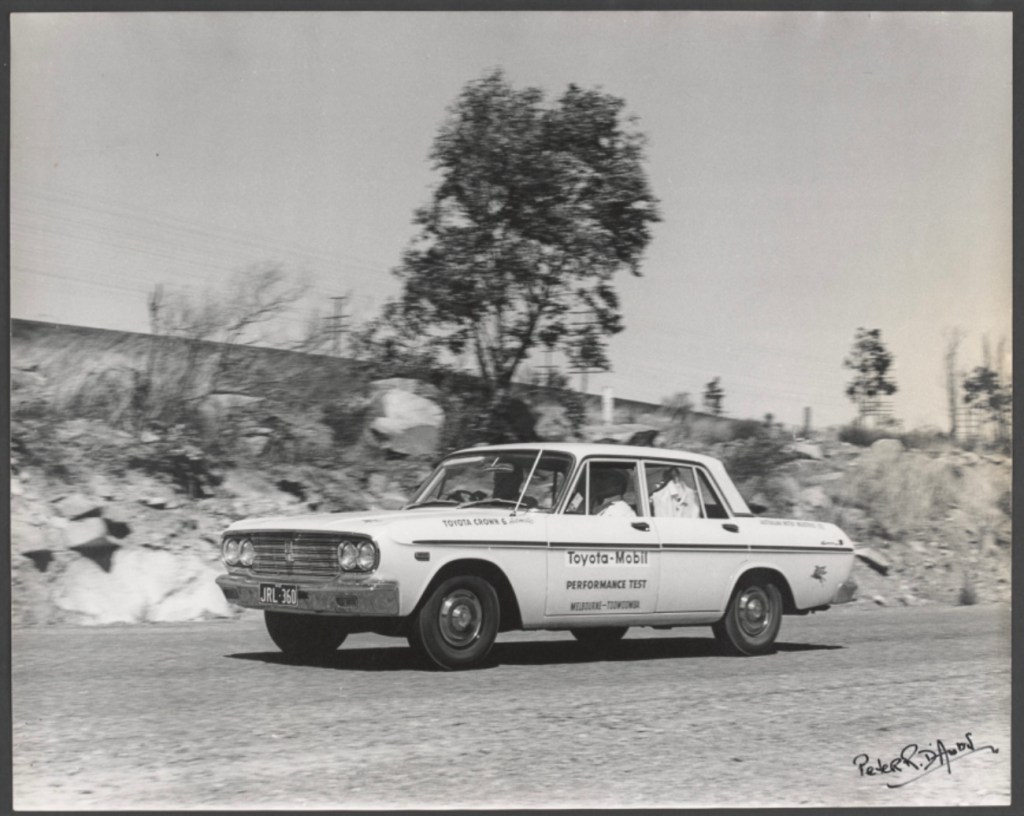
The Mobil sponsored Toyota Melbourne-Toowoomba Performance Test in 1966, Toyota Crown. It was still at the stage that ‘The Japs’ were convincing Aussies about the durability of their cars I guess, they succeeded rather well!
(H Coulson)

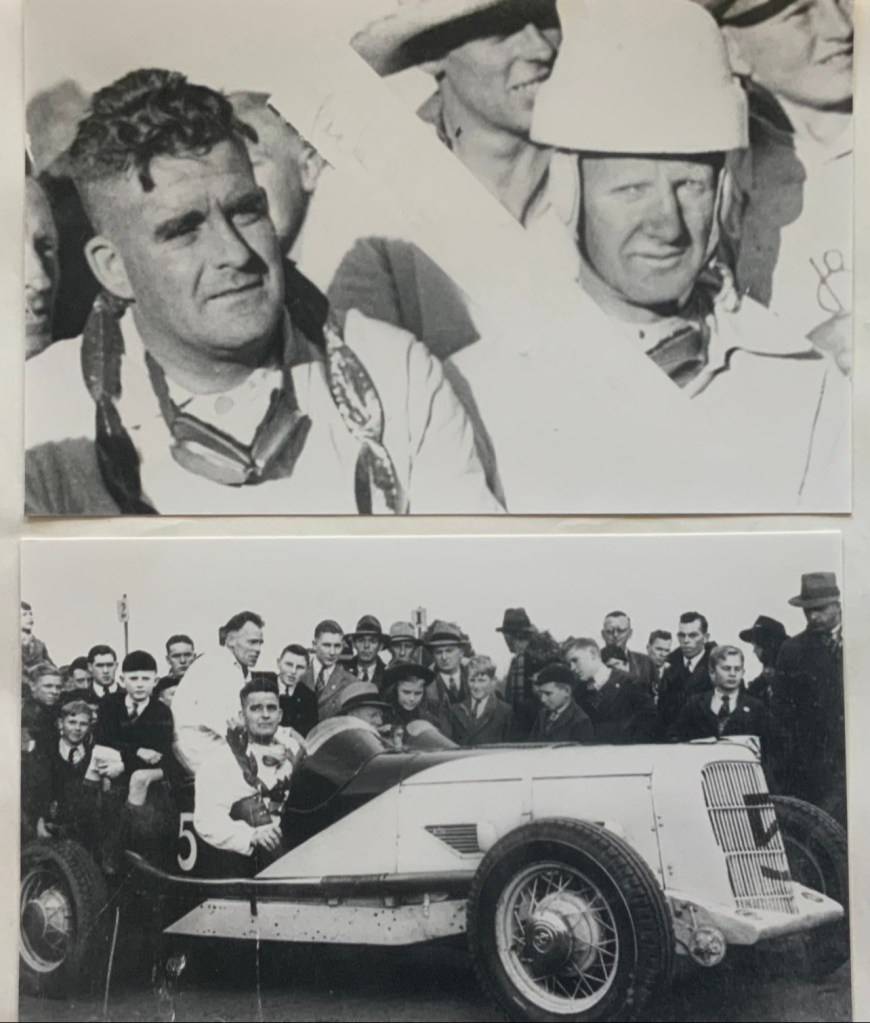
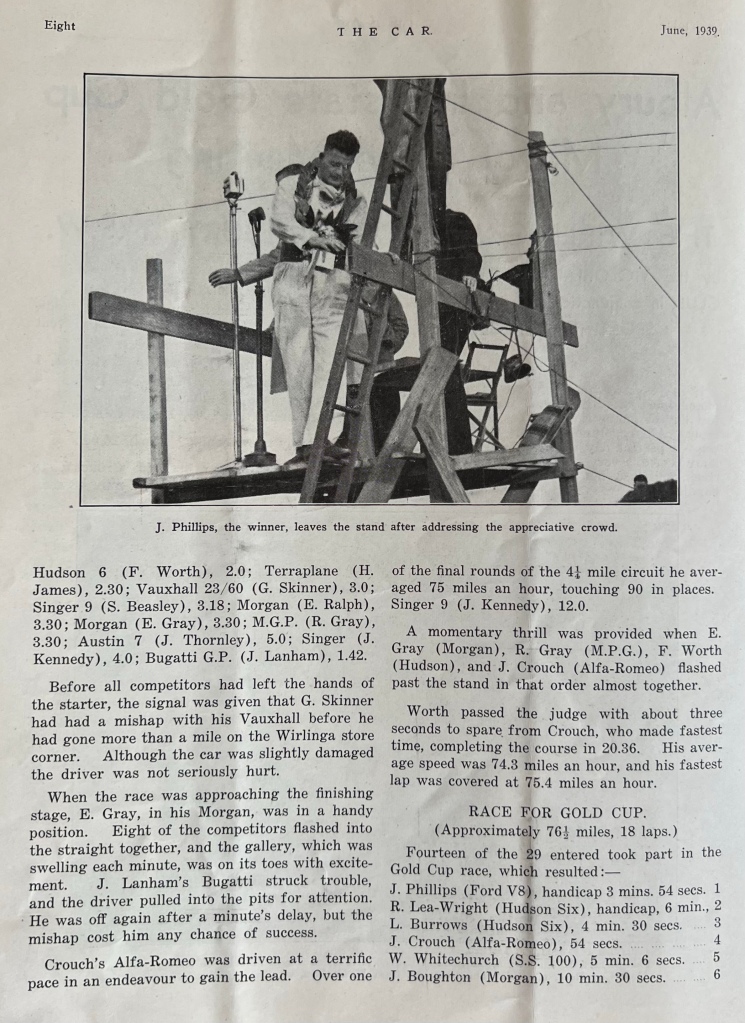
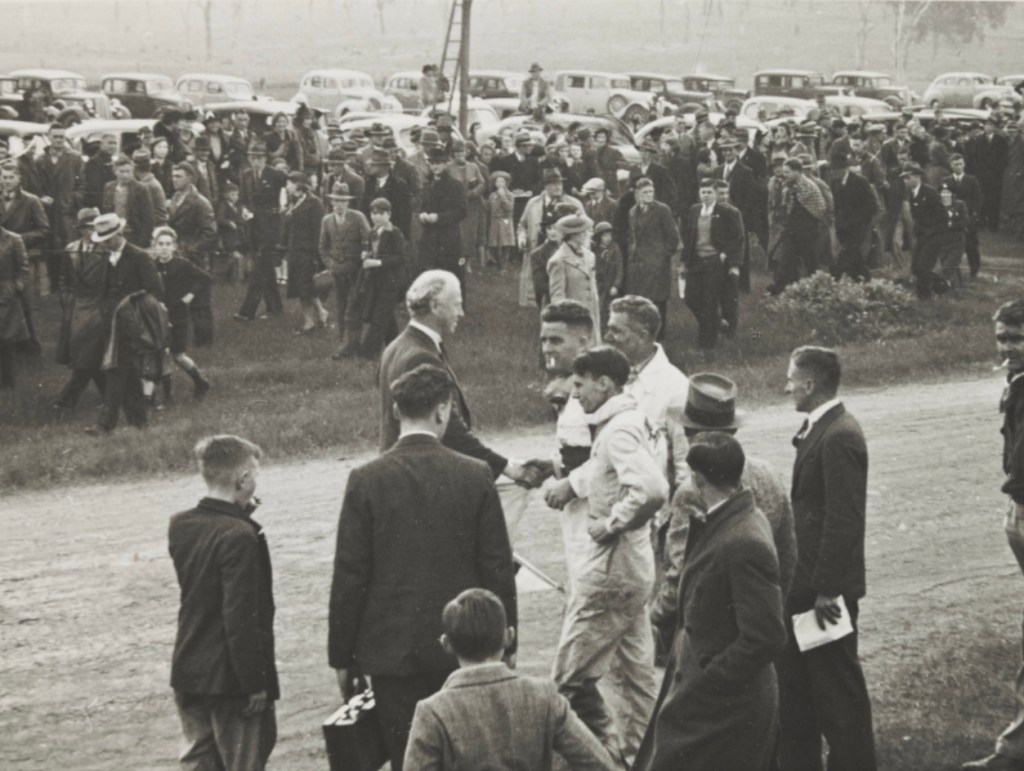
This looks awfully like Jack Phillips and Ted Parsons after one of their Interstate Grand Prix wins at Wirlinga, Albury in 1938 or 1939. Jack – with the post-race fag – still has his kidney-belt on.

Their mount was a Ford V8 Special, see here: https://primotipo.com/2023/03/07/jack-phillips-ted-parsons-ford-v8/
(SLV)

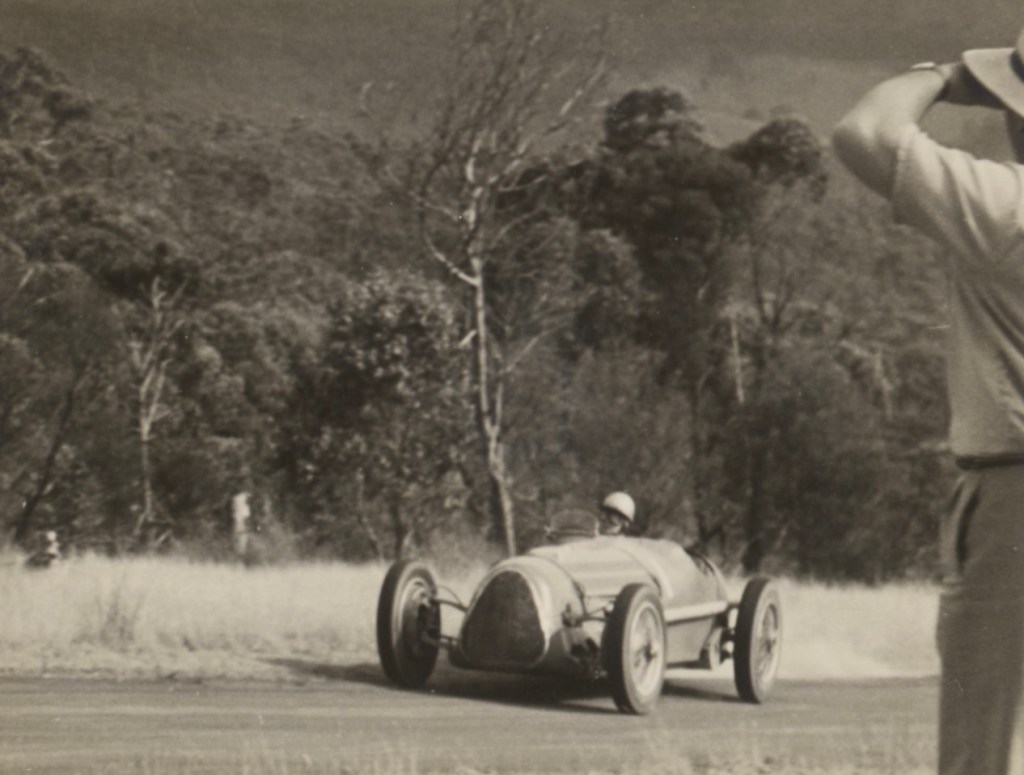
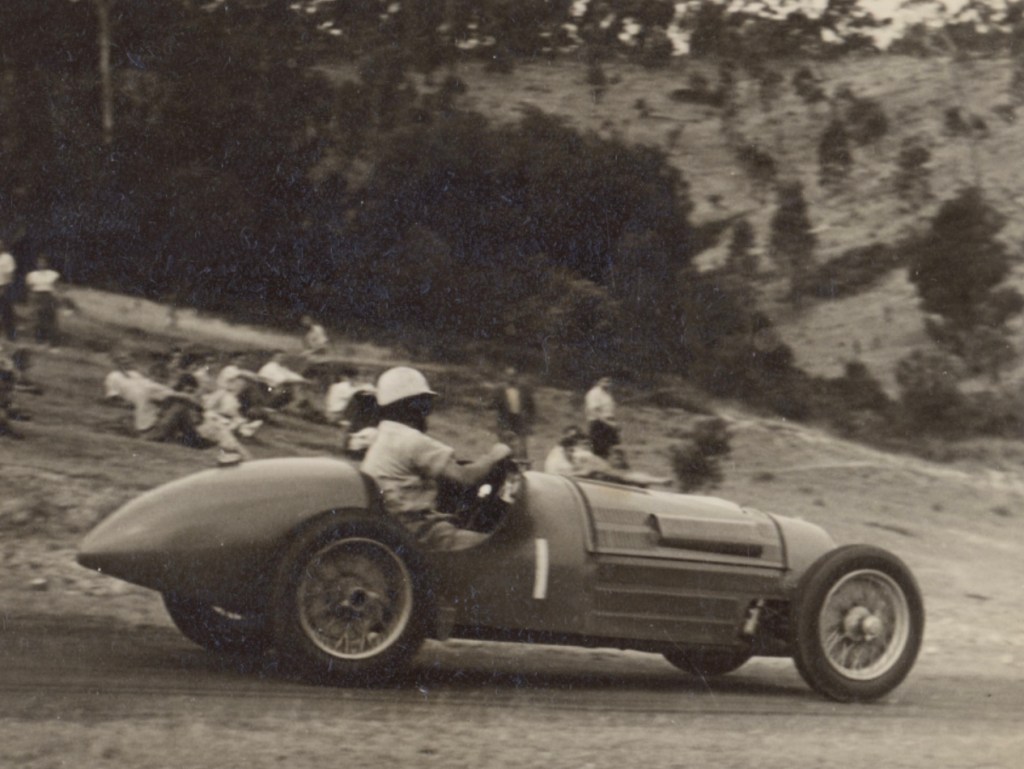
Charlie Dean well and truly on the gas during this ascent of Rob Roy in Maybach 1, date unknown. Right front on the track’s verge and right rear well and truly on the roadside.

Dean’s series of three Maybachs were labelled Maybachs 1, 2 and 3. M 3 was christened M 4 when that car/chassis was modified by fitment of a 283 Chev V8 in place of the Maybach SOHC six and other changes, mainly to the rear suspension. These cars were great crowd pleasers from their first appearances in 1948 until the last in-period races of Maybach 4 Chev in the hands of Ern Seeliger and Stan Jones in 1958-59.
(SLV)

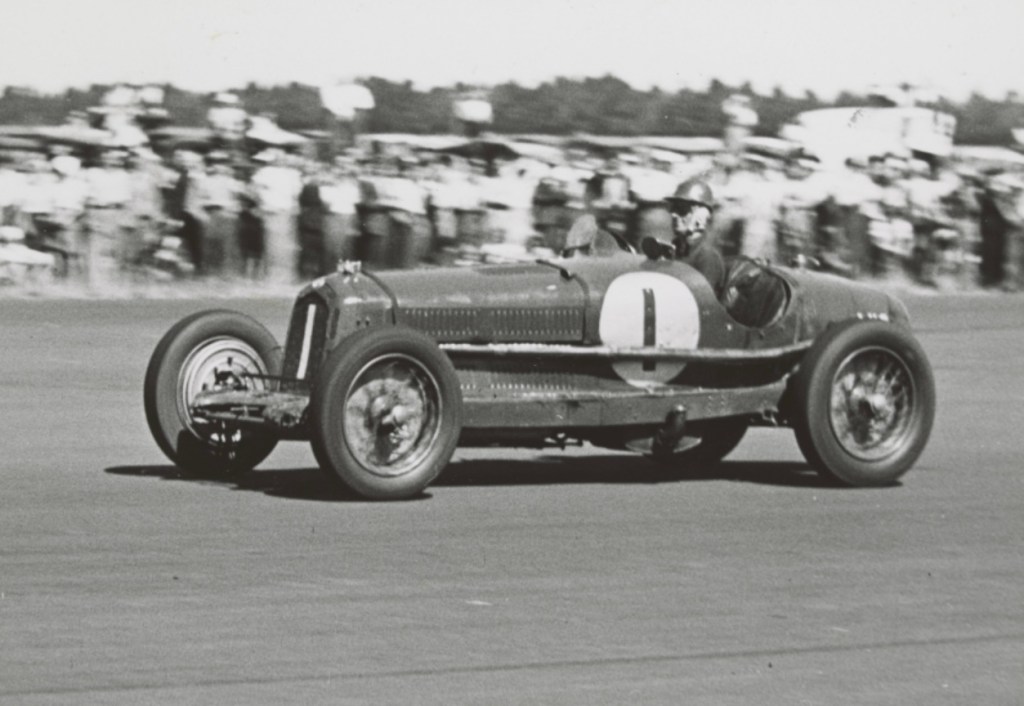
One of the great shames is that a Maybach never won an Australian GP, karma suggests that this shouldn’t be the case but shit-happened on those particular big days. Stan Jones’ 1954 NZ GP win – truly a great team effort – is duly acknowledged…More about Maybach 1 here: https://primotipo.com/2024/01/15/maybach-1-technical-specifications/
(SLV)
(G Thomas)

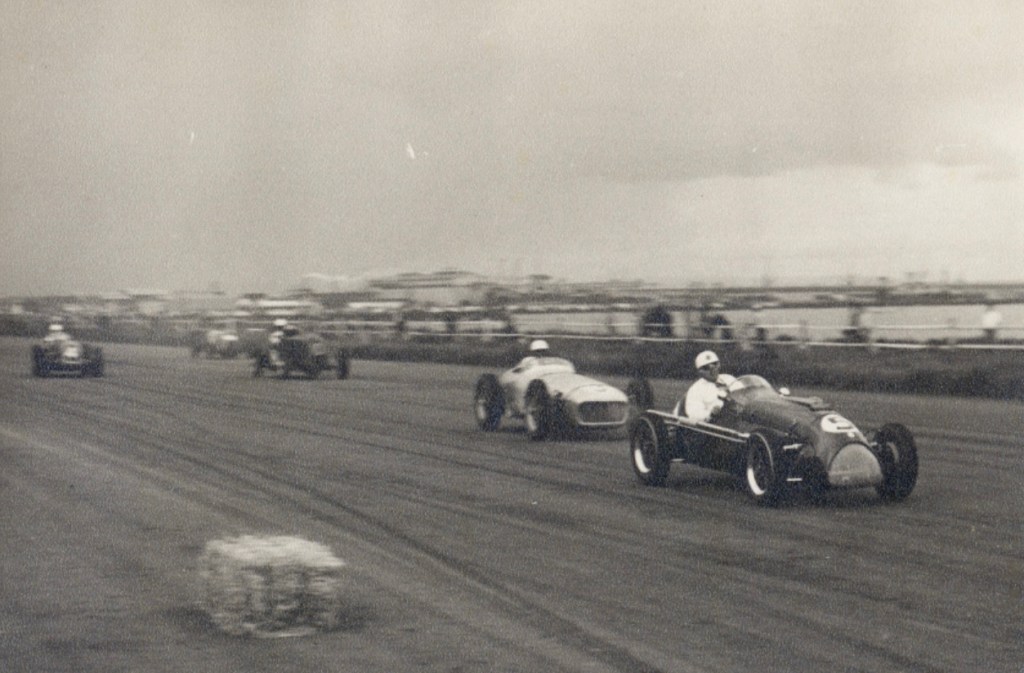
Alf Barrett at Ballarat aboard his superb, aristocratic Alfa Romeo 8C2300 Monza, during the 1947 Victoria Trophy.

This is another combination that shoulda-coulda-woulda but never did win an Australian GP. The fastest combination in the immediate pre- and post-war periods is the descriptor that would have to do.

The centenary of the first Australian Grand Prix takes place in 2027, good news is that the current custodians of this car: Grace, Troy and Lindon Davey-Milne have its restoration underway and with a bit of luck it will take its place in the on-track centenary celebrations or as a static exhibit at Goulburn and Phillip Island in 2027-28.

See here for more: https://primotipo.com/2015/02/20/alf-barrett-the-maestro-alfa-romeo-8c2300-monza/
(SLV)

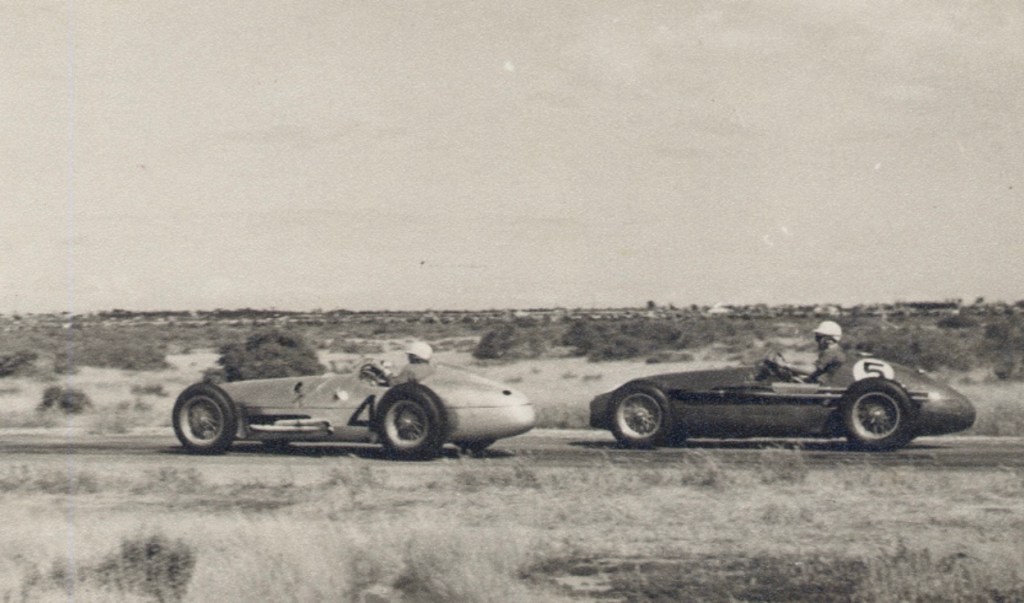
Len Lukey and Ern Seeliger – probably – dice at the front of a Fishermans Bend pack circa 1957. Cooper T23 Bristol and Maybach 4 Chev. The 2-litre, triple Zenith-fed six-cylinder Bristol engine of the Lukey Cooper is shown below. More about the T23 here: https://primotipo.com/2017/02/24/the-cooper-t23-its-bristolbmw-engine-and-spaceframe-chassis/
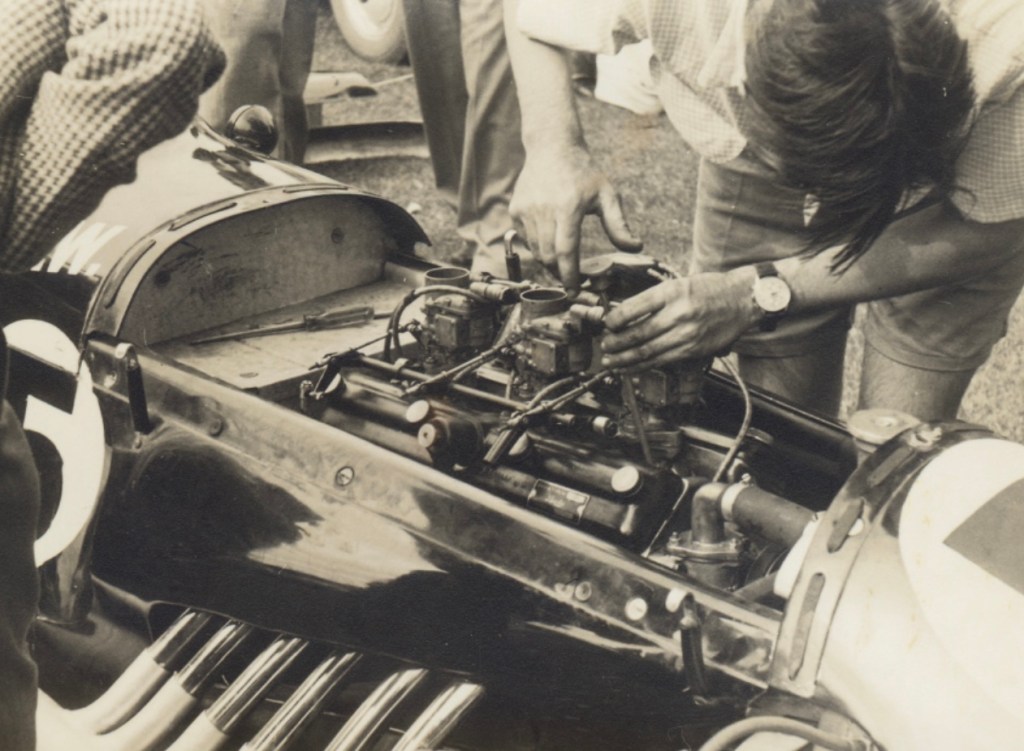
(SLV)
(G Moss)

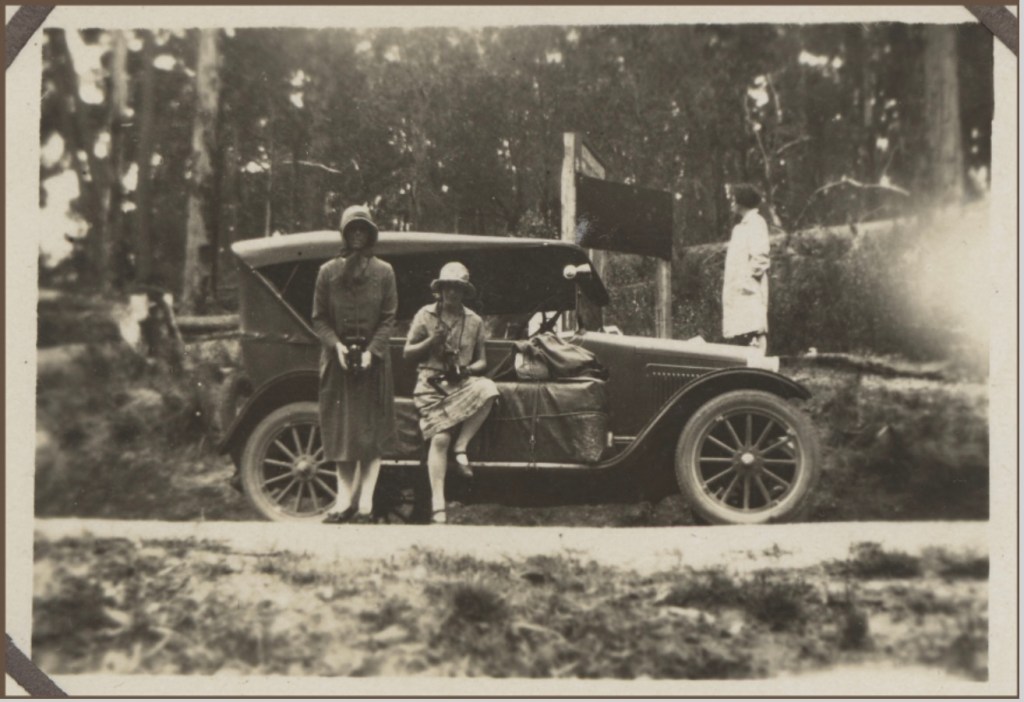
‘Sydney to Melbourne 750 miles by car in December 1927’, is the caption. Make of car folks? They certainly did it the long way, and the hard way no doubt.
(J Read)

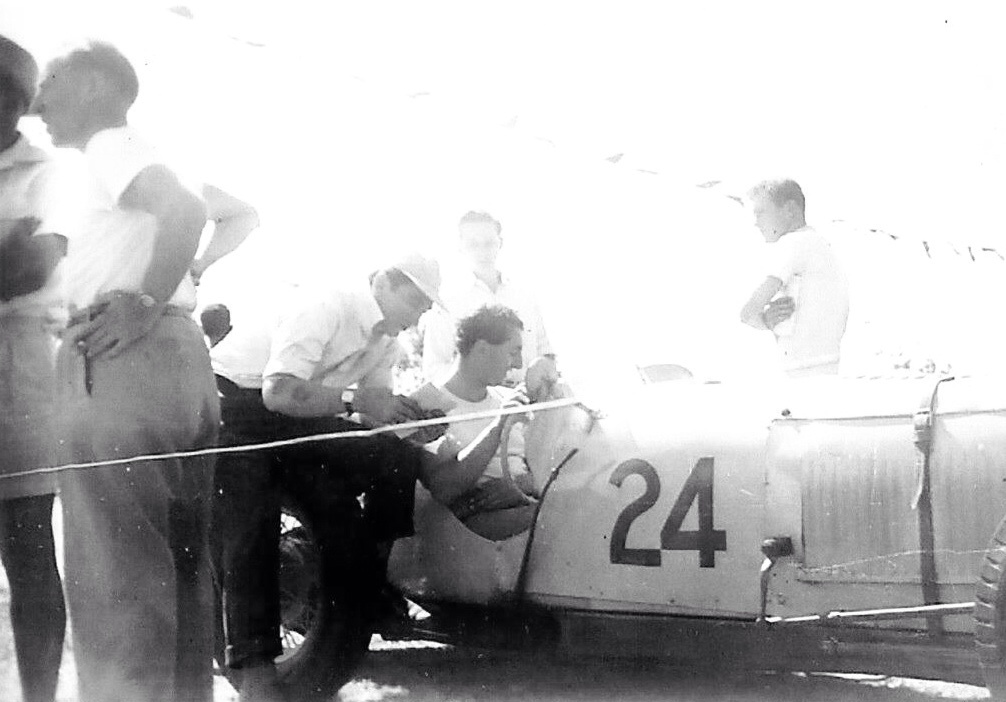
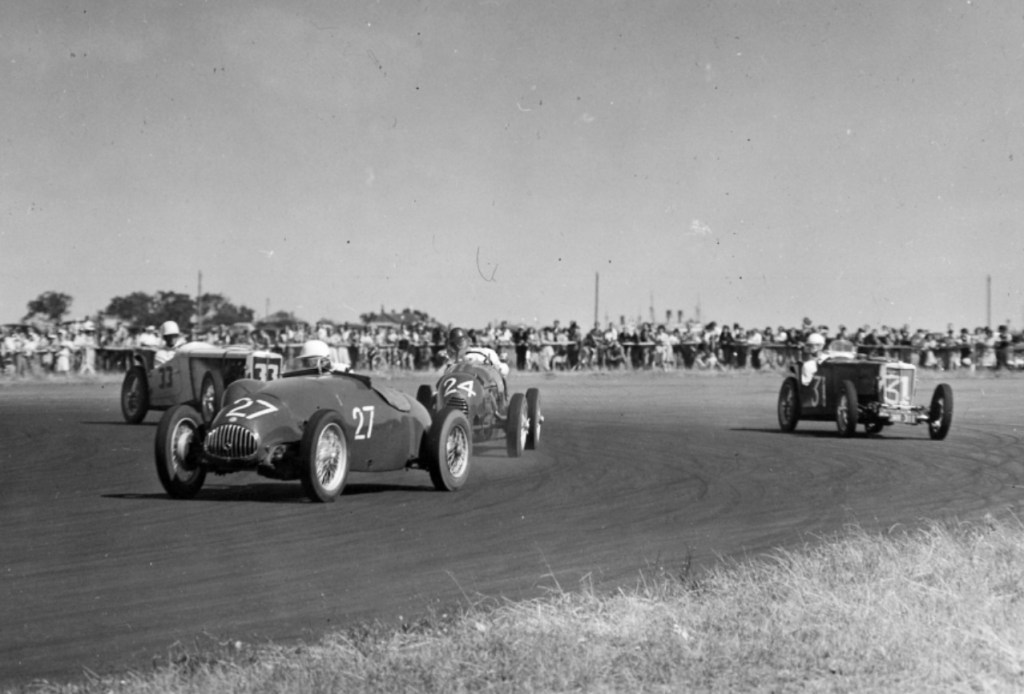
Stan Jones HRG #24 amongst a gaggle of MGs at Fishermans Bend in 1951 led by Lex Davison in the family TC Spl. I’ll take your advice on the rest. Article on the Davison TC Spl here: https://primotipo.com/2015/10/01/lex-davison-mg-tc-the-lobethal-stobie-pole-and-the-lucky-escape/

Credits…

State Library of Victoria and photographers George Thomas, ‘Bathurst : Cradle of Australian Motor Racing’ John Medley, Hal Coulson, Gladys E Moss, JP Read, Australian Motor Sports

Tailpiece…
(G Thomas)

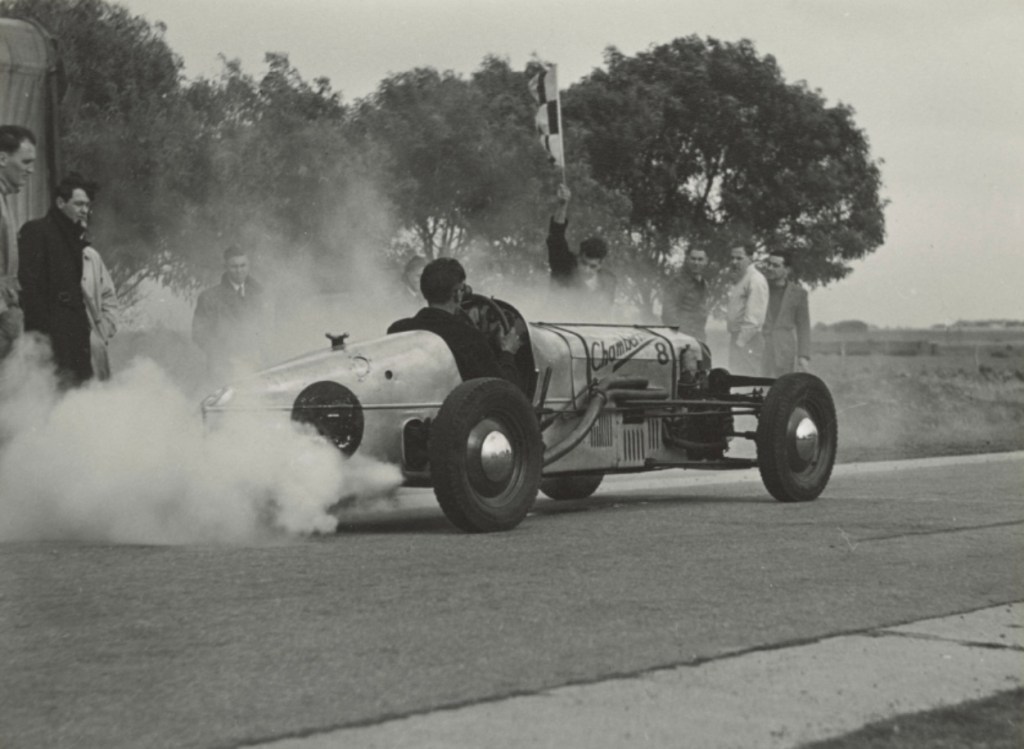
The starter drops the flag, can you see him among the clouds of two-stroke smoke!?, for Jim Hawker and the Chamberlain 8, VSCC Speed Trials, Geelong Road, June 1947; tree-huggers eat yer’ heart out.

The features of the Chamberlain brothers’ crazy-brave pre-war special included a small-tube spaceframe chassis, independent front and rear suspension, front wheel drive and eight-piston, two-stroke, supercharged 1.5-litre engine. See here: https://primotipo.com/2015/07/24/chamberlain-8-by-john-medley-and-mark-bisset/

Finito…
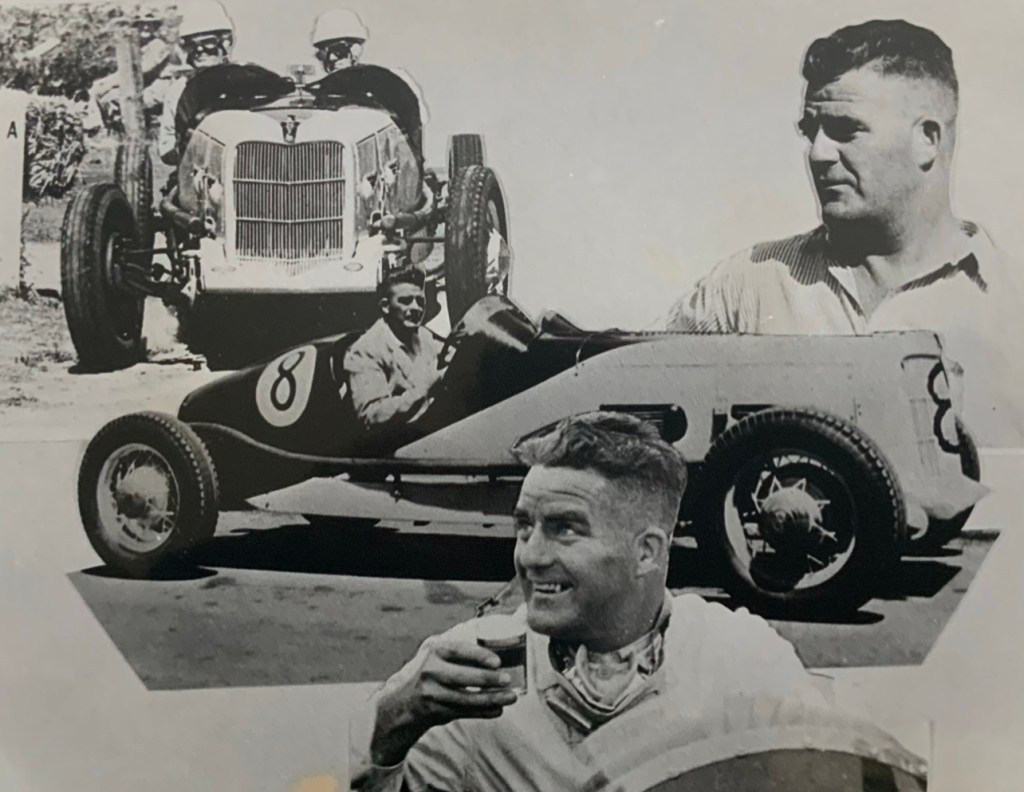
Evocative shot of Jack Phillips’ Ford V8 Special ascending Rob Roy hill in the Christmas Hills, 50km east of Melbourne

This car was one of the fastest and most successful racers in Australia – where handicap events then were standard fare – in the immediate pre and post-War period. Built by Phillips and Ted Parsons, his riding mechanic and partner in a Wangaratta Ford dealership, I’ve written about the combo before: https://primotipo.com/2023/03/07/jack-phillips-ted-parsons-ford-v8/

I’d love to know the date of the meeting and how Jack went? Before the January 13, 1939 Black Friday fires it seems?

(B King Collection)

Phillips/Parsons (above and below) on the way to a win in the South Australian Hundred on formidable Lobethal in 1940.

(B King Collection)

Credits…

Bob King Collection

Tailpiece…

(B King Collection)

Finito…

Credits..

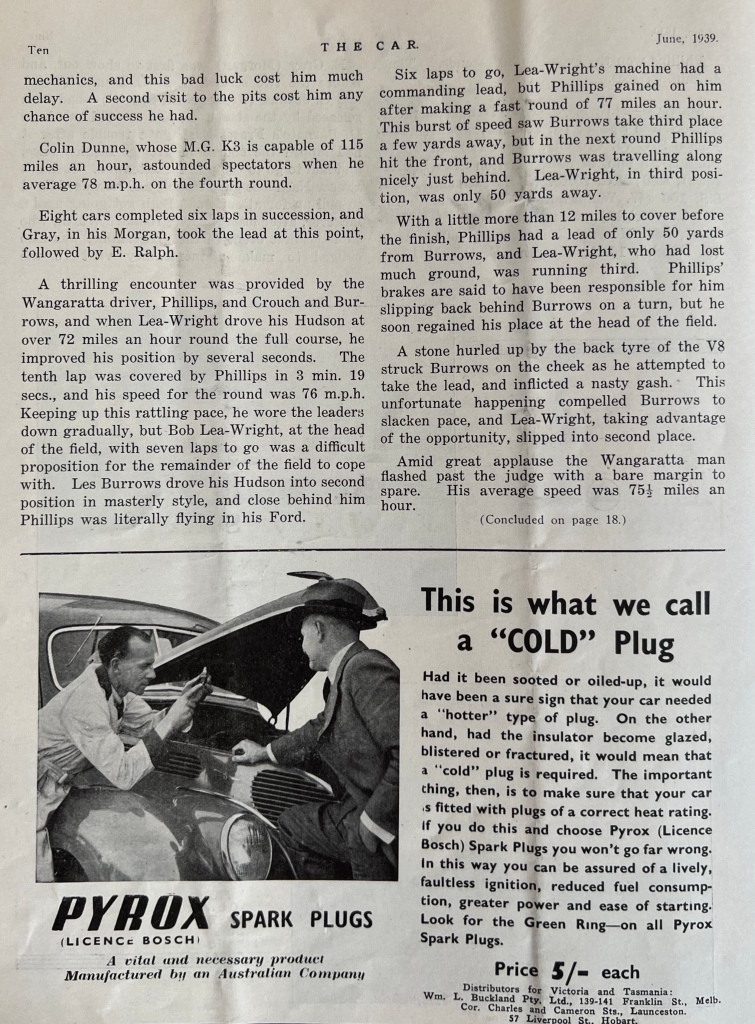
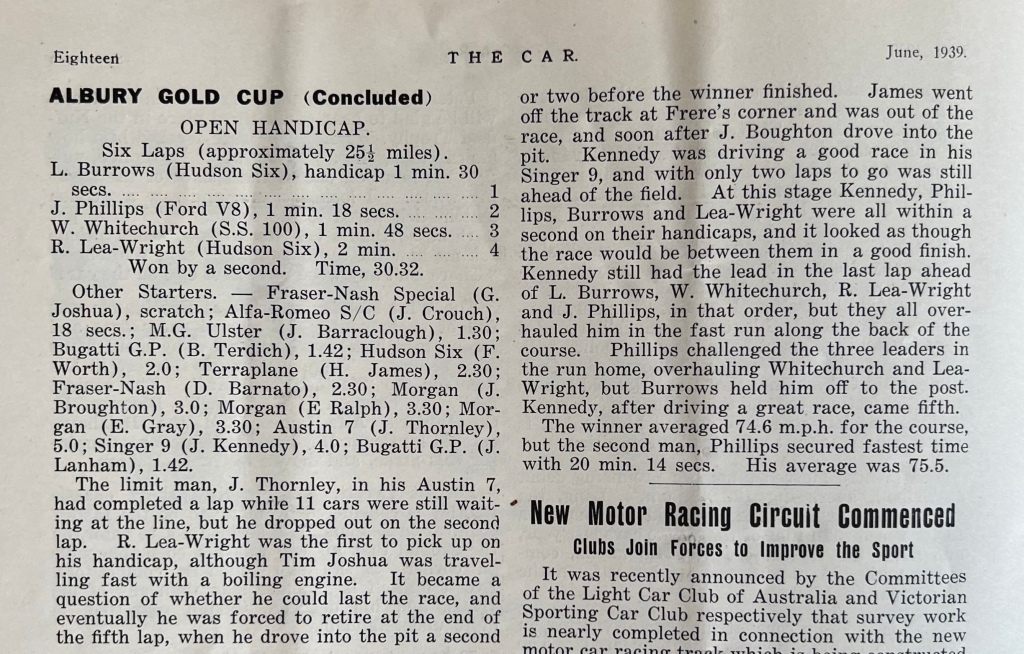
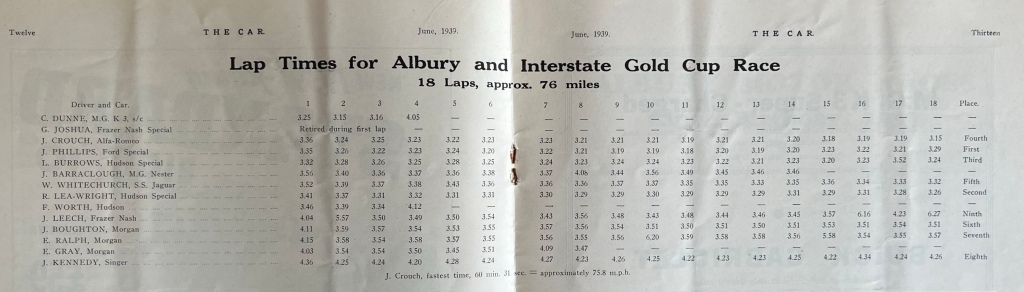
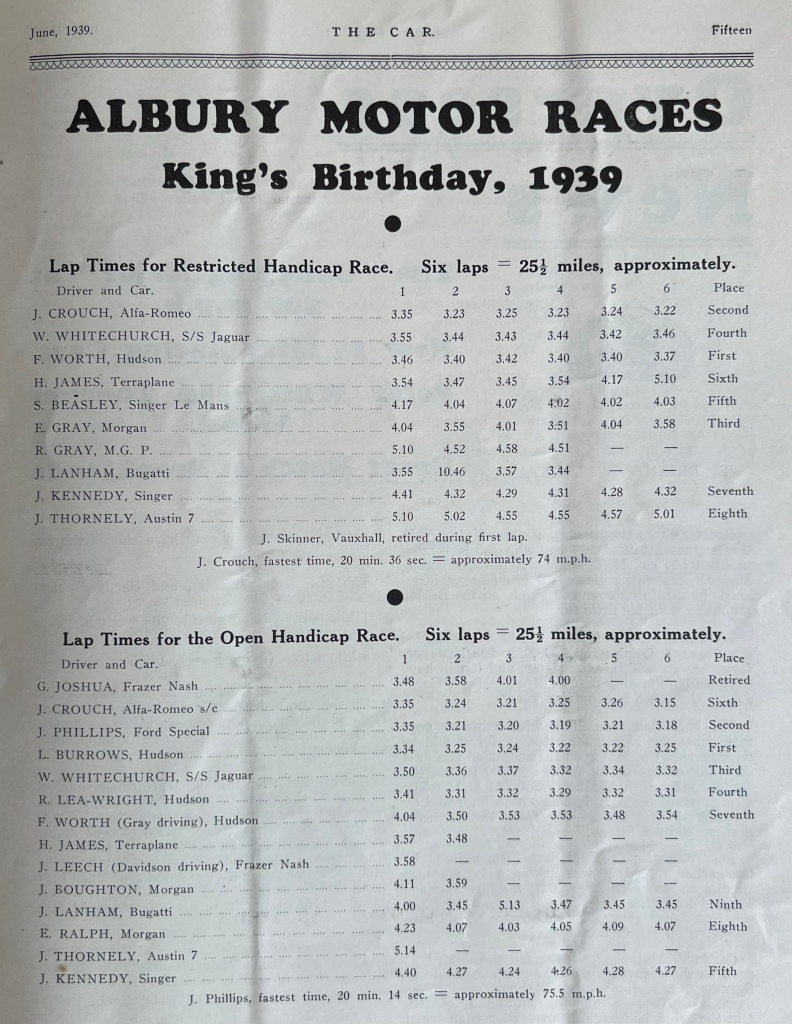
The Car June 1939 via the Bob King Collection…

Finito…

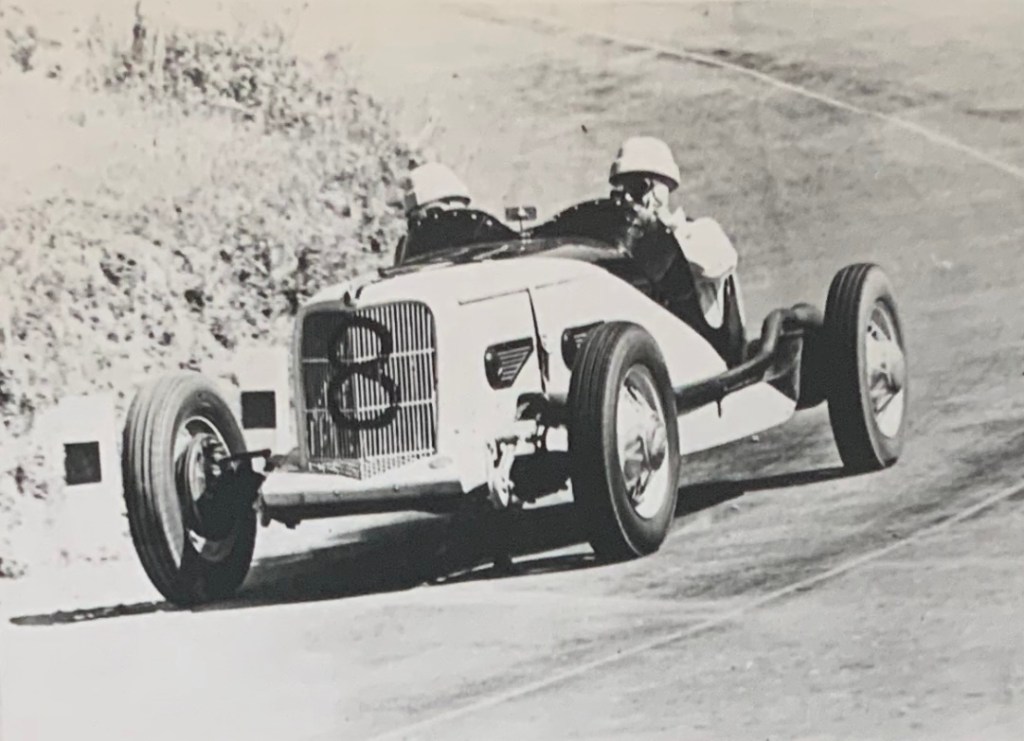
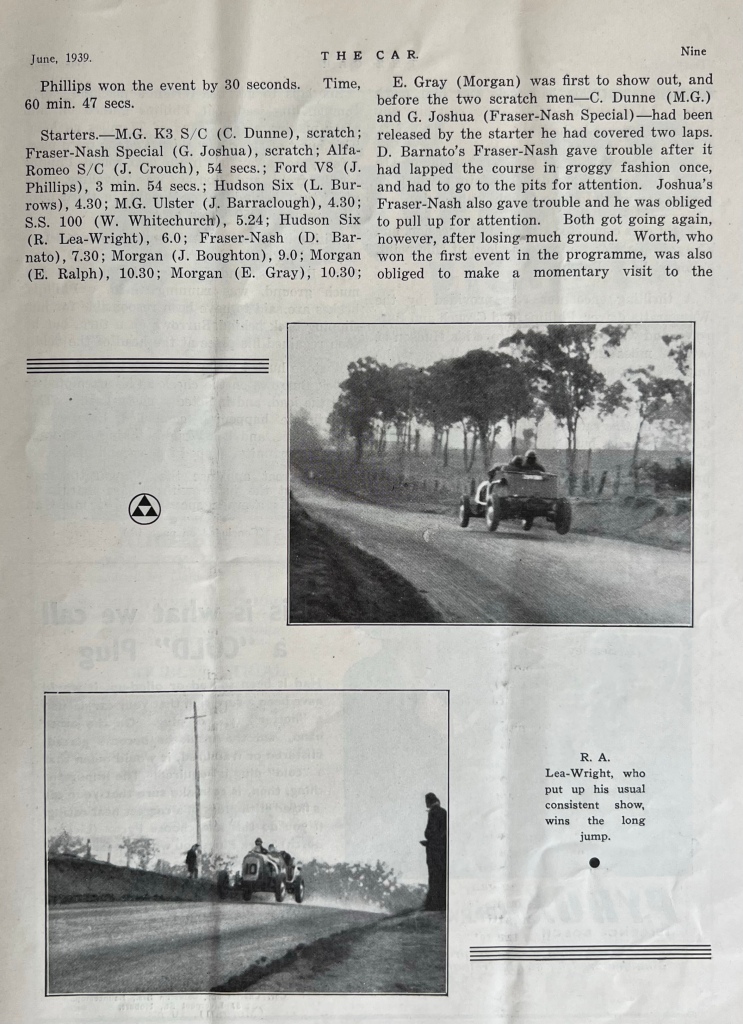
Phillips-Parsons airborne on the Wirlinga road circuit (cars4starters.com.au)

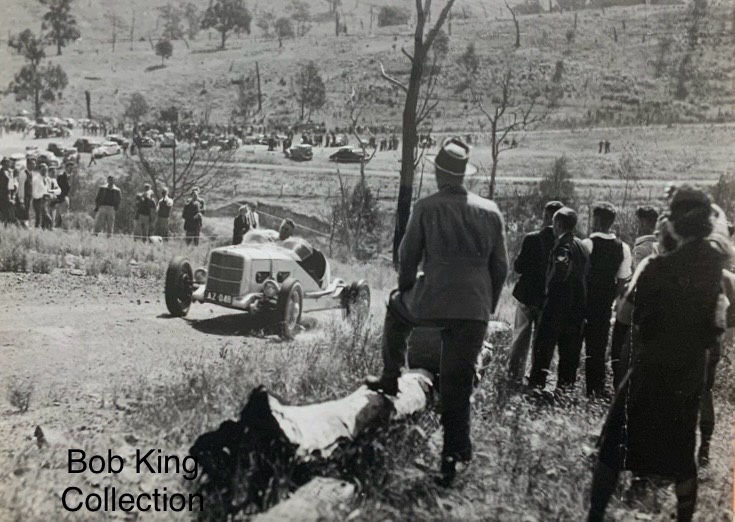
The Jack Phillips – Ted Parsons 1934 Ford V8 was Australia’s fastest of the breed pre-war. Here the machine is aviating on the Wirlinga road circuit – 10km northeast of Albury – on the Kings Birthday weekend in June 1940. The duo are on what was then called Orphanage Lane (now St Johns Road), the two crests which allowed the cars to take to the sky were near Corrys Road, Thurgoona, many thanks John Medley and Ray Bell.

The car was one of the most successful of all Australian racing cars in the immediate lead up to the conflict, placing sixth and third in the 1938 and 1939 Australian Grands Prix at Bathurst and Lobethal respectively. “In Victoria for the 1937-38 season, the Phillips Ford was awarded ‘The Car Trophy’ for the most successful competitor,” John Medley wrote.

The duo also won the Interstate Grand Prix/Albury and Interstate Cup on the Albury-Wirlinga road course in 1938-39 and the South Australian 100 at Lobethal in January 1940. On the same day the pair finished second to Les Burrows’ Hudson Terraplane Special in the Lobethal 50.

Bill and Ben the Flowerpot Men? Phillips/Parsons on the way to winning the South Australian 100 on New Years Day 1940 at Lobethal (unattributed)

As the lights were progressively turned down throughout 1940, the Phillips/Parsons pair were ninth in the Easter Bathurst 150 mile race won by Alf Barrett’s Alfa Romeo Monza. The car’s final meeting before being put on display for much of the conflict in their Wangaratta Motors Ford dealership was the 75 mile Albury and Interstate Cup Race on June 17, 1940. It was the final meeting on this road course and Barrett set the all-time lap record at 2 minutes 52 seconds but broke an axle and retired from the race. Harry James’ Terraplane won in a steady performance from John Crouch’s Alfa Romeo 8C2300 Le Mans with Phillips/Parsons third.

A great shot but whereizzit? Note the Victorian rego-plate and ‘tuned-length’ exhaust which will have aided driver and passenger comfort in longer races by dispensing with fumes and noise well-aft of the conducteurs. Quality of the body and standard of presentation impressive (cars4starters.com.au)

Based on a fire-damaged ‘34 sedan with over 20,000 miles on the clock, the car was modified in the partner’s Wangaratta, Victoria Ford dealership by fitment of a special, swoopy, lighter body. Engine enhancements included twin Winfield carburettors, Scintilla magneto, modified heads and free-flowing exhausts.

Timed at 115mph in top gear, it did 80 in second – at a then heady 6000rpm – using the 3.5:1 rear axle ratio. It was a paragon of solid reliability too, not suffering the overheating afflictions of so many modified Ford flatties.

The masked avengers on the Victor Harbor – Port Elliott road circuit during the 1936 South Australian Centenary Grand Prix, well protected from road detritus and here are using all of the available real estate. DNF after completing 21 of the 32 laps (B King Collection)

John Medley observed the car’s strengths, “The Phillips Ford simply soldiered on in prewar races on dirt and gravel roads, built tough to last to the finish. It continued to race postwar particularly in Victoria and South Australia where it was raced by South Australian Granton Harrison, by which time the newer breed of generally smaller and lighter V8 Specials could out-pace it.”

“Still it had been the mould in which the later V8s were shaped. In the postwar period, with T-Series MGs, Ford V8 specials were the backbone of Australian road racing.”

The Phillips/Parsons Ford was destroyed when it was crashed into a bridge, the remains were scrapped. Ted Parsons Jnr and his son Rob recreated the car between 2008-2014, the car took its bow at Winton in 2014.

Likely lads, who is the chap at left and where was the shot taken? (B King Collection)

Historian, Rob Bartholomaeus has worked out, by looking at his photographic archive, that a rebuild involving lightening and lowering the car and replacing the ’34 grille with a 1935 unit and a change in colour scheme from the one above, to the diagonal stripes shown in most of the other shots was made in late 1938 rather than 1937 as documented elsewhere. It seems the car started with underbody exhausts, then evolved to the side exhausts as above which were retained after the car was modified and repainted.

(B King Collection)

As noted above, the car’s last pre-war meeting was at Wirlinga in 1940. Bob King has this photograph in his collection, the caption on the back lists the racer as Bill Sinclair and the place, Oakleigh in 1942. I can find no Trove reference to this meeting at what is now a southern suburb of Melbourne. It appears as though the car is running the same number/roundel combination from Wirlinga, quite probably untouched. If anybody has information about the event do get in touch.

(unattributed)

It’s not clear when Granton Harrison bought the machine but he added to its tally of Australian Grands Prix entries, racing it at Point Cook to Melbourne’s west in 1948, where he placed fourth, and in 1950 at Nuriootpa in South Australia’s Barossa Valley where he was 11th in the race won by Doug Whiteford’s Ford V8 Special ‘Black Bess’, Bess was inspired by the Ossie Cranston and Phillips/Parsons Ford V8s.

The shot above is of Granton contesting the South Australian 100 at Lobethal on New Years Day, 1948. A good day for him too, he was second behind Jim Gullan’s Ballot Oldsmobile Special – and did fastest race time in the handicap event – continuing this car’s reputation for competitive reliability.

Back to the sequence of owners. Stephen Dalton has Granton advertising the car for sale in the February 1948 issue of Australian Motor Sports, with Jack O’Dea running it at Rob Roy in January 1949, perhaps Jack ran it as a borrow/view to purchase. As we can see Granton raced on for a couple of years after that, if anyone can help with the ownership sequence, do get in touch.

Ted (Edwin) Parsons wearing Warren Safety Helmet, goggles, white overalls – the pocket of which had the Ford V8 symbol embroidered – wearing a leather kidney belt. “To look your best under the overalls it was common for Ted to wear a white shirt and tie,” Ted’s son Rob Parsons wrote. Wirlinga 1939 perhaps, chap behind unknown (Parsons Family Collection)

Etcetera: The Warren Safety Aviation Helmet…

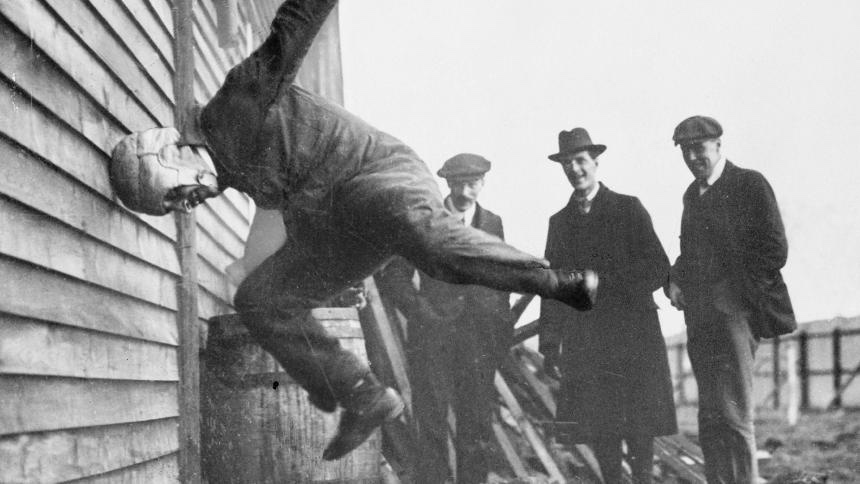
WT Warren invented the Warren Safety Helmet in 1912. The spring-equipped pilot safety helmet, made of leather and cork with vented ear collars was padded with horse hair and designed to minimise head injuries, the major cause of aero accident deaths at the time. The helmet was part of RAF listed kit issue from 1920-24.

Later models incorporated an ear audio piece and a breathing mask. By the time Phillips and Parsons used them they had been pensioned off by the RAF. Curtis and Taut & Co made the helmets under licence, the inscription in Parsons’ helmet, retained by the family, reads ‘No 2 Tuatz & Co Patent 17855 Aviators Safety Helmet. Maker Tautz & Co, Hunting Military and Multifit Tailors, 12 Grafton St, New Bond St, London.’

Phillips and Parsons with their distinctive Warren helmets after winning at Wirlinga in 1938 (J Dallinger)

Rob Parsons explained further, “While the helmet was obsolete for aircraft, they were used by Phillips and Parsons from 1935-39. With a lack of sporting regulations, these cars lacked the safety features of safety belts which were not considered a benefit for car racing. Drivers had a steering wheel and the co-driver a grab handle to hold onto. It would be common in rollovers to duck-down and brace yourself, perhaps to be trapped or otherwise flung free of the car, all with grave consequences.”

“Ted Parsons first introduction to motor racing was at the Benalla Airstrip circuit, perhaps a likely place to find such a helmet. On the back page of his photo album, he list drivers who died racing during his involvement, a reminder of the sport’s dangers. He retired from racing after the war to pursue golf and film-making.”

“Jack and Ted wore leather face shields to protect themselves from their own flying stones and other track debris, an idea adapted from the oxygen flying mask. The leather was painted white to match the colour of the car, aviation goggles protected their eyes,” Parsons wrote.

(Der Spiegel)

WT Warren tests his new helmet – as one does – by headbutting the wall of William Ewen’s Hendon flying school, where Warren was a trainee, in 1912.

What follows is the German-English translation from an article in Der Spiegel.

“In a 1912 issue of Flight magazine, British inventor WT Warren’s invention, a protective flight helmet is demonstrated. The image is often erroneously reported to be a football helmet.”

‘The wall against which the helmet carrier ran belongs to the flying school of William Hugh Ewen. The owner (middle) and and his chief pilot LWF Turner (left) are behind. The Lord in the foreground is his student Mr WT Warren. And, no, he has not failed the flight test and is just reacting to his anger.” Clearly the German hilarity is lost in translation.

“Dated 1912, Mr Warren is a tinkerer. He introduced his latest invention to experienced pilots: a protective helmet ‘that will attract considerable attention’, Flight magazine wrote. Warren’s leather cap was padded with horsehair: A system of steel springs should intercept any impact, thus reducing the risk of injury. Head injuries were the leading cause of death in flight accidents.”

Credits…

‘John Snow:Classic Motor Racer’ John Medley, State Library of Western Australia, cars4starters.com.au, Bob King Collection, ‘The Warren Safety Aviation Helmet’ by Rob Parsons in the July 2021 issue of ‘The Light Shaft’ – Austin 7 Club magazine, Parsons Family Collection via austin7club.org, John Dallinger, Der Spiegel

Tailpiece…

(SLWA)

I’m cheating a bit, this 1934 Ford is a V8 ute rather than a sedan, but you get the jist of it.

The Phillips-Parsons racer was not too far removed from a roadie, rather than an out-and-out bespoke racer, reliant as it was on the standard chassis, axles wheel to wheel, differential and gearbox.

The ute is singing for its supper, doing a meat delivery in country Western Australia in 1937.

Finito…

(J Dallinger)

Jack Phillips and Ted Parsons looking happy with themselves aboard their Ford V8 Special having won the Interstate Grand Prix at Wirlinga, Albury on 19 March 1938.

The Ford V8 found its way into all kinds of Australian specials both pre and post war, this was one of the most beautifully built and successful of them all. See here for a piece on this race; https://primotipo.com/2019/01/11/interstate-grand-prix-wirlinga-albury-1938/

These two mates were business partners in a motor dealership in Wangaratta which distributed Ford and other brands. I wonder if one of the admiring, capped kids is Jack’s son Ron Phillips who was a star in an Austin Healey 100S and Cooper T38 Jaguar in the mid-fifties to early sixties?

It’s pretty boring writing about familiar stuff, the journey of discovery is far more engaging. I think a lot about racing in the context of the times, how people lived, what they did with their leisure hours but it’s not necessarily easy to find the right photographs.

Not so this time, John J ‘Jack’ Dallinger ran a photography business, which still exists in Albury. Along the way, he and his staff recorded the daily lives of the citizens of the border city and surrounds, I’ve chosen some images of typical life justaposed with racing shots. All of the photographs were taken by Dallinger and his team in Albury in the thirties, unless attributed otherwise.

Locomotive’3623’ leaves Albury Station during the thirties. Obviously some sort of special occasion for the train to be decorated as it is


Albury Show wood-chopping competition, takes me back to watching the O’Toole brothers on Channel 7’s Sunday ‘World of Sport’ in the sixties


Motorcycle racing blazed the trail for cars in just about every sphere of competition in Australia, speedways included.

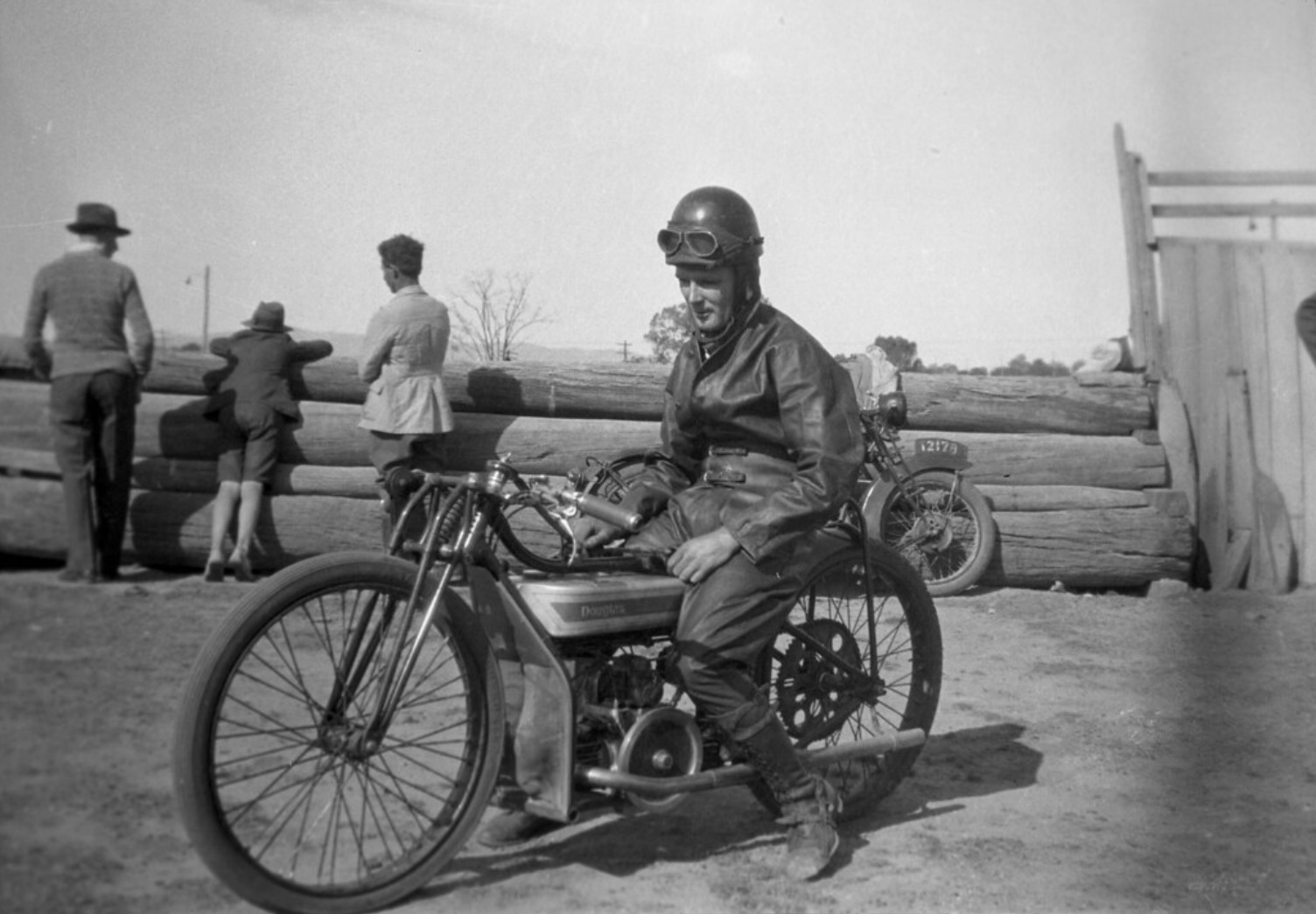
This is Aub Boyton aboard a Douglas, perhaps a 500cc DT5 or DT6- Douglas being one of the most popular and successful speedway bikes of the era.


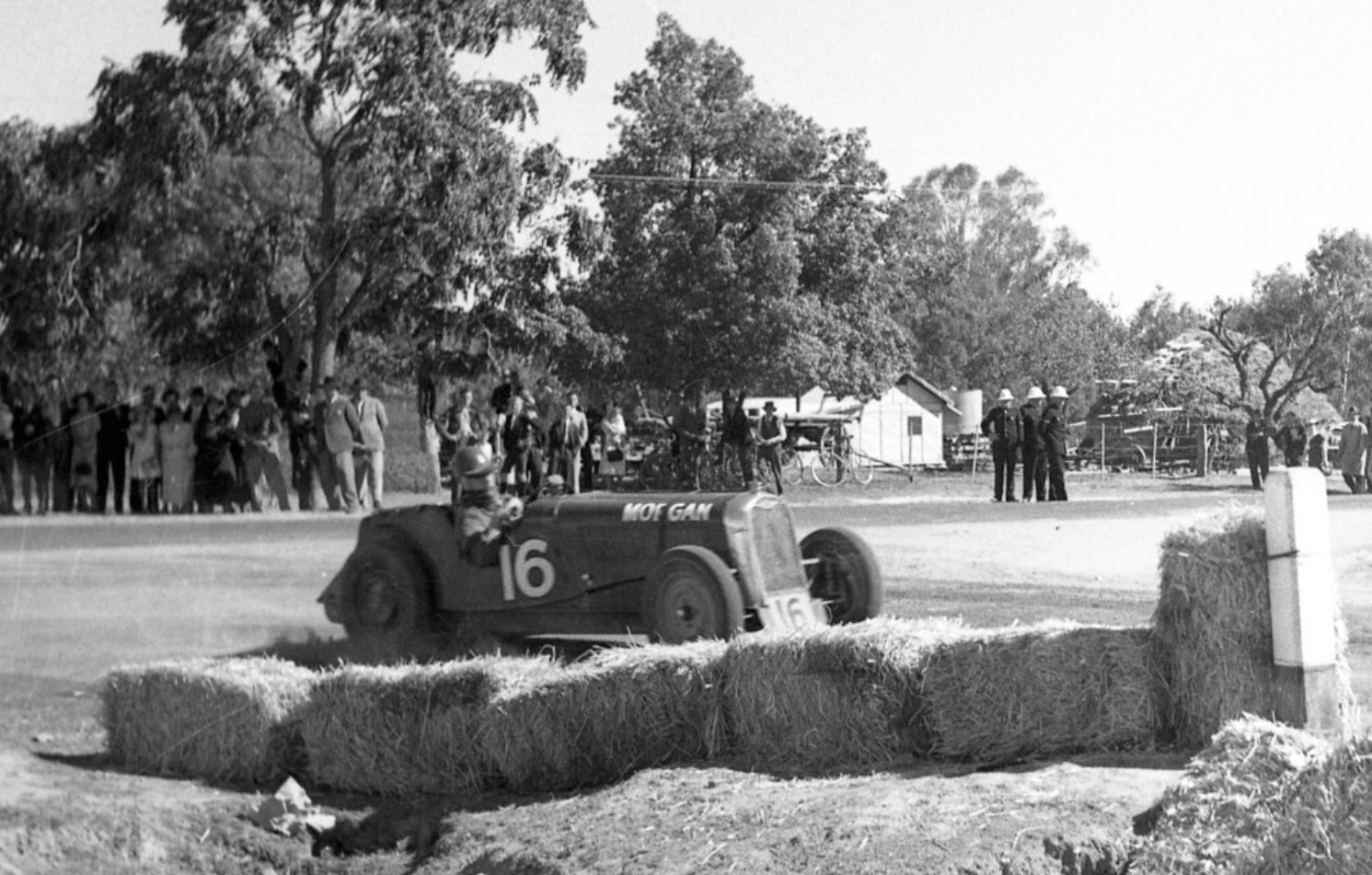
Jim Boughton, Morgan at Wirlinga in 1938.

A year later this car had morphed into a single-seater in time for the Australian Grand Prix at Lobethal the following January, he failed to finish the race won by Allan Tomlinson’s MG TA Spl s/c. Better still, the Morgan remains extant.

Boating on Lake Hume, 1940s


Out and about in an Austin 7, this one is fitted with a James Flood built two seater sports body.

Of all steel and ash construction, the machine used a factory supplied radiator cowling forward of which was a fairing covering dummy dumb irons onto which was painted the registration number. The running gear comprised a production Austin chassis and mechanicals with a raked steering column.

Large flowing wings kept the elements from the occupants. ‘As was fashionable with many Australian models of this period, fixed split front windscreens were mounted on the scuttle with no provision of any weather protection’, many thanks to Tony Johns on this little Austin.

Keen spectators taking a look at competitors in the Wirlinga paddock prior to the 1938 Interstate Grand Prix.

Car #3 is Tim Joshua’s Frazer Nash, not too far from being restored, alongside is former Maroubra ace Hope Bartlett’s MG Q Type and then car #6, the winning Ford V8 Spl of Phillips/Parsons.

Cricket match near Tallangatta


Billycart race in Pemberton Street, Albury 1940s.

Too much roll stiffness? is that right front taking some air. I wonder if either of these two young tyros progressed to motorised competition?

I’m sure one of you will be able to help with the Dodge Ute model year, 1930s, i’m also intrigued to know the address of Albury Motors Pty. Ltd.

The CA Williamson Chrysler ahead of G Winton, AC and L Evans Vauxhall, Wirlinga 1938.


Waterskiing on Lake Hume


Golden Arrow on display in Albury, a bit on the machine here; https://primotipo.com/2019/06/04/wot-the-bloody-ell-is-that/

Bill Boddy, in MotorSport, wrote that after an exhibition tour of Australia the car returned to England, that line is written in such a way which implies the car made the trip here after setting the Land Speed Record at Daytona at 231.446 mph on 13 March 1929. So, its later in 1929, the machine was owned by the Wakefield Company, clearly a lot of Castrol lubricants were sold here at the time.

Sir Henry Segrave was later killed aboard ‘Miss England II’ on 13 June 1930 after raising the Water Speed Record to 98.76 mph at Lake Windemere.

Tony John’s sent in a snippet from the April Fools Day edition of the 1931 ‘Bulletin’. “Drag” wrote ‘It is not often that one finds a car that has travelled 43,000 miles without an overhaul, and a racing car at that…the late Segrave’s Golden Arrow…left England on February 6 for the Buenos Aires exhibition after having made a tour of the Dominions. All its journeying has been done on board a ship, with the result that it has covered, by this means, over 1,000 times the distance it has done under its own power.’

Albury Gift finish 1939


‘NBN man’ on the road- make, model and year folks?

Credits…

John J Dallinger, Tony Johns Collection, Terdich Collection-VSCC scanned by Graham Miller and shared by his son David via Tony Johns

Etcetera…

(Terdich Collection via VSCC and Graeme and David Miller)

After upload our friend Tony Johns got in touch with these photos, ‘Having read your post i now understand the origin of these two photos in the Arthur Terdich Collection (winner of 1929 AGP @ Phillip Island). I was not aware the Golden Arrow ever came to Australia’ nor was I.

Some quick work on Trove reveals the car did a comprehensive tour of Australia in April-May 1930 taking in the west, and eastern seaboard, with over 70,000 people reported as seeing the car in Sydney’s showgrounds.

23.9 litre Napier Lion VIIA W-12 engine produced 930bhp @ 3,400rpm. Designed by John Samuel Irving and built at Kenelm Lee Guinness’ Robinhood Engineering Works Ltd, at Putney Vale, in 1928. First run in January 1929, LSR of 231.362mph at Daytona on March 11, 1929.

Terdich was a Melburnian so the above photograph was probably taken at the Royal Exhibition Buildings in the first week of May, ‘Motorclassica’ is held there these days, car shows continue at the marvellous old venue.

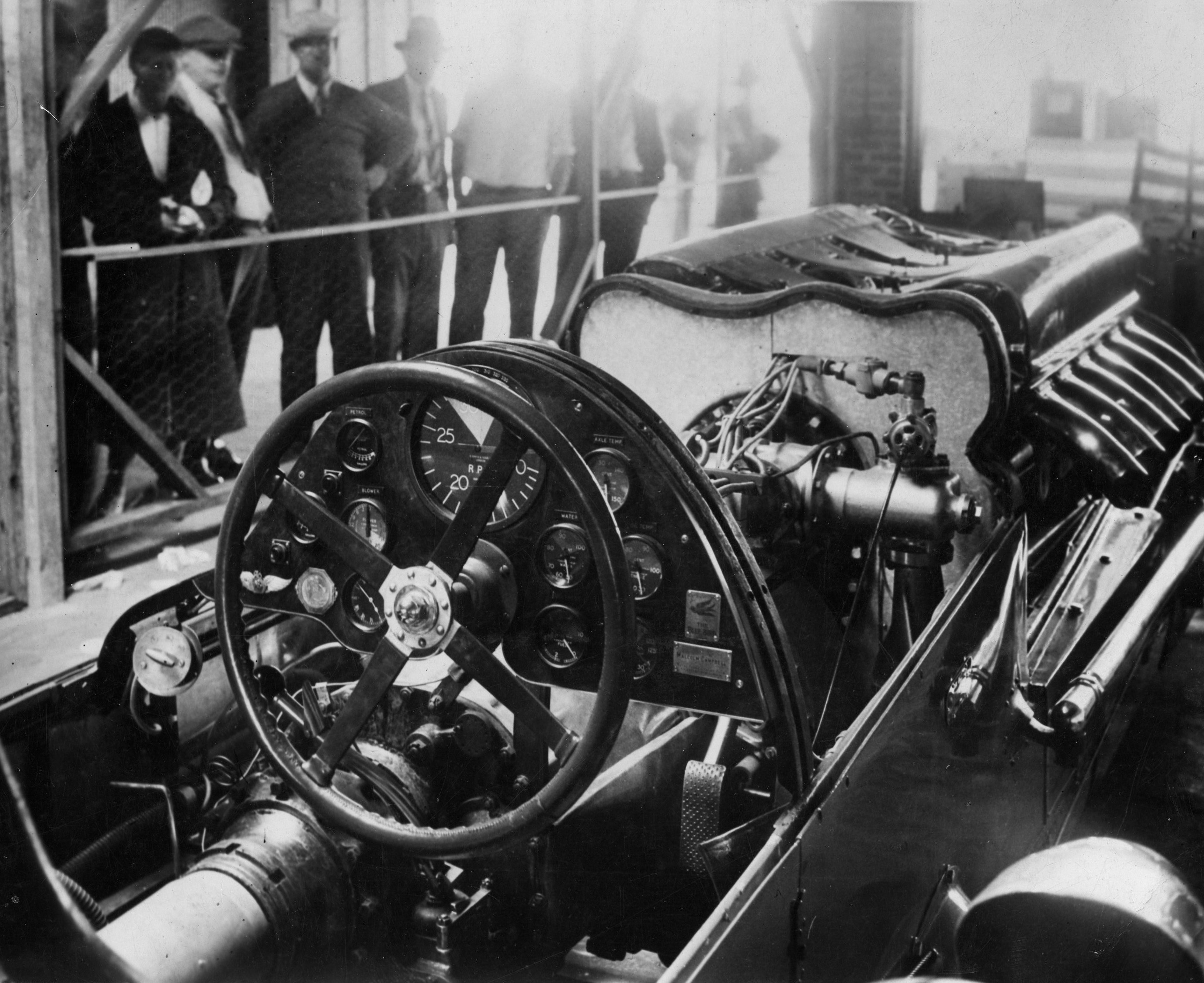
Checkout the rare, period cockpit shot of Bluebird below, it is not clear if Bluebird was touring at the same time as Golden Arrow.

‘Not sure that a current F1 driver would have time to read all the instruments’ Tony wryly observes. There are ten gauges to take in whilst travelling over 200mph- tach, petrol, blower (pressure or temps?) , one obscured, a clock!, then to the left are a car club and St Christopher badges?, then an adjustable knob on the chassis rail itself. On the right are axle temp, water, another temp gauge with another two at the bottom, plus Malcolm Campbell Ltd and Blue Bird brass plates.

(Terdich Collection via VSCC and Graeme and David Miller)

Tailpiece: Albury Sports Ground 1930s…

Finito…


(D Willis)

Bill Cuncliffe, 22 years of age guides his ex-Snow Sefton Strathpine Ford V8 Spl around the wide open spaces of Lowood in 1956…

Dick Willis shared these wonderful, evocative photographs of Cuncliffe at the ex-RAAF Airfield circuit in Queensland’s Somerset Region 70 Km west of Brisbane.

The mountains (you would call them hills in Europe or North America) are the Great Dividing Range which runs down the east coast of Australia from ‘top to bottom’.

Cuncliffe poses at home after purchase from Sefton, note Dad’s Morrie Minor (D Willis)

The 4.2 litre Ford V8 powered device was quite a formidable machine for a young driver- Bill continued to race into the sixties, he finished eighth in the 1963 Bathurst 500 touring car classic aboard a Ford Cortina GT shared with fellow Queenslander Barry Broomhall.

Built by Snow Sefton at his Lawnton Motors garage in Gympie Road, Strathpine, the Ford V8 Spl contested both the 1949 Leyburn and 1954 Southport Australian Grands Prix.

Sefton on the Leyburn AGP grid 1949. From L>R- #22 George Pearse MG TB Spl, #18 Garry Coghlan MG TC Spl, #17 Dick Cobden MG TC Spl, #7 Alan Larsen Cadillac Spl V8 (Willis/Thallon)

At Leyburn Sefton raced this car, his more conventional ‘Strathpine Spl’ V8 racer ‘having competed elsewhere in Queensland with a Ford V8/Jeep hybrid which allowed a choice of either front drive or four- wheel drive’ Graham Howard wrote in ‘The History of The Australian Grand Prix’.

At Southport, Sefton raced ‘basically the same car he had run in the 1949 AGP at Leyburn’ retiring after completing 21 of the 27 lap scratch race won by Lex Davison’s HWM Jaguar.

Ray Bell reports that the special was fitted with a more powerful and reliable ohv Cadillac V8 by the end of the fifties.

Snow Sefton in the Strathpine Ford V8 Spl in Gympie Road Strathpine in the late 1940’s, out front of his garage perhaps. Awesome if somewhat noisy road car (B Pritchard)

Sefton was the proprietor of the Lawnton Motors for more than thirty years, he competed at all of the Queensland venues post-war. ‘Snow was always the crowd favourite at the Exhibition Speedway every Saturday night in Brisbane with his black and white 1936 Ford (the No 36). Snow’s sponsorship deal for the 1936 Ford is a classic story in itself and involved some of Brisbane’s biggest Holden Dealers! He was also famous for thrilling country crowds with his staunt driving at shows all over Queensland up until the early 1960’s’ said the CHACC.

Etcetera…

The photographs below are of Bill Cuncliffe during the 1957-1958 period.

(Willis/Thallon)

Cuncliffe at the Samsonvale Hillclimb where he was second fastest time of the day. Samsonvale is 35 Km north of Brisbane. Looks like a wild place, the rugged special well suited to dirt surface.

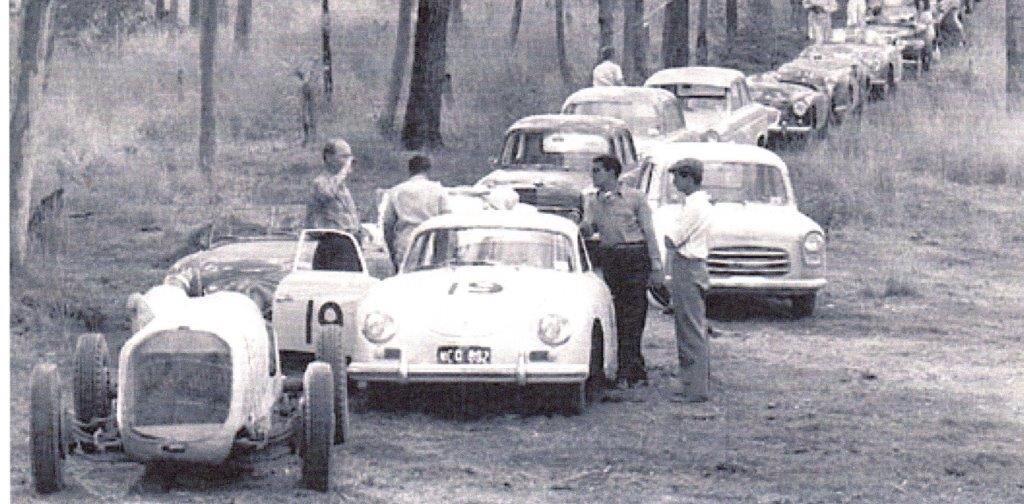
Assistance with the owner/drivers lined up below welcome. Sid Sakzewski Porsche 356?

(Willis/Thallon)

The photographs below are at the Strathpine Airfield circuit.

That location is 25 Km from Brisbane to the north and was a major Queensland motorsport venue from the end of the war until the opening of Lakeside in 1961.

Snow Sefton is credited as one of the driving forces in establishing Strathpine, he and fellow enthusiasts ‘borrowed the Pine Rivers Shire Council road making machinery’ to finish the track for the first meeting on 11 August 1946.

‘They worked like beavers all weekend, returned the equipment before dark on Sunday night, then wired the fence back up. (Most of the councillors were farmers who lived out of town and would not have heard the racket)’ the CHACC reported.

The color shots just ooze the atmosphere and vibe of the times, we are uncertain of the meeting dates- quite probably more than one meeting, note the missing radiator cowl in one image.

(Willis/Thallon)

Cuncliffe getting some encouragement from his mates before the off by the look of it! Below the radiator cowl is missing- hors de combat or removed for additional cooling I wonder?

(Willis/Thallon)

Photos above and below are taken on the same Strathpine day it seems, sans radiator cowling, Quentin Miles thinks his father Bill took the photo below in 1957.

(B and Q Miles)

It really is a most agreeable looking race venue isn’t it, got a real picnic hamper feel to it?

(Willis/Thallon)

Credits…

Dick Willis Collection, Don Thallon Collection, Ray Bell, Bill Miles via Quentin Miles, ‘The History of The Australian Grand Prix’ Graham Howard and Others, ‘CHACC’- Classic and Historic Automobile Club of Caboolture magazine article in September 2005

Tailpiece: Cuncliffe, Lowood 1956…

(D Willis)

Finito…