Posts Tagged ‘George Bonser’

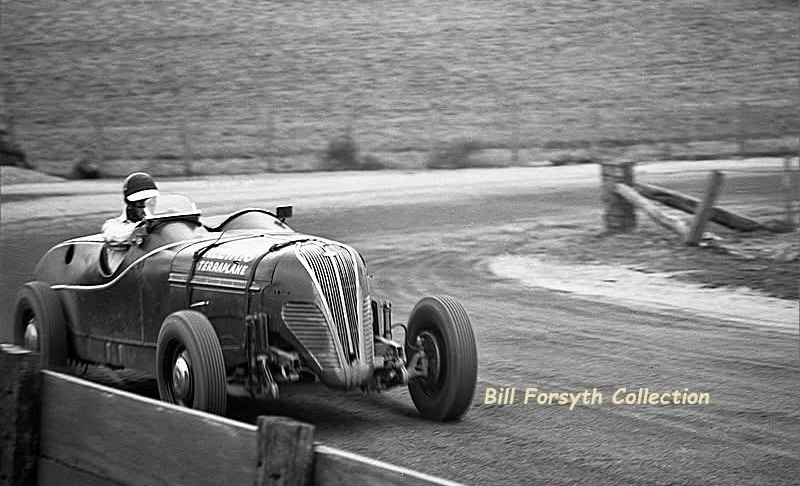
George Bonser’s Terraplane Special during the 1938 Australian Grand Prix at Bathurst.

He was tenth in the 3.5-litre straight-six powered machine in the race won convincingly by Peter Whitehead’s ERA B-Type on April 18.

This car was raced pre-War at venues such as Wirlinga, where the duo placed second in the 1938 Interstate GP behind Jack Phillip’s Ford V8 Special, and at Penrith, where Bonser won the All Powers Car Championship of Australia on Anzac Day that same year.
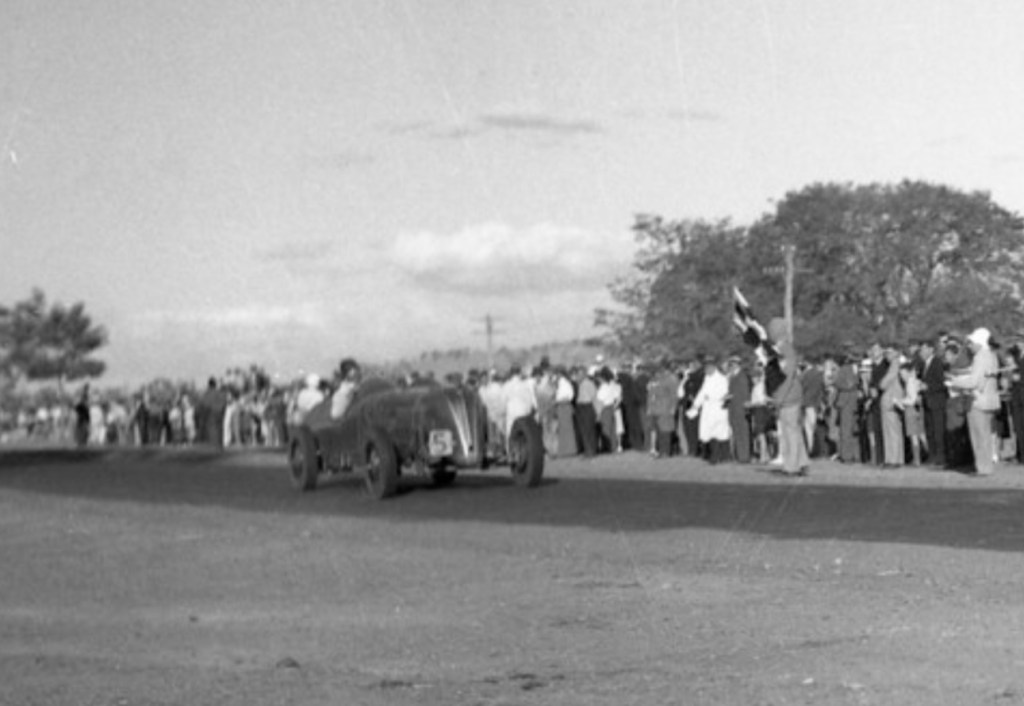
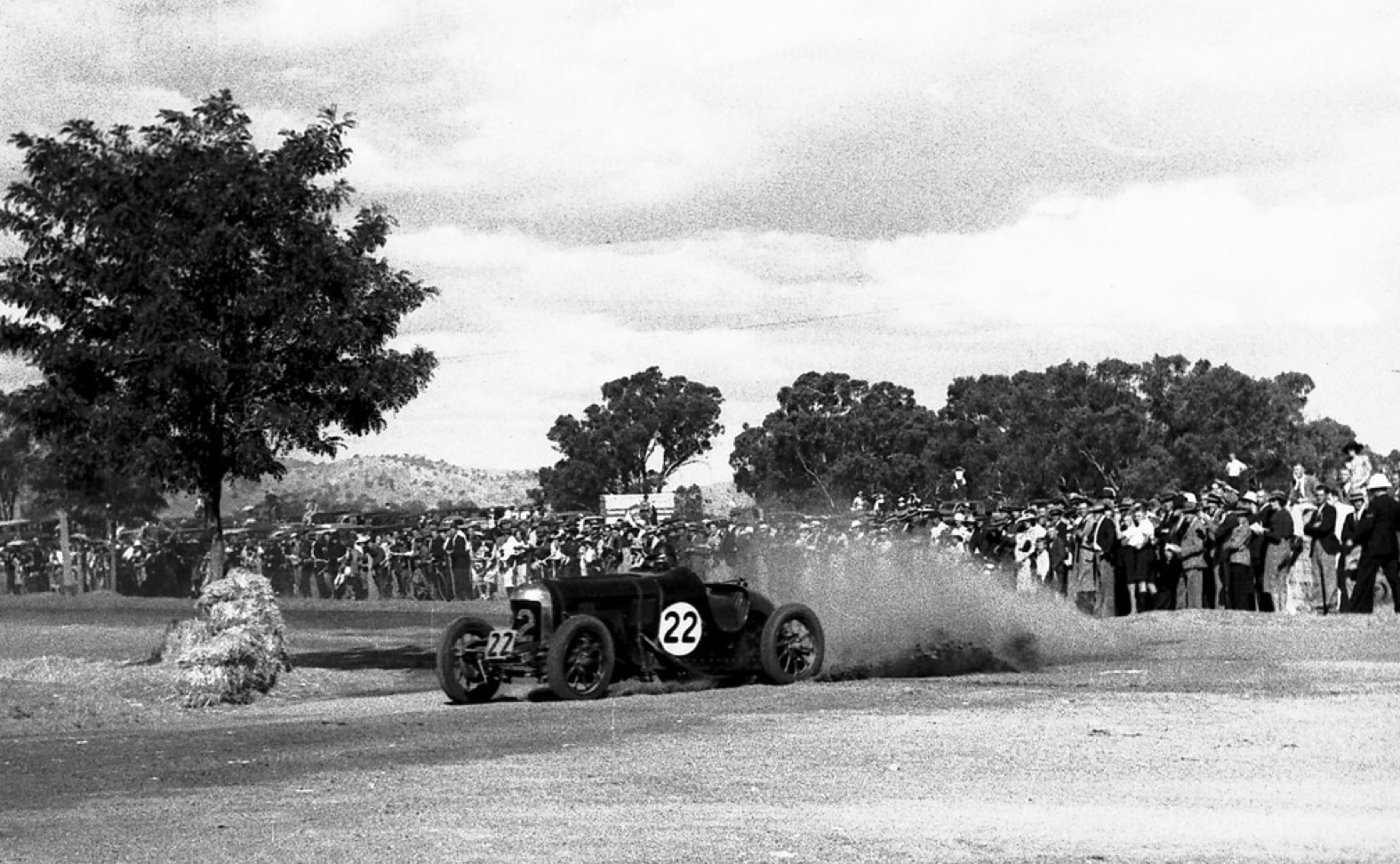
Bonser’s Terraplane finishes the Interstate Grand Prix at Wirlinga in 1938, second behind the Jack Phillips/Ted Parsons Ford V8 Special (J Dallinger)
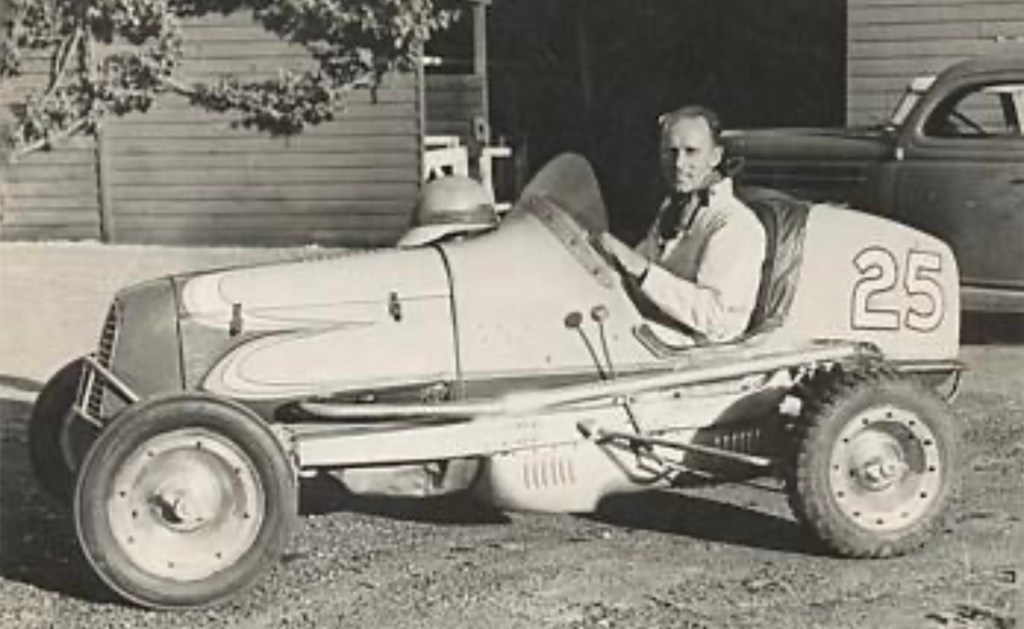
Bonser aboard a Midget pre-war (B Darby Collection)

Bonser commenced racing midgets in 1940, served in the RAAF during WW2 then announced his return to Midget racing in 1945 and soon became one of the sports’ stars.

By May 1946 he was regarded as the fastest speedcar driver in Brisbane after winning two races in the third Test between New Zealand and Australian drivers at the Exhibition track. He also raced his Alta Ford on the circuits, at Strathpine in August 1946 for example.

He retired in 1950 then returned in ‘52 and was still competitive in 1953 in an Edelbrock V8 powered car having won the NSW Speedcar Championship at the Speedway Royale Sydney in February. In May the following year, he looked to have won the Australian title in Brisbane until piston failure in his Ford V8 ’60’ intervened.

During the lead-up to the ’54 AGP at Southport, Bonser and Clive Gibson worked with Frank Kleinig on the final, slim, monoposto variant of the Kleinig Hudson Special (DNS electrical short) but what became of George Bonser after this folks?

George Bonser (right), winner of the All Powers Championship of Australia on Anzac Day, Penrith in 1938 in his Terraplane Spl. It’s Frank Kleinig aboard his Kleinig Hudson Spl alongside (The Western Weekender)
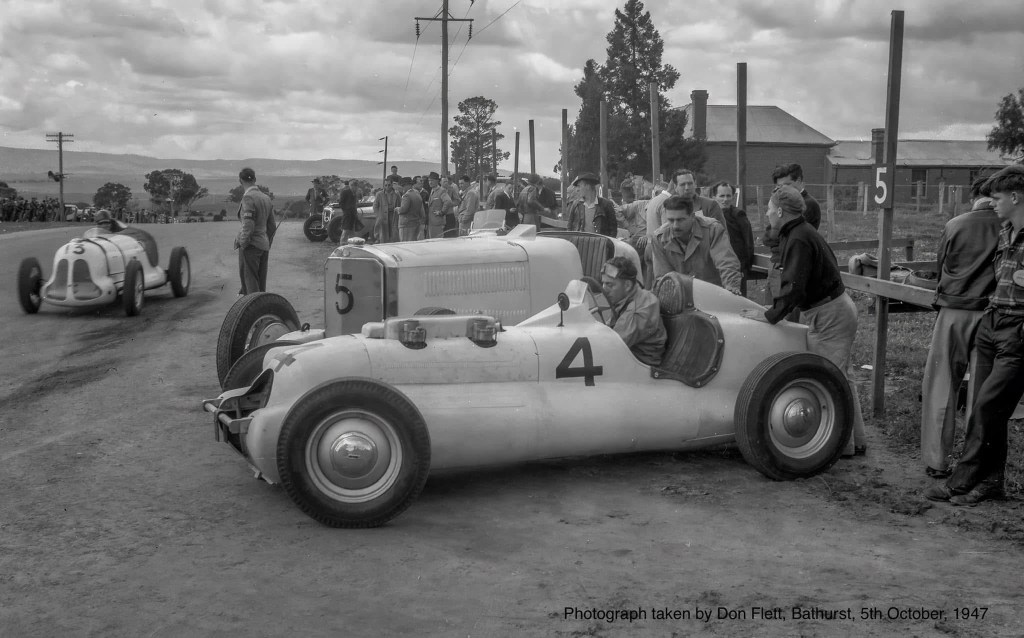
Australian GP, Bathurst October 6, 1947. #13 Bill McLachlan, MG TA Spl, #5 Lex Davison’s Mercedes Benz SSK and #4 Ron Ewing’s Buick Spl (D Flett)

Bonser’s Terraplane beast survived into the post-war era but gave up its life – its chassis and wheels at least – to form the basis of the (Ron M) Ewing Buick Special, which was famously built by Ewing, an ambulance worker, in the backyard of the Summer Hill, Sydney ambulance station!

Other ingredients of the car included an ‘aircraft-type cooling system’, Lancia gearbox, ‘some parts collected in Malaya where Mr Ewing was a war prisoner, including dashboard instruments from a crashed Japanese plane’, while Bugatti bits comprised the steering wheel, box, and column.

An MG and the Ewing Buick Special at Marsden Park, date unknown

With its Buick 40 straight-eight engine, the ‘League of Nations Special’, as one wag christened it, was considered a strong contender for line honours in the October 1946 New South Wales GP at Mount Panorama, but the car blew its clutch.

He set FTD at the Mona Vale hillclimb in April 1947 and returned to Bathurst for the AGP that October but again failed to finish. By March 1948, Ewing entered the New South Wales Hundred at Bathurst in the Spike Special, where he was again unsuccessful, completing only 13 of the 25 laps won by John Barraclough’s MG NE Magnette.

Ewing sold the car in late 1949 or early 1950 and planned to build another ‘over 200 horsepower’ Buick-powered special with a tubular chassis and independent front suspension. Did he realise that aspiration folks?
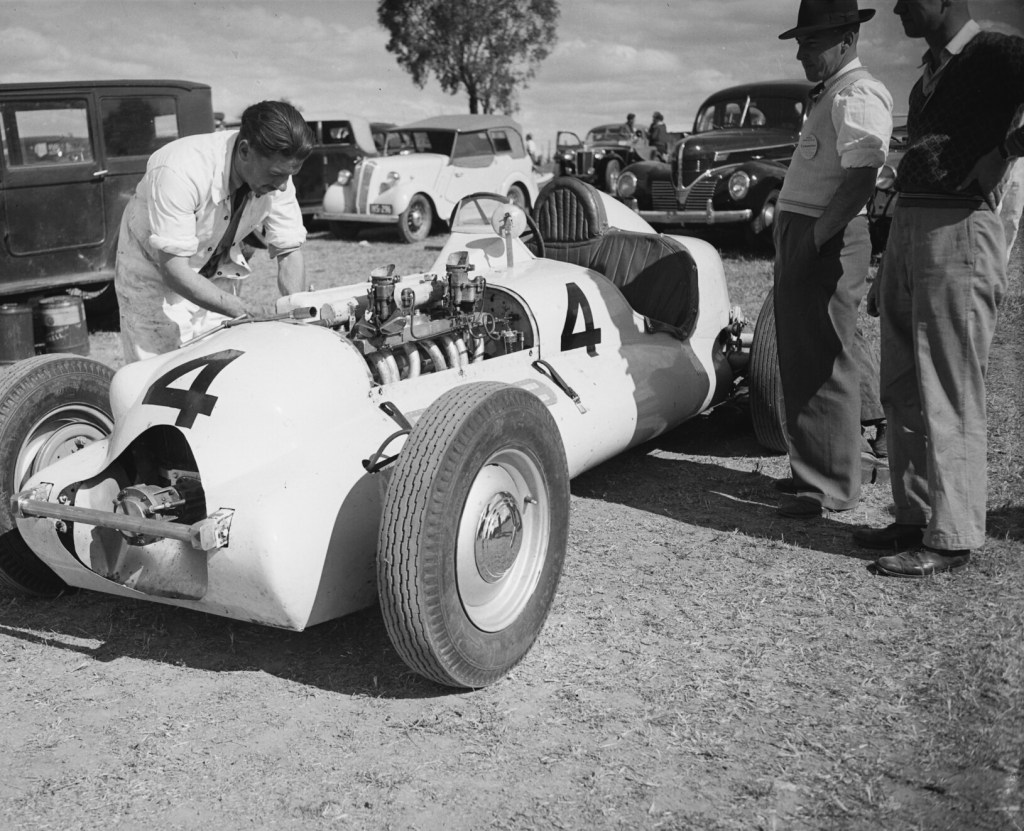
Ewing Buick Spl, NSW GP, Bathurst, October 1946 (ACP-SLNSW)

Etcetera…

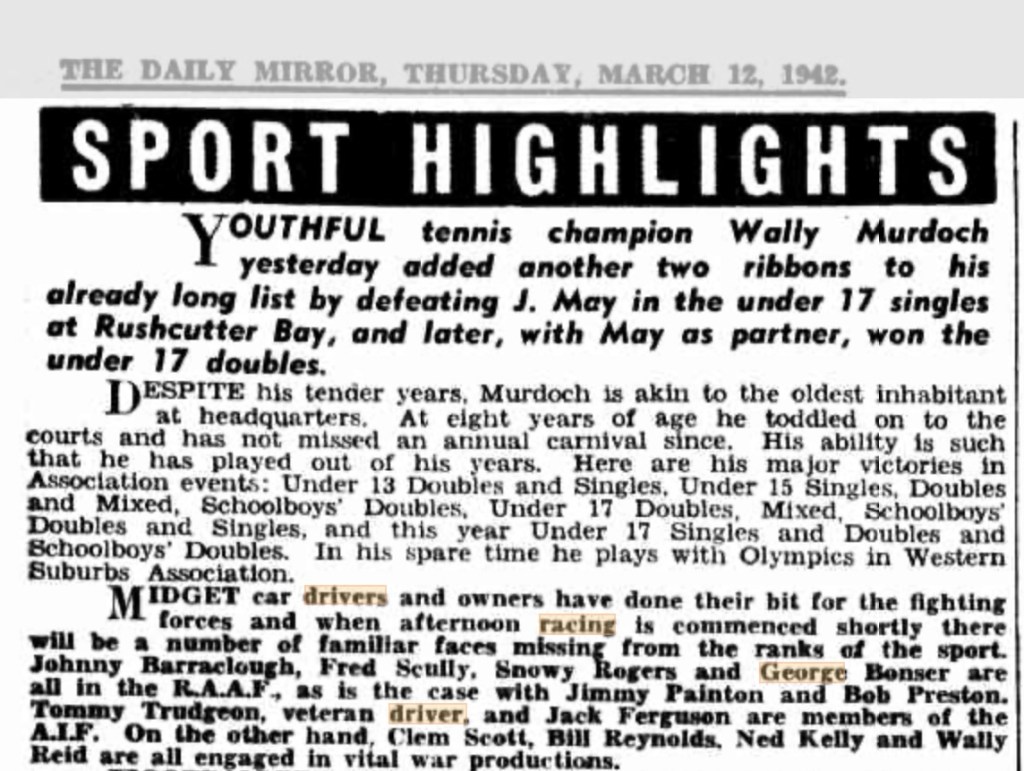
Midget car drivers and owners have done their bit for the fighting forces and when afternoon racing is commenced shortly, there will be a number of familiar faces missing from the ranks of the sport. Johnnny Barraclough, Fred Scully, Snowy Rogers and George Bonser are all in the R.A.A.F, as is the case with Jimmy Painton and Bob Preston. Tommy Trudgeon, veteran driver, and Jack Ferguson are members of the A.I.F. On the other hand, Clem Scott, Bill Reynolds. Ned Kelly and Wally Reid are all engaged in vital war productions.

This article by Les Vowles in The Telegraph, Brisbane, was published on October 11, 1947.

To young and old speedway enthusiasts, George Bonser is a bonser driver. No one took his racing more seriously than Bonser: last season, he had more than his share of misfortune, but this season he has taken up quarters in his garage, so that, in the pursuit of still more power and speed, he will always be on the spot to carry out any improvement to his car that may come to mind.

Its not unusual for a driver-mechanic to stay up all night working on his car in preparation for Saturday night’s racing, and then it’s a decided advantage to have one’s sleeping quarters adjacent to one’s work

No other driver admired the American cars more than Bonser when Niday and Grimm were here earlier this year. Their cars were parked with Bonser’s, and he made a careful study of them. Since then, Bonser has incorporated many parts he obtained from the visitors and also altered the design of parts of his car.

One of these necessitated the abandonment of a starting clutch, which is considered obsolete in America but which is a necessity if a driver is to get away smartly in our clutch start handicaps. However Bonser’s car now is so fast that he partly makes up for the necessity to use a push start.

George Bonser #2 alongside British comedian Tommy Trinder after a handicap match race at Brisbane Exhibition Speedway in 1947 (SLQ)

Bonser came into the car racing game via motorcycles. He and another motorcyclist figured in a remarkable pair of accidents that put one out of the racing game but Bonser kept going and is today ranked in the first flight of Australian drivers.

It was at a motorcycle road racing circuit that Bonser and a rider named James were having a duel for supremacy. Lap after lap they tore around and as the finish approached, the crowd encroached on the course. Dashing down to the line, Bonser’s bike got into a wobble and became uncontrollable. It crashed into the crowd with fatal results for one spectator.

After that race, Bonser decided to take to car racing. It was at Penrith, a wide dirt track, that the remarkable sequel to the original accident occurred.

The motorcyclist with whom Bonser had been racing when the earlier fatal accident occurred, also had graduated to motorcar racing and was a competitor at Penrith in the same race as Bonser.

Many parties picnicked at the all-day meetings at Penrith (Monday June 13, 1938) before the war. At the top of the track was a shallow drain to prevent seepage onto the track, and then came the safety fence. Spectators had strict instructions to remain outside the fence, but on this occasion, a family party, unobserved by the officials, settled at the edge of the drain while a race was on.

Frank Kleinig, (Kleinig Hudson Spl, one of the outstanding pre-war and immediate post-War Australian drivers on any surface), who raced at Strathpine last year, was having a tussle with (Wally) James (MacKellar Ford Spl aka the ex-Bill Thompson Bugatti T37A Ford V8 Spl s/c chassis 37358) and Bonser when James’ car spun, skidded off the track into ‘no man’s land’ and crashed into the family party with fatal results for three persons.

James went out of the racing game but Bonser went on with it, though these days he has been racing the small speedcars.

Brisbane Exhibition Speedway in 1946. From left, Max Hughes and Jack Malcolm NZ, Ken Wylie Vic, Doug McDonald Qld, Fred Barker, Belf Jones, Jimmy Read, Jimmy Cross, Bob Playfair NSW, George Bonser, Ray Revell NSW (B Darby Collection)

George now has a plan to race a big car (a road racing car) again, and when I stepped through a collection of vegetables and fruit which George was packing fpr the weekend I saw a partly finished ‘three-quarter’ car. This car had a full-size V8 engine. The chassis was a modified Bugatti. The whole car looked resplendent with chrome plating. This car is to be used at Strathpine, Penrith and Bathurst.

One of Bonser’s narrowest of escapes occurred in an Alpine reliability trial from Sydney to Kosciusko, returning via Canberra. One of his team bet Bonser four bottles of beer that he could not get to Kosciusko first – he started near the end of a field of 22.

In the mountains the windscreen iced up and the road became extrememy slippery with the result that the car left the road at a bend, rolled over several times and came to rest upside down with Bonser and his party trapped in the car.

Petrol, oil and acid leaked on them before they were able to attract help by flashing the lights on and off. No one was injured, and the car sustained only a bent gear lever. And he did not even win his beer, complained George.
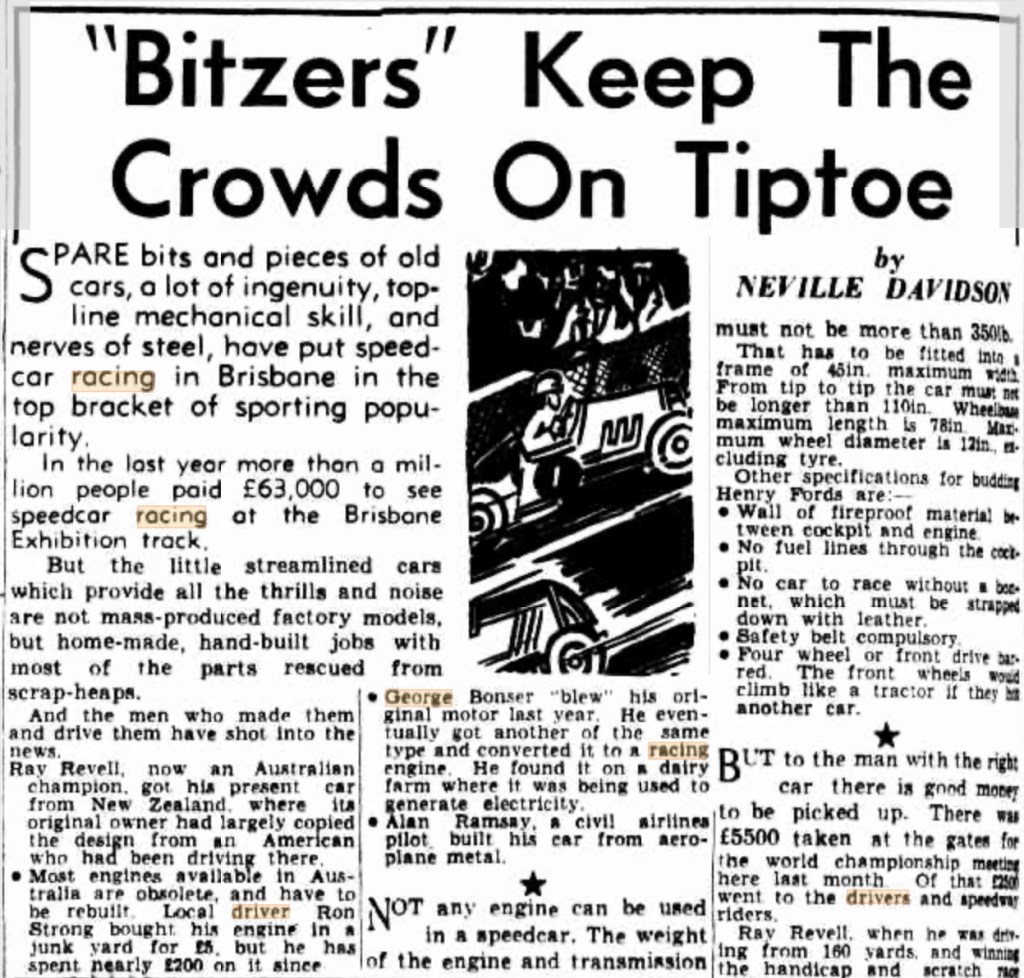
Bitzers Keep The Crowd on Tiptoe, by Neville Davidson in The Courier Mail, Brisbane on May 23, 1947.

I found this piece on the state of the Australian speedcar art in 1947 interesting in its economics and summary of car specifications.

Spare bits and pieces of old cars, a lot of ingenuity, top-line mechanical skill, and nerves of steel have put speedcar racing in Brisbane in the top bracket of sporting popularity.

In the last year more than a million people paid £63,000 to see speedcar racing ot the Brisbane Exhibition track.

But the little streamlined cars which provide all the thrills and noise are not mass-produced factory models, but home-made, hand-built jobs with most of the parts rescued from scrap-heaps.

And the men who made them and drive them have shot into the news. Ray Revell, now an Australian champion, got his present car from New Zealand, where its original owner had largely copied the design from an American who had been driving there.
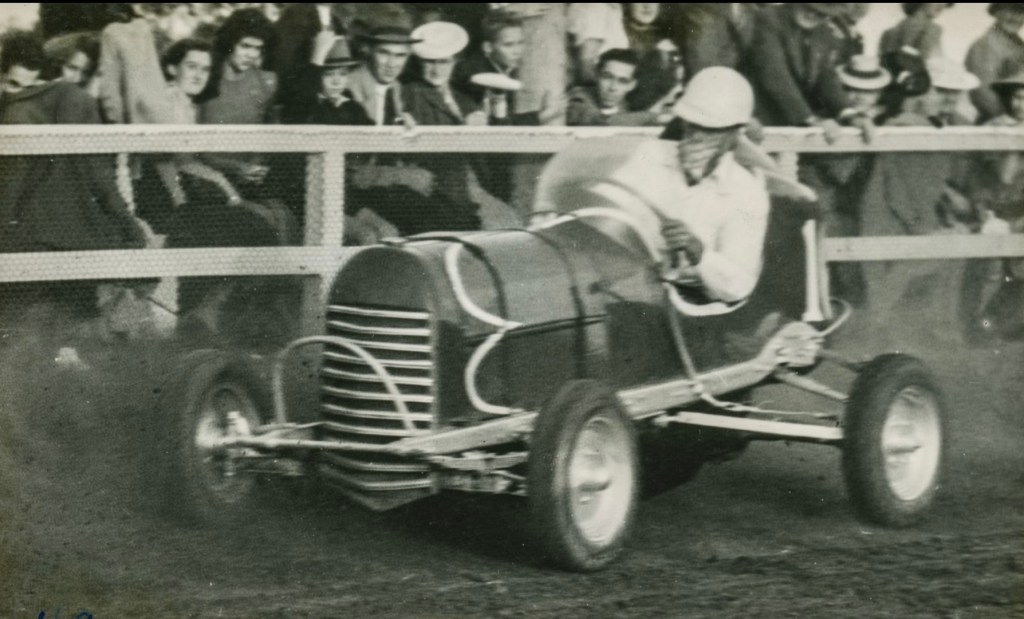
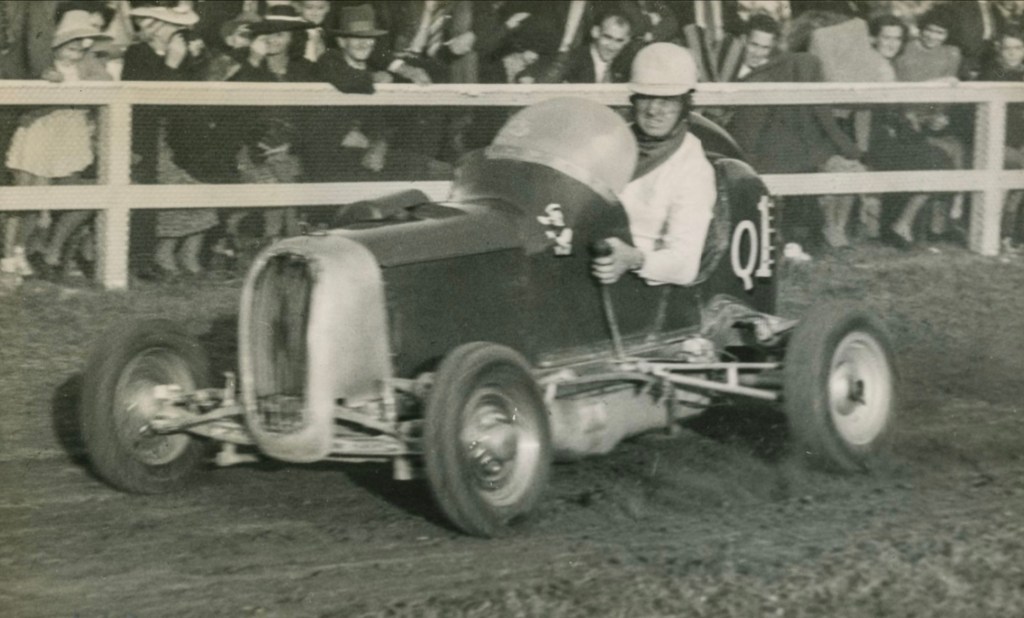
Ray Strong’s Midget probably at Brookfield Showground circa-1947, as is the shot of Australian Champion, Ray Revell, Ford-A Midget Speedcar below (SLQ)
(SLQ)

Most engines available in Australia are obsolete and have to be rebuilt. Local driver Ron Strong bought his engine in a junk yard for £5 but has spent nearly £200 on it since. George Bonser blew his original motor last year. He eventually got another of the same type and converted it into a racing engine. He found it on a dairy farm where it was being used to generate electricity.

Not any engine can be used in a speedcar. The weight of the engine and transmission must not be more than 350 lb (really!?). That has to be fitted into a frame of 45 inches maximum width. From tip to tip, the car must not be longer than 110 inches. The wheelbase maximum length is 78in. The maximum wheel diameter is 12in, including the tyre.

Other specifications for budding Henry Fords are: a wall of fireproof material between the cockpit and engine. No fuel lines through the cockpit. No car to race without a bonnet, which must be strapped
down with leather. A safety belt is compulsory. Four-wheel or front drive is banned; the front
wheels would climb like a tractor if they hit another car.

But to the man with the right car there is good money to be picked up. There was £5500 taken at the gates for the World Championship meeting here last month. Of that £2500 went to the drivers and speedway riders. Ray Revell, when he was driving from 160 yards, and winning the handicap and scratch double, frequently made up to ?£ (sorry folks can’t fuggin read the number) on an average night.
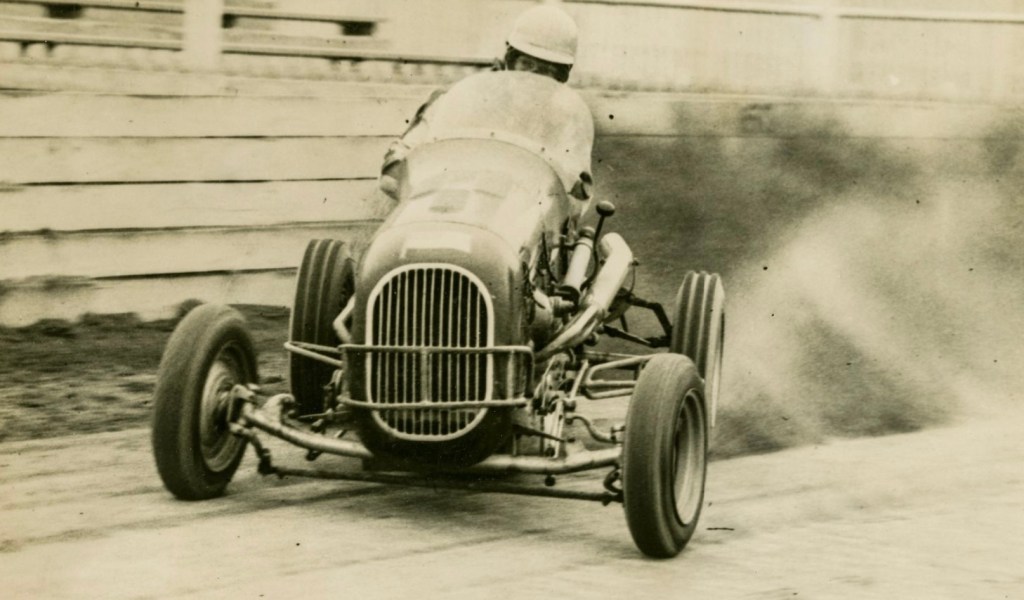
One legged American Ace, Cal Niday in his Edelbrock Ford V8 60 powered Speedcar during practice at the Brisbane Exhibition Speedway in 1947 (SLQ)
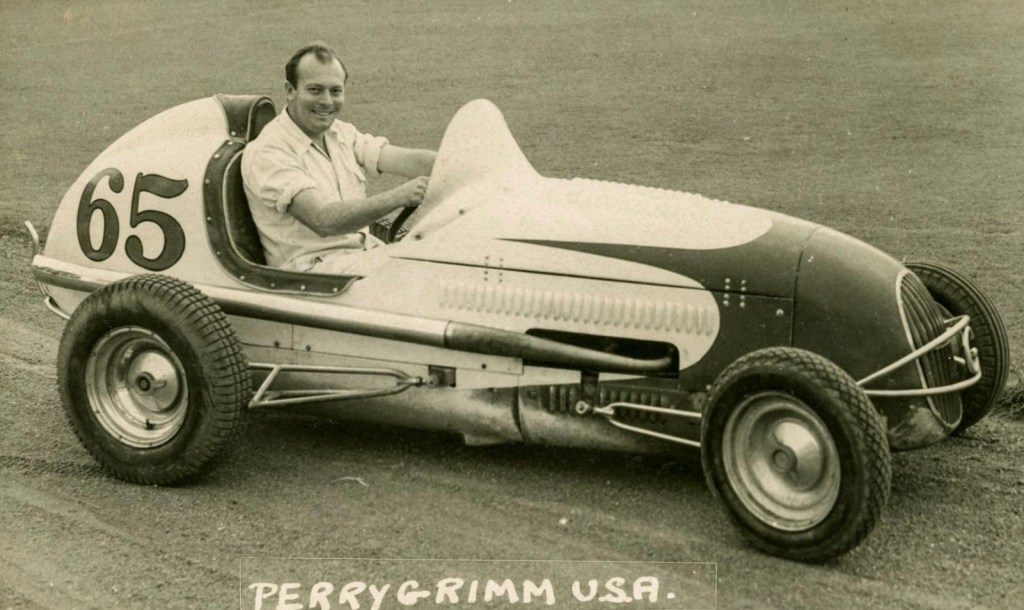
American Perry Grimm aboard the state of the art Kurtis Kraft Edelbrock-Ford V8 60 at the ‘Brisbane Ekka’ in 1947 (SLQ)

But £2 or £3 a night is all the front markers get when they cannot finish near the front of the field. And Frank Arthur, the manager here, says that Brisbane has just had the greatest motor racing track season ever in Australia both in attendance and money takings.

Apart from cricket and football (rugby) tests, Brisbane had never tasted anything of world championship flavour till the car derby. Many people still shrug and do not believe that the race was a world championship. They say the field was two Americans and the rest Australians.

But Perry Grimm and Cal Niday, the Americans, were officially sent by the United Racing Association of America. Grimm was the leading stakewinner in the States last year with $US25,000. There is scarcely any speedcar racing in England. European road racing is done by big cars and comes under a different heading.
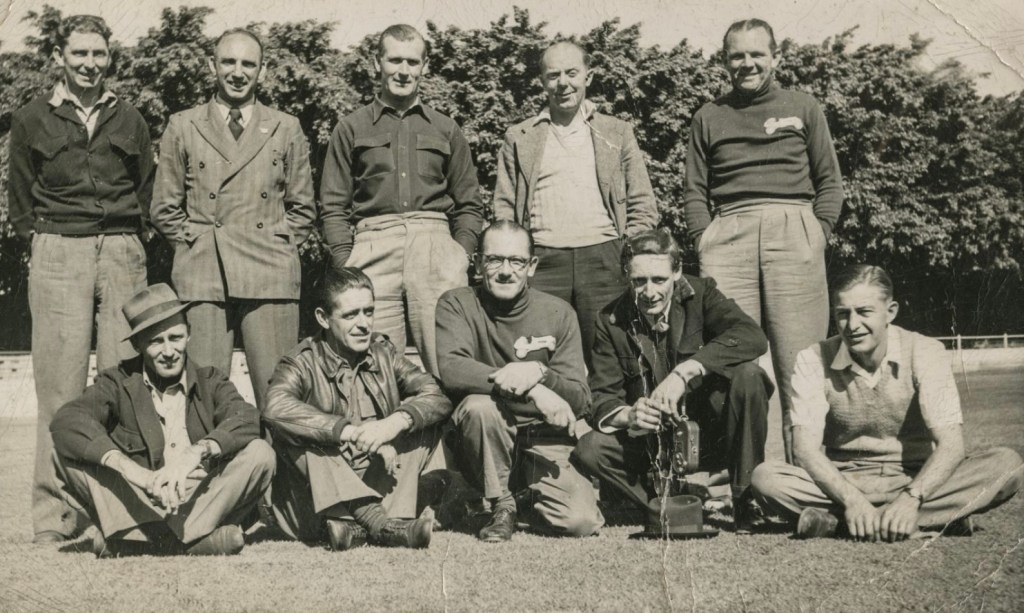
Who is who in Australian speedway in 1946, Brisbane Speedway. Back L-R Ray Revell, unknown, Fred Allen, Bob Playfair, Max Hughes NZ. Front, George Bonser, Lew Murphy, Jack Malcolm NZ, Ken Wylie, unknown (SLQ)

Penrith Speedway Tragedy, Monday June 13, 1938…

This report was published in The Referee, Sydney on June 16, 1938
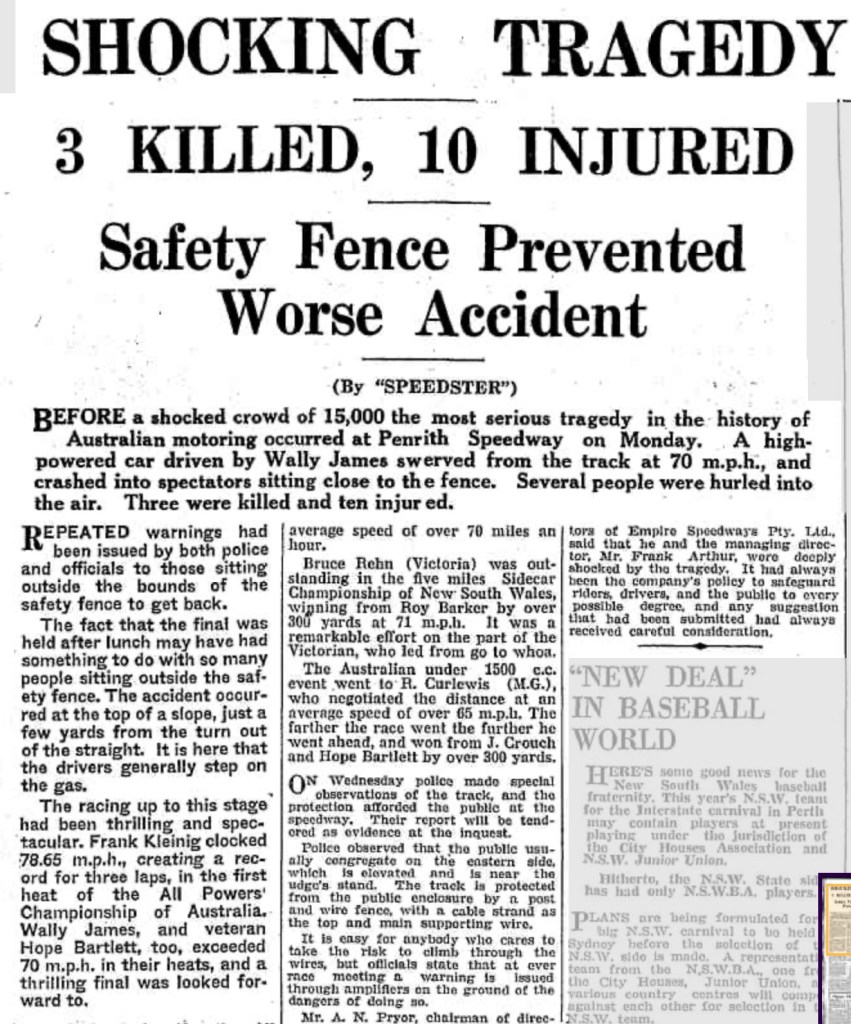
‘The final of the 10-mile All Powers Car Championship had a line-up of five of Australia’s fastest cars and finest drivers. Frank Kleinig (Kleinig Hudson Spl), Fred Foss (Ford V8 Spl), Hope Bartlett (Bugatti Brescia), Wally James (MacKellar Ford V8 Spl s/c, and George Bonser (Terraplane Spl).
They got away to a perfect start, and for practically a lap kept together.

Almost simultaneously, Kleinig and James roared out of the straight doing the fastest time of the day. Practically neck and neck, they hurtled up the track, when, suddenly, to the horror of the thousands packed around the track, James’ car got out of control. It swerved off the track straight at a group of onlookers sitting outside the protection of the safety fence. They had no chance of escaping. The car cannoned into the safety fence and bounced back.

AMBULANCE MEN’S WORK

Those on the other side of the safety fence, moved instinctively back, and then came forward when the car, after hitting the wire strands, stopped four feet from the fence. The fence had done its job, and those behind it were safe. Ambulance men did heroic work.

In the re-run, Frank Kleinig won the event from George Bonser and Hope Barllett. Kleinig gave a polished display to win with an average speed of over 70 miles an hour.

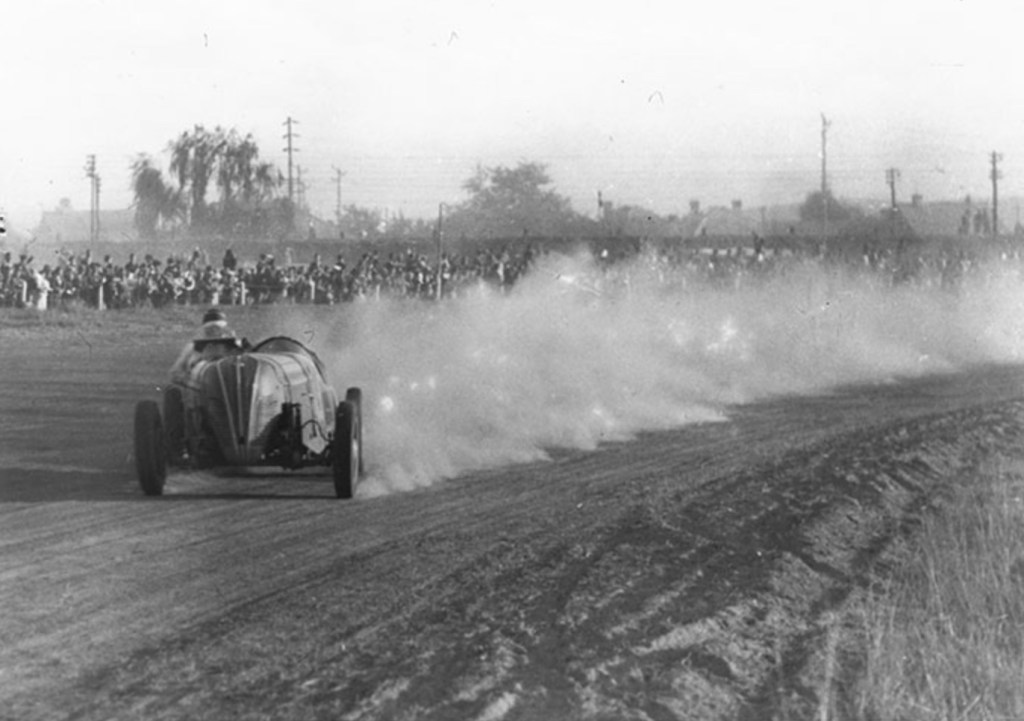
Penrith Speedway panorama (Penrith Library)
George Bonser and Terraplane Spl at Penrith in 1938 (Penrith Library)

Bruce Rehn (Victoria) was outstanding in the five miles Sidecar Championship of New South Wales, winning from Roy Barker by over yards at 71 m.p.h. It was a remarkable effort on the part of the Victorian, who led from go to whoa.
The Australian under 1500 c.c. event went to R. Curlewis (M.G.), who negotiated the distance at an average speed of over 65 m.p.h. The farther the race went the further he went ahead, and won from J. Crouch and Hope Bartlett by over 300 yards.

On Wednesday, police made special observations of the track and the protection afforded to the public at the speedway. Their report will be tendered as evidence at the inquest.
Police observed that the public usually congregates on the eastern side, which is elevated and is near the judges’ stand. The track is protected from the public enclosure by a post and wire fence, with a cable strand as the top and main supporting wire.
It is easy for anybody who cares to take the risk to climb through the wires, but officials state that at every race meeting, a warning is issued through amplifiers on the ground of the dangers of doing so.
Mr. A. N. Pryor, chairman of directors ot Empire Speedways Pty. Lid., said that he and the managing director Mr Frank Arthur were deeply shocked by the tragedy.
It had always been through the company’s policy to safeguard riders, drivers, and the public to every possible degree, and any suggestion that had been submitted had always received careful consideration.’
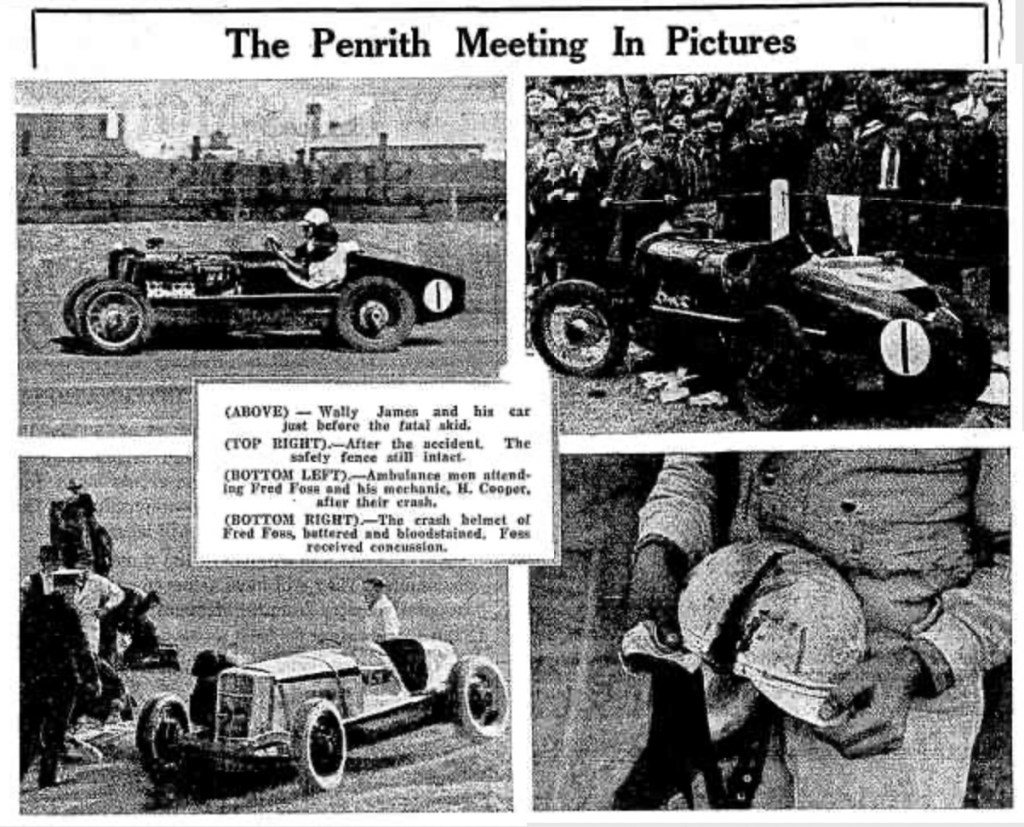
(The Referee June 16, 1938)

Photo and Reference Credits…

Bill Forsyth Collection, Australian Consolidated Press-State Library of New South Wales, John Dallinger, various newspapers via Trove, State Library of Queensland, Rick Marks Collection, Brian Darby Collection, Penrith City Library

Finito…

C Williamson, Chrysler leads G Winton’s AC and L Evans’ Vauxhall during the early laps of the Interstate Grand Prix, Wirlinga Road Circuit, Albury, New South Wales, 19 March 1938…

Australia Day, 26 February 1938 marked 150 years since the arrival of Governor Phillip and the First Fleet – the sesquicentenary of European settlement of Australia – ignoring the 60,000 years or thereabouts the continent has been occupied by the indigenous people of the Great Brown Land.

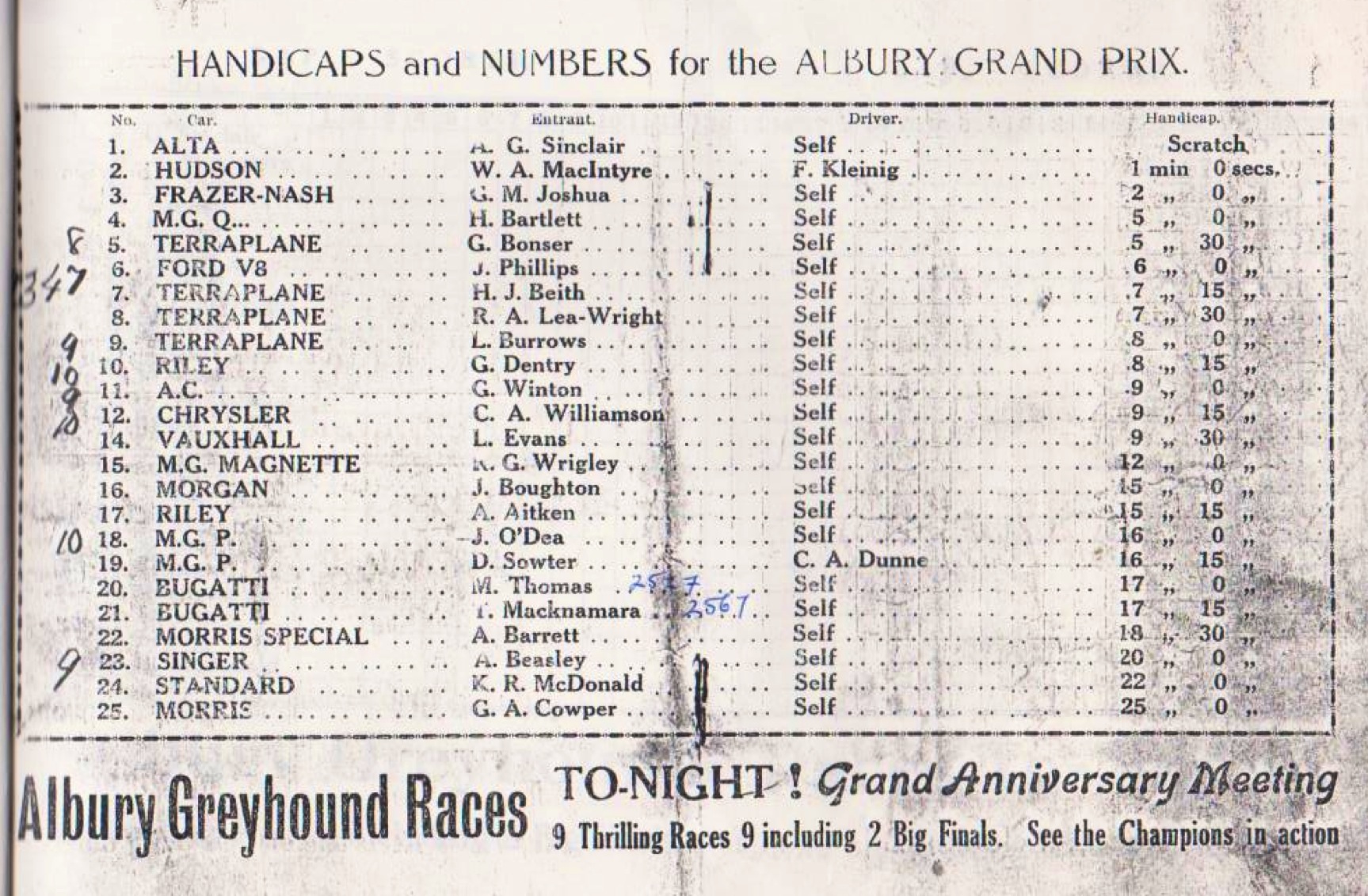
Official celebrations throughout the country took place between 26 February and 25 April – in Albury they occurred from 12 – 19 March and comprised an athletic and cycling day on the Saturday including the Albury Gift professional sprint race, the Albury Gun Club Championship, a swimming carnival and extended to the finale on Saturday 19 March, the Interstate Grand Prix, a 150 mile (148.5 mile) handicap event for cars ‘regardless of engine capacity’.

The lack of an engine capacity limit may seem not particularly notable, but the Phillip Island 1928 to 1935 ‘AGP’s had all been for cars of less than 2-litres in capacity whereas the December 1936 South Australian Centenary GP, later appropriated as an AGP, run at Victor Harbor was raced to what was effectively Formula Libre. Their was no AGP run in 1937 despite attempts to appropriate the the December 1936 event as ‘the 1937 AGP’ in the decades following.

What the South Australian event organisers, the Sporting Car Club of South Australia, did was to create Formula Libre as the class to which the AGP was run up to and including the 1963 event, when the Tasman 2.5-litre Formula succeeded it.

The officials in Albury, Albury/Wodonga being the twin Murray River border towns of New South Wales and Victoria involved the Melbourne based Victorian Sporting Car Club to organise the motor-racing aspects of the celebrations.

After considering various alternatives a track of 4.25 miles long was chosen by the local council and VSCC around the roads of Wirlinga, now an Albury suburb, but then 4.5 miles from Albury’s business centre.

Christened the ‘Wirlinga Circuit’ it ’embraced a 1.25 mile section of the Old Sydney Road to the north-east of Albury, a ’55 chain’ section of the Livingston-Thurgoona Road and more than a mile of Orphanage Road’.

This course is variously described in the newspaper accounts of the day ‘as having a good surface, the majority bitumen, and the remainder buck-shot gravel which is practically dust proof’ or ‘…half the course is macadam (broken stone of even size bound by tar or bitumen) and the other half gravel, it is being specially treated with calcium chloride to make it as free as possible of dust’.

Another report described ‘The roughly rectangular course, which starts on the Hume Weir road has one straight of about 1.9 miles, another of a half a mile and a long sweeping curve of 2.1 miles in length’. By the time of the Albury Gold Cup meeting at Wirlinga in July 1939 the entire course was bitumen surfaced.

‘This course is claimed to be one of the finest and fastest tracks in Australia’ the Melbourne Age recorded, clearly that fellow had not been to Lobethal or Mount Panorama at that point of his motor racing research/reportage!

In 1938 the only Australian race tracks which were bitumen or tar were some of the ‘Round the Houses’ tracks in many country towns of Western Australia and Lobethal in the Adelaide Hills. Phillip Island, the site of the early AGP’s, Victor Harbor, which held the December 26 1936 South Australian Centenary Grand Prix, and Mount Panorama, Bathurst, which held its first race meeting at Easter in 1938- all had loose gravel surfaces.

So Wirlinga, with a mix of sealed and unsealed surfaces would present challenges to the drivers- many of whom were unfamiliar with a solid surface like bitumen with the exception of those who had raced on the Maroubra concrete bowl or the opening January 1938 Lobethal meeting several months before. Such drivers included Hope Bartlett, Bob Lea-Wright, Colin Dunne, Jim Boughton, Alf Barrett, Tim Joshua, Harry Beith, Arthur Beasley and A Aitken and perhaps one or two others.

As the big weekend approached the Victorian Sporting Car Club ran a rally to Albury on the weekend of the 5th and 6th of March in which the clubs office-bearers, together with competitors and their friends journeyed the 325 Km up the Hume Highway to inspect the course- ‘which the club found had undergone considerable improvement. The bends of the track will need more attention and this will be given as suggested by officials’.

A meeting of competitors, mechanics and club officials was held in the VSCC’s clubrooms at 395 Elizabeth Street, Melbourne on Thursday 17 March at 5pm before the ‘circus’ left town for Albury/Wodonga, no doubt plenty of eager competitors were already in the border towns by the time this meeting took place.

Practice was to be held on the day before the race from 7 am with entry prices set at 2 shillings and a similar amount charged for a seat in the ‘huge grandstand’ (of which I cannot find a picture). Prize money totalled 300 pounds- 100 pounds was for the winner, the balance was paid down to eighth place.

Whilst the important track logistics were taking place in the lead up months to the meeting, the Victorian Sporting Car Club set about getting as healthy a national entry of cars as was possible for the blue-riband event. Whilst a good field of cars was entered, perhaps the proximity of the 18 April Easter Bathurst AGP to Wirlinga was a barrier to some competitors racing for fear of damaging their mount before the Mount Panorama meeting.

Many of the fast guys of the period entered, perhaps the ‘headline act’ was British mystery man, racer throughout Australia in 1938/9 and MI5 spy Allan Sinclair in a supercharged 1100cc Alta. This car was a fizzer at Lobethal in January with a better showing expected- but not delivered in Albury, or pretty much anywhere else he raced with the exception of Rob Roy Hillclimb in Victoria.

Maroubra Speedway Ace Hope Bartlett entered an MG Q Type, 1934 Australian Grand Prix winner Bob Lea-Wright- and then current VSCC President raced a Terraplane 8 Special with Frank Kleinig certain to be a front-runner in Bill MacIntyre’s Hudson 8 Special. Both these cars were powered by modified variants of side-valve straight-eights manufactured by the US Hudson/Terraplane companies.

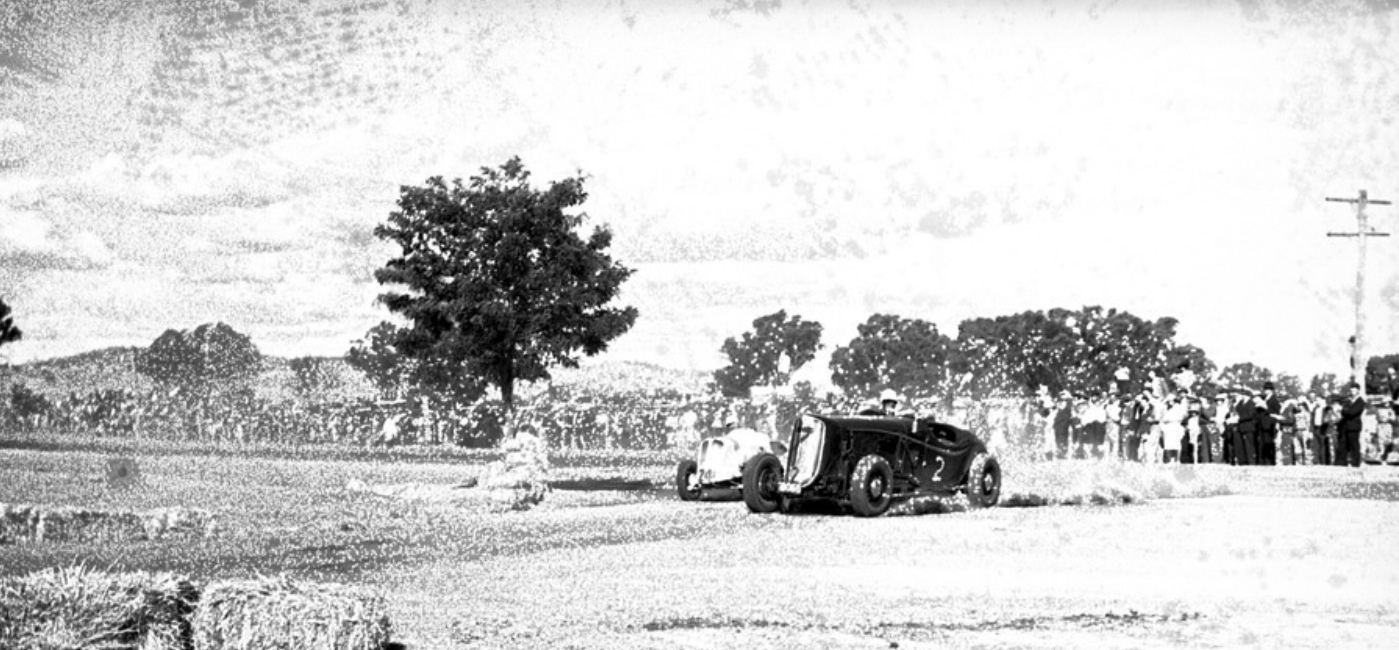
Its interesting to look at Kleinig’s car as it was at Wirlinga and the huge amount of work it took to to turn it into an ‘outright racer’ by the time of the 1939 AGP at Lobethal less than twelve months hence.

Alf Barrett was entered in his Morris Cowley Spl but very shortly thereafter acquired an Alfa Romeo Monza, and it was his performances with that car which shot him to fame- by the time of the January 1939 AGP he was pretty much ‘the man’ despite one or two others racing faster cars such as Jack Saywell, Alfa Tipo B/P3.

Tim Joshua’s unique single-seater, supercharged four-cylinder Gough powered Frazer Nash cannot have been in the country too long with the Bryant & Mays Matches family member a guy who always drove well.

This huge factory complex (hard to believe how big a factory it was/is just to make matches) off Church Street Richmond, Melbourne is well known to locals in restored form and was unfortunately the property redevelopment which all but financially destroyed Porsche Cars Australia’s Alan Hamilton in the late eighties.

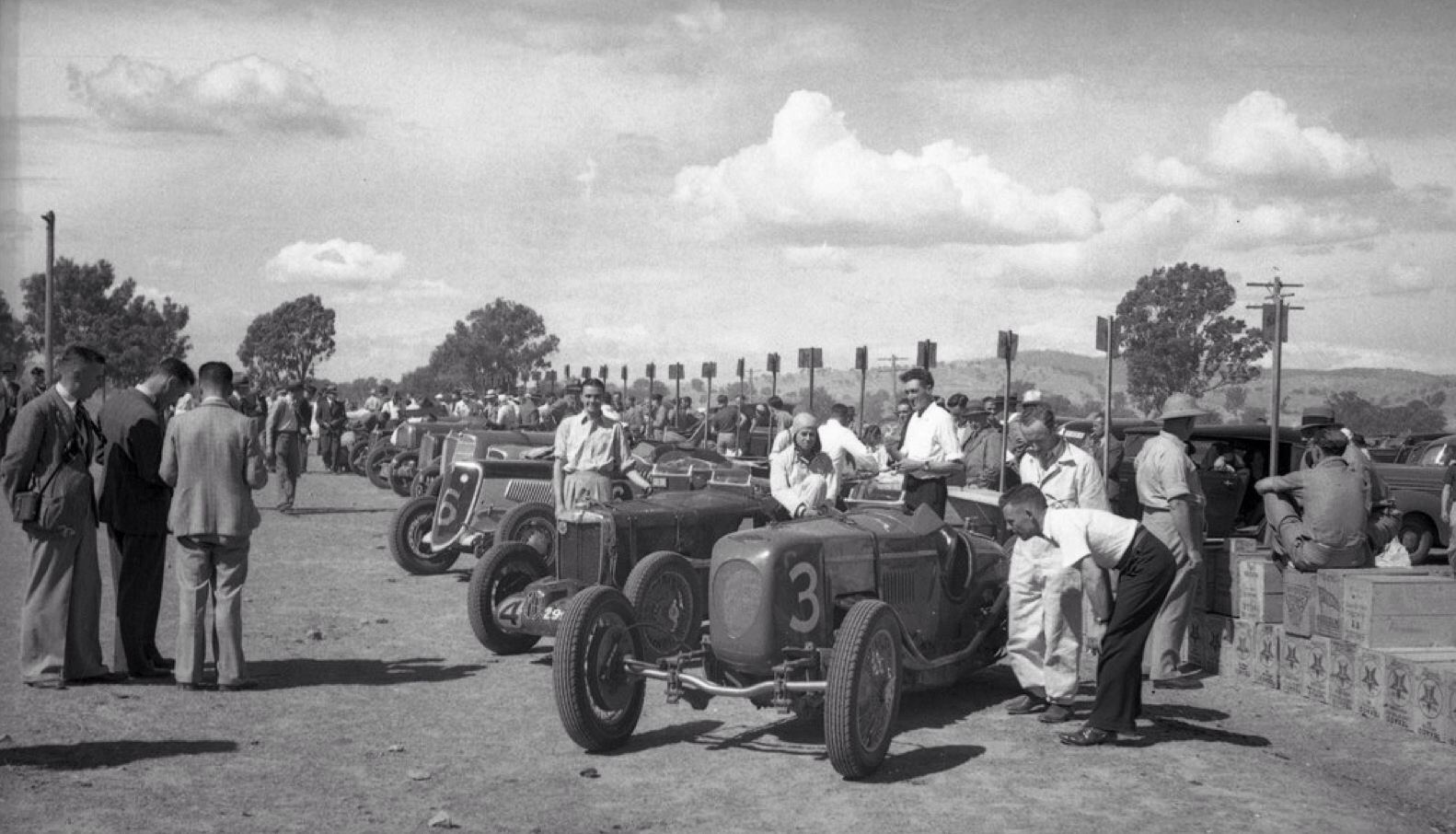
It wasn’t the ‘Nash first meeting though, he raced it in the SA GP at Lobethal in January. The car, number #3 above is in the Wirlinga paddock alongside Hope Bartlett’s MG Q Type and the Jack Phillips/Ted Parsons #6 victorious 1934 Ford V8 Spl.

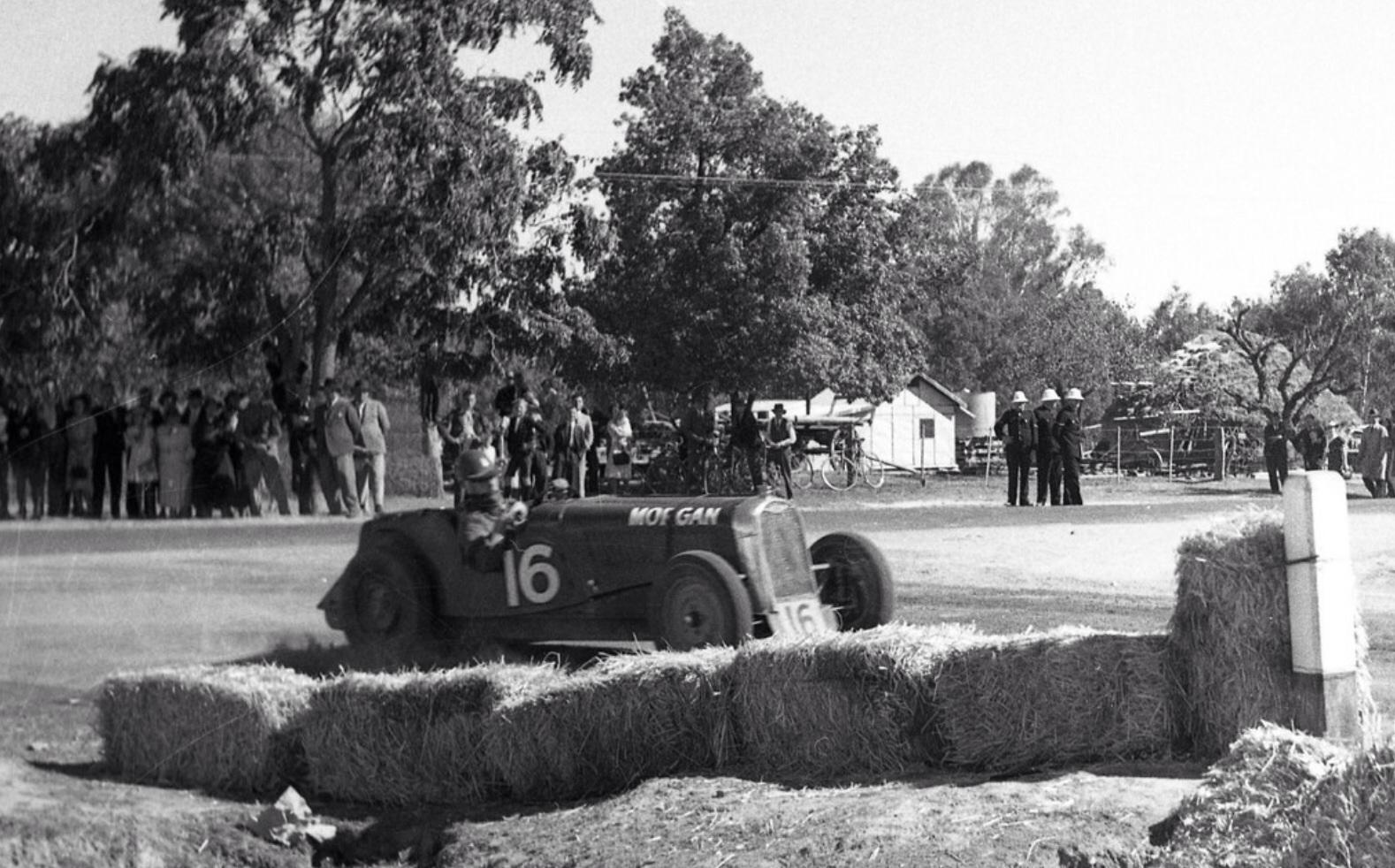
Other cars of note are perhaps the D Souter MG P Type driven by Colin Dunne who was fresh from a great win in his own MG K3 in the Junior Grand Prix at Lobethal. No doubt Dunne took this drive to preserve his own K3 for the forthcoming AGP. Others were Jack O’Dea, MG P Type, Jim Boughton in a Morgan 4/4 Coventry Climax and Barney Dentry’s Riley Spl.

Of an entry list of 25 racers, thirteen or thereabouts are ‘factory cars’ with the balance Australian Specials- these cars would increasingly form the most significant numbers on our grids until the dawn of the fifties when the end of Australian Grands Prix run to handicap rules forced those after victory to acquire a car which could do just that on an outright basis!

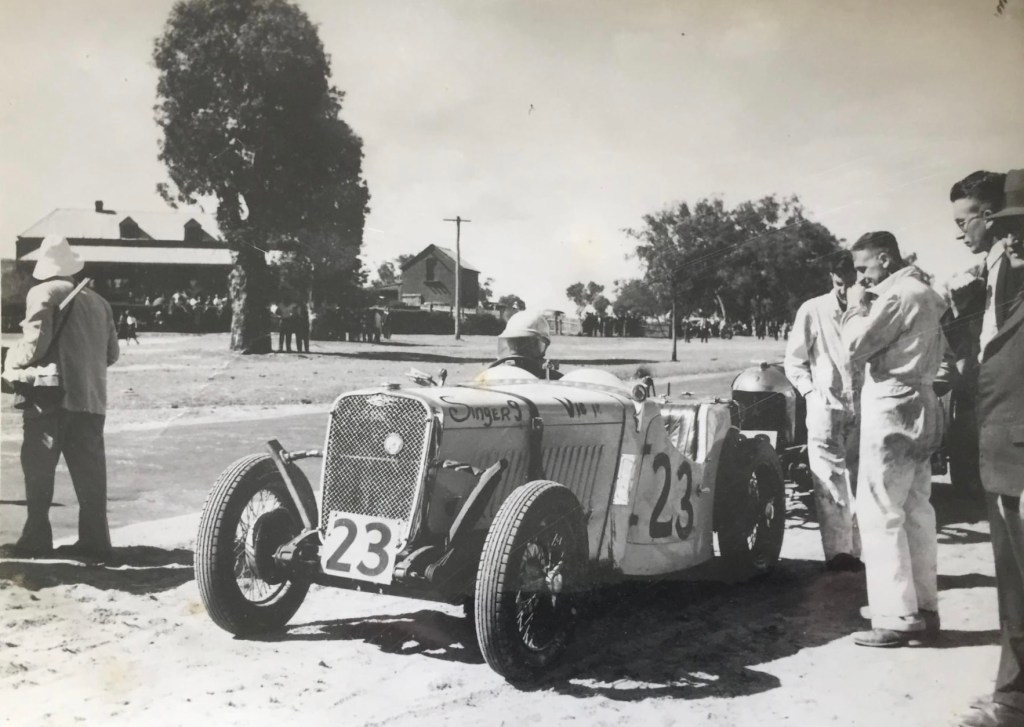
Arthur Beasley Singer 9

Sesquicentenary festivities in Albury were well underway by the time the Governor of Victoria, Lord Wakehurst alighted the train from Melbourne and performed the formal opening ceremony for the week on Tuesday 15 March in the Albury Botanical Gardens.

On raceday, Saturday 19 March, some 6,000 to 10,000 spectators attended the meeting from towns far and wide across South Australia, New South Wales and Victoria- good train access allowed the punters to make the long distance trip from the major population centres of Sydney and Melbourne relatively easily.

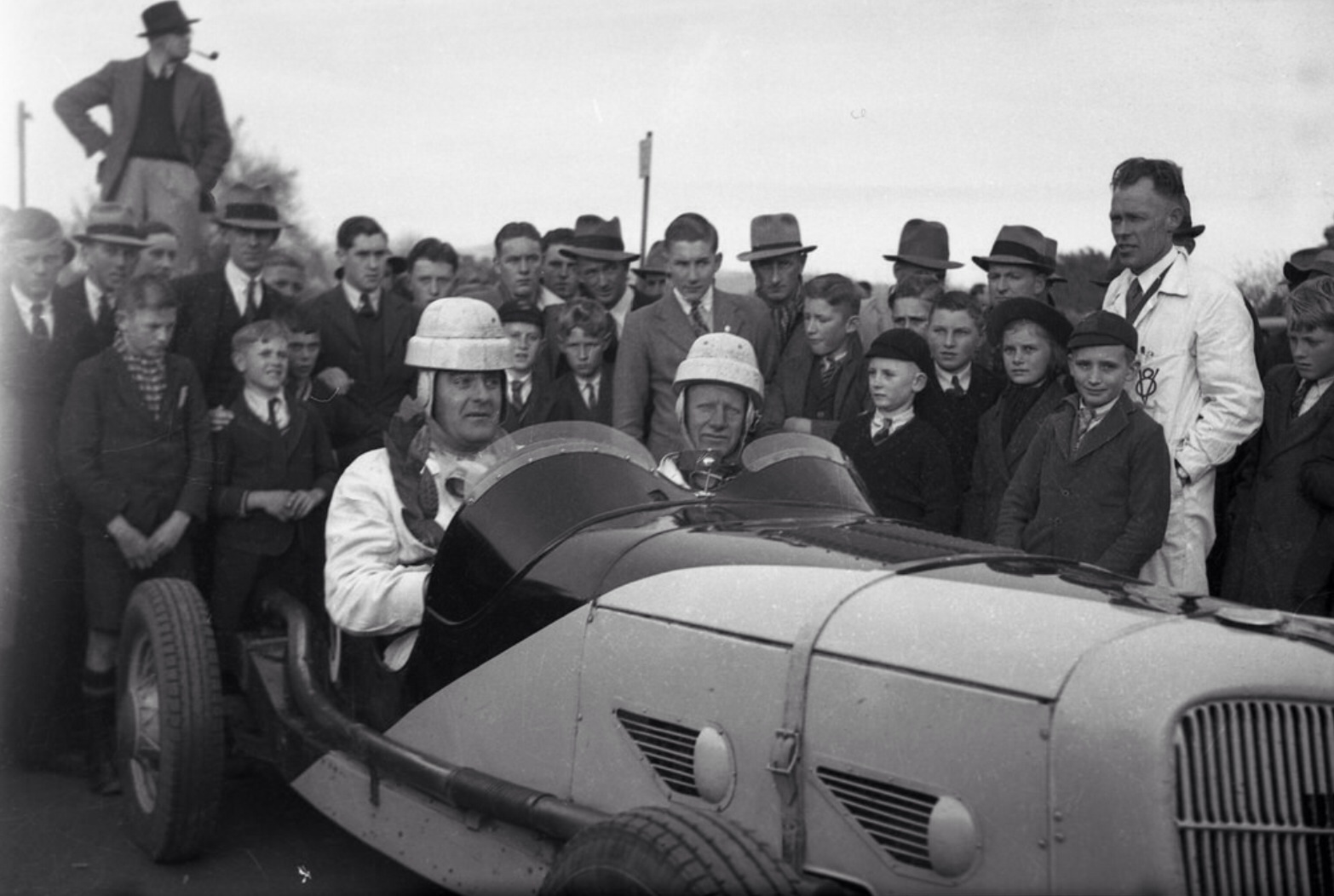
Jack Phillips won the race (below) driving his 3.6 litre Ford V8 Special from George Bonser’s Terraplane 8 Spl and Les Burrows aboard a similar Terraplane 8 Spl.

Phillips, accompanied by his business partner and co-owner of the car, Ted Parsons, covered the 150 miles in 2 hours 13 minutes and 15 seconds, an average of about 67 mph.

The two friends were partners in a Ford sales and service agency in Wangaratta, a major centre of agriculture to the south-west of Albury in Victoria, it was very much a hometown win all the same.

So successful was the meeting that the ‘Albury Banner and Wodonga Express’ correctly predicted that the race would become an annual event- for a while at least until the outbreak of war.

Unfortunately the only scratching from the event was Allan Sinclair in his Alta with gearbox failure, the unreliability of this car was to be one of its hallmarks in his hands.

Phillips was the only driver to have a trouble free run, and when other competitors either dropped out or made multiple pit stops he was able to take the lead on lap 23 of the 33 laps.

At that stage McDonald, Standard Spl was in front but he had mechanical problems and withdrew. Early DNF’s were Evans having completed only 2 laps- and Kleinig’s Hudson Spl, Bartlett MG Q Type, Beith Terraplane, Lea-Wright Terraplane, Wrigley MG Magnette, Boughton Morgan, Aitken Riley, Dunne MG P Type, Barrett Morris Cowley Spl.

Frank Kleinig’s Hudson effectively became the scratch-man with Sinclair’s withdrawal and was rightly regarded as one of the favourites for victory. The press-on Sydneysider recorded the fastest lap of the 4.25 mile track with a 3 minute 26 seconds time but the Hudson had trouble early on and after multiple pit-stops he called it quits on lap 10.

Barney Dentry, Riley Spl winner of the 50 Miles Race at Cowes in November, was well up until he too pitted for repairs to his Riley. Dentry provided one of the thills of the race when he challenged Arthur Beasley’s Singer on the Main Straight and passed him for fifth place only 150 yards from the end of the race.

Plenty of excitement was provided by the crowd ‘the largest that has yet assembled at a sporting event in Albury’.

‘Close on 6,000 people thronged the huge grandstand and on either side of the road near the finish line. The crowd got out of control when the last stages of the race were being completed. Despite the repeated entreaties to refrain from crossing over the road, people surged from one side to the other in droves, right in front of fast moving cars. However there were no accidents’ the Albury Banner reported.

The winning Phillips/Parsons Ford, a 1934 model, was modified in the manner typical of the day.

The 4 litre Ford flathead V8 was fitted with dual carburettors sitting atop an aluminium inlet manifold, a Winfield camshaft, an enlarged sump, oil cooler and double radiators were incorporated. A contemporary report says that ‘Phillips had a remarkable run of good luck in this race compared with other events he competed in’.

Clearly the two boys from Wangaratta were entering a purple patch with the car because they soon thereafter had a great run of results.

After Wirlinga the intrepid duo towed the Ford to Bathurst at Easter where they were sixth in the 1938 AGP won by Peter Whitehead’s ERA- and then third in the January 1939 AGP at Lobethal, that race won in brilliant style by Perth’s Allan Tomlinson in an MG TA Spl s/c.

Returning home they ‘doubled up’ and won the 1939 Albury Gold Cup at Wirlinga in July, they didn’t take the win in the 1940 event, the last motor race held at Wirlinga. Back across the border to Lobethal they won the 1940 South Australian 100, and that was pretty much it until the end of hostilities, Patriotic GP at Applecross in Perth held on 11 November 1940 duly noted.

Whilst much is rightfully made of Doug Whiteford’s Ford V8 Spl, ‘Black Bess’, its best results were still to come, perhaps this is the most successful Ford V8 Spl pre-War? After the conflict the beast was sold twice, then crashed and written off in the late forties- a lovely replica built by Ted Parson’s grandson in recent times will have been seen by some of you.

Phillips, in covering the 150 miles in 2:13.15 also did the fastest time of the race, his average time for each lap was 3:50 compared to Kleinig’s fastest lap of 3:43. At an average speed of 67-69 mph Phillips was about a lap ahead of Bonser’s Terraplane who was a similar distance ahead of Les Burrows Terraplane. Then followed George Winton AC, Dentry’s Riley, the Beasley Singer, Williamson’s Chrysler and O’Dea’s MG P Type.

The teams prize went to Burrows, Bonser and Kleinig.

Etcetera…

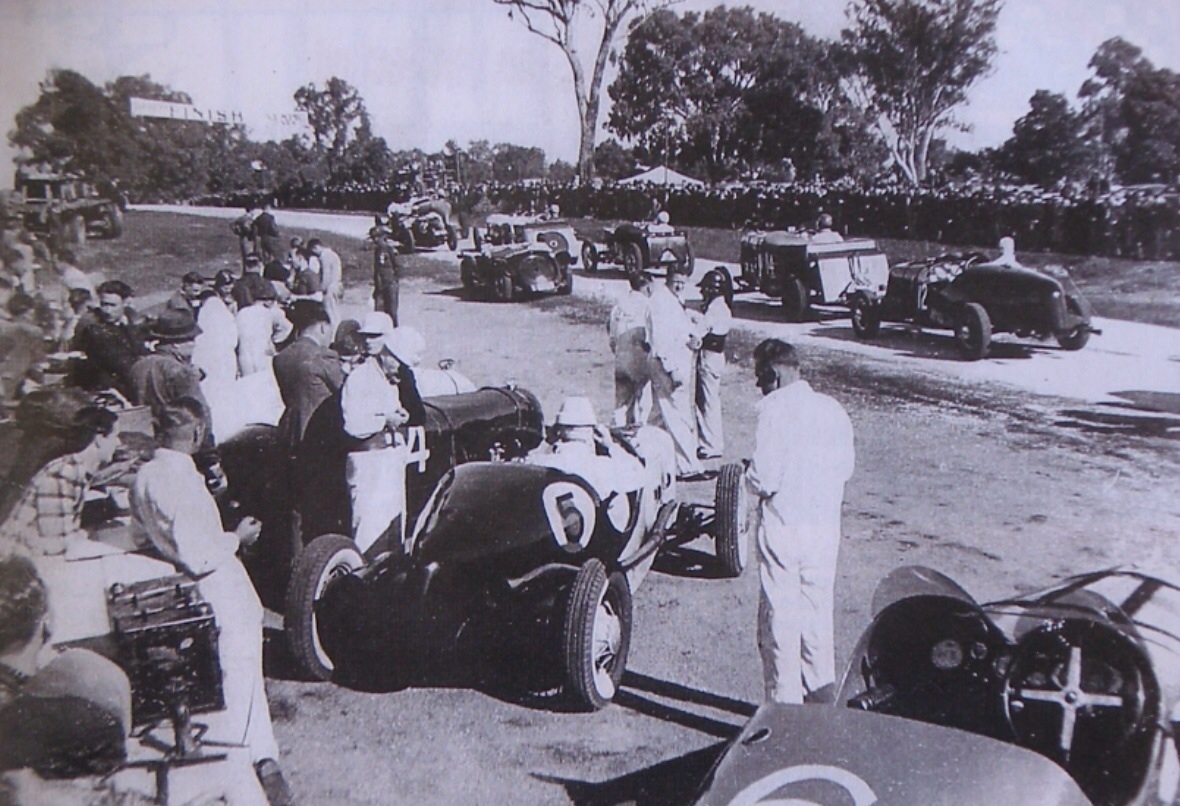
Pit and paddock scene from the final Wirlinga meeting over the Kings Birthday weekend, 10 June 1940.

The Interstate Gold Cup was won by Harry James’ Terraplane with the lap record for all time as it turned out, set by Alf Barrett’s Alfa Romeo Monza at 89 mph.

I wonder if that is Barrett’s Monza to the left of Jack Phillip’s Ford Special #5 in the photo above?

Alf Barrett applies a touch of the opposites to the wheel of his Morris Cowley Spl- the power of the supercharged GP Alfa which replaced this machine, capable of a 90 mph top speed, must have been considerable, not to say every other aspect of the cars performance!

Raced in a couple of AGP’s in Colin Anderson’s hands- he raced the car at Bathurst in April to 12th place whilst Barrett’s Lombard AL3 retired after completing only 3 laps, I’m not sure what became of this highly developed 1.7 litre attractive Morris or who built it in Melbourne.

Jack O’Dea’s beautiful MG P Type in profile. Some modern online accounts have Les Murphy driving the car at this meeting but neither the entry list or race accounts i have seen make mention of the AGP winner at the wheel.

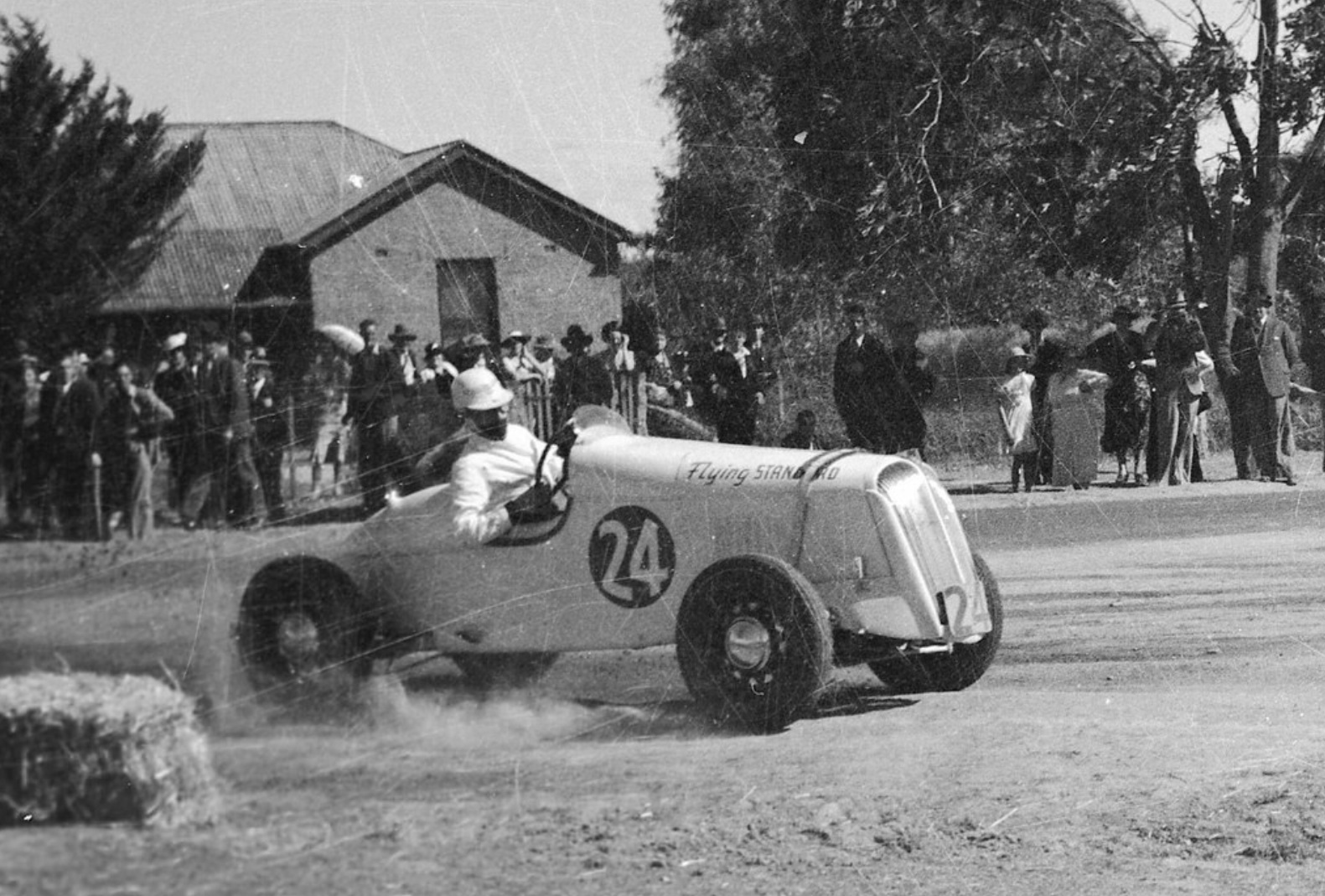
The K McDonald ‘Flying Standard Spl’ is not a car I know anything about, I am intrigued to understand who built it and it’s specifications if any of you can oblige.

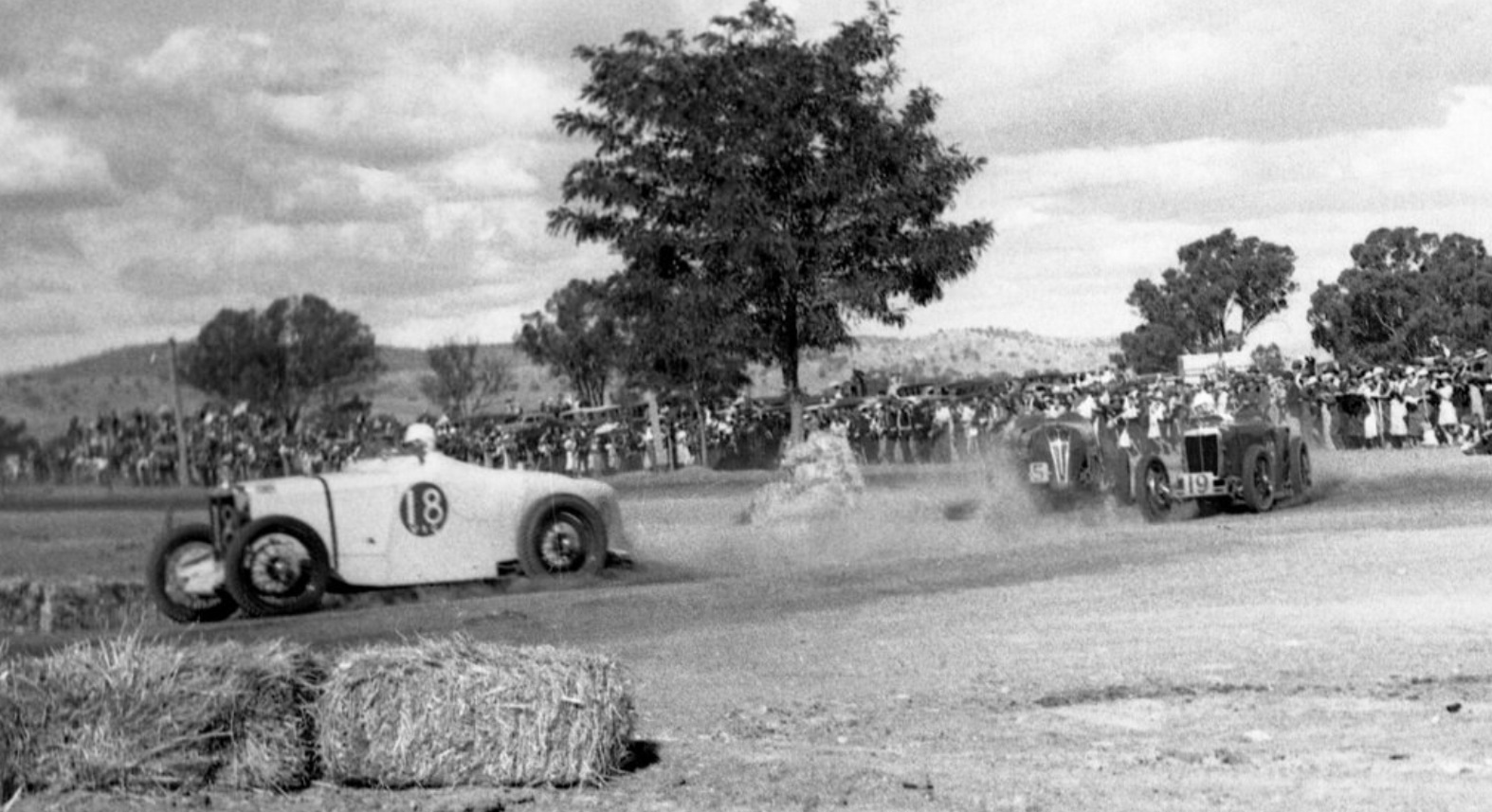
Jack O’Dea’s MG P type leading the scrapping duo of Colin Dunne in Souter’s MG P and George Bonser’s Terraplane Spl.

The Phillip/Parsons Ford post-war at Port Wakefield when owned by Granton Harrison- with his back to the camera. Alongside is the ex-Bira/Snow/Colin Dunne/Russell Bowes/Ron Uffindell MG K3 (D Donovan)

Photo and other Credits…

‘Foto Supplies’ Albury Flickr Archive- photographer John J Dallinger, we salute you

Bob King Collection, N Howard, National Motor Racing Museum, Tim Hocking, ozpata, Dean Donovan, Melbourne Age 10/2/1938, Albury Banner and Wodonga Express 11/3 and 25/3/38, Melbourne Herald 15/3/38, Sporting Globe 15/1/38, Ray Bell and John Medley on The Nostalgia Forum

Tailpiece: When men were men…

Jack Phillips with kidney belt to keep his gizzards under control with helmet wearing Ted Parsons alongside- who is the dude on the left I wonder?

Finito…