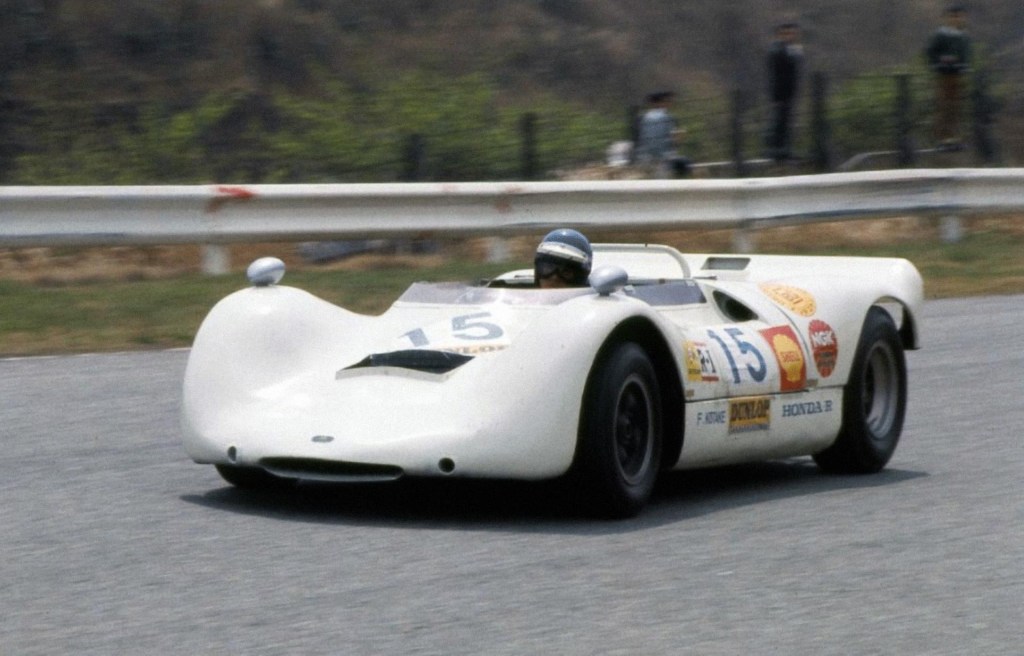
Fukumi Takatake – sometimes written Fukumi Kotake, born in Fukuoka, December 3, 1944 – at the wheel of the works Honda R800 during the 1969 Suzuka 500km, he finished second outright and first in the R1 class.
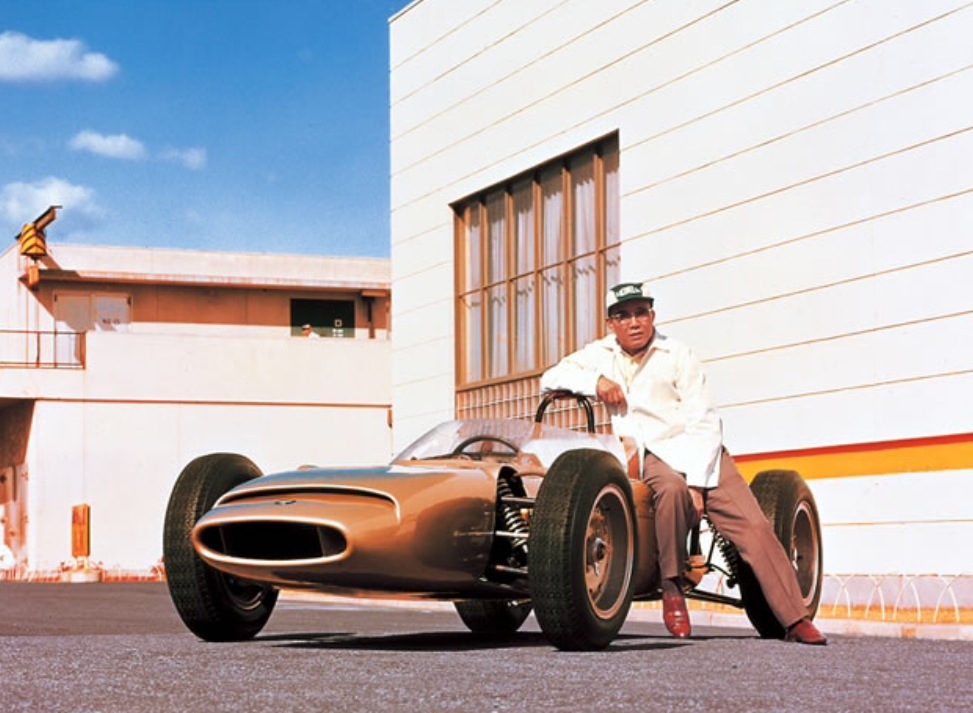
A very attractive car(s) new to me, the machine was of spaceframe construction, the design seemingly inspired by an F3 Brabham Honda owned by the Suzuka circuit, itself owned by Honda of course.
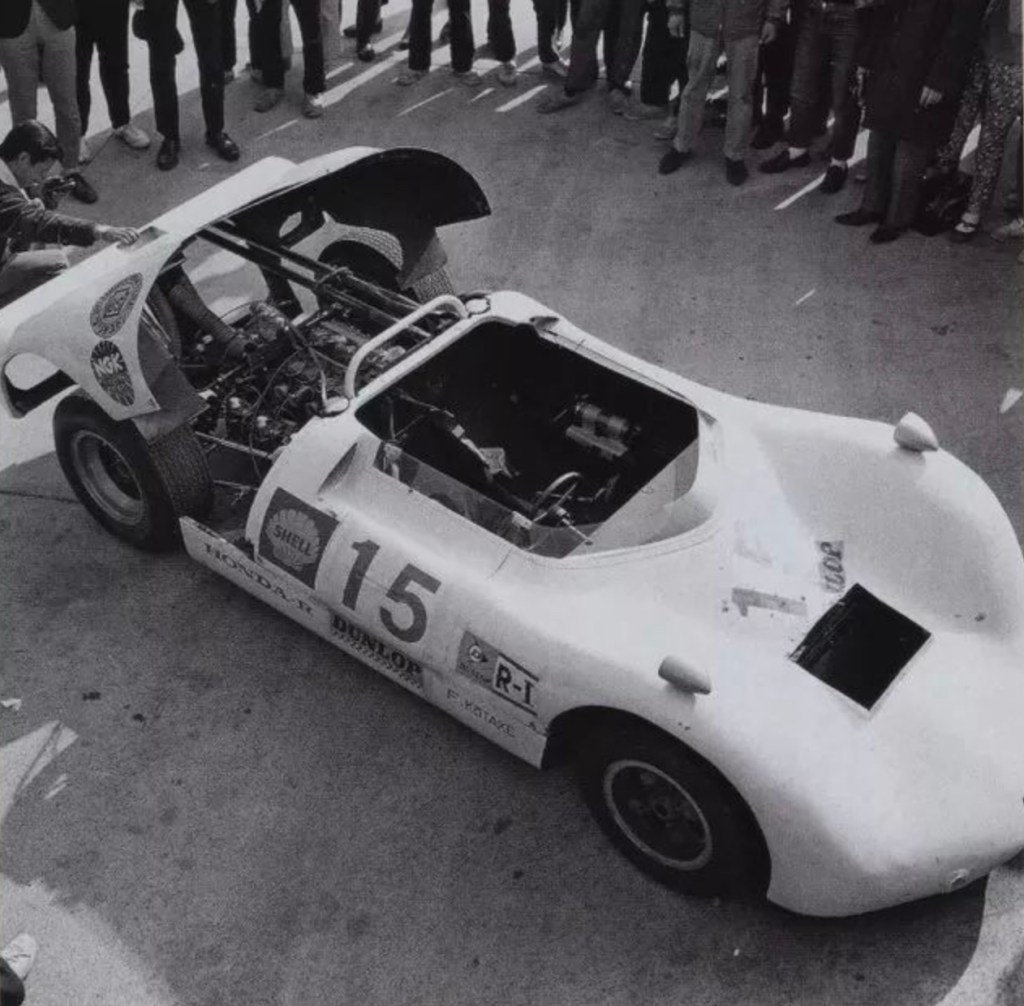
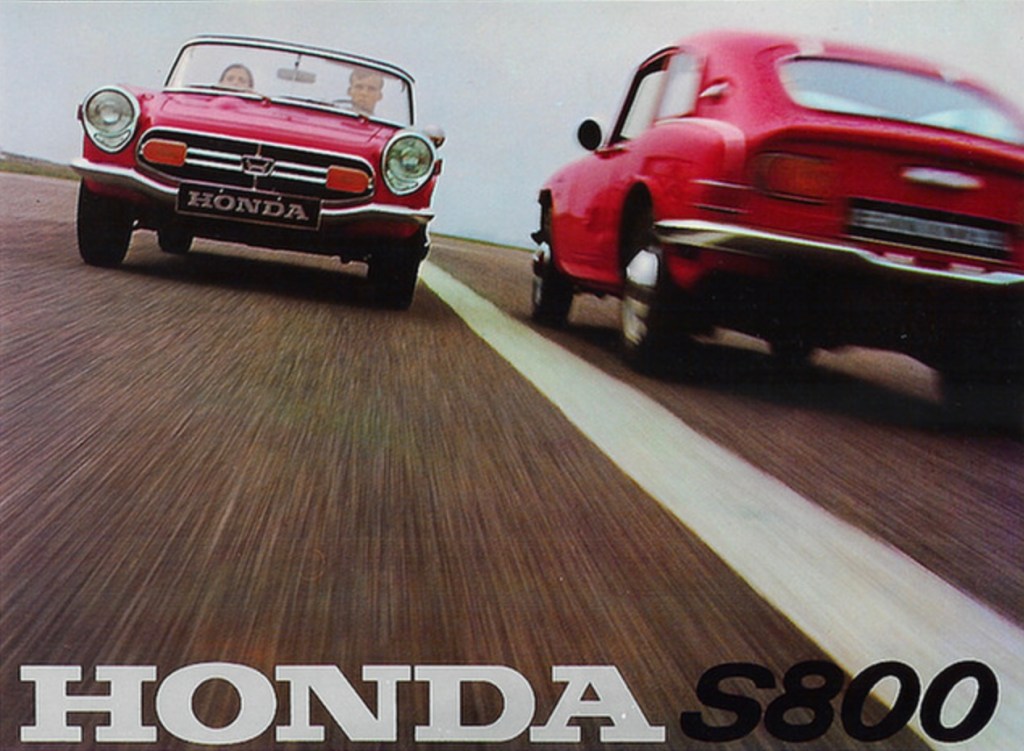
As the rear body-up photograph of the R800 shows below, its tiny air-cooled engine – mounted north-south at the front of the S600-800 roadies – was mounted conventionally in the rear of the sports-racer.
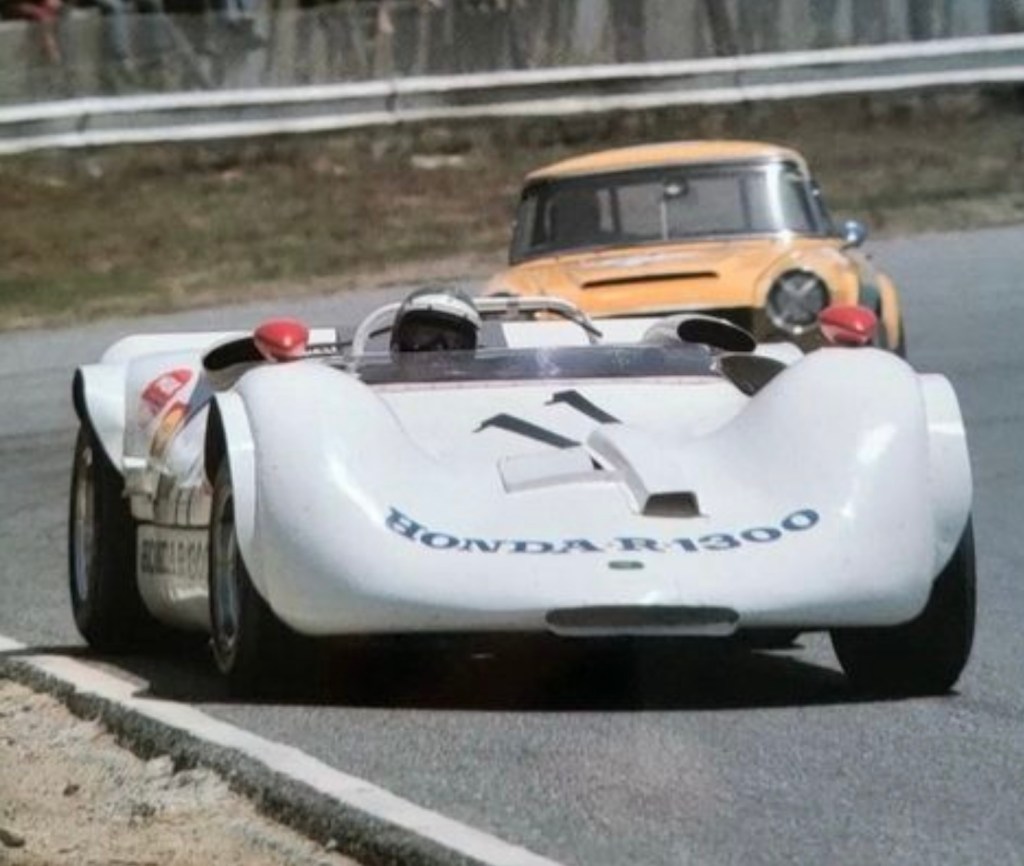
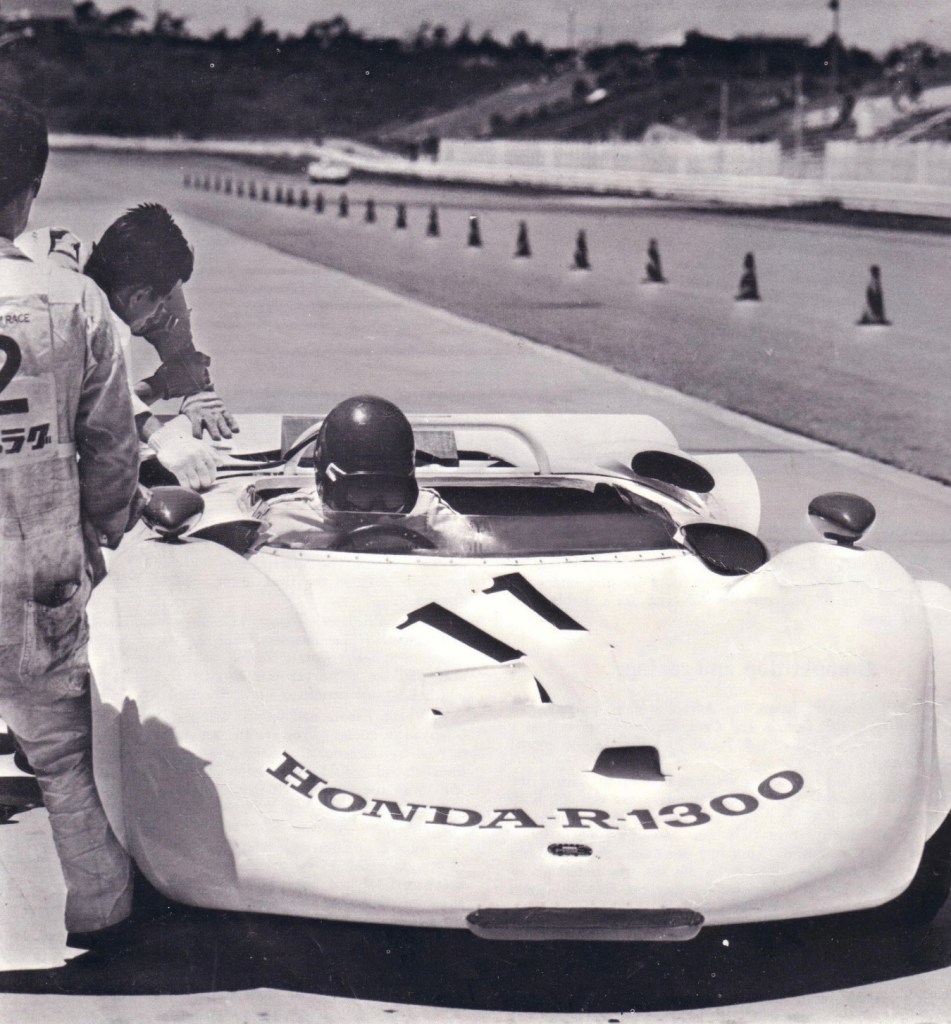
Honda R800 in the Suzuka paddock 1969 (unattributed)791cc all alloy DOHC, two-valve, water cooled four fed by two twin-choke Keihin carbs, 70bhp @ 8000rpm. With roller bearings supporting the crank – and its dizzy rpms – Honda delved straight into its motorbike practice book for this engineHonda R1300 during the 1969 Suzuka 1000km (unattributed)
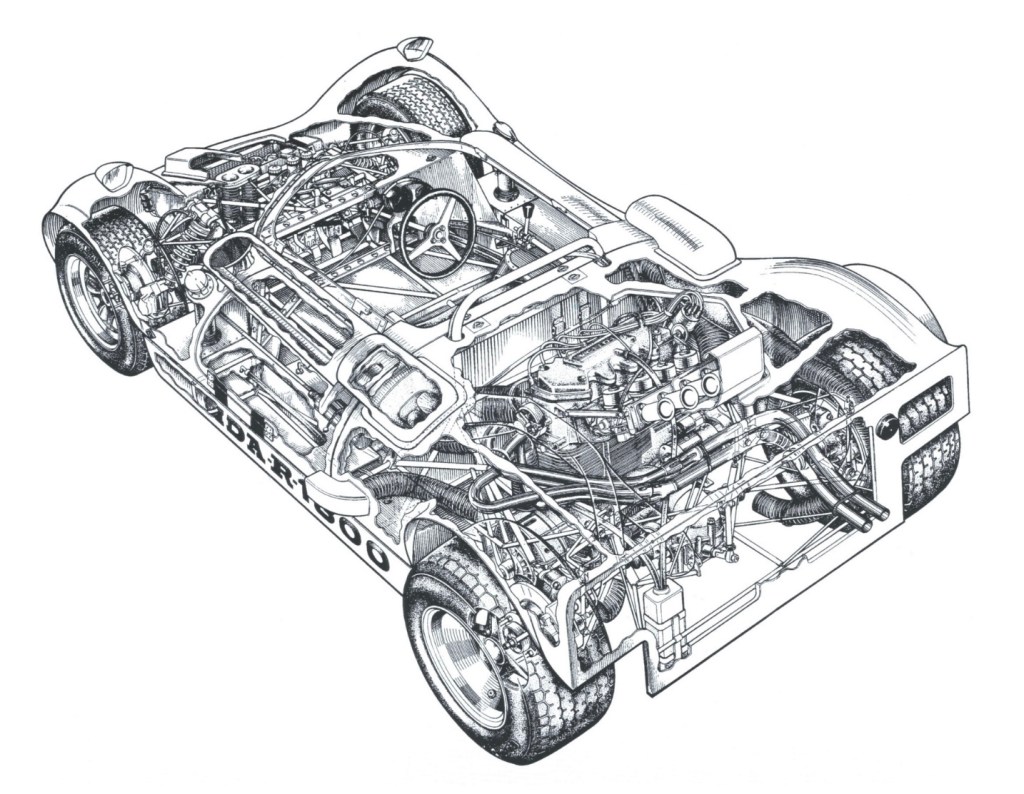
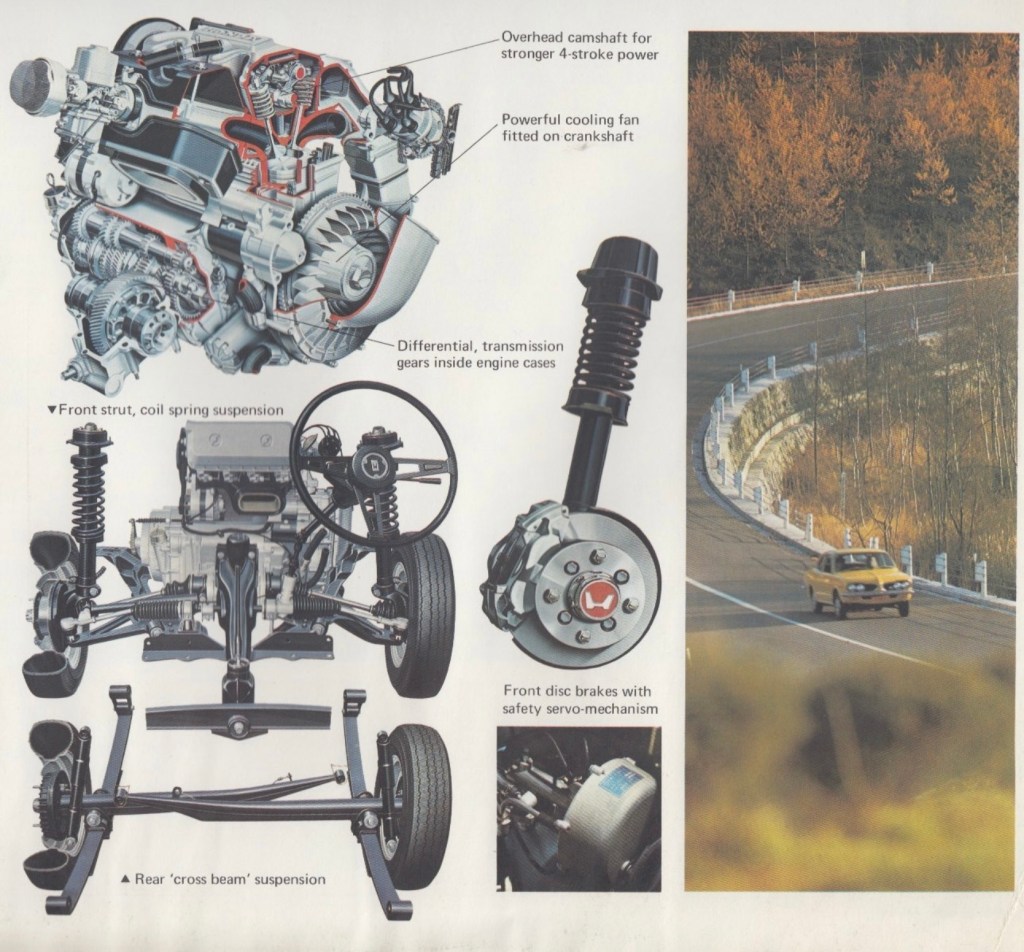
The cutaway drawing of the R1300 below – the engine was mounted east-west in the Honda 9 – shows the engine-transmission unit is mounted transversely at the rear as was also the case on Honda’s stunning, successful 1964-65 1.5-litre V12 RA271-272 GP machines. The suspension, brake, wheels and other specifications are otherwise 1960s period typical. See here for a feature on the Honda 1.5-litre GOP cars; https://primotipo.com/2014/12/12/honda-ra271272-1-5-litre-v12-19645-gp-cars/
Honda R1300 cutaway (unattributed)Series 99 1299cc all alloy, SOHC, two-valve, air cooled transversely mounted four cylinder engine is fed by four Keihin carbs, dry-dumped, 116bhp @ 7300rpm (Honda Australia)(unattributed)
The R800 was built by Honda RSC the competition arm of Honda. The Racing Services Club was formed in 1965, then became the Racing Service Center and finally in 1982 morphed into Honda Racing Corporation. The car made its race debut that Suzuka 500km weekend and was Honda’s response to the Coniglio and Macransa (later Dome) Honda S-Series based kit/racing cars.
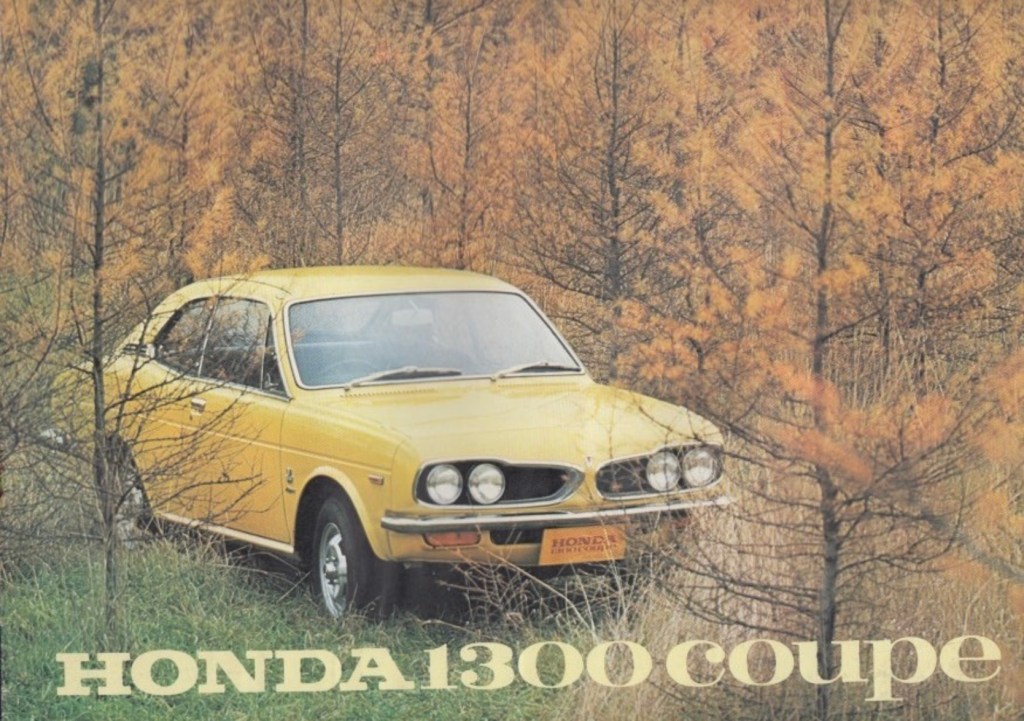
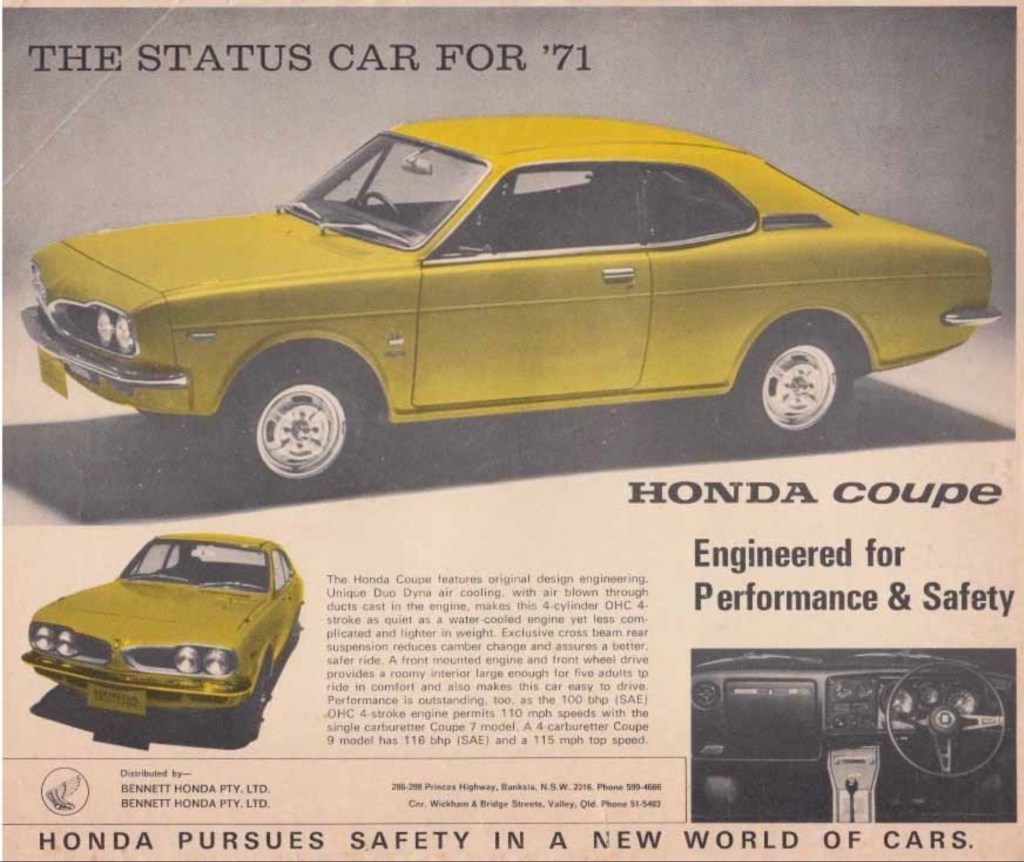
Shortly after the Suzuka ’69 500km race, Honda upgraded the machine by fitment of the 1.3-litre, air-cooled, four-cylinder engine fitted to their then new Honda 7/9 Coupe, a vastly underrated car. The 1300cc SOHC, crossflow, all alloy engine had a unique engine cooling system named Duo Dyna Air Cooling. The head and block had airways akin to the water passages of liquid called engines cast with short, stubby vertical fins. An impeller mounted directly to the crank pumped air through the passages, assisted by additional fins on the outside of the block. The dry sump carried plenty of lubricant, in a sense the engine was also oil cooled.
I’m having trouble finding the race record of the R800/1300, my Japanese is limited other than when excessively lubed. Information welcome.
Fukumi Takatake commenced racing motorcycles at 17 and was a contracted Honda rider at 19, winning the All Japan 250cc title in 1966. When Honda withdrew from two-wheel competition in 1967 (for a while!) he switched to four wheels, racing single-seaters, sports and touring cars. He ceased as a racer in 1987 after competing in the All Japan Touring Car Championship.
Etcetera…
(Honda Australia)
The Honda 1300 Coupe 9 was famously the last project Soichiro Honda personally led before retiring as Honda’s ‘Supreme Advisor’ in 1973.
His originality showed through in the design too, albeit times, safety and emissions legislation required a changed more conventional approach to become relevant and appealing to the masses. The brilliant Civic followed, there was nothing particularly novel about it, just great, bullet-proof engineering and build quality. Australian conditions are tough.
(Honda Australia)
My Mk2 Cortina GT was the typical student shit-fighter, but it was all-mine! I felt like I was jilting a babe after a chance drive of a very affordable Coupe 9, by 1976 they were el-cheapos, high risk ones too. My big-mistake was talking to Dad about it, I needed a bridging loan while I flogged Corty and bought 9 Outta 10.
“I’ve spoken to the car guy (the Fleet Manager who thought HQ Kingswoods were edgy) at work!” he said to me the next night, here we go I thought. “He reckons you’re a bloody idiot, it will cost you heaps. You’re looking after the Ford, he reckons you’ll have to rev the ears off it – just like the last bloke did…” And so on…
So I never did buy it but man it was a nice thing. A weird mix of old-tech like the rear axle, then that out-there engine and sweet gearbox. But it was so cohesive as a package, a howling but torquey engine, shitty looking nose tho. Time to drive one again, an interesting Classic Car article perhaps…
Credits…
Sanei Shobo, Historic Japanese Racing Cars Facebook page, Yukio Kobayashi, honda-rsc.com, yoshimura-rd.com
Tailpieces…
(unattributed)
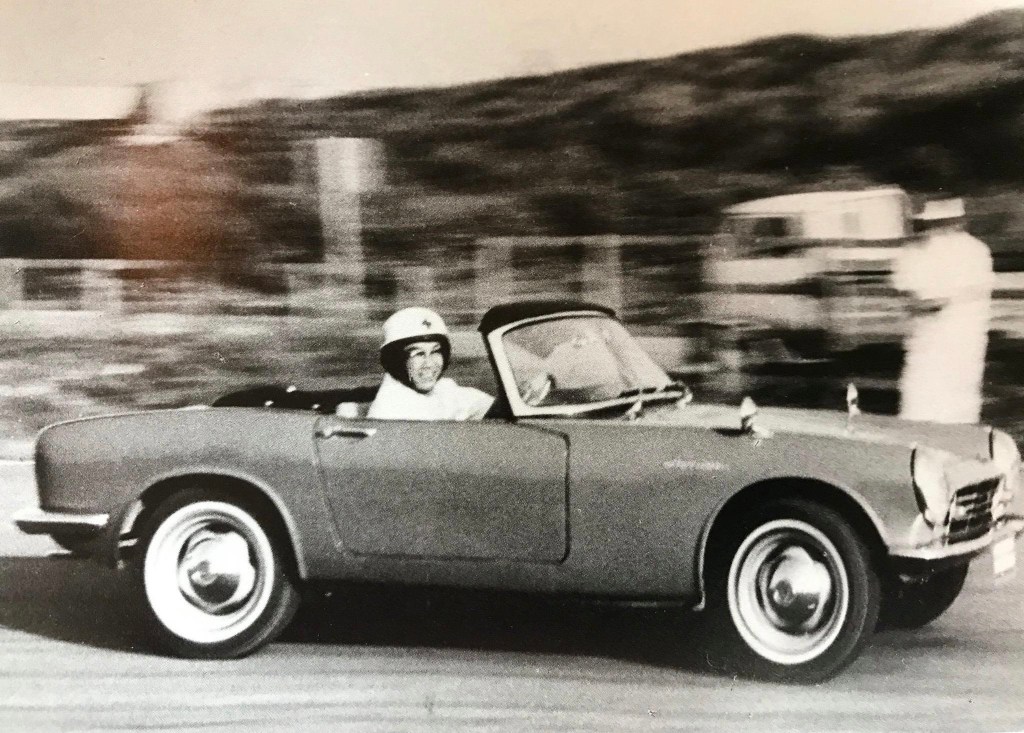
Soichiro Honda looking pretty happy at the wheel of an S600 or S800 Honda.
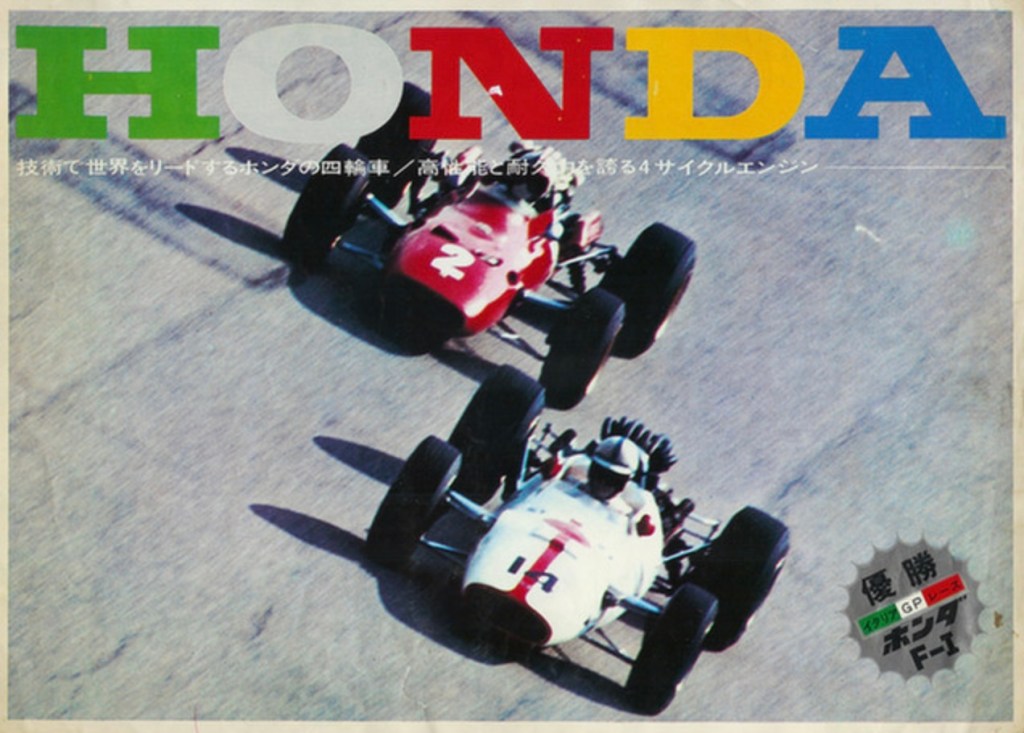
John Surtees Honda RA300 ahead of Chris Amon’s Ferrari 312 at Monza in 1967. Big John won the race in a last lap duel and last corner fumble from Jack Brabham’s BT24 Repco, two-hundredths of a second the official margin.
Maybe Honda had mercy on Jack – their F2 partner in 1965-66 – saving him the embarrassment of the more obvious corporate shot! See here for a piece on that partnership; https://primotipo.com/2021/12/17/brabham-honda/
Team Lotus in the Spa pitlane, Saturday June 12 1965: the 33’s of #17 Jim Clark, Mike Spence and the teams spare chassis…
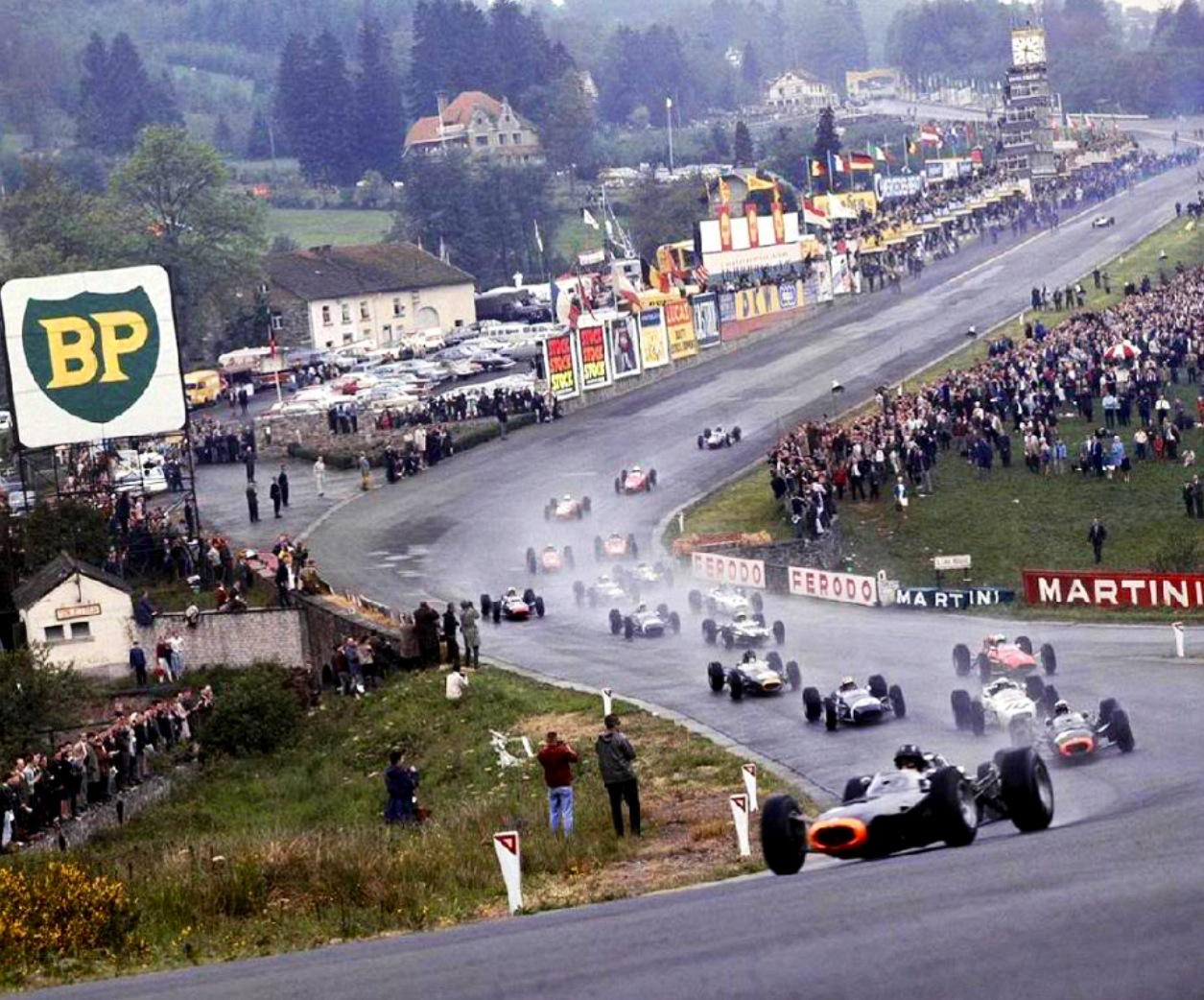
Sunday was wet, Jimmy ran away with the race from grid #2, Mike was 7th from grid 12. Graham Hill started from pole in his BRM P261 but finished 4th, Jackie Stewart was 2nd in the other BRM and Bruce McLaren 3rd in a Cooper T77 Climax.
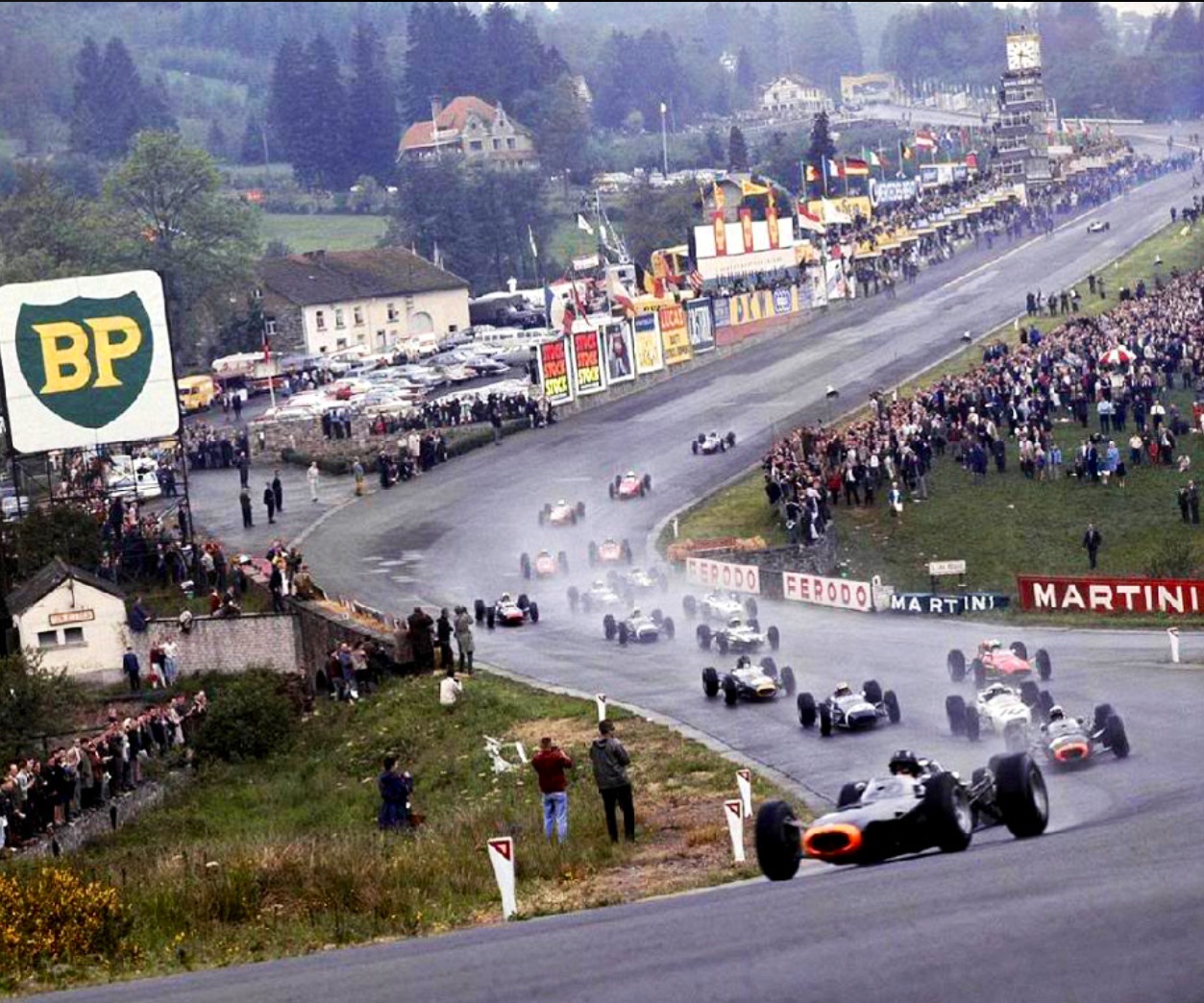
Lap 1 and Graham Hill’s BRM P261 leads into Eau Rouge from pole. You can just see the white peak of Clark’s helmet and his Lotus 33’s left rear wheel right up Hills clacker. Stewart’s sister BRM follows then Ginther’s white Honda RA272, Siffert’s Rob Walker Brabham BT11 Climax, Surtees Ferrari 158 on the outside, Gurney’s Brabham BT11 Climax, McLarens Cooper T77 Climax and the rest…(unattributed)
Daunting in the dry positively frightening in the wet. Spa. Clark speeds to victory, he took the ’65 drivers title in his Lotus 33 Climax (unattributed)
Tailpiece: Alone in the Ardennes Forest, Jack Brabham…
Brabham, La Source hairpin, Spa 1965- 4th in his Brabham BT11 Climax (unattributed)
One of the BRM mechanics shows his mates some naughty pictures on his iPhone 6S, Zandvoort, Dutch Grand Prix July 1965…
The shot says everything about the regard the BRM team had for their old driver. By that stage Richie was driving for Honda, famously the American won the very last race of the 1.5 litre F1 for Honda in Mexico City that year.
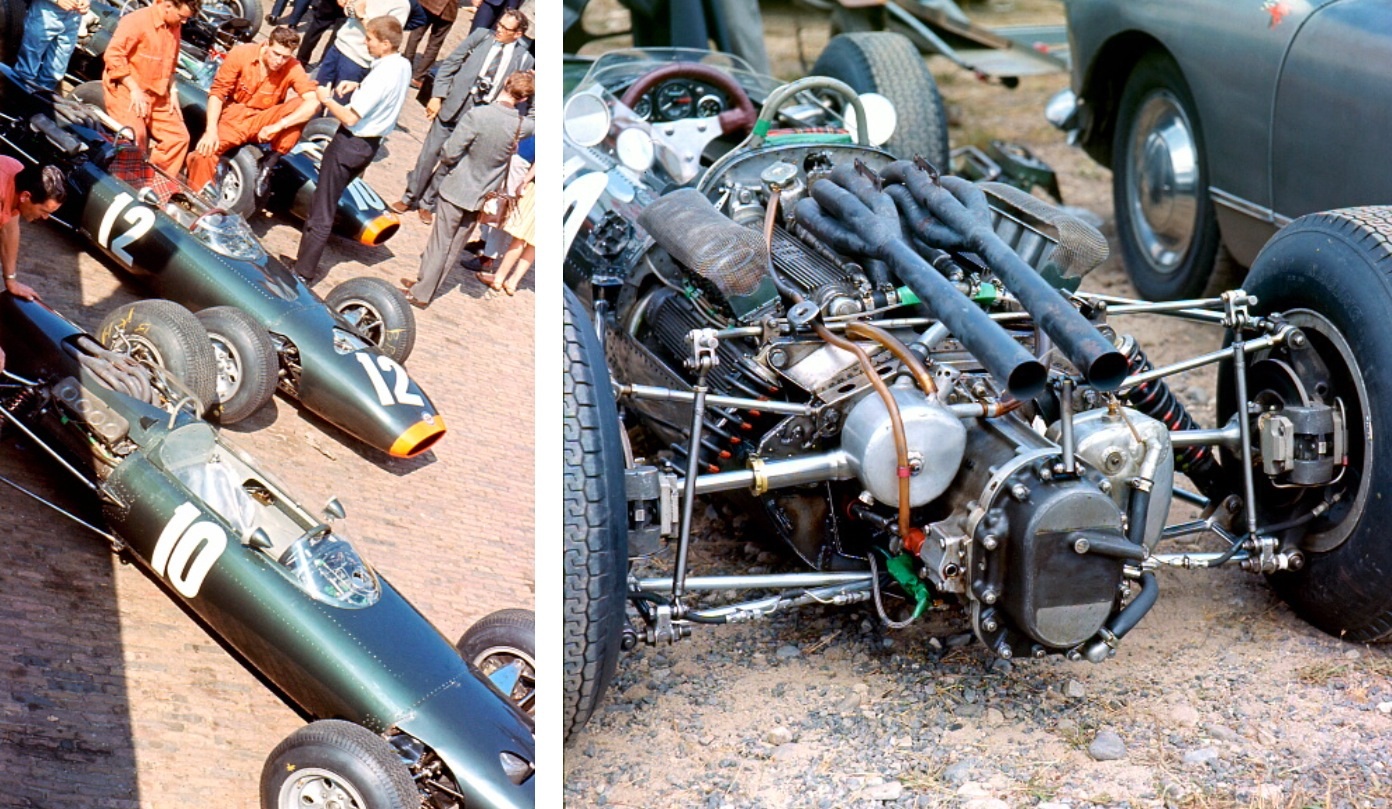
Stewart #12 and Hill #10 BRM P261’s in the 1965 Zandvoort paddock (Schlegelmilch)
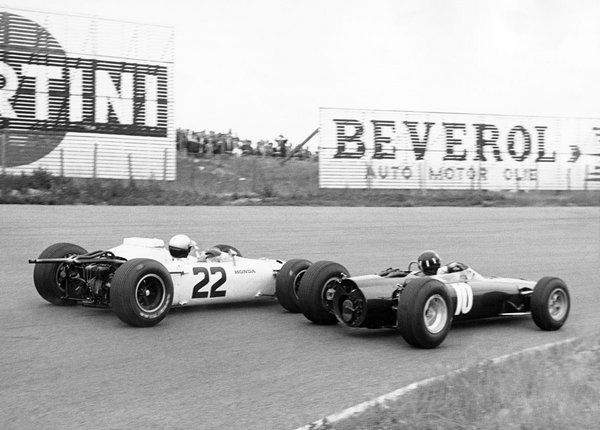
At Zandvoort the growing competitiveness of the RA272 was again on display, Richie qualified the car 3rd and finished 6th, the race won by Jim Clark’s Lotus 33 Climax.
The BRM’s finished 2nd and 4th, Stewart in front of Hill, both in P261’s. Dan Gurney was 3rd in a Brabham BT3 Climax.
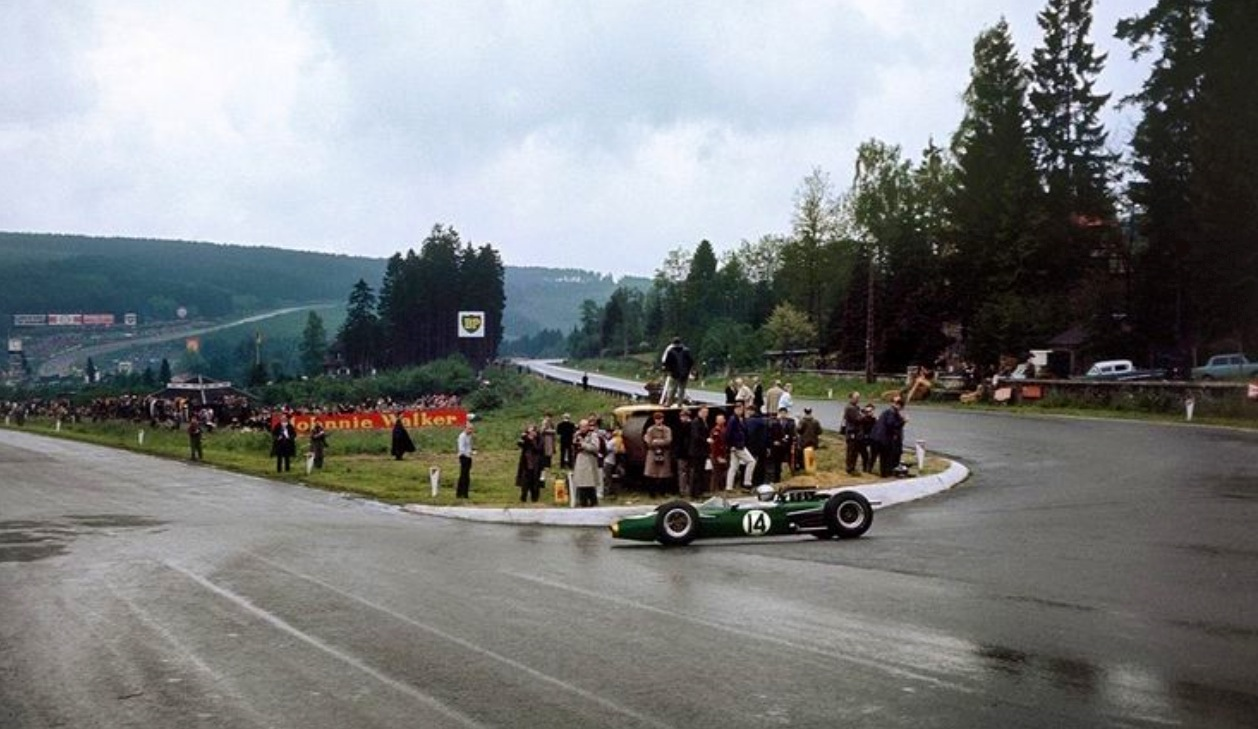
Richie Ginther in search of the La Source Hairpin apex, with photographer’s assistance, Honda RA272, Belgian Grand Prix, Spa 1965…
Soichiro Honda was a talented engineer who created the largest motorcycle manufacturing company in the world, it could be said that he helped mobilise the masses in many Third World countries. He was a passionate racer and in the early 1960s challenged the dominance of the European motorcycle marques, notably MV Agusta, on the circuits of the world.
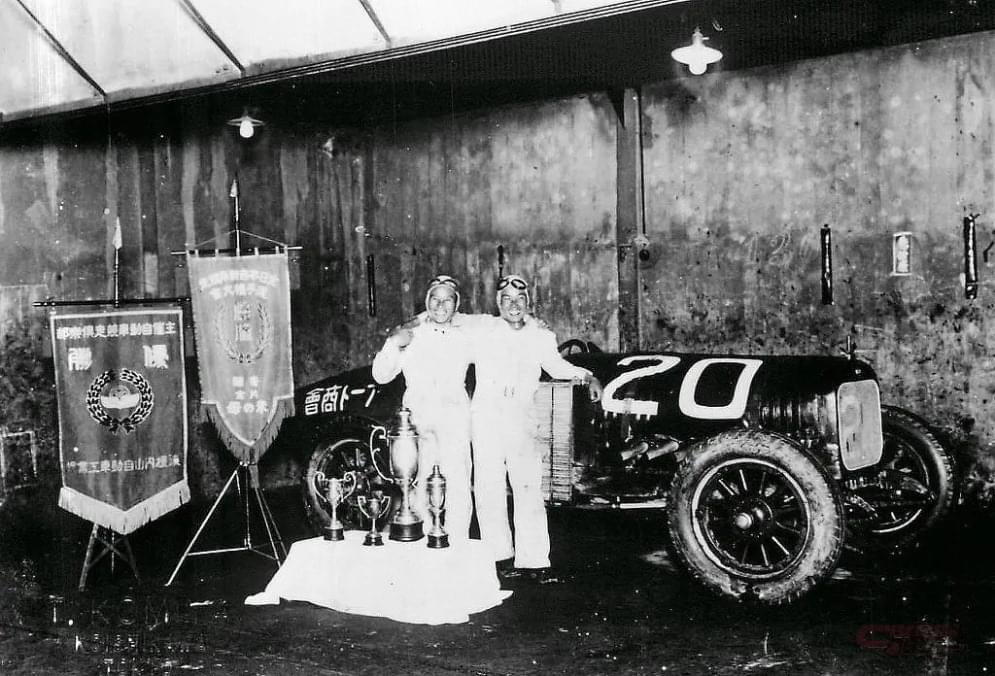
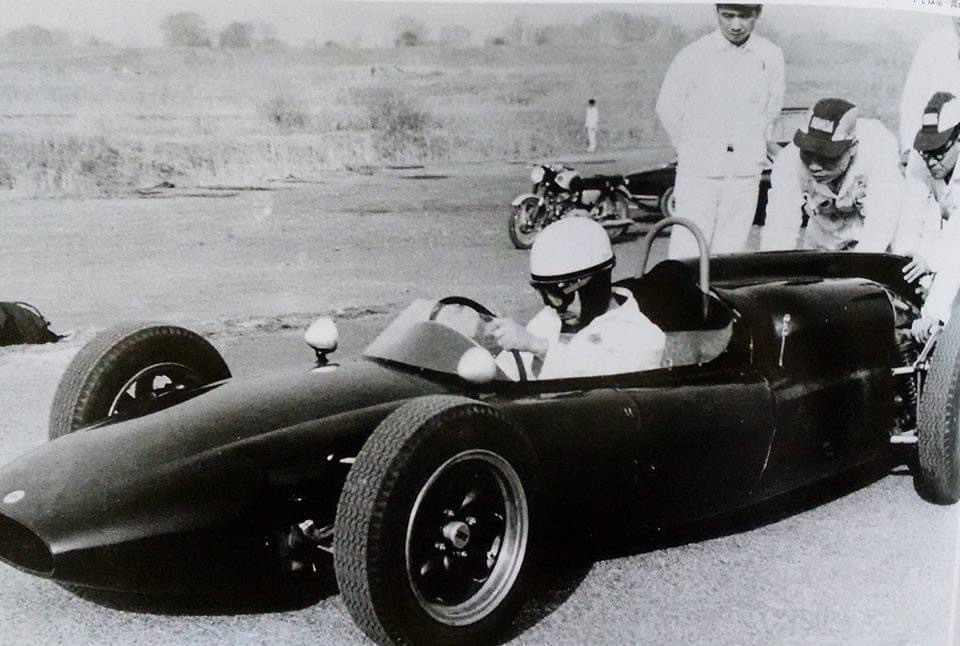
Soichiro and Benjiro Honda with their supercharged Ford powered ‘Curtiss Special’. Both were injured when they crashed and were thrown out of the car during the First Japan Auto Race at Tamagawa in 1936 (unattributed)Aussie Tom Phillis broke thru for Honda’s maiden GP win in the 1961 Spanish 125cc GP. Honda entered all the 125/250cc events from 1960 and won both titles that year. They entered 500cc racing in 1966 and took 138 wins in its first sortie to the World Championships, before taking a break in 1967 (unattributed)Honda about to test his Cooper T53 Climax #F1-19-61 circa 1962 (unattributed)
By that time Honda R&D already had a 2.5-litre Cooper T53 Climax F1 car to tinker with (above) and study, they announced their entry into Grand Prix Racing in 1964, a sensational 1.5-litre transversely mounted V12 stressed-skin chassis car their weapon of choice.
Honda had already started building road cars – the S600 and S800 sports cars – and by 1972 built their first Civic, a car which didn’t revolutionise the class but brought amazing standards of refinement and performance into the market for the time. It was the first of many outstanding mass market cars which would define the marque as the Japanese BMW in the eyes of many.
Honda were on a climb and motor racing was part of the plan to develop innovative technology, resilient engineers and promote and build the Honda brand.
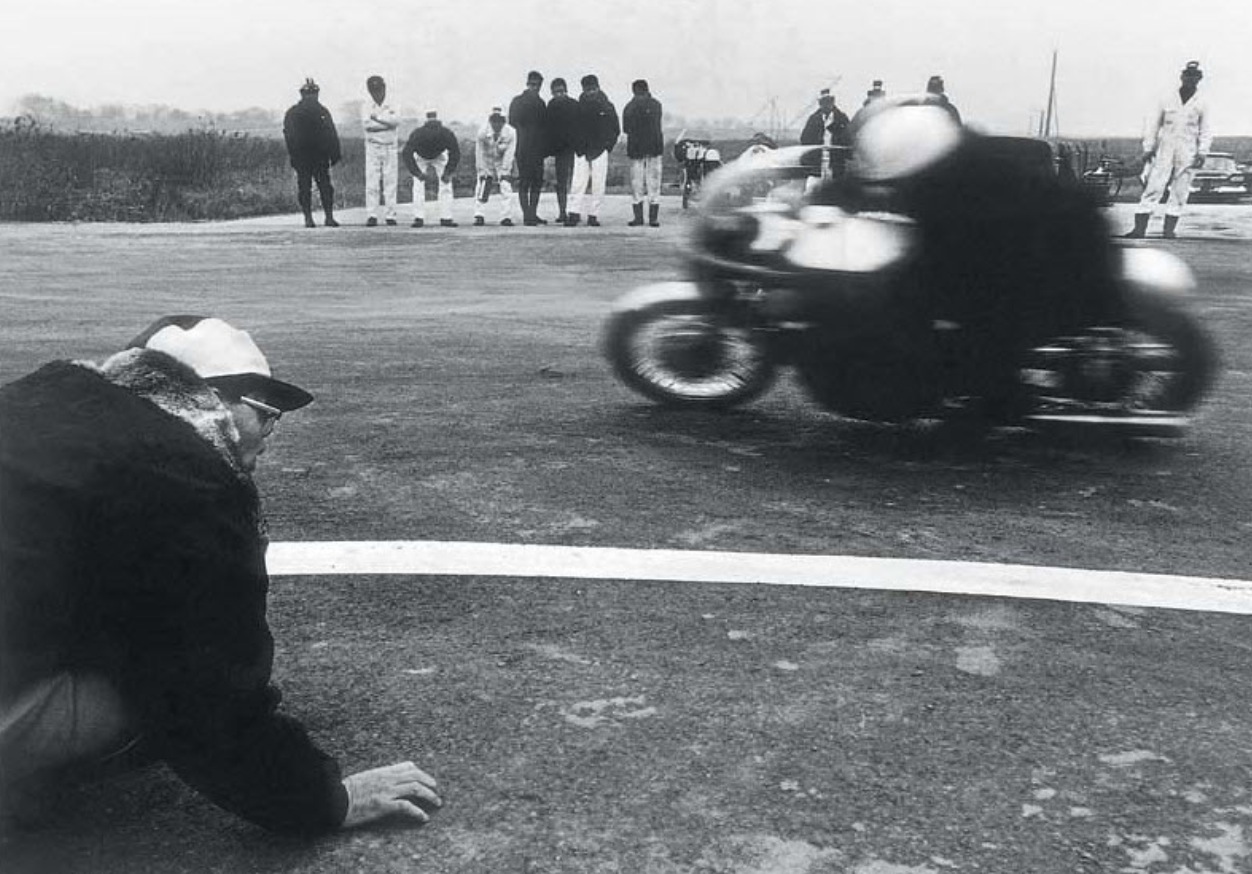
Soichiro Honda watching the performance of one of his ‘bikes at close quarters! during the 1960 Isle of Man TT (unattributed)
Honda RA271…
The chief engineer of the project was Yoshio Nakamura, later to become Honda’s CEO.
The initial prototype, the RA270F was a spaceframe car, derivative of the Cooper, and was tested extensively at Arakawa on 6 February 1964 and then Suzuka, by many including Jack Brabham. Brabham and his partner, Ron Tauranac were to race Honda 1-litre, four cylinder engines in their F2 Brabhams, winning the ‘European F2 Championship’ – there wasn’t an official one until 1967 – in 1966.
In fact Honda had decided to be an F1 engine manufacturer, not the builder of their own chassis and had entered into a partnership with Lotus, but problems with Lotuses existing Ford agreements precluded contract execution by Lotus…so Honda built the chassis after all.
Soichiro Honda with the RA270F prototype spaceframe F1 car in 1964, he was one of many who tested the car (Honda International)
The definitive RA271 used a stressed skin monocoque chassis which ended at the rear of the cockpit to which was mounted the transverse 60 degree 1495cc V12. A tubular subframe picked up the rear suspension assembly which could be unbolted and wheeled away.
The engine was DOHC, four-valves per cylinder and was fed initially by six Keihin carburettors mounted across the frame behind the cockpit. Fuel injection was being developed and was soon adapted to the engine. Power takeoff was by spur gears from the centre of the crankshaft driving directly into a transverse shaft six-speed transaxle.
Honda RA271 at Monza in 1964 where the fuel injected version of the engine appeared for the first time. It developed circa 220bhp @ 11000rpm in 1964, more than that claimed for the BRM and Coventry Climax V8s and about what Ferrari claimed for their championship winning V8 (unattributed)
Front suspension was by top rocker operating inboard mounted coil spring damper units and a lower wishbone. The rear was by way of reversed lower wishbone, single top link with outboard mounted coil spring damper units and two radius rods providing lateral location. Sway bars were adjustable front and rear. Dunlop disc brakes were used and Goodyear tyres, Honda and Brabham were the first users of Goodyears in F1.
Things Go Better With Coke… cheap oil catch tank! RA271 rear end showing upper and lower wishbones, coil spring damper units. Rear mounted battery and alloy casing of the six-speed Honda transaxle mounted aft of the engine where it was parallel with and driven from the centre of the crankshaft. Rear Dunlop discs inboard (unattributed)A Honda mechanic, Yoshio Nakamura and Ronnie Bucknum working things out upon the RA271 race debut…Nurburgring pit apron 1964. None of the flash surroundings for mechanics of the modern era (B Cahier)
Ronnie Bucknum…
Somewhat bizarrely, the Japanese, as if to emphasise the experimental nature of the program, chose Bucknum, a little known American sportscar driver with single-seater experience, to pilot the car. His family owned a Honda dealership in the US and he raced an S600 at home, these days a Superlicence would not have been issued!
He tested the car extensively in Japan before the car’s first race in the German GP, at the Nurburgring. What a baptism of fire for car and driver in August 1964!
Bucknum qualified the RA271 slowest, no disgrace in that, and then drove a steady race in the wet, the power curve of the engine was somewhat peaky, he was in 11th place when a steering problem caused him to crash out of the race.
Ronnie Bucknum during the 1964 German GP upon Honda’s debut. He drove the RA271 sensibly in difficult, wet conditions, crashing out after steering problems (Honda International)Ginther in the RA272, wet Spa 1965, not for the faint hearted! (unattributed)
The team missed the Austrian GP but returned with the definitive fuel injected version of the engine at Monza, qualifying mid-grid and racing in fifth before overheating problems intervened. In the US he retired with a blown head gasket to finish the teams truncated first season.
1965, the final year of the 1.5-litre Formula…
Honda were more serious about its 1965 campaign, building a new car, the RA272 and signing Richie Ginther ex-BRM and Ferrari, and a noted test and development driver to lead the team, retaining Bucknum for a second year. The team were based in Amsterdam, the centre of Honda’s distribution operation in Europe.
The power of the engine was increased from circa 220bhp @ 11000rpm to 230bhp @ 12000rpm with chassis weight reduced by 30kg. Minimising heat build up became key as the engines lost power significantly as the races wore on, Ginthers ‘banzai’ starts came to nought as the engines lost grunt.
The cars appeared at Monaco, qualifying up the back and both dropped out, Richie with a UJ failure and Ronnie with gear change maladies.
Ginther’s RA272 Monaco 1965, DNF with a driveshaft failure in the race won by Hill’s BRM P261. Note the evolution of the car’s rear suspension compared with the RA271 above. Much neater and conventional single top link and inverted lower wishbone (unattributed)The sheer majesty of Spa…treacherous wet ’65 race won by Clark’s Lotus 33 Climax. From the start it’s Hill and Stewart in BRM P261s, Ginther, Honda RA272, Siffert, Brabham BT11 BRM, Surtees, Ferrari 158, Dan Gurney, Brabham BT11 Climax, Bruce McLaren, Cooper T77 Climax, Jo Bonnier, Brabham BT7 Climax and the rest…(unattributed)
The Belgian GP was typically wet, Ginther qualified fourth and finished sixth while Bucknum’s transaxle failed. Both cars failed to finish at the French GP with ignition problems although Richie qualified seventh.
The Honda was well suited to the wide open spaces of ex-RAF airfield Silverstone, one car was entered for Ginther which he duly qualified third and led from the start, the Honda yowling its way out front. He ran third for much of the race but again ignition problems ended his race.
British GP, Silverstone 1965. Ginther is third on the grid, Clark is on pole in his Lotus 33 Climax, Hill alongside in BRM P261, then Ginther’s RA272 and on the outside Jackie Stewart’s #4 BRM P261. The Ferrari 1512 #1 is John Surtees (unattributed)
Ginther again qualified third at Zandvoort and led the race but then spun twice and finished sixth. Honda missed the Nurburgring, but reappeared at Monza with engines mounted lower and using sleeker bodywork, Bucknum qualified sixth and Richie 17th after various dramas. Both popped engines again failing to finish. Both cars finished for the first time at Watkins Glen in the US Grand Prix, Bucknum an uninspired 13th and Richie seventh having again qualified third.
And so, onto the last race of the season and of the 1.5-litre formula. The Magdalena Mixhuca circuit at Mexico City was the venue for the Mexican Grand Prix, famous for the difficulties caused to engines at a height 7500 feet above sea level.
Ginther again! qualified third and Bucknum tenth. At the drop of the flag Richie simply took the lead and ran off into the distance, the little jewel of an engine never missing a beat and scoring Honda’s, Goodyear’s and Ginther’s first Grand Prix victories. Bucknum was a strong fifth. Hondas fuel injection system, problematic at times was one of the reasons for the Mexican success, thriving at the higher altitude.
And so Honda won a famous and well deserved win and would be back late in 1966 with a heavy but powerful 3-litre V12 engined car, the RA273…
Richie Ginther led the Mexican GP in 1965 from start to finish, heat and altitude notwithstanding. He is swinging his RA272 into Horquila Corner, the hairpin (B Cahier)Soichiro Honda (unattributed)
As an enthusiast I love those marques which have racing as part of their DNA, for that Honda have their founder to thank. Soichiro Honda gave the following press conference speech after the Mexico win, I love the insights it provides into his thinking about how racing improves the breed.
He said, ‘Ever since we first decided to build cars we have worked hard and been willing to take the most difficult path. Now we must study the reasons why we lose, and do the same when we win, so that we can use that knowledge to improve the quality of our cars and make them safer for our customers. That’s our duty. Once we had established our goal, we decided to choose the most difficult path to get there. This is why we entered the Grand Prix series. We will therefore not be content with this victory alone. We will study why we won and aggressively apply those technologies to new cars’.
Honda RA272 cutaway drawing by Yoshiro Inomoto
Etcetera…
Honda unload their RA271 at the Nurburgring upon their GP debut, German GP 1964 (unattributed)Graham Hill and Richie Ginther dicing at Zandvoort, Dutch GP 1965. Hill fourth in his BRM P261 and Richie sixth in his Honda RA272 in the race won by Clark’s Lotus 33 Climax, Clark was the ’65 Champ (unattributed)Honda RA272 engine. 1495cc 60-degree, transversely mounted, DOHC, four-valve, fuel injected V12. Circa 230bhp @ 13000rpm in 1965 (B Cahier)Honda RA272 cockpit (unattributed)
Sources…
Doug Nye ‘The History of The Grand Prix Car 1945-65’, Honda International, Bernard Cahier, Yoshiro Inomoto
Tailpiece…
Ginther and engineer Nakamura celebrate their 1965 Mexican GP victory (unattributed)















 primotipo...