Tony Johns sent me this wonderful article about the motorsport state of play in South Australia in 1954, many thanks.
Cars appears to be a magazine from The Argus stable, a Melbourne daily newspaper published from June 1846 to January 1957. Cars publisher was Larry S Cleland, anybody know of Lazza? The Sydney advertising rep was JM Sturrock of King Street, Jock Sturrock of yachting fame I wonder?
The article was written by Albert Ludgate, Chief Engineer of Lea-Francis cars from 1946. He emigrated to Australia together his family and a 1926 Lea-Francis K-Type in 1953, more of Albert later.
Etcetera…
Australian Grand Prix historians will note that at the time of publication – September 1954 – the 1937 Australian Grand Prix hadn’t been invented. That is, the fuckwit(s) who decided that the December 26, 1936 South Australian Centennial Grand Prix should be the 1937 AGP, rather than the 1936 AGP hadn’t done his/their Fake Nooooz thing.
The South Australian Government’s banning of racing on roads, quite possibly brewing for some time as Albert wrote, was probably precipitated by two deaths in bizarre circumstances during a motorcycle race at Woodside in 1949.
Albert Ludgate in the glasses, and Ken Rose tickling one of their Lea-Francis 1.5-litre midget engines in the US in 1948-49 (LFOC)
Albert Ludgate…
Ludgate’s early history I am yet to discover, but he was Chief Engineer of Lea-Francis from 1946.
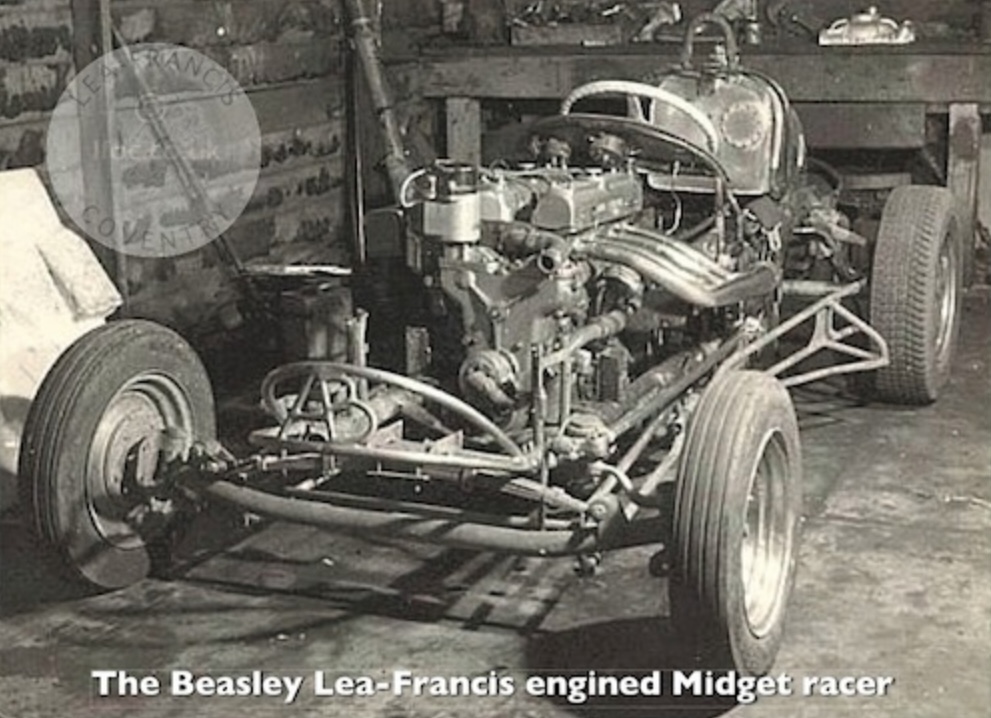
By February 1953 he was in Adelaide helping prepare one of his twin-high-cam ‘Leaf’ midget racing engines which had been fitted to Victorian ace, Alf Beasley’s speedcar for an international (SA Solo Championship) meeting at Rowley Park, Adelaide on Friday February 13, 1953.
These 1496cc, four-Amal or twin SU fed, dry-sump, gear-driven cam midget engines were aimed primarily at the large American market.
Bob Shimp won some heats in his Lea-Francis engined car at the Carpinteria Thunderbowl in South California on July 18, 1949, ‘then led the semi-main until the Lea-Francis engine in his midget failed’, wrote Kevin Triplett on his triplettracehistory.blogspot.com.
‘The 91-cubic inch Lea-Francis engine, purpose built in England for midget auto-racing featured dry-sump oiling, gear-driven double camshafts, four SU carburettors (sic), with a high compression ratio to run on alcohol. Record setting British driver, Dudley Froy, Lea-Francis designer Ken Rose and chief engineer Albert Ludgate made trips to the USA in 1948 and 1949 to show and sell samples of the engine.’
‘Besides Shimp, several US midget racers (including Woody Brown in Northern California) used the four cylinder “Leaf” engine but it never became popular (less than a dozen were built) given that its 120 horsepower could not match the power of the Offenhauser four-cylinder engine and it sometimes put connecting rods through the sides of the aluminium block.’
Contemporary Australian newspaper reports say that brothers Alf and Stud Beasley had a car each powered by a float of three of these trick Lea-Francis engines, and had some success with them. It makes one wonder where those engines are now…
Alf Beasley aboard his Lea Francis powered midget at Tracey’s Speedway, Melbourne
Into 1954 Ludgate was the technical representative of Simmonds Accessories and the publicity officer of the (speedway) Racing Drivers Association, while JA Lawton & Sons also retained Albert, not to forget his writing abilities.
Ludgate and his Racing Drivers Association made quite a splash in October ’54 with their ‘Speed and Sports Motor Show’. More than 150 racing, veteran and speedway cars and bikes were amongst the exhibits in the Centennial Hall at Wayville. It was the first time in South Australia’s history that such a show had been run.
Three-quarter-midgets – TQ cars were on the march – were front and centre with Ludgate’s Simmons Nut-Ridge Special one of five TQs on display. In addition he showed a 150cc half-scale midget racer built for his six-year-old son.
Ludgate was a strong advocate of TQs and was a member a three man Racing Drivers Association specifications committee tasked with developing specifications for the class…and in due course he would make some cars.
By December 1954 Ludgate was living in Reade Park, later he bought a house in Colonel Light Gardens. He was well on the way to embedding himself within the local motorsport and automotive industries, having addressed members of the Aeronautical and Automotive Engineers about American car racing and engine development in the Kerr Grant Lecture Theatre at Adelaide University.
Capricornia 1, John Plowman’s car circa 1956 (bollyblog.blogspot.com)Capricornia 3, later the Repco Ricardian, at Port Wakefield during the March 1959 meeting. With Buchanan couture, a great looking car (v8vantage.com)
In his small Colonel Light Gardens garage, Ludgate Automotive Developments built sportscars, TQ midgets and go-karts using the Capricornia and Ricardian brandnames.
The Capricornia sportscars – the name was taken from the Tropic of Capricorn region – used a multi tubular chassis with two main side-members, a wheelbase of 91 inches and used standard or modified Holden parts, including front and rear suspension, and weighed about 715kg depending upon specifications.
The first of the series, John Plowman’s car was commenced in 1955 and completed just in time for for the 1956 Easter meeting at Port Wakefield ten months later. Fitted with an English RGS/Shattock fibreglass body, and with experienced racer/engineer, John Cummins at the wheel the car performed well. A long job list proved racing improves the breed!
Capricornia 3, Collingrove circa-1958 (S Jones)
John Bruggerman’s very successful Capricornia 3 racing car had a Holden (later Repco-Holden) grey-six fitted and used a shortened Buchanan (NH Buchanan Motor Co) body.
Ludgate’s pioneering TQs – a poor-mans introduction to speedway racing – used Austin 7 chassis, suitably bent 7 axles, and a variety of 500cc motorcycle engine driving through a gutted Austin 7 gearbox using a dog-clutch for stop and go.
In the mid-1950s John Cummin’s met Ludgate in Adelaide in his capacity as a Perkins Diesel rep. Ludgate helped ‘with a lot of input’ in the early development of the Holden grey-six cylinder engine used in his Bugatti Holden. Cummins blazed the trail in Victoria with Holden engine development, his car is said to be the second Holden-powered racing car in the state, ‘Lou Molina’s, Silvio Massola built MM Holden Special being the first’.
‘The engine gave about 65 or 75 horsepower at 3500rpm’, Cummins recalled, ‘and it wasn’t worth two-bob at 4500! We fiddled with the needles in the triple 1 3/4″ SU carries and got 116 horsepower at 4500. Almost double the original Holden power output.’
John Cummins’ Bugatti T37A Holden at Bathurst in 1961. Note the Bellamy independent front suspension so characteristic of #37332 (unattributed)(B White)
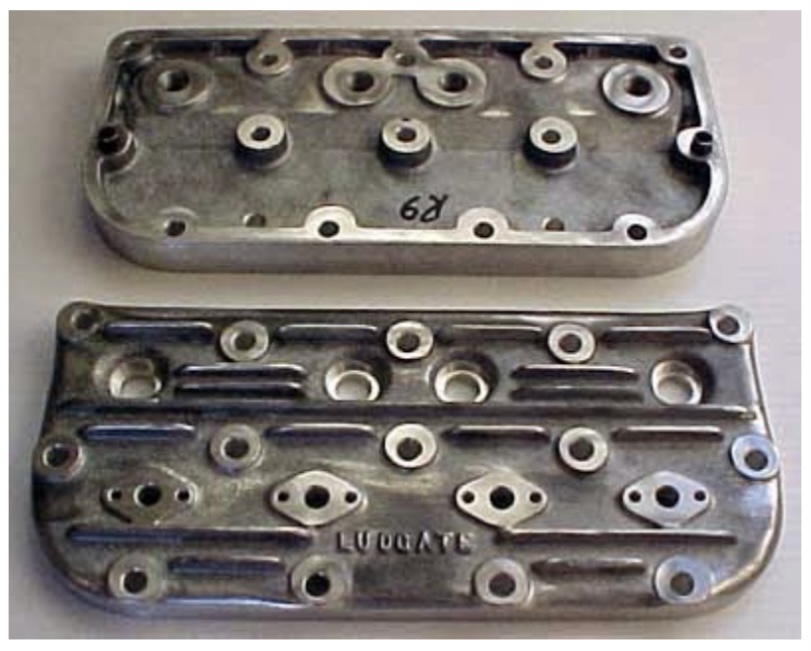
Ludgate also made Austin 7 cylinder heads for the Seven racing fraternity – think of Seven racing as the Formula Vee of the day – in the 1950s and early 1960s. The design featured sandwich construction with combustion chamber shape late-7. Enthusiasts often modified the shape to their own requirements. Ludgate built over 30 of the heads with many more built from his patterns after his death. They were used by many A7 racers in the day including Elfin’s Garrie Cooper during his formative years.
Amusingly, later, the street in which he lived was renamed Ludgate Circus which is surely indicative of the goings on at that address in the wee-small-hours and the fond regard in which Albert was held by his neighbours!
Ludgate retained his Lea-Francis for many years, using it daily to drop his son off at school and displaying it at the VSCC annual rally at Victor Harbor in 1961, by then he was described as a ‘well-known motoring personality’.
Late in his life the Australian Society of Automotive Engineers established and annually bestow the Albert Ludgate Award.
This summary of information about Albert Ludgate is the result of a days Troving and Googling, if anybody can add to the story please contact me: mark@bisset.com.au
Credits…
Cars via Tony Johns’ archive, Trove and other online research, News Adelaide, Victor Harbour Times, bollyblog.blogspot.com, v8vantage.com, triplettracehistory.blogspot.com, Lea-Francis Owners Club website, Paul Jaray on auto puzzles.com, Ron Burchett, Bruce White, Sports Cars and Specials September 1956, Tony Parkinson Collection, Steve Jones
Tailpiece…
(T Parkinson Collection)
Bill Pile or John Newmarch in the Ricardian Repco chasing Jim Goldfinch’s Austin Healey 100S at Port Wakefield circa 1959.
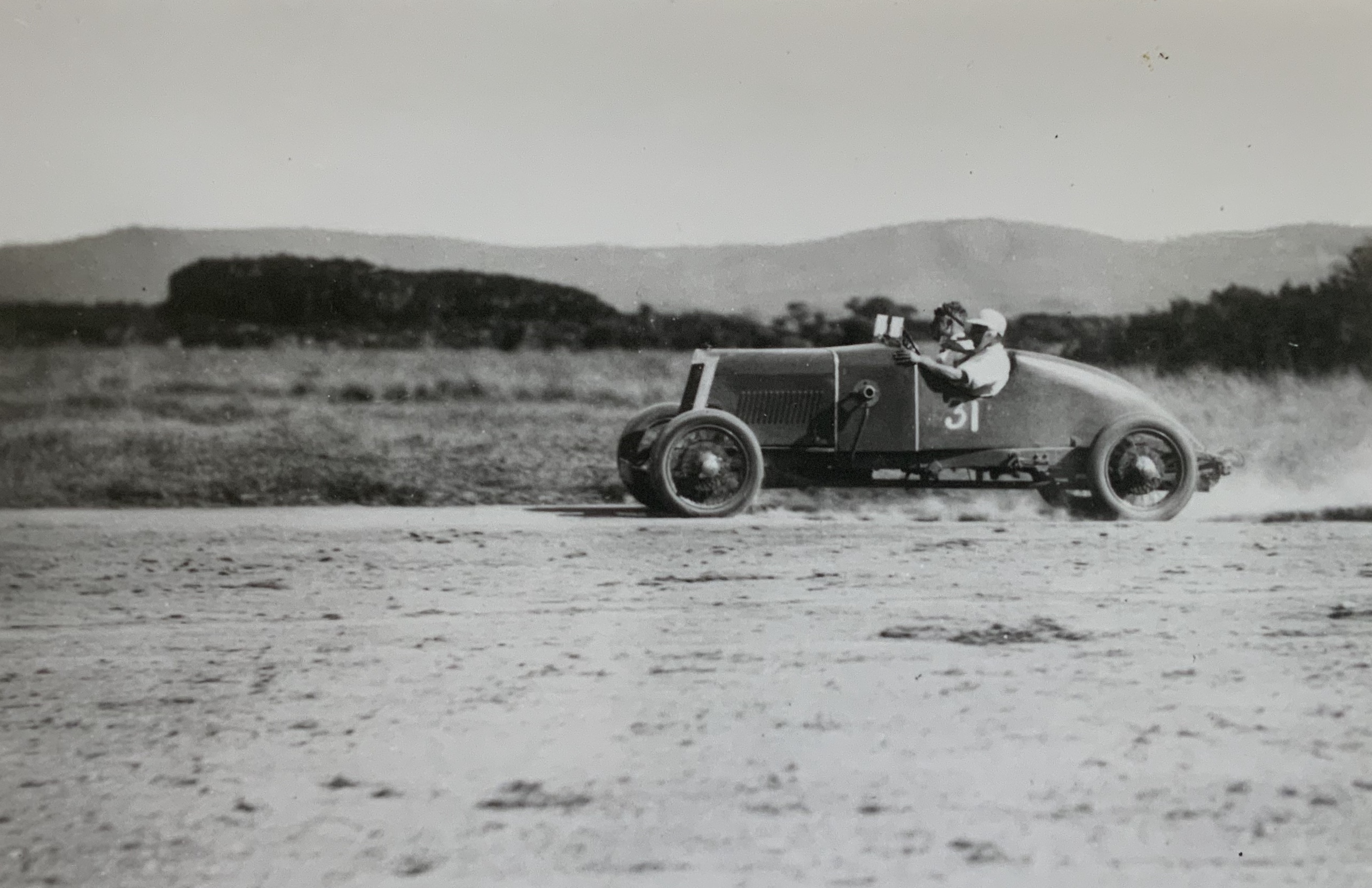
A C ‘Mick’ Carlton and passenger aboard his Lea-Francis Hyper 1.5 s/c, chassis number #14041 during the sprint meeting at Safety Beach, Dromana on Melbourne’s Mornington Peninsula, Saturday 7 December 1929…
It’s amusing to think that a century ago motorsport took place on land upon which at least two of our Victorian readers have weekenders. Let’s deal with the events at Safety Beach first and come back to Mick and Lea-Francis further on.
The Royal Automobile Club of Victoria first ran ‘a long series of motor car contests’ at Safety Beach the year before, Saturday 2 December 1928 on a two mile rectangular, sandy gravel course on the ‘Safety Beach Estate between Mount Martha and Dromana’. Cursory research indicates the venue was used from 1928 to 1932.
About 1,000 spectators attended that day making the long journey by car or steamer from Melbourne to Dromana. No doubt the nascent sport was shown to best effect as the chosen course, held on private property – motor racing on public roads was illegal in most states including Victoria – was placed in a natural ampitheatre of hills including Arthurs Seat and Mount Martha towards which the photograph below was taken.
(Rose)
A familiar view to Victorians from Arthurs Seat across Port Phillip Bay and down towards Dromana and it’s pier – the area to the right before the land starts to rise at Mount Martha is Safety Beach. The settlement in the distance is Mornington – its apex is Snapper Point.
The course was 2 miles 173 yards in length, a nice lap with ‘tests for acceleration over a short run’ and ‘for speed around the full circuit’, more than fifty cars entered.
Prominent competitors included Joan Richmond, Riley, and Arthur Terdich in the Bugatti T40 in which he was so quick in the 1928 100 Miles Road Race (The Australian Grand Prix) at Phillip Island in March. Other Phillip Island racers entered included WA Terdich – variously called Bill or Ab – Senechal, Harold Drake-Richmond in the Maurice Shmith owned Fiat 509 and Jack Day’s Bugatti T37 which had been very fast in the latter stages of that first road race in Australia.
Other cars of interest/racers of later prominence included AW Bernadou, Riley, Maurice Shmith in a Bugatti, Herb Beith aboard a Chrysler and Arthur Terdich’s Lancia Lambda, perhaps running his road car in addition his Bugatti.
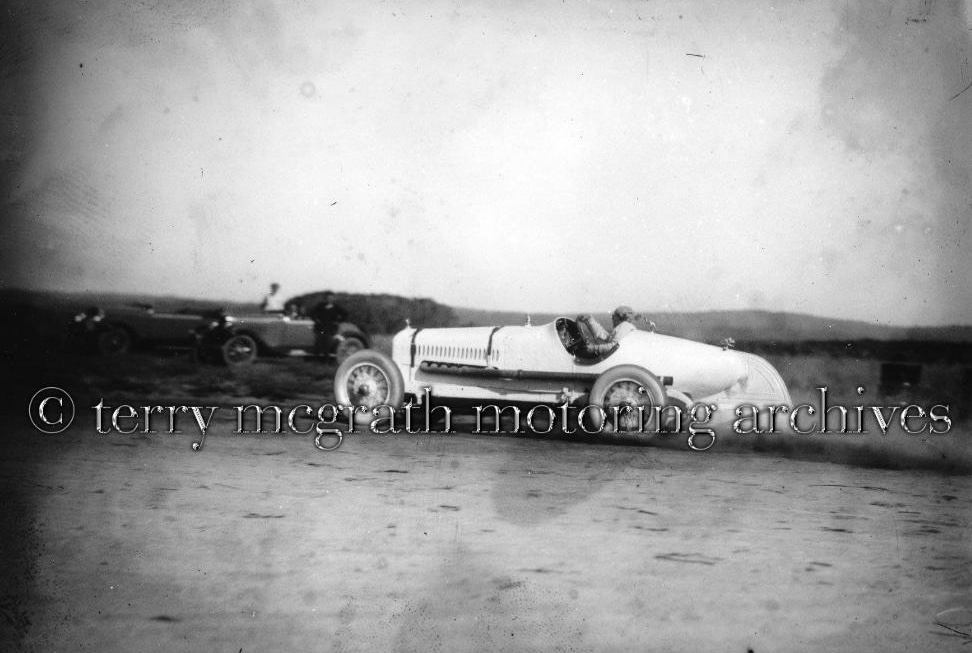
Ground level’ish view looking from near ‘Anthony’s Nose’, the Point between Dromana and McRae towards the Dromana Pier with a Steamer in attendance, and on towards Safety Beach beyond. The Nepean Highway, then Arthur’s Seat Road, is that ‘quiet little track’ in the foreground (Rose)Harry Cooper’s 4.8-litre Ballot 5/8 LC. Safety Beach, 2 December 1928 (E Adamson photo published in ‘The Argus’ 4 December 1928 via Terry McGrath)
The final event of the day was a five lapper, about 10.5 miles, between the fastest car of the day, Harold Cooper’s 4.8-litre straight-eight 1919 Ballot 5/8 LC ‘Indycar’, which covered the course at an average speed of 59.96 mph, ‘a remarkable performance, in view of the fact that the course was practically a rectangle with four almost right angle turns’, and an aircraft piloted by Keith Farmer.
‘Cooper sped the 10.5 miles, up till the last lap the plane gave the appearance of not been fully extended, but in the run home it speeded up and won. The contest created considerable excitement among the spectators’ The Argus writer concluded.
Other snippets about the meeting were that the serious boys were down the weekend before to test further improvements made in the final week by ‘gravelling and oiling the course’ – shades of Phillip Island final preparations between 1928 and 1935.
That ‘Speedboat racing will be another feature of the programme’ suggests the road was parallel with and very close to the Safety Beach foreshore. The ‘Dromana Progress Association’ looked after the ‘special catering arrangements’ but I doubt ice-cold ‘frothies’ were on the menu.
Noted future Aussie International Joan Richmond made the dailies the following year, 1929, when she overturned her Riley 9 during practice, ‘the car was smashed, but the driver, whilst concussed, and passenger escaped serious injury. Miss Richmond is known as a capable and daring driver.’
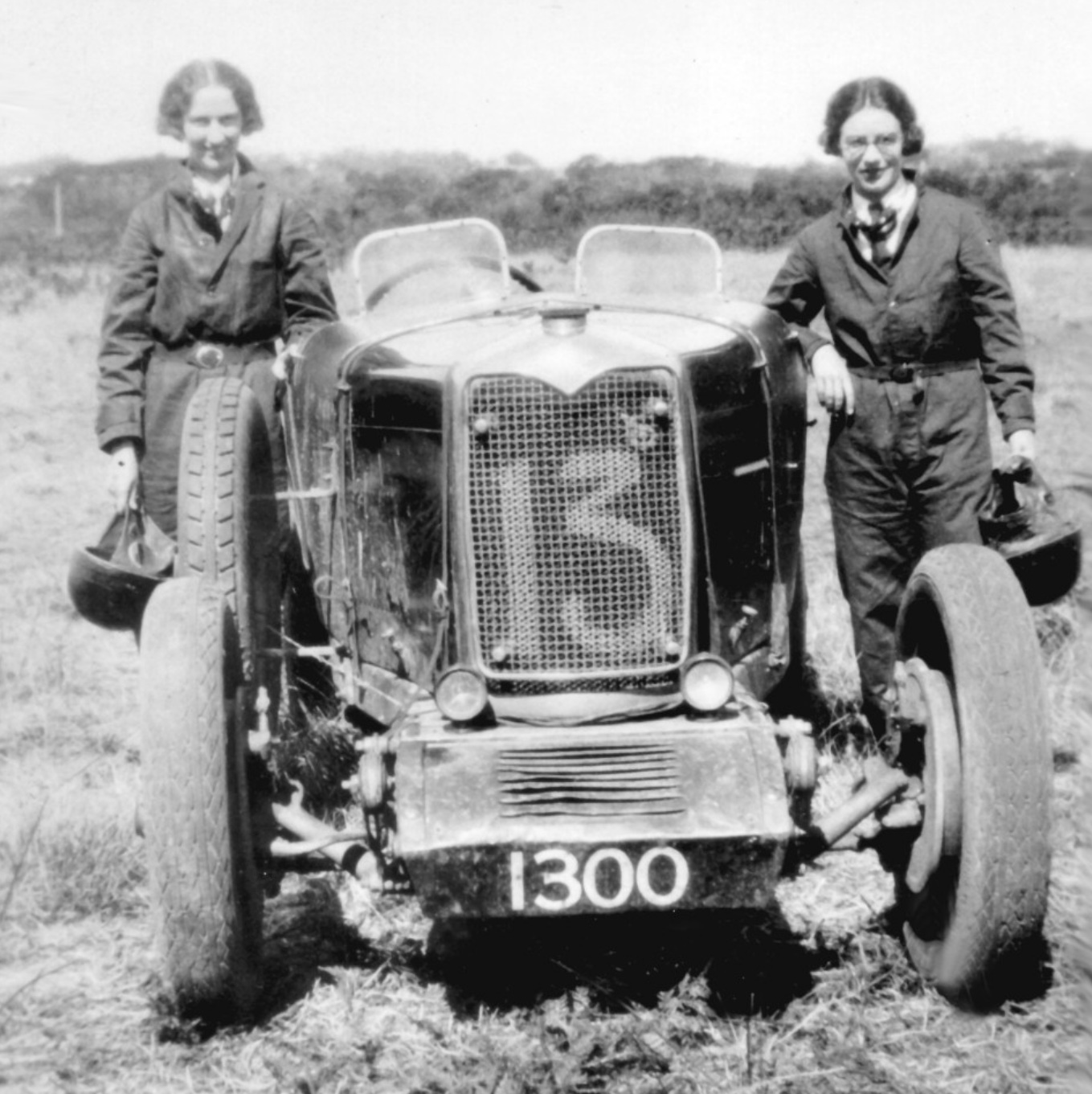
Joan Richmond and Mollie Shaw with the Riley 9 Brooklands (the ‘Young Riley’ in Joan-speak) during the 1931 AGP weekend at Phillip Island, fifth outright and second in the 1500cc class. ‘We had to part our hair in the middle to get our helmets on’ Joan quipped. The car was a Riley 9 chassis with ‘a light fabric body made by Mr Thomas of the Elite Motor Body Works’ (unattributed)
Despite the onset of the Great Depression, 3,000 spectators attended Safety Beach again in 1929, the crowd was perhaps bouyed by the two successful Australian Grands Prix held not too far away at the Island in March 1928 and 1929.
Whilst Hope Bartlett’s 2-litre Grand Prix Sunbeam was not entered at Safety Beach, a long way from his Nowra base, there was no shortage of ‘French blue’ exotic racing machines including Alan Cooper’s big, booming Ballot driven so well by brother Harry, as well as the Terdich, Junker, Jenkins, Bedford and Day Bugattis plus Clarrie May’s Austin 7 s/c and Harry Beith’s very quick Chrysler.
By any measure it was a strong entry of cars for the rapidly growing number of racing enthusiasts. The meeting was also a gala social occasion, by the end of the hot summers day the lovely, long cream dresses of the ladies took on the light brownish hue of the dust created by the cars which was readily picked up by the strong onshore breeze. Once may well have been enough for many of the ladies!
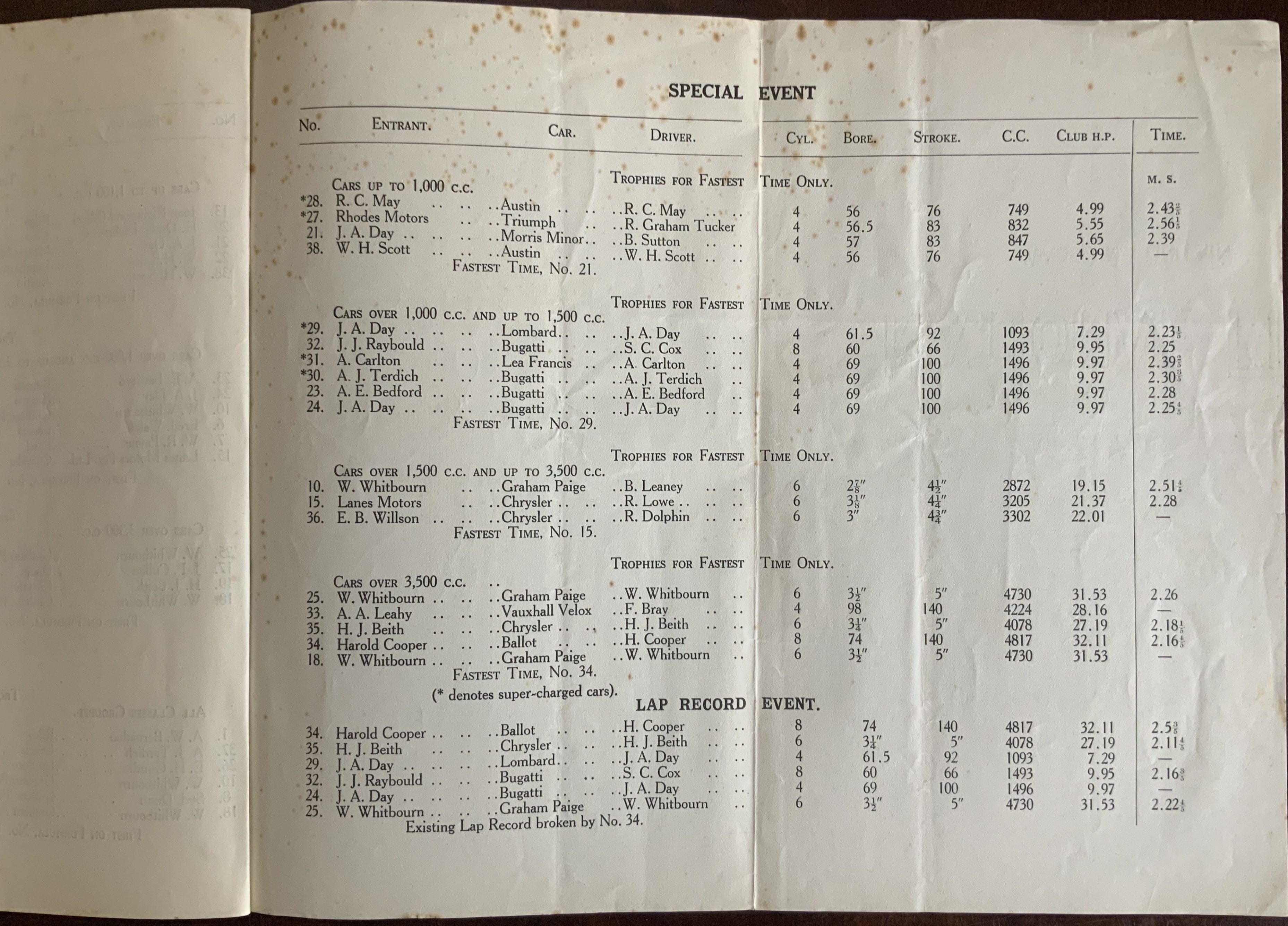
The ‘feature event’ late in the day was a lap record contest for the six cars which made the fastest time of the day, who then ran off to attempt to lower the existing lap record of 2: 6.5 seconds.
The Herald’s advance coverage of the race speculated that the final six drivers/cars may include Cooper, Jack Day’s Lombard s/c (not entered), Arthur Terdich’s Bugatti T37A and Harry Beith’s Chrysler Special.
Cooper, in a repeat of his pace the year before won again aboard the ex-Louis Wagner 1919 Indianapolis Ballot doing a time of 2 minutes 5 3/5 seconds, then came Beith’s Chrysler and Sydney Cox’ Bugatti. Contrary to some reports it appears this event was not a massed start but rather one machine at a time with each getting a ‘flying start of 20 chains’.
The Melbourne Herald put the day in context, ‘In view of the existing ban (which seems to have applied everywhere in Victoria other than the Peoples Republic of Phillip Island, where, bless ’em, the local shire/council basically said up-yours to Spring Street – the Victorian State Government), and the police suppression of events held on public roads, special interest attaches to the speed contest for motorcars…’
In other words a good clean, problem free event would advance the cause of the sport.
By that stage, as noted above, there had been two Grands Prix on Phillip Island’s 6.5 mile rectangular gravel course, at the time its certainty as a venue was far from guaranteed given the absolute constitutional power of the Victoria Government’s sovereignty over and above that the said Peoples Republic of Phillip Island.
I love the local shire’s up-yours-cocko attitude to State law but the Light Car Club and the Shire of Woolamai (aka the PR of P Island) would have been in a pickle, to say the least, had a vexatious litigant had a crack at ’em in the event something went horribly wrong- an errant car killing some punters in the crowd or some such.
Discussions with racers/restorers/historians/authors Tony Johns and Bob King reveal quite a large, and still growing number of Mornington Peninsula venues being identified including the Balcombe Army Camp between Mornington and Mount Eliza and Safety Beach as sprint venues. Frankston, the Moondah Estate in Grices Road (now Kunyung Road) Mount Eliza, Arthur’s Seat, Cape Schanck and Dromana all held hillclimbs.
Who can add to this list?
Dromana Hotel on what is now the Nepean Highway, grand accomodation for the competitors (Rose)
The bountiful land, streams and blue waters of the bay were the home and playground of Australia’s indigenous people for sixty-thousand years before we whiteys rocked up, it didn’t take too long for entrepeneurship, money and steam power to open up the bay.
Steamer services extending to Frankston, Mornington, Dromana, Sorrento, Queenscliff and other places in addition to railway lines to Frankston, Mornington and Geelong opened the new colony in the 1880s.
In days of yore before car ownership became commonplace post-war (WW2) people stayed in hotels and guest houses on their holidays in country and coastal locales such as those listed above. This is the reason we have still large numbers of grand, if often run-down hotels and guest houses in places like Mornington, Sorrento, Queenscliff, Lorne, Port Fairy, Daylesford, Healesville, Mount Beauty and other places, to stick with Victorian examples.
Many such properties were torched in ‘Jewish Stocktakes’ (as my dad in the politically correct (sic) fashion of the day described) in the fifties and sixties as burgeoning car ownership extended the reach of the average citizens holiday horizons beyond many of the towns listed. Many establishments in these places were no longer viable so a surruptitious phone call to ‘Louie da Torch’ and a brown paper bag full of pound notes was not uncommon with insurance assessors not having the forensic services to hand as a defence to the obvious the way they do now. My great-grandfather’s guest house, ‘Montpellier’ in Healesville went up in smoke thanks to Louie’s intervention a decade or so after the family sold it.
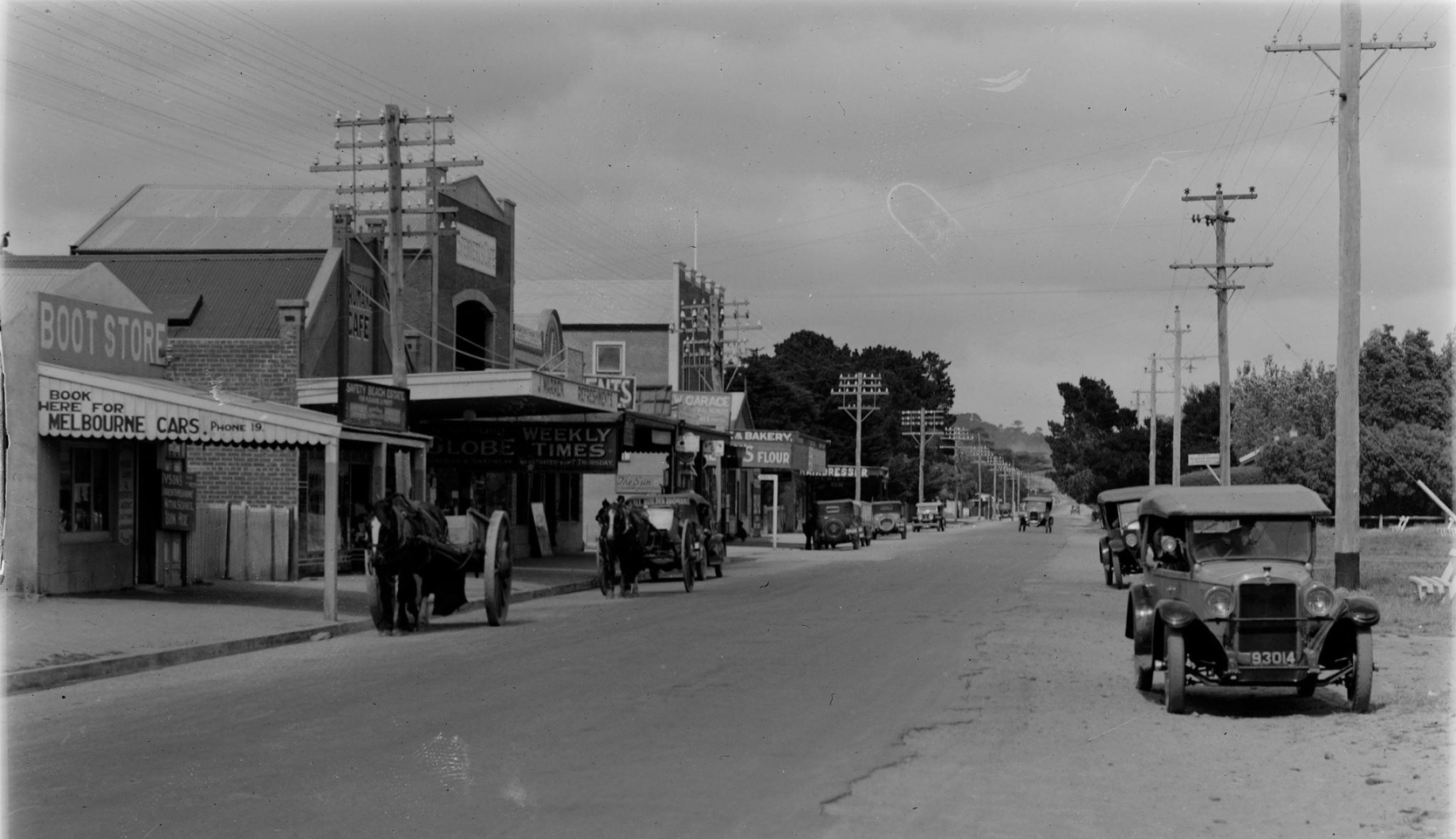
Nepean Highway at Dromana looking west towards McRae/Portsea- makes and model folks (unattributed)
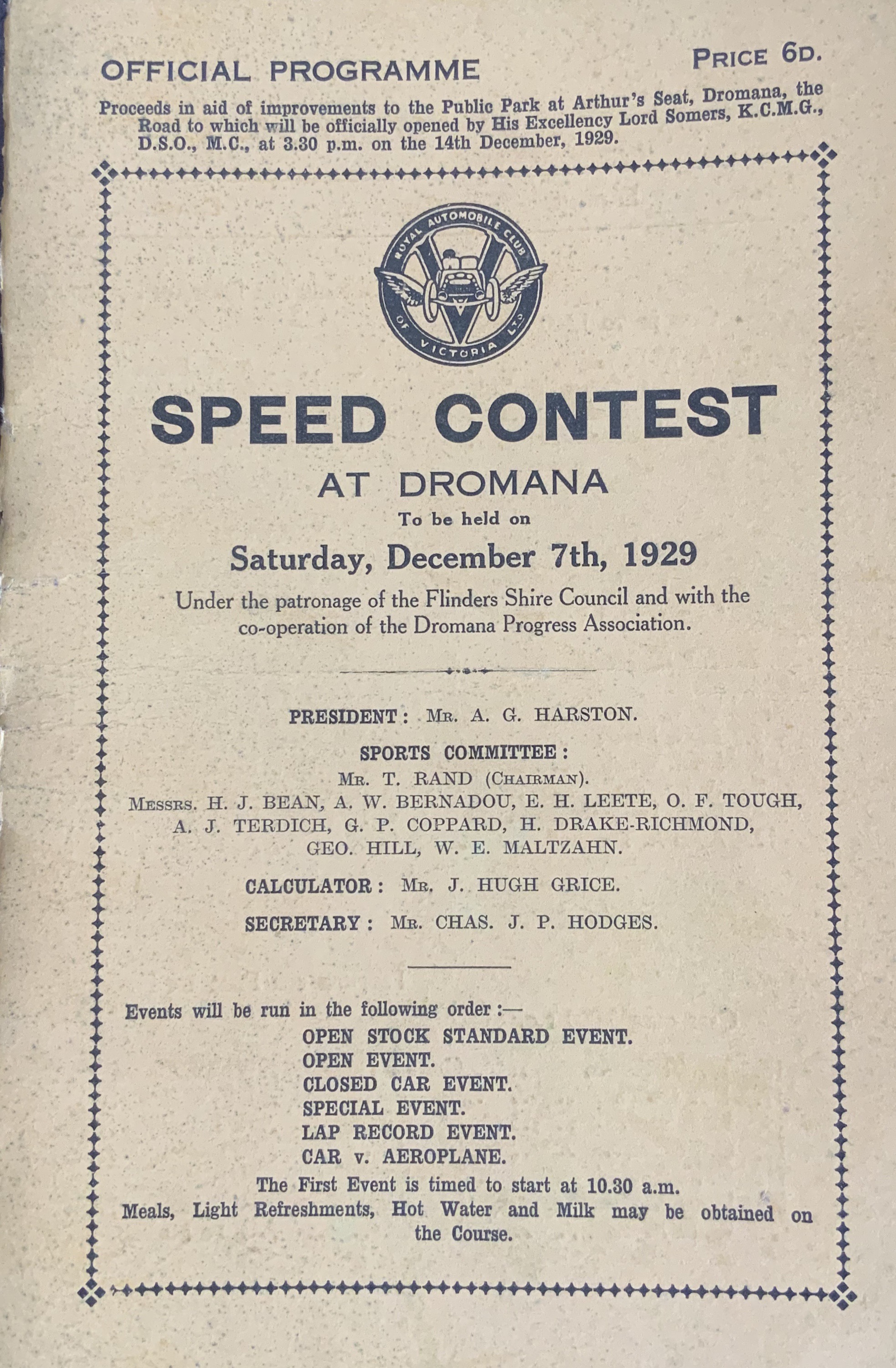
The Herald’s December 1929 event coverage very kindly summarises the Supp Regs which are interesting, the deft hand of officialdom was as prevalent then as now – not quite as bad as now perhaps!
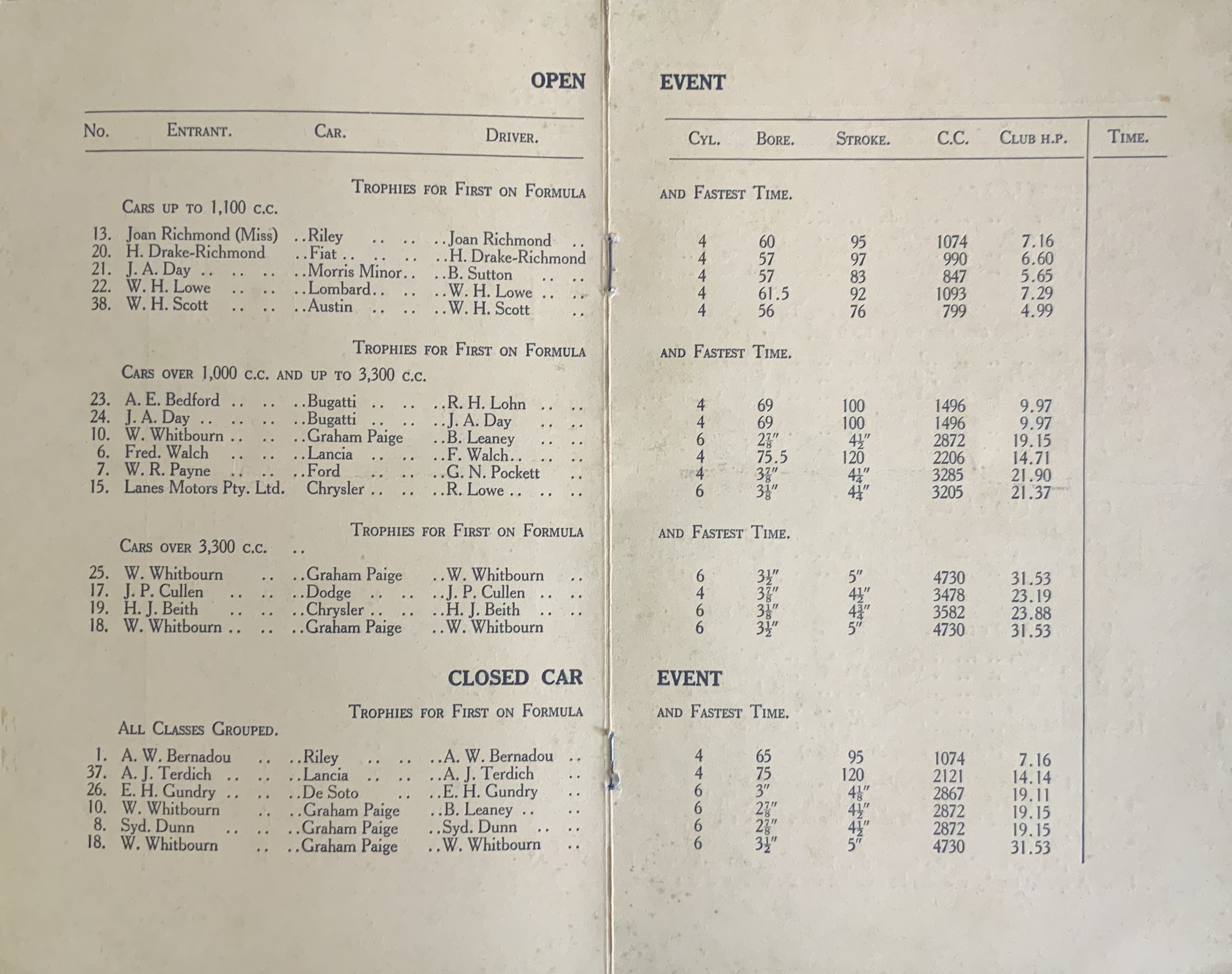
There were five classes- stock standard (aka Group E ‘Series Production’!), open, closed car, special and lap record.
The stock standard event was open to any financial member of the club (RACV) whether connected with the trade or not, but sports model cars were ineligible. ‘A stock standard car is one regularly supplied to the public in the usual way of the trade and fitted with standard type body, hoods and guards. The windscreen can be removed and the carburettor and magneto timing adjustments altered.’
‘In the open event, sports models are eligible, but super-sports models, special cars and supercharged cars are ineligible…cars must run in complete touring condition with proper body guards, hood, lamps, efficient silencer and carry a spare wheel, or spare rim with tyre attached.’
‘Women will not be permitted to drive in the event unless they are the bona-fide owner of the entered car.’ In a an interesting twist of logic ‘For the closed car event sports models are prohibited, but women are allowed to drive’ – which i guess means if ‘the wife’ drives the family machine down to the shops to Domain Road they can have a crack at the race.
‘The special event is open to any financial member, and cars can compete fitted with superchargers and stripped of guards, screens, hoods, batteries and spares. Lady drivers are ineligible’. Given the differentiation between ‘women’ and ‘ladies’ i wonder if ‘women’ could compete in the special event that ‘ladies’ were specifically excluded from. Hmmm, one for the lawyers.
Whilst the Victorian Light Car Club limited its Australian Grand Prix to cars of a maximum of 2-litres supercharged or otherwise, this event was divided into 850cc, 1100cc, 2200cc, 3300cc and over 3300cc classes, hence the great variety of cars.
Etcetera…
(B King Collection)
It’s funny how stuff sometimes happens.
I was over at Bob King’s place raiding his photo archive to do the 1928 Australian Grand Prix magnum-opus a few weeks ago. At the end of that exercise we were talking gobshite and going through some other stuff- Herald-Sun shots Bob rescued from the ‘to be chucked out’ pile.
The Mick Carlton Lea Francis shot, marked ‘Safety Beach 1928’ caught my eye – ‘WTF is that Bob? I’ll have that one please!?’ ‘Safety Beach, well bugger me!’, in the words of the great George Pell, I thought.
So off I go – Trove away and learn some new stuff, happy days and draft most of this piece. Then I went back to Bob’s for another Covid 19 friendly play-date last week and lo and behold, in amongst a relatively small number of old ‘programmes’, was the program for the meeting- and the results sheet! Sometimes, ya just get lucky.
(B King Collection)(B King Collection)(B King Collection)(B King Collection)(B King Collection)(B King Collection)(B King Collection)
Peoples Republic of Phillip Island Postscript…
I really have been enjoying my ‘Peoples Republic of Phillip Island’ jokes, even if it they were becoming a bit thin.
A quick glance of John Blanden’s ‘A History of Australian Grand Prix 1928-1939’ 1929 race chapter reveals that constitutional matters were finally in hand and that succession of the smallish island in Westernport from the Commonwealth of Australia was finally rendered unnecessary- the battalion of Lee Enfield 303 toting sheep famers could be stood down.
‘At the (1929 AGP results prize-giving) presentation smoke-night at the RACV Hall in June , Arthur Terdich was presented with first prize, a cutlery cabinet. In addition Wally Robertson received a clock, Noel Langton a silver cup, Reg Brearley a knife chest, Harry Jenkins a pair of binoculars, Jack McCutcheon a manicure set and John Bernadou the RACV trophy.’
Of all the class place-getters only poor old Cyril Dickason and Bill Lowe didn’t get gifts- what a bummer, mind you, given the offerings perhaps they considered themselves the fortunate ones!
To matters more germane.
‘Mr Daly of Phillip Island Council, speaking on behalf of the residents, announced that after negotiations with Brigadier-General Blamey, the Country Roads Board and the Public Works Department, a Bill was to be passed through State Parliament to enable racing to be held on twelve days a year.’
‘Until this time the events had technically been held illegally. However, the authorities had acknowledged the benefits to the island and so the bill had been drafted’ Blanden wrote.
All of the two-bit constitutional lawyers amongst you will advise your clients that a bill does not become law until it passes the two houses of the Victorian State (Tammany Hall) Parliament and gains royal assent – that is the State Governor signs the bill over a gin and tonic or three.
Lets assume though, that the process above was all hunky-dory by 24 March 1930 which makes the 1930 AGP the first held at Phillip Island which was held legally. I Luvvit given all of the ‘Pillars of The Establishment’ involved…
A.C. ‘Mick’ or ‘Mike’ Carlton…
I started this article with a shot of Carlton’s Lea-Francis Hyper, remember?
He was a Melbourne Herald ‘muttering rotter’ in the words of the great Australian motoring writer Romsey Quints aka Bill Tuckey (motoring writer). John Blanden records Mick as a journalist with RVA Automobile & General News Service, whatever the case he was a motoring writer.
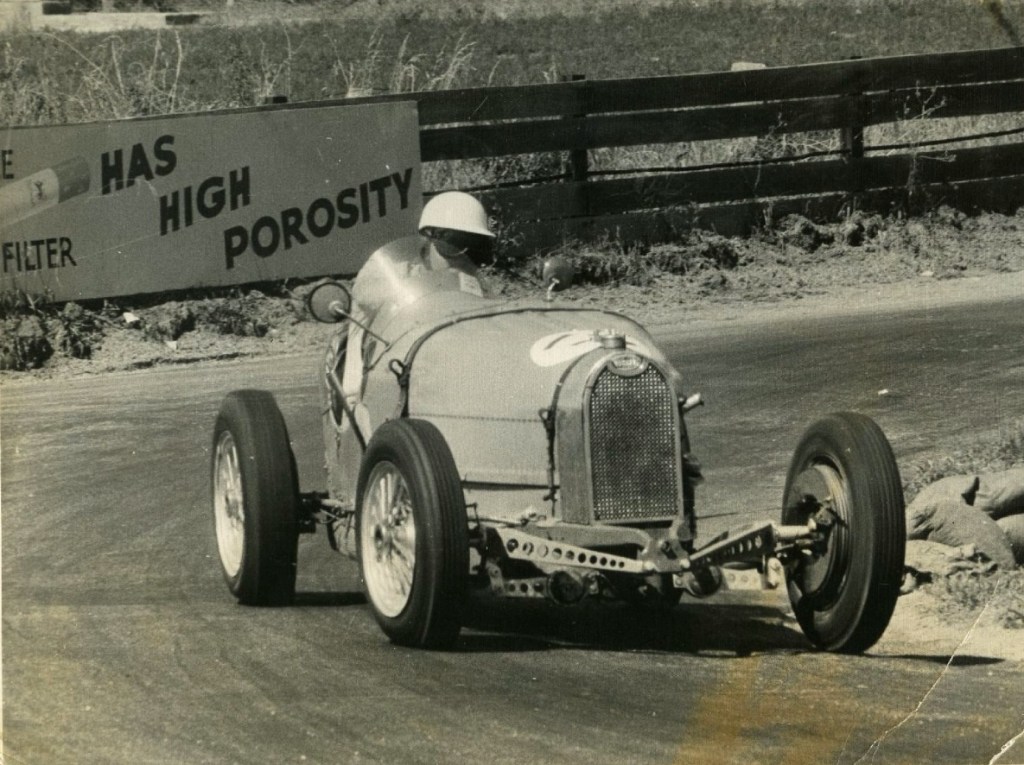
Carlton used the car from at least 1929 to 1931 extensively in trials, hillclimbs, reliability events, speed events such as Safety Beach and an Australian Grand Prix. He rode with Harry Jenkins to fourth place in a Bugatti T30 at Phillip Island in the 1929 AGP and then jumped to the other side of a car in 1930 – aboard the Lea-Francis. In its pre-event publicity The Herald wrote that Carlton ‘had in this car one of most formidable British entries, in its new very low built form it should prove extremely fast, while it’s strength and comfort should both prove helpful in the long race’ of 200 miles.
Come raceday the little car failed to finish after Mick left the road at ‘Young and Jacksons’ corner on lap 2 where he ploughed through a hedge and damaged a wheel which he replaced with the spare. He restarted but withdrew as the rear axle was damaged in the off, the race was won by Bill Thompson’s Bugatti T37A.
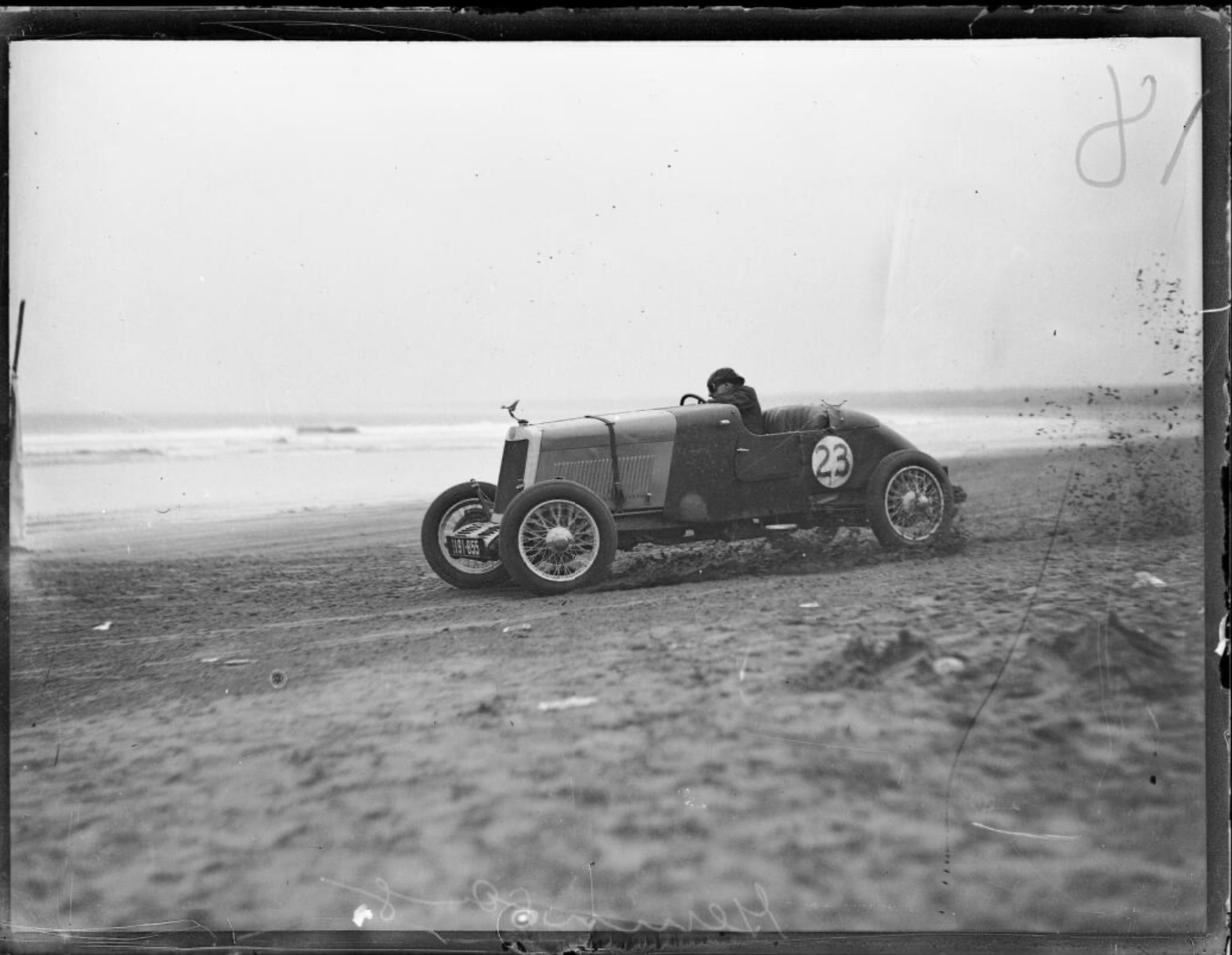
These little Cozette supercharged 1496cc, pushrod OHV Meadows four cylinder powered two-seater ‘Leafs’ would have been a really cost effective ‘all round’ machine for Australian motorsport at the time. The car below is chassis #14099, this Hyper was owned and raced by Mrs JAS Jones and other drivers on her behalf in New South Wales. Ian Goldingham advises ‘the story of the Australian Hypers is steadily gaining momentum…with at least six, maybe seven Lea-Francis S Type Hypers’ delivered to Australia ‘in period’.
Beach racing of another kind. Mr RG Potts in the JAS Jones owned Hyper on Gerringong’s Seven Mile Beach, NSW on 10 May 1930 (Fairfax)Vida Jones in her Hyper, date and place unknown (A Patterson)None of them look happy, a bitter Melbourne winters night during, or perhaps at the start of a trial, Mick Carlton is the guy with the peaked cap looking sideways third from the right. The Lea-Francis was fitted for this event with its touring body (I Goldingham Collection)Shot as above uncropped – both Hyper and Lancia Lambda are Carlton’s cars. The ‘Metropolitan Ice & Fresh Food Co Pty. Ltd’ was located in North Melbourne and had a ‘storage capacity of 60,000 mutton carcasses’, handy to know – the location is outside their front door it seems. The spot has the feel of an event starting point about it with competitors very well rugged up. Checkout the guy second from left at the back – he looks like a crook from central casting – one of Squizzy Taylor’s gang maybe! (I Goldingham Collection)
After publication Kiwi Lea-Francis owner/restorer/historian/enthusiast Ian Goldingham made contact and provided additional photographs and this information from Max Gregory’s ‘Lea-Francis in Australia’.
‘In Victoria both A Charlton and R Whiting used their Hypers competitively, former Bugatti conductor, Mick Carlton being the most notable.’
‘He was a thoroughly dedicated competitor who left nothing to chance in his preparations and had bought the car in chassis form, for which he obtained two bodies, a tourer and a racing monoposto, which were alternated as use dictated.’
‘Mr Phil Smith recalled how he and some Robinsons mechanics served as Carlton’s pit crew for the 1930 Grand Prix at Phillip Island. Unfortunately Mick lost time with an unscheduled pitstop and was attempting to make up ground when raised dust from a spin-out at Young and Jackson’s caused him to take to the ti-tree scrub, bending his axles.’
‘Mr Smith also remembered Carlton entering a fuel economy test sponsored by Commonwealth Oil Refineries (now BP) and his preparations went as far as removing the supercharger and some piston rings and replacing wheel bearing grease with oil. A great deal of fine tuning was done as the car was driven round and round the Albert Park Lake and all to good effect as the car was a clear winner.’
‘A more appropriate victor for the Hyper which came to mind was the climb at Wheelers Hill in 1931. Mr Smith retains a vivid memory of Carlton cresting the hill at a speed of 83 mph from a standing start. Bob Chamberlain also has a keen memory of that day when the existing record was broken three times, as not only did the Hyper make fastest time of the day but the Chamberlain Special, first time out with Norton barrels on the Indian crankcase, and a Bugatti also beat the old record. Mick Carlton late the motoring news for the Herald newspaper in Melbourne’ Max Gregory concluded.
Mick Carlton ‘in the cockpit of his locally bodied car of which we know very little’ wrote Ian Goldingham (I Goldingham Collection)
Utterly Irrelevant and Pointless…
(B Gaica)
Lea Francis of a different sort.
Have I flagrantly glorified the fabulous female form in publishing this beautiful photograph? Yep, guilty as charged, but only in the name of art of course.
The Sydney Dance Company performed Louis Falco’s ‘Black and Blue’, a fabulously vibrant work to the music of Harry Nilsson in 1994. I’m getting there, the connection is coming my friends.
The stars of that show were Alfred Taahi…and…da dum – Lea Francis! And I have to say that ‘Leaf’ looked even better in the flesh, every single cell. Just like the Lea-Francis Hyper…
Reminds me, Nilsson Schmilsson was such a good album, ‘wannit?
Credits and references…
Bob King Collection, The Herald 12 May 1924, The Daily Telegraph Sydney, 14 November 1925, JJ Maher in the Sporting Globe 27 April 1927, Melbourne The Argus 3 December 1928, The Herald 13 November 1929, Rose Postcards, Dromana Historical Society, ‘Skilful Skidder’ aritcle by Harry Miller in the 2 December 1928 Sporting Globe, Sporting Globe Melbourne 29 December 1928, Smiths Weekly 23 August 1947, Fairfax Corporation, Branco Gaica, Terry McGrath Motoring Archives, Ian Goldingham Collection including an excerpt from Max Gregory’s ‘Lea-Francis in Australia’, Adrian Patterson
Tailpiece…
(unattributed)
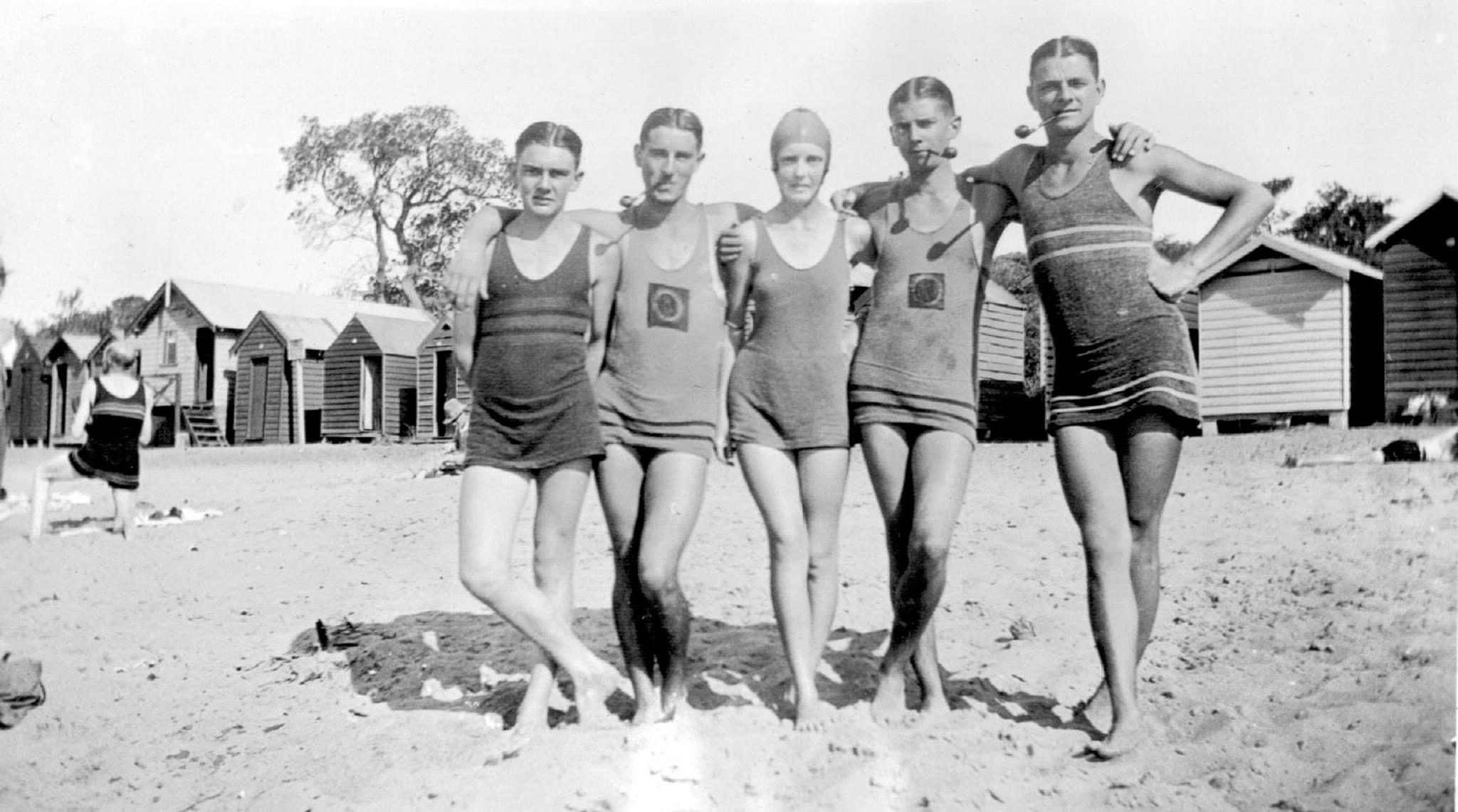
I’m not so sure the pipes would ‘slay the babes’ these days but it is a fun Dromana shot all the same, and yes, there are still heaps of bathing boxes today all gayly painted in vivid colours.
















 primotipo...