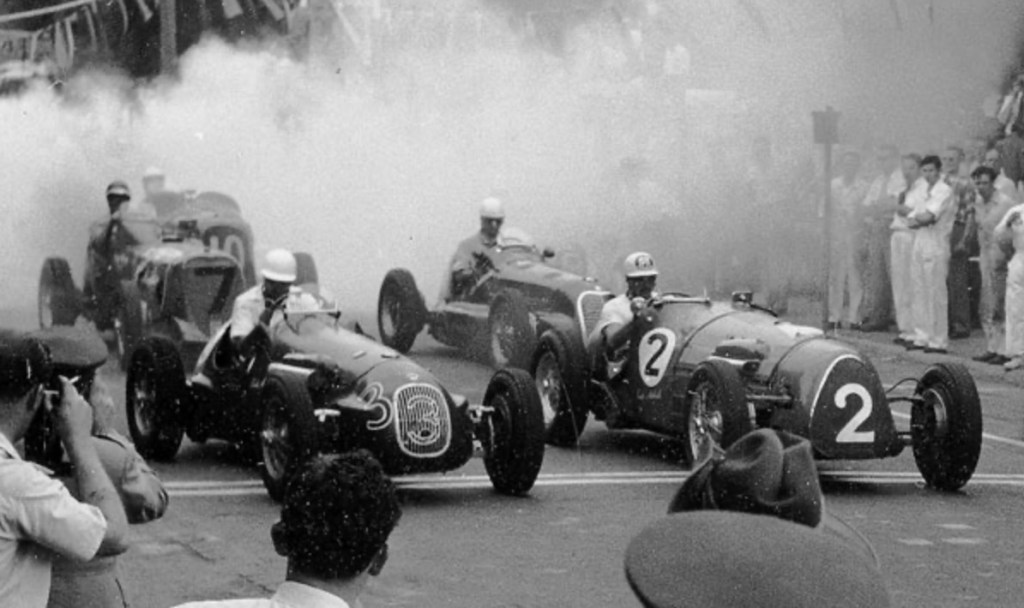
The front row of the Victorian Trophy grid at Fishermans Bend on Sunday, October 4, 1953 comprises, from the left, Doug Whiteford’s Talbot-Lago T26C, Stan Jones’ Maybach 1, Cec Warren, Maserati 4CL and Lex Davison, Alfa Romeo P3.
Tony Johns notes, ‘My program has Lex Davison’s HWM Jaguar scratched, so he raced his back-up Alfa Romeo. Doug Whiteford retired the Talbot-Lago with broken gears in the transfer box. Stan Jones won the race with Davison second and George Pearse, Cooper Mk4 Vincent third.’
‘Reg Nutt driving Jack Day’s Talbot Darracq TD700 sheared the blower drive and for Sunday and fitted a TC manifold and carburettors.’ Wow!
(L Sims Archive)
Didn’t Stan jump outta the box! Whiteford at left, then George Pearse, Cooper Mk4 Vincent and then the distinctive, upright-stance of #14 the ex-Sinclair The Spook Alta 21S Ford with Ted Gray up.
While the Victorian Trophy was a scratch race, there was also a handicap section won by Silvio Massola’s HRG from Davison and Jones.
While researching 1953 I thought I’d make a similar determination but there seems to be only three potential qualifying rounds that year: the Australian Grand Prix held at Albert Park won by Doug Whiteford’s Talbot-Lago T26C on November 21, the Victorian Trophy on October 4, and the 100-mile New South Wales Grand Prix held at Gnoo Blas on October 5. Jack Robinson won the handicap race in his Jaguar XK120 Special while the ‘Grand Prix title (the scratch section of the race) was awarded to Jack Brabham’s Cooper T23 Bristol (below) who had set the fastest race time.’
You will appreciate the degree of difficulty for a competitor in contesting races in Orange and Melbourne on consecutive days.
Jack Robinson, Jaguar XK120 Special, Bathurst, October 1955 (I Arnold)Jack Brabham, Cooper T23 Bristol, NSW GP, Gnoo Blas 1953 (Wikipedia)
The Australian Sporting Car Club – hitherto the Bathurst promoter – organised that first race at Gnoo Blas as the ASCC was ‘splitting asunder’ and its relationships with the City of Bathurst and the local police were so poisonous that Bathurst’s blue-riband Easter and October long-weekends of racing – probable Gold Star rounds – didn’t take place in 1953. The ASCC couldn’t get a permit, whereas the Auto-Cycle Union did, running a two day Easter ‘bike meeting.
Those of you with John Medley’s Bathurst Bible should read chapter 17, it’s interesting to be reminded of the sequence of events that saw the Australian Racing Drivers Club take over from the ASCC as the promoter of car racing at Mount Panorama.
So, given all those circumstances, it doesn’t seem appropriate to calculate a ’53 Gold Star Faux Division winner…The historians amongst you may know that the 1978 and 1979 Gold Stars were held over three rounds, while the 1981 affair was contested over only two; all three were in F5000’s dying days. In 1987, the Gold Star was a one-race gig, so I have precedent on my side, but I’ll leave it alone, I think. One race and ‘two other rounds’, which were effectively mutually exclusive, seems as lame as the one race 1987 championship. The perfect world in 1953 would have been for Whiteford, Jones, and Brabham to have faced off in all three races, I would have had a couple of pounds on Dicer Doug coming out on top….
Doug Whiteford and Talbot-Lago T26C take the plaudits of the Albert Park crowd after winning the 1953 Australian Grand Prix, his third such victory (The Age)
Credits…
Arthur Gordon Fraser-State Library of Victoria, Tony Johns, Leon Sims Archive, Ian Arnold, Wikipedia, The Age
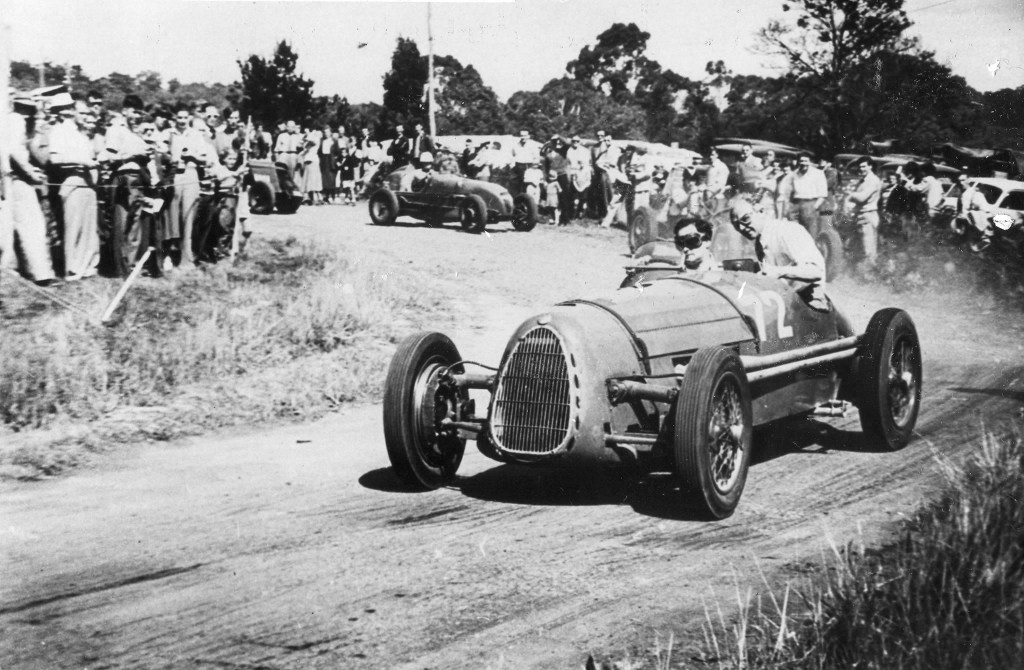
Charlie Dean in magnificent Maybach 1, then 4.3-litres in capacity, descending The Mountain.
The original machine of 1947, hillclimbed initially sans bodywork, has now evolved into a refined racing car in its middle age; the last hurrah for Maybach 1 was victory in the 1954 New Zealand Grand Prix held on the Ardmore airfield circuit on January 9.
Charlie was third at Bathurst behind Lex Davison’s Alfa Romeo P3 and Doug Whiteford’s Talbot-Lago T26C in the 6 lap over 1500 handicap, but didn’t finish the 3-lap scratch or start the Redex 100 mile – the Bathurst 100 became the Redex 100 with a few sponsorship £’s – feature with mechanical dramas.
As you will see below, by the October Bathurst meeting Stan Jones had bought the car from Dean and entered into a deal with Repco Research, of which Charlie was general manager/chief engineer, whereby the preparation and ongoing development of the car(s) was Repco’s responsibility.
These fabulous photographs were taken by FS Furness and posted on Bob Williamson’s ‘Motor Racing Photographs – Australia’ Facebook page recently by enthusiast Mal Elliot. With the help of John Medley’s Bathurst Bible ‘Bathurst:Cradle of Australian Motor Racing’ I have cobbled together a few words to go with the images. So large was Mal’s post that there are a couple more pieces to come. Many thanks Mal, information on FS Furniss would be most appreciated folks!
(FS Furness)
Tom Hawkes ex-Louis Chiron Talbot-Lago T26C #110007 had not been long in the country and was shared with, and soon sold to very experienced racer, 1950 AGP winner and fellow Victorian Doug Whiteford.
Whiteford soon had the big car going well that weekend, doing 136mph down Conrod. That combo, aided by Doug’s skilful preparation became the top-gun combination in Australia for the next few years. Hawkes was third in the Redex 100 feature, while Whiteford was third in the 3 lap scratch and fifth in the over 1500cc handicap.
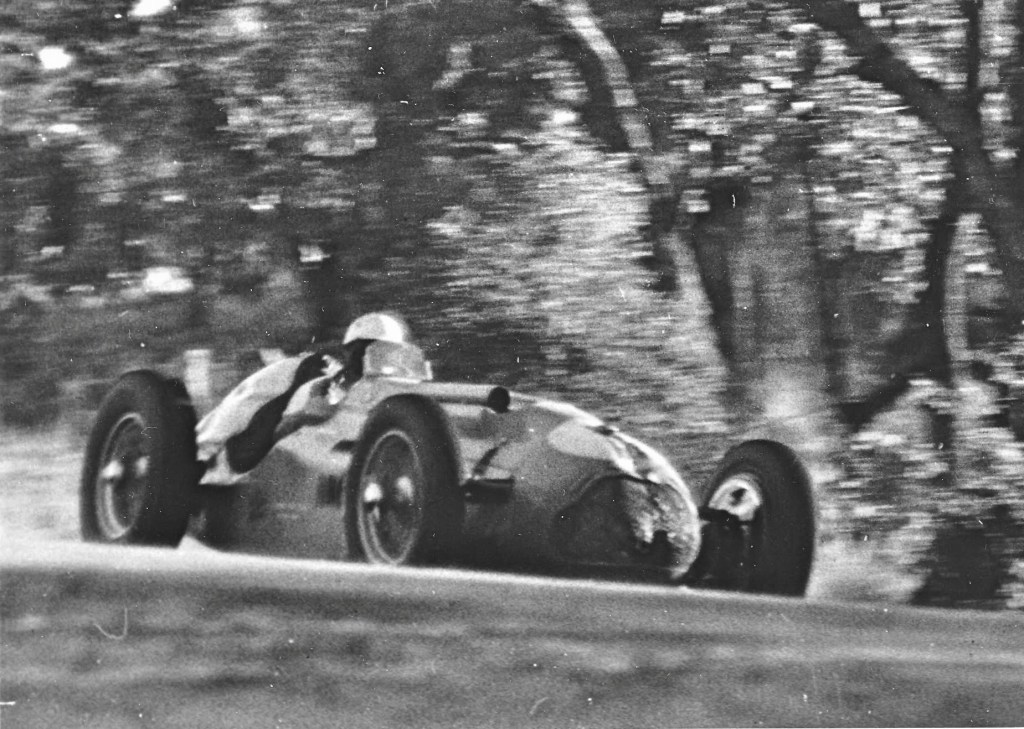
The big blue, 4.5-litre six-cylinder Grand Prix car was ‘blooded’ in its first meeting in the Antipodes. That ding in the nose was caused when Whiteford gave Lex Davison’s Alfa Romeo P3 a tap-up-the-bum during the latter stages of the over 1500cc handicap won by Laurie Oxenford’s Alvis Mercury. Lex’s P3 Alfa brakes were usually problematic, a moments hesitation into Hell corner resulted in the hit. The blue and white T-L nose badge became lodged in the Italian’s perky rump, incensed after the race, Lex didn’t return it. Davo was fourth and Whiteford fifth. More about the Talbot-Lago here: https://primotipo.com/2022/05/04/doug-whiteford-talbot-lago-t26c-take-3/
(FS Furness)
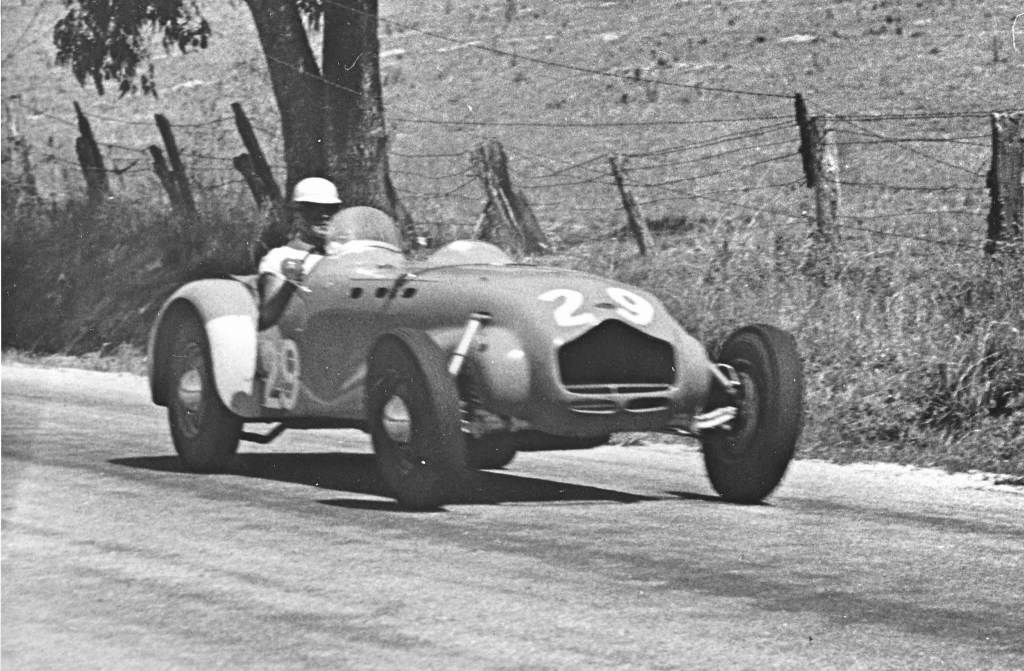
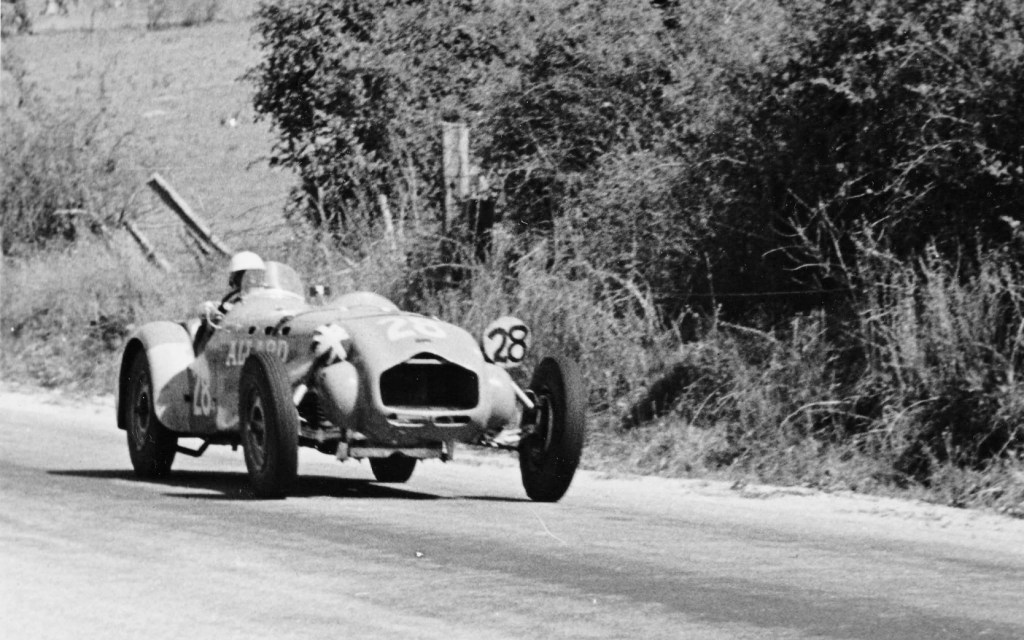
Jack Murray had a great weekend aboard his Allard J2 Cadillac. Three J2s were entered by the NSW distributors, Gardiner Motor Service. The best result of the four Allards entered was Murray’s third place in the over 1500cc 6 lap handicap.
(FS Furness)
Dick Cobden had a great weekend in his MG TC Spl. He was third in the 6 lap under 1500cc handicap, and won the 12 lap 50 mile handicap for Redex 100 non-qualifiers.
The first four cars home were MGs; George Pearse’ TB Spl s/c, Curley Brydon’s TC Spl s/c, Cobden, and LG Barnard’s TC. MGs were in many years Australia’s ‘FF and F2 cars’, depending on specification, for decades of handicap racing.
Uber-rare shot of champion cyclist’s Nino Borsari’s Cisitalia from Alf Mazengarb’s Riley, neither car was well up in the closed production car handicap where French cars were to the fore: the M Rolls Renault 750 won from Citroens raced by Bill Buckle and P Damman.
(FS Furness)
Jack Saywell’s 1-litre JAP 8/80 powered Cooper Mk4. He did well, winning the 3 Lap Scratch from Frank Kleinig’s Kleinig Hudson Spl and Whiteford’s Talbot-Lago T26C.
(FS Furness)
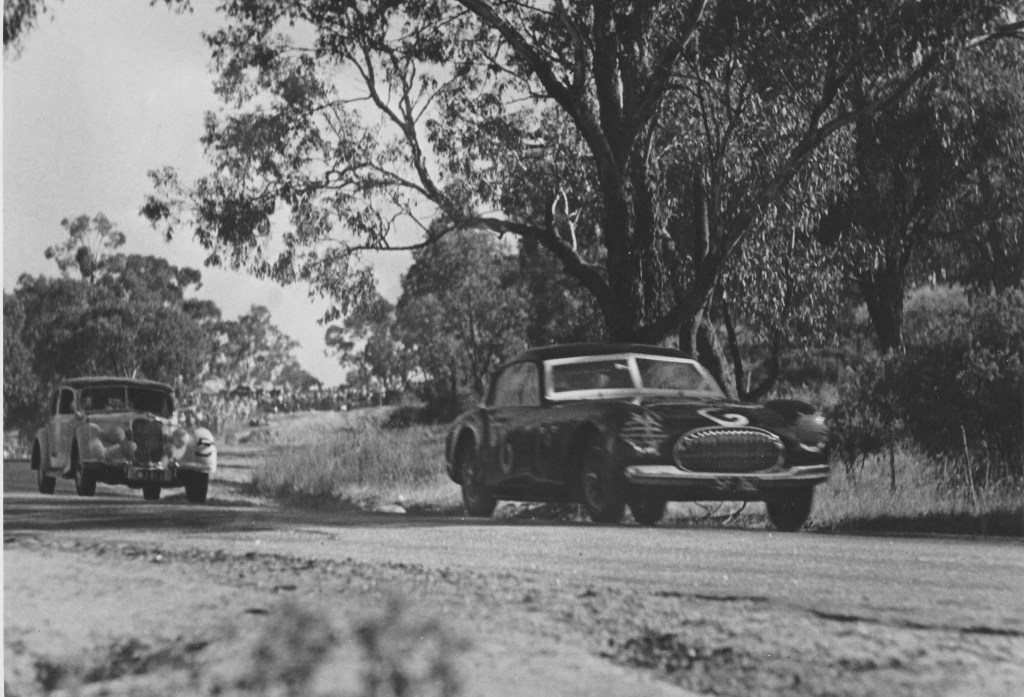
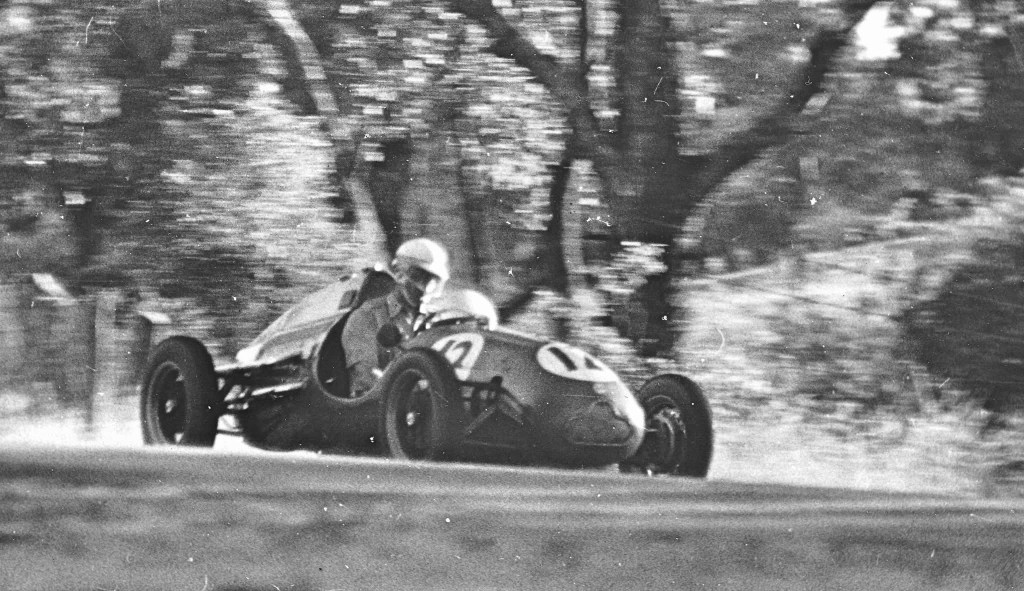
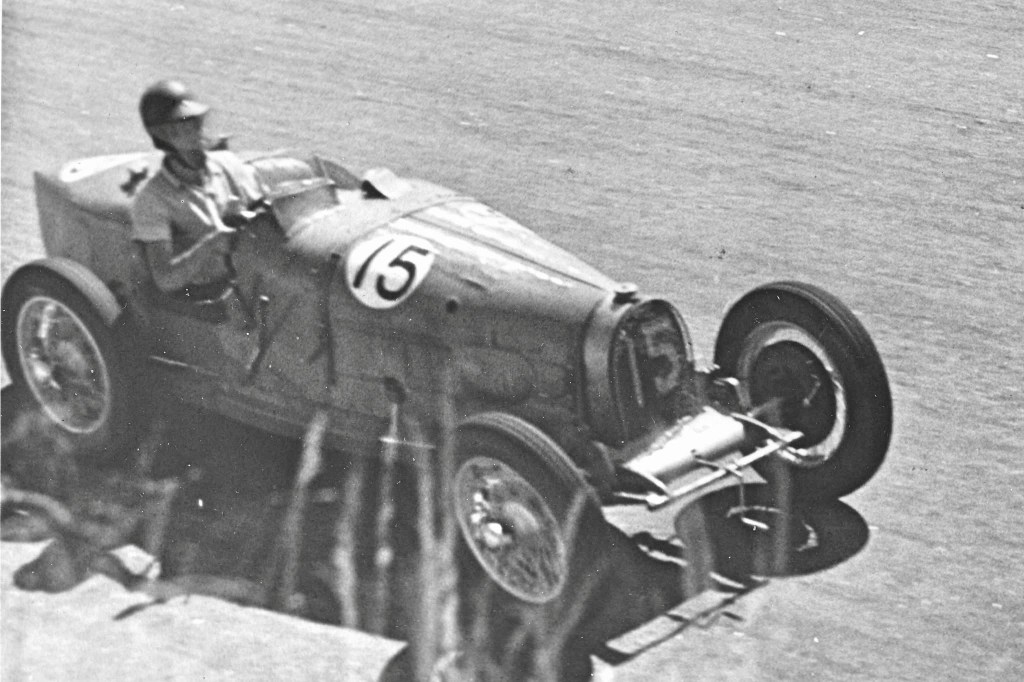
Lyndon Duckett aboard the Ecurie de Pur Sang Bugatti Type 51A – T35B-4847 converted by the factory to a 51A- substituting for Peter Menere. The car doesn’t appear to have figured in the results.
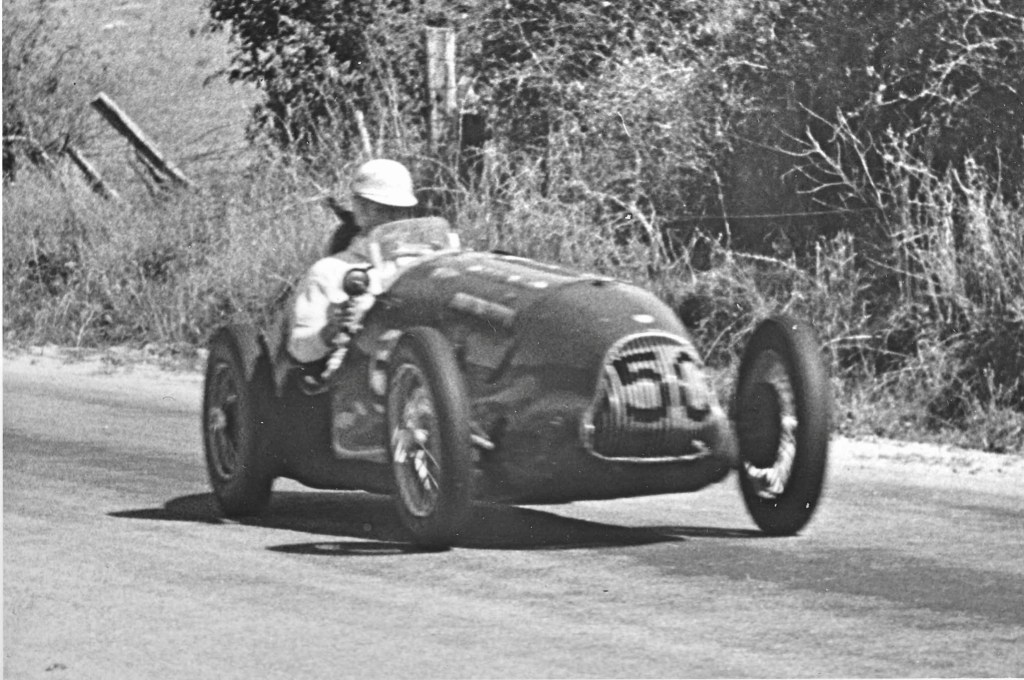
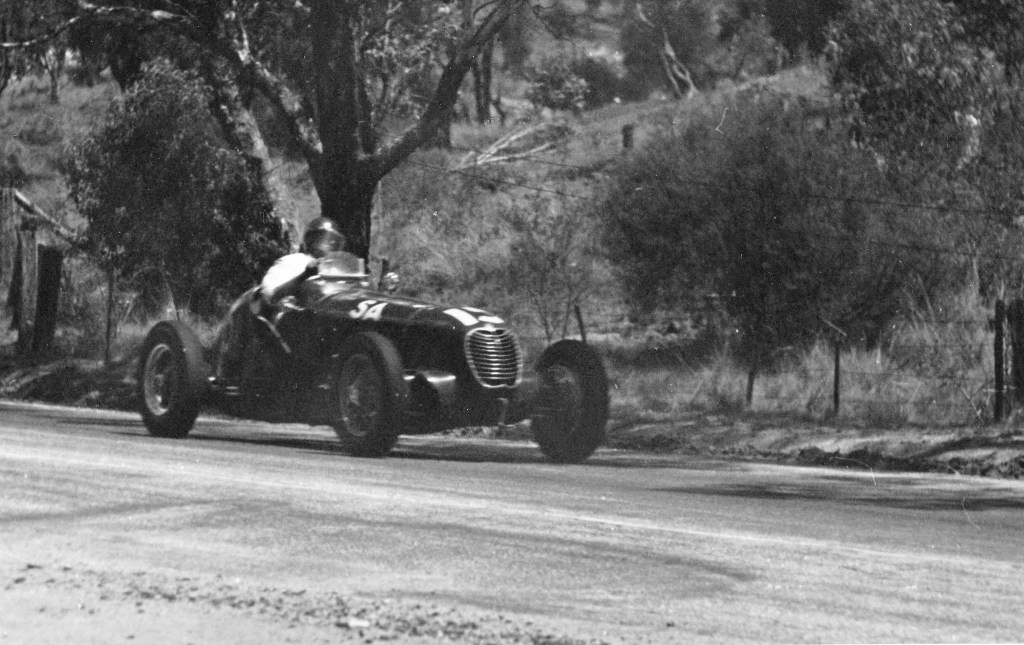
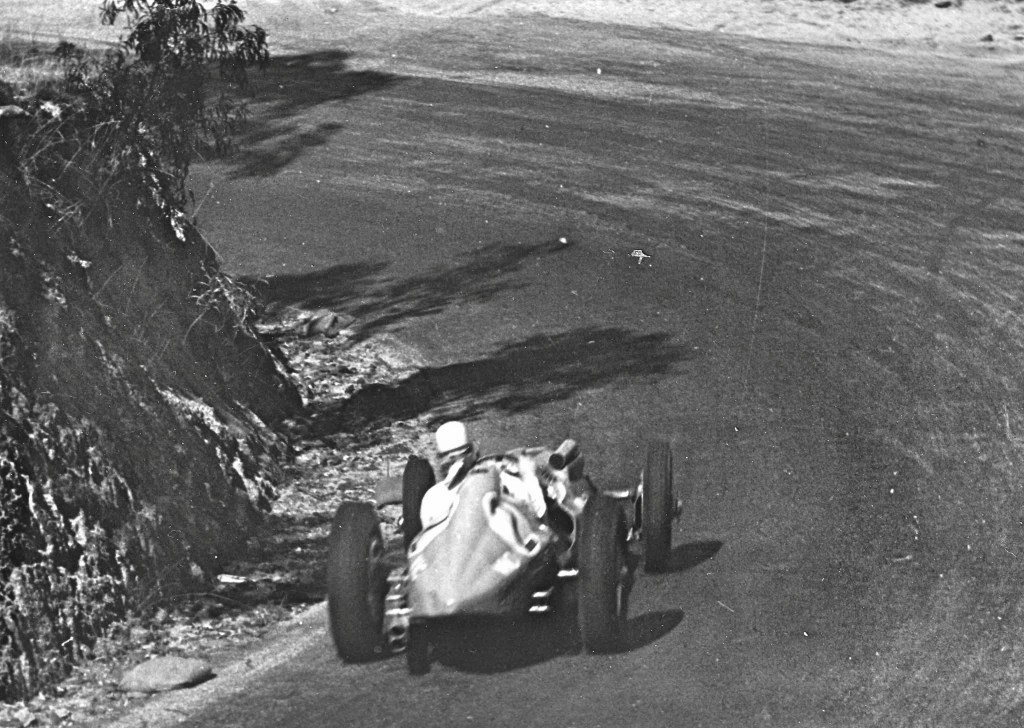
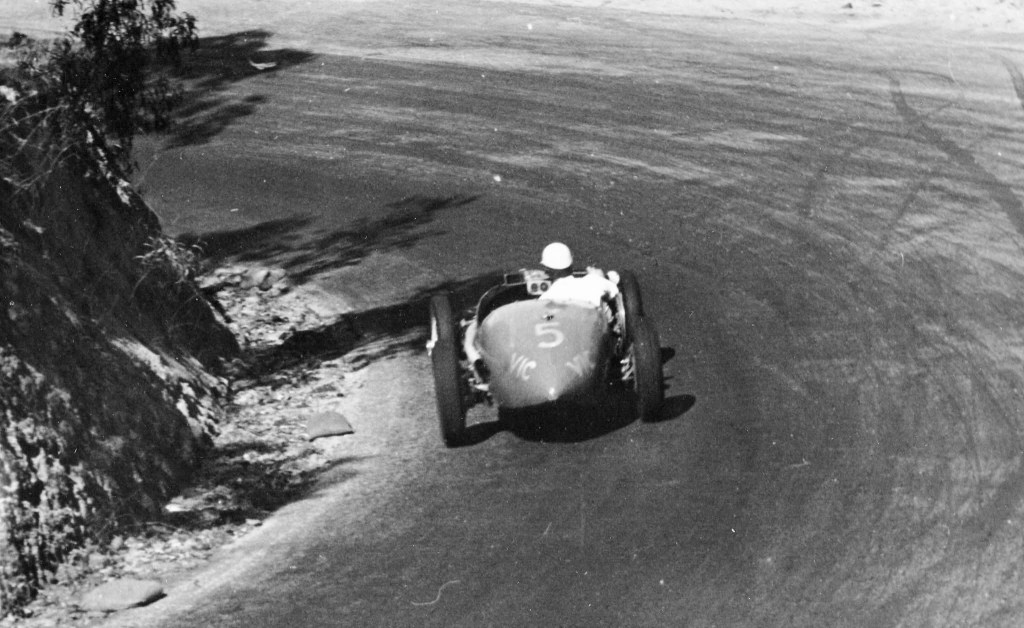
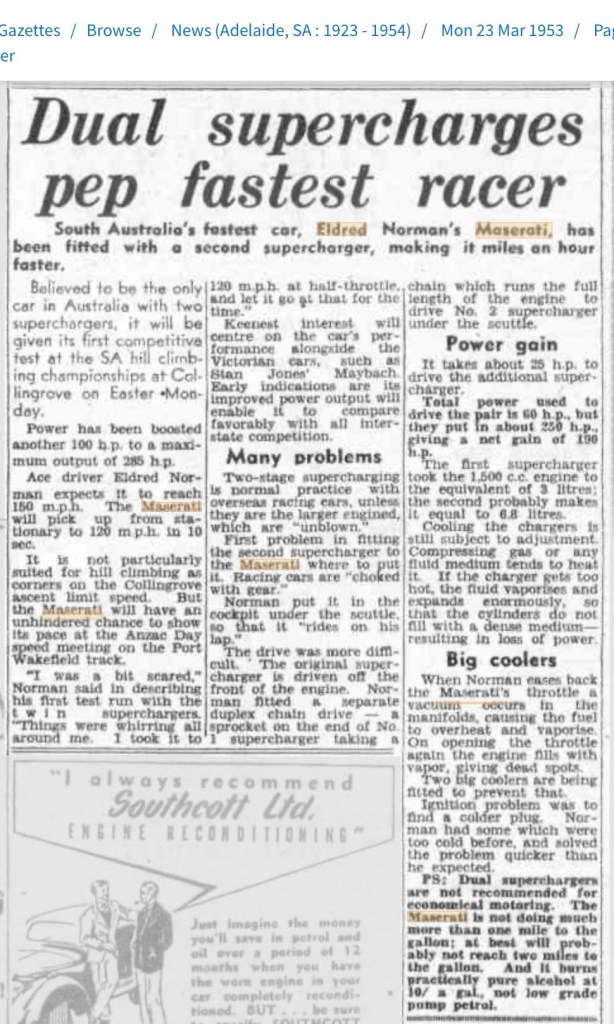
Eldred Norman blasting his Maserati 6CM down Mount Panorama during the feature race, the Redex 50 Mile Championship held over 12 laps on October 1.
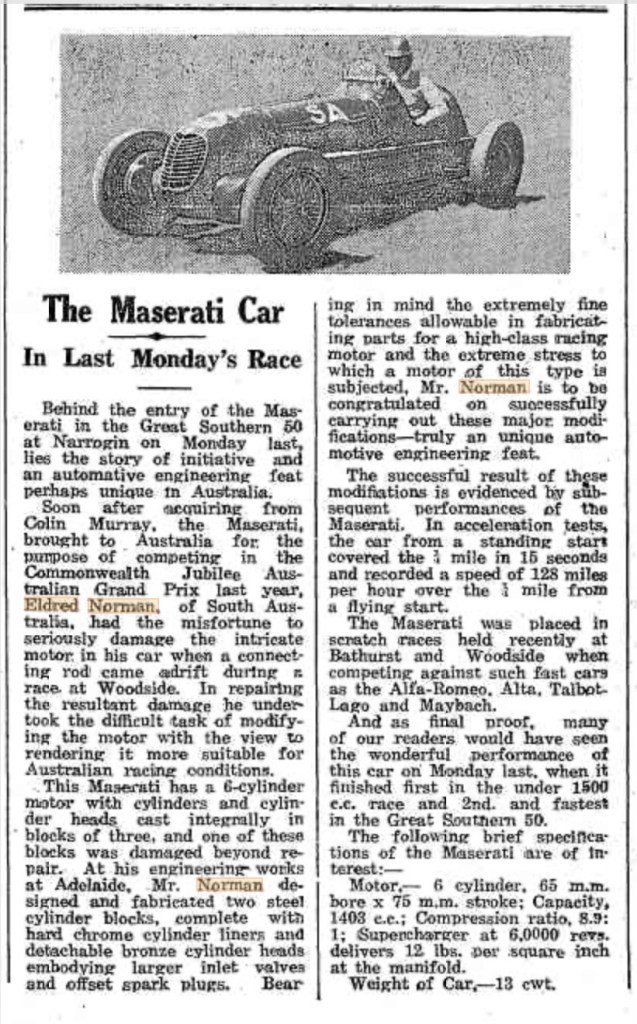
Colin Murray brought 6CM #1542 to Australia to contest the 1951 AGP held on the Round the Houses circuit laid out at Narrogin, a wheatbelt town 200km south-east of Perth. He failed to finish the race, then sold the car to Norman who also contested the GP, leading it for a while aboard his famous Double Eight, twin-Ford Mercury V8 engined special until it expired. Eldred sold that car to Perth’s Syd Anderson and ‘stepped-up’ to the Maserati. Quite why he bought a car he soundly belted with the Double Eight is intriguing.
Eldred had a baptism of fire with the Maserati. By the time he got to Bathurst he had already blown the Maserati’s 1.5-litre, six-cylinder twin-cam engine after a connecting rod came adrift at either Gawler or Glen Ewin and reconstructed it.
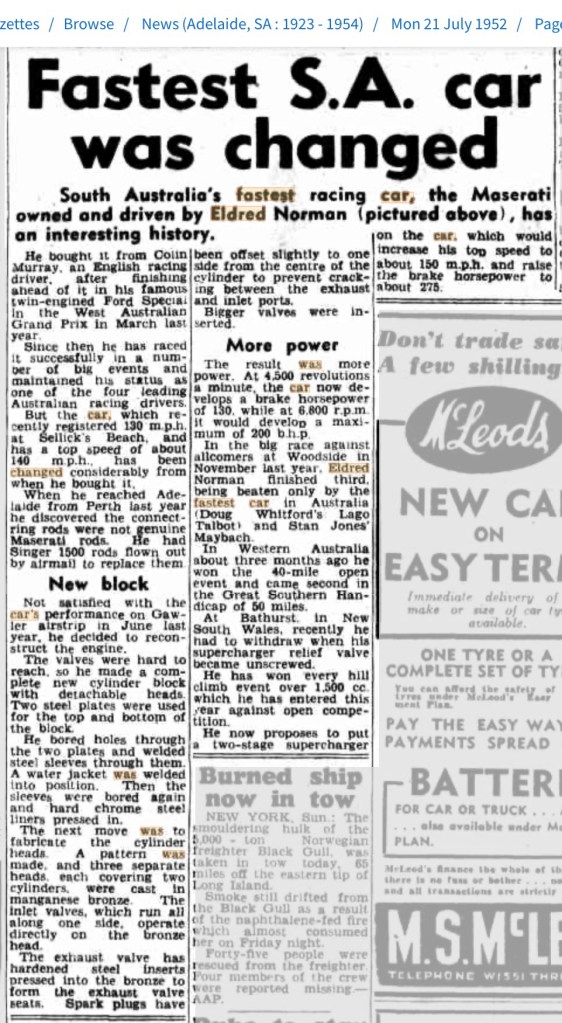
‘He fabricated up a new steel block and cast new detachable bronze cylinders heads. The detachable heads not only made engine maintenance easier but allowed the fitting of larger valves. The conrods are now 1500 Fiat and the pistons are from a BSA motorcycle,’ AMS October 1951 reported. See the Etcetera section below for more detail on Eldred’s engine reconstruction and ongoing developments.
How much testing the car had undergone before the tow from Adelaide to Bathurst is interesting. It was running well at that stage though, the weekend after Bathurst, on October 8, the Maserati/Norman duo were third in Australia’s first F1 race – The Jubilee Woodside Formula 1 Race – behind Whiteford and Jones.
Other front-runners were Whiteford‘s Talbot-Lago T26C, Ron Edgerton’s ex-Alf Barrett Alfa Romeo 8C2300 Monza, Jones’ Maybach 1 and Davison’s Alfa P3 albeit Lex didn’t leave the startline with transmission failure.
Whiteford raced well, clear of Jones in second, then Edgerton who gave the Monza’s former owner Barrett a look at the Monza from close-quarters when Alf took Mischa Ravdell’s Cooper into fourth place before hitting a displaced sandbag and retiring.
Whiteford won in a large, quality field from Jones (above) and Edgerton.
(FS Furness)
Above, DA ‘Bill’ MacLachlan in a Bugatti T37A-37358 Ford V8 Spl – originally Bill Thomson’s 1930/32 Phillip Island AGP winning machine – from Clive Warwick Pratley in the George Reed Spl Monoskate 2 (Ford V8 Spl) and Clive Adams, Brad Holden. Pratley was fourth in the Redex feature and had won the Australian Grand Prix in George Reed’s ‘Red Car’, another Ford V8 Spl at Narrogin in March.
(FS Furness)
Reg Hunt in his Hunt Vincent 998 aka The Flying Bedstead, from Barrett in Ravdell’s Cooper Vincent 998 and DG Leonard’s MG-Vauxhall .
Medley records that Barrett took over the car after Ravdell and mechanic Harry Firth were injured in a road accident in Bathurst before racing began. Hunt ran fourth early on before brake troubles intervened.
(FS Furness)
Lex Davison, Doug Whiteford and Ron Edgerton aboard Alfa Romeo P3 #50003, Talbot-Lago T26C #110007 and Alfa Romeo 8C2300 Monza #2211134 respectively. Whiteford won the 6 lap 25 mile over 1500cc race from Davison and Frank Kleinig, Kleinig Hudson Spl.
(FS Furness)
DW McDonald Morgan Plus-Four leads the PG Harrison MG TD Spl and Holt Binnie MG TC Spl s/c.
(FS Furness)
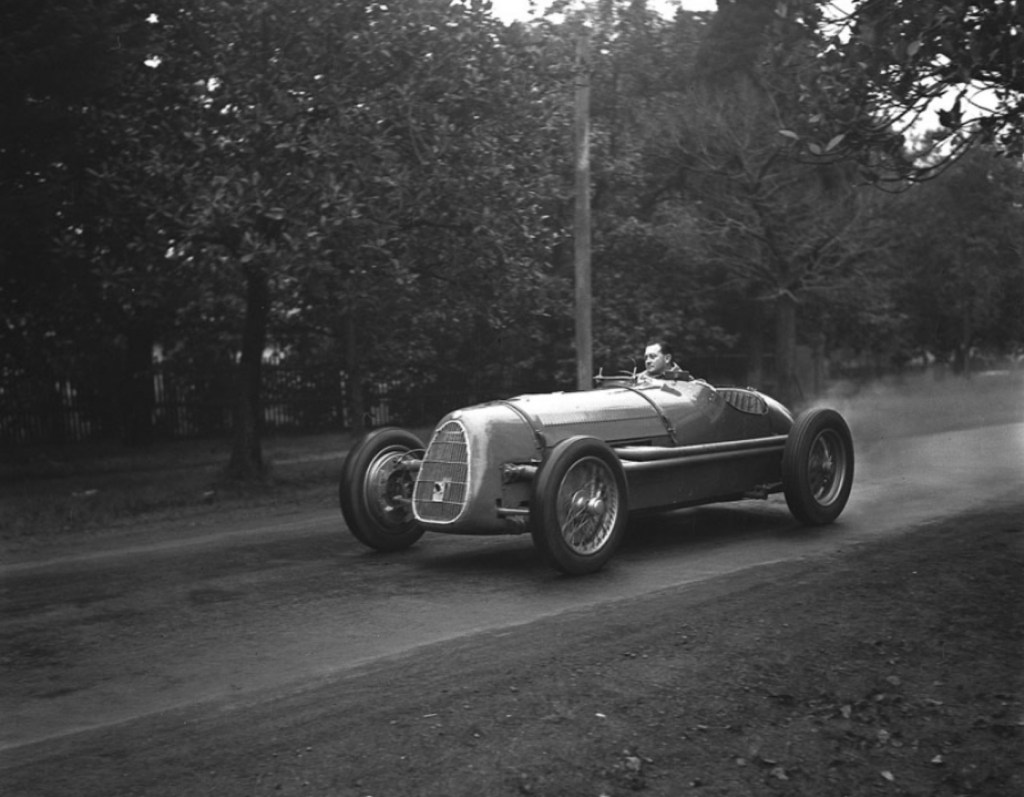
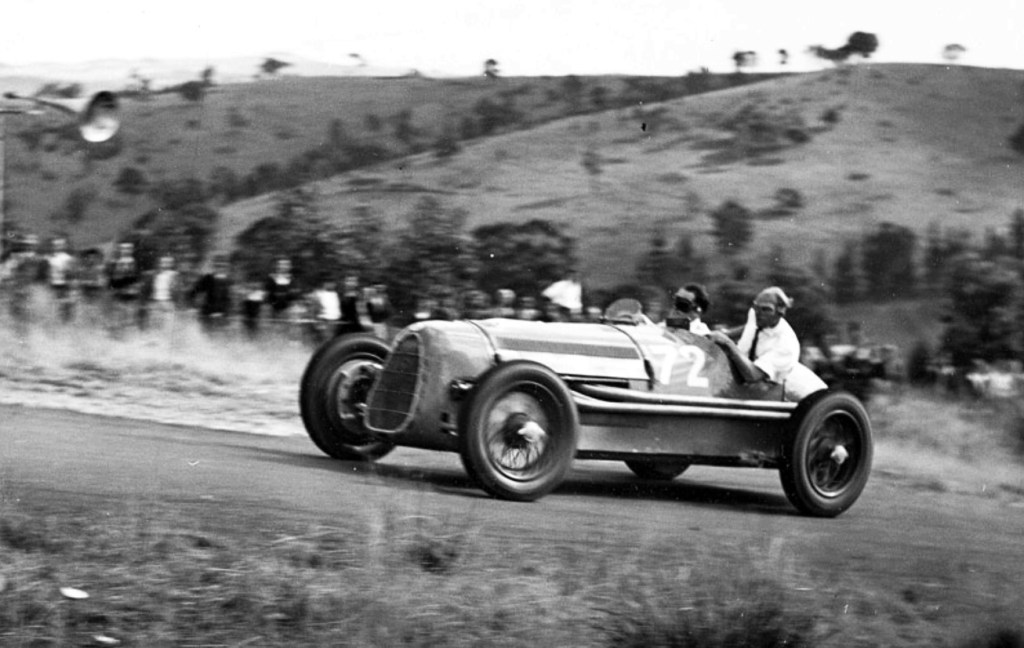
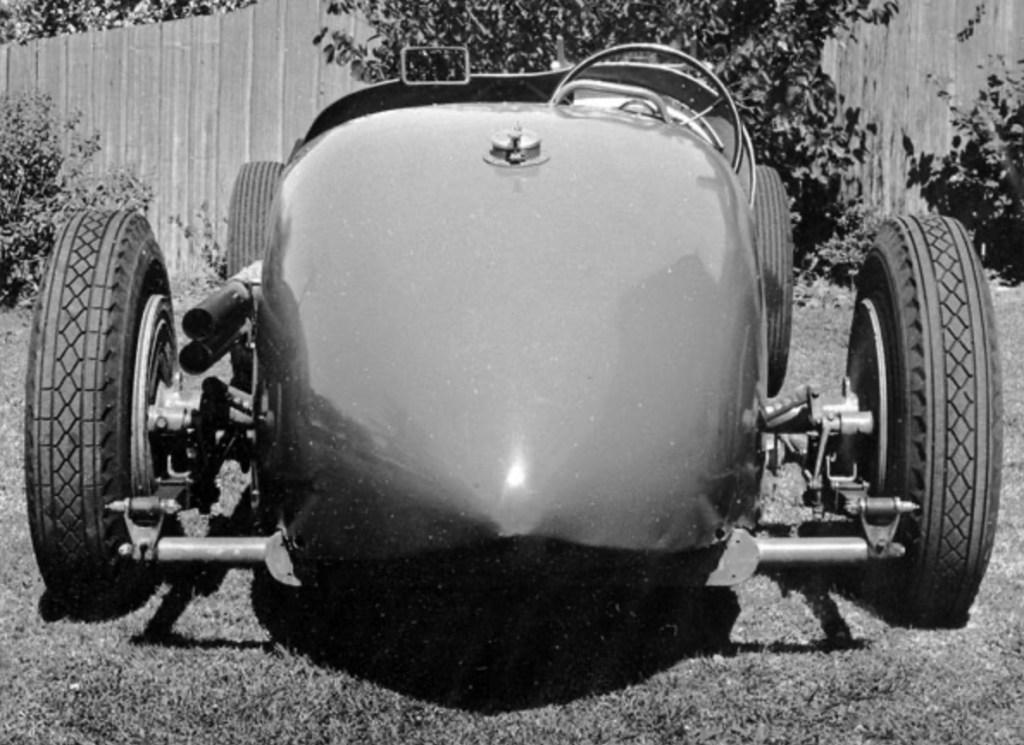
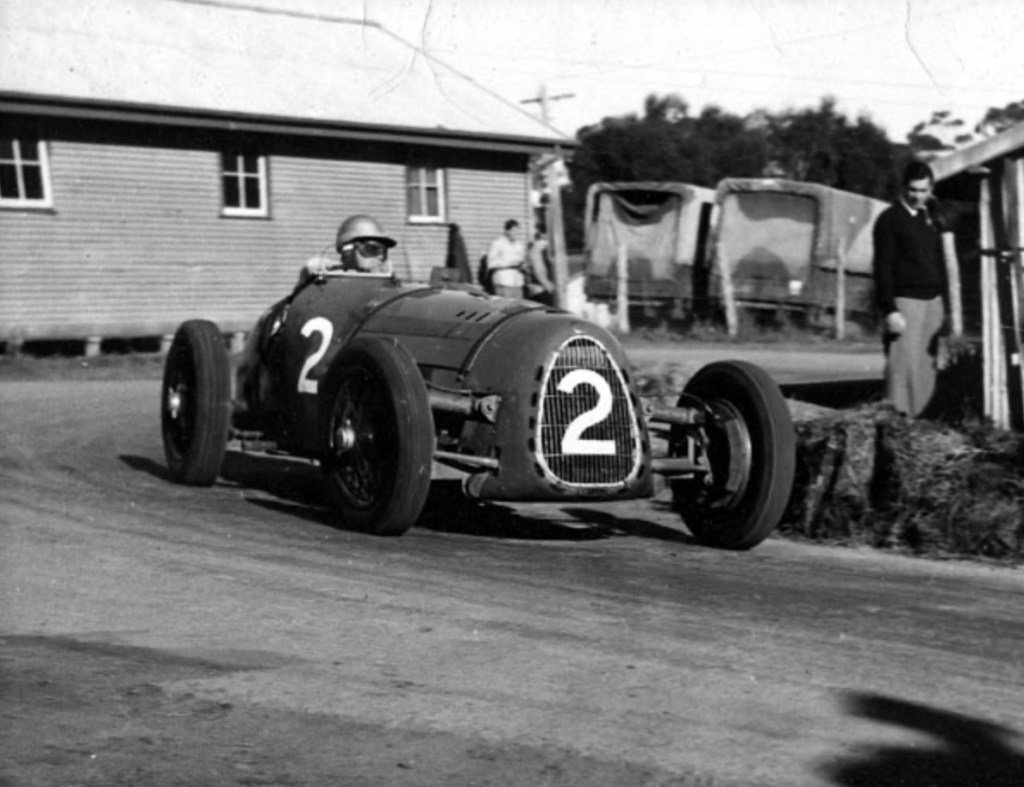
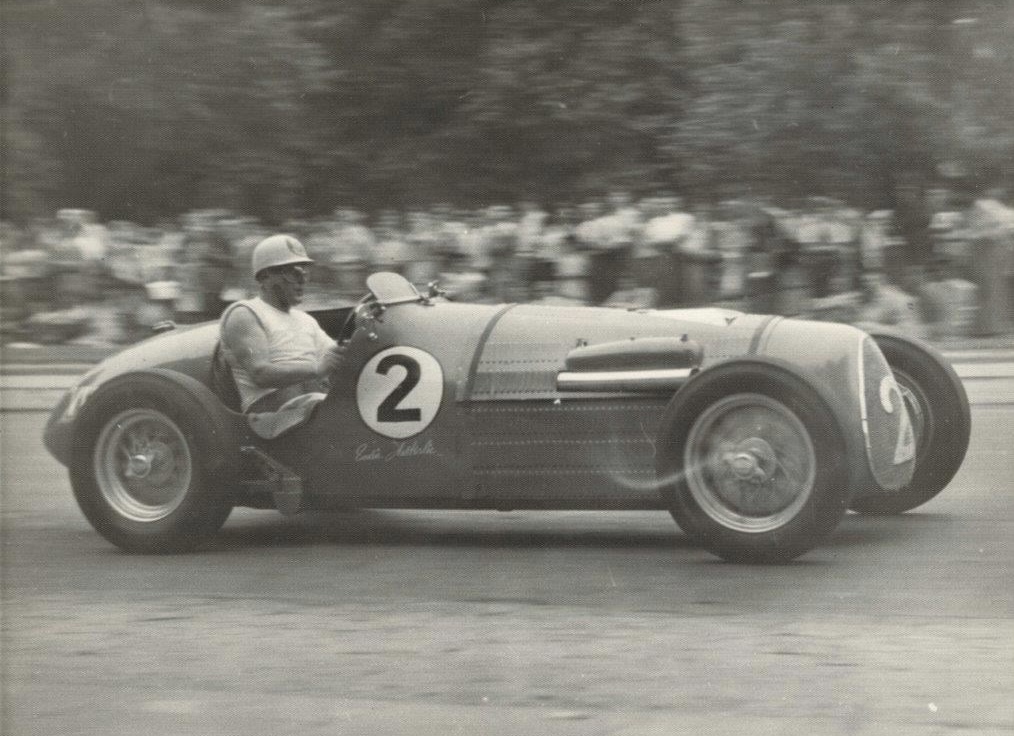
Doug Whiteford’s monoposto Grand Prix 4.5-litre six-cylinder Talbot-Lago T26C above, and Stan Jones biposto 4.3-litre six-cylinder Maybach 1 below, through Forrest’s Elbow. This relatively rare shot of Maybach 1 from the rear shows just how capacious the cockpit was.
The Melbourne motor dealers had much in common, not least combative determination but were otherwise like chalk and cheese.
(FS Furness)
Etcetera…
The Narrogin Observer March 28, 1952
These three articles are for Maserati fetishists interested in the evolution of Eldred De Bracton Norman’s engine developments of his Maserati 6CM #1542 in the two and a bit years he owned it. He made changes to the chassis as well, hydraulic front shock absorbers being the most obvious but unfortunately these articles focus just on the engine, interesting as it is!
Note that the engine damage wasn’t sustained at Woodside ’51, he raced successfully that weekend, David Beaumont reckons the venues the engine popped are either Gawler Airfield or Glen Ewin Hillclimb. That June 11, 1951 meeting at Gawler was perhaps the car’s first appearance in Eldred’s hands. The article below says that Norman’s engine changes were made because ‘he was not happy with the car’s performance at Gawler,’ so maybe the internal haemorrhage didn’t actually occur.
The big races referred to are: Woodside, the ’51 Jubilee Formula 1 race, in Western Australia the March 1952 Great Southern Flying 50 at Narrogin, and at Bathurst, the April 1952 Australian Grand Prix. Clearly, the Maserati by then had a good level of reliability and performance.
One of the many apocryphal Eldred Norman stories was reported in the October 9, 1951 issue of the News Adelaide newspaper. ‘Norman had two purposes in mind as he hurtled around Woodside. One was to win the race, the other to get his lunch ready. Strapped to the exhaust pipe of his Maserati as it sped around the circuit were two cans of pork and beans – piping hot for lunch as soon as the race was over.’
Norman sold the car to Melbourne businessman/motor dealer Ted McKinnon in time for McKinnon to contest the November 1953 Australian Grand Prix at Albert Park, DNF after 50 of 64 laps. #1542 was restored by Alf Blight between 1966’ish and 1982 when he raced it at Mallala. The car left Australia shortly thereafter and went through various European owners before Bernie Ecclestone swallowed it whole in 1997…and not been seen since, pending auction/sales duly noted.
Credits…
FS Furness via Mal Elliott, ‘Bathurst:Cradle of Australian Motor Racing’ John Medley, Australian Motor Sports, ‘A History of the Woodside Motor Racing Circuit 1947-51’ David Beaumont, Narrogin Observer, News Adelaide
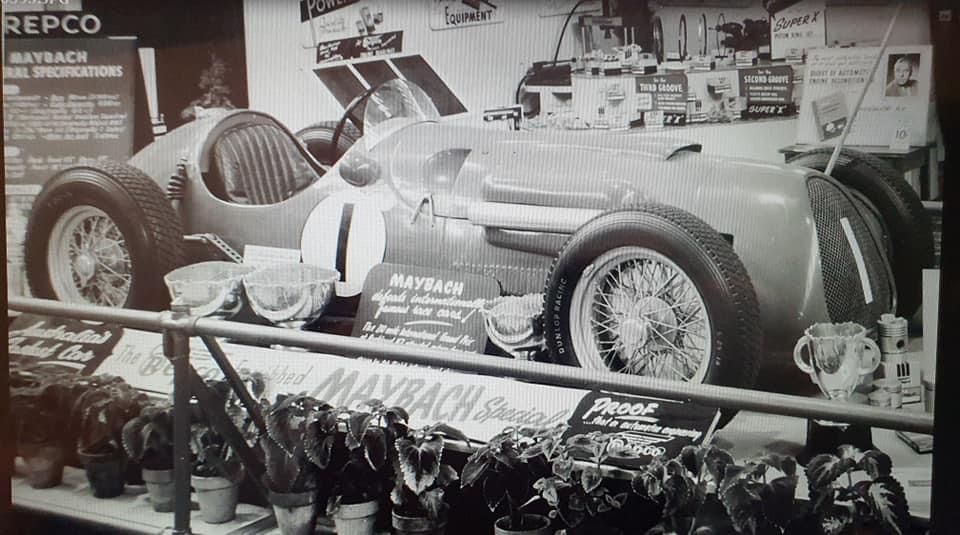
Maybach 2 on display at the Melbourne International Motor Show, Exhibition Buildings, April 1-10 1954 (D Zeunert Collection)
A while back I published an article about Maybach 1, the first in a series of three chassis – four cars – built by Charlie Dean/Repco Research and Ernie Seeliger between 1947 and 1958. Click on this link to that piece: https://primotipo.com/2024/01/15/maybach-1-technical-specifications/
As with that article, this one is also a copy of the technical specifications and evolution of these machines published in the Australian Motor Sports Annual 1958-59. The author’s name isn’t cited, so I’ve credited it to John Goode, the book’s editor.
The photo choices are mine, so too the are the Notes sections. I’m taking as-read a general knowledge of Maybach, but if you need a refresher, click on the links at the end of this piece.
(L Sims)
Introduction…
Here are three photographs to illustrate the journey from Maybach 1 in 1947 to Maybach 1 Series 3 – the 1954 New Zealand Grand Prix winner in Stan Jones’ hands – to get us to the start of this article, Maybach 2, which commenced its life in April 1954.
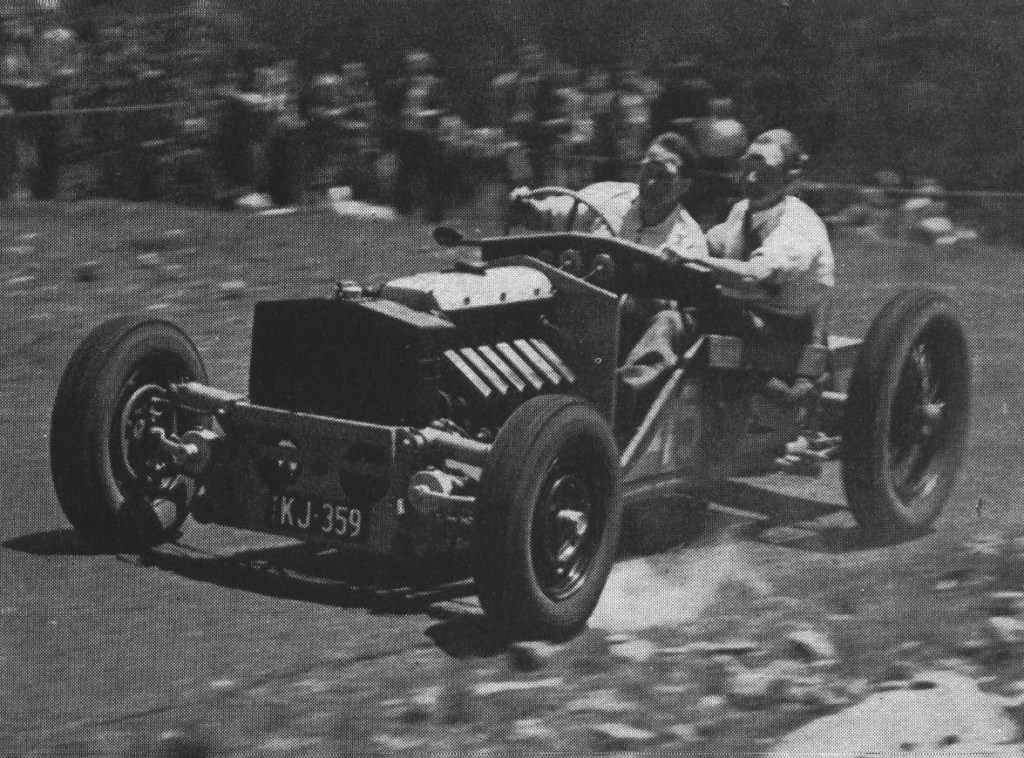
The shot above shows Charlie Dean and the brave Jack Joyce aboard Maybach 1 at Rob Roy during the Melbourne Cup long-weekend in November 1947. What a wild road car the beast would have made, the car received its body immediately prior to the 1948 Australian Grand Prix held at Point Cook, in Melbourne’s inner-west.
(G Thomas)
The shot above shows Dean on-the-hop at Rob Roy in 1948 – Maybach 1 painted in its original white – and below coloured blue, on test at Willsmere, near Dean’s Kew home circa 1951. And then below that, the Repco advertisement shows Maybach 1 Series 3 winning the 1954 NZ GP at Ardmore.
(D Stubbs)Compare and contrast: Maybach 1 Series 3 above, with Maybach 2 below (B Caldersmith)
MAYBACH II (April 1954-November 29, 1954)…
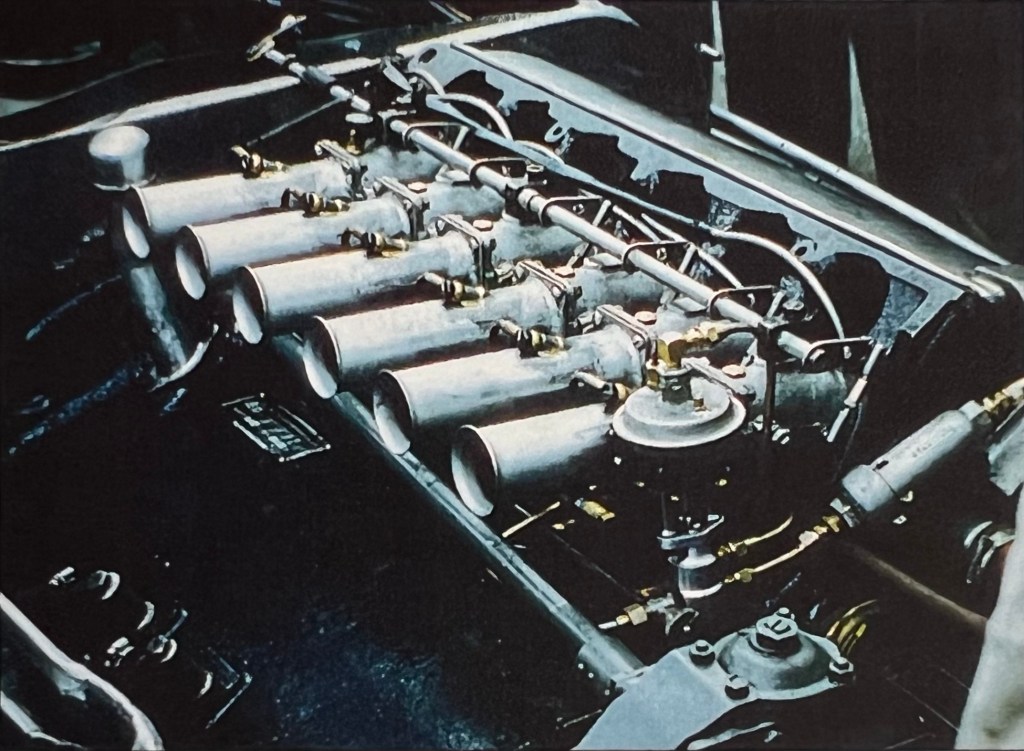
ENGINE: 6 cyl. in-line single oh. camshaft. Bore and stroke: 91 × 110mm. Capacity: 4,250 c.c. Output: 257 b.h.p. at 5,000 .p.m. (bench tested). Carburettors: Three 2 3/16″ S.U. Compression Ratio: 11 to 1. Fuel used: 60% Methanol, 20% Benzol, 20% Aviation Petrol Octane rating: 110. Cast iron cylinder block with wet liners.
Single casting cast iron cylinder block and crankcase, with sump joint well below the crankshaft centre line. Crankshaft machined all over and fully counter balanced, running in eight white metal lined bearings, one between each crank throw and an extra one behind the camshaft drive pinion situated at rear end of crankshaft. Wet liners fitted to cylinder bores with lightweight balanced connecting rods and other reciprocating parts.
Single camshaft running in seven white metal bearings, opening valves by means of rocker arms fitted with eccentric bushes which could be rotated and locked to adjust valve clearances. Rockers had roller cam followers. Valves inclined at 65 degrees in hemispherical head and located on opposite sides. Helical timing gears with idler (originally compounded fabric, but replaced by steel).
Wet sump lubrication through filter with pressure fed oil supplied to centre main bearings, then to other caps, and through the crankshaft to big end bearings. Also fed to valve rocker shafts and camshaft bearings.
Complete body and chassis redesign converting it into a single seater. Mk. I Series 3 Maybach motor used.
NOTES:
The wording in relation to the chassis is misleading. Maybach 1’s chassis was set aside – tired and much modified as it was – and a new single-seater chassis was designed and fabricated for Maybach 2.
The engine came from a German half-track vehicle captured during the Middle East campaign and shipped to Australia for technical study by the military.
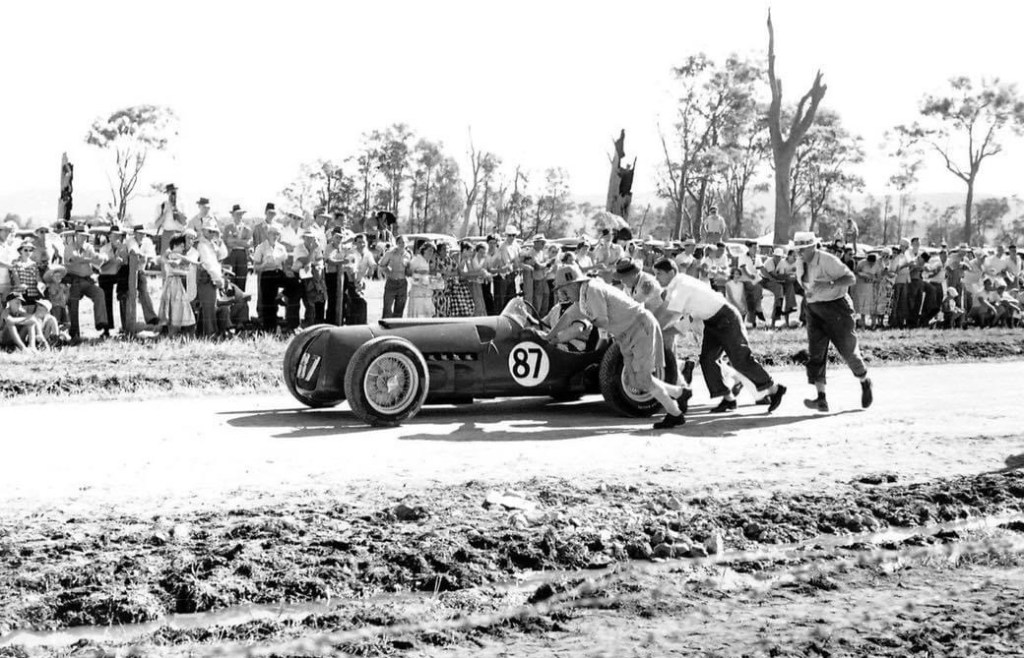
Maybach 2 in the Southport paddock during the November 1954 Australian Grand Prix meeting, racer, Owen Bailey at far left (VSCC Collection)Stan being pushed onto the grid. He led the race before a chassis weld broke on lap 14 of 27, pitching him down the road at high speed. Jones was miraculously ok but Maybach 2 was very dead (J Psaros)
TRANSMISSION: Gearbox: four speed using Fiat 525 case with Repco manufactured gears. Ratios: First- 7.08:1 Second-4.94:1 , Third-3.78:1, Top-3.14:1.
DRIVESHAFT: Dropped to pass beneath back axle and driving a short forward shaft into differential through two helical gears, easily accessible from rear, permitting alteration to overall ratios up or down by 3%. Differential: Resembled American Four Lock locking type constructed by Repco workshops from their own and American components. Rear Axle: Vibrac type high tensile steel.
CHASSIS: Frame: Based on two 4″ dia. 16 gauge steel tubes.
Suspension: Front – Independent with wishbones and Delco shock absorbers with low placed 3 leaf traverse spring. Rear Panhard type with reversed quarter elliptic springs and torque arms anchored to heavy cross member linking two main longitudinal tubes of the chassis. Tubular Monroe Wylie shock absorbers.
Steering: Peugeot rack and pinion.
Brakes: Paton’s Hydraulic using twin parallel master cylinders, one operating front and one the rear. Action on both integral but operation separate permitting one set in action if others fail. Front shoes, twin leading design with I6in. special helically finned drums, cooled by air scoops to forward sides. Rear shoes of leading and trailing type in 14 in. drums.
Wheels: Locally constructed wire type with Rudge Whitworth hubs. Front 18″ dia. Tyres: 5.25 × 18. Rear 16″ dia. Tyres: 7.00 x 16.
Body: Single light aluminium shell easily removable in three seclions. Fuel Capacity: 25 gallons in tail mounted aluminium tank.
Dimensions: Wheelbase 94″ • Track: Front 4 ft. 3 ins. Rear 4 ft. I ins. Weight: 16 cwt. Power/weight ratio: 7 Ibs. per b.h.p.
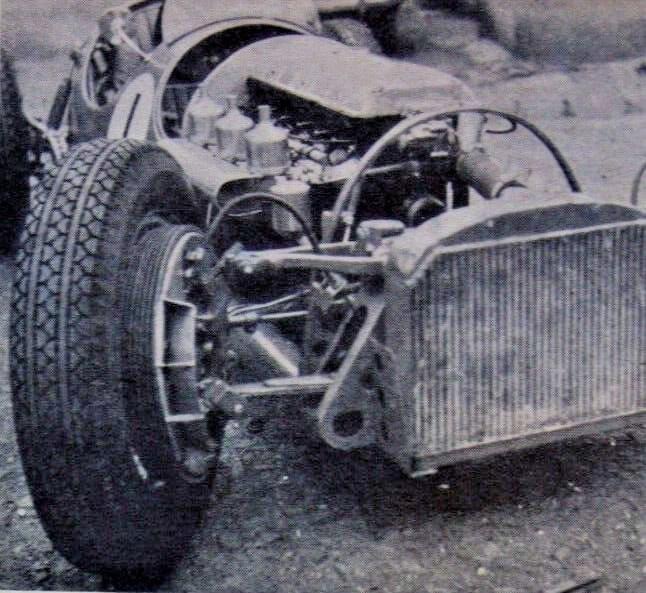
“Rare photograph showing the front crossmember of Maybach 2 where the chassis tube broke” (S Scholes Collection-Wheels May 1955)
NOTES:
In many ways Maybach 2 was the one that got away…
It went like a jet from the start, Jones won the Victorian Trophy at Fishermans Bend in March 1954 on its race debut, then won again at the Easter Bathurst meeting where he took the two preliminaries before gearbox failure scuttled his run in the feature. He was victorious again at Altona in May and was second to Jack Brabham’s Cooper T23 Bristol there in June. At Fishermans Bend in October he had gearbox failure again.
Then it was off to Southport for the AGP in November where Stan simply drove away from the field until the chassis weld failure caused the massive accident that destroyed the car, and from which Jones very fortunately walked away…
This 4.2-litre 257bhp @ 5000 rpm, 725kg monoposto was one helluva fast racing car.
In the woulda-coulda-shoulda stakes were the battles we never got to see with Stan aboard Maybach 2 and Reg Hunt’s Maserati A6GCM/250 in 1955. Hunt upped the local ante big-time when he imported a current GP car, and was immediately quick in it, his talent refined with some 500cc F3 racing aboard a Cooper MkVIII in Europe in 1954.
Reg’s Maserati gave about 240bhp @ 7200rpm and weighed between 500-580kg. Both the Maserati and Maybach 2 had four-speed ‘boxes, IFS and live-rear axles. Maybach’s weakness was its ginormous, all cast iron engine which weighed circa 320kg; let’s not forget it was designed for the German military not competition use. The 250F engine’s quoted weight is 197kg, much of the weight differences between the two cars is in engine weight.
While torque figures for Maybach 2 weren’t quoted, the long stroke 4.2-litre six would have produced more torque than its twin-cam Italian competitor but not, one suspects, enough to offset the considerable weight disadvantage.
Whatever the case, when Maybach 2 was destroyed at Southport, all of the momentum gained by building, racing, and refining the car was lost. Maybach 3 (below) didn’t appear until the April 1955 Bathurst 100 weekend when the team started the process again, by which time Reg was used to and exploiting his car successfully.
What is my point? The Repco-Maybach program effectively ended post-Southport, with only one remaining engine to instal in Maybach 3, a 3.8-litre unit at that. Stan confronting Reg in 1955 aboard Maybach 2 really would have been something to see…woulda-coulda-shoulda.
AMS Annual 1958-59Jones in Maybach 3 during the 1956 South Pacific Championship (R Donaldson)
MAYBACH III (1955 – Jan 1956)…
ENGINE: 6 cyl. in-line inclined 60 degrees to left. Shortened stroke crankshaft (approx. 10% ). Bore and stroke: 90 × 100 mm. Capacity: 3,800 c.c. Compression Ratio: 11 to 1. Power Output: 260 b.h.p. at 5,000 r.p.m. Direct fuel injection by Dean and Irving.
TRANSMISSION: Clutch: Repco single plate. Gearbox: Four speed with top overall ratio 3.2 to 1. Drive: Open propeller shaft passing on right of driver to offset differential. Differential: limited slip (as previous model).
Charlie Dean at Rob Roy, date unknown. The competition debut of Maybach 3, was at Templestowe Hillclimb on May 8, 1955. 68.56sec where Dean was third in the over 3-litre racing car class (SLV)(SLV)(Davey-Milne)Rob Roy again. Despite the fuzziness, note the the considerable reduction in engine height achieved by the 60-degree laydown of the Maybach six (Davey-Milne)
CHASSIS: Frame: Built up from two 4″ dia. steel tubes, linked by transverse tubing. Redesigned body of flatter appearance due to inclined engine.
Suspension: Front – Independent with transverse leaf spring set low. Rear Quarter elliptics with radius rods.
Dimensions: Wheelbase 95″. Track Front 4 ft. 3 ins. Rear 4 ft. 1 in. Steering: Marles box and divided track rod.
Maybach 3 in the Gnoo Blas paddock in 1956. Trumpets of Repco built fuel injection clear (B Caldersmith)(B Caldersmith)
NOTES:
The beginning of the end. Jones (above) is an absolute bolter at the start of the January 1956 South Pacific Championship at Gnoo Blas, New South Wales.
Reg Hunt’s new Maserati 250F is way back here but will reel Stan in. Being pushed hard to hang onto the very best European F1 car of the day, the Maybach engine let go in a big way.
Jones had a 250F several months later. Stan let his good friend, ace engineer/mechanic/racer Ern Seeliger loose on Maybach, its evolution to Chev Corvette 283 V8 power and other modifications – Maybach 4 – was soon underway.
(B Caldersmith)(AMS Annual 1959-60)Stan Jones, Maybach 4 Chev, Australian Grand Prix, Lowood, June 1960 DNF engine (B Thomas)
MAYBACH IV March- 1958…
ENGINE: Chevrolet Corvette 8 cyl. Vee motor. 4.6 litre. Compression ratio: 9.2:1. Bore and stroke: 98.501 × 76 mm stroke. 2 four-barrel Carter Carbs. 274 b..p. at 6,000 r.p.m. 300 Ibs. torque at 3,500 r.p.m. All oilways completely modified. Bearings altered in regard to oil ways. Engine dry sumped. Modified cooling system.
GEARBOX: As previous Maybach. Drive: As previous Maybach. Differential: As previous Maybach modified with shortened axles incorporating constant velocity joints. Clutch: Seeliger designed and built multi-plate clutch.
CHASSIS: As previous Maybach but chassis lengthened lo take Di Dion rear end. New 30 gallon fuel tank fitted.
Suspension: As previous Maybach with mods. to front end by fitting an anti-roll bar incorporating brake forque rods and transverse leaf in place of quarter eliptics at rear.
Dimensions: Same as previous Maybach, but rear track widened to 4 ft. 2 ins. All up weight reduced to 14} cwt. with 4 gals. of petrol. Full oil and water.
NOTES: Ern Seeliger first ran Maybach 4 at Fishermans Bend in March 1958.
In one of The Great Australian Grands Prix, Stan Jones, Maserati 250F, Lex Davison, Ferrari 500/625 and Ted Gray, Tornado 2 Chev battled up front for most of the ‘58 race on Mount Panorama until Lex was the last-man-standing. Ern Seeliger drove a great race into second, with Tom Hawkes third in his much modified ex-Brabham Cooper T23 Repco-Holden.
Jones proved further the pace of Seeliger’s final Maybach evolution by winning a Gold Star round in it at Port Wakefield in 1959. It would have been very interesting to see what times Stan could have done in Ern’s car in practice at Bathurst over that ’58 AGP weekend!
(AMS Annual 1958-59)
Etcetera…
(VHRR Archive)
Prettiest of the lot in my opinion…Stan the Man on the way to winning the Victorian Trophy at Fishermans Bend in 1954, Maybach 2.
(B Caldersmith)Maybach 2 in the Southport paddock over the 1954 AGP weekend (J Psaros)
Starting grid of the 1955 Australian GP (or is a heat, whatever) at Port Wakefield, South Australia. #5 Reg Hunt, Maserati A6GCM/250, Jones, Maybach 3, #8 Tom Hawkes, Cooper T23 Bristol, #6 Jack Brabham in the winning Cooper T40 Bristol and #10 Kevin Neal, Cooper T23 Bristol.
This is a good contextual shot showing Jones in Maybach 3 – Mercedes W196 styling influence clear – among current’ish European cars: Reg Hunt’s Maserati A6GCM 2.5 – the so-called interim 250F – two Cooper T23s of Tom Hawkes #8 and Kevin Neal. Plus the nose of the winner and newest car here, Jack Brabham in the mid-engined Cooper T40 Bristol he built in time for the British Grand Prix at Aintree that July.
(G McKaige)
The final evolution of the Dean/Repco Research Maybach engine development programme. ‘Short-stroke’ 3.8-litre and fuel injected delivering circa 260bhp @ 5000rpm. George McKaige took this shot of Maybach 3 at Fishermans Bend in October 1955. I wonder what that plate in the engine bay says?
(Q Miles)
Great colour photograph of Maybach 4 Chev in the Lowood paddock inJune 1959. Note how the twin-Carter-carbed Corvette 283 V8 is offset to the right allowing the driver to sit low to the left rather than high atop the driveshaft.
Credits…
Australian Motor Sports Review 1958-59, Brian Caldersmith, Brier Thomas, Jock Tsaros, Davey-Milne Family Collection, George McKaige and Chester McKaige via their superb two ‘Beyond The Lens’ books, Stan Griffiths, Dacre Stubbs, VSCC Vic Collection, J Montasell, Clem Smith, Quentin Miles, Ron Edgerton Collection
Tailpiece…
(K Drage)
Towards the end of a very long competitive Maybach road.
Stan Jones lines Maybach 4 Chev up alongside Alec Mildren’s tiny, mid-engined 2-litre Cooper T45 Climax before the start of the South Australian Trophy, Port Wakefield Gold Star round in March 1959.
Jones won the race from Len Lukey and Keith Rilstone – it was the last championship level win for Maybach in-period.
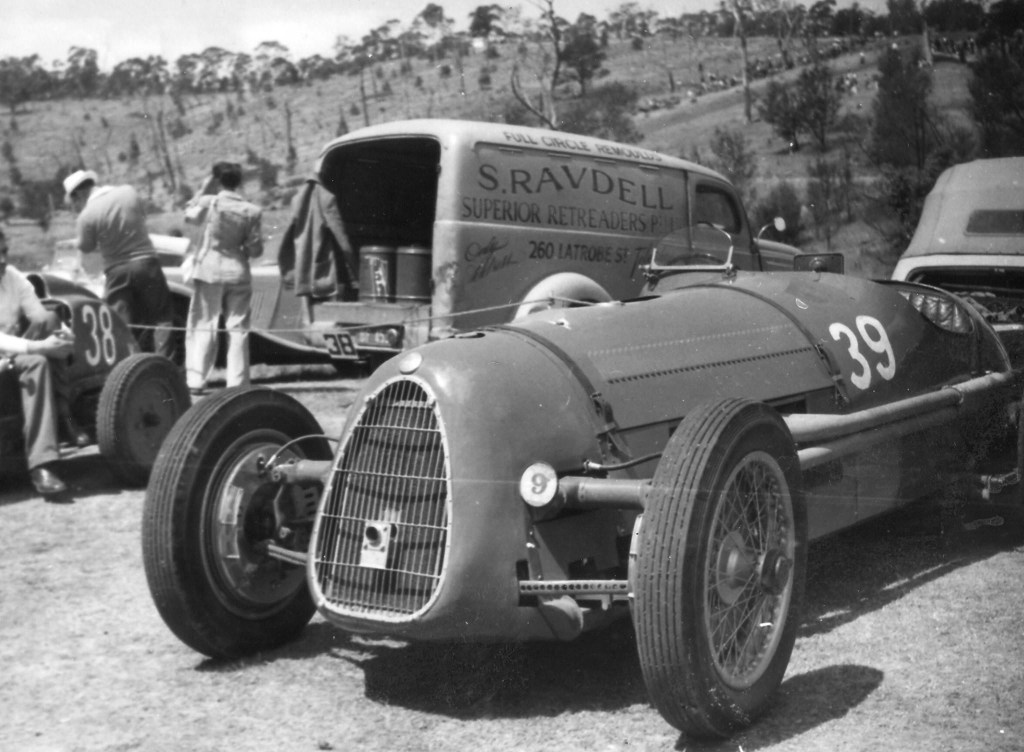
Charlie Dean’s Maybach 1 at Rob Roy in January 1949. The equipe behind is Micha Ravdell’s van and #38 Wyliecar Ford-A Special, still driven by its builder, Arthur Wylie. Number 9 on Maybach is a rego-disc (L Sims)
Even the contrarians amongst knowledgable Australian racing historians generally answer “the Maybach” when questioned about which racer was our greatest Australian Special.
It isn’t the Maybach though, but rather Maybachs – four of them – with no shortage of variants across the three chassis built. Whenever a photograph of a Maybach is uploaded onto social media there is always plenty of uninformed yibba-yabba about the specifications of the car in shot.
(Brian Caldersmith)Charlie Dean and the brave Jack Joyce aboard Maybach 1 at Rob Roy in November 1947. The body is still to come. Wild road car! (L Sims)
One of our friends, John Ballantyne, prompted this article which I assembled to address the lack of accessible, accurate information about the specifications of Maybachs 1-4.
What follows is a copy of the technical specifications and evolution of the Charlie Dean and Repco Research built Maybach 1 published in an article of the Australian Motor Sports Annual 1958-59. The author’s name isn’t cited, but I’ve credited the editor of the book, Mr John Goode. The other two chassis – three cars – Maybachs 2, 3 and 4 will follow in my next post.
The article is focussed on technical information, not race results: this one that does that best, ponderous as it is: https://primotipo.com/2014/12/26/stan-jones-australian-and-new-zealand-grand-prix-and-gold-star-winner/ I hadn’t planned many photographs, but, as usual, my enthusiasm got the better of me…the period Repco ads are a visual device to assist in splitting one evolution of Maybach 1 from the next.
The photo choices are mine, so too are the ‘Notes’ sections, albeit almost all of that information is sourced from the same AMS article. I’m taking as-read a general knowledge of Maybach, if you need a refresher, click on the links at the end of this piece.
Six years later (from the 1947 shot) Stan Jones bolts away from the Europeans to win the October 1953 Victoria Trophy at Fishermans Bend in Maybach 1 S3. Behind is Doug Whiteford’s Lago Talbot T26C, George Pearse’s Cooper Vincent, and to the right, Ted Gray aboard Alta 21S Ford. Lex Davison’s Alfa Romeo P3 is partially obscured behind Maybach (L Sims)John Fleming’s copy of The Argus report of the 1953 Victoria Trophy – the preceding shot
One final contextual word from Australia’s greatest motor racing historian, John Medley, about the Maybachs and their place in the Australian pantheon before we set off, quoted from the ’50 Year History of The Australian Grand Prix’, specifically John’s 1948 AGP chapter.
“HC (Horace Charles) Dean’s car, powered by a captured German scout-car engine, was little more than a year old, and had only been given a proper body in 1947: even so, in its brief career of trials, hillclimbs and sprints it had already attracted a lot of attention for its very willing performance and for its relatively advanced specification. It was, for example, one of just four runners in the 1948 AGP with independent front suspension, and of those four the Maybach was the only Australian special – the other three were factory-built cars of pre-war design: John Crouch’s Delahaye, Frank Pratt’s BMW, and Cec Warren’s Morgan.”
“The Maybach and Delahaye (135CS) actually had a lot in common, not least that both had been laid down not as pure racers, but as big-engined road cars with competition potential although another point which should not be overlooked is that both were essentially very conservative designs.”
“The significance of the Maybach was that it was Australian built, by a man at the centre of a small but talented team, and that the car had development potential – just how much was not realised at the time. Between 1948 and 1960, Maybachs in various forms were to contest eight AGPs and to lead – if sometimes only briefly – five of those races.”
Maybach 1 during June 1949, Charlie Dean and Jack Joyce on the way to FTD (D Stubbs)Maybach 1 during Rob Roy #16 in May 1948 (D Stubbs)
MAYBACH 1 (1946-1949)…
ENGINE: 6 cyl. inline single oh. camshaft. Bore and stroke: 90 × 100 mm. Capacity: 3,800 c.c., Compression ratio: 6.43 to 1. Output (initially on pool petrol: 69 octane) 100 B.H.P. at 3,000 г.p.m.
Single casting cast iron cylinder block and crankcase, with sump joint well below the crankshaft centre line. Crankshaft machined all over and fully counter balanced, running in eight white metal lined bearings, one between each crank throw and an extra one behind the camshaft drive pinion situated at rear end of crankshaft. Wet liners fitted to cylinder bores with lightweight balanced connecting rods and other reciprocating parts.
Single camshaft running in seven white metal bearings, opening valves by means of rocker arms fitted with eccentric bushes which could be rotated and locked to adjust valve clearances. Rockers had roller cam followers. Valves inclined at 65 degrees in hemispherical head and located on opposite sides. Helical timing gears with idler (originally compounded fabric, but replaced by steel).
Wet sump lubrication through filter with pressure fed oil supplied to centre main bearings, then to other caps, and through the crankshaft to big end bearings. Also fed to valve rocker shafts and camshaft bearings. Carburettors: Two marine Amal.
Charlie Dean and Maybach 1 during the January 26, 1948 AGP weekend at Point Cook RAAF Base just west of Melbourne. It was the cars first appearance with a body fitted, and painted white. DNF magneto failure on lap 12, the passenger decamped before the off. Note the Studebaker steel wheels at the front (AMS Review 1958-59) Maybach 1 at Rob Roy in May 1948. A swag of these sensational, uber-rare Dacre Stubbs’ shots appear to have been taken immediately after Maybach was repainted, in the front garden of Dean’s Kew, Melbourne, home. Six Amals at this point, in November 1947 there were two…(D Stubbs)(D Stubbs)
TRANSMISSION: Clutch: Fichtel and Sachs. Gearbox: Four speed crash type from a Fiat Model 525. Rear Axle: Lancia Lambda Series VIl in standard form.
CHASSIS: Frame: Tubular steel consisting of two parallel 4″ dia. steel tubes with independent suspension at the front (Dean’s own design) and conventional twin half elliptic springs at rear.
Suspension: Front Independent with transverse semi-elliptic spring and wishbones. Mainly 1937 Studebaker Commander parts. Steering: Cam and roller box (Marles) with two piece track rod.
Wheels and Brakes: Front: Studebaker bolt on pressed steel wheels with standard Studebaker brakes. Rear: Lancia centre lock 19″ dia. wIre wheels and brakes.
(D Stubbs)(D Stubbs)
BODY: Two seat from welded sections of aircraft belly tanks.
LATER MODIFICATIONS: Included 6 carburettors, reduction of weight achieved by new front end. Minerva brake drums fitted with specially fabricated shoes, and new cast steel liners, mounted on light steel backing plates. Centrelock wire wheels with adapted hubs to replace Studebaker wheels. Body frame lightened.
(D Stubbs)While all the one-liners down the decades credit Frank Hallam with the body, there is no way that’s correct. FH was apprenticed as a mechanic. Who built the body, it was clearly executed by a talented specialist, surely? (D Stubbs)(D Stubbs)
NOTES: The car’s engine came from a German half-track vehicle that had been captured during the Middle East campaign and shipped to Australia for technical study by the military. Dean acquired it from a wrecker. Built as a sportscar, Dean was cajoled into turning it into a racing car by George Wade, a Repco mechanic/engineer, after recording 100mph in a Vintage Sports Car Club trial. The body was constructed in time for the 1947 AGP at Point Cook using aircraft belly tanks cut and shut by Frank Hallam, another Repco employee – so the story goes.
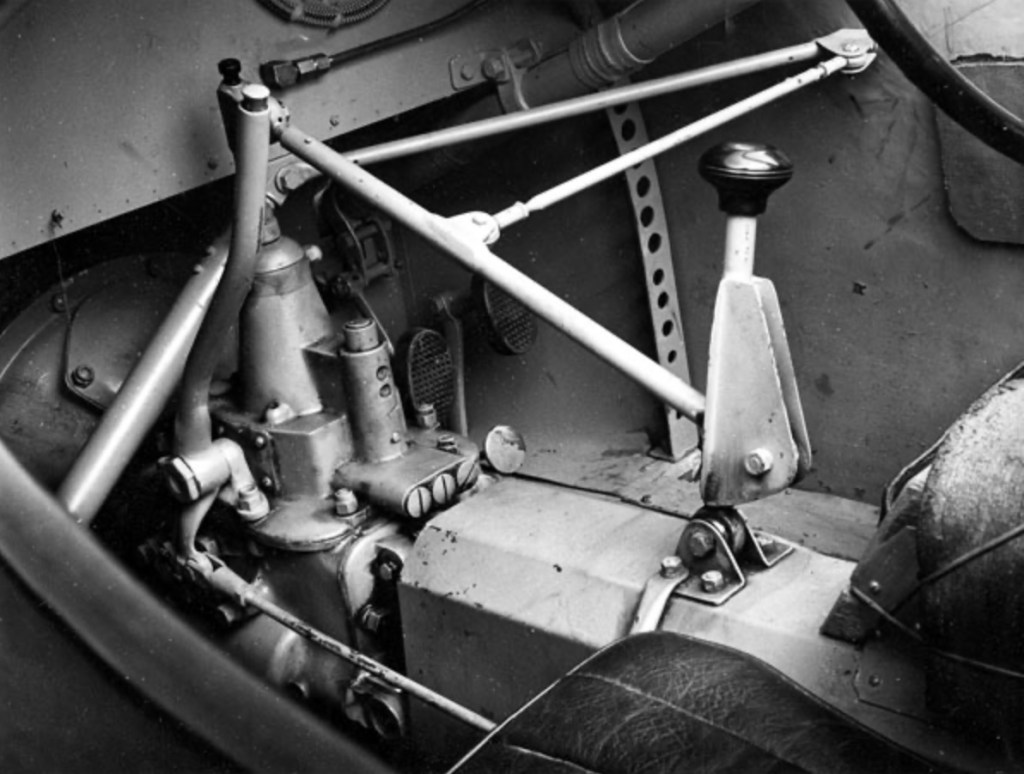
Cockpit shot shows the car was a ‘reasonably generous’ biposto in early spec. Twin-tube frame chassis, note diagonal bracing of the forward driver bulkhead. Revs, oil pressure and water temperature at a guess. Attractive – ahem – steering wheel, what is it off? (D Stubbs)Neat remote shift – and locating stays to ensure easy accurate changes – to modified four speed Fiat 525 gearbox (D Stubbs)(AMS Annual 1958-59)Dean in Maybach 1 S2 competing in the Mornington Motor Races at the Balcombe army training base on Melbourne’s Mornington Peninsula in June 1950 (D Stubbs)
MAYBACH 1 Series 2 (1949 -1950/1)…
Basically the same two seater sports/racing body and chassis with the following changes made from the original car.
ENGINE: 4.2-litre Maybach adapted to take developed parts from 3.8-litre original. Reground camshaft and special new main bearings. Original lead bronze bearings retained for big ends.
Supercharger: Ex G.M. diesel Roots type with three lobe rotors, mounted beside the motor driven by triple V-belts from the crankshaft nose; output 7 lb/sq. inch. Carburettor: Originally Claudel Hobson aircraft type replaced by Bendix-Stromberg aircraft type. Cooling System: Later sealed at blow off pressure of 4 p.s.i. Magneto: Adapted V-12 type but burnt out, subsequently Lucas.
TRANSMISSION: Differential: American Power Lock (1922 vintage truck) limited slip type fitted in modified Lancia housing.
CHASSIS: Rear Brakes: Special drums of original design using two leading shoes hydraulic system but replaced with leading trailing shoe hydraulics.
When Charlie Dean obliged Dacre Stubbs for the undated The Age (I think) article below he didn’t take Maybach 1 S2 too far, this shot is at the Willsmere Mental Institution in Kew. I grew up closeby, there were many occasions when Dad threatened to take us kids to The Nuthouse, as he sensitively referred to the place, when we misbehaved…(D Stubbs)(J Fleming Collection)Maybach 1 S2 at Rob Roy in June 1949 when Dean and Joyce bagged FTD. Wylie A-Ford Spl behind (L Sims)(AMS Annual 1958-59)Stan’s muscle-shirts were famous, here during the 1953 AGP at Albert Park. DNF with a variety of problems while leading in Maybach 1 S3 (S Griffiths)
MAYBACH I Series 3 (1951 – Early 1954)…
Fundamentally similar in appearance to the two previous models, still a two seater but with suspension changes, three feet of rear chassis rails removed.
Modifications listed in order of introduction:
June 1950 – April 1951
Front suspension rebuilt: Studebaker parts replaced by Oldsmobile upper wishbones with integral shock absorbers. Transverse leaf spring redesigned to three leaf to reduce weight. Rear Suspension: Axle mounted on trailing quarter-elliptics with radius rods. It was this which necessitated cutting the rear end of the chassis.
Stan Jones awaits the off at Templestowe in September 1952, Maybach 1 S3, see photographer/racer/engineer John Fleming’s comments about his shot below(J Fleming)Posed The Age shot published on November 18, in the week before the ’53 AGP at Albert Park. Taken at Jones’ home garage in Yongala Road, Balwyn. From left, Ern Seeliger, Jones, Reg Robbins at the back, Charlie Dean and Lloyd Holyoak ‘working’ on Maybach 1 S3. Note the Oldsmobile top wishbones and (unsighted) lever arm shocks and transverse bottom leaf spring. One of the three big SUs is obscured by Stan’s armYou can feel and smell Albert Park! Dacre Stubbs has tightly focussed his 1953 AGP start shot on Lex Davison, Jaguar powered ex-Moss HWM #3 and on Jones’ Maybach 1 S3; the ‘snappers framing of the shot heightens the drama. #7 is the legendary Frank Kleinig and Kleinig Hudson Spl with Cec Warren’s Maserati 4CLT alongside and #10, W Hayes’ Ford V8 Spl (D Stubbs)
Carburettors: Three marine Amals. Supercharger removed. Other Mods: Mild steel sheet head gasket fitted to engine raising compression ratio to 9 to 1.
Bodywork: Few obvious changes but considerable minor modifications. Framing modifled and lightened. Lighter radiator grille fitted, front cowl modified to give lower bonnet line.
June 1951 – September 1952
Carburettors: Three 1 3/4″ S.U. replacing Amals. Three special 2 3/16″ S.U. carburettors (originally designed for Lago Talbots) later fitted.
Tyres – Rear: 16 x 6.50 touring type (six ply). Subsequently four ply specially manufactured.
NOTES: Stan Jones bought the car off Charlie Dean in June 1951. Reports that the 1952 AGP would be held to F1 regs – 1.5-litres blown and 4.5 unblown, 1952-53 2-litre GP formula duly noted – meant the Maybach in 4.2-litre supercharged specs would have been ineligible so Repco Research developed a 3.8-litre unblown engine as noted above; three marine Amals fed the engine initially. Ultimately the ’52 AGP was held, as usual, to Formule Libre.
One of Jones’ pitstops at Albert Park in the 1953 AGP, Maybach 1 S3, Jag XK120 passes (D Stubbs)
The 1955 New Zealand Grand Prix programme recognised the achievements of Stan, the Repco Research team and Maybach 1 S3 in winning the 1954 event at Ardmore against international opposition the year before.
(AMS Annual 1959-60)
Etcetera…
(G McKaige)
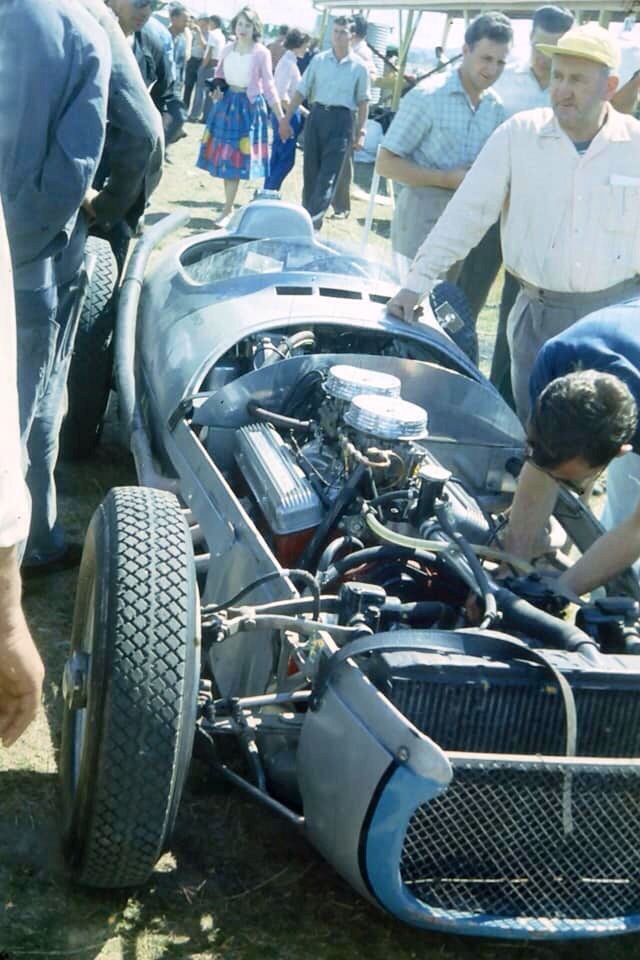
Maybach 1 on Kew Boulevard at Studley Park, Melbourne before the start of the September 1947 VSCC One Day Trial. Alex Bryce’s Bentley 3-litre is behind. Note the twin-Amals, lump of wood to keep Charlie in-situ and slicks fitted up front!
(G McKaige)
By the time the VSCC Killara Park sprints were held at the Davison Lilydale farm in November 1947, Maybach 1 had grown four more Amals. The message to be taken is that Maybach(s), like all great racing cars, were in a perpetual state of development.
(J Montasell)
Charlie Dean at Rob Roy in January 1948, Maybach 1 obviously now bodied. Note the Studebaker pressed steel wheels and front drums compared with the shot of Maybach 1 in almost the same spot a year later below, with wire wheels and bespoke Minerva/PBR drums. Patons Brake Replacements – PBR – was another Repco Ltd subsidiary.
(J Montasell)(G McKaige)
Charlie Dean cornering hard on Hurstbridge Hillclimb in April 1949, Maybach 1. He was second in the over 3-litre racing car class, Hurstbridge, to Melbourne’s east was used several times post-war.
(G McKaige)
Dean, Maybach 1 S2 competing in the Mornington Motor Races at the Balcombe military camp in June 1950.
Stan Jones in Maybach 1 S3 chasing Jack Murray’s Allard J2 at Parramatta Park, Sydney – the first meeting at the venue – on the Australia Day weekend in January 1952.
(J Fleming Collection)
Maybach 1 S3 this is The Age shot shown earlier, with the article as published. If somebody has a photograph of the Victoria Trophy we would all know if the annual for many years event was the Victorian, or Victoria Trophy. Both names are bandied around…
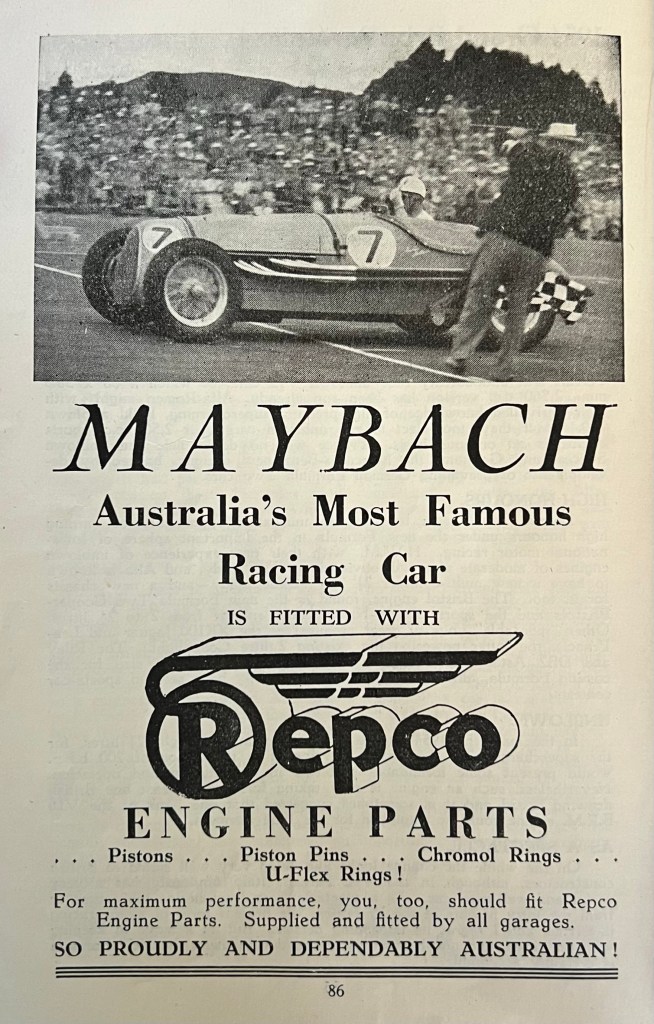
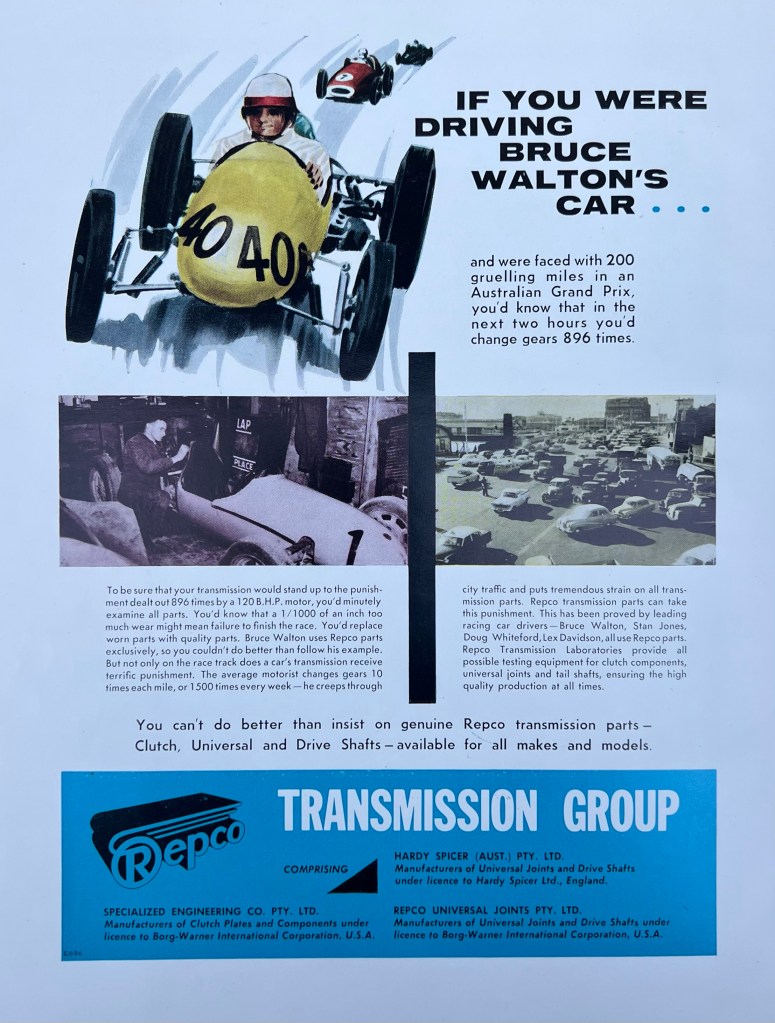
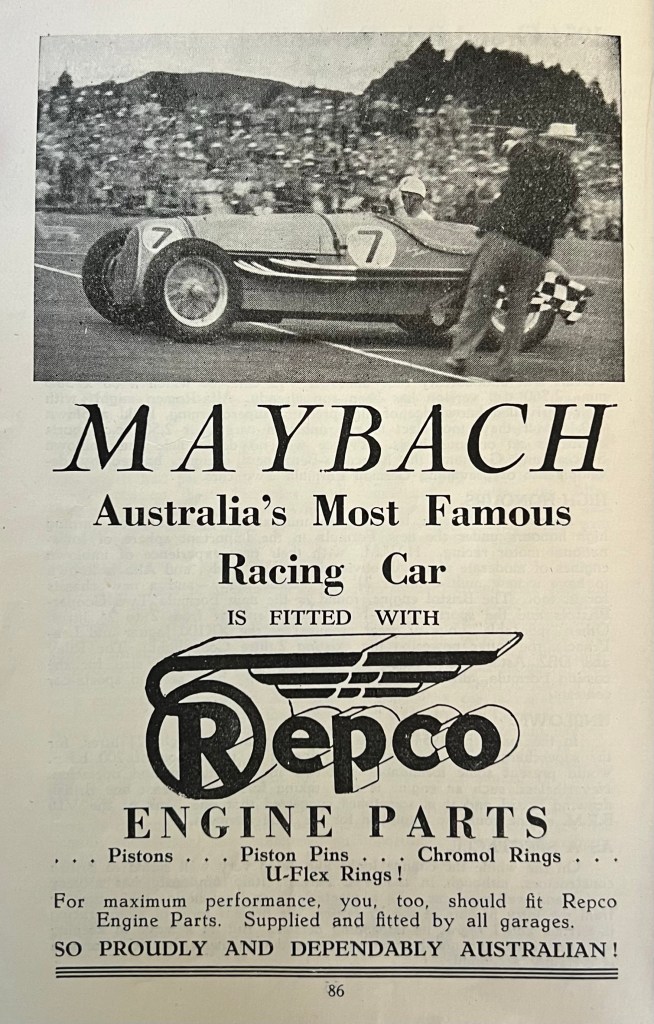
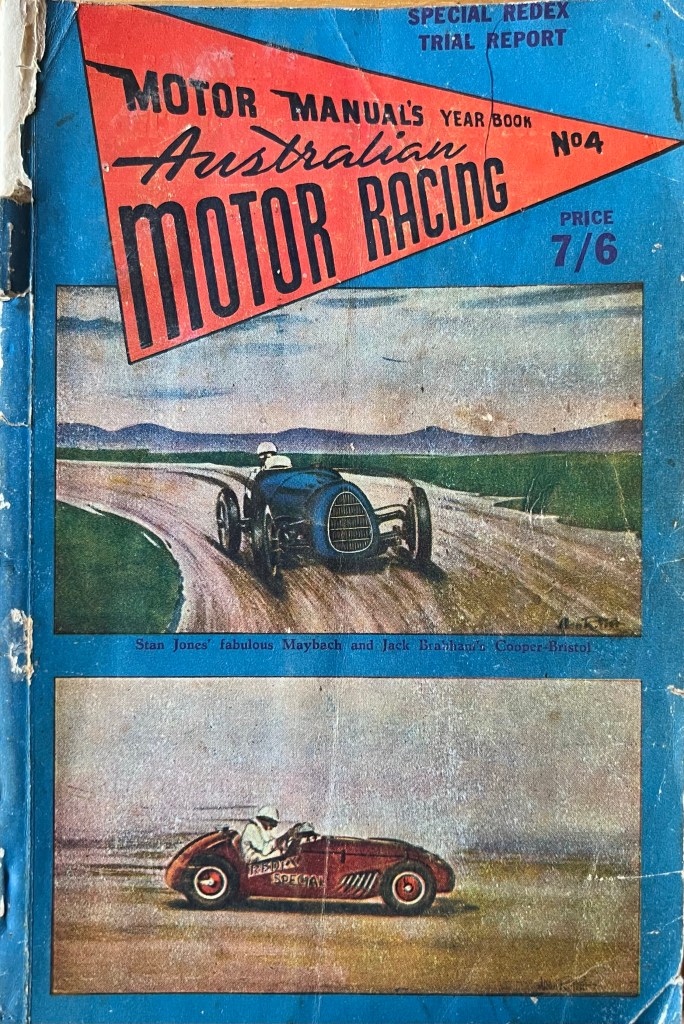
(Repco ad in the Motor Manual Australian Motor Racing Year Book No 4 1953-54)
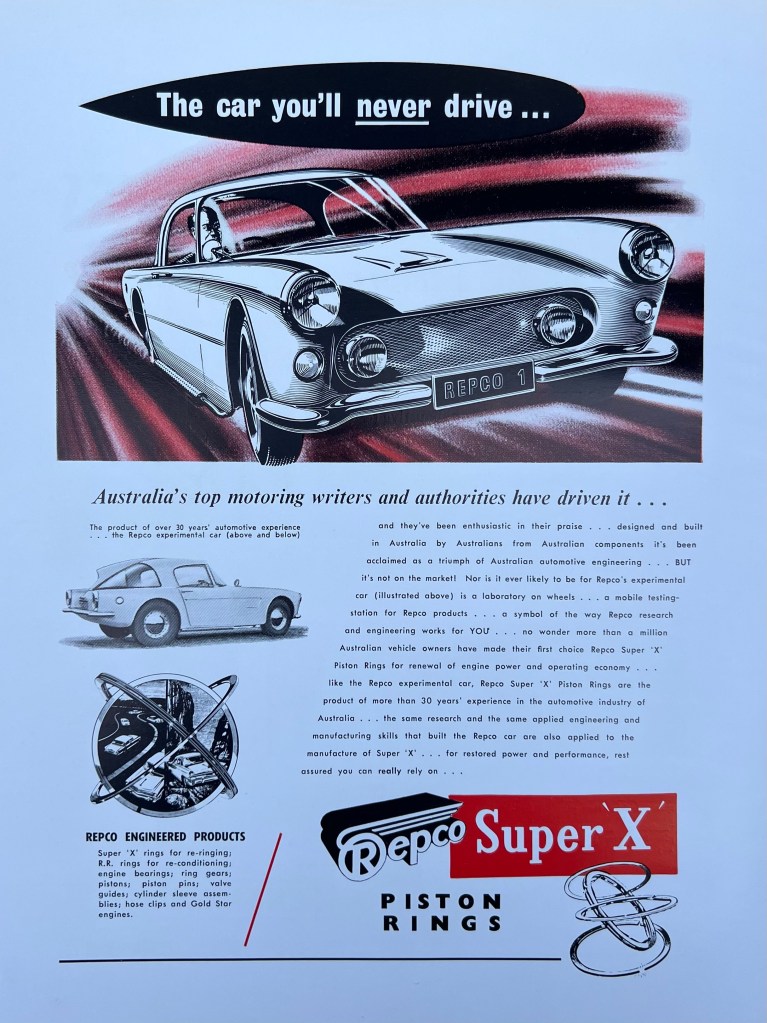
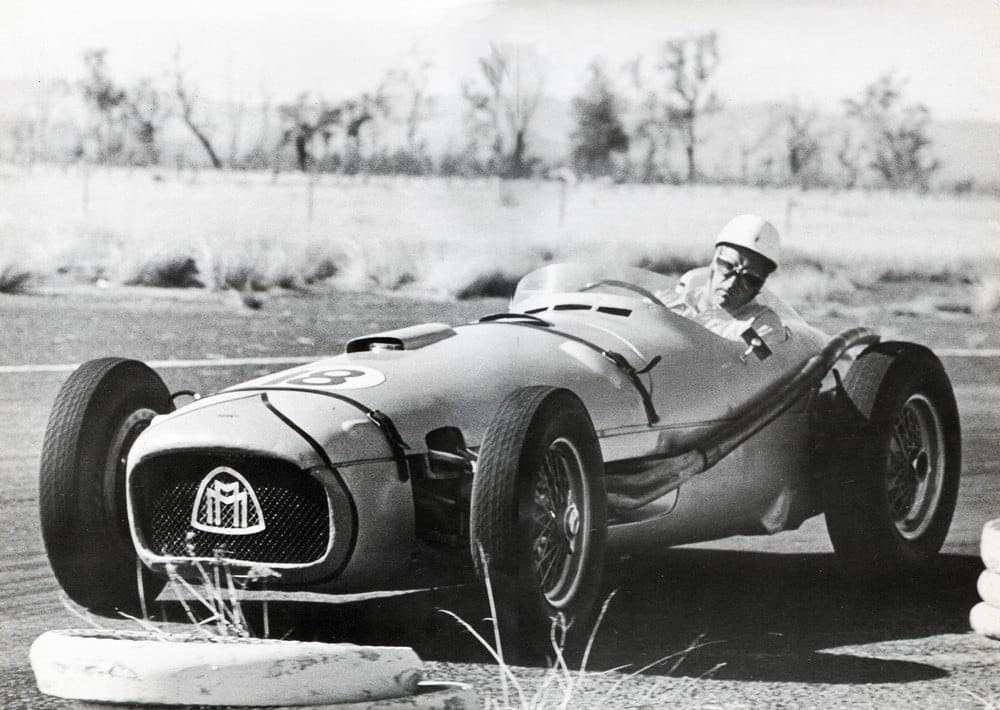
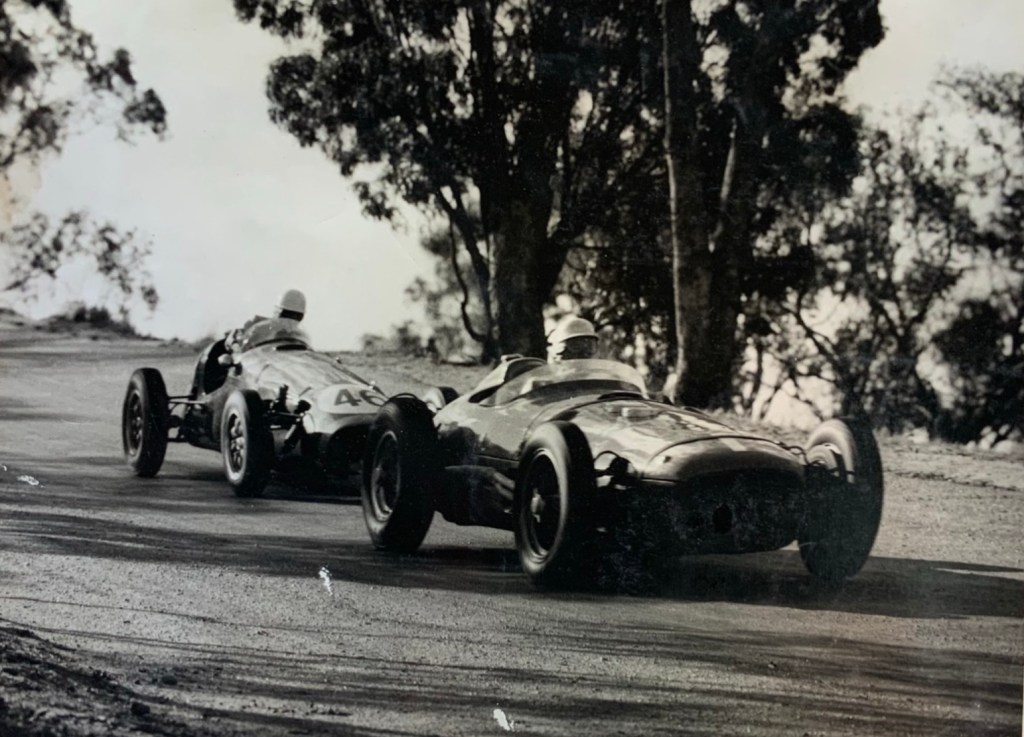
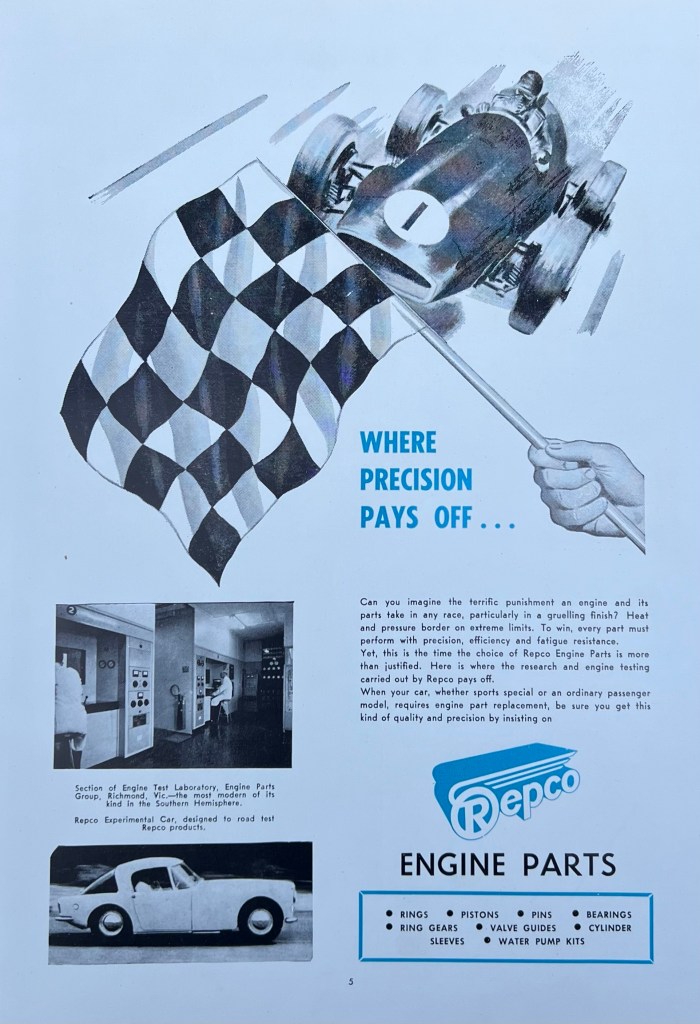
Just how strongly Repco used the Maybach programme to promote their engineering excellence to the broader populace is unclear to me.
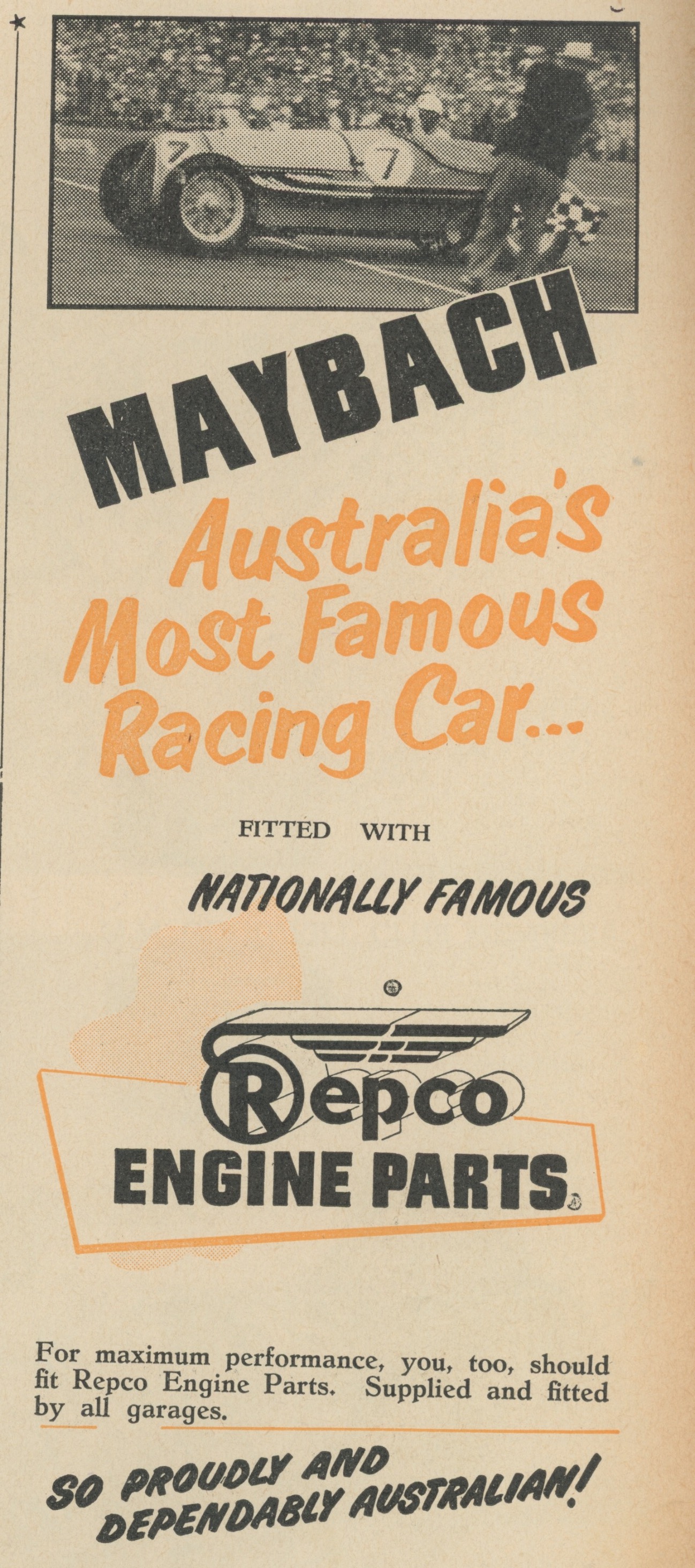
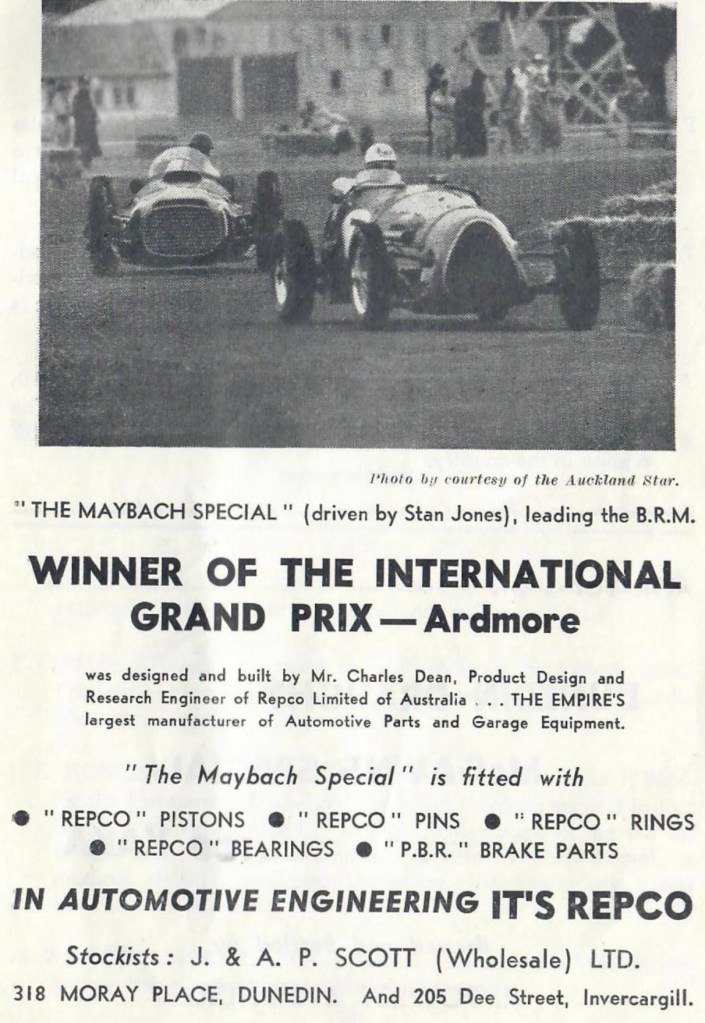
This ad in the horsepower-press below promotes some of the Repco subsidiary produced components used in Maybach, but pointedly fails to note that the car and driver shown are winning the 1954 New Zealand Grand Prix at Ardmore. Time to sack the ad agency and/or the internal copy-boy/girl!
Repco ad from the back cover of the November 4, 1952 Australian Hillclimb Championship, Rob Roy programme
Clearly – to the extent you can see the cars – Motor Manual’s cars and drivers of the year were Stan Jones and Maybach 1 S3, and Jack Brabham and his RedeX Special, aka Cooper T23 Bristol.
Reference and photocredits…
Australian Motor Sports Review 1958-59, Brian Caldersmith, ‘The 50 Year History of The Australian Grand Prix’, John Fleming Collection via Tony Johns, George McKaige and Chester McKaige via their superb two ‘Beyond The Lens’ books, Stan Griffiths, David Zeunert Archive, sensational and rare Dacre Stubbs photographs via Martin Stubbs, VSCC Vic Collection, John Montasell, Clem Smith, Motor Manual, Ivan Pozega Collection, Peter Moore
Tailpieces…
(C Smith)
The Maybach reality: Australia against the Europeans – ignoring the country of origin of the engine! – with Stan as often as not leading as chasing. Here Jones is aboard Maybach 1 on the Adelaide Hills, Woodside road circuit in October 1951, chasing arch-Melbourne-rival come fellow rough-nut, Doug Whiteford’s Lago Talbot T26C. Whiteford won this encounter in what were Stan’s early days in Formule Libre.
(I Pozega Collection)
Maybach 1’s mortal remains were tracked down or found by Jack McDonald in a South Melbourne wrecking/junk-yard in the early 1960s. He rebuilt the car – all of the required donor bits were easier to obtain back then – and soon the old-gal was back on track, in this case a Calder Drags meeting in 1968. Jack is being blown off by Des Byrne’s E-Type Ford V8.
For the last 32 years Maybach 1 has been in the very safe, caring hands of Melbourne racer/historian Bob Harborow, shown below competing at Goodwood in 2006.
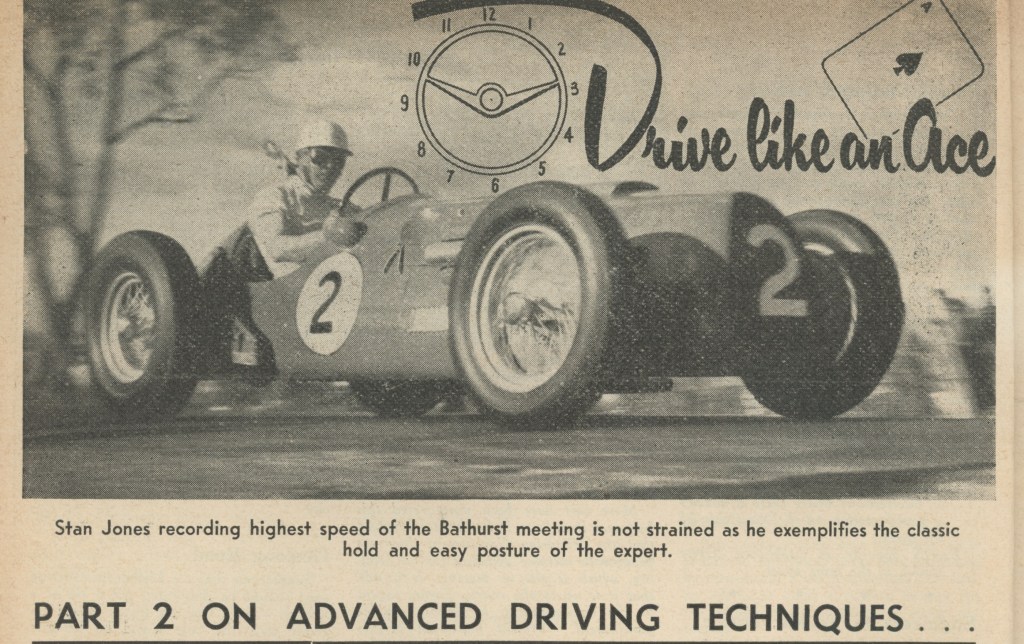
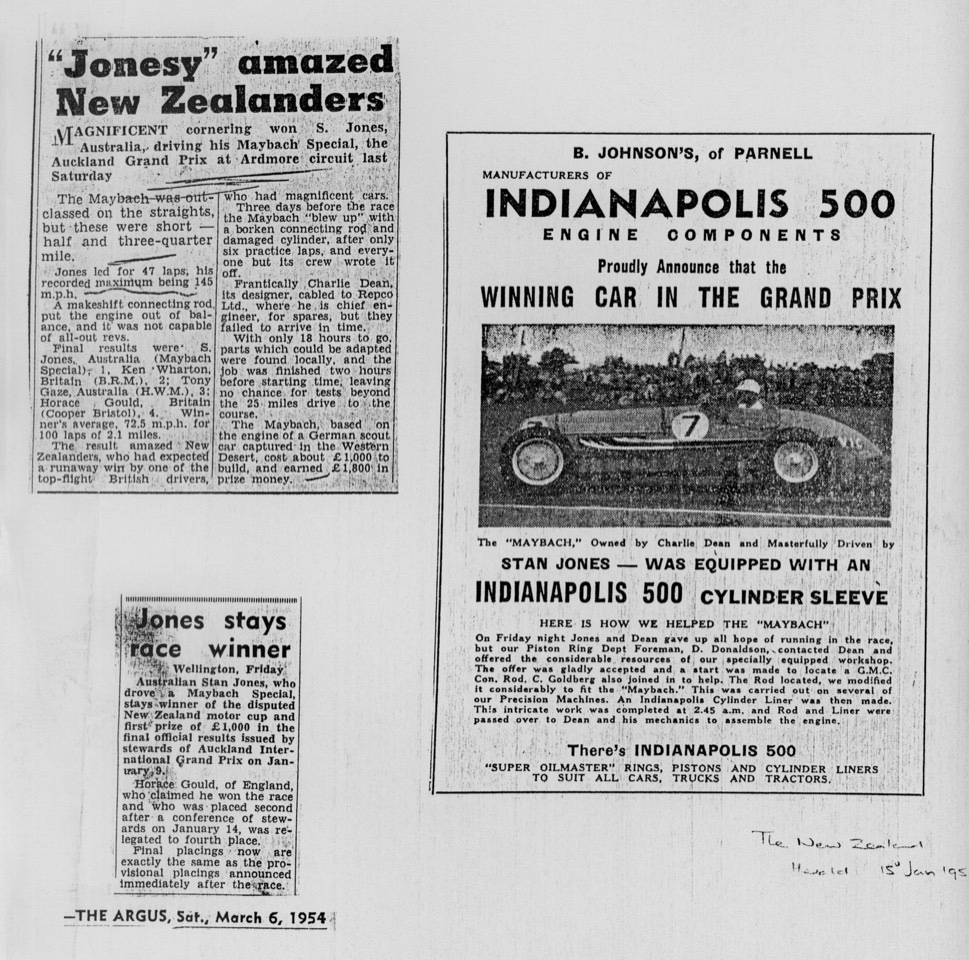
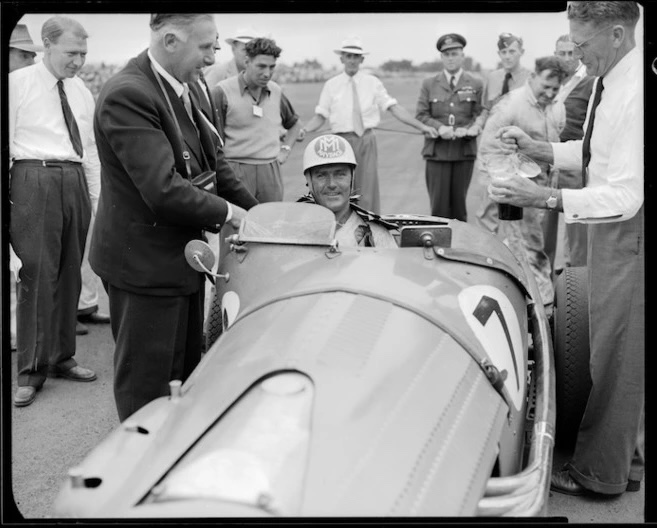
When Stan Jones took the chequered flag at Ardmore to win the New Zealand Grand Prix seventy years ago today – on January 9, 1954 – he became the first Australian car racer to win an international Grand Prix. His weapon of war was the Charlie Dean built, then Dean/Repco Research developed and maintained Maybach 1.
That’s Ken Wharton in the BRM P15 V16 behind, he pitted with mechanical problems and finished second with Tony Gaze’ HWM Alta s/c third.
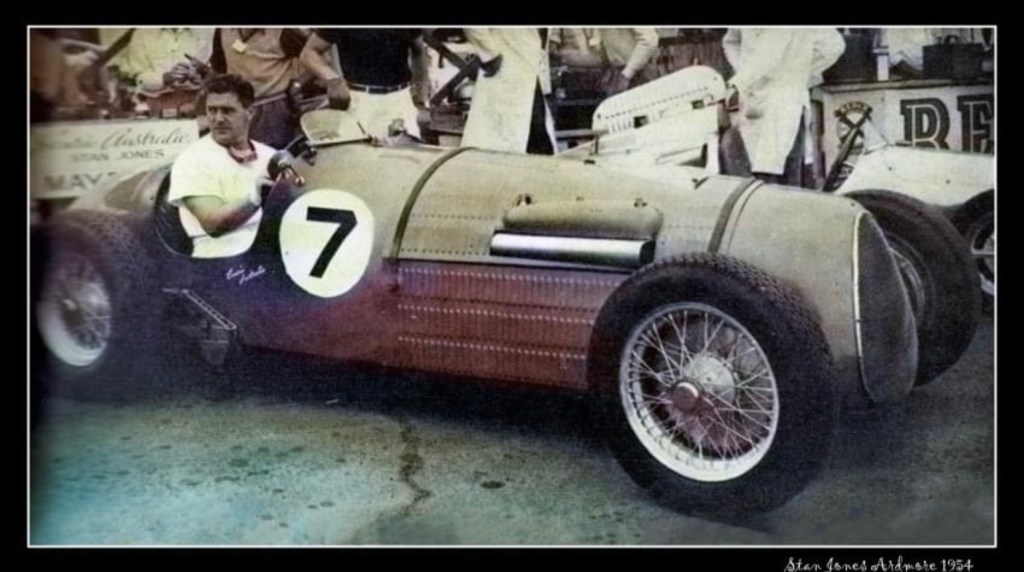
Victory spoils that much sweeter after the adversity of the previous 24 hours – Charlie Dean all smiles at right rear. Sportscar derivation of Maybach 1 clear (Lib NZ)Maybach 1, Ardmore 1954. HC Dean in the light, short sleeve shirt. ‘Ecurie Australie’ is the sign below the tonneau. Repco always seemed pretty cute about their lack of signage on Maybachs 1-3 while noting the no-advertising-on-cars rules of the day (N Tait)
I’ve done Stan and this topic to death over the years, see the links at the bottom of this article. So much so, I’ve no photos on this race I haven’t already posted so let’s recognise the occasion and scale of the achievement and then jump to the very end of the Maybach program, in terms of the three cars being Maybach six-cylinder powered at least.
With Repco’s stash of blocks in short supply, Maybach 3 – first raced at Templestowe Hillclimb on April 11 1955 - was powered by a 260bhp @ 5000rpm, 3.8-litre variant of the German SOHC, two-valve engine, albeit the motor was now fuel injected, such work done by Phil Irving and Charlie Dean.
With Big Red Cars growing locally in number – Davison Ferrari 500/625, Hunt Maserati A6GCM and 250F – the big silver beast was hard pushed despite Stan’s undeniable skills at twiddling its steering wheel.
Jones on-the-hop, as always, aboard Maybach 3 at Gnoo Blas in January 1956 before she let go at bulk-revs. Mercedes Benz W196 stylistic influence clear from this angle (R Donaldson)3.8-litre, direct-injected Maybach-six was mounted 60-degrees to vertical. Port Wakefield AGP paddock in 1955. Dean – the very fast Charlie Dean – at the wheel, Jones DNF in the race won by Jack Brabham’s Cooper T40 Bristol (E Gobell)
1956 opened with the international meeting at Gnoo Blas on January 30. Reg Hunt’s new Maserati 250F set the pace and won the South Pacific Championship easily against skinny opposition compared with previous years. Squeezing all that Maybach had to offer, on lap 23, with Stan 38 seconds adrift of the 250F, the engine let go in a major way.
Jones then got with the strength and bought a 250F. #2520 was demonstrated by Stan at the Geelong Sprints on May 27, first racing at Port Wakefield the following weekend.
While Stan got to grips with his new Italian Stallion, his mate, the brilliant engineer/racer Ern Seeliger set to work turning Maybach 3 into Maybach 4 inclusive of modified Chev 283cid V8, de Dion rear suspension and other mods.
Stan had an occasional steer of Maybach 4 Chev, winning a Gold Star round in it at Port Wakefield in 1959, but in essence, the Maybach Program of 1946-56 was at an end…oh-so-critical bits of Repco and Oz racing histories.
As Paul Cummins put it, “Stan with the NZ Trophy in one hand and a glass of champers in the other; or is that a martini shaken not stirred?” (Cummins Archive)(Motor Manual May 1954 T Johns Collection)
Credits…
Auckland Star, Libraries NZ, Bob Donaldson, State Library of New South Wales, Naomi Tait, E Gobell, Tony Johns Collection, Cummins Archive
Tailpiece…
(R Donaldson)
Look out ladies!…
Stan was a good-lookin’ Rooster at 32, that portrait is the best! He’s at the wheel of Maybach 3 during the ’56 SouPac, Gnoo Blas meeting. With hair Brylcreemed back, Raybans and terry-towelling T-shirt sourced from Buckley & Nunn, Stanley really looks-the-goods. Jones had a life of great achievement, he was not a bloke who died guessing, bless him.
Jones at Ardmore during the 1954 NZ GP weekend (unattributed)
The Charlie Dean/Repco Research constructed Maybach series of three ‘1950s’ racing cars – Ern Seeliger’s Chev engined Maybach 4 evolution of Maybach 3 duly noted and venerated – are favourites.
Links at the end of this piece provide more for those with the Maybach fetish.
Repco had no plan-grande in the 1950s to take on and beat the world in Grand Prix racing, as they did in 1966-67. But in hindsight, the Maybach race program was an important plank in a series of identifiable steps by Repco which commenced in the 1930s and ended in global racing triumph.
The catalyst for this piece is some material Tony Johns sent me this week, in addition to some other shots I’ve had for a while from two other mates, Bob King and David Zeunert. It seemed timely to have another crack at Maybach 1, Jones’ 1954 New Zealand Grand Prix winning machine, still extant in Bob Harborow’s hands.
(T Johns Collection)(T Johns Collection)
We are diving into the minutiae here, but I’ve never heard of the Fesca Gear Co, clearly a key relationship in developing Maybach 1, and the other cars?
Chris De Fraga, the fella to whom the letter is addressed, was the longtime motoring editor of The Age, Melbourne, a daily aimed at those who could read and think. The competitor Sun and Herald were aimed at those without those capabilities, IG Mason, my English master useter tell us endlessly at Camberwell Grammar School. “Just read the front, back, and editorial pages of The Age if you’ve not got the time to read anything else.” I digress.
(KE Niven & Co)
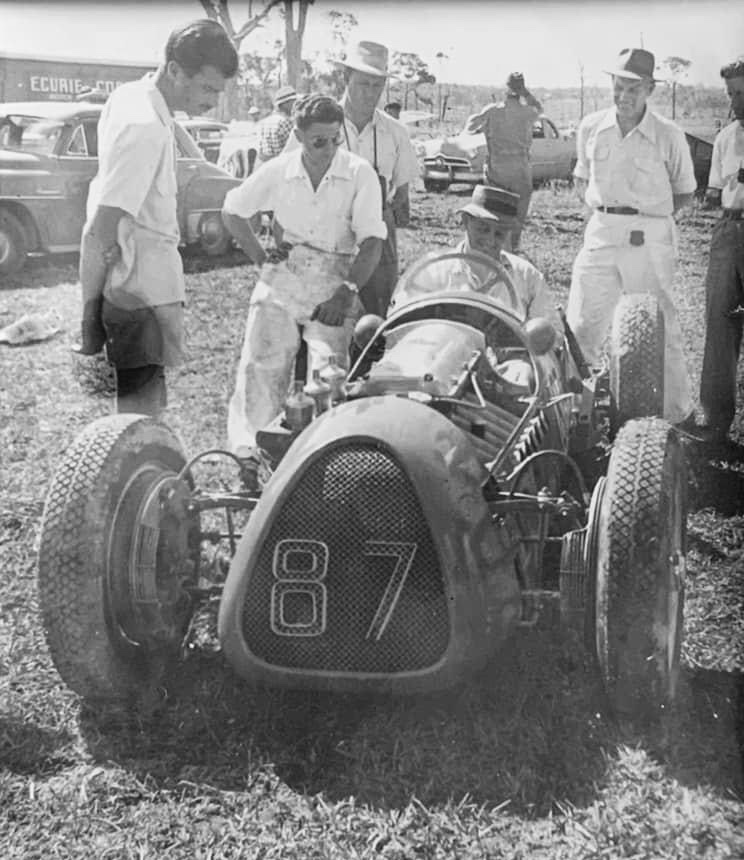
Jones looking pretty happy with himself after the Ardmore victory. It had been a tough few days for all of the team dealing with major mechanical recalcitrance of the big Maybach six, note the company logo on Stan’s helmet.
And below leading Ken Wharton’s basso-profundo-shrieking, absolutely sensational V16 BRM P15, DNF brakes.
Credits…
Tony Johns, David Zeunert and Bob King Collections
Tailpiece…
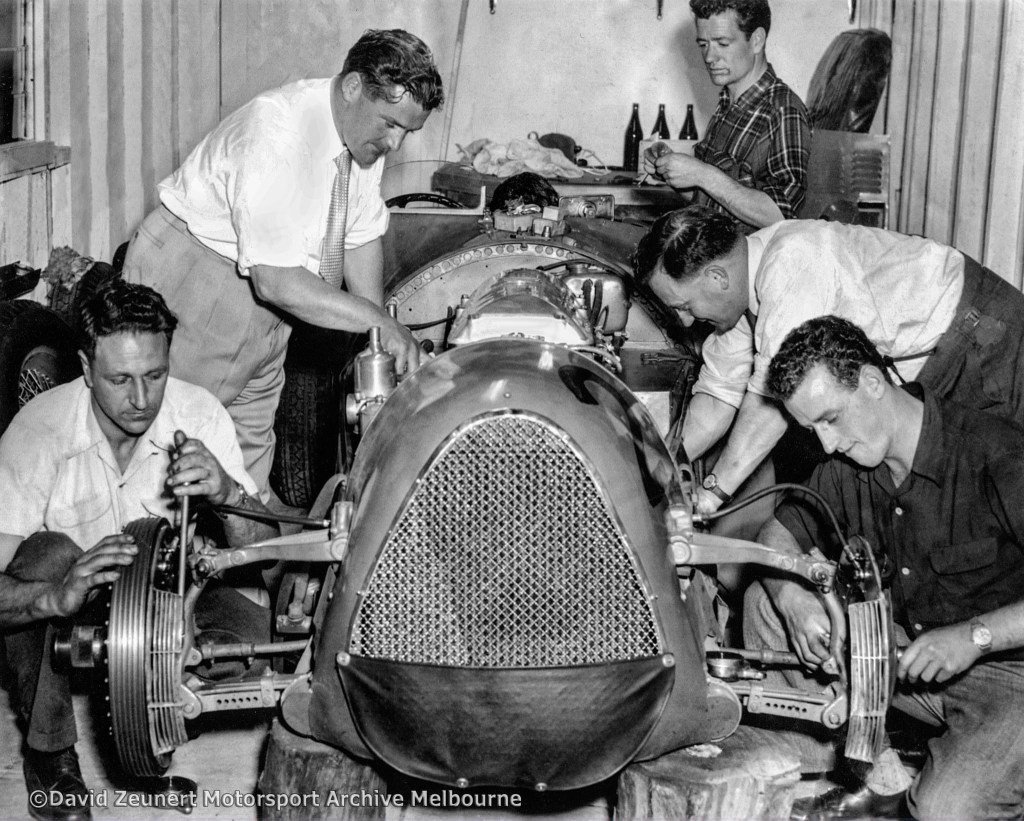
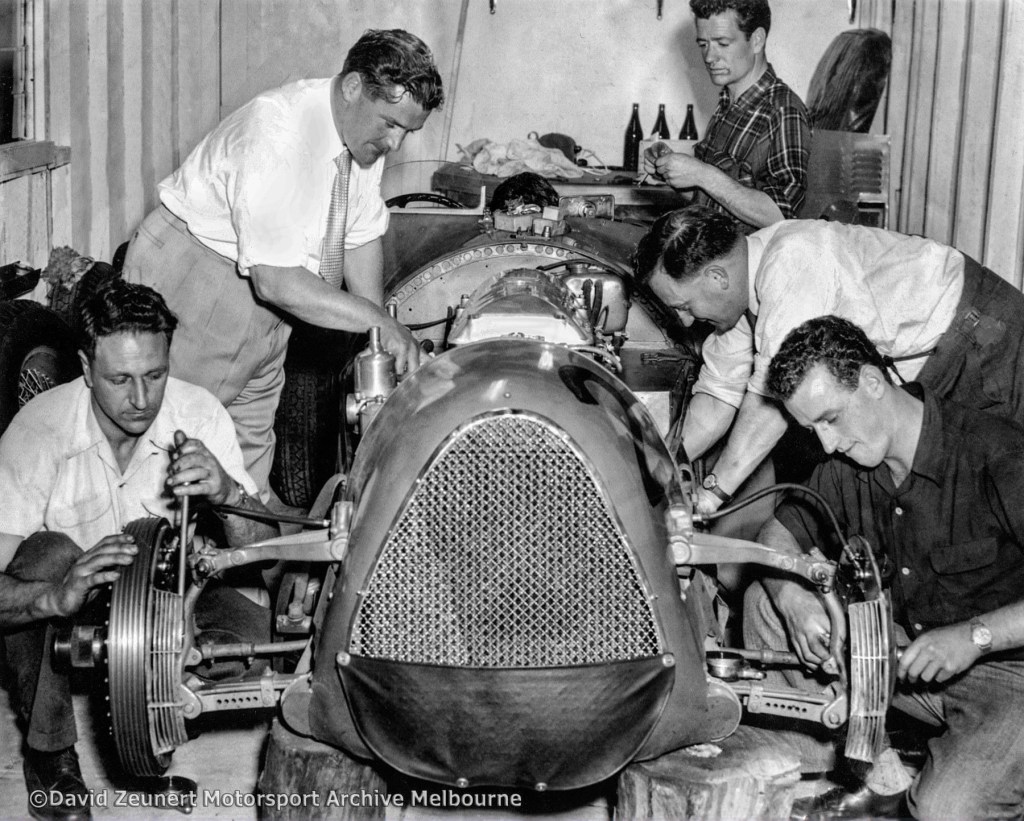
‘Speed Man After 500 Pounds Racing Car Trophy’ said the heading of this The Age promo shot of Maybach in Stan’s backyard garage at Yongala Road, Balwyn, Melbourne in the days prior to the 1953 Australian Grand Prix at Albert Park.
The technicians hard at it are Ern Seeliger, racer/engineer/Jones’ friend, Stocky Stan, Alan Jones’ head you can just see behind the wheel, Reg Robbins, longtime Jones’ employee, Charlie Dean and Lloyd Holyoak, Jones’ used car manager.
Dean lived in Kew, the adjoining suburb to Stan so it was an easy shot to set up when both men headed for home. Note the three bottles of Fosters Lager – we call these Long Necks or Depth Charges – to ease the pain of car preparation on the bench behind the car.
In essence Maybach 1 was built by Dean in 1946, continually modified and raced by him, including the 1948 AGP, then sold to Jones in 1951. Part of the deal was that Maybach was further developed and prepared by Repco Research, which Dean ran. In so doing a generation of the best mechanics and technicians from the rapidly growing Repco conglomerate were imbued with the racing ethos, another key plank in the long road to Brabham’s first championship win aboard a Repco Brabham Engines V8 powered BT19 chassis at Reims on July 3, 1966…
(B King Collection)
Jones sneaks a look at his pursuers a few days later during the race. Maybach DNF with various maladies, fastest lap was some consolation. Another local lad, Doug Whiteford prevailed in a Talbot Lago T26C, his third AGP win.
The Ecurie Australie (name under the number) was – and still is – the name under which the Davison family sometimes race. Lex Davison and Stan were competitors on-track, but owned a Holden dealership for a while and competed in the Monte Carlo Rally aboard a Holden 48-215, also crewed by Tony Gaze, in 1953.
The name on the side of the car should have been Repco, or Repco Research, but such vulgar commercialisation wasn’t kosher then. It would come of course…
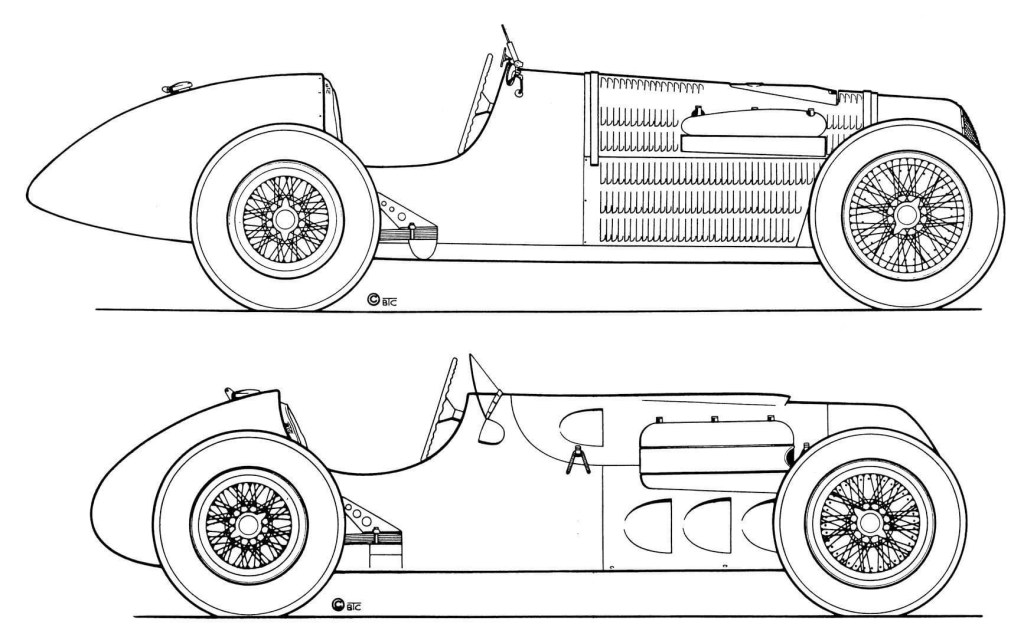
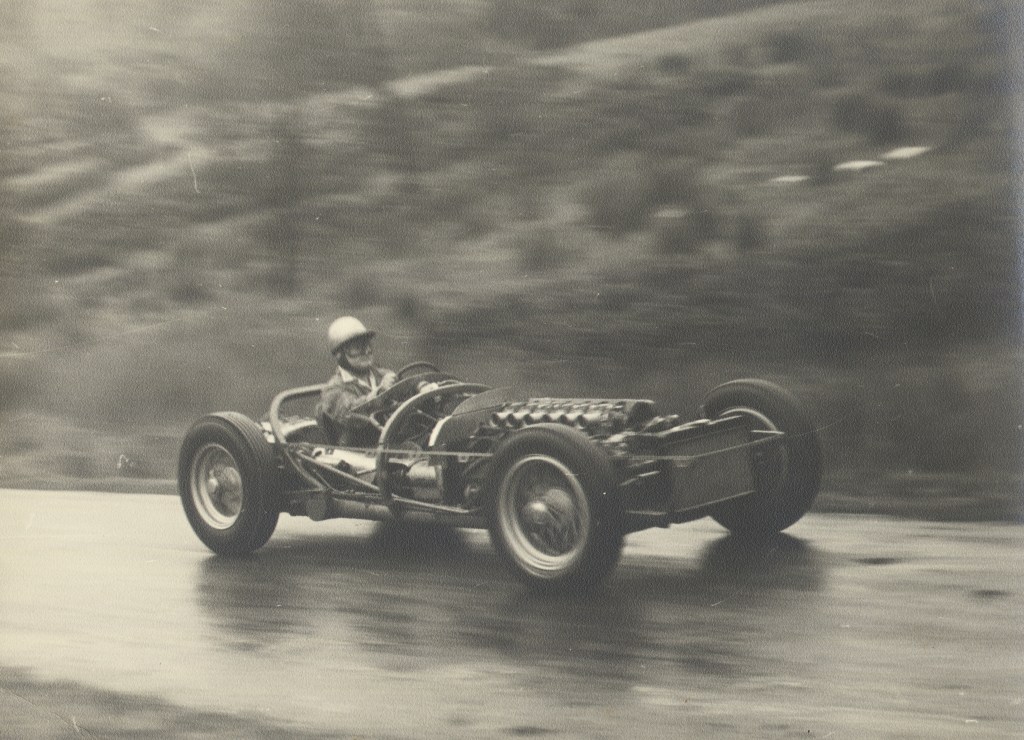
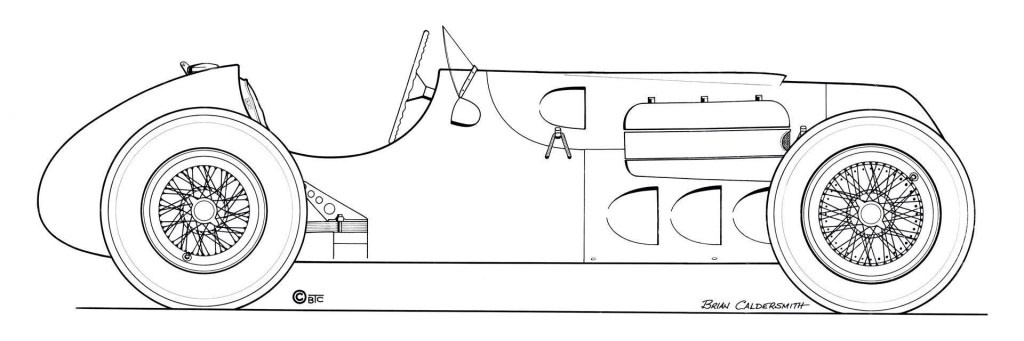
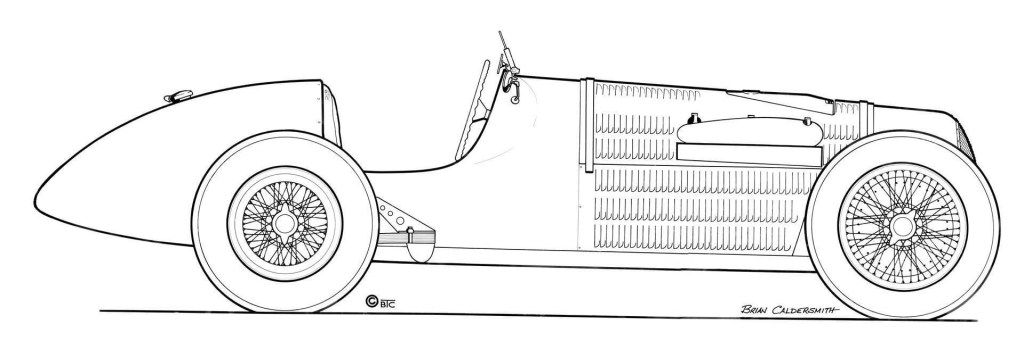
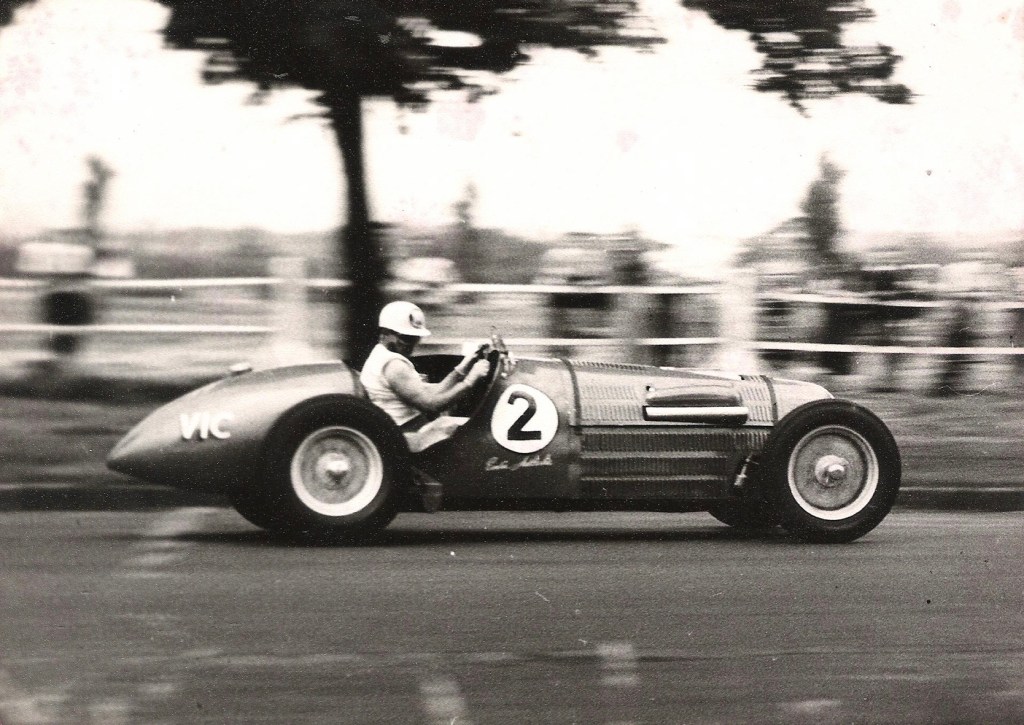
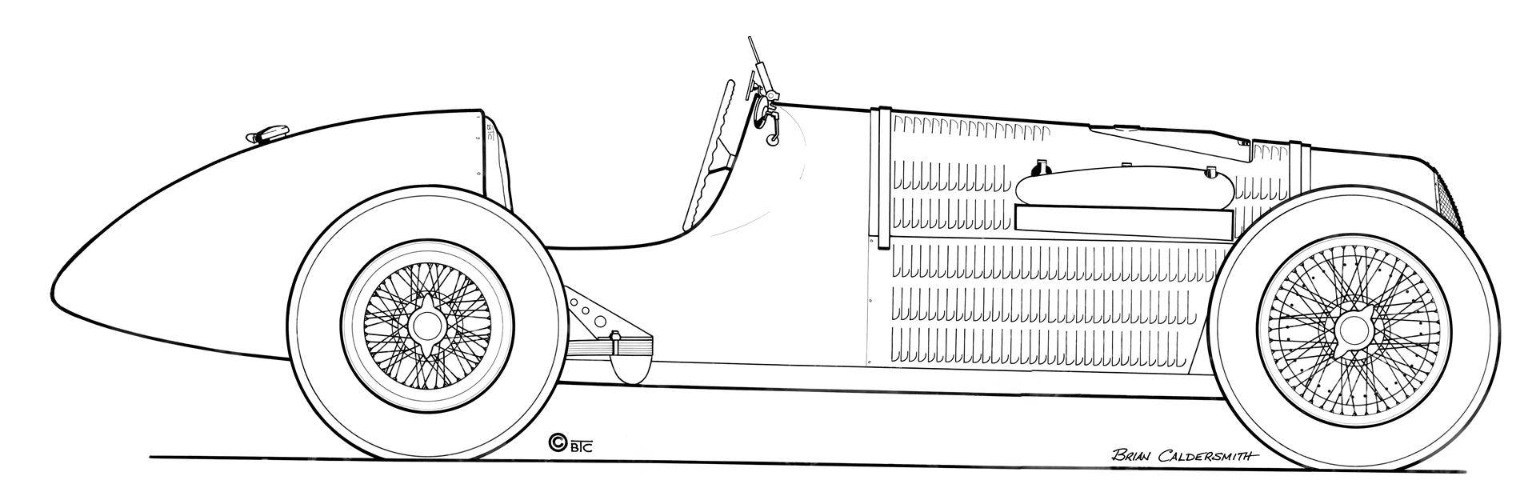
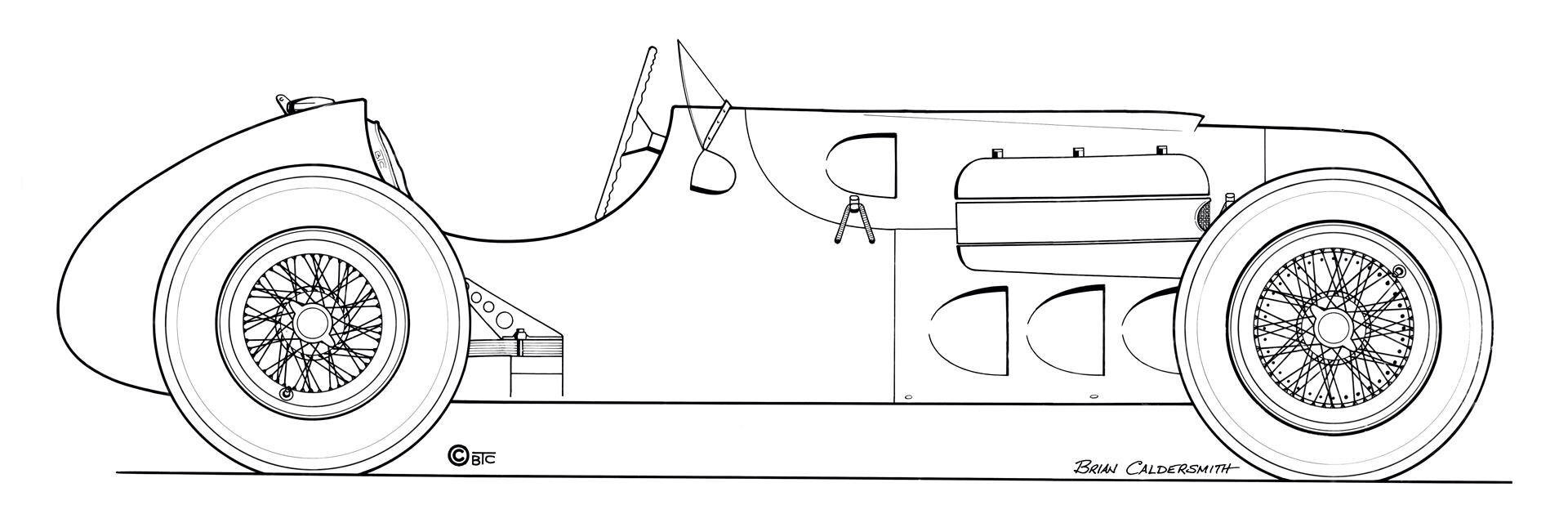
I love these two drawings of two of the fifties Charlie Dean/Repco Research designed and built Maybachs- 1 and 2 by Brian Caldersmith…
I’ve written about both cars before in two articles, one mainly about Stan Jones who raced both machines, the other focussed on the 1954 Australian Grand Prix at Southport Queensland where Maybach 2 (below) met a violent death under Stanley when its chassis broke, or more specifically several rather critical welds failed.
I’m not going to pop up any photos which will draw the eye away from Brian’s artistry.


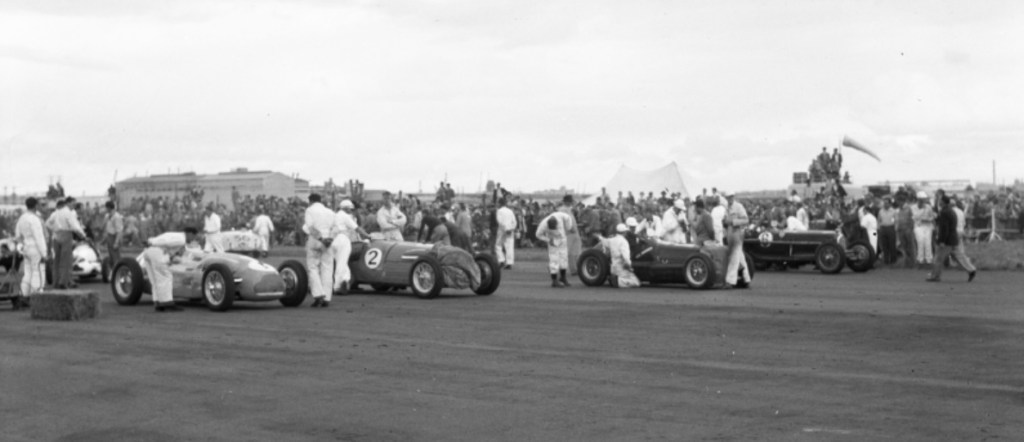
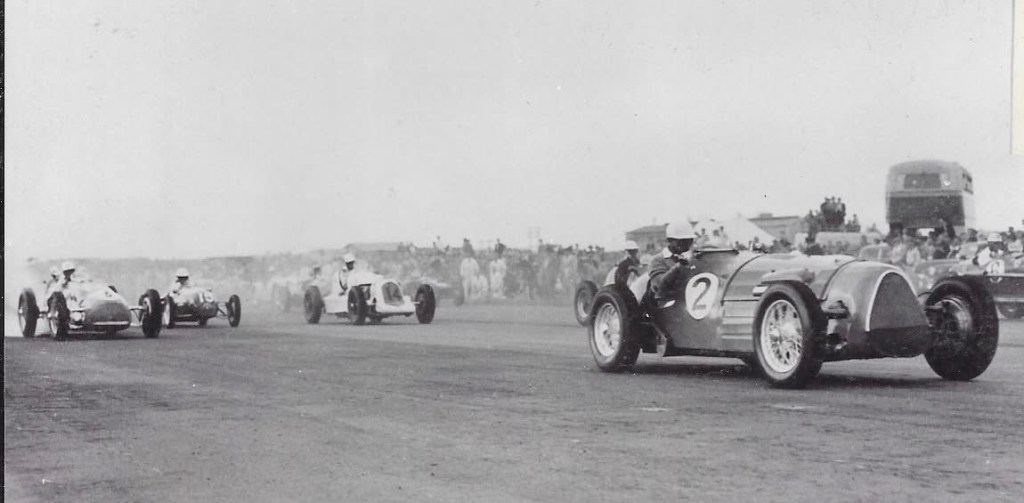


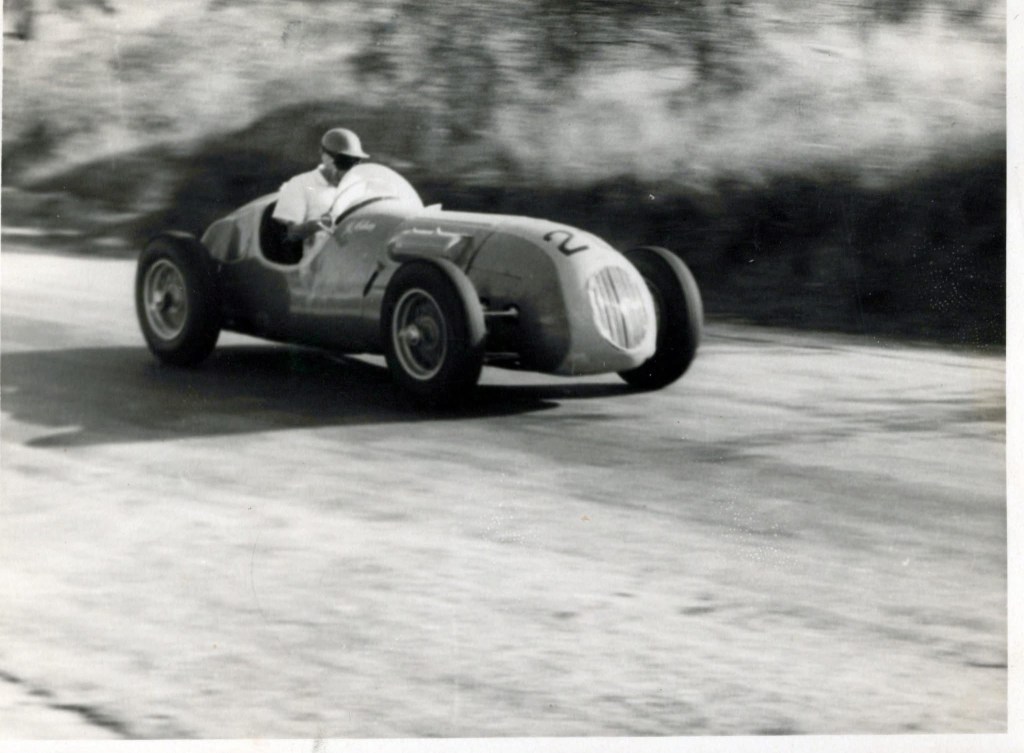


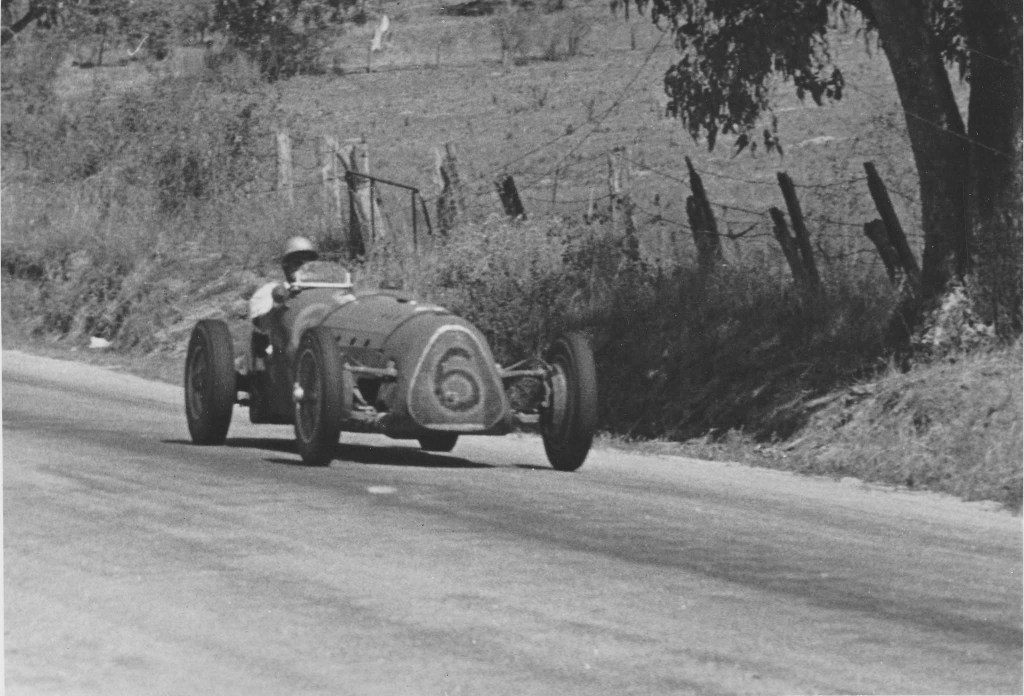

















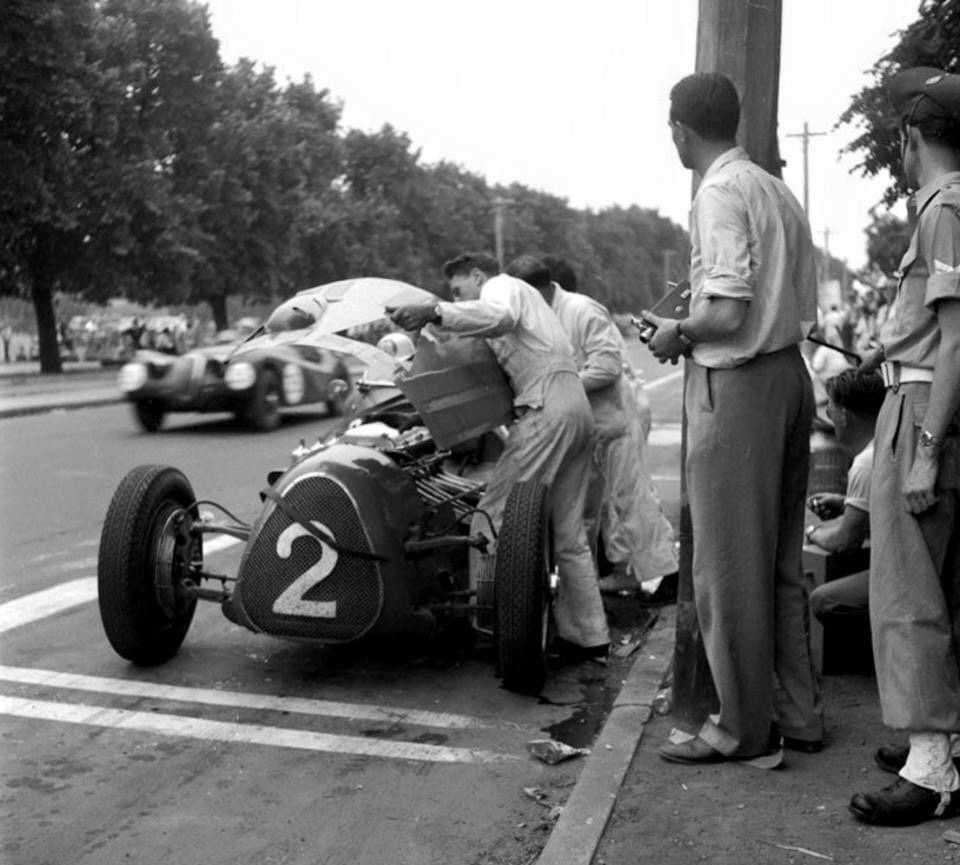

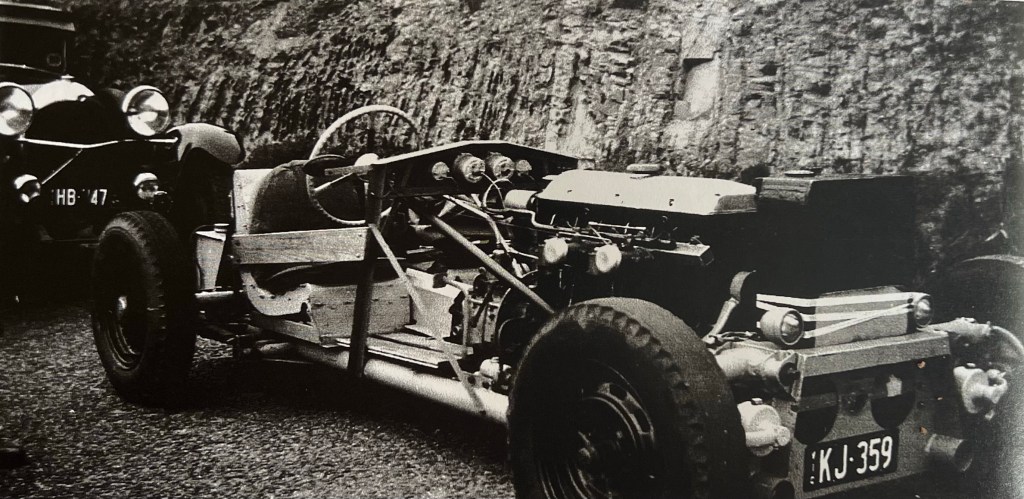
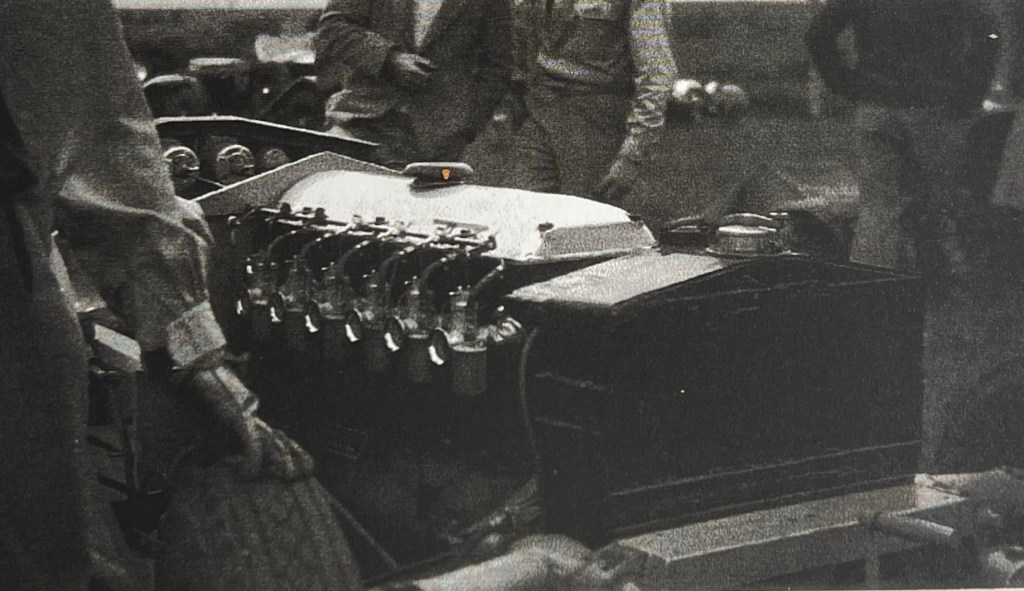
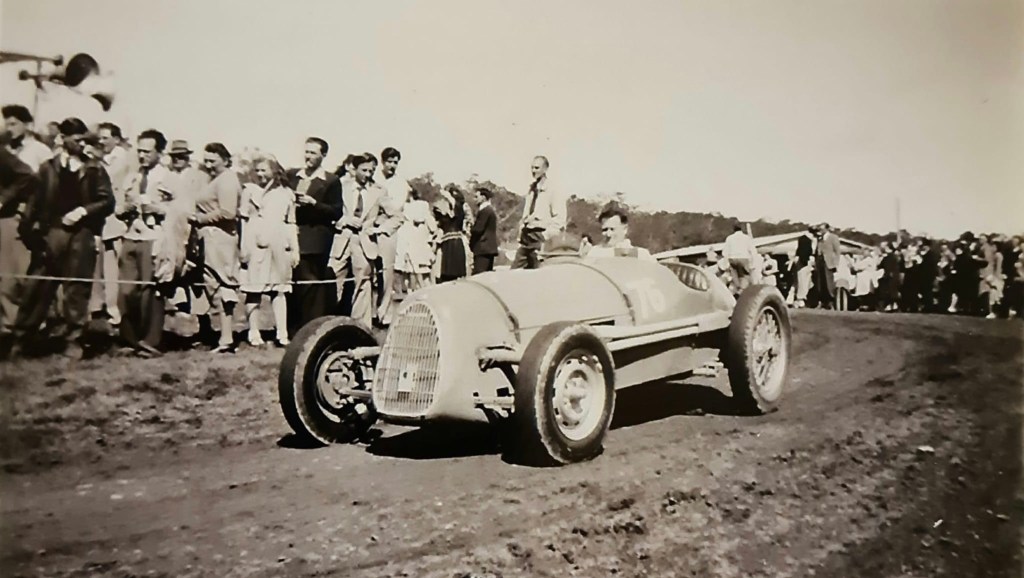

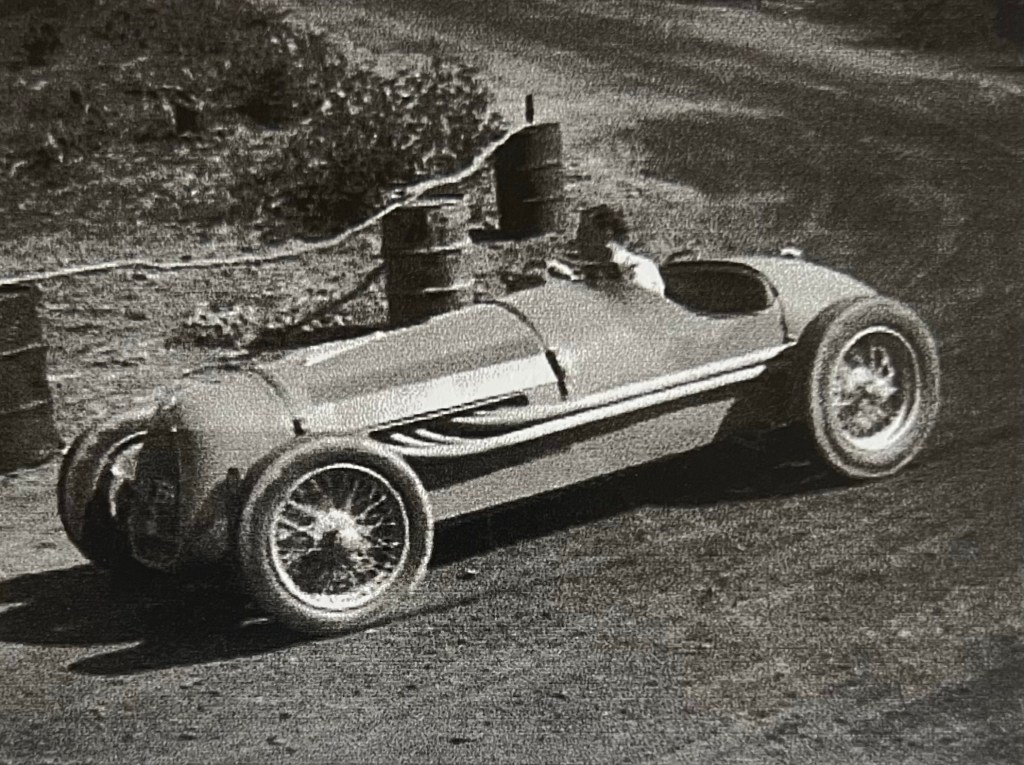
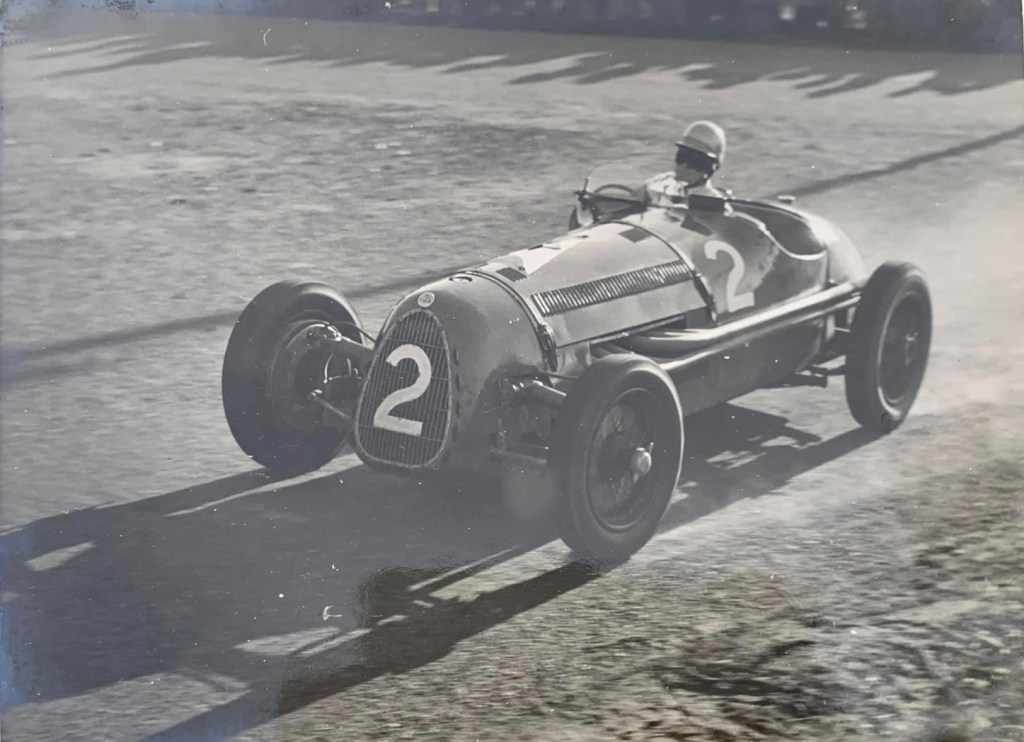









 primotipo...