

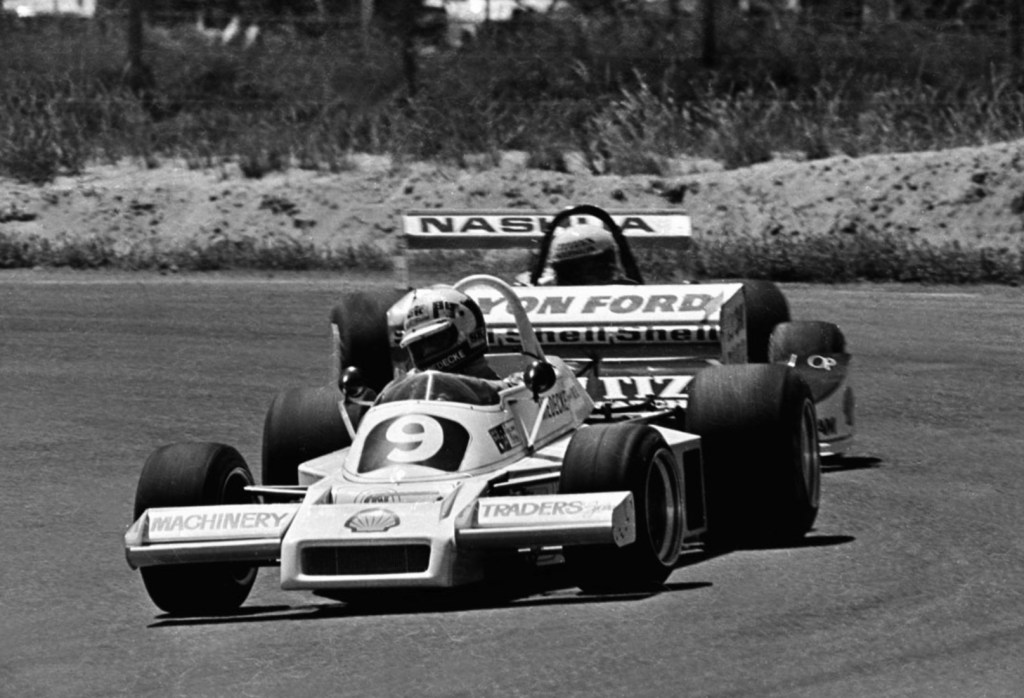
Andrew Miedecke, Galloway HG1 Ford BDA at Bay Park in front of David McMillan’s Ralt RT1 Ford BDA during the December 31, 1978, round of the 1979 New Zealand Formula Pacific Championship.
This article is one of my Dog’s Breakfasts. It started as two pics of the HG1 in one of my Australian Racing Random pieces and then grew like little topsy as I found and/or remembered more. So I just kept adding to it, but I can’t be farnarckled rewriting it into something more cohesive. Never mind, there is a lotta information about a remarkably talented Australian mechanic/engineer/designer/constructor in it if you persevere. If you can tell me more about Harry’s later years, email me at mark@bisset.com.au.
By the time Harry Galloway jumped on a 747 to chance his hand in Europe, he was already a very handy mechanic/fabricator-welder/designer with stints at Nota Engineering and Mawer Engineering on top of his self-built Hargal Clubman exploits.
Success at Ralt and Surtees F1 followed. Andrew Miedecke raced a March 763 Toyota in some 1977 British F3 events. Harry and Andrew kicked around ideas for a Formula Atlantic car that Galloway would build on his return to Australia to contest the 1978 New Zealand Formula Pacific Series.
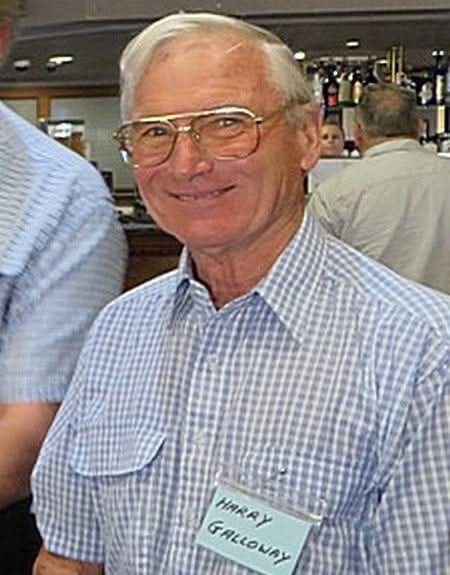
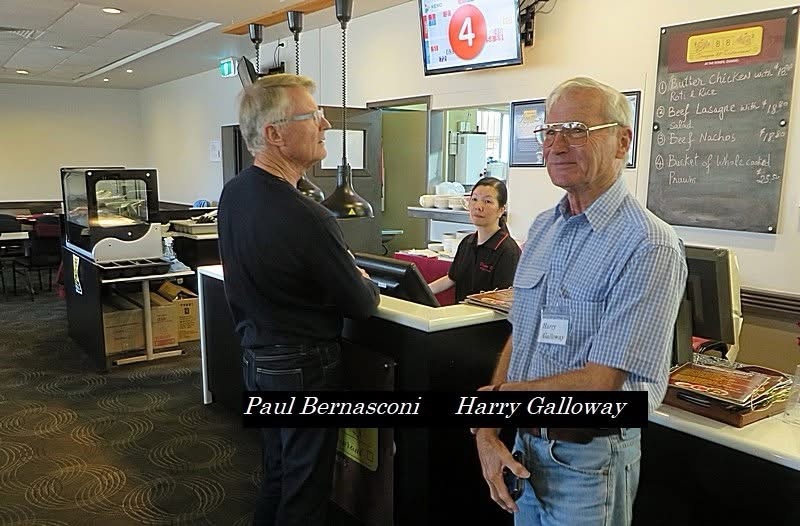
Somewhat inevitably, the advanced monocoque, pullrod/rocker front, and outboard rear suspension Galloway HG1 ran late, so Andy popped a Ford BDA into the back of his March and ran that instead.
Salvation was at hand when David McKay put together a deal that involved John Smith providing a Steve Wiessner-prepared Ford Kent pushrod engine and Hewland Mk9 gearbox for Smithy, with McKay putting together a sponsorship deal with Mr Juicy and away they went.
Smith, having just won the 1977 Australian Formula Ford Driver to Europe Series in a Bowin P4A, was very much a man on a fast ascent at the time. He was the quickest, winningest bloke around in the first year of Australia’s 1.6-litre pushrod/SOHC F2 in 1978.
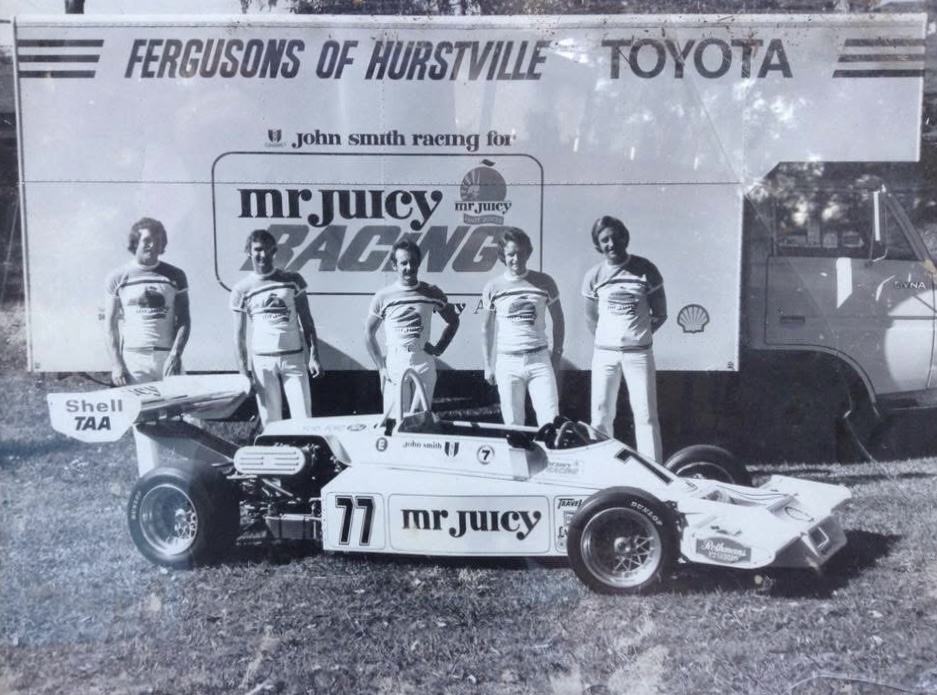
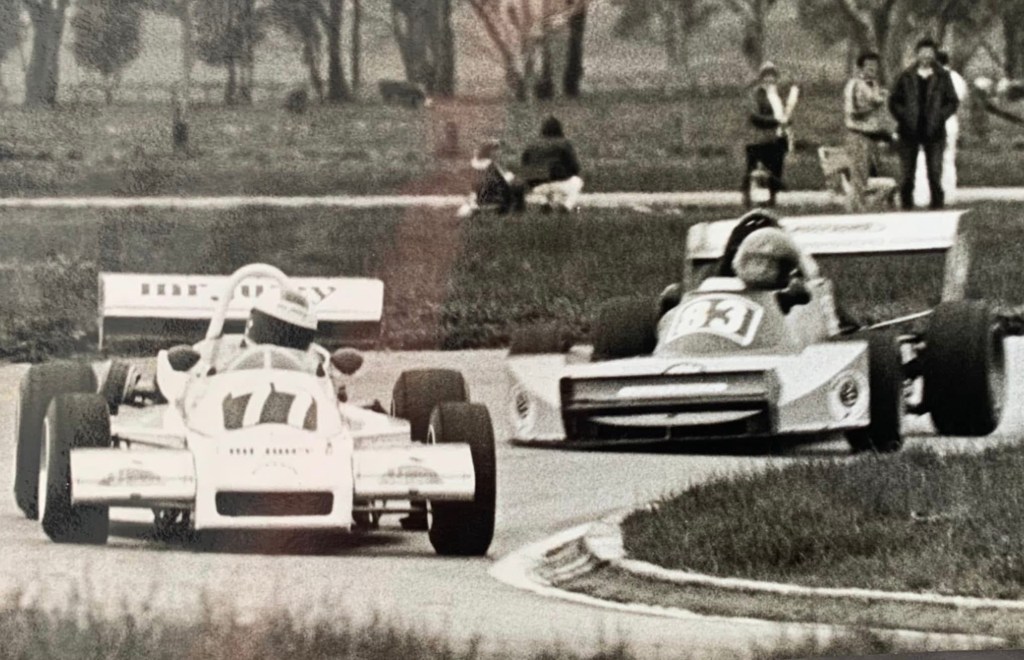
Smith was blindingly fast, only Peter Larner in his similarly powered Elfin 700 served it up to the Sydneysider. I watched two blinders of meetings at Amaroo Park and Winton that year when the pair raced on a fair but take-no-prisoners basis. Magic stuff it was.
Had there been an Australian F2 title that year, Smith would have won it, but for some reason, there wasn’t. Perhaps CAMS thought that entry numbers would be poor in the first year of the new class.
Larner was victorious in the single race (Sandown) 1977 Australian F2 Championship – the last year of the twin-cam, two-valve era – then cranked out the Lotus-Ford twin cam engine from the rear A-frame of his F3 Elfin 700 and replaced it with a highly modified cast iron Ford Kent 711M five bearing, pushrod engine (Capri XL engine as used in FF and the block of the Ford BDA).
With all the good bits: steel crank and timing gears, roller valve gear, and Cosworth or other supplier of choice, pistons, rods and cam, all carefully built by Steve Wiessner or Paul England/Jack Godbehear, Smith and Larner were racing with circa 170-175bhp @8000rpm. I don’t think Peter was building his own engines at that stage, but that might not be correct?
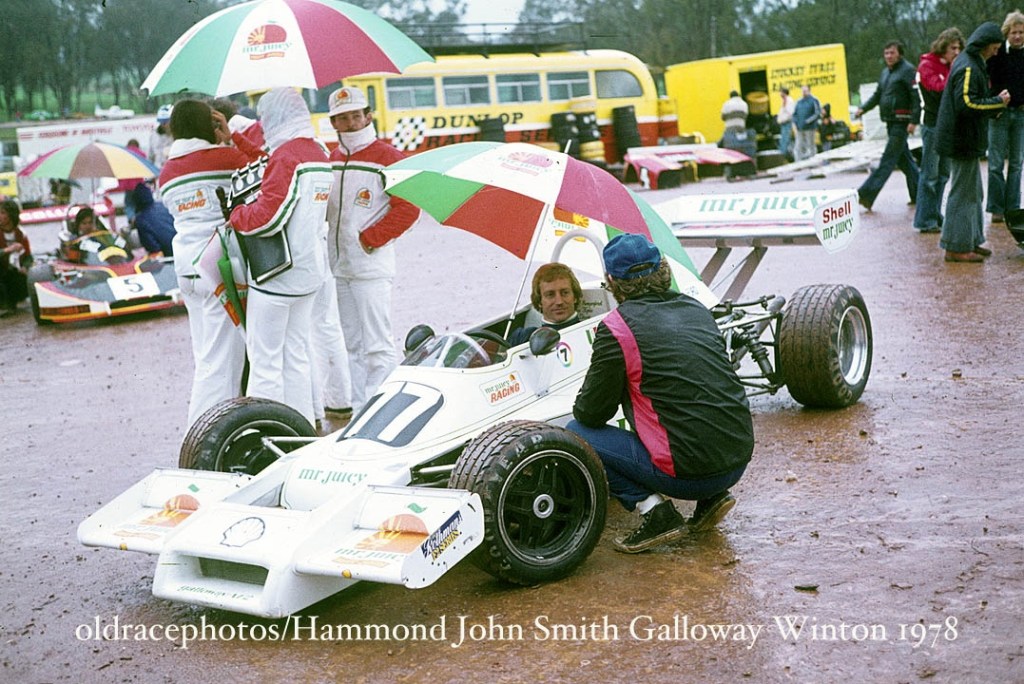
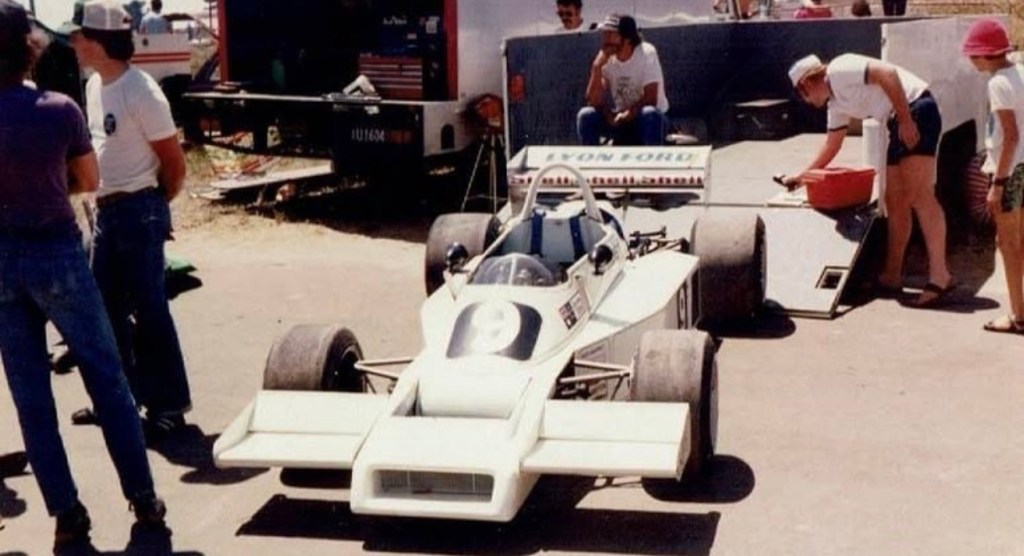
At the end of a successful season, Smith removed his Ford pushrod engine and gearbox from the Galloway and sold them to Graham Engel to fit to his Cheetah Mk6, while Andrew Miedecke fitted his BDA and FT200 to the HG1 for use in the 1979 NZ Formula Pacific Series, which is when it all turned to custard.
In the first round at Bay Park on December 31, 1978, Miedecke was seventh and tenth in the two heats won by Teo Fabi’s works March 782 Ford BDA, before heading to Pukekohe for the New Zealand Grand Prix meeting on January 6.
There, Miedecke had the mother and father of accidents after a tyre slipped over the bead of a slightly undersized wheel that had come as part of a sponsorship deal. He hit the Pukekohe real estate at over 200kmh, breaking both of his legs and destroying the car in the process.
The HG1 was returned to Sydney in Harry’s care with thoughts of an update-type-rebuild, but the ground-effect-revolution put paid to those initial thoughts…
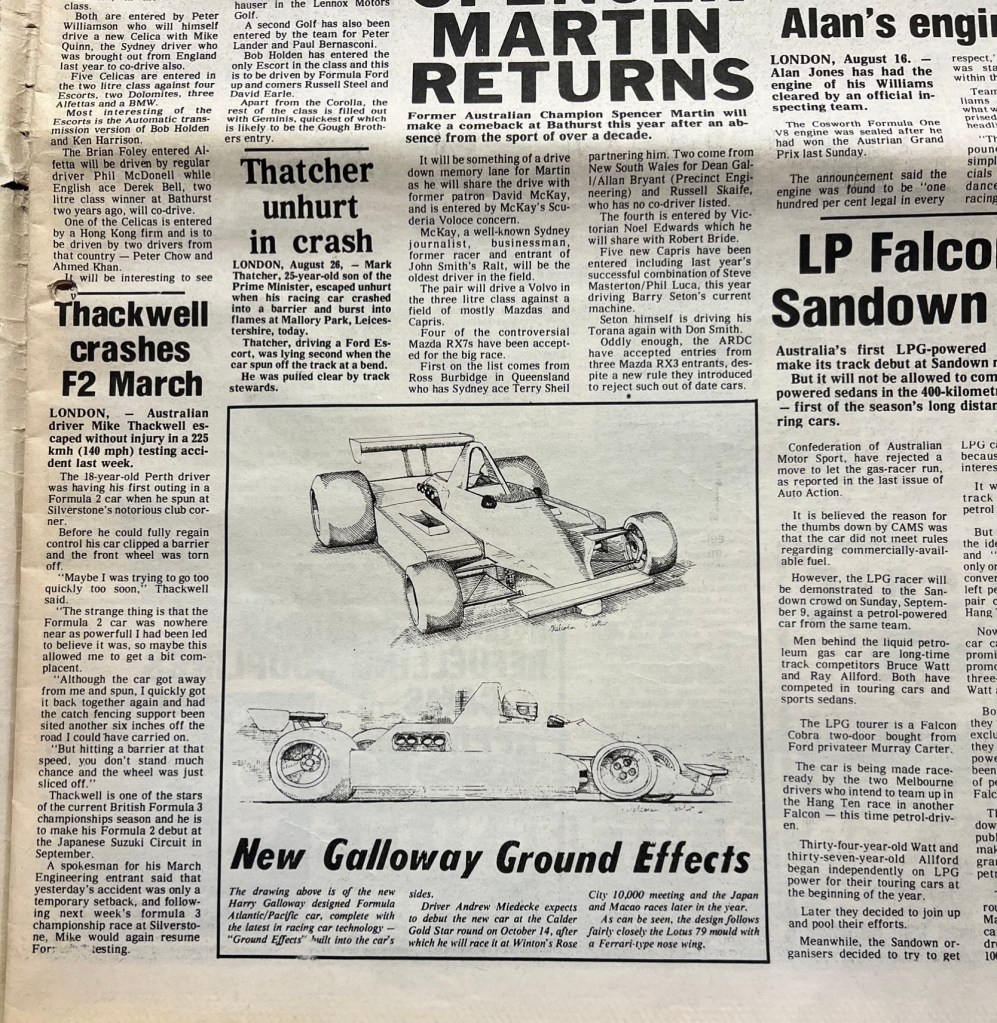
Then Harry thought, why not have a crack at using the hardware of the first HG1 that was still fit and healthy into a new HG1-GE (my descriptor, the car is usually described as a Galloway HG1). In the late August 1979 issue of Auto Action, a rendering of the new car by one Malcolm Oastler, a Sydney University engineering student at the time, was published.
When the completed car appeared in Andrew Miedecke’s hands at the May 4, 1980 Gold Star round at Oran Park, it stole the show with its dazzling Lotus 79-esque looks and features: skinny aluminium monocoque chassis allowing plenty of space for ground effect tunnels, rocker-suspension front and rear.
A rear upright broke, but the car was blindingly fast out of the blocks; Mad Andy was on pole in the state-of-the-art 1.6-litre car in front of four F5000s driven by Messrs Costanzo, Bowe, Wright, and Middleton. Lola T430, Elfin MR8C, Lola T400 and Elfin MR8C, all Chev powered.
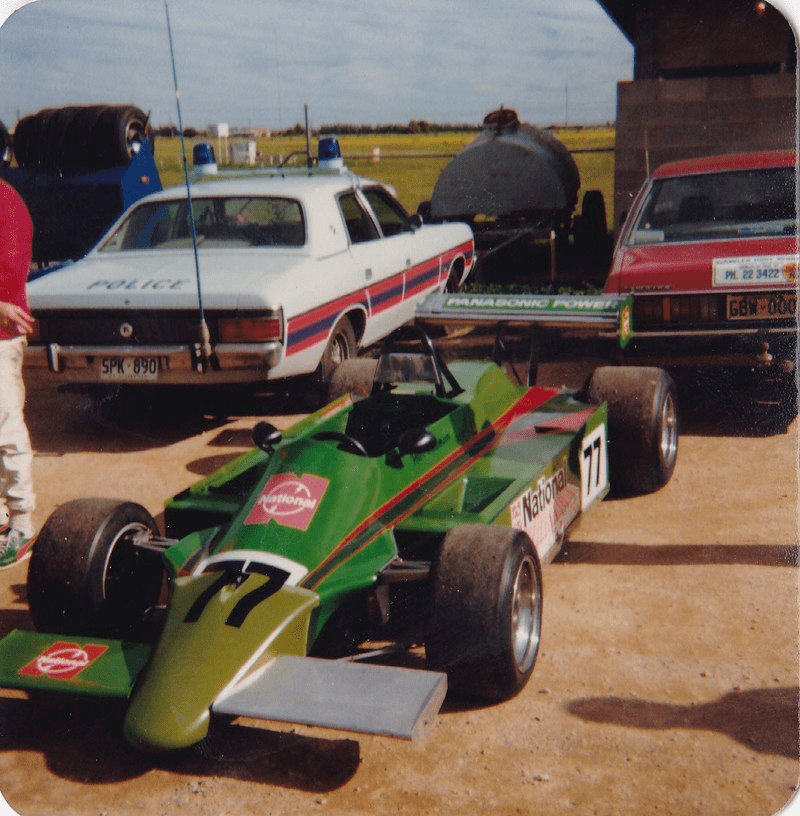
Peter Williamson took over the wheel at Lakeside on July 20, finishing second to Jon Davison’s Lola T332 Chev. It was an impressive performance, given Willos’ previous open-wheeler stint was about 15 years before!
Williamson missed Sandown, but qualified seventh of 12 starters in the Rose City Trophy at Winton, a circuit at which the machine should have shone, but didn’t start with engine dramas. Smithy was the class of the Formula Pacific field in his Ralt RT1 at this juncture.
The best of the FPacs in the 1980 F5000/F1 AGP won by Alan Jones’ works-Williams FW07B Cosworth DFV was the Smith RT1 in Q11. Willo was Q17, down the back, and was out with overheating on 27 of the 95 laps. Smithy only did one lap.
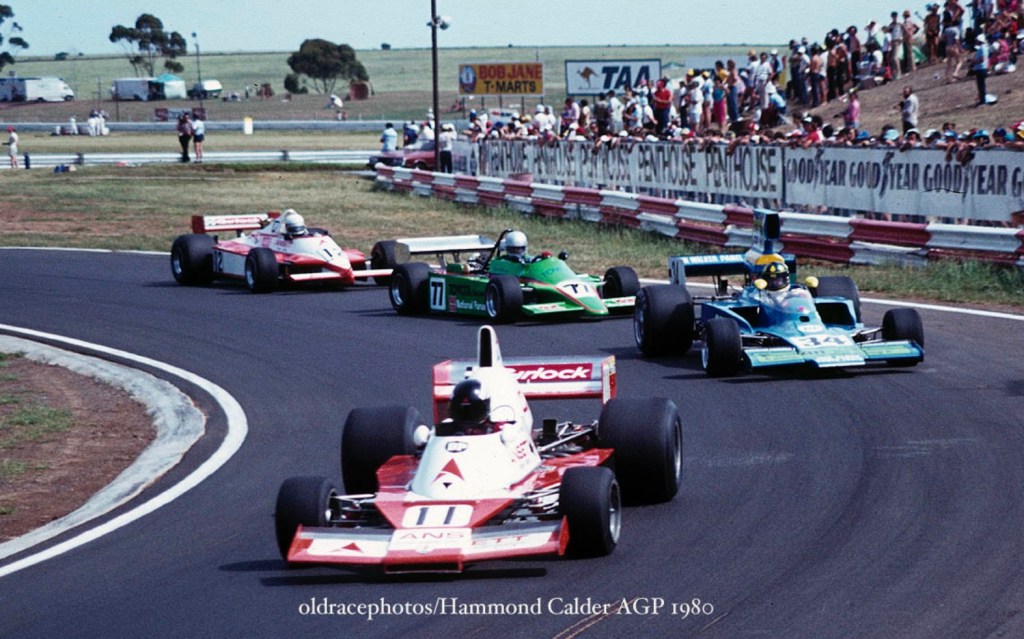
As CAMS fumbled and bumbled between F5000 and FPac as our next Australian National F1, the 1981 Gold Star was held one last time for F5000, while the four-round renegade National Panasonic Formula Pacific Championship was held throughout July and August and was won by Bruce Allison in a new Ralt RT4 Ford BDA. Williamson was DNS universal joint and fifth at Lakeside, ninth and DNS engine at Adelaide International, ninth and DNS fire extinguisher at Calder and ninth and retired in the final August 23, Oran Park round.
The way forward was shown on November 8, at the Australian Grand Prix, with a grid ‘full’ of Ralt RT4s. Mike Quinn took over the Galloway, then didn’t start due to gearbox input shaft failure, while Williamson’s race was only slightly less grim after an accident on lap 41 aboard his new Toleman TA860 Toyota 2TG.
Ron Tauranac’s Ralt RT4s subsequently did to Formula Pacific what Eric Broadley’s Lola T330/T332 did to F5000 a decade before…
Quinn raced the Galloway GE in the opening round of the 1982 Gold Star at Oran Park for Q12, eighth in the first heat after a one-minute penalty, and a DNF in the second heat…and that seemed to be it for the car. Glenn Moulds has found reports of Joe Macare driving the HG1-GE in an Amaroo Park meeting and saw it at a meeting in Queensland when he was racing his Vee in the following year or so. Where is it now, folks?
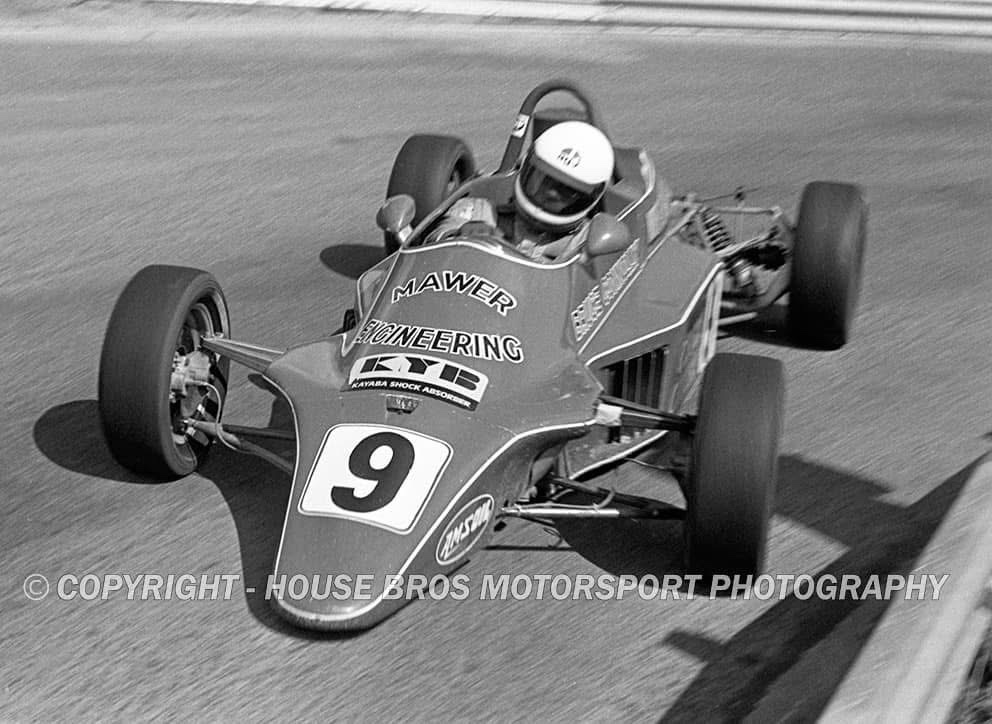
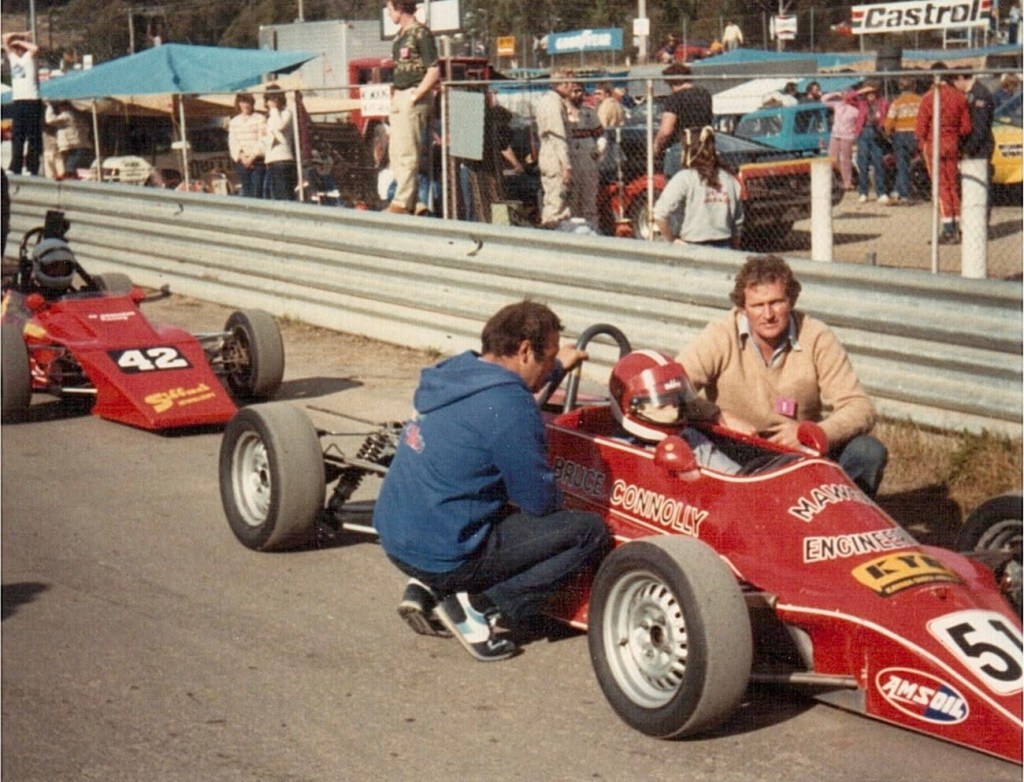
By 1982, Harry’s attention was focused on the challenges of building a competitive Formula Ford. Sydney’s Bruce Connolly was looking for a competitive mount to go head to head with the growing tide of Reynards, Lolas, Van Diemens, Elwyns (Bickley) and increasingly geriatric Elfin 620s and Bowin P4/P6Fs
By mid 1982, the car was on the grid and was good enough to finish second at Calder in August, while the following year Connolly won the Driver to Europe Series with four wins in the eight rounds; three in the Galloway, one in a Van Diemen. Malcolm Oastler was second with three victories aboard an old P6F Bowin skilfully engineered and driven by Oastler. Victorian, Phil Marrinon has raced the car successfully in State level and Historic FF for a couple of decades or so.
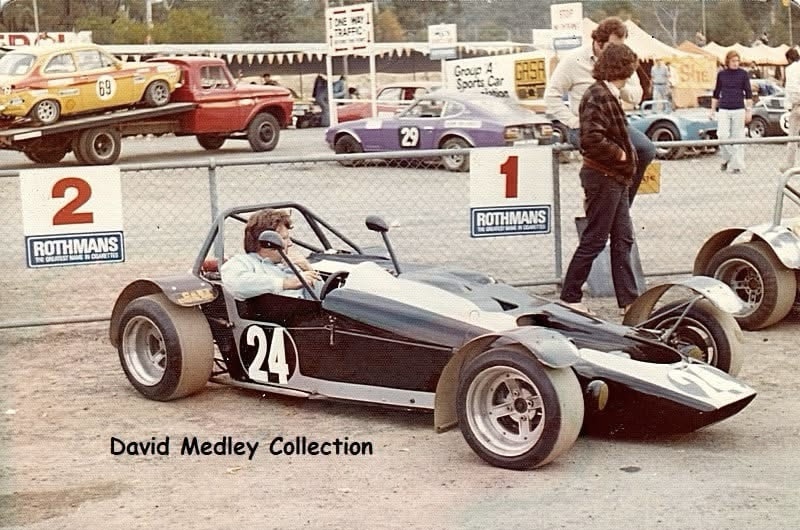
Harry Galloway…
More from racer Paul Hamilton about Harry, via The Nostalgia Forum.
‘I think Harry’s first car was the blue, BMC B-series-engined clubman, which was road registered, and I suspect he may still have. David Medley’s Hargal would have been next built during Harry’s time with Nota at Parramatta in the late 1960s.’
‘One of Harry’s jobs at Nota was a skilfull repair of the chassis of my Turner after I backed it through the Warwick Farm pit counter in 1969. Guy Buckingham underquoted the repair and took the job on without consulting Harry, who has never forgiven me, as he says the chassis should have been trashed and replaced completely!!’
‘Harry left Nota to go to the UK where he worked for Surtees. His job at Nota was taken by Dave Mawer who then left to set up Mawer Engineering, initially in his dad’s back yard at Ashfield, then at Lapish Avenue, Ashfield and eventually in Ford Street, Greenacre where Harry joined him on his return from the UK around 1973.’
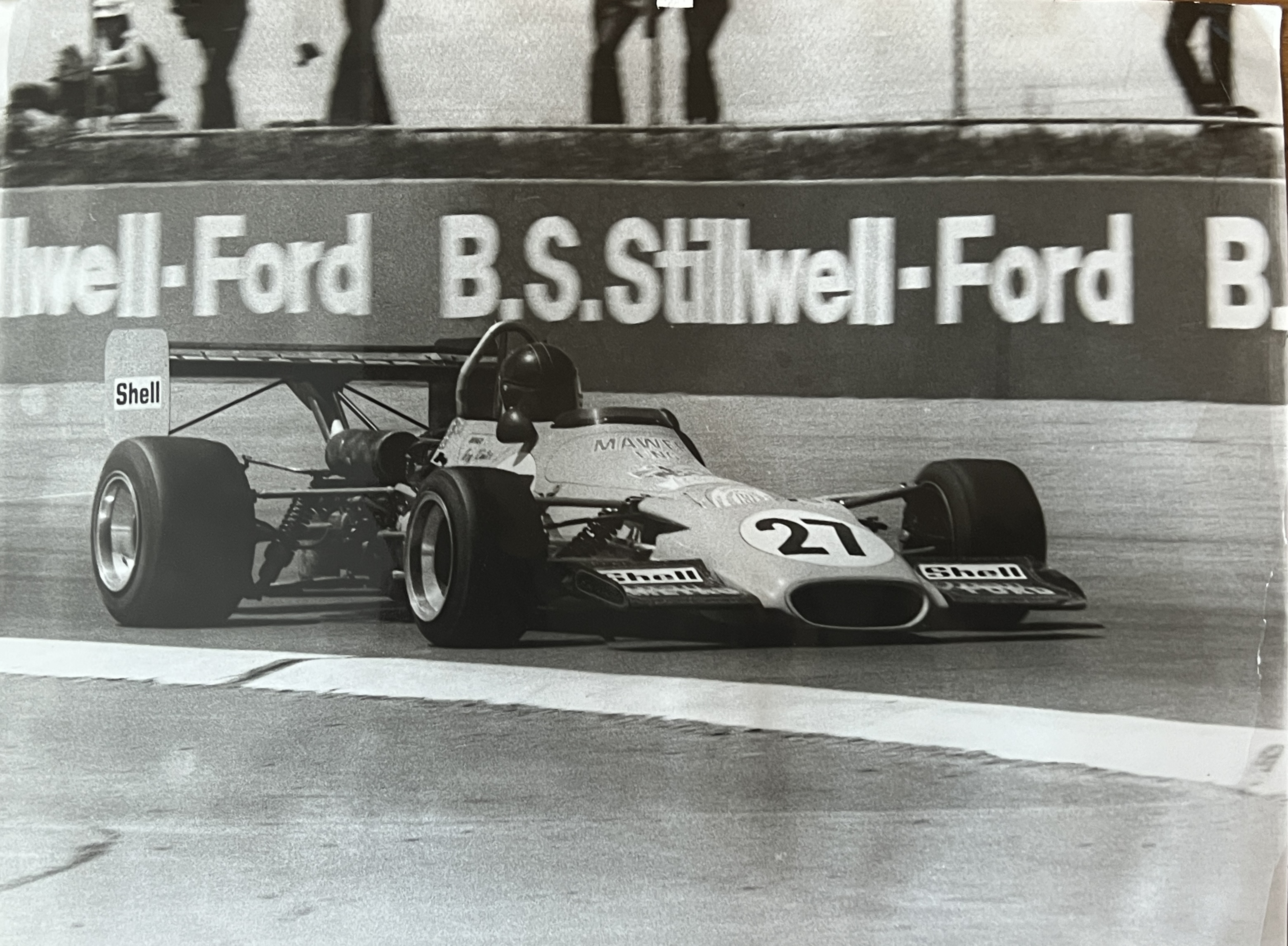
‘While at Ford St with Dave, Harry was responsible for the re-engineering of the ‘Yellow Submarine’ Mildren for Ray Winter’s use in F2, replacing the rear half of the monocoque with a March-style detachable space frame structure.
‘He was also heavily involved in the construction of the Mawer 004 Formula Ford and teamed up with Paul Bernasconi to run the car with great success (Bernasconi was fourth in the 1973 DTE in the Bowin P4A Galloway rebuilt, fourth again in the Mawer 004 in 1974 and won it in 1975). Paul also worked at Mawer Engineering, so it was a real team effort. The Galloway Formula Atlantic car came after the Mawer Engineering period.’
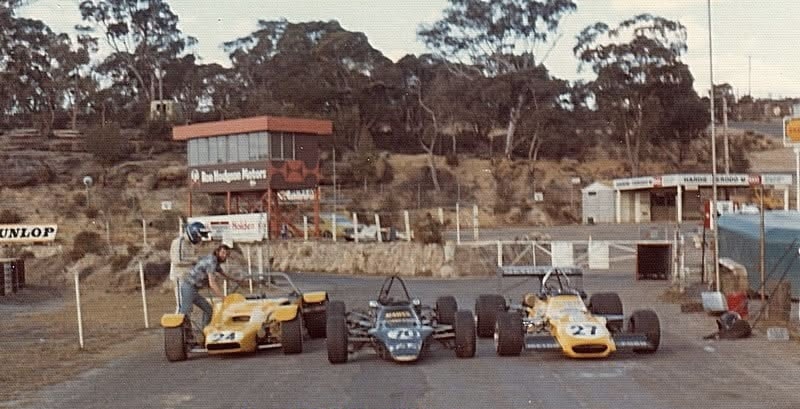
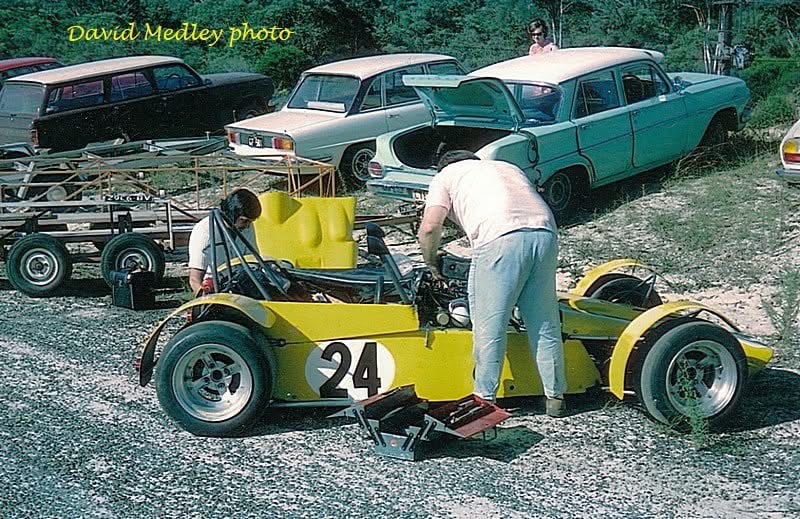
David Medley comments about his photograph above of the Hargal, Mawer 004 FF and Mildren Yellow Submarine at Amaroo Park in, looking at the liveries, 1974.
‘Interestingly, these three cars have a hell of a lot of Harry Galloway design input. The Hargal that Harry designed and built, the Green Car Mawer F/Ford that Dave Mawer and Harry were responsible for designing and building. And finally, the Submarine changed to F2 for the Van Heusen series for that great human being and driver, the ever-smiling Ray Winter. Harry redesigned the rear of the Sub and hung the Twin Cam in a more modern manner. The shot is at Amaroo, a test session where Paul and Ray drove a Clubman for the first time. You can see Paul on the left getting ready to drive the car. A memorable day from many years ago with a remarkable bunch of motor racing achievers.’
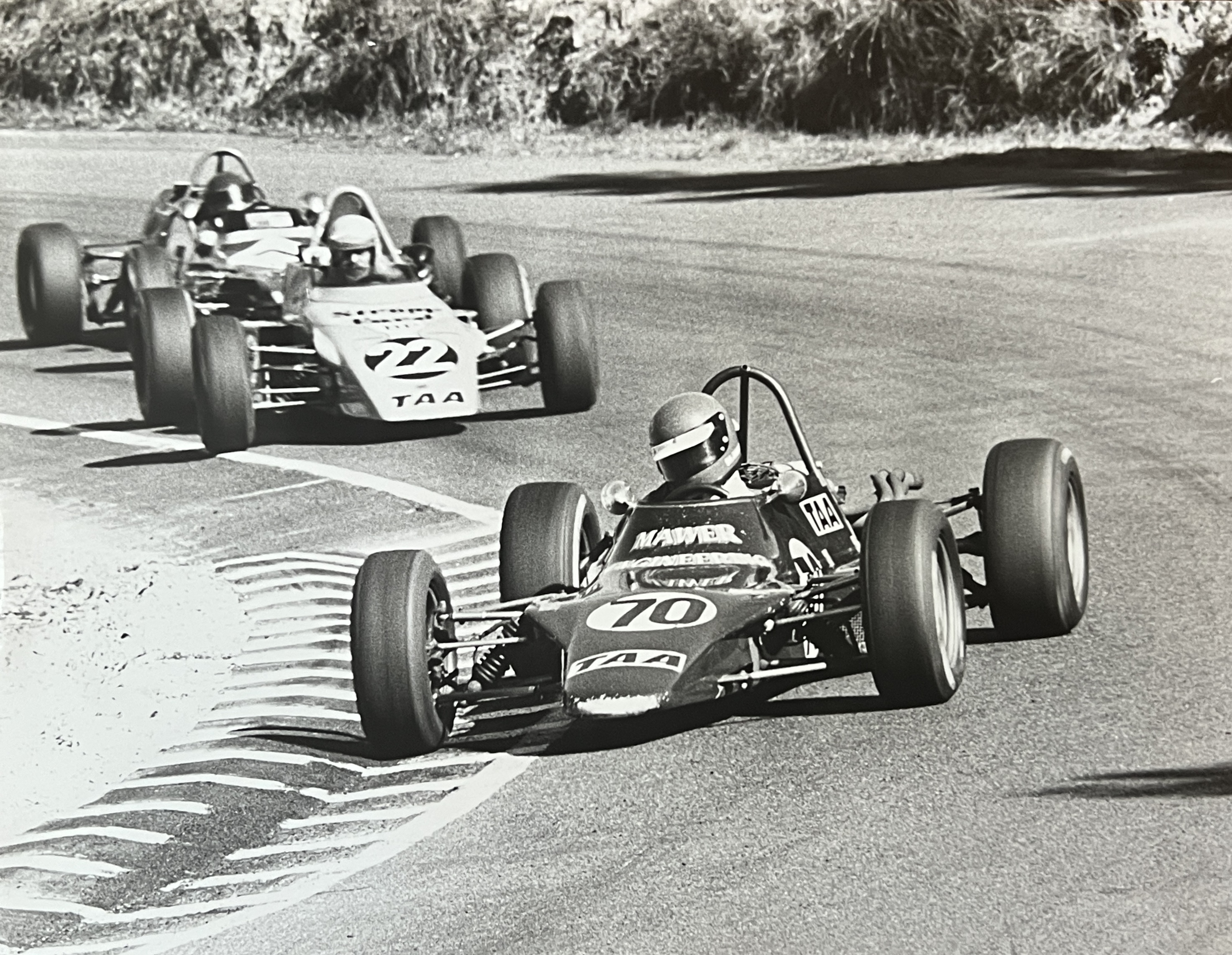
Etcetera…
Geoff Medley, ‘Harry Galloway’s and David Medley’s Hargal Mk1 …The EJ belongs to David Medley…the chassis is still alive hanging on the wall at the house?’
David Medley, ‘Designed and built by the talented Harry Galloway when he lived at Woolgoolga. He used the Hall’s antiquated old lathe to machine everything. well thought out with a few carry overs that were not particularly effective.’
‘G McClintock bought the car in 1980 and, in partnership with Harry Galloway, changed the necessary parts in suspension and elsewhere to make it into the weapon that it was in the 1980’s. A credit to Harry and Graeme.’
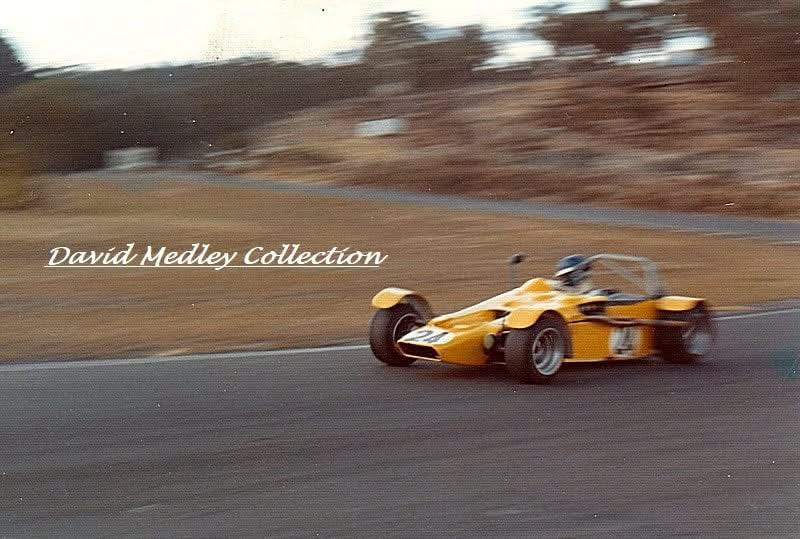
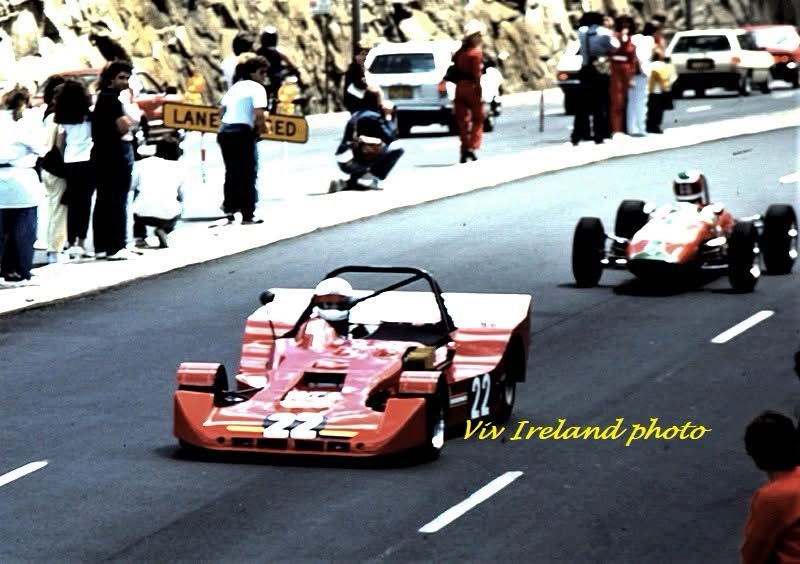
David Medley again, ‘The Galloway was the result of GBMcClintock having a very large accident at Lakeside when a front ball joint broke. A new chassis with a longer wheelbase and different pickup points and a Watts linkage rear end was built, and the Galloway came into being.’
‘It should be noted that Graeme and Harry had been playing around with improvements to the rear end of the Hargal prior to this and had tried four rear trailing arm suspension and then a Watts Linkage and this was all incorporated in the new chassis and had been incorporated in the original Hargal. A remarkable effort and wonderfully successful car by the very talented Harry Galloway and Graeme McClintock.’
On Clubman racing at the time.
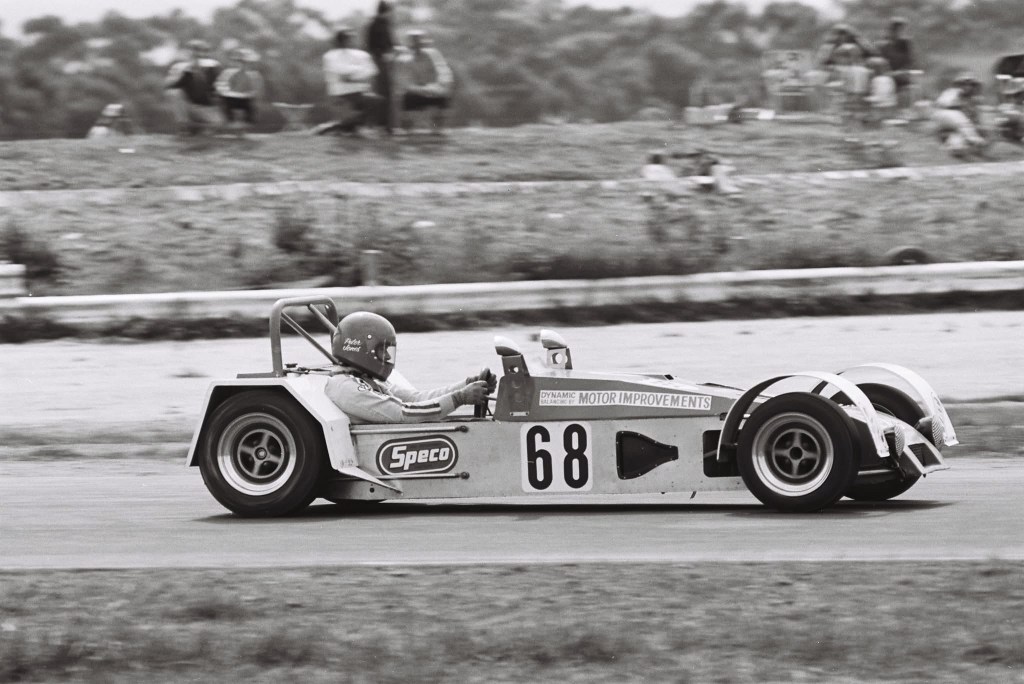
Michael Elliott, ‘Peter Jones, the foreman at Brian Sampson’s Motor Improvements, had the quickest Clubman (Cheetah Clubman) in Victoria for some time, it had the same 1298cc Corolla motor as Brian Sampson and Brian Shead ran in their Aust championship winning Cheetah F3s (note there was no such F3 championship at the time but the point that the works-Cheetahs were dominant is true).’
David Medley in response. ‘Michael, I think that in the Clubman ranks of the time, there is absolutely no doubt that PJ dominated 1300 Clubmans firstly with the Farrell and then with the Cheetah. Several things should be noted: that Peter was part of Motor Improvements, and he had John Delahunty helping him. It was a most professional equipe. It also helped that Peter ran almost every weekend and had the eye in with constant cockpit time. A dominant period, no matter what state you lived in.’
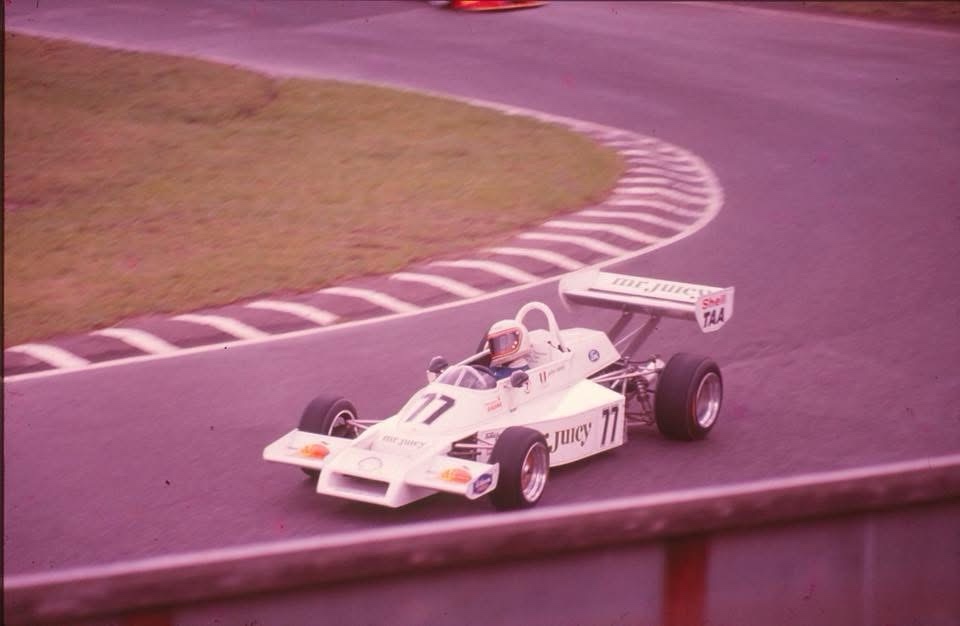
This shot of Smithy racing the Galloway at Amaroo in 1978 reminds me of attending an FF Driver to Europe Meeting later in 1977 all those years ago.
I skivvied out of my Monash Uni Bachelor of Economics commitments to ‘help’ my mate Alan Bisset – he of A&M Raceparts and Reynard FF84 fame – run his Bowin P4X FF in the FF Driver To Europe round, his first interstate race in the ex-Bob Beasley Jack Brabham Ford/John Davis car. Where is it now, I wonder?
Two things I remember from that meeting were Bob Hinrichs’ new Kaditcha Cosworth Chev Vega 2-litre sports car, what a horny-looking and sounding machine, and the belle of the ball, the first Ralt RT1 Ford BDA in the country.
Chassis RT1/77-91 was to be driven in the upcoming New Zealand Formula Pacific Series by Larry Perkins, who built the car at Ralts together with Doug Grant, tested it at Goodwood, then shipped it to its owners, Sydney prestige panel beater/racer, Graham Watson, who had secured the Australian Ralt franchise, and David McKay.
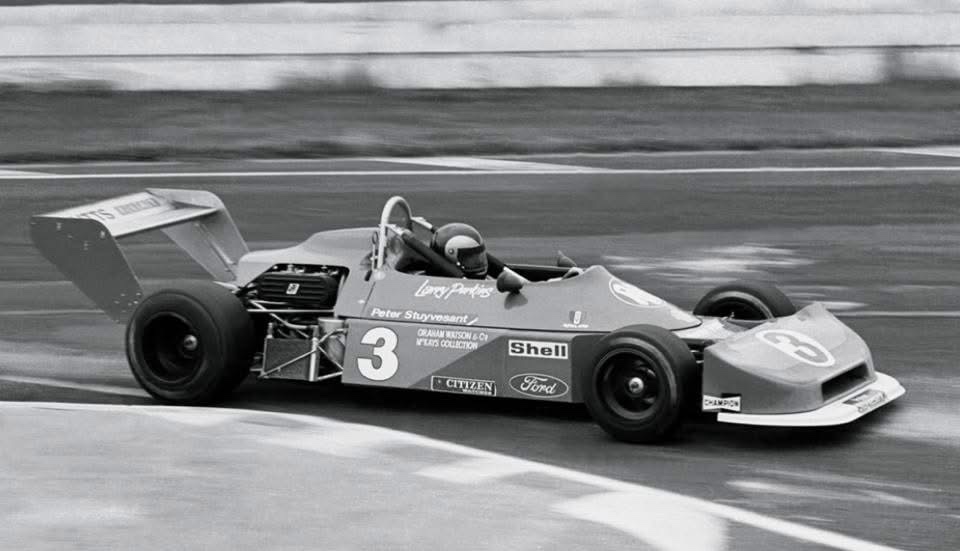
I don’t recall the RT1 running that Amaroo day, it was a static exhibit as David McKay, and others, gradually increased the pressure on CAMS to ditch F5000 and adopt Formula Pacific.
There is a Harry Galloway connection to this tangent. After Larry raced the car to second place in New Zealand behind the victorious Keke Rosberg aboard a Fred Opert Chevron B39 Ford BDA, John Smith bought the Ralt and raced it in both 1600 ANF2 and 1600 BDA, Formula Pacific spec, with Harry, a critically important member of the team who maintained and modified the car.
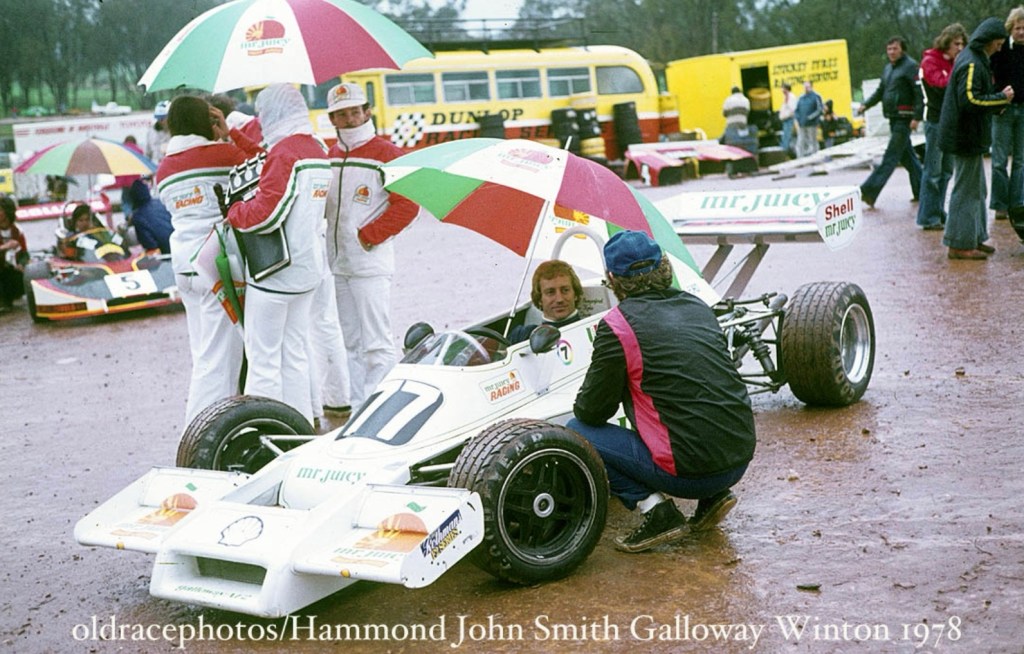
Smith, ‘When we ran in Formula 2, we had a Weissner-built pushrod Ford. It had about 170bhp at 8,000 revs. When we ran in Formula Pacific, we swapped the pushrod for a Ford BDA, which had 215bhp at 9,500. That Ralt RT1 was incredibly versatile.’
Smithy was immediately impressive in the car, finishing sixth in the NZ F Pac Championship in 1979, and seventh the following year, taking two round wins against some of the best up-and-comers in the world.
He was fifth in the ‘79 ANF2 Championship, second to Richard Davison’s Hardman JH1 Ford in 1980, then won it in 1981 with Davo second as the ground effect competition wound up.
While the ‘81 Gold Star was for F5000 cars, the de-facto Oz F Pac Championship was the National Panasonic Series in which Smithy was a close third in his trusty RT1 behind Bruce Allison and Andrew Miedecke’s ground-effect Ralt RT4s.
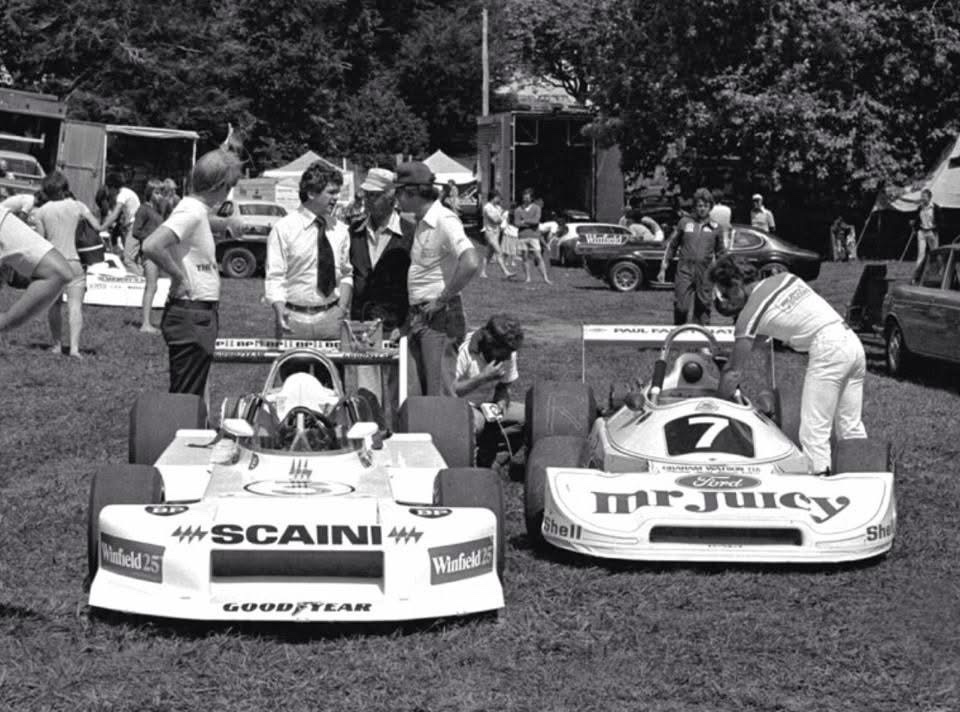
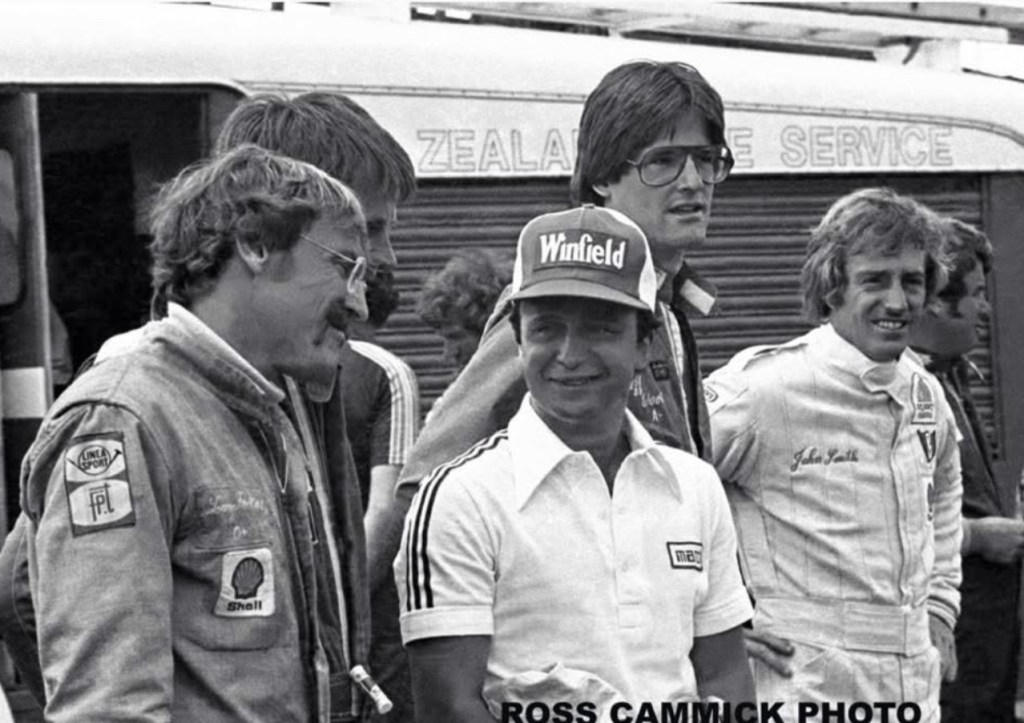
Some years back, I asked Smithy what he thought of the Galloway in comparison with his Ralt RT1.
‘That’s a good question, Harry’s car was brand new and had very little development. The RT1, on the other hand, was a very well-sorted car. It had been raced very successfully in NZ by Larry and Bruce Cary, so it needed just a little tweaking to get it right on the pace.’
‘The RT1 turned in much better and this gave you more time to get on the gas. The build quality of the Harry car was way ahead of the Ralt which after all was a production based car. Overall I enjoyed them both but the Ralt was my best friend.’
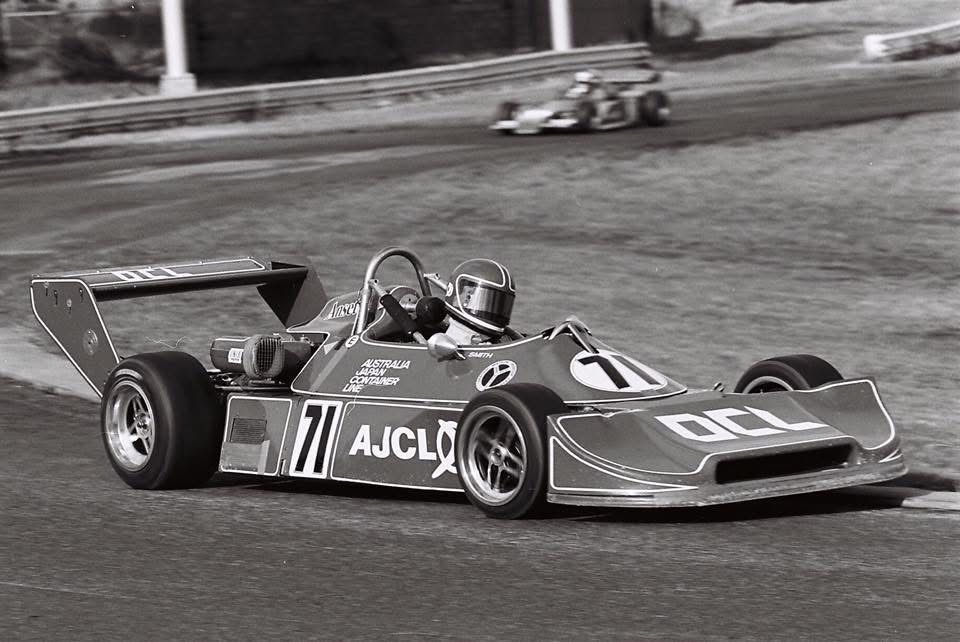
‘We were very busy those days, juggling FP and F2. Following some chassis damage in NZ early 1980, we got Harry to do a new, stronger tub. We were able to move the driver’s seat forward some 33cm and put the fuel tank behind the seat. We could then do away with the deformable crash panels on the outer side of the tub, saving some weight. By moving the driver forward, we cured a lot of the mid-corner understeer that the car had. Harry also changed the engine mount system, giving it a much more rigid engine bay.’
‘As an F2 car, we changed the wheels, rejigged the ratios and reset the suspension. The Steve Wiessner engine had about 170bhp and revved to 8000. The BDA, which had 212bhp, went to 9300. In F2 trim, the car was a bit heavy because of the FT200 gearbox. All of these mods substantially improved the car and made it very competitive. The pushrod Ford was a good engine, but was way behind Graham Watson’s Ralt RT3 Judd VW, which had 190bhp.’
Credits…
Ross Cammick, John Smith Collection, David Medley, Viv Ireland, Ian Smith, Chris Davison Collection, Focal Photography, Motor Action Photography, John Brewer, House Brothers, The Nostalgia Forum
Finito…
 primotipo...