Posts Tagged ‘Reg Parnell’

gonzalez silverstone

(Louis Klemantaski)

Froilan Gonzalez plays with the limits of adhesion of his victorious Ferrari 375 V12 at around 140mph. Copse Corner, Silverstone, 14 July 1951…

The dominant force in Grand Prix racing in the immediate post-war period was Alfa Romeo, the pre-war ‘Alfetta’ voiturettes progressively modified to remain winners; they had not been beaten since 1946.

Ferrari had achieved success at Le Mans, the Mille Miglia and the Targa Florio and now took an alternative Grand Prix design path to Alfa and BRM for the 1951 season in building cars powered by a normally aspirated 4.5 litre V12 rather than the supercharged straight 8/V16 route of his rivals. Instructive had been the reliability and speed of the Talbot-Lagos despite the cars relative lack of sophistication given the French machines road-car origins.

gonz

Gonzalez, Silverstone 1951, Ferrari 375, the burly Argentinian master of this car. Note exhaust system of the V12 and twin radius rods locating rear axles (unattributed)

Ferrari’s Type 375’s were first entered at the Pescara Grand Prix on 15 August 1950, but were not ready. The cars made their championship debut at Monza on 3 September 1950 with entries for Alberto Ascari and Dorino Serafini. Ascari qualified 2nd and was dicing with the lead group of Fangio and Farina both 158 mounted, before retiring on lap 21 with engine overheating.

Click here for an article on the Type 375 i wrote a while back;

VI Gran Premio del Valentino, April 1952: Ferrari 375…

In order to test the cars over a full GP distance,375’s for Ascari and Serafini were entered for the GP do Penya Rhin, at Pedralbes, Barcelona on 29 October. The cars finished 1/2, no Alfa’s were entered but the cars completed a GP distance without problems. With further development over the winter the 375’s were ready for 1951.

british alfa pit

Alfa Romeo pit British GP, Silverstone 1951 (unattributed)

By 1951 the supercharged Alfa’s, designated ‘159’ developed around 410bhp from their supercharged 1.5-litre engines, while Ferrari had been working on a twin-plug version of the 4.5-litre V12. It wasn’t as powerful as the Alfa but it was more efficient, less fuel meant less pit stops.

Alfa ignored most of the early season non-championship races. In their absence Ferrari 375’s won at Siracuse and Pau on 11 and 26 March, Gigi Villoresi the winning driver on both occasions. Ascari won the San Remo GP on 22 April.

The Alfa’s finally appeared for the ‘BRDC International Trophy’ race at Silverstone on May 5, but the works Ferari 375’s did not. Fangio and Farina each won a heat for Alfa with the final held in torrential rain led by Reg Parnell’s Ferrari 125/375 when the race was ended after 16 minutes on lap 6.

alfa 159 engine

Engine and brake detail of the Alfa Romeo 159, Silverstone 1951. 1.5 litre two-stage supercharged straight-8 (unattributed)

The first 1951 Championship GP was at Berne for the Swiss Grand Prix. Ascari was suffering from a burn to the arm received during a Formula 2 race at Genoa the weekend before and Villoresi slid off the road in wet conditions. Progress was indicative of Taruffi’s Ferrari second place splitting the Alfas of Fangio and Farina, first and third.

At Spa, a jammed wheel at a pit stop cost Fangio his second successive win, Farina took Belgian GP win for Alfa Romeo from Ascari and Villoresi in Ferrari 375’s.

The French Grand Prix was a furious battle between Ascari and Fangio, both of whom changed cars with Fangio taking the win for Alfa. Ascari’s 375 had gearbox failure and Froilan Gonzalez, who had led the race briefly and pitted to refuel, was asked to hand his car over. Fangio took over Luigi Fagioli’s Alfa, JM’s car failed on the first lap of the race. This was Gonzalez’ first race for Ferrari. Just before the French Grand Prix, Enzo Ferrari had approached him to replace the unwell Piero Taruffi. The Fagioli/Fangio car won the race from the 375 of Gonzalez/Ascari.

gonzalez french

Gonzalez in his first Ferrari drive, he lead the French GP at Reims before offering his 375 to Alberto Ascari, the pair finished 2nd to the Fangio/Fagioli Alfa 159 (unattributed)

Froilan recalled the French GP in Gonzalez ‘The Pampas Bull’; ‘The dream was to be very brief. I was utterly determined to make my mark at Reims in the Grand Prix de France and after a tough battle I managed to lead the race. But when I stopped at the pits to refuel (Ferrari Team Manager) Ugolini told me to hand over my jewel to Alberto Ascari who had walked back to the Ferrari pits after his own car had broken down’.

‘Recalling it now I suppose it was understandable. Ascari was more experienced in the Grand Prix arena than I, and since he was now available, it was obviously more sensible to let him take over. But at the time I was mystified and wounded. I assumed I had in some way failed one of Ferrari’s mysterious tests. Yet nobody would tell me where I had failed’.

‘I was just as puzzled when Enzo Ferrari sent for me. Puzzled and timid, for Ferrari was a powerful experienced man of the world while I had only recently arrived in Europe I had no idea how to address the ‘sacred monster’ of the motoring world when I was led into his office. I managed to say ‘Good morning’ in Spanish and then stood there speechless, wondering why I was there and what to do next. Don Enzo, realizing my embarrassment, helped me out by smiling and shaking my hand. And to my utter amazement he – the greatest figure in world motor racing – actually congratulated me for what I had done at Reims. I was even more astounded when he suddenly asked me: ‘Would you like to sign a contract to drive for the Ferrari team?’ I can feel even now the almost painful thumping of my heart. This just isn’t true, I told myself.’
british ascari

Ascari cruising the Silverstone pitlane, Ferrari 375 during practice DNF lap 56 with ‘box failure (Getty Images)

Alfa Romeo brought 159’s to Silverstone for Fangio, Farina, Consalvo Sanesi and Felice Bonetto. Ferrari brought three Type 375s for Ascari, Villoresi and Gonzalez with Peter Whitehead in Tony Vandervell’s  ‘Thinwall Special’ Ferrari…

Talbot returned with three T26C 4.5-litre, straight-6 cylinder cars. Maserati relied on ageing 4CLTs for David Murray and John James, while Philip Fotheringham-Parker raced an older 4CL. ERA had Bob Gerard and Brian Shawe-Taylor and Joe Kelly was in his Alta.

british ferrari drivers

Scuderia Ferrari drivers Silverstone 1951; Gigi Villoresi left, Alberto Ascari and Froilan Gonzalez, all remarkably ‘well-nourished’ by driver standards of today! And older of course (Getty Images)

BRM turned up on the morning of the race having missed practice. Reg Parnell and Peter Walker started from the rear of the grid as a consequence.

british walker

Peter Walker’s BRM Type 15, 7th being given a shove during practice (unattributed)

John Bolster of Autosport commented about Gonzalez’ speed and technique; ‘Thursday found me walking round the circuit, trying to work out how on earth these boys get round the corners the way they do. My stopwatch was busy in my hand, and I had a conversion table, so it was with immense excitement that I observed that Froilan Gonzalez had lapped at 99mph. His next tour looked even faster and, yes, the magic 100mph had been topped at last!’

‘The interesting thing is that he brakes later than anybody else, actually enters the corner faster, and gets through in an immensely long drift. He has none of the ease in the cockpit that Farina exhibits, and certainly does not follow the same path every time. Unlike all the other drivers, he changes down without gunning his motor, and yet there is no clash of gears and the box stands up to the treatment. John Wyer and I listened to this for lap after lap at Woodcote, and were fair amazed. A phenomenon, this Froilan!’ Bolster observed.
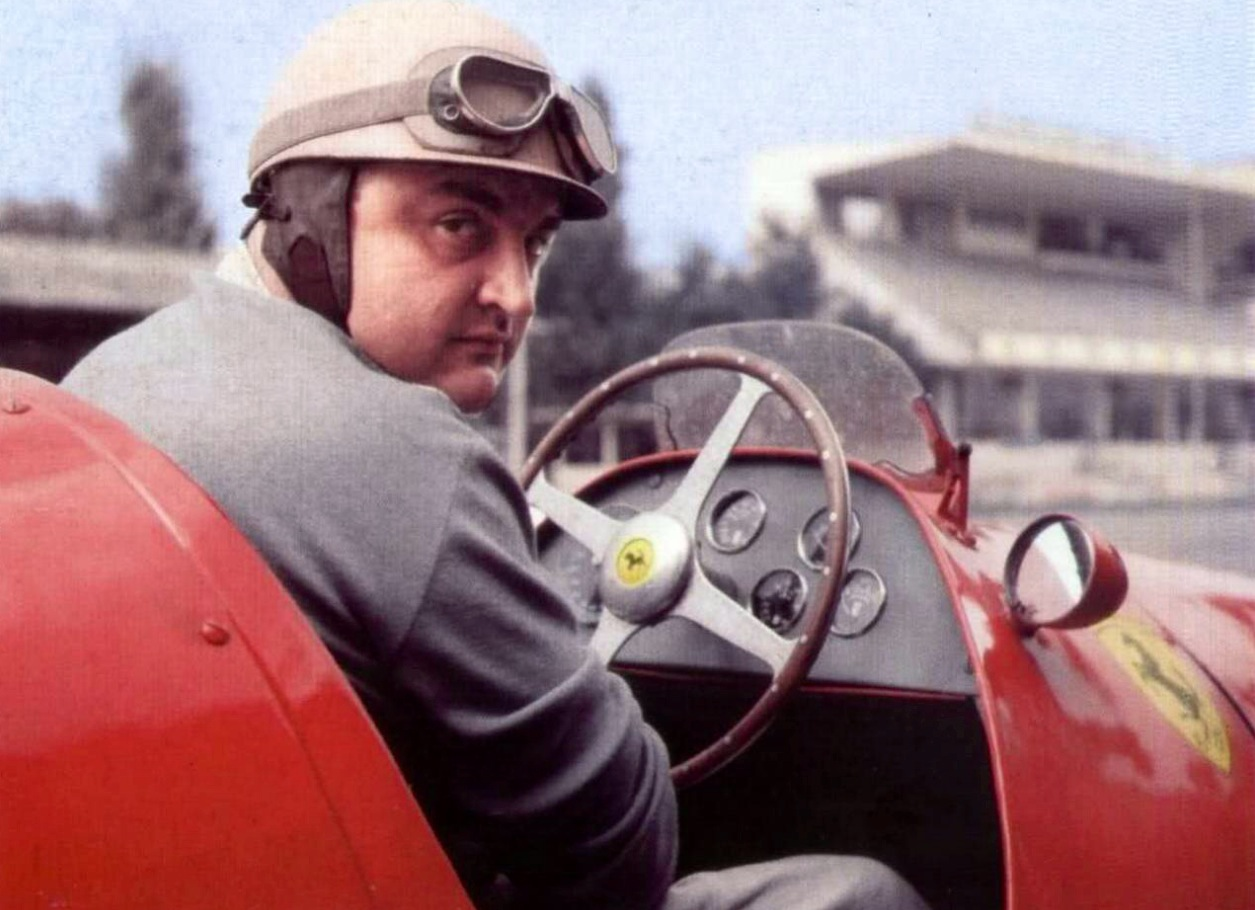
gonzalez portrait

Froilan Gonzalez Ferrari 375, Silverstone 1951, lovely portrait of the Argentinian Champion (unattributed)

Gonzalez lapped Silverstone in 1 minute 43.4 seconds and was on pole, a second quicker than Fangio’s Alfa. On Friday the track was damp and those times prevailed. Froilan’s time was set without the latest the latest twin-plug V12 fitted to Ascari’s car.

Gonzalez; ‘Ferrari had the gift of instilling confidence in its drivers. Although I was still very inexperienced I arrived at Silverstone for the 1951 British Grand Prix feeling that I really belonged in the Scuderia Ferrari, feeling eager also to pit my car’s power against the almost unbeatable Alfa Romeos – and my own skill against the world’s greatest racing drivers. Silverstone was the meeting place for international statesmen, industrialists, and millionaires, all looking for excitement’.
british program

Silverstone was the first time an Alfa Romeo had not been on pole position since the world championship began the year before…

Around 50,000 spectators arrived at the Northhamptonshire circuit on the Saturday, eager to see a great contest between Alfa, Ferrari and BRM.

start

Start of the GP with Gonzalez, left on pole Fangio and Ascari #11 on the outside. Ferrari 375, Alfa 159, Ferrari 375 (unattributed)

Felice Bonetto made the best start from seventh, the front row delayed with excessive wheelspin,  and lead at the end of lap 1 but Gonzalez took over with Fangio chasing.

Gonzalez; ‘As we passed the pits for the first time I noticed that both the Alfa and Ferrari team managers were signaling the same instructions, which were in effect that we should drive our own race. The alarming start meant that team tactics must be abandoned. ‘Go for the lead’ came the urgent message and soon as I saw that I went flat-out. By the next lap I was leading’.

british bonetto

Felice Bonetto Alfa being chased by #12 Gonzalez Ferrari and #1 Farina Alfa 159 with #11 Ascari Ferrari just in shot (unattributed)
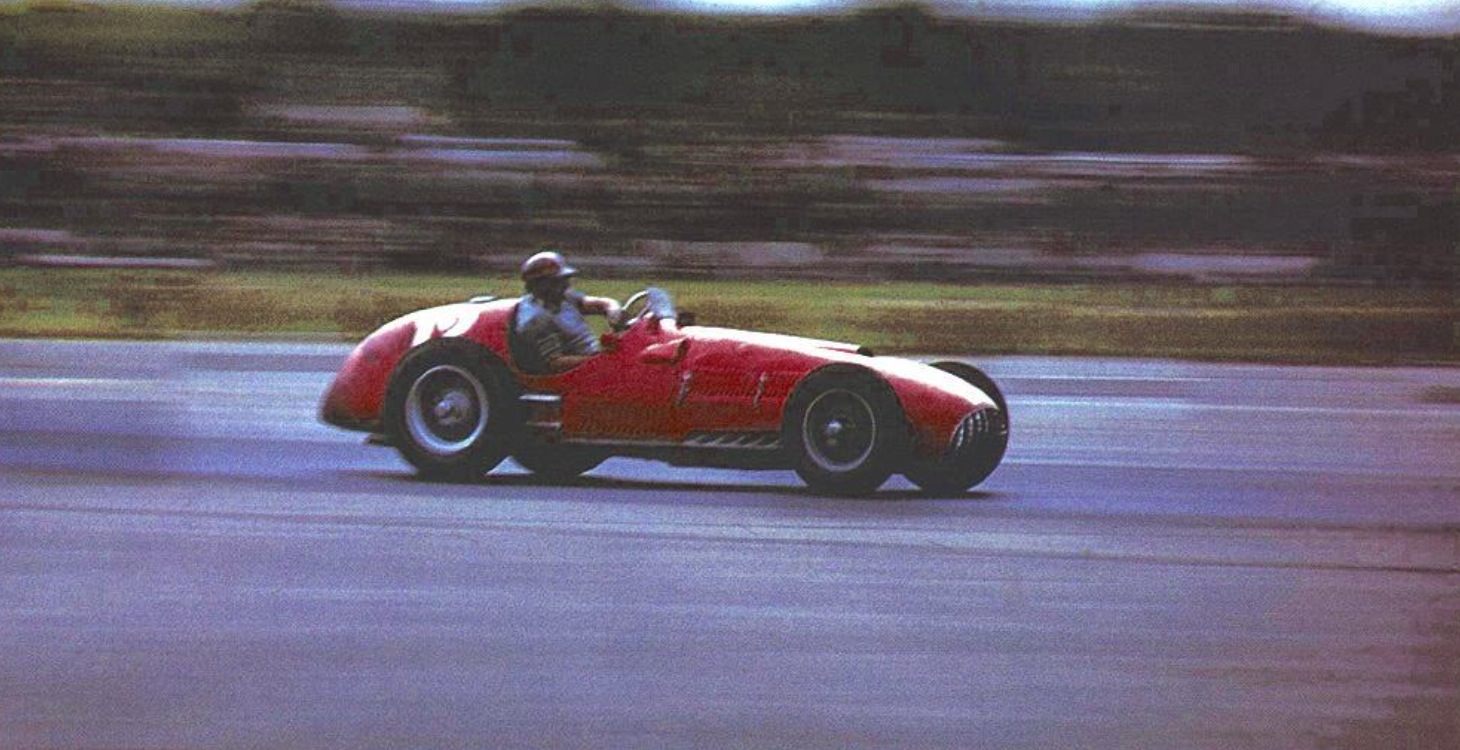
‘I could not hear them but I had the feeling that the British crowd had forgotten their usual restraint. They were jumping and waving and, it seemed to me, yelling like mad. ‘Pepito. You are ahead of the Field Marshals,’ I thought, and kept my foot hard down on the accelerator pedal. Then suddenly my rear-view mirror showed a red car, growing bigger and bigger. A signal from my pit as I shot past told me it was Fangio’s Alfa Romeo. ‘Pepito. Don’t do anything foolish. Don’t panic. Even Fangio will have to do a re-fuel.’
Within 15 laps, Fangio was five seconds ahead of Gonzalez. the duo were 44 seconds ahead of third-Farina who was scrapping with Ascari from Bonetto and Villoresi. It was Alfa Romeo, Ferrari, Alfa Romeo, Ferrari, Alfa Romeo, Ferrari. The fuel stops would settle the issue.
british gonz color

Nice color panned shot of Gonzalez on the way to victory. Shows the big, butch lines of the Ferrari to good effect, the delicacy of touch required to drift the thing at 140mph readily apparent, and appreciated!  (unattributed)

Gonzalez hit the straw-bales at Becketts but gradually closed on Fangio to retake the lead on lap 39. At the end of lap 48, Fangio pitted and Gonzalez came in 13 laps later. Ascari had retired with gearbox trouble and Gonzalez climbed from his car and offered it to his team-mate.  Ascari refused and urged Gonzalez to continue. The stop took 23 seconds, Fangio’s 49  seconds, JM had his rear wheels changed and his fuel tank filled. The gap between the leaders was then 1 minute 19.2 seconds.

british pitstop

Pitsop for the thirsty Parnell BRM Type 15 ; passing is the Farina Alfa being closely watched by Alberto Ascari, astride the white line, retired from the race. The balding Raymond Mays looks away from the BRM , to Mays right beside ‘the copper’ is journalist and racer John Bolster (unattributed)

‘When Fangio caught me in the 10th lap I let him overtake, placing myself directly on his tail. We traveled in tandem, our two cars seeming to be roped together. Even when he increased speed we remained like this, driving like men pursued by the Devil himself. There was a moment of danger around the 25th lap when I took Becketts Corner too fast and hit the straw bales. But this made me keener than ever and I set off again after Fangio. I began to close on him, having been perhaps 5 or 6 seconds behind him with both of us averaging about 97 mph until, on the 39th lap, I eventually took him. Towards the end of the race I was more than a minute ahead of him’.

british gonz fangio

Gonzalez leads Fangio during their great Silverstone race (unattributed)

‘Motorsports’ August 1951 issue described the events as follows: ‘Try as Fangio could and did, it was over. Gonzalez came round, crash hat and visor in his left hand, waving them to the crowd.

‘Ferrari with the unblown 4.5-litre had at last broken the might of the two-stage supercharged 159 Alfa Romeo, as they have been threatening to do since Monza last year. Froilan Gonzalez had driven impeccably and is now in the front rank.

‘Fangio drove like the master he is, but couldn’t catch the Ferrari, nor could his longer pit-stop explain the 51 second gap and he was the meat in the Ferrari sandwich. And how these Argentinians drive!’

british win

Froilan Gonzalez takes the Silverstone chequered flag to record an historic personal and team win, Ferrari 375 (unattributed)

Villoresi was third after Farina retired at Abbey Curve, with smoke billowing from the engine compartment but the failure reported as ‘clutch’. Bonetto was a further lap behind the Ferrari in fourth.

british farina

Farina’s Alfa 159 hors ‘d combat on lap 75 with a failed clutch (unattributed)

Reg Parnell was 5th in the BRM with Walker 7th. The BRM drivers completed the race burned by their exhausts and dazed by fuel vapours. In the hurry to complete the cars for the race, the exhausts hadn’t been properly insulated and the drivers were ‘cooked’.
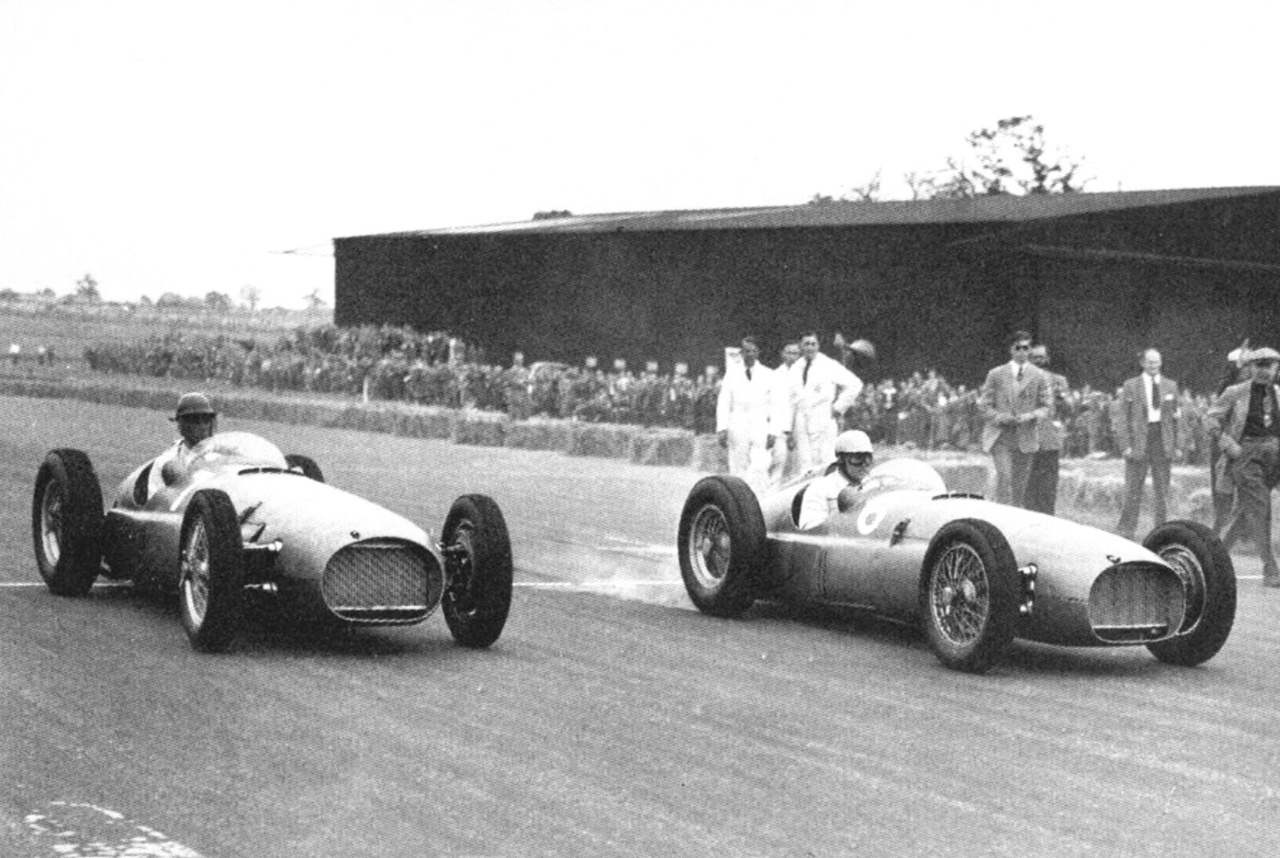
brm

The BRM Type 15′ s get away at the start; Walker left 7th and Reg Parnell #6 5th (unattributed)

‘It was very confusing’ said Gonzalez aftewards, ‘But very exciting. Everyone was shouting and talking; the mechanics saying over and over again that the Alfa Romeos had been beaten. Then I was taken to meet the Queen and given a laurel wreath. Of course, I understood little of what was said but it was a very nice feeling to have all those people congratulating me.

‘On the winners podium I was embraced warmly by Fangio. That meant a lot to me. Then they played the Argentine National Anthem. I had never experienced anything like this before. When I saw my country’s flag being hoisted, it was just too much for me and I cried. That moment will live with me for ever.’

british wife

Gonzalez being congratulated by his wife and crew after the historic win, the enormity of it all still to set in (unattributed)

Enzo Ferrari’s dogged determination to win Grands Prix with his own cars was achieved against Alfa Romeo, for whom for many years he lead their pre-War racing programs. It was the first time the Alfas had been beaten since the first post-war French Grand Prix in 1946.

At the end of the season, Alfa Romeo applied for a significant increase in their government grant, the company still within the control of the agency which took it over after its insolvency pre-war. It was refused and the team withdrew from Grand Prix racing, a return finally made with the provision of engines in 1970 and more wholistically as a team in 1979.

In his Richard Williams biography, Enzo Ferrari said of his first Ferrari GP victory: ‘I cried for joy. But my tears of enthusiasm were mixed with those of sorrow because I thought, today I have killed my mother’…

Etcetera…

alfa paddock

Alfa’s in the Silverstone paddock; #3 Consalvo Sanesi 6th, #1 Farina DNF (unattributed)
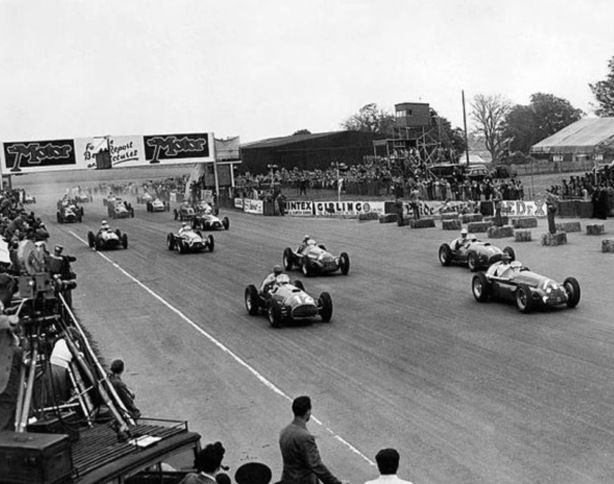
start 1

Front row makes a poor start; #12 Gonzalez, Farina  better away and Ascari #11 on the right with Fangio’s Alfa almost beside Ascari and Felice Bonetto, Alfa coming up quickly behind Fangio (unattributed)

ascari farina

Alberto Ascari from Giuseppe Farina Ferrari 375 and Alfa 159, Silverstone 1951, both DNF (unattributed)
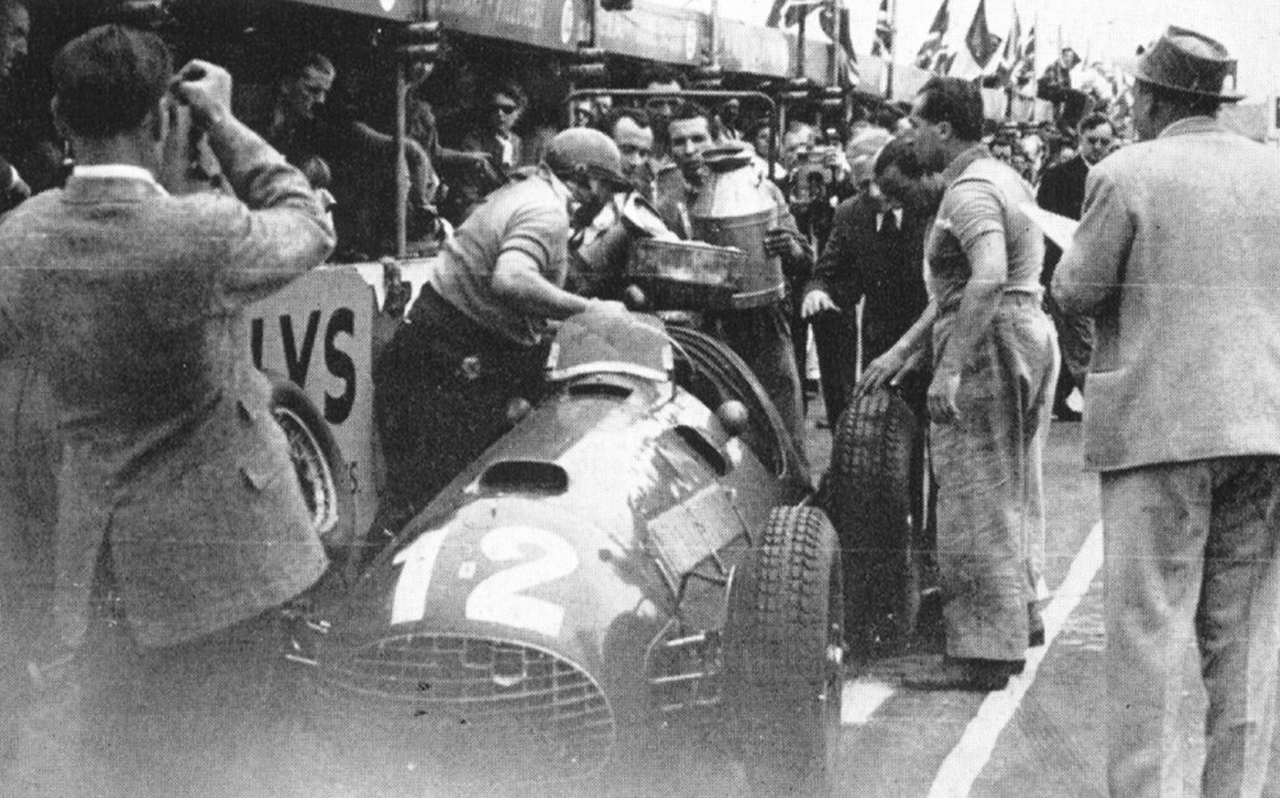
pitstop

Gonzalez supervises his Ferrai pitstop whilst Ascari, right, looks on having sportingly declined to take the car offered to him by Froilan allowing him to take the well deserved win (unattributed)

Bibliography…

f1fanatic.co.uk, grandprixhistory.org, Team Dan, silhouet.com, J Perez Loizeau and Ors ‘Jose Froilan Gonzalez:The Pampas Bull’

Photo Credits…

Louis Klementaski, Getty Images, Michael Turner art

Tailpiece…
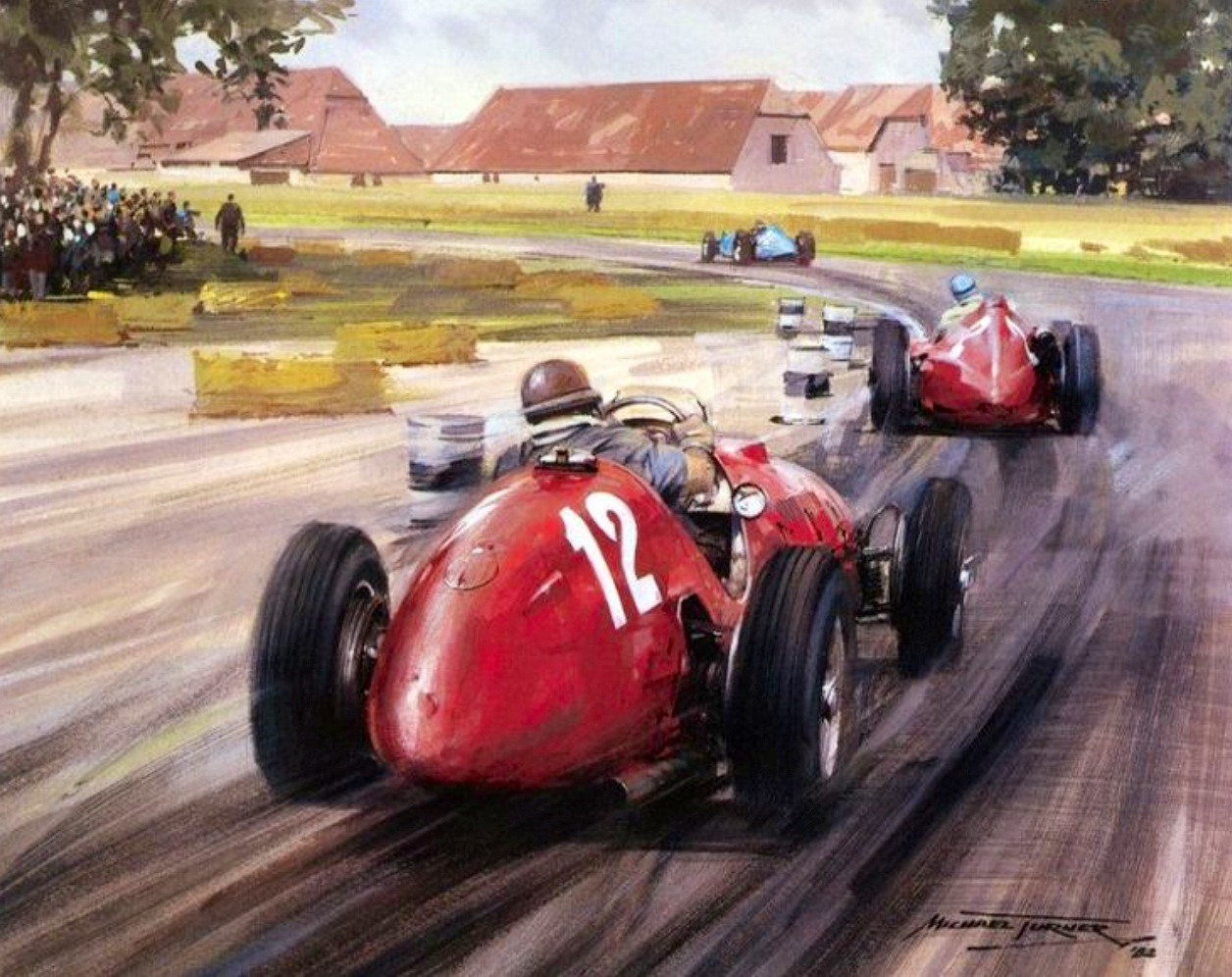
britsi art

Painting depicts Gonzalez’ pursuit of Fangio with a blue Talbot-Lago T26 ahead (Michael Turner)
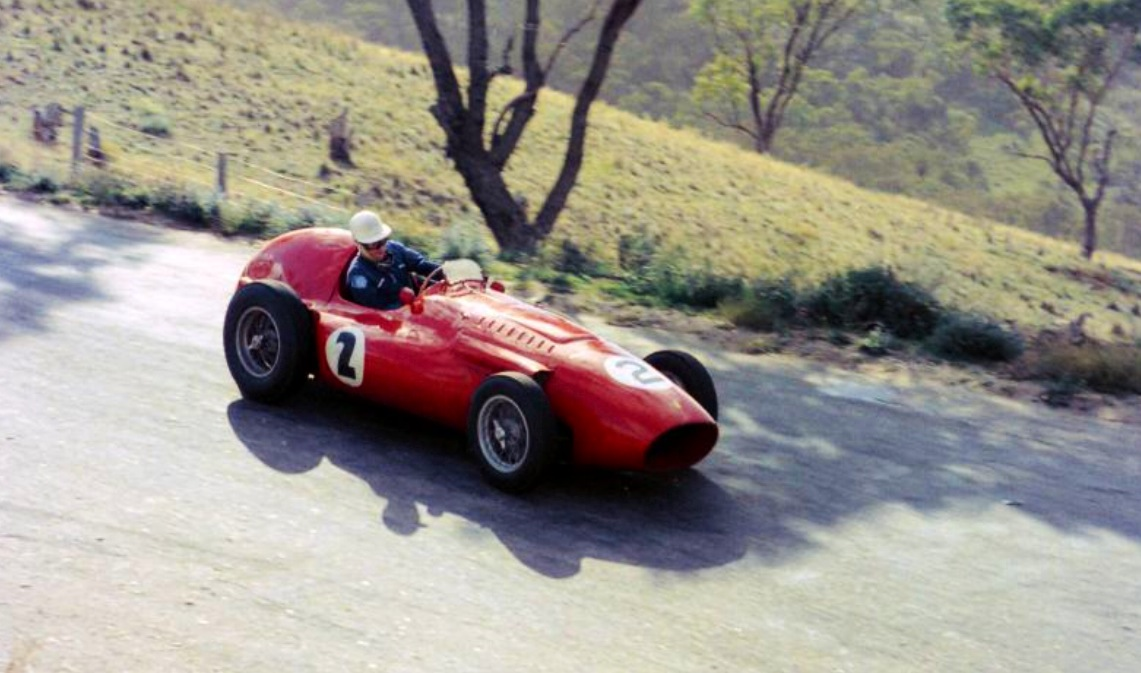


glass

(Heinz Federbusch)


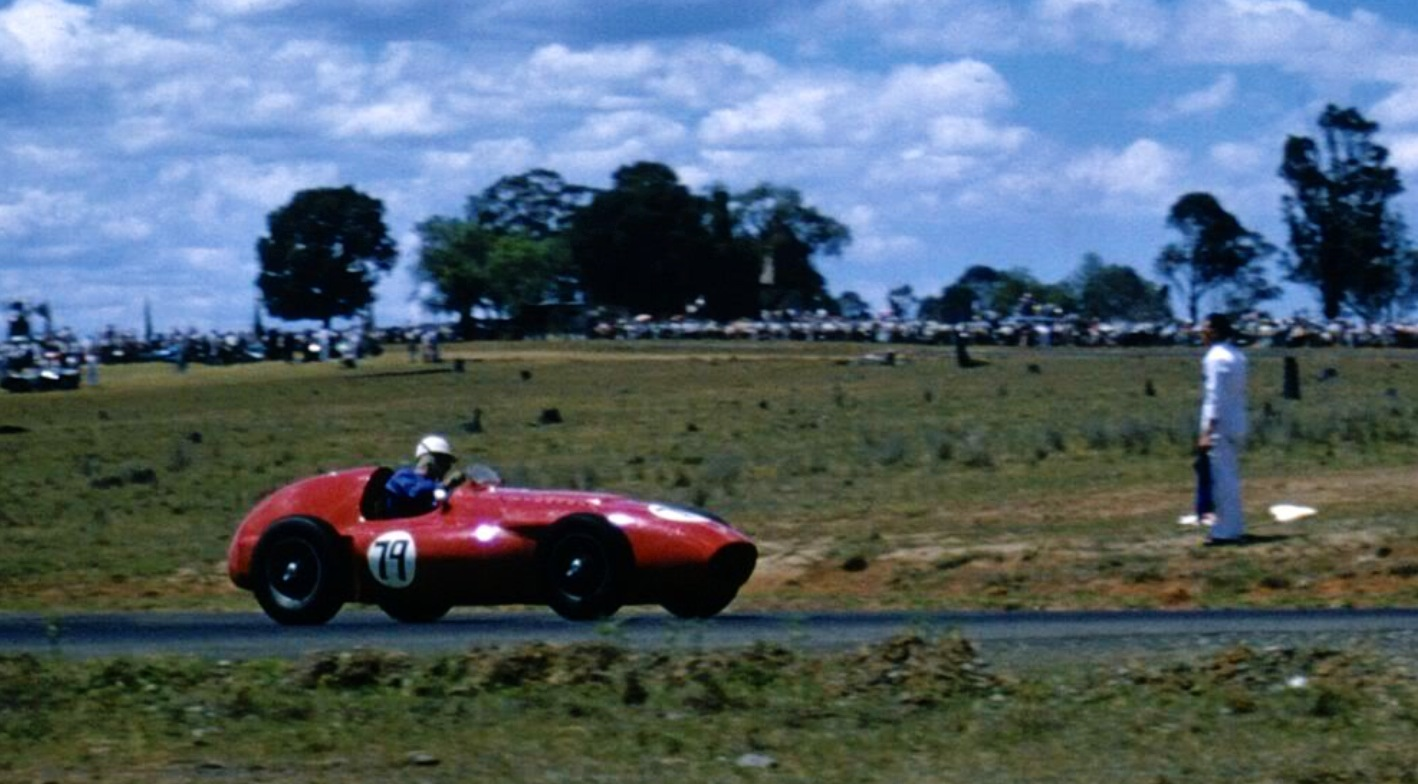
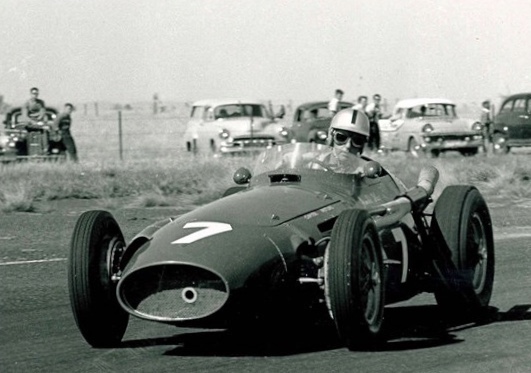
Arnold Glass eases his Ferrari 555 Super Squalo into Mount Panorama’s tricky Esses as he starts the plunge down the mountain, Easter 1958…

Glass raced this car with success from November 1957- here he is contesting the Formula Libre ‘Bathurst 100′ on 7 April 1958, the race was won by Doug Whiteford’s equally exotic Maserati 300S. Glass drove a great race ahead of the vastly more experienced, multiple AGP winning Whiteford. The Fazz’ engine blew within sight of the finishing line but the Sydneysider was able to roll over the line in front of third placed Bill Pitt’s Jaguar D Type.

The engine was sent to Maranello for repair, but there were no 3.4 litre Monza spares available so a 2.5 litre 1956 GP engine was sent back to Sydney that November, factory information about the car and specifications of both engines are included at the end of this article.

Glass became disenchanted with the car, it needed the 3.4 litre Monza engine to be competitive at the pointy end of the field and replaced it with the ex-Hunt/Stillwell Maserati 250F when Bib bought his first Cooper- Arnold had plenty of success with the forgiving, fast Maserati in 1959 and 1960.

glass albert park

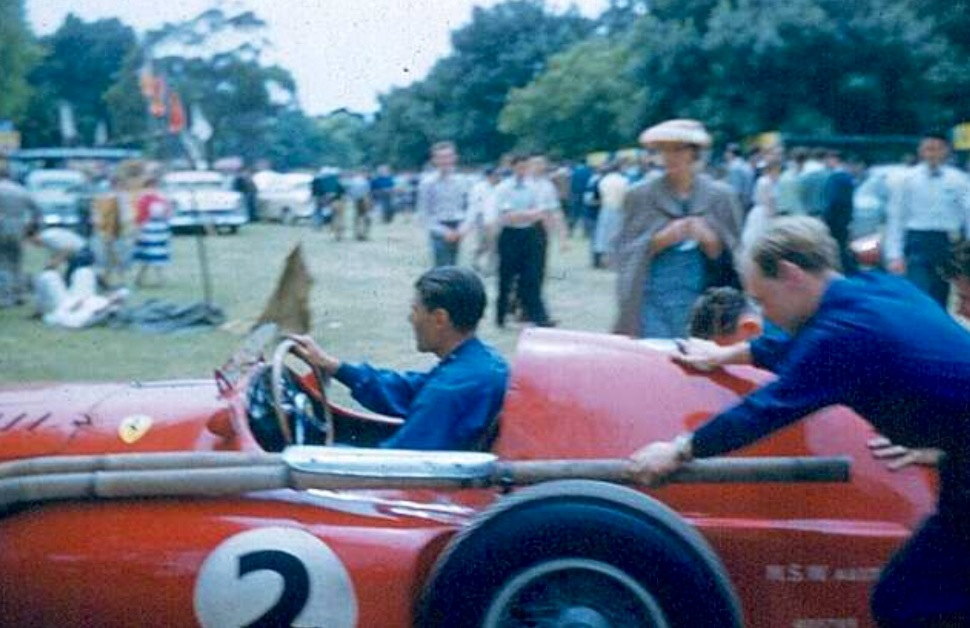
The Glass Super Squalo being pushed thru the leafy surrounds of Albert Park during the Melbourne GP/Victorian Tourist Trophy meetings in November 1958. First meeting with the cars new 2.5 litre engine. (Kevin Drage)

The Ferrari was brought to Australia by Reg Parnell…

He and Peter Whitehead ran identical cars in the New Zealand International races that summer after racing their ex-works 1955 chassis’ in the Formula Libre 1956 Australian ‘Olympic’ Grand Prix at Albert Park- Stirling Moss won in a Maserati 250F whilst Whitehead was third and Parnell sixth.

The car was later sold to John McMillan, who rolled it at Mount Druitt, damaging it badly, before being repaired by local artisans including racers Tom Sulman and Jack Myers it was then sold to Glass.

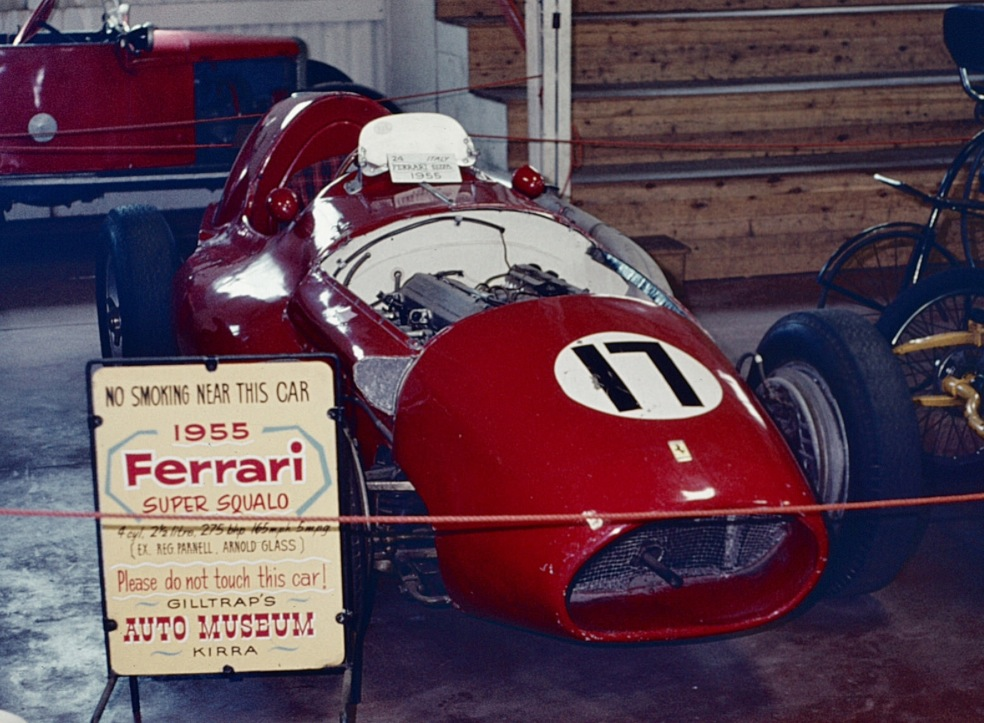
I remember seeing the racer at Gilltraps Motor Museum, Kirra, on Queenslands Gold Coast on a family holiday in 1973- ‘twas sensational to look at the first fabulous ‘front engined red Grand Prix car’ i had seen and it is therefore forever etched in my memory!

Gilltraps added it to their collection as a static exhibit in 1963 at the end of the cars ‘front line’ career which was in the hands of Arthur Griffiths and speedway star Des Kelly.

Chassis #’555/2’, re-numbered ‘FL9002’ when rebuilt by the factory as an F Libre machine, was restored by Noel Tuckey and a team of enthusiasts in 1975/6 and then competed at various Australian historic events before sale to Ian Cummins and then the car was Hoovered up by US dealer in the 1980’s- these days it is part of Bernie Ecclestone’s collection.

glass fazz

The Squalo at Gilltrap’s in the early ’70’s, a star amongst the other exhibits! (Sharaz Jek)


Des Kelly eases his magnificent machine forward onto the Lowood grid in 1961, Super Squalo still looks the goods despite its obsolescence as a front line Gold Star tool by then, the Cooper takeover was complete. Meeting date and result folks?(unattributed)

Ferrari had ruled the roost in Grand Prix racing in 1952, 1953, its Aurelio Lampredi designed 2 litre, four cylinder Tipo 500 had won two World Championships on the trot for Alberto Ascari.

They raced into the new F1 of 1954 with 2.5 litre versions of the 500, named 625- as well as a new design, the 553. It was fitted with a 2.5 litre engine which owed few parts to the 2 litre unit and a new chassis which whilst still comprised of two main longitudinal members was reinforced with welded on superstructure framework- certainly not a ‘spaceframe’ in a definitional sense but structurally better than what went before.

Suspension was similar to the 500/625 in having independent front suspension by wishbones and a transverse leaf spring and a de Dion rear axle similarly suspended. With its fuel low and centralised the car was squat, broad and low giving rise to its ‘Squalo’ or ‘Shark’ nick-name- three 553s were built.

In 1954 the 625 was the better performing car of the two designs despite Ascari first racing the Ferrari 500 at Modena in late 1951- he won. Doug Nye wrote that Ferrari built six, or maybe seven 500’s for their own use and ‘at least five cars either as new or from spare and cannibalised parts for sale to private entrants.’ All of these cars but one was converted from a 2 litre ‘500’ to a 2.5 litre ‘625’ for F1 use that year and beyond.

Ferrari 555 Super Squalo cutaway (G Cavara)


Paul Frere in the Ferrari 555 Super Squalo ‘555-2’ he raced at Monaco in 1955, Piero Taruffi started the car, Frere took over during the race- Nino Farina behind his #42 625 (Klemantaski)

Ferrari designed and built the 555 ‘Super Squalo’ for 1955 to address the shortcomings of the 553 starting with the chassis, which was of similar construction to the 553 but had larger diameter base tubes than its older brother.

The suspension was modified along the lines of changes made to the 553 chassis in which Mike Hawthorn was victorious at the Barcelona, Spanish Grand Prix in late 1954- the weekend Vittorio Jano’s Lancia D50 first raced and piled further competitive pressures upon Scuderia Ferrari who were already hard-pushed by the Maserati 250F and- from the French Grand Prix, Mercedes Benz W196. Front suspension used coil springs and revised geometry was deployed at both front, and to the rear de Dion. The three 553s were converted to this specification inclusive of bodywork changes, in addition to the four new 555s built.

The 625s were also developed along similar 555 lines- double wishbone and coil spring front suspension and de Dion suspension amended with the transverse leaf spring moved from above the differential unit, from its original site below it.

Maurice Trintignant won the 1955 Monaco GP in one of these cars to give the 625 its greatest success. Note that the two 500/625 cars acquired by Peter Whitehead and Tony Gaze (later acquired and raced with great success by Lex Davison in Australia) to race in Australasia and South Africa in 1955 were ‘original form 1954 works cars’ which had ‘Tipo 750 Monza 3 litre sportscar engines installed for Formula Libre racing.’

The fundamental problem of the 555 Super Squalo design from the start was excessive understeer- the best result of the year, on a high speed circuit which suited them was in the Belgian Grand Prix at Spa where they were quick and finished 3-4-6- Farina from Trintignant and Frere. Regarded as a ‘fast circuit car’ the machines were not used again until Monza.

Note that the formal handover of the Lancia D50 ‘assets’ from the in desperately financially troubled Lancia to the desperately in need of a competitive car and haven’t got the budget to do so Ferrari, occurred on 26 July 1955, ‘saving Ferrari’s bacon’ and totally changing the Scuderia’s  developmental priorities away from the four cylinder cars to Jano’s V8 gems.

The Super Squalo’s were returned to Maranello and ‘lay in store there, while the totally obsolescent 553s had apparently long since been broken up…’Nye wrote.

The cars acquired by Parnell and Whitehead, chassis ‘555-2’ and ‘555-1’ were ‘presumably the least altered 555s, having their frames extended by four inches and 3.5 litre Tipo 860 Monza engines installed for Tasman racing…’

John Blanden records the Scuderia Ferrari 1955 race record of ‘555-2’ as sixth in the Monaco Grand Prix, the car shared by Piero Taruffi and Paul Frere with the balance of its outings with Maurice Trintignant at the wheel- Bordeaux GP DNF engine, Belgian- Spa sixth, Dutch- Zandvoort DNF gearbox and finally the Italian GP at Monza where he was eighth.

Arnold Glass in ‘555-2’ at Lowood circa 1958. Compare the bodywork of the car with its big, tall 860 Monza engine and the much shallower nose of the chassis in original F1 specs (B Thomas)

Arnold Glass is an immensely interesting character…

From a humble background, trained originally as a fitter and turner he made his first small fortune trading and repairing motor cycles. He was a racer and later an immensely successful businessman via his Sydney ‘Capitol Motors’ Datsun empire.

The following obituary was written by Malcolm Brown and published in the Sydney Morning Herald in January 2009- Glass was born on 11 December 1926 and died on 16 January 2009.

‘As a boy, Arnold Glass was directed by his father, a music teacher, to play the violin. But Arnold’s eye was firmly fixed on Popular Mechanics, a magazine for rev-heads, which he read from cover to cover, dreaming of owning a motorcycle.

Arnold’s father relented and bought him How To Be A Motor Mechanic. The boy who would become a dynamo in the Australian motor industry, a multimillionaire, sportsman and playboy, had his course in life set.

Arnold Glass, who has died at 82, was born in Newcastle and grew up in Marrickville. He left school at 14 to earn money for his family, which included three brothers and a sister. He became an apprentice mechanic and, at 16, left home and bought an old Douglas motorcycle for £3/15/-.

glass mt druitt

Glass racing the 555 Super Squalo at Mount Druitt, Sydney on 10 November 1957. Bulbous rather than beautiful? Stunning regardless, if not the most successful of GP Ferrari’s. The Lancia D50 saved Ferrari’s bacon when ‘gifted’ to them in the deal brokered later in 1955. (John Ellacott)


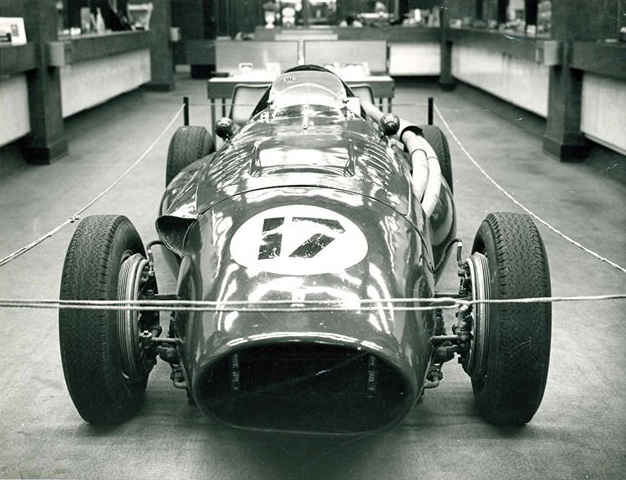
Not working quite so hard in a display in a bank chamber, date and place unknown (B Thomas)

While working in engineering plants, Glass studied at technical college to become a fitter and turner. He worked on Avro Anson aircraft engines at Butler Air Transport and saved to buy motor cycles, which he restored and sold. In 1946, at 19, he went into partnership with Julian St John to run a motorcycle business. Operating out of a tin shed in Marrickville, they scoured back alleys seeking to buy motorcyles.

In 1947, Glass acquired a Tiger Moth, learnt to fly and developed an absorbing interest in war-vintage piston-driven aircraft.

In 1949, he and St John bought an old Chinese grocery shop in Campbell Street, opposite the Capitol Theatre, and converted it into a motorcycle shop, naming their business after the theatre. Used motorcycle and car salesmen depended on newspaper advertisements to find out what cars were for sale and would pounce on the first editions at 3am. But Glass paid a young Herald employee £2 a time to throw a copy from a toilet window at midnight.

The arrangement was risky. The businessmen had a setback when they bought a stolen motorbike. Yet Glass wasn’t one to recoil from risk. In partnership with Bill Duffy, he bought an unfancied racehorse called Johnny Zero, which won consistently, earning the owners £30,000.

He bought used cars in Singapore and aircraft in England, selling them to rural customers in Australia. In 1951, he and St John converted a pet shop in Campbell Street into a car yard. The next year he bought out St John and, in 1953, bought land for another car yard in the Haymarket, selling Chryslers, Simcas, Renaults and Porsches-by then he was selling 1000 vehicles a year.

Glass tried punting but stopped when he was losing heavily. “I found something that could beat me,” he recalled. He married a model, Norma Geneave, in 1955, acquired a car yard at Lidcombe in 1957 and won the Bathurst 100 motor race. A daughter named Amanda was born in 1958.

In 1961, he bought a car yard at Artarmon and made the critical decision to invest in Japanese cars, then rarely seen in Australia. Moving into William Street, he took over a Datsun franchise, soon the cars captured the public’s imagination his wealth assured.

He bought a home in Cremorne, in so-called ‘Millionaires’ Row’, with its own wharf, but his marriage failed in 1963. ‘I’m not a family man’, he said later. ‘I didn’t have a lot of time or patience for a family type life. I put so much into my business, none was left over.’

Maserati 250F circa 1959/60 at Lowood, Queensland (B Thomas)


Glass contesting the 1962 Australian Grand Prix in a BRM P48 Buick V8, 5th in the race won by McLaren’s Cooper T62 Climax (K Devine)

Glass raced many different cars, including Ferraris and Jaguars. He raced boats in Australia and the United States and competed successfully in marathon waterski events. He flew aircraft, buying a Mustang and British-made Vampires and travelled to Czechoslovakia and Poland to fly MiG-21s. His restless energy took him spear-fishing with the Prime Minister Harold Holt.

In 1961, Glass slammed his BRM P48 into a tree at 100 kmh at Mallala, after which he required plastic surgery. Bouncing back, he bought a seven-hectare site on Parramatta Road, Auburn, and turned it into the biggest car dealership in NSW, as the distributor for Nissan and BMW.

He established his own finance and insurance company, dealt in aircraft and boats and ventured into show business. Transporting himself in his Lear jet, he stalked and killed buffalo and lions in South Africa, crocodiles in Zimbabwe and bears in Alaska. His powerboat racing wins included the 1975 Sydney-Newcastle BP Ocean Classic.

By 1976, Capitol Motors was selling 23,000 Datsuns a year. In 1977, Australian National Industries bought the company for $28.43 million. With his 49 per cent shareholding, Glass took away $13.87 million while joining the ANI board as deputy chairman.

He spent much of his time in Monaco, although he returned in 1983 to sack three ANI executives. He had demonstrated his toughness years earlier by sacking car salesmen who failed to reach quotas. Retiring to Monaco in 1984, he returned from time to time to see his daughter and her family. He died in Sydney.

Arnold Glass is survived by his partner of 37 years, Jennifer Hole, his daughter, Amanda Sorensen, and grandchildren Ryan, Tegan and Kirsty’.

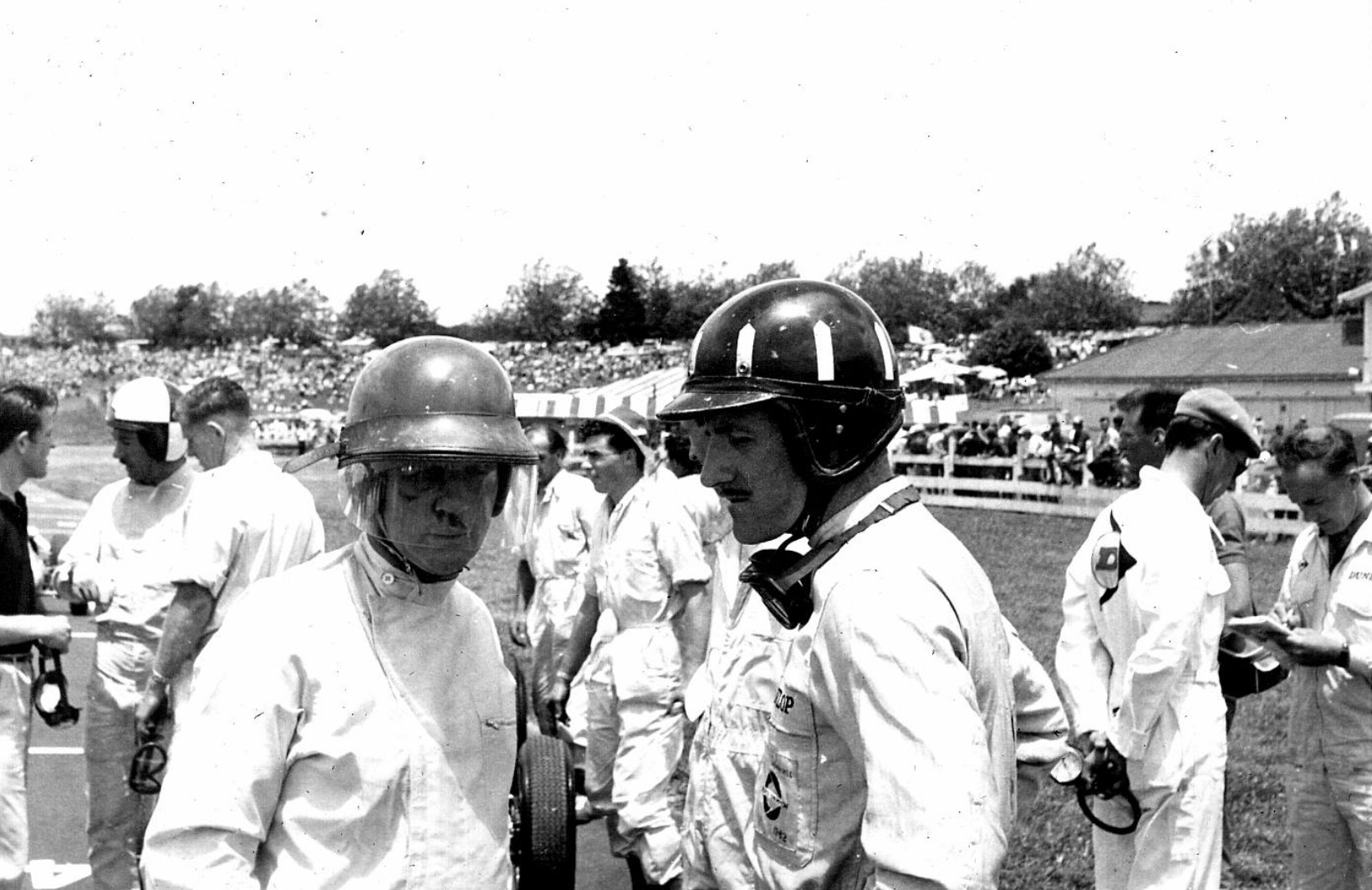
Arnold, his face showing the signs of a practice accident, with Graham Hill prior to the start of the 1965 NZ GP at Pukekohe. Hill won in the Scuderia Veloce Brabham BT11A Climax whilst Glass retired after 3 laps in his Cooper T55 Climax with mechanical dramas (CAN)

Etcetera…

glass and 250f

(John Ellacott)

I love this portrait of Glass by John Ellacott, looking every inch the successful man he was- its taken at Symmons Plains, Tasmania in March 1960.

The car is the Maserati 250F referred to above, chassis #2516, the ex-works Moss/Behra/Hunt/Stillwell car which Arnold raced very competitively from 1959 to 1961- the car with which he achieved most success i think.

I wrote an article about this Maser a while back, click here to read it; https://primotipo.com/2014/07/19/reg-hunt-australian-ace-of-the-1950s/

Arnold testing the Maserati 250F at Symmons Plains in March 1960 with Mick Watt’s MG Holden Spl in the foreground (J Barnes)

Gilltraps..

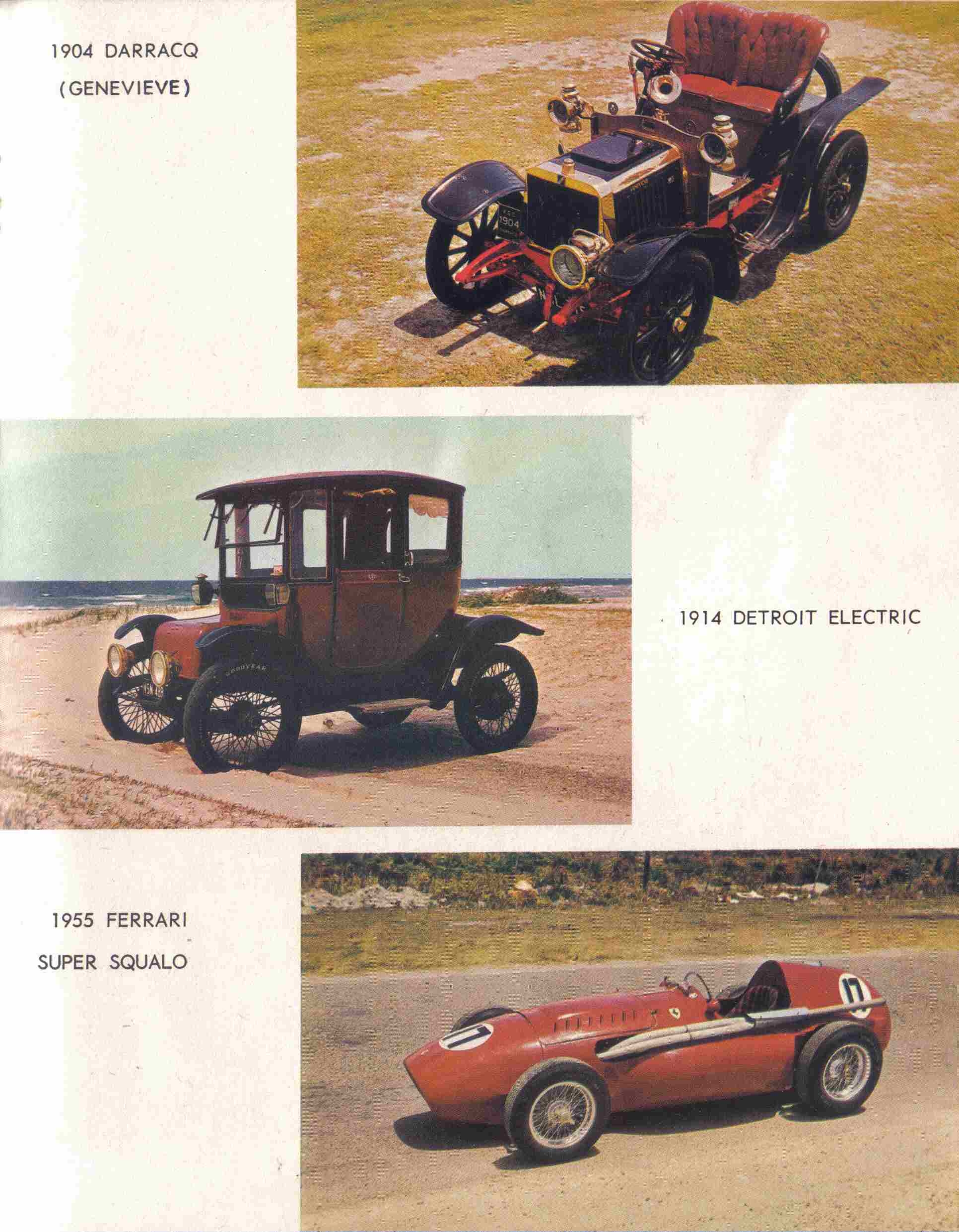
Gilltrap catalogue

(Stephen Dalton Collection)

From the Gilltraps catalogue of display cars circa 1967, the Ferrari Super Squalo is at bottom, at the top is ‘Genevieve’, the Darracq which starred in the 1953 British film of the same name.


(D Zeunert)

A bit of gold dust from Melbourne enthusiast/historian David Zeunert’s files.

‘A newspaper advertising clipping from my files of the Gilltrap Ferrari Super Squalo dated August 1986. Oh they were the  days, I have an extensive newspaper advertising collection of all of the cars that interested me. I used to comb the Age Motoring Ad section and clip out the ones I dreamed of owning one day. Its great to scan them 40 years later.’

I see Reg Purnell raced the car, the ad does nothing to provide me clarity about whether its ‘Gilltraps’ or ‘Giltraps’ either- there are all variations on the internet.

Ferrari works material on ‘FL9002’..

(R Croston)

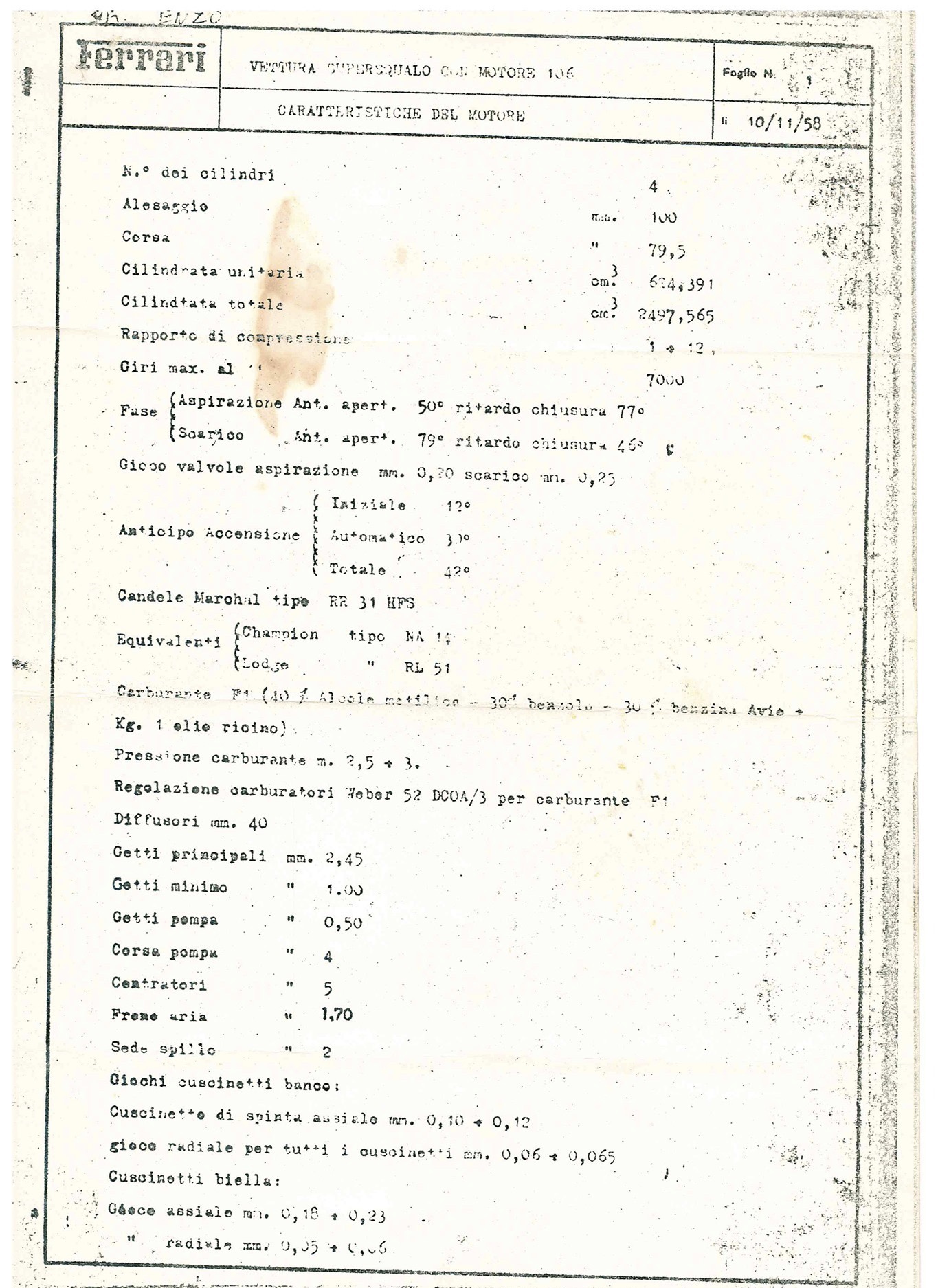
Enthusiast, Richard Croston has a copy of this information on the general specifications of ‘FL9002’ and the detailed specifications of both the 3.5 litre engine the car was fitted with when raced by Parnell and the 2.5 litre unit the factory fitted when sent back to Italy by Arnold Glass.

Dated 10 November 1958, the document is from the time Glass owned the car and appears to be a letter and information in response to a request from Arnold.

You can piece it together yourselves but the gist of it seems to be they cannot be clear about providing more information about the car whereas in modern times the parentage of the car is quite clear.

The 3.5 litre engine ‘Tipo 129’ four cylinder, DOHC, two valve engine had a bore and stroke of 102x105mm and developed 281bhp @ 6000rpm, the gearbox was mounted at the rear and had four speeds.

(R Croston)

The 2.5 litre ‘Tipo 106’ four cylinder, DOHC, two valve engine was oversquare, having a bore and stroke of 100×79.5mm for a capacity of 2498cc and a rev limit of 7000rpm- no power output is quoted but other sources quote 260bhp. Carbs are two Weber 52DCOA/3.

(R Croston)


(R Croston)

Credits/References…

Heinz Federbusch and John Ellacott photos, John Blanden ‘Historic Racing Cars in Australia’, ‘History of The Grand Prix Car’ Doug Nye, Kevin Drage, Stephen Dalton Collection, Sharaz Jek, Ken Devine Collection, Obituary by Malcolm Brown- Sydney Morning Herald, Quentin Miles, Classic Auto News, Brier Thomas, Louis Klemantaski, Richard Croston Collection, David Zeunert Collection

Tailpiece: Glass, Maserati 250F, Bathurst circa 1960…

(Q Miles)

Finito…