


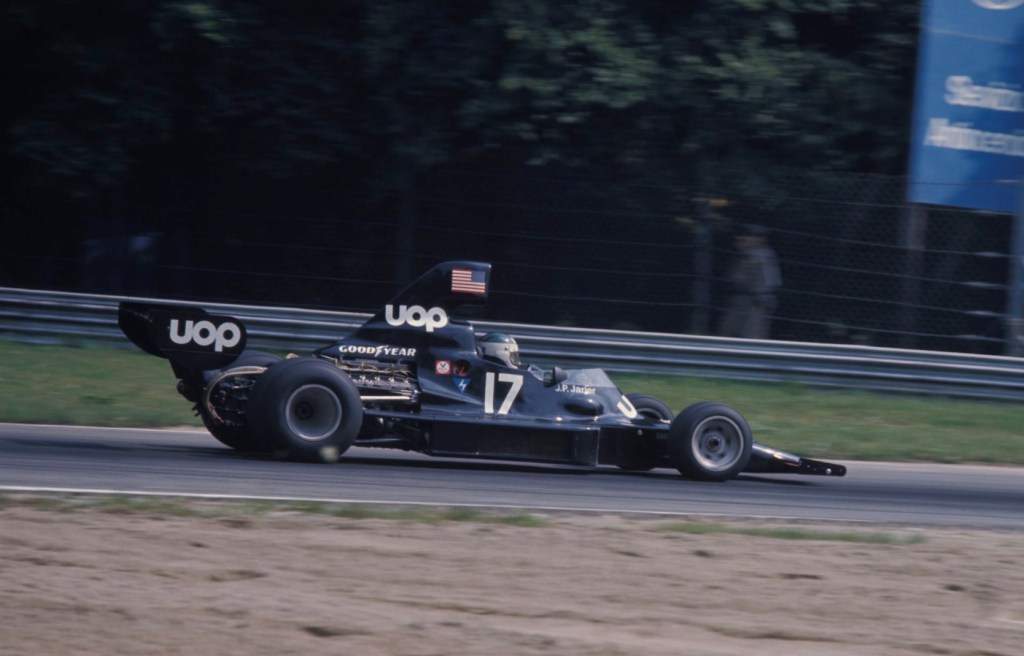
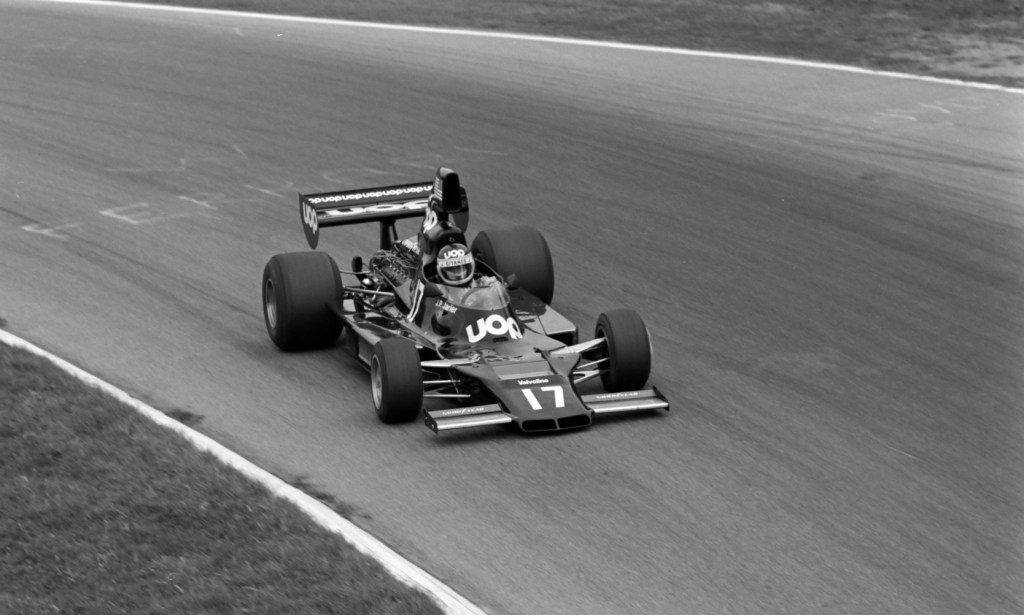
Jean Pierre Jarier nips a front brake during qualifying for the 1975 Italian Grand Prix, pushing his Shadow DN7 Matra ever so hard…
One of the revelations of the early 1975 GP season was the speed of the new Shadow DN5 Ford, an evolution of the 1973/4 DN1 and DN3 designs penned by Tony Southgate. Frenchie Jean Pierre Jarier rocked the socks off the established aces setting a time eight-tenths/second clear of the rest of the season opening Argentinian GP grid.
There were mutterings of Shadow getting development Cosworth engines but the truth was an aero tweak which is indicative of the importance of aerodynamics over the coming years.
Tony Southgate, ‘ I spent half my life doing aero at Imperial College and DN5 was the first to use the new rolling road wind tunnel, as far as i know, the first in the world. What we discovered was a massive split, front to back, in downforce. People always thought they had about 30-40% on the front. In fact it was no more than 20. And only we knew.’
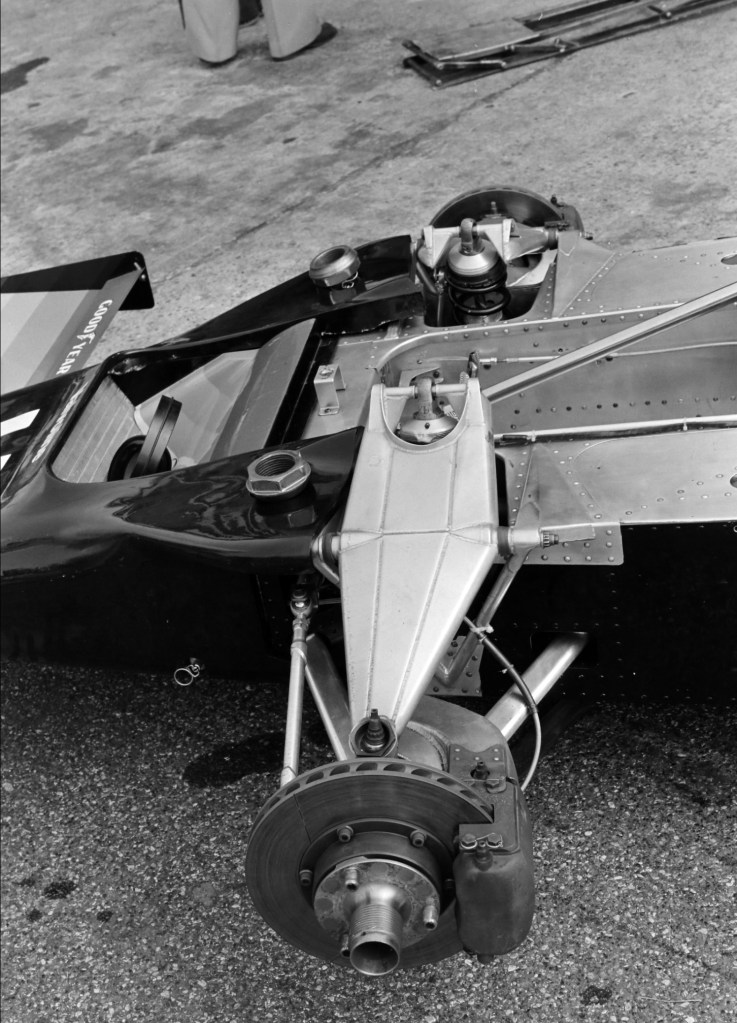
Southgate moved the driver forward 2.5 inches within a longer wheelbase (with removable spacer between engine and gearbox), developed deeper nose fins and placed the front springs and dampers inboard.
‘The car was an aero jump. We matched downforce to its static weight distribution-about 35/65% front/rear – and the spacer allowed us to tune the chassis to different circuits; we would find 1.25 seconds at Silverstone just by removing it. Immediately it was clear that our car had more downforce than the others and was very well balanced. In its short chassis specification Jarier was taking the fast bend after the pits at Interlagos, Brazil without lifting…’
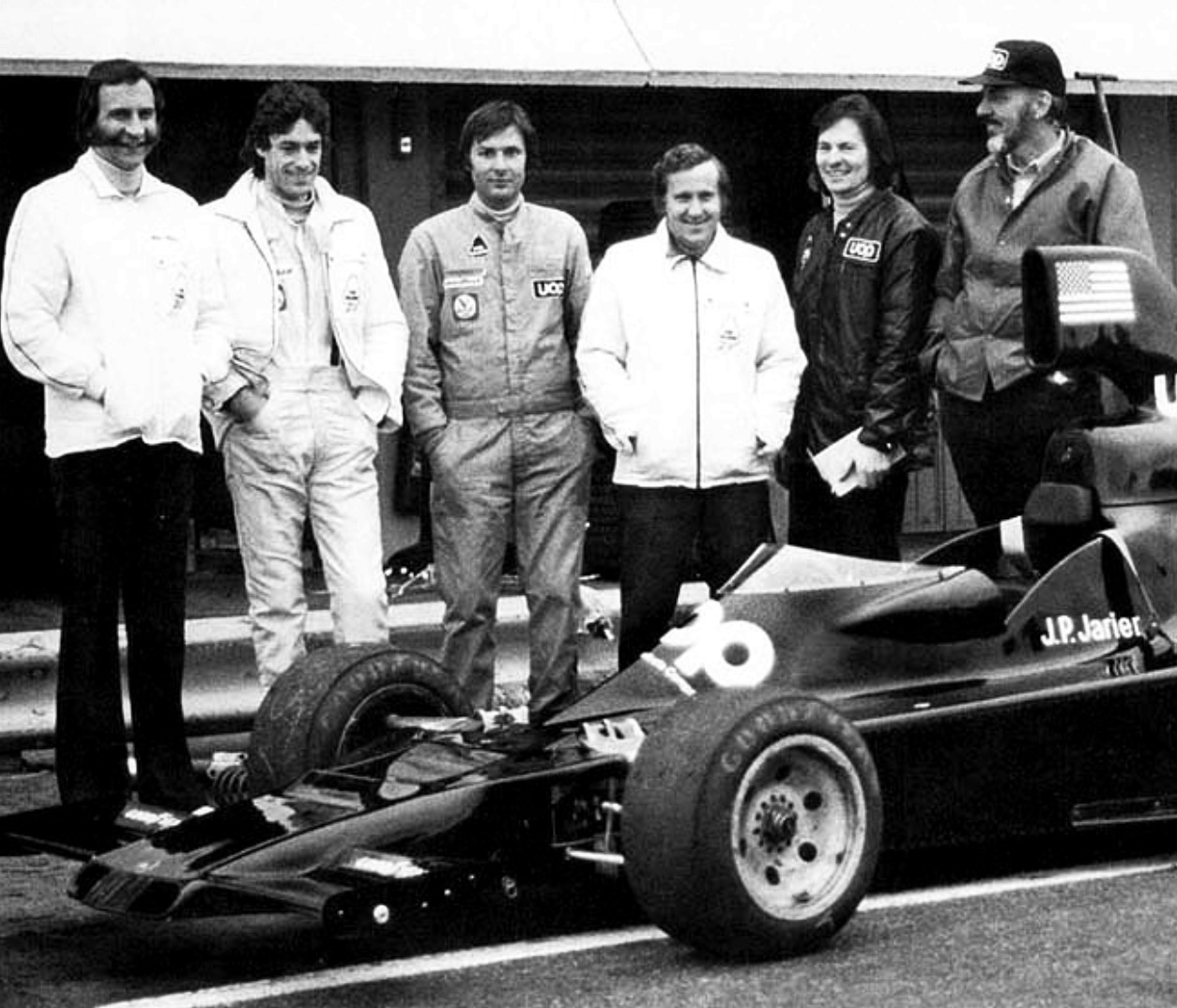
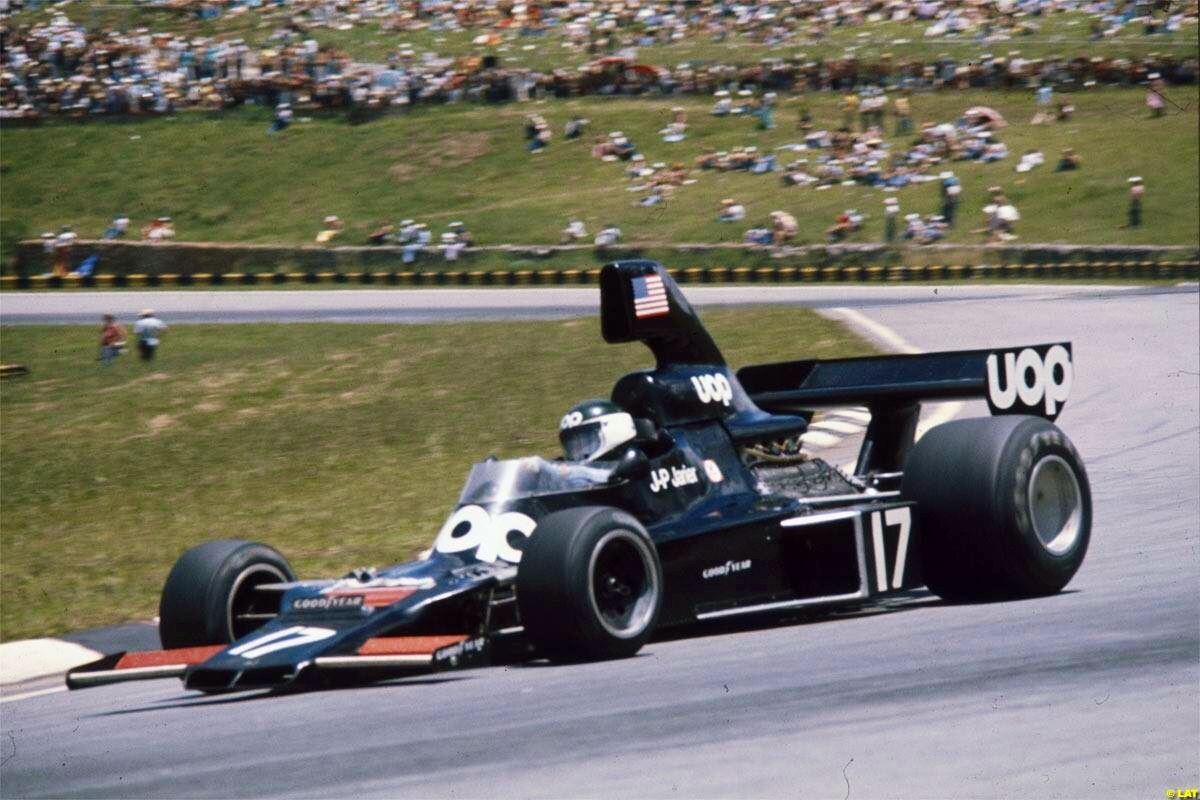
Despite being on pole in Argentina, raceday was a disaster with a crown wheel and pinion failing on the warm-up lap. ‘I had been pursuaded to use Hewland’s latest TL200 gearbox instead of the FGA400, I think we and Copersucar did so. It was meant to be more reliable, with helical gears 20% stronger and more bearings in the pinion shaft, improper heat treatment was blamed for the failure’.
In Brazil Jarier was running away with the race from pole when the metering arm of the Lucas injection unit seized. In fact JPJ’s season was a mix of spins and mechanical failures, teammate Tom Pryce getting the better results with a win in the non-championship Race of Champions at Brands Hatch and third in the Austrian GP after qualifying on pole for the British GP before retiring from the lead.
Southgate; ‘Our budget was tight and there was little development left of the car. It wasn’t good on fast circuits where we had to unbolt downforce so we weren’t swamped on the straights. Plus better funded teams cottoned onto what we were doing and were ringing Imperial College to ask if they could use its wind tunnel.’
‘Shadow’s Grand Prix results for 1975 were very disappointing, especially in view of the competitiveness of the DN5. Our finishing record was simply poor. The cars either broke down or crashed. Jarier only finished two Grands Prix for the year. Pryce’s statistics were better, but he still only finished six GP’s…I often think that, if the DN5 had been prepared and raced by one of the top teams it would have won the Championship.’ said Southgate in his autobiography.

The Ford Cosworth DFV and alternative engines…
The diligence of team owner, Don Nichols’ designer had given the team the ‘unfair advantage’ of which Mark Donohue spoke so eloquently, with a car whose origins dated back to Shadow’s first year in GP racing in 1973. Whilst Southgate pursued this aero approach Nichols eventually concluded discussions with Matra to use its glorious V12 in a modified DN5 chassis christened the DN7.
The Ford Cosworth DFV 3 litre V8 was the dominant engine of the 3-litre formula, by the end of 1974 it had taken drivers titles in 1968/9 and 1970-4 but Ferrari’s speed in 1974 gave pause for many team managers – Cosworth users – to find an alternative which allowed them to leap clear of the garagiste pack as Enzo Ferrari christened the British Cosworth/Hewland hordes! The DFV was a tough proposition to beat given its blend of power, packaging, weight, economy, reliability, price and Cosworth’s servicing backup.
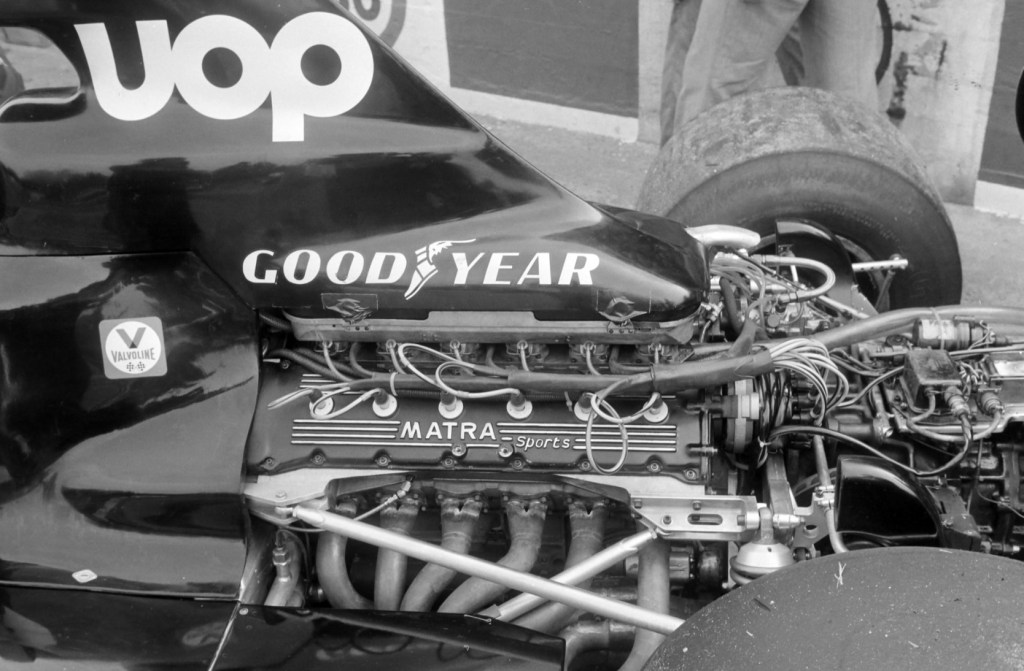
The obvious alternatives were the Matra V12 and Alfa Romeo Flat-12, both 3-litre endurance engines, and the venerable BRM V12. The latter was easily ruled out as being way past its prime, the BRM P207 was a sad joke in 1974/5 for all concerned. The Matra and Alfa were successful endurance engines. In the event BC Eccclestone, then Brabham’s owner, did a deal to use Alfa engines from 1976 whilst Nichols pursued the Matra option.
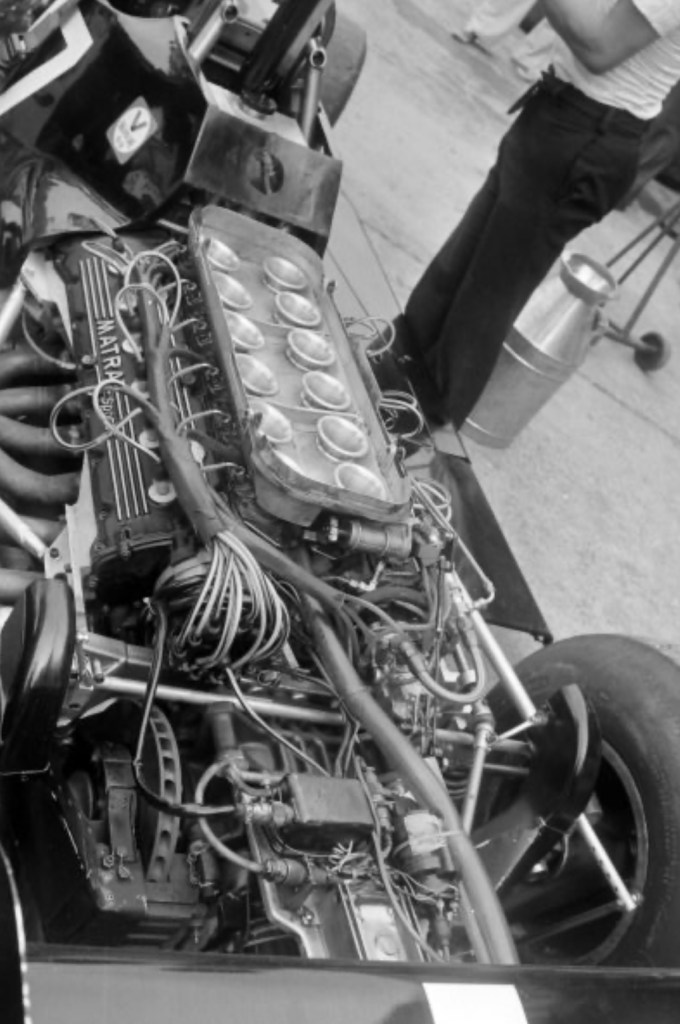
While the French V12 last appeared in GP racing in Matra MS120s driven by Chris Amon in 1972, the engine had been continually developed as an endurance unit. Given Matra’s Le Mans wins from 1972-74 and a whole swag of other endurance events; so it was not too difficult to adapt Matra’s learnings to a sprint-spec of the engine, from whence it originated in any event way back in 1968.

Evolving the DN5 Ford into the DN7 Matra…
Whilst commercial negotiations dragged on between Nichols and Matra, Southgate and his team focussed on keeping the DN5 competitive while concepting the DN7, which was essentially a DN5 adapted to fit the longer, heavier, thirstier but more powerful V12.
Major differences were increased fuel tankage and a longer wheelbase, otherwise the key elements of both cars – chassis, body, aero and inboard front suspension by rockers, conventional outboard rear suspension and Hewland TL200 gearbox were the same. This gearbox was developed by Hewland for endurance purposes and was used by Matra in their MS670 sports cars.
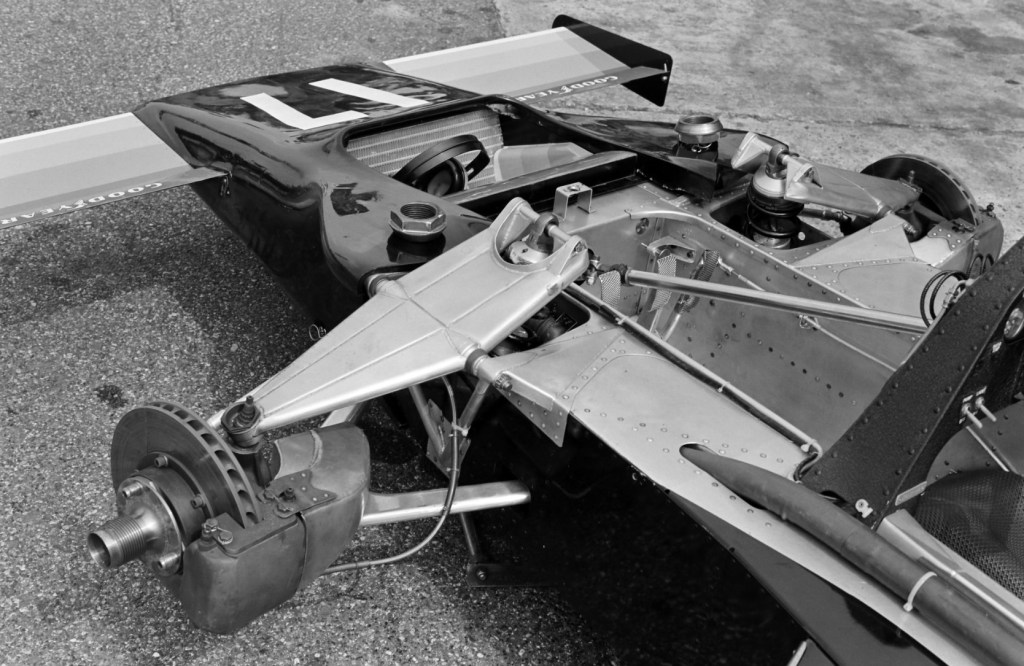
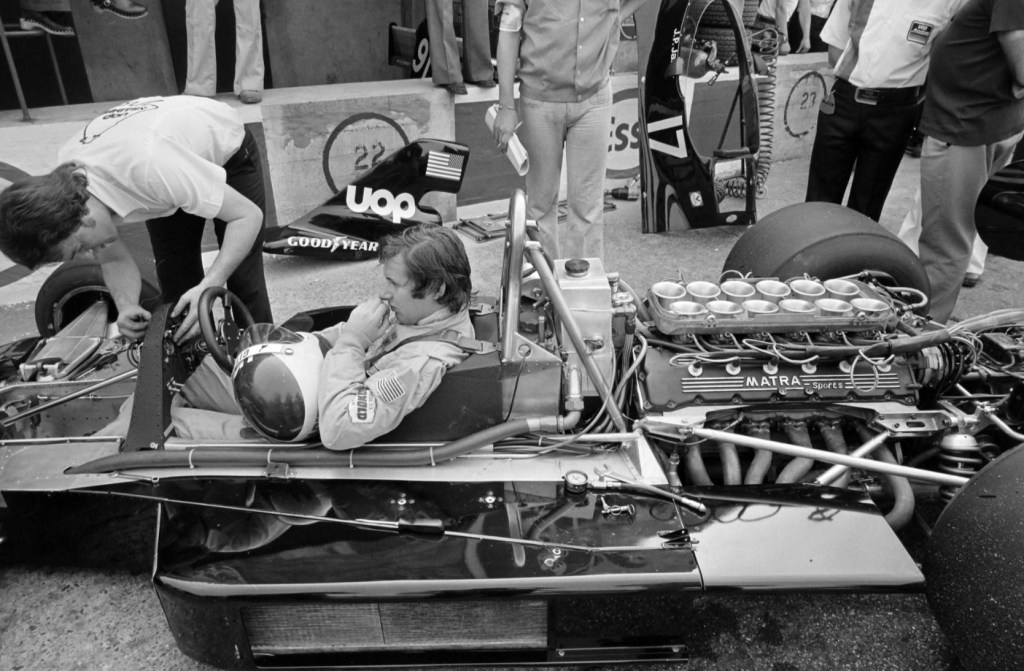
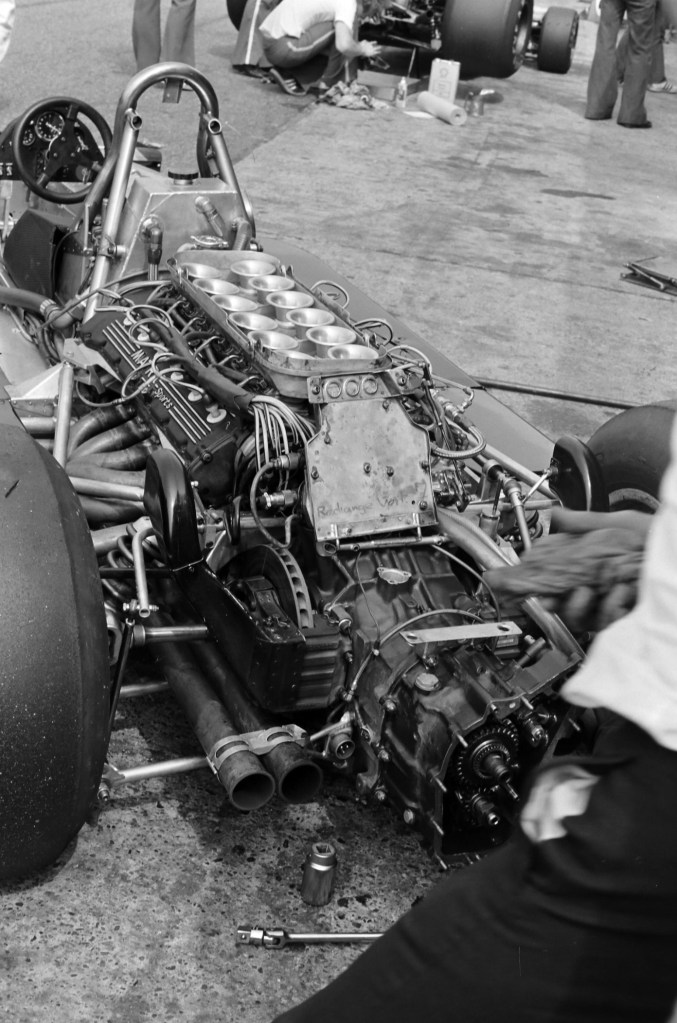
Tony Southgate spoke of the challenges of adapting the Matra engine to the DN5 in his autobiography.
‘In view of my V12 experience with Eagle and BRM the powers that be most likely thought I was a bit of a V12 expert and that I might be able to resurrect the old Matra engine and get it to the front of the grid. Fitting the Matra engine was not that straightforward and of course the V12 engine required a lot more fuel cell capacity. The engine ran at 12000rpm, about 30% more than the DFV, so extra tanks were fitted into the sides of the car alongside the existing seat tank.’
‘Due to the extra engine RPM and horsepower the cooling system needed to be increased in size, so I fitted larger side pods and set the water radiators further forwards to maintain the weight distribution of the Cosworth engined DN5. The V12 was longer than the DFV, of course, so the wheelbase was increased a little’.
‘The end result was a longer, heavier but more powerful DN5 which we called the DN7. I thought that it would do about the same lap times as the DN5 and that proved to be the case’.
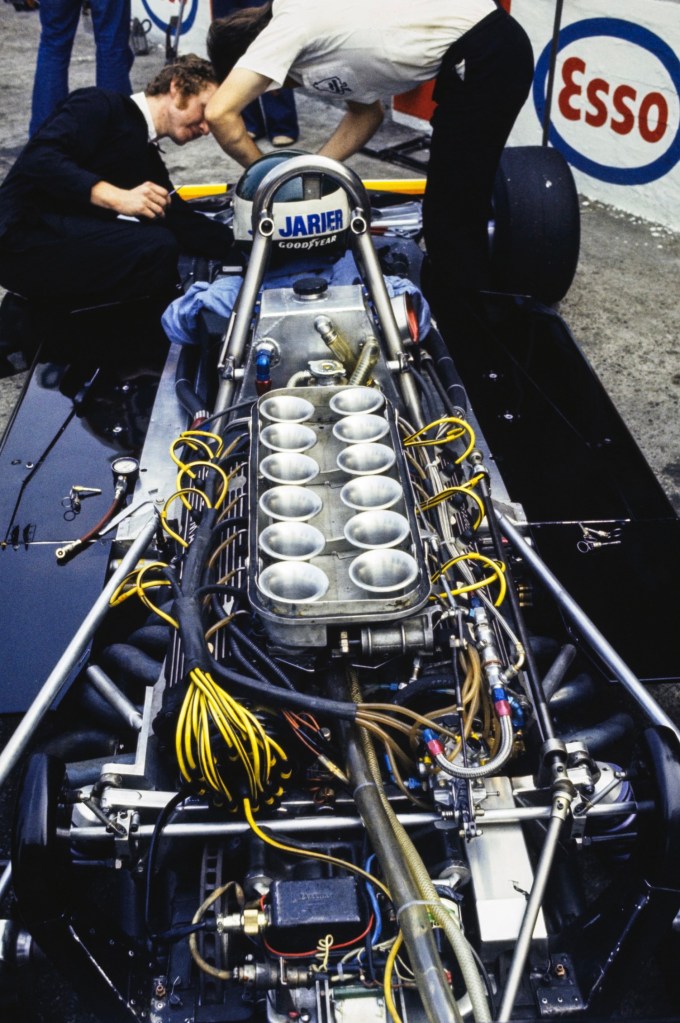
When finally completed the car was tested by ‘Jumper’ at Silverstone in July and made its race debut in practice for the Austrian GP on 17 August.
Tom Pryce drove his usual Ford engined DN5 and offered a direct comparison, both drivers being more or less equivalently FAST. The car was heavier than the DN5, it wasn’t bespoke, but still provided the team and of course Matra a sense of competitiveness of the package.
The Austrian GP was a horrible weekend, Mark Donohue crashed his Penske March 751 in practice as a result of a Goodyear tyre failure, dying in a Graz hospital several days later of brain injuries sustained in the high speed crash. Half points were awarded to finishers of the rain shortened race won by Vittorio Brambilla’s works March 751 Ford, that teams first, long overdue win.
Denis Jenkinson in MotorSport had this to say about the re-appearance of Matra in GP racing; ‘Another welcome return was made by the Matra V12 engine, this time in the back of a UOP Shadow DN7, but somehow it seems to have lost that car-splitting scream that it used to have in the days of Beltoise and Pescarolo in the blue cars from Velizy. Perhaps the Ferrari and Cosworth engines have caught it up on the decibel scale, for they certainly have on bhp output. None-the-less it was nice to see and hear a Matra V12 in Grand Prix racing again’.
‘Particularly pleasing was to see the enthusiasm with which JPJ was tackling the job of driving the DN7. It was not a half-hearted attempt, with one eye cocked over the Cosworth powered DN5 standing in the paddock, or a dickering between the two cars. As far as Jarier was concerned there was only one car for him and that was the DN7. With that approach in the cockpit the Shadow Matra V12 project could get somewhere. It certainly started well by being ahead on the grid of Pryce in the Shadow Cosworth V8, even if it was only 0.2 sec ahead’
Jarier qualified the DN7 13th, one grid slot in front of Pryce, Tom had a great race finishing third while the Matras fuel injection system malfunctioned causing JP’s retirement on lap 10. It was an ok start for a car with limited testing, the Shadow boys prepared the same mix of cars for the Italian GP held on 7 September.
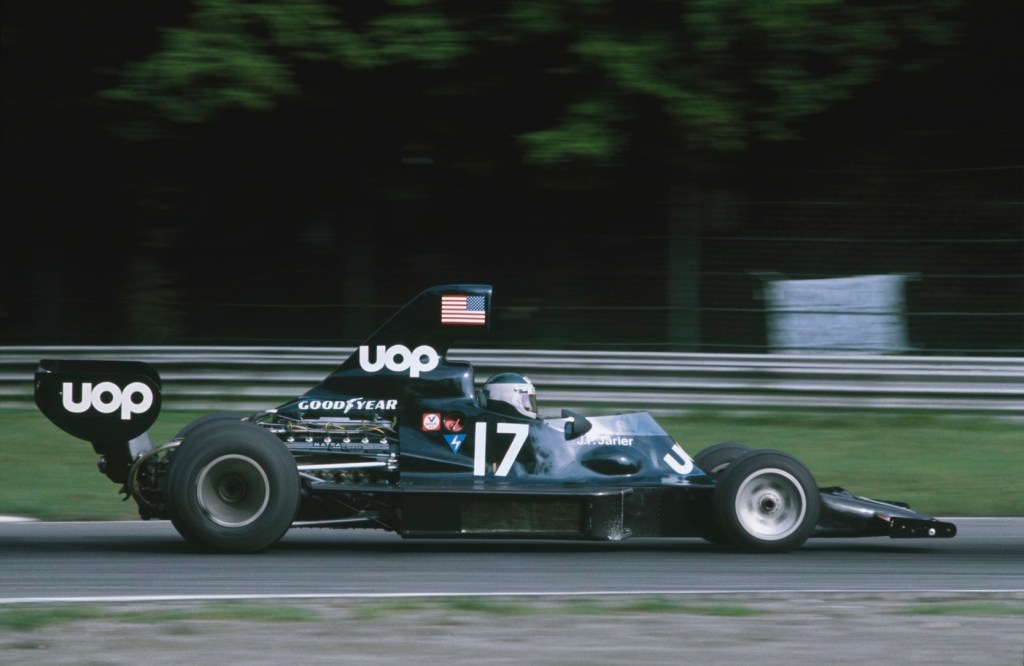

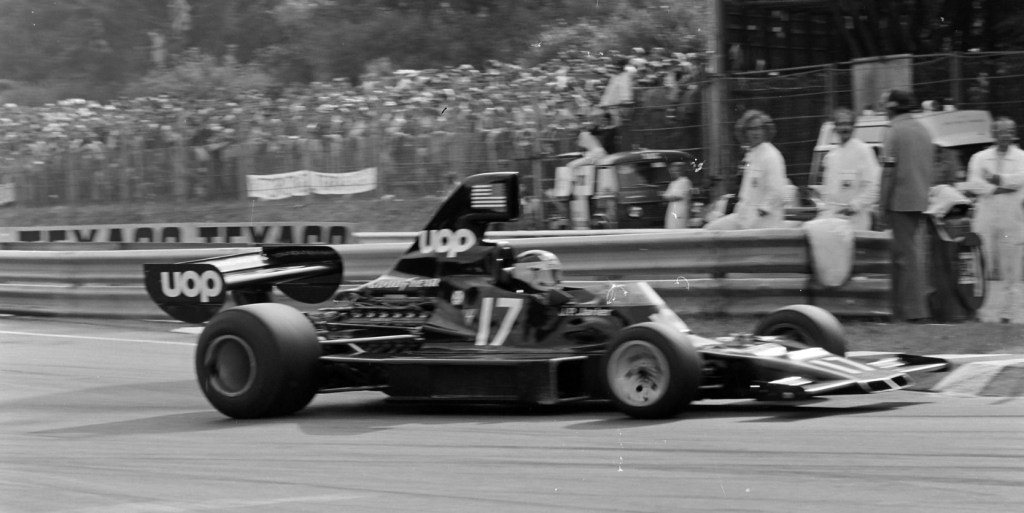
In between the Osterreichring and Monza the non-championship Swiss Grand Prix was held at Dijon, France, there being no circuits in Switzerland, with Jarier putting his Shadow on pole. He led the first 23 laps until retirement with gearbox trouble; but he was back in his Ford engined DN5 while the DN7, the team only built one chassis – #DN7/1A – was readied for Monza. Clay Regazzoni won the event in his Ferrari 312T and then doubled up also driving to victory at Monza.
The Shadows qualified in Italy exactly as they had at the Osterreichring, the results similar as well; ‘Jumpers’ Matra failed, this time with fuel pump failure and Pryce was sixth after a good mid race battle with James Hunts Hesketh. Niki Lauda won his first drivers championship, his third place in his Ferrari 312T assuring him of the championship.

At the season ending Watkins Glen race both Shadows were very fast; Q4 for Jarier and Q7 for Pryce but both were in DN5s, the Matra experiment was, sadly for the sport, over.
‘Jean-Pierre Jarier was fighting hard with the Shadow V12 during the first session, a revised fuel system and some titanium exhausts from the sports car endowed it with appreciably improved performance at the top end of its rev band. Alas, Jarier’s enthusiasm would be channeled into the Cosworth powered DN5 after it was calculated that the engine would consume fuel at the rate of 4mpg under racing conditions, and the French engined car was sadly pushed away for the remainder of the weeekend’ (therefore the car would not hold sufficient fuel to complete the race without a stop) said Denis Jenkinson in his MotorSport race report.
It may be that that was the case, or simply that Don Nichols had learned that Matra engines would be used exclusively by the new Ligier team for 1976 and simply put the car to one side to focus on the quicker DN5 Cosworths.
Lauda won the race, both Shadows well down the field despite qualifying times which showed just how quick a package the car was on a circuit which was a great test of a car’s medium to high speed handling characteristics.
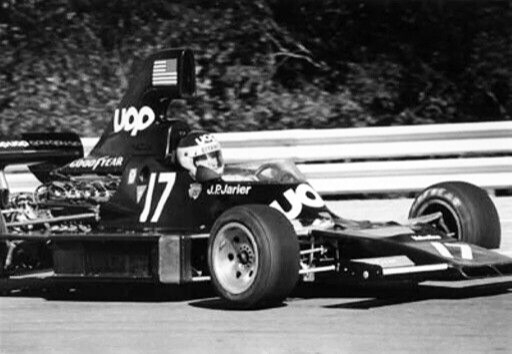
Both Nichols and Ligier wanted exclusivity in terms of engine supply, from a France Inc perspective the choice of the well connected former rugby international’s team made more sense than the American owned British based concern; French car, team and driver.
From Matra’s viewpoint it makes more sense to me, given the aerospace conglomerates immense resources, to supply two teams in 1976 especially given Shadow’s speed, if not reliability in 1975.
Ligier were an unknown 1976 quantity, Shadow were. Both Shadow drivers had shown prodigious speed in 1974-75, one was French and Southgate did a neat job integrating the Matra V12 into an existing chassis designed for a different engine. His bespoke 1976 Matra chassis would have been lighter overall and designed around the engine architecture rather than an adaptation of what he had based on the Ford Cosworth.
Ligier were to be a one car entry in 1976 so Matra very much had all their eggs in one basket. Ligier’s JS5 1976 car was a horrible looking, bulky thing, mind you it delivered the goods in a a way Shadow did not that year. Jacques Laffitte was eighth in the drivers championship, Pryce 12th and poor Jarier didn’t score a point in the lightly updated 1976 Shadow DN5Bs and new DN8. Matra finally achieved a GP win when Laffitte won the 1977 Swedish Grand Prix in his Ligier JS7, the whole paddock were delighted for him, Ligier and Matra.
Don Nichols retained ownership of Shadow, but his company, United Oil Products, was no longer the team’s major sponsor and the slippery slope of progressive loss in competitiveness began, whilst noting Alan Jones’ lucky 1977 DN8 Ford, Austrian GP win.
If only Nichols had jagged the Matra deal or the Velizy concern supplied both teams he may have stayed more involved and we would have had the chance of seeing Tony Southgate designed, bespoke, Matra engined cars driven by two of the fastest chargers around at the time. It’s an interesting ‘mighta been’ I reckon?!…
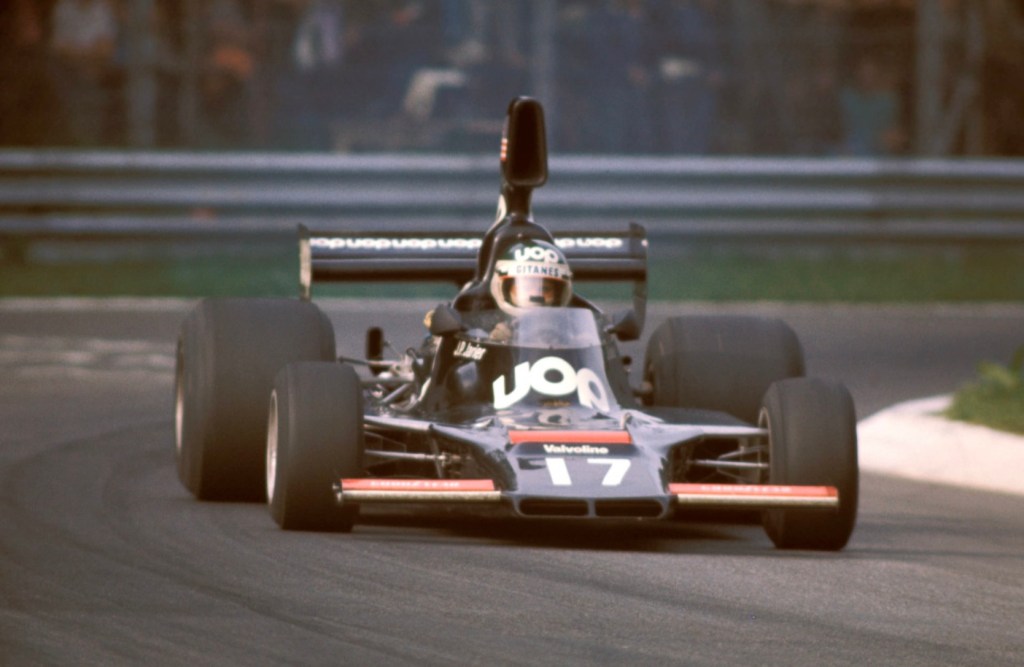
Shadow DN7 Matra Technical Specifications…
Chassis; aluminium monocoque using the Matra MS73 V12 as a fully stressed member. Front suspension by lower wishbone and top rocker actuating inboard mounted coil spring/damper units. Rear suspension twin parallel lower links, single top link, coil spring/damper units and twin radius rods. Adjustable roll bars front and rear. Wheelbase 2667mm, front and rear tracks 1473/1549mm. Weight 612Kg.
Front and rear disc brakes, inboard at the rear. Rack and pinion steering. Wheel sizes front/rear 9.2/20 13 inch in diameter, 16.2/26/13 inches.
Engine; Matra MS73 3-litre, DOHC, four valve, Lucas fuel injected, all aluminium 60 degree V12. 2993cc, bore/stroke 79.7/50mm, circa 500bhp @ 11600rpm. Gearbox; Hewland TL200 five speed transaxle
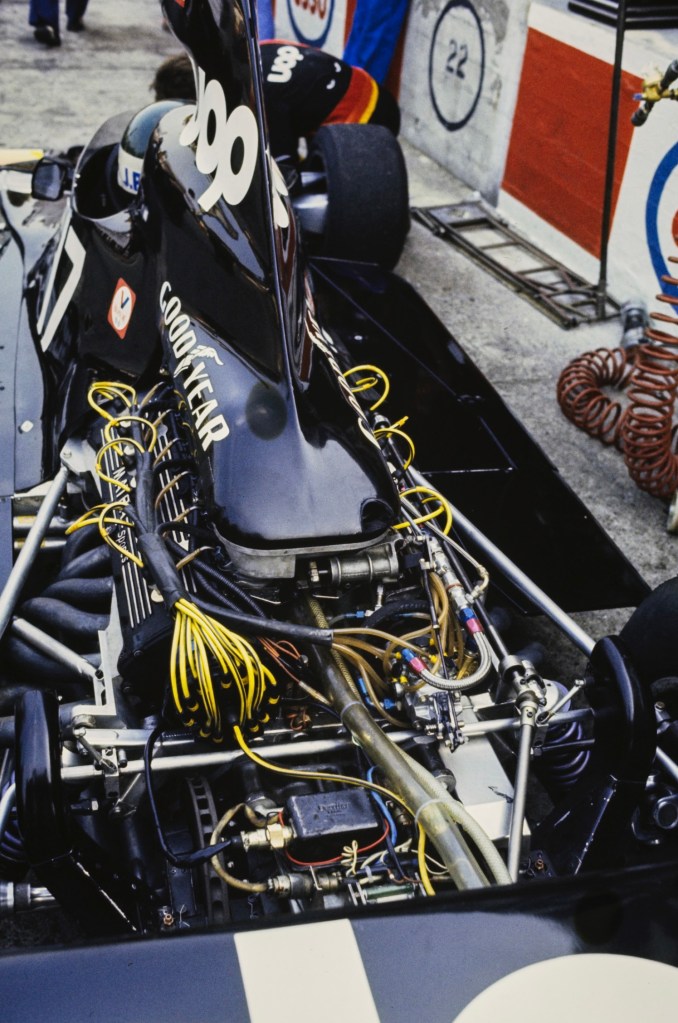
Etcetera…
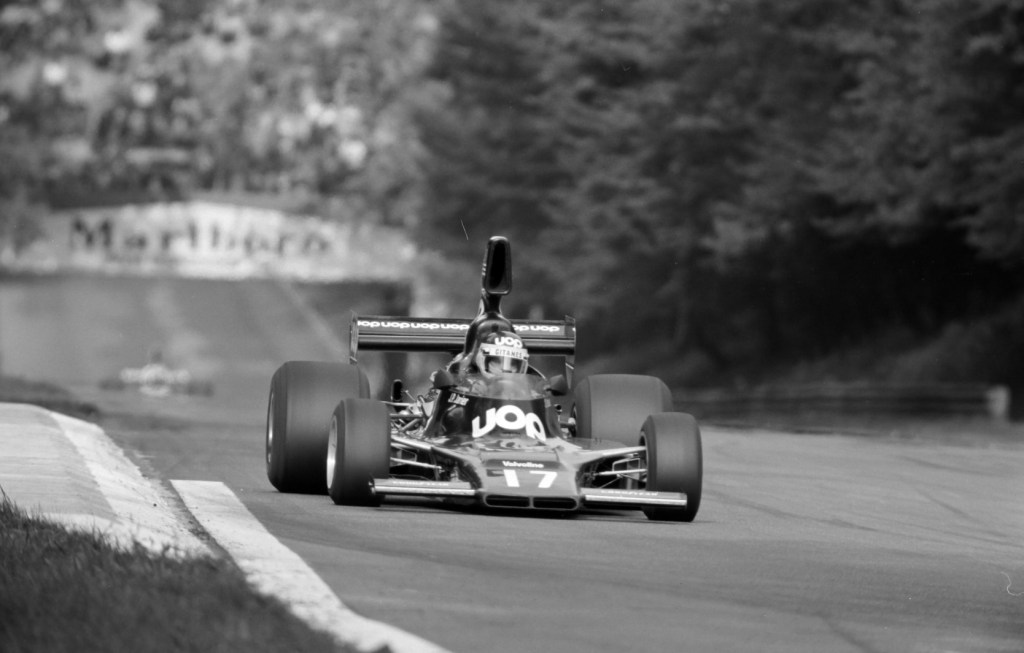
More shots at Monza in 1975, probably too much of a good thing…
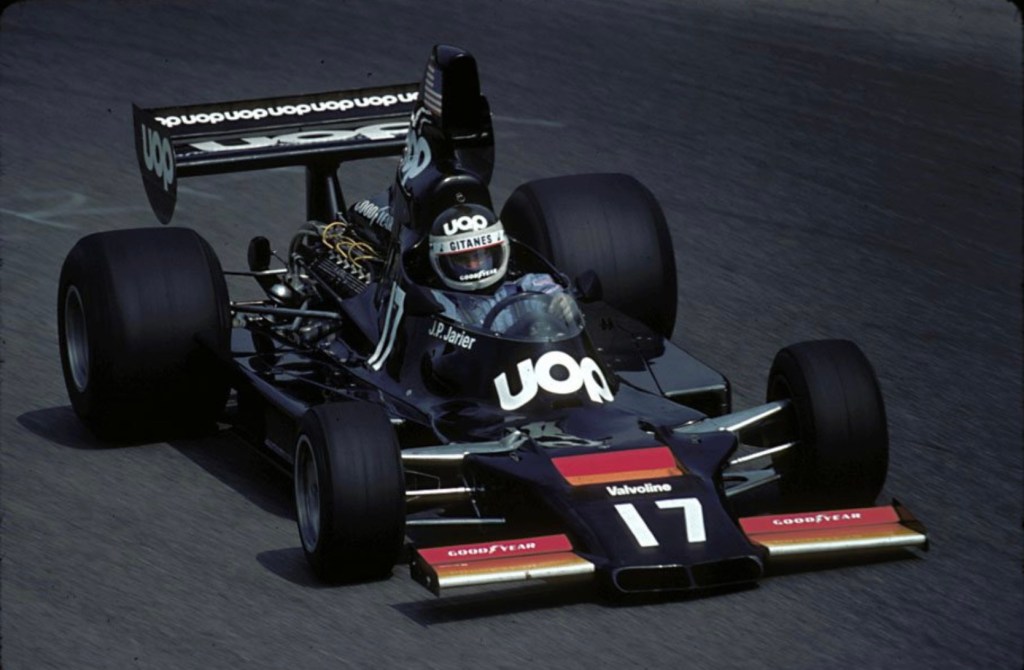
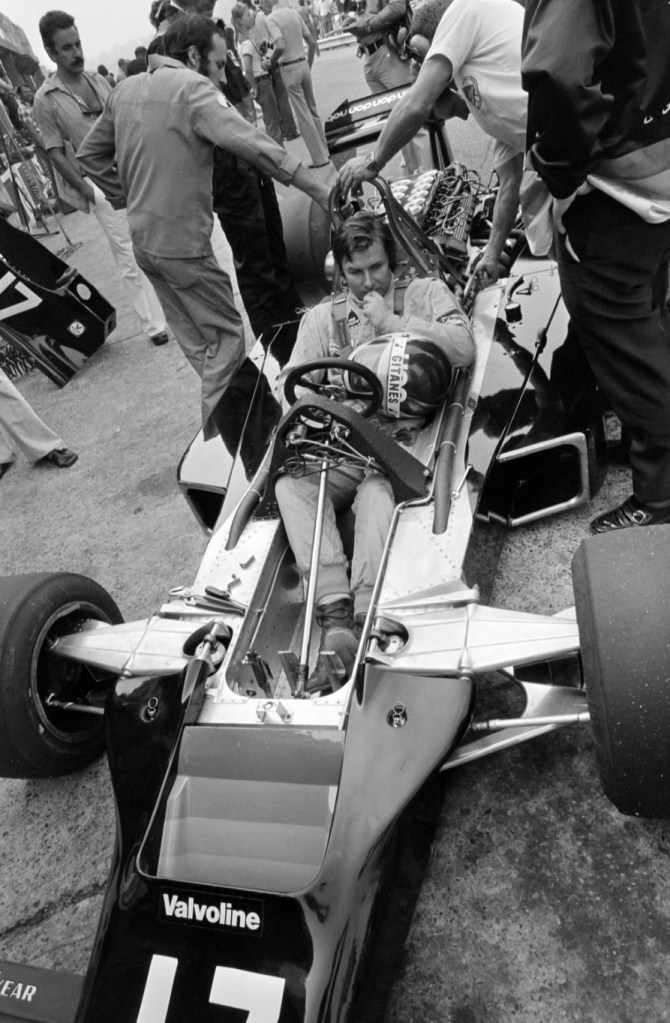
Tony Southgate on ‘Jumper’ Jarier in ‘MotorSport’…
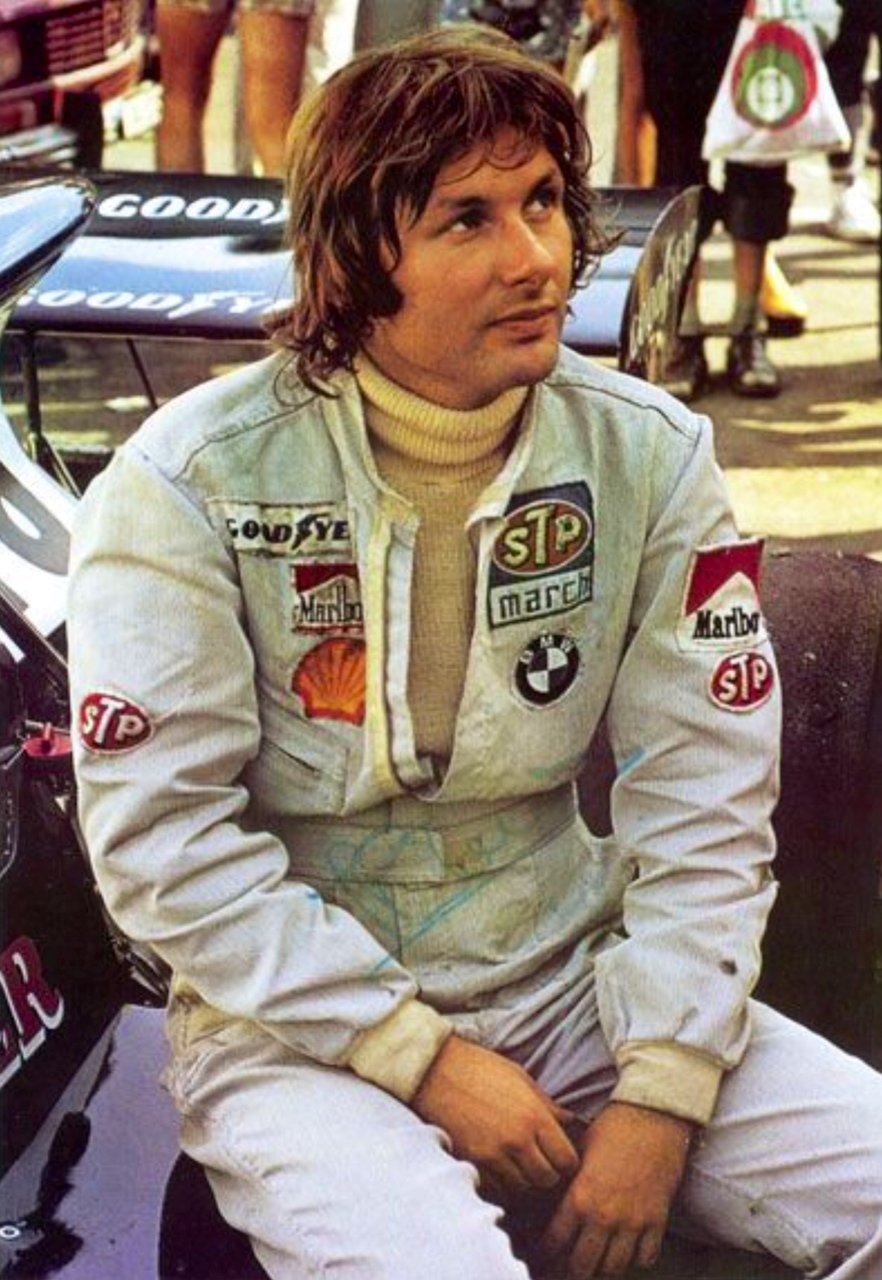
‘He had such fantastic car control and speed but just didn’t have the commitment. I’m sure he could have been World Champion if only he could have been bothered. Jean-Pierre got bored very easily and in practice or testing he would adapt himself to the car and do the same times after you had made adjustments. He was a typical French driver in that he was more interested in going out of an evening, eating a good meal and chasing the ladies. It soon became clear that he wouldn’t go on to the next level’.
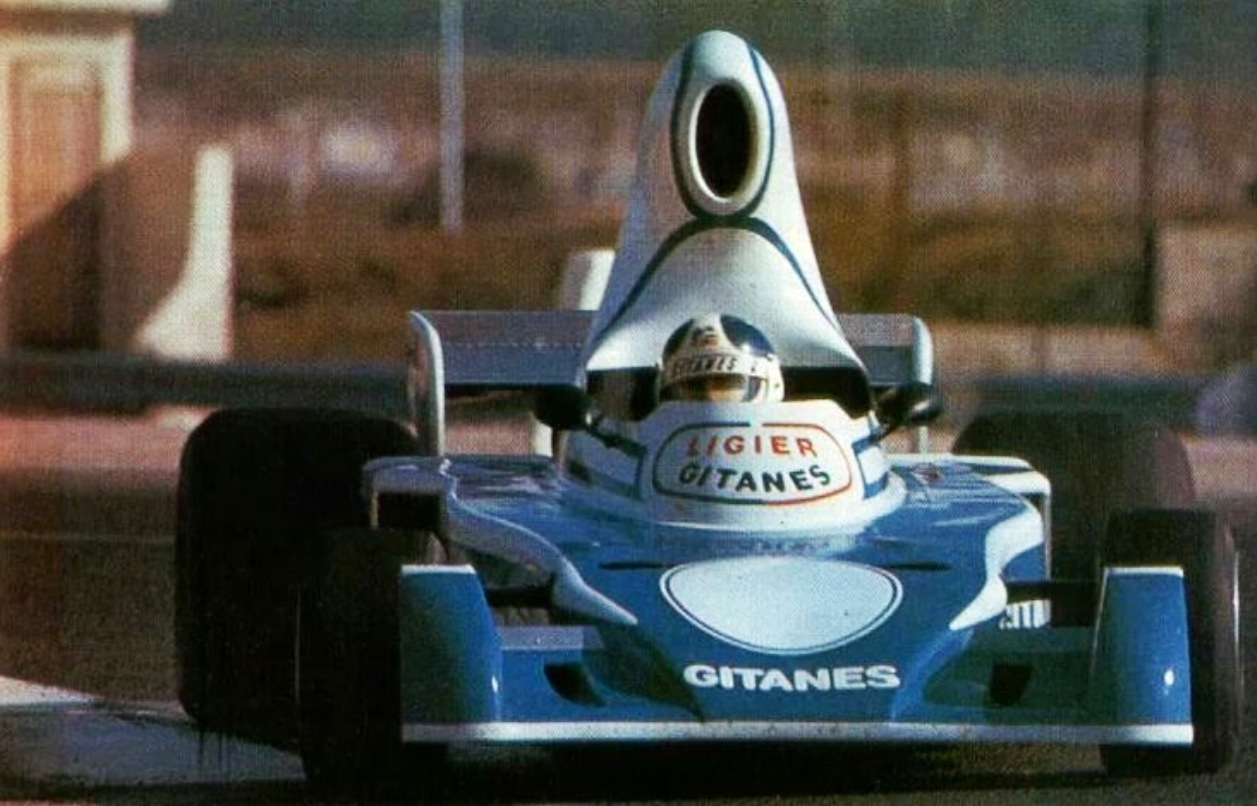
1976 Ligier JS5 Matra…
The Ligier JS5 Matra was a sinfully ugly car, it had the looks only a mother could love but its ‘fugliness’ was only skin deep!
Gerard Ducarouge and his team had the aero spot on, the enormous airbox which led to the car’s nickname The Flying Teapot chanelled air beautifully over the car and smoothed it onto the rear wing. Eighth in the drivers title for Laffitte and sixth for Ligier in the constructors race in a one car team entry was an exceptional first year performance.
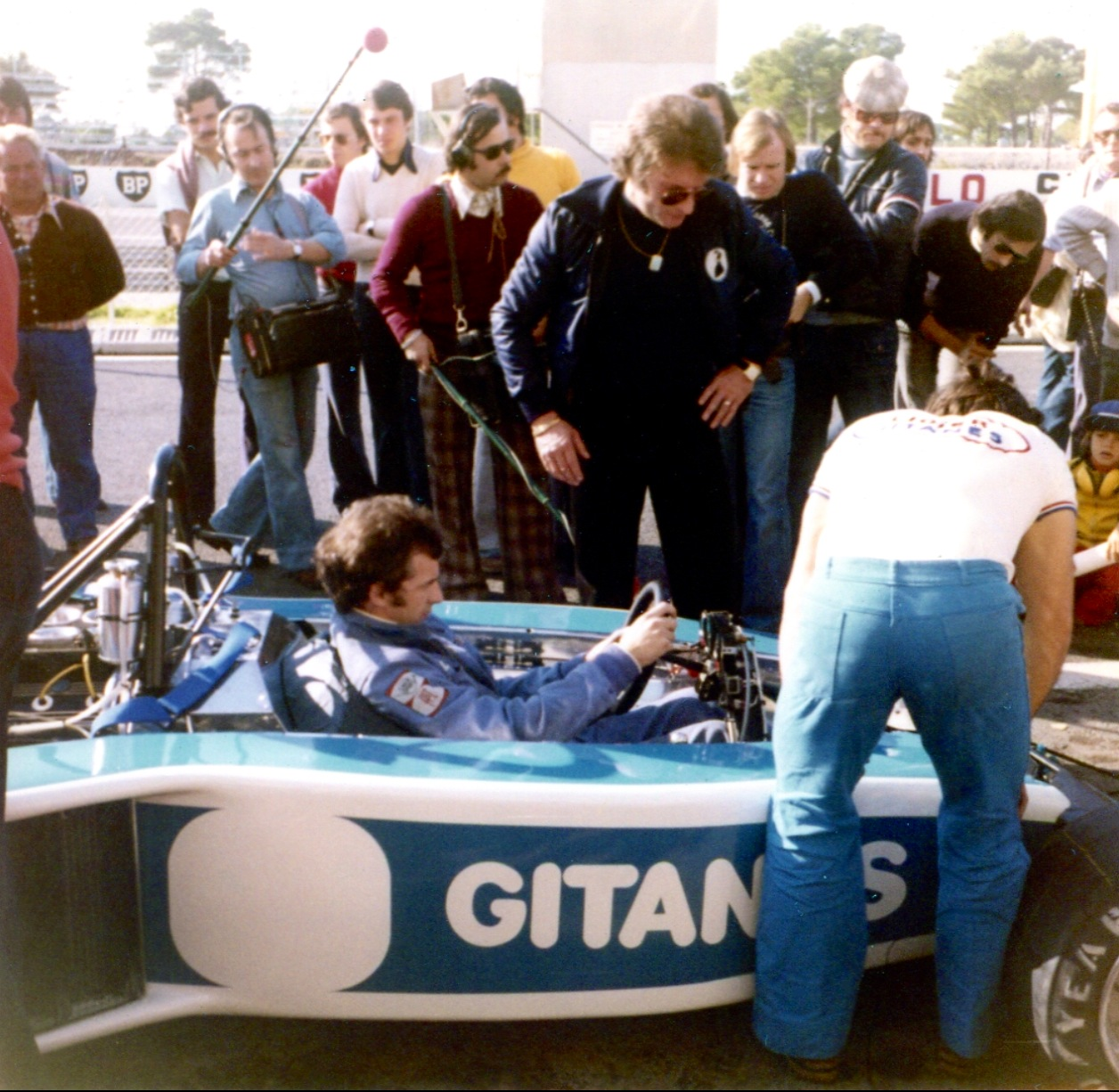
The pictures are of the JS5’s first test at Paul Ricard in December 1975 with Jean Pierre Beltoise up. JPB had been announced as the driver, perhaps via sponsor Gitanes, but Guy Ligier was not convinced and organised a driver test over two days. Jacques Lafitte the quicker of the two in a car which had been tweaked by JPB who tested on the first day.
There was disquiet in France in some quarters over the choice of Laffitte, JPB at the time was France’s only contemporary GP winner, but Ligier’s choice was sound. Jacques in Frank Williams’ Ford engined Williams FW04 and Martini Mk16 Euro F2 crown ahead of the March BMW hordes in 1975 made it fairly clear that he was the better choice. JPB, fine driver that he was, ‘ultimate speed’ had been shown over the years to be not in the Ace category whereas Jacques’ potential, relative novice that he was, was pretty clear. It was an astute choice if not an entirely popular one.
Bibliography…
MotorSport January 2015, Denis Jenkinsons MotorSport Austrian and US GP reports 1975, GP Encyclopaedia, Tony Southgate ‘From Drawing Board to Chequered Flag’
Photo Credits…
MotorSport Images, LAT, Car Blueprints, Alejandro Saldutto
Tailpiece…
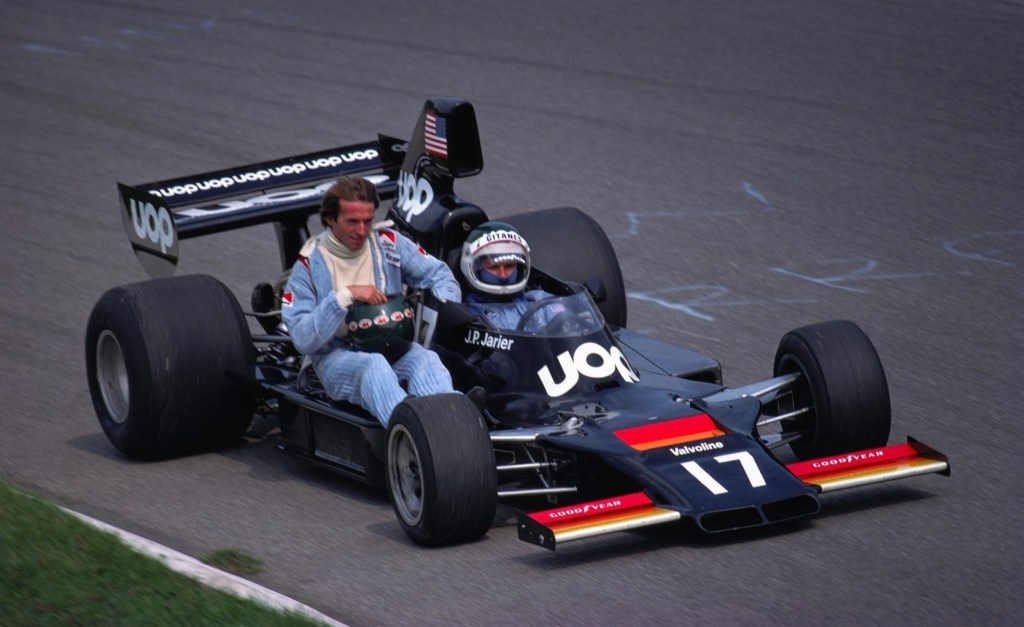
‘So waddya think of the engine Jean-Pierre? is perhaps the question Jacques Lafitte is asking JPJ on their way back to the Monza paddock’? He knew full well of course as an ex-Matra sportscar driver…
Finito…


 primotipo...