Posts Tagged ‘Tom Hawkes’

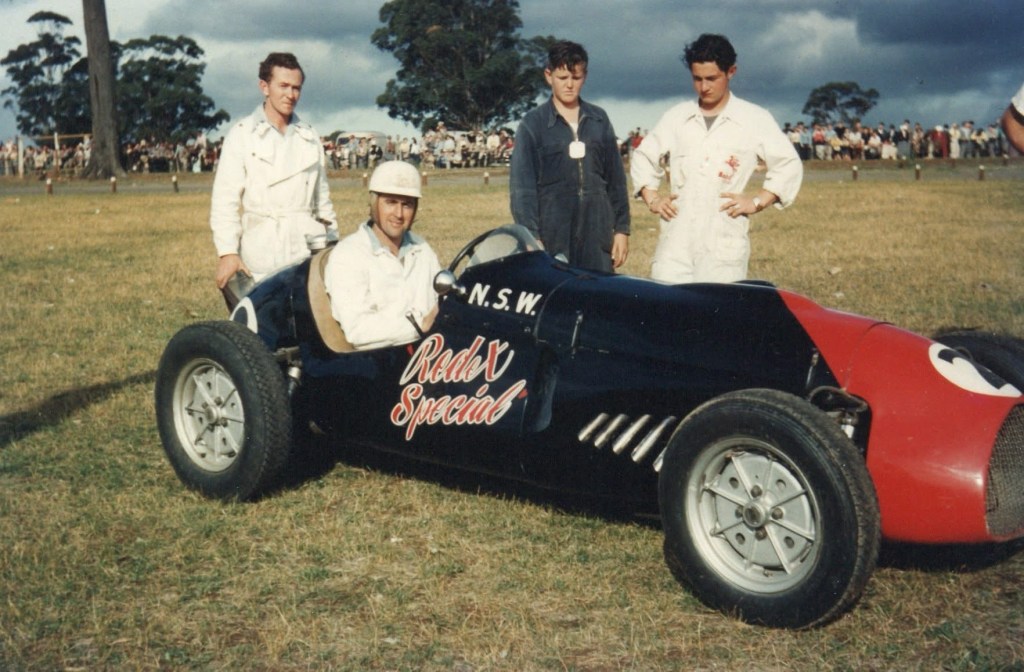
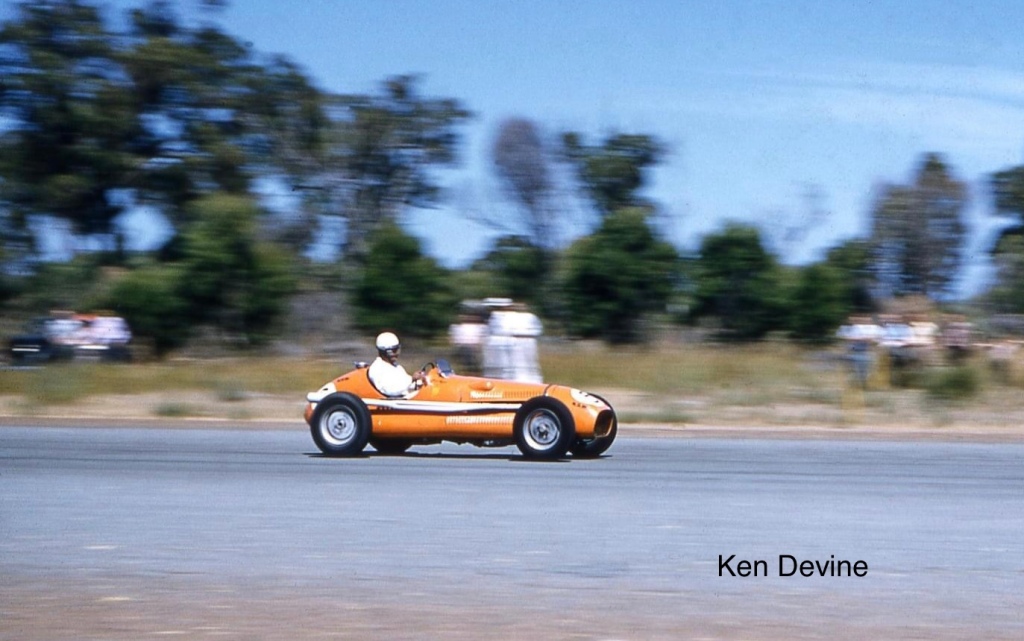
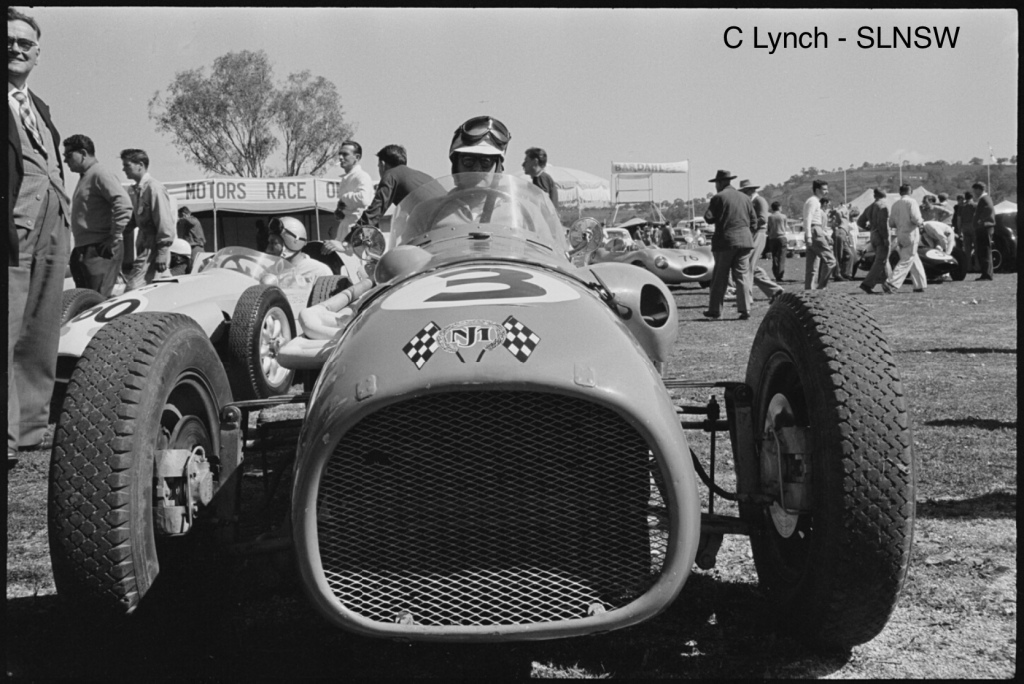
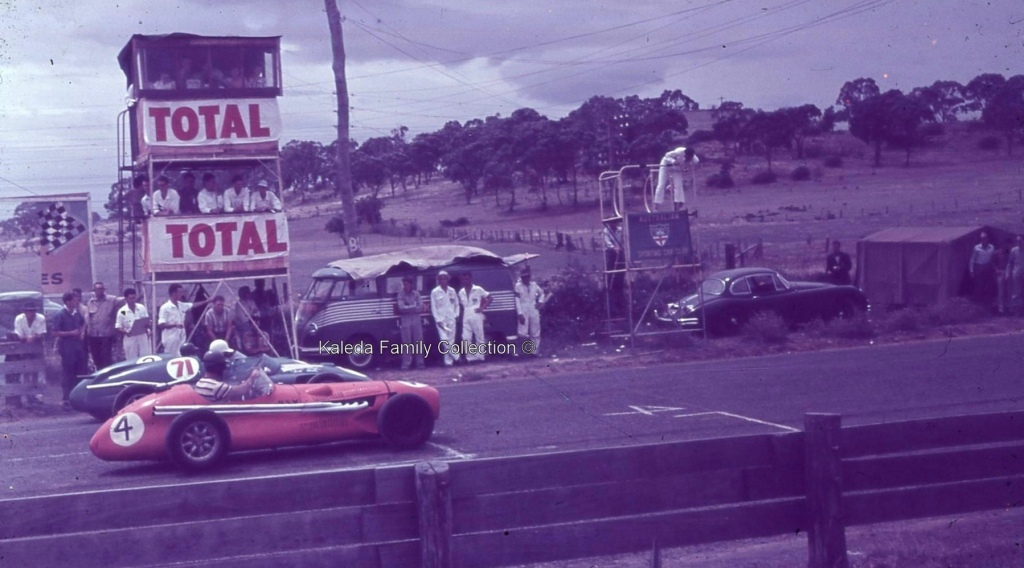
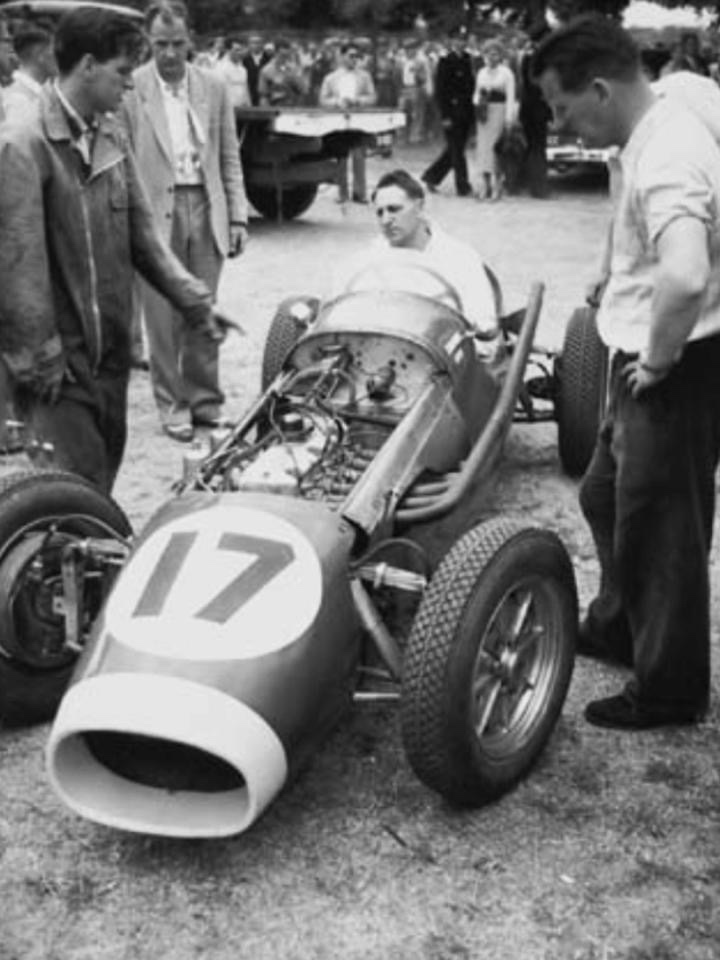
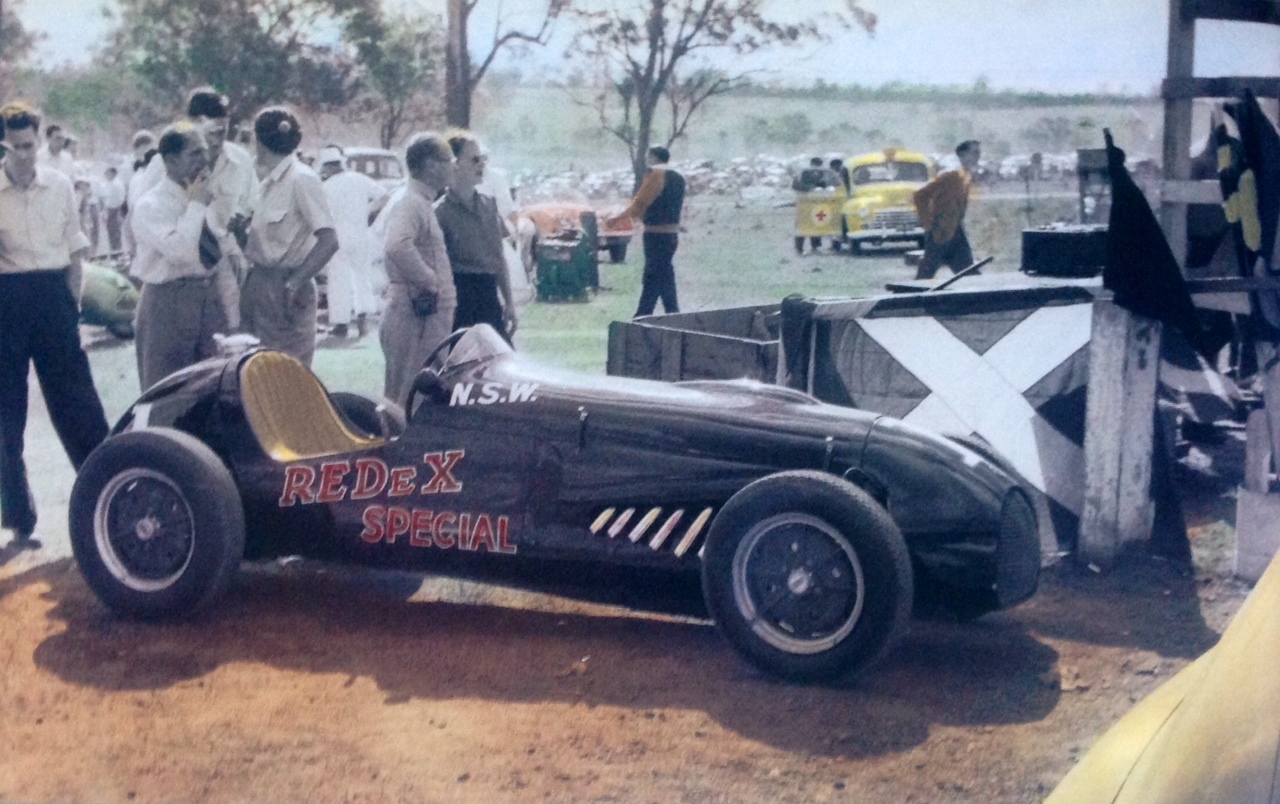
Jack and Betty Brabham during the 1954 Australian Grand Prix weekend in the Southport paddock attending to the needs of Jack’s Cooper T23 Bristol.

I’ve done Cooper Bristols to death but these two colour shots of Jack are the earliest I’ve seen – Kodachrome at its best – so I thought I’d pop them up rather than add them to an existing post and effectively lose them.

Brabham had a lousy weekend in Southport, out with engine troubles on lap 2. Lex Davison won the race in his HWM Jaguar after Stan Jones suffered a chassis weld failure that pitched him off the road and through the undergrowth, killing the car but thankfully not its intrepid driver.

Brabham at Mount Druitt, the youngster is a youthful Pete Geoghegan (D Willis)
(LAT)

CB/Mk2/1/53 was pretty trick by this stage, where is the photo above folks?

Jack had been racing it for a couple of years and made some modifications – some suggested by British mechanic/engineer Frank Ashby who was then living at Whale Beach on Sydney’s Barrenjoey Peninsula – including fitment of triple Stromberg carbs instead of the usual trio of Zeniths and taking bulk weight off the Bristol engine’s flywheel by adapting a Harley Davidson type clutch as used on his speedcar, and extensive machining. The Stromberg BXOV-1 carbs were lightly modified units of examples fitted as standard to the Holden 48-215.

Jack sold the car to Stan Jones when he left to chance his hand in the UK in early 1955 and famously regretted it. The Cooper Alta he bought from Peter Whitehead when he got to Mother England wasn’t a patch on his own car, see here: https://primotipo.com/2016/06/24/jacks-altona-grand-prix-and-cooper-t23-bristol/

Stan didn’t have it for long before selling it to Tom Hawkes in time for the 1955 Australian Grand Prix at Port Wakefield.

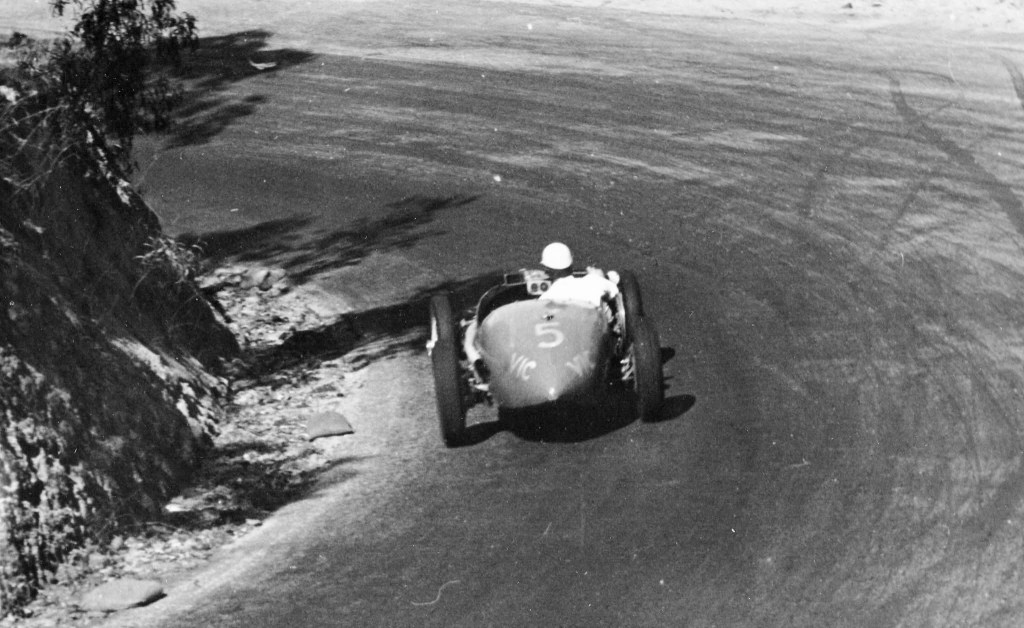
The rare shot below shows Hawkes in Jack’s old Cooper Bristol #8, with Brabham looking on from car #6, the monoposto Cooper T40 Bobtail Jack built at Coopers for his championship Grand Prix debut at Aintree in the British GP that July. He then brought it home and scored a lucky win at Port Wakefield after top-guns, Reg Hunt, #5 Maserati A6GCM-250 and Stan Jones, #4 Maybach 3 retired.

(E Steet)
Hawkes on the way to a DNF in the 1957 AGP at Caversham in the ex-Brabham Cooper T23, now fitted with a Repco-Holden engine (E Steet)

The ultimate spec of CB/Mk2/1/53 was created when Tom Hawkes got his hands on it. He raced it initially as was and then made changes to the suspension, replacing the transverse leaf suspension with wishbones and coil springs, added a slimline body, fitted wider Lukey alloy wheels, and critically, replacing the 2-litre Bristol six with a 2.3-litre pushrod Holden Grey six topped by a crossflow Repco Hi-Power cylinder head and a pair of SU carbs.

Hawkes in the Albert Park paddock, 1956 AGP weekend. Repco-Holden engine, car still fitted with transverse-leaf IFS (NAA)
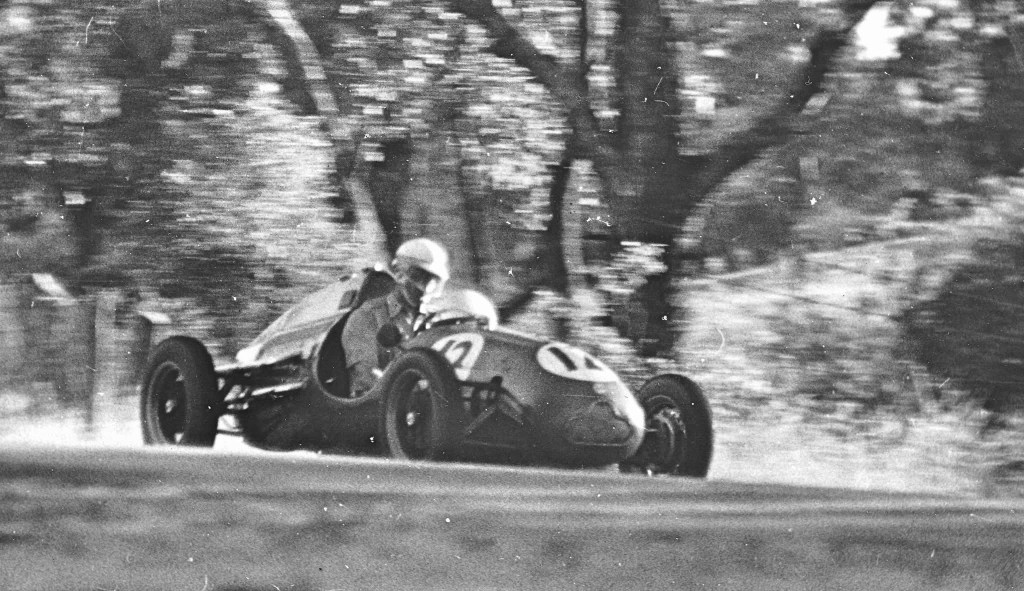
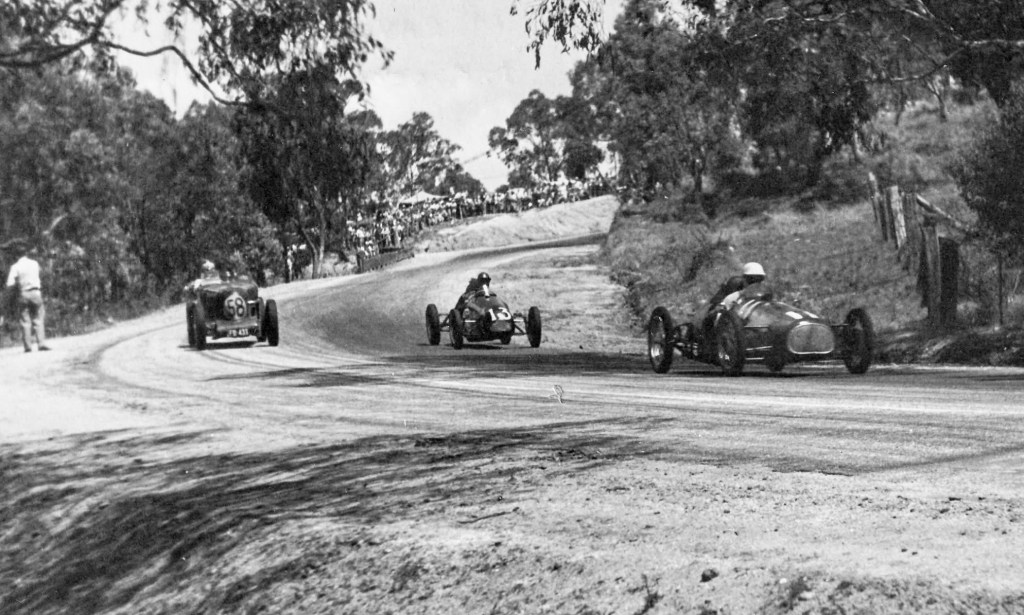
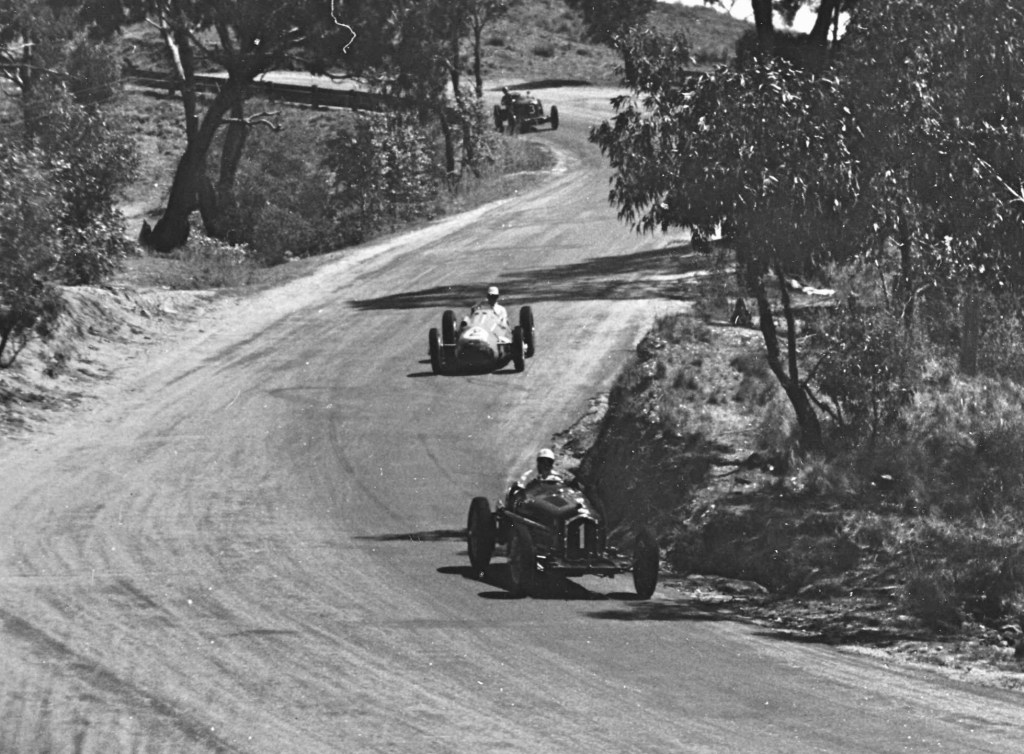
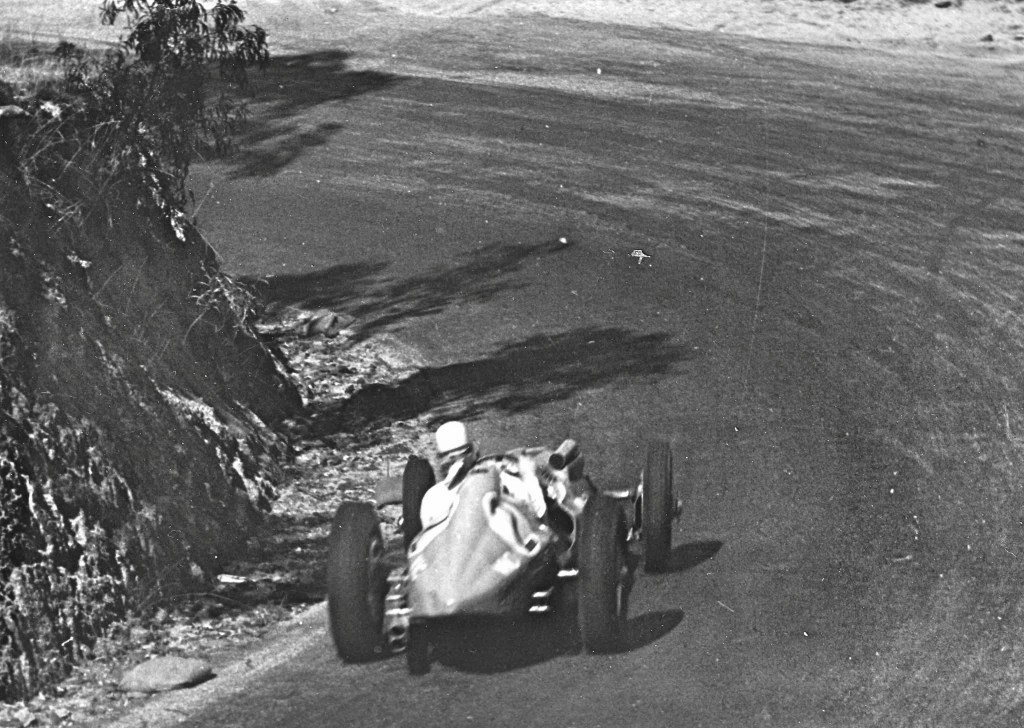
Hawkes ascends Mount Panorama during the ‘58 AGP weekend, note the stance of the car and Lukey alloy wheels (T Martin)

Tom was third in the 1958 AGP at Bathurst – the ultimate Australian power circuit – with the Cooper in this spec behind Lex Davison’s 3-litre Ferrari 500/625 and Ern Seeliger’s 4.6-litre Maybach 4 Chev V8. Sure, Ted Gray, Tornado 2 Chev and Stan Jones, Maserati 250F retired from the lead, but was the best ever AGP finish for a Holden six, a great achievement.

Etcetera…

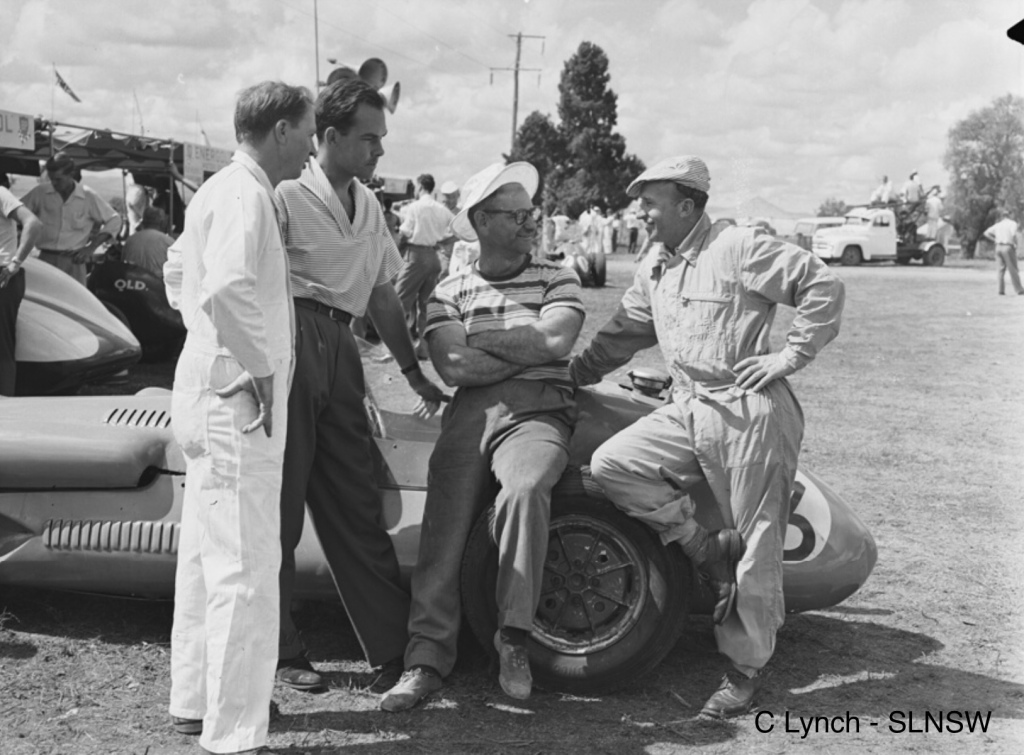
Brabham and crew at Mount Druitt circa 1953, names folks? (A Cox)
(A Patterson Collection)

John Sherwood and Jack Brabham, perhaps at one of the send-off functions for Jack when he left for the UK in early 1955

Brabham chats to Doug Whiteford on the Australian Grand Prix-Port Wakefield grid in 1955. Cooper T40 Bristol and Talbot Lago T26C.

(unattributed)

This pair of shots show Jack aboard the Cooper T40 Bristol during the January 30, 1956 South Pacific Championship meeting at Gnoo Blas. Brabham was second behind Reg Hunt’s new F1 Maserati 250F with Kevin Neale third in, you guessed it, a Cooper T23 Bristol.

These cars – Type 20 and Type 23 or Cooper Bristol Marks 1 and 2 if you like – were hugely important machines in Australian racing for a decent chunk of the 1950s in original spec and modified from mild to wild…

(unattributed)

Credits…

Old Motor Racing Photographs Australia, Dick Willis, Allen Cox, LAT photographic, Ed Steet shots via David Zeunert, Lex Denniston shot via Tony Johns, Tony Martin, Adrian Patterson Collection

Tailpiece…

Three of the 1954 AGP protagonists on the cover of Wheels magazine in January 1955. Lex Davison’s HWM Jaguar, an ex-Moss F2 chassis fitted with a C-Type engine, Dick Cobden’s ex-Whitehead Ferrari 125 s/c and Jack Brabham’s RedeX Special Cooper T23 Bristol.

Quite why yerd’ put the winner, Davison, on the cover and two DNFs I know not…the answer is probably the timelines in hand-colouring the photographs for a race held on November 7, 1954.

Finito…

(FS Furness)

Easter 1951…

Charlie Dean in magnificent Maybach 1, then 4.3-litres in capacity, descending The Mountain.

The original machine of 1947, hillclimbed initially sans bodywork, has now evolved into a refined racing car in its middle age; the last hurrah for Maybach 1 was victory in the 1954 New Zealand Grand Prix held on the Ardmore airfield circuit on January 9.

Charlie was third at Bathurst behind Lex Davison’s Alfa Romeo P3 and Doug Whiteford’s Talbot-Lago T26C in the 6 lap over 1500 handicap, but didn’t finish the 3-lap scratch or start the Redex 100 mile – the Bathurst 100 became the Redex 100 with a few sponsorship £’s – feature with mechanical dramas.

As you will see below, by the October Bathurst meeting Stan Jones had bought the car from Dean and entered into a deal with Repco Research, of which Charlie was general manager/chief engineer, whereby the preparation and ongoing development of the car(s) was Repco’s responsibility.

More about the Maybachs here: https://primotipo.com/2024/01/15/maybach-1-technical-specifications/ and here: https://primotipo.com/2024/03/22/maybachs-2-4-technical-specifications-by-john-goode/

These fabulous photographs were taken by FS Furness and posted on Bob Williamson’s ‘Motor Racing Photographs – Australia’ Facebook page recently by enthusiast Mal Elliot. With the help of John Medley’s Bathurst Bible ‘Bathurst:Cradle of Australian Motor Racing’ I have cobbled together a few words to go with the images. So large was Mal’s post that there are a couple more pieces to come. Many thanks Mal, information on FS Furniss would be most appreciated folks!

(FS Furness)

Tom Hawkes ex-Louis Chiron Talbot-Lago T26C #110007 had not been long in the country and was shared with, and soon sold to very experienced racer, 1950 AGP winner and fellow Victorian Doug Whiteford.

Whiteford soon had the big car going well that weekend, doing 136mph down Conrod. That combo, aided by Doug’s skilful preparation became the top-gun combination in Australia for the next few years. Hawkes was third in the Redex 100 feature, while Whiteford was third in the 3 lap scratch and fifth in the over 1500cc handicap.

The big blue, 4.5-litre six-cylinder Grand Prix car was ‘blooded’ in its first meeting in the Antipodes. That ding in the nose was caused when Whiteford gave Lex Davison’s Alfa Romeo P3 a tap-up-the-bum during the latter stages of the over 1500cc handicap won by Laurie Oxenford’s Alvis Mercury. Lex’s P3 Alfa brakes were usually problematic, a moments hesitation into Hell corner resulted in the hit. The blue and white T-L nose badge became lodged in the Italian’s perky rump, incensed after the race, Lex didn’t return it. Davo was fourth and Whiteford fifth. More about the Talbot-Lago here: https://primotipo.com/2022/05/04/doug-whiteford-talbot-lago-t26c-take-3/

(FS Furness)

Jack Murray had a great weekend aboard his Allard J2 Cadillac. Three J2s were entered by the NSW distributors, Gardiner Motor Service. The best result of the four Allards entered was Murray’s third place in the over 1500cc 6 lap handicap.

(FS Furness)

Dick Cobden had a great weekend in his MG TC Spl. He was third in the 6 lap under 1500cc handicap, and won the 12 lap 50 mile handicap for Redex 100 non-qualifiers.

The first four cars home were MGs; George Pearse’ TB Spl s/c, Curley Brydon’s TC Spl s/c, Cobden, and LG Barnard’s TC. MGs were in many years Australia’s ‘FF and F2 cars’, depending on specification, for decades of handicap racing.

(FS Furness)

H Monday in the RA Gardiner entered Allard J2 was fifth in the McLaughlin Motors Handicap. See this Allard J2 article here: https://primotipo.com/2015/08/07/allard-j2-tom-hawkes-collingrove-hillclimb-1952/

(FS Furness)

Uber-rare shot of champion cyclist’s Nino Borsari’s Cisitalia from Alf Mazengarb’s Riley, neither car was well up in the closed production car handicap where French cars were to the fore: the M Rolls Renault 750 won from Citroens raced by Bill Buckle and P Damman.

(FS Furness)

Jack Saywell’s 1-litre JAP 8/80 powered Cooper Mk4. He did well, winning the 3 Lap Scratch from Frank Kleinig’s Kleinig Hudson Spl and Whiteford’s Talbot-Lago T26C.

(FS Furness)

Lyndon Duckett aboard the Ecurie de Pur Sang Bugatti Type 51A – T35B-4847 converted by the factory to a 51A- substituting for Peter Menere. The car doesn’t appear to have figured in the results.

#4847 was a car brought to Australia by the Dale brothers circa 1951, see here: https://primotipo.com/2018/08/23/words-from-werrangourt-1-by-bob-king/

(FS Furness)

October 1951

Eldred Norman blasting his Maserati 6CM down Mount Panorama during the feature race, the Redex 50 Mile Championship held over 12 laps on October 1.

Colin Murray brought 6CM #1542 to Australia to contest the 1951 AGP held on the Round the Houses circuit laid out at Narrogin, a wheatbelt town 200km south-east of Perth. He failed to finish the race, then sold the car to Norman who also contested the GP, leading it for a while aboard his famous Double Eight, twin-Ford Mercury V8 engined special until it expired. Eldred sold that car to Perth’s Syd Anderson and ‘stepped-up’ to the Maserati. Quite why he bought a car he soundly belted with the Double Eight is intriguing.

Eldred had a baptism of fire with the Maserati. By the time he got to Bathurst he had already blown the Maserati’s 1.5-litre, six-cylinder twin-cam engine after a connecting rod came adrift at either Gawler or Glen Ewin and reconstructed it.

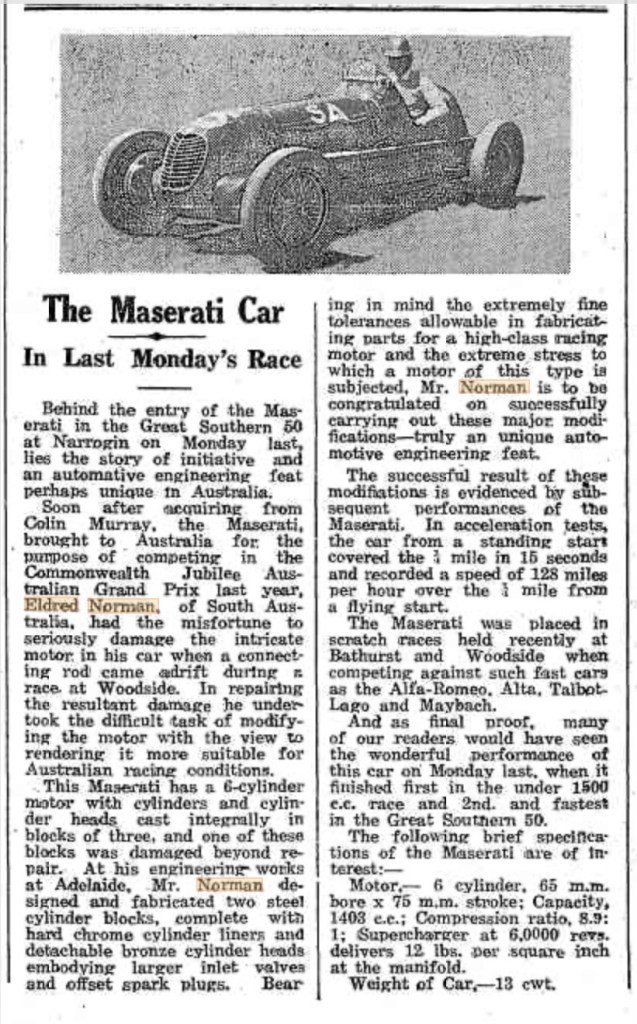
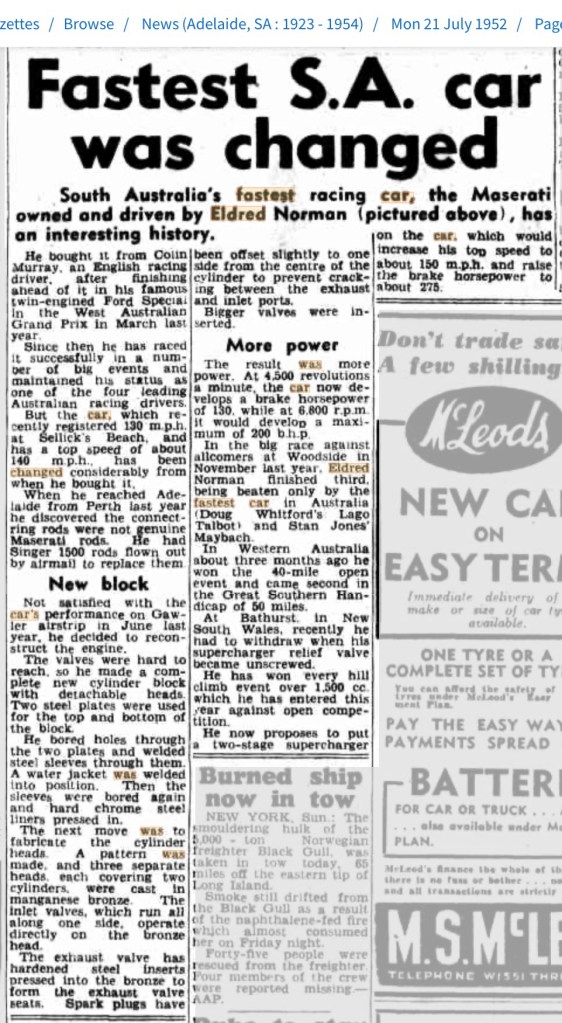
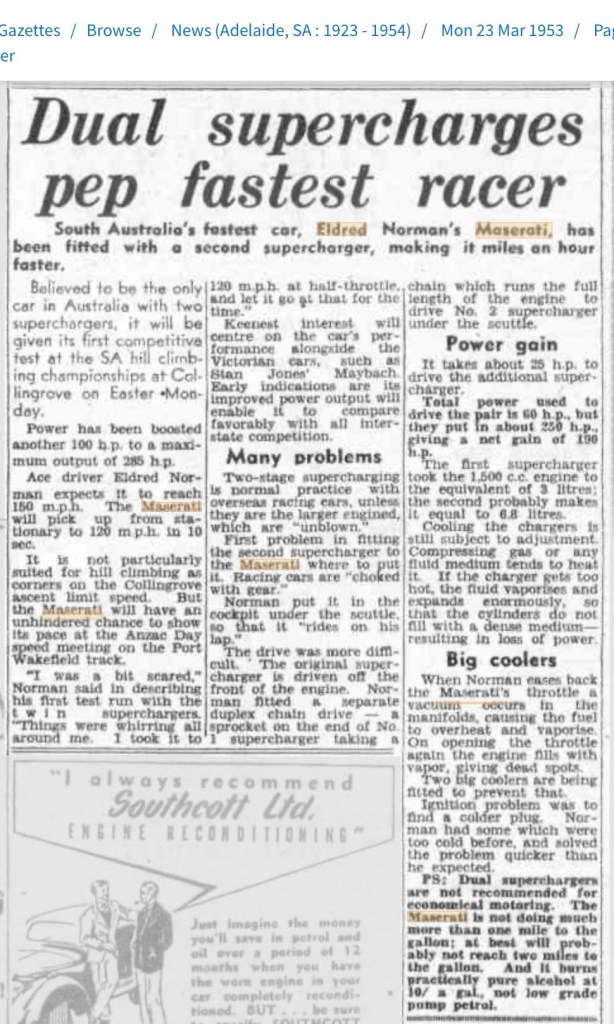
‘He fabricated up a new steel block and cast new detachable bronze cylinders heads. The detachable heads not only made engine maintenance easier but allowed the fitting of larger valves. The conrods are now 1500 Fiat and the pistons are from a BSA motorcycle,’ AMS October 1951 reported. See the Etcetera section below for more detail on Eldred’s engine reconstruction and ongoing developments.

How much testing the car had undergone before the tow from Adelaide to Bathurst is interesting. It was running well at that stage though, the weekend after Bathurst, on October 8, the Maserati/Norman duo were third in Australia’s first F1 race – The Jubilee Woodside Formula 1 Race – behind Whiteford and Jones.

Information about 6CM #1542 is here: https://forums.autosport.com/topic/99776-researching-the-history-of-maserati-6cm-chassis-1542/ and the 6CM more generally here: https://primotipo.com/2023/10/21/maserati-6cm-1546/

(FS Furness)

Other front-runners were Whiteford‘s Talbot-Lago T26C, Ron Edgerton’s ex-Alf Barrett Alfa Romeo 8C2300 Monza, Jones’ Maybach 1 and Davison’s Alfa P3 albeit Lex didn’t leave the startline with transmission failure.

Whiteford raced well, clear of Jones in second, then Edgerton who gave the Monza’s former owner Barrett a look at the Monza from close-quarters when Alf took Mischa Ravdell’s Cooper into fourth place before hitting a displaced sandbag and retiring.

Whiteford won in a large, quality field from Jones (above) and Edgerton.

(FS Furness)

Above, DA ‘Bill’ MacLachlan in a Bugatti T37A-37358 Ford V8 Spl – originally Bill Thomson’s 1930/32 Phillip Island AGP winning machine – from Clive Warwick Pratley in the George Reed Spl Monoskate 2 (Ford V8 Spl) and Clive Adams, Brad Holden. Pratley was fourth in the Redex feature and had won the Australian Grand Prix in George Reed’s ‘Red Car’, another Ford V8 Spl at Narrogin in March.

(FS Furness)

Reg Hunt in his Hunt Vincent 998 aka The Flying Bedstead, from Barrett in Ravdell’s Cooper Vincent 998 and DG Leonard’s MG-Vauxhall .

Medley records that Barrett took over the car after Ravdell and mechanic Harry Firth were injured in a road accident in Bathurst before racing began. Hunt ran fourth early on before brake troubles intervened.

(FS Furness)

Lex Davison, Doug Whiteford and Ron Edgerton aboard Alfa Romeo P3 #50003, Talbot-Lago T26C #110007 and Alfa Romeo 8C2300 Monza #2211134 respectively. Whiteford won the 6 lap 25 mile over 1500cc race from Davison and Frank Kleinig, Kleinig Hudson Spl.

(FS Furness)

DW McDonald Morgan Plus-Four leads the PG Harrison MG TD Spl and Holt Binnie MG TC Spl s/c.

(FS Furness)

Doug Whiteford’s monoposto Grand Prix 4.5-litre six-cylinder Talbot-Lago T26C above, and Stan Jones biposto 4.3-litre six-cylinder Maybach 1 below, through Forrest’s Elbow. This relatively rare shot of Maybach 1 from the rear shows just how capacious the cockpit was.

The Melbourne motor dealers had much in common, not least combative determination but were otherwise like chalk and cheese.

(FS Furness)

Etcetera…

The Narrogin Observer March 28, 1952

These three articles are for Maserati fetishists interested in the evolution of Eldred De Bracton Norman’s engine developments of his Maserati 6CM #1542 in the two and a bit years he owned it. He made changes to the chassis as well, hydraulic front shock absorbers being the most obvious but unfortunately these articles focus just on the engine, interesting as it is!

Note that the engine damage wasn’t sustained at Woodside ’51, he raced successfully that weekend, David Beaumont reckons the venues the engine popped are either Gawler Airfield or Glen Ewin Hillclimb. That June 11, 1951 meeting at Gawler was perhaps the car’s first appearance in Eldred’s hands. The article below says that Norman’s engine changes were made because ‘he was not happy with the car’s performance at Gawler,’ so maybe the internal haemorrhage didn’t actually occur.

The big races referred to are: Woodside, the ’51 Jubilee Formula 1 race, in Western Australia the March 1952 Great Southern Flying 50 at Narrogin, and at Bathurst, the April 1952 Australian Grand Prix. Clearly, the Maserati by then had a good level of reliability and performance.

One of the many apocryphal Eldred Norman stories was reported in the October 9, 1951 issue of the News Adelaide newspaper. ‘Norman had two purposes in mind as he hurtled around Woodside. One was to win the race, the other to get his lunch ready. Strapped to the exhaust pipe of his Maserati as it sped around the circuit were two cans of pork and beans – piping hot for lunch as soon as the race was over.’

Norman sold the car to Melbourne businessman/motor dealer Ted McKinnon in time for McKinnon to contest the November 1953 Australian Grand Prix at Albert Park, DNF after 50 of 64 laps. #1542 was restored by Alf Blight between 1966’ish and 1982 when he raced it at Mallala. The car left Australia shortly thereafter and went through various European owners before Bernie Ecclestone swallowed it whole in 1997…and not been seen since, pending auction/sales duly noted.

Credits…

FS Furness via Mal Elliott, ‘Bathurst:Cradle of Australian Motor Racing’ John Medley, Australian Motor Sports, ‘A History of the Woodside Motor Racing Circuit 1947-51’ David Beaumont, Narrogin Observer, News Adelaide

Finito…

(C Lynch/SLNSW)

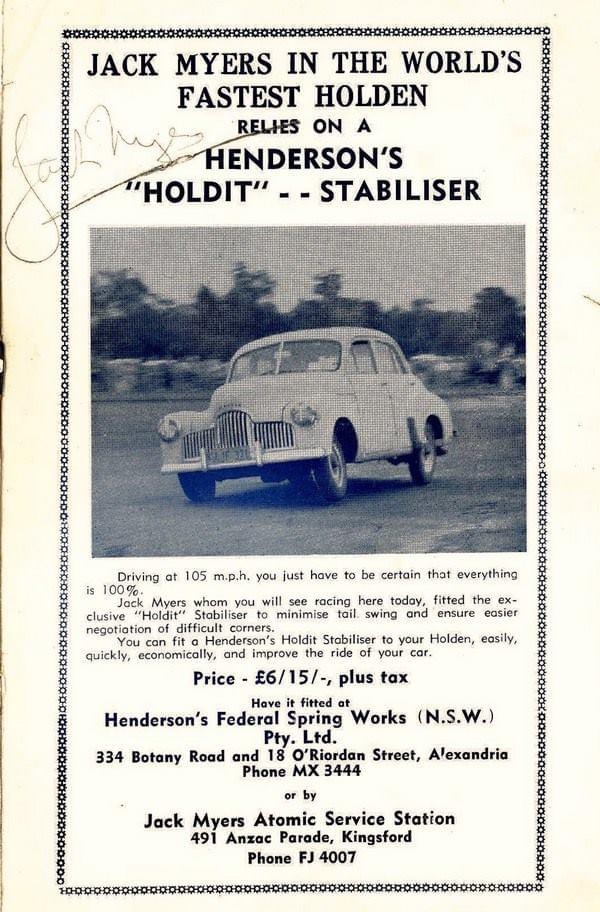
Jack Myers may well have been the very first Holden Hero, but if not he was certainly an early bird in the very long line of touring car champs to race General Motors Holdens’ products.

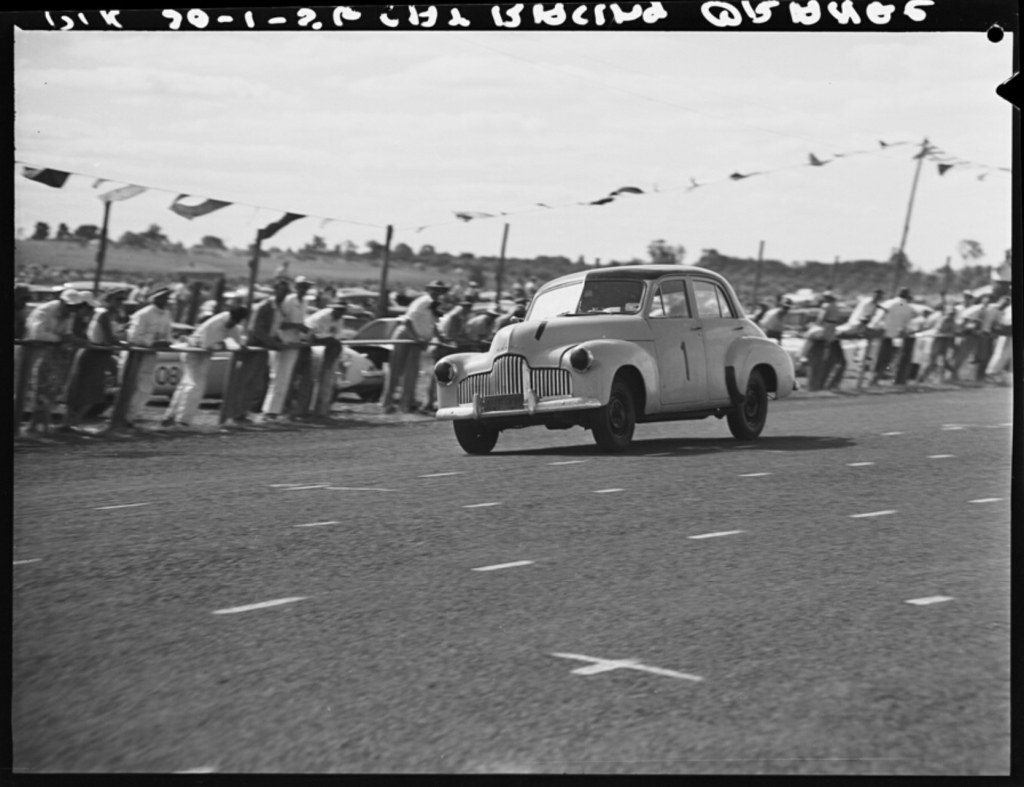
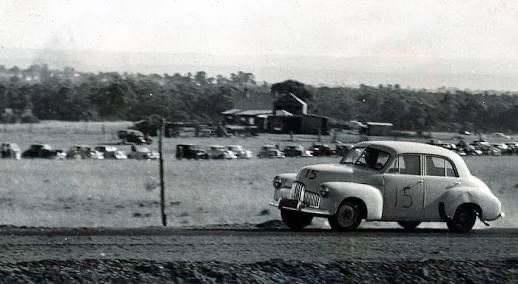
Here he is in front of the pack aboard his very quick, self modified 48-215 during a South Pacific Trophy support race at Gnoo Blas, Orange in January 1956.

Hard chargers both, Stan Jones and Jack Myers at Mount Panorama during the October 1960 Craven A International weekend (C Lynch-SLNSW)
(B Williamson Collection)
Myers at Bathurst in 1958

The Kingsford, NSW racer/mechanic/engineer/retailer was up to his armpits in Holden 48-215s from early on, racing a 110mph cream Humpy from 1953.

Myers soon offered 100 mph Holden motoring to all for £130. His kit involved boring your block to 3 3/16 inches, new pistons and rings, a shaved-head, re-ground cam, 12 inner valve-springs, an additional Stromberg carb, Myers inlet manifold and extractors, sports air-cleaners and a Lukey muffler. Seems as-cheap-as-chips!

Bathurst’s first ‘Production Car Race’ was held in October 1950; the first Holden entered at Mount Panorama was R Isackson’s Uni Motors car during the Easter 1951 meeting, but he didn’t start the race. The first Holden finisher on this holiest of racing turf was the 48-215 driven by R Mitchell who was fifth in a six lap sedan handicap in 1954. He was timed at 91mph down Conrod.

Fittingly, the first Mount Panorama Holden winner was Jack. John Medley anointed him “the Holden wonder-man of the mid-1950s, his black-roofed yellow car going progressively more quickly over the years.” 109.9mph down Conrod during the Easter 1956 weekend to be precise. He took that win in a six lap handicap in October 1955, the following year he was back in one of the swiftest Greys of all.

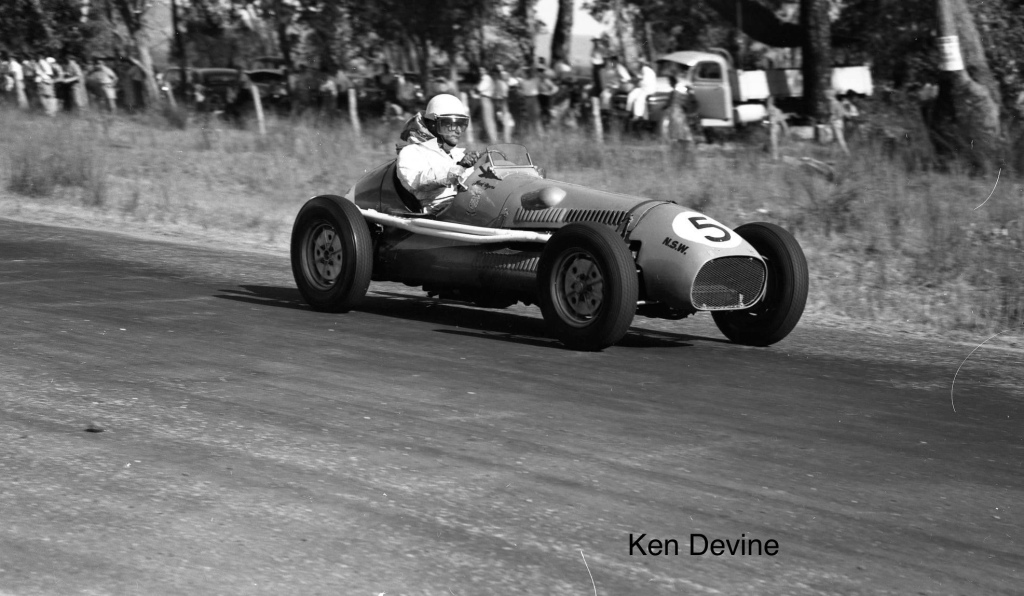
Myers aboard the Cooper T20 Holden during the 1957 AGP at Caversham. DNF in the race won by the Lex Davison/Bill Patterson Ferrari 500/625
Aboard the more advanced, spaceframe chassis, but still Cooper derived, WM Holden Special on Pit Straight during practice for the the Craven-A International at Bathurst in October 1960. DNS in the race won by Jack Brabham’s Cooper T51 Climax 2.5 FPF

After campaigning the winning Holden far and wide: Mount Druitt, Gnoo Blas, Mount Panorama, Strathpine, Lowood, Fishermans Bend and Port Wakefield, Myers was up for the next challenge.

He bought Stan Coffey’s, rolled Cooper T20 (#CB-1-52) single-seater and repaired it at his Anzac Parade ‘shop. Then, together with Merv Waggott, he built and progressively developed the big-daddy of early Holden engined racers, the 2.4-litre DOHC Waggott-Holden WM Holden.  

It was always fast among the high-priced European exotica of the day, a front of the grid heat-start in the ’59 Bathurst 100 was indicative of its place in the pecking order. But the machine was an ongoing development exercise so finishing results weren’t great. See here for a feature about the car: https://primotipo.com/2015/02/10/stirling-moss-cumberland-park-speedway-sydney-cooper-t20-wm-holden-1956/

Stirling Moss was so fascinated by this home-grown application of technology to a Cooper type he knew so well, he did some demonstration laps in it at Sydney’s Cumberland Speedway whilst in Oz for the November 1956 AGP at Albert Park. Jack was twelfth at the Park and first Australian car home.

Myers was typical of so many Holden Heroes from the 1950s to 1970s, he serviced them for customers, modified them, made and sold hot-bits and raced them.

Etcetera…

(SLNSW)

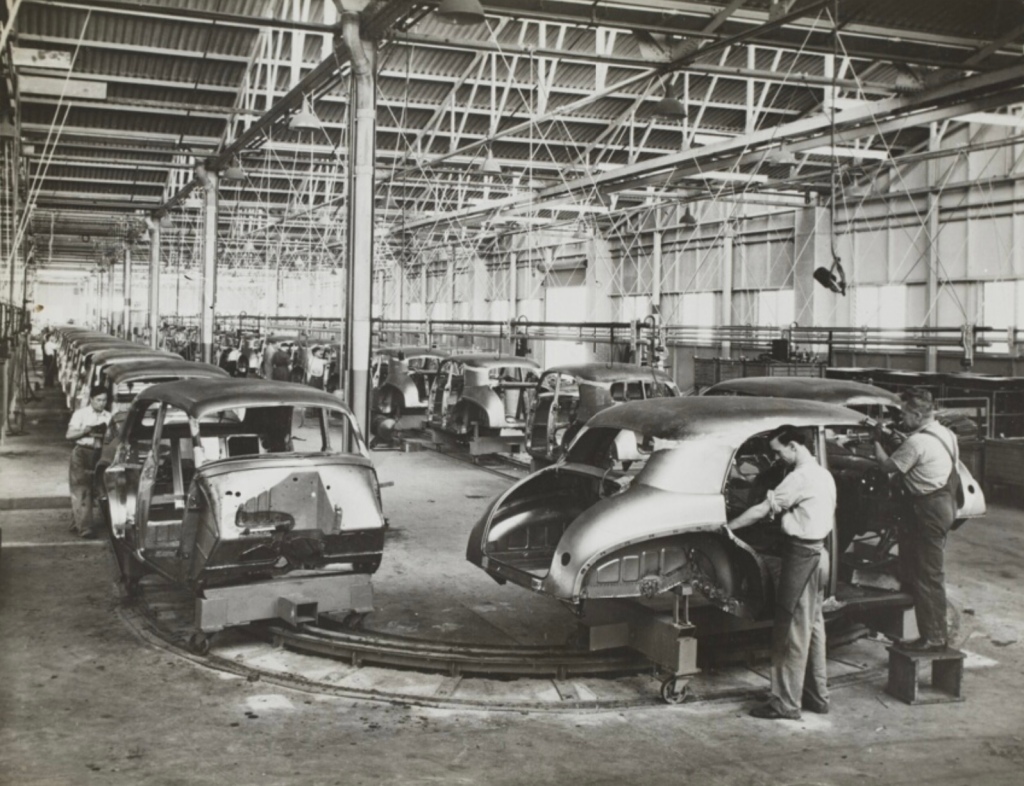
Holden 48-215s on the production line – ‘the car floor press’ – at the GMH Woodville plant in South Australia, 1949. Holden’s early days are covered here: https://primotipo.com/2018/12/06/general-motors-holden-formative/

(L Mortimer)

Myers Holden 48-215 at Mount Druitt, Sydney in the early 1950s.

Sitting up in the breeze! Myers, Cooper T20 Waggott-Holden, at Caversham, AGP 1957

Myers in the form-up area, or dummy-grid depending upon your religion, Craven-A International meeting at Mount Panorama in October 1960. That’s Austin Miller’s Cooper T51 at left.

While early on in his ownership of the ex-Stan Coffey Cooper T20, the car was rightly called a Cooper, but as Jack crashed and rebuilt the car/developed it, the machine became more Myers than Cooper, and fitted with that extraordinary twin-cam six fitted, more Waggott-Myers than Cooper!

Note the disc brakes above, albeit the front suspension still looks kosher-Cooper T20, the stylised Jack Myers brandmark in a neat touch. Myers didn’t start the car in the feature won by Jack Brabham’s Cooper T51 Climax.

Brabham was present at Bathurst for the first time since 1955, 6,000 people turned up for practice to see the twice World Champ. Unfortunately, as John Medley wrote, “Jack Myers crashed the newly disc-braked WM Cooper on top of the mountain, bending the chassis and destroying the suspension. There would be no overnight (or any) rebuilds this time. The motor was sold, the remains of the car sold separately, Myers borrowed the little Dalro Reno to run at this meeting, and would then turn his attention to his little hillclimb special – the ex-Saywell/Reynolds Mark IV Cooper with his Triumph ‘twin-twin’ engine.”

Tragically, Jack died at the wheel of the Cooper Triumph at Catalina Park, Katoomba on January 21, 1962 (7/1/18-21/1/62). The WM Holden was ultimately restored and lives at the National Motor Museum, Birdwood Mill campus, in the Adelaide Hills.

Myers – famous for racing in these horizontally hooped T-shirts – and crew in the Mount Panorama paddock, Easter 1959. Bonus points for crew-members names folks? That is a Cooper alloy wheel.

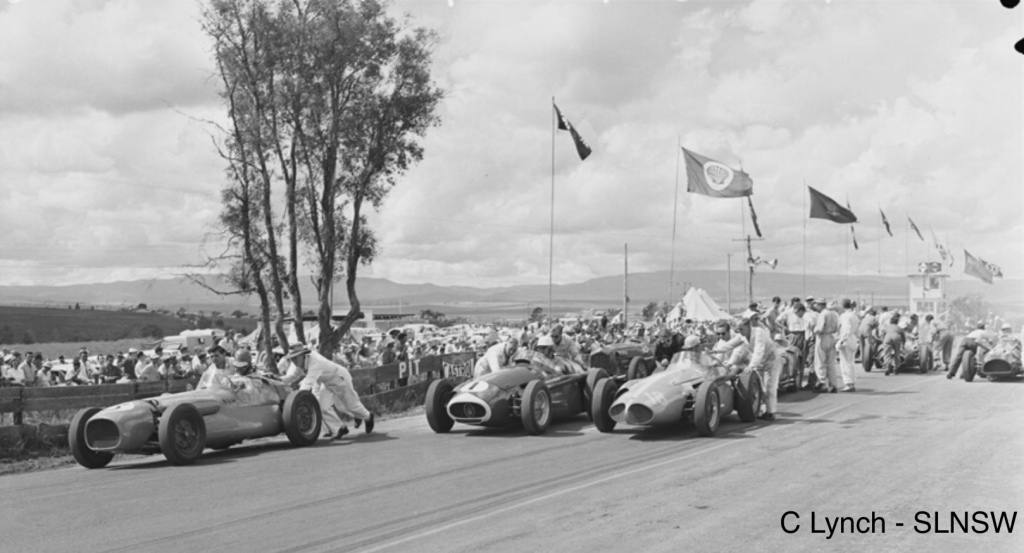
The boys push start that Waggott-Holden twin-cam six into life before the start of the 1959 Bathurst 100 on March 31. Stan Jones’ Maserati 250F is in the middle and race victor Ross Jensen’s 250F on pole at right. All the fun of the fair, look at that crowd! Jack was an excellent fourth behind Jensen, Len Lukey, Cooper T45 Climax, and Arnold Glass, Maserati 250F.

Stan is in the early stages of his best season and a bit ever, he was the reigning Gold Star Champion (1958) and at this stage of the year had won the Australian Grand Prix at Longford a month before. Jensen was seriously quick, he ran the Maserati at Bathurst in ’58, but failed to finish the 100, and finish the job he did a year later in convincing style!

WM Holden in the pits at Gnoo Blas, and again at the start of a race below, in February 1960. The ex-Whiteford Talbot-Lago T26C #110007 was raced by Barry Collerson.

While it is true that the WM-Holden was the sexiest and quickest Holden-powered racing car of the period, the most successful was Tom Hawkes’ Cooper T23 Repco-Holden (below). Chassis #CB/Mk2/1/53) was no less a car than the ex-Jack Brabham Redex Special – a Bristol 2-litre six cylinder powered T23 – albeit continuously evolved by Hawkes after Jack sold the car (to Stan Jones then on to Hawkes) when he left for Europe in early 1955. Its Repco Hi-Power crossflow headed engine was far less exotic than Merv’s twinc, but was more reliable.


(NAA)

Tom Hawkes aboard his Cooper T23 Repco-Holden during the 1956 AGP weekend at Albert Park. The potent, reliable, twin SU fed, Repco Hi-Power crossflow 2.3-litre engine on display; his best was a tremendous second in the 1957 Gold Star and third in the 1958 AGP at Bathurst. See here for features on this car: https://primotipo.com/2017/08/16/tom-hawkes-1958-australian-grand-prix/ and here: https://primotipo.com/2016/06/24/jacks-altona-grand-prix-and-cooper-t23-bristol/

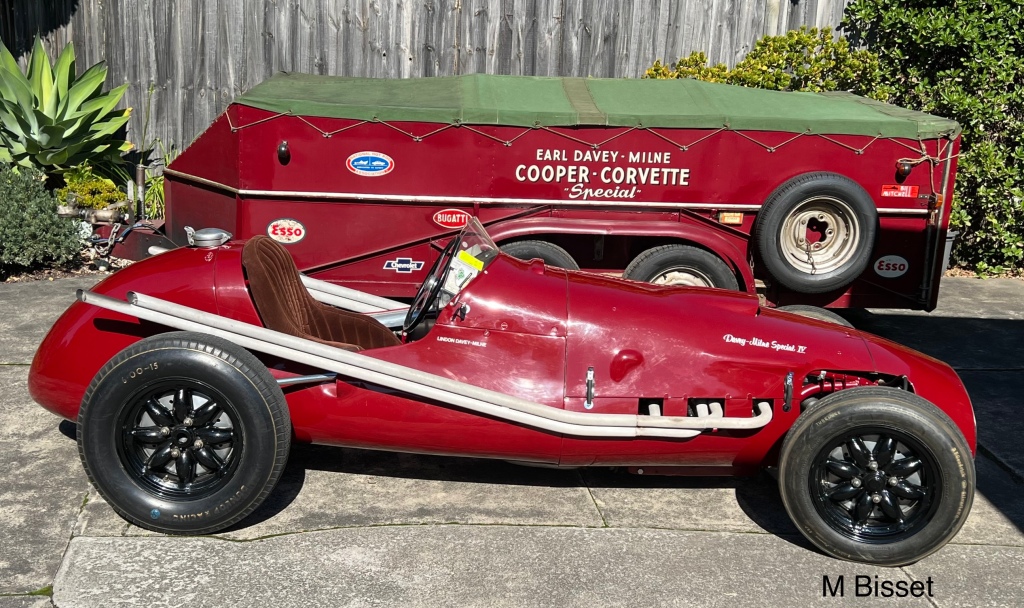
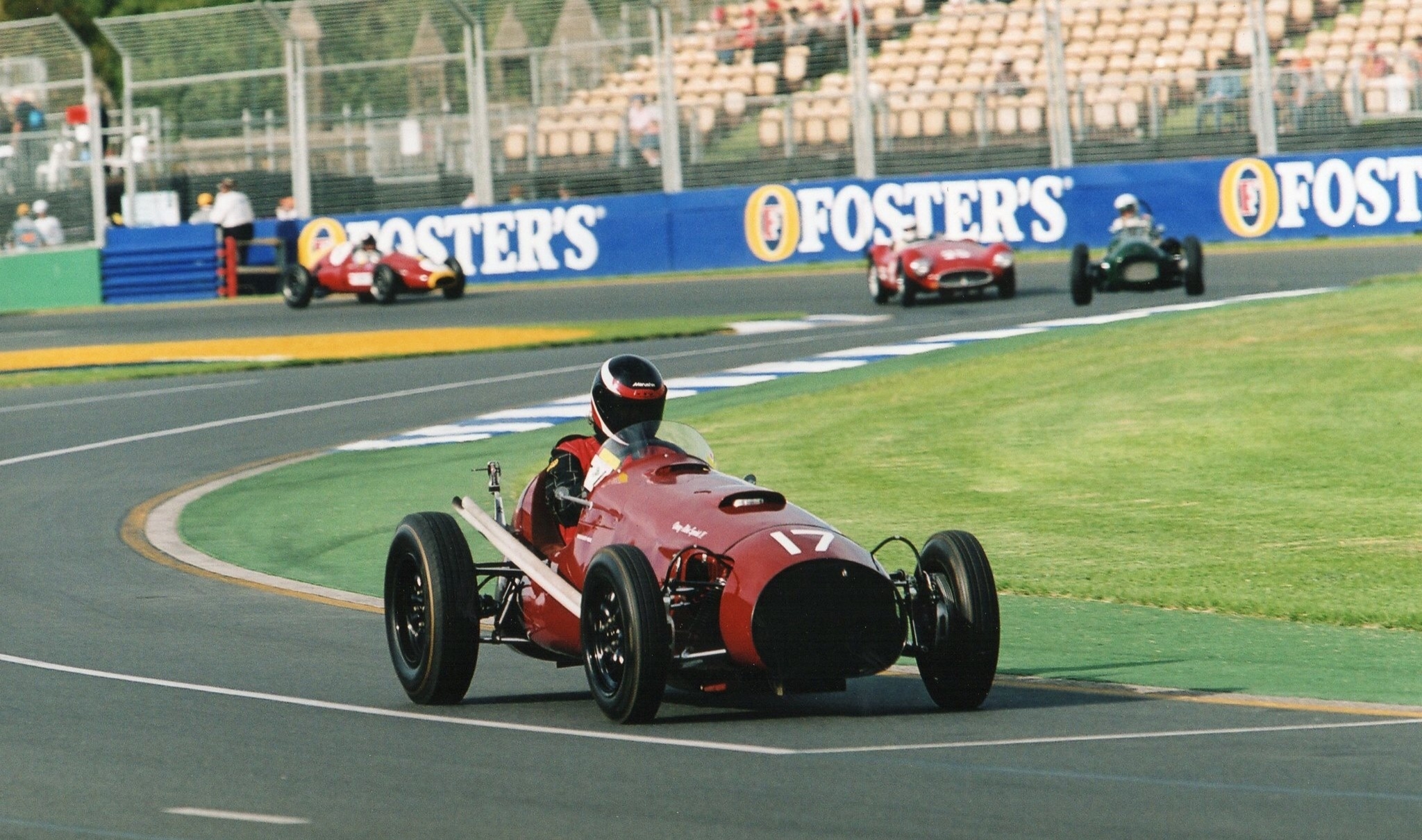
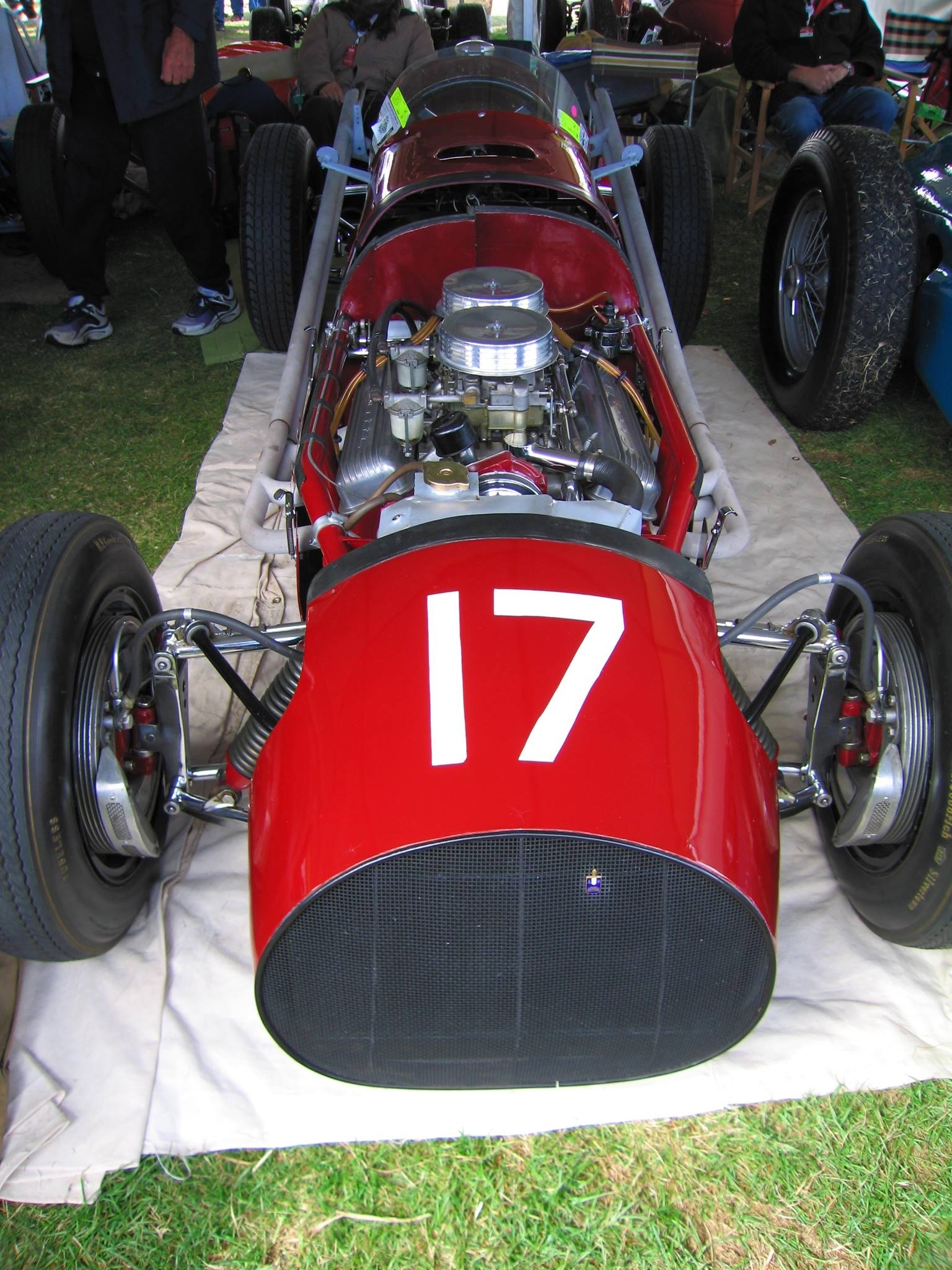
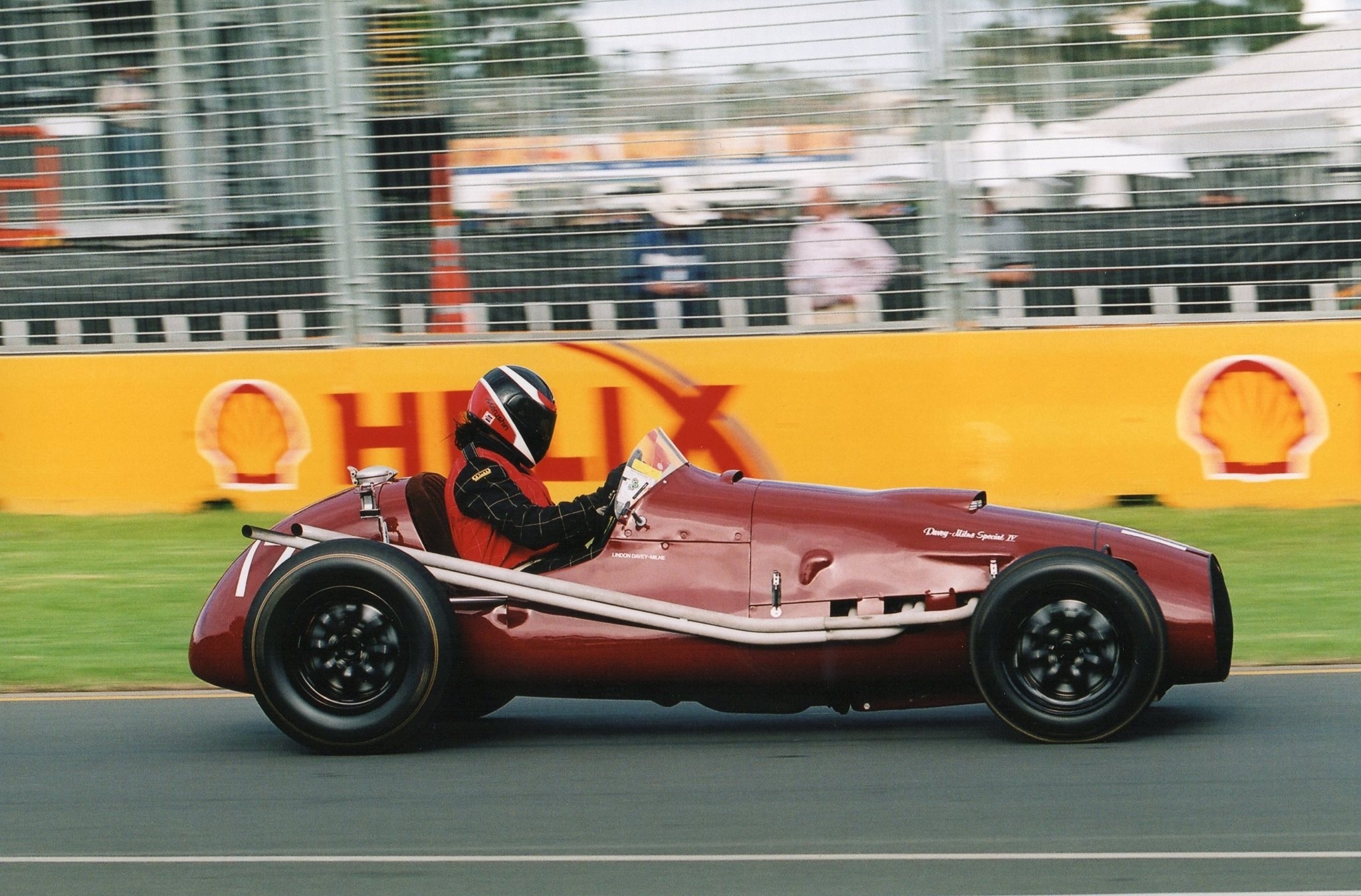
Very late in its in-period competitive life the T23 was fitted with a Chev 283cid V8, a task commenced by Tom Hawkes and Murray Rainey, and finished by Earl Davey-Milne. It’s still owned by the Davey-Milnes and is shown below last week. Mighty fine it is too…

(C Lynch-SLNSW)

Back where we started, Gnoo Blas in 1956, how did Jack do in the touring car races that weekend, and who is at the wheel of in that little VW Beetle 1200!?

Credits…

Cec Lynch-Pix-State Library of New South Wales, Bob Williamson Collection, Les Mortimer, David Medley, Ken Devine, Kelsey Collection, Kaleda Family Collection, National Archives of Australia, ‘Bathurst:Cradle of Australian Motor Racing’ John Medley

Tailpieces…

(Lynch/SLNSW)

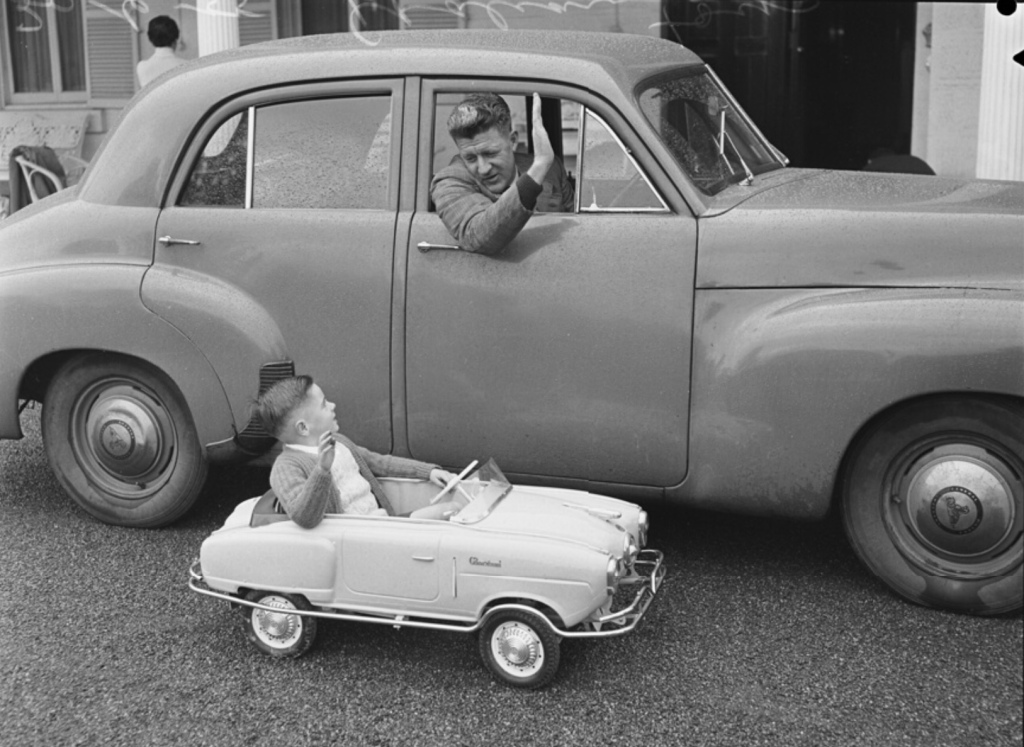
“Don’t even think about it kid, my 48-215 has been worked over by Jack Myers, you don’t have a chance!”

This shot is from a Pix puff-piece in 1955 promoting Italian toy cars for David Jones, a national department store chain. The little dude appears to be a handy-mechanic and would be 80’ish now. Chassis number and make of EV unknown…

(Lynch/SLNSW)

Finito…

hawkes-bathurst-cooper-58

Tom Hawkes, Cooper T23 Holden Repco, AGP Bathurst 1958 (unattributed)

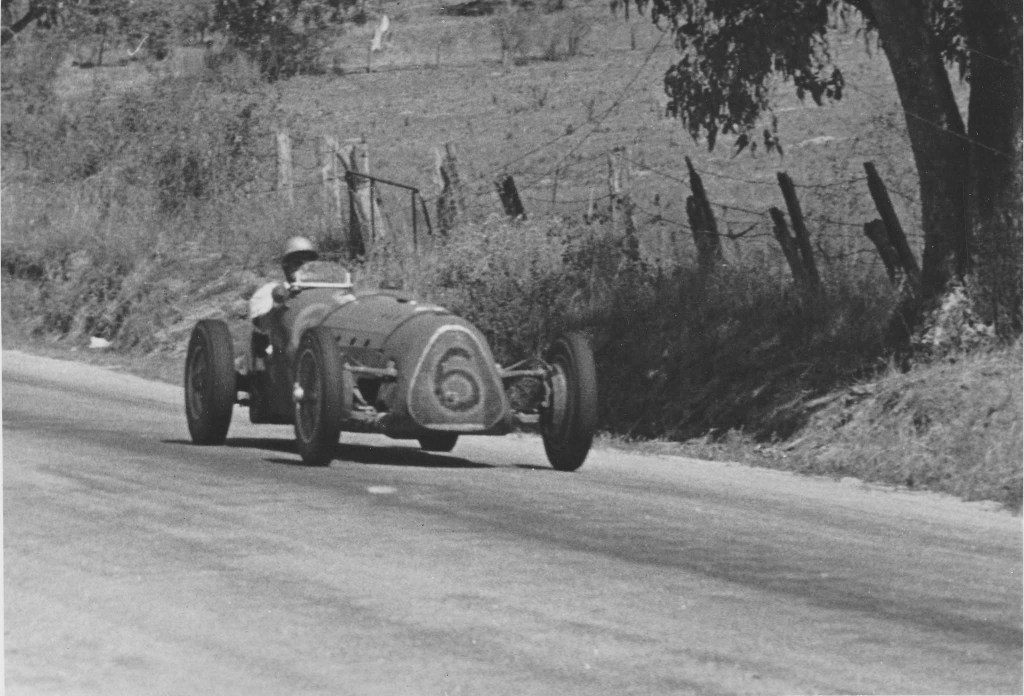
Tom Hawkes racing his way up Mount Panorma towards a giant killing 3rd place during the 1958 Australian Grand Prix at Bathurst…

He finished behind Lex Davison’s winning Ferrari 500/625 and Ern Seeliger’s 4.6 litre fuel injected Chev V8 engined Maybach. Hawkes’ Cooper T23 is the ex-Brabham car chassis # CB/1/53 i wrote about not so long ago. Click here to read the article;

Jack’s ‘Altona Grand Prix’ and Cooper T23 Bristol…

Tom replaced the cars Bristol engine and fitted a Repco Hi-Power, Phil Irving designed head breathing much life into the standard 6 cylinder, OHV, inline Holden 6 cylinder ‘Grey Motor’. The engine raced at 2.3 litres in capacity.

The interesting thing is exactly where on Mount Panorama the shot is taken. The right hander at the top of Mountain Straight perhaps, ‘Quarry Corner’? All suggestions taken. Its a quintessential Australian country scene, in the absence of a crowd it could be anywhere!

Photo Credit…

Unsure, intrigued to know who took the wonderful shot

a jack

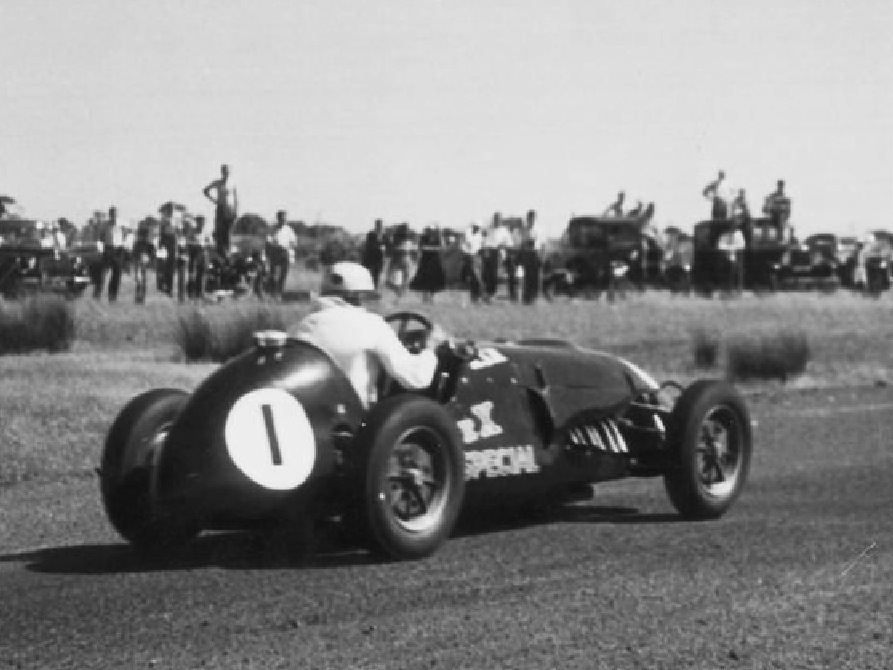
Brabham, Cooper T23 Bristol, Altona, 9 March 1954 (SLV)

Jack Brabham thrilled a crowd of over 12000 with his Cooper Bristol’s speed during the inaugural car meeting of the new Altona circuit in Melbourne’s inner west on 9 March 1954…

Brabham made the switch from speedway to circuit racing in, one of the characteristics of his driving style was the ‘Brabham Crouch’ over the wheel, its much in evidence down the years and very much present at the 2 1/4 mile Altona track.

a jack b

Brabham crouch, Cooper Bristol, Altona 1954 (SLV)

Jack set a lap record of 1:50, an average speed of 73.5 mph, the Cooper was timed at nearly 130 mph. Stan Jones won the F Libre open event after Jack’s Cooper sheared the magneto drive of its Bristol engine. ‘The duels between Brabham and Jones Cooper 1100 were a feature of the meeting, the brilliant cornering of the latter helping him hold the bigger faster car’ The Age newspaper reported.

a whiteford

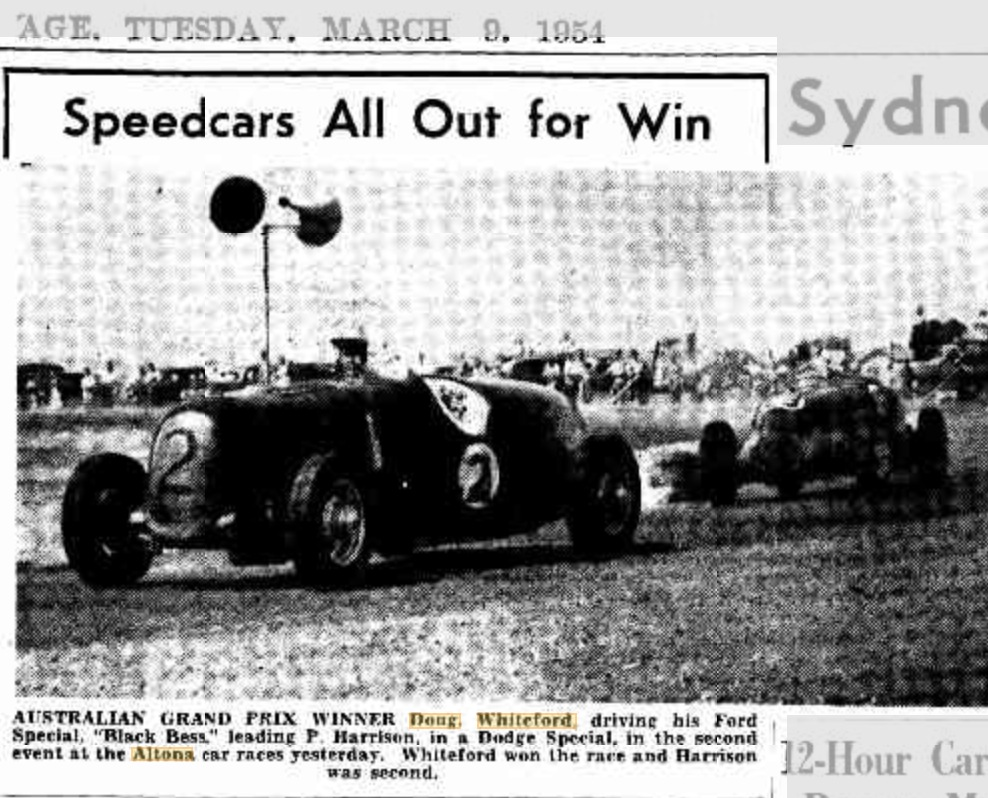
Many of the noted racers of the day entered the meeting; Jones, Reg Smith, John O’Dea and Lex Davison in 1100 Coopers and Bill Patterson in a 500. Cec Warren’s Maserati 4CLT, Ted Gray’s Alta Ford, Tom Hawkes Allard, Doug Whieford in his Ford Spl ‘Black Bess’ as well as Lex Davison’s HWM Jaguar, it won the AGP at Southport on Queensland’s Gold Coast, later in the year completed a strong line-up

a map

Aerial view of the Altona Circuit and Williamstown horse racing course taken in 1958 after the circuits closure , at the top of the shot is Port Phillip Bay (SLV)

Over the years there was motor racing at Point Cook (one race only, the 1948 AGP on the airforce base) Fishermans Bend and Altona, they are all in the ‘same part of the world’, respectively 26/6/16 Km from Melbourne’s CBD. Of the three, Altona was the least successful, only six meetings were held.

Well known Melbourne racer/businessmen Stewart and Neil Charge invested between 35000-40000 pounds in the venture. They acquired land on the west side of Millers Road transforming ‘ a swamp into a GP track…they formed the Altona Motor Racing Co with preliminary work to commence in two weeks’ the ‘Williamstown Chronicle’ reported on 2 April 1953.

Neil Charge took leave from the family trucking business to pull the enormous project of creating the facility, ‘the track was built from fly-ash from the South Melbourne gasworks’

The swamp was converted into ‘Cherry Lake’, later reports suggested the promoters intention to ‘dredge the lake (deeper) to form a speedboat circuit’. Six meetings year were planned with local charities to benefit to the tune of about 4000 pounds per year.

Somewhat prophetically ‘The Chronicle’ noted the circuit may pose new problems for the promoters of Phillip Island, the expectation that Altona because of its close proximity to Melbourne may draw larger crowds. In the event, Phillip Island is still with us, despite a few ups and downs over the decades and Altona is long gone and largely forgotten!

a nes pap

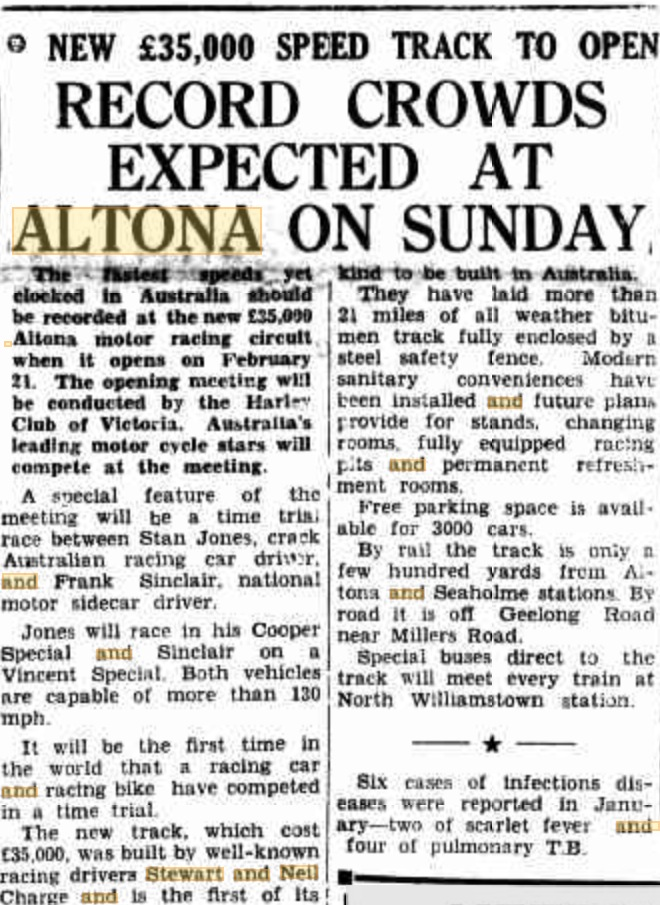
‘Williamstown Chronicle’ 19 February 1954

Altona was completed on time, its first meeting, for bikes, was opened by former Australian Olympic cyclist, Federal Parliamentarian, Sir Hubert Opperman on 21 February 1954…

Before the opening meeting the Williamstown Chronicle described the circuit as the first of its type in Australia, the Charges ‘have laid more than 2 1/4 miles of all weather bitumen fully enclosed by a steel safety fence…future plans provide for stands, changing rooms, fully equipped racing pits and permanent refreshment rooms’. The opening included a novelty match race between Jones Cooper and F Sinclair’s Vincent Spl sidecar, its not reported who won!

Car racing events were promoted by the Victorian Sporting Car Club, there were problems with the surface from the start. The track was ‘re-surfaced and built up where necessary after the recent ‘consolidation’ meeting. The track surround is safer with the removal of boulders and an encircling safety fence’. Edges were levelled to give a safe emergency run-off area. The Argus reported the improvements cost 4000 pounds with speeds expected to be higher by 20% compared with the first meeting.

In a 2013 interview Altona owner Neil Charge said that had the investors in the consortium, (there were 6 he said, not just he and his brother as reported by the media at the time) known that Albert Park was to be used for motor racing they would not have proceeded with their investment. International readers will understand the inherent beauty of Albert Park and its proximity to Melbourne’s CBD. Imagine the exact visual opposite; what was then flat, featureless, muddy or dusty, industrial land on the cities outskirts. In short, in a popularity contest close to Melbourne’s CBD, Albert Park wins hands down every time from a spectators perspective.

That the Charge brothers didn’t know about Albert Park as a racing possibility is a little hard to fathom, they were well connected Melbourne businessmen and stalwarts of the local racing community, which was even more incestuous then than now.

Other issues which inhibited the circuits success was the converted swamp land upon which it was built, land consolidation not understood as well then as now. The land continually subsided making the track difficult to maintain and dangerous, which is the reputation it gained from competitors. Entry numbers suffered as a consequence. If you can’t attract the cars, the ‘punters’ don’t come to watch and so a bit of a downward spiral started.

The Phillip Island Auto Racing Club in its own history relating the trials and tribulations of getting their circuit running have this to say; ‘ One example of a circuit hurriedly built and opened was Altona in 1954. With sharp corners, narrow straights and a dangerous lack of shoulders running along the edge of the circuit the track started to deteriorate from the very first (motor cycle) race. With four cars rolling over the same spot and several parts of the track crumbling to powder, it was clear the track was doomed from the beginning. This was despite an average lap speed of below 65mph’

alt cherry

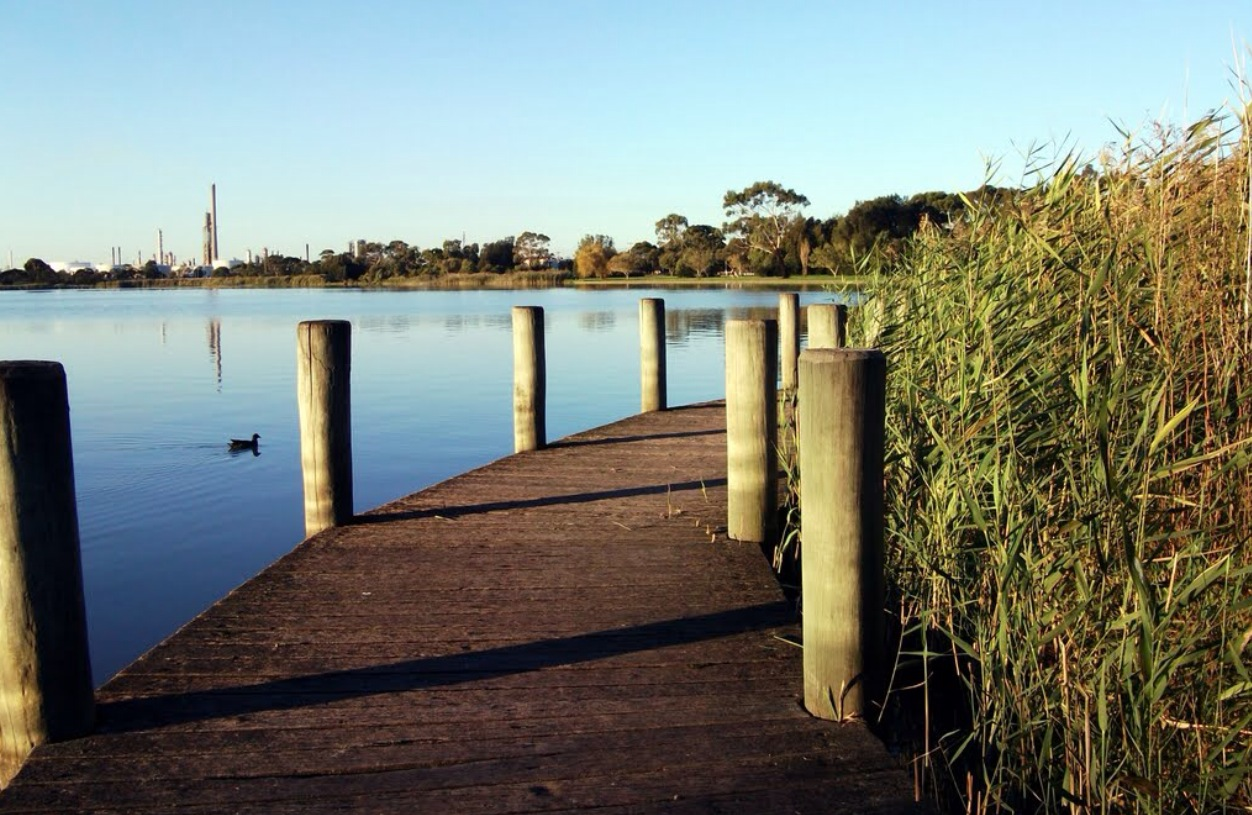
Cherry Lake, Altona in modern times, the industry of the Inner West is in the distance (unattributed)

Ultimately the Altona investors made the commercial decision to sell the land, the acquirer, local authorities who used it as parkland. Charge said the transaction resulted in a small profit which must have been some kind of miracle given the sum invested and paucity of spectator numbers in the 6 meetings run. Now the area is a residential one, the local amenity very much enhanced by Cherry Lake!

There are few photos to be easily found of this interesting track, if any Australian readers have an image or three you would like to share I am sure we would all like to see them! Please get in touch.

jack cooper

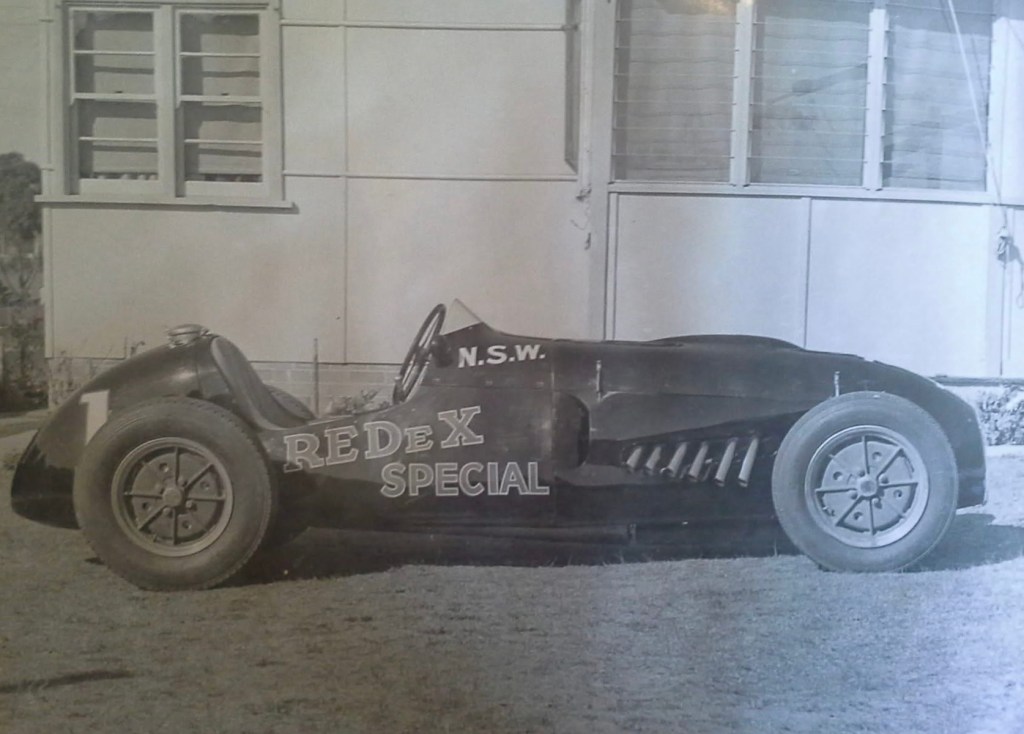
Hand colored print of the Redex Spl prior to the 1954 AGP at Southport on Queenslands Gold Coast. (Kev Bartlett reckons its Mt Druitt not Southport) The Bristol engines front camshaft bearing turned in its housing blanking off the drilling for lubricating oil, seizing le moteur. Stub exhausts interesting, not they way they were raced in the UK (Nye/Brabham)

Jack’s Cooper T23 Bristol…

I have done the ‘Cooper Bristol to death’ in terms of articles written, check these links out for information and photos about these important, wonderful cars, rather than me repeat it all again;

The shots of Jack’s car do beg the question about its history though, important as it was in his development as a driver. His success in it directly lead to his decision to try his hand in England in 1955, in fact he regretted selling the car in Oz, carefully developed as it was. Peter Whitehead’s Cooper Alta, the car he bought and raced when he first arrived in the UK was not a patch on the car he left behind.

The summary of the car is based on an article from John Blanden’s book, that research largely based on Doug Nye’s Cooper tome albeit its somewhat truncated. The best source of information on Jack’s formative years is the biography he wrote with Doug Nye, picking that book up always brings a smile to my face.

JB publicised ‘The Jack Brabham Story’ in Melbourne shortly after it was published and in the Friday before the 2004 AGP. He spoke at a function at the Windsor Hotel, the book was sold after the event and autographed by the champ for those prepared to stand in a long queue. My youngest son was 8, the only kid amongst 300 businessmen at the breakfast.

jack tucker

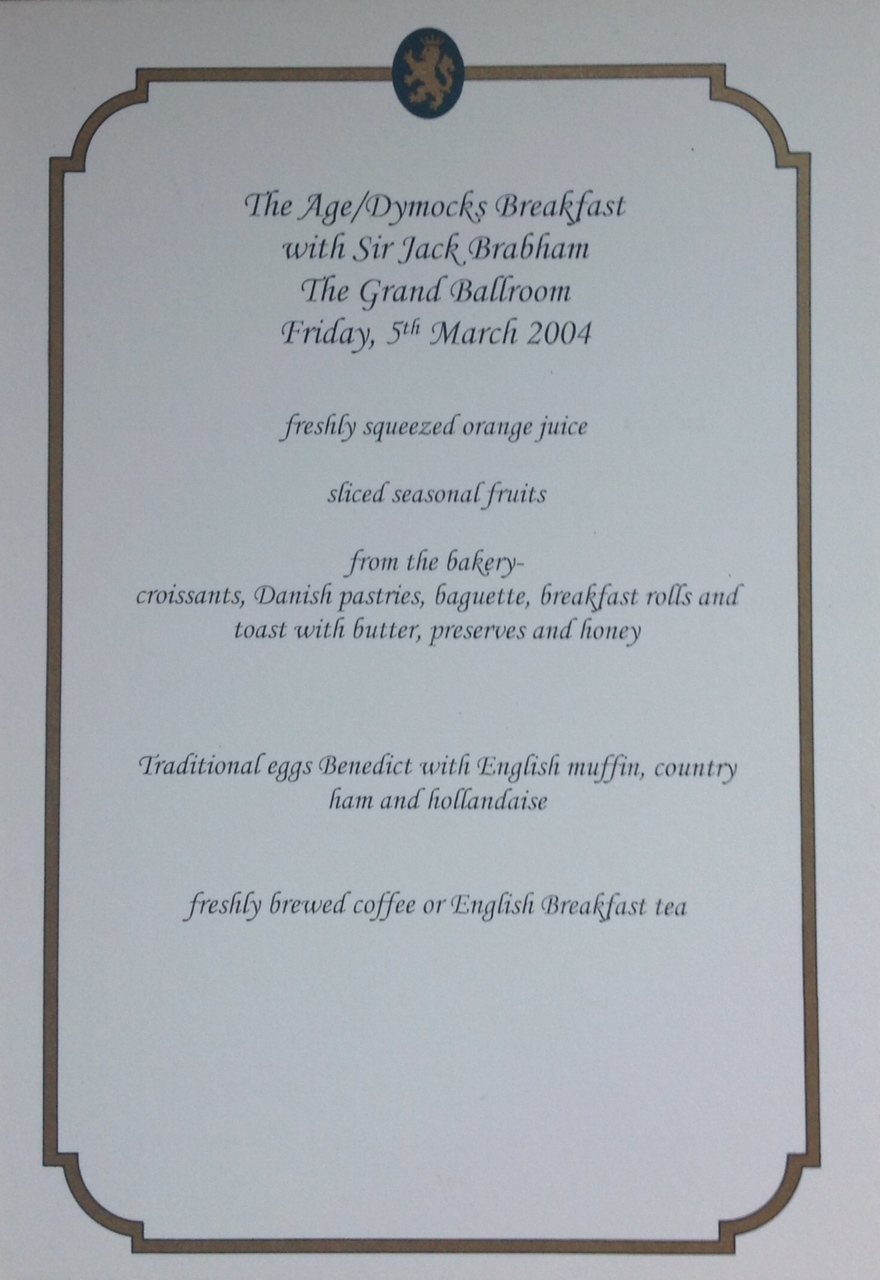
Windsor Hotel menu of the day! I wish i had the presence of mind to get Jack to sign this as well as the book! Sponsors are the Age Newspaper and Dymocks, a book retailer

Local ‘motor-noter’ and TV commentator Will Hagon was MC for the event, they used a question and answer format which worked well. Hagon was a great choice as the ‘right questions’ were asked rather than the crap someone with no knowledge of the sport, ‘how fast did she go Jack?’ ask.

Brabham was an absolute prince in the way he dealt with Nick when we collected his signature. ‘Bic’ still remembers that gig, Jack and the long day we had together strolling the wide open spaces of Albert Park. We still do the wide open spaces of Albert Park but all three sons are as interested in the beers on dad as much as the racing! You would think I would get one racer outta them given the number of events they did with me racing my Historic FF!? (Lola T342 at that time)

alt brab

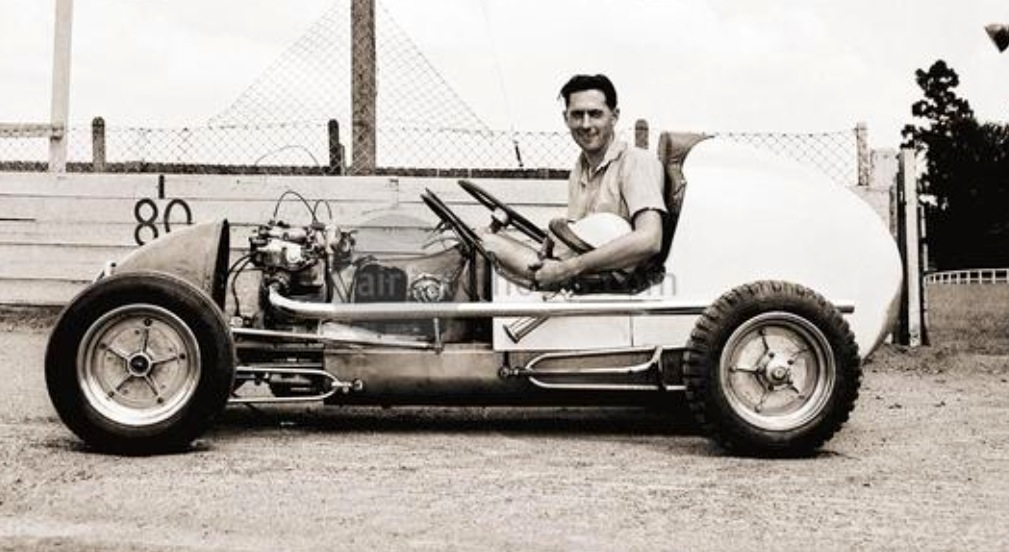
Brabham at Parramatta Speedway on 26 February 1954. Harley V twin engined speedcar owned by Spike Jennings modelled on Jack’s old car (Fairfax)

Brabham cut his racing teeth in the immediate post-war years on Sydney Speedways. By the early fifties he was essentially making his living on his prizemoney, racing three times a week made it difficult to keep up with the workload of his machine shop as well. He ran his Speedcar in some hillclimbs, and, fitted with front brakes won the 1951 Australian Hillclimb Championship at Rob Roy in outer Melbourne.

Beating the road racers with his Speedway car caused quite a stir, but also ‘put his name and capabilities up in lights’. He was effectively a professional in an amateur sport (road racing in Oz) well before he left for the UK. It was during these years he met Ron and Austin Tauranac who were racing their Ralts at the time, RT of course the other half of the ‘BT’ partnership.

Jack enjoyed the hillclimbs which convinced him to give circuits a go. In quick succession he acquired and raced Coopers Mk 4 and 5. To fund his road racing he sold his speedcar, continuing to race on the dirt tracks in a car owned by Spike Jennings with whom he shared the prizemoney.

The big step up was purchase of the Cooper Bristol.

Chassis ‘CB/Mk2/1/53’ was despatched to Australia as a new car to the order of David Chambers, prior to the cars arrival by sea, he committed suicide as a consequence of the financial trauma in which he was engulfed. The car was offered for sale on behalf of his deceased estate, Brabham’s bid of 4250 pounds, supported by some funds from his father and Redex, his sponsor, was the successful one.

Jack recounts how, upon testing the new car at Mt Druitt, an old WW2 emergency landing strip just outside Sydney for the first time, the Bristol engine lost oil pressure within a few laps. A subsequent tear-down revealed a bent crank and badly worn bearings. It soon became apparent that the new car was thoroughly ‘shop-soiled’, it had been raced by its first owner, John Barber in Argentina. Upon return to the UK, it was given a ‘cut and polish’ and then despatched to Chambers as a new car. It was not the first or last time ‘colonials’ were shafted by ‘nasty furriners’ in the UK and Europe a long way from the South Pacific!

jack mechanic

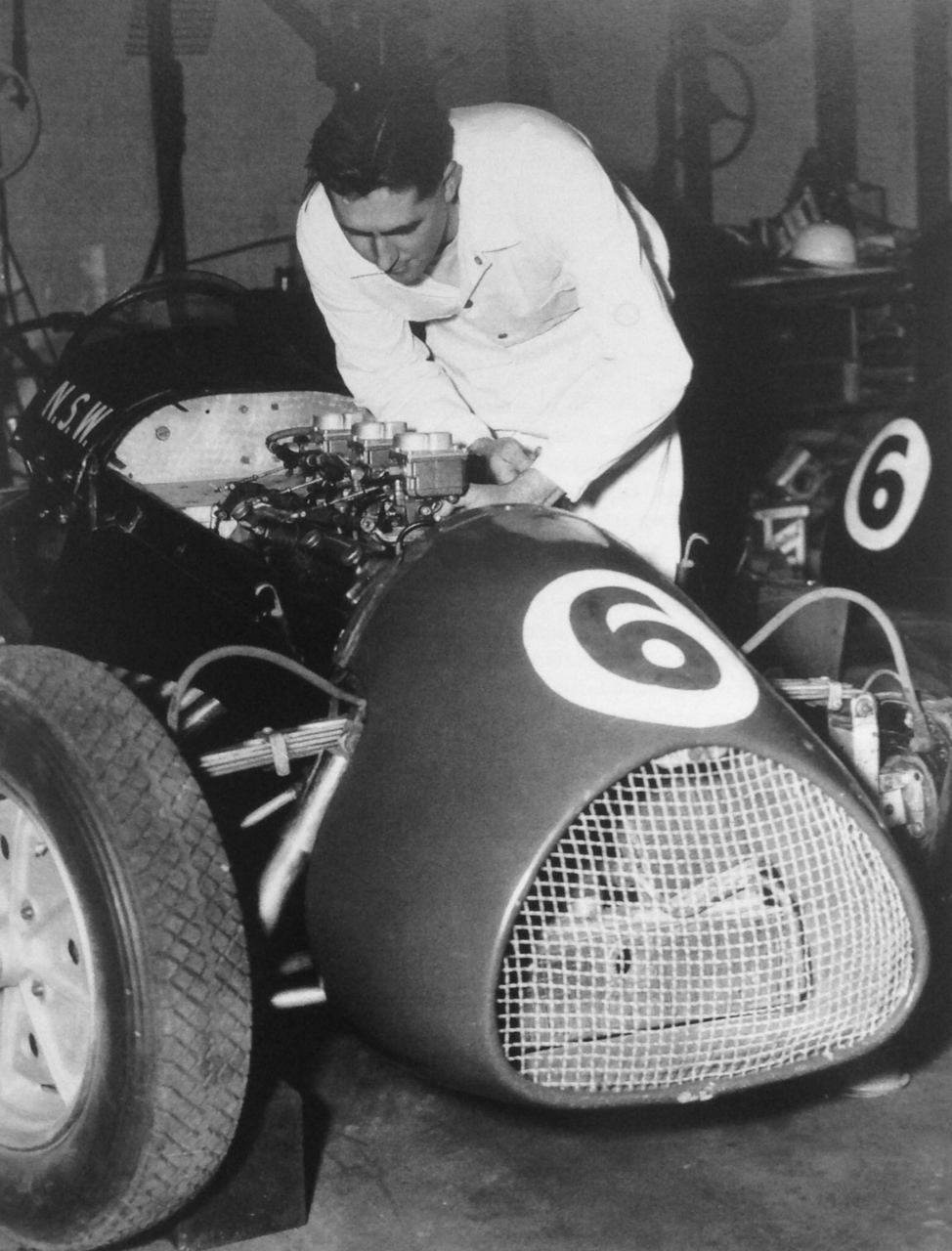
Jack fettles the Cooper in his Penshurst workshop. He recounts the story of welding a crack under the engine, the torch ignited some fuel vapours. Brabham’s extinguished was in another locked shed, he ripped the lock off in his bare hands to get the ext and doused the fire but ‘that day i could have lost everything’ (Nye)

When Jack carefully assessed the Bristol engine, having raced the car a few times, he couldn’t believe the hefty flywheel and quickly modified it along the lines of the Harley Davidson clutch assembly used on his Speedcar. He lightened the clutch/flywheel assembly from around 34Kg to 7kg thereby vastly improving the responsiveness of the engine and its reliability. The long, thin crank of the Bristol engine was a weakness because of the vast weight of the flywheel assembly. Further improvements to the engine were made with the assistance of British pre-war racer Frank Ashby who had moved to Sydney’s Whale Beach.

Jack had already replaced the Bristol’s Solex carbs with ex-Holden Stromberg units which were modified further after Ashhby’s suggestion to incorporate smoothly shaped bell mouths to aid air entry with consequent increases in power. Jacks hands-on engineering capabilities were part of his ‘competitive back of tricks and unfair advantage’ which never left him.

Brabham quickly established himself as one of the men to beat with the Cooper winning many events. His battles with the nascent Confederation of Australian Motorsport and their ‘no advertising on cars’ policy became  a constant thorn in his side, RedeX’ commercial involvement essential to his ability to run the car.

jack

Brabham at Altona again in 1954 (SLV)

In Europe and the UK the ‘no advertising thing’ didn’t seem to hold the sport back, there were enough wealthy individuals to make up the numbers and manufacturers to give worthy drivers without wealth a steer. Here in the mid fifties the drivers of ‘ANF1’ cars were either ‘silvertails’ like Lex Davison, mind you he made much more than he inherited or ‘self made’ blokes, a whole swag of whom were motor traders (Mildren, Jones, Stillwell, Patterson, Hunt, Glass and others, I’ve included Patto and Stillwell on this list but they too had family $ behind them from the start). The point is it was RedeX money which helped fund Brabham’s campaign, without it he probably wouldn’t have achieved what he did. What am I saying? The Americans goddit right from the start with a totally commercial approach which allowed those with talent access to sponsors funds to help them progress.

The cars race debut was at Leyburn, Queensland on 23 August, he won the ’53 Qld Road racing Championship. Brabham set quickest time in the NSW GP at Gnoo Blas, Orange but non-started the 1953 AGP at Albert Park after he ran the Bristol’s rear camshaft bearings in practice due to excessive friction.

Brabham contested the 1954 New Zealand Grand Prix, finishing 6th, meeting Tony Gaze, Reg Parnell, Peter Whitehead, Ken Wharton and a VERY young Bruce McLaren. Jack stayed in the McLaren home, Leslie McLaren a local racer and garage owner. The race was won by Stan Jones Maybach .

The car continued to do well throughout Australia, his clashes with Davison’s HWM Jag, Dick Cobden’s Ferrari and Jones Maybach were highlights of the period.

At the ’55 NZGP meeting two visitors from the UK, Dunlop Racing Manager Dick Jeffrey and Dean Delamont, Competition Manager of the RAC, convinced him he should try his hand in the UK the following year. By the time he alighted the ship on the journey back to Sydney he determined to do just that, and the rest as they say is history.

stan

Stan Jones in the ex-Brabham Cooper T23 Bristol, Altona, date uncertain (unattributed)

Stan Jones was the eager buyer of the Cooper having destroyed his new Maybach 2 whilst leading the 1954 AGP. Stan was lucky to survive a very high speed journey backwards through Southport’s trees. Whilst Charlie Dean and his band of merry, Repco men designed and built Maybach 3, Stan first raced the CB in the Victorian Trophy at Fishermans Bend on 19 February. The nose of the car was slightly modified before his next race at Albert Park in March 1955.

Stan retained ownership and had Ern Seeliger race at Bathurst Easter 1955, Ern was 2nd in the ‘Bathurst 100.’ Jones was forever buying and selling racing cars, ‘moving metal’ was his business after all! Have a read of my article about the champion racer if you are unfamiliar with Alan’s father and his own impressive racing CV;

Stan Jones: Australian and New Zealand Grand Prix and Gold Star Winner…

Later in 1955 Jones sold the car to ‘Ecurie Corio’s’  Tom Hawkes, the Geelong businessman raced the car for 3 years before leaving for Europe.

hawkes

Hawkes in the Cooper T23 Holden at Port Wakefield, SA, Labor Day meeting 1957. Top shot! (Geoff Chennells)

Hawkes first race was the 1955 AGP at Port Wakefield, winning a heat but DNF in the race itself with fuel feed problems. Tom then modified the car by lengthening the nose, altered the front suspension and most importantly fitted a Holden ‘Grey Motor’ incorporating a Phil Irving Repco ‘Hi-Power’ head. The car raced in this form at Albert Park in March 1956 and over the next 2 years in this spec.
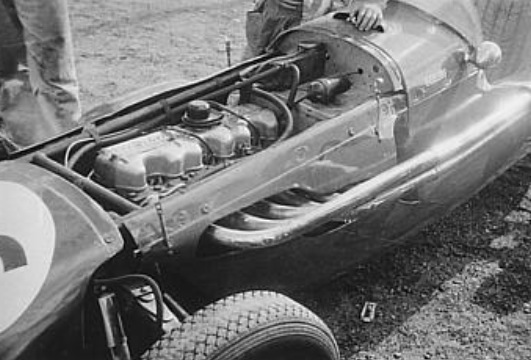
hawkes holden

Cooper T23, with its neat 6 cylinder Holden Repco engine Gnoo Blas or Bathurst (Ian McKay)

The car was very fast in this form, not quite an outright contender amongst the ‘heavy metal’ of 250F’s, Ferrari 500/625 and Ted Gray’s V8 engined Tornado but still quick enough to finish 2nd in the 1957 Gold Star series to Davison. Those points were amassed by finishing 4th in the Victorian Trophy, 2nd in the Qld Road Racing Championship, 2nd in the NSW Road Racing Championship. He was a terrific 3rd in the 1958 AGP at Bathurst.
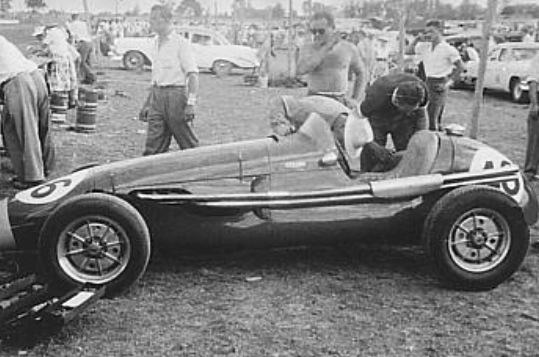
hakes

Same meeting as the pic above, longer in the nose and all the prettier and quicker for it. Gnoo Blas or Bathurst (Ian McKay Collection)

hawk in car

Tom Hawkes, Cooper T23 Holden Repco, about as pretty as racer of the period can get, and mighty fast in ‘Hi-po’ Repco head form (Ellis French)

Ace historian/researcher Stephen Dalton dates these Phillip Island shots (above and below) of Tom’s T23 as during the October 1957 meeting, note the mixed grid of MG T Spls. The shots show just how sleek the car has become in its ‘definitive’ later Repco headed Holden form. It may not have quite been an outright car in terms of outright performance by then but Hawkes did a mighty fine job of extracting all the car could give.

hawk on grid

Next to Hawkes Cooper T23 Holden on the right is Eddie (father of Larry) Perkins, Porsche Spl and Ted Gray in the Tornado Chev at left, Unlimited Racing Car event, October 1957, Phillip Island (Ellis French)

When Hawkes left for the UK at the end of 1958 he retained the car but tasked Murray Rainey to fit a Chev Corvette 283cid ‘small block’ V8 into the Coopers lissom spaceframe chassis.

This job was completed by Earl Davey Milne who bought the car in April 1962. Gearbox used was  Borg Warner T10, a slippery diff was also fitted and the bodywork modified. The car is still retained by his family 50 years later. Because it never raced ‘in period’ in this form the Cooper is ineligible for a CAMS ‘Certificate of Description’ and appropriate logbook.

The car appears in demonstrations from time to time, looking immaculate, its importance as the first Mk2 CB and its role in the ‘Brabham Ascent’ appreciated by all enthusiasts.

coop 2

The ‘Cooper Corvette’ ex-Brabham T23 driven by Troy Davey-Milne at Albert Park  in one of the historic demonstrations during the AGP carnival (Davey-Milne)

coop 1

Chev 283 Corvette ‘small block’ with 2 big Holleys atop, installation very neatly done ‘in period’ but ‘Cooper Corvette’ never raced in this form. Albert Park 2006 (Davey-Milne)

1995 Geelong Sprints - Davey-Milne 01

Troy Davey-Milne in #CB/Mk2/1-53 Cooper T23 Chev at the wet Geelong Sprints, Ritchie Boulevard in November 1995 (Stephen Dalton)

coop 3

Still a handsome car, Troy Davey Milne at Albert Park in 2006 (Davey-Milne)

Etcetera…

Probably too arcane a topic for international readers but some Australian enthusiasts may find this short photo based article about the Charge Brothers on the great ‘Aussie Homestead’ site, of interest. None of the photos of the brothers cars are at their Altona circuit. In fact they are everywhere in Victoria but the place which is not what I wanted at all! Click on this link to have a look;

http://aussieroadracing.homestead.com/Charge-Bros.html

altona prog

Photo Credits…

State Library of Victoria, Stephen Dalton Collection, Fairfax Media, Troy Davey-Milne, Ellis French, Ian McKay Collection, Geoff Chennells

Bibliography…

The Age 3/3 and 9/3 ’54, Williamstown Chronicle 2/4/53, 19/2/54, The Argus 17/2/54, 28/4/54

Doug Nye ‘The Jack Brabham Story’

Tailpiece…

a brabs

JB again @ Altona in 1954 (SLV)


hawkes
Tom Hawkes, Allard J2, Collingrove Hillclimb, Angaston, SA, March 1952. First in the over 1500cc Sports Car class (State Library of South Australia)
Tom Hawkes caresses his powerful Allard around the twisty, challenging gravel confines of South Australia’s Collingrove Hillclimb at its inaugural, public, 15 March 1952 meeting…

Chassis #99/J/1731, fitted with Ford Pilot engine # 5338/26 was the first of six Allards imported to Australia, the car arrived in September 1950 to Rube Gardner’s order. Gardner was appointed the local concessionaire having travelled to the UK to do the deal with Allard himself early in 1950. Gardner’s premises were on the Princes Highway, Carlton, a southern Sydney suburb.

Gardner drove the car to the October 1950 Bathurst meeting, he didn’t race, but took it to Mount Panorama for display purposes. The red side-valve Ford Pilot engined car immediately impressed Stan Jones, the 1958 Gold Star and 1959 Australian Grand Prix winner and father of 1980 World Champion Alan Jones.

Stan was well aware of the car’s competition record in the UK and US and bought it on his inexorable rise to the top of Australian motor racing. I wrote an article about Stan’s career, click on this link to read it; https://primotipo.com/2014/12/26/stan-jones-australian-and-new-zealand-grand-prix-and-gold-star-winner/

jones
The J2 in the Bathurst paddock during Stan Jones’ ownership at Easter 1951. Colour red, ‘standard’ Ford Pilot side-valve spec V8. Five of the six J2s imported to Australia entered this meeting, three started! (Ray Eldershaw Collection)

Jones’ first J2 competition event was the 1950 Australian Hillclimb Championship at Rob Roy in November, he finished second in his class. In 1951 he raced the car successfully at Rob Roy, at Bathurst where he was timed at 104.8mph on ConRod Straight, and at other meetings.

Jones sold the car to Geelong, Victoria, driver Tom Hawkes in a deal which involved Jones taking over a Cooper MkV 500 Bill Patterson and Hawkes had raced in England in 1951.

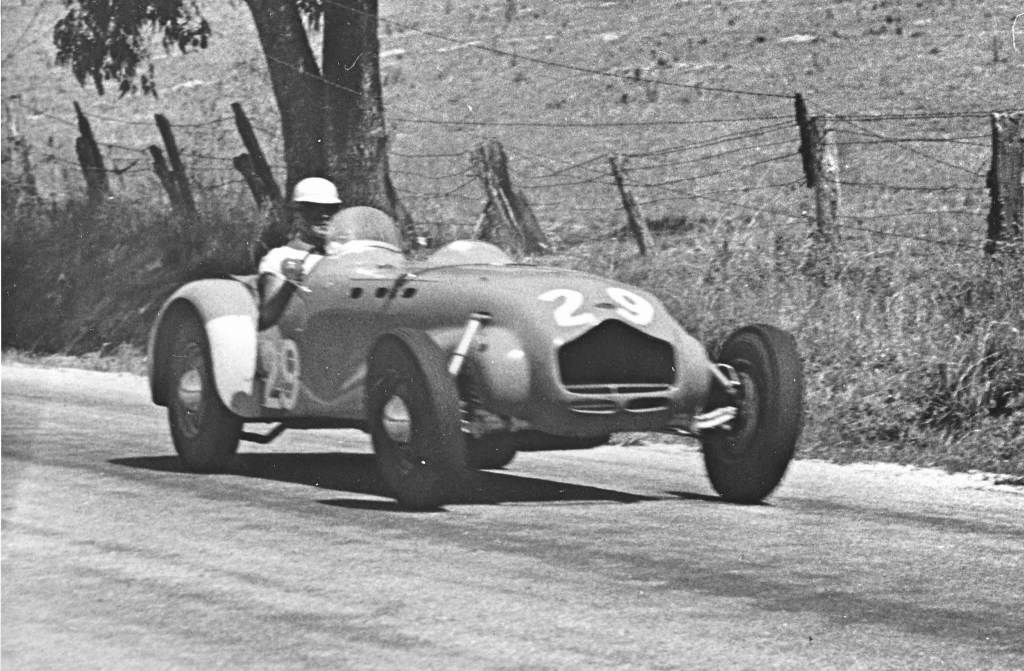
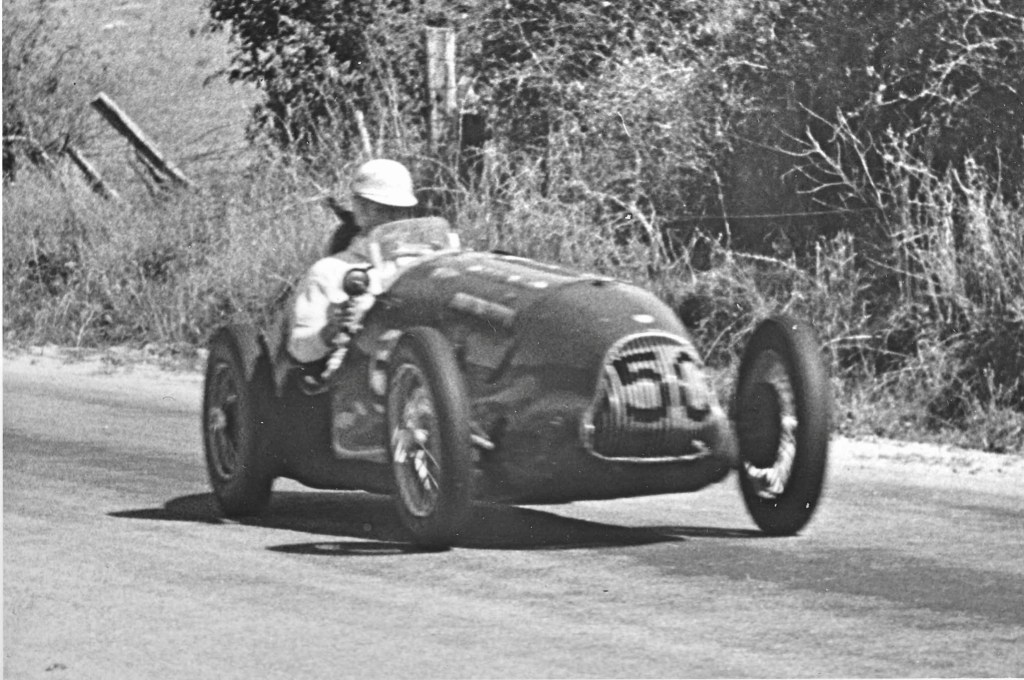
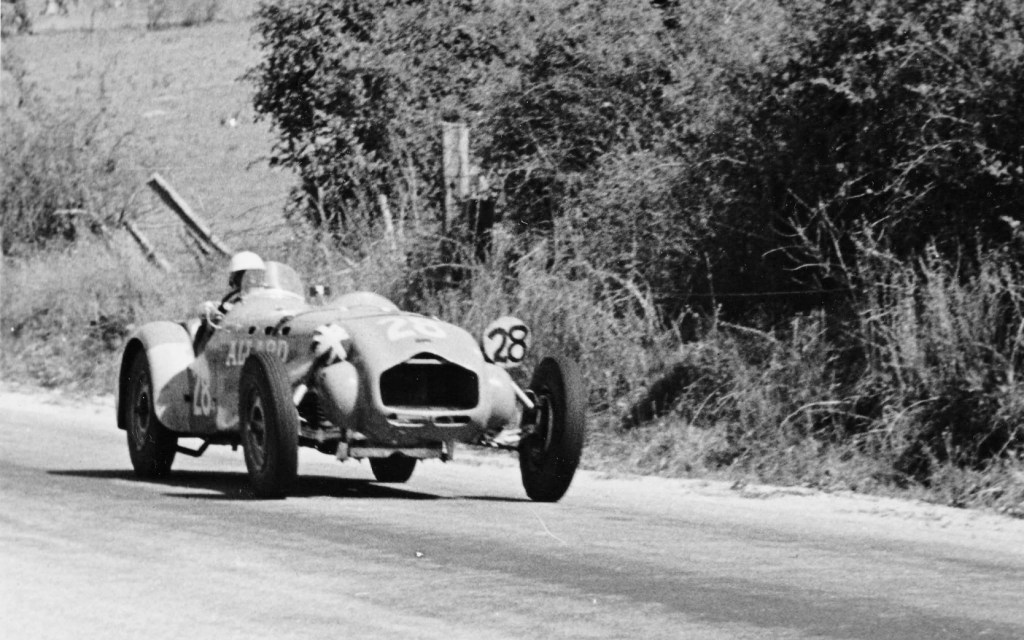
Hawkes raced the car in standard form for a while and then engaged Melbourne’s Ern Seeliger to modify it by fitment of an Ardun OHV engine kit and Jaguar four-speed gearbox with C-Type ratios to replace the three speed Ford Pilot ‘box. The tail of the Allard was replaced with a narrower one, the front and rear guards removed and wire wheels adapted to Lancia hubs. The light car now developed circa 300bhp and was a formidable, noisy and spectacular weapon at the time.

sellicks
Hawkes ahead of Eldred Norman’s Maserati 6CM at Adelaide’s Sellicks Beach. This meeting in 1953 was the first all car beach program post-War. Sellicks Beach is 55km from Adelaide. Tom is kicking the tail out, no shortage of power on the soft sand! Eldred Norman and his many cars are fascinating stories for another time (forum.fefcholden.club)

Over the next couple of years the J2 competed widely, mainly driven by Hawkes but occasionally by Reg Robbins who maintained it. It was also driven by John Sawyer and Adrian Gundlach. The car raced at Fishermans Bend, in Albert Park’s inaugural 1953 meeting and Rob Roy, all in Victoria. Hawkes competed at Collingrove Hillclimb, Sellicks Beach and Port Wakefield in South Australia.

He travelled to New Zealand for the 1954 NZ Grand Prix meeting at Ardmore in January. There the car blew the OHV engine in practice, a stone pierced the radiator. The side-valve engine was fitted for the race, famously won by Stan Jones in the Maybach after an amazing overnight engine rebuild. The J2’s Ford engine was brittle and ‘popped’ comprehensively at least three times, twice with rod failure, the errant component carved the cast iron block in half on both occasions. The J2 was very quick though, it recorded 137mph on Longfords Flying Mile during the 1955 Tasmanian Trophy meeting.

Hawkes advertised # 1731 for sale in October 1955 but continued to race it before being it was finally bought by Reg Robbins who had been preparing the car for Hawkes as noted above. He raced it at Phillip Island and Rob Roy in late 1956 and early 1957 respectively before sale to Geoff McHugh in Tasmania.

Melbourne’s Ian McDonald repatriated it from a Tasmanian chook shed in 1964 and restored it, a process which took two years. He first raced the car in an historic event at an open meeting at Sandown in 1966, the car later passed from Ian to Richard Ralph and then to Graham Smith who fitted a correct specifications Ardun Ford engine; he still owns it in 2020.

paddock
The Hawkes’ Allard in the Collingrove paddock March 1952. The modifications referred to in the text are not yet evident, this is early in Hawkes’ ownership of the car. Compare with the other later Collingrove shot below and the Sellicks Beach shot above where the car is running sans guards and with the wire wheels referred to in the text (State Library of SA)

Allard Short History…

In the the 1930s Sydney Allard was successful as a British Trials and Hillclimb competitor with his Allard Specials. Operating from Adlards Motors, a Ford dealership that he had acquired in 1929, Allard competed successfully in international motor racing. He was third at Le Mans in 1950 and victorious in the Monte Carlo Rally in an Allard P1 in 1952.

After racing first on motorbikes he moved to four wheels, in 1936 the first Allard Special was built.

Allard’s first cars were based on Ford products. The first ‘CLK 5’ combined a Ford Model 40 chassis and engine with a Bugatti Type 51 body. Its light weight and ground clearance made it an ideal Trials racer. By moving the cockpit as far backwards as possible, Allard concentrated weight over the rear wheels, a design principle of all future Allards. With Ford’s flat-head V8 providing plenty of power it was competitive immediately.

coll 2
This later Collingrove shot in 1954 shows the Hawkes J2 in its later modified form: with Ardun head, skinny tail, sans guards front and rear and with its wire wheel (State Library of SA)

Pre-War a small number of Allard Specials were built powered by either the Ford V8 or Lincoln V12 and were race winners. During the War Adlards Motors repaired damaged military vehicles…and Sydney designed a new sportscar, which was built in 1946 and is now referred to as the J1.

Ford components formed the basis of J1. A braced and boxed frame housed a Ford 3.6-litre V8 and three-speed gearbox. Suspension was by a split axle at the front and live axle at the rear, transverse leaf springs were used front and rear. A full width body was fitted, but the guards could be removed and replaced by cycle-guards to turn the J1 Sports into a Trials car. Twelve J1s were built and competed in Britain and in Europe, its shortcoming was the flat-head V8, which was underpowered and overheated. readily. 

Allard then built, in larger numbers, the K1 sports two seater, L-Type Tourer and M-Type coupe.

allard drawing
J2 factory drawings (The Allard Register)

In 1950 Allard launched the J2. Based on the J1 design, the new car was designed with the J1’s shortcomings in mind.

The front suspension was similar, the transverse leaf springs were replaced with coils at both front and rear, and a de-Dion axle was fitted with inboard drum brakes at the rear. The combination of rear weight bias and better rear suspension gave the car much better traction. Modified Ford side-valve V8s were Allard’s engines of choice, but the chassis was built to accommodate other engines. With Cadillac’s pushrod V8, the J2 was ‘in a league of its own’ and very successful in the US.

butt
Butt shot showing the Hawkes J2’s modified tail, fuzzy shot but modifications clear. #1731 sans guards, wire wheels. On ‘The Wall’ (Collingrove Hillclimb)

‘Allard’s biggest road racing success was in 1950, when Sydney Allard and Tom Cole drove a Cadillac powered J2 to third place overall and a first in class at Le Mans. In 1951 a slightly modified version, dubbed J2X was introduced. It was similar to the J2, but the engine was mounted further forward to allow a larger cockpit. Chrysler Hemi and Cadillac powered J2s and J2Xs dominated racing in America. The final evolutions of the J2 were the J2X Le Mans and JR, both of which featured a fully enveloping body’, wrote Wouter Melissen in ultimatecarpage.com.

syd vicious
Sydney Allard practicing his J2 at Le Mans in 1950. He and Tom Cole finished third outright in the race won by the Rosier father and son Talbot-Lago T26GS and second placed Talbot-Lago Monoplace. These two cars were essentially ‘GP cars in drag’, so the Allards third was a great result five laps adrift of the winning car. Allard wore a helmet in the race! This shot was on Allard’s corporate 1950 Christmas card to contacts of the company (allardownersclub.org)

After 1908 Allards were built, production ended in 1959. Increased competition from Jaguar, Lotus, Austin Healey and others producing quality production sports and racing cars made the going tough as the sixties dawned, but the company and its clever products had punched above their weight very successfully for many years.

chassis
J2 chassis and general layout drawings (The Allard Register)

Technical Specifications…

90 J2s were built from 1949 to 1951. Cars delivered to the US were usually sans engine allowing the customer to choose. Those with ultimate performance in mind specified the Cadillac or Chrysler ‘Hemi’ OHV engines with a wide variety of modifications available off the shelf.

Specifications of the Ford Pilot ‘Ardun’ engine as fitted to #1731 and modified by Tom Hawkes; 3923cc, bore and stroke 80.96mm x 95.25mm. Compression ratio 8:1. Magneto ignition. two Solex carburettors giving a claimed, and I suspect very optimistic, 300bhp.

The cars chassis was a ladder or box section frame having a wheelbase of 100 inches and track of 56/52 inches front/rear.

Front suspension was Allard divided or split axle with coil springs and hydraulic shocks. A de-Dion setup was deployed at the rear again with coil springs and hydraulic shocks. Drum brakes were fitted mounted outboard at the front and inboard at the rear.

Steering was Ford Pilot ‘Marles’ worm and roller. The fuel tank held 20 gallons, the car weighed circa 1700-2000lbs. (estimates of weight differ widely across the reference sources and would do so dependent upon the engine fitted)

allard roadie
Factory J2 shot (Allard Motor Co)

The Six ‘Australian’ Allard J2s…

For those with an interest in these cars this excellent MotorMarques article by Philip Stanton details the history of all J2s imported to Australia. http://www.motormarques.com/community/marques/item/39-allard-j2

The Allard Register…

If you are interested in Allards more generally checkout this interesting website; http://allardregister.squarespace.com/

Collingrove Hillclimb…

This website about the Barossa Valley venue is terrific; http://www.collingrovehillclimb.com.au/home/

collingrove
Collingrove is a sensational climb, highly technical and difficult. It’s at Angaston in SA’s Barossa Valley, the place is a stunningly pretty spot. Angaston is 85 Km from Adelaide. In use since 1952.(Collingrove Hillclimb)
paper
The Mail article about Collingrove’s first meeting in March 1952. Hawkes won the over 1500cc modified sports car class (Collingrove Hillclimb)
sideways
Distant shot of Hawkes coming off The Wall, well sideways on the slippery gravel surface. Shot included to show the topography of this fabulous climb. (Collingrove Hillclimb)

Etcetera…

Barry Oliver wrote ‘The sound in the distance became louder and in a few seconds reached a crescendo as the big V8 Allard of Tom Hawkes flashed past me on the narrow strip of bitumen just a few feet away’ Longford, 5 March. 1955.

Bibliography and Photo Credits…

John Blanden ‘Historic Racing Cars in Australia’, Wouter Melissen’s Allard article in ultimatecarpage.com, MotorMarques article by Philip Stanton, State Library of South Australia, Ray Eldershaw Collection, The Allard Register, forum.fcfeholden.club, Collingrove Hillclimb website, allardownersclub.org, Paul Geard Collection, John Hall Collection, Barry Oliver in ‘Tasmanian Motor Sport’

Tailpiece…

(P Geard)

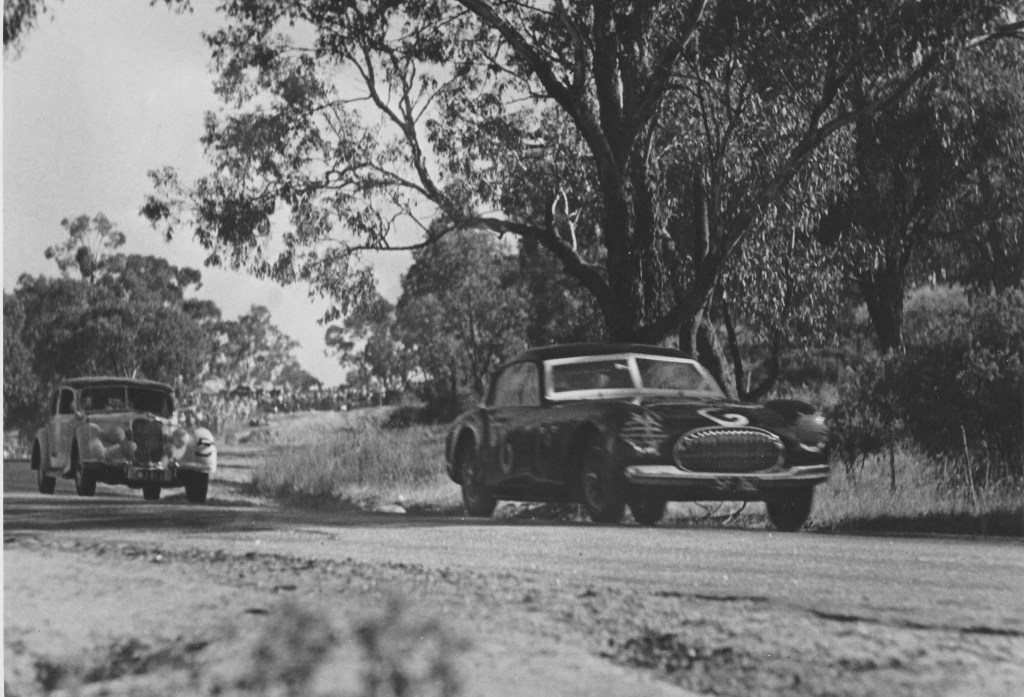
Tom on the entry to Mountford Corner, Longford 1955. The car did 137mph on ‘The Flying Mile’ that weekend…

Finito…