

Or 11, 12 or whatever.
Frank Matich, his creations and his band of merry men are amongst my favourite and most admired of Australian racers.
So why not do something with some of the photographs recently published by Australian Muscle Car magazine, I occasionally write for them after-all. Check out all of the shots here https://www.musclecarmag.com.au/gallery/manufacturer-monday-matich-610582 and subscribe while you are at it!
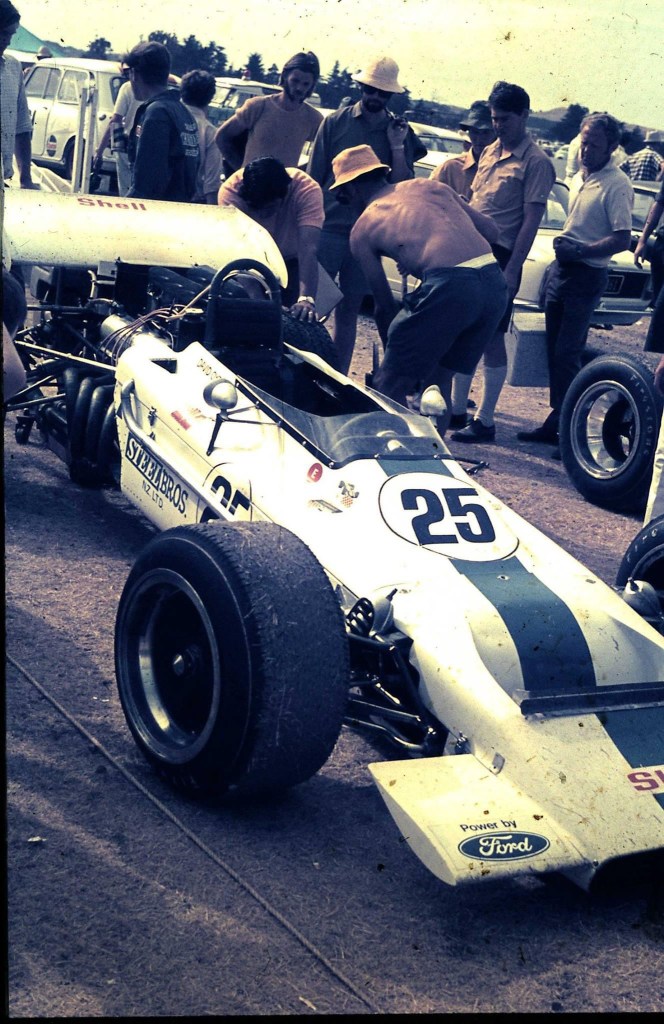
One of FM’s finest moments (above) was his victory in the November 21, 1971 Australian Grand Prix at Warwick Farm aboard the brand-spanking-new Matich A50 Repco-Holden F5000 (001/002) built just across town in Sydney, at Brookvale on the northern beaches.
This win is covered in this feature on all of the Matich F5000s: https://primotipo.com/2015/09/11/frank-matich-matich-f5000-cars-etcetera/
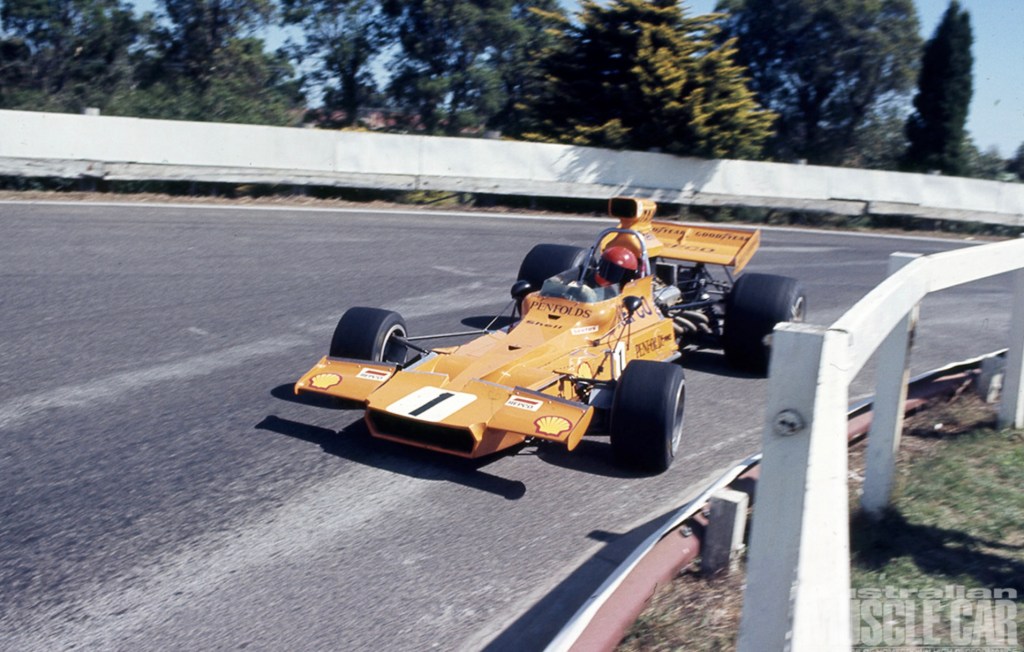
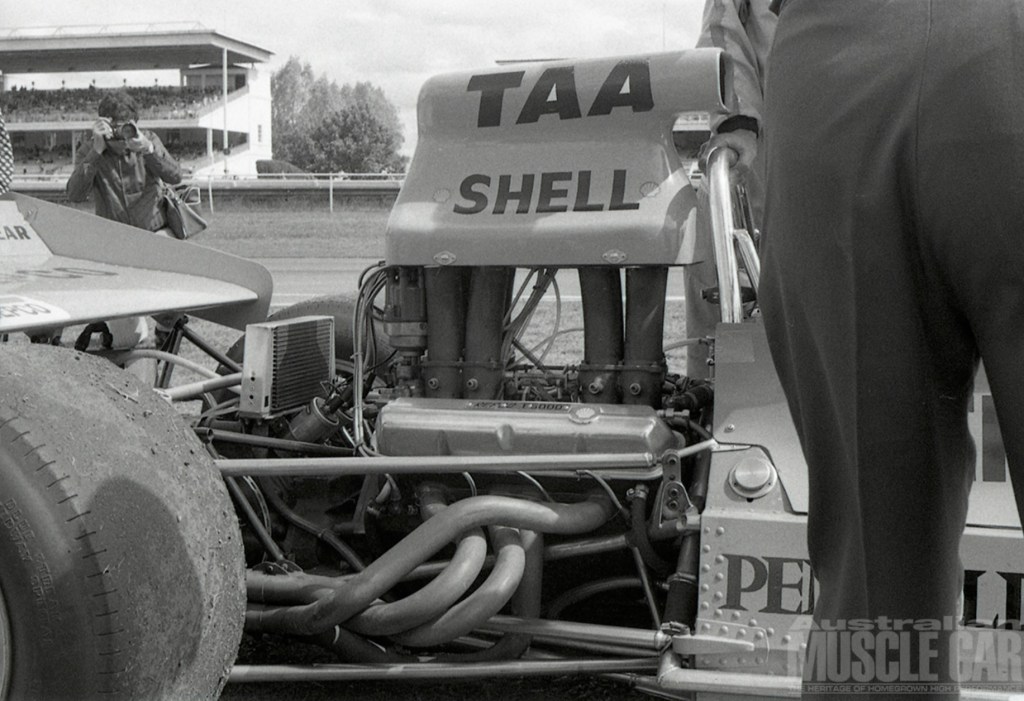
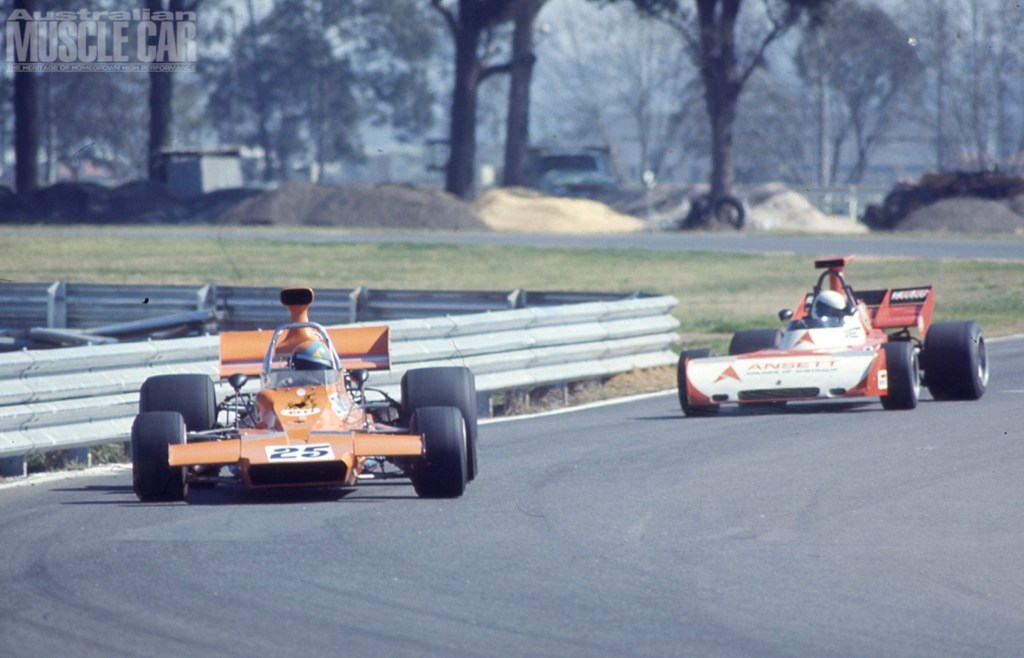
The three A50s built were raced with great success from 1971-73 by FM and by Adelaide’s John Walker (004) who used their machines in Gold Star, Tasman Cup, and in JW’s case the 1973 US L&M Championship. Roy Woods bought (A50-003) one, on Carroll Smith’s recommendation, for George Follmer to race in the 1972 US L&M fitted with Al Bartz prepared Boss Ford engines. That program was interrupted by an early season crash and George’s appointment as driver of Team Penske’s Can-Am Porsche 917/10 after Mark Donohue’s bad Road Atlanta accident in July.
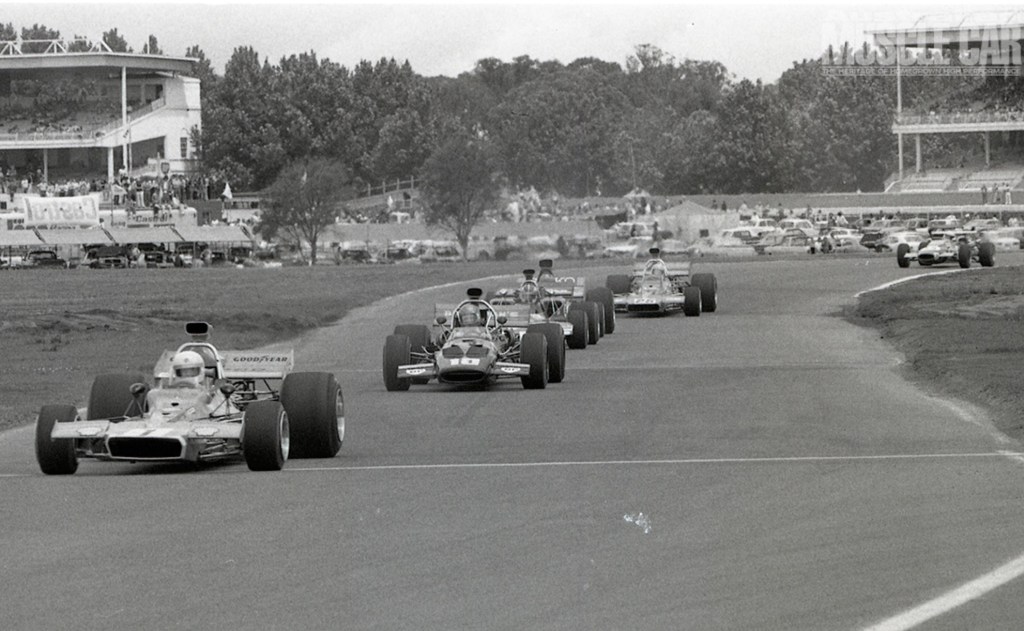
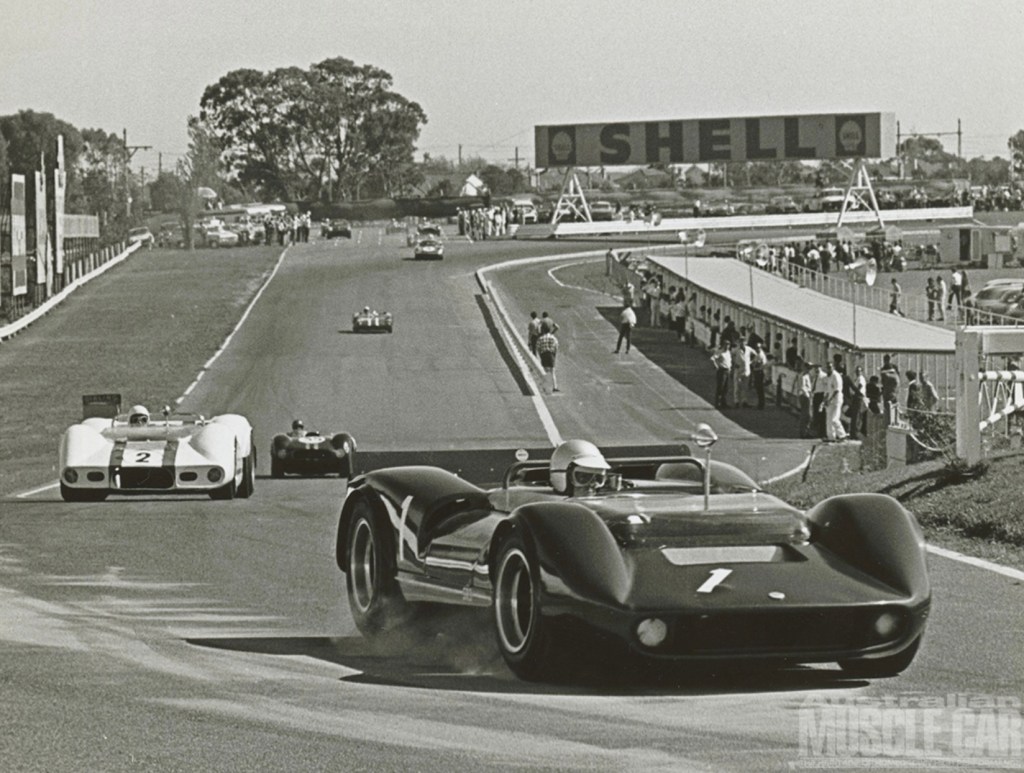
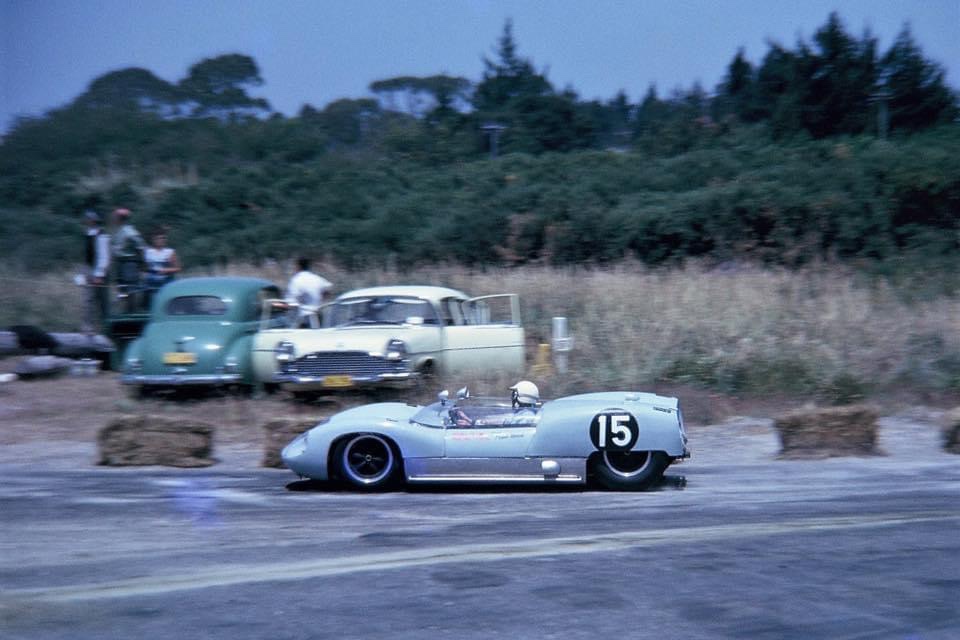
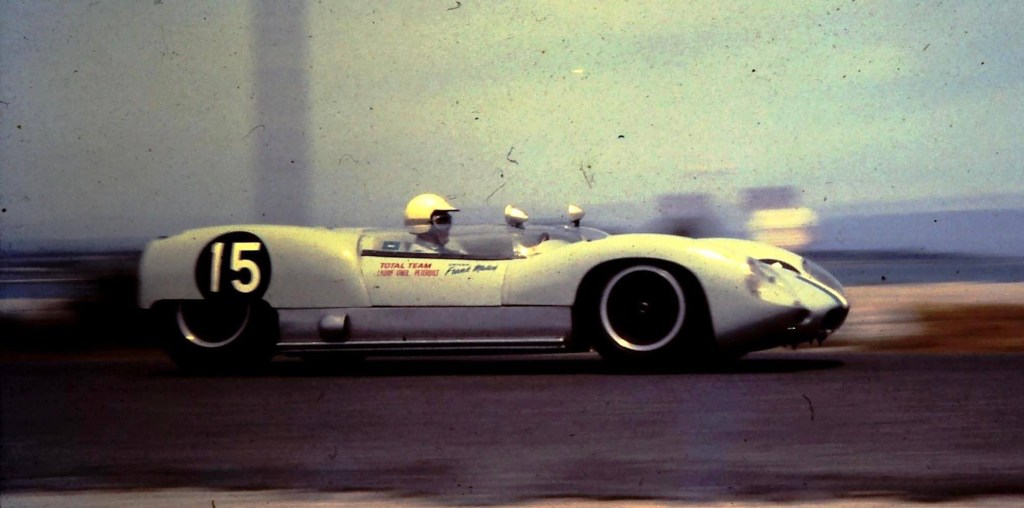
Of course, Matich’s plan to take on the Americans was hatched via his sportscar program. The shot above shows FM at Sandown during the 1967 Tasman round weekend aboard his new spaceframe-chassis SR3 Oldsmobile V8.
Behind him is Niel Allen in FM’s year old Elfin 400 Oldsmobile upon which the design of the SR3 was based. Some say the frame, fabricated by Bob Britton at Rennmax Engineering, was a tube-for-tube replica, with a few extra thrown in to strengthen areas Matich felt lacked torsional rigidity in Garrie Cooper’s Elfin design, four of which were built.
By the time Matich and his small team left Sydney to contest the 1967 Can-Am Cup he had sold the car above, SR3-1 to Marvin Webster, and another, SR3-2, to Kent Price, both Californians. Matich raced Price’s car at Road America and Elkhart Lake, and his own car SR3-3 for the rest of the series. SR3-2 and SR3-3 were fitted with 4.4-litre Repco-Brabham 620 V8s (SOHC, two-valve, fuel-injected).
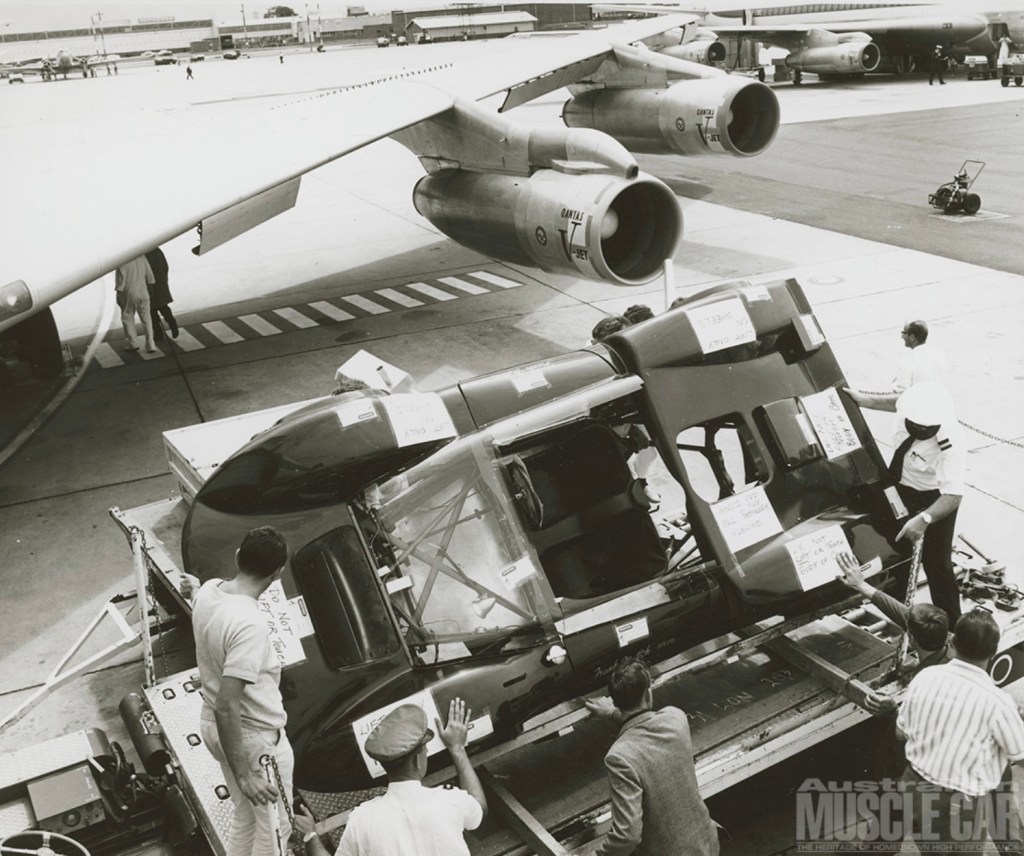
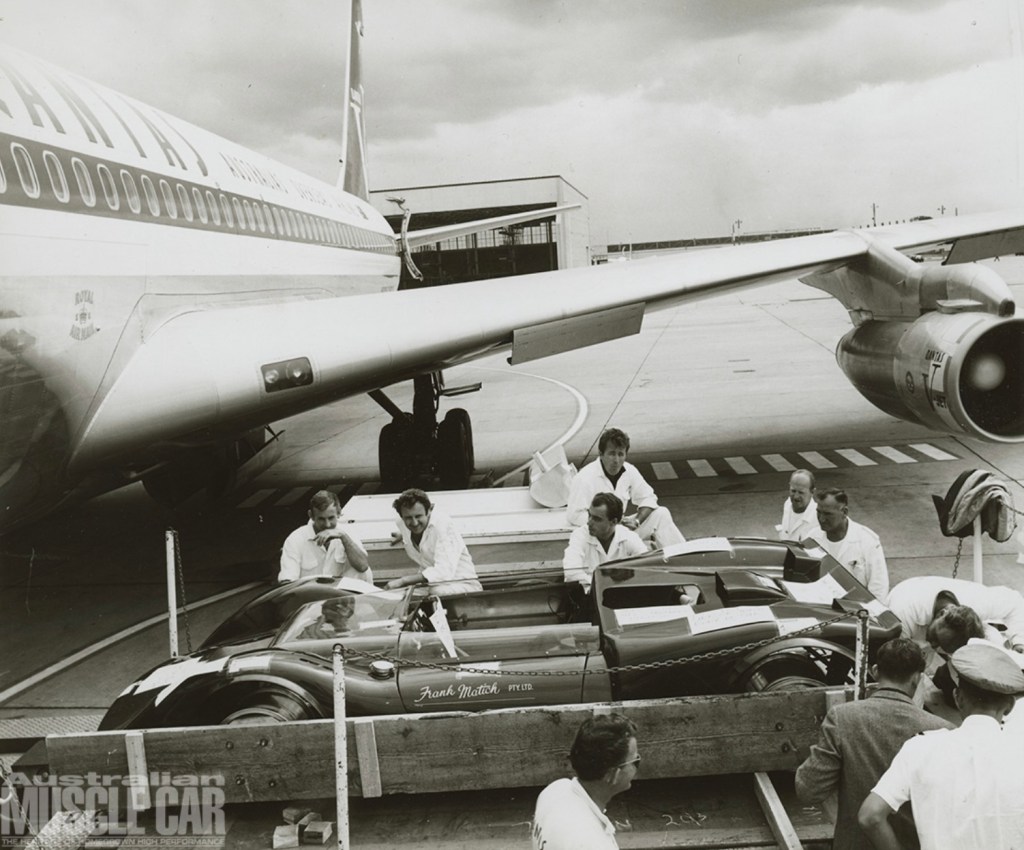
The photographs above are of one of the SR3s – perhaps SR3-1 which was sold to Marvin Webster sans engine and transaxle – on the tarmac at Mascot Airport, Sydney being loaded onto a pallet and Qantas Boeing 707 before it’s trip to California in June 1967.
The tale of Matich’s adventures in the US, and details of the Matich sportscar chassis numbers are told in two articles, here: https://primotipo.com/2023/04/02/matich-sr3/ and here: https://primotipo.com/2016/07/15/matich-sr4-repco-by-nigel-tait-and-mark-bisset/
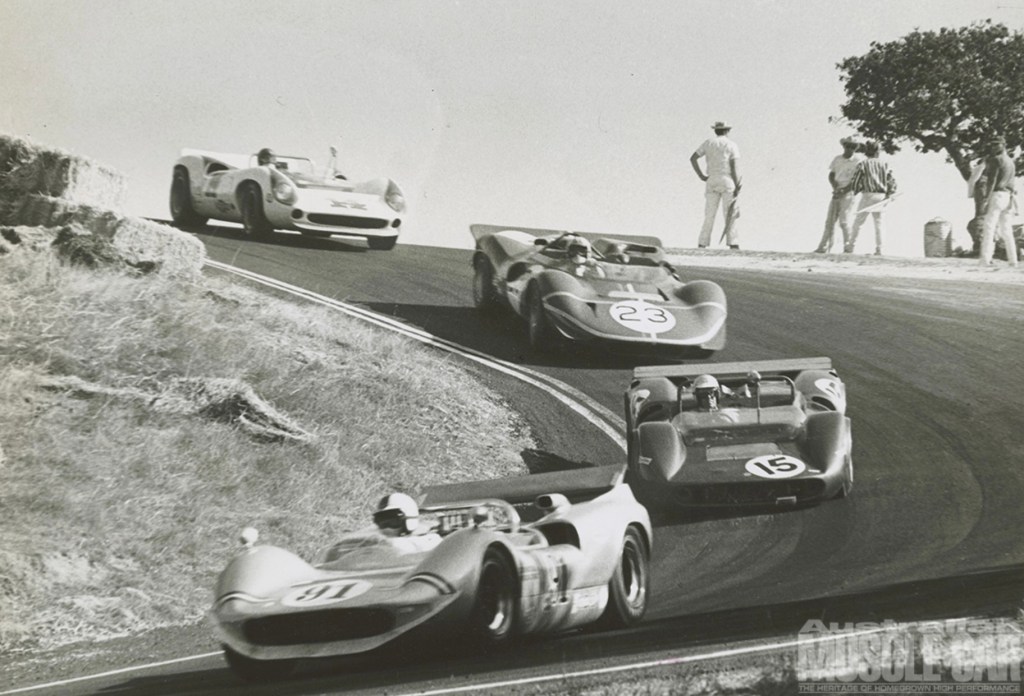
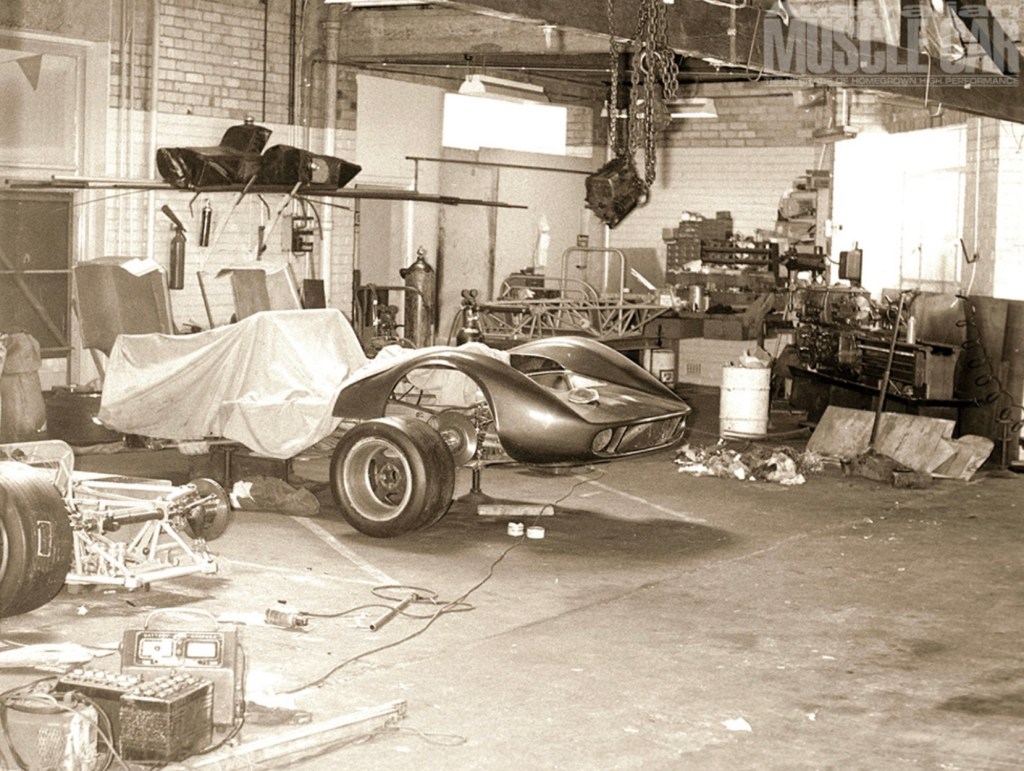
While Matich had a hard time of it in the US, the intensive, highly competitive series ensured the team had developed the chassis of SR3-3 to a fine pitch before they returned to Sydney.
David McKay (Scuderia Veloce) bought one of the Ferrari 350 Can-Ams (#0858) raced by Chris Amon and Jonathan Williams in the later stages of the ‘67 Can-Am. Amon and Matich faced off in the sportscar support races at Surfers Paradise, Warwick Farm and Sandown in the Summer of ‘68 Australian Tasman rounds. Frank won each of the encounters, sprint races, unlike the 200 mile Can-Am events.
When Amon returned to Europe Bill Brown took over the Scuderia Veloce car but he was no match for Matich with McKay selling the 350 Can-Am to Australian international Paul Hawkins late in the year. See here for the lowdown on those cars: https://primotipo.com/2015/04/02/ferrari-p4canam-350-0858/
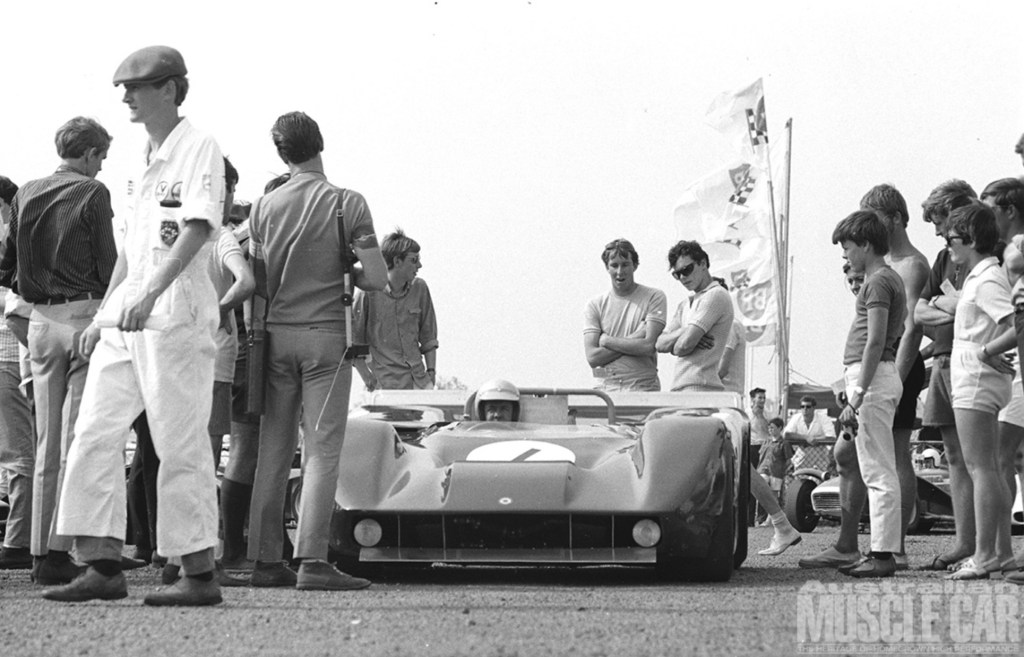
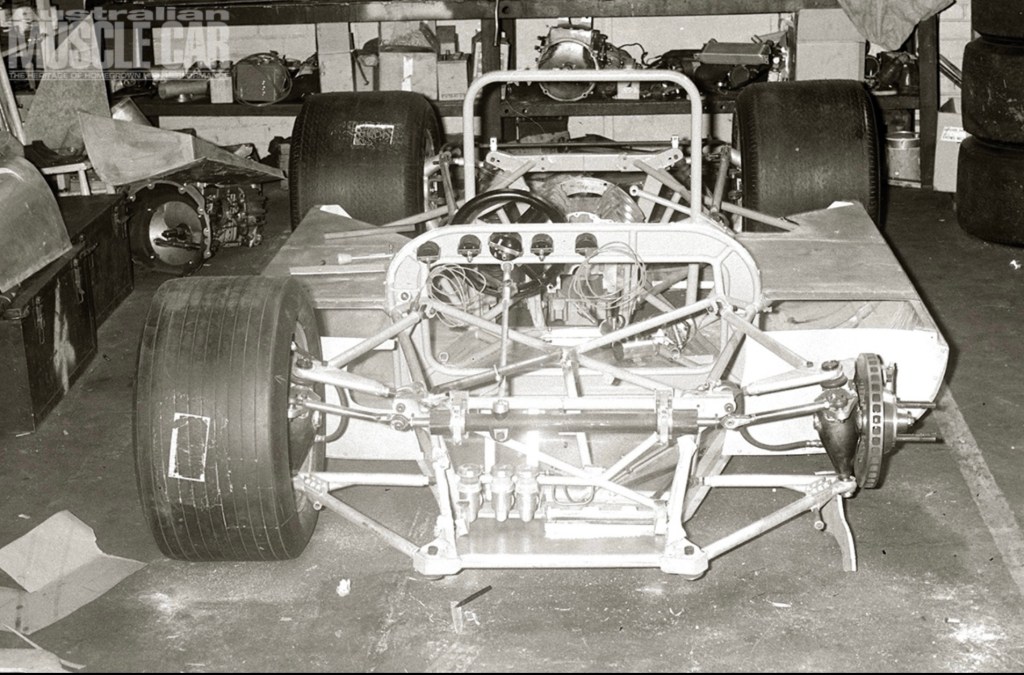
Frank and his team set to work on their planned 1968 Can-Am weapon, the Matich SR4 which was to be powered by a 5-litre four-cam, four-valve Repco-Brabham 760 V8. Ultimately both the builds of the car and engine ran late, the machine didn’t appear until 1969. Even using the ‘tiddler’ 4.8-litre 760 the machine crucified the local opposition that year in winning the Australian Sportscar Championship. It raced on into early 1970 by which time it was fitted with a 569bhp 5-litre 760 engine built by John Mepstead who was seconded from Repco to Matich to look after the engines.
SR4 was then set aside – it could have won Australian Sportscar Championships for years – and was then sold by Matich to Repco in a prid-pro-quo deal that ensured Matich would focus his attention on his McLaren M10B Repco-Holden F5000 project; FM was Repco’s test driver and received works Repco-Holden engines for the balance of his racing career. That customer engine program, led by Malcolm Preston and Phil Irving, designer of the 1966 F1 Championship winning Repco-Brabham RB620 V8, was Repco’s key racing priority.
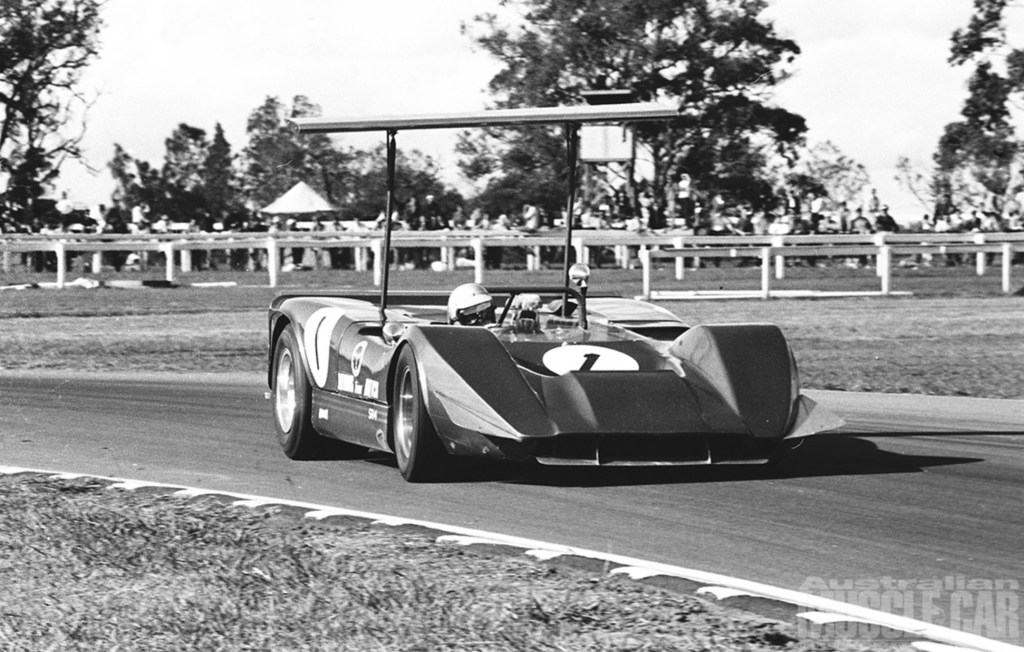
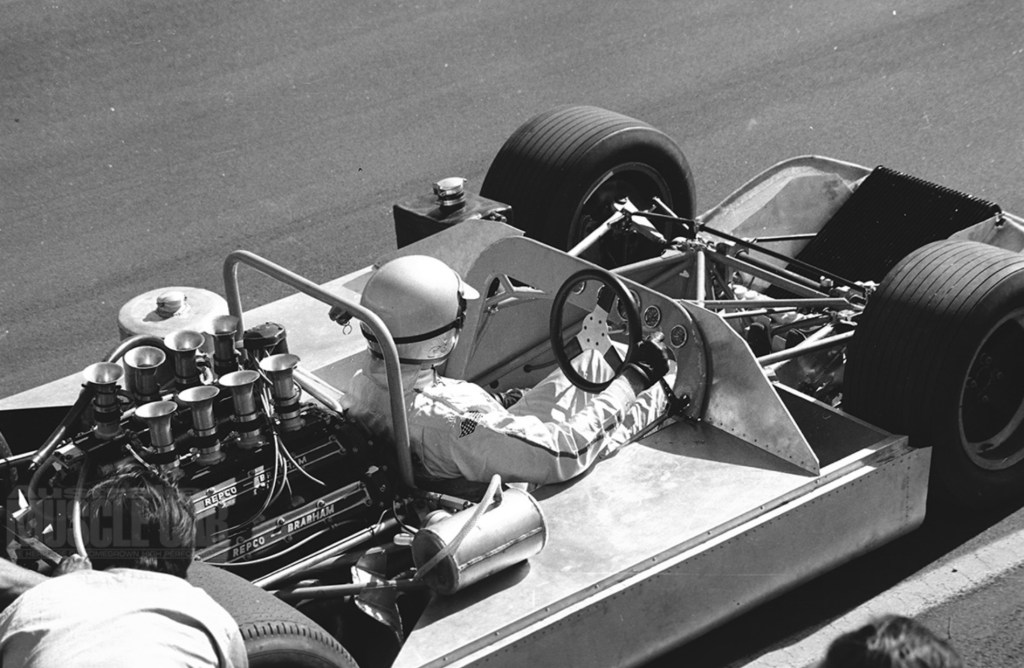
The Repco-Holden F5000programmes early successes were secured by Matich using a McLaren M10B, victory in the 1970 Australian Grand Prix at Warwick Farm was the first big win.
When the M10B chassis was damaged beyond economic repair in a private practice incident at Oran Park in June 1971 Frank decided his team should rebuild the tub rather than buy a replacement from Trojan Cars to provide them with the experience of making an aluminium monocoque before embarking on the build of what became the Matich A50s.
While Matich had great success in the A50: the 1971 AGP, 1972 Gold Star Series and two Tasman Cup round wins in 1972-73, the car ultimately fell short of Graham McRae’s machines which won the 1972 (Leda GM1 Chev) and 1973 (McRae GM1 Chev) Tasmans, not to forget the oh-so-talented Kiwis’ successes in US and European F5000 events.
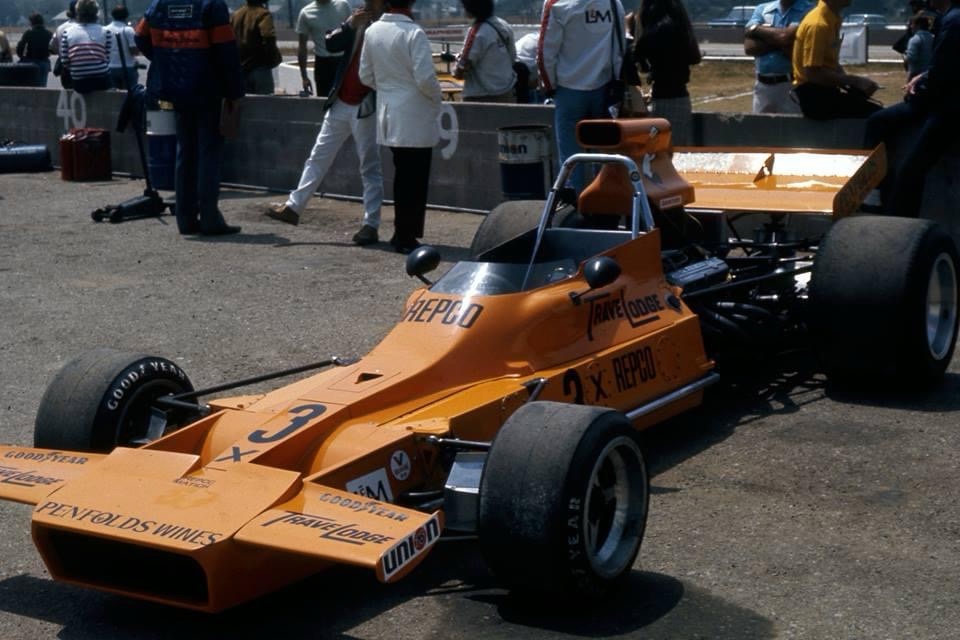
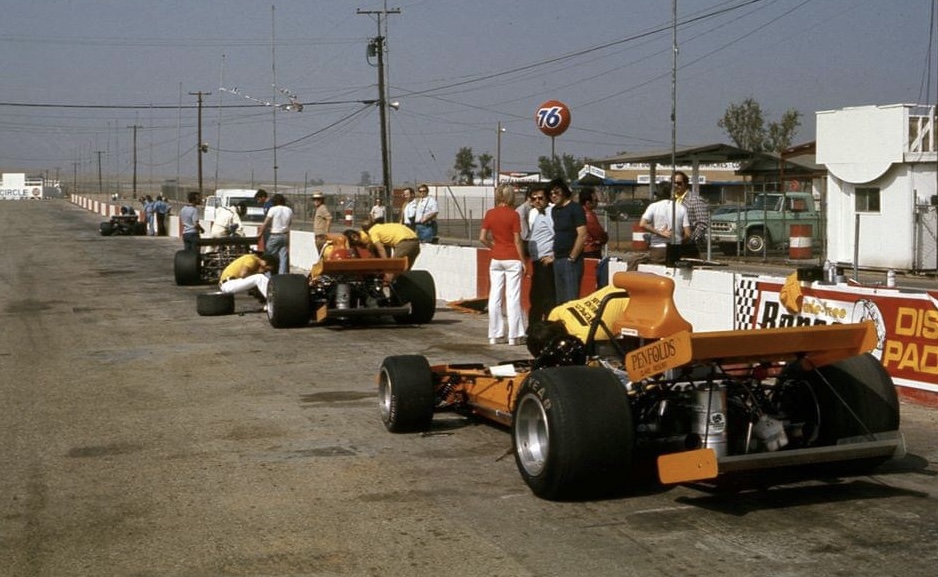
Matich made an all-out assault on the US L&M F5000 Championship in 1973 comprising a two car team, flat-plane crank circa 515bhp Repco-Holden engines, mechanics led by Derek Kneller and locally based on-ground support.
The two A51s were evolutions of the A50 at a time the worlds best F5000s were the McRae GM1 and Lola T300. THE F5000 of 1973 was the Lola T330, variants of which were the greatest ever F5000 and central seat 5-litre Can-Am cars.
The downfall of the ambitious program was oil-scavenging problems with the hitherto bullet-proof Repco-Holden V8s. The constant radius, high speed corners of American circuits were cited as the cause of the issue which was identified and rectified later in the season when one of the A51s was sent back to the Repco Engine Development Company’s Maidstone headquarters. There the engines were tested replicating the effects of these types of corners, and changes to the units scavenging were made.
Interesting is that John Walker had no such problem with the Repco-Holden engines fitted to his very competitive car throughout that same series. That suggests, perhaps, that the problems may have been due to differences in the oil system tanks/plumbing between the A50 and A51 chassis.
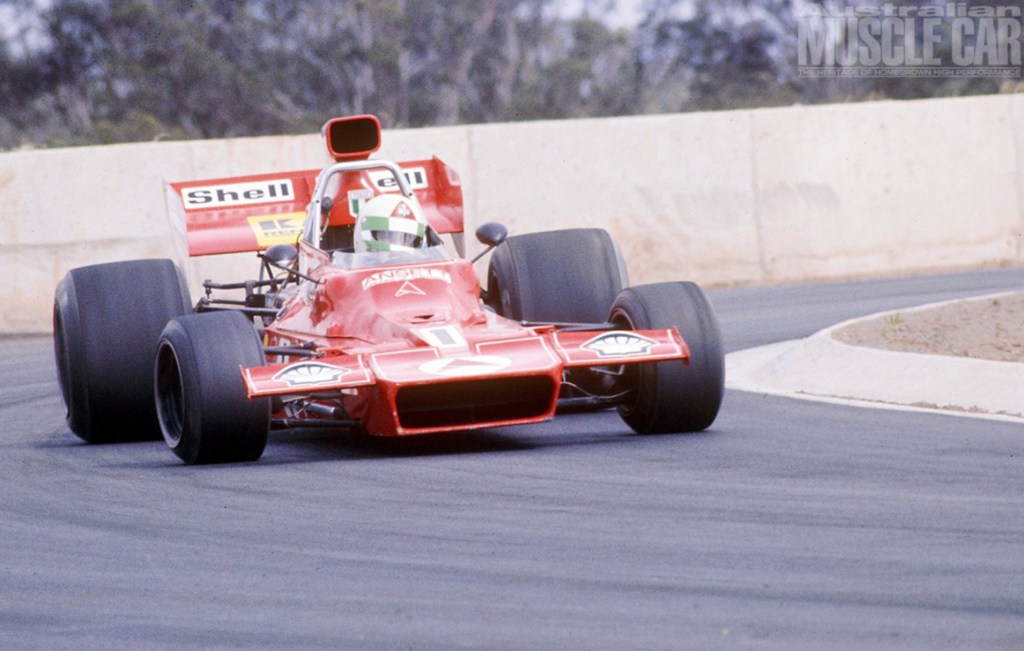
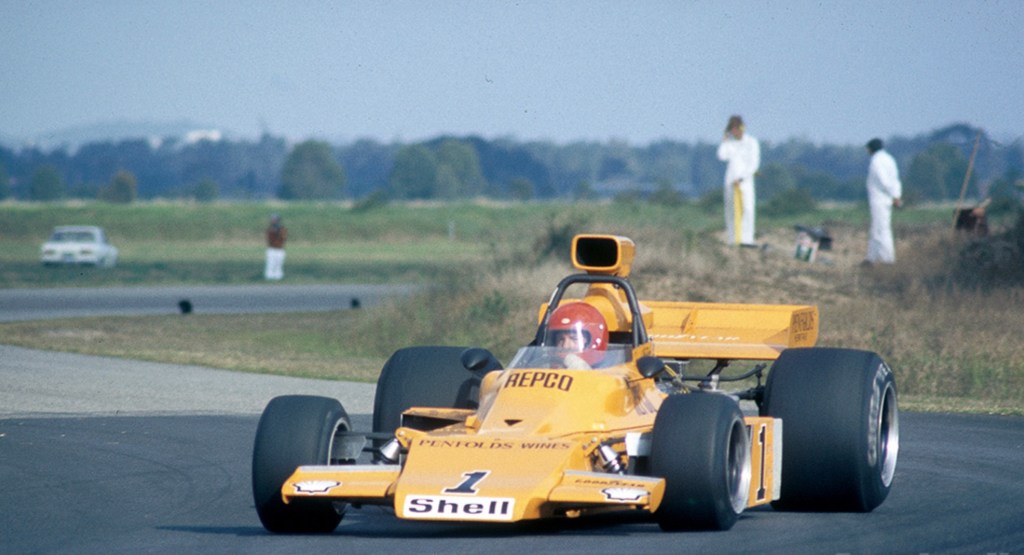
Influenced by the speed of the Lola T330s stateside, FM and the team quickly converted A51#006 into a side-radiator design designated A52, with changes to the suspension, and the wheelbase using a longer T330 bell-housing.
The car was a rocket at the Surfers Paradise Gold Star round on September 2, 1973. Up there on the Gold Coast on a family holiday I watched Matich piss-orf into the distance until the beautiful exhaust note of the flat-plane-crank 5-litre V8 instantly ceased. The engine’s fierce high-frequency vibrations simply shook the gizzards of the lightweight Varley racing battery to bits…an expensive lesson.
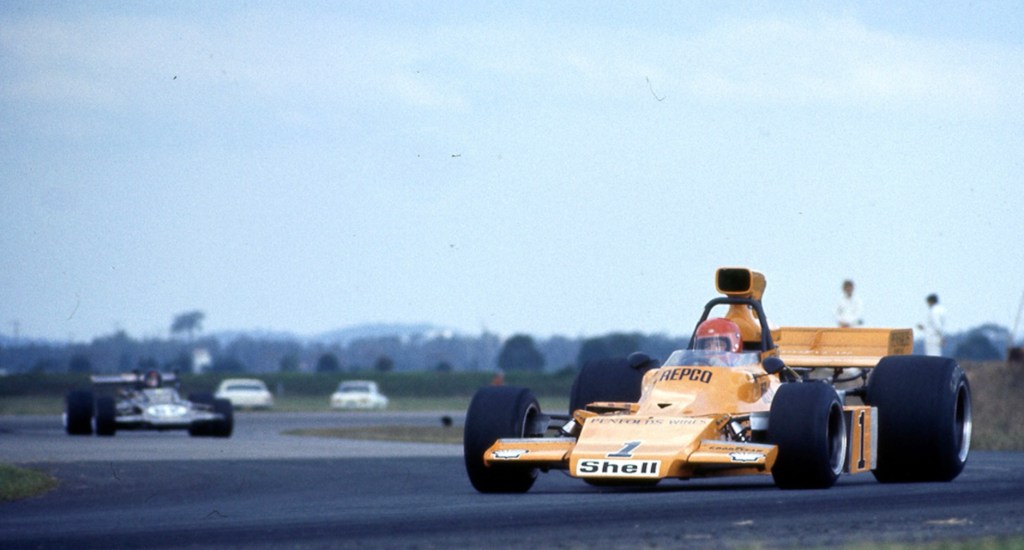
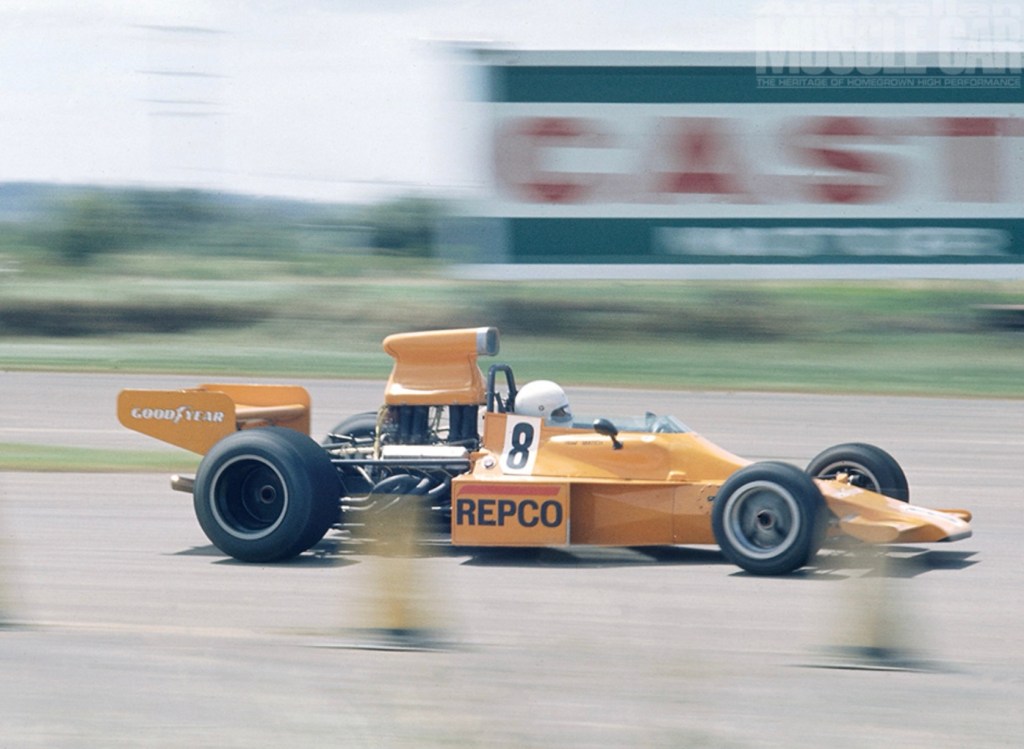
The A52 lost its life in a testing accident while being driven by Bob Muir, who had shown stunning pace aboard a Lola T330 Chev in the L&M, at Warwick Farm shortly thereafter. Equipe Matich then built up the last of six identical monocoque tubs made by the team and the Commonwealth Aircraft Corporation – #007 – into the A53, a further refinement of the A52 and intended as FM’s 1974 Tasman and L&M weapon of war.
A boating accident which gave Frank a near fatal electrical shock, and his wife Joan’s illness were catalysts for Matich’s retirement from racing at the end of the ’74 Tasman. Bob Muir raced the car at Oran Park (Q15/DNF fuel pump), and Matich at Surfers (Q4/third), Sandown (Q2/DNF water pump) and Adelaide (Q2/fourth; there was no shortage of pace.
To have seen the A53 battle the American T332 Chevs later in the year would have been something to watch, with the benefit of the character building visit and experiences the year before…
Credits…
Australian Muscle Car, Chris Parker Collection
Tailpiece…
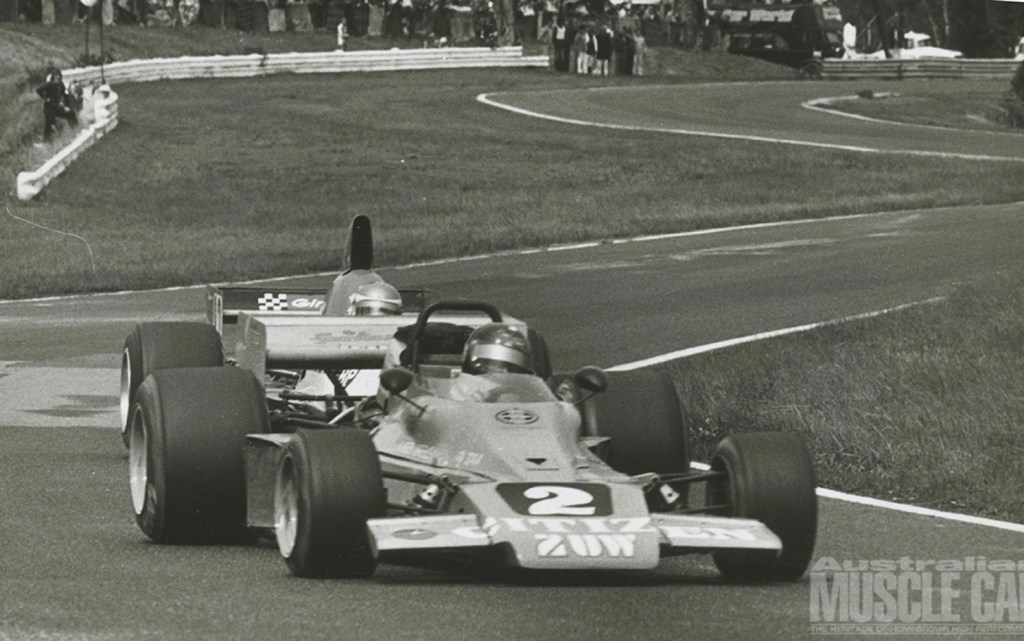
While Matich retired, the cars raced on, most notably in the hands of talented sports and touring car driver/mechanic/engineer John Goss.
‘Gossy’ bought A53-007 from Matich in mid-1974 and later A51-005, he converted the latter to A53 spec and generally preferred that car. He took to the brutish 5-litre roller-skates like a duck to water winning a couple of Tasman rounds. While John had the pace to take a Gold Star he never seemed to have the reliability, maybe given the challenges of also preparing and racing Ford touring cars. But it all came good good at Sandown on September 12, 1976 when he beat Vern Schuppan’s works-Elfin MR8 Chev home in a nail-biter of an Australian Grand Prix finish.

There were still plenty of sportscar and sports-sedan wins for Repco-Holden F5000 V8s but it was the last hurrah for a Matich chassis, the first of which, Frank argued – and I agree – began with his highly modified Lotus 19 Climax in 1962.
Finito…


 primotipo...